Article

Urban Contestation in Migrants’ Settings: Towards More Resilience Through Fluid Planning in Aachen, Germany


1
School of Architecture and Built Environment, German Jordanian University, Amman 11180, Jordan
2
Chair of Urban Design and Institute for Urban Design and European Urbanism, RWTH Aachen University, 52062 Aachen, Germany
*
Author to whom correspondence should be addressed.
Urban Sci. 2025, 9(9), 346; https://doi.org/10.3390/urbansci9090346
Submission received: 6 July 2025 / Revised: 24 August 2025 / Accepted: 28 August 2025 / Published: 30 August 2025

Abstract

This paper explores how migrants’ communities shape and contest their urban spaces, focusing on Aachen. The primary objective of this research was to capture the cultural urban change in migrants’ settings. It further contributes to building an insight into the various urban typologies strengthened by migrants’ settings, which could have implications on the urban fabric of the city, thus adding value to socially inclusive development. Qualitative approaches in identifying a street taxonomy were adopted in this paper. An in-depth analysis encompassing narrations behind urban layouts, behavioral patterns, and typological distinctions was made to highlight the differences within the setting. Notably, a pivotal aspect of this study is the endeavor to underscore the constructive, yet frequently underappreciated contributions made by migrants to the dynamics and development of urban areas. Therefore, more attention shall be given to the urban layouts contributing to more socially cohesive communities in and around such settings. In doing so, this research makes a substantial contribution to the broader discourse surrounding urban resilience and the fluid planning strategies adopted by cities in response to evolving demographic landscapes.

1. Introduction: Trigger and Urban Connotations

The urban environment, characterized by its dynamic and continually evolving nature, demonstrates a capacity for adaptation in response to a myriad of socio-cultural and economic factors. Among the most influential catalysts of change observed in cities globally are the presence and impact of migrant communities [1]. This investigation centers on the phenomenon of urban contestation within migrant contexts, with a specific focus on the city of Aachen, a city renowned for its intricate interplay between migration dynamics and urban development. Aachen is a city known for its rich historical and industrial heritage, and at the same time, a hub for education, research, and technology. It yet, encompasses a high percentage of migration background communities [2], which positions it as a model case for research, where the status of the community enjoys a middle-high economic standard, yet includes a certain segregation that constitutes different social groups within residential areas, non-migrant ones, and migrants’ communities’ areas.
To this end, the main aims of the paper are identified in capturing the cultural urban change in migrants’ settings and related socio-economic alterations as the main objective of the study. Then it is thought to contribute to building an insight into the various urban typologies strengthened by migrants’ settings, which could have implications on the urban fabric of the city, thus adding value to the issue of social inclusion. The paper also triggers and investigates options and opportunities of urban layout to intervene through fluid approaches.
The paper approaches the situation through concepts of contestation, from the Marxist point of view, as inscribed in the condition of the working class in England [3]. The paper addresses socially excluded migrants’ communities and settings, serving as a likely base for contested realities and struggle. This approach was adopted to perceive urban contestation, even though the city of Aachen holds a status of wealth and rich heritage. Yet, it incorporates segregated urban areas with migrants’ backgrounds. In view of this limitation, the research tries to seek ways of furnishing urban landscapes in a more inclusive manner to add value to the city as a collective and interactive space.
The city of Aachen, strategically positioned at the three-country intersection (Belgium, Germany, the Netherlands), provides a captivating environment for research. The city’s historical center, combined with its diverse and evolving demographic composition, renders it a prototypical pot for the examination of the transformations stimulated by migrant communities. Within this contextual framework, multidimensional research is embarked upon, directed towards unraveling the complex layers of change and opportunities to be observed within the neighborhoods and streets of this city.
According to Engels, the city is a site of conflict, yet a haven for uprising and revolt [4]. In this discourse, the impact of first-generation migrants on urban change within migrants’ settings is to be seen as an anticipation for resilient development rather than a burden and a drawback of development. Sustainable development goals on another note [5], shows how the SDG 10, “Reduce Inequalities” stands as one of the least goals, with progress reaching only 10% whereas its marginal progress reaches around 45% and even a stagnation rate of this goal reaches around 45%. Such assessment calls for more targeted research and awareness that capitalizes on the aspect of revealing possible energies of migrants in host urban settings, stimulating more inclusive urban change.
In the capacity of scholars specializing in urban studies, the pivotal role that cities assume as vessels of human diversity and hubs of innovation is acknowledged. Cities nurture unique socio-cultural milieus, economic structures, and lifestyles [6]. Cities and regions are inseparable from diverse communities and should neither be viewed as empty canvases nor as homogeneous places [7]. However, this diversity frequently coexists with challenges, notably with issues of integration, segregation, and the transformation of urban topographies. Migrant populations, constituting an integral component of this urban tapestry, introduce a wealth of experiences, traditions, and aspirations, which possess the potential to exert a lasting influence on the cities they choose as their domicile. Overall, “Migration is too often framed as a problem, when it is an opportunity” [1].
The following research questions are addressed in this paper:
  • Are migration background areas segregated within cities? If so, what are the needed urban typologies to add value to an integrated setting?
  • How can fluid planning play a role in inclusive urban development?
To do so, the research will take a three-step approach in investigating the setting. It will start with desktop research that portrays the situation of migrants in German cities, and specifically in Aachen. It will then undergo street taxonomy research that captures the different social groups of both streets and urban areas around, and finally, it will try to validate the findings with a survey of 42 samples within the settings.

2. Literature Review

2.1. Urban Contestation in Migrant-Affected Cities

Contestation in urban areas results from a complex interplay of various factors, encompassing both tangible and intangible elements, all of which collectively contribute to the perceived overcrowding and strain on urban resources [4]. Cities are a concentration of material and social relationships, according to Kränzle and Roskamm. Through the increasing density of population due to migration and clustering in certain areas, the degree of congestion rises. Housing challenges, as one, play a significant role, as well as the fact that first-generation migrants frequently encounter difficulties in securing suitable housing, which can result in overcrowded living conditions within the same clusters and, hence, enclaves of migrants [8]. The establishment of new businesses and economic activities by migrants introduces another dimension to this issue. This economic dynamism can alter the urban landscape, with the emergence of commercial hubs and markets [9]. While these activities stimulate economic growth, they may simultaneously contribute to the sense of congestion in certain areas due to increased human traffic and commerce, which in turn also impacts the basis of urbanity, encountering sufficient public space and amenities [10].
Additionally, the coexistence of diverse cultural and ethnic groups within migrant settings enriches the urban tapestry. However, this cultural diversity can also be perceived as contributing to contested realties, as the more diverse the community can get, the more enclaved segregated communities rather than integrated can appear, if spatial strategies guiding inclusion are not well considered [11]. Lastly, the urban infrastructure often faces increased demands due to the growing population; however, it is enclaved in this perspective. This strain can intensify the perception of congestion and, as a result, cause segregation of these groups.

2.2. Parameters of Urban Change Due to Migrants’ Contested Areas

These multifaceted triggers collectively shape the urban experience in migrant settings, influencing perceptions of congestion and resource strain. Understanding these dynamics is vital for effective urban planning and the development of strategies to enhance the resilience of cities facing migrant-induced changes. Beyond its physical manifestations, contestation is seen as multiethnicity, carrying various urban connotations that deserve exploration. Firstly, it often mirrors the rich tapestry of cultural diversity within urban areas, signifying the convergence of people from different backgrounds. This fosters a rich milieu of traditions, languages, and cuisines, adding a layer of cultural vibrancy to the cityscape [12]. Secondly, the commercial and entrepreneurial activities often associated with multiethnicity can be viewed as opportunities for economic growth and innovation due to their diversity [12].
Far from being solely burdensome, densified migrants’ communities can act as a catalyst for business development and economic dynamism within urban settings [13]. Thirdly, such areas foster increased social interactions by virtue of the proximity of individuals from diverse backgrounds. This enables the exchange of ideas, experiences, and traditions among residents, contributing to the social fabric of the city [13]. However, the positive result of this socially inclusive space is dependent on the way it is presented and planned. Multiculturalism needs events and catalyzers that enable social bonding to establish inclusivity [14].
Conclusively, areas of such diversity prompt cities to adapt and innovate in response to increased demands on infrastructure and services.
While initially challenging, this necessity for adaptation can lead to possible improvements in urban planning and development. It forces cities to find creative solutions to enhance their resilience. Lastly, the coexistence of diverse communities in congested urban spaces can catalyze processes of integration and identity formation. Residents negotiate their roles within the city, contributing to the ongoing evolution of its identity. Congestion, in this context, becomes a backdrop against which these complex processes unfold. Subsequently, new categories of everyday life can be triggered throughout the process and can have a likely spillover effect on the surrounding areas. Such can cater for identifying multiple-dimensional identities and behavioral settings that can, in turn, be celebrated by the ones possessing these, or also can be generated to serve for a diverse dynamic in the city [15].

2.3. Paradigm Shift in Planning: Fluid Approaches and Migration

In the field of urban studies, there has been substantial theoretical exploration of the interaction between migration and urban development. A diverse range of theoretical perspectives sheds light on the multifaceted dynamics of urban contexts affected by migration. One significant perspective, introduced by [16], introduces the concept of “fluidity” in urban planning. This theory challenges established planning norms by advocating for adaptable and dynamic approaches in areas significantly influenced by migration. Traditional urban planning often struggles to adapt to the rapid changes and diverse needs brought about by migrant populations. In recent years, the concept of fluidity in urban planning has gained prominence, emphasizing the need for adaptability and responsiveness in the realm of urban development. This approach is particularly pertinent in immigrant settings, where the urban landscape frequently experiences shifts due to changing populations and corresponding spatial requirements. Fluid Planning as a concept faces several challenges on different levels. First, it is relatively hard to realize because it requires consecutive work and changes. It is less dependent on plans and fixed assumptions and rather targets innovative solutions, basing its thinking upon current environments and challenges [10]. Positioning migration studies in this perspective, they have gradually shifted weight from rigid migration policies towards flexible strategies that suggest plural democracies, especially in countries with vast migration rates, such as in Germany [17].
According to the theory of “Network Society”, Castells suggests that modern cities function as nodes within a global network, greatly influenced by globalization. Within the context of migration, this theory underscores the emergence of transnational networks that link first-generation migrants with their home countries, facilitating the flow of remittances, ideas, and cultural influences. These factors have a profound impact on urban dynamics and development [18]. On another note [19], in her concept of Urban Complexity and Spatial Strategies, acknowledges that urban areas inherently possess multifaceted characteristics. Urban development is not a linear process but rather a dynamic negotiation of competing interests, values, and aspirations. In regions with high levels of migration, this complexity is amplified, necessitating urban planners to navigate a shifting landscape of needs and preferences. Furthermore, Jean Hillier’s exploration of “Shadows of Power” from 2002 and the concept of “Plan(e) Speaking” from 2008 delve into the role of spatial planning in shaping urban contestation. These theories highlight the tension between top-down planning approaches and bottom-up, community-driven strategies, often resulting in communities asserting their influence in shaping their surroundings [20,21]. Moreover, Jean Hillier’s theory of “Post-Structural Complexity” from 2010 provides a theoretical framework to examine the intricate interplay of actors, forces, and discourses in shaping urban contestation. This perspective acknowledges that urban spaces are not neutral; they are imbued with power relations, identities, and contested meanings. In migrant settings, this theory allows for an exploration of how various actors, including migrants, local governments, and civil society, negotiate these power dynamics and contribute to the evolving urban landscape [22]. The observation of how migrants engage with and transform urban spaces through their daily practices manifests the positive impact and potential of multiethnic communities and their provision of their unique cultural practices, traditions, and social networks to the city [23].
These theoretical frameworks collectively provide a comprehensive and multifaceted perspective through which the intricate phenomenon of urban contestation within migrant settings can be approached. They underscore the dynamic, evolving, and often contested nature of urban development, where migration acts as a catalyst for change, adaptation, and resilience. By incorporating these theoretical perspectives into this research, a rigorous understanding of the complex interplay between migration and urban development in Aachen is sought. As the analysis progresses, these theories will be used as tools to critically interpret the findings, providing insights into how urban planners, policymakers, and communities can navigate challenges and employ opportunities within the context of urban contestation in migrant settings.
In contemporary urban studies and urban planning, the concept of urban resilience has gained paramount significance in addressing the intricate and dynamic challenges confronted by cities on a global scale. Urban resilience, as delineated by [24], pertains to a city’s capacity to withstand, adapt to, and recuperate from an array of stressors and shocks, encompassing environmental, economic, social, and demographic changes. A foundational facet of fortifying urban resilience resides in the strategic planning and design of urban environments and infrastructure. Within this context, the adoption of fluid planning approaches, as propounded by Abbass [16], emerges as a pivotal strategy in nurturing urban resilience and adaptive responsiveness to the setting discussed in this article.
The synergy between fluid planning approaches and urban resilience becomes conspicuous when contemplating the subsequent key points: Fluid planning approaches intrinsically grant cities the adaptive capacity to respond effectively to unforeseen challenges [25]. By accommodating modifications in urban layouts, functions, and services as circumstances demand, these approaches empower cities to assimilate shocks and stressors without enduring protracted and extensive disruptions. Resilience theory underscores the significance of diversity within urban systems [26]. Fluid planning acknowledges that urban diversity in terms of land utilization, modes of transportation, and social functions can augment resilience. Through the advocacy of mixed-use development, diversified transportation alternatives, and pliable zoning regulations, fluid planning contributes to the establishment of resilient urban systems. Furthermore, fluid planning frequently entails active engagement with communities and stakeholders [27]. This participatory approach cultivates social capital and community cohesion, both of which are integral components of urban resilience. Engaged communities are better poised to respond to and recover from different challenges.
Through the assimilation of these guiding principles into the sphere of urban planning and development, cities can fortify their readiness to navigate the complexities of an uncertain future. This amalgamation enhances their overall resilience and sustainability in the face of evolving demographic, social, economic, and environmental landscapes [28]. This holistic approach harmonizes with the growing consensus that urban planning should embody a dynamic and adaptable process, capable of effectively addressing the multifaceted challenges of the 21st century.

3. Methods and Research Setting

3.1. Selection of the Case Study: Adalbertsteinweg vs. Oppenhoffallee

The selection of Aachen as the research location is underpinned by a set of forceful factors that render it a needed study area for analysis. Aachen embraces a considerable number of migrants that reach the amount of 6140 (2.5% of the population). Most of such are closely located to the city center in the east neighborhoods of Aachen located closely to the city center [2]. Worth noting that the rate of children with a migration background, under 3 and between 3 and 6 years old in the city of Aachen, reaches a higher rate than the numbers above, as well as in comparison to the state. The proportion of children with an immigration background in childcare facilities in the Aachen urban region in 2023 reaches 29.1% with children under 3 and 36.7% for children between 3 and 6 years old, whereas it reaches the percentages of 21.9% and 30.9% respectively, when compared to the state of North Rhine-Westphalia [29]. This indicates an increase in the percentage of the migration background community towards the future, which necessitates such research and anchors Aachen as a case study.
The primary focus is on the eastern part of the city, which has recently experienced a substantial influx of first-generation migrants. This area’s significance is strengthened by its proximity to the city center, considering it an integral component of Aachen’s urban landscape. One of the most striking features of this location is the juxtaposition of diverse socioeconomic backgrounds in proximity, with part of it enclosed within a certain milieu targeting certain social groups, among which are mainly migrant communities, and the other parts enjoy the status of being a destination for all types of inhabitants, and a central place to live in. This was also seen and noticed through the real estate value within the two areas and streets, as one part enjoyed high rents and quality living standards, whereas the other was affordable in some way, where low-income groups find it suitable and central, with the price. The coexistence of both affluent and less privileged neighborhoods within the same vicinity adds a layer of complexity to the urban landscape. How fluidity can cater for such a setting is the question tackled within the research, and the main aim of developing strategies towards inclusive development within such areas. This dynamic interplay between areas of varying affluence, coupled with the presence of migrant communities, designates these streets as a captivating focal point.
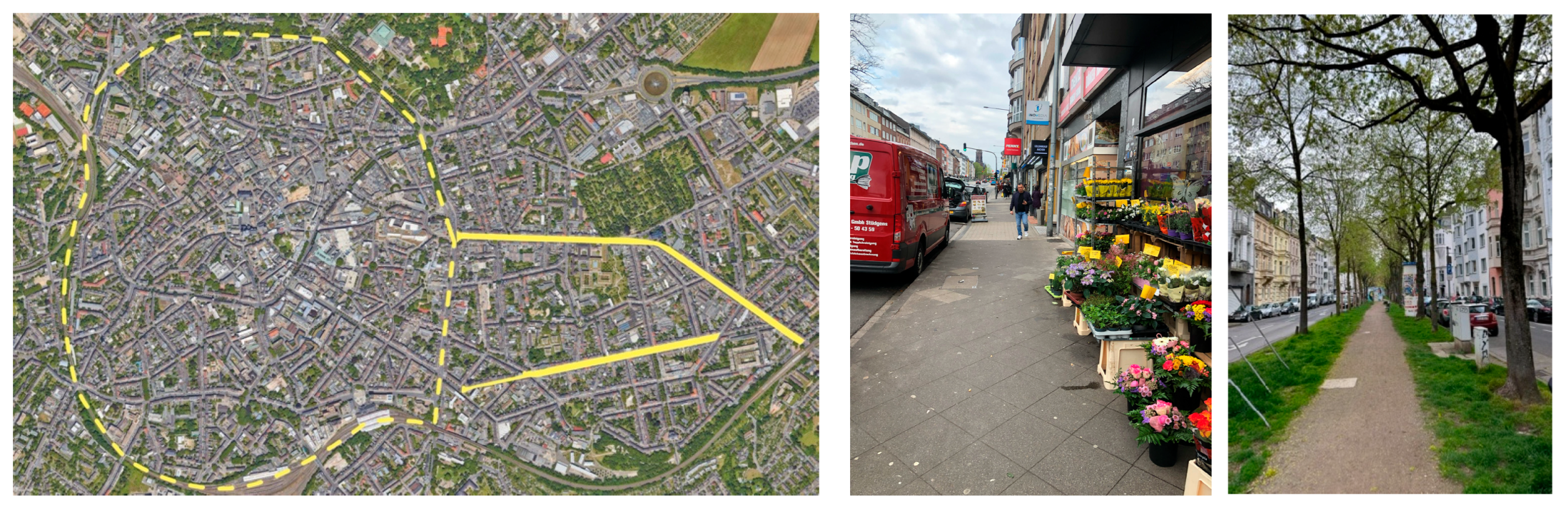
Worth noting, Aachen’s eastern urban landscape represents a microcosm of urban diversity, where distinct neighborhoods harmoniously coexist and interact. This diversity, in conjunction with the substantial migrant population, contributes to the complex web of social and cultural dynamics that shape the city. Within this intricate urban milieu, the research is dedicated to exploring the phenomenon of urban contestation within migrant contexts and its relevant potential factors that can reshape the urban fabric. Two adjacent streets were selected as a case for this study, as shown in Figure 1, where the dotted circle shows the ring road of the city center, from which the main two yellow lines are extended to show the two streets of the case study, the Adalbertsteinweg and the Oppenhoffallee. The aim is to delve into the multifaceted dimensions of change within these streets and associated neighborhoods, shedding light on the complex social and spatial transformations at hand.
The selection criteria on which the case studies were put into this comparative analysis derive mainly from the need to analyze contested urban areas within their proximate surroundings, their common and constant variable, having both on the eastern part of the city center and being adjacent to the city’s historical core. Yet, define different characters and two poles in view of their residents and the type of use. The two sites and streets are also accommodated in a central location that allows passing through towards many other destinations in the city. On the other hand, they were also selected for this comparison due to the different changing variables they possess. The Adalbertsteinweg is inhabited by and attractive to diverse social groups, among which are migrants, whereas fewer first-generation migrants’ communities reside in and use the Oppenhoffallee. Due to this proximity, fluid planning approaches can be better tested for the needed actions within both streets. The typologies of social life and urban patterns observed in both streets vary in different ways, which makes it interesting to research how these different cultures of the social realm can take place in adjacent environments. Public space classifications on a different scale are taking an enormous identity within one bigger territory, leaving no choice but to research the reasons and triggers that can cater for and contribute to a better urban change and more inclusive transformation.
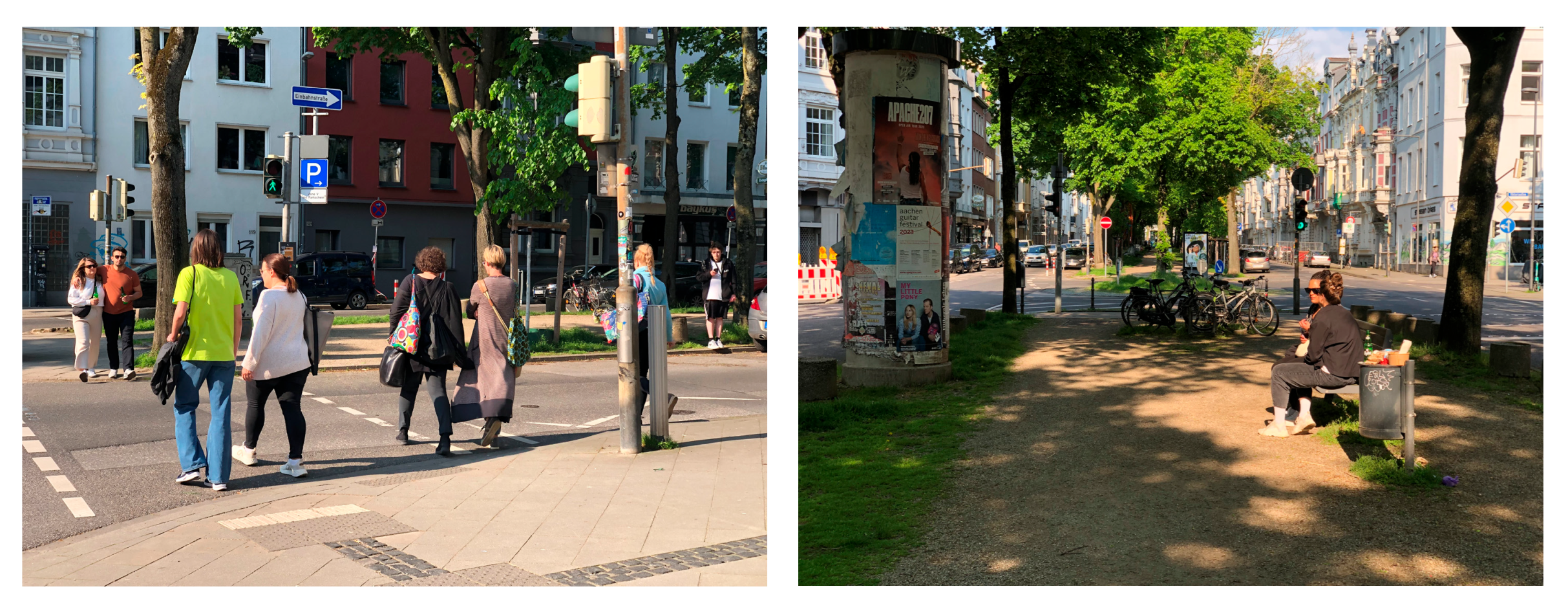
As seen in Figure 2 and Figure 3, a direct perception of the quality of both streets can be made. The Oppenhoffallee is more directed into a high-class community with maintained buildings and spaces, whereas less maintained buildings and an urban setting are seen in the Adalbertsteinweg. On the other hand, one can notice more green cover in the first than in the Adalbertsteinweg.

3.2. Sampling and Collection of Data

The research tried to unpack the relevant parameters in terms of both physical layout and the intangible drivers causing the different streams of behavior and social norms that have identified the differences between the two streets, on the one hand, but also revealed the drawbacks associated with these differences. On the other hand, it also highlighted the potential of unlocking positive drivers of the setting that can and shall contribute to better accommodation of certain parameters towards a more inclusive society, whether within the setting or elsewhere.
To capture the quality of life of the local community in both streets of the case study and identify the inequalities in terms of everyday life, a three-step approach was undertaken [30], resulting in sound findings towards the aims of the research. A bottom-up approach was adopted to research how and if urban contestation is visible in the setting, and how these realms are found in the urban context of the city of Aachen. It was, therefore, necessary to identify the streams of investigation that are important to clarify relevant anecdotes within the area. To do so, a mixed method was employed. As a first step, desk research was conducted to find out the statistical and chronological development of both streets and how the demographic changes have taken place within the setting. This step tried to build a base upon which a more qualitative mapping was further conducted.
A qualitative approach was further adopted as a second step with the aim of capturing the real situation of the settings and the behavioral patterns, along with the perception of the community of their spaces and provision of services. Mapping was conducted to identify the diverse classifications associated with both streets and the impact of such on the lives of the communities within and around the streets and their urban settings. To this aim of identifying those various patterns, street taxonomy was used to investigate the streets on different levels and in a multilayered approach, including:
  • Mapping the physical layout of both streets in terms of public space, streets, and walkability.
  • Identification of the economic structures, including the emerging ethnic economies and land uses through time, and identifying the challenges and the strengths of both sites.
  • Capturing the identity and the different groups of social life, and the behavioral patterns associated with the different social groups residing within both streets.
This multilayered mapping guided the research to identify the different land uses associated with the two streets, showcasing the differences in terms of existing layouts and their implication on the planning projections on one side. It also helped in narrating the development through time, which indicates how public spaces are increased or decreased in association with the developments in terms of widening or narrowing streets, as will be further demonstrated in the results. To allow public space creation or not. On the other side, it has portrayed the site with its emerging new economies that act well within the surrounding and have an ethnic identity leading to potentially integrated ethnic economies.
Behavioral patterns and perception of safety were mapped through semi-structured interviews with 27 persons who were equally distributed in the two areas. This was conducted within the mapping step of research to generate the image of the two areas and allow interpretations on how well equipped each of them is, and how potential aspects can be implemented within and around.
A final step of the methodology is adopting a quantitative approach using a survey that aimed at manifesting certain findings and results established throughout the research. The survey was also employed to validate the mapping levels towards a more defined standpoint and perception of the communities residing in both areas. The survey was conducted anonymously with 42 users of the site, in equal numbers of residents of both areas, where 41% lived close to Adalbertsteinweg, 28% lived closer to Oppenhoffallee, and 31% were visitors and passersby. The survey targeted different age groups. The majority (43%) of the surveyed were within the age group 18–30 years old, whereas 33% were between 31–60 years old, and a smaller number were interviewed (around 17%) with the age above 60 years old. The questionnaire tackled the topics:
  • Rating the quality of public space, the accessibility to both streets, the quality of buildings, and the image of both streets
  • What are the commonalities and differences between both streets in terms of public space, social and economic amenities, safety and cleanliness, and infrastructure
  • Where do you go shopping, and where would you go out
The survey was considered a validation pillar to assess the layers and key issues on which the research will be based, and upon the findings analyzed through the mapping process.

4. Results

4.1. Mapping Physical Urban Change

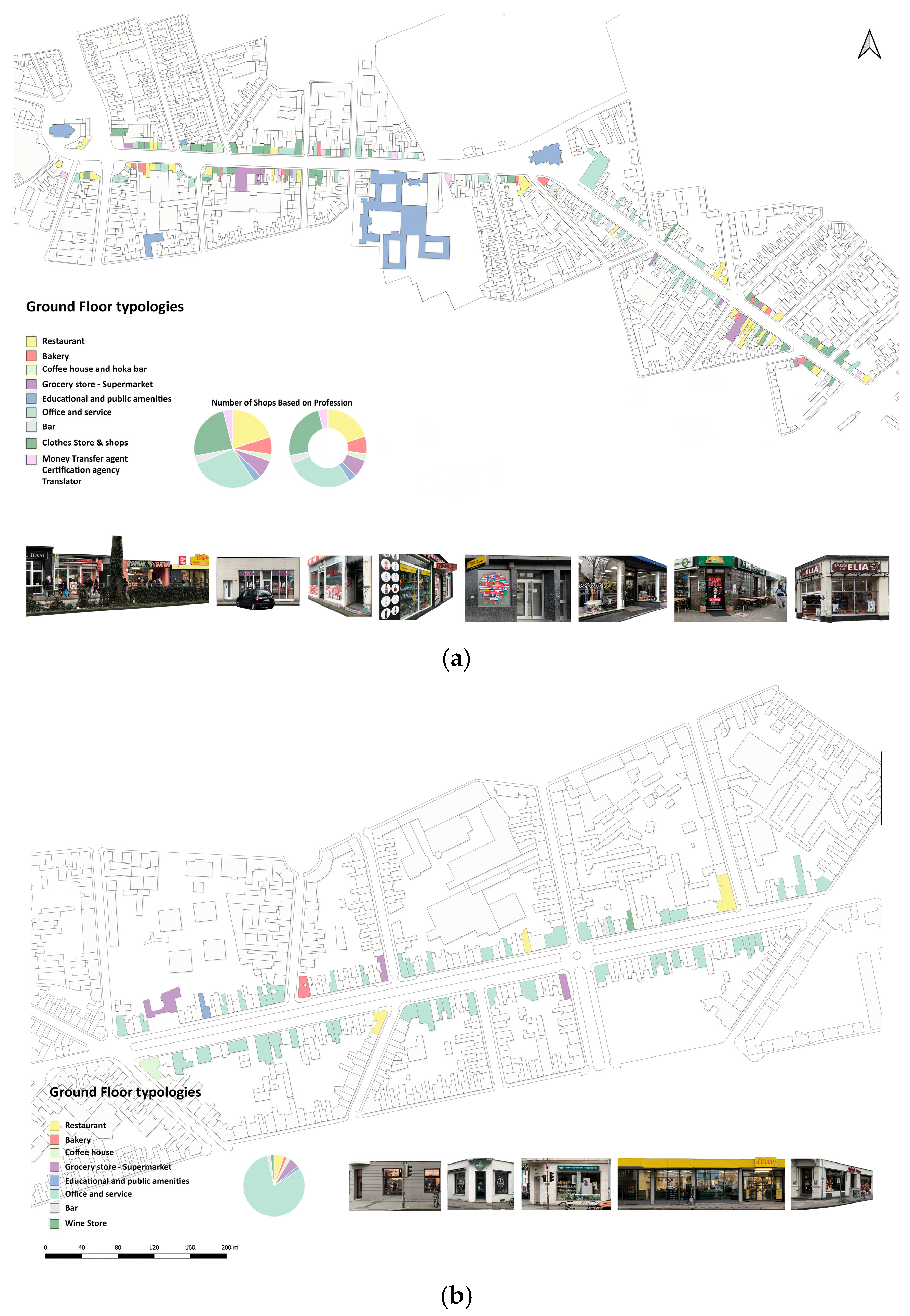
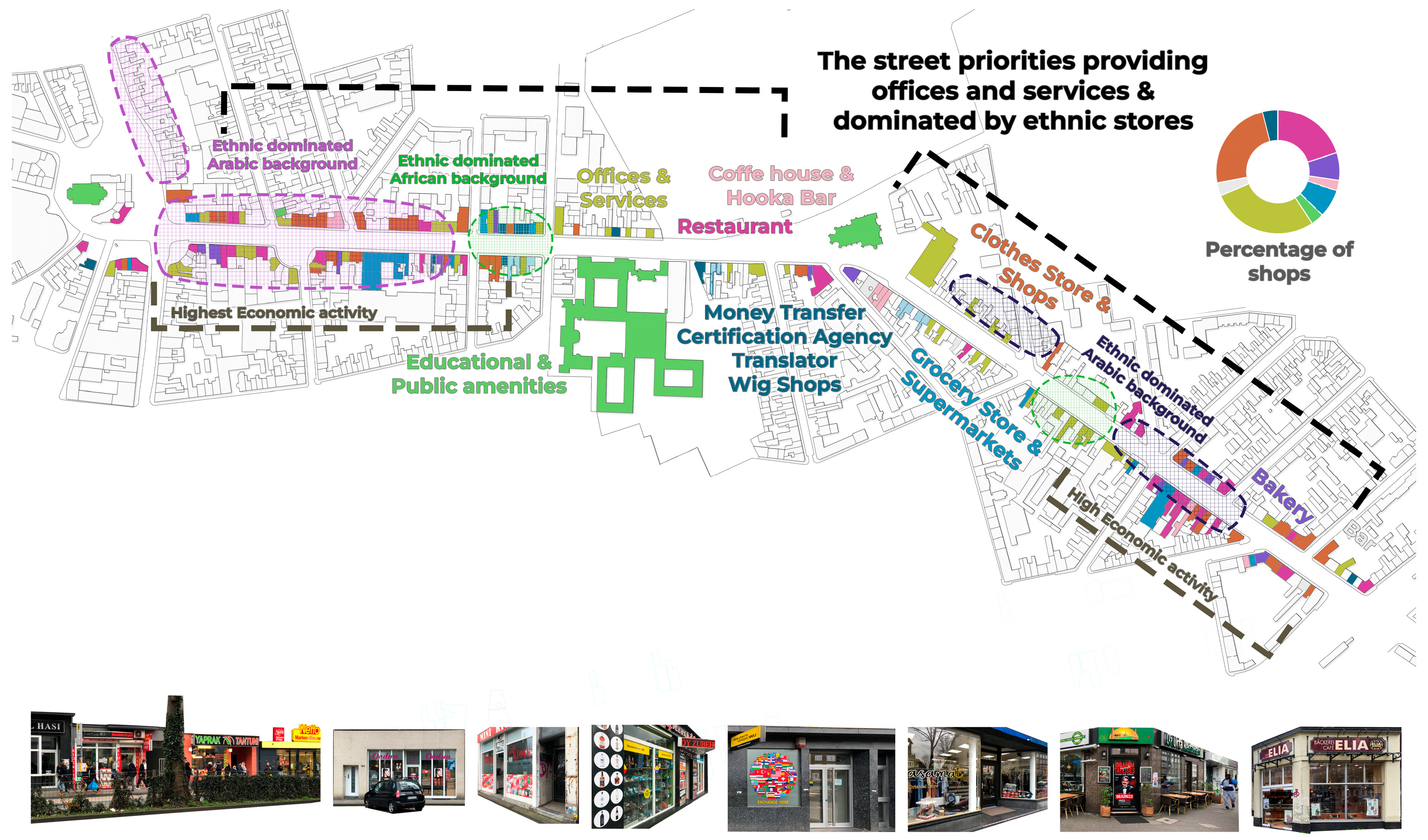
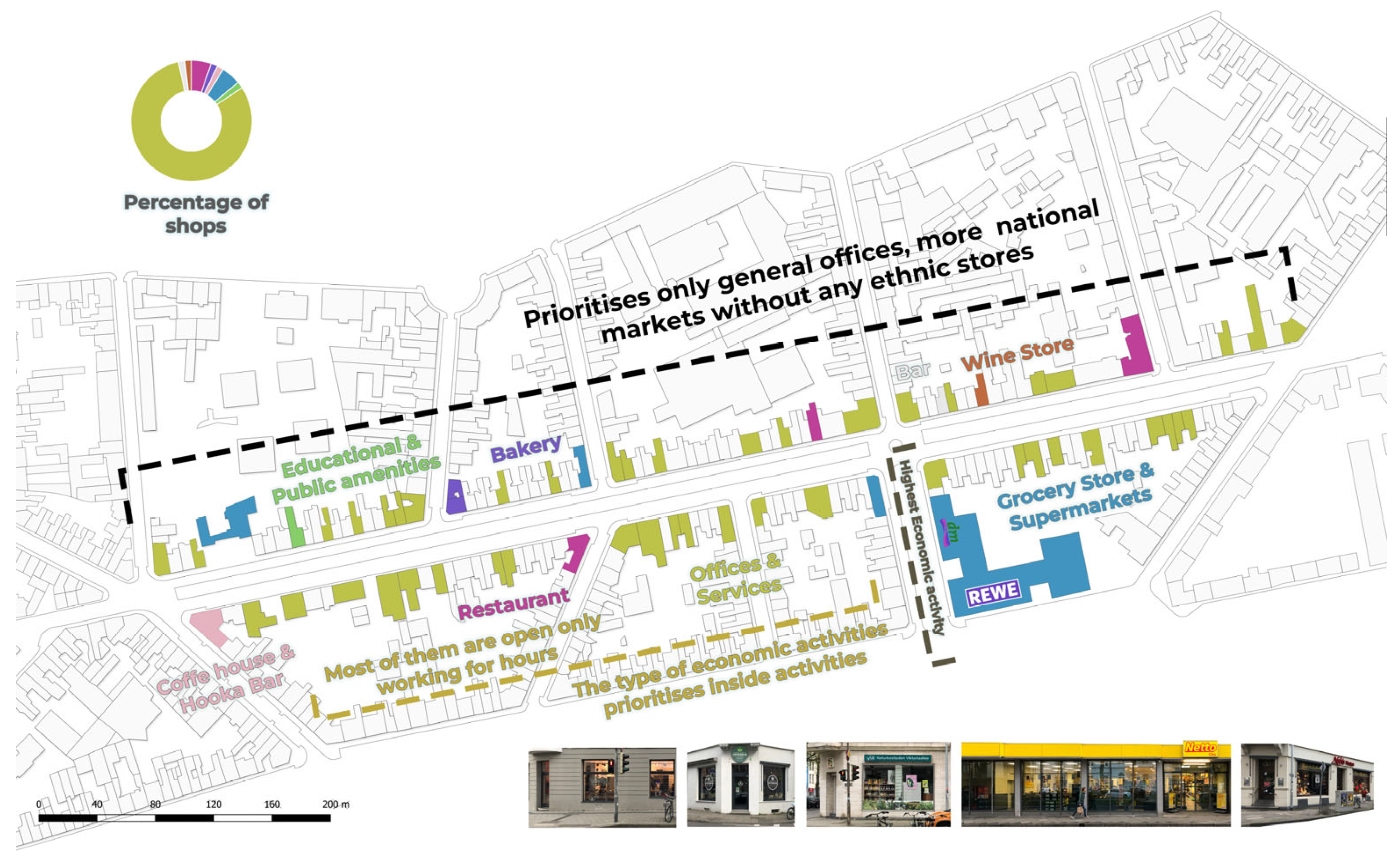
Through the mapping method and the conducted interviews, physical urban change unfolded into three directions. The one has revealed diverse land uses between the Adalbertsteinweg and the Oppenhoffallee. The second layer dealt with and highlighted the differentiated morphologies in architectural layouts and the built environment, whereas the third one unlocked a critical insight into the types and qualities of public space in these adjacent streets, yet, segregated surrounding areas. Navigating the land use of both streets, as shown in Figure 4, a level of diversity in the land uses is noticed in the Adalbertsteinweg that encompasses more functions of commercial activities spanning between grocery shops, cloths stores, money transfer agencies in addition to the offices that are in smaller percentage in the street as in comparison to the Oppenhoffallee that is occupied by offices as a main category of land use. Mapping the physical layout demonstrated the first insights into the differentiated settings in the case study, although they were adjacent.
This notion of these differentiated land uses was highlighted by different interviewees. Such was in terms of raising the issue of needed structures for their daily life as migrant communities, as per an interview with a middle-aged man born and raised in Germany with a migration background, “…I feel closer to home here! Oppenhoffallee feels gloomy and I don’t feel welcomed there… “. The need for money transfer agencies and special clothing shops, for instance, was noticed as an urge to feel at home, finding familiar shopping amenities as they used to have. On the other hand, due to the relatively small group shopping from these entities, the price relation to the normal entities was also differentiated. Some interviews have shown that having the Adalbertsteinweg as a shopping destination is due to other reasons than feeling at home with the new economies, as in an interview with a middle-aged man living next to Oppenhoffallee, “…I only go there to shop! If I shop here, it gets increasingly expensive. There the shops are cheaper…”. Impressions of urban contestation started to appear from this first stage on, as the local community residing or using these spaces were mainly migrants or low-income groups.
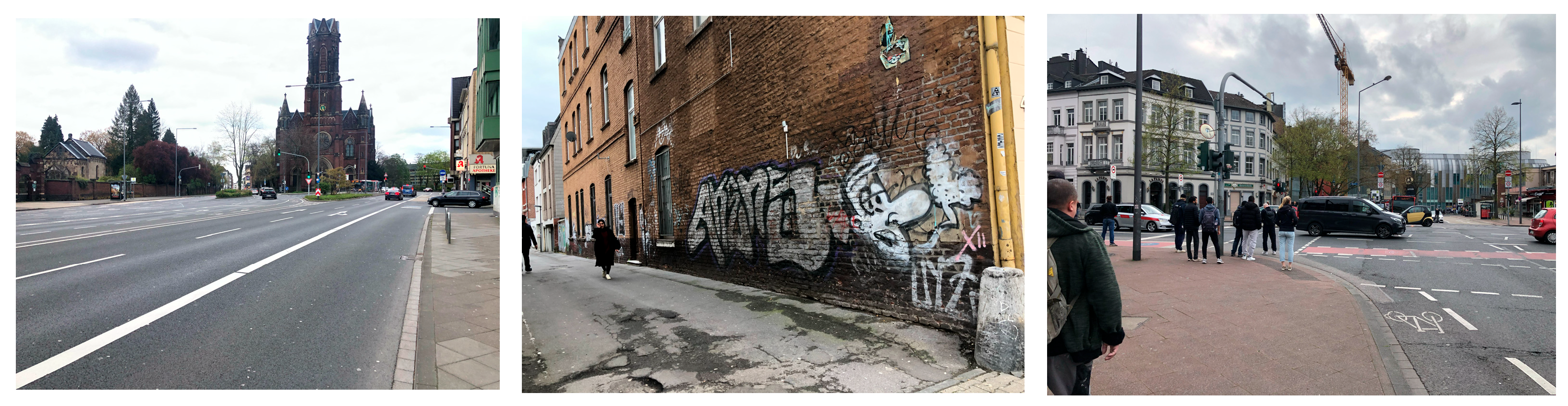
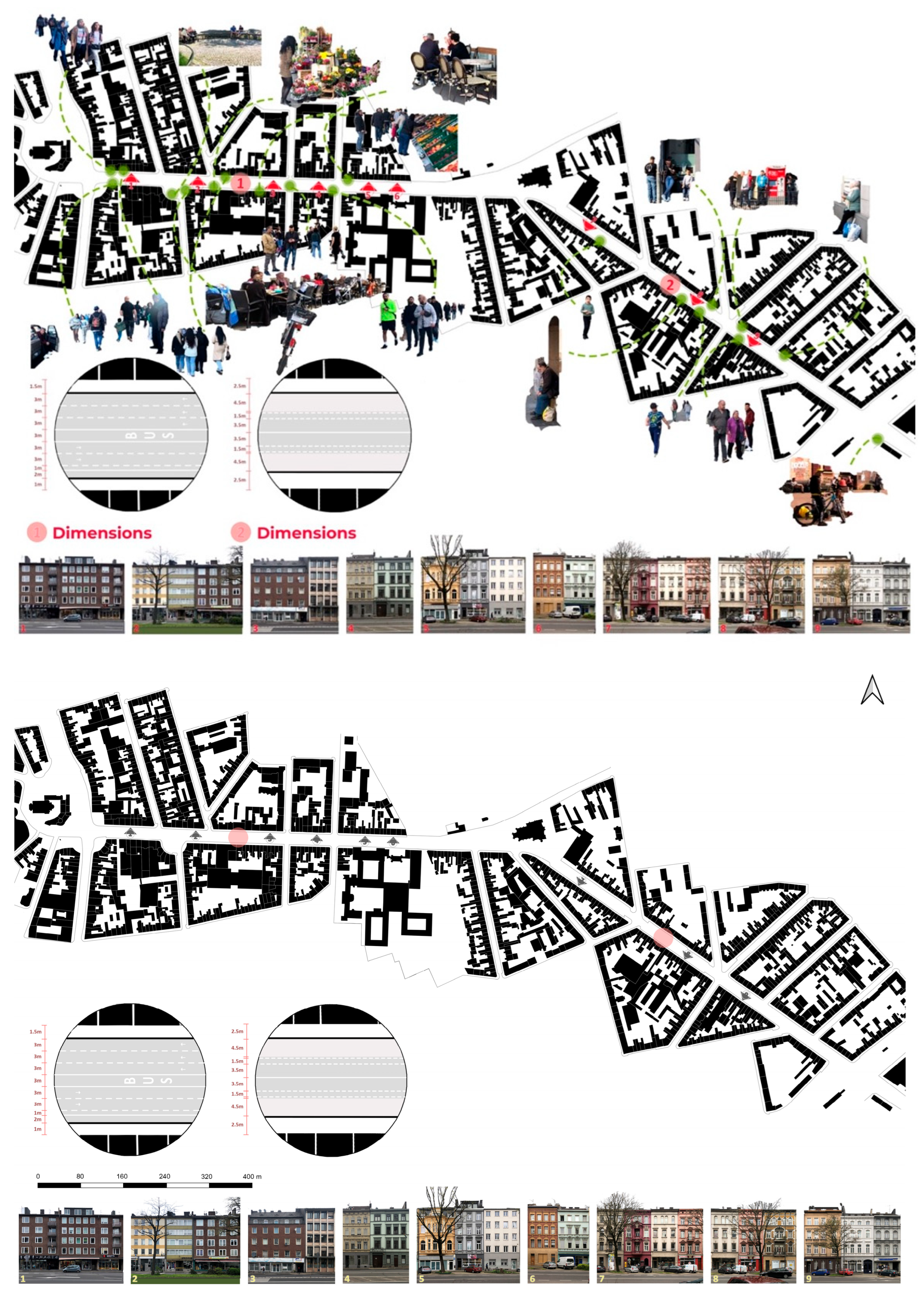
On another front, experiencing the Adalbertsteinweg, regarding its architectural morphology and urban public space, gives another line of these varying patterns between two areas in proximity, especially in the first section of the Adalbertsteinweg number 1. It is noticed through Figure 5 that the street consists of three lanes on each side, with a bus lane in the middle that has no proper pedestrian-friendly transitional spot once stepping out of the bus. However, in accordance with the different interviews, this was not the case 20 years ago. Through an interview with an older aged man residing in the Adalbertsteinweg, “…the streets got wider, we have less space to walk, I think maybe it’s better for cars now!” and through another interview with a middle-aged woman living and residing in the area, “…Streets got wider to enable better capacity, but, hindered conceivable public space at the same time…”. This points out how streets are being further developed to meet certain needs of embracing car flow capacities, however, risk having a future divide that segregates communities and hinders a proper public space network within the different adjacent urban areas.
Further observations, as shown in Figure 5, manifest and emphasize the need for a wider pavement as a start. Through interviews, this wider pavement has noticeably indicated the need for more room and space for public interaction within the very narrow pavements between the shopfronts as indicated in the arrows, and the very wide streets. Public space within the surrounding area of the Adalbertsteinweg has revealed some open spaces around the street and in the backyard of it, as shown in Figure 6. However, this stays debatable, to what extent, the existence of parks would compensate for the wide streets that are encouraged at the Adalbertsteinweg, as in Figure 5. However, as will also be shown, it seems that this area inhibiting a group of another ethnic background requires another typology of public space, which calls for a different shape of public space, hence, enabling small areas around and in front of the shops to gather and interact. Such areas exist in the Oppenhoffallee, which marks another type of dealing with the public space, with smaller and bigger green areas within and around the street. Both aspects increase the notion of inequality of the space and call for measures to bridge such areas for more inclusive development.
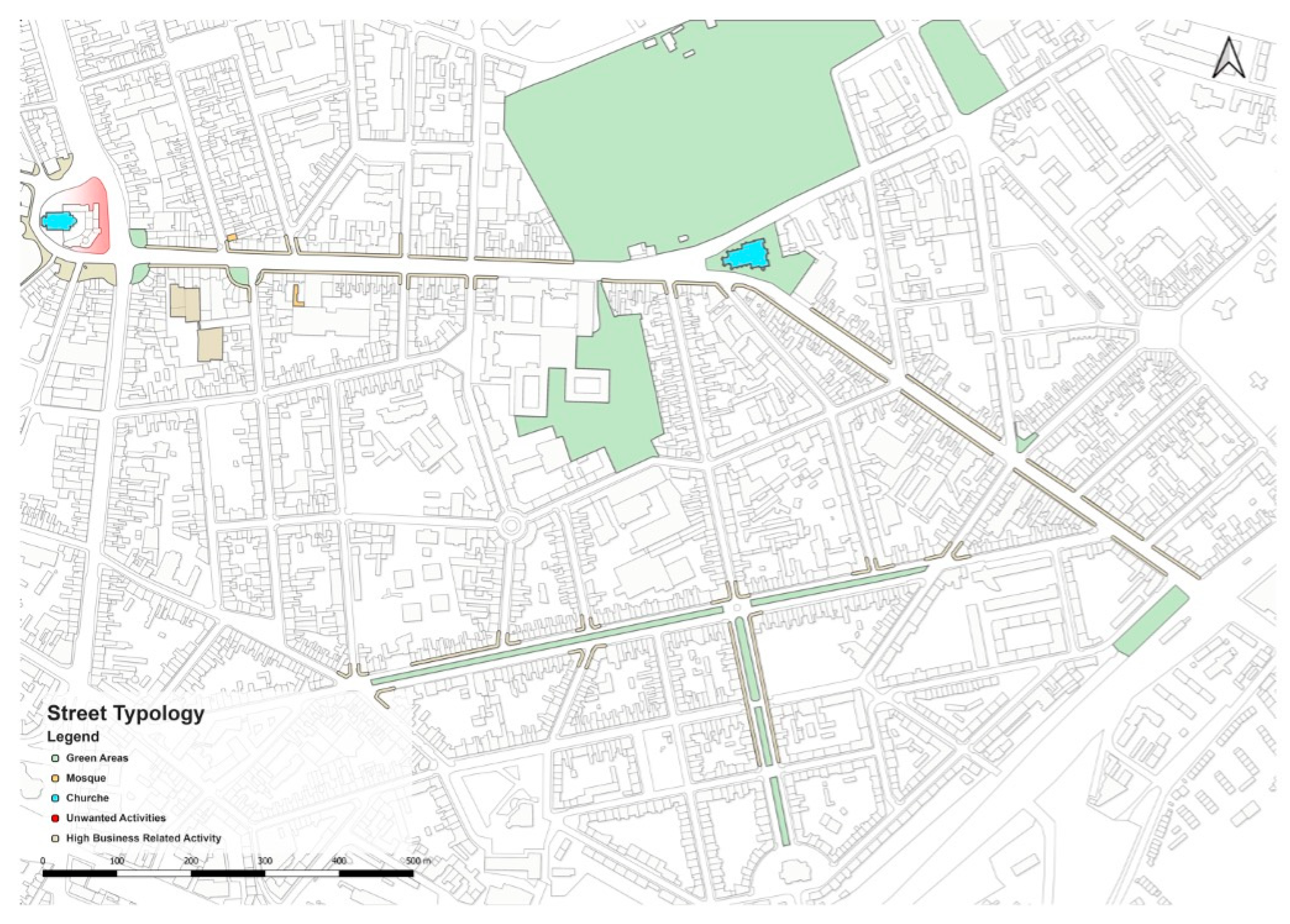
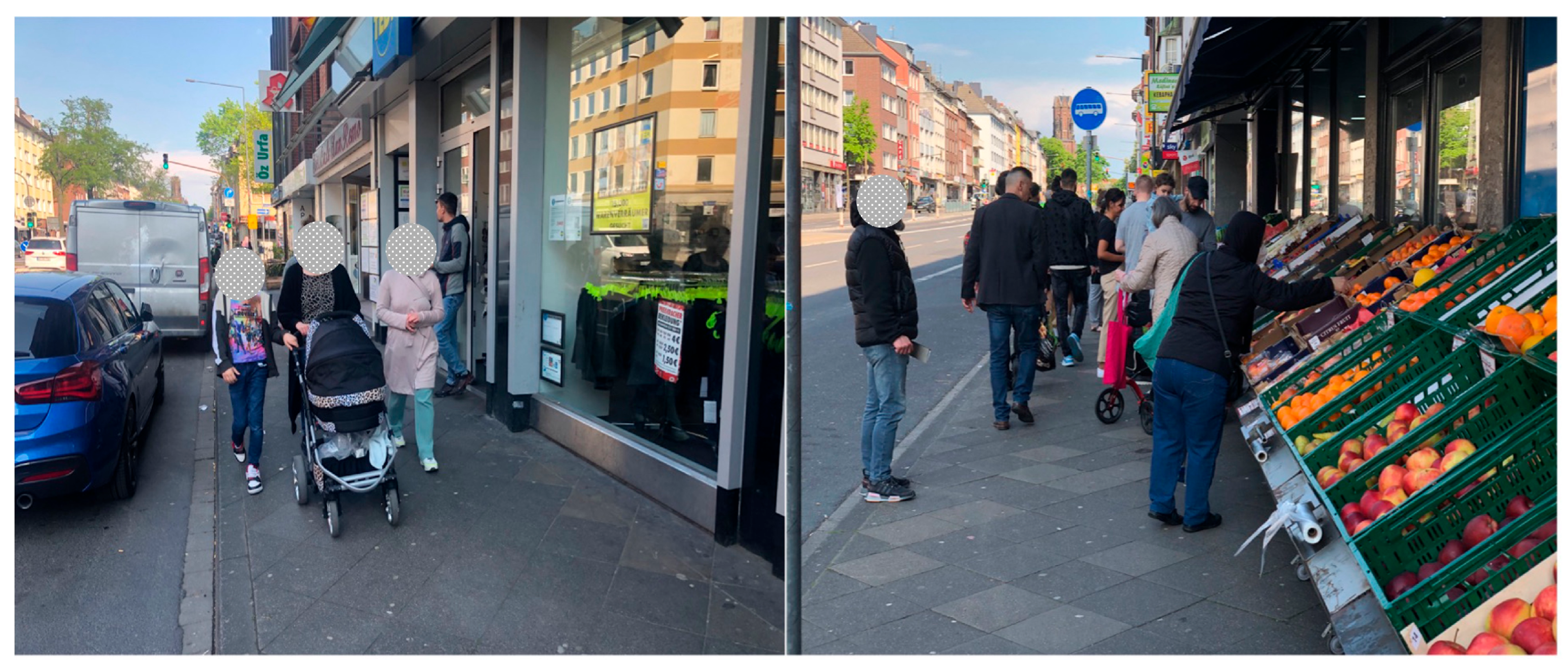
In this regard, as seen in Figure 7, the typology, shape, and location of such green and public spaces differ between the two streets. At the Adalbertsteinweg, despite the energetic shopping entities along the street, the public spaces lie in the background and in areas where destination parks are the only space to have a quality time, whereas the need is different in this case. At the Oppenhoffallee, the green strips catering for a more green layout as well as the continuous efforts to embrace green public space along the streets shaped out a pedestrian-friendly surrounding rather than a car-oriented street.
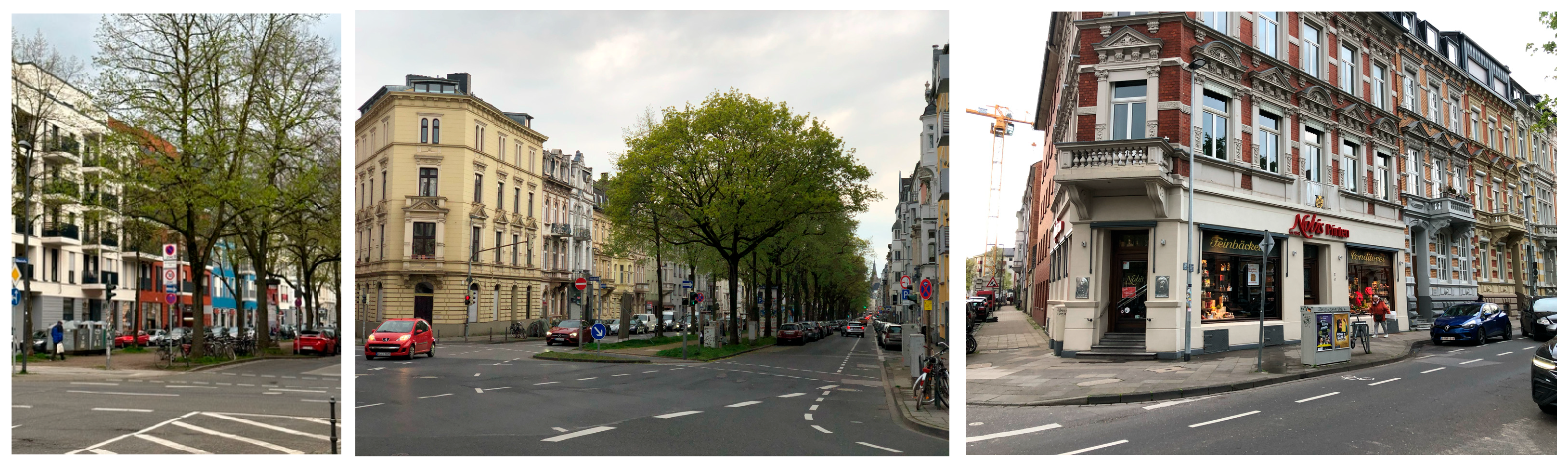
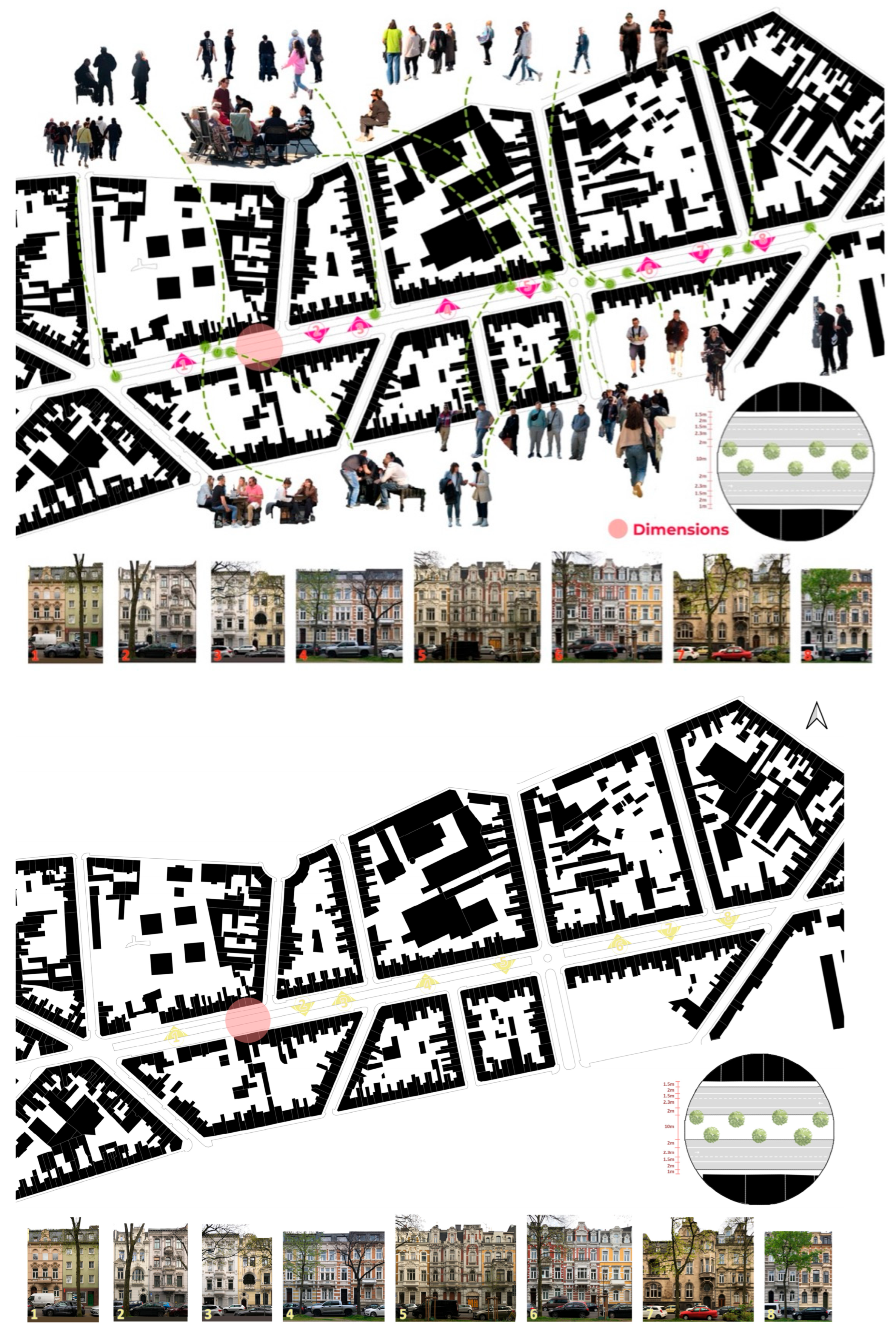
Further to the Oppenhoffallee street typology, it’s emitting another typology of street image and public space environment. It resembles a more environmentally pedestrian-friendly atmosphere, where streets are reduced and green layout is increased on the other side, as shown in Figure 8 and as shown through an interview with a resident in the street, “…Public space is being encouraged, and the street has been reduced to one lane each side…”. On the other hand, through further interviews, it is shown that the street is being turned into a public space by furthering the efforts in reducing car usage and eliminating parking lots to increase pedestrian environmental atmosphere as shown through an interview with a resident of the Oppenhoffallee, “…Parking plots are being erased, they are pushing us out of the city…”. Although it sounds like a negative input from business-oriented residents who enjoy the neighborhood, they cannot do without their cars, as a medium for easy and quick accessibility to their jobs. Yet, the overall strategic aim to increase the quality of public space is perceived positively through the different users observed in the street.
Consequently, public space layout at the Oppenhoffallee has won in quality that enabled more interaction and a place to meet and socialize, as shown in the yellow arrows in Figure 8. It is shown in different ways, especially in the manner in which developments are taking place on the main street, as well as others are gradually decreasing in their car lanes, and more seating and green spaces are widespread all around, as shown in Figure 9.

4.2. Mapping Emergent Typologies of Urban Life

Moving on to more intangible typologies of use in both settings, vibrancy, vitality, and safety will be investigated, along with the aspects of emergent ethnic economies that can cater to new development potential.
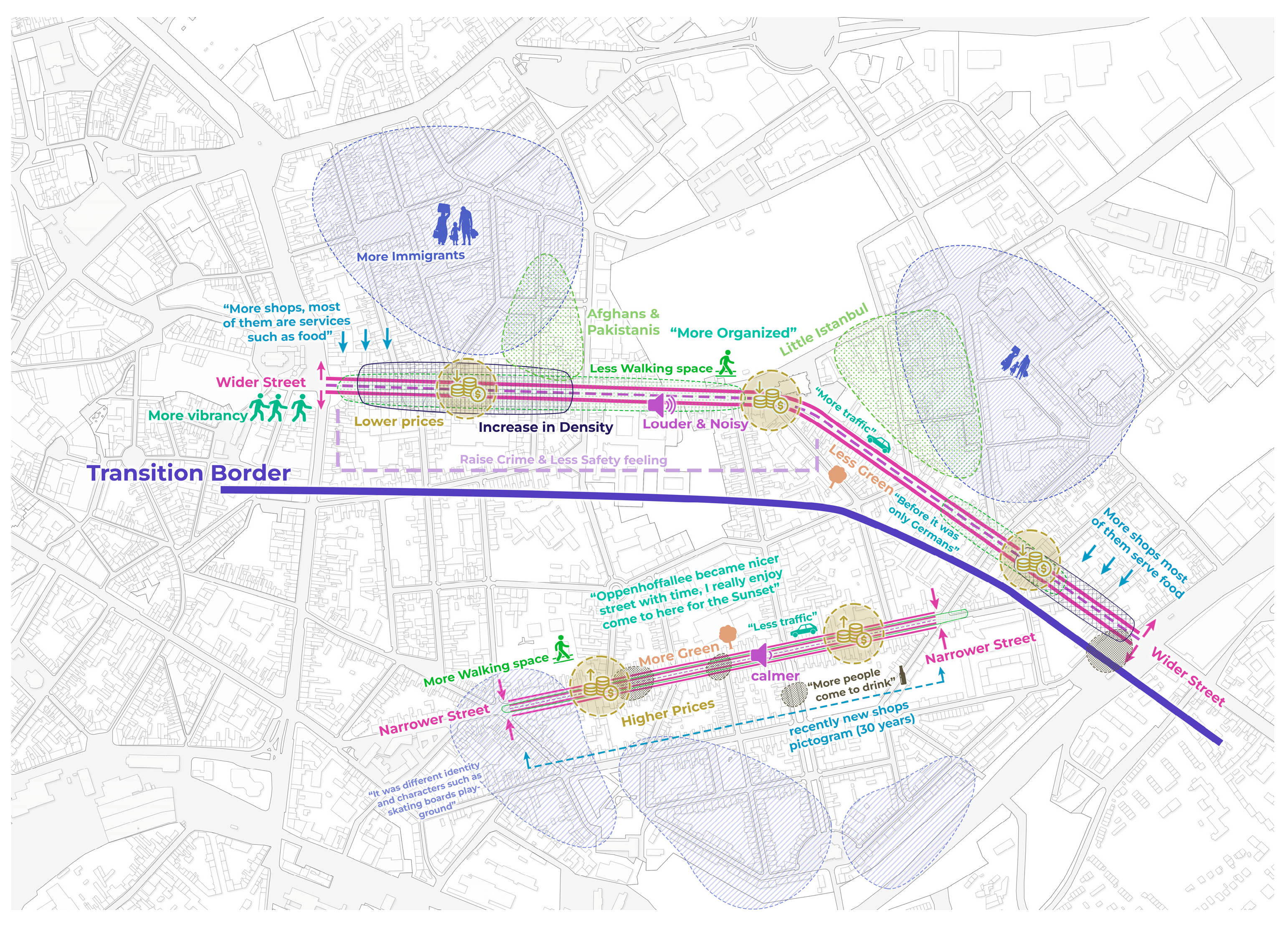
In accordance with Figure 10, safety was debated differently by different users. On the one side, it did not feel safe at the Adalbertsteinweg through different social groups of the local community residing in the area, but mainly in the surrounding areas, “… a lot of crime, the police come here often, a lot of shouting …”, as given by a resident of the area next to Adalbertsteinweg. On the other side, the local community within the Adalbertsteinweg had a different perception, such as a statement by a shop owner in the street, “… the street is safe despite what you might have heard, it is safe, we only had one robbery in the last years …”. It was assumed and interpreted that an image of unsafety was prevailing, although in many cases, it was not the case.
Adalbertsteinweg has potential for creating vital spaces within its context; however, it is not very comfortable for people to stay in and spend time. It is gaining the image of a cheaper shopping destination for certain needs, as shown in Figure 10 and as cited from interviews such as with a middle-aged man living next to Oppenhoffallee, “…I only go there to shop! If I shop here, it gets more and more expensive. There the shops are cheaper…”. Whether due to the widening of the street and allowing more cars, or through the exclusion of the green areas from the vital everyday spaces within the Adalbertsteinweg, it has won an image that caters to quick, cheap shopping, without optimizing the lively shopping atmosphere that can be easily allocated within this colorful, multiethnic economic strip.
As for the Oppenhoffallee, public space is more vital and emits more quality within its structure. Having the main street getting narrower through time and through pedestrian-friendly developments, more restaurants and cafes have found it attractive to locate their investment along the street, or through the increasing greenery. Furthermore, provision of the needed everyday shopping infrastructure, as shown by a resident of the street for the last 30 years, is also catered for to bridge the gap, “…now we have stores here, so the street is complete…”, hence, the Oppenhoffallee has grown to embody the perfect place for living. Further to the perception of both streets, the anonymous survey has basically revealed a clear distinction in the quality of public space, as shown in Figure 11.
This has further impacted the economic vibrancy, as the image of both streets was also investigated to come up with extremely different perceptions, although the streets are in adjacency to each other. This can also be seen in Figure 12.
Economic vibrancy and emerging ethnic economies have shown positive footprints within the Adalbertsteinweg as shown in Figure 13 and as shown in an interview with a man living in the Adalbertsteinweg for the last 40 years, “…Adalbertsteinweg became more organized but noisier …the stores became more vibrant …”. Various types of shopping modes and typologies have increased and brought a different structure to the place than other streets that can be so called as associated with local culture. The potential of new typologies of markets and new typologies of cafes has also been shown to be successful.
However, they need more of a structure and layout that enables them to excel within the urban environment in which they are situated. To this end, such a realm cannot be achieved if streets are turning into main access roads to the eastern part of the city, jamming traffic and eliminating pedestrian potential.
The physical part of the argument is not the only one influencing this limitation. Socially oriented behaviors and norms have another weight to impact a division of two faraway images of adjacent streets. In this sense, the two streets, although they possess a lot of complementary characteristics for a better quality if merged and connected, yet, due to exclusion for certain uses, the areas result in catering to a targeted use and user group only. As shown in Figure 14, even further expansion of green strips and public spaces is moving to the southern part from the Oppenhoffallee, rather than linking to the nearby shopping node north to meet with the Adalbertsteinweg. The interlinkage between social and spatial phenomena is missing to capture the needed potential of the development of such an area.

5. Discussion

5.1. Segregated Communities? Yet, Potential for Flow and Fluidity?

Triangulating the different methods and collected data, urban change was noticed on different levels and in different ways. This was evident through semi-structured interviews, where interviewees started by sketching the area in the 1960s, describing it as a playground for kids, where they had no preference or limitations to play and move all around. This was brought into discussion by an interview with a middle-aged man living next to Oppenhoffallee “……as kids, I used to come here, go to the inner city, move around and go all the way to the cemetery. We used to think, it’s all ours…now it’s different, I don’t see people mixing anymore…”.
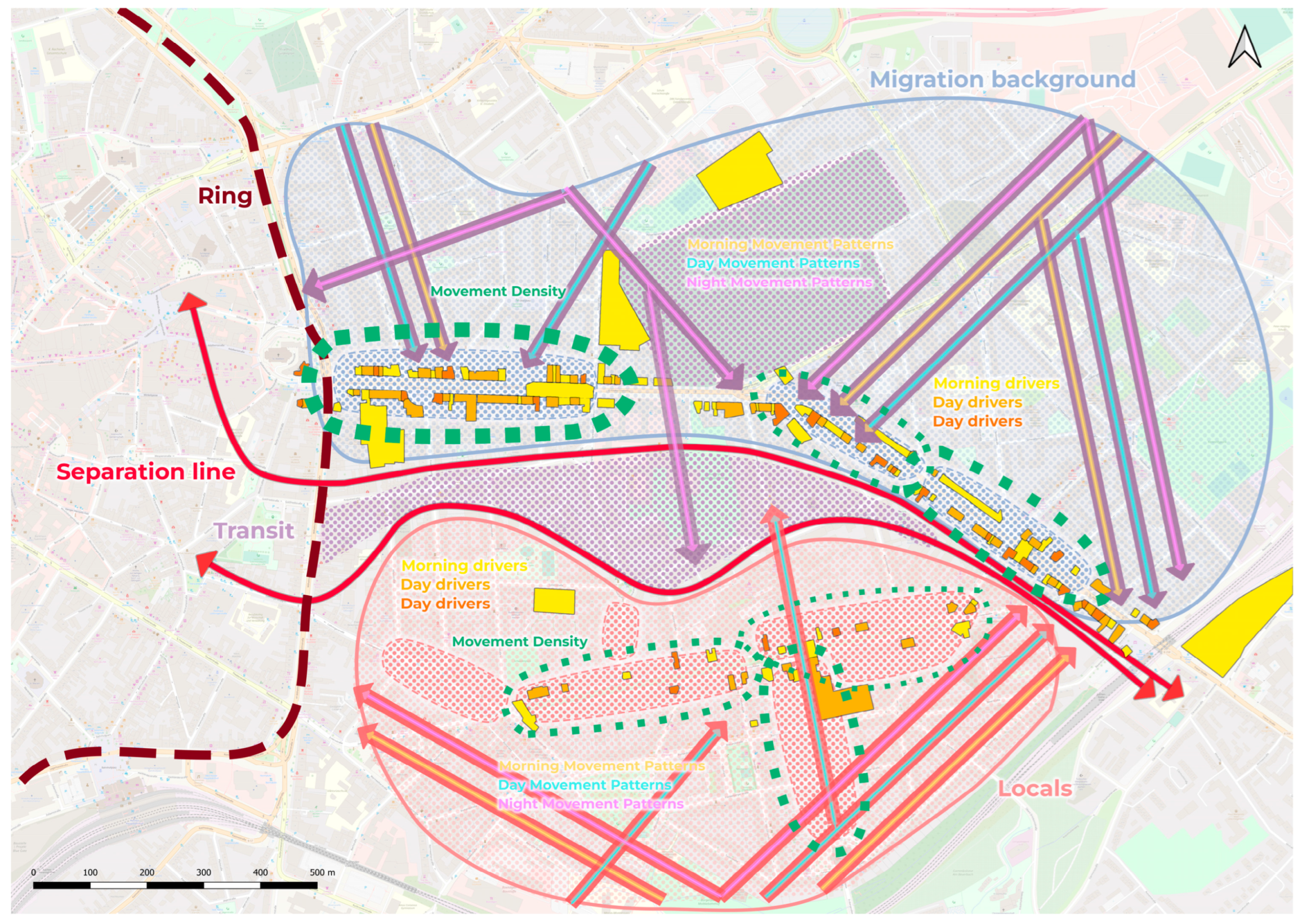
On the other hand, certain inputs shown through interviews have also fused this perception of the social exclusion existing within the setting by a young boy from a migration background living around the Adalbertsteinweg and who stayed at the Gemeinschafts Hauptschule Aretzstraße, “… my school had no Germans, we never met them through our education…”. Consequently, this has shown in the decline of the Adalbertsteinweg as a destination, a decrease of social interaction, and the indirect and implicit economic revenue that relates in total to the differentiated quality of the space, as well as the stigmatization of one adjacent area from the other. This segregation was clearly seen, felt, and sensed in the setting, as also shown in Figure 15.
Segregation and urban contestation started to shape their way by branding the streets within these adjacent areas with implicit borders that were perceived throughout the survey by the community, as well as by mapping the tangible and intangible structures. Throughout, interpretive dimensions that can cater to further development and inclusion, rather than signifying descriptive layers as such, have also been identified. To this end, it was evident to see that the migration background area was indeed urbanely contested yet revealed many potential indicators that can bring in flow and fluidity into the overall area, if not other areas as well. As stated by [27], fluid planning underscores the flow of energies in an urban context. It is a journey of discovery that speculates the different potentials needing exchange and flow to enable more inclusivity within urban contexts. This was proven successful through creating an impact on urban dynamics by the integration of migrant induced urban changes into urban nodes [18]. This would trigger urban diversity on the one hand, but also acceptance and inclusivity.
The mapping showed multifaceted narratives of the two streets within the case study. On the one side, it manifested how the Adalbertsteinweg is experiencing urban contestation through the urban exclusion of integrated and lively public space refurbishments being developed with the Oppenhoffallee. On the other side, it showed how community members of both as well as visitors from outside the area are targeting the two streets for differentiated reasons. Therefore, spatial strategies and migrant induced changes within different urban areas are to be encouraged to play a stronger role in overcoming urban contestation through more fluid approaches [21].

5.2. Celebrating Diversity

Ethnic economies as an economic enrichment to integrated settings stand for the coexistence of multiple energies and identities that can have a potential for creating vibrant collective spaces within the city. Having migrants’ dense areas inhabiting such ethnically appealing economies adjacent to other areas with more homogeneous residents, and vastly better quality of space, correlates to bridging segregating drivers within cities if managed separately and integrated well. Moreover, having both in the vicinity of the core city gives the research more reason and significance to tackle the option of flow and fluidity throughout the city center and from the adjacent areas. Such a flow of energies must be accompanied by the unlocking of such potential functions and vibrancies. This type of integration can face such challenges and bring in the positive drivers of both streets into interaction and the flow of energies. Hence, perceiving the area in a differentiated manner strengthens the idea that planning shall not be linear, but rather allows innovative actions and anchors of demonstrating ethnic economies elsewhere within and around the area [19].
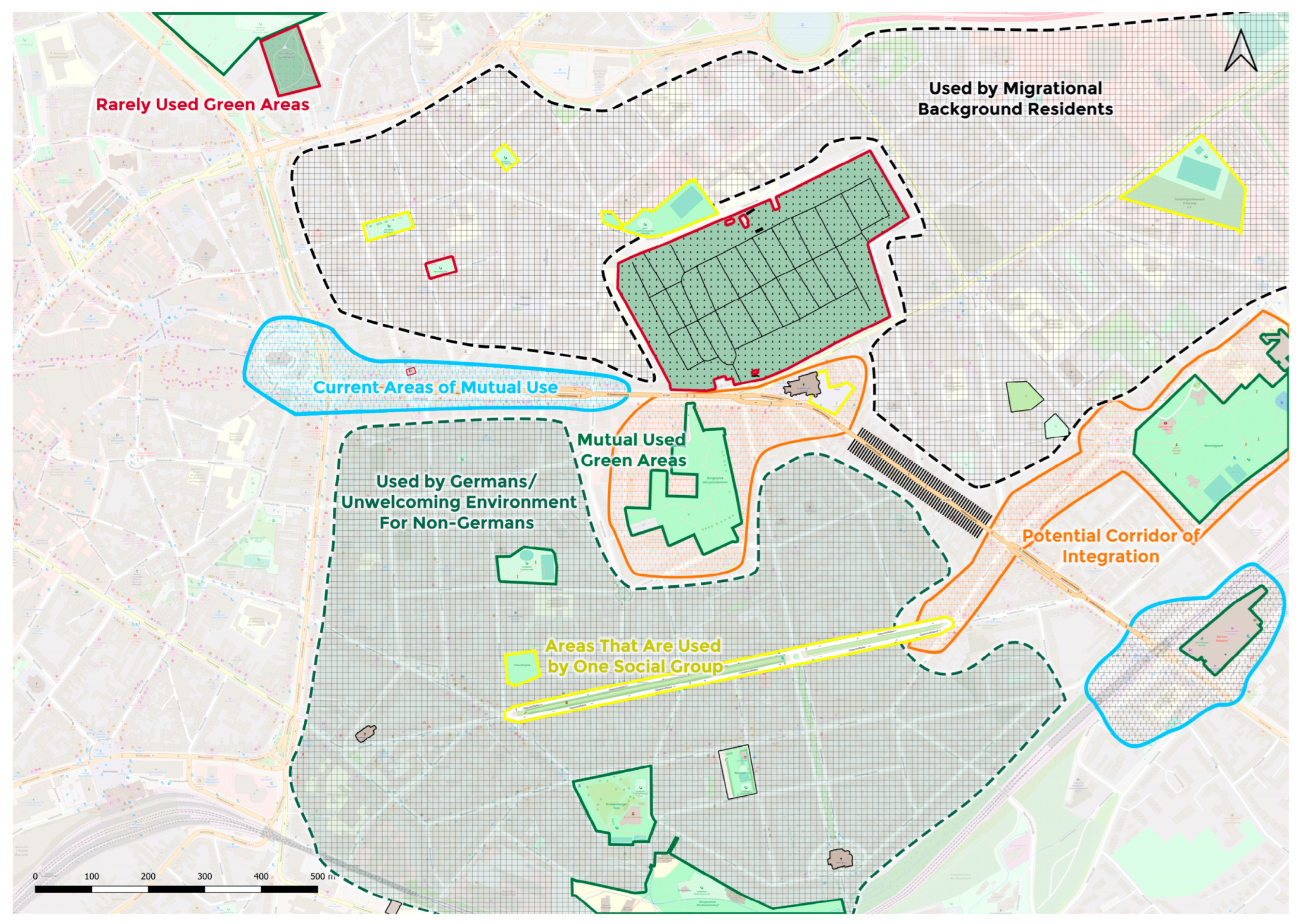
Potential for appropriated public space towards new typologies of public spaces within clusters of developments throughout both areas was seen as a major starting point in deriving strategic perspectives towards inclusive communities, as shown in Figure 16.
Such strategic potential development enhances an urban change that integrates differentiated dynamics within the whole area. Triggering main functions within connecting lines and spines between the two streets and linking them to existing urban nodes is seen as an enabler for the diversity of social as well as economic functions that cater for better inclusive development.

6. Conclusions

Urban contestation is not solely for the development of settings within themselves, but also has a certain community or economic potential deteriorating through exclusion. To avoid and combat exclusion and segregation of migrants’ settings within cities, a primary change in urban governance towards migration-related diversity is required [31]. It is not only a human aspect, but rather a tool to improve economic development by sharing and injecting diversity within the internal structures of the city. The result of such development has a multiple-dimensional impact on improving the lives of the communities and enriching them with urban diversity as suggested by the sustainable development goals, especially SDG10 and SDG11 [1]. An increasing need to have a turn in local governance is gaining weight in the discussion of migrants’ settings integration, which is much related to the multi-level governance conception, seeing importance in the collaboration between urban policy and private actors [32]. Cities and municipalities, along with local communities and the private sector, are seen as the main stakeholders in the realm of urban change towards more resilient and inclusive communities. By enabling more influence on urban management through government-based initiatives, more diversity can flow within the urban areas [33]. This approach towards new policies and layouts of urban change can be empowered by encouraging diversity and creating incentives for the promotion of such a thing, which can label and brand the city on a wider scale.
Challenges and potential of migrants’ settings reveal a base for further development, incorporating migrants’ settings within local policy. Adhering to that, a more identity-oriented public space network allocated in potential locations can enable better inclusion and vibrancy. In other words, more dynamic intersection areas to enable environments for flow, and differentiated users shall be motivated to implicitly trigger integration and enrichment of spaces through ethnic dynamics, whether on economic or social interactive levels. In that sense, more collaborative practices may cater to new types of policies to create common spaces. These could take different forms, yet have shared characteristics through fluid planning, which in turn, evolves dialogue and new social networks distributed within the merging spaces [19].
Raising the importance of motivating community-led appropriated public spaces that are linked to ethnic economic clusters as a potential new typology of public spaces works well for different users. In addition, celebrating co-existing identities gives potential to a productive and positive space, where all users would find their role and be more engaged, the trigger to accommodate inclusivity.

Author Contributions

Conceptualization, M.T., E.K., C.R. and F.B.K.; methodology, M.T. and E.K.; software, M.A. and Q.I.; validation, M.T., C.R. and E.K.; formal analysis, M.T., E.K., M.A. and Q.I.; investigation, Q.I., E.K., M.T. and M.A.; resources, M.A. and Q.I.; data curation, M.T. and E.K.; writing—original draft preparation, M.T. and E.K.; writing—review and editing, M.T., C.R. and F.B.K.; visualization, M.A. and Q.I.; supervision, M.T. and E.K.; project administration, M.T. and C.R. All authors have read and agreed to the published version of the manuscript.

Funding

This research received no external funding.

Institutional Review Board Statement

The study was conducted in accordance with the Declaration of Helsinki and approved by the Institutional Review Board of the German Jordanian University Deanship of Scientific Research—DSR—Research Ethics Section—RES—IRB Council (Approval Nr. IRB SABE 01/2025 and date of approval 8 April 2025).

Informed Consent Statement

Verbal consent was obtained, as the survey was anonymous.

Data Availability Statement

All needed data are within the manuscript.

Conflicts of Interest

The authors declare no conflicts of interest.

References

  1. World Economic Forum. Migration and Its Impact on Cities, in Collaboration with PwC; REF 061017, A.B; World Economic Forum: Geneva, Switzerland, 2017; Available online: https://www.weforum.org/publications/migration-and-its-impact-on-cities/ (accessed on 4 July 2024).
  2. Südaş, I.; van Liempt, I.; Pfaffenbach, C. The role of cities in migrants’ self-identification and spatial integration: The case of turkish immigrants in Aachen and the Hague. Geogr. Rev. 2023, 19, 37–61. [Google Scholar] [CrossRef]
  3. Przyrembel, A. Friedrich Engels, Die Lage der arbeitenden Klasse in England Nach eigenen Anschauungen und authentischen Quellen, Leipzig 1845. Themenportal Europäische Geschichte. 2011. Available online: https://www.europa.clio-online.de/essay/id/fdae-1540 (accessed on 5 May 2024).
  4. Kränzle, E.; Roskamm, N. Urban Contestation: An Introduction. In Unsettled Urban Space: Routines, Temporalities and Contestations; Viderman, T., Knierbein, S., Kränzle, E., Frank, S., Roskamm, N., Wall, E., Eds.; Routledge: New York, NY, USA, 2023; ISBN 9780367258610. [Google Scholar]
  5. General Assembly Economic and Social Council United Nations 2024; SDG Progress Report, Progress towards the Sustainable Development Goals, Report of the Secretary General, A/79/79-E/2024/54; United Nations: New York, NY, USA, 2024.
  6. Baciu, D.C.; Mi, D.; Birchall, C.; Pietra, D.D.; Loevezijn, L.V.; Nazou, A. Mapping diversity: From ecology and human geography to urbanism and culture. SN Soc. Sci. 2022, 2, 136. [Google Scholar] [CrossRef]
  7. Avelino, F.; van Steenbergen, F.; Schipper, K.; Steger, T.; Henfrey, T.; Cook, I.M.; Bach, M.; Crowley, D.; Kotsila, P.; Kramer, J.; et al. Mapping the diversity & transformative potential of approaches to sustainable just cities. Urban Transform. 2024, 6, 5. [Google Scholar] [CrossRef]
  8. Alawneh, L.; Tawil, M.; Bäumer, K.; Reicher, C. Emerging Residential Trends within Socially Heterogeneous Settings: The Case of Jabal Al-Hussein Amman. Urban Sci. 2024, 8, 68. [Google Scholar] [CrossRef]
  9. Tawil, M.; Alawneh, L. The notion of migration in Amman New perspective in perceiving heterogeneous communities. In Zukunft Denken und Verantworten; Roters, W., Gräf, H., Wollmann, H., Eds.; Springer: Wiesbaden, Germany, 2020. [Google Scholar] [CrossRef]
  10. Tawil, M.; Reicher, C.; Krings, E.; Haydan, M.; Gadkar, R.; Gavrilova, A.; Cardenas Vignes, U. Towards a Fluid Planning Approach in Germany: An Option for Social Fragmentation? Urban Sci. 2025, 9, 10. [Google Scholar] [CrossRef]
  11. Bennett, M.J. The value of cultural diversity: Rhetoric and reality. Springer Plus. 2016, 5, 897. [Google Scholar] [CrossRef][Green Version]
  12. Prenzel, P.; Bosma, N.; Schutjens, V.; Stam, E. Cultural diversity and innovative entrepreneurship. Small Bus Econ. 2024, 63, 1381–1414. [Google Scholar] [CrossRef]
  13. Castles, S.; Wise, R.D. Migration and Development: Perspectives from the South; International Organization for Migration: Geneva, Switzerland, 2008; ISBN 978-92-9068-417-6. [Google Scholar]
  14. Simons, I. The Role of Events in Hybrid Communities, An Interaction Ritual Approach; Macxmedia: Nijmegen, The Netherland, 2022; ISBN 789090361956. [Google Scholar]
  15. Cormoș, V.C. The Processes of Adaptation, Assimilation and Integration in the Country of Migration: A Psychosocial Perspective on Place Identity Changes. Sustainability 2022, 14, 10296. [Google Scholar] [CrossRef]
  16. AL Jorani, N.A.; Hassan, S.A. Fluidity in Urban Planning. Int. J. Sci. Res. 2017, 7, 1133–1137. [Google Scholar] [CrossRef]
  17. Sievers, W. Cultural Change in Post-Migrant Societies: Re-imagining Communities Through Arts and Cultural Activities. In Cultural Change in Post-Migrant Societies; Sievers, W., Ed.; IMISCOE Research Series; Springer: Cham, Switzerland, 2024. [Google Scholar] [CrossRef]
  18. Stalder, F. Manuel Castells: The Theory of the Network Society; Polity: Cambridge, UK, 2006; 255p, ISBN 0-7456-3276-9. [Google Scholar]
  19. Healey, P. Urban Complexity and Spatial Strategies: Towards a Relational Planning for Our Times, 1st ed.; Routledge: New York, NY, USA, 2006. [Google Scholar] [CrossRef]
  20. Hillier, J. Shadows of Power: An Allegory of Prudence in Land-Use Planning; Taylor & Francis: London, UK, 2003. [Google Scholar]
  21. Hillier, J. Plan(e) Speaking: A Multiplanar Theory of Spatial Planning. Plan. Theory. 2008, 7, 24–50. [Google Scholar] [CrossRef]
  22. Hillier, J. Post-structural complexity: Strategic navigation in an ocean of theory and practice. In Making Strategies in Spatial Planning: Knowledge and Values; Springer: Dordrecht, The Netherlands, 2010; pp. 87–97. [Google Scholar]
  23. De Certeau, M. The Practice of Everyday Life, 3rd ed.; University of California Press: Oakland, CA, USA, 2011; 256p, ISBN 0520271459. [Google Scholar]
  24. Berke, P.; Malecha, M.; Yu, S.; Lee, J.; Masterson, J. Plan integration for resilience scorecard: Evaluating networks of plans in six US coastal cities. J. Environ. Plan. Manag. 2018, 62, 1–20. [Google Scholar] [CrossRef]
  25. Pickett, J. Public Opinion and Criminal Justice Policy, Theory and Research. Annu. Rev. Criminol. 2019, 2, 405–428. [Google Scholar] [CrossRef]
  26. Muñoz-Erickson, T.; Meerow, S.; Hobbins, R.; Cook, E.; Iwaniec, D.; Berbés-Blázquez, M.; Grimm, N.; Barnett, A.; Cordero, J.; Gim, C.; et al. Beyond bouncing back? Comparing and contesting urban resilience frames in US and Latin American contexts. Landsc. Urban Plan. 2021, 214, 104173. [Google Scholar] [CrossRef]
  27. Nyseth, T. Fluid Planning: A Meaningless Concept or a Rational Response to Uncertainty in Urban Planning? In Advances in Spatial Planning; IntechOpen: London, UK, 2012. [Google Scholar] [CrossRef]
  28. Folke, C.; Carpenter, S.R.; Walker, B.; Scheffer, M.; Chapin, T.; Rockstrom, J. Resilience thinking: Integrating resilience, adaptability and transformability. Ecol. Soc. 2010, 15, 20. [Google Scholar] [CrossRef]
  29. Ministerium für Kinder, Jugend, Familie, Gleichstellung, Flucht und Integration. Integrationsprofil Städteregion Aachen. Daten zu Zuwanderung und Integration. des Landes Nordrhein-Westfalen; Ministerium für Kinder, Jugend, Familie, Gleichstellung, Flucht und Integration: North Rhine-Westphalia, Germany, 2024. [Google Scholar]
  30. Abusaada, H.; Elshater, A. Can Public Spaces Alleviate Poverty-Related Feelings? Content Analysis of Vision 2030 and Egyptian Residents’ Storytelling. Buildings 2023, 13, 1328. [Google Scholar] [CrossRef]
  31. Scholten, P. Beyond Migrant Integration Policies: Rethinking the Urban Governance, Diversity and Public Governance. HKJU-CCPA 2018, 18, 7–30. [Google Scholar] [CrossRef]
  32. Dimitriadis, I.; Hajer, M.; Fontanari, E.; Ambrosini, M. Local “Battlegrounds”. Relocating Multi-Level and Multi-Actor Governance of Immigration. Rev. Eur. Migr. Int. 2021, 37, 251–275. [Google Scholar] [CrossRef]
  33. Soma, K.; Dijkshoorn-Dekker, M.W.C.; Polman, N.B.P. Stakeholder contributions through transitions towards urban sustainability. Sustain. Cities Soc. 2018, 37, 438–450. [Google Scholar] [CrossRef]
Figure 1. The two case studies within the context of the city of Aachen. Source: Authors 2023.
Urbansci 09 00346 g001
Figure 2. Images from the Adalbertsteinweg. Source: Authors 2023.
Urbansci 09 00346 g002
Figure 3. Images from the Oppenhoffallee. Source: Authors 2023.
Urbansci 09 00346 g003
Figure 4. (a) Differentiated land uses in Adalbertsteinweg. Source: Authors 2025; (b) Differentiated land uses in Oppenhoffallee. Source: Authors 2025.
Urbansci 09 00346 g004
Figure 5. Adalbertsteinweg Street and surrounding architectural and building typologies. Source: Authors 2023.
Urbansci 09 00346 g005
Figure 6. Difference in the public space layout between Adalbertsteinweg and Oppenhoffallee. Source: Authors 2023.
Urbansci 09 00346 g006
Figure 7. Adalbertsteinweg images indicating the need for more public space. Source: Authors 2023.
Urbansci 09 00346 g007
Figure 8. Oppenhoffallee and surrounding architectural and building typologies. Source: Authors 2023.
Urbansci 09 00346 g008
Figure 9. Oppenhoffallee’s potential public space quality. Source: Authors 2023.
Urbansci 09 00346 g009
Figure 10. Differentiated perceptions of public life, safety, and vitality within the two streets. Source: Authors 2023.
Urbansci 09 00346 g010
Figure 11. Clear difference in quality of public space between both streets. Source: Authors 2024–2025.
Urbansci 09 00346 g011
Figure 12. Image of the area around both streets. Source: Authors 2024–2025.
Urbansci 09 00346 g012
Figure 13. Vibrant economic potential of Adalbertsteinweg. Source: Authors 2023.
Urbansci 09 00346 g013
Figure 14. Vibrant economic potential of Oppenhoffallee. Source: Authors 2023.
Urbansci 09 00346 g014
Figure 15. Image showing the segregated urban areas around both streets. Source: Authors 2023.
Urbansci 09 00346 g015
Figure 16. Potential strategic development of an integrated network of urban clusters. Source: Authors 2025.
Urbansci 09 00346 g016
Disclaimer/Publisher’s Note: The statements, opinions and data contained in all publications are solely those of the individual author(s) and contributor(s) and not of MDPI and/or the editor(s). MDPI and/or the editor(s) disclaim responsibility for any injury to people or property resulting from any ideas, methods, instructions or products referred to in the content.