
Urban Microclimates in a Warming World: Land Surface Temperature (LST) Trends Across Ten Major Cities on Seven Continents


Abstract
1. Introduction
2. Study Area, Data and Methodology
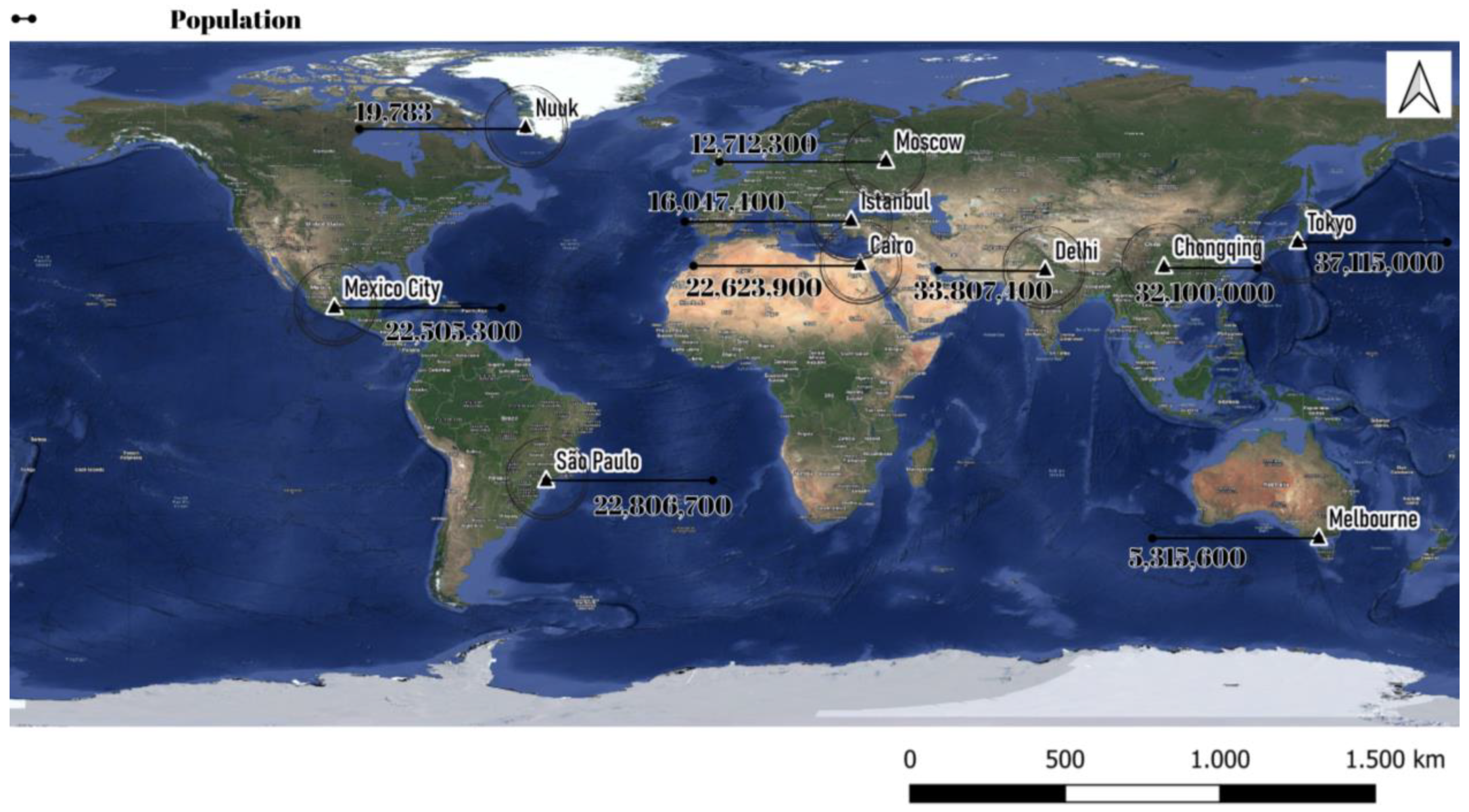
2.1. Study Area
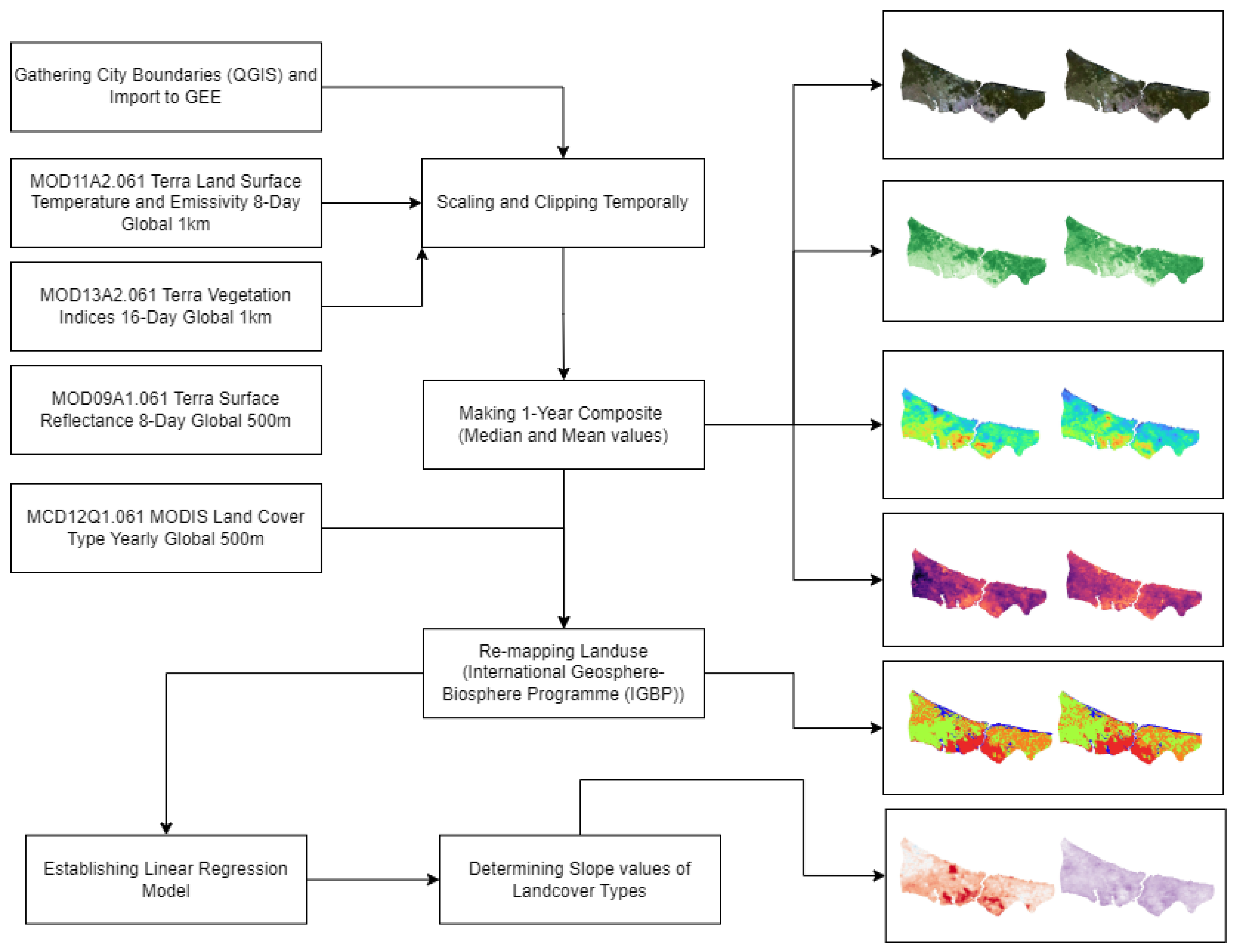
2.2. Data and Method
2.3. Data Handling and Quality Control
2.3.1. Resampling
2.3.2. Quality Assurance (QA) Flag Detection
| QA Flag Value | Action |
| For a value of 00, data are valid: | Proceed with using the LST data. |
| For a value of 01, data are low quality: | Proceed with caution, potentially applying additional quality control (temporal smoothing). |
| For a value of 10 or 11, LST is not produced: | Do not use the data for LST calculations. The pixel is either affected by clouds or sensor errors, and the LST values are unreliable. All remaining QA bits and SDS layers are undefined in these cases. |
2.3.3. Temporal Smoothing (1-Year Median Average)
2.3.4. Linear Regression Model
3. Results
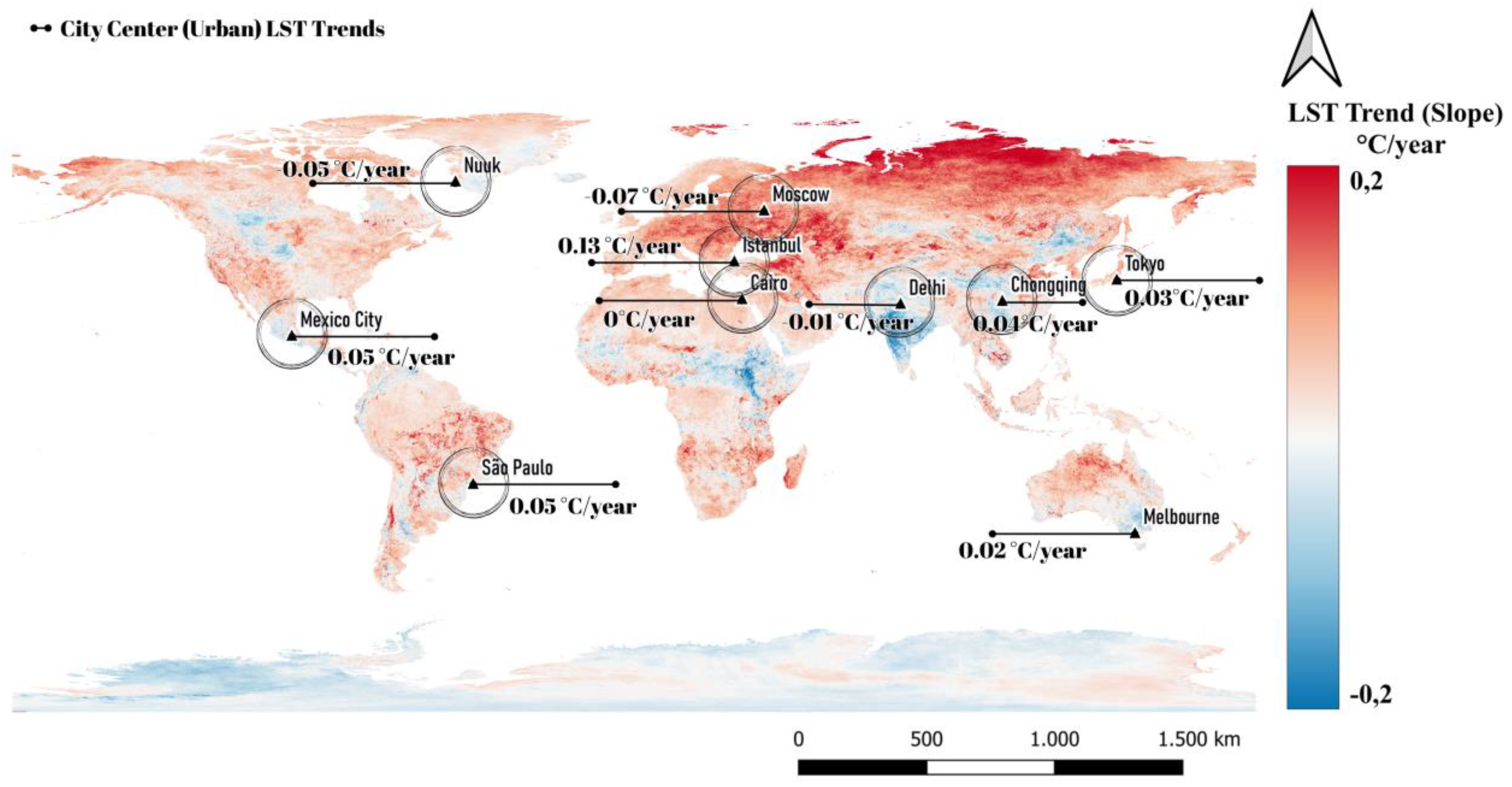
3.1. Land Surface Temperature Trend Evaluation on a Global Scale
3.2. City-Based Evaluation
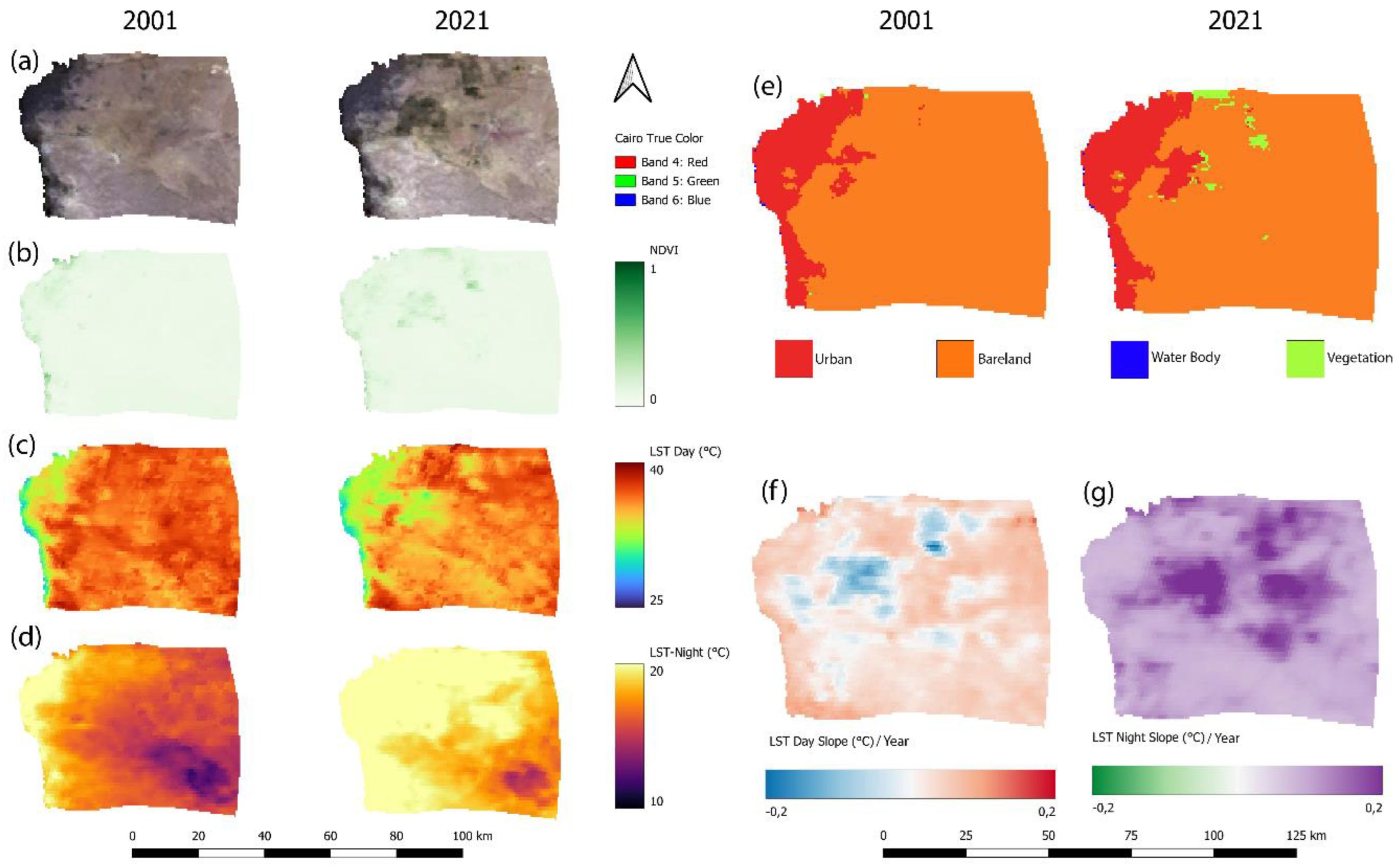
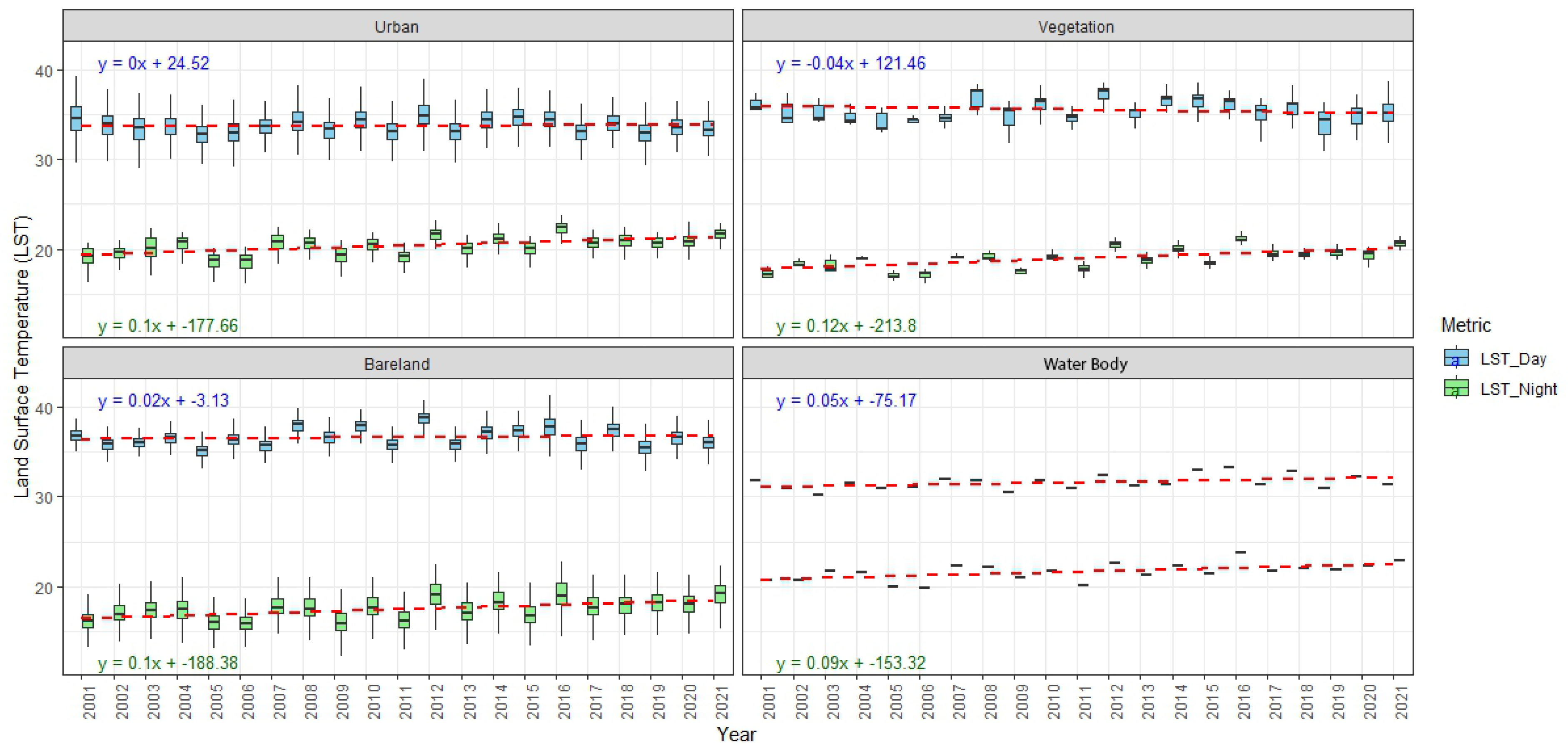
3.2.1. Cairo
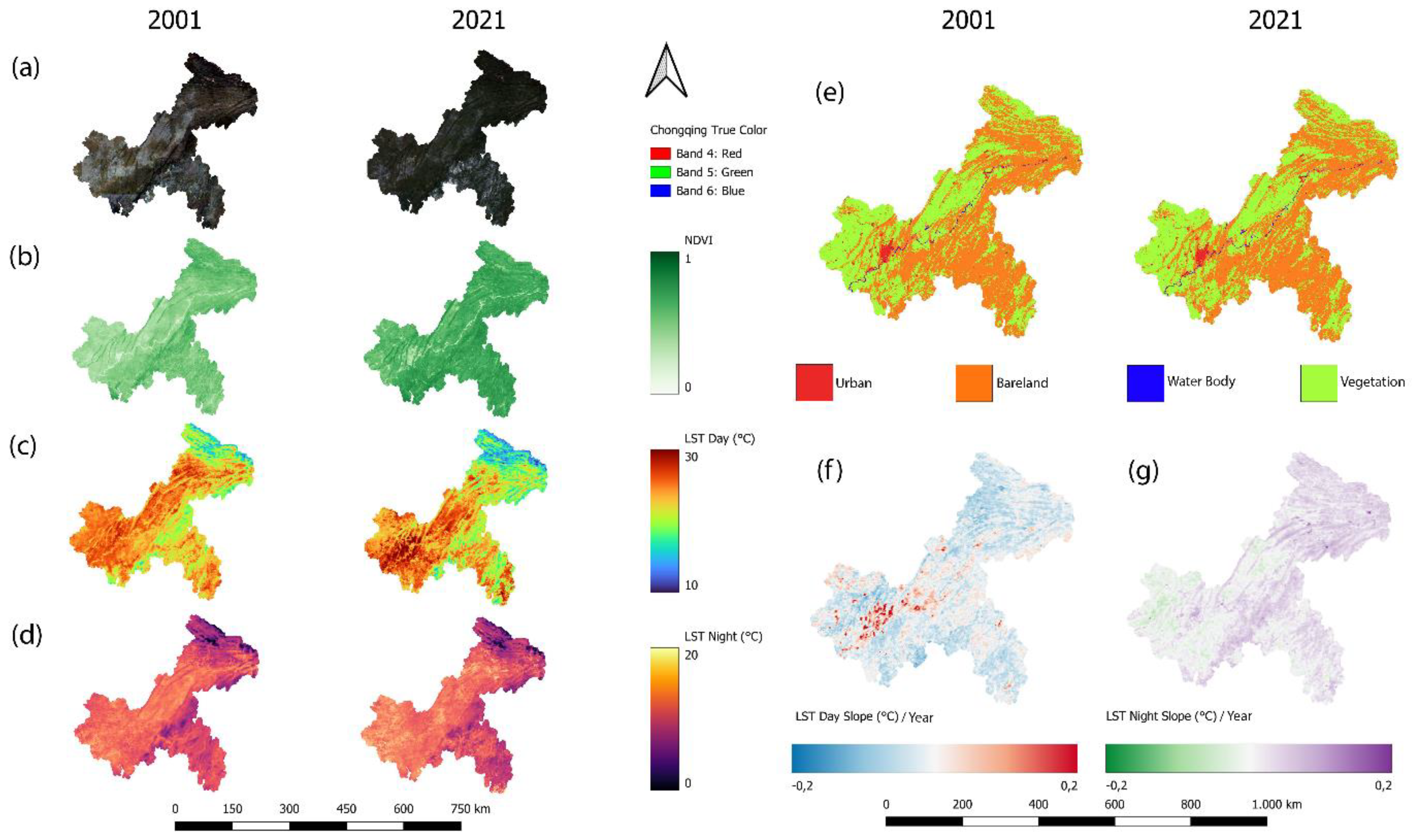
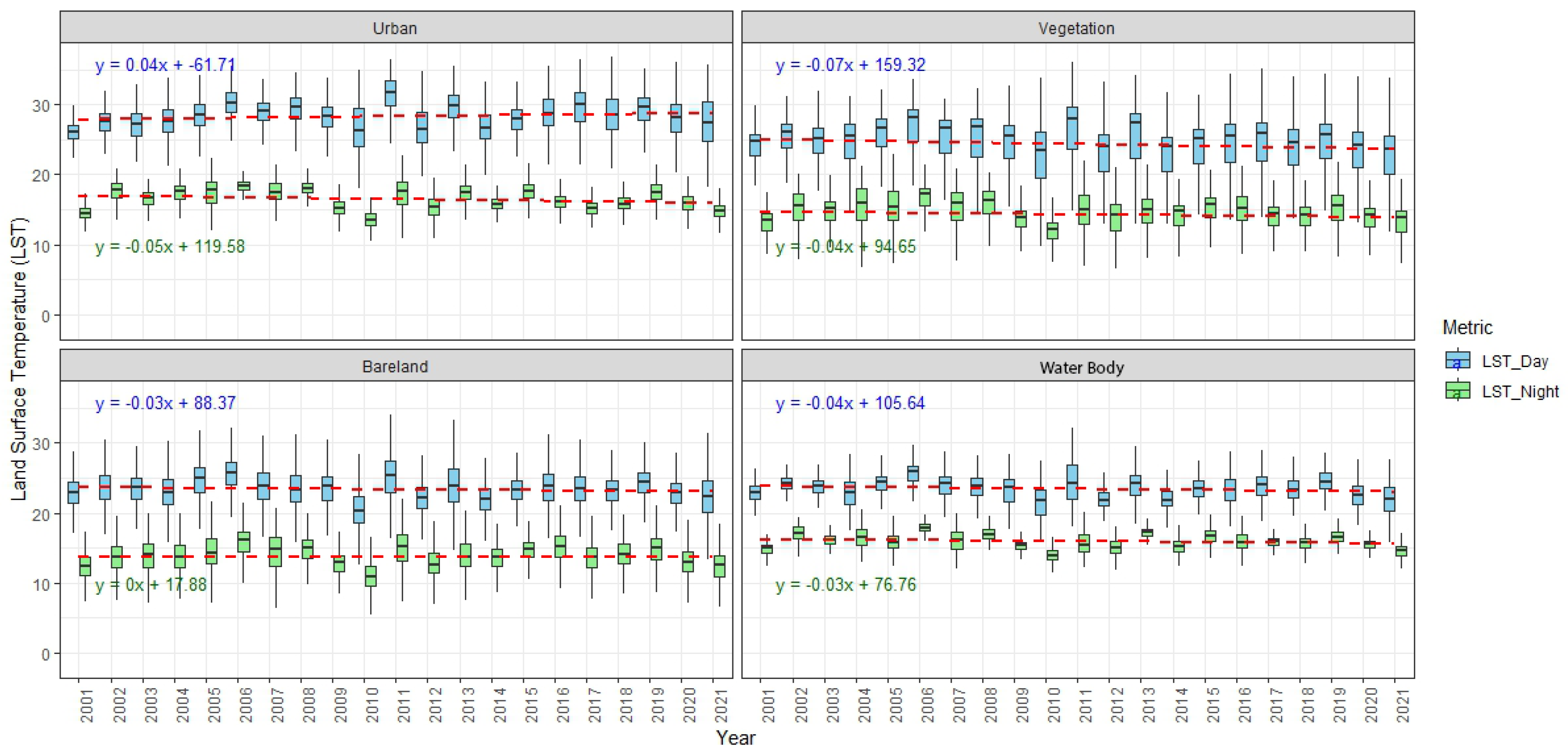
3.2.2. Chongqing
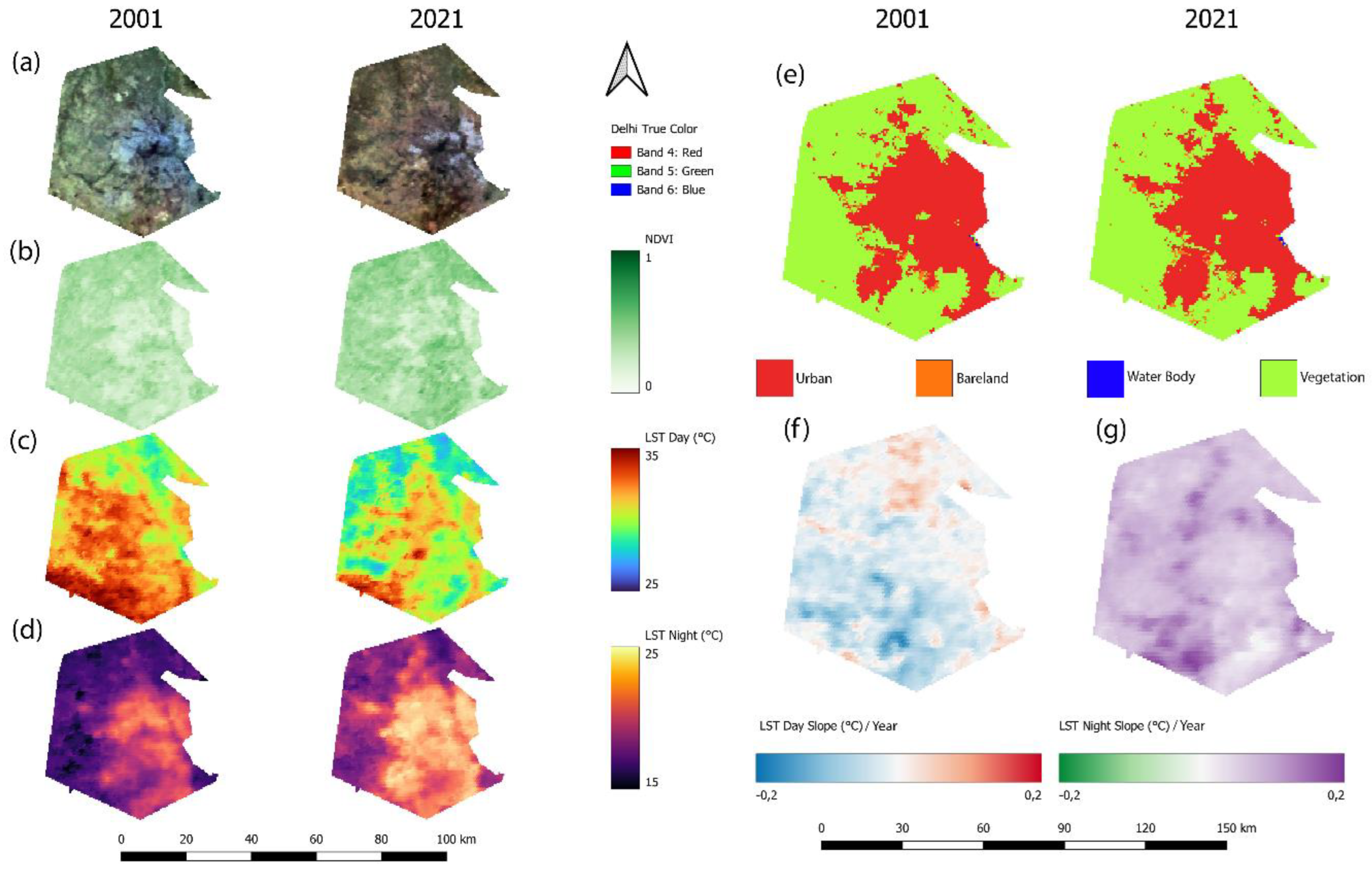
3.2.3. Delhi
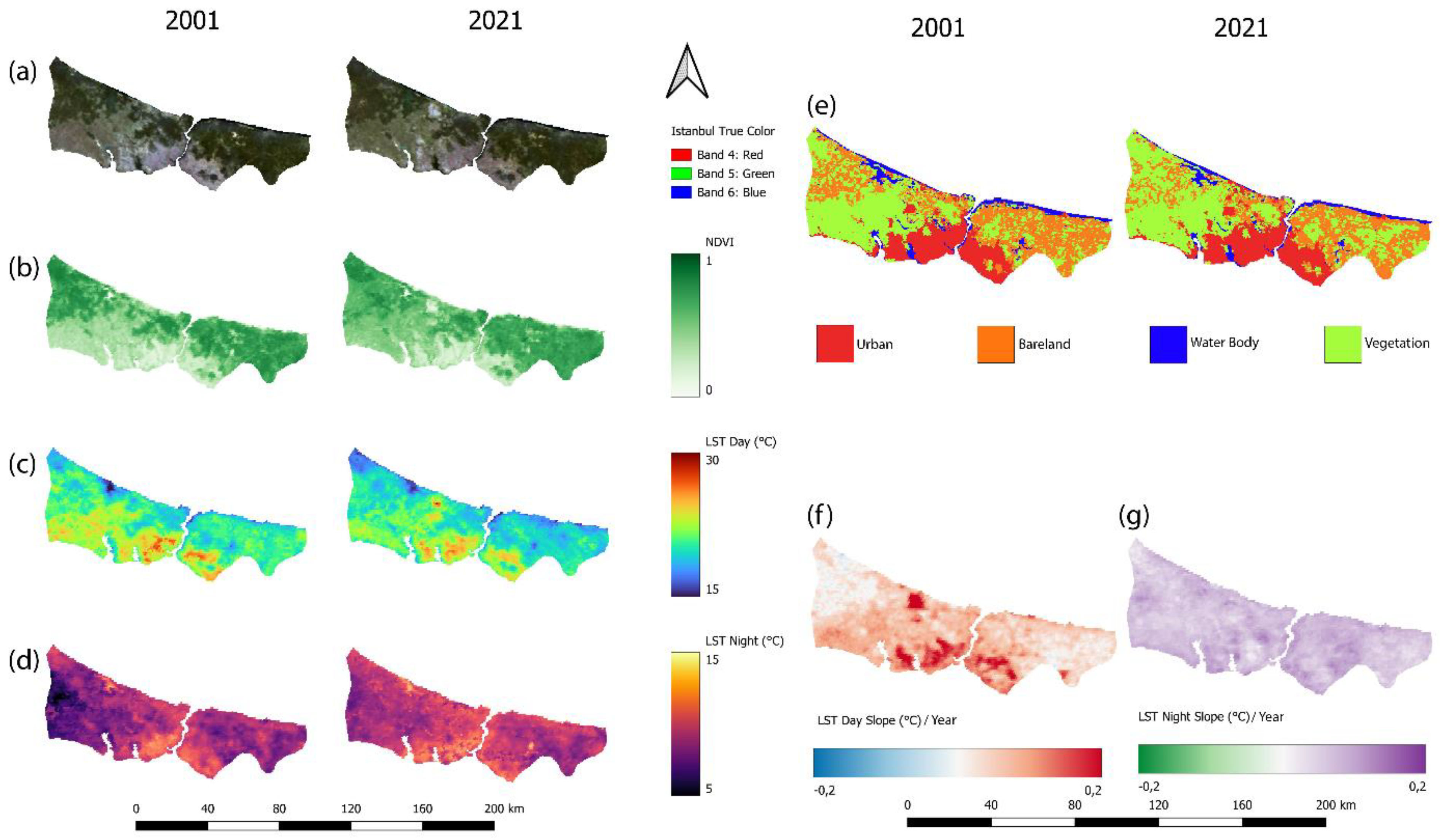
3.2.4. Istanbul
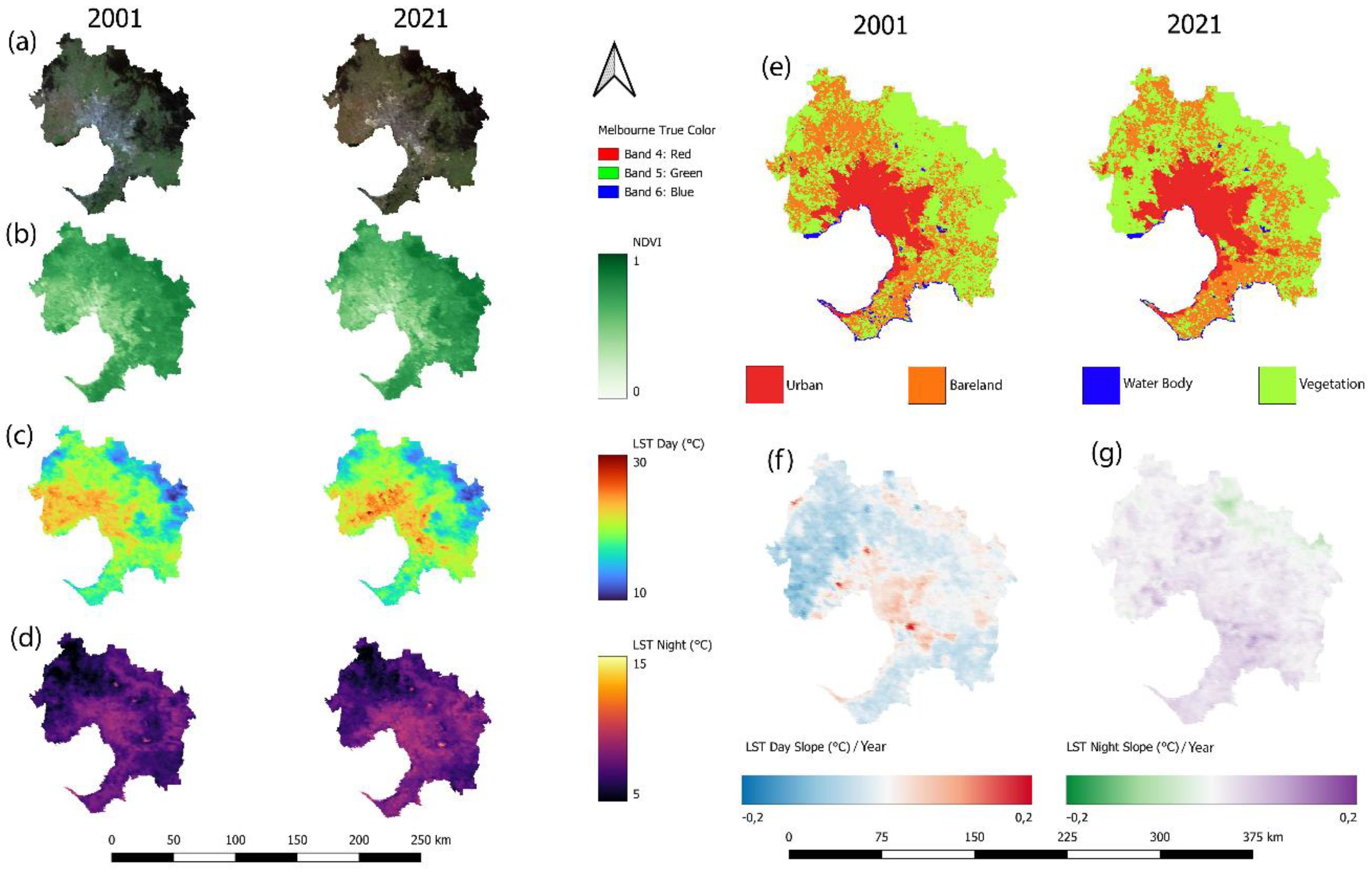
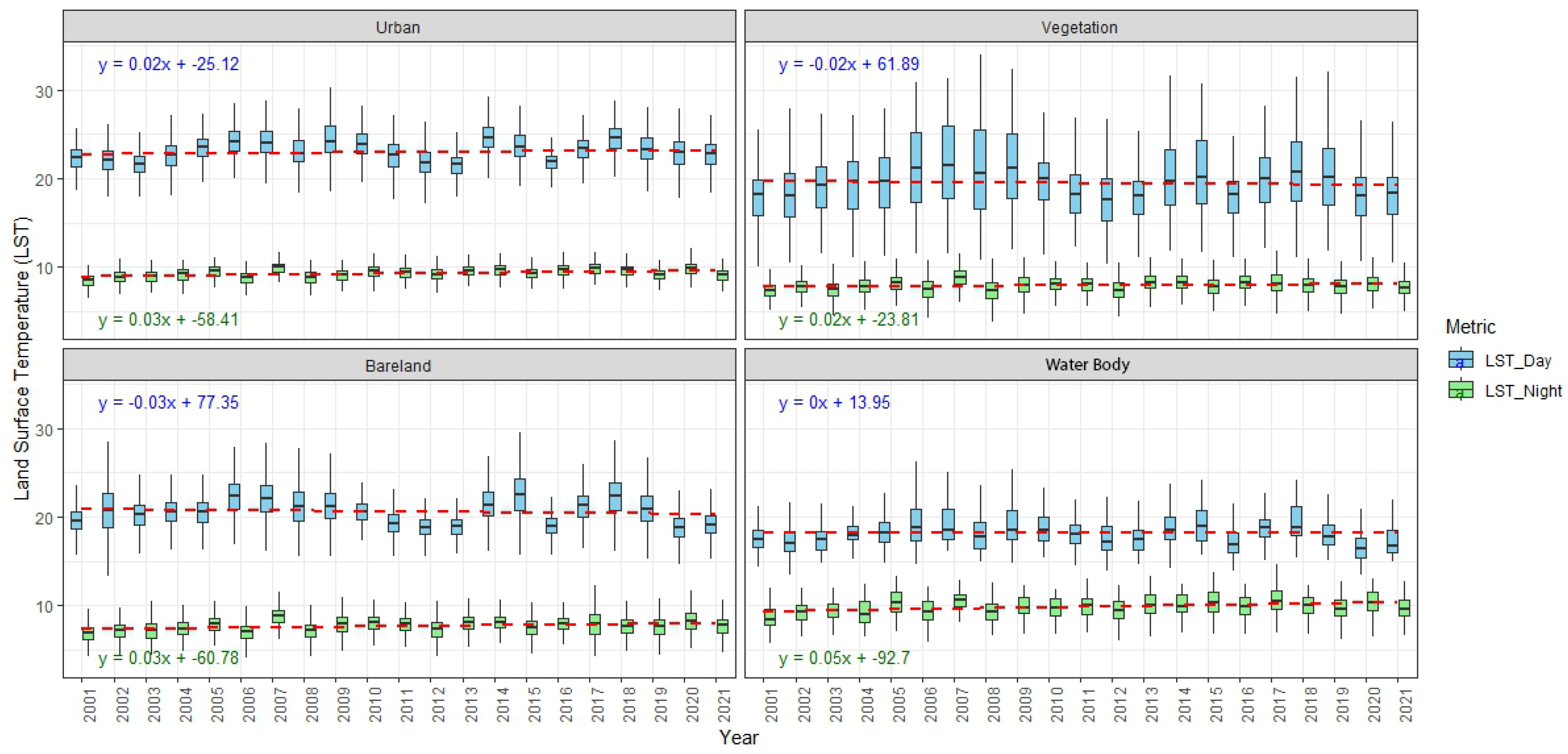
3.2.5. Melbourne
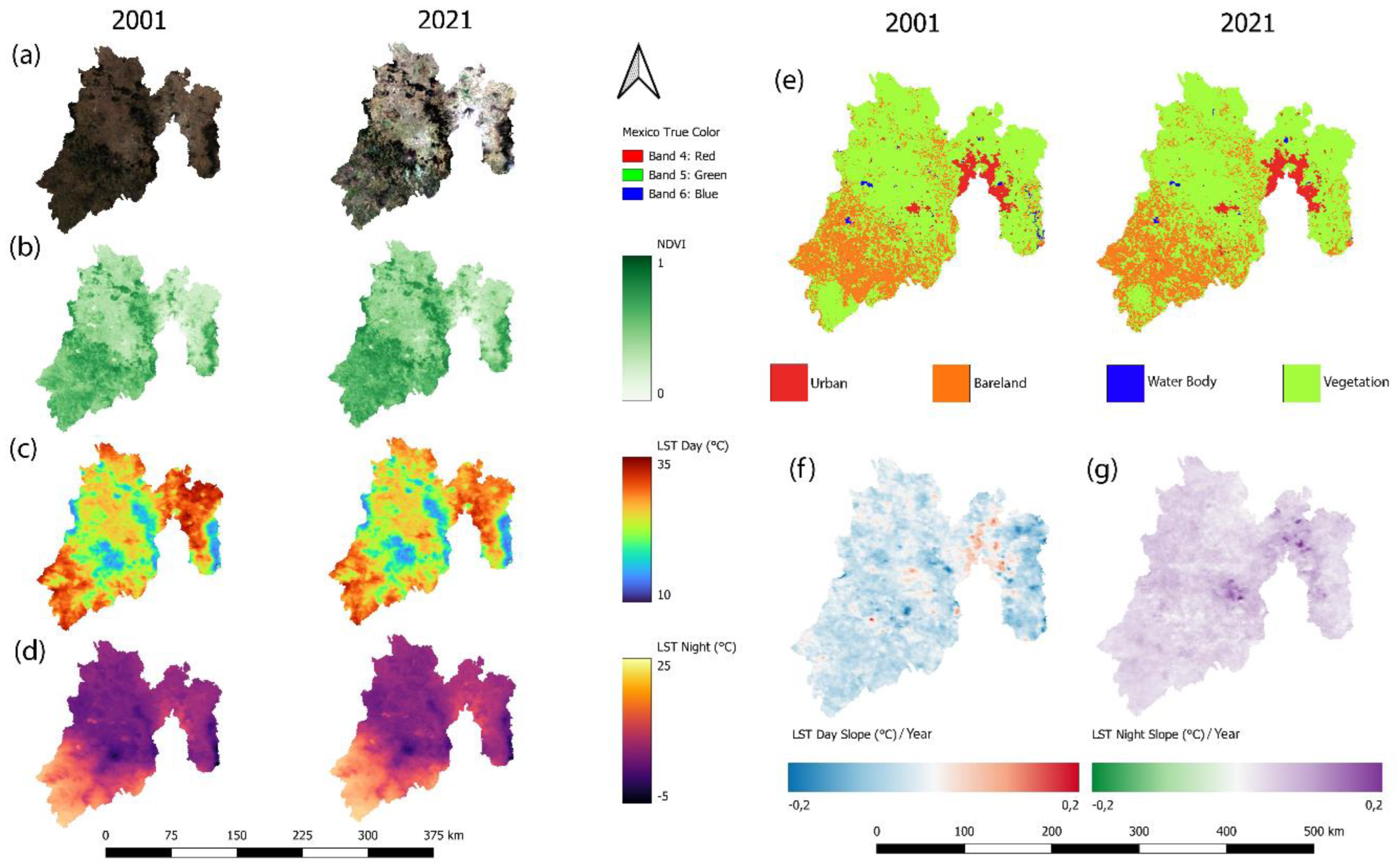
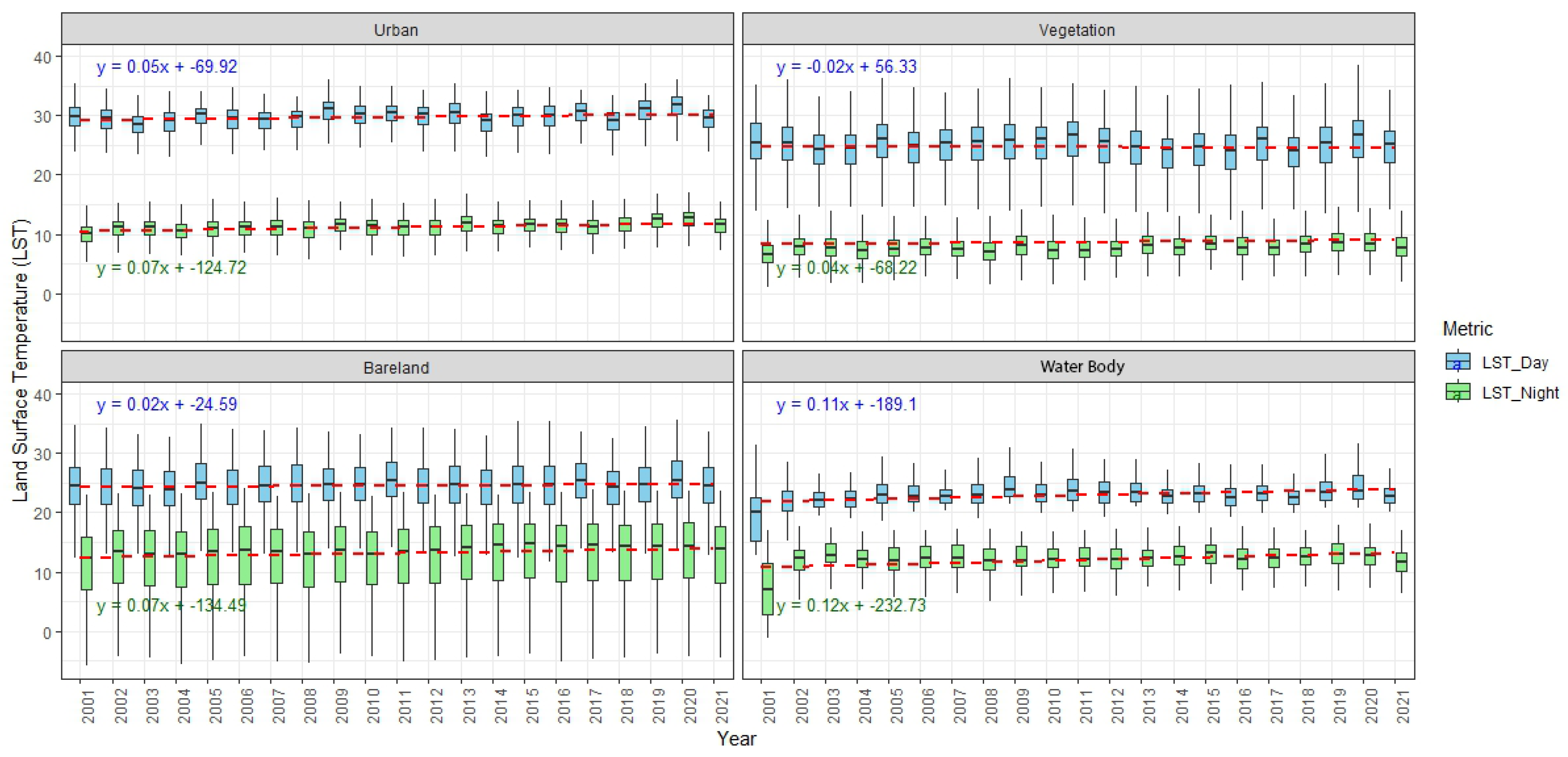
3.2.6. Mexico
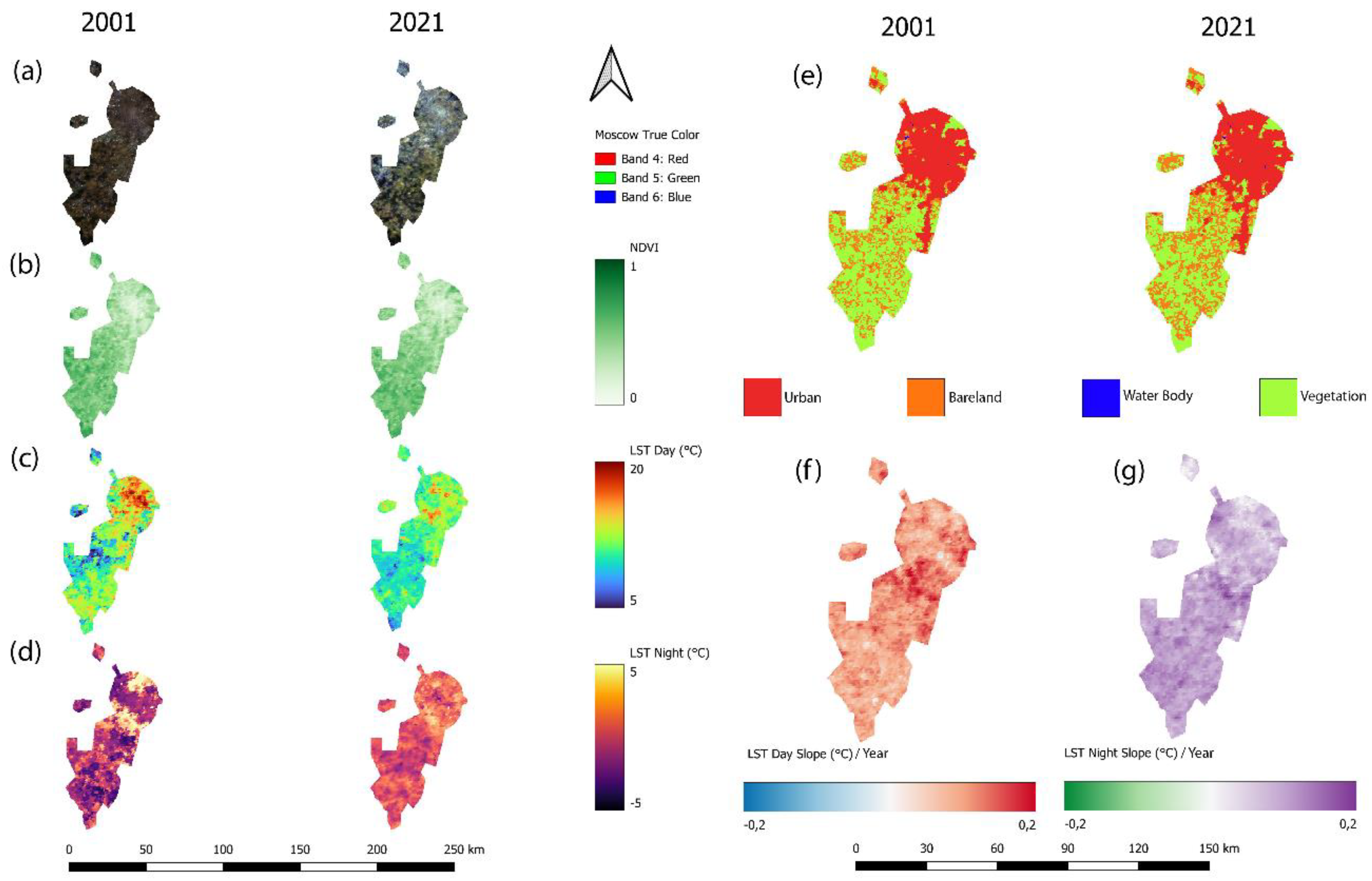
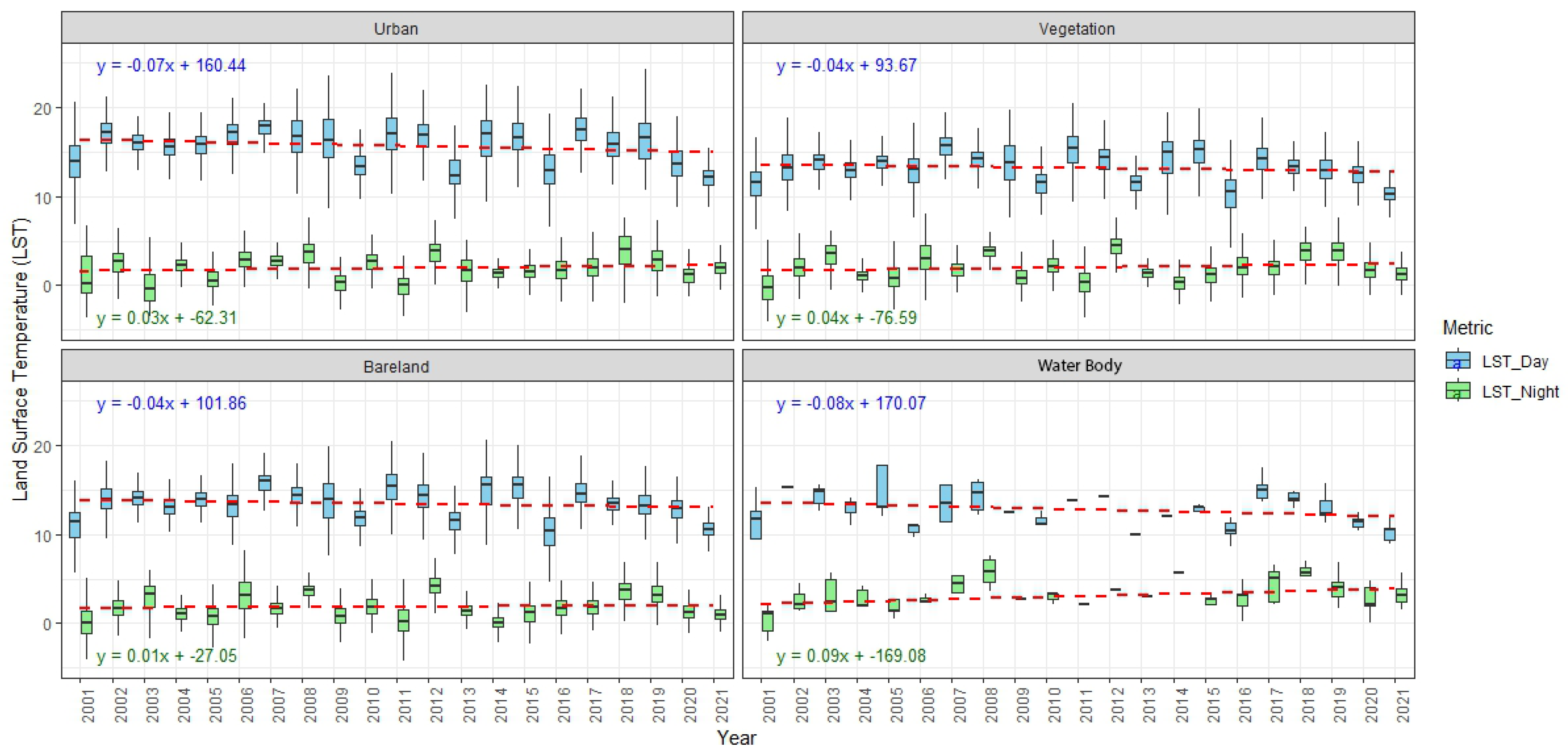
3.2.7. Moscow
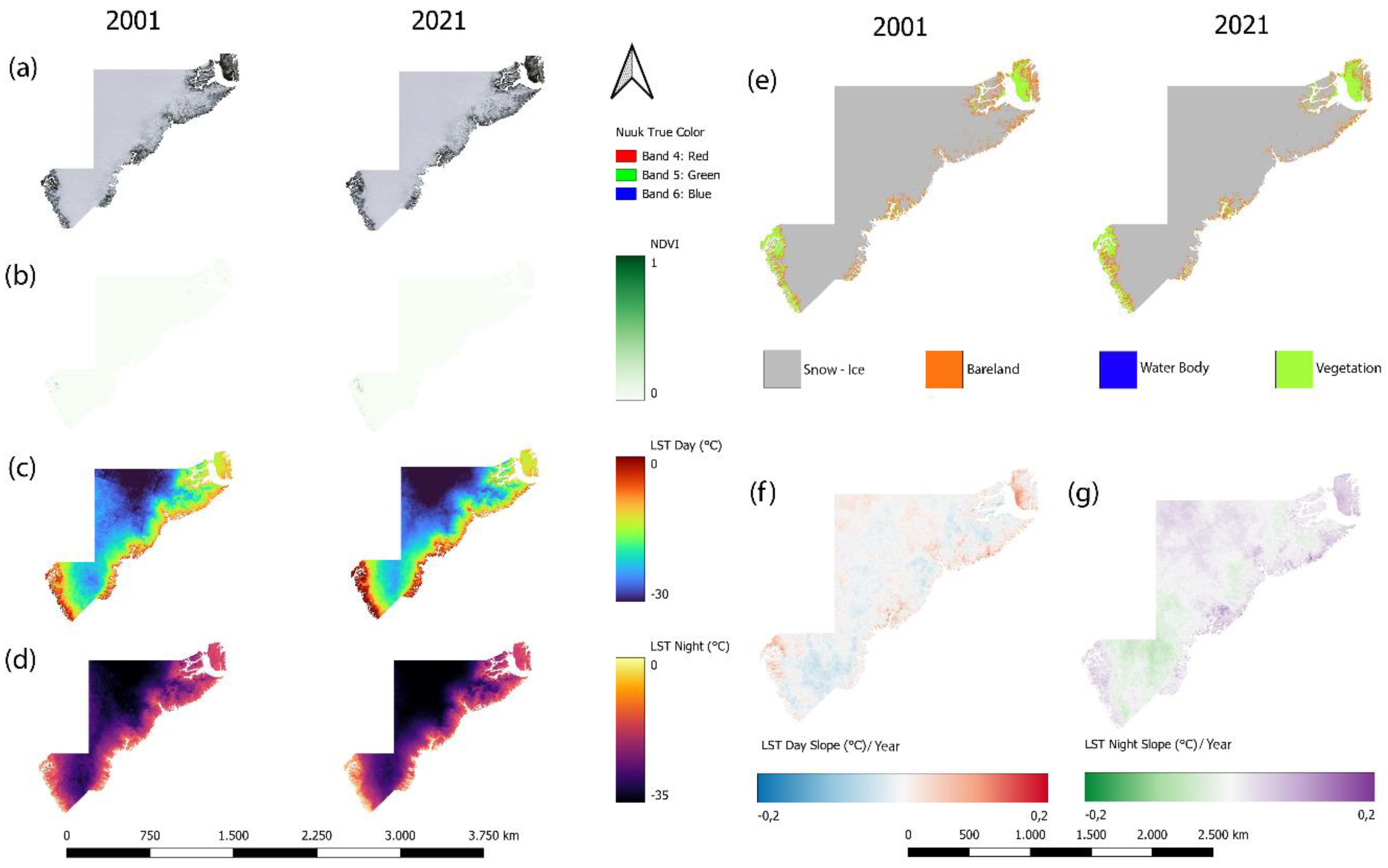
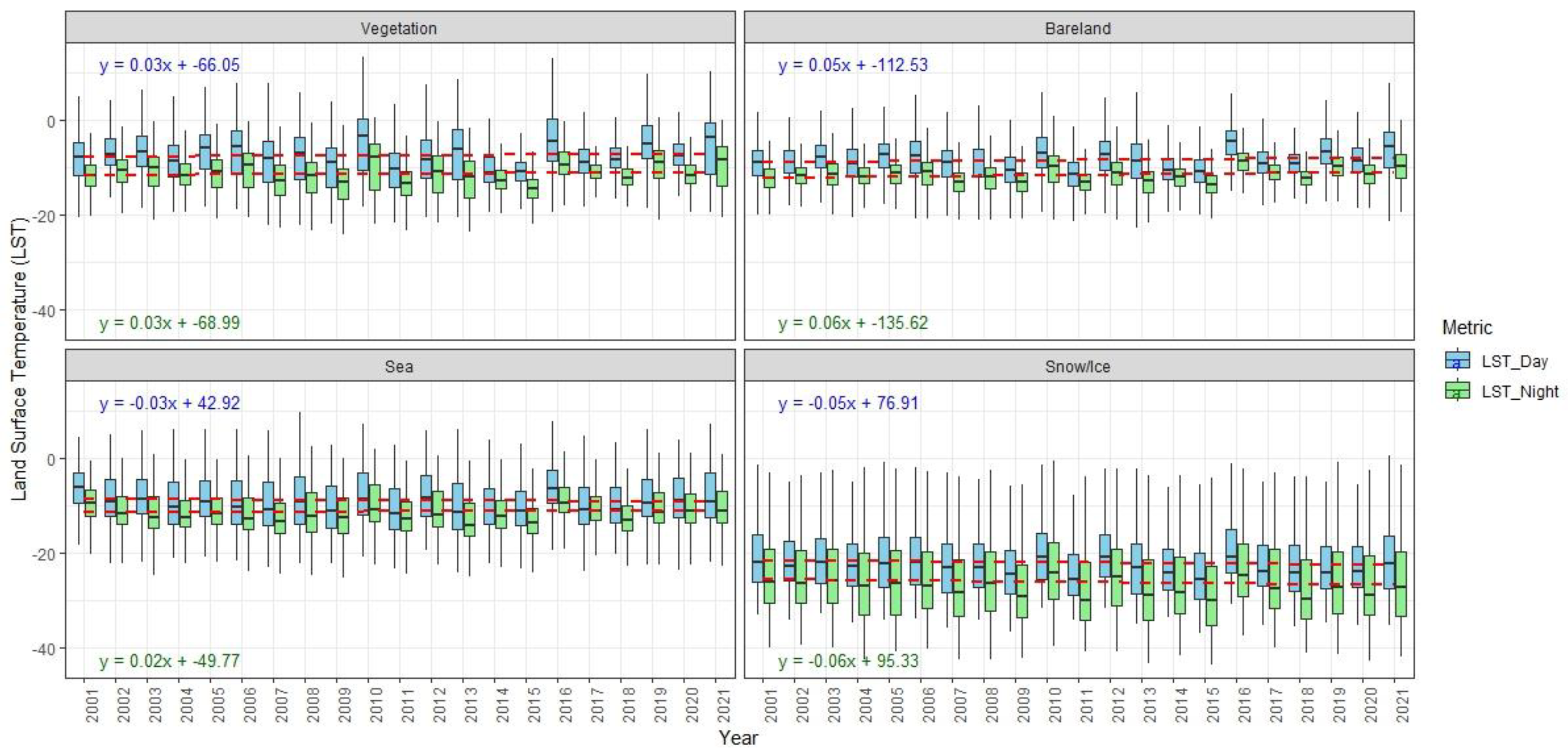
3.2.8. Nuuk
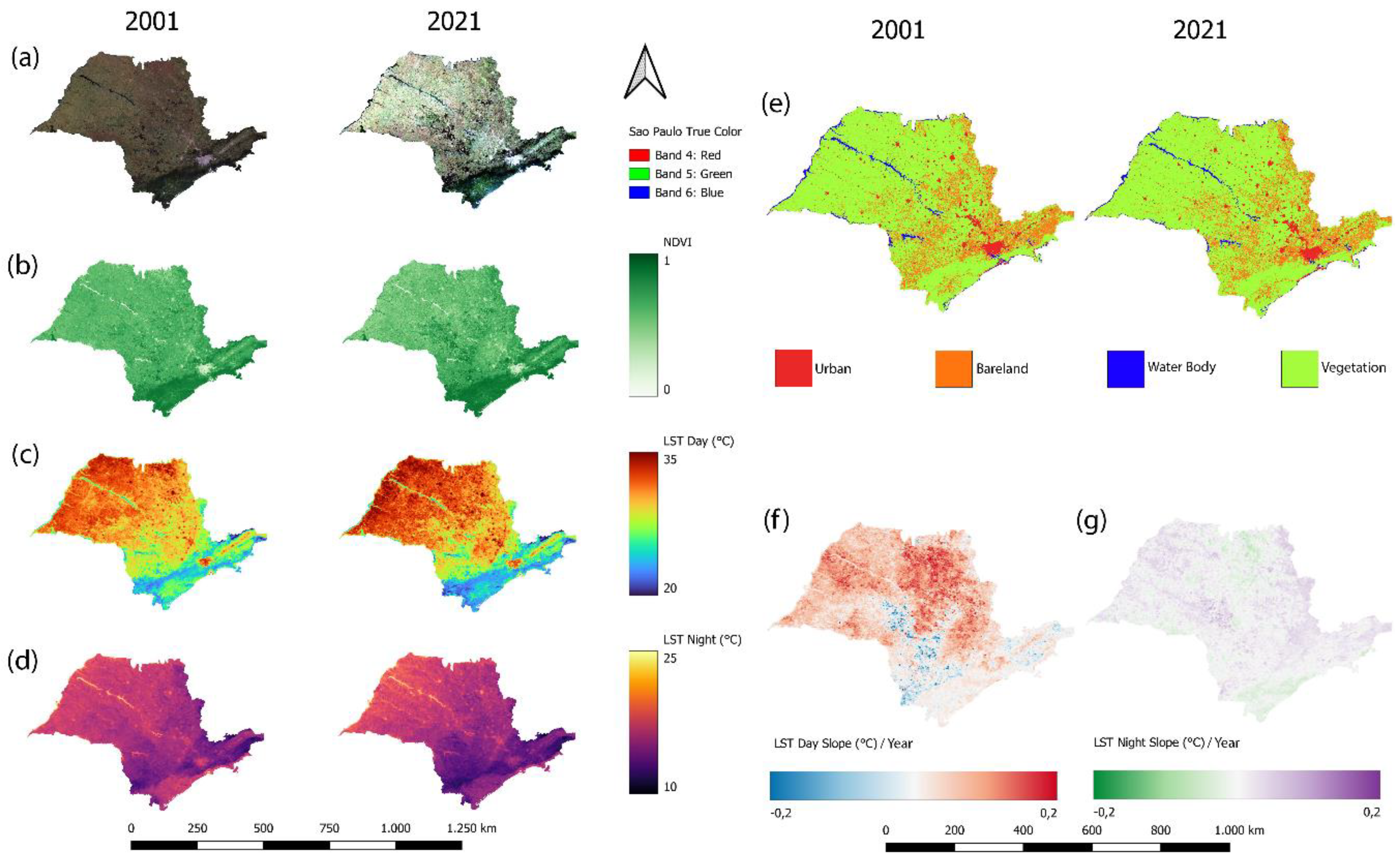
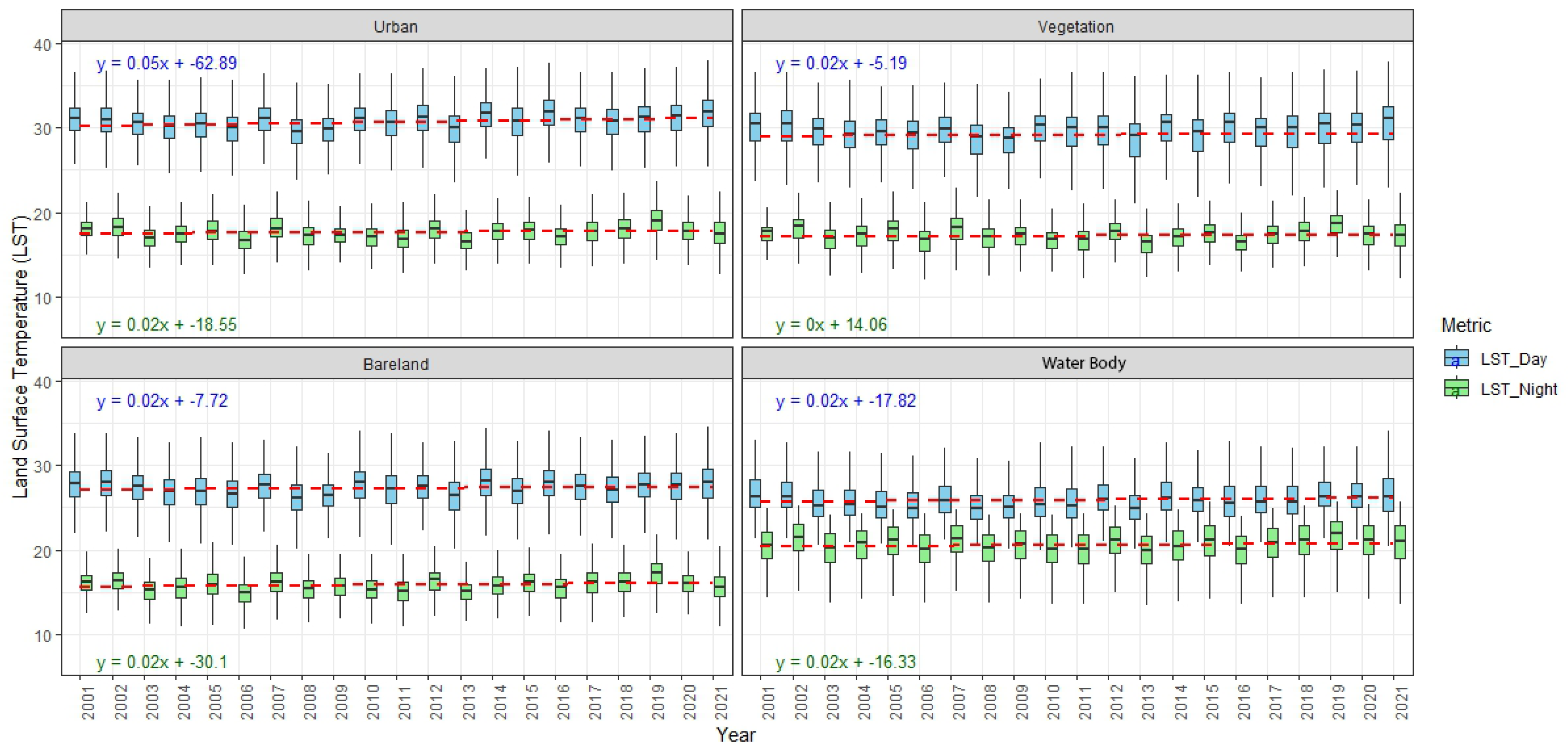
3.2.9. Sao Paulo
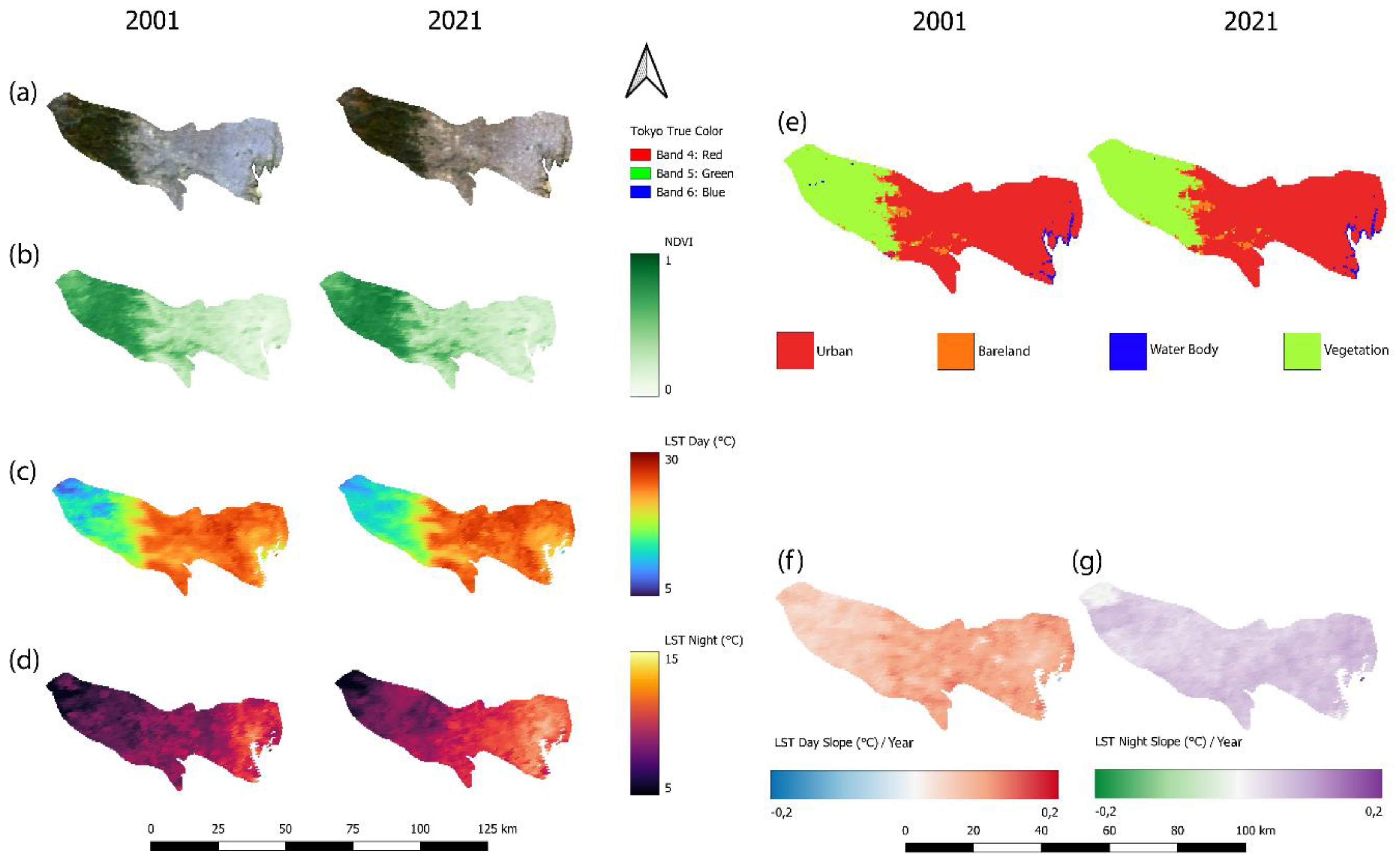
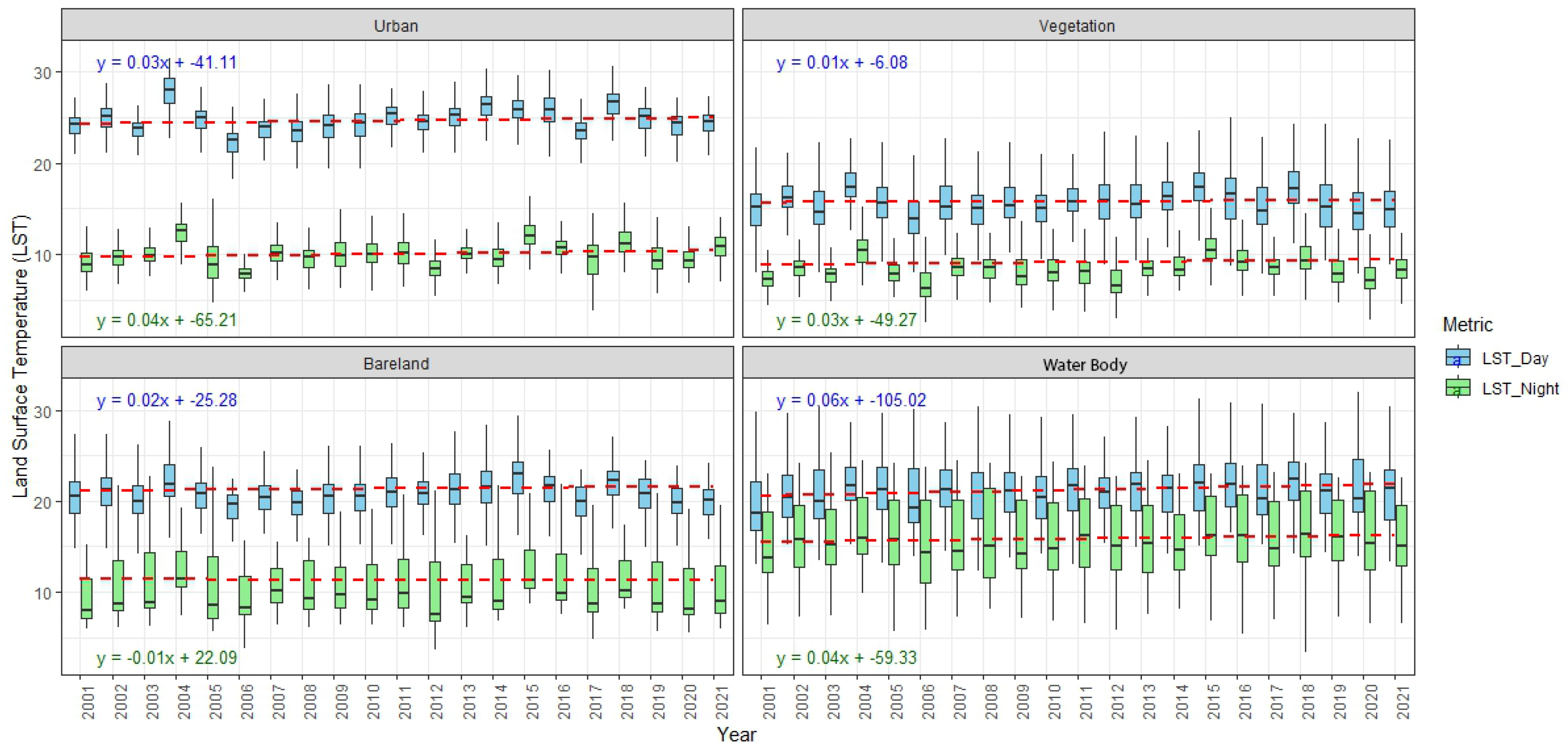
3.2.10. Tokyo
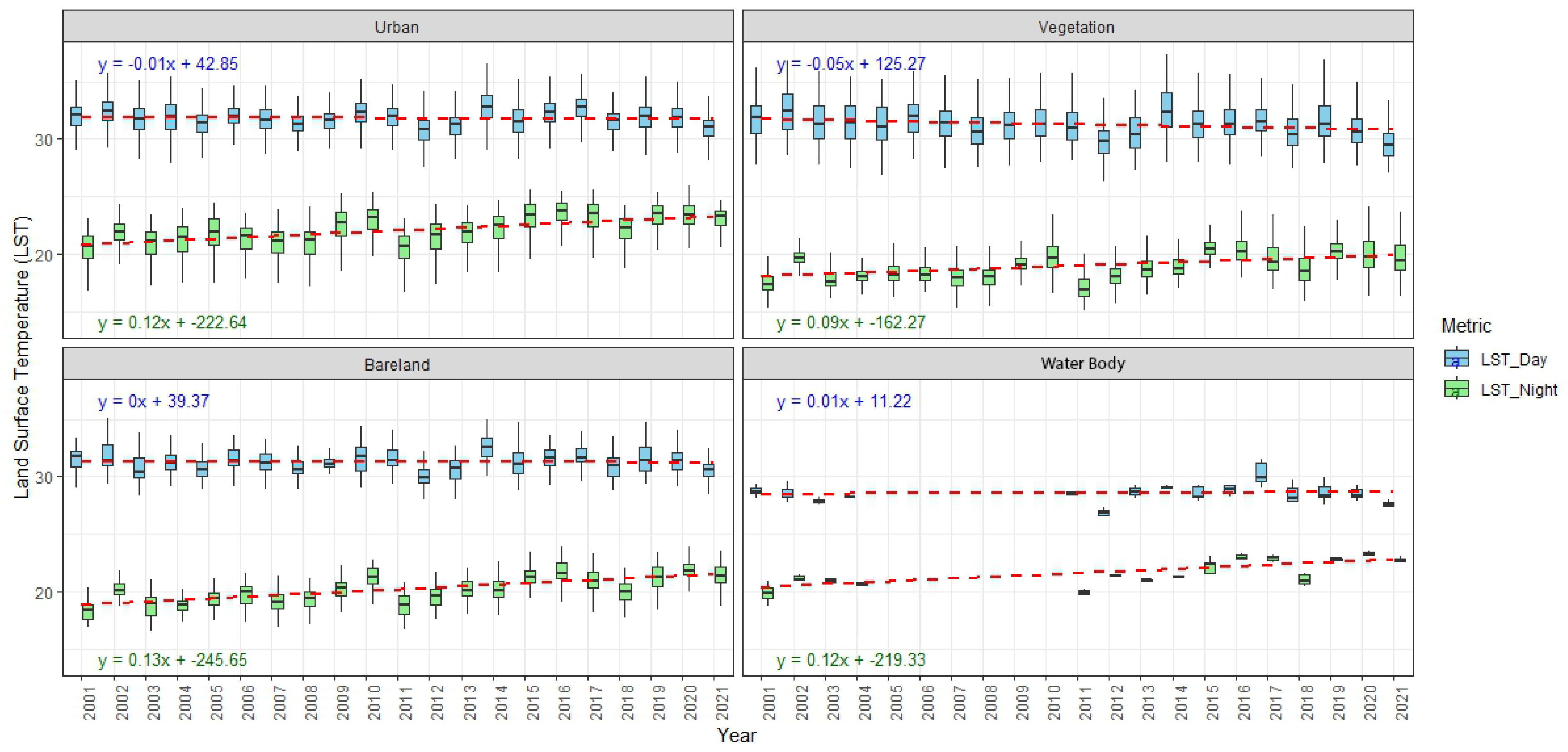
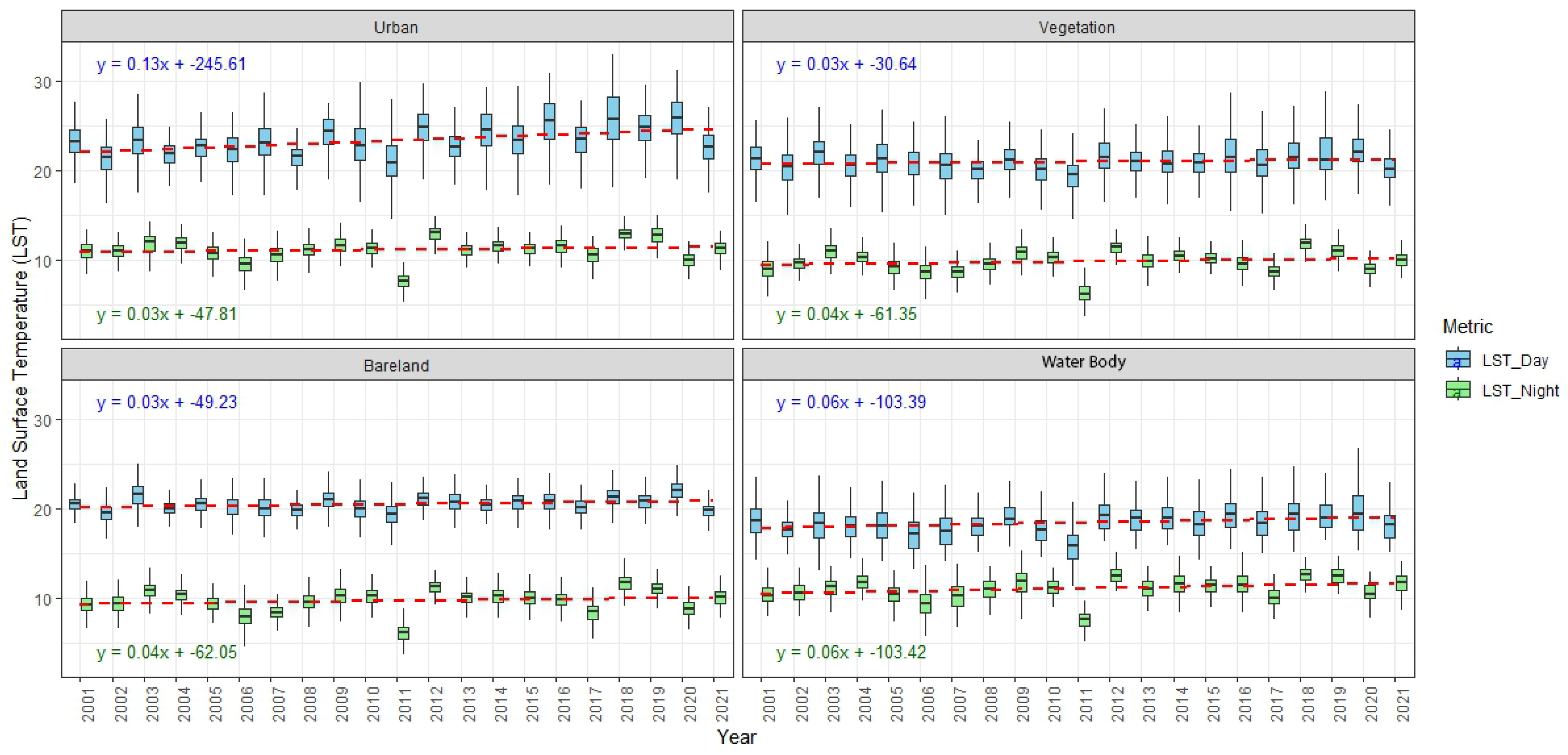
3.3. Land Cover Change and Transformations
3.4. Effect of the NDVI Value on Both Daytime and Nighttime LSTs
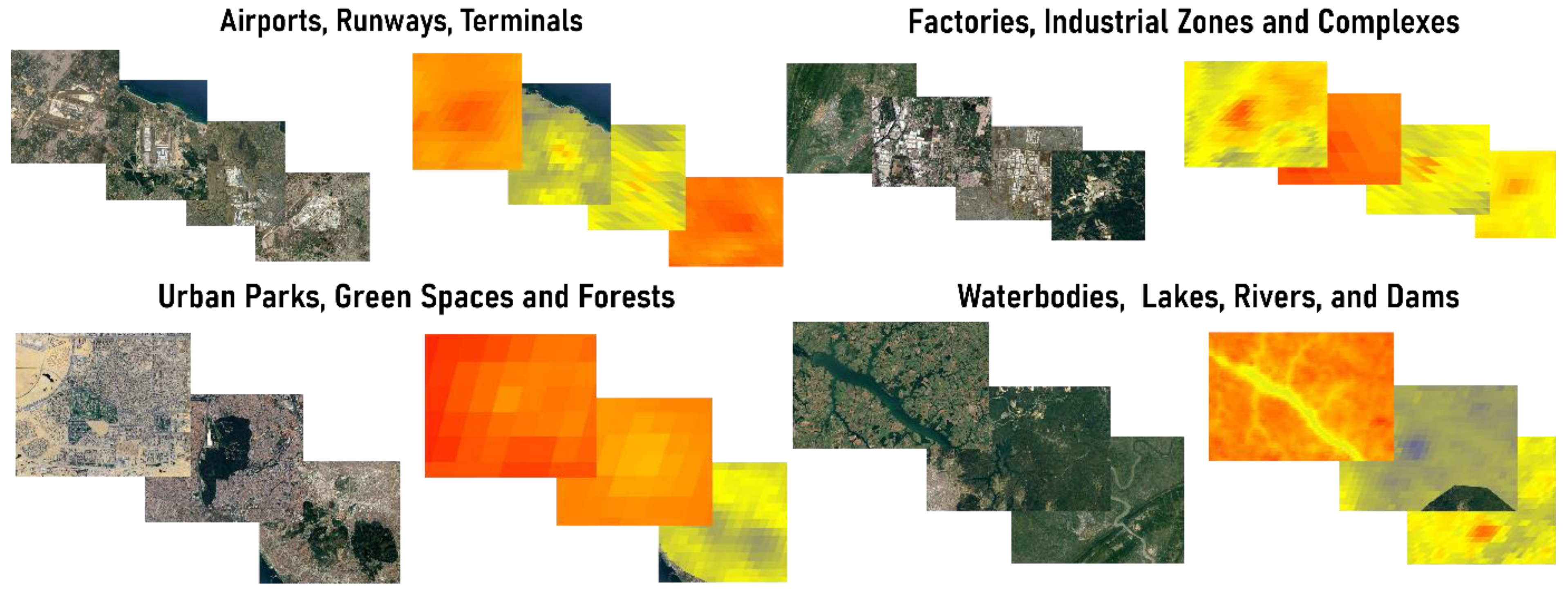
3.5. Common Hotspots and Cold Spots in City Landscapes
4. Discussion
4.1. General Characteristics of Urban Thermal Dynamics
4.2. Climatic Conditions
4.3. Ecological Assessment of Urban Microclimates
4.3.1. The Relationship Between Vegetation and Urban Surface Temperatures
4.3.2. The Role of Green and Water Spaces in Urban Heat Regulation
5. Conclusions
5.1. Contribution to the Scientific Community
5.2. Guidelines for Future Research Directions
- Future research should delve deeper into understanding the specific drivers of urban heat island (UHI) effects across diverse regions, particularly in cities with distinct climatic, geographical, and socio-economic conditions. This would involve comparing UHI intensities across different climates (e.g., tropical, arid, and temperate) and topographies (e.g., coastal, mountainous, and flat) and understanding how these factors interact with land use and urban design. More detailed, city-specific case studies will help identify context-sensitive UHI mitigation strategies.
- While the benefits of green infrastructure are well documented in this study, there is a need for more longitudinal studies that track the long-term effects of implementing vegetation-based solutions, such as green roofs, urban parks, and tree cover, on UHI reduction. Future research should assess how these interventions evolve over time, considering factors such as growth cycles, maintenance, and the impact of climate change on their effectiveness. This would provide valuable insights into the sustainability and durability of green infrastructure.
- While water bodies have been shown to provide significant cooling benefits, future research should explore in more detail how different types of water features (e.g., ponds, lakes, and rivers) interact with urban environments to mitigate UHI effects. Research could examine factors such as the size, depth, and location of water bodies and their effectiveness in cooling surrounding urban areas, particularly in the context of water scarcity and sustainability.
- Lastly, as cities continue to grow under the pressures of climate change, there is a need for climate-sensitive urban planning models that can predict UHI intensity and guide mitigation efforts in future developments. Research should focus on creating urban planning frameworks that incorporate climate projections, spatial modeling, and thermal dynamics to inform urban expansion.
Author Contributions
Funding
Data Availability Statement
- MCD12Q1.061 MODIS Land Cover Type Yearly Global dataset, DOI: 10.5067/MODIS/MCD12Q1.061.
- MOD09A1 MODIS/Terra Surface Reflectance 8-Day L3 Global 500 m SIN Grid product, DOI: 10.5067/MODIS/MOD09A1.006.
- MOD13A2 MODIS/Terra Vegetation Indices 16-Day L3 Global 1 km SIN Grid, DOI: 10.5067/MODIS/MOD13A2.006.
- MOD11A2 MODIS/Terra Land Surface Temperature/Emissivity 8-Day L3 Global 1 km SIN Grid, DOI: 10.5067/MODIS/MOD11A2.006.
Conflicts of Interest
References
- Eng, Q.; Lu, D.; Schubring, J. Estimation of Land Surface Temperature–Vegetation Abundance Relationship for Urban Heat Island Studies. Remote Sens. Environ. 2004, 89, 467–483. [Google Scholar] [CrossRef] [Scilit]
- Shi, Z.; Li, X.; Hu, T.; Yuan, B.; Yin, P.; Jiang, D. Modeling the Intensity of Surface Urban Heat Island Based on the Impervious Surface Area. Urban Clim. 2023, 49, 101529. [Google Scholar] [CrossRef] [Scilit]
- Ahmed, R.; Zafor, M.A.; Trachte, K. Land-Use and Land-Cover Changes in Cottbus City and Spree-Neisse District, Germany, in the Last Two Decades: A Study Using Remote Sensing Data and Google Earth Engine. Remote Sens. 2024, 16, 2773. [Google Scholar] [CrossRef] [Scilit]
- Wang, Y.-R.; Hessen, D.; Samset, B.; Stordal, F. Evaluating Global and Regional Land Warming Trends in the Past Decades with Both MODIS and ERA5-Land Land Surface Temperature Data. Remote Sens. Environ. 2022, 280, 113181. [Google Scholar] [CrossRef] [Scilit]
- Zhou, D.; Xiao, J.; Frolking, S.; Zhang, L.; Zhou, G. Urbanization Contributes Little to Global Warming but Substantially Intensifies Local and Regional Land Surface Warming. Earth’s Future 2022, 10, e2021EF002401. [Google Scholar] [CrossRef] [Scilit]
- Huang, K.; Li, X.; Liu, X.; Seto, K. Projecting Global Urban Land Expansion and Heat Island Intensification through 2050. Environ. Res. Lett. 2019, 14, 114037. [Google Scholar] [CrossRef] [Scilit]
- Chapman, S.; Watson, J.; Salazar, Á.; Thatcher, M.; McAlpine, C. The Impact of Urbanization and Climate Change on Urban Temperatures: A Systematic Review. Landsc. Ecol. 2017, 32, 1921–1935. [Google Scholar] [CrossRef] [Scilit]
- Manoli, G.; Fatichi, S.; Schläpfer, M.; Yu, K.; Crowther, T.; Meili, N.; Burlando, P.; Katul, G.; Bou-Zeid, E. Magnitude of Urban Heat Islands Largely Explained by Climate and Population. Nature 2019, 573, 55–60. [Google Scholar] [CrossRef] [Scilit]
- Zhao, L.; Oppenheimer, M.; Zhu, Q.; Baldwin, J.; Ebi, K.; Bou-Zeid, E.; Guan, K.; Liu, X. Interactions between urban heat islands and heat waves. Environ. Res. Lett. 2018, 13, 034003. [Google Scholar] [CrossRef] [Scilit]
- Yılmaz, M.; Kara, Y.; Toros, H. Analysis of the Summer Thermal Comfort Indices in İstanbul. Int. J. Biometeorol. 2024, 68, 1327–1342. [Google Scholar] [CrossRef] [Scilit]
- Yılmaz, M.; Kara, Y.; Çulpan, H.C.; Can, G.; Toros, H. Detection and Regional Analysis of Heatwave Characteristics in İstanbul. Sustain. Cities Soc. 2023, 97, 104789. [Google Scholar] [CrossRef] [Scilit]
- Zhou, D.; Bonafoni, S.; Zhang, L.; Wang, R. Remote Sensing of the Urban Heat Island Effect in a Highly Populated Urban Agglomeration Area in East China. Sci. Total Environ. 2018, 628–629, 415–429. [Google Scholar] [CrossRef] [Scilit]
- Ministry of Environment, Urbanization and Climate Change, Directorate of Climate Change. What Are the Effects of the Urban Heat Island Effect on Cities? Available online: https://iklim.gov.tr/en/faq/climate-change (accessed on 3 April 2025).
- Ullah, N.; Siddique, M.; Ding, M.; Grigoryan, S.; Khan, I.; Kang, Z.; Tsou, S.; Zhang, T.; Hu, Y.; Zhang, Y. The Impact of Urbanization on Urban Heat Island: Predictive Approach Using Google Earth Engine and CA-Markov Modelling (2005–2050) of Tianjin City, China. Int. J. Environ. Res. Public Health 2023, 20, 2642. [Google Scholar] [CrossRef] [Scilit] [PubMed]
- Imhoff, M.L.; Zhang, P.; Wolfe, R.E.; Bounoua, L. Remote Sensing of the Urban Heat Island Effect across Biomes in the Continental USA. Remote Sens. Environ. 2010, 114, 504–513. [Google Scholar] [CrossRef] [Scilit]
- Hardin, A.W.; Liu, Y.; Cao, G.; Vanos, J.K. Urban Heat Island Intensity and Spatial Variability by Synoptic Weather Type in the Northeast U.S. Urban Clim. 2018, 24, 747–762. [Google Scholar] [CrossRef] [Scilit]
- Peng, J.; Liu, Q.; Liu, Y.; Hu, Y.; Li, Y.; Yue, Y. Spatial-Temporal Change of Land Surface Temperature across 285 Cities in China: An Urban-Rural Contrast Perspective. Sci. Total Environ. 2018, 635, 487–497. [Google Scholar] [CrossRef] [Scilit]
- Lo, Y.; Mitchell, D.; Bohnenstengel, S.; Collins, M.; Hawkins, E.; Hegerl, G.; Joshi, M.; Stott, P.U.K. Climate Projections: Summer Daytime and Nighttime Urban Heat Island Changes in England’s Major Cities. J. Clim. 2020, 33, 9015–9030. [Google Scholar] [CrossRef] [Scilit]
- Athukorala, D.; Murayama, Y. Urban Heat Island Formation in Greater Cairo: Spatio-Temporal Analysis of Daytime and Nighttime Land Surface Temperatures along the Urban-Rural Gradient. Remote Sens. 2021, 13, 1396. [Google Scholar] [CrossRef] [Scilit]
- Sobstyl, J.; Emig, T.; Qomi, M.; Ulm, F.; Pellenq, R. Role of City Texture in Urban Heat Islands at Nighttime. Phys. Rev. Lett. 2018, 120, 108701. [Google Scholar] [CrossRef] [Scilit]
- Cao, C.; Lee, X.; Liu, S.; Schultz, N.; Xiao, W.; Zhang, M.; Zhao, L. Urban Heat Islands in China Enhanced by Haze Pollution. Nat. Commun. 2016, 7, 12509. [Google Scholar] [CrossRef] [Scilit]
- Zhuang, Q.; Wu, S.; Yan, Y.; Niu, Y.; Yang, F.; Xie, C. Monitoring Land Surface Thermal Environments under the Background of Landscape Patterns in Arid Regions: A Case Study in Aksu River Basin. Sci. Total Environ. 2019, 710, 136336. [Google Scholar] [CrossRef] [Scilit] [PubMed]
- Ayanlade, A.; Aigbiremolen, M.; Oladosu, O. Variations in Urban Land Surface Temperature Intensity over Four Cities in Different Ecological Zones. Sci. Rep. 2021, 11, 20537. [Google Scholar] [CrossRef] [Scilit]
- Jamei, Y.; Seyedmahmoudian, M.; Jamei, E.; Horan, B.; Mekhilef, S.; Stojcevski, A. Investigating the Relationship between Land Use/Land Cover Change and Land Surface Temperature Using Google Earth Engine; Case Study: Melbourne, Australia. Sustainability 2022, 14, 14868. [Google Scholar] [CrossRef] [Scilit]
- Tran, D.; Pla, F.; Latorre-Carmona, P.; Myint, S.; Caetano, M.; Kieu, H. Characterizing the Relationship between Land Use Land Cover Change and Land Surface Temperature. ISPRS J. Photogramm. Remote Sens. 2017, 124, 119–132. [Google Scholar] [CrossRef] [Scilit]
- Chi, Y.; Sun, J.; Sun, Y.; Liu, S.; Fu, Z. Multi-Temporal Characterization of Land Surface Temperature and Its Relationships with Normalized Difference Vegetation Index and Soil Moisture Content in the Yellow River Delta, China. Glob. Ecol. Conserv. 2020, 23, e01092. [Google Scholar] [CrossRef] [Scilit]
- Yu, Y.; Duan, S.; Li, Z.; Chang, S.; Xing, Z.; Leng, P.; Gao, M. Interannual Spatiotemporal Variations of Land Surface Temperature in China from 2003 to 2018. IEEE J. Sel. Top. Appl. Earth Obs. Remote Sens. 2021, 14, 1783–1795. [Google Scholar] [CrossRef] [Scilit]
- Bera, D.; Chatterjee, N.D.; Ghosh, S.; Dinda, S.; Bera, S. Recent Trends of Land Surface Temperature in Relation to the Influencing Factors Using Google Earth Engine Platform and Time Series Products in Megacities of India. J. Clean. Prod. 2022, 379, 134735. [Google Scholar] [CrossRef] [Scilit]
- Abbas, A.; He, Q.; Jin, L.; Li, J.; Salam, A.; Lu, B.; Yasheng, Y. Spatio-Temporal Changes of Land Surface Temperature and the Influencing Factors in the Tarim Basin, Northwest China. Remote Sens. 2021, 13, 3792. [Google Scholar] [CrossRef] [Scilit]
- Buyantuyev, A.; Wu, J. Urban Heat Islands and Landscape Heterogeneity: Linking Spatiotemporal Variations in Surface Temperatures to Land-Cover and Socioeconomic Patterns. Landsc. Ecol. 2010, 25, 17–33. [Google Scholar] [CrossRef] [Scilit]
- Aljenaid, S.S.; Kadhem, G.R.; AlKhuzaei, M.F.; Alam, J.B. Detecting and Assessing the Spatio-Temporal Land Use Land Cover Changes of Bahrain Island During 1986–2020 Using Remote Sensing and GIS. Earth Syst. Environ. 2022, 6, 787–802. [Google Scholar] [CrossRef] [Scilit]
- Amini Parsa, V.; Salehi, E. Spatio-Temporal Analysis and Simulation Pattern of Land Use/Cover Changes, Case Study: Naghadeh, Iran. J. Urban Manage. 2016, 5, 43–51. [Google Scholar] [CrossRef] [Scilit]
- Pu, R.; Gong, P.; Michishita, R.; Sasagawa, T. Assessment of Multi-Resolution and Multi-Sensor Data for Urban Surface Temperature Retrieval. Remote Sens. Environ. 2006, 104, 211–225. [Google Scholar] [CrossRef] [Scilit]
- Bindhu, V.; Narasimhan, B.; Sudheer, K. Development and Verification of a Non-Linear Disaggregation Method (NL-DisTrad) to Downscale MODIS Land Surface Temperature to the Spatial Scale of Landsat Thermal Data to Estimate Evapotranspiration. Remote Sens. Environ. 2013, 135, 118–129. [Google Scholar] [CrossRef] [Scilit]
- Liu, Z.; Wang, H.; Li, N.; Zhu, J.; Pan, Z.; Qin, F. Spatial and Temporal Characteristics and Driving Forces of Vegetation Changes in the Huaihe River Basin from 2003 to 2018. Sustainability 2020, 12, 2198. [Google Scholar] [CrossRef] [Scilit]
- Yang, H.; Xi, C.; Zhao, X.; Mao, P.; Wang, Z.; Shi, Y.; He, T.; Li, Z. Measuring the Urban Land Surface Temperature Variations Under Zhengzhou City Expansion Using Landsat-Like Data. Remote Sens. 2020, 12, 801. [Google Scholar] [CrossRef] [Scilit]
- Li, Y.; Wang, X.; Chen, Y.; Wang, M. Land Surface Temperature Variations and Their Relationship to Fractional Vegetation Coverage in Subtropical Regions: A Case Study in Fujian Province, China. Int. J. Remote Sens. 2020, 41, 2081–2097. [Google Scholar] [CrossRef] [Scilit]
- Wan, Z.; Wang, P.; Li, X. Using MODIS Land Surface Temperature and Normalized Difference Vegetation Index Products for Monitoring Drought in the Southern Great Plains, USA. Int. J. Remote Sens. 2004, 25, 61–72. [Google Scholar] [CrossRef] [Scilit]
- Johnson, D. An Assessment of Pre- and Within-Season Remotely Sensed Variables for Forecasting Corn and Soybean Yields in the United States. Remote Sens. Environ. 2014, 141, 116–128. [Google Scholar] [CrossRef] [Scilit]
- Fathizad, H.; Tazeh, M.; Kalantari, S.; Shojaei, S. The Investigation of Spatiotemporal Variations of Land Surface Temperature Based on Land Use Changes Using NDVI in Southwest of Iran. J. Afr. Earth Sci. 2017, 134, 249–256. [Google Scholar] [CrossRef] [Scilit]
- Rousta, I.; Sarif, M.O.; Gupta, R.D.; Olafsson, H.; Ranagalage, M.; Murayama, Y.; Zhang, H.; Mushore, T.D. Spatiotemporal Analysis of Land Use/Land Cover and Its Effects on Surface Urban Heat Island Using Landsat Data: A Case Study of Metropolitan City Tehran (1988–2018). Sustainability 2018, 10, 4433. [Google Scholar] [CrossRef] [Scilit]
- Wang, R.; Hou, H.; Murayama, Y.; Derdouri, A. Spatiotemporal Analysis of Land Use/Cover Patterns and Their Relationship with Land Surface Temperature in Nanjing, China. Remote Sens. 2020, 12, 440. [Google Scholar] [CrossRef] [Scilit]
- Tariq, A.; Riaz, I.; Ahmad, Z.; Yang, B.; Amin, M.; Kausar, R.; Andleeb, S.; Farooqi, M.A.; Rafiq, M. Land Surface Temperature Relation with Normalized Satellite Indices for the Estimation of Spatio-Temporal Trends in Temperature Among Various Land Use Land Cover Classes of an Arid Potohar Region Using Landsat Data. Environ. Earth Sci. 2019, 79, 40. [Google Scholar] [CrossRef] [Scilit]
- Moazzam, M.F.U.; Lee, B.G. Urbanization Influenced SUHI of 41 Megacities of the World Using Big Geospatial Data Assisted with Google Earth Engine. Sustain. Cities Soc. 2024, 101, 105095. [Google Scholar] [CrossRef] [Scilit]
- Wan, Z.; Hook, S.; Hulley, G. MOD11A2 MODIS/Terra Land Surface Temperature/Emissivity 8-Day L3 Global 1km SIN Grid V006 [Data set]; NASA EOSDIS LP DAAC: Sioux Falls, SD, USA, 2015. [Google Scholar] [CrossRef] [Scilit]
- Didan, K. MOD13A2 MODIS/Terra Vegetation Indices 16-Day L3 Global 1km SIN Grid V006 [Data set]; NASA EOSDIS LP DAAC: Sioux Falls, SD, USA, 2015. [Google Scholar] [CrossRef] [Scilit]
- Vermote, E. MOD09A1 MODIS/Terra Surface Reflectance 8-Day L3 Global 500m SIN Grid V006 [Data set]; NASA EOSDIS LP DAAC: Sioux Falls, SD, USA, 2015. [Google Scholar] [CrossRef] [Scilit]
- Friedl, M.; Sulla-Menashe, D. MODIS/Terra+Aqua Land Cover Type Yearly L3 Global 500m SIN Grid V061 [Data set]; NASA EOSDIS LP DAAC: Sioux Falls, SD, USA, 2022. [Google Scholar] [CrossRef]
- USGS. MODIS Land Products and Their Quality Assurance Information. Available online: https://lpdaac.usgs.gov/news/modis-land-products-and-their-quality-assurance-information/ (accessed on 27 February 2025).
- Cai, Z.; Jönsson, P.; Jin, H.; Eklundh, L. Performance of Smoothing Methods for Reconstructing NDVI Time-Series and Estimating Vegetation Phenology from MODIS Data. Remote Sens. 2017, 9, 1271. [Google Scholar] [CrossRef] [Scilit]
- Reed, B.C.; Brown, J.F.; VanderZee, D.; Loveland, T.R.; Merchant, J.W.; Ohlen, D.O. Measuring Phenological Variability from Satellite Imagery. J. Veg. Sci. 1994, 5, 703–714. [Google Scholar] [CrossRef] [Scilit]
- Guo, A.; Yang, J.; Xiao, X.; Xia, J.; Jin, C.; Li, X. Influences of Urban Spatial Form on Urban Heat Island Effects at the Community Level in China. Sustain. Cities Soc. 2020, 53, 101972. [Google Scholar] [CrossRef] [Scilit]
- Grover, A.; Poolatt, A.; Vadakkuveettil, A. Spatio-temporal Variation Analysis of Thermal Climate in Response to Urban Cover Changes: A Case Study of Delhi Using Landsat Data. Geogr. Tidsskr.-Dan. J. Geogr. 2023, 123, 87–103. [Google Scholar] [CrossRef] [Scilit]
- Verma, A.; Agrawal, S. A Study on the Cooling Impact of the River Yamuna and Its Surrounding LULC: A Case Study of New Delhi, India. ISPRS Ann. Photogramm. Remote Sens. Spatial Inf. Sci. 2024, X-3–2024, 409–415. [Google Scholar] [CrossRef] [Scilit]
- Norouzi, M.; Chau, H.-W.; Jamei, E. Design and Site-Related Factors Impacting the Cooling Performance of Urban Parks in Different Climate Zones: A Systematic Review. Land 2024, 13, 2175. [Google Scholar] [CrossRef] [Scilit]
- Esau, I.; Pettersson, L.H.; Cancet, M.; Chapron, B.; Chernokulsky, A.; Donlon, C.; Sizov, O.; Soromotin, A.; Johannesen, J.A. The Arctic Amplification and Its Impact: A Synthesis through Satellite Observations. Remote Sens. 2023, 15, 1354. [Google Scholar] [CrossRef] [Scilit]
- Gargees, R.; Alshihabi, O.; Alkheder, S. Land Use/Cover Change Detection and Urban Expansion Analysis of Ajman City, UAE, Using Remote Sensing and GIS. Earth Syst. Environ. 2021, 5, 773–786. [Google Scholar] [CrossRef]
- Liu, J.; Hagan, D.; Liu, Y. Global Land Surface Temperature Change (2003–2017) and Its Relationship with Climate Drivers: AIRS, MODIS, and ERA5-Land Based Analysis. Remote Sens. 2020, 13, 44. [Google Scholar] [CrossRef] [Scilit]
- Jiang, Y.; Song, D.; Shi, T.; Han, X. Adaptive Analysis of Green Space Network Planning for the Cooling Effect of Residential Blocks in Summer: A Case Study in Shanghai. Sustainability 2018, 10, 3189. [Google Scholar] [CrossRef] [Scilit]
- Pandey, A.K.; Singh, S.; Berwal, S.; Kumar, D.; Pandey, P.; Prakash, A.; Lodhi, N.; Maithani, S.; Jain, V.K.; Kumar, K. Spatio-temporal Variations of Urban Heat Island over Delhi. Urban Clim. 2014, 10, 119–133. [Google Scholar] [CrossRef] [Scilit]
- Rahimi, E.; Dong, P.; Jung, C. Global NDVI-LST Correlation: Temporal and Spatial Patterns from 2000 to 2024. Environments 2025, 12, 67. [Google Scholar] [CrossRef] [Scilit]
- Kanjin, K.; Alam, B.M. Assessing Changes in Land Cover, NDVI, and LST in the Sundarbans Mangrove Forest in Bangladesh and India: A GIS and Remote Sensing Approach. Remote Sens. Appl. Soc. Environ. 2024, 36, 101289. [Google Scholar] [CrossRef] [Scilit]
- Xu, Z.; Rui, J. The Mitigating Effect of Green Space’s Spatial and Temporal Patterns on the Urban Heat Island in the Context of Urban Densification: A Case Study of Xi’an. Sustain. Cities Soc. 2024, 117, 105974. [Google Scholar] [CrossRef] [Scilit]
- Meng, Q.; Hu, D.; Zhang, Y.; Chen, X.; Zhang, L.; Wang, Z. Do Industrial Parks Generate Intra-Heat Island Effects in Cities? New Evidence, Quantitative Methods, and Contributing Factors from a Spatiotemporal Analysis of Top Steel Plants in China. Environ. Pollut. 2022, 292, 118383. [Google Scholar] [CrossRef] [Scilit]
- Yu, T.; Zhou, T.; Wang, N. The Impact of Selecting Different Airport Sites on the Urban Heat Island Effect: A Case Study of Dalian, China. In Proceedings of the 2nd International Forum on Management, Education and Information Technology Application (IFMEITA 2017), Shenzhen, China, 16–17 October 2017; Atlantis Press: Dordrecht, The Netherlands, 2018; pp. 144–152. [Google Scholar] [CrossRef] [Scilit]
- Jandaghian, Z.; Colombo, A. The Role of Water Bodies in Climate Regulation: Insights from Recent Studies on Urban Heat Island Mitigation. Buildings 2024, 14, 2945. [Google Scholar] [CrossRef] [Scilit]
- Tan, X.; Sun, X.; Huang, C.; Yuan, Y.; Hou, D. Comparison of Cooling Effect between Green Space and Water Body. Sustain. Cities Soc. 2021, 67, 102711. [Google Scholar] [CrossRef] [Scilit]
- Rahman, M.M.; Hasan, J. Evaluating the Impact of Green Spaces on Urban Heat Reduction in Rajshahi, Bangladesh Using the InVEST Model. Land 2024, 13, 1284. [Google Scholar] [CrossRef] [Scilit]
- Yao, L.; Sailor, D.J.; Yang, X.; Xu, G.; Zhao, L. Are Water Bodies Effective for Urban Heat Mitigation? Evidence from Field Studies of Urban Lakes in Two Humid Subtropical Cities. Build. Environ. 2023, 245, 110860. [Google Scholar] [CrossRef] [Scilit]
- Rahmani, N.; Sharifi, A. Urban Heat Dynamics in Local Climate Zones (LCZs): A Systematic Review. Build. Environ. 2025, 267, 112225. [Google Scholar] [CrossRef] [Scilit]
- Manso, M.; Castro-Gomes, J. Green Wall Systems: A Review of Their Characteristics. Renew. Sustain. Energy Rev. 2015, 41, 863–871. [Google Scholar] [CrossRef] [Scilit]
- Wong, T.L.X.; Lim, E.L.; Mohd Hasan, M.R.; Sougui, O.O.; Milad, A.; Qu, X. Effectiveness of Heat-Reflective Asphalt Pavements in Mitigating Urban Heat Islands: A Systematic Literature Review. J. Road Eng. 2024, 4, 399–420. [Google Scholar] [CrossRef] [Scilit]
- Fu, Q.; Zheng, Z.; Sarker, M.N.I.; Lv, Y. Combating Urban Heat: Systematic Review of Urban Resilience and Adaptation Strategies. Heliyon 2024, 10, e37001. [Google Scholar] [CrossRef] [Scilit]
- Marando, F.; Heris, M.P.; Zulian, G.; Udías, A.; Mentaschi, L.; Chrysoulakis, N.; Parastatidis, D.; Maes, J. Urban Heat Island Mitigation by Green Infrastructure in European Functional Urban Areas. Sustain. Cities Soc. 2022, 77, 103564. [Google Scholar] [CrossRef] [Scilit]




| Continent | City | Country | Population | Climate |
|---|---|---|---|---|
| Asia | Tokyo | Japan | 37,115,000 | Humid Subtropical |
| Asia | Delhi | India | 33,807,400 | Semi-Arid/Tropical |
| Asia | Chongqing | China | 32,100,000 | Humid Subtropical |
| South America | São Paulo | Brazil | 22,806,700 | Tropical Monsoon |
| North America | Mexico City | Mexico | 22,505,300 | Subtropical Highland |
| Africa | Cairo | Egypt | 22,623,900 | Hot Desert (Arid) |
| Europe/Asia | Istanbul | Turkey | 16,047,400 | Mediterranean |
| Europe | Moscow | Russia | 12,712,300 | Humid Continental |
| Oceania | Melbourne | Australia | 5,315,600 | Oceanic |
| Greenland | Nuuk | Greenland | 19,783 | Arctic |
| Re-classified Land Usage Classes | Original LC_Type1 Classes |
|---|---|
| Urban and Built-up Lands | 13 |
| Vegetation | 1 + 2 + 3 + 4+5 + 6+7 + 10 + 12 + 14 |
| Bareland | 8 + 9 + 16 |
| Permanent Snow and Ice | 15 |
| Sea and Water sources | 11 + 17 |
| City | Urban Change (%) | Vegetation (%) | Bareland (%) | Waterbody (%) |
|---|---|---|---|---|
| Cairo | 6.1 | 4990.8 | −3.0 | 0.0 |
| Chongqing | 48.7 | 18.4 | −16.0 | 19.0 |
| Delhi | 6.4 | −4.8 | 29.4 | −18.6 |
| Istanbul | 10.4 | 9.8 | −15.0 | −20.3 |
| Melbourne | 10.8 | 0.1 | −5.0 | −33.9 |
| Mexico | 7.5 | −0.6 | 1.5 | −51.9 |
| Moscow | 5.6 | −13.7 | 21.2 | 0.0 |
| Nuuk | 0.0 | 5.6 | −11.7 | 5.9 |
| Sao Paulo | 0.9 | 1.5 | −4.4 | −16.4 |
| Tokyo | 0.1 | 5.5 | 14.4 | −21.4 |
| Cities | NDVI ≤ 0 | 0 < X ≤ 0.2 | 0.2 < NDVI ≤ 0.6 | 0.6 < NDVI ≤ 1 |
|---|---|---|---|---|
| Cairo. | - | 35.61 ± 1.4 | 33.4 ± 1.9 | - |
| Chongqing | 20.62 ± 1.8 | 25.42 ± 2.5 | 24.26 ± 3.8 | 22.07 ± 3.4 |
| Delhi | - | 31.81 ± 0.7 | 30.20 ± 1.4 | 29.61 ± 0.4 |
| Istanbul | 15.70 ± 0.0 | 24.29 ± 2.2 | 21.45 ± 1.6 | 19.33 ± 1.0 |
| Melbourne | - | 23.44 ± 1.1 | 22.71 ± 1.3 | - |
| Mexico | 21.6 ± 0.8 | 29.81 ± 3.3 | 25.7 ± 3.1 | 21.9 ± 4.5 |
| Moscow | - | 12.7 ± 1.6 | 11.03 ± 1.5 | 9.43 ± 1.0 |
| Nuuk | −20.19 ± 8.3 | −1.44 ± 4.2 | 0.46 ± 2.13 | - |
| Sao Paulo | 24.9 ± 1.5 | 26.61 ± 3.0 | 31.92 ± 1.8 | 25.62 ± 3.2 |
| Tokyo | - | 24.17 ± 1.48 | 23.78 ± 2.8 | 16.13 ± 3.5 |
| Cities | NDVI ≤ 0 | 0 < X ≤ 0.2 | 0.2 < NDVI ≤ 0.6 | 0.6 < NDVI ≤ 1 |
|---|---|---|---|---|
| Cairo | - | 19.47 ± 1.6 | 21.08 ± 0.7 | |
| Chongqing | 14.66 ± 0.71 | 14.91 ± 1.0 | 13.65 ± 2.8 | −12.56 ± 2.3 |
| Delhi | - | 23.90 ± 0.4 | 21.02 ± 2.0 | 20.88 ± 1.5 |
| Istanbul | 13.47 ± 0.19 | 11.60 ± 0.9 | 10.38 ± 1.0 | 10.10 ± 0.8 |
| Melbourne | - | 9.18 ± 0.4 | 9.32 ± 0.6 | - |
| Mexico | 15.36 ± 1.99 | 11.63 ± 3.1 | 9.12 ± 4.2 | 11.59 ± 5.3 |
| Moscow | - | 1.48 ± 1.1 | 1.39 ± 1.0 | 1.78 ± 0.7 |
| Nuuk | −24.93 ± 9.1 | −6.56 ± 3.3 | −5.58 ± 1.7 | −5.0 ± 1.5 |
| Sao Paulo | 22.71 ± 1.5 | 21.47 ± 2.5 | 18.00 ± 1.50 | 15.95 ± 1.7 |
| Tokyo | - | 12.27 ± 0.9 | 10.38 ± 1.8 | 9.74 ± 3.6 |
| City | City Center | Airport | Industrial Zone | Green Space | Water Bodies |
|---|---|---|---|---|---|
| Cairo | 32.19 | 35.47 (Cairo International Airport) | 36.52 (Industrial Zone Badr City) | 31.50 (Gharb el-Golf) | 30.58 (Nil River) |
| Chongqing | 26.61 | 35.05 (Chongqing Jiangbei Airport) | 35.10 (Gecaoba) | 23.11 (Wumaguicao) | 22.35 (Yangtze River) |
| Delhi | 32.39 | 34.51 (Indira Gandhi Airport) | 33.05 (Mundka Industrial Area) | 29.24 (Central Ridge Reserve Forest) | 27.55 (Yamuna River) |
| Istanbul | 24.19 | 28.07 (Istanbul Airport) | 25.89 (Ataşehir Industrial Zone) | 18.77 (Çatalca Forest) | 15.63 (Bosphorus) |
| Melbourne | 24.63 | 25.70 (Melbourne Airport) | 27.70 (Truganina) | 20.27 (North Warrandyte) | 20.52 (Yarra River) |
| Mexico | 32.16 | 33.19 (Mexico Airport) | 30.77 San Luis Tlatilco Industrial Zone | 20.03 (Sierra de Guadalupe State Park) | 22.30 (Laguna de Zumpango) |
| Moscow | 12.44 | Vnukovo Airport (12.85) | 15.55 (Podolsk Industrial Area) | 10.77 (Sokoliki Park) | 11.15 (Moscow River) |
| Sao Paulo | 31.65 | 32.39 (Sao Paulo Airport) | 32.80 (Viela Sabesp) | 29.17 (Parque Ibirapuera) | 28.05 (Jurubatuba River) |
| Tokyo | 22.31 | 23.89 (Tokyo International Airport) | 26.51 (Toshibacho) | 21.81 (Tokyo Imperial Palace) | 23.62 (Arakawa River) |
| Difference Value ( °C) | Percentage (%) | |||||||
|---|---|---|---|---|---|---|---|---|
| City | Airport | Industrial Zone | Green Space | Water Bodies | Airport | Industrial Zone | Green Space | Water Bodies |
| Cairo | 3.28 | 4.33 | −0.69 | −1.61 | 10% | 13% | −2% | −5% |
| Chongqing | 8.44 | 8.49 | −3.5 | −4.26 | 32% | 32% | −13% | −16% |
| Delhi | 2.12 | 0.66 | −3.15 | −4.84 | 7% | 2% | −10% | −15% |
| Istanbul | 3.88 | 1.7 | −5.42 | −8.56 | 16% | 7% | −22% | −35% |
| Melbourne | 1.07 | 3.07 | −4.36 | −4.11 | 4% | 12% | −18% | −17% |
| Mexico | 1.03 | −1.39 | −12.13 | −9.86 | 3% | −4% | −38% | −31% |
| Moscow | 0.41 | 3.11 | −1.67 | −1.29 | 3% | 25% | −13% | −10% |
| São Paulo | 0.74 | 1.15 | −2.48 | −3.6 | 2% | 4% | −8% | −11% |
| Tokyo | 1.58 | 4.2 | −0.5 | 1.31 | 7% | 19% | −2% | 6% |
Disclaimer/Publisher’s Note: The statements, opinions and data contained in all publications are solely those of the individual author(s) and contributor(s) and not of MDPI and/or the editor(s). MDPI and/or the editor(s) disclaim responsibility for any injury to people or property resulting from any ideas, methods, instructions or products referred to in the content. |
© 2025 by the authors. Licensee MDPI, Basel, Switzerland. This article is an open access article distributed under the terms and conditions of the Creative Commons Attribution (CC BY) license (https://creativecommons.org/licenses/by/4.0/).
Share and Cite
Kara, Y.; Yavuz, V. Urban Microclimates in a Warming World: Land Surface Temperature (LST) Trends Across Ten Major Cities on Seven Continents. Urban Sci. 2025, 9, 115. https://doi.org/10.3390/urbansci9040115
Kara Y, Yavuz V. Urban Microclimates in a Warming World: Land Surface Temperature (LST) Trends Across Ten Major Cities on Seven Continents. Urban Science. 2025; 9(4):115. https://doi.org/10.3390/urbansci9040115
Chicago/Turabian StyleKara, Yiğitalp, and Veli Yavuz. 2025. "Urban Microclimates in a Warming World: Land Surface Temperature (LST) Trends Across Ten Major Cities on Seven Continents" Urban Science 9, no. 4: 115. https://doi.org/10.3390/urbansci9040115
APA StyleKara, Y., & Yavuz, V. (2025). Urban Microclimates in a Warming World: Land Surface Temperature (LST) Trends Across Ten Major Cities on Seven Continents. Urban Science, 9(4), 115. https://doi.org/10.3390/urbansci9040115