1. Introduction
Air pollution is a major environmental concern causing significant public health problems that negatively affect quality of life due to the dynamic development of urban environments. Rapid urbanization, increased traffic congestion, industrial activity, and growing energy demand continue to generate elevated pollutant concentrations in many cities worldwide, making air pollution one of the most critical urban environmental challenges [
1,
2,
3,
4]. Exposure to these pollutants has been consistently linked to respiratory and cardiovascular diseases, adverse birth outcomes, and increased mortality, with vulnerable population groups being disproportionately affected [
5,
6,
7]. Ambient pollution is typically characterized through key indicator pollutants, among which PM
2.5, PM
10, and NO
2 are particularly relevant due to their strong association with traffic emissions, residential heating, and industrial combustion processes [
1,
8,
9]. Despite substantial regulatory progress, air pollution remains a persistent concern across Europe, especially in Southeastern and Eastern European cities, where unfavorable topography, aging vehicle fleets, dense urban structure, and widespread solid-fuel heating contribute to elevated concentrations and strong seasonal variability, particularly during winter [
10]. These conditions emphasize the importance of accurate identification of emission sources, spatial distribution patterns, and temporal variability as a prerequisite for effective urban air quality management and policy development.
The first step toward addressing air pollution challenges is the accurate identification and quantification of pollutant sources, spatial distribution, and population exposure. Following the identification of air pollution as a major environmental challenge, urban air quality modelling has become a standard tool for assessing population exposure and supporting mitigation strategies [
11].
Urban air pollution shows strong spatial and temporal variability caused by urban topology, pollutants, and atmospheric conditions [
12]. Seasonal influences are particularly important, with numerous studies reporting higher concentrations of traffic-related pollutants such as PM
2.5 and NO
2 during the winter months [
13]. These elevated levels are largely associated with unfavorable meteorological conditions, including reduced wind speeds, lower boundary layer heights, and frequent temperature inversions, which limit pollutant dispersion. In contrast, summer conditions typically promote improved atmospheric mixing and pollutant dispersion [
14]. In addition to seasonal patterns, traffic emissions and meteorological conditions generate explicit variability in pollutant concentrations. Peak pollution levels commonly occur during morning and evening rush hours, particularly in street canyons where ventilation is limited. Wind speed plays a critical role in these environments, with calm or recirculating flow conditions increasing pollutant accumulation near ground level, while stronger winds enhance dispersion [
15].
To capture these complex interactions, a range of dispersion modelling approaches have been developed, including Gaussian models, computational fluid dynamics (CFD), and hybrid frameworks that integrate multiple data sources [
16]. Recent advances increasingly combine ground-based observations, satellite data, GIS, and machine learning techniques to improve spatial resolution and predictive capability [
17].
The Atmospheric Dispersion Modelling System (ADMS-Urban) is widely applied for simulating air pollution in urban environments. Previous studies have demonstrated its effectiveness in assessing spatial pollution patterns and evaluating mitigation measures such as traffic restrictions and anti-idling policies [
18]. Applications of ADMS-Urban across European cities have successfully identified localized exceedances of pollutants and validated public perceptions of air quality when combined with GIS-based spatial analysis [
19].
In Skopje, previous studies have primarily relied on statistical analyses of monitoring station data, epidemiological assessments, and localized passive sampling campaigns [
20,
21,
22,
23]. Although these studies confirmed the severity of PM and NO
2 pollution and identified strong links with meteorological conditions, household heating, and traffic activity, they provide limited insight into the city-wide spatial distribution of pollutant dispersion and the relative contribution of major emission sources. In particular, the application of physically based urban dispersion modelling frameworks integrating traffic, residential heating, industrial emissions, and seasonal meteorology remains insufficient. This methodological gap limits the identification of pollution hotspots and constrains the development of targeted evidence-based urban air quality policies in Skopje.
The seasonally resolved source contribution analysis shows that particulate matter in Skopje is dominated by household heating, while NO2 is mainly influenced by traffic and industrial combustion. The results demonstrate clear differences in pollution patterns between neighborhoods and seasons, highlighting that traffic contributions vary substantially depending on the location and time of year. Traffic contribution is quantified as the pollutant concentration attributable to traffic-related emissions represented as line sources within the ADMS-Urban model. For NO2, PM10 and PM2.5, the model accounts for primary emissions. It should be noted that the reported traffic reflects direct emissions and dispersion, through the simplified chemical scheme implemented in ADMS-Urban.
This study also introduces the first city-scale multi-source emission network (traffic, industry and household heating) for Skopje, validated against monitoring data, providing a robust baseline for future high-resolution traffic emission and air quality assessments. Therefore, the objective of this study is to develop and validate a high-resolution ADMS-Urban dispersion modelling framework for the city of Skopje in order to quantify the spatial and seasonal contribution of traffic, residential heating, and industrial sources to NO2, PM10, and PM2.5 concentrations, and to provide a robust evidence base for future air quality management strategies.
The key novelty of this research lies in the first implementation of a physically based ADMS-Urban dispersion modelling framework for the Skopje metropolitan area, combined with the first city-scale transformation of traffic observations. In contrast to previous studies primarily based on monitoring data analysis and statistical correlations, the present study enables high-resolution spatial quantification of pollutant dispersion, explicit separation of traffic, residential heating, and industrial source contributions, and seasonally resolved hotspot identification across the full urban domain. This integrated source-resolved modelling approach provides a substantially more detailed evidence base for urban air quality management in Skopje.
The paper is structured as follows:
Section 2 describes the study area, input datasets, and methodological framework, including meteorological data processing, traffic activity analysis, emission estimation, and the ADMS-Urban dispersion modelling setup, together with model validation against observed air quality data.
Section 3 presents the modelling results, showing the modelled city with all sources, focusing on the spatial and seasonal distribution of traffic-related NO
2, PM
10, and PM
2.5 across the urban area of Skopje and their comparison with measurements.
Section 4 discusses the results in the context of urban dispersion processes, seasonal variability, and implications for air quality management. Lastly,
Section 5 summarizes the main findings and outlines key conclusions and perspectives for future research.
2. Materials and Methods
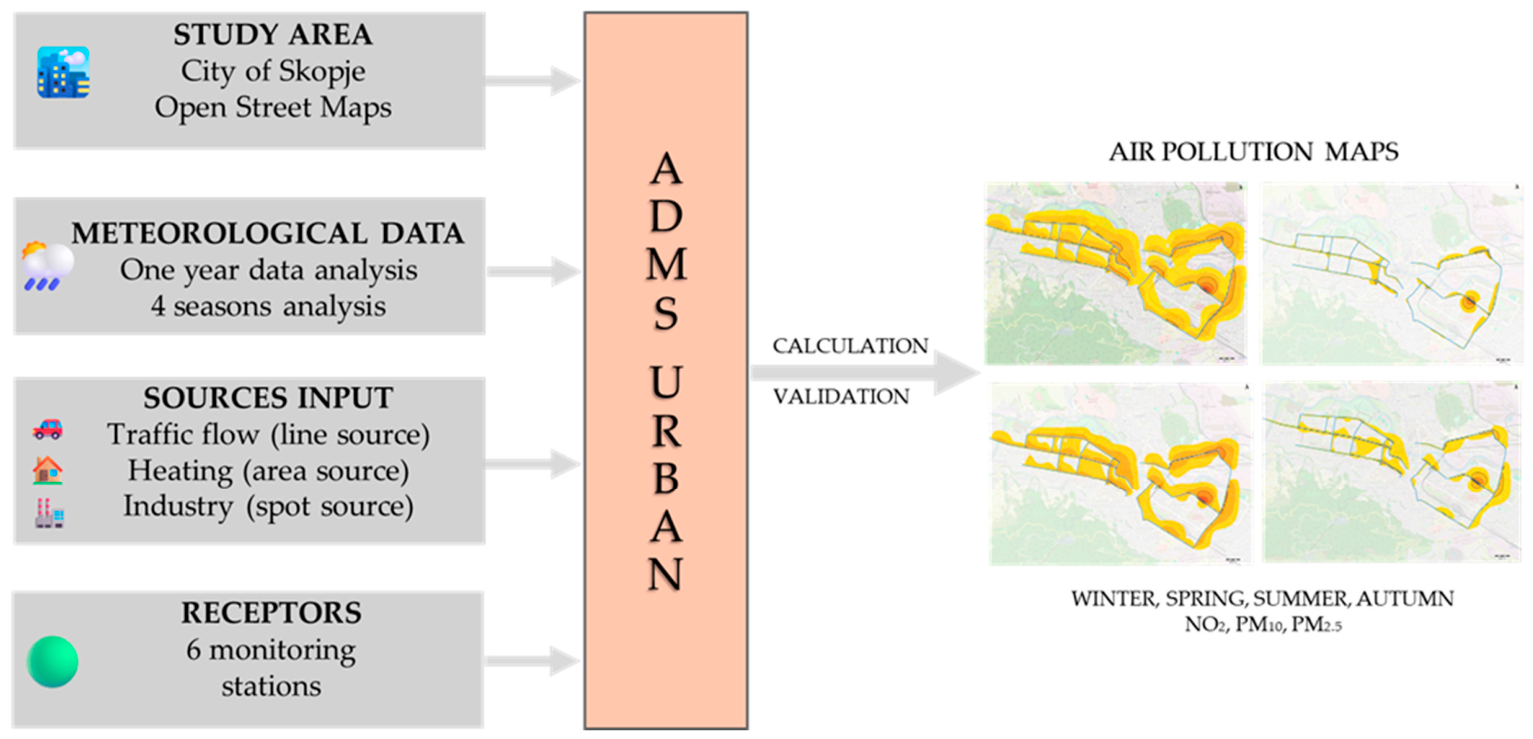
To investigate the spatial and temporal distribution of urban air pollutant concentrations arising from traffic, residential heating, and industrial sources in the city of Skopje, the ADMS-Urban dispersion model 5.1.0, developed by Cambridge Environmental Research Consultants (CERC), was applied. The overall methodological framework of the ADMS-Urban modelling approach applied in this study to analyze the spatial and seasonal variability of air pollution in the city of Skopje is shown in
Figure 1. Traffic flow, which is the main focus of the analysis, was modelled primarily as line sources, while residential heating and industrial facilities were included as area and point sources, respectively, to provide the complete urban emission context.
The methodology applied in this study follows a structured four-step sequence designed to ensure consistency between emission estimation, dispersion modelling, and validation. First, the study domain and its main urban characteristics were defined, including topography, land use, and dominant emission sources. Second, the required input datasets were collected and processed, including meteorological parameters, traffic activity data, household heating statistics, and industrial emission information. In addition, the traffic monitoring data were transformed into line-source representations and integrated together with area and point sources to construct the complete emission inventory. Third, the ADMS-Urban model was configured using the processed emission and meteorological inputs to simulate the spatial and seasonal distribution of NO
2, PM
10, and PM
2.5 concentrations. Finally, the model outputs were validated against measurements from representative urban monitoring stations, followed by source contribution and seasonal analyses.
Figure 1 summarizes the methodological workflow adopted in this study, from domain definition and input data processing to dispersion modelling, validation, and source contribution analysis.
2.1. Urban Area Description
The city of Skopje was chosen as the study area as it is the capital and largest urban agglomeration in North Macedonia and has a lot of air quality challenges. According to international and national reports, Skopje is frequently reported to be among the most polluted cities in Europe and globally, in terms of particulate matter concentrations, particularly PM
10 and PM
2.5 [
24,
25]. These conditions make the city a representative and policy-relevant case for investigating urban air pollution using dispersion modelling techniques.
Skopje is located within the Vardar River Valley and surrounded by mountainous terrain, which significantly limits atmospheric ventilation, particularly during stable meteorological conditions in winter. This topographical setting often leads to pollutant accumulation and shows seasonal variability in air quality. The city has a complex urban environment characterized by intensive traffic activity, dense land use, and multiple emission sources, including residential heating with low-quality wood and coal, as well as industrial activities. From a transport perspective, Skopje has clear road network consisting of major arterial boulevards, dense collector roads, and smaller secondary streets. Traffic flows are concentrated throughout the city center, forming a dense network. Accordingly, air pollution sources in Skopje can be broadly classified into three main categories: traffic emissions, residential heating, and industrial activities.
2.2. Data Acquisition and Processing
In order to develop a dispersion model of air pollution in Skopje, it is first necessary to collect comprehensive meteorological data as well as information on the main pollution sources—traffic, residential heating, and industry—and to process these datasets into a format compatible with the ADMS-Urban modelling system.
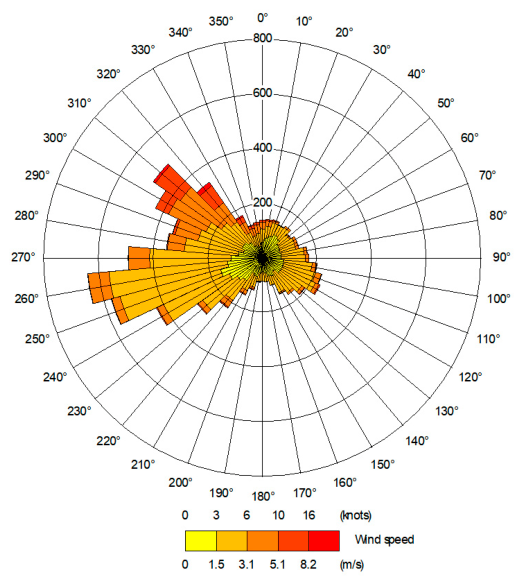
The meteorological dataset used in this study is derived from a single reference station operated by the National Hydrometeorological Service of North Macedonia. These parameters are essential for simulating pollutant dispersion and assessing atmospheric stability across the urban area. Hourly meteorological data for the city of Skopje were collected for the year 2023 and included the date and time of measurement, air temperature, wind speed and direction, precipitation, relative humidity and cloud cover. The remaining parameters provided sufficient temporal resolution for reliable dispersion simulations.
Figure 2 shows the wind rose for the city of Skopje in 2023, showing the frequency and intensity of the wind direction. While this approach is consistent with common applications of ADMS-Urban in data-limited environments, it introduces uncertainty related to spatial representativeness. Skopje is located in a valley basin characterized by complex terrain, local circulations, and frequent temperature inversions, which can lead to spatial variability in wind fields and atmospheric stability conditions across the urban area. As a result, the meteorological conditions recorded at a single location may not fully capture micro-scale variations, particularly in street canyons or peripheral areas. However, the selected station is considered broadly representative of urban-scale meteorological conditions, as it reflects the dominant synoptic wind patterns (as shown in
Figure 2) and seasonal variability relevant for dispersion processes. Given that the modelling objective focuses on city-scale spatial patterns and source contributions rather than micro-scale flow structures, the use of a single station is considered an acceptable approximation.
Road traffic data were collected in collaboration with the Traffic Control Center (CUKS) and the Ministry of Interior (MoI). Hourly vehicle counts were obtained from 79 monitored locations equipped with inductive loop detectors, while additional information on vehicle classification and speed was provided through camera-based monitoring at 24 locations across Skopje. The methodology is further discussed in Section Section Traffic Activity Data for Emission Estimation.
Data required for estimating household heating emissions were obtained from the State Statistical Office (STAT) and the Spatial Planning Agency (SPA) of the city of Skopje. STAT provided regional data on total household energy consumption across eight regions in North Macedonia, of which only the Skopje region was used for this analysis [
26]. The SPA supplied spatial and areal data for each city district defined in the General Urban Plan of Skopje 2022–2032, including geographic location and surface extent [
27]. As district-level information on heating energy carriers was unavailable, these data were derived from the study “Home Heating of Skopje in a glance” conducted by UNDP and national institutions and cross-checked with heating and gas network coverage data from the General Urban Plan. Biomass-related household heating emissions were then allocated to area sources for each district [
28].
Industrial emission data were obtained through cooperation with the Ministry of Environment and Physical Planning (MOEPP) and the city of Skopje, which are responsible for issuing and managing environmental permits for industrial installations. MOEPP oversees large facilities with A-Integrated Environmental Permits [
29], while the city of Skopje supervises medium and small installations with B-Integrated Environmental Permits [
30].
Traffic Activity Data for Emission Estimation
Traffic, as one of the three main sources of air pollution, represents the primary focus of this research. To enable a comprehensive traffic analysis, data from multiple institutions were collected and integrated in order to develop an input emission model in the form of a line source compatible with ADMS-Urban.
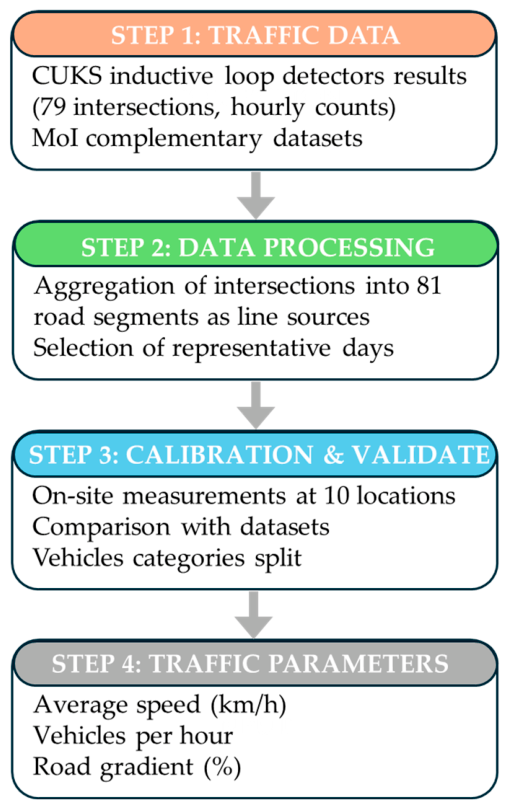
Figure 3 outlines the four key steps used to prepare traffic input parameters for the modelling framework.
Traffic activity data were obtained from the Center for Traffic Management and Control (CUKS) and the Ministry of Interior (MoI). CUKS operates inductive loop detectors at 79 major intersections across Skopje, providing hourly vehicle counts for both entry and exit flows. Complementary camera-based observations from the MoI were used to support vehicle categorization and speed estimation.
In the second step, point-based traffic measurements from sensors were aggregated into line sources representing road segments between intersections. This transformation ensures compatibility with the ADMS-Urban framework while preserving sufficient spatial resolution to capture urban emission gradients.
Afterwards, the calibration and validation need to be performed to ensure data reliability. Institutional traffic datasets were validated through independent field surveys conducted at ten strategically selected locations. Manual traffic counts showed deviations in traffic flow in the range of 7–12%, which falls within acceptable uncertainty limits for urban traffic studies. Cross-validation between CUKS and MoI datasets confirmed consistency in traffic volumes, speed distributions, and temporal patterns. As CUKS data do not include vehicle classification, fleet composition was derived using MoI observations, field surveys, and national transport statistics [
31]. Based on this information, a uniform fleet composition of 90% light-duty vehicles (LDVs) and 10% heavy-duty vehicles (HDVs) was applied across all road segments. The fleet composition applied in the traffic emission modelling was based on aggregated traffic-count categories available from the city monitoring campaign, which primarily distinguishes passenger vehicles and heavy-duty transport units. In order to ensure compatibility with the ADMS-Urban emission-source framework at the city scale, the vehicle fleet was grouped into two representative classes: light-duty vehicles (90%) and heavy-duty vehicles (10%). The light-duty category includes passenger cars, taxis, motorcycles, and light commercial vans, while the heavy-duty category includes buses, freight vehicles, and larger diesel transport units.
In the final step, traffic data from each intersection were merged and processed to parameterize line sources using average vehicle speed (km/h), hourly traffic volume, and road gradient (%). Traffic profiles were structured into representative-day patterns, distinguishing between weekdays and weekends. Tuesday, Friday, and Sunday were selected to represent typical weekday conditions, peak traffic demand, and reduced weekend flows, respectively. Sunday traffic volumes were approximately 40% lower than weekday averages, while weekday variations remained within 5–8%, indicating temporal stability suitable for seasonal aggregation.
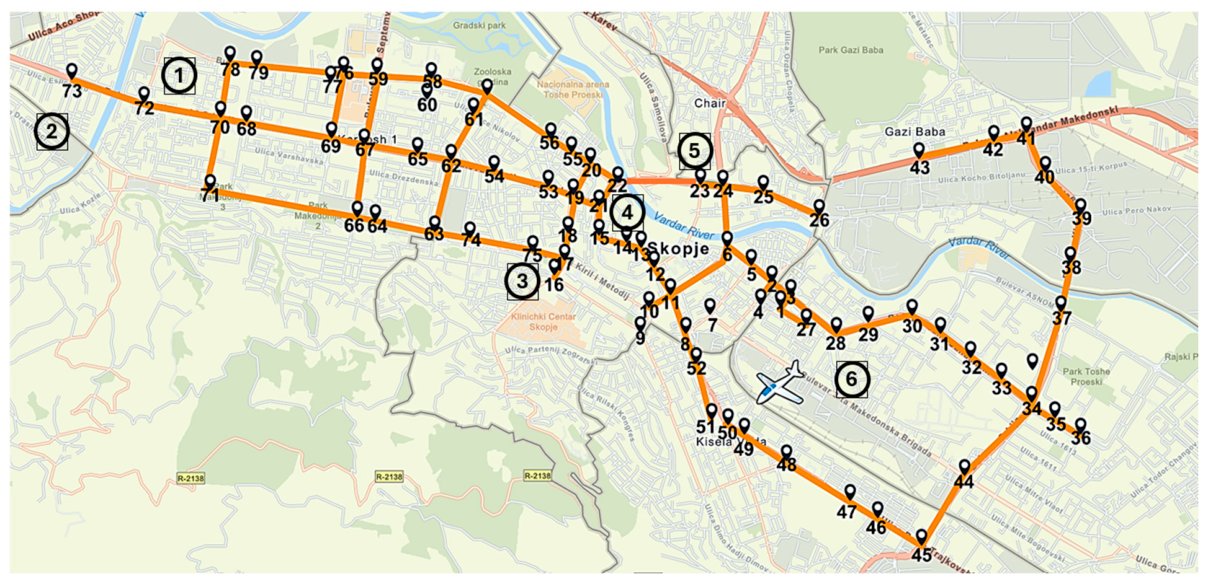
Figure 4 presents a schematic overview of the traffic network, illustrating the 79 intersections that were processed into 81-line sources, each representing a road segment between intersections, as well as the location of the six monitoring stations (circled numbers). Traffic data were collected at 79 monitored intersections, representing nodes in the urban road network. Since each intersection may connect multiple road segments, the measured traffic counts were disaggregated and assigned to individual road links according to the network configuration and traffic flow directions. Consequently, the modelling framework includes 81 road line sources, as some intersections contribute to more than one road segment. This results in a slightly higher number of modelled line sources compared to monitoring points. The relationship between monitoring points and modelled road segments is illustrated in
Figure 4.
The numbers show the 79 intersections, while the lines are the 81 line sources that were used as an input parameter of the traffic flow in ADMS-Urban. These line sources integrate road geometry, traffic volume, vehicle composition, and emission characteristics, forming a harmonized traffic-emission dataset that serves as the quantitative foundation for dispersion modelling and seasonal concentration analysis using ADMS-Urban.
It should further be noted that the emission estimation in this study follows the EMEP/EEA air pollutant emission inventory guidebook framework. Based on the structure of input data and the emission factor formulation applied within ADMS-Urban, the methodology adopted corresponds to a Tier 1 approach. Specifically, traffic emissions were calculated using default emission factors (g/km/vehicle) embedded within the ADMS-Urban model, which represent average European fleet conditions. To improve transparency, representative Tier 1 emission factors applied within ADMS-Urban are reported here. For example, typical emission factors for urban conditions correspond approximately to: light-duty vehicles (LDVs): NOx ≈ 0.3–0.8 g/km; heavy-duty vehicles (HDVs): NOx ≈ 4–8 g/km; PM emissions: LDVs ≈ 0.01–0.05 g/km, HDVs ≈ 0.1–0.3 g/km.
Figure 4.
Spatial distribution of Skopje MOEPP measurement stations and main line emission sources.
Figure 4.
Spatial distribution of Skopje MOEPP measurement stations and main line emission sources.
These values are consistent with the EMEP/EEA Guidebook [
32] and represent aggregated average European fleet conditions embedded within the ADMS-Urban model. The exact values used internally by the model vary as a function of average vehicle speed and are not explicitly user-defined in Tier 1 implementations, without explicit fleet disaggregation by EURO class or fuel type.
In the present study, the emission factors effectively operate as aggregated average values, consistent with Tier 1 methodology, due to the absence of disaggregated fleet data and locally calibrated emission functions. The emission factors used are derived from standard European datasets consistent with the EMEP/EEA Guidebook and are intended to represent typical urban driving conditions.
This approach was selected due to (i) the availability of reliable traffic activity data but limited fleet-resolved emission data, and (ii) the primary objective of the study, which is to assess spatial and seasonal variability of traffic-related pollution rather than to develop a high-resolution emission inventory. Consequently, the emission estimates derived in this study should be interpreted as indicative approximations of traffic-related emissions at the urban scale, rather than precise representations of real-world emission magnitudes.
2.3. Model Configuration in ADMS-Urban
Traffic emissions were defined using the ADMS-Urban road-source structure. Road links were created based on their spatial geometry and traffic activity data, including vehicle flow, fleet composition and average speed. Emissions were calculated using appropriate emission factors, and relevant pollutants were assigned to each road source.
Household heating emissions were represented as area sources. The modelling domain was divided into 159 districts according to the General Urban Plan of Skopje (2022–2032) [
26], with each district imported as a polygon and defined as a separate area source. Emission rates were calculated as surface fluxes (g·m
−2·s
−1) using Tier 2 methodology from the EMEP/EEA Guidebook (2023), under small combustion [
32]. Diurnal and seasonal variations were applied using CAMS temporal profiles [
33]. Residential heating emissions were spatially allocated as area sources based on urban districts, using demographic and housing data. In addition, differences in fuel use were incorporated based on national and local statistics, including the use of solid fuels (e.g., wood and coal) and cleaner fuels such as natural gas. The spatial distribution reflects known patterns of higher solid fuel use in specific districts. Emission factors were assigned to fuel type, allowing the model to account for differences in pollutant emissions associated with various combustion practices. This is particularly important for winter conditions, when residential heating represents a major source of particulate matter.
Industrial installations were included as point sources. For each source, coordinates, stack parameters and emission rates were defined based on environmental permits. Installations with multiple stacks were represented by separate point sources. All sources were checked in the ADMS Mapper to ensure correct spatial placement. Industrial emissions were characterized using data from the national emission inventory, which includes information on emission rates, stack parameters, and activity types for 125 point sources. Emission intensities differ across industrial facilities depending on sector-specific characteristics, fuel use, and production processes, as reflected in the inventory dataset. Where detailed operational data were available, temporal emission profiles were assigned to reflect typical daily and weekly activity patterns. Temporal emission profiles for non-traffic sources were assigned using a combination of CAMS-TEMPO datasets and standard operational assumptions. For residential heating, diurnal and seasonal profiles were directly derived from CAMS-TEMPO [
33], which provide normalized hourly scaling factors reflecting typical European heating behavior (morning and evening peaks, strong winter seasonality).
For industrial point sources, temporal profiles were defined based on available operational information:
− Large installations with continuous production were assumed to operate at constant emission rates (24 h steady profile).
− Smaller or intermittent facilities were assigned simplified diurnal and weekly profiles based on standard industrial working schedules (e.g., reduced activity during night-time and weekends).
In cases where plant-specific temporal data were not available, default profiles consistent with CAMS sectoral temporal factors were applied. This approach allows partial representation of temporal variability while remaining consistent with the available data.
Table 1 summarizes the main input parameters used for traffic, household and industrial sources in the ADMS-Urban model.
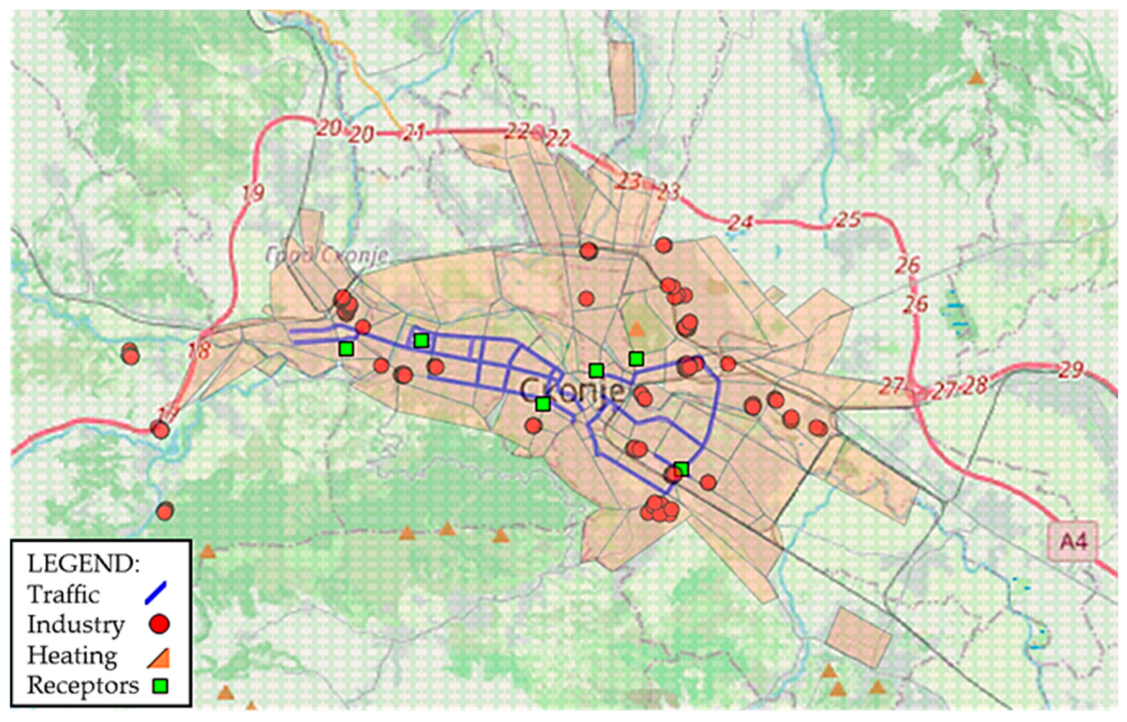
Figure 5 presents the modelling domain implemented in ADMS-Urban. After defining the urban environment of the city of Skopje, all required input data were introduced in accordance with the methodology shown in
Figure 1, which is described in detail in the subsequent sections. As illustrated in
Figure 2, the model includes all relevant emission sources: traffic emissions represented as line sources (a total of 81 line sources); area sources related to household heating, defined according to the urban development plan with 159 city districts, for which biomass heating emissions were calculated using a Tier 2 methodology; and point sources representing industrial facilities. In total, 28 industries operating under integrated environmental permit A and 22 industries under integrated environmental permit B were included. For these installations, a total of 125 point sources were defined, with specified coordinates as well as stack height and diameter for each source.
2.4. Model Validation
The ADMS-Urban model results obtained for the pollution of all sources, have been evaluated by comparing simulated pollutant concentrations with observations from the official urban air quality monitoring network (MOEPP) in Skopje.
Figure 4 shows the locations of the six air quality monitoring stations (circled numbers in the figure) operating in Skopje, which provide the basis for model validation in this study. Among them, Karposh (number 1) and Lisiche station (number 6) were selected as representative sites due to the availability of the most complete measurement datasets and the presence of distinct emission characteristics. These stations provide continuous hourly measurements of nitrogen dioxide (NO
2) and particulate matter (PM
10 and PM
2.5).
Validation of the overall modelling results was carried out in several steps. First, as described in
Section 3.1, simulated concentrations were validated against measured values from the official monitoring stations for the year 2023. Model outputs were aggregated to hourly averages and directly compared with the corresponding measured data to ensure temporal consistency and reliability of the simulations.
In
Section 3.2, the overall contribution of different pollution sources is analyzed. The obtained source apportionment results were compared with findings from previous studies [
34], confirming the relative share of pollutants and supporting the validity of the modelled emission contributions.
Finally, an additional seasonal validation layer was introduced through FAC2 analysis for PM10 and PM2.5 at both Karposh and Lisiche monitoring stations, enabling quantitative assessment of model performance across winter, spring, summer, and autumn. This complementary seasonal evaluation extends the detailed winter-episode validation and supports the robustness of the modelling framework under varying meteorological and emission conditions.
3. Results
3.1. Validation of Simulated Urban Air Pollution Levels from All Emission Sources
This section evaluates the performance of the modelling framework by comparing simulated annual mean urban air pollution concentrations at ground level from all emission sources with observational data, while the temporal validation is further illustrated using a representative winter episode.
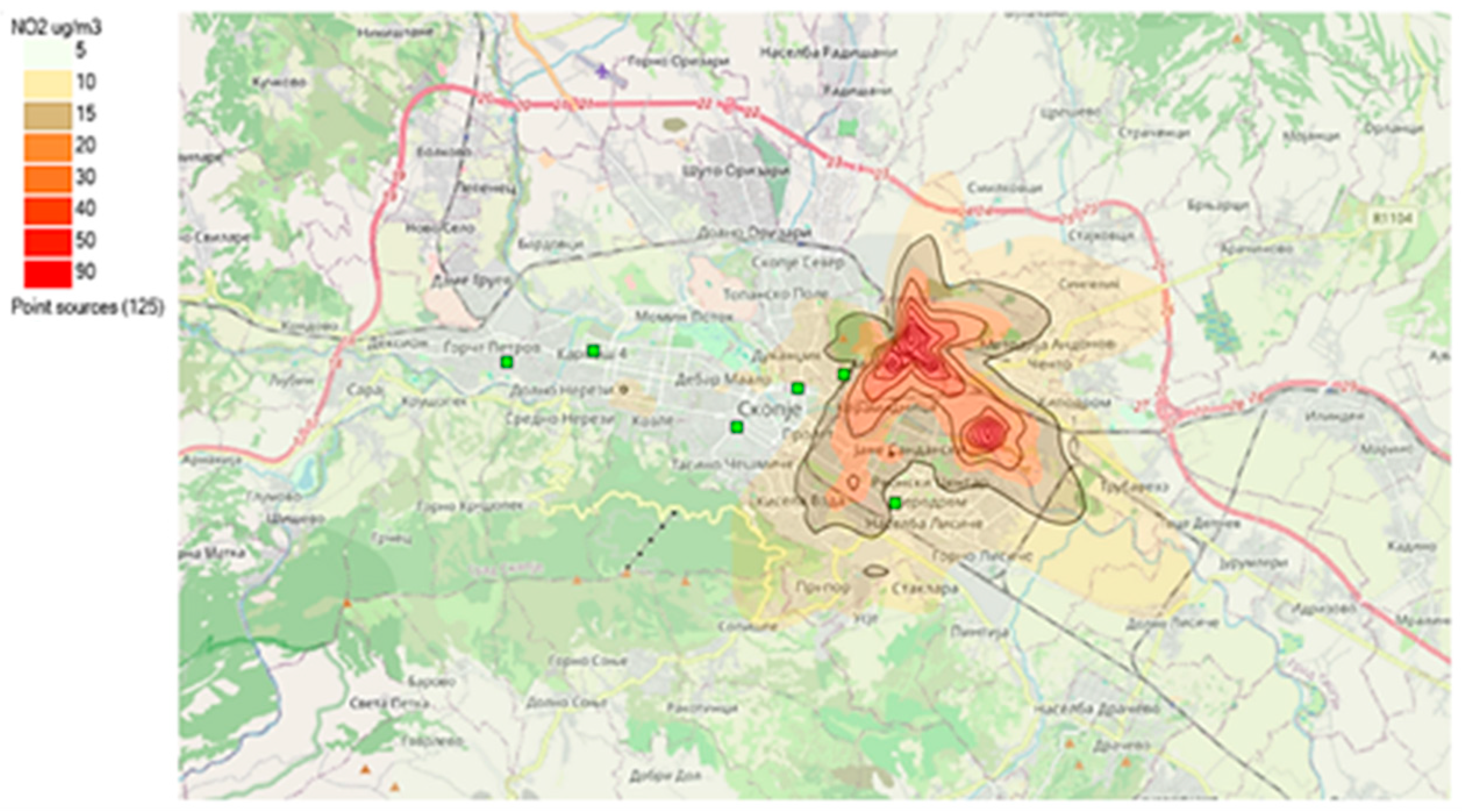
The simulated spatial distribution of NO
2 given in
Figure 6 shows strong positioning and emphasized gradients along main roads in the city, with exposure of the dominant influence of road traffic emissions under the meteorological conditions throughout the year. The appearance of more affected spots indicates areas of high-traffic roads and frequent stop–go driving conditions, which can result in enhancement of NO
2 emissions. Concentration levels decrease notably with distance from main roads. The structure of the map and its shape, which extends downwind from the main roads, implies a clear influence of wind direction on pollution dispersion.
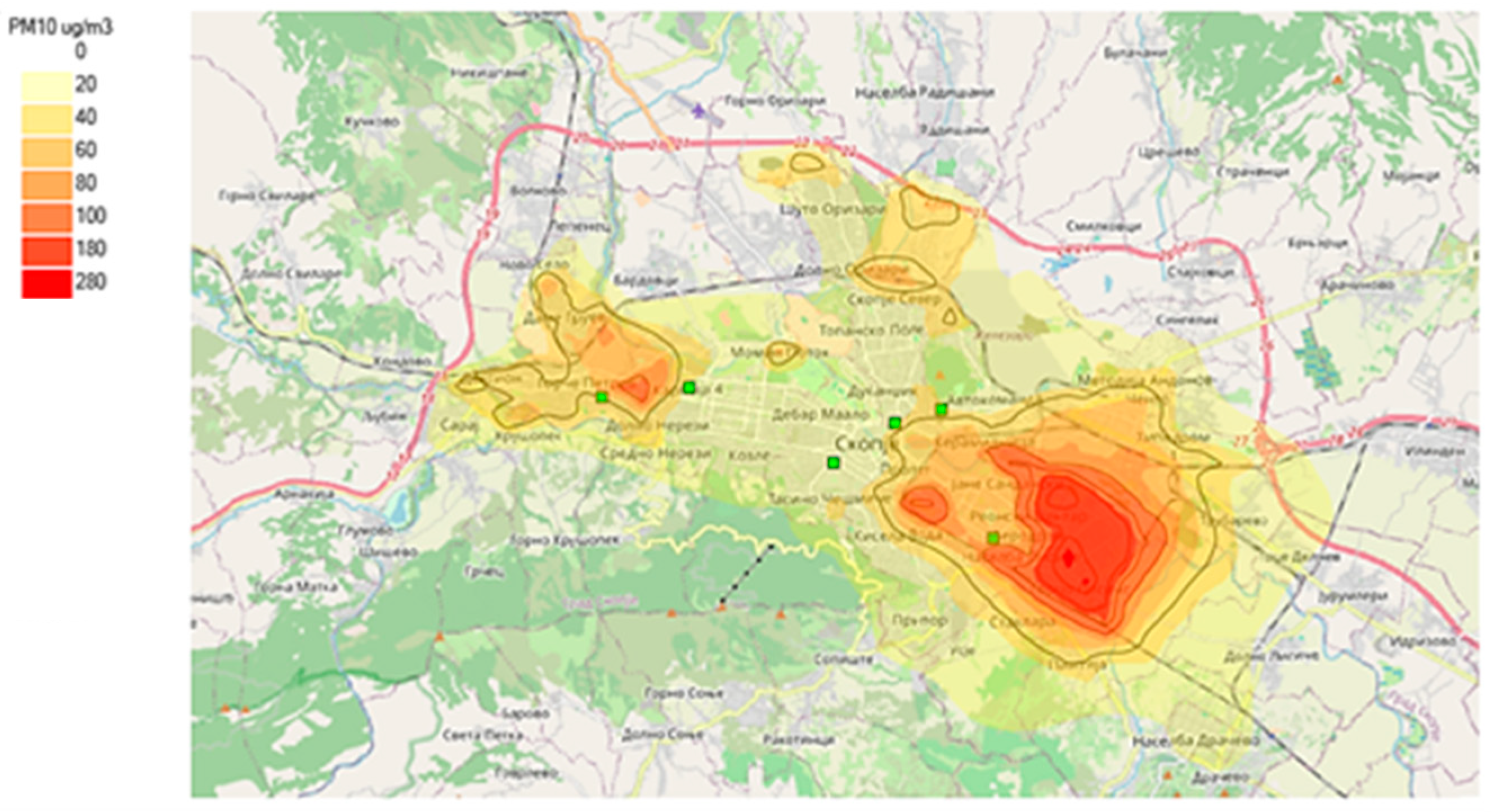
The PM
10 dispersion map in
Figure 7 shows elevated concentrations across large portions of the urban area compared to NO
2. High PM
10 levels are observed mostly in the residential areas, indicating high levels from household heating, but also in the main areas of industrial activity. The most exposed point is located in the southeastern part of the city, where multiple emission sources coincide.
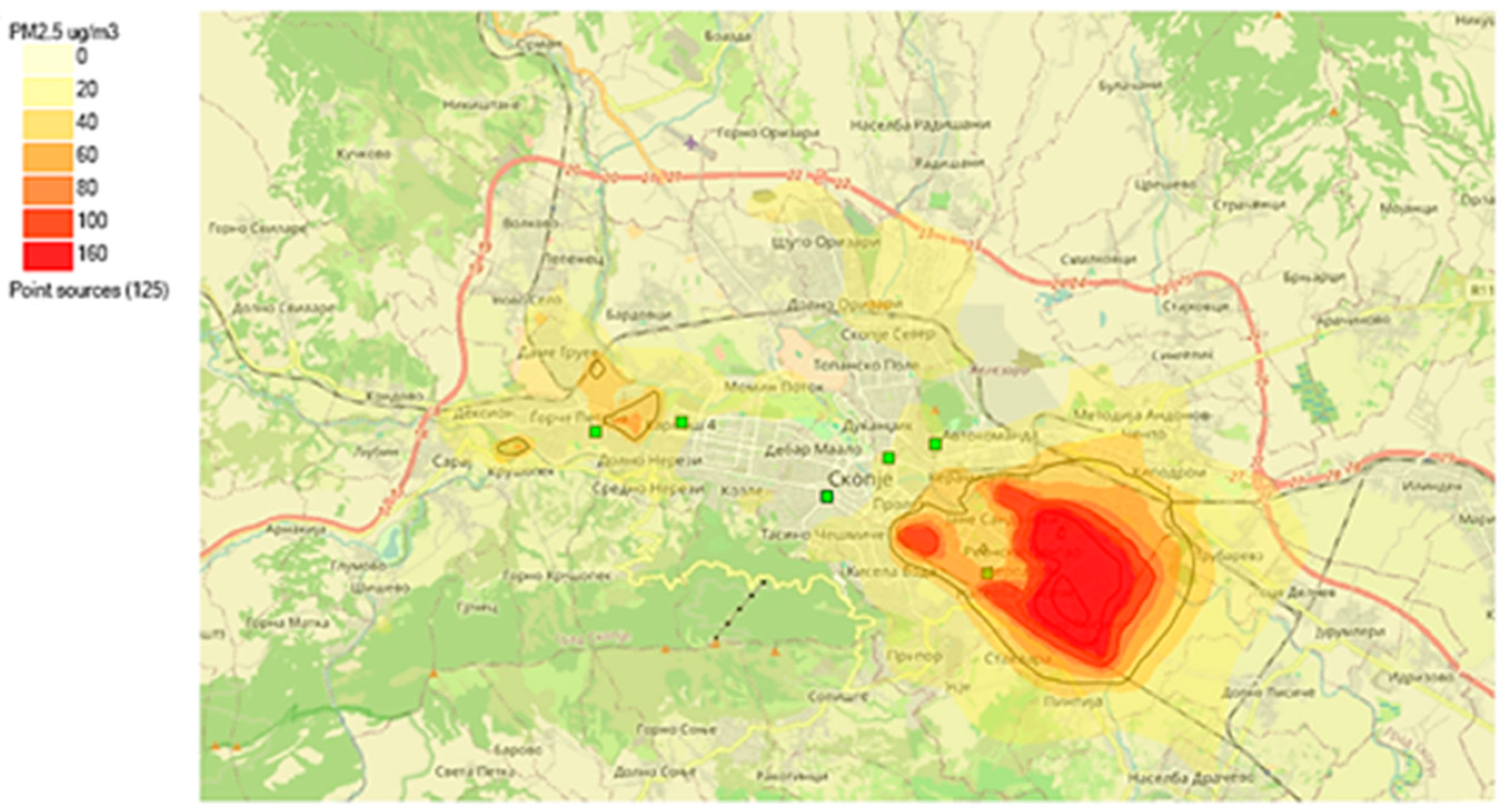
The dispersion model shown in
Figure 8 for the distribution of PM
2.5 particles in the city indicates that again, due to the wind direction, an increase in pollution occurs in the southeastern region. As expected, the value of PM
2.5 particles reaches up to 160 μg/m3 in the Lisiche area.
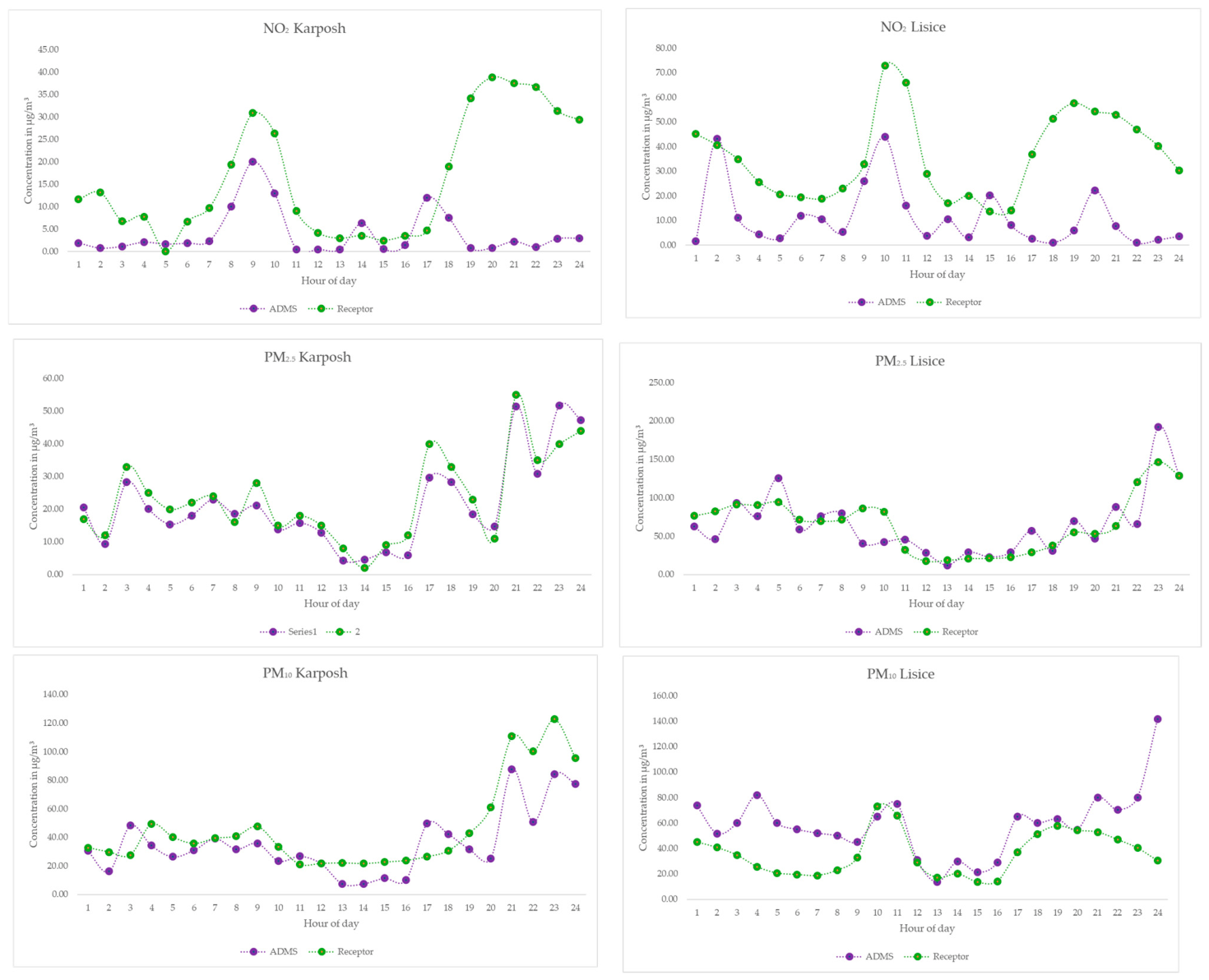
In order to validate the results from the model, a comparison with the results from the two measurement stations—Karpos and Lisiche—was made, as shown
Figure 9. The results show hourly comparisons of measured (receptor—violet line) and modelled (ADMS—green line) concentrations at the two urban monitoring stations on a representative winter day, where generally good agreement in temporal trends for NO
2, PM
10, and PM
2.5 can be observed, supporting the validity of the ADMS-Urban simulations under wintertime conditions. For NO
2, the model successfully captures the pronounced daytime variability, with morning and evening peaks corresponding to traffic activity, while slight underestimations during peak hours indicate the contribution of additional local sources not fully represented in the model. PM
2.5 and PM
10 concentrations show smoother daytime profiles, with elevated evening and night-time values associated with stable atmospheric conditions and residential heating. The model reproduces the timing of concentration increases and decreases well, particularly for PM
2.5, although differences in peak magnitudes are observed, most notably at the Lisiche station, where higher measured values suggest strong local influences from heating, industry and traffic. Overall, the consistency in temporal patterns between measured and simulated concentrations demonstrates that the model adequately represents the dominant emission dynamics and meteorological effects during winter, even where differences remain.
To further support the visual comparison, quantitative statistical indicators were calculated for PM
10 and PM
2.5 at the Karposh and Lisiche monitoring stations for the selected winter episode. Relative error (RE), mean bias (MB), normalized mean bias (NMB), and root mean square error (RMSE) were used to assess the deviation between modelled and measured concentrations. As summarized in
Table 2, the obtained values indicate moderate-to-good agreement at both locations, with lower RMSE values at Karposh and somewhat larger deviations at Lisiche, which is expected due to stronger local source interactions and higher peak concentrations during winter inversion conditions.
It should be noted that negative values of the mean relative error indicate model underestimation, while positive values indicate overestimation of observed concentrations. In this context, the reported metric is interpreted as a relative bias indicator.
Although the detailed statistical validation was focused on a representative winter high-pollution episode, this period corresponds to the most demanding atmospheric dispersion conditions in Skopje and therefore provides a rigorous stress test of the modelling framework. The same calibrated ADMS-Urban configuration and emission characterization were subsequently applied consistently across all seasons, supporting the robustness of the annual and seasonal comparative analyses.
The selected day falls within the upper decile of winter PM concentrations recorded in 2023 and is characterized by low nocturnal boundary-layer heights (~150–200 m) and rapid daytime growth, consistent with typical winter inversion dynamics in the Skopje Basin. While detailed statistical evaluation was performed for this representative high-pollution episode, the consistency between modelled and observed temporal patterns shown in
Figure 9 supports the robustness of the model response under the most critical winter conditions. The findings should therefore be interpreted within the context of representative high-pollution scenarios rather than as a long-term validation assessment.
To further strengthen the seasonal robustness of the modelling framework, an additional validation was performed using the fraction of predictions within a factor of two of observations (FAC2) across all four seasons for PM10 and PM2.5 at Karposh and Lisiche monitoring stations. FAC2 is a widely accepted dispersion-model performance metric that evaluates the proportion of model predictions satisfying the condition , where and denote modelled and observed concentrations, respectively.
The FAC2 values summarized in
Table 3 confirm satisfactory model performance across all four seasons, with the highest agreement observed during winter and spring (0.84–0.91). The strongest winter performance reflects the dominant influence of local primary sources and stable inversion-driven accumulation, which are well represented by the ADMS-Urban framework and support robust reproduction of high-pollution episodes in Skopje. Lower summer FAC2 values are expected and likely reflect the increased influence of secondary aerosol formation, regional background transport, and non-exhaust resuspension processes, which are not explicitly resolved in the present source-resolved configuration. In particular, the Tier 1 emission approach and simplified chemistry scheme applied in this study do not account for secondary organic aerosol formation and complex photochemical processes. Given that photochemical activity is stronger during summer and secondary components contribute more significantly to particulate matter, the observed reduction in model performance during this period is expected.
3.2. Relative Contributions of Traffic, Industry, and Residential Heating to PM10, PM2.5, and NO2
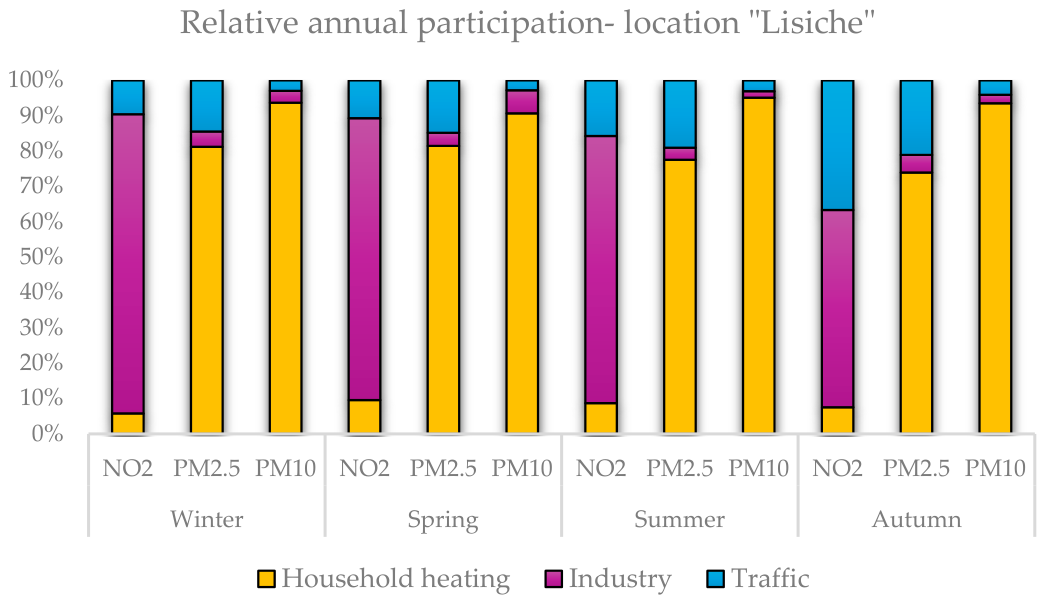
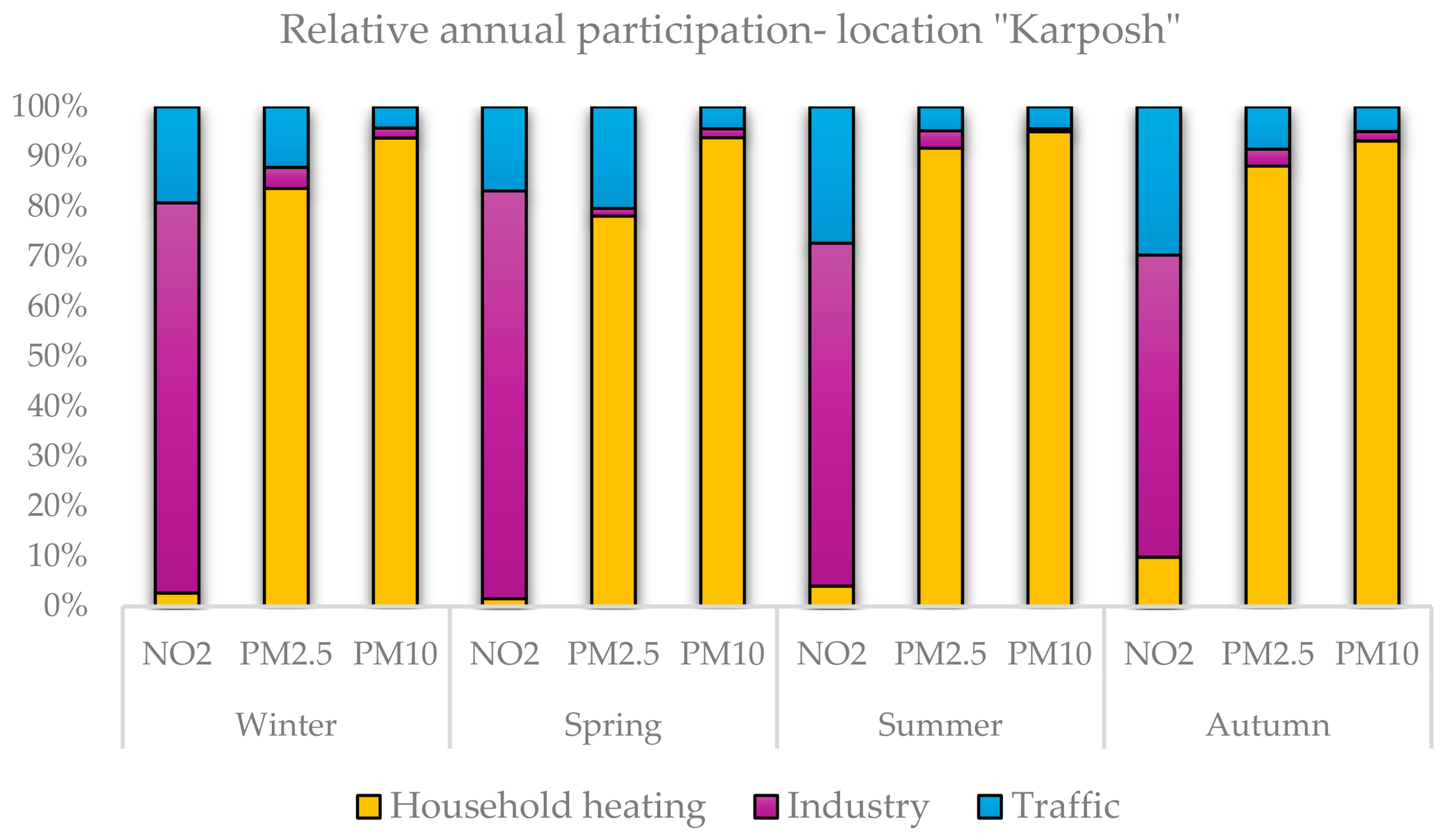
The annual (seasonal) relative contributions of major emission sources (household heating, industry, and traffic) to NO
2, PM
2.5, and PM
10 concentrations at the examined locations, Lisiche and Karposh, are presented in
Figure 10 and
Figure 11.
For improved comparability across monitoring locations and seasons,
Table 4 summarizes the relative traffic contribution percentages to NO
2, PM
10, and PM
2.5 at each station for all four seasons.
In general, the given results lead to the conclusion that there is a clear seasonal dependence on the emission sources, along with specific differences in source structure dependent on the location. According to
Figure 10, in Lisiche, household heating is the dominant contributor to pollution matter during all seasons, accounting for more than 80% of PM
2.5 and PM
10 in winter, spring, and summer, and remaining the main source in autumn. This indicates the continuous influence of household heating activities on particulate pollution in this area. On the other hand, NO
2 shows different source patterns, with industrial emissions dominating during winter and summer (approximately 80%), while traffic contributes a smaller share, particularly in autumn, when its contribution increases.
As can be concluded from
Figure 11 in Karposh, a similar dominance of household heating is observed for PM
2.5 and PM
10 across all seasons, confirming that household heating is the primary pollution source in the city, independent of location. However, compared to Lisiche, in Karposh a higher traffic contribution to NO
2 can be observed, especially during winter and summer. Industrial contributions remain substantial for NO
2, but their relative share is more evenly distributed throughout the year.
Across both locations, the contrast between PM and NO2 is evident and leads to the conclusion that the particulate matter is overwhelmingly driven by household heating, whereas NO2 is mainly associated with combustion-related sources from industry and traffic. The limited contribution of traffic to PM fractions further emphasizes that NO2 is a more sensitive indicator of traffic activity, while PM pollution is primarily controlled by household heating, with secondary contributions from industrial sources depending on the location.
The results presented in
Figure 10 and
Figure 11 indicate that at the Lisiche station, the largest traffic contribution to PM
2.5 occurs during the autumn period at 21%, while the smallest occurs in winter at 14%. For NO
2, the highest traffic contribution is also observed in autumn, reaching 37%, confirming the increased relative importance of traffic emissions outside the dominant winter heating period. On the other hand, at the Karposh location, the largest percentage of PM
2.5 from traffic is in the spring period, at 20%, and the smallest in the summer period, at 5%. These results suggest significant validation of the on-site measurements in Karposh and Lisiche presented in previous research activities conducted in the city of Skopje, by measuring the pollution in these areas and splitting the air pollution sources [
34].
At the Karposh station, located within a mixed urban–industrial environment, modelled traffic-only NO2 concentrations accounted for 19% of the observed winter mean, 17% in spring, 27% in summer, and 30% in autumn. The systematically higher measured concentrations indicate a substantial contribution from non-traffic sources, including industrial emissions, residential heating, and regional background pollution, particularly during winter under stable atmospheric conditions.
In contrast, the Lisiche station, representative of a predominantly traffic-influenced urban environment with limited industrial activity, exhibits lower NO2 concentrations. At this location, traffic emissions explain approximately 10% of measured NO2 concentrations in winter, 11% in spring, nearly 16% in summer and 37% in autumn, highlighting the dominant role of emissions from industry during periods with minimal heating influence.
It should be noted that the lower relative traffic contribution observed in winter, despite higher absolute traffic-related concentrations (
Table 5), is due to substantially increased total NO
2 concentrations driven by residential heating and industrial emissions during this period. As a result, the relative share of traffic decreases even when its absolute contribution remains high.
3.3. Seasonal Distribution of Traffic-Related NO2, PM10 and PM2.5 Concentrations
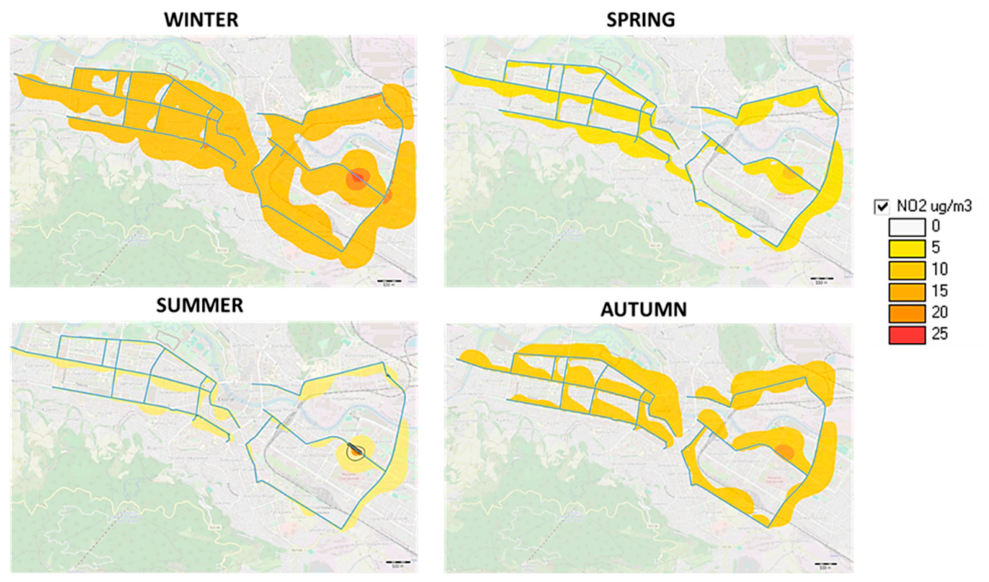
After the air pollution modelling from all pollution sources was conducted, further examination of the contribution of traffic to the overall pollution results has been carried out. For this purpose, dispersion models were generated for each of the pollutants, differentiating them on an annual basis separated into four seasons. The results of the contribution of traffic as a pollutant, shown as dispersion models, are given in
Figure 12,
Figure 13 and
Figure 14. The modelled values are representative of the isolated traffic contribution and are consistent with urban-scale dispersion modelling studies.
Traffic-related NO
2 concentrations (
Figure 12) show a clear seasonal pattern, with the highest values in winter and the lowest in summer. Elevated winter levels are linked to increased emissions and reduced atmospheric dispersion, while spring and summer concentrations decrease due to enhanced mixing and more favorable meteorological conditions. Autumn exhibits intermediate NO
2 levels, reflecting emission activity.
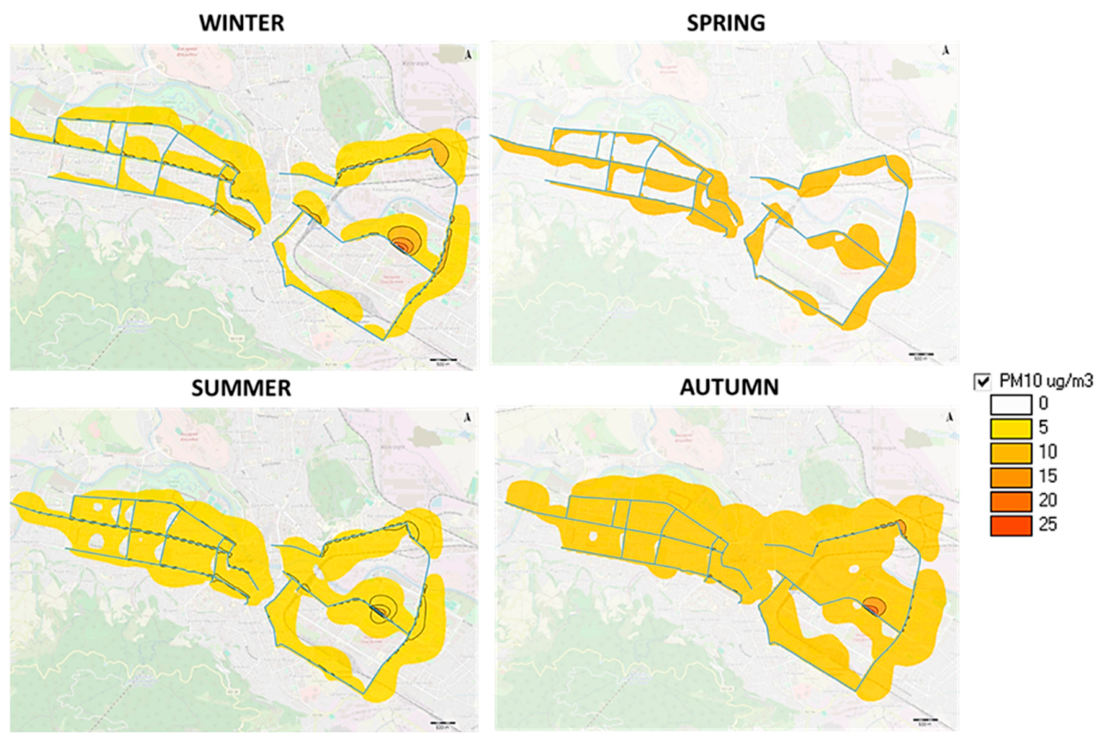
Traffic-related PM
10 concentrations given in the dispersion model in
Figure 13 typically range between 5 and 30 μg/m
3. These results clearly show the combined influence of traffic emissions and meteorological conditions. In the present study, the highest PM
10 concentrations were observed during winter, with seasonal mean values reaching approximately 22 μg/m
3. This increase is primarily attributed to reduced atmospheric dispersion associated with stable stratification, shallow mixing heights, and low wind speeds, which favor pollutant accumulation. Additionally, enhanced cold-start vehicle emissions and limited wet deposition during winter contribute to elevated PM
10 levels. In contrast, the lowest traffic-related PM
10 concentrations were recorded during spring and early summer, with seasonal mean values ranging from approximately 12.8 to 14.0 µg/m
3 in spring, reflecting improved ventilation, increased atmospheric mixing, and precipitation events that effectively reduce road dust resuspension. During summer, moderate PM
10 concentrations were simulated, reflecting generally favorable dispersion conditions, partially offset by increased non-exhaust emissions related to dry road surfaces and enhanced resuspension of deposited particles. In autumn, PM
10 levels increased again, corresponding to the transition toward more stable atmospheric conditions, prolonged dry periods, and increased traffic intensity.
Figure 14.
ADMS-Urban PM2.5 dispersion model for the four seasons.
Figure 14.
ADMS-Urban PM2.5 dispersion model for the four seasons.
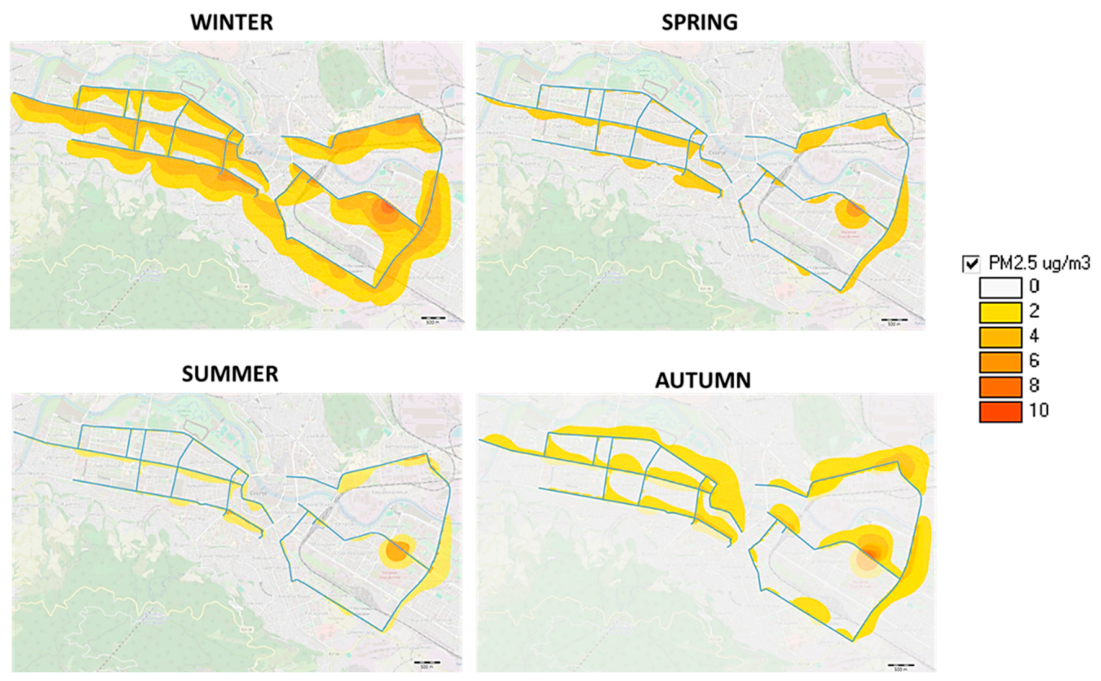
From the dispersion model of the PM
2.5 concentrations shown in
Figure 14, it can be seen that there are higher values during winter and autumn and lower concentrations during spring and summer. Elevated cold-season values might be due to reduced atmospheric dispersion under stable stratification, while the summer lower values reflect favorable ventilation and increased mixing heights.
Table 5 shows the seasonal variation of traffic-related pollutant concentrations at both the Karposh and Lisiche locations. Higher concentrations at both locations are observed during winter and autumn, particularly for NO
2 and PM
10.
It is noticeable that the Lisiche location consistently shows higher concentration levels compared to Karposh, indicating stronger local source influence. In contrast, the lowest traffic-related concentrations are recorded during summer, particularly for NO2 at the Karposh station (2.11 µg/m3). This reduction is attributed to improved meteorological dispersion, increased boundary-layer height, and enhanced photochemical transformation under strong solar radiation, all of which reduce the isolated traffic contribution despite the continued presence of urban background NO2 from other combustion-related sources.
4. Discussion and Methodological Implications for Emission Modelling and Policy
4.1. Tier 1 Implementation and Pathway to Higher Tiers
The developed traffic emissions model is conceived as a bottom-up, activity-based modelling framework designed to quantify exhaust emissions from road traffic in the city of Skopje. The model is structured to translate observed vehicle activity into pollutant emissions under real-world urban driving conditions, while remaining compatible with dispersion modelling tools and future scenario analysis. The conceptual foundation of the model follows internationally recognized practice in urban emissions inventory development, particularly as outlined in [
32].
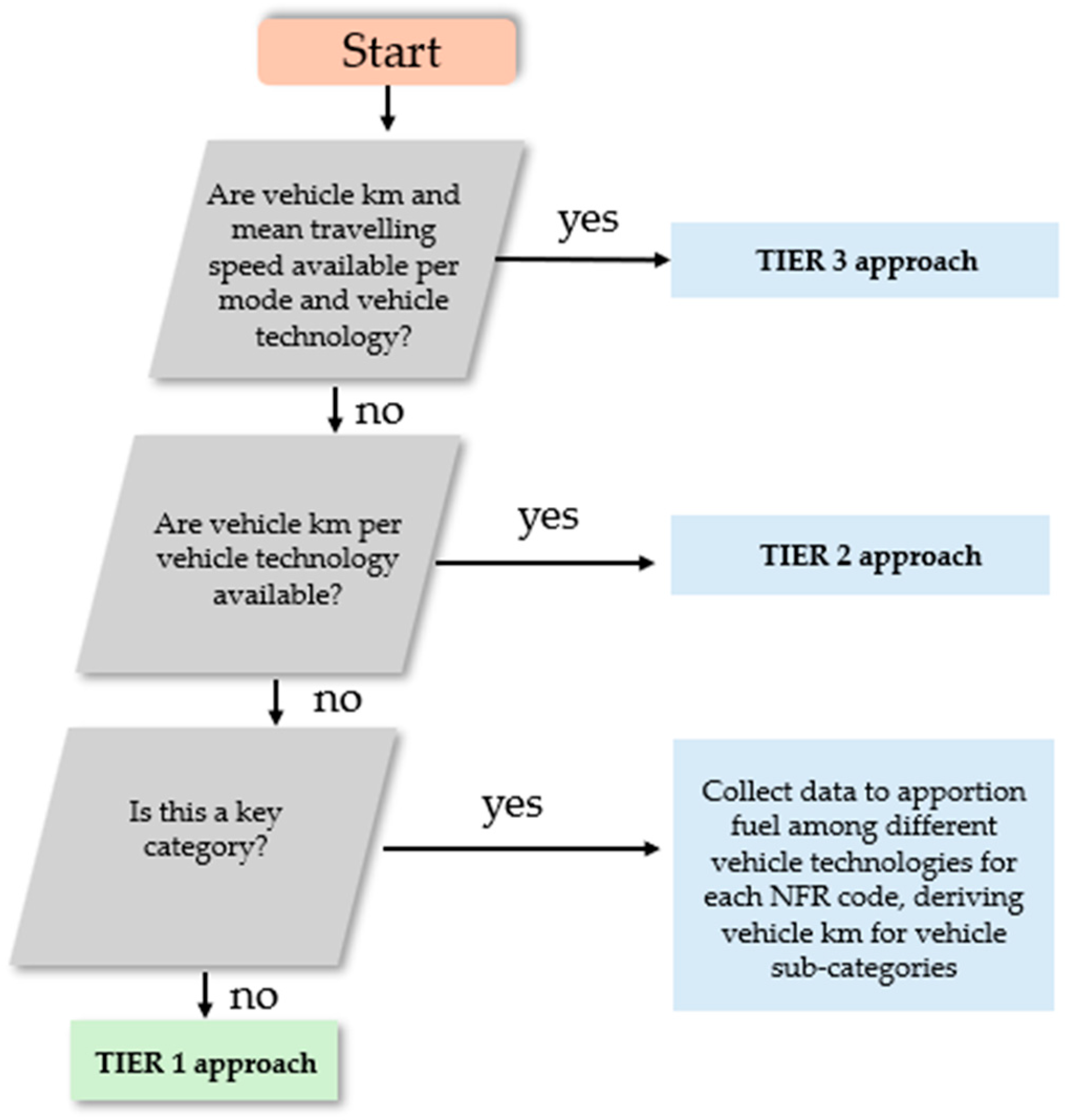
Figure 15 shows the decision tree for exhaust emissions from road transport given by the EMEP/EEA air pollutant emission inventory guidebook. The Tier 1 methodology represents the simplest approach, assuming a linear relationship between aggregated activity data (such as total fuel consumption or total vehicle kilometers travelled) and average emission factors. Activity data are typically derived from readily available statistical sources, including national or regional energy balances, traffic statistics, and population data. Tier 1 emission factors are default values intended to represent typical or average operating conditions and are largely technology-independent. While suitable for high-level screening or national inventories with limited data availability, Tier 1 methods provide limited accuracy for urban-scale applications.
The Tier 2 methodology introduces a higher level of detail by retaining similar activity data while applying country-specific or region-specific emission factors. These factors account for differences in fuel quality, vehicle technologies, emission control systems, and the distribution of vehicles by EURO emission standard. Tier 2 methods also introduce representative average speed values corresponding to different driving environments, typically distinguishing between urban, rural, and highway conditions. This improves accuracy compared to Tier 1, but emissions are still calculated using fixed emission factors for each driving mode.
Tier 3 represents the most detailed and accurate level within the EEA framework and is specifically designed for applications where high spatial and temporal resolution is required, such as urban air quality modelling. Unlike Tiers 1 and 2, Tier 3 does not rely on constant emission factors for predefined driving modes. Instead, emission factors are expressed as continuous, speed-dependent functions derived from extensive experimental measurements. These functions capture the non-linear relationship between vehicle speed and exhaust emissions and allow emissions to be calculated dynamically as a function of real-world driving conditions. For Tier 3 applications, polynomial emission functions have been developed for different vehicle categories, fuels, and EURO emission standards. The calculation of cold-start emissions is considerably more complex, requiring additional parameters related to engine temperature, trip length, ambient conditions, and laboratory-derived correction factors.
While the conceptual framework of the model follows the tiered structure defined in the EMEP/EEA air pollutant emission inventory guidebook [
32], it is important to clarify that the implementation in this study corresponds to a Tier 1 methodology in practice. In a strict Tier 3 approach, emission factors are expressed as explicit continuous functions of speed, vehicle category, fuel type, and EURO emission standard and are typically implemented through tools such as COPERT.
In contrast, the present study applies average emission factors representative of a generalized European fleet, without explicit parameterization of EURO emission standards, cold-start emissions, detailed fleet composition and non-exhaust emissions (brake and tire wear). Therefore, despite the use of speed and traffic flow as activity inputs, the emission calculation remains consistent with a Tier 1 approach, where emissions are proportional to aggregated activity data and average emission factors. This distinction is critical and should be taken account of when interpreting the results: the model is well-suited for spatial distribution analysis and relative source contribution assessment, but it does not capture fine-scale emission dynamics associated with vehicle technology or driving behavior.
In the future context of this paper, COPERT will be used to operationalize the EMEP/EEA Tier 3 methodology and to ensure that hot exhaust emissions are calculated in a manner fully consistent with European best practice for urban road transport inventories.
4.2. Model Uncertainty and Future Work
The ADMS-Urban modelling results are relevant for supporting air quality policy development and scenario analysis. The modelling framework allows the evaluation of different emission reduction strategies, including the relocation of industrial activities, changes in residential heating practices, partial or complete reduction in biomass use, traffic restrictions, and modifications of the vehicle fleet composition. By quantifying changes in pollutant concentrations under different assumptions, the model enables assessment of the potential effectiveness of alternative mitigation measures. This approach provides a basis for comparing scenarios and identifying combinations of measures that can lead to measurable reductions in NO2, PM10, and PM2.5 concentrations at the urban scale.
A key source of uncertainty in the modelling framework is the use of meteorological data from a single monitoring station. In a complex terrain setting such as Skopje, local wind systems, urban heat island effects, and topographically induced flows may lead to spatial heterogeneity that is not fully resolved in the model. This limitation may affect the accuracy of simulated pollutant dispersion, particularly at local scales and during stable atmospheric conditions in winter. Future work should consider the integration of multiple meteorological stations or high-resolution meteorological modelling (e.g., mesoscale or CFD approaches) to better capture spatial variability.
Uncertainty in emission characterization remains an important limitation of the study. For industrial sources, the availability of detailed, plant-specific temporal profiles is limited, and the use of generalized diurnal and weekly patterns may not fully capture real operational variability. For residential heating, uncertainties are associated with the spatial distribution of fuel types and the representativeness of emission factors, particularly for solid-fuel combustion. For traffic, Tier 3 methodology should be considered in order to enable more detailed study. These factors may influence the accuracy of simulated concentrations, especially during winter pollution episodes.
An additional limitation is that the highest-resolution temporal validation was performed for a representative winter pollution episode, while cross-season robustness was evaluated using seasonal FAC2 statistics. Future studies should extend this approach toward continuous multi-episode validation across longer seasonal periods.
The results of this study provide insights into the spatial and seasonal dynamics of urban air pollution in Skopje and are in correlation with both the study objectives and the initial hypothesis that particulate matter (PM10 and PM2.5) is primarily derived from residential heating, while nitrogen dioxide (NO2) is more strongly associated with traffic and industrial combustion sources.
These findings are in strong agreement with previous studies analyzed in the literature, where solid-fuel-based household heating has been identified as the main contributor in the winter season. Similar conclusions have been reported in earlier studies in Skopje, which highlighted the significant role of biomass combustion and meteorological conditions in PM concentrations. However, the novelty of this study is in providing high-resolution spatial quantification of emission sources and their dispersion across the entire urban domain.
On the other hand, the observed increase in pollutant concentrations during winter is consistent with established atmospheric science principles and prior studies, which attribute higher pollution levels to reduced boundary-layer height, temperature inversions, and limited atmospheric mixing.
The spatial variability identified in this study further highlights the importance of localized conditions, including proximity to major roads, industrial sources, and residential areas with dominant solid fuel use. The differences observed between Karposh and Lisiche confirm that urban air quality is highly heterogeneous and influenced by the interaction of multiple emission sources and local meteorology. This supports the hypothesis that city-scale modelling is necessary to adequately present these complex interactions and to identify pollution hotspots that cannot be resolved only through monitoring data.
Future research will focus on improving the spatial and temporal resolution of input data, especially through the integration of multiple meteorological stations, and Tier 3 methodologies. Furthermore, scenario-based simulations evaluating the impact of specific mitigation measures, such as low-emission zones, electrification of transport, or residential heating transitions, would provide valuable support for evidence-based policymaking.
The integration of high-resolution traffic data, meteorological conditions, and urban morphology will enable more precise simulations of pollutant dispersion, improve the reliability of source-apportionment analysis, and support evidence-based planning for traffic management, emission reduction strategies, and health impact assessments in Skopje and similar urban environments.
5. Conclusions
This research presents an assessment of the spatial and seasonal variability of traffic-related air pollution in the city of Skopje, using the dispersion modelling software ADMS-Urban 5.1.0. Combining detailed data on traffic activity in the city-wide network from parameterized street sources and seasonally representative meteorological conditions, the modelling framework allows for high-resolution simulation of NO2, PM10 and PM2.5 concentrations in real urban conditions.
The validation of the model against measurements from representative monitoring stations (Karposh and Lisiche) shows a good reproduction of the analyzed concentration levels, spatial patterns and seasonal trends at these locations. The focus of the research is on traffic-related contributions, but the differences in winter periods highlight the importance of analyzing pollution sources.
The traffic contribution to NO2 shows pronounced seasonal and spatial variability, with annual averages of approximately 18.5% at Lisiche station and 23% at Karposh station. In contrast to NO2, which is primarily influenced by traffic and industrial combustion sources, PM10 and PM2.5 in Skopje are clearly dominated by residential heating emissions across all seasons. This highlights the difference in source structure between gaseous and particulate pollutants and indicates that mitigation strategies targeting traffic emissions may effectively reduce NO2 concentrations but will have a limited impact on PM.
In this context, several limitations of the presented work should be acknowledged. Emission estimates, especially for residential heating, are subject to uncertainties associated with input information and methodologies for gathering and implementing the aggregated statistical data. The temporal profiles of certain emission sources, particularly industrial activities, are simplified due to limited availability of detailed operational data. These factors introduce uncertainty in the concentration levels and source contributions, and the results should therefore be interpreted with consideration of these limitations.
Furthermore, a key limitation arises from the use of the EEA’s Tier 1 emission approach, based on aggregated European emission factors that do not explicitly account for fleet composition by EURO emission standard, cold-start emissions, or non-exhaust sources such as brake and tire wear. This simplification introduces significant uncertainty in the estimation of absolute pollutant concentrations. Therefore, while the modelling framework demonstrates good agreement in reproducing spatial patterns and temporal trends, it is not intended for accurate prediction of absolute concentration levels. Instead, the results should be interpreted as indicative of relative source contributions, spatial distribution, and seasonal variability of urban air pollution.
Methodologically, this work extends the high-resolution urban dispersion modelling framework for Skopje and demonstrates the applicability of the Tier 1 emissions approach for baseline data estimates and identification of dominant pollution sources. At the same time, the study defines a clear path towards the future implementation of Tier 3 emissions modelling using speed-dependent emission factors and detailed fleet characterization, which will increase accuracy and support scenario-based policy analysis. Beyond its application to Skopje, the study demonstrates a transferable methodological framework for source-resolved urban air pollution modelling in topographically complex Southeastern European cities.




 ,
,