1. Introduction
Against the backdrop of the global biomedicine industry’s transition from follow-on innovation to original innovation [
1], pilot-scale activities serve as a critical hub linking laboratory R&D with mass production [
2,
3]. They play a key role in bridging the “valley of death” in innovation and enhancing the efficiency of translating scientific and technological achievements [
4,
5]. As the physical and organizational platform for pilot-scale verification [
6], pilot-scale bases are becoming increasingly vital within regional science and technology innovation systems. Their technological spillover capacity has become an important metric for measuring regional innovation capability [
7,
8,
9]. However, for many regions transitioning toward indigenous innovation, the core challenge is to construct a pilot-scale system that is deeply compatible with their local innovation ecosystem [
10,
11]. There is an urgent need to optimize the spatial layout of pilot-scale facilities to effectively coordinate the heterogeneous demands of diverse local innovation actors, thereby improving the overall efficiency of the pilot-scale system.
The organizational models for constructing pilot-scale bases exhibit significant differences. In mature markets represented by Europe and the United States, development typically relies on in-house R&D by dominant enterprises or highly specialized contract research and manufacturing organizations [
12,
13,
14]. This model is rooted in mature industrial ecosystems and deeply marketized, highly open innovation networks [
15]. In contrast, countries with transitional innovation systems, represented by China, have explored a development path for shared pilot-scale bases characterized by “government guidance and multi-actor co-construction and sharing” [
16,
17,
18]. This model can rapidly fill gaps in the innovation chain and lower the industrialization threshold for small and medium-sized enterprises. Its inherent logic is closely intertwined with local industrial ecosystem structures, policy orientation, agglomeration of innovation factors, and collaborative networks. Therefore, conducting an in-depth analysis of the spatial organization logic of such shared pilot-scale bases contributes to enriching and refining the theory and methodology of pilot-scale base construction.
Some scholars, drawing on theories of industrial clusters and innovation ecosystems, emphasize the importance of knowledge spillovers [
19,
20], collaborative cooperation among innovation actors [
21,
22,
23], spatial agglomeration of innovation [
24], and resource sharing [
25]. Other studies focus on traditional locational factor analysis [
26,
27], such as the relationship with central urban areas, transportation accessibility [
28,
29], geographical proximity [
30,
31], and infrastructure provision [
32,
33]. The aforementioned studies provide an important foundation for understanding the spatial organization of innovation activities. However, within the theoretical and practical context of “fostering industrial aggregation through pilot-scale activities”, existing research still exhibits three key limitations when explaining the spatial organization logic of such platforms in the biomedical field. First, there is a limitation in the classification of innovation actors. Although innovation ecosystem research regards “actors” as core elements, the classification of these actors is often overly generalized. Existing pilot-scale studies are primarily based on in-house research and development models led by Western enterprises or mature outsourcing models, and their theoretical presuppositions do not necessitate a functional differentiation of innovation actors. However, transitional innovation countries, represented by China, must systematically integrate differentiated research and development needs, knowledge sources, and risk-bearing capacities, thereby creating an urgent need for the functional differentiation of innovation actors [
34]. Second, there is a limitation concerning proximity mechanisms. The theory of “multi-dimensional proximity” in economic geography posits that, in addition to geographical proximity, factors such as cognitive proximity, institutional proximity, and social proximity also influence innovation cooperation. In the practice of shared pilot-scale bases, the sensitivity of demand-side actors, knowledge sources, and service providers to proximity varies significantly. Their spatial coupling logic extends far beyond simple agglomeration, necessitating the construction of a corresponding spatial analysis framework [
35]. Third, there is a limitation in research methods. The theory of “institutional thickness” emphasizes that regional success depends not only on the agglomeration of enterprises, but also on the institutional environment that supports innovation and its interactive networks. Existing research primarily relies on single-case analyses of specific cities or parks. However, in contexts where regional institutions and industrial foundations differ significantly, understanding the spatial practices of shared pilot-scale bases urgently requires cross-case comparative research that integrates multi-source geospatial data [
36,
37]. The aforementioned theoretical perspectives and their manifestations in different Chinese cities can be summarized in
Table 1, which reveals the spatial structure characteristics of Beijing, Shanghai, and Wuhan, thereby laying the foundation for the comparative analysis of this study.
To address these research gaps, this paper focuses on the spatial organization logic and typology of shared pilot-scale bases in biomedicine within the context of “fostering industrial aggregation through pilot-scale activities”. As a representative of catching-up economies, China—driven by a synergy of government and market forces, leveraging its ultra-large market, vibrant domestic innovation, and unique institutional environment—provides a crucial case for studying the organizational logic of innovation infrastructure in non-mature markets. In this study, we first establish a functional classification system for innovation actors based on their core roles in the pilot-scale process. Subsequently, we select three leading cities in China’s biomedicine industry development for cross-case analysis. By integrating POI data and Geographic Information System (ArcGIS 10.7) spatial analysis methods, this study aims to: (1) reveal the spatial agglomeration characteristics of innovation actors within shared pilot-scale base ecosystems; (2) analyze the functional and morphological differences in innovation networks based on the spatiotemporal evolution of enterprise registrations; and (3) identify the types of innovation actors that play a decisive role in the evolution of regional innovation ecosystem structures.
Based on innovation ecosystem theory and the perspective of urban heterogeneity, this study proposes the following hypotheses:
Hypothesis 1 (H1). The Spatial Structure Hypothesis. Cities with a stronger knowledge base exhibit a more polycentric spatial structure than cities with a weaker knowledge base.
Hypothesis 2 (H2). The Agglomeration Degree Hypothesis. Policy-driven latecomer regions exhibit a higher degree of spatial agglomeration of innovation actors than market-driven mature regions.
Hypothesis 3 (H3). The Evolutionary Path Hypothesis. Market-driven mature regions follow a more gradual evolutionary path with greater spatial flexibility, whereas policy-driven latecomer regions follow a more rapid, leapfrog evolutionary path characterized by structural lock-in.
These hypotheses focus on the interaction between the spatial behavior of innovation actors and the regional institutional environment, which is precisely the core issue addressed by the Regional Innovation System (RIS) theory. As the overarching analytical framework for this study, RIS theory emphasizes that regional innovation performance depends on the networks of knowledge creation, diffusion, and application formed by multiple actors within a specific institutional environment. This paper engages in a dialog with RIS theory from three dimensions: First, addressing the vagueness of actor classification within RIS, we construct a multi-dimensional classification framework for core populations in biomedicine based on pilot-scale functions (
Table 2), subdividing actors into five functional communities and thereby deepening the understanding of actor heterogeneity. Secondly, RIS emphasizes actor interaction and knowledge flow; this study employs kernel density analysis, spatiotemporal evolution analysis, and core-periphery analysis to transform abstract interactive relationships into observable spatial patterns, revealing the spatial structure and functional differentiation of innovation networks. Thirdly, RIS focuses on the influence of the institutional environment on actor behavior; through a cross-case comparison of the three cities, this study identifies how three institutional forces—market, knowledge, and policy—differentially influence the spatial morphology and evolutionary paths of innovation networks, establishing a testable link between institutional thickness and spatial form. In summary, using RIS as a foundational framework and employing functional subdivision of actors, multi-dimensional spatial analysis, and cross-case comparison, this paper aims to deepen the understanding of the spatial dimension of RIS and provide a theoretical explanation and empirical basis for the positioning of shared pilot-scale bases within regional innovation systems.
To systematically test the above hypotheses, this study adopts an integrated multi-method analytical strategy: Hypothesis 1 (H1) is tested by comparing the kernel density maps of biomedical enterprises across the three cities to reveal the morphological differences in their spatial structures; Hypothesis 2 (H2) is evaluated by measuring the degree of spatial agglomeration of innovation actors, particularly leading enterprises, using core-periphery analysis and concentration ratios; Hypothesis 3 (H3) is examined through a three-phase spatiotemporal evolution analysis based on enterprise registration data to uncover the differentiated evolutionary paths and their driving mechanisms across the three cities.
2. Materials and Methods
2.1. Core Concept Definition: Spatial Organization Logic
Before proceeding with the specific analysis, it is necessary to clearly define the core concept of this study: “spatial organization logic”. As used in this research, “spatial organization logic” refers to the comprehensive manifestation of the spatial distribution patterns, agglomeration characteristics, interaction modes, and dynamic evolutionary laws of various innovation actors centered around the key facility of shared pilot-scale bases within a specific urban innovation ecosystem. These patterns are shaped by functional linkages, multi-dimensional proximity demands, and institutional environment constraints. Specifically, this logic encompasses three interrelated analytical dimensions: the first is spatial structure, referring to the distribution patterns of innovation actors at the urban scale, such as unipolar polarization or polycentric networking models; the second is functional differentiation, reflecting the spatial division of labor and synergistic relationships among different types of actors—that is, the spatial configuration of the innovation value chain; the third is the evolutionary path, revealing the dynamic process of industrial spatial pattern change over time and its core driving forces (market mechanisms, knowledge spillovers, policy interventions, etc.). Through a systematic analysis of the aforementioned dimensions, this paper aims to reveal the common patterns of spatial organization in shared pilot-scale bases alongside characteristics of urban heterogeneity, thereby providing a theoretical basis for their planning and construction.
Based on the above definition, the empirical analysis of this study operationalizes these three dimensions as follows: (1) Spatial structure: Visualized through kernel density analysis to reveal the distribution patterns of innovation actors at the urban scale; (2) Functional differentiation: Examined through category-specific kernel density analysis to uncover the differentiated spatial characteristics and complementary relationships among various types of actors; (3) Evolutionary path: Traced through phased kernel density maps based on enterprise registration years to illustrate how spatial patterns change over time and how market, knowledge, and policy forces shape these trajectories. Together, these three dimensions construct a holistic understanding of how shared pilot-scale bases are embedded within and co-evolve with their regional innovation ecosystems.
2.2. Study Area
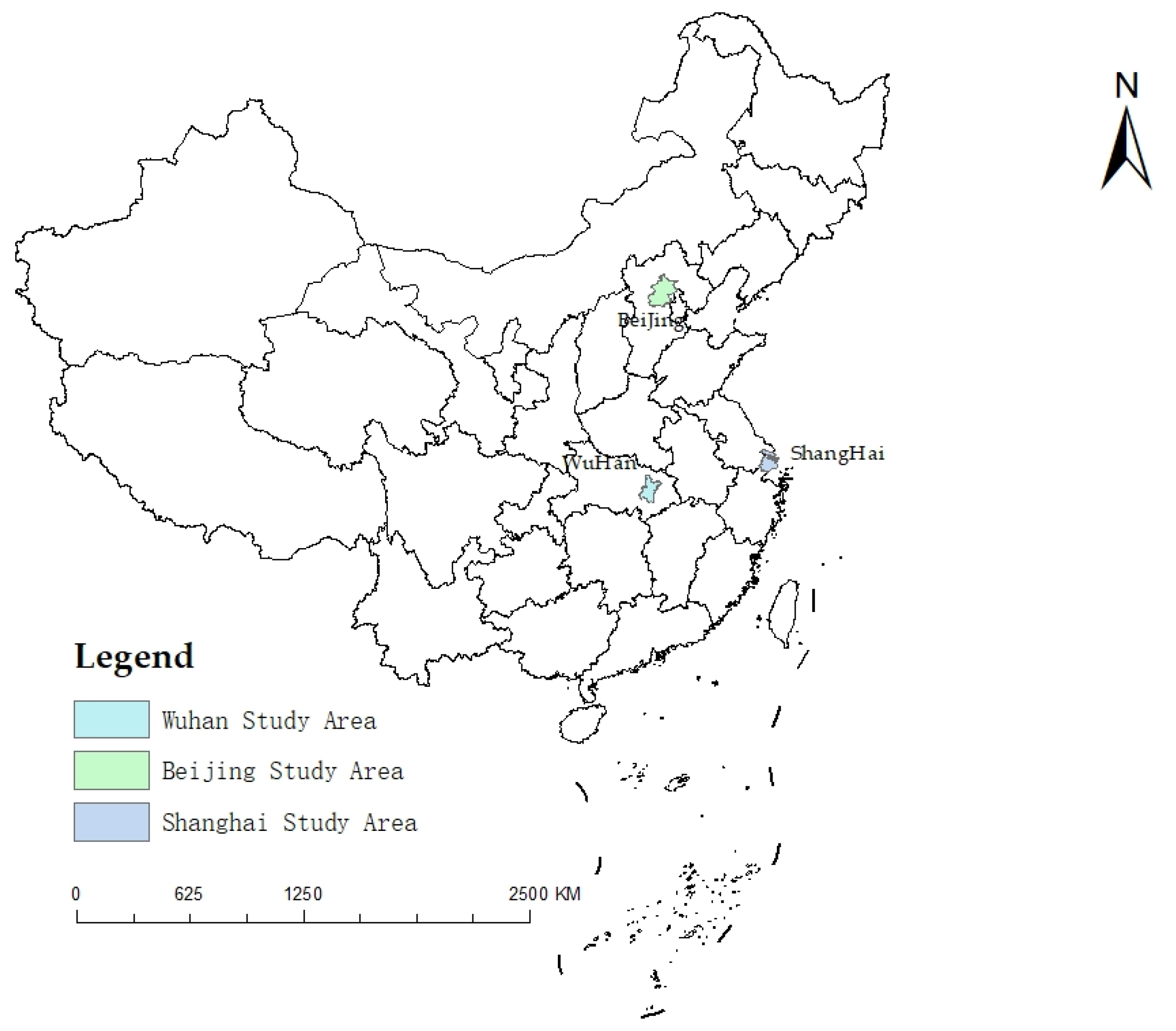
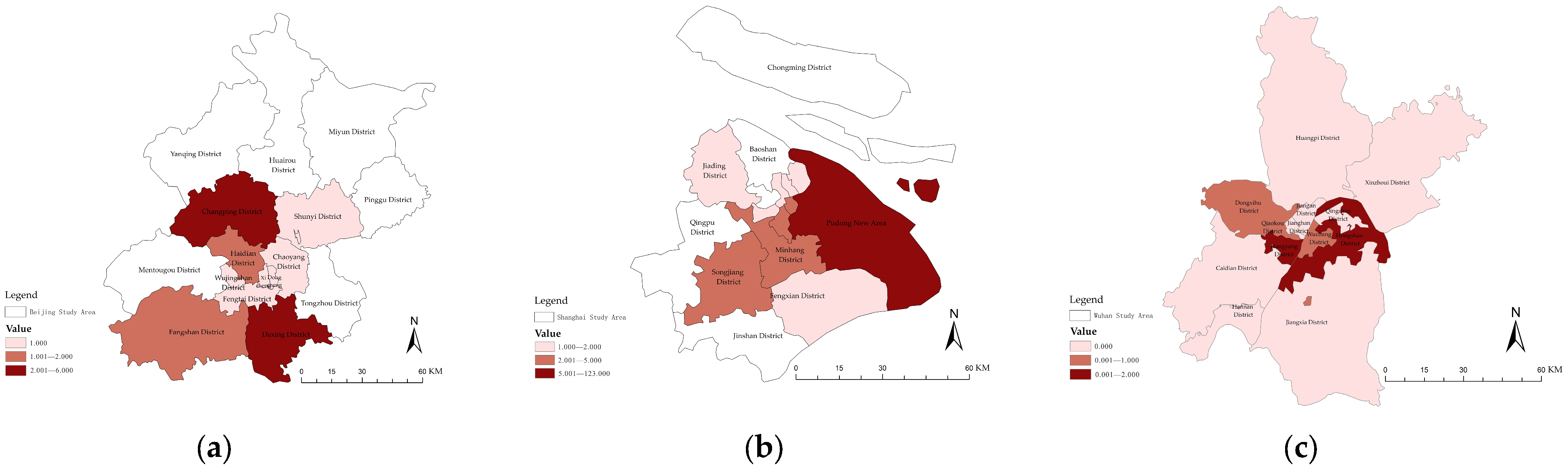
Adhering to the principles of typicality, diversity, and systematicity, this study selects three cities—Beijing, Shanghai, and Wuhan—as research cases (
Figure 1). These cities are not only major agglomeration hubs for China’s biomedicine industry but also represent three distinct regional development paradigms and spatial formation logics. This provides a diverse empirical foundation for systematically revealing the spatial organization logic of shared pilot-scale bases.
Beijing exemplifies a powerful dual-driven model of knowledge and policy. It hosts the nation’s top universities and research institutes alongside a strong national-level policy support network, with its industrial ecosystem characterized by knowledge creation and original innovation sourcing. Furthermore, under the coordinated development strategy of the metropolitan area, its industrial space shows a trend of multi-point diffusion into suburbs and networked interconnection. Shanghai serves as a model driven by market forces and globalization. It concentrates a large number of multinational pharmaceutical R&D centers, leading domestic listed enterprises, and a mature venture capital market, forming a highly export-oriented, market-dominated, and polarized innovation ecosystem. Wuhan represents a latecomer catch-up mode driven by strong policy planning. Strategic planning and sustained resource allocation for national-level industrial bases like the Optics Valley Biolake have enabled Wuhan to achieve rapid agglomeration of its biomedicine industry within a relatively short period. Its spatial structure exhibits a strong policy orientation.
The marked differences among these three models help us move beyond simplistic replication of any single successful experience. Consequently, they allow us to uncover the agglomeration characteristics of innovation actors’ spatial structures under varying resource endowments, innovation resources, and policy orientations, as well as their impact on the spatial organization of shared pilot-scale bases.
2.3. Data Sources
2.3.1. Core Population Multidimensional Classification Framework
To precisely analyze the association between various innovation actors and the pilot-scale process, as well as their spatial logic, this study constructs a core population classification framework for biomedicine. It draws on China’s Strategic Emerging Industries Classification (2018) and the Pharmaceutical Industry Development Plan Guidelines, yet places greater emphasis on classification from the perspective of pilot-scale functionality. The aim is to accurately capture the differentiated positioning of different types of actors within the pilot-scale process. Specifically, based on the innovation value chain, this framework categorizes diverse innovation actors into core functional groups comprising higher education institutions, scientific research institutes, and five types of enterprises (
Table 2).
2.3.2. Data Sources and Processing
This study primarily uses Point of Interest (POI) data to identify and locate the spatial entities of biomedical enterprises. Based on the Application Programming Interfaces of the Gaode Map and Baidu Map open platforms, we crawled the initial Point of Interest data related to biomedicine within the study areas of the three cities. To ensure search effectiveness within the Chinese context, keywords were searched in Chinese, specifically including: “Pharmaceutical”, “Biotechnology”, “Medical R&D”, “Medical Devices”, “Biomedicine”, “Drug R&D”, “Pharmaceutical Technology”, and “Medical Laboratory”. Each data point includes attributes such as company name, latitude and longitude coordinates, detailed address, and industry category.
To ensure data quality, we performed a data cleaning process on the initial dataset. First, we unified the coordinate systems from different sources to the WGS 1984 geographic coordinate system using ArcGIS. Second, we removed duplicate records based on name and address, and excluded records with invalid or severely incomplete address information. Finally, we imported the processed list of enterprises into the enterprise information query platform “Qichacha”. A manual review and precise screening were then conducted based on the “Business Scope” field in their industrial and commercial registration information, in conjunction with the Strategic Emerging Industries Classification (2018).
The inclusion and exclusion criteria for manual verification were as follows: (1) Inclusion criteria: The business scope explicitly includes core biomedical research and development and production activities such as “drug R&D”, “biological product manufacturing”, “pharmaceutical intermediate synthesis”, “clinical trial services”, “medical device production”, and “diagnostic reagent development”; or the business scope involves providing key technical services, equipment, and consumables supply for the aforementioned activities. (2) Exclusion criteria: Enterprises whose business scope primarily involves cosmetics, health foods, food additives, feed, agricultural biotechnology (e.g., fertilizers, pesticides), and other fields with low relevance to the core biomedical industry; enterprises with zero employees enrolled in social insurance; enterprises with vague business scope descriptions whose core business could not be verified through their official websites or public information. For enterprises whose business scope covered both inclusion and exclusion categories, judgment was made based on the proportion of their main business; if the core business fell within the scope of biomedical R&D and production, the enterprise was retained.
After following the above procedures, we obtained a total of 5176 valid biomedical enterprise POI entries: 1656 for Beijing, 2528 for Shanghai, and 992 for Wuhan (
Table 3).
2.4. Methods
2.4.1. Basis for Selection of Analytical Methods
To systematically address the three research questions posed in this study, a methodological chain was formed by employing kernel density analysis, spatiotemporal evolution path analysis, and core-periphery structure analysis, respectively. The selection of methods followed a “problem-oriented” principle and was linked to the corresponding research questions.
To reveal the static spatial agglomeration characteristics of innovation actors within shared pilot-scale bases, a density measurement method capable of identifying industrial spatial patterns is required. Kernel Density Estimation, as a non-parametric statistical method, does not presuppose a spatial distribution model and can generate a continuous density surface directly from point data. It is a mature tool for identifying industrial agglomeration hotspots and spatial structure morphologies. Compared to point density analysis or the nearest neighbor index, KDE is more capable of smoothly and intuitively presenting complex spatial patterns such as polycentric networks and unipolar radiation, thus making it the preferred method for static spatial pattern analysis.
To analyze the evolutionary differences in the function and morphology of innovation networks, it is necessary to introduce a temporal dimension to characterize the dynamic evolution of spatial patterns. This study employs phased spatiotemporal evolution path analysis, dividing the study period into three phases consistent with key policy milestones, and conducting kernel density analysis on enterprise point locations for each phase. This method can reveal how driving forces such as markets, knowledge, and policy restructure spatial patterns over time, effectively capturing the path dependence and discontinuous characteristics of spatial evolution, and is superior to a single static cross-sectional comparison.
To identify the types of innovation actors that play a decisive role in the evolution of the regional innovation ecosystem, it is necessary to identify high-level actors within the innovation system and their spatial configuration characteristics. This study focuses on leading enterprises to conduct core-periphery structure analysis. By spatially overlaying the locations of leading enterprises identified from authoritative rankings with the city-wide enterprise heat maps and the locations of pilot-scale bases, it visually presents the spatial gradient of innovation capacity. This analytical framework draws on the logic of growth pole theory and the core-periphery model, transforming the abstract concept of capacity into quantifiable spatial statistical characteristics. It is used to verify whether leading enterprises constitute the “growth pole” of regional innovation and to reveal the spatial correlation between the siting of pilot-scale bases and high-level demands.
These three methods approach the analysis from the three dimensions of static pattern, dynamic evolution, and capacity gradient, respectively, forming a complementary analytical chain that collectively serves the understanding of shared pilot-scale bases.
2.4.2. Spatial Agglomeration and Pattern Analysis
Kernel Density Estimation (KDE) is a non-parametric statistical density estimation technique that does not rely on specific mathematical distributions or any modeling assumptions of the data [
38]. It calculates the density of point or line features within their surrounding neighborhoods using a spatial dispersion formula, thereby generating a continuous surface. This helps determine the degree of agglomeration and the distribution pattern of point data [
39,
40]. A higher kernel density value indicates a more concentrated distribution of the studied objects, making specific spatial characteristics more pronounced [
41].
Therefore, this study employs kernel density analysis to reveal the static spatial structure of the innovation ecosystem. After importing all POI point data, we used a Gaussian kernel function for computation to generate a continuous density surface. This visualization clarifies the spatial distribution of hotspots, coldspots, and functional agglomeration areas of various actors.
The calculation formula is as follows:
where f(x) denotes the kernel density value at location x;
n represents the total number of biomedical enterprise POI samples; k is the kernel function; d
ix is the distance from sample point I to location x; and r is the search radius, which is the key parameter determining the smoothness of the output.
Two points need to be clarified regarding the potential impact of category overlap on the kernel density results: First, the enterprise classification statistics in
Table 2 employ duplicate counting (i.e., if a single enterprise is involved in multiple business categories, it is counted separately in each relevant category). This approach is adopted to reflect the compositional structure of enterprises across different functional communities from a quantitative perspective. However, the kernel density analysis utilizes independent enterprise points, meaning each enterprise participates in the calculation as a single spatial unit, with unique latitude and longitude coordinates, and without duplication. Therefore, overlaps in the functional classification of enterprises do not affect the spatial estimation results of the kernel density.
Second, regarding the robustness considerations for bandwidth selection. The results of Kernel Density Estimation are highly sensitive to the choice of search radius (bandwidth): an excessively large bandwidth can lead to over-smoothing of the density surface, obscuring local agglomeration characteristics; an excessively small bandwidth can produce a fragmented distribution, making it difficult to identify the overall spatial pattern. To balance this trade-off, this study referenced the optimal bandwidth selection rule for the Gaussian kernel function proposed by Silverman (1986), calculating the initial bandwidth based on the standard deviation of the spatial distribution of biomedical enterprise POI points in each city. Subsequently, considering the actual spatial scale and point density distribution characteristics of the study areas, density surfaces under different bandwidths (3 km, 5 km, 8 km) were compared through multiple trials. Ultimately, the bandwidth value that could clearly present the main agglomeration areas while maintaining spatial continuity was selected (5 km for Beijing, Shanghai, and Wuhan). This bandwidth was kept consistent across the three cities to ensure comparability in the cross-city analysis. Although data-driven techniques such as cross-validation were not employed, the robustness of the results has been tested to a certain extent through the comparison of multiple bandwidth trials—the locations of the main agglomeration cores remained stable under different bandwidths, with only differences in the smoothness of the agglomeration ranges.
2.4.3. Spatiotemporal Evolution Path Analysis
To dynamically analyze the evolution of industrial spatial patterns, this study employs spatial analysis tools to investigate the spatiotemporal evolutionary characteristics of urban industrial development [
42,
43]. Based on key policy milestones in the development of China’s biomedical industry, we divided the study period into three phases: 2000–2008 (Industry Germination Period), 2009–2016 (Rapid Expansion Period), and 2017–2024 (Innovation and High-Quality Development Period). The staging criteria are as follows:
(1) The year 2008 serves as the dividing line between the first and second phases, based on the official launch of the “Major New Drug Creation” Science and Technology Major Project in that year. This project provided centralized central government funding to support new drug R&D and pilot-scale processes, marking the industry’s transition from spontaneous exploration to national strategic direction. Prior to this, the industry was in a germination period, characterized by a small number of enterprises, scattered distribution, and R&D activities primarily reliant on universities and research institutes.
(2) The year 2016 serves as the dividing line between the second and third phases, based on the intensive implementation of a series of policies related to the reform of drug review and approval systems. In 2015, the State Council issued the Opinions on Reforming the Review and Approval System for Drugs and Medical Devices. Subsequently, in 2016, policies such as the Generic Drug Consistency Evaluation and the pilot program for the Marketing Authorization Holder system were implemented. These reforms clarified the responsible entities for pilot-scale processes and accelerated the launch of new drugs, stimulating rapid growth among innovative drug R&D and platform service enterprises. This drove the industry into a period of rapid expansion, marked by a surge in the number of enterprises and the emergence of spatial agglomeration effects.
(3) The period from 2017 to 2024 is defined as the innovation and high-quality development phase, corresponding to a policy shift from quantitative expansion to qualitative improvement. In 2017, China joined the International Council for Harmonisation of Technical Requirements for Pharmaceuticals for Human Use. In 2019, the new Pharmaceutical Administration Law was implemented. In 2020, the drug registration classification reform was enacted. These developments propelled the industry’s transformation toward original innovation, further highlighting the strategic importance of the pilot-scale stage.
Based on the aforementioned staging, spatial agglomeration analysis was conducted on the enterprise POI data for each phase separately. By comparing the spatial displacement, morphological changes, and intensity variations in the kernel density heat maps, the evolutionary patterns of the industrial spatial structure were interpreted.
2.4.4. Analysis of Innovation Capacity Hierarchy and Core-Periphery Structure
To examine the hierarchical structure of innovation actors and its potential influence on the spatial organization of pilot-scale bases, this study focuses on leading enterprises within the corporate population. We integrated authoritative rankings, such as the 2025 China Pharmaceutical Industry Comprehensive Competitiveness Top 100 List, with corporate geographic information data to identify the locations of leading enterprises. Using ArcGIS spatial analysis methods, we visualized their agglomeration hotspots, thereby delineating the core-periphery capacity gradient in each city. By conducting multi-layer overlay and correlation analysis of the leading enterprise agglomeration map, the heat map of overall enterprise distribution, and the spatial locations of known pilot-scale bases, we explored the spatial distribution characteristics of leading enterprise clusters.
2.4.5. Multi-Case Comparison
After completing the spatial analysis for individual cases, we conducted a cross-case comparison focusing on spatial structure, spatiotemporal evolution paths, and the capacity gradient of the industrial ecosystem. We analyzed their commonalities and differences in depth to elucidate the spatial organization logic of shared pilot-scale bases under different innovation ecosystem models. From this comparison, we distilled construction patterns with typological significance. On this basis, the empirical findings from the three cities were examined against the three theoretical hypotheses outlined above, aiming to assess whether the theoretical associations between different driving modes and spatial organization characteristics are supported by empirical evidence.
4. Multi-Case Comparison and Typological Refinement of Pilot-Scale Base Construction Models
4.1. Cross-Case Comparison: A Spectrum of Differences in the Spatial Organization Logic of Pilot-Scale Bases in the Three Cities
The comparative analysis of the three cities reveals a systematic spectrum of differences (
Table 7). These differences result from the combined effects of regional resource endowments, market mechanisms, and development strategies, which profoundly influence the functional roles of the pilot-scale bases.
Corresponding patterns to these differences can also be identified in other regions of China. For instance, the Guangdong-Hong Kong-Macao Greater Bay Area may exhibit more complex polycentric network and market-driven characteristics, while the Chengdu-Chongqing economic circle might demonstrate a unique “dual-core interaction” mode. The typological framework from this study provides a preliminary analytical lens for understanding the layout logic of pilot-scale bases in these regions.
Beijing’s polycentric network structure is a complex adaptive system. It evolved over the long term through the combined forces of self-organization and planning interventions, guided by market-oriented reforms and spatial strategy, and built upon a substantial knowledge stock. Its innovation ecosystem emphasizes functional complementarity and connection efficiency among nodes. Shanghai’s unipolar radial structure originates from the initial shaping by national strategy and the continued reinforcement of global market forces. The coupling of these two factors produces a powerful “agglomeration-radiation” effect, forming a polarized subsystem deeply embedded in the global innovation network. Its innovation ecosystem emphasizes the high capacity level and global competitiveness of its core. Wuhan’s policy-guided single-core agglomeration structure is the outcome of a government-led strategic coupling. Under conditions of a weak industrial foundation, this approach forcibly connects local educational and scientific resources with external industrial capital within a specific space (the Optics Valley Biolake). Its innovation ecosystem emphasizes the cultivation and generative capacity of the core platform.
The aforementioned patterns are also reflected in other regions of China. For instance, the Guangdong-Hong Kong-Macao Greater Bay Area may exhibit more complex polycentric network and market-driven characteristics, while the Chengdu-Chongqing Economic Circle may demonstrate a distinctive “dual-core interaction” model. Based on observations from the three case cities, these differences can be preliminarily summarized into three spatial organization logics, which exhibit gradient differences in spatial structure, driving forces, evolutionary paths, and the distribution of leading enterprises, forming a rudimentary continuum spectrum ranging from mature innovation ecosystems to policy-driven clusters. It should be noted that this spectrum classification is primarily based on comparative observations from the three case cities, and its complete form and intermediate types require supplementation and validation through additional city samples.
4.2. Differentiated Spatial Organization Logic of Pilot-Scale Bases
Within China’s urban system, Beijing and Shanghai both belong to the top national tier of capacity. Among them, Beijing serves as the political center, while Shanghai functions as a global resource-allocation hub characterized by an open model of “market-led, government-enabled” development. Wuhan operates as a central city in the central region, following a “government-guided marketization” path.
The spatial organization of shared pilot-scale bases in the three cities demonstrates a logic of “common anchors, differentiated adaptation”. The commonality lies in their layouts being anchored in regions of high innovation concentration-that is, areas with a dense concentration of innovation elements formed by the high agglomeration of leading enterprises, advanced R&D institutions, and specialized service providers. Differences stem from variations in the types and proportional composition of innovation elements: Beijing leverages a dual-driven model of knowledge and policy, where its pilot-scale bases act as network synergy hubs. They adopt a polycentric form to serve northern R&D sourcing and southern industrial transformation, promoting functional complementarity. Driven by market forces and globalization, Shanghai’s pilot-scale bases primarily function as core function enhancers. They are highly concentrated in Pudong to support cutting-edge, highly complex R&D verification, thereby strengthening its unipolar competitiveness. In Wuhan, pilot-scale bases, under the mutual reinforcement of policy and market forces, rapidly steer industrial agglomeration.
This differentiated spatial organization further catalyzes the formation of localized pathways for “fostering industrial aggregation through pilot-scale activities”, mediated by the pivotal role of leading enterprises. This process transforms the static service capacity of pilot-scale facilities into a dynamic capability for cultivating industrial clusters. Strategically siting pilot-scale bases around leading enterprises enables efficient alignment with their urgent and high-standard pilot-scale demands. Through the leading enterprises’ capabilities in technology spillover, supply-chain integration, and spin-off incubation, this approach rapidly attracts upstream and downstream supporting firms and additional innovation elements to further agglomerate spatially. Therefore, the effectiveness of a pilot-scale base depends not only on its locational coupling with high-concentration areas but, more critically, on its precise embedding within and service to the innovation network led by leading enterprises. This enables a functional leap from passively responding to demand to actively shaping the ecosystem.
4.3. Typological Refinement of Construction Models for Pilot-Scale Bases
Based on the above mechanism analysis, this study refines three fundamental models for constructing biomedical pilot-scale bases, grounded in the spatial organization of innovation actors (
Table 8). These three models correspond respectively to the spatial structure characteristics exhibited by the case cities of Beijing, Shanghai, and Wuhan: Beijing’s polycentric network structure corresponds to the Network Synergy Type; Shanghai’s unipolar radial structure corresponds to the Core-Embedded Type; Wuhan’s single-core agglomeration structure corresponds to the Policy-Anchored Type.
The comparative analysis of the three case cities suggests that the effectiveness of pilot-scale bases may be closely related to the “structure-dynamics-capacity” configuration of their respective innovation ecosystems. Under the Network Synergy Type, pilot-scale bases need to strengthen functional connections among multiple nodes; under the Core-Embedded Type, pilot-scale bases must focus on precise services targeting high-level demands; under the Policy-Anchored Type, pilot-scale bases are required to play an agglomerative role as fundamental public platforms. This correlational pattern can be regarded as a theoretical hypothesis warranting further validation: namely, that the efficacy of a pilot-scale base depends on the degree of deep alignment with the structure of the local innovation ecosystem.
It must be emphasized that the three models outlined above are not “best practices” to be arbitrarily applied; rather, they are products deeply aligned with their respective contexts: Beijing’s dual-drive background of knowledge and policy, Shanghai’s market and globalization background, and Wuhan’s strong policy planning background. The effectiveness of any given model is highly dependent on the resource endowment, developmental stage, and institutional environment of its host city. For instance, the Policy-Anchored Type successfully achieved rapid agglomeration in Wuhan; however, were it to be replicated in Shanghai, it might conflict with the mature market mechanisms in place. Conversely, the Core-Embedded Type has strengthened Shanghai’s global competitiveness, but in Wuhan, it might be unsustainable due to the lack of sufficient high-level demand. Therefore, the primary task in planning and constructing a pilot-scale base is to accurately diagnose the “structure-dynamics-capacity” configuration of the local innovation ecosystem, and subsequently select a model that is compatible with it.
5. Discussion
Building on the clarification of the correspondence between the core findings and spatial evidence, this section conducts an in-depth discussion focusing on the causal mechanism of “fostering industrial aggregation through pilot-scale activities” and practical issues in spatial organization, while also identifying the limitations of this study and directions for future research.
5.1. Spatial Evidence Supporting the Core Findings
Spatial analysis based on POI data provides direct evidence supporting the following conclusions:
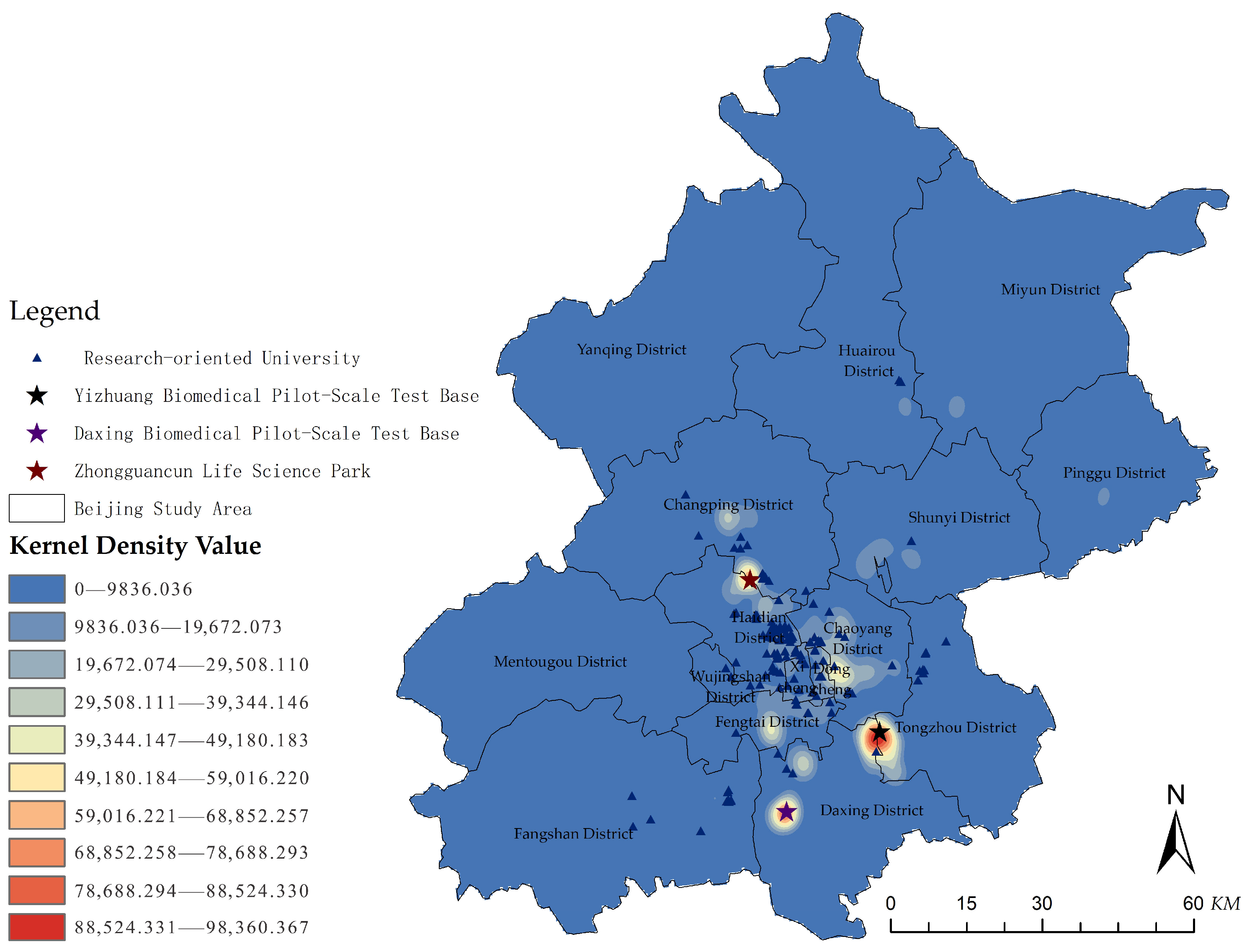
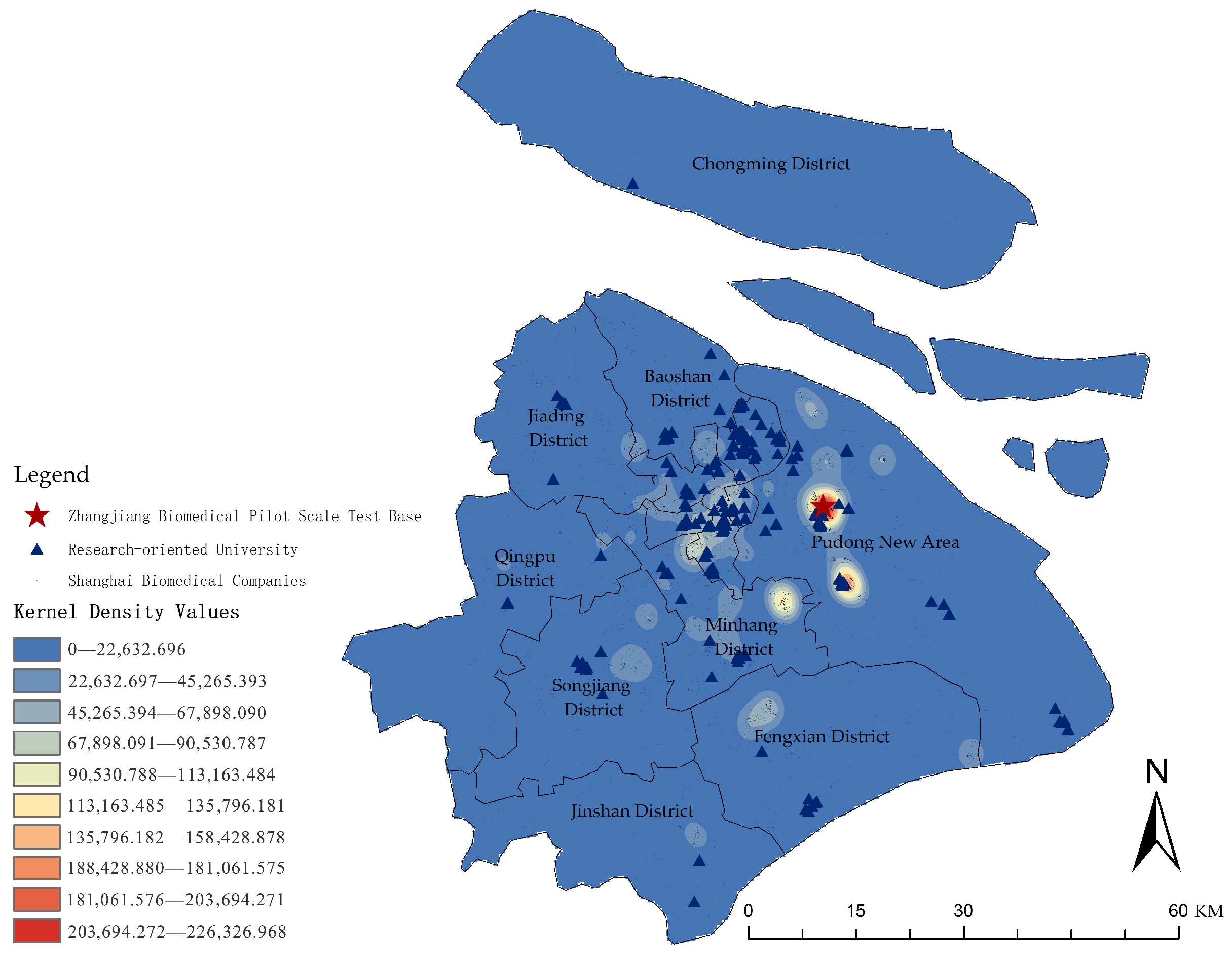
(1) Spatial structure morphology. Kernel density analysis (
Figure 2,
Figure 4 and
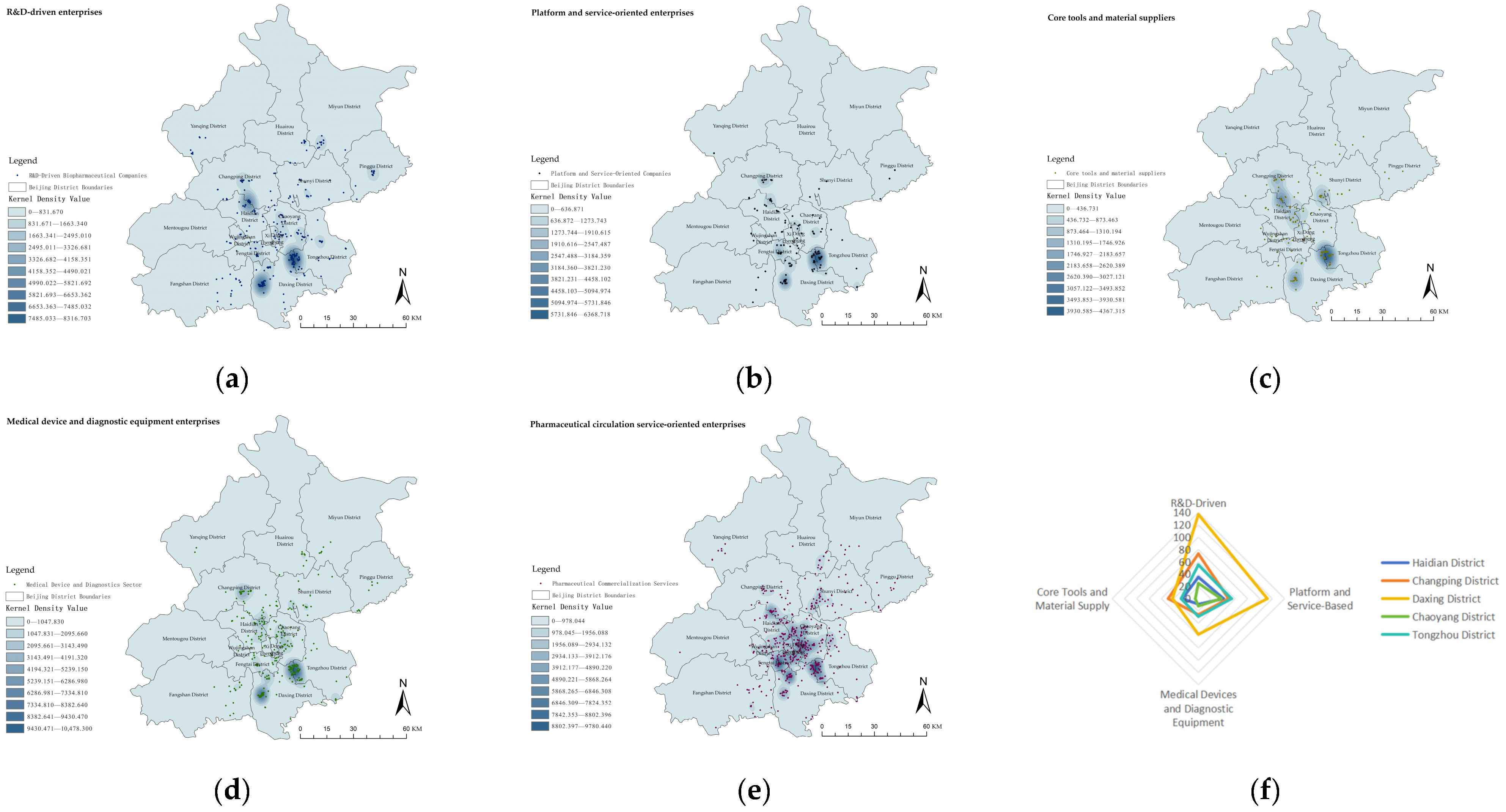
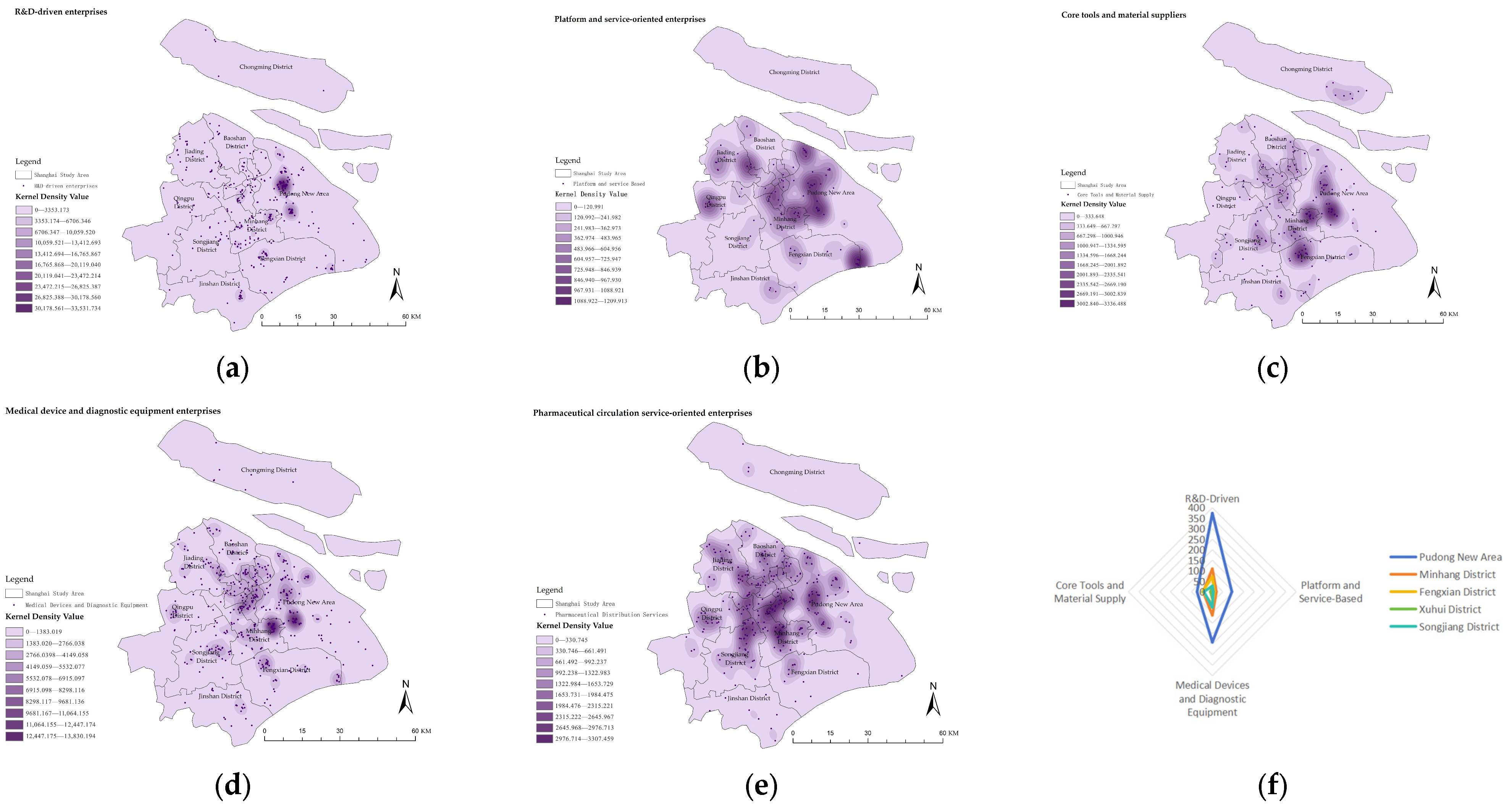
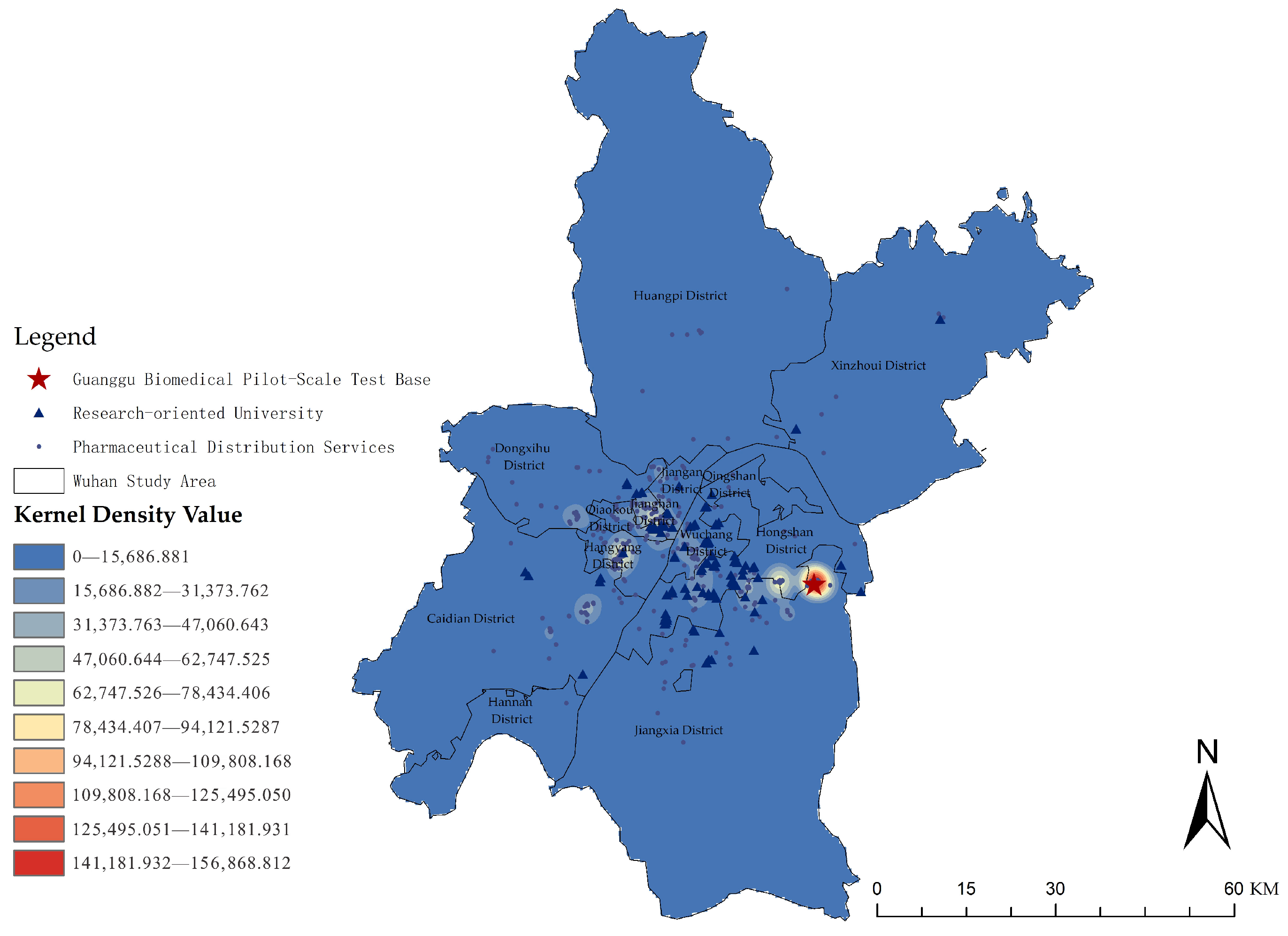
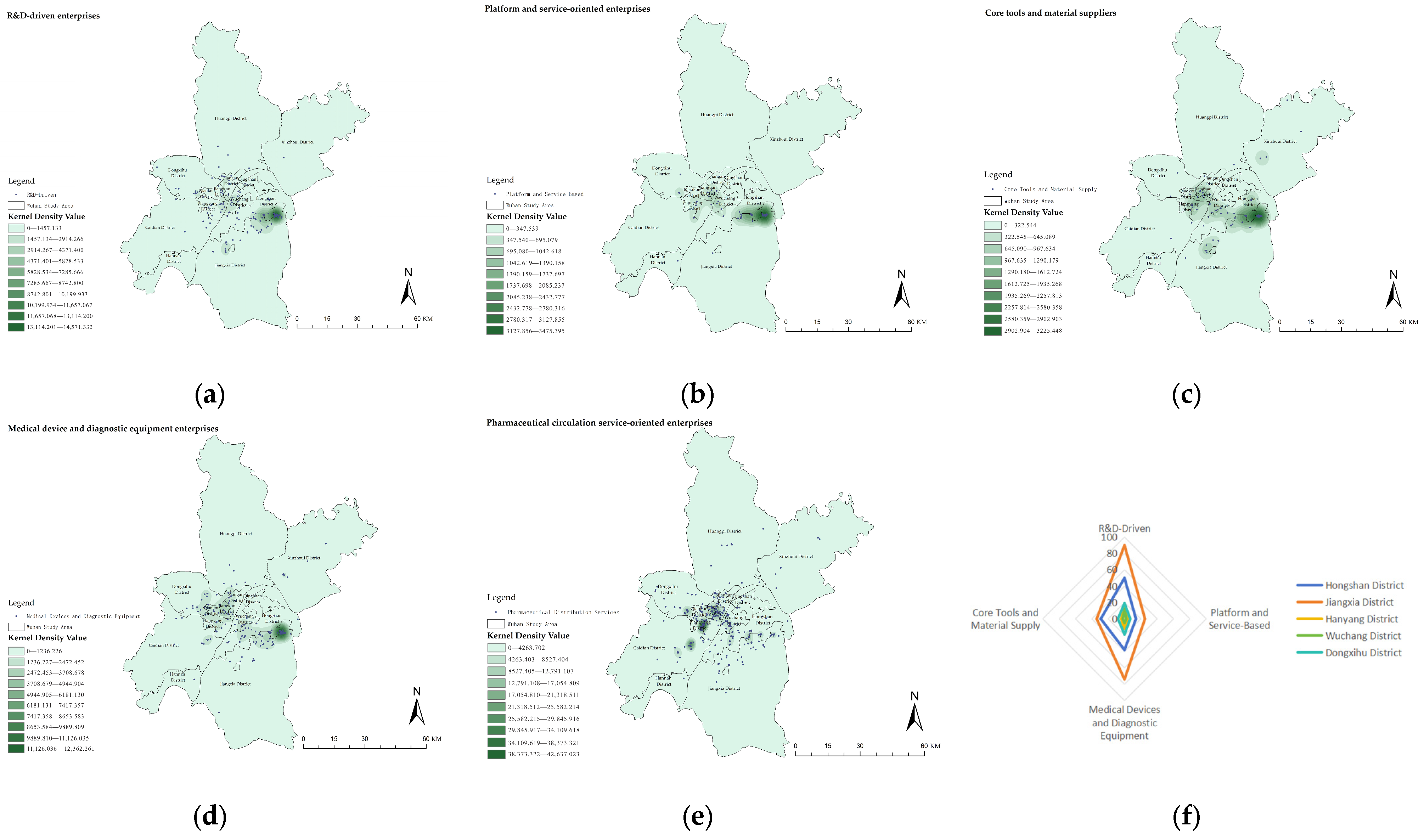
Figure 6) directly presents the differentiated spatial structures of the three cities: Beijing’s polycentric network, Shanghai’s unipolar radial pattern, and Wuhan’s single-core agglomeration. Category-specific analysis (
Figure 3,
Figure 5 and
Figure 7) further reveals functional differentiation patterns: “R&D in the north, industrialization in the south” in Beijing; “Pudong leading, multi-district collaboration” in Shanghai; and “single-core integration” in Wuhan.
(2) Anchor characteristics of pilot-scale bases. Point overlay analysis shows that pilot-scale bases in all three cities are located within or adjacent to high-value areas of enterprise density (annotated in
Figure 2,
Figure 4 and
Figure 6), directly supporting the conclusion that “shared pilot-scale bases anchor themselves in regions of high innovation concentration”.
(3) Co-agglomeration characteristics with leading enterprises. Overlay analysis of leading enterprise points (
Figure 9) and pilot-scale bases indicates that leading enterprises in all three cities are highly concentrated in the core areas where pilot-scale bases are located, providing direct evidence for the spatial strategy observation of “strategic placement around leading enterprises”.
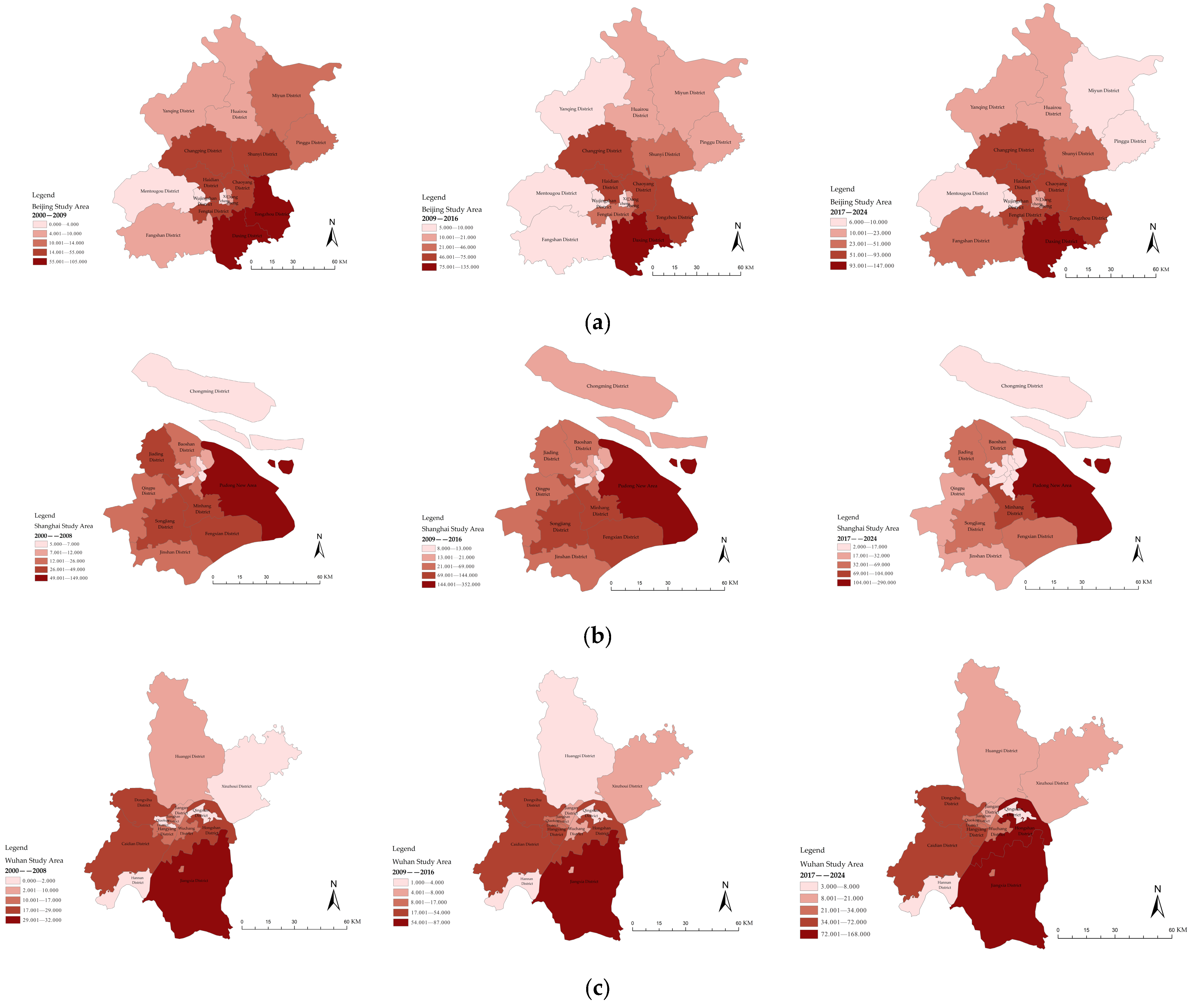
(4) Differences in evolutionary paths. Phased kernel density analysis (
Figure 8) directly presents the evolutionary trajectories of the three cities: Beijing’s “peripheral incubation—center polarization—network synergy”; Shanghai’s “unipolar initiation—multi-district diffusion—functional integration”; and Wuhan’s “dispersed germination—policy-driven—structural lock-in”.
Building on this direct evidence, this study further derives a theoretical explanation regarding the mechanism of “fostering industrial aggregation through pilot-scale activities”, which is discussed in the following sections.
5.2. Innovation—High-Concentration Regions as Anchors and the “Fostering Industrial Aggregation Through Pilot-Scale Activities” Mechanism Led by Leading Enterprises
Existing research emphasizes that the location selection of key infrastructure is closely related to the spatial form and industrial resilience of local industrial clusters [
41,
42]. The primary empirical finding of this study supports this view: shared pilot-scale bases commonly use regions with a high concentration of innovation elements as their spatial anchor. This choice stems from the pursuit of knowledge spillovers, talent mobility, supply-chain synergy, and rapid iteration efficiency [
45].
However, establishing an anchor point is only the starting point for spatial layout. A question of greater theoretical and practical significance is: after the anchor point forms, how can effective spatial and organizational strategies promote its continuous evolution and ultimately drive the upgrade and development of the industrial cluster?
Spatiotemporal evolution and capacity gradient analysis in this study reveal a high degree of spatial overlap between leading enterprises and pilot-scale bases, with leading enterprise agglomeration areas often serving as the core growth poles of innovation activities. This finding supports the following theoretical inference: strategic placement around leading enterprises may generate “radiation-attraction” effects through the output of technical standards, supply chain integration, spin-off enterprise incubation, and high-end talent mobility. These effects drive the further spatial agglomeration of upstream and downstream supporting firms, R&D institutions, and service platforms, thereby forming localized innovation clusters with pilot-scale bases as hubs and leading enterprises as growth poles. This process essentially transforms the “static service capacity” of pilot-scale facilities into a “dynamic ecosystem-building capacity”, confirming that high-level agglomeration economies derive not only from infrastructure sharing but also from endogenous growth drivers catalyzed by knowledge spillovers and talent mobility.
It should be noted that the aforementioned mechanism implies a clear hypothesis regarding causal direction: that pilot-scale bases are sited around leading enterprises to serve their needs. However, the phenomenon of spatial co-agglomeration itself may be subject to multiple competing explanations: (1) The demand-driven hypothesis: The process scale-up demands of leading enterprises attract pilot-scale bases to locate nearby; (2) The facility-driven hypothesis: Pilot-scale bases, as public platforms, attract leading enterprises and supporting firms to agglomerate around them; (3) The co-determination hypothesis: A third factor attracts both simultaneously. Distinguishing between these hypotheses requires tracing the temporal matching relationship between the establishment dates of pilot-scale bases and the registration dates of enterprises. The three case cities provide preliminary evidence for testing these hypotheses. The planning of Wuhan Optics Valley Biolake commenced in 2008, and the registration proportions of enterprises in Wuhan during 2009–2016 and 2017–2024 reached 28.61% and 55.31%, respectively, far exceeding the 16.07% during the industry germination period. This indicates accelerated enterprise agglomeration following the establishment of the science park, providing support for the facility-driven hypothesis. Shanghai Zhangjiang Pharmaceutical Valley has been under development since the 1990s, with the Pudong New Area becoming a dense core during the 2000–2008 germination period, subsequently diffusing to multiple districts. This exhibits a “core initiation—market diffusion” characteristic, more closely aligning with a hybrid model where demand-driven and facility-driven effects are superimposed. Beijing Zhongguancun Life Science Park (established in 2000) is located in the knowledge-intensive northern region; however, the R&D cluster in the north did not significantly intensify until 2009–2016. The industrialization demands predating the park’s establishment likely originated from knowledge spillovers, with platform services following in the later stage, reflecting a temporal sequence where knowledge sources drive development first, and pilot-scale platforms embed themselves subsequently.
Taken together, the three case cities demonstrate that causal pathways vary according to urban developmental stages and dominant driving forces: latecomer catch-up cities are more likely to exhibit a facility-driven model characterized by “platforms established first, enterprises following later”; mature market-oriented cities display bidirectional reinforcement features; and knowledge-originating cities tend to follow a demand-driven model characterized by “spontaneous enterprise agglomeration occurring first, with platform services embedding subsequently”. This finding reveals that the specific implementation pathways of the mechanism for “fostering industrial aggregation through pilot-scale activities” exhibit urban heterogeneity.
The validation of H1–H3 above further reveals an important trade-off: policy intervention can accelerate industrial agglomeration but may entail the risk of path dependence; market-driven evolution proceeds more slowly but tends to generate more resilient spatial configurations. This trade-off holds significant implications for the planning of pilot-scale bases: site selection should not stop at high-concentration areas; rather, it requires proactively identifying and embedding into local innovation networks led by leading enterprises, strengthening synergistic relationships, thereby activating and amplifying the cluster-catalyzing effect of “fostering industrial aggregation through pilot-scale activities”.
5.3. Problems in Spatial Organization
Constrained by limited land resources, historically solidified spatial structures, and the self-adjustment induced by high costs in mature markets, Beijing and Shanghai exhibit a spatial trend toward networked and polycentric collaboration in their innovation functions. Consequently, their morphological agglomeration intensity is lower than that of Wuhan. In contrast, as a latecomer city pursuing catch-up development, Wuhan leveraged strong government planning, concentrated land supply, and the anchoring role of strategic platforms during its critical development period. This enabled it to form a highly agglomerated, single-core-dominated spatial morphology within a relatively short timeframe.
Urban heterogeneity also shapes the evolutionary paths of innovation networks, thereby imposing different requirements on the planning timeline and spatial flexibility of pilot-scale bases. The innovation network evolution in Beijing and Shanghai is relatively gradual, with long-term synergy among market forces, knowledge, and policy, resulting in a resilient structure. Therefore, the planning of their pilot-scale bases should emphasize modular design, functional scalability, and multi-actor collaboration to accommodate future industrial restructuring and the emergence of new growth poles.
In contrast, Wuhan’s evolutionary path displays distinct policy-driven and rapid structurization characteristics. Its pilot-scale bases need to align closely with the construction of core policy platforms, adopting a project-based advancement approach. This ensures the timely provision of production capacity and technical support during critical windows, thereby reinforcing the initial agglomeration momentum. Furthermore, proactive planning for functional upgrades in later stages is essential to avoid path dependency.
5.4. Research Limitations and Future Outlook
This study has several limitations that should be considered when interpreting the conclusions.
First, the issue of “survival bias” in the temporal evolution analysis. The temporal evolution analysis divides the study period into three phases (2000–2008, 2009–2016, and 2017–2024) based on enterprise registration dates to reconstruct the spatial dynamics of the industry. Although this method effectively captures the spatiotemporal characteristics of enterprise entry and initial spatial distribution, it has an inherent limitation: it only captures surviving enterprises and cannot reflect dynamic processes such as enterprise closures, relocations, or mergers and acquisitions. Consequently, the evolutionary landscape presented in
Figure 8 may suffer from “survival bias”, meaning it systematically biases towards more successful or stable enterprises while insufficiently capturing the process of “creative destruction” within industrial spatial dynamics. This bias may, to some extent, overestimate the stability of existing agglomeration areas. For example, if enterprise closures and relocations were taken into account, the actual agglomeration intensity of the single-core pattern in Wuhan’s Optics Valley Biolake might be lower than the level suggested by survival data. Similarly, in the polycentric networks of Beijing and Shanghai, there may be secondary nodes whose evolution has been overlooked due to enterprise relocations. Future research should integrate multi-source data such as official cancellation records and spatial relocation trajectories, adopting longitudinal tracking methods to more comprehensively reveal the true picture of industrial spatial evolution from the perspective of the full enterprise lifecycle—namely, “entry, exit, and relocation”.
Second, the absence of relational dimension data. This study primarily relies on POI data to reveal the spatial patterns of innovation actors. While effectively capturing distribution and agglomeration characteristics, it remains insufficient in capturing relational dimensions such as collaboration networks and knowledge flow intensity among actors. Future research could integrate multi-source data, including patent cooperation, supply chains, and talent mobility, to further elucidate the interaction mechanisms between “spatial proximity” and “relational proximity” in pilot-scale collaboration.
Third, the limitation of the case selection scope. This study focuses on three typical cities—Beijing, Shanghai, and Wuhan—which cover the knowledge-driven, market-driven, and policy-driven development paradigms. However, it does not encompass regions with greater synergy and complexity, such as the Guangdong-Hong Kong-Macao Greater Bay Area or the Chengdu-Chongqing region. Future research could extend the case studies to these regions to test and enrich the typological spectrum proposed in this paper. Furthermore, the relationship between the governance structure and operational models of pilot-scale bases and their spatial performance has not been thoroughly explored. Subsequent research could combine in-depth case descriptions with performance evaluation to provide more actionable policy insights for enhancing the service capacity and sustainability of pilot-scale platforms.
6. Conclusions
In view of the heterogeneous characteristics of China’s biomedical innovation ecosystem, this study constructs a multi-dimensional classification framework for innovation actors based on their functions in the pilot-scale process. Through a cross-case spatial analysis of Beijing, Shanghai, and Wuhan, it reveals the spatial organization logic and typological characteristics of shared pilot-scale bases. The main conclusions are as follows:
First, employing typological theory and methods, this study refines the generalized concept of “innovation actors” within regional innovation systems into five functional communities, providing a foundation for the precise analysis of the spatial structure of innovation ecosystems. Second, through cross-case comparison, it reveals the diverse and adaptive implementation pathways of the mechanism for “fostering industrial aggregation through pilot-scale activities”. In contrast to the single model dominated by market economies in the West, the three Chinese case cities demonstrate diversified pathways for innovation infrastructure construction shaped by the heterogeneity of urban industrial clusters. This not only complements Western theoretical perspectives but also offers a new theoretical reference for innovation infrastructure construction in countries with transitional economies, deepening the theoretical understanding of the interactive relationship between innovation infrastructure and industrial clusters.
Second, the effectiveness of shared pilot-scale bases depends not only on their location within spatial anchors characterized by high concentrations of innovation elements but, more critically, on their spatial synergistic relationships with core functional actors within the local ecosystem. It should be noted that the aforementioned mechanism implies a clear hypothesis regarding causal direction: that pilot-scale bases are sited around leading enterprises to serve their needs. However, the phenomenon of spatial co-agglomeration itself may be subject to multiple competing explanations: the high-standard demands of leading enterprises guide pilot-scale services to locate nearby, while the public technical service capacity of pilot-scale platforms may also attract further enterprise agglomeration. If this inference holds, pilot-scale facilities have the potential to transform from passive service platforms into active incubators of industrial clusters, thereby driving a virtuous cycle of “fostering industrial aggregation through pilot-scale activities”. However, it must be emphasized that this mechanism still requires validation through longitudinal data and causal identification methods in future research”.
Finally, heterogeneity in economic foundations, resource endowments, and policy orientations across cities leads to systematic differentiation in the function and morphology of innovation networks. This necessitates that the construction of pilot-scale bases must move beyond generic models and instead adapt to the unique structure of the local regional innovation ecosystem.
This study not only provides a new theoretical perspective and practical basis for spatial policymaking in China’s biomedical industry but also offers a methodological framework with referential value for other innovation ecosystems characterized by significant heterogeneity.