1. Introduction
In a world where about 45% of the population lives in cities, with expectations to reach 70% by 2050 [
1], urbanization is rapidly increasing. Consequently, an increasing number of children are growing up in urban environments where the quality of urban infrastructure and governance significantly shapes their daily lives and opportunities. Much of this urban growth is expected to occur in developing countries in the near future, meaning in contexts where many challenges already exist, including poor infrastructure and, therefore, a limited capacity to support children and protect their rights [
2].
Freeman and Tranter [
3] argue that historically, childhood was not significantly invested in because it was viewed as a period of uncertainty due to high child mortality. Time and resources were only invested in children when they showed a likelihood of survival. Therefore, the recognition of the value and worth of childhood is a relatively recent phenomenon. However, in the past three decades, the well-being of children has gained greater importance following the second UN Conference on Human Settlements in 1996, which considered the well-being of children a key indicator of a “healthy habitat, a democratic society and good governance” [
4] (p. 8). This major declaration, along with rapid worldwide urbanization and decentralization and the increasing role of municipalities in serving their populations, encouraged UNICEF to launch the Child Friendly Cities Initiative (CFCI) [
5], which has since expanded to more than 40 countries worldwide [
6].
UNICEF [
5] introduces a framework for creating a child-friendly city (CFC) composed of nine elements referred to as building blocks. These blocks include the active involvement of children; a legal framework for promoting and protecting children’s rights; developing a clear strategy to achieve CFCs based on the Convention; ensuring that children are a priority through a governmental unit or mechanism; assessing and evaluating the impact of policies and actions on children; budget availability and resource commitment; sufficient monitoring; raising awareness about children’s rights; and lastly, independent advocacy for children.
Furthermore, this growth in adopting the CFCI encouraged UNICEF to launch a toolkit for national committees in 2017, offering tested tools and best practices from high-income countries. However, there was still a need for more guidance to enable cities to become child-friendly and be recognized by UNICEF. Therefore, a year later, the CFCI booklet was distributed, with some flexibility for contextualization [
4]. The booklet recognizes the diversity of contexts and local child rights situations and, hence, emphasizes the need to adapt the application of the concept to each context.
It is important to highlight that the argument for CFC does not imply that children are the only important users; rather, it suggests that a city that is friendly to children is ultimately friendly to all, thereby fostering a more inclusive urban environment [
7]. This is evidenced by the significant efforts made by UNICEF [
8] in mapping the Sustainable Development Goals (SDGs) and the United Nations Convention on the Rights of the Child (CRC), where they provide an interpretation of the SDGs that aligns with the principles promoted in the CFCI. UNICEF further clarifies that urban settings that are responsive to children also contribute to achieving the goals of sustainable cities, which are often described by scholars through concepts such as “urban scales, proximity, walkability, mixed use, public space, independent mobility and connectivity” [
9] (p. 4). Moreover, Malone [
2] clarifies that a healthy urban environment that is child-friendly aligns closely with the concept of sustainable development and that fulfilling children’s rights contributes to achieving the SDGs.
However, in order to effectively adopt the concept of CFC in practice, it requires contextual understanding and adaptation. In the Jordanian context, despite Jordan being a signatory to the CRC since 1990, its cities remain far from being child-friendly. Additionally, there is a lack of comprehensive research that identifies and prioritizes the major elements related to CFC in the Jordanian context (CFC-JO).
To address this need, this study adopts a consensus-based Delphi approach to explore how CFC principles can be conceived and localized within the Jordanian context. The study draws on cross-sectoral expert perspectives to identify and prioritize relevant stakeholders, context-specific features, limiting barriers, and evaluation indicators, with the aim of guiding future policy and planning efforts. Accordingly, this study is guided by the following research question: How can key elements of CFC be identified and prioritized in a way that reflects the Jordanian context?
2. Literature Review
The following literature review adopts a thematic approach to provide a conceptual and contextual foundation for the study. Relevant academic and gray literature on child-friendly cities was identified through targeted searches in major academic databases and institutional sources. The selected literature was organized around key themes, which were also used in the Delphi rounds, to provide a structured framework for the topic. These themes include governance and stakeholders, built environment features, barriers to implementation, and indicators, with a particular focus on context-specific applications and the Jordanian context.
2.1. Child-Friendly Cities Concept
The CFCI is grounded in four key principles derived from the CRC, namely, Article 2, which addresses non-discrimination; Article 3, which focuses on the best interests of the child; Article 6, which affirms every child’s right to life and maximum development; and Article 12, which emphasizes listening to children and respecting their views [
5].
UNICEF [
5] clarifies that a CFC can emerge through either a top-down approach driven by political commitment or a bottom-up approach initiated by community efforts. It also emphasizes that successful implementation requires the integration of both approaches. Regardless of how the process begins, sustained political commitment must be maintained throughout the entire process.
Building on these principles, the concept of CFC does not only apply to large cities but also includes any town, community, or local government system that is committed to improving the daily lives of children. This improvement is achieved when children’s rights are fulfilled, their voices are heard, and their perspectives are reflected in policies and influence decision-making processes [
10]. This idea has been described by many scholars as ‘active citizenship’, where children are recognized as participants in shaping their environments rather than as passive recipients of services [
11,
12,
13]. As a result, the CFC concept is fundamentally grounded in the realization of children’s rights, where governance structures and urban environments are shaped in ways that support children’s participation, development and well-being.
UNICEF introduces the CFCI as an evolving process implemented through a continuous cycle [
4,
9]. This is echoed by Rakhi and Surya [
14], who explain that making cities friendly to children is a practical process that does not follow a standardized model, where children themselves play a major role in shaping the process.
Arup [
7] (p. 8) identifies two key concepts for developing child-friendly urban approaches: “Everyday freedoms” and “children’s infrastructure”. While the former combines the ability to play and socialize with independent mobility, the latter focuses on streets and the spaces surrounding homes, which can enhance the urban environment economically and improve its overall viability.
Freeman and Tranter [
3] argue that children are often overlooked as legitimate users of the city. Planning processes mainly tend to consider them in relation to educational facilities and designated recreational spaces such as playgrounds. However, children do more than learn and play; they interact with and experience the city as a whole. The authors further note that even when children are considered in the planning process, they are often treated as a universal prototype figure assumed to have fixed interests and behaviors. The same study clarifies that while some needs could be universal, such as safety, health, and opportunities to socialize and play, the interpretation and application of these needs vary across contexts and over time and therefore require localization.
2.2. Governance, Participation and Stakeholders
Governance in CFCs is commonly described through three interrelated elements that enable the realization of children’s rights in urban settings: the institutional framework, the legal framework, and the budget framework [
15]. While the role of government is emphasized in many studies, the literature less frequently highlights the importance of engaging a wider range of stakeholders, including actors across different levels of government [
15].
Within the governance framework, children’s participation is considered a fundamental principle, which is not only a right but is also identified by scholars as an indicator of good governance [
16]. Although the importance of children’s participation may be acknowledged within dedicated child-focused initiatives, it has been argued that planners working outside such initiatives are often not adequately trained to work with and on behalf of children, despite the significant impact of planning decisions on children’s lives and the environments they experience [
17]. This knowledge can be strengthened through educational institutions, where academics can play a major role in developing the necessary skills and awareness among future planners and practitioners [
16]. However, the literature rarely acknowledges academics as key stakeholders in CFC initiatives [
15].
More broadly, several stakeholders have been identified in the literature as important actors in implementing CFC initiatives. These include local government departments, universities, the private sector, not-for-profit organizations, and residents of the city. Another underrepresented but important group of stakeholders, who usually fill institutional or resource gaps in implementing CFC initiatives, are volunteers [
12].
Despite the presence of multiple actors, governance challenges remain. One frequently cited issue is the lack of coordination between various actors, which can limit the effectiveness of CFC efforts [
18]. In addition, studies note the limited documentation of how these actors interact with one another in practice [
19]. Even when CFC-related policies are discussed in the literature, they often lack clear explanations of the policy-making processes or the required implementation methodologies needed to translate these policies into practice [
15].
These governance structures and stakeholder collaborations play a crucial role in shaping the urban environments in which children live, influencing the spatial features and services that support their daily experiences in the city. Therefore, identifying them in each context is the first step towards making CFCs.
2.3. Built Environment Features in Child-Friendly Cities
In addition to governance and policy frameworks, the physical environment of cities also plays a fundamental role in shaping children’s daily experiences. Freeman and Tranter [
3] explain that children are shaped not only by their social world, meaning their relationships within society, but also by their physical world, including the places they inhabit and the spaces they interact with.
A study by Cordero Vinueza et al. [
19] reviewed the literature published between 2001 and 2020 and analyzed the CFC concept through three main elements: children’s rights, the physical environment, and governance. It is widely agreed that a CFC is grounded in the realization of providing children with their rights. Consequently, much of the literature focuses on enhancing built and natural environmental features to better support the fulfillment of these rights [
20].
It is also noted that much of the CFC literature approaches children’s rights through spatial solutions, often at the neighborhood scale, where most of children’s daily activities and interactions typically take place [
19]. In this sense, the quality of the built environment significantly influences children’s participation and experiences in cities, particularly through the design of public spaces and the availability of supportive infrastructure [
9].
Several urban features have been identified in the literature as essential for supporting children’s well-being [
19]. These include a healthy built environment, opportunities for interaction with nature, and diverse play opportunities. Scholars emphasize that such opportunities should be available throughout the urban environment rather than limited to designated spaces such as playgrounds [
19]. The importance of accessible natural environments is not only due to children’s preferences but also because the privatization of play spaces may lead to exclusion and restrict children’s opportunities of interaction and exploration [
21]. Spatial inequalities associated with socio-economic conditions are a major issue. Studies show that the socio-economic status of neighborhoods can significantly influence the quality of the physical environment and the availability of services provided to children [
22].
In terms of health, several urban environmental conditions negatively affect children’s well-being, including exposure to heavy traffic, toxins, noise, and air pollution [
19]. Scholars argue that place-based interventions, even when minimal and cost-effective, can significantly enhance the well-being of children and their development at the neighborhood scale. These interventions may include public space activation measures such as temporary parks, playgrounds, and street closures; road safety measures such as traffic-calming infrastructure; and environmental improvements such as greening initiatives and esthetic upgrades [
23].
Transportation and mobility are also widely discussed in the literature from multiple perspectives. One major issue highlighted is that cities are increasingly designed for cars rather than for children [
21]. One of the main challenges affecting children’s experiences in cities is that, instead of making streets safer for children, societies have increasingly institutionalized childhood by removing children from streets and relocating their activities to organized and formal spaces [
18].
In addition, the importance of accessibility and opportunities for children’s independent mobility is frequently emphasized. In this regard, children’s independent mobility is often considered a key indicator of child-friendly urban environments, as it reflects the extent to which children can safely navigate their neighborhoods and access everyday spaces without constant adult supervision [
3,
24]. In terms of community spaces, the lack of reliable transportation has been identified as a major factor limiting the use of such spaces and, therefore, reducing children’s physical activity. On the other hand, the impact of traffic and inadequate transportation systems on both the quality and quantity of time that caregivers can spend with children is highlighted [
15]. Another important perspective relates to what Tranter and Pawson [
25] describe as ‘negotiated geography’, referring to the areas where caregivers allow children to access for play, which have become progressively more restricted over time and therefore affect the children’s experience.
Participatory studies further highlight children’s own preferences regarding urban environments. A study involving focus groups with children in South Africa found that natural spaces were their preferred locations. However, the ability to use these spaces depended largely on two additional factors: ease of access and safety [
26]. Similar findings were reported in a participatory study conducted in New Zealand, where parks were also identified as children’s favorite spaces, particularly when they offered diverse play opportunities and social interaction [
27].
Finally, social inclusion is emphasized in much of the CFC-related literature, particularly in terms of creating inclusive environments, ensuring equitable access, and addressing the needs of marginalized groups [
3,
7,
15,
20,
28,
29]. In this regard, inclusivity was advocated through the concept of intergenerational cities, where it is argued that both children and older adults are often excluded from urban environments and decision-making processes, despite spending a significant amount of time within their neighborhoods. It is suggested that relatively simple interventions, such as making the streets pedestrian-friendly, adding weather-protection elements, and improvements that encourage active transportation and physical activity, can help create urban environments that are supportive for all age groups [
20].
2.4. Barriers to Implementation
Despite the growing recognition of CFC principles, their implementation often faces institutional, socio-economic, and cultural barriers. Since CFC initiatives are grounded in children’s rights, it has been observed that countries where children’s rights are not strongly supported encounter greater difficulties in implementing CFC principles. Without sufficient authority and accompanying resources, the implementation of CFC initiatives remains weak [
12].
Several challenges have been identified in the literature that limit the implementation of CFC elements. In their discussion of intergenerational spaces, Biggs and Carr [
20] identify a number of obstacles to appropriating urban spaces to be more inclusive for both children and older adults. These challenges include issues related to space ownership, management constraints, privatization of spaces, age segregation within institutions, and the accompanying difficulties of establishing protected and inclusive places.
At a broader urban scale, Arup [
7] highlights five key challenges related to contemporary urban childhoods, including urban sprawl and its associated problems, crime and risk-related fears, social isolation, and spatially inadequate or unequal access to city services and opportunities.
Institutional limitations also play a significant role. Powell [
12] notes that in some cases, CFC coordinators may lack the authority to respond to certain issues raised by children, particularly those related to structural inequalities such as economic disparities. As a result, some initiatives attempt to address the symptoms of these issues rather than their root causes, for example by focusing on improvements in health services or the distribution of playgrounds.
Additional barriers identified in the literature include difficulties in changing attitudes toward children among decision-makers and community members, cross-departmental coordination challenges, sustaining engagement among actors involved in CFC initiatives, resource and financial challenges, and limited commitment from local governments [
12]. Furthermore, the same study suggests that a lack of clear definitions regarding the core features of the CFC concept and the absence of clear priorities may lead to uneven outcomes across different regions.
In relation to children’s participation, scholars emphasize the importance of providing children with opportunities to express their views on decisions that affect them, even when these views do not directly translate into policy action. Participation is also valued for its role in empowering children. However, challenges remain in reaching and including children from marginalized backgrounds, as well as younger children under the age of five and older adolescents above the age of fifteen [
12].
Despite these identified challenges, the literature still provides limited systematic reflection on the barriers that constrain the implementation of CFC initiatives [
15]. These challenges highlight the need for clear frameworks and measurable indicators that can guide implementation and monitor progress toward CFC.
2.5. Indicators and Evaluation of Child-Friendly Cities
Literature on child well-being highlights the importance of developing multidimensional frameworks for assessing the conditions and opportunities related to children. These frameworks emphasize that the well-being of children extends beyond material conditions to include education, health, relationships, subjective well-being, and environmental quality. However, the task of translating these multidimensional concepts into measurable indicators is complex, particularly at the local and urban scale [
30].
Like all large concepts and initiatives, the CFC principles must be measurable in order to monitor progress. Given UNICEF’s emphasis on context-specific goals and phased implementation, action plans must include clear indicators to track progress [
4]. UNICEF clarifies that a successful indicator in the CFCI framework should include three components: a unit of measure, a unit of analysis, and a suitable context that can be measured. Establishing a baseline and defining a target for each indicator makes progress measurable. However, while some indicators are tangible and objective, others are more subjective, such as children’s perceptions and experiences [
4].
Another challenge discussed in the literature relates to the difficulty of measuring the extent to which a city is child-friendly. Existing assessment tools often rely on predefined indicators that aim to capture multiple dimensions of children’s well-being, such as access to services, safety, mobility, and opportunities for play and social interaction. However, these tools are not always sufficiently sensitive to local contexts and may fail to reflect complex urban conditions. For example, distance-based indicators may fail to reflect real accessibility conditions, such as barriers in the street network or unsafe crossing points, which can significantly affect children’s ability to reach destinations independently [
31].
The lack of practical tools to assess progress towards CFC principles and thereby enhance urban practices has been acknowledged in the literature [
19,
32]. The CRC and CFCI frameworks, along with other related literature [
2,
4], highlight that the quality of life and well-being of children can serve as indicators of a city’s suitability and as a sign of sustainable development. However, the definition of well-being may differ across age groups. Woolcock and Steele [
32] summarize findings from an Australian Urban Research Program, identifying three key dimensions of well-being from children’s own perspectives: agency, where children can make independent choices; safety and security, felt both in their communities and in spaces they can explore independently; and recognition and belonging, reflecting the need to feel valued for who they are. These insights underscore the importance of incorporating children’s participation and subjective experiences as central elements in evaluating child-friendliness.
Taken together, these discussions highlight that measuring the progress of CFCs is not straightforward. While qualitative indicators provide a useful starting point, a comprehensive understanding of children’s experiences requires integrating these with additional insights, particularly from children themselves [
31,
32]. Recognizing both objective and subjective dimensions of well-being while accounting for local contexts [
4,
30] is essential to ensure that measurement reflects not only numerical progress but also how cities support children’s rights, agency, and everyday lives. However, these challenges make effective monitoring difficult; therefore, it becomes both a tool for assessment and a guide for action, highlighting the need to explore how these principles and measurement approaches are applied across different urban contexts.
2.6. Child-Friendly Cities in the Jordanian Context
Globally, most literature on CFC analyzes efforts in the Western world. Approximately a quarter of these studies originate from only two countries: New Zealand and Australia [
15]. This highlights not only the limited attention given to the Jordanian context but also points to a broader regional gap in the literature, particularly within the MENA region. Rapid urban expansion, combined with governance challenges and socio-cultural dynamics, creates conditions that differ from those examined in existing CFC literature. This limits the direct transferability of established global frameworks and highlights the need for context-specific implementation approaches [
10]. While some major cities in the MENA region, such as Beirut, Sana’a, Khartoum, Gaza City, Al-Madinah, and Alexandria, have initiated efforts toward child-friendly approaches, these remain relatively limited and are not part of a comprehensive, localized framework, particularly in terms of systematic indicators and municipal-level monitoring mechanisms [
10].
Jordan has ratified several treaties and conventions related to children’s rights. Most notably, it has been a signatory to the CRC since 1990, ratified it with some reservations in 1991 [
33], and officially published and incorporated it into its national legislation in 2006 [
34].
Following the ‘Children and the City’ conference held in Amman in 2002, a declaration was issued with recommendations aimed at making Arab cities more suitable for children. The declaration included eighteen recommendations intended to advance this objective. One of these recommendations emphasized the role of the family as the primary entity responsible for childcare, highlighting the importance of empowering families to fulfill this role through adequate housing and employment opportunities [
35]. Additionally, since 2005, the Greater Amman Municipality (GAM) has been actively involved in UNICEF’s CFCI [
36]. However, the limited available reports and literature on this process indicate that Amman’s journey toward becoming a CFC has been relatively slow.
Approximately ten years after GAM joined the CFCI, Halaseh [
18] documented several initiatives, including the establishment of a children’s parliament and the development of additional parks. However, the study notes that the process of integrating the parliament’s output into policymaking remains non-institutionalized. Furthermore, the study highlights the impact of limited resources and the challenges associated with Jordan’s proximity to regional conflicts. As a result, Amman remains far from being a fully realized CFC, particularly in terms of embedding children’s participation within formal decision-making processes [
18].
This limited documentation further highlights the need for a more systematic understanding of how the principles of CFCs can be interpreted, prioritized, implemented, and evaluated within the Jordanian context.
2.7. Research Gap and Positioning of the Study
Despite the wide promotion of the concept of CFCs by international organizations and within global agendas, the literature reveals fragmented efforts to address this topic in the Jordanian context. This fragmentation is reflected in the varying understandings of the concept, its implementation, and its evaluation, especially within a complex setting such as Jordan, where institutional roles often overlap and clear disparities exist between governorates and different urban areas.
While existing literature identifies general dimensions that contribute to child-friendly urban environments, it often lacks localization and does not offer a coherent framework that integrates stakeholders, urban features, implementation barriers, and evaluation indicators within a given context. Additionally, as the path toward achieving CFCs is both long and challenging, defining priorities becomes essential, and such priorities must be grounded in local realities. This highlights the importance of engaging local experts to establish a consensus-based foundation around the main elements of CFCs, including stakeholders, features, barriers, and indicators.
At the regional level, evidence from comparable contexts remains limited. Among the 41 case studies analyzed by Arup [
7], none are located in the Middle East or the Arab region. This absence of case studies from contexts with similar climatic, socio-cultural, financial, and administrative conditions limits the transferability of existing CFC frameworks and highlights the need for context-specific research in Jordan.
Differences in national income levels also influence how countries approach the concept of CFCs. Malone [
2] notes that while high-income countries often focus on improving the quality of urban environments or enhancing children’s freedom and independence, lower-income contexts tend to prioritize issues related to health, mortality, and protection from risks. This suggests that not only do the features of CFCs differ across geographical contexts, but also the priorities assigned to them. Therefore, prioritizing these features within each context becomes as important as defining them.
Finally, a review of existing CFC literature highlights several gaps that require further investigation. Cordero-Vinueza et al. [
19] identify the need for more research on the connection between neighborhood and city scales, governance systems, and how children’s rights are translated into the physical environment, the impact of consulting children on policymaking across different levels, the dynamics between stakeholders, and the barriers and enablers influencing implementation. The authors conclude that governance remains one of the most critical gaps in the literature, emphasizing that cities closer to achieving child-friendliness tend to exhibit stronger governance structures.
In response to these identified gaps, this study adopts a Delphi-based approach to establish a context-sensitive and consensus-driven framework for CFCs in Jordan.
3. Methodology
The Delphi methodology was initially founded in the 1950s at the RAND Corporation by Norman Dalkey for a military project [
37,
38]. However, since then, it has proved its effectiveness and become widely used in various disciplines as a tool for decision-making, measurement, and forecasting. This goes back to several factors, including the ability to obtain input from many participants regardless of their location while minimizing social pressure through anonymity. As a result, the responses are more genuine and less influenced by group dynamics [
38]. The challenges that Jordan faces in making its cities child-friendly are cross-sectoral and lack organization. Therefore, the Delphi method was adopted to bring together the voices of experts across various fields to build consensus on the topic.
This method is usually used when human perspectives are needed due to a lack of existing data. According to [
38,
39], the main features of the Delphi method lie in its capacity to reach a reliable consensus among a targeted group of experts, which is statistically analyzed, conducted anonymously, and carried out through a series of iterative questionnaire rounds that incorporate controlled feedback. However, in order to apply this method appropriately, there are certain considerations that must be taken into account: the methodological orientation, the criteria for selecting experts, the sample size, the number of Delphi rounds, and interaction mode.
Within the Delphi method, both qualitative and quantitative techniques can be used [
37]. This study is qualitative in that it investigates expert perspectives and seeks to understand the contextual forces of the research topic, while also incorporating quantitative elements through the structured analysis of responses [
38]. In this research, qualitative input was iteratively refined and subsequently quantified in each round; therefore, the study adopts a Delphi-based mixed-methods approach.
Experts as participants in the Delphi method must meet certain criteria in order to guarantee the relevance and validity of their input. Rowe & Wright [
38] explain that knowledge and professional expertise are among the main attributes required of participants, while Skulmoski et al. [
37] agree and identified three additional requirements related to the feasibility of engagement, namely the experts’ availability, willingness, and capacity to participate, as well as their communication skills. Additionally, there are no strict rules regarding the number of participants, as it depends on the scope and aim of the research. However, Skulmoski et al. [
37] differentiated the range in the number of experts according to the nature of the group, whether homogeneous or heterogeneous, noting that while 10–15 experts could be sufficient for the former, the latter could extend, depending on the research scope and objectives, to reach up to several hundred. They also emphasize that the sample size in Delphi studies is not intended to be statistically representative of a wider population; therefore, the interpretation of results should take this limitation into consideration.
The experts in this study were carefully selected from five key sectors working with childhood in Jordan: urban design and planning, policy and local governance, education, Civil Society Organizations (CSOs), and public health. This heterogeneous group, representing five sectors, collectively influences the social, physical, educational, and health environments that shape the daily experiences of children. Three experts from each sector were identified, resulting in a total of 15 participants. The main selection criteria were based on the background knowledge and experience of the participants; however, availability and ease of communication were also considered.
Table 1 presents the expert panel and their professional backgrounds.
There is no fixed number of rounds for this method, as it depends on the objectives of the study. Typically, the first round includes an unstructured questionnaire to allow free expression of views, followed by one or more structured rounds. Despite the number of follow-up rounds, they must result from analyzing the preceding responses [
38]. According to Skulmoski et al. [
37], two to three rounds are generally sufficient.
In terms of mode of interaction, while the manual approach was traditionally used, digitalizing the process is now commonly used in contemporary research for ease of communication, faster responses, and simpler data handling [
37].
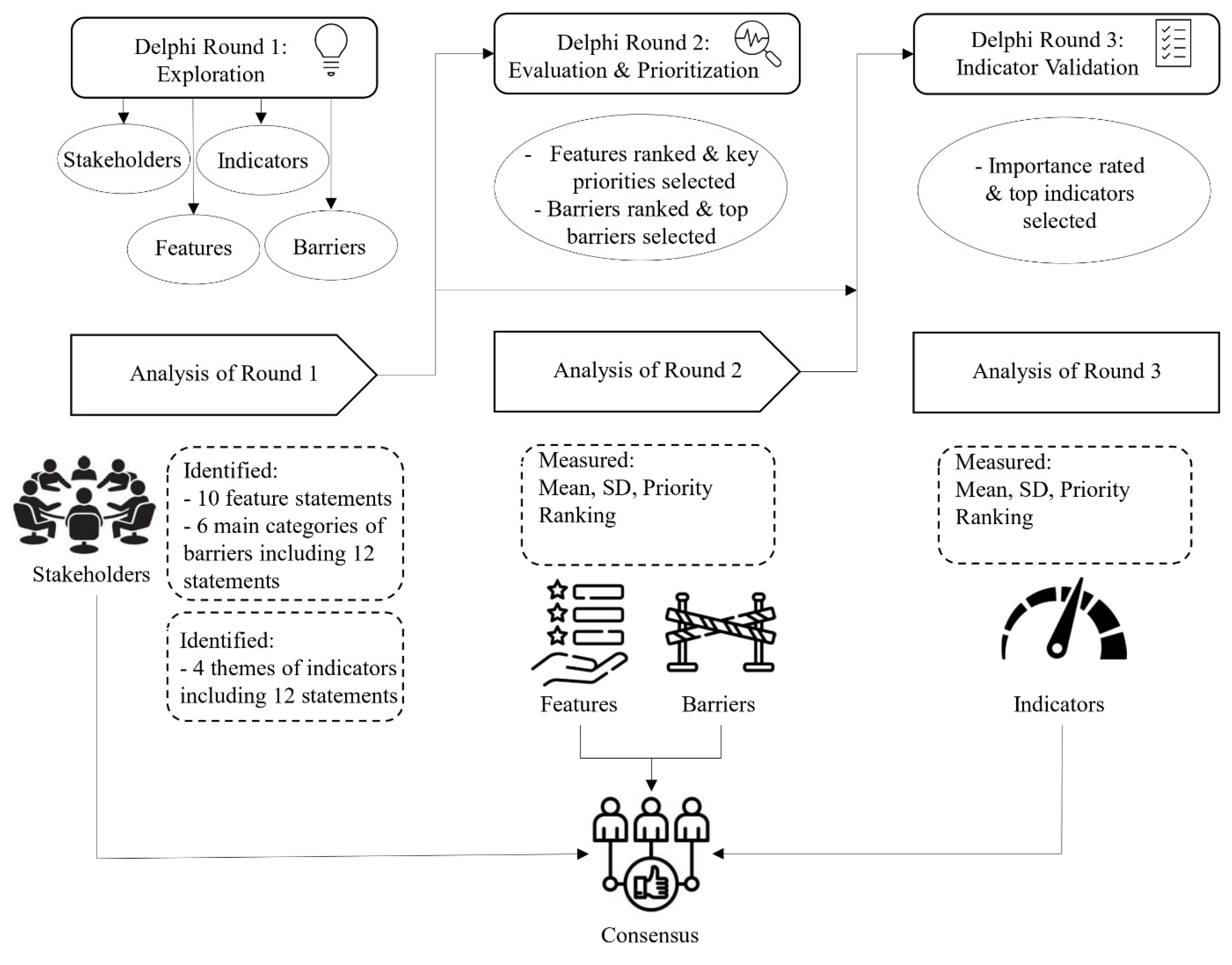
In this study, iteration was implemented through three rounds of questionnaires, i.e., exploration, evaluation, and validation, that were designed through Google Forms and distributed through digital platforms. The first round consisted of open-ended questions addressing four main elements: stakeholders, features, barriers, and indicators. Consensus on stakeholders was achieved during this stage as responses were highly consistent across the expert panel, while features and barriers reached consensus in the second round, where they were evaluated and prioritized using structured Likert-scale assessment. Lastly, the third round focused on the validation and prioritization of indicators through structured importance-rating questions. Each round was designed based on the analysis of the preceding one, thereby ensuring controlled feedback throughout the process.
While the fifteen participants responded in the first two rounds, only 13 responses were received in the third round, indicating a reduction of about 13%. Dropouts from Delphi studies are usually anticipated, and minor reductions are commonly reported in similar research.
Figure 1 presents a diagrammatic summary of the methodological process, illustrating the sequence of Delphi rounds, the outputs of each round, and the stage at which consensus was reached across the different elements.
Since the questionnaires were bilingual, the language of the responses varied between Arabic and English. All responses were first translated into English, particularly for the first-round open-ended questions. Thematic analysis was then conducted manually to analyze the responses of the first round, with the aim of identifying recurring patterns that were then grouped into themes. The coding process involved multiple rounds of reading and categorization to ensure consistency and clarity in theme development.
For the following rounds, descriptive statistical methods were used to analyze the responses. The level of importance and agreement was assessed by calculating the mean scores and Standard Deviation (SD). The priority rank was determined using a weighted scoring method, in which points were assigned to the first, second, and third priority selections by the experts (and fourth in the case of barriers). In cases where equal scores resulted, the ranking decision was based on the mean, with the highest value ranked first.
Several measures were used to follow research ethics, such as providing participants with necessary information about the study, voluntary participation, anonymity, and confidentiality of responses. The main challenge faced in this study was maintaining expert engagement across multiple rounds, given the length and iterative nature of the method used. This required consistent follow-up, particularly during the third round. Nevertheless, most participants remained committed, which allowed the continuation of the process.
4. Results
As outlined in the methodology section, the study consisted of three stages: round 1, which explored the topic through open-ended questions; round 2, which focused on evaluation through ranking and prioritizing the features and barriers; and round 3, that formed the validation stage through rating and prioritizing the indicators.
4.1. Round 1: Exploration
This round explored the views of the fifteen participants through six open-ended questions in relation to four main categories: stakeholders, features, barriers, and indicators. A brainstorming question was presented regarding their vision towards CFC-JO. The following four questions addressed the previously mentioned categories. The closing question concerned the professional background that shaped their responses. Interestingly, it was found during the analysis that some responses had the potential to not only shape the themes of the questions they answered but also inform the interpretation of other questions, which allowed a better holistic understanding.
4.1.1. Stakeholders Identified
The experts’ responses regarding the identification of stakeholders showed clear consistency, despite the open-ended nature of the question. Additionally, mentioning a stakeholder by an expert in the field reflects that this actor holds importance from their perspective. These two points indicate that consensus was reached at this stage. Furthermore, according to UNICEF [
4], having a broad network of stakeholders is important for sustaining efforts toward a child-friendly city. The identified stakeholders were categorized through thematic analysis into nine groups, each including many actors.
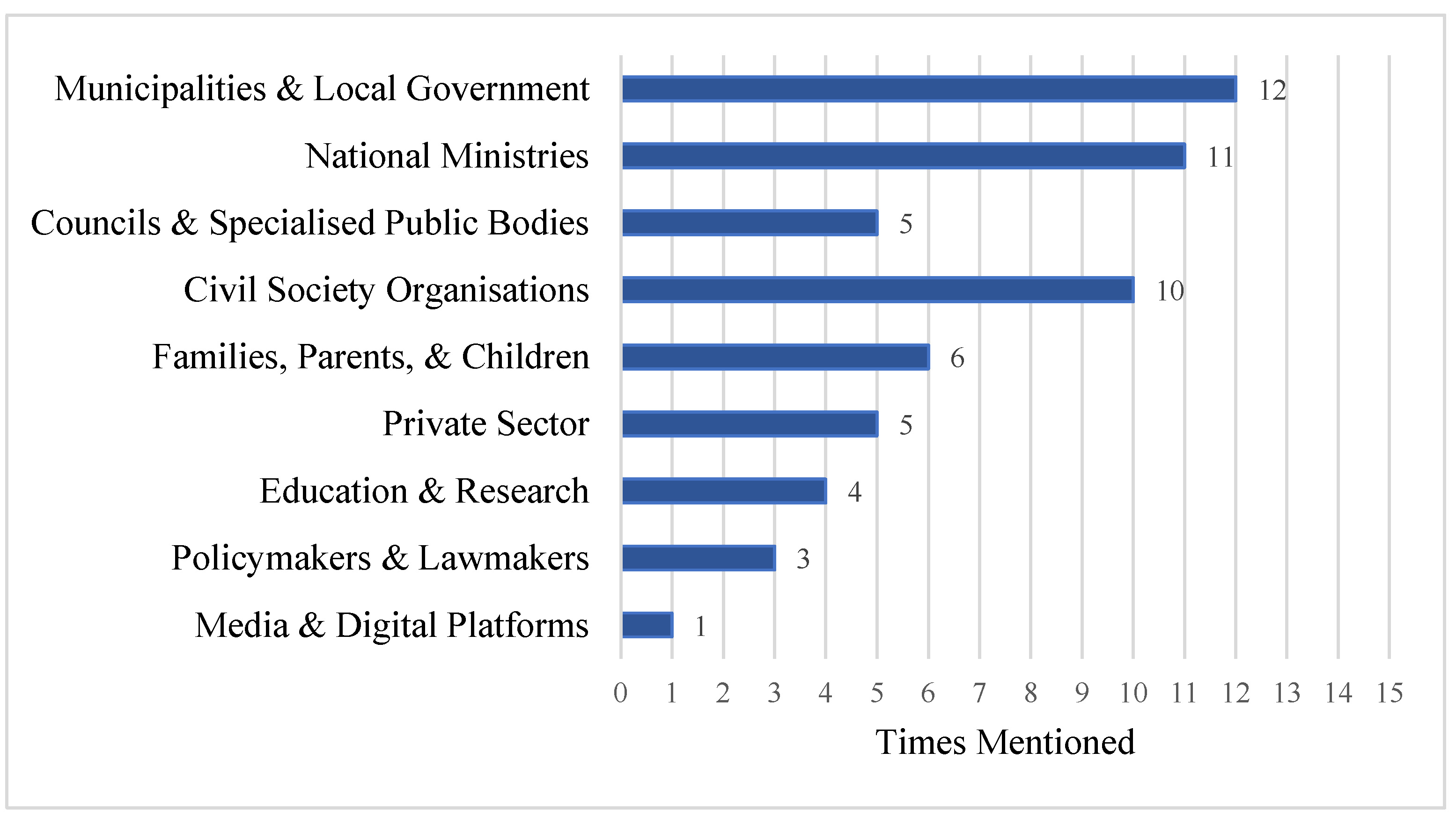
Figure 2 shows the identified groups of stakeholders, along with the number of experts who referred to each category, while
Table 2 shows examples of these actors mentioned by experts.
The most frequently mentioned group of stakeholders is municipalities and local governments. Experts emphasized the role of stakeholders in understanding both users and the context of the cities, along with their primary responsibilities regarding routine operations. National ministries came second, with about thirteen identified ministries; however, the most frequently mentioned were education, health, social development, and planning, which reflects both the importance of their role and the awareness of their mission.
Through their various forms and in different wordings, civil society organizations were frequently referenced in the responses, indicating the importance of the role of community-based and non-governmental actors in supporting activities related to childhood. Children themselves, along with their parents and families, were repeatedly highlighted as co-creators, emphasizing the importance of engaging them in the decision-making process. Other identified actors were recognized as contributors, despite being mentioned less than the previous ones, such as the private sector, educational institutions and research centers, and national councils and specialized public bodies. Their potential contribution was highlighted by experts in relation to specific technical expertise and funding opportunities.
Policymakers and lawmakers were mentioned fewer times, but their presence draws attention to the importance of engaging legislative bodies to support initiative efforts and ensure they remain aligned with regulatory and legal frameworks. Lastly, the media and digital platforms were mentioned only once, indicating that this actor is relatively emergent and has traditionally remained outside the core scope of child-focused urban discussions. Overall, a clear agreement was observed in the responses of the experts in terms of who they think holds influence in shaping CFC-JO.
4.1.2. Key Features
In one of the first-round questions, the experts were asked to identify key features that they believe would define a successful CFC-JO. Despite the exploratory nature of this question and the various sectors the experts represent, recurring patterns were observed. Additionally, the responses were notably inclusive regardless of the experts’ background, which helped in organizing the ideas into coherent categories. Through three stages of thematic analysis, the qualitative responses were turned into ten core features associated with CFC-JO. These features included clean and climate-responsive environments, physical safety, walkability, social interaction, developmental play, independent mobility, diverse play spaces, inclusivity and accessibility, community learning, and proximity to services. Each feature was then formulated into a clear statement with a brief explanation and prepared for structured evaluation and prioritization in Round 2.
4.1.3. Key Barriers
The third question in round 1 concerned the barriers that prevent or slow down Jordanian cities from becoming child-friendly, whether physical, social, or political. The responses were analyzed thematically, where six main themes were identified, including twelve subcategories.
Table 3 presents the themes and identified barriers. These twelve barriers were later transformed into twelve statements to be carried forward to round 2.
4.1.4. Initial Indicators
The final element explored in round 1 was related to validation. The experts were asked to identify the indicators that could be used to measure potential progress towards achieving CFCs in Jordan. The analysis of this open-ended question resulted in four themes: physical environment, social inclusion, health and well-being, and governance. Within these themes, the experts suggested a broad range of measurable aspects that were rearranged into twelve statements. The highlighted indicators covered various aspects related to children’s safety, navigability of the city, accessibility and quality of public facilities, and the availability of green and recreational areas. Social and experiential aspects were also emphasized, such as inclusiveness, interaction opportunities, children’s sense of belonging and their participation in available activities. In addition, some indicators focused on the significant role of governance structures and mechanisms that encourage children to be involved in making decisions regarding shaping their environments.
However, these indicators were not evaluated in Round 2 but were instead carried forward to Round 3 for three main reasons: first, to ensure their validity in light of the structured findings emerging from Round 2 and to include any additional derived from the responses; second, to keep Round 2 concise and prevent overwhelming participants with an excessively long questionnaire; and third, to allow experts time to reflect on their earlier contributions prior to validating the indicators.
4.2. Round 2: Evaluation and Prioritization
This round focused on evaluating and prioritizing the previously identified features and barriers, with the aim of reaching consensus among the expert participants, while also informing the development of the indicators.
The full panel of fifteen participants was able to respond to this round. Experts were presented with the ten identified features from the first round as statements and were asked to rate their level of agreement, select their top three priorities, and suggest any additional features. Similarly, for the barriers, almost the same process was applied. Experts were asked to rate their agreement on the twelve statements derived from the first round, identify the four most limiting barriers, and indicate any additions or notes.
For both features and barriers, a five-point agreement scale was used, exposing participants to the initial findings of the first round while allowing them to reflect on their previous responses through a more structured evaluation. The priority questions aimed to highlight the perceived importance based on the experts’ various sectors by assigning weight to the statements.
The analysis of the responses followed a two-level approach. First, the mean score for each statement was calculated by sector, followed by the overall mean, providing a clearer understanding of cross-sectoral similarities and differences. In addition, SDs were calculated for all statements in both features and barriers to assess the level of agreement among the experts. Second, the priority selections were analyzed by both frequency and score. The experts’ choices were transformed into a weighted point system, enabling the priorities to be ranked accordingly.
4.2.1. Features
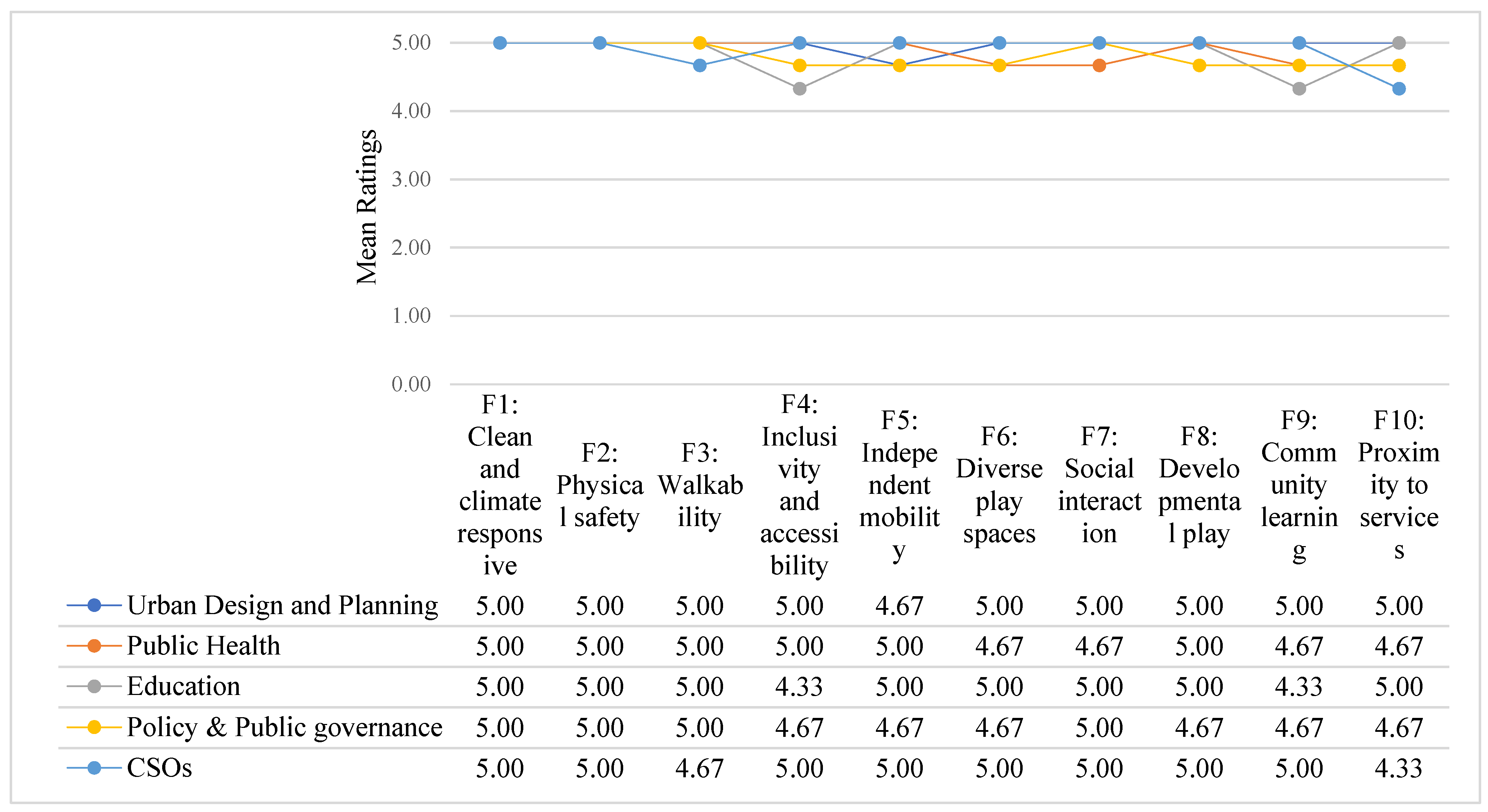
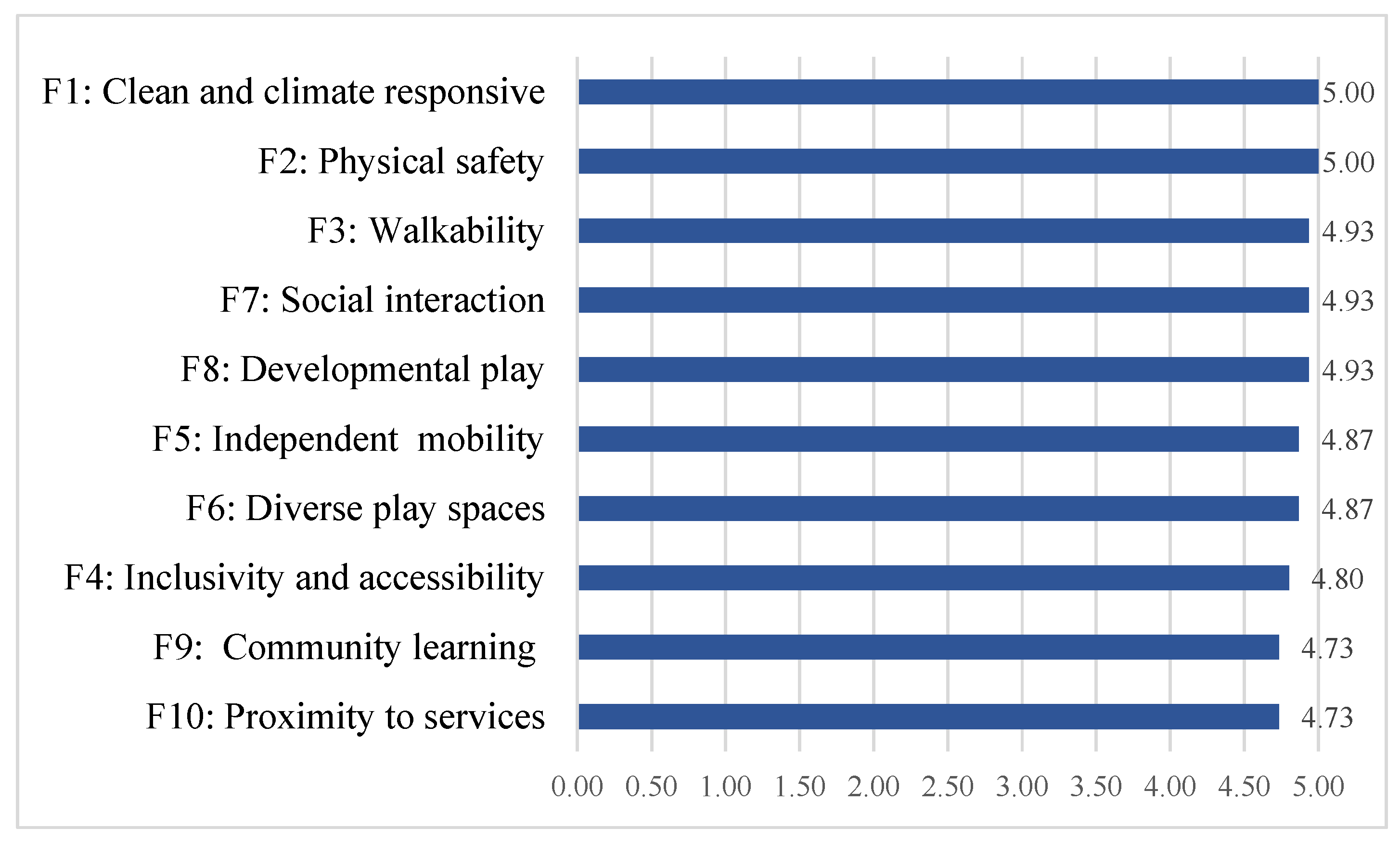
The analysis of round 2 results showed a strong level of agreement among the expert panel regarding features. Consistently high mean scores were observed across the five sectors for all ten feature statements. The high degree of consensus is reflected in the mean scores, as the lowest mean recorded for any feature within a sector was 4.33, and the lowest overall mean across all features was 4.73.
Figure 3 shows a comparison of mean ratings for each feature by sector.
Among the ten features, the highest level of agreement was recorded for clean and climate-responsive environment and safety of the physical environments, with all experts rating them as highly important. These were followed by walkable urban design, spaces for social interaction, and stimulating and development-oriented play areas, which also achieved high mean ratings. In terms of sectoral differences, minor variations were observed; for example, CSOs rated walkability slightly lower than other sectors, public health experts assigned lower importance to social interaction spaces compared to other sectors, and policy and governance experts gave lower rates to development-oriented play areas. Despite these variations, the overall agreement levels were high for these features.
Other features also demonstrated strong agreement, though lower than the top five features, such as
support for independent child mobility,
diverse play environments, and
inclusive and accessible urban spaces. This reflects the strong recognition of the role that these features play in enabling children to navigate their surroundings confidently, while also supporting their broader social and developmental needs. Although
community-based learning and creative spaces and
proximity to cultural, educational, and recreational services recorded the lowest overall mean scores among the ten features, they still maintained high agreement levels. Their relatively lower ranking does not imply lesser importance but may indicate that these aspects are often perceived as inherent or taken for granted within urban environments.
Figure 4 illustrates the overall mean of features in descending order.
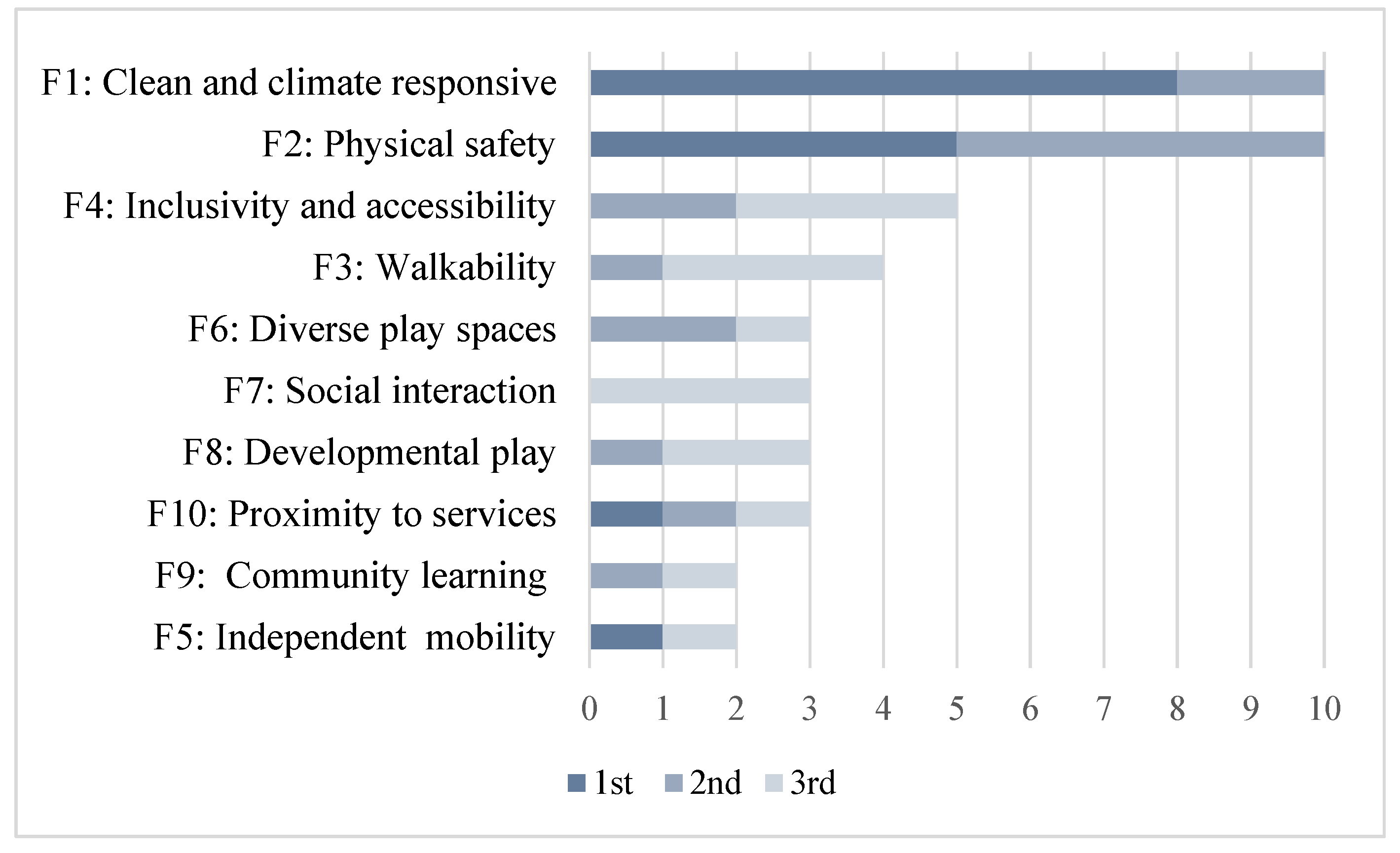
As previously mentioned, the priority-selection question was analyzed using two approaches: frequency of selection and weighted scoring. In terms of frequency, and as shown in
Figure 5, the highest priority features clustered around
clean and climate-responsive environments, and
safety of the physical environments, followed by
inclusivity and accessibility of urban spaces, then
walkable urban design. Four features were selected with equal frequency:
diverse play spaces,
social interaction opportunities,
stimulating and development-oriented play areas, and
proximity to services. The least frequently selected features were
community-based learning spaces and
children’s independent mobility.
However, when weighted scores were applied, notable shifts in ranking emerged. While the top three priorities remained unchanged,
children’s independent mobility ranked fourth despite being the least frequently selected, and
proximity to services ranked fifth despite its lower frequency ranking. Conversely,
spaces for social interaction ranked ninth in weighted scoring despite a higher frequency of selection.
Table 4 presents a comparison between the ten features.
Overall, the findings from the features analysis emphasize the importance of safety, mobility, inclusiveness, and diverse opportunities for play and interaction in achieving CFC-JO. This round successfully translated the qualitative insights from round 1 into a structured and consensus-based hierarchy of features, which subsequently informed the indicator validation process in round 3.
4.2.2. Barriers
In terms of barriers, the analysis of round 2 also showed a strong level of agreement. The expert panel was asked to rate the twelve statements that emerged from the six core categories defined in the first round. Although the consensus was lower than for the features, it remained generally high, as reflected in the mean scores.
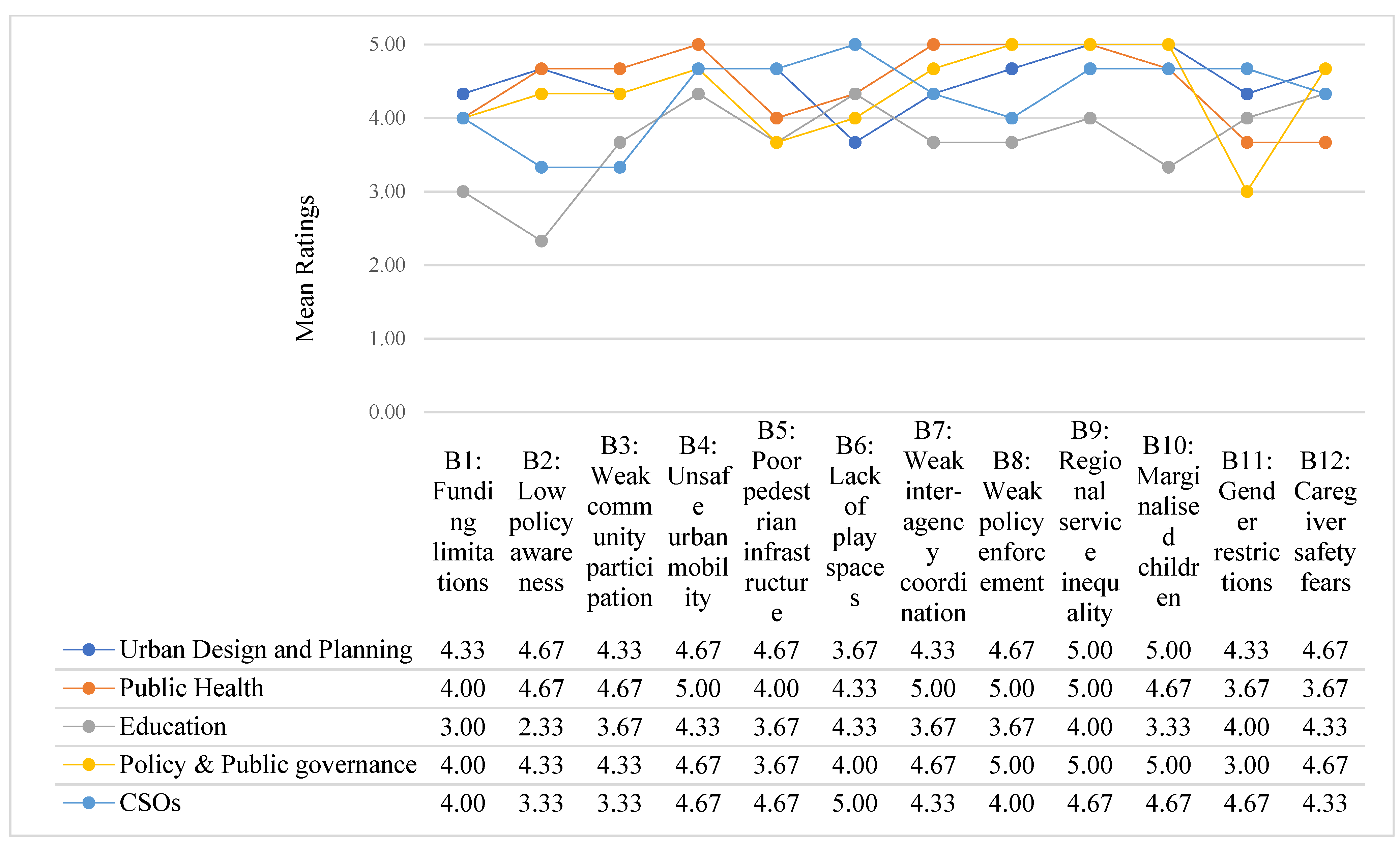
Low policy awareness had the lowest mean of 2.33 by the education sector among all barriers ranked by all sectors. CSOs had a converging view towards this barrier with a mean of 3.33. However, the remaining sectors ranked it as very limiting. The education sector also had a similar view towards the
funding limitations, with a mean of 3, though all other sectors perceived it as a limiting barrier.
Gender restrictions were perceived by policy and public governance as a neutral barrier (mean of 3), by public health participants as neutral to limiting (mean of 3.67), and by the other sectors as limiting to strongly limiting.
Figure 6 shows a comparison chart of mean ratings for each barrier by sector.
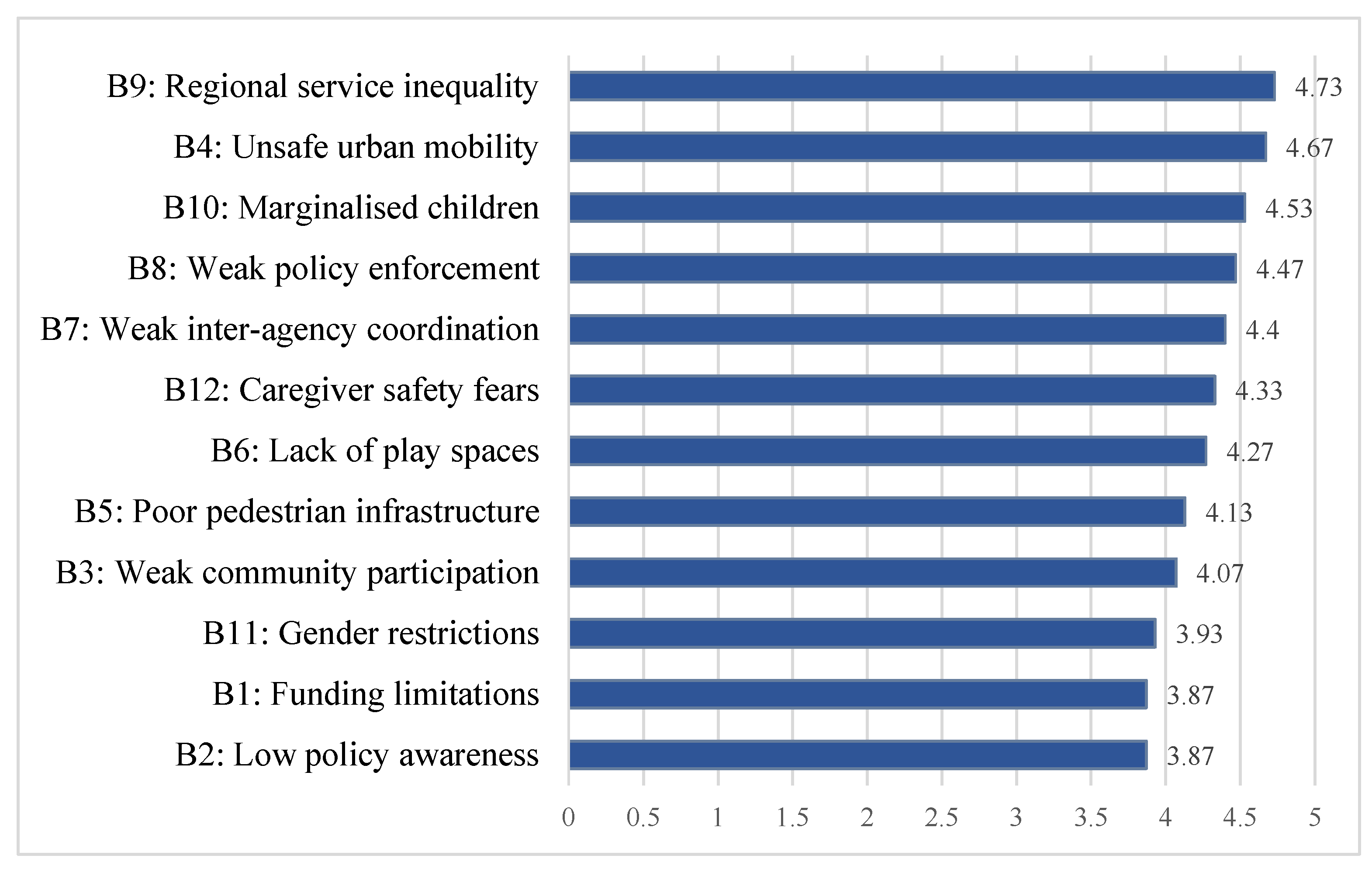
Despite differences in ranking across sectors, all twelve barrier statements achieved consensus, as the lowest overall mean was 3.87 (
Figure 7). Among these barriers,
regional service inequalities achieved the highest mean of agreement, as it was considered by all experts an obstacle to achieving CFC-JO. While
unsafe urban mobility came second, another barrier related to inequality followed, namely
marginalized children. High levels of agreement (mean scores above 4) were also calculated for several other barriers, including
weak policy enforcement, weak interagency coordination, caregiver safety fears, lack of play areas, poor pedestrian infrastructure, and
weak community participation. These findings reflect the shared views among experts regarding the critical role that infrastructural and governance-related challenges play in limiting progress toward achieving child-friendly urban environments.
On the lower end of the agreement scale, though still within the consensus range, the following barriers were identified: low policy awareness, funding limitations, and gender restrictions. This suggests that these barriers may not be universally perceived across the identified sectors but are instead experienced in more context-specific or through indirect manifestations.
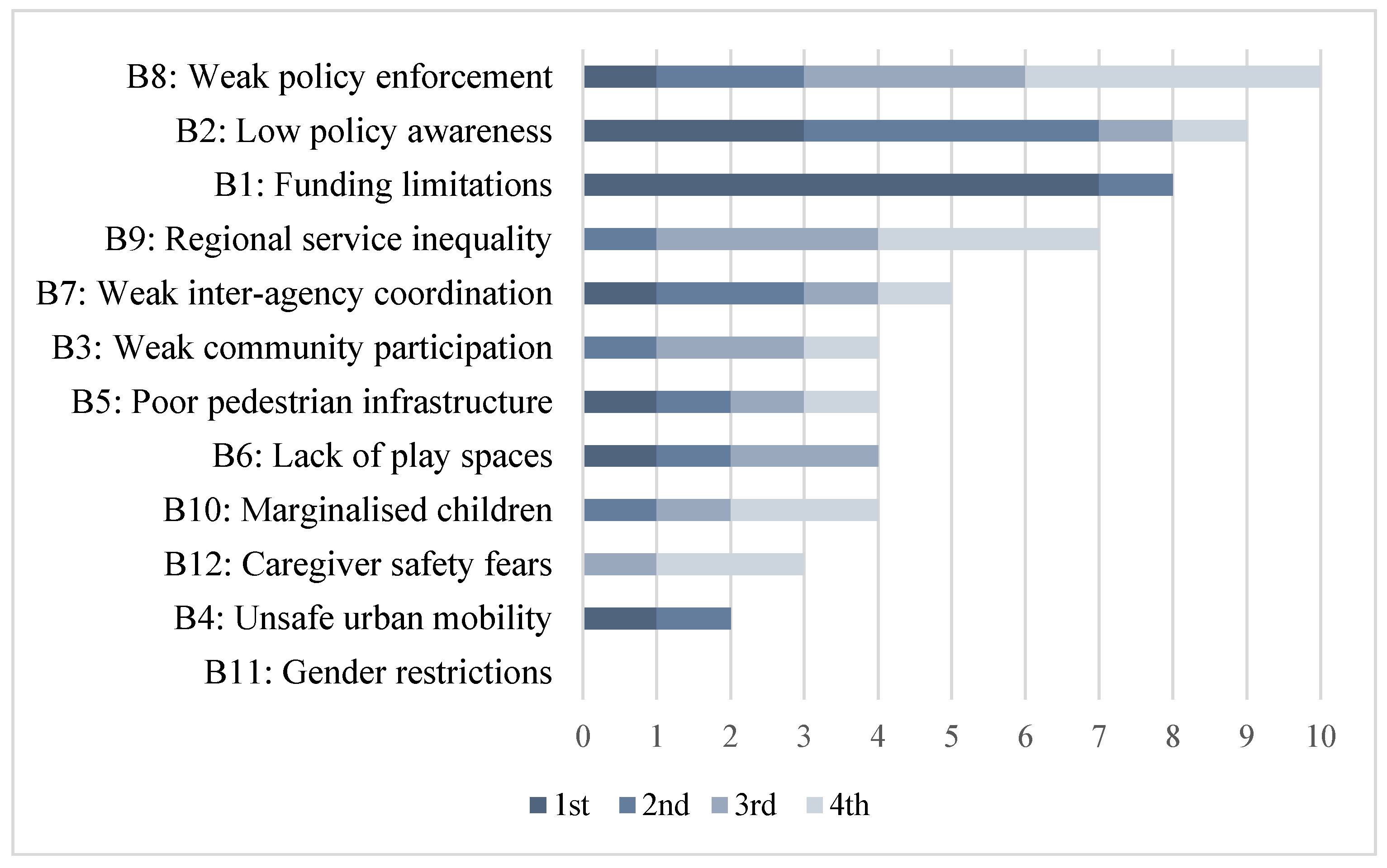
Following the ranking of each barrier individually, the experts were asked to identify the four most limiting barriers from their perspective. In terms of frequency, and as illustrated in
Figure 8, participants viewed
weak policy enforcement as the most limiting barrier. It is worth noting that about 67% of respondents selected coordination and governance-related barriers among their top four (B7-B8), which helps explain these findings.
Low policy awareness came second, followed by
funding limitations and
regional service inequalities.
Gender restrictions as a barrier were not among the most limiting to any of the experts.
Nevertheless, when the selection of limiting barriers was transformed into weighted scores, slight shifts in the overall ranking were observed.
Funding limitations topped the list, followed by
low policy awareness. Both coordination and governance barriers occupied the third and fourth positions. Although
regional service inequalities recorded the highest mean level of agreement, their rank dropped to fifth when prioritization was applied. Conversely, the socio-cultural barriers (B11 and B12) ranked as the least impactful.
Table 5 presents a statistical summary of the twelve barriers along with the priority rank. Overall, the analysis of barrier-related responses in round 2 revealed a high level of agreement among experts regarding the range of challenges limiting progress toward CFC-JO.
4.3. Round 3: Indicators Validation
The final round aimed at validating the identified indicators from the previous rounds; twelve core indicators were organized under four themes, as shown in
Table 6.
The indicators are conceptually linked to the barriers identified in
Table 3, as they provide a means to monitor and assess how these challenges are addressed across different urban contexts, reflecting main domains such as the physical environment, governance, and social inclusion. By this stage, the experts had fully engaged in the research process, allowing their views to settle and become more informed. This stage allowed the experts to be well positioned to assess the relevance of the indicators and to prioritize those that could best provide observable or measurable progress toward CFC-JO. This more mature level of reflection justifies postponing indicator validation to a separate and final round.
In this round, thirteen participants responded, as two were unable to do so within the assigned timeframe due to personal circumstances. The experts were presented with the twelve identified indicators as statements and were asked to rate their importance using a five-star rating scale. Following the ratings, the experts were asked to select the three most critical indicators for measuring progress toward CFC-JO.
The analysis of the responses followed a similar approach to that used for the features and barriers, applying a two-level analytical approach. The first level involved calculating the mean score for each indicator by sector, followed by the overall mean, in order to identify cross-sectoral patterns of similarities and differences. Additionally, the level of agreement was assessed by calculating the SD for each indicator. The second level of analysis focused on the priority selections, first by frequency and then by weighted score, allowing the indicators to be ranked accordingly.
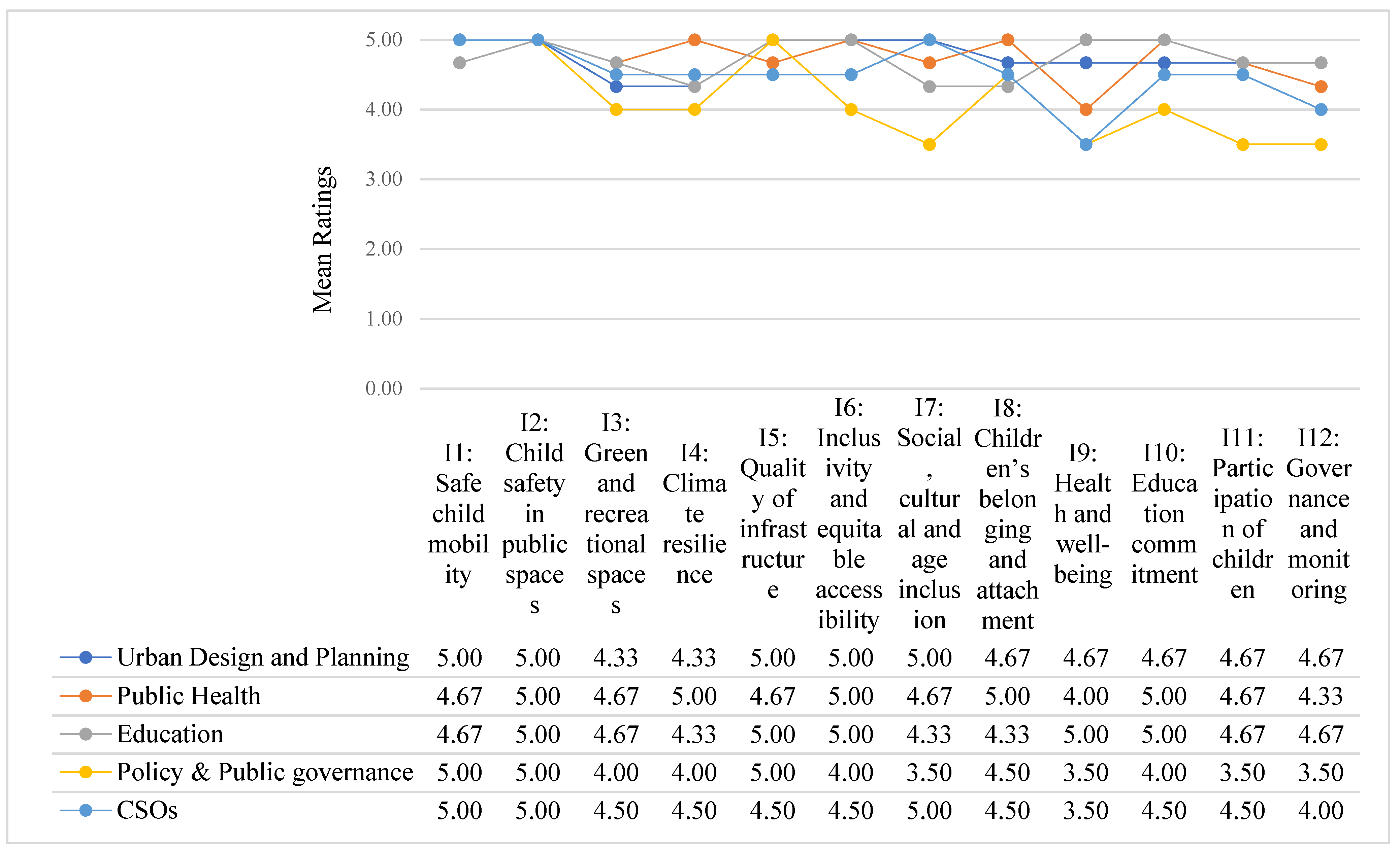
Indicators
A strong level of agreement was observed for the indicators. As illustrated in
Figure 9, while many indicators were rated as very important by all members of their sector, the lowest mean per indicator by sector was 3.5. This low mean was recorded four times by the same sector, namely policy and public governance, for indicators I7 (related to inclusion), I9 (related to health), and I11 and I12, which both represent the theme of ‘governance and child participation’.
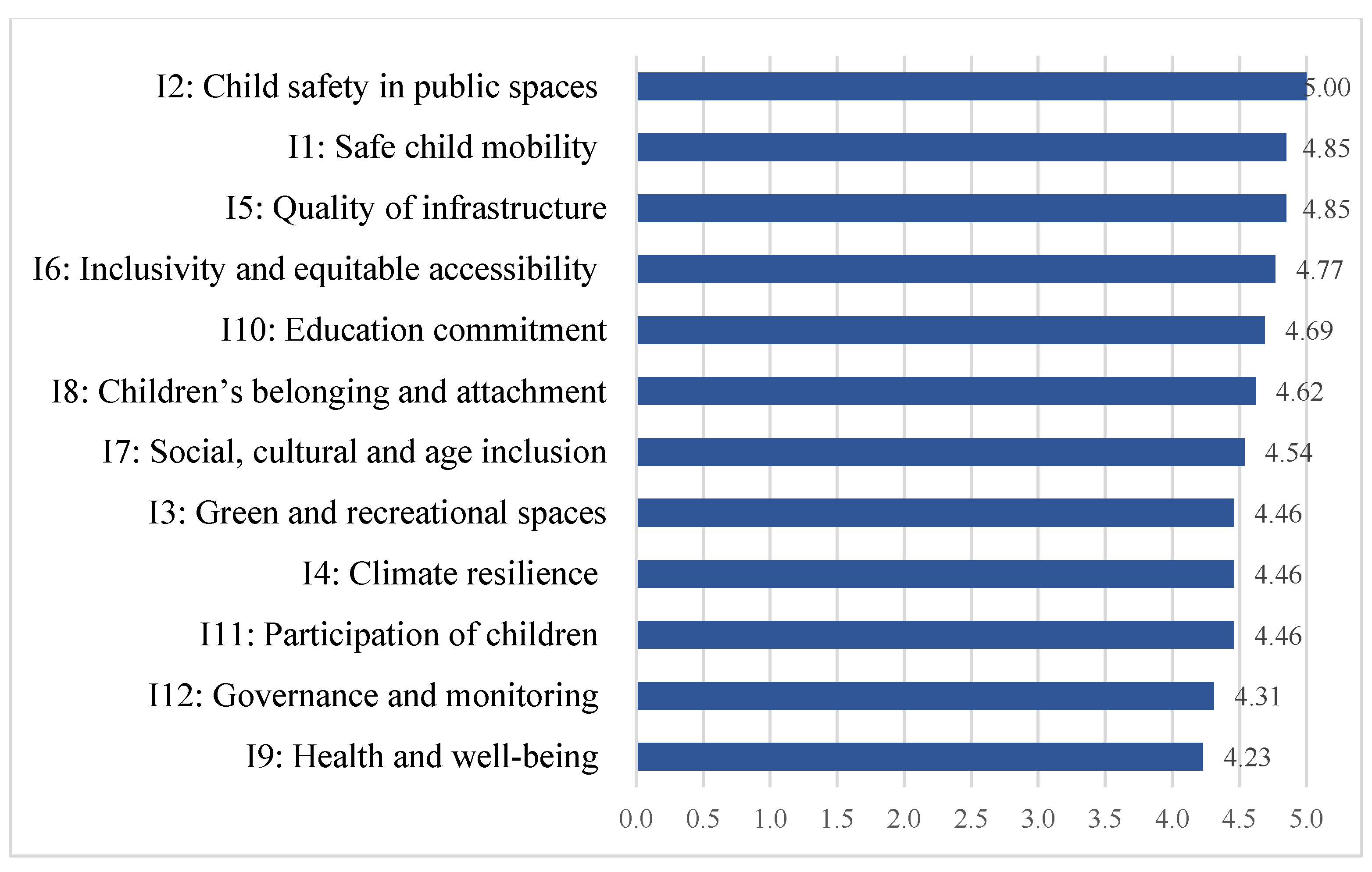
Despite these minor differences in ratings, the overall mean for all indicators showed strong consensus, as values ranged from 4.23 to 5.00, which means that all indicators were considered important. However,
child safety in public spaces was rated as very important by all expert participants (mean of 5), confirming safety as an undisputed indicator for evaluating CFC-JO. This was followed by
safe child mobility and
quality of infrastructure, two indicators that also belong to the theme of ‘built and physical environment’. Indicators related to social inclusion and community life (I6, I7, and I8), as well as
education commitment, were all ranked as very important. Notably, the influence of the policy and public governance sector was evident, as indicators that were rated low by them related to ‘governance and child protection’ and the
health and well-being indicator recorded as the three lowest mean scores.
Figure 10 shows a comparison chart of mean ratings for each indicator by sector.
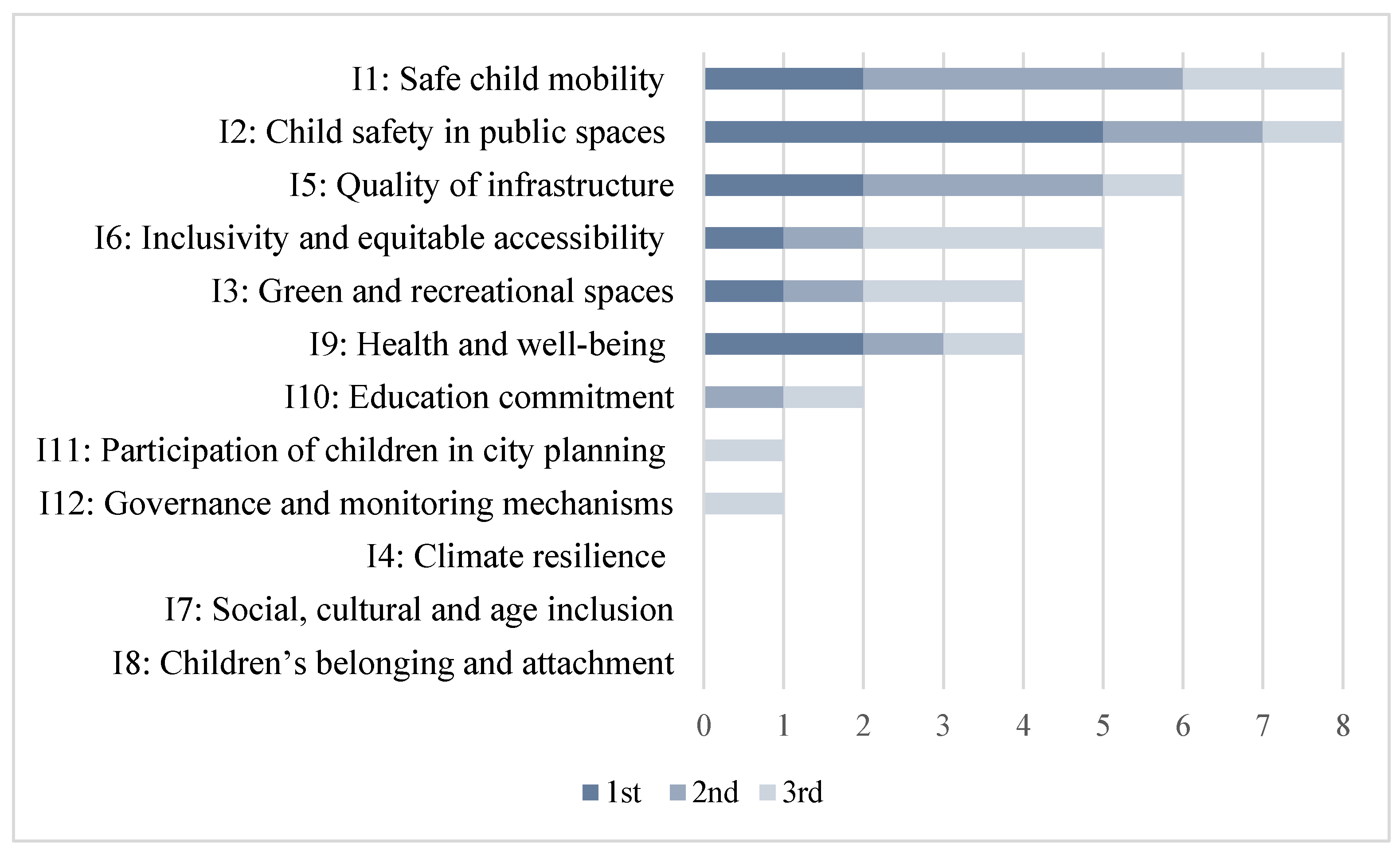
After all indicators were rated individually, the expert panel was asked to select the top three indicators they considered critical for measuring progress toward achieving CFC-JO. The results were analyzed first by frequency, and then by score. As illustrated in
Figure 11 and
Table 7, the top two indicators identified as critical were consistent across the two methods. As expected, these were the two safety-related indicators:
safe child mobility and
child safety in public spaces, which ranked equally by frequency and correspondingly by score. Again, quality of infrastructure ranked third using both methods.
The next group of indicators in terms of importance included I6, I3, and I9 by frequency, and I9, I6, and I3 by score. Notably, the
health and well-being indicator (I9) showed the most unexpected prioritization, ranking fourth despite having the lowest mean score among all indicators. As shown in
Figure 11 and
Table 7, the remaining indicators had the same order across the two methods, with I10, I11, and I12 receiving scores of 3, 1, and 1, respectively, while no votes were recorded for three indicators: I8, I7, and I4.
5. Discussion
The results of this three-round Delphi study not only examined the four mentioned dimensions in relation to CFC-JO, namely relevant stakeholders, defining features, limiting barriers, and measurable indicators, but also provided insights into how different sectors perceive these dimensions within the Jordanian context. This section discusses these findings by interpreting the observed patterns of consensus and convergence.
Regarding stakeholders, in the first round, nine groups were identified, and while there was variation in the number of times each group was mentioned, the study considered each of them important, since each was identified by at least one expert based on their professional expertise and perspective. However, the three most mentioned stakeholders were (1) municipalities and local governments, as the primary actors responsible for field implementation; (2) national ministries, for their key role in organizing and legitimizing different aspects related to CFC-JO; and (3) civil society organizations, recognized for their human capacity and access to funding and fundraising opportunities. A limited mention of the media and digital platforms appeared, which suggests that despite the rapidly evolving role of digital communication in an increasingly digitized world, the agendas of CFC-JO remain confined within institutional and organizational actors.
In the second round, both features and barriers reached consensus. For the ten identified features, a very high consensus was achieved. However, when prioritization was applied, clear differences appeared where the top two priorities of clean and climate responsive environment and safety of the physical environment had much higher scores compared to the remaining features. This does not imply lower importance of the other features but rather highlights clear prioritization of cleanness and safety in the physical environment, reflecting emphasis on public hygiene and safety standards in the Jordanian context.
Interestingly, each feature was selected by at least two experts as part of their top three priorities, which provides evidence of the adequate representation of the statements for all members of the panel and, therefore, their five sectors. Consensus was not only achieved within each sector but also across sectors, where response patterns were largely consistent, with only minor variations. For instance, walkability was emphasized more by urban planners, while higher importance was assigned to developmental and creative spaces by educators.
The barriers also showed consensus; however, this was less pronounced than for the features. The top three limiting barriers toward CFC-JO were identified as funding, low policy awareness, and weak policy enforcement, respectively. Notably, the two lowest barriers in terms of mean scores, i.e., B1 and B2, ranked as the top two when prioritization was applied. This highlights a distinction between what experts generally agree upon in principle and what they perceive as the most obstructive barriers in practice. Conversely, gender restrictions was the only barrier not selected by any expert as one of the most limiting, despite achieving consensus in the agreement rating.
Barriers related to coordination and governance, infrastructure and environment, and spatial inequalities consistently appeared as constraining obstacles. While variations in emphasis across sectors were observed, a notable convergence was noted between the urban design and planning sector and the policy and public governance sector, reflecting their shared background and engagement with structural and regulatory challenges. In contrast, responses from the education sector showed comparatively greater variation, indicating differences in how barriers are perceived based on professional positioning. Despite these variations, the overall findings indicate a shared recognition among experts of key obstacles limiting the advancement toward achieving CFCs.
The third round resulted in high consensus in terms of indicators, as the twelve indicators had mean scores of above 4.2 out of 5. Contrary to the features and barriers, the indicator results based on the overall mean and priority ranking were close, especially with regard to the top three, i.e., safe child mobility, child safety in public spaces, and quality of infrastructure. These indicators not only ranked the highest but also showed a clear gap compared to the other nine indicators. Additionally, although consensus was reached, three indicators were not selected by any expert as priority indicators; these were related to social inclusion and community life (I8 and I7) and climate resilience in children’s environments (I4). This absence of prioritization does not indicate irrelevance, as they were previously agreed upon as important but may instead suggest that they are perceived as longer-term or indirect outcomes.
Looking analytically at the prioritization, the top three indicators were agreed upon, and the three least important were also agreed upon; however, differences among actors appeared in the middle category, i.e., I9 related to health and well-being, I6 tackling inclusivity and equitable accessibility, and I3 regarding green and recreational spaces. While these indicators ranked fourth, fifth, and sixth, respectively, each was considered a top priority by at least one expert. These three indicators therefore require further discussion among actors to allow for the exchange of perspectives.
Table 8 summarizes the top-ranked elements along with their level of agreement, key interpretation, and alignment with existing literature. While the findings show strong alignment with literature, this does not necessarily imply that these elements are emphasized with the same level of importance. The contribution of this study lies in establishing their relative priority within the Jordanian context through expert consensus.
6. Conclusions
This study aimed at understanding how CFC-JO is conceptualized and pursued. While attention to child-friendly urban environments has recently increased, efforts remain fragmented, and perspectives vary across sectors and locations, reflecting the broader fragmentation identified in the literature [
15]. Moreover, a clear disparity can be observed between major cities and smaller cities, towns, and peripheral areas, where less focus is usually directed toward urban needs in general, and child-related urban needs in particular. This unevenness aligns with the literature [
15,
22].
This gap highlighted the need to clarify who should be involved (stakeholders), what should be achieved and prioritized (key features), which elements are slowing down or preventing progress (main barriers), and how this progress should be measured (a set of indicators). Through a structured Delphi process, this study brought together expert perspectives to establish a shared reference point for addressing these questions.
Collectively, the findings suggest that achieving CFC-JO first requires aligning all relevant actors around a common vision, including children themselves, which is consistent with the rights-based and participation-oriented approach emphasized in the literature. In comparison to UNICEF’s booklet [
4], most of the identified stakeholders in the study were acknowledged in the document. However,
municipalities and local government and
policymakers and lawmakers were not explicitly emphasized in the framework, and their appearance in the findings reflects context-specific governance structures influencing decision-making and implementation in Jordan. While there is only a limited mention of
media as a stakeholder in this study, the UNICEF booklet [
4] clarifies that there should be proactive efforts to engage the media, including involving them in training sessions and committees. This limited representation suggests that, despite increasing digitalization, CFC agendas in Jordan remain largely framed within institutional and organizational actors rather than communication-driven or participatory digital mechanisms.
The prioritized features emphasize the importance of clean, climate-responsive, safe, inclusive, and accessible urban environments, aligning with the literature on the role of the physical environment, public spaces and accessibility in shaping children’s well-being [
3,
9,
19,
20]. In terms of barriers, while funding limitations were identified as a major constraint, the findings also highlighted the role of policy awareness and enforcement, as well as interagency coordination, reflecting the governance-related challenges widely discussed in the literature [
12,
15,
18].
Regarding evaluation, the most critical indicators were found to relate to child safety in public spaces, safe mobility across the city, and the quality of infrastructure and public facilities. These align with multidimensional approaches to child well-being while also reflecting challenges of translating such dimensions into measurable and context-sensitive indicators [
4,
30,
31]. According to UNICEF [
4], effective indicators require three components: a defined context, a unit of analysis, and a unit of measure. While the identified indicators define general context and unit of analysis, further work is required to establish measurable components, baseline conditions, and target values before implementation.
The main contribution of this study lies in establishing a consensus-based foundation around the key dimensions of CFC-JO. By localizing the discussion within the Jordanian context, it responds to limited regional evidence and supports decision-makers and practitioners in moving toward more coordinated and context-sensitive directions, contributing to ongoing efforts to assess children’s rights within urban development processes.
Building on these findings, future efforts could focus on applying and refining the identified elements within different local contexts. In particular, further work is needed to develop the indicators into measurable forms that can be applied in practice. Further research could also explore how priorities and challenges vary across urban and peripheral areas in Jordan.
Finally, as emphasized by UNICEF [
4], disseminating the results of situation analysis is essential to build consensus around issues affecting children. In this regard, this study represents a step toward strengthening the evidence base in the Jordanian context. Moving toward CFC-JO requires shifting from fragmented efforts toward a shared, context-sensitive framework that connects actors, priorities, and actions, offering a more coherent and implementable pathway for advancing children’s rights in urban environments.