Article

Constructing a Competency Model for EPC Safety Directors Under Smart Construction

1
School of Economics and Management, Beijing Jiaotong University, Beijing 100044, China
2
Shaanxi Construction Engineering No. 8 Construction Group Co., Ltd., Xi’an 710000, China
3
General Contracting Company of China Construction Third Engineering Bureau Co., Ltd., Wuhan 430000, China
*
Author to whom correspondence should be addressed.
Infrastructures 2026, 11(5), 169; https://doi.org/10.3390/infrastructures11050169
Submission received: 24 March 2026 / Revised: 5 May 2026 / Accepted: 8 May 2026 / Published: 12 May 2026

Abstract

In smart construction, identifying the competencies required of engineering–procurement–construction (EPC) safety directors is important for improving personnel selection, training, and safety-governance effectiveness. Drawing on dynamic capabilities theory, this study develops an exploratory competency framework for EPC safety directors in smart-construction contexts. A mixed-method design was adopted, combining a structured literature review, bibliometric mapping with CiteSpace, semistructured interviews, expert review, and questionnaire-based item screening. Questionnaire data from 189 valid respondents were analyzed using descriptive statistics, item analysis, Cronbach’s alpha, and KMO/Bartlett tests to preliminarily assess the internal consistency and structural suitability of the proposed indicators. The results indicate that the retained exploratory framework comprises three higher-order dimensions—sensing, seizing, and reconfiguring—covering six competency elements and eighteen indicators after the remaining trend-sensing indicator was integrated into data analytics. Compared with conventional safety-management competency frameworks, the proposed framework places greater emphasis on data analytics, intelligent systems application, and cross-departmental coordination in digitally enabled project environments. The framework can be implemented as a role-profile template for recruitment, training-needs diagnosis, and performance appraisal of EPC safety directors, while further empirical validation is required before it is used as a standardized measurement scale.

1. Introduction

EPC (engineering–procurement–construction) projects encompass design, procurement, construction, and delivery. Safety management needs vary markedly across stages, making risk governance both complex and fragmented. Prior studies have examined safety-cost estimation in oil and gas EPC contracts [1], procurement-risk transmission in international EPC projects [2], critical-risk networks in Chinese contractors’ international EPC projects [3], and lifecycle risk assessment of EPC pipeline projects using fuzzy Bayesian belief networks [4]. Recent EPC + PPP research further demonstrates that the dual contractual status of private-sector participants can complicate stakeholder relationships and risk-response decisions in integrated project delivery [5]. Vo et al., 2025, [6] assessed complicated EPC projects in wastewater treatment plants, and Tang et al., 2025, [7] identified stakeholder-driven safety conflicts in a prefabricated rural-housing EPC case. Despite these advances, EPC projects continue to experience stagewise management and a lack of cross-phase coordination mechanisms.
With the advent of smart construction, safety management is shifting toward proactive, technology-enabled control. Interactive management platforms are deployed and integrated with hardware–software infrastructure and data pipelines to provide systematic on-site safeguards [8,9,10,11,12]. Current research focuses on accident early-warning systems, integrated safety management, structural health monitoring, and safe-path prediction, with early-warning systems drawing the greatest attention [13]. Technology-based safety management falls into two categories: virtual simulation and sensing. Virtual simulation primarily supports safety training, hazard-area identification and control, and on-site safety warnings [14]. For example, Building Information Modeling (BIM) is integrated to create a visual environment that supports training, identifies edge openings and temporary structures, and enables clash simulation, workspace planning, spatial-conflict detection, and equipment-interference monitoring [15,16]. Sensing applications encompass localization, imaging, and wireless sensor networks [17]. Localization technologies such as GPS, RFID, WLAN, UWB, ZigBee, and ultrasound monitor positional relationships among personnel, equipment, and hazard zones to warn of risks [18,19,20]. Imaging sensors, together with deep learning and neural networks, detect human–machine interaction risks from captured images or video without additional devices, but remain sensitive to lighting and background, and are still nascent [21,22]. Wireless sensor networks, which leverage temperature, displacement, optical-fiber, and pressure sensors, wirelessly transmit measurements of hard-to-observe indicators such as structural stress/strain, primarily for structural-health management [23,24,25]. Overall, RFID-based warnings are relatively mature, wireless sensor networks are developing, and vision-based sensing is increasing with machine learning and computer vision. Consequently, safety personnel in smart construction must combine traditional control capabilities with digital and interdisciplinary collaboration, and competency models for safety directors should embed smart-construction attributes. From a competency-modeling perspective, construction management effectiveness is increasingly viewed as a multidimensional combination of knowledge, skills, and personal attributes shaped by digital transformation [26]. Recent studies show that project managers need digital, leadership, and coordination competencies [27], while safety competency research further highlights stakeholder management, interaction management, and risk assessment as key elements of managerial safety competence [28]. However, such a role-specific competency framework has not yet been clearly developed for EPC safety directors in smart-construction contexts.
Competency models are widely used to identify and evaluate the capabilities of safety managers in construction. Pham et al., 2025, [29] used an exploratory factor analysis–analytic hierarchy process (EFA–AHP) method to identify key safety management factors during high-rise building construction. Alshammari et al., 2025, [30] analyzed how managerial safety behaviors affect workers’ safety awareness, competency, and safety actions. Guha et al., 2025, [31] highlighted the role of construction leaders’ emotional intelligence and capabilities in project safety and quality. Recent reviews of construction safety leadership further show that leadership styles influence safety climate and safety outcomes, with transformational and safety-specific leadership receiving particular support [32,33]. Existing studies have examined safety leadership, managerial safety behavior, project-management competence, and organizational factors affecting safety performance. However, three limitations remain. Firstly, most studies address general construction managers or broad safety-management roles rather than EPC safety directors, whose responsibilities span design, procurement, construction, and delivery. Secondly, existing frameworks are largely rooted in conventional construction environments and therefore do not sufficiently reflect digitalized work processes, intelligent monitoring systems, multisource data integration, and cross-organizational coordination in smart construction. Thirdly, prior studies rarely organize competency requirements through an explicit theoretical lens that can explain how safety directors identify risks, mobilize resources, and adapt organizational processes under technological change.
Against this background, dynamic capabilities theory offers a useful conceptual basis for competency modeling in smart construction because it emphasizes sensing environmental change, seizing opportunities and threats through coordinated action, and reconfiguring resources and routines in response to uncertainty. Accordingly, this study aims to develop an exploratory competency framework for EPC safety directors in smart-construction contexts. The study makes three contributions. First, it extends competency research to a role-specific context that has received limited attention in the literature. Second, it integrates dynamic capabilities theory with competency identification to organize competency requirements into sensing, seizing, and reconfiguring domains. Thirdly, it highlights technology-oriented competencies—especially data analytics and intelligent systems application—that are increasingly central to safety governance in digitally enabled EPC projects. Rather than claiming a fully validated measurement model, the present study provides an exploratory framework that can support subsequent empirical validation and practical competency management.

2. Methodology

2.1. Theoretical Foundation and Modeling

Dynamic capabilities theory, initially proposed by Teece [34], centers on how firms sustain competitive advantage in uncertain, fast-changing environments by sensing, seizing, and reconfiguring [35]. The theory argues that the resource-based view (RBV) alone cannot explain sustained advantage under dynamics because resources may depreciate or become obsolete; dynamic capabilities emphasize the integration, renewal, and reconfiguration of resources [36,37]. The core dimensions are sensing (identifying risks and opportunities via information acquisition, environmental scanning, and big data analysis), seizing (timely strategic decisions, institutional design, and resource allocation to capture opportunities and mitigate threats), and reconfiguring (adjusting organizational structures, processes, and capability portfolios in response to external or technological changes to maintain flexibility and adaptability) [38,39].
Smart construction is enabled by BIM, the IoT, big data, artificial intelligence (AI), and other digital technologies. In this study, a smart-construction EPC project is operationally defined as an EPC project in which safety management is supported by an integrated digital environment rather than by isolated manual inspection alone. To be included, a project had to meet at least two of the following four criteria, with at least one of criteria (a) or (c): (a) BIM or another digital model is used for safety planning, visualization, clash/risk simulation, or site coordination; (b) IoT, RFID/UWB, video analytics, or other sensing technologies are used for real-time hazard monitoring; (c) an integrated data platform or dashboard is used for multisource safety-data collection, early warning, and closed-loop rectification; and (d) AI, digital twin, VR/AR, or comparable intelligent tools are used for safety training, decision support, or dynamic risk prediction. This operational definition was used in interview screening and questionnaire instructions so that respondents evaluated competencies against comparable smart-construction conditions. Safety management has therefore become a dynamic, multidisciplinary, and multisystem process rather than a one-dimensional, static task. Safety directors must leverage dynamic capabilities to manage multisource uncertainty, real-time risks, and complex technology integration. For risk identification, intelligent monitoring and data mining are required for rapid sensing; in decision-making and execution, cross-departmental coordination and digital tools are essential to effective implementation; and for adaptation and reconfiguration, ongoing process redesign, technology adoption, and organizational learning drive continuous improvement. Thus, dynamic capabilities offer a systematic theoretical scaffold for constructing the competency model and organizing its hierarchical structure in smart-construction contexts. In the present study, dynamic capabilities theory is used as a conceptual organizing lens rather than as a parametric model to be statistically estimated. Specifically, sensing refers to the ability to identify safety risks, technological change, and environmental signals; seizing refers to the ability to mobilize resources, coordinate stakeholders, and make timely safety decisions; and reconfiguring refers to the ability to adjust processes, knowledge, and technological arrangements during project execution. Accordingly, the proposed competency framework is structured hierarchically around these three higher-order domains.
To operationalize the logic of dynamic capabilities, we formalize the overall competency level C of an EPC safety director as a weighted function of three abilities—S (sensing), Z (seizing), and R (reconfiguring).
C = f ( S , Z , R )
S stands for sensing, reflecting the safety director’s ability to identify potential risks and opportunities in smart-construction scenarios; Z stands for seizing, capturing the ability to integrate resources and execute decisions under complex situations; and R stands for reconfiguring, emphasizing adaptive flexibility amid continuous changes in organizational structures, processes, and technological systems. To enhance operability, the function can be further formalized as a linear weighted model.
C = α S + β Z + γ R , α + β + γ = 1
Here, α, β, and γ are the weights of sensing, seizing, and reconfiguring, respectively, reflecting their relative importance in EPC projects under smart construction. In practical application, these weights can be determined through expert scoring, the Delphi method, or AHP-based pairwise comparison and then normalized so that α + β + γ = 1. If longitudinal safety-performance data are available, the weights may also be estimated empirically by linking competency scores to safety outcomes such as near-miss frequency, rectification timeliness, or incident rates. In this exploratory study, however, universal weights were not imposed because the purpose was to identify and organize competency indicators rather than to produce a fully calibrated evaluation instrument. For example, α may be greater in high-risk building works where early hazard detection is critical, whereas β may be greater in large cross-border EPC projects where resource integration and rapid decisions are paramount.

2.2. Identifying Competency Elements via Literature Review and Interviews

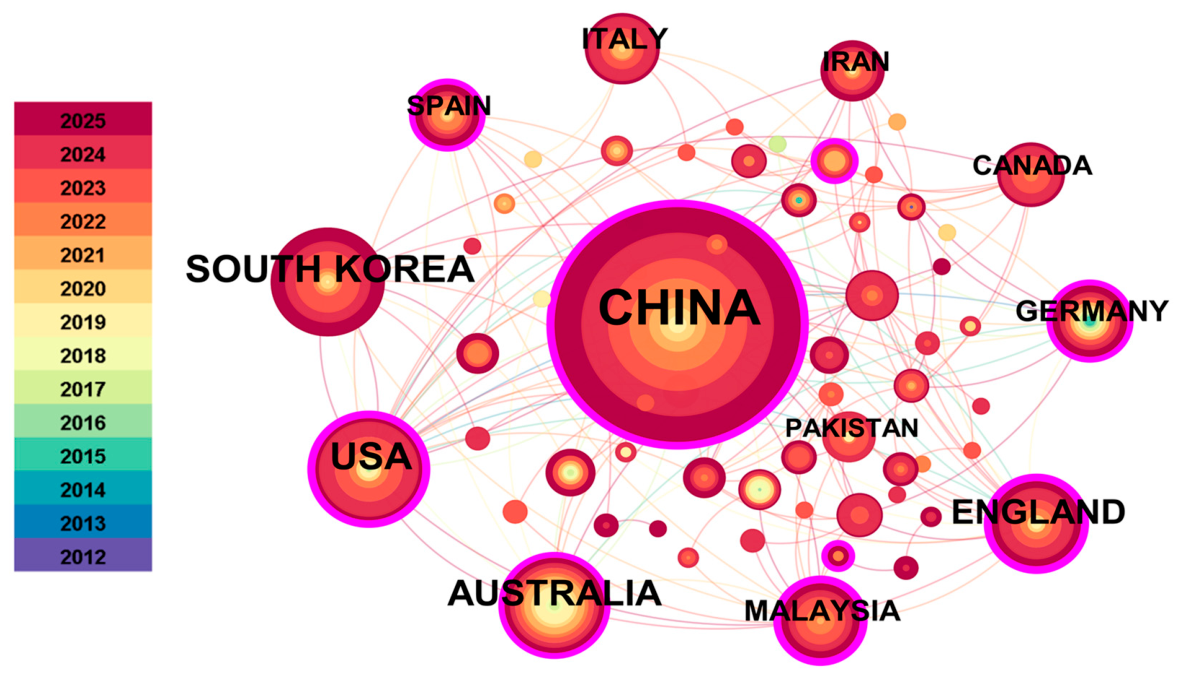
In this study, we employed CiteSpace to analyze the countries and regions in which research on safety management in smart construction has been published over the past approximately 14 years (2012–2025). The records are retrieved from the Web of Science and Google Scholar academic databases using search terms associated with smart construction, construction safety, BIM, digital twins, IoT, artificial intelligence, and related digital technologies. The results indicate a broad geographic spread, with related studies conducted in approximately 60 countries and regions. China leads with 213 papers (30.08% of the total), followed by the United States with 57 papers (11.52%). Additional major contributors are South Korea, Australia, and the United Kingdom. The detailed distribution of the leading contributors is shown in Figure 1. The color gradient from dark to light depicts the publication timeline, where darker colors indicate earlier publications and lighter colors indicate more recent publications. The size of the annual rings reflects publication volume, with larger rings denoting higher output. Countries such as Spain, Germany, the United Kingdom, and Australia exhibit greater centrality in the collaboration network, as indicated by purple rings, signaling more frequent interinstitutional cooperation. Both China and the United States demonstrate sustained growth in research output throughout the period, underscoring continued investment and development in this field.
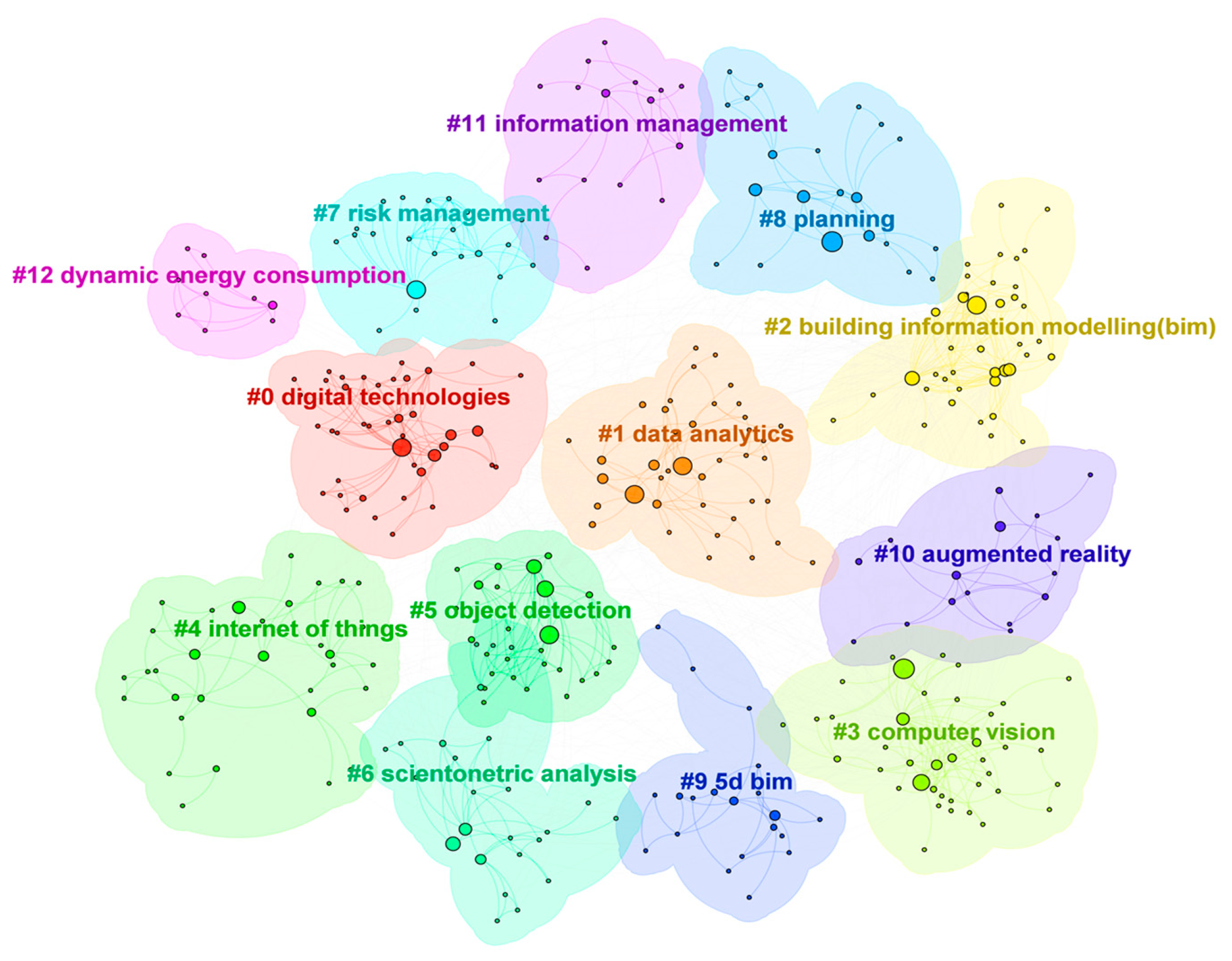
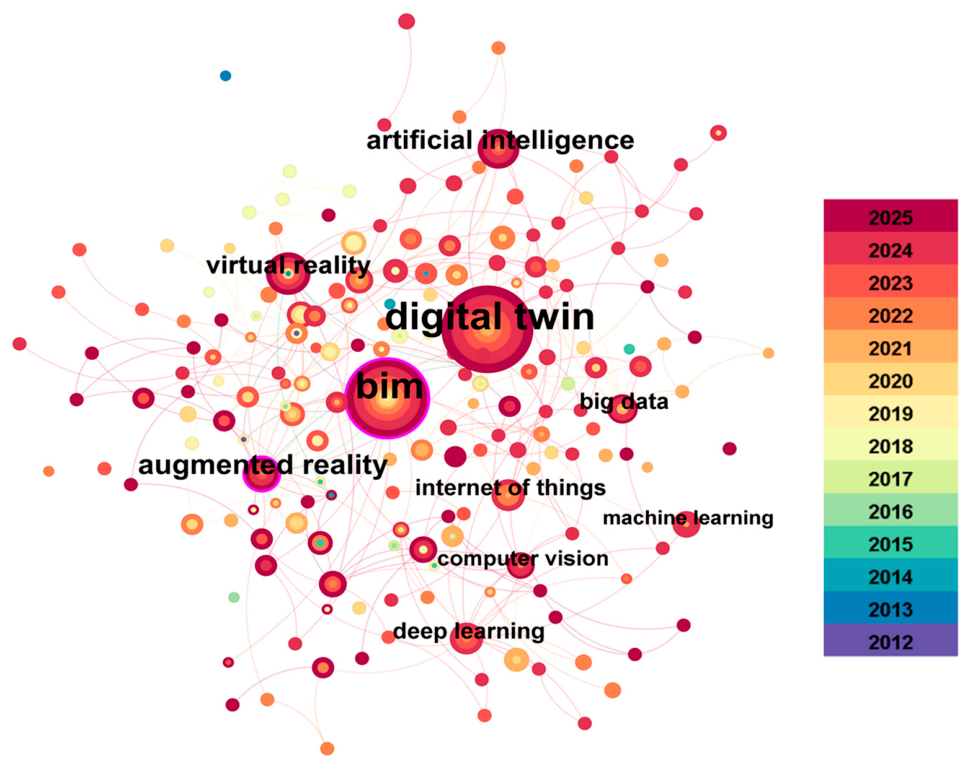
Keyword co-occurrence and co-citation analyses were used as supportive, rather than determinative, evidence for identifying technology-oriented competency elements. The bibliometric maps informed item generation only when three conditions were simultaneously met: (1) the keyword or cluster appeared recurrently in the smart-construction safety literature; (2) the theme could be translated into observable safety-director work tasks; and (3) the theme was confirmed through interview coding or expert review. Under this rule, keywords such as big data, machine learning, deep learning, and computer vision informed the Data Analytics element, because they represent data cleaning, risk modeling, and predictive monitoring tasks. Keywords such as BIM, digital twin, IoT, VR/AR, and AI informed the Intelligent Systems Application element, because they represent technology-enabled visualization, sensing, simulation, and decision-support tasks. Therefore, Figure 1, Figure 2 and Figure 3 were not used to mechanically derive the framework; rather, they provided external evidence that was triangulated with manual reading of the literature and interview materials. The maps were interpreted in combination with manual reading of core papers and interview materials rather than being used alone to derive competency elements. The recurrent appearance of terms such as digital twin, BIM, IoT, computer vision, machine learning, and big data indicates that smart-construction safety management increasingly depends on digital sensing, data processing, and intelligent decision support. Drawing on co-word analysis and clustering of 483 relevant publications, this study identifies the field’s major trends and emerging themes. According to the CiteSpace results, 116 high-frequency keywords and 12 clusters were detected, with synonymous and spelling-variant terms merged for accuracy. Several keywords stand out for their high co-occurrence. The core terms in smart-construction safety management include “digital twin”, “BIM”, “augmented reality”, “artificial intelligence”, “virtual reality”, “Internet of Things”, “deep learning”, “big data”, “computer vision”, “machine learning”, and “equipment”. These keywords not only reveal current technological hotspots but also trace the paths by which smart construction is integrated into safety-management practice.
Furthermore, these keywords can be systematically synthesized and mapped onto two key elements of the EPC safety-director competency model. The first is “Data Analytics”, which primarily covers big data, deep learning, machine learning, and computer vision, emphasizing multisource data mining, modeling, and prediction to enable quantitative risk assessment and dynamic monitoring. The second is “Intelligent Systems Application”, which includes digital twins, BIM, augmented reality, virtual reality, artificial intelligence, the Internet of Things, and equipment. This element highlights the use of digital twins, the IoT, and intelligent platforms to integrate virtual simulation, real-time interaction, and automated control throughout the construction process, thereby achieving intelligent, visualized, and early warning–oriented safety management. The high-frequency keyword co-occurrence network and co-citation clusters are presented in Figure 2 and Figure 3, respectively.
We selected CSCEC Eighth Engineering Bureau as an illustrative case enterprise because it is widely recognized for its digitalization practices and safety-management maturity. Eight informants were purposively recruited to capture different organizational perspectives: one project manager, one safety-management supervisor, two safety officers, three senior frontline employees with more than 20 years of experience, and one HR manager. Although the interview sample is limited, it was intended for exploratory element generation rather than statistical generalization. Semistructured behavioral event interviews were conducted around three themes: (1) critical safety incidents and decision episodes in smart-construction contexts; (2) competencies required to identify, coordinate, and respond to technology-enabled safety risks; and (3) organizational practices related to learning, digital tools, and cross-departmental coordination. The interview materials and manually retained literature records were coded in two stages. First, open coding was used to extract recurring competency expressions. Second, axial coding was used to group these expressions under the three theoretical domains of sensing, seizing, and reconfiguring. To assess coding reliability, three authors independently coded a randomly selected subset consisting of 35 documents from the 174 records retained for detailed manual review (20.1%) and 24 interview meaning units. The agreement test produced a Krippendorff’s alpha of 0.812 for element-level coding, while pairwise Cohen’s kappa values among the three coders ranged from 0.79 to 0.86. These values indicate substantial agreement. Disagreements were discussed in a consensus meeting, and unresolved cases were adjudicated by an expert in construction safety management. The finalized coding rules were then applied to the remaining materials. The literature review, interview coding, and expert review were triangulated to derive the preliminary competency elements of the framework.
Sensing: Smart construction projects are highly uncertain. Site safety is affected by weather, materials, equipment, and personnel, alongside shifting policies and standards. Safety directors therefore need keen environmental sensing combined with data-driven analysis.
Dynamic Environmental Sensing (Esense): Rapidly identify hazards and opportunities via risk pre-judgment, trend analysis, and environmental scanning. Rpre (risk pre-judgment), Ptrend (policy/industry trend sensing), and Escan (on-site scanning and real-time monitoring) are used.
E s e n s e = v 1 R p r e + v 2 P t r e n d + v 3 E s c a n
Data analytics (Dana) leverages big data, risk modeling, and multisource information fusion to improve identification efficiency and accuracy. In smart-construction scenarios, the massive real-time data generated by sensors and the IoT must be processed and modeled before they can be transformed into actionable decision support. Accordingly, this dimension emphasizes not only subjective acuity but also objective technological enablement, embodying a new human–machine hybrid sensing paradigm. Bproc (big-data processing/cleaning), Rmodel (risk-prediction modeling), and Ifusion (multisource information fusion) are used.
D a n a = v 4 B p r o c + v 5 R m o d e l + v 6 I f u s i o n
The safety audit (Daudit) emphasizes conducting periodic reviews of project safety to ensure that the safety management system and standards remain compliant throughout execution. With the rapid development of smart-construction technologies, project safety management is transitioning from traditional “ex post” control to process- and predictive-oriented management. This shift requires safety directors to perform dynamic reviews tailored to project realities, promptly identify latent risks, and implement corrective actions. Ccomp (compliance audit), Ffeedback (evaluation feedback), and Rreport (audit reporting) are calculated.
A a u d i t = v 7 C c o m p + v 8 F f e e d b a c k + v 9 R r e p o r t
Seizing: After opportunities or threats are sensed, decisive action and resource allocation determine implementation quality. Given the large scale of EPC projects and the involvement of multiple stakeholders, safety directors must demonstrate efficient resource integration, evidence-based leadership and decision-making, and strong cross-departmental collaboration.
Resource integration (Rinteg) involves not only consolidating internal manpower, materials, and financial resources but also coordinating with external partners—such as suppliers and subcontractors—to ensure rapid response in the face of contingencies. Schain (supply-chain coordination), Ccoord (cross-domain resource allocation), and Cresolv (conflict mediation/resolution) are used.
R i n t e g = v 10 S c h a i n + v 11 C c o o r d + v 12 C r e s o l v
Leadership and decision-making (Ldec): Make value-based choices under uncertainty while upholding “safety first” when balancing with schedule and cost. Dexec (strategic decision and execution), Sjudg (safety-first judgment), and Cemerg (emergency response) are used.
L d e c = v 13 D e x e c + v 14 S j u d g + v 15 C e m e r g
Cross-departmental collaboration (Ccoop) emphasizes that, in multidisciplinary and cross-functional EPC projects, safety directors must leverage effective communication and coordination mechanisms to promote information sharing and knowledge flow, thereby reducing safety hazards arising from information asymmetry. Overall, the operationalization of the seizing dimension captures the critical transition from sensing to action in EPC safety management and serves as a decisive factor in the efficient implementation of safety strategies. Tcoord (task coordination), Ccomm (communication and negotiation), and Pshare (knowledge and information sharing) are used.
C c o o p = v 16 T c o o r d + v 17 C c o m m + v 18 P s h a r e
Reconfiguring denotes sustained adaptation and innovation. It takes place amid environmental and technological change. In smart-construction contexts, safety management processes and technological systems must be continuously updated and optimized in step with project phases and external conditions.
Organizational Learning (Olearn): Promote continuous knowledge renewal by training, feedback loops, and institutionalized learning (e.g., post-incident reviews and codified improvements). An essential manifestation of organizational learning is the capacity to convert case-based retrospectives into repeatable improvement actions. Krenew (knowledge renewal), Etrain (training and capability building), and Lfeedback (experience feedback loop) are used.
O l e a r n = v 19 K r e n e w + v 20 E t r a i n + v 21 L f e e d b a c k
Intelligent Systems Application (Isys): BIM, IoT, and AI can be applied to shift beyond experience-based management toward predictive and real-time interventions (e.g., BIM + AI for dynamic site simulation and preventive measures). This dimension underscores the safety director’s central role in organizational transformation and technological leadership serving both as a hedge against external uncertainty and as a driver of high-quality smart-construction development. Bim (BIM for safety), IOTutil (IoT sensing and monitoring), and AIassist (AI-assisted decision-making) are used.
I s y s = v 22 B i m + v 23 I O T u t i l + v 24 A I a s s i s t
Equations (3)–(10) specify the preliminary competency item pool generated before questionnaire screening. Because subsequent screening removed the safety-audit element and reduced Dynamic Environmental Sensing to a single retained indicator, the post-screening competency expression is reported in the Results section rather than here. This separation avoids conflating the initial conceptual structure with the retained exploratory framework.
C = α E s e n s e + D a n a + A a u d i t + β R i n t e g + L d e c + C c o o p + γ O l e a r n + I s y s

2.3. Selecting Competency Elements via Questionnaire

2.3.1. Descriptive Statistics

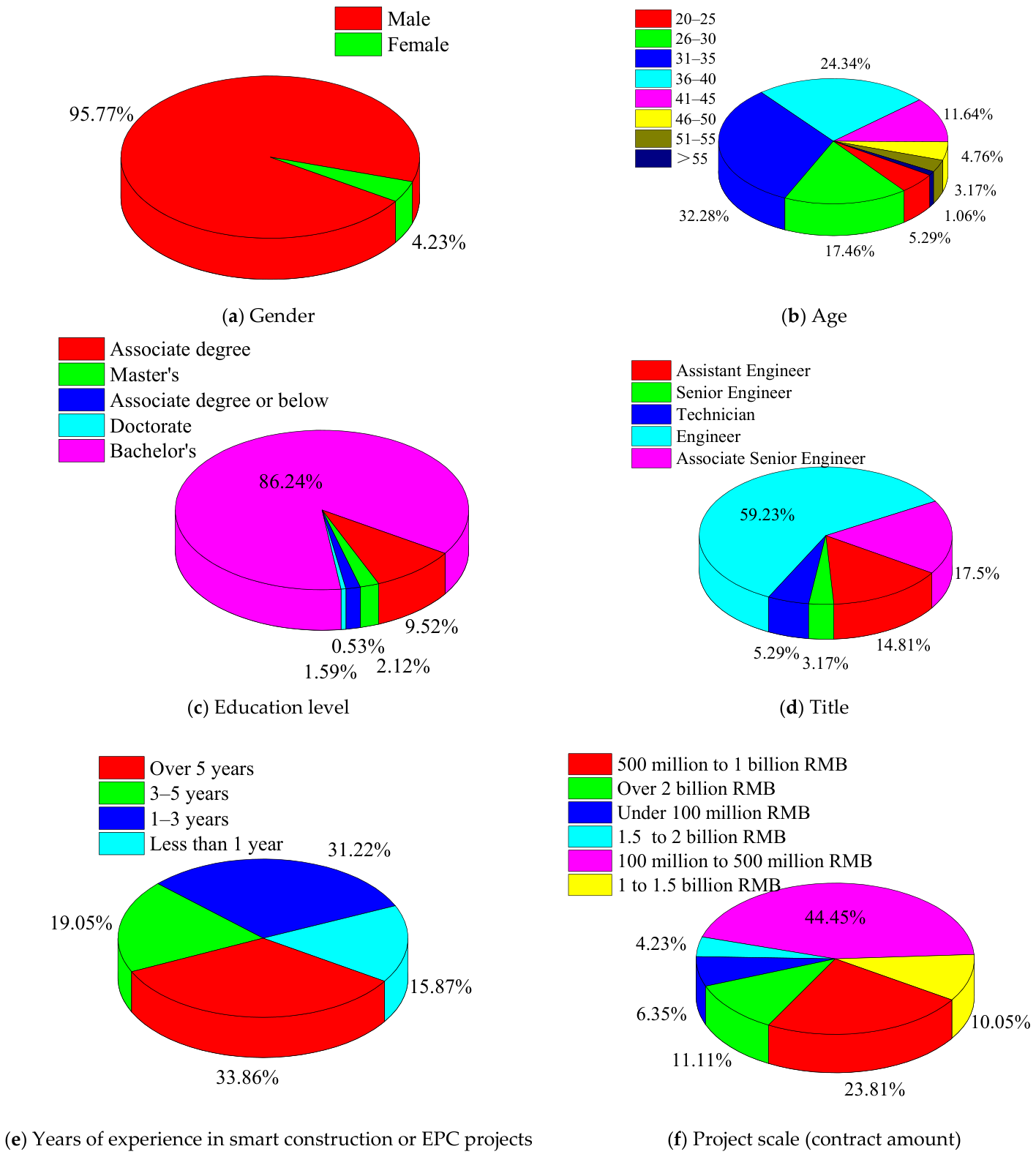
The questionnaire comprised three components: demographics (gender, age, education level, title, years of experience in smart construction or EPC projects, and project scale by contract amount), perceived importance of competency indicators (5-point Likert scale from “very unimportant” to “very important”), and an open-ended item asking respondents to identify the most influential indicators and provide reasons. To improve content validity, the initial item pool was reviewed by experts in construction safety management and human resource management and then refined for wording clarity and contextual relevance. Before answering the main scale, respondents were asked to confirm that their EPC or smart-construction project experience met the operational definition stated in Section 2.1. Specifically, the questionnaire instructions listed the four smart-construction criteria and asked respondents to answer with reference to projects that satisfied at least two criteria, including BIM/digital-model use or an integrated safety-data platform. The survey was then distributed to workers, site managers, safety staff, and safety leaders from 10 firms in Hubei, Shandong, and Beijing using purposive and convenience sampling through professional networks. A total of 200 questionnaires were distributed, 195 were returned, and 189 were valid. The respondents were 95.77% male (reflecting industry characteristics), primarily aged 31–50; 86.24% held bachelor’s degrees, and 59.26% held the engineer rank. Experience was well distributed, with >5 years and 1–3 years each accounting for approximately one-third. Projects were valued at RMB 1–5 million for the largest share (44.44%). These distributions underpin the subsequent analysis. The demographic details are presented in Figure 4.

2.3.2. Preliminary Model and Post-Screening Model

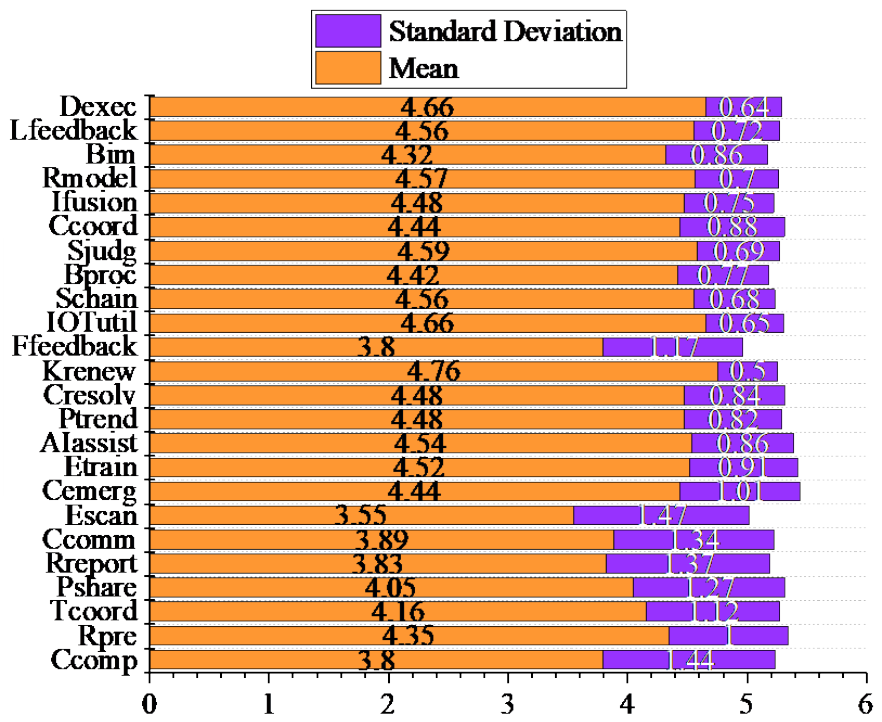
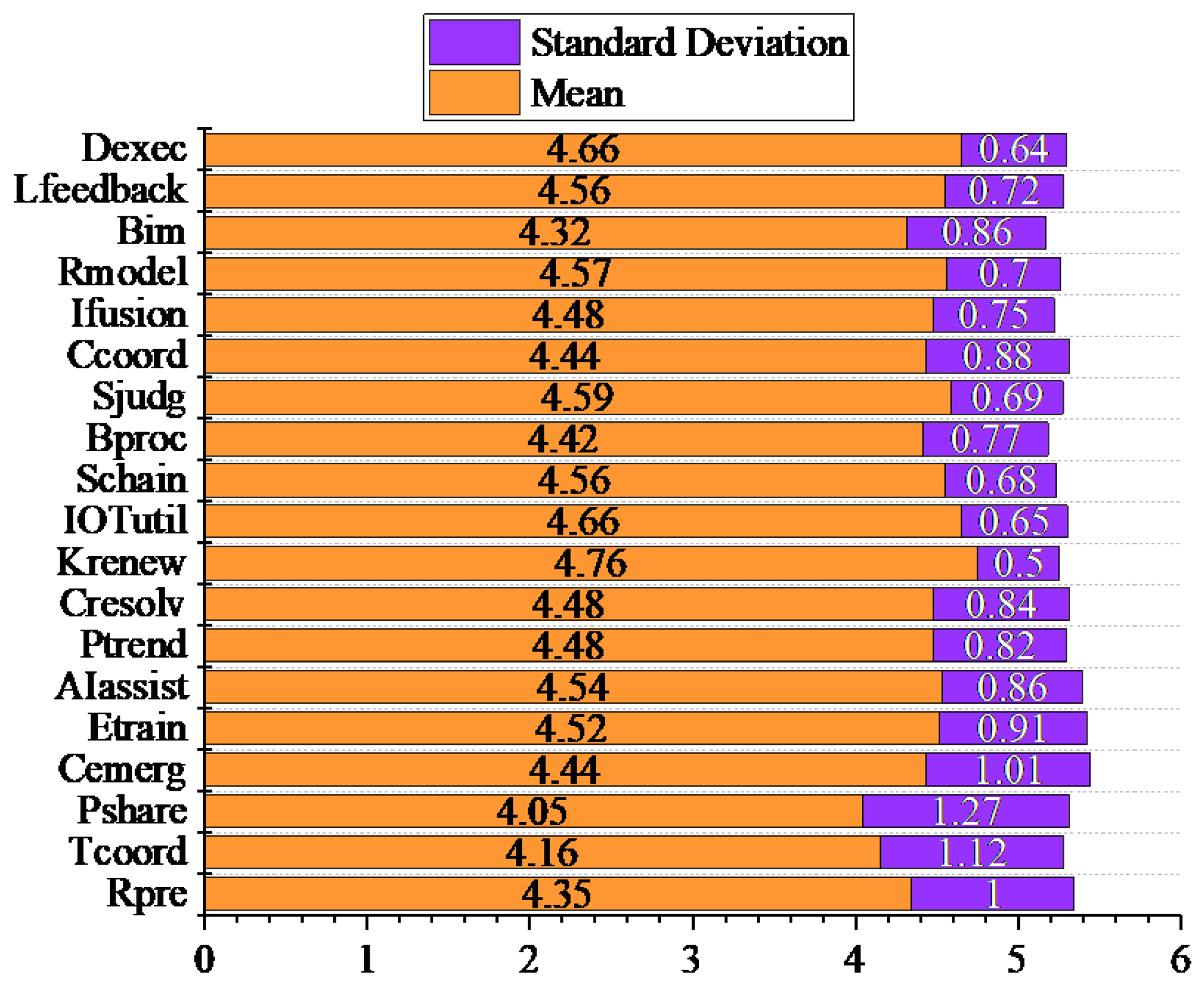
We computed the mean and standard deviation for each indicator as an initial screening step. A mean score of 4.0 or above was used as a pragmatic benchmark to identify indicators perceived by respondents as relatively important. This threshold was not treated as a standalone decision rule; rather, it served as a preliminary filter that was subsequently checked against theoretical relevance and internal-consistency results. Indicators with lower mean scores were therefore not interpreted as unimportant in an absolute sense, but as comparatively less salient within the present sample and analytical stage. On this basis, Ccomp, Rreport, Ccomm, Escan, and Ffeedback were flagged for further review. The highest-rated indicators included Krenew, IOTutil, Dexec, Sjudg, and Rmodel, all of which also showed relatively small standard deviations. The statistical distributions of the 24 initial indicators and the 19 retained indicators are shown in Figure 5 and Figure 6, respectively.

2.3.3. Reliability and Validity Analysis

Using SPSS Statistics 27, we assessed the internal consistency and factorability of the preliminary scale. Reliability was examined using corrected item–total correlations (CITC) and Cronbach’s alpha, while construct suitability was preliminarily assessed through the KMO measure and Bartlett’s test of sphericity. Because the purpose of this study was exploratory framework development, these analyses were used to screen and organize items rather than to claim full structural validation. Cronbach’s alpha was used to evaluate whether items within each higher-order dimension showed acceptable internal consistency. The KMO statistic and Bartlett’s test were further used to examine whether the correlation matrix was suitable for factor-oriented analysis. Using SPSS, we assessed the reliability of the scale. We first computed interitem correlations, removed outliers, and examined how these correlations affected the remaining items to obtain a preliminary estimate of internal consistency. We then calculated reliability coefficients (e.g., Cronbach’s α) and inspected item-level statistics to provide a detailed evaluation of the scale’s reliability.
Cronbach’s alpha is a widely used method for reliability testing. The formula for Cronbach’s alpha is given in Equation (12), where k denotes the number of items (indicators), σ i 2 is the variance of item i, and σ t 2 is the variance of the total score (each respondent’s summed score). In this study, reliability was computed via Cronbach’s alpha. The α coefficient depends on the number of items and the average interitem correlation: values of α approaching 1 indicate higher mean interitem correlations and strong internal consistency, whereas values approaching 0 suggest lower correlations and poor internal consistency. Accordingly, α serves as an effective index of reliability. The questionnaire reliability statistics for the sensing, seizing, and reconfiguring dimensions are presented in Table 1, Table 2 and Table 3.
α = k k 1 1 i = 1 k σ i 2 σ t 2
The Kaiser–Meyer–Olkin (KMO) statistic assesses the ratio of simple to partial correlations among variables to evaluate the suitability of the data for factor analysis. The overall KMO formulas are given in Equations (13) and (14), where rij denotes the simple correlation and pij denotes the corresponding partial correlation. In this study, we used KMO > 0.6 as the threshold for adequacy in factor analysis. Bartlett’s test of sphericity examines whether the sample correlation matrix approximates the identity matrix; its test statistic is given in Equation (15), where n = sample size, p = number of variables, |R| = the determinant of the correlation matrix, and χ2 approximately follows a chi-square distribution with p(p − 1)/2 degrees of freedom. We used p < 0.05 as evidence of significant intercorrelations and thus suitability for factor analysis.
p i j = r i j 1 r i i 1 r j j 1
K M O = i j r i j 2 i j r i j 2 + i j p i j 2
χ 2 = n 1 2 p + 5 6 ln R
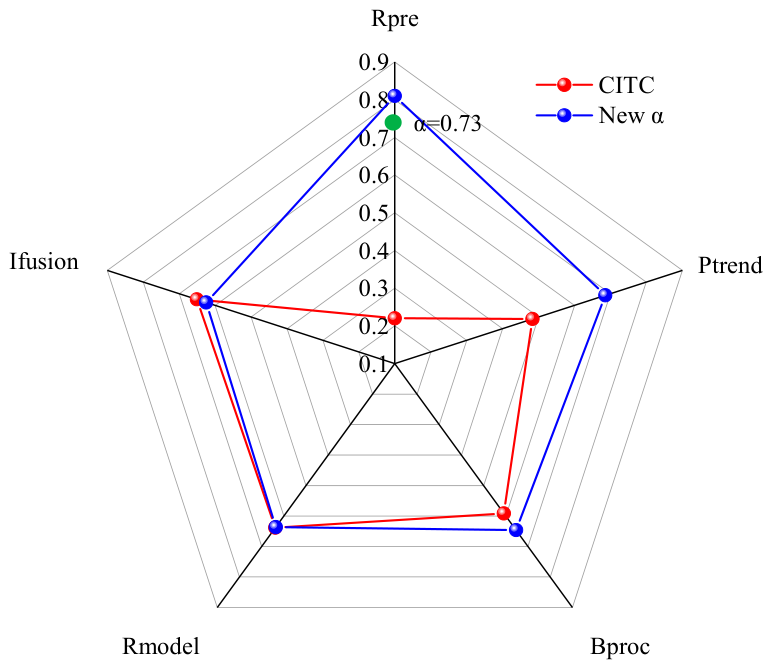
As shown in Table 1 and Figure 7, the preliminary sensing item pool achieved a Cronbach’s alpha of 0.730. Rpre exhibited a corrected item–total correlation below 0.400, and removing it increased α to 0.810. Escan had already been flagged for removal during the mean-score screening stage. Therefore, retaining Dynamic Environmental Sensing as an independent element would leave only Ptrend under Esense, creating a single-indicator construct for which Cronbach’s alpha is undefined and whose conceptual boundary would be weak. To avoid this problem, Ptrend was integrated into Data Analytics in the retained framework. The retained sensing block was therefore interpreted as a data-enabled sensing element consisting of Ptrend, Bproc, Rmodel, and Ifusion. This adjustment improves parsimony, avoids a misleading single-item element, and keeps the statistical and conceptual structures consistent. At this point, KMO = 0.675, and Bartlett’s test was significant (p < 0.001), indicating that the data were acceptable for preliminary factor-oriented assessment.
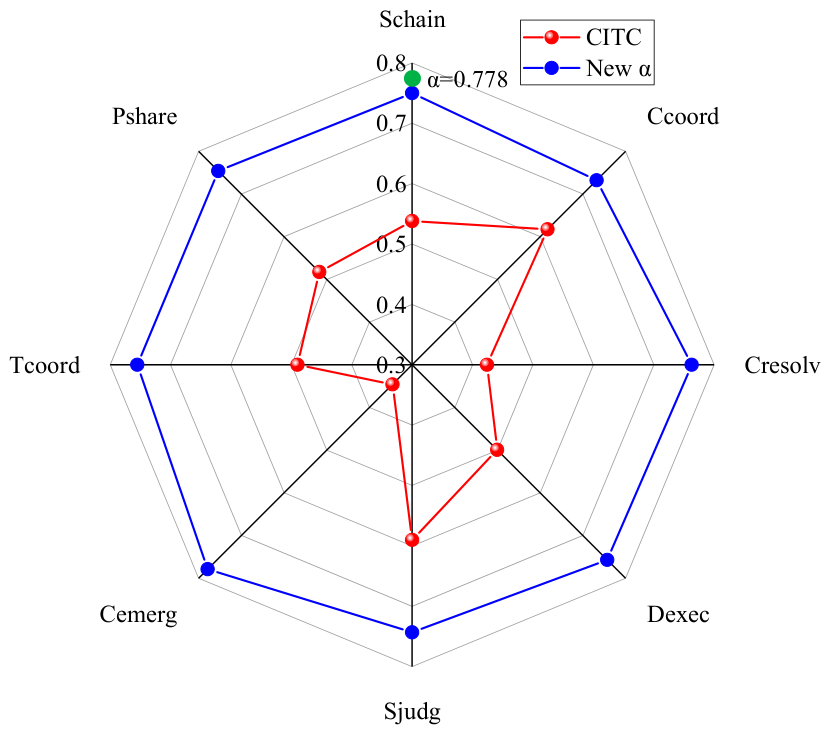
As shown in Table 2 and Figure 8, the α for the seizing dimension is 0.778. Although deleting Cemerg increases Cronbach’s α to 0.779, the gain is negligible; therefore, Cemerg is retained. At this point, KMO = 0.754 > 0.6 and p < 0.001, indicating suitability for factor analysis.
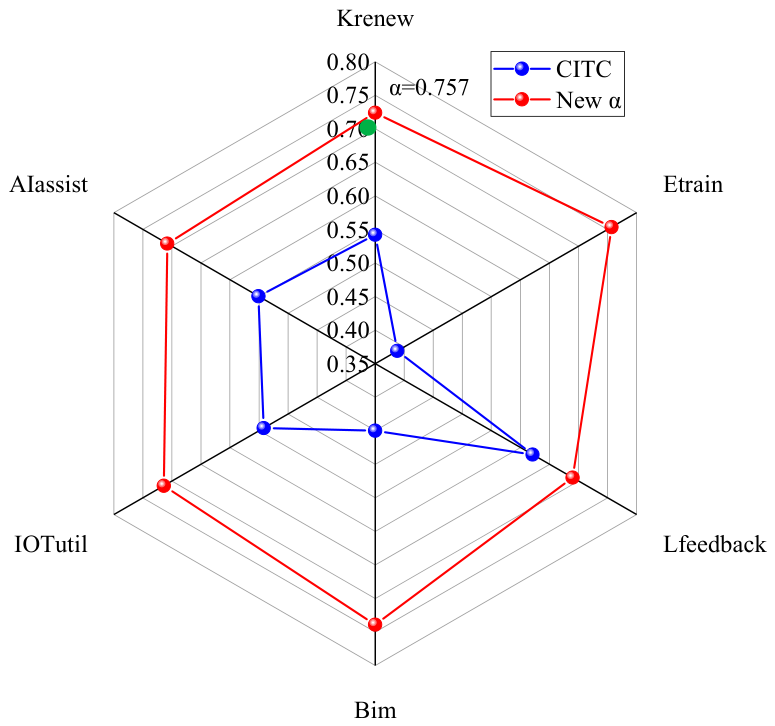
From Table 3 and Figure 9, the reconfiguring dimension is α = 0.757, which is akin to the seizing dimension. Since removing any item does not improve α, all the indicators are retained. Validity holds: KMO = 0.748 > 0.6, p < 0.001.

3. Results

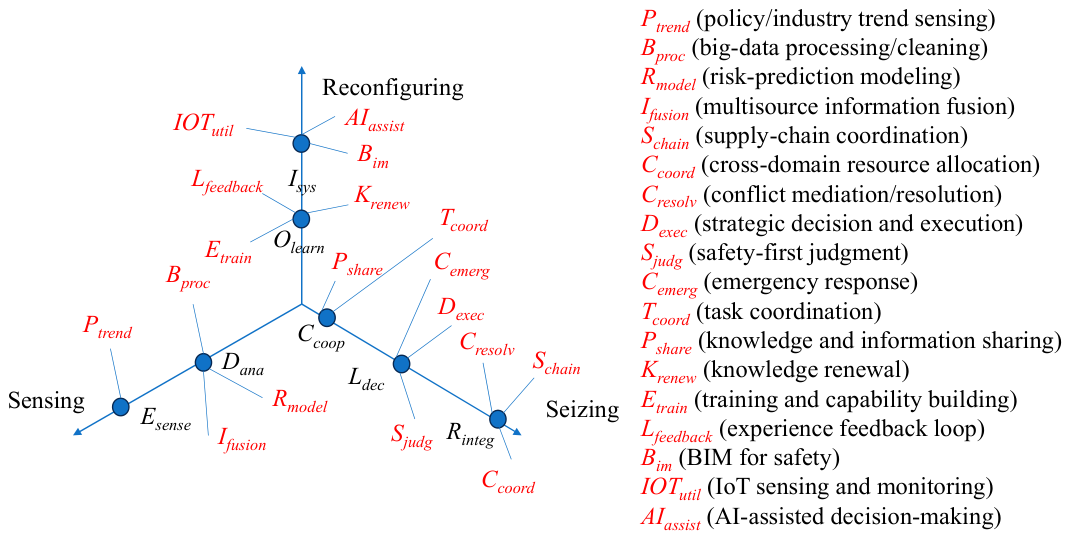
The indicator screening and reliability analysis yielded a retained exploratory framework comprising three higher-order dimensions, six competency elements, and eighteen indicators (Figure 10). At the item-screening stage, Ccomp, Rreport, Ccomm, Escan, and Ffeedback did not meet the preliminary mean-score benchmark and were therefore removed after theoretical review. In the internal-consistency analysis of the preliminary sensing block, Rpre showed a weak item–total association and was removed to improve parsimony. Because Esense would otherwise be represented by only one retained indicator, Ptrend was merged into Data Analytics. Thus, the final sensing dimension is represented by the four-indicator Data Analytics element, covering policy/industry trend sensing, big-data processing, risk-prediction modeling, and multisource information fusion. The post-screening model can be expressed as follows:
C = α S + β Z + γ R S = ω D D a n a D a n a = λ 1 P t r e n d + λ 2 B p r o c + λ 3 R m o d e l + λ 4 I f u s i o n Z = ω R R i n t e g + ω L L d e c + ω C C c o o p R = ω O O l e a r n + ω I I s y s
where α, β, and γ represent the weights of the three higher-order dimensions; ω denotes the relative weight of each competency element within its dimension; and λ denotes the relative weight of each indicator within Data Analytics. The weights are normalized within their corresponding levels. This expression represents the retained exploratory structure after item screening and should not be interpreted as a fully calibrated measurement model.
The retained indicators suggest that EPC safety directors in smart-construction contexts are expected to combine conventional safety-management abilities with digital, coordinative, and adaptive competencies. In particular, items associated with knowledge renewal, IoT-based monitoring, strategic execution, safety-first judgment, and risk modeling received comparatively high ratings. The final framework is presented in Figure 10 as an exploratory representation of the competency structure.

4. Discussion

In the initial screening, Ccomp, Rreport, Ccomm, Escan, and Ffeedback fell below the mean-score threshold (4.0). This result should not be interpreted as evidence that compliance auditing, reporting, communication, manual inspection, or feedback are unimportant in practice. Rather, within the present smart-construction sample, these items appeared either comparatively less salient or more embedded in digital platforms, standardized workflows, or broader organizational-learning routines. During the reliability analysis, Rpre was also removed because it showed a weak item–total association and overlapped conceptually with trend sensing, risk modeling, and information fusion. Importantly, the remaining Ptrend item was not retained as a stand-alone Esense element. Instead, it was incorporated into Data Analytics to represent the policy and industry-signal component of data-enabled sensing. This adjustment prevents the final framework from containing an underidentified single-item element and better reflects the human–machine hybrid nature of sensing in smart-construction safety management.
This study extends prior construction-safety competency research in three ways. Firstly, it shifts the analytical focus from general managerial competence or conventional safety supervision to the role-specific competence of EPC safety directors in smart-construction settings. Secondly, by adopting dynamic capabilities theory as a conceptual lens, the study organizes competency requirements into sensing, seizing, and reconfiguring domains, thereby linking digital risk identification, coordinated action, and adaptive improvement within one framework. Thirdly, the framework explicitly incorporates technology-oriented elements—data analytics and intelligent systems application—that are less visible in conventional competency models. From a practical perspective, the retained framework can be translated into three implementation tools. Firstly, it can inform recruitment by converting the six competency elements into behavioral interview questions and role-profile requirements. Secondly, it can support training-needs diagnosis by comparing current safety-director capabilities with the eighteen retained indicators, especially in data analytics, IoT/BIM-enabled monitoring, and emergency decision-making. Thirdly, it can guide performance appraisal by linking competency indicators with observable evidence such as dashboard use, risk-model interpretation, cross-departmental coordination records, emergency-response timeliness, and post-incident learning outputs. These applications should be calibrated to project type and organizational maturity and should not be used as a universal pass–fail scale before further validation.

5. Conclusions

This study proposes a competency model for EPC safety directors in smart-construction contexts. On the basis of the results and discussion, the following conclusions can be drawn:
(1) The competency set spans three dimensions—sensing, seizing, and reconfiguring—operationalized through six retained elements (Dana, Rinteg, Ldec, Ccoop, Olearn, Isys) and eighteen indicators (Ptrend, Bproc, Rmodel, Ifusion, Schain, Ccoord, Cresolv, Dexec, Sjudg, Cemerg, Tcoord, Pshare, Krenew, Etrain, Lfeedback, Bim, IOTutil, AIassist). In the retained structure, Ptrend is integrated into Data Analytics rather than being treated as an independent single-item Esense element.
(2) Ccomp, Rreport, Ccomm, Escan, and Ffeedback were removed during initial screening because of their institutionalized/process-driven nature in smart-construction environments, where digital platforms and standardized procedures largely undertake these tasks. Rpre was eliminated in the reliability/validity analysis owing to weak correlations and reliance on experience-based judgment, which overlaps with trend sensing and information fusion. These removals improved reliability and explanatory power and better captured the technological and systemic features of competencies in smart construction.
(3) Theoretically, the study contributes to the competency-modeling literature by contextualizing safety leadership within digitally enabled EPC delivery and by integrating dynamic capabilities theory into competency identification at the role level. Practically, the framework provides a preliminary basis for recruitment, training, and evaluation of EPC safety directors, especially where data analytics, intelligent systems, and cross-departmental coordination are increasingly important. Several limitations should be acknowledged. Firstly, the framework reflects a specific institutional, demographic, and national context. The questionnaire sample was drawn from 10 firms in Hubei, Shandong, and Beijing, and was 95.77% male, and consisted largely of bachelor’s degree holders; the interview informants were recruited from a single large Chinese contractor. These characteristics may reflect current industry demographics and the digitalization practices of large Chinese EPC enterprises, but they also limit transferability to other countries, smaller contractors, female safety professionals, and alternative procurement environments. Secondly, the sampling strategy was purposive and convenience-based rather than probabilistic. Thirdly, the present analyses used item screening, Cronbach’s alpha, and KMO/Bartlett tests to develop an exploratory framework; they did not validate a stable measurement scale through EFA, CFA, SEM, or measurement-invariance testing. Accordingly, the framework should be interpreted as an exploratory, context-specific competency framework rather than a fully validated model. Future research should conduct larger multi-region and cross-country studies, test the dimensional structure statistically, and examine how competency profiles relate to objective safety-performance outcomes.

Author Contributions

Conceptualization, J.G. and Y.L.; methodology, J.G. and Y.L.; software, C.W.; validation, J.G., Z.Y. and C.W.; formal analysis, Y.L.; investigation, Z.Y.; resources, J.G.; data curation, J.G., Z.Y. and C.W.; writing—original draft preparation, J.G.; writing—review and editing, J.G. and Y.L.; visualization, C.W.; supervision, Z.Y.; project administration, Y.L.; funding acquisition, Z.Y. All authors have read and agreed to the published version of the manuscript.

Funding

This research received no external funding.

Data Availability Statement

The datasets generated during and/or analyzed during the current study are available from the corresponding author on reasonable request.

Acknowledgments

The authors would like to express their sincere gratitude to the editor and the anonymous reviewers for their insightful and constructive comments.

Conflicts of Interest

Zhenchao Yang was employed by the Shaanxi Construction Engineering No. 8 Construction Group Co., Ltd. Congcong Wang was employed by the General Contracting Company of China Construction Third Engineering Bureau Co., Ltd. The remaining author declares that the research was conducted in the absence of any commercial or financial relationships that could be construed as a potential conflict of interest.

References

  1. Toutounchian, S.; Abbaspour, M.; Dana, T.; Abedi, Z. Design of a safety cost estimation parametric model in oil and gas engineering, procurement and construction contracts. Saf. Sci. 2018, 106, 35–46. [Google Scholar] [CrossRef]
  2. Wang, Q.E.; Wang, J. Research on key risk factors and risk transmission path of procurement in international engineering procurement construction project. Buildings 2022, 12, 534. [Google Scholar] [CrossRef]
  3. Ganbat, T.; Chong, H.-Y.; Liao, P.-C.; Leroy, J. Identification of critical risks in international engineering procurement construction projects of Chinese contractors from the network perspective. Can. J. Civ. Eng. 2020, 47, 1359–1371. [Google Scholar] [CrossRef]
  4. Yusuf, M.; Latief, Y.; Rarasati, A.D.; Trigunarsyah, B.; Laksono, N.B. Fuzzy bayesian belief networks method on risk assessment of epc pipeline project. Civ. Eng. J. 2025, 11, 1050–1071. [Google Scholar] [CrossRef]
  5. Wang, J.; Yu, J.; Gu, X.; Xie, M.L.; Ma, W.B. Integrated risk response decision-making frameworks for EPC+ PPP projects: A consideration of the dual status of the private sector. Eng. Constr. Archit. Manag. 2025, 1–22. [Google Scholar] [CrossRef]
  6. Vo, H.M.; Yang, J.-B.; Rangasamy, V. Effective risk assessment of complicated EPC projects: A case study of wastewater treatment plant projects. ASCE-ASME J. Risk Uncertain. Eng. Syst. Part A Civ. Eng. 2025, 11, 05025001. [Google Scholar] [CrossRef]
  7. Tang, Q.; Wu, M.; Yu, S. Risk Analysis of an EPC Project Involving Prefabricated Green Rural Housing from the Stakeholder Perspective: Case Study in Changfeng County, Anhui Province, China. ASCE-ASME J. Risk Uncertain. Eng. Syst. Part A Civ. Eng. 2025, 11, 04025059. [Google Scholar] [CrossRef]
  8. Jiang, W.; Ding, L.; Zhou, C. Cyber physical system for safety management in smart construction site. Eng. Constr. Archit. Manag. 2021, 28, 788–808. [Google Scholar] [CrossRef]
  9. Edirisinghe, R. Digital skin of the construction site: Smart sensor technologies towards the future smart construction site. Eng. Constr. Archit. Manag. 2019, 26, 184–223. [Google Scholar] [CrossRef]
  10. Seo, H.J.; Yoon, Y.-G. Analyzing research trends in smart construction safety: A topic modeling approach. Buildings 2025, 15, 520. [Google Scholar] [CrossRef]
  11. Qian, Y.; Liu, H.; Mao, P.; Zheng, X. Evaluation of safety management of smart construction sites from the perspective of resilience. Buildings 2023, 13, 2205. [Google Scholar] [CrossRef]
  12. Liu, H.; Song, J.; Wang, G. A scientometric review of smart construction site in construction engineering and management: Analysis and visualization. Sustainability 2021, 13, 8860. [Google Scholar] [CrossRef]
  13. Lu, Y.; Yin, L.; Deng, Y.; Wu, G.; Li, C. Using cased based reasoning for automated safety risk management in construction industry. Saf. Sci. 2023, 163, 106113. [Google Scholar] [CrossRef]
  14. Sacks, R.; Perlman, A.; Barak, R. Construction safety training using immersive virtual reality. Constr. Manag. Econ. 2013, 31, 1005–1017. [Google Scholar] [CrossRef]
  15. Bader, S.M.; Abotaleb, I.; Hosny, O. A VR-Based Safety Training Program for General and Enabling Works in Construction Projects. In Proceedings of the Computing in Civil Engineering 2023, Corvallis, OR, USA, 25–28 June 2023; pp. 70–78. [Google Scholar]
  16. Rivera, F.M.-L.; Mora-Serrano, J.; Oñate, E. A critical review of how extended reality (XR) has addressed key factors influencing safety on construction projects (fSCPs). Arch. Comput. Methods Eng. 2024, 31, 2015–2048. [Google Scholar] [CrossRef]
  17. Antwi-Afari, M.F.; Li, H.; Wong, J.K.-W.; Oladinrin, O.T.; Ge, J.X.; Seo, J.; Wong, A.Y.L. Sensing and warning-based technology applications to improve occupational health and safety in the construction industry: A literature review. Eng. Constr. Archit. Manag. 2019, 26, 1534–1552. [Google Scholar] [CrossRef]
  18. Soltanmohammadlou, N.; Sadeghi, S.; Hon, C.K.; Mokhtarpour-Khanghah, F. Real-time locating systems and safety in construction sites: A literature review. Saf. Sci. 2019, 117, 229–242. [Google Scholar] [CrossRef]
  19. Li, H.; Chan, G.; Huang, T.; Skitmore, M.; Tao, T.Y.; Luo, E.; Chung, J.; Chan, X.; Li, Y. Chirp-spread-spectrum-based real time location system for construction safety management: A case study. Autom. Constr. 2015, 55, 58–65. [Google Scholar] [CrossRef]
  20. Zhang, M.; Cao, T.; Zhao, X. Applying sensor-based technology to improve construction safety management. Sensors 2017, 17, 1841. [Google Scholar] [CrossRef] [PubMed]
  21. Arshad, S.; Akinade, O.; Bello, S.; Bilal, M. Computer vision and IoT research landscape for health and safety management on construction sites. J. Build. Eng. 2023, 76, 107049. [Google Scholar] [CrossRef]
  22. Wu, H.; Zhong, B.; Li, H.; Love, P.; Pan, X.; Zhao, N. Combining computer vision with semantic reasoning for on-site safety management in construction. J. Build. Eng. 2021, 42, 103036. [Google Scholar] [CrossRef]
  23. Cheung, W.-F.; Lin, T.-H.; Lin, Y.-C. A real-time construction safety monitoring system for hazardous gas integrating wireless sensor network and building information modeling technologies. Sensors 2018, 18, 436. [Google Scholar] [CrossRef]
  24. Riaz, Z.; Arslan, M.; Kiani, A.K.; Azhar, S. CoSMoS: A BIM and wireless sensor based integrated solution for worker safety in confined spaces. Autom. Constr. 2014, 45, 96–106. [Google Scholar] [CrossRef]
  25. Zhong, D.; Lv, H.; Han, J.; Wei, Q. A practical application combining wireless sensor networks and internet of things: Safety management system for tower crane groups. Sensors 2014, 14, 13794–13814. [Google Scholar] [CrossRef]
  26. Seo, H.J.; Do, B.; Rhee, S.-Y. Effective managers of workplace safety: A topic taxonomy of manager’s safety competency. Saf. Sci. 2024, 176, 106528. [Google Scholar] [CrossRef]
  27. Zhou, X.; Wang, Y. Understanding competency requirements in the context of AEC industry informatization: Policy insights from China. Eng. Constr. Archit. Manag. 2025, 32, 732–759. [Google Scholar] [CrossRef]
  28. Liu, H.; Zhang, H.; Zhang, R.; Jiang, H.; Ju, Q. Competence model of construction project manager in the digital era—The case from China. Buildings 2022, 12, 1385. [Google Scholar] [CrossRef]
  29. Pham, H.C.; Tran, S.V.-T.; Lee, U.-K. Prioritizing Critical Factors Affecting Occupational Safety in High-Rise Construction: A Hybrid EFA-AHP Approach. Buildings 2025, 15, 2677. [Google Scholar] [CrossRef]
  30. Alshammari, T.M.; Rabi, M.; Al-Kheetan, M.J.; Alkherret, A.J. The influence of managers’ safety perceptions and practices on construction workers’ safety behaviors in Saudi Arabian projects: The mediating roles of workers’ safety awareness, competency, and safety actions. Safety 2025, 11, 77. [Google Scholar] [CrossRef]
  31. Guha, P.; Kar, S.; Jha, K.N. Impact of Construction Leaders’ Emotional Quotient on Project Safety and Quality. J. Constr. Eng. Manag. 2025, 151, 04025157. [Google Scholar] [CrossRef]
  32. Sankar, S.S.; Anandh, K. Navigating leadership styles through qualitative exploration for enhanced safety in the construction sector. Saf. Sci. 2024, 175, 106495. [Google Scholar] [CrossRef]
  33. Sankar, S.S.; Anandh, K. Building safer workplaces: Unveiling the impact of safety leadership styles in the construction industry. Adm. Sci. 2024, 14, 212. [Google Scholar] [CrossRef]
  34. Teece, D.J.; Pisano, G.; Shuen, A. Dynamic capabilities and strategic management. Strateg. Manag. J. 1997, 18, 509–533. [Google Scholar] [CrossRef]
  35. Teece, D.J. Dynamic capabilities and entrepreneurial management in large organizations: Toward a theory of the (entrepreneurial) firm. Eur. Econ. Rev. 2016, 86, 202–216. [Google Scholar] [CrossRef]
  36. Qiao, R.; Zhao, L. Reduce supply chain financing risks through supply chain integration: Dual approaches of alleviating information asymmetry and mitigating supply chain risks. J. Enterp. Inf. Manag. 2023, 36, 1533–1555. [Google Scholar] [CrossRef]
  37. Gupta, Y.; Khan, F.M.; Kumar, A.; Luthra, S.; Queiroz, M.M. Mobilising big data analytics capabilities to improve performance of tourism supply chains: The moderating role of dynamic capabilities. Int. J. Logist. Manag. 2024, 35, 649–679. [Google Scholar] [CrossRef]
  38. Kapoor, M.; Aggarwal, V. Tracing the economics behind dynamic capabilities theory. Int. J. Innov. Sci. 2020, 12, 187–201. [Google Scholar] [CrossRef]
  39. Buzzao, G.; Rizzi, F. On the conceptualization and measurement of dynamic capabilities for sustainability: Building theory through a systematic literature review. Bus. Strategy Environ. 2021, 30, 135–175. [Google Scholar] [CrossRef]
Figure 1. The geographical distribution and mapping of country/region network of intelligent construction safety management research.
Infrastructures 11 00169 g001
Figure 2. High-frequency keywords and their co-occurrence network mapping.
Infrastructures 11 00169 g002
Figure 3. The mapping of co-citation clusters.
Infrastructures 11 00169 g003
Figure 4. Descriptive statistics.
Infrastructures 11 00169 g004
Figure 5. Competency indicator statistics (24).
Infrastructures 11 00169 g005
Figure 6. Competency indicator statistics (19).
Infrastructures 11 00169 g006
Figure 7. Comparison of Cronbach’s alpha before and after item deletion for the sensing dimension indicators.
Infrastructures 11 00169 g007
Figure 8. Comparison of Cronbach’s alpha before and after item deletion for the seizing dimension indicators.
Infrastructures 11 00169 g008
Figure 9. Comparison of Cronbach’s alpha before and after item deletion for the reconfiguring dimension indicators.
Infrastructures 11 00169 g009
Figure 10. Retained exploratory competency framework for EPC safety directors under smart-construction scenarios.
Infrastructures 11 00169 g010
Table 1. Reliability of the sensing dimension.
ItemCorrected Item–Total Correlation (CITC)Cronbach’s α If Item DeletedCronbach’s α
Rpre0.2200.8100.730
Ptrend0.4830.686
Bproc0.5910.646
Rmodel0.6380.636
Ifusion0.6510.625
Table 2. Reliability of the seizing dimension.
ItemCorrected Item–Total Correlation (CITC)Cronbach’s α If Item DeletedCronbach’s α
Schain0.5380.7500.778
Ccoord0.6170.732
Cresolv0.4240.763
Dexec0.4990.757
Sjudg0.5900.743
Cemerg0.3460.779
Tcoord0.4900.755
Pshare0.5170.754
Table 3. Reliability of the reconfiguring dimension.
ItemCorrected Item–Total Correlation (CITC)Cronbach’s α If Item DeletedCronbach’s α
Krenew0.5420.7240.757
Etrain0.3880.757
Lfeedback0.6210.690
Bim0.4500.739
IOTutil0.5420.714
AIassist0.5510.708
Disclaimer/Publisher’s Note: The statements, opinions and data contained in all publications are solely those of the individual author(s) and contributor(s) and not of MDPI and/or the editor(s). MDPI and/or the editor(s) disclaim responsibility for any injury to people or property resulting from any ideas, methods, instructions or products referred to in the content.