1. Introduction
The rapid expansion of shrimp farming worldwide has been accompanied by intensified production practices that have increased physiological stress and disease susceptibility in cultured shrimp. Historically, antibiotics were widely used to control bacterial outbreaks, but this practice has contributed to antibiotic-resistant pathogens and environmental contamination [
1,
2,
3]. As a result, increasing attention has been directed toward sustainable strategies capable of improving shrimp health and productive performance while reducing dependence on chemotherapeutic agents [
4].
Among these alternatives, prebiotics have gained prominence as functional feed additives capable of modulating gut microbial communities, improving nutrient assimilation, and enhancing immune function. These non-digestible compounds selectively stimulate beneficial microorganisms in the gut, promoting improved resilience, growth performance, and feed efficiency [
5,
6,
7].
The most studied prebiotics in aquaculture are mannan oligosaccharides (MOS) and β-glucans, primarily derived from yeast cell walls [
8,
9,
10]. Yeast-based ingredients are valued for their nutritional and bioactive properties, which improve gut health and immune defense [
11]. MOS, obtained through controlled lysis of
Saccharomyces cerevisiae, has been shown to enhance gut morphology by increasing mucosal folds and enterocyte development, improving nutrient absorption and growth performance [
12,
13,
14]. In addition, MOS supplementation stimulates immune responses and increases tolerance to environmental stress and pathogens [
15,
16,
17,
18,
19].
The functional mechanism of MOS involves binding and agglutinating pathogenic bacteria, preventing their adhesion to the gut epithelium and facilitating their elimination [
20]. Research involving
Penaeus vannamei has demonstrated that dietary MOS supplementation may promote beneficial microbial populations and suppress opportunistic bacteria, including
Vibrio and
Aeromonas species, contributing to improved survival and immune homeostasis [
12,
21,
22].
Most studies evaluating MOS supplementation in penaeid shrimp have been conducted under conventional or clear-water culture conditions [
12,
16,
23,
24]. In contrast, intensive synbiotic systems are characterized by high stocking densities and the coexistence of beneficial microbial communities maintained through probiotic and organic substrate inputs, creating a dynamic microbial environment with elevated organic loads and environmental stress [
25]. These conditions may directly influence the biological responses to dietary prebiotics. Despite the recognized benefits of MOS in shrimp nutrition, limited information is available regarding the effects of solubilized MOS supplementation under intensive synbiotic conditions, particularly concerning the combined impacts on growth performance, intestinal morphology, stress resistance, and production profitability in
P. vannamei culture.
Recent technological advances have led to the development of solubilized MOS, in which the mannan layer of the yeast cell wall is solubilized to improve bioavailability and partially expose the β-glucan matrix. This enhances synergistic bioactivity between MOS and β-glucans, which are known for their immunomodulatory, antioxidant, and anti-inflammatory properties [
26,
27,
28,
29].
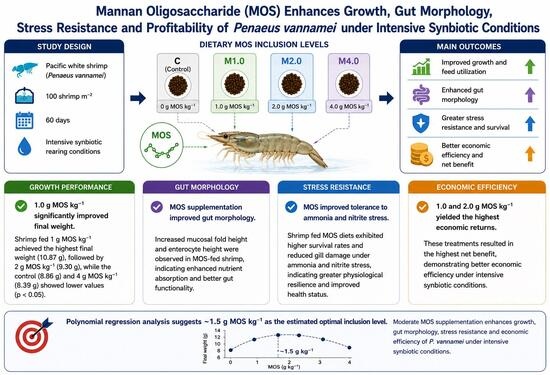
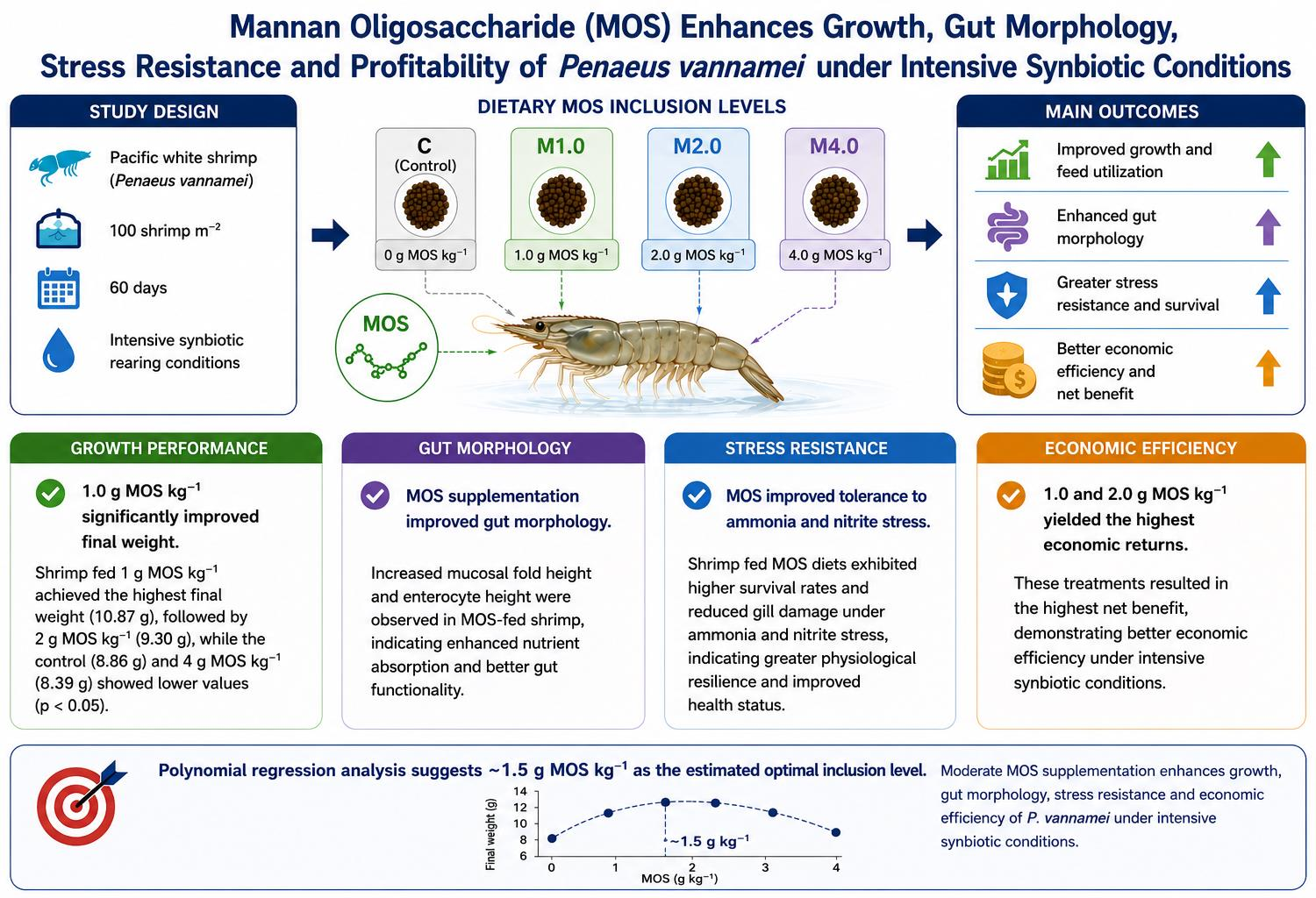
Despite the demonstrated benefits of MOS and β-glucans, limited research has explored the potential of solubilized MOS in intensive P. vannamei culture systems. Accordingly, the present study investigated the effects of different dietary inclusion levels of solubilized MOS on growth performance, gut health, resistance to environmental stress, and production profitability in Pacific white shrimp reared under intensive synbiotic conditions.
2. Materials and Methods
2.1. Ingredients and Experimental Diets
The control diet (C) was formulated using conventional ingredients commonly included in commercial shrimp feeds in order to satisfy the nutritional requirements of juvenile
P. vannamei [
30]. The diet was formulated to be isoproteic (360 g crude protein kg
−1) and isoenergetic (4400 kcal kg
−1). A commercially available solubilized mannan oligosaccharide (MOS) additive (Hypergen
®, Biorigin, SP, Brazil), containing 27.2% solubilized mannans, 17% protein, 3.4% ash, and 8% moisture, was evaluated in the present study.
The additive is obtained from the cellular biomass of
Saccharomyces cerevisiae. Following yeast cultivation, the biomass is subjected to autolysis and subsequent centrifugation to separate the yeast cell wall fraction. This material subsequently undergoes an enzymatic treatment designed to partially solubilize the MOS fraction while maintaining the structural integrity of β-glucans (1.3/1.6), after which the product is dried. Glucan and mannan contents were quantified through high-temperature acid hydrolysis, which promoted cleavage of glycosidic bonds and release of glucose and mannose molecules. The released monosaccharides were quantified by enzymatic assays followed by spectrophotometric determination, and the obtained values were subsequently applied to estimate glucan and mannan concentrations. Analytical determinations followed the methodology described by [
31], with slight modifications.
Three experimental diets were formulated by partially substituting wheat flour with MOS at inclusion levels of 1.0, 2.0, and 4.0 g kg
−1 (equivalent to 0.27, 0.54, and 1.08 g mannans), designated M1.0, M2.0, and M4.0 (
Table 1). All diets were produced at the Centro Avançado do Pescado Continental (Instituto de Pesca, São José do Rio Preto, SP, Brazil) following standard feed production steps: milling (<600 μm), homogenization (15 min), extrusion (2 mm, 80–90 °C), and drying (90–100 °C, ~12% moisture). After processing, the pellets were sealed and maintained under frozen storage until use.
2.2. Shrimp Nursery
The nursery phase was conducted at the Laboratório de Carcinicultura (LACAR), Department of Fisheries and Aquaculture, UFRPE, Brazil.
P. vannamei post larvae (PL10; 0.003 g) from a commercial hatchery (Aquasul, Rio Grande do Norte, Brazil) were reared in a synbiotic system until reaching 3.0 ± 0.04 g. Shrimp were fed a 45% crude protein diet (Wean, ADM Animal Nutrition, São Paulo, Brazil) four times daily, starting at 35% and gradually reduced to 8% of biomass. Stocking density was 675 PL m
−3, and feeding was adjusted based on consumption and survival following [
32].
2.3. Experimental System Setup and Design
Following the nursery phase, shrimp were counted, individually weighed, and randomly stocked into experimental tanks at a density of 100 shrimp m−2 (125 shrimp m−3), corresponding to 100 shrimp per tank, for a 60-day experimental period. The study followed a completely randomized design composed of four dietary treatments, each with three replicates in the tanks: control diet (C, no MOS) and diets containing 1.0 g kg−1 (M1.0), 2.0 g kg−1 (M2.0), or 4.0 g kg−1 (M4.0) of solubilized MOS. The experimental trial was carried out in 800 L fiberglass tanks (1.0 m2 bottom area) with continuous aeration provided by a 1.7 HP radial blower (Asten, SP, Brazil) connected to perforated air distribution lines. To avoid shrimp escape, tanks were covered with a 70% UV-protective mesh. Each experimental unit received 400 L of seawater (25 g L−1 salinity), previously filtered through a 250 μm mesh, disinfected with 30 ppm sodium hypochlorite, and aerated for 48 h, in addition to 400 L of water obtained from the synbiotic nursery system (TAN 0.05 mg L−1, NO2−–N 0.2 mg L−1, NO3−–N 83.3 mg L−1, alkalinity 140 mg CaCO3 L−1, pH 7.5, settleable solids 5 mL L−1, and salinity 22.5 g L−1).
2.4. System Maintenance
During the experimental period, tanks routinely received applications of a synbiotic preparation composed of a probiotic blend containing Bacillus subtilis (2.1 × 10⁷ CFU g−1), B. licheniformis (3.7 × 10⁷ CFU g−1), and Bacillus sp. (2.8 × 10⁷ CFU g−1), resulting in a total viable bacterial concentration of 8.6 × 10⁷ CFU g−1 (Kayros Agrícola e Ambiental, SP, Brazil). The probiotic was activated for 2 h using 0.3 g m−3 sugar in 0.2 L of seawater (25 g L−1 salinity). Subsequently, rice bran (<200 μm) was added at 3 g m−3 and the mixture was maintained under anaerobic conditions for 24 h, followed by an additional 24 h under aerobic conditions. The synbiotic preparation was applied every three days, except in tanks where settleable solids exceeded 10 mL L−1. Alkalinity (>150 mg CaCO3 L−1) and pH (>7.5) were maintained by adding calcium and magnesium hydroxides (25 g m−3 every five days). Water replacement was limited to compensating for evaporative losses.
2.5. Water Quality
Water quality parameters were monitored throughout the experimental period to ensure suitable culture conditions. Dissolved oxygen (DO) and water temperature were recorded twice per day (08:00 and 16:00) using a multiparameter device (AT-160, AlfaKit, Brazil). Salinity, pH, and settleable solids were evaluated three times weekly with a salinometer (AZ86031), pH meter (Asko AK90), and Imhoff cone, according to the procedures described in [
33]. At 10-day intervals, total ammonia nitrogen (TAN), nitrite (NO
2−–N), and total alkalinity (TA) were determined according to the methodologies described in [
34,
35]. Nitrate (NO
3−–N) and orthophosphate (PO
43−) concentrations were evaluated every 20 days according to [
32]. Prior to analysis, samples were filtered through 45 μm filter paper.
2.6. Shrimp Feeding Trial
Throughout the 60-day experimental period, shrimp were fed three times per day (08:00, 13:00, and 17:00), beginning at 8% of total biomass per day and gradually decreasing to 3% by the end of the trial. Feed allowances were adjusted based on feed consumption and mortality rates, following [
32]. Every 10 days, 20 shrimp from each tank were weighed to monitor growth performance and adjust feeding rates. On day 60 and at the conclusion of the experiment, all shrimp were counted and weighed for performance evaluation. Growth performance indicators were calculated using the following equations:
2.7. Proximate Composition
Proximate analyses of feed and shrimp samples were performed following [
36] at the Laboratório de Nutrição Animal, Department de Zootecnia, UFRPE, Brazil, in triplicate. For each treatment, nine shrimp (three shrimp per tank) were sampled at the beginning and at the conclusion of the experimental period. Shrimp collected from each tank were pooled to obtain a composite sample, from which subsamples were taken for proximate composition analysis. All analyses were conducted in triplicate. The mean value per tank was considered the experimental unit for statistical analysis. Similarly, 20 g of each experimental diet per treatment were collected, and three subsamples were used for laboratory analyses. Moisture content was determined by drying samples at 105 °C until constant weight was achieved and dried samples were subsequently ground before analysis [
36]. Crude protein (N × 6.25) content was quantified using the Kjeldahl procedure [
36], total lipids by Soxhlet extraction with hexane [
36], ash by incineration at 550 °C [
36] and crude fiber according to [
37].
2.8. Presumptive Total Count
Presumptive microbiological counts of gut microbiota were performed at LASAq (DEPAq, UFRPE, Brazil) to quantify colony-forming units (CFU g
−1) of
Vibrio spp.,
Bacillus spp., and fungi. Sampling was conducted at three stages of the experiment (beginning, middle, and end of the trial). Gut samples from nine shrimp per treatment (three shrimp per tank) were collected, pooled according to tank (≈50 mg per pool) [
38], and processed immediately after dissection. No sample storage was performed prior to microbiological analysis. Shrimp were euthanized through ventral nerve cord transection. The external surface was disinfected with 70% ethanol for 15 s, followed by immersion in 1.5% sodium hypochlorite supplemented with 0.1% Tween-80 for 15 min, and subsequently rinsed three times with sterile distilled water. Gut samples were transferred to sterile containers containing 600 μL of sterile alkaline peptone water and homogenized by manual maceration using sterile pestles.
Samples were serially diluted from 10
−1 to 10
−5, and 100 μL aliquots of each dilution were spread-plated in triplicate under aerobic conditions onto thiosulfate citrate bile sucrose agar (TCBS agar; 30 °C for 24 h) for presumptive
Vibrio spp., mannitol egg yolk polymyxin agar (MYP agar; 30 °C for 24 h) for presumptive
Bacillus spp., and Sabouraud dextrose agar (36 °C for 72 h) for fungi. Presumptive
Vibrio colonies were differentiated according to sucrose fermentation on TCBS agar, while
Bacillus spp. and fungal colonies were identified based on colony morphology and culture medium characteristics described by [
39]. No molecular or biochemical confirmation tests were performed. Colony enumeration using standard plate count methods was carried out next, and results were expressed as colony-forming units per milliliter (CFU g
−1).
2.9. Ammonia and Nitrite Nitrogen Stress Tests
Following the feeding trial, 30 shrimp per treatment (10 per replicate) were exposed to acute ammonia (NH
3–N) stress conditions. Subsequently, the same individuals (n = 8 per replicate) were used for the nitrite (NO
2–N) stress test to simulate sequential exposure to different nitrogenous stressors commonly encountered under farming conditions. Both assays were conducted in 15 L containers (salinity 22 ± 0.9 g L
−1; 27 ± 0.3 °C; pH 8.0 ± 0.1) at a density of 1 shrimp L
−1, using ammonium chloride (10 g L
−1) and sodium nitrite (49.25 g L
−1) stock solutions (
Table 2). Each test lasted 96 h, with survival recorded every 24 h [
16].
Hemolymph (≈200 μL) was drawn from ten shrimp per treatment before and after exposure [
40] using syringes preloaded with Alsever’s anticoagulant (336 mmol L
−1 NaCl, 115 mmol L
−1 glucose, 27 mmol L
−1 sodium citrate, 9 mmol L
−1 EDTA; pH 7.2; 1:2
v:
v). An aliquot was fixed in modified Alsever’s solution with 4% formaldehyde (1:3
v:
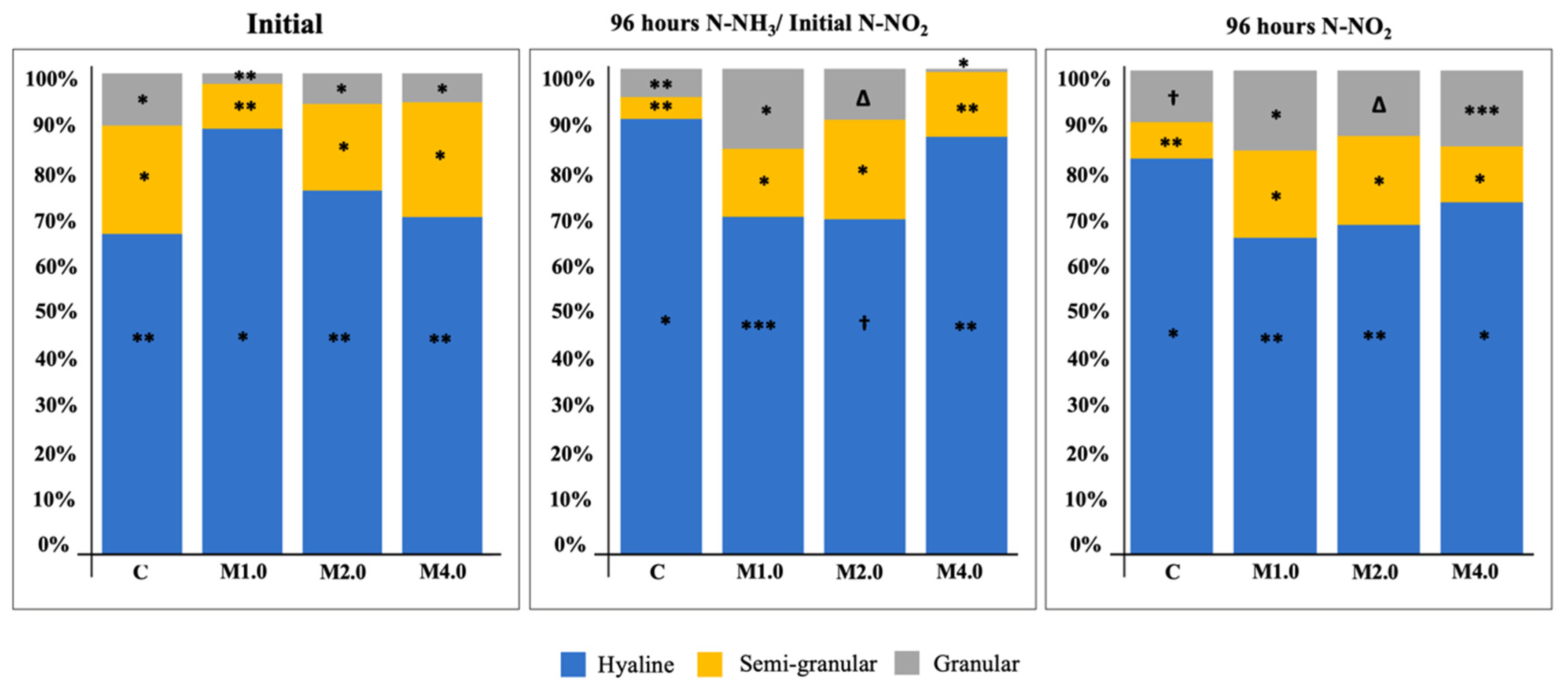
v). Total hemocyte counts (THC) were measured in a Neubauer chamber, and differential hemocyte counts (hyaline, semi-granular, and granular cells) were determined after methanol fixation (6 min), Giemsa staining (1:10, 10 min), dehydration (70% ethanol, 1 min), and xylene clearing (6 min) [
41].
2.10. Histological Analysis
At the conclusion of the 60-day culture period, gut samples (three shrimp per tank) were collected for histological analysis. After the nitrogen stress test, gill samples (three shrimp per tank) were also collected. Samples were fixed in Davidson’s AFA solution for 70 h, transferred to 70% ethanol, dehydrated through an ascending ethanol series (70–100%), cleared with xylene, and subsequently embedded in paraffin. Histological sections (2 µm) were obtained using a rotary microtome (RM2255, Leica Microsystems, Wetzlar, Germany), mounted on slides, followed by hematoxylin and eosin (H&E) staining, following [
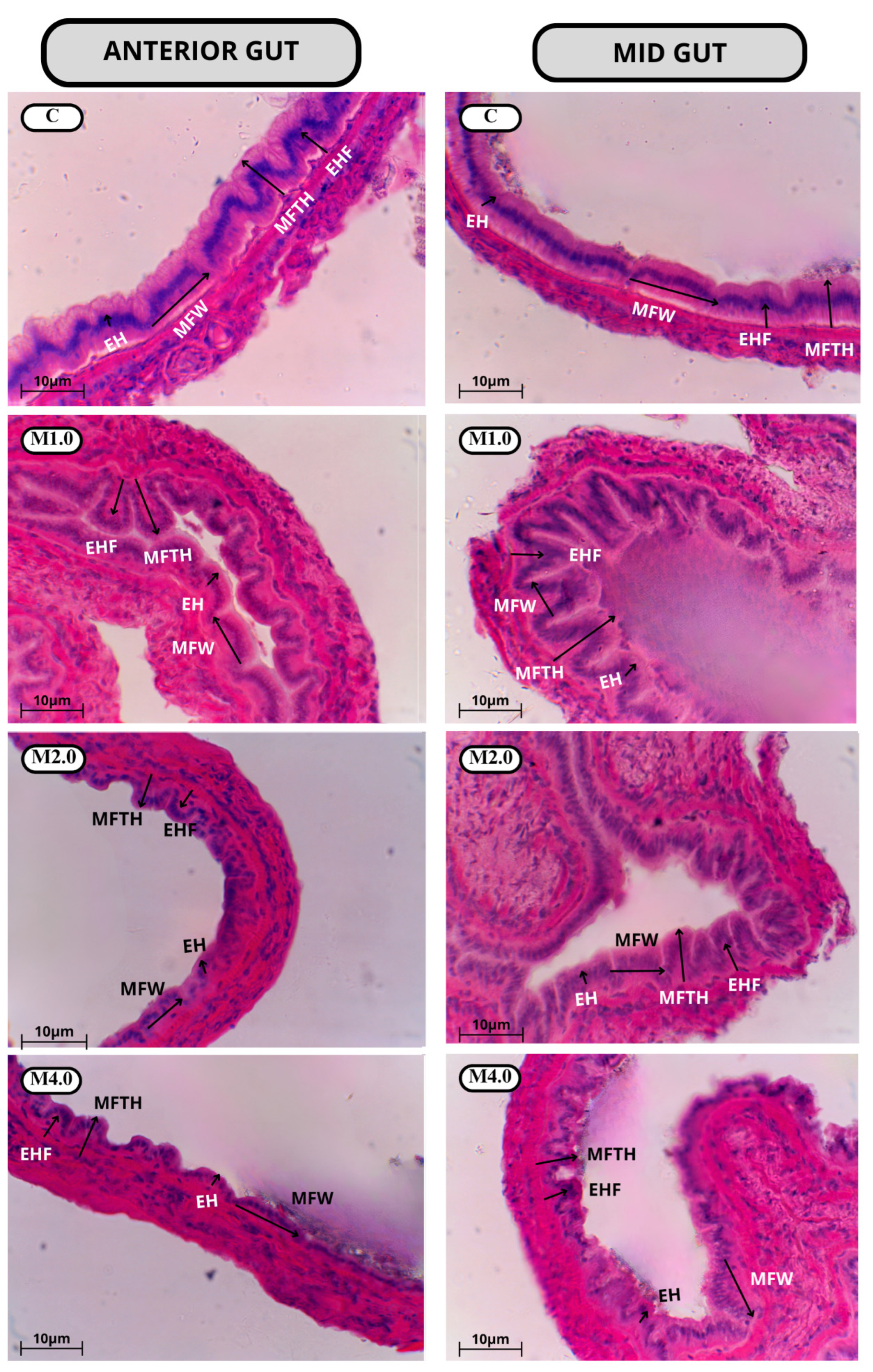
42]. Histological evaluations were conducted under an optical microscope (BX41, Olympus, Tokyo, Japan) equipped with a Leica K5 camera. Morphometric analysis of the anterior and midgut was performed using ImageJ (v1.46r, National Institute of Health, Bethesda, MD, USA). All mucosal folds visible in each histological section were measured. Analyses were performed using three shrimp per tank and three replicates per treatment. The following parameters were measured: number of mucosal folds (NF), total mucosal fold height (MFTH), mucosal fold width (MFW), epithelial height of the fold (EHF), and enterocyte height (EH). Total mucosal fold height corresponded to the distance between the basal membrane and the apex of the mucosal fold whereas epithelial height of the fold was defined as the thickness of the epithelial layer covering the fold. Enterocyte height was measured as the distance from the basal membrane to the apical surface of epithelial cells [
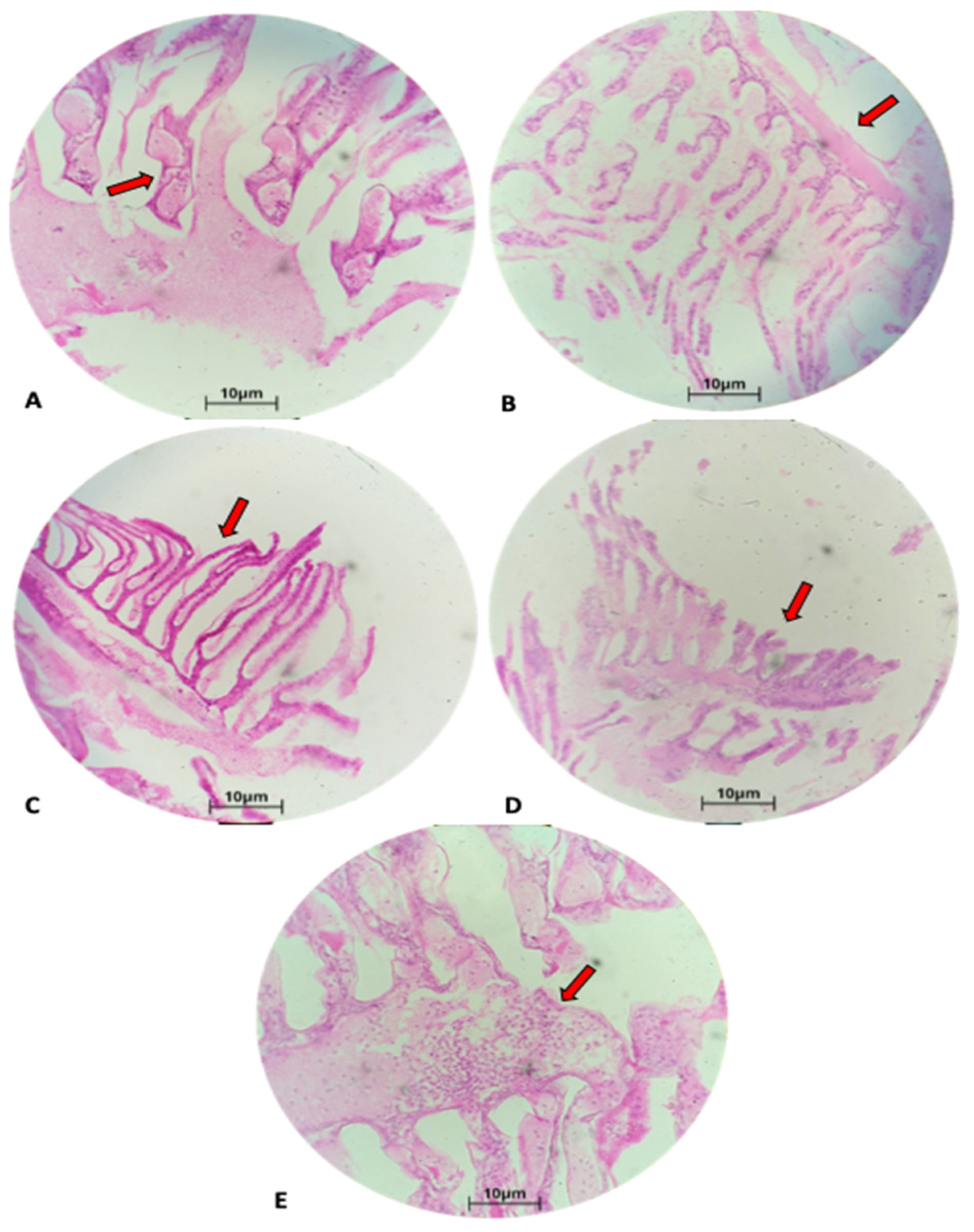
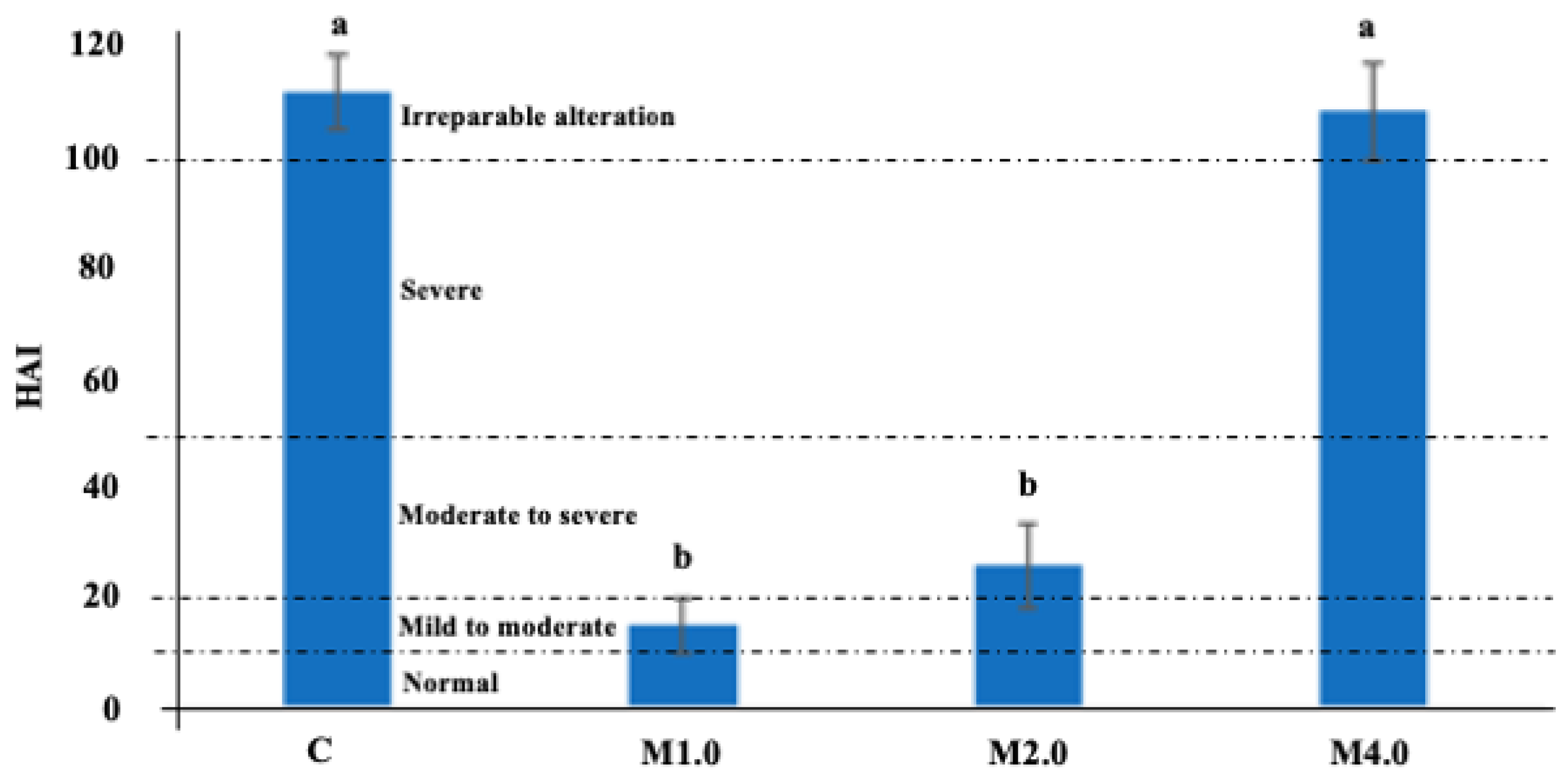
42]. All measurements were obtained under 400× magnification. Gill lesions were semi-quantitatively assessed using the Histological Alteration Index (HAI; [
43]) (
Table 3,
Figure 1), with lesions classified as stage I (mild), II (severe), or III (irreversible) per [
44]. HAI was calculated as:
HAI values were interpreted as follows: 0–10 (normal), 11–20 (mild to moderate), 21–50 (moderate to severe), 51–100 (severe), and >100 (irreversible).
2.11. Economic Benefits
The economic analysis was conducted considering a standardized production area of one hectare and one cycle, using shrimp performance data obtained in the present experiment (final weight, FCR, and survival rate). The analysis included partial operational costs for feed, the MOS additive, while fixed expenses (juvenile shrimp, labor, electricity, fertilizers, and alkalinity control) were excluded since they were identical across treatments. The following unit prices were applied: commercial feed, USD 0.92 kg
−1; MOS additive (Hypergen
®, Biorigin, Brazil), USD 9.00 kg
−1; and Shrimp market price (Brazil), USD 3.50 kg
−1. Exchange rate: 1 USD = BRL 5.22 (Brazil, 4 March 2026). The impact of MOS price fluctuations on net profitability was evaluated using three price scenarios for the MOS additive: USD 9.00, USD 10.00, and USD 11.00 kg
−1, to determine how additive price variation could influence overall profitability.
2.12. Data Analysis
Statistical analyses were performed using BioEstat v.5.3 (Instituto Mamirauá, Tefé, AM, Brazil). Data normality and homogeneity were tested with Lilliefors and Cochran’s tests (p < 0.05). Variables meeting these assumptions (performance, proximate composition, HAI) were analyzed by one-way ANOVA followed by Tukey’s test (p < 0.05). Temporal variations in water quality (temperature, salinity, pH) were evaluated by repeated-measures ANOVA. Non-parametric data (TAN, N–NO2, N–NO3, settleable solids, dissolved oxygen) were assessed using Friedman’s test followed by Conover post hoc analysis with Holm–Bonferroni correction. Microbial counts, gut morphology, stress tolerance, and differential hemocyte data were analyzed using the Kruskal–Wallis test followed by Dunn’s post hoc test (Holm–Bonferroni correction). The optimal dietary MOS level was estimated by second-order polynomial regression of growth performance. For gut morphology, all mucosal folds present in each section were measured. Outliers were identified according to the interquartile range (IQR) method and subsequently excluded from the analyses. Remaining values were averaged per tank, which was considered the experimental unit.
4. Discussion
In intensive aquaculture systems, microbial activity can lower alkalinity and pH, requiring buffering to sustain nitrification. Maintaining alkalinity above 100 mg CaCO
3 L
−1 is critical to support microbial balance [
45]. In this study, periodic addition of calcium and magnesium hydroxide (25 g m
−3 every five days) effectively stabilized pH (≈7.7) and alkalinity (>100 mg CaCO
3 L
−1), ensuring equilibrium between heterotrophic and nitrifying bacteria. Consistently low concentrations of total ammonia nitrogen (TAN) and nitrite (NO
2–N), together with higher nitrate (NO
3–N) levels, indicate effective nitrogen conversion within the system [
46,
47]. Overall, all parameters remained within optimal ranges for
P. vannamei culture, indicating that dietary solubilized mannan oligosaccharides (MOS) did not compromise system stability [
48].
Dietary mannan oligosaccharides (MOS) are known to enhance digestive enzyme activity, nutrient digestibility, and gut absorption, thereby improving growth in aquaculture species [
23,
24]. In this study, supplementation with 1.0 g kg
−1 of solubilized MOS significantly improved
P. vannamei performance under intensive conditions, whereas higher inclusion levels resulted in reduced performance responses, possibly due to digestive overload or metabolic imbalance. Previous studies using non-solubilized MOS obtained through enzymatic hydrolysis have reported similar responses.
P. monodon showed optimal performance at 1 g kg
−1 of MOS [
49], while
P. vannamei achieved the best growth at 5 g kg
−1 [
50] and up to 4 g kg
−1 [
16], with no further benefits at higher levels. These findings suggest that excessive MOS inclusion may impair performance, highlighting the importance of defining optimal supplementation levels for different culture systems.
The variability among studies likely reflects differences in processing methods, molecular structure, and environmental factors such as stocking density and water quality. In addition to dosage effects, differences between conventional and solubilized MOS may also contribute to the distinct biological responses observed among studies. Solubilized MOS undergo enzymatic processing that partially modifies the mannan fraction and increases the exposure of β-glucans within the yeast cell wall matrix [
51,
52]. These structural modifications may influence the interaction of bioactive compounds with intestinal and immune-related cells, potentially affecting immunomodulatory activity under stressful culture conditions [
53,
54]. Consequently, differences in processing methods and structural composition among commercial MOS products may partially explain variations in shrimp growth and physiological responses reported in the literature.
Notably, most previous trials were conducted in clear-water systems, which lack the microbial interactions characteristic of biofloc or synbiotic systems. In the present work, MOS at 1.0–2.0 g kg
−1 improved shrimp performance, with second-order polynomial regression suggesting that approximately 1.5 g kg
−1 may represent a potential optimal inclusion level based on the four evaluated dietary inclusion levels. Above this inclusion level, additional improvements in growth performance were not detected, underscoring the importance of optimizing MOS dosage for intensive crustacean culture [
13].
Unlike [
55], who found increased protein and ash in
P. vannamei fed 2%
S. cerevisiae yeast, the present study showed no changes in lipid or protein content with solubilized MOS (1.0–4.0 g kg
−1). Only ash content increased in M2.0 and M4.0, suggesting that dietary prebiotic concentration may differently influence shrimp body composition.
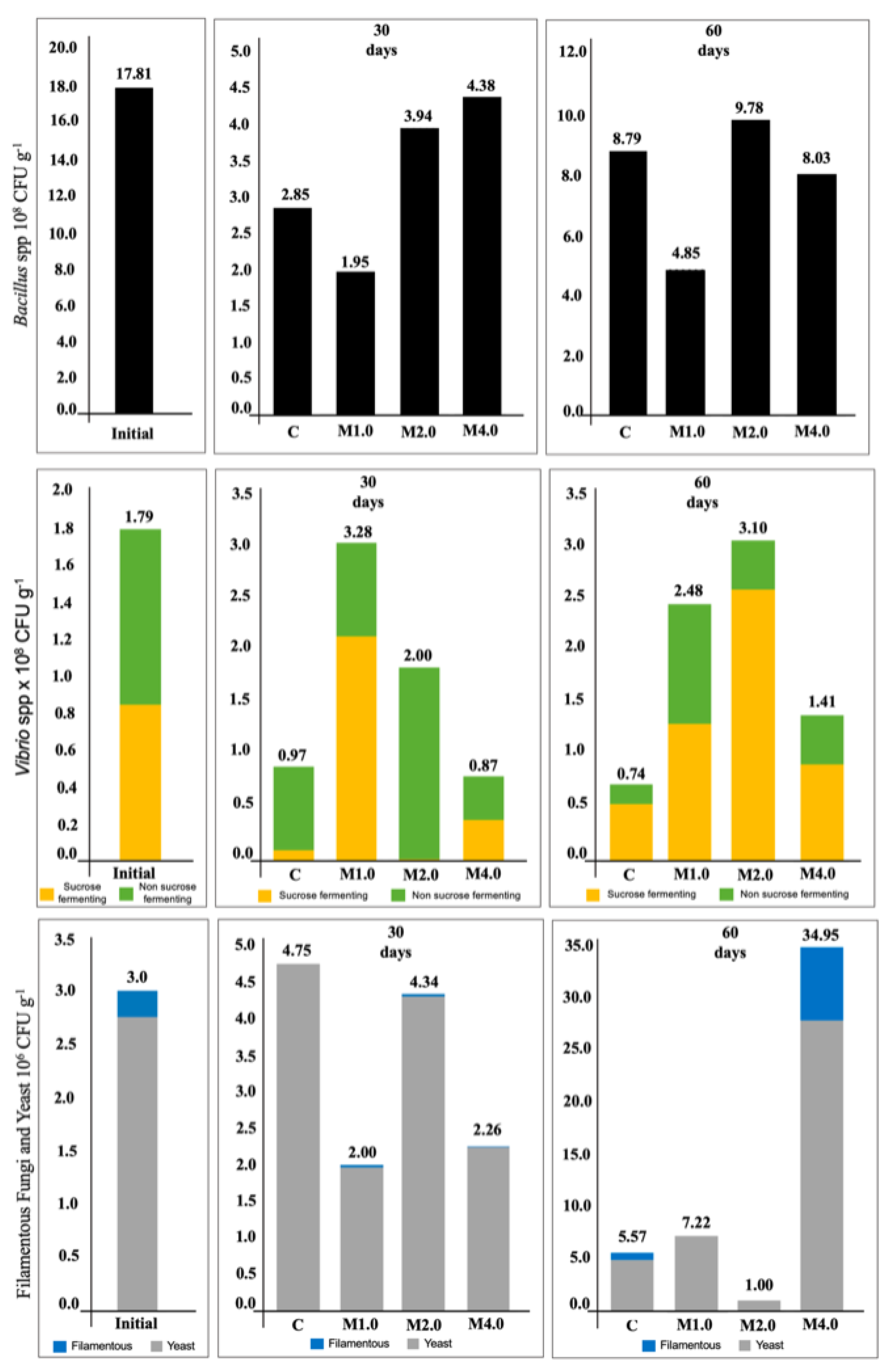
Presumptive culture-based counts of selected microbial groups revealed increased
Bacillus spp. counts across all treatments after 60 days, likely due to continuous synbiotic supplementation and rice bran fermentation, which may have favored the proliferation of culturable
Bacillus spp. Even in the control treatment, the predominance of
Bacillus spp. over
Vibrio spp. among the culturable groups evaluated may indicate microbial conditions favorable to
Bacillus spp. under the experimental conditions, since these bacteria are known to suppress pathogens through competitive exclusion and antimicrobial production [
56,
57,
58]. However, the presence of filamentous fungi in the Control and M4.0 treatments may have impaired gut health, partially counteracting these effects [
59]. These results should be interpreted cautiously, since culture-based presumptive counts represent only a limited fraction of the gut microbial community and are strongly influenced by selective media and incubation conditions. These findings highlight the need for future microbiome-based studies to better understand the interactions between prebiotics, probiotics, and gut microbial communities in shrimp culture systems.
Gut mucosal morphology plays a central role in nutrient uptake efficiency, since taller folds and well-developed epithelial layers increase the absorptive surface available for digestion [
15,
60,
61,
62]. In this study, supplementation with solubilized MOS above 1.0 g kg
−1 reduced total mucosal fold height (MFTH) and enterocyte height (EH) in both the midgut and anterior gut, indicating a possible threshold beyond which excessive inclusion may impair gut structure and function. These findings align with reports showing that moderate MOS supplementation improves growth performance and gut integrity in
P. vannamei and
E. sinensis, whereas higher inclusion levels may exert detrimental effects [
16,
63]. Similar improvements in gut morphology have been described in
D. labrax [
64],
P. monodon [
49],
C. auratus gibelio [
65],
H. huso [
66], and
Epinephelus fuscoguttatus ♀ ×
Epinephelus lanceolatus ♂ [
67]. Recent studies also indicate that MOS enhances epithelial structure and gut barrier function in
P. vannamei [
58].
In aquaculture, ammonia and nitrite accumulation can reach toxic levels, increasing mortality and disease susceptibility in cultured species [
68,
69,
70]. In this study, shrimp fed diets supplemented with solubilized MOS (M1.0 and M2.0) exhibited higher survival under ammonia stress, indicating a synergistic effect that enhanced environmental stress resistance [
16,
62]. Conversely, survival decreased in the M4.0 group, possibly due to immune overstimulation from excessive β-glucan exposure [
71,
72]. No significant differences were observed in the nitrite stress test, suggesting that MOS may enhance tolerance to ammonia exposure but does not necessarily confer resistance to subsequent stressors, possibly because prior immune activation reduced physiological reserves. It should also be considered that the sequential exposure to ammonia followed by nitrite may have produced carryover physiological effects, since this experimental approach was designed to simulate stress conditions that may occur sequentially in intensive aquaculture systems.
According to [
73], increased hemocyte counts in shrimp reflect a defensive response to environmental or biological stress. In this study, total hemocyte counts declined by about 50% in the Control treatments after ammonia exposure but remained more stable in the M1.0 and M2.0 treatments. Following nitrite stress, hemocyte counts rose across all treatments except M4.0, where excessive MOS likely suppressed immune activity. Similar findings were reported by [
74], who noted that while prebiotic supplementation enhances shrimp immunity, high inclusion levels (≥5 g kg
−1) can reduce total hemocyte counts. Differential hemocyte profiles revealed a reduction in hyaline cells together with increased proportions of semi-granular and granular cells, suggesting immune activation and cellular specialization [
75]. However, granular and semi-granular cell levels in the Control and M4.0 groups fell below optimal ranges for
P. vannamei [
76].
Gills are among the most sensitive organs for detecting environmental and pathogenic stress in aquatic organisms, as they are directly exposed to surrounding water [
77]. Exposure to toxic compounds such as ammonia and nitrite can severely damage gill epithelium, as previously demonstrated in
Macrobrachium amazonicum juveniles [
78]. In the present study, varying degrees of gill alteration were observed across treatments; however, shrimp fed moderate levels of solubilized MOS (M1.0 and M2.0) exhibited lower histological alteration indices. These findings suggest that supplementation with solubilized MOS helps maintain gill structural integrity and enhances shrimp tolerance to environmental stress.
In intensive aquaculture systems, feed represents the primary production cost, making dietary optimization crucial for profitability. Although functional additives increase formulation costs, their inclusion can generate significant economic returns by improving growth, feed efficiency, and disease resistance [
79]. In this study, shrimp fed solubilized MOS at 1.0 and 2.0 g kg
−1 achieved higher gross revenues (USD 34,876 ha
−1 and USD 30,272 ha
−1, respectively) compared with the control (USD 28,064 ha
−1). The increased income was primarily due to improved final weight and survival, which offset the additive cost. The M1.0 treatment exhibited the highest net income, confirming that moderate inclusion of solubilized MOS provided the most favorable cost-to-benefit relationship under intensive culture conditions.




 ,
,