
Article

Anthropogenic Particle Ingestion in Atlantic Chub Mackerel (Scomber colias Gmelin, 1789) from the Saronikos Gulf: Occurrence, Characteristics, and Biological Associations

by
Niki Milatou
*,
Odysseas Papadopoulos-Michalas
and
Persefoni Megalofonou
Department of Biology, National and Kapodistrian University of Athens, Panepistimiopolis, Ilissia, 15784 Athens, Greece
*
Author to whom correspondence should be addressed.
Fishes 2026, 11(5), 272; https://doi.org/10.3390/fishes11050272
Submission received: 26 March 2026 / Revised: 29 April 2026 / Accepted: 30 April 2026 / Published: 4 May 2026
(This article belongs to the Special Issue Plastics in Fish and Shellfish)

Abstract

Marine anthropogenic particle pollution is a major environmental concern due to its persistence and widespread distribution. Microplastics are widely recognized as a subset of anthropogenic particles originating from synthetic polymers. This study examines the occurrence, characteristics, and biological associations of anthropogenic particles ingested by Atlantic chub mackerel from the Saronikos Gulf. A total of 179 specimens were analyzed for anthropogenic particles in the gastrointestinal tract, while muscle tissue was examined in 51 individuals. Anthropogenic particles were detected in the gastrointestinal tract of 74% of individuals and were also present in muscle tissue in 41% of the analyzed specimens. Fibers were the dominant particle type, representing approximately 60% of the identified particles, followed by fragments at 40%. The majority of particles were micro-sized (<5 mm), although meso- and macro-sized particles were also recorded. Black-colored particles predominated, accounting for approximately 53% of the total. No significant differences in anthropogenic particle abundance were observed between sexes, and no consistent seasonal patterns were detected, except for higher occurrence in early autumn compared to winter, although this result should be interpreted with caution due to uneven sample sizes among sampling periods. No statistically significant correlations were found between anthropogenic particle abundance in the gastrointestinal tract or muscle tissue and fish size, condition factor, or stomach fullness. Overall, the findings highlight this species as a suitable bioindicator for monitoring anthropogenic particle pollution and provide baseline information for future assessments in the Saronikos Gulf. Particle identification was based on visual characterization without spectroscopic confirmation; therefore, the detected particles are considered anthropogenic and their polymer composition could not be definitively confirmed.
Key Contribution: This study presents the first detailed assessment of anthropogenic particle ingestion in the Atlantic chub mackerel (Scomber colias) from the Saronikos Gulf, a highly urbanized coastal area of the eastern Mediterranean Sea. By integrating anthropogenic particle analysis in the gastrointestinal tract and muscle tissue with biological and morphometric parameters, the study investigates patterns of anthropogenic particle occurrence in relation to fish condition and feeding activity. The results provide baseline data for the region and support the use of S. colias as a suitable bioindicator for monitoring anthropogenic particle pollution in pelagic marine environments.

1. Introduction

Plastic pollution has become a major global environmental issue due to the extensive production, durability, and persistence of synthetic polymers in natural ecosystems [1,2,3,4,5]. Since the development of the first fully synthetic plastics in the early 20th century, global plastic production has increased dramatically, reaching hundreds of millions of tonnes annually, with a substantial proportion entering terrestrial and aquatic environments. Owing to their resistance to degradation, plastics accumulate over long timescales, posing significant ecological challenges worldwide [3,6,7].
Plastics occur in the environment across a wide range of size classes, including macroplastics (>25 mm), mesoplastics (5–25 mm), microplastics (<5 mm), and nanoplastics. Microplastics are widely recognized as a subset of anthropogenic particles originating from synthetic polymers [8]. Nanoplastics are defined as particles ranging from 1 to 1000 nm resulting from the degradation of plastic materials [9]. Microplastics may originate as primary particles intentionally manufactured for industrial or consumer applications or as secondary particles formed through the fragmentation of larger anthropogenic debris via physical, chemical, and biological processes. Their small size enhances environmental persistence, mobility, and bioavailability to aquatic organisms, raising concerns about their ecological and physiological effects [6,10,11,12,13,14].
Micro- and mesoplastics originate from both land- and sea-based sources, including urban runoff, wastewater effluents, agricultural practices, industrial activities, and maritime operations. Rivers act as major transport pathways, delivering a substantial proportion of terrestrial anthropogenic debris to coastal and marine environments. In addition, ocean currents, wind-driven transport, and sedimentation processes facilitate the widespread dispersal and accumulation of plastic particles throughout the water column and seabed, particularly in semi-enclosed basins such as the Mediterranean Sea [3,7,11,12,15].
Once in the marine environment, plastic particles can negatively affect organisms through physical, biological, and chemical mechanisms. Ingestion has been associated with gastrointestinal blockage, tissue damage, altered feeding behavior, and reduced energy intake. Furthermore, plastics act as vectors for chemical additives and environmental contaminants, including persistent organic pollutants and heavy metals, which may desorb upon ingestion and disrupt physiological and endocrine functions. These combined effects raise concerns regarding bioaccumulation, trophic transfer, and ecosystem health [3,6,12,14,16].
Fish are widely used as bioindicators of marine pollution due to their ecological relevance, commercial importance, and capacity to integrate contamination over time and space. Pelagic species are exposed to plastic particles throughout the water column and may reflect regional contamination patterns. The Atlantic chub mackerel (Scomber colias) is a commercially important pelagic species widely distributed in the eastern Mediterranean Sea; however, information on micro- and mesoplastic ingestion in this species, particularly across different tissues and in relation to biological parameters, remains limited [3,6,11].
Microplastic ingestion has been increasingly reported in pelagic fish species worldwide, with several studies highlighting their susceptibility due to their feeding strategies and habitat use [2]. The Atlantic chub mackerel (Scomber colias) has been identified as a potential bioindicator species, with high ingestion rates reported in the Atlantic Ocean [17,18,19]. However, despite the Mediterranean Sea being recognized as a hotspot of plastic pollution, studies focusing specifically on S. colias in this region remain scarce. Most available research in the Mediterranean has focused on other commercial species, such as sardines and anchovies, leaving a knowledge gap regarding pelagic predators such as S. colias [20,21].
The present study aims to assess the occurrence and characteristics of anthropogenic micro-, meso-, and macro-sized particles in the gastrointestinal tract and muscle tissue of S. colias from the Saronikos Gulf, a highly urbanized coastal area of the eastern Mediterranean Sea. It further examines potential associations between particle ingestion and biological parameters, providing baseline data for the region and supporting the use of S. colias as a bioindicator species for monitoring anthropogenic particle pollution [3,12].

2. Materials and Methods

2.1. Sampling and Study Area

A total of 179 Atlantic chub mackerel (Scomber colias) specimens were collected from the Saronikos Gulf in the eastern Mediterranean Sea during four sampling periods: June 2021 (n = 61), September 2023 (n = 2), September 2024 (n = 20), and December 2024 (n = 96) (Figure 1). All fish were processed at the time of slaughter in accordance with European Union animal welfare legislation, specifically Council Regulation (EC) No 1099/2009 on the protection of animals at the time of killing [22]. Following collection, all specimens were transported to the laboratory and stored at −20 °C until processing for morphometric measurements and dissection.

2.2. Dissection and Biological Data

Prior to dissection, fish specimens were thawed at room temperature. For each individual, total length (TL, mm), round weight (RW, g), and dressed weight (DRW, g) were recorded. Dissections were performed using stainless-steel instruments to remove the viscera. Subsequently, the stomach and intestine were excised, and their contents were removed and weighed (wet weight, g). Sex was determined macroscopically. In addition, a muscle tissue sample was collected from the dorsal region between the first dorsal fin and the abdominal cavity using a ceramic knife and stored for subsequent laboratory analyses.

2.3. Derived Indices

Fulton’s condition factor (K) was calculated as K = (RW/TL3) × 105, where RW is the total body weight (g) and TL is the total length (mm) of each fish [23]. The Index of Stomach Fullness (ISF) was calculated as the weight of stomach contents divided by the weight of the fish and expressed as a percentage: ISF = 100 × (Ws/Wf), where Ws is the stomach content weight (g) and Wf is the dressed body weight of the fish (DRW, g) [24].

2.4. Anthropogenic Particle Analysis in Gastrointestinal Tract and Muscle Tissue

Gastrointestinal contents and muscle tissue were initially examined under a Nikon SMZ-2T binocular stereomicroscope (Nikon Instruments Inc., Melville, NY, USA), equipped with a digital camera (INFINITYlite, Teledyne Lumenera, Ottawa, ON, Canada), for the detection of suspected anthropogenic particles. To remove organic matter and facilitate anthropogenic particle identification, samples were digested using 30% hydrogen peroxide (H2O2), following the protocol established by the MEDSEALITTER project (https://publications.jrc.ec.europa.eu/repository/handle/JRC83985, accessed on 20 February 2026).
Specifically, the digestive tract contents of each specimen were transferred into clean glass beakers and digested with 30% H2O2 (ChemLab, Ghent, Belgium) at a ratio of 1:20 (w/v). The same digestion ratio was applied to muscle tissue samples, for which 5 g of tissue per sample was weighed and placed in glass beakers prior to treatment. Samples were heated on a hot plate at 60 °C until complete digestion of organic material and evaporation of excess peroxide.
After digestion, each sample was diluted with 100 mL of Milli-Q purified water (Merck Millipore, Darmstadt, Germany), gently stirred, and vacuum-filtered through glass fiber filters (Whatman GF/C, 1.2 μm pore size, 47 mm diameter; Cytiva, Marlborough, MA, USA). The contents of each beaker were gradually transferred onto the filters, with intermediate rinsing of the beakers using distilled water (three successive rinses) to ensure complete particle recovery. Filters were then carefully transferred to clean Petri dishes and left to dry at room temperature until further analysis.
Throughout the analytical procedure, procedural blank samples were included at all stages to assess potential contamination. All filters, including procedural blanks, were examined under a stereomicroscope equipped with a digital camera. Suspected anthropogenic particles were photographed, counted, and measured, and their size and shape were recorded.
Each sample was processed individually without replicate analyses. Although no formal detection limit was calculated, the inclusion of procedural blanks allowed for the identification and exclusion of potential background contamination, thereby ensuring the reliability of the results.

2.5. Anthropogenic Particle Detection and Quantification

All dried filters were subsequently examined under the same stereomicroscope system. Each anthropogenic particle was photographed, counted, and measured using OpticaPro View software (Optica Microscopes Srl, Ponteranica, Italy), and classified by size as micro-sized particles (<5 mm), meso-sized particles (5–25 mm) or macro-sized particles (>25 mm) and by shape as fibers, fragments, or pellets. Color was determined visually.
Anthropogenic particle abundance was quantified using three complementary metrics: (a) the mean number of items per individual, calculated across all analyzed specimens; (b) the mean number of items per individual, calculated only for specimens containing anthropogenic particles (items per individual in contaminated specimens, i.e., i.c.m.); and (c) the mean number of items per gram of wet weight (g, w.w.) of gastrointestinal content or muscle tissue, calculated for specimens containing anthropogenic particles, following the MEDSEALITTER protocol [25].

2.6. Contamination Prevention and Quality Assurance

To minimize the risk of contamination, all glassware and equipment were thoroughly rinsed with purified Milli-Q water prior to use. During the initial visual inspection of gastrointestinal contents, each Petri dish was covered with a glass lid to prevent airborne contamination. Throughout the digestion process, as well as during periods when samples were not actively processed, samples were kept covered with aluminum foil, following the MEDSEALITTER protocol [25].
During microscopic examination, all filters were protected with glass covers. Sample handling, including rinsing and vacuum filtration, was conducted inside a fume cupboard to further reduce exposure to airborne particles. Procedural blanks were included at all stages of the analytical procedure, and any particles matching those detected in blanks were excluded from the dataset and considered potential laboratory contamination, in accordance with the MEDSEALITTER protocol [25].
All laboratory work was conducted using non-plastic equipment wherever possible to further minimize contamination.

2.7. Statistical Analysis

Descriptive statistics were calculated for all measured variables. Data were tested for normality prior to further analyses. Because anthropogenic particle abundance data did not follow a normal distribution according to the Shapiro–Wilk test, non-parametric statistical analyses were applied. Differences between two groups were assessed using the Mann–Whitney U test, while differences among groups (e.g., seasons, sexes, and season–sex interactions) were examined using the Kruskal–Wallis test. When significant differences were detected, post hoc pairwise comparisons were performed using Dunn’s test with Bonferroni correction. Relationships between anthropogenic particle variables and biological parameters (e.g., fish length, condition factor, and stomach fullness index) were examined using Spearman’s rank correlation coefficient. A significance level of p ≤ 0.05 was applied for all analyses. All statistical analyses and graphical outputs were performed using Statgraphics Centurion XVII (version 17, Statgraphics Technologies, Inc., The Plains, VA, USA) and Microsoft Excel (Microsoft Corporation, Redmond, WA, USA).

3. Results

3.1. Morphometric Characteristics and Biological Indices

The morphometric characteristics and biological indices of the examined Scomber colias specimens are summarized in Table 1. The mean total length (TL) of individuals analyzed for gastrointestinal tract contents was 220 ± 35.8 mm, while the corresponding value for specimens analyzed for muscle tissue was 221 ± 9.3 mm. Mean round weight (RW) was 109 ± 67.4 g and 100 ± 13.8 g, respectively. The Fulton’s condition factor (K) averaged 0.95 ± 0.40 for individuals analyzed for gastrointestinal tract contents and 0.92 ± 0.06 for those analyzed for muscle tissue. The Index of Stomach Fullness (ISF) showed mean values of 4.18 ± 1.98% and 4.79 ± 2.22% for the gastrointestinal tract and muscle tissue subsamples, respectively, indicating moderate stomach fullness among the examined individuals (Table 1).

3.2. Anthropogenic Particle Ingestion

Anthropogenic particles were detected in both the gastrointestinal tract and muscle tissue of Scomber colias specimens collected from the Saronikos Gulf. A total of 179 gastrointestinal tract samples and 51 muscle tissue samples were analyzed. Anthropogenic particles were detected in 132 individuals (73.7%) in the gastrointestinal tract and in 21 individuals (41.2%) in muscle tissue. Overall, 288 anthropogenic particles were recorded in the gastrointestinal tract samples and 26 particles in muscle tissue (Table 1).
The mean anthropogenic particle abundance per individual, considering all examined specimens, was 1.6 ± 1.6 items per individual in the gastrointestinal tract and 0.5 ± 0.7 items per individual in muscle tissue. When only individuals containing anthropogenic particles were considered, the mean abundance increased to 2.2 ± 1.5 items per individual (i.c.m.) in the gastrointestinal tract and 1.2 ± 0.4 items per individual (i.c.m.) in muscle tissue. The mean abundance per gram of sample was 0.8 ± 0.8 items g−1 w.w. for stomach content and 0.2 ± 0.1 items g−1 w.w. for muscle tissue (Table 1).
No significant correlations were found between anthropogenic particle abundance in the gastrointestinal tract or muscle tissue and the biological parameters of the examined fish, including total length, condition factor, and stomach fullness index (Spearman’s rank correlation, p > 0.05), indicating that anthropogenic particle ingestion was not associated with fish size or physiological condition. In addition, no significant differences in anthropogenic particle abundance were observed between sexes, and no consistent seasonal patterns were detected (Mann–Whitney test, p > 0.05). A higher occurrence was observed in early autumn compared to winter (Mann–Whitney test, p < 0.05); however, this result should be interpreted with caution due to the highly uneven sample sizes among sampling periods, particularly the very limited number of specimens collected in September 2023 (n = 2), which precludes robust seasonal comparisons. These results indicate that anthropogenic particle ingestion is common in S. colias, whereas their occurrence in muscle tissue is lower but still detectable.

3.3. Anthropogenic Particle Characterization (Shape, Size, and Color)

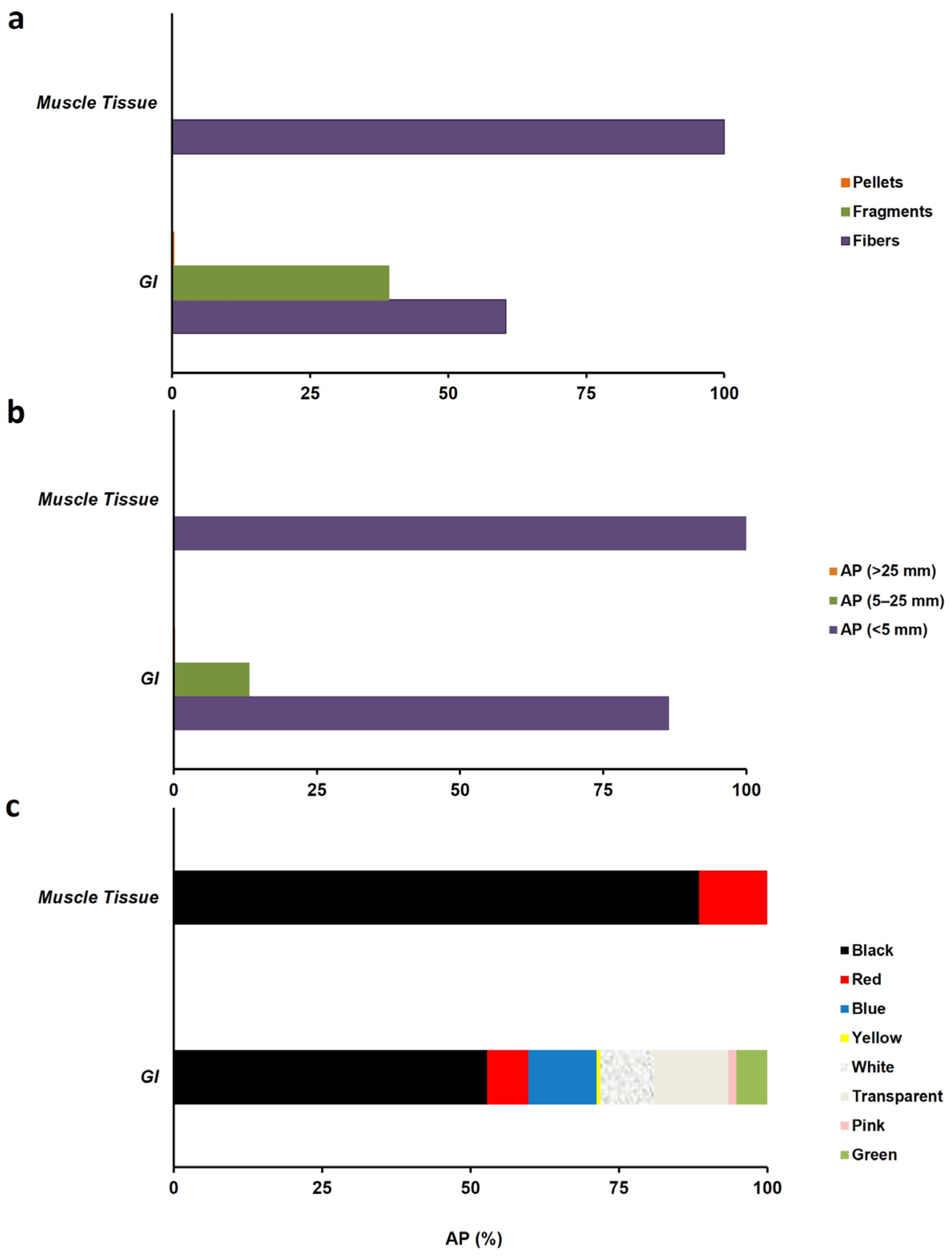
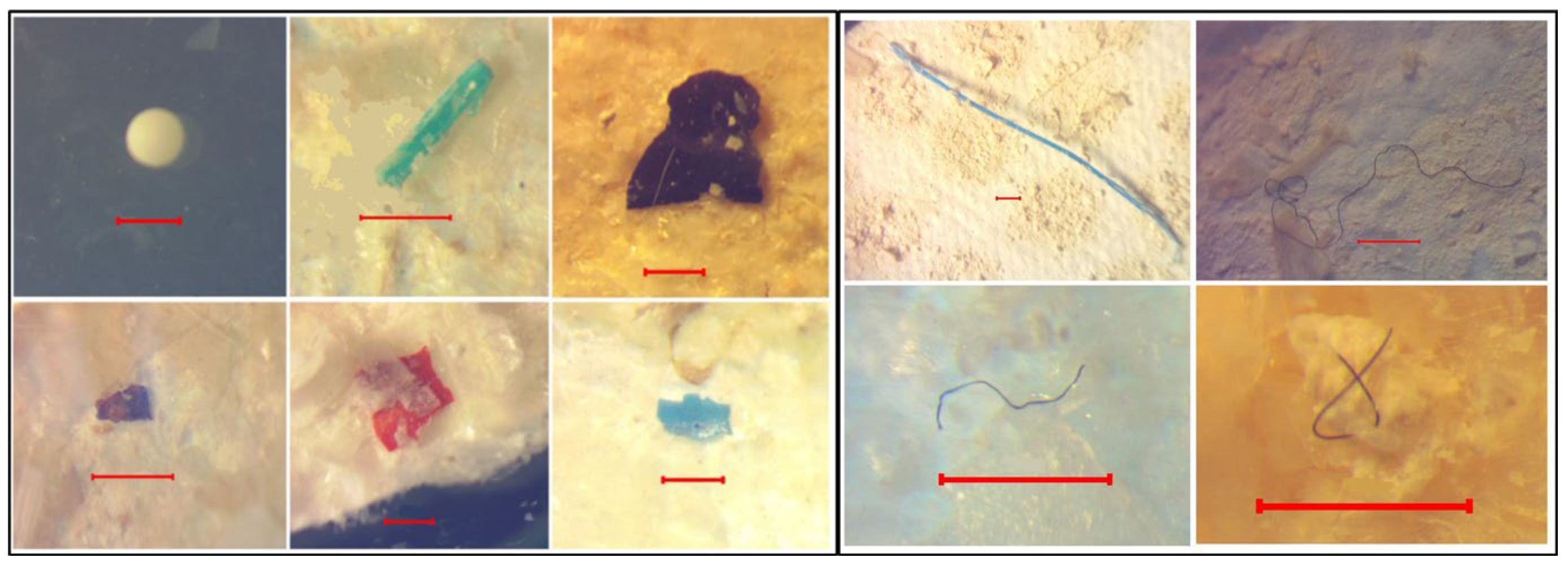
Anthropogenic particles retrieved from the gastrointestinal tract of Scomber colias exhibited considerable variation in shape, size, and color. In the gastrointestinal tract, fibers represented the dominant particle type, accounting for the majority of the recorded anthropogenic particles. Of the 288 anthropogenic particles identified in the gastrointestinal tract, 174 were classified as fibers (60.4%), while 113 were fragments (39.2%) and only one particle was identified as a pellet (0.3%) (Figure 2a and Figure 3). The mean length of fibers was 2.55 ± 2.96 mm, whereas fragments had a slightly larger mean length of 3.05 ± 2.61 mm. The single pellet recorded measured approximately 1 mm in length. In contrast, anthropogenic particles detected in muscle tissue consisted exclusively of fibers, with no fragments or other particle types observed among the 26 particles recorded (Figure 2a).
Regarding particle size, the majority of anthropogenic particles detected in the gastrointestinal tract were classified as micro-sized particles (<5 mm), accounting for 249 particles (86.5%), while 38 particles (13.2%) were classified as meso-sized particles (5–25 mm) and one particle (0.3%) as a macro-sized particle (>25 mm). Overall, anthropogenic micro-sized particles represented the dominant size class in the gastrointestinal samples, indicating that most ingested anthropogenic particles were relatively small and likely originated from the fragmentation of larger anthropogenic debris. In muscle tissue, all detected particles were micro-sized particles (<5 mm), and no meso- or macro-sized particles were observed (Figure 2b). Furthermore, no significant correlation was found between anthropogenic particle size and fish size, expressed as total length or body weight (Spearman’s rank correlation, p > 0.05).
The color distribution of anthropogenic particles also showed considerable diversity. In the gastrointestinal tract, black particles were the most abundant, accounting for 152 particles (52.8%), followed by transparent (n = 36), blue (n = 33), white (n = 26), red (n = 20), and green (n = 15) particles. Less frequent colors included pink (n = 4) and yellow (n = 2) (Figure 2c and Figure 3). A similar pattern was observed in muscle tissue, where black fibers were strongly dominant, representing 23 of the recorded particles (88.5%), while three particles (11.5%) were red, indicating a clear predominance of dark-colored fibers in edible tissues (Figure 2c).
Overall, these results indicate that fibers and micro-sized particles constitute the majority of anthropogenic particles detected in both gastrointestinal tract and muscle tissue samples of Scomber colias, while dark-colored particles predominated in both tissues.

4. Discussion

4.1. Anthropogenic Particle Ingestion in Scomber colias and Comparison with Other Marine Fish Species

The present study demonstrates that anthropogenic particle ingestion is common in Scomber colias inhabiting the Saronikos Gulf, with anthropogenic particles detected in 73.7% of the examined individuals in the gastrointestinal tract. The mean abundance recorded was 1.6 ± 1.6 items per individual when considering all examined specimens and 2.2 ± 1.5 items per individual (i.c.m.) when considering only fish containing anthropogenic particles. In addition to the digestive tract, anthropogenic particles were also detected in muscle tissue in 41.2% of the analyzed specimens, although at considerably lower abundance. These findings confirm the widespread exposure of pelagic fish species to anthropogenic particle contamination, including microplastics, as reported in previous studies, in the eastern Mediterranean Sea and suggest that S. colias may represent a useful indicator species for assessing anthropogenic particle pollution in pelagic marine environments.
The frequency of occurrence observed in the present study falls within the range reported in previous investigations for the same species in other marine regions. Herrera et al. [17] reported microplastic ingestion in approximately 78% of S. colias individuals collected from the Canary Islands, with an average abundance of 2.7–2.8 particles per individual. Even higher frequencies have been reported in Atlantic populations from the Gulf of Cadiz, where microplastic occurrence reached up to 90% [19]. Conversely, lower values (55%) have been documented for populations from Portuguese waters [18]. The occurrence recorded in the present study therefore lies within the variability reported in the literature, indicating that S. colias is consistently exposed to anthropogenic particle contamination across different marine ecosystems (Table 2).
It should be noted that comparisons among studies should be interpreted with caution, as methodological differences—particularly the use of spectroscopic techniques (e.g., FTIR or Raman spectroscopy) for polymer confirmation versus visual identification alone—may influence the accuracy and comparability of reported anthropogenic particle or microplastic data, with spectroscopic approaches generally providing more reliable identification of plastic particles.
Anthropogenic particle ingestion is not limited to Scomber colias but has been widely documented in other Mediterranean fish species. Digka et al. [29] reported microplastic occurrence in several species from the eastern Mediterranean, including 47% in Sardina pilchardus, 42% in Pagellus erythrinus, and 32% in Mullus barbatus. Similarly, Garcia-Garin et al. [28] documented microplastics in 35–65% of Boops boops individuals along the Catalan coast, while Tsangaris et al. [27] reported similar occurrence values (47%) for the same species in the eastern Mediterranean. These results collectively indicate that anthropogenic particle contamination, including microplastics reported in previous studies, affects a wide range of commercially important fish species across Mediterranean ecosystems (Table 2).
The relatively high ingestion frequency recorded in S. colias may be partly explained by its feeding ecology. This species is a pelagic predator that feeds primarily on zooplankton and small pelagic organisms, which increases the probability of ingesting anthropogenic particles suspended in the water column or indirectly through contaminated prey. Previous studies have suggested that pelagic planktivorous fish may be particularly susceptible to anthropogenic particle ingestion due to the overlap between the size of anthropogenic particles and natural prey items [2,20].
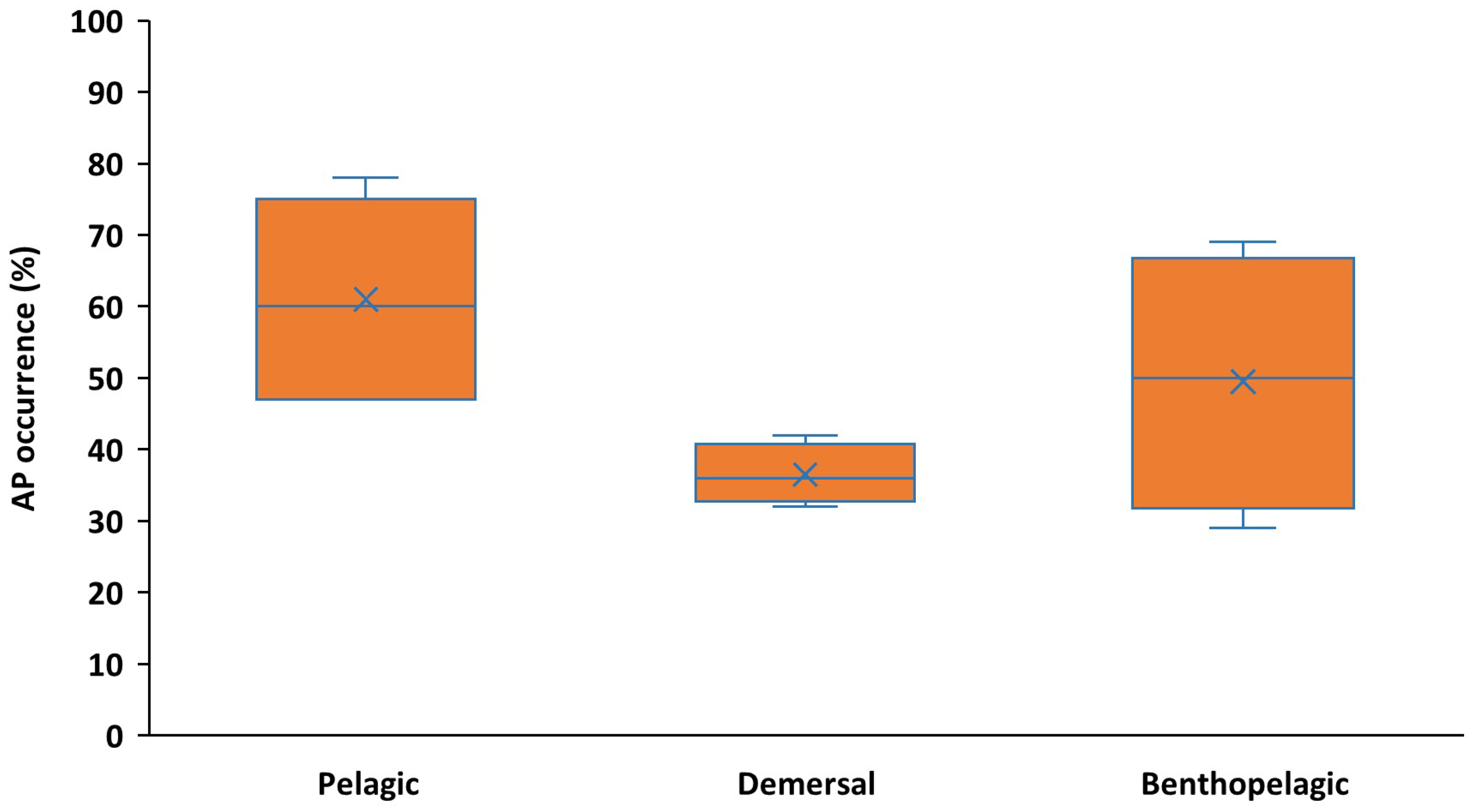
When fish species are grouped according to habitat type, pelagic species generally exhibit higher frequencies of anthropogenic particle occurrence compared with demersal species, while benthopelagic species show intermediate values (Figure 4). Pelagic fish such as Scomber colias, Boops boops, and Sardina pilchardus are continuously exposed to particles suspended in the water column and frequently feed on planktonic organisms, which increases the likelihood of accidental ingestion of anthropogenic particles. In contrast, demersal species such as Mullus barbatus and Pagellus erythrinus feed primarily on benthic organisms and therefore may encounter lower concentrations of suspended anthropogenic particles.
Benthopelagic species such as Dicentrarchus labrax and Sparus aurata exploit both benthic and pelagic food resources and consequently experience intermediate levels of exposure to anthropogenic particles (Figure 4). These ecological differences suggest that environmental exposure and feeding ecology may play an important role in shaping anthropogenic particle ingestion patterns among marine fish species.
Despite the presence of anthropogenic particles in both gastrointestinal and muscle tissues, no statistically significant relationships were detected between anthropogenic particle abundance and biological parameters such as fish size, condition factor, or stomach fullness. This finding suggests that anthropogenic particle ingestion in S. colias is primarily driven by environmental exposure rather than by individual biological characteristics. Similar observations have been reported for several marine fish species, where anthropogenic particle ingestion, including microplastics reported in previous studies, appears to reflect the environmental availability of particles rather than selective feeding behavior [17,29].
Overall, the results of the present study support the growing body of evidence indicating that anthropogenic particle contamination, including microplastics as documented in previous studies, is widespread in Mediterranean marine ecosystems and affects a broad range of commercially important fish species. The high occurrence observed in S. colias, combined with the detection of particles in muscle tissue, highlights the ecological relevance of this species as a potential bioindicator of anthropogenic particle pollution in pelagic habitats of the eastern Mediterranean Sea.

4.2. Anthropogenic Particle Characteristics: Shape, Size, and Color

The anthropogenic particles detected in the present study exhibited variability in shape, size, and color, reflecting the heterogeneous nature of anthropogenic particle pollution in the marine environment. In the gastrointestinal tract of Scomber colias, fibers represented the dominant particle type (~60%), followed by fragments (~39%), while pellets were rare (0.3%). A similar pattern was observed in muscle tissue, where all detected particles were classified as fibers and no fragments or larger anthropogenic particle categories were recorded.
The predominance of fibrous particles observed in the present study is consistent with numerous investigations of anthropogenic particle ingestion in marine organisms [17,18,19,26]. Fibers are widely recognized as the most common anthropogenic particle type in marine ecosystems due to their high environmental availability (Table 2). They mainly originate from synthetic textiles released during washing processes, degradation of fishing gear, and fragmentation of synthetic materials, allowing them to disperse widely in coastal and offshore waters [17,18,19,20,29].
Similar results have been reported for several Mediterranean fish species. Garcia-Garin et al. [28] documented a mixture of fragments and fibers in Boops boops, while Tsangaris et al. [27] also reported the predominance of filamentous particles in the same species. In addition, studies conducted in other Mediterranean regions have consistently identified fibers as the dominant microplastic shape in fish digestive systems [31,32]. The predominance of fibers is frequently associated with their elongated morphology and buoyancy, which facilitate their suspension in the water column and increase the probability of ingestion by pelagic fish.
A similar pattern was observed in muscle tissue, where all detected particles were fibers and no fragments were recorded (Table 2). The exclusive presence of fibers in muscle tissue may reflect differences in particle translocation processes, as elongated particles may potentially pass more easily through biological barriers compared with larger or irregularly shaped fragments. However, the mechanisms responsible for the transfer of anthropogenic particles from the digestive tract to internal tissues remain poorly understood and require further investigation.
Regarding particle size, the majority of anthropogenic particles detected in the gastrointestinal tract were classified as micro-sized particles (<5 mm), while a smaller proportion corresponded to meso-sized particles (5–25 mm), and only a single particle was categorized as a macro-sized particle (>25 mm). In contrast, all particles detected in muscle tissue were anthropogenic particles smaller than 5 mm. The predominance of small particles likely reflects the progressive fragmentation of larger anthropogenic debris through mechanical abrasion, ultraviolet radiation, and chemical degradation processes occurring in the marine environment. Similar size patterns have been reported in several studies (Table 2), indicating that ingested particles in fish generally fall within the anthropogenic size range, as smaller particles are more easily ingested either directly from the water column or indirectly through prey items [2,20].
Color analysis revealed a clear predominance of black particles in both gastrointestinal and muscle tissue samples, followed by smaller proportions of transparent, blue, white, and red particles. Comparable color distributions have been reported in numerous studies on marine fish (Table 2), where black and blue microplastics are often the most frequently recorded colors [4,5,17,20,29,33]. The prevalence of these colors may reflect both their high environmental availability and the potential for visual confusion with natural prey items during feeding. In addition, black particles are commonly associated with sources such as degraded fishing gear, tire wear particles, urban runoff, and synthetic textiles, which are prevalent in coastal environments and may contribute significantly to the observed patterns.
Despite the variability observed in particle morphology, no statistically significant correlations were detected between anthropogenic particle abundance and biological parameters such as fish size, condition factor, or stomach fullness. Similarly, no correlation was found between anthropogenic particle size and fish size (total length or body weight). These findings suggest that anthropogenic particle ingestion in Scomber colias is primarily driven by environmental exposure rather than by individual biological characteristics. Comparable observations have been reported in other marine fish species, where ingestion patterns appear to reflect the environmental availability of anthropogenic particles rather than selective feeding behavior [17,29].
Overall, the predominance of fibers, the dominance of micro-sized particles, and the prevalence of dark-colored anthropogenic particles observed in the present study are consistent with patterns reported in Mediterranean marine ecosystems (Table 2). These findings further support the hypothesis that the ingestion of anthropogenic particles by pelagic fish species such as Scomber colias largely reflects the environmental availability of anthropogenic debris in the water column.

4.3. Anthropogenic Particles in Edible Tissues and Potential Implications for Human Exposure

Most studies investigating anthropogenic particle ingestion in fish focus exclusively on gastrointestinal tract contents, as this compartment represents the primary location of particle ingestion. All comparative studies included in the present analysis [17,18,19,27,28,29] examined microplastic occurrence only in gastrointestinal samples.
In contrast, the present study also investigated the presence of anthropogenic particles in muscle tissue, providing additional information regarding the potential transfer of particles to edible tissues. Anthropogenic particles were detected in 41.2% of the analyzed muscle samples of Scomber colias. Although the abundance in muscle tissue was considerably lower than in the gastrointestinal tract, the presence of particles in edible tissues raises important questions regarding potential human exposure through seafood consumption.
To further contextualize these findings, based on the mean abundance observed in muscle tissue (0.2 particles g−1), this corresponds to an estimated 200 particles per kg of edible tissue, highlighting a non-negligible potential for human exposure. However, this extrapolation should be interpreted with caution due to the limited sample mass analyzed per individual.
The mechanisms responsible for the translocation of anthropogenic particles from the digestive tract to internal tissues remain poorly understood. However, experimental studies have suggested that very small particles, particularly microplastics, may cross epithelial barriers through processes such as endocytosis or passive diffusion, allowing them to enter circulatory systems and potentially reach internal organs and muscle tissue [34,35].
Because Scomber colias is widely consumed in Mediterranean countries, the detection of anthropogenic particles in edible tissues may have implications for food safety and human dietary exposure. Humans are exposed to anthropogenic particles through various pathways, including seafood consumption, drinking water, and airborne particles. Recent estimates suggest that thousands of microplastic particles may be ingested annually through diet alone [36].
In addition, local environmental conditions may further influence the potential risks associated with anthropogenic particle ingestion. The Saronikos Gulf is known to be impacted by multiple anthropogenic pressures, including urban and industrial discharges, which contribute to the presence of contaminants such as heavy metals in the marine environment [37]. Although the toxicological implications of anthropogenic particle ingestion remain uncertain, concerns have been raised regarding the potential release of plastic additives and adsorbed environmental contaminants such as persistent organic pollutants (POPs). These compounds may accumulate on plastic surfaces and potentially be transferred to organisms following ingestion [34].
Consequently, the detection of anthropogenic particles in edible fish tissues highlights the need for further research on the potential implications for food safety and human health, particularly in relation to microplastics, as reported in previous studies. These findings should be interpreted with caution and warrant further investigation to better understand the mechanisms of particle translocation and their potential implications for human health.

4.4. Methodological Considerations and Future Research Needs

Despite the rapidly increasing number of studies investigating anthropogenic particle ingestion in marine organisms, comparisons among studies remain challenging due to methodological variability. Differences in sampling design, digestion protocols, filter pore size, and particle identification procedures can significantly influence the number and characteristics of anthropogenic particles detected.
Visual identification techniques, although widely used in anthropogenic particle research, may also introduce uncertainties in particle classification. The absence of polymer verification using spectroscopic techniques such as Fourier-transform infrared spectroscopy (FTIR) or Raman spectroscopy represents an important limitation in many studies, including the present one, particularly regarding the confirmation of plastic-derived particles. In the present study, particle identification was based solely on visual characterization without spectroscopic confirmation. Therefore, although the detected particles are considered anthropogenic, their polymer composition could not be definitively confirmed, and some particles (e.g., natural or semi-synthetic fibers such as cotton) may have been misidentified as plastic. Previous studies have highlighted that visual identification alone may result in substantial misclassification rates (e.g., >70%; [8]), and that a significant proportion of visually identified particles may not be synthetic polymers [38]. Future studies should incorporate spectroscopic techniques (e.g., FTIR or Raman spectroscopy) to confirm polymer composition and reduce uncertainty in particle identification.
It should also be noted that sample storage at −20 °C prior to analysis may influence particle integrity, potentially leading to fragmentation and an apparent increase in particle counts, accompanied by a reduction in particle size. Although freezing is a common and often unavoidable practice in such studies, this factor may introduce additional uncertainty in the quantification of anthropogenic particles.
Future research should therefore prioritize methodological standardization to improve comparability among studies and enhance the reliability of anthropogenic particle assessments. Expanding sampling efforts across different seasons, habitats, and geographic regions will also help clarify spatial and temporal variability in anthropogenic particle contamination. In addition, integrating environmental monitoring of water and sediments with biological studies may provide a better understanding of the pathways through which anthropogenic particles enter marine food webs.
Finally, further investigation is required to assess the potential transfer of anthropogenic particles from the gastrointestinal tract to edible tissues and to evaluate the associated risks for human health. Understanding the ecological and toxicological implications of anthropogenic particle contamination, including microplastics, as reported in previous studies, remains a critical research priority in marine environmental research.

5. Conclusions

This study demonstrates that anthropogenic particle ingestion is widespread in Scomber colias from the Saronikos Gulf, with particles detected in 73.7% of individuals in the gastrointestinal tract. The additional detection of anthropogenic particles in muscle tissue (41.2%) indicates that contamination is not limited to the digestive system and may extend to edible tissues, raising concerns regarding potential human exposure.
Fibers were the dominant particle type, followed by fragments, while most particles were classified as micro-sized (<5 mm) and predominantly dark-colored. These patterns are consistent with those reported in Mediterranean ecosystems and suggest that anthropogenic particle ingestion is mainly driven by environmental availability rather than selective feeding.
No significant relationships were found between anthropogenic particle abundance and biological parameters, indicating that ingestion is not influenced by fish size or physiological condition. Comparative analysis further suggests that pelagic species such as S. colias are more exposed to anthropogenic particles due to their continuous interaction with suspended particles in the water column.
Overall, the findings support the use of S. colias as a reliable bioindicator for monitoring anthropogenic particle pollution in pelagic environments. The detection of anthropogenic particles in muscle tissue highlights the need for further research on translocation mechanisms and their potential implications for food safety. These results provide important baseline data for the Saronikos Gulf and contribute to the broader understanding of anthropogenic particle contamination in Mediterranean marine ecosystems, including microplastics, as reported in previous studies.

Author Contributions

N.M.: Writing—original draft preparation, conceptualization, visualization, methodology, formal analysis, data curation, writing—reviewing and editing. O.P.-M.: Methodology, investigation, data curation. P.M.: Conceptualization, methodology, supervision, resources, writing—reviewing and editing. All authors have read and agreed to the published version of the manuscript.

Funding

This research received no external funding.

Institutional Review Board Statement

Ethical review and approval were waived for this study because it did not involve any experiments on animals.

Data Availability Statement

The original contributions presented in this study are included in the article. Further inquiries can be directed to the corresponding author. Web pages: https://medsealitter.interreg-med.eu, accessed on 20 February 2026.

Acknowledgments

Special thanks are extended to the commercial fishermen for their cooperation and support during the sampling campaigns.

Conflicts of Interest

The authors declare no conflicts of interest.

References

  1. Derraik, J.G.B. The pollution of the marine environment by plastic debris: A review. Mar. Pollut. Bull. 2002, 44, 842–852. [Google Scholar] [CrossRef]
  2. Lusher, A.L.; McHugh, M.; Thompson, R.C. Occurrence of microplastics in the gastrointestinal tract of pelagic and demersal fish from the English Channel. Mar. Pollut. Bull. 2013, 67, 94–99. [Google Scholar] [CrossRef]
  3. Campanale, C.; Massarelli, C.; Savino, I.; Locaputo, V.; Uricchio, V.F. A detailed review study on potential effects of microplastics and additives of concern on human health. Int. J. Environ. Res. Public Health 2020, 17, 1212. [Google Scholar] [CrossRef] [PubMed]
  4. Sánchez-Almeida, R.; Hernández-Sánchez, C.; Villanova-Solano, C.; Díaz-Peña, F.J.; Clemente, S.; González-Sálamo, J.; González-Pleiter, M.; Hernández-Borges, J. Microplastics Determination in Gastrointestinal Tracts of European Sea Bass (Dicentrarchus labrax) and Gilt-Head Sea Bream (Sparus aurata) from Tenerife (Canary Islands, Spain). Polymers 2022, 14, 1931. [Google Scholar] [CrossRef] [PubMed]
  5. Matias, R.S.; Gomes, S.; Barboza, L.G.A.; Almeida, C.M.R.; Marques, A.; Guilhermino, L.; Valente, L.M.P. Occurrence of microplastics and metals in European seabass produced in different aquaculture systems: Implications for human exposure, risk, and food safety. Sci. Total Environ. 2024, 929, 172535. [Google Scholar] [CrossRef]
  6. Andrady, A.L. Microplastics in the marine environment. Mar. Pollut. Bull. 2011, 62, 1596–1605. [Google Scholar] [CrossRef]
  7. Horton, A.A.; Walton, A.; Spurgeon, D.J.; Lahive, E.; Svendsen, C. Microplastics in freshwater and terrestrial environments: Evaluating the current understanding to identify the knowledge gaps and future research priorities. Sci. Total Environ. 2017, 586, 127–141. [Google Scholar] [CrossRef]
  8. Hidalgo-Ruz, V.; Gutow, L.; Thompson, R.C.; Thiel, M. Microplastics in the marine environment: A review of the methods used for identification and quantification. Environ. Sci. Technol. 2012, 46, 3060–3075. [Google Scholar] [CrossRef]
  9. Gigault, J.; ter Halle, A.; Baudrimont, M.; Pascal, P.Y.; Gauffre, F.; Phi, T.L.; Hadri, H.E.; Grassl, B.; Reynaud, S. Current opinion: What is a nanoplastic? Environ. Pollut. 2018, 235, 1030–1034. [Google Scholar] [CrossRef]
  10. Cole, M.; Lindeque, P.; Halsband, C.; Galloway, T.S. Microplastics as contaminants in the marine environment: A review. Mar. Pollut. Bull. 2011, 62, 2588–2597. [Google Scholar] [CrossRef]
  11. Eerkes-Medrano, D.; Thompson, R.C.; Aldridge, D.C. Microplastics in freshwater systems: A review of the emerging threats, identification of knowledge gaps and prioritisation of research needs. Water Res. 2015, 75, 63–82. [Google Scholar] [CrossRef]
  12. Alimi, O.S.; Farner Budarz, J.; Hernandez, L.M.; Tufenkji, N. Microplastics and Nanoplastics in Aquatic Environments: Aggregation, Deposition, and Enhanced Contaminant Transport. Environ. Sci. Technol. 2018, 52, 1704–1724. [Google Scholar] [CrossRef]
  13. Gove, J.M.; Whitney, J.L.; McManus, M.A.; Lecky, J.; Carvalho, F.C.; Lynch, J.M.; Li, J.; Neubauer, P.; Smith, K.A.; Phipps, J.E.; et al. Prey-size plastics are invading larval fish nurseries. Proc. Natl. Acad. Sci. USA 2019, 116, 24143–24149. [Google Scholar] [CrossRef]
  14. Wang, R.; Liu, X. Environmental processes and ecological effects of microplastics in the ocean. IOP Conf. Ser. Earth Environ. Sci. 2019, 227, 052047. [Google Scholar] [CrossRef]
  15. Moore, C.J.; Moore, S.L.; Leecaster, M.K.; Weisberg, S.B. A comparison of plastic and plankton in the North Pacific central Gyre. Mar. Pollut. Bull. 2001, 42, 1297–1300. [Google Scholar] [CrossRef]
  16. Wright, S.L.; Thompson, R.C.; Galloway, T.S. The physical impacts of microplastics on marine organisms: A review. Environ. Pollut. 2013, 178, 483–492. [Google Scholar] [CrossRef] [PubMed]
  17. Herrera, A.; Ŝtindlová, A.; Martínez, I.; Rapp, J.; Romero-Kutzner, V.; Samper, M.D.; Montoto, T.; Aguiar-González, B.; Packard, T.; Gómez, M. Microplastic ingestion by Atlantic chub mackerel (Scomber colias) in the Canary Islands coast. Mar. Pollut. Bull. 2019, 139, 127–135. [Google Scholar] [CrossRef] [PubMed]
  18. Pequeno, J.; Antunes, J.; Dhimmer, V.; Bessa, F.; Sobral, P. Microplastics in Marine and Estuarine Species From the Coast of Portugal. Front. Environ. Sci. 2021, 9, 579127. [Google Scholar] [CrossRef]
  19. Rivas-Mena, G.; Sánchez-Guerrero-Hernández, M.J.; Yeste, M.P.; Ramos, F.; González-Ortegón, E. Microplastics in the stomach content of the commercial fish species Scomber colias in the Gulf of Cadiz, SW Europe. Mar. Pollut. Bull. 2024, 200, 116049. [Google Scholar] [CrossRef]
  20. Bessa, F.; Barría, P.; Neto, J.M.; Frias, J.P.G.L.; Otero, V.; Sobral, P.; Marques, J.C. Occurrence of microplastics in commercial fish from a natural estuarine environment. Mar. Pollut. Bull. 2018, 128, 575–584. [Google Scholar] [CrossRef]
  21. Compa, M.; Ventero, A.; Iglesias, M.; Deudero, S. Ingestion of microplastics and natural fibres in Sardina pilchardus (Walbaum, 1792) and Engraulis encrasicolus (Linnaeus, 1758) along the Spanish Mediterranean coast. Mar. Pollut. Bull. 2018, 128, 89–96. [Google Scholar] [CrossRef]
  22. European Union. Council Regulation (EC) No 1099/2009 of 24 September 2009 on the protection of animals at the time of killing. Off. J. Eur. Union 2009, L303, 1–30. [Google Scholar]
  23. Froese, R. Cube law, condition factor and weight–length relationships: History, meta-analysis and recommendations. J. Appl. Ichthyol. 2006, 22, 241–253. [Google Scholar] [CrossRef]
  24. Hyslop, E.J. Stomach contents analysis: A review of methods and their application. J. Fish. Biol. 1980, 17, 411–429. [Google Scholar] [CrossRef]
  25. Aguilar, A.; Andreanidou, K.; Arcangeli, A.; Atzori, F.; Befort, J.; Borrell, A.; Caliani, I.; Campana, I.; Cardona, L.; Carosso, L.; et al. Common Monitoring Protocol for Marine Litter; Deliverable 4.6.1, MEDSEALITTER Project. 2019. 110p. Available online: https://publications.jrc.ec.europa.eu/repository/handle/JRC83985 (accessed on 20 February 2026).
  26. Kostoula, A.; Moschou-Kounopioti, E.; Milatou, N.; Megalofonou, P. Anthropogenic Microparticles in Aquaculture and Wild Fish: A Case Study of Three Commercially Important Species in the Eastern Mediterranean. Fishes 2025, 10, 492. [Google Scholar] [CrossRef]
  27. Tsangaris, C.; Digka, N.; Valente, T.; Aguilar, A.; Borrell, A.; de Lucia, G.A.; Gambaiani, D.; Garcia-Garin, O.; Kaberi, H.; Martin, J.; et al. Using Boops boops (osteichthyes) to assess microplastic ingestion in the Mediterranean Sea. Mar. Pollut. Bull. 2020, 158, 111397. [Google Scholar] [CrossRef]
  28. Garcia-Garin, O.; Vighi, M.; Aguilar, A.; Tsangaris, C.; Digka, N.; Kaberi, H.; Borrell, A. Boops boops as a bioindicator of microplastic pollution along the Spanish Catalan coast. Mar. Pollut. Bull. 2019, 149, 110648. [Google Scholar] [CrossRef]
  29. Digka, N.; Tsangaris, C.; Torre, M.; Anastasopoulou, A.; Zeri, C. Microplastics in mussels and fish from the northern Ionian Sea. Mar. Pollut. Bull. 2018, 135, 30–40. [Google Scholar] [CrossRef]
  30. Güven, O.; Gökdağ, K.; Jovanović, B.; Kıdeyş, A.E. Microplastic litter composition of the Turkish territorial waters of the Mediterranean Sea, and its occurrence in the gastrointestinal tract of fish. Environ. Pollut. 2017, 223, 286–294. [Google Scholar] [CrossRef]
  31. Savoca, S.; Matanovic, K.; D’Angelo, G.; Vetri, V.; Anselmo, S.; Bottari, T.; Mancuso, M.; Kuzir, S.; Spanò, N.; Capillo, G.; et al. Ingestion of plastic and non-plastic microfibers by farmed gilthead sea bream (Sparus aurata) and common carp (Cyprinus carpio) at different life stages. Sci. Total Environ. 2021, 782, 146851. [Google Scholar] [CrossRef]
  32. Bottari, T.; Mancuso, M.; Pedà, C.; De Domenico, F.; Laface, F.; Schirinzi, G.F.; Battaglia, P.; Consoli, P.; Spanò, N.; Greco, S.; et al. Microplastics in the bogue, Boops boops: A snapshot of the past from the southern Tyrrhenian Sea. J. Hazard. Mater. 2022, 424, 127669. [Google Scholar] [CrossRef]
  33. Reinold, S.; Herrera, A.; Saliu, F.; Hernández-González, C.; Martinez, I.; Lasagni, M.; Gómez, M. Evidence of microplastic ingestion by cultured European sea bass (Dicentrarchus labrax). Mar. Pollut. Bull. 2021, 168, 112450. [Google Scholar] [CrossRef]
  34. Barboza, L.G.A.; Lopes, C.; Oliveira, P.; Bessa, F.; Otero, V.; Henriques, B.; Raimundo, J.; Caetano, M.; Vale, C.; Guilhermino, L. Microplastics in wild fish from North East Atlantic Ocean and its potential for causing neurotoxic effects, lipid oxidative damage, and human health risks associated with ingestion exposure. Sci. Total Environ. 2020, 717, 134625. [Google Scholar] [CrossRef]
  35. Mosconi, G.; Panseri, S.; Magni, S.; Malandra, R.; D’Amato, A.; Carini, M.; Chiesa, L.; Della Torre, C. Plastic Contamination in Seabass and Seabream from Off-Shore Aquaculture Facilities from the Mediterranean Sea. J. Xenobiot. 2023, 13, 625–640. [Google Scholar] [CrossRef]
  36. Cox, K.D.; Covernton, G.A.; Davies, H.L.; Dower, J.F.; Juanes, F.; Dudas, S.E. Human Consumption of Microplastics. Environ. Sci. Technol. 2019, 53, 7068–7074. [Google Scholar] [CrossRef]
  37. Gkaragkouni, A.; Dimas, X.; Sergiou, S.; Christodoulou, D.; Anastasopoulos, L.; Geraga, M.; Karapanagioti, H.K.; Papatheodorou, G. Metal Pollution and Health–Ecological Risk Assessment in an Intensely Burdened Coastal Environment of Greece, the Saronikos Gulf: A 50-Year Critical Review. Water 2025, 17, 1029. [Google Scholar] [CrossRef]
  38. Lenz, R.; Enders, K.; Stedmon, C.A.; Mackenzie, D.M.; Nielsen, T.G. A critical assessment of visual identification of marine microplastic using Raman spectroscopy for analysis improvement. Mar. Pollut. Bull. 2015, 100, 82–91. [Google Scholar] [CrossRef]
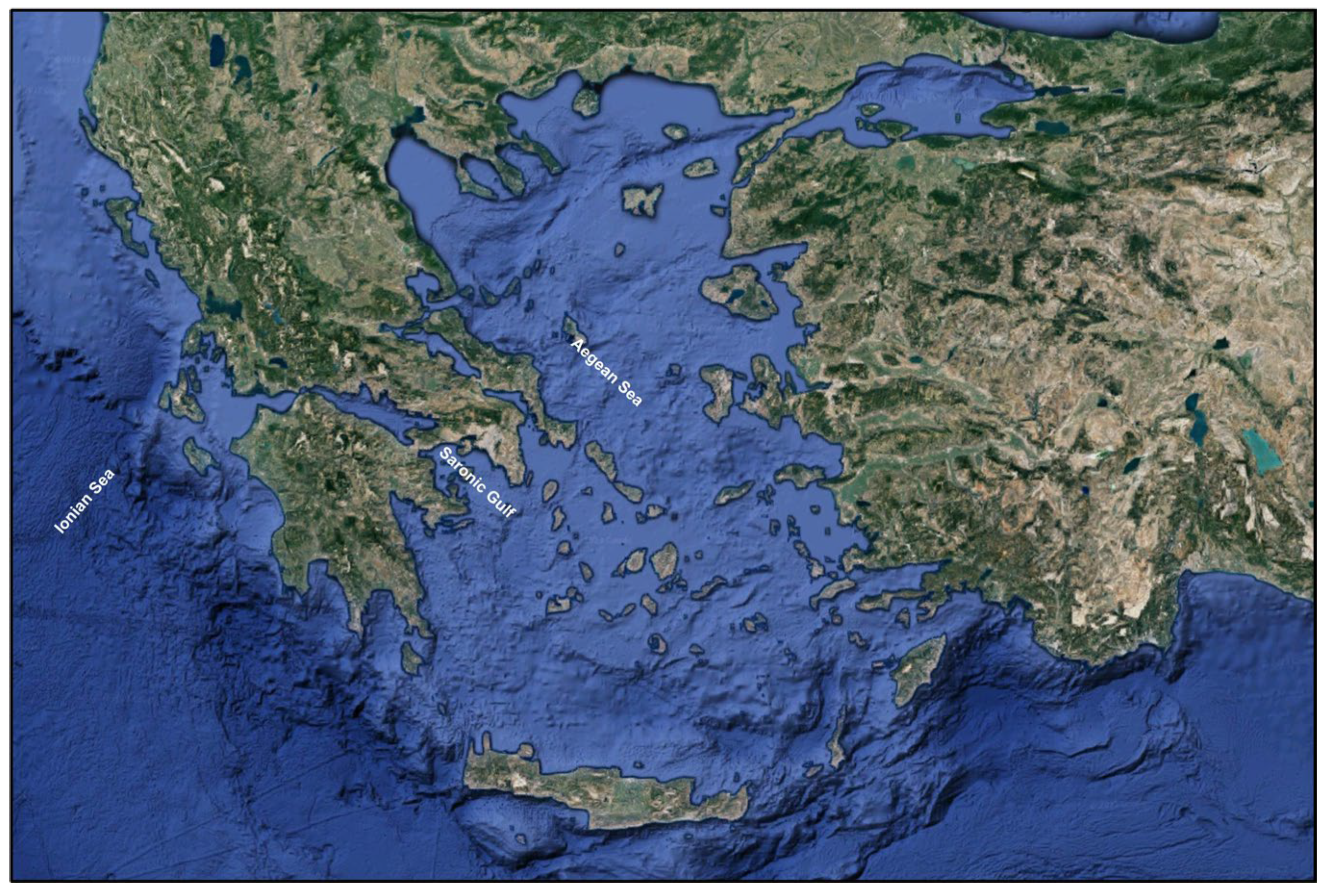
Figure 1. Map of the study area showing the Saronikos Gulf in the eastern Mediterranean Sea, Greece, where Scomber colias specimens were collected.
Fishes 11 00272 g001
Figure 2. Characteristics of anthropogenic particles detected in the gastrointestinal tract (GI) and muscle tissue of Scomber colias: (a) Distribution of particle shapes (fibers, fragments, and pellets), (b) Size categories (micro-sized particles, meso-sized particles, and macro-sized particles), (c) Color distribution of particles recorded in the gastrointestinal tract and muscle tissue. Values are expressed as percentages of total anthropogenic particles (AP).
Fishes 11 00272 g002
Figure 3. Representative micrographs of anthropogenic particles isolated from the gastrointestinal tract (GI) and muscle tissue of Scomber colias collected from the Saronikos Gulf. The particles include pellets, fragments, and fibers of different colors. Red scale bars indicate 1 mm.
Fishes 11 00272 g003
Figure 4. Comparison of anthropogenic particle (AP) occurrence (%) among fish species belonging to different ecological groups (pelagic, demersal, and benthopelagic), based on values reported in previous studies and the present study [26,27,28,29,30]. Boxes represent the interquartile range, horizontal lines indicate the median values, and crosses represent the mean values.
Fishes 11 00272 g004
Table 1. Morphometric characteristics, biological indices, and anthropogenic particle (AP) occurrence in the gastrointestinal tract and muscle tissue of Scomber colias from the Saronikos Gulf.
ParameterGIMuscle Tissue
TL (mm)220 ± 35.8221 ± 9.3
RW (g)109 ± 67.4100 ± 13.8
DRW (g)96 ± 61.985 ± 12.9
K0.95 ± 0.400.92 ± 0.06
ISF (%)4.18 ± 1.984.79 ± 2.22
Number of individuals examined17951
Number of individuals containing AP13221
AP frequency of occurrence (%)7441
AP frequency of occurrence (%) (Male/Female) *71/7488/94
AP number28826
AP abundance (items per individual)1.6 ± 1.60.5 ± 0.7
AP abundance (i.c.m.)2.2 ± 1.51.2 ± 0.4
AP abundance (items g−1 w.w.)0.8 ± 0.80.2 ± 0.1
* No significant differences were observed between sexes (p > 0.05); GI: gastrointestinal tract; TL: Total length; RW: Round weight; DRW: Dressed weight; K: Fulton’s condition factor; ISF: Index of Stomach Fullness; i.c.m.: individuals containing AP.
Table 2. Comparison of anthropogenic particle (AP) occurrence and characteristics in fish species across previous studies and the present study.
ReferencesSpeciesNAreaTissue% with APAP (Items/Indiv; All)AP (Items/Indiv; i.c.m)AP (Items/g−1 w.w.; i.c.m)Shape
(%)
Size
(mm)
Dominant ColorPolymer Identification
Present studyS. colias179Saronikos Gulf, GreeceGI741.6 ± 1.62.2 ± 1.50.8 ± 0.860% fibers0.05–32BlackVisual identification
Present studyS. colias51Saronikos Gulf, GreeceMuscle410.5 ± 0.71.2 ± 0.40.2 ± 0.1100% fibers0.1–1.89BlackVisual identification
Kostoula et al. [26]B. boops20Cyclades, GreeceGI551.1 ± 1.21.9 ± 1.011.4 ± 6.786% fibers<0.05BlackVisual identification
Kostoula et al. [26]S. aurata10Messolonghi Lagoon, GreeceGI601.0 ± 1.72.5 ± 1.914.3 ± 13.5100% fibers<0.05BlackVisual identification
Kostoula et al. [26]D. labrax10Messolonghi Lagoon, GreeceGI402.5 ± 3.14.2 ± 2.921.5 ± 17.6100% fibers<0.05BlackVisual identification
Rivas-Mena et al. [19]S. colias104Cadiz Gulf, Atlantic OceanGI905.4 ± 4.2N/AN/A91% fibers0.03–4.8BlackFTIR
Pequeno et al. [18]S. colias82Portugal, Atlantic OceanGI552.5 ± 4.1N/A0.01 ± 0.0380% fibers0.09–4.7BlueFTIR
Tsangaris et al. [27]B. boops884Eastern MediterraneanGI471.2 ± 0.12.5 ± 0.0N/A82% fibers1.0–5.0BlackFTIR
Herrera et al. [17]S. colias120Canary Islands, Atlantic OceanGI782.2 ± 2.02.8 ± 1.9N/A74% fibers0.04–29.5BlueFTIR
Garcia-Garin et al. [28]B. boops34Catalan coast, BarcelonaGI651.7 ± 0.32.6 ± 0.40.8 ± 0.260% fragments0.1–0.5BlueFTIR
Garcia-Garin et al. [28]B. boops34Catalan coast (Blanes)GI350.5 ± 0.11.42 ± 0.20.2 ± 0.160% fragments0.1–0.5BlueFTIR
Garcia-Garin et al. [28]B. boops34Catalan coast (Cap de Creus MPA)GI380.5 ± 0.11.4 ± 0.20.2 ± 0.060% fragments0.1–0.5BlackFTIR
Digka et al. [29]S. pilchardus36Eastern MediterraneanGI470.8 ± 0.21.8 ± 0.234.9 ± 7.980% fragments0.1–0.5BlueFTIR
Digka et al. [29]P. erythrinus19Eastern MediterraneanGI420.8 ± 0.21.9 ± 0.227.8 ± 24.673% fragments0.1–0.5BlueFTIR
Digka et al. [29]M. barbatus25Eastern MediterraneanGI320.5 ± 0.21.5 ± 0.311.2 ± 2.883% fragments0.1–0.5BlueFTIR
w.w.: wet weight; i.c.m.: individuals containing anthropogenic particles; N/A: not applicable.
Disclaimer/Publisher’s Note: The statements, opinions and data contained in all publications are solely those of the individual author(s) and contributor(s) and not of MDPI and/or the editor(s). MDPI and/or the editor(s) disclaim responsibility for any injury to people or property resulting from any ideas, methods, instructions or products referred to in the content.