
Article

Effects of Different LED Lights on the Growth Performance and Serum Lysozyme Activity of Common Carp Cyprinus carpio and Bacterial Communities in a Closed Recirculating System

1
Graduate School of Agriculture, University of Miyazaki, Miyazaki 889-2192, Japan
2
Research Institute for Aquaculture No. 1, Tu Son 220000, Vietnam
3
Kyoritsu Densyo Co., Ltd., Miyazaki 880-2215, Japan
4
Unit of Marine Life Science, Faculty of Agriculture, University of Miyazaki, Miyazaki 889-2192, Japan
*
Author to whom correspondence should be addressed.
Fishes 2026, 11(4), 234; https://doi.org/10.3390/fishes11040234
Submission received: 2 February 2026 / Revised: 6 April 2026 / Accepted: 11 April 2026 / Published: 15 April 2026
(This article belongs to the Special Issue Fish Health and Welfare in Aquaculture and Research Settings)

Abstract

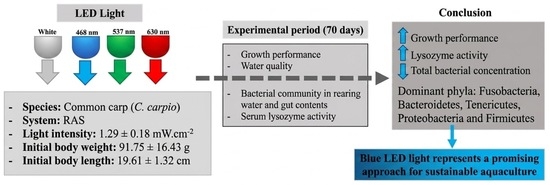
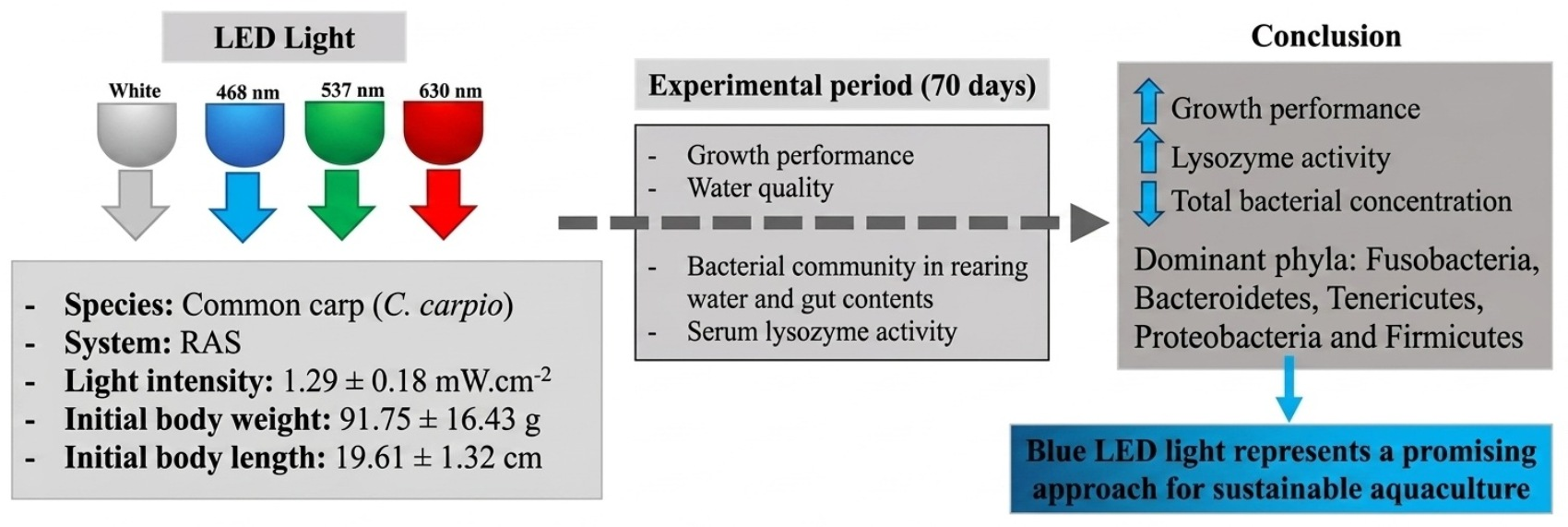
We evaluated the effect of our light-emitting diode (LED) light treatments (blue, peak at 468 nm; green, peak at 537 nm; red, peak at 630 nm; and white light) on the growth performance and serum lysozyme activity of the common carp Cyprinus carpio and bacterial communities in a closed recirculating system under an average power intensity of 1.29 ± 0.18 mW/cm2 of LED light on the water surface of a circulating rearing system for 70 days. The specific growth rate, weight gain and K-factor were improved when carp were cultured under green or blue light. The specific lysozyme activity in the plasma of the common carp was significantly promoted under blue light compared to the green, white and red light conditions after 70 days. Compared to the other types of LED lights, the blue light treatment resulted in the lowest number of heterotrophic bacteria in the rearing water and the highest heterotrophic bacteria in the carp’s gut contents (both p < 0.05). The phyla Fusobacteria, Bacteroidetes, Tenericutes, Proteobacteria and Firmicutes were abundant in the carp’s gut contents after culturing with any of the four types of LED light. In short, the blue LED light can be considered a potential tool in sustainable aquaculture.
Key Contribution: This study introduces the potential of LED lights in aquaculture. The irradiation of LED lights, especially blue light, stimulated serum lysozyme activity in common carp, Cyprinus carpio. Additionally, blue light modified the composition of the bacterial community in a closed recirculating system. LED is a useful tool for aquaculture management and can work as a biocontrol agent in a closed aquaculture system.

Graphical Abstract

1. Introduction

The applications of light-emitting diodes (LEDs) have become increasingly widespread over the past few decades. These devices are now utilized across a diverse range of fields, including water treatment, food processing, textiles, environmental protection, agriculture and aquaculture [1]. LEDs offer an attractive alternative to mercury vapor lamps when a more robust, flexible, durable and environmentally friendly light source is required [2]. In plant-related applications, irradiation with red LEDs has been reported to significantly alter multiple characteristics of cultivated plants, including morphology and growth [3]. One of the key effects of LED irradiation is its bactericidal activity against bacteria. The mechanism involves the absorption and excitation of endogenous photosensitizers—primarily porphyrins and flavins—by blue light. This triggers Type I and Type II reactions that generate reactive oxygen species (ROS), such as superoxide, hydroxyl radicals, hydrogen peroxide and singlet oxygen. These ROS subsequently oxidize and damage bacterial membranes, DNA, proteins and lipids, ultimately leading to cell death [4].
The portion of capture production in total fishery yields has recently decreased, although the production of aquaculture for human demand is continuously increasing. This issue is promoting the study of aquacultures in fishery science. For example, in aquaculture applications, green LED irradiation has been reported to stimulate appetite, promote growth and alter growth hormone levels in flounder [5]. Furthermore, LEDs have been reported to be effective in eradicating Aeromonas salmonicida and Yersinia ruckeri, both of which are pathogenic bacteria affecting salmonid fish. Consequently, the use of LEDs in aquaculture is expected to serve as a novel tool for improving the growth of farmed fish and treating diseased adult fish [6]. Some research has indicated that LED technology has a potential application in aquaculture due to advantages such as fast operation and cost-effective production. It has been shown that the growth, behavior, immune response and reproduction of aquaculture fish species such as sea bass, yellowtail clownfish, salmon, rock bream and goldfish and the cultivation of alga can be improved by the use of LED light [7,8,9,10,11,12,13,14].
Among the various aquacultural products, the common carp Cyprinus carpio is the main freshwater fish for human consumption in many countries, especially Southeast Asian and European countries. The total production of C. carpio reached ~4.450 million metric tons in 2016, providing the third largest finfish production species worldwide [15]. Carp meat provides highly valuable nutrition as a food, and its consumption has been reported to reduce the risk of heart diseases in humans [16].
Commonly used methods for culturing common carp are an intensive or semi-intensive model in a pond and cage culturing. Unfortunately, however, common carp in these culture models have been threatened by pathogenic bacterial diseases caused by Aeromonas hydrophila, A. salmonicida, Edwardsiella tarda, Flexibacter columnaris and Staphylococcus spp. [17,18,19]. Antibiotics have been used as a disease prevention measure in aquaculture; generally, antibiotics are orally administered to the fish through feeding. However, these drugs can be introduced into the environment via the excretion of urine and feces or uneaten feed [20]. The distribution of large amounts of drugs into an aquatic environment leads to the development of drug-resistant bacteria [21]; thus, alternatives to drugs for disease prevention are desired.
Water environmental conditions such as the temperature, pH, dissolved oxygen, ammonia, nitrite, nitrate and microbial communities in the rearing water and the gut contents of fish have been confirmed to play important roles in the health, productivity and physiology of fish cultured in intensive and semi-intensive aquaculture models, as well as in the prevention of fish disease [22]. The gut microbiota in particular is a key factor related to both feed digestion and the resistance to infectious disease [22].
To identify and enumerate bacteria in aquaculture, several studies have used a combination of culture-based methods and 16S rRNA gene (or other selected gene) sequencing [23,24]. But, in those studies, only culture microbes (no non-culture microbes) were examined. To address this problem, molecular biological techniques have been used to diagnose the microbial communities in aquacultures; for example, high-throughput metagenomic analysis with a next-generation sequencer [25], and more recently, a metagenomics analysis with a next-generation sequencer of 16S rRNA [26,27]. The analyses of complex microbial structures have greatly progressed with the development of novel analytical techniques.
There is increasing interest in applying environmentally friendly, productive, efficacious and sustainable aquaculture techniques through aquatic environment management. There are few reports about the influences of LED light on common carp C. carpio. This study evaluated the effect of LED light on the growth performance and serum lysozyme activity of common carp and a microbial community in a closed recirculating system.

2. Materials and Methods

2.1. LED Light Source

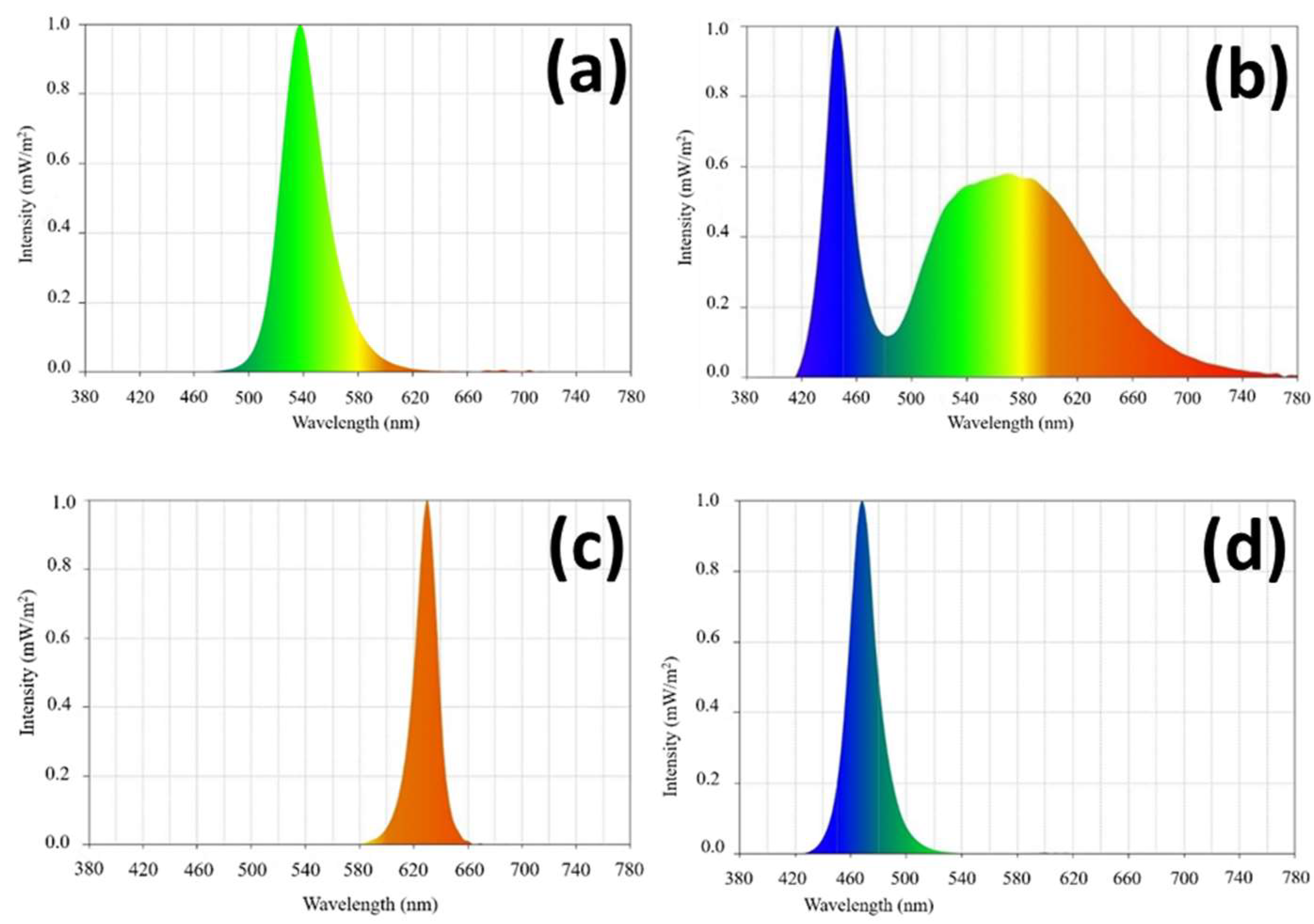
Four LED lights were used: blue light, λ max = 468 nm; green light, λ max = 537 nm; red light, λ max = 630 nm; and white light (Kyoritsu Densho Co., Ltd., Miyazaki, Japan), as illustrated in Figure 1. A laboratory hand meter C-7000 SpectroMaster (Sekonic Corporation, Tokyo, Japan) was used to calculate the power density of LED light. We set the distance from the LED source to the surface of the rearing-water at 8.0 cm with a power density of 1.29 ± 0.18 mW cm−2 at the water surface.
The dose of LED light was measured following the formula:
E = P.t, where E = is the dose (energy density) in J cm−2, P is the = irradiance (power density) in W cm−2 and t = is the time in seconds.

2.2. Fish

Heathy common carp C. carpio were obtained from a commercial fish farm, located at approximately 32.13° N, 131.48° E (WGS84 datum), at an elevation of 17 m above sea level, in Miyazaki, Japan, and transferred to the Marine Environment Microbiology laboratory at the University of Miyazaki, situated at 32.83° N, 131.41° E (WGS84), elevation 30 m, in Miyazaki, Japan. The fish were acclimatized for 1 week before the experiment. The average body weight was 91.75 ± 16.43 g, and the average total body length was 19.61 ± 1.32 cm.

2.3. Experimental Design

Fish were deprived of feed for 2 days prior to the experiment. At the onset of the experiment, 40 fish were randomly divided into five groups (n = 8 per group): blue light, green light, red light, white light and an initial sampling group. Each light treatment was conducted in an independent rearing system, with individual fish (n = 8 per system) serving as the experimental units.
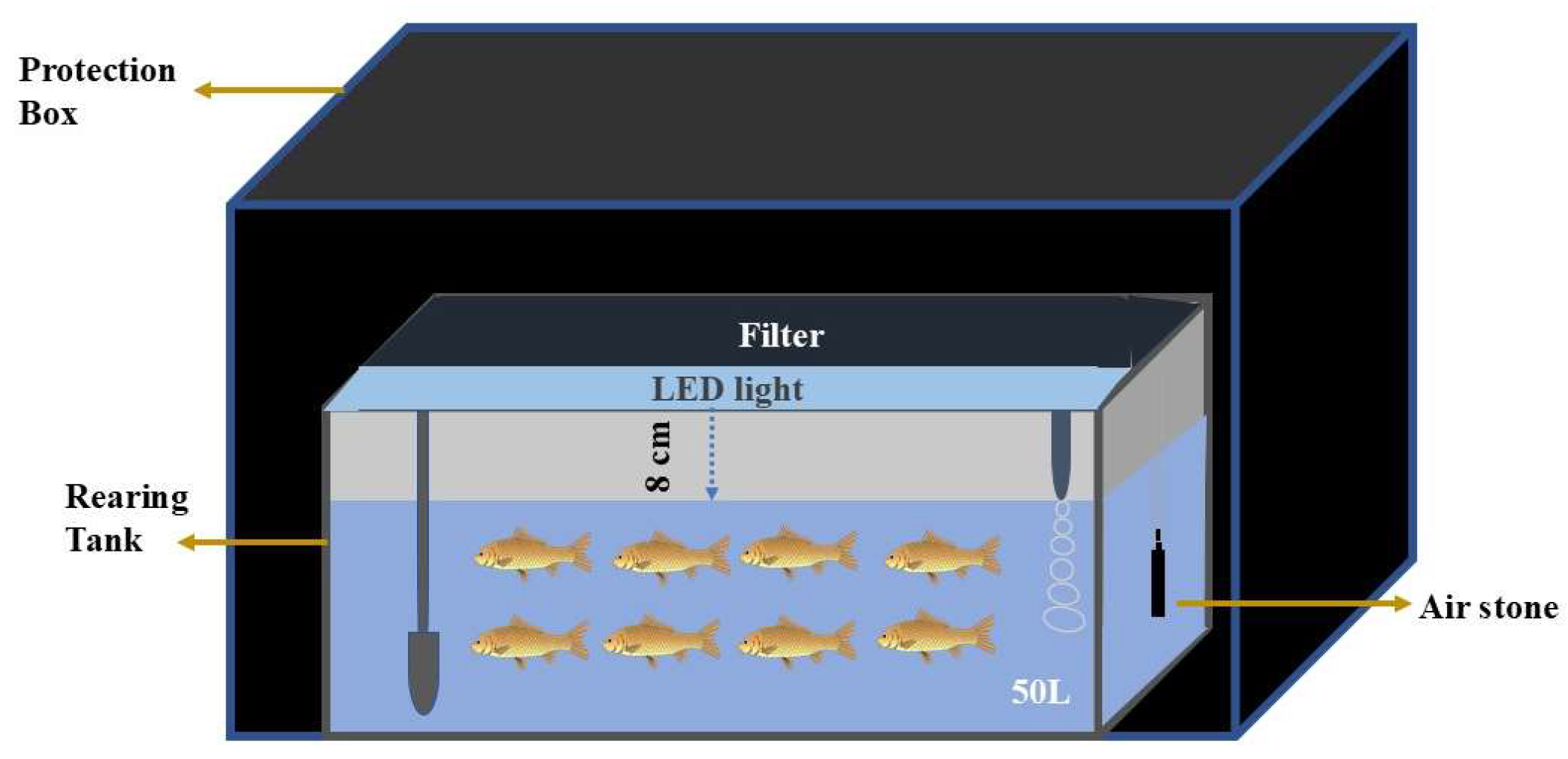
All of the fish were maintained in a closed recirculating system (working volume: 50 L) equipped with a filter unit and aeration through an air stone. Each rearing system was covered by a protection box (dark color) to eliminate the effect of external light (Figure 2). The photoperiod was controlled as 12 h of light and 12 h of dark (12L:12D). The changes in the photoperiod were set at 7:00 (dark to light) and 19:00 (light to dark), controlled by an auto-control light (cat. no. PT70DW, Revex, Toyko, Japan).
During the 70-day experimental period, the fish were fed twice a day (9:00 and 17:00) with a commercial dry-pellet diet (Scientific Feed Laboratory Co., Ltd., Tokyo, Japan) at a rate of 2.0% of body weight per day. The rearing water was exchanged at 50.0% daily at 19:00 with tap water that had been vigorously aerated to remove chlorine. The water temperature was monitored every day. Water quality indicators including ammonia (NH4-N), nitrite (NO2-N), nitrate (NO3-N), chemical oxygen demand (COD), dissolved oxygen (DO) and pH were monitored every 7 days. The following growth performance parameters were calculated as described below: weight gain (WG, %), feed conversion ratio (FCR), condition factor (K-factor) and specific growth rate (SGR, %/day).
Four liters (4.0 L) of the rearing water in each rearing system were collected on day 0 and day 70 of the experiment for the determination of bacterial cells in the rearing water. The water sample was immediately passed through a 0.2 µm pore sterilized filter (90 mm dia., Millipore Membrane Filter, Merch Millipore Ltd., Darmstadt, Germany). The filters were stored at −80 °C until they were used to extract DNA for the analysis of microbiota in the rearing water.
At the end of the experiment, the fish were not fed for 24 h before sampling. All fish (n = 8 of each group) were anesthetized with 2-phenoloxyethanol (Nacalai Tesque, Inc., Kyoto, Japan) at 300 ppm, and then the body weight and total body length of all fish from each rearing system were measured to evaluate growth performance. Blood was collected with a syringe from a caudal vein of each fish (n = 6 in each group) and left in a 1.5 mL Eppendorf tube at room temperature for 1 h. The tube was centrifuged at 3000× g for 15 min, and the supernatant was stored as a serum sample at −80 °C until its use in the assay of lysozyme activity. The intestine of each fish (n = 5 in each group) was dissected and removed, and the gut contents were collected into a sterilized 1.5 mL Eppendorf tube with the use of sterilized scissors and tweezers. The gut content was stored at −80 °C for further analysis.

2.4. Water Quality Monitoring

The pH, DO and temperature were monitored by a hand portable by D-55 Meter (HORIBA, Ltd., Kyoto, Japan). NH4-N, NO2-N and NO3-N were analyzed as described by Strickland and Parsons [28]. COD was analyzed using the alkaline potassium permanganate method with some modifications [29]. Each water quality parameter was analyzed in triplicate.

2.5. Growth Performance Indicators

Growth performance was identified by the following parameters:
Weight gain (WG, %) = [(final body weight − initial body weight)/initial body weight] × 100; feed conversion ratio (FCR) = dry feed intake (g)/live WG (g); condition factor (K factor) = [bodyweight/(body length)3] × 100; specific growth rate (SGR, %/day) = [ln(final weight) − ln(initial weight)/the number of days of the experiment] × 100.

2.6. Specific Lysozyme Activity in Serum

The lysozyme activity in plasma was measured by a turbidimetric assay [30] with slight modifications for common carp. Briefly, Micrococcus lysodeikticus (lyophilized cells, Sigma-ALDRICH, St. Louis, MO, USA) was suspended in 40.0 mM sodium phosphate buffer, pH 6.5, at a concentration of 40.0 mg/mL. The suspension was incubated at 30 °C for 60 min. The reaction mixture including 100.0 µL of serum and 200.0 µL of M. lysodeikticus was incubated at 30 °C, and the reduction in absorbance was read at 0 and 15 min at 450 nm by a V-530 UV/VIS spectrophotometer (Jasco International, Tokyo, Japan). The protein concentration of the plasma was determined as described by Lowry et al. [31]. The unit of lysozyme activity (U) was defined as a 0.001 U/min decrease in absorbance.

2.7. Total Bacteria in Rearing Water and Gut Fish

For the assessment of the bacteria in the gut contents and the rearing water, 50.0 mL of rearing water from each treatment were collected in a sterilized Falcon tube. For the determination of the total bacteria in the rearing water, the standard colony counting method was performed on a standard agar plate (0.5% peptone, 0.25% yeast extract, 0.1% glucose, 1.5% agar; pH 7.0) with serial dilutions with the sterilized phosphate-buffered saline (PBS, pH 7.4 ± 0.2). This method was applied immediately after the sampling and repeated three times for each sample. The agar plates were incubated at 28 °C for 48 h. All bacterial colonies were enumerated by a colony counter. The results are presented as log10 colony-forming units (CFU/mL). The counting was conducted in triplicate.
For the calculation of total bacteria in the gut contents, three individual fish of the initial group (day 0) and each LED light group (day 70) were chosen randomly, and the gut contents were collected as described above. Each sample of gut contents was homogenized well and suspended in 1.0 mL of sterilized PBS, pH 7.4 ± 0.2. An aliquot of the sample (0.1 mL) was plated on a standard agar plate. The agar plates were incubated at 28 °C for 48 h. All bacterial colonies were enumerated, and the results are presented as the log10 CFU/g gut contents. The counting was conducted in triplicate.

2.8. DNA Extraction of Rearing Water

Each filter was cut into small pieces and then placed in a 2.0 mL sterilized Eppendorf tube; 1.0 mL of TE buffer (10 mM Tris, 1 mM EDTA, pH 8.0) was then added and the mixture was vortexed well. The tube was centrifuged at 10,000× g at 4 °C for 10 min and then the supernatant was discarded. The DNA extraction was continuous following the CTAB method [32,33], with a slight modification: 1.0 mL of CTAB buffer, pH 8.0 (2.0% etyltrimethyl ammonium bromide, 1.4 M NaCl, 20.0 mM EDTA, pH 8.0 and 100.0 mM Tris HCl, pH 8.0 and 100.0 µL proteinase K solution (20.0 mg/mL) were added and vortexed well. This mixture was incubated at 56 °C for 120 min and vortexed occasionally.
Next, 600.0 µL of CI buffer (chloroform: isoamyl alcohol = 24:1[v/v]) was added and then centrifugated at 14,600× g for 5 min at 4 °C. The supernatant (upper layer) was pipetted to a new sterilized Eppendorf tube, and 1.0 mL of ice-cold isopropanol was added to the supernatant with several inversions. This mixture was incubated at −20 °C overnight and then centrifuged at 14,600× g for 20 min at 4 °C. The supernatant was discarded and then 300 µL of 70% ethanol was added. The tube was inverted several times by hand before centrifugation at 14,600× g for 20 min at 4 °C. The DNA was dried in a vacuum chamber to remove ethanol, and 50 µL of TE buffer (pH 8.0) was then added to the pelleted DNA. The DNA solution was stored at −80 °C for further use.

2.9. DNA Extraction from Gut Content

Five gut contents samples from each group were used for bacterial DNA extraction. The genome DNA of bacteria in the gut content was extracted using a DNeasy® Blood and Tissue Kit (Qiagen, Hilden, Germany) according to the manufacturer’s instructions, with slight modifications. Briefly, approx. 25.0 mg of gut content was resuspended in 1.0 mL of PBS, pH 7.2 ± 0.2. This solution was centrifuged at 8000× g at 4 °C for 10 min. The supernatant was discarded, and then the bacteria cells were pre-treated with 180.0 µL of lysis buffer (20 mM Tris-HCl, 2 mM EDTA-2Na, 1.2% of Triton X-100, pH 8.0) and 20.0 µL of lysozyme solution (20.0 mg/mL) for 30 min at 37 °C. The DNA extraction was processed continuously following the Kit’s instructions. The DNA extracted from the five gut contents samples was pooled and used for the amplification of the 16S rRNA gene for gut microbiota analysis.

2.10. Amplification of the 16S rRNA Gene and Metagenomic Analysis

The 16S rRNA gene was amplified using the primer pair V3V4F-mix (ACACTCTTTCCCTACACGACGCTCTTCCGATCT-NNNNN-CCTACGGGNGGCWG CAG)/V3V4R-mix (GTGACTGGAGTTCAGACGTGTGCTCTTCCGATCT-NNNNN-GAC TACHVGGGTATCTAATCC) for the V3/V4 hypervariable region.
A mixture (50.0 µL) containing 5.0 µL of 10X reaction buffer, 4.0 µL of dNTPs mixture (2.5 mM each of dNTPs), 2.5 µL of forward primer V3/V4F (10 µM), 2.5 µL of reverse primer V3/V4R (10 µM), 2.5 µL of template DNA, 0.5 µL of Prime Taq DNA polymerase (5 U/µL) (Genetbio, Yuseong-gu, Daejeon, Republic of Korea) and 33.0 µL of nuclease-free water was prepared for PCR amplification. Conventional PCR amplification from this mixture was performed in a MiniAmp Plus Thermal Cycler (Thermo Fisher Scientific, Waltham, MA, USA) by the following procedure: one cycle of denaturing at 94 °C for 2 min, followed by 25 cycles of denaturing at 94 °C for 30 s, annealing at 55 °C for 30 s, elongation at 72 °C for 30 s and a final extension at 72 °C for 5 min.
The PCR products were checked by electrophoresis on a 1.0% (w/v) agarose gel stained with SYBR®Safe DNA gel stain (Invitrogen, Thermo Fisher Scientific, Waltham, MA, USA) in 1× TAE buffer (40 mM Tris–HCl, 20 mM acetic acid, 1 mM EDTA) at 100.0 V for 30 min. The sizes of the DNA fragments were estimated using standard 100 bp DNA ladder markers (Shinkouseiki, Co., Ltd., Fukuoka, Japan) and visualized under UV light. The PCR products were then purified by the polyethylene glycol precipitation method [34]. The second PCR amplicons were purified with Ampure XP (Beckman Coulter, Indianapolis, IN, USA). The sequencing was performed at 2 × 300 bp by a MiSeq (Illumine 1.8+) sequencer (Illumina, Inc, Tokyo, Japan), and the sequences were read by the Fastx toolkit of fastq_barcode_spliltter to increase the read quality (Bioengineering Lab, Kanagawa, Japan).
After deletion of the low-quality sequences, the sequences were clustered into the operational taxonomic units (OTUs) at an identity threshold of 97.0% similarity on the Green gene database [35]. Chao1 richness and Shannon diversity were obtained through the Quantitative Insights into Microbial Ecology program (QIIME v1.7.0) to analyze the alpha diversity at the species level in the LED lights groups. A principal coordinate analysis was conducted based on the experimental groups for the beta diversity of each microbial community.

2.11. Bioinformatic Analysis

Raw paired-end sequence reads obtained from high-throughput sequencing were processed separately for rearing water samples and gut content samples. Initial quality control was performed to remove low-quality reads, sequences containing ambiguous bases and chimeric reads using standard filtering procedures within the bioinformatic pipeline. Only high-quality reads were retained for subsequent analyses.
Filtered reads were clustered into operational taxonomic units (OTUs) at a 97.0% sequence similarity threshold using the Greengenes reference database. Representative sequences from each OTU were selected and taxonomically assigned at different taxonomic levels (phylum to genus) based on the reference database.
An OTU abundance table was generated for each sample type (water or gut). Prior to diversity analyses, the OTU tables were rarefied to an equal sequencing depth across all samples to minimize biases caused by differences in sequencing effort. Alpha diversity indices, including the Chao1 richness estimator and the Shannon diversity index, were calculated based on the rarefied OTU tables using the Quantitative Insights into Microbial Ecology (QIIME) pipeline (version 1.7.0). The Chao1 index was used to estimate microbial species richness by accounting for the presence of rare OTUs, whereas the Shannon index was used to describe microbial diversity by incorporating both species richness and evenness.
For each LED light treatment, each sample type (rearing water or gut contents) was represented by a single pooled sample composed of eight individual subsamples. As a result, statistical comparisons of alpha diversity indices among LED treatments were not performed. Therefore, alpha diversity indices were used exclusively for the descriptive evaluation of microbial richness and diversity, and observed differences among treatments were interpreted as general trends rather than statistically supported differences.
Beta diversity analysis was conducted independently for water samples and gut samples to assess differences in microbial community structure among LED light treatments. Distance matrices were calculated based on OTU relative abundance data, and principal coordinate analysis (PCoA) was applied to visualize patterns of community similarity and dissimilarity among treatments.
The relative abundance of bacterial taxa was calculated separately for water and gut samples by normalizing OTU counts to the total number of sequences per sample. Relative abundance data were expressed as percentages at the phylum and genus levels and used to compare microbial community composition among LED treatments within each sample type.

2.12. Statistical Analysis

The Shapiro–Wilk test was performed to verify normality. For analysis, p-values were calculated using either the Real Statistics Resource Pack (Excel add-in) or the Shapiro–Wilk Test Calculator. Additionally, a Q-Q plot was created in Microsoft Excel for visual evaluation. The data for each group were sorted in ascending order, the cumulative probability was calculated, the theoretical quantile was obtained using the NORM.S.INV function and a scatter plot was created, comparing it with the observed values. The homogeneity of variances was checked by performing Levene’s test. Since the assumptions were met for all indicators (p > 0.05), a one-way analysis of variance ANOVA was performed. One-way ANOVA was conducted in Microsoft Excel (version 23.03), with multiple comparisons among groups conducted using the Tukey-Kramer method. A significance level of p < 0.05 was applied.

3. Results

3.1. Water Quality During the Experiment

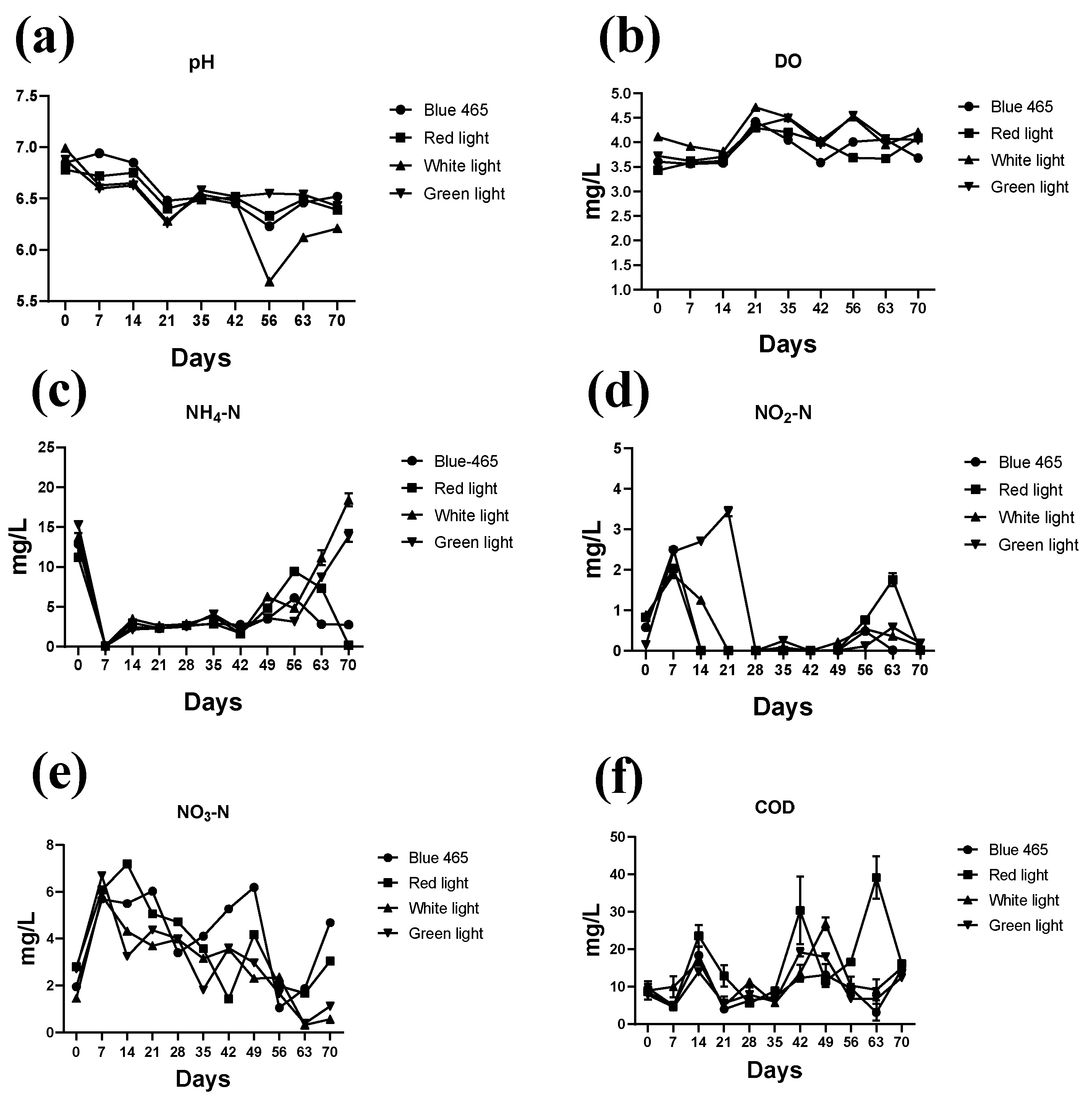
The average values and changes of pH, DO, NH4-N, NO2-N, NO3-N and COD during the 70 days of culture are presented in Table 1 and depicted in Figure 3. The following average values were identified: water temperature, 27.33 ± 0.50 °C; pH, 6.52 ± 0.25; and DO, 3.98 ± 0.34 mg/L. There were no significant differences in the DO, pH or water temperature averages based on the different types of LED light. The NO2-N value in the blue light condition (0.33 ± 0.73 mg/L) was significantly lower than that in the green light (0.90 ± 1.25 mg/L) (p < 0.05). The ammonia value in the white light (6.27 ± 5.54 mg/L) was significantly higher than that in the blue light (3.74 ± 3.25 mg/L) (p < 0.05), but it was not significantly different from those of the red or green lights.
The NO3-N values in the rearing water in green light (2.96 ± 1.69 mg/L) and white light (2.87 ± 1.61 mg/L) were significantly lower than those in blue light (4.16 ± 1.76 mg/L) and red light (3.80 ± 1.79 mg/L) (p < 0.05). No difference was observed in the COD value with the LED treatments; the average COD value was 11.92 ± 7.39 mg/L.

3.2. Fish Growth Parameters

The growth performances of the common carp are described in Table 2. After the 70-day rearing period, the average body weight of the fish was 162.11 ± 28.28 g and the average body length was 23.16 ± 1.60 cm. The survival rate was 100% for all treatment groups, and the FCR values ranged from 1.73 (green light) to 2.01 (red light). The growth parameters (WG, SGR, K factor) were numerically higher in green light and blue light than under white light and red light, although the differences were not statistically significant.

3.3. Lysozyme Activity in the Serum of Common Carp Under LED Light

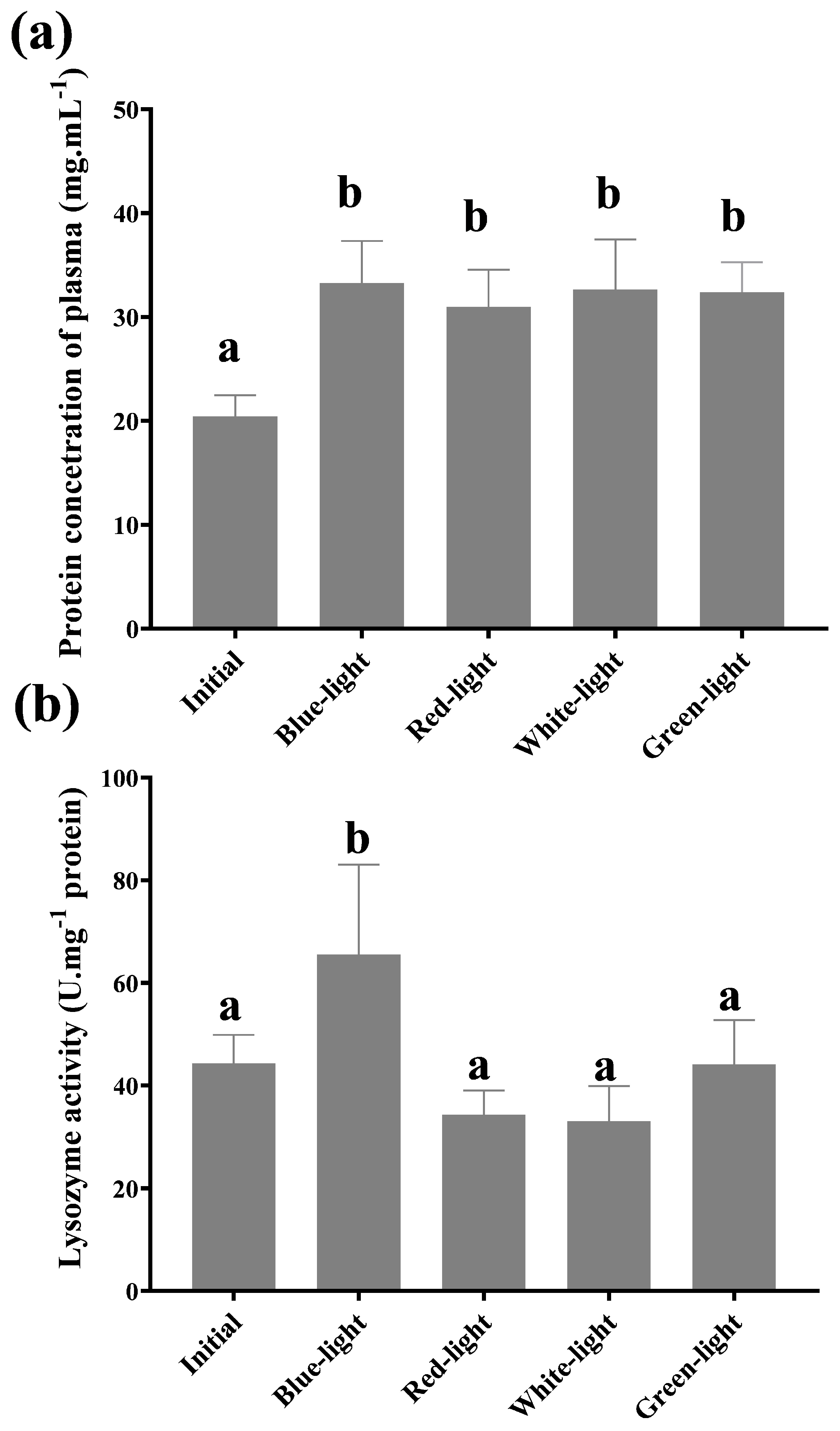
As shown in Figure 4, the protein concentration in the plasma of the common carp after 70 days of culture with LED light was significantly higher than that on day 0, but no significant difference was observed among the four LED groups after 70 days of treatment (p < 0.05). However, the specific lysozyme activity in the plasma of the fish in the blue light group was significantly higher than those in the other LED treatments on day 70 (p < 0.05) (Figure 4b).

3.4. Total Bacterial in the Rearing Water and Gut Fish

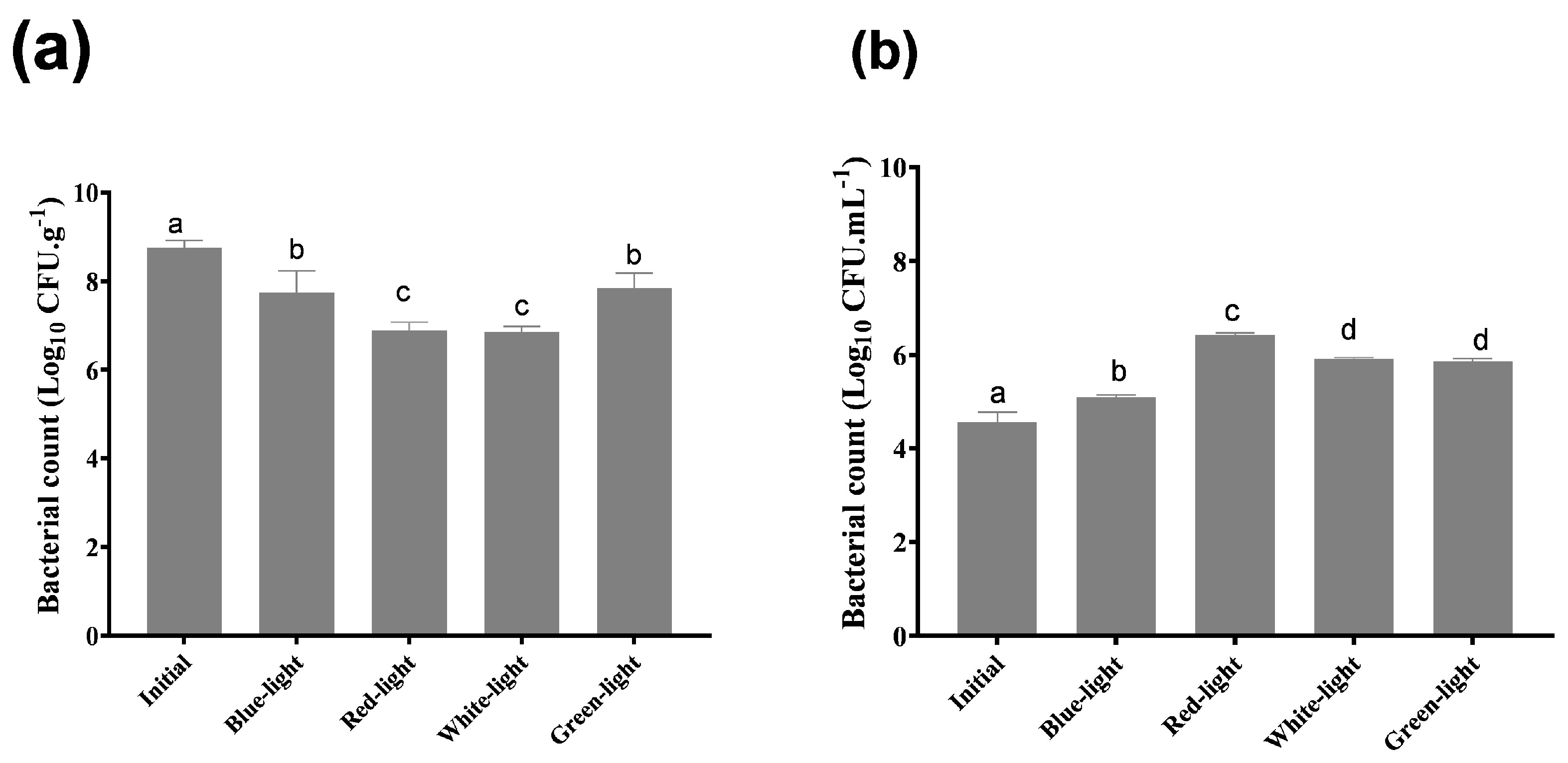
The total bacterial counts in the fish gut contents and in rearing water are shown in Figure 5. The counts revealed a decrease in the total bacteria in gut contents after LED treatment but an increase in the rearing water. After 10 weeks with LED irradiation, the counts of total bacteria in the gut contents in the blue light (7.74 ± 0.49 log CFU/g) and green light (7.85 ± 0.33 log CFU/g) were significantly higher than those in the red light (6.89 ± 0.18 log10 CFU/g) and white light (6.85 ± 0.13 log10 CFU/g) (p < 0.05).
In the rearing water, the total bacteria were significantly higher in the red light (6.42 ± 0.04 log10 CFU/mL) compared to the white light (5.86 ± 0.06 log10 CFU/mL) and green light (5.91 ± 0.03 log10 CFU/mL) (p < 0.05). The lowest bacterial count in the rearing water was observed in the blue light condition (5.09 ± 0.05 log10 CFU/mL).

3.5. Microbiota Profile of the Gut of Common Carp and the Rearing Water

After the filtering of chimera, the number of reads was 132.855 in the water samples and 151.888 in the gut content samples. All reads were classified to OTUs with 97.0% identity in the Greengenes database.
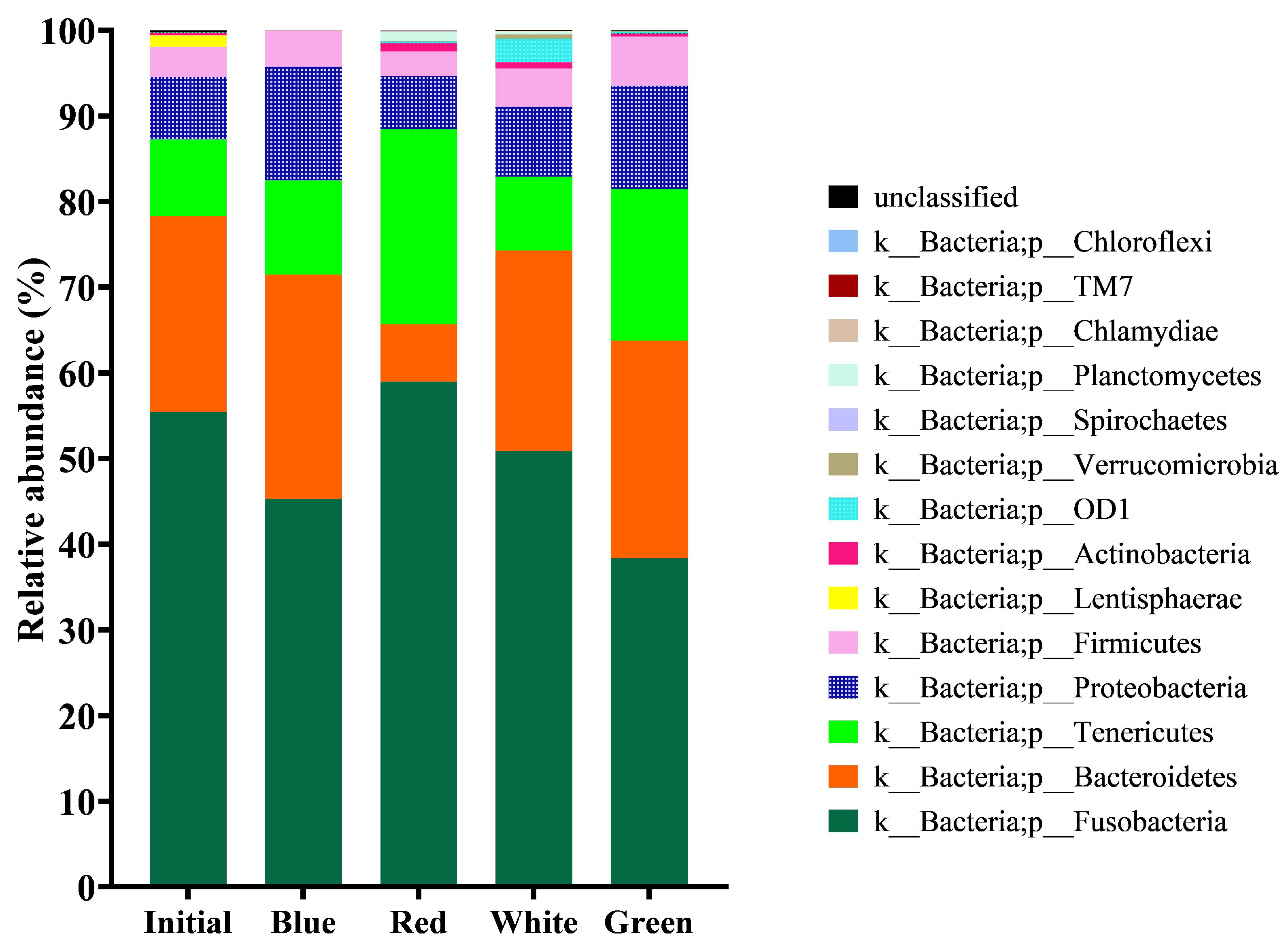
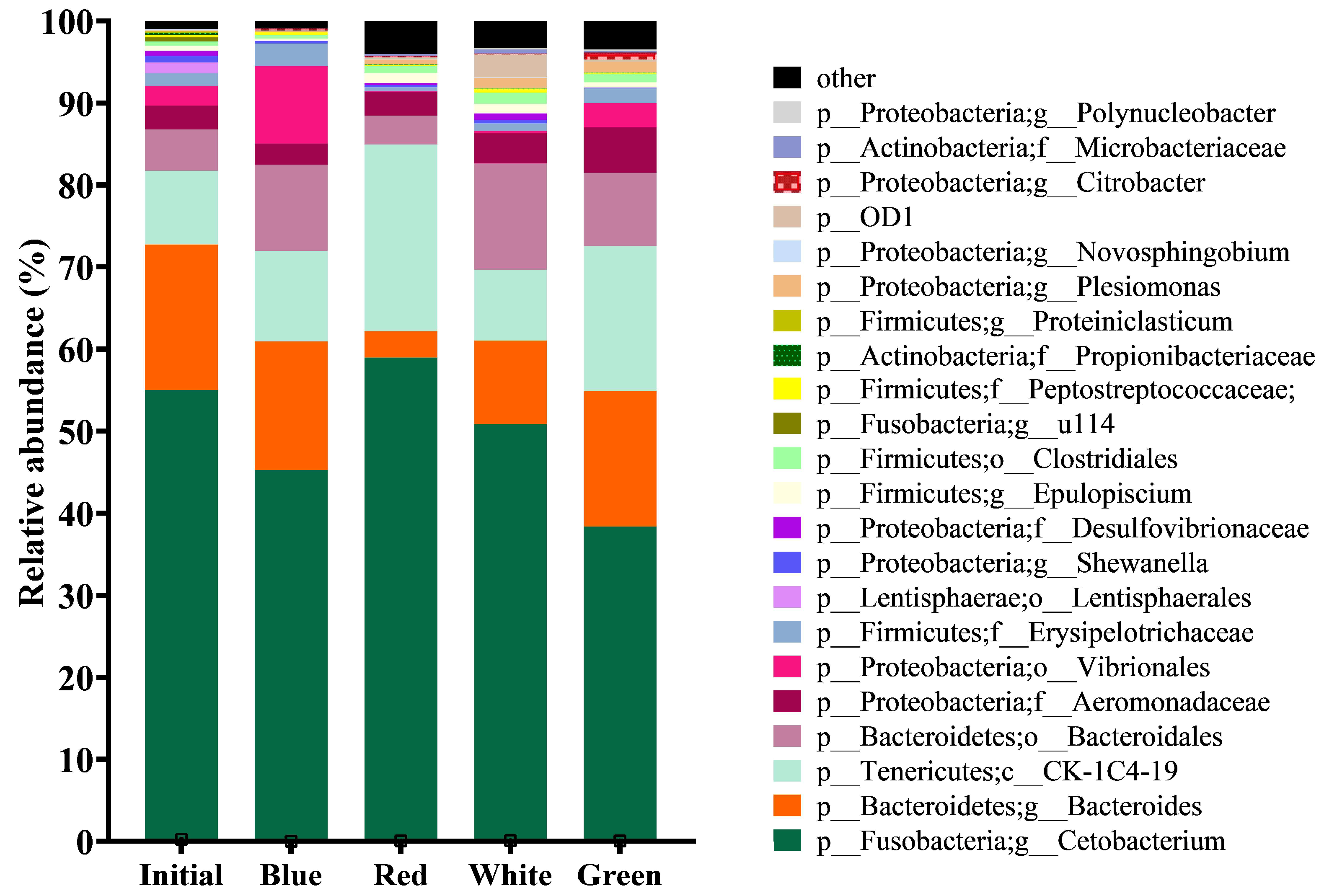
The microbial compositions at the phylum level and genus level are presented in Figure 6 and Figure 7 for the gut contents and Figure 8 and Figure 9 for the rearing water. The microbial composition of the gut contents varied with the type of LED light. There were five abundant phyla in the gut contents: Fusobacteria, Bacteroidetes, Tenericutes, Proteobacteria and Firmicutes. Among these, Fusobacteria were the most abundant (from 38.38% in green light to 58.96% in red light). The red light resulted in Fusobacteria (58.96%) and Tenericutes (22.74%). The blue light and green light resulted in the highest levels of Fusobacteria (38.38–45.28%), Bacteroidetes (25.39–26.17%) and Proteobacteria (11.03–17.70%). At the genus level, Cetobacterium (38.38–58.96%), Bacteroides (3.22–17.75%) and CK-1C4-19 (8.63–22.74%) were most abundant.
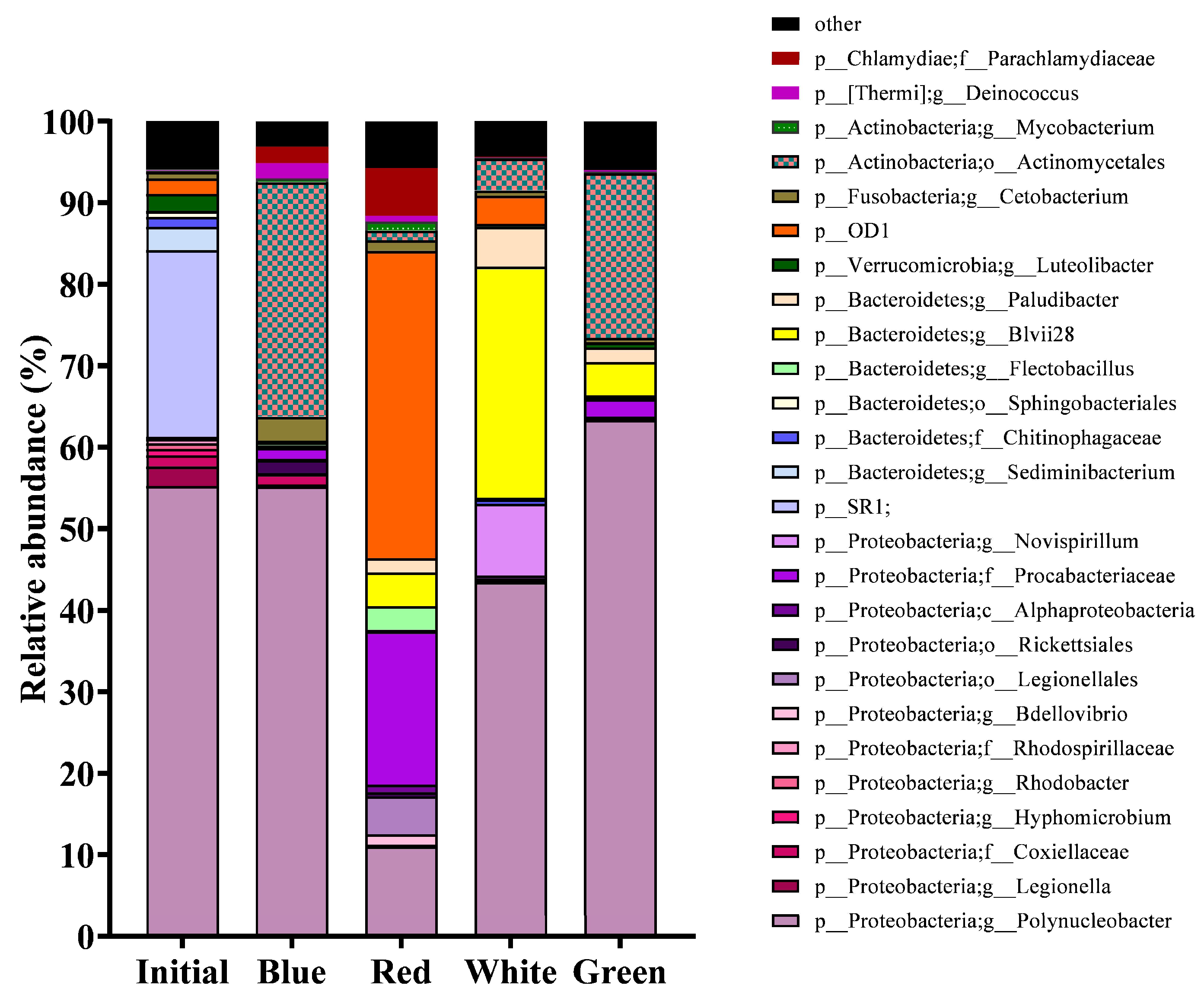
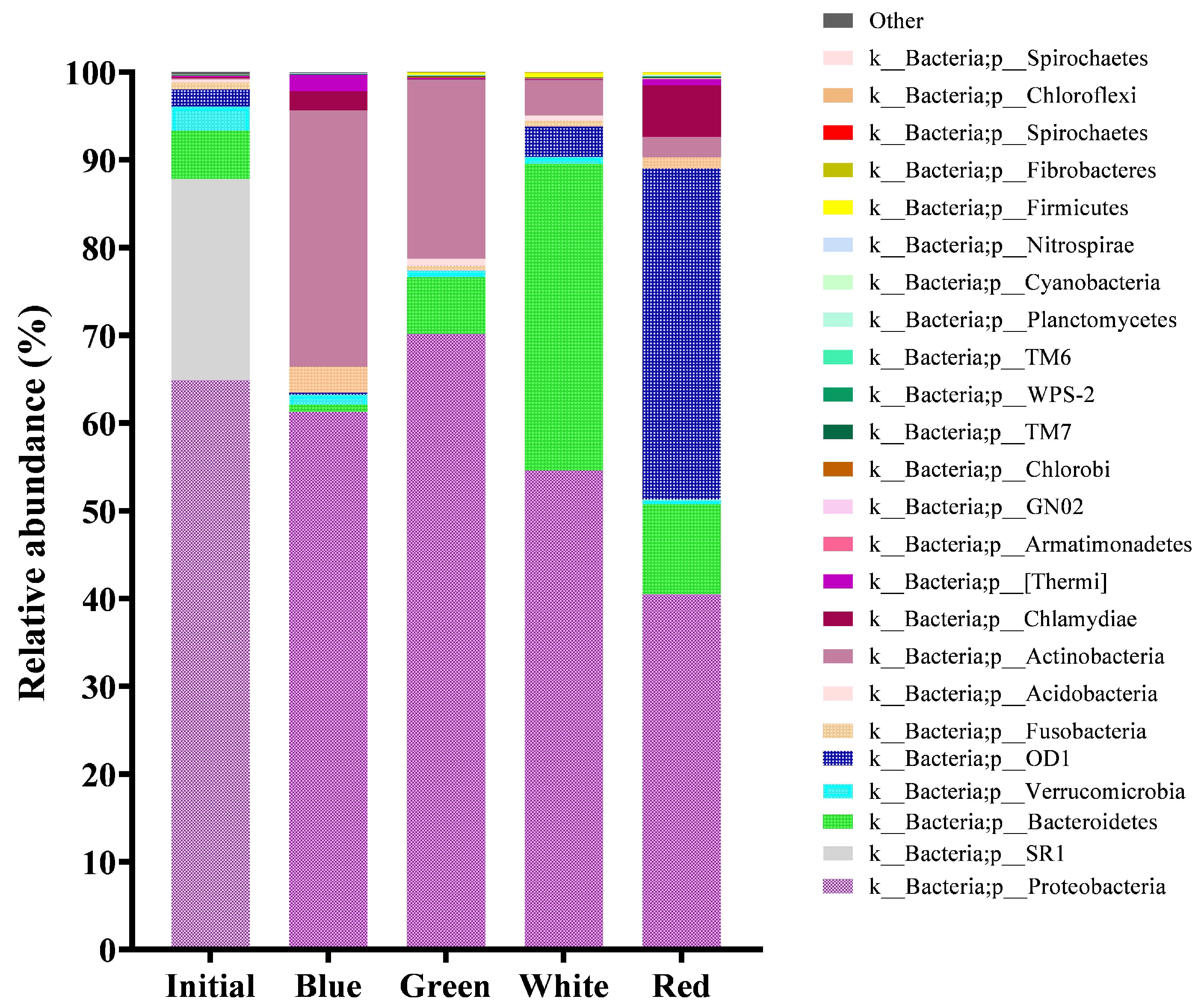
In the rearing water, at the phylum level, the microbial composition in the initial sample showed an abundance of Proteobacteria (64.87%) and SR1 (22.93%). There were varied microbial compositions among the four LED-light groups after 70 days of culture. Proteobacteria (61.27–70.16%) and Actinobacteria (20.42–29.25%) were the most abundant in the blue light and green light conditions. However, Proteobacteria (40.48%) and OD1 (37.71%) were the most abundant phyla in the red light, whereas the white light showed the highest percentage of Proteobacteria (54.61%) and Bacteroidetes (34.92%). At the genus level, 43.47–55.25% of the bacteria belonged to the genus Polynucleobacter in the initial samples from the blue, white and green light conditions. The red light condition resulted in the highest proportion of the OD1 (37.69%).
The alpha diversity (Chao1 richness and Shannon index) in the gut contents of the carp and in the rearing water in a closed recirculating system with four LED lights is presented in Table 3. In the gut contents, the Chao1 richness was around 42 (day 0) to 67 in the white light condition. The Chao 1 in blue light was lowest than in the other three types of LED light. Similar Shannon diversity index values were observed among the LED light groups, from 2.30 (red light) to 2.61 (green light). In the rearing water sample, the Chao1 richness ranged from 21 in the day 0 (initial) sample to 65 after 70 days of culture with the red light. However, the Shannon index in the LED light groups was 2.7 (green light) to 4.6 (red light) times higher than the initial samples in the rearing water. The Shannon diversity values for the red light and white light were 1.5 to 1.7 times higher than those in blue light and green light.
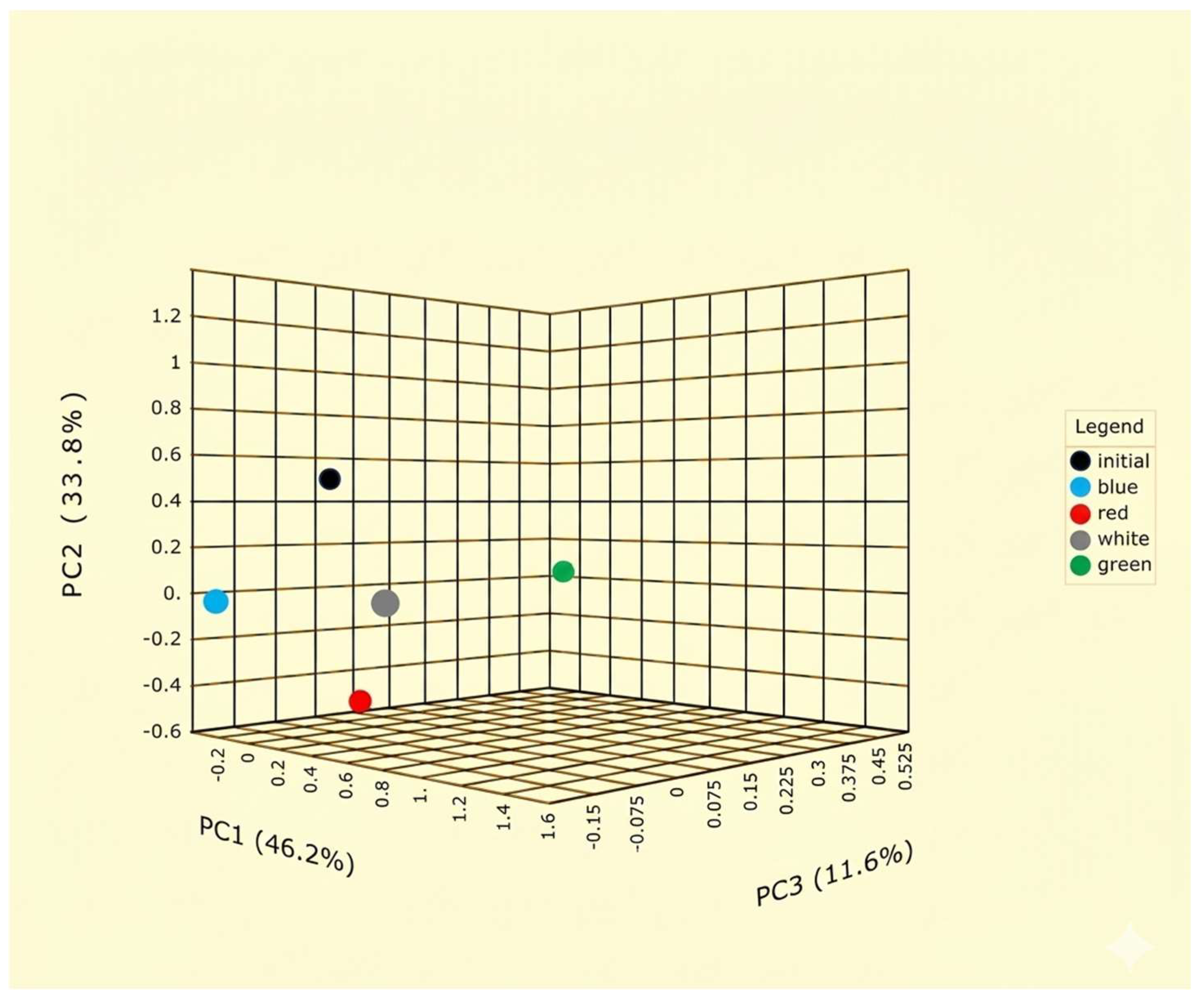
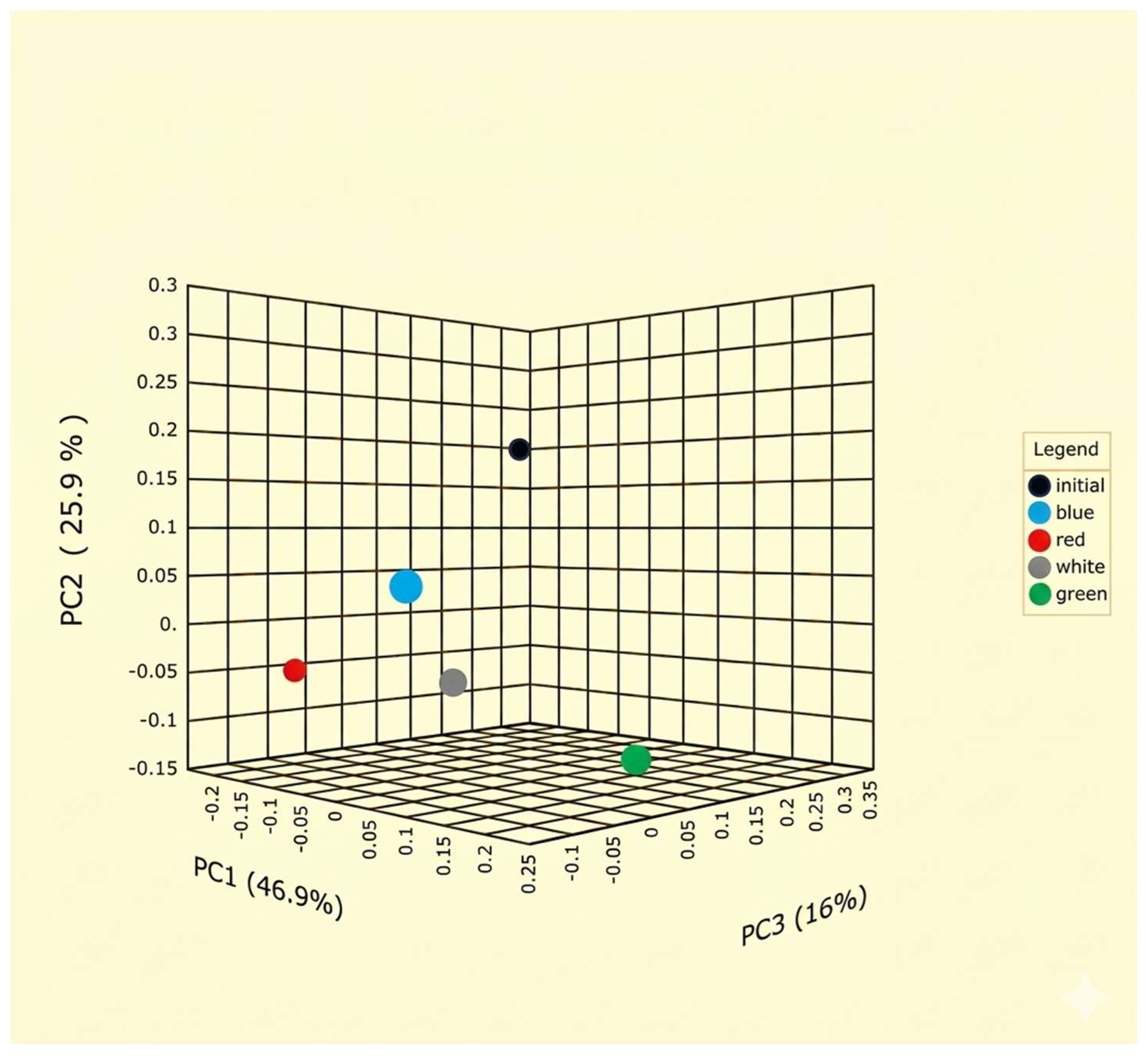
The beta diversity is illustrated in Figure 10 and Figure 11 for the rearing water and gut content samples, respectively. We conducted a principal component analysis (PCA) plot based on the OTUs at a 3.0% cutoff level to evaluate the differences between the samples collected on day 0 (initial) and those collected after 70 days of culture with the four types of LED light in the rearing water samples and gut content samples. The PCA analyses clearly revealed that the microbial community in the rearing water and gut samples were different among groups treated with the four types of LED light.

4. Discussion

We examined the effect of different types of LED light on the growth performance (SGR, WG, FCR and K factor) and on the bacterial community in the rearing water and the gut contents of C. carpio carp in a closed rearing system. The growth parameters (FCR, WG, SGR, K factor) in green light and blue light were higher than those in white light and red light. These results are in agreement with a study finding that the highest body weight of seabass was observed in a blue light condition and the lowest was observed in a red light condition [8]. Sierra-Flores et al. [36] also reported that a shorter wavelength (blue and green LED light) could improve the growth performance of the larvae of Atlantic cod (Gadus morhua) and turbot (Scophthalmus maximus) when the fish are cultured under LED light including blue (455 nm), green (530 nm), red (640 nm) and white light.
Karakatsouli et al. [37] examined the effect of LED light (red light peak at 605 nm; blue light peak at 408 nm) for culturing common carp in a circulating rearing system at two different stocking densities (low: 1.22 kg/m3 and high: 4.89 kg/m3), and they reported that the density of fish should be considered when applying LED lights for common carp culture—in short, rearing with red light when the fish are stocked at low density and with blue light at high density. In the present experiment, we set a high density (14.68 kg of fish/m3), and the growth performance results demonstrated that the blue light (peak at 468 nm) resulted in superior FCR, weight gain and specific growth rate values compared to red light (peak at 630 nm) (Table 2). This result indicated that blue light enhanced the growth performance of common carp at a high density as an intensive model culture.
The management of water quality is a key factor with direct impacts on fish health and physiology and the efficiency of aquaculture productivity [38]. In an aquaculture system, the temperature, DO and pH are strongly related to the health of the fish and the feeding efficiency. The common carp C. carpio is a tropical fish that prefers a water temperature at 28–32 °C, DO at ≥3 mg/L and pH at 6.5–7.5. These conditions are appropriate for the development of fish, especially their feed efficiency [39]. In the present study, we maintained the water temperature at 27.33 ± 0.50 °C; the DO was 3.98 ± 0.34 mg/L, and the pH was 6.52 ± 0.25, and these values are similar to the required conditions for C. carpio. The water parameters of ammonia and nitrite have been reported to be toxic gases for aquatic animals in the aquaculture system. In this study, differing values of NH4-N, NO2-N and NO3-N were observed with the different LED light treatments. Specifically, the NH4-N and NO2-N values in the blue light were lower than those in the other LED light conditions. However, the NO3-N value under blue light was significantly higher than those under green light and white light.
In a study of Pacific white shrimp in an intensive culture in a recirculating system, the concentration of NO3-N was lower in the tank irradiated by LED (spectral ratio: red 35.1%, green 14.7%, blue 50.2%) compared to the control without LED [40]. In our present investigation, the concentrations of NH4-N, NO2-N, and NO3-N were in the acceptable ranges for the adequate growth of common carp [41]. In a study comparing the effects of red, blue, mixed red and blue and white LED irradiation on water quality in a bacterial-algal biofilm reactor for a recirculating aquaculture system, it was reported that red LEDs significantly improved ammonia removal efficiency, suppressed nitrite accumulation and promoted nitrate assimilation under high nitrogen load [42]. However, such effects from red LED irradiation were not confirmed in this study. These studies suggest that LED irradiation primarily promotes the biological removal of inorganic nitrogen through the activation of algal photosynthesis, resulting in a reduction in nitrates and suspended organic matter. Furthermore, blue LEDs in particular exhibit a bactericidal effect on certain bacterial groups [43], suggesting indirect impacts on water quality due to alterations in the bacterial flora of aquarium water. Because various parameters such as the amount of nitrogen supplied to the rearing system and the intensity of LED irradiation are inherent, further detailed research is needed.
Lysozyme activity has been used as an indicator for defense of the effects of the inherent and/or external factors on the immune system and the disease resistance of fish [44]. The results of the present experiment, interestingly, suggest that the introduction of blue light into the rearing system could enhance the serum lysozyme activity of common carp. The lysozyme activity in the serum of the fish reared with blue light (65.54 ± 17.45 U/mg protein) was significantly higher than that of the fish reared under in white light (33.03 ± 6.86 U/mg protein), green light (44.11 ± 8.62 U/mg protein) or red light (34.33 ± 4.67 U/mg protein). A similar finding was reported by Zheng et al. [13], and the result indicated that the irradiation with LED blue light (blue light peak at 450 nm) improved the serum lysozyme activity in zebrafish. In LED irradiation studies using goldfish (Carassius auratus), it has been reported that irradiation with blue LEDs increases serum protein concentration and lysozyme activity, as well as the expression levels of immune-related genes. Interestingly, decreases in stress indicators such as the neutrophil/lymphocyte ratio, glucose and cortisol have also been observed [45]. Studies using juvenile sweetfish (Plecoglossus altivelis) have reported that blue LED irradiation upregulates the expression level of the lysozyme gene in the spleen and also enhances the expression of the IL-1b gene, a type of inflammatory cytokine [46]. In a study using juvenile Nile tilapia, lysozyme activity was significantly stimulated and cortisol levels decreased when exposed to mixed-color (green × blue) LEDs compared to single-color LEDs. Further investigation into the effects of multiple-color LED irradiation is warranted [47].
The microbial compositions of rearing water and in the gut contents of fish play important roles in fish health, feed efficiency and fish disease outbreaks [48,49]. In our assessment of the changes in microbiota in the rearing environment, we first measured the number of bacteria in the rearing water in a closed recirculating system and in the fish intestines. The results showed that the number of heterotrophic bacteria in the rearing water ranged from 4.56 log10 CFU/mL to 6.42 log10 CFU/mL, and the number under the blue light at 468 nm (blue-468) was significantly lower than that under the red light. These results could be explained as due to the antibacterial activities of LED irradiation.
One of our earlier studies confirmed that blue-468 more effectively inhibits heterotrophic bacteria compared to red light (peak at 630 nm), which could not inhibit these bacteria. Bacteria were more susceptible to 425 nm LED light than to 625 nm and 525 nm LED light [50]. In present study, the bacterial counts of the carp’s gut reared under blue light and green light were significantly higher than those of the fish reared under red light and white light.
Sterniša et al. [51] reported that the number of bacteria in the rearing water and intestine of common carp ranged from 3.65 log10 CFU/mL to 7.79 log10 CFU/mL and from 5.78 log10 CFU/g to 11.23 log10 CFU/g, which varied depending on the season, culture system, location and fish size. These findings indicated that the LED light could directly and indirectly affect the density of bacteria in the rearing water and in the gut contents, respectively.
We observed that the microbial composition of the gut contents of common carp was dominated by Fusobacteria, Bacteroidetes, Tenericutes, Firmicutes and Proteobacteria at the phylum level and by Cetobacterium and Bacteroidetes at the genus level, which is similar to other reports [52,53,54]. Notably, our results demonstrated that the ratio of the phylum Bacteroides in the red light (6.75%) was lower than those in the blue light (26.17%), green light (25.40%) and white light (23.43%). Carbohydrate fermentation occurs with members of the genus Bacteroides, which are known to be short-chain fatty acid producers with an important role against gut inflammation. The increase in Bacteroides thus has an influence on the feed digestion of fish [55].
In the rearing water, both Chao1 richness and Shannon diversity indices under blue light were lower than those observed under other light conditions. Because these alpha diversity indices were calculated from pooled samples without biological replication, statistical comparisons among treatments were not applicable, and the results should be interpreted as descriptive trends rather than statistically supported differences. Nevertheless, the observed lower richness and diversity under blue light may be associated with its antimicrobial effects.
Wang et al. [56] stated that the antimicrobial effect provided by blue light in the spectrum 400–470 nm was based on the light’s intrinsic antimicrobial properties due to the presence of endogenous photosensitizing chromophores in microbes. Dai et al. [57] reported that the risk of the development of resistant bacteria under blue light irradiation was significantly lower than the risk posed by antibiotics. On the other hand, there are few related studies on the effects of LED irradiation on aquaculture environments and the gut microbiota of farmed fish, and further research is needed. However, several research reports have been published on the effects on specific bacteria. Some studies clearly hypothesized and verified that endogenous porphyrins and flavins are photoexcited to produce reactive oxygen species (ROS) as a sterilization mechanism of blue light. The presence of these pigments was confirmed in various pathogenic bacteria (Gram-positive and Gram-negative), and it was considered that differences in pigment levels are a factor in differences in susceptibility. For example, high-porphyrin bacteria such as Propionibacterium acnes and Helicobacter pylori have been shown to be particularly sensitive to LED irradiation [43]. Gram-positive bacteria are highly sensitive to blue LED light because they have a thick, porous peptidoglycan layer, while Gram-negative bacteria are highly resistant due to their thin peptidoglycan layer and compact outer membrane structure [58]. As mentioned above, LED irradiation induces ROS production, but it is known that the sensitivity to these ROS differs among bacterial groups [59]. In our previous research, we confirmed that introducing ROS-producing ultrafine bubbles into a closed recirculating system for tilapia altered the proportion of dominant bacterial groups in the rearing water [60]. Further detailed research is needed regarding the effects of LED irradiation on bacterial flora in aquaculture systems.
The antibacterial effect of blue light has been examined in other studies, with varying findings [61,62]. It was reported that the action of blue light and the sensitivities of microbes are related to endogenous chromophores including porphyrin [62,63]. The susceptibility of a porphyrin synthesis knocked-out microbe to blue light was decreased compared to that of the wild type [56]. Bumah et al. [64] reported that Streptococcus agalactiae (which do not produce porphyrins) are not susceptible to blue light at 450 nm, and the death of these bacteria could be induced by supplementation with exogenous porphyrins. These reports indicated that microbes’ sensitivity to blue light is significantly affected by porphyrin. However, in each of those studies, the quantity and the pattern of porphyrin species differed, and it is thus difficult to directly compare the results.
Other studies suggested a different antibacterial mechanism of blue light, such as damage to the cell membrane by the generation of reactive oxygen species and DNA oxidation [65,66,67,68]. Further study is required to clarify the mechanism underlying the action of blue light.
However, in this study, there is a risk of pseudo-repeated experiments and the possibility of the tank effect being confused with the treatment effect, because LED irradiation was installed in only one independent tank. Therefore, the results of this study are preliminary findings, and further repeated experiments using multiple tanks are needed to confirm the phenomenon.

5. Conclusions

Our present results demonstrated the effect of different types of LED light on common carp reared in a closed recirculating system. Blue light and green light irradiation enhanced the growth performance of the carp. Blue light improved the serum lysozyme activity. Blue light also decreased the number of heterotrophic bacteria in the rearing water compared to red light. However, the number of bacteria in the gut contents was highest in the fish reared under blue light compared to those reared under red or white light. The LED lights did not have a negative effect on the gut microbiota, but the microbial compositions in the gut contents differed under the irradiation of different LED lights. Each type of LED light was observed to have a direct influence on the microbial composition of the rearing water in a closed recirculating system for common carp. Our results demonstrated that blue and green light support the growth of common carp. The blue light at the peak 468 nm improved the serum lysozyme activity of the fish and controlled the bacterial number and flora in a closed recirculating system. An LED technique such as that described herein could be applied for sustainable aquaculture and would be useful for the prevention of bacterial diseases in fish as a novel non-antibiotic approach.

Author Contributions

Conceptualization, P.T.B., K.U. and Y.T.; methodology, P.T.B. and Y.T.; validation, P.T.B. and Y.T.; formal analysis, P.T.B. and N.T.D.; investigation, P.T.B.; resources, S.H.; data curation, P.T.B. and Y.T.; writing—original draft preparation, P.T.B.; writing—review and editing, P.T.B. and Y.T.; visualization, P.T.B.; supervision, Y.T.; project administration, Y.T.; funding acquisition, Y.T. All authors have read and agreed to the published version of the manuscript.

Funding

This research was funded by MAYEKAWA HOUONKAI FOUNDATION (2020 Academic Research Grant), Tokyo, Japan.

Institutional Review Board Statement

The animal study protocol was approved by the Ethics Committee for Animal Use of the Department of Marine Biology and Environmental Sciences (permit number: R4-001, approval date: 26 November 2022).

Data Availability Statement

The data presented in this study are available in the article.

Conflicts of Interest

Author Satoshi Hori was employed by the company Kyoritsu Densyo Co., Ltd. The remaining authors declare that the research was conducted in the absence of any commercial or financial relationships that could be construed as a potential conflict of interest.

References

  1. Nicolau, T.; Filho, N.G.; Padrão, J.; Zille, A. A comprehensive analysis of the UVC LEDs’ applications and decontamination capability. Materials 2022, 15, 2854. [Google Scholar] [CrossRef] [PubMed]
  2. Hsu, T.C.; Teng, Y.T.; Yeh, Y.W.; Fan, X.; Chu, K.H.; Lin, S.H.; Yeh, K.K.; Lee, P.T.; Lin, Y.; Kuo, H.C. Perspectives on UVC LED: Its progress and application. Photonics 2021, 8, 196. [Google Scholar] [CrossRef]
  3. Ma, Y.; Xu, A.; Cheng, Z.M. Effects of light emitting diode lights on plant growth, development and traits a meta-analysis. Hortic. Plant J. 2021, 7, 552–564. [Google Scholar] [CrossRef]
  4. Leanse, L.G.; dosAnjos, C.; Mushtaq, S.; Dai, T. Antimicrobial blue light: A ‘Magic Bullet’ for the 21st century and beyond? Adv. Drug Deliv. Rev. 2022, 180, 114057. [Google Scholar] [CrossRef]
  5. Takahashi, A.; Kasagi, S.; Murakami, N.; Furufuji, S.; Kikuchi, S.; Mizusawa, K.; Andoh, T. Effects of different green light intensities on the growth performance and endocrine properties of barfin flounder Verasper moseri. Gen. Comp. Endocrinol. 2018, 257, 203–210. [Google Scholar] [CrossRef]
  6. Rauch, K.D.; Bennett, J.L.; Stoddart, A.K.; Gagnon, G.A. UV LED disinfection as a novel treatment for common salmonid pathogens. Sci. Rep. 2024, 14, 28392. [Google Scholar] [CrossRef] [PubMed]
  7. Migaud, H.; Cowan, M.; Taylor, J.; Ferguson, H.W. The effect of spectral composition and light intensity on melatonin, stress and retinal damage in post-smolt Atlantic salmon, Salmo salar. Aquaculture 2007, 270, 390–404. [Google Scholar] [CrossRef]
  8. Villamizar, N.; García-Alcazar, A.; Sánchez-Vázquez, F. Effect of light spectrum and photoperiod on the growth, development and survival of European sea bass (Dicentrarchus labrax) larvae. Aquaculture 2009, 292, 80–86. [Google Scholar] [CrossRef]
  9. Shin, H.S.; Lee, J.; Choi, C.Y. Effects of LED light spectra on the growth of the yellowtail clownfish Amphiprion clarkii. Fish. Sci. 2012, 78, 549–556. [Google Scholar] [CrossRef]
  10. Shin, H.S.; Habibi, H.R.; Choi, C.Y. The environmental regulation of maturation in goldfish, Carassius auratus: Effects of various LED light spectra. Compa. Biochem. Physiol. Part A Mol. Integr. Physiol. 2014, 168, 17–24. [Google Scholar] [CrossRef]
  11. Yeh, N.; Yeh, P.; Shih, N.; Byadgi, O.; Cheng, T.C. Applications of light-emitting diodes in researches conducted in aquatic environment. Renew. Sustain. Energy Rev. 2014, 32, 611–618. [Google Scholar] [CrossRef]
  12. Choi, J.Y.; Kim, T.H.; Choi, Y.J.; Kim, N.N.; Oh, S.Y.; Choi, C.Y. Effects of various LED light spectra on antioxidant and immune response in juvenile rock bream, Oplegnathus fasciatus exposed to bisphenol A. Environ. Toxicol. Pharmacol. 2016, 45, 140–149. [Google Scholar] [CrossRef]
  13. Zheng, J.L.; Yuan, S.S.; Li, W.Y.; Wu, C.W. Positive and negative innate immune responses in zebrafish under light emitting diodes conditions. Fish Shellfish Immunol. 2016, 56, 382–387. [Google Scholar] [CrossRef]
  14. Hansen, T.J.; Fjelldal, P.G.; Folkedal, O.; Vågseth, T.; Oppedal, F. Effects of light source and intensity on sexual maturation, growth and swimming behaviour of Atlantic salmon in sea cages. Aquac. Environ. Interact. 2017, 9, 193–204. [Google Scholar] [CrossRef]
  15. FAO. The State of World Fisheries and Aquaculture 2018—Meeting the Sustainable Development Goals; FAO: Rome, Italy, 2018; Available online: https://openknowledge.fao.org/server/api/core/bitstreams/6fb91ab9-6cb2-4d43-8a34-a680f65e82bd/content (accessed on 1 July 2020).
  16. Ds Ljubojević, D.; Đorđević, V.; Ćirković, M. Evaluation of nutritive quality of common carp, Cyprinus carpio L. IOP Conf. Ser. Earth Environ. Sci. 2017, 85, 012013. [Google Scholar] [CrossRef]
  17. Ds Jeney, Z.; Jeney, G. Recent achievements in studies on diseases of common carp (Cyprinus carpio L.). Aquaculture 1995, 129, 397–420. [Google Scholar] [CrossRef]
  18. Mathur, A.K.; Kumar, P.; Mehrotra, S. Abdominal dropsy disease in major carps of Meghalaya: Isolation and characterization of Aeromonas hydrophila. Curr. Sci. 2005, 88, 1897–1900. [Google Scholar]
  19. Ds Pridgeon, J.; Klesius, P.H. Major bacterial diseases in aquaculture and their vaccine development. CAB Rev. 2012, 7, 1–16. [Google Scholar] [CrossRef]
  20. Capone, D.G.; Weston, D.P.; Miller, V.; Shoemaker, C. Antibacterial residues in marine sediments and invertebrates following chemotherapy in aquaculture. Aquaculture 1996, 145, 55–75. [Google Scholar] [CrossRef]
  21. Hollis, A.; Ahmed, Z. The path of least resistance: Paying for antibiotics in non-human uses. Health Policy 2014, 118, 264–270. [Google Scholar] [CrossRef] [PubMed]
  22. Giatsis, C.; Sipkema, D.; Smidt, H.; Heilig, H.; Benvenuti, G.; Verreth, J.; Verdegem, M. The impact of rearing environment on the development of gut microbiota in tilapia larvae. Sci. Rep. 2015, 5, 18206. [Google Scholar] [CrossRef]
  23. Beaz-Hidalgo, R.; Agüeria, D.; Latif-Eugenín, F.; Yeannes, M.I.; Figueras, M.J. Molecular characterization of Shewanella and Aeromonas isolates associated with spoilage of Common carp (Cyprinus carpio). FEMS Microbiol. Lett. 2015, 362, 1–8. [Google Scholar] [CrossRef] [PubMed]
  24. Zhang, Y.; Li, Q.; Li, D.; Liu, X.; Luo, Y. Changes in the microbial communities of air-packaged and vacuum-packaged common carp (Cyprinus carpio) stored at 4 °C. Food Microbiol. 2015, 52, 197–204. [Google Scholar] [CrossRef] [PubMed]
  25. Sereika, M.; Mussig, A.J.; Jiang, C.; Knudsen, K.S.; Jensen, T.B.N.; Petriglieri, F.; Yang, Y.; Jørgensen, V.R.; Delogu, F.; Jørgensen, E.A.; et al. Genome-resolved long-read sequencing expands known microbial diversity across terrestrial habitats. Nat. Microbiol. 2025, 10, 2018–2030. [Google Scholar] [CrossRef]
  26. Schuster, S.C. Next-generation sequencing transforms today’s biology. Nat. Methods 2008, 5, 16–18. [Google Scholar] [CrossRef]
  27. Van Dijk, E.L.; Auger, H.; Jaszczyszyn, Y.; Thermes, C. Ten years of next-generation sequencing technology. Trends Genet. 2014, 30, 418–426. [Google Scholar] [CrossRef]
  28. Strickland, J.D.; Parsons, T.R. A Practical Handbook of Seawater Analysis; Fisheries Research Board of Canada: Ottawa, ON, Canada, 1972; pp. 1–311. [Google Scholar]
  29. Lv, Z.; Ran, X.; Liu, J.; Feng, Y.; Zhong, X.; Jiao, N. Effectiveness of chemical oxygen demand as an indicator of organic pollution in aquatic environments. Ocean-Land-Atmos. Res. 2024, 3, 0050. [Google Scholar] [CrossRef]
  30. Demers, N.E.; Bayne, C.J. The immediate effects of stress on hormones and plasma lysozyme in rainbow trout. Develop. Comp. Immunol. 1997, 21, 363–373. [Google Scholar] [CrossRef]
  31. Lowry, O.H.; Rosebrough, N.J.; Farr, A.L.; Randall, R.J. Protein measurement with the Folin phenol reagent. J. Biol. Chem. 1951, 193, 265–275. [Google Scholar] [CrossRef] [PubMed]
  32. Coyne, K.J.; Handy, S.M.; Demir, E.; Whereat, E.B.; Hutchins, D.A.; Portune, K.J.; Doblin, M.A.; Cary, S.C. Improved quantitative real-time PCR assays for enumeration of harmful algal species in field samples using an exogenous DNA reference standard. Limnol. Oceanogr. Methods 2005, 3, 381–391. [Google Scholar] [CrossRef]
  33. Mirimin, L.; Roodt Wilding, R. Testing and validating a modified CTAB DNA extraction method to enable molecular parentage analysis of fertilized eggs and larvae of an emerging South African aquaculture species, the dusky kob Argyrosomus japonicus. J. Fish Biol. 2015, 86, 1218–1223. [Google Scholar] [CrossRef]
  34. Schmitz, A.; Riesner, D. Purification of nucleic acids by selective precipitation with polyethylene glycol 6000. Anal. Biochem. 2006, 354, 311–313. [Google Scholar] [CrossRef]
  35. DeSantis, T.Z.; Hugenholtz, P.; Larsen, N.; Rojas, M.; Brodie, E.L.; Keller, K.; Huber, T.; Dalevi, D.; Hu, P.; Andersen, G.L. Greengenes, a chimera-checked 16S rRNA gene database and workbench compatible with ARB. Appl. Environ. Microbiol. 2006, 72, 5069–5072. [Google Scholar] [CrossRef] [PubMed]
  36. Sierra-Flores, R.; Davie, A.; Grant, B.; Carboni, S.; Atack, T.; Migaud, H. Effects of light spectrum and tank background colour on Atlantic cod (Gadus morhua) and turbot (Scophthalmus maximus) larvae performances. Aquaculture 2016, 450, 6–13. [Google Scholar] [CrossRef]
  37. Karakatsouli, N.; Papoutsoglou, E.S.; Sotiropoulos, N.; Mourtikas, D.; Stigen-Martinsen, T.; Papoutsoglou, S.E. Effects of light spectrum, rearing density and light intensity on growth performance of scaled and mirror common carp Cyprinus carpio reared under recirculating system conditions. Aquac. Eng. 2010, 42, 121–127. [Google Scholar] [CrossRef]
  38. Viadero, R.C. Factors affecting fish growth and production. Water Encycl. 2005, 3, 129–133. [Google Scholar] [CrossRef]
  39. Desai, A.; Singh, R. The effects of water temperature and ration size on growth and body composition of fry of common carp, Cyprinus carpio. J. Therm. Biol. 2009, 34, 276–280. [Google Scholar] [CrossRef]
  40. Fleckenstein, L.J.; Tierney, T.W.; Fisk, J.C.; Ray, A.J. Effects of supplemental LED lighting on water quality and Pacific whiteshrimp (Litopenaeus vannamei) performance in intensive recirculating systems. Aquaculture 2019, 504, 219–226. [Google Scholar] [CrossRef]
  41. Kroupova, H.; Prokes, M.; Macova, S.; Penaz, M.; Barus, V.; Novotny, L.; Machova, J. Effect of nitrite on early-life stages of common carp (Cyprinus carpio L.). J. Environ. Toxicol. Chem. 2010, 29, 535–540. [Google Scholar] [CrossRef]
  42. Jiang, W.; Li, Q.; Jiang, L.; Huang, Q.; Liang, J.; Zhou, Y.; Lv, M.; Wen, L.; Li, Y.; Yang, X. Red light enhanced nitrogen removal efficiency by bacterial–algae biofilm reactor in recirculating aquaculture systems. Processes 2025, 13, 3594. [Google Scholar] [CrossRef]
  43. Dai, T. The antimicrobial effect of blue light: What are behind? Virulence 2017, 4, 649–652. [Google Scholar] [CrossRef]
  44. Magnadóttir, B. Innate immunity of fish (overview). Fish Shellfish Immunol. 2006, 20, 137–151. [Google Scholar] [CrossRef]
  45. Noureldin, S.M.; Diab, A.M.; Salah, A.S.; Mohamed, R.A. Effect of different monochromatic LED light colors on growth performance, behavior, immune-physiological responses of gold fish, Carassius auratus. Aquaculture 2021, 538, 736532. [Google Scholar] [CrossRef]
  46. Hsieh, Y.J.; Ho, Y.S.; Wang, Y.S. Illumination of different light wavelengths on growth performance and physiological response of juvenile sweetfish, Plecoglossus altivelis. Aquac. Rep. 2023, 30, 101569. [Google Scholar] [CrossRef]
  47. Elkadom, E.M.; Abd El-Kader, M.F.; Bakr, B.A.; Abozeid, A.M.; Mohamed, R.A. Impacts of various single and mixed colors of monochromatic LED light on growth, behavior, immune-physiological parameters, and liver and brain histology of Nile tilapia fingerlings. Aquaculture 2023, 577, 740007. [Google Scholar] [CrossRef]
  48. Nayak, S.K. Role of gastrointestinal microbiota in fish. Aquac. Res. 2010, 41, 1553–1573. [Google Scholar] [CrossRef]
  49. Pérez, T.; Balcázar, J.; Ruiz-Zarzuela, I.; Halaihel, N.; Vendrell, D.; De Blas, I.; Múzquiz, J. Host–microbiota interactions within the fish intestinal ecosystem. Mucosal Immunol. 2010, 3, 355–360. [Google Scholar] [CrossRef]
  50. Kim, S.; Kim, J.; Lim, W.; Jeon, S.; Kim, O.; Koh, J.T.; Kim, C.S.; Choi, H.; Kim, O. In vitro bactericidal effects of 625, 525, and 425 nm wavelength (red, green, and blue) light-emitting diode irradiation. Photomed. Laser. Surg. 2013, 31, 554–562. [Google Scholar] [CrossRef] [PubMed]
  51. Sterniša, M.; Mraz, J.; Možina, S.S. Microbiological aspects of common carp (Cyprinus carpio) and its processing—Relevance for final product quality: A review. Aquac. Int. 2016, 24, 1569–1590. [Google Scholar] [CrossRef]
  52. Tsuchiya, C.; Sakata, T.; Sugita, H. Novel ecological niche of Cetobacterium somerae, an anaerobic bacterium in the intestinal tracts of freshwater fish. Lett. App. Microbiol. 2008, 46, 43–48. [Google Scholar] [CrossRef] [PubMed]
  53. Van Kessel, M.A.; Dutilh, B.E.; Neveling, K.; Kwint, M.P.; Veltman, J.A.; Flik, G.; Jetten, M.S.; Klaren, P.H.; den Camp, H.J.O. Pyrosequencing of 16S rRNA gene amplicons to study the microbiota in the gastrointestinal tract of carp (Cyprinus carpio L.). AMB Express 2011, 1, 41. [Google Scholar] [CrossRef] [PubMed]
  54. Eichmiller, J.J.; Hamilton, M.J.; Staley, C.; Sadowsky, M.J.; Sorensen, P.W. Environment shapes the fecal microbiome of invasive carp species. Microbiome 2016, 4, 44. [Google Scholar] [CrossRef] [PubMed]
  55. Den Besten, G.; van Eunen, K.; Groen, A.K.; Venema, K.; Rijngound, D.J.; Bakker, B.M. The role of short chain fatty acids in the interplay between diet, gut microbiota, and host energy metabolism. J. Lipid Res. 2013, 54, 2325–2340. [Google Scholar] [CrossRef] [PubMed]
  56. Wang, Y.; Wang, Y.; Wang, Y.; Murray, C.K.; Hamblin, M.R.; Hooper, D.C.; Dai, T. Antimicrobial blue light inactivation of pathogenic microbes: State of the art. Drug Resist. Updat. 2017, 33–35, 1–22. [Google Scholar] [CrossRef]
  57. Dai, T.; Gupta, A.; Murray, C.K.; Vrahas, M.S.; Tegos, G.P.; Hamblin, M.R. Blue light for infectious diseases: Propionibacterium acnes, Helicobacter pylori, and beyond? Drug Resist. Updat. 2012, 15, 223–236. [Google Scholar] [CrossRef]
  58. Lena, A.; Marino, M.; Manzano, M.; Comuzzi, C.; Maifreni, M. An overview of the application of blue light-emitting diodes as a non-thermic green technology for microbial inactivation in the food sector. Food Eng. Rev. 2024, 16, 59–84. [Google Scholar] [CrossRef]
  59. dos Anjos, C.; Leanse, L.G.; Ribeiro, M.S.; Sellera, F.P.; Dropa, M.; Arana-Chavez, V.E.; Lincopan, N.; Baptista, M.S.; Pogliani, F.C.; Dai, T.; et al. New insights into the bacterial targets of antimicrobial blue light. Microbiol. Spectr. 2023, 11, e02833-22. [Google Scholar] [CrossRef]
  60. Taoka, Y.; Kuroki, T.; Kodoi, Y.; Sakata, E.; Kamimura, C. Effects of ultra-fine bubbles on the water quality in a closed recirculating system for tilapia Oreochromis niloticus and the microbiome in the rearing water. Aquacult. Sci. 2022, 72, 157–160. [Google Scholar] [CrossRef]
  61. Decarli, M.C.; Correa, T.Q.; Vollet-Filho, J.D.; Bagnato, V.S.; Souza, C.W.O. The influence of experimental conditions on the final result of photoinhibition of Staphylococcus aureus. Photodiagnosis Photodyn. Ther. 2017, 19, 229–234. [Google Scholar] [CrossRef]
  62. Fyrestam, J.; Bjurshammar, N.; Paulsson, E.; Mansouri, N.; Johannsen, A.; Ostman, C. Influence of Culture Conditions on Porphyrin Production in Aggregatibacter actinomycetemcomitans and Porphyromonas gingivalis. Photodiagnosis Photodyn. Ther. 2017, 17, 115–123. [Google Scholar] [CrossRef]
  63. Battisti, A.; Morici, P.; Signore, G.; Ghetti, F.; Sgarbossa, A. Compositional analysis of endogenous porphyrins from Helicobacter pylori. Biophys. Chem. 2017, 229, 25–30. [Google Scholar] [CrossRef]
  64. Bumah, V.V.; Morrow, B.N.; Cortez, P.M.; Bowman, C.R.; Rojas, P.; Masson-Meyers, D.S.; Suprapto, J.; Tong, W.G.; Enwemeka, C.S. The importance of porphyrins in blue light suppression of Streptococcus agalactiae. J. Photochem. Photobiol. B Biol. 2020, 212, 111996. [Google Scholar] [CrossRef] [PubMed]
  65. McKenzie, K.; Maclean, M.; Grant, M.H.; Ramakrishnan, P.; MacGregor, S.J.; Anderson, J.G. The effects of 405 nm light on bacterial membrane integrity determined by salt and bile tolerance assays, leakage of UV-absorbing material and SYTOX green labelling. Microbiology 2016, 162, 1680–1688. [Google Scholar] [CrossRef]
  66. Biener, G.; Masson-Meyers, D.S.; Bumah, V.V.; Hussey, G.; Stoneman, M.R.; Enwemeka, C.S.; Raicu, V. Blue/violet laser inactivates methicillin-resistant Staphylococcus aureus by altering its transmembrane potential. J. Photochem. Photobiol. B 2017, 170, 118–124. [Google Scholar] [CrossRef]
  67. Kim, M.J.; Yuk, H.G. Antibacterial Mechanism of 405-Nanometer Light-Emitting Diode against Salmonella at Refrigeration Temperature. Appl. Environ. Microbiol. 2017, 83, e02582-16. [Google Scholar] [CrossRef]
  68. Yoshida, A.; Sasaki, H.; Toyama, T.; Araki, M.; Fujioka, J.; Tsukiyama, K.; Hamada, N.; Yoshino, F. Antimicrobial effect of blue light using Porphyromonas gingivalis pigment. Sci. Rep. 2017, 7, 5225. [Google Scholar] [CrossRef]
Figure 1. Emission spectra of the LED lights used in the rearing experiment. (a) Green light, (b) White light, (c) Red light, (d) Blue light.
Fishes 11 00234 g001
Figure 2. Schematic diagram of the rearing system used in the LED experiment. Each LED light was individually positioned above a rearing aquarium under a 12 h light/12 h dark photoperiod. All aquaria were maintained in a temperature-controlled room at 28 °C.
Fishes 11 00234 g002
Figure 3. Change in water quality indicators in rearing water during the LED experiment: (a) pH, (b) DO, (c) Ammonia-nitrogen, (d) Nitrite-nitrogen, (e) Nitrate-nitrogen, (f) Chemical oxygen demand (COD) (n = 3).
Fishes 11 00234 g003
Figure 4. Lysozyme activity in the plasma of common carp on day 0 and day 70 under four different LED lights. (a) Protein concentration; (b) lysozyme activity (U/mg protein). Statistical differences between experimental groups (p < 0.05) are indicated by different letters. Values are means ± SD from six individual fish per group (n = 6).
Fishes 11 00234 g004
Figure 5. Total heterotrophic bacterial counts in (a) the gut content of common carp cultured under four different LED lights on day 0 and day 70 and (b) the rearing water. Different letters indicate significant differences between LED light treatments on day 70 compared with day 0 (p < 0.05). Values are means ± SD (n = 3).
Fishes 11 00234 g005
Figure 6. Relative abundance of predominant phyla in the gut microbiota of common carp on day 0 and day 70 when cultured under four different LED lights.
Fishes 11 00234 g006
Figure 7. Relative abundance of predominant genus in the gut microbiota of common carp on day 0 and day 70 when cultured under four different LED lights.
Fishes 11 00234 g007
Figure 8. Relative abundance of predominant phyla in the rearing water microbiota of common carp cultured in a closed recirculating aquaculture system under different LED lights on day 0 and day 70.
Fishes 11 00234 g008
Figure 9. Relative abundance of predominant genera in the rearing water microbiota of common carp cultured in a closed recirculating aquaculture system under different LED lights on day 0 and day 70.
Fishes 11 00234 g009
Figure 10. Principal component analysis (PCA) of the microbiota in the rearing water of a closed recirculating aquaculture system for common carp cultured under four different LED lights (blue, red, white and green).
Fishes 11 00234 g010
Figure 11. Principal component analysis (PCA) of the gut microbiota of common carp cultured under four different LED lights (blue, red, white and green) in a closed recirculating aquaculture system.
Fishes 11 00234 g011
Table 1. Average water quality parameters in the rearing water of a closed recirculating aquaculture system for common carp cultured under different LED lights.
ParameterLED
Blue LightRed LightWhite LightGreen Light
WT (°C)27.24 ± 0.4827.30 ± 0.5027.36 ± 0.4927.45 ± 0.53
DO (mg/L)3.84 ± 0.313.84 ± 0.314.20 ± 0.324.05 ± 0.34
pH6.59 ± 0.246.54 ± 0.176.40 ± 0.376.55 ± 0.17
NO2-N (mg/L)0.33 ± 0.73 a0.51 ± 0.75 ab0.50 ± 0.60 ab0.90 ± 1.25 b
NH4-N (mg/L)3.74 ± 3.25 a4.15 ± 3.57 ab6.27 ± 5.54 b5.26 ± 4.93 ab
NO3-N (mg/L)4.16 ± 1.76 a3.80 ± 1.79 a2.87 ± 1.61 b2.96 ± 1.69 b
COD (mg/L)8.15 ± 4.1613.46 ± 8.7610.40 ± 5.188.87 ± 4.43
Values are the means ± standard deviation (n = 33) and temperature (n = 70). Different superscripts in the same row indicate significant differences (Independent Samples T-test, p < 0.05). WT: Water temperature, DO: Dissolved Oxygen, COD: Chemical Oxygen Demand.
Table 2. Growth performance of common carp cultured under different LED lights after 70 days of rearing.
LED Lights
Blue LightRed LightWhite LightGreen Light
SR (%)100100100100
IBW (g)92.25 ± 22.4191.00 ± 16.1492.25 ± 14.7591.25 ± 12.42
IBL (cm)19.48 ± 1.4019.64 ± 0.9519.94 ± 1.0819.98 ± 1.89
FBW (g)163.88 ± 33.12154.93 ± 36.49161.74 ± 28.72167.89 ± 13.76
FBL (cm)22.88 ± 1.4123.18 ± 2.2223.60 ± 1.4923.00 ± 1.36
WG (%)79.36 ± 8.7368.82 ± 14.3875.28 ± 13.2285.94 ± 19.41
FCR 1.822.011.901.73
SGR (%/day)0.83 ± 0.070.74 ± 0.120.80 ± 0.110.88 ± 0.14
K factor1.37 ± 0.241.28 ± 0.391.27 ± 0.401.40 ± 0.23
SR: Survival rate (%); IBW: Initial body weight (g); IBL: Initial body length (cm); FBW: Final body weight (g); FBL: Final body length); WG: Weight gain (%); FCR: Feed conversation ration; SGR: Specific growth rate (%/day); K factor: Condition factor.
Table 3. Alpha diversity indices of the gut content of common carp and the rearing water in a closed recirculating aquaculture system on day 0 and day 70 under different LED lights (blue, red, white and green).
SampleGut ContentRearing Water
Filtered NumberChao1 RichnessShannon IndexFiltered NumberChao1 RichnessShannon Index
Initial sample29,923422.4630,171210.49
Blue light27,916442.4122,760401.33
Red light32,296572.3027,041652.26
White light32,527672.5927,974581.96
Green light29,226592.6124,906561.32
Disclaimer/Publisher’s Note: The statements, opinions and data contained in all publications are solely those of the individual author(s) and contributor(s) and not of MDPI and/or the editor(s). MDPI and/or the editor(s) disclaim responsibility for any injury to people or property resulting from any ideas, methods, instructions or products referred to in the content.