


Abstract
Across North America, Brook Trout (Salvelinus fontinalis) populations are declining in response to rising water temperatures, habitat degradation, and other environmental stressors. Behavioural responses such as changes in habitat use and foraging activity can provide early indicators of thermal stress, yet relatively few studies have examined both behaviours simultaneously in natural stream environments. We analyzed three years of publicly available Remote Underwater Video (RUV) footage collected by the Coalition for the West Credit River (CWCR), together with instream temperature records, to quantify juvenile Brook Trout habitat occupancy (MaxN) and foraging activity (s fish−1) within a coldwater reach of the West Credit River (Ontario, Canada). Occupancy within the monitored habitat increased when water temperatures exceeded commonly reported thermal thresholds for Brook Trout (>20 °C) and peaked during a prolonged summer heat event in 2025. In contrast, foraging activity declined under elevated temperatures and remained consistently low throughout the heat event. Together, these findings suggest that juvenile Brook Trout increasingly relied on the monitored habitat during periods of thermal stress while reducing foraging activity, indicating a behavioural trade-off between energy conservation and energy acquisition.
Keywords:
Brook Trout; Salvelinus fontinalis; coldwater streams; thermal stress; behavioural indicators; habitat use; foraging activity; Remote Underwater Video; citizen science monitoring Key Contribution:
Using three years of Remote Underwater Video observations, this study provides insight into how juvenile Brook Trout alter habitat use and foraging activity in response to varying thermal conditions. Findings suggest a behavioural trade-off between energy conservation (station holding in ideal habitat) and energy acquisition (foraging and feeding), improving our understanding of how coldwater salmonids respond to thermal stress in natural stream environments.
1. Introduction
Brook Trout (Salvelinus fontinalis) are an ecologically important coldwater salmonid that support ecosystem function and recreational fisheries throughout their native range in northeastern North America [1]. Across this range, extending from Atlantic Canada through the Great Lakes basin and into the Appalachian Mountains, Brook Trout inhabit lakes and rivers with cold temperatures, coarse substrates, and dense riparian vegetation [2,3]. As a coldwater species, Brook Trout are constrained by water temperature, with optimal feeding and growth occurring between 11 and 16 °C, while temperatures exceeding 20 °C suppress feeding, reduce growth, and increase mortality risk [4,5,6]. Thermal conditions are particularly important during the juvenile life stage, when growth and survival depend on balancing energy acquisition with environmental stress. Because juvenile survival directly determines recruitment and population persistence, studying how they alter their behaviour in response to changing environmental conditions is critical.
Climate change and anthropogenic activities are reducing the quality and extent of coldwater habitat for Brook Trout across their native range. Habitat models predict that by mid-century, suitable Brook Trout distribution will decline by 49% across Canada [7] and by 68% in parts of the United States [8]. Multiple interacting stressors contribute to these losses, including more frequent and intense riverine heatwaves [9], urbanization and associated riparian vegetation loss [10], and groundwater droughts [11]. These stressors have contributed to widespread Brook Trout population declines across their native range, including a 53% decline since 1999 in the Credit River watershed (Ontario, Canada) [12]. These trends emphasize the need for monitoring approaches capable of detecting behavioural responses to environmental stress before population declines become irreversible.
Fish population monitoring typically relies on abundance-based metrics obtained through electrofishing, seining, or snorkelling surveys. While these approaches remain valuable for assessing population status, they can be invasive [13,14] and only provide static fish presence and abundance estimates. As a result, they fail to detect behavioural responses that can provide helpful indications of thermal stress. In many fish species, habitat selection and foraging activity shift when temperatures exceed ideal ranges and individuals must adjust behaviour to cope with increasing physiological and energetic demands [15]. Stream salmonids frequently alter habitat use during warm periods, often occupying areas that provide cooler temperatures [16,17,18], structural cover and woody debris [19], and favourable depth and hydraulic conditions [20]. Similarly, salmonids will reduce energetically demanding activities under thermal stress. Brook Trout are primarily drift foragers that feed by locating and intercepting drifting invertebrates in the water column [21]. However, because foraging is an energetically demanding process [22], elevated water temperatures can increase physiological stress and reduce energy available for these activities [4,15]. Although studies have documented behavioural responses to thermal stress in salmonids, fewer studies have simultaneously examined how juvenile Brook Trout alter habitat occupancy and foraging activity in their natural habitat.
Addressing these unknowns requires monitoring approaches that can capture behavioural responses over time, while minimizing disturbance to fish behaviour and activity. Remote Underwater Video (RUV) has emerged as a tool that allows researchers to integrate behavioural observations with conventional fish monitoring techniques. Previous studies have demonstrated that RUV reliably estimates fish abundance [23,24], habitat use [25,26], and foraging behaviour [27,28]. Recent advances in low-cost camera technology have further expanded opportunities for citizen science initiatives, generating multi-year datasets that would otherwise be prohibitively costly and time-consuming to collect [29]. These datasets provide a unique opportunity to examine how fish respond to environmental change in their natural habitats.
This study used three years of RUV footage to examine how juvenile Brook Trout habitat use and foraging activity changed across different environmental conditions within a coldwater stream in Belfountain, Ontario, Canada. This dataset, collected by the Coalition for the West Credit River (CWCR) and publicly archived through YouTube, provides a unique opportunity to evaluate multi-year behavioural responses using continuous observations from a natural stream environment. The monitored habitat in this study represents a location where juvenile Brook Trout are regularly observed because of several high-quality habitat characteristics, including groundwater upwelling, riparian shading, woody debris, and slower water velocities. In this study, we aimed to (1) characterize juvenile Brook Trout occupancy (quantified using MaxN) and foraging activity across three summers (2023–2025); (2) examine relationships between water temperature, diel period, occupancy, and foraging activity; and (3) examine behavioural responses during a prolonged summer heat event. We predicted that as temperatures approached and exceeded commonly reported thermal thresholds, Brook Trout occupancy within the monitored habitat would increase and foraging activity would decrease. By integrating behavioural observations with environmental data, this study advances our knowledge of how juvenile Brook Trout respond to thermal stress in their natural environment.
2. Methods
2.1. Study Area
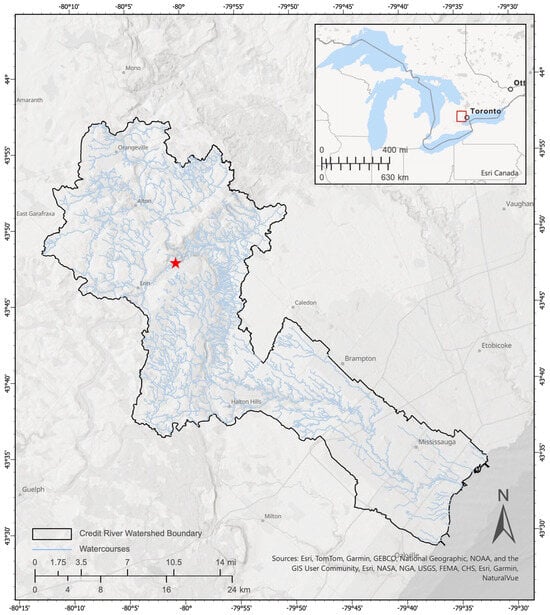
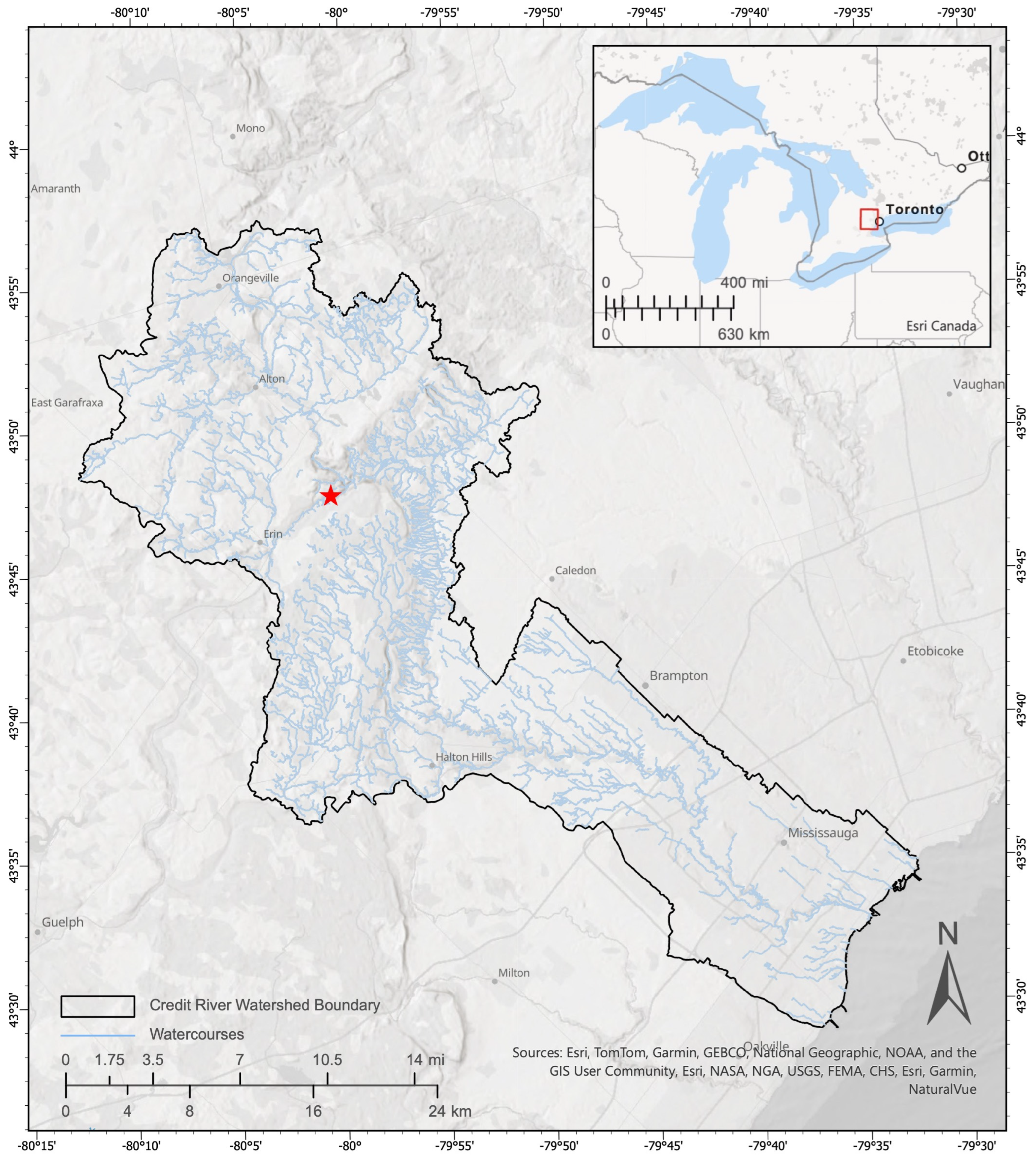
RUV footage was collected in the West Credit River, a coldwater tributary of the Credit River, located in Belfountain, Ontario, Canada (Figure 1). The Credit River watershed drains approximately 950 km2 and supports nearly one million residents, with ongoing land-use change and urban development placing increasing pressure on aquatic habitat and stream connectivity throughout the watershed [12]. The West Credit River currently supports a wild population of juvenile Brook Trout and retains several habitat characteristics important for Brook Trout persistence, including groundwater upwelling, coarse substrate, and dense riparian vegetation [30]. However, anticipated land-use change and plans for treated wastewater discharge upstream of the study reach will introduce additional environmental pressures to the river. These anticipated changes highlight the importance of establishing baseline information on juvenile Brook Trout habitat use and foraging activity before future environmental alterations occur.
Figure 1.
The Credit River watershed boundary, watercourses within the watershed, and the study area in the West Credit River (red star; Belfountain, Ontario, Canada). The inset shows the study area relative to the Laurentian Great Lakes.
Since 2023, CWCR has operated a stationary remotely operated underwater video system within the West Credit River, with publicly available footage livestreamed and archived on YouTube. A Dive and See DNC-HD6 underwater camera system (1080p, 60 fps) was used to record fish within the monitored habitat and was positioned approximately 1 m from the streambank and 30 cm above the streambed. Additional details regarding camera installation and operation are provided in the Supplementary Materials.
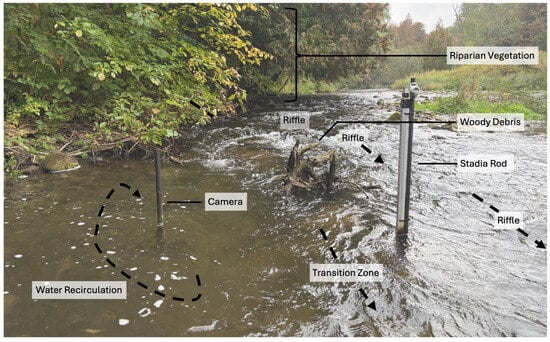
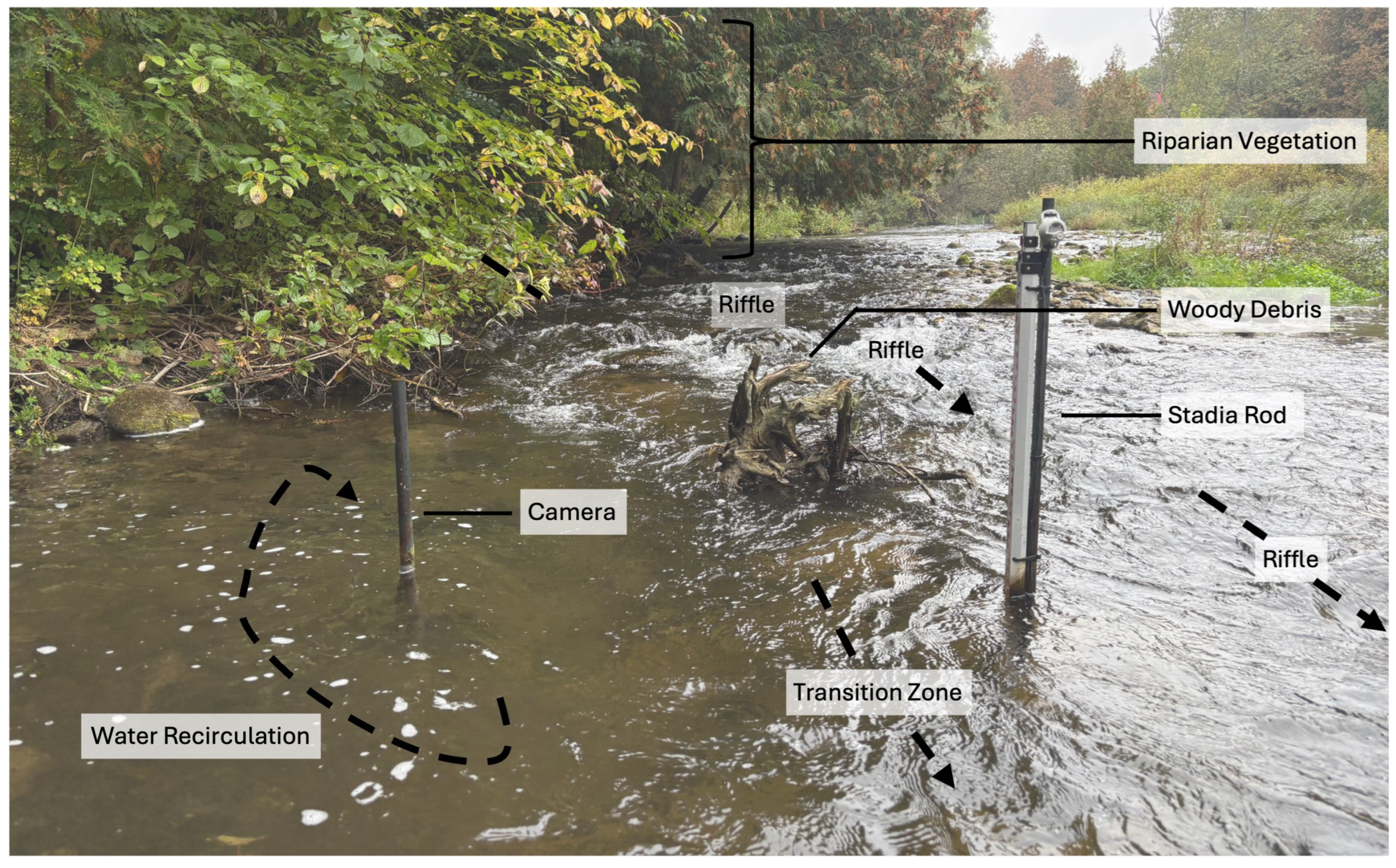
The monitored site was located between the downstream end of a riffle and the upstream end of a transition zone leading into a deeper pool (Figure 2). The stream width was approximately 11 m and consisted primarily of cobble and gravel substrate, with scattered boulders and woody debris throughout the channel. Water depths within the camera field of view typically ranged from 0.4 m to 0.6 m during summer baseflow conditions. Riparian vegetation along the right bank (left side of Figure 2) was dominated by mature trees that provided substantial overhead shading throughout the day. Due to a large woody debris structure at the bottom of the riffle, a portion of the flow was diverted toward the right bank where the camera was positioned, while most discharge continued downstream through the thalweg (right side of Figure 2). The diverted flow created a relatively low-velocity habitat adjacent to faster-flowing water. A small recirculation zone was also present along the right bank, where floating debris was frequently retained before re-entering the diverted flow path within the camera field of view. Together, the combination of groundwater upwelling, riparian shading, coarse substrate, woody debris, and hydraulic complexity (as described above), created a cool and structurally complex habitat. The camera was installed at this location because juvenile Brook Trout had been observed there previously and the landowner provided access to power and Wi-Fi required for continuous camera operation.
Figure 2.
Photograph of the West Credit River study reach facing upstream. The monitored habitat is located at the downstream end of a riffle and the upstream end of a transition zone leading into a deeper pool. Key habitat features include riparian vegetation, woody debris, and an area of flow recirculation beside the camera location. The channel width at the site was approximately 11 m. A stadia rod visible near the center of the image is shown for scale (approximately 50 cm exposed above the water surface).
2.2. Video Selection
Video footage collected by CWCR between 2023 and 2025 and archived publicly on YouTube (https://www.youtube.com/@Brook_Trout_of_the_West_Credit (accessed on 30 April 2026)) was reviewed to quantify juvenile Brook Trout occupancy and foraging activity at the monitored site. Any available footage recorded between 1 July and 31 August was analyzed, corresponding to peak summer temperatures and periods when juvenile Brook Trout were most likely to experience thermal stress. Videos were only analyzed if water clarity and lighting conditions allowed for consistent fish identification and behavioural observations. Turbidity and luminosity data were not available for the study period and were therefore not included in the analyses. Thirty-minute observation periods were selected to provide sufficient time to produce a consistent MaxN estimate, while balancing processing time [23,31]. Video segments were selected from three periods on each day: morning (~07:00–08:30) representing cool water temperatures, afternoon (~17:00–18:30), corresponding with daily maximum water temperatures, and evening (~19:00–20:30), capturing the onset of daily cooling following peak afternoon temperatures. These periods also correspond to times when fish activity may vary in response to changing light levels and available food [21,32].
Footage availability varied among years due to interruptions associated with equipment maintenance, environmental conditions, and camera operation. A total of 224 30-minute observations were included in the seasonal analyses (2023 = 81, 2024 = 114, 2025 = 29). The smaller sample size in 2025 was due to camera malfunctions that interrupted data collection during much of the summer. Therefore, most available footage from 2025 was collected during the early portion of the season when water temperatures were relatively high. As a result, observations from 2025 may not be fully representative of seasonal conditions compared to 2023 and 2024, where more complete summer records were available.
2.3. Assessing Habitat Use
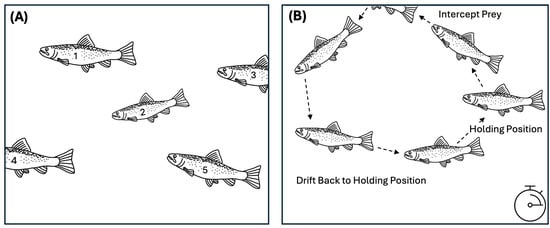
A single observer conducted all video analyses to ensure consistency in fish identification and behavioural observations. Brook Trout were identified based on external characteristics visible in the video footage, including worm-like pigmentation on the back and dorsal fin, red spots on the side of the body, and a white leading edge on the pectoral, pelvic, and anal fins. Individuals included in the analysis were classified as juveniles based on their relatively small body size (<10 cm) and the presence of prominent parr marks, which are characteristic of age-0 to age-2 Brook Trout. Occupancy within the monitored area was quantified using MaxN, defined as the maximum number of individuals visible within a single video frame during each 30-minute observation period [23] (Figure 3A). MaxN provides a standardized index of relative occupancy within the camera field of view, while minimizing repeated counts of the same individuals [25].
Figure 3.
Illustrations of the metrics used to quantify juvenile Brook Trout occupancy and foraging activity from RUV footage. (A) Example video frame illustrating MaxN, where five juvenile Brook Trout are visible within the hypothetical camera field of view. (B) Example of a drift-foraging event, where a Brook Trout leaves its holding position (middle right) to attempt to intercept drifting prey (top center) before returning to its original position (middle right). An example video of this foraging behaviour is provided in the Supplementary Materials (Video S1). Flow is from left to right in both panels.
2.4. Foraging Activity
Foraging activity was quantified by measuring drift-foraging events, a primary feeding strategy used by stream-dwelling salmonids [21]. A drift-foraging event was defined as the period during which a fish left its holding position, moved toward the surface to attempt to intercept drifting prey, and returned to its original holding position [32,33] (Figure 3B). An example video of this behaviour is provided in the Supplementary Materials (Video S1). The duration of each foraging event was recorded to the nearest second and summed to estimate cumulative foraging time during each 30-minute observation period. Because the number of fish present within the camera field of view varied, and individuals could not be reliably tracked throughout each video, cumulative foraging time was standardized by MaxN and expressed as foraging activity per fish (s fish−1). Standardization by MaxN facilitated relative foraging activity comparisons across observation periods while accounting for variation in the number of fish occupying the monitored area.
2.5. Environmental Variables
For each 30-minute observation period, date, time, and water temperature (°C) were recorded. Water temperature at the monitored site was measured at 15-minute intervals using a HOBO MX2205 TidbiT® temperature logger (±0.2 °C; Onset Computer Corporation, Bourne, MA, USA; https://www.onsetcomp.com/products/data-loggers/mx2205 (accessed on 19 August 2026)), deployed by CWCR approximately 1 m from the camera (within the camera’s field of view) and 15 cm above the streambed (±1 cm). Video timestamps were synchronized with temperature records to assign thermal conditions to each observation period. Upstream water temperature was obtained from a secondary HOBO temperature logger located approximately 1 km upstream of the camera (collected by Freshwater Conservation Canada). Water temperature in the main branch of the Credit River was obtained from the Credit Valley Conservation monitoring station “Credit River at Cataract Falls” (ID: 8180010; source: https://cvc.ca/real-time-monitoring/credit-river-at-cataract-falls/ (accessed on 1 August 2026)). Flow and rainfall data were obtained from the Credit Valley Conservation monitoring station “West Credit River at 10th Line” (ID: 8150006; source: https://cvc.ca/real-time-monitoring/west-credit-river-at-10th-line/ (accessed on 1 August 2026)). All datasets were accessed under the Credit Valley Conservation Authority Open Data Licence v.1.0.
2.6. Prolonged Heat Event
A targeted analysis was conducted to assess changes in juvenile Brook Trout habitat use and foraging activity during a prolonged summer heat event from 11–17 July 2025. During this event, water temperatures at the monitored site exceeded 20 °C on seven consecutive days. To examine behavioural responses to sustained thermal stress, one 30-minute video segment beginning at the start of each hour was analyzed between 08:00 and 20:00 whenever footage was available and water clarity and lighting conditions allowed for consistent species identification. Habitat use and foraging activity were quantified using the same methods described in Section 2.3 and Section 2.4. To establish baseline conditions, observations collected during the seven-day heat event were compared with observations collected two days prior and two days following the event. Data included in the prolonged heat event analysis were excluded from the broader seasonal analyses to avoid overrepresentation of extreme thermal conditions. A total of 113 thirty-minute observations were included in the heat event analysis, encompassing before, during, and after the event.
2.7. Statistical Analysis
Statistical analyses were conducted using IBM SPSS Statistics (v.30.0). Separate two-way analyses of variance (ANOVA) were used to evaluate occupancy of the monitored area (MaxN) and foraging activity. Year (2023, 2024, and 2025) and diel periods (morning, afternoon, and evening) were included as fixed factors. The interaction between year and diel period was also evaluated. When significant main effects were detected (α < 0.05), Tukey’s HSD post hoc tests were used to identify pairwise differences among groups. Following these analyses, simple linear regressions were conducted for each study year to assess relationships between water temperature and each response variable (MaxN and foraging activity). Water temperature was treated as a continuous predictor variable, and separate analyses were run for each year. Observations were also grouped into three biologically relevant temperature categories for juvenile Brook Trout to evaluate behavioural responses across commonly reported thermal thresholds: ideal (<17 °C), near-threshold (17–20 °C), and above-threshold (>20 °C). One-way ANOVAs were used to compare MaxN and foraging activity among these temperature categories. When significant main effects were detected (α < 0.05), Tukey’s HSD post hoc tests were used to identify pairwise differences among groups. Finally, simple linear regressions were conducted to assess relationships between water temperature and each response variable (MaxN and foraging activity) during the July 2025 heat event.
3. Results
3.1. Environmental Conditions
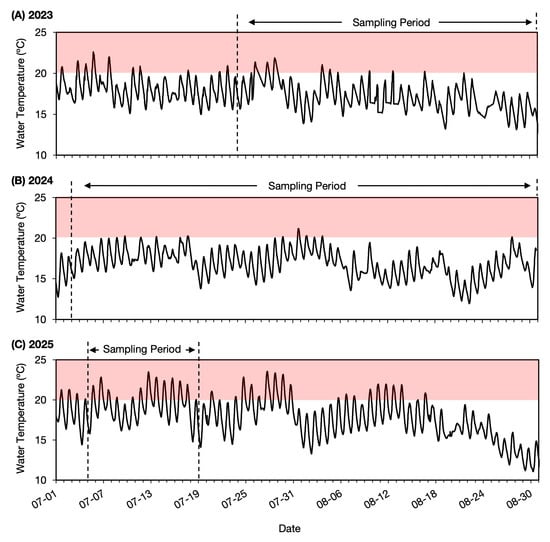
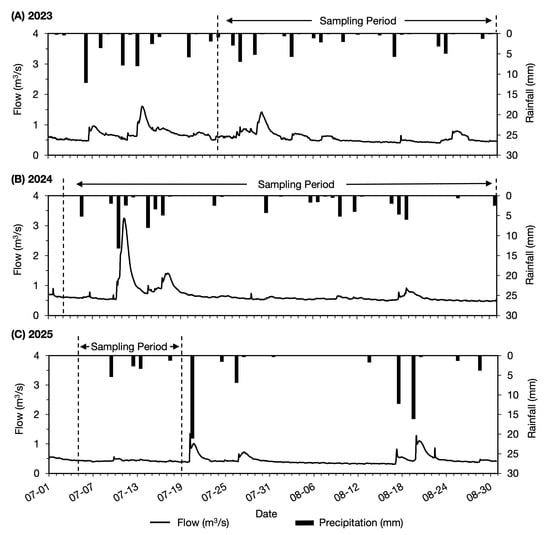
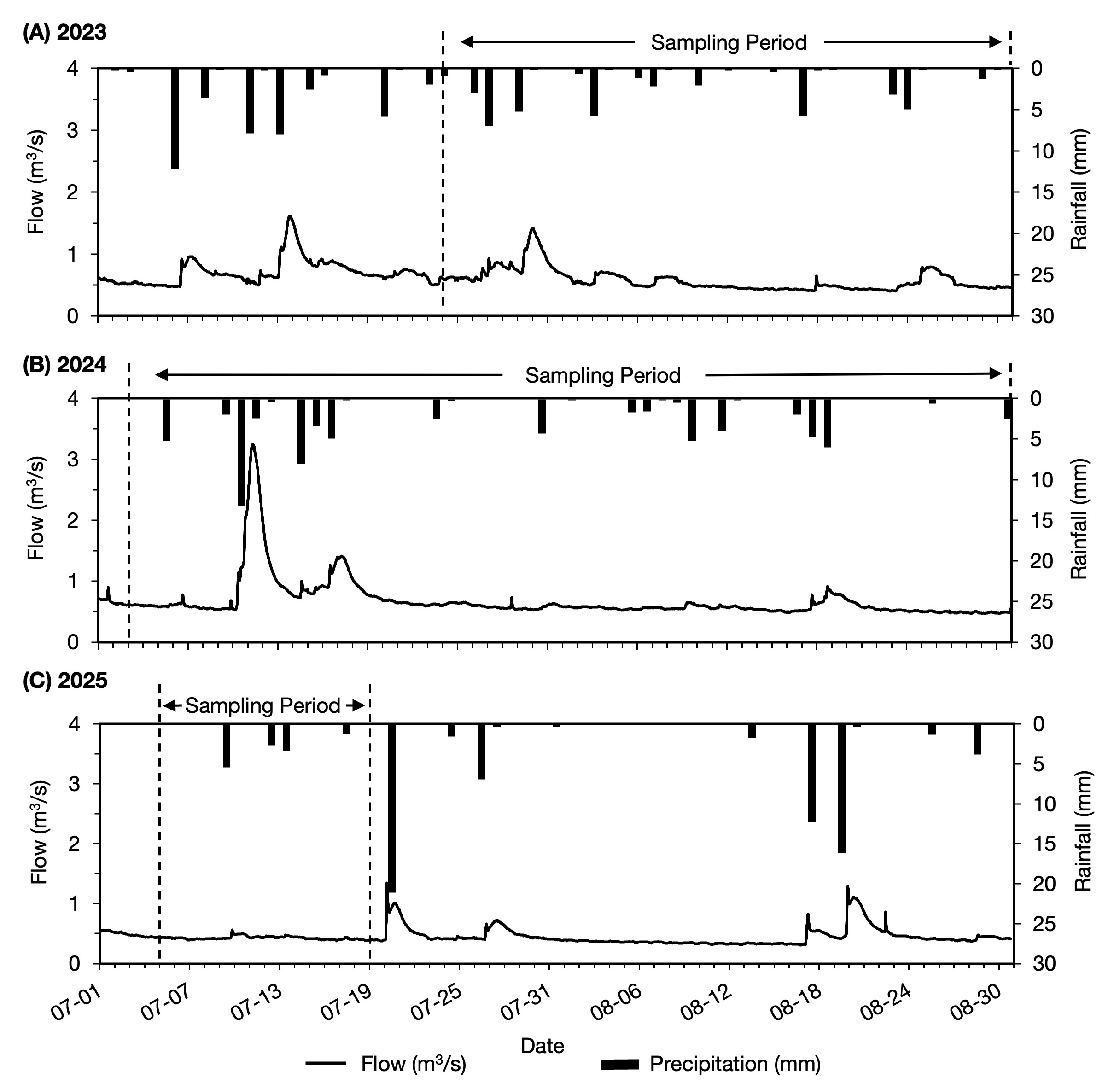
Water temperature (Figure 4) and flow conditions (Figure 5) were similar among the three summers, with mean summer temperatures differing by less than 1 °C and streamflow exhibiting similar seasonal patterns. Mean water temperature in summer 2023 was 17.6 °C (maximum = 22.6 °C; Figure 4A). Similarly, mean water temperature in summer 2024 was 17.1 °C (maximum = 22.2 °C; Figure 4B), whereas summer 2025 was 17.8 °C (maximum = 23.6 °C; Figure 4C). Daily fluctuations in water temperature were evident throughout all three summers, with temperatures exceeding the commonly reported thermal threshold for Brook Trout (>20 °C) occurring during each study year (Figure 4). However, temperatures above 20 °C occurred more frequently and for longer durations in 2025 than in 2023 or 2024. Flow and rainfall patterns were also broadly similar among years (Figure 5), although average discharge was lower in 2025 (mean = 0.45 m3/s) than in 2023 (mean = 0.62 m3/s) or 2024 (mean = 0.67 m3/s).
Figure 4.
Water temperature (°C) in the West Credit River from 1 July to 31 August, in (A) 2023, (B) 2024, and (C) 2025. Red-shaded regions indicate temperatures above the commonly reported thermal threshold for Brook Trout (>20 °C). Available footage is shown as “Sampling Period” along the top of each panel (2023: 24 July–31 August, 2024: 3 July–31 August, and 2025: 5–19 July).
Figure 5.
Flow (m3/s) and rainfall (mm) in the West Credit River from July 1 to August 31 in (A) 2023, (B) 2024, and (C) 2025. Flow and rainfall data were obtained from the “West Credit River at 10th Line” monitoring station (ID: 8150006) (Credit Valley Conservation) and were accessed under the Credit Valley Conservation Authority Open Data Licence v.1.0. Available footage is shown as “Sampling Period” along the top of each panel (2023: 24 July–31 August, 2024: 3 July–31 August, and 2025: 5–19 July).
3.2. Yearly and Diel Trends in Habitat Use and Foraging Behaviour
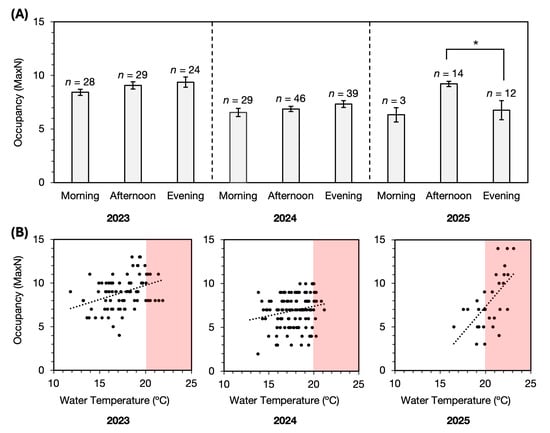
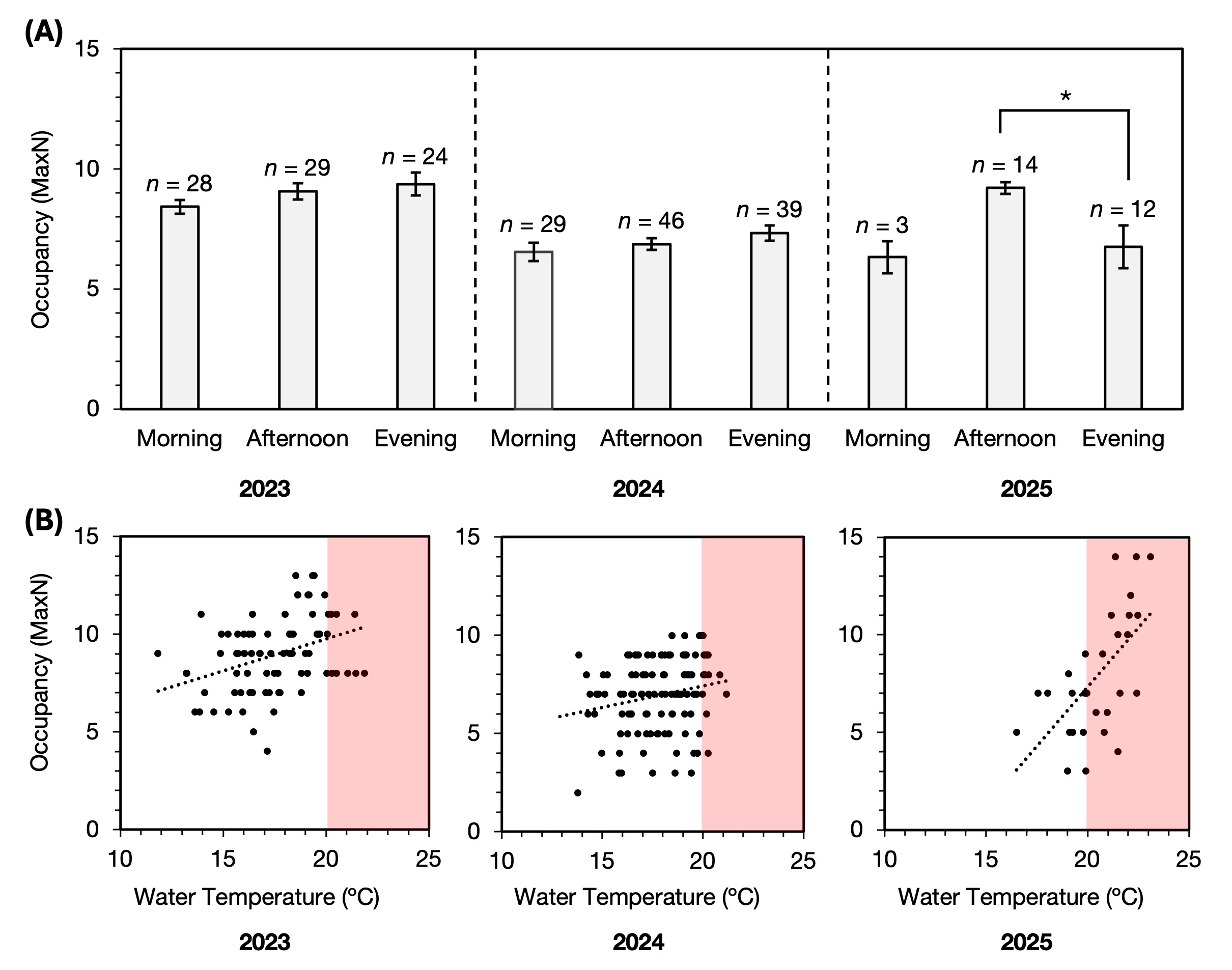
Juvenile Brook Trout occupancy within the monitored habitat differed significantly between years (F2,215 = 23.05, p < 0.001), with the highest occupancy observed in 2023, intermediate occupancy in 2025, and the lowest occupancy in 2024 (Figure 6A). Diel patterns in occupancy also differed among years, as indicated by a significant Year × Time of Day interaction (F4,215 = 2.87, p = 0.024). Occupancy remained relatively consistent throughout the day during 2023 and 2024, whereas occupancy in 2025 increased during afternoon observations before declining significantly in the evening (p = 0.008). Simple linear regressions identified significant positive relationships between occupancy and water temperature in 2023 (R2 = 0.133, p < 0.001), 2024 (R2 = 0.041, p = 0.030) and 2025 (R2 = 0.370, p < 0.001), although the strength of the relationship varied among years (Figure 6B). The strongest positive relationship was observed in 2025, when occupancy increased from approximately three to five individuals at cool temperatures to more than 10 individuals as temperatures exceeded 20 °C.
Figure 6.
Juvenile Brook Trout occupancy in the monitored area quantified using MaxN. (A) Mean (±SEM) MaxN during morning, afternoon, and evening observation periods in 2023, 2024, and 2025. Sample sizes (n) are indicated above bars. Asterisks indicate significant pairwise differences (p < 0.05). (B) Relationships between water temperature (°C) and occupancy (MaxN) for each study year. Dotted lines represent linear trendlines. Red shaded regions indicate temperatures above the commonly reported thermal threshold for Brook Trout (>20 °C).
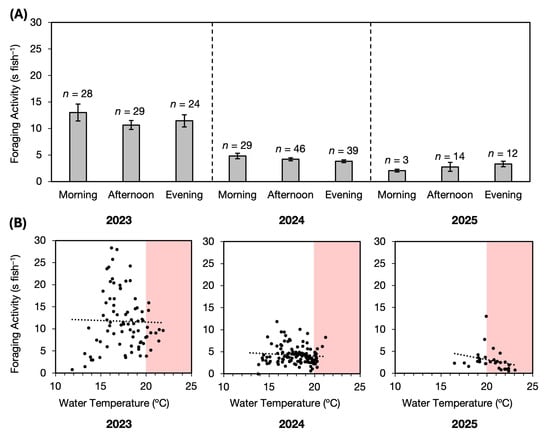
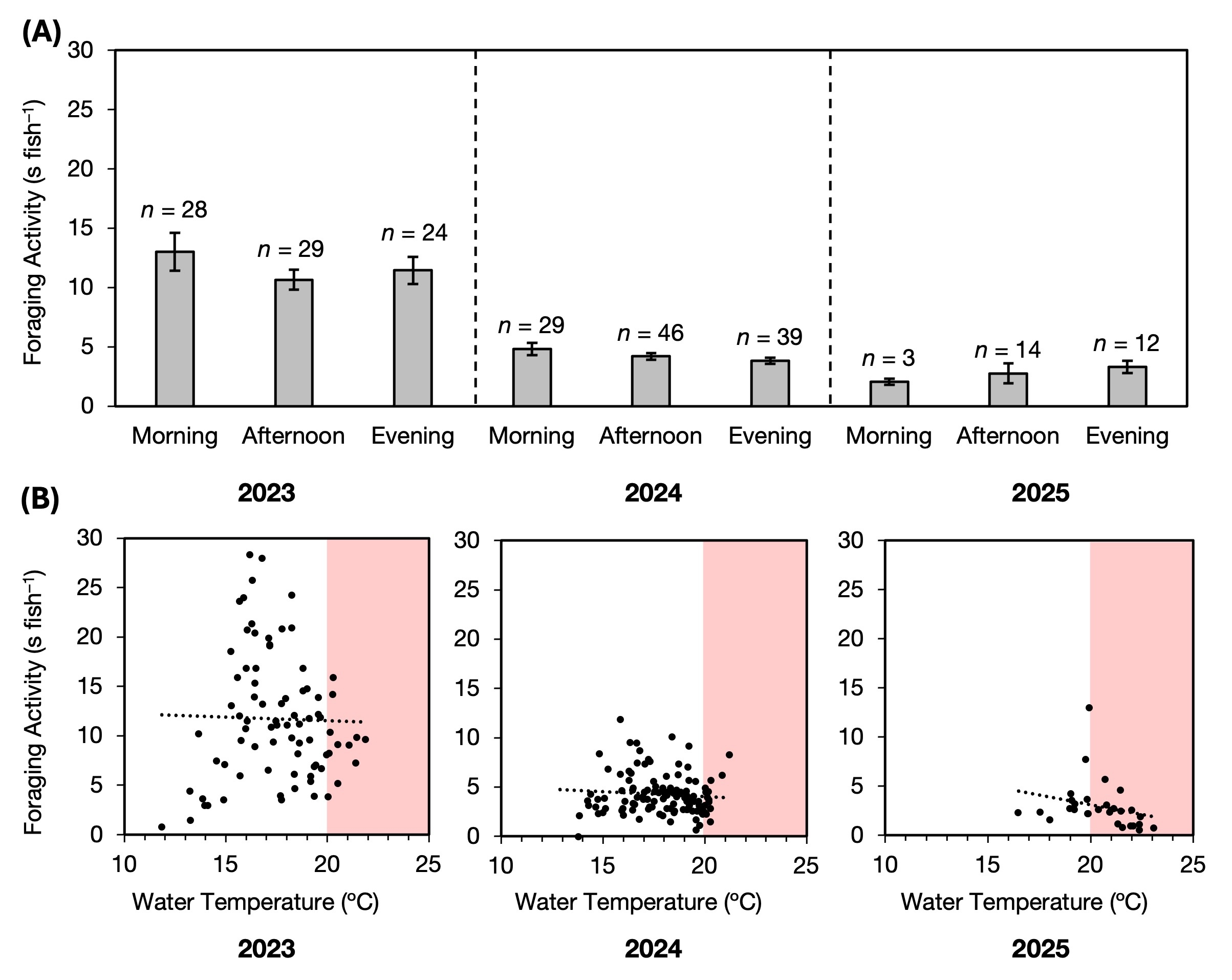
Foraging activity also differed significantly among years (F2,215 = 81.42, p < 0.001), with higher activity observed in 2023 than in 2024 or 2025 (Figure 7A). Foraging activity did not differ significantly among diel periods in any year (F2,215 = 0.29, p = 0.748). Similarly, linear regressions did not identify significant temperature effects within individual years (all p > 0.05; Figure 7B). A wide range of foraging activity was observed in 2023, whereas observations from 2024 and 2025 were consistently low. Considerable overlap in foraging activity occurred across the range of temperatures observed within each year (Figure 7B).
Figure 7.
Juvenile Brook Trout foraging activity quantified as time spent drift-foraging per fish (s fish−1). (A) Mean (±SEM) foraging activity during morning, afternoon, and evening observation periods in 2023, 2024, and 2025. Sample sizes (n) are indicated above bars. (B) Relationships between water temperature (°C) and foraging activity for each study year. Dotted lines represent linear regression trendlines. Red-shaded regions indicate temperatures above the commonly reported thermal threshold for Brook Trout (>20 °C).
It is important to note that annual comparisons in Figure 6A and Figure 7A combine observations collected across a wide range of temperatures, including both cool periods and periods of thermal stress. As a result, behavioural responses that occurred during the warmest conditions were masked by the larger number of observations collected under cooler conditions. The strongest behavioural responses were observed when water temperatures exceeded commonly reported thermal thresholds for Brook Trout (>20 °C), particularly during summer 2025. This suggests that temperature was a better tool for evaluating behaviour than year or time of day. Therefore, observations were grouped into biologically relevant temperature categories to better assess how juvenile Brook Trout responded to increasing thermal stress.
3.3. Trends in Habitat Use and Behaviour Across Temperature Categories
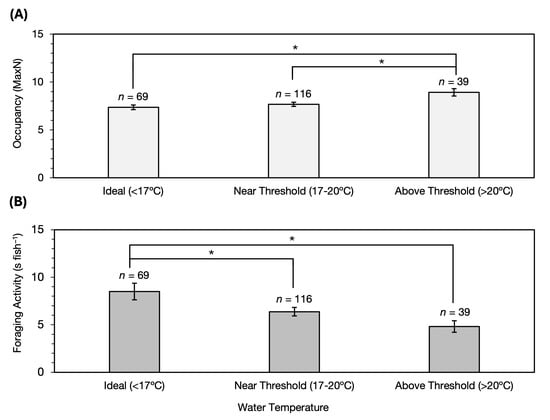
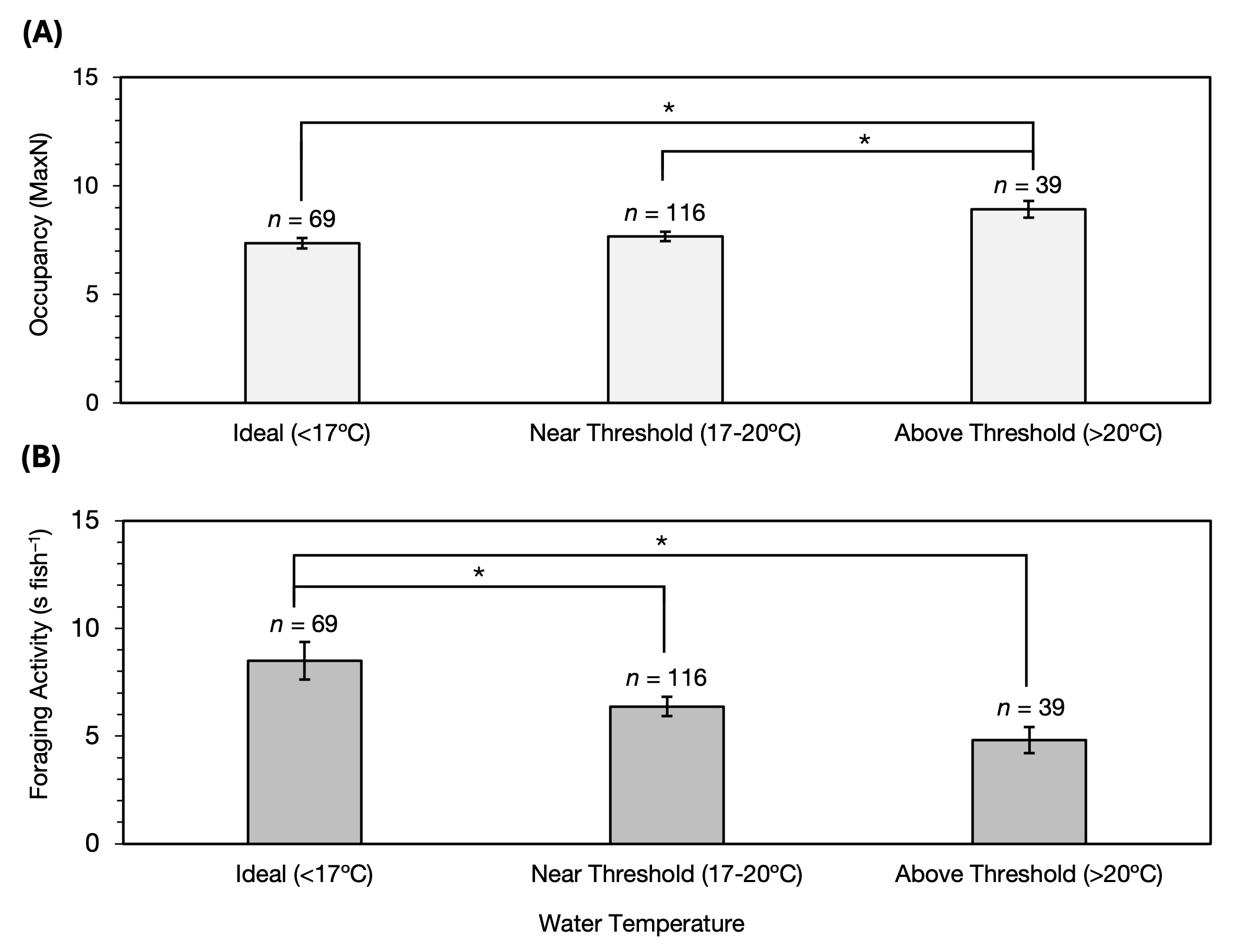
When observations from all three years were grouped into biologically relevant temperature categories, significant differences were detected in both habitat use and foraging activity (Figure 8). Occupancy differed significantly among thermal categories (F2,221 = 6.46, p = 0.002; Figure 8A), where occupancy under above-threshold (>20 °C) conditions was significantly greater than occupancy under both ideal (<17 °C; p = 0.002) and near-threshold conditions (17–20 °C; p = 0.008). No significant difference was detected between ideal and near-threshold conditions (p > 0.05). Foraging activity also differed significantly among thermal categories (F2,221 = 6.08, p = 0.003; Figure 8B). Foraging activity under ideal conditions was significantly greater than activity under both near-threshold (p = 0.041) and above-threshold conditions (p = 0.003), whereas no significant difference was detected between near-threshold and above-threshold conditions (p > 0.05). Overall, as temperatures increased, occupancy increased while foraging activity decreased, with the highest occupancy and lowest foraging activity observed under above-threshold (>20 °C) conditions (Figure 8).
Figure 8.
(A) Mean (±SEM) occupancy (MaxN) and (B) Mean (±SEM) foraging activity grouped by temperature category: ideal (<17 °C), near-threshold (17–20 °C), and above-threshold (>20 °C). Sample sizes (n) are indicated above bars. Asterisks indicate significant pairwise differences (p < 0.05).
3.4. July 2025 Prolonged Heat Event
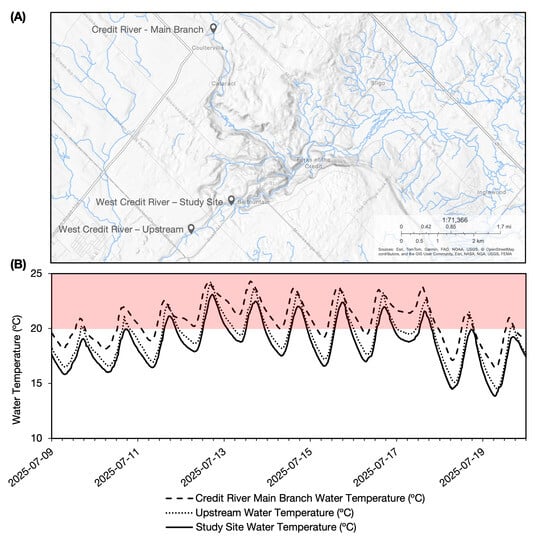
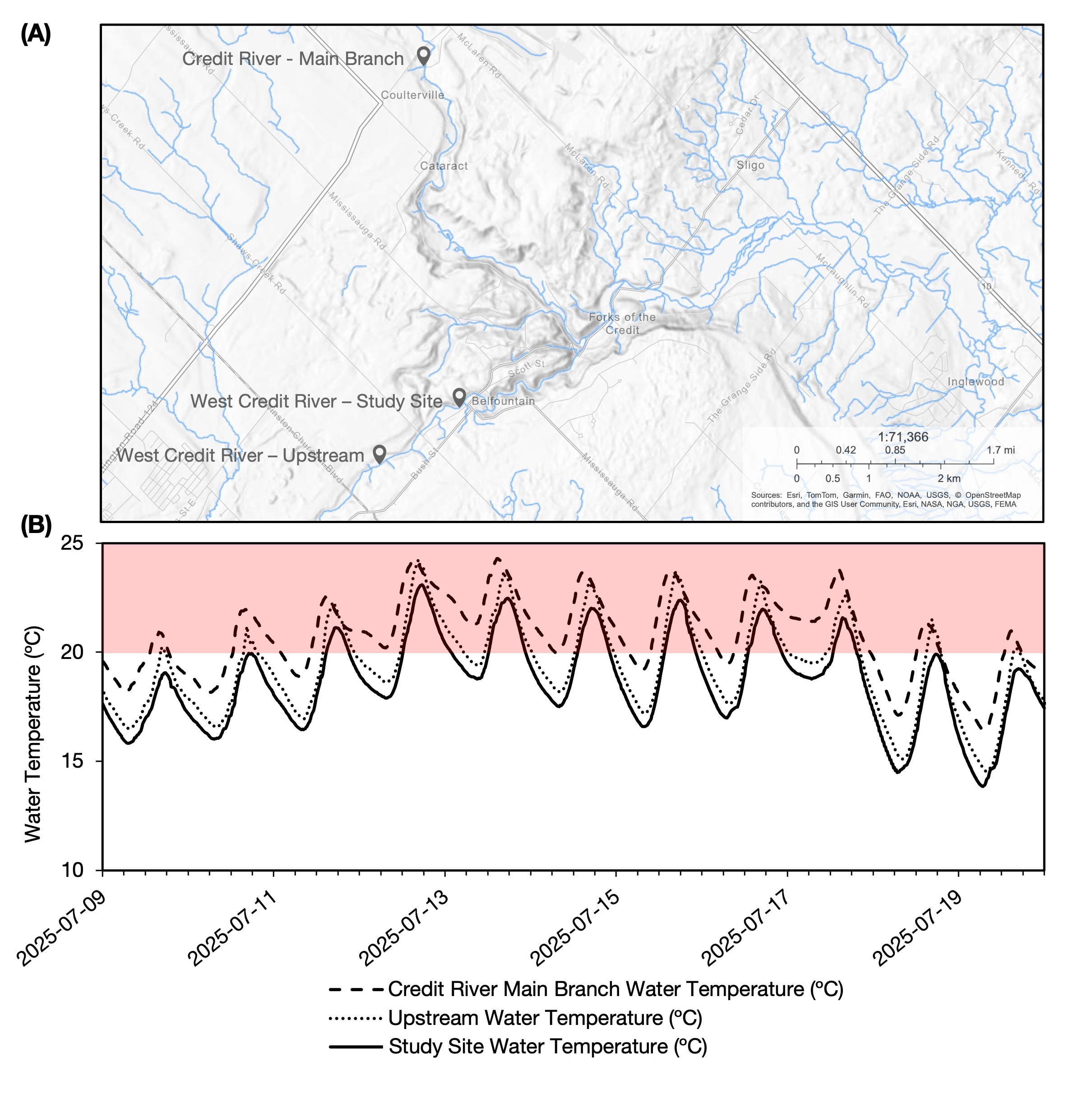
Summer 2025 had three distinct heat events, where water temperatures exceeded 20 °C for several days (Figure 4C). However, camera malfunctions limited observations to early July, capturing only one heat event from 11–17 July 2025. During the heat event, water temperature at the study site was consistently lower than temperatures recorded approximately 1 km upstream in the West Credit River and in the main branch of the Credit River (Figure 9). Temperatures at all three locations exhibited similar diel patterns, increasing throughout the day and generally peaking around 17:00 before cooling overnight and reaching daily minima around 8:00 (Figure 9).
Figure 9.
(A) Locations of the monitoring stations used to evaluate thermal conditions before, during, and after the July 2025 heat event (11–17 July). (B) Water temperature (°C) recorded at the three monitoring locations before, during, and after the July 2025 heat event. The red shaded region indicates temperatures above the commonly reported thermal threshold for Brook Trout (>20 °C).
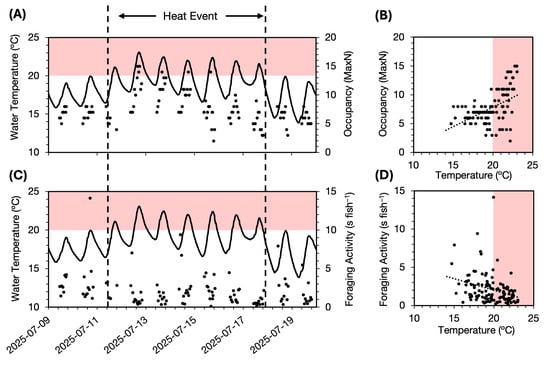
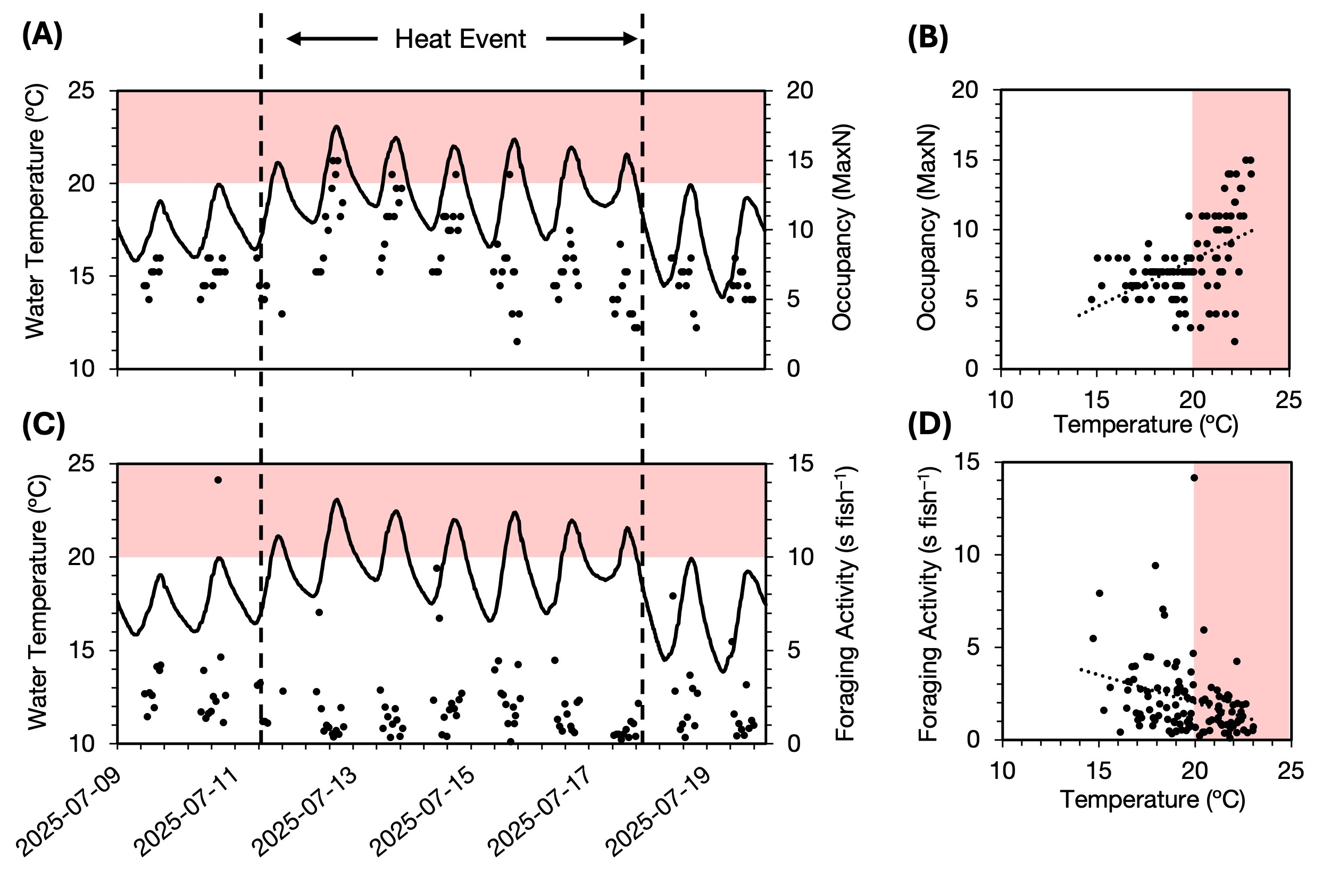
Prior to the heat event, occupancy in the monitored habitat ranged between four and eight individuals and exhibited little diel variation (Figure 10A). In contrast, during the heat event, occupancy increased as temperatures increased (R2 = 0.240, p < 0.001), reaching a maximum of 15 fish on July 12 when the highest water temperatures observed during the three-year study period were recorded (Figure 10A,B). Diel fluctuations were also more pronounced during the heat event, with occupancy tending to increase during afternoon warming and decrease as temperatures cooled during the evening. Foraging activity during the heat event remained consistently low and generally decreased as water temperature increased (R2 = 0.097, p < 0.001; Figure 10C,D). Foraging activity was lowest during days 6 and 7 (16 and 17 July) when evening temperatures remained elevated and daily cooling was less pronounced (Figure 10C). However, brief increases in foraging activity occurred during cooler morning periods throughout the heat event. Following the heat event, occupancy declined and foraging activity increased to levels similar to those observed before the event.
Figure 10.
(A) Water temperature recorded within 1 m of the camera (°C; solid line) and MaxN (points) before, during, and after the seven-day heat event (11–17 July 2025). Red-shaded region indicates temperatures above the commonly reported thermal threshold for Brook Trout (>20 °C). (B) Relationship between water temperature and MaxN. (C) Water temperature recorded within 1 m of the camera (°C; solid line), and foraging activity (s fish−1; points) before, during, and after the heat event. (D) Relationship between water temperature and foraging activity.
4. Discussion
This study used three years of archived Remote Underwater Video footage to examine how juvenile Brook Trout responded to varying environmental conditions in their natural habitat. Occupancy within the monitored habitat increased while foraging activity decreased once temperatures exceeded commonly reported thermal thresholds (>20 °C), and both responses became particularly pronounced during the July 2025 heat event. These patterns suggest that behavioural responses to thermal conditions were more evident than responses associated with year or diel period alone, highlighting the importance of considering temperature directly when evaluating juvenile Brook Trout behaviour. Collectively, the observed increase in habitat occupancy and decrease in foraging activity are consistent with a behavioural trade-off between maintaining access to suitable habitat and meeting energetic demands under thermal stress.
4.1. Habitat Use in Response to Increasing Temperature
Habitat occupancy increased significantly when water temperatures were above thermal thresholds (>20 °C) but did not differ significantly between ideal (<17 °C) and near-threshold (17–20 °C) conditions (Figure 8A). This suggests that juvenile Brook Trout tolerated moderate warming without significant changes in habitat use, but increasingly utilized the monitored habitat once temperatures exceeded thermal thresholds. This observation is consistent with behavioural thermoregulation, where fish alter habitat use to regulate body temperature and reduce thermal stress [17]. This response has been widely documented for salmonids in both experimental and natural systems. In an experimental stream, Hitt et al. [16] documented Brook Trout and Brown Trout (Salmo trutta) increasing their use of cooler areas as water temperatures increased. Comparable patterns have been observed in natural systems, where juvenile Brook Trout increasingly occupied groundwater upwelling areas during summer warming in Charles Lake, Ontario [34], and both Brook Trout and Atlantic Salmon (Salmo salar) concentrated in cool tributaries and groundwater upwelling areas during periods of thermal stress in the Cains River, New Brunswick [18]. Despite being in different environments, all three studies support the interpretation that increased occupancy within the monitored habitat reflected a behavioural response to thermal stress.
However, temperature alone does not fully explain why juvenile Brook Trout increasingly occupied the monitored habitat. In addition to providing relatively cool water, the monitored habitat also combined several features known to benefit fish during warm periods, including overhead riparian shading, woody debris, and lower flow velocities compared to nearby riffle habitats. Previous studies have shown that salmonids do not occupy all available thermal refugia, but instead select habitats that provide multiple ecological benefits beyond cooler temperatures [18,19,20]. For example, Brook Trout movements during warm periods are often associated with groundwater upwellings and tributary confluences that also provide structural cover such as undercut banks, large boulders, and woody debris [19]. Similarly, both Wilbur et al. [18] and Pelletier and Forrester [20] reported that thermal refuge occupancy was influenced by physical habitat characteristics including depth, structural habitat (i.e., rocks and woody debris), and hydraulic conditions. Lower flow velocities in the monitored habitat may have provided an additional benefit to juvenile fish. By reducing the energetic costs associated with station holding in high-velocity riffles [35], lower-velocity habitats may offer energetic advantages compared to faster-flowing areas. These benefits become increasingly important as temperatures rise and metabolic demands increase. Together, the present study and previous work support the conclusion that increased occupancy observed under warm conditions (Figure 8A) likely reflected the combined thermal, structural, and energetic benefits of the monitored habitat, rather than temperature alone.
Notably, observations were collected from a single habitat, preventing direct assessment of whether fish were actively selecting this habitat over other available habitats, or simply remaining within a favourable area. Deploying multiple synchronized cameras across habitats that differ in temperature, cover, depth, and flow would allow future studies to directly examine habitat selection and identify the habitat features that most strongly influence juvenile Brook Trout distribution.
4.2. Foraging in Response to Increasing Temperature
Foraging activity was significantly lower under near-threshold (17–20 °C) and above-threshold conditions (>20 °C), compared to ideal conditions (<17 °C) (Figure 8B). Similar to habitat occupancy, this pattern was not evident in the seasonal analyses and only became apparent when observations were grouped according to biologically relevant thermal categories. This suggests that juvenile Brook Trout reduced foraging activity as temperatures approached commonly reported thermal thresholds, and this activity remained low once those thresholds were exceeded.
Reduced foraging during warm periods likely reflects the physiological challenges associated with thermal stress. As water temperatures increase, metabolic demands rise, and a greater proportion of available energy is required for survival [4,36]. As a result, other energetically demanding activities such as foraging become more difficult to sustain. Drift foraging requires fish to maintain a position in the water column while capturing, handling, and digesting prey [22], and elevated temperatures may further reduce foraging efficiency by impairing cellular processes and digestive function [37]. Together, these constraints contribute to reduced foraging as temperatures approach and exceed thermal thresholds. Consistent with this interpretation, Breau et al. [15] reported reduced feeding rates in juvenile Atlantic Salmon as simulated stream temperatures increased. A similar pattern was observed in the present study (Figure 8B), suggesting that juvenile Brook Trout modify feeding behaviour as temperatures approach and exceed commonly reported thermal thresholds. Importantly, these behavioural changes also occurred well before lethal temperatures were reached. As a result, reduced foraging activity may act as an early indicator of thermal stress before population-level changes become evident, consistent with recent work that suggests behavioural responses to warming can precede physiological stress responses in Brook Trout [38].
4.3. Habitat Use and Foraging Response to a Prolonged Heat Event
The July 2025 heat event provided an independent test of the behavioural responses observed across temperature categories. During the heat event, habitat occupancy increased while foraging activity remained low, closely mirroring the responses observed when temperatures exceeded 20 °C in the broader dataset. Diel patterns were also evident, with occupancy and foraging activity showing distinct changes in response to increased water temperature throughout each day of the heat event (Figure 10A,C). Together, these findings reinforce the interpretation that juvenile Brook Trout simultaneously modified habitat use and foraging activity in response to thermal stress.
The stronger behavioural responses observed during the heat event likely reflected the prolonged duration of elevated temperatures. In the seasonal analysis, occupancy increased and foraging activity decreased when water temperatures exceeded 20 °C. During the July 2025 heat event, temperatures remained above or near this threshold for seven consecutive days. Sustained exposure to elevated temperatures can increase physiological stress and energy demands in salmonids [4]. For example, Corey et al. [36] demonstrated that prolonged exposure to elevated temperatures depleted energy reserves and induced cellular stress responses for juvenile Atlantic Salmon in an experimental stream. These findings support the interpretation that increased habitat use and decreased foraging during the heat event likely reflected a behavioural strategy to mitigate prolonged thermal stress. Sullivan and Vokoun [39] reported that Brook Trout, Brown Trout, and Rainbow Trout (Oncorhynchus mykiss) increased occupancy of thermal refuges during a two-week heat event in the Housatonic River, Connecticut. In the present study, habitat occupancy similarly increased during the heat event, suggesting that juvenile Brook Trout increasingly concentrated within a habitat that provided thermal, structural, and hydraulic benefits.
Previous thermal exposure may have also influenced the behavioural responses observed in this study. Experimental studies have shown that Brook Trout can develop increased thermal tolerance following prolonged exposure to elevated temperatures, however, this acclimation response is reversible and declines rapidly once temperatures return to cooler conditions [40]. Because observations were collected from a discrete period each year (July 1 to August 31), it is possible that fish experienced warm water events prior to the observation periods included in our analyses. As a result, behavioural responses observed in this study may reflect both the thermal conditions present during sampling, and previous exposure to thermal stress. However, habitat occupancy and foraging were still variable and changed with changing temperatures throughout the study period, suggesting that Brook Trout were still responding to changing thermal conditions despite any potential acclimation effects.
Behavioural responses by the fish also appeared to be highly reversible, as habitat use and foraging activity returned toward pre-heat event levels shortly after the heat event finished. Similarly, brief increases in foraging were also observed in cooler mornings during the heat event (Figure 10C), indicating that juvenile Brook Trout exploited feeding opportunities when thermal conditions temporarily improved. This pattern is consistent with evidence that salmonids can adjust the timing of feeding activity across the daily cycle in response to changing environmental conditions [41]. Together, these observations suggest that juvenile Brook Trout can quickly adjust their habitat use and foraging activity in response to both short- and long-term fluctuations in thermal conditions.
4.4. Evidence for a Behavioural Trade-Off Between Habitat Use and Foraging
The most important finding of this study was not that habitat occupancy increased or that foraging activity decreased independently, but that both responses occurred simultaneously in response to thermal stress in a field setting. Across thermal categories and during the July 2025 heat event, juvenile Brook Trout increasingly occupied the monitored habitat while reducing foraging activity, suggesting a behavioural trade-off between energy conservation and energy acquisition.
The behavioural trade-off proposed here is consistent with findings from White et al. [42], who reported that Brook Trout increasingly used thermal refuges while simultaneously reducing their use of productive foraging habitats under warm conditions. However, unlike their experimental system, the monitored habitat in the present study appeared to provide both thermal refuge and foraging opportunities. Across the entire study period, foraging activity was consistently observed in the monitored area, indicating that food resources were often available. Despite these opportunities, foraging activity still declined as temperatures increased, suggesting that reduced feeding activity was likely a behavioural response to thermal stress, rather than a result of limited feeding opportunities.
Interestingly, foraging in the present study never fully ceased during the seasonal analyses or the heat event. In fact, fish appeared to take advantage of cooler periods to forage, as observed in some cool mornings during the heat event (Figure 10C). This supports findings from White et al. [42], who noted that fish periodically left thermal refuges to forage despite elevated temperatures, suggesting that individuals continued to balance energy acquisition while also avoiding thermal stress. It is also possible that reduced daytime foraging was compensated for by increased feeding activity during crepuscular or nocturnal periods [41], although this was not evaluated in the present study. Collectively, these findings suggest that juvenile Brook Trout maintain energy balance during periods of thermal stress by occupying habitats that reduce physiological and energetic costs while continuing to forage opportunistically when conditions are favourable.
5. Conclusions
Climate change is expected to increase the frequency and duration of thermal stress in coldwater streams, making it increasingly important to identify how Brook Trout respond to warming stream conditions. Across three summers in the West Credit River, juvenile Brook Trout increased occupancy within the monitored habitat while reducing foraging activity as water temperatures exceeded commonly reported thermal thresholds, with both responses becoming most pronounced during the prolonged July 2025 heat event. The increase in habitat occupancy observed during elevated water temperatures highlights the importance of maintaining high-quality coldwater habitat. The monitored habitat contained several characteristics that may provide benefits during periods of thermal stress, including groundwater influence, riparian shading, woody debris, and complex hydraulic conditions. Although the present study could not determine which individual habitat features drove occupancy, the increased use of this habitat during warm periods suggests that protecting and restoring habitats with these characteristics may help support Brook Trout persistence under future warming scenarios.
The contrasting responses of habitat occupancy and foraging activity also demonstrate the potential value of behavioural monitoring. The three-year dataset used in this study captured behavioural responses across multiple summers and documented fish behaviour in their natural habitat without handling or disturbance. This approach is particularly valuable during heat events, when minimizing additional stress on fish is desirable. As temperatures increased, the RUV system captured changes in both habitat use and foraging activity, providing behavioural information that cannot be captured with conventional sampling methods such as electrofishing, seining, or snorkel surveys. These findings also suggest that behavioural changes can serve as an early indicator of thermal stress before population-level changes become evident. As citizen science-based monitoring programs continue to expand, partnerships among community groups, conservation organizations, researchers, and government agencies may provide valuable and low-cost opportunities to increase spatial and temporal coverage of freshwater monitoring. These collaborative approaches can improve our ability to detect both ongoing and emerging environmental stressors, and support proactive conservation strategies for Brook Trout and similar coldwater species.
Supplementary Materials
The following supporting information can be downloaded at: https://www.mdpi.com/article/10.3390/fishes11110631/s1, Remote Underwater Video (RUV) monitoring was conducted using a DNC-HD6 Portable Underwater 3G-SDI Inspection Camera System (1080p, 60 fps) (Dive and See, USA; https://diveandsee.com/dnc-hd6-underwater-sdi-inspection-live-stream-camera-system/ (accessed on 19 August 2026)) housed in an aluminum case. The camera was mounted to a 3/4-inch steel post welded to a 12 × 12-inch (30.5 × 30.5 cm) steel base plate using a Scotty Action Camera Mount (Scotty Manufacturing Ltd., Canada; https://scotty.com/product/134-action-camera-mount/ (accessed on 19 August 2026)), which provided isolation between the camera assembly and steel mounting structure. The camera transmitted video through a Serial Digital Interface (SDI) cable to an SDI-to-HDMI converter connected to a Dell Inspiron laptop. Video was captured and streamed using Open Broadcaster Software (OBS Studio; https://obsproject.com/ (accessed on 19 August 2026)). Automated daily stream start and stop times were controlled using the Advanced Scene Switcher plugin for OBS (https://obsproject.com/forum/resources/advanced-scene-switcher.395/ (accessed on 19 August 2026)). The laptop was powered through an extension cord from an outdoor receptacle and was connected to the internet via a wireless connection. The laptop was configured to continue operating with the display lid closed and was managed remotely using Chrome Remote Desktop. Livestreams were scheduled in advance and broadcast through the Coalition for the West Credit River’s “Brook Trout of the West Credit River” YouTube channel. Supplementary Video S1: Example of juvenile Brook Trout foraging behaviour.
Author Contributions
Conceptualization, C.M.H. and J.M.H.C.; Methodology, C.M.H., J.M.H.C., J.M., D.W. and S.N.; Validation, C.M.H. and J.M.H.C.; Formal Analysis, C.M.H. and J.M.H.C.; Investigation, C.M.H.; Data Curation, J.M., D.W. and S.N.; Writing—Original Draft Preparation, C.M.H. and J.M.H.C.; Writing—Review and Editing, C.M.H. and J.M.H.C.; Visualization, C.M.H.; Supervision, J.M.H.C.; Project Administration, J.M.H.C.; Funding Acquisition, C.M.H. and J.M.H.C. All authors have read and agreed to the published version of the manuscript.
Funding
C.M.H. was funded by the Natural Sciences and Engineering Research Council of Canada (NSERC) through the Canada Graduate Research Scholarships –Master’s (CGRS M) award. Additional funding was provided by the Canadian Foundation for Innovation, grant number 31341, to J.M.H.C. CWCR applied for and received funding from LUSH Cosmetics, grant number 36701, to purchase and install the live-stream camera on the West Credit River in 2022.
Institutional Review Board Statement
Animals were not handled at any point in this study; we used and reviewed publicly available video footage. We did not seek REB approval because the video data were already in hand.
Data Availability Statement
Publicly available video data used in this study are accessible through the Coalition for the West Credit River’s “Brook Trout of the West Credit River” YouTube channel. Environmental monitoring data are available through Credit Valley Conservation’s Open Data Portal and real-time monitoring network under the Credit Valley Conservation Authority Open Data Licence v.1.0. Processed datasets are available from the corresponding author upon request.
Acknowledgments
We gratefully acknowledge Ann Seymour and Steve Goyeche for access to their property, and CWCR for continued support throughout the project. We also acknowledge that this study area lies within the treaty lands and traditional territory of the Mississaugas of the Credit First Nation and is part of the broader traditional territories of the Haudenosaunee and Huron-Wendat. The Credit River watershed holds long-standing cultural, ecological, and spiritual significance and has supported hunting, fishing, and healing practices for generations. While colonial settlement and treaty-making disrupted these relationships with the land, we recognize the importance of learning from this history and fostering responsible stewardship of these lands and waters. We also acknowledge the comments and suggestions from three reviewers that improved the overall presentation of this manuscript. The authors have reviewed and edited the output and take full responsibility for the content of this publication.
Conflicts of Interest
The authors declare no conflicts of interest. The funders had no role in the design of the study; in the collection, analyses, or interpretation of data; in the writing of the manuscript; or in the decision to publish the results.
References
- Melstrom, R.T.; Lupi, F.; Esselman, P.C.; Stevenson, R.J. Valuing Recreational Fishing Quality at Rivers and Streams. Water Resour. Res. 2015, 51, 140–150. [Google Scholar] [CrossRef] [Scilit]
- MacCrimmon, H.R.; Campbell, J.S. World Distribution of Brook Trout, Salvelinus fontinalis. J. Fish. Board Can. 1969, 26, 1699–1725. [Google Scholar] [CrossRef] [Scilit]
- Smith, D.A.; Giacomini, H.C.; De Kerckhove, D.T.; Ball, H.; Gutowsky, L.F.G.; Chu, C. Brook Trout Occupancy in Rivers and Streams of the Mixedwood Plains Ecozone, Ontario. Ecol. Freshw. Fish 2023, 32, 80–93. [Google Scholar] [CrossRef] [Scilit]
- Chadwick, J.G.; McCormick, S.D. Upper Thermal Limits of Growth in Brook Trout and Their Relationship to Stress Physiology. J. Exp. Biol. 2017, 220, 3976–3987. [Google Scholar] [CrossRef] [Scilit] [PubMed]
- Mackey, T.E.; Hasler, C.T.; Durhack, T.; Jeffrey, J.D.; Macnaughton, C.J.; Ta, K.; Enders, E.C.; Jeffries, K.M. Molecular and Physiological Responses Predict Acclimation Limits in Juvenile Brook Trout (Salvelinus fontinalis). J. Exp. Biol. 2021, 224, jeb241885. [Google Scholar] [CrossRef] [Scilit] [PubMed]
- Morrison, S.M.; Mackey, T.E.; Durhack, T.; Jeffrey, J.D.; Wiens, L.M.; Mochnacz, N.J.; Hasler, C.T.; Enders, E.C.; Treberg, J.R.; Jeffries, K.M. Sub-Lethal Temperature Thresholds Indicate Acclimation and Physiological Limits in Brook Trout Salvelinus fontinalis. J. Fish. Biol. 2020, 97, 583–587. [Google Scholar] [CrossRef] [Scilit] [PubMed]
- Chu, C.; Mandrak, N.E.; Minns, C.K. Potential Impacts of Climate Change on the Distributions of Several Common and Rare Freshwater Fishes in Canada. Divers. Distrib. 2005, 11, 299–310. [Google Scholar] [CrossRef] [Scilit]
- Mitro, M.G.; Lyons, J.D.; Stewart, J.S.; Cunningham, P.K.; Griffin, J.D.T. Projected Changes in Brook Trout and Brown Trout Distribution in Wisconsin Streams in the Mid-Twenty-First Century in Response to Climate Change. Hydrobiologia 2019, 840, 215–226. [Google Scholar] [CrossRef] [Scilit]
- Tassone, S.J.; Besterman, A.F.; Buelo, C.D.; Ha, D.T.; Walter, J.A.; Pace, M.L. Increasing Heatwave Frequency in Streams and Rivers of the United States. Limnol. Oceanogr. Lett. 2023, 8, 295–304. [Google Scholar] [CrossRef] [Scilit]
- Somers, K.A.; Bernhardt, E.S.; Grace, J.B.; Hassett, B.A.; Sudduth, E.B.; Wang, S.; Urban, D.L. Streams in the Urban Heat Island: Spatial and Temporal Variability in Temperature. Freshw. Sci. 2013, 32, 309–326. [Google Scholar] [CrossRef] [Scilit]
- Bloomfield, J.P.; Marchant, B.P.; McKenzie, A.A. Changes in Groundwater Drought Associated with Anthropogenic Warming. Hydrol. Earth Syst. Sci. 2019, 23, 1393–1408. [Google Scholar] [CrossRef] [Scilit]
- Credit Valley Conservation. Integrated Watershed Monitoring Program: Summary of Conditions and Trends in the Credit River Watershed; Credit Valley Conservation: Mississauga, ON, Canada, 2023. [Google Scholar]
- Hollender, B.A.; Carline, R.F. Injury to Wild Brook Trout by Backpack Electrofishing. N. Am. J. Fish. Manag. 1994, 14, 643–649. [Google Scholar] [CrossRef] [Scilit]
- Snyder, D.E. Invited Overview: Conclusions from a Review of Electrofishing and Its Harmful Effects on Fish. Rev. Fish Biol. Fish. 2003, 13, 445–453. [Google Scholar] [CrossRef] [Scilit]
- Breau, C.; Cunjak, R.A.; Peake, S.J. Behaviour during Elevated Water Temperatures: Can Physiology Explain Movement of Juvenile Atlantic Salmon to Cool Water?: Temperature and Physiology of Juvenile Salmon. J. Anim. Ecol. 2011, 80, 844–853. [Google Scholar] [CrossRef] [Scilit] [PubMed]
- Hitt, N.P.; Snook, E.L.; Massie, D.L. Brook Trout Use of Thermal Refugia and Foraging Habitat Influenced by Brown Trout. Can. J. Fish. Aquat. Sci. 2017, 74, 406–418. [Google Scholar] [CrossRef] [Scilit]
- Linnansaari, T.; O’Sullivan, A.M.; Breau, C.; Corey, E.M.; Collet, E.N.; Curry, R.A.; Cunjak, R.A. The Role of Cold-Water Thermal Refuges for Stream Salmonids in a Changing Climate—Experiences from Atlantic Canada. Fishes 2023, 8, 471. [Google Scholar] [CrossRef] [Scilit]
- Wilbur, N.M.; O’Sullivan, A.M.; MacQuarrie, K.T.B.; Linnansaari, T.; Curry, R.A. Characterizing Physical Habitat Preferences and Thermal Refuge Occupancy of Brook Trout (Salvelinus fontinalis) and Atlantic Salmon (Salmo falar) at High River Temperatures. River Res. Appl. 2020, 36, 769–783. [Google Scholar] [CrossRef] [Scilit]
- Petty, J.T.; Hansbarger, J.L.; Huntsman, B.M.; Mazik, P.M. Brook Trout Movement in Response to Temperature, Flow, and Thermal Refugia within a Complex Appalachian Riverscape. Trans. Am. Fish. Soc. 2012, 141, 1060–1073. [Google Scholar] [CrossRef] [Scilit]
- Pelletier, C.; Forrester, G. Brook Trout Habitat Selection and Movements in Fragmented Streams at High Temperatures. Trans. Am. Fish. Soc. 2025, 154, 7–16. [Google Scholar] [CrossRef] [Scilit]
- Owens, H.W.; Keeley, E.R. Quantifying the Foodscape for Stream-Dwelling Cutthroat Trout Reveals Spatial and Temporal Ranges of Resource Exploitation and Energy Intake. Trans. Am. Fish. Soc. 2022, 151, 441–452. [Google Scholar] [CrossRef] [Scilit]
- Jowett, I.G.; Hayes, J.W.; Neuswanger, J. Salmonid Bioenergetic Drift-Foraging: Swimming Costs and Capture Success. J. Ecohydraulics 2021, 6, 186–197. [Google Scholar] [CrossRef] [Scilit]
- Ellender, B.R.; Becker, A.; Weyl, O.L.F.; Swartz, E.R. Underwater Video Analysis as a Non-Destructive Alternative to Electrofishing for Sampling Imperilled Headwater Stream Fishes. Aquat. Conserv. Mar. Freshw. Ecosyst. 2012, 22, 58–65. [Google Scholar] [CrossRef] [Scilit]
- Hitt, N.P.; Rogers, K.M.; Snyder, C.D.; Dolloff, C.A. Comparison of Underwater Video with Electrofishing and Dive Counts for Stream Fish Abundance Estimation. Trans. Am. Fish. Soc. 2021, 150, 24–37. [Google Scholar] [CrossRef] [Scilit]
- Becker, A.; Cowley, P.D.; Whitfield, A.K. Use of Remote Underwater Video to Record Littoral Habitat Use by Fish within a Temporarily Closed South African Estuary. J. Exp. Mar. Biol. Ecol. 2010, 391, 161–168. [Google Scholar] [CrossRef] [Scilit]
- Rhodes, N.; Wilms, T.; Baktoft, H.; Ramm, G.; Bertelsen, J.L.; Flávio, H.; Støttrup, J.G.; Kruse, B.M.; Svendsen, J.C. Comparing Methodologies in Marine Habitat Monitoring Research: An Assessment of Species-Habitat Relationships as Revealed by Baited and Unbaited Remote Underwater Video Systems. J. Exp. Mar. Biol. Ecol. 2020, 526, 151315. [Google Scholar] [CrossRef] [Scilit]
- Cappa, P.; Nimbs, M.J. T-Shaped Remote Underwater Video (RUV): A Cost Friendly and Easy Use RUV Technology to Estimate Fish Length in Small Alpine Streams. Ecol. Evol. 2025, 15, e72144. [Google Scholar] [CrossRef] [Scilit] [PubMed]
- Hallbert, T.B.; Keeley, E.R. Allometric Shifts in Foraging Site Selection and Area Increase Energy Intake for Yellowstone Cutthroat Trout but Are Constrained by Functional Limits to Prey Capture. Trans. Am. Fish. Soc. 2024, 153, 660–673. [Google Scholar] [CrossRef] [Scilit]
- Struthers, D.P.; Danylchuk, A.J.; Wilson, A.D.M.; Cooke, S.J. Action Cameras: Bringing Aquatic and Fisheries Research into View. Fisheries 2015, 40, 502–512. [Google Scholar] [CrossRef] [Scilit]
- Credit Valley Conservation. West Credit Subwatershed Study Characterization Report; Credit Valley Conservation: Mississauga, ON, Canada, 1998. [Google Scholar]
- Tweedie, J.B.; Cockburn, J.M.H.; Villard, P.V. The Potential Use of Remote Underwater Video (RUV) to Evaluate Small-Bodied Fish Assemblages. Hydrobiology 2023, 2, 507–520. [Google Scholar] [CrossRef] [Scilit]
- Stephenson, Z.C.; Keeley, E.R. In Situ Videography Quantifies Temporal and Spatial Variation in Prey Consumption and Energy Intake by Stream-Dwelling Bull Trout (Salvelinus confluentus). Ecol. Freshw. Fish 2025, 34, e12824. [Google Scholar] [CrossRef] [Scilit]
- Neuswanger, J.; Wipfli, M.S.; Rosenberger, A.E.; Hughes, N.F. Mechanisms of Drift-Feeding Behavior in Juvenile Chinook Salmon and the Role of Inedible Debris in a Clear-Water Alaskan Stream. Environ. Biol. Fishes 2014, 97, 489–503. [Google Scholar] [CrossRef] [Scilit]
- Biro, P.A. Staying Cool: Behavioral Thermoregulation during Summer by Young-of-Year Brook Trout in a Lake. Trans. Am. Fish. Soc. 1998, 127, 212–222. [Google Scholar] [CrossRef] [Scilit]
- Sotiropoulos, J.C.; Nislow, K.H.; Ross, M.R. Brook Trout, Salvelinus Fontinalis, Microhabitat Selection and Diet under Low Summer Stream Flows. Fish. Manag. Ecol. 2006, 13, 149–155. [Google Scholar] [CrossRef] [Scilit]
- Corey, E.; Linnansaari, T.; Cunjak, R.A.; Currie, S. Physiological Effects of Environmentally Relevant, Multi-Day Thermal Stress on Wild Juvenile Atlantic Salmon (Salmo salar). Conserv. Physiol. 2017, 5, cox014. [Google Scholar] [CrossRef] [Scilit] [PubMed]
- Volkoff, H.; Rønnestad, I. Effects of Temperature on Feeding and Digestive Processes in Fish. Temperature 2020, 7, 307–320. [Google Scholar] [CrossRef] [Scilit] [PubMed]
- Durhack, T.C.; Thorstensen, M.J.; Mackey, T.E.; Aminot, M.; Lawrence, M.J.; Audet, C.; Enders, E.C.; Jeffries, K.M. Behavioural Responses to Acute Warming Precede Critical Shifts in the Cellular and Physiological Thermal Stress Responses in a Salmonid Fish (Brook Trout, Salvelinus fontinalis). J. Exp. Biol. 2025, 228, JEB249964. [Google Scholar] [CrossRef] [Scilit] [PubMed]
- Sullivan, C.J.; Vokoun, J.C. Disentangling Effects of Habitat on Salmonid Abundance in Thermal Refuges While Accounting for Imperfect Detection. Ecosphere 2023, 14, e4727. [Google Scholar] [CrossRef] [Scilit]
- O’Donnell, M.J.; Regish, A.M.; McCormick, S.D.; Letcher, B.H. How Quickly Do Brook Trout Lose Long-Term Thermal Acclimation? J. Therm. Biol. 2025, 129, 104103. [Google Scholar] [CrossRef] [Scilit] [PubMed]
- Railsback, S.F.; Harvey, B.C.; Ayllón, D. Importance of the Daily Light Cycle in Population–Habitat Relations: A Simulation Study. Trans. Am. Fish. Soc. 2021, 150, 130–143. [Google Scholar] [CrossRef] [Scilit]
- White, S.L.; Kline, B.C.; Hitt, N.P.; Wagner, T. Individual Behaviour and Resource Use of Thermally Stressed Brook Trout Salvelinus Fontinalis Portend the Conservation Potential of Thermal Refugia. J. Fish Biol. 2019, 95, 1061–1071. [Google Scholar] [CrossRef] [Scilit] [PubMed]
Disclaimer/Publisher’s Note: The statements, opinions and data contained in all publications are solely those of the individual author(s) and contributor(s) and not of MDPI and/or the editor(s). MDPI and/or the editor(s) disclaim responsibility for any injury to people or property resulting from any ideas, methods, instructions or products referred to in the content. |
© 2026 by the authors. Licensee MDPI, Basel, Switzerland. This article is an open access article distributed under the terms and conditions of the Creative Commons Attribution (CC BY) license.