Article

Multi-Trait Comprehensive Evaluation and Elite Germplasm Screening of 43 Celery Germplasm Resources

1
College of Horticulture, Sichuan Agricultural University, Chengdu 611130, China
2
Chengdu Academy of Agriculture and Forestry Sciences, Chengdu 611130, China
*
Author to whom correspondence should be addressed.
These authors contributed equally to this work.
Horticulturae 2026, 12(6), 699; https://doi.org/10.3390/horticulturae12060699
Submission received: 12 May 2026 / Revised: 3 June 2026 / Accepted: 4 June 2026 / Published: 6 June 2026
(This article belongs to the Section Genetics, Genomics, Breeding, and Biotechnology (G2B2))

Abstract

In this study, 43 celery germplasm resources were comprehensively evaluated based on phenotypic and quality-related traits. The results revealed substantial variation among the measured traits, with physiological traits exhibiting greater variability than morphological traits. Correlation analysis showed that growth-related traits were generally significantly positively correlated. Principal component analysis (PCA) effectively extracted the major sources of variation, with the first two principal components explaining 77.2% and 80.7% of the total variation in growth-related and physiological traits, respectively. A comprehensive evaluation model was subsequently established using the membership function method, and the D values ranged from 0.107 to 0.763. Comprehensive ranking identified accessions 1, 10, 12, and 17 as superior germplasm resources that may serve as valuable materials for celery breeding. Overall, the multi-trait comprehensive evaluation approach employed in this study effectively identified elite germplasm resources and provides important theoretical support for celery breeding and the efficient utilization of germplasm resources.

1. Introduction

Celery (Apium graveolens L.), an important leafy vegetable belonging to the Apiaceae family, is widely cultivated and consumed worldwide owing to its distinctive flavor and high nutritional value. With the continuous improvement of dietary structure and the rapid development of protected cultivation systems, the celery industry is gradually shifting toward high-quality and diversified production. With this background, the exploration and utilization of elite germplasm resources have become fundamental for cultivar improvement and sustainable industry development [1,2]. Celery originated in the Mediterranean region and, through long-term natural selection and artificial domestication, has evolved into several cultivated types, including celery, celeriac, and leaf celery, which are now extensively grown across Europe, Asia, and the Americas [3]. According to their genetic background and horticultural characteristics, celery cultivars are generally classified into Chinese celery and Western celery. Chinese celery is characterized by relatively small plants, slender and often hollow petioles, and a strong aroma, whereas Western celery exhibits larger plant architecture, thick petioles, vigorous growth, and a comparatively mild flavor [4]. Based on petiole coloration, celery can also be categorized into green, yellow, and white types. Green celery typically possesses thick and crisp petioles, yellow celery is characterized by slender and frequently hollow petioles with broad leaves, and white celery has pale petioles and a relatively lighter aroma.
In addition to its unique flavor, celery possesses considerable nutritional and functional value. It is rich in vitamin C, minerals, dietary fiber, and various bioactive compounds, including flavonoids, phenolic compounds, and volatile oils. These metabolites exhibit multiple physiological activities, such as antioxidant, anti-inflammatory, and hypolipidemic effects, thereby conferring important dietary and health-promoting properties. However, celery germplasm resources exhibit extensive diversity and complex genetic backgrounds, resulting in substantial differences among cultivars in growth performance, physiological metabolism, and stress resistance. Such variability poses significant challenges for the systematic evaluation and efficient utilization of germplasm resources. In recent years, increasing consumer demand for vegetable quality and nutritional value has further emphasized the importance of developing and utilizing elite celery cultivars, making germplasm evaluation an important research focus in horticultural crops [5].
Germplasm resources constitute the fundamental basis for crop genetic improvement and the development of new cultivars. Abundant germplasm resources not only provide extensive genetic diversity for breeding programs but also serve as important materials for the identification and utilization of desirable traits [6]. During long-term cultivation and introduction processes, celery germplasm resources have accumulated substantial genetic variation, resulting in pronounced differences among cultivars in plant morphology and quality-related traits [5]. Therefore, the systematic evaluation and analysis of celery germplasm resources are of great significance for the identification of elite germplasm, the expansion of breeding materials, and the sustainable development of the celery industry.
At present, considerable progress has been achieved in the evaluation of vegetable germplasm resources worldwide. Previous studies have primarily focused on the systematic evaluation and classification of germplasm resources using multi-trait phenotypic data combined with statistical models. In crops such as tomato, cucumber, and carrot, multivariate statistical approaches have been widely employed for germplasm screening and genetic diversity analysis [7,8,9]. In China, extensive studies on germplasm evaluation of leafy vegetables, including celery, have also been conducted, mainly focusing on the assessment and comparison of agronomic traits, quality characteristics, and stress-resistance-related indices [4,5,10].
Nevertheless, several limitations remain in current studies on celery germplasm resources. On the one hand, most previous studies have focused on single traits or a limited number of indicators, whereas comprehensive evaluations integrating agronomic and quality-related traits remain relatively scarce. On the other hand, complex correlations often exist among multiple traits, and evaluation based on individual indicators alone is insufficient to comprehensively reflect the overall performance of germplasm resources [11,12,13]. In addition, current studies on celery germplasm resources are mainly based on descriptive phenotypic comparisons, while studies integrating multiple statistical approaches for systematic germplasm evaluation and classification remain relatively limited. Therefore, the application of multivariate statistical methods to the integrated analysis of multiple traits in celery can provide a more objective assessment of germplasm performance and offer a scientific basis for elite germplasm selection. Correlation analysis can reveal the relationships among different traits, while principal component analysis and cluster analysis enable comprehensive evaluation and classification of germplasm resources under multi-index conditions, thereby improving the accuracy and reliability of evaluation results.
Accordingly, in the present study, 43 celery germplasm resources were evaluated under the same cultivation conditions based on major agronomic and quality-related traits. Variability analysis, correlation analysis, principal component analysis, and cluster analysis were employed to investigate trait variation and the relationships among different celery germplasm resources. Compared with previous studies, the present work further integrated multiple agronomic and quality-related indicators for a relatively systematic evaluation of celery germplasm resources, and preliminarily identified several germplasm materials with superior comprehensive performance. The results of this study may provide useful references for celery germplasm utilization, elite parent selection, and subsequent breeding research.

2. Materials and Methods

2.1. Plant Materials and Growth Conditions

A total of 43 celery (Apium graveolens L.) germplasm resources collected from different regions by our research group were used as experimental materials in this study, and detailed information on the accessions is provided in Table A1. The experiment was conducted in September 2024 at the experimental base of the College of Horticulture, Sichuan Agricultural University. Celery seeds were soaked in a 100 mg L−1 gibberellic acid (GA3) solution for 24 h, rinsed thoroughly with distilled water, and subsequently placed in a constant-temperature incubator at 22 °C under light conditions for germination. After seed emergence, the germinated seeds were sown in seedling trays. When the seedlings developed 3–4 true leaves, uniformly vigorous seedlings were selected for transplantation. Twenty-five plants were cultivated for each accession, with a plant spacing of 15 × 15 cm. The area of each experimental plot was approximately 10 m2. To minimize environmental variation, three biological replicates were established in field plots with relatively uniform environmental conditions.

2.2. Trait Measurement

Celery plants were harvested at 130 d after sowing for phenotypic trait determination, and 15 plants were sampled from each replicate. Plant spread (PS) was measured as the maximum horizontal width of the aboveground canopy under natural growth conditions using a ruler. Plant height (PH) was determined as the distance from the base of the petiole to the tip of the uppermost leaflet. Petiole width (PW) was measured at 5 cm above the stem base using a vernier caliper. Root neck diameter (RND) was determined as the diameter at the junction between the shortened stem base and the primary root using a vernier caliper. Petiole number (NL) was recorded as the number of petioles longer than 10 cm, excluding those borne on the main flowering stem. Leaf fresh weight (LFW) and petiole fresh weight (PFW) were measured separately after harvesting at the junction between the primary root and shortened stem using an analytical balance. Leaf-to-petiole fresh weight ratio (LPR) was calculated as the ratio of leaf fresh weight to petiole fresh weight. Soluble sugar (SS) content was determined using the anthrone colorimetric method. Soluble protein (SP) content was measured using the Coomassie Brilliant Blue dye-binding method. Nitrate nitrogen (NO3-N) content was determined using the salicylic acid method. Vitamin C (Vc) content was measured using the bathophenanthroline colorimetric method. Chlorophyll (Chl) content was extracted with ethanol and quantified according to the Lambert–Beer law [14].

2.3. Data Analysis

One-way analysis of variance (ANOVA) was performed to evaluate phenotypic differences among celery germplasm accessions for all measured traits. Three biological replicates were included for each accession to reduce experimental error, and the mean values were used for subsequent multivariate statistical analyses. Statistical significance was determined at p < 0.05. Cluster analysis was performed using the UPGMA method based on the Euclidean distance matrix. The experimental data were processed using Microsoft Excel 2021. Correlation analysis, PCA, cluster analysis, and membership function analysis were performed using SPSS 26.0 software, while data visualization was conducted using GraphPad Prism 11.0. Prior to PCA, all trait data were standardized to eliminate dimensional differences among variables. Principal components with eigenvalues greater than 1 were retained for further analysis. The weights of the selected principal components were determined according to their percentage of variance explained using the following formula:
W i = P i P i
where W i represents the weight of the i -th principal component and P i represents the variance contribution rate (%) of the corresponding principal component. The cumulative contribution rate of the retained principal components exceeded 78.03%.
Membership function values were calculated based on the standardized scores of each principal component as follows:
U ( X i ) = X i X min X max X min
where U ( X i ) represents the membership function value of the i -th principal component, X i is the observed value, and X max and X max are the maximum and minimum values of the corresponding principal component, respectively.
The comprehensive evaluation value (D-value) was calculated using the weighted membership function method:
D = U ( X i ) × W i
where D represents the comprehensive evaluation index, U ( X i ) is the membership function value, and W i is the weight of the corresponding principal component. Higher D-values indicate superior comprehensive performance of the germplasm resources.

3. Results

3.1. Changes in Phenotypic Traits and Quality Indicators of Celery Germplasm Resources

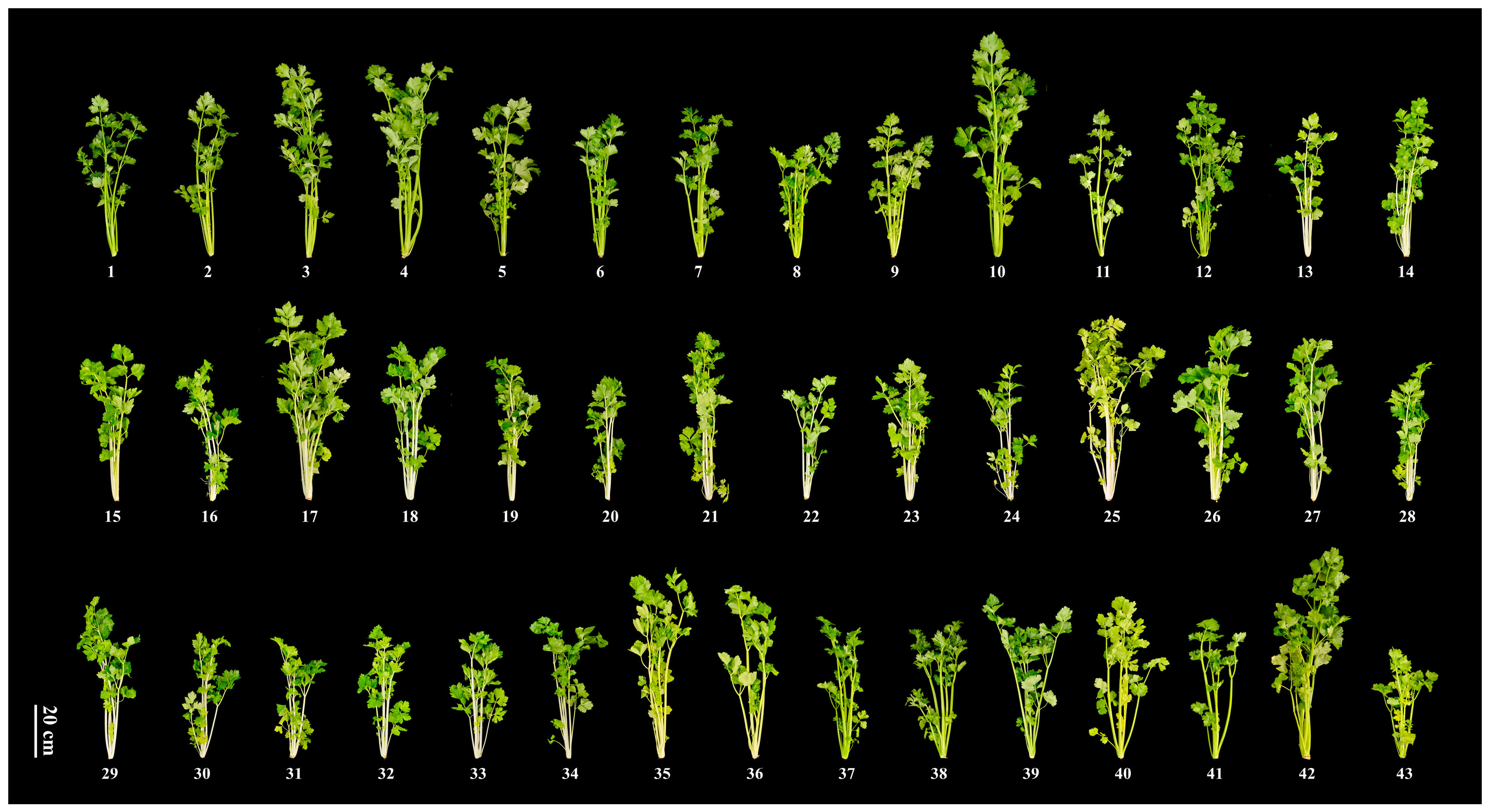
Based on the phenotypic performance of the 43 celery germplasm resources (Figure 1), significant differences were observed among celery cultivars in plant architecture, growth vigor, leaf morphology, and leaf number, indicating abundant phenotypic diversity. Some accessions exhibited taller plants, elongated petioles, and erect plant architecture, suggesting stronger vegetative growth ability and greater biomass accumulation potential. In contrast, other accessions displayed relatively compact and dwarf plant types, characterized by shorter petioles and smaller plant spread.
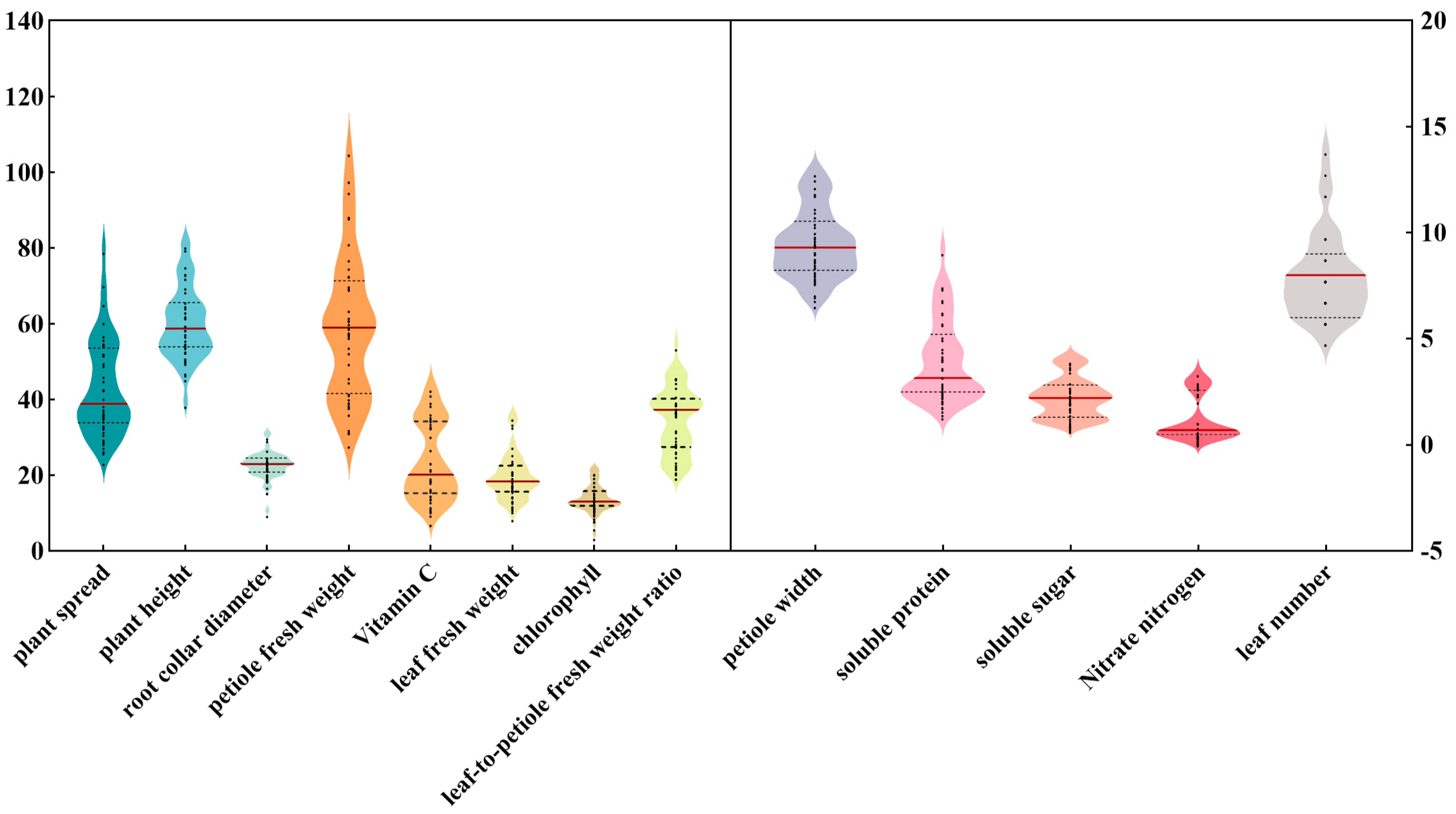
Statistical analysis of 13 traits among the 43 celery accessions revealed a high level of genetic diversity within the population (Figure 2 and Table 1) The coefficients of variation (CV) of all measured traits varied substantially, ranging from 15.46% to 77.87%, indicating considerable phenotypic diversity among the tested germplasm resources.
Phenotypic traits reflected the developmental characteristics of celery morphology. Among these traits, PH exhibited a mean value of 59.68 cm with a relatively low coefficient of variation (16.83%), suggesting that this trait was comparatively stable across the evaluated accessions. In contrast, PFW showed a mean value of 59.33 g and a markedly higher coefficient of variation (32.53%), indicating substantial differences in individual plant productivity among cultivars. The coefficient of variation of the LPR reached 25.29%, suggesting considerable variation in biomass allocation between leaves and petioles among different accessions and highlighting its potential selection value. In addition, PS exhibited a coefficient of variation of 29.65%, implying that this trait was closely associated with varietal growth habits.
The variability of quality-related traits was considerably greater than that of phenotypic traits, reflecting the high sensitivity of metabolite accumulation to both environmental conditions and genetic background. Among these traits, NO3-N content ranged from 0.41 to 3.85 mg g−1 and exhibited the highest coefficient of variation (77.87%), indicating substantial differences among germplasm resources in nitrogen uptake and reduction efficiency. SP and Vc contents ranged from 1.52 to 9.26 mg g−1 and 8.33 to 43.83 mg 100 g−1, respectively, with coefficients of variation of 48.67% and 43.73%. These results suggest considerable potential for improving the nutritional quality of celery through the selection and utilization of elite germplasm resources.

3.2. Correlation Analysis of Agronomic and Quality Traits in Celery Germplasm Resources

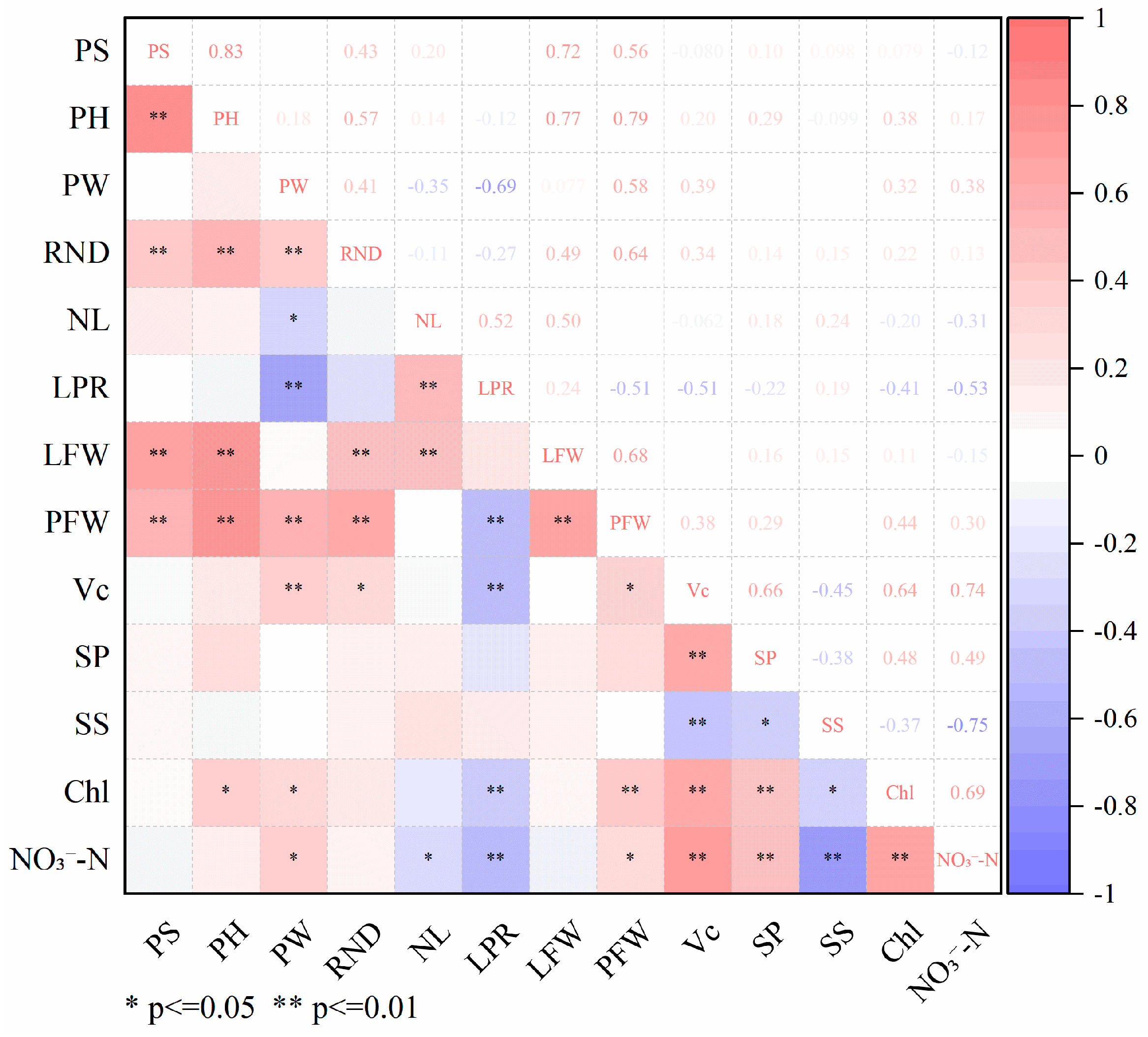
Correlation analysis was performed for the phenotypic traits and quality-related parameters of the 43 celery accessions (Figure 3). The results showed that the correlation coefficients among traits ranged from −0.75 to 0.83, and most trait combinations reached significant or highly significant levels. Overall, phenotypic traits exhibited predominantly positive correlations. PH showed the strongest positive correlations with PS, LFW, and PFW, with correlation coefficients of 0.83, 0.77, and 0.79, respectively, indicating that increased plant height was accompanied by a significant increase in biomass accumulation. RND also exhibited relatively high positive correlations with LFW and PFW, with correlation coefficients of 0.49 and 0.64, respectively. In contrast, the LPR was significantly negatively correlated with several growth-related traits, particularly PW (r = −0.69), LFW (r = −0.51), and PFW (r = −0.51).
Among the quality-related traits, SS content was significantly negatively correlated with NO3-N content (r = −0.75). In addition, SS also showed a negative correlation with Chl content (r = −0.37). Conversely, NO3-N content exhibited significant positive correlations with Vc and Chl contents, with correlation coefficients of 0.74 and 0.69, respectively, further indicating that nitrogen status plays an important role in photosynthetic pigment accumulation. Moreover, Vc content was positively correlated with SP content (r = 0.66).

3.3. Principal Component Analysis

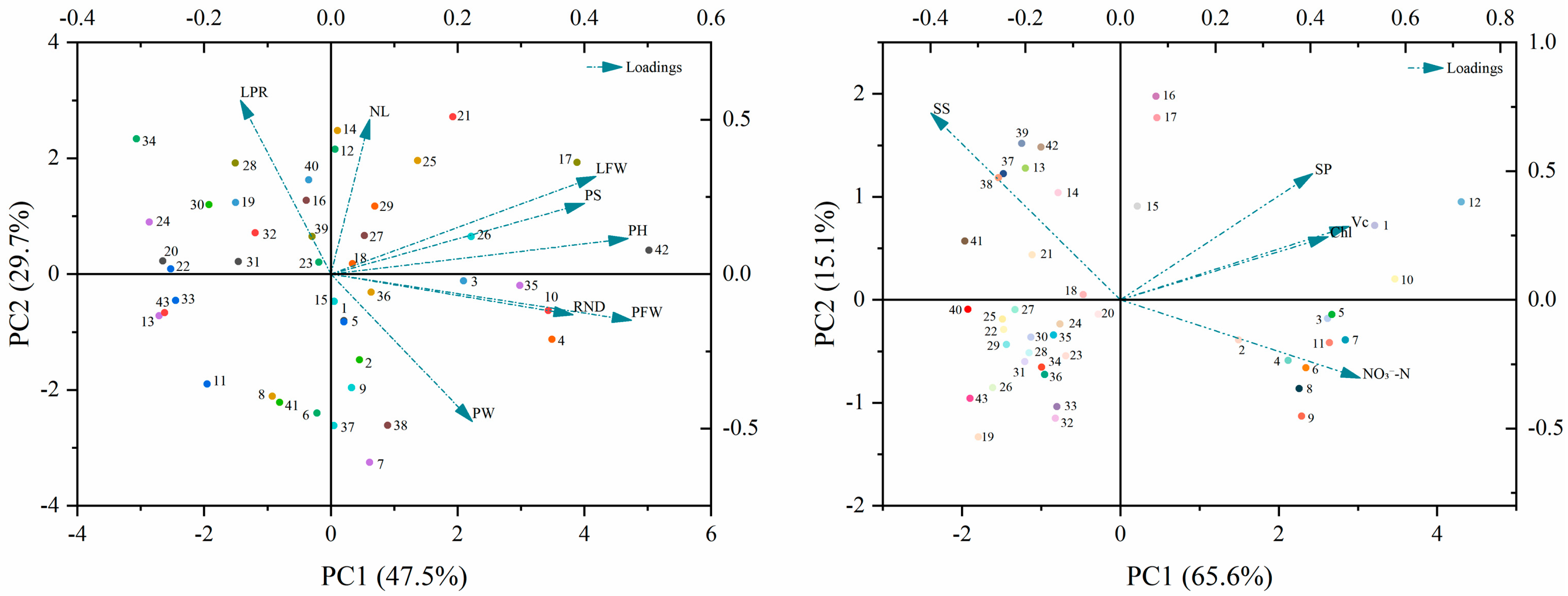
PCA was conducted for the phenotypic traits and quality-related parameters of the 43 celery accessions (Figure 4). The results indicated that most of the trait variation was concentrated in the first two principal components. For phenotypic traits, PC1 and PC2 explained 47.5% and 29.7% of the total variation, respectively, with a cumulative contribution rate of 77.2% (Table 2). Among them, PC1 exhibited the highest eigenvalue, and its loadings were mainly associated with PH, PS, LFW, and PFW, all of which showed positive loadings. In contrast, the LPR displayed a negative loading on PC1. PC2 was primarily contributed by NL and LPR, both showing positive loadings, whereas PW exhibited a negative loading on this axis. Accessions with higher D-values (e.g., accessions 1, 10, 12, 17, and 42) were generally distributed on the positive side of PC1 and showed closer associations with the loading vectors of PH, LFW, and PFW, suggesting that these traits may have contributed substantially to their superior agronomic performance.
For quality-related parameters, PC1 and PC2 accounted for 65.6% and 15.1% of the total variation, respectively, with a cumulative contribution rate of 80.7% (Table 3). PC1 was mainly associated with Vc, SP, and Chl, all of which exhibited positive loadings. NO3-N also showed a positive loading on this axis. By contrast, SS displayed a negative loading on PC1. PC2 further differentiated the physiological traits, with SS exhibiting a positive loading, whereas Vc and SP showed negative loadings on this axis. Accessions with higher comprehensive evaluation values (e.g., accessions 1, 10, 12, and 17) were predominantly distributed along the positive axis of PC1 and exhibited closer alignment with the loading vectors of Vc and SP, implying that these traits were important contributors to their overall physiological quality. Nevertheless, these elite accessions were not grouped within a single cluster in the PCA ordination space but were dispersed across multiple quadrants, suggesting that superior performance was achieved through distinct combinations of physiological attributes rather than reliance on a common dominant trait.

3.4. Comprehensive Evaluation of Celery Germplasm Resources

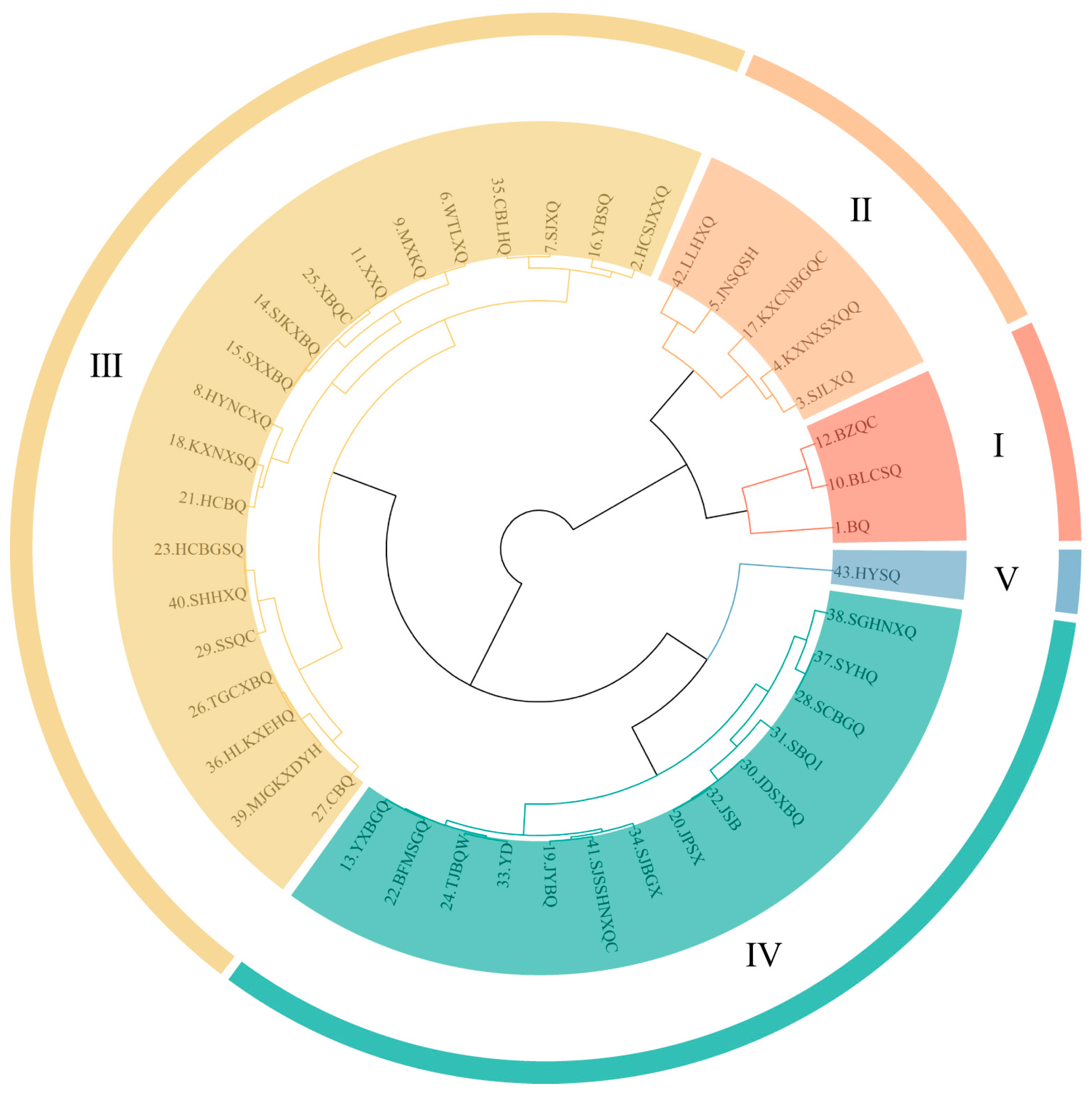
Based on the systematic cluster analysis of multi-trait data from 43 celery germplasm resources (Figure 5), all accessions were classified into five groups (I–V) under the defined threshold conditions. Clear differentiation was observed among the groups, and substantial variation existed in the number of accessions within each cluster, indicating rich genetic diversity and obvious population structure differentiation among the tested celery germplasm resources.
Combined with the comprehensive evaluation results derived from membership function analysis (Table 4), the D values of the 43 accessions ranged from 0.107 to 0.763, with a variation range of 0.656, indicating considerable differences in comprehensive trait performance among the accessions. According to the D value ranking, the top 10 accessions all exhibited D values of above 0.45. Among them, accessions 1 (0.763), 10 (0.675), 12 (0.656), and 17 (0.597) showed relatively high comprehensive evaluation values, indicating superior overall performance and high breeding utilization potential. In contrast, the bottom 10 accessions all exhibited D values below 0.25. Among these, accessions 43 (0.107), 22 (0.186), 13 (0.188), and 24 (0.192) had the lowest D values, indicating relatively poor comprehensive performance.
Further analysis based on phenotypic characteristics revealed obvious differences among the groups in plant architecture and growth vigor (Figure 1). Group I accessions generally exhibited compact plant architecture, medium-to-short plant height, relatively thick petioles, concentrated leaf distribution, and relatively uniform growth performance, representing a typical compact and robust plant type. Group II accessions were generally characterized by taller plants, longer petioles, erect plant architecture, and relatively sparse leaf distribution, displaying obvious tall and upright growth characteristics. Group III contained the largest number of accessions and exhibited abundant phenotypic variation. The materials in this group were generally characterized by luxuriant foliage, more leaf clusters, larger plant spread, and vigorous growth, representing a luxuriant and spreading plant type. Group IV exhibited characteristics intermediate between Groups II and III, including moderate plant height, relatively slender petioles, moderate leaf number, and relatively spreading plant architecture, representing a transitional group with relatively balanced overall traits. Group V contained only one accession, HYSQ, which differed markedly from the other groups. Phenotypic observation showed that this accession exhibited dwarf plants, fewer leaves, weak overall growth vigor, and relatively low biomass accumulation, and therefore could be classified as a group with relatively poor phenotypic performance.

3.5. Stability Analysis of Comprehensive Evaluation Results

To evaluate the stability of the comprehensive evaluation system based on PCA-derived weights, a sensitivity analysis was conducted. Specifically, the weights of the selected principal components were slightly adjusted within a ±5% range while maintaining their relative contribution structure, and the D-values of all germplasm accessions were recalculated accordingly. The results showed that, after weight perturbation, the overall ranking pattern of celery germplasm resources remained highly consistent. The top five elite accessions identified in the original analysis remained unchanged, while only minor fluctuations were observed among the middle-ranked materials. No significant reversal between superior and inferior accessions was detected. These findings indicate that the comprehensive evaluation system based on the PCA–membership function approach exhibits strong stability against minor variations in weighting parameters. Therefore, the ranking results can be considered reliable for preliminary screening and evaluation of celery germplasm resources.

4. Discussion

Rich germplasm resources constitute the foundation for novel cultivar selection and breeding programs and represent a prerequisite for species evolution and genetic improvement. Comprehensive evaluation of celery germplasm resources provides an important basis for germplasm innovation and cultivar development [15,16]. In the present study, 43 celery germplasm resources were comprehensively evaluated through variation analysis, correlation analysis, PCA, cluster analysis, and membership function analysis based on phenotypic and physiological traits.
Effective utilization of germplasm resources depends on the adequate expression of phenotypic variation within populations. In this study, agronomic traits and nutritional quality characteristics of green, yellow, and white celery germplasm resources were systematically compared, and significant differences in variation levels were observed among traits. Considerable differences were detected among germplasm resources in plant height, plant spread, leaf number, plant biomass, nitrate nitrogen, soluble sugar, soluble protein, and vitamin C contents. Overall, physiological traits exhibited greater variation than morphological traits, which is consistent with the findings of Kumar S, who reported that metabolic traits generally display greater variability, whereas structural traits tend to remain relatively stable [17]. Similar results were also reported in Chinese cabbage, where quality-related traits exhibited higher variation coefficients than plant architecture and organ structural traits, reflecting the sensitivity of metabolic regulation to environmental and genetic differences. In the present study, the coefficients of variation of NO3-N, SP, and Vc were markedly higher than those of morphological traits such as PH, RND, and LPR, indicating substantial differences among germplasm resources in nitrogen uptake, assimilation, and nutrient accumulation. Previous studies have demonstrated that nitrate functions not only as a nitrogen source but also as a signaling molecule regulating gene expression and enzyme activity, thereby influencing plant metabolic reprogramming, growth, and quality formation [18]. By contrast, traits such as RND exhibited relatively low variation, suggesting stronger genetic control and higher stability with limited differentiation among cultivars. Therefore, physiological traits with larger variation ranges should receive greater attention in celery breeding programs to improve screening efficiency and breeding potential. These findings suggest that celery germplasm resources possess considerable genetic potential for nutritional quality improvement through multi-trait selection strategies.
Trait correlations reflect intrinsic relationships among growth and metabolic processes. In the present study, growth-related traits were generally positively correlated, particularly the strong correlations among PH, PS, LFW, and PFW, indicating that these traits collectively reflect biomass accumulation capacity. Similar coordinated relationships among growth traits have been widely reported in rice, wheat, and various horticultural crops [19]. Research conducted by Yiqun Bai demonstrated that rice and wheat share highly conserved genetic mechanisms underlying yield-related traits, although metabolic regulation differs between the two crops. In contrast, LPR exhibited significant negative correlations with multiple growth traits, suggesting the existence of biomass allocation trade-offs among plant organs. Under limited resource conditions, plants optimize overall growth by regulating biomass distribution among different organs, a phenomenon widely reported in multiple crop species [20,21,22]. Studies by Hendrik Poorter demonstrated that leaf mass fraction increases significantly with nutrient availability but decreases under low light conditions, whereas stem mass fraction increases under high-density environments, reflecting adaptive biomass allocation strategies under different environmental and genetic backgrounds [23,24]. Regarding quality-related traits, SS exhibited a significant negative correlation with NO3-N, whereas NO3-N showed significant positive correlations with Vc and Chl, consistent with previous reports [25,26]. Nitrogen availability is generally positively associated with chlorophyll accumulation and photosynthetic capacity, whereas carbon assimilation products may competitively interact with nitrogen metabolism under certain conditions [27,28]. Similar findings were reported by Okazaki K in spinach, where elevated nitrate accumulation was accompanied by reduced sugar content [29]. Furthermore, the positive correlation between Vc and SP suggests metabolic coupling among quality traits, indicating coordinated regulation between antioxidant metabolism and protein metabolism [30].
PCA results demonstrated that most of the variation in growth and physiological traits could be explained by the first two principal components, which is consistent with the general pattern observed in multi-trait germplasm evaluation studies, where a limited number of principal components account for the majority of variation [31,32]. PCA further integrated multi-trait information and revealed the major drivers underlying trait variation in celery. In the present study, PC1 of growth traits was primarily driven by PH, PS, LFW, and PFW, reflecting biomass accumulation capacity, whereas PC2 mainly represented structural differences associated with NL and LPR. Similar results were reported by Chavan S in sweet corn, where PC1 was strongly associated with yield-related traits, while PC2 primarily reflected structural and morphological variation [33]. For physiological traits, PC1 was mainly driven by NO3-N, Vc, SP, and Chl, whereas SS exhibited a negative loading, indicating that this component represented an integrated dimension related to nitrogen metabolism, photosynthetic capacity, and quality accumulation. This finding agrees with previous studies demonstrating the regulatory role of nitrogen in photosynthesis and quality formation [34]. PC2 further differentiated the relationships among quality-related traits, indicating that celery quality formation is regulated through multidimensional mechanisms. Overall, PCA not only reduced data dimensionality but also revealed the structural relationships among traits, suggesting that population differentiation was mainly associated with biomass accumulation, structural configuration, and metabolic regulation. These findings provide a theoretical basis for establishing simplified evaluation systems for celery germplasm resources [5,31].
Evaluation of complex traits is difficult to achieve using a single indicator; therefore, multi-index comprehensive evaluation methods have been widely applied in germplasm resource studies [35]. In the present study, PCA combined with membership function analysis was employed to comprehensively evaluate 43 celery germplasm resources. The results revealed a broad distribution range of D values and clear differentiation among groups. The comprehensive evaluation based on PCA-derived membership functions showed that D values ranged from 0.107 to 0.763, indicating substantial variation in integrated trait performance among accessions. Combined with cluster analysis, distinct differentiation patterns and consistent gradient distributions of D values were observed among different groups. Specifically, high-D-value accessions were mainly concentrated in Group I and part of Group II, whereas low-D-value accessions were primarily distributed in the latter part of Group III and Group V. This consistency between comprehensive evaluation and cluster classification indicates that the established evaluation system effectively reflected the integrated differences among celery germplasm resources and possessed high reliability.
The elite germplasm resources identified in this study, particularly BQ, BLCSQ, BZQC, WTLXQ, HYCNXQ, and SJKXBQ, may serve as valuable parental materials for improving biomass productivity and nutritional quality in celery breeding programs. In addition, the substantial variation observed within Group III indicates considerable potential for broadening the genetic base and improving specific agronomic or quality-related traits through hybridization and targeted selection. Therefore, the multi-trait comprehensive evaluation system established in this study provides an effective reference framework for celery germplasm identification, parental selection, and ideotype breeding. Although the present study provides evidence for trait variation under the tested experimental conditions, future multi-year and multi-environment evaluations would further facilitate the distinction between environmentally plastic traits and traits with relatively high genetic stability.

5. Conclusions

In this study, the phenotypic and quality traits of 43 celery germplasm resources were evaluated under a single environmental condition using multiple evaluation methods. The results showed substantial variation and diversity among the accessions. Multivariate analyses identified key traits contributing substantially to the overall variation and classified the germplasm resources into five groups. Several accessions, including BQ, BLCSQ, BZQC, WTLXQ, HYCNXQ, and SJKXBQ, exhibited relatively superior comprehensive performance and may serve as candidate materials for preliminary breeding selection aimed at improving yield and quality. Overall, this study provides a concise and practical reference for preliminary germplasm prioritization in celery breeding programs.

Author Contributions

Conceptualization, X.L., J.L. and Y.Z.; methodology, X.L. and J.L.; software, J.L.; validation, X.L., J.L. and F.L.; formal analysis, X.L. and J.L.; investigation, X.L. and J.L.; resources, Y.Z.; data curation, X.L.; writing—original draft preparation, X.L. and J.L.; writing—review and editing, F.L. and Y.Z.; visualization, J.L.; supervision, Y.Z.; project administration, Y.Z.; funding acquisition, Y.Z., X.L. and J.L. contributed equally to this work. All authors have read and agreed to the published version of the manuscript.

Funding

The research was supported by the earmarked fund for Sichuan Innovation Team Program of CARS (SCCXTD-2024-22).

Data Availability Statement

The original contributions presented in this study are included in the article. Further inquiries can be directed to the corresponding author.

Acknowledgments

The authors sincerely thank all members of the research group for their assistance with experimental management, data collection, and technical support. The authors have reviewed and edited the generated content and take full responsibility for the content of this publication.

Conflicts of Interest

The authors declare no conflicts of interest. The funders had no role in the design of the study; in the collection, analyses, or interpretation of data; in the writing of the manuscript; or in the decision to publish the results.

Appendix A

Table A1. Information on Celery Germplasm Resources.
Accession No.Cultivar NameAbbreviationColor ClassificationOrigin
1Bao QinBQGreen celery Shandong, China
2Hongcheng Siji Xiang Xiao QincaiHCSJXXQGreen celery Tianjin, China
3Siji Lv Xiang QinSJLXQGreen celery Shanghai, China
4Kexing Nongxiang Shixin QingqinKXNXSXQQGreen celery Sichuan, China
5Jinnan ShiqinJNSQSHGreen celery Tianjin, China
6Wentula XiqinWTLXQGreen celery Beijing, China
7Siji XiqinSJXQGreen celery Tianjin, China
8Hanyu Nencui XiqinHYNCXQGreen celery Hebei, China
9Miaoxiang KuaiqinMXKQGreen celery Tianjin, China
10Bolicui ShiqinBLCSQGreen celery Hebei, China
11Xiaoxiang QinXXQGreen celery Japan
12Bazhong QincaiBZQCGreen celery Sichuan, China
13Yanxuan Baigan QinYXBGQWhite celerySichuan, China
14Siji Kongxin BaiqinSJKXBQWhite celerySichuan, China
15Shixin XiaobaiqinSXXBQWhite celerySichuan, China
16Yubai ShiqinYBSQWhite celerySichuan, China
17Kexing Cuinen Baigan QinKXCNBGQCWhite celerySichuan, China
18Kexing Nongxiang Shixin QinKXNXSQWhite celerySichuan, China
19Jinyun BaiqinJYBQWhite celeryTianjin, China
20Jingpin SaixueJPSXWhite celeryTianjin, China
21Hongcheng BaiqinHCBQWhite celeryTianjin, China
22Baifumei Shigan QinBFMSGQWhite celeryHebei, China
23Hongcheng Baigan ShiqinHCBGSQWhite celeryTianjin, China
24Teji Baiqin WangTJBQWWhite celeryHebei, China
25Xuebai QincaiXBQCWhite celerySichuan, China
26Taiguo Cuixiang BaiqinTGCXBQWhite celeryAnhui, China
27Caobai QinCBQWhite celerySichuan, China
28Sichuan Baigan QinSCBGQWhite celerySichuan, China
29Susheng QincaiSSQCWhite celerySichuan, China
30Jidi Shixin BaiqinJDSXBQWhite celerySichuan, China
31Shubaiqin YihaoSBQ1White celerySichuan, China
32Jiushi BaiJSBWhite celerySichuan, China
33YoudianYDWhite celerySichuan, China
34Siji Baigan XiangSJBGXWhite celerySichuan, China
35Chunbulao HuangqinCBLHQYellow celerySichuan, China
36Houlai Kongxin Er HuangqinHLKXEHQYellow celerySichuan, China
37Shanyan HuangqinSYHQYellow celeryShandong, China
38SG Huangnen XiqinSGHNXQYellow celeryTianjin, China
39Majiagou Kongxin DayehuangMJGKXDYHYellow celeryShandong, China
40Shanghai Huangxin QinSHHXQYellow celeryHebei, China
41Siji Susheng Huangnen Xiao QincaiSJSSHNXQCYellow celeryHebei, China
42Lvling Huangxin QinLLHXQYellow celeryJiangsu, China
43Huangyu ShiqinHYSQYellow celeryShanghai, China

References

  1. Fu, N.; Wang, P.-Y.; Liu, X.-D.; Shen, H.-l. Use of EST-SSR Markers for Evaluating Genetic Diversity and Fingerprinting Celery (Apium graveolens L.) Cultivars. Molecules 2014, 19, 1939–1955. [Google Scholar] [CrossRef]
  2. Bruznican, S.; De Clercq, H.; Eeckhaut, T.; Van Huylenbroeck, J.; Geelen, D. Celery and Celeriac: A Critical View on Present and Future Breeding. Front. Plant Sci. 2020, 10, 1699. [Google Scholar] [CrossRef] [PubMed]
  3. Li, M.Y.; Hou, X.L.; Wang, F.; Tan, G.-F.; Xu, Z.-S.; Xiong, A.-S. Advances in the research of celery, an important Apiaceae vegetable crop. Crit. Rev. Biotechnol. 2018, 38, 172–183. [Google Scholar] [CrossRef] [PubMed]
  4. Wu, L.; Du, J.; Zhang, Y.; Xue, Y.; Jiang, C.; Lu, W.; Zheng, Y.; Zhou, C.; Xiong, A.; Li, M. Identification and evaluation of celery germplasm resources for salt tolerance. Agronomy 2024, 14, 1048. [Google Scholar] [CrossRef]
  5. Li, M.; Li, J.; Xie, F.; Zhou, J.; Sun, Y.; Luo, Y.; Zhang, Y.; Chen, Q.; Wang, Y.; Lin, Y.; et al. Combined evaluation of agronomic and quality traits to explore heat-tolerant germplasm in celery (Apium graveolens L.). Sci. Hortic. 2023, 317, 112039. [Google Scholar] [CrossRef]
  6. Thudi, M.; Palakurthi, R.; Schnable, J.C.; Chitikineni, A.; Dreisigacker, S.; Mace, E.; Srivastava, R.K.; Satyavathi, C.T.; Odeny, D.; Tiwari, V.K.; et al. Genomic resources in plant breeding for sustainable agriculture. J. Plant Physiol. 2021, 257, 153351. [Google Scholar] [CrossRef] [PubMed]
  7. Singh, D.; Dhillon, T.S.; Javed, T.; Singh, R.; Dobaria, J.; Dhankhar, S.K.; Kianersi, F.; Ali, B.; Poczai, P.; Kumar, U. Exploring the genetic diversity of carrot genotypes through phenotypically and genetically detailed germplasm collection. Agronomy 2022, 12, 1921. [Google Scholar] [CrossRef]
  8. Kumar, R.; Kumar, S.; Kumar, D.; Gupta, R.K. Characterization of cucumber (Cucumis sativus) genotypes through principal component and regression analyses. Indian J. Agric. Sci. 2014, 84, 765–769. [Google Scholar]
  9. Lee, A.M.J.; Neik, T.X.; Song, S.; Chan, K.W.; Law, S.C.; Ong, P.-W.; Lim, E.T.C.; Chew, F.T. Comprehensive phenomics and vegetative yield analysis of global kale (Brassica oleracea var. acephala) germplasm in controlled environment agriculture. BMC Plant Biol. 2026, 26, 539. [Google Scholar] [CrossRef]
  10. Jia, L.L.; Shen, D.; Chen, L.Z.; Lu, X.H.; Tao, J.P.; Liu, J.X.; Liu, H.J.; Xiong, A.S. Comparison and evaluation of agronomic traits of transplanted celery in southern Jiangsu region. Shanghai Agric. J. 2021, 37, 1–7. [Google Scholar]
  11. Jia, L.L.; Liu, H.J.; Wang, H.; Wang, C.L.; Lei, L.; Li, X.; An, J.; Duan, A.Q.; Shen, D.; Liu, J.X.; et al. Comparison and evaluation of nutritional quality in three celery cultivars. Jiangsu Agric. Sci. 2021, 49, 146–149. [Google Scholar]
  12. Singh, M.; Nara, U. Evaluating genetic variability in celery (Apium graveolens L.) genotypes through morpho-anatomical and pollen trait analyses. Genet. Resour. Crop Evol. 2025, 72, 5627–5640. [Google Scholar] [CrossRef]
  13. Li, J.B.; Deng, K. Common comprehensive evaluation methods for crop germplasm resources. Jiangsu Agric. Sci. 2024, 52, 40–46. [Google Scholar]
  14. Zhang, Z.L.; Qu, W.J.; Li, X.F. Experimental Guidance for Plant Physiology; Higher Education Press: Beijing, China, 2016. [Google Scholar]
  15. Salgotra, R.K.; Chauhan, B.S. Genetic diversity, conservation, and utilization of plant genetic resources. Genes 2023, 14, 174. [Google Scholar] [CrossRef]
  16. Liu, D.; Wang, X.; Li, W.; Li, J.; Tan, W.; Xing, W. Genetic Diversity Analysis of the Phenotypic Traits of 215 Sugar Beet Germplasm Resources. Sugar Tech 2022, 24, 1790–1800. [Google Scholar] [CrossRef]
  17. Kumar, S.; Gupta, V.; Yadav, S.S.; Mamrutha, M.H.; Singh, S.K.; Chatrath, R.; Singh, G.P. Multivariate analysis in wheat germplasm captures variability for agro-morphological and physiological traits. Indian J. Agric. Sci. 2021, 91, 1322–1327. [Google Scholar] [CrossRef]
  18. Li, L.; Liu, K.H.; Sheen, J. Dynamic nutrient signaling networks in plants. Annu. Rev. Cell Dev. Biol. 2021, 37, 341–367. [Google Scholar] [CrossRef]
  19. Valluru, R.; Reynolds, M.P.; Salse, J. Genetic and molecular bases of yield-associated traits: A translational biology approach between rice and wheat. Theor. Appl. Genet. 2014, 127, 1463–1489. [Google Scholar] [CrossRef]
  20. He, Y.Y.; Guo, S.L.; Wang, Z. Research progress on plant functional trait trade-offs. Chin. J. Plant Ecol. 2019, 43, 1021–1035. [Google Scholar] [CrossRef]
  21. De Battisti, D. Plant biomass allocation advances our understanding of plant adaptation to environmental gradients. Ann. Bot. 2024, 134, i–iii. [Google Scholar] [CrossRef] [PubMed]
  22. Laza Ma, R.; Peng, S.; Akita, S.; Saka, H. Contribution of Biomass Partitioning and Translocation to Grain Yield under Sub-Optimum Growing Conditions in Irrigated Rice. Plant Prod. Sci. 2003, 6, 28–35. [Google Scholar] [CrossRef]
  23. Poorter, H.; Niklas, K.J.; Reich, P.B.; Oleksyn, J.; Poot, P.; Mommer, L. Biomass allocation to leaves, stems and roots: Meta-analyses of interspecific variation and environmental control. New Phytol. 2012, 193, 30–50. [Google Scholar]
  24. Babalar, M.; Daneshvar, H.; Díaz-Pérez, J.C.; Nambeesan, S.; Tabrizi, L.; Delshad, M. Effects of organic and chemical nitrogen fertilization and postharvest treatments on the visual and nutritional quality of fresh-cut celery (Apium graveolens L.) during storage. Food Sci. Nutr. 2023, 11, 320–333. [Google Scholar] [CrossRef] [PubMed]
  25. Zhou, W.L.; Liu, W.K.; Wen, J.; Yang, Q.-C. Changes in and correlation analysis of quality indices of hydroponic lettuce under short-term continuous light. Chin. J. Eco-Agric. 2012, 19, 1319–1323. [Google Scholar] [CrossRef]
  26. Shi, Y.; Yu, Z. Effects of nitrogen fertilizer rates and ratios of base and topdressing on wheat yield, soil nitrate content and nitrogen balance. Front. Agric. China 2008, 2, 181–189. [Google Scholar] [CrossRef]
  27. Fathi, A. Role of nitrogen (N) in plant growth, photosynthesis pigments, and N use efficiency: A review. Agrisost 2022, 28, 1–8. [Google Scholar]
  28. Baslam, M.; Mitsui, T.; Sueyoshi, K.; Ohyama, T. Recent advances in carbon and nitrogen metabolism in C3 plants. Int. J. Mol. Sci. 2020, 22, 318. [Google Scholar] [CrossRef]
  29. Okazaki, K.; Takebe, M.; Karasawa, T. Ideal transition pattern of nitrate concentration for improving quality of spinach (Spinacia oleracea L.) and effect of drip fertigation on the sugar and oxalate concentration. Soil Sci. Plant Nutr. 2006, 52, 25–32. [Google Scholar] [CrossRef]
  30. Paciolla, C.; Fortunato, S.; Dipierro, N.; Paradiso, A.; De Leonardis, S.; Mastropasqua, L.; de Pinto, M.C. Vitamin C in Plants: From Functions to Biofortification. Antioxidants 2019, 8, 519. [Google Scholar] [CrossRef]
  31. Bista, M. A review on genetic parameters estimation, trait association, and multivariate analysis for crop improvement. Arch. Agric. Environ. Sci. 2024, 9, 618–625. [Google Scholar] [CrossRef]
  32. Ene, C.O.; Abtew, W.G.; Happiness Ogba, O.; Ozi, F.U.; Ikeogu, U.N. Genetic characterization and quantitative trait relationship using multivariate techniques reveal diversity among tomato germplasms. Food Sci. Nutr. 2022, 10, 2426–2442. [Google Scholar] [CrossRef] [PubMed]
  33. Chavan, S.; Bhadru, D.; Swarnalatha, V.; Mallaiah, B. Evaluation of variations for phenotypic traits by multivariate techniques in sweet corn (Zea mays L. saccharata). J. Crop Weed 2023, 19, 164–172. [Google Scholar] [CrossRef]
  34. Huang, Y.; Wu, T.; Cao, W.; Ma, C.; Pan, S.; Xu, X. Nutritional and sensory quality evaluation of rapeseed flowering stems based on principal component and cluster analysis. Food Ferment. Ind. 2020, 46, 253–258. [Google Scholar]
  35. Debnath, P.; Chakma, K.; Bhuiyan, M.S.U.; Thapa, R.; Pan, R.; Akhter, D. A novel multi trait genotype ideotype distance index (MGIDI) for genotype selection in plant breeding: Application, prospects, and limitations. Crop Des. 2024, 3, 100074. [Google Scholar] [CrossRef]
Figure 1. Phenotypic characteristics of 43 celery germplasm resources.
Horticulturae 12 00699 g001
Figure 2. Performance of phenotypic traits and quality attributes among celery varieties. For the phenotypic and quality traits of celery germplasm resources, the red solid line in the violin plot represents the median, while the black dashed lines represent the quartile lines, which divide all values into four equal parts.
Horticulturae 12 00699 g002
Figure 3. Correlation Analysis of Phenotypic Traits and Quality-Related Parameters in Celery Germplasm Resources.
Horticulturae 12 00699 g003
Figure 4. Principal component analysis of phenotypic traits and quality-related parameters in celery germplasm resources, with each point representing one cultivar.
Horticulturae 12 00699 g004
Figure 5. Cluster Analysis of Celery Germplasm Resources.
Horticulturae 12 00699 g005
Table 1. Variation Analysis of Phenotypic Traits in Celery Germplasm Resources.
TraitMinimumMaximumMeanStandard DeviationCoefficient of Variation
CV (%)
Plant spread24.580.243.3912.8729.65
Plant height36.9781.5759.6810.0516.83
Petiole width6.7712.979.511.6016.84
Root neck diameter10.7431.2522.673.5015.46
Petiole number5147.932.0525.87
Leaf-to-petiole fresh weight ratio20.59%54.73%34.6%8.7525.30
Leaf fresh weight9.6436.2419.606.0730.96
petiole fresh weight29.08106.1159.3319.3032.53
Vitamin C8.3343.83 23.6010.3243.73
Soluble protein1.529.263.951.9248.67
Soluble sugar0.894.152.230.9442.13
Chlorophyll4.6221.8213.823.6326.27
Nitrate nitrogen0.413.851.441.1277.87
Table 2. Component Matrix of Quality-Related Parameters in Celery Germplasm Resources.
TraitPC1PC2PC3
Plant spread0.40040.22909−0.42641
Plant height0.468850.11498−0.23217
Petiole width0.22315−0.477050.44455
Root neck diameter0.38223−0.13163−0.12894
Petiole number0.060820.500310.68197
Leaf-to-petiole fresh weight ratio−0.142850.56299−0.08883
Leaf fresh weight0.418280.315810.18685
petiole fresh weight0.47424−0.149630.20529
Eigenvalue3.802492.37820.69551
Cumulative variance contribution rate%47.5310877.2585685.95237
Table 3. Component Matrix of Phenotypic Traits in Celery Germplasm Resources.
TraitPC1PC2PC3
Vitamin C0.480870.2856−0.0035
Soluble protein0.404410.49019−0.65643
Soluble sugar−0.398930.725210.29549
Chlorophyll0.437080.244980.66956
Nitrate nitrogen0.50502−0.303650.18292
Eigenvalue3.282060.753790.55229
Cumulative variance contribution rate%65.6412580.7170391.76291
Table 4. Comprehensive Evaluation D Values of Different Traits in Celery Germplasm Resources.
Accession No.D ValueAccession No.D Value
ValueRankValueRank
10.7631240.19239
20.43212250.40015
30.5795260.33823
40.5606270.32225
50.4928280.25231
60.41314290.31026
70.4569300.23034
80.37719310.21435
90.41613320.23532
100.6752330.19040
110.39816340.20436
120.6563350.45310
130.18841360.33822
140.39417370.25430
150.39418380.26929
160.44311390.33524
170.5974400.29828
180.35821410.19538
190.19937420.5277
200.23333430.10743
210.36820   
220.18642   
230.29927   
Disclaimer/Publisher’s Note: The statements, opinions and data contained in all publications are solely those of the individual author(s) and contributor(s) and not of MDPI and/or the editor(s). MDPI and/or the editor(s) disclaim responsibility for any injury to people or property resulting from any ideas, methods, instructions or products referred to in the content.