Article

SlbHLH113 Promotes Tomato Fruit Elongation by Restricting Radial Growth of the Columella and Interacting with SlIQD21a

Key Laboratory of Quality and Safety Control for Subtropical Fruit and Vegetable, Ministry of Agriculture and Rural Affairs, Collaborative Innovation Center for Efficient and Green Production of Agriculture in Mountainous Areas of Zhejiang Province, College of Horticulture, Zhejiang Agriculture and Forestry University, Hangzhou 311300, China
*
Authors to whom correspondence should be addressed.
Horticulturae 2026, 12(6), 650; https://doi.org/10.3390/horticulturae12060650
Submission received: 14 April 2026 / Revised: 18 May 2026 / Accepted: 20 May 2026 / Published: 22 May 2026

Abstract

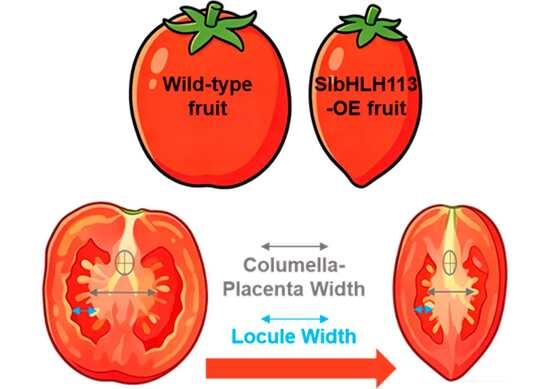
Fruit shape is determined by patterns of cell division and expansion during early development, yet the upstream transcription factors coordinating cell wall dynamics and cytoskeletal organization remain largely unknown. Here, we report that SlbHLH113, a bHLH transcription factor, positively regulates tomato fruit elongation. Overexpression (OE) of SlbHLH113 produced elongated fruits with increased length/width ratio, whereas RNAi lines exhibited flattened fruits. Histological analysis revealed that SlbHLH113 alters columella cell polarity—promoting elongated cell morphology without affecting cell area—and reduces columella–placenta width and locule width, without altering pericarp thickness. Transcriptomic profiling identified 87 differentially expressed genes in OE lines, with enrichment in cell wall-related processes. Notably, a pectate lyase gene (PL5) and an expansin gene (EXT90) were down-regulated, while genes involved in oriented cellulose deposition (COBRA4) and ethylene signaling were up-regulated. Importantly, SlbHLH113 physically interacts with the microtubule-associated protein SlIQD21a, as demonstrated by yeast two-hybrid and luciferase complementation assays. Finally, SlbHLH113 did not affect major nutrient contents in red-ripe fruits. Collectively, our findings identify SlbHLH113 as a novel regulator of tomato fruit shape that might act through cell polarity control, cell wall remodeling, and interaction with a microtubule-associated protein, offering a potential target for improving fruit morphology without compromising nutritional quality.

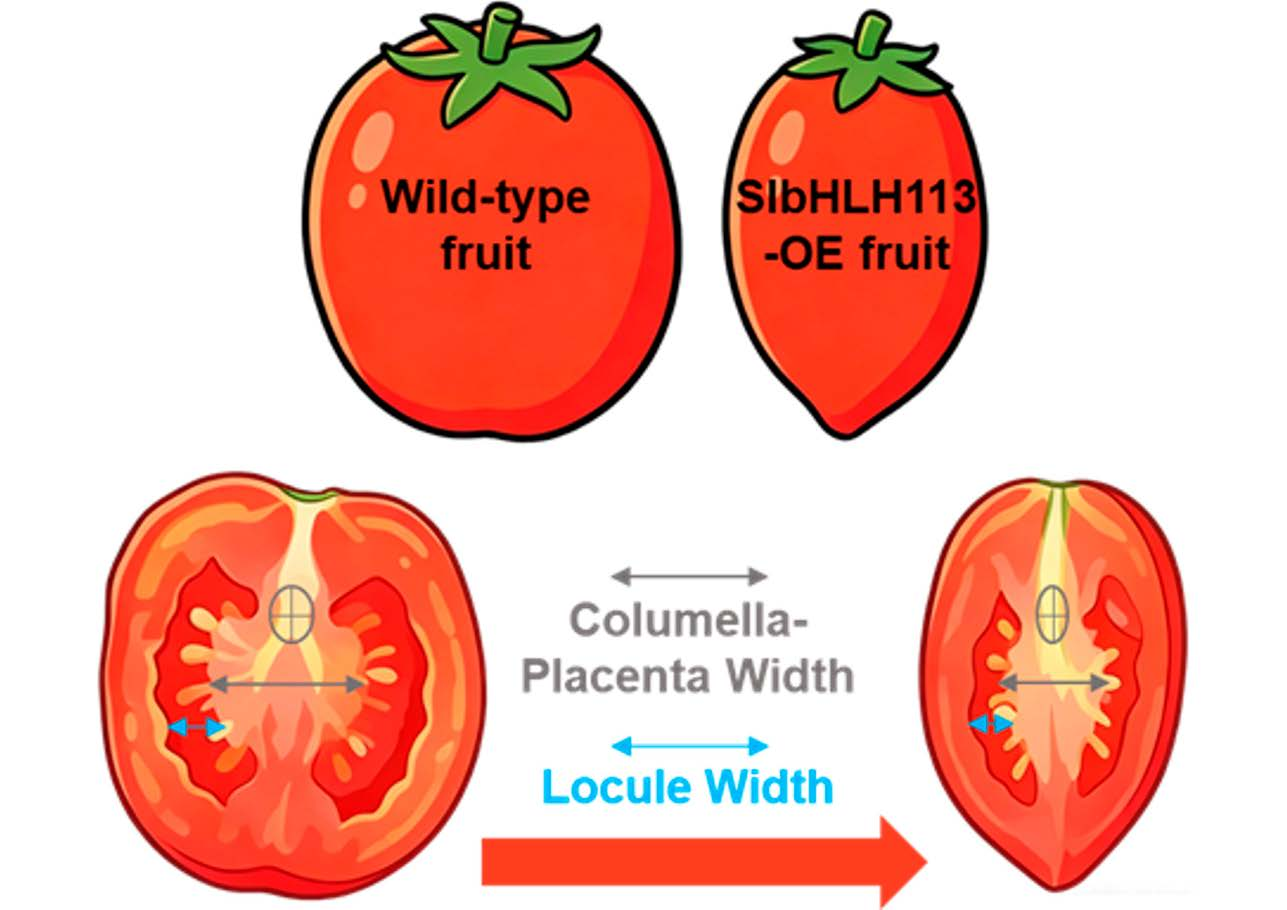
Graphical Abstract

1. Introduction

Tomato (Solanum lycopersicum) is one of the most popular vegetable crops worldwide due to its rich nutrition, unique flavor, and high economic benefits. Fruit growth is fundamental to yield and quality formation, determining agronomic and commercial traits such as fruit size and shape [1,2]. Tomato fruit develops from the ovary after pollination and fertilization, progressing through four main stages: fruit set, cell division, cell expansion, and ripening [3]. The cell division and cell expansion stages are particularly critical, as they determine cell number and cell size, respectively, and together control final fruit size and shape [4].
Fruit shape is primarily determined by the orientation of both cell division and cell expansion. In tissues undergoing active cell division, oriented division followed by isotropic expansion is sufficient to drive tissue elongation. However, beyond these two mechanisms, variation in cellular anisotropy may also play a dominant role in morphological changes [5,6,7].
During fruit development, cells undergo either isotropic expansion (uniform enlargement in all directions) or anisotropic expansion (preferential elongation along a specific axis). These distinct growth patterns are regulated by the dynamic properties of the plant cell wall—a complex matrix composed of cellulose microfibrils, hemicellulose, pectin, and structural proteins. The orientation of cellulose microfibril deposition, guided by cortical microtubules, is a key determinant of expansion anisotropy: when microtubules align longitudinally, cellulose microfibrils are deposited in parallel arrays, thereby restricting radial expansion while promoting longitudinal elongation [8,9,10]. Consequently, genes that influence cell wall architecture or microtubule organization are key determinants of fruit shape [11,12].
To date, several genes controlling tomato fruit shape have been cloned. SUN encodes an IQ67-domain (IQD) family protein, SlIQD12, which functions as a microtubule-associated protein to promote anisotropic cell expansion [13,14]. IQD proteins stabilize microtubule arrays and direct cellulose microfibril deposition, thereby facilitating cell elongation. IQD proteins have emerged as key regulators of organ morphogenesis across multiple plant species [15,16,17]. OVATE encodes an ovate family protein (OFP) that alters cell division patterns during early pistil development [13]. Beyond these regulators, cell wall-modifying enzymes also play critical roles. Pectate lyases, polygalacturonases, and pectin methylesterases remodel pectin dynamics and influence cell wall mechanical properties. Meanwhile, expansins—a unique class of cell wall-loosening proteins—disrupt non-covalent bonds between cellulose and hemicellulose, increasing wall extensibility and permitting turgor-driven cell expansion. The expression levels of these cell wall-related genes are closely associated with fruit size and shape variation among tomato cultivars. However, the upstream transcription factors that directly coordinate the expression of cell wall remodeling genes to shape fruits remain largely unidentified.
Additionally, phytohormones such as auxin and ethylene play important roles in fruit growth. Auxin influences cell division via Aux/IAA and ARF signaling [18,19,20], while ethylene has been implicated in both fruit ripening and early development [21]. Notably, both auxin and ethylene signaling converge on cell wall regulation, as they modulate the expression of expansins, pectin-modifying enzymes, and cellulose synthase genes, thereby linking hormonal control to cell wall dynamics during fruit morphogenesis.
The basic helix-loop-helix (bHLH) transcription factors constitute one of the largest transcription factor families in plants, with 159 members identified in tomato [22,23]. bHLH proteins regulate diverse processes including development, hormone signaling, and stress responses. However, the functions of most tomato bHLH proteins remain unknown, particularly their roles in fruit growth and development [23]. In a previous study, we reported that bHLH113, together with its homologs bHLH133 and bHLH138, functions in terminating jasmonate (JA) signaling by antagonizing the MYC2-MED25 transcriptional activation complex [24]. During that study, we unexpectedly observed that overexpression of SlbHLH113 significantly altered tomato fruit shape, with a markedly increased fruit shape index. This observation suggested an additional, previously unrecognized role for SlbHLH113 in fruit morphogenesis, but the underlying cellular and molecular mechanisms remain unknown.
In this study, we investigated the function of SlbHLH113 in tomato fruit development using previously generated overexpression (OE) and RNA interference (RNAi) lines. We aimed to quantitatively characterize the cellular basis of shape changes by measuring fruit dimensions, pericarp properties, and cell morphology; to identify downstream transcriptional programs via RNA-seq; and to discover protein interactors that mediate the SlbHLH113 function. Our results demonstrate that SlbHLH113 positively regulates fruit elongation by modulating cell polarity and reducing columella–placenta width and locule width, without affecting overall cell area or pericarp thickness. Transcriptomic analysis revealed that SlbHLH113 regulates genes involved in cell wall remodeling (including a pectate lyase PL5 and an expansin EXT90), ethylene signaling, and auxin response. Furthermore, we identified that SlbHLH113 physically interacts with the microtubule-associated protein SlIQD21a, providing a potential molecular link between transcriptional regulation and cytoskeletal dynamics during fruit morphogenesis. Finally, we show that SlbHLH113 does not affect major nutrient contents in red-ripe fruits, suggesting its potential utility in breeding for desirable fruit shape without compromising nutritional quality.

2. Materials and Methods

2.1. Plant Materials and Growth Conditions

Tomato (Solanum lycopersicum) cv M82 served as the wild-type. Overexpression (OE) and RNAi lines targeting SlbHLH113 were created in a previous study [24]. Seeds were germinated on wet filter paper for 48 h, after which seedlings were grown in growth chambers under a 16 h light (200 μmol photons m−2 s−1, 25 °C)/8 h dark (18 °C) cycle. Nicotiana benthamiana was grown at 28 °C under the same light/dark regime.

2.2. RNA Isolation and Quantitative Real-Time PCR (qRT-PCR)

RNA (5 fruits/replicate, 3 replicates/genotype) was isolated with TRIzol™ (Thermo Fisher Scientific, Carlsbad, CA, USA). One microgram of DNA-free RNA was reverse-transcribed using Prime-Script™ RT Master Mix (TaKaRa, Dalian, China). qRT-PCR was performed with TB Green Premix Ex Taq (TaKaRa, Kusatsu, Japan) under the following conditions: 95 °C for 30 s, then 40 cycles of 95 °C for 5 s and 60 °C for 30 s. Target expression was normalized to ACTIN2 via the ΔCt method. Primers are listed in Supplementary Table S1. Three biological replicates were used per reaction.

2.3. Fruit Morphology Measurement

Fruits were washed and weighed. Each fruit was cut in half along the central axis, and surface moisture was blotted dry. The halves were scanned at 300 DPI using an Epson Perfection V700 Photo scanner (Epson, Suwa, Japan); images were saved as JPG. Seeds were removed and counted. Tomato Analyzer 3.0 was used to obtain fruit longitudinal/transverse diameters, shape index, locule number, perimeter, and pericarp thickness. Statistical analysis (one-way ANOVA followed by Dunnett’s test or independent samples t-test) was performed with GraphPad Prism 8. Sample sizes (number of fruits) are indicated in each figure.

2.4. Pericarp Histology

Tomato pericarp (10 DPA) was cut into 2–4 mm pieces and fixed in FAA (70% ethanol 0.09 L, 38% formalin 0.005 L, glycerol 0.005 L, glacial acetic acid 0.005 L). Tissues were dehydrated in an ethanol gradient (50%, 70%, 85%, 95%, 100%), cleared in xylene (ethanol:xylene = 2:1, 1:1, 1:2), then infiltrated overnight in chloroform/xylene with shredded paraffin at 65 °C until saturated. Samples were embedded in pure paraffin (65 °C), sectioned at 4 μm on a microtome, mounted on slides, dewaxed with xylene, and stained with 1% toluidine blue. Sections were viewed and photographed under an optical microscope. Cell morphology and number were analyzed with ImageJ 1.54b; statistical analysis (one-way ANOVA followed by Dunnett’s test or independent samples t-test) was done with GraphPad Prism 8. Briefly, elongated cells in the columella and placenta were randomly selected from at least three independent fruits per genotype. Cell length was defined as the longitudinal axis parallel to the fruit elongation direction, and cell width as the transverse axis perpendicular to the longitudinal axis. Sample sizes (number of cells) are indicated in each figure.

2.5. RNA-seq and Transcriptome Analysis

RNA was extracted from 5 DPA fruits of wild-type and SlbHLH113-OE lines (5 fruits/replicate, 3 replicates/genotype). Total RNA extraction, quality control, cDNA library prep, sequencing, annotation, and DEG analysis were done by BioMarker Technologies (Qingdao, China) per standard protocols. Paired-end 150 bp sequencing was performed on an Illumina NovaSeq 6000 platform (Illumina, San Diego, CA, USA). FPKM values were used for expression quantification. DEGs (fold change ≥ 2, FDR < 0.01) were identified using DESeq2 1.30.1. Functional annotation was based on Nr, Nt, Pfam, KOG/COG, Swiss-Prot, KO (KEGG), and GO databases.

2.6. Y2H Assays

Y2H was performed using the Matchmaker GAL4 Two-Hybrid System (Clontech, San Francisco, CA, USA). Full-length CDSs of SlbHLH113 were cloned into pGADT7; full-length CDSs of SlMAP70-1 and SlIQD21a were cloned into pGBKT7 (primers in Supplementary Table S1). Construct pairs were co-transformed into yeast strain AH109; empty pGADT7 or pGBKT7 served as negative control. Transformants were selected on SD/-2 medium (lacking Leu and Trp). Interactions were assessed on SD/-4 medium (lacking Leu, Trp, His, Ade). Plates were incubated at 30 °C for 3 days before scoring.

2.7. Luciferase Complementation Imaging (LCI) Experiments

SlIQD21a CDS was cloned into pCAMBIA1300-nLUC; SlbHLH113 CDS was cloned into pCAMBIA1300-cLUC (primers in Supplementary Table S1). Agrobacterium GV3101 carrying each construct was grown overnight in LB at 28 °C, then diluted 1:100 into fresh LB with 10 mM MES (pH 5.6) and 40 μM acetosyringone for 16 h. Cells were pelleted, resuspended in 10 mM MgCl2 + 0.2 mM acetosyringone to OD600 = 1.5, and left at RT for ≥3 h without shaking. Equal volumes of suspensions were mixed and co-infiltrated into N. benthamiana leaves. Plants were kept at 23 °C (16 h light/8 h dark) for 72 h. Leaves were sprayed with 0.5 mM luciferin, dark-adapted for 3 min, and imaged with a low-light CCD (Tanon-5200, Shanghai, China).

3. Results

3.1. Expression of SlbHLH113 and Its Homologs in Tomato Fruits

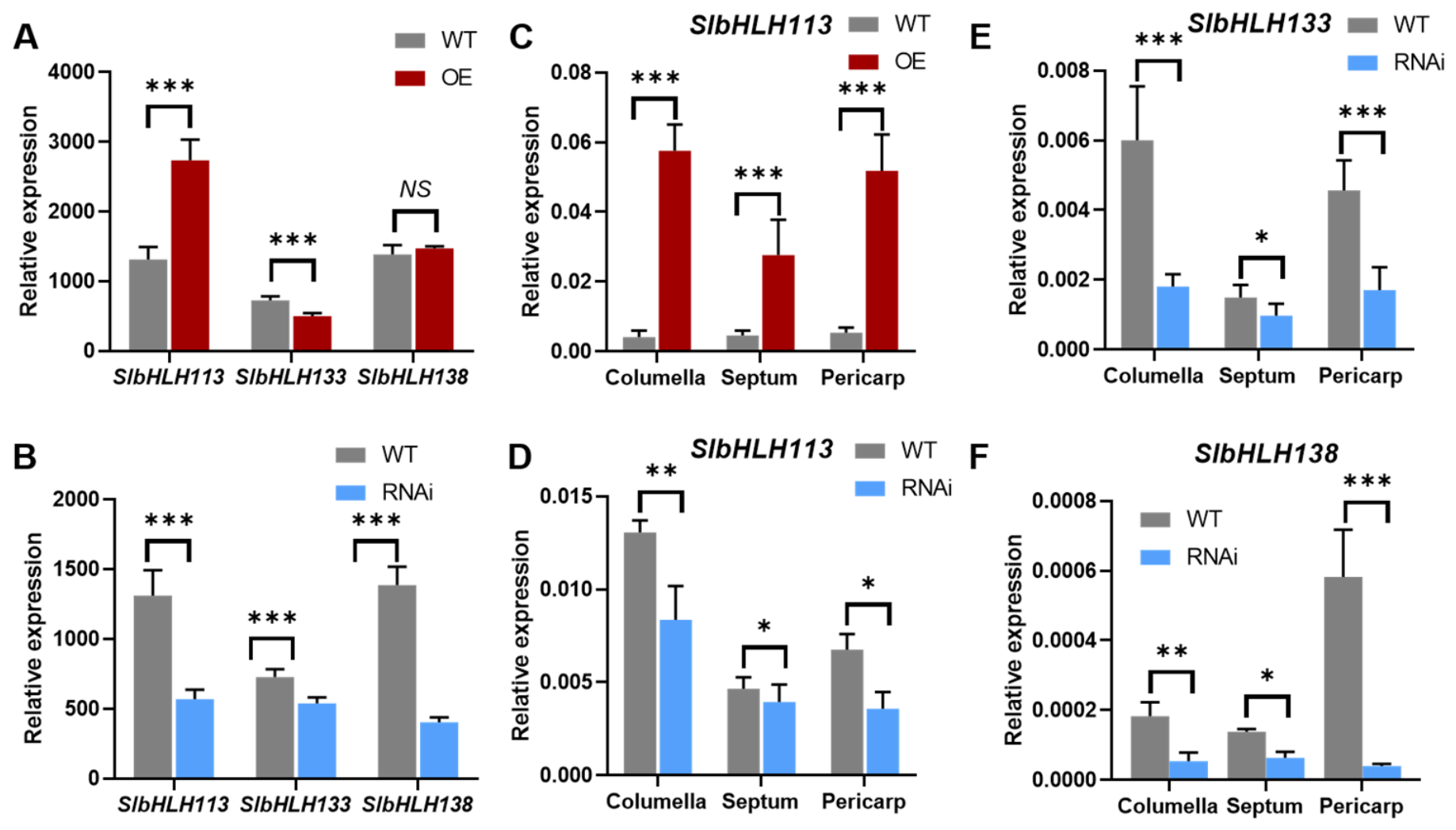
The SlbHLH113-overexpressing (OE) and RNA interference (RNAi) lines, in which SlbHLH113 and its three homologs SlbHLH133 and SlbHLH138 are simultaneously suppressed, used in this study were both obtained in previous research [24]. In the OE lines, SlbHLH113 was driven by the 35S promoter in the tomato cultivar M82; in the RNAi lines, expression of SlbHLH113 and its homologs SlbHLH133 and SlbHLH138 is co-suppressed. To confirm that these materials are suitable for studying the regulatory role of SlbHLH113 in fruit development, we first examined the expression levels of SlbHLH113, SlbHLH133, and SlbHLH138 in the ovaries at 0 days post-anthesis (DPA) in wild-type (WT), OE, and RNAi lines.
The results showed that, compared with WT, only SlbHLH113 expression was significantly increased in the OE lines at 0 DPA (Figure 1A), whereas expression levels of SlbHLH113, SlbHLH133, and SlbHLH138 were all significantly reduced in the RNAi lines (Figure 1B).
To analyze the expression patterns of SlbHLH113, SlbHLH133, and SlbHLH138 in different fruit structures, we measured their transcript levels in the columella, septum, and pericarp of fruits at 5 DPA in WT, OE, and RNAi lines. The results showed that in WT plants, SlbHLH113 and SlbHLH133 were most highly expressed in the columella, whereas SlbHLH138 showed the highest expression in the pericarp (Figure 1D–F). In the OE lines, SlbHLH113 expression was significantly elevated in all three tissues at 5 DPA compared with WT (Figure 1C). In the RNAi lines, expression levels of SlbHLH113, SlbHLH133, and SlbHLH138 were significantly lower than those in WT across all tissues examined (Figure 1D–F).
These results confirm that SlbHLH113 is overexpressed in the OE lines and that expression of the three homologous genes is effectively suppressed in the RNAi lines, making both lines suitable for subsequent studies on the role of SlbHLH113 in fruit development.

3.2. SlbHLH113 Affects Fruit Shape Index by Regulating Columella–Placenta Width and Locule Width

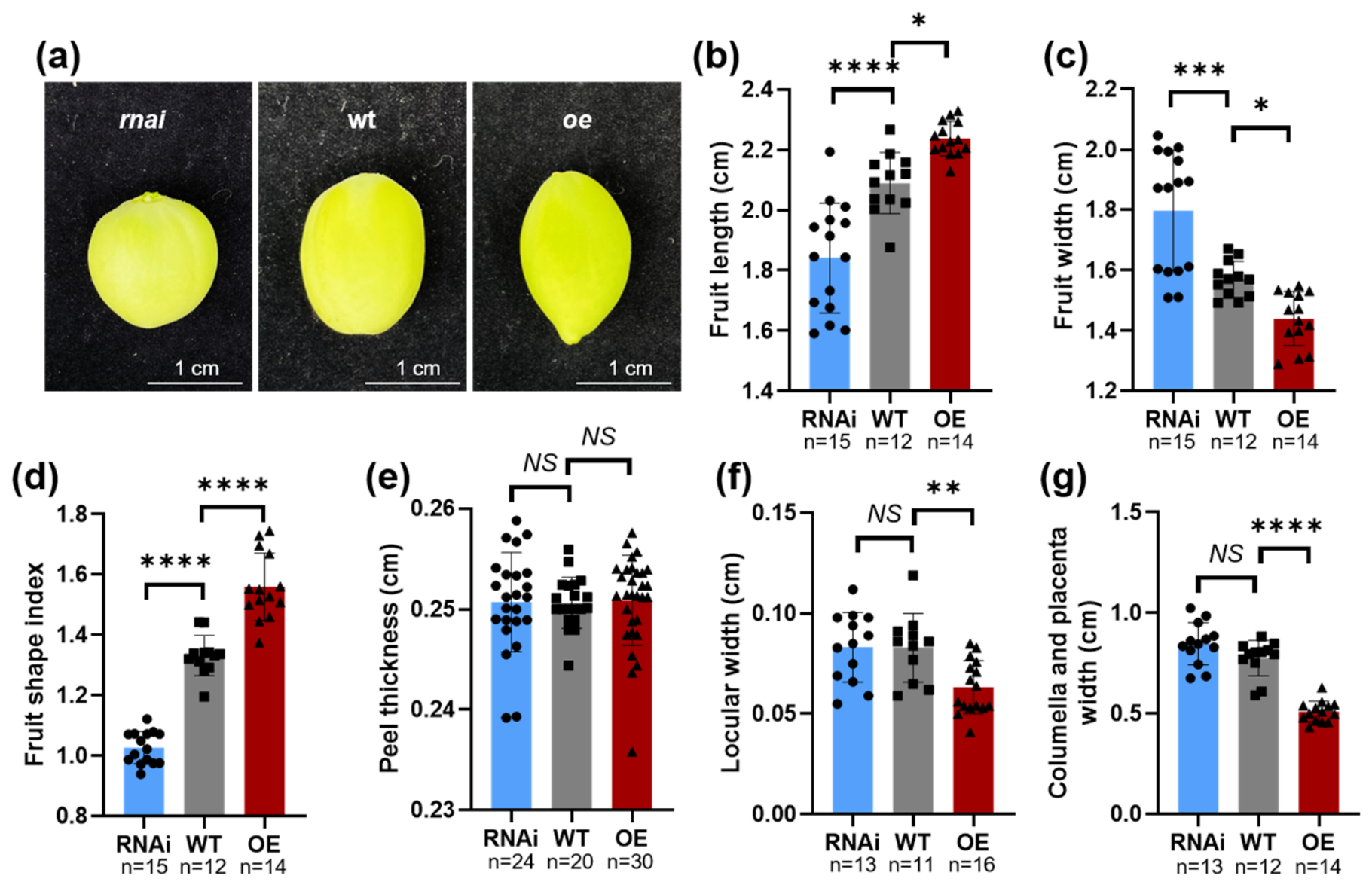
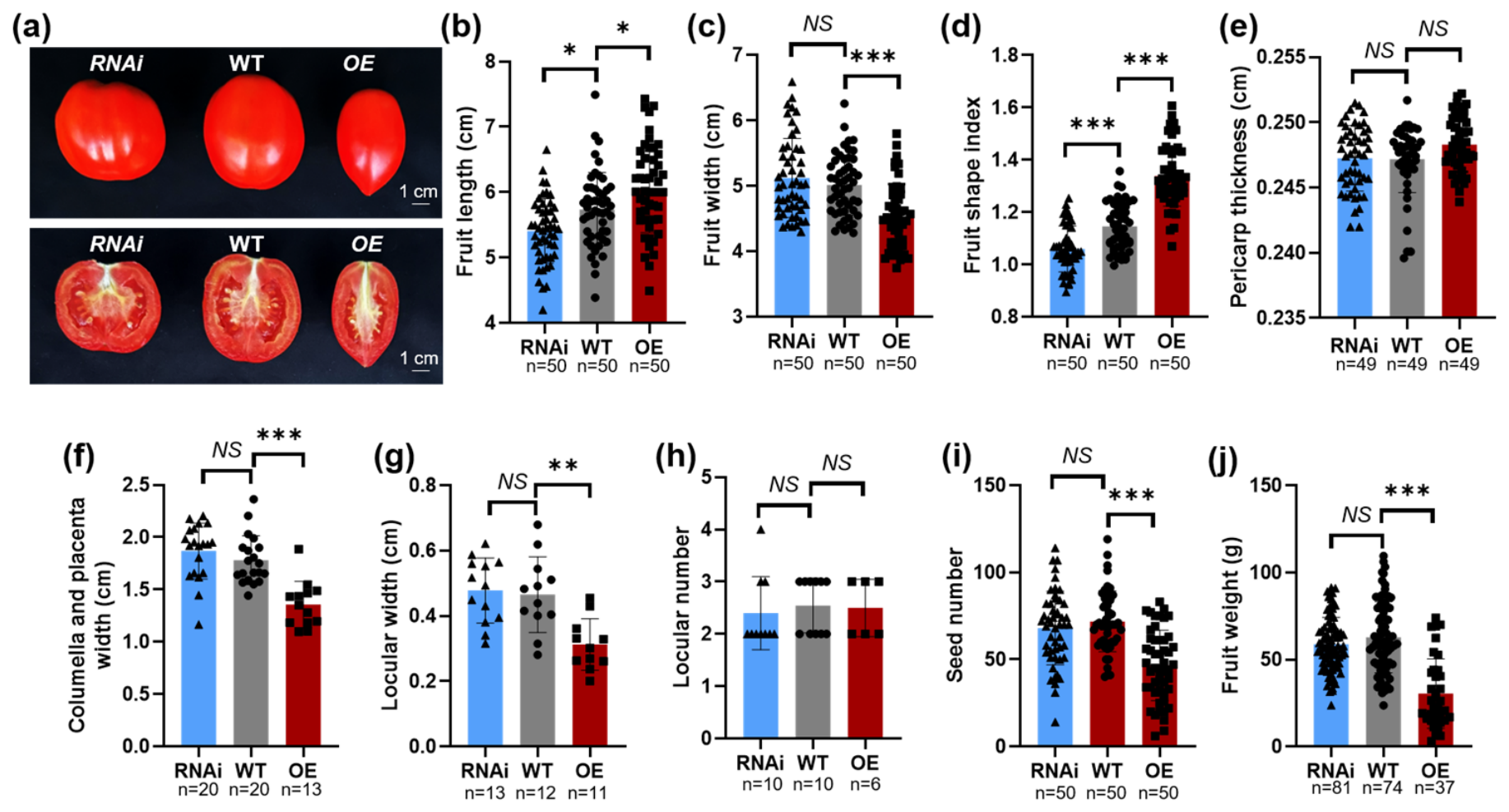
To investigate the effect of SlbHLH113 on tomato fruit development, we observed fruit morphology in WT, RNAi, and OE lines. The fruit shapes of the three lines were markedly different (Figure 2a). Measurement of longitudinal and transverse diameters at 10 DPA revealed that, compared with WT, RNAi lines exhibited significantly reduced longitudinal diameter and significantly increased transverse diameter, whereas OE lines showed significantly increased longitudinal diameter and significantly decreased transverse diameter (Figure 2b,c). Fruit shape index (longitudinal/transverse diameter ratio) analysis showed that the shape index of RNAi lines was significantly lower than that of WT, while that of OE lines was significantly higher than that of WT (Figure 2d).
To explore the histological basis of the fruit shape changes, we measured pericarp thickness, columella–placenta width, and locule width at 10 DPA. The results showed no significant difference in pericarp thickness among the three lines (Figure 2e). Both columella–placenta width and locule width were significantly reduced in OE lines compared with WT. Although RNAi lines showed a slight increase in these two parameters relative to WT, the differences were not statistically significant (Figure 2f,g). These results suggest that SlbHLH113 may influence fruit longitudinal and transverse diameters, and thereby alter fruit shape index, by regulating columella–placenta width and locule width.
To further verify whether this trend persists at the ripe stage, we performed similar analyses on red-ripe fruits. Compared with WT, red-ripe fruits of RNAi lines showed significantly reduced longitudinal diameter and a slight (non-significant) increase in transverse diameter; OE lines exhibited significantly increased longitudinal diameter and significantly decreased transverse diameter (Figure 3a–c). In terms of fruit shape index, RNAi lines were significantly lower than WT, and OE lines were significantly higher than WT (Figure 3d). Histological measurements showed that pericarp thickness remained non-significant among the three lines at the red-ripe stage (Figure 3e). OE lines still displayed significantly reduced columella–placenta width and locule width, whereas RNAi lines showed a non-significant increasing trend (Figure 3f,g). No significant differences in locule number were observed among the three lines (Figure 3h). Seed number per fruit and fruit weight were comparable between WT and RNAi lines, but both parameters were significantly reduced in OE lines compared with WT (Figure 3i,j).
Taken together, these results indicate that during tomato fruit morphogenesis, SlbHLH113 regulates columella–placenta width and locule width, thereby affecting fruit longitudinal and transverse diameters and ultimately leading to changes in fruit shape index.

3.3. SlbHLH113 Alters Cell Polarity Without Affecting Cell Area

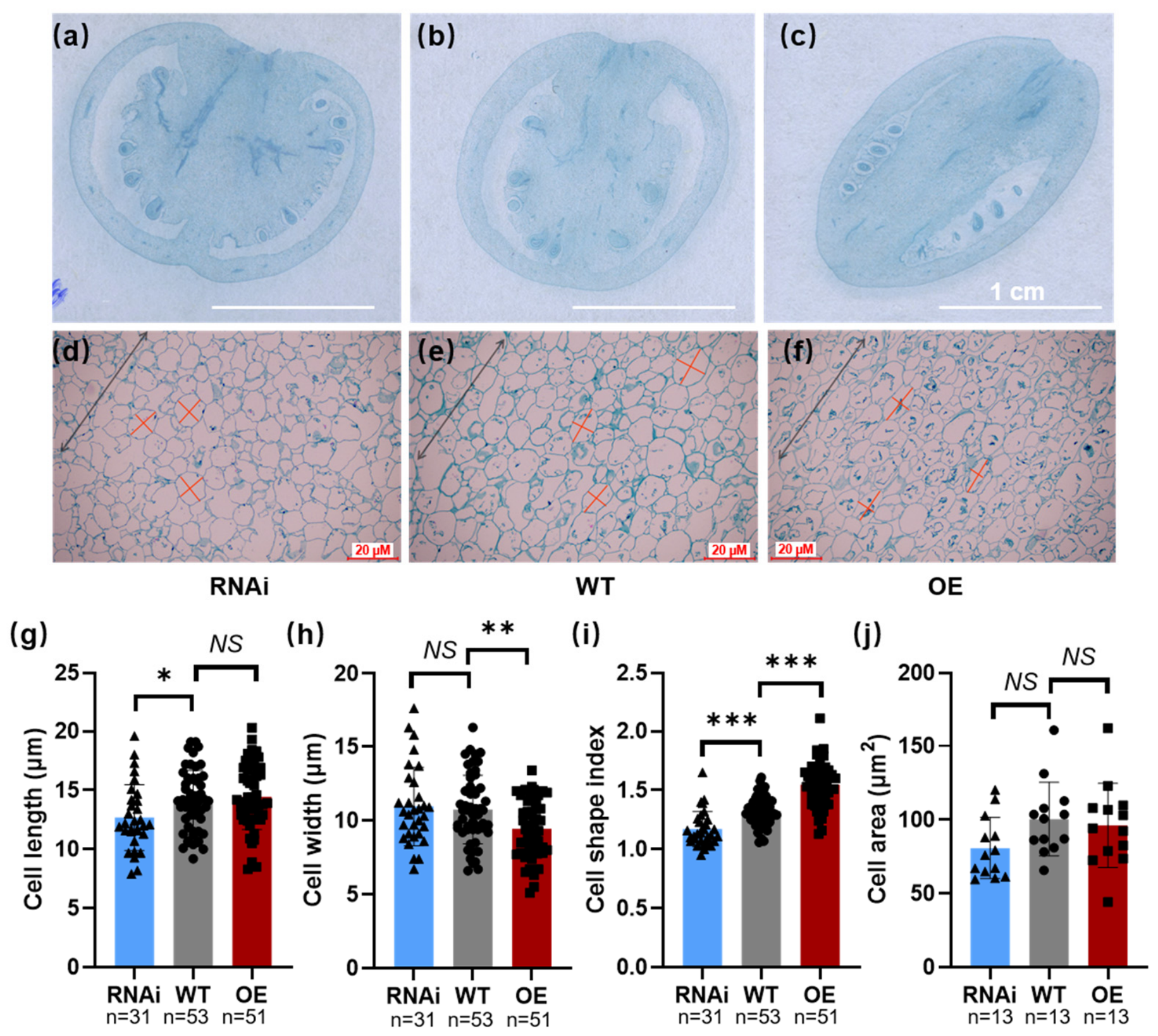
Tomato fruit development and morphogenesis are coordinately regulated by cell proliferation and expansion dynamics. To investigate the effect of SlbHLH113 on cell morphology, we performed histological analysis on paraffin sections of fruits at 10 DPA (Figure 4a). Longitudinal sections revealed that columella cells in RNAi lines became more oval (i.e., reduced length/width ratio) compared with WT, whereas columella cells in OE lines became more elongated (increased length/width ratio) (Figure 4b).
To further quantify changes in cell expansion dynamics, we performed morphometric analysis of columella cells using ImageJ software, measuring cell length, cell width, cell shape index (length/width), and cell area. The results showed that in RNAi lines, cell length was slightly smaller than in WT, while cell width was not significantly different from WT, resulting in a significantly lower cell shape index. In OE lines, cell length was not significantly different from WT, but cell width was slightly smaller than in WT, resulting in a significantly higher cell shape index (Figure 4g–i). No significant difference in columella cell area was observed among the three lines (Figure 4j). These results suggest that SlbHLH113 alters cell polarity by suppressing radial expansion without affecting overall cell area.

3.4. SlbHLH113 Begins to Significantly Affect Fruit Shape Index from 5 DPA

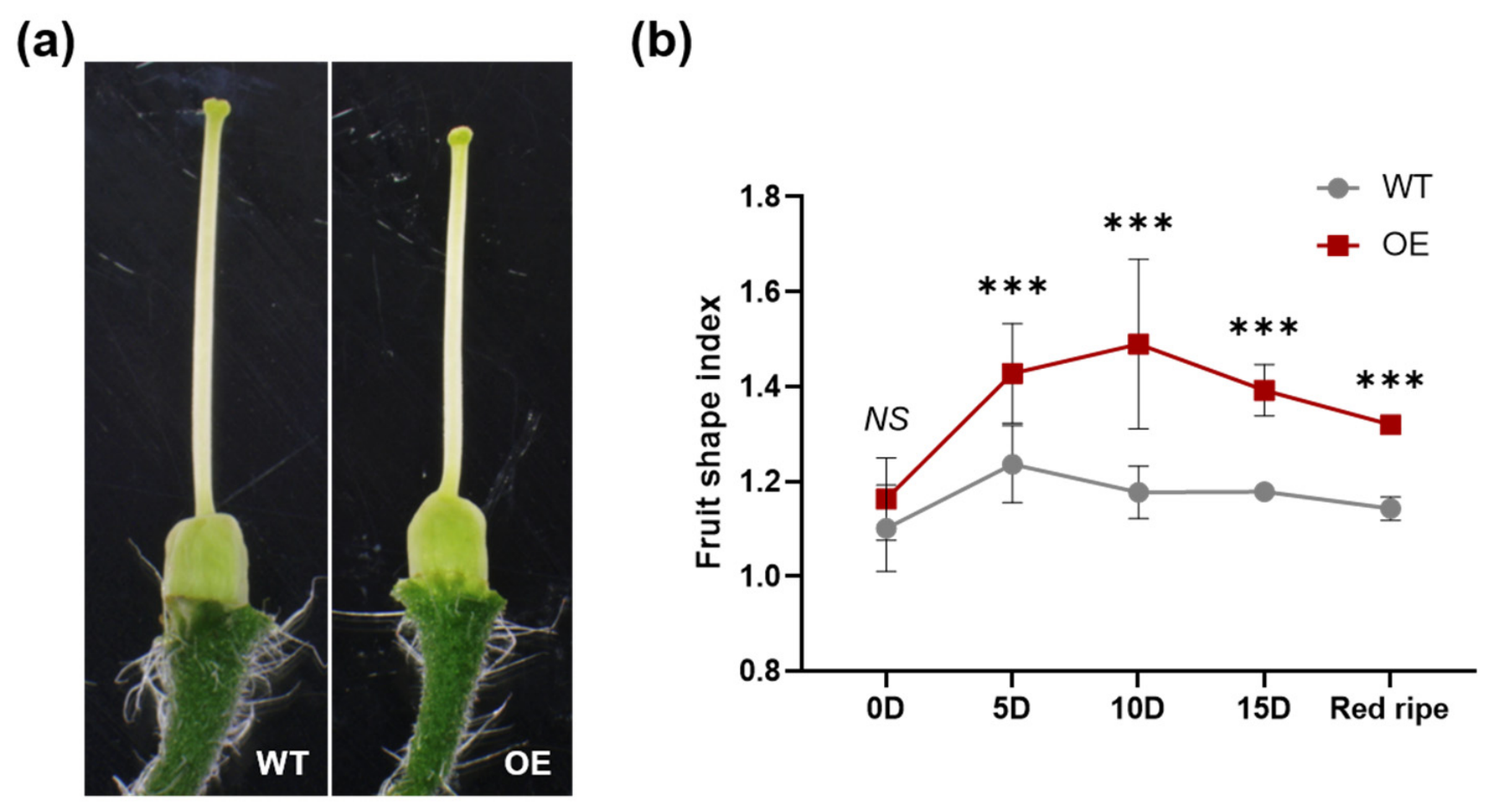
To further clarify the developmental stage at which SlbHLH113 influences tomato fruit growth and development, we compared the dynamic changes in fruit shape index between WT and OE lines at different developmental stages (0 DPA ovary, 5, 10, 15 DPA young fruits, and red-ripe fruits). The results showed that at 0 DPA, there was no significant difference in ovary shape index between WT and OE lines (Figure 5a,b). At 5 DPA, the fruit shape index increased in both lines compared with 0 DPA, and the OE lines exhibited a significantly higher index than WT. The difference between OE and WT continued to widen from 5 DPA to 10 DPA. At 10 DPA, the shape index of OE lines was slightly higher than at 5 DPA, whereas that of WT had already begun to decline. After 10 DPA, the shape index gradually decreased in both lines but remained above the 0 DPA level. Except at 0 DPA, OE lines showed a significantly higher fruit shape index than WT throughout all developmental stages (Figure 5b). Intra-genotype comparisons against the 0 DPA baseline (Supplementary Table S2) revealed that in WT, the shape index was significantly elevated at 5–15 DPA but returned to baseline at the red-ripe stage, whereas in SlbHLH113 OE lines, it remained significantly increased at all time points, with a much greater overall amplitude.
Although no statistical difference in shape index was detected at 0 DPA, distinct morphological differences were observed in the ovary. Compared with WT, the 0 DPA ovary of OE lines appeared narrower and more pointed at the distal end (Figure 5a), indicating that morphological divergence precedes statistical differences in shape index. These results collectively demonstrate that SlbHLH113 begins to significantly affect fruit shape index as early as 5 DPA.

3.5. Transcriptomic Analysis Reveals That SlbHLH113 Regulates Genes Involved in Cell Wall Remodeling and Hormone Signaling

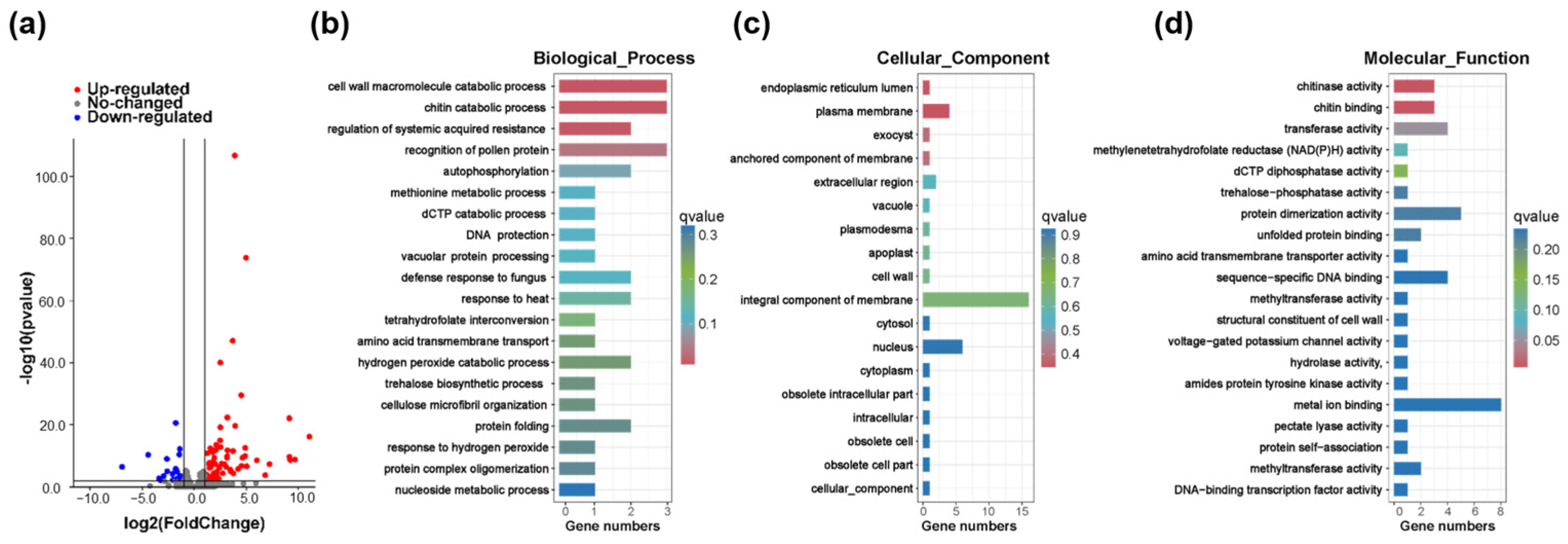
To dissect the molecular network through which SlbHLH113 regulates tomato fruit development, we performed RNA-seq analysis to examine the transcriptomes of young fruit tissue samples at 5 DPA from OE lines and WT lines. Differential expression analysis identified a total of 87 significantly differentially expressed genes (DEGs). Among these, 17 genes were down-regulated and 70 genes were up-regulated in the OE lines compared with WT (Figure 6a).
GO enrichment analysis indicated that multiple metabolic pathways were altered in the OE lines. In the Biological Process category, significantly enriched terms included cell wall macromolecule catabolic process, chitin catabolic process, amino acid metabolic process, dCTP catabolic process, protein autophosphorylation, cellulose microfibril organization, and protein complex oligomerization (Figure 6b). In the Cellular Component category, significantly enriched terms included cell wall, intrinsic component of membrane, plasmodesma, cytoplasm, and apoplast (Figure 6c). In the Molecular Function category, DEGs were mainly enriched in structural constituent of cell wall, protein dimerization activity, metal ion binding, pectate lyase activity, and chitinase activity (Figure 6d).
Comprehensive analysis of the DEGs between OE and WT lines revealed that the significantly enriched DEGs were primarily involved in biological processes related to plant cell morphogenesis, especially cell cycle regulation and cell wall remodeling. Combined with GO functional enrichment analysis, we further screened key genes potentially involved in regulating tomato cell morphological changes from the 87 DEGs. Through evaluation, 22 candidate DEGs were identified as playing potential roles in the dynamic regulatory network of cell structure, including 20 up-regulated genes and 2 down-regulated genes (Table 1).
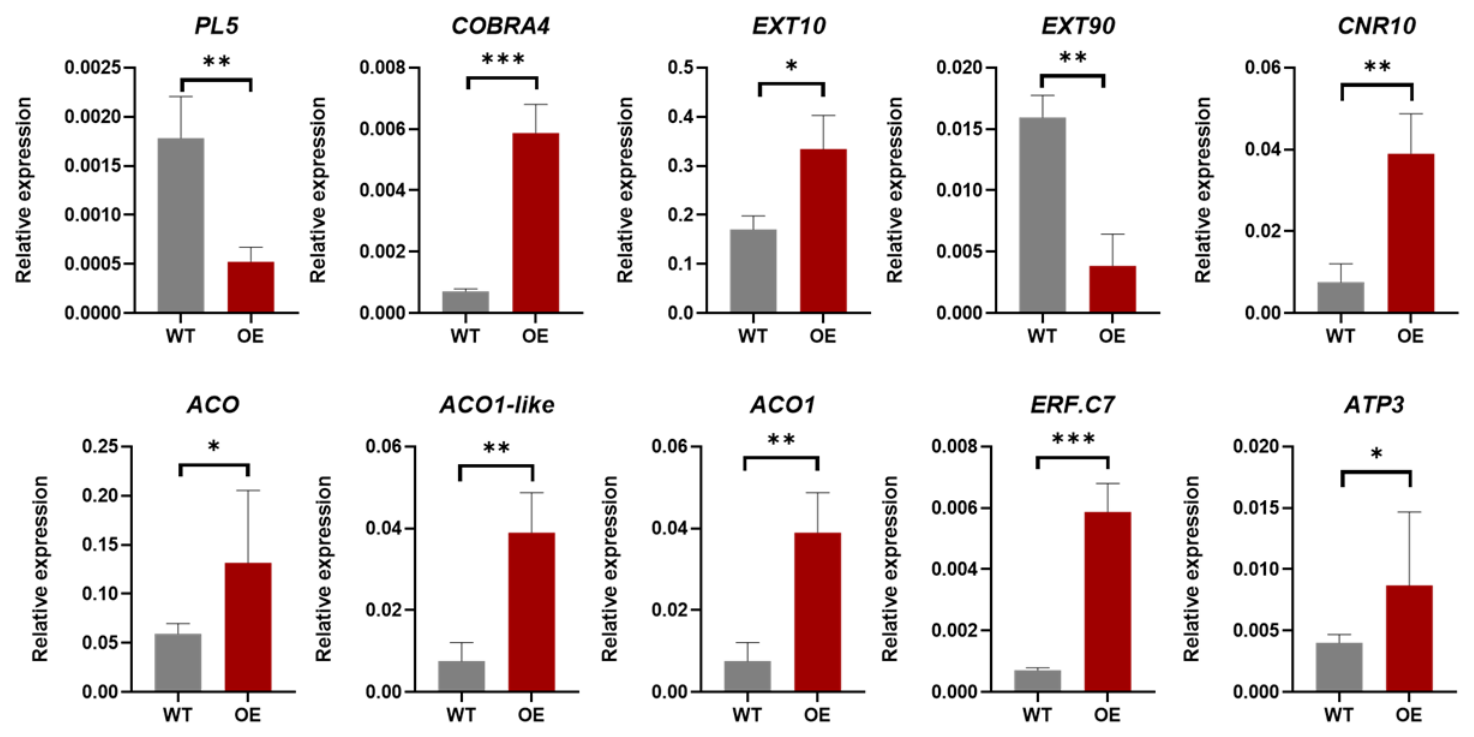
In the OE lines, the functions of the 20 up-regulated DEGs covered multiple key metabolic regulatory networks: four genes related to the plant hormone ethylene signaling pathway (Solyc04g009860, Solyc04g009850, Solyc12g006380, Solyc11g011740); one regulator of cell expansion and oriented cellulose deposition (Solyc03g114890); three WRKY family transcription factors (Solyc08g067340, Solyc03g095770, Solyc09g015770); two auxin-related genes (Solyc11g013310, Solyc07g041720); one cell proliferation regulator (Solyc01g005470); one calmodulin gene involved in calcium signal transduction (Solyc04g048900); one NAC domain transcription factor (Solyc10g055760); one gibberellin-responsive protein (Solyc06g069790); one MADS-box family protein (Solyc04g081000); and four chitinase-related genes (Solyc10g055780, Solyc10g055810, Solyc05g050130, Solyc10g055800). In addition, the two down-regulated DEGs were both key genes involved in cell wall remodeling, namely a pectate lyase gene (Solyc02g093580) and an expansin gene (Solyc01g006390, encoding a cell wall extensin protein) (Table 1). Notably, promoter motif analysis revealed that each of these DEGs contains at least one E-box/G-box (CACGTG) or G-box-like motif (CATGTG, CACGAG, AACGTG, CACATG) within 3000 bp upstream of the start codon (Supplementary Table S3), supporting their potential as direct or indirect targets of the bHLH transcription factor SlbHLH113. To validate the transcriptomic data, we selected key genes involved in pectate lyase, expansin, ethylene, and auxin pathways for RT-qPCR analysis, including PL5 (Solyc02g093580), COBRA4 (Solyc03g114890), EXT10 (Solyc09g098510), EXT90 (Solyc01g006390), ACO1 (Solyc04g009860), ACO1-like (Solyc04g009850), ACO (Solyc12g006380), ERF.C7 (Solyc11g011740), and ATP3 (Solyc11g013310). The results showed that, compared with WT, PL5 and EXT90 were down-regulated in OE plants, whereas COBRA4, EXT10, ACO1, ACO1-like, ACO, ERF.C7, and ATP3 were up-regulated (Figure 7). The RT-qPCR results were consistent with the transcriptomic data trends (Table 1). Based on these findings, we propose that SlbHLH113 may directly or indirectly affect cell wall composition by regulating ethylene signaling, auxin response, and cell wall-related protein expression, thereby mediating anisotropic cell expansion and morphogenesis, ultimately leading to altered tomato fruit shape.

3.6. SlbHLH113 Physically Interacts with the Microtubule-Associated Protein SlIQD21a

Tomato fruit shape is tightly linked to microtubule organization and the activity of microtubule-associated proteins, with dynamic microtubule remodeling during early fruit development critically affecting fruit morphogenesis. Previous studies have demonstrated that two regulators, the microtubule-associated protein SlMAP70-1 and SUN family member SlIQD21a, modulate fruit elongation by stabilizing microtubules at the early developmental stage: their overexpression enhances microtubule arrangement anisotropy, reduces cell roundness and promotes fruit elongation, while loss-of-function mutants produce flattened fruits [25].
Notably, the regulatory effect of SlbHLH113 on tomato fruit shape closely resembles that of SlMAP70-1 and SlIQD21a: OE lines show elongated fruits with an increased shape index, whereas RNAi lines display relatively flattened fruits with a decreased shape index (Figure 2d and Figure 3d). Based on this observation, we hypothesized that SlbHLH113 may interact with SlMAP70-1 or SlIQD21a to regulate fruit shape.
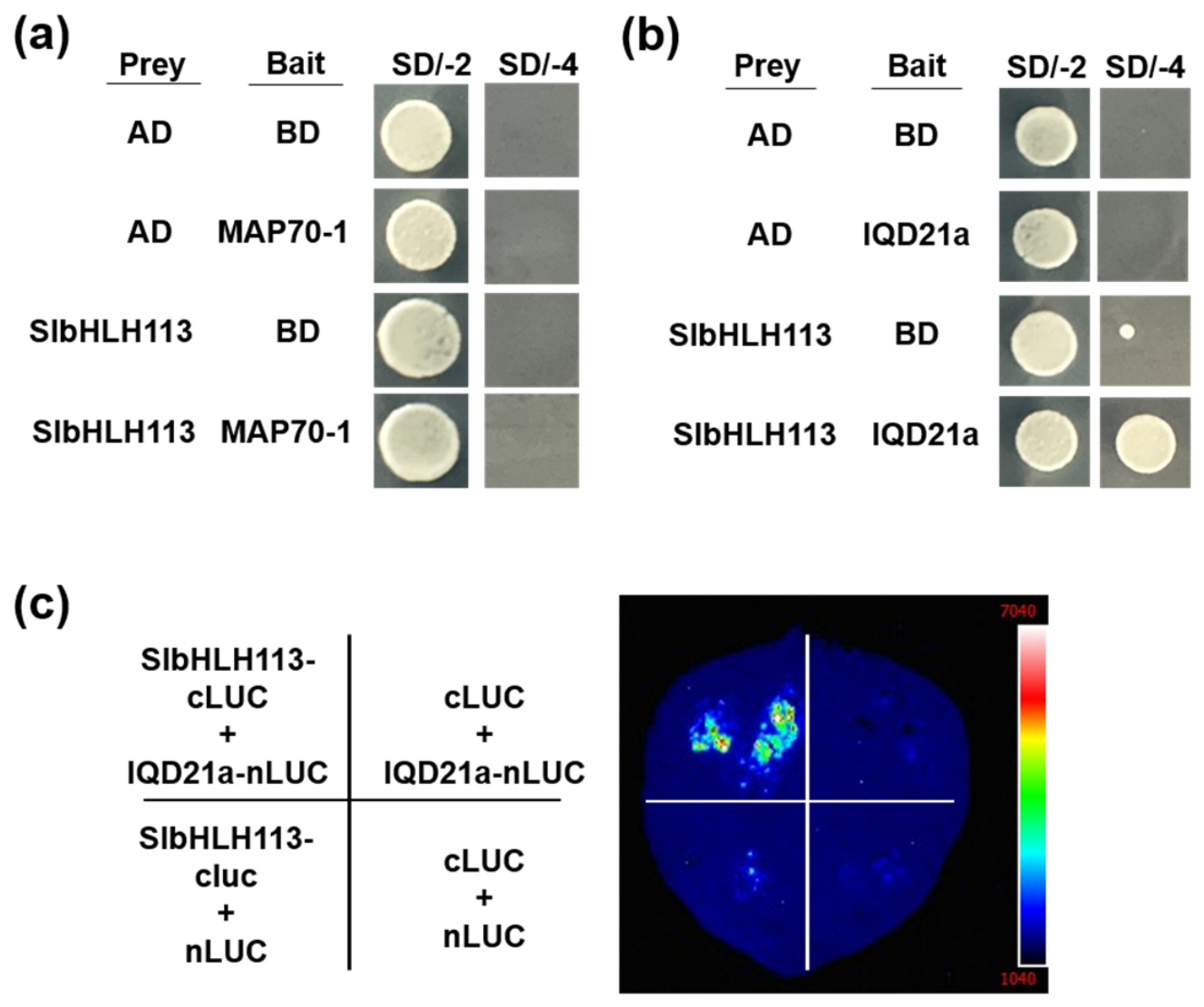
To test this hypothesis, we first examined protein-protein interactions using a yeast two-hybrid (Y2H) system. We constructed SlMAP70-1-BD, SlIQD21a-BD, and SlbHLH113-AD vectors and co-transformed AD-SlbHLH113 with either SlMAP70-1-BD or SlIQD21a-BD into yeast competent cells. The Y2H assay revealed that SlbHLH113 does not interact with SlMAP70-1 but does interact with SlIQD21a (Figure 8a,b). We further validated the interaction between SlbHLH113 and SlIQD21a using a luciferase complementation assay. Constructs encoding SlbHLH113-nLUC and cLUC-SlIQD21a were generated, and empty vector controls were included. Strong luciferase activity was detected in tobacco leaves co-expressing SlbHLH113-nLUC and cLUC-SlIQD21a, which was significantly higher than that in the negative controls (Figure 8c). These results demonstrate a robust physical interaction between SlbHLH113 and SlIQD21a, suggesting that SlbHLH113 may cooperate with SlIQD21a to regulate microtubule organization, thereby influencing cell elongation and ultimately leading to fruit elongation.

3.7. SlbHLH113 Does Not Affect Major Nutrient Contents in Red-Ripe Fruits

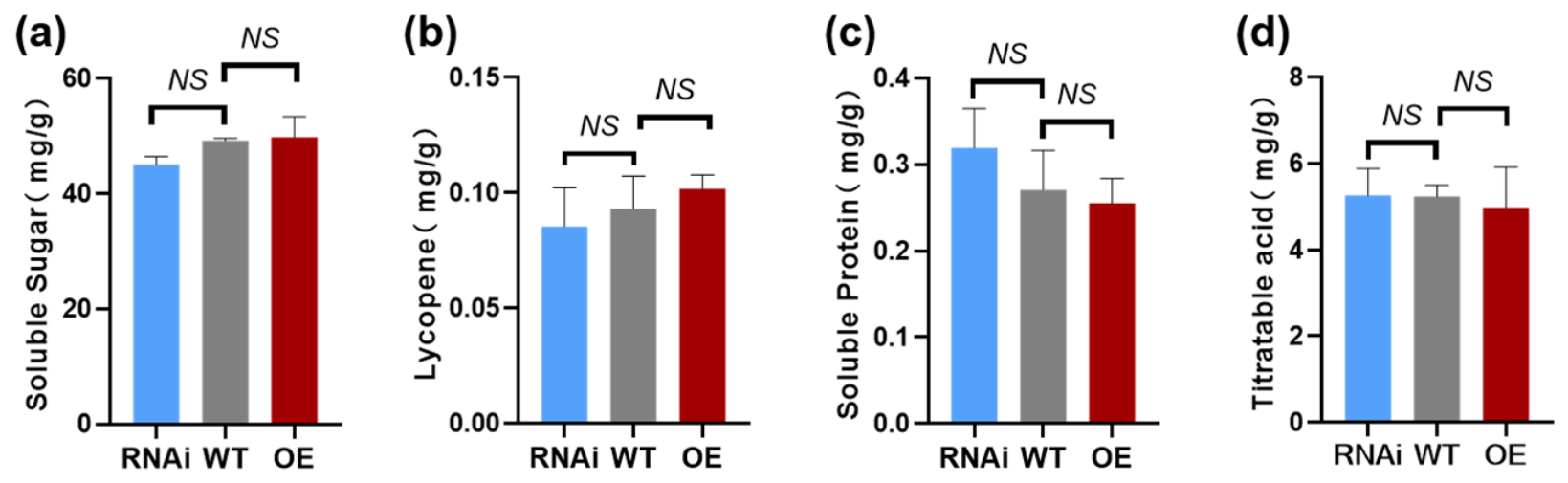
Given that SlbHLH113 influences tomato fruit morphogenesis, we further investigated its effect on nutrient content in tomato fruits. The results showed that there were no significant differences in soluble sugar, lycopene, soluble protein, or titratable acid content among WT, RNAi, and OE lines at the red-ripe stage (Figure 9). These results indicate that SlbHLH113 does not affect the accumulation of these major nutrients in tomato fruits.

4. Discussion

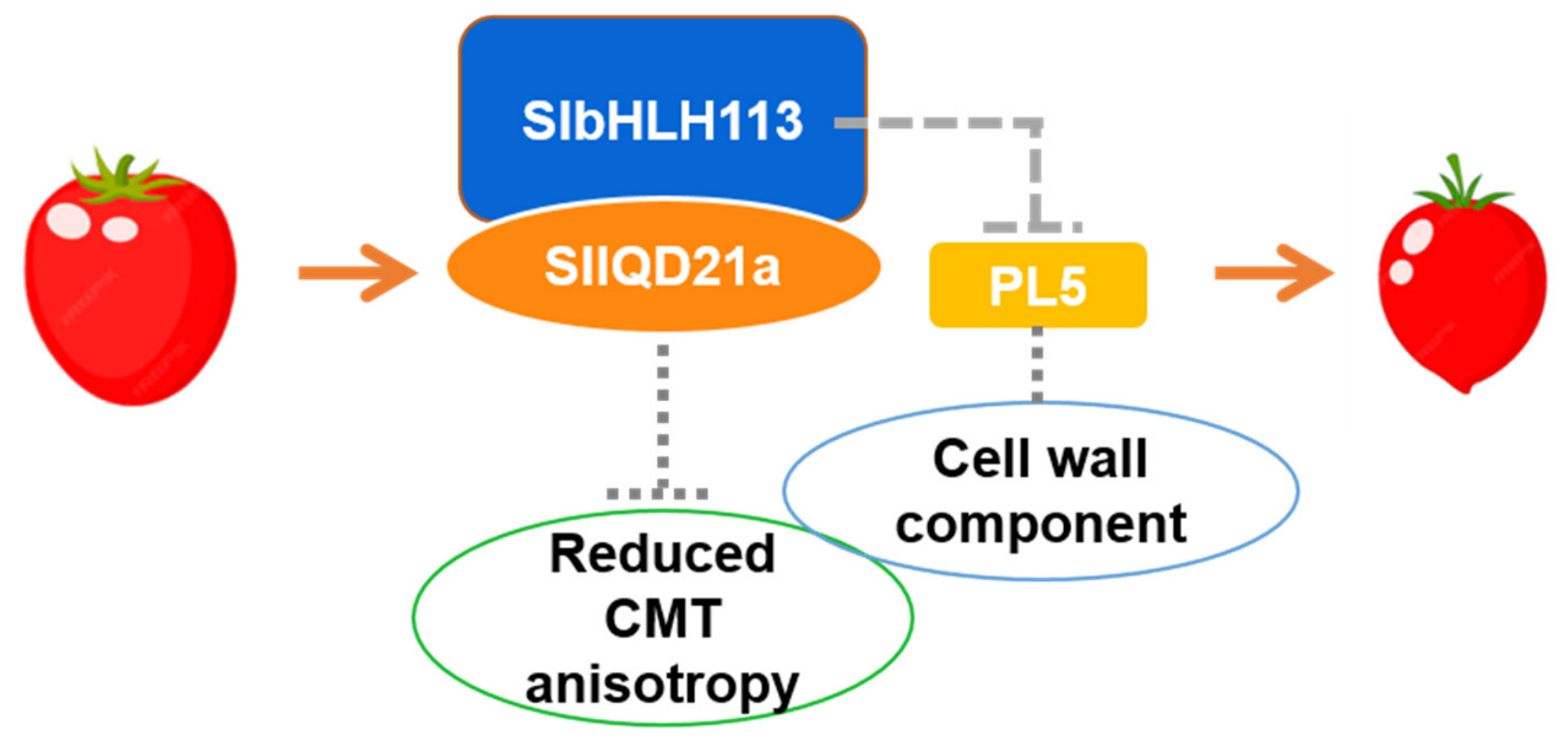
In this study, we investigated the regulatory role of the bHLH transcription factor SlbHLH113 in tomato fruit development using previously generated overexpression (OE) and RNA interference (RNAi) lines. We aim to elucidate its function by examining the cytological aspects of fruit development and the molecular mechanisms of the downstream pathways it regulates. Our results demonstrate that SlbHLH113 positively regulates fruit elongation by modulating cell polarity, columella–placenta width, and locule width, without affecting overall cell area or pericarp thickness. Transcriptomic analysis revealed that a set of genes involved in cell wall remodeling, ethylene signaling, and auxin response was altered in OE lines. Furthermore, we identified that SlbHLH113 physically interacts with the microtubule-associated protein SlIQD21a, suggesting a specific molecular mechanism by which SlbHLH113 influences fruit shape (Figure 10). Notably, preliminary observations indicate that SlbHLH113-OE lines exhibit reduced resistance to Botrytis cinerea, whereas RNAi lines show enhanced resistance [24], pointing to a role for SlbHLH113 in both fruit morphogenesis and defense, likely through the regulation of cell wall dynamics.

4.1. SlbHLH113 Regulates Fruit Shape Through Cell Polarity Control and Tissue-Specific Growth Modulation

Fruit shape is a critical agronomic trait that is determined by coordinated patterns of cell division and expansion during early development [26]. Histological analysis at 10 DPA revealed that SlbHLH113 overexpression leads to more elongated columella cells with reduced radial width, whereas RNAi lines display more oval cells with a reduced length/width ratio. Importantly, cell area remained unchanged across genotypes, indicating that SlbHLH113 primarily affects cell polarity rather than cell size, consistent with anisotropic cell expansion driving tomato fruit elongation [13].
OE lines exhibit reduced columella–placenta and locule width, coupled with increased fruit longitudinal diameter and decreased transverse diameter; this suggests that SlbHLH113 promotes elongation by restricting radial growth in the central columella region. RNAi lines show increased radial dimensions and flatter fruits. Similar spatial regulation has been reported for other fruit shape regulators such as SUN [14,27] and OVATE [28], which influence fruit elongation through localized effects on cell division and expansion in specific fruit tissues. Among all fruit tissues of sun, the central part—comprising the columella and septum—exhibits the greatest morphological alterations in response to the shape change [17]. Consistently, our results position SlbHLH113 as a novel regulator that acts specifically in the columella and placenta, locular width, to control fruit shape. Accumulating evidence indicates that placental/locular tissues are highly auxin-sensitive and tightly regulated by the sly-miR167–SlARF8A/B–SlGH3.4 module, while pericarp tissues remain relatively stable and show minimal responses to auxin perturbations [29]. It is therefore reasonable to hypothesize that SlbHLH113 may modulate columella and placenta development by influencing auxin signaling and homeostasis in these central tissues, although the precise mechanism requires further investigation.
However, it is worth noting that the RNAi line used in this study suppresses three homologous bHLH genes (SlbHLH113, SlbHLH133, SlbHLH138), not SlbHLH113 alone. Therefore, the flattened fruit phenotype may reflect combined effects of multiple family members, and we cannot rule out the possibility that SlbHLH133 and/or SlbHLH138 also contribute to fruit shape regulation. To dissect the functional specificity and potential division of labor among these three homologs, future generation of single slbhlh113, slbhlh133, and slbhlh138 CRISPR mutants, as well as double and triple knockouts, will be required. Additionally, generating SlbHLH133 OE and SlbHLH138 OE lines would help determine whether these homologs have distinct, overlapping, or even opposing roles in fruit elongation compared to SlbHLH113.

4.2. Temporal Dynamics of SlbHLH113 Action During Fruit Development

Time-course analysis of fruit shape index revealed that SlbHLH113 begins to exert its effect as early as 5 DPA, with significant differences between OE and WT lines becoming apparent at this stage. Notably, although no statistical difference in ovary shape index was detected at 0 DPA, OE ovaries already displayed a narrower and more pointed distal end, suggesting that morphological divergence precedes measurable changes in shape index. This observation implies that SlbHLH113 acts during very early stages of fruit initiation, possibly by establishing polarity cues that are subsequently amplified during fruit growth.
The progressive increase in shape index difference between OE and WT from 5 to 10 DPA, followed by a decline thereafter, indicates that the effect of SlbHLH113 on fruit shape becomes detectable during early fruit development. However, as our phenotypic analysis was conducted at anthesis (0 DPA), 5 DPA, and 10 DPA, whether this effect initiates precisely after pollination and fertilization remains unclear. In contrast, genes such as SUN, fs8.1, and SOV1 exert their effects much earlier, with detectable phenotypic differences already present at or before anthesis [14,27]. Whether the timing of SlbHLH113 action is later than that of these early-acting genes requires further investigation. A similar post-anthesis onset has been reported for other fruit shape regulators, including SlFSM1 [30] and SlBRI1 [31]. By contrast, SlKIX8 and SlKIX9 affect fruit development only from 15 DPA onward [32].

4.3. Transcriptomic Insights: Cell Wall Remodeling and Hormone Signaling

RNA-seq analysis at 5 DPA identified 87 DEGs in OE lines compared with WT, with a predominant bias toward up-regulation (70 up vs. 17 down). GO enrichment analysis strongly pointed to cell wall-related processes, including cell wall macromolecule catabolic process, cellulose microfibril organization, pectate lyase activity, and chitinase activity. This is consistent with our cellular observations that SlbHLH113 alters cell polarity, as changes in cell wall properties are intimately linked to the control of cell expansion anisotropy [8,12,13]. The small number of DEGs at 5 DPA is likely due to whole-fruit sampling diluting tissue-specific (columella and placenta) signals, together with the early developmental stage dominated by cell division rather than expansion. These findings support that SlbHLH113 regulates fruit shape mainly through cell wall remodeling and cell expansion, not cell division.
Among the down-regulated DEGs, we identified a pectate lyase gene (PL5, Solyc02g093580) and an expansin gene (EXT90, Solyc01g006390). Expansins are well-known cell wall-loosening proteins that facilitate turgor-driven cell expansion [33]. The down-regulation of EXT90 in OE lines may seem counterintuitive for promoting elongation. However, it is important to note that anisotropic cell expansion requires not only cell wall loosening but also directional constraints imposed by microtubule organization and cellulose microfibril deposition [11]. The down-regulation of specific expansins may reflect a refinement of cell wall properties that favors axial elongation over radial expansion. Conversely, the up-regulation of COBRA4 (Solyc03g114890), a gene involved in oriented cellulose deposition [34], supports the notion that SlbHLH113 promotes anisotropic growth by directing cellulose microfibril alignment.
The enrichment of ethylene and auxin-related genes among up-regulated DEGs is particularly noteworthy. Ethylene is known to influence fruit development and ripening, but its role in early fruit shape determination is less explored. The up-regulation of three ACO genes (ACO1, ACO1-like, ACO) and an ERF transcription factor (ERF.C7) in OE lines suggests that ethylene signaling may contribute to fruit elongation. Similarly, the up-regulation of auxin-related genes (ATP3, ABP19a) points to a potential interplay between SlbHLH113 and auxin signaling. Previous studies have shown that auxin gradients play a critical role in tomato fruit development [35], and our results suggest that SlbHLH113 may act upstream of or in parallel with auxin-responsive pathways. Therefore, hormone quantification (e.g., ACC, IAA content) will be necessary to confirm the functional alteration of these pathways at the metabolic level. Although E-box/G-box or G-box-like motifs are present in the promoters of these genes, whether they represent direct targets of SlbHLH113 or functionally contribute to fruit shape regulation requires further biochemical and genetic validation.

4.4. Physical Interaction with SlIQD21a: A Potential Link to Microtubule Organization

One of the most striking findings of this study is the physical interaction between SlbHLH113 and SlIQD21a, a member of the IQ67 domain (IQD) family known to regulate microtubule organization and fruit shape in tomato [27,36]. IQD proteins function as microtubule-associated proteins that stabilize microtubules and promote anisotropic cell expansion [36]. The interaction between SlbHLH113 and SlIQD21a was confirmed by both yeast two-hybrid and luciferase complementation assays, whereas no interaction was detected with SlMAP70-1, another microtubule-associated protein involved in fruit elongation. The phenotypic similarity between SlbHLH113-OE lines and SlIQD21a-overexpressing lines—both exhibit elongated fruits with increased shape index—further supports a functional relationship. However, direct evidence that this interaction alters microtubule organization is currently lacking. While we have demonstrated physical interaction, we propose that SlbHLH113 overexpression or knockdown might lead to changes in cortical microtubule density, orientation, or dynamics. Therefore, future studies employing cortical microtubule visualization (e.g., MAP4-GFP labeling or immunostaining of α/β-tubulin) in SlbHLH113 OE and RNAi lines will be necessary to test whether this interaction indeed translates into functional changes in cytoskeletal architecture.
Given that SlbHLH113 is a nuclear-localized transcription factor and SlIQD21a is a microtubule-associated protein, their physical interaction suggests a novel mechanism by which a transcription factor may directly modulate microtubule organization. It is plausible that SlbHLH113 recruits or stabilizes SlIQD21a at specific subcellular locations, or that SlIQD21a influences the transcriptional activity of SlbHLH113. Alternatively, the interaction may reflect a regulatory feedback loop in which SlbHLH113 controls the expression of genes involved in microtubule dynamics while simultaneously interacting with a key microtubule regulator.
Further studies are needed to determine the functional consequences of this interaction. For example, does SlbHLH113 affect the microtubule-binding activity of SlIQD21a? Does SlIQD21a influence the transcriptional activity or nuclear localization of SlbHLH113? Answering these questions will provide deeper insight into how transcriptional and cytoskeletal pathways are coordinated during fruit morphogenesis.

4.5. SlbHLH113 May Mediate the Balance Between Fruit Development and Defense Against Botrytis cinerea

Our previous study observed that SlbHLH113-OE lines exhibit reduced resistance to the necrotrophic fungus Botrytis cinerea, whereas RNAi lines show enhanced resistance [24]. This pattern suggests that SlbHLH113 negatively regulates defense against B. cinerea. Importantly, our transcriptomic analysis revealed significant enrichment of cell wall-related genes among SlbHLH113-regulated DEGs, it is plausible that SlbHLH113 influences pathogen resistance through the modification of cell wall composition and architecture.
The plant cell wall serves as the first physical barrier against pathogen invasion [37]. Pathogen infection triggers dynamic changes in cell wall architecture, including the deposition of callose, lignin, and cellulose, as well as the modification of pectin and hemicellulose [38]. Conversely, necrotrophic pathogens such as B. cinerea secrete cell wall-degrading enzymes such as pectate lyases, polygalacturonases, and cellulases to breach this barrier [39]. The composition and structural integrity of the cell wall therefore directly determine the ease with which pathogens can penetrate host tissues.
In our study, SlbHLH113 overexpression led to the down-regulation of a pectate lyase gene (PL5) and an expansin gene (EXT90). Pectate lyases degrade pectin, a major component of the middle lamella and primary cell wall. Their down-regulation may alter pectin dynamics, potentially leading to a cell wall structure that is more easily penetrated by fungal hyphae or that releases fewer damage-associated molecular patterns (DAMPs) such as oligogalacturonides (OGs), which are essential for activating defense signaling [40,41]. Expansins, by modifying cell wall extensibility, can also influence wall architecture and porosity. Down-regulation of EXT90 may change the physical properties of the cell wall in ways that facilitate fungal ingress.
Thus, we propose that SlbHLH113 modulates both fruit shape and B. cinerea resistance through a shared mechanism: the regulation of cell wall remodeling genes. During fruit development, SlbHLH113 promotes anisotropic cell expansion by directing cellulose microfibril alignment (via COBRA4) and refining wall loosening activities. During pathogen infection, the same set of cell wall modifications inadvertently alters the physical barrier properties of the cell wall, determining the efficiency of fungal penetration. This interpretation positions cell wall dynamics as the common downstream output of SlbHLH113 activity, linking developmental morphogenesis and disease susceptibility.
The molecular link between development and defense often converges on hormone signaling pathways, particularly those involving ethylene, auxin, and jasmonic acid (JA). In our transcriptomic data, we observed up-regulation of ethylene biosynthesis genes (ACO1, ACO1-like, ACO) and an ethylene response factor (ERF.C7) in OE lines. Ethylene has complex and often opposing roles in defense against different types of pathogens: it generally promotes susceptibility to necrotrophs such as B. cinerea [42] while enhancing resistance to biotrophs. The up-regulation of ethylene-related genes in OE lines is therefore consistent with their increased susceptibility to B. cinerea. Conversely, the enhanced resistance in RNAi lines may be associated with reduced ethylene signaling or activation of JA-dependent defenses, which are typically effective against necrotrophs [24,43,44].
It is also noteworthy that our GO enrichment analysis identified chitinase-related genes among the up-regulated DEGs in OE lines. Chitinases are pathogenesis-related (PR) proteins that hydrolyze fungal cell wall chitin and are often induced during pathogen infection [45]. However, the up-regulation of chitinase genes in OE lines did not prevent increased susceptibility to B. cinerea, suggesting that either the induced chitinases are insufficient to counteract the infection, or that other factors (such as cell wall integrity or ethylene signaling) override their protective effect.
Future experiments should directly test the causal relationship between SlbHLH113-mediated cell wall modifications and B. cinerea resistance. For example, cell wall compositional analysis (e.g., pectin, cellulose, lignin content) in OE and RNAi lines could reveal specific alterations that correlate with resistance phenotypes. Additionally, restoring PL5 or EXT90 expression in the OE background could determine whether their down-regulation is sufficient to confer susceptibility.

5. Conclusions

In summary, this study demonstrates that SlbHLH113 positively regulates tomato fruit elongation by modulating cell polarity, columella–placenta width, and locule width. Transcriptomic analysis revealed that SlbHLH113 influences the expression of genes involved in cell wall remodeling, ethylene signaling, and auxin response. Importantly, we discovered that SlbHLH113 physically interacts with the microtubule-associated protein SlIQD21a, providing a potential molecular link between transcriptional regulation and cytoskeletal dynamics during fruit morphogenesis. Considering the yield-related disadvantages including decreased fruit weight and seed number observed in SlbHLH113-overexpressing lines, fine-tuning the expression level of SlbHLH113 is necessary for practical application. These findings expand our understanding of the regulatory networks controlling fruit shape and offer a potential target for breeding tomatoes with desirable fruit morphology while maintaining nutritional quality.

Supplementary Materials

The following supporting information can be downloaded at: https://www.mdpi.com/article/10.3390/horticulturae12060650/s1. Table S1: List of the DNA primers used in this study; Table S2: Intra-genotype statistical comparison of fruit shape index between values at different developmental stages and the initial level at 0 DPA; Table S3: Promoter analysis of candidate genes for bHLH binding motifs within 3000 bp upstream of the start codon (ATG). Both sense and antisense strands were examined. Numbers in parentheses indicate the count of each motif type.

Author Contributions

Conceptualization, investigation, project administration, resources, supervision, writing—review and editing, Z.Z.; conceptualization, funding acquisition, methodology, project administration, writing—original draft, writing—review and editing, Y.L.; data curation, formal analysis, validation, X.W.; data curation, software, validation, visualization, H.H.; data curation, validation, visualization, B.L.; formal analysis, validation, L.L. All authors have read and agreed to the published version of the manuscript.

Funding

This work is supported by the Zhejiang Provincial Natural Science Foundation (LY23C150004), and National Natural Science Foundation of China (32573007).

Data Availability Statement

The original contributions presented in this study are included in the article/Supplementary Materials. Further inquiries can be directed to the corresponding author(s).

Conflicts of Interest

The authors declare no conflicts of interest.

Abbreviations

The following abbreviations are used in this manuscript:
WTWild-type
RNAiRNA interference
OEOverexpression
PLPectate lyase
EXTExpansin
IQDIQ67-domain
OFPOvate family protein
bHLHBasic helix-loop-helix
JAJasmonate
DPADays post-anthesis
DEGsDifferentially expressed genes
SDStandard deviation
Y2HYeast two-hybrid
DAMPsDamage-associated molecular patterns
OGsOligogalacturonides
ERF.C7Ethylene response factor
PRPathogenesis-related
LCILuciferase complementation imaging

References

  1. Pickersgill, B. Domestication of Plants in the Americas: Insights from Mendelian and Molecular Genetics. Ann. Bot. 2007, 100, 925–940. [Google Scholar] [CrossRef]
  2. Monforte, A.J.; Diaz, A.; Caño-Delgado, A.; van der Knaap, E. The genetic basis of fruit morphology in horticultural crops: Lessons from tomato and melon. J. Exp. Bot. 2014, 65, 4625–4637. [Google Scholar] [CrossRef] [PubMed]
  3. Gillaspy, G.; Ben-David, H.; Gruissem, W. Fruits: A Developmental Perspective. Plant Cell 1993, 5, 1439–1451. [Google Scholar] [CrossRef]
  4. Penchovsky, R.; Kaloudas, D. Molecular factors affecting tomato fruit size. Plant Gene 2023, 33, 100395. [Google Scholar] [CrossRef]
  5. Coen, E.; Rolland-Lagan, A.G.; Matthews, M.; Bangham, J.A.; Prusinkiewicz, P. The genetics of geometry. Proc. Natl. Acad. Sci. USA 2004, 101, 4728–4735. [Google Scholar] [CrossRef]
  6. Lee, Y.K.; Kim, G.-T.; Kim, I.-J.; Park, J.; Kwak, S.-S.; Choi, G.; Chung, W.-I. LONGIFOLIA1 and LONGIFOLIA2, two homologous genes, regulate longitudinal cell elongation in Arabidopsis. Development 2006, 133, 4305–4314. [Google Scholar] [CrossRef]
  7. Blanchard, G.B.; Kabla, A.J.; Schultz, N.L.; Butler, L.C.; Sanson, B.; Gorfinkiel, N.; Mahadevan, L.; Adams, R.J. Tissue tectonics: Morphogenetic strain rates, cell shape change and intercalation. Nat. Methods 2009, 6, 458–464. [Google Scholar] [CrossRef] [PubMed]
  8. Cyr, R.J. Microtubules in Plant Morphogenesis: Role of the Cortical Array. Annu. Rev. Cell Biol. 1994, 10, 153–180. [Google Scholar] [CrossRef]
  9. Shibaoka, H. Plant Hormone-Induced Changes in the Orientation of Cortical Microtubules: Alterations in the Cross-linking Between Microtubules and the Plasma Membrane. Annu. Rev. PlantBiol. 1994, 45, 527–544. [Google Scholar] [CrossRef]
  10. Baskin, T.I. Anisotropic Expansion of the Plant Cell Wall. Annu. Rev. Cell. Dev. Biol. 2005, 21, 203–222. [Google Scholar] [CrossRef]
  11. Verbelen, J.-P.; Vissenberg, K.; Kerstens, S.; Le, J. Cell expansion in the epidermis: Microtubules, cellulose orientation and wall loosening enzymes. J. Plant Physiol. 2001, 158, 537–543. [Google Scholar] [CrossRef]
  12. Baskin, T.I.; Jensen, O.E. On the role of stress anisotropy in the growth of stems. J. Exp. Bot. 2013, 64, 4697–4707. [Google Scholar] [CrossRef]
  13. Wu, S.; Zhang, B.Y.; Keyhaninejad, N.; Rodríguez, G.R.; Kim, H.J.; Chakrabarti, M.; Illa-Berenguer, E.; Taitano, N.K.; Gonzalo, M.J.; Díaz, A.; et al. A common genetic mechanism underlies morphological diversity in fruits and other plant organs. Nat. Commun. 2018, 9, 4734. [Google Scholar] [CrossRef]
  14. Wu, S.; Xiao, H.; Cabrera, A.; Meulia, T.; van der Knaap, E. SUN regulates vegetative and reproductive organ shape by changing cell division patterns. Plant Physiol. 2011, 157, 1175–1186. [Google Scholar] [CrossRef]
  15. Bürstenbinder, K.; Savchenko, T.; Müller, J.; Adamson, A.W.; Stamm, G.; Kwong, R.; Zipp, B.J.; Dinesh, D.C.; Abel, S. Arabidopsis Calmodulin-binding Protein IQ67-Domain 1 Localizes to Microtubules and Interacts with Kinesin Light Chain-related Protein-1. J. Biol. Chem. 2013, 288, 1871–1882. [Google Scholar] [CrossRef]
  16. Levy, M.; Wang, Q.; Kaspi, R.; Parrella, M.P.; Abel, S. Arabidopsis IQD1, a novel calmodulin-binding nuclear protein, stimulates glucosinolate accumulation and plant defense. Plant J. 2005, 43, 79–96. [Google Scholar] [CrossRef] [PubMed]
  17. Clevenger, J.P.; Van Houten, J.; Blackwood, M.; Rodríguez, G.R.; Jikumaru, Y.; Kamiya, Y.; Kusano, M.; Saito, K.; Visa, S.; van der Knaap, E. Network Analyses Reveal Shifts in Transcript Profiles and Metabolites That Accompany the Expression of SUN and an Elongated Tomato Fruit. Plant Physiol. 2015, 168, 1164. [Google Scholar] [CrossRef] [PubMed]
  18. Su, L.; Bassa, C.; Audran, C.; Mila, I.; Cheniclet, C.; Chevalier, C.; Bouzayen, M.; Roustan, J.P.; Chervin, C. The auxin Sl-IAA17 transcriptional repressor controls fruit size via the regulation of endoreduplication-related cell expansion. Plant Cell Physiol. 2015, 10, e1071001. [Google Scholar] [CrossRef] [PubMed]
  19. Kumar, R.; Khurana, A.; Sharma, A.K. Role of plant hormones and their interplay in development and ripening of fleshy fruits. J. Exp. Bot. 2014, 65, 4561–4575. [Google Scholar] [CrossRef]
  20. de Jong, M.; Wolters-Arts, M.; Schimmel, B.C.; Stultiens, C.L.; de Groot, P.F.; Powers, S.J.; Tikunov, Y.M.; Bovy, A.G.; Mariani, C.; Vriezen, W.H.; et al. Solanum lycopersicum AUXIN RESPONSE FACTOR 9 regulates cell division activity during early tomato fruit development. J. Exp. Bot. 2015, 66, 3405–3416. [Google Scholar] [CrossRef]
  21. Huang, W.; Tan, C.; Guo, H.W. Ethylene in fruits: Beyond ripening control. Hortic. Res. 2024, 11, uhae229. [Google Scholar] [CrossRef]
  22. Feller, A.; Machemer, K.; Braun, E.L.; Grotewold, E. Evolutionary and comparative analysis of MYB and bHLH plant transcription factors. Plant J. 2011, 66, 94–116. [Google Scholar] [CrossRef] [PubMed]
  23. Sun, H.; Fan, H.J.; Ling, H.Q. Genome-wide identification and characterization of the bHLH gene family in tomato. BMC Genom. 2015, 16, 9. [Google Scholar] [CrossRef]
  24. Liu, Y.Y.; Du, M.M.; Deng, L.; Shen, J.F.; Fang, M.M.; Chen, Q.; Lu, Y.H.; Wang, Q.M.; Li, C.Y.; Zhai, Q.Z. MYC2 Regulates the Termination of Jasmonate Signaling via an Autoregulatory Negative Feedback Loop. Plant Cell 2019, 31, 106–127. [Google Scholar] [CrossRef]
  25. Bao, Z.R.; Guo, Y.; Deng, Y.L.; Zang, J.Z.; Zhang, J.H.; Deng, Y.T.; Ouyang, B.; Qu, X.L.; Bürstenbinder, K.; Wang, P.W. Microtubule-associated protein SlMAP70 interacts with IQ67-domain protein SlIQD21a to regulate fruit shape in tomato. Plant Cell 2023, 35, 4266–4283. [Google Scholar] [CrossRef] [PubMed]
  26. Tanksley, S.D. The genetic, developmental, and molecular bases of fruit size and shape variation in tomato. Plant Cell 2004, 16, S181–S189. [Google Scholar] [CrossRef]
  27. Xiao, H.; Jiang, N.; Schaffner, E.; Stockinger, E.J.; van der Knaap, E. A retrotransposon-mediated gene duplication underlies morphological variation of tomato fruit. Science 2008, 319, 1527–1530. [Google Scholar] [CrossRef]
  28. Liu, J.; Van Eck, J.; Cong, B.; Tanksley, S.D. A new class of regulatory genes underlying the cause of pear-shaped tomato fruit. Proc. Natl. Acad. Sci. USA 2002, 99, 13302–13306. [Google Scholar] [CrossRef] [PubMed]
  29. Hua, B.; Wu, J.; Han, X.; Bian, X.; Xu, Z.; Sun, C.; Wang, R.; Zhang, W.; Liang, F.; Zhang, H.; et al. Auxin homeostasis is maintained by sly-miR167-SlARF8A/B-SlGH3.4 feedback module in the development of locular and placental tissues of tomato fruits. New Phytol. 2024, 241, 1177–1192. [Google Scholar] [CrossRef]
  30. Machemer, K.; Shaiman, O.; Salts, Y.; Shabtai, S.; Sobolev, I.; Belausov, E.; Grotewold, E.; Barg, R. Interplay of MYB factors in differential cell expansion, and consequences for tomato fruit development. Plant J. 2011, 68, 337–350. [Google Scholar] [CrossRef]
  31. Wang, S.F.; Lv, S.Q.; Zhao, T.; Jiang, M.; Liu, D.H.; Fu, S.T.; Hu, M.M.; Huang, S.H.; Pei, Y.; Wang, X.F. Modification of Threonine-825 of SlBRI1 Enlarges Cell Size to Enhance Fruit Yield by Regulating the Cooperation of BR-GA Signaling in Tomato. Int. J. Mol. Sci. 2021, 22, 7673. [Google Scholar] [CrossRef]
  32. Swinnen, G.; Mauxion, J.P.; Baekelandt, A.; De Clercq, R.; Van Doorsselaere, J.; Inzé, D.; Gonzalez, N.; Goossens, A.; Pauwels, L. SlKIX8 and SlKIX9 are negative regulators of leaf and fruit growth in tomato. Plant Physiol. 2022, 188, 382–396. [Google Scholar] [CrossRef] [PubMed]
  33. Cho, H.-T.; Cosgrove, D.J. Altered expression of expansin modulates leaf growth and pedicel abscission in Arabidopsis thaliana. Proc. Natl. Acad. Sci. USA 2000, 97, 9783–9788. [Google Scholar] [CrossRef] [PubMed]
  34. Schindelman, G.; Morikami, A.; Jung, J.; Baskin, T.I.; Carpita, N.C.; Derbyshire, P.; McCann, M.C.; Benfey, P.N. COBRA encodes a putative GPI-anchored protein, which is polarly localized and necessary for oriented cell expansion in Arabidopsis. Genes Dev. 2001, 15, 1115–1127. [Google Scholar] [CrossRef]
  35. Pattison, R.J.; Catalá, C. Evaluating auxin distribution in tomato (Solanum lycopersicum) through an analysis of the PIN and AUX/LAX gene families. Plant J. 2012, 70, 585–598. [Google Scholar] [CrossRef]
  36. Bürstenbinder, K.; Möller, B.; Plötner, R.; Stamm, G.; Hause, G.; Mitra, D.; Abel, S. The IQD Family of Calmodulin-Binding Proteins Links Calcium Signaling to Microtubules, Membrane Subdomains, and the Nucleus. Plant Physiol. 2017, 173, 1692–1708. [Google Scholar] [CrossRef] [PubMed]
  37. Underwood, W. The plant cell wall: A dynamic barrier against pathogen invasion. Front. Plant Sci. 2012, 3, 85. [Google Scholar] [CrossRef]
  38. Bellincampi, D.; Cervone, F.; Lionetti, V. Plant cell wall dynamics and wall-related susceptibility in plant-pathogen interactions. Front. Plant Sci. 2014, 5, 228. [Google Scholar] [CrossRef]
  39. Cantu, D.; Vicente, A.R.; Greve, L.C.; Dewey, F.M.; Bennett, A.B.; Labavitch, J.M.; Powell, A.L.T. The intersection between cell wall disassembly, ripening, and fruit susceptibility to Botrytis cinerea. Proc. Natl. Acad. Sci. USA 2008, 105, 859–864. [Google Scholar] [CrossRef]
  40. Degli Esposti, C.; Guerrisi, L.; Peruzzi, G.; Giulietti, S.; Pontiggia, D. Cell wall bricks of defence: The case study of oligogalacturonides. Front. Plant Sci. 2025, 16, 1552926. [Google Scholar] [CrossRef]
  41. Ferrari, S.; Savatin, D.V.; Sicilia, F.; Gramegna, G.; Cervone, F.; De Lorenzo, G. Oligogalacturonides: Plant damage-associated molecular patterns and regulators of growth and development. Front. Plant Sci. 2013, 4, 49. [Google Scholar] [CrossRef]
  42. Thomma, B.P.; Eggermont, K.; Tierens, K.F.; Broekaert, W.F. Requirement of functional ethylene-insensitive 2 gene for efficient resistance of Arabidopsis to infection by Botrytis cinerea. Plant Physiol. 1999, 121, 1093–1102. [Google Scholar] [CrossRef] [PubMed]
  43. Glazebrook, J. Contrasting mechanisms of defense against biotrophic and necrotrophic pathogens. Annu. Rev. Phytopathol. 2005, 63, 279–308. [Google Scholar] [CrossRef] [PubMed]
  44. Mengiste, T.; Liao, C.-J. Contrasting Mechanisms of Defense Against Biotrophic and Necrotrophic Pathogens, 20 Years Later: What Has Changed? Annu. Rev. Phytopathol. 2025, 63, 279–308. [Google Scholar] [CrossRef]
  45. Kasprzewska, A. Plant chitinases--regulation and function. Cell. Mol. Biol. Lett. 2003, 8, 809–824. [Google Scholar] [PubMed]
Figure 1. Expression analysis of SlbHLH113 and its homologs SlbHLH133 and SlbHLH138 in wild-type (WT), overexpression (OE), and RNAi tomato lines. (A) Expression levels of SlbHLH113, SlbHLH133, and SlbHLH138 in ovaries at 0 DPA. (B) Expression levels of the three genes in 0 DPA ovaries of RNAi lines. (C) Tissue-specific expression of SlbHLH113 in columella, septum, and pericarp at 5 DPA from OE. (DF) Tissue-specific expression of SlbHLH113 (D), SlbHLH133 (E), and SlbHLH138 (F) in WT and RNAi lines at 5 DPA fruits. Data are presented as mean ± SD of three biological replicates. Statistical significance was determined by independent samples t-test: NS, not significant (p ≥ 0.05); * p < 0.05; ** p < 0.01; *** p < 0.001.
Horticulturae 12 00650 g001
Figure 2. Phenotypic and histological analysis of WT, RNAi, and OE tomato fruits at 10 days post-anthesis (DPA). (a) Fruit morphology of wild-type (WT), RNAi, and OE lines at 10 DPA. Scale bar = 1 cm. (b,c) Quantification of longitudinal diameter (b) and equatorial diameter (c) of 10 DPA fruits. (d) Fruit shape index (longitudinal/equatorial diameter ratio) of 10 DPA fruits. (e) Pericarp thickness of 10 DPA fruits. (f,g) Columella–placenta width (f) and locule width (g) of 10 DPA fruits. The error bars represent mean standard deviation (SD). The variable ‘n’ indicated the number of fruits that were sampled from different plants as the biological replicates. Statistical significance was analyzed using one-way ANOVA followed by Dunnett’s test for comparisons against the WT group. NS indicates no significance (p ≥ 0.05), * p < 0.05, ** p < 0.01,*** p < 0.001, and **** p < 0.0001. WT, wild-type; OE, SlbHLH113-overexpressing line (SlbHLH113-OE); RNAi, SlbHLH113/133/138 RNA interference line (SlbHLHs-RNAi).
Horticulturae 12 00650 g002
Figure 3. Phenotypic and histological analysis of WT, RNAi, and OE tomato fruits at the red-ripe stage. (a) Fruit morphology of wild-type (WT), RNAi, and OE lines at the red-ripe stage. Scale bar = 1 cm. (b,c) Quantification of longitudinal diameter (b) and equatorial diameter (c) of red-ripe fruits. (d) Fruit shape index (longitudinal/equatorial diameter ratio) of red-ripe fruits. (e) Pericarp thickness of red-ripe fruits. (f,g) Columella–placenta width (f) and locule width (g) of red-ripe fruits. (h) Locule number per fruit. (i,j) Seed number per fruit (i) and fruit weight (j). The error bars represent mean standard deviation (SD). The variable ‘n’ indicated the number of fruits that were sampled from different plants as the biological replicates. Statistical significance was analyzed using one-way ANOVA followed by Dunnett’s test for comparisons against the WT group. NS indicates no significance (p ≥ 0.05), * p < 0.05, ** p < 0.01, and *** p < 0.001. WT, wild-type; OE, SlbHLH113-overexpressing line (SlbHLH113-OE); RNAi, SlbHLH113/133/138 RNA interference line (SlbHLHs-RNAi).
Horticulturae 12 00650 g003
Figure 4. Histological and morphometric analysis of columella cells in WT, RNAi, and OE tomato fruits at 10 DPA. (af) Histological analysis of columella cells in 10 days post-anthesis (DPA) fruits by paraffin sectioning. Longitudinal sections of RNAi (a,d), wild-type (WT) (b,e), and OE (c,f) lines (df) are higher-magnification views of the boxed areas in (ac), respectively. Black arrows indicate the proximal-distal direction of fruit growth. Scale bars = 1 cm (ac) and 20 μm (df). (g) Cell length of columella cells. (h) Cell width of columella cells. (i) Cell shape index (length/width ratio) of columella cells. (j) Cell area of columella cells. The variable ‘n’ indicated the number of cells that were sampled from different fruits as the biological replicates. Error bars represent the standard deviation (SD). Statistical significance was analyzed using one-way ANOVA followed by Dunnett’s test for comparisons against the WT group. NS indicates no significance (p ≥ 0.05), * p < 0.05, ** p < 0.01, *** p < 0.001. WT, wild-type; OE, SlbHLH113-overexpressing line (SlbHLH113-OE); RNAi, SlbHLH113/133/138 RNA interference line (SlbHLHs-RNAi).
Horticulturae 12 00650 g004
Figure 5. SlbHLH113 affects tomato fruit shape from early developmental stages. (a) Morphology of WT and OE ovaries at 0 DPA. OE ovaries appeared narrower and more pointed at the distal end compared with WT. (b) Dynamic changes in fruit shape index at different developmental stages (0 DPA, 5 DPA, 10 DPA, 15 DPA, and red-ripe). Ten fruits were sampled per genotype per developmental stage, and error bars represent the standard deviation (SD). Statistical significance was analyzed using an independent samples t-test, with NS indicating no significance (p ≥ 0.05), *** indicating p < 0.001.
Horticulturae 12 00650 g005
Figure 6. Transcriptomic analysis of OE vs. WT tomato fruits at 5 DPA. (a) Number of differentially expressed genes (DEGs) in OE lines compared with WT. (bd) GO enrichment analysis of DEGs across Biological Process (b), Cellular Component (c), and Molecular Function (d) categories.
Horticulturae 12 00650 g006
Figure 7. Validation of RNA-seq data by RT-qPCR for key genes involved in cell wall remodeling, ethylene, and auxin pathways. Expression levels of selected genes in fruits at 5 DPA from WT and OE lines. The data are presented as the mean of three biological replicates, and the error bars represent the standard deviation (SD). Statistical significance was analyzed using an independent samples t-test, with * indicating p < 0.05, ** indicating p < 0.01, and *** indicating p < 0.001.
Horticulturae 12 00650 g007
Figure 8. SlbHLH113 physically interacts with SlIQD21a but not with SlMAP70-1. (a,b) Yeast two-hybrid (Y2H) assays showing the interaction between SlbHLH113 and SlMAP70-1 or SlIQD21a. AD-SlbHLH113 was co-transformed with BD-SlMAP70-1 (a) or BD-SlIQD21a (b) into yeast competent cells. Transformants were spotted on selective media (e.g., SD/-Leu/-Trp and SD/-Leu/-Trp/-His/-Ade). (c) Luciferase complementation assay validating the interaction between SlbHLH113 and SlIQD21a. Tobacco leaves were co-infiltrated with constructs encoding SlbHLH113-cLUC and nLUC-SlIQD21a; empty vectors served as negative controls.
Horticulturae 12 00650 g008
Figure 9. Effects of SlbHLH113 on major nutrient contents in red-ripe tomato fruits. (a) Soluble sugar, (b) lycopene, (c) soluble protein, and (d) titratable acid contents in tomato fruits at the red-ripe stage from WT, RNAi, and OE lines. All values are presented as mean ± SD of at least three biological replicates. Statistical significance was analyzed using an independent samples t-test, with NS indicating no significance (p ≥ 0.05).
Horticulturae 12 00650 g009
Figure 10. A proposed working model of SlbHLH113 regulating tomato fruit elongation. SlbHLH113 might promote fruit elongation through two coordinated pathways: (1) By interacting with IQD21a, it influences the rearrangement of cortical microtubules and cellulose microfibrils, directing anisotropic cell expansion (preferential longitudinal growth) and fruit elongation. (2) By affecting the expression of genes such as PL5, thereby altering cell wall composition and structural properties.
Horticulturae 12 00650 g010
Table 1. Differentially expressed genes in WT and OE fruits at 5 days post-anthesis.
Gene IDGene Namelog2FCFDRRegulatedNR_Annotation
Solyc02g093580PL5−2.054134110.005862479DownPectate lyase P18 precursor
Solyc03g114890COBRA43.1839945064.83 × 10−23UpCOBRA4-like protein 4 isoform X1
Solyc09g098510EXT101.6335954410.005546388UpExtensin-10
Solyc01g006390EXT90−1.6425014361.31 × 10−5DownExtensin-like protein precursor
Solyc04g009860ACO12.4897387331.03 × 10−15Up1-aminocyclopropane-1-carboxylate oxidase homolog 1
Solyc04g009850ACO1-like1.4191345310.002655318Up1-aminocyclopropane-1-carboxylate oxidase homolog 1-like
Solyc12g006380ACO1.7590852660.009131578Up1-aminocyclopropane-1-carboxylate oxidase homolog
Solyc11g011740ERF.C73.1905063931.62 × 10−12UpEthylene response factor C.7
Solyc11g013310ATP31.1107263950.006098271UpAuxin transporter-like protein 3
Solyc07g041720ABP19a1.1707061210.000302388UpAuxin-binding protein
Solyc01g005470CNR101.8728766830.000278965UpCell number regulator (CNR) 10
Solyc04g048900 1.8031114846.57 × 10−9UpCalreticulin-3-like
Solyc10g055760 1.3885830830.005349778UpNAC domain-containing protein 22
Solyc06g069790 1.0956376640.000114639UpGibberellin-regulated protein 6-like,
Solyc08g067340 2.1893956320.000228094UpWRKY transcription factor 46
Solyc03g095770 1.8863326883.36 × 10−5UpWRKY transcription factor 80
Solyc09g015770 2.1202885357.33 × 10−13UpWRKY transcription factor 81
Solyc04g081000 1.4820447790.00179922UpMADS family protein-floral homeotic protein DEFICIENS
Solyc10g055780 2.0411535210.002816832UpChitinase
Solyc10g055810 2.1018473672.84 × 10−14UpEndochitinase precursor
Solyc05g050130 2.4995463015.96 × 10−20UpAcidic endochitinase
Solyc10g055800 2.048895455.23 × 10−8UpEndochitinase 4
Disclaimer/Publisher’s Note: The statements, opinions and data contained in all publications are solely those of the individual author(s) and contributor(s) and not of MDPI and/or the editor(s). MDPI and/or the editor(s) disclaim responsibility for any injury to people or property resulting from any ideas, methods, instructions or products referred to in the content.