Article

Trade-Off Between Fruit Yield and Antioxidant Accumulation in Physalis peruviana L. Under Different Water Availability Regimes


by
Caroline P. Cardoso
1,
Gabriel M. Napoleão
2,
Fernanda N. Vargens
2,
Larissa S. Rodrigues
1,
Priscila Pegorin
1,
Luisa S. Gonçalves
2,
Lucas Felipe dos Ouros
3,
Sarita Leonel
2 and
Carmen S. F. Boaro
1,*
1
Biodiversity and Biostatistics Department, Institute of Biosciences, UNESP: São Paulo State University, Campus Botucatu, Street Prof. Dr. Antônio Celso Wagner Zanin, 250, District Rubião Junior, P.O. Box 510, Botucatu 18618-970, SP, Brazil
2
Plant Production Department, School of Agriculture, UNESP: São Paulo State University, Campus Botucatu, Av. Universitária, nº 3780, Altos do Paraíso, Botucatu 18610-034, SP, Brazil
3
Center for Tropical Roots and Starches (CERAT), UNESP: São Paulo State University, Campus Botucatu, Rodovia Alcides Soares, km 3 Fazenda Experimental Lageado, Botucatu 18610-034, SP, Brazil
*
Author to whom correspondence should be addressed.
Horticulturae 2026, 12(5), 517; https://doi.org/10.3390/horticulturae12050517
Submission received: 24 March 2026 / Revised: 16 April 2026 / Accepted: 21 April 2026 / Published: 23 April 2026

Abstract

Physalis peruviana L., a South American species, has been increasingly cultivated because of its bioactive compounds and high commercial value. This study evaluated the biochemical responses and fruit quality of physalis plants subjected to different water availability regimes (40%, 70%, and 100% of field capacity), followed by recovery periods. The experiment was conducted at São Paulo State University in a randomized block design with split plots. Plants were exposed to different irrigation regimes and subsequently rewatered over a 120-day period. Leaf and fruit analyses showed that water stress at 40% field capacity significantly increased both enzymatic and non-enzymatic antioxidant levels, thereby mitigating oxidative damage, as indicated by lower lipid peroxidation and reduced reactive oxygen species accumulation. However, this defense response was accompanied by marked reductions in fruit yield, fruit number, fresh mass, and fruit quality. Notably, although rewatering reversed several biochemical stress markers at the leaf level, fruit yield and commercial quality did not recover, suggesting irreversible damage to reproductive development during the stress period. These findings indicate that controlled water deficit may enhance antioxidant accumulation, highlighting the potential of stressed plants for pharmaceutical or nutraceutical applications. However, prolonged water stress, even when followed by a recovery period, impairs commercial fruit production. Therefore, irrigation management should be aligned with the intended production objective.

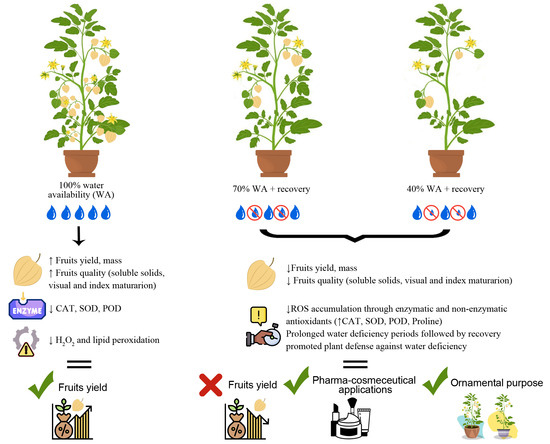
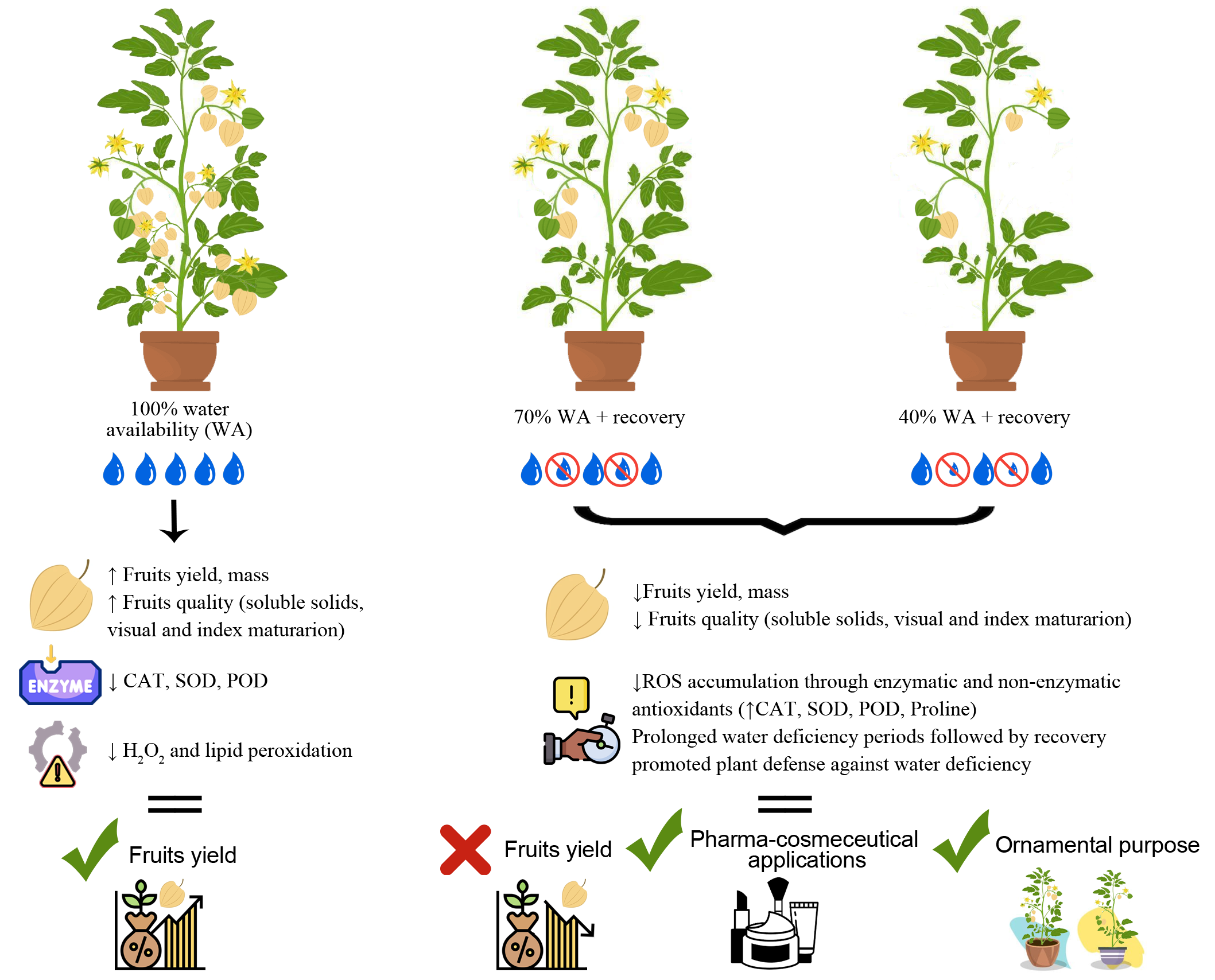
Graphical Abstract

1. Introduction

Physalis peruviana L. is native to South America and belongs to the Solanaceae family [1,2]. In recent years, its cultivation area has expanded in countries such as Brazil, Chile, Ecuador, and Peru because of its high commercial value and the presence of bioactive compounds [3,4,5].
In addition to its economic importance, physalis has long been recognized worldwide for its medicinal properties. Its leaves have been used against malaria, asthma, and hypertension; its stems have been used to relieve postpartum pain; fruit oil has been reported to promote wound healing; and beyond their nutritional value, the fruits have also been described as having diuretic and anti-inflammatory properties [6,7]. The fruits, known in English as physalis, goldenberry, or cape gooseberry [3], are also used in desserts and pastries in Brazil and can command a high market value.
Given the economic and medicinal importance of physalis, understanding how environmental stresses affect its production is essential. Abiotic factors such as temperature, light, CO2 concentration, and water availability can impair plant growth and development [5]. Among these factors, low water availability, also referred to as water deficit, is one of the main constraints affecting plants [8,9]. Although drought is a natural phenomenon associated with periods of low humidity and reduced precipitation [10,11], its intensity and frequency have increased due to anthropogenic activities [12]. In São Paulo State, Brazil, drought events have become more frequent and severe [11], which may negatively affect agricultural production [13]. More broadly, climate change has been recognized as a major threat to living organisms because it alters physiological and biological processes such as photosynthesis, respiration, transpiration, and enzymatic activity [14].
Under water deficit, plants commonly accumulate reactive oxygen species (ROS), which may lead to oxidative stress [15]. When stress intensity exceeds the antioxidant and cellular repair capacity, ROS accumulation can damage macromolecules and promote apoptosis and senescence [14]. However, several studies have reported increases in antioxidant compounds in vegetables under water deficit [16,17,18], suggesting the activation of protective mechanisms that help mitigate stress damage. One such strategy is drought priming, a preconditioning approach in which plants are exposed to a previous period of water stress [19]. This treatment can enhance tolerance to subsequent and more severe drought events through a phenomenon known as stress memory [20].
Importantly, rewatering after water stress may reverse some stress-induced impairments. For example, rewatering tomato (Solanum lycopersicum L.) plants after prolonged periods of water stress improved crop productivity, and the fruits showed high nutritional quality compared with those from plants maintained under only one water supply condition [21]. Despite these findings in other species, little is known about how water stress and subsequent recovery affect physalis physiology, fruit yield, and fruit quality.
Understanding stress responses and tolerance mechanisms is therefore essential for mitigating the effects of climate change on agriculture [14] and for developing improved cultivation practices, as demonstrated in cowpea (Vigna unguiculata (L.) Walp.) [22]. Because of the economic importance of physalis, such knowledge is particularly relevant. Given that plants were subjected to two consecutive drought–recovery cycles, we hypothesized that physalis plants, which are known for their high antioxidant content, may partially overcome water stress when subjected to rewatering periods, although fruit yield may depend on resource availability during the stress period. Therefore, this study aimed to evaluate the biochemical responses of physalis plants under different water availability regimes and subsequent recovery, as well as the resulting effects on fruit yield and fruit quality.

2. Materials and Methods

2.1. Experimental Conditions

The experiment was conducted at the Department of Biodiversity and Biostatistics, São Paulo State University (UNESP), in Botucatu, São Paulo, Brazil (22°53′09″ S, 48°26′42″ W), at an average altitude of 800 m. The plants were grown in a Van der Hoeven greenhouse equipped with a pad-and-fan cooling system under controlled temperature (27 ± 5 °C) and relative humidity (55 ± 10%) from March to July 2024.

2.2. Seedling Production, Plant Cultivation, and Crop Management

Seeds of Physalis peruviana L. cv. GoldenBerry were purchased from Feltrin Sementes Inc. and germinated in trays containing a commercial substrate (Carolina Soil®, Pardinho, Brazil). After 30 days, when the seedlings had reached approximately 15 cm in height, they were transplanted into individual 16 L plastic pots. Each pot was filled with 10 kg of dystroferric Red Latosol soil [23], and the soil pH was corrected to 5.5 using dolomitic limestone. Before fertilization, the soil used in the experiment was chemically characterized [23] as follows: pH = 4.4, organic matter = 7 g dm−3, P resin = 3 mg dm−3, Al3+ = 4 mmol dm−3, H + Al = 23 mmol dm−3, K = 0.3 mmol dm−3, Ca = 3 mmol dm−3, Mg = 1 mmol dm−3, cation exchange capacity = 28 mmol dm−3, V = 17%, S = 30 mg dm−3, B = 0.21 mg dm−3, Cu = 1 mg dm−3, Fe = 8 mg dm−3, Mn = 0.4 mg dm−3, and Zn = 0.7 mg dm−3.
Fertilization was performed according to the soil chemical analysis and based on the recommendations of the Agronomic Institute of Campinas (IAC) for tomato cultivation [24]. Other crop management practices, except pruning, were carried out according to recommendations reported by South American specialists in goldenberry cultivation [25,26,27].

2.3. Determination of Irrigation Levels, Treatment Application, and Experimental Design

Plant water consumption was determined according to the methodology described by Bonfim-Silva et al. [28]. The pots were weighed, irrigated with a known volume of water until saturation, and placed on perforated benches to allow excess water to drain. After 24 h, the pots were weighed again. The difference in weight was used to determine the soil field capacity (FC), and all pots were maintained at 100% FC for 30 days for acclimatization.
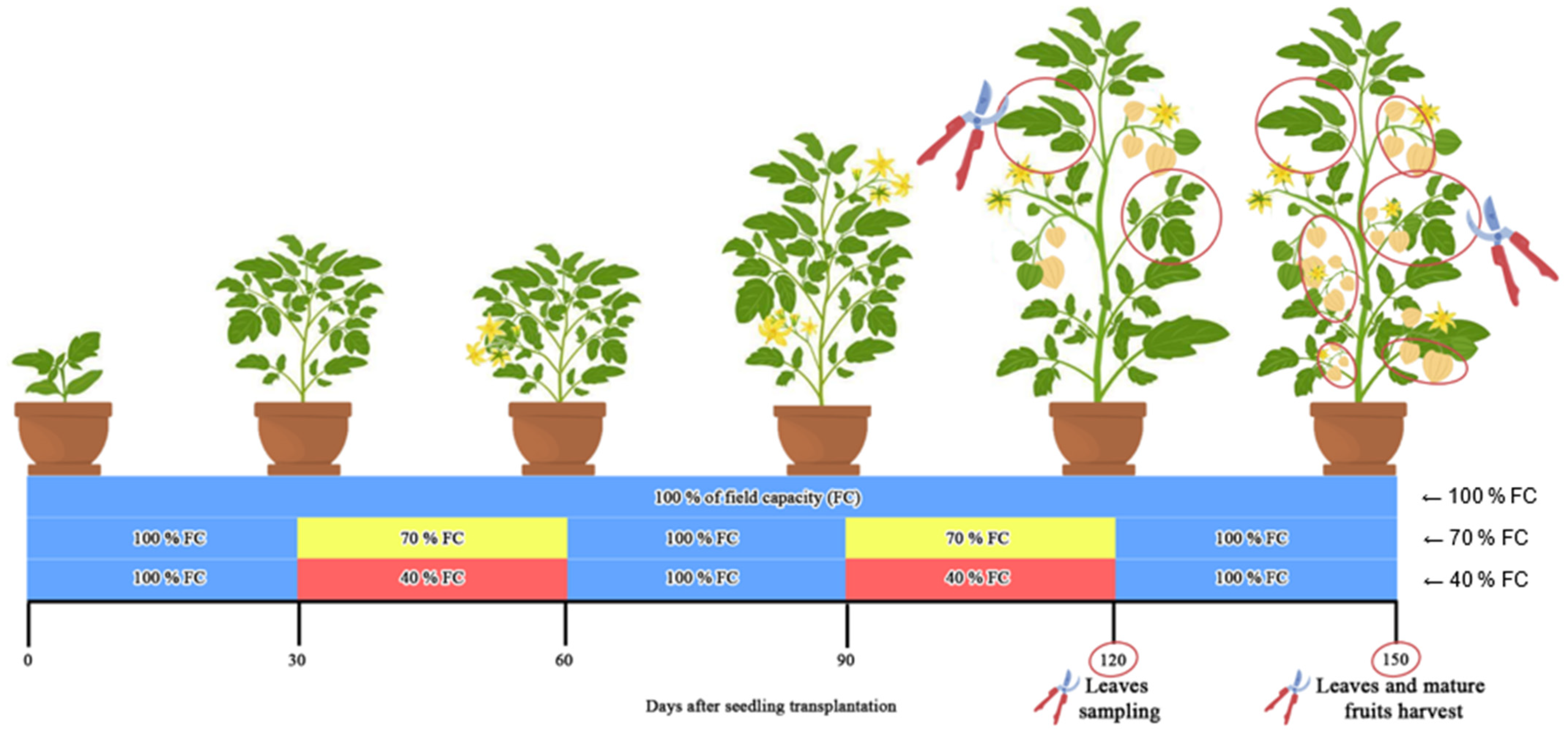
The treatments began after the acclimatization period, that is, at 30 days after seedling transplanting (DAST). The plants were then subjected to three water availability levels corresponding to 40, 70, and 100% FC for 30 days, followed by a 30-day recovery period in which all plants were maintained at 100% FC. This cycle was repeated once more, resulting in a second 30-day period under different water availability levels followed by a final 30-day recovery period (Figure 1). Thus, the plants were maintained under the experimental conditions for 120 days, totaling 150 days when the initial 30-day acclimatization period was included. All pots were weighed daily before irrigation to estimate evapotranspiration, and pot weight was corrected by subtracting the corresponding plant biomass.
The experiment was arranged in a randomized block design with three treatments (40, 70, and 100% FC), two plants per plot, and four blocks, totaling 24 plants. To assess the effects of treatment and time, the data were analyzed in a split-plot design, in which treatments were assigned to the main plots and sampling times to the subplots. The two evaluation times were: (i) after 30 days under different water availability levels (120 DAST), and (ii) during the recovery period (150 DAST). Healthy, mature leaves were collected from each pot at both time points.
At 150 DAST, fruits were harvested and analyzed. The fruits were collected at the commercial ripening stage, characterized by a golden-yellow calyx. Fruit evaluation was also conducted in a randomized block design using the same pre-harvest treatments (40, 70, and 100% FC), with five fruits per plot and five blocks, totaling 75 fruits.

2.4. Variables Analyzed

2.4.1. Activities of Catalase (CAT, EC 1.11.1.6), Peroxidase (POD, EC 1.11.1.7), and Superoxide Dismutase (SOD, EC 1.15.1.1)

Enzyme extracts were prepared according to Kar and Mishra [29] using 100 mg of fresh leaf tissue that had been frozen and ground. The samples were homogenized in 0.1 M potassium phosphate buffer (pH 6.8) and then centrifuged (Eppendorf®, model 5430, Hamburg, Germany) at 10,000× g at 4 °C. The specific activities of the antioxidant enzymes were determined after the quantification of soluble proteins in each extract according to Bradford [30], using casein as the standard.
CAT activity was determined according to Peixoto et al. [31]. The reaction mixture consisted of enzyme extract, 50 mM sodium phosphate buffer (pH 7.0), and 12.5 mM hydrogen peroxide. Absorbance was measured (BEL Engineering®, model UV–VIS M51, Monza, Italy) at 240 nm every 20 s for 1 min to monitor hydrogen peroxide consumption. One unit of CAT activity was defined as the amount of enzyme required to degrade 1 μmol of H2O2 min−1 mg−1 protein. Calculations were based on the molar extinction coefficient of hydrogen peroxide (39.4 mmol L−1 cm−1).
POD activity was determined according to Teisseire and Guy [32]. The reaction mixture contained enzyme extract, 50 mM potassium phosphate buffer (pH 6.5), 20 mM pyrogallol, and 5 mM hydrogen peroxide. The mixture was briefly shaken and allowed to react for 5 min. Absorbance was then measured at 430 nm using a spectrophotometer (BEL Engineering®, model UV–VIS M51, Monza, Italy). Calculations were performed using the molar extinction coefficient of purpurogallin (2.5 mmol L−1 cm−1). Enzyme activity was expressed as μmol of purpurogallin min−1 mg−1 protein.
SOD activity was determined according to Beauchamp and Fridovich [33]. The reaction mixture consisted of enzyme extract, 50 mM sodium phosphate buffer (pH 7.8), nitroblue tetrazolium (NBT), disodium ethylenediaminetetraacetic acid, methionine, and riboflavin. The reaction was carried out in the presence of light for 5 min at room temperature, after which absorbance was measured (BEL Engineering®, model UV–VIS M51, Monza, Italy) at 560 nm. Activity was expressed in enzymatic units (U), where one unit of SOD activity was defined as the amount of enzyme required to inhibit NBT photoreduction by 50% under the assay conditions, expressed as U mg−1 protein.

2.4.2. Foliar Pigments

Foliar pigments were extracted from 50 mg of fresh leaf samples that had been frozen and ground, according to Sims and Gamon [34]. The extraction solution consisted of 20% 0.2 M Tris-HCl buffer (pH 7.8) and 80% acetone. The samples were homogenized with 3 mL of the extraction solution and kept frozen for 1 h with intermittent vortexing (Labnet®, model VX-100, Woodbridge, NJ, USA). After this period, the samples were centrifuged (Eppendorf®, model 5430, Germany) at 1000× g for 5 min at 4 °C. The absorbance of the supernatant was measured (BEL Engineering®, model UV–VIS M51, Monza, Italy) at 663 nm for chlorophyll a, 647 nm for chlorophyll b, 537 nm for anthocyanins, and 470 nm for carotenoids. The results were expressed as μmol of pigment g−1 fresh mass.

2.4.3. Hydrogen Peroxide Concentration

Hydrogen peroxide (H2O2) concentration in the leaves was determined according to Alexieva et al. [35]. For the analysis, 100 mg of fresh leaf tissue that had been frozen and ground was used. The samples were extracted with 1 mL of 0.1% trichloroacetic acid and then centrifuged (Eppendorf®, model 5430, Hamburg, Germany) at 16,000× g for 15 min at 4 °C. The collected supernatant was mixed with 0.1 M phosphate buffer (pH 7.0) and 1 M potassium iodide, followed by incubation in the dark for 1 h. Absorbance was then measured at 390 nm using a spectrophotometer (BEL Engineering®, model UV–VIS M51, Monza, Italy). The results were expressed as μmol H2O2 g−1 fresh mass.

2.4.4. Lipid Peroxidation

Lipid peroxidation was determined according to Devi et al. [36] using 100 mg of fresh leaf tissue that had been frozen and ground. The samples were mixed with thiobarbituric acid and trichloroacetic acid at final concentrations of 0.25% and 10%, respectively. The mixture was incubated in a water bath (Tecnal®, model TE-054/1-MAG, Piracicaba, Brazil) at 90 °C for 1 h. The samples were then centrifuged (Eppendorf®, model 5430, Hamburg, Germany) at 10,000× g for 15 min at room temperature, and the absorbance of the supernatant was measured at 560 and 600 nm using a spectrophotometer (BEL Engineering®, model UV–VIS M51, Monza, Italy). The results were expressed as nmol of malondialdehyde (MDA) g−1 fresh mass.

2.4.5. Proline Quantification

Proline content was determined according to Bates et al. [37] using 100 mg of fresh leaf tissue that had been frozen and ground. The samples were extracted with 3% sulfosalicylic acid and centrifuged (Eppendorf®, model 5430, Hamburg, Germany) at 11,200× g for 5 min. The reaction mixture, composed of the supernatant, glacial acetic acid, and acid ninhydrin, was incubated in a water bath (Tecnal®, model TE-054/1-MAG, Piracicaba, Brazil) at 85 °C for 1 h. The mixture was then extracted with toluene, and after vortexing (Labnet®, model VX-100, Woodbridge, NJ, USA), absorbance was measured (BEL Engineering®, model UV–VIS M51, Monza, Italy) at 520 nm. The results were expressed as μmol proline g−1 fresh mass, based on a proline standard curve.

2.4.6. Total Phenolic Content

Total phenolic compounds were extracted and quantified according to Singleton et al. [38]. The extraction was performed using 100 mg of fresh leaf tissue that had been frozen and ground, with 50% (v/v) acetone, followed by sonication for 20 min in an ultrasonic bath (Solid Steel®, model SSBu, Piracicaba, Brazil). The samples were then centrifuged (Eppendorf®, model 5430, Hamburg, Germany) at 2800× g for 10 min, and the supernatant was collected. An additional 5 mL of 50% acetone was added to the remaining pellet, followed by a second 20 min sonication step. The supernatants were then combined.
The reaction mixture consisted of 0.5 mL of extract, 0.5 mL of distilled water, 0.5 mL of diluted Folin reagent (1:4), and 2.5 mL of 4% Na2CO3 solution. After vortexing (Labnet®, model VX-100, Woodbridge, NJ, USA), the reaction was allowed to proceed in the dark for 1 h, and absorbance was measured (BEL Engineering®, model UV–VIS M51, Monza, Italy) at 725 nm. Quantification was based on a gallic acid standard curve (μg mL−1), and the results were expressed as μg of total phenolic compounds mL−1 fresh mass.

2.4.7. Total Soluble Sugar Content

Total soluble sugars were extracted according to Garcia et al. [39]. Leaf samples were ground in liquid nitrogen, and 100 mg of tissue was used for the analysis. Then, 1 mL of 80% ethanol was added, the samples were vortexed (Labnet®, model VX-100, Woodbridge, NJ, USA), and incubated in a water bath at 80 °C for 5 min to inactivate enzymes. Subsequently, the samples were centrifuged (Eppendorf®, model 5430, Hamburg, Germany) at 1000× g and 25 °C for 5 min. The residue was re-extracted twice with 80% ethanol under the same conditions. The combined supernatants constituted the total soluble sugar fraction.
The concentration of total soluble sugars in the extracts was determined colorimetrically by the phenol-sulfuric acid method [40], with absorbance measured (BEL Engineering®, model UV–VIS M51, Monza, Italy) at 490 nm. Quantification was based on a glucose standard curve, and the results were expressed as mg g−1 fresh mass.

2.4.8. Fruit Analysis

At 150 DAST, all mature fruits displaying a golden-yellow calyx were harvested, counted, and weighed (g, BEL Engineering®, model M214A, Monza, Italy), and fruit yield was determined as grams of fruits with calyx per plant (g plant−1).
Then, 25 fruits from each treatment were selected, and their calyces were removed. Only orange fruits at the commercial ripening stage were evaluated. The fruits were distributed into five blocks, with five fruits per block. Ascorbic acid content was determined according to the Association of Official Analytical Chemists [41]. A 10 mL aliquot of homogenized juice extract was diluted with 100 mL of 3% metaphosphoric acid and filtered. Next, 5 mL of the filtrate was titrated with 2,6-dichlorophenolindophenol. The results were expressed as mg of ascorbic acid per 100 g of fresh mass, and quantification was based on a standard curve.
Soluble solids (°Brix) were measured using a digital refractometer (ATAGO®, model PAL-α, Tokyo, Japan) with three drops of pulp juice [41]. Titratable acidity was determined using 5 g of fruit extract diluted in 50 mL of deionized water and titrated with a standard 0.1 M NaOH solution, using phenolphthalein as an indicator [41]. The results were expressed as g of citric acid per 100 g of fresh mass. The maturity index was calculated as the ratio between soluble solids and titratable acidity.

2.5. Statistical Analysis

The data were tested for normality (Kolmogorov–Smirnov), homogeneity of variances (Levene), and outliers (Grubbs) using Minitab® software, version 18 [42]. Analysis of variance (ANOVA) was performed using the F-test. When significant differences were found, treatment means were compared using Tukey’s test at the 5% significance level in R® software, version 4.4.3 [43]. Graphs were generated using SigmaPlot® software, version 14 [44].

3. Results and Discussion

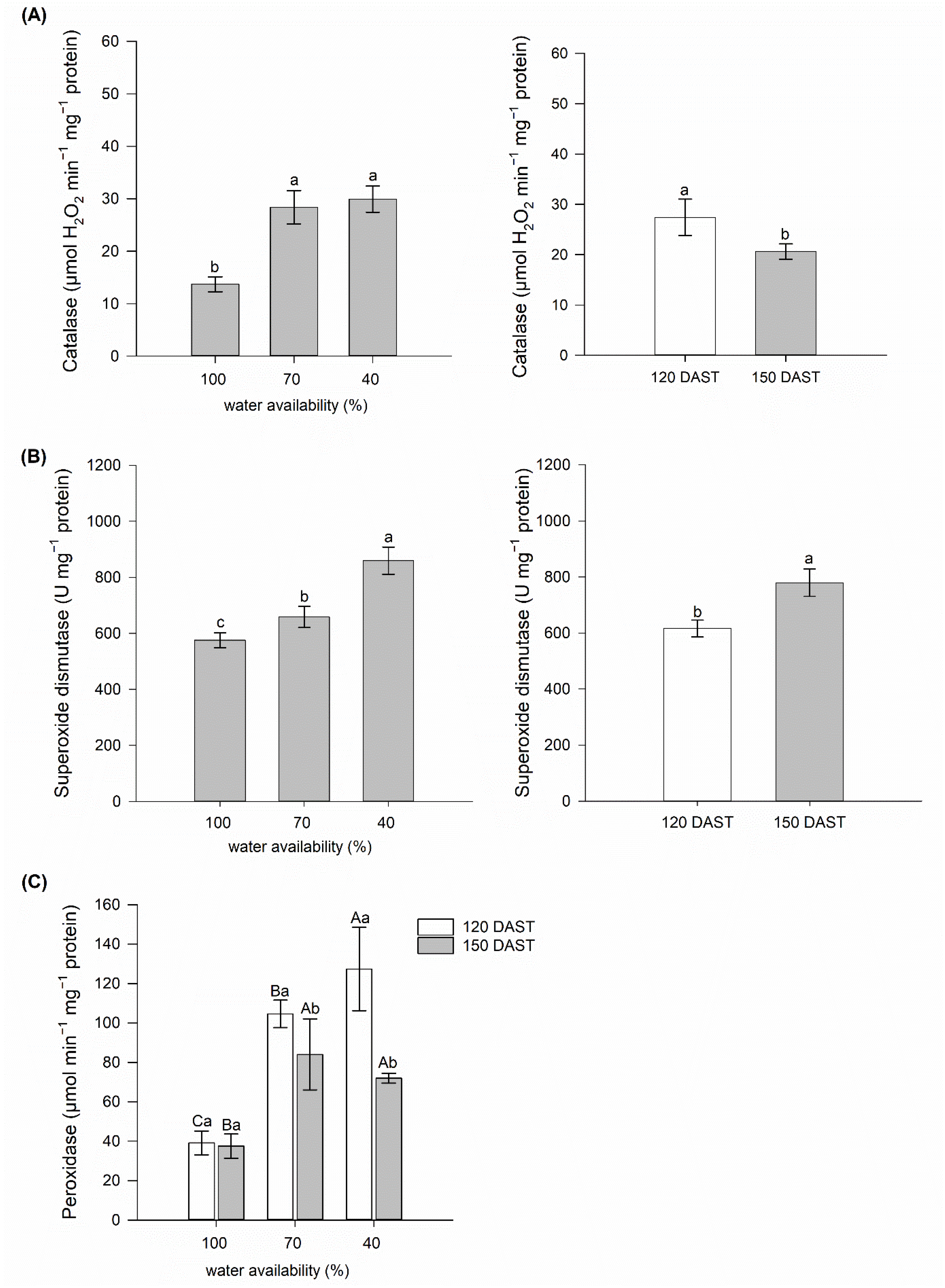
For catalase (CAT) activity, a significant main effect of both treatment and evaluation period was observed (Table 1). CAT activity was higher at 120 DAST than at 150 DAST (Figure 2A). This reduction after rehydration suggests that ROS production decreased substantially when plants were returned to full irrigation, thereby reducing the demand for antioxidant activity [18]. Plants maintained at 100% field capacity (FC) showed lower CAT activity than those subjected to water deficit (Figure 2A). Notably, although rehydration reduced CAT activity in stressed plants (70% and 40% FC), the values remained numerically higher than in the control treatment at 150 DAST, indicating a persistent antioxidant response even after 30 days of recovery. Similar results were reported in tomato plants subjected to different irrigation regimes, in which fully irrigated plants also showed lower CAT activity than drought- and rewatering-treated plants [18]. Because CAT catalyzes the conversion of hydrogen peroxide (H2O2) into water and oxygen [45], the higher activity observed in plants under 70% and 40% FC suggests greater ROS accumulation in physalis leaves. This result was expected, as CAT, like other antioxidant enzymes, contributes to the detoxification of ROS and helps counteract oxidative damage [46,47].
For superoxide dismutase (SOD) activity, a significant main effect of treatment and evaluation period was also observed (Table 1). In contrast to CAT and POD, SOD activity increased significantly after rehydration (150 DAST) compared with the stress period (120 DAST) (Figure 2B). Plants maintained at 100% FC showed the lowest values, whereas those under 40% FC showed the highest SOD activity (Figure 2B). The increase in SOD activity after rehydration across all treatments may indicate a specific upregulation of this enzyme during recovery, possibly in response to a burst of superoxide radicals generated during the transition from stress to rehydration, a phenomenon associated with oxidative stress upon rewatering. Plants under 40% FC were likely exposed to more severe water deficit, since low plant water status under severe soil water restriction may lead to an imbalance between ROS production and scavenging, including hydrogen peroxide (H2O2) and superoxide ( O 2 ) [48]. Because SOD is a class of metalloenzymes that catalyzes the dismutation of O 2 into oxygen and H2O2 [49], the higher SOD activity observed under water deficit is consistent with increased oxidative pressure in plant tissues. The persistence of high SOD activity after rehydration suggests that 30 days of recovery were insufficient to fully restore redox homeostasis, particularly under 40% FC. Similarly, Toscano et al. [47] observed increased SOD activity in Photinia × fraseri Dress ‘Red Robin’ under severe drought. In addition, Vicia faba L. plants subjected to deficit irrigation (60% of crop evapotranspiration, ETc) also showed higher SOD activity than control plants maintained at 100% ETc [46].
A significant interaction between treatment and evaluation period was observed for peroxidase (POD) activity (Table 1). Plants maintained at 100% FC showed no difference between 120 and 150 DAST and exhibited the lowest POD activity throughout the experiment (Figure 2C). Plants under 40% FC showed the highest POD activity at 120 DAST, followed by those under 70% FC (Figure 2C), with mean values of 127.33 and 104.57 μmol purpurogallin min−1 mg−1 protein, respectively. Rehydration at 150 DAST significantly reduced POD activity in both stressed treatments, although the values remained higher than in the control (Figure 2C). This partial recovery suggests that although ROS generation declined after rewatering, some oxidative pressure may have persisted, possibly because of residual H2O2 or cellular damage acquired during the stress period. These results indicate that the response of physalis plants depends on the level of water availability, a pattern also reported in tomato plants subjected to drought and rewatering regimes [18]. POD catalyzes the reduction of H2O2 and organic hydroperoxides to water or the corresponding alcohols [45], sharing H2O2 as a substrate with CAT. However, CAT has a higher Km and therefore acts preferentially at higher H2O2 concentrations, whereas POD can operate at lower concentrations. In addition, CAT is mainly localized in peroxisomes, whereas POD is found in chloroplasts, peroxisomes, mitochondria, the cytosol, and the apoplast [50]. Taken together, these findings support the interpretation that ROS accumulation increased as water availability decreased. Although the recovery period reduced POD activity, the enzyme remained more active in previously stressed plants than in the control treatment (Figure 2C). During the stress period, lower SOD activity combined with higher CAT and POD activity may indicate that photorespiration contributed to excess energy dissipation while also promoting H2O2 production. During recovery, the increase in SOD activity may reflect the greater formation of superoxide-derived oxidative intermediates in the leaves, possibly associated with limitations in photosynthetic electron transport or Calvin cycle activity.
Plants under 70% and 40% FC showed higher CAT, SOD, and POD activities than control plants maintained at 100% FC, confirming that water availability affects the antioxidant metabolism of physalis. Because these enzymatic antioxidants are known to limit oxidative damage [51], their increased activity during the water stress period suggests enhanced ROS production in leaf tissues. These findings are consistent with previous results showing increased antioxidant enzyme activity in drought-stressed physalis plants, whether inoculated or not with arbuscular mycorrhizal fungi [49].
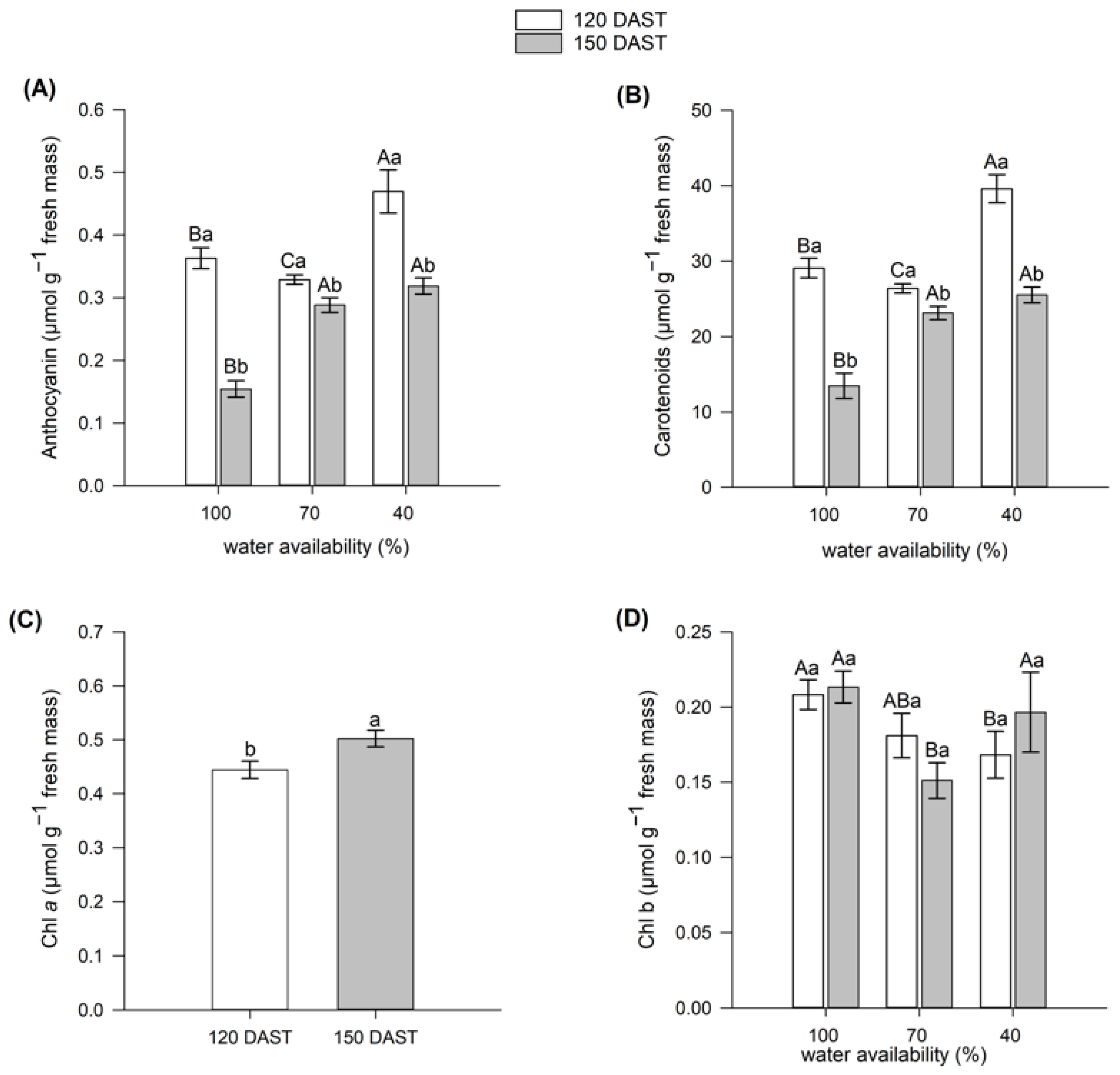
A significant interaction between treatment and evaluation period was observed for anthocyanin and carotenoid contents (Table 1). Overall, plants evaluated at 120 DAST showed higher anthocyanin levels than those evaluated at 150 DAST, with the highest values observed under 40% field capacity (FC) (Figure 3A). A similar pattern was found for carotenoid content (Figure 3B). Anthocyanins and carotenoids play important roles in protection against oxidative stress, as they can quench singlet oxygen and react with free radicals [52,53]. Therefore, the increase in these pigments under water deficit may represent a protective response that helps limit excessive ROS accumulation and dissipate excess energy, thereby contributing to drought tolerance [53].
For chlorophyll a (Chl a), only the evaluation period had a significant effect, whereas for chlorophyll b (Chl b), there was a significant interaction between the treatment and evaluation period (Table 1). No significant differences among treatments were observed for Chl a (Figure 3C). However, lower Chl a levels were recorded at 120 DAST, that is, after the stress period (Figure 3C). Likewise, plants under 40% FC showed lower Chl b content at the same evaluation time (Figure 3D). These results indicate a reduction in chlorophyll content under more severe water deficit, as previously reported by Deveci and Celik [54]. According to previous studies [54,55], this decline in chlorophyll may contribute to the survival of severely stressed plants by reducing photon absorption by the leaves, thereby enhancing photoprotective and antioxidant capacity.
In the present study, an inverse relationship was observed between chlorophyll content and carotenoid/anthocyanin accumulation. The increase in anthocyanins and carotenoids may represent a protective mechanism against ROS accumulation [17,56], whereas the reduction in Chl a and Chl b may be associated with the reallocation of photoassimilates to maintain plant homeostasis under stress. After rehydration, Chl a and Chl b levels partially recovered (Figure 3C,D), although they did not return to control levels in previously stressed plants. This incomplete recovery suggests that chloroplast integrity may have been affected during the 30-day water deficit period and that 30 days of rewatering were insufficient to fully restore photosynthetic capacity.
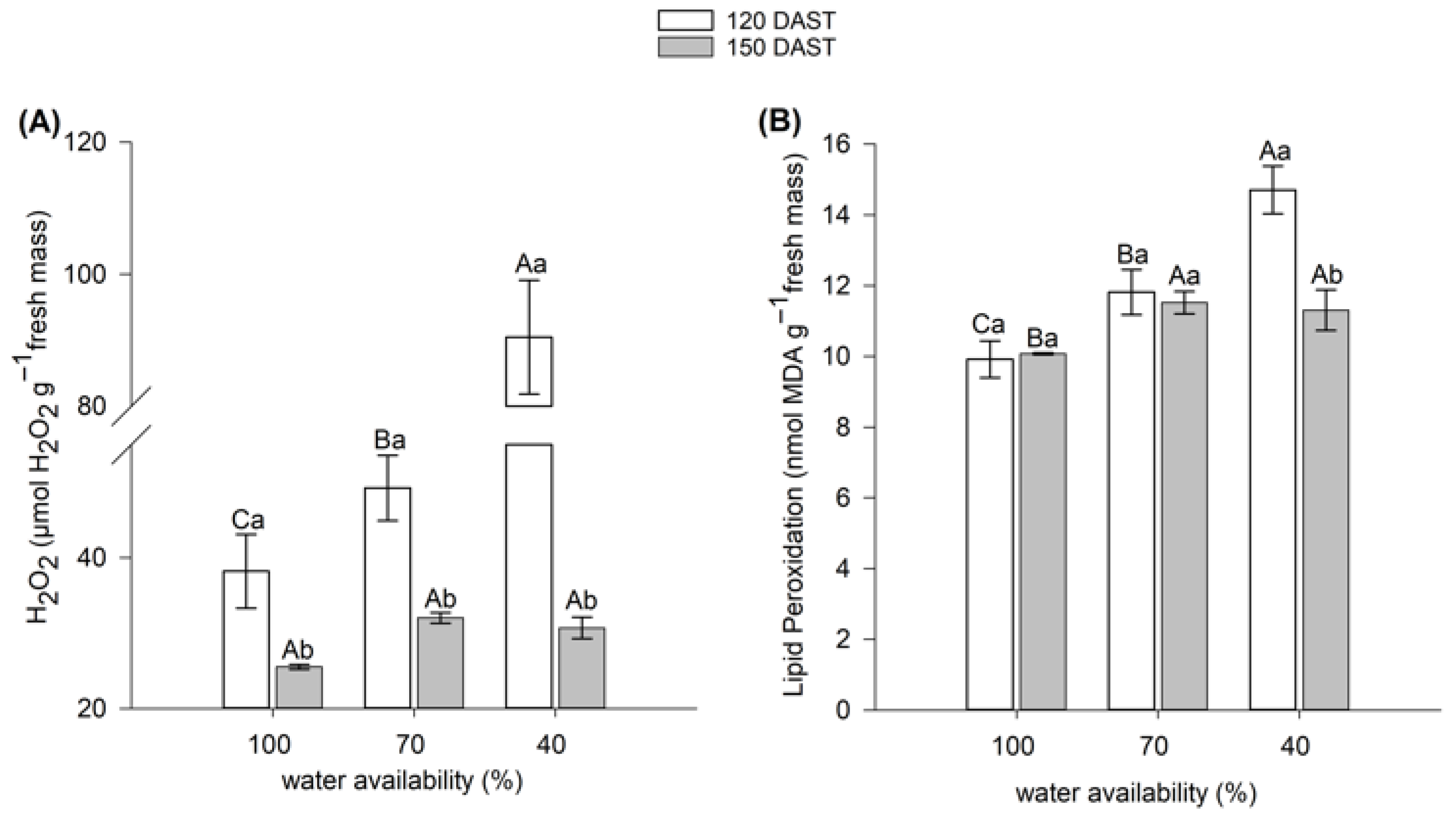
A significant interaction between treatment and evaluation period was observed for H2O2 concentration and lipid peroxidation (Table 1). Rehydration at 150 DAST significantly reduced the H2O2 concentration in previously stressed plants (40% and 70% FC), indicating that ROS generation declined after the restoration of full irrigation (Figure 4A). In contrast, lipid peroxidation (MDA) remained higher in these treatments than in the control (Figure 4B), suggesting that although ROS production decreased during recovery, oxidative damage accumulated during the stress period was not fully reversed within 30 days. This persistent membrane damage may partially explain the sustained activity of some antioxidant enzymes and the reduced fruit quality observed in these treatments. Similar decreases in H2O2 after recovery have been reported in rice (Oryza sativa L.) subjected to drought stress [57]. Because ROS overproduction during dehydration primarily targets membrane lipids, it promotes oxidative damage [48,57]. Likewise, Moles et al. [48] reported a positive relationship between H2O2 concentration and lipid peroxidation in two tomato genotypes exposed to 20 days of water deficit.
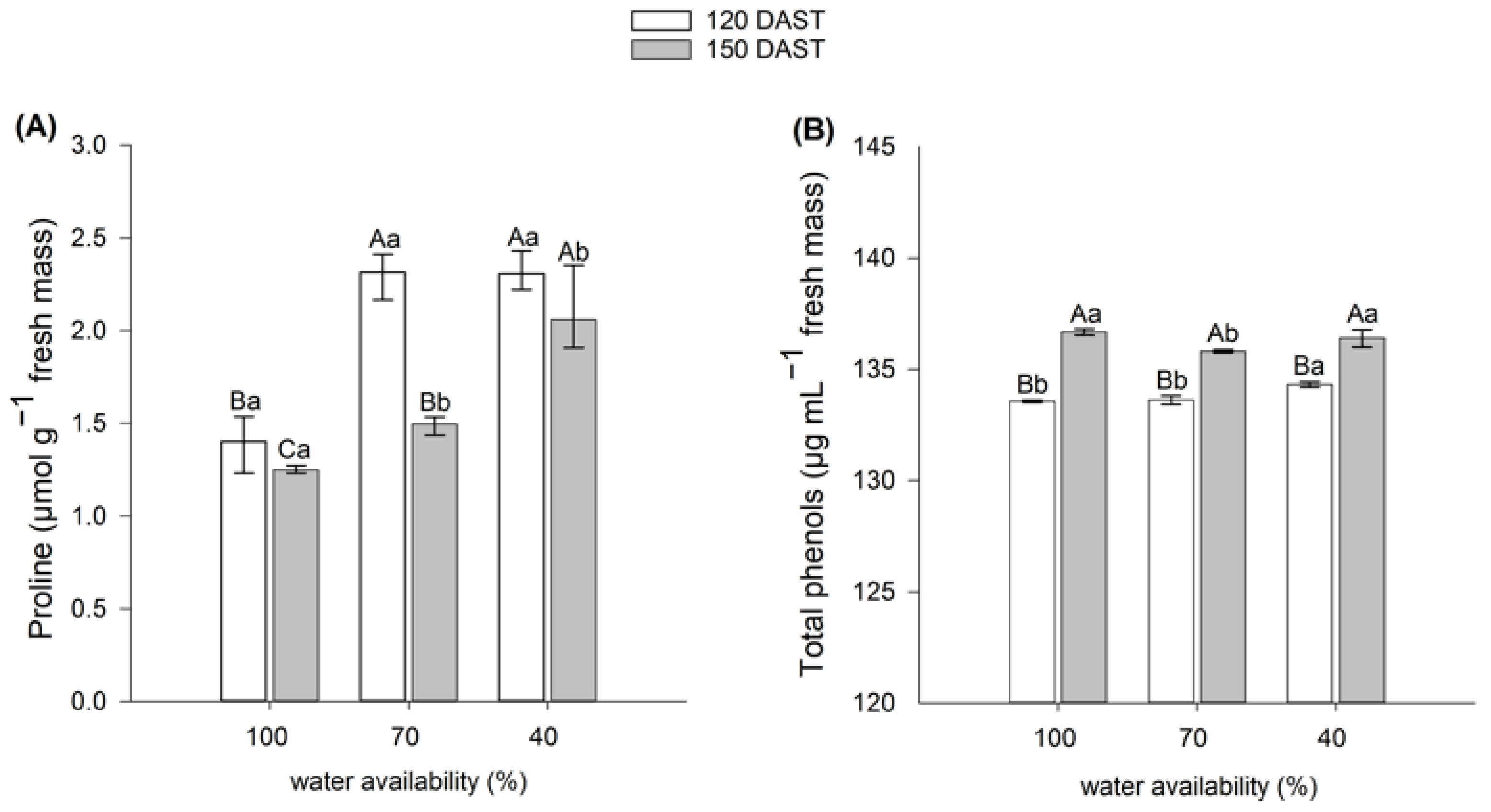
A significant interaction between the treatment and evaluation period was observed for proline concentration (Table 1). Plants maintained at 100% field capacity (FC) showed lower proline levels than those subjected to water deficit (Figure 5A). Proline concentration was higher in plants under 70% and 40% FC at 120 DAST than at 150 DAST (Figure 5A). Notably, plants under 40% FC still showed elevated proline levels even after the recovery period. Because proline is a well-known osmoprotective metabolite associated with water stress tolerance [58,59], these results suggest that plants under 70% and 40% FC responded to water deficit by increasing proline accumulation. Similarly, Geneva et al. [49] reported increased proline levels in drought-stressed physalis plants not inoculated with arbuscular mycorrhizal fungi, and similar responses have also been described in other species subjected to water stress [18,47].
A significant interaction between treatment and evaluation period was also observed for total phenolic content (Table 1). In contrast to the other antioxidants, the total phenolic content was higher at 150 DAST than at 120 DAST across all treatments (Figure 5B). This increase after rehydration suggests that phenolic compounds may play a distinct role during recovery, possibly acting as longer-term scavengers of residual ROS or as precursors for lignin synthesis involved in reinforcing cell walls affected by drought [60]. It is well-established that the increased synthesis of antioxidant system components, including non-enzymatic compounds, can reduce oxidative damage and contribute to drought tolerance because of their free radical-scavenging activity [59,60]. In the present study, the higher phenolic content observed at 150 DAST suggests that physalis plants increased the synthesis of non-enzymatic antioxidants during recovery, possibly in response to the persistent lipid peroxidation observed after water stress. This response may also help explain the reduction in CAT and POD activities after rehydration.
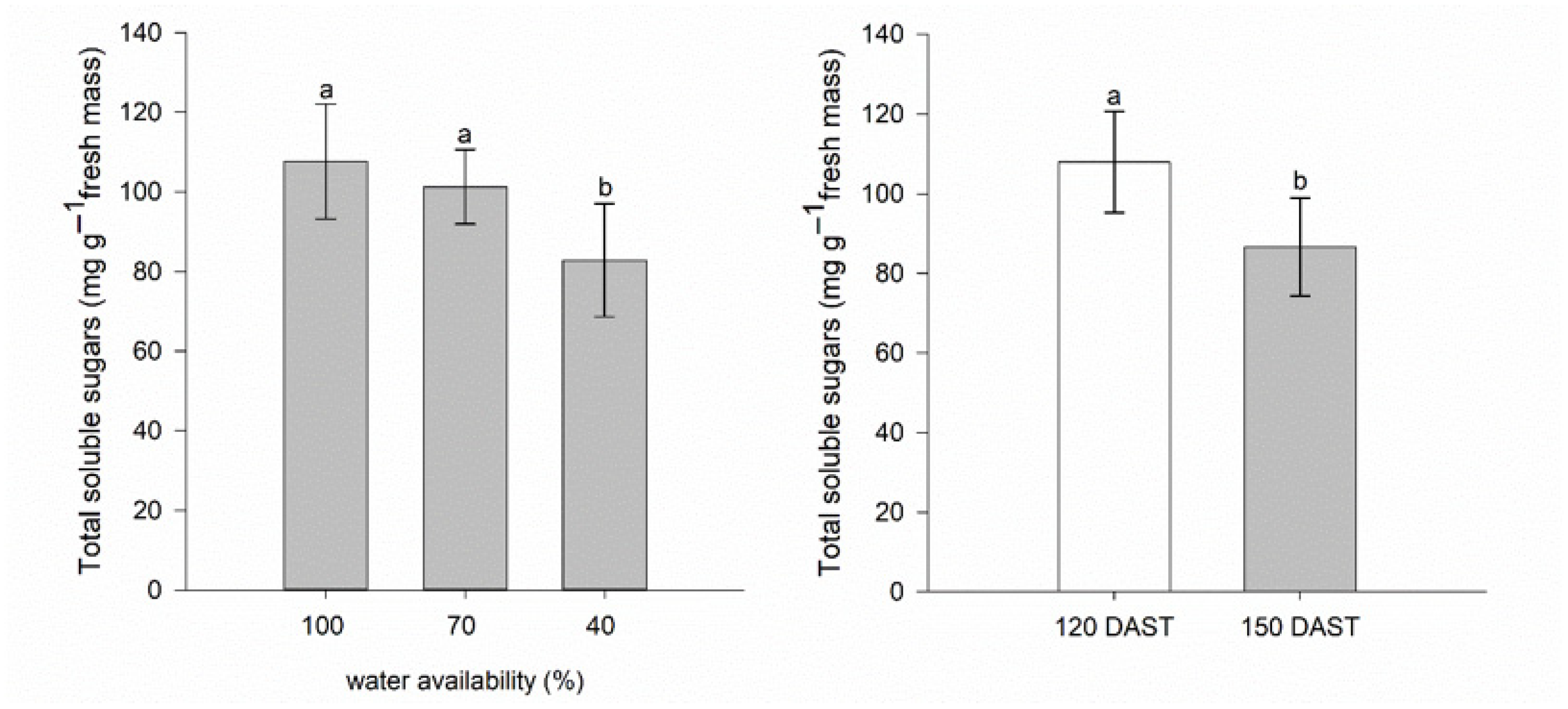
For total soluble sugar content, significant main effects of treatment and evaluation period were observed (Table 1). Plants maintained at 40% field capacity (FC) showed lower sugar content than the other treatments (Figure 6). Soluble sugars act as osmotic regulators [57] and play an important role in maintaining plant water status under drought, thereby helping sustain growth and yield [61]. The decline in total soluble sugars at 150 DAST compared with 120 DAST (Figure 6) is consistent with the restoration of normal growth and fruit development after rewatering, as photoassimilates may have been redirected from osmotic adjustment to reproductive processes. This interpretation is supported by the reduction in fruit yield observed under this treatment (Figure 7C). In general, physalis leaves showed higher total soluble sugar content at 120 DAST than at 150 DAST (Figure 6), which may be related to plant phenological stage and photoassimilate translocation. Similarly, Wang et al. [57] reported a decline in soluble sugar content after irrigation restoration in drought-stressed rice plants.
Our results also suggest that because plants exposed to lower water availability showed an increased synthesis of carotenoids, anthocyanins, total phenolic compounds, and proline, photoassimilates may have been preferentially allocated to the synthesis of protective compounds rather than to carbohydrate accumulation, particularly under 40% FC.
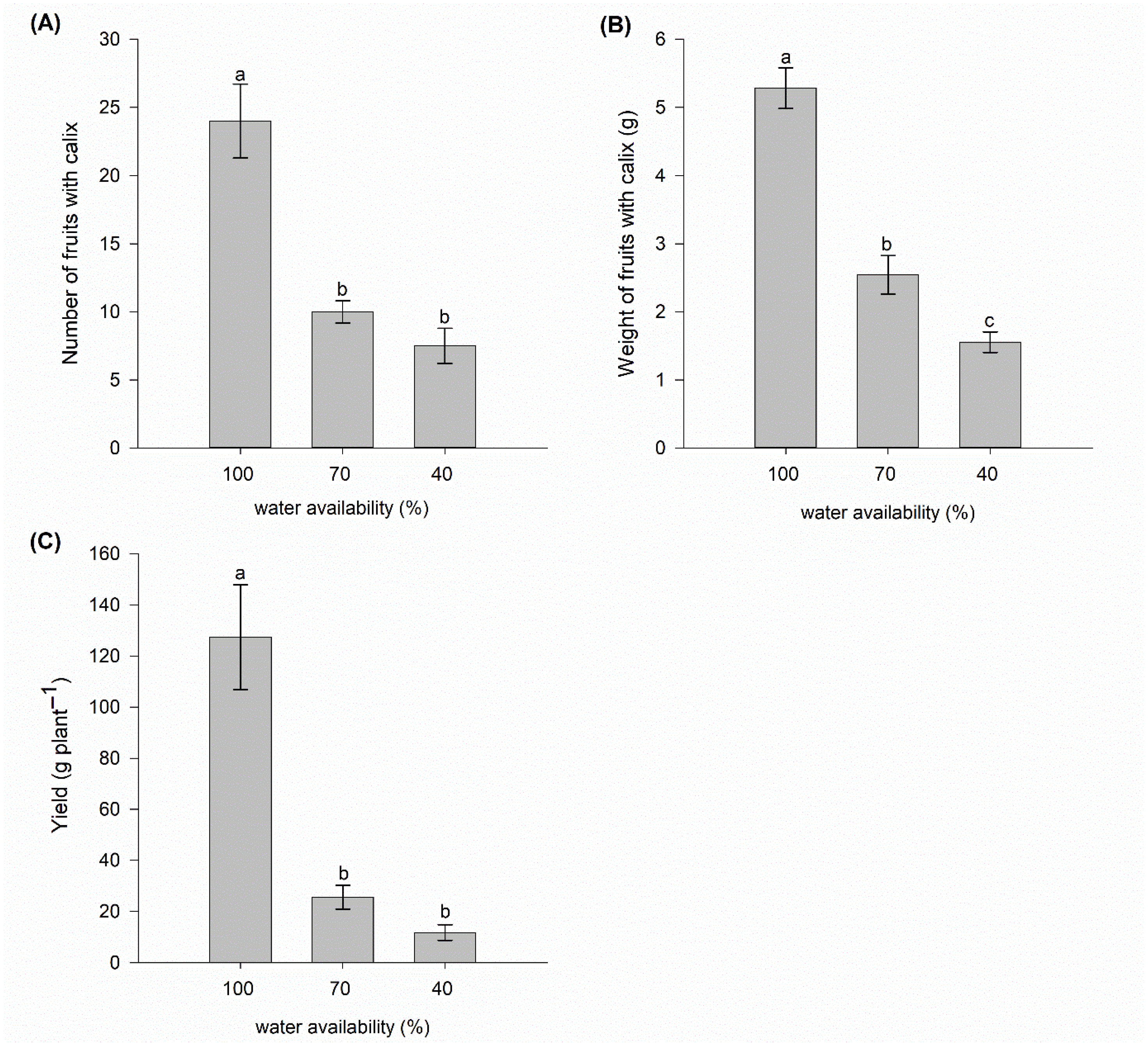
A significant treatment effect was observed for fruit number, fruit weight, and yield (Table 1). Plants maintained at 100% field capacity (FC) produced a greater number of fruits with higher fresh mass than the other treatments (Figure 7A,B). Although no difference in fruit number was observed between the 70% and 40% FC treatments, fruits from plants under 70% FC were heavier than those from plants under 40% FC (Figure 7A,B). However, both water-deficit treatments showed mean fruit weights below 4 g, which is the minimum value indicated for commercialization [62]. These results further suggest that under water deficit, photoassimilates may have been preferentially allocated to defense and stress-response mechanisms rather than to fruit development.
Collectively, the yield and fruit-quality data show that although rehydration reversed several biochemical stress markers, including H2O2, CAT, POD, proline, and pigment levels, it did not restore fruit yield or commercial fruit quality in plants previously subjected to 70% and 40% FC. This finding suggests the existence of a critical threshold, whereby a 30-day water deficit period may have caused damage to reproductive development that could not be reversed within 30 days of recovery.
The highest yield was observed in plants maintained at 100% FC (Figure 7C), although yield was assessed based on a single harvest at 150 DAST. Water stress is known to negatively affect crop productivity [15], and pre-harvest water deficit can reduce yield in fruit crops [63]. In the present study, plants subjected to 70% and 40% FC showed reduced fruit yield, and the subsequent rewatering period was not sufficient to offset the negative effects of water limitation under the soil conditions used. Similarly, Patanè et al. [21] reported reduced yield in tomato plants subjected to drought, including those that were rewatered afterwards. However, in that study, some fruits still reached commercial standards. In the present study, it is possible that the 30-day stress period, combined with the soil conditions used, imposed a level of stress that was too severe to be fully compensated by 30 days of recovery.
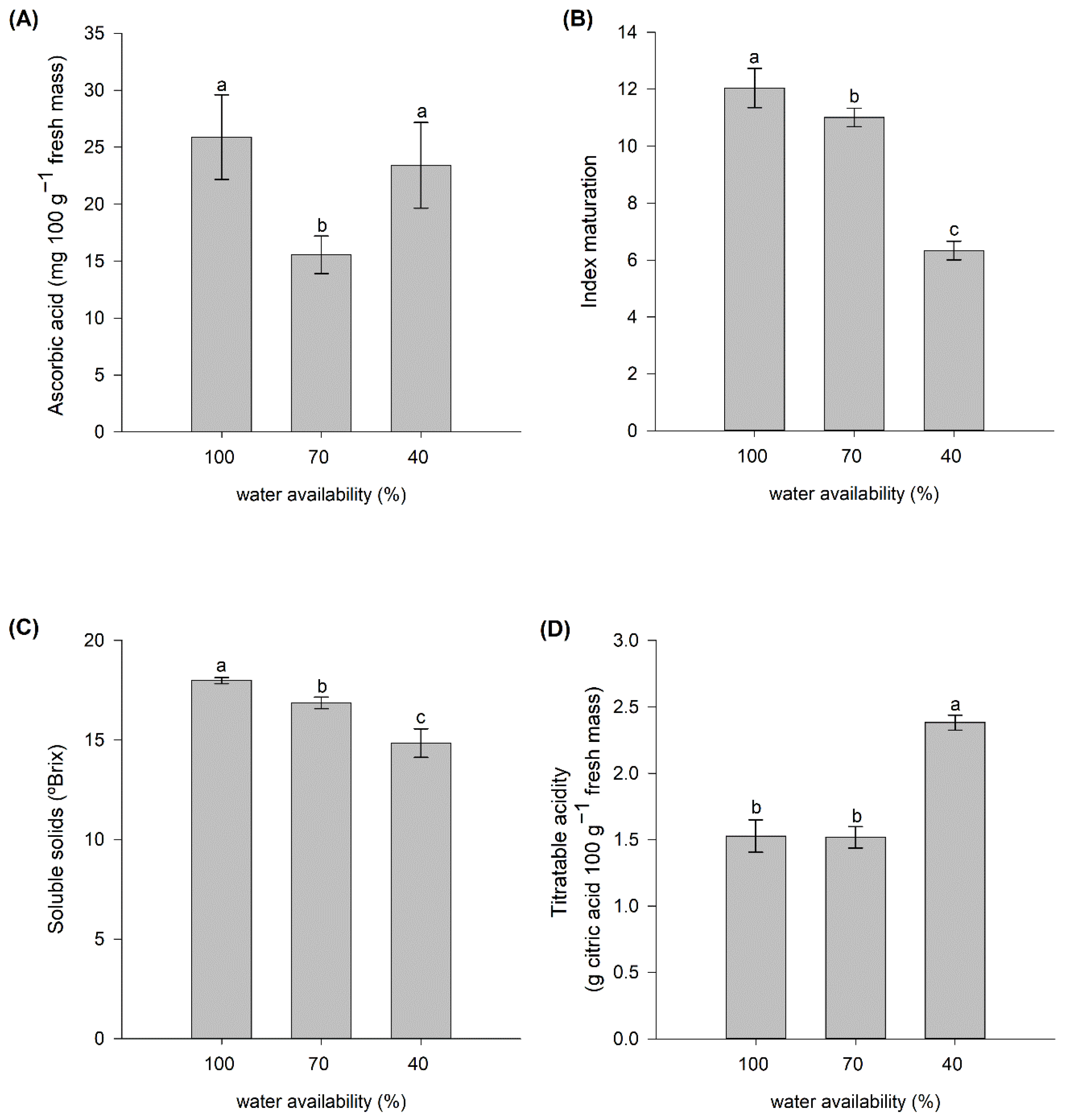
A significant treatment effect was observed for ascorbic acid content, maturity index, soluble solids, and titratable acidity (Table 1). Fruits from plants maintained at 40% field capacity (FC) showed ascorbic acid levels similar to those of fruits from plants maintained at 100% FC (Figure 8A). This result may indicate the activation of antioxidant defense mechanisms under severe water stress, with increased accumulation of compounds such as ascorbic acid, contributing to ROS scavenging. Similar responses have been reported in tomato fruits subjected to water stress [16,17]. However, this antioxidant response appears to occur at the expense of crop productivity, since water-stressed plants produced fewer fruits with lower fresh mass, and fruits from the 40% FC treatment remained below the minimum commercial weight threshold.
The maturity index was highest in fruits from plants maintained at 100% FC, followed by those under 70% FC and 40% FC, with mean values of 12.04, 11.00, and 6.33, respectively (Figure 8B). These results indicate that water availability strongly influences fruit quality, with higher water availability favoring fruit maturation, as also reported by Barbosa et al. [64]. Likewise, fruits from plants maintained at 100% FC showed the highest total soluble solid (TSS) content (17.98 °Brix), followed by fruits from plants under 70% FC and 40% FC, which showed mean values of 16.86 and 14.84 °Brix, respectively (Figure 8C). A similar pattern has been reported in physalis plants subjected to different irrigation regimes and calcium nutrition [65], as well as in plants grown with or without mulching under water stress [64]. Although the TSS values decreased under water deficit, the values observed in the present study remained within the range reported for physalis fruits cultivated in Argentina, Brazil, and Colombia [64,65,66]. According to Duan et al. [67], water stress may increase the sucrose phosphate synthase activity, which may enhance the sucrose concentration gradient between leaves and fruits and favor photoassimilate transport to the fruits [65]. This mechanism may help explain why fruits from stressed plants still maintained relatively high TSS values, although lower than those of the control treatment.
Fruits from plants maintained at 40% FC showed the highest titratable acidity (TA) among all treatments (Figure 8D). Thus, lower water availability was associated with higher TA values, a pattern also reported by Álvarez-Herrera et al. [65]. In addition, the expected inverse relationship between soluble solids and titratable acidity was also observed, as previously described for physalis fruits under different water availability conditions [64].
Taken together, the fruit-quality data reveal a complex response to rehydration. Although ascorbic acid content, an important non-enzymatic antioxidant, was maintained at control levels even in severely stressed plants (Figure 8A), other quality parameters, including TSS, maturity index, and TA, showed persistent impairment after rehydration (Figure 8B–D). This differential recovery suggests that physalis plants may prioritize antioxidant defense over fruit maturation when resources are limited. In this context, the accumulation of bioactive antioxidants under water stress, despite its negative impact on fruit commercialization, may indicate a potential alternative use for these fruits as a source of pharmaceutical or nutraceutical compounds, thereby adding value under suboptimal growing conditions.
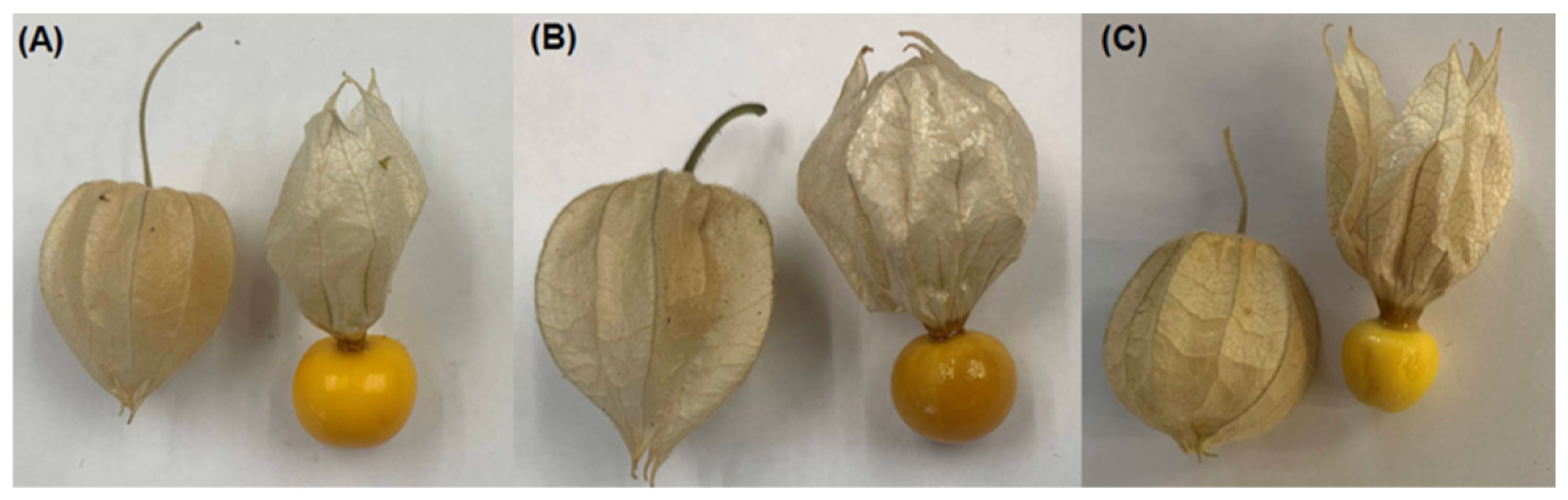
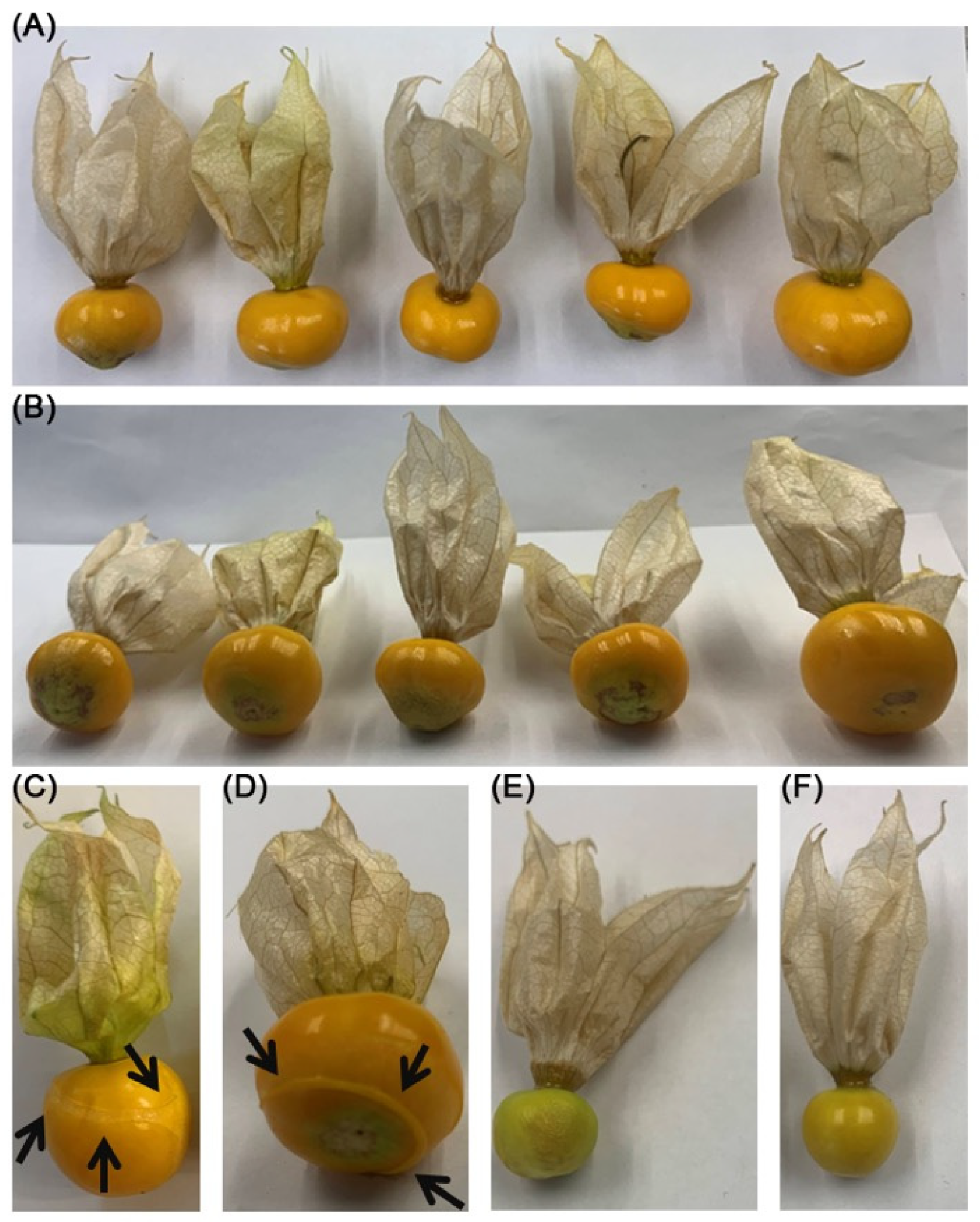
All fruits retained the calyx in this study, regardless of treatment (Figure 9). However, fruits from plants maintained at 70% and 40% FC showed a greater incidence of defects, including abnormalities in fruit shape (Figure 10). Some fruits, although displaying a golden-yellow calyx, remained green internally (Figure 10F) or showed uneven coloration and peel cracking (Figure 9C and Figure 10C–E). Because the fruit color is normally expected to follow calyx coloration [68], this mismatch may indicate a physiological disorder affecting fruit maturation. Cracked peel has previously been reported as a common disorder in goldenberry under water stress conditions [69].
Water stress may also reduce transpiration flow, thereby limiting calcium transport to the fruit. In tomato, this process is associated with blossom-end rot [70,71,72], and similar symptoms were observed in the present study (Figure 10B). Therefore, the irrigation conditions applied here, particularly 40% FC, appear unsuitable for commercial fruit production. However, they may still be considered for alternative purposes, such as ornamental use or pharmaceutical/nutraceutical extraction, given the elevated antioxidant concentrations and the fact that the calyces remained visually unaffected.

4. Conclusions

In conclusion, Physalis peruviana L. activates a broad antioxidant defense system in response to water deficit, involving both enzymatic components (CAT, SOD, and POD) and non-enzymatic components (anthocyanins, carotenoids, proline, and total phenolic compounds). A 30-day rehydration period reversed many of these biochemical stress markers, indicating that leaf-level oxidative stress was at least partially recoverable. However, the same recovery period did not restore fruit yield or commercial fruit quality. These results suggest that water deficit during reproductive development may impair fruit set, fruit mass, maturation, and appearance to an extent that is not fully reversed after rewatering.
Overall, the findings indicate a physiological trade-off in physalis plants under water-limited conditions, in which antioxidant defense and stress acclimation appear to be prioritized over reproductive performance, with negative consequences for crop productivity. From an agronomic perspective, irrigation management for this species should avoid water deficit during the reproductive stage when the goal is commercial fruit production. On the other hand, controlled water stress may be explored as a strategy to enhance the accumulation of antioxidant compounds for non-food applications, such as pharmaceutical or nutraceutical uses, thereby providing an alternative approach for adding value to this crop under suboptimal growing conditions.

Author Contributions

Conceptualization, C.S.F.B. and C.P.C.; methodology, C.S.F.B., S.L., L.S.R. and C.P.C.; software, C.P.C., G.M.N. and S.L.; validation, C.S.F.B.; formal analysis, C.P.C., L.F.d.O., G.M.N., P.P., L.S.G., L.S.R., F.N.V., C.S.F.B. and S.L.; investigation, C.P.C. and C.S.F.B.; resources, C.P.C., S.L. and C.S.F.B.; data curation, C.P.C., G.M.N., P.P., L.S.G., L.S.R., F.N.V., C.S.F.B. and S.L.; writing, original draft preparation, G.M.N., C.S.F.B. and C.P.C.; writing, review and editing, C.S.F.B., S.L., G.M.N., L.F.d.O. and C.P.C.; visualization, C.P.C., G.M.N., P.P., L.S.G., F.N.V., L.S.R., C.S.F.B. and S.L.; supervision, S.L. and C.S.F.B.; project administration, C.P.C.; funding acquisition, S.L. and C.S.F.B. All authors have read and agreed to the published version of the manuscript.

Funding

This research was funded by Coordenação de Aperfeiçoamento de Pessoal de Nível Superior (CAPES), grant number 88887.817588/2023-00, and Conselho Nacional de Desenvolvimento Científico e Tecnológico (CNPq), grant number 308038/2023-1-PQ.

Data Availability Statement

The raw data supporting the conclusions of this article will be made available by the authors upon reasonable request.

Conflicts of Interest

The authors declare no conflicts of interest. The funders had no role in the design of the study; in the collection, analysis, or interpretation of data; in the writing of the manuscript; or in the decision to publish the results.

Abbreviations

The following abbreviations are used in this manuscript:
ASupernatant absorbance
CATCatalase
Chl Chlorophyll
DASTDays after seedlings transplant
EtcCrop evapotranspiration
FCField capacity
FMFresh mass
MDA Malondialdehyde
NBTNitroblue tetrazolium
POD Peroxidase
ROSReactive oxygen species
SODSuperoxide dismutase
UEnzymatic units
UNESPSão Paulo State University
WAWater availabilities

References

  1. Legge, A.P. Notes on the History, Cultivation and Uses of Physalis peruviana L. J. R. Hortic. Soc. 1974, 99, 310–314. [Google Scholar]
  2. Rufato, L.; Muniz, J.; Kretzschmar, A.A.; Rufato, A.R.; Gatiboni, L.C. Aspectos Técnicos Da Cultura Da Fisalis. Inf. Agropecu. 2012, 33, 69–83. [Google Scholar]
  3. Puente, L.A.; Pinto-Muñoz, C.A.; Castro, E.S.; Cortés, M. Physalis peruviana Linnaeus, the Multiple Properties of a Highly Functional Fruit: A Review. Food Res. Int. 2011, 44, 1733–1740. [Google Scholar] [CrossRef]
  4. Lima, C.S.M.; Severo, J.; Manica-Berto, R.; Silva, J.A.; Rufato, L.; Rufato, A.d.R. Características Físico-Químicas de Physalis Em Diferentes Colorações Do Cálice e Sistemas de Condução. Rev. Bras. Frutic. 2009, 31, 1061–1068. [Google Scholar] [CrossRef]
  5. Lima, I.K.F.; do Nascimento, M.N.; Santana Guimarães, D.; Santos Neto, F.d.; Gonçalves Neto, L.P. Morphological, Physiological, and Biochemical Characteristics of Physalis peruviana L. Plants under Different Water Availabilities. Comun. Sci. 2024, 15, e3807. [Google Scholar] [CrossRef]
  6. Bussmann, R.W.; Bussmann, R.W.; Paniagua-Zambrana, N.Y. Ethnobotany of the Mountain Regions of Africa; Bussmann, R.W., Ed.; Ethnobotany of Mountain Regions; Springer International Publishing: Cham, Switzerland, 2021; ISBN 978-3-030-38385-5. [Google Scholar]
  7. Ramadan, M.F. Handbook of Goldenberry (Physalis peruviana); Elsevier: Amsterdam, The Netherlands, 2024; ISBN 978-0-443-15433-1. [Google Scholar]
  8. Zhang, Y.; Cai, P.; Cheng, G.; Zhang, Y. A Brief Review of Phenolic Compounds Identified from Plants: Their Extraction, Analysis, and Biological Activity. Nat. Prod. Commun. 2022, 17, 1934578X2110697. [Google Scholar] [CrossRef]
  9. Silva, E.C.; Nogueira, R.J.M.C.; Vale, F.H.A.; de Araújo, F.P.; Pimento, M.A. Stomatal Changes Induced by Intermittent Drought in Four Umbu Tree Genotypes. Braz. J. Plant Physiol. 2009, 21, 33–42. [Google Scholar] [CrossRef]
  10. Gomes, A.C.C.; Bernardo, N.; Alcântara, E. Accessing the Southeastern Brazil 2014 Drought Severity on the Vegetation Health by Satellite Image. Nat. Hazards 2017, 89, 1401–1420. [Google Scholar] [CrossRef]
  11. Martins, L.L.; Sobierajski, G.R.; Blain, G.C. Elevações Na Frequência de Ocorrência de Secas Meteorológicas No Estado de São Paulo Sob Condições de Mudanças Climáticas. Derbyana 2023, 44, e789. [Google Scholar] [CrossRef]
  12. Caretta, M.A.; Mukherji, A.; Arfanuzzaman, M.; Betts, R.A.; Gelfan, A.; Hirabayashi, Y.; Lissner, T.K.; Gunn, E.L.; Liu, J.; Morgan, R.; et al. Water. In Climate Change 2022—Impacts, Adaptation and Vulnerability; Cisneros, B.E.J., Kundzewichz, Z., Eds.; Cambridge University Press: Cambridge, UK, 2023; pp. 551–712. [Google Scholar]
  13. Pereira, V.R.; Blain, G.C.; de Avila, A.M.H.; Pires, R.C.M.; Pinto, H.S. Impacts of Climate Change on Drought: Changes to Drier Conditions at the Beginning of the Crop Growing Season in Southern Brazil. Bragantia 2018, 77, 201–211. [Google Scholar] [CrossRef]
  14. Veljović-Jovanović, S.; Vidović, M.; Morina, F. Ascorbate as a Key Player in Plant Abiotic Stress Response and Tolerance. In Ascorbic Acid in Plant Growth, Development and Stress Tolerance; Hossain, M.A., Munné-Bosch, S., Burritt, D.J., Diaz-Vivancos, P., Fujita, M., Lorence, A., Eds.; Springer International Publishing: Cham, Switzerland, 2017; pp. 47–109. ISBN 978-3-319-74056-0. [Google Scholar]
  15. González-Chavira, M.M.; Herrera-Hernández, M.G.; Guzmán-Maldonado, H.; Pons-Hernández, J.L. Controlled Water Deficit as Abiotic Stress Factor for Enhancing the Phytochemical Content and Adding-Value of Crops. Sci. Hortic. 2018, 234, 354–360. [Google Scholar] [CrossRef]
  16. Ripoll, J.; Urban, L.; Brunel, B.; Bertin, N. Water Deficit Effects on Tomato Quality Depend on Fruit Developmental Stage and Genotype. J. Plant Physiol. 2016, 190, 26–35. [Google Scholar] [CrossRef]
  17. Medyouni, I.; Zouaoui, R.; Rubio, E.; Serino, S.; Ahmed, H.B.; Bertin, N. Effects of Water Deficit on Leaves and Fruit Quality during the Development Period in Tomato Plant. Food Sci. Nutr. 2021, 9, 1949–1960. [Google Scholar] [CrossRef]
  18. Massimiliano, T.; Gori, A.; Beatriz, L.; Nascimento, S.; Patanè, C.; Cosentino, S.L.; Romano, D.; Toscano, S. Relative Water Content, Proline, and Antioxidant Enzymes in Leaves of Long Shelf-Life Tomatoes under Drought Stress and Rewatering. Plants 2022, 11, 3045. [Google Scholar] [CrossRef]
  19. Bruce, T.J.A.; Matthes, M.C.; Napier, J.A.; Pickett, J.A. Stressful “Memories” of Plants: Evidence and Possible Mechanisms. Plant Sci. 2007, 173, 603–608. [Google Scholar] [CrossRef]
  20. Liu, X.; Quan, W.; Bartels, D. Stress Memory Responses and Seed Priming Correlate with Drought Tolerance in Plants: An Overview. Planta 2022, 255, 45. [Google Scholar] [CrossRef]
  21. Patanè, C.; Siah, S.; Pellegrino, A.; Cosentino, S.L.; Siracusa, L.; Camposeo, S. Fruit Yield, Polyphenols, and Carotenoids in Long Shelf-Life Tomatoes in Response to Drought Stress and Rewatering. Agronomy 2021, 11, 1943. [Google Scholar] [CrossRef]
  22. Tankari, M.; Wang, C.; Ma, H.; Li, X.; Li, L.; Soothar, R.K.; Cui, N.; Zaman-Allah, M.; Hao, W.; Liu, F.; et al. Drought Priming Improved Water Status, Photosynthesis and Water Productivity of Cowpea during Post-Anthesis Drought Stress. Agric. Water Manag. 2021, 245, 106565. [Google Scholar] [CrossRef]
  23. Raij, B.V. Chemical Analysis for Fertility Evaluation of Tropical Soils; Raij, B.V., Andrade, J.C., Cantarella, H., Quaggio, J.A., Eds.; Instituto Agronômico de Campinas: Campinas, Brazil, 2001; ISBN 85-85564-05-9.
  24. IAC. Boletim Técnico 100—Recomendações de Adubação e Calagem Para o Estado de São Paulo, 2nd ed.; Raij, B.V., Cantarella, H., Quaggio, J.A., Furlani, A.M.C., Eds.; Instituto Agronômico/Fundação IAC: Campinas, Brazil, 1997.
  25. Muniz, J.; Kretzschmar, A.A.; Rufato, L.; Pelizza, T.R.; Rufato, A.D.R.; de Macedo, T.A. General Aspects of Physalis Cultivation. Ciênc. Rural. 2014, 44, 964–970. [Google Scholar] [CrossRef][Green Version]
  26. Lima, C.S.M.; Galarça, S.P.; Betemps, D.L.; Rufato, A.R.; Rufato, L. Avaliação Física, Química e Fitoquímica de Frutos de Physalis, Ao Longo Do Período de Colheita. Rev. Bras. Frutic. 2012, 34, 1004–1012. [Google Scholar] [CrossRef]
  27. Rufato, A.R.; Rufato, L.; Lima, C.S.M.; Muniz, J. A Cultura Da Physalis. In Pequenas Frutas; UDESC: Florianópolis, Brazil, 2013; pp. 143–193. [Google Scholar]
  28. Bonfim-Silva, E.M.; Silva, T.J.A.; Cabral, C.E.A.; Kroth, B.E.; Rezende, D. Desenvolvimento Inicial de Gramíneas Submetidas Ao Estresse Hídrico. Rev. Caatinga 2011, 24, 180–186. [Google Scholar]
  29. Kar, M.; Mishra, D. Catalase, Peroxidase, and Polyphenoloxidase Activities during Rice Leaf Senescence. Plant Physiol. 1976, 57, 315–319. [Google Scholar] [CrossRef]
  30. Bradford, M.M. A Rapid and Sensitive Method for the Quantitation of Microgram Quantities of Protein Utilizing the Principle of Protein-Dye Binding. Anal. Biochem. 1976, 72, 248–254. [Google Scholar] [CrossRef]
  31. Peixoto, P.H.P.; Caimbraia, J.; Santanna, R.; Mosquim, P.R. Aluminum Effects on Lipid Peroxidation and on the Activities of Enzymes of Oxidative Metabolism in Sorghum. Rev. Bras. Fisiol. Veg. 1999, 153, 137–143. [Google Scholar]
  32. Teisseire, H.; Guy, V. Copper-Induced Changes in Antioxidant Enzymes Activities in Fronds of Duckweed (Lemna minor). Plant Sci. 2000, 153, 65–72. [Google Scholar] [CrossRef]
  33. Beauchamp, C.; Fridovich, I. Superoxide Dismutase: Improved Assays and an Assay Applicable to Acrylamide Gels. Anal. Biochem. 1971, 44, 276–287. [Google Scholar] [CrossRef] [PubMed]
  34. Sims, D.A.; Gamon, J.A. Relationships between Leaf Pigment Content and Spectral Reflectance across a Wide Range of Species, Leaf Structures and Developmental Stages. Remote Sens. Environ. 2002, 81, 337–354. [Google Scholar] [CrossRef]
  35. Alexieva, V.; Sergiev, I.; Mapelli, S.; Karanov, E. The Effect of Drought and Ultraviolet Radiation on Growth and Stress Markers in Pea and Wheat. Plant Cell Environ. 2001, 24, 1337–1344. [Google Scholar] [CrossRef]
  36. Rama Devi, S.; Prasad, M.N.V. Copper Toxicity in Ceratophyllum demersum L. (Coontail), a Free Floating Macrophyte: Response of Antioxidant Enzymes and Antioxidants. Plant Sci. 1998, 138, 157–165. [Google Scholar] [CrossRef]
  37. Bates, L.S.; Waldren, R.P.; Teare, I.D. Rapid Determination of Free Proline for Water-Stress Studies. Plant Soil 1973, 39, 205–207. [Google Scholar] [CrossRef]
  38. Singleton, V.L.; Orthofer, R.; Lamuela-Raventós, R.M. Analysis of Total Phenols and Other Oxidation Substrates and Antioxidants by Means of Folin-Ciocalteu Reagent. Methods Enzymol. 1999, 299, 152–178. [Google Scholar] [CrossRef]
  39. Garcia, I.S.; Souza, A.; Barbedo, C.J.; Dietrich, S.M.C.; Figueiredo-Ribeiro, R.C.L. Changes in Soluble Carbohydrates during Storage of Caesalpinia echinata LAM. (Brazilwood) Seeds, an Endangered Leguminous Tree from the Brazilian Atlantic Forest. Rev. Bras. Biol. 2006, 66, 739–745. [Google Scholar] [CrossRef]
  40. Dubois, M.; Gilles, K.A.; Hamilton, J.K.; Rebers, P.A.; Smith, F. Colorimetric Method for Determination of Sugars and Related Substances. Anal. Chem. 1956, 28, 350–356. [Google Scholar] [CrossRef]
  41. AOAC. Official Methods of Analysis, 15th ed.; Helrich, K., Ed.; Association of Official Analytical Chemists, Inc.: Arlington, VA, USA, 1990; Volume 1, ISBN 0-935584-42-0. [Google Scholar]
  42. Minitab LLC. Minitab, version 18; Minitab LLC: State College, PA, USA, 2020.
  43. R Core Team. R: A Language and Environment for Statistical Computing. 2024. Available online: https://www.R-project.org/ (accessed on 20 April 2026).
  44. SYSTAT Software Inc. SigmaPlot, version 14; SYSTAT Software Inc.: San Jose, CA, USA, 2017.
  45. Hernández, I.; Cela, J.; Alegre, L.; Munné-Bosch, S. Antioxidant Defenses against Drought Stress. In Plant Responses to Drought Stress: From Morphological to Molecular Features; Springer: Berlin/Heidelberg, Germany, 2012; pp. 231–258. ISBN 978-3-642-32653-0. [Google Scholar]
  46. Rady, M.M.; Boriek, S.H.K.; El-Mageed, T.A.A.; El-Yazal, M.A.S.; Ali, E.F.; Hassan, F.A.S.; Abdelkhalik, A. Exogenous Gibberellic Acid or Dilute Bee Honey Boosts Drought Stress Tolerance in Vicia Faba by Rebalancing Osmoprotectants, Antioxidants, Nutrients, and Phytohormones. Plants 2021, 10, 748. [Google Scholar] [CrossRef]
  47. Toscano, S.; Farieri, E.; Ferrante, A.; Romano, D. Physiological and Biochemical Responses in Two Ornamental Shrubs to Drought Stress. Front. Plant Sci. 2016, 7, 186872. [Google Scholar] [CrossRef]
  48. Moles, T.M.; Mariotti, L.; De Pedro, L.F.; Guglielminetti, L.; Picciarelli, P.; Scartazza, A. Drought Induced Changes of Leaf-to-Root Relationships in Two Tomato Genotypes. Plant Physiol. Biochem. 2018, 128, 24–31. [Google Scholar] [CrossRef] [PubMed]
  49. Geneva, M.; Hristozkova, M.; Kirova, E.; Sichanova, M.; Stancheva, I. Response to Drought Stress of In Vitro and In Vivo Propagated Physalis peruviana L. Plants Inoculated with Arbuscular Mycorrhizal Fungi. Agriculture 2023, 13, 472. [Google Scholar] [CrossRef]
  50. Lima Neto, M.C.; Cerqueira, J.V.A.; da Cunha, J.R.; Ribeiro, R.V.; Silveira, J.A.G. Cyclic Electron Flow, NPQ and Photorespiration Are Crucial for the Establishment of Young Plants of Ricinus communis and Jatropha curcas Exposed to Drought. Plant Biol. 2017, 19, 650–659. [Google Scholar] [CrossRef]
  51. Puente, L.; Nocetti, D.; Espinosa, A. Physalis peruviana Linnaeus, an Update on Its Functional Properties and Beneficial Effects in Human Health. In Wild Fruits: Composition, Nutritional Value and Products; Mariod, A.A., Ed.; Springer International Publishing: Cham, Switzerland, 2019; pp. 447–463. ISBN 978-3-030-31884-0. [Google Scholar]
  52. Bagheri, R.; Ahmad, J.; Bashir, H.; Iqbal, M.; Qureshi, M.I. Changes in Rubisco, Cysteine-Rich Proteins and Antioxidant System of Spinach (Spinacia oleracea L.) Due to Sulphur Deficiency, Cadmium Stress and Their Combination. Protoplasma 2017, 254, 1031–1043. [Google Scholar] [CrossRef] [PubMed]
  53. Naing, A.H.; Kim, C.K. Abiotic Stress-Induced Anthocyanins in Plants: Their Role in Tolerance to Abiotic Stresses. Physiol. Plant. 2021, 172, 1711–1723. [Google Scholar] [CrossRef]
  54. Deveci, M.; Celik, A. The Effects of Different Water Deficiency on Physiological and Chemical Changes in Cape Gooseberry (Physalis peruviana L.) Which Were Grown in Greenhouse Conditions. Sci. Agric. 2016, 14, 587–596. [Google Scholar] [CrossRef]
  55. Morales, M.; Munné-Bosch, S. Malondialdehyde: Facts and Artifacts. Plant Physiol. 2019, 180, 1246–1250. [Google Scholar] [CrossRef]
  56. Gould, K.S.; McKelvie, J.; Markham, K.R. Do Anthocyanins Function as Antioxidants in Leaves? Imaging of H2O2 in Red and Green Leaves after Mechanical Injury. Plant Cell Environ. 2002, 25, 1261–1269. [Google Scholar] [CrossRef]
  57. Wang, X.; Liu, H.; Yu, F.; Hu, B.; Jia, Y.; Sha, H.; Zhao, H. Differential Activity of the Antioxidant Defence System and Alterations in the Accumulation of Osmolyte and Reactive Oxygen Species under Drought Stress and Recovery in Rice (Oryza sativa L.) Tillering. Sci. Rep. 2019, 9, 8543. [Google Scholar] [CrossRef]
  58. Gupta, A.; Rico-Medina, A.; Caño-Delgado, A.I. The Physiology of Plant Responses to Drought. Science 2020, 368, 266–269. [Google Scholar] [CrossRef]
  59. Mishra, N.; Jiang, C.; Chen, L.; Paul, A.; Chatterjee, A.; Shen, G. Achieving Abiotic Stress Tolerance in Plants through Antioxidative Defense Mechanisms. Front. Plant Sci. 2023, 14, 1110622. [Google Scholar] [CrossRef] [PubMed]
  60. Hasanuzzaman, M.; Nahar, K.; Gill, S.S.; Fujita, M. Drought Stress Responses in Plants, Oxidative Stress, and Antioxidant Defense. In Climate Change and Plant Abiotic Stress Tolerance; Wiley: Hoboken, NJ, USA, 2013; pp. 209–250. [Google Scholar]
  61. Blum, A. Drought Resistance, Water-Use Efficiency, and Yield Potential—Are They Compatible, Dissonant, or Mutually Exclusive? Aust. J. Agric. Res. 2005, 56, 1159–1168. [Google Scholar] [CrossRef]
  62. Balaguera Lopez, H.E.; Fischer, G.; Magnitskiy, S. Physiology and Biochemistry of the Physalis peruviana Fruit. In Handbook of Goldenberry (Physalis peruviana): Cultivation, Processing, Chemistry, and Functionality; Academic Press: Cambridge, MA, USA, 2024; pp. 121–137. [Google Scholar] [CrossRef]
  63. Lopez, G.; Hossein Behboudian, M.; Girona, J.; Marsal, J. Drought in Deciduous Fruit Trees: Implications for Yield and Fruit Quality. In Plant Responses to Drought Stress; Springer: Berlin/Heidelberg, Germany, 2012; pp. 441–459. [Google Scholar]
  64. Barbosa, E.A.A.; Ayub, R.A.; da Luz, Â.; Pessenti, I.L.; Pereira, A.B. Foliar Gas Exchange, Fruit Quality and Water Use Efficiency of Cape Gooseberry under Different Irrigation Depths and Mulching at Greenhouse Conditions. Rev. Bras. Frutic. 2019, 41, e-001. [Google Scholar] [CrossRef]
  65. Álvarez-Herrera, J.G.; Vélez, J.E.; Jaime-Guerrero, M. Characterization of Cape Gooseberry (Physalis peruviana L.) Fruits from Plants Irrigated with Different Regimens and Calcium Doses. Rev. Colomb. Cienc. Hortíc. 2022, 16, e13269. [Google Scholar] [CrossRef]
  66. Bazalar-Pereda, M.S.; Nazareno, M.A.; Viturro, C.I. Nutritional and Antioxidant Properties of Physalis peruviana L. Fruits from the Argentinean Northern Andean Region. Plant Foods Hum. Nutr. 2019, 74, 68–75. [Google Scholar] [CrossRef]
  67. Duan, Y.; Yang, L.; Zhu, H.; Zhou, J.; Sun, H.; Gong, H. Structure and Expression Analysis of Sucrose Phosphate Synthase, Sucrose Synthase and Invertase Gene Families in Solanum lycopersicum. Int. J. Mol. Sci. 2021, 22, 4698. [Google Scholar] [CrossRef]
  68. Fischer, G.; Almanza-Merchán, P.J.; Miranda, D. Importancia y Cultivo de La Uchuva (Physalis peruviana L.). Rev. Bras. Frutic. 2014, 36, 1–15. [Google Scholar] [CrossRef]
  69. Torres, C.A.; Cooman, A.; Fischer, G. Determinación de Las Causas Del Rajado Del Fruto de Uchuva (Physalis peruviana L.) Bajo Cubierta: I. Efecto de La Variación En El Balance Hídrico. Agron. Colomb. 2004, 22, 140–146. [Google Scholar]
  70. Topcu, Y.; Nambeesan, S.U.; van der Knaap, E. Blossom-End Rot: A Century-Old Problem in Tomato (Solanum lycopersicum L.) and Other Vegetables. Mol. Hortic. 2022, 2, 1. [Google Scholar] [CrossRef] [PubMed]
  71. Hocking, B.; Tyerman, S.D.; Burton, R.A.; Gilliham, M. Fruit Calcium: Transport and Physiology. Front. Plant Sci. 2016, 7, 569. [Google Scholar] [CrossRef]
  72. Abdelkader, M.; Elkhawaga, F.A.; Suliman, A.A.; Puchkov, M.; Kuranova, K.N.; Mahmoud, M.H.; Abdelkader, M.F.M. Understanding the Regular Biological Mechanism of Susceptibility of Tomato Plants to Low Incidences of Blossom-End Rot. Horticulturae 2024, 10, 648. [Google Scholar] [CrossRef]
Figure 1. Schematic representation of the irrigation regime and sampling times used in the experiment.
Horticulturae 12 00517 g001
Figure 2. Activities of catalase (A), superoxide dismutase (B), and peroxidase (C) in the leaves of physalis plants subjected to different water availability levels at 120 DAST and after recovery at 150 DAST, when all plants were maintained at 100% field capacity (FC). Values represent the mean ± standard error (n = 8). Means followed by different letters differ significantly according to Tukey’s test (p < 0.05). Uppercase letters compare water availability levels (40, 70, and 100% FC) within each evaluation time (120 and 150 DAST), whereas lowercase letters compare evaluation times within each water availability level.
Horticulturae 12 00517 g002
Figure 3. Foliar pigment contents: anthocyanins (A), carotenoids (B), chlorophyll a (Chl a; (C)), and chlorophyll b (Chl b; (D)) in the leaves of physalis plants subjected to different water availability levels at 120 DAST and after recovery at 150 DAST, when all plants were maintained at 100% field capacity (FC). Values represent the mean ± standard error (n = 8). Means followed by different letters differ significantly according to Tukey’s test (p < 0.05). Uppercase letters compare water availability levels (40, 70, and 100% FC) within each evaluation time (120 and 150 DAST), whereas lowercase letters compare evaluation times within each water availability level.
Horticulturae 12 00517 g003
Figure 4. Hydrogen peroxide (H2O2) concentration (A) and lipid peroxidation (B) in leaves of physalis plants subjected to different water availability levels at 120 DAST and after recovery at 150 DAST, when all plants were maintained at 100% field capacity (FC). Values represent the mean ± standard error (n = 8). Means followed by different letters differ significantly according to Tukey’s test (p < 0.05). Uppercase letters compare water availability levels (40, 70, and 100% FC) within each evaluation time (120 and 150 DAST), whereas lowercase letters compare evaluation times within each water availability level.
Horticulturae 12 00517 g004
Figure 5. Proline content (A) and total phenolic content (B) in the leaves of physalis plants subjected to different water availability levels at 120 DAST and after recovery at 150 DAST, when all plants were maintained at 100% field capacity (FC). Values represent the mean ± standard error (n = 8). Means followed by different letters differ significantly according to Tukey’s test (p < 0.05). Uppercase letters compare water availability levels (40, 70, and 100% FC) within each evaluation time (120 and 150 DAST), whereas lowercase letters compare evaluation times within each water availability level.
Horticulturae 12 00517 g005
Figure 6. Total soluble sugar content in the leaves of physalis plants subjected to different water availability levels (40, 70, and 100% field capacity, FC) at 120 DAST and after recovery at 150 DAST, when all plants were maintained at 100% FC. Values represent the mean ± standard error (n = 8). Means followed by different lowercase letters differ significantly according to Tukey’s test (p < 0.05).
Horticulturae 12 00517 g006
Figure 7. Number of fruits with calyx (A), fresh mass of fruits with calyx (B), and yield (C) of physalis plants subjected to different water availability levels (40, 70, and 100% of field capacity) and harvested at 150 DAST. Values represent the mean ± standard error (n = 8). Means followed by different lowercase letters differ significantly according to Tukey’s test (p < 0.05).
Horticulturae 12 00517 g007
Figure 8. Ascorbic acid content (A), maturity index (B), total soluble solids (C), and titratable acidity (D) in fruits of physalis plants subjected to different water availability levels (40, 70, and 100% of field capacity), harvested at 150 DAST. Values represent the mean ± standard error (n = 25). Means followed by different lowercase letters differ significantly according to Tukey’s test (p < 0.05).
Horticulturae 12 00517 g008
Figure 9. Fruits of physalis plants subjected to different water availability levels (40, 70, and 100% of field capacity), harvested at 150 DAST. Fruits from plants maintained at 100% FC (A), 70% FC (B), and 40% FC (C). Botucatu, SP, Brazil.
Horticulturae 12 00517 g009
Figure 10. Representative defects observed in fruits of physalis plants subjected to different water availability levels (40, 70, and 100% of field capacity), harvested at 150 DAST. Fruit shape defects (A,B), peel defects (C,D), and delayed ripening (E,F). Botucatu, SP, Brazil.
Horticulturae 12 00517 g010
Table 1. Analysis of variance for catalase (CAT), superoxide dismutase (SOD), and peroxidase (POD) activities; anthocyanin (A), carotenoid (C), chlorophyll a (Chl a), and chlorophyll b (Chl b) contents; hydrogen peroxide (H2O2) concentration; lipid peroxidation (MDA); proline and total phenolic compound (TP) contents; total soluble sugar content (TSS); number of fruits with calyx (NFC); fruit weight with calyx (WFC); yield; ascorbic acid content (AA); maturity index (MI); soluble solids (SS); and titratable acidity (TA) in leaves and fruits of physalis plants subjected to different water availability levels (WA: 40, 70, and 100% of field capacity) and evaluated at different times after seedling transplanting (DAST: 120 and 150, or only 150), Botucatu, SP, Brazil, 2024. NS = Not Significant (p-value > 0.05), ** = p < 0.01, * = p < 0.05 and CV = Coefficient of variation.
CATSODPODACChl aChl b
WA28.97 **92.73 **104.53 **111.45 **96.20 **3.19 NS26.65 **
DAST8.55 *27.83 **34.94 **309.49 **698.43 **6.92 *0.02 NS
WA × DAST2.96 NS2.31 NS12.91 **42.36 **87.63 **0.53 NS4.78 *
Block1.86 NS0.73 NS4.27 NS0.8 NS0.55 NS0.39 NS0.85 NS
CV (%) WA (plot)19.616.1412.155.736.3610.96.66
CV (%) DAST (sub-plot)23.7610.8713.865.793.8911.3910.18
H2O2MDAProlineTPTSS
WA144.17 **115.43 **110.31 **16.36 **27.17 **
DAST265.49 **26.71 **90.50 **1028.25 **85.07 **
WA × DAST66.84 **23.83 **29.21 **17.94 **1.71 NS
Block2.92 NS1.94 NS2.73 NS0.52 NS0.46 NS
CV (%) WA (plot)7.823.436.830.177.20
CV (%) DAST (sub-plot)10.134.855.360.145.83
NFCWFCYieldAAIMSSTA
WA123.78 **220.95 **104.74 **12.62 **210.77 **54.58 **197.49 **
Block1.78 NS0.85 NS0.97 NS0.66 NS1.12 NS0.69 NS1.91 NS
CV (%) 11.568.3122.4715.724.792.914.36
Disclaimer/Publisher’s Note: The statements, opinions and data contained in all publications are solely those of the individual author(s) and contributor(s) and not of MDPI and/or the editor(s). MDPI and/or the editor(s) disclaim responsibility for any injury to people or property resulting from any ideas, methods, instructions or products referred to in the content.