Transcriptome Profiling of Cold-Stored Potato Tubers Revealed Similarities in the Regulation of Bud Dormancy Release, Tuberization, and Flowering Initiation


Abstract
1. Introduction
2. Materials and Methods
2.1. Plant Material
2.2. mRNA Library Sequencing
2.3. Mapping Reads to the Reference Genome
2.4. Differentially Expressed Genes
2.5. Gene Expression Analysis by Quantitative Real-Time PCR
3. Results
3.1. Transcriptome Sequencing, Mapping, and Primary Analysis
3.2. Enriched GO and KEGG Terms
3.3. Detailed Analysis of the DEGs
3.3.1. Storage Proteins
3.3.2. Phytohormones
3.3.3. Stress Response
3.3.4. Transcription Factors
3.3.5. The miRNA Related DEGs
3.4. RT-qPCR Analysis of Selected DEGs
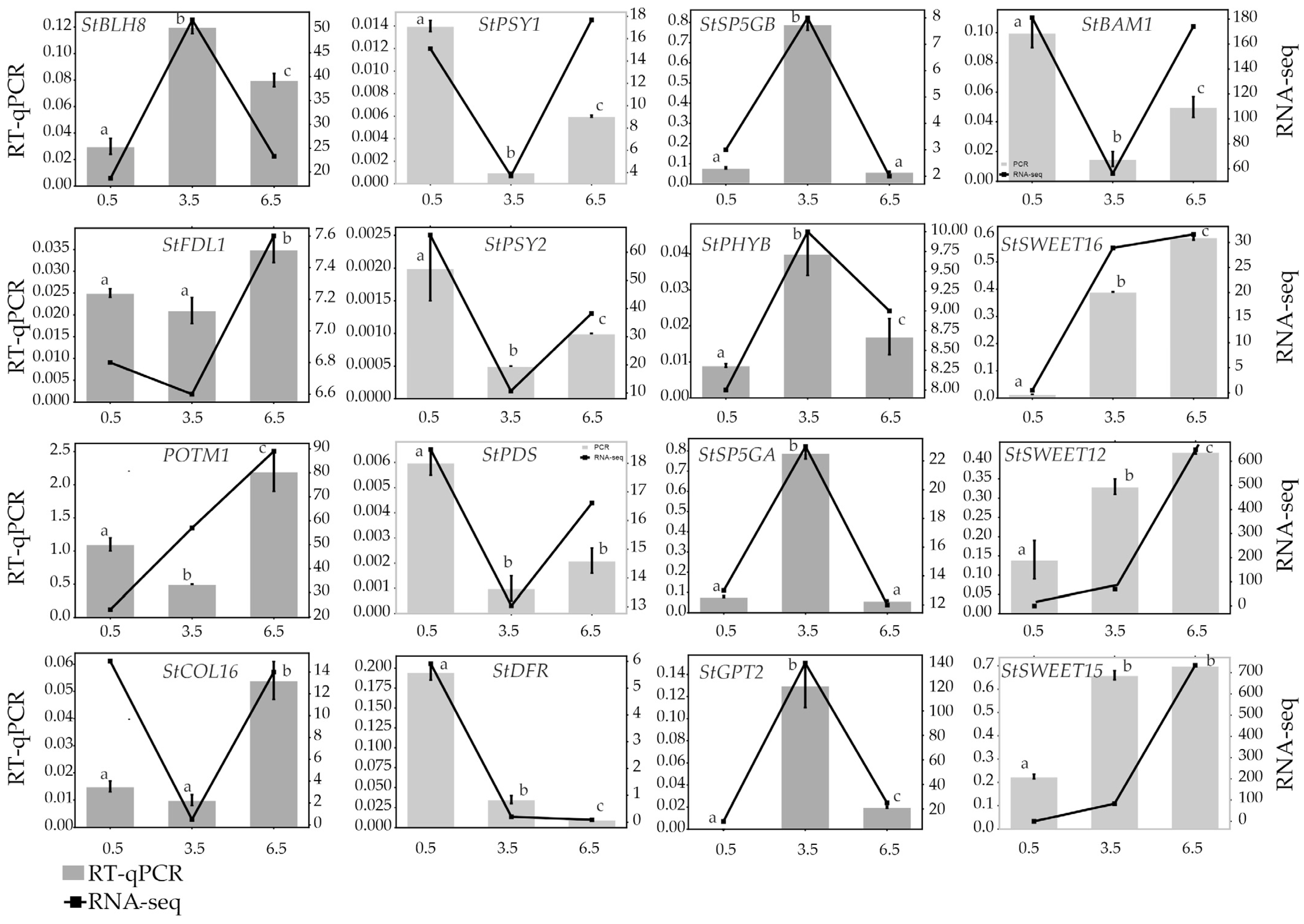
3.4.1. Validation of Transcriptome Data on Selected DEGs
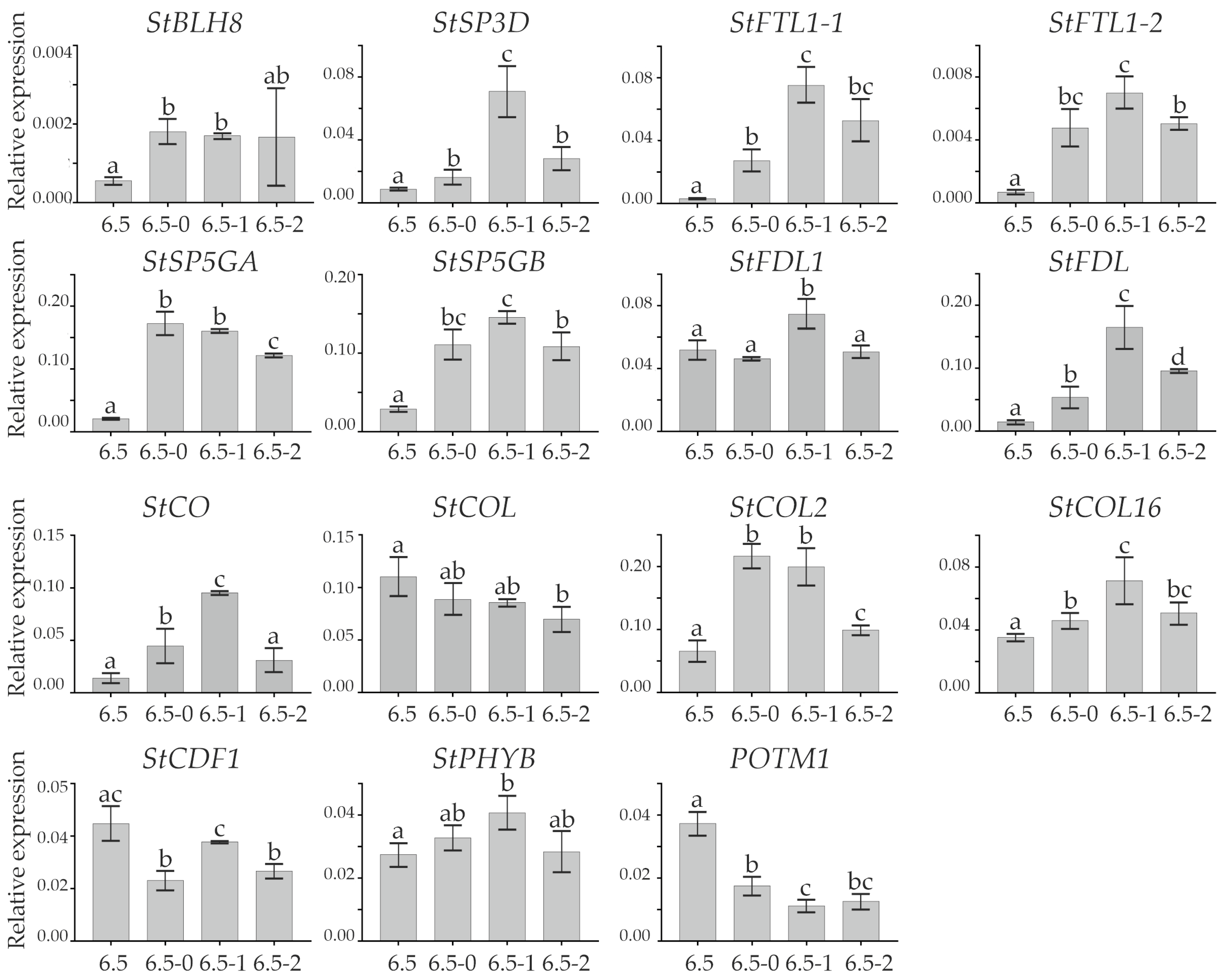
3.4.2. Expression of Genes Presumably Related to Dormancy Release in Tuber Buds
4. Discussion
5. Conclusions
Supplementary Materials
Author Contributions
Funding
Data Availability Statement
Acknowledgments
Conflicts of Interest
References
- Zierer, W.; Ruscher, D.; Sonnewald, U.; Sonnewald, S. Tuber and tuberous root development. Annu. Rev. Plant Biol. 2021, 72, 551–580. [Google Scholar] [CrossRef]
- Huang, B.; Spooner, D.M.; Liang, Q. Genome diversity of the potato. Proc. Natl. Acad. Sci. USA 2018, 115, E6392–E6393. [Google Scholar] [CrossRef]
- Colleoni, P.E.; van Es, S.W.; Winkelmolen, T.; Immink, R.G.H.; van Esse, G.W. Flowering time genes branching out. J. Exp. Bot. 2024, 75, 4195–4209. [Google Scholar] [CrossRef] [PubMed]
- Abelenda, J.A.; Cruz-Oro, E.; Franco-Zorrilla, J.M.; Prat, S. Potato StCONSTANS-like 1 suppresses storage organ formation by directly activating the FT-like StSP5G repressor. Curr. Biol. 2016, 26, 872–881. [Google Scholar] [CrossRef]
- Sawa, M.; Nusinow, D.A.; Kay, S.A.; Imaizumi, T. FKF1 and GIGANTEA complex formation is required for day-length measurement in Arabidopsis. Science 2007, 318, 261–265. [Google Scholar] [CrossRef]
- Kondhare, K.R.; Natarajan, B.; Banerjee, A.K. Molecular signals that govern tuber development in potato. Int. J. Dev. Biol. 2020, 64, 133–140. [Google Scholar] [CrossRef]
- Wang, E.; Zhou, T.; Jing, S.; Dong, L.; Sun, X.; Fan, Y.; Shen, Y.; Liu, T.; Song, B. Leaves and stolons transcriptomic analysis provide insight into the role of phytochrome F in potato flowering and tuberization. Plant J. 2023, 113, 402–415. [Google Scholar] [CrossRef] [PubMed]
- Zhang, X.; Campbell, R.; Ducreux, L.J.M.; Morris, J.; Hedley, P.E.; Mellado-Ortega, E.; Roberts, A.G.; Stephens, J.; Bryan, G.J.; Torrance, L.; et al. TERMINAL FLOWER-1/CENTRORADIALIS inhibits tuberisation via protein interaction with the tuberigen activation complex. Plant J. 2020, 103, 2263–2278. [Google Scholar] [CrossRef] [PubMed]
- Bhogale, S.; Mahajan, A.S.; Natarajan, B.; Rajabhoj, M.; Thulasiram, H.V.; Banerjee, A.K. MicroRNA156: A potential graft-transmissible microRNA that modulates plant architecture and tuberization in Solanum tuberosum ssp. andigena. Plant Physiol. 2014, 164, 1011–1027. [Google Scholar] [CrossRef]
- Roitman, M.; Eshel, D. Similar chilling response of dormant buds in potato tuber and woody perennials. J. Exp. Bot. 2024, 75, 6076–6092. [Google Scholar] [CrossRef]
- Dogramaci, M.; Dobry, E.P.; Fortini, E.A.; Sarkar, D.; Eshel, D.; Campbell, M.A. Physiological and molecular mechanisms associated with potato tuber dormancy. J. Exp. Bot. 2024, 75, 6093–6109. [Google Scholar] [CrossRef]
- Liu, B.; Zhang, N.; Wen, Y.; Jin, X.; Yang, J.; Si, H.; Wang, D. Transcriptomic changes during tuber dormancy release process revealed by RNA sequencing in potato. J. Biotechnol. 2015, 198, 17–30. [Google Scholar] [CrossRef] [PubMed]
- Campbell, M.; Suttle, J.; Douches, D.S.; Buell, C.R. Treatment of potato tubers with the synthetic cytokinin 1-(α-ethylbenzyl)-3-nitroguanidine results in rapid termination of endodormancy and induction of transcripts associated with cell proliferation and growth. Funct. Integr. Genom. 2014, 14, 789–799. [Google Scholar] [CrossRef] [PubMed]
- Di, X.; Wang, Q.; Zhang, F.; Feng, H.; Wang, X.; Cai, C. Advances in the modulation of potato tuber dormancy and sprouting. Int. J. Mol. Sci. 2024, 25, 5078. [Google Scholar] [CrossRef] [PubMed]
- Zheng, X.; Li, M.; Zhang, X.; Chen, J.; Ge, X.; Li, S.; Tian, J.; Tian, S. Unraveling the mechanism of potato (Solanum tuberosum L.) tuber sprouting using transcriptome and metabolome analyses. Front. Plant Sci. 2024, 14, 1300067. [Google Scholar] [CrossRef]
- Liu, H.; Wang, H.; Feng, Y.; Yang, Y.; Feng, C.; Li, J.; Zaman, Q.U.; Kong, Y.; Fahad, S.; Deng, G. Integrated physiological, transcriptomic and metabolomic analyses reveal potential mechanisms of potato tuber dormancy release. Physiol. Plant 2025, 177, e70081. [Google Scholar] [CrossRef]
- Senning, M.; Sonnewald, U.; Sonnewald, S. Deoxyuridine triphosphatase expression defines the transition from dormant to sprouting potato tuber buds. Mol. Breed. 2010, 26, 525–531. [Google Scholar] [CrossRef]
- Liu, B.; Zhang, N.; Wen, Y.; Si, H.; Wang, D. Identification of differentially expressed genes in potato associated with tuber dormancy release. Mol. Biol. Rep. 2012, 39, 11277–11287. [Google Scholar] [CrossRef]
- Liu, S.; Yang, J.; Zhang, N.; Si, H. Genome-wide analysis of non-coding RNA reveals the role of a novel miR319c for tuber dormancy release process in potato. Hortic. Res. 2024, 12, uhae303. [Google Scholar] [CrossRef]
- Zhang, Y.; Zeng, Z.; Hu, H.; Zhao, M.; Chen, C.; Ma, X.; Li, G.; Li, J.; Liu, Y.; Hao, Y.; et al. MicroRNA482/2118 is lineage-specifically involved in gibberellin signalling via the regulation of GID1 expression by targeting noncoding PHAS genes and subsequently instigated phasiRNAs. Plant Biotechnol. J. 2024, 22, 819–832. [Google Scholar] [CrossRef]
- Martin, M. Cutadapt removes adapter sequences from high-throughput sequencing reads. EMBnet. J. 2011, 17, 10–12. [Google Scholar] [CrossRef]
- Ge, S.X.; Jung, D.; Yao, R. ShinyGO: A graphical gene-set enrichment tool for animals and plants. Bioinformatics 2020, 36, 2628–2629. [Google Scholar] [CrossRef] [PubMed]
- Kanehisa, M.; Furumichi, M.; Sato, Y.; Ishiguro-Watanabe, M.; Tanabe, M. KEGG: Integrating viruses and cellular organisms. Nucleic Acids Res. 2021, 49, D545–D551. [Google Scholar] [CrossRef]
- Tang, D.; Chen, M.; Huang, X.; Zhang, G.; Zeng, L.; Zhang, G.; Wu, S.; Wang, Y. SRplot: A free online platform for data visualization and graphing. PLoS ONE 2023, 18, e0294236. [Google Scholar] [CrossRef]
- Slugina, M.A.; Meleshin, A.A.; Kochieva, E.Z.; Shchennikova, A.V. The opposite effect of low temperature on the Pho1a starch phosphorylase gene expression in Solanum tuberosum L. tubers and Petota species leaves. Am. J. Potato Res. 2020, 97, 78–87. [Google Scholar] [CrossRef]
- Yang, X.; Su, Y.; Wu, J.; Wan, W.; Chen, H.; Cao, X.; Wang, J.; Zhang, Z.; Wang, Y.; Ma, D.; et al. Parallel analysis of global garlic gene expression and alliin content following leaf wounding. BMC Plant Biol. 2021, 21, 174. [Google Scholar] [CrossRef] [PubMed]
- Jørgensen, M.; Stensballe, A.; Welinder, K.G. Extensive post-translational processing of potato tuber storage proteins and vacuolar targeting. FEBS J. 2011, 278, 4070–4087. [Google Scholar] [CrossRef] [PubMed]
- Sonnewald, S.; Sonnewald, U. Regulation of potato tuber sprouting. Planta 2014, 239, 27–38. [Google Scholar] [CrossRef]
- Nakashima, K.; Yamaguchi-Shinozaki, K. ABA signaling in stress-response and seed development. Plant Cell Rep. 2013, 32, 959–970. [Google Scholar] [CrossRef]
- Ruan, J.; Zhou, Y.; Zhou, M.; Yan, J.; Khurshid, M.; Weng, W.; Cheng, J.; Zhang, K. Jasmonic acid signaling pathway in plants. Int. J. Mol. Sci. 2019, 20, 2479. [Google Scholar] [CrossRef]
- Wang, X.; Wei, H.; Zhang, N.; Li, S.; Si, H. StNF-YA8-YB20-YC5 module regulates potato tuber dormancy by modulating gibberellin and abscisic acid pathways. Plant J. 2025, 121, e70106. [Google Scholar] [CrossRef]
- Hartweck, L.M. Gibberellin signaling. Planta 2008, 229, 1–13. [Google Scholar] [CrossRef] [PubMed]
- Argueso, C.T.; Raines, T.; Kieber, J.J. Cytokinin signaling and transcriptional networks. Curr. Opin. Plant Biol. 2010, 13, 533–539. [Google Scholar] [CrossRef]
- Gomes, G.L.B.; Scortecci, K.C. Auxin and its role in plant development: Structure, signalling, regulation and response mechanisms. Plant Biol. 2021, 23, 894–904. [Google Scholar] [CrossRef]
- Faivre-Rampant, O.; Cardle, L.; Marshall, D.; Viola, R.; Taylor, M.A. Changes in gene expression during meristem activation processes in Solanum tuberosum with a focus on the regulation of an auxin response factor gene. J. Exp. Bot. 2004, 55, 613–622. [Google Scholar] [CrossRef]
- Liu, T.; Wu, Q.; Zhou, S.; Xia, J.; Yin, W.; Deng, L.; Song, B.; He, T. Molecular insights into the accelerated sprouting of and apical dominance release in potato tubers subjected to post-harvest heat stress. Int. J. Mol. Sci. 2024, 25, 1699. [Google Scholar] [CrossRef]
- Tian, X.; He, M.; Mei, E.; Zhang, B.; Tang, J.; Xu, M.; Liu, J.; Li, X.; Wang, Z.; Tang, W.; et al. WRKY53 integrates classic brassinosteroid signaling and the mitogen-activated protein kinase pathway to regulate rice architecture and seed size. Plant Cell 2021, 33, 2753–2775. [Google Scholar] [CrossRef] [PubMed]
- Coll-Garcia, D.; Mazuch, J.; Altmann, T.; Müssig, C. EXORDIUM regulates brassinosteroid-responsive genes. FEBS Lett. 2004, 563, 82–86. [Google Scholar] [CrossRef]
- Alamar, M.C.; Tosetti, R.; Landahl, S.; Bermejo, A.; Terry, L.A. Assuring potato tuber quality during storage: A future perspective. Front. Plant Sci. 2017, 8, 2034. [Google Scholar] [CrossRef] [PubMed]
- Kidokoro, S.; Shinozaki, K.; Yamaguchi-Shinozaki, K. Transcriptional regulatory network of plant cold-stress responses. Trends Plant Sci. 2022, 27, 922–935. [Google Scholar] [CrossRef]
- Lin, Q.; Xie, Y.; Guan, W.; Duan, Y.; Wang, Z.; Sun, C. Combined transcriptomic and proteomic analysis of cold stress induced sugar accumulation and heat shock proteins expression during postharvest potato tuber storage. Food Chem. 2019, 297, 124991. [Google Scholar] [CrossRef] [PubMed]
- Keren-Keiserman, A.; Baghel, R.S.; Fogelman, E.; Faingold, I.; Zig, U.; Yermiyahu, U.; Ginzberg, I. Effects of polyhalite fertilization on skin quality of potato tuber. Front. Plant Sci. 2019, 10, 1379. [Google Scholar] [CrossRef]
- Wang, G.; Su, H.; Abou-Elwafa, S.F.; Zhang, P.; Cao, L.; Fu, J.; Xie, X.; Ku, L.; Wen, P.; Wang, T.; et al. Functional analysis of a late embryogenesis abundant protein ZmNHL1 in maize under drought stress. J. Plant Physiol. 2023, 280, 153883. [Google Scholar] [CrossRef] [PubMed]
- Alves, M.S.; Fontes, E.P.; Fietto, L.G. EARLY RESPONSIVE to DEHYDRATION 15, a new transcription factor that integrates stress signaling pathways. Plant Signal Behav. 2011, 6, 1993–1996. [Google Scholar] [CrossRef]
- Wang, L.; Liu, Y.; Feng, S.; Yang, J.; Li, D.; Zhang, J. Roles of plasmalemma aquaporin gene StPIP1 in enhancing drought tolerance in potato. Front. Plant Sci. 2017, 8, 616. [Google Scholar] [CrossRef]
- Zribi, I.; Ghorbel, M.; Brini, F. Pathogenesis Related proteins (PRs): From cellular mechanisms to plant defense. Curr. Protein Pept. Sci. 2021, 22, 396–412. [Google Scholar] [CrossRef] [PubMed]
- Javed, T.; Gao, S.J. WRKY transcription factors in plant defense. Trends Genet. 2023, 39, 787–801. [Google Scholar] [CrossRef]
- Luo, D.; Wu, Z.; Bai, Q.; Zhang, Y.; Huang, M.; Huang, Y.; Li, X. Universal stress proteins: From gene to function. Int. J. Mol. Sci. 2023, 24, 4725. [Google Scholar] [CrossRef]
- Cruz, J.O.; San Martin, J.A.B.; Lubini, G.; Strini, E.J.; Sobral, R.; Pinoti, V.F.; Ferreira, P.B.; Thomé, V.; Quiapim, A.C.; Dornelas, M.C.; et al. SCI1 is a direct target of AGAMOUS and WUSCHEL and is specifically expressed in the floral meristematic cells. Front. Plant Sci. 2021, 12, 642879. [Google Scholar] [CrossRef]
- Weits, D.A.; Kunkowska, A.B.; Kamps, N.C.W.; Portz, K.M.S.; Packbier, N.K.; Nemec Venza, Z.; Gaillochet, C.; Lohmann, J.U.; Pedersen, O.; van Dongen, J.T.; et al. An apical hypoxic niche sets the pace of shoot meristem activity. Nature 2019, 569, 714–717. [Google Scholar] [CrossRef]
- Sah, S.K.; Jumaa, S.; Li, J.; Reddy, K.R. Proteomic analysis response of rice (Oryza sativa) leaves to ultraviolet-B radiation stress. Front. Plant Sci. 2022, 13, 871331. [Google Scholar] [CrossRef] [PubMed]
- Turchi, L.; Carabelli, M.; Ruzza, V.; Possenti, M.; Sassi, M.; Peñalosa, A.; Sessa, G.; Salvi, S.; Forte, V.; Morelli, G.; et al. Arabidopsis HD-Zip II transcription factors control apical embryo development and meristem function. Development 2013, 140, 2118–2129. [Google Scholar] [CrossRef]
- Dave, A.; Vaistij, F.E.; Gilday, A.D.; Penfield, S.D.; Graham, I.A. Regulation of Arabidopsis thaliana seed dormancy and germination by 12-oxo-phytodienoic acid. J. Exp. Bot. 2016, 67, 2277–2284. [Google Scholar] [CrossRef]
- Sánchez-Montesino, R.; Bouza-Morcillo, L.; Marquez, J.; Ghita, M.; Duran-Nebreda, S.; Gómez, L.; Holdsworth, M.J.; Bassel, G.; Oñate-Sánchez, L. A regulatory module controlling GA-mediated endosperm cell expansion is critical for seed germination in Arabidopsis. Mol. Plant 2019, 12, 71–85. [Google Scholar] [CrossRef]
- Restovic, F.; Espinoza-Corral, R.; Gómez, I.; Vicente-Carbajosa, J.; Jordana, X. An active mitochondrial complex II present in mature seeds contains an embryo-specific iron-sulfur subunit regulated by ABA and bZIP53 and is involved in germination and seedling establishment. Front. Plant Sci. 2017, 8, 277. [Google Scholar] [CrossRef]
- Yu, L.H.; Wu, J.; Zhang, Z.S.; Miao, Z.Q.; Zhao, P.X.; Wang, Z.; Xiang, C.B. Arabidopsis MADS-Box transcription factor AGL21 acts as environmental surveillance of seed germination by regulating ABI5 expression. Mol. Plant 2017, 10, 834–845. [Google Scholar] [CrossRef] [PubMed]
- Cui, D.; Song, Y.; Jiang, W.; Ye, H.; Wang, S.; Yuan, L.; Liu, B. Genome-wide characterization of the GRF transcription factors in potato (Solanum tuberosum L.) and expression analysis of StGRF genes during potato tuber dormancy and sprouting. Front. Plant Sci. 2024, 15, 1417204. [Google Scholar] [CrossRef]
- Jiang, W.; Yu, D. Arabidopsis WRKY2 transcription factor mediates seed germination and postgermination arrest of development by abscisic acid. BMC Plant Biol. 2009, 9, 96. [Google Scholar] [CrossRef]
- Fan, X.; Yang, Y.; Li, M.; Fu, L.; Zang, Y.; Wang, C.; Hao, T.; Sun, H. Transcriptomics and targeted metabolomics reveal the regulatory network of Lilium davidii var. unicolor during bulb dormancy release. Planta 2021, 254, 59. [Google Scholar] [CrossRef]
- Zhao, P.; Li, X.; Jia, J.; Yuan, G.; Chen, S.; Qi, D.; Cheng, L.; Liu, G. bHLH92 from sheepgrass acts as a negative regulator of anthocyanin/proanthocyandin accumulation and influences seed dormancy. J. Exp. Bot. 2019, 70, 269–284. [Google Scholar] [CrossRef]
- Pirrello, J.; Jaimes-Miranda, F.; Sanchez-Ballesta, M.T.; Tournier, B.; Khalil-Ahmad, Q.; Regad, F.; Latché, A.; Pech, J.C.; Bouzayen, M. Sl-ERF2, a tomato ethylene response factor involved in ethylene response and seed germination. Plant Cell Physiol. 2006, 47, 1195–1205. [Google Scholar] [CrossRef]
- Chen, X.; Li, Q.; Ding, L.; Zhang, S.; Shan, S.; Xiong, X.; Jiang, W.; Zhao, B.; Zhang, L.; Luo, Y.; et al. The MKK3-MPK7 cascade phosphorylates ERF4 and promotes its rapid degradation to release seed dormancy in Arabidopsis. Mol. Plant 2023, 16, 1743–1758. [Google Scholar] [CrossRef] [PubMed]
- Li, X.; Chen, T.; Li, Y.; Wang, Z.; Cao, H.; Chen, F.; Li, Y.; Soppe, W.J.J.; Li, W.; Liu, Y. ETR1/RDO3 regulates seed dormancy by relieving the inhibitory effect of the ERF12-TPL complex on DELAY OF GERMINATION1 expression. Plant Cell 2019, 31, 832–847. [Google Scholar] [CrossRef] [PubMed]
- Nasim, Z.; Susila, H.; Jin, S.; Youn, G.; Ahn, J.H. Polymerase II-associated factor 1 complex-regulated FLOWERING LOCUS C-clade genes repress flowering in response to chilling. Front. Plant Sci. 2022, 13, 817356. [Google Scholar] [CrossRef]
- Lim, M.H.; Kim, J.; Kim, Y.S.; Chung, K.S.; Seo, Y.H.; Lee, I.; Kim, J.; Hong, C.B.; Kim, H.J.; Park, C.M. A new Arabidopsis gene, FLK, encodes an RNA binding protein with K homology motifs and regulates flowering time via FLOWERING LOCUS C. Plant Cell 2004, 16, 731–740. [Google Scholar] [CrossRef] [PubMed]
- Adkar-Purushothama, C.R.; Sano, T.; Perreault, J.P. Viroid-derived small RNA induces early flowering in tomato plants by RNA silencing. Mol. Plant Pathol. 2018, 19, 2446–2458. [Google Scholar] [CrossRef]
- Schmitz, R.J.; Hong, L.; Michaels, S.; Amasino, R.M. FRIGIDA-ESSENTIAL 1 interacts genetically with FRIGIDA and FRIGIDA-LIKE 1 to promote the winter-annual habit of Arabidopsis thaliana. Development 2005, 132, 5471–5478. [Google Scholar] [CrossRef]
- Sung, S.; Schmitz, R.J.; Amasino, R.M. A PHD finger protein involved in both the vernalization and photoperiod pathways in Arabidopsis. Genes. Dev. 2006, 20, 3244–3248. [Google Scholar] [CrossRef]
- Schönrock, N.; Bouveret, R.; Leroy, O.; Borghi, L.; Köhler, C.; Gruissem, W.; Hennig, L. Polycomb-group proteins repress the floral activator AGL19 in the FLC-independent vernalization pathway. Genes. Dev. 2006, 20, 1667–1678. [Google Scholar] [CrossRef]
- Schiessl, S.; Williams, N.; Specht, P.; Staiger, D.; Johansson, M. Different copies of SENSITIVITY TO RED LIGHT REDUCED 1 show strong subfunctionalization in Brassica napus. BMC Plant Biol. 2019, 19, 372. [Google Scholar] [CrossRef]
- Wang, X.; Xu, X.; Mo, X.; Zhong, L.; Zhang, J.; Mo, B.; Kuai, B. Overexpression of TCP8 delays Arabidopsis flowering through a FLOWERING LOCUS C-dependent pathway. BMC Plant Biol. 2019, 19, 534. [Google Scholar] [CrossRef] [PubMed]
- Siriwardana, C.L.; Risinger, J.R.; Carpenter, E.M.; Holt, B.F., 3rd. Analysis of gene duplication within the Arabidopsis NUCLEAR FACTOR Y, subunit B (NF-YB) protein family reveals domains under both purifying and diversifying selection. PLoS ONE 2023, 18, e0289332. [Google Scholar] [CrossRef]
- Abe, M.; Kaya, H.; Watanabe-Taneda, A.; Shibuta, M.; Yamaguchi, A.; Sakamoto, T.; Kurata, T.; Ausín, I.; Araki, T.; Alonso-Blanco, C. FE, a phloem-specific Myb-related protein, promotes flowering through transcriptional activation of FLOWERING LOCUS T and FLOWERING LOCUS T INTERACTING PROTEIN 1. Plant J. 2015, 83, 1059–1068. [Google Scholar] [CrossRef]
- Paffendorf, B.A.M.; Qassrawi, R.; Meys, A.M.; Trimborn, L.; Schrader, A. TRANSPARENT TESTA GLABRA 1 participates in flowering time regulation in Arab. thaliana. PeerJ 2020, 8, e8303. [Google Scholar] [CrossRef]
- Bai, M.; Sun, J.; Liu, J.; Ren, H.; Wang, K.; Wang, Y.; Wang, C.; Dehesh, K. The B-box protein BBX19 suppresses seed germination via induction of ABI5. Plant J. 2019, 99, 1192–1202. [Google Scholar] [CrossRef]
- Wang, C.Q.; Guthrie, C.; Sarmast, M.K.; Dehesh, K. BBX19 interacts with CONSTANS to repress FLOWERING LOCUS T transcription, defining a flowering time checkpoint in Arabidopsis. Plant Cell 2014, 26, 3589–3602. [Google Scholar] [CrossRef] [PubMed]
- Chen, M.; MacGregor, D.R.; Dave, A.; Florance, H.; Moore, K.; Paszkiewicz, K.; Smirnoff, N.; Graham, I.A.; Penfield, S. Maternal temperature history activates Flowering Locus T in fruits to control progeny dormancy according to time of year. Proc. Natl. Acad. Sci. USA 2014, 111, 18787–18792. [Google Scholar] [CrossRef]
- Matilla, A.J. Auxin: Hormonal signal required for seed development and dormancy. Plants 2020, 9, 705. [Google Scholar] [CrossRef] [PubMed]
- Canton, M.; Forestan, C.; Bonghi, C.; Varotto, S. Meta-analysis of RNA-Seq studies reveals genes with dominant functions during flower bud endo- to eco-dormancy transition in Prunus species. Sci. Rep. 2021, 11, 13173. [Google Scholar] [CrossRef]
- Sato, H.; Yamane, H. Histone modifications affecting plant dormancy and dormancy release: Common regulatory effects on hormone metabolism. J. Exp. Bot. 2024, 75, 6142–6158. [Google Scholar] [CrossRef]
- Hu, J.Y.; Zhou, Y.; He, F.; Dong, X.; Liu, L.Y.; Coupland, G.; Turck, F.; de Meaux, J. miR824-regulated AGAMOUS-LIKE16 contributes to flowering time repression in Arabidopsis. Plant Cell 2014, 26, 2024–2037. [Google Scholar] [CrossRef]
- Huang, Q.; Chen, X.; Zhong, S.; Wu, S.; Guo, J.; Wang, Q.; Li, J.; Li, D.; Xia, Y.; Zhang, J.; et al. MIKC-type MADS-box gene analysis reveals the role of PlSOC1 in bud dormancy transition in herbaceous peony. Plants 2025, 14, 928. [Google Scholar] [CrossRef]
- Zhao, H.; Xu, D.; Tian, T.; Kong, F.; Lin, K.; Gan, S.; Zhang, H.; Li, G. Molecular and functional dissection of EARLY-FLOWERING 3 (ELF3) and ELF4 in Arabidopsis. Plant Sci. 2021, 303, 110786. [Google Scholar] [CrossRef]
- Zha, P.; Liu, S.; Li, Y.; Ma, T.; Yang, L.; Jing, Y.; Lin, R. The evening complex and the chromatin-remodeling factor PICKLE coordinately control seed dormancy by directly repressing DOG1 in Arabidopsis. Plant Commun. 2019, 1, 100011. [Google Scholar] [CrossRef] [PubMed]
- Steinbach, Y. The Arabidopsis thaliana CONSTANS-LIKE 4 (COL4)—A modulator of flowering time. Front. Plant Sci. 2019, 10, 651. [Google Scholar] [CrossRef]
- Hassidim, M.; Harir, Y.; Yakir, E.; Kron, I.; Green, R.M. Over-expression of CONSTANS-LIKE 5 can induce flowering in short-day grown Arabidopsis. Planta 2009, 230, 481–491. [Google Scholar] [CrossRef] [PubMed]
- Liu, B.; Long, H.; Yan, J.; Ye, L.; Zhang, Q.; Chen, H.; Gao, S.; Wang, Y.; Wang, X.; Sun, S. A HY5-COL3-COL13 regulatory chain for controlling hypocotyl elongation in Arabidopsis. Plant Cell Environ. 2021, 44, 130–142. [Google Scholar] [CrossRef]
- Flynn, N. During long days, HY5a keeps dormancy away. Plant Cell 2024, 36, 1596–1597. [Google Scholar] [CrossRef]
- Zhang, Y.; Gao, L.; Wang, Y.; Niu, D.; Yuan, Y.; Liu, C.; Zhan, X.; Gai, S. Dual functions of PsmiR172b-PsTOE3 module in dormancy release and flowering in tree peony (Paeonia suffruticosa). Hortic. Res. 2023, 10, uhad033. [Google Scholar] [CrossRef]
- Li, H.; Dong, Y.; Chang, J.; He, J.; Chen, H.; Liu, Q.; Wei, C.; Ma, J.; Zhang, Y.; Yang, J.; et al. High-Throughput microRNA and mRNA sequencing reveals that micrornas may be involved in melatonin-mediated cold tolerance in Citrullus lanatus L. Front. Plant Sci. 2016, 7, 1231. [Google Scholar] [CrossRef]
- Ung, N.; Lal, S.; Smith, H.M. The role of PENNYWISE and POUND-FOOLISH in the maintenance of the shoot apical meristem in Arabidopsis. Plant Physiol. 2011, 156, 605–614. [Google Scholar] [CrossRef] [PubMed]
- Nishiyama, S.; Matsushita, M.C.; Yamane, H.; Honda, C.; Okada, K.; Tamada, Y.; Moriya, S.; Tao, R. Functional and expressional analyses of apple FLC-like in relation to dormancy progress and flower bud development. Tree Physiol. 2021, 41, 562–570. [Google Scholar] [CrossRef] [PubMed]



| GO: BP Term | Pathway (Number of Genes in the Category) | Upregulated DEGs | Downregulated DEGs | ||||
|---|---|---|---|---|---|---|---|
| 3.5 vs. 0.5 | 6.5 vs. 0.5 | 6.5 vs. 3.5 | 3.5 vs. 0.5 | 6.5 vs. 0.5 | 6.5 vs. 3.5 | ||
| GO:0009790 | Embryo development (103) | 20 | 17 | 0 | 0 | 0 | 0 |
| GO:0009793 | Embryo development ending in seed dormancy (99) | 19 | 17 | 0 | 0 | 0 | 0 |
| GO:0009791 | Post-embryonic development (431) | 63 | 59 | 22 | 68 | 62 | 25 |
| GO:0048507 | Meristem development (85) | 15 | 0 | 0 | 0 | 0 | 0 |
| GO:0010073 | Meristem maintenance (54) | 10 | 8 | 0 | 0 | 0 | 0 |
| GO:0099402 | Plant organ development (267) | 29 | 30 | 0 | 41 | 40 | 11 |
| GO:0010228 | Vegetative to reproductive phase transition of meristem (54) | 7 | 0 | 0 | 0 | 9 | 6 |
| GO:2000028 | Regulation of photoperiodism flowering (22) | 4 | 0 | 0 | 5 | 6 | 3 |
| GO:0003006 | Developmental process involved in reproduction (370) | 55 | 48 | 0 | 56 | 55 | 18 |
| GO:0022414 | Reproductive process (571) | 68 | 58 | 0 | 73 | 73 | 22 |
| GO:0009908 | Flower development (130) | 17 | 16 | 0 | 26 | 23 | 0 |
| GO:0010154 | Fruit development (154) | 23 | 21 | 0 | 0 | 0 | 7 |
| Phytohormone | DEGs and Their Functions |
|---|---|
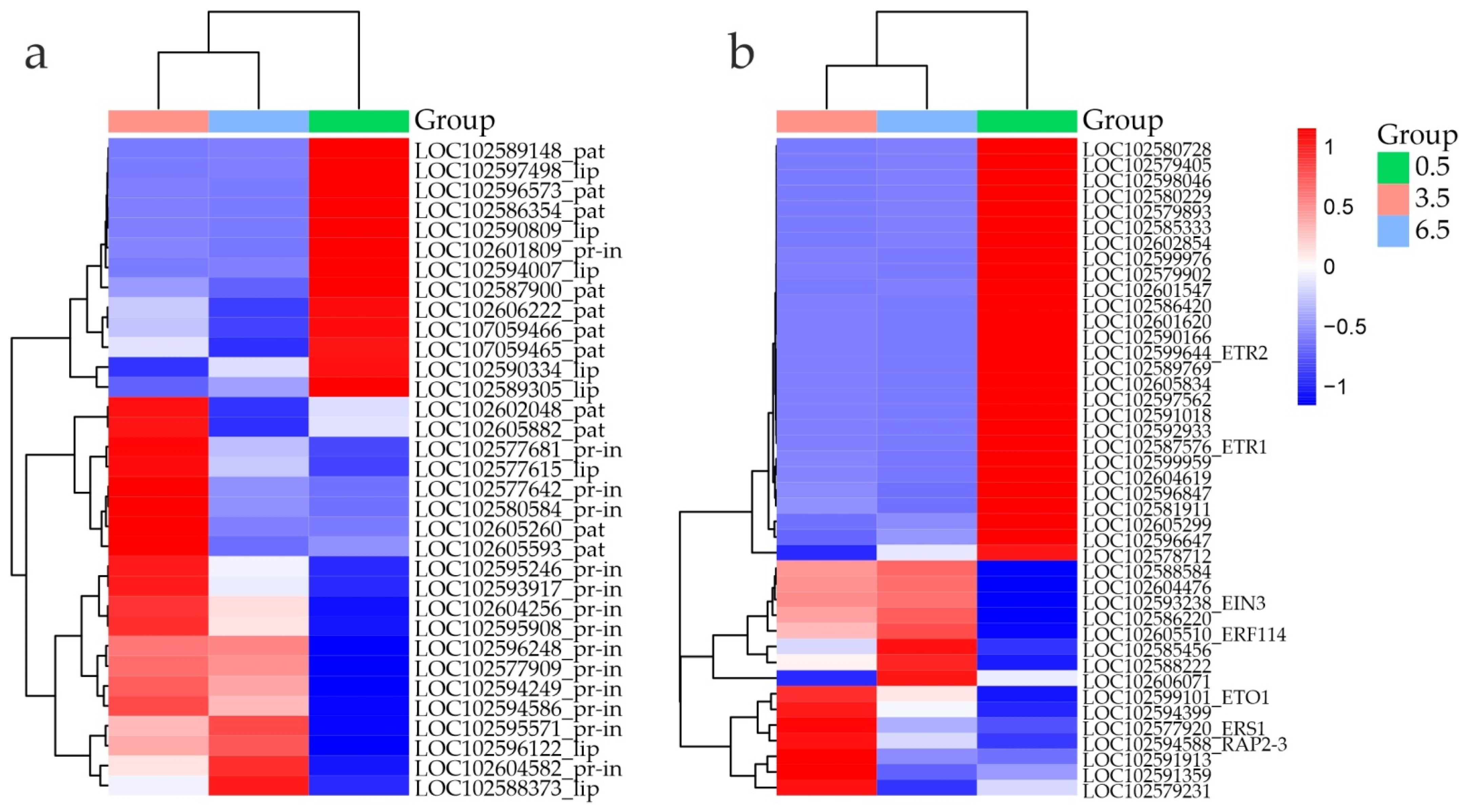
| ETH | 43 DEGs associated with ETH signaling were identified. The upregulated DEGs encode ETHYLENE-OVERPRODUCTION PROTEIN 1 (ETO1), ETHYLENE INSENSITIVE 3-like (EIN3), 13 ETH-responsive TFs (ERFs), and three ETH receptors homologous to Arabidopsis thaliana ETHYLENE RESPONSE 1 (ETR1), ETR2, and ETHYLENE RESPONSE SENSOR 1 (ERS1); the most upregulated genes were ETH-responsive ERF114-like and RAP2-3 (Figure 4b, Supplementary Table S12). |
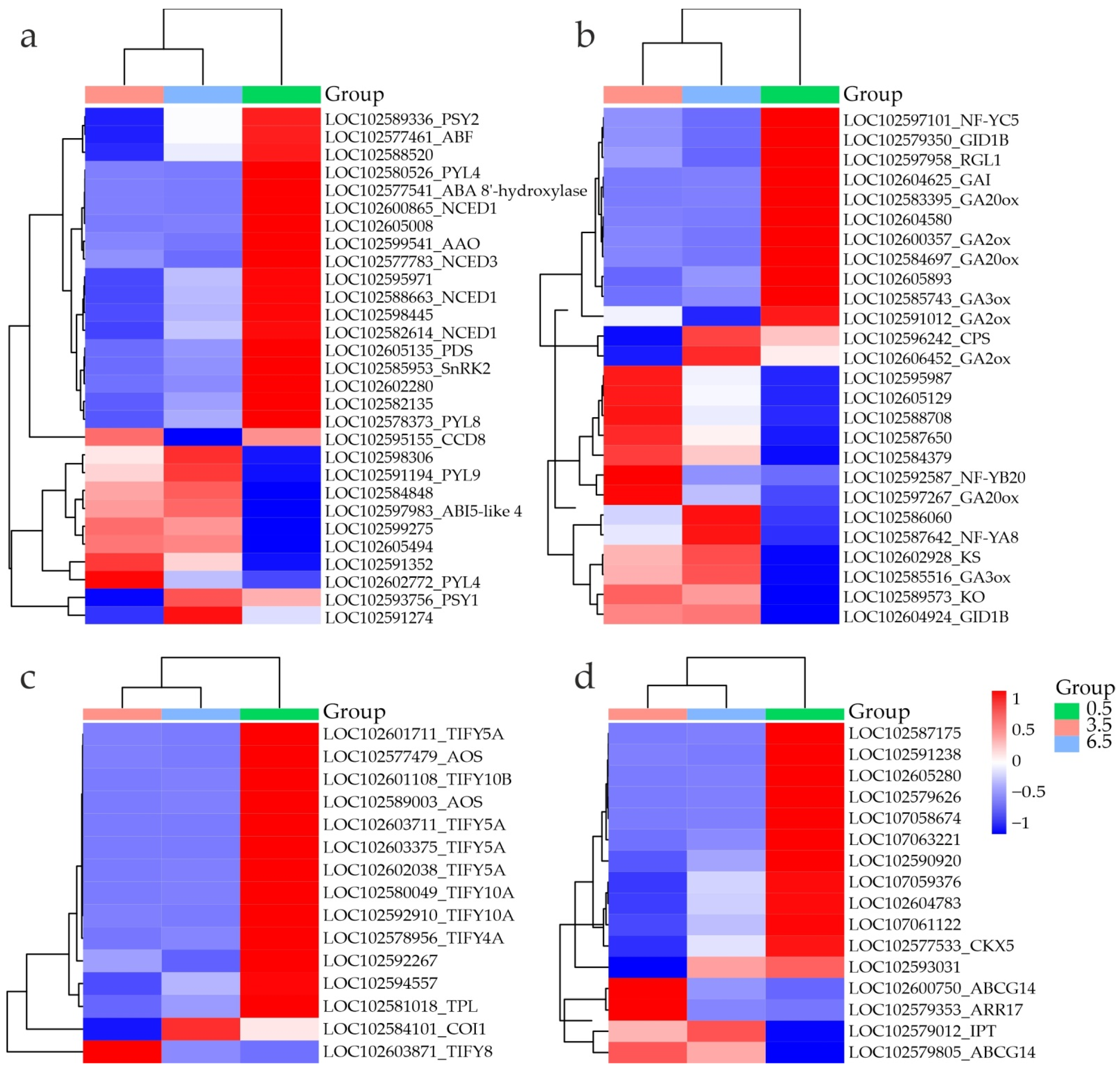
| ABA, SLs | 30 DEGs associated with carotenoid/ABA/SL synthesis/signaling were identified. All DEGs related to carotenoid metabolism, such as NCED1 and 3 (9-cis-epoxycarotenoid dioxygenase), AAO (abscisic-aldehyde oxidase), and ABA 8′-hydroxylase genes were downregulated (Figure 5a, Supplementary Table S12). CCD8 (carotenoid cleavage dioxygenase) associated with SL synthesis [14] was upregulated (Figure 5a), supporting the notion about ABA content decrease. DEGs encoding ABA signaling-related proteins, including ABA receptors (PYL4-like LOC102602772 and LOC102580526, PYL9-like, and PYL8-like), ABA-responsive element-binding factors (ABF), ABA-INSENSITIVE 5-like protein 4 (ABI5-like 4), and sucrose non-fermenting-1-related protein kinases 2 (SnRK2) [29] were either upregulated (PYL4-like LOC102602772, PYL9-like, ABI5-like 4, four SnRK2 genes) or downregulated (PYL4-like LOC102580526, PYL8-like, ABF-binding bZIP-TFs, one SnRK2). |
| JAs | 16 DEGs associated with JA synthesis/signaling were identified. DEGs related to JA signaling, such as TIFY (JA ZIM-domain protein), TPL (TOPLESS), and AOS (allene oxide synthase, the first enzyme in JA synthesis), were downregulated, except for one of the nine TIFY genes, TIFY8, which was activated by 2.6-fold (Figure 5c, Supplementary Table S12). In response to JA, the F-box protein CORONATINE-INSENSITIVE 1 (COI1) enters the SCFCOI1 E3 ubiquitin ligase complex involved in the degradation of JA signaling negative regulators TIFY and represses the JA cascade through interaction with corepressor TPL [30]. The expression of the COI1 gene, the only positive regulator of JA signaling among the listed, did not change at 3.5 vs. 0.5 months (although it was increased by 1.5 times at 6.5 vs. 0.5/3.5 months (Figure 5c), which may be related to the inhibition of non-dormant bud sprouting). Thus, JA signaling was likely downregulated in 3.5-mo tubers because of TIFY8 activation and JA synthesis suppression. |
| GAs | 27 DEGs associated with GA synthesis/signaling were identified. The expression of the DEGs encoding GA synthesis enzymes copalyl pyrophosphate synthase (CPS), Ent-kaurene synthase (KS), Ent-kaurene oxidase (KO), GA20 oxidase (GA20ox), GA3 oxidase (GA3ox), and GA2 oxidase (GA2ox) changed in both directions: some (CPS, two GA20ox, one GA3ox, and three GA2ox) were repressed, whereas the others (KS, KO, one GA20ox, and one GA3ox) were activated. The GAI- and RGL1-like genes of DELLA TFs, which negatively regulate GA signaling but activate GA receptor (GID1) [31,32], were downregulated alongside one of the GID1B-like genes, whereas the other gene was upregulated. The expression of most genes that belong to the nuclear factor Y (NF-Y) TF complex and positively regulate GA-mediated dormancy [14,31], including StNF-YA8 and StNF-YB20, was increased and that of StNF-YC5—decreased (Figure 5b, Supplementary Table S12). |
| CKs | 17 DEGs associated with CK synthesis/signaling were identified. The expression of CK metabolism/signaling genes [14,33] changed insignificantly or was repressed, with the exception of IPT (isopentenyl transferase regulating CK accumulation), two ABCG14-like (regulating CK efflux across the plasma membrane), and ARR17-like (type-A response regulator negatively affecting CK signaling) genes which were activated. One of the CK-responsive genes WUS (WUSCHEL TF maintaining the stem cell niche in the shoot meristem) was strongly upregulated, whereas WUS-related homeobox 8-like (WOX8) was downregulated (Figure 5d, Supplementary Table S13). |
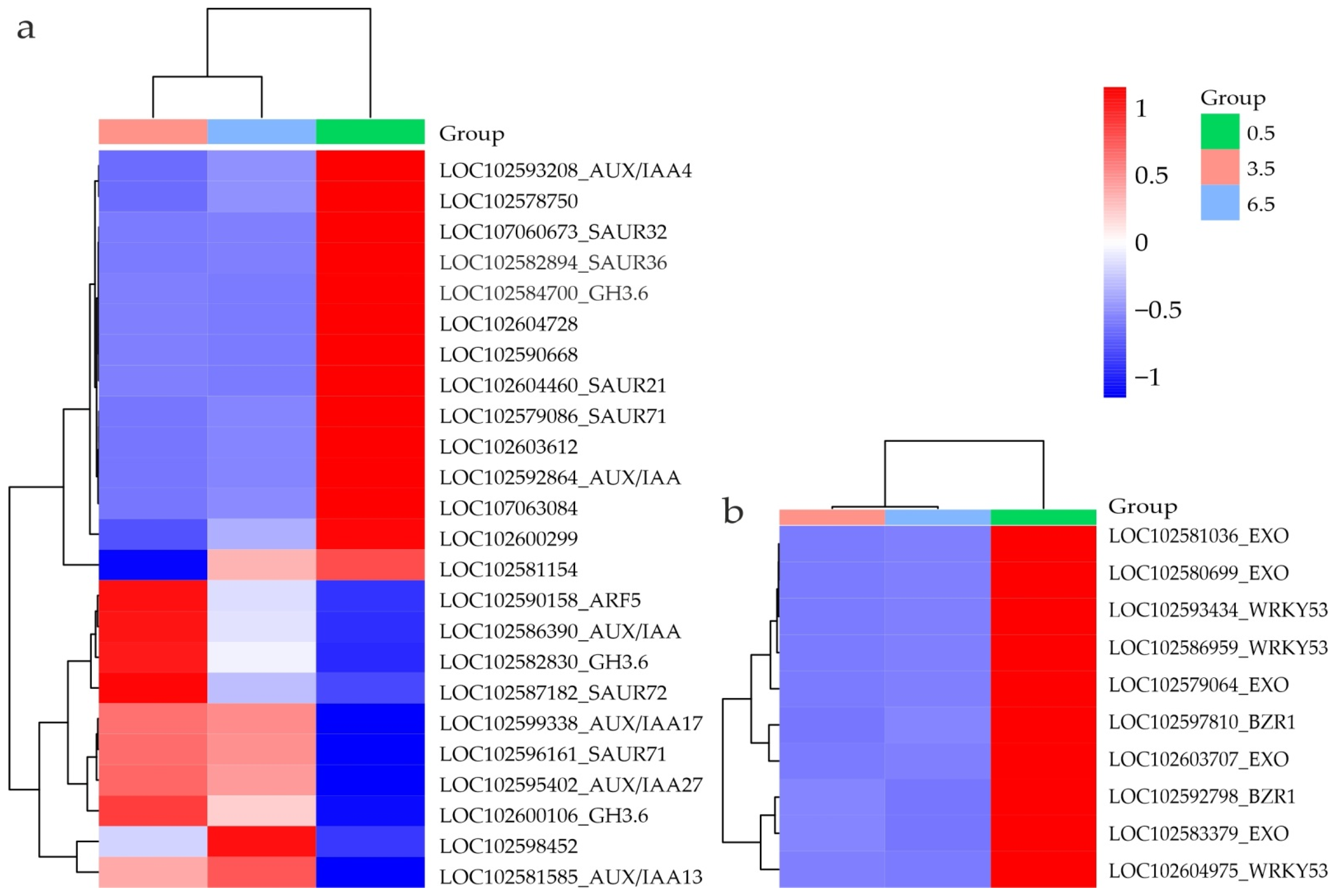
| Auxins | 25 DEGs associated with Auxin signaling were identified. Auxin target genes [34] such as two SAUR (SMALL AUXIN UP-REGULATED RNA) and GH3 (GRETCHEN HAGEN 3 indole-3-acetic acid-amido synthetase) DEGs were upregulated, whereas four SAUR and five GH3 DEGs were downregulated (Figure 6a). ARF5 (auxin response factor) and four AUX/IAA (AUXIN RESISTANT/INDOLE-3-ACETIC ACID INDUCIBLE repressor) genes were upregulated, and two AUX/IAA genes were downregulated (Figure 6a). Two ARF6-like genes (LOC102598519, LOC102606235) were slightly (statistically insignificant) upregulated (Supplementary Table S2); the upregulation of the ARF6 gene in tuber buds during dormancy release has also been shown earlier [35]. |
| BRs | 12 DEGs associated with BR synthesis/signaling were identified. Of the genes encoding important enzymes in the BR biosynthetic pathway (deetiolated2 (det2), dwarf1 (DWF1), and DWF5 [36]), only DWF5 expression was significantly changed (upregulated) at 3.5 vs. 0.5 months (Supplementary Table S12). BIN1 (BR receptor BRASSINOSTEROID-INSENSITIVE 2 kinase [34]), three WRKY53 and two BZR1 (BRASSINAZOLE-RESISTANT 1) TF-encoding genes (positive regulators of BR-related processes [37]), and five EXO (EXORDIUM mediator of BR-promoted growth [38]) genes were downregulated at 3.5 and 6.5 vs. 0.5 months (Figure 6b, Supplementary Table S12). |
| Gene ID | Protein | 3.5 vs. 0.5 | 6.5 vs. 0.5 | Comments |
|---|---|---|---|---|
| LOC102585059 | Agamous-like MADS-box protein AGL27 | 5.3 up | 3.1 up | Belongs to the FLC subfamily consisting of FLC, MADS AFFECTING FLOWERING 1 (MAF1, AGL27, or FLOWERING LOCUS M (FLM)), MAF2, MAF3, MAF4, and MAF5; some interact with SHORT VEGETATIVE PHASE (SVP) to inhibit flowering (cold dependent) by directly repressing FT and SOC1 transcription [64]. |
| LOC102603965 | Flowering locus K homology domain-like (FLK) | 3.0 up | 3.5 up | FLK and FPA promote flowering by suppressing FLC. [65]. |
| LOC102593682 | Flowering time control protein (FPA) | 1.6 up | 2.6 up | |
| LOC102598110 | FRIGIDA-like 3 | 2.6 up | 3.7 up | FRI induces FLC transcription, which is epigenetically repressed by vernalization [64]; FRI-like protein 3 (FRL3) functions in flowering suppression [66]; FRI-ESSENTIAL 1 genetically interacts with FRI and FRI-LIKE 1 to promote FLC expression [67]. |
| LOC102588299 | FRIGIDA-like 4a | 2.2 up | 2.3 up | |
| LOC102597500 | FRIGIDA-ESSENTIAL 1-like | 2.1 do | 3.7 do | |
| LOC102589537 | FRIGIDA-like (FRI) | 2.1 up | 2.3 up | |
| LOC102593387 | VIN3-like protein 1 (VIL1) | 2.3 do | 2.0 do | VIL1 participates in both photoperiod and vernalization pathways by regulating FLC and FLM expression. In the vernalization pathway, VIL1, along with VIN3, is necessary for the modifications of FLC and FLM chromatin associated with the epigenetically silenced state and acquisition of competence to flower [68]. |
| LOC102599642 | Agamous-like MADS-box protein AGL19 | 4.9 do | 4.3 do | AGL19 acts in the FLC-independent vernalization pathway; elevated AGL19 levels result in the activation of LEAFY and APETALA1 and flowering [69]. |
| LOC102601949 LOC102603864 | SENSITIVITY TO RED LIGHT REDUCED 1-like | 4.8 do 4.2 do | 4.3 do - | SRR1 delays flowering by controlling FT repression [70]. |
| LOC102589240 | Transcription factor TCP8-like | 7.9 do | 7.2 do | TCP8 upregulation leads to FLC increase [71]. |
| LOC102588708 | Nuclear transcription factor Y subunit B-3-like | 8.2 do | 4.1 do | NF-YB3 is essential for flowering induction through regulation of FT expression [72]. |
| LOC102597323 | MYB family transcription factor APL | 136 do | 91.7 do | APL promotes flowering through FT activation [73]. |
| LOC102593569 LOC102603163 | TRANSPARENT TESTA GLABRA 1-like | 22.7 do 9.7 do | 13.8 do 30.1 do | TTG1 can repress the transcription of floral integrators FT and SOC1 and activate that of FLC [74]. |
| LOC102606359 | B-box zinc finger protein 19-like | 4.5 do | - | BBX19 suppresses seed germination via ABI5 induction [75] and interacts with CO to repress FT transcription, thus defining flowering time [76]. |
| LOC102580467 | MOTHER of FT and TFL1 | 50 up | 15 up | MOTHER-OF-FT-AND-TFL1 (MFT) is seed dormancy-promoting factor [53]. |
| LOC102606292 | FLOWERING LOCUS T-like (StSP5GB) | 2.4 up | - | StSP5G genes are repressors of tuber formation [4]; FT is involved in temperature responses and has an uncharacterized role in the promotion of seed germination [77]. |
| LOC102579194 | FLOWERING LOCUS T-like (StSP5GA) | 1.7 up | - | |
| LOC102583457 | GIGANTEA-like | 11 up | 5.8 up | A. thaliana accessions with gigantea (gi) mutations have significantly increased seed dormancy; the phenotype is shared by constans (co) and flowering locus t (ft) mutants [77]. In potato, GI is involved in flowering and tuber initiation [6]. |
| LOC102578719 | GIGANTEA-like | 2.2 up | - | |
| LOC102577795 | Agamous-like MADS-box protein AGL8 homolog (POTM1) | 2.4 up | 3.8 up | POTM1 (StMADS1) stimulates the transcription of tuberigen StSP6A in a feedback manner [7]. |
| LOC102591375 | Agamous-like MADS-box protein AGL62 | 3.4 do | 4.2 do | AGL62 regulates the transport of auxin (positively associated with dormancy release) from endosperm [78]. |
| LOC102596767 | Floral homeotic protein AGAMOUS-like | 3.7 do | 9.2 do | A homolog of AG-clade gene SHATTERPROOF 1 (SHP1, AGL1) is upregulated during flower bud endodormancy to ecodormancy transition in Prunus species during chilling [79]. |
| LOC102577664 | MADS transcriptional factor STMADS11 | 6.5 do | 12.6 do | STMADS11 and its homolog STMADS16 belong to the SVP/AGL24-clade MADS-box genes, which include DORMANCY-ASSOCIATED MADS-box (DAM); DAM/SVP represses the bud dormancy break; DAM expression is decreased during dormancy release in response to prolonged chilling [80]. |
| LOC102577849 | MADS16 protein | 1.4 up | - | |
| LOC102593715 | MADS-box TF 23-like | 2.0 do | 2.7 do | AGL16 homolog directly interacting with SVP and indirectly with FLC; reduces flowering time [81]. |
| LOC102601650 | MADS-box protein SOC1-like | 3.8 do | 1.8 do | SOC1 is linked to flowering regulation and plays a key role in bud dormancy transition [82]. |
| LOC102586019 | MADS-box protein SOC1-like | 2.1 do | - | |
| LOC102582884 | MADS-box TF 23-like | 8.6 up | 3.9 up | AGL21 homolog involved in seed germination and early post-germination growth [56]. |
| LOC102597046 | EARLY FLOWERING 3 (ELF3) | 2.1 do | 2.1 do | ELF3 and ELF4 are negative regulators of flowering time [83] and may have a role in seed dormancy control [84]. |
| LOC102586641 | EARLY FLOWERING 3-like | 15.6 do | 5.9 do | |
| LOC102587775 | ELF4-LIKE 3 | 1.9 up | 2.2 up | |
| LOC102577671 | CONSTANS | 12.4 do | 3.6 do | In potato, CO, COL2, and COL1 activate anti-tuberigen expression and function as regulators of the tuberization pathway [6]. |
| LOC102587352 | zinc finger protein CONSTANS-like | 4.7 do | 5.9 do | |
| LOC102587905 | CONSTANS-LIKE 2 | 14.0 do | 10.1 do | |
| LOC102598089 | CONSTANS-LIKE 2-like | 2.9 do | 6.4 do | |
| LOC102585080 | CONSTANS-LIKE 4-like | 3.9 do | 1.5 do | COL4 is a flowering repressor [85]. |
| LOC102578495 | CONSTANS-LIKE 4-like | 3.1 do | 1.4 do | |
| LOC102582832 | CONSTANS-LIKE 5-like | 3.5 do | 3.2 do | COL5 acts as a flowering inductor [86]. |
| LOC102600093 | CONSTANS-LIKE 3-like | 3.9 do | - | LONG HYPOCOTYL 5 (HY5)-COL3-COL13 regulatory chain functions in hypocotyl elongation [87]. |
| LOC102582339 | CONSTANS-LIKE 13 | 3.2 do | 3.7 do | |
| LOC102588526 | transcription factor HY5 | 5.1 up | 5.4 up | HY5 is positively associated with dormancy release [88]. |
| LOC102603307 | cyclic dof factor 1 | - | 1.9 up | StCDF1 represses CO expression, stimulating tuberization [5]. |
| LOC102597615 | cyclic dof factor 1-like | 13–15 RPKM * | ||
| LOC102577460 | BEL1-related homeotic protein 5 | 29–65 RPKM * | StBEL5 together with POTH1 positively regulates the expression of StCDF1, StSP6A, and some StSP6A target genes [4,6]. | |
| LOC102602563 | FLOWERING LOCUS D (FD) | 7–8 RPKM * 13–20 RPKM * | FD is included in both FAC and TAC [3]. | |
| LOC102593535 | Agamous-like MADS-box protein AGL27 | Flowering repressors [64]. | ||
| LOC102605812 | Truncated TF CAULIFLOWER A-like (MAF4 homolog) | 4–6 RPKM * | ||
| LOC102605245 | MADS AFFECTING FLOWERING 5-like | 14–21 RPKM * | ||
Disclaimer/Publisher’s Note: The statements, opinions and data contained in all publications are solely those of the individual author(s) and contributor(s) and not of MDPI and/or the editor(s). MDPI and/or the editor(s) disclaim responsibility for any injury to people or property resulting from any ideas, methods, instructions or products referred to in the content. |
© 2026 by the authors. Licensee MDPI, Basel, Switzerland. This article is an open access article distributed under the terms and conditions of the Creative Commons Attribution (CC BY) license.
Share and Cite
Shchennikova, A.V.; Bykova, A.V.; Kochieva, E.Z. Transcriptome Profiling of Cold-Stored Potato Tubers Revealed Similarities in the Regulation of Bud Dormancy Release, Tuberization, and Flowering Initiation. Horticulturae 2026, 12, 201. https://doi.org/10.3390/horticulturae12020201
Shchennikova AV, Bykova AV, Kochieva EZ. Transcriptome Profiling of Cold-Stored Potato Tubers Revealed Similarities in the Regulation of Bud Dormancy Release, Tuberization, and Flowering Initiation. Horticulturae. 2026; 12(2):201. https://doi.org/10.3390/horticulturae12020201
Chicago/Turabian StyleShchennikova, Anna V., Anastassiya V. Bykova, and Elena Z. Kochieva. 2026. "Transcriptome Profiling of Cold-Stored Potato Tubers Revealed Similarities in the Regulation of Bud Dormancy Release, Tuberization, and Flowering Initiation" Horticulturae 12, no. 2: 201. https://doi.org/10.3390/horticulturae12020201
APA StyleShchennikova, A. V., Bykova, A. V., & Kochieva, E. Z. (2026). Transcriptome Profiling of Cold-Stored Potato Tubers Revealed Similarities in the Regulation of Bud Dormancy Release, Tuberization, and Flowering Initiation. Horticulturae, 12(2), 201. https://doi.org/10.3390/horticulturae12020201