Optimization of In Vitro Organogenesis and Phenolic Production in Physalis peruviana L. Through Explant Type and Auxin–TDZ Interactions

 , , , , and
Abstract
1. Introduction
2. Materials and Methods
2.1. Plant Material and Seed Pretreatment
2.2. Surface Disinfection, In Vitro Seed Germination, and Culture Conditions
2.3. Determination of the Optimal TDZ Concentration for In Vitro Regeneration
2.4. Evaluation of In Vitro Morphogenesis Induced by TDZ, NAA, and IBA in Cotyledon and Hypocotyl Explants of P. peruviana
2.5. Morphogenic Parameters
2.6. Photosynthetic Pigments and Total Phenolic Content
2.6.1. Extract Preparation
2.6.2. Determination of Photosynthetic Pigments
- Chlorophyll a = [(15.65 × A666 − 7.34 × A653) × 200]/1000
- Chlorophyll b = [(27.05 × A653 − 11.21 × A666) × 200]/1000
- Total carotenoids = {[(1000 × A470 − 2.86 × Ca − 129.2 × Cb)/221] × 200}/1000
2.6.3. Determination of Total Phenolic Content
2.7. Data Analysis
3. Results
3.1. Optimal TDZ Concentration for In Vitro Regeneration
3.2. Effects of TDZ, NAA, and IBA on Morphogenic Responses
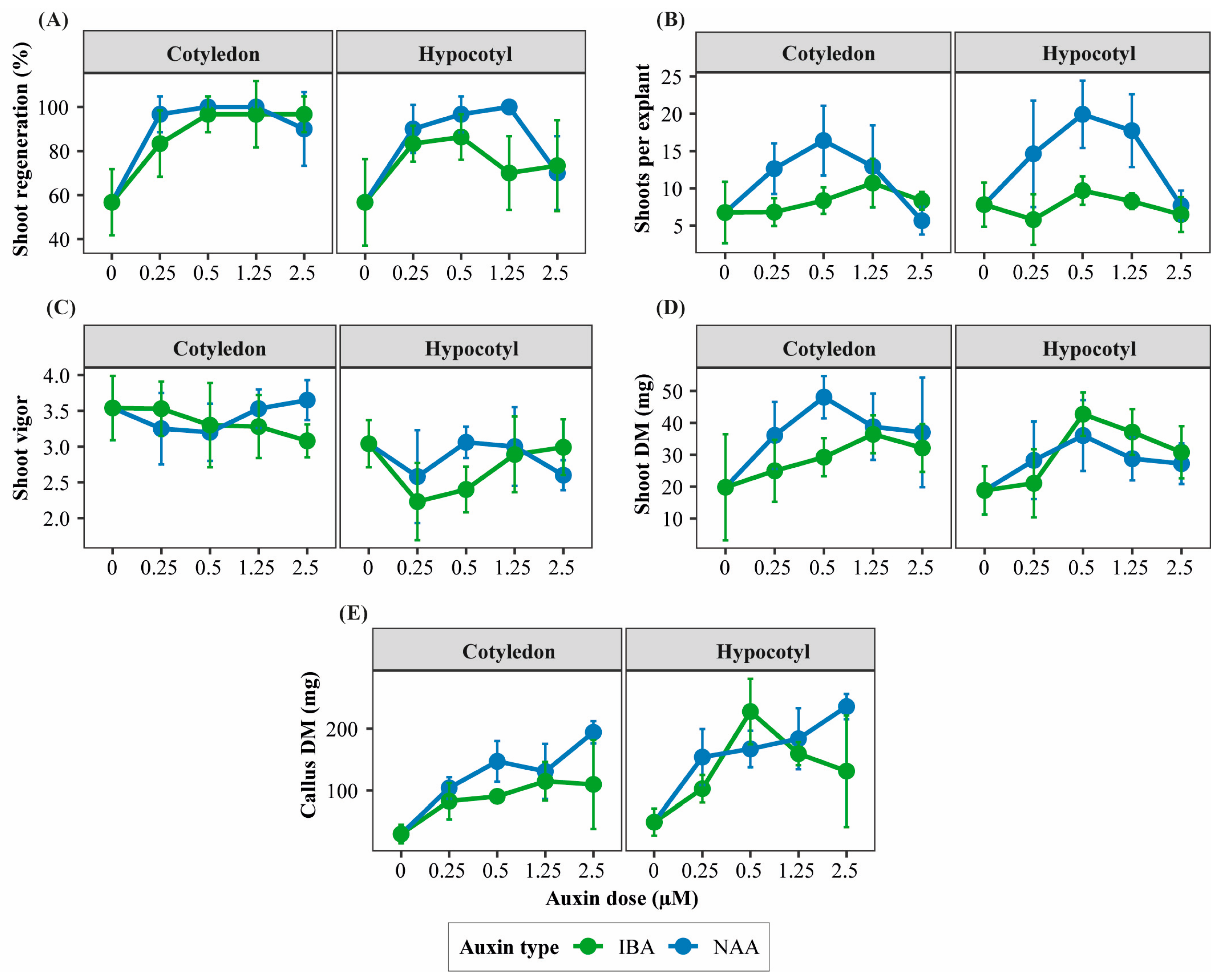
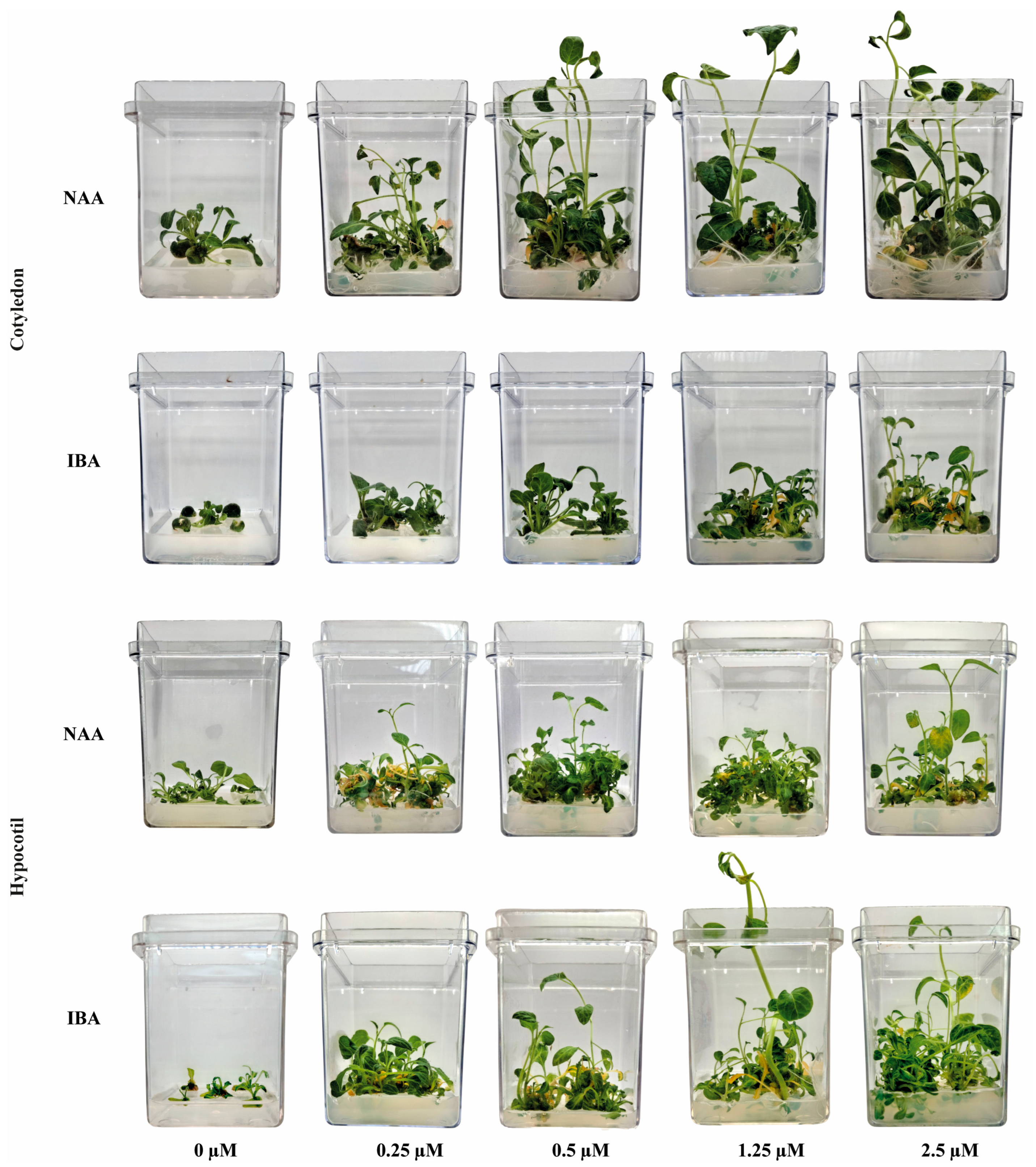
3.2.1. Interaction Effects Among Explant Type, Auxin Type, and Auxin Concentration (E × A × D)
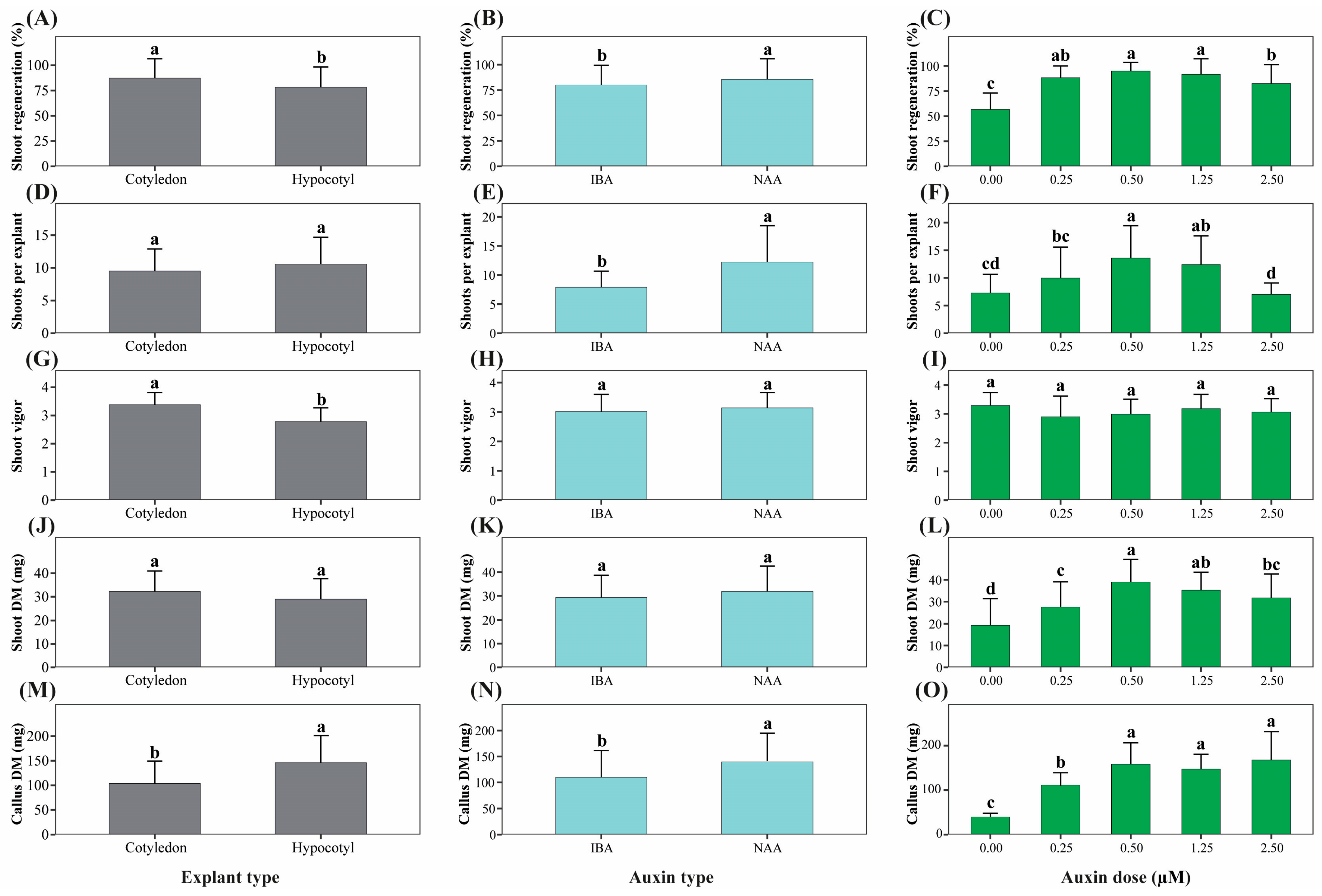
3.2.2. Main Effects of Explant Type, Auxin Type, and Auxin Concentration on Morphogenic Responses
3.3. Effects of TDZ, NAA, and IBA on Physiological Responses
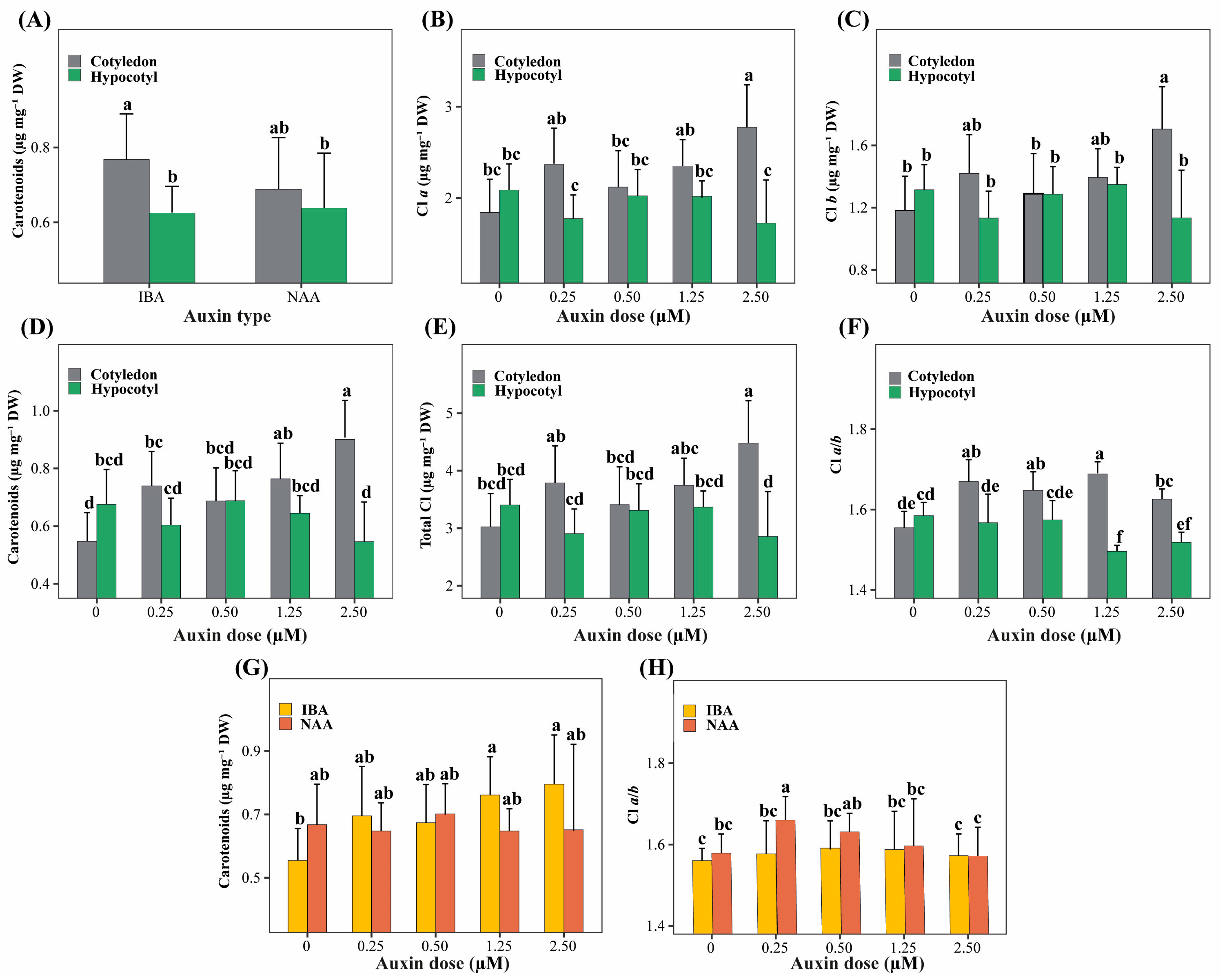
3.3.1. Effect of the Interaction Between Explant Type, Auxin Type, and Auxin Concentration (E × A × D) on Physiological Responses
3.3.2. Main Effects of Explant Type, Auxin Type, and Auxin Concentration on Physiological Responses
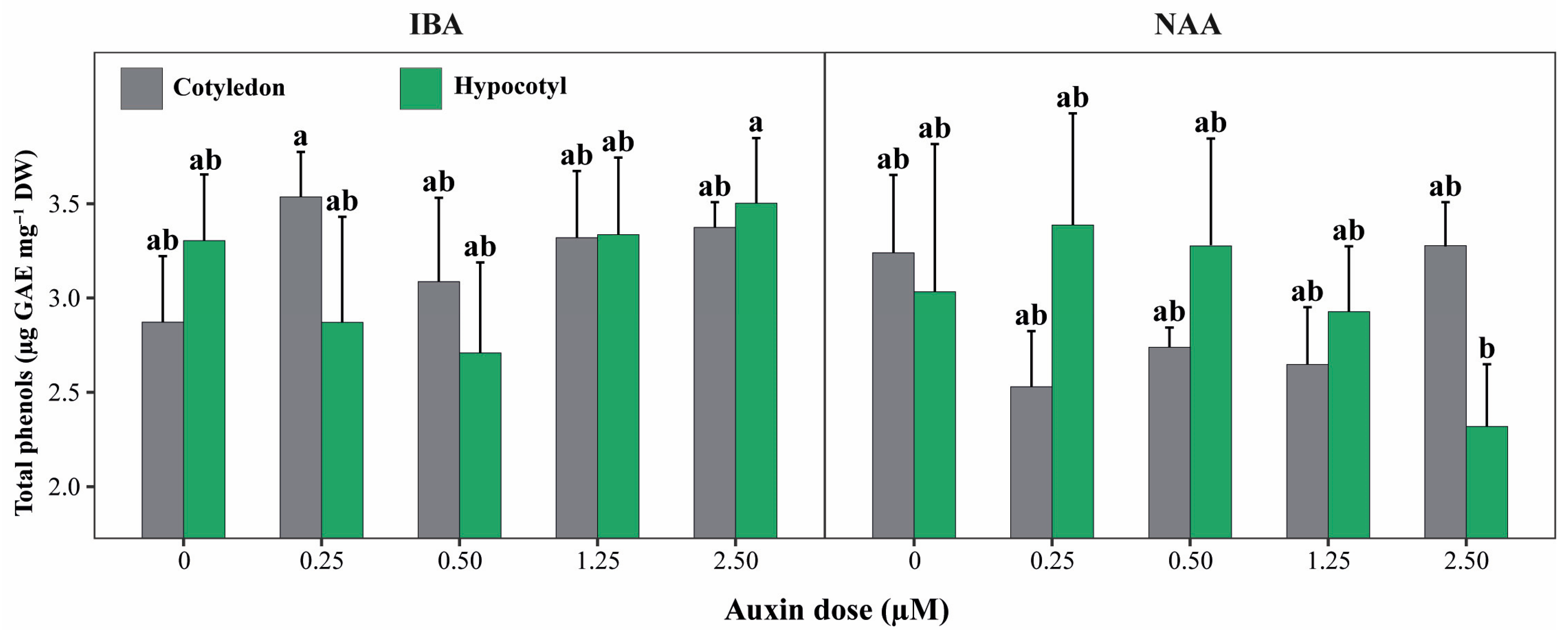
3.4. Effects of Explant Type, Auxin Type, and Auxin Concentration on Total Phenolic Compound Production
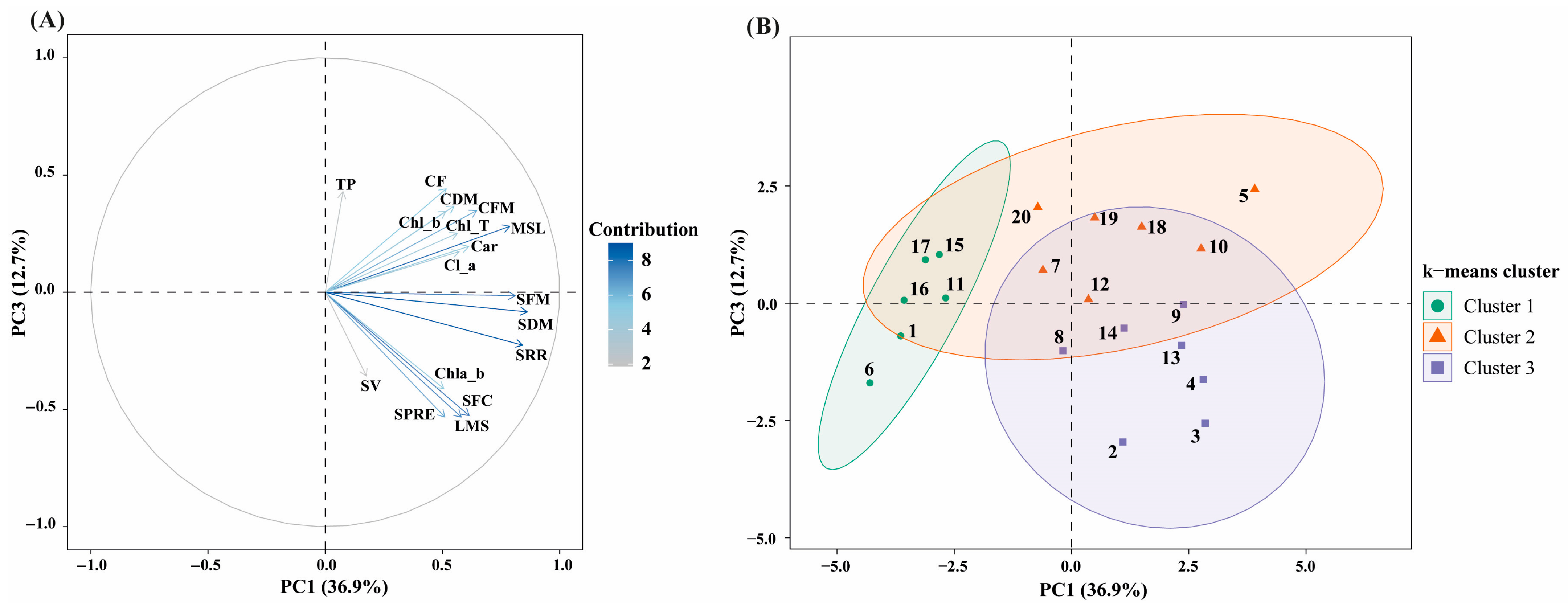
3.5. Principal Component Analysis and Clustering
4. Discussion
5. Conclusions
Supplementary Materials
Author Contributions
Funding
Data Availability Statement
Acknowledgments
Conflicts of Interest
References
- Coy-Barrera, E. Chapter 15—Chemistry and Biological Properties of Physalis Peruviana Leaf Extract; Ramadan, M.F., Ed.; Academic Press: Cambridge, MA, USA, 2024; pp. 165–174. ISBN 978-0-443-15433-1. [Google Scholar]
- Liu, T.; Teng, X.; Tian, Y.; Yao, Y.; Wang, Y.; Wang, W. Chemical Composition Analysis and Antioxidant Activity Evaluation of Leaf, Calyx, and Fruit of Physalis peruviana L. Food Ferment. Ind. 2024, 50, 243–251. [Google Scholar] [CrossRef]
- Añibarro-Ortega, M.; Dias, M.I.; Petrović, J.; Mandim, F.; Núñez, S.; Soković, M.; López, V.; Barros, L.; Pinela, J. Nutrients, Phytochemicals, and In Vitro Biological Activities of Goldenberry (Physalis peruviana L.) Fruit and Calyx. Plants 2025, 14, 327. [Google Scholar] [CrossRef] [PubMed]
- Zhong, Y.; Zhou, Z.; Yin, Z.; Zhang, L.; Zhang, Q.; Xie, Y.; Chen, J. Effect of Different Agrobacterium Rhizogenes Strains on Hairy Root Induction and Analysis of Metabolites in Physalis peruviana L. J. Plant Physiol. 2025, 305, 154431. [Google Scholar] [CrossRef] [PubMed]
- Muñoz, P.; Parra, F.; Simirgiotis, M.J.; Chavera, G.F.S.; Parra, C. Chemical Characterization, Nutritional and Bioactive Properties of Physalis peruviana Fruit from High Areas of the Atacama Desert. Foods 2021, 10, 2699. [Google Scholar] [CrossRef]
- Yari, P.; Alirezalu, A.; Khalili, S. A Comparative Study of Chemical Composition, Phenolic Compound Profile and Antioxidant Activity of Wild Grown, Field and Greenhouse Cultivated Physalis (P. alkekengi and P. peruviana). Food Prod. Process. Nutr. 2025, 7, 19. [Google Scholar] [CrossRef]
- Chiancone, B.; Guarrasi, V.; Leto, L.; Del Vecchio, L.; Calani, L.; Ganino, T.; Galaverni, M.; Cirlini, M. Vitro-Derived Hop (Humulus lupulus L.) Leaves and Roots as Source of Bioactive Compounds: Antioxidant Activity and Polyphenolic Profile. Plant Cell Tissue Organ Cult. 2023, 153, 295–306. [Google Scholar] [CrossRef]
- Ahmed, A.; Tariq, A.; Habib, S. Interactive Biology of Auxins and Phenolics in Plant Environment. In Plant Phenolics in Sustainable Agriculture; Lone, R., Shuab, R., Kamili, A.N., Eds.; Springer: Singapore, 2020; pp. 117–133. ISBN 978-981-15-4890-1. [Google Scholar]
- Marchiosi, R.; dos Santos, W.D.; Constantin, R.P.; de Lima, R.B.; Soares, A.R.; Finger-Teixeira, A.; Mota, T.R.; de Oliveira, D.M.; Foletto-Felipe, M.d.P.; Abrahão, J.; et al. Biosynthesis and Metabolic Actions of Simple Phenolic Acids in Plants. Phytochem. Rev. 2020, 19, 865–906. [Google Scholar] [CrossRef]
- Bajguz, A.; Piotrowska-Niczyporuk, A. Biosynthetic Pathways of Hormones in Plants. Metabolites 2023, 13, 884. [Google Scholar] [CrossRef]
- Sosnowski, J.; Truba, M.; Vasileva, V. The Impact of Auxin and Cytokinin on the Growth and Development of Selected Crops. Agriculture 2023, 13, 724. [Google Scholar] [CrossRef]
- Ptak, A.; Szewczyk, A.; Simlat, M.; Błażejczak, A.; Warchoł, M. Meta-Topolin-Induced Mass Shoot Multiplication and Biosynthesis of Valuable Secondary Metabolites in Stevia Rebaudiana Bertoni Bioreactor Culture. Sci. Rep. 2023, 13, 15520. [Google Scholar] [CrossRef]
- Prashant, S.P.; Bhawana, M. An Update on Biotechnological Intervention Mediated by Plant Tissue Culture to Boost Secondary Metabolite Production in Medicinal and Aromatic Plants. Physiol. Plant. 2024, 176, e14400. [Google Scholar] [CrossRef] [PubMed]
- Karakas, F.P. Efficient Plant Regeneration and Callus Induction from Nodal and Hypocotyl Explants of Goji Berry (Lycium barbarum L.) and Comparison of Phenolic Profiles in Calli Formed under Different Combinations of Plant Growth Regulators. Plant Physiol. Biochem. 2020, 146, 384–391. [Google Scholar] [CrossRef] [PubMed]
- Ali, H.M.; Khan, T.; Khan, M.A.; Ullah, N. The Multipotent Thidiazuron: A Mechanistic Overview of Its Roles in Callogenesis and Other Plant Cultures In Vitro. Biotechnol. Appl. Biochem. 2022, 69, 2624–2640. [Google Scholar] [CrossRef] [PubMed]
- Wongmaneeroj, M.; Jamjumrus, S.; Agarum, R.; Sukkhaeng, S.; Promdang, S.; Homhual, R. Effects of Growth Regulators on Production of Bioactive Compounds from Clinacanthus nutans (Burm.f.) Lindau “Phaya Yo” Culture In Vitro. ScienceAsia 2023, 49, 864–872. [Google Scholar] [CrossRef]
- Mok, M.C.; Mok, D.W.S.; Turner, J.E.; Mujer, C.V. Biological and Biochemical Effects of Cytokinin-Active Phenylurea Derivatives in Tissue Culture Systems. HortScience 1987, 22, 1194–1197. [Google Scholar] [CrossRef]
- Hutchinson, M.J.; Krishnaraj, S.; Saxena, P.K. Morphological and Physiological Changes during Thidiazuron-Induced Somatic Embryogenesis in Geranium (Pelargonium x Hortorum Bailey) Hypocotyl Cultures. Int. J. Plant Sci. 1996, 157, 440–446. [Google Scholar] [CrossRef]
- Luo, Y.; Han, Y.; Wei, W.; Han, Y.; Yuan, J.; He, N. Transcriptome and Metabolome Analyses Reveal the Efficiency of In Vitro Regeneration by TDZ Pretreatment in Mulberry. Sci. Hortic. 2023, 310, 111678. [Google Scholar] [CrossRef]
- Pai, S.R.; Desai, N.S. Effect of TDZ on Various Plant Cultures. In Thidiazuron: From Urea Derivative to Plant Growth Regulator; Ahmad, N., Faisal, M., Eds.; Springer: Singapore, 2018; pp. 439–454. ISBN 978-981-10-8004-3. [Google Scholar]
- Erland, L.A.E.; Giebelhaus, R.T.; Victor, J.M.R.; Murch, S.J.; Saxena, P.K. The Morphoregulatory Role of Thidiazuron: Metabolomics-Guided Hypothesis Generation for Mechanisms of Activity. Biomolecules 2020, 10, 1253. [Google Scholar] [CrossRef]
- Li, F.; Wu, Q.; Liao, B.; Yu, K.; Huo, Y.; Meng, L.; Wang, S.; Wang, B.; Du, M.; Tian, X.; et al. Thidiazuron Promotes Leaf Abscission by Regulating the Crosstalk Complexities between Ethylene, Auxin, and Cytokinin in Cotton. Int. J. Mol. Sci. 2022, 23, 2696. [Google Scholar] [CrossRef]
- Kumar, K.; Debnath, P.; Singh, S.; Kumar, N. An Overview of Plant Phenolics and Their Involvement in Abiotic Stress Tolerance. Stresses 2023, 3, 570–585. [Google Scholar] [CrossRef]
- Kaur, M.; Tak, Y.; Bhatia, S.; Kaur, H. Phenolics Biosynthesis, Targets, and Signaling Pathways in Ameliorating Oxidative Stress in Plants. In Plant Phenolics in Abiotic Stress Management; Springer: Berlin/Heidelberg, Germany, 2023; pp. 149–171. [Google Scholar]
- Zheleznichenko, T.; Veklich, T.; Kostikova, V. Effects of 6-Benzylaminopurine and Thidiazuron on In Vitro Regeneration and Antioxidant Content of Sorbaria pallasii (Rosaceae) Microshoots. Rend. Lincei. Sci. Fis. e Nat. 2024, 35, 961–970. [Google Scholar] [CrossRef]
- Olatunji, O.A.; Okunlola, G.O.; Rufai, A.B.; Obisesan, I.A.; Adeyinka, A.; Wang, D.; Ogunkunle, C.O.; Jimoh, M.A. Foliar Application of Thidiazuron Alleviates Cd Toxicity by Modulating Stress Enzyme Activities and Stimulating Pigment Biosynthesis in Cajanus cajan (L.). J. Plant Growth Regul. 2025, 44, 2995–3011. [Google Scholar] [CrossRef]
- Tarigholizadeh, S.; Motafakkerazad, R.; Kosari-Nasab, M.; Movafeghi, A.; Mohammadi, S.; Sabzi, M.; Talebpour, A.-H. Influence of Plant Growth Regulators and Salicylic Acid on the Production of Some Secondary Metabolites in Callus and Cell Suspension Culture of Satureja sahendica Bornm. Acta Agric. Slov. 2021, 117, 1–12. [Google Scholar] [CrossRef]
- Redhwan, A.; Acemi, A.; Özen, F. The Effects of Plant Growth Regulators on In Vitro Seedling Development in Verbascum bugulifolium and Thidiazuron-Induced Changes in Phenolic Substance Contents in Its Callus Tissues. Compr. Plant Biol. 2025, 49, 161–180. [Google Scholar] [CrossRef]
- Elmoreigi, R.A.; El-Maaty, S.A.; Hassanen, S.A.; Aly Hussein, E.H. Effect of Explant Type and Growth Regulators on in Vitro Regeneration of Apricot (Prunus armeniaca L.) Al-Amar Rootstock. Plant Cell Tissue Organ Cult. 2024, 160, 1. [Google Scholar] [CrossRef]
- Galán-Ávila, A.; García-Fortea, E.; Prohens, J.; Herraiz, F.J. Development of a Direct In Vitro Plant Regeneration Protocol From Cannabis sativa L. Seedling Explants: Developmental Morphology of Shoot Regeneration and Ploidy Level of Regenerated Plants. Front. Plant Sci. 2020, 11, 645. [Google Scholar] [CrossRef]
- Capriotti, L.; Ricci, A.; Molesini, B.; Mezzetti, B.; Pandolfini, T.; Piunti, I.; Sabbadini, S. Efficient Protocol of de Novo Shoot Organogenesis from Somatic Embryos for Grapevine Genetic Transformation. Front. Plant Sci. 2023, 14, 1172758. [Google Scholar] [CrossRef]
- Wang, H.; Petri, C.; Burgos, L.; Alburquerque, N. Efficient In Vitro Shoot Regeneration from Mature Apricot (Prunus armeniaca L.) Cotyledons. Sci. Hortic. 2013, 160, 300–305. [Google Scholar] [CrossRef]
- Dumont, D.; Danielato, G.; Chastellier, A.; Saint Oyant, L.H.; Fanciullino, A.-L.; Lugan, R. Multi-Targeted Metabolic Profiling of Carotenoids, Phenolic Compounds and Primary Metabolites in Goji (Lycium spp.) Berry and Tomato (Solanum lycopersicum) Reveals Inter and Intra Genus Biomarkers. Metabolites 2020, 10, 442. [Google Scholar] [CrossRef]
- Verma, S.K.; Gantait, S.; Mukherjee, E.; Gurel, E. Enhanced Somatic Embryogenesis, Plant Regeneration and Total Phenolic Content Estimation in Lycium barbarum L.: A Highly Nutritive and Medicinal Plant. J. Crop Sci. Biotechnol. 2022, 25, 547–555. [Google Scholar] [CrossRef]
- Abdelsalam, A.; Chowdhury, K.; Boroujerdi, A.; El-Bakry, A. Nuclear Magnetic Resonance Characterizes Metabolic Differences in Cymbopogon schoenanthus Subsp. Proximus Embryogenic and Organogenic Calli and Their Regenerated Shoots. Plant Cell. Tissue Organ Cult. 2022, 149, 225–241. [Google Scholar] [CrossRef]
- Yaroshko, O.; Rakhmetov, D.; Kuchuk, M. V Effect of the Plant Growth Stimulant Zeatin on Regeneration Capacity of Some Physalis Species In Vitro Culture. J. VN Karazin Kharkiv Natl. Univ. 2020, 35, 124–130. [Google Scholar] [CrossRef]
- Hernández-Villalobos, K.; Chico-Ruíz, J. Inducción de Brotes y Raíces En Hipocotilos y Cotiledones de Physalis peruviana L. Utilizando 6-Bencilaminopurina y 2,4-Diclorofenoxiacético. Rev. Investig. Altoandinas 2020, 22, 86–94. [Google Scholar] [CrossRef]
- Vargas, R.; Vigo, C.N.; Juarez-Contreras, L.; Oliva-Cruz, M. Development and Optimization of In Vitro Shoot Regeneration in Physalis peruviana Using Cotyledon Explants. J. Genet. Eng. Biotechnol. 2025, 23, 100463. [Google Scholar] [CrossRef]
- Vargas, R.; Vigo, C.N.; Guelac, M.; Huaman, E.; Oliva-cruz, M. Efficient and Cost-Effective Shoot Regeneration in Aguaymanto (Physalis peruviana L.) Using Meta-Topolin and 6-Benzylaminopurine Combinations. J. Genet. Eng. Biotechnol. 2025, 23, 100599. [Google Scholar] [CrossRef]
- Murashige, T.; Skoog, F. A Revised Medium for Rapid Growth and Bio Agsays with Tobacco Tissue Cultures. Physiol. Plant. 1962, 15, 473–497. [Google Scholar] [CrossRef]
- Skała, E.; Wysokińska, H. In Vitro Regeneration of Salvia nemorosa L. from Shoot Tips and Leaf Explants. Vitr. Cell. Dev. Biol. Plant 2004, 40, 596–602. [Google Scholar] [CrossRef]
- Ríos-Ríos, A.M.; da Silva, J.V.S.; Fernandes, J.V.M.; Batista, D.S.; Silva, T.D.; Chagas, K.; Pinheiro, M.V.M.; Faria, D.V.; Otoni, W.C.; Fernandes, S.A. Micropropagation of Piper crassinervium: An Improved Protocol for Faster Growth and Augmented Production of Phenolic Compounds. Plant Cell. Tissue Organ Cult. 2019, 137, 495–509. [Google Scholar] [CrossRef]
- Wellburn, A.R. The Spectral Determination of Chlorophylls a and b, as Well as Total Carotenoids, Using Various Solvents with Spectrophotometers of Different Resolution. J. Plant Physiol. 1994, 144, 307–313. [Google Scholar] [CrossRef]
- Singleton, V.L.; Rossi, J.A. Colorimetry of Total Phenolics with Phosphomolybdic-Phosphotungstic Acid Reagents. Am. J. Enol. Vitic. 1965, 16, 144–158. [Google Scholar] [CrossRef]
- Saidani, F.; Giménez, R.; Aubert, C.; Chalot, G.; Betrán, J.A.; Gogorcena, Y. Phenolic, Sugar and Acid Profiles and the Antioxidant Composition in the Peel and Pulp of Peach Fruits. J. Food Compos. Anal. 2017, 62, 126–133. [Google Scholar] [CrossRef]
- Conover, W.J. Practical Nonparametric Statistics; John Wiley & Sons: Hoboken, NJ, USA, 1999; ISBN 0471160687. [Google Scholar]
- de Mendiburu, F. Agricolae: Statistical Procedures for Agricultural Research; R Foundation for Statistical Computing: Vienna, Austria, 2023. [Google Scholar]
- Wickham, H.; François, R.; Henry, L.; Müller, K.; Vaughan, D. Dplyr: A Grammar of Data Manipulationtle; 2023. [Google Scholar]
- Wickham, H. Ggplot2: Elegant Graphics for Data Analysis; 2016. [Google Scholar]
- Sebastien, L.; Julie, J.; Francois, H. FactoMineR: An R Package for Multivariate Analysis. J. Stat. Softw. 2008, 25, 1–18. [Google Scholar] [CrossRef]
- Kassambara, A.; Mundt, F. Factoextra: Extract and Visualize the Results of Multivariate Data Analyses; 2020. [Google Scholar]
- Murthy, B.N.S.; Murch, S.J.; Saxena, P.K. Thidiazuron-Induced Somatic Embryogenesis in Intact Seedlings of Peanut (Arachis hypogaea): Endogenous Growth Regulator Levels and Significance of Cotyledons. Physiol. Plant. 1995, 94, 268–276. [Google Scholar] [CrossRef]
- Guo, B.; Abbasi, B.H.; Zeb, A.; Xu, L.L.; Wei, Y.H. Thidiazuron: A Multi-Dimensional Plant Growth Regulator. Afr. J. Biotechnol. 2011, 10, 8984–9000. [Google Scholar] [CrossRef]
- Kothari, S.L.; Joshi, A.; Kachhwaha, S.; Ochoa-Alejo, N. Chilli Peppers—A Review on Tissue Culture and Transgenesis. Biotechnol. Adv. 2010, 28, 35–48. [Google Scholar] [CrossRef]
- Giridhar, P.; Vaddadi, S.; Matam, P.; Shreelakshmi, S. V TDZ Induced Diverse in Vitro Responses in Some Economically Important Plants. In Thidiazuron: From Urea Derivative to Plant Growth Regulator; Springer: Singapore, 2018; pp. 329–341. [Google Scholar]
- Sivanesan, I.; Song, J.Y.; Hwang, S.J.; Jeong, B.R. Micropropagation of Cotoneaster wilsonii Nakai—A Rare Endemic Ornamental Plant. Plant Cell Tissue Organ Cult. 2011, 105, 55–63. [Google Scholar] [CrossRef]
- Höhnle, M.K.; Weber, G. Efficient Adventitious Shoot Formation of Leaf Segments of In Vitro Propagated Shoots of the Apple Rootstock M.9/T337. Eur. J. Hortic. Sci. 2010, 75, 128–131. [Google Scholar] [CrossRef]
- Ghimire, B.K.; Yu, C.Y.; Chung, I.-M. Direct Shoot Organogenesis and Assessment of Genetic Stability in Regenerants of Solanum aculeatissimum Jacq. Plant Cell. Tissue Organ Cult. 2012, 108, 455–464. [Google Scholar] [CrossRef]
- Abbasi, A.Z.; Bilal, M.; Hussain, J.; Shah, M.M.; Hassan, A.; Kwon, S.Y.; Ur-Rehman, S.; Ahmad, R. Robust Regeneration Protocol for the Agrobacterium tumefaciens Mediated Transformation of Solanum tuberosum. Pak. J. Bot 2016, 48, 707–712. [Google Scholar]
- Lee, M.H.; Lee, J.; Jie, E.Y.; Choi, S.H.; Jiang, L.; Ahn, W.S.; Kim, C.Y.; Kim, S.W. Temporal and Spatial Expression Analysis of Shoot-Regeneration Regulatory Genes during the Adventitious Shoot Formation in Hypocotyl and Cotyledon Explants of Tomato (CV. Micro-Tom). Int. J. Mol. Sci. 2020, 21, 5309. [Google Scholar] [CrossRef] [PubMed]
- Skoog, F. Chemical Regulation of Growth and Organ Formation in Plant Tissue Cultured in Vitro. Symp. Soc. Exp. Biol. 1957, 11, 118–131. [Google Scholar] [PubMed]
- Pernisová, M.; Klíma, P.; Horák, J.; Válková, M.; Malbeck, J.; Souček, P.; Reichman, P.; Hoyerová, K.; Dubová, J.; Friml, J.; et al. Cytokinins Modulate Auxin-Induced Organogenesis in Plants via Regulation of the Auxin Efflux. Proc. Natl. Acad. Sci. USA 2009, 106, 3609–3614. [Google Scholar] [CrossRef]
- Duclercq, J.; Sangwan-Norreel, B.; Catterou, M.; Sangwan, R.S. De Novo Shoot Organogenesis: From Art to Science. Trends Plant Sci. 2011, 16, 597–606. [Google Scholar] [CrossRef] [PubMed]
- Jones, B.; Ljung, K. Auxin and Cytokinin Regulate Each Other’s Levels via a Metabolic Feedback Loop. Plant Signal. Behav. 2011, 6, 901–904. [Google Scholar] [CrossRef]
- Yadav, S.; Barnwal, N.; Rai, G.K.; Bajpai, M.; Rai, P. In Vitro Propagation of Goldenberry (Physalis peruviana L.): A Review. Veg. Sci. 2019, 46, 78–82. [Google Scholar]
- Sarker, R.H.; Yesmin, S.; Hoque, M.I. Multiple Shoot Formation in Eggplant (Solanum melongena L.). Plant Tissue Cult. Biotechnol. 2008, 16, 53–61. [Google Scholar] [CrossRef]
- Pawar, B.D.; Jadhav, A.S.; Kale, A.A.; Chimote, V.P.; Pawar, S. V In Vitro Plant Regeneration in Brinjal (Solanum melongena L.) Using Cotyledon, Hypocotyl and Root Explants. Vegetos 2013, 26, 312–317. [Google Scholar] [CrossRef]
- Guan, C.; Wang, X.; Feng, J.; Hong, S.; Liang, Y.; Ren, B.; Zuo, J. Cytokinin Antagonizes Abscisic Acid-Mediated Inhibition of Cotyledon Greening by Promoting the Degradation of ABSCISIC ACID INSENSITIVE5 Protein in Arabidopsis. Plant Physiol. 2014, 164, 1515–1526. [Google Scholar] [CrossRef]
- Martín, G.; Duque, P. Tailoring Photomorphogenic Markers to Organ Growth Dynamics. Plant Physiol. 2021, 186, 239–249. [Google Scholar] [CrossRef] [PubMed]
- Ashrafuzzaman, M.; Hossain, M.M.; Ismail, M.R.; Haque, M.S.; Shahidullah, S.M.; Uz-zaman, S. Regeneration Potential of Seedling Explants of Chilli (Capsicum annuum). Afr. J. Biotechnol. 2009, 8, 591–596. [Google Scholar]
- Schwarz, O.J.; Beaty, R.M. Organogenesis. In Plant Tissue Culture Concepts and Laboratory Exercises; Routledge: Abingdon, UK, 2018; pp. 125–138. [Google Scholar]
- Iwasawa, K.; Takebe, T. Organogenesis In Vitro. Curr. Opin. Cell Biol. 2021, 73, 84–91. [Google Scholar] [CrossRef] [PubMed]
- Desai, P.; Desai, S.; Rafaliya, R.; Patil, G. Chapter 5—Plant Tissue Culture: Somatic Embryogenesis and Organogenesis; Chandra Rai, A., Kumar, A., Modi, A., Singh, M.B.T.-A., Eds.; Academic Press: Cambridge, MA, USA, 2022; pp. 109–130. ISBN 978-0-323-90795-8. [Google Scholar]
- Singh, A.; Kundu, S. Impact of Direct and Indirect Organogenesis in Agriculture. Agric. Re-Imagined Innov. Strateg. Sustain. Growth 2024, 47. [Google Scholar]
- Bano, R.; Khan, M.H.; Rashid, H.; Khan, R.S.; Munir, I.; Swati, Z.A.; Chaudhry, Z. Callogenesis and Organogenesis in Three Genotypes of Brassica Juncea Affected by Explant Source. Pak. J. Bot 2010, 42, 3925–3932. [Google Scholar]
- Sanatombi, K.; Sharma, G.J. In Vitro Plant Regeneration in Six Cultivars of Capsicum spp. Using Different Explants. Biol. Plant. 2008, 52, 141–145. [Google Scholar] [CrossRef]
- Zayova, E.; Vassilevska-Ivanova, R.; Kraptchev, B.; Stoeva, D. Indirect Shoot Organogenesis of Eggplant (Solanum melongena L.). J. Cent. Eur. Agric. 2012, 13, 446–457. [Google Scholar] [CrossRef]
- Amutha, S.; Ganapathi, A.; Muruganantham, M. In Vitro Organogenesis and Plant Formation in Vigna radiata (L.) Wilczek. Plant Cell. Tissue Organ Cult. 2003, 72, 203–207. [Google Scholar] [CrossRef]
- Grozeva, S.; Velkov, N. In Vitro Plant Regeneration of Two Cucumber (Cucumis sativum L.) Genotypes: Effects of Explant Types and Culture Medium. Genetika 2014, 46, 485–493. [Google Scholar] [CrossRef]
- Parimalan, R.; Giridhar, P.; Gururaj, H.B.; Ravishankar, G.A. Organogenesis from Cotyledon and Hypocotyl-Derived Explants of Japhara (Bixa orellana L.). Acta Bot. Croat. 2007, 66, 153–160. [Google Scholar]
- Ahmad, N.; Faisal, M. Thidiazuron: From Urea Derivative to Plant Growth Regulator; Springer: Singapore, 2018; ISBN 9789811080043. [Google Scholar]
- Bhojwani, S.S.; Razdan, M.K. Cellular Totipotency. In Plant Tissue Culture: An Introductory Text; Springer: Delhi, India, 1996; Volume 5, pp. 95–123. [Google Scholar]
- Bansal, S.; Sharma, M.K.; Joshi, P.; Malhotra, E.V.; Latha, M.; Malik, S.K. An Efficient Direct Organogenesis Protocol for In Vitro Clonal Propagation of Rubia cordifolia L. Ind. Crops Prod. 2024, 208, 117856. [Google Scholar] [CrossRef]
- Fan, C.; Li, K.; Xu, L.; Deng, Z.; Deng, S.; Li, J.; Mou, J. Plant Regeneration through Two Pathways of Direct Organogenesis in Paeonia ostii ‘Feng Dan’. Plant Cell. Tissue Organ Cult. 2024, 158, 7. [Google Scholar] [CrossRef]
- Ferreira, M.D.; Rocha, A.D.; Nascimento, F.D.; Oliveira, W.D.; Soares, J.M.; Rebouças, T.A.; Morais Lino, L.S.; Haddad, F.; Ferreira, C.F.; Santos-Serejo, J.A.; et al. The Role of Somaclonal Variation in Plant Genetic Improvement: A Systematic Review. Agronomy 2023, 13, 730. [Google Scholar] [CrossRef]
- Ciganda, V.; Gitelson, A.; Schepers, J. Vertical Profile and Temporal Variation of Chlorophyll in Maize Canopy: Quantitative “Crop Vigor” Indicator by Means of Reflectance-Based Techniques. Agron. J. 2008, 100, 1409–1417. [Google Scholar] [CrossRef]
- Clevers, J.G.P.W.; Kooistra, L. Using Hyperspectral Remote Sensing Data for Retrieving Canopy Chlorophyll and Nitrogen Content. IEEE J. Sel. Top. Appl. Earth Obs. Remote Sens. 2012, 5, 574–583. [Google Scholar] [CrossRef]
- Yamauchi, N.; Funamoto, Y.; Shigyo, M. Peroxidase-Mediated Chlorophyll Degradation in Horticultural Crops. Phytochem. Rev. 2004, 3, 221–228. [Google Scholar] [CrossRef]
- León-Chan, R.G.; López-Meyer, M.; Osuna-Enciso, T.; Sañudo-Barajas, J.A.; Heredia, J.B.; León-Félix, J. Low Temperature and Ultraviolet-B Radiation Affect Chlorophyll Content and Induce the Accumulation of UV-B-Absorbing and Antioxidant Compounds in Bell Pepper (Capsicum annuum) Plants. Environ. Exp. Bot. 2017, 139, 143–151. [Google Scholar] [CrossRef]
- Alkhsabah, I.A.; Alsharafa, K.Y.; Kalaji, H.M. Effects of Abiotic Factors on Internal Homeostasis of Mentha spicata Leaves. Appl. Ecol. Environ. Res. 2018, 16, 2537–2564. [Google Scholar] [CrossRef]
- Lee, J.-H.; Kwon, M.C.; Jung, E.S.; Lee, C.H.; Oh, M.-M. Physiological and Metabolomic Responses of Kale to Combined Chilling and Uv-a Treatment. Int. J. Mol. Sci. 2019, 20, 4950. [Google Scholar] [CrossRef]
- Gutiérrez-Grijalva, E.P.; Santos-Zea, L.; Ambriz-Pérez, D.L.; López-Martínez, L.X.; Basilio Heredia, J. Flavones and Flavonols: Bioactivities and Responses Under Light Stress in Herbs. In Plant Phenolics in Sustainable Agriculture; Springer: Singapore, 2020; Volume 1, pp. 91–115. [Google Scholar]
- Amoo, S.O.; Van Staden, J. Influence of Plant Growth Regulators on Shoot Proliferation and Secondary Metabolite Production in Micropropagated huernia Hystrix. Plant Cell Tissue Organ Cult. 2013, 112, 249–256. [Google Scholar] [CrossRef]
- Thiruvengadam, M.; Chung, I.-M. Phenolic Compound Production and Biological Activities from In Vitro Regenerated Plants of Gherkin (Cucumis anguria L.). Electron. J. Biotechnol. 2015, 18, 295–301. [Google Scholar] [CrossRef]
- Moyo, M.; Amoo, S.O.; Aremu, A.O.; Plíhalová, L.; Gruz, J.; Šubrtová, M.; Pěnčík, A.; Doležal, K.; Van Staden, J. Physiological and Biochemical Responses of Merwilla Plumbea Cultured In Vitro with Different Cytokinins After 1 Year of Growth Under Ex Vitro Conditions. J. Plant Growth Regul. 2017, 36, 83–95. [Google Scholar] [CrossRef]
- Malta, L.G.; Liu, R.H. Analyses of Total Phenolics, Total Flavonoids, and Total Antioxidant Activities in Foods and Dietary Supplements; Van Alfen, N.K., Ed.; Academic Press: Oxford, UK, 2014; pp. 305–314. ISBN 978-0-08-093139-5. [Google Scholar]
- Pérez, M.; Dominguez-López, I.; Lamuela-Raventós, R.M. The Chemistry Behind the Folin–Ciocalteu Method for the Estimation of (Poly)Phenol Content in Food: Total Phenolic Intake in a Mediterranean Dietary Pattern. J. Agric. Food Chem. 2023, 71, 17543–17553. [Google Scholar] [CrossRef] [PubMed]
- Ivanova, T.; Popova, V.; Mazova, N.; Stoyanova, A.; Damyanova, S. Extracts from Physalis Leaves (Physalis peruviana L.) for Prospective Application in Medicine and Cosmetics. Ukr. food J. 2019, 34–44. [Google Scholar] [CrossRef]
- Nurhaslina, C.R.; Mealianny, H.; Mustapa, A.N.; Mohd Azizi, C.Y. Total Phenolic Content, Flavonoid Concentration and Antioxidant Activity of Indigenous Herbs, Physalis minima Linn. J. Phys. Conf. Ser. 2019, 1349, 12088. [Google Scholar] [CrossRef]
- Zhong, Y.; Wu, S.; Zhang, L.; Yin, Z.; Xie, Y.; Chen, J. In Vitro Strategy to Enhance the Production of Bioactive Polyphenols and Caffeoylputrescine in the Hairy Roots of Physalis peruviana L. Sci. Rep. 2024, 14, 27600. [Google Scholar] [CrossRef]
- Ramírez, L.B.; Arvizu, M.L.; Pérez, E.S.; Rodríguez, S.V.; Radillo, J.J.V.; Reyes, B.A.B.; López, M.A.R. Polyphenols Content and Antioxidant Capability of Wild and under Cultivation Physalis chenopodifolia Lam. Rev. Mex. Ciencias For. 2019, 10, 182–200. [Google Scholar] [CrossRef]
- Medina-Medrano, J.R.; Almaraz-Abarca, N.; González-Elizondo, M.S.; Uribe-Soto, J.N.; González-Valdez, L.S.; Herrera-Arrieta, Y. Phenolic Constituents and Antioxidant Properties of Five Wild Species of Physalis (Solanaceae). Bot. Stud. 2015, 56, 24. [Google Scholar] [CrossRef]
- Sharma, A.; Shahzad, B.; Rehman, A.; Bhardwaj, R.; Landi, M.; Zheng, B. Response of Phenylpropanoid Pathway and the Role of Polyphenols in Plants under Abiotic Stress. Molecules 2019, 24, 2452. [Google Scholar] [CrossRef]
- Singh, A.; Roychoudhury, A. Role of Phenolic Acids and Flavonoids in the Mitigation of Environmental Stress in Plants. In Biology and Biotechnology of Environmental Stress Tolerance in Plants: Volume 1: Secondary Metabolites in Environmental Stress Tolerance; CRC Press: Boca Raton, FL, USA, 2023; pp. 227–248. [Google Scholar]
- Ray, A.; Kundu, S.; Mohapatra, S.S.; Sinha, S.; Khoshru, B.; Keswani, C.; Mitra, D. An Insight into the Role of Phenolics in Abiotic Stress Tolerance in Plants: Current Perspective for Sustainable Environment. J. Pure Appl. Microbiol. 2024, 18, 64–79. [Google Scholar] [CrossRef]
- Šamec, D.; Karalija, E.; Šola, I.; Vujčić Bok, V.; Salopek-Sondi, B. The Role of Polyphenols in Abiotic Stress Response: The Influence of Molecular Structure. Plants 2021, 10, 118. [Google Scholar] [CrossRef] [PubMed]
- Wu, J.; Lv, S.; Zhao, L.; Gao, T.; Yu, C.; Hu, J.; Ma, F. Advances in the Study of the Function and Mechanism of the Action of Flavonoids in Plants under Environmental Stresses. Planta 2023, 257, 108. [Google Scholar] [CrossRef] [PubMed]
- Us-Camas, R.; Rivera-Solís, G.; Duarte-Aké, F.; De-la-Peña, C. In Vitro Culture: An Epigenetic Challenge for Plants. Plant Cell. Tissue Organ Cult. 2014, 118, 187–201. [Google Scholar] [CrossRef]
- Lattanzio, V. Relationship of Phenolic Metabolism to Growth in Plant and Cell Cultures Under Stress; Reference Series in Phytochemistry; Springer: Cham, Switzerland, 2019; pp. 1–32. [Google Scholar] [CrossRef]
- Nicolas-Espinosa, J.; Garcia-Ibañez, P.; Lopez-Zaplana, A.; Yepes-Molina, L.; Albaladejo-Marico, L.; Carvajal, M. Confronting Secondary Metabolites with Water Uptake and Transport in Plants Under Abiotic Stress. Int. J. Mol. Sci. 2023, 24, 2826. [Google Scholar] [CrossRef]
- Long, Y.; Yang, Y.; Pan, G.; Shen, Y. New Insights into Tissue Culture Plant-Regeneration Mechanisms. Front. Plant Sci. 2022, 13, 926752. [Google Scholar] [CrossRef]
- Zunazri, N.H.; Kemat, N.; Ariffin, N.; Rineksane, I.A. Effect of Media Components on Hyperhydricity in Horticultural Crops: A Review. J. Plant Biotechnol. 2024, 51, 307–319. [Google Scholar] [CrossRef]
- Jones, A.M.P.; Saxena, P.K. Inhibition of Phenylpropanoid Biosynthesis in Artemisia annua L.: A Novel Approach to Reduce Oxidative Browning in Plant Tissue Culture. PLoS ONE 2013, 8, e76802. [Google Scholar] [CrossRef]
- Ghezelbash, S.; Qaderi, A.; Bodaghi, H.; Ghasimi Hagh, Z.; Kashefi, M.; ZareKarizi, A.R. The Effect of Antioxidant Compounds and Media on Biosynthesis of Limiter Phenolic Compounds during In Vitro Culture of Mentha arvensis L. J. Med. Plants 2017, 16, 20173109921. [Google Scholar]
- Gao, J.; Zhang, P.; Xue, J.; Xue, Y.; Wang, S.; Zhang, X. Advances in Phenolic Substances and Their Effects on Browning in Woody Plant Tissue Culture. Acta Hortic. Sin. 2019, 46, 1645–1654. [Google Scholar] [CrossRef]
- Szopa, A.; Klimek-Szczykutowicz, M.; Kokotkiewicz, A.; Dziurka, M.; Luczkiewicz, M.; Ekiert, H. Phenolic Acid and Flavonoid Production in Agar, Agitated and Bioreactor-Grown Microshoot Cultures of Schisandra chinensis Cv. Sadova No. 1—A Valuable Medicinal Plant. J. Biotechnol. 2019, 305, 61–70. [Google Scholar] [CrossRef]
- Likhanov, A.; Klyuvadenko, A.; Subin, O.; Shevchuk, M.; Dubchak, M. Gallic Acid as a Non-Specific Regulator of Phenol Synthesis and Growth of Regenerate Plants of Corylus avellana (L.) H. Karst. and Salix alba L. in Vitro. Ukr. J. For. Wood Sci. 2022, 13, 52–63. [Google Scholar] [CrossRef]
- Ho, T.-T.; Jeong, C.-S.; Lee, H.; Park, S.-Y. Effect of Explant Type and Genotype on the Accumulation of Bioactive Compounds in Adventitious Root Cultures of Polygonum multiflorum. Plant Cell. Tissue Organ Cult. 2019, 137, 115–124. [Google Scholar] [CrossRef]
- Kikowska, M.; Thiem, B.; Szopa, A.; Ekiert, H. Accumulation of Valuable Secondary Metabolites: Phenolic Acids and Flavonoids in Different In Vitro Systems of Shoot Cultures of the Endangered Plant Species—Eryngium alpinum L. Plant Cell. Tissue Organ Cult. 2020, 141, 381–391. [Google Scholar] [CrossRef]



| TDZ Concentration (µM) | Cotyledon | Hypocotyl | ||
|---|---|---|---|---|
| Shoot Regeneration Ratio (%) | Number of Shoots per Regenerating Explant | Shoot Regeneration Ratio (%) | Number of Shoots per Regenerating Explant | |
| 0.045 | 5.00 ± 5.48 c* | 0.58 ± 0.66 d | 13.33 ± 8.16 c | 0.94 ± 0.49 c |
| 0.23 | 10.00 ± 8.94 bc | 1.78 ± 1.52 bc | 8.33 ± 4.08 c | 1.00 ± 0.63 c |
| 0.45 | 8.33 ± 4.08 c | 1 ± 0.63 cd | 15.00 ± 5.48 c | 1.25 ± 0.27 c |
| 2.27 | 18.33 ± 7.53 ab | 2.61 ± 0.85 ab | 45.00 ± 10.48 b | 2.06 ± 0.66 b |
| 4.54 | 28.33 ± 9.83 a | 3.39 ± 0.92 a | 61.67 ± 17.22 a | 5.92 ± 2.31 a |
| 6.81 | 18.33 ± 7.53 ab | 2.5 ± 0.83 ab | 61.67 ± 14.71 a | 5.66 ± 1.68 a |
| Interaction | Chl a (µg mg−1 DM) | Chl b (µg mg−1 DM) | Carotenoids (µg mg−1 DM) | Total Chl (µg mg−1 DM) | Chl a/b |
|---|---|---|---|---|---|
| E × A | 0.740 ns1 | 0.980 ns | 0.030 * | 0.830 ns | 0.060 ns |
| E × D | <0.001 *** | <0.001 *** | <0.001 *** | <0.001 *** | <0.001 *** |
| A × D | 0.070 ns | 0.050 ns | 0.002 ** | 0.060 ns | 0.010 * |
| E × A × D | 0.070 ns | 0.100 ns | 0.100 ns | 0.080 ns | 0.030 * |
| Factors | Chl a (µg mg−1 DM) | Chl b (µg mg−1 DM) | Carotenoids (µg mg−1 DM) | Total Chl (µg mg−1 DM) | Chl a/b |
|---|---|---|---|---|---|
| Explant Type (E) | |||||
| Cotiledon | 2.29 ± 0.48 a1 | 1.40 ± 0.29 a | 0.73 ± 0.16 a | 3.69 ± 0.77 a | 1.63 ± 0.06 a |
| Hypocotyl | 1.93 ± 0.33 b | 1.24 ± 0.21 b | 0.63 ± 0.11 b | 3.17 ± 0.54 b | 1.54 ± 0.05 b |
| Auxin Type (A) | |||||
| NAA | 2.04 ± 0.47 a | 1.27 ± 0.27 b | 0.66 ± 0.14 a | 3.31 ± 0.74 a | 1.61 ± 0.08 a |
| IBA | 2.17 ± 0.43 a | 1.37 ± 0.24 a | 0.69 ± 0.15 a | 3.53 ± 0.67 a | 1.58 ± 0.07 b |
| Auxin Dose (D) | |||||
| 0.00 µM | 1.96 ± 0.34 b | 1.25 ± 0.20 b | 0.61 ± 0.13 b | 3.21 ± 0.54 b | 1.57 ± 0.04 c |
| 0.25 µM | 2.07 ± 0.44 ab | 1.28 ± 0.21 ab | 0.67 ± 0.12 ab | 3.35 ± 0.70 ab | 1.62 ± 0.08 a |
| 0.50 µM | 2.07 ± 0.34 ab | 1.29 ± 0.24 ab | 0.69 ± 0.10 a | 3.36 ± 0.55 ab | 1.61 ± 0.06 ab |
| 1.25 µM | 2.18 ± 0.29 ab | 1.37 ± 0.15 ab | 0.70 ± 0.11 a | 3.56 ± 0.42 ab | 1.59 ± 0.10 bc |
| 2.50 µM | 2.25 ± 0.71 a | 1.42 ± 0.41 a | 0.72 ± 0.23 a | 3.67 ± 1.11 a | 1.57 ± 0.06 c |
| p-values | |||||
| E | <0.001 *** | 0.001 ** | <0.001 *** | <0.001 *** | <0.001 *** |
| A | 0.110 ns | 0.030 * | 0.140 ns | 0.060 ns | <0.001 *** |
| D | 0.130 ns | 0.100 ns | 0.020 * | 0.120 ns | <0.001 *** |
Disclaimer/Publisher’s Note: The statements, opinions and data contained in all publications are solely those of the individual author(s) and contributor(s) and not of MDPI and/or the editor(s). MDPI and/or the editor(s) disclaim responsibility for any injury to people or property resulting from any ideas, methods, instructions or products referred to in the content. |
© 2026 by the authors. Licensee MDPI, Basel, Switzerland. This article is an open access article distributed under the terms and conditions of the Creative Commons Attribution (CC BY) license.
Share and Cite
Vargas, R.; Ríos-Ríos, A.M.; Mori-Vigo, S.; Vigo, C.N.; Huaman, E.; Oliva-Cruz, M. Optimization of In Vitro Organogenesis and Phenolic Production in Physalis peruviana L. Through Explant Type and Auxin–TDZ Interactions. Horticulturae 2026, 12, 173. https://doi.org/10.3390/horticulturae12020173
Vargas R, Ríos-Ríos AM, Mori-Vigo S, Vigo CN, Huaman E, Oliva-Cruz M. Optimization of In Vitro Organogenesis and Phenolic Production in Physalis peruviana L. Through Explant Type and Auxin–TDZ Interactions. Horticulturae. 2026; 12(2):173. https://doi.org/10.3390/horticulturae12020173
Chicago/Turabian StyleVargas, Raúl, Anyela Marcela Ríos-Ríos, Sandra Mori-Vigo, Carmen N. Vigo, Eyner Huaman, and Manuel Oliva-Cruz. 2026. "Optimization of In Vitro Organogenesis and Phenolic Production in Physalis peruviana L. Through Explant Type and Auxin–TDZ Interactions" Horticulturae 12, no. 2: 173. https://doi.org/10.3390/horticulturae12020173
APA StyleVargas, R., Ríos-Ríos, A. M., Mori-Vigo, S., Vigo, C. N., Huaman, E., & Oliva-Cruz, M. (2026). Optimization of In Vitro Organogenesis and Phenolic Production in Physalis peruviana L. Through Explant Type and Auxin–TDZ Interactions. Horticulturae, 12(2), 173. https://doi.org/10.3390/horticulturae12020173