Article

Evaluation of Factors Affecting Cucumber Blossom-End Enlargement Occurrence During Commercial Distribution


1
United Graduate School of Agriculture, Tokyo University of Agriculture and Technology, 3-8-1 Saiwaicho, Fuchu 183-0054, Tokyo, Japan
2
Center for International Field Agriculture Research and Education, College of Agriculture, Ibaraki University, Ami 4668-1, Ami, Inashiki 300-0331, Ibaraki, Japan
3
Faculty of Agriculture, Universitas Gadjah Mada, Jl. Flora No. 1 Bulaksumur, Yogyakarta 55281, Indonesia
4
School of Agriculture, Utsunomiya University, Mine 350, Utsunomiya 321-8505, Tochigi, Japan
*
Author to whom correspondence should be addressed.
Horticulturae 2025, 11(12), 1476; https://doi.org/10.3390/horticulturae11121476 (registering DOI)
Submission received: 27 October 2025 / Revised: 20 November 2025 / Accepted: 2 December 2025 / Published: 6 December 2025
(This article belongs to the Section Postharvest Biology, Quality, Safety, and Technology)

Abstract

Blossom-end enlargement (BEE) is a physiological disorder in cucumbers (Cucumis sativus L.) that affects postharvest quality and results in commercial loss due to reduced product value. Pre-cooling using modified atmosphere packaging (MAP) has been encouraged as a preventive method of BEE; however, BEE can still be observed under actual distribution conditions. This study reexamined the process from harvesting in midsummer to arriving at the market (550 km) and storage, while considering the impact of packaging materials, packaging methods, and human factors on BEE occurrence. More than 18 h were required from harvest to delivery at the pre-cooling warehouse at the common shipping site; however, despite using a refrigerated truck, the temperature inside the packaging increased again during transportation. The temperature then dropped during 24 h of pre-cooling; however, it did not reach 10 °C, the appropriate storage temperature for cucumbers. MAP suppressed the occurrence of BEE compared to conventional film packaging; however, the BEE index varied greatly between individuals who performed the packaging. We determined that tying both ends of the packaging film increases the degree of airtightness as individual differences decrease and is more effective at suppressing BEE. Porous mineral-containing film (PM) packaging, which generates a modified atmosphere (MA), significantly suppressed BEE compared to conventional perforated film (C). In 2019 transport trials, the BEE index at 6 DAH for C film was 77.3, while for PM film it was only 12.0. Furthermore, we found that the effectiveness of PM film was significantly affected by human-related operational factors. The novel packaging method of tying both ends of the film (PM-T) provided the most consistent BEE suppression and lowest BEE index regardless of the packaging worker, demonstrating its superior potential in standardizing airtightness and minimizing human-related operational variability.

1. Introduction

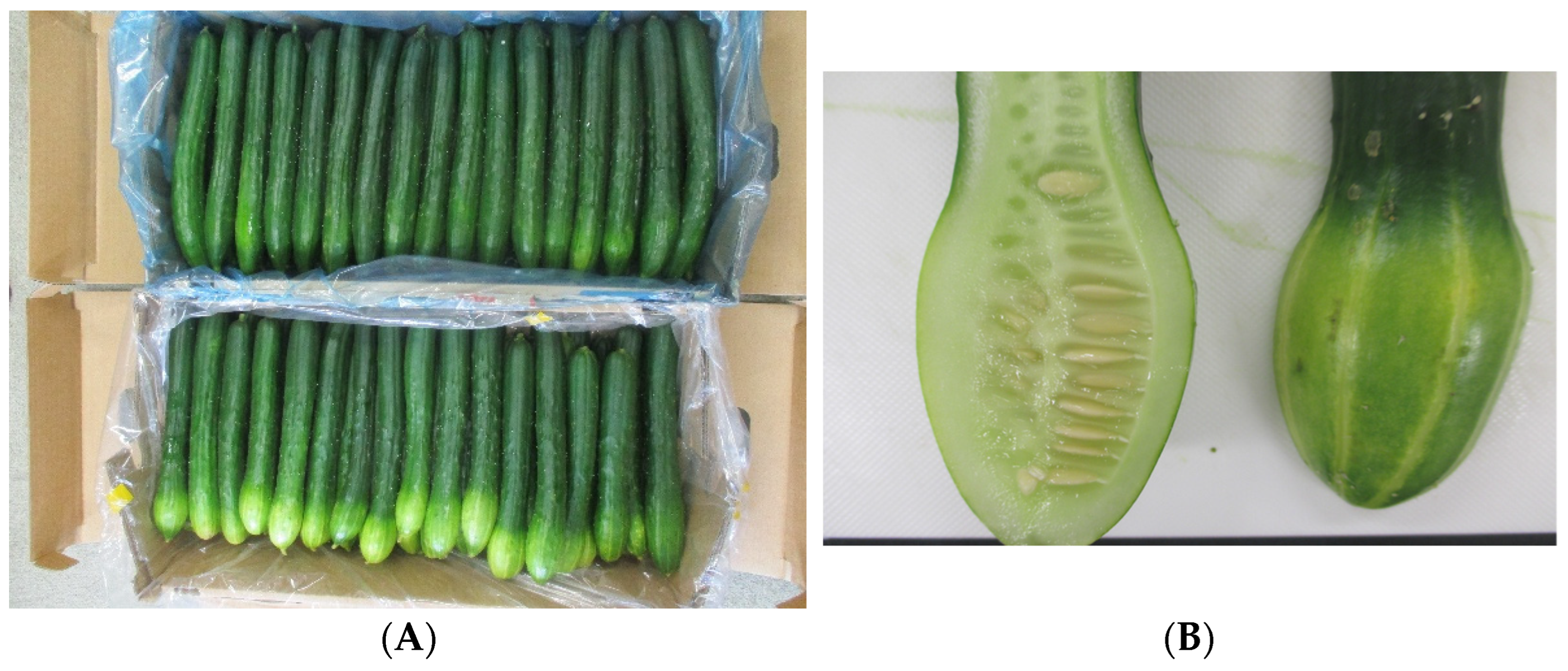
Cucumber fruit (Cucumis sativus L.), classified as a fresh vegetable, is highly susceptible to deterioration during transportation. Recently, a postharvest physiological disorder known as blossom-end enlargement (BEE) has increasingly occurred in cucumbers during high-temperature seasons, leading to significant commercial losses [1]. BEE refers to the abnormal swelling and etiolation at the blossom-end of the fruit, resembling the appearance of bottle gourd-type fruits (Figure 1A) [2,3]. BEE develops during the distribution period, negatively affecting market value, as symptomatic fruit are excluded from the marketable category in Japan [4]. A small population of BEE fruits in a shipment can result in the rejection of the entire lot, causing economic hardship, particularly for producer cooperatives performing joint selection.
Previous studies have reported that BEE is more likely to occur under preharvest growth conditions, with an excessive assimilate supply and high environmental temperatures. Satitmunnaithum et al. [1] suggested that cultivation practices that promote vigorous growth, such as fertigation [5], may further encourage its development. Furthermore, Li et al. [6] discovered a sugar starvation marker gene of BEE that deforms the BEE fruit [7]. However, the mechanism of BEE still remains unclear.
Mitigation methods such as pre-cooling and modified atmosphere packaging (MAP), which are effective for maintaining the quality of many vegetables and fruits [8,9,10,11,12,13], have been shown to reduce BEE occurrences under controlled storage conditions [14,15,16]. Despite their implementation in some production areas, including advanced MAP film using porous mineral [17,18], BEE still occurs during actual transportation, indicating a gap between experimental results and real onsite effectiveness.
While studies have examined simulated transportation environments, transportation effects, chilling injury under low-temperature storage, and temperature and humidity during transport for cucumbers [19,20,21,22,23,24,25,26], no research has specifically addressed BEE during real cucumber distribution. Furthermore, environmental factors during transport that affect product quality [27,28,29,30,31,32], such as temperature fluctuations, humidity, and mechanical vibrations, have not been considered under actual distribution conditions. Variability in producer handling and packaging accuracy may also influence the outcome [33,34]; however, few field studies have systematically evaluated these factors under commercial logistics conditions.
However, most previous studies on BEE suppression have been conducted under controlled storage conditions, creating a significant gap in validating the effects under the unavoidable temperature fluctuations of actual commercial logistics. Our study addresses this gap by utilizing real-world transport data and is innovative in quantifying the variability caused by human operational factors and proposing a practical solution for standardization (PM-T).
Therefore, this study investigated the actual transportation process of cucumbers during high-temperature seasons, from the production area to a wholesale market located 550 km away. We focused on the influence of packaging materials and methods as well as human-related operational factors on the occurrence of BEE. A preliminary experiment under controlled conditions was conducted in 2018 to verify experimental certainty, which was followed by demonstration trials performed using transport pallets in cargo trucks in 2019 and 2020.

2. Materials and Methods

2.1. Plants, Packaging Material, and Experimental Design

Cucumber fruit (“Taibo I,” Tokiwa Co., Ltd., Yoshimi, Japan) were harvested from three local farmers through the agricultural cooperative in Morioka City, Iwate Prefecture, Japan, on 17 August 2018. The finest grade fruits that met the Iwate Prefecture Standard Shipping Standards for Fruit and Vegetables [35], including fruit weighing 100 ± 5 g, 22 ± 1 cm in length, and exhibiting a healthy straight shape, were selected for the experiment. The following two types of packaging films were compared for their BEE suppression effect: (1) a polyethylene film mixed with a porous mineral (PM film; FH film, Sumika Sekisui Film Co., Ltd., Tokyo, Japan) [17] and (2) a conventional perforated polyethylene film (C film; used as the reference film, Fukusuke Kogyo Co., Ltd., Shikokuchuo, Japan). The PM film was 2.5 × 10⁻⁵ m thick, 0.88 m wide, and 0.60 m long; it was manufactured by kneading a PM powder, made from crushed pumice tuff, into polyethylene, with the blend proportions and gas permeability coefficient being undisclosed. The C film was 2.5 × 10⁻⁵ m thick, 0.9 m wide, and 0.57 m long, and contained ventilation holes of 0.007 m diameter (spaced 0.25 m apart on all sides). In this study, we specifically utilized passive modified atmosphere packaging (passive MAP), where the desired internal atmosphere is achieved solely through the natural respiration of the fruit and the selective permeability of the film itself. Hereafter, this system is referred to as MAP.

2.2. Preliminary Evaluation of Packaging Films (2018)

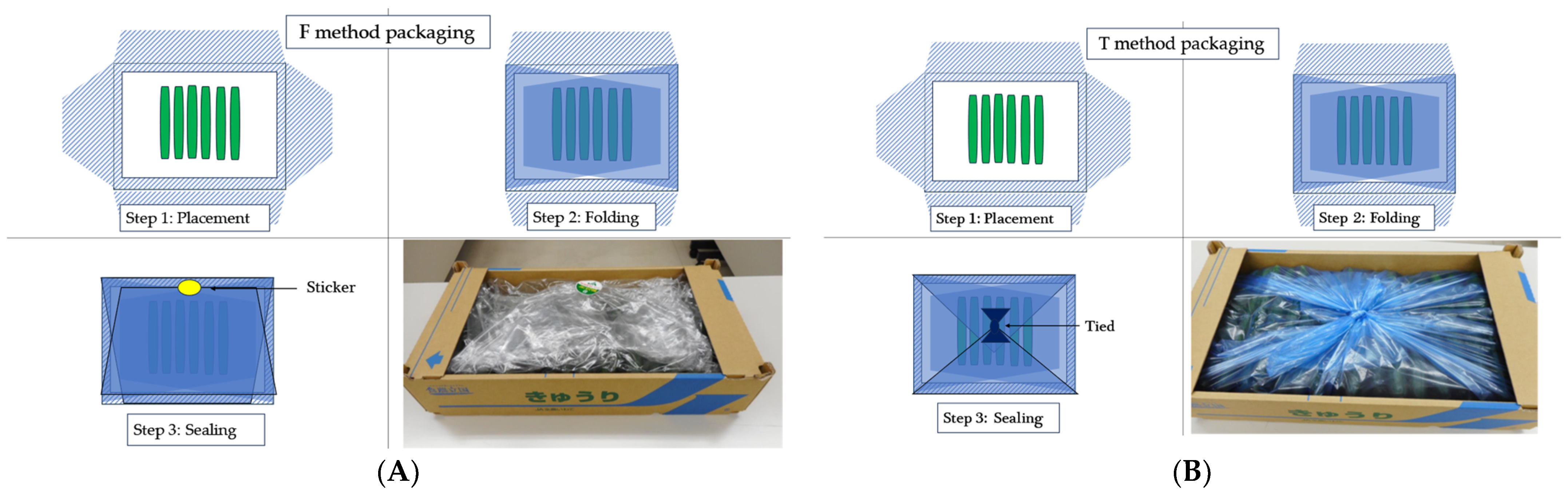
To establish a baseline for subsequent field trials, this initial experiment was conducted in 2018 to evaluate the fundamental efficacy of the porous mineral-containing (PM) film in suppressing BEE occurrence under controlled storage conditions. Cucumbers harvested in the afternoon on the same day were packed in shipping cases, 50 fruits per case, and stored at room temperature. A conventional packaging method (“F,” hereafter), involving aligning the long sides of the rectangular film with the long sides of the shipping cases, was used to pack the cucumber fruit. After placing the fruit into each case, the short sides of the excess film were first folded inward, followed by the long sides. Then, the overlapping parts were folded inward and sealed with a sticker (Figure 2A). Subsequently, at 15:00 one day after harvest (DAH), the packaged shipping cases were transferred to a thermostatic warehouse (maintained at 25 °C) at the Iwate Prefectural Agricultural Research Center (Kitakami, Iwate Prefecture, Japan) and stored in darkness. The fruit was unwrapped and assessed at 4 and 6 DAH and assessed for BEE following the method outlined in Satitmunnaithum et al. [1]; the following severity scores, based on visual observations, were assigned to each individual fruit 6 d after storage: 0, normal fruit; 1, slight enlargement; 2, apparent enlargement; and 3, extreme enlargement (Figure 1B). The BEE index was calculated as follows:
BEE index = (Σ (n × v)/(N × Z)) × 100
where n denotes the severity score of the fruit, v denotes the number of samples, N denotes the highest severity score (0 = normal fruit, 1 = slight enlargement, 2 = apparent enlargement, and 3 = extreme enlargement), and Z denotes the total number of samples. Each treatment was performed in triplicate, with each replicate consisting of one shipping case. In 2018, the BEE index of fruits from all three cases were evaluated, whereas in 2019, only one case was evaluated due to logistical constraints in coordinating the experiment under actual commercial distribution conditions.

2.3. Demonstration Experiment on Real Onsite Transportation (2019)

Following the preliminary tests, the 2019 trial aimed to evaluate the performance of the PM film under real commercial transportation and distribution conditions, with a focus on documenting critical environmental factors such as temperature fluctuations. In 2019, cucumber fruit shipping cases were transported on a refrigerator truck from Morioka City to Tokyo Central Wholesale Market, Ota Market. The timetable for this experiment is outlined in Table 1. Harvesting was completed by 15:00 on 1 August, and the fruits were delivered to the packing shed of producers maintained at a temperature range of 20–25 °C between 15:00 and 17:00. After selection, the fruits were packed in shipping cases and stored there. At 1 DAH, the cases left for a pre-cooling warehouse maintained at 7 °C at a collection point in Morioka City at 7:00, and arrived at 9:30. This step was crucial for reducing the field heat of the fruit prior to long-distance transport. Then, the experimental cases (n = 3) along with cases containing other sales products were loaded onto a transportation pallet (1.1 × 1.1 × 0.144 m). Overall, eight cases (4 cases × 2 rows per tier on 1 pallet) were lined up and stacked into 12 tiers, with four additional cases placed onto the 13th tier, resulting in a total of 100 cases per pallet. This central location was selected to capture the thermal conditions typical for commercial shipments. The measuring cases were placed on the 5th–8th tiers of the pallet. This pallet was placed in the center of a refrigerated truck (luggage capacity: 55 m3; refrigeration capacity: 5400–8900 W; temperature maintained at 7 °C), which could load 18 pallets. The truck departed from Morioka City, at 12:30 and arrived at Ota Market through the express way at approximately 21:30. The measuring cases were immediately transferred to a passenger car and transported to Ibaraki University Ami Campus (Ami, Japan), where they arrived at 00:30, 2 DAH. The cases were stored in a room maintained at 27 °C, and the BEE index was evaluated at 4 and 6 DAH. Oxygen and carbon dioxide concentrations within the package were measured immediately upon arrival using a gas sampling device (GV-100S, Gastech Co., Ltd., Ayase, Japan) and gas detection tubes (O2: No. 31 B, range 3–24%, CO2: No. 2 HH, range 2.5–40%).

2.4. Evaluation of the Impact of Packaging Methods and Workers on BEE Occurrence (2020)

Building upon the findings from 2019 which suggested operational variability, the 2020 experiments were designed to statistically quantify the specific impact of different packaging methods (F vs. T) and individual worker handling on BEE occurrence during commercial logistics. The same transportation method and schedule used in 2019 were used in 2020, and three experiments were conducted (Table 1). The real onsite transportation test performed assessed the impact of packaging methods and human-related operational factors on BEE onset. This experiment was designed to identify the critical source of variability suggested by the 2019 results. The cucumber fruits were packed in shipping cases (50 individual fruits per case) using the two types of films (PM and C). For the treatments using PM film, in addition to the “F” method, a new method (T) was used, wherein the rectangular film’s diagonal lines were aligned with the long sides of the shipping case. After packing the cucumber fruit, the film on the long side was folded, following which both ends of the short side were tied (Figure 2B). For the treatment using the “C” film, only the conventional packing method “F” was performed owing to transportation loading restrictions. Each packaging method (PM-T, PM-F, and C-F) was triplicated by three workers (Producers X, Y, and Z). This rigorous triplication by different workers (X, Y, Z) was implemented to statistically quantify the effect of individual handling variability on BEE occurrence. Three cases each of the three types of packaging methods were prepared for each producer per experiment. The first experiment, which was conducted on fruits harvested on 2 August, used the same gas detector tube as that in 2019. The second and third experiments, which were conducted on fruits harvested on 17 and 24 August, had their oxygen and carbon dioxide concentrations measured within the packaging film using a gas-measuring instrument (Dansensor Checkpoint, AMETEK MOCON, Brooklyn Park, MN, USA). The switch to the Dansensor Checkpoint was made to increase the accuracy and reliability of the gas concentration data acquisition. Additionally, temperature and humidity within the packaging were monitored at 50 min intervals using a self-made data logger on the UECS-Pi system [36,37] with a SCD30 sensor module (Sensirion, Yokohama, Japan). The deployment of these data loggers provided continuous, quantitative environmental data necessary to correlate real-time temperature fluctuations with BEE development in the final assessment.

2.5. Statistical Analyses

Statistical analyses were performed using the t-test, analysis of variance (ANOVA), and Tukey–Kramer’s multiple range test in the EZR software (version 1.54) [38].

3. Results

3.1. BEE Suppression Effect of the Different Packaging Films

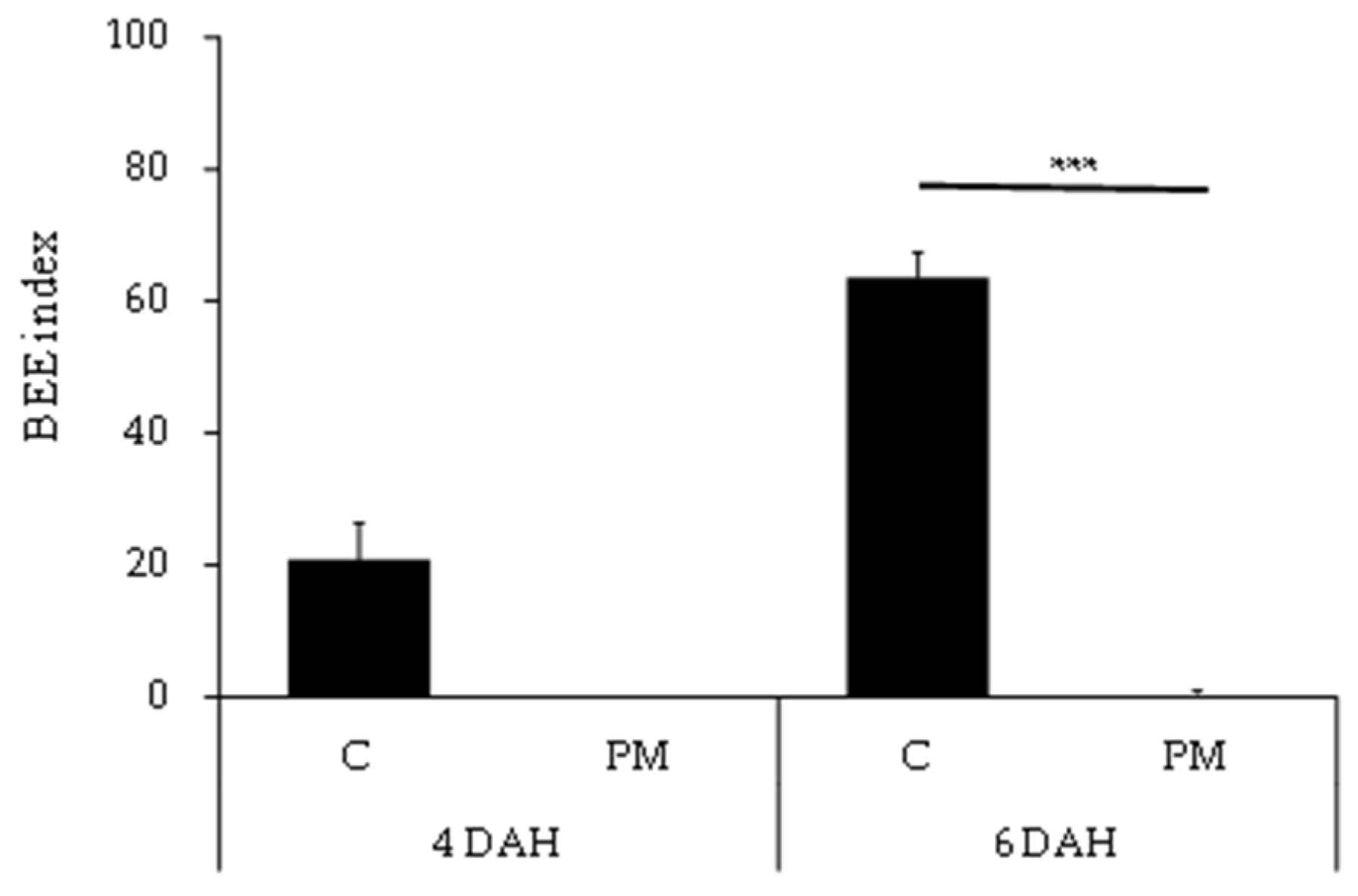
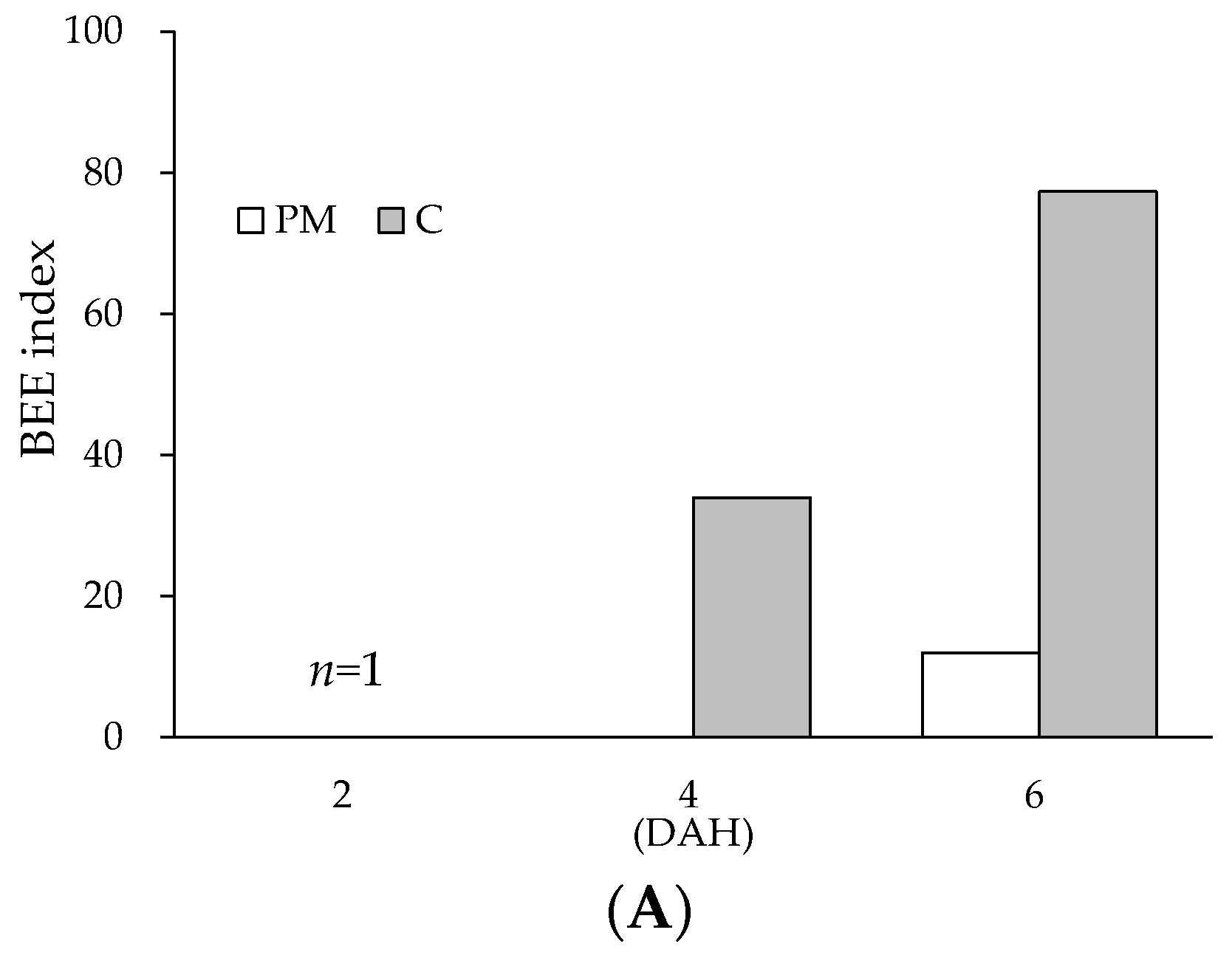
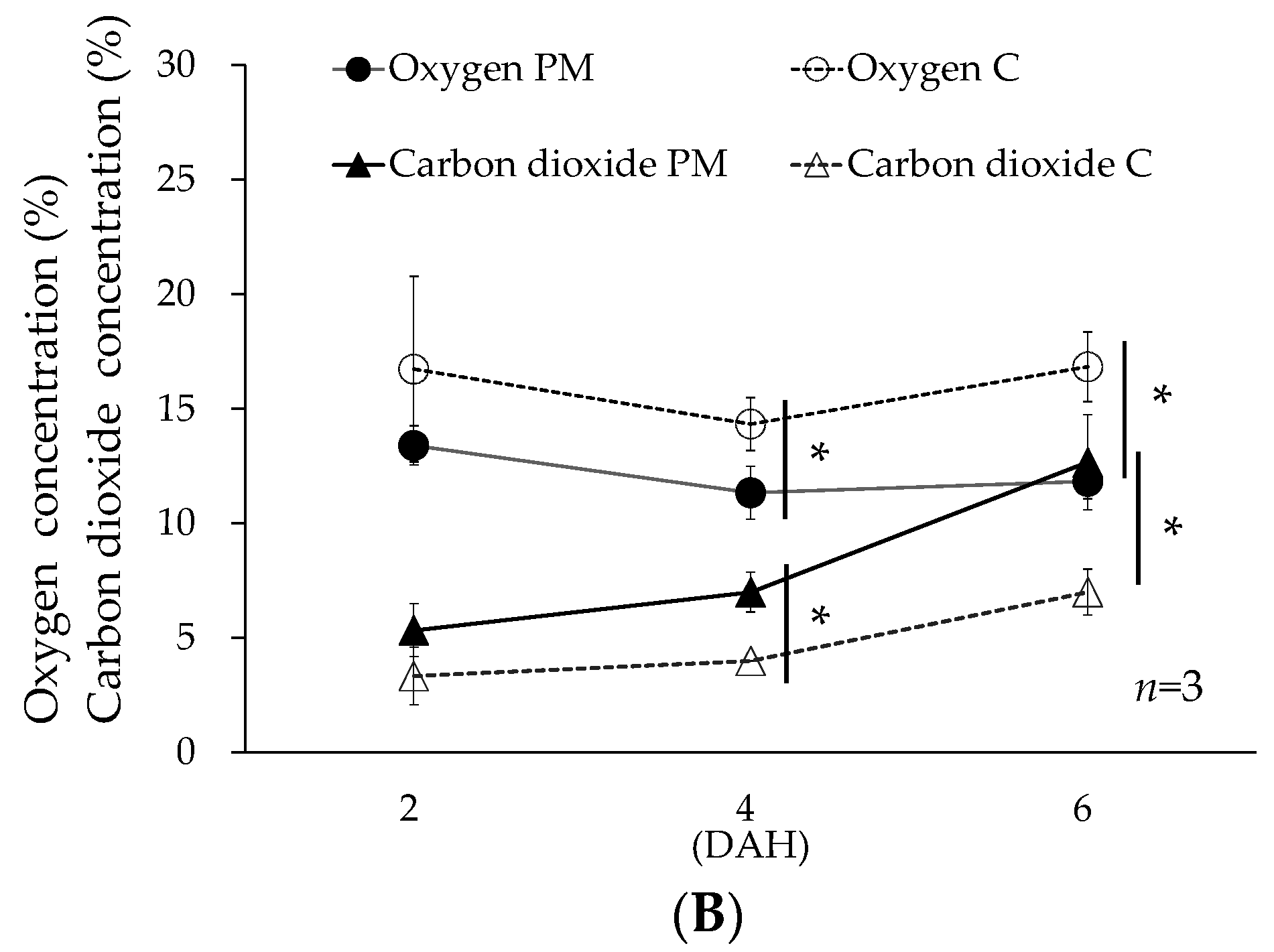
Figure 3 displays the difference in the BEE suppression effectiveness of C and PM, with their indices being 20.9 and 0, respectively, at 4 DAH and 63.6 and 0.7, respectively, at 6 DAH in 2018. Although parametric statistical analysis is inapplicable due to the lack of PM variance at 4 DAH, the difference is considered obvious even without conducting nonparametric analysis. BEE in C was considerably higher than that in PM at 6 DAH. In 2019, the BEE indices for C and PM films were 34.0 and 0, respectively, at 4 DAH and 77.3 and 12.0, respectively, at 6 DAH (Figure 4A). Due to constraints on conducting the study, it was impossible to prepare replications, but the result was consistent with those in 2018. In 2019, the oxygen and carbon dioxide concentrations (Figure 4B) differed significantly (p < 0.05, t-test) between C and PM films at 4 DAH; specifically, in C film, they were 14.3% and 4.0%, respectively, and for the PM film, they were 11.3% and 7.0%, respectively. At 6 DAH, the oxygen and carbon dioxide concentrations were 16.8% and 7.0% for the C film, and 11.8% and 12.7% for the PM film, respectively.

3.2. Packaging Methods and Human-Related Operation Factor on BEE Occurrence

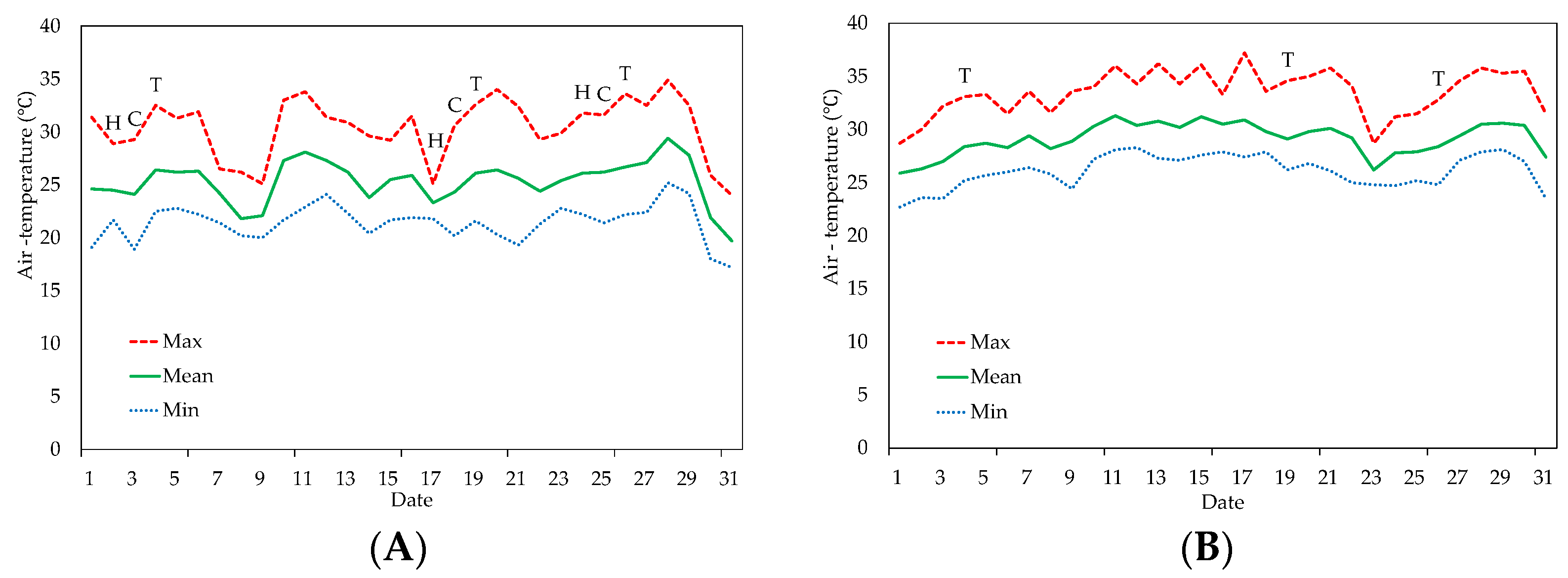
In 2020, during the transportation test, the minimum and maximum air temperatures at the nearest observation points ranged from 18.9 to 26.7 °C (Figure 5A) at the production and collection site (Morioka) and from 24.8 to 29.1 °C (Figure 5B) at the destination (Tokyo Haneda). Differences in BEE occurrence among packaging methods and workers are listed in Table 2. For all treatments, BEE symptoms began to appear in the fruit at 4 DAH and continued to develop beyond 6 d, following a consistent trend. The results at 6 DAH showed that for fruit harvested on 2 August, the BEE index corresponding to all workers (Producers X, Y, and Z) followed the following order: C-F > PM-F > PM-T. Fruit harvested on 17 and 24 August exhibited similar trends as those harvested on 2 August, except that the positions of PM-T and PM-F were reversed for producers Z and X, respectively. ANOVA revealed significant differences among the treatments for the different packing methods, harvest dates, and individual workers (p < 0.001 or <0.01). Interactions were also detected between packing methods and harvest dates (p < 0.001) as well as between packing methods and individual workers (p < 0.01; Table 2). No significant interactions were observed between harvest dates and individual workers, or among all three factors. These statistical results support the influence of packaging methods, including packaging materials and sealing methods, and worker’s human-related operational factors on the onset of BEE. Tukey–Kramer’s tests were performed between PM-T, PM-F, and C-F for each experimental round. In the experiment using fruit harvested on 2 August, significant differences (p < 0.05) were found between all treatments, PM-T, PM-F, and C-F, at 6 DAH. Tukey–Kramer’s tests were performed for each worker. Significant differences were observed only on 24 August at 6 DAH, while no significant differences were found on the other five harvest dates.

3.3. Changes in Temperature and Humidity Inside Packaging over Time During Distribution

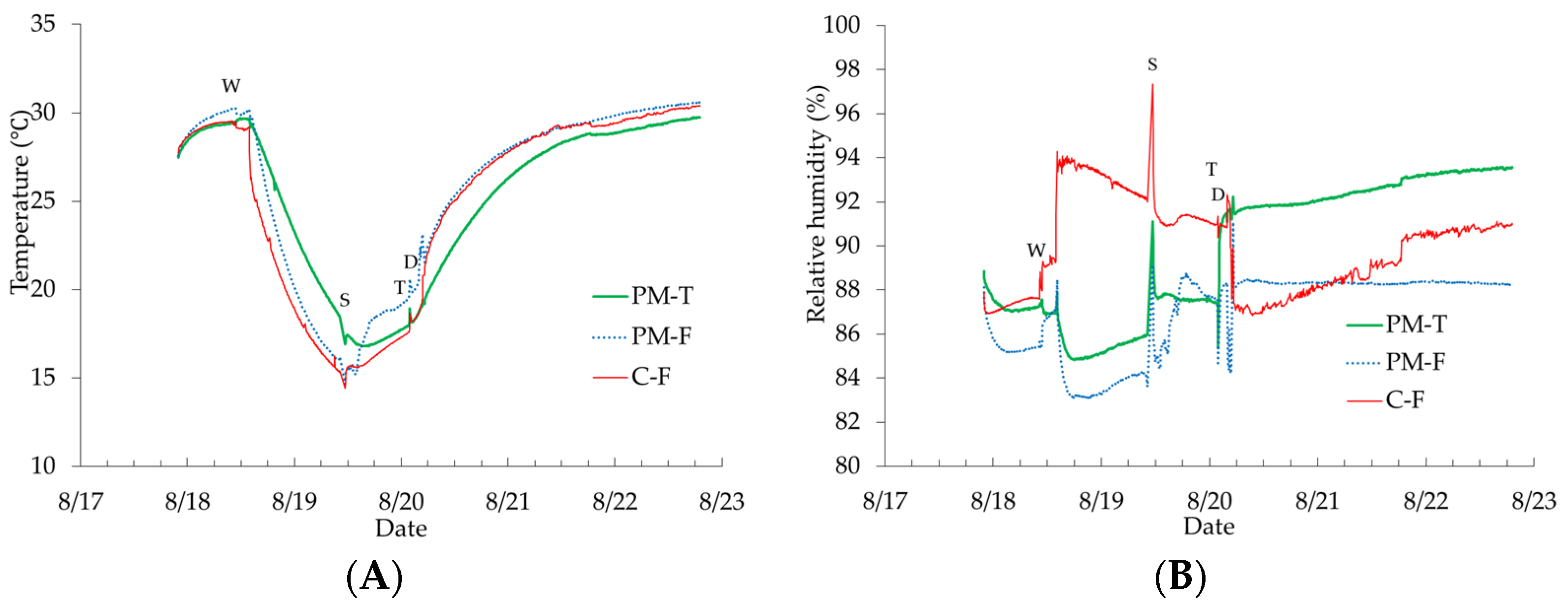
Figure 6A illustrates the temperature changes within the packaging during the transportation of fruit harvested on 17 August 2020. For all three treatments, the temperature within the packaging increased from the evening of 17 August, when harvesting and packaging were completed, to the following day, when the cucumber fruits were delivered to the pre-cooled warehouse at the collection point (W). In the warehouse, the temperature within the packaging decreased almost linearly for all treatments, although temperature change in PM-T tended to be delayed more than in the other two treatments. At shipping (S), the temperature within the packaging was highest for PM-T, with its cooling speed being slower than that of the others. During transportation, the temperature within the packaging continued to rise until arrival at Ota Market (T) and Ibaraki University (D), after which the temperature within the packaging for PM-T remained lower than that for the other two treatments. In all treatments, the temperature reached the preset temperatures (7 °C) of the pre-cooled warehouse or refrigerated truck during transportation. The changes in relative humidity within the same package are shown in Figure 6B. For C-F, relative humidity within the package gradually increased from the evening of 17 August 2020, until arrival at the warehouse (W in Figure 6B), rising when the cases were placed in the pre-cooled warehouse, then gradually decreasing. A large spike in relative humidity within the package was observed during shipping from the warehouse (S in Figure 6B). Subsequently, it decreased upon reaching the Ota Market (T in Figure 6B), considerably dropping upon reaching its destination (D in Figure 6B), then gradually increasing. For PM-F, relative humidity within the package initially dropped from the start of transportation until reaching W. The relative humidity gradually increased after W until T without a sharp rise at S. After reaching T, the relative humidity stabilized at the final D. For PM-T and PM-F, the relative humidity within the package was altered from the evening of 17 August to S; however, for PM-T, the relative humidity was approximately 2% lower than that of PM-F and continued to rise until D.

3.4. Changes in Oxygen and Carbon Dioxide Concentrations Within the Packaging

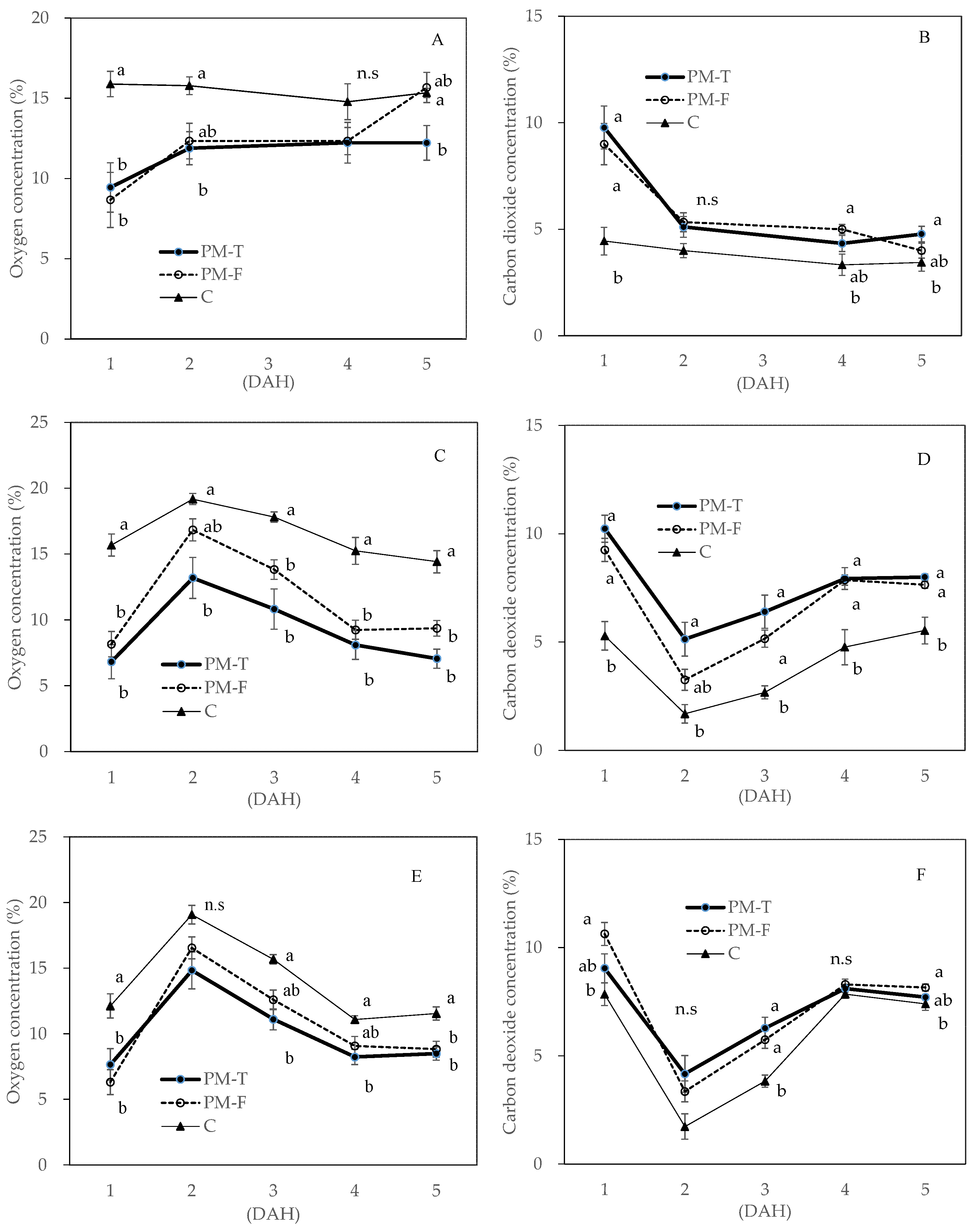
The oxygen concentration increased across all treatments followed by a gradual decline at 2 DAH (Figure 7A,C,E), with the C packaging having significantly higher concentration than the other treatments. In contrast, the carbon dioxide concentration (Figure 7B,D,F) decreased rapidly at 1 DAH, then gradually increased in all treatments. Additionally, for the C-F packaging, the carbon dioxide concentration was significantly lower than that within the PM-T or PM-F packaging throughout the same period. Although the overall trends in the oxygen and carbon dioxide concentrations did not change, there were substantial differences between each experiment.
The relationship between carbon dioxide and oxygen concentrations in packaging and severity of BEE at 4 DAH is demonstrated in Figure 7. Therefore, lower carbon dioxide and higher oxygen concentrations were associated with a more severe BEE index. A BEE index of ≥10 was observed for shipping cases with oxygen and carbon dioxide concentrations below and above 8%, respectively.

4. Discussion

This discussion highlights the major findings obtained across the 2018, 2019, and 2020 experiments and focuses on how packaging materials, sealing methods, and operational differences collectively influenced BEE occurrence under real commercial conditions. Our results demonstrated that packaging methods significantly affected BEE inhibition, oxygen and carbon dioxide concentrations, and humidity levels in the package during the transportation of cucumber fruits. BEE symptoms consistently appeared from 4 DAH, with more severe symptoms appearing under lower carbon dioxide and higher oxygen concentrations. In addition, temperature and humidity fluctuations differed among treatments, affecting the environment inside the package and potentially affecting the severity of BEE. These results are consistent with those of Okabayashi [15] and Igarashi et al. [14]. According to them, BEE occurrence can be prevented by pre-cooling cucumber fruits to 15 °C, as this reduces their respiration [39]. In this study, the harvested fruits stored for 24 h in a pre-cooled warehouse were maintained at 7 °C; however, the temperature inside the package did not drop to 15 °C, but rather rose during transportation in a truck equipped with a cooler (set at 7 °C). In PM-F, which had the largest temperature fluctuation, the temperature rose from 14.64 to 19.27 °C. This indicates that there is a large gap between the stable laboratory conditions and real transportation environments [40]. When real-site temperature exceeds 30 °C (Figure 5), the fruit is insufficiently cooled under real transportation conditions, as pointed out in several previous studies [41,42]. Thus, the biggest challenge to preventing BEE occurrence is the inability to achieve ideal temperature conditions (Figure 6). Based on the preliminary findings obtained under controlled conditions in 2018, a real-world transportation experiment was conducted in 2019 to verify whether similar trends would occur under commercial distribution environments.
In 2018 and 2019, when cucumber fruits were packaged in PM, the BEE was significantly reduced under both laboratory and real transportation conditions, demonstrating the BEE suppression effect of PM. PM packaging had lower oxygen concentrations and higher carbon dioxide concentrations than that of C packaging, consistent with the effects of MA packaging at a steady state [14,15]. Okabayashi [15] demonstrated that oxygen and carbon dioxide concentrations in MAP reached 2.1% and 22.6%, respectively, 24 h after packaging. However, our results were nonsignificant even in the most airtight PM-T packaging. This may be due to Okabayashi’s [15] experiments being conducted using stationary fruit placed in an airtight state, whereas our experiments were performed in accordance with real distribution environments. That is, due to insufficient sealing, gas may have entered or left the packaging through gaps, and vibration during transportation may have amplified this effect. Because the 2019 results indicated differences in the performance of the packaging types, an additional experiment was conducted in 2020 to examine these effects in greater detail and to assess the influence of worker-related variation. To stimulate the MA effect, airtight packaging is necessary for changing the internal atmosphere. Our results revealed that PM packaging was more effective at suppressing BEE than C packaging, although there was considerable variability between workers. Meanwhile, PM-T was significantly more effective than PM-F in some cases. Neither PM-T nor PM-F completely suppressed BEE, with the temperature change within PM-T packaging during transportation being more moderate than that within PM-F or C-F, suggesting better sealing performance. Relative humidity within PM-T packaging was higher than that within PM-F packaging, with both following the same trend. In contrast, the relative humidity within C-F packaging from W to D was significantly higher than that for the other treatments; however, upon reaching D, it decreased to levels comparable to those observed in PM-T packaging. Therefore, when the fruit temperature decreased within the PM-T package, condensation did not occur on the film surface and the water vapor permeability of the PM particles in the film was maintained. Conversely, when the fruit temperature increased because the cooling capacity of the transport vehicle was insufficient or when the fruit was stored at room temperature (the daily mean air temperature during the experimental period was approximately 25 °C on average; see Figure 5A,B), condensation occurred on the film surface and probably impeded water vapor transmission.
Additionally, airtight packaging is effective in maintaining the internal gas environment [43]. While no significant differences were found in the carbon dioxide or oxygen concentrations of both PM-T and PM-F packaging, their concentrations reflected the large variation in sealing conditions among individual packages. Apparently, PM-F packaging tended to retain higher carbon dioxide and lower oxygen concentrations than that of C-F packaging, which may reflect the MA effect on the selective gas permeability of the PM. Our results indicated that regardless of film type or packaging method, BEE occurrence tends to be lower when the oxygen and carbon dioxide concentrations within the package were below and above 8%, respectively. Thus, packaging methods, including packaging materials and sealing methods, directly influence the stability of the modified atmosphere and likelihood of BEE occurrence, which are also affected by human-related operational factors. In particular, tying (PM-T) provided more consistent outcomes across different workers and shipping trials, demonstrating its potential as a practical intervention for quality preservation and reduction in commercial losses. Further studies focusing on mechanizing or standardizing tying methods could enhance the repeatability and effectiveness of MA packaging in commercial practice. Together, these sequential experiments enabled us to confirm the reproducibility of the trends observed and to clarify how both environmental factors and packaging operations collectively influence BEE under controlled and commercial conditions.

5. Conclusions

This progressive three-year investigation initially confirmed the potential of PM film in mitigating BEE. In this study, PM packaging suppressed BEE more effectively than conventional perforated film, and BEE tended to occur when oxygen concentrations exceeded 8% and carbon dioxide concentrations remained below 8%. The actual transport conditions for cucumbers were significantly different from the ideal conditions obtained from the steady-state storage experiments in the laboratory. Considering local constraints, it was difficult to suppress BEE by improving transport conditions alone. However, under the variable conditions of commercial logistics, we discovered that operational variability caused by human factors was the critical element limiting the film’s efficacy. Among the tested sealing methods, tying (PM-T) provided the most stable internal atmosphere and the most consistent suppression of BEE across workers. Thus, BEE could be reduced by standardizing airtight packaging methods and workers drills.

Author Contributions

Conceptualization, Y.T. and T.S.; methodology, Y.T., N.A.A. and A.D.K.; validation, T.S.; formal analysis, Y.T.; investigation, Y.T., K.M., E.U., R.I. and T.M.Q.; resources, Y.T. and T.S.; data curation, Y.T.; writing—original draft preparation, Y.T.; writing—review and editing, T.S. and S.T.; supervision, T.S., S.T. and K.Y.; project administration, Y.T.; and funding acquisition, Y.T. All authors have read and agreed to the published version of the manuscript.

Funding

This research was supported by the Japanese Ministry of Agriculture, Forestry and Fisheries under the plan “A Scheme to Revitalize Agriculture and Fisheries in Disaster Area through Deploying Highly Advanced Technology” [grant number: JPJ000418].

Data Availability Statement

The authors confirm that all data supporting of this study findings are available within the article.

Acknowledgments

We would like to express our deepest gratitude to the Iwate Prefectural Headquarters of the National Agricultural Cooperative Association and the Iwate Prefectural Central Agricultural Cooperative Association for their generous cooperation in conducting this research, as well as to all others who participated in the survey. We would also like to express our sincere gratitude to Hiroaki Kitazawa of Japan Women’s University for providing the measurement equipment.

Conflicts of Interest

The authors declare no conflicts of interest.

References

  1. Satitmunnaithum, J.; Muroi, H.; Ito, R.; Tashiro, Y.; Hendratmo, A.F.; Tanabata, S.; Sato, T. Cultivation conditions affect the occurrence of blossom-end enlargement in cucumber. Hortic. J. 2022, 91, 531–540. [Google Scholar] [CrossRef]
  2. Nishizawa, T.; Okada, T.; Suzuki, Y.; Motomura, Y.; Aikawa, T. Postharvest deformation of cucumber fruit associated with water movement and cell wall degradation. Acta Hortic. 2018, 1194, 1217–1224. [Google Scholar] [CrossRef]
  3. Kato, T.; Oda, H. Studies on the control of physiological disorders in fruit vegetable crops under plastic films. VIII. On the occurrence of abnormal fruits in cucumber plants. (II) On the development of carrot type and bottle gourd type fruits, so-called sakibosori and shiributo fruits in Japan. Res. Rep. Kouchi Univ. 1977, 26, 175–182. Available online: https://kochi.repo.nii.ac.jp/record/5133/files/A026-18.pdf (accessed on 28 September 2025).
  4. IIzawa, R.; Kyono, T. Regional competition and the grading systems among the cucumber-producing areas. Nokei Ronso 1985, 41, 199–227. Available online: http://hdl.handle.net/2115/10996 (accessed on 28 September 2025).
  5. Tashiro, Y.; Sato, T.; Satitmunnaithum, J.; Kinouchi, H.; Li, J.; Tanabata, S. Case study on the use of the leaf-count method for drip fertigation in outdoor cucumber cultivation in reconstructed fields devastated by a tsunami. Agriculture 2021, 11, 656. [Google Scholar] [CrossRef]
  6. Li, R.; Atarashi, R.; Kharisma, A.D.; Arofatullah, N.A.; Tashiro, Y.; Satitmunnaithum, J.; Tanabata, S.; Yamane, K.; Sato, T. Search for Expression Marker Genes That Reflect the Physiological Conditions of Blossom End Enlargement Occurrence in Cucumber. Int. J. Mol. Sci. 2024, 25, 8317. [Google Scholar] [CrossRef] [PubMed]
  7. Tazuke, A.; Asayama, M. Expression of CsSEF1 gene encoding putative CCCH zinc finger protein is induced by defoliation and prolonged darkness in cucumber fruit. Planta 2013, 237, 681–691. [Google Scholar] [CrossRef]
  8. Kader, A.A.; Zagory, D.; Kerbel, E.L.; Wang, C.Y. Modified atmosphere packaging of fruits and vegetables. Crit. Rev. Food Sci. Nutr. 1989, 28, 1–30. [Google Scholar] [CrossRef]
  9. Akbudak, B.; Ozer, M.H.; Uylaser, V.; Karaman, B. The effect of low oxygen and high carbon dioxide on storage and pickle production of pickling cucumbers cv. ‘Octobus’. J. Food Eng. 2007, 78, 1034–1046. [Google Scholar] [CrossRef]
  10. Irtwange, S.V. Application of modified atmosphere packaging and related technology in postharvest handling of fresh fruits and vegetable. Agric. Eng. Int. 2006, 4, 1–13. Available online: https://ecommons.cornell.edu/bitstreams/95ed5f37-a85a-4ec7-a0c3-1f193030d8fc/download (accessed on 28 September 2025).
  11. Manjunatha, M.; Anurag, R.K. Effect of modified atmosphere packaging and storage conditions on quality characteristics of cucumber. J. Food Sci. Technol. 2014, 51, 3470–3475. [Google Scholar] [CrossRef]
  12. Ozer, M.H.; Akbudak, B.; Uylaser, V.; Tamer, E. The effect of controlled atmosphere storage on pickle production from pickling cucumbers cv. ‘Troy’. Eur. Food Res. Technol. 2006, 222, 118–129. [Google Scholar] [CrossRef]
  13. Singh, S.; Chaurasia, S.N.S.; Sharma, S.; Behera, T.K. Effect of modified atmosphere packaging (MAP) on quality and shelf-life of cucumber during cold storage. Indian. J. Hortic. 2024, 81, 215–220. [Google Scholar] [CrossRef]
  14. Igarashi, M.; Furuno, S.; Saito, K.; Suzuki, K. Studies on the generation factor of apex enlargement in cucumber fruits during the transportation and control method. Bull. Yamagata Hort. Res. 2005, 17, 39–45. Available online: https://agriknowledge.affrc.go.jp/RN/2030712544.pdf (accessed on 28 September 2025).
  15. Okabayashi, H. Effect of storage temperature, fruit shape and modified atmosphere packaging on apex enlargement in cucumber fruits. Bull. Kochi Agric. Res. Cent. 2001, 10, 11–19. Available online: https://agriknowledge.affrc.go.jp/RN/2030630039.pdf (accessed on 28 September 2025).
  16. Matsumoto, M.; Okada, I. Studies on the top swelling phenomenon “Sakibutori” of cucumber fruit after harvest. Bull. Tonami Hortic. Branch. Sta 1979, 15, 15–22. [Google Scholar]
  17. Yamashita, I. Modified atmosphere packaging of vegetables with high performance plastic film. J. Jpn. Soc. Food Sci. 1998, 45, 711–718. [Google Scholar] [CrossRef]
  18. Gong, Y.; Abe, K.; Chachin, K. Effect of packaging with porous-mineral mixed plastic films on keeping quality of several vegetables. J. Jpn. Soc. Cold Preserv. Food 1990, 16, 145–151. [Google Scholar] [CrossRef]
  19. Chuma, Y.; Murata, S.; Iwamoto, M.; Nishihara, A.; Hori, Y. Dormer Strawberry Transportation Tests in Refrigerator-truck for 700 Kilometer. JSAM 1970, 31, 292–297. [Google Scholar] [CrossRef]
  20. Owoyemi, F.F.; Esua, O.J.; Latifah, S.Y.; Iqbal, M.T.; Tan, C.P. Effects of compostable packaging and perforation rates on cucumber quality during extended shelf life and simulated farm-to-fork supply-chain conditions. Foods 2021, 10, 471. [Google Scholar] [CrossRef]
  21. Dhall, R.K.; Sharma, S.R.; Mahajan, B.V.C. Effect of shrink wrap packaging for maintaining quality of cucumber during storage. J. Food Sci. Technol. 2012, 49, 495–499. [Google Scholar] [CrossRef] [PubMed]
  22. Nunes, M.C.N.; Nicometo, M.; Emond, J.P.; Melis, R.B.; Uysal, I. Improvement in fresh fruit and vegetable logistics quality: Berry logistics field studies. Philos. Trans. A Math. Phys. Eng. Sci. 2014, 372, 20130307. [Google Scholar] [CrossRef]
  23. Pelletier, W.; Brecht, J.K.; Nunes, M.C.N.; Emond, J.P. Quality of strawberries shipped by truck from California to Florida as influenced by postharvest temperature management practices. Hortic. Technol. 2011, 21, 482–493. [Google Scholar] [CrossRef]
  24. Fahmy, K.; Nakano, K. Optimal design of modified atmosphere packaging for alleviating chilling injury in cucumber fruit. Environ. Control Biol. 2014, 52, 233–240. [Google Scholar] [CrossRef]
  25. Srilaong, V.; Tatsumi, Y. Changes in respiratory and antioxidative parameters in cucumber fruit (Cucumis sativus L.) stored under high and low oxygen concentrations. Hortic. J. 2003, 72, 525–532. [Google Scholar] [CrossRef]
  26. Wang, C.Y.; Qi, L. Modified atmosphere packaging alleviates chilling injury in cucumbers. Postharvest Biol. Technol. 1997, 10, 195–200. [Google Scholar] [CrossRef]
  27. Hinsch, R.T.; Slaughter, D.C.; Craig, W.L.; Thompson, J.F. Vibration of fresh fruits and vegetables during refrigerated truck transport. ASABE 1993, 36, 1039–1042. [Google Scholar] [CrossRef]
  28. Hirama, N.; Mizusawa, H.; Azuhata, F.; Matsuura, S. Culture methods to reduce the occurrence of the bottle-gourd-shaped fruits in the greenhouse of fall-cropped cucumber plants. Hortic. Res. 2007, 6, 65–70. [Google Scholar] [CrossRef]
  29. Nunes, M.C.N.; Brecht, J.K.; Morais, A.M.M.B.; Sargent, S.A. Physical and chemical quality characteristics of strawberries after storage are reduced by a short delay to cooling. Postharvest Biol. Technol. 1995, 6, 17–28. [Google Scholar] [CrossRef]
  30. Jung, H.M.; Lee, S.; Lee, W.H.; Cho, B.K.; Lee, S.H. Effect of vibration stress on quality of packaged grapes during transportation. Eng. Agric. Environ. Food 2018, 11, 79–83. [Google Scholar] [CrossRef]
  31. Zhang, L.; Zhang, M.; Law, C.L.; Ma, Y. Effect of vibration and broken cold chain on the evolution of cell wall polysaccharides during fruit cucumber (Cucumis sativus L.) shriveling under simulated transportation. Food Packag. Shelf Life 2023, 38, 101126. [Google Scholar] [CrossRef]
  32. Macheka, L.; Spelt, E.; van der Vorst, J.G.A.J.; Luning, P.A. Exploration of logistics and quality control activities in view of context characteristics and postharvest losses in fresh produce chains: A case study for tomatoes. Food Control 2017, 77, 221–234. [Google Scholar] [CrossRef]
  33. Olayemi, F.F.; Adegbola, J.A.; Bamishaiye, E.I.; Daura, A.M. Assessment of post-harvest challenges of small scale farm holders of tomotoes, bell and hot pepper in some local government areas of Kano State, Nigeria. Bayero J. Pure Appl. Sci. 2010, 3, 2. [Google Scholar] [CrossRef]
  34. Shewfelt, R.L.; Prussia, S.E.; Jordan, J.L.; Hurst, W.C.; Resurreccion, A.V.A. A systems analysis of postharvest handling of fresh snap beans. Hortic. Sci. 1986, 21, 470–472. [Google Scholar] [CrossRef]
  35. Iwate Prefecture. Iwate Prefecture Standard Shipping Standards for Fruit and Vegetables. 2018. Available online: https://www.pref.iwate.jp/_res/projects/default_project/_page_/001/072/910/syukkakikakusyuu.pdf (accessed on 28 September 2025). (In Japanese).
  36. Arofatullah, N.A. Introduction of open platform ubiquitous environment control system (UECS-Pi) for greenhouse management and agricultural research activities. In Ag-ESD Symposium 2016; Agricultural and Forestry Research Center, University of Tsukuba: Tsukuba, Japan, 2016; p. 31. Available online: http://www.nourin.tsukuba.ac.jp/~agesd/pdf/agesd2016_summary.pdf (accessed on 28 September 2025).
  37. Toita, H.; Kobayashi, K. Construction of an open platform (UECS-Pi) for autonomous distributed environment measurement and control system using Raspberry Pi, a general-purpose substrate for education. Agric. Inf. Res. 2016, 25, 1–11. [Google Scholar] [CrossRef]
  38. Kanda, Y. Investigation of the freely available easy-to-use software ‘EZR’ for medical statistics. Bone Marrow Transpl. 2013, 48, 452–458. [Google Scholar] [CrossRef]
  39. Eaks, I.L.; Morris, L.L. Respiration of cucumber fruits associated with physiological injury at chilling temperatures. Plant Physiol. 1956, 31, 308–314. [Google Scholar] [CrossRef]
  40. Mercier, S.; Villeneuve, S.; Mondor, M.; Uysal, I. Time-temperature management along the food cold chain: A review of recent developments. Compr. Rev. Food Sci. Food Saf. 2017, 16, 647–667. [Google Scholar] [CrossRef] [PubMed]
  41. Ndraha, N.; Hsiao, H.I.; Vlajic, J.; Yang, M.F.; Lin, H.T.V. Time-temperature abuse in the food cold chain: Review of issues, challenges, and recommendations. Food Control 2018, 89, 12–21. [Google Scholar] [CrossRef]
  42. Nunes, M.C.N.; Emond, J.P.; Brecht, J.K. Brief deviations from set point temperatures during normal airport handling operations negatively affect the quality of papaya (Carica papaya) fruit. Postharvest Biol. Technol. 2006, 41, 328–340. [Google Scholar] [CrossRef]
  43. Opara, U.L.; Mditshwa, A. A review on the role of packaging in securing food system: Adding value to food products and reducing losses and waste. Afr. J. Agric. Res. 2013, 8, 2621–2630. [Google Scholar]
Figure 1. Cucumber fruit with blossom-end enlargement. The photos were taken 6 days after harvest. (A): Normal (upper) and severely BEE-affected (lower) cucumbers that occurred in the shipping box during transportation; (B): Longitudinal section of the enlarged portion.
Horticulturae 11 01476 g001
Figure 2. Sealing method of packaging films. (A): The long sides of the rectangular film are aligned in the same direction as the long sides of the shipping box. After filling 50 fruits, the short sides of the excess film are folded inward, followed by the long sides; then, the overlapped part is rolled inward and sealed by a sticker (F). (B): The rectangular film is laid out so that the diagonal lines are in the same direction as the long sides of the shipping box. After packing 50 fruits, the film on the long side is folded; then, both ends of the film on the short side are tied (T). Note: The Japanese characters printed on the shipping box indicate the commodity name “Cucumber”.
Horticulturae 11 01476 g002
Figure 3. Effect of modified atmosphere packaging film on BEE suppression (2018). C: Conventional polyethylene film, PM: Porous mineral-containing polyethylene film. Vertical bars indicate standard errors. Asterisks indicate significant differences between treatments by t-test (p = 0.005).
Horticulturae 11 01476 g003
Figure 4. Effect of modified atmosphere packaging film on gas composition and BEE suppression (2019). C: Conventional polyethylene film; PM: Porous mineral-containing polyethylene film. Vertical bars indicate standard error. Asterisks indicate a significant difference between treatments by t-test (p = 0.05). (A): BEE has no replication; (B): Gas composition (n = 3).
Horticulturae 11 01476 g004aHorticulturae 11 01476 g004b
Figure 5. Variations in air temperature at the Morioka (A) and Tokyo Haneda (B) observation points using the Automated Meteorological Data Acquisition System of the Meteorological Agency, Japan. H, C, and T indicate harvest, collection, and transport of the fruits, respectively.
Horticulturae 11 01476 g005
Figure 6. Effect of packaging film on chronological changes in the packaging environment during the cucumber distribution process (2020). (A): Temperature; (B): Relative humidity. Missing lines indicate missing values. W: Arrival at warehouse; S: Shipping from warehouse; T: Arrival at Tokyo Wholesale Market, Ota Market; D: Arrival at destination.
Horticulturae 11 01476 g006
Figure 7. Effect of different packaging methods on the temporal variation of carbon dioxide gas concentration and oxygen gas concentration (2020). (A,C,E): Oxygen; (B,D,F): Carbon dioxide. (A,B): Harvested 2 August; (C,D): Harvested 17 August; (E,F): Harvested 24 August. Vertical bars indicate the SE (n = 9). Values with the same letter are not significantly different by Tukey–Kramer’s test, n.s. indicates no significant difference. (p < 0.05). These figures were created based on three experiments, with n = 27 data points (boxes) and 9 replicates per treatment.
Horticulturae 11 01476 g007
Table 1. Timetable of transportation tests.
Days After Harvest20192020TimeEvent
1 23
0 8/18/28/178/2415:00–17:00Harvest
17:00–22:00Packaging, storage at the shed
1 8/28/38/188/257:00–9:30Departure from the shed to the collection point
9:30–12:00Arrival at a pre-cooled warehouse at the collection point
2 8/38/48/198/269:30–10:30Shipping out to load onto pallets
10:30–12:30Loading the pallets onto a truck, departure
20:00–22:00Arrival at Tokyo Central Wholesale Market, Ota Market
22:30–02:00Arrival at Ibaraki University, start of storage
Table 2. Differences in BEE occurrence among packaging methods and workers.
Harvest DatePackaging Method4 DAH6 DAH
ProducerMean SDProducerMean SD
XYZXYZ
2 AugustPM-T5.70.02.52.7a2.99.62.96.76.4a3.3
PM-F9.613.50.98.0a6.517.423.714.418.5b4.8
C-F25.326.713.721.9b7.134.737.325.532.5c6.2
mean13.613.45.710.9 4.520.621.315.519.1 3.2
n.s n.s
SD10.413.37.09.9 12.817.39.413.1
17 AugustPM-T1.20.22.21.2a1.08.30.512.46.7a6.1
PM-F6.90.72.03.2ab3.316.75.510.510.9ab5.6
C-F21.84.717.814.7b8.930.714.326.223.5b8.5
mean9.91.97.36.4 4.118.56.716.413.7 6.3
abb n.s
SD10.62.49.07.3 11.37.08.58.7
24 AugustPM-T5.10.00.92.0a2.727.30.73.810.6a14.6
PM-F1.62.00.01.2a1.115.17.15.39.2a5.2
C-F9.33.16.26.2b3.126.719.117.621.1b4.9
mean5.31.72.43.1 1.923.09.08.913.6 8.1
n.s abb
SD3.91.63.42.7 6.99.47.56.5
ANOVApacking method*** **
harvest date*** ***
individual*** ***
packing method × harvest date*** *
packing method × individual* **
harvest date × individualn.s n.s
packing method × harvest date × individualn.s n.s
Values represent BEE index. Based on a three-way analysis of variance, *, **, and *** indicate significant differences at the 5%, 1%, and 0.1% levels, respectively, and n.s indicates no significant difference. (n = 3). Values with the same letter are not significantly different, as determined by the Tukey–Kramer’s test performed for each experimental time (p < 0.05). X, Y, and Z indicate individuals who participated in the packaging test.
Disclaimer/Publisher’s Note: The statements, opinions and data contained in all publications are solely those of the individual author(s) and contributor(s) and not of MDPI and/or the editor(s). MDPI and/or the editor(s) disclaim responsibility for any injury to people or property resulting from any ideas, methods, instructions or products referred to in the content.