

Article

Antifungal Effect of Lactiplantibacillus plantarum Y48 Postbiotics Combined with Potassium Sorbate in Bread

by
Yasemin Kaya
1,
Sevda Dere
2,
Fatih Bozkurt
2,
Dilara Devecioglu
3,
Funda Karbancioglu-Guler
3,
Mustafa Sengul
1 and
Enes Dertli
3,*
1
Department of Food Engineering, Faculty of Agriculture, Atatürk University, Erzurum 25240, Türkiye
2
Department of Food Engineering, Faculty of Chemical and Metallurgical Engineering, Yildiz Technical University, Istanbul 34220, Türkiye
3
Department of Food Engineering, Faculty of Chemical and Metallurgical Engineering, İstanbul Technical University, Istanbul 34469, Türkiye
*
Author to whom correspondence should be addressed.
Fermentation 2025, 11(12), 675; https://doi.org/10.3390/fermentation11120675 (registering DOI)
Submission received: 9 November 2025 / Revised: 22 November 2025 / Accepted: 26 November 2025 / Published: 1 December 2025
(This article belongs to the Special Issue Perspectives on Microbiota of Fermented Foods, 2nd Edition)

Abstract

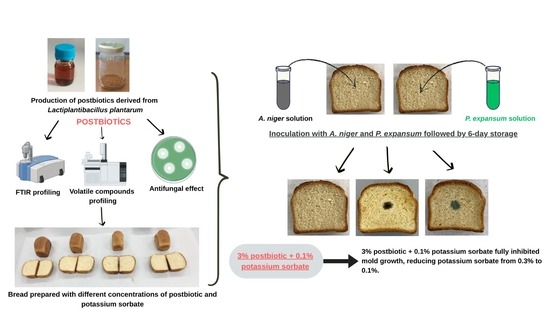
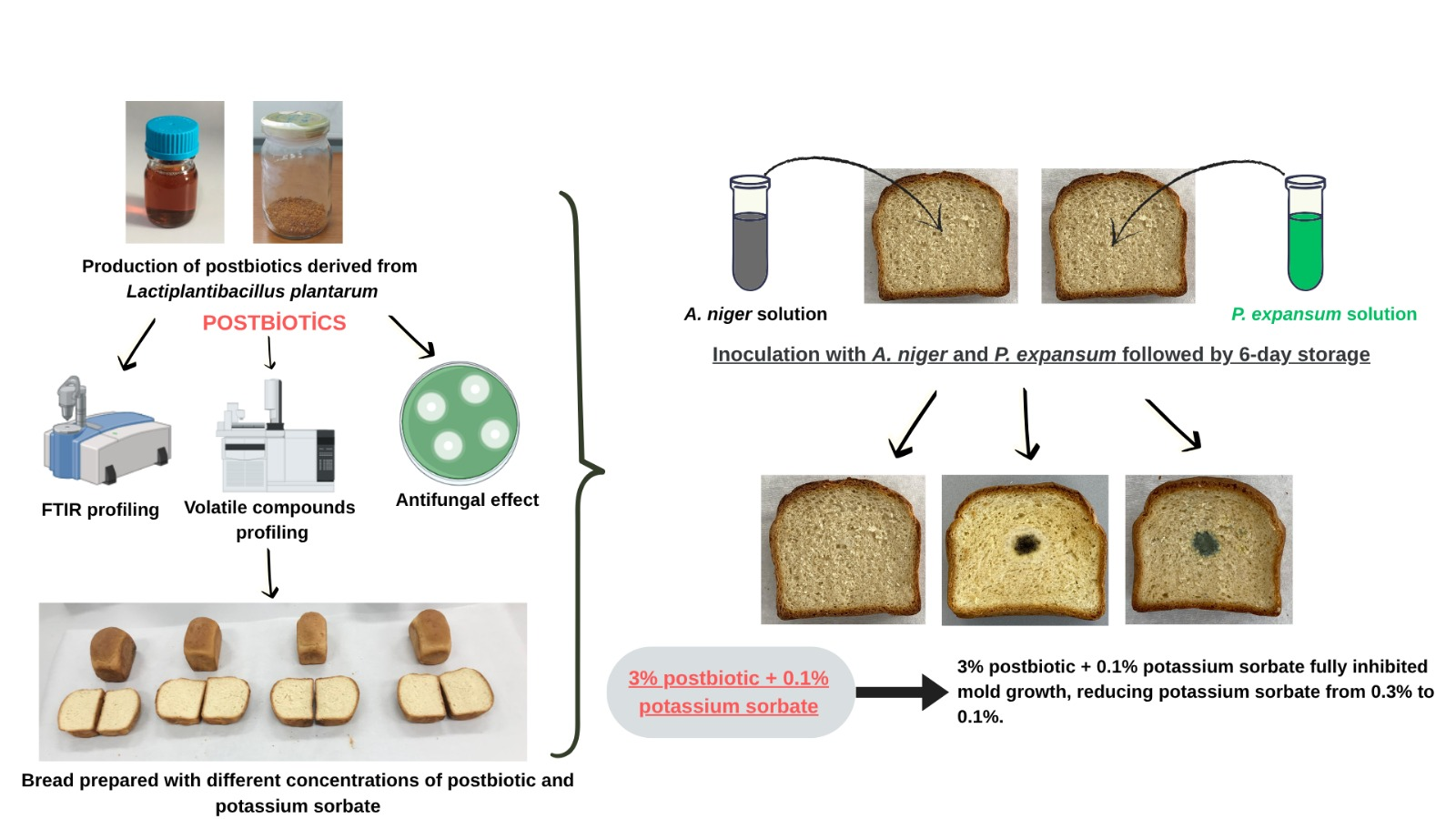
Mycotoxigenic molds pose a threat to human health and cause economic losses in bread production. To address this issue, postbiotics have emerged as promising natural bioprotective agents due to their antifungal properties. In this study, postbiotics were obtained from Lactiplantibacillus (Lp.) plantarum Y48, Liquorilactobacillus (Lq.) hordei SK-6, and Lp. plantarum VB-29 strains and subsequently lyophilized. The functional groups of the bioactive components in these postbiotics were identified using FTIR spectroscopy. Samples extracted with different solvents were analyzed for their volatile compound profiles by GC-MS, and the results were compared using principal component analysis (PCA). The antifungal activities of postbiotics were tested. Subsequently, the antifungal activity of Lp. plantarum Y48 postbiotic was evaluated on bread contaminated with Aspergillus niger and Penicillium expansum. The postbiotic was incorporated into the bread formulation both alone and in combination with potassium sorbate, and it was also applied to the bread surface as a spray. Notably, the formulation containing 3% postbiotic + 0.1% potassium sorbate completely inhibited the growth of A. niger and P. expansum. These results indicate that the combined use of Lp. plantarum Y48 postbiotic and potassium sorbate can effectively prevent mold growth in bread and holds potential as a natural bioprotective approach in food preservation applications.

Graphical Abstract

1. Introduction

Bread remains one of the most popular and nutritionally important staple foods globally, consumed daily for its sensory and textural qualities. As a basic foodstuff in many countries, it is particularly essential in developing and underdeveloped regions [1]. However, in the last decade, concerns about food safety have given way to more conscious consumers, and interest in healthy and natural food has increased. This growing consumer awareness has also driven interest in the safety and quality of bakery products, which are particularly vulnerable to microbial spoilage [2]. Bakery products are highly susceptible to mold growth due to their water activity above 0.62. Recently, it has been reported that 60% of spoilage in bakery products is caused by Penicillium and Aspergillus species [3]. Contamination is mostly the result of mold spores present in the bakery environment during storage. Mold development not only causes product loss but also produces allergenic compounds and mycotoxins, which pose critical risks to human health. Molds are considered the main microbial spoilers in bread, and in many cases, mold contamination determines its shelf life, which is typically 3–4 days without any preservative method. In this context, it has led to the development of alternative approaches and new methods for the preparation and preservation of bakery products [4]. Moreover, the use of lactic acid bacteria (LAB) in bread production, although inactivated by high baking temperatures, leaves behind metabolites that remain in the bread without posing any health risk [5,6].
Aspergillus niger is microorganism that poses problems during the storage of cereals [4,7]. Although Penicillium expansum is generally associated with apple spoilage, it is also recognized as a significant spoilage agent in cereal products. Therefore, various antimicrobial strategies and preservation methods are applied to control P. expansum in bread. This is due to its higher resistance compared to other mold species and its ability to produce toxic metabolites such as patulin and citrinin. To control the growth of molds caused by Penicillium and Aspergillus species, weak organic acids and their salts, such as calcium propionate and potassium sorbate, have been used for decades in the preservation of bakery products [8,9]. Under low pH conditions, the pH-dependent equilibrium between dissociated and undissociated acid favors the undissociated form. This undissociated form can easily cross the cell membrane of bacteria and fungi, leading to the accumulation of protons inside the cell. As a result, membrane integrity can be disrupted, metabolic reactions inhibited, intracellular pH homeostasis stressed, and toxic anions may accumulate [10]. It has been reported in various studies that postbiotics lower pH, thereby inhibiting the growth of microorganisms [11,12]. Within this context, it is hypothesized that the combined use of postbiotics with potassium sorbate salt may enhance antifungal efficacy. Therefore, investigating the effectiveness of postbiotic and potassium sorbate combinations in controlling mold growth in bakery products is significant.
Chemical preservatives such as propionate, sorbate and benzoate are commonly used to prevent mold growth in food, thereby extending shelf life [13]. However, concerns about the development of resistant mold strains and potential toxicity have limited their use. As a result, consumers are increasingly turning to natural alternatives. In this context, organic acids and their salts remain important antimicrobial compounds widely used in the bakery industry. Nonetheless, regulatory pressures such as those from the European Union encouraging the reduction in chemical preservatives in favor of more natural options pose a dual challenge for manufacturers [14]. As a result, consumers have turned to natural alternatives. This shift in consumer preference has increased interest in natural antimicrobial agents and bioprotectants, with particular focus on postbiotics as alternative preservation methods. These natural solutions offer a promising approach to address concerns about chemical additives while effectively controlling microbial spoilage in food.
Lactobacillus species have been reported to possess probiotic potential [15,16,17] and to produce postbiotics that show biological activity in the host [18]. Among the metabolites produced by LAB strains are organic acids such as lactic and acetic acid, aromatic compounds, viscous exopolysaccharides (EPS), and bacteriocin-like compounds for bacterial inhibition. In this context, L. plantarum stands out for its ability to produce antimicrobial peptides and antifungal compounds (such as lactic acid, acetic acid and phenyl lactic acid), which have potential applications as complementary agents to food preservatives or antibiotics [15,19,20,21]. In recent years, the use of postbiotics derived particularly from Lactobacillus spp. as bioprotective agents in food systems has gained increasing attention. These postbiotics are considered natural preservative alternatives due to their ability to inhibit the growth of pathogenic and spoilage microorganisms [16]. Notably, numerous studies have reported the potential use of postbiotics from L. plantarum, L. brevis and Lactococcos lactis as biocontrol strategies against molds [22,23,24]. Additionally, it has been reported that an edible coating combining antifungal metabolites produced by Lactiplantibacillus plantarum A6 with exopolysaccharides (EPS) produced by Weissella confusa JCA4 reduced the growth of Rhizopus stolonifer in cherry tomatoes [25]. In this context, the use of postbiotics with antifungal activity is expected to reduce mold growth and extend the shelf life of bakery products such as bread, offering an important alternative to reduce reliance on chemical preservatives. However, to fully realize this potential, more comprehensive studies are needed to evaluate the efficacy, mechanisms of action, and formulation parameters of these postbiotic components.
Packaging methods, various plant-based compounds, and chemical agents have been used to control mycotoxigenic molds in bread production [26,27,28]. In addition, studies have reported the antifungal effects of potassium sorbate when applied in combination with different bioactive compounds [29,30]. The present study aimed to evaluate the synergistic antifungal potential of a complex Lp. plantarum Y48 postbiotic mixture in combination with potassium sorbate in bread samples subjected to different treatments during storage. In this study, the functional groups of bioactive compounds in lyophilized postbiotics obtained from Lactiplantibacillus (Lp.) plantarum Y48, Liquorilactobacillus (Lq.) hordei SK-6, and Lp. plantarum VB-29 strains were characterized using FTIR spectroscopy. Subsequently, three different postbiotics were extracted with ethyl acetate and methanol, their volatile compound profiles were analyzed by GC-MS, and the data were compared using principal component analysis (PCA). In addition, the antifungal activities of the postbiotics against different mold species were evaluated using the agar plate method. Based on the characterization findings, the Y48 postbiotic, which exhibited prominent bioactivity, was selected for testing its effect on mold growth in bread. Accordingly, postbiotics and potassium sorbate were applied both to the bread formulation and its surface to investigate their effects on the growth of two mycotoxigenic molds, A. niger and P. expansum.

2. Materials and Methods

2.1. Microbial Strains and Growth Conditions

The tested fungal strains P. expansum, P. concentricum, P. chrysogenum, Fusarium spp., Alternaria alternata, A. parasiticus and A. niger were obtained from the culture collection of Yıldız Technical University. For the analysis, the molds were cultured on Potato Dextrose Agar (PDA, Sigma-Aldrich, St. Louis, MO, USA) at 28 °C for 7 days. As the postbiotic source, the LAB strains; Lp. plantarum Y48, Lq. hordei SK-6 and Lp. plantarum VB-29 were obtained from distinct sources were utilized [31,32,33] and each LAB culture was grown in Man Rogosa Sharpe (MRS, Sigma-Aldrich, St. Louis, MO, USA) broth at 37 °C for different purposes.

2.2. Preparation and Lyophilization of Postbiotics

The bacterial strains used in this study were incubated at 37 °C for 48 h to achieve maximum metabolite production, after which postbiotics were collected. The timing for metabolite harvesting was determined based on optical density measurements, following the procedure described by Moradi et al. [34] to ensure maximal yield. After incubation, the cultures were centrifuged at 6750 rpm (4 °C) for 20 min to obtain cell-free postbiotics, which were subsequently lyophilized for drying. The lyophilization process was performed using a freeze with the following parameters: freezing temperature of −40 °C, pump pressure of 100 mTorr, and shelf temperature of −60 °C [35]. Approximately 28 g/L of freeze-dried postbiotic samples were obtained and stored at −20 °C until further use.

2.3. Characterization of Postbiotics by Fourier Transform Infrared Spectroscopy (FTIR)

The postbiotics obtained from the LAB strains were analyzed by Fourier transform infrared spectroscopy (FTIR) using the attenuated total reflection (ATR) method to provide information about their chemical groups. For this analysis, 5 mg of lyophilized postbiotic sample was mixed homogeneously with 200 mg of KBr powder and brought into pressed tablet form and then scanned with FTIR in the wavelength range of 400–6000 cm−1 [36].

2.4. Volatile Compound Profile of Postbiotics

The volatile compound profile of the postbiotics obtained from three LAB strains was carried out by modifying the method applied by Kam et al. [37]. For this purpose, 3 g of lyophilized postbiotics were separately mixed with 30 mL of HPLC-grade ethyl acetate and methanol. The mixtures were incubated overnight in a shaking incubator at 30 °C and 150 rpm. Subsequently, the organic phase was removed by centrifugation at 6750 rpm. All samples were filtered through a 0.2 µm sodium acetate filter and 1 µL was injected into the system. The extracted postbiotic samples were analyzed using GC-MS (Shimadzu model GC 2010, Kyoto, Japan) connected with QP2010 ultra as analytical line. The Rxi-5 Ms (30 m × 0.25 mm × 0.25 µm) column was used and the injector temperature was used as 250 °C with helium as the carrier gas. The oven temperature was set to 50 °C and increased to 300 °C with a ramp of 3 °C/min and kept for 10 min. The volatile compounds detected were then identified through the registered library.

2.5. Evaluation of Postbiotics Antifungal Activity Using Disk Diffusion Assay

The antifungal activities of postbiotics were tested against P. expansum, P. concentricus, P. chrysogenum, Fusarium spp., A. alternata, A. parasiticus and A. niger with some modifications applied to the methodology from Wang et al. [38]. For this purpose, the molds were cultured on PDA medium for 10 days and conidial suspension was prepared. The conidia were gently collected in sterile distilled water and suspension was homogenized. A suspension of 106 conidia/mL was spread onto PDA medium, and the surface was allowed to dry at room temperature for 2 h. Then, a 6 mm sterile disk (Whatman No: 4 filter paper, EEA03, GE Healthcare, Maidstone, UK) was placed on the dried surface, and the postbiotic samples were slowly impregnated onto the disk in three steps with a total volume of 30 μL. The plates were then incubated at 28 °C for 3 days, and after incubation, inhibition zones were observed and classified according to the following scale; (+): delay in spore formation; (++): delay in spore formation with a small clear zone of inhibition at the spot; (+++): strong inhibition of mycelial growth and sporulation with large clear zones of inhibition at the spot.

2.6. Production of Bread Samples and Antifungal Challenge Test

The dough mixture was prepared with 100 g flour, 5 g sugar, 1.5 g salt, 2 g yeast and 60 g water. The salt was added to the flour and mixed well. Sugar and yeast were kept in warm water for about 5 min, then mixed with flour to obtain dough, which was shaped and kept in an air conditioning cabinet at 80% relative humidity for 40 min. Finally, after resting, the dough was subjected to baking for 50 min at 200 °C. Postbiotics obtained from Lp. plantarum Y48 were selected for the bread challenge test due to their demonstrated high antifungal activity in our analyses, the presence of functional groups associated with antimicrobial potential as revealed by FTIR, and the identification of mold-inhibitory metabolites in the volatile compound profile. In this context, the methodology reported by Russo et al. [39] was modified and applied under controlled conditions to evaluate the antifungal activity of Y48 postbiotics on bread contaminated with A. niger and P. expansum molds. Briefly, bread samples were divided into 6 different groups: Group I served as the negative control containing water, Group II contained 1% postbiotics, Group III contained 1% postbiotics with 0.1% potassium sorbate, Group IV contained 3% postbiotics, Group V contained 3% postbiotics with 0.1% potassium sorbate, and Group VI served as the positive control containing 0.3% potassium sorbate.
The antifungal activity of postbiotics against A. niger and P. expansum in bread was evaluated using two different approaches. In the 1st application, postbiotics and potassium sorbate were added to the dough, followed by baking. In the 2nd application, bread was produced without any additives; subsequently, for both applications, 500 µL of A. niger and P. expansum spore suspensions (106 conidia/mL) were injected into the center of each bread slice for the challenge test. In the final step of the 2nd application, postbiotics and potassium sorbate were sprayed onto the bread surface Bread samples packaged in polypropylene were stored at room temperature, protected from direct light exposure. During the six-day storage period, mold growth on the bread surface was periodically observed, and mold diameters were measured in millimeters. Inhibition percentages were calculated by comparison with the control samples.
Control Efficacy (%) = [(D0 − D1)/D0] × 100
where D0: Growth in the negative control (mold diameter in the control group); D1: Growth in the active agent (mold diameter in the sample containing the active agent).

2.7. Statistical Analysis

Statistical analyses were performed using IBM SPSS Statistics 25. Heatmap and bar graphs were generated with GraphPad Prism 9.3.1, while FTIR spectral peaks were analyzed using Origin 2022. All data are presented as the mean ± standard deviation of at least three replicates. Differences in antifungal inhibition zones between bread formulations supplemented with postbiotics and the control were evaluated by analysis of variance (ANOVA) followed by Duncan’s multiple range test at a significance level of p < 0.05. Additionally, the concentrations of volatile compounds in postbiotics obtained via ethyl acetate and methanol extraction were assessed using principal component analysis (PCA) to determine differences among postbiotics from different strains.

3. Results and Discussion

3.1. Characterization of Postbiotics by FTIR Analysis

Postbiotic samples obtained from Lp. plantarum Y48, VB-29 and Lq. hordei SK-6 strains were lyophilized and their spectral bands were examined by FTIR analysis (Figure 1). Lactic acid is a bifunctional molecule containing both a carboxylic acid and a hydroxyl group, and it can be produced at high levels in postbiotics through microbial fermentation [39]. In our study, lactic acid contents of 47.53% and 92.18% were detected in the postbiotics derived from the Y48 and VB-29 strains, respectively (Table S1). The broad –OH band observed around 3211 cm−1 in the FTIR spectra confirms the presence of hydroxyl groups, thereby supporting the presence of lactic acid in the samples [40]. The lower band intensity observed in the SK-6 sample indicates a reduced sugar content [41]. The 2933 and 2976 cm−1 bands correspond to C–H stretching, and the peaks in the 1406–1578 cm−1 range correspond to C=O stretching and O–H bending. Bands in the 1033–1250 cm−1 range represent aromatic ring vibrations and phosphodiester bonds of nucleic acids, as well as characteristic absorptions of polysaccharides. In particular, the band observed at 1233 cm−1 and aromatic ring vibrations detected at 1126 and 1050 cm−1 can be associated with characteristic absorptions of organic acids (e.g., the phosphodiester backbone of nucleic acids) and polysaccharides found in postbiotics [42,43]. All postbiotics exhibited strong bands around 1558 and 1578 cm−1, corresponding to protein-like structures such as bacteriocins [44]. Additionally, the peaks at 1568 and 1582 cm−1 can be used as Amide II. Absorptions between Amide I and Amide II were observed at 1618 and 1537 cm−1, respectively [45]. Protein-like structures within the postbiotic matrix detected and produced by FTIR analysis indicate the presence of bacteriocins produced by probiotic bacteria, which exhibit antimicrobial properties [46]. Furthermore, the decrease in pH observed during incubation is thought to be due to organic acid production, and this acidity limits the proliferation of microorganisms [47]. Therefore, it is suggested that postbiotic components secreted into the medium because of bacterial incubation support antimicrobial activity by inhibiting the surface attachment of pathogens or through competition.

3.2. Volatile Compound Profiles of Postbiotics

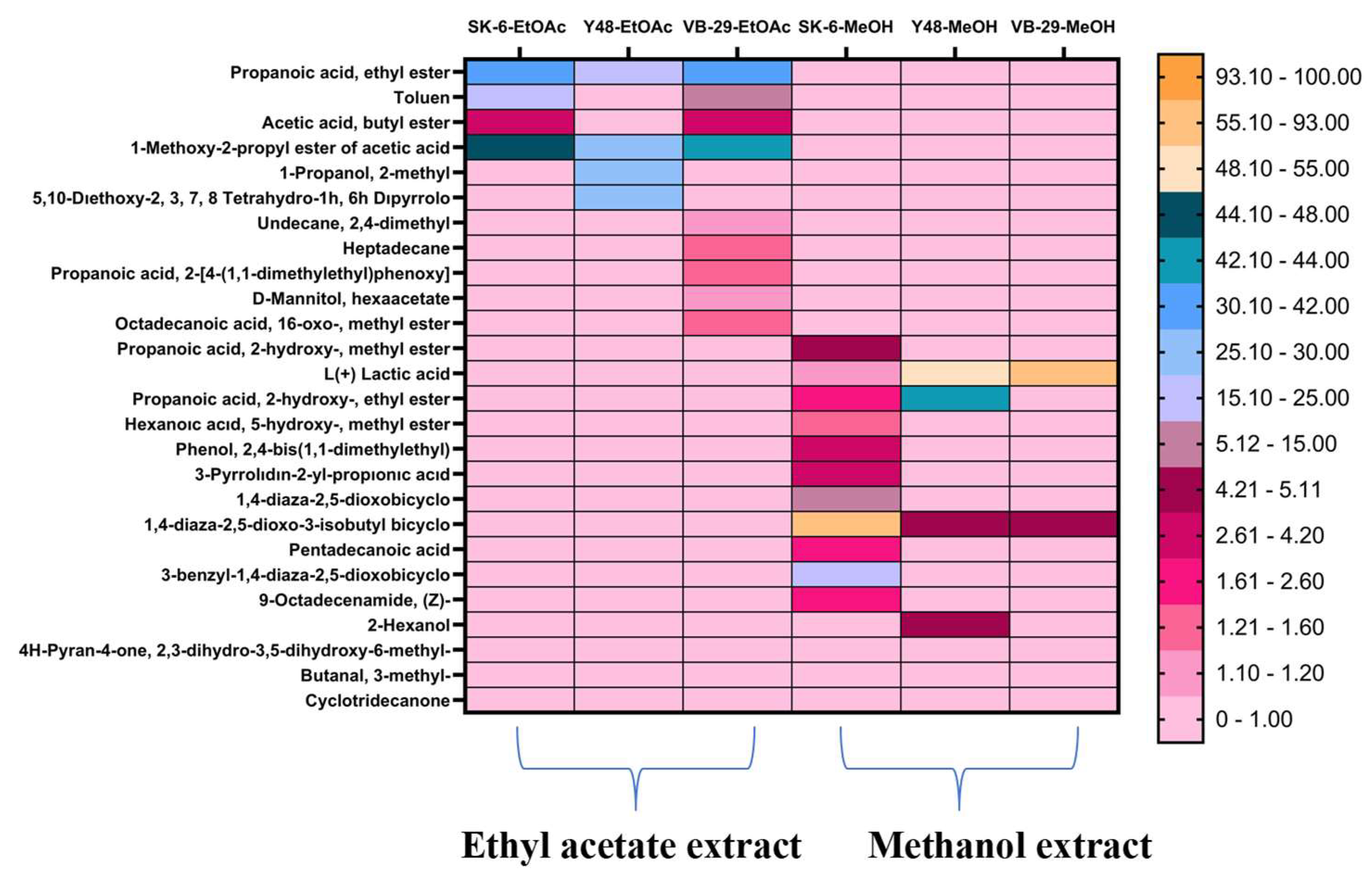
GC-MS was used to analyze the volatile compound profiles of the postbiotics obtained from Lp. plantarum Y48, Lq. hordei SK-6 and Lp. plantarum VB-29. In our study, two different solvents, ethyl acetate and methanol, were used to reveal the detailed volatile profiles of postbiotics, and the results are presented in Table S1. In general, postbiotics obtained from LAB strains were reported to be specific to each microorganism, and the content of the postbiotic might be affected by preparation, fermentation conditions, and extraction methodology [48]. Table S1 shows that using GC-MS with ethyl acetate and methanol extraction, postbiotics from Lp. plantarum Y48 and VB-29 contained 20 compounds, including esters, alcohols, alkanes, aldehydes, ketones, acids, and pyrrole derivatives. Postbiotics from Lq. hordei SK-6 had 15 compounds, mainly acids, esters, phenols, and pyrrole derivatives. In total, 27 different organic compounds were identified across the three strains. Figure 2 illustrates the relative abundance of these compound groups in each extract. The diverse antimicrobial compounds in these postbiotics suggest their strong potential as natural preservatives in food technology, especially for clean label products. Table S1 shows distinct ethyl acetate and methanol extract profiles in postbiotic samples, varying by strain. Notably, these profiles mainly included potential antimicrobial compounds. For example, Lq. hordei SK-6 postbiotics contained acids, esters, and pyrrole derivatives, while Lp. plantarum VB-29 had acids and esters. The VB-29 methanol extract was especially rich in lactic acid (92.18%), known for its antimicrobial activity [49,50]. Previous studies have reported volatile profiles of postbiotics from various sources. They found that Lp. plantarum postbiotics contained mainly lactic acid, pyranoses, and propanoic acid esters, with variations depending on the strain. Sharaf et al. [51], detected acetic acid esters in Lactobacillus helveticus postbiotics, while our study found lower levels of similar esters in Lp. plantarum VB-29 and Lq. hordei SK-6 reported lactic acid as the major volatile in Pediococcus acidilactici postbiotics, and Pelyuntha et al. [52] identified diverse metabolites in Weisella confusa postbiotics, dominated by 2,4-di-tert-butylphenol.
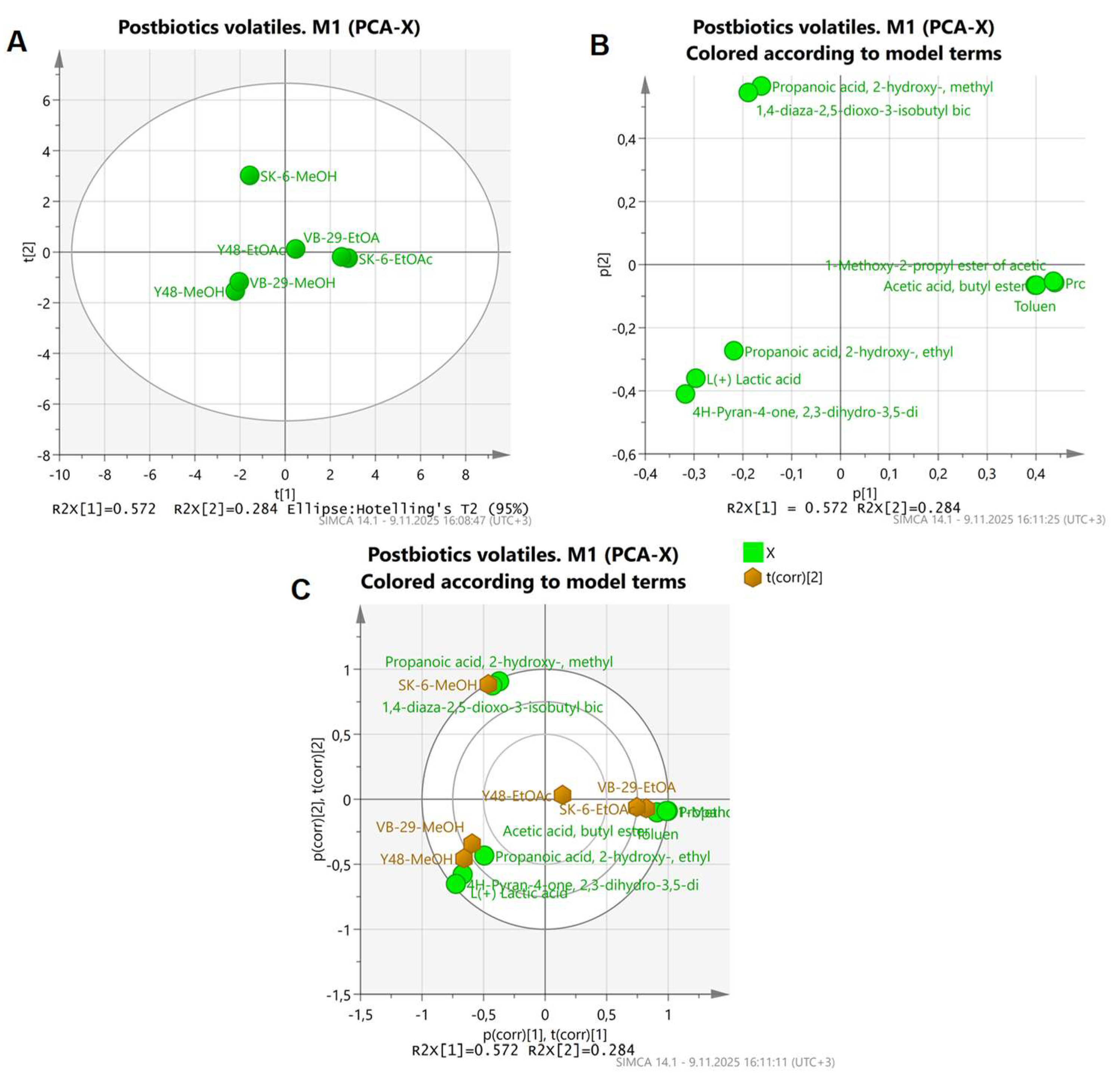
PCA was performed to evaluate the relationships between postbiotics extracted with different solvents and their volatile compounds. Figure 3A–C shows the score scatter plot, loading scatter plot, and biplot of the PCA. The first two principal components (PC1 = 57.2%, PC2 = 28.4%) explained 85.6% of the total variance. Postbiotic extracts obtained with ethyl acetate (Y48-EtOAc, SK-6-EtOAc, VB-29-EtOAc) were positioned on the right side of the score plot, whereas methanol extracts were located on the left (Figure 3A), indicating that the extraction solvent significantly influences the volatile compound profile. In the loading scatter plot (Figure 3B), 4H-Pyran-4-one, 2,3-dihydro-3,5-dihydroxy-6-methyl and L(+)-lactic acid, located in the lower-left quadrant, exhibited a strong positive correlation (r = 0.928, p < 0.01). Similarly, 1,4-diaza-2,5-dioxo-3-isobutyl bicyclo and propanoic acid, 2-hydroxy-, methyl ester, positioned in the lower-left and lower-right quadrants, were also strongly positively correlated (r = 0.995, p < 0.01). Additionally, 1-methoxy-2-propyl acetic acid ester, toluene, and propanoic acid ethyl ester, located in the lower-right quadrant, showed strong positive correlations with each other. In the biplot (Figure 3C), ethyl acetate extracts (SK-6-EtOAc, Y48-EtOAc, VB-29-EtOAc) were situated on the right side of PC1 and closely associated with 1-methoxy-2-propyl acetic acid ester, toluene, and propanoic acid ethyl ester, indicating that these compounds were present at higher concentrations in these extracts compared to the others. The results demonstrated significant differences among the extract types. Methanol extracts of VB-29 and Y48 were primarily associated with ketones and organic acids, while the methanol extract of SK-6 was linked to pyrrole derivatives and alcohols. On the other hand, ethyl acetate extracts were characterized by esters and aromatic compounds.

3.3. In Vitro Antifungal Activity of Postbiotics

One of the main characteristics that postbiotics confer as a functional and technological role is their antifungal activities for bread and bakery products [53]. In this study, the antifungal activity of postbiotics derived from three LAB strains was tested against Aspergillus and Penicillium spp., under in vitro conditions (Table 1).
Figure S1 shows the antifungal activity of Y48, SK-6, and VB-29 postbiotics against P. expansum, A. alternata, and Fusarium spp., respectively. Disk diffusion tests revealed strong inhibition of mycelial growth and sporulation against P. expansum, A. niger, A. parasiticus and A. alternata, with large clear zones. Growth and sporulation were delayed with smaller zones against P. concentricum, Fusarium spp., and P. chrysogenum. Y48 showed particularly strong antifungal effects against P. expansum. These findings align with previous studies reporting antifungal activity of Lp. plantarum postbiotics against Penicillium species [54,55,56]. In addition, the antifungal activity of Lp. plantarum LPP703 postbiotics against Penicillium spp., as determined by optical density measurements, further supports the observed findings [57]. Ahmad Rather et al. [58] incubated Lp. plantarum YML007 from kimchi and observed antifungal activity against A. niger. Similarly, postbiotics from Lp. plantarum Y48 and VB-29 in this study effectively inhibited mycelial growth and sporulation. Zhang et al. [59] reported L. plantarum IMAU10124 postbiotics inhibited P. roqueforti with a 7.1 mm zone. Another study found that L. plantarum CECT 749 postbiotics inhibited P. expansum and A. niger by 10 mm [60], while Poornachandra Rao et al. [61] showed L. plantarum MYS44 postbiotics inhibited A. parasiticus by over 12 mm. Cizeikiene et al. [62] reported that Lactobacillus sakei, Pediococcus acidilactici and Pediococcus pentosaceus strains produced bacteriocin-like compounds and organic acids with fungicidal and fungistatic effects against P. expansum, A. niger, and P. chrysogenum. In our study, postbiotics from Lactobacillus spp. delayed spore formation of P. chrysogenum and strongly inhibited mycelial growth and sporulation of P. expansum. The Y48 postbiotic effectively inhibited A. niger, while SK-6 and VB-29 postbiotics delayed spore formation with smaller inhibition zones. Falguni et al. [63] reported that L. brevis NCDC 02 postbiotic lost antifungal activity during long-term storage; however, our postbiotics from Lp. plantarum Y48, VB-29, and Lq. hordei SK-6 retained antifungal activity after 6 months of lyophilized storage at −20 °C.

3.4. Antifungal Activity Test of Postbiotics Applied for Bread Production

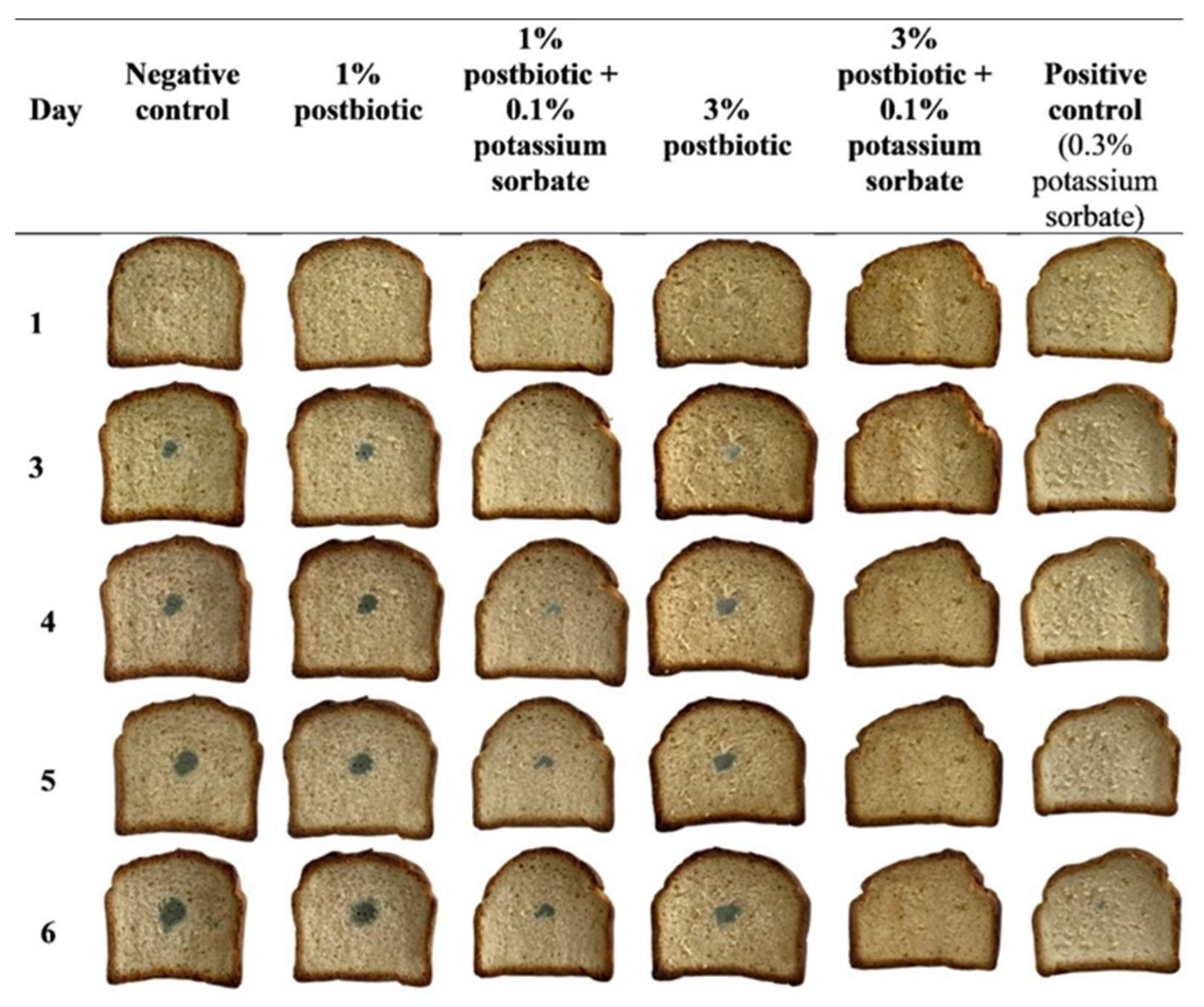
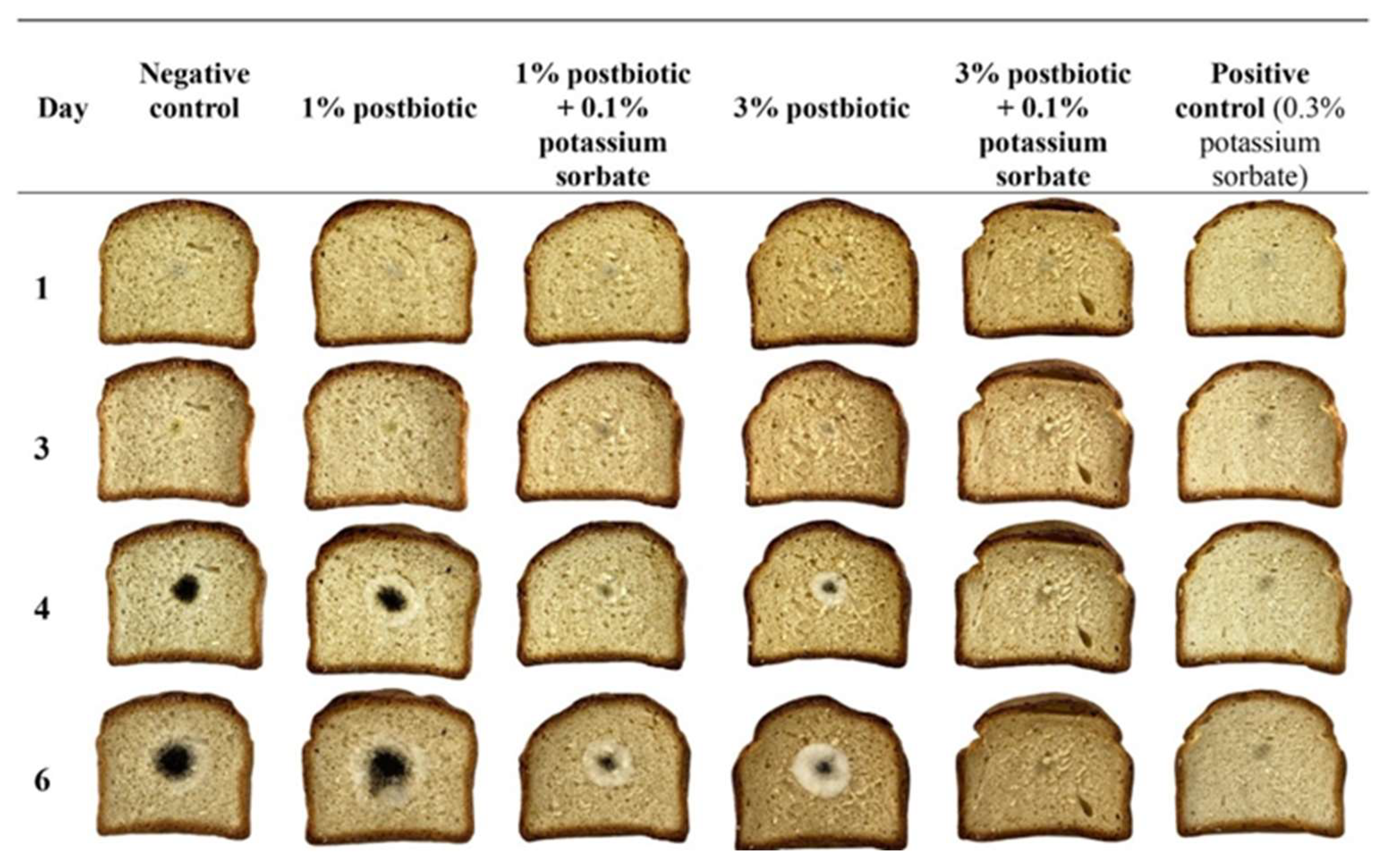
Postbiotics from Lp. plantarum Y48, selected based on growth performance and in vitro antifungal activity, were tested against A. niger and P. expansum in bread. Bread samples were contaminated with 106 conidia/mL mold suspension and stored for 6 days. The Y48 postbiotic was either added to the dough or sprayed onto the bread surface. When combined with potassium sorbate in the dough, Y48 postbiotic effectively inhibited A. niger and P. expansum growth (Figure 4 and Figure 5). Spray application showed only slight inhibition (Figures S2–S4). This may be attributed to the limited penetration of postbiotics into the bread matrix. Moreover, numerous studies have shown that volatile organic compounds (VOCs) rapidly evaporate under ambient conditions [64]. Therefore, the presence of antimicrobial VOCs in our formulation and their potential volatilization during storage may have contributed to the reduced antifungal efficacy and limited preservative effect. To further investigate this effect, various concentrations (1% and 3% postbiotic, with or without potassium sorbate) were tested in dough over 6 days of incubation, and inhibition ratios during storage were also measured (Figure 4, Figure 5 and Figure 6).
As shown in Figure 4, bread containing 1% postbiotic with 0.1% potassium sorbate limited mold growth and delayed sporulation. In contrast, bread with only 1% postbiotic showed increased mold growth and earlier sporulation. From day four, sporulation rapidly progressed in the 1% postbiotic group, while it was delayed in the groups containing 1% postbiotic + 0.1% potassium sorbate and 3% postbiotic. Similar effects were observed against P. expansum (Figure 5). Moreover, no mold growth was detected in bread containing 3% postbiotic with 0.1% potassium sorbate, indicating this combination effectively inhibits fungal growth and has potential to extend product shelf life. Moreover, no mold growth was detected in bread containing 3% postbiotic and 0.1% potassium sorbate. This finding indicates that the combination effectively inhibits fungal development and has the potential to extend the product’s shelf life. In this context, the presence of lactic acid among the volatile compounds was confirmed through FTIR spectral analysis, in accordance with previously reported data. Notably, lactic acid has been reported to exert inhibitory effects on Listeria monocytogenes when applied in combination with potassium sorbate [65]. Similarly, another study demonstrated that metabolites derived from Lactobacillus species exhibited antifungal activity when used together with potassium sorbate [29]. Overall, the evidence presented here demonstrates that the Y48 postbiotic, which contains a high concentration of lactic acid, displays a certain level of antifungal activity on its own, but its efficacy is markedly enhanced when combined with potassium sorbate due to a synergistic interaction. Furthermore, another study reported that bread fermented with Lp. plantarum, Levilactobacillus brevis, and Candida famata inhibited the growth of A. niger and Penicillium commune for up to 10 days, highlighting the considerable antifungal potential of these starter cultures [66]. This result suggests that postbiotics may play an important role in enhancing the antimicrobial activity of sorbate, particularly through their pH-lowering properties [9,10]. This synergistic effect highlights the potential of postbiotics and sorbates in controlling mold growth in bakery products. Both bread groups contained 0.1% potassium sorbate, but only the bread with 3% postbiotic + 0.1% potassium sorbate fully inhibited P. expansum. The 1% postbiotic + 0.1% potassium sorbate group showed a 10.25 mm inhibition zone, while the potassium sorbate-only control had 3.5 mm mold growth. Thus, combining 3% postbiotic from Lp. plantarum Y48 with potassium sorbate effectively extended shelf life by preventing P. expansum growth.
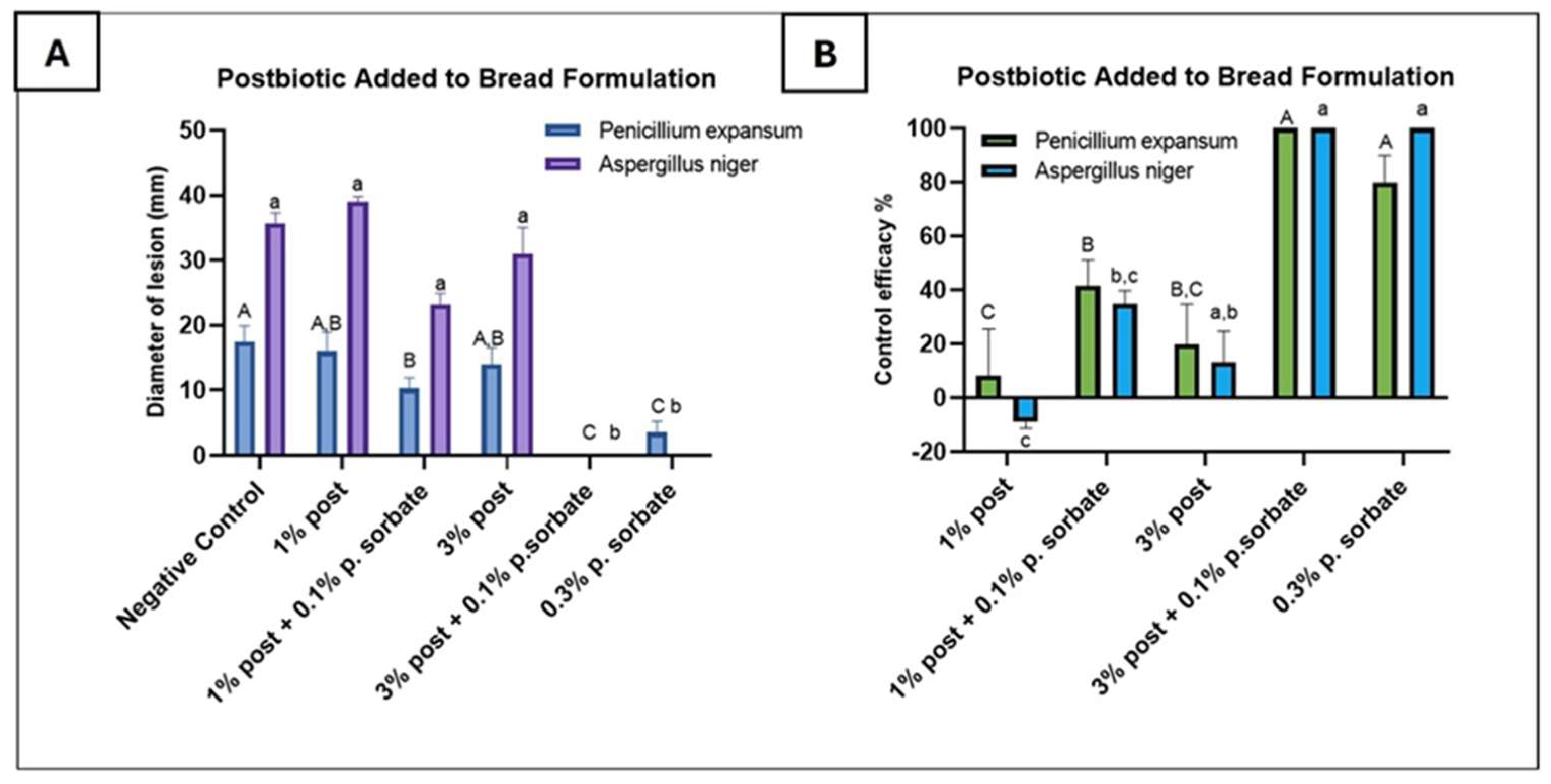
Figure 6 presents the zone diameter (A) and control effectiveness % (B) of bread with postbiotic added against mold during storage. Bread containing 3% Lp. plantarum Y48 postbiotic and 0.1% potassium sorbate showed significantly less mold growth on the surface than other samples (p < 0.05) in Figure 6A. This bread completely inhibited A. niger growth, performing similarly to the control. However, bread with 0.3% potassium sorbate (positive control) showed 80% inhibition against P. expansum, whereas the 3% postbiotic + 0.1% potassium sorbate sample fully prevented P. expansum growth. Bread samples with 1% postbiotic + 0.1% potassium sorbate and 3% postbiotic alone showed 41.42% and 20% inhibition against P. expansum, respectively. Against A. niger, these inhibition rates were 34.97% and 13.28% (Figure 6B). The complete inhibition of both molds by the 3% postbiotic + 0.1% potassium sorbate bread highlights its potential as a natural alternative to chemical preservatives.
In the negative control bread, P. expansum growth reached 17.5 mm, while in postbiotic-treated breads, inhibition zones ranged from 10.25 to 16 mm (Figure 6A). These results indicate that adding 1% postbiotic Y48 with 0.1% potassium sorbate shows a similar antifungal effect to 0.3% potassium sorbate alone, suggesting a synergistic potential and supporting the use of postbiotics in clean-label food preservation. These findings are supported by previous studies such as Ryan et al. [67], who reported that L. plantarum strains inhibited the growth of A. niger, Fusarium culmorum, and P. expansum spores in wheat bread. They also noted that P. roqueforti was not reduced when combined with calcium propionate. In another study [68], sourdough-derived LAB strain combinations exhibited a synergistic inhibitory effect against A. niger, A. flavus, P. chrysogenum, and P. expansum. In our study, adding 3% Lp. plantarum postbiotic delayed sporulation of A. niger and P. expansum. In a study, the L. plantarum FST 1.7 strain, used in bread production, suppresses spoilage molds by producing antimicrobial metabolites during fermentation, mainly lactic acid, phenylacetic acid, and cyclic dipeptides [50].
The antimicrobial effects of Lp. plantarum Y48 postbiotic ethanol and methanol extracts are consistent with compounds reported in the literature, including 1-Propanol, 2-methyl [69], Propanoic acid, ethyl ester [70], L(+) Lactic acid [71], 2-Hexanol [72], and 1,4-diaza-2,5-dioxo-3-isobutyl bicyclo [73]. Additionally, lactic acid was found at 47% in the volatile compound profile of Lp. plantarum Y48 postbiotic (Table S1). Lactic acid penetrates the cell membranes of A. niger and P. expansum, lowering the pH and disrupting cellular structures, leading to lysis [3,74]. The antifungal effects of these compounds have also been reported by other researchers. In our study, these compounds were detected in the Lp. plantarum Y48 postbiotic and their antifungal activities were further supported by application in a bread matrix. The inhibition of mold growth observed in postbiotic-containing bread groups confirms the antifungal potential of these volatile compounds, demonstrating practical applicability for food preservation.

4. Conclusions

Recently, postbiotics produced by distinct LAB strains have become important metabolites for antimicrobial solutions required for the food industry. In this study, postbiotics were obtained from three LAB strains, their characterization was performed using FT-IR and GC-MS analyses, and their antifungal activities were evaluated by the disk diffusion method. Based on the characterization results, the postbiotic produced by Lp. plantarum Y48 was selected for the bread challenge test. In this test, the postbiotic and potassium sorbate were either applied in spray form or incorporated into the bread formulation to inhibit the growth of A. niger and P. expansum. The results of this study indicated that postbiotics were not effective when applied in spray form; however, when Lp. plantarum Y48 postbiotic was combined with potassium sorbate in the bread formulation, a synergistic effect was observed, leading to enhanced antifungal activity. While Lp. plantarum Y48 postbiotic alone showed limited antifungal efficacy, its combination with potassium sorbate resulted in a significant increase in antifungal activity. This synergistic effect may be attributed to the high lactic acid content (47.53%) of the Y48 postbiotic. Furthermore, the concentration of potassium sorbate required for antifungal activity in bread production decreased from 0.3% to 0.1%, indicating that the Y48 postbiotic-potassium sorbate mixture holds potential as an effective antifungal strategy against A. niger and P. expansum. These findings demonstrate the potential usage of postbiotics in food formulations to obtain clean labeled food products. Future work should investigate the antifungal activity of different postbiotic species, bread and mold varieties, and combinations of postbiotics obtained from various growth media to better understand and optimize their food preservation potential.

Supplementary Materials

The following supporting information can be downloaded at: https://www.mdpi.com/article/10.3390/fermentation11120675/s1, Figure S1: Antifungal activity of Lp. plantarum Y48 postbiotic againts P. expansum (a), Lq. hordei SK-6 postbiotic against A. alternata (b) and Lp. plantarum VB-29 postbiotic against Fusarium spp. (c); Figure S2: The antifungal effect of postbiotic and potassium sorbate solution sprayed on the surface of bread samples contamined with A. niger; Figure S3: The antifungal effect of the postbiotic and potassium sorbate solution sprayed of bread samples contamined with P. expansum; Figure S4: With the addition of postbiotic sprayed on bread surface, the zone diameter (A) and Control efficacy % (B) of A. niger and P. expansum on the surface during a 6-day storage period. Different uppercase and lowercase letters within the same-colored column indicate significant differences (p < 0.05) for Penicillium expansum and Aspergillus niger, respectively. Table S1: Volatile organic compounds (VOCs) profiles of postbiotics extracted with methanol and ethyl acetate.

Author Contributions

Conceptualization, Y.K. and E.D.; methodology, Y.K., E.D., F.B. and S.D.; software, Y.K., E.D. and F.B.; validation, Y.K., E.D., F.B. and F.K.-G.; formal analysis, Y.K., E.D., S.D., F.B. and M.S.; investigation Y.K., E.D. and S.D.; resources, Y.K., F.B. and S.D.; data curation, Y.K., F.B., E.D., F.K.-G., D.D. and M.S.; writing—original draft preparation, Y.K., E.D., D.D., F.K.-G. and M.S.; writing—review and editing, Y.K., E.D., F.K.-G. and M.S.; visualization Y.K., E.D. and F.B.; supervision, E.D., F.K.-G., F.B. and M.S.; project administration, E.D. funding acquisition, E.D. All authors have read and agreed to the published version of the manuscript.

Funding

This research received no external funding.

Institutional Review Board Statement

Not applicable.

Informed Consent Statement

Not applicable.

Data Availability Statement

The original contributions presented in this study are included in the article/Supplementary Materials. Further inquiries can be directed to the corresponding author.

Acknowledgments

The author, Yasemin Kaya, is supported by the TUBITAK BIDEB 2211/A National PhD Scholarship Program.

Conflicts of Interest

The authors declare no conflicts of interest.

Abbreviations

The following abbreviations are used in this manuscript:
P1P. concentricum
P2P. expansum
P3P. chrysogenum
A1A. niger
A2A. parasiticus
F1Fusarium spp.
AAAlternaria alternata
Y48-EtOAcY48 postbiotic extracted with ethyl acetate
SK-6-EtOAcSK-6 postbiotic extracted with ethyl acetate
VB-29-EtOAcVB-29 postbiotic extracted with ethyl acetate;
Y48-MeOHY48 postbiotic extracted with methanol
SK-6-MeOHSK-6 postbiotic extracted with methanol
VB-29-MeOHVB-29 postbiotic extracted with methanol
FTIRFourier Transform Infrared Spectroscopy
PCAPrincipal Component Analysis
VOCsVolatile Organic Compounds

References

  1. Noshirvani, N.; Abolghasemi Fakhri, L. Advances in Extending the Microbial Shelf-Life of Bread and Bakery Products Using Different Technologies: A Review. Food Rev. Int. 2025, 41, 87–112. [Google Scholar] [CrossRef]
  2. Sadowski, A.; Dobrowolska, B.; Dziugan, P.; Motyl, I.; Liszkowska, W.; Rydlewska-Liszkowska, I.; Berłowska, J. Bread consumption trends in Poland: A socio-economic perspective and factors affecting current intake. Food Sci. Nutr. 2024, 12, 7776–7787. [Google Scholar] [CrossRef]
  3. Gerez, C.L.; Torino, M.I.; Rollán, G.; de Valdez, G.F. Prevention of bread mould spoilage by using lactic acid bacteria with antifungal properties. Food Control. 2009, 20, 144–148. [Google Scholar] [CrossRef]
  4. Castro-Ríos, K.; Montoya-Estrada, C.N.; Martínez-Miranda, M.M.; Hurtado Cortés, S.; Taborda-Ocampo, G. Physicochemical treatments for the reduction of aflatoxins and Aspergillus niger in corn grains (Zea mays). J. Sci. Food Agric. 2021, 101, 3707–3713. [Google Scholar] [CrossRef] [PubMed]
  5. Morán, J.; Kilasoniya, A. Integration of Postbiotics in Food Products through Attenuated Probiotics: A Case Study with Lactic Acid Bacteria in Bread. Foods 2024, 13, 2042. [Google Scholar] [CrossRef] [PubMed]
  6. Hussain, S.; Jamil, K. Studies on the shelf life enhancement of traditional leavened bread. Pak. J. Biochem. Mol. Biol. 2012, 45, 81–84. [Google Scholar]
  7. Ju, J.; Xie, Y.; Yu, H.; Guo, Y.; Cheng, Y.; Zhang, R.; Yao, W. Synergistic inhibition effect of citral and eugenol against Aspergillus niger and their application in bread preservation. Food Chem. 2020, 310, 125974. [Google Scholar] [CrossRef] [PubMed]
  8. Moro, C.B.; Lemos, J.G.; Gasperini, A.M.; Stefanello, A.; Garcia, M.V.; Copetti, M.V. Efficacy of weak acid preservatives on spoilage fungi of bakery products. Int. J. Food Microbiol. 2022, 374, 109723. [Google Scholar] [CrossRef]
  9. Suhr, K.I.; Nielsen, P.V. Effect of weak acid preservatives on growth of bakery product spoilage fungi at different water activities and pH values. Int. J. Food Microbiol. 2004, 95, 67–78. [Google Scholar] [CrossRef]
  10. Brul, S.; Coote, P. Preservative agents in foods: Mode of action and microbial resistance mechanisms. Int. J. Food Microbiol. 1999, 50, 1–17. [Google Scholar] [CrossRef]
  11. Karaca, B.; Gursoy, M.; Kiran, F.; Loimaranta, V.; Söderling, E.; Gursoy, U.K. Postbiotics of the Lactiplantibacillus plantarum EIR/IF-1 strain show antimicrobial activity against oral microorganisms with pH adaptation capability. Microbiol. Res. 2023, 14, 1442–1456. [Google Scholar] [CrossRef]
  12. İncili, G.K.; Karatepe, P.; Akgöl, M.; Güngören, A.; Koluman, A.; İlhak, O.İ.; Kanmaz, H.; Kaya, B.; Hayaloğlu, A.A. Characterization of lactic acid bacteria postbiotics, evaluation in-vitro antibacterial effect, microbial and chemical quality on chicken drumsticks. Food Microbiol. 2022, 104, 104001. [Google Scholar] [CrossRef]
  13. Heydaryinia, A.; Veissi, M.; Sadadi, A. A comparative study of the effects of the two preservatives, sodium benzoate and potassium sorbate on Aspergillus niger and Penicillium notatum. Jundishapur J. Microbiol. 2011, 4, 301–307. [Google Scholar]
  14. López-Malo, A.; Barreto-Valdivieso, J.; Palou, E.; San Martín, F. Aspergillus flavus growth response to cinnamon extract and sodium benzoate mixtures. Food Control 2007, 18, 1358–1362. [Google Scholar] [CrossRef]
  15. Kaya, Y.; Erten, T.; Vurmaz, M.; İspirli, H.; Şimşek, Ö.; Dertli, E. Comparison of the probiotic characteristics of Lactic Acid Bacteria (LAB) isolated from sourdough and infant feces. Food Biosci. 2022, 47, 101722. [Google Scholar] [CrossRef]
  16. Kaya, Y.; Şengül, M.; Dertli, E. Lactobacillus spp. Tarafından Üretilen Postbiyotiklerin Gıdalarda Biyokoruyucu Olarak Kullanımı: Probiyotiklerden Postbiyotiklere Geçiş. J. Inst. Sci. Technol. 2024, 14, 1562–1575. [Google Scholar] [CrossRef]
  17. Kaya, Y.; Ediş, K.K.; Karaaslan, N.; Ortakci, F.; Şengül, M.; Dertli, E. Functional Properties of Postbiotics Derived From Liquorilactobacillus hordei SK-6 for Bio-Decontamination in Ready-To-Eat Lettuce. J. Food Saf. 2025, 45, e70039. [Google Scholar] [CrossRef]
  18. Mosca, F.; Gianni, M.L.; Rescigno, M. Can postbiotics represent a new strategy for NEC? Probiotics and Child Gastrointestinal Health: Advances in Microbiology. Infect. Dis. Public Health 2019, 10, 37–45. [Google Scholar]
  19. Li, Q.; Zeng, X.; Fu, H.; Wang, X.; Guo, X.; Wang, M. Lactiplantibacillus plantarum: A comprehensive review of its antifungal and anti-mycotoxic effects. Trends Food Sci. Technol. 2023, 136, 224–238. [Google Scholar] [CrossRef]
  20. Kanjan, P.; Sakpetch, P. Effect of antifungal compounds secreted by Lactiplantibacillus plantarum 124 against Aspergillus flavus and Penicillium sp. and its application in Kaeng-Tai-Pla-Haeng to extend the shelf life. Int. J. Food Sci. Technol. 2023, 58, 5376–5387. [Google Scholar] [CrossRef]
  21. Seddik, H.A.; Bendali, F.; Gancel, F.; Fliss, I.; Spano, G.; Drider, D. Lactobacillus plantarum and its probiotic and food potentialities. Probiotics Antimicrob. Proteins 2017, 9, 111–122. [Google Scholar] [CrossRef]
  22. Nwozor, N.C. Antagonistic activity of lactic acid bacteria bioactive molecules against fungi isolated from onion (Allium cepa). EC Microbiol. 2019, 15, 318–327. [Google Scholar]
  23. Leyva Salas, M.; Thierry, A.; Lemaitre, M.; Garric, G.; Harel-Oger, M.; Chatel, M.; Lê, S.; Mounier, J.; Valence, F. Antifungal activity of lactic acid bacteria combinations in dairy mimicking models and their potential as bioprotective cultures in pilot scale applications. Front. Microbiol. 2018, 9, 1787. [Google Scholar] [CrossRef] [PubMed]
  24. Delavenne, E.; Mounier, J.; Déniel, F.; Barbier, G.; Le Blay, G. Biodiversity of antifungal lactic acid bacteria isolated from raw milk samples from cow, ewe and goat over one-year period. Int. J. Food Microbiol. 2012, 155, 185–190. [Google Scholar] [CrossRef]
  25. Álvarez, A.; Manjarres, J.J.; Ramírez, C.; Bolívar, G. Use of an exopolysaccharide-based edible coating and lactic acid bacteria with antifungal activity to preserve the postharvest quality of cherry tomato. LWT 2021, 151, 112225. [Google Scholar] [CrossRef]
  26. Ijaz, A.; Naz, G.; Majeed, K.; Mughal, V.; Amjad, K.; Sarwar, A.; Mahmood, S. Investigating the antifungal potential of essential oils from different plants against bread mold contaminants: A Faisalabad, Pakistan perspective. Biol. Clin. Sci. Res. J. 2024, 2024, 900. [Google Scholar] [CrossRef]
  27. Hussain, S.; Bashari, M. Shelf life enhancement of bread by utilizing natural and chemical preservatives. Emerg. Chall. Agric. Food Sci. 2023, 8, 88–98. [Google Scholar]
  28. Melini, V.; Melini, F. Strategies to extend bread and GF bread shelf-life: From Sourdough to antimicrobial active packaging and nanotechnology. Fermentation 2018, 4, 9. [Google Scholar] [CrossRef]
  29. Emara, A.M.; Marrez, D.A.; Ramadan, A.S.; El-Rashedy, A.A.; Badr, A.N.; Hoppe, K.; Li, H.; He, Z. Antifungal potential of Lactobacillus bioactive metabolites: Synergistic interactions with food preservatives and molecular docking insights. Eur. Food Res. Technol. 2025, 251, 2761–2777. [Google Scholar] [CrossRef]
  30. Hao, K.; Meng, R.; Bu, X.; Liu, Z.; Yan, H.; Zhang, Y.; Guo, N. Antibacterial effect of caprylic acid and potassium sorbate in combination against Listeria monocytogenes ATCC 7644. J. Food Prot. 2020, 83, 920–927. [Google Scholar] [CrossRef]
  31. İspirli, H.; Dertli, E. Isolation and identification of exopolysaccharide producer lactic acid bacteria from Turkish yogurt. J. Food Process. Preserv. 2018, 42, e13351. [Google Scholar] [CrossRef]
  32. İspirli, H.; Dertli, E. Geleneksel Yollarla Üretilmiş Turşu Örneklerinden Laktik Asit Bakterilerinin İzolasyonu, Moleküler Yöntemler Kullanilarak Tanimlanmasi Ve Bazi Fonksiyonel Özelliklerinin Belirlenmesi. Gıda 2023, 48, 360–380. [Google Scholar]
  33. Demirbaş, F.; Dertli, E.; Arıcı, M. Prevalence of Clostridium spp. in Kashar cheese and efficiency of Lactiplantibacillus plantarum and Lactococcus lactis subsp. lactis mix as a biocontrol agents for Clostridium spp. Food Biosci. 2022, 46, 101581. [Google Scholar] [CrossRef]
  34. Moradi, M.; Mardani, K.; Tajik, H. Characterization and application of postbiotics of Lactobacillus spp. on Listeria monocytogenes in vitro and in food models. LWT 2019, 111, 457–464. [Google Scholar] [CrossRef]
  35. Buncic, S.; Avery, S.M.; Moorhead, S.M. Insufficient antilisterial capacity of low inoculum Lactobacillus cultures on long-term stored meats at 4 C. Int. J. Food Microbiol. 1997, 34, 157–170. [Google Scholar] [CrossRef] [PubMed]
  36. Perumal, V.; Venkatesan, A. Antimicrobial, cytotoxic effect and purification of bacteriocin from vancomycin susceptible Enterococcus faecalis and its safety evaluation for probiotization. LWT 2017, 78, 303–310. [Google Scholar] [CrossRef]
  37. Kam, W.; Aida, W.; Sahilah, A.; Maskat, M. Volatile compounds and lactic acid bacteria in spontaneous fermented sourdough. Sains Malays. 2011, 40, 135–138. [Google Scholar]
  38. Wang, C.; Zhang, J.; Chen, H.; Fan, Y.; Shi, Z. Antifungal activity of eugenol against Botrytis cinerea. Trop. Plant Pathol. 2010, 35, 137–143. [Google Scholar] [CrossRef]
  39. Russo, P.; Fares, C.; Longo, A.; Spano, G.; Capozzi, V. Lactobacillus plantarum with broad antifungal activity as a protective starter culture for bread production. Foods 2017, 6, 110. [Google Scholar] [CrossRef]
  40. Vignesh Kumar, B.; Muthumari, B.; Kavitha, M.; John Praveen Kumar, J.K.; Thavamurugan, S.; Arun, A.; Jothi Basu, M. Studies on optimization of sustainable lactic acid production by Bacillus amyloliquefaciens from sugarcane molasses through microbial fermentation. Sustainability 2022, 14, 7400. [Google Scholar] [CrossRef]
  41. Ma, D.; Jiang, Y.; Ahmed, S.; Qin, W.; Liu, Y. Antilisterial and physical properties of polysaccharide-collagen films embedded with cell-free supernatant of Lactococcus lactis. Int. J. Biol. Macromol. 2020, 145, 1031–1038. [Google Scholar] [CrossRef]
  42. Mohammadi, R.; Moradi, M.; Tajik, H.; Molaei, R. Potential application of postbiotics metabolites from bioprotective culture to fabricate bacterial nanocellulose based antimicrobial packaging material. Int. J. Biol. Macromol. 2022, 220, 528–536. [Google Scholar] [CrossRef]
  43. Rasouli, Y.; Moradi, M.; Tajik, H.; Molaei, R. Fabrication of anti-Listeria film based on bacterial cellulose and Lactobacillus sakei-derived bioactive metabolites; application in meat packaging. Food Biosci. 2021, 42, 101218. [Google Scholar] [CrossRef]
  44. Lin, M.; Al-Holy, M.; Chang, S.-S.; Huang, Y.; Cavinato, A.G.; Kang, D.-H.; Rasco, B.A. Rapid discrimination of Alicyclobacillus strains in apple juice by Fourier transform infrared spectroscopy. Int. J. Food Microbiol. 2005, 105, 369–376. [Google Scholar] [CrossRef]
  45. Senbagam, D.; Gurusamy, R.; Senthilkumar, B. Physical chemical and biological characterization of a new bacteriocin produced by Bacillus cereus NS02. Asian Pac. J. Trop. Med. 2013, 6, 934–941. [Google Scholar] [CrossRef] [PubMed]
  46. Amiri, S.; Mokarram, R.R.; Khiabani, M.S.; Bari, M.R.; Khaledabad, M.A. Characterization of antimicrobial peptides produced by Lactobacillus acidophilus LA-5 and Bifidobacterium lactis BB-12 and their inhibitory effect against foodborne pathogens. LWT 2022, 153, 112449. [Google Scholar] [CrossRef]
  47. Turhan, E.U.; Polat, S.; Erginkaya, Z.; Konuray, G. Investigation of synergistic antibacterial effect of organic acids and ultrasound against pathogen biofilms on lettuce. Food Biosci. 2022, 47, 101643. [Google Scholar] [CrossRef]
  48. Moradi, M.; Molaei, R.; Guimarães, J.T. A review on preparation and chemical analysis of postbiotics from lactic acid bacteria. Enzym. Microb. Technol. 2021, 143, 109722. [Google Scholar] [CrossRef]
  49. Russo, P.; Arena, M.P.; Fiocco, D.; Capozzi, V.; Drider, D.; Spano, G. Lactobacillus plantarum with broad antifungal activity: A promising approach to increase safety and shelf-life of cereal-based products. Int. J. Food Microbiol. 2017, 247, 48–54. [Google Scholar] [CrossRef] [PubMed]
  50. Dal Bello, F.; Clarke, C.; Ryan, L.; Ulmer, H.; Schober, T.; Ström, K.; Sjögren, J.; Van Sinderen, D.; Schnürer, J. Improvement of the quality and shelf life of wheat bread by fermentation with the antifungal strain Lactobacillus plantarum FST 1.7. J. Cereal Sci. 2007, 45, 309–318. [Google Scholar] [CrossRef]
  51. Sharaf, O.M.; Al-Gamal, M.S.; Ibrahim, G.A.; Dabiza, N.M.; Salem, S.S.; El-Ssayad, M.F.; Youssef, A.M. Evaluation and characterization of some protective culture metabolites in free and nano-chitosan-loaded forms against common contaminants of Egyptian cheese. Carbohydr. Polym. 2019, 223, 115094. [Google Scholar] [CrossRef]
  52. Pelyuntha, W.; Chaiyasut, C.; Kantachote, D.; Sirilun, S. Organic acids and 2,4-Di-tert-butylphenol: Major compounds of Weissella confusa WM36 cell-free supernatant against growth, survival and virulence of Salmonella Typhi. PeerJ 2020, 8, e8410. [Google Scholar] [CrossRef]
  53. Demirbaş, F.; İspirli, H.; Kurnaz, A.A.; Yilmaz, M.T.; Dertli, E. Antimicrobial and functional properties of lactic acid bacteria isolated from sourdoughs. LWT Food Sci. Technol. 2017, 79, 361–366. [Google Scholar] [CrossRef]
  54. Ambang, Z.; Chewachong, G.; Ngatsi, P.Z.; Nganti, D.M.; Tueguem, W.K.; Heu, A.; Dooh, J.P.N.; Sale, C.E. Efficacy of methanolic and aqueous extracts of Thevetia peruviana (pers.) K. Schum on growth of Phytophthora colocasiae Racib, causal agent of taro late blight in Cameroon. J. Appl. Life Sci. Int. 2021, 24, 44–54. [Google Scholar] [CrossRef]
  55. Mboussi, S.; Ambang, Z.; Ndogho, A.; Dooh, J.; Essouma, F. In vitro antifungal potential of aqueous seeds extracts of Azadirachta indica and Thevetia peruviana against Phytophthora megakarya in Cameroon. J. Appl. Life Sci. Int. 2016, 4, 1–12. [Google Scholar] [CrossRef] [PubMed]
  56. Gerez, C.; Carbajo, M.; Rollán, G.; Torres Leal, G.; Font de Valdez, G. Inhibition of citrus fungal pathogens by using lactic acid bacteria. J. Food Sci. 2010, 75, M354–M359. [Google Scholar] [CrossRef] [PubMed]
  57. Peng, Q.; Yang, J.; Wang, Q.; Suo, H.; Hamdy, A.M.; Song, J. Antifungal effect of metabolites from a new strain Lactiplantibacillus plantarum LPP703 isolated from naturally fermented Yak Yogurt. Foods 2023, 12, 181. [Google Scholar] [CrossRef]
  58. Ahmad Rather, I.; Seo, B.; Rejish Kumar, V.; Choi, U.H.; Choi, K.H.; Lim, J.; Park, Y.H. Isolation and characterization of a proteinaceous antifungal compound from Lactobacillus plantarum YML007 and its application as a food preservative. Lett. Appl. Microbiol. 2013, 57, 69–76. [Google Scholar] [CrossRef] [PubMed]
  59. Zhang, X.; Zhang, S.; Shi, Y.; Shen, F.; Wang, H. A new high phenyl lactic acid-yielding Lactobacillus plantarum IMAU10124 and a comparative analysis of lactate dehydrogenase gene. FEMS Microbiol. Lett. 2014, 356, 89–96. [Google Scholar] [CrossRef]
  60. Nazareth, T.d.M.; Luz, C.; Torrijos, R.; Quiles, J.M.; Luciano, F.B.; Mañes, J.; Meca, G. Potential application of lactic acid bacteria to reduce aflatoxin B1 and fumonisin B1 occurrence on corn kernels and corn ears. Toxins 2019, 12, 21. [Google Scholar] [CrossRef]
  61. Poornachandra Rao, K.; Deepthi, B.; Rakesh, S.; Ganesh, T.; Achar, P.; Sreenivasa, M. Antiaflatoxigenic potential of cell-free supernatant from Lactobacillus plantarum MYS44 against Aspergillus parasiticus. Probiotics Antimicrob. Proteins 2019, 11, 55–64. [Google Scholar] [CrossRef]
  62. Cizeikiene, D.; Juodeikiene, G.; Paskevicius, A.; Bartkiene, E. Antimicrobial activity of lactic acid bacteria against pathogenic and spoilage microorganism isolated from food and their control in wheat bread. Food Control. 2013, 31, 539–545. [Google Scholar] [CrossRef]
  63. Falguni, P.; Shilpa, V.; Mann, B. Production of proteinaceous antifungal substances from Lactobacillus brevis NCDC 02. Int. J. Dairy Technol. 2010, 63, 70–76. [Google Scholar] [CrossRef]
  64. Su, H.-J.; Chao, C.-J.; Chang, H.-Y.; Wu, P.-C. The effects of evaporating essential oils on indoor air quality. Atmos. Environ. 2007, 41, 1230–1236. [Google Scholar] [CrossRef]
  65. González-Fandos, E.; Martínez-Laorden, A.; Perez-Arnedo, I. Efficacy of combinations of lactic acid and potassium sorbate against Listeria monocytogenes in chicken stored under modified atmospheres. Food Microbiol. 2021, 93, 103596. [Google Scholar] [CrossRef] [PubMed]
  66. Atfaoui, K.; Lebrazi, S.; Raffak, A.; Chafai, Y.; Kabous, K.E.; Fadil, M.; Ouhssine, M. Impact of Selected Starter-Based Sourdough Types on Fermentation Performance and Bio-Preservation of Bread. Fermentation 2025, 11, 449. [Google Scholar] [CrossRef]
  67. Ryan, L.; Dal Bello, F.; Arendt, E. The use of sourdough fermented by antifungal LAB to reduce the amount of calcium propionate in bread. International. J. Food Microbiol 2008, 125, 274–278. [Google Scholar] [CrossRef]
  68. Arena, M.P.; Russo, P.; Spano, G.; Capozzi, V. Exploration of the microbial biodiversity associated with north apulian sourdoughs and the effect of the Increasing Number of Inoculated Lactic Acid Bacteria Strains on the Biocontrol against Fungal Spoilage. Fermentation 2019, 5, 97. [Google Scholar] [CrossRef]
  69. Ingram, L.O.N.; Buttke, T.M. Effects of alcohols on micro-organisms. Adv. Microb. Physiol. 1985, 25, 253–300. [Google Scholar]
  70. Kumar, S.; Kumar, P.; Marwaha, R.K.; Narasimhan, B. Synthesis, antimicrobial evaluation and QSAR studies of propionic acid derivatives. Arab. J. Chem. 2017, 10, S881–S893. [Google Scholar] [CrossRef]
  71. He, Y.; Zhu, Y.; Lv, J.; Gu, Y.; Wang, T.; Chen, J. Effects of lactic acid bacteria fermentation on the bioactive composition, volatile compounds and antioxidant activity of Huyou (Citrus aurantiumChangshan-huyou’) peel and pomace. Food Qual. Saf. 2023, 7, fyad003. [Google Scholar] [CrossRef]
  72. Naqvi, S.F.; Khan, I.H.; Javaid, A. Detection of Compounds and Efficacy of N-Butanol Stem Extract of Chenopodium murale L. Against Fusarium Oxysporum f. sp. Lycopersici. Bangladesh J. Bot. 2022, 51, 663–668. [Google Scholar] [CrossRef]
  73. Rajivgandhi, G.N.; Ramachandran, G.; Kanisha, C.C.; Li, J.-L.; Yin, L.; Manoharan, N.; Alharbi, N.S.; Kadaikunnan, S.; Khaled, J.M. Anti-biofilm compound of 1,4-diaza-2, 5-dioxo-3-isobutyl bicyclo [4.3.0] nonane from marine Nocardiopsis sp. DMS 2 (MH900226) against biofilm forming K. pneumoniae. J. King Saud Univ. Sci. 2020, 32, 3495–3502. [Google Scholar] [CrossRef]
  74. Dalié, D.; Deschamps, A.; Richard-Forget, F. Lactic acid bacteria–Potential for control of mould growth and mycotoxins: A review. Food Control. 2010, 21, 370–380. [Google Scholar] [CrossRef]
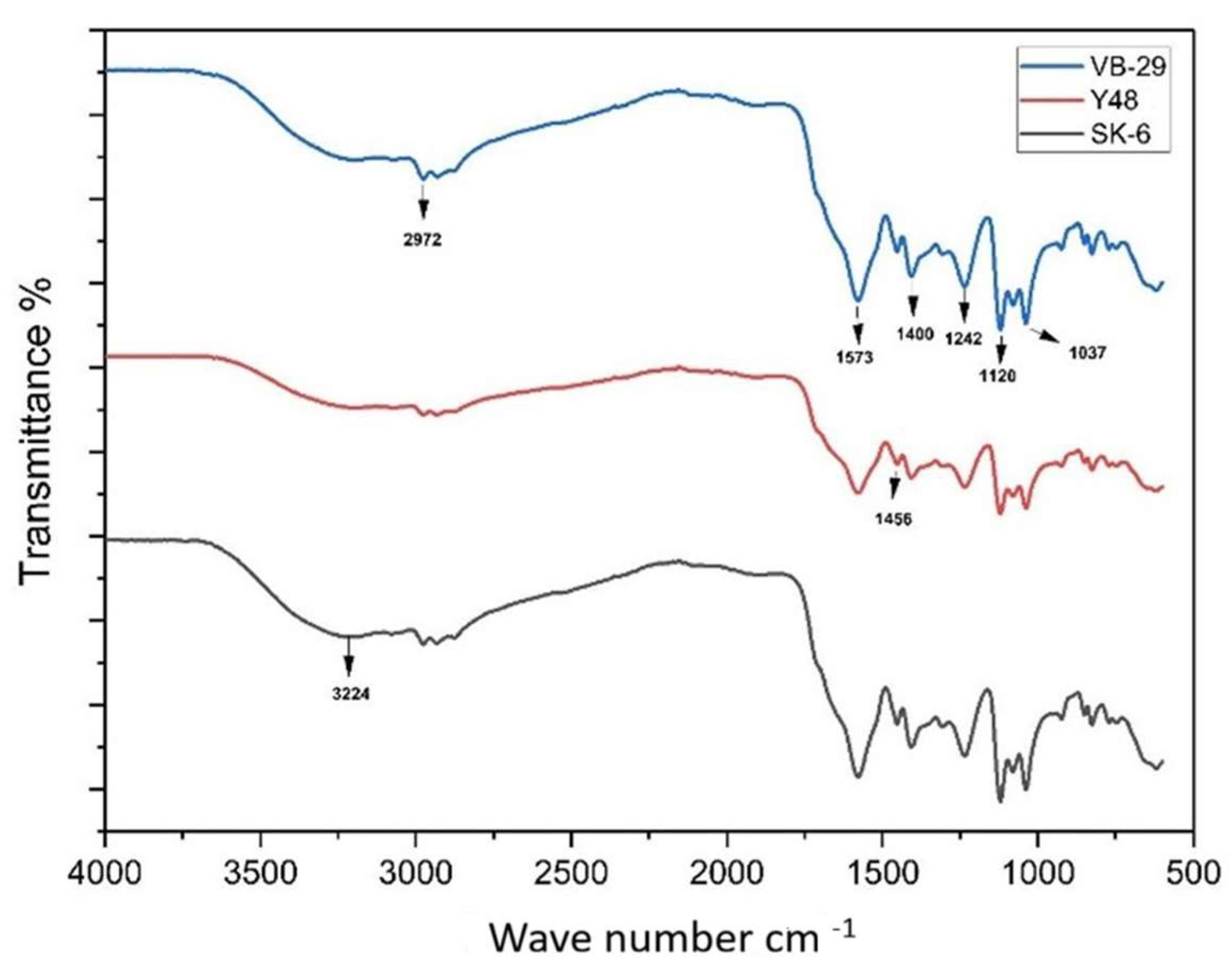
Figure 1. The FTIR spectrum of SK-6, Y48 and VB-29 postbiotics obtained from probiotic strains.
Fermentation 11 00675 g001
Figure 2. Heatmap of VOCs extracted with ethyl acetate and methanol from postbiotics of Y48, VB-29, and SK-6. Different colors in the heat map represent their relative presence of corresponding volatile compounds within the postbiotics formulation. SK-6-EtOAc: SK-6 postbiotic extracted with ethyl acetate; Y48-EtOAc: Y48 postbiotic extracted with ethyl acetate; VB-29-EtOAc: VB-29 postbiotic extracted with ethyl acetate; SK-6-MeOH: SK-6 postbiotic extracted with methanol; Y48-MeOH: Y48 postbiotic extracted with methanol VB-29-MeOH: VB-29 postbiotic extracted with methanol.
Fermentation 11 00675 g002
Figure 3. Principal component analysis (PCA) results of volatile compounds in postbiotics extracted with ethyl acetate and methanol: (A) score scatter plot, (B) loading scatter plot, and (C) biplot. Y48-EtOAc: Y48 postbiotic extracted with ethyl acetate; SK-6-EtOAc: SK-6 postbiotic extracted with ethyl acetate; VB-29-EtOAc: VB-29 postbiotic extracted with ethyl acetate. Y48-MeOH: Y48 postbiotic extracted with methanol; SK-6-MeOH: SK-6 postbiotic extracted with methanol; VB-29-MeOH: VB-29 postbiotic extracted with methanol.
Fermentation 11 00675 g003
Figure 4. Antifungal effect during storage of bread produced with different levels of postbiotics and potassium sorbate after contamination with A. niger.
Fermentation 11 00675 g004
Figure 5. Antifungal effect during storage of bread produced with different levels of postbiotics and potassium sorbate after contamination with P. expansum.
Fermentation 11 00675 g005
Figure 6. The zone diameter (A) and Control efficacy % (B) of addition of postbiotic to the bread formulation against A. niger and P. expansum on the surface during a 6-day storage period of bread. Different uppercase and lowercase letters within the same-colored column indicate significant differences (p < 0.05) for Penicillium expansum and Aspergillus niger, respectively.
Fermentation 11 00675 g006
Table 1. Antifungal activity of SK-6, Y48 and VB-29 postbiotics on Petri plates.
PostbioticsP1P2P3A1A2F1AA
SK-6++++++++++++++
Y48++++++++++++++++
VB-29++++++++++++++++
Legend: (+): delay in spore formation; (++): delay in spore formation with a small clear zone of inhibition at the spot; (+++): strong inhibition of mycelial growth and sporulation with large clear zones of inhibition at the spot. P1: P. concentricum; P2: P. expansum; P3: P. chrysogenum; A1: A. niger; A2: A. parasiticus; F1: Fusarium spp.; AA: Alternaria alternata.
Disclaimer/Publisher’s Note: The statements, opinions and data contained in all publications are solely those of the individual author(s) and contributor(s) and not of MDPI and/or the editor(s). MDPI and/or the editor(s) disclaim responsibility for any injury to people or property resulting from any ideas, methods, instructions or products referred to in the content.