Review

From Production to Market: Challenges and Opportunities of Graphene-Related Materials

School of Chemical Engineering, Adelaide University, Adelaide, SA 5005, Australia
*
Author to whom correspondence should be addressed.
Submission received: 4 February 2026 / Revised: 2 April 2026 / Accepted: 14 April 2026 / Published: 22 April 2026
(This article belongs to the Special Issue 10th Anniversary of C — Journal of Carbon Research)

Abstract

Graphene-related materials (GRMs) possess exceptional electrical, mechanical, thermal, and surface properties, offering significant potential across broad sectors and applications in electronics, energy storage, composites, and environmental technologies. Despite extensive investment in academic research and translation, large-scale industrial adoption of GRMs remains slower than projected. This review systematically analyzes the global graphene manufacturing landscape using available data from 100 commercial producers, with a focused evaluation of manufacturing technology, types and forms of produced GRMs, raw material sources, product forms, industrial quality control and characterization practices. Graphite-based production routes, particularly graphene oxide (GO) and reduced graphene oxide (rGO), dominate in the market due to their scalability and cost advantages. However, substantial inconsistencies in the quality of produced GRMs, characterization and standardization depth, analytical evidence, and technical data sheets (TDSs) remain widespread. A SWOT (strengths, weaknesses, opportunities and threats) analysis of emerging graphene in the industry highlights technological maturity and expanding market demand but reveals critical weaknesses and challenges in quality, standardization and cost–performance alignment. Overall, quality of manufactured materials, quality control transparency, and standardization rather than material manufacturing limitations emerge as the primary barriers to the widespread commercial realization of graphene.

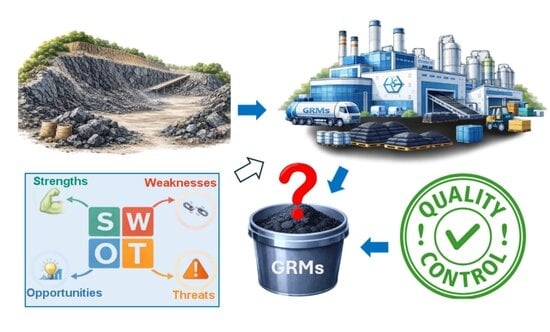
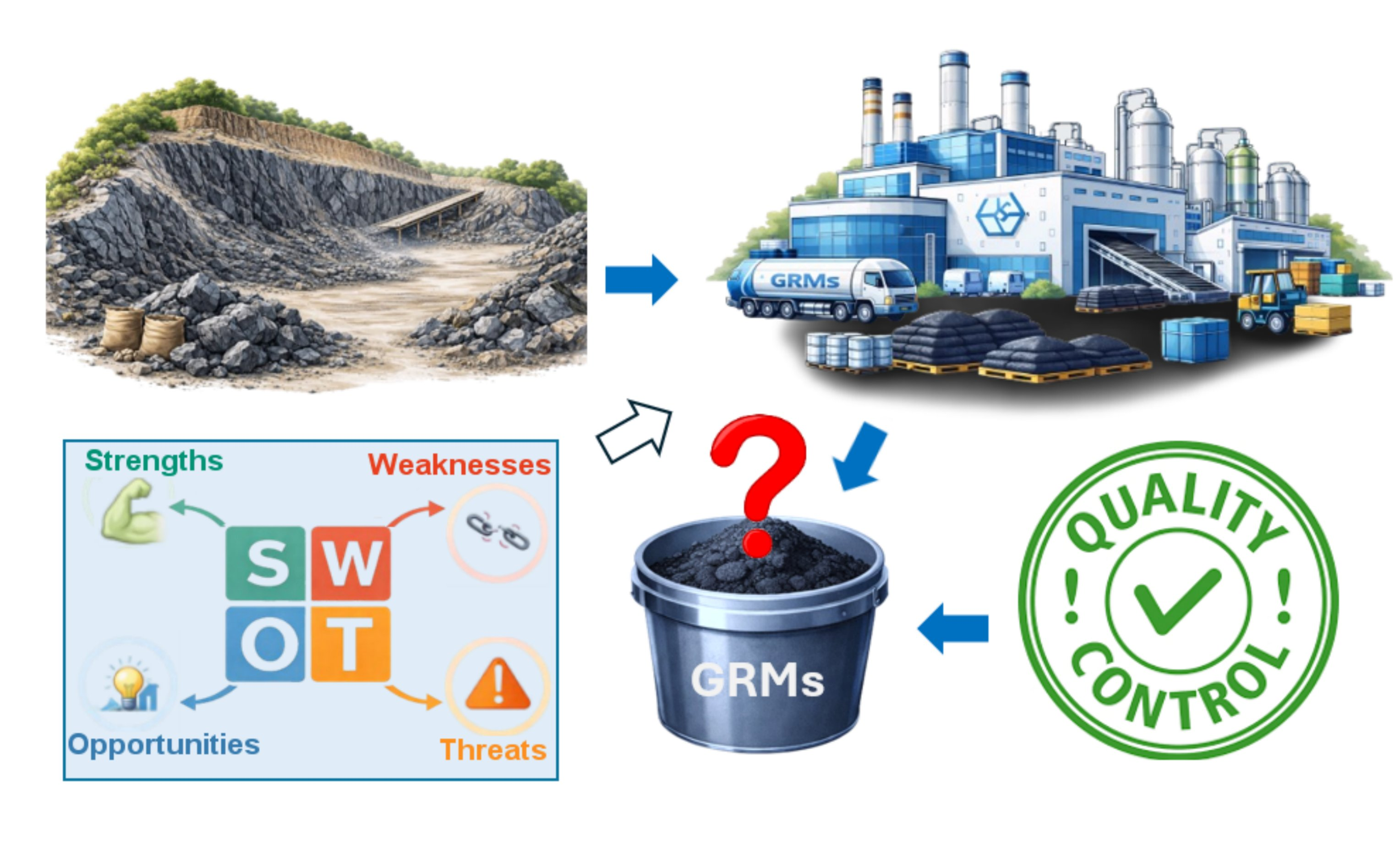
Graphical Abstract

1. Introduction

2026 is set to be the year of graphene commercialization, marking a pivotal moment when graphene materials move decisively from laboratory promise to real-world industrial impact. Graphene, a monolayer honeycomb lattice of sp2-bonded carbon atoms (Figure 1), demonstrates exceptional properties such as unique electron mobility > 104 cm2/V·s at room temperature [1], which reaches 200,000 cm2/V·s at ideal conditions [2,3,4], a mechanical strength of 125 GPa [5], an elastic modulus near 1 TPa [4,5], a thermal conductivity of 5000–8000 W/m·K, a transparency of 97.7% [6], and a theoretical specific surface area of 2630 m2/g [7]. Its extended π-conjugation provides both electronic functionality and opportunities for chemical modification through controlled oxidation and derivatization. These attributes have driven intensive research into graphene-related materials (GRMs) since the discovery of graphene in 2004 at the University of Manchester [8], spanning applications from flexible electronics to energy storage and composite reinforcement. Graphene is the part of two-dimensional (2D) nanomaterial family, which comprises hundreds of materials that enable unique control over electronic and photonic behaviour through spatial confinement in atomically thin geometries [9]. The most important types of GRMs include graphene, graphene oxide, reduced graphene oxide and functionalized graphene.
GRMs have transitioned from extensive laboratory research to commercial applications with the growing graphene industry, demonstrating potential across diverse technological domains and sectors. In electronics, its high carrier mobility enables next-generation transistors [11] and flexible circuits; in energy applications, its high surface area and electrical conductivity enhance the performance of batteries, supercapacitors, and fuel cells; in composite materials [12,13] even minuscule additions of GRMs dramatically improve mechanical strength, anticorrosion ability, fire-retardancy, and electrical conductivity [14], enabling advanced sensing applications. Moreover, the large surface area [15] of graphene facilitates the adsorption of emerging pollutants [16,17,18], making it promising for water purification and food waste degradation [19]. Unlike conventional materials, where their properties are largely fixed by composition, GRMs offer exceptional tunability through control of layer number, stacking orientation, edge configuration, and heterostructure assembly [20]. This design flexibility, combined with the growing library of available GRMs, positions them as building blocks for designer materials with tailored functionalities. Consequently, the development of cost-effective, high-throughput manufacturing techniques is essential to meet the demands of diverse industrial and technological applications. In this context, the rapid global expansion of graphene production facilities reflects the swift transition from its initial discovery to today’s emerging manufacturing landscape [21].
Manufacturing plays a uniquely critical role in the development of graphene because its properties and performance depend on structural parameters established during production. Characteristics such as layer number, defect density, lateral dimensions and chemical functionalization determine whether graphene exhibits the exceptional properties required for advanced applications or merely acts as a conventional carbon additive [22,23]. A nearly defect-free monolayer can achieve ultra-high electron mobility and outstanding mechanical strength, whereas a material differing only by the presence of bilayer regions or point defects may exhibit performance degraded by orders of magnitude [24,25]. Consequently, each application imposes distinct manufacturing requirements, positioning production technology as the gatekeeper that determines which of graphene’s theoretical advantages ultimately materialize in commercial products.
This strong interdependence between material quality and manufacturing processes has created a persistent commercialization bottleneck driven by limitations in quality control, production scale, and cost. Most current manufacturing approaches are unable to simultaneously overcome these limitations, constraining two decades of research and billions of dollars in investment. Moreover, manufacturing limitations and inadequate standardization of material quality, stemming from gaps in scientific understanding or application potential, remain the primary barriers to graphene’s commercialization.
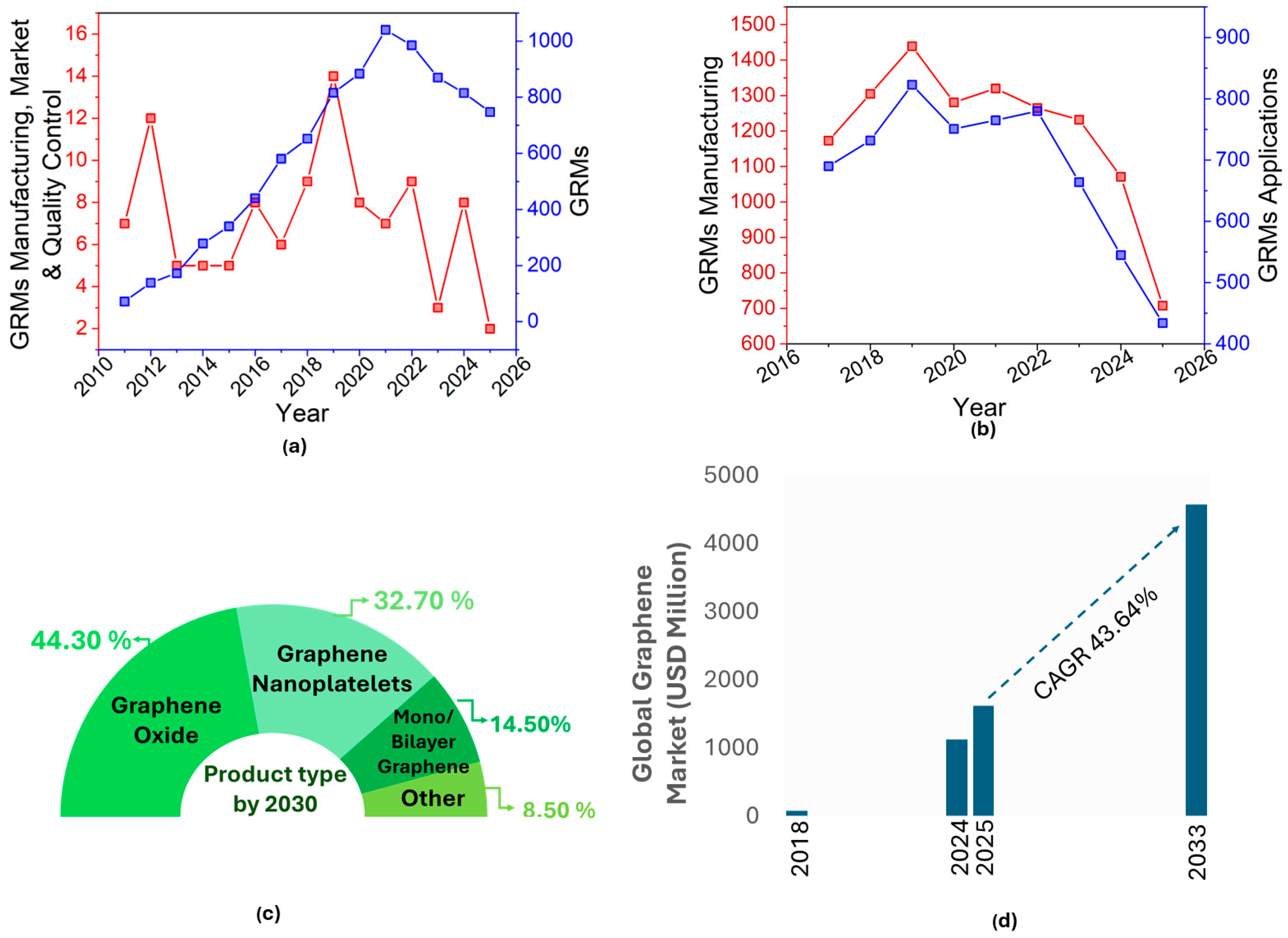
Analysis of Web of Science records reveals a striking disparity between publications focused on “Graphene and Graphene-related Materials” and those addressing “Graphene and GRM manufacturing, market and quality control”. While extensive research investigates performance evaluation, synthesis methods, and at laboratory-scale characterization, far fewer studies examine market dynamics, industrial-scale production realities, or quality control practices for commercially manufactured materials. Similarly, a search of the World Intellectual Property Organization (WIPO) database using the terms, “graphene oxide and reduced graphene oxide and graphene manufacturing” and “Graphene oxide and reduced graphene oxide and graphene applications” revealed that both categories exhibit a similar pattern in manufacturing and applications, as illustrated in Figure 2.
This review presents a systematic analysis of the global graphene manufacturing industry mainly focused on producers of GRMs in powder and dispersion forms by examining 100 companies worldwide and selecting 60 representative producers across diverse geographical regions to assess production technologies, material sources and quality control practices. A subsequent critical SWOT analysis is performed to highlight the strengths, weaknesses, opportunities and threats associated with the graphene industry and manufacturing.

2. GRM Industrial Manufacturing: Data Collection and Analysis

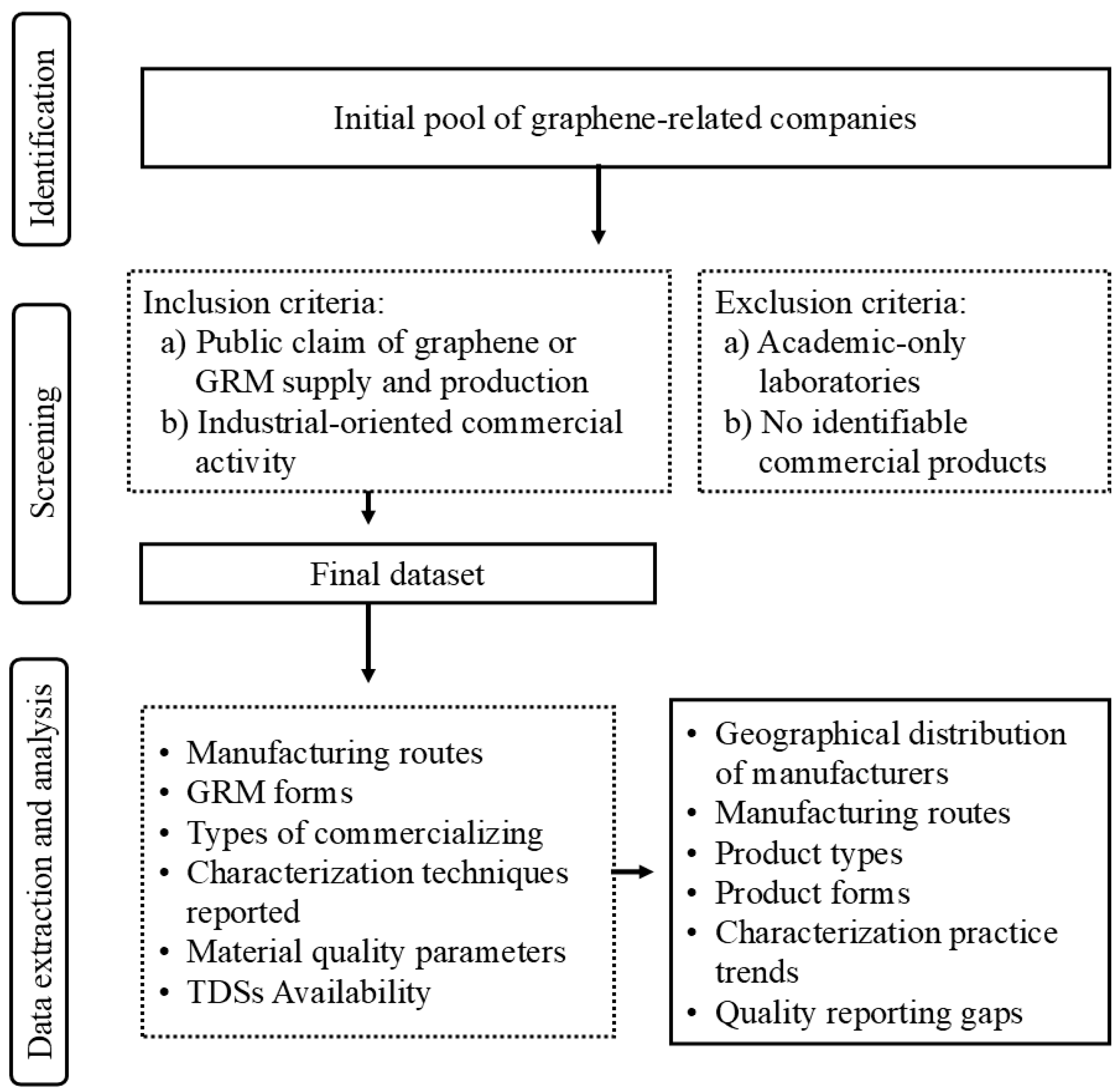
The analytical dataset was constructed through a three-phase process considering globally active graphene manufacturers as depicted in Figure 3. Phase 1 (identification) involved compiling an initial pool of producing companies through systematic searches of industry databases, graphene-focused platforms, the scientific literature acknowledging commercial suppliers, and targeted web searches. Phase 2 (screening) applied predefined criteria to distinguish genuine manufacturers from related entities. Inclusion required: (a) explicit public representation as a graphene or GRM producer, rather than merely a distributor or application developer, and (b) evidence of commercial activity, such as the availability of product catalogues or technical specifications. Exclusion criteria: (a) academic research groups without commercial product lines, and (b) entities without identifiable commercial offerings in accessible materials. Applying these criteria reduced the initial pool to 100 companies.
Phase 3 (data extraction and analysis) involved the systematic collection of publicly available information from GRM manufacturing company websites and technical documentation. Six categories of data were extracted: (1) manufacturing routes, (2) GRM forms, (3) types of commercializing, (4) characterization techniques reported in quality documentation, (5) disclosed specific material quality parameters, (6) availability and content of technical data sheets (TDSs). This structured extraction enabled comparative analysis across manufacturers, facilitating the identification of industry patterns and the assessment of quality reporting practices. Geographic distribution was mapped based on company headquarters and manufacturing locations. From the initial pool, 100 identified manufacturers were selected for analysis of the geological distribution, top-down synthesis routes, product forms and sources. Of these, 60 companies, for which sufficient website data were available, were further analyzed to evaluate their characterization and quality control practices. Further details on the data sources are provided in Tables S1 and S2, Supplementary Material.

3. Overview of Commercial GRM Manufacturing

An overview of commercial GRM manufacturing was conducted based on data collected from 100 GRM producers worldwide, representing all major geographic regions. Currently, it is estimated that about 20,000–30,000 tons of GRMs are produced globally per year, with manufacturing capacity significantly exceeding these numbers. Information obtained from the producers’ official websites was analyzed to identify the manufacturing processes employed, the types and physical forms of materials produced, and the precursor materials used.

3.1. Geographical Distribution of Graphene Manufacturers

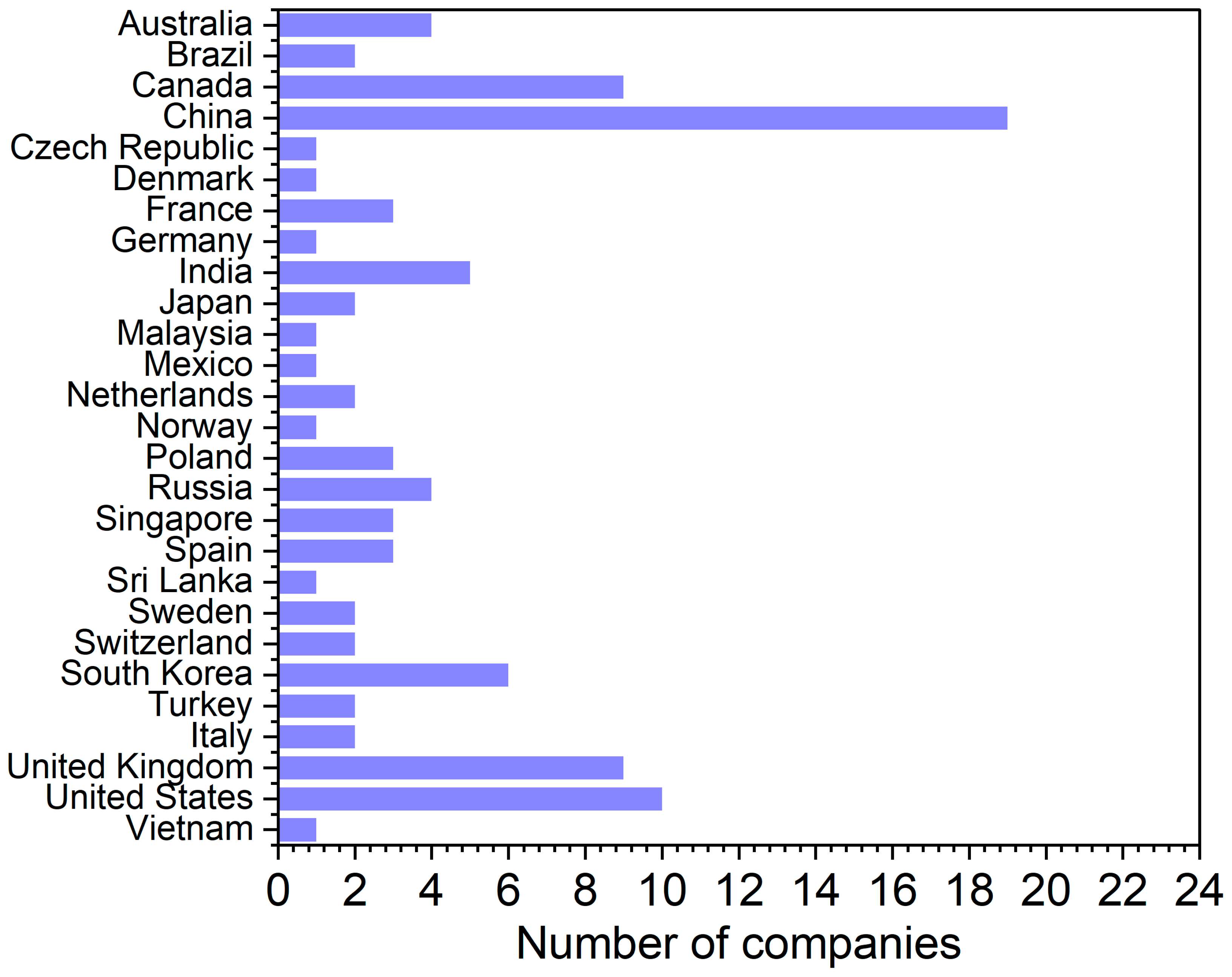
Figure 4 reveals the highly uneven global distribution of graphene manufacturing, with China and the United States accounting for the largest share of producers, reflecting their substantial industrial capacity and sustained investments in the sector. The Sixth element, Xiamen Knano Graphene Technology, LeaderNano, and Graphex are a few top producers from China, which account for approximately close to 70% of global production, while Global Graphene Group, NanoXplore Inc., ACS materials, XG Science, and NeoGraf solutions are dominating in the USA, becoming the second largest producers. Several countries, including the United Kingdom, Canada, South Korea, and Japan, also contribute significantly in terms of production capacity and specialization, targeting specific applications and niche markets. A broader group of countries with smaller representation, with fewer producers and a lower production capacity, highlights the global diffusion of graphene technologies, which are often focused on specialized or application-specific production rather than large-scale manufacturing. Hence, this distribution underscores the concentration of graphene production capacity in a few major regions, alongside widespread international engagement in graphene research and commercialization.

3.2. Manufacturing Technologies

Preparation methods employed for GRMs are conventionally classified into top-down and bottom-up approaches that can be applied at industrial scale. Bottom-up approaches involve the construction of graphene-based materials from atomic or molecular precursors through controlled chemical reactions, where small building blocks assemble into extended 2D networks via covalent bonding. These methods include techniques such as chemical vapour deposition (CVD), epitaxial growth from hydrocarbons, chemical synthesis from carbon precursors, plasma processes from CO2 or hydrocarbons, etc. CVD methods usually produce graphene films on substrate and other methods can produce graphene in powder forms. In contrast, top-down approaches focus on the production of GRMs through the fragmentation, exfoliation, or chemical modification of bulk graphite or other carbon precursors (coal, biowaste, etc.). These methods rely on the separation of individual or few-layer graphene sheets from graphite using mechanical, chemical, or electrochemical processes [26,27].

3.2.1. Top-Down Production Methods

Top-down production strategies convert bulk graphite into graphene sheets through physical or physicochemical processes that separate its layered structure. These methods produce graphene with reduced dimensions that can be readily integrated with functional materials to create advanced composites and hybrid systems [28], offering advantages such as cost-effectiveness and process reliability, making them particularly attractive for scalable manufacturing that bridges laboratory-scale research to the commercial production of graphene-based products [29]. In this approach, exfoliation can be achieved through mechanical, chemical, and electrochemical routes. Mechanical exfoliation applies external physical forces to overcome the interlayer van der Waals interactions and includes methods such as micromechanical cleavage (Scotch tape method), ball milling, shear exfoliation, ultrasonic-assisted exfoliation, and high-pressure homogenization.
Chemical exfoliation is a widely adopted strategy for producing GRMs from graphite, either by chemically modifying the graphite lattice or by inserting small molecules or large alkali ions between the graphene layers in solution-dispersed graphite [27,28]. Electrochemical exfoliation enables simultaneous exfoliation and functionalization in a single step and is generally regarded as a fast, scalable, cost-effective, and environmentally friendly technique [30].

3.2.2. Bottom-Up Growth Methods

Bottom-up methods synthesize graphene by assembling carbon atoms or carbon-containing precursors into two-dimensional hexagonal lattices. Unlike top-down approaches, these methods enable atomic-scale control over layer thickness, crystallinity, domain size, and orientation, making them particularly suitable for high-performance electronic, optoelectronic, and energy applications [31,32].
The primary bottom-up strategies include epitaxial growth on silicon carbide (SiC), CVD on catalytic metal substrates, laser-assisted synthesis, and flash Joule heating (flash graphene). Among these, CVD and epitaxial growth remain the most established methods for producing high-quality, large-area graphene films, while laser-based and flash graphene techniques have more recently emerged as rapid, solvent-free, and potentially scalable alternatives, facilitating the ability to tune graphene properties by adjusting growth parameters, including substrate type, precursor chemistry, temperature, pressure, and energy input.

3.2.3. Common Industrial Manufacturing Processes

Typical approaches for GO production from graphite integrate multiple chemical and physical steps including graphite oxidation, intercalation, expansion, and exfoliation. Many different oxidation approaches for chemical oxidation are used such as Brodie, Staudenmaier, Hofmann, and Hummers’-type protocols and coupled with thermal treatment, mechanical agitation, or ultrasonication to exfoliate heavily oxidized graphite into single or few-layer GO sheets. More advanced variants merge features of modified and improved Hummers’ methods, involving pre-oxidation, staged oxidant feeding, hydrolysis, and post-exfoliation purification to enhance oxidation efficiency while reducing environmental impact. In addition, electrochemical exfoliation combined with surfactant-assisted dispersion and post-centrifugation processing represents a hybrid physical–electrochemical route that enables rapid, scalable GO production, albeit with limited structural control [33,34,35,36,37,38].
Strategies for rGO production inherently involve at least two sequential steps: GO synthesis followed by reduction of oxygen groups. Industrial and laboratory-scale reduction methods often combine thermal, chemical, electrochemical, photochemical, or hydrothermal reduction with auxiliary treatments such as sonication, microwave irradiation, inert atmospheres, or solvent engineering to enhance deoxygenation and partial restoration of the sp2 carbon network [39,40,41,42]. For instance, thermal annealing is frequently paired with rapid heating methods (e.g., microwave irradiation) to accelerate reduction while limiting defect formation [43]. Similarly, chemical reduction using agents such as hydrazine or ascorbic acid is often integrated with ultrasonication, controlled heating, or post-oxidation quenching to improve uniformity and conductivity [44,45]. Electrochemical reduction routes further exemplify hybridization by combining electrode-based reduction with controlled potential cycling or constant bias, enabling localized and substrate-compatible rGO formation [46].
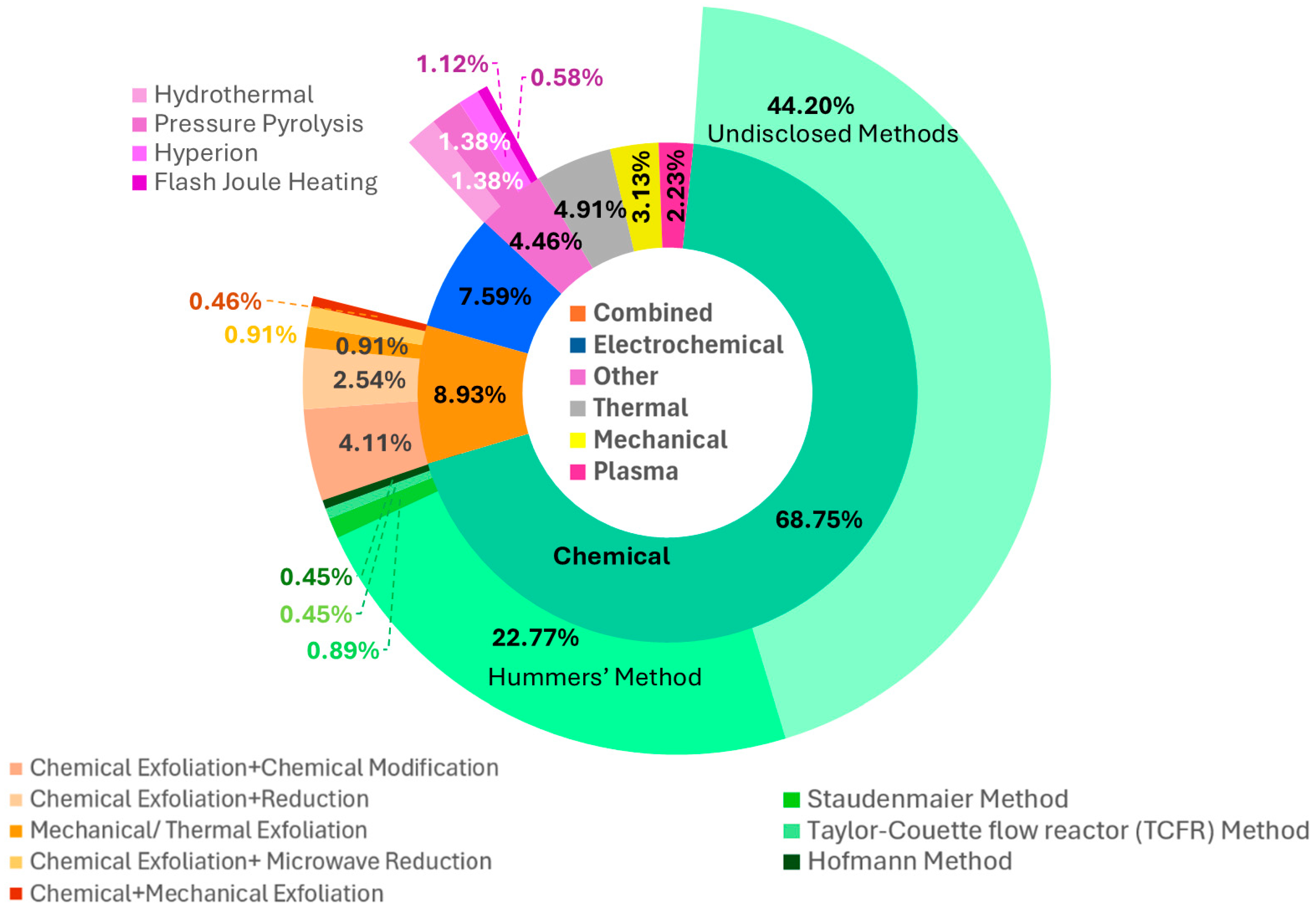
The data on GRM production presented in this review and Figure 5 was sourced from manufacturing company websites. Chemical manufacturing routes are dominant, accounting for approximately 68.75% of all reported approaches, indicating that nearly seven out of ten production methods rely on chemical-intensive processes. Within this category, Hummers’method emerges as the most widely adopted technique (22.77%), followed by the Staudenmaier method, the Taylor–Couette flow reactor (TCFR) method, and the Hofman method. A substantial portion of manufacturers (44.20%) employ undisclosed chemical methods, suggesting proprietary variations of established techniques or newly developed methods pending patent protection.
Combined synthesis approaches account for 8.93% of production methods, with chemical exfoliation paired with chemical modification and reduction being the most common hybrid techniques. Other combinations include mechanical–thermal exfoliation, microwave-reduced chemical exfoliation, and chemical–mechanical exfoliation. Electrochemical synthesis accounts for 7.59% of production methods, while purely mechanical approaches contribute 3.13%. Thermal methods (4.91%) and plasma-based techniques (2.23%) represent moderate shares of the manufacturing landscape.
Emerging and specialized production technologies collectively account for approximately 4.46% of the market, including pressure pyrolysis (1.38%), hydrothermal methods (1.38%), Hyperion processing (1.12%), and flash joule heating (0.58%). This distribution underscores the industry’s strong preference for scalable, cost-effective chemical oxidation and exfoliation routes, particularly Hummers’ method, while newer production techniques largely remain at developmental stages or are confined to specialized applications.

3.3. Classification of GRMs (Industry and Lab-Scale-Produced)

The commercial GRM market offers a diverse range of material types and forms differentiated by their structural, chemical and physical characteristics. In 2017, a joint ISO/IEC terminology standard—ISO/TS 80004-13, Graphene and Related Two-Dimensional Materials [47]—was published, defining 99 key terms related to nomenclature, production methods, properties, and characterization. According to ISO/TS 80004-13 (Nanotechnologies—Vocabulary—Part 13: Graphene and related two-dimensional (2D) materials), graphene is defined as a single layer of carbon atoms, with each atom bound to three neighbours in a honeycomb structure. Based on this standard, a set of definitions is provided to classify commercially available GRMs in Table 1.
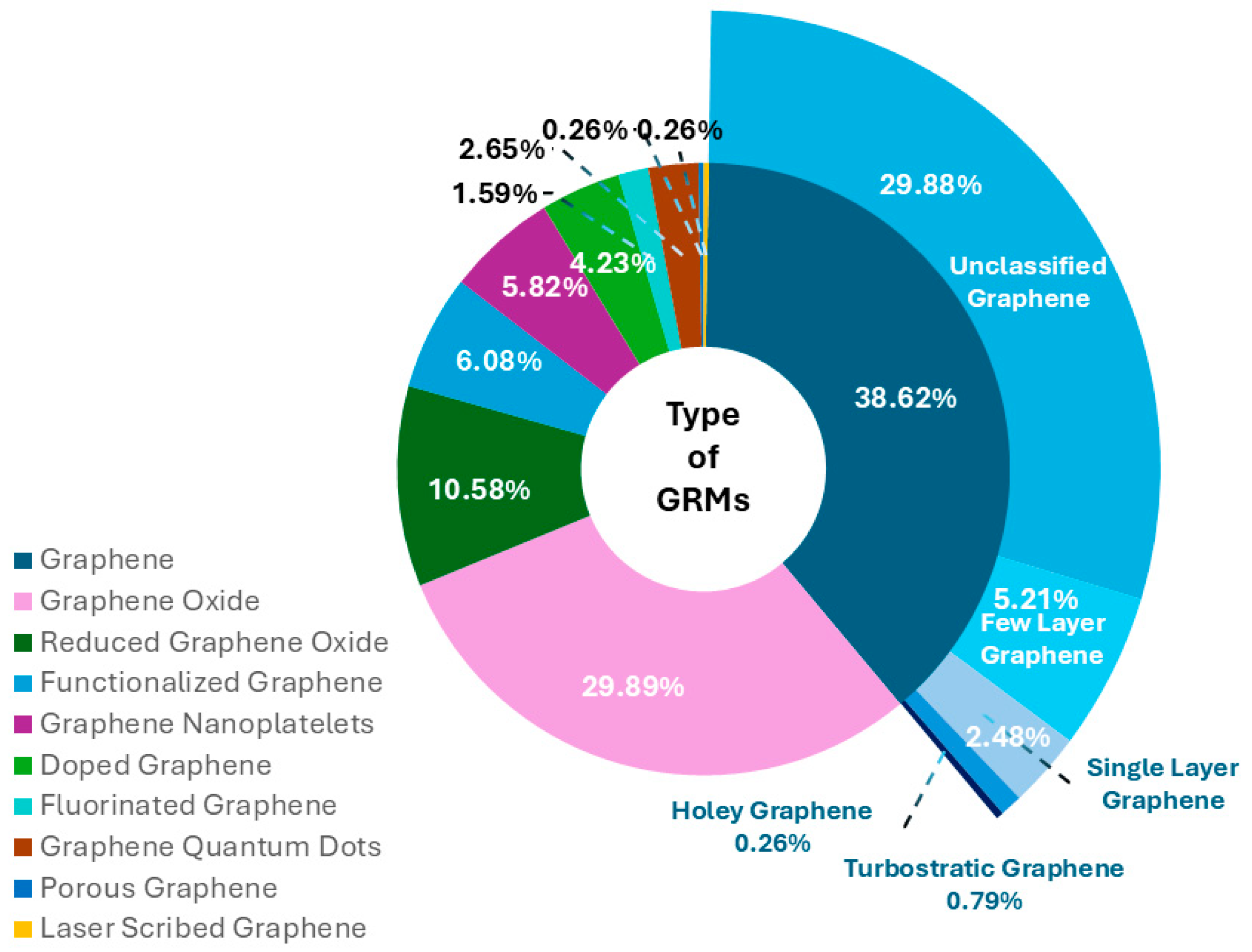
Figure 6 illustrates the distribution of GRMs currently available in the commercial market. The analysis reveals substantial market heterogeneity, with GO representing the dominant commercial type at 29.89%. Unclassified graphene products account for 29.88% of the market, reflecting the wide diversity of applications and the lack of standardized product descriptions across suppliers. Pristine graphene forms including few-layer graphene (5.21%), single-layer graphene (2.48%), Turbostratic graphene (0.79%), and holey graphene (0.26%), collectively comprise approximately 8% of commercial offerings, with their limited market share attributable to the higher production costs and technical challenges associated with manufacturing high-quality, defect-free graphene structures. rGO represents 10.58% of the market, serving as a cost-effective alternative to pristine graphene for applications requiring improved electrical conductivity compared to GO while maintaining favourable production economics.
Functionalized graphene variants collectively comprise approximately 13% of commercial products, including functionalized graphene (6.08%), graphene nanoplatelets (5.82%), doped graphene (4.23%), and fluorinated graphene (1.59%). These chemically modified derivatives offer tailored properties for specific applications. Emerging specialized forms, including graphene quantum dots (2.65%), porous graphene (0.26%), and laser-scribed graphene (0.26%), represent niche but growing segments of the commercial market, primarily targeting advanced applications in sensing, optoelectronics, and energy storage.
This distribution indicates that the commercial graphene market is dominated by chemically derived materials, namely GO and rGO, which together account for ~40% of offerings owing to their established synthesis routes and broad applicability. In contrast, high-quality pristine graphene and specialized derivatives remain constrained by scalability challenges and production costs. The substantial proportion of unclassified products further suggests ongoing innovation and the emergence of hybrid or proprietary graphene formulations tailored to specific industrial requirements.

3.4. Sources of Raw Materials for GRM Manufacturing

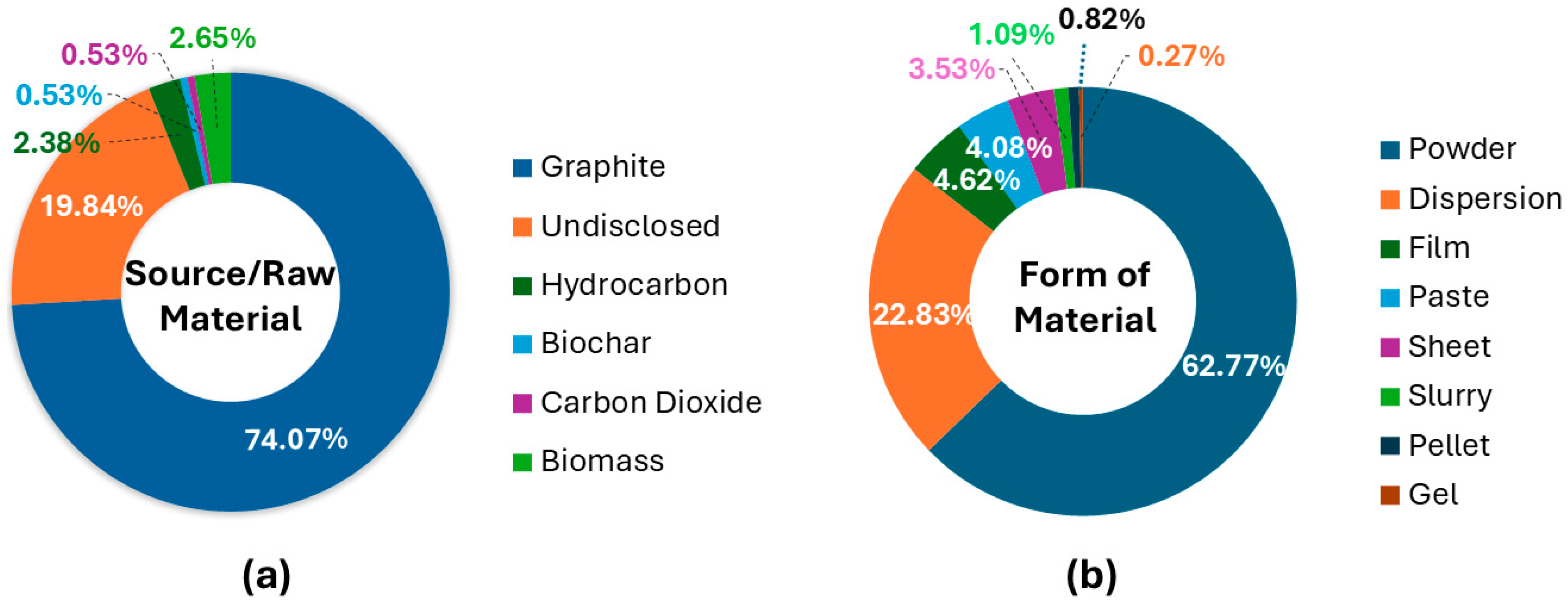
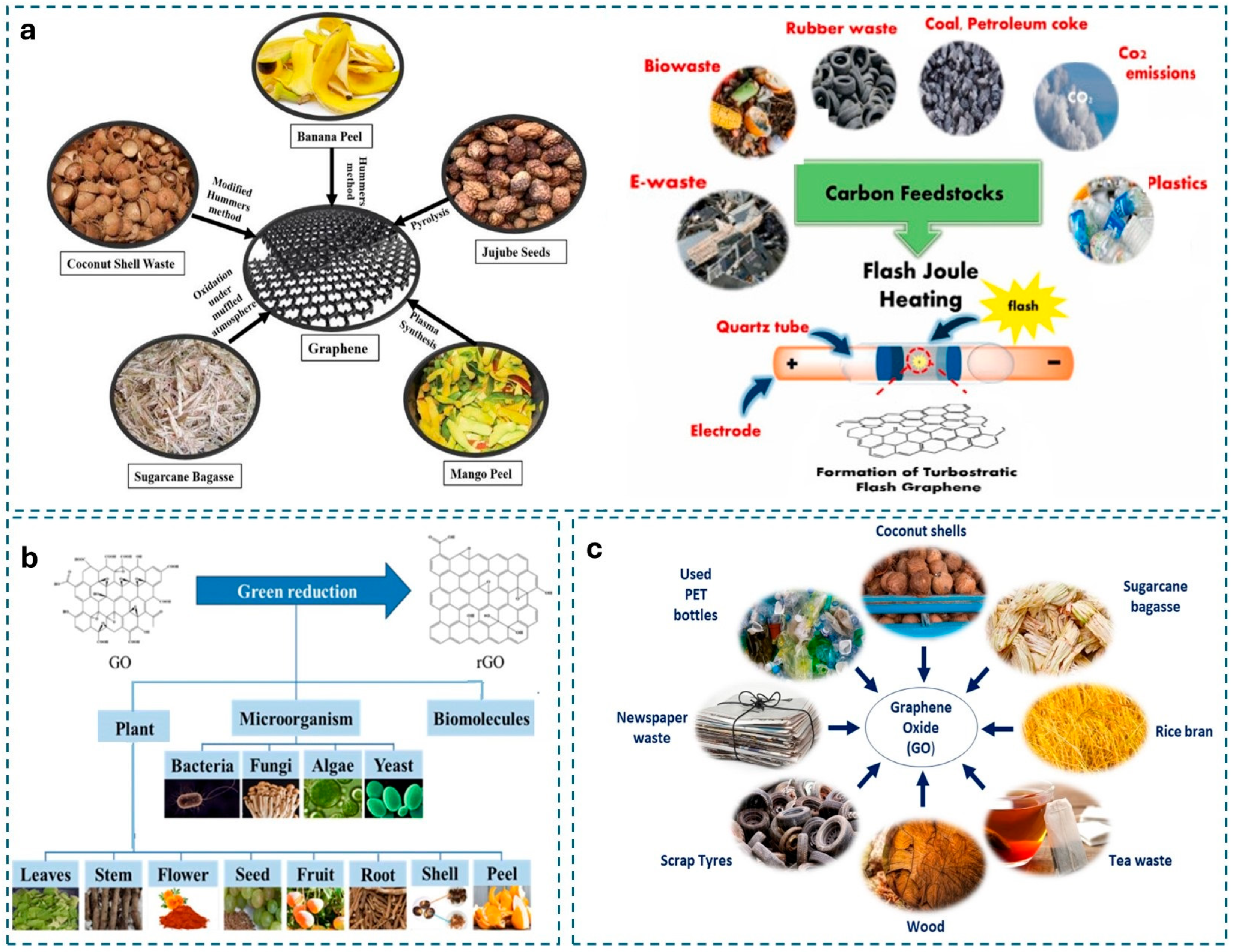
The distribution of raw materials and precursors employed in graphene production reveals the overwhelming dominance of graphite as the primary feedstock, accounting for 74.07% of source materials, as illustrated in Figure 7a. This prevalence reflects the maturity and economic viability of graphite-based synthesis routes, particularly exfoliation methods. GO serves both as a product and intermediate precursor in some cases, typically in oxidation–reduction cycles for producing rGO. Alternative carbon sources contribute only minor proportions: including biomass-derived graphene (2.65%), hydrocarbon-based chemical vapour deposition precursors (2.38%), biochar (0.53%), and carbon dioxide utilization routes (0.53%). The limited adoption of renewable feedstocks such as biomass and biochar, despite their sustainability advantages, indicates that cost-effectiveness and production scalability continue to favour conventional graphite sources. Nevertheless, the presence of these alternative precursors suggests growing interest in sustainable production pathways, which could gain prominence as circular economy principles and carbon neutrality targets increasingly shape the industry. Notably, 19.84% of products did not disclose their raw materials and production processes, potentially reflecting innovative and sustainable approaches, as many emerging feedstocks are being explored as starting materials for GRM production. Researchers have investigated a variety of such raw materials, such as agricultural waste [50], seeds, fruit waste, lignin, and dry leaves [51], and have demonstrated that the resulting materials exhibit characteristics comparable to those produced from conventional graphite.
Figure 7b presents the physical forms in which graphene-based materials are commercialized, reflecting market preferences for application-ready formulations. Powder is the dominant form, accounting for 62.77%, due to its ease of handling, storage stability, and compatibility with established industrial mixing processes. Dispersions account for 22.83% of the market, providing ready-to-use formulations in aqueous or organic solvents that eliminate the need for end-user processing in coating, printing, and solution-based fabrication. Film products comprise 4.62% of the market, primarily targeting electronics, sensors, and barrier applications that require continuous graphene layers. Specialized forms including paste (4.08%), sheet (3.53%), and gel (0.27%) address niche applications in thermal management, energy storage, and flexible electronics. The predominance of powder and dispersion forms indicates the market prioritization of versatility and ease of integration into existing manufacturing workflows, while the limited adoption of advanced formats such as foams and gels reflects either higher production costs or emerging demand in specialized application sectors. Visual images of different forms of GRMs are presented in Table 2.

4. Industrial GRM Characterization Practices and Quality Reporting

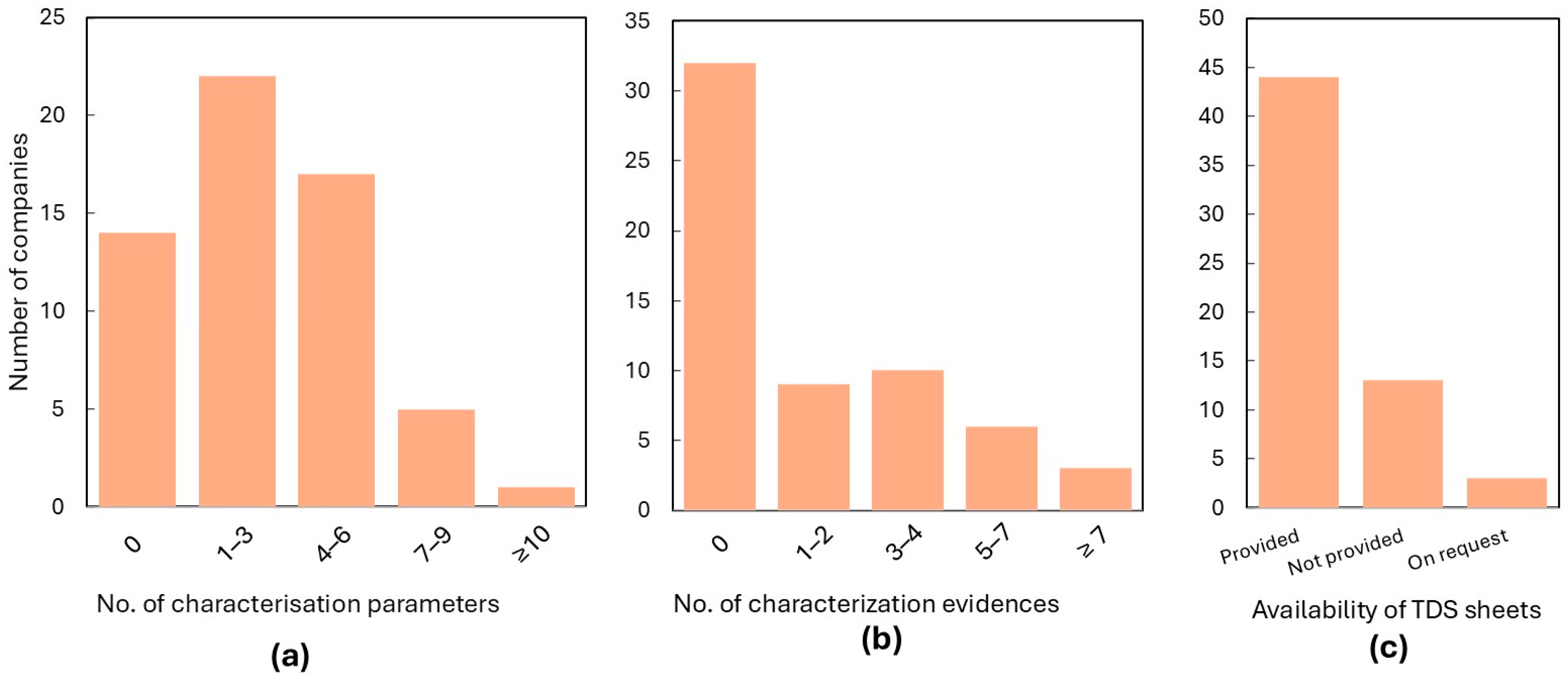
To assess the current state of transparency and standardization in the graphene manufacturing industry, an analysis of 60 companies (Table S2) was conducted using publicly available information from their websites. This evaluation focused on three key metrics: the number of characterization parameters reported, the availability of supporting analytical evidence, and the accessibility of technical data sheets (TDSs). Figure 8a summarizes the number of characterization parameters reported by each company and the corresponding number of companies within each range, highlighting substantial variability in the depth of material characterization. Figure 8b presents the distribution of availability of supporting characterization evidence, in GRMs specification sheets used to support material claims, expressed as the number of evidence versus the number of companies. The structural, chemical, electrical, and thermal characterization parameters considered in this analysis are as follows:
  • Number of layers;
  • Thickness;
  • Specific surface area;
  • Crystal grain size;
  • Density;
  • D/G peak intensity ratio;
  • Elemental composition;
  • Zeta potential;
  • Electrical conductivity;
  • Sheet resistance;
  • Thermal conductivity.
Figure 8c depicts the availability of TDS among the analyzed companies. “Provided” and “not provided” indicate the presence or absence of a downloadable structured TDS sheet on the official website of the company, respectively, while “on request” refers to companies offering a dedicated section for requesting TDSs for specific GRM products. It was also observed that some companies present characterization parameters and evidence directly on their websites without compiling them into formal TDS documents. No standardized TDS format was identified across the surveyed companies; all available TDS documents were company-specific and customized, reflecting the absence of an industry-wide standard for reporting graphene material properties.
The analysis of characterization parameters disclosed on company websites reveals substantial variability and generally poor reporting standards (Figure 8a,b). Among the 60 companies examined, 14 provided no characterization parameters, representing nearly a quarter of manufacturers that do not offer even basic technical specifications for their products. A total of 22 companies reported only 1–3 characterization parameters, reflecting minimal technical disclosure that is insufficient for customers to adequately evaluate material suitability for specific applications. A moderate number of companies (17) reported 4–6 parameters, while only 5 companies provided 7–9 parameters. Remarkably, only one company reported 10 or more parameters, representing a comprehensive material specification. This distribution highlights that detailed, multi-parameter characterization remains the exception rather than the industry norm, limiting the ability of customers to make informed purchasing decisions or compare products across different suppliers.
Over half of the companies analyzed (32) provided no supporting evidence from X-Ray Diffraction (XRD), Raman Spectroscopy (RAMAN), X-ray Photoelectron Spectroscopy (XPS), Atomic Force Microscopy (AFM), Scanning Electron Microscopy (SEM), Transmission Electron Microscopy (TEM), Fourier Transform Infrared Spectroscopy (FT-IR), Ultraviolet–Visible Spectroscopy (UV-Vis), Thermogravimetric Analysis (TGA), and optical microscopy to substantiate their product claims. Only nine companies supplied 1–2 pieces of evidence, and another nine provided 3–4 pieces, representing minimal documentation that inadequately validates material properties. A small subset of six companies offered 5–6 pieces of evidence, demonstrating moderate transparency, while just three companies reported seven or more pieces of characterization evidence. This distribution highlights a significant transparency gap in the industry, where marketing claims often lack the analytical support necessary to establish credibility and enable customers to verify product quality.
While most companies (43) provide accessible TDS documents, gaps in the reported parameters and supporting analytical evidence are concerning, creating significant information deficiencies. This inconsistency limits customer confidence in GRMs and hinders their quality comparison and matching of their properties for specific applications and significantly constrains broader adoption of graphene materials.

5. SWOT Analysis of GRM Manufacturing

The graphene manufacturing sector operates in a dynamic market environment characterized by rapid technological evolution and adaptation to market needs. Manufacturers across the globe, which are usually small start-up companies, face a complex landscape of overhyped opportunities and persistent challenges that directly influence sustainability and market positioning. In this multifaceted context, a robust strategic framework is essential for understanding competitive dynamics and guiding evidence-based decision-making in selecting the best manufacturing process and GRM selection targeting a specific market.
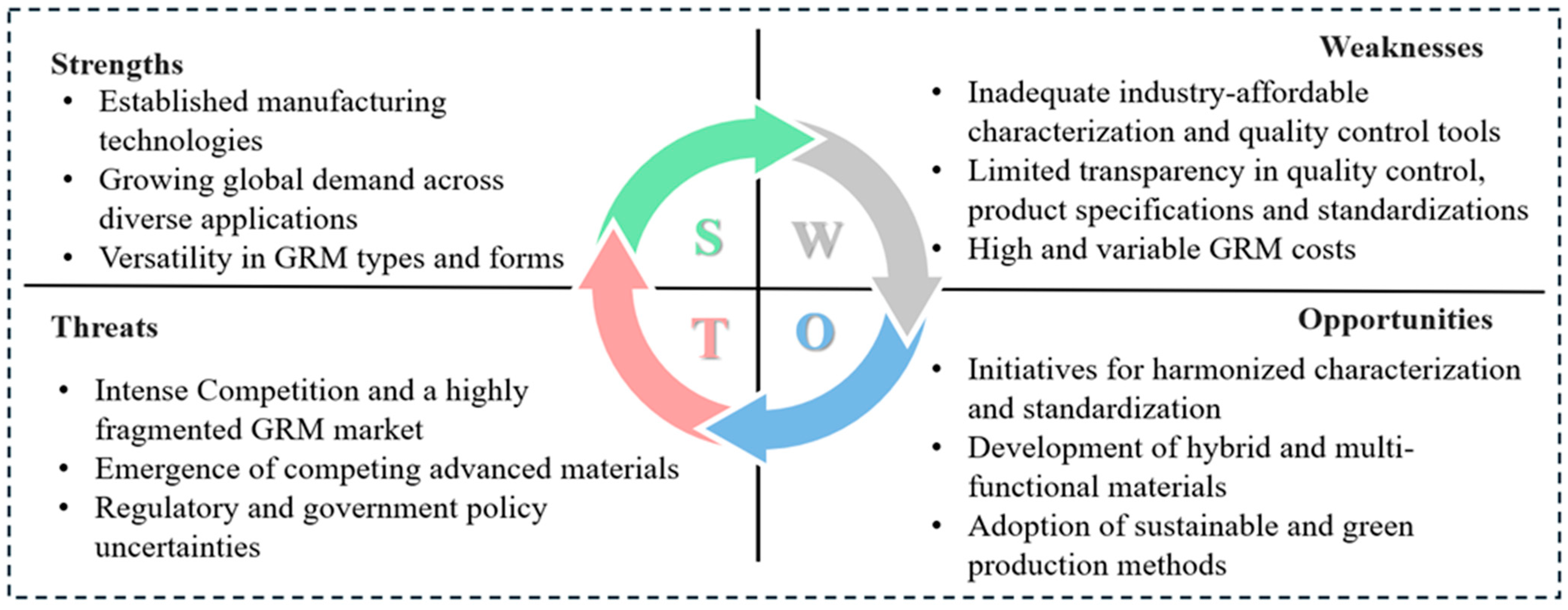
The SWOT analytical framework offers a structured approach to examine both internal and external factors influencing GRM manufacturers for making these decisions. By systematically evaluating these factors, manufacturers can develop comprehensive situational awareness, enabling them to leverage distinctive strengths, address operational weaknesses, capitalize on market opportunities and mitigate sector-wide threats. In this review, we discuss each of the four SWOT categories to contextualize the current GRM manufacturing landscape and key challenges. Key points under each category, depicted in Figure 9, are further elaborated with examples and supporting literature.

5.1. Strengths

5.1.1. Established Manufacturing Technologies

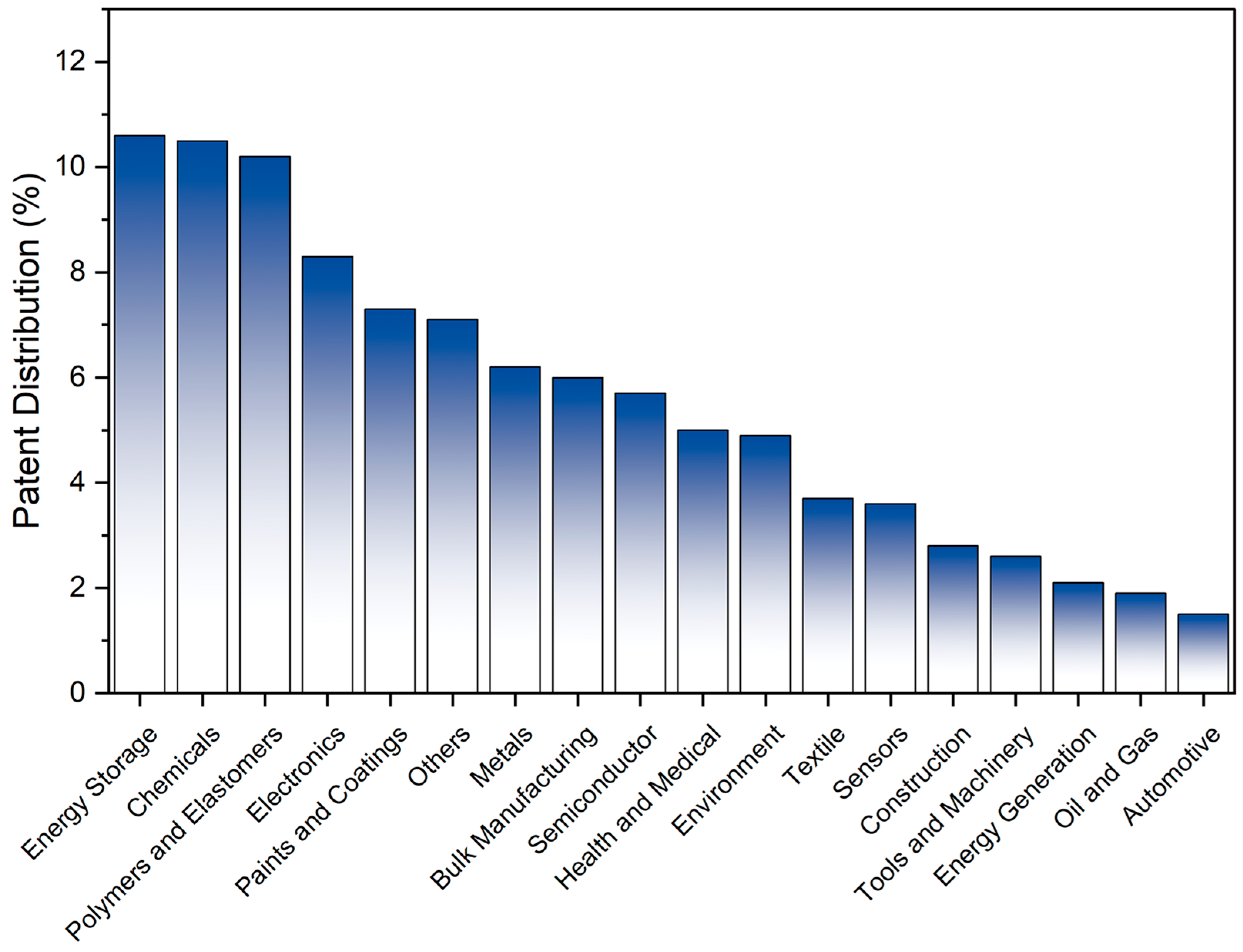
Patent databases and research repositories collectively document thousands of graphene and GRM synthesis methods, where sustained innovations surrounding graphene are evidenced by approximately 18,000 patents registered annually (Figure 10) in the WIPO database under graphene, indicating ongoing efforts to translate graphene’s exceptional properties into commercially viable applications across diverse technological domains. These innovations have been translated into industrial-scale manufacturing of GRMs over the past decade, with capacities sufficient to meet current global demand, placing the manufacturing industry in a strong position. The global graphene market was valued at USD 195.7 million in 2023, with projections indicating expansion corresponding to a compound annual growth rate (CAGR) of above 39% over the forecast period from 2024 to 2033 [52,53]. It is expected that demand for GRMs across multiple sectors will significantly increase in the near future, driving further expansion of manufacturing capacity.
Ability to produce GRMs in different types, forms and properties represents a significant advantage for manufacturers as it allows them to tailor the material by adjusting synthesis parameters to meet the specific requirements of target application. This is also favourable for end users and early adopters investing in new product development and incorporating GRMs to improve their existing products and technologies.

5.1.2. Growing Global Demand for Diverse Applications

Global energy demand is rising rapidly, driven by industrialization, population growth, and climate change issues, with a 2.2% increase in 2024. Scaling up alternative energy resources is the only viable way to meet the anticipated rise in energy demand in the coming years [54]. GRMs offer significant contributions in battery, solar cells, fuel cells and supercapacitor performance through their exceptional intrinsic properties. In proton exchange membrane fuel cell technology, graphene-based materials are primarily employed as catalyst supports, exploiting their exceptional electrical conductivity, high specific surface area, and chemical stability to optimize catalytic performance. There is already strong and rapidly growing demand for advanced energy storage technologies, particularly batteries and supercapacitors, driven by the expansion of electric vehicles, renewable energy integration, and portable electronics, where GRMs are playing an increasingly pivotal role.
According to UNICEF, one in three people worldwide lack access to safe drinking water, and by 2030, and global water demand could exceed supply by 55% [55]. GRMs, owing to their unique physicochemical properties, offer significant potential for efficient and sustainable water purification to address this scarcity. Attributes such as tunable hydrophobicity, high surface area, porous structure, excellent stability under harsh environmental conditions and scalability have made GRMs promising candidates for removing oil, heavy metals, bacteria, pathogens, inorganic and organic pollutants from water and wastewater [15,56,57]. In particular, rGO or cross-linking GO sheets are increasingly used in nanofiltration as they exhibit minimal swelling during treatment compared to GO [58]. However, the translation of these capabilities into practical applications is still under development and not yet reached full industrial scale. One of the most promising applications of GRMs is as an additive in protective coatings and composites, including polymers, rubber, anticorrosion and fire-retardant paints as well as in the construction industry, particularly in concrete. Beyond water purification, GRMs have also demonstrated potential in biomedical applications, including gene transfection, drug delivery and cancer treatment but are still in the research development stage [59].
Hence, the expanding use of GRMs across diverse sectors including high-demand energy and composites has driven surging market demand, positioning their multi-sectoral adoption as a key advantage for graphene manufacturers to capture emerging opportunities across multiple high-growth industries.
One of the most promising sources of demand is the construction industry, particularly concrete production, which amounts to billions of tonnes annually and accounts for approximately 8% of global CO2 emissions. There is growing interest in incorporating graphene additives to enhance the properties of concrete while enabling the development of greener concrete with a significantly reduced carbon and energy footprint.
GRM demand remains significant not only in industrial applications; demand is high in academic research because universities and research institutes are the primary drivers of fundamental studies and new product and technology development. Large international initiatives and research centres, such as the European Graphene Flagship, Versailles Project on Advanced Materials and Standards (VAMAS) and the National Graphene Institute, demonstrate the scale of global academic investment in graphene science and technology. However, academic laboratories constitute a key consumer segment for high-quality graphene materials, representing an important niche market.
Figure 10. Patented applications of across various sectors (2022–2023) [60].
Carbon 12 00035 g010

5.1.3. Versatility in GRM Types and Forms

One of the most significant strengths of GRMs lies in their versatility in their types and forms, which allows them to be tailored for a wide range of applications across multiple industries. As noted in the previous section, graphene and its derivatives including GO, rGO, and functionalized graphene, can be produced in various forms, including powders, sheets, films, membranes, pellets, and pastes. This structural flexibility enables manufacturers to integrate graphene into diverse platforms, from flexible electronics and coatings to energy storage devices and water purification systems, without compromising its intrinsic properties.
The ability to manipulate graphene’s physical form significantly facilitates scalability and industrial adoption across broad sectors. For instance, graphene powders can be readily incorporated into polymers, cement, or coatings to enhance mechanical strength, thermal conductivity, and chemical resistance, while thin films and membranes are particularly well suited for sensors, nanofiltration, and barrier coating applications [61,62]. This tunable adaptability ensures that a single material platform, graphene, can effectively address a remarkably broad spectrum of industrial and technological challenges.

5.2. Weaknesses

5.2.1. Inadequate Industry-Affordable Characterization and Quality Control Tools

The lack of an industry-affordable characterization method and adopted international standards significantly limits GRM manufacturers and their ability to fully realize their industrial potential. Robust and practical characterization and quality control of produced materials is essential for streamlining industrial applications and ensuring material consistency. Although standards established by the International Organization for Standardization (ISO), and American Society for Testing and Materials (ASTM) provide guidelines for evaluating graphene’s structural, physical, and chemical properties, these methods are not yet adapted and have limitations in providing practical, comprehensive and industry-affordable characterization needs. Many standardized methods require very expensive sophisticated equipment and specialized expertise, which a large proportion of manufacturers, particularly small- and medium-scale producers, are unable to implement [23,63]. This gap, which manifests as inadequate characterization and inconsistent quality of produced GRMs, raises concerns across the supply chain, affecting both manufacturers and end users.
While existing ISO standard (ISO TS 21356-1) addresses key parameters such as number of layers, thickness, lateral flake size, the level of disorder and specific surface area, the recommended characterization techniques including TEM, RAMAN, AFM, are largely localized or spot-based methods. These techniques provide information only for limited microscopic regions (e.g., individual graphene flakes) and are therefore more appropriate for CVD graphene layers than for bulk powder-based GRMs [62]. In industrial settings, where manufacturers predominantly produce graphene in kilogram-to-ton-scale powder batches, obtaining representative and statistically meaningful measurements remains a major challenge and hinders effective quality control at the industrial scale, leading to inconsistencies in material performance. This ultimately weakens supply-chain reliability and undermines end-user confidence in the claimed properties of commercially available graphene materials.
Table 3 presents a comprehensive classification of characterization methods categorized into five main property groups: structural, chemical, physicochemical, electrical, thermal, and mechanical, and protocols for quality control and those that offer industrial affordability, highlighting practical considerations for commercial graphene production [63]. This classification framework enables researchers and industry professionals to select appropriate analytical techniques based on information requirements, sample availability, budget constraints, and whether detailed nanoscale analysis or bulk material assessment is needed for their specific application. The manufacturing industry favours bulk analysis, yet suitable analytical methods remain underdeveloped.

5.2.2. Limited Transparency in Quality Control, Product Specifications and Standardizations

Inconsistent quality control, non-implemented standardization, and underdeveloped governance analytical frameworks present significant challenges for graphene manufacturers and represent a major weakness in showcasing commercial scalability and market adoption. The absence of universally accepted industrial standards for defining and classifying graphene remains a fundamental obstacle: materials with varying layer numbers, defect densities, lateral dimensions, and surface chemistries are often all labelled simply as “graphene.” This inconsistency creates confusion among end-users who are unable to reliably compare products or predict performance. An important early step toward addressing this issue was the development of documentary standards to establish a common terminology across academia, industry, and regulatory bodies. Notably, this standard formally distinguishes between single-layer and few-layer graphene; however, its practical implementation in the commercial market remains limited due to weak governance and enforcement. In parallel, many graphene manufacturers lack robust quality control protocols capable of ensuring batch-to-batch consistency, particularly at an industrial scale, depicting the market’s immaturity. As a result, material properties can fluctuate significantly between production batches, different processes, and manufacturers, undermining reliability for applications that require precise and reproducible specifications. The absence of robust characterization and widely accessible testing methodologies further complicates efforts to assess material quality or compare products from different suppliers [64].
Moreover, the graphene market suffers from insufficient governance structures to regulate performance claims, certify products, and enforce accountability. Although organizations such as the Graphene Council (Advanced Carbon Council) have introduced verification certificates, only a small fraction, less than 5%, of global graphene producers have obtained such validation. This governance gap enables exaggerated or unverified marketing claims, reducing transparency and eroding customer trust.

5.2.3. High and Variable GRM Costs

The high production cost of graphene remains a major barrier to large-scale commercialization, which is fundamentally misaligned with market price expectations for many applications, creating a critical economic challenge for most potential applications. End-users in sectors like composites, coatings, or construction typically operate on minute margins and require large material volumes, allowing only minimal cost premiums over conventional materials. This mismatch places graphene manufacturers in an unsustainable position: they must either price their products below production cost to stimulate market interest demand or maintain commercially viable pricing that restricts adoption to a limited number of high-value, niche applications. Efforts to reduce production costs frequently come at the expense of material quality, resulting in products that fail to meet performance claims and further undermine market confidence. As a result, graphene manufacturers face a competitive disadvantage compared to well-established conventional materials. The persistent pricing barrier confines graphene largely to niche applications, preventing the volume expansion necessary to achieve true economies of scale. This reinforces a self-perpetuating cycle in which low demand sustains high costs, thereby limiting industry growth and delaying graphene’s transition from a high-potential material to a widely adopted industrial commodity.
An analysis of pricing data from the official websites of graphene producers reveals the commercial price ranges for different graphene-related materials (GRMs) on a large scale. When standardized to US dollars per 100 g, substantial price variability is evident not only across material types but also within individual categories. This variation reflects differences in material quality, precursor sources, production methods, and product specifications, with prices for the same material differing by more than $100,000.

5.3. Opportunities

5.3.1. Initiatives for Harmonized Characterization and Standardization

Current GRM characterization methods are often prohibitively expensive, relying on sophisticated equipment and highly skilled operators, which creates a significant barrier to establish robust quality control and confidence in their produced materials, particularly for small- and medium-scale manufacturers [62]. There is an urgent need from industry for reliable, simplified, and cost-effective analytical techniques capable of consistently evaluating the key properties of bulk graphene powder with verified accuracy and precision, enabling standardized quality assessment without excessive capital investment [65].
The development and adoption of new characterization methods have the potential not only to improve industrial quality control but also to introduce new graphene quality parameters and expand application opportunities initially validated at laboratory scale and later translated to industrial practice. These industry-affordable and low-cost methods are light microscopy, FTIR, Raman Spectroscopy, XRD, titration, UV-Vis and TGA, which can provide most of the important characteristics and properties of GRMs [62,66].
The use of these complementary techniques can provide deeper insights into bulk material properties while reducing reliance on expensive, conventional spot-analytical methods (TEM, AFM, SEM, XPS and EDS). The adoption of low-cost complementary characterization methods can also contribute indirectly to lower production costs by minimizing material waste, reducing batch rejection rates, and narrowing the gap between production cost and market pricing. For example, the TGA method, a technique routinely used in industry to assess thermal behaviour and impurities in minerals, polymers and carbon-based materials, has been successfully adapted for graphene quality control. This method enables both qualitative and quantitative analysis of graphene materials, allowing classification of commercially produced FLG and effective discrimination between genuine graphene and so-called “fake graphene” [23,62,67,68,69].
Emerging low-cost and scalable characterization techniques further enable manufacturers to implement comprehensive quality control without prohibitive capital expenditure. Moreover, advances in manufacturing process monitoring could allow sensors and analytical tools to be integrated directly into production lines, providing real-time feedback on material properties. This capability enables dynamic adjustment of synthesis parameters and early detection of quality deviations before entire batches are compromised. Ultimately, these approaches support the establishment of standardized and reproducible TDS for graphene materials, ensuring consistent quality control practices across batches and throughout the supply chain.
There are various aspects of safe and sustainable GRM manufacturing technologies that have become more critical and require careful consideration of their potential impacts on human health and the environment where the application of characterization methods is needed. Key human exposure routes include inhalation, ingestion, and dermal contact, and these must be evaluated alongside their toxicological profiles, particularly in occupational settings, supported by comprehensive safety data sheets (SDSs) provided with the product. While some manufacturers adhere to such practices, broader facilitation and standardization across providers are still needed. GRMs are being explored for many applications and +300 products on the market and that are currently considered non-hazardous materials. Their diversity means that not all variants exhibit the same safe behaviour across biological systems. Their interactions can vary widely among organisms, including bacteria, algae, plants, invertebrates, and vertebrates across different ecosystems.
At present, a globally harmonized system for classifying graphene-family nanomaterials, and established occupational exposure limits, remains lacking. Existing Organization for Economic Co-operation and Development (OECD) test guidelines (internationally recognized methods for assessing chemical hazards to human health and the environment), provide a useful foundation but were not specifically designed to address the unique properties and behaviours of 2D nanomaterials.

5.3.2. Development of Hybrid and Multi-Functional Materials

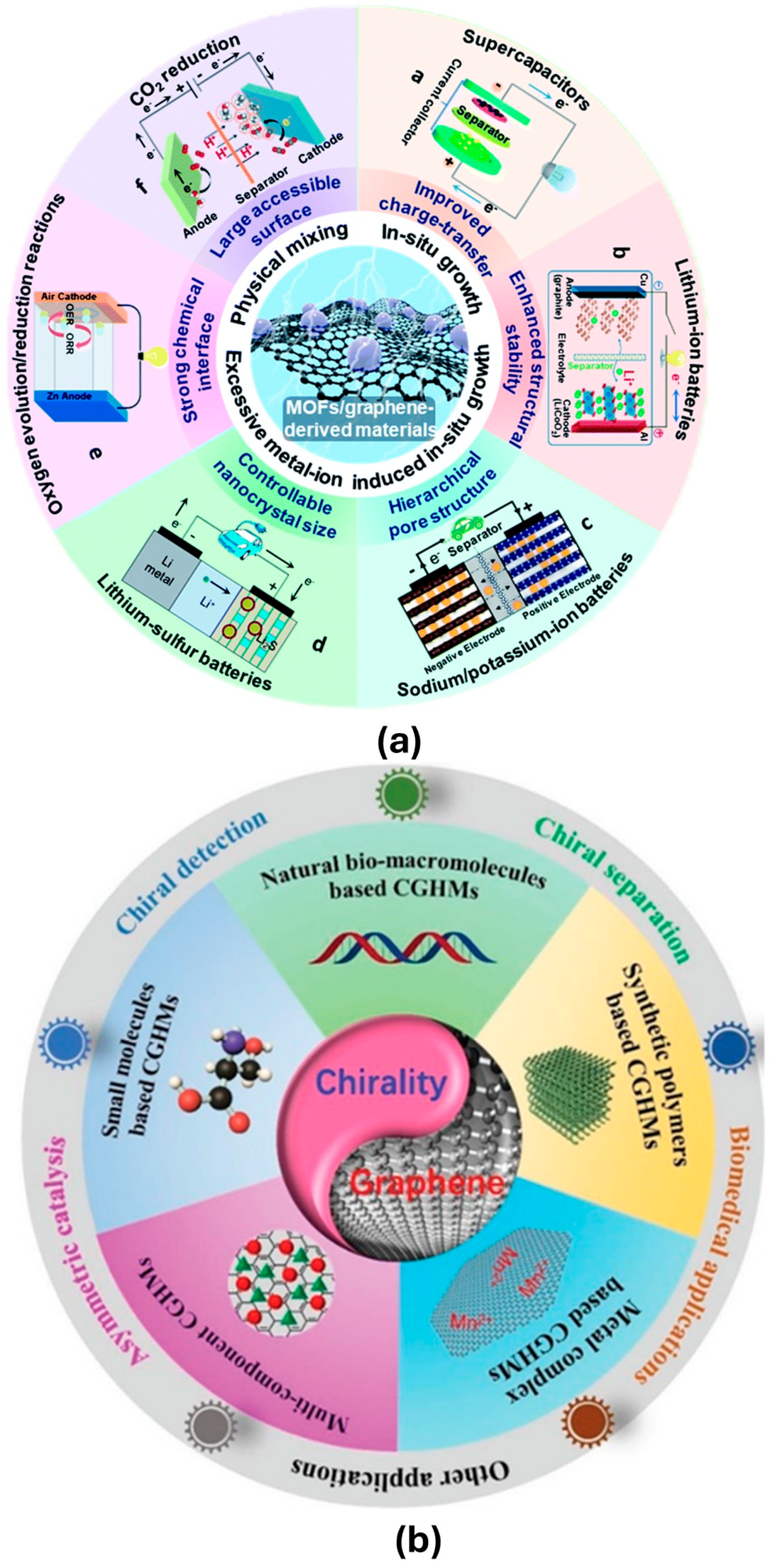
While GRMs exhibit exceptional properties, they also have inherent limitations in certain applications. Emerging GRM hybrids based on their combination with other nanomaterials offer a promising strategy to overcome these limitations while leveraging the intrinsic advantages of GRMs across diverse fields. Unlike conventional graphene composites, GRM hybrids are formed through nanoscale hybridization, combining graphene with a second phase to achieve synergistic functionalities [70]. Among these, hybrids incorporating metal–organic frameworks (MOFs) have gained particular attention. The high specific surface area and abundant functional groups of GRMs provide an ideal template for the controlled growth of MOF particles. The resulting graphene–MOF nanocomposites can effectively address the intrinsic limitations of MOFs, such as poor conductivity and structural instability, thereby expanding their applicability in electrochemical systems [71]. Another notable class of hybrids is chiral graphene-based materials, which combine the unique physicochemical properties of graphene with chiral functionalities. These materials hold significant promise in biomedical research, offering potential solutions to challenges such as scalability, immune response, and long-term biocompatibility [72]. Figure 11b provides an overview of both chiral graphene composites and graphene–MOF hybrids, illustrating the diverse architecture and functional opportunities enabled by these hybrid materials.

5.3.3. Adoption of Sustainable and Green Production Methods

The exploration and development of alternative raw material sources represent a transformative opportunity for graphene manufacturers to address cost challenges, enhance sustainability, and improve competitive positioning in an evolving market.
Traditional graphene production relies heavily on high-purity graphite or expensive precursors, which contribute significantly to the prohibitive cost that limits broad market adoption. Emerging alternative feedstocks including biomass wastes such as camphor leaves, wheat straw, rice husks and other agricultural as well as forestry residues are rich in organic compounds like cellulose, hemicellulose, and lignin, used in the preparation of graphene, rGO and GO, as depicted in Figure 12. Their high carbon content makes them suitable precursors for the synthesis of GBMs via processes such as pyrolysis, CVD, and high-temperature carbonization. Industrial by-products and waste streams from steel manufacturing, petroleum refining, and coal processing contain carbon-rich materials, and even plastic waste can be converted into graphene or GO, providing low-cost or negative-cost feedstocks. By leveraging these alternative feedstocks, manufacturers can fundamentally restructure production economics, potentially reducing costs by orders of magnitude while aligning graphene production with sustainability and circular economy principles.
Moreover, different raw materials can produce graphene with distinct characteristics such as defect density, oxygen content, lateral dimensions, and surface chemistry, creating opportunities for manufacturers to develop specialized product portfolios tailored to specific applications. Biomass-derived graphene often exhibits higher oxygen functionalization, making it ideal for applications requiring hydrophilicity or chemical reactivity, while graphene from high-purity sources offers superior electrical properties for electronic applications and structural integrity for high-performance applications.
By integrating sustainability into both production design and operational practices, the graphene industry can achieve scalable, high-quality manufacturing while reducing its environmental footprint and supporting long-term commercial viability.

5.4. Threats

5.4.1. Intense Competition and a Highly Fragmented GRM Market

The GRM market is characterized by intense competition and a high degree of fragmentation, with a large number of suppliers offering materials of widely varying quality. Poorly characterized, substandard or low-grade graphene materials are frequently marketed as “graphene” without adequate technical validation. Products such as graphite powders, few-layer graphitic materials, or heavily oxidized carbon are often mislabeled, creating confusion about what graphene is and what performance end-users should expect. [64] The presence of these inferior materials intensifies price-based competition, as suppliers who avoid the costs of rigorous synthesis, characterization, and quality assurance can offer significantly lower prices. In a fragmented market, customers, particularly those lacking advanced characterization capabilities, often compare products primarily on cost, inadvertently selecting low-quality materials. When these materials fail to meet performance expectations, end-users often conclude that graphene itself is overhyped rather than recognizing differences in material quality among suppliers. These negative experiences erode confidence across the GRM value chain, discouraging repeat purchases and slowing market adoption. Application failures caused by poor characterization waste significant research and development resources, delay product launches, and discourage further adoption of graphene. This dynamic disadvantages legitimate manufacturers who struggle to differentiate high-quality products and sustain premium pricing in an environment shaped by fragmentation, misinformation, and destructive price competition.
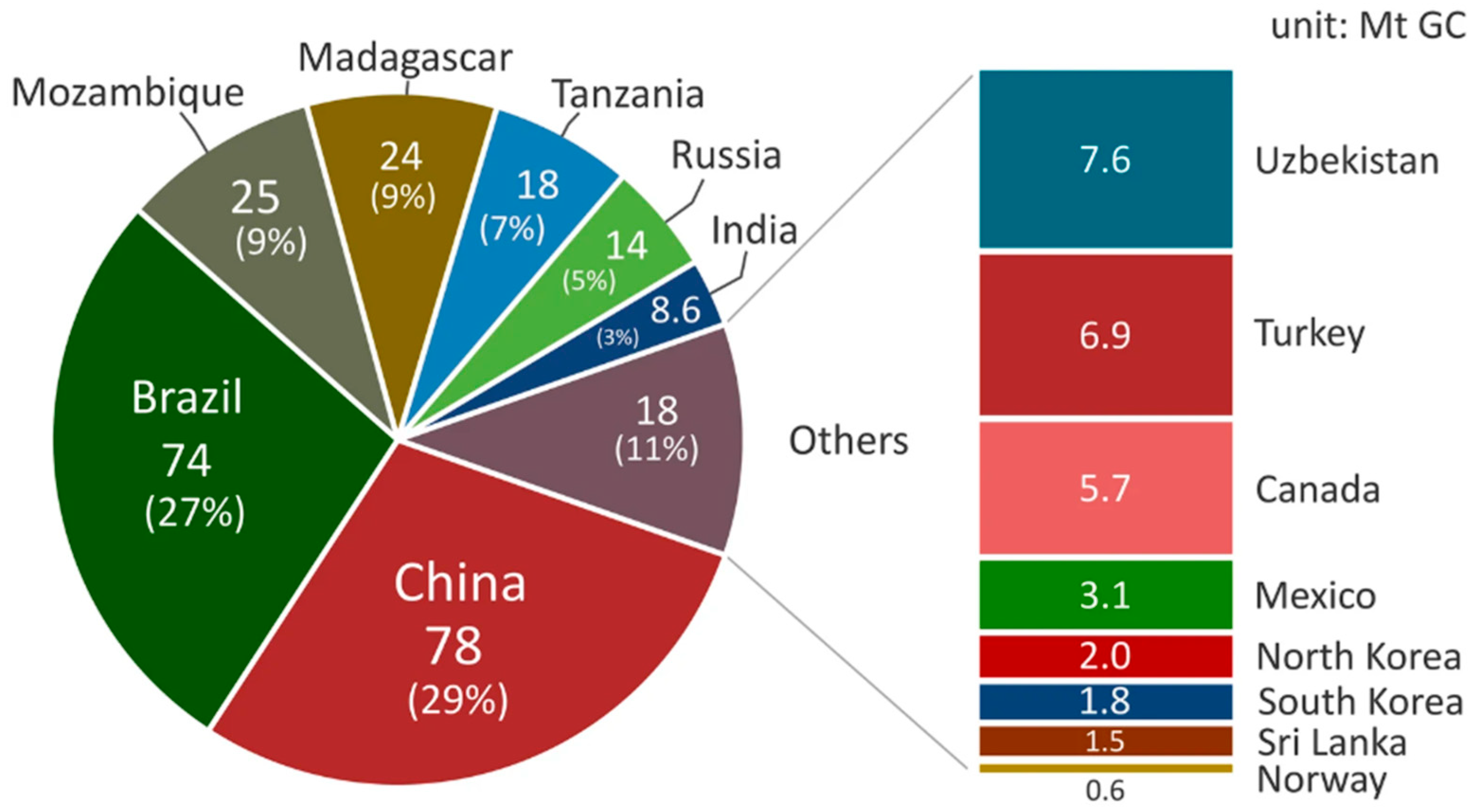
Supply dependency poses a critical threat to GRM manufacturers, creating vulnerabilities across their entire value chain, from raw material procurement to final product delivery. Graphene manufacturing relies heavily on specific precursor materials, most notably high-purity graphite, which is predominantly sourced from a limited number of countries. China and Brazil account for approximately 55% of global graphite reserves. China dominates global graphite production at more than 75%, with limited exporting as graphite is considered a critical mineral [76] as shown in Figure 13. This geographic concentration introduces substantial geopolitical risks, as trade disputes, export controls, or political instability can rapidly disrupt access to essential raw materials. Smaller companies that rely on a single-source suppliers are particularly exposed, as declining mine quality or capacity constraints can further limit material availability.
Moreover, different end-user applications require distinct graphene variants, such as GO, rGO, and pristine graphene, each with specific production routes and stringent quality requirements. Dependence on a narrow supplier base heightens operational risk if suppliers fail to maintain consistent material quality. Even minor variations in parameters such as layer number, defect density, or surface area can significantly alter electrical, thermal, and mechanical performance, potentially compromising end products and damaging customer relationships.

5.4.2. Emergence of Competing Advanced Materials

The rapid development of alternative advanced 2D materials with comparable or superior properties poses a significant competitive threat to graphene manufacturers. Transition metal dichalcogenides (TMDs) such as molybdenum disulphide (MoS2) and tungsten diselenide (WSe2) exhibit tunable bandgaps that make them more suitable than zero-bandgap graphene for certain semiconductor applications [77,78,79], particularly in transistors and optoelectronics, areas where GRMs are already being explored. Mxenes, having many extraordinary properties similar as graphene, are emerging materials that could potentially replace graphene for many applications. Hexagonal boron nitride (hBN) offers excellent insulating properties and thermal stability, making it an ideal substrate or dielectric layer in electronic devices [80]. Its compatibility with graphene-based heterostructures further strengthens its position as a complementary and, in some cases, competing material [81,82,83,84,85,86,87,88,89,90,91,92,93,94,95,96,97].
Beyond graphene, other carbon-based nanomaterials such as carbon nanotubes (CNTs) continue to mature despite earlier commercialization challenges. Advances in synthesis methods, cost reductions, and the establishment of robust supply chains [98,99,100] have made them increasingly competitive in applications including composites, conductive additives, and electronics. CNTs offer high tensile strength and in certain composite systems, aspect ratios comparable to graphene platelets, while their tubular geometry provides distinct functional advantages for specific electrical and mechanical applications [101].

5.4.3. Regulatory and Government Policy Uncertainties

Evolving government policies, increasingly stringent international regulations, and tighter environmental legislation pose significant threats to graphene manufacturers.
Regulatory frameworks, such as the European Union’s REACH (Registration, Evaluation, Authorization, and Restriction of Chemicals), the United States’ Toxic Substances Control Act (TSCA) and China’s Environmental Protection Law impose strict requirements on chemical safety, production processes, emissions and waste management throughout graphene manufacturing operations. Compliance with these regulations often requires manufacturers to implement greater transparency in production lines and waste-handling practices, invest in new infrastructure, and adopt alternative synthesis routes or materials. These measures increase operational complexity and raise capital and operating costs. In addition, government restrictions or bans on the import of certain chemicals can disrupt supply chains, forcing manufacturers to source alternative inputs at higher costs, incur additional taxes, or absorb increased shipping expenses.
Collectively, these regulatory pressures elevate production costs and constrain operational flexibility, ultimately affecting the pricing and competitiveness of graphene materials in the global market.

6. Conclusions

This review scrutinizes current manufacturing technology routes, material types and forms of produced GRMs, raw material sources, product forms, and industrial quality control and characterization practices. A SWOT analysis of emerging GRMs in the industry highlights their technological maturity and growing market demand, while also exposing critical challenges in quality, standardization and cost–performance alignment. Overall, the quality of manufactured GRMs, transparency in quality control, and lack of standardized practices remain the primary barriers to widespread commercial adoption of graphene.
Graphene is expected to follow the typical commercialization maturity journey that every material historically has navigated on its path to market adoption. At the same time, emerging opportunities such as sustainable feedstocks, accessible high-throughput analytical tools, and hybrid graphene systems provide realistic pathways to overcome current technical and economic barriers. With 2026 shaping up as a pivotal year for commercialization, graphene is poised to transition from promise to industrial impact, offering opportunities across energy storage, electronics, construction, and environmental technologies. Realizing graphene’s full industrial potential will require coordinated actions across the ecosystem, bringing together manufacturers, researchers, standards organizations, and regulators to align material performance with market needs, delivering reliable, scalable, and trusted applications.

Supplementary Materials

The following supporting information can be downloaded at https://www.mdpi.com/article/10.3390/c12020035/s1, Table S1: Dataset collected for graphene manufacturing analysis, including the geographical distribution of manufacturers, production methods employed, commercially available forms of graphene materials, and the primary sources used for data compilation, Table S2: Dataset collected for the analysis of characterization practices of GRMs manufacturers for their characterization techniques employed, and key reported parameters.

Author Contributions

Conceptualization, D.L., P.L.Y., and G.D.; methodology, P.L.Y. and G.D.; Investigation, G.D., S.A. and G.S.S.; writing—original draft preparation, G.D.; writing—review and editing, all authors; Resources, D.L.; Supervision. D.L. and P.L.Y.; Project Administration, D.L.; Funding acquisition, D.L. All authors have read and agreed to the published version of the manuscript.

Funding

This research was funded by the ARC Research Hub for Advanced Manufacturing with 2D Materials (AM2D) (IH210100025), and Ceylon Graphene Technology, Sri Linka.

Data Availability Statement

The original contributions presented in this study are included in the article/supplementary material. Further inquiries can be directed to the corresponding author.

Conflicts of Interest

The authors declare no conflict of interest.

Abbreviations

The following abbreviations are used in this manuscript:
GOGraphene Oxide
GRMsGraphene-Related Materials
TEMTransmission Electron Microscope
rGOReduced Graphene Oxide
TGAThermal Gravimetric Analysis
SEMScanning Electron Microscope
FT-IRFourier Transform Infrared spectroscopy
XPSX-Ray Photoelectron Spectroscopy
MOFMetal-Organic Framework
WIPOWorld Intellectual Property Organization
TDSTechnical Data Sheet
2DTwo-Dimensional
ASTMAmerican Society for Testing and Materials
TCFRTaylor–Couette Flow Reactor
RAMANRaman Spectroscopy
AFMAtomic Force Microscopy
UV-VisUltraviolet–Visible Spectroscopy
ISOInternational Organization for Standardization
BETThe Brunauer–Emmett–Teller Method
MBMethylene Blue
EDSEnergy–Dispersive Spectroscopy
SSASpecific Surface Area
DLSDynamic Light Scattering
TMDsTransition Metal Dichalcogenides
hBNHexagonal Boron Nitride
CNTCarbon Nanotubes
REACHRegistration, Evaluation, Authorization, and Restriction of Chemicals
TSCAToxic Substances Control Act
OECDOrganization for Economic Co-operation and Development

References

  1. Gosling, J.H.; Makarovsky, O.; Wang, F.; Cottam, N.D.; Greenaway, M.T.; Patanè, A.; Wildman, R.D.; Tuck, C.J.; Turyanska, L.; Fromhold, T.M. Universal mobility characteristics of graphene originating from charge scattering by ionised impurities. Commun. Phys. 2021, 4, 30. [Google Scholar] [CrossRef]
  2. Zhou, W.; Ma, T.; Tian, Y.; Jiang, Y.; Yu, X. Dielectric engineered graphene transistors for high-performance near-infrared photodetection. iScience 2024, 27, 109314. [Google Scholar] [CrossRef]
  3. Sule, N.; Knezevic, I. Phonon-limited electron mobility in graphene calculated using tight-binding Bloch waves. J. Appl. Phys. 2012, 112, 053702. [Google Scholar] [CrossRef]
  4. Zhu, Y.; Murali, S.; Cai, W.; Li, X.; Suk, J.W.; Potts, J.R.; Ruoff, R.S. Graphene and Graphene Oxide: Synthesis, Properties, and Applications. Adv. Mater. 2010, 22, 3906–3924. [Google Scholar] [CrossRef] [PubMed]
  5. Dong, S.; Chen, T.; Fu, H.; Chen, X.; Zhou, C. Mechanical response and interface properties of graphene-metal composites: A review. J. Mater. Res. Technol. 2025, 36, 398–416. [Google Scholar] [CrossRef]
  6. Sheehy, D.E.; Schmalian, J. Optical transparency of graphene as determined by the fine-structure constant. Phys. Rev. B 2009, 80, 193411. [Google Scholar] [CrossRef]
  7. Shen, C.; Oyadiji, S.O. The processing and analysis of graphene and the strength enhancement effect of graphene-based filler materials: A review. Mater. Today Phys. 2020, 15, 100257. [Google Scholar] [CrossRef]
  8. Geim, A.K.; Novoselov, K.S. The rise of graphene. Nat. Mater. 2007, 6, 183–191. [Google Scholar] [CrossRef]
  9. Li, Y.; Chopra, N. Progress in Large-Scale Production of Graphene. Part 1: Chemical Methods. JOM 2015, 67, 34–43. [Google Scholar] [CrossRef]
  10. Hutapea, J.A.A.; Manik, Y.G.O.; Ndruru, S.T.C.L.; Huang, J.; Goei, R.; Tok, A.I.Y.; Siburian, R. Comprehensive Review of Graphene Synthesis Techniques: Advancements, Challenges, and Future Directions. Micro 2025, 5, 40. [Google Scholar] [CrossRef]
  11. Twenty years of graphene electronics. Nat. Electron. 2024, 7, 843. [CrossRef]
  12. Fu, X.; Liu, Y.; Wang, X.; Kang, L.; Qiu, T. Graphene-based advanced materials for energy storage and conversion systems: Progress, challenges, and commercial future. Appl. Energy 2025, 386, 125566. [Google Scholar] [CrossRef]
  13. Kausar, A.; Ahmad, I.; Zhao, T.; Aldaghri, O.; Ibnaouf, K.H.; Eisa, M.H. Graphene Nanocomposites as Innovative Materials for Energy Storage and Conversion-Design and Headways. Int. J. Mol. Sci. 2023, 24, 1593. [Google Scholar] [CrossRef]
  14. Du, Y.; Wang, M.; Ye, X.; Liu, B.; Han, L.; Jafri, S.H.M.; Liu, W.; Zheng, X.; Ning, Y.; Li, H. Advances in the Field of Graphene-Based Composites for Energy–Storage Applications. Crystals 2023, 13, 912. [Google Scholar] [CrossRef]
  15. Khalil, A.M.E.; Tabish, T.A.; Joshi, B.; Egiza, M.; Memon, F.A.; Zhang, S. Graphene-based materials for water and wastewater treatment: A comprehensive review of advances in synthesis, emerging applications, and future directions. Carbon Trends 2026, 22, 100609. [Google Scholar] [CrossRef]
  16. Singh, R.; Samuel, M.S.; Ravikumar, M.; Ethiraj, S.; Kumar, M. Graphene materials in pollution trace detection and environmental improvement. Environ. Res. 2024, 243, 117830. [Google Scholar] [CrossRef]
  17. Assad, H.; Lone, I.A.; Kumar, A.; Kumar, A. Unveiling the contemporary progress of graphene-based nanomaterials with a particular focus on the removal of contaminants from water: A comprehensive review. Front. Chem. 2024, 12, 1347129. [Google Scholar] [CrossRef] [PubMed]
  18. Parthipan, P.; Cheng, L.; Rajasekar, A.; Govarthanan, M.; Subramania, A. Biologically reduced graphene oxide as a green and easily available photocatalyst for degradation of organic dyes. Environ. Res. 2021, 196, 110983. [Google Scholar] [CrossRef]
  19. Bakeshlouy Afshar, M.; Poursattar Marjani, A.; Gozali Balkanloo, P. Introducing graphene quantum dots in decomposable wheat starch-gelatin based nano-biofilms. Sci. Rep. 2024, 14, 2069. [Google Scholar] [CrossRef]
  20. Loh, K.P.; Bao, Q.; Eda, G.; Chhowalla, M. Graphene oxide as a chemically tunable platform for optical applications. Nat. Chem. 2010, 2, 1015–1024. [Google Scholar] [CrossRef]
  21. Jha, B.K.; Yoon, J.-C.; Jang, J.-H. 3D Graphene for Energy Technologies: Chemical Strategies and Industrial Challenges. Acc. Mater. Res. 2025, 6, 799–813. [Google Scholar] [CrossRef]
  22. Alves, T.; Mota, W.S.; Barros, C.; Almeida, D.; Komatsu, D.; Zielinska, A.; Cardoso, J.C.; Severino, P.; Souto, E.B.; Chaud, M.V. Review of scientific literature and standard guidelines for the characterization of graphene-based materials. J. Mater. Sci. 2024, 59, 14948–14980. [Google Scholar] [CrossRef]
  23. Farivar, F.; Lay Yap, P.; Karunagaran, R.U.; Losic, D. Thermogravimetric Analysis (TGA) of Graphene Materials: Effect of Particle Size of Graphene, Graphene Oxide and Graphite on Thermal Parameters. C 2021, 7, 41. [Google Scholar] [CrossRef]
  24. Chen, H.; Wu, M.; Li, C. Structural integrity versus lateral size: Enhancing graphene-based film materials by reducing planar defects rather than flake boundary. Carbon 2018, 139, 216–225. [Google Scholar] [CrossRef]
  25. Bhatt, M.D.; Kim, H.; Kim, G. Various defects in graphene: A review. RSC Adv. 2022, 12, 21520–21547. [Google Scholar] [CrossRef]
  26. Bhuyan, M.S.A.; Uddin, M.N.; Islam, M.M.; Bipasha, F.A.; Hossain, S.S. Synthesis of graphene. Int. Nano Lett. 2016, 6, 65–83. [Google Scholar] [CrossRef]
  27. Yi, M.; Shen, Z. A review on mechanical exfoliation for the scalable production of graphene. J. Mater. Chem. A 2015, 3, 11700–11715. [Google Scholar] [CrossRef]
  28. Singh, J.; Dutta, T.; Kim, K.-H.; Rawat, M.; Samddar, P.; Kumar, P. ‘Green’synthesis of metals and their oxide nanoparticles: Applications for environmental remediation. J. Nanobiotechnology 2018, 16, 84. [Google Scholar] [CrossRef] [PubMed]
  29. Ghatule, M.P.; Devare, U.A. Study and analysis on synthesis of graphene and its applications in solar cells. Int. J. Innov. Res. Adv. Eng. 2016, 1, 184. [Google Scholar]
  30. Parvez, K.; Yang, S.; Feng, X.; Müllen, K. Exfoliation of graphene via wet chemical routes. Synth. Met. 2015, 210, 123–132. [Google Scholar] [CrossRef]
  31. Li, L.; Wang, M.; Guo, J.; Cao, M.; Qiu, H.; Dai, L.; Yang, Z. Regulation of radicals from electrochemical exfoliation of a double-graphite electrode to fabricate high-quality graphene. J. Mater. Chem. C 2018, 6, 6257–6263. [Google Scholar] [CrossRef]
  32. Kouloumpis, A.; Spyrou, K.; Dimos, K.; Georgakilas, V.; Rudolf, P.; Gournis, D. A bottom-up approach for the synthesis of highly ordered fullerene-intercalated graphene hybrids. Front. Mater. 2015, 2, 10. [Google Scholar] [CrossRef]
  33. Marcano, D.C.; Kosynkin, D.V.; Berlin, J.M.; Sinitskii, A.; Sun, Z.; Slesarev, A.; Alemany, L.B.; Lu, W.; Tour, J.M. Improved Synthesis of Graphene Oxide. ACS Nano 2010, 4, 4806–4814. [Google Scholar] [CrossRef]
  34. Hummers, W.S., Jr.; Offeman, R.E. Preparation of Graphitic Oxide. J. Am. Chem. Soc. 1958, 80, 1339. [Google Scholar] [CrossRef]
  35. Yu, H.; Zhang, B.; Bulin, C.; Li, R.; Xing, R. High-efficient Synthesis of Graphene Oxide Based on Improved Hummers Method. Sci. Rep. 2016, 6, 36143. [Google Scholar] [CrossRef]
  36. Liu, F.; Wang, C.; Sui, X.; Riaz, M.A.; Xu, M.; Wei, L.; Chen, Y. Synthesis of graphene materials by electrochemical exfoliation: Recent progress and future potential. Carbon Energy 2019, 1, 173–199. [Google Scholar] [CrossRef]
  37. Kakaei, K.; Hasanpour, K. Synthesis of graphene oxide nanosheets by electrochemical exfoliation of graphite in cetyltrimethylammonium bromide and its application for oxygen reduction. J. Mater. Chem. A 2014, 2, 15428–15436. [Google Scholar] [CrossRef]
  38. Zaaba, N.; Foo, K.; Hashim, U.; Tan, S.; Liu, W.-W.; Voon, C. Synthesis of graphene oxide using modified hummers method: Solvent influence. Procedia Eng. 2017, 184, 469–477. [Google Scholar] [CrossRef]
  39. De Silva, K.; Huang, H.-H.; Joshi, R.; Yoshimura, M. Chemical reduction of graphene oxide using green reductants. Carbon 2017, 119, 190–199. [Google Scholar] [CrossRef]
  40. Sengupta, I.; Chakraborty, S.; Talukdar, M.; Pal, S.K.; Chakraborty, S. Thermal reduction of graphene oxide: How temperature influences purity. J. Mater. Res. 2018, 33, 4113–4122. [Google Scholar] [CrossRef]
  41. Zheng, X.; Peng, Y.; Yang, Y.; Chen, J.; Tian, H.; Cui, X.; Zheng, W. Hydrothermal reduction of graphene oxide; effect on surface-enhanced Raman scattering. J. Raman Spectrosc. 2017, 48, 97–103. [Google Scholar] [CrossRef]
  42. Zhou, Y.; Bao, Q.; Tang, L.A.L.; Zhong, Y.; Loh, K.P. Hydrothermal dehydration for the “green” reduction of exfoliated graphene oxide to graphene and demonstration of tunable optical limiting properties. Chem. Mater. 2009, 21, 2950–2956. [Google Scholar] [CrossRef]
  43. Chen, W.; Yan, L.; Bangal, P.R. Preparation of graphene by the rapid and mild thermal reduction of graphene oxide induced by microwaves. Carbon 2010, 48, 1146–1152. [Google Scholar] [CrossRef]
  44. Zhang, J.; Yang, H.; Shen, G.; Cheng, P.; Zhang, J.; Guo, S. Reduction of graphene oxide via L-ascorbic acid. Chem. Commun. 2010, 46, 1112–1114. [Google Scholar] [CrossRef]
  45. Cobos, M.; González, B.; Fernández, M.J.; Fernández, M.D. Study on the effect of graphene and glycerol plasticizer on the properties of chitosan-graphene nanocomposites via in situ green chemical reduction of graphene oxide. Int. J. Biol. Macromol. 2018, 114, 599–613. [Google Scholar] [CrossRef]
  46. Kauppila, J.; Kunnas, P.; Damlin, P.; Viinikanoja, A.; Kvarnström, C. Electrochemical reduction of graphene oxide films in aqueous and organic solutions. Electrochim. Acta 2013, 89, 84–89. [Google Scholar] [CrossRef]
  47. ISO/TS 80004-13:2024; Nanotechnologies—Vocabulary—Part 13:Graphene and Related Twodimensional (2D) Materials. Vernier: Geneva, Switzerland, 2024.
  48. ISO/TS 80004-12:2016; Nanotechnologies—Vocabulary Part 12: Quantum Phenomena in Nanotechnology. Vernier: Geneva, Switzerland, 2016.
  49. Glossary of Nanotechnology and Related Terms. Available online: https://eng.thesaurus.rusnano.com/ (accessed on 15 March 2026).
  50. Rajakumari, R.; Thomas, S.; Kalarikkal, N. Chapter 9—Synthesis of eco-friendly graphene from agricultural wastes. In Agri-Waste and Microbes for Production of Sustainable Nanomaterials; Abd-Elsalam, K.A., Periakaruppan, R., Rajeshkumar, S., Eds.; Elsevier: Amsterdam, The Netherlands, 2022; pp. 215–230. [Google Scholar]
  51. Torres, F.G.; Troncoso, O.P.; Rodriguez, L.; De-la-Torre, G.E. Sustainable synthesis, reduction and applications of graphene obtained from renewable resources. Sustain. Mater. Technol. 2021, 29, e00310. [Google Scholar] [CrossRef]
  52. Grand View Research, Inc. Graphene Market Analysis; Grand View Research, Inc.: San Francisco, CA, USA, 2025. [Google Scholar]
  53. Alzohbi, G. Global Energy: Challenges and solutions. E3S Web Conf. 2024, 585, 05001. [Google Scholar] [CrossRef]
  54. Salehi, M. Global water shortage and potable water safety; Today’s concern and tomorrow’s crisis. Environ. Int. 2022, 158, 106936. [Google Scholar] [CrossRef] [PubMed]
  55. Kang, J.; Kwon, O.; Kim, J.P.; Kim, J.Y.; Kim, J.; Cho, Y.; Kim, D.W. Graphene Membrane for Water-Related Environmental Application: A Comprehensive Review and Perspectives. ACS Environ. Au 2025, 5, 35–60. [Google Scholar] [CrossRef] [PubMed]
  56. Sahoo, P.K.; Nayak, G.; Gupta, J.; Sahoo, N.K.; Sahu, S.; Soam, A. 3D graphene-based materials and their potential application on wastewater management. Environ. Qual. Manag. 2023, 33, 205–220. [Google Scholar] [CrossRef]
  57. Thebo, K.H.; Qian, X.; Zhang, Q.; Chen, L.; Cheng, H.-M.; Ren, W. Highly stable graphene-oxide-based membranes with superior permeability. Nat. Commun. 2018, 9, 1486. [Google Scholar] [CrossRef]
  58. Liu, Z.; Robinson, J.T.; Tabakman, S.M.; Yang, K.; Dai, H. Carbon materials for drug delivery & cancer therapy. Mater. Today 2011, 14, 316–323. [Google Scholar] [CrossRef]
  59. Barkan, T.; Ratwani, C.R.; Johnson, D.; Thodkar, K.; Hill, C. Mapping the landscape for graphene commercialization. Nat. Rev. Phys. 2024, 6, 646–647. [Google Scholar] [CrossRef]
  60. Ollik, K.; Lieder, M. Review of the Application of Graphene-Based Coatings as Anticorrosion Layers. Coatings 2020, 10, 883. [Google Scholar] [CrossRef]
  61. Zeranska-Chudek, K.; Lapinska, A.; Wroblewska, A.; Judek, J.; Duzynska, A.; Pawlowski, M.; Witowski, A.M.; Zdrojek, M. Study of the absorption coefficient of graphene-polymer composites. Sci. Rep. 2018, 8, 9132. [Google Scholar] [CrossRef]
  62. Farivar, F.; Yap, P.L.; Hassan, K.; Tung, T.T.; Tran, D.N.H.; Pollard, A.J.; Losic, D. Unlocking thermogravimetric analysis (TGA) in the fight against “Fake graphene” materials. Carbon 2021, 179, 505–513. [Google Scholar] [CrossRef]
  63. ISO/TR 19733:2019(E); Nanotechnologies—Matrix of Properties and Measurement Techniques for Graphene and Related Two-Dimensional (2D) Materials. Vernier: Geneva, Switzerland, 2019.
  64. Clifford, C.A.; Martins Ferreira, E.H.; Fujimoto, T.; Herrmann, J.; Hight Walker, A.R.; Koltsov, D.; Punckt, C.; Ren, L.; Smallwood, G.J.; Pollard, A.J. The importance of international standards for the graphene community. Nat. Rev. Phys. 2021, 3, 233–235. [Google Scholar] [CrossRef]
  65. Danushika, G.; Yap, P.L.; Losic, D. Oxygen Functional Groups in Graphene Oxide Using Titration Methods: Quantitative Analysis and New Quality Parameters. Graphene Innov. Technol. 2025, 1, 3. [Google Scholar]
  66. Losic, D.; Farivar, F.; Yap, P.L.; Karami, A. Accounting Carbonaceous Counterfeits in Graphene Materials Using the Thermogravimetric Analysis (TGA) Approach. Anal. Chem. 2021, 93, 11859–11867. [Google Scholar] [CrossRef]
  67. Losic, D.; Farivar, F.; Yap, P.L. Refining and Validating Thermogravimetric Analysis (TGA) for Robust Characterization and Quality Assurance of Graphene-Related Two-Dimensional Materials (GR2Ms). C 2024, 10, 30. [Google Scholar] [CrossRef]
  68. Yap, P.L.; Farivar, F.; Jämting, Å.K.; Coleman, V.A.; Gnaniah, S.; Mansfield, E.; Pu, C.; Landi, S.M.; David, M.V.; Flahaut, E.; et al. International Interlaboratory Comparison of Thermogravimetric Analysis of Graphene-Related Two-Dimensional Materials. Anal. Chem. 2023, 95, 5176–5186. [Google Scholar] [CrossRef]
  69. Li, X.; Zhi, L. Graphene hybridization for energy storage applications. Chem. Soc. Rev. 2018, 47, 3189–3216. [Google Scholar] [CrossRef] [PubMed]
  70. Wang, K.; Hui, K.N.; San Hui, K.; Peng, S.; Xu, Y. Recent progress in metal–organic framework/graphene-derived materials for energy storage and conversion: Design, preparation, and application. Chem. Sci. 2021, 12, 5737–5766. [Google Scholar] [CrossRef]
  71. Zhao, B.; Yang, S.; Deng, J.; Pan, K. Chiral Graphene Hybrid Materials: Structures, Properties, and Chiral Applications. Adv. Sci. 2021, 8, 2003681. [Google Scholar] [CrossRef]
  72. Hosny, M.; Elbay, A.S.; Abdelfatah, A.M.; El-Maghrabi, N.; Fawzy, M. Recent trends in transforming different waste materials into graphene via Flash Joule Heating. Environ. Res. 2025, 270, 121033. [Google Scholar] [CrossRef]
  73. Kalavathy, M.; Keerthiga, G. Review on conventional preparation, properties of graphene and growth of graphene from fruit wastes. Braz. J. Chem. Eng. 2023, 40, 343–358. [Google Scholar] [CrossRef]
  74. Monir, M.S.I.; Rahman, A.; Saha, P.; Rahman, I.; Mahiuddin, M. Towards greener reduced graphene oxide: A critical review of environmentally driven reduction strategies. RSC Adv. 2026, 16, 2044–2061. [Google Scholar] [CrossRef]
  75. Silva, W.C.H.; Zafar, M.A.; Allende, S.; Jacob, M.V.; Tuladhar, R. Sustainable Synthesis of Graphene Oxide from Waste Sources: A Comprehensive Review of Methods and Applications. Mater. Circ. Econ. 2024, 6, 23. [Google Scholar] [CrossRef]
  76. Park, J.; Cho, S.-J.; Shin, S.; Kim, R.; Shin, D.; Shin, Y. Overview of graphite supply chain and its challenges. Geosci. J. 2025, 29, 329–341. [Google Scholar] [CrossRef]
  77. Han, Z.; Liu, Y.; Yin, J.; Zhu, J. Recent Progress in Tungsten Diselenide Field-Effect Transistors: Materials, Fabrication, and Applications. Chem. Mater. 2026, 38, 87–116. [Google Scholar] [CrossRef]
  78. Chodankar, N.R.; Nanjundan, A.K.; Losic, D.; Dubal, D.P.; Baek, J.B. Graphene and molybdenum disulphide hybrids for energy applications: An update. Mater. Today Adv. 2020, 6, 100053. [Google Scholar] [CrossRef]
  79. Nawz, T.; Safdar, A.; Hussain, M.; Sung Lee, D.; Siyar, M. Graphene to Advanced MoS2: A Review of Structure, Synthesis, and Optoelectronic Device Application. Crystals 2020, 10, 902. [Google Scholar] [CrossRef]
  80. Kuila, C.; Maji, A.; Murmu, N.C.; Kuila, T. Hexagonal boron nitride (h-BN) “a miracle in white”: An emerging two-dimensional material for the advanced powered electronics and energy harvesting application. Compos. Part B Eng. 2025, 301, 112531. [Google Scholar] [CrossRef]
  81. Zhao, H.; Zhang, Z.; Feng, Y.; Yang, C.; Liu, Y.; Yin, J. Adjusting the lattice spacing and sandwich structure design of molybdenum disulfide nanosheets synergistically enhances the electrical properties of polyimide based composites. Polym. Compos. 2025, 46, 12918–12930. [Google Scholar] [CrossRef]
  82. Jones, L.O.; Mosquera, M.A.; Ratner, M.A.; Schatz, G.C. Control of Charge Carriers and Band Structure in 2D Monolayer Molybdenum Disulfide via Covalent Functionalization. ACS Appl. Mater. Interfaces 2020, 12, 4607–4615. [Google Scholar] [CrossRef]
  83. Huang, Y.L.; Chen, Y.; Zhang, W.; Quek, S.Y.; Chen, C.-H.; Li, L.-J.; Hsu, W.-T.; Chang, W.-H.; Zheng, Y.J.; Chen, W.; et al. Bandgap tunability at single-layer molybdenum disulphide grain boundaries. Nat. Commun. 2015, 6, 6298. [Google Scholar] [CrossRef] [PubMed]
  84. Kumral, B.; Barri, N.; Demingos, P.G.; Adabasi, G.; Grishko, A.; Wang, G.; Kawase, J.; Onodera, M.; Machida, T.; Baykara, M.Z.; et al. Mechanically reliable and electronically uniform monolayer MoS2 by passivation and defect healing. Nat. Commun. 2025, 16, 7105. [Google Scholar] [CrossRef]
  85. Srivastava, M.; Banerjee, S.; Bairagi, S.; Singh, P.; Kumar, B.; Singh, P.; Kale, R.D.; Mulvihill, D.M.; Ali, S.W. Recent progress in molybdenum disulfide (MoS2) based flexible nanogenerators: An inclusive review. Chem. Eng. J. 2024, 480, 147963. [Google Scholar] [CrossRef]
  86. Kovalenko, K.L.; Kozlovskiy, S.I.; Sharan, N.N. Electron Mobility in Molybdenum Disulfide: From Bulk to Monolayer. Phys. Status Solidi B 2020, 257, 1900635. [Google Scholar] [CrossRef]
  87. Mathew, S.; Abraham, A.R.; Chintalapati, S.; Sarkar, S.; Joseph, B.; Venkatesan, T. Temperature Dependent Structural Evolution of WSe2: A Synchrotron X-ray Diffraction Study. Condens. Matter 2020, 5, 76. [Google Scholar] [CrossRef]
  88. Cheng, Q.; Pang, J.; Sun, D.; Wang, J.; Zhang, S.; Liu, F.; Chen, Y.; Yang, R.; Liang, N.; Lu, X.; et al. WSe2 2D p-type semiconductor-based electronic devices for information technology: Design, preparation, and applications. InfoMat 2020, 2, 656–697. [Google Scholar] [CrossRef]
  89. Park, J.H.; Rai, A.; Hwang, J.; Zhang, C.; Kwak, I.; Wolf, S.F.; Vishwanath, S.; Liu, X.; Dobrowolska, M.; Furdyna, J.; et al. Band Structure Engineering of Layered WSe2 via One-Step Chemical Functionalization. ACS Nano 2019, 13, 7545–7555. [Google Scholar] [CrossRef]
  90. Sahin, H.; Tongay, S.; Horzum, S.; Fan, W.; Zhou, J.; Li, J.; Wu, J.; Peeters, F.M. Anomalous Raman spectra and thickness-dependent electronic properties of WSe2. Phys. Rev. B 2013, 87, 165409. [Google Scholar] [CrossRef]
  91. Sakib, N.; Alam, M.R.; Neshani, S.; Momeni, K. Thermal transport properties of WSe2 monolayer with tilt grain boundaries. FlatChem 2025, 54, 100964. [Google Scholar] [CrossRef]
  92. Ali, A.; Rahimian Koloor, S.S.; Alshehri, A.H.; Arockiarajan, A. Carbon nanotube characteristics and enhancement effects on the mechanical features of polymer-based materials and structures—A review. J. Mater. Res. Technol. 2023, 24, 6495–6521. [Google Scholar] [CrossRef]
  93. Ando, T. The electronic properties of graphene and carbon nanotubes. NPG Asia Mater. 2009, 1, 17–21. [Google Scholar] [CrossRef]
  94. Mohajer, F.; Ziarani, G.M.; Badiei, A.; Iravani, S.; Varma, R.S. MXene-Carbon Nanotube Composites: Properties and Applications. Nanomaterials 2023, 13, 345. [Google Scholar] [CrossRef]
  95. Yuan, C.; Li, J.; Lindsay, L.; Cherns, D.; Pomeroy, J.W.; Liu, S.; Edgar, J.H.; Kuball, M. Modulating the thermal conductivity in hexagonal boron nitride via controlled boron isotope concentration. Commun. Phys. 2019, 2, 43. [Google Scholar] [CrossRef]
  96. Melendez, A.L.; Gong, R.; He, G.; Wang, Y.; Wu, Y.-C.; Poirier, T.; Randolph, S.; Ghosh, S.; Liang, L.; Jesse, S.; et al. Probing boron vacancy defects in hBN via single spin relaxometry. Nat. Commun. 2026. [Google Scholar] [CrossRef] [PubMed]
  97. Toksumakov, A.N.; Ermolaev, G.A.; Tatmyshevskiy, M.K.; Klishin, Y.A.; Slavich, A.S.; Begichev, I.V.; Stosic, D.; Yakubovsky, D.I.; Kvashnin, D.G.; Vyshnevyy, A.A.; et al. Anomalous optical response of graphene on hexagonal boron nitride substrates. Commun. Phys. 2023, 6, 13. [Google Scholar] [CrossRef]
  98. Nemati, B.; Kamali, M.; Aminabhavi, T.M.; Dewil, R.; Ferreira, P.; Silva, M.R.F.; Costa, M.E.V.; Capela, I. Production of high yield and high-quality carbon nanotubes from biomass wastes under microwave irradiation—Mechanism and properties. Sustain. Mater. Technol. 2025, 45, e01573. [Google Scholar] [CrossRef]
  99. Madikere Raghunatha Reddy, A.K.; Darwiche, A.; Reddy, M.V.; Zaghib, K. Review on Advancements in Carbon Nanotubes: Synthesis, Purification, and Multifaceted Applications. Batteries 2025, 11, 71. [Google Scholar] [CrossRef]
  100. Liu, F.; Chen, X.; Liu, H.; Zhao, J.; Xi, M.; Xiao, H.; Lu, T.; Cao, Y.; Li, Y.; Peng, L.; et al. High-yield and low-cost separation of high-purity semiconducting single-walled carbon nanotubes with closed-loop recycling of raw materials and solvents. Nano Res. 2021, 14, 4281–4287. [Google Scholar] [CrossRef]
  101. Chen, Y.T.; Zhang, H.; Wang, J.N. Carbon nanotube films with superior mechanical and transport properties achieved by graphene intercalation. Carbon 2025, 245, 120774. [Google Scholar] [CrossRef]
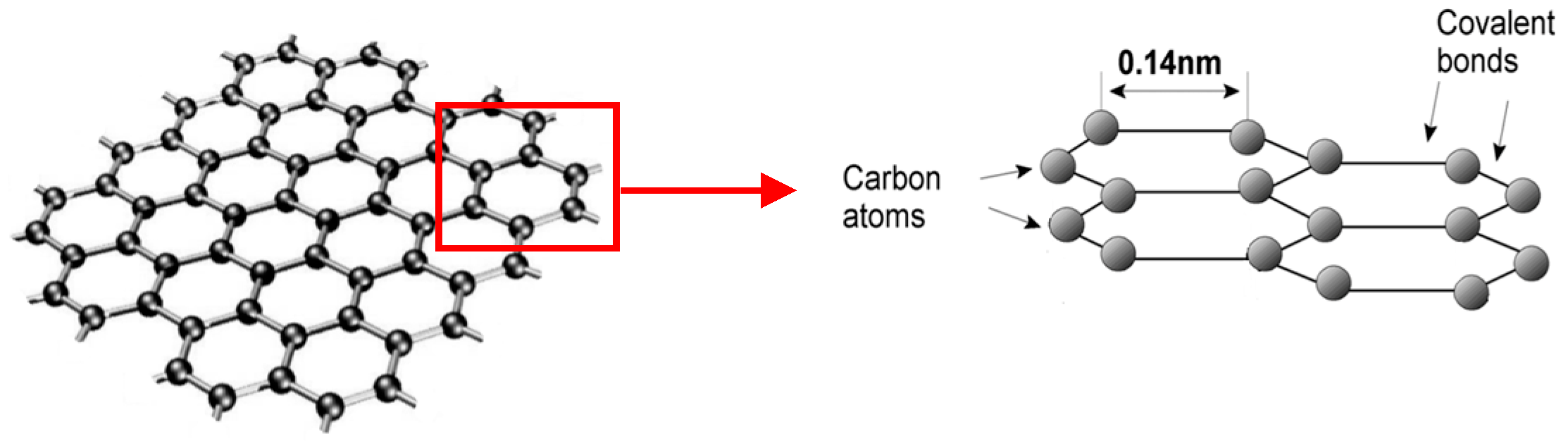
Figure 1. Crystal structure of monolayer graphene showing the hexagonal honeycomb lattice of sp2-bonded carbon atoms. Adapted from [10].
Carbon 12 00035 g001
Figure 2. (a) The number of publications per year on GRMs vs. GRM manufacturing, market and quality control. Source: Web of Science database. (b) Number of patents on GRM manufacturing versus graphene applications. Source: WIPO database (data collected on 16 January 2026) (c) Key material product market trend in 2030 (d) Global Graphene market trend from 2018 to 2033.
Carbon 12 00035 g002
Figure 3. Schematic workflow for the collection and analysis of data from commercial GRM manufacturers in the 2025 market.
Carbon 12 00035 g003
Figure 4. Geographical distribution of GRM manufacturers worldwide, showing the number of manufacturing companies per country (June–December 2025).
Carbon 12 00035 g004
Figure 5. Summary of top-down manufacturing approaches used by the GRM manufacturers.
Carbon 12 00035 g005
Figure 6. Overview of GRM types available in the commercial market.
Carbon 12 00035 g006
Figure 7. Overview of (a) raw materials and (b) physical forms of GRMs available in the market.
Carbon 12 00035 g007
Figure 8. Distribution of (a) reported number of characterization parameters by GRM manufacturers, (b) the reported number of characterization evidence and (c) availability of technical data sheets (TDSs) among GRM manufacturers.
Carbon 12 00035 g008
Figure 9. SWOT framework summarizing the key strengths, weaknesses, opportunities and threats in GRM manufacturing.
Carbon 12 00035 g009
Figure 11. Schematic illustration of (a) the structure, properties and energy storage and conversion applications for MOF/graphene-derived materials [71] and (b) chiral graphene hybrid materials (CGHMs) and their chiral applications [72].
Carbon 12 00035 g011
Figure 12. Studied green sources for preparation of (a) graphene [73,74], (b) rGO [75], and (c) GO [76].
Carbon 12 00035 g012
Figure 13. World graphite reserve distribution by country [76]. Mt GC: Metric Ton, Graphitic Carbon.
Carbon 12 00035 g013
Table 1. Classification and definitions of GRMs currently available on the market based on ISO standards and terminology [47,48,49].
Type of GRMsDefinition
GrapheneSingle layer of carbon atoms with each atom bound to three neighbours in a honeycomb structure
Few-Layer Graphene A 2D material consisting of three to ten well-defined stacked graphene layers
Functionalized Graphene Graphene that has had its surface chemical properties intentionally altered [48] through a distinct chemical process
Graphene OxideChemically modified graphene with extensive oxidative modification of the basal plane, resulting in a high oxygen content, which is typically characterized by O/C atomic ratios of approximately 0.5 (C/O ratios of approximately 2.0) depending on the method of synthesis
Reduced Graphene OxideReduced-oxygen-content form of graphene oxide with an O/C atomic ratio of approximately 0.1 to 0.5 (C/O ratio 2 to 10)
Graphene Nanoplatelets Nanoplates consisting of graphene layers, typically have a thickness of between 1 nm and 3 nm and lateral dimensions ranging from approximately 100 nm to 100 µm
Doped Graphene Addition of various quantities of different materials to graphene structure with a view to modifying properties
Fluorinated Graphene
(Perfluorographane)
Single-layer material consisting of a two-dimensional sheet of carbon and fluorine, with each carbon atom bonded to one fluorine atom, with the repeating unit of (CF)n
Graphene Quantum DotsGraphene nanoparticle with region which exhibits quantum confinement in all three spatial directions, whose size is close to the wavelength of an electron in such material (usually 1–10 nm)
Turbostratic grapheneMinute, non-planar piece of matter with defined physical boundaries consisting of multiple single-layer, bilayer or few-layer graphene stacks at different orientations to each other which can have random and varying stacking angles
Table 2. Different forms of GRMs available in the market.
Form of GRMsAppearance Description
PowderCarbon 12 00035 i001A fine, dry, solid bulk product of graphene
DispersionCarbon 12 00035 i002A homogeneous colloidal solution of graphene in organic solvent or water
FilmCarbon 12 00035 i003Supported or unsupported thin material that is laterally continuously connected
PasteCarbon 12 00035 i004A thick, soft, moist substance, usually produced by mixing dry ingredients with a liquid
SheetCarbon 12 00035 i0052D material is typically situated upon a substrate, with extended lateral dimensions at the micro to macro scale
SlurryCarbon 12 00035 i006A homogeneous liquid composed of graphene materials and water that can also be formulated in organic solvents
pelletCarbon 12 00035 i007A lightweight, semiporous solid made by pressing graphene powder under pressure
GelCarbon 12 00035 i008Unique three-dimensional cross-linked water-insoluble stable networks that exhibit a remarkable ability to absorb water and biological fluids
Table 3. Matrix of properties and measurement techniques for GRMs [63].
PropertiesCharacterization MethodSpot/Nano CharacterizationBulk CharacterizationQuality ControlIndustry Affordability
StructuralTEM
SEM
Raman (High-resolution)
AFM
XRD
BET (SSA)
Optical Microscopy
Bulk Density
MB (SSA)
Raman (Portable)
Particle Size (DLS)
ChemicalXPS
EDS
FTIR
Titration
TGA
UV-Vis
CHNS Analysis
PhysicochemicalDispersion Stability
Zeta Potential
Contact Angle
Electrical4-Probe Voltmeter
ThermalThermal Instruments-
MechanicalElastic Modules
√ Availability/Affordability, ✕ Unavailability/Unaffordability.
Disclaimer/Publisher’s Note: The statements, opinions and data contained in all publications are solely those of the individual author(s) and contributor(s) and not of MDPI and/or the editor(s). MDPI and/or the editor(s) disclaim responsibility for any injury to people or property resulting from any ideas, methods, instructions or products referred to in the content.