1. Introduction
Fusarium circinatum, a filamentous fungal pathogen, is the causative agent of pine pitch canker (PPC), which poses a significant threat to pine (
Pinus spp.) plantations worldwide. This pathogen infects a wide range of pine species, resulting in substantial ecological and economic damage.
F. circinatum Nirenberg & O’Donnell was first identified on
Pinus virginiana in the United States [
1]. Since then, it has spread to several other regions, including Africa, Asia, South America, and southern Europe [
2]. Its potential for severe outbreaks, especially in forest nurseries and plantations, has made it a focus of quarantine regulations in various areas [
3].
F. circinatum was initially classified within the
F. subglutinans species complex, and advances in molecular biology, including multilocus sequence typing (MLST), have confirmed that
F. circinatum is a distinct species [
4].
F. circinatum primarily infects several species of pine, with
Pinus radiata being the most susceptible species (potential interactions). It also infects
P. elliottii,
P. patula, and more than 80 other species of
Pinus [
5], causing extensive damage to forests and nurseries. Furthermore, artificial inoculation studies have demonstrated that
F. circinatum can infect various plant genera, including Abies, Larix, Libocedrus, and Picea [
6,
7,
8]. This pathogen impacts pine development at all stages. As a seed-borne pathogen [
9], it can lead to mortality in seeds and seedlings, causing both pre- and postemergence damping-off, as well as decay in lignified seedlings (late damping-off) [
10]. Infected trees exhibit needle discoloration, defoliation, and the formation of resinous cankers on trunks and branches, which can ultimately result in the death of mature trees. Seedlings are particularly vulnerable and often succumb to disease before reaching maturity. In regions such as Spain [
11] and South Africa [
12],
F. circinatum poses a significant threat to commercial forestry, leading to substantial economic losses.
Leucine-rich repeat (LRR) proteins represent a large and diverse family characterized by their repetitive LRR motifs, which typically consist of 20 to 30 amino acids, featuring a conserved leucine residue at every second position [
13,
14]. Initially, Kobe et al. classified these proteins into seven subfamilies: the ribonuclease inhibitor-like family, SDS22-like family, cysteine-containing family, bacterial family, typical family, plant-specific family, and
Treponema pallidum family [
15]. Recent studies have identified the eighth category—TpLRR/BspA-like LRRs—distinguished by β-strands located on the convex surface of the solenoid structure, the absence of helical motifs on the concave surface, and a unique sequence conservation pattern (e.g., C/NxxLxxIxLxxxLxxIgxxAFxx) [
16]. LRR domain proteins have been identified in nearly all organisms and play critical roles in processes related to innate immunity, ubiquitin-mediated cellular functions, apoptosis, autophagy, nuclear mRNA transport, neuronal development, and the pathogenesis of various pathogens [
15,
17,
18].
To defend against pathogen invasion, both plants and animals have evolved nucleotide-binding domain leucine-rich repeat receptors (NLRs) that detect pathogens and initiate immune responses [
19,
20]. In plants, LRR proteins play crucial roles in recognizing pathogen-associated molecular patterns (PAMPs) [
21] and activating defense responses. For example, LRR receptor-like kinases (LRR-RLKs) are essential for perceiving pathogen signals and initiating defense mechanisms [
22]. Additionally, LRR-containing proteins are essential components of immune receptor complexes that mediate resistance against a wide variety of pathogens, including bacteria and fungi [
23,
24]. Recent studies have highlighted the role of LRR proteins in regulating root development, hormone signaling, and responses to abiotic stress [
25,
26,
27]. In animals, the LRR-containing inflammasome NLRP3 plays a critical role in various diseases affecting the human body because of its capacity to be activated by a diverse array of pathogens and danger signals [
28,
29]. These diseases include familial periodic autoinflammatory syndromes, type 2 diabetes, Alzheimer’s disease, asthma, allergic airway inflammation, myocardial infarction, and atherosclerosis [
30].
Compared with their well-characterized counterparts in plants and animals, LRR-containing proteins in fungi remain underexplored. Comparative genomic analyses revealed that fungal genomes encoded fewer LRR-containing proteins, most of which lacked the canonical pattern recognition receptor (PRR) architectures typically associated with immune surveillance in other eukaryotes. This distinction may reflect the unique evolutionary trajectory of fungal immune recognition mechanisms [
31]. Nevertheless, fungi possess specific LRR-containing proteins that play crucial roles in signal transduction pathways. For example, in
Saccharomyces cerevisiae [
32], the LRR domain of adenylate cyclase functions as a sensor for glucose availability, modulating cyclic adenosine monophosphate (cAMP) levels to regulate metabolic adaptation and stress responses. Similarly,
Candida albicans utilizes the LRR-containing adenylate cyclase Cyr1 to detect peptidoglycan fragments derived from serum, which triggers cAMP-dependent morphological transitions from yeast to hyphal growth, a phenotypic switch associated with virulence [
33]. These examples highlight the diverse functional repertoire of fungal LRR proteins, which diverge from classical PRR-mediated immunity while still playing crucial roles in environmental sensing and adaptation to pathogens.
Although the whole-genome sequence of
F. circinatum has been established, the molecular processes underlying its pathogenic behavior remain poorly characterized [
34]. While numerous studies have identified candidate genes and gene clusters that may be involved in growth and pathogenicity [
35,
36], only RAS2, FUB1, and
Fcrho1 have been experimentally validated to influence fungal development and virulence [
37,
38,
39]. Furthermore, the functional roles of LRR proteins in the biology of
F. circinatum remain entirely unexplored. To address this knowledge gap, this study aimed to characterize the role of the LRR protein FcLRR1 in
F. circinatum. Using a highly efficient and stable genetic transformation system developed in our previous research, we constructed
FcLRR1 knockout and complemented mutants through homologous recombination. The FcLRR1 deletion mutants and the wild-type strains were subjected to comprehensive phenotypic assays, including assessments of fungal growth, sporulation, conidial germination, and pathogenicity. The findings from this investigation will enhance our understanding of the molecular mechanisms governing growth and virulence in
F. circinatum and potentially other fungi within the same genus.
2. Materials and Methods
2.1. Fungal Material and Growth Conditions
The F. circinatum strain A015-1 isolated from Nanjing Customs (Nanjing, China) was used for genetic transformation and knockout in this study. The two additional strains used in this study represented LRR knockout (∆FcLRR1) and complement (FcLRR1-c) mutants of A015-1, both of which were generated during the course of this research (see below). Which were deposited in the Forest Pathology Laboratory of Nanjing Forestry University. All the strains were routinely cultured on potato dextrose agar (PDA) media at 25 °C in the dark.
2.2. DNA and mRNA Extraction and cDNA Preparation
The genomic DNA was extracted from strains cultivated on PDA media plates for five days via the cetyltrimethyl ammonium bromide (CTAB) method [
40]. The DNA extract concentration was determined via a microspectrophotometer (BioPhotometer
®, Eppendorf, Hamburg, Germany), with the A260/A280 ratio maintained within the optimal range of 1.8–2.0 to ensure purity.
The mycelia of 5-day-old vegetative fungus strains or plant samples were ground in liquid nitrogen for each strain separately in a sterile mortar, and the total RNA of strain A015-1 and all the mutants was extracted via an RNA extraction kit (Biotech, Shanghai, China). Then, the genomic DNA was removed with DNase, an RNase inhibitor (TaKaRa, Dalian, China) and other reagents. The integrity, purity, and quality of the total RNA were assessed via agarose gel electrophoresis and a Nanodrop microspectrophotometer. The RNA integrity was considered high if the 28S:18S rRNA ratio was approximately 2:1. For RNA purity, an optimal A260/A280 ratio was maintained between 1.8 and 2.0. The remaining RNA was stored at −70 °C.
A Prime ScriptTM Double Strand cDNA Synthesis Kit (TaKaRa, Dalian, China) was used to reversely transcribe the mRNA into the cDNA of F. circinatum. The cDNA was stored at −20 °C for long-term use.
2.3. Identification and Analysis of LRRs Genes
Using genomic and transcriptomic data from F. circinatum (pine resin canker pathogen), this study systematically identified leucine-rich repeat (LRR) domains through bioinformatics approaches, including BLAST 2.2.31+ and HMMER 3.3.2.
The protein domains were predicted and analyzed via the SMART (accessed on 17 March 2026) online tool (
https://smart.embl.de/), which focused specifically on the number, distribution, and tandem arrangement of leucine-rich repeat (LRR) domains within the
Fcgrr1 gene. For the secondary structure of the protein, the SPOMA (accessed on 17 March 2026) online tool (
https://npsa-prabi.ibcp.fr/cgi-bin/npsa_automat.pl?page=npsa%20_sopma.html) was employed for prediction and analysis. The tertiary structure of the protein was then predicted and analyzed via ExPASy (accessed on 17 March 2026) (
https://www.expasy.org/).
Subsequent BLASTP homology searches of
Fcgrr1, with a threshold of E ≤ 1 × 10
−15, were conducted against the FungiDB database and the National Center for Biotechnology Information (NCBI) protein database (accessed on 17 March 2026) (
https://www.ncbi.nlm.nih.gov/protein/). Genomic sequences and gene models for
Fusarium species, including
F. anthophilum,
F. subglutinans,
F. bulbicole,
F. mexicanum,
F. agapanthi,
F. globosum,
F. fujikuroi,
F. oxysporum,
F. redolens,
F. mundagurra,
F. acutatum,
F. verticillioides,
F. coicis,
F. napiforme,
F. denticulatum, and
F. pseudocircinatum, were included in the comparative genomic analysis. Sequence alignments were conducted via BioEdit software 7.2.6.1, followed by the elucidation of phylogenetic relationships through the application of the neighbor-joining algorithm implemented in MEGA version 6. Default parameters were employed, and the robustness of the phylogenetic trees was assessed through 1000 bootstrap replications to ensure their reliability.
2.4. Determination of the FcLrr1 Expression Level of Target Genes During the Infection Stage
To evaluate the expression levels of the four target genes, RT–qPCR was performed with the specific primers outlined in
Table 1. The genomic DNA fragment coding for the β-actin gene (one copy in the genome) was selected as a control. The primers used for the β-actin gene were qatF and qatR (
Table 1). All amplification products for the targets were between 100 and 200 bp in length. The infection stage samples were the seedlings collected at 12 h postinoculation, 36 h, and 3, 5, and 7 dpi. The concentration of cDNA was adjusted to 500 μg/μL, as determined by DNA fluorometry. qPCR was performed via TB Green Premix Ex Taq II (Tli RNaseH Plus) (TaKaRa, Dalian, China). The qPCR system consisted of the following components: 12.5 µL of 2× RT–PCR buffer (containing SYBR Green and Premix Ex Taq from TaKaRa), 0.5 µL of both the forward and reverse primers (each at 20 µM), 2 µL of genomic DNA, and 9.5 µL of ddH
2O. The quantitative real-time PCR was carried out on a Mastercycler (Eppendorf, Carlsbad, CA, USA) with the following thermal cycling conditions: initial denaturation at 95 °C for 2 min, followed by 40 cycles of 95 °C for 10 s and 60 °C for 20 s, ending with a melting curve step. Each group of qPCR was repeated three times, and the average value was calculated. The data were analyzed via the 2
−ΔΔCt method [
41].
2.5. Generation of FcLRR1 Deletion Construct and Complementation Construct
To achieve gene knockout, homologous recombination was utilized. Taking the CDS region of the
FcLRR1 gene as the center, approximately 1000 bp upstream and downstream sequences were selected as homologous arms to design primers to amplify homologous arms from A015 genomic DNA. In parallel, primers were created to amplify the hygromycin phosphotransferase gene (hph) from an earlier knockout mutant. The primer sequences were shown in
Table 1. Ligation of the T-vector PMD19 with the homologous arms and hph gene fragment was performed via the Uniclone One Step Seamless Cloning Kit (SC612) (Genes and Biotech Co., Ltd., Nanjing, China). The ligation reactions included 5 μL of T-vector PMD19, 1 μL of each homologous arm fragment, 1.5 μL of the hph gene fragment, and 5 μL of 2× Uniclone Seamless Cloning Mix and were incubated at 50 °C for 30 min. The resulting recombinant plasmid was transformed into Escherichia coli DH5α competent cells (TransGen Biotech, Beijing, China). The plasmid was gently mixed with 50 μL of DH5α cells and then incubated on ice for 25 min. A heat shock at 42 °C for 30 s was followed by a 2 min incubation on ice. Afterward, 500 μL of LB liquid medium was added, and the mixture was shaken at 200 rpm at 37 °C for 1 h. Subsequently, 100 μL of the culture was spread onto LB plates containing 1 μL/mL carbenicillin overnight incubation, followed by colony PCR to screen for positive transformants. The positive transformants will be subjected to sequencing, and those with confirmed correct results will serve as templates for amplifying the fusion fragments containing the homologous arms and the hph gene, which will be utilized in the subsequent gene knockout procedures.
To construct the complementation vector for the FcLRR1 gene, the PYF11 vector was first linearized by restriction digestion with the XhoI enzyme. Subsequently, specific primers with homologous sequences were designed to ensure overlap with the flanking regions of the PYF11 vector, and the Fcgrr1 gene was amplified from the genomic DNA. The linearized PYF11 vector and the grr1 homology arms were then assembled via the Uniclone One Step Seamless Cloning Kit on the basis of homologous recombination. The resulting plasmids were transformed into E. coli DH5α competent cells for propagation and subsequent verification via Sanger sequencing to confirm the successful integration of the grr1 gene into the PYF11 vector. The transformation method was as described above.
2.6. Transformation of the Wild-Type and Mutant Strains
The mycelia of F. circinatum after 5 d were cut into 25 pieces of mycelial plugs (2 × 2 mm2) via a sterile scalpel and cultured in 50 mL of PDB at 28 °C with shaking at 160 rpm for 24 h to obtain sufficient conidia. The conidia were collected via sterilized filter cloth and centrifuged at 4000 rpm for 5 min. The conidia were resuspended in sterile water, and 50 mL of YEPD liquid medium was added at 28 °C with shaking at 90 rpm for 12 h. The germinated conidial hyphae were filtered through sterile filter cloth and subsequently incubated in enzymatic hydrolysate containing 5 mg/mL lysing enzymes from Trichoderma harzianum (Sigma Cat# 1412), 12.5 mg/mL Driselase from Basdiomycetes sp. (Sigma Cat# D9515), 7.5 mg/mL Snailase (Sigma Cat# C6137) and 20 mL of 1.2 M KCl solution. Enzymatic hydrolysis was conducted at 30 °C in a shaking incubator set at 65 rpm for 180 min. The quantity and quality of the protoplasts were assessed via a hemocytometer. This experiment was conducted in triplicate.
After digestion on a 30 °C table, the protoplasts were filtered through sterile filter cloth and centrifuged at 3000 rpm for 5 min, after which the supernatant was discarded. The pelleted protoplasts were resuspended in 10 mL of 1.2 M KCl and subjected to a second centrifugation at 3500 rpm for 5 min at 4 °C. Afterward, 1 mL of STC solution was added to each sample for resuspension. Centrifugation was repeated under the same conditions to collect the protoplasts, which were subsequently resuspended in 1 mL of STC solution at a concentration of 2–3 × 10⁷ cells/mL. Then, 10 µg of plasmid was added to 150 μL of protoplasts. The protoplasts were then gently mixed with 100 μL of PTC solution and placed on ice for 30 min to promote transformation. Subsequently, 1 mL of SPTC solution was added to the protoplast mixture, which was then allowed to rest at room temperature for 20 min. The mixture was subsequently transferred into 10 mL of TB3 liquid medium and incubated in the dark at 28 °C and 90 rpm for 12 h. Following this incubation period in TB3 liquid medium, the mixture was blended with TB3 agar medium containing 100 μg/mL hygromycin B and poured into plates. Finally, each plate was overlaid with 10–12 mL of TB3 containing 200 μg/mL Hyg, which was then inverted and maintained at 28 °C in the dark for an additional 4 d. Under these conditions, transformants capable of growing in the presence of hygromycin were expected to develop.
2.7. Identification of Gene-Deleted Mutants and Complementation Strains
The effective deletion of the target gene in individual transformants was determined by PCR. According to the protocol outlined previously, each transformant was subjected to total DNA extractionand used for PCR with the primer pair FcLRRs-In-F/R, which amplifies part of
FcLRR1 (
Table 1). PCR was performed under the following conditions: 5 min at 94 °C, followed by 33 cycles of 15 s at 94 °C, 15 s at 58 °C and 30 s at 72 °C; the final elongation step consisted of 10 min at 72 °C. PCR amplification verification was also performed via upstream and downstream outer primers (FcLRRs-Out-F/Hyg-R, Hyg-F/FcLRRs-Out-R) and internal Hyg primers (Hyg-F/Hyg-R). The extension time in the amplification system for the two pairs of outer arm primers was 5 min at 94 °C, followed by 34 cycles of 15 s at 94 °C, 15 s at 58 °C and 1.5 min at 72 °C; the last step was extended for 10 min at 72 °C. Specific primer information is listed in
Table 1. The amplified products were then subjected to gel electrophoresis. If no internal band of the target gene was amplified and both outer arm primer pairs produced bands, the transformant was highly likely a positive knockout mutant.
To further validate the successful knockout of the target gene, qRT–PCR analysis was performed via the ΔΔCt method. Briefly, transformants obtained from the initial screening and the wild-type strain A015-1 were cultured for 5 d. Total mRNA was extracted from both groups and immediately reverse-transcribed into cDNA. The cDNA was stored at −20 °C, while the residual mRNA was preserved at −80 °C. For qRT–PCR, SYBR Green-based assays were conducted on an ABI 7500 system with gene-specific primer pairs (Q-FcLRR1-F/R, Q-FcLRR2-F/R, Q-FcLRR3-F/R, and Q-FcLRR4-F/R) and an internal reference primer set (Q-Actin-F/R). All reactions were normalized prior to analysis. The relative expression levels of the target genes were calculated via the ΔΔCt method, where the fold change was determined via the 2−ΔΔCt method. Transformants exhibiting negligible target gene expression compared with the wild-type control (ΔΔCt approaching zero) were identified as successful knockout candidates.
To confirm successful genetic complementation, PCR validation was performed via internal primers and G418 fragment-specific primers (G418-F/R). Successful complementation was defined by the amplification of specific bands from both primer sets, coupled with sequencing verification of correct integration. The validated transformants were subsequently subcultured for three generations on hygromycin B (HPH)-containing PDA medium to ensure genetic stability. Only transformants retaining stable complementation after revalidation were selected for further experiments.
2.8. Subcellular Localization Observation
The PYF11 plasmid was digested with
Xho1 fast-digest enzyme in a 50 μL reaction mixture containing 20 μL of PYF11 plasmid, 5 μL of Xho1 fast-digest enzyme, and 25 μL of ddH
2O. The digestion was performed at 37 °C for 1 h. After digestion, the products were recovered for subsequent experiments. A mixture of 7 μL of the target gene fragment, 2 μL of linearized PYF11 vector, and 9 μL of salmon sperm carrier DNA was transformed into XK125 competent yeast cells. The cells were incubated at 30 °C for 30 min with shaking, incubated at 42 °C for 20 min with shaking, and then chilled on ice for 5 min to complete the transformation. The cells were centrifuged at 5000 rpm for 1 min, the supernatant was discarded, and the cells were resuspended in 100 μL of sterile water before being spread onto a selective medium plate lacking one nutrient. The plates were incubated at 30 °C for 2 d. Yeast single colonies grown on selective media were subjected to PCR verification. Positive transformants were selected and cultivated overnight in YPDA liquid media with shaking. The cells were then collected by centrifugation at 10,000 rpm, and the yeast plasmids were extracted. Five microliters of the yeast plasmid was introduced into competent
E. coli cells to screen for positive transformants, which were subsequently sent for sequencing. The sequencing results were compared with the target gene sequence. Plasmids from
E. coli positive transformants with correct sequences were used for transformation experiments, following the procedure described in
Section 2.4. After the transformants were grown, they were initially screened via a fluorescence microscope, and those with higher fluorescence intensity were selected for three generations of single-spore purification. The purified transformants were observed under a microscope for fluorescence, and their DNA was extracted for verification via internal primers for GFP and the target gene, followed by sequencing. The successful construction of the FcLRR1-GFP fusion strain was confirmed via sequence alignment. A 10 μL aliquot of spore suspension (concentration: 1 × 10
4 spores/mL) was dripped onto a hydrophobic glass slide and incubated in darkness at 25 °C for 24 h for subsequent fluorescence observation.
2.9. Phenotypic Assay of the ∆Fcgrr1 Strain and the Wild-Type Strain
2.9.1. Morphological Traits of the Mutant and Wild-Type Strains
The colony morphologies of wild-type A015, the knockout mutant ΔFcLRR, and the complementary mutant FcLRR1-c were examined. After growing on PDA plates for 5 d, agar blocks colonized with mycelia were punched out along the colony edges via a sterile 5 mm diameter puncher. These agar blocks were then placed separately on 70 mm PDA Petri dishes and cultivated at 28 °C under a 12/12 h light/dark cycle for 5 d to observe colony growth. On the 5th day, the diameters of the fungal colonies were measured via a cross method centered on the mycelial block. Six mycelial plugs were cultivated in PDA liquid at 28 °C and 160 rpm for 24 h. The mycelia were subsequently collected and dried in an oven at 55 °C for 60 min to remove moisture, after which their dry weights were measured via an analytical balance. Each experiment was repeated independently three times, and the average values were calculated.
2.9.2. Conidial Assay
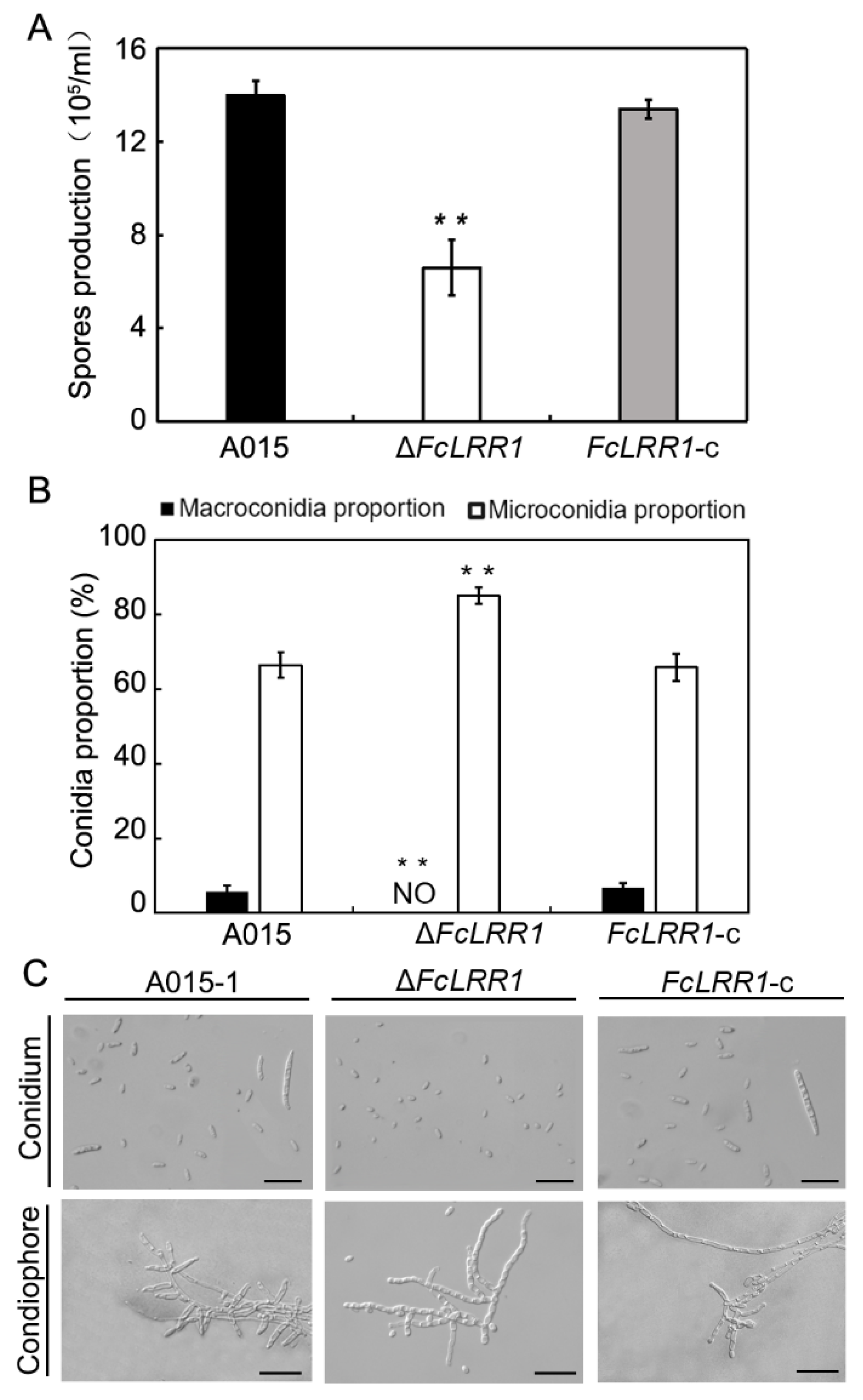
To quantify conidial production, the wild-type strain A015-1 and all the knockout mutant strains were cultured on PDA plates at 25 °C in the dark for 3 d. Five mycelial plugs (5 mm diameter) were excised from the colony margins via a sterile fungal disc puncher and inoculated into 250 mL Erlenmeyer flasks containing 50 mL of MBM liquid medium. The cultures were incubated at 28 °C with agitation (160 rpm) for 24 h to induce sporulation. For spore enumeration, 10 μL aliquots of the conidial suspension were loaded onto a hemocytometer and examined under an optical microscope.
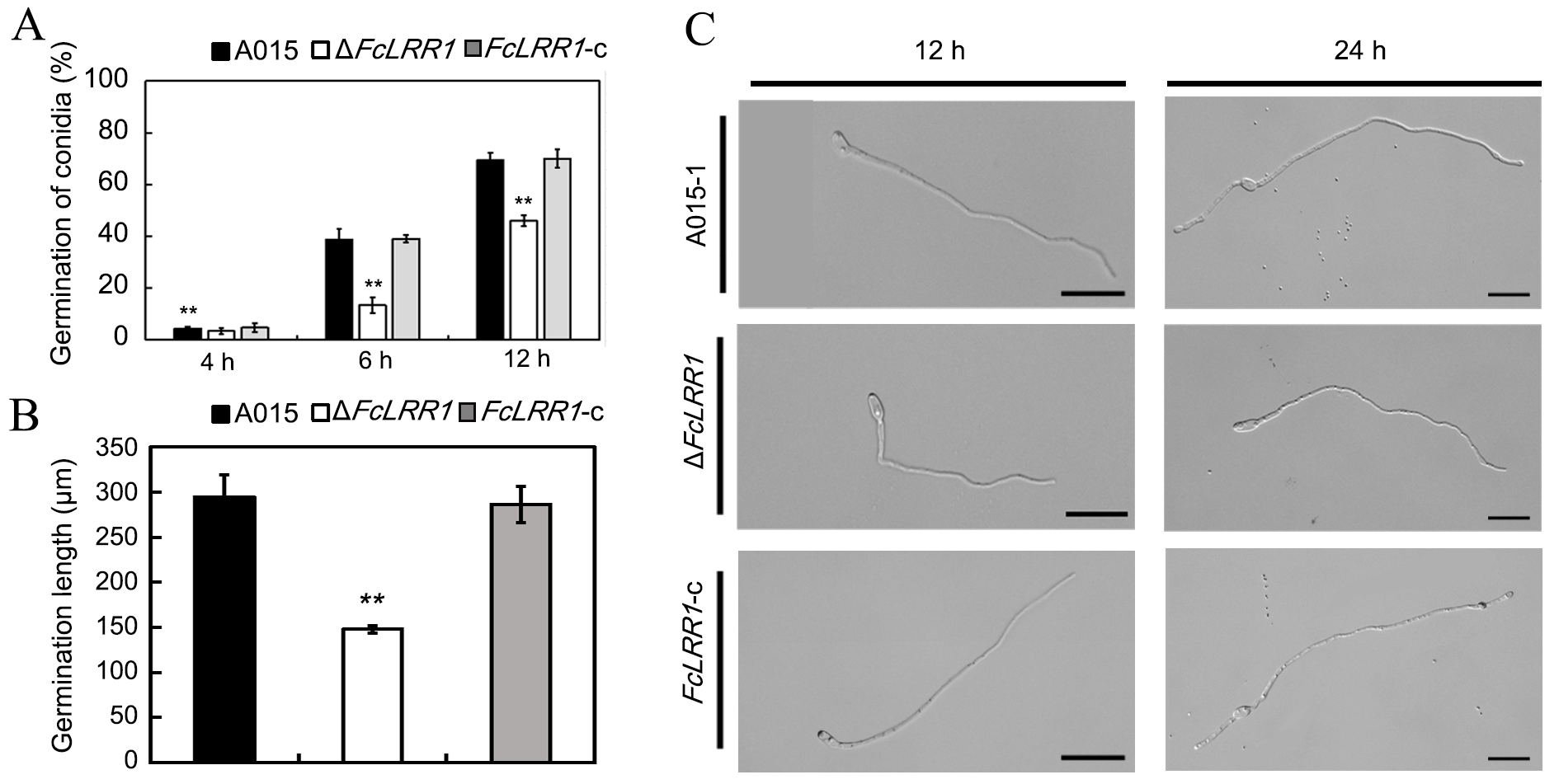
To determine the conidial germination rate, conidial suspensions were prepared according to the aforementioned protocol. One milliliter of the wild-type or knockout mutant suspensions was transferred to 2 mL sterile centrifuge tubes. After centrifugation at 5000 rpm for 5 min at room temperature, the supernatants were discarded, and the pellets were collected. The pellets were subsequently resuspended in 1 mL of sterile distilled water and incubated at 25 °C. At 4 h, 6 h, and 12 h postincubation, 10 μL of the suspension was placed on glass slides for microscopic observation under a microscope. Germination rates was calculated by quantifying the number of germinated conidia among ≥200 randomly selected conidia at each time point.
Conidial germination was evaluated in the wild-type, knockout, and complemented mutant strains. To this end, conidial suspensions (1 mL) of the wild-type strains A015-1 and ΔFcLRR1 were transferred to sterile 12-well culture plates (Corning 3513, Beijing, China) and incubated in darkness at 25 °C at 80 rpm. At 12 h, 24 h, and 48 h postinoculation, 10 μL aliquots were sampled and mounted on glass slides. The germ tube lengths (measured from the spore apex to the hyphal tip) of 20 randomly selected germinated conidia per field were quantified via a calibrated ocular micrometer on a Zeiss microscope (Carl Zeiss AG, Oberkochen, Germany).
2.9.3. Stress Adaptation Assay
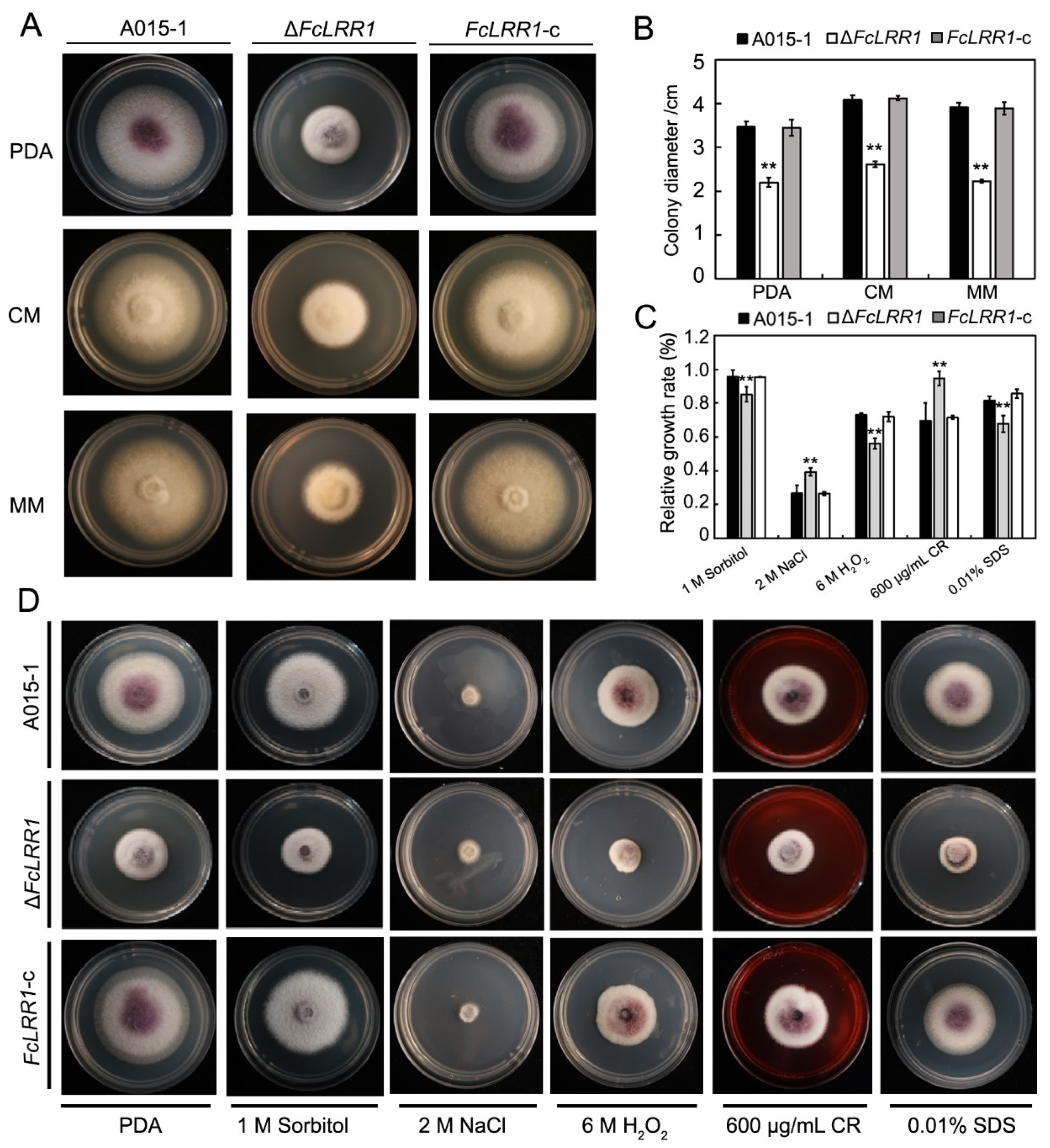
To assess the differential sensitivity of F. circinatum and its mutant strains under various stress conditions, 5 mm mycelial plugs from each strain were inoculated onto PDA plates supplemented with 1 M sorbitol, 1 M NaCl, 6 M H2O2, 600 μg/mL Congo red and 0.01% SDS. Following inoculation, the plates were incubated at 28 °C in darkness for 5 d. Colony diameters were measured as outlined in previous protocols, and each treatment was performed in triplicate.
2.10. Inoculation of P. elliottii Seedlings with F. circinatum
To evaluate the impact of
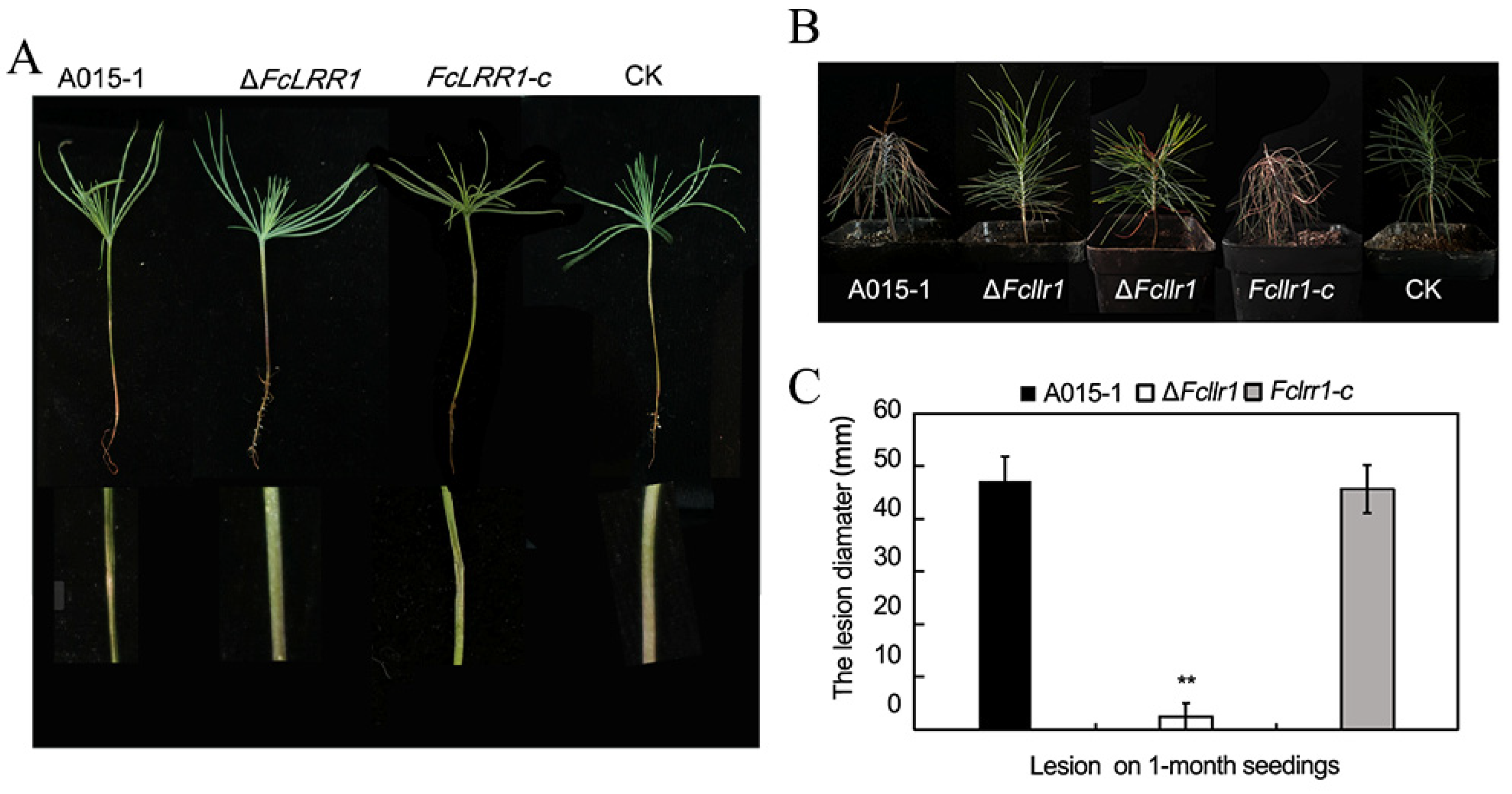
FcLRR1 knockout on pathogenicity, lesion length on seedling stems was measured following inoculation. For 2-week-old seedlings, conidial suspensions (10
5 spores/mL) of the wild-type strain A015-1 and the
FcLRR1 knockout mutant were prepared. Each strain was inoculated onto 20 seedlings, with lesion lengths recorded at 5 and 7 d. The experiment was performed in triplicate. Disease severity was classified into five grades (0 = healthy, no necrosis; 1 = localized necrosis at the inoculation site; 2 = necrosis extending 0.5–1 cm; 3 = necrosis > 1 cm; 4 = necrosis > 2 cm). The disease index (
DI) and disease incidence were calculated as follows:
For pathogenicity evaluation of 1-month-old seedlings, the apical 0.5 cm of each seedling was excised aseptically via a sterile scalpel. A 10 μL aliquot of conidial suspension (105 spores/mL) from either the wild-type strain A015-1 or the FcLRR1 knockout mutant FcLRR1-49 was inoculated onto the wounded apex. Three seedlings were inoculated per strain, with control seedlings receiving 10 μL of sterile ddH2O. Postinoculation, the seedlings were incubated in a growth chamber at 28 °C under a 12 h light/dark cycle. To maintain humidity, the chamber was misted with sterile water every 24 h. After 20 d, disease progression was assessed by measuring the length of necrotic tissue. The experiment was conducted in triplicate.
2.11. Statistical Analysis
Statistical analysis of the data was performed via Duncan’s multiple range test. Significant differences compared with the control group (p < 0.05) are marked with asterisks in the figures and tables. Different letters denote statistically significant differences between treatment groups at p < 0.05.
2.12. Transcriptome Analysis
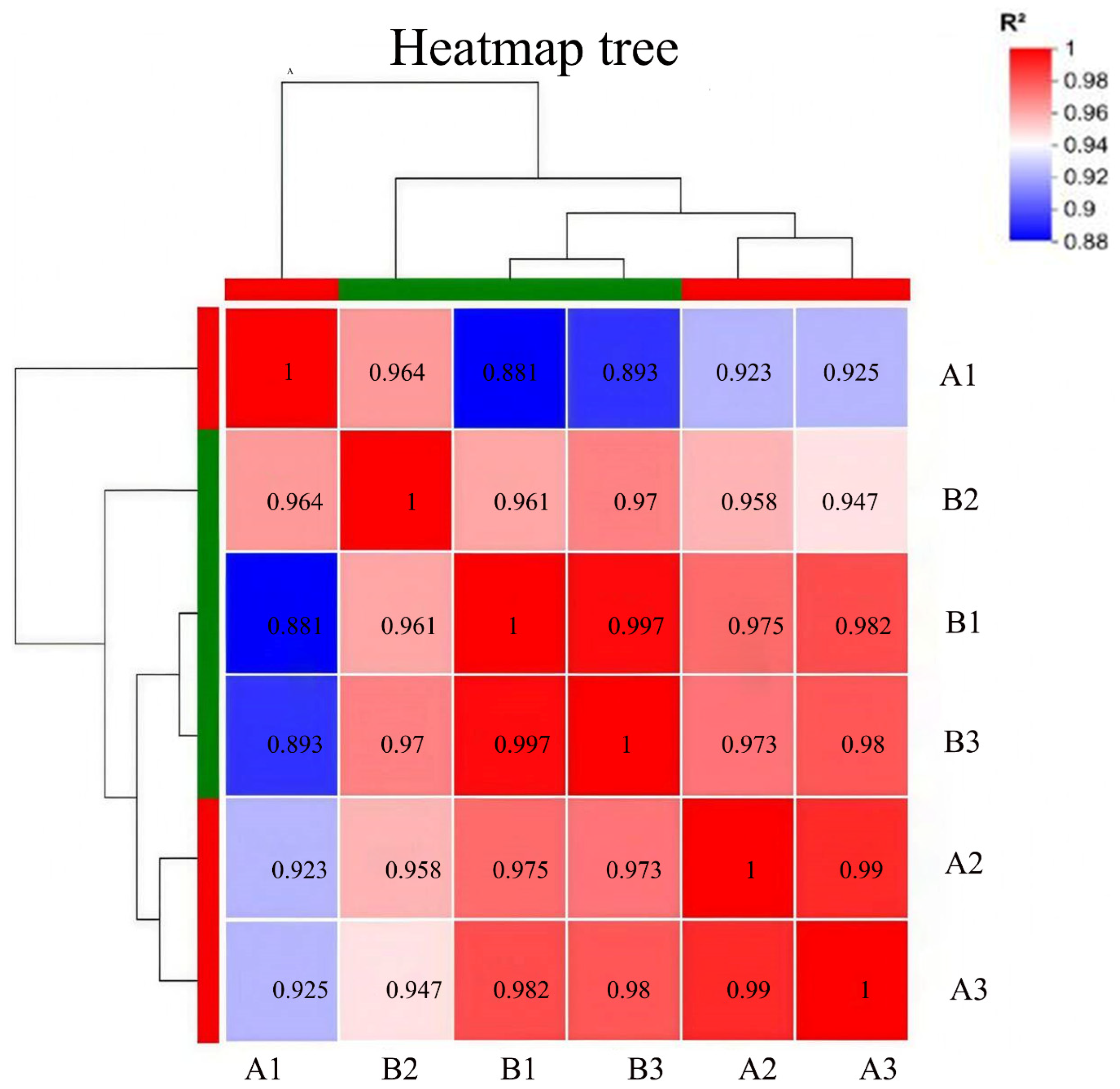
The raw sequencing data were initially processed via Trimmomatic v0.39 to remove low-quality reads, reads with more than 10% unidentified nucleotides (N), and adapter sequences. The filtered data were subsequently subjected to quality control assessment via FastQC to obtain clean data, which were then assembled into transcripts via Trinity (v2.14.0), from which the longest transcript per gene (unigene) was selected as the functional gene representative. These unigenes were used as the reference for read alignment with HISAT2, and gene expression levels were quantified via RSEM, with TPM (transcripts per million) adopted as the expression metric. The functional annotation of the unigenes was performed by alignment against the GO and KEGG databases. Differential gene expression analysis was carried out via DESeq2, with significantly differentially expressed genes identified on the basis of a false discovery rate (FDR) and a fold change threshold.
2.13. Yeast Two-Hybrid Assay
To identify proteins in F. circinatum that interact with the bait protein FcLRR1 with high binding energy, we employed an integrated bioinformatics pipeline. First, three-dimensional structural models of all genome-encoded proteins were generated via OmegaFold. A comprehensive workflow was subsequently established by integrating RFdiffusion, FoldSeek, HDock (v1.1), and AlphaFold3 (v3.0.1), enabling systematic identification of binding sites and meticulous selection of candidate interacting proteins.
On the basis of our bioinformatic predictions, ALG-11—a protein involved in cell wall synthesis—was selected for experimental validation of its potential interaction with FcLRR1. The bait vector pGBKT7-FcLRR1 and prey vector pGADT7-ALG-11 were constructed and supplied by Nanjing Ruiyuan Biotechnology Co., Ltd (Nanjing, China).
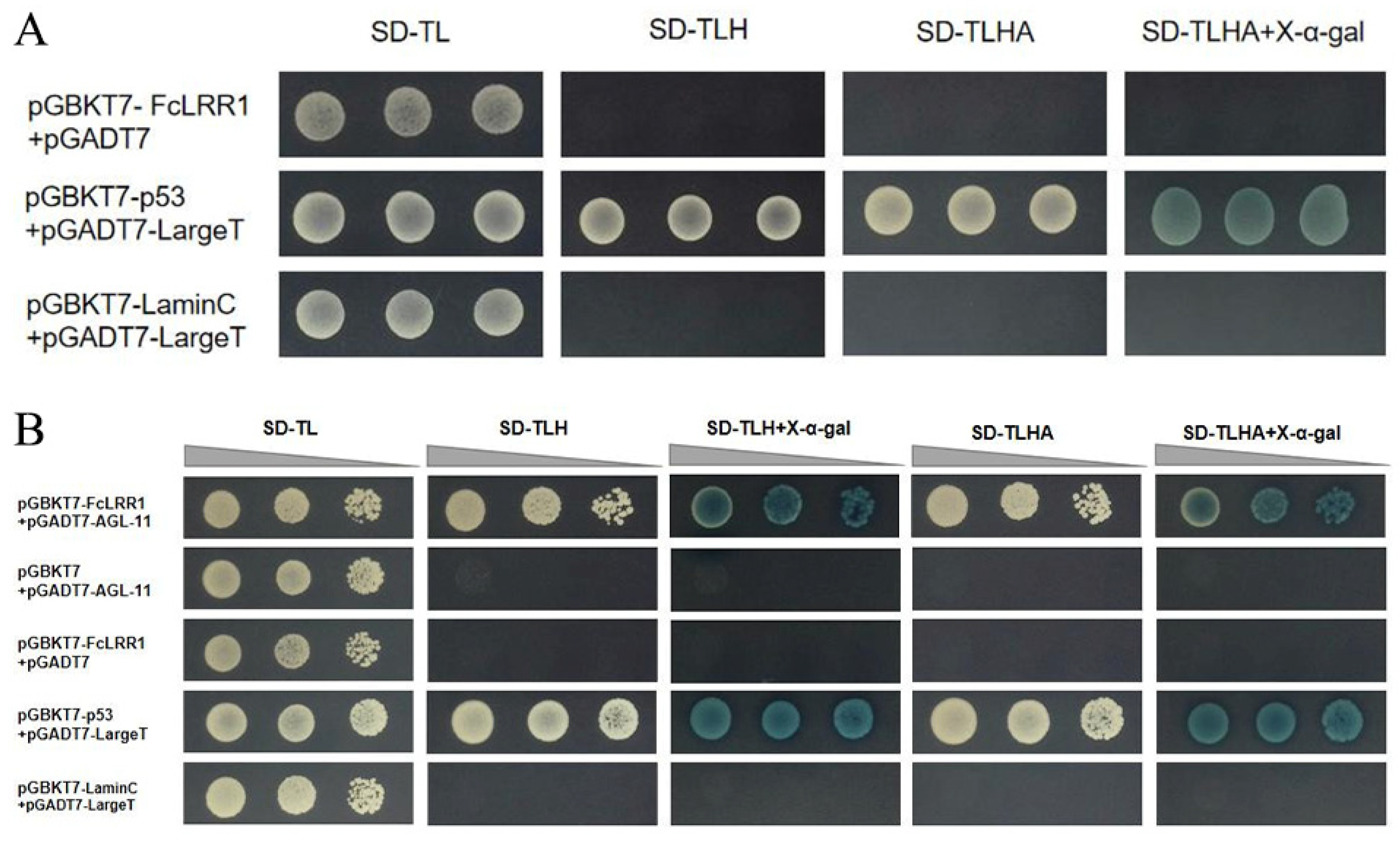
To rule out autoactivation by the bait protein, pGBKT7-FcLRR1 was cotransformed with the empty pGADT7 vector into the yeast strain AH109. Eight single colonies from the cotransformations were randomly selected for PCR verification and strain preservation. Three colonies yielding correct PCR results were then randomly chosen, cultured to OD600 = 0.2, and spotted onto SD/-Trp/-Leu (SD-TL), SD/-Trp/-Leu/-His (SD-TLH), SD/-Trp/-Leu/-His/-Ade (SD-TLHA), and SD-TLHA supplemented with X-α-gal plates. All plates were incubated at 30 °C for 3–5 d until colony growth was observed.
The pGBKT7-FcLRR1 with pGADT7-ALG-11, pGBKT7 (empty vector) with pGADT7-ALG-11, pGBKT7-FcLRR1 with pGADT7 (empty vector), and positive and negative control plasmids were separately transformed into yeast cells. For each transformation, colonies were picked and resuspended in 100 µL of sterile water, followed by vigorous vortexing to achieve homogeneous suspensions. Subsequently, 5 µL of each suspension was spotted onto SD/-Trp/-Leu (SD-TL), SD/-Trp/-Leu/-His (SD-TLH), SD/-Trp/-Leu/-His/-Ade (SD-TLHA), and SD-TLHA supplemented with X-α-gal plates. All plates were incubated inverted at 30 °C for 3–5 d until colony growth occurred.
4. Discussion
The leucine-rich repeat (LRR) domain is a modular protein structure found across various biological kingdoms. It is characterized by repeats of 20–30 amino acid residues that form a horseshoe-shaped architecture consisting of alternating β-sheets and α-helices [
42]. This structural motif provides LRR-containing proteins with remarkable ligand-binding capabilities, allowing them to play crucial roles in signal recognition, protein–protein interactions, and immune regulation [
43]. Although LRR domains demonstrate significant functional diversification in plants, animals, and fungi, conserved core sequences (e.g., LxxLxLxxNxL) preserve their essential function as molecular recognition modules [
44]. For example, the LRR domains of plant receptor-like kinases (LRR-RLKs) and animal Toll-like receptors (TLRs) exhibit mechanistic similarities in the recognition of pathogen-associated molecular patterns (PAMPs) [
45,
46].
In plants, LRR-containing proteins (LRR-RLKs and LRR-RLPs) are crucial for development and immunity. Structurally, their LRR domains form horseshoe-shaped folds that recognize diverse ligands, from peptide hormones to pathogen-associated molecular patterns (PAMPs) [
47]. For example,
Arabidopsis FLS2 binds to flg22, initiating immune signaling via the BAK1 and MAPK cascades [
48,
49]. Moreover, CLV1 and BRI1 mediate developmental processes [
50]. The evolution of LRR-RLK subfamilies involves specialization in pathogen recognition and hormonal signaling, with LRR domains evolving rapidly [
51]. In animals, LRR proteins are key to innate immunity, adhesion, and disease. TLRs detect PAMPs and trigger inflammatory responses. Toll-like receptors (TLRs) detect PAMPs, activating MyD88-dependent inflammatory responses through their TIR domains [
45]. NOD-like receptors, such as NLRP3, sense cytosolic pathogens and assemble inflammasomes to activate caspase-1 [
52]. In addition to their role in immunity, LRR proteins regulate development:
Drosophila Toll proteins coordinate embryonic dorsoventral patterning through LRR-mediated ligand recognition [
53], whereas human LRPs such as LRP5/6 regulate Wnt signaling, and their abnormal function contributes to cancer development [
54]. Functional divergence is evident in disease contexts: somatic mutations in the LRR domains of TLRs have been linked to autoinflammatory disorders, whereas aberrant LRP6 signaling promotes tumor angiogenesis [
55].
However, functional studies of LRR domain-containing proteins in fungi are limited, with the current knowledge being derived primarily from the model
Saccharomyces cerevisiae and the human pathogen
Candida albicans. In
S. cerevisiae, LRR domain proteins are implicated in growth regulation, transcriptional regulation, and DNA damage repair. The first identified LRR protein in yeast, GRR1, contains an F-box domain and is essential for glucose repression signaling [
56]. The most classical function of the LRR domain is its role as a substrate recognition module for SCF (Skp1-Cullin1-F-box) type E3 ubiquitin ligases. Early studies on glucose signaling mechanisms in
S. cerevisiae revealed that the F-box protein Grr1, a component of the SCF complex, recruits substrate proteins through its LRR domain. Specifically, the LRR domain of Grr1 is responsible for recognizing specific substrates (such as G1 cyclins Cln1 and Cln2), while the adjacent F-box motif binds to the adapter protein Skp1 of the core complex [
57]. This recruitment brings the substrate to the catalytic core for ubiquitination. This modular design, where the LRR domain is responsible for recognition and the F-box for linkage, represents one of the paradigms for substrate-specific recognition by the UPS. Subsequent studies have further confirmed that the substrate-binding function of the LRR domain within SCF complexes is conserved. For instance, a gain-of-function mutation affecting the surface charge of the concave face of the Grr1 LRR domain enhances its efficiency in degrading the substrate Mks1p, providing direct evidence that the spatial conformation of the LRR domain is critical for substrate recognition [
58]. Similarly, the LRR protein CCR4 is required for the glucose-repressible transcription of alcohol dehydrogenase (ADH2) [
59], and RAD1 and RAD7 are involved in nucleotide excision repair [
60]. Notably, the LRR domain is essential for the Ras-dependent activation of adenylate cyclase [
32]. In
C. albicans, Xu et al. demonstrated that the adenylate cyclase Cyr1, which contains an LRR domain, binds to bacterial peptidoglycan (PGN)-derived molecules in serum. This interaction triggers the synthesis of cyclic adenosine monophosphate (cAMP) and promotes the yeast-to-hyphal transition, a critical virulence trait [
33]. Bioinformatic analyses conducted by Soanes et al. revealed a substantial repertoire of LRR domain proteins in fungi; however, most of these proteins lack the canonical receptor domains typically observed in oomycetes and plants, suggesting divergent functional roles [
31]. This structural distinction suggests that fungal LRR proteins may function through mechanisms that are unique and distinct from classical receptor-mediated pathways found in other eukaryotes. In this study, we identified 13 LRR-containing proteins in
F. circinatum, among which FcLRR1 was highly conserved across
Fusarium species. qRT–PCR analysis revealed sustained upregulation of
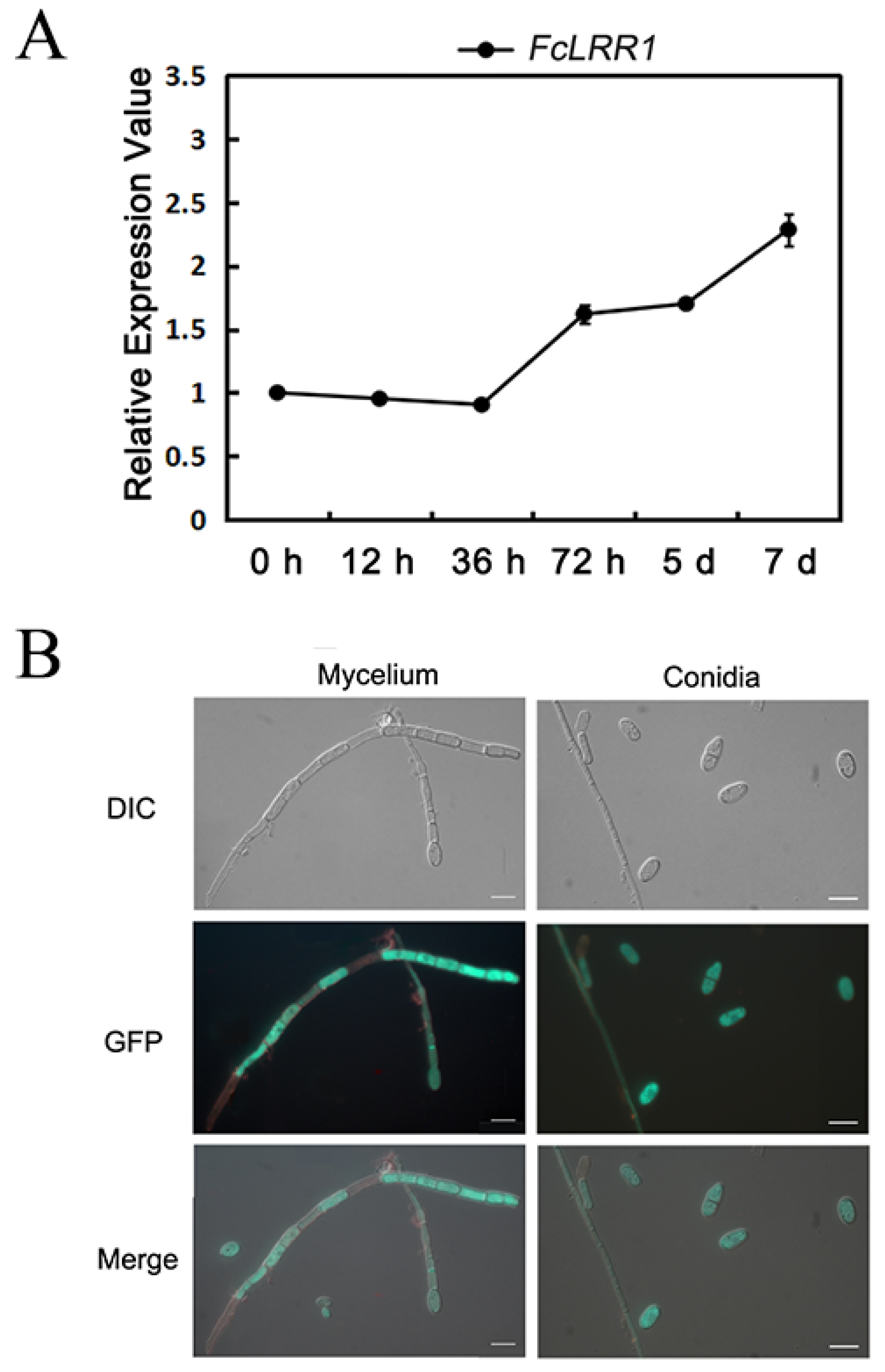
FcLRR1 expression during infection. Subcellular localization analysis revealed that FcLRR1 was uniformly distributed in the cytoplasmic matrix of both hyphae and conidia. These findings suggest that FcLRR1 may play pivotal roles in fungal growth, development, and metabolic processes, offering critical insights for further functional characterization of FcLRR1 in the pathogen’s lifecycle and virulence.
Members of the
Fusarium genus, which are significant plant pathogens and saprophytic fungi, have been a central focus in the field of fungal molecular pathology, particularly concerning their developmental processes, conidiation, and virulence. In
Fusarium species, the MAPK and cAMP signaling pathways function as core regulatory hubs that govern hyphal growth, morphological differentiation, and virulence regulation. In our data, the deletion of
FcLRR1 led to a loss of ability to produce macroconidia, and some abnormal conidiophore morphology was observed in the Δ
FcLRR1 mutant. Moreover, the Δ
FcLRR1 mutant presented a significantly lower germination rate than did the wild type. Conidia play essential roles in the infection process of
Fusarium species. In
F. graminearum, disruption of the
RAS2 gene results in delayed vegetative growth, impaired spore germination, and reduced virulence [
61]. The
FgCon7 gene, which is critical for spore wall assembly and conidiogenesis, leads to decreased sporulation and germination efficiency [
29]. Additionally, the transcription factor
FgSte12 is implicated in mating and hyphal development, as deletion mutants exhibit diminished conidiation and compromised pathogenicity [
62]. Our data demonstrate that FcLRR1 is critical for regulating conidial development, morphological diversification, and germination efficiency in
F. circinatum, underscoring its essential role in fungal propagation and pathogenesis.
The pathogenesis of pitch canker disease involves complex interactions between the fungal pathogen
F. circinatum and its pine hosts. Recent multiomics studies have elucidated the virulence strategies and regulatory networks of this pathogen [
63,
64]. Genome-wide annotation has identified five critical pathogenicity-related genes, including Fcfga1 and Fcrho1 [
35]. In subsequent studies, the RAS2 gene was shown to play a critical role in fungal growth and pathogenicity, as its knockout disrupts normal vegetative growth, reduces sporulation, and significantly reduces the virulence of
F. circinatum [
39]. In this study, we identified the
FcLRR1 gene in
F. circinatum, the deletion of which resulted in reduced pathogenicity. Additionally, the Δ
FcLRR1 mutant presented suppressed vegetative growth and abnormal tolerance to abiotic stress. Fungal growth and development and the ability to survive under environmental stress conditions are dependent on cell wall integrity [
65]. We hypothesized that the Δ
FcLRR1 mutant presented defects in cell wall integrity, leading to increased sensitivity to stress. These phenotypic defects collectively compromised the infectivity of fungal spores and hyphae toward host plants, ultimately resulting in reduced virulence. Our findings highlight the critical role of
FcLRR1 in both developmental and pathogenic processes in
F. circinatum, offering mechanistic insights into its regulatory function in host colonization and disease progression.
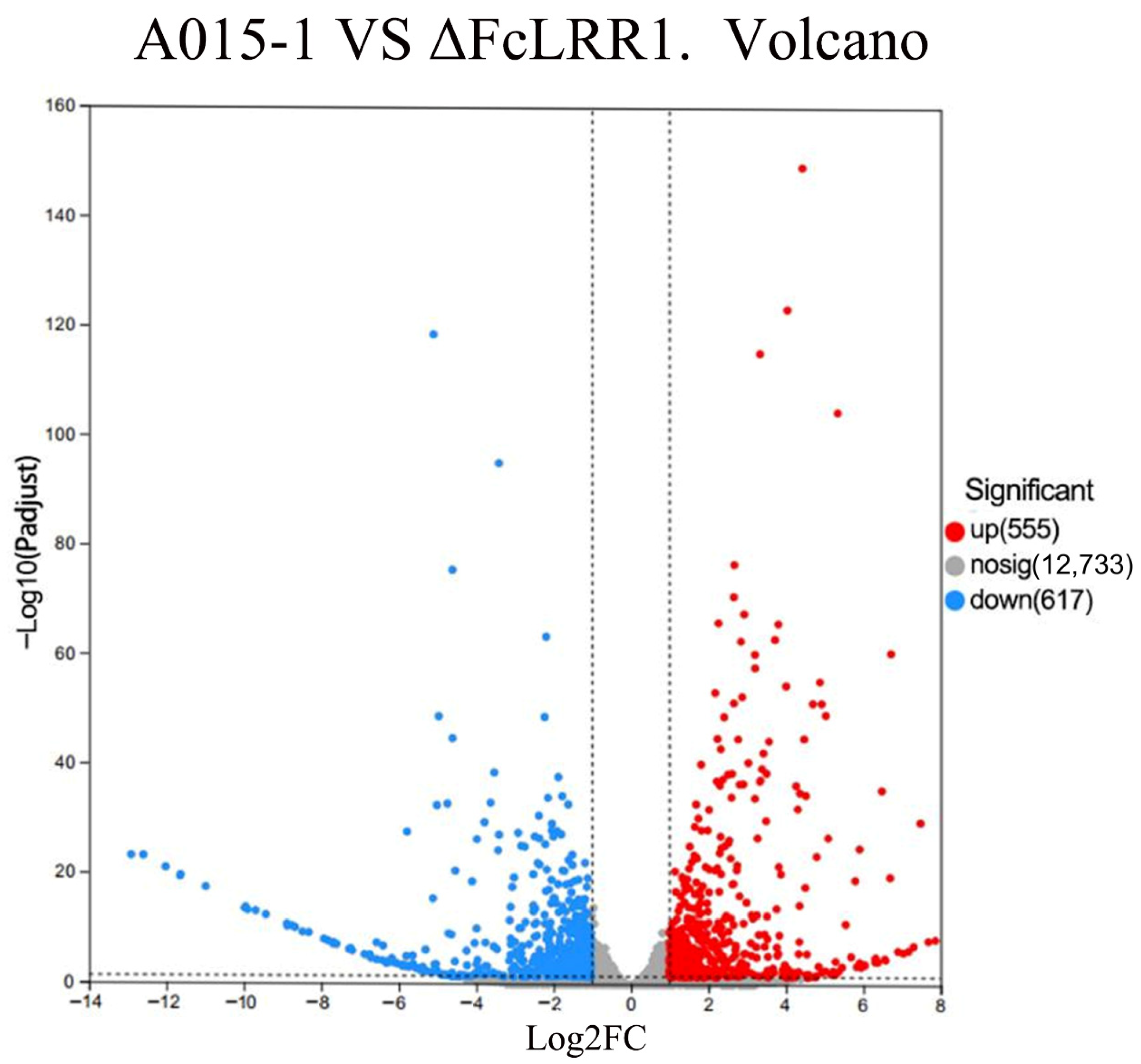
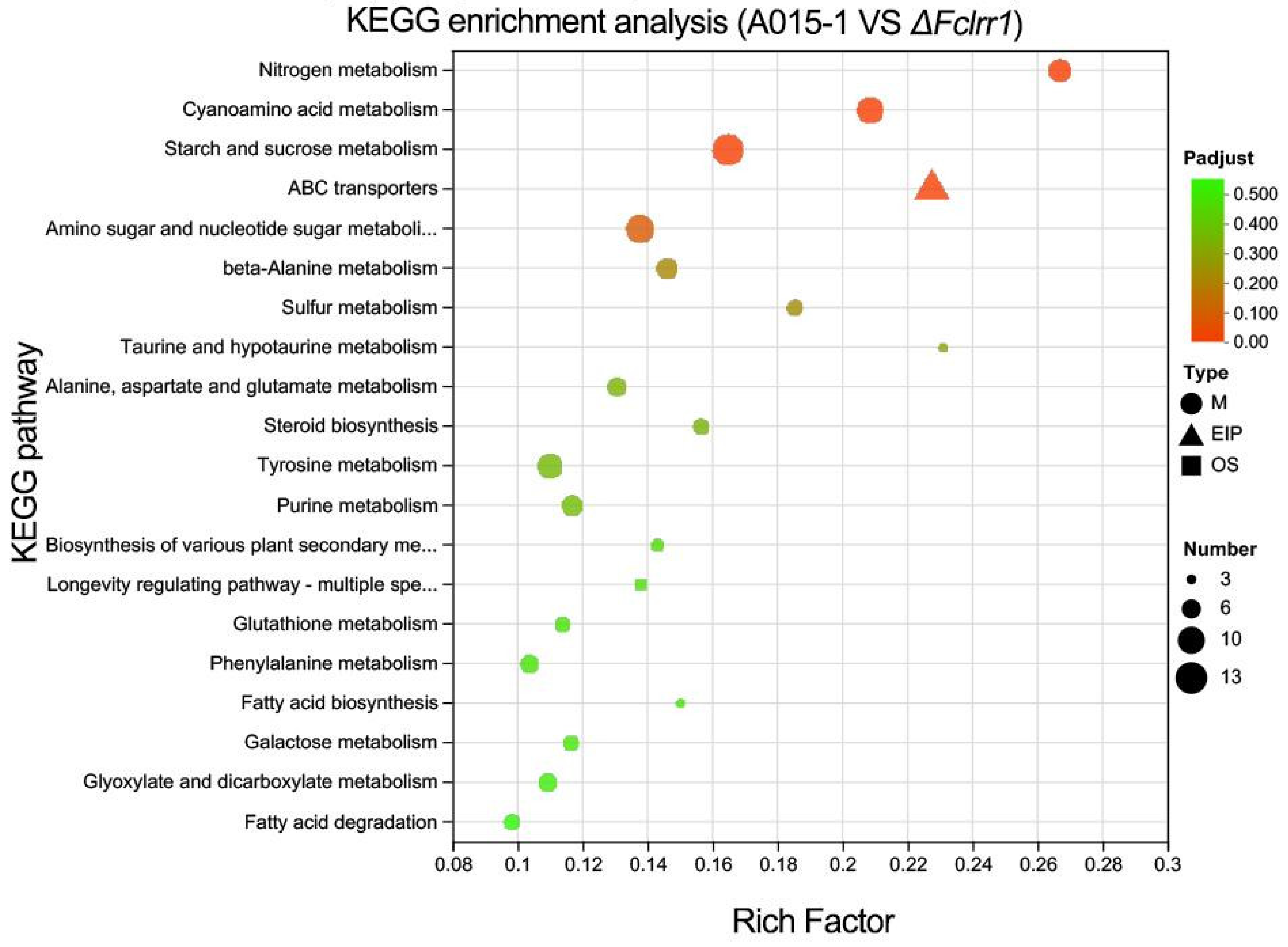
In this study, transcriptome sequencing was performed on mycelial samples of the pine resin canker pathogen knockout mutant ΔFcLRR1 and its wild-type control strain A015-1. Compared with the control, the ΔFcLRR1 mutant presented 340 uniquely differentially expressed genes (DEGs, accounting for 3.90%), while 8068 DEGs were shared with the wild-type strain. A total of 555 genes were upregulated and 612 were downregulated in ΔFcLRR1 during the mycelial stage, with the number of downregulated genes exceeding that of upregulated genes. Functional enrichment analysis of DEGs was conducted via the KEGG database. KEGG analysis revealed 82 metabolic pathways, with the majority of the DEGs mapped to metabolism-related pathways (61 pathways), among which cyanoamino acid metabolism and other pathways were highly enriched. KEGG analyses revealed that the FcLRR1 protein played an important role in metabolic processes and the structural stability of the pathogen. Further investigation highlighted the significant involvement of FcLRR1 in the starch and sucrose metabolism pathways. Given the central role of this pathway in carbon source utilization and energy supply in the pathogen, we propose that FcLRR1 regulates carbon metabolism, thereby critically influencing the growth, development, stress response, and pathogenicity of the pine resin canker pathogen.
In this study, a comprehensive three-dimensional structural library of proteins for the pine resin canker pathogen was successfully constructed. Following sequence filtering (retaining sequences ≤ 800 amino acids) and OmegaFold modeling, 12,071 high-quality structural models were obtained, with most exhibiting PLDDT scores > 70. For the bait protein FcLRR1, seven key active site regions were identified via the STRING database and the PDBe website. On the basis of these regions, 100 binders were designed, and 235 candidate interacting proteins were screened through FoldSeek structural alignment (Bit score > 50). Subsequent refinement via HDock (docking score < −200) yielded 199 high-confidence candidates. Further validation with AlphaFold3 (ipTM + pTM > 0.7) identified five proteins with high interaction potential. Yeast two-hybrid assays confirmed the interaction between FcLRR1 and ALG-11, indicating that FcLRR1 is involved in carbon utilization, cell wall formation, and pathogenicity. This study provides key data and methodological references for elucidating the pathogenic mechanisms of this pathogen and developing targeted control strategies. Alpha-1,2-mannosyltransferase (Alg11) is a key enzyme in the N-glycan biosynthetic pathway within the endoplasmic reticulum (ER) of fungi and other eukaryotes. As a member of the glycosyltransferase (GT) family, this enzyme catalyzes the transfer of mannose residues from the donor substrate GDP-mannose (GDP-Man) to the growing lipid-linked oligosaccharide intermediate (Glc
3Man
9GlcNAc
2-PP-dolichol). It plays an essential role in the protein N-glycosylation pathway, influencing glycoprotein folding, intracellular transport, and functional maturation. In fungi, Alg11 is critical for cell wall integrity, glycoprotein modification, immune evasion, and pathogenicity, positioning it as a significant target for studying fungal pathogenic mechanisms and for the development of novel antifungal therapeutics. For example, Biochemical Characterization and Membrane Topology of Alg2 from S. cerevisiae as a Bifunctional α1,3- and 1,6-Mannosyltransferase Involved in Lipid-linked Oligosaccharide Biosynthesis [
66]. This study has several limitations. The interaction between FcLRR1 and the ORC3 protein has not been validated. ORC3 plays a critical role in cell cycle regulation, and its potential interaction with FcLRR1 will be a key focus of our future research. The present study primarily investigated the role of FcLRR1 in regulating mycelial growth, stress response, and plant infection in
F. circinatum. Among the proteins predicted to interact with FcLRR1 by AlphaFold 3, Alg11 exhibited the highest score, leading us to prioritize its validation via yeast two-hybrid (Y2H) assay. However, given that a standalone Y2H assay cannot definitively confirm the interaction between the two proteins, additional experimental approaches will be employed in subsequent studies for further verification.
This study demonstrated that deletion of the FcLRR1 gene impaired the growth, conidiation, and development of F. circinatum as well as its virulence. Given these findings and the global importance of F. circinatum, the results of this study will be valuable in designing management strategies that target fungal genes for the development of antifungal agents to combat pine pitch canker.



 ,
,