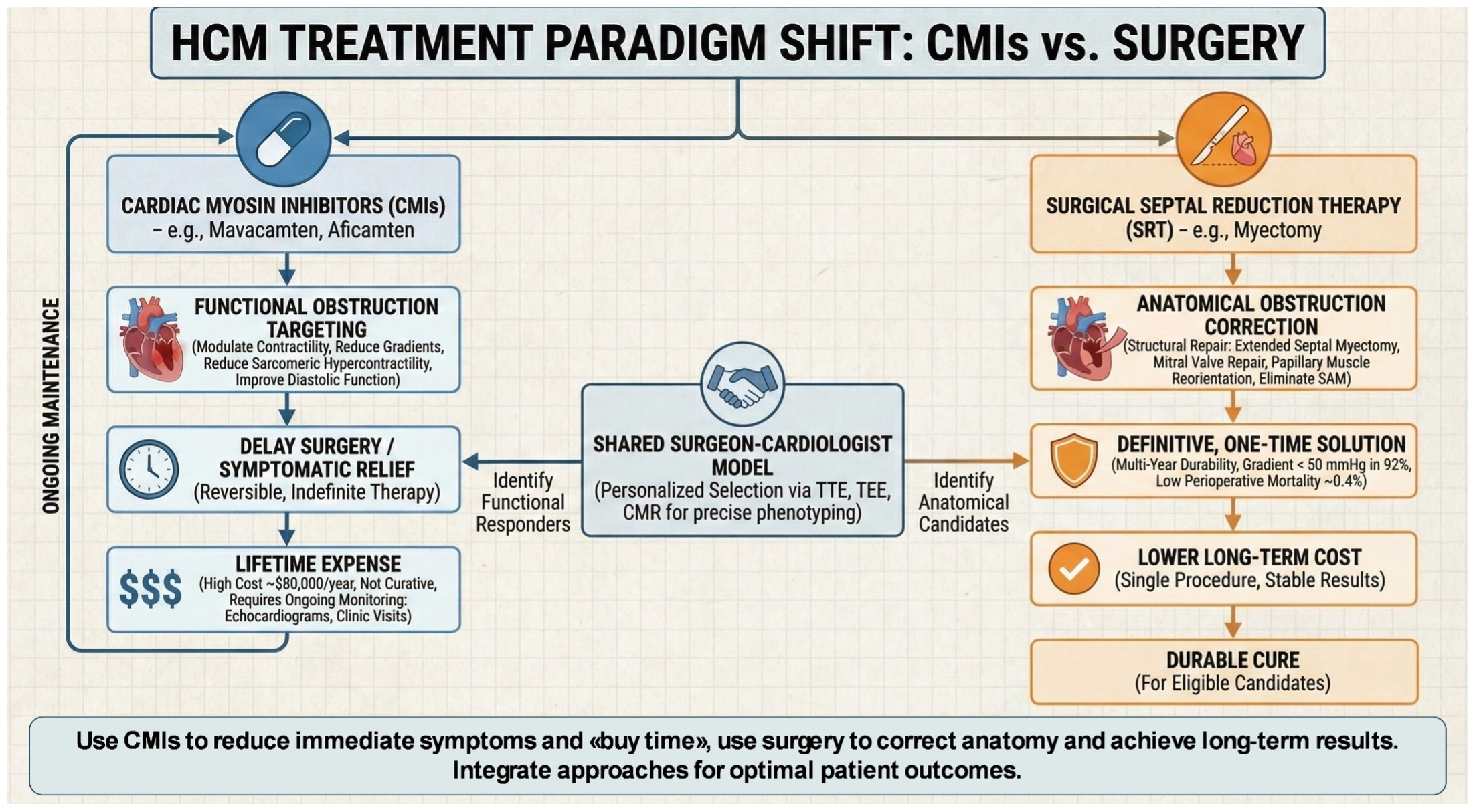

Cardiac Myosin Inhibitors (CMIs) and Surgical Referral in Patients with Hypertrophic Cardiomyopathy
 ,
,  , ,
, ,
Abstract
1. Introduction
2. Rationale and Goals of Medical Therapy
3. Surgical Candidate Selection and Postoperative Management in the Era of Cardiac Myosin Inhibitors
4. Peri- and Postoperative Management in the Time of CMIs
5. Discussion
6. Conclusions
Author Contributions
Funding
Institutional Review Board Statement
Informed Consent Statement
Data Availability Statement
Conflicts of Interest
References
- Kim, K.A.; Jung, M.-H. Current and emerging medical and surgical therapy in hypertrophic cardiomyopathy. J. Cardiovasc. Imaging 2025, 33, 13. [Google Scholar] [CrossRef]
- Kalinski, J.K.; Xu, B.; Boyd, R.; Tasseff, N.; Rutkowski, K.; Ospina, S.; Smedira, N.; Thamilarasan, M.; Popovic, Z.B.; Desai, M.Y. Novel Cardiac Myosin Inhibitor Therapy for Hypertrophic Cardiomyopathy in Adults: A Contemporary Review. Am. J. Cardiovasc. Drugs 2024, 24, 591–602. [Google Scholar] [CrossRef]
- Elliott, P.M.; Anastasakis, A.; Borger, M.A.; Borggrefe, M.; Cecchi, F.; Charron, P.; Hagege, A.A.; Lafont, A.; Limongelli, G.; Mahrholdt, H.; et al. 2014 ESC Guidelines on diagnosis and management of hypertrophic cardiomyopathy: The Task Force for the Diagnosis and Management of Hypertrophic Cardiomyopathy of the European Society of Cardiology (ESC). Eur. Heart J. 2014, 35, 2733–2779. [Google Scholar] [CrossRef] [PubMed]
- Ommen, S.R.; Ho, C.Y.; Asif, I.M.; Balaji, S.; Burke, M.A.; Day, S.M.; Dearani, J.A.; Epps, K.C.; Evanovich, L.; Ferrari, V.A.; et al. 2024 AHA/ACC/AMSSM/HRS/PACES/SCMR Guideline for the Management of Hypertrophic Cardiomyopathy: A Report of the American Heart Association/American College of Cardiology Joint Committee on Clinical Practice Guidelines. Circulation 2024, 149, e1239–e1311. [Google Scholar] [CrossRef]
- Desai, M.Y.; Owens, A.; Wang, A. Medical therapies for hypertrophic cardiomyopathy: Current state of the art. Prog. Cardiovasc. Dis. 2023, 80, 32–37. [Google Scholar] [CrossRef]
- Gill, R.; Siddiqui, A.; Yee, B.; DiCaro, M.V.; Houshmand, N.; Tak, T. Advancements in the Diagnosis and Treatment of Hypertrophic Cardiomyopathy: A Comprehensive Review. J. Cardiovasc. Dev. Dis. 2024, 11, 290. [Google Scholar] [CrossRef]
- Dicorato, M.M.; Citarelli, G.; Mangini, F.; Alemanni, R.; Albanese, M.; Cicco, S.; Greco, C.A.; Forleo, C.; Basile, P.; Carella, M.C.; et al. Integrative Approaches in the Management of Hypertrophic Cardiomyopathy: A Comprehensive Review of Current Therapeutic Modalities. Biomedicines 2025, 13, 1256. [Google Scholar] [CrossRef]
- Braunwald, E.; Saberi, S.; Abraham, T.P.; Elliott, P.M.; Olivotto, I. Mavacamten: A first-in-class myosin inhibitor for obstructive hypertrophic cardiomyopathy. Eur. Heart J. 2023, 44, 4622–4633. [Google Scholar] [CrossRef] [PubMed]
- Almeida-Coelho, J.; Leite-Moreira, A.M.; Sequeira, V.; Hamdani, N.; Lourenço, A.P.; Falcão-Pires, I.; Leite-Moreira, A.F. Myosin-Inhibitor Mavacamten Acutely Enhances Cardiomyocyte Diastolic Compliance in Heart Failure With Preserved Ejection Fraction. Circ. Heart Fail. 2024, 17, e011833. [Google Scholar] [CrossRef]
- Desai, M.Y.; Wolski, K.; Owens, A.; Geske, J.B.; Saberi, S.; Wang, A.; Sherrid, M.; Cremer, P.C.; Lakdawala, N.K.; Tower-Rader, A.; et al. Mavacamten in Patients with Hypertrophic Cardiomyopathy Referred for Septal Reduction: Week 128 Results From VALOR-HCM. Circulation 2025, 151, 1378–1390. [Google Scholar] [CrossRef] [PubMed]
- Keen, S.; Desai, M.Y. Favorable cardiac remodeling in response to treatment in obstructive hypertrophic cardiomyopathy: A current appraisal. Future Cardiol. 2025, 21, 527–537. [Google Scholar] [CrossRef]
- Smedira, N. Mavacamten Should Not Reduce Referrals for Septal myectomy. Semin. Thorac. Cardiovasc. Surg. 2025; in press. [CrossRef] [PubMed]
- Massera, D.; Adlestein, E.; Frejat, S.; Wu, W.Y.; Reuter, M.C.; Xia, Y.; Alvarez, I.C.; Sherrid, M.V. Mavacamten in Symptomatic Patients Resistant to Previous Advanced Therapy for Obstructive Hypertrophic Cardiomyopathy. J. Am. Heart Assoc. 2025, 14, e041565. [Google Scholar] [CrossRef]
- Olivotto, I.; Oreziak, A.; Barriales-Villa, R.; Abraham, T.P.; Masri, A.; Garcia-Pavia, P.; Saberi, S.; Lakdawala, N.K.; Wheeler, M.T.; Owens, A.; et al. Mavacamten for treatment of symptomatic obstructive hypertrophic cardiomyopathy (EXPLORER-HCM): A randomised, double-blind, placebo-controlled, phase 3 trial. Lancet 2020, 396, 759–769. [Google Scholar] [CrossRef]
- Ho, C.Y.; Mealiffe, M.E.; Bach, R.G.; Bhattacharya, M.; Choudhury, L.; Edelberg, J.M.; Hegde, S.M.; Jacoby, D.; Lakdawala, N.K.; Lester, S.J.; et al. Evaluation of Mavacamten in Symptomatic Patients with Nonobstructive Hypertrophic Cardiomyopathy. J. Am. Coll. Cardiol. 2020, 75, 2649–2660. [Google Scholar] [CrossRef] [PubMed]
- Krumholz, H.M.; Kittleson, M.M. Interpreting the ODYSSEY-HCM Secondary Analyses. J. Am. Coll. Cardiol. 2025, 86, 2450–2451. [Google Scholar] [CrossRef]
- Giudicessi, J.R.; Alsidawi, S.; Geske, J.B.; Newman, D.B.; Arruda-Olson, A.M.; Bos, J.M.; Ommen, S.R.; Ackerman, M.J. Genotype Influences Mavacamten Responsiveness in Obstructive Hypertrophic Cardiomyopathy. Mayo Clin. Proc. 2024, 99, 341–343. [Google Scholar] [CrossRef] [PubMed]
- Samhan, A.; Saleh, D.; Kim, E.Y.; Hu, M.; Mueller, K.; Garza, A.; Schormann, E.; Bindra, P.; Cheema, B.; Fullenkamp, D.E.; et al. Comparison of Alcohol Septal Ablation with Mavacamten in Obstructive Hypertrophic Cardiomyopathy. Am. J. Cardiol. 2025, 239, 51–56. [Google Scholar] [CrossRef]
- Ammirati, E.; Gallone, G. Cardiac Myosin Inhibition in Obstructive Hypertrophic Cardiomyopathy. J. Am. Coll. Cardiol. 2024, 84, 1850–1853. [Google Scholar] [CrossRef]
- Rasmussen, T.B.; Dybro, A.M.; Jensen, M.K. Cardiac Myosin Inhibitors. J. Am. Coll. Cardiol. 2024, 84, 1832–1834. [Google Scholar] [CrossRef]
- Hou, L.; Lin, B.; Ji, X.; Huang, A. Cardiac Myosin Inhibitors in Hypertrophic Cardiomyopathy: Clinical Advances and Therapeutic Prospects. Drug Des. Devel. Ther. 2025, 19, 9367–9385. [Google Scholar] [CrossRef] [PubMed]
- Maurizi, N.; Antiochos, P.; Owens, A.; Lakdwala, N.; Saberi, S.; Russell, M.W.; Fumagalli, C.; Skalidis, I.; Lin, K.Y.; Nathan, A.S.; et al. Long-Term Outcomes After Septal Reduction Therapies in Obstructive Hypertrophic Cardiomyopathy: Insights from the SHARE Registry. Circulation 2024, 150, 1377–1390. [Google Scholar] [CrossRef] [PubMed]

| NCT Number | Study Title | Locations | Status | Inclusion Criteria | Exclusion Criteria | Study Type | Results |
|---|---|---|---|---|---|---|---|
| NCT06947590 | Efficacy of Mavacamten in Patients With Symptomatic Latent Obstructive Hypertrophic Cardiomyopathy | China | Active, not recruiting | Age ≥ 18 years Weight > 45 kg Adequate acoustic windows to allow accurate transthoracic echocardiograms (TTEs) Diagnosis of latent obstructive hypertrophic cardiomyopathy according to ACCF/AHA, ESC, and Chinese Society of Cardiology guidelines Left ventricular ejection fraction (LVEF) ≥ 55% at rest, confirmed by the echocardiography core laboratory New York Heart Association (NYHA) Class II or III symptoms at screening Resting oxygen saturation ≥ 90% at screening | Any acute or severe comorbidities (e.g., severe infections; hematologic, renal, metabolic, gastrointestinal, or endocrine dysfunction) Currently using or having used prohibited medications within 14 days prior to screening (CYP2C19 inhibitors such as omeprazole/esomeprazole; strong CYP3A4 inhibitors) Life expectancy < 1 year Pregnant or breastfeeding women History of syncope or sustained ventricular tachyarrhythmia during exercise within the past 6 months Atrial fibrillation (AF) Currently receiving or planning to receive disopyramide, cibenzoline, ranolazine, or a combination of beta-blockers with verapamil or diltiazem | Medical treatment | No results posted |
| NCT06338202 | Real-World Effectiveness of Mavacamten in Canada | Canada | Recruiting | Patients who have initiated mavacamten, as part of routine clinical care, through the Bristol Myers Squibb CAMZYOS Patient Support Program for the treatment of symptomatic obstructive hypertrophic cardiomyopathy (oHCM) Adult patient (≥18 years of age, or as defined per local province/territory) at Index Date (first prescribed dose of mavacamten) Patient has been diagnosed with symptomatic oHCM of New York Heart Association (NYHA) class II to III at the time of mavacamten initiation | In the 6 weeks prior to baseline (Index Date; first prescribed dose of mavacamten), the patient has received any cardiac myosin inhibitor (including mavacamten) for oHCM or for any other medical condition as part of a clinical trial | Observational | No results posted |
| NCT06023186 | Effect of Mavacamten Treatment on Coronary Flow Reserve in oHCM | USA | Recruiting | Provides informed consent; willing to follow visits/procedures Age 18–85 oHCM diagnosis: LV wall ≥ 15 mm (≥13 mm if relative/genotype+), not due to other causes Prescribed mavacamten per US label Intends to adhere to oral therapy for study duration Women of childbearing potential: negative pregnancy test at baseline & 12 months | Pregnancy or lactation Known hypersensitivity to components of mavacamten or regadenoson Prior treatment with mavacamten or aficamten | Observational | No results posted |
| NCT05414175 | A Study of Mavacamten in Obstructive Hypertrophic Cardiomyopathy | Japan | Active, not recruiting | Age ≥ 18; weight ≥ 35 kg Adequate TTE windows oHCM per ACCF/AHA, ESC, JCS guidelines LVEF ≥ 60%; NYHA II–III | Hypertrophy mimics Syncope or exercise-induced sustained VT ≤ 6 mo Resuscitated SCA (any time) or appropriate ICD shock ≤ 6 mo AF: paroxysmal with AF at screening; or persistent/permanent without ≥4 wk anticoagulation and/or not rate-controlled ≤ 6 mo Cibenzoline, disopyramide, ranolazine ≤ 14 d or planned; β-blocker + verapamil/diltiazem combo ≤ 14 d or planned Septal reduction ≤ 6 mo or planned ICD placement ≤ 2 mo or planned Other significant conditions compromising safety/evaluations (per investigator) Prior cardiotoxic agents (e.g., doxorubicin) | Interventional | 30 weeks of mavacamten produced marked LVOT gradient reduction, better symptoms and QoL, favorable biomarker shifts, with a manageable safety profile |
| NCT06549608 | A Retrospective Cohort Study of Mavacamten Patient Support Program in Canada | Canada | Active, not recruiting | Age ≥ 18 years Initiated mavacamten as part of routine care through the BMS CAMZYOS Patient Support Program for symptomatic obstructive HCM Consented to use of de-identified data collected through the program | no exclusion criteria | Observational | No results posted |
| NCT07168655 | Mavacamten in Obstructive Hypertrophic Cardiomyopathy | Japan | Active, not recruiting | Age ≥ 18; weight ≥ 35 kg Adequate windows for accurate TTE oHCM per ACCF/AHA, ESC, JCS guidelines LVEF ≥ 60% NYHA class II–III | Hypertrophy mimics Syncope or exercise-induced sustained VT ≤ 6 months Resuscitated SCA (ever) or appropriate ICD shock ≤ 6 months AF: paroxysmal with AF at screening; or persistent/permanent without ≥4 weeks anticoagulation and/or not rate-controlled ≤ 6 months Cibenzoline, disopyramide, or ranolazine ≤ 14 days or planned β-blocker + verapamil/diltiazem combo ≤ 14 days or planned Septal reduction (myectomy/ASA) ≤ 6 months or planned ICD placement ≤ 2 months or planned Other significant conditions risking safety/assessments (per investigator) Prior cardiotoxic agents (e.g., doxorubicin) | Interventional | The post-exercise LVOT gradient was measured from echocardiograms obtained at baseline and week 30 following a study-specified exercise protocol and read by the Doppler echocardiography. Baseline is defined as the last non-missing assessment prior to the first dose of the study treatment if both the time of the measurement and the time of first dose are available otherwise it is the last non-missing assessment on or prior to the first dose of the study treatment. |
| NCT06112743 | A Study to Evaluate Mavacamten Impact on Myocardial Structure in Participants With Symptomatic Obstructive Hypertrophic Cardiomyopathy | Argentina, Australia, Canada, Switzerland, United Kingdom, United States | Active, not recruiting | oHCM diagnosed per ACCF/AHA & ESC guidelines LVOT peak gradient ≥ 30 mmHg at rest and ≥50 mmHg with Valsalva/exercise LVEF ≥ 55% at rest NYHA class II–III symptoms | Infiltrative/storage disease mimicking oHCM Obstructive CAD or prior myocardial infarction Resuscitated SCA or life-threatening ventricular arrhythmia ≤ 6 months before screening ICD or pacemaker present, or other CMR contraindication Other protocol-defined criteria apply | Interventional | No results posted |
| NCT07107373 | A Study to Assess the Treatment of Obstructive Hypertrophic Cardiomyopathy (oHCM) With Mavacamten in the US | USA | Active, not recruiting | Age ≥ 18 years at the index date Prescription of mavacamten for the treatment of Obstructive hypertrophic cardiomyopathy (oHCM) with NYHA Class II or III ≥12 weeks of follow-up after prescription of mavacamten, except for the baseline data reporting | Data collection as part of a clinical trial during the study period Participation in a myosin inhibitor clinical trial | Observational | No results posted |
| NCT04766892 | A Study of Mavacamten in Participants With HFpEF and Elevation of NT-proBNP With or Without Elevation of cTnT | USA, Canada | Complete | Age ≥ 50; weight > 45 kg Prior objective HF evidence (≥1): HF hospitalization + pulmonary congestion; LVEDP/PCWP ≥ 15 mmHg rest or ≥25 mmHg exercise; NT-proBNP > 400 pg/mL or BNP > 200 pg/mL; E/e′ ≥ 15 or LAVI > 34 mL/m2 with chronic MRA/loop Biomarker entry (meet either group): hs-cTnT ≥ 99th% and NT-proBNP > 200 (sinus)/>500 (AF); if African descent or BMI ≥ 30: >160/>400 NT-proBNP > 300 (sinus)/>750 (AF); if African descent or BMI ≥ 30: >240/>600 LVEF ≥ 60% at screening; no prior LVEF ≤ 45% Max LV wall thickness ≥ 12 mm or elevated LV mass index (>95 g/m2 F; >115 g/m2 M) High-quality TTE (±contrast) NYHA class II–III at screening | Prior HCM or infiltrative/storage hypertrophy/HFpEF (amyloidosis, Fabry, Noonan) or positive serum immunofixation Syncope ≤ 6 mo; exercise-induced sustained VT ≤ 6 mo Resuscitated SCA (any time) or appropriate ICD shock ≤ 6 mo Persistent/permanent AF without ≥ 4 wk anticoagulation and/or not rate-controlled ≤ 6 mo Planned/current: β-blocker + verapamil/diltiazem combo; disopyramide; biotin/supplements Moderate–severe AS; hemodynamically significant MS; severe MR/TR Severe COPD/other severe lung disease needing home O2, chronic nebulizer/oral steroids, or hospitalization ≤ 12 mo BMI ≥ 45 kg/m2 LV GLS 0 to −12.0 by TTE (central lab) NT-proBNP > 2000 pg/mL at screening Acute decompensated HF requiring IV diuretics/inotropes/vasodilators or LVAD ≤ 30 days | Interventional | Median age 76 years; 53% female. Biomarkers decreased: NT-proBNP −26%, hsTnT −13%, hsTnI −20% (all p < 0.05); values returned toward baseline 8 weeks after discontinuation. NYHA class improved in 42% of evaluable patients (10/24); echocardiographic measures of LV diastolic function also improved. Mean LVEF decreased by 3.2 percentage points (p = 0.005). Safety: treatment interrupted in 3/30 patients (10%) due to prespecified LVEF criteria (<50%, n = 2; >20% relative decrease, n = 1; nadir 58%); all recovered LVEF. No deaths, no LVEF < 30%; one case of worsening heart failure deemed unrelated to the study drug. |
| NCT07004972 | A Study of Mavacamten in Adults With Obstructive Hypertrophic Cardiomyopathy in India (ROVER) | India | Recruiting | Diagnosed with obstructive hypertrophic cardiomyopathy (HCM) per ACCF/AHA and ESC guidelines Unexplained LV hypertrophy with nondilated ventricles (no hypertension, aortic stenosis, or systemic disease) Max LV wall thickness ≥ 15 mm (or ≥13 mm with positive family history) LVOT (Valsalva) peak gradient ≥ 50 mmHg (rest, Valsalva, or post-exercise) LVOT gradient ≥ 30 mmHg with Valsalva at screening TTE Adequate acoustic windows for accurate TTE NYHA Class II or III at screening Body weight > 45 kg LVEF ≥ 55% at rest on screening TTE | Infiltrative/storage disease mimicking oHCM (e.g., Fabry, amyloidosis, Noonan syndrome with LVH) Paroxysmal atrial fibrillation present on screening ECG (per investigator) Persistent/permanent AF without ≥4 weeks anticoagulation and/or not adequately rate-controlled within 6 months (note: allowed if anticoagulated and adequately rate-controlled) Syncope with exercise ≤ 6 months before screening Sustained ventricular tachyarrhythmia (>30 s) ≤ 6 months before screening Obstructive coronary artery disease (>70% epicardial stenosis) or prior myocardial infarction Other protocol-defined inclusion/exclusion criteria apply | Interventional | No results posted |
| NCT03496168 | Extension Study of Mavacamten (MYK-461) in Adults With Symptomatic Obstructive Hypertrophic Cardiomyopathy Previously Enrolled in PIONEER | USA | Complete | Completed Study MYK-461-004. Prior participation in a non-interventional observational study is allowed. Body weight > 45 kg at Screening Has safety laboratory parameters (chemistry and hematology) within normal limits | QTcF > 500 ms or other ECG abnormality deemed a safety risk (e.g., second-degree AV block type II) Since enrollment into Study MYK-461-004: developed obstructive CAD (>70% stenosis in ≥1 artery) or known moderate/severe aortic valve stenosis Since enrollment: developed any acute or serious comorbid condition (e.g., major infection; hematologic, renal, metabolic, gastrointestinal, or endocrine dysfunction) that could pose risk or interfere with evaluations/procedures/completion Since enrollment: developed clinically significant malignant disease | Interventional | Exposure Most remained on stable doses (5/10/15 mg). 3 temporary dose reductions/interruptions for low LVEF or high levels; all recovered, maintained LVEF ≥ 50%. Safety No CV deaths or drug-related hospitalizations. One asymptomatic LVEF 47% ≈ week 180 → paused + dose reduced → normalized. AEs mostly mild/moderate (fatigue, URTI, arthralgia). Single QTc prolongation and one nonsustained VT; serious events not drug-related. Efficacy At week 180, 83% improved by ≥1 NYHA class. NT-proBNP ↓ from ~594 to 155 ng/L. LVOT gradients fell below clinically relevant thresholds in most patients. LVEF remained ≥50%; reduced SAM and MR; no septal reduction therapy needed |
| NCT06146660 | A Study to Assess the Safety of Mavacamten in Korean Patients With Symptomatic Obstructive Hypertrophic Cardiomyopathy | USA | Recruiting | Adult participants 19 years of age or older Participants who receive mavacamten according to the approved product label Participants who sign the informed consent form | Participants who are prescribed mavacamten for therapeutic indications not approved in Korea Participants for whom mavacamten is contraindicated as clarified in Korean prescribing information approved by the Ministry of Food and Drug Safety | Observational | No results posted |
| NCT06551129 | Real-world Patient Reported Outcomes Among Patients Treated With Camzyos | USA | Recruiting | Participants ≥ 18 years of age. Participants who are prescribed mavacamten for obstructive hypertrophic cardiomyopathy Provided informed consent to participate in the study | Previously or currently enrolled in any clinical trial of cardiac myosin inhibitors Treated with mavacamten for >7 days by the time of baseline survey completion Enrolled in any clinical trial at screening or within the prior 6 months Myocardial infarction requiring CABG within the prior 3 months Stroke or transient ischemic attack within the prior 6 months Moderate-to-severe lung disease limiting daily activities or breathing Major thoracic (lung) or cardiac surgery within the prior 6 months Scheduled major surgery in the next 3 months (e.g., joint/hip replacement, abdominal, lung, heart, eye, brain, or any surgery requiring general anesthesia and ≥1-night hospital stay) Hospitalized with an overnight stay at screening or within the prior 2 weeks | Observational | No results posted |
| NCT03723655 | A Long-Term Safety Extension Study of Mavacamten in Adults Who Have Completed MAVERICK-HCM or EXPLORER-HCM | USA, Europe | Active, not recruiting | Completed Parent Study through EOS within 90 days of consent (>90 days may be allowed with MyoKardia Medical Monitoring approval; early discontinuations from Parent or MAVA-LTE may be considered) Body weight > 45 kg at Screening Adequate acoustic windows for accurate TTE LVEF ≥ 50% at rest on screening TTE (core lab) Safety labs (chemistry/hematology/coagulation/urinalysis) within normal limits per central lab Females: not pregnant/lactating and using a highly effective contraceptive from Screening through 90 days after last IMP dose | ECG abnormality posing safety risk (e.g., second-degree AV block type II) Syncope or sustained VT with exercise between Parent Study EOS and Screening Resuscitated sudden cardiac arrest or appropriate ICD shock for life-threatening VT/VF between EOS and Screening (ATP allowed) Disopyramide or ranolazine within 14 days prior to Screening or planned during study Acute/serious comorbidity (e.g., major infection; hematologic, renal, metabolic, GI, or endocrine dysfunction) that could risk safety or assessments Clinically significant malignant disease developed since Parent Study enrollment Unable to comply with study requirements/visits Participation in another interventional trial within 30 days prior to Screening or <5 drug half-lives (whichever longer), or current investigational device use (MAVERICK-HCM/EXPLORER-HCM allowed; non-interventional observational allowed) | Interventional | No results posted |
| NCT04349072 | A Study to Evaluate Mavacamten in Adults With Symptomatic Obstructive HCM Who Are Eligible for Septal Reduction Therapy | america | completed | Age ≥ 18; body weight > 45 kg at screening oHCM per ACCF/AHA 2011, meeting recommendations for invasive therapy Referred/under active consideration for septal reduction therapy (SRT) within past 12 months and willing to undergo SRT LVEF ≥ 60% at screening Resting oxygen saturation ≥ 90% at screening | Persistent/permanent AF without ≥4 weeks anticoagulation and/or not adequately rate-controlled ≤6 months Prior invasive septal reduction (myectomy or ASA) BB/CCB/disopyramide dose change < 14 days before screening or anticipated change during first 16 weeks Any condition precluding upright exercise stress testing Paroxysmal/intermittent AF present at screening Prior cardiotoxic agents (e.g., doxorubicin) Any other clinically significant condition posing safety risk or interfering with study assessments/completion | interventional | At Week 16, mavacamten demonstrated: A significant reduction in SRT eligibility/need, Improved functional capacity and symptoms (NYHA, KCCQ-23), Marked decreases in cardiac stress biomarkers (NT-proBNP, troponin), A substantial reduction in LVOT gradient. While adverse events were more frequent with mavacamten—partly reflecting longer exposure—events were generally manageable with appropriate monitoring, particularly of left ventricular ejection fraction. |
| NCT07120776 | Positron Emission Tomography to Assess the Effect of Camzyos on Ischaemia in HOCM: PEACH Trial | united kingdom | Not yet recruiting | Written informed consent Age ≥ 18 years Confirmed HOCM: unexplained LV hypertrophy with maximal wall thickness ≥ 15 mm (no uncontrolled HTN, valvular disease, or phenocopies like amyloidosis/storage disorders) and resting or provoked LVOT gradient ≥ 30 mmHg Symptoms suggestive of myocardial ischemia (e.g., chest pain, exertional dyspnea) with clinical indication for Rb-PET Eligible for mavacamten per standard clinical guidelines (routine care; not study-supplied) PET-CT previously performed for clinical reasons within the past 18 months and reported abnormal | Obstructive CAD: epicardial stenosis > 50% on invasive angiography or CTCA (angiography performed as part of routine care; a positive angiogram excludes the patient) Contraindications to mavacamten: LVEF < 55%, hypersensitivity/allergy to the drug Contraindications to rubidium PET-CT, including: Pregnancy or breastfeeding Severe claustrophobia Morbid obesity exceeding scanner capacity Any condition that, in the Investigator’s opinion, increases risk, impedes compliance, or prevents study completion | interventional | No results posted |
| NCT03470545 | Clinical Study to Evaluate Mavacamten (MYK-461) in Adults With Symptomatic Obstructive Hypertrophic Cardiomyopathy | America-Europe | completed | Age ≥ 18; body weight ≥ 45 kg Adequate acoustic windows for accurate TTE oHCM per ACCF/AHA & ESC guidelines and both: LVEF ≥ 55%; NYHA class II–III Resting oxygen saturation ≥ 90% at screening Able to perform upright CPET with RER ≥ 1.0 at screening (central read) | Infiltrative/storage mimic of oHCM (e.g., Fabry, amyloidosis, Noonan + LVH) Syncope or exercise-induced sustained VT within 6 months Resuscitated SCA (any time) or appropriate ICD shock ≤ 6 months Paroxysmal AF present at screening Persistent/permanent AF without ≥4 weeks anticoagulation and/or not adequately rate-controlled ≤6 months Disopyramide or ranolazine ≤ 14 days or planned during study Planned/current combo: β-blocker + calcium channel blocker LVOT gradient with Valsalva < 30 mmHg at screening Septal reduction (myectomy/ASA) ≤ 6 months or planned ICD placement ≤ 2 months or planned Any other significant condition risking safety or interfering with assessments Prior cardiotoxic agents (e.g., doxorubicin) | Observational | Over 30 weeks, mavacamten: Increases positive clinical response (composite of exercise capacity and NYHA), Reduces LVOT gradient substantially, Improves exercise capacity, functional class, quality of life, and HCM symptoms, Shows a generally balanced safety profile vs placebo, with more dizziness/syncope observed—underscoring the need for clinical monitoring (e.g., symptoms, rhythm, LVEF). |
| NCT05489705 | A Prospective Registry Study to Assess Real-world Patient Characteristics, Treatment Patterns, and Longitudinal Outcomes in Patients Receiving Mavacamten and Other Treatments for Symptomatic Obstructive Hypertrophic Cardiomyopathy (Obstructive-HCM) | Europe-USA | Recruiting | Age ≥ 18 at consent; able/willing to provide written ICF (or via LAR) US sub-study: oHCM per 2020 AHA/ACC (LV wall ≥ 15 mm, or ≥13 mm with positive family history; nondilated; not due to loading conditions) and peak LVOT gradient ≥ 30 mmHg (rest or provoked) EU sub-study: oHCM per latest ESC and AHA/ACC guidelines LVEF ≥ 55% by echo (US: within last 6 months; EU: documented by TTE) NYHA class II–IV (US)/class II–III at enrollment or within prior 6 months (EU) On routine-care therapy for oHCM (BBs, non-DHP CCBs, disopyramide, and/or mavacamten when available) or currently untreated due to intolerance/failure of prior therapy | Phenocopy disease (e.g., Fabry, amyloidosis) or LVH due to hypertension Fixed LV outflow obstruction (e.g., aortic stenosis or valve replacement) Invasive septal reduction (myectomy or ASA) within 6 months (unsuccessful procedures > 6 months may enroll) Treatment-naïve for oHCM (never treated with BBs, non-DHP CCBs, or disopyramide) US sub-study: receiving an investigational agent for oHCM (e.g., non-mavacamten myosin inhibitor) at enrollment; previously/currently in a mavacamten long-term safety study (EXPLORER-HCM, MAVA-LTE, PIONEER-OLE, VALOR-HCM, MAVERICK) EU sub-study: receiving any investigational agent or any cardiac myosin inhibitor/modulator at enrollment; previously/currently in other HCM registries (TORCH, REMY, EU-PASS); previously/currently in a mavacamten study (EXPLORER-HCM, MAVA-LTE, PIONEER-OLE, VALOR-HCM, MAVERICK, or MEMENTO) Previously treated with mavacamten | Observational | No results posted |
| NCT06856265 | Efficacy of Mavacamten Combined With Radiofrequency Ablation in Patients With Symptomatic Obstructive Hypertrophic Cardiomyopathy | Shanghai | Active not recruiting | Age ≥ 18 years; body weight > 45 kg oHCM per ACCF/AHA, ESC, and Chinese Society of Cardiology guidelines, confirmed by core lab: Unexplained LV hypertrophy (LV wall ≥ 15 mm, or ≥13 mm with positive family history) with nondilated chambers and no secondary cause (e.g., hypertension, aortic stenosis) LVOT peak gradient ≥ 50 mmHg at rest or after Valsalva (confirmed by core lab) LVEF ≥ 55% at rest (core lab TTE) Valid Valsalva LVOT gradient measurement at screening NYHA class II–III symptoms at screening Resting O2 saturation ≥ 90% Able to understand and comply with study procedures and provide written informed consent | Participation in another investigational drug/device trial within 30 days or <5 half-lives Infiltrative/storage disease mimicking oHCM (e.g., Fabry, amyloidosis, Noonan + LVH) Syncope or sustained VT with exercise ≤ 6 months Resuscitated SCA (any time) or ICD shock ≤ 6 months Paroxysmal AF present at screening Persistent/permanent AF without ≥4 weeks anticoagulation and/or not rate-controlled ≤6 months (controlled/anticoagulated allowed) Previous mavacamten study participation Hypersensitivity to mavacamten components Disopyramide, cibenzoline, or ranolazine ≤ 14 days or planned β-blocker + verapamil/diltiazem combo ≤ 14 days or planned during double-blind period Recent (<14 days) or anticipated dose adjustment of BB, verapamil, or diltiazem Septal reduction (myectomy/ASA) ≤ 6 months or planned (unsuccessful >6 months allowed if eligible) ICD placement ≤ 2 months or planned QTcF > 500 ms (QRS < 120 ms) or >520 ms (QRS ≥ 120 ms), or other high-risk ECG abnormality (e.g., 2° AV block type II) CAD with >70% stenosis or prior myocardial infarction Moderate/severe aortic stenosis, constrictive pericarditis, or significant congenital heart disease Acute/serious comorbidity (e.g., infection, hematologic, renal, metabolic, GI, or endocrine dysfunction) affecting safety or assessments Inability to comply with study procedures/visits Pregnant or lactating female | interventional | No results posted |
| NCT06372457 | COLLIGO-HCM: A Multinational Observational Study of the Real-World Effectiveness of Mavacamten Among Patients With Symptomatic Obstructive Hypertrophic Cardiomyopathy (oHCM) | USA | Active not recruiting | Source cohort: ≥1 recorded encounter with an HCM diagnosis in/after 2018 (first = index); age ≥ 18 at index; disease-specific history documented in the medical record HCM sub-cohort: participants from the source cohort with a known HCM diagnosis Mavacamten sub-cohort: participants whose first mavacamten prescription occurs after the index date | HCM sub-cohort: HCM phenocopy identified after the first HCM encounter (athlete’s heart, hypertensive heart disease, Fabry, Pompe, Danon, amyloidosis) | Observational | No results posted |
| NCT07150299 | Myocardial Perfusion Changes Following Optimal Medical Treatment in Symptomatic Hypertrophic Cardiomyopathy | Austria | Recruiting | “Age > 18 years Willingness to provide written informed consent Diagnosis of obstructive HCM based on ESC 2023 criteria Planned CMR with myccardial perfusion for clinical purposes Receiving guideline-conform OMT Ability and willingness to undergo follow-up imaging and testing Written informed consent” | Claustrophobia or other contraindication to CMR imaging Significant coronary artery disease and/or prior stent placement or CABG surgery History of sudden cardiac arrest or sustained ventricular arrhythmia within 12 months before screening Glomerular filtration rate < 30 mL/min/m2 Significant hepatic impairment (≥3× upper limit of normal for transaminases, total bilirubin, or alkaline phosphatase) or hepatic cirrhosis Known allergy to contrast agent Alternative cause of hypertrophic cardiomyopathy (e.g., amyloidosis, Fabry disease) Pregnant or planning pregnancy Breastfeeding women Unwilling or unable to comply with the study protocol and procedures | Observational | No results posted |
| NCT07103655 | The Therapeutic Value of Mavacamten in Hypertrophic Cardiomyopathy With Mid-to-Apical Left Ventricular Obstruction | China | Not yet recruiting | HCM per 2023 Chinese Guidelines, with one of: LV wall thickness ≥ 15 mm (any segment, echo or CMR), or LV wall thickness ≥ 13 mm with a pathogenic mutation or affected family history; Other causes of hypertrophy excluded. Symptomatic non-LVOT obstructive HCM (meets “a” above and ≥1 of): NYHA class II–III with dyspnea/chest pain/dizziness/palpitations/syncope, Mid-ventricular PGmax > 30 mmHg at rest or with Valsalva (echo), Apical PGmax > 30 mmHg at rest or with Valsalva (echo) | Obstructive HCM defined by LVOT-PGmax ≥ 30 mmHg at rest and with Valsalva (echo) RVOT-PGmax ≥ 16 mmHg at rest LVEF < 50% (echo) Uncontrolled primary hypertension Moderate/severe aortic stenosis and/or primary mitral valve disease with severe MR Infiltrative/storage mimics (e.g., Fabry disease, cardiac amyloidosis) Severe infection, hepatic dysfunction, renal impairment, or other serious conditions that markedly limit life expectancy | interventional | No results posted |
| NCT07077005 | Mavacamten Enables Exercise in Hypertrophic Obstructive Cardiomyopathy | Germany | “Age ≥ 18 years of age Diagnosis of hypertrophic obstructive cardiomyopathy ≥12 weeks of unchanged dosage of mavacamten Peak left ventricular outflow tract gradient ≤ 50 mmHg at rest and during stress echocardiography Left ventricular ejection fraction ≥ 50% at study inclusion New York Heart Association classes I-II” | Syncope or sustained ventricular tachycardia within 6 months prior to inclusion Corrected QT interval (QTcF) ≥ 500 ms Paroxysmal or intermittent atrial fibrillation on screening ECG Persistent/permanent AF without ≥4 weeks of anticoagulation Prior transcoronary ablation of septal hypertrophy or surgical myectomy Ventricular tachycardia or significant ST-elevation/depression on baseline cardiopulmonary exercise test ≥Grade II valvular insufficiency or stenosis on resting echocardiography Prior implantable cardioverter-defibrillator (ICD) implantation Sudden Cardiac Death (SCD) risk score ≥ 4% | interventional | No results posted | |
| NCT07155434 | ENABLE-HCM—AI-ENabled Echocardiography With Ultrasound Beyond the Echo Lab for Better HCM Imaging and Expanded Access | USA | Recruiting | “Male and female subjects aged 18 years or over at the time of screening. Willing and able to give written informed consent. New York Heart Association (NYHA) Class I to III Eligible to receive or currently receiving CamzyosTM per product labelling.” | Emergency (non-elective) hospital admission within 24 h before study participation Inability to lie in standard TTE positions (supine/back/left decubitus) History of technically difficult echocardiogram due to body habitus (per investigator’s judgment) Body mass index (BMI) > 40 kg/m2 Known or suspected acute cardiac event Severe chest wall deformities per medical record or physical exam Prior pneumonectomy Anatomical variations preventing diagnostic echocardiographic imaging (e.g., situs inversus with dextrocardia, single-ventricle anatomy) | Observational | No results posted |
Disclaimer/Publisher’s Note: The statements, opinions and data contained in all publications are solely those of the individual author(s) and contributor(s) and not of MDPI and/or the editor(s). MDPI and/or the editor(s) disclaim responsibility for any injury to people or property resulting from any ideas, methods, instructions or products referred to in the content. |
© 2026 by the authors. Licensee MDPI, Basel, Switzerland. This article is an open access article distributed under the terms and conditions of the Creative Commons Attribution (CC BY) license.
Share and Cite
Ferraresi, B.; Nenna, A.; Jawabra, M.; Corrado, D.; Faggiano, A.; Carugo, S.; Dominici, C.; Casali, G.; Chello, M.; Lusini, M. Cardiac Myosin Inhibitors (CMIs) and Surgical Referral in Patients with Hypertrophic Cardiomyopathy. J. Cardiovasc. Dev. Dis. 2026, 13, 187. https://doi.org/10.3390/jcdd13050187
Ferraresi B, Nenna A, Jawabra M, Corrado D, Faggiano A, Carugo S, Dominici C, Casali G, Chello M, Lusini M. Cardiac Myosin Inhibitors (CMIs) and Surgical Referral in Patients with Hypertrophic Cardiomyopathy. Journal of Cardiovascular Development and Disease. 2026; 13(5):187. https://doi.org/10.3390/jcdd13050187
Chicago/Turabian StyleFerraresi, Benedetto, Antonio Nenna, Mohamad Jawabra, Diletta Corrado, Andrea Faggiano, Stefano Carugo, Carmelo Dominici, Giovanni Casali, Massimo Chello, and Mario Lusini. 2026. "Cardiac Myosin Inhibitors (CMIs) and Surgical Referral in Patients with Hypertrophic Cardiomyopathy" Journal of Cardiovascular Development and Disease 13, no. 5: 187. https://doi.org/10.3390/jcdd13050187
APA StyleFerraresi, B., Nenna, A., Jawabra, M., Corrado, D., Faggiano, A., Carugo, S., Dominici, C., Casali, G., Chello, M., & Lusini, M. (2026). Cardiac Myosin Inhibitors (CMIs) and Surgical Referral in Patients with Hypertrophic Cardiomyopathy. Journal of Cardiovascular Development and Disease, 13(5), 187. https://doi.org/10.3390/jcdd13050187