
Differential HER2 Expression Across Feline Nasal Carcinoma and Its Relationship with Proliferation and p53 Status




Simple Summary
Abstract
1. Introduction
2. Materials and Methods
2.1. Case Selection
2.2. Histopathological Evaluation
2.3. Immunohistochemistry
2.4. Immunohistochemical Evaluation System
2.4.1. HER2
2.4.2. P53
2.4.3. Ki-67
2.4.4. PCNA
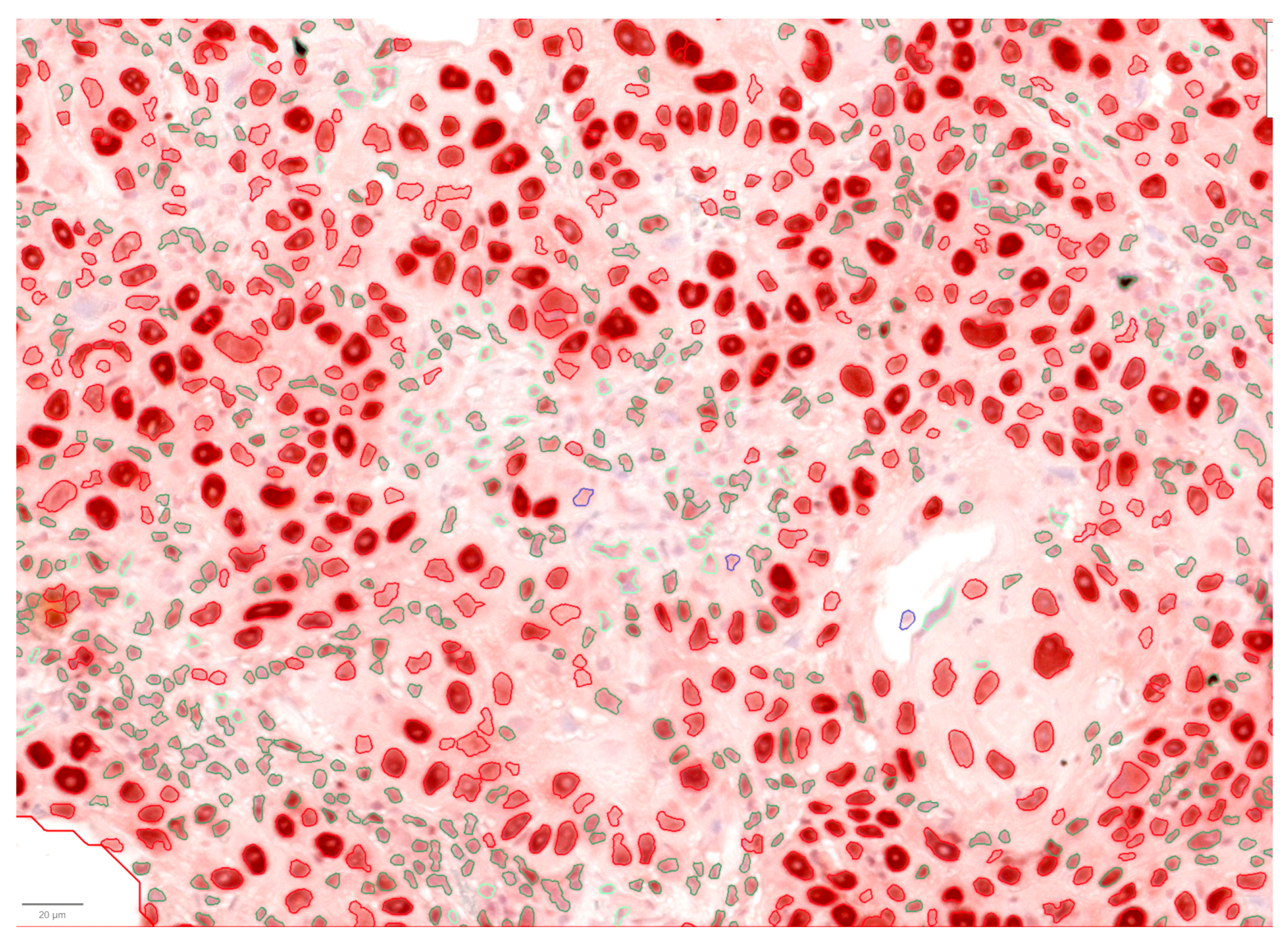
2.5. Image Analysis Using the QuPath Software
2.6. Statistical Analysis
3. Results
3.1. Patient and Tumor Characteristics
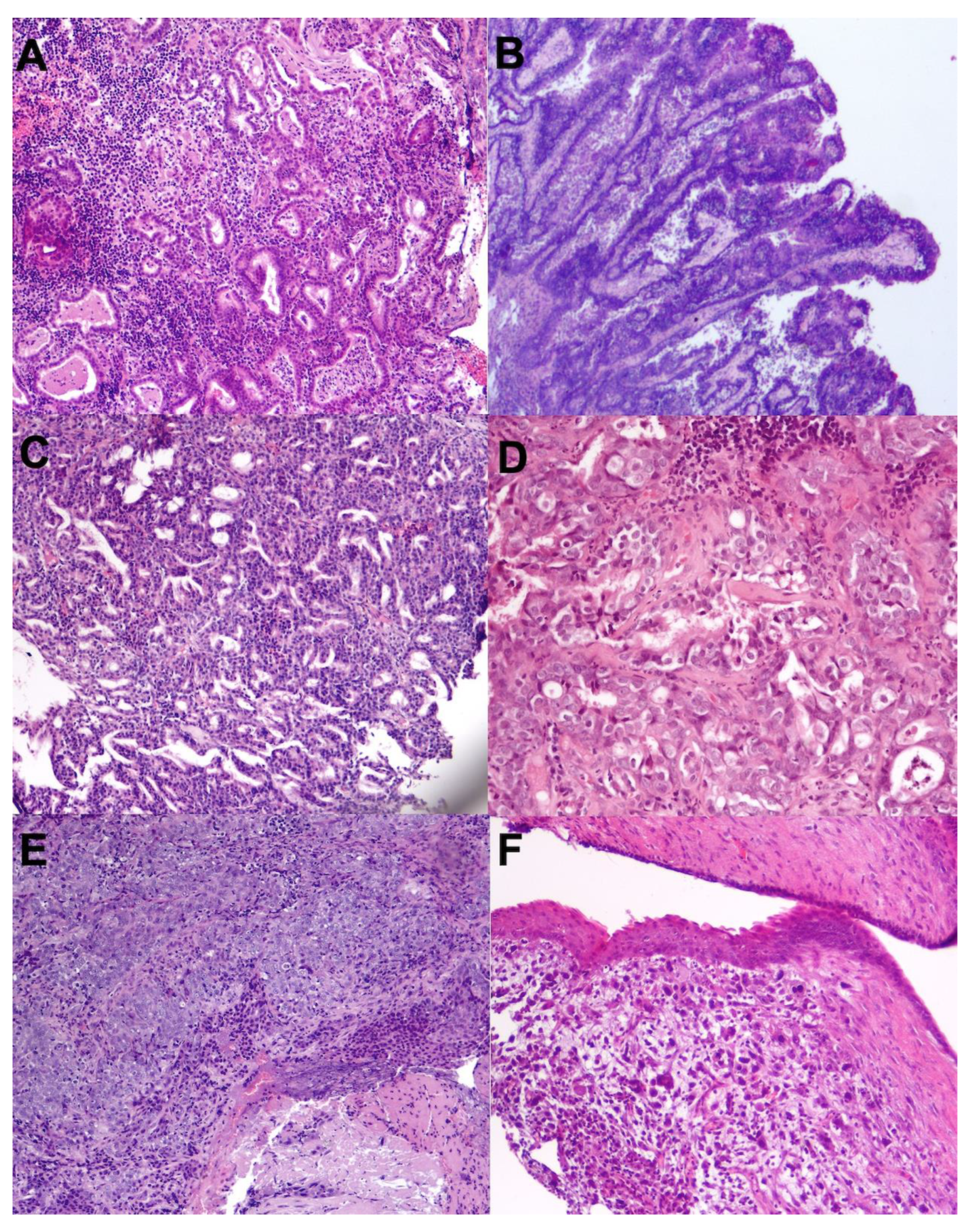
3.2. Histological Diagnosis
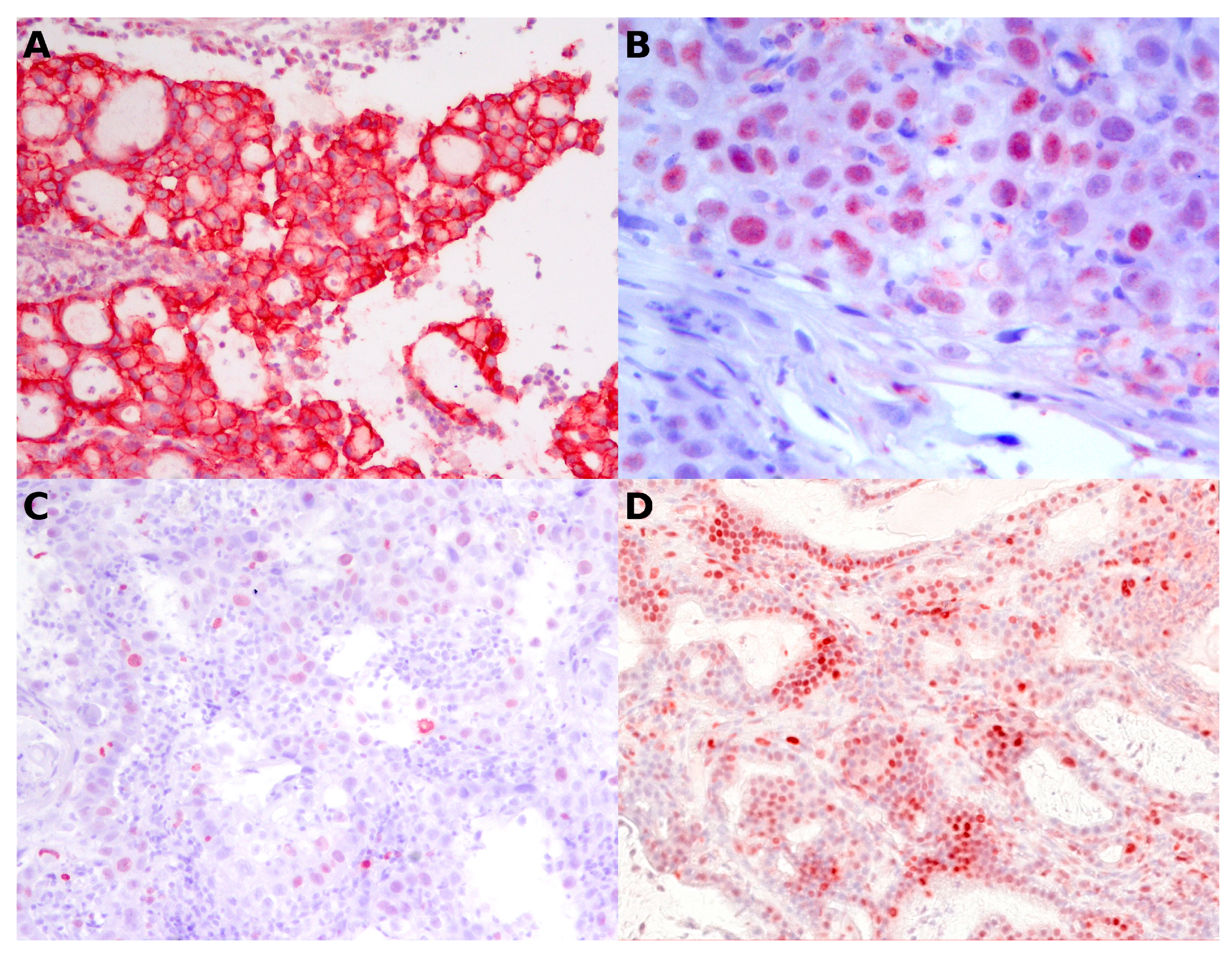
3.3. Immunohistochemical and Image Analysis
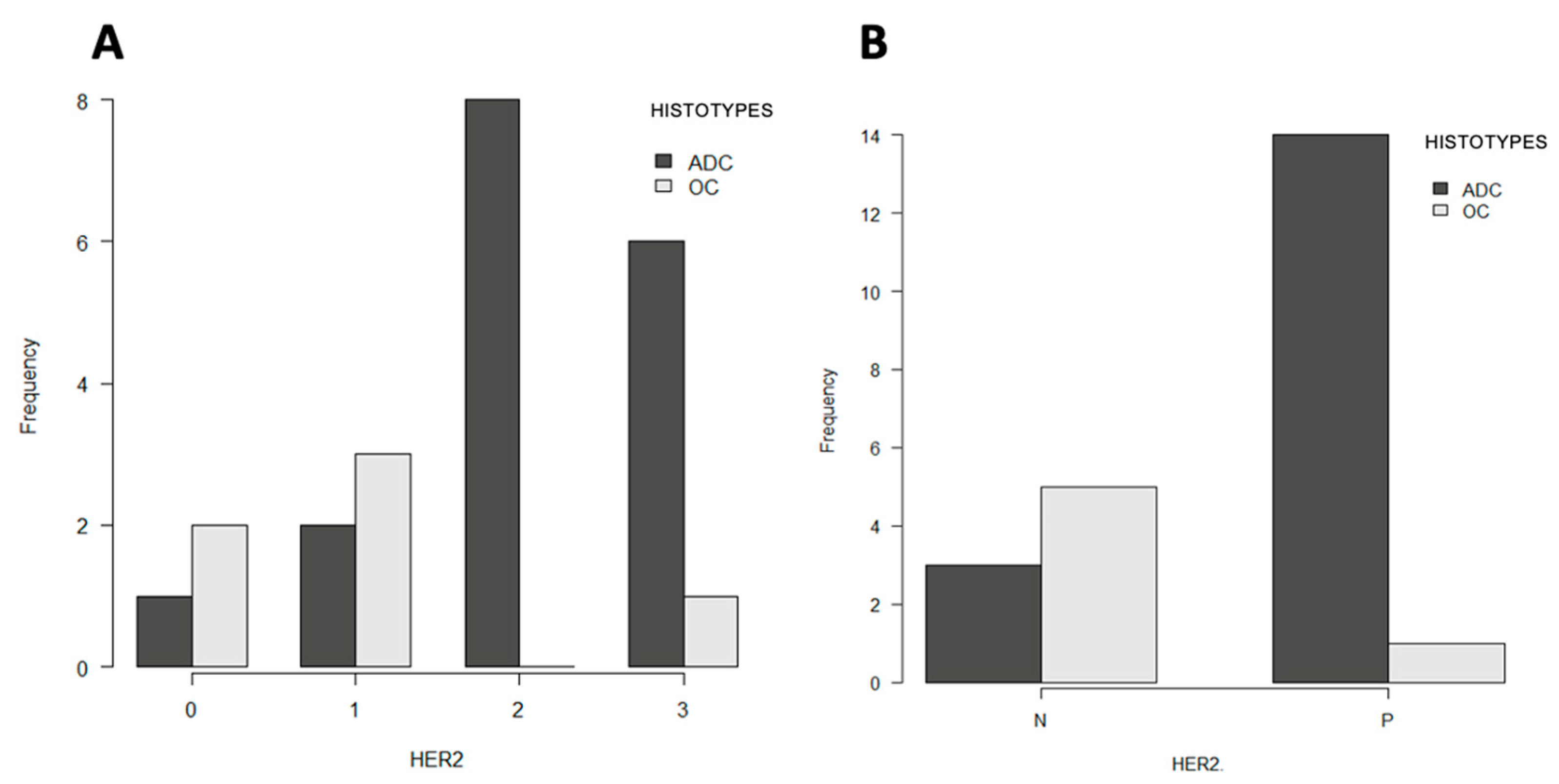
3.4. Statistical Results
4. Discussion
5. Conclusions
Supplementary Materials
Author Contributions
Funding
Institutional Review Board Statement
Informed Consent Statement
Data Availability Statement
Conflicts of Interest
Abbreviations
| ABC | Avidin–biotin complex |
| AC | Adenocarcinoma |
| non-AC | non-Adenocarcinoma |
| AEC | Aminoethyl carbazole |
| ASCO | American Society of Clinical Oncology |
| CAP | College of American Pathologists |
| COX-2 | Cyclooxygenase-2 |
| DAB | 3,3′-Diaminobenzidine |
| FFPE | Formalin-fixed, paraffin-embedded |
| FS | Spayed female |
| H&E | Hematoxylin and eosin |
| HER2 | Human epidermal growth factor receptor 2 |
| HIER | Heat-induced epitope retrieval |
| IHC | Immunohistochemistry |
| M | Intact male |
| MC | Castrated male |
| NA | Not available |
| NGS | Next-generation sequencing |
| PBS | Phosphate-buffered saline |
| PCNA | Proliferating cell nuclear antigen |
| SD | Standard deviation |
| TBS | Tris-buffered saline |
| WSI | Whole-slide image |
References
- Mukaratirwa, S.; van der Linde-Sipman, J.S.; Gruys, E. Feline nasal and paranasal sinus tumours: Clinicopathological study, histomorphological description and diagnostic immunohistochemistry of 123 cases. J. Feline Med. Surg. 2001, 3, 235–245. [Google Scholar] [CrossRef]
- Diop, N.; Canonne, A.M.; Huet, H.; Reyes-Gomez, E.; Béguin, J. Immunohistochemical evaluation of cyclooxygenase-2 expression in feline nasal malignant epithelial tumours. J. Feline Med. Surg. 2025, 27, 1098612X251314336. [Google Scholar] [CrossRef]
- Ferguson, S.; Smith, K.C.; Welsh, C.E.; Dobromylskyj, M.J. A retrospective study of more than 400 feline nasal biopsy samples in the UK (2006–2013). J. Feline Med. Surg. 2020, 22, 736–743. [Google Scholar] [CrossRef]
- Henderson, S.M.; Bradley, K.; Day, M.J.; Tasker, S.; Caney, S.M.; Hotston Moore, A.; Gruffydd-Jones, T.J. Investigation of nasal disease in the cat—A retrospective study of 77 cases. J. Feline Med. Surg. 2004, 6, 245–257. [Google Scholar] [CrossRef]
- Patnaik, A.K. Canine and feline nasal and paranasal neoplasms: Morphology and origin. In Nasal Tumors in Animals and Man; Reznik, G., Stinson, S.F., Eds.; CRC Press: Boca Raton, FL, USA, 1983; Volume 2, pp. 1–45. [Google Scholar]
- Théon, A.P.; Peaston, A.E.; Madewell, B.R.; Dungworth, D.L. Irradiation of nonlymphoproliferative neoplasms of the nasal cavity and paranasal sinuses in cats. J. Am. Vet. Med. Assoc. 1994, 204, 78–83. [Google Scholar] [CrossRef] [PubMed]
- Fujiwara-Igarashi, A.; Fujimori, T.; Oka, M.; Nishimura, Y.; Hamamoto, Y.; Kazato, Y.; Sawada, H.; Yayoshi, N.; Hasegawa, D.; Fujita, M. Evaluation of outcomes and radiation complications in cats with nasal tumours treated with palliative hypofractionated radiotherapy. Vet. J. 2014, 202, 455–461. [Google Scholar] [CrossRef]
- Mellanby, R.J.; Herrtage, M.E.; Dobson, J.M. Long-term outcome of cats with non-lymphoproliferative nasal tumours treated by megavoltage radiotherapy. J. Feline Med. Surg. 2002, 4, 77–81. [Google Scholar] [CrossRef] [PubMed]
- Psalla, D.; Geigy, C.; Konar, M.; Café Marçal, V.; Oevermann, A. Nasal acinic cell carcinoma in a cat. Vet. Pathol. 2008, 45, 365–368. [Google Scholar] [CrossRef]
- Enthoven, F.C.; Moore, L.A.; Kennedy, A. Ki-67 and other proliferation markers. In Jubb, Kennedy & Palmer’s Pathology of Domestic Animals, 4th ed.; Maxie, M.G., Ed.; Academic Press: San Diego, CA, USA, 1997. [Google Scholar]
- Aonta, P.; Jaiyangyeun, P.; Theerapan, W.; Srisampan, S.; Wongsali, C.; Kovitvadhi, A.; Jaroensong, T. Investigation of Ki-67 and clinical outcome in feline nasal adenocarcinoma treated using hypofractionated radiotherapy. Animals 2024, 14, 3573. [Google Scholar] [CrossRef] [PubMed]
- Hitchman, E.; Hodgkinson, C.; Roberts, D.; Ashton, G.; Yunus, Z.; Byers, R.; Ward, T.; Womack, C.; Dive, C. Effect of prolonged formalin fixation on immunohistochemical staining for the proliferation marker Ki-67. Histopathology 2011, 59, 1261–1263. [Google Scholar] [CrossRef]
- Yang, Y.; Wei, B.; Bu, H. Impacts of tissue fixation and processing in immunohistochemistry and its standardization. Zhonghua Bing Li Xue Za Zhi 2009, 38, 852–855. [Google Scholar]
- Juríková, M.; Danihel, Ľ.; Polák, Š.; Varga, I. Ki-67, PCNA, and MCM proteins: Markers of proliferation in the diagnosis of breast cancer. Acta Histochem. 2016, 118, 544–552. [Google Scholar] [CrossRef] [PubMed]
- Gamblin, R.M.; Sagartz, J.E.; Couto, C.G. Prevalence of p53 overexpression in canine tumors by tumor type. Am. J. Vet. Res. 1997, 58, 857–860. [Google Scholar] [CrossRef] [PubMed]
- Nasir, L.; Krasner, H.; Argyle, D.; Williams, A. Immunocytochemical analysis of the tumour suppressor protein (p53) in feline neoplasia. Cancer Lett. 2000, 155, 1–7. [Google Scholar] [CrossRef] [PubMed]
- Renzi, A.; De Bonis, P.; Morandi, L.; Lenzi, J.; Tinto, D.; Rigillo, A.; Bettini, G.; Bellei, E.; Sabattini, S. Prevalence of p53 dysregulations in feline oral squamous cell carcinoma and non-neoplastic oral mucosa. PLoS ONE 2019, 14, e0215621. [Google Scholar] [CrossRef]
- Mayr, B.; Blauensteiner, J.; Edlinger, A.; Reifinger, M.; Alton, K.; Schaffner, G.; Brem, G. Presence of p53 mutations in feline neoplasms. Res. Vet. Sci. 2000, 68, 63–70. [Google Scholar] [CrossRef]
- Slamon, D.J.; Clark, G.M.; Wong, S.G.; Levin, W.J.; Ullrich, A.; McGuire, W.L. Human breast cancer: Correlation of relapse and survival with amplification of the HER-2/neu oncogene. Science 1987, 235, 177–182. [Google Scholar] [CrossRef]
- Moasser, M.M. The oncogene HER2: Its signaling and transforming functions and its role in human cancer pathogenesis. Oncogene 2007, 26, 6469–6487. [Google Scholar] [CrossRef]
- Ichimata, M.; Kagawa, Y.; Toshima, A.; Igase, M.; Mizuno, T. Favourable prognostic significance of HER2 mutations in canine pulmonary adenocarcinoma following surgical resection. Vet. Comp. Oncol. 2026, 24, 1–10. [Google Scholar] [CrossRef]
- Brunetti, B.; Angeli, C.; Benazzi, C.; Muscatello, L.V.; Bacci, B. Immunohistochemical screening of HER2 in canine carcinomas. Animals 2021, 11, 1006. [Google Scholar] [CrossRef]
- Millanta, F.; Calandrella, M.; Citi, S.; Della Santa, D.; Poli, A. Overexpression of HER-2 in feline invasive mammary carcinomas: An immunohistochemical survey and evaluation of its prognostic potential. Vet. Pathol. 2005, 42, 30–34. [Google Scholar] [CrossRef] [PubMed]
- Muscatello, L.V.; Di Oto, E.; Dignazzi, M.; Murphy, W.J.; Porcellato, I.; De Maria, R.; Raudsepp, T.; Foschini, M.P.; Sforna, M.; Benazzi, C.; et al. HER2 overexpression and amplification in feline pulmonary carcinoma. Vet. Pathol. 2021, 58, 527–530. [Google Scholar] [CrossRef] [PubMed]
- Wilson, D.W. Tumors of the respiratory tract. In Tumors in Domestic Animals, 5th ed.; Meuten, D.J., Ed.; Wiley-Blackwell: Ames, IA, USA, 2017; pp. 467–498. [Google Scholar]
- Wolff, A.C.; Somerfield, M.R.; Dowsett, M.; Hammond, M.E.H.; Hayes, D.F.; McShane, L.M.; Saphner, T.J.; Spears, P.A.; Allison, K.H. Human Epidermal Growth Factor Receptor 2 Testing in Breast Cancer: ASCO-College of American Pathologists Guideline Update. J. Clin. Oncol. 2023, 41, 3867–3872. [Google Scholar] [CrossRef]
- Ren, S.; Wang, J.; Ying, J.; Mitsudomi, T.; Lee, D.H.; Wang, Z.; Chu, Q.; Mack, P.C.; Cheng, Y.; Duan, J.; et al. Consensus for HER2 alterations testing in non-small-cell lung cancer. ESMO Open 2022, 7, 100395. [Google Scholar] [CrossRef]
- Brunetti, B.; de Biase, D.; Millanta, F.; Muscatello, L.V.; Di Oto, E.; Marchetti, R.; Laddaga, E.L.; De Leo, A.; Tallini, G.; Bacci, B. Protein expression, amplification, and mutation of HER2 gene in canine primary pulmonary adenocarcinomas: Preliminary results. Animals 2024, 14, 2625. [Google Scholar] [CrossRef] [PubMed]
- Brunetti, B.; Bacci, B.; Angeli, C.; Benazzi, C.; Muscatello, L.V. p53, ER, and Ki-67 expression in canine mammary carcinomas and correlation with pathological variables and prognosis. Vet. Pathol. 2021, 58, 325–331. [Google Scholar] [CrossRef]
- Bacci, B.; Brunetti, B.; Avallone, G.; Morisi, A.; Martinoli, G.; Bacon, N.J. Proliferation scores in canine anal sac adenocarcinomas: Ki67 global score is superior to Ki67 hotspot indices and mitotic count for prognosis. Vet. Pathol. 2025, 62, 867–877. [Google Scholar] [CrossRef]
- Manuali, E.; Forte, C.; Vichi, G.; Genovese, D.A.; Mancini, D.; De Leo, A.A.P.; Cavicchioli, L.; Pierucci, P.; Zappulli, V. Tumours in European Shorthair cats: A retrospective study of 680 cases. J. Feline Med. Surg. 2020, 22, 1095–1102. [Google Scholar] [CrossRef]
- North, S.M.; Banks, T.A.; Straw, R. Tumors of head and neck. In Small Animal Oncology—An Introduction; WB Saunders: Philadelphia, PA, USA, 2009; pp. 91–114. [Google Scholar]
- Malinowski, C. Canine and feline nasal neoplasia. Clin. Tech. Small Anim. Pract. 2006, 21, 89–94. [Google Scholar] [CrossRef]
- Vail, D.M.; Thamm, D.H.; Liptak, J.M. (Eds.) Withrow & MacEwen’s Small Animal Clinical Oncology, 6th ed.; Elsevier: Philadelphia, PA, USA, 2019. [Google Scholar]
- Giuliano, A.; Dobson, J. Clinical response and survival time of cats with carcinoma of the nasal cavity treated with palliative coarse fractionated radiotherapy. J. Feline Med. Surg. 2020, 22, 922–927. [Google Scholar] [CrossRef]
- Yoshikawa, H.; Gieger, T.L.; Saba, C.F.; Fredrickson, K.; Kubicek, L.; Haney, S.; Ruslander, D.; Kelsey, K.L.; McEntee, M.C.; Nolan, M.W. Retrospective evaluation of intranasal carcinomas in cats treated with external-beam radiotherapy. J. Vet. Intern. Med. 2021, 35, 1018–1030. [Google Scholar] [CrossRef]
- Davey, M.G.; Hynes, S.O.; Kerin, M.J.; Miller, N.; Lowery, A.J. Ki-67 as a prognostic biomarker in invasive breast cancer. Cancers 2021, 13, 4455. [Google Scholar] [CrossRef]
- Brigandì, E.; Bacci, B.; Brunetti, B.; Rigillo, A.; Roccabianca, P.; Bellini, G.; Chiappelli, C.; Avallone, G. Analysis of Ki67 density maps reveals variation of spatial proliferation patterns in different canine neoplasms. Vet. Comp. Oncol. 2025, 23, 642–649. [Google Scholar] [CrossRef] [PubMed]
- Iqbal, N.; Iqbal, N. Human epidermal growth factor receptor 2 (HER2) in cancers: Overexpression and therapeutic implications. Mol. Biol. Int. 2014, 2014, 852748. [Google Scholar] [CrossRef] [PubMed]
- Yemelyanova, A.; Vang, R.; Kshirsagar, M.; Lu, D.; Marks, M.A.; Shih, I.-M.; Kurman, R.J. Immunohistochemical staining patterns of p53 can serve as a surrogate marker for TP53 mutations in ovarian carcinoma: An immunohistochemical and nucleotide sequencing analysis. Mod. Pathol. 2011, 24, 1248–1253. [Google Scholar] [CrossRef]
- Brunetti, B.; de Biase, D.; Dellapina, G.; Muscatello, L.V.; Ingravalle, F.; Tura, G.; Bacci, B. Validation of p53 immunohistochemistry (PAb240 clone) in canine tumors with next-generation sequencing analysis. Animals 2023, 13, 899. [Google Scholar] [CrossRef]
- Hall, P.A.; Levison, D.A.; Woods, A.L.; Yu, C.C.; Kellock, D.B.; Watkins, J.A.; Barnes, D.M.; Gillett, C.E.; Camplejohn, R.; Dover, R.; et al. Proliferating cell nuclear antigen (PCNA) immunolocalization in paraffin sections: An index of cell proliferation with evidence of deregulated expression in some neoplasms. J. Pathol. 1990, 162, 285–294. [Google Scholar] [CrossRef] [PubMed]
- Leonardi, E.; Girlando, S.; Serio, G.; Mauri, F.A.; Perrone, G.; Scampini, S.; Dalla Palma, P.; Barbareschi, M. PCNA and Ki-67 expression in breast carcinoma: Correlations with clinical and biological variables. J. Clin. Pathol. 1992, 45, 416–419. [Google Scholar] [CrossRef]
- Oka, S.; Uramoto, H.; Shimokawa, H.; Iwanami, T.; Tanaka, F. The Expression of Ki-67, but Not Proliferating Cell Nuclear Antigen, Predicts Poor Disease-Free Survival in Patients with Adenocarcinoma of the Lung. Anticancer Res. 2011, 31, 4277–4282. [Google Scholar] [PubMed]
- Teifke, J.P.; Löhr, C.V. Immunohistochemical detection of p53 overexpression in paraffin wax-embedded squamous cell carcinomas of cattle, horses, cats and dogs. J. Comp. Pathol. 1996, 114, 205–210. [Google Scholar] [CrossRef]
- Supsavhad, W.; Dirksen, W.P.; Hildreth, B.E.; Rosol, T.J. p16, pRb, and p53 in feline oral squamous cell carcinoma. Vet. Sci. 2016, 3, 18. [Google Scholar] [CrossRef] [PubMed]
- Snyder, L.A.; Bertone, E.R.; Jakowski, R.M.; Dooner, M.S.; Jennings-Ritchie, J.; Moore, A.S. p53 expression and environmental tobacco smoke exposure in feline oral squamous cell carcinoma. Vet. Pathol. 2004, 41, 209–214. [Google Scholar] [CrossRef] [PubMed]
- Nakano, M.; Wu, H.; Taura, Y.; Inoue, M. Immunohistochemical detection of Mdm2 and p53 in feline mammary gland tumors. J. Vet. Med. Sci. 2006, 68, 421–425. [Google Scholar] [CrossRef] [PubMed][Green Version]



| Antibody | Clone | Host | Manufacturer | Dilution | Antigen Retrieval | Positive Control | Localization |
|---|---|---|---|---|---|---|---|
| HER2 | Polyclonal (A0485) | Rabbit | Dako, Glostrup, Denmark | 1:200 | HIER, citrate buffer (pH 6.0) | feline Mammary carcinoma | Membranous |
| Ki-67 | MIB-1 | Mouse | Dako, Glostrup, Denmark | 1:1500 | HIER, citrate buffer (pH 6.0) | feline Small intestine | Nuclear |
| P53 | PAb240 | Mouse | BD Pharmingen, San Diego, CA, USA | 1:200 | HIER, citrate buffer (pH 6.0) | Feline squamous cell carcinoma | Nuclear |
| PCNA | PC10 | Mouse | Cell Signaling Technology, Danvers, MA, USA | 1:2000 | HIER, citrate buffer (pH 6.0) | Feline small intestine | Nuclear |
| Case No. | Breed | Age (Years) | Sex | Histotype | HER2 Score | p53 | Ki-67 Index (%) | PCNA Index (%) |
|---|---|---|---|---|---|---|---|---|
| 1 | European | 13 | MC | Acinar adenocarcinoma | 3+ | − | 21.06 | 99.79 |
| 2 | Ragdoll | 16 | FS | Acinar adenocarcinoma | 2+ | − | NA | 19.55 |
| 3 | European | 8 | FS | Papillary adenocarcinoma | 3+ | − | 9.95 | 100 |
| 4 | European | 19 | F | Undifferentiated carcinoma | 1+ | − * | NA | 73.40 |
| 5 | European | 12 | F | Acinar adenocarcinoma | 2+ | − | 4.13 | 38.37 |
| 6 | European | 13 | F | Acinar adenocarcinoma | 2+ | − | NA | 28.24 |
| 7 | European | 18 | M | Undifferentiated carcinoma | 1+ | + | 9.03 | 98.52 |
| 8 | Siamese | 19 | F | Acinar adenocarcinoma | 2+ | − | NA | 56.68 |
| 9 | European | 17 | M | Acinar adenocarcinoma | 2+ | − | NA | 89.19 |
| 10 | Birman | 11 | M | Squamous cell carcinoma | 0 | − | 2.20 | 73.46 |
| 11 | European | 14 | M | Papillary adenocarcinoma | 0 | − | NA | 82.26 |
| 12 | European | 13 | M | Squamous cell carcinoma | 0 | + | 1.80 | 98.36 |
| 13 | European | 11 | F | Acinar adenocarcinoma | 1+ | − | 4.64 | 96.78 |
| 14 | European | 15 | FS | Transitional carcinoma | 1+ | − * | 8.49 | 84.98 |
| 15 | European | 8 | MC | Tubulopapillary adenocarcinoma | 1+ | − | 2.94 | 99.87 |
| 16 | European | 15 | MC | Acinar adenocarcinoma | 2+ | − | 10.23 | 59.87 |
| 17 | European | 17 | FS | Acinar adenocarcinoma | 2+ | − | NA | 84.52 |
| 18 | European | 12 | MC | Tubulopapillary adenocarcinoma | 2+ | − | 4.21 | 46.87 |
| 19 | European | 13 | MC | Acinar adenocarcinoma | 3+ | − | 4.40 | 97.88 |
| 20 | European | 14 | FS | Acinar adenocarcinoma | 3+ | − | 3.79 | 70.33 |
| 21 | European | 13 | FS | Acinar adenocarcinoma | 3+ | − | 0.5 | 66.08 |
| 22 | European | 10 | FS | Transitional carcinoma | 3+ | − | 5.46 | 99.39 |
| 23 | European | 16 | MC | Acinar adenocarcinoma | 3+ | − | NA | 64.53 |
Disclaimer/Publisher’s Note: The statements, opinions and data contained in all publications are solely those of the individual author(s) and contributor(s) and not of MDPI and/or the editor(s). MDPI and/or the editor(s) disclaim responsibility for any injury to people or property resulting from any ideas, methods, instructions or products referred to in the content. |
© 2026 by the authors. Licensee MDPI, Basel, Switzerland. This article is an open access article distributed under the terms and conditions of the Creative Commons Attribution (CC BY) license.
Share and Cite
Anjomanibenisi, M.; Martinoli, G.; Olei, M.; Bacci, B.; Brunetti, B. Differential HER2 Expression Across Feline Nasal Carcinoma and Its Relationship with Proliferation and p53 Status. Vet. Sci. 2026, 13, 212. https://doi.org/10.3390/vetsci13030212
Anjomanibenisi M, Martinoli G, Olei M, Bacci B, Brunetti B. Differential HER2 Expression Across Feline Nasal Carcinoma and Its Relationship with Proliferation and p53 Status. Veterinary Sciences. 2026; 13(3):212. https://doi.org/10.3390/vetsci13030212
Chicago/Turabian StyleAnjomanibenisi, Maral, Ginevra Martinoli, Michele Olei, Barbara Bacci, and Barbara Brunetti. 2026. "Differential HER2 Expression Across Feline Nasal Carcinoma and Its Relationship with Proliferation and p53 Status" Veterinary Sciences 13, no. 3: 212. https://doi.org/10.3390/vetsci13030212
APA StyleAnjomanibenisi, M., Martinoli, G., Olei, M., Bacci, B., & Brunetti, B. (2026). Differential HER2 Expression Across Feline Nasal Carcinoma and Its Relationship with Proliferation and p53 Status. Veterinary Sciences, 13(3), 212. https://doi.org/10.3390/vetsci13030212