1. Summary
The dataset compiles sound absorption coefficients of acoustic panels produced from recycled textile waste, addressing the pressing challenge of developing sustainable building materials in the context of the circular economy. Within both the European Union and globally, there is a clear trend toward developing a sustainable economy, closely aligned with the United Nations Sustainable Development Goals (SDGs). By valorizing textile waste into functional sound-absorbing panels, it directly supports SDG 12-Responsible Consumption and Production through waste reduction and circular material use. The data enable the design of sustainable acoustic materials that improve building performance and living quality, aligning with SDG 11-Sustainable Cities and Communities. In addition, the development of innovative material solutions contributes to SDG 9-Industry, Innovation and Infrastructure, while the reuse of waste resources indirectly supports SDG 13-Climate Action by lowering the environmental footprint of construction materials. These goals aim to create a sustainable future while addressing social, environmental, and economic challenges, which makes the use of recycled materials increasingly important [
1,
2]. In the European Union, approximately 9.35 million tons of textile waste are collected annually [
3]; however, recycling rates remain low—only about 25% [
4]. At the same time, it has been demonstrated that up to 95% of textile waste can be effectively recycled into valuable products, thereby extending the life cycle of textile materials. Textile waste consists predominantly of used clothing, upholstery, and production residues, which pose significant challenges to waste management systems [
5,
6].
To address these challenges, the use of textile waste in the development of building materials is being explored, particularly in the field of acoustics, where recycled materials often exhibit comparable or even superior sound absorption properties relative to conventional materials [
7] derived from non-renewable resources, such as mineral wool and glass wool [
8,
9]. While these traditional materials provide low thermal conductivity and high acoustic efficiency, their production processes have a considerable environmental impact, including high greenhouse gas emissions [
10]. The reuse of waste materials is of particular importance in the bioeconomy era, as it reduces dependence on primary raw materials and contributes to the reduction in greenhouse gas emissions [
11]. Furthermore, there is a rapidly growing demand for noise control solutions in diverse environments—from offices and schools to music studios and industrial facilities—which highlights the need for innovative and sustainable sound-absorbing materials [
12,
13,
14].
Although previous studies have analyzed the acoustic performance of recycled textile panels [
7,
8,
9], publicly available datasets with detailed, frequency-dependent sound absorption coefficients from shredded textile panels are still very limited. Most published works present results in the form of graphs or aggregated values, which limits the possibilities for re-analysis of the data, comparative modeling, or machine learning applications. The dataset presented in this work addresses this deficiency by providing structured, reproducible, and high-resolution data over a wide frequency range (6.25–6393.75 Hz) for five different shredded textile compositions bonded with a biopolymer binder. The aim of this study is to compile and present this structured dataset, providing transparent and reusable information about the acoustic properties of sound-absorbing panels made from recycled textile waste.
The dataset includes results for five types of panels—cotton, polyester, wool, linen, and mixed textile compositions—where a biodegradable biopolymer was used as a binder to ensure structural stability. The textile waste was obtained from a regional waste management company, manually sorted to remove impurities, shredded into homogeneous fractions, and stored under controlled conditions until testing. Specimens were prepared and tested using an impedance tube [
15]. Measurements were performed over the frequency range from 6.25 to 6393.75 Hz, with three repeated tests for each material. The calculation of mean values and adherence to calibration procedures ensured the accuracy and reproducibility of the data.
2. Data Description
The dataset consists of two Microsoft Excel files: “Raw_data.xlsx” and “Mean_SD.xlsx”. Both files summarize the experimental results on the sound absorption coefficients (α) for five different types of sound-absorbing panels made from textile waste: wool, polyester, linen, cotton, and a mixed sample. The file “Raw_data.xlsx” contains the raw data with three repeated measurements for each material, while “Mean_SD.xlsx” contains the calculated mean values of the sound absorption coefficients and the corresponding standard deviations. Both files cover the frequency range from 6.25 Hz to 6393.75 Hz. The column names and explanations of the raw data (Raw_data.xlsx) are given in
Table 1, while the structure of the processed data (Mean_SD.xlsx) is given in
Table 2.
The mixed composition sample consists of 50% polyester, 30% cotton, 10% wool, 5% linen, and 5% other textiles. The measurement frequency range extends from 6.25 to 6393.75 Hz, with an interval of 6.25 Hz, providing a detailed characterization of the acoustic properties. All data values represent sound absorption coefficients (α), which are dimensionless quantities ranging from 0 to 1. For each material, at least three repeated measurements were performed, and the dataset includes mean values and standard deviation to ensure reliability and reproducibility. All measurements were conducted using an AFD 1000 impedance tube [
16]. The equipment is equipped with a pair of high-sensitivity microphones and a precise signal generator, ensuring reproducible results across the entire measurement range. Prior to each measurement series, calibration was carried out using manufacturer-specified procedures and reference materials.
2.1. Data Quality
Measurements were performed using an impedance tube, designed for determining sound absorption coefficients in accordance with the ISO 10534-2 standard [
16]. The measurement device is equipped with a pair of high-sensitivity microphones and a precise signal generator, ensuring reproducible results across the entire measurement frequency range [
17]. To guarantee the reliability of the obtained data, calibration was carried out prior to each measurement series using the manufacturer’s recommended calibration tools and procedures. Calibration was performed with a standard reference material with certified and well-defined acoustic properties [
18,
19,
20]. In this experiment, calibration was conducted once before the start of the measurement campaign.
The nominal measurement accuracy of the equipment is ±1% within the frequency range from 6.25 Hz to 6393.75 Hz. The average standard deviation of repeated measurements does not exceed ± 0.03, corresponding to the typical measurement precision. Possible sources of data errors and noise include minor variations in microphone calibration or positioning, imperfect specimen sealing, surface irregularities, and small fluctuations in temperature or humidity. Electronic interference and handling inconsistencies were also considered potential contributors; however, their impact was minimized through calibration, controlled environmental conditions, and repeated testing. To ensure repeatability, at least three repeated measurements were carried out for each specimen, and the final results were obtained as the average values. All measurements were performed under controlled laboratory conditions, maintaining a stable room temperature (22 ± 1 °C) and relative humidity (45 ± 5%). These parameters were selected to minimize the influence of environmental factors on the acquired data.
2.2. Potential for Data Reuse
The sound absorption coefficients compiled in this dataset for panels made from recycled textiles offer wide-ranging opportunities for future use in both research and practice. They can be applied in acoustic calculations, building acoustics modeling, and simulations. The results may be used in comparative studies to evaluate the effectiveness of recycled textile panels relative to conventional sound-absorbing materials, as well as in the development and validation of new sustainable construction products. The data are also valuable in education, serving as a practical example in courses on acoustics, construction, environmental sciences, and materials science. Furthermore, the data are suitable for machine learning and data analysis applications, enabling the prediction of the acoustic properties of different recycled textile combinations and the optimization of panel compositions. Because of its structured and reproducible format, the data can be readily integrated into international open science initiatives and promote collaboration among researchers, industry, and policymakers.
3. Methods
The methodological framework of this study was designed to ensure that the sound absorption data obtained from the developed textile-based panels are reliable, reproducible, and compliant with recognized international standards. To achieve this, the experimental design integrates three key stages: (i) preparation of specimens from recycled textile waste using a biopolymer binder; (ii) acoustic testing of the specimens in a controlled laboratory environment with an impedance tube system in accordance with ISO 10534-2; and (iii) systematic data processing, validation, and organization for open-access reuse. This approach ensures that the dataset not only documents the acoustic properties of innovative waste-derived materials but also provides sufficient metadata and quality control to support further scientific, industrial, and educational applications. The following subsections describe the sample fabrication procedure, the experimental setup and measurement protocol, as well as the data handling and validation steps.
3.1. Collection and Processing of Textile Waste
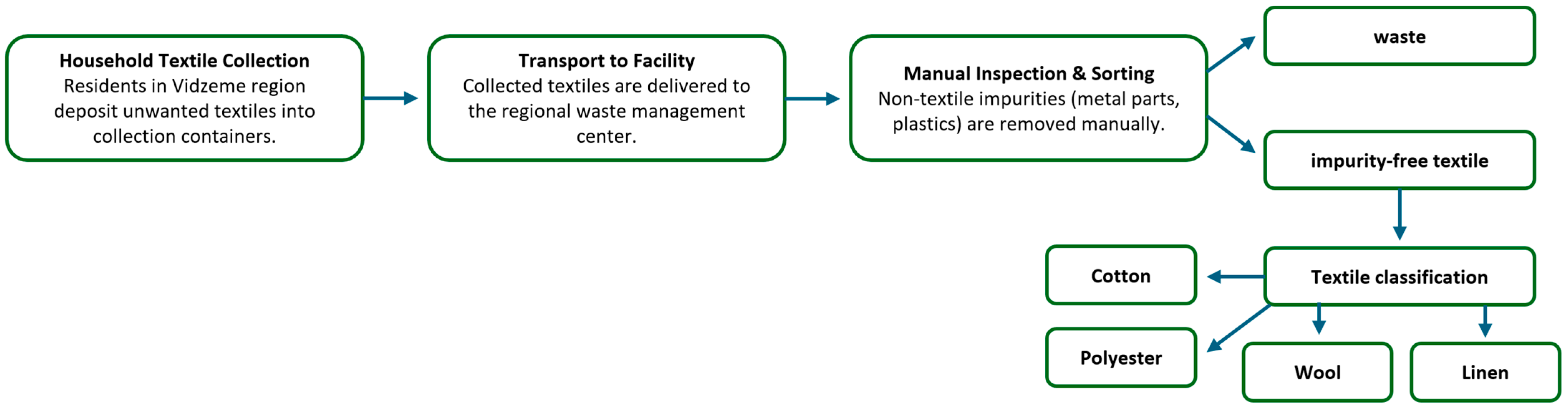
The mixed textile waste used in this study was sourced from a waste management company in Latvia, which collects discarded textiles from households within the Vidzeme waste management region. This system provides residents with a sustainable, circular-economy-based option for disposing of unwanted textile products. To obtain material suitable for experimental use, the collected textiles were carefully inspected and manually sorted (see
Figure 1). This step was essential to eliminate non-textile impurities such as metal parts, plastic fragments, or other rigid components that are frequently found in textile products, particularly clothing. Since such contaminants could significantly affect both the experimental outcomes and the properties of the final material, their removal was necessary to ensure that the textile feedstock used in subsequent processing and testing phases was as homogeneous as possible.
Following the initial sorting, the textile waste was separated into four dominant textile groups: cotton, polyester, wool, and linen. This classification was selected based on the most common textile types found in the market and in post-consumer waste streams, while also representing a broad range of physical and aesthetic characteristics of textiles.
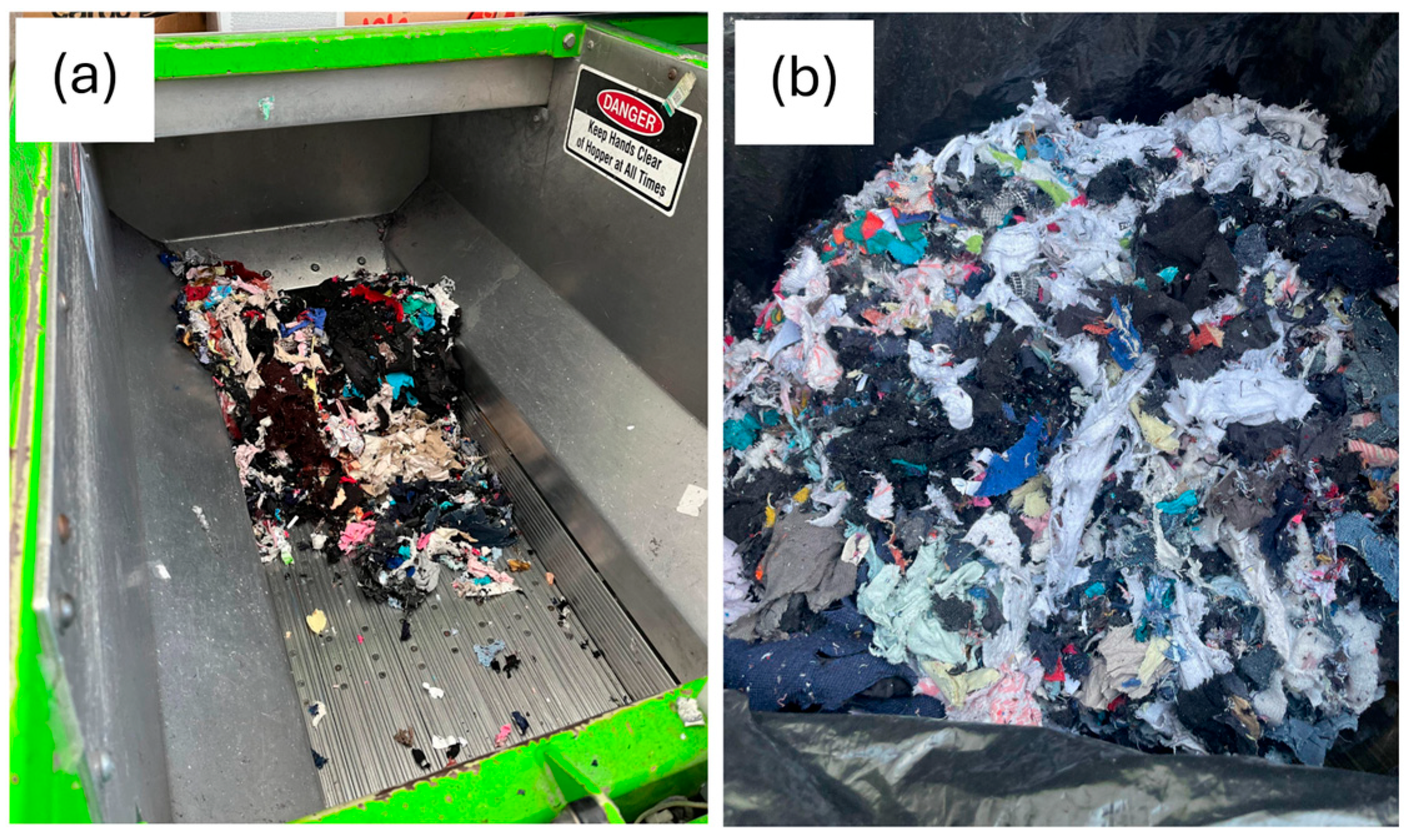
After sorting, the textiles were mechanically shredded using an industrial Shred-Tech ST-25 shredder equipped with dual rotating shafts and durable cutting blades [
18]. The shredding process was designed to produce particle sizes between 5 and 20 mm, suitable for subsequent experimental processing. The resulting fractions varied from approximately 4 to 22 mm, with the majority of particles ranging between 8 and 15 mm (see
Figure 2). The shredded material was then sieved to remove oversized or undersized particles, ensuring consistency in the final fractions. During the shredding process, a considerable amount of fine particles and dust was generated, particularly when processing soft and fluffy materials such as cotton and wool.
After shredding, the resulting fractions were stored separately by textile type in sealed and labeled plastic bags (30 L capacity). Storage was carried out in a dry, well-ventilated room under stable conditions, maintaining a constant temperature of approximately +20 °C and relative humidity below 60%. These conditions were chosen to preserve the material properties and prevent degradation prior to their use in the experiments.
3.2. Preparation of the Biopolymer Binder
The biopolymer binder was formulated as a biodegradable, non-toxic, and flexible adhesive suitable for the production of sound-absorbing materials, as confirmed by its porosity, elasticity, and adhesion properties observed in preliminary tests and reported in previous studies [
7,
20]. The exact composition and preparation procedure for a single experimental unit (corresponding to 1.3 L of shredded textile) are detailed below (see
Table 3 for composition and
Table 4 for preparation steps).
The preparation of the biopolymer binder required the following equipment: a digital scale with an accuracy of ±0.1 g, a 200 mL laboratory measuring cylinder, a stainless-steel pot and an electric hot plate, a metal spoon for thorough mixing, and a glass jar with a lid for short-term storage of the prepared binder.
The resulting binder material is classified as thermoplastic starch plasticized with glycerol, which is formed by the gelatinization process of starch in the presence of water and acetic acid, where glycerol acts as a plasticizer and provides flexibility. The process can be schematically represented as follows:
The final product obtained contains 24.9 wt% dry matter, of which 51 wt% is starch and 47 wt% glycerol. The material has the following properties: porosity 5–15%, density 1.25–1.30 g·cm−3, Shore D hardness 28–35, as well as water absorption 10–15 wt% (50% RH, 24 h). TPS demonstrates thermo-stability up to 210–230 °C, Young’s modulus 30–50 MPa.
3.3. Preparation of Sound-Absorbing Materials
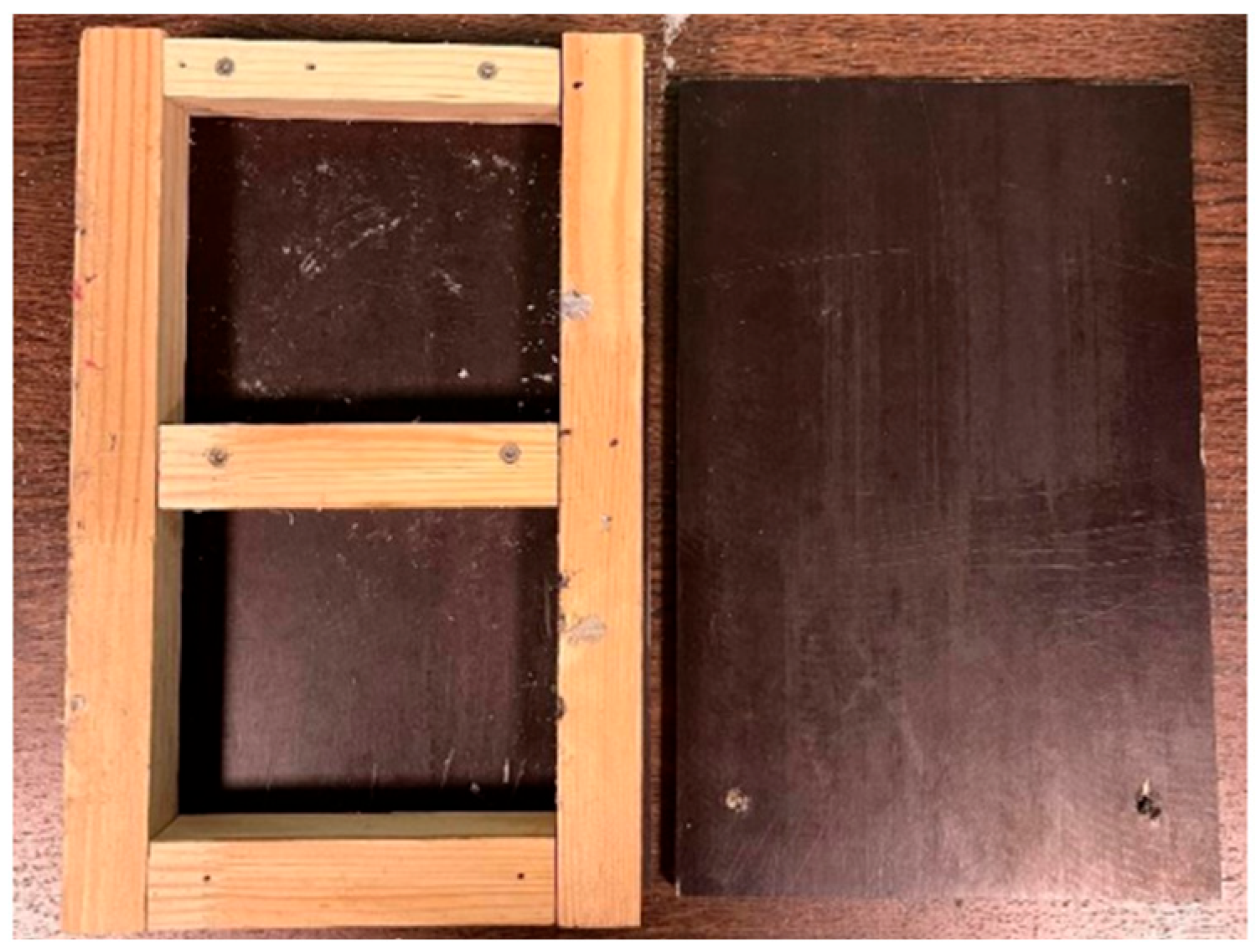
The preparation of the experimental acoustic materials began with the construction of a wooden mold consisting of two compartments for sample fabrication. The mold was assembled from wooden slats and plywood panels. Each compartment of the mold measured 12 × 15 × 5 cm, corresponding to a surface area of 180 cm
2 and a volume of 900 cm
3 (see
Figure 3).
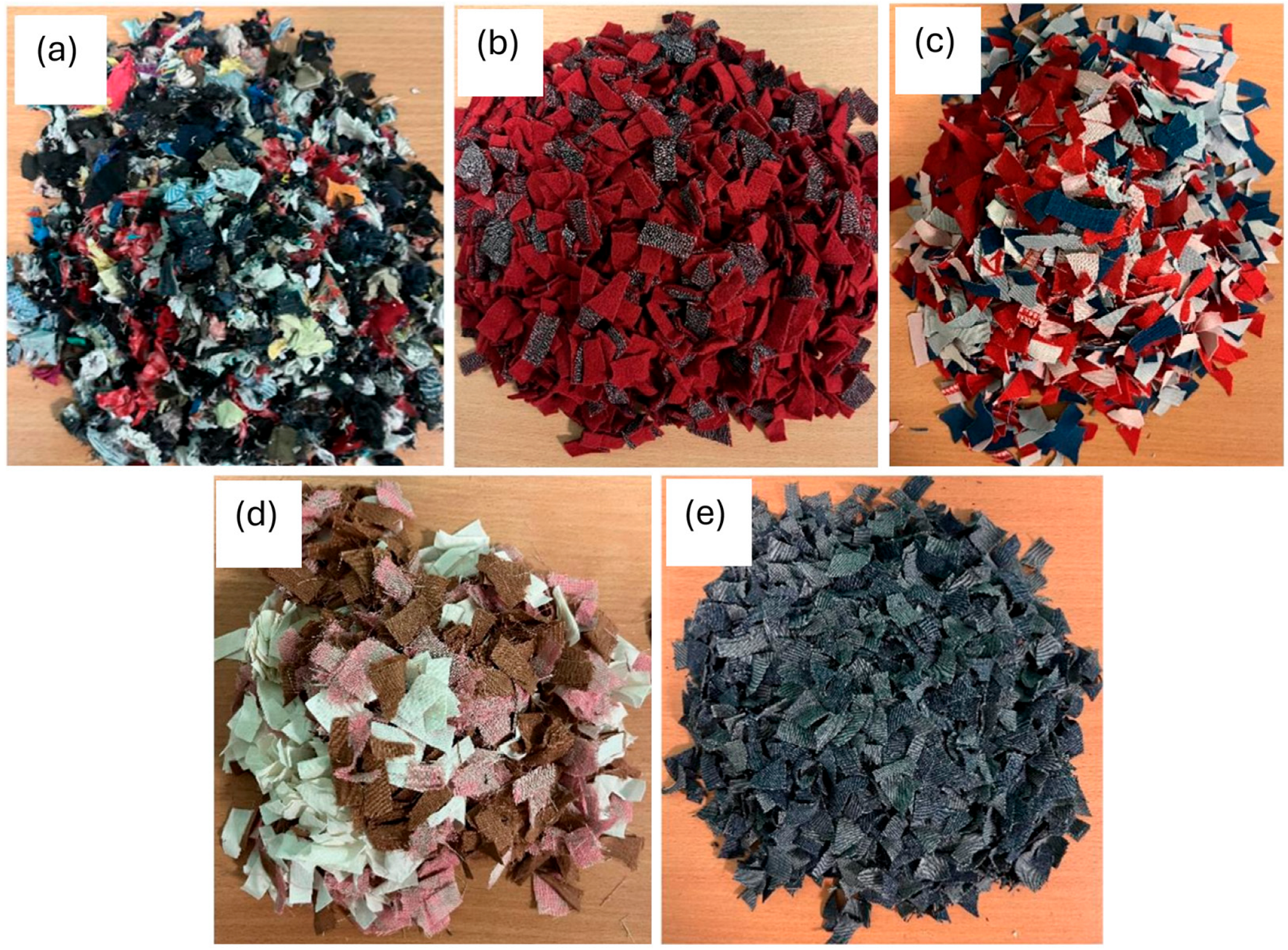
In this study, five different material samples were developed. All samples were produced using a biopolymer binder, with each containing a distinct type of textile: cotton, polyester, wool, linen, and a mixed composition. The mixed sample consisted of 50% polyester, 30% cotton, 10% wool, 5% linen, and 5% other textiles (see
Figure 4).
The proportions of the mixed sample were determined based on the actual composition of the textile waste stream provided by the regional waste management company. The dominant fractions in household textile waste are polyester and cotton, while the amount of wool and linen is significantly lower. Therefore, the sample was designed to reflect the real composition of the waste, rather than a combination chosen to ensure optimal acoustic properties. The 5% of “other textiles” included acrylic, viscose and some other synthetic or blended materials that are typically found in small quantities in household textiles.
Five experimental acoustic samples were fabricated using different types of textiles to evaluate the influence of composition on material structure and potential acoustic performance. A pre-prepared biopolymer mixture served as the binder for all samples and was combined with shredded textile (1.3 L per sample, particle size 0.5–2 cm). The mixture for each specimen was prepared separately to ensure uniform impregnation of textiles with the binder.
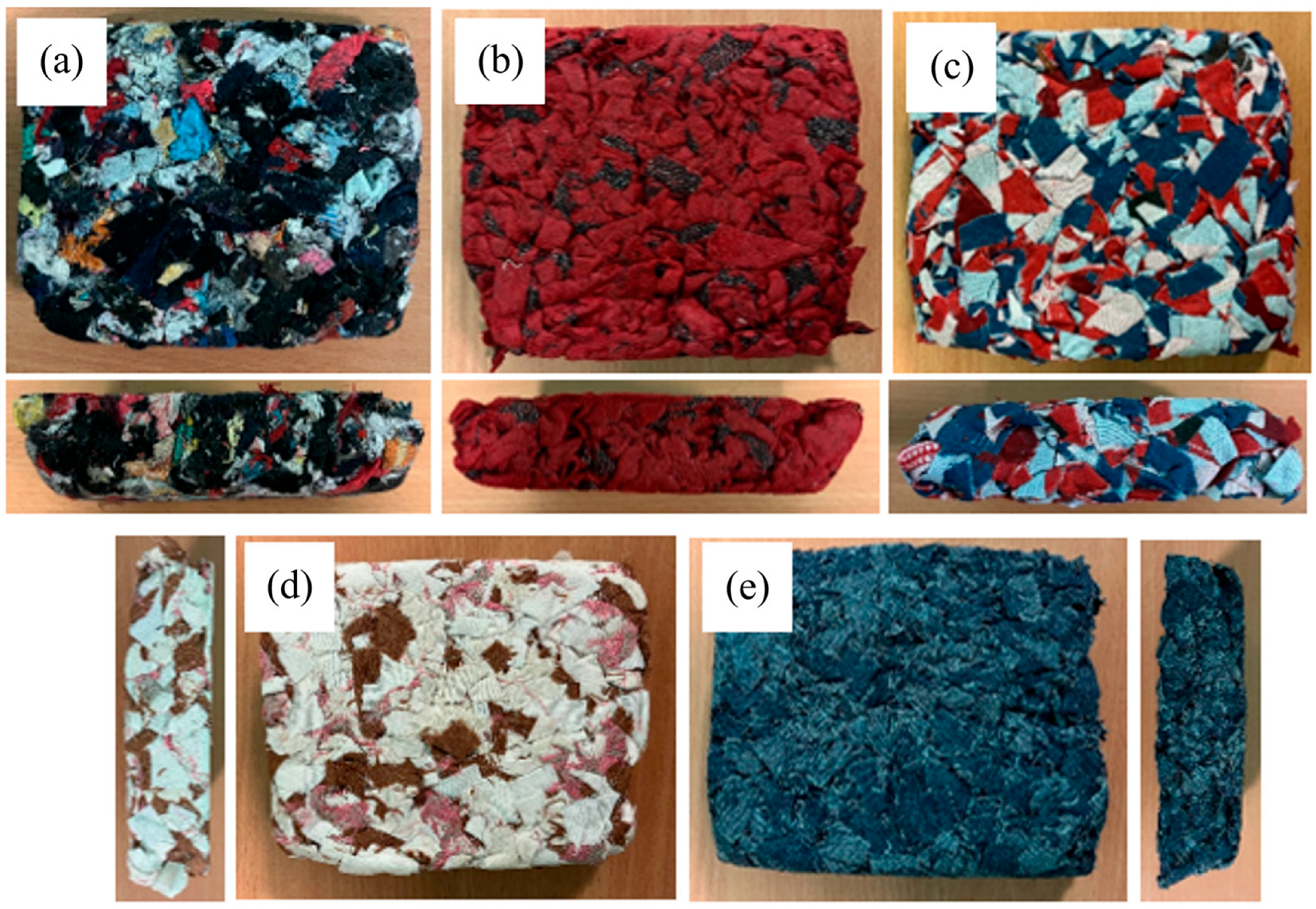
The first sample was produced from cotton, the second from polyester, the third from wool, and the fourth from linen. The fifth sample was composed of a blend comprising 50% polyester, 30% cotton, 10% wool, 5% linen, and 5% other textiles (see
Figure 4). After thorough mixing of the binder and textile, each mixture was placed into a separate mold, pressed, and leveled. All samples were left to dry at room temperature (approximately 22 ± 1 °C) and relative humidity of about 45 ± 5% for 48 h, until the biopolymer had fully hardened and the materials acquired a uniform and stable form. Preparation was carried out under identical conditions to enable direct comparison of how different types affected the physical and acoustic properties of the final products. The fabricated samples are presented in
Figure 5.
The physical and structural characteristics of the produced sound-absorbing panels are summarized in
Table 5. These parameters include density, binder ratio, surface description, and estimated porosity, all of which influence the acoustic behavior of the materials.
3.4. Laboratory Sound Absorption Tests
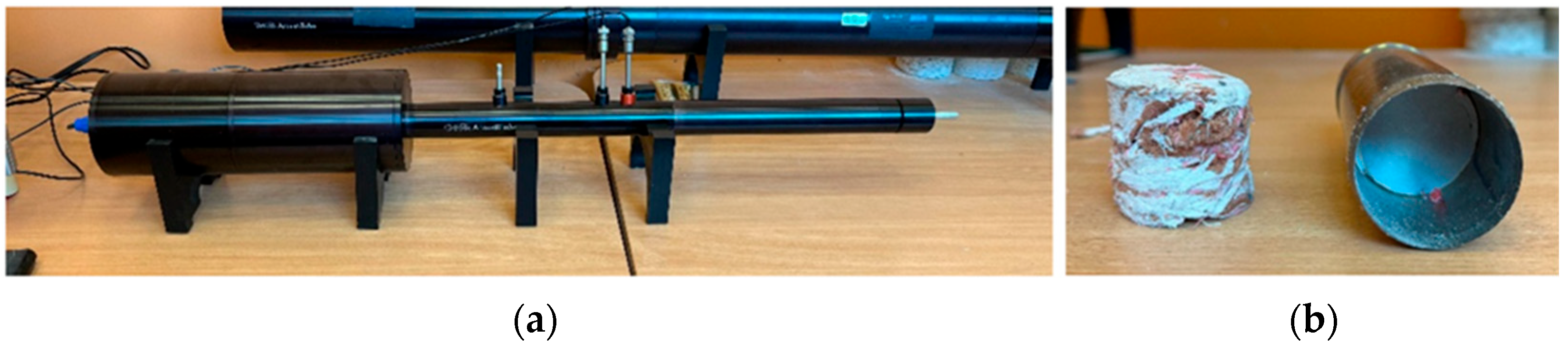
To perform the sound absorption tests, circular specimens with a diameter of 40 mm and a thickness of 50 mm were cut from the fabricated panels using a precision cutting blade (see
Figure 6). Each specimen corresponded to the standard testing diameter of the AFD 1000 impedance tube, which has an inner diameter of 40 mm, ensuring compatibility and an airtight fit during measurements. Three specimens were prepared from each of the five material types, resulting in a total of fifteen test samples. Measurements were conducted across a frequency range from 6.25 Hz to 6393.75 Hz.
Sound absorption measurements were conducted using the impedance tube system (see
Figure 6) equipped with two ½-inch high-sensitivity microphones and a precision signal generator. The setup complies with the ISO 10534-2 two-microphone transfer-function method. The specimens were mounted flush against the rigid termination at the closed end of the tube. A soft sealing ring was applied along the perimeter of each sample to ensure an airtight contact with the tube wall and to eliminate potential sound leakage.
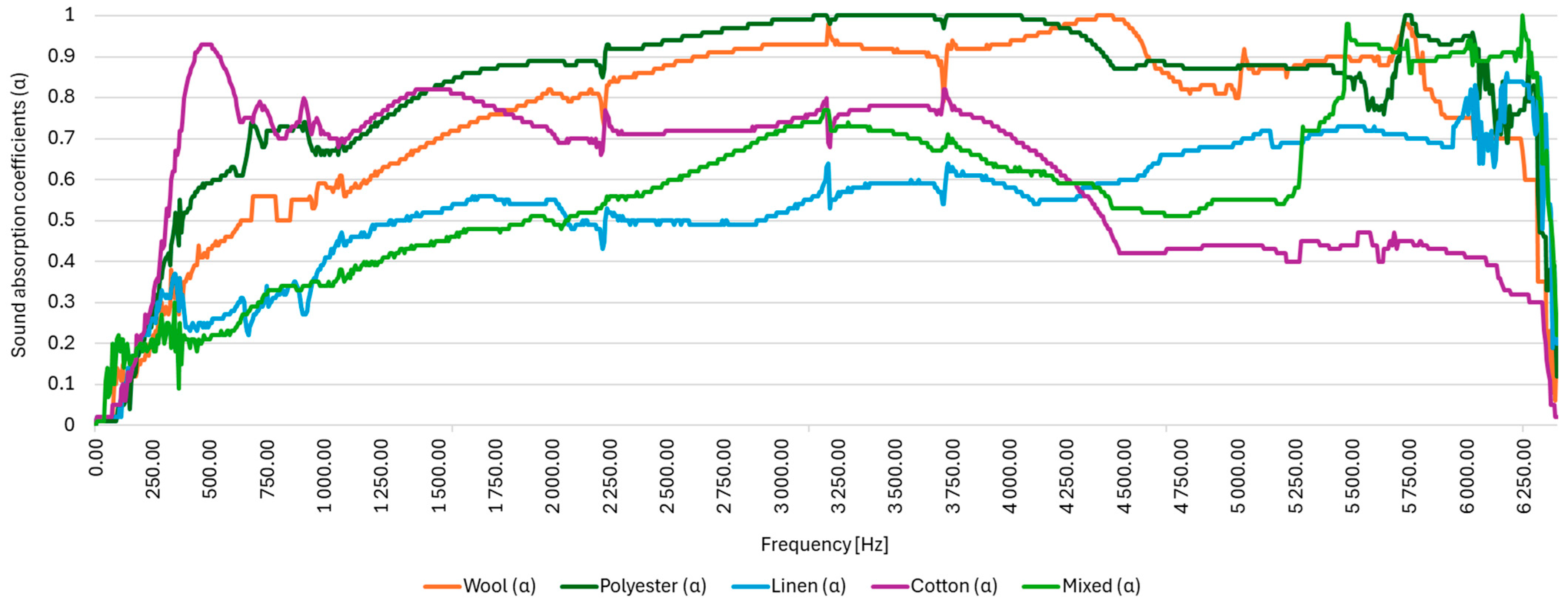
The frequency-dependent sound absorption coefficients (α) are presented in
Figure 7. For each material, three repeated measurements were performed, and the mean values with standard deviation were calculated to ensure measurement reliability. The average standard deviations for wool (±0.03), polyester (±0.03), linen (±0.013), cotton (±0.03), and mixed samples (±0.027) confirm the high precision and reproducibility of the obtained results.
As shown in
Figure 7, the acoustic behaviour of the textile panels demonstrates a characteristic frequency-dependent pattern typical of porous materials. However, the absorption curves differ substantially depending on the fibre type, density, and structural arrangement.
At low frequencies (0–500 Hz), all samples exhibit limited sound absorption (α ≈ 0.0–0.5). Only cotton stands out, reaching a maximum of α = 0.93 at 500 Hz. As the frequency increases to the mid-frequency range (500–2500 Hz), absorption rises markedly for all panels. The best performance in this range is observed for polyester (α = 0.93 at 2500 Hz) and wool (α = 0.85 at 2500 Hz), indicating effective internal friction and favourable fibre packing. In contrast, linen (α = 0.56 at 1650 Hz) and the mixed sample (α = 0.59 at 2481 Hz) show lower absorption values. Unlike the other materials, cotton’s absorption coefficient decreases in the mid-frequency range after its initial peak.
In the high-frequency range (2500–6393 Hz), absorption becomes more pronounced as shorter wavelengths interact more strongly with the porous structure. Wool reaches α = 1.00 at 4381 Hz, while linen achieves α = 0.86 at 6175 Hz. The mixed sample gradually increases, reaching α = 1.00 at 6244 Hz, indicating favourable multiscale porosity in heterogeneous fibre blends. Cotton shows a gradual decline after its peak, stabilizing around α ≈ 0.40–0.50 above 4500 Hz.
Across the entire frequency range, polyester provides the most consistent and highest sound absorption. Unlike other materials that display pronounced frequency-specific peaks, the polyester panel maintains high α values already from the mid-frequency region and reaches α = 1.00 at 3144 Hz. This stable broadband behaviour indicates efficient energy dissipation over a wide frequency spectrum, making polyester the most uniform and high-performing absorber among the tested materials.