1. Introduction
Soil erosion by water is one of the most widespread forms of land degradation in Mediterranean environments, particularly in subhumid mountain agroecosystems where steep slopes, shallow soils, and intense rainfall events lead to the generation of surface runoff. Runoff is the main driver of soil erosion processes, controlling the detachment, transport, and deposition of soil particles and determining the spatial distribution of soil movement within the landscape. Notably, runoff generation and connectivity may exhibit marked differences depending on land use, as vegetation cover, soil management, and surface roughness strongly regulate infiltration capacity and overland flow pathways. These contrasts are especially evident in Mediterranean mountain areas affected by agricultural abandonment and subsequent land use change. The resulting variations in hydrological response have direct implications for soil fertility, catchment hydrological behaviour, and ecosystem sustainability. Consequently, understanding how hydrological dynamics influence soil mobilisation at the catchment scale, and how these dynamics vary according to land use, is essential for effective land management and erosion mitigation strategies.
In recent decades, many Mediterranean mountain regions have experienced widespread land abandonment [
1,
2,
3], frequently followed by reforestation initiatives aimed at reducing soil erosion and restoring ecosystem functions. In numerous cases, these interventions have involved the construction of hillslope terraces to facilitate afforestation, particularly with pine species, thereby substantially modifying slope morphology, runoff connectivity, and sediment redistribution patterns. However, the hydrological and geomorphological effects of such terracing for reforestation remain insufficiently documented at the catchment scale.
Fallout radionuclides, particularly 137Cs, are increasingly used as tracers to assess soil mobilization and its spatial distribution patterns. The 137Cs technique integrates erosion and deposition processes over several decades, providing spatially distributed information that cannot be obtained using classical measurement methods, such as erosion pins or experimental plots. Quantitative estimates of soil erosion and deposition can be obtained by comparison with reference inventory values and appropriate conversion models. However, conventional applications of the 137Cs technique rely on soil sampling followed by laboratory gamma spectrometry using low background, high efficiency Ge detectors. These laboratory measurements are time consuming and require substantial analytical resources, thereby restricting the number of sampling locations that can be surveyed in practice. These characteristics may reduce the capacity to capture spatial variability in soil redistribution, especially in heterogeneous landscapes where surface runoff and land use exert strong local controls.
Several studies have explored the extension of gamma ray measurements to the field using portable in situ systems. Early developments focused primarily on portable high purity germanium (HPGe) detectors, which provide excellent energy resolution and accurate radionuclide identification, and have been successfully applied to radiological characterization, environmental surveillance [
4], and mapping of artificial radionuclides in soils [
5]. These systems have demonstrated their capability for in situ quantification of
137Cs inventories and other gamma emitting radionuclides under controlled field conditions [
6]. Despite these advantages, the routine deployment of portable HPGe detectors in soil erosion and landscape scale studies remains operationally challenging. The requirement for cryogenic cooling, typically using liquid nitrogen, together with limited autonomy and logistical constraints, has restricted their widespread application in spatially extensive surveys requiring high sampling density [
4]. As a result, HPGe based in situ gamma spectrometry has largely remained confined to targeted monitoring applications and validation studies rather than systematic assessments of soil redistribution over heterogeneous landscapes.
In parallel, advances in scintillation detector technology have enabled the development of alternative in situ gamma ray spectrometry approaches based on crystals, such as sodium iodine (NaI) and lanthanum bromide (LaBr
3). These detectors operate at ambient temperature and offer high detection efficiency, rapid acquisition times, and improved portability, making them particularly suitable for field applications requiring dense spatial coverage and operational flexibility. NaI scintillation detectors have been widely used in environmental radioactivity studies [
7,
8,
9,
10,
11,
12]; however, their low energy resolution can limit peak discrimination at specific energy ranges and hinder the reliable identification of individual radionuclides under in situ conditions. In contrast, LaBr
3 scintillation detectors provide substantially improved energy resolution, allowing more reliable identification of radionuclides, such as
137Cs [
13,
14].
LaBr
3 scintillation detectors have been successfully used for in situ gamma ray spectrometry of environmental radionuclides, demonstrating reliable and stable field performance comparable to high purity germanium systems [
15]. Although the resolution of LaBr
3 scintillation detectors is lower than that of HPGe systems, their performance is sufficient for the reliable measurement of specific radionuclides [
16], including
137Cs and naturally occurring radionuclides, particularly when the objective is the assessment of spatial patterns. These characteristics have supported their increasing use in environmental radioactivity monitoring [
17] and soil contamination assessment [
18]. Consequently, scintillation proximal gamma ray spectroscopy has emerged as a complementary approach to HPGe measurements, extending the practical applicability of in situ gamma spectrometry for environmental studies where spatial representativeness, measurement speed, and field robustness are critical [
19,
20].
Despite the growing use of in situ gamma ray spectrometry, its application to investigate the spatial distribution of 137Cs to assess environmental processes in agroforestry systems of Mediterranean mountain landscapes remains very limited. Most studies using 137Cs have focused primarily on the quantification of soil erosion rates based on soil sampling, laboratory gamma spectrometry, and conversion models, whereas fewer studies have explored the use of in situ gamma spectrometry as a tool for interpreting spatial patterns of soil movement and landscape processes.
In terraced landscapes, the modification of slope gradients, flow pathways, and sediment storage patterns may further condition the spatial distribution of radionuclide contents. The reliability and interpretation of in situ 137Cs measurements may be influenced by site specific environmental and physiographic factors, including surface runoff processes, geomorphological setting, vegetation cover, and land use. In this context, the present study analyzes the effect of terracing for pine reforestation on surface runoff and soil movement dynamics in two paired catchments that underwent land abandonment in the mid-1960s. These catchments provide a valuable experimental setting to investigate how contrasting land management trajectories after abandonment influence hydrological response and soil redistribution processes over the medium term.
The objective of this study is to evaluate the potential of in situ 137Cs measurements obtained with a LaBr3 scintillation detector as a tool to interpret soil redistribution patterns and associated environmental processes in Mediterranean landscapes affected by land abandonment since the mid-twentieth century, and by terracing. Using a paired catchment approach, the study also examines how contrasting land management after abandonment and terracing influences runoff connectivity and soil mobilisation.
To this end, a proximal gamma ray scintillation detector is used to collect in situ 137Cs measurements. The radionuclide counts are analyzed in relation to catchment physiography, land use, vegetation activity derived from the Normalized Difference Vegetation Index and surface runoff pathways. By exploring these links, this work aims to assess the potential of in situ 137Cs measurements as an exploratory tool for identifying spatial patterns of soil redistribution and the hydrological and land use controls operating in contrasting landscapes after abandonment. This assessment will provide a basis for improving the interpretation of in situ gamma ray measurements and for guiding the design of targeted sampling strategies in mountain agroforestry systems, representing a novel application of this approach in terraced Mediterranean landscapes affected by land use changes.
2. Materials and Methods
2.1. Study Area
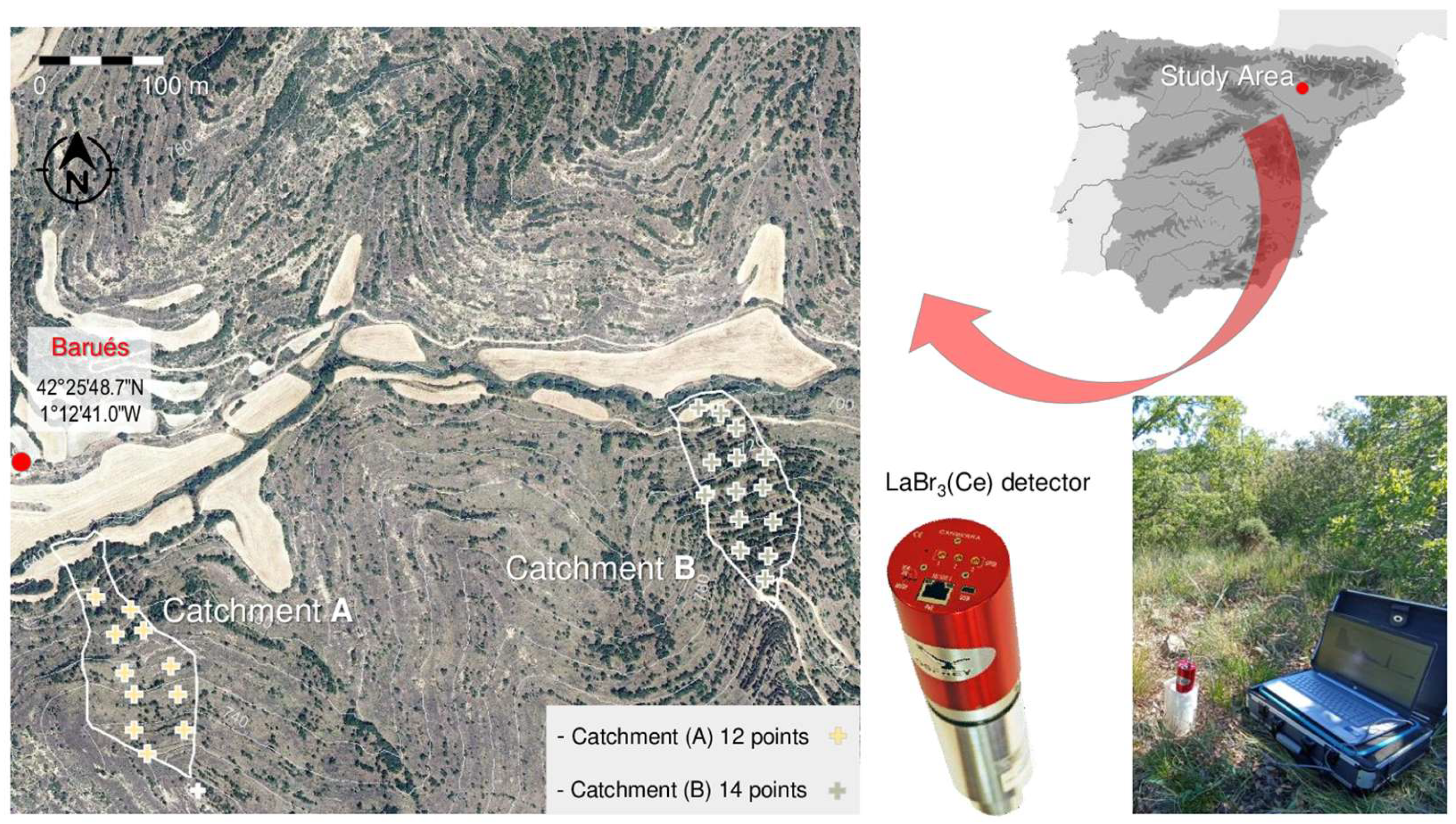
The study was conducted in two small catchments located near Barués, in the north-central sector of the Ebro Basin (NE Spain). The catchments were intentionally selected as a paired system to compare landscape responses under comparable physiographical conditions. Both catchments share similar lithology, soil types, size, relief, and hillslope orientation. Soils are mainly calcareous Calcisols, with shallow Regosols developed on Oligo-Miocene sandstones and marls. The climate is Mediterranean subhumid, with a mean annual precipitation of around 550 mm, dry summers with high evapotranspiration, and a mean annual temperature of around 13–14 °C [
3].
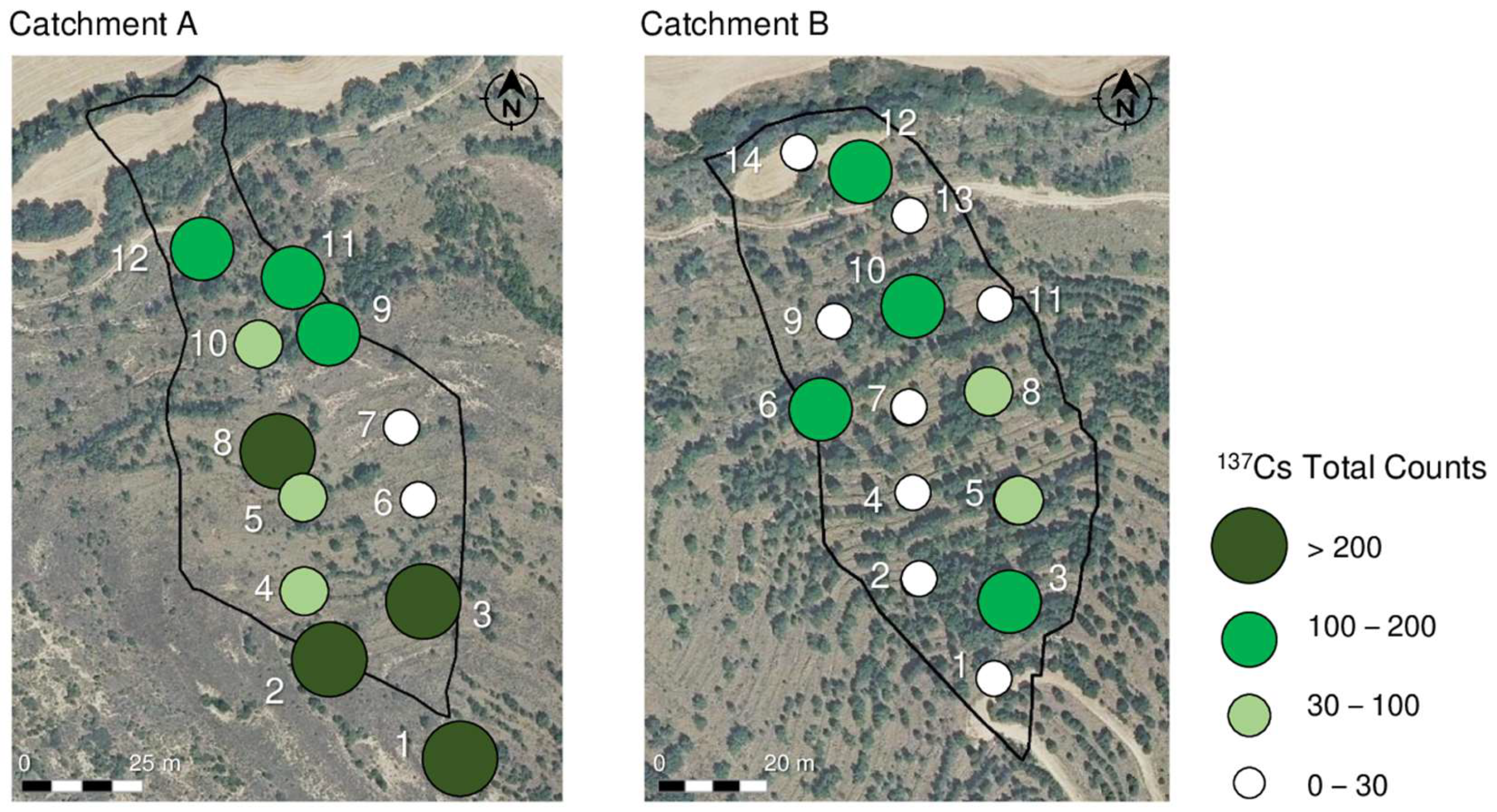
Catchment A covers an area of 4.35 ha and includes 12 sampling points, while catchment B covers 3.79 ha and includes 14 sampling points. Hillslopes are short and rather steep (
Figure 1). Historical land use information derived from aerial photographs and previous studies indicates that the area was intensively cultivated until the mid-20th century, mainly using small, terraced fields adapted to steep slopes. Cereal croplands were progressively abandoned from the 1960s onwards during the period of maximum atmospheric fallout of
137Cs (1954–1963). Since abandonment, recovery of the autochthonous vegetation has occurred through natural succession, in addition to pine reforestation, which is particularly widespread in catchment B. Nevertheless, the nature and spatial distribution of natural revegetation and pine implantation differ markedly between the two catchments.
Previous studies in the Barués area have documented that reforestation was implemented in different phases, resulting in forest stands of different ages and structural development across the landscape. Despite vegetation recovery, remnants of former agricultural terraces and land shaping structures remain clearly identifiable in aerial imagery and field observations.
Catchment A shows little evidence of landform modification related to reforestation. Hillslopes preserve surface morphologies shaped by former small scale, traditional cultivation, often exploiting naturally stepped or structurally controlled slope benches. Remnants of stone retaining walls are locally present, mainly at the downslope edge of former cultivated surfaces. In many areas, these structures are partially integrated into the present hillslope morphology and show limited vertical relief. Terrace boundaries are often weakly expressed and can be inferred from subtle slope breaks or vegetation patterns rather than from well preserved stone walls. Vegetation cover is dominated by natural shrub and grass communities, with scattered autochthonous tree species. Overall, hillslope morphology in catchment A appears relatively continuous, with limited surface fragmentation and a low density of abrupt slope breaks associated with anthropogenic structures.
Catchment B shows greater morphological variability, with a higher proportion of moderate to steep slopes and frequent slope discontinuities. Agricultural terraces are more numerous and better preserved than in catchment A, forming a clearly stepped hillslope pattern. Stone retaining walls are widespread and well defined, particularly in upper and midslope positions, where narrow benches are separated by steep taluses. In addition, several terraces were modified during reforestation after abandonment through the construction of pine planting strips, increasing surface roughness and the density of slope breaks. Vegetation cover is generally denser than in catchment A, reflecting the effect of reforestation.
2.2. In Situ 137Cs Measurements Using a LaBr3 Detector
Lanthanum bromide scintillators are characterized by high light output, fast decay times, and stable spectral response, offering substantially higher energy resolution than conventional NaI(Tl) scintillation detectors. These properties make LaBr3 detectors particularly suitable for in situ gamma spectrometry and for the identification of radionuclides, such as 137Cs, allowing improved discrimination of the 137Cs signal and reducing uncertainty related to peak overlap under field conditions.
In situ gamma measurements were performed using a lanthanum bromide scintillation detector (LaBr3) coupled to an Osprey digital multichannel analyser (Mirion–Canberra, Meriden, CT, USA). The detector is equipped with a 1.5″ × 1.5″ LaBr3 crystal (Saint-Gobain) and a 2″ photomultiplier tube, providing an energy resolution of approximately 3% at 662 keV. This high energy resolution allows reliable discrimination of the 137Cs photopeak under field conditions.
At each sampling point, the detector was placed directly on the ground surface to ensure stable contact and minimize geometrical variability between measurements. Total gamma counts associated with the 137Cs photopeak region (662 KeV) were recorded over fixed acquisition times of 25 min (1500 s) at each sampling point.
Gamma spectra were processed using Genie 2000 software (Mirion–Canberra). Detector calibration was performed using the ISOCS (In Situ Object Counting Software, V4.0) efficiency calibration methodology. Measurement geometries were simulated with LabSOCS (Laboratory Counting Software, V4.0) to reproduce field conditions, including the polyethylene detector housing and ground contact configuration. Soil properties used in the simulations included soil type with a bulk density of 1.3 gcm−3 and representative geochemical composition of these study soils for the upper 30 cm of the soil profile. Measurements were carried out under comparable field conditions across both catchments.
2.3. Terrain, Soil Water Content, Hydrological, and Vegetation Analyses
Terrain and hydrological analyses were conducted using a 1 m resolution digital elevation model (DEM) derived from LIDAR data of the study area, processed within a GIS environment. From the DEM, slope gradients were calculated and subsequently reclassified into three classes representing low (<10°), moderate (10–25°), and steep (>25°) slopes. Prior to hydrological analysis, the DEM was processed using a sink filling procedure (“Fill” tool) to remove spurious depressions and ensure continuous flow routing. Flow direction was calculated using a standard D8 flow routing algorithm, which assigns flow from each grid cell to the neighboring cell with the steepest downslope gradient. Flow accumulation was subsequently calculated to estimate the contributing area upstream of each cell and to identify zones of potential runoff convergence. The drainage network was extracted by applying a flow accumulation threshold of 200 cells, which defines the minimum contributing area required for channel initiation. This threshold was selected to provide a realistic representation of flow pathways within each catchment. The extracted drainage network was then classified according to Strahler stream order. Strahler order values were reclassified to avoid zero values and to obtain a continuous hierarchical drainage network. The high spatial resolution of the DEM allows an explicit representation of terrace microtopography, including both flat benches and steep taluses. Consequently, the derived flow patterns inherently reflect the terraced morphology of the landscape. However, in such environments, runoff organization is strongly controlled by terrace structures, which interrupt downslope connectivity and promote lateral redistribution of flow. Therefore, contributing areas and flow pathways derived from the DEM represent hydrological behavior conditioned by terracing rather than natural processes controlled by slope. For this reason, the analysis based on the DEM is complemented by field observations of runoff pathways, which provide essential context for interpreting hydrological connectivity in these human modified catchments.
Vegetation activity was assessed using the Normalized Difference Vegetation Index (NDVI) derived from Sentinel-2 imagery. The NDVI was calculated using surface reflectance data processed in Google Earth Engine for acquisition dates corresponding to the field sampling period. NDVI values were used to characterize spatial variations in vegetation cover and activity within and between catchments and to support the interpretation of hydrological and soil redistribution patterns.
Soil water content (SWC) was measured volumetrically in the upper 5 cm of the soil using a Delta-T SM150 probe, with three replicate measurements taken at each sampling point and averaged.
To evaluate the influence of terrain and environmental factors on the spatial distribution of 137Cs counts, non-parametric statistical analyses were performed. Kruskal–Wallis tests were used to assess differences in 137Cs counts between catchments and among hillslope position, slope gradient class, and Strahler stream order. In addition, Spearman correlation analysis was performed to evaluate the relationships between 137Cs counts and slope gradient, Normalized Difference Vegetation Index (NDVI), and soil water content (SWC). Statistical analyses were performed for the whole dataset and separately for each catchment.
The resulting slope, flow accumulation, Strahler-ordered flow networks, and NDVI layers were used to compare the hydrological structure, vegetation patterns, and runoff organization between catchments and to relate these variables to hillslope morphology, land use practices, and soil redistribution indicators.
3. Results
3.1. Physiography and Hydrological Characteristics
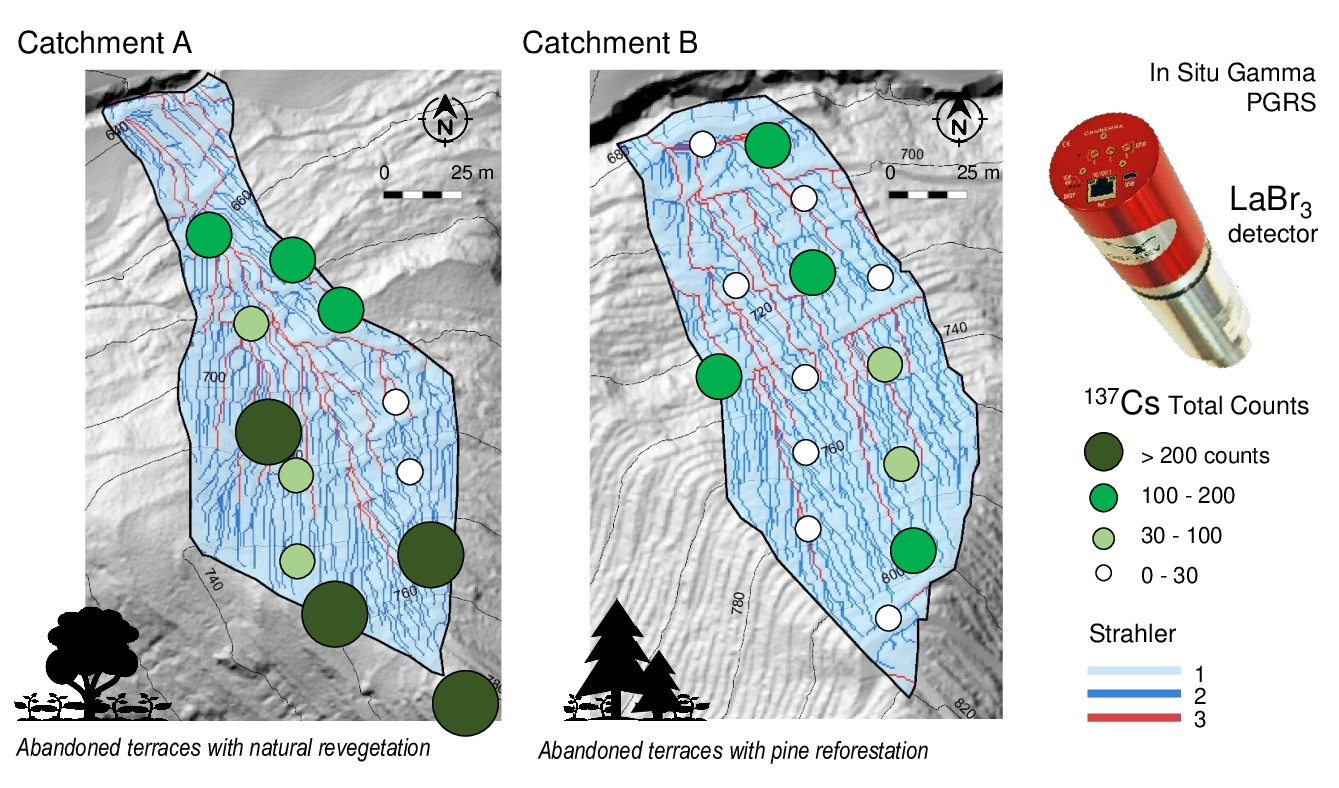
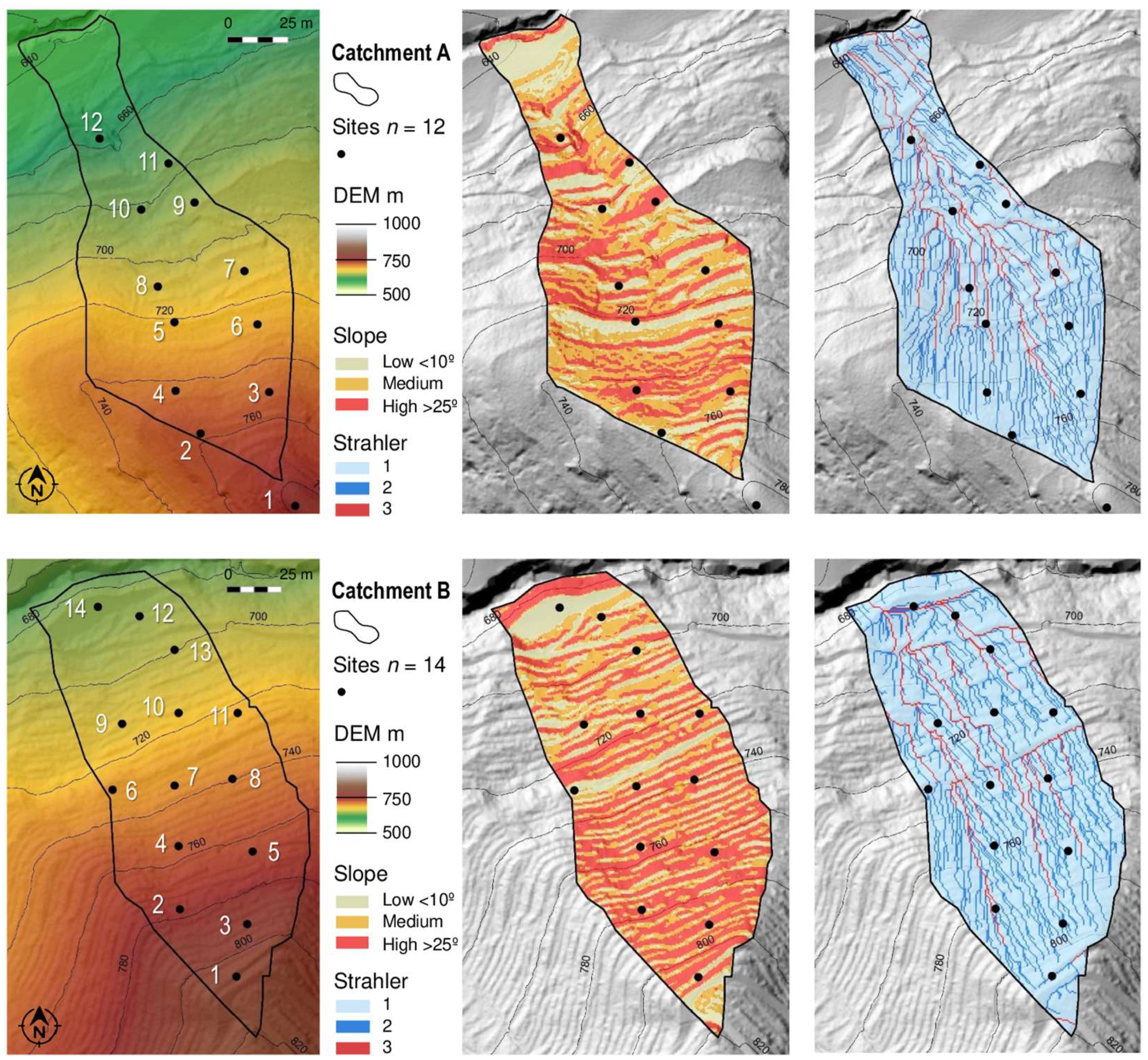
The two catchments showed clear differences in their hydrological configuration derived from slope, flow accumulation, and stream order analyses (
Figure 2). Sampling points were classified according to their position along the hillslope, slope gradient class, and Strahler stream order derived from the DEM analysis. Hillslope position was classified into the upper (A1 to A4, B1 to B5), middle (A5 to A8, B6 to B11), and lower part (A9 to A12, B12 to B14). Slope gradient was classified into three classes: low (A2, A8, A10, A12, B1, B10, B11, B14), moderate (A1, A3, A5, A6, A7, A11, B6, B7, B8, B9, B13), and steep slope (A4, A9, B2, B3, B4, B5, B12). Flow pathways were classified according to Strahler stream order was classified into three classes: order 1 (A1, A3, A4, A5, A6, A7, A9, A10, A11, A12, B1, B3, B4, B5, B6, B7, B11, B12, B14), order 2 (A2, A8, B2, B9, B10, B13), and order 3 (B8).
In catchment A, slope gradients are predominantly low to moderate, with steeper slopes restricted to specific hillslope segments and interfluves. Slope transitions along hillslopes are generally smooth. The drainage network showed a clear hierarchical structure, with streams of first order dominating upper slopes and higher order streams confined to the lower part of the catchment. Flow accumulation is strongly concentrated along a single main drainage axis, indicating focused runoff convergence (tree-like organization of flow pathways).
In catchment B, slope gradients are more heterogeneous and include a larger proportion of moderate to steep slopes. Hillslopes are frequently interrupted by terraces and taluses, producing abrupt slope breaks that are commonly bounded by stone walls or rock outcrops, particularly in the upper part of the catchment, where terraces follow a more regular pattern. Downslope, terrace spacing becomes wider and less regular. The drainage network is characterized by a high number of first order streams and multiple parallel flow pathways, in contrast to the more hierarchical organization observed in catchment A. Higher-order streams developed earlier in the network and extended across a larger portion of the catchment. Flow accumulation was less centralized, with convergence occurring along multiple, spatially fragmented pathways across the hillslopes.
Flow accumulation patterns were consistent with these observations. In catchment A, high flow accumulation values were strongly concentrated along the main stream, which is an ephemeral water course, while most of the catchment is characterized by low accumulation values. In catchment B, intermediate to high flow accumulation values occur along multiple pathways, including midslope positions, indicating more dispersed surface flow convergence.
Slope maps showed contrasting topographic configurations between the catchments. In catchment A, low to moderate slopes dominated most of the catchment, with steeper slopes occurring in elongated bands mainly associated with interfluves and sections where terraces are absent. Areas of lower slope are preferentially located along valley bottoms and zones of flow convergence. In catchment B, moderate to steep slopes occupy a larger proportion of the catchment and are more evenly distributed across headwaters, midslope, and areas adjacent to drainage pathways. This resulted in higher local relief variability and a more heterogeneous slope pattern.
3.2. 137Cs Spatial Distribution
Total
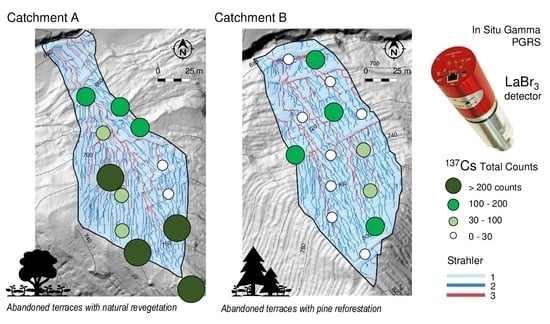
137Cs counts showed a wide and irregular distribution across the two catchments, with marked differences in magnitude, ranging from undetectable values up to more than 300 total counts. The paired catchments exhibited clearly contrasting spatial distributions of
137Cs, with intermediate to high counts prevailing in catchment A and low or undetectable values dominating in catchment B (
Figure 3).
In catchment A (
n = 12), total
137Cs counts ranged from undetectable values to a maximum of 342 counts (point A-2). Most of the sampling points (83%) had detectable values above the detection threshold (
Table 1). Three sampling points (A9, A11, A12) fell within the 30–100 total counts range, another three fell within the 100–200 counts range (A4, A5, A10), and four additional points exceeded 200 counts (A1, A2, A3, A8), representing 33% of the total dataset. Undetectable values were limited only to two locations (A6, A7) that coincided with flow paths, whereas most of the remaining sampling points were situated in interrill areas. Overall, catchment A was characterized by a predominance of moderate to high
137Cs counts, with a mean value of 156.8 ± 108.2 counts across the 12 sampling points (without undetectable values,
n = 10: 188.20 ± 88.1 counts).
In contrast, catchment B (
n = 14) was characterized by a predominance of very low
137Cs values, ranging from undetectable to a maximum of 168 counts (
Table 2), with a mean value of 53.2 ± 68.1 counts across the 14 sampling points (without undetectable values,
n = 6: 122.2 ± 45.2 counts). Negligible or very low values dominated the dataset, with 57% of the sampling points showing undetectable
137Cs. Two points fell within the 30–100 counts range (B5, B8), and four points recorded moderate values between 100 and 200 counts (B3, B6, B10, B12).
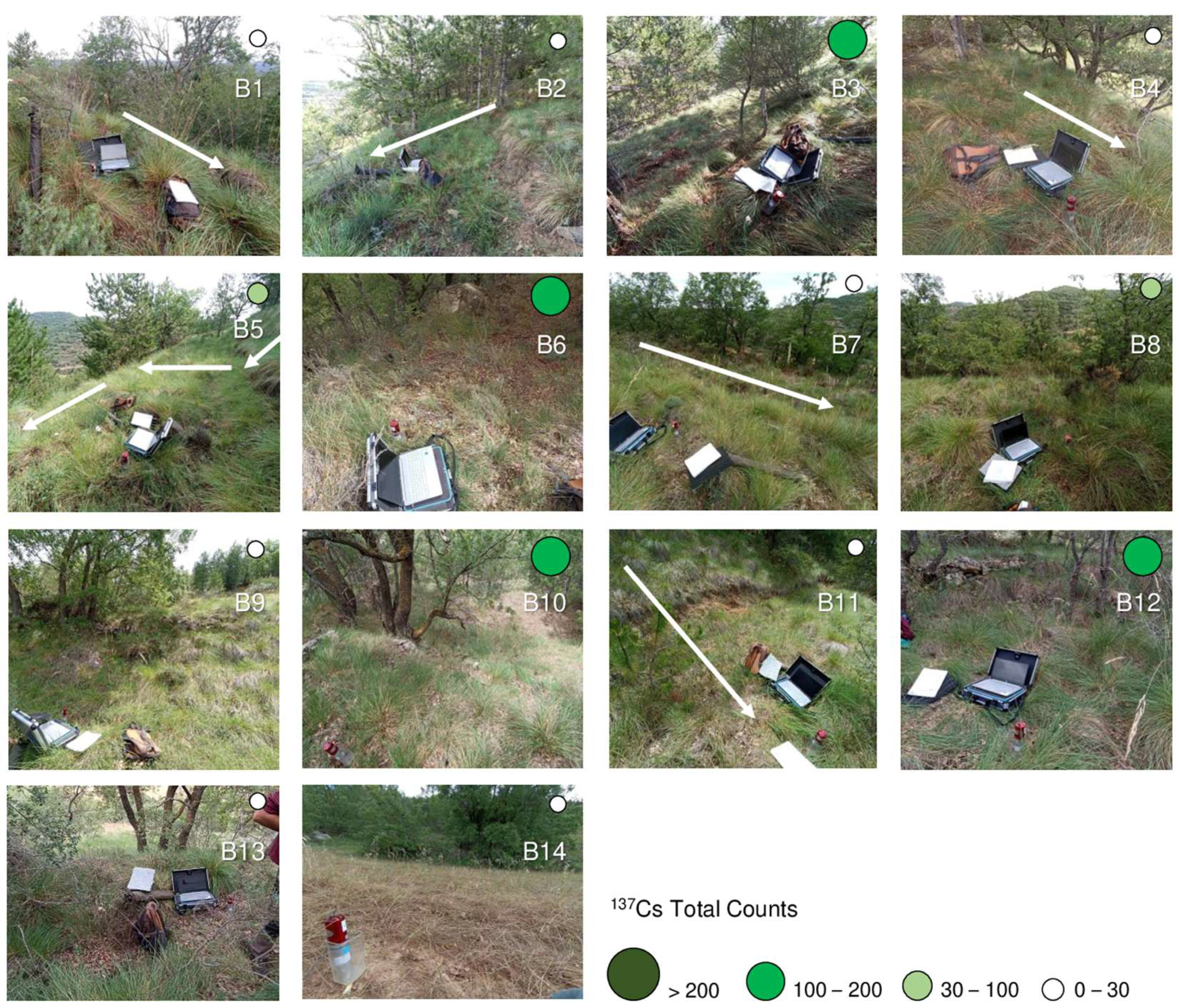
In catchment A, higher 137Cs occurred in areas of lower slope and reduced flow accumulation, whereas lower or undetectable values were associated with steeper slopes and localized flow concentration. The drainage network structure, slope distribution, and 137Cs spatial patterns exhibited a relatively coherent spatial organization. In catchment B, the spatial distribution of 137Cs showed an inconsistent relationship with present day slope, flow accumulation, soil moisture, or vegetation indices. Detectable values occurred sporadically across different topographic positions, resulting in a fragmented spatial pattern. Field photographs collected at the sampling locations provided additional context on local surface conditions and topographic setting within catchments A and B.
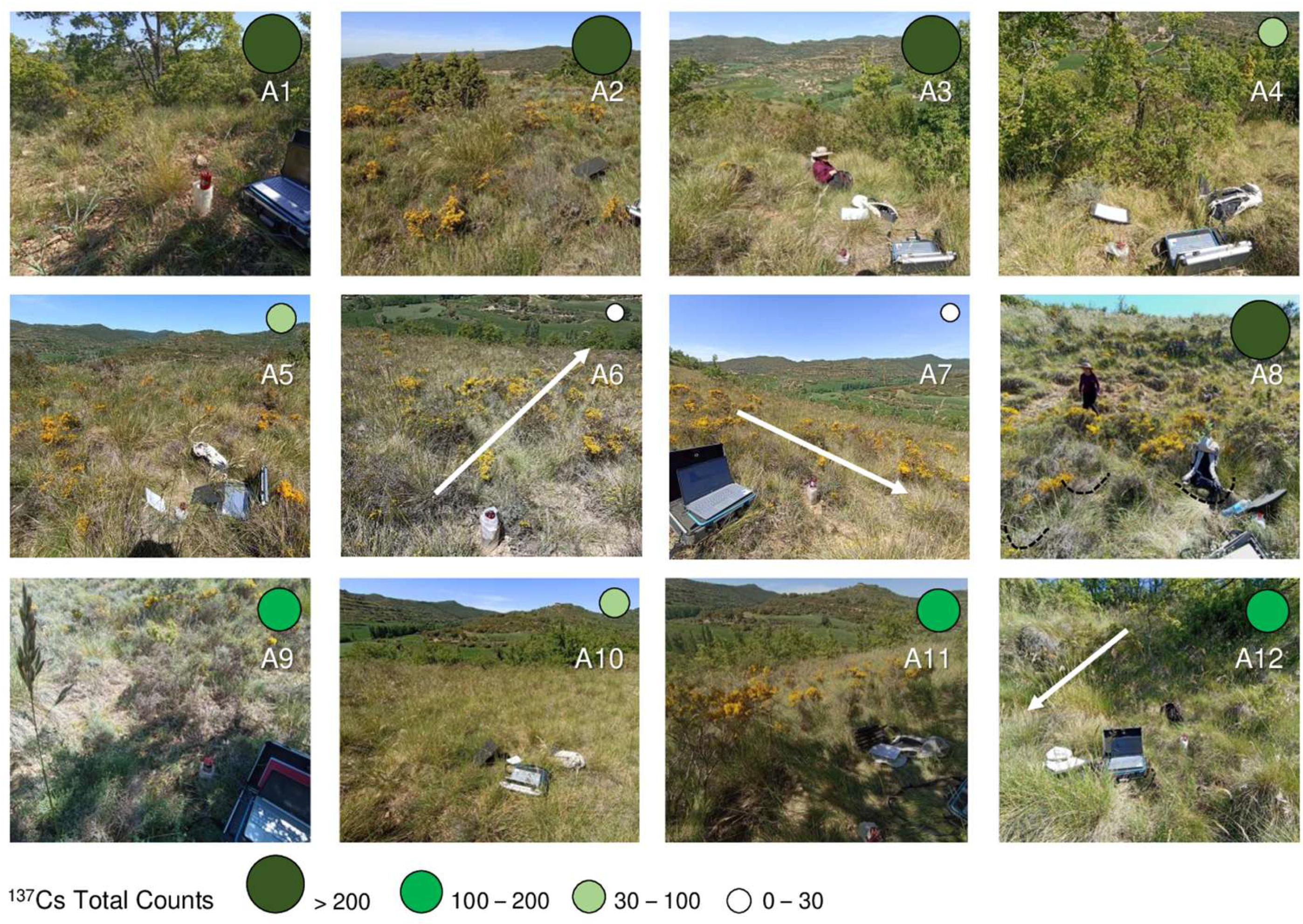
Catchment A (
Figure 4) is characterized by seminatural shrub and grass vegetation, moderate hillslope gradients, and limited evidence of active surface disturbance. Sampling points A1, A2, and A3, located in the upper part of the catchment, are situated on gentle to moderate slopes with continuous grass cover and scattered shrubs. The soil surface appears well protected, and no visible rills or exposed soil patches are observed. Points A4 and A5, located further downslope on lower midslope positions, showed slightly steeper gradients. Vegetation cover remains continuous and is dominated by grasses with interspersed shrubs. Subtle linear features aligned with contour lines are visible, consistent with remnant agricultural terraces. Points A6, A7, and A8 are located on midslope areas with heterogeneous vegetation cover. Points A6 and A7 occur on steeper slopes with lower vegetation density, whereas Point A8 is situated on a locally convex midslope position covered with dense shrubs that largely protect the soil surface. This setting is compatible with its higher
137Cs counts compared with the other two midslope points, where lower vegetation cover and alignment with flow pathways indicated enhanced water erosion. Points A9 to A11 are located in midslope positions closer to interfluve areas, characterized by relatively flat surfaces and gentle slopes. Vegetation cover is dense and continuous, dominated by grasses and shrubs, although at point A10, the vegetation cover is slightly reduced, resulting in a more locally exposed soil surface. Point A12 is situated in the lower part of the catchment, closer to the outlet, with gentle slopes and dense grass and shrub cover. The soil surface is well protected, and no clear signs of concentrated flow or active surface erosion were observed.
Catchment B (
Figure 5) shows a heterogeneous mosaic of reforested zones, naturally revegetated areas, and preserved agricultural structures, resulting in a fragmented hillslope surface with strong contrasts in slope, exposure, and local surface protection. Terraces are clearly expressed across much of the catchment, with narrow bench surfaces separated by steep taluses and stone walls, particularly in the upper and midslope areas (e.g., points B2 and B3). At several sites, such as points B3 and B6, the sampling locations are situated on relatively flat and locally protected terrace surfaces between slope breaks. Similar conditions are observed at points B10 and B12, which lie on a flat terrace bench, and the downslope stone wall remnants are visible, favoring local sediment retention. Fragments of stone walls are clearly identifiable at points B9, B10, and B12, although their preservation varies spatially. In lower parts of the catchment, point B11 is situated on a steeper slope, where the soil surface is more exposed and affected by higher gradient conditions, suggesting a greater susceptibility to surface runoff and soil disturbance. In contrast, B13 is located on a gentle slope and displays a surface morphology indicative of past cultivation and possible post abandonment disturbance. Despite the absence of pine reforestation, this setting likely reflected the latter abandonment of low slope and more accessible areas, which may have remained under cultivation or experienced surface reworking after general land abandonment. The catchment outlet, point B14, corresponds to an actively cultivated field.
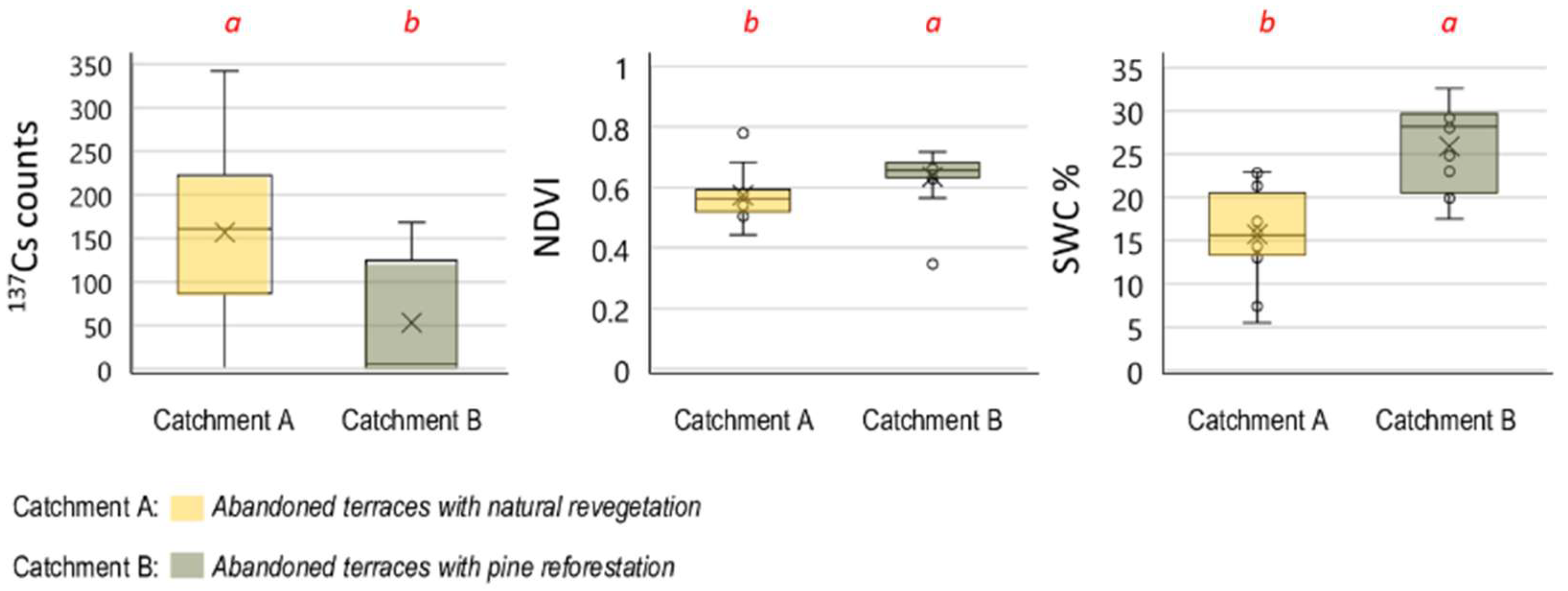
The Kruskal–Wallis tests showed significant differences in
137Cs counts between catchments (H = 5.64,
p-Value = 0.018), with higher values in catchment A than in catchment B (
Figure 6). No significant differences were observed among hillslope position, slope gradient class, or Strahler stream order (
Table 3). Median
137Cs counts were 161 in catchment A and 28 in catchment B. Spearman rank correlation analysis showed no significant correlations between
137Cs counts and slope gradient (r = −0.11,
p-Value > 0.05) or NDVI (r = 0.20,
p-Value > 0.05). NDVI and soil water content were significantly higher in catchment B, reflecting denser vegetation cover and different hydrological conditions (
Figure 6).
3.3. Land Use Change and Terrace Evolution
Clear differences between the catchments were also evident in terrace morphology and in vegetation recovery after abandonment.
In catchment A, remnants of former agricultural terraces are still visible but were generally subdued and partially integrated into the current hillslope morphology. Terrace boundaries are smooth, with limited vertical discontinuities, and in many areas, they are barely distinguishable from the surrounding slopes. Vegetation cover is dominated by seminatural shrub and grass communities, with scattered autochthonous Quercus individuals. Overall, terrace morphology did not appear to strongly disrupt present day runoff pathways, and hillslope connectivity remained largely organized along a main drainage axis. In contrast, catchment B exhibits a more pronounced terraced morphology. Narrow, well defined benches separated by steep taluses and stone wall remnants create abrupt slope breaks, particularly in the upper and midslope sections. Terrace spacing is relatively regular in upper areas and becomes wider and less uniform downslope. These anthropogenic modifications have introduced marked microtopographic variability, altering local gradients and fragmenting surface flow pathways.
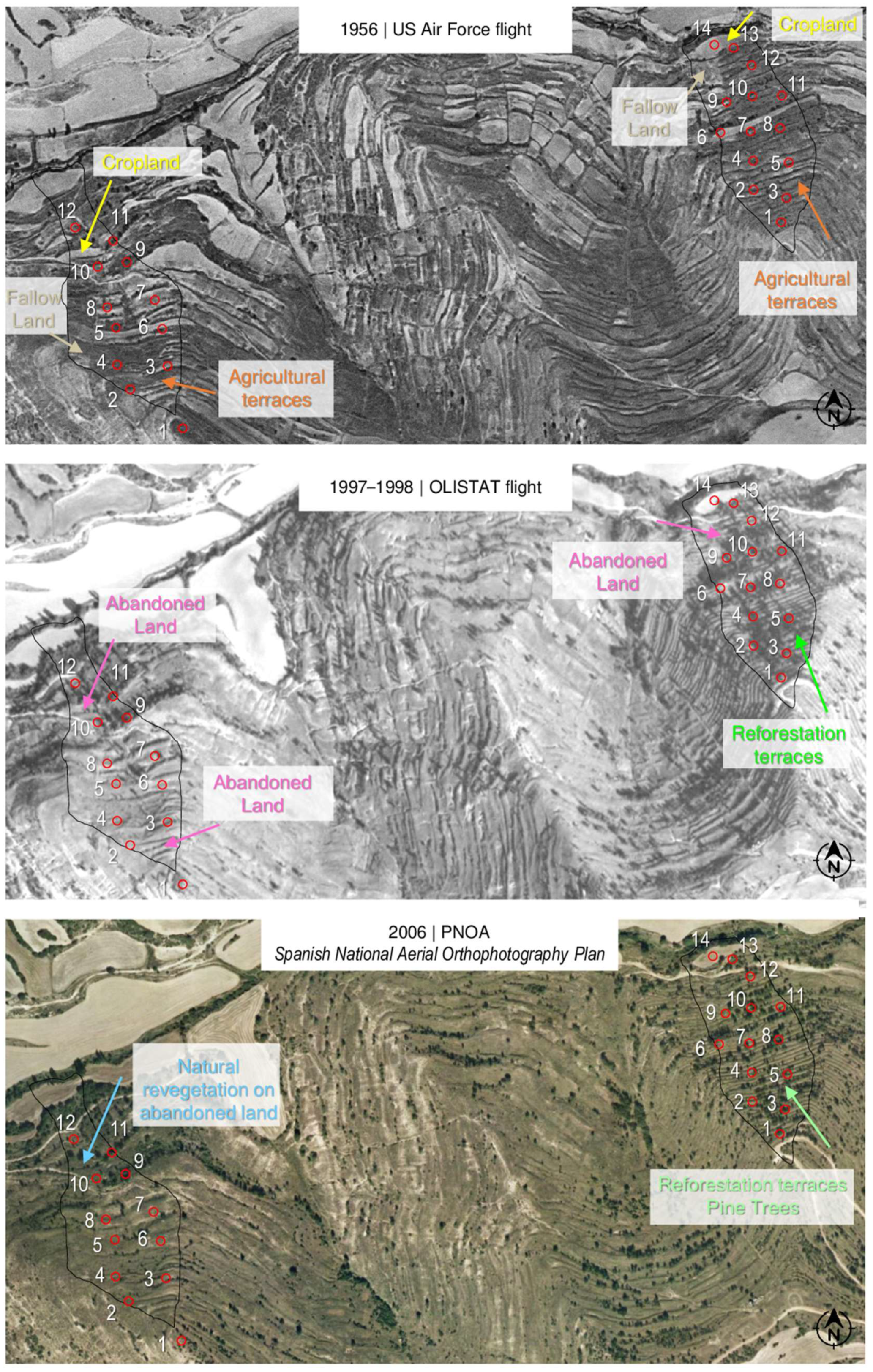
Vegetation dynamics also differed between the two catchments. While catchment A showed moderate and spatially variable vegetation cover, catchment B has undergone progressive reforestation since the mid-1970s, resulting in denser and more homogeneous vegetation. NDVI values confirmed this contrast, with consistently higher values in catchment B. However, the denser vegetation did not correspond to higher 137Cs counts, such as in a natural system condition, which would be expected. Because reforestation was implemented after the period of maximum 137Cs fallout and terracing involved extensive soil translocation, as indicated by the predominant absence of 137Cs, the resulting low or non-detectable counts did not provide information on runoff driven processes, which had been largely obliterated by terracing.
Historical aerial imagery reveals substantial land use changes in both catchments over recent decades (
Figure 7). The 1956–1957 aerial photographs showed widespread agricultural use, characterized by small stone terraces and cultivated plots extending across hillslopes in both catchments. By the late 1990s, a clear decline in agricultural activity was evident, with many terraces abandoned and early stages of vegetation recovery visible. Subsequent imagery from 2006 to 2012 showed progressive reforestation in catchment B, where former agricultural terraces were locally modified to facilitate tree planting. This process resulted in the creation of narrower terraces and additional slope breaks compared to the original agricultural layout, which has led to greater fragmentation of the hillslope topography. In contrast, catchment A showed a limited impact from reforestation, and the recovery of vegetation was mainly associated with the expansion of a few native specimens of Quercus, while the original terrace morphology remained more attenuated.
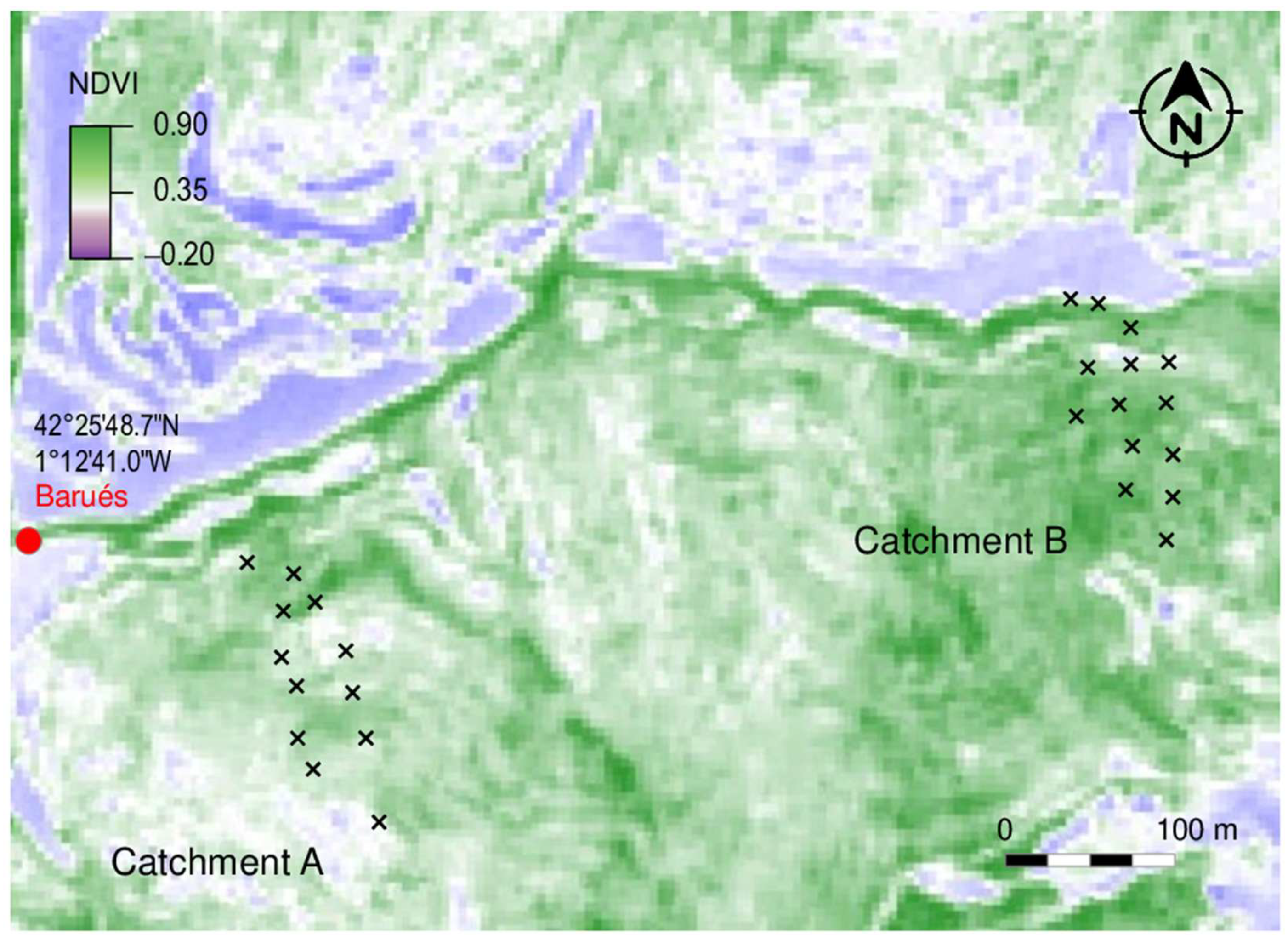
The NDVI values derived from Sentinel-2 imagery (
Figure 8,
Table 1 and
Table 2) indicated denser and more homogeneous vegetation cover in catchment B, whereas catchment A showed greater spatial variability. Soil water content (SWC) values (
Table 1 and
Table 2) were systematically higher in catchment B, where most sampling points exceeded 20%. In catchment A, SWC ranged from 5.5 to 22.9%, with a mean of 15.7 ± 5.6%, showing high spatial variability and the presence of several relatively dry sites. NDVI values also displayed marked variability (0.444–0.779; mean 0.574 ± 0.090), reflecting heterogeneous vegetation cover dominated by semi natural shrub and grass communities. In catchment B, SWC values were consistently higher, ranging from 17.5 to 32.6%, with a mean of 25.9 ± 4.8%, indicating generally higher near surface soil moisture across the catchment. NDVI values were also higher and more homogeneous (0.346–0.717; mean 0.635 ± 0.091), consistent with denser vegetation cover associated with reforestation.
Despite these contrasts, no direct correspondence was observed between higher SWC or NDVI values and higher 137Cs in either catchment. In catchment A, moderate to high 137Cs counts occur under a wide range of soil moisture and vegetation conditions, whereas in catchment B, low or undetectable 137Cs dominated despite higher SWC and NDVI. This pattern indicates that present day vegetation cover and surface soil moisture do not exert a primary control on the spatial distribution of 137Cs, which is instead largely governed by hillslope connectivity and the legacy of past land use disturbance.
4. Discussion
The combined analysis of hydrological structure,
137Cs measurements, vegetation indices, and field observations reveals clear contrasts in soil redistribution dynamics between the two catchments. Given the similarity in lithology, soil types, climate, and hillslope setting, the observed differences cannot be attributed to inherent physiographic or soil controls. Instead, they reflect differences in drainage organization, hillslope connectivity, and land use history [
21]. The clear differences in the spatial distribution of
137Cs between the two catchments reflect contrasting soil redistribution patterns and landscape organization, highlighting the role of land use history in shaping present day processes. The higher and more spatially consistent
137Cs counts in catchment A, associated with slopes that have undergone natural revegetation after abandonment, contrast with the more heterogeneous pattern observed in catchment B, where terracing has introduced strong spatial variability and frequent low or undetectable values. This suggests that soil redistribution processes operate under different controls in each catchment. In catchment A, soil redistribution appears to follow a more natural topographic organization, whereas in catchment B, human modified slopes disrupt these patterns. Consequently, the lack of significant correlations between
137Cs counts and terrain attributes can be explained by the terraces, which create discontinuous slopes and override the expected relationships between topography and
137Cs derived soil redistribution.
In catchment A, where hillslope morphology after abandonment has not been substantially modified by terracing, soil redistribution patterns appear primarily controlled by natural topographic and hydrological factors, namely, surface runoff and slope gradient. Points A6, A7, and A8, located on midslope positions with heterogeneous vegetation cover, illustrate this interaction clearly. Points A6 and A7 are situated on steeper slopes with lower vegetation density, conditions that favor runoff concentration and enhance the potential for water induced soil erosion. In contrast, point A8 occupies a locally convex midslope position with dense shrub cover that largely protects the soil surface. This configuration is consistent with the higher
137Cs counts recorded at point A8 compared with A6 and A7. Furthermore, most of the remaining points are located in interrill areas, where diffuse overland flow predominates rather than concentrated runoff. This setting is compatible with the higher
137Cs values observed, reflecting greater soil stability and reduced removal of fallout radionuclides. These observations reinforce the interpretation that, in the absence of significant anthropogenic modification, slope gradient and runoff connectivity act as the dominant controls on erosion processes in catchment A, which is in agreement with other studies [
22].
Catchment A is characterized by a more hierarchical drainage structure, with surface runoff largely concentrated along clearly defined flow paths. This hydrological configuration is consistent with the predominance of moderate to high 137Cs values and suggests relatively good preservation of surface soils across most of the catchment. Despite lower soil moisture and moderate vegetation cover, field observations indicate limited evidence of active surface disturbance, pointing to a relatively stable landscape after abandonment in which soil redistribution patterns remain closely linked to natural hydrological controls.
In contrast, the
137Cs signal in catchment B reflects a strong anthropogenic impact associated with terracing and subsequent reforestation. The construction of narrow terraces and taluses for tree planting involved substantial soil translocation and reworking across the hillslopes, as documented in terraced Mediterranean landscapes [
2,
23,
24]. As the current landscape configuration was formed after these reforestation works, the
137Cs distribution cannot be interpreted solely in terms of natural runoff driven redistribution. Instead, soil disturbance caused by human activity has partially masked or diluted the original fallout signal, complicating the attribution of measured values to present day hydrological processes alone.
The high frequency of low and undetectable
137Cs values indicates widespread soil redistribution, including partial or complete removal of the fallout radionuclide at many locations. However, this pattern cannot be explained solely by present day slope gradients or drainage metrics, which do not consistently indicate higher erosion potential compared to catchment A. At some locations where
137Cs is better preserved, small scale topography conditions or reduced disturbance may have limited soil removal, allowing partial retention of the radionuclide. Instead, the spatial distribution of
137Cs in catchment B appears strongly influenced by historical land use practices. Aerial imagery from the 1950s documents extensive cultivation based on small stone terraces and manual animal powered farming. Agricultural abandonment during the 1960s and 1970s, followed by reforestation from the mid-1970s onwards, modified surface roughness, runoff pathways, and sediment connectivity. The terracing associated with reforestation introduced abrupt slope discontinuities that altered flow patterns and promoted soil redistribution independent of purely natural topographic controls [
25].
In catchment B, the attenuation of the fallout signal is primarily associated with the profound soil disturbance caused by terracing. The construction of reforestation terraces involves substantial earth movement, resulting in soil translocation, vertical mixing, and burial of existing surface horizons. Additional processes may also contribute to the current 137Cs pattern, such as erosion after terracing, which can further deplete the signal. Overall, these mechanisms operate in combination, contributing to a reduction in the 137Cs signal.
Although current conditions in catchment B are characterized by higher soil moisture and denser vegetation cover, these factors do not translate into higher
137Cs inventories. Vegetation recovery may have reduced current erosion rates, but it has not erased the geomorphic imprint of past soil disturbance. Former terraces, altered soil profiles, and microtopographic irregularities continue to influence runoff routing and sediment redistribution, resulting in a fragmented and spatially inconsistent
137Cs signal. Field observations support this interpretation, as remnants of agricultural and reforestation structures and preferential runoff pathways are more frequent in catchment B and often coincide with areas showing low or undetectable
137Cs values. This highlights the persistence of land use legacies in controlling hillslope connectivity and soil redistribution processes [
26].
Despite the high resolution DEM, hydrological connectivity in terraced landscapes is fundamentally altered by anthropogenic structures that introduce discontinuities and promote lateral redistribution of flow [
27]. As a result, the flow pathways reflect the imposed terrace morphology rather than natural slope driven drainage patterns, which is particularly evident in catchment B, where terracing exerts a dominant control on runoff organization. The statistical analysis and field observations indicate that the spatial distribution of
137Cs cannot be explained by a single topographic or vegetation variable but rather by the interaction of multiple factors, including slope gradient, runoff connectivity, vegetation cover, and land use history. Within this multifactor context, terracing appears to be a dominant control in catchment B because it modifies slope morphology, interrupts downslope connectivity, and promotes lateral redistribution of soil and runoff. However, these processes operate in combination rather than in isolation.
These results demonstrate that
137Cs patterns in small Mediterranean catchments reflect not only present day hydrological and vegetation conditions but also long-term land use history and anthropogenic modification of hillslope morphology. Terracing and associated soil reworking can fundamentally alter runoff patterns and sediment connectivity, leaving a lasting imprint on soil redistribution processes that remains detectable decades after land abandonment and reforestation. Similar results have been reported in studies based on
137Cs measurements obtained with HPGe detectors along hillslope transects in terraced landscapes [
28].
Previous work in the Barués area [
3] has shown that agricultural abandonment under Mediterranean conditions is commonly associated with increased soil fertility indicators, including higher organic carbon and nutrient contents, compared to continuously cultivated land. These improvements are linked to the cessation of tillage, reduced soil disturbance, and progressive vegetation recovery, which enhance soil structure, aggregation, and resistance to erosion. Such findings provide a relevant reference framework for the present study, as they indicate that, in the absence of major post abandonment disturbance, abandoned soils in this region tend to evolve towards more stable and fertile conditions. This situation is consistent with the behavior observed in catchment A, where former abandoned agricultural terraces with natural revegetation display relatively coherent soil redistribution patterns controlled by natural runoff processes.
In contrast, the reforested areas of catchment B represent a different post abandonment trajectory. Although vegetation recovery and increased soil moisture would normally favor soil stabilization and nutrient retention, the construction and modification of narrow terraces for pine planting involved substantial soil translocation. This mechanical disturbance altered soil profiles and disrupted the natural organization of surface horizons, potentially affecting the spatial distribution of soil properties that would otherwise develop under passive abandonment. As a result, the present soil conditions in catchment B do not necessarily reflect a progressive soil recovery comparable to that documented in non disturbed abandoned land but rather a hybrid state shaped by both abandonment and subsequent anthropogenic reworking.
This distinction is important for interpreting soil redistribution indicators at the catchment scale. While abandoned Mediterranean soils may generally show enhanced fertility and reduced erodibility over time, the introduction of reforestation related terracing can override these trends by resetting surface conditions [
29] and modifying runoff connectivity [
1]. Consequently, differences between catchment A and catchment B should not be interpreted solely in terms of vegetation cover or abandonment age but also in relation to the degree of post abandonment soil translocation and landscape restructuring.
5. Conclusions
This study demonstrates that spatial patterns of 137Cs in small Mediterranean mountain catchments are controlled not only by present day hydrological processes but also by anthropogenic modifications of hillslope morphology associated with terracing and post abandonment reforestation. In catchment A, where hillslope morphology has not been substantially altered by terracing, 137Cs values correspond closely with physiographic characteristics and flow pathways. Higher counts are associated with interrill areas and zones of diffuse overland flow, whereas undetectable values occur on steep slopes with reduced vegetation cover and along preferential flow pathways, where runoff concentration triggers soil erosion. This coherent spatial organization indicates that, under near natural post abandonment conditions, slope gradient and runoff connectivity act as the dominant controls on soil erosion and radionuclide redistribution. In contrast, in the catchment with more extensive terracing for tree planting, the 137Cs signal reflects significant soil translocation and redistribution driven by human intervention, generating a highly heterogeneous pattern that partly overrides the influence of natural runoff. Terraces can, therefore, fundamentally alter flow connectivity and sediment transport, leaving a long-lasting imprint on soil redistribution decades after land abandonment. Such anthropogenic modification should be considered alongside natural hydrological drivers when interpreting radionuclide inventories in Mediterranean landscapes.
The paired catchment approach enables comparison under broadly similar geological, soil, and climatic conditions, isolating the influence of contrasting land use histories and post abandonment management trajectories on hydrological connectivity and sediment dynamics. Proximal gamma spectrometry using a portable LaBr3 scintillation detector proved to be a robust and cost effective tool for investigating spatial variability in soil redistribution. In situ measurements allowed rapid screening of the presence or absence of 137Cs and identification of contrasting redistribution patterns between catchments, providing spatially extensive coverage and operational flexibility in heterogeneous and steep terrain. When combined with detailed terrain analysis and land use information, high resolution scintillation detectors, such as LaBr3, offer a powerful framework for interpreting spatial patterns of 137Cs as indicators of soil redistribution. This study demonstrates the suitability of this approach for in situ gamma spectrometry in the Mediterranean environmental and geomorphological context.