


Abstract
Mining is associated with specific heavy metals (HMs), including cadmium (Cd), lead (Pb), copper (Cu), iron (Fe), and other toxic metals. These metals contaminate water and accumulate in both children and adults at varying concentrations, resulting in severe health implications. This paper examines the impact of barite mining on water quality, human well-being, and the environment. It evaluates the health implications of natural and anthropogenic activities on the selective liberation of heavy metals at mining sites. The potential environmental impact on mining communities in the extreme dry (April), early or mid-rainy (July), and optimum rainy (October) seasons of the year is also elucidated. Ponds within six barite mining sites were analysed using an Atomic Absorption Spectrometer (AAS) to identify these metals in water samples. The implications of HM concentrations on the well-being of the young and adults were examined and assessed using relevant mathematical expressions, and the outcome was compared with national and international environmental standards. Results show that the ponds within the barite mining sites are contaminated with copper (Cu), barium (Ba), cadmium (Cd), lead (Pb), and iron (Fe). The HM concentration exceeds the reference dose (RfD) or tolerable daily intake (TDI) stated by global and national standards for water quality and healthy living. Statistical assessments indicated that the non-carcinogenic risks of Pb and Cd are higher in children than in adults. In addition to mining, farming activities may increase HM contamination within the areas. It is anticipated that existing policy frameworks and water laws will be reviewed to support efforts for the early detection of HMs in water through medical examinations, water quality assessments, and non-carcinogenic risk (NCR) assessments.
1. Introduction
Nigeria’s water resources encompass freshwater reserves, complex river drainage systems, and surface and groundwater, as well as numerous dams and aquifer formations. These vast resources are managed through the application of several water laws of the Nigerian Ministry of Water Resources and the Land Use Act of 1978 [1,2]. The goal of these water laws and policies is to utilize sufficient water resources for both industrial and domestic uses. However, water shortages still occur periodically in most towns and rural areas [2,3]. Similarly, Nigerians and most Sub-Saharan Africans depend solely on surface water sources to meet domestic and industrial needs [1,2,4]. Anthropogenic and human activities, such as the discharge of wastewater into rivers, mining and mineral extraction, and industrial processes, easily contaminate these sources [5,6].
Despite existing water laws, resource management strategies, procedures, and protocols, water contamination persists unchecked and unregulated for various reasons [1,2]. Research has shown that direct sources of water contamination can be easily addressed due to in-depth knowledge and awareness. In the case of water contamination by heavy metals, toxic metals are released into water, soil, and the environment, and their concentrations in water increase over a prolonged period. Health and other associated risks are often overlooked at the point of release, as these metals are solids. However, the concentration increases unnoticed and undetected. It is transported several miles away from the primary sources of contamination and accumulates in humans and animals unnoticed until the maximum allowable limit is exceeded [6,7,8,9]. Several prevalent health issues in children remain undisclosed, many of which may be traceable to water contamination [10,11,12].
Mining activities expose heavy metals and other toxic metals to water [6,7]. These metals are leached into the water and transported or diffused thousands of miles away from the contamination zones. Regulated and unregulated mineral extraction activities expose heavy metals to water, and the concentrations or toxicity of these metals vary across locations [6,13]. Research has shown the negative impact of mining on water quality and the environment. Acid mine drainage is one of the negative impacts of mining and the major cause of potential risks to water quality and the environment [14,15,16]. Other potential risks of mining to water quality include flooding of mine or mining ponds, uncontrolled discharge of water from pollution control dams, discharge of mine-affected water, drainage from mine water, and sediment runoff from the mining site [17,18,19]. Huang et al. [14] and Mhlongo et al. [18] reported the impact of mining on heavy metal mobility, changes in water pH and total dissolved solids, and deterioration of water quality indicators. A water quality assessment by Tiwary [19] of non-acidic and acidic mines indicated significant degradation of water quality due to illegal mining. A reduction in water pH, an increase in hardness, and an increase in total suspended and dissolved solids, as well as heavy metals, all affect the quality of water. These water quality indexes or indicators provide a good indication of water quality and elemental compositions to help quantify the negative impact of mining on water resources.
Mineral extraction takes various forms, and its impact on humans depends on the specific mining method employed. Mining practices can occur in various forms, including surface mining, artisanal, small-scale, medium-scale, and large-scale mining, underground mining, placer mining, strip mining, in situ mining, or quarrying [7,15]. When minerals are extracted, solids are displaced, suspended, dissolved, or diffused in air or water. Research has shown that mining alters the environment, transforming a once thermodynamically stable environment into an unstable one [15]. These changes, which encourage mineral–water interactions, microbial activities, and heavy metal contamination, among other activities, have a significant adverse effect on water quality, child nutrition, and human health. In water, these elements are leached under thermodynamically stable conditions [20]. Several studies on the negative impact of mineral extraction on water and plants have shown that precautionary measures must be taken to minimise the risks and ecological hazards posed to human health, the food chain, and environmental well-being [6,8]. However, safety is guaranteed through the timely detection of sources of harm and a swift reaction using the most effective and efficient procedures. This will ensure responsible mineral extraction and a sustainable, healthy environment that supports child nutrition and prevents heavy metal contamination of water.
Heavy metal pollution poses a worldwide threat to both human health and the environment. The impact is assessed or measured using specific geochemical background data and contamination indices in the absence of biological samples. Multiple analytical tools and data sources have been utilized to identify contamination origins, quantify heavy metal concentrations, and determine cumulative toxicity. These include the contamination factor (CF) [21,22], geo-accumulation index () [22], total toxic unit (TU), maximally exposed individual (MEI), health hazard (HI), health quotient (HQ), and overall non-carcinogenic risk [6,7,9,22]. The index of geo-accumulation or geochemical accumulation () of water describes the heavy metal enrichment of water samples or the degree of contamination [22,23,24]. It quantifies heavy metals (HMs) and the degree of anthropogenic contamination [25] and provides fundamental information on HM contamination control and health risk management [26]. Similarly, the assessment of the degree of HM contamination or pollution and toxicity, and the change in water quality (water pH and colour, percentage of dissolved and suspended solids in water) has proved efficient in creating the basis for comparing research data with national and global standards for water on environmental and health safety [6]. Beyond the assessment and data analysis of the impact of HM contamination of water, the data drive plans and processes. Scientific data and eyewitness report also facilitate the implementation of policies and actions, and synergy for the enforcement of water laws and other relevant laws critical for preventing health and environmental risks of HM contamination [7].
Lead (Pb) poisoning is one of the primary mining-aided heavy metal (HM) contaminations. It represents a critical public health issue, exerting substantial detrimental effects on human health, especially among child populations. These concerns stem from the pervasive presence of lead (Pb) in the environment and its harmful effects on multiple organ systems. Children are particularly vulnerable to lead exposure because their blood–brain barrier and immune systems are not yet fully developed, making them more susceptible to neurological damage and developmental delays [27,28]. Exposure to lead has been associated with numerous adverse health effects, including cognitive impairments, behavioural disturbances like hyperactivity and aggression, and poor academic performance [27,28]. Chronic exposure, even at minimal concentrations, is correlated with the incidence of cardiovascular pathologies in adults and cognitive impairments in child populations [29,30]. The global burden of diseases associated with lead exposure has escalated significantly from 1990 to 2019, with ischemic heart disease, cerebrovascular accidents, and diabetes exhibiting the most pronounced increases in disability-adjusted life years (DALYs) [31].
In communities like the Niger Delta, Nigeria, in Africa, heavy metals from crude oil extraction have been linked to increased serum levels of Pb and Cd, oxidative stress, and systemic health issues, including DNA damage and depletion of antioxidants [32]. In comparison, Indonesia has reported elevated concentrations of heavy metals in both groundwater and drinking water, with arsenic presenting a non-carcinogenic health risk, especially among children [33]. Within the Amazon Basin, the practice of mining has resulted in significant metal pollution in aquatic environments and sediments. Such instances are characterized by concentrations of specific elements, including Hg, Fe, Pb, Cu, Cd, Ni, and Zn, that frequently surpass established quality benchmarks, thereby endangering aquatic organisms as well as human health [34]. Similarly, in Zlatna’s gold mining region of Romania, acid mine drainage and heavy metal pollution have adversely affected aquatic ecosystems. However, natural attenuation of pollution has been observed over time [35]. In the boreal forests of Yakutia, Russia, mining has resulted in high soil concentrations of Cu, Ni, Cr, Co, As, Pb, and Mn, which subsequently increase the levels of these elements in local vegetation [36].
The spread of heavy metal pollution has caused serious negative effects on people’s lives across many areas, as shown by various case studies. In Nigeria, the lead poisoning incident in Zamfara State is a clear example where artisanal gold mining activities led to intense lead contamination, resulting in numerous child deaths and long-term health problems among the residents [37]. Children are particularly susceptible to toxic heavy metals such as lead, mercury, and cadmium, which have been linked to intellectual impairments, neurocognitive dysfunction, behavioural disorders, respiratory conditions, and an increased risk of cancer and cardiovascular disease [38]. In East Africa, exposure to toxic metals during pregnancy is associated with high blood pressure, early births, and developmental harm to the foetus, while affected children often show signs of delayed brain development and poor physical growth [39]. Exposure to heavy metals in women, particularly those of reproductive age, has been linked to reproductive disorders, including infertility, menstrual dysfunction, and heightened susceptibility to breast and endometrial cancers [40].
The accumulation of HMs, including lead, mercury, copper, cadmium, and arsenic, within environmental contexts presents substantial threats to ecological integrity and human well-being. This is attributable to their toxicological properties, persistence in ecological systems, and capacity for bioaccumulation [41]. Mining operations are a significant contributor to heavy metal pollution, resulting in soil degradation, water source contamination, and deterioration of air quality, which subsequently disrupt ecological processes and pose a threat to biodiversity [34]. The presence of toxic metals in soil and water systems affects plant growth and agricultural productivity, posing risks to food safety and security [41,42]. Moreover, these metals exhibit a propensity for bioaccumulation within the food chain, leading to biomagnification and presenting considerable health hazards to both humans and wildlife [42]. Yin et al. (2024) revealed significant human health risks associated with poor-quality surface water and groundwater in mining areas, with unacceptable carcinogenic risks affecting 51.52% of adults and 29.29% of children. Additionally, in the southern region of China, 68.07% of adults and 80.67% of children were found to face significant non-carcinogenic health risks [43].
Research and reports have persistently underscored the profound repercussions of heavy metal contamination on populations with heightened susceptibility, especially among children and women, in locales subjected to mining operations. Heavy metals, including but not limited to Pb, Hg, Cd, Cu, As, S, and Zn, are commonly found in ecosystems adjacent to mining activities, posing significant health threats due to their toxic properties and environmental persistence [6,8]. On a global scale, it is estimated that approximately 23 million individuals, comprising women and children, reside in floodplain areas impacted by hazardous waste from metal mining, with arsenic and lead identified as major contaminants [44]. These findings collectively emphasise the widespread and severe impact of heavy metal (HM) contamination caused by mineral extraction practices on vulnerable populations, necessitating urgent public health initiatives and ecological safeguard monitoring to mitigate these risks. While these data indicate a looming danger, it is imperative to assess the available data, quantify potential risks, and conduct a long-term analysis of HM contamination of water resources in Nigeria and Africa, considering the massive undocumented and uncensored mineral extraction activities. Beyond awareness and calls for action, existing databases contain actionable data that can drive local, national, and global initiatives when it is convincing and not speculative.
Significant efforts are being made globally to enforce and adhere to environmental laws and regulations, particularly those related to water law and mining law. However, very little has been reported on HM contamination in Nigeria and Africa. Studies on HM contamination at barite mines are scanty, yet there have been several HM contamination-associated health-related pandemics in children and adults in Nigeria. Refs. [6,7,24] reported Pb, Cu, Fe, and Zn contamination in ponds within the Middle Benue Trough of Nigeria (Benue and Nasarawa States). However, it is anticipated that heavy metals (HMs) found within the Middle Benue Trough are transported from the Upper Benue Trough, which primarily covers Taraba State in Nigeria [7,45]. Similarly, previous studies on HM contamination have focused on ponds within mining sites, and mine wastewater samples were obtained during the peak of the rainy season, when rainfall volume is anticipated to influence concentration levels, either elevating or reducing them at the time of sampling. The impact of natural activities, such as rainfall, and other anthropogenic activities other than mining, on HM contamination has not been reported.
Barite has a high density and is insoluble in water. It has extensive applications due to its hydrophobic, adsorption, and ion exchange properties, which are facilitated by its high surface area. These unique properties, including high specific gravity, relatively low hardness, and chemical inertness, make it suitable as a weighting agent in oil drilling mud formulation, a filler in paint and paper production, and in oral medical treatments. Barite is extracted or mined from the earth by blasting the host rocks. This operation is followed by excavation, ore processing, and waste disposal. The entire processing value chain exposes barite rocks to water, resulting in the release of HMs, including lead (Pb), cadmium (Cd), and copper (Cu), as well as other toxins into the environment.
Research has shown that barite ores usually have a pH ranging between 7.9 and 8.5 [24], indicating the contributions of non-barite minerals present in the ores to the water chemistry of barite in the environment. Both surface and underground mining of barite ores can affect the quality of water resources throughout different phases of a mine’s operational lifespan [3,4,5,6,10,24]. Whenever barite is dissolved or dispersed as sediments in water, the non-barite minerals, which are heavy metals, contaminate water and soil and can accumulate in plants at different concentrations [6,7,24]. The oral ingestion of these metals at specific dosages is dangerous to human health. Local communities residing near barite mining sites are particularly vulnerable to health risks resulting from contamination. Inhalation of airborne particles and dust laden with harmful substances can lead to respiratory issues [7,8,12].
This paper examines water quality degradation resulting from barite mining processes. It evaluates the health implications of natural and anthropogenic activities on the selective liberation of heavy metals at mining sites. It also quantifies potential health and environmental implications for mining communities during the extreme dry (April), early or mid-rainy (July), and optimum rainy (October) seasons of the year. These objectives were achieved through chemical and risk assessments of water samples from ponds and rivers across the six barite mining sites. This study is crucial for evaluating the health hazards of heavy metal contamination from mining and mineral processing in Nigeria, and for recommending policies that are essential to supporting governmental efforts to provide medical assistance to miners and the mining community in Africa and beyond.
2. Materials and Methods
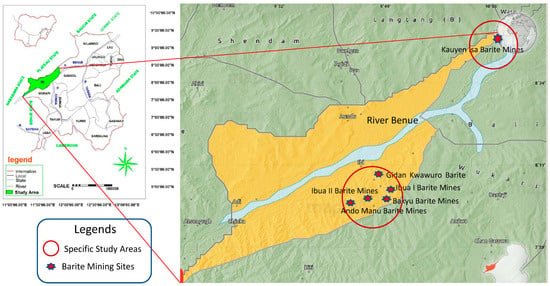
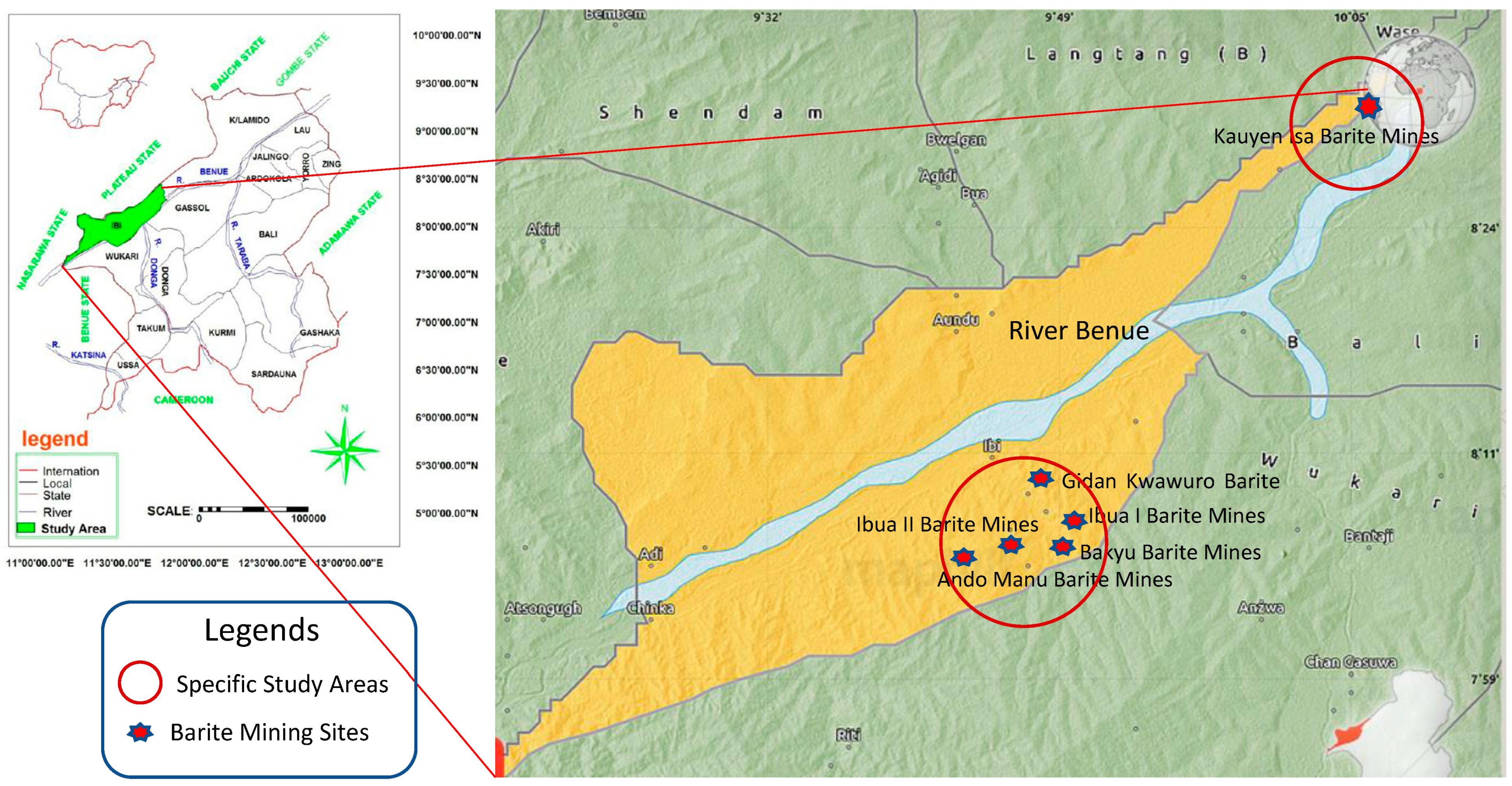
This section details the procedures employed to assess contaminant concentrations in water samples obtained from six distinct sites within the study area, as indicated in Figure 1. The samples obtained were analysed using atomic absorption spectrometry (AAS), and the physicochemical parameters were evaluated using mathematical expressions from the literature. These assessments were also compared with global environmental and health standards. The heavy metals examined in this study included copper (Cu), cadmium (Cd), lead (Pb), and iron (Fe).
Figure 1.
Map of Nigeria showing IB1–IB6 with a zoomed view of clustered sites. A small-scale map of Nigeria (upper left) extends to the map of the State (Taraba State—lower left) and the local area map (entire right-hand side), providing information on specific mines, water bodies, and the likelihood of mining communities.
2.1. Sample Collection
Water specimens were collected in duplicate using a randomized sampling approach from each of the six barite mines, including Ando Manu (Latitude: 5°5′50.2″ N and Longitude: 9°46′54.33″ E) for IB1, Ibua II (Latitude: 8°7′50.9″ N and Longitude: 9°47′41.3″ E) for IB2, Ibua I (Latitude: 8°6′40.6″ N and Longitude: 9°47′25.74″ E) for IB3, Bakyu (Latitude: 8°6′0.048″ N and Longitude: 9°49′21.01″ E) for IB4, Gidan Kwawuro (Latitude: 8°8′45.26″ N and Longitude: 9°48′11.92″ E) for IB5, and Kauyen Isa (Latitude: 8°54′38.8″ N and Longitude: 11°21′3.6″ E) for IB6. The locations are indicated in Figure 1. The barite mines or mining sites are located near the River Benue, at the upper and slightly downstream sections of the river. This river flows into the mines and supplies ponds and tributaries of the river. The water bodies serve as major sources of drinking water and are also used for domestic activities. Plants and animals also depend directly on the river for growth and development. The six barite mining sites (IB1–IB6) were selected due to their proximity to river tributaries, mining ponds, villages, towns, and cities.
All these sites are located inside the Ibi Local Government Area of Taraba State. The samples were placed in clean polyethylene bottles, tightly sealed, and stored for pre-treatment. They were collected before the rainy season (July), during the peak rainy season (October), and during the dry season (April). The study was carefully designed, and the collection times were specifically chosen to evaluate changes in heavy metal concentrations, contamination levels, and associated risks of each metal throughout the year.
2.2. Sample Cleaning/Digestion
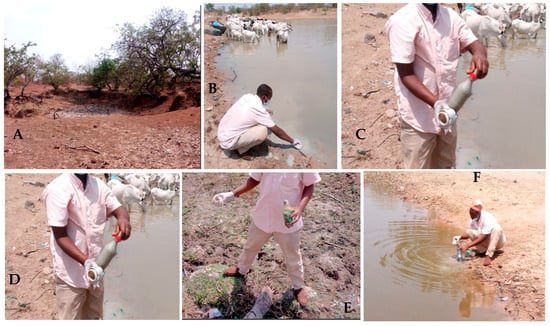
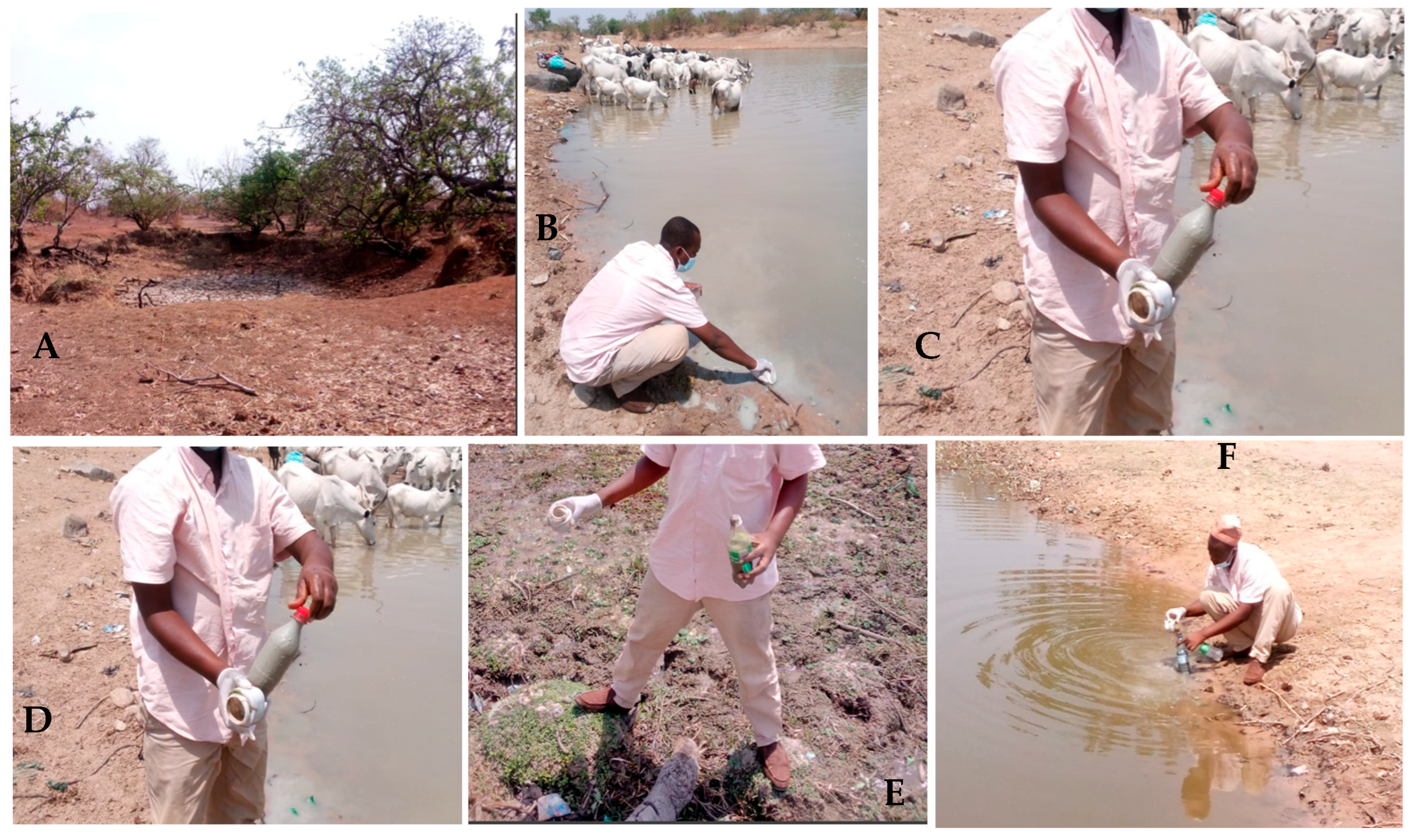
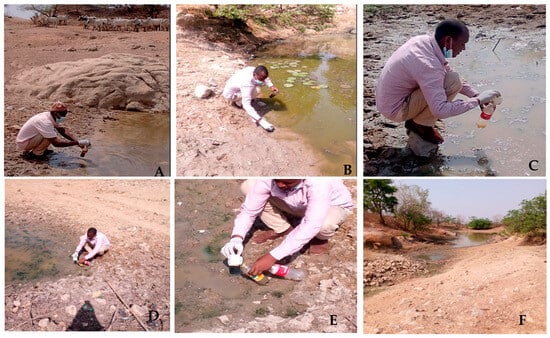
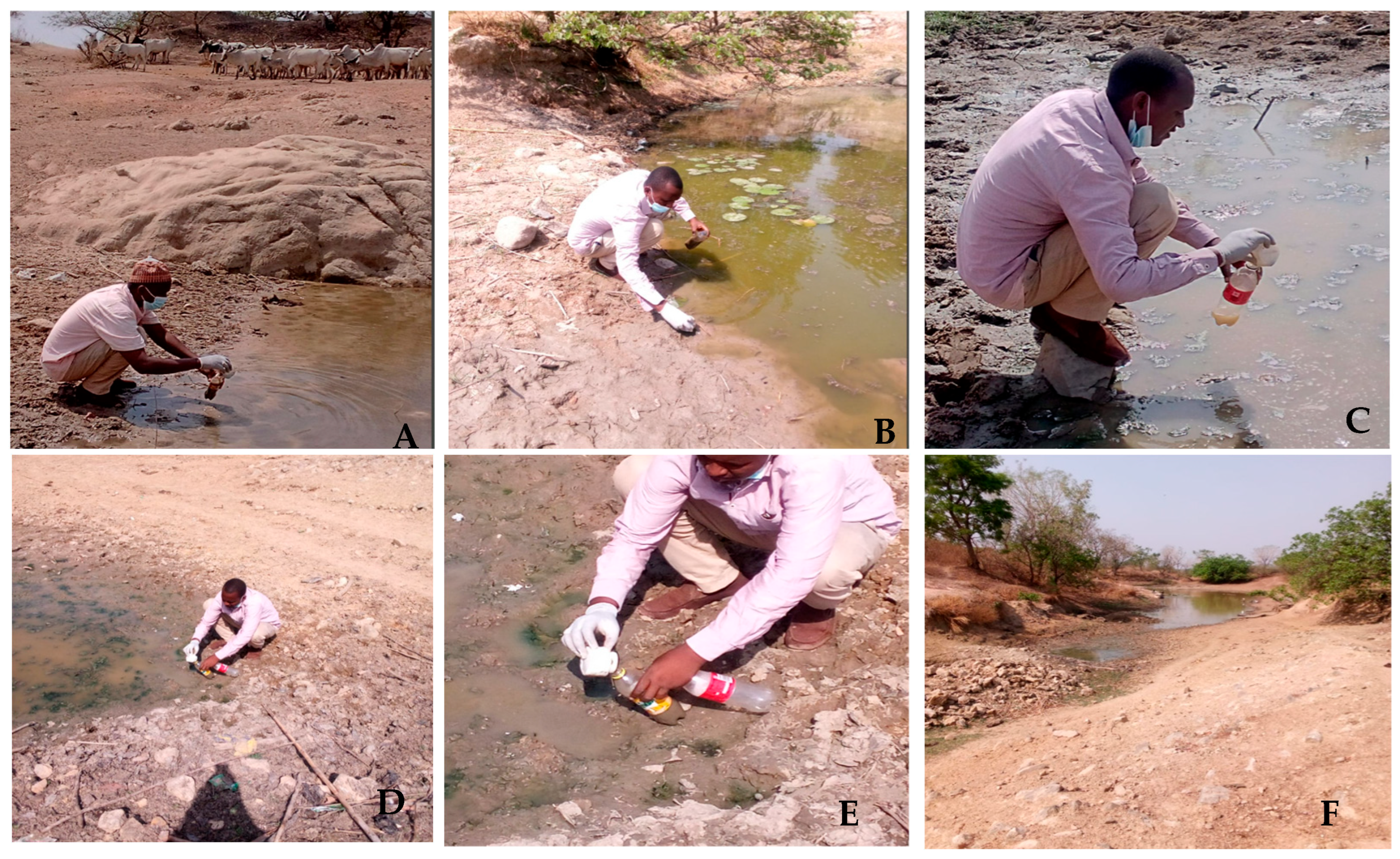
Water samples collected from the ponds and rivers (as shown in Figure 2 and Figure 3) were digested and allowed to settle for 24 h with initial acid preservation (pH < 2) [46]. This chemical processing of the water samples activated the heavy metals in the samples, allowing the absorbed metals to re-dissolve. In total, 400 mL of the digested samples was fed into the beaker and heated at a temperature of 110 °C. The temperature was maintained until the fumes cleared, indicating that the samples had been completely digested. The samples were cooled, and the digested solution was filtered using a 0.45 μm filter to remove the remaining solids. Then, 1% nitric acid (high-purity trace metal grade) was gently added to the filtrate [24]. The acidified water samples were analysed using the PerKinElmer model atomic absorption spectroscopy (AAS) at the Umaru Musa Yar’Adua University Advanced Chemistry Laboratory in Katsina, Northwest Nigeria. Due to the large number of samples, some were analysed using atomic absorption spectroscopy (AAS) with a PerkinElmer PinAAcle 900H model at the Advanced Chemistry Laboratory, Bayero University, Kano, Northwest Nigeria. Prior to the analysis, the device was calibrated using the manufacturer’s laboratory standard reagents and operational procedures.
Figure 2.
A collection of images showing the locations in the study area, indicating the active and abandoned ponds and rivers at the barite mining sites in the Ibi Local Government Area of Taraba State. Pond (A) in Ibua II in IB2, (B–D) at Kauyen Isa in IB6, and (E,F) at Gidan Kwawuro IB5.
Figure 3.
A collection of images showing the impact of the seasons and heavy metals (HMs) contaminations on water quality and the environment, indicating potential risks to humans, animals, and wildlife. Pond (A) in Bakyu in IB4, pond (B) in Ibua II in IB2, (C–E) at Gidan Kwawuro in IB5, and (F) in Ibua I in IB3.
2.3. Analysis of Water Samples for Heavy Metals Concentration
The presence and the concentrations of HMs in the water samples were analysed by atomic absorption spectroscopy (AAS) (AA210RAP BUCK flame emission spectrometer filter GLA-4B Graphite furnace, East Norwalk, CT, USA) [46], using standard methods published in the literature [22,45]. A total of nine replicates were used for each mining site—three replicates per location per season were sampled/selected and analysed to ensure reliable quantitative results. However, there are locations with only 6–8 replicates, where it is dangerous to collect water samples during the optimum rainy seasons. Since a standard test method is adopted, it is anticipated that three of the total replicates will be used for the standard calibration curves and plank signal measurements.
Based on the primary data obtained, mathematical expressions were used to analytically compute, assess, evaluate, and quantify the extent of contamination and the level of the anticipated environmental and health implications or consequences. The computed values were validated and compared with global environmental and health standards, including the World Health Organisation (WHO), European Union (EU), Nigerian Standard for Drinking Water Quality (NSDWQ), Nigerian Industrial Standard (NIS), United States Environmental Protection Agency (US EPA), and China Ministry of Health National Standards (CMHNS) [45,47,48].
This study was limited to analysing mine water samples from both abandoned and active mining sites in the Ibi Local Government Area, Taraba State.
In this work, different sources of health hazards were also evaluated using statistical tools, models, and assumptions published in the literature.
Toxicity Index for Heavy Metals in Mine Water (TU)
The heavy metal TU is one of the most critical assessments of water quality for water samples collected at mining sites [6,7]. Toxic units (TU) represent the ratio between the concentration of heavy metals in a liquid and their corresponding severe-effect level (SEL), serving as indicators of potential acute toxicity posed by contaminants within the medium [24]. In this study, a threshold value of four was established as the cumulative low-effect level (LEL) for the heavy metals in the water sample. Therefore, the medium is considered potentially toxic when the total toxic units surpass this value. TU was described in terms of metal concentration, as shown in Equation (1).
The TU raises concern when the concentration of one or more metals in the medium exceeds the LEL. However, when TU values remain well below the LEL threshold, the risk of acute toxicity to humans is significantly reduced [49].
2.4. Quantitative Risk Analysis and Calculation
2.4.1. Contamination Assessment
This assessment evaluates the potential risks to both the mining community and the surrounding environment by examining concentrations of specific heavy metals—Cd, Cu, Pb, and Fe—in barite mining ponds (Figure 2 and Figure 3). The analysis reflects contamination levels influenced by both natural processes and human activities at the mining site.
2.4.2. Geo Accumulation Index ()
is used to monitor and assess the level and degree of heavy metals in the environment, i.e., the intensity and acuteness of metal pollution. This is an analytical method and estimation technique developed by Afolayan et al. (2021) [6,50]. Equation (2) is used to calculate the accumulation index.
where is the concentration of metal in water samples (mg/L), and is the metal concentration in water before the introduction of metals due to mining activities or natural or anthropogenic activities (mg/L). 1.5 is a constant and correction factor introduced to minimize the degree of deviation in the background values due to the lithological variations in the water. Thus, the water sample is unpolluted when < 0; unpolluted to moderately polluted (0 ≤ < 1); moderately polluted (1 ≤ < 2); moderately to severely polluted (2 ≤ < 3); severely polluted (3 ≤ < 4); severely to enormously polluted (4 ≤ < 5); and enormously polluted ( ≥ 5).
2.4.3. Contamination Factors (CF)
CF is also known as the single-element index of contamination level. The value is determined based on the procedure published in Hakanson (1980) [24,51]. The contamination is low if CF ˂ 1; moderately contaminated for 1 ≤ CF ˂ 3; significantly contaminated for 3 ≤ CF ˂ 6; and very highly contaminated for CF ≥ 6. For this study, the CF is computed using Equation (3).
where CF is the contamination factor (dimensionless/unitless), CM is the mean metal concentration (mg/L), and CB is the concentration of elements in the background sample (mg/L).
2.5. Health Risk Assessment and Chronic Daily Intake (CDI)
Heavy metals enter the environment during mining and contaminate both abandoned and active mines and ponds. These metals are transported by water, introduced by humans through oral and dermal pathways, and accumulated in plants and animals (through erosion or flooding from mining activities). Based on the rate of oral ingestion, the CDI is determined, and the degree of heavy metal toxicity is measured or assessed [49,52]. The CDIs are compared to the maximum tolerable daily intake (MTDI). The daily intake is described as chronic when the daily dose exceeds MTDI (CDI > MTDI).
CDI varies as a function of mean heavy metal concentration in water, dose intake, and body weight [24]. The CDI is calculated using Equation (4).
where is the concentration of heavy metals in water (mg/L), and IR are the body weight (kg) and daily water intake rate (mg/day), respectively [24]. These values are derived from an existing database of global environmental regulators and are presented in Table A1, Table A2 and Table A3 of Appendix A [52,53,54,55,56].
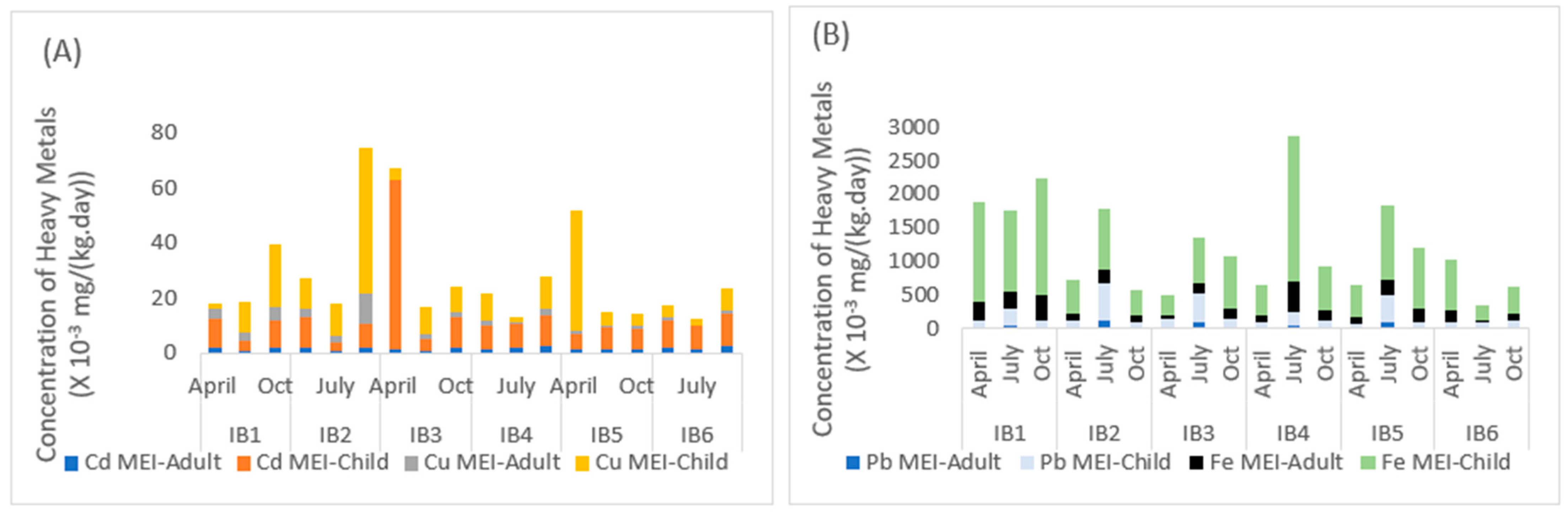
Similarly, the maximally exposed individual (MEI) presents information on the group of people at the highest risk of non-carcinogenic substances. This group includes men, women, and children working as miners, living with the mining community, and other non-mining communities connected to the water lines contaminated by mining activities. The harm caused by non-carcinogenic substances, such as Cu and Fe, was evaluated and compared to threshold levels below which the human body can tolerate. MEI was assessed using Equation (5).
where MEI is the maximally exposed individual (mg kg−1d−1); C is the average concentration of a contaminant at exposure (mg/L in water samples); CR is the contact rate (L/day). EF stands for exposure frequency (days/year), ED for exposure duration (years), BW for body weight (kg), and AT for the period over (days) in which exposure is typical.
2.6. Exposure Assessment
The assessment of exposure to HMs in the mining ecosystem can be determined by calculating the exposure dose rate for individuals by oral ingestion and dermal intake of heavy metals in water from the pond. Refs. [7,9] calculated the average exposure to heavy metals in water samples resulting from oral ingestion (EXPing) and dermal (skin) exposure (Expderm) using Equations (6) and (7).
where and are the exposure dose rates through ingestion (mg kg−1d−1) and diffusion through the skin (dermal pathway) (mg kg−1d−1). is the concentration of heavy metals in the sample (mg/L), is the ingestion rate (mg/day), is the exposure frequency (days/year), and is the exposure duration (years). stands for body weight (kg), for the average time (days), for skin surface area (cm2), for the dermal permeability coefficient, and for the conversion factor (kg/mg). The exposure dose rate via injection and diffusion along the skin can vary depending on the concentration of heavy metals in the environment, their solubility in tissue fluid, the amount of blood circulation, the toxicity of the metals, and the duration and time of exposure. These exposure indices are computed based on existing databases available in the public domain [6] and are presented in Appendix A.
2.7. Non-Carcinogenic Risk
Hazard Quotient (HQ)
HQ represents the hazard quotient for an individual element and is used to quantify its specific risk [24]. It also represents the chronic daily intake (CDI) and the corresponding reference dose factor (RfD) [6,49]. The health quotient is calculated using Equation (8).
HQ defines the risk associated with non-carcinogenic components. The term “hazard quotient,” or “HQ,” measures the extent of susceptibility to danger resulting from the intake of metals and other non-carcinogenic chemicals caused by exposure through the dermal pathway. HQ equates to daily chronic consumption of heavy metals (e.g., Ba, Zn, Cu, and Fe) that do not cause cancer.
Furthermore, the reference dose factor (RfD) reflects the no-observable-adverse-effect level (NOAEL) relative to the uncertainty factor (UF). The intake rate of hazardous metals via oral and dermal exposure routes for non-carcinogenic effects is assessed based on the reference dose (RfD) and uncertainty factor (UF) for each heavy metal. Similarly, the individual excess life-long cancer risk (IELCR) is computed as the lifetime risk associated with exposure to heavy metals beyond the tolerable threshold of 10−6 (1 part per million), based on the lowest-observed-adverse-effect level (LOAEL). Although no definitive cutoff exists for carcinogenic risk, cumulative exposure, even at low doses, can contribute to long-term effects. Non-carcinogenic risk levels are categorized on a scale from 1 to 4, ranging from no risk to high risk [56,57,58].
When HQ is significantly less than the lowest observable-adverse-effect level (LOAEL) or below 1 (with LOAEL set as unity), water is mostly safe and is not detrimental to human health [48]. However, when HQ is greater than one or above the LOAEL, it is considered hazardous and poisonous and may cause chronic illness. Comparably, non-carcinogenic hazards were categorized as “negligible chronic risk (HQ < 0.1), low risk (0.1 < HQ < 1), medium risk (1 < HQ < 4), and high risk (HQ > 4)” by Rapant et al. 2011 [58,59].
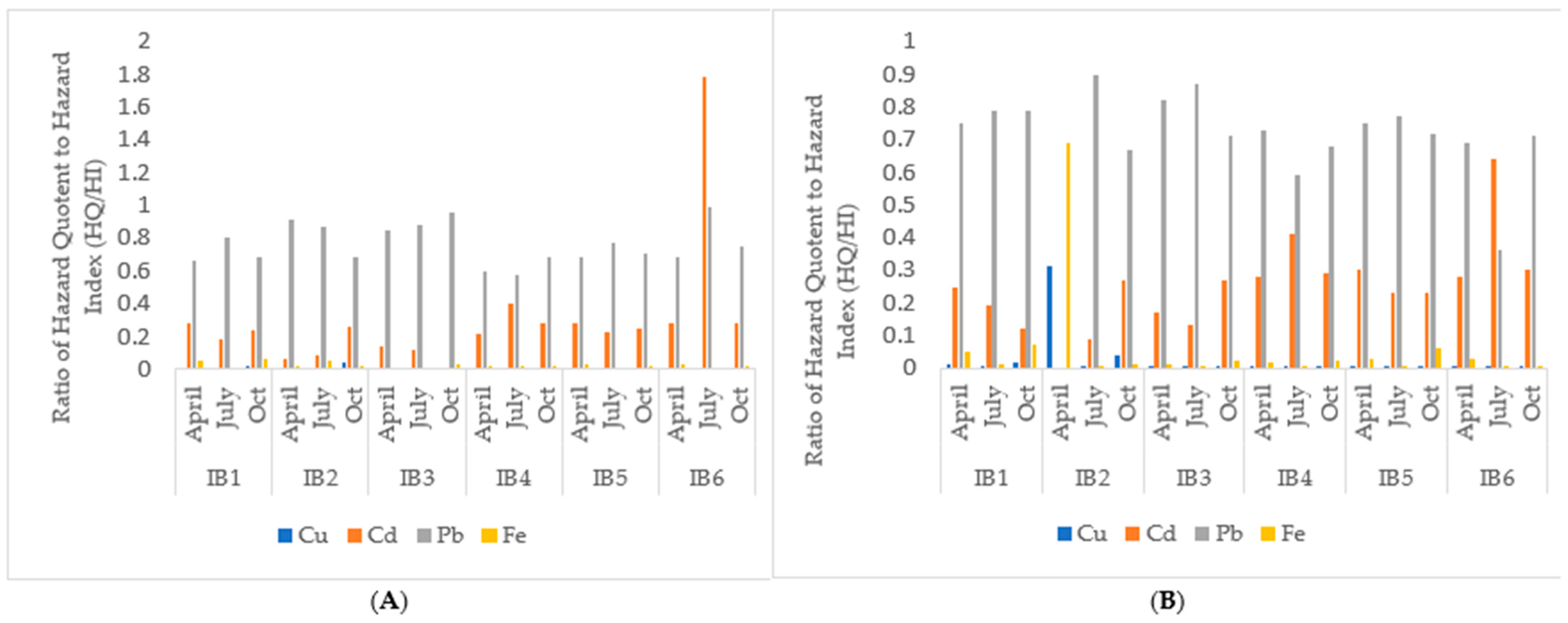
The non-carcinogenic risk (NCR) is the ratio of the hazard index to the hazard quotient (HQ/HI). When (HQ/HI) = 1, there is a negative non-carcinogenic risk to human health. For 0.1 < (HQ/HI) < 1, steps must be taken to avert potential danger or mining risks. The water in the mining ponds is safe, or a negative impact on health is unlikely when (HQ/HI) < 0.1 [59,60].
The selected indices (TU, , CF, CDI, MEI, EXPing, EXPderm, HQ, HI) were chosen because they collectively provide a detailed assessment of both environmental and ecological contamination and human health risks. Indices such as TU, , and CF assess the degree and sources of pollution in sediments/soils, while CDI, MEI, EXPing, and EXPderm quantify potential human exposure pathways. HQ and HI further integrate these exposures to estimate non-carcinogenic health risks. This combination ensures a balanced assessment that captures contamination intensity, ecological implications, and potential impacts on human health, making the analysis both robust and policy relevant.
3. Results and Discussion
3.1. Evaluation of Toxic Effects of Heavy Metals in Mining Pond Water
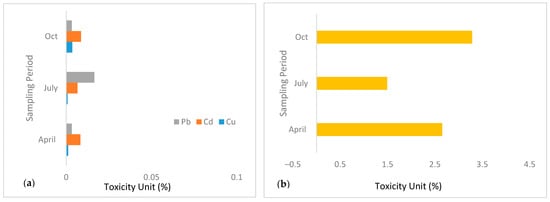
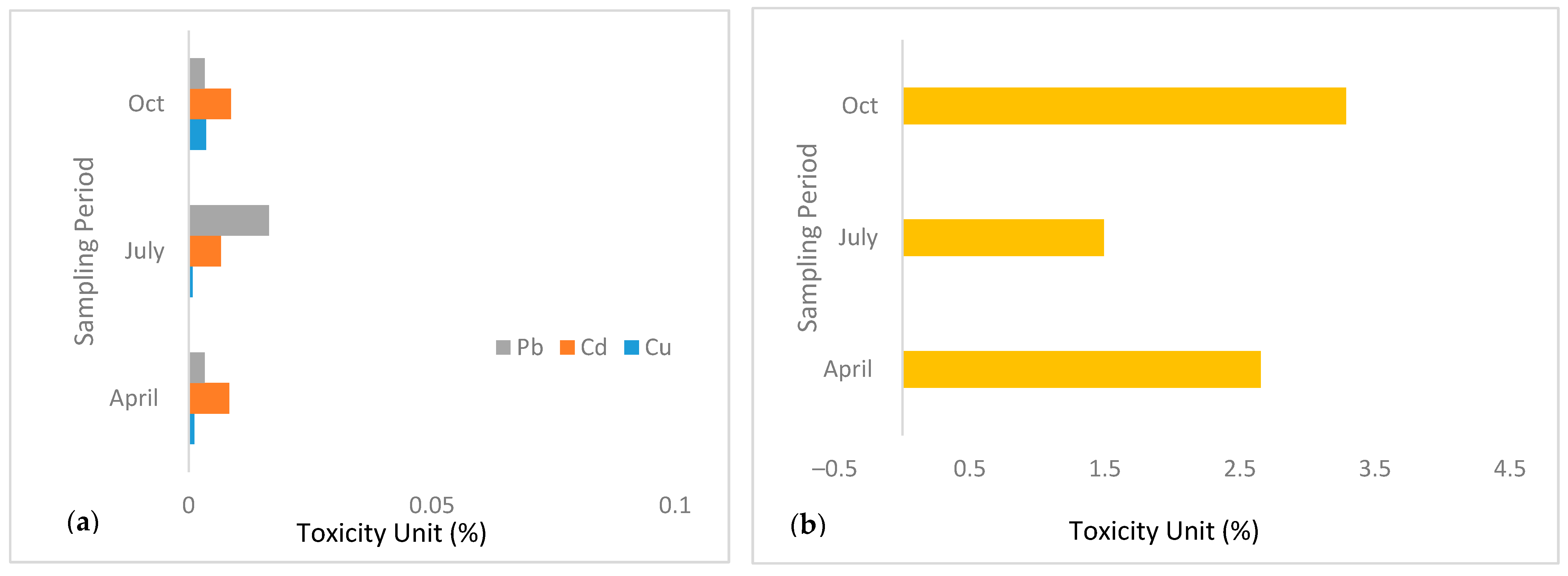
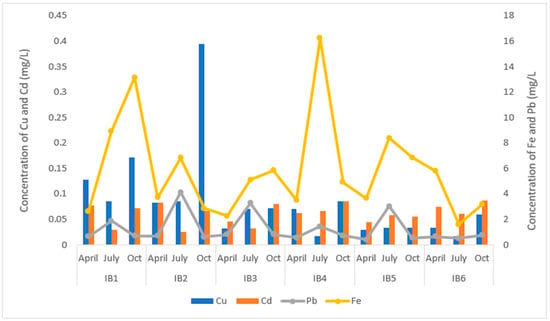
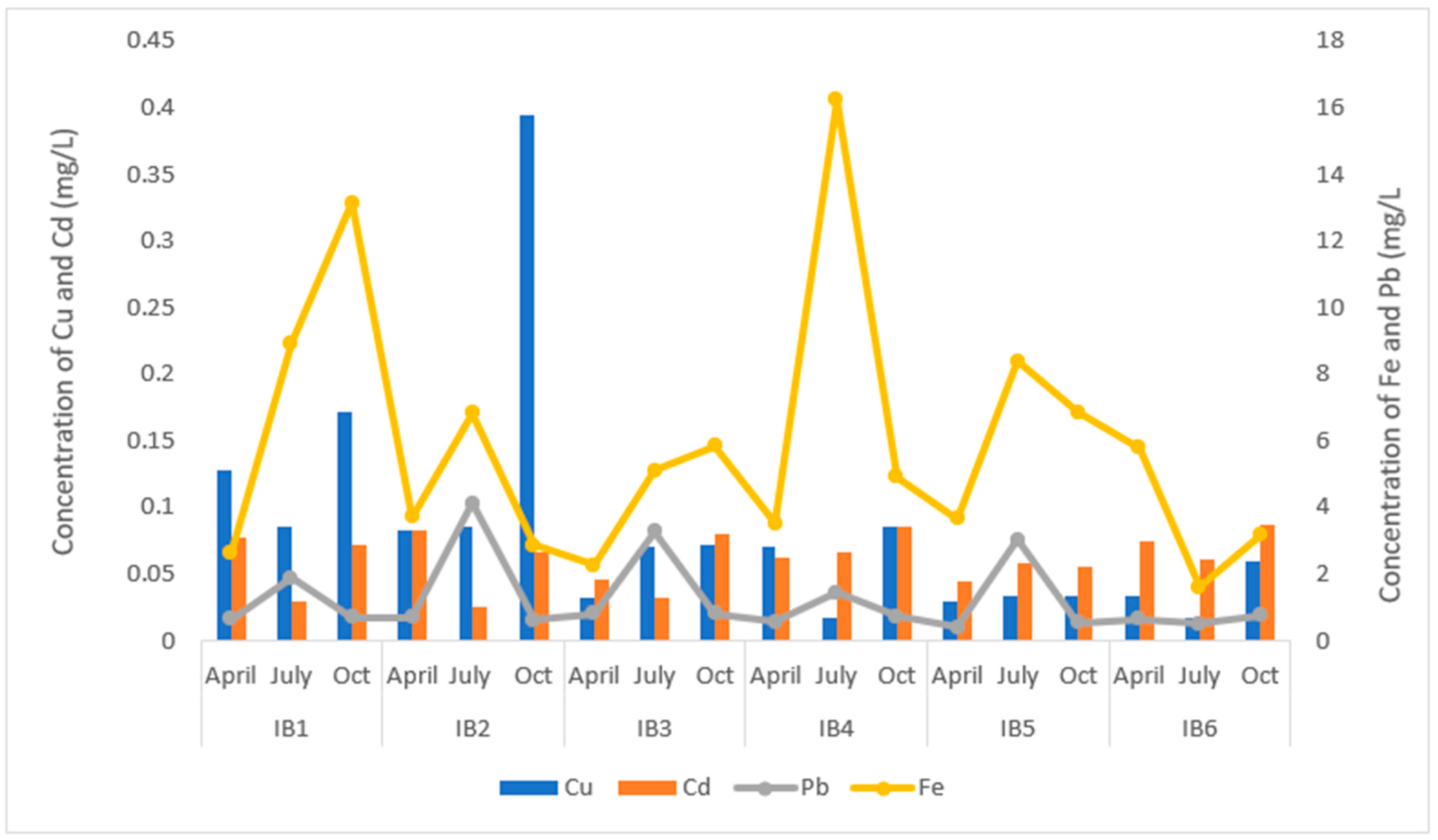
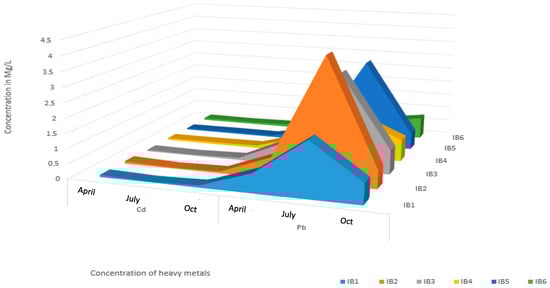
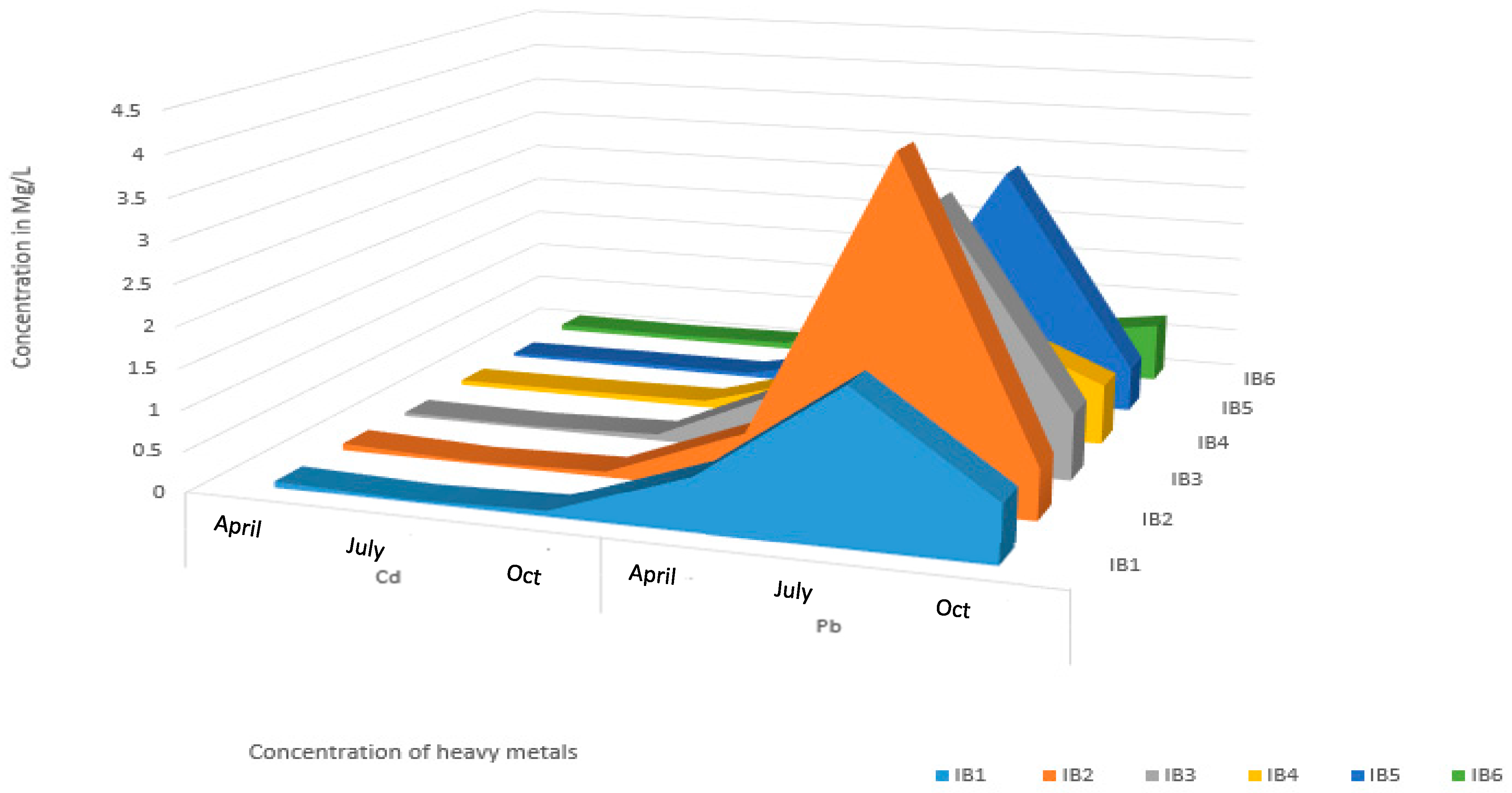
Figure 4 shows the heavy metal (HM) toxicity throughout the year for Pb, Cd, Cu, and Fe, while the concentration levels of Cu, Cd, Pb, and Fe in active and abandoned mining ponds are shown in Figure 5.
Figure 4.
Heavy metal (HM) toxicity throughout the year. (a) Heavy metal toxicity in ponds—lead (Pb), cadmium (Cd), and copper (Cu); (b) heavy metal toxicity in ponds—iron (Fe).
Figure 5.
Cconcentrations of Cu, Cd, Pb, and Fe in the mining ponds.
Figure 4 and Figure 5 show the concentrations of heavy metals present in the mining ponds IB1, IB2, IB3, IB4, IB5, and IB6 during the extreme dry period (April), early/mid-rainy period (July), and optimum rainy period (October) of the year (mg/L). The results show that the Fe concentration is the highest, at 16.24 mg/L, followed by Pb at 3.719 mg/L. Cu and Cd concentrations are 0.395 mg/L and 0.086 mg/L, indicating low heavy metal contamination, according to the values. However, they are relatively high compared to global standards for the minimum allowable limits of HMs. The concentrations of heavy metals (HMs) change over time and vary across different mining sites. As shown in Figure 4 and Figure 5, the concentrations were lower in April, significantly lower in July for all mining sites and in October for IB3–IB6, and significantly higher for IB1 and IB2 during the optimum rainy period (October). This is expected considering higher the HM dissolution and leaching into soils and water during the optimum rainy season.
The specific assessment of the HMs revealed that iron (Fe) levels do not follow a single trend. At mining sites IB1 and IB6, the concentration is high during the extreme dry period, dips or remains at average levels in July, and then spikes in the concentration during the optimum rainy period (October). In contrast, the HM concentrations at mining sites IB2 through IB5 remained stable—the change in seasons did not significantly contribute to a change in HM concentration. Better still, a few cases also show high concentrations during extreme dry periods, dipping or remaining at average levels in July, and a spike in concentration during the optimum rainy period (October). Similarly, Cu concentrations increase with increasing soil water levels due to increased leaching of HMs during the early or mid-rainy seasons and reach a maximum during the optimum rainy period (October). The variation in HM contamination is traceable to changes in the water level in the environment, as well as anthropogenic activities.
Lead (Pb) concentrations are consistent across all the mining ponds. The HM concentrations were low during the extreme dry period (April), slightly increased in the early to mid-rainy period (July), and decreased in the optimum rainy period (October). The HM concentrations increase in the early and mid-rainy seasons (July), as observed in the case of Fe concentrations in the mining ponds. However, an exception was observed in the mining ponds IB6. The concentration of cadmium is high during the extreme dry and optimum rainy periods. This is anticipated, considering the high volumetric density of lead, at 11.34 kg/m3. The high density of lead results in a high settling rate of sediments during the optimum rainy period and afterwards (extreme dry period). Similarly, in Nigeria and Africa, farming activities are conducted during the early and mid-rainy seasons when the soil is turned into heaps and ridges. Taraba State boasts farming a wide range of seasonal, staple, and cash crops, as well as fruits and vegetables, in large quantities. Farming activities (family farming) are widespread across the States, especially the Ibi Local Government Area, which hosts several barite mining sites in Nigeria [61]. It is anticipated that heavy metals (HMs) in the soil will be released and transported.
Overall, HM concentrations change and may vary across mining sites, depending on the concentrations of the HMs in the ores or rock, the quantity or mass fraction exposed to water and the atmosphere, and the nature of anthropogenic activities. Similarly, changes in seasons and the volume of rainfall affect the displacement, transportation, and dissolution/leaching of the HMs by the waterways. The increase in Cd concentration is alarming and hardly predicted in the optimum rainy seasons and post-rainy seasons (October and April). This suggests that humans are exposed to HMs throughout the year.
3.2. Contamination Levels of the Heavy Metals in the Mining Ponds
Figure 6 shows the contamination factor of each HM, indicating the level of HM contamination in the ponds during the extreme dry (April), early rainy (July), and optimum rainy (October) seasons of the year. The results indicate that the ponds or the mine water are moderately to severely polluted by Cd and Fe, extremely polluted by Pb, and fairly contaminated or uncontaminated by Cu. Additionally, according to Hakason [13], the ponds are moderately to significantly contaminated by Fe, Cu, and Cd, and are very highly contaminated by Pb. The contamination level varies across seasons [51]. As mentioned, Pb concentration is significant during the early rainy period, while the HM concentrations for Cd, Fe, and Cu do not change significantly across the season. This may be traceable to geological-aided changes, anthropogenic activities, and the volumetric density of the HMs. Overall, the assessment of HM concentrations in the ponds indicates a potential health risk to miners and the entire barite mining community, as well as neighbouring communities.
Figure 6.
Concentration factor (CF) for each heavy metal (HM) in six mining ponds (IB1–IB6) in the extreme dry, early rainy, and optimum rainy seasons of the year.
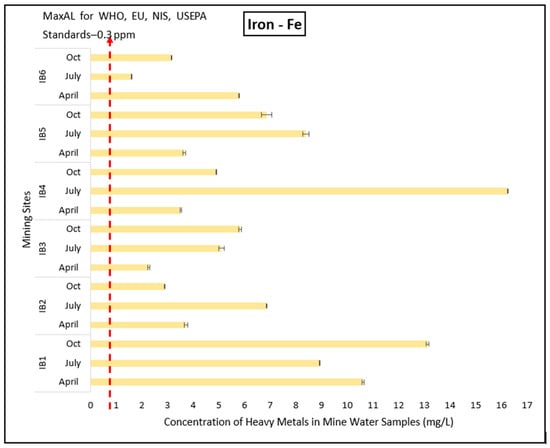
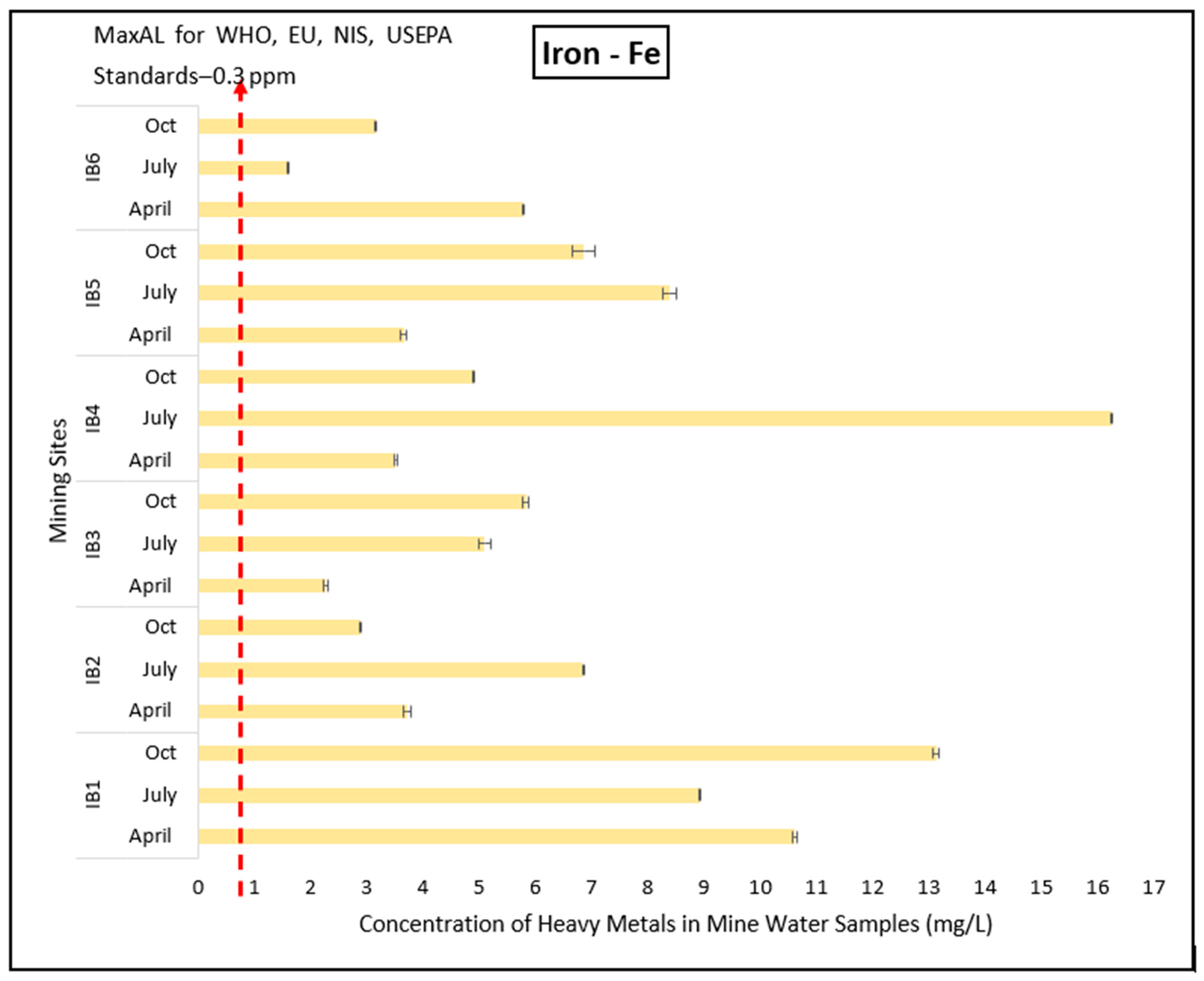
Figure 7 presents the concentrations of iron in the ponds within the barite mining sites. The results show that the Fe concentrations exceed the permissible thresholds stipulated by the World Health Organisation (WHO), the European Union (EU), Nigerian Industrial Standards (NIS), and the United States Environmental Protection Agency (US EPA). High risks to health and environmental well-being are observed in the mining ponds at IB4 and IB1 due to high Fe concentrations. However, the concentrations and levels of Fe contamination in the ponds vary indiscriminately across the period, indicating that the risk level at each mining site varies and is dependent on the activities that expose HMs to the environment.
Figure 7.
Concentration of Fe in ponds located at six mining sites during the extreme dry (April), early rainy (July), and optimum rainy (October) seasons.
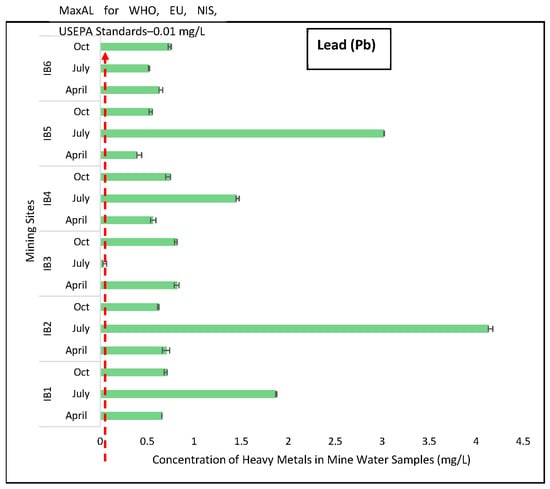
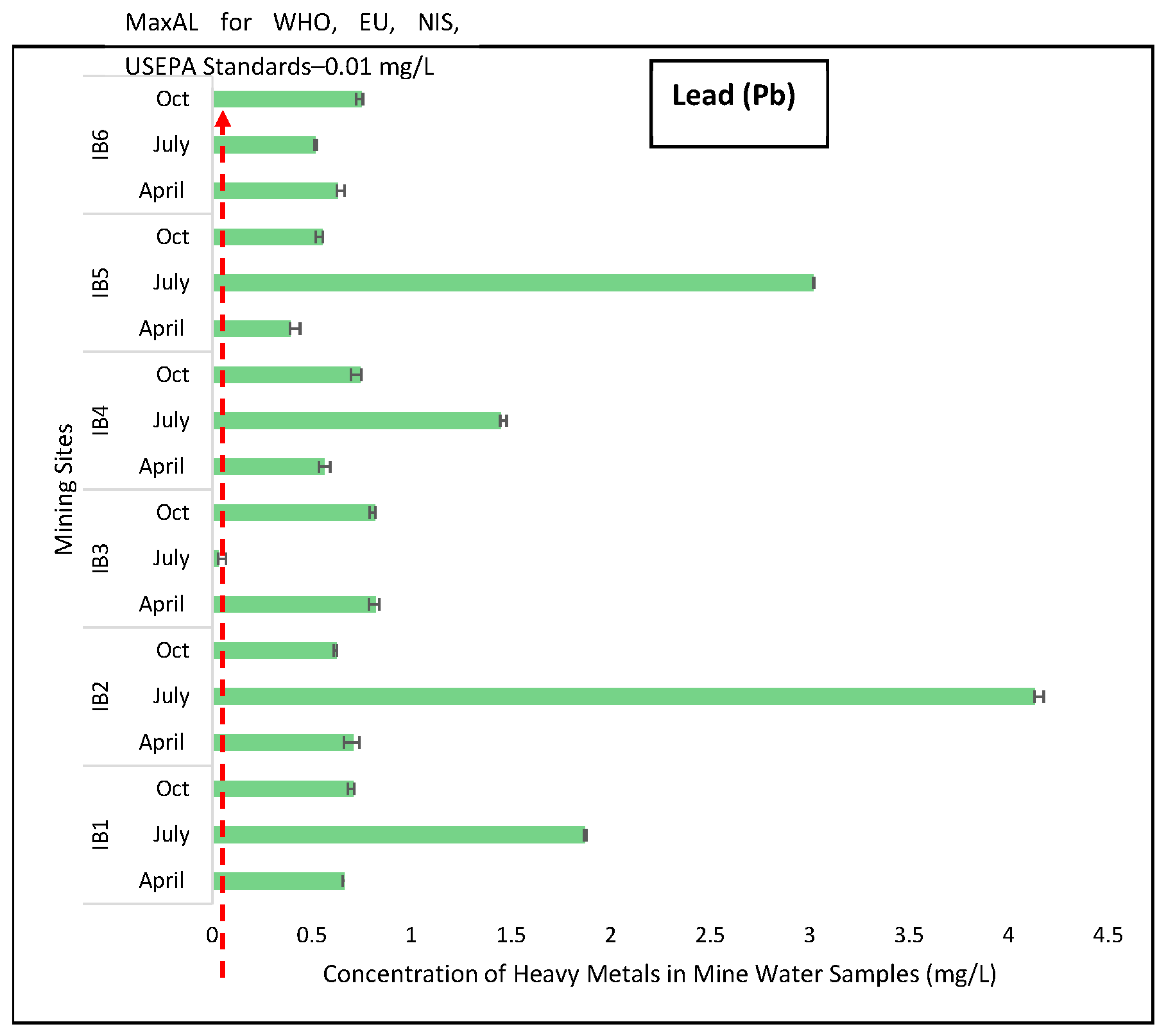
As observed and mentioned, Figure 8 also confirms the variation in HM concentrations in ponds within the mining sites. Lead (Pb) is regarded as a carcinogenic HM and is responsible for poisoning in children and adults in Nigeria. It also has a high volumetric density of over 14 kg/m3, indicating that Pb sediments are easily transported during the optimum rainy period in the early to mid-rainy seasons. Similarly, high Pb concentrations are evident during the early rainy periods (July) in ponds within IB1, IB2, IB4, and IB5. However, the Pb concentrations of all ponds (except July—IB3) within the barite mining sites exceed the maximum allowable limit (0.01 ppm) recommended by the World Health Organisation (WHO), European Union (EU), Nigerian Industrial Standards (NIS), and the United States Environmental Protection Agency (US EPA) [53,55,62]. It is anticipated that a high risk of Pb ingestion is inevitable when animals and humans drink water from ponds and rivers within the sites.
Figure 8.
Pb concentration in the ponds within the barite mining sites during the extreme dry (April), early rainy (July), and optimum rainy (October) seasons.
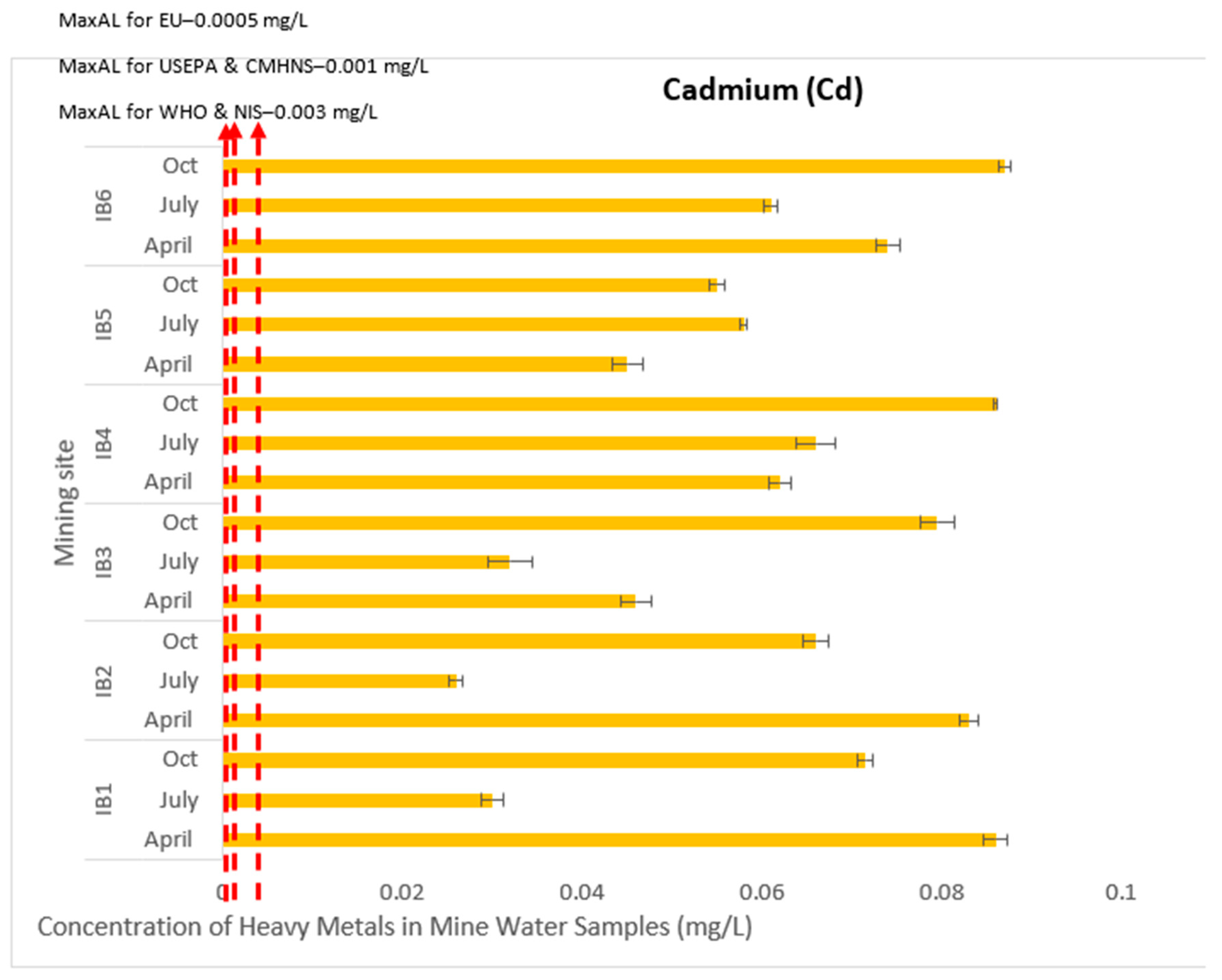
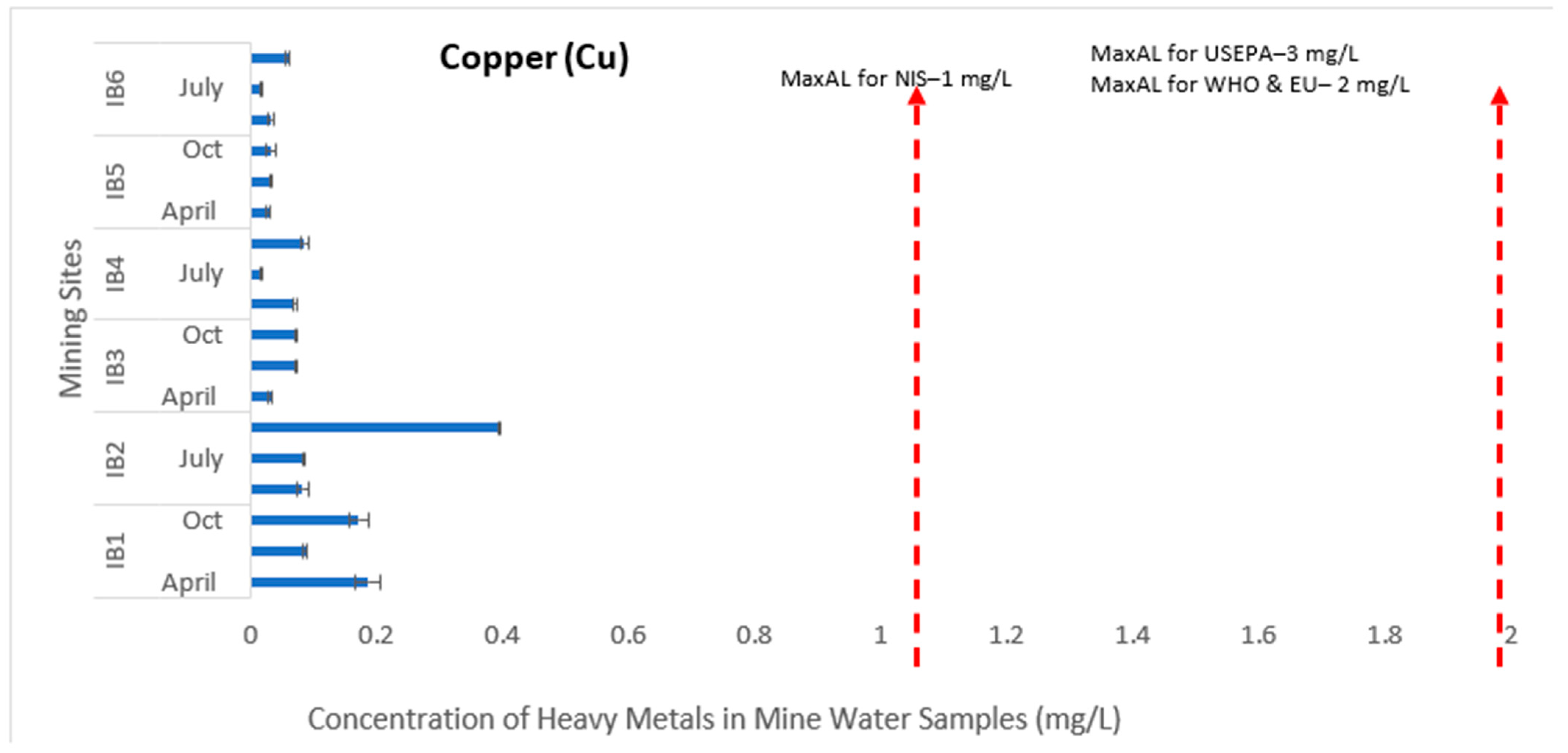
Figure 9 and Figure 10 show the Cd and Cu concentrations, as well as the variation in concentrations across the extreme dry (April), early rainy (July), and optimum rainy (October) seasons. The concentrations vary, and the values may increase or decrease based on the concentration of the HMs at the sites, their solubility in water, the geological extent of the area, and anthropogenic activities at the mining sites. As shown, the concentrations of cadmium surpass the regulatory and exceed the maximum allowable limits set by specific global environmental standards. However, copper concentrations are within these standards. The Cd concentrations are significantly higher than the standards set by the European Union (EU), the United States Environmental Protection Agency, the China Ministry of Health National Service (CMHNS), the World Health Organisation (WHO), and the Nigerian Industrial Standards (NIS). Overall, the presence of HMs in water contaminates the water quality, rendering it unhealthy for consumption.
Figure 9.
Cadmium (Cd) concentrations in ponds within the barite mining sites (IB1–IB6).
Figure 10.
Concentration of copper in ponds within the mining sites (IB1–IB6) during the extreme dry (April), early rainy (July), and optimum rainy (October) seasons.
As mentioned earlier, Figure 11 presents variations in Cd and Pb concentrations to rank the impact of the HM contamination of the ponds and rivers within the barite mining communities. The results show significant lead contamination compared to cadmium. This suggests that non-carcinogenic risk is a shared risk resulting from various factors, as observed. In this study, the Pb concentration in the ponds and rivers is higher during the early rainy season and, on average, exceeds the Cd concentration. Similarly, the average risk of bioaccumulation of HMs in each season is similar for Cd. However, a higher Pb concentration in the early and mid-rainy seasons can pose a greater risk to the environment.
Figure 11.
Cadmium (Cd) and lead (Pb) concentrations in ponds and rivers within the mining sites (IB1–IB6) during the extreme dry (April), early rainy (July), and optimum rainy (October) seasons.
Although the scope of the current study is the six barite mining sites within the downstream of the River Benue, previous studies on heavy metal contamination of barite mines can be compared to the values presented in this study. As reported by [6,24], the heavy metal contamination of barite mines within the upstream River Benue in Wase, Kumar, and Ibi Local Areas is lower when compared to the current study. The HM contamination of water samples collected from active and abandoned mines within the barite sites at Wase, Kumar, and Upper Ibi local government areas (Taraba State, Nigeria) ranges from 0.003 to 0.012 mg/L for Cu, 0.006 to 0.6 mg/L for Pb, and 0.0025 to 3.1 mg/L for Fe. In the current study, the Cd concentration ranges from 0.01 mg/L to 0.395 mg/L, the Pb concentration is between 0.1 mg/L and 4.13 mg/L, and the Cu concentration in water is as high as 0.087 mg/L. However, no evidence of cadmium contamination was observed at barite mines located above the River Benue (Wase, Kumar, and Upper Ibi). Lower heavy metal concentrations are anticipated for barite mines above the river, considering that heavy metal sediments are usually transported. Future research will conduct an extensive comparative study of heavy metal contamination of barite mines within Ibi’s neighbouring communities, including Karim Lamido, and others.
3.3. Geoaccumulation Index () of Heavy Metals in the Ponds and Rivers Within the Mining Sites
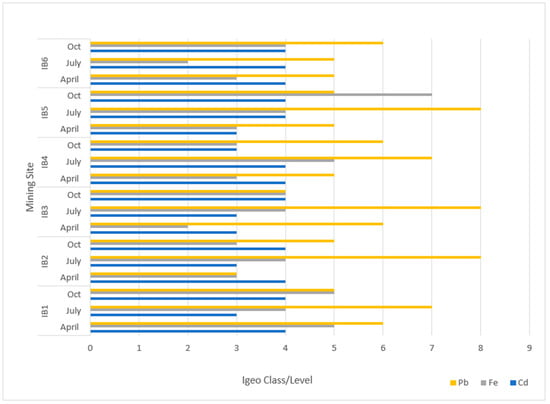
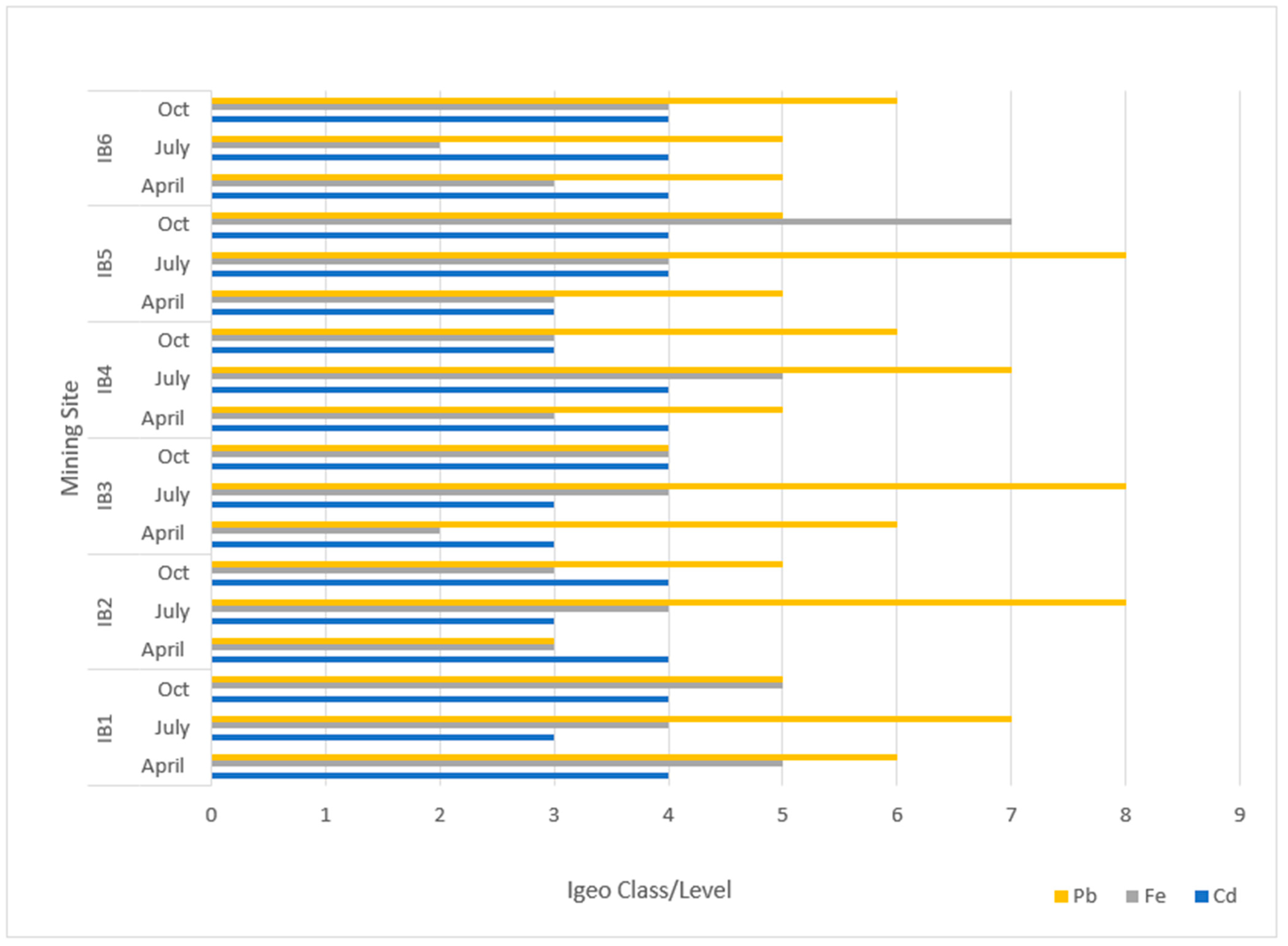
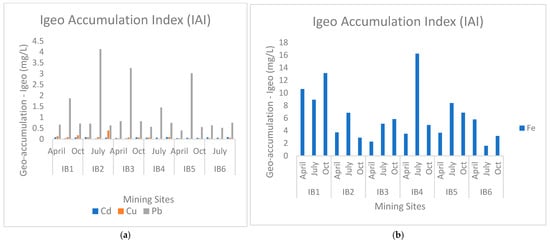
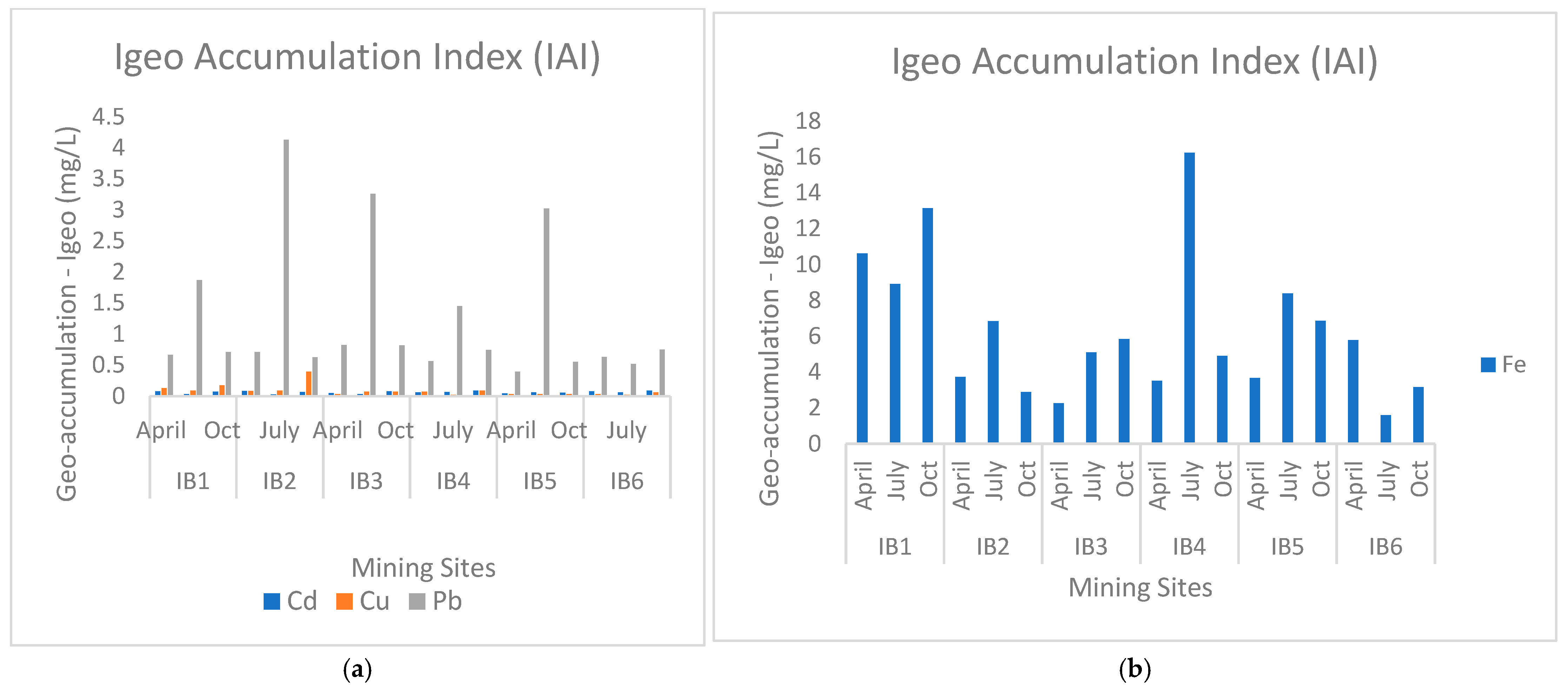
Figure 12 presents the for the HMs identified in the ponds within the barite mining communities and their neighbouring communities. The findings indicate that the values for Cu, Cd, and Pb (for the extreme dry [April] and optimum rainy [October] seasons) are <1. However, the for Fe and Pb (for the early or mid-rainy seasons [July]) is >1. Using the assessment framework of Afolayan et al. (2021) in [6], the ponds are mostly moderately polluted by Cu, Cd, and Pb (in the extreme dry and optimum rainy seasons). The index is higher for Pb (during the early or mid-rainy period), indicating that the ponds are moderately to severely polluted by Pb. Similarly, but on a higher scale, the ponds and rivers are severely to enormously polluted by Fe. High , as observed, indicates a greater degree of contamination and imminent environmental and health consequences stemming from polluted ponds and rivers. This assessment indicates that all the HMs are sources of water pollution in ponds and rivers within the barite mining sites and neighbouring communities.
Figure 12.
(a,b) Geo-accumulation of HMs: (a) (Cd, Cu, Pb); and (b) (Fe) in the ponds that are connected to the six mining sites during the extreme dry (April), early rainy (July), and optimum rainy (October) seasons.
3.4. Chronic Daily Intake (CDI) and Maximally Exposed Individual (MEI) to HMs in Ponds and Rivers with the Barite Mining Sites
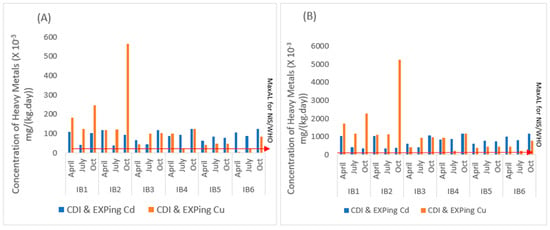
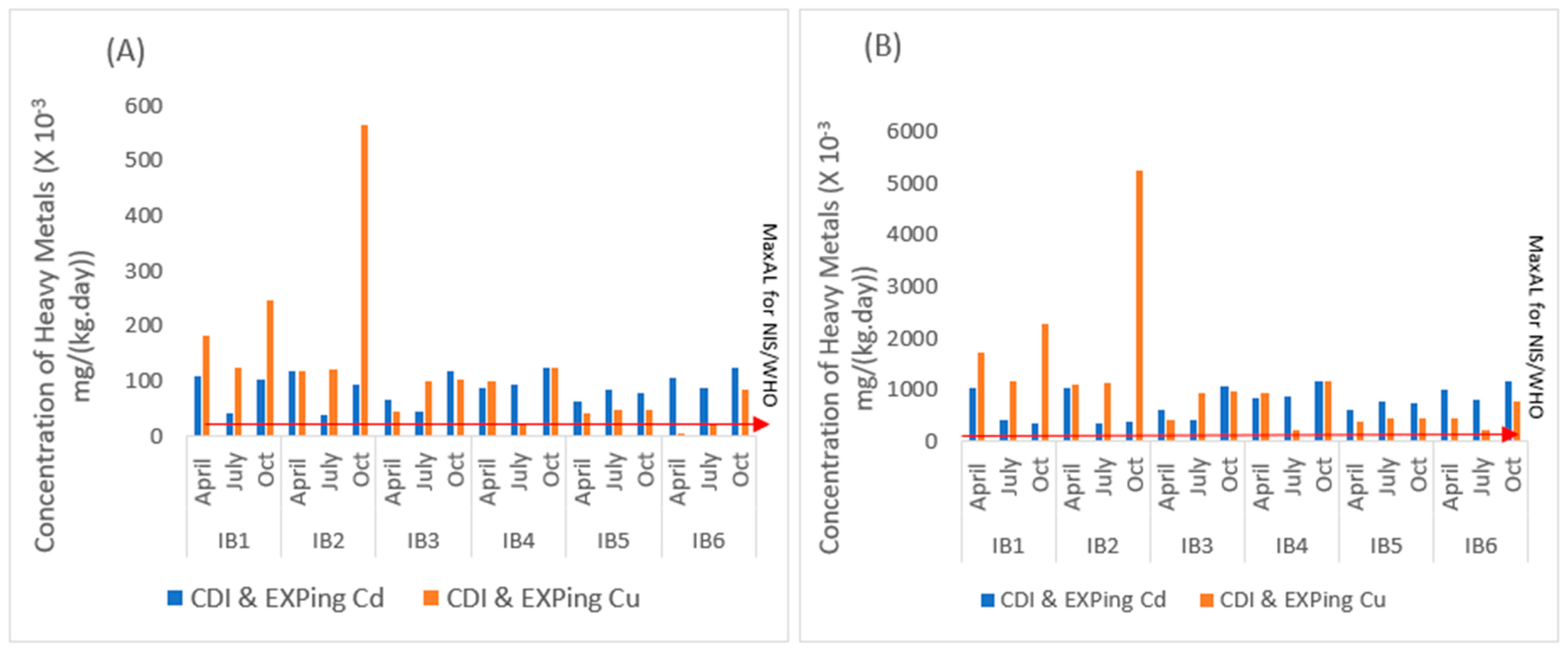
Figure 13 shows the chronic risk level of HMs per unit body weight. As expected, children have higher risks of chronic cadmium and copper exposure. Every child within the barite mining sites may be susceptible to a minimum of 0.1 mg/kg Cu and Cd by ingestion per day. Similarly, an adult is exposed to a minimum of 0.02 mg/kg per day. These values are far above the reference dose (RfD) for Cd (0.0005 mg/kg/day) and Cu (0.04 mg/kg/day). The exposure by ingestion is significant in each period, and the risk level is dependent on the HM concentration at each mining site. For instance, the chronic risk level across the year is relatively below 0.2 mg/kg per day for adults and 2 mg/kg per day for children. However, continuous ingestion of HMs throughout the year will cause serious health concerns due to increasing toxicity and bioaccumulation, as indicated in the extreme dry (April), early rainy (July), and optimum rainy (October) seasons.
Figure 13.
(A,B) Chronic risk level for HM contamination of (A) cadmium (Cd), copper (Cu) and optimum accepted value in ponds for adults; and (B) cadmium (Cd), copper (Cu) and optimum accepted value in ponds for children within the barite mining sites.
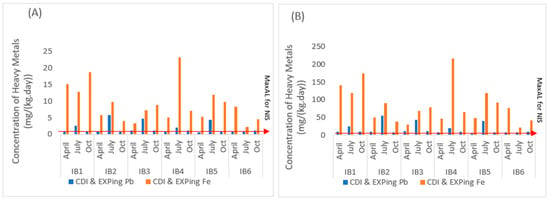
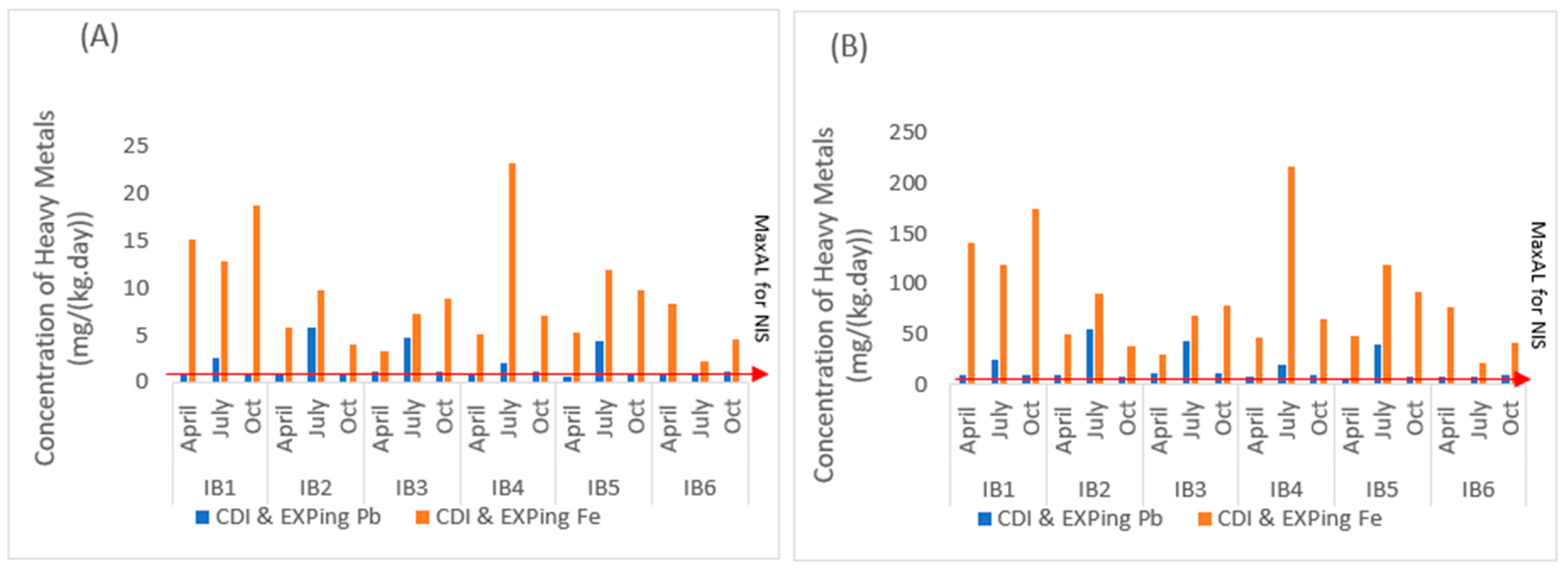
As mentioned, Figure 14A,B also shows the chronic risk levels for Pb and Fe contaminations in the ponds and rivers located within the barite mining sites. The results indicate that the chronic risk level for HMs is dependent on several factors. This includes the average exposure time, the types of activities that characterise the mining sites, as well as the impact of rainfall and water volume on HM concentration in the ponds and rivers. The chronic daily intake (CDI) assessment of exposure to HMs by ingestion shows that, while the chronic risk level of water sources varies, the average daily exposure of Pb and Fe by ingestion is higher than the reference dose (RfD) or tolerable daily intake (TDI) for Fe (0.7 mg/kg per day) and Pb (0.004 mg/kg per day). Hence, the chronic daily intake (CDI) exceeds the tolerable daily intake (TDI), indicating a potential health concern. The results agree with the literature [2,23,24]. However, the Cd and Pb concentrations and the associated risk are higher than the values reported for HM concentrations around the mining sites within the Lower and Middle part of the River Benue Trough [6,7,63,64].
Figure 14.
(A,B) Chronic risk level for HM contamination of (A) lead (Pb) and iron (Fe) in adults; and (B) lead (Pb) and iron (Fe) in children within the barite mining sites.
3.5. Vulnerability of the Mining Operation Caused by Heavy Metal Contamination of Mining Ponds and Host Rivers
Figure 15 identifies the individuals most vulnerable to the health risk linked to HM contamination in the barite mining communities. The results show that children are the most vulnerable in the event of chronic health risk due to HM contamination. Children are mostly exposed to HMs in the order of Fe > Pb > Cu > Cd. While adults are also vulnerable to the potential risk of HMs exposure from the contaminated ponds and rivers, heavy metal poisoning is widely pronounced among children. This is also evident in the results shown in Figure 11. The implication of children’s vulnerability to poisoning caused by heavy metals may remain unidentified and unaddressed until it is too late. Hence, identifying HM concentrations should not be an attempt, but rather a routine health and environmental assessment.
Figure 15.
(A,B) Chronic health risks caused by HM contamination of ponds within the barite mining sites. (A) Maximally exposed individual (MEI) for adults and children—copper and cadmium; and (B) maximally exposed individual (MEI) for adults and children—lead and iron.
3.6. Characterization of Associated Mining Risks—Non-Carcinogenic Risk Level
Figure 16A,B presents the ratio of the hazard quotient to hazard index for each HM in the ponds and rivers near the mining sites. The results show that the risks vary and are relatively significant, ranging from 0.01 to 1. The health assessment of HM contamination indicates an unlikely negative health concern traceable to iron (Fe) and copper (Cu) contamination of the ponds and rivers, except for mining site IB2, where the non-carcinogenic risk is significant and can cause a negative NCR to human health, particularly in children. Similarly, the NCR levels for lead (Pb) and cadmium (Cd) are relatively low, ranging from 0.1 to 1.0, indicating a negative non-carcinogenic risk to human health. Hence, it is evident that potential health concerns are imminent due to the exposure of children and adults to Cd and Pb.
Figure 16.
(A,B) Non-carcinogenic risk level traceable to the hazard quotient (HQ) and hazard index (HI) for HM contamination of ponds within barite mining sites. (A) Non-carcinogenic risk (NCR)—adults; and (B) non-carcinogenic risk (NCR)—children.
The differences in pollution levels of cadmium (Cd), lead (Pb), iron (Fe), and copper (Cu) across the barite mining sites can be ascribed to a combination of geological, environmental, and human-related factors. The geological composition of barite ores and their host rocks plays a central role, as Cd and Pb often occur as impurities in barite deposits. At the same time, Fe and Cu are associated with other minerals or surrounding rock formations. Mining intensity and methods also influence pollution levels; sites with poorly regulated or more aggressive mining contribute to higher concentrations of heavy metals due to greater exposure of ores to weathering and leaching. Seasonal and climatic variations further contribute to differences, with rainfall and flooding enhancing metal mobility and dilution. For instance, Fe and Pb concentrations are susceptible to seasonal runoff and erosion, which cause significant fluctuations between wet and dry seasons.
Additionally, hydrogeological conditions, such as high soil water levels and porous geology, can accelerate the leaching of metals into water bodies, with Fe being particularly mobile under waterlogged and reducing environments. Anthropogenic activities beyond mining, such as farming practices that involve the application of fertilisers and pesticides, also increase Cu and Pb inputs. Similarly, domestic and industrial waste contribute to differences in the pollution levels of the heavy metals associated with the barite mining sites. The inherent chemical properties and compositions of the metals in the barite veins vary with depth. Cd and Pb persist and bioaccumulate in the environment, while Fe is more affected by pH, redox conditions, and water chemistry. Finally, geographical differences between the Upper and Middle River Benue Troughs account for additional disparities, as the Upper Trough hosts more intense mining activity and possibly other pollution sources, resulting in generally higher contamination levels compared to the Middle Trough.
The high HM concentration observed in some situations during the extreme dry season is traceable to several factors. In general, the volume of water is at its lowest in the extreme dry season owing to a high rate of evaporation. Similarly, HMs in water and soils are replenished through leaching during optimal rainfall, and HM sediments are transported during erosion. While water evaporates during the dry season, the sediments and HMs (in dissolved ionic form) in the water are concentrated at different locations, resulting in high HM concentration. In addition to natural and anthropogenic influences, HM concentration is a direct reflection of the quantity of the HMs available in barite mining sites or the fraction of HMs that are exposed to water. There are some HMs that show higher mobility and potential for accumulation due to leaching. The concentration of these HMs varies depending on water properties such as salinity, hardness, and other factors that can influence the solubility of the HMs. Furthermore, the volumetric density of each HM and the water distribution pattern of the mines contribute to the rate of HMs accumulation during the year. Hence, the quantity of heavy metals in milligram per litre (mg)/(L) of water increase as the volume of water decreases, resulting in a high HM concentration in mg/L.
4. Conclusions
The HM contamination of ponds and rivers in the six barite mining sites downstream of the River Benue has been discussed in this paper. Evidence shows that the HM concentration varies across the year due to both natural and anthropogenic human activities. This variation has both health and environmental implications, which can be worsened during the extreme dry and early rainy seasons of the year. Although the influx of water from the River Benue and rainfall can reduce HM contamination during the optimal rainy season, the bioaccumulation of HMs in humans and the high rate of leaching of HMs from the mines over a long period can increase the risk to human health, biodiversity, and a sustainable environment. Some notable findings on the implications of high HM contamination above the minimum allowable limits and global environmental standards are presented.
- The cadmium (Cd), lead (Pb), iron (Fe), and copper (Cu) contamination of the River Benue tributaries and sub-tributaries, as well as the mining ponds, exceeds the recommended reference doses and tolerable daily intake limits. This is attributed to multiple contamination sources, which are exacerbated by the seasons throughout the year.
- Seasonal variations, climate change, soil water levels, and anthropogenic activities such as farming and mineral extraction replenish HMs in water, posing the highest potential risk to children throughout the year.
- The findings underscore the urgent need for sustainable and well-integrated policies and government investments to address mining-aided HM contamination of the River Benue tributaries and ponds that connect major rivers in Nigeria. Considering the vastness of the River Benue, a low-level HM contamination at any of the mining sites can cause widespread water contamination that is difficult to clean in the near future.
5. Recommendation
This paper recommends routine water quality assessment of ponds and rivers within and near barite mining sites to address the negative impact of mining and HM contamination. The introduction of siltation control measures is paramount, encompassing the installation of silt fences, sediment basins, and vegetative filter strips. Future work should focus on the impact of farming in the study areas on HM contamination of ponds and rivers near the barite mining sites. These measures can help curtail soil erosion and sedimentation of HMs in soils and water beds.
The establishment of robust modular water management systems is fundamental in preventing water source contamination. This will involve the construction of settling ponds and the implementation of water treatment facilities. Similarly, the element of community education assumes significant importance, with a focus on enlightening local communities about the environmental implications of barite mining. Active community involvement in monitoring and conservation efforts is also beneficial in mitigating the negative impacts of HM contamination. Advocating for responsible rock blasting and mineral extraction, as well as efficient waste disposal of mining tailings and remediation of contaminated ponds and rivers, will help to facilitate sustainable and environmentally responsible mining practices.
Author Contributions
Conceptualization, D.O.A., H.A.A. and S.I.O.; Methodology, D.O.A. and H.A.A.; Software, D.O.A. and O.S.O.O.; Validation, D.O.A., H.A.A., S.I.O. and O.S.O.O.; Formal analysis, D.O.A. and H.A.A.; Investigation, D.O.A., H.A.A. and S.I.O.; Resources, D.O.A., S.I.O. and O.S.O.O.; Data curation, D.O.A. and H.A.A.; Writing—original draft, D.O.A., H.A.A. and S.I.O.; Writing—review & editing, D.O.A. and O.S.O.O.; Visualization, D.O.A., H.A.A. and S.I.O.; Supervision, D.O.A. and O.S.O.O.; Project administration, D.O.A.; Funding acquisition, D.O.A. and O.S.O.O. All authors have read and agreed to the published version of the manuscript.
Funding
The research was funded by the Regional Scholarship and Innovation Fund (Rsif-PASET) through the Junior Investigative Research Award (RSIF/AUST/JIRA 005 Grant) awarded to David Oluwasegun Afolayan (Principal Investigator) at the African University of Science and Technology (AUST), Abuja, Federal Capital Territory, Nigeria. Appreciation is also extended to the Pennsylvania State University for supporting O.S.O.O., N.Y.D., and D.O.A.
Data Availability Statement
The original contributions presented in this study are included in the article. Further inquiries can be directed to the corresponding authors.
Conflicts of Interest
The authors declare no conflict of interest.
Appendix A
Table A1.
Reference dose (RfD) standards for heavy metals in water samples and tailing effluent.
Table A2.
Carcinogenic slope factors for heavy metals for different contamination pathways.
Table A3.
Exposure factors for the health risk assessment of heavy metals in mine water samples.
References
- Omokaro, G.; Idama, V.; Aireughian, E.; Michael, I. Water Resources, Pollution, Integrated Management and Practices in Nigeria-An Overview. Am. J. Environ. Econ. 2024, 3, 10–54536. [Google Scholar] [CrossRef] [Scilit]
- Longe, E.O.; Omole, D.O.; Adewumi, I.K.; Ogbiye, A.S. Water resources use, abuse and regulations in Nigeria. J. Sustain. Dev. Afr. 2010, 12, 35–44. [Google Scholar]
- Ngene, B.U.; Nwafor, C.O.; Bamigboye, G.O.; Ogbiye, A.S.; Ogundare, J.O.; Akpan, V.E. Assessment of water resources development and exploitation in Nigeria: A review of integrated water resources management approach. Heliyon 2021, 7, e05955. [Google Scholar] [CrossRef] [Scilit]
- Akujieze, C.N.; Coker, S.J.L.; Oteze, G.E. Groundwater in Nigeria–A millennium experience–Distribution, practice, problems and solutions. Hydrogeol. J. 2003, 11, 259–274. [Google Scholar] [CrossRef] [Scilit]
- Franks, D.M.; Boger, D.V.; Côte, C.M.; Mulligan, D.R. Sustainable development principles for the disposal of mining and mineral processing wastes. Resour. Policy 2011, 36, 114–122. [Google Scholar] [CrossRef] [Scilit]
- Afolayan, D.O.; Eggleston, C.M.; Onwualu, A.P.; Adetunji, A.R.; Tao, M.; Amankwah, R.K. Physicochemical Studies for Risk Identification, Assessment, and Characterization of Artisanal Barite Mining in Nigeria. Sustainability 2021, 13, 12982. [Google Scholar] [CrossRef] [Scilit]
- Afolayan, D.O.; Onwualu, A.P.; Eggleston, C.M.; Adetunji, A.R.; Tao, M.; Amankwah, R.K. Safe Mining Assessment of Artisanal Barite Mining Activities in Nigeria. Mining 2021, 1, 224–240. [Google Scholar] [CrossRef] [Scilit]
- JohnPaul, A.A.; Ayodeji, L.T.; Tangfu, X.; Ning, Z.; Liu, Y. Toxicity, uptake, potential ecological and health risks of Thallium (Tl) in environmental media around selected artisanal mining sites in Nigeria. Int. J. Environ. Anal. Chem. 2020, 102, 5391–5412. [Google Scholar] [CrossRef] [Scilit]
- Laniyan, T.A.; Adewumi, A.J. Potential ecological and health risks of toxic metals associated with artisanal mining contamination in Ijero, southwest Nigeria. J. Environ. Sci. Health Part A Toxic/Hazard. Subst. Environ. Eng. 2020, 55, 858–877. [Google Scholar] [CrossRef] [Scilit]
- Izah, S.C.; Chakrabarty, N.; Srivastav, A.L. A review on heavy metal concentration in potable water sources in Nigeria: Human health effects and mitigating measures. Expo. Health 2016, 8, 285–304. [Google Scholar] [CrossRef] [Scilit]
- Fernandez-Luqueno, F.; Lopez-Valdez, F.; Gamero-Melo, P.; Luna-Suarez, S.; Aguilera-Gonzalez, E.N.; Martínez, A.I.; García-Guillermo, M.D.S.; Hernandez-Martinez, G.; Herrera-Mendoza, R.; Álvarez-Garza, M.A. Heavy metal pollution in drinking water-a global risk for human health: A review. Afr. J. Environ. Sci. Technol. 2013, 7, 567–584. [Google Scholar]
- Rehman, K.; Fatima, F.; Waheed, I.; Akash, M.S.H. Prevalence of exposure of heavy metals and their impact on health consequences. J. Cell. Biochem. 2018, 119, 157–184. [Google Scholar] [CrossRef] [Scilit] [PubMed]
- Briffa, J.; Sinagra, E.; Blundell, R. Heavy metal pollution in the environment and their toxicological effects on humans. Heliyon 2020, 6, e04691. [Google Scholar] [CrossRef] [Scilit] [PubMed]
- Huang, X.; Sillanpää, M.; Gjessing, E.T.; Peräniemi, S.; Vogt, R.D. Environmental impact of mining activities on the surface water quality in Tibet: Gyama valley. Sci. Total Environ. 2010, 408, 4177–4184. [Google Scholar] [CrossRef] [Scilit]
- Wolkersdorfer, C.; Mugova, E. Effects of mining on surface water. Encycl. Inland Waters 2022, 4, 170–188. [Google Scholar]
- Jhariya, D.C.; Khan, R.; Thakur, G.S. Impact of mining activity on water resource: An overview study. Proc. Recent Pract. Innov. Min. Ind. Raipur India 2016, 201, 19–20. [Google Scholar]
- Gao, L.; Bryan, B.A.; Liu, J.; Li, W.; Chen, Y.; Liu, R.; Barrett, D. Managing too little and too much water: Robust mine-water management strategies under variable climate and mine conditions. J. Clean. Prod. 2017, 162, 1009–1020. [Google Scholar] [CrossRef] [Scilit]
- Mhlongo, S.; Mativenga, P.T.; Marnewick, A. Water quality in a mining and water-stressed region. J. Clean. Prod. 2018, 171, 446–456. [Google Scholar] [CrossRef] [Scilit]
- Tiwary, R.K. Environmental impact of coal mining on water regime and its management. Water Air Soil Pollut. 2001, 132, 185–199. [Google Scholar] [CrossRef] [Scilit]
- Al Osman, M.; Yang, F.; Massey, I.Y. Exposure routes and health effects of heavy metals on children. Biometals 2019, 32, 563–573. [Google Scholar] [CrossRef] [Scilit] [PubMed]
- Dytłow, S.; Górka-Kostrubiec, B. Concentration of heavy metals in street dust: An implication of using different geochemical background data in estimating the level of heavy metal pollution. Environ. Geochem. Health 2021, 43, 521–535. [Google Scholar] [CrossRef] [Scilit]
- Adewumi, A.J.P.; Laniyan, T.A. Ecological and human health risks associated with metals in water from Anka Artisanal Gold Mining Area, Nigeria. Hum. Ecol. Risk Assess. Int. J. 2020, 27, 307–326. [Google Scholar] [CrossRef] [Scilit]
- Adewumi, A.J.P.; Laniyan, T.A.; Xiao, T.; Liu, Y.; Ning, Z. Exposure of children to heavy metals from artisanal gold mining in Nigeria: Evidences from bio-monitoring of hairs and nails. Acta Geochim. 2020, 39, 451–470. [Google Scholar] [CrossRef] [Scilit]
- Afolayan, D.O. Characterisation and Processing of Baryte Ores for Oil Drilling Applications. Ph.D. Thesis, African University of Science and Technology, Abuja, Nigeria, 2021; pp. 1–184. [Google Scholar]
- Ackah, M. Soil elemental concentrations, geoaccumulation index, non-carcinogenic and carcinogenic risks in functional areas of an informal e-waste recycling area in Accra, Ghana. Chemosphere 2019, 235, 908–917. [Google Scholar] [CrossRef] [Scilit] [PubMed]
- Karimi, A.; Naghizadeh, A.; Biglari, H.; Peirovi, R.; Ghasemi, A.; Zarei, A. Assessment of human health risks and pollution index for heavy metals in farmlands irrigated by effluents of stabilization ponds. Environ. Sci. Pollut. Res. 2020, 27, 10317–10327. [Google Scholar] [CrossRef] [Scilit] [PubMed]
- Embirsh, M. Lead Toxicity in Children: A Public Health Issue. Libyan J. Med. Res. 2022, 16, 80–88. [Google Scholar] [CrossRef] [Scilit]
- Arora, J.; Krishan, K.; Kanchan, T. Lead Poisoning: An updated Review of Literature. J. Indian Acad. Forensic Med. 2022, 44, 108–113. [Google Scholar] [CrossRef] [Scilit]
- Khreis, H.; Bredell, C.; Wai Fung, K.; Hong, L.; Szybka, M.; Phillips, V.; Abbas, A.; Lim, Y.H.; Jovanovic Andersen, Z.; Woodcock, J.; et al. Impact of long-term air pollu-tion exposure on incidence of neurodegenerative diseases: A protocol for a systematic review and expo-sure-response meta-analysis. Environ. Int. 2022, 170, 107596. [Google Scholar] [CrossRef] [Scilit]
- Taiwo, A.M.; Awomeso, J.A. Assessment of trace metal concentration and health risk of artisanal gold mining activities in Ijeshaland, Osun State Nigeria—Part 1. J. Geochem. Explor. 2017, 177, 1–10. [Google Scholar] [CrossRef] [Scilit]
- Xu, T.; Lin, K.; Cao, M.; Miao, X.; Guo, H.; Rui, D.; Hu, Y.; Yan, Y. Patterns of global burden of 13 diseases attributable to lead exposure, 1990–2019. BMC Public Health 2023, 23, 1121. [Google Scholar] [CrossRef] [Scilit]
- Oyeyemi, A.W.; Owonikoko, W.M.; Okoro, T.D.; Adagbonyi, O.; Ajeigbe, K.O. Water contamination: A culprit of serum heavy metals concentration, oxidative stress and health risk among residents of a Nigerian crude oil-producing community. Toxicol. Rep. 2024, 12, 375–388. [Google Scholar] [CrossRef] [Scilit]
- Fahimah, N.; Salami, I.R.S.; Oginawati, K.; Mubiarto, H. Appraisal of pollution levels and non-carcinogenic health risks associated with the emergence of heavy metals in Indonesian community water for sanitation, hygiene, and consumption. Emerg. Contam. 2024, 10, 100313. [Google Scholar] [CrossRef] [Scilit]
- Moulatlet, G.M.; Yacelga, N.; Rico, A.; Mora, A.; Hauser-Davis, R.A.; Cabrera, M.; Capparelli, M.V. A systematic review on metal contamination due to mining activities in the Amazon basin and associated environmental hazards. Chemosphere 2023, 339, 139700. [Google Scholar] [CrossRef] [Scilit] [PubMed]
- Borda, D.R.; Cociuba, I.; Cruceru, N.; Papp, D.C.; Meleg, I.N. A Cost-Effective and Straightforward Approach for Conducting Short-and Long-Term Biomonitoring of Gold Mine Waters. Water 2023, 15, 2883. [Google Scholar] [CrossRef] [Scilit]
- Gololobova, A.; Legostaeva, Y. An assessment of the impact of the mining industry on soil and plant contamination by potentially toxic elements in boreal forests. Forests 2023, 14, 1641. [Google Scholar] [CrossRef] [Scilit]
- Laoye, B.; Olagbemide, P.; Ogunnusi, T.; Akpor, O. Heavy metal contamination: Sources, health impacts, and sustainable mitigation strategies with insights from nigerian case studies. F1000Research 2025, 14, 134. [Google Scholar] [CrossRef] [Scilit]
- Oluwatuyi, O.E.; Ajibade, F.O.; Ajibade, T.F.; Adelodun, B.; Olowoselu, A.S.; Adewumi, J.R.; Akinbile, C.O. Total concentration, contamination status and distribution of elements in a Nigerian State dumpsites soil. Environ. Sustain. Indic. 2020, 5, 100021. [Google Scholar] [CrossRef] [Scilit]
- Udom, G.J.; Turyahabwe, B.; Aturamu, A.; Aziakpono, O.M.; Agbana, R.D.; Joseph, O.G.; Udom, N.G.; Mugide, N.; Odey, O.P.; Olot, H. Heavy metal and metalloid pollution: A systematic review of health implications for pregnant women, children, and geriatrics in the East African region. Environ. Adv. 2025, 19, 100620. [Google Scholar] [CrossRef] [Scilit]
- Dutta, S.; Gorain, B.; Choudhury, H.; Roychoudhury, S.; Sengupta, P. Environmental and occupational exposure of metals and female reproductive health. Environ. Sci. Pollut. Res. 2022, 29, 62067–62092. [Google Scholar] [CrossRef] [Scilit]
- Donald, A.N.; Raphael, P.B.; Olumide, O.J.; Amarachukwu, O.F. The synopsis of environmental heavy metal pollution. Am. J. Environ. Sci. 2022, 18, 125–134. [Google Scholar] [CrossRef] [Scilit]
- Mitra, S.; Saha, P.; Palit, D. Heavy Metal Pollution and Environmental Sustainability: Issues, Challenges, and Bioremediation Strategies. In Ecosystem Management: Climate Change and Sustainability; Wiley: New York, NY, USA, 2024; pp. 249–289. [Google Scholar]
- Yin, Z.; Song, J.; Liu, D.; Wu, J.; Yang, Y.; Sun, Y.; Wu, J. Mapping mining-affected water pollution in China: Status, patterns, risks, and implications. Hydrol. Earth Syst. Sci. Discuss. 2024, 2024, 1–35. [Google Scholar] [CrossRef] [Scilit]
- Macklin, M.G.; Thomas, C.J.; Mudbhatkal, A.; Brewer, P.A.; Hudson-Edwards, K.A.; Lewin, J.; Scussolini, P.; Eilander, D.; Lechner, A.; Owen, J. Impacts of metal mining on river systems: A global assessment. Science 2023, 381, 1345–1350. [Google Scholar] [CrossRef] [Scilit]
- Afolayan, D.O.; Charles, G.; Azikiwe, K.; Onwualu, P. Physico-chemical studies and mineralogical characterisation of clays for ceramic raw materials. Arab. J. Geosci. 2022, 15, 1453. [Google Scholar] [CrossRef] [Scilit]
- Shuaibu, L.; Abdullahi, U.; Yaradua, A.I.; Bungudu, J.I. Phytoremediation Potentials of Cynodon dactylon on Heavy Metal Contaminated Soils from Challawa Industrial Estate, Kano-Nigeria. Asian J. Appl. Chem. Res. 2021, 9, 25–36. [Google Scholar] [CrossRef] [Scilit]
- Omeka, M.E.; Igwe, O.; Onwuka, O.S.; Obajaja, H.A.; Omang, B.O.; Unigwe, C.O.; Aluma, V.C. Modeling the vulnerability of water resources to pollution in a typical mining area, SE Nigeria using speciation, geospatial, and multi-path human health risk modeling approaches. Model. Earth Syst. Environ. 2024, 10, 5923–5952. [Google Scholar] [CrossRef] [Scilit]
- U.S. Environmental Protection Agency. Definition and Procedure for the Determination of the Method Detection Limit, Revision 2. 2016; pp. 1–6. Available online: https://www.epa.gov/cwa-methods/procedures-detection-and-quantitation-documents (accessed on 17 May 2025).
- Adewumi, A.J.; Laniyan, T.A. Contamination, sources and risk assessments of metals in media from Anka artisanal gold mining area, Northwest Nigeria. Sci. Total Environ. 2020, 718, 137235. [Google Scholar] [CrossRef] [Scilit] [PubMed]
- Persaud, D.; Jaagumagi, R.; Hayton, A. Guidelines for the Protection and Management of Aquatic Sediment Quality in Ontario; Queen’s Printer for Ontario: Ontario, ON, Canada, 1993; pp. 20–23. ISBN 0-7778-9248-7. [Google Scholar]
- Hakanson, L. An ecological risk index for aquatic pollution control. A sedimentological approach. Water Res. 1980, 14, 975–1001. [Google Scholar] [CrossRef] [Scilit]
- Gholami, A.; Tajik, R.; Atif, K.; Zarei, A.A.; Abbaspour, S.; Teimori-Boghsani, G.; Attar, M. Respiratory symptoms and diminished lung functions associated with occupational dust exposure among iron ore mine workers in iran. Open Respir. Med. J. 2020, 14, 1. [Google Scholar] [CrossRef] [Scilit]
- NIS-554-2015; Nigerian Standard for Drinking Water Quality Technical Committee for Standard for Drinking Water Quality. Standards Organisation of Nigeria: Lagos, Nigeria, 2015.
- U.S. Environmental Protection Agency. Guidelines for Water Reuse, US Environmental Protection Agency. EPA/625/R-04/108; 2004. Available online: https://www.epa.gov/sites/default/files/2019-08/documents/2004-guidelines-water-reuse.pdf (accessed on 17 May 2025).
- U.S. Environmental Protection Agency. Fact Sheet PFOA & PFOS Drinking Water Health Advisories. EPA 800-F-16-003; 2016. Available online: https://www.epa.gov/sites/default/files/2016-06/documents/drinkingwaterhealthadvisories_pfoa_pfos_updated_5.31.16.pdf (accessed on 17 May 2025).
- Shah, I.; Khan, T.; Hanif, M.; Shah, A.; Siddiqui, S.; Khattak, S.A. Environmental aspects of selected heavy and trace elements of Cherat Coal deposits. J. Himal. Earth Sci. 2016, 49, 77–85. [Google Scholar]
- Laniyan, T.A.; Adewumi, A.J. Evaluation of contamination and ecological risk of heavy metals associated with cement production in Ewekoro, Southwest Nigeria. J. Health Pollut. 2020, 10, 200306. [Google Scholar] [CrossRef] [Scilit]
- Rapant, S.; Fajcikova, K.; Khun, M.; Cveckova, V. Application of health risk assessment method for geological environment at national and regional scales. Environ. Earth Sci. 2011, 64, 513–521. [Google Scholar] [CrossRef] [Scilit]
- U.S. Environmental Protection Agency. Alternative Disinfectants and Oxidants Guidance Manual. 1999. Available online: https://eec.ky.gov/Environmental-Protection/Water/Drinking/DWProfessionals/ComplianceDocuments/Alternative%20Disinfection%20and%20Oxidants%20Guidance%20Manual.pdf (accessed on 17 May 2025).
- Nazaroff, W.W.; Alvarez-Cohen, L. Environmental Engineering Science; John Willey & Sons: New York, NY, USA, 2001. [Google Scholar]
- Emodi, A.I.; Albert, C.O. Family farming practices in Taraba State. J. Agric. Ext. 2016, 20, 76–88. [Google Scholar] [CrossRef] [Scilit]
- Obiora, S.C.; Chukwu, A.; Toteu, S.F.; Davies, T.C. Assessment of Heavy Metal Contamination in Soils Around Lead (Pb)-Zinc (Zn) Mining Areas in Enyigba, Southeastern Nigeria. Jour. Geol. Soc. 2016, 87, 453–462. [Google Scholar] [CrossRef] [Scilit]
- Adamu, C.I.; Nganje, T.N.; Edet, A. Major and trace elements pollution of sediments associated with Abandoned Barite Mines in parts of Oban Massif and Mamfe Embayment, SE Nigeria. J. Geochem. Explor. 2015, 151, 17–33. [Google Scholar] [CrossRef] [Scilit]
- U.S. Environmental Protection Agency. Quick Guide to Drinking Water Sample Collection 2ND EDITION. 2016; pp. 6–20. Available online: https://www.epa.gov/sites/default/files/2017-04/documents/quick-guide-drinking-water-sample-collection-2ed-update-508.pdf (accessed on 17 May 2025).
- U.S. Environmental Protection Agency. Provisional Peer Reviewed Toxicity Values for Iron and Compounds. EPA/690/R-, 11; 2006. Available online: https://assessments.epa.gov/risk/document/&deid%3D338968 (accessed on 18 May 2025).
- Brenniman, G.R.; Levy, P.S. Epidemiological study of barium in Illinois drinking water supplies. Adv. Mod. Toxicol. 1984, 9, 231–249. [Google Scholar]
- WHO. Barium in Drinking-Water. Background Document for Development of WHO Guidelines for Drinking-Water Quality. 2004. Available online: https://cdn.who.int/media/docs/default-source/wash-documents/wash-chemicals/barium-2004-background.pdf?sfvrsn=49da360a_4 (accessed on 17 May 2025).
- WHO. Environmental and Occupational Health Hazards Associated with Artisanal and Small-Scale Gold Mining. 2016. Available online: https://www.who.int/publications/i/item/9789241510271 (accessed on 13 June 2025).
Disclaimer/Publisher’s Note: The statements, opinions and data contained in all publications are solely those of the individual author(s) and contributor(s) and not of MDPI and/or the editor(s). MDPI and/or the editor(s) disclaim responsibility for any injury to people or property resulting from any ideas, methods, instructions or products referred to in the content. |
© 2025 by the authors. Licensee MDPI, Basel, Switzerland. This article is an open access article distributed under the terms and conditions of the Creative Commons Attribution (CC BY) license (https://creativecommons.org/licenses/by/4.0/).