Review

Emerging Environmental Contaminants Targeting Cardiovascular Ion Channels: Exposure Effects, Underlying Mechanisms, and Implications for Cardiovascular Health Risks


1
Guangdong-Hong Kong-Macao Joint Laboratory for Contaminants Exposure and Health, School of Environmental Science and Engineering, Guangdong University of Technology, Guangzhou 510006, China
2
School of Life Sciences, The Chinese University of Hong Kong, Hong Kong, China
3
Eastern Institute of Technology, Ningbo 315100, China
*
Authors to whom correspondence should be addressed.
These authors contributed equally to this work.
Toxics 2026, 14(5), 450; https://doi.org/10.3390/toxics14050450
Submission received: 15 April 2026 / Revised: 18 May 2026 / Accepted: 19 May 2026 / Published: 21 May 2026

Abstract

Emerging contaminants (ECs) encompass a wide spectrum of pollutants, from endocrine disruptors and persistent organic pollutants to microplastics and pharmaceutical residues. These contaminants often exhibit distinct chemical and physical properties compared with traditional pollutants and potentially pose risks to human health, especially as they have become pervasive in environmental and biological systems. ECs can also pose a significant threat to cardiovascular health, as they may target the ion channels that are critical to regulating cardiac excitability and contraction. However, the impact of ECs on the cardiovascular system, particularly on cardiac ion channels, remains elusive. In this review, we aim to provide an overview of the knowledge base concerning the impact of emerging contaminants on cardiac ion channels, with an emphasis on the effects of these compounds on cardiac excitability, contractility, and overall cardiovascular function. We first outline the structural and functional characteristics of ion channels, along with how these transmembrane proteins regulate cardiac physiology. Subsequently, we detail how typical ECs directly or indirectly interact with various ion channels—including sodium, calcium, potassium channels, as well as ion transporters and exchangers. Special attention is given to studies that have demonstrated cell-level responses or examined how pollutant concentration and chemical structure affect the modulation of ion channels. This review compiles recent research reports to elucidate the mechanisms by which EC exposure disrupts cardiac ion channels, potentially leading to cardiotoxicity. Moreover, the insights gathered herein illuminate critical research gaps and outline essential directions for future investigations.

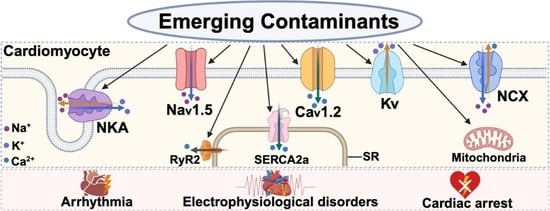
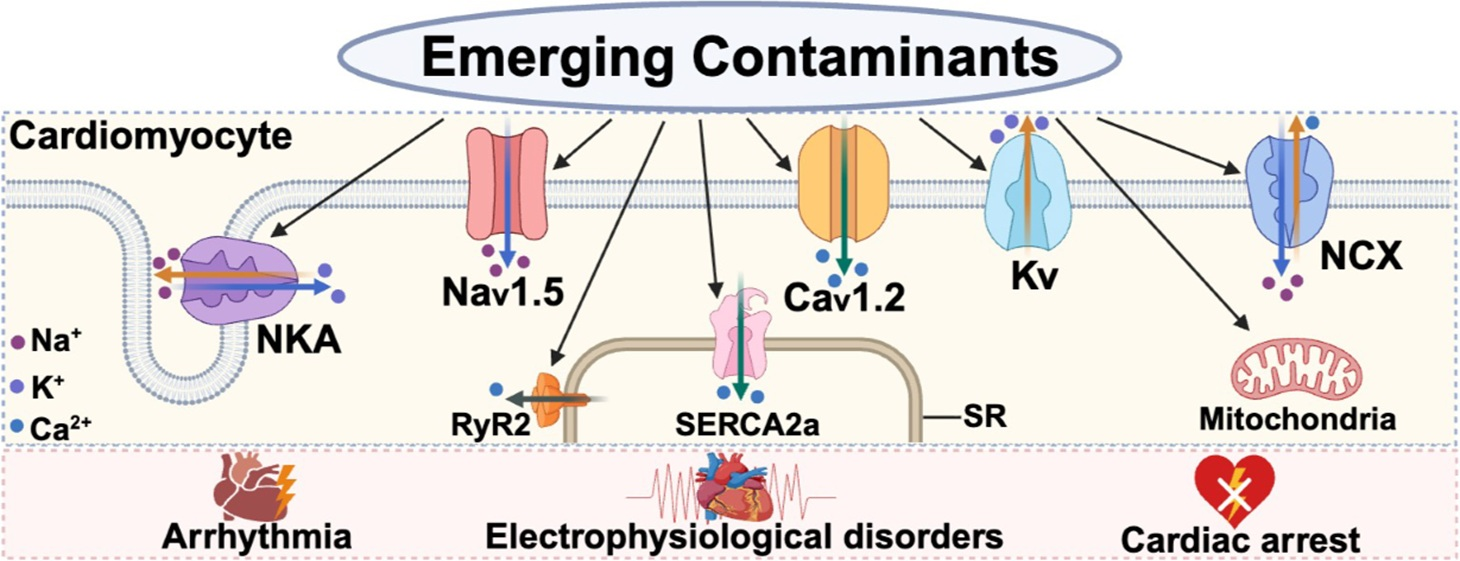
Graphical Abstract

1. Introduction

A rapid expansion in the use of synthetic organic chemicals over recent decades, a direct result of industrialization and urbanization, has introduced a vast array of ECs into environmental and biological systems [1]. Emerging contaminants, also referred to as contaminants of emerging concern (CECs), are natural or synthetic chemicals. Although these compounds are not routinely monitored or fully regulated, they are increasingly detected in the environment and may thus pose potential risks to ecosystems and human health. The Chemical Abstracts Service registry, which had included 20 million chemicals in 2002, surged to 219 million chemicals by 2024; this growth reflects an unprecedented level of chemical diversity in contemporary society [2]. ECs are commonly categorized into four broad groups of global concern: persistent organic pollutants, endocrine-disrupting chemicals, antibiotics, and microplastics. However, these broad classifications encompass numerous chemically distinct contaminant classes with diverse physicochemical properties, environmental behaviors, and toxicological mechanisms. In particular, representative EC groups such as bisphenol A (BPA), per- and polyfluoroalkyl substances (PFAS), phthalates (PAEs), flame retardants (FRs), polycyclic aromatic hydrocarbons (PAHs), polychlorinated biphenyls (PCBs), pesticides, microplastics (MPs) and pharmaceuticals and personal care products (PPCPs) have recently attracted increasing attention because of their widespread environmental occurrence, high human exposure potential, and emerging cardiovascular toxicity [3,4]. It is important to note that cardiovascular diseases (CVDs) represent the leading cause of mortality worldwide, with 20.5 million deaths in 2022 [5]. However, the causal relationship between ECs and both the development and progression of CVDs remains elusive. Thus, there is limited evidence of the mechanisms by which EC exposure harms the cardiovascular system.
The basic elements of the cardiovascular system are excitable cells, including cardiomyocytes, pacemaker cells, conducting cells, and vascular smooth muscle, which—when connected in a network—form the heart and various vessels to maintain optimal cardiovascular function [6]. A key characteristic of excitable cells is that they are rich in membrane-embedded ion channels that are selective to a wide array of ions. These channels, which link the intracellular and extracellular environments, are essential for various physiological processes, including membrane excitability, synaptic transmission, signaling, and cell volume regulation [7]. The coordinated conduction of excitatory stimuli, which results in the generation of action potentials in cardiomyocytes via the opening and closing of ion channels, is crucial for maintaining normal cardiac activity [8]. Ion channels are therefore important and attractive targets for drug development in diseases such as diabetes, epilepsy, hypertension, cancer, and chronic pain [9]. ECs and drugs specifically designed to target ion channels are complex compounds that may share similarities in chemical structure, functional groups, molecular weight, polarity, biological activity, toxicity mechanism, metabolism, and environmental behavior. These similarities could mean that ECs inadvertently affect the functioning of certain ion channels [10]. A growing number of studies indicate that pollutants can significantly disrupt ion channels, leading to alterations in action potential dynamics, calcium homeostasis, and reactive oxygen species (ROS) balance [11,12]. However, a comprehensive understanding of how different ECs interfere with cardiac ion channel function, along with the potential synergistic effects between various ECs, remains limited. Addressing this knowledge gap is crucial for assessing the cardiovascular risks associated with EC exposure and developing effective strategies to mitigate any negative impacts.
Currently available research on the health effects of ECs reveals limited progress in the field of electrophysiology, primarily due to several factors: the complexity of toxic mechanisms, high technical demands, insufficient interdisciplinary collaboration, substantial research costs, data interpretation challenges, and divergent research priorities. However, future research approaches could be promising due to technological advancements and enhanced interdisciplinary cooperation. The purpose of this review is to provide an overview of current knowledge regarding the influence of ECs on cardiac ion channels. To this end, we will systematically discuss the major ion channels, along with their associated functions in the cardiovascular system. Furthermore, we will focus on the link between exposure to nine typical ECs and the adverse effects on ion channels, including the possible underlying mechanisms.

2. Literature Review and Methodology

A narrative literature review was conducted for full-text original articles and reviews from PubMed, Web of Science, and Google Scholar databases, covering literature published up to March 2026.
The search strategy employed keywords including “emerging contaminants” OR “per- and polyfluoroalkyl substances” OR “PFAS” OR “bisphenol A” OR “BPA” OR “flame retardants” OR “microplastics” OR “phthalates” OR “polycyclic aromatic hydrocarbons” OR “PAHs” OR “polychlorinated biphenyls” OR “PCBs” OR “pesticides” OR “pharmaceutical residues” in conjunction with “cardiac ion channels” OR “cardiovascular toxicity” OR “heart ion channels” OR “cardiotoxicity” OR “arrhythmias” OR “cardiovascular diseases” OR “CVD”. Refinements were applied to focus on ion channel-specific mechanisms (e.g., adding “sodium channels” OR “calcium channels” OR “potassium channels”), reducing the number to 519 articles, and further to clinical and epidemiological evidence by incorporating “epidemiology” OR “clinical study” OR “cohort” OR “human exposure,” resulting in 73 articles. The detailed flowchart of literature selection is provided in Supplementary Figure S1.
Eligible studies included original research articles as well as relevant review articles providing mechanistic or translational insights. Only articles published in English with full-text availability were considered. Studies were included if they examined exposure to at least one of the targeted contaminant classes and reported cardiac electrophysiological endpoints, ion channel function or expression, intracellular calcium dynamics, or related cardiovascular outcomes. Studies conducted in non-cardiac tissues were included where they provided mechanistic insights not yet available from cardiac models, with their tissue origin explicitly noted. Non-peer-reviewed reports, conference abstracts without full-text availability, and studies lacking sufficient methodological detail were excluded.

3. The Adverse Effects of Emerging Contaminant Exposure on Cardiovascular Ion Channels: Evidence from In Vivo and In Vitro Studies

The growing prevalence of ECs in environmental and biological systems is now a public health concern, mainly because these compounds are persistent and have the capacity to disrupt fundamental physiological processes [13]. Among the myriad toxicological effects, these pollutants can interfere with integral membrane proteins, including ion channels, that govern electrical signaling, cellular communication, and homeostasis. Cardiac ion channels are fundamental to the electrical and contractile activities of the heart, as these channels orchestrate the precise regulation essential for normal cardiac physiology. These membrane proteins, which comprise sodium, calcium, potassium, chloride, and non-selective cation channels, govern action potential generation, propagation, and repolarization to ensure coordinated cardiac function (Text S1, Table S1). For these reasons, they are vulnerable targets for pollutant-induced dysregulation.
The following sections examine the deleterious effects of various ECs—including PFAS, BPA, and FRs, as well as MPs, PAEs, PAHs, PCBs, pesticides, PPCPs—on cardiac ion channel function. These substances, which are ubiquitous in environmental media and human tissues, infiltrate biological systems through dietary, respiratory, and dermal routes [14]. The structural diversity of ECs enables interactions with ion channels via multiple pathways, which include direct binding to channel proteins, modulation of gene expression, induction of oxidative stress, epigenetic alterations, and disruption of calcium homeostasis. By examining alterations in sodium, calcium, potassium, and other ion channels, as well as the associated molecular pathways, this section highlights the potential mechanisms by which these pollutants compromise cardiac health, ultimately contributing to arrhythmias, contractile dysfunction, and other cardiovascular diseases. Effects of typical emerging contaminant exposure on cardiac ion channels are summarized in Table 1. To facilitate interpretation of the strength and relevance of the summarized evidence, each study was further classified into three evidence levels according to the availability of direct electrophysiological recordings, cardiac model-based molecular or functional evidence, and indirect supportive findings. The evidence levels (A, B, and C) assigned to each study in the table are defined as follows: A = Direct electrophysiological evidence: Ion currents (e.g., INa, ICa, IKr) or action potential parameters (dV/dtmax, APD) were directly recorded via patch-clamp in cardiomyocytes or cardiac tissue, or intracellular Ca2+ transients were measured by calcium imaging; B = Indirect strong evidence: Significant changes in cardiac ion channel protein or mRNA expression, or whole-heart electrophysiological phenotypes (e.g., ECG abnormalities, arrhythmia susceptibility) were observed in cardiac models, but direct current recordings were not performed; C = Indirect supportive evidence: Findings are derived from developmental models (e.g., zebrafish embryos), non-cardiac tissues (e.g., vascular smooth muscle, neurons), or transcriptomic screening without direct electrophysiological validation in mature cardiomyocytes.

3.1. Definition and Scope of “Ion Channels” in This Review

Cardiac ion channels are fundamental to the electrical and contractile activities of the heart, as these channels orchestrate the precise regulation that is essential for normal cardiac physiology. Cardiac ion channels, encompassing sodium, calcium, potassium, chloride, and non-selective cation channels, play a critical role in regulating the generation, propagation, and repolarization of action potentials, which is essential for maintaining coordinated cardiac function [25]. In this study, we adopt a broad conceptualization of ion channels, with the term not only describing ion channels but also any related pumps and exchangers. For instance, voltage-gated sodium channels and the associated Na+/Ca2+ exchanger 1 (NCX1) initiate depolarization and help maintain calcium homeostasis, respectively, while calcium channels, including L-type voltage-gated Ca2+ channels and ryanodine receptors (RyRs), drive contraction and signaling [26]. Potassium channels, the most diverse group of ion channels, stabilize membrane potential and repolarization, with subtypes like the voltage-gated K+ channel and inwardly rectifying K+ channel playing distinct roles in the maintenance of heart rhythm [27]. Chloride and transient receptor potential (TRP) channels further modulate excitability and cellular homeostasis, thereby contributing to heart resilience [28]. The dysregulation of these channels is implicated in arrhythmia, heart failure, and hypertrophy, which highlights a critical role in cardiac health. A summary of the various types of cardiac ion channels, categorized by the preferred ion, is a prerequisite to comprehensively understanding the interactions between ECs and cardiac ion channels.

3.2. Emerging Contaminants Disrupt Cardiovascular Calcium Channels and Intracellular Calcium Homeostasis

Calcium channels, particularly L-type voltage-gated calcium channels (LTCCs) and intracellular calcium-release channels like ryanodine receptors (RyRs) and inositol 1,4,5-trisphosphate receptors (IP3Rs), are the most extensively documented targets for EC-induced cardiotoxicity. LTCCs are central to excitation–contraction coupling, and their inhibition or abnormal activation directly impairs the cardiovascular system.
LTCCs are particularly susceptible to inhibition and functional interference by both therapeutic drugs and exogenous substances, and represent major pharmacological targets in the treatment of cardiovascular diseases. Owing to the structural diversity of emerging contaminants, they can interact with LTCCs through multiple direct and indirect mechanisms. Acute exposure experiments on cardiac models have found that BPA can inhibit calcium current, suggesting a possible risk of cardiovascular disease (Figure 1). Deutschmann et al. reported that BPA (1–100 μM) rapidly inhibits calcium currents through L- and T-type Ca2+ channels in rat cardiomyocytes [29]. Moreover, experiments in which zebrafish embryos were subjected to chronic BPA exposure (25 μM) demonstrated a downregulation of LTCC mRNA and sarcoplasmic/endoplasmic reticulum calcium ATPase (SERCA) expression, leading to reduced embryonic heart rate and cardiac contraction amplitude; these results further support the link between calcium homeostasis disruption and cardiac dysfunction [30].
Exposure to PAHs, such as phenanthrene, leads to a dose-dependent reduction in beat cycle and field potential duration in human induced pluripotent stem cell-derived cardiomyocytes (hiPSC-CMs) primarily through LTCC inhibition [31]. Recent studies further demonstrate that long-term low-dose exposure to polystyrene microplastics and nanoplastics (PS-MNPs) significantly impairs contractility, reduces Ca2+ transient amplitude, and alters Ca2+ handling dynamics, accompanied by mitochondrial dysfunction and pro-hypertrophic effects even at environmentally relevant concentrations [32]. Phthalates also exhibit clear cardiotoxic potential in hiPSC-CM models, disrupting calcium homeostasis and ion channel function [33].
Positively charged PS-MNPs are rapidly internalized by neonatal rat cardiomyocytes, leading to the acute inhibition of LTCCs, a significant reduction in intracellular Ca2+ levels, and decreased contractility [34]. PAEs like diethyl phthalate (DEP) have been shown to suppress Ca2+ currents and downregulate Cav1.2 mRNA expression in rat aortas, causing abnormal vascular relaxation [35]. Certain PPCPs, such as the antihypertensive drug amlodipine, are specifically designed to block the α1 subunit of Cav1.2. However, excessive environmental exposure to such pharmaceutical residues may inadvertently suppress myocardial contractility in non-target organisms [36].
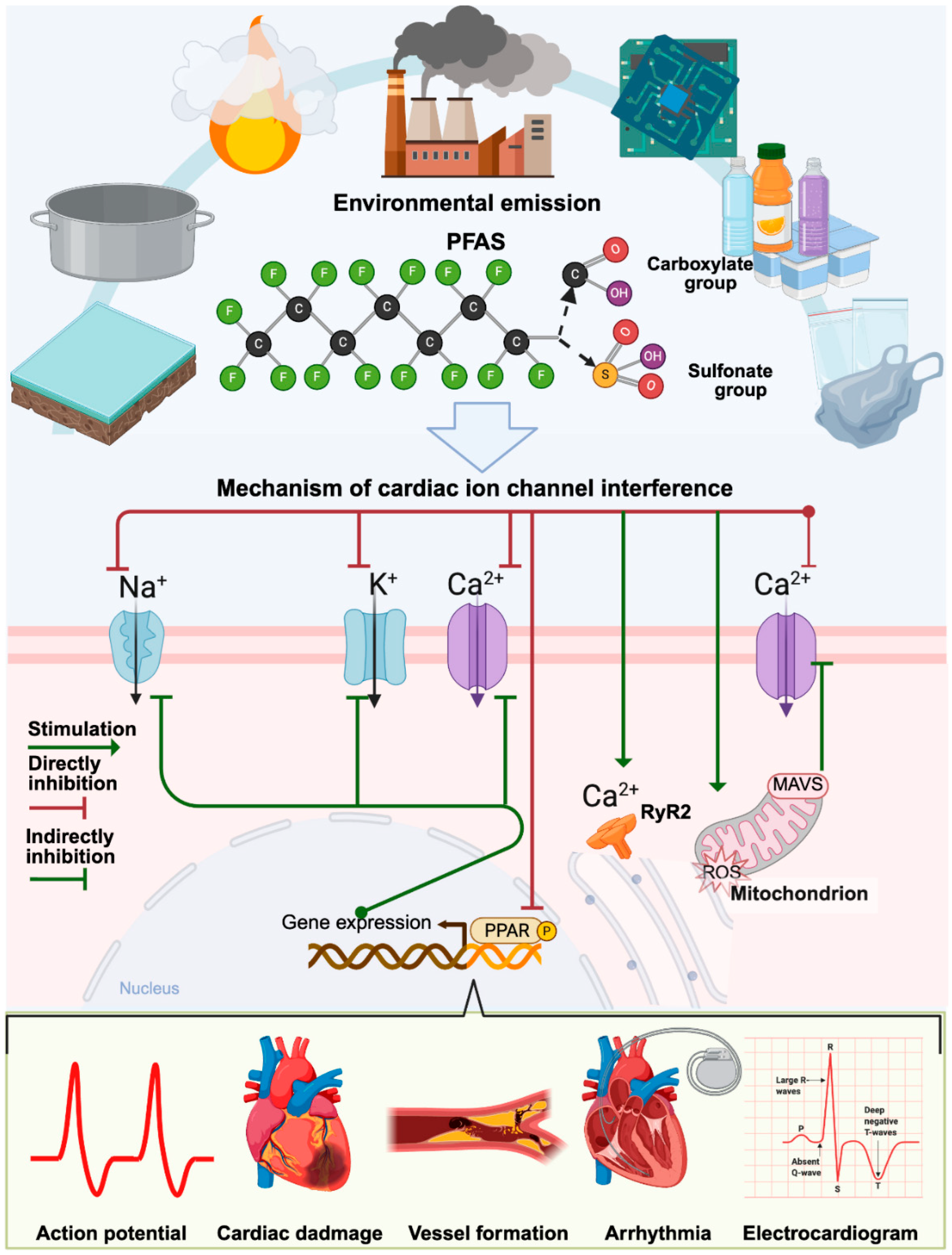
Conversely, some ECs induce intracellular Ca2+ overload. In recent years, several studies have reported that PFAS, such as PFOA and PFOS, can interact with ion channels to yield potentially disruptive effects (Figure 2). PFAS exposure has been linked to increased intracellular Ca2+ concentrations in primary chicken embryo cardiomyocytes, alongside decreased cell viability [37]. The mitochondrial toxicity of PFOS exposure observed in cardiomyocytes derived from embryonic stem cells was found to inhibit in vitro myocardial formation, reduce L-type Ca2+ channel expression, and block the transient increase in [Ca2+] in cardiomyocytes exposed to 100 μM PFOS [38].
Feiteiro et al. utilized A7r5 vascular smooth muscle cells and patch-clamp techniques to show that TBBPA inhibits LTCCs to decrease Ca2+ influx. Although this confirms LTCC susceptibility in excitable cells, direct evidence in cardiomyocytes is required to establish cardiac relevance. Additionally, the researchers hypothesized that the vascular effects of TBBPA may be mediated by the activation of α1-, β1-, and β2-adrenoceptors, in concert with its actions on Ca2+ and K+ channels [39].
PAEs like di(2-ethylhexyl) phthalate (DEHP) also trigger Ca2+ overload, activating the CaMKII-RIPK3 necroptosis pathway in cardiomyocytes [40]. In mouse embryonic stem cell-derived cardiomyocytes, the commercial PCB mixture Aroclor 1254 inhibited spontaneous Ca2+ oscillations, reduced sarcoplasmic reticulum Ca2+ content, and suppressed voltage-gated Ca2+ entry, leading to impaired contractile function [41]. Despite a concurrent upregulation of RyR2 mRNA (1.7-fold), the net functional effect was suppression of intracellular Ca2+ dynamics, suggesting that the transcriptional response may reflect a compensatory mechanism rather than direct channel activation.
Pesticides, such as pyrethroids, can enhance the permeability of voltage-gated Ca2+ channels, causing calcium signaling abnormalities that have been primarily characterized in neuronal and insect models [42]. Whether these calcium-handling defects propagate to human cardiomyocyte excitation–contraction coupling remains to be investigated. Additionally, non-pharmaceutical PPCPs like the antimicrobial agent triclosan can elevate intracellular Ca2+ levels within rat smooth muscle cells and reduce mitochondrial membrane potential, leading to vascular endothelial dysfunction [43]. Emerging organophosphate flame retardants (2-ethylhexyl diphenyl phosphate and diphenyl phosphate) also induce differential cardiotoxicity in zebrafish models through disruption of calcium homeostasis and related signaling pathways [44].
In summary, L-type calcium channels emerge as the most consistently affected target across ECs, with evidence ranging from direct current blockade (BPA, PAHs) to disruption of accessory calcium-handling proteins (PFAS, PAEs, FRs, MPs, PCBs). T-type calcium channels and intracellular release channels remain comparatively understudied in the context of EC cardiotoxicity.

3.3. Emerging Contaminants Interfere with Cardiovascular Voltage-Gated Sodium Channels

Voltage-gated sodium channels, notably NaV1.5, are responsible for phase 0 depolarization of the cardiac action potential and are essential for maintaining conduction velocity. Disruption of these channels by ECs can lead to conduction blocks and ventricular arrhythmias.
Beyond direct binding, BPA can indirectly affect electrophysiological function by regulating the expression of ion channel-related genes or the activity of encoded proteins. Experiments in hiPSC-CMs revealed that BPA exerts dose-dependent inhibition of the sodium channels to impair calcium flows and contractile homeostasis [23]. In HEK-transfected cell lines, BPA directly binds to the pore domain of NaV1.5, causing a dose-dependent blockade of sodium currents [45]. A recent study using whole-cell voltage-clamp recordings confirmed that BPA is a potent inhibitor of both peak sodium current (INaP) and late sodium current (INaL) in NaV1.5-transfected cells, with IC50 values of 55.3 μM and 23.6 μM, respectively; BPA and its analogue BPF also impaired atrioventricular conduction in whole-heart preparations [46].
This direct binding mechanism is mirrored by PAE metabolites; for example, mono-(2-ethylhexyl) phthalate (MEHP) inhibits NaV1.5 in isolated rat hearts, which significantly slows epicardial conduction velocity [47]. Additionally, in hiPSC-CMs, PFOA has been shown to inhibit INa and downregulate SCN5A mRNA [22]. Pharmaceutical residues also contribute to this blockade; for example, the widely prescribed antidepressants citalopram and escitalopram are frequently detected in global surface waters and directly inhibit human NaV1.5 channels expressed in HEK293 cells, reducing peak INa by approximately 60% and shifting the inactivation curve toward more negative potentials [48].
While most of the aforementioned ECs inhibit sodium currents, exposure to certain PAHs and pesticides has been reported to increase sodium influx. In trout ventricular cardiomyocytes, phenanthrene and retene increase INa, creating an imbalance between sodium and potassium currents that induces electrophysiological instability [49]. Pyrethroid insecticides bind to voltage-gated sodium channels and delay their inactivation, maintaining a persistent sodium influx [50]. A systematic review and meta-analysis confirmed that pyrethroid-induced INaL enhancement is a key mechanism underlying action potential prolongation, QT interval extension, and impaired cardiac contractility [51].
Organochlorine pesticides also target sodium channels by prolonging the channel opening time, a mechanism primarily characterized in neuronal preparations. However, studies have shown that at nanomolar concentrations, Aldrin can directly act on the sodium channels of cardiomyocytes (such as NaV1.5), interfering with the electrophysiological activities of cardiomyocytes [52].

3.4. Emerging Contaminants Modulate Cardiovascular Potassium Channels and Repolarization

Potassium channels, including the rapid delayed rectifier potassium current (IKr/hERG), dictate myocardial repolarization and action potential duration (APD). Inhibition of these channels prolongs the APD, elevating the risk of QT interval prolongation and lethal arrhythmias such as torsades de pointes.
PAHs are potent disruptors of potassium channels. In heterologous expression systems, phenanthrene inhibits IKr, causing calcium cycling disorders and prolonging action potentials; this toxic effect is notably amplified in the presence of hERG channel mutations [53]. Marris et al. (2025) reported in female sheep ventricular myocytes that phenanthrene induced a paradoxical shortening of APD90 (~37%) despite substantial IKr inhibition (~56% at 25 μM) [12]. This unexpected effect was primarily attributed to the dominant suppression of calcium handling, particularly via inhibition of SERCA and RyR2, which overrides the canonical APD-prolonging consequence of IKr blockade, thereby highlighting the complex multi-channel interactions of PAHs.
BPA also exhibits strong inhibitory effects on IKr. Ma et al. demonstrated that acute BPA exposure rapidly inhibits IKr in female canine ventricular myocytes, leading to proarrhythmic phenotypes like early afterdepolarizations [54]. Pharmaceutical residues, particularly Class III antiarrhythmics (e.g., amiodarone, sotalol), directly block Kv11.1 (the IKr channel), delaying repolarization and prolonging the QT interval [55]. Lee et al. (2025) demonstrated that di-n-octyl phthalate (DnOP) markedly prolonged field potential duration in hiPSC-CMs by inhibiting IKr, posing a stronger proarrhythmic risk than DEHP, whereas dibutyl phthalate (DBP) and benzyl butyl phthalate (BBP) primarily induced beating arrest with decreased amplitude rather than repolarization abnormalities [33].
In contrast, some flame retardants act as potassium channel activators. In the A7r5 vascular smooth muscle cell line, TBBPA increased mRNA levels of BKCa1.1α- and β1-subunits, which also suggests that K+ channel activation may represent another pathway by which TBBPA mediates vascular relaxation [39]. Moreover, Liu et al. found that natural polybrominated diphenyl ethers selectively activate the Kv7.1 and Kv7.2 potassium channels, which suggests that these compounds are potential potassium channel activators [56]. This bidirectional disruption (inhibition by BPA/PAHs/PPCPs in cardiac models vs. activation by FRs in vascular smooth muscle) highlights the complex, chemical-specific nature of EC interference with cardiac ion channels. Whether FRs similarly modulate cardiac potassium currents remains to be established.

3.5. Emerging Contaminants Impair Cardiovascular Ion Transporters and Exchangers

Beyond pore-forming ion channels, ECs severely impact the ion transporters and ATPases required to maintain transmembrane ionic gradients. Dimitriadi et al. observed that zebrafish exposed to sublethal concentrations of PS-MNPs exhibited decreased heart rates and reduced ventricular contraction frequency [57]. Mechanistic studies further revealed that PS-MNPs may bind to β-adrenergic receptors (key receptors regulating heart rate) in cardiomyocytes to inhibit downstream signaling. On the other hand, PS-MNPs can also interact with Na+/K+ ATPases (NKA), which are critical to maintaining myocardial ion gradients, to disrupt the Na+/K+ balance and cause abnormal action potential. Research by Hong et al., which relied on Gobiocypris rarus as a model organism, found that 96 h exposure to triphenyl phosphate (TPHP) and tris(1,3-dichloro-2-propyl) phosphate (TDCIPP) reduces embryonic heart rate. Mechanistic studies further revealed that both compounds inhibit Na+/Ca2+ exchangers, disrupting Na+ and Ca2+ transport and potentially leading to myocardial contractile dysfunction and arrhythmias [58]. In another study, exposure to tri-o-cresyl phosphate (ToCP) and tri-m-cresyl phosphate (TmCP) impaired overall ion and osmoregulatory functions in zebrafish; these changes were attributed to reduced Ca2+-ATPase and Na+/K+-ATPase activities, along with decreased ATP and K+ levels [59]. In H9C2 rat cardiomyocyte, hexabromocyclododecane (HBCD) exposure disrupts the expression balance of RyR2, SERCA2a, and NCX1, leading to sarcoplasmic reticulum Ca2+ overload and impaired Ca2+ reuptake during cardiac relaxation [19]. Additional experiments utilizing mouse cardiomyocytes demonstrated that DBP exposure induces endoplasmic reticulum stress and mitochondrial damage, both of which reduce mitochondrial membrane potential. The underlying mechanism involves disruption of the calcium transfer pathway mediated by inositol 1,4,5-trisphosphate receptor type 1 (IP3R1, endoplasmic reticulum release channel), glucose-regulated protein 75 (GRP75, linker protein), and the voltage-dependent anion-selective channel 1 (VDAC1, mitochondrial calcium channel) [60]. However, this field requires further attention, as there is a lack of direct evidence on the association between PAE exposure and chloride and TRP channel effects despite the evidence described above. Novel insecticides target insect-specific TRP channels (e.g., TRPA1/TRPV) to achieve precise lethality through the activation of nociceptive pathways. However, since these channels are also expressed in cardiomyocytes, careful evaluation of potential cross-reactivity risks is needed [61].

4. Clinical and Epidemiological Evidence of Cardiovascular Diseases Induced by Emerging Contaminant Exposure

Recent human studies have begun to link exposure to various emerging contaminants with measurable cardiac electrical changes and clinical CVD endpoints (Table 2). These findings provide hypothesis-generating clues, but they do not directly measure ion channel activity or establish exact causal mechanisms. The evidence strength of individual studies was assessed as follows: Moderate evidence is assigned to studies with direct ECG or biomarker endpoints and adequate sample size (n > 1000), though cross-sectional in design; Low evidence is assigned to studies with indirect endpoints (e.g., self-reported disease, atherothrombotic events) or small sample size (n < 100).
For example, a 2023 cross-sectional study of 1229 middle-aged Chinese adults found that higher serum PFAS levels were associated with slower atrioventricular conduction (longer PR interval) and shorter QRS duration on electrocardiogram (ECG), as well as reduced heart rate [62]. A more recent cross-sectional study of 3450 older adults (≥60 years) further strengthened this link, showing that higher serum concentrations of multiple PFAS were associated with greater odds of both minor and major ECG abnormalities, including prolonged QRS duration and QTc interval, as well as shortened T-wave duration [63].
In a large US cohort (the Fernald Community Cohort), higher urinary BPA and bisphenol F (BPF) were significantly associated with PR interval and QRS complex prolongation in women and corrected QT interval (QTc) prolongation (associated with triclocarban) in men [64].
In the National Health and Nutrition Examination Survey (NHANES) (7032 US adults), higher serum polybrominated biphenyl-153 and related brominated flame retardant levels were linked to markedly increased odds of heart failure and coronary heart disease [65]. PAE exposures have also been linked to cardiac injury in humans; in NHANES (n ≈ 1237 adult men), higher urinary PAE metabolites (e.g., mono(3-carboxypropyl) phthalate, mono-isobutyl phthalate, and mono-benzyl phthalate) were positively correlated with elevated serum troponin I/T levels [66].
High PAH exposure, as measured by urinary hydroxylated metabolites, has been associated with greater CVD prevalence in US adults [67]; for instance, individuals in the highest quartile of 2-OH-fluorene had approximately 50–100% higher odds of self-reported heart disease. Emerging evidence has additionally highlighted MNPs as novel contributors to cardiovascular risk. In a prospective multicenter study of patients undergoing carotid endarterectomy, the presence of MNPs (particularly polyethylene and polyvinyl chloride) within atherosclerotic plaques was associated with a markedly higher risk of the composite endpoint of myocardial infarction, stroke, or all-cause death (hazard ratio 4.53) during follow-up [68]. Scoping reviews and additional human tissue analyses have detected MNPs in atherosclerotic plaques, thrombi, and cardiac tissues, supporting their potential role in promoting inflammation, oxidative stress, and plaque instability [69,70].
In summary, exposure to multiple ECs is significantly associated with alterations in human ECG parameters (including PR, QRS, and QTc interval prolongation, as well as abnormal heart rate) and increased cardiovascular disease risk. These clinical observations are broadly compatible with the cardiotoxic mechanisms identified in experimental models and provide hypothesis-generating evidence that merits further investigation. However, the epidemiological findings represent statistical associations rather than demonstrations of specific causal pathways. Prospective cohort studies that integrate exposure biomarkers with high-resolution ECG phenotyping will be essential to further clarify the nature and magnitude of cardiovascular risks associated with emerging contaminant exposure in human populations.
Table 2. Effects of emerging contaminants on cardiovascular diseases: evidence from clinical and epidemiological studies.
ContaminantCohortKey FindingsEvidence StrengthRef.
PFASsChinese adults, N = 1229; mean age ≈ 55↑PR, ↓QRS; ↓HRModerate[62]
PhthalatesUS adults, N ≈ 1237; ≥20 years↑Troponin I/T elevationModerate[66]
BisphenolsUS adults, N ≈ 1000; 18–80 years↑PR, ↑QRS, QTc prolongation; Moderate[64]
Brominated flame retardantsUS adults, N = 7032; ≥20 yearsHeart failure, coronary heart diseaseLow[65]
Polycyclic aromatic hydrocarbonsUS adults, N = 9136; 20–79 yearsCoronary/ischemic heart disease, strokeModerate[67]
PesticidesMyanmar adults, N = 90; 20–40 yearsQTc prolongation and increased CVD riskLow[71]
Microplastics and nanoplasticsPatients, N = 304; 18–75 yearsIncreased risk of subsequent cardiovascular eventsLow[68]
↑, the value was significantly higher than the control group; ↓, the value was significantly lower than the control group. Abbreviations: AV, atrioventricular; CVD, cardiovascular disease; HR, heart rate; PFAS, per- and polyfluoroalkyl substances; PR, PR interval; QRS, QRS duration; QT, QT interval; QTc, corrected QT interval.

5. Conclusions and Further Perspectives

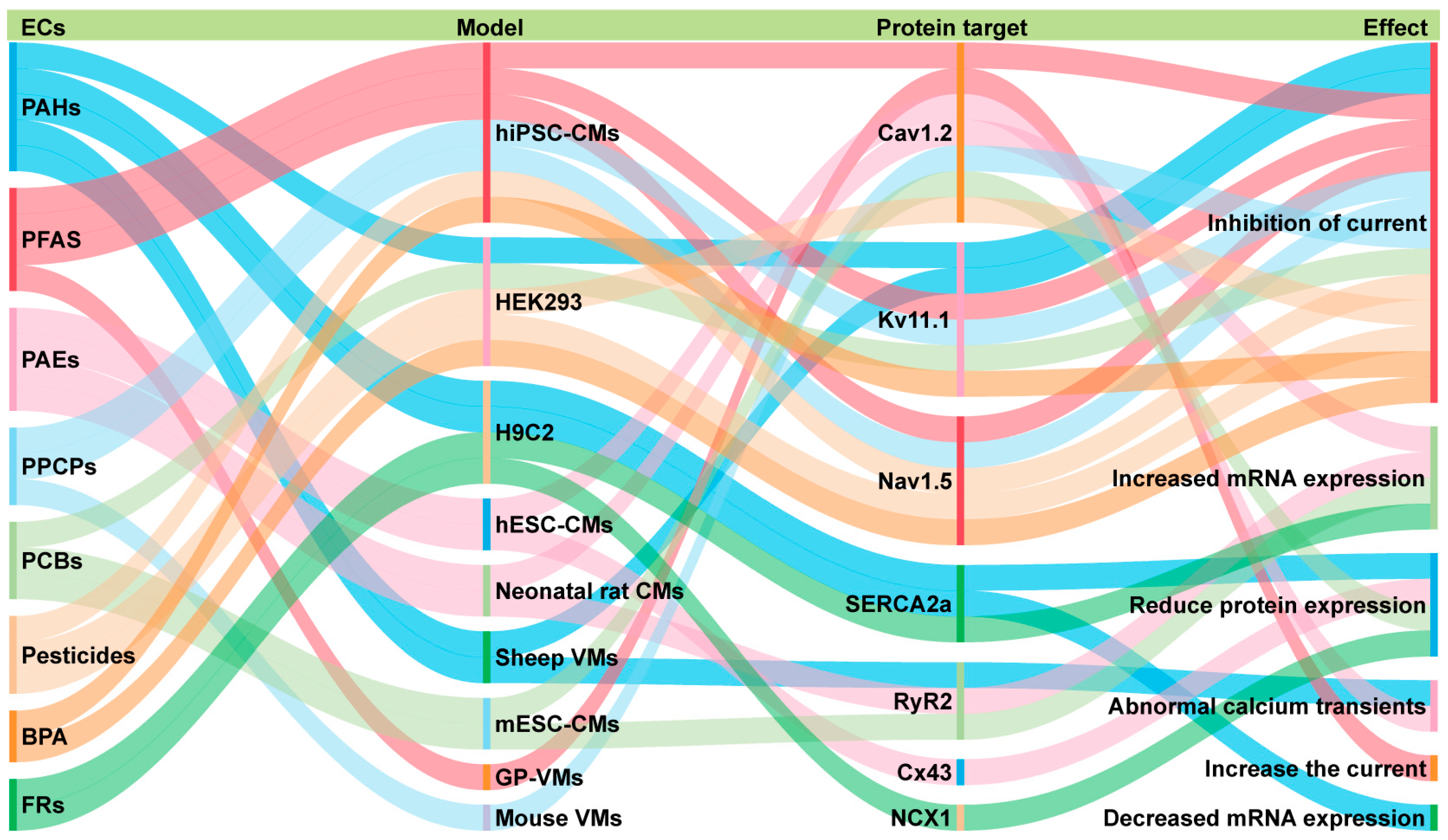
The reviewed literature collectively indicates that multiple classes of ECs can disrupt cardiac excitability by targeting ion channels, transporters, and calcium-handling proteins. Figure 3 illustrates the effects of ECs on cardiac ion channels, transporters, and calcium-handling proteins across cardiac models. Clear patterns emerge across the different classes of contaminants investigated. BPA, PFAS, certain pesticides, and PPCPs exhibit a relatively broad ion channel-targeting profile, with direct evidence for modulation of Nav1.5, Cav1.2, and Kv11.1 currents in cardiac models. PAHs, particularly phenanthrene, primarily target Kv11.1 and additionally affect calcium transients and the expression of calcium-cycling proteins. By contrast, PAEs, FRs, and PCBs show limited direct ion channel effects; the predominant findings for these classes involve altered calcium-cycling protein and mRNA expression. For MNPs, studies in cardiac models remain particularly scarce. These interactions have the potential to impair cardiac function, as reflected in experimental phenotypes such as arrhythmia, bradycardia, and disrupted calcium handling. However, the translation of this mechanistic insight to human cardiovascular risk remains constrained by the evidence gaps and model limitations.
Translating the above mechanistic and epidemiological evidence into human cardiovascular risk assessment requires consideration of two interrelated factors: the substantial discrepancy between experimental concentrations and actual internal exposure levels in humans, and the inherent limitations of model systems for extrapolation. For several major contaminant classes, the micromolar concentrations used in most patch-clamp and calcium-imaging studies far exceed those measured in the general population. Median serum levels of PFOA (~3 nM) are one and a half to four and a half orders of magnitude below the 0.1–100 μM concentrations used in hiPSC-CM studies [72], while serum BPA concentrations (~8 nM) are 100- to 10,000-fold lower than typical experimental concentrations [73]. Although these differences are valuable for hazard identification, they highlight several understudied factors such as tissue accumulation, metabolite toxicity, and cumulative effects of chronic low-dose exposure. Moreover, variations across rodent, zebrafish, hiPSC-CM, and heterologous expression models, together with the heart’s compensatory capacity and chronic structural remodeling, limit definitive conclusions about human cardiac risk. The case of micro- and nanoplastics (MNPs) deserves particular caution, as their detection in atherosclerotic plaques and cardiac tissue is associated with adverse cardiovascular events, yet direct electrophysiological evidence of ion channel dysfunction remains limited and largely inferential.
Based on prior research findings, future investigations should prioritize the following three key areas:
(1)
Establish large-scale cohort studies with long-term follow-up periods.
Future research should integrate environmental exposure databases and cardiovascular epidemiological data to establish long-term cohort studies. Investigating the causal relationship between pollutant exposure and cardiac electrophysiological abnormalities (e.g., arrhythmia, QT prolongation, conduction block) will be essential. In addition, wearable devices (e.g., Holter monitors) can provide continuous cardiac activity data for more precise assessments.
(2)
Elucidate ion channel modulation mechanisms.
Advanced techniques such as patch-clamp electrophysiology, optogenetics, and high-resolution calcium imaging should be used to examine how emerging contaminants alter ion channel kinetics (e.g., activation, inactivation, and recovery time constants) and how these mechanisms are involved in arrhythmogenesis.
(3)
Develop interventions to mitigate EC-induced channelopathies.
To address the cardiovascular risks posed by ECs, future research should focus on developing practical interventions to mitigate EC-induced ion channel dysfunction. High-throughput screening of small molecules that protect or restore cardiac ion channel function offers a promising approach to identifying novel therapeutics, drawing parallels from antiarrhythmic drug development. Additionally, exploring nutritional and pharmacological interventions, such as antioxidants to counteract oxidative stress or calcium-stabilizing supplements to restore ionic homeostasis, could provide effective strategies to protect exposed populations and reduce the incidence of pollutant-related cardiac electrophysiological abnormalities.

Supplementary Materials

The following supporting information can be downloaded at: https://www.mdpi.com/article/10.3390/toxics14050450/s1. Text S1: Major ion channels of the cardiovascular system [74,75,76,77,78,79,80,81,82,83,84,85,86,87,88,89,90,91,92,93,94,95,96,97,98,99,100,101,102,103,104,105,106,107,108,109,110,111,112]; Table S1: Ion Channels in Cardiac Cells: Types, Functions, and Associated Cell Types; Figure S1: A flow diagram for the narrative literature review.

Author Contributions

Conceptualization, D.Z.; methodology, D.Z. and D.L.; validation, S.G., X.C., R.C. and W.D.; investigation, K.W. and Y.L.; visualization, D.Z. and D.L.; writing—original draft, D.Z. and D.L.; supervision, S.Y.T.; project administration, Z.C. and Z.Q.; writing—review and editing, S.Y.T., Z.C. and Z.Q.; funding acquisition, Z.C. and Z.Q. All authors have read and agreed to the published version of the manuscript.

Funding

This work was supported by the National Natural Science Foundation of China (42377419), the National Key Research and Development Project (2023YFC3905100) and the Key R&D Plans of Guangzhou Science and Technology (202206010190).

Institutional Review Board Statement

Not applicable.

Informed Consent Statement

Not applicable.

Data Availability Statement

The data presented in this study are available upon request from the corresponding author.

Conflicts of Interest

The authors declare no conflicts of interest.

References

  1. Wang, F.; Xiang, L.; Leung, K.S.-Y.; Elsner, M.; Zhang, Y.; Guo, Y.; Pan, B.; Sun, H.; An, T.; Ying, G.; et al. Emerging contaminants: A One Health perspective. Innovation 2024, 5, 100612. [Google Scholar] [CrossRef]
  2. Arp, H.P.H.; Aurich, D.; Schymanski, E.L.; Sims, K.; Hale, S.E. Avoiding the Next Silent Spring: Our Chemical Past, Present, and Future. Environ. Sci. Technol. 2023, 57, 6355–6359. [Google Scholar] [CrossRef]
  3. Gao, P. Chasing “Emerging” Contaminants: An Endless Journey toward Environmental Health. Environ. Sci. Technol. 2024, 58, 1790–1792. [Google Scholar] [CrossRef]
  4. Bayabil, H.K.; Teshome, F.T.; Li, Y.C. Emerging Contaminants in Soil and Water. Front. Environ. Sci. 2022, 10, 873499. [Google Scholar] [CrossRef]
  5. Di Cesare, M.; Perel, P.; Taylor, S.; Kabudula, C.; Bixby, H.; Gaziano, T.A.; McGhie, D.V.; Mwangi, J.; Pervan, B.; Narula, J.; et al. The Heart of the World. Glob. Heart 2024, 19, 11. [Google Scholar] [CrossRef]
  6. Grandi, E.; Navedo, M.F.; Saucerman, J.J.; Bers, D.M.; Chiamvimonvat, N.; Dixon, R.E.; Dobrev, D.; Gomez, A.M.; Harraz, O.F.; Hegyi, B.; et al. Diversity of cells and signals in the cardiovascular system. J. Physiol. 2023, 601, 2547–2592. [Google Scholar] [CrossRef]
  7. Joukar, S. A comparative review on heart ion channels, action potentials and electrocardiogram in rodents and human: Extrapolation of experimental insights to clinic. Lab. Anim. Res. 2021, 37, 25. [Google Scholar] [CrossRef] [PubMed]
  8. Varro, A.; Tomek, J.; Nagy, N.; Virag, L.; Passini, E.; Rodriguez, B.; Baczko, I. Cardiac transmembrane ion channels and action potentials: Cellular physiology and arrhythmogenic behavior. Physiol. Rev. 2021, 101, 1083–1176. [Google Scholar] [CrossRef] [PubMed]
  9. Pliushcheuskaya, P.; Künze, G. Recent Advances in Computer-Aided Structure-Based Drug Design on Ion Channels. Int. J. Mol. Sci. 2023, 24, 9226. [Google Scholar] [PubMed]
  10. Li, Y.; Li, Y.; Zhang, S.; Gao, T.; Gao, Z.; Lai, C.W.; Xiang, P.; Yang, F. Global Distribution, Ecotoxicity, and Treatment Technologies of Emerging Contaminants in Aquatic Environments: A Recent Five-Year Review. Toxics 2025, 13, 616. [Google Scholar] [CrossRef]
  11. Xiao, Y.; Hu, L.; Duan, J.; Che, H.; Wang, W.; Yuan, Y.; Xu, J.; Chen, D.; Zhao, S. Polystyrene microplastics enhance microcystin-LR-induced cardiovascular toxicity and oxidative stress in zebrafish embryos. Environ. Pollut. 2024, 352, 124022. [Google Scholar] [CrossRef] [PubMed]
  12. Marris, C.R.; Kompella, S.N.; Trafford, A.W.; Hancox, J.C.; Shiels, H.A. The air pollutant phenanthrene disrupts calcium cycling and alters repolarization in female sheep ventricular cardiomyocytes. Physiol. Rep. 2025, 13, e70471. [Google Scholar] [CrossRef]
  13. Li, X.; Shen, X.; Jiang, W.; Xi, Y.; Li, S. Comprehensive review of emerging contaminants: Detection technologies, environmental impact, and management strategies. Ecotoxicol. Environ. Saf. 2024, 278, 116420. [Google Scholar] [CrossRef] [PubMed]
  14. Yu, Y.; Wang, Z.; Yao, B.; Zhou, Y. Occurrence, bioaccumulation, fate, and risk assessment of emerging pollutants in aquatic environments: A review. Sci. Total Environ. 2024, 923, 171388. [Google Scholar] [CrossRef] [PubMed]
  15. Mandour, D.A.; Morsy, M.M.; Fawzy, A.; Mohamed, N.M.; Ahmad, M.M. Structural and molecular changes in the rat myocardium following perfluoroctane sulfonate (PFOS) exposure are mitigated by quercetin via modulating HSP 70 and SERCA 2. J. Mol. Histol. 2023, 54, 283–296. [Google Scholar] [CrossRef]
  16. Fundere, A.; Rose, A.; Xiong, F.; Muthukumarasamy, K.M.; Altuntas, Y.; Dasari, H.; Villeneuve, L.; Sirois, M.G.; Tanguay, J.-F.; Tardif, J.-C.; et al. Daily exposure to chlordecone, an organochlorine pesticide, increases cardiac fibrosis and atrial fibrillation vulnerability. J. Hazard. Mater. 2024, 478, 135533. [Google Scholar] [CrossRef]
  17. Zhan, C.; Liu, G.; Li, J.; Li, G.; Li, T.; Zhao, H.; Li, L.; Yang, W.; Bai, N.; Zheng, M.; et al. Rotenone and 3-bromopyruvate toxicity impacts electrical and structural cardiac remodeling in rats. Toxicol. Lett. 2020, 318, 57–64. [Google Scholar] [CrossRef]
  18. Patel, B.B.; Raad, M.; Sebag, I.A.; Chalifour, L.E. Lifelong Exposure to Bisphenol A Alters Cardiac Structure/Function, Protein Expression, and DNA Methylation in Adult Mice. Toxicol. Sci. 2013, 133, 174–185. [Google Scholar] [CrossRef]
  19. Wu, M.; Wu, D.; Wang, C.; Guo, Z.; Li, B.; Zuo, Z. Hexabromocyclododecane exposure induces cardiac hypertrophy and arrhythmia by inhibiting miR-1 expression via up-regulation of the homeobox gene Nkx2.5. J. Hazard. Mater. 2016, 302, 304–313. [Google Scholar] [CrossRef]
  20. Zhang, Y.; Huang, L.; Zuo, Z.; Chen, Y.; Wang, C. Phenanthrene exposure causes cardiac arrhythmia in embryonic zebrafish via perturbing calcium handling. Aquat. Toxicol. 2013, 142–143, 26–32. [Google Scholar] [CrossRef]
  21. Rigaud, C.; Eriksson, A.; Krasnov, A.; Wincent, E.; Pakkanen, H.; Lehtivuori, H.; Ihalainen, J.; Vehniäinen, E.-R. Retene, pyrene and phenanthrene cause distinct molecular-level changes in the cardiac tissue of rainbow trout (Oncorhynchus mykiss) larvae, part 1–Transcriptomics. Sci. Total Environ. 2020, 745, 141031. [Google Scholar] [CrossRef]
  22. Ko, M.Y.; Chon, S.-H.; Park, H.; Min, E.; Kim, Y.; Cha, S.-W.; Seo, J.-W.; Lee, B.-S.; Ka, M.; Hyun, S.-A. Perfluorooctanoic acid induces cardiac dysfunction in human induced pluripotent stem cell-derived cardiomyocytes. Ecotoxicol. Environ. Saf. 2024, 273, 116170. [Google Scholar] [CrossRef]
  23. Hyun, S.-A.; Lee, C.Y.; Ko, M.Y.; Chon, S.-H.; Kim, Y.-J.; Seo, J.-W.; Kim, K.K.; Ka, M. Cardiac toxicity from bisphenol A exposure in human-induced pluripotent stem cell-derived cardiomyocytes. Toxicol. Appl. Pharmacol. 2021, 428, 115696. [Google Scholar] [CrossRef]
  24. Xiao, M.; Peng, X.; Liu, Q.; Li, Y.; Jing, H.; Liang, S.; Zhu, S. Potential Toxic Effects of TBBPA on Embryonic Cardiomyocyte Development and Heartbeat Frequency. Organ Med. 2025, 2, 41–49. [Google Scholar] [CrossRef]
  25. Lei, M.; Salvage, S.C.; Jackson, A.P.; Huang, C.L.H. Cardiac arrhythmogenesis: Roles of ion channels and their functional m odification. Front. Physiol. 2024, 15, 1342761. [Google Scholar] [CrossRef] [PubMed]
  26. Scranton, K.; John, S.; Angelini, M.; Steccanella, F.; Umar, S.; Zhang, R.; Goldhaber, J.I.; Olcese, R.; Ottolia, M. Cardiac function is regulated by the sodium-dependent inhibition of the sodium-calcium exchanger NCX1. Nat. Commun. 2024, 15, 3831. [Google Scholar] [CrossRef]
  27. Li, C.; Yang, Y. Advancements in the study of inward rectifying potassium channels on vascular cells. Channels 2023, 17, 2237303. [Google Scholar] [CrossRef] [PubMed]
  28. Doleschal, B.; Primessnig, U.; Wölkart, G.; Wolf, S.; Schernthaner, M.; Lichtenegger, M.; Glasnov, T.N.; Kappe, C.O.; Mayer, B.; Antoons, G.; et al. TRPC3 contributes to regulation of cardiac contractility and arrhythmogenesis by dynamic interaction with NCX1. Cardiovasc. Res. 2015, 106, 163–173. [Google Scholar] [CrossRef]
  29. Deutschmann, A.; Hans, M.; Meyer, R.; Haeberlein, H.; Swandulla, D. Bisphenol A Inhibits Voltage-Activated Ca2+Channels in Vitro: Mechanisms and Structural Requirements. Mol. Pharmacol. 2013, 83, 501–511. [Google Scholar] [CrossRef]
  30. Arrokhman, S.; Luo, Y.-H.; Lin, P. Additive cardiotoxicity of a bisphenol mixture in zebrafish embryos: The involvement of calcium channel and pump. Ecotoxicol. Environ. Saf. 2023, 263, 115225. [Google Scholar] [CrossRef]
  31. Kim, M.W.; Lee, S.-G.; Kim, J.; Jeong, K.S.; Lee, Y.H.; Lee, S.; Park, J.H.; Jeong, Y.; Lee, M.; Kim, Y.; et al. Investigation on arrhythmogenic potential of phenanthrene using human induced pluripotent stem cell-derived cardiomyocytes. Mol. Cell. Toxicol. 2024, 21, 811–819. [Google Scholar] [CrossRef]
  32. Ma, J.; Ladd, D.M.; Kaval, N.; Wang, H.-S. Toxicity of long term exposure to low dose polystyrene microplastics and nanoplastics in human iPSC-derived cardiomyocytes. Food Chem. Toxicol. 2025, 202, 115489. [Google Scholar] [CrossRef]
  33. Lee, S.-G.; Kim, Y.; Park, S.W.; Kim, M.W.; Oh, J.-S.; Park, S.; Lee, S.; Lee, Y.H.; Jeong, Y.; Park, J.H.; et al. Evaluation of phthalates induced cardiotoxicity using human iPSCs-derived cardiomyocyte and dual-cardiotoxicity evaluation methods. Ecotoxicol. Environ. Saf. 2025, 296, 118196. [Google Scholar] [CrossRef]
  34. Roshanzadeh, A.; Oyunbaatar, N.-E.; Ganjbakhsh, S.E.; Park, S.; Kim, D.-S.; Kanade, P.P.; Lee, S.; Lee, D.-W.; Kim, E.-S. Exposure to nanoplastics impairs collective contractility of neonatal cardiomyocytes under electrical synchronization. Biomaterials 2021, 278, 121175. [Google Scholar] [CrossRef]
  35. Mariana, M.; Lorigo, M.; Feiteiro, J.; Castelo-Branco, M.; Soares, A.M.; Cairrao, E. Adverse cardiovascular effects of long-term exposure to diethyl phthalate in the rat aorta. Chemosphere 2023, 340, 139904. [Google Scholar] [CrossRef] [PubMed]
  36. Alshaya, O.A.; Alhamed, A.; Althewaibi, S.; Fetyani, L.; Alshehri, S.; Alnashmi, F.; Alharbi, S.; Alrashed, M.; Alqifari, S.F.; Alshaya, A.I. Calcium Channel Blocker Toxicity: A Practical Approach. J. Multidiscip. Healthc. 2022, 15, 1851–1862. [Google Scholar] [CrossRef]
  37. Lv, N.; Yuan, J.; Ji, A.; Shi, L.; Gao, M.; Cui, L.; Jiang, Q. Perfluorooctanoic acid-induced toxicities in chicken embryo primary cardiomyocytes: Roles of PPAR alpha and Wnt5a/Frizzled2. Toxicol. Appl. Pharmacol. 2019, 381, 114716. [Google Scholar] [CrossRef]
  38. Tang, L.-L.; Wang, J.-D.; Xu, T.-T.; Zhao, Z.; Zheng, J.-J.; Ge, R.-S.; Zhu, D.-Y. Mitochondrial toxicity of perfluorooctane sulfonate in mouse embryonic stem cell-derived cardiomyocytes. Toxicology 2017, 382, 108–116. [Google Scholar] [CrossRef] [PubMed]
  39. Feiteiro, J.; Rocha, S.M.; Mariana, M.; Maia, C.J.; Cairrao, E. Vascular Response of Tetrabromobisphenol a in Rat Aorta: Calcium Channels Inhibition and Potassium Channels Activation. Toxics 2022, 10, 529. [Google Scholar] [CrossRef]
  40. Zheng, Y.; Shi, G.; Cai, J.; Yang, J.; Zhang, Y.; Gong, Y.; Liu, Q.; Yu, D.; Zhang, Z. Di-(2-ethyl hexyl) phthalate induces necroptosis in chicken cardiomyocytes by triggering calcium overload. J. Hazard. Mater. 2020, 387, 121696. [Google Scholar] [CrossRef]
  41. Rebuzzini, P.; Zuccolo, E.; Civello, C.; Fassina, L.; Arechaga, J.; Izquierdo, A.; Faris, P.; Zuccotti, M.; Moccia, F.; Garagna, S. Polychlorinated biphenyls reduce the kinematics contractile properties of embryonic stem cells-derived cardiomyocytes by disrupting their intracellular Ca2+ dynamics. Sci. Rep. 2018, 8, 17909. [Google Scholar] [CrossRef]
  42. Shafer, T.J.; Meyer, D.A. Effects of pyrethroids on voltage-sensitive calcium channels: A critical evaluation of strengths, weaknesses, data needs, and relationship to assessment of cumulative neurotoxicity. Toxicol. Appl. Pharmacol. 2004, 196, 303–318. [Google Scholar] [CrossRef] [PubMed]
  43. Maksymowicz, M.; Machowiec, P.; Ręka, G.; Korzeniowska, A.; Leszczyk, P.; Piecewicz-Szczęsna, H. Mechanism of action of triclosan as an endocrine-disrupting chemical with its impact on human health–literature review. J. Pre-Clin. Clin. Res. 2021, 15, 169–175. [Google Scholar] [CrossRef]
  44. Xi, M.; Bai, X.; Fang, L.; Wang, X.; Yan, J.; Qian, Q.; Wang, Z.; Wang, H. The differential cardiotoxicity effects and molecular mechanisms induced by two emerging organophosphorus flame retardants (EHDPP and DPHP) with similar parent structures in zebrafish. Environ. Chem. Ecotoxicol. 2026, 8, 780–793. [Google Scholar] [CrossRef]
  45. O’Reilly, A.O.; Eberhardt, E.; Weidner, C.; Alzheimer, C.; Wallace, B.A.; Lampert, A. Bisphenol A Binds to the Local Anesthetic Receptor Site to Block the Human Cardiac Sodium Channel. PLoS ONE 2012, 7, e41667. [Google Scholar] [CrossRef] [PubMed]
  46. Prudencio, T.M.; Swift, L.M.; Guerrelli, D.; Cooper, B.; Reilly, M.; Ciccarelli, N.; Sheng, J.; Jaimes, R.; Posnack, N.G. Bisphenol S and Bisphenol F Are Less Disruptive to Cardiac Electrophysiology, as Compared With Bisphenol A. Toxicol. Sci. 2021, 183, 214–226. [Google Scholar] [CrossRef] [PubMed]
  47. Jaimes, R.; McCullough, D.; Siegel, B.; Swift, L.; McInerney, D.; Hiebert, J.; Perez-Alday, E.A.; Trenor, B.; Sheng, J.; Saiz, J.; et al. Plasticizer Interaction with the Heart. Circ. Arrhythmia Electrophysiol. 2019, 12, e007294. [Google Scholar] [CrossRef]
  48. Nakatani, Y.; Amano, T. Contributions of S- and R-citalopram to the citalopram-induced modulation of the function of Nav1.5 voltage-gated sodium channels. Eur. J. Pharmacol. 2021, 908, 174316. [Google Scholar] [CrossRef]
  49. Vehniainen, E.-R.; Haverinen, J.; Vornanen, M. Polycyclic Aromatic Hydrocarbons Phenanthrene and Retene Modify the Action Potential via Multiple Ion Currents in Rainbow Trout Oncorhynchus mykiss Cardiac Myocytes. Environ. Toxicol. Chem. 2019, 38, 2145–2153. [Google Scholar] [CrossRef]
  50. Lin, M.-H.; Lin, J.-F.; Yu, M.-C.; Wu, S.-N.; Wu, C.-L.; Cho, H.-Y. Characterization in Potent Modulation on Voltage-Gated Na+ Current Exerted by Deltamethrin, a Pyrethroid Insecticide. Int. J. Mol. Sci. 2022, 23, 14733. [Google Scholar] [CrossRef]
  51. Durço, A.O.; da Silva Alcântara, F.; Rocha, C.S.G.; Mota, K.O.; Conceição, L.S.R.; Orts, D.J.B.y.; Sousa, G.M.; Santos, M.R.V.; Souza, D.S.; Roman-Campos, D. Pyrethroid-induced cardiac Dysfunction: A systematic review and meta-analysis of preclinical evidence. Chem.-Biol. Interact. 2026, 432, 112030. [Google Scholar] [CrossRef]
  52. Souza, D.S.; Beserra, S.S.; Marques, L.P.; de Lima Conceição, M.R.; Santos-Miranda, A.; Mota, K.O.; Durço, A.O.; Fogaça-Santos, V.; Teixeira-Fonseca, J.L.; Neri, E.A.; et al. Acute electro cardiotoxicity of pesticide Aldrin: Unexpected role of Nav1.5. Environ. Sci. Pollut. Res. 2025, 32, 20678–20694. [Google Scholar] [CrossRef]
  53. Al-Moubarak, E.; Shiels, H.A.; Zhang, Y.; Du, C.; Hanington, O.; Harmer, S.C.; Dempsey, C.E.; Hancox, J.C. Inhibition of the hERG potassium channel by phenanthrene: A polycyclic aromatic hydrocarbon pollutant. Cell. Mol. Life Sci. 2021, 78, 7899–7914. [Google Scholar] [CrossRef]
  54. Ma, J.; Niklewski, P.J.; Wang, H.-S. Acute exposure to low-dose bisphenol A delays cardiac repolarization in female canine heart-Implication for proarrhythmic toxicity in large animals. Food Chem. Toxicol. 2023, 172, 113589. [Google Scholar] [CrossRef]
  55. Gelman, I.; Sharma, N.; McKeeman, O.; Lee, P.; Campagna, N.; Tomei, N.; Baranchuk, A.; Zhang, S.; El-Diasty, M. The ion channel basis of pharmacological effects of amiodarone on myocardial electrophysiological properties, a comprehensive review. Biomed. Pharmacother. 2024, 174, 116513. [Google Scholar] [CrossRef]
  56. Liu, L.-X.; Gu, R.-R.; Jin, Y.; Chen, X.-Q.; Li, X.-W.; Zheng, Y.-M.; Gao, Z.-B.; Guo, Y.-W. Diversity-oriented synthesis of marine polybrominated diphenyl ethers as potential KCNQ potassium channel activators. Bioorganic Chem. 2022, 126, 105909. [Google Scholar] [CrossRef]
  57. Dimitriadi, A.; Papaefthimiou, C.; Genizegkini, E.; Sampsonidis, I.; Kalogiannis, S.; Feidantsis, K.; Bobori, D.C.; Kastrinaki, G.; Koumoundouros, G.; Lambropoulou, D.A.; et al. Adverse effects polystyrene microplastics exert on zebrafish heartMolecular to individual level. J. Hazard. Mater. 2021, 416, 125969. [Google Scholar] [CrossRef] [PubMed]
  58. Hong, X.; Yuan, L.; Zhao, X.; Shan, Y.; Qin, T.; Li, J.; Zha, J. Embryonic Exposure to Organophosphate Flame Retardants (OPFRs) Differentially Induces Cardiotoxicity in Rare Minnow (Gobiocypris rarus). Environ. Sci. Technol. 2024, 58, 13648–13657. [Google Scholar] [CrossRef]
  59. Yi, X.e.; Qin, H.; Li, G.; Kong, R.; Liu, C. Isomer-specific cardiotoxicity induced by tricresyl phosphate in zebrafish embryos/larvae. J. Hazard. Mater. 2024, 474, 134753. [Google Scholar] [CrossRef]
  60. Li, B.; Huo, S.; Du, J.; Zhang, X.; Zhang, J.; Wang, Q.; Song, M.; Li, Y. Dibutyl phthalate causes heart damage by disrupting Ca2+transfer from endoplasmic reticulum to mitochondria and triggering subsequent pyroptosis. Sci. Total Environ. 2023, 892, 164620. [Google Scholar] [CrossRef]
  61. Huang, Z.; Sun, Z.; Liu, J.; Ju, X.; Xia, H.; Yang, Y.; Chen, K.; Wang, Q. Insect transient receptor potential vanilloid channels as potential targets of insecticides. Dev. Comp. Immunol. 2023, 148, 104899. [Google Scholar] [CrossRef]
  62. Fan, Y.-Y.; Chu, C.; Zhang, Y.-T.; Zhao, K.; Liang, L.-X.; Huang, J.-W.; Zhou, J.-X.; Guo, L.-H.; Wu, L.-Y.; Lin, L.-Z.; et al. Environmental pollutant pre- and polyfluoroalkyl substances are associated with electrocardiogram parameters disorder in adults. J. Hazard. Mater. 2023, 458, 131832. [Google Scholar] [CrossRef]
  63. Jiang, N.; Cheng, B.; Chen, H.; Shao, G.; Zhang, P.; Yang, L.; Liu, R. Associations of Serum PFAS with Electrocardiographic Abnormalities in Older Adults and Electrophysiological Characterization. Environ. Sci. Technol. 2026, 60, 9919–9937. [Google Scholar] [CrossRef]
  64. Rubinstein, J.; Pinney, S.M.; Xie, C.; Wang, H.-S. Association of same-day urinary phenol levels and cardiac electrical alterations: Analysis of the Fernald Community Cohort. Environ. Health 2024, 23, 76. [Google Scholar] [CrossRef] [PubMed]
  65. Yin, W.; Xu, R.; Zou, J.; Wang, Y.; Zhang, Y. Single and combined association between brominated flame retardants and cardiovascular disease: A large-scale cross-sectional study. Front. Public Health 2024, 12, 1357052. [Google Scholar] [CrossRef] [PubMed]
  66. Li, H.; Bu, J.; Xing, W. Toxic Effects of Exposure to Phthalates on Cardiac Injury Biomarkers: Evidence from NHANES 1999–2004. Metabolites 2025, 15, 114. [Google Scholar] [CrossRef] [PubMed]
  67. Du, T.; Shen, X.; Zhan, R. Association of mixed polycyclic aromatic hydrocarbons exposure with cardiovascular disease and the mediating role of inflammatory indices in US adults. Environ. Health Prev. Med. 2024, 29, 70. [Google Scholar] [CrossRef]
  68. Marfella, R.; Prattichizzo, F.; Sardu, C.; Fulgenzi, G.; Graciotti, L.; Spadoni, T.; D’Onofrio, N.; Scisciola, L.; La Grotta, R.; Frigé, C.; et al. Microplastics and Nanoplastics in Atheromas and Cardiovascular Events. New Engl. J. Med. 2024, 390, 900–910. [Google Scholar] [CrossRef]
  69. Goldsworthy, A.; O’Callaghan, L.A.; Blum, C.; Horobin, J.; Tajouri, L.; Olsen, M.; Van Der Bruggen, N.; McKirdy, S.; Alghafri, R.; Tronstad, O.; et al. Micro-nanoplastic induced cardiovascular disease and dysfunction: A scoping review. J. Expo. Sci. Environ. Epidemiol. 2025, 35, 746–769. [Google Scholar] [CrossRef] [PubMed]
  70. Prattichizzo, F.; Ceriello, A.; Pellegrini, V.; La Grotta, R.; Graciotti, L.; Olivieri, F.; Paolisso, P.; D’Agostino, B.; Iovino, P.; Balestrieri, M.L.; et al. Micro-nanoplastics and cardiovascular diseases: Evidence and perspectives. Eur. Heart J. 2024, 45, 4099–4110. [Google Scholar] [CrossRef] [PubMed]
  71. Thandar, S.M.; Naing, K.T.; Sein, M.T. Serum High-sensitivity C-reactive Protein Level and Corrected QT Interval in Agricultural Workers in Myanmar Exposed to Chronic Occupational Organophosphate Pesticides. J. UOEH 2021, 43, 173–182. [Google Scholar] [CrossRef]
  72. Gu, J.K.; Charles, L.E.; Lim, C.S.; Mnatsakanova, A.; Anderson, S.; Dzubak, L.; McCanlies, E. Serum Concentration of Selected Per- and Polyfluoroalkyl Substances (PFAS) by Industry and Occupational Groups Among US Adult Workers, NHANES 2005–2014. Am. J. Ind. Med. 2025, 68, 531–542. [Google Scholar] [CrossRef] [PubMed]
  73. Colorado-Yohar, S.M.; Castillo-González, A.C.; Sánchez-Meca, J.; Rubio-Aparicio, M.; Sánchez-Rodríguez, D.; Salamanca-Fernández, E.; Ardanaz, E.; Amiano, P.; Fernández, M.F.; Mendiola, J.; et al. Concentrations of bisphenol-A in adults from the general population: A systematic review and meta-analysis. Sci. Total Environ. 2021, 775, 145755. [Google Scholar] [CrossRef]
  74. Alsaloum, M.; Dib-Hajj, S.D.; Page, D.A.; Ruben, P.C.; Krainer, A.R.; Waxman, S.G. Voltage-gated sodium channels in excitable cells as drug targets. Nat. Rev. Drug Discov. 2025, 24, 358–378. [Google Scholar] [CrossRef]
  75. Priest, B.T.; McDermott, J.S. Cardiac ion channels. Channels 2015, 9, 352–359. [Google Scholar] [CrossRef]
  76. Salvage, S.C.; Jeevaratnam, K.; Huang, C.L.H.; Jackson, A.P. Cardiac sodium channel complexes and arrhythmia: Structural and functional roles of the β1 and β3 subunits. J. Physiol.-Lond. 2023, 601, 923–940. [Google Scholar] [CrossRef]
  77. Jiang, D.; Shi, H.; Tonggu, L.; El-Din, T.M.G.; Lenaeus, M.J.; Zhao, Y.; Yoshioka, C.; Zheng, N.; Catterall, W.A. Structure of the Cardiac Sodium Channel. Cell 2020, 180, 122–134. [Google Scholar] [CrossRef]
  78. Han, D.; Tan, H.; Sun, C.; Li, G. Dysfunctional Nav1.5 channels due to SCN5A mutations. Exp. Biol. Med. 2018, 243, 852–863. [Google Scholar] [CrossRef] [PubMed]
  79. Pierre, M.; Djemai, M.; Pouliot, V.; Poulin, H.; Gollob, M.H.; Chahine, M. Exploring SCN5A variants associated with atrial fibrillation in atrial cardiomyocytes derived from human induced pluripotent stem cells: A characterization study. Heart Rhythm 2024, 22, 1574–1587. [Google Scholar] [CrossRef]
  80. Qi, M.; Ma, S.; Liu, J.; Liu, X.; Wei, J.; Lu, W.-J.; Zhang, S.; Chang, Y.; Zhang, Y.; Zhong, K.; et al. In Vivo Base Editing of Scn5a Rescues Type 3 Long QT Syndrome in Mice. Circulation 2024, 149, 317–329. [Google Scholar] [CrossRef] [PubMed]
  81. Zhang, Z.H.; Barajas-Martinez, H.; Xia, H.; Li, B.; Capra, J.; Clatot, J.; Chen, G.-X.; Chen, X.; Yang, B.; Jiang, H.; et al. Distinct Features of Probands with Early Repolarization and Brugada Syndromes Carrying SCN5A Pathogenic Variants. J. Am. Coll. Cardiol. 2021, 78, 1603–1617. [Google Scholar] [CrossRef]
  82. Wang, X.; Song, J.; Yuan, Y.; Li, L.; Abu-Taha, I.; Heijman, J.; Sun, L.; Dobrev, S.; Kamler, M.; Xie, L.; et al. Downregulation of FKBP5 Promotes Atrial Arrhythmogenesis. Circ. Res. 2023, 133, E1–E16. [Google Scholar] [CrossRef]
  83. Xue, J.; Zeng, W.; Han, Y.; John, S.; Ottolia, M.; Jiang, Y. Structural mechanisms of the human cardiac sodium-calcium exchanger NCX1. Nat. Commun. 2023, 14, 6181. [Google Scholar] [CrossRef]
  84. Shah, K.; Seeley, S.; Schulz, C.; Fisher, J.; Rao, S.G. Calcium Channels in the Heart: Disease States and Drugs. Cells 2022, 11, 943. [Google Scholar] [CrossRef]
  85. Xu, L.; Sun, L.; Xie, L.; Mou, S.; Zhang, D.; Zhu, J.; Xu, P. Advances in L-Type Calcium Channel Structures, Functions and Molecular Modeling. Curr. Med. Chem. 2021, 28, 514–524. [Google Scholar] [CrossRef]
  86. Morciano, G.; Rimessi, A.; Patergnani, S.; Vitto, V.A.M.; Danese, A.; Kahsay, A.; Palumbo, L.; Bonora, M.; Wieckowski, M.R.; Giorgi, C.; et al. Calcium dysregulation in heart diseases: Targeting calcium channels to achieve a correct calcium homeostasis. Pharmacol. Res. 2022, 177, 106119. [Google Scholar] [CrossRef]
  87. Walkon, L.L.; Strubbe-Rivera, J.O.; Bazil, J.N. Calcium Overload and Mitochondrial Metabolism. Biomolecules 2022, 12, 1891. [Google Scholar] [CrossRef]
  88. Woll, K.A.; Van Petegem, F. Calcium-release channels: Structure and function of IP3 receptors and ryanodine receptors. Physiol. Rev. 2022, 102, 209–268. [Google Scholar] [CrossRef]
  89. Dridi, H.; Santulli, G.; Gambardella, J.; Jankauskas, S.S.; Yuan, Q.; Yang, J.; Reiken, S.; Wang, X.; Wronska, A.; Liu, X.; et al. IP3 receptor orchestrates maladaptive vascular responses in heart failure. J. Clin. Investig. 2022, 132. [Google Scholar] [CrossRef]
  90. Kushnir, A.; Wajsberg, B.; Marks, A.R. Ryanodine receptor dysfunction in human disorders. Biochim. Biophys. Acta-Mol. Cell Res. 2018, 1865, 1687–1697. [Google Scholar] [CrossRef]
  91. Piamsiri, C.; Fefelova, N.; Pamarthi, S.H.; Gwathmey, J.K.; Chattipakorn, S.C.; Chattipakorn, N.; Xie, L.-H. Potential Roles of IP3 Receptors and Calcium in Programmed Cell Death and Implications in Cardiovascular Diseases. Biomolecules 2024, 14, 1334. [Google Scholar] [CrossRef] [PubMed]
  92. Grandi, E.; Sanguinetti, M.C.; Bartos, D.C.; Bers, D.M.; Ye, C.-I.; Chiamvimonvat, N.; Colecraft, H.M.; Delisle, B.P.; Heijman, J.; Navedo, M.F.; et al. Potassium channels in the heart: Structure, function and regulation. J. Physiol.-Lond. 2017, 595, 2209–2228. [Google Scholar] [CrossRef]
  93. Ma, D.; Zhao, C.; Wang, X.; Li, X.; Zha, Y.; Zhang, Y.; Fu, G.; Liang, P.; Guo, J.; Lai, D. Structural basis for the gating modulation of Kv4.3 by auxiliary subunits. Cell Res. 2022, 32, 411–414. [Google Scholar] [CrossRef] [PubMed]
  94. Sanguinetti, M.C.; Seebohm, G. Physiological Functions, Biophysical Properties, and Regulation of KCNQ1 (KV7.1) Potassium Channels. Adv. Exp. Med. Biol. 2021, 1349, 335–353. [Google Scholar] [CrossRef]
  95. Egly, C.; Barny, L.; Plate, L.; Knollmann, B. Protein interaction profiling of the Kv11.1 potassium channel reveals new therapeutic targets for Long QT Syndrome. Circulation 2024, 150, A4136861. [Google Scholar] [CrossRef]
  96. Reilly, L.; Eckhardt, L.L. Cardiac potassium inward rectifier Kir2: Review of structure, regulation, pharmacology, and arrhythmogenesis. Heart Rhythm 2021, 18, 1423–1434. [Google Scholar] [CrossRef]
  97. Wang, Z.; Bian, W.; Yan, Y.; Zhang, D.-M. Functional Regulation of KATP Channels and Mutant Insight into Clinical Therapeutic Strategies in Cardiovascular Diseases. Front. Pharmacol. 2022, 13, 868401. [Google Scholar] [CrossRef]
  98. Pineda, S.; Nikolova-Krstevski, V.; Leimena, C.; Atkinson, A.J.; Altekoester, A.-K.; Cox, C.D.; Jacoby, A.; Huttner, I.G.; Ju, Y.-K.; Soka, M.; et al. Conserved Role of the Large Conductance Calcium-Activated Potassium Channel, KCa1.1, in Sinus Node Function and Arrhythmia Risk. Circ.-Genom. Precis. Med. 2021, 14, 230–242. [Google Scholar] [CrossRef] [PubMed]
  99. Burg, S.; Attali, B. Targeting of Potassium Channels in Cardiac Arrhythmias. Trends Pharmacol. Sci. 2021, 42, 491–506. [Google Scholar] [CrossRef]
  100. Bossuyt, J.; Borst, J.M.; Verberckmoes, M.; Bailey, L.R.J.; Bers, D.M.; Hegyi, B. Protein Kinase D1 Regulates Cardiac Hypertrophy, Potassium Channel Remodeling, and Arrhythmias in Heart Failure. J. Am. Heart Assoc. 2022, 11, e027573. [Google Scholar] [CrossRef] [PubMed]
  101. Li, J.; Shen, R.; Reddy, B.; Perozo, E.; Roux, B. Mechanism of C-type inactivation in the hERG potassium channel. Sci. Adv. 2021, 7, eabd6203. [Google Scholar] [CrossRef]
  102. Harraz, O.F.; Delpire, E. Recent insights into channelopathies. Physiol. Rev. 2024, 104, 23–31. [Google Scholar] [CrossRef] [PubMed]
  103. Voronina, Y.A.; Karhov, A.M.; Kuzmin, V.S. Structural Basis and Molecular Mechanisms of Cl– Transmembrane Transport in Cardiomyocytes. Mosc. Univ. Biol. Sci. Bull. 2024, 79, S17–S32. [Google Scholar] [CrossRef]
  104. Gwanyanya, A.; Mubagwa, K. Emerging role of transient receptor potential (TRP) ion channels in cardiac fibroblast pathophysiology. Front. Physiol. 2022, 13, 968393. [Google Scholar] [CrossRef]
  105. Lezama-García, K.; Mota-Rojas, D.; Pereira, A.M.F.; Martínez-Burnes, J.; Ghezzi, M.; Domínguez, A.; Gómez, J.; de Mira Geraldo, A.; Lendez, P.; Hernández-Ávalos, I.; et al. Transient Receptor Potential (TRP) and Thermoregulation in Animals: Structural Biology and Neurophysiological Aspects. Animals 2022, 12, 106. [Google Scholar] [CrossRef]
  106. Zhang, M.; Ma, Y.; Ye, X.; Zhang, N.; Pan, L.; Wang, B. TRP (transient receptor potential) ion channel family: Structures, biological functions and therapeutic interventions for diseases. Signal Transduct. Target. Ther. 2023, 8, 261. [Google Scholar] [CrossRef] [PubMed]
  107. Chubanov, V.; Koettgen, M.; Touyz, R.M.; Gudermann, T. TRPM channels in health and disease. Nat. Rev. Nephrol. 2024, 20, 175–187. [Google Scholar] [CrossRef]
  108. Matsumoto, T.; Taguchi, K.; Kobayashi, T. Role of TRPV4 on vascular tone regulation in pathophysiological states. Eur. J. Pharmacol. 2023, 959, 176104. [Google Scholar] [CrossRef]
  109. Tang, N.; Tian, W.; Ma, G.-Y.; Xiao, X.; Zhou, L.; Li, Z.-Z.; Liu, X.-X.; Li, C.-Y.; Wu, K.-H.; Liu, W.; et al. TRPC channels blockade abolishes endotoxemic cardiac dysfunction by hampering intracellular inflammation and Ca2+ leakage. Nat. Commun. 2022, 13, 7455. [Google Scholar] [CrossRef] [PubMed]
  110. Cámara-Checa, A.; Perin, F.; Rubio-Alarcón, M.; Dago, M.; Crespo-García, T.; Rapún, J.; Marín, M.; Cebrián, J.; Gómez, R.; Bermúdez-Jiménez, F.; et al. A gain-of-function HCN4 mutant in the HCN domain is responsible for inappropriate sinus tachycardia in a Spanish family. Proc. Natl. Acad. Sci. USA 2023, 120, e2305135120. [Google Scholar] [CrossRef]
  111. Medvedev, R.Y.; Afolabi, S.O.; Turner, D.G.P.; Glukhov, A.V. Mechanisms of stretch-induced electro-anatomical remodeling and atrial arrhythmogenesis. J. Mol. Cell. Cardiol. 2024, 193, 11–24. [Google Scholar] [CrossRef] [PubMed]
  112. Zhang, Y.; Qi, Y.; Li, J.J.; He, W.-J.; Gao, X.-H.; Zhang, Y.; Sun, X.; Tong, J.; Zhang, J.; Deng, X.-L.; et al. Stretch-induced sarcoplasmic reticulum calcium leak is causatively associated with atrial fibrillation in pressure-overloaded hearts. Cardiovasc. Res. 2021, 117, 1091–1102. [Google Scholar] [CrossRef] [PubMed]
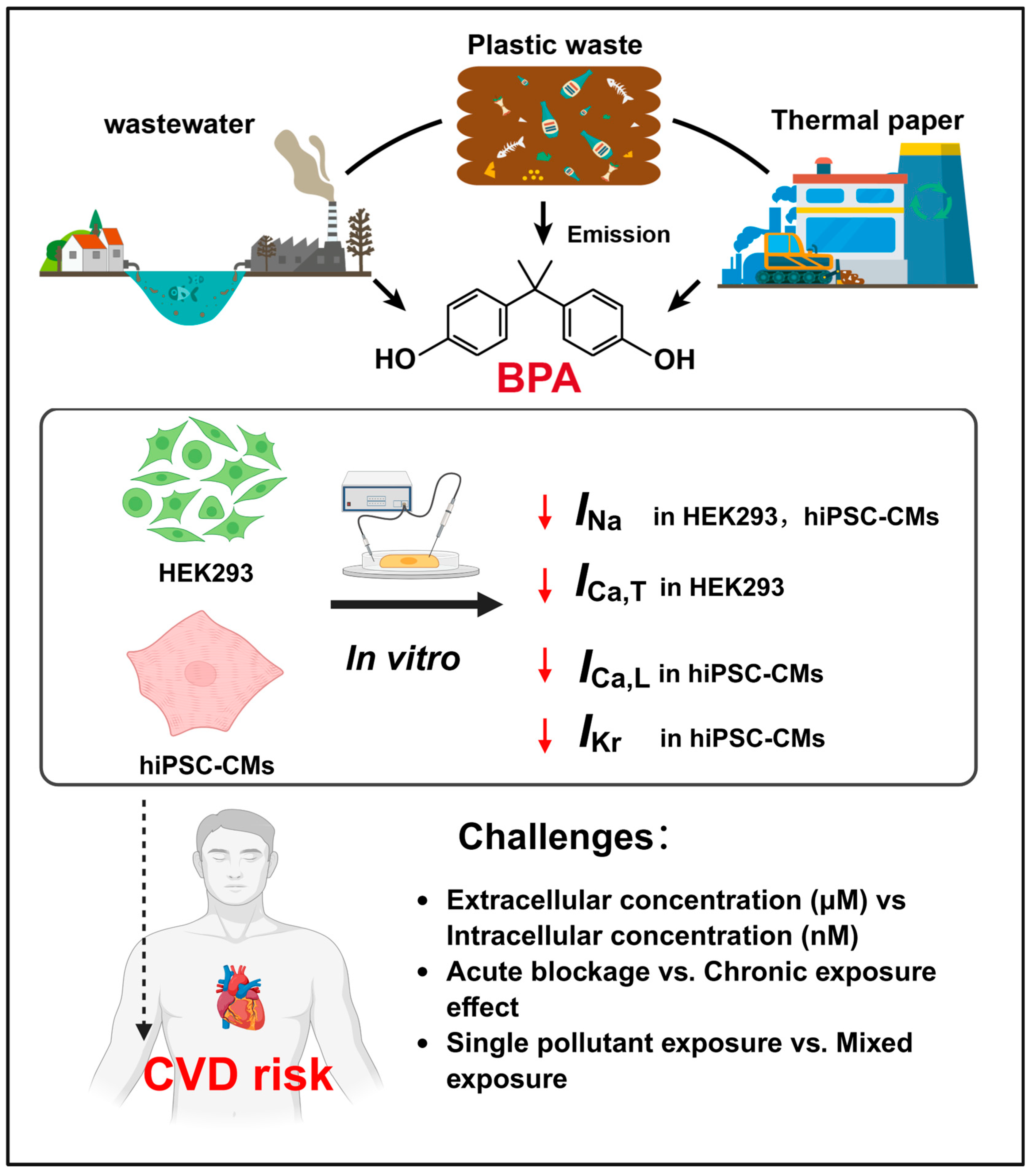
Figure 1. The effects of BPA on ion channels in cardiac models and verification of the challenge posed by BPA exposure to the risk of cardiovascular diseases in humans. The red downward arrow represents inhibition.
Toxics 14 00450 g001
Figure 2. Schematic overview of PFAS environmental emissions, structures, and proposed mechanisms of cardiac ion channel interference leading to cardiovascular damage. PFAS may affect Na+, K+, and Ca2+ channels through direct binding, oxidative stress, Ca2+ release (RyR2), and nuclear receptor (PPAR) modulation affecting gene expression.
Toxics 14 00450 g002
Figure 3. Schematic overview of the effects of ECs on cardiac ion channels, transporters, and calcium-handling proteins across cardiac models. Abbreviations: CMs, cardiomyocytes; VMs, ventricular myocytes; GP, guinea pig; hiPSC, human induced pluripotent stem cells; hESC, human embryonic stem cells; mESC, mouse embryonic stem cells.
Toxics 14 00450 g003
Table 1. Effects of typical emerging contaminant exposure on cardiac ion channels.
Model TypeModelPollutionMajor FindingsInterpretationEvidence LevelRef.
In vivoSprague-Dawley ratsPFOS;
20 mg/kg/day;
4 weeks
↓Cx43, ↓SERCA2Exposure to PFOS decreased Cx43 and SERCA2 expression, impairing intercellular electrical coupling and SR Ca2+ handling.B[15]
In vivoWistar ratsChlordecone; 0–1 µg/L;
4 weeks
Kcnq1, ↓Scn5a,
↓Cx43, ↓Cx40
Exposure to chlordecone decreased Kcnq1, Scn5a, Cx43, and Cx40 expression, promoted atrial electrical remodeling, and increased vulnerability to atrial fibrillation.B[16]
In vivoWistar ratsRotenone;
1.0 mg/kg/d;
2 weeks
↓Cx43, ↓KCNH2;
↑Kir2.1, ↑Kir6.2,
↑Cav1.2
Exposure to rotenone decreased Cx43 and KCNH2 but increased Kir2.1, Kir6.2, and Cav1.2 expression, producing cardiac electrical remodeling that may favor arrhythmogenesis.B[17]
In vivoC57BL/6n miceBPA; 200 µg/kg/day;
Lifelong
↑SERCA2a,
↑NCX1
Lifelong exposure to BPA increased SERCA2a and NCX1 expression, indicating altered intracellular Ca2+ handling.B[18]
In vivoZebrafishHBCD;
0–200 nM;
72 hpf
KCND2Exposure to HBCD reduced KCND2 expression through the miR-1/Irx5 pathway, disrupted K+ homeostasis, and contributed to arrhythmogenic remodeling.C[19]
In vivoZebrafishPhenanthrene; 0.05–50 nM;
72 hpf
↓SERCA2Exposure to phenanthrene decreased SERCA2 expression via the TBX5-SERCA2a pathway, impaired Ca2+ handling, and increased susceptibility to arrhythmia.C[20]
In vivoOncorhynchus mykissRetene;
32 μg/L;
3 days
cacng8b, ↓atp2a1l, ↓slc24a2, ↓atp1a1a.1, ↓atp1a1a.4, ↓atp1b1b, ↓kcnj1a.1, ↓kcnc3aExposure to retene altered the expression of multiple ion transport- and Ca2+-handling-related genes, indicating disruption of cardiac electrophysiological homeostasis.C[21]
In vitrohiPSC-CMsPFOA;
0.1–100 μM;
24 h
↓ dV/dtmax, ↓APD;
INa, ↓ICa, ↓IKr; ↓SCN5A, ↓CACNA1C, ↓KCND3, ↓KCNH2, ↓KCNQ1, ↓KCNJ2
Exposure to PFOA reduced the function and expression of multiple cardiac ion channels, attenuated action potential upstroke and duration, and impaired cardiomyocyte electrophysiology.A[22]
In vitrohiPSC-CMsBPA;
1–100 μM;
24 h
↓dV/dtmax, ↓APD50, ↓APD90;
INa, ↓ICa, ↓IKr;
BPA disrupts calcium transients and cardiac contraction by inhibiting multiple cardiac ion channels.A[23]
In vitrohESC-H9TBBPA;
1–100 nM;
8 days
↓Cardiomyocyte beating; ↓TNNT2Exposure to TBBPA reduced TNNT2 expression and beating activity, indicating impaired cardiomyocyte maturation and functional development.B[24]
In vitroH9C2HBCD;
24 h
↓NCX1; ↑Serca2a; ↑RyR2; Exposure to HBCD decreased NCX1 but increased Serca2a and RyR2 expression, suggesting disturbed Ca2+ homeostasis that may contribute to rhythm abnormalities.B[19]
↑, the value was significantly higher than the control group; ↓, the value was significantly lower than the control group. Abbreviations: APD, action potential duration; BPA, bisphenol A; casq2, calsequestrin 2; CV, conduction velocity; Cx40, connexin 40; Cx43, connexin 43; dV/dtmax: maximal upstroke velocity; hpf, hours post-fertilization; HBCD, hexabromocyclododecane; hiPSC-CMs, human induced pluripotent stem cell-derived cardiomyocytes; Irx5, Iroquois homeobox 5; miR-1, microRNA-1; NCX1, Na+/Ca2+ exchanger 1; PFOS, perfluorooctane sulfonate; SR, sarcoplasmic reticulum; TBX5, T-box transcription factor 5. Evidence level definitions: A = Direct electrophysiological evidence; B = Indirect strong evidence; C = Indirect supportive evidence.
Disclaimer/Publisher’s Note: The statements, opinions and data contained in all publications are solely those of the individual author(s) and contributor(s) and not of MDPI and/or the editor(s). MDPI and/or the editor(s) disclaim responsibility for any injury to people or property resulting from any ideas, methods, instructions or products referred to in the content.