




Next Issue
Volume 14, November-2
Previous Issue
Volume 14, October-2
 
 
foods-logo

Journal Browser

Journal Browser

Foods, Volume 14, Issue 21 (November-1 2025) – 220 articles
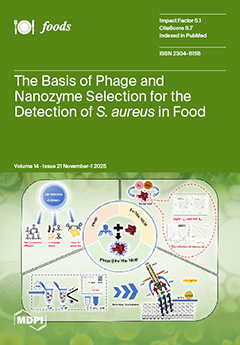
Cover Story (view full-size image): A novel colorimetric biosensor based on the temperate phage SapYZUs891 and a bimetallic Fe/Mn-MOF nanozyme was developed for the rapid on-site detection of Staphylococcus aureus in food. SapYZUs891 exhibited a high titre, broad host range, and strong pH and thermal stability. The Fe/Mn-MOF nanozyme exhibited an enhanced oxidase-mimicking ability, greater affinity, and a higher reaction rate. The SapYZUs891@Fe/Mn-MOF system achieved ultra-sensitive detection within 19 minutes, with a detection limit as low as 69 CFU/mL and a recovery rate between 92.52% and 121.48%. The advantages of the biosensor resulted from the particular receptor-binding proteins of SapYZUs891 that bind to the teichoic acid wall on the S. aureus. The biosensor thus provides a robust foundation for next-generation rapid and visual food safety detection technologies. View this paper
  • Issues are regarded as officially published after their release is announced to the table of contents alert mailing list.
  • You may sign up for e-mail alerts to receive table of contents of newly released issues.
  • PDF is the official format for papers published in both, html and pdf forms. To view the papers in pdf format, click on the "PDF Full-text" link, and use the free Adobe Reader to open them.
Order results
Result details
Section
Select all
Export citation of selected articles as:
19 pages, 4897 KB  
Article
Analysis of Changes in Flavor Profile and Bacterial Succession During Pork Fermentation Using Multi-Omics-Based Analysis
by Yuyan Ma, Qiuyu Lan, Chenshuo Wang, Luca Laghi, Chenglin Zhu and Gianfranco Picone
Foods 2025, 14(21), 3804; https://doi.org/10.3390/foods14213804 - 6 Nov 2025
Cited by 1 | Viewed by 561
Abstract
Sour meat, a traditional fermented meat product, derives its unique attributes from the flavors developed during the fermentation process. This study systematically investigated the dynamic changes in volatile compounds and bacterial succession in pork sour meat during fermentation (0, 15, 30, and 45 [...] Read more.
Sour meat, a traditional fermented meat product, derives its unique attributes from the flavors developed during the fermentation process. This study systematically investigated the dynamic changes in volatile compounds and bacterial succession in pork sour meat during fermentation (0, 15, 30, and 45 days) using a combination of an electric nose (E-nose), an electric tongue (E-tongue), gas chromatography–ion mobility spectrometry (GC-IMS), gas chromatography–mass spectrometry (GC-MS), and 16S rRNA amplicon sequencing. The results showed that the E-nose and E-tongue effectively distinguished samples across fermentation stages. The pork sour meat was analyzed using GC-IMS and GC-MS, which identified 39 and 81 volatile compounds (VOCs), respectively, primarily esters, alcohols, and aldehydes, with esters being most abundant after 45 days of fermentation. A total of 18 and 25 volatile compounds, respectively, were identified by GC-IMS and GC-MS as differential VOCs (p < 0.05, VIP > 1) of the pork sour meat. α-diversity increased in both species’ richness and diversity over the course of fermentation, while β-diversity analysis further differentiated samples across stages. Firmicutes dominated the bacterial community, with Staphylococcus, Lactobacillus, and Weissella as the main genera. Pearson correlation analysis revealed distinct associations between bacteria and volatiles: Staphylococcus was positively associated with butyl acetate-D, ethyl acetate, isoamyl acetate, dihydroactinidiolide, and (E)-2-heptenal, while Lactobacillus and Weissella were positively associated with acetic acid. Additionally, Weissella showed positive correlations with eight volatile compounds: acetic acid, nonanal, benzyl alcohol, ethyl crotonate, isoamyl acetate, dihydroactinidiolide, octanal, and ethyl acetate. This study provides a comprehensive understanding of volatile compound evolution and bacterial succession in pork sour meat, thereby offering a scientific basis for understanding and regulating its flavor quality. Full article
(This article belongs to the Special Issue Flavor, Palatability, and Consumer Acceptance of Foods)
Show Figures

Figure 1

21 pages, 1959 KB  
Article
Lactiplantibacillus plantarum Z45 from Sour Soup Improves Flavor and Safety of Fermented Corn: Insights from Genomic and Metabolomic Approaches
by Mengdi Zhao, Yuanyuan Zhang, Yi Wu, Shuang Liang and Guangyu Li
Foods 2025, 14(21), 3803; https://doi.org/10.3390/foods14213803 - 6 Nov 2025
Viewed by 589
Abstract
Sour soup, a traditional fermented specialty from Northeast China, is renowned for its distinctive aroma and various health benefits. Here, we report the probiotic properties of Lactiplantibacillus plantarum Z45—a strain isolated from sour soup broth—along with its fermentative potential in sour soup production. [...] Read more.
Sour soup, a traditional fermented specialty from Northeast China, is renowned for its distinctive aroma and various health benefits. Here, we report the probiotic properties of Lactiplantibacillus plantarum Z45—a strain isolated from sour soup broth—along with its fermentative potential in sour soup production. This strain is suitable for food fermentation due to its absence of biogenic amine production and non-hemolytic activity. It exhibited strong tolerance to simulated gastrointestinal conditions and demonstrated high adherence capability to Caco-2 cells. Additionally, the strain displayed antioxidant and antimicrobial activities. Whole-genome sequencing revealed that Z45 carries no virulence or antibiotic resistance genes. It also harbors multiple carbohydrate-active enzymes and a complete folate biosynthesis pathway, alongside genes associated with stress response, antioxidant activity, and adhesion. Subsequently, Z45 was employed as a starter culture for sour soup fermentation, and its effects on the physicochemical and sensory properties of the product were evaluated. The results indicated that fermentation with Z45 did not alter the physicochemical properties of sour soup but significantly enhanced its sensory attributes. Compared to spontaneous fermentation, Z45-fermented sour soup showed reduced levels of harmful biogenic amines, improved flavor and overall sensory quality, notable enrichment of Lactobacillus and Oscillospirales in the microbial community, and upregulation of beneficial metabolites such as flavonoids and glycerophosphocholine. In summary, Lactiplantibacillus plantarum Z45 is safe, demonstrates probiotic potential, and holds promise for improving the quality and functional properties of fermented foods. Full article
Show Figures

Graphical abstract

23 pages, 18675 KB  
Article
Effects of Probiotic-Fermented Deer Bone Water Extract on Immune Regulation and Gut Microbiota in Rheumatoid Arthritis via the NOTCH Signaling Pathway
by Junxia Ma, Yingshan Jiang, Yue Teng, Ting Ren, Yanchao Xing, Aoyun Li, Zhongmei He, Weijia Chen, Ying Zong and Rui Du
Foods 2025, 14(21), 3802; https://doi.org/10.3390/foods14213802 - 6 Nov 2025
Viewed by 559
Abstract
Rheumatoid arthritis (RA) is a chronic autoimmune inflammatory disease, and current treatments are limited by significant side effects. Deer bone, which is rich in proteins and various active compounds, possesses anti-inflammatory and bone-health-promoting properties. However, its fermented product’s effects on RA treatment remain [...] Read more.
Rheumatoid arthritis (RA) is a chronic autoimmune inflammatory disease, and current treatments are limited by significant side effects. Deer bone, which is rich in proteins and various active compounds, possesses anti-inflammatory and bone-health-promoting properties. However, its fermented product’s effects on RA treatment remain unexplored. In this study, we evaluated the therapeutic effects of probiotic-fermented deer bone aqueous extract (BbF) in an adjuvant arthritis (AA) rat model, combined with LPS-stimulated RAW264.7 macrophage models. In vivo experiments showed that BbF significantly reduced paw swelling, arthritis index, and improved bone mineral density. BbF also alleviated synovial hyperplasia and inflammatory cell infiltration. It suppressed pro-inflammatory cytokines (TNF-α, IL-1β, etc.) and inhibited macrophage migration and invasion. Transcriptomic analysis revealed significant enrichment of the Notch signaling pathway, and Western blot confirmed the downregulation of Notch3, Notch4, DLL4, and Jagged1 proteins. BbF also restored gut microbiota homeostasis, increasing beneficial bacteria such as Firmicutes and Clostridia, while decreasing potential pathogens like Proteobacteria, Gammaproteobacteria, and Escherichia-Shigella. Furthermore, BbF enhanced short-chain fatty acids (SCFCs) production, including butyrate and caproic acid. These results indicate that BbF alleviates RA by inhibiting the Notch signaling pathway and regulating gut microbiota, providing new insights for the development of functional foods with immune-modulatory properties. Full article
(This article belongs to the Section Food Nutrition)
Show Figures

Graphical abstract

21 pages, 923 KB  
Article
Functional, Biological and Nutritional Properties of Protein Fraction Isolated from Yarrowia lipolytica Biomass
by Marek Szołtysik, Anna Mandecka, Marcelina Maciejewska, Anna Dąbrowska and Marek Nowak
Foods 2025, 14(21), 3801; https://doi.org/10.3390/foods14213801 - 6 Nov 2025
Viewed by 652
Abstract
This study evaluated the nutritional, functional, biological, and sensory potential of proteins derived from Yarrowia lipolytica biomass and their enzymatic hydrolysates for food applications. Three strains were cultivated under bioreactor conditions, with strain JII1c selected for its superior biomass yield and protein content. [...] Read more.
This study evaluated the nutritional, functional, biological, and sensory potential of proteins derived from Yarrowia lipolytica biomass and their enzymatic hydrolysates for food applications. Three strains were cultivated under bioreactor conditions, with strain JII1c selected for its superior biomass yield and protein content. Its amino acid composition was rich in lysine and branched-chain amino acids, with protein quality indices (CS = 37.8%, EAAI = 36.17%) confirming value in plant-based diets. Proteins were isolated and hydrolysed using a non-commercial serine protease from Cucurbita ficifolia, which enhanced solubility (NSI: 19.4 → 49.2%), water and oil absorption, and emulsion stability. Hydrolysates showed notable biological activities, including ACE (71.8%), DPP-IV (52.3%), and α-glucosidase (67.4%) inhibition, indicating potential metabolic benefits. Sensory evaluation of extrudates confirmed improvements in aroma, texture, and flavour when hydrolysates were incorporated. The use of a plant-derived protease demonstrates a sustainable approach to producing bioactive peptides. Y. lipolytica hydrolysates emerge as promising clean-label ingredients that combine nutritional quality with techno-functional performance, supporting their integration into health-oriented and sustainable food products. Full article
Show Figures

Graphical abstract

19 pages, 878 KB  
Article
In Vitro Influence of a Chemically Characterized Hippophae rhamnoides L. Fruit Extract on Healthy and Constipated Human Gut Microbiota Functionality and Aquaporin-3 Expression
by Lorenza Francesca De Lellis, Ángela Toledano-Marín, Miguel Navarro-Moreno, Elisabetta Caiazzo, Gennaro Madonna, Adriana Delgado-Osorio, Daniele Giuseppe Buccato, Luana Izzo, Antonio Paolillo, Alessandro Di Minno, Hammad Ullah, Maria Vittoria Morone, Anna De Filippis, Massimiliano Galdiero, Armando Ialenti, José Ángel Rufián Henares and Maria Daglia
Foods 2025, 14(21), 3800; https://doi.org/10.3390/foods14213800 - 6 Nov 2025
Viewed by 696
Abstract
To identify the underlying mechanisms by which H. rhamnoides fruit extract exerts regulatory effects on intestinal function, we investigated its chemical composition using UHPLC Q-Orbitrap HRMS and evaluated its biological effects on Aquaporin-3 (AQP-3) expression via Western blot in the intestinal epithelial cell [...] Read more.
To identify the underlying mechanisms by which H. rhamnoides fruit extract exerts regulatory effects on intestinal function, we investigated its chemical composition using UHPLC Q-Orbitrap HRMS and evaluated its biological effects on Aquaporin-3 (AQP-3) expression via Western blot in the intestinal epithelial cell line (HT-29). Moreover, fecal microbiota from healthy and constipated adults was employed to mimic the in vitro fermentation of the digested extract and evaluate its effects on gut microbiota functionality. Antioxidant capacity (i.e., Total Phenolic Contents (TPC), 2,2′-azino-bis(3-ethylbenzothiazoline-6-sulfonic acid) (ABTS), 2,2-diphenyl-1-picrylhydrazyl (DPPH), and ferric reducing antioxidant power (FRAP) assays) was assessed prior to and after simulated digestion and fermentation processes. Short-chain fatty acids (SCFAs) were quantified using UHPLC-RID of the fermented samples. In the extract, 23 compounds belonging to a variety of classes (mainly polyphenols) were tentatively identified. The extract significantly upregulated AQP-3 expression in the absence of cytotoxicity. After in vitro fermentation with gut microbiota isolated from constipated subjects, ABTS and FRAP values significantly decreased, as well as TPC, suggesting a greater consumption of antioxidant compounds, consistent with the increased production of radical compounds associated with constipation. Fermentation with intestinal microbiota with healthy and constipated gut microbiota resulted in an increase in SCFA. These results provide preliminary insights into a non-pharmacological strategy for functional constipation. Full article
(This article belongs to the Section Plant Foods)
Show Figures

Figure 1

24 pages, 3671 KB  
Article
Unveiling Disparities in Beer Consumer Behavior and Key Drivers Across Regions in China
by Jiang Xie, Yiyuan Chen, Ruiyang Yin, Xin Yuan, Liyun Guo, Dongrui Zhao, Jinyuan Sun, Jinchen Li, Mengyao Liu and Baoguo Sun
Foods 2025, 14(21), 3799; https://doi.org/10.3390/foods14213799 - 6 Nov 2025
Cited by 1 | Viewed by 633
Abstract
Beer consumption behaviors within China exhibited significant regional heterogeneity. To elucidate the specific differences in beer consumer behaviors across different regions and their influencing factors, this study systematically analyzed the sensory preference characteristics of consumers in the Chinese beer market based on machine [...] Read more.
Beer consumption behaviors within China exhibited significant regional heterogeneity. To elucidate the specific differences in beer consumer behaviors across different regions and their influencing factors, this study systematically analyzed the sensory preference characteristics of consumers in the Chinese beer market based on machine learning methods, and further revealed the core driving mechanisms influencing their consumption behaviors. By integrating consumer data from different regions, a comprehensive dataset was constructed encompassing sensory attribute evaluations (bitterness, malt flavor, hop aroma, smoothness of mouthfeel, foam characteristics, etc.) and other dimensional consumption behavior variables (brand, beer packaging, etc.). Utilizing an ensemble learning framework (LightGBM), Support Vector Machine (SVM), and decision tree models for feature mining, the study identified important factors influencing the consumption behaviors of Chinese beer consumers. Specifically, consumers in mature and upgrading markets placed greater emphasis on the overall drinking experience and drinkability when purchasing beer, whereas consumers in scale-dominant and mainstream competitive markets considered foam persistence, fineness, and light brown color as core quality indicators. Conversely, consumers in potential growth and emerging cultivation markets demonstrated strong brand orientation. This indicated that the factors influencing beer consumption behaviors varied significantly across regions. Through a data-driven paradigm, this study revealed the underlying regional mechanisms behind consumption decisions in different regional beer markets in China, providing a theoretical foundation and empirical support for cross-regional product customization, precision marketing, and resource optimization. Full article
(This article belongs to the Section Food Analytical Methods)
Show Figures

Figure 1

13 pages, 2758 KB  
Article
Replacing Manual Operation with Bio-Automation II: Construction of a Biological Digestion Gene Circuit to Eliminate the Interference of Food Matrices in the Rapid Detection of Heavy Metals
by Shiqi Xia, Shijing Chen, Hongfei Su, Liangshu Hu, Xiaozhe Qi and Mingzhang Guo
Foods 2025, 14(21), 3798; https://doi.org/10.3390/foods14213798 - 6 Nov 2025
Viewed by 302
Abstract
Food matrices such as phytic acid, starch, and proteins can chelate heavy metals, acting as stabilizers that significantly hinder accurately detecting heavy metal contamination. This study proposes a biological digestion strategy to overcome such interference. The gene sequences for phytase (appA) [...] Read more.
Food matrices such as phytic acid, starch, and proteins can chelate heavy metals, acting as stabilizers that significantly hinder accurately detecting heavy metal contamination. This study proposes a biological digestion strategy to overcome such interference. The gene sequences for phytase (appA) from Escherichia coli (E. coli), α-amylase (amyA) from Escherichia coli (E. coli), and protease (AO090120000474) from Aspergillus oryzae were identified via bioinformatics screening. Whole-cell biosensors were then developed to simultaneously detect mercury ions (Hg2+) and digest phytate, starch, and proteins. In the presence of 100 μM Hg2+, biosensor responses improved by 1.43-, 1.38-, and 1.11-fold, respectively. A “heavy metal pollutant bio-digestion pathway” was constructed by integrating genes for synthesizing phytic acid, starch, and protein with those for Hg2+ detection. In the presence of 100 μM Hg2+, the detection effect was improved by 1.36-fold. The detection limit of the BαAP whole-cell biosensor was 0.082 μM, while the limit of quantitation was 0.272 μM. The study effectively addresses the limitations of biosensor performance in real sample detection. Full article
(This article belongs to the Section Food Quality and Safety)
Show Figures

Figure 1

23 pages, 1090 KB  
Review
Food Safety in the Age of Climate Change: The Rising Risk of Pesticide Residues and the Role of Sustainable Adsorbent Technologies
by Tamara Lazarević-Pašti, Tamara Tasić, Vedran Milanković and Igor A. Pašti
Foods 2025, 14(21), 3797; https://doi.org/10.3390/foods14213797 - 6 Nov 2025
Viewed by 706
Abstract
Climate change is increasingly recognized as a critical factor of food contamination risks, particularly through its influence on pesticide behavior and usage. Rising temperatures, altered precipitation patterns, and the proliferation of crop pests are leading to intensified and extended pesticide application across agricultural [...] Read more.
Climate change is increasingly recognized as a critical factor of food contamination risks, particularly through its influence on pesticide behavior and usage. Rising temperatures, altered precipitation patterns, and the proliferation of crop pests are leading to intensified and extended pesticide application across agricultural systems. These shifts increase the likelihood of elevated pesticide residues in food and water and affect their environmental persistence, mobility, and accumulation within the food chain. At the same time, current regulatory frameworks and risk assessment models often fail to account for the synergistic effects of chronic low-dose exposure to multiple residues under climate-stressed conditions. This review provides a multidisciplinary overview of how climate change intensifies the pesticide residue burden in food, emphasizing emerging toxicological concerns and identifying critical gaps in current mitigation strategies. In particular, it examines sustainable adsorbent technologies, primarily carbon-based materials derived from agro-industrial waste, which offer promising potential for removing pesticide residues from water and food matrices, aligning with a circular economy approach. Beyond their technical performance, the real question is whether such materials and the thinking behind them can be meaningfully integrated into next-generation food safety systems that are capable of responding to a rapidly changing world. Full article
Show Figures

Figure 1

11 pages, 243 KB  
Article
Antimicrobial Effects of Chitosan, Mastic Essential Oil and Citric Acid, and Their Combinations on the Spoilage Microbiota of “Guacamole”: An Avocado-Based Salad
by Rameez Al-Daour, Ayman Zehra Shakir Hussein, Tareq M. Osaili, Fayeza Hasan, Dinesh Kumar Dhanasekaran, Mutamed Ayyash, Leila Cheikh Ismail, Thaís Benincá, Patrícia da Silva Malheiros and Ioannis N. Savvaidis
Foods 2025, 14(21), 3796; https://doi.org/10.3390/foods14213796 - 6 Nov 2025
Viewed by 472
Abstract
Guacamole is an avocado-based Ready-to-Eat (RTE) salad product, consumed globally and increasingly popular due to health trends. Its composition, characterized by a relatively neutral pH and stable water activity, creates favorable conditions for microbial proliferation, leading to spoilage, and resulting in a limited [...] Read more.
Guacamole is an avocado-based Ready-to-Eat (RTE) salad product, consumed globally and increasingly popular due to health trends. Its composition, characterized by a relatively neutral pH and stable water activity, creates favorable conditions for microbial proliferation, leading to spoilage, and resulting in a limited shelf-life of the product. Natural antimicrobials, such as essential oils (EOs), organic acids, chitosan, etc. have the potential to control microbial populations, therefore delaying spoilage and consequently providing a shelf-life extension. This study evaluated the effects of different concentrations of the selected natural antimicrobials [citric acid, mastic essential oil (EO), chitosan] added, either singly or combined, on the indigenous microbial (“spoilage”) association of guacamole during two storage conditions (chill, mild) for a period of 7 days. Results showed that of all the species enumerated in the present study, yeasts and molds were the predominant species, followed by Lactic Acid Bacteria (LAB), Enterobacteriaceae and Pseudomonas spp., at populations ranging from 3.6 to 2.0 and 2.65 to 1.45 log CFU/g, at 4 and 10 °C, respectively, in the control (CNL) avocado-based salad samples. Reductions in the range 1 to 2 log CFU/g were obtained for Pseudomonas spp., Enterobacteriaceae, and yeasts and molds under the triple antimicrobial treatment (citric acid, mastic EO, chitosan; CACHM), whereas interestingly, for LAB the highest reduction (1.74 log CFU/g) was achieved by chitosan and mastic EO (CHM), followed by CACHM (1.5 log CFU/g). Refrigeration (chill, 4 °C) as a hurdle acted as an additional barrier delaying microbial growth in all samples. To our knowledge, this is the first study to (a) evaluate the effect of natural antimicrobials (added, either singly or combined), namely citric acid, mastic EO, and chitosan on the microbiota of guacamole and (b) assess the possible application of the aforementioned natural antimicrobials in potentially increasing the shelf-life of a RTE avocado-based product (guacamole, in this study). Full article
23 pages, 5062 KB  
Article
Preparation, Characterization, and Mechanism of Hypoglycemic Action of a Goat Casein Peptide Delivery System Involving DPP-IV Inhibition and GLP-1 Release
by Xiaojing Du, Wenlin Niu and Hongxin Wang
Foods 2025, 14(21), 3795; https://doi.org/10.3390/foods14213795 - 5 Nov 2025
Viewed by 692
Abstract
This study aimed to formulate a carrier system to improve the oral bioaccessibility of goat casein peptides (GCAPS). Goat casein was hydrolyzed with papain and subsequently purified to obtain bioactive peptide fractions (GCAPS) with potent hypoglycemic activity. On this basis, spherical GCAPS-loaded nanocarrier [...] Read more.
This study aimed to formulate a carrier system to improve the oral bioaccessibility of goat casein peptides (GCAPS). Goat casein was hydrolyzed with papain and subsequently purified to obtain bioactive peptide fractions (GCAPS) with potent hypoglycemic activity. On this basis, spherical GCAPS-loaded nanocarrier systems were developed, including liposomes (GCAPS-LS) and niosomes (GCAPS-NS). Among them, GCAPS-NS exhibited higher encapsulation efficiency (94.98 ± 3.01%) and a smaller particle size (89.81 ± 8.97 nm) than GCAPS-LS. FT-IR analysis confirmed successful peptide encapsulation. Simulated gastrointestinal digestion experiments demonstrated that GCAPS-NS significantly improved GCAPS retention and DPP-IV inhibition. In vivo results from high-fat diet-induced (HFD) insulin-resistant mice demonstrated that GCAPS-NS effectively ameliorated metabolic abnormalities by including adiposity, enhancing GLP-1 levels and suppressing hsCRP expression, thereby contributing to improved glycemic homeostasis. Moreover, GCAPS-NS intervention resulted in a significant enrichment of Akkermansia and a reduced Firmicutes/Bacteroidetes ratio, suggesting its beneficial role in alleviating HFD gut dysbiosis. These findings indicated that goat casein peptides held great potential as a functional food for the management of type 2 diabetes. Full article
Show Figures

Figure 1

22 pages, 3225 KB  
Article
Metabolomics Reveals the Regulatory Mechanism of Antibacterial Fiber Membrane Packaging on the Postharvest Quality of Wax Apple (Syzygium samarangense)
by Jiale Zhao, Guanglong Yao, Dongfen Huang, Yue Sun, Jian Chen and Hengfu Huan
Foods 2025, 14(21), 3794; https://doi.org/10.3390/foods14213794 - 5 Nov 2025
Viewed by 575
Abstract
Wax apple (Syzygium samarangense) is highly perishable postharvest. Even under refrigerated storage conditions, its shelf life typically lasts only about one week. This study developed a novel antibacterial food packaging membrane to extend its shelf life and explored the underlying preservation [...] Read more.
Wax apple (Syzygium samarangense) is highly perishable postharvest. Even under refrigerated storage conditions, its shelf life typically lasts only about one week. This study developed a novel antibacterial food packaging membrane to extend its shelf life and explored the underlying preservation mechanisms. A composite fiber membrane was fabricated via solution blow spinning (SBS) using polyethylene oxide (PEO) and oxidized sesbania gum (OSG) incorporated with ε-polylysine (ε-PL). The composite membrane demonstrated exceptional antibacterial activity against both E. coli and S. aureus by disrupting cell wall and membrane integrity, as evidenced by increased protein leakage, alkaline phosphatase activity, and electrical conductivity. Morphological observations through scanning electron microscopy confirmed extensive cellular damage and bactericidal effects. During nine days of ambient storage, the PEO/OSG/PL membrane significantly maintained the postharvest quality of wax apples. This was evidenced by a lower decay index (2.22 ± 0.19) and weight loss rate (5.32 ± 0.16%) compared to the control group, alongside better preservation of firmness (4.11 ± 0.08 N) and color stability. The treatment suppressed respiratory rate and delayed the degradation of soluble solids and titratable acidity. Furthermore, it enhanced antioxidant capacity through higher peroxidase activity and reduced malondialdehyde accumulation, indicating attenuated oxidative stress. Non-targeted metabolomics analysis revealed that the membrane treatment modulated critical metabolic pathways, particularly phenylalanine metabolism and linoleic acid metabolism. These metabolic adjustments contributed to enhanced defense responses and delayed senescence. The results show that the PEO/OSG/ε-PL fiber membrane acts as an effective active packaging material by inhibiting microbial growth and regulating metabolism. This provides a potential method to extend the shelf life of perishable fruits. Full article
Show Figures

Graphical abstract

15 pages, 1338 KB  
Article
Combined Effects of Carrageenan and Konjac Gums on the Physicochemical Properties of a Plant-Based Smoked Salmon Analog
by Silvia Mata, Juan I. Maté and Ignacio Angós
Foods 2025, 14(21), 3793; https://doi.org/10.3390/foods14213793 - 5 Nov 2025
Viewed by 462
Abstract
This study aimed to develop and characterize plant-based smoked salmon analogs by evaluating the effects of three hydrocolloids (kappa carrageenan, iota carrageenan, and konjac gum) on their physicochemical, textural, and functional properties. Sixteen formulations were prepared by varying the proportions of these gelling [...] Read more.
This study aimed to develop and characterize plant-based smoked salmon analogs by evaluating the effects of three hydrocolloids (kappa carrageenan, iota carrageenan, and konjac gum) on their physicochemical, textural, and functional properties. Sixteen formulations were prepared by varying the proportions of these gelling agents while maintaining a constant base formulation. Water-binding capacity (WBC), pH, hardness, springiness, viscoelastic moduli (elastic and viscous), sliceability, and layer definition were analyzed. Kappa carrageenan significantly increased firmness and improved slicing properties. Iota carrageenan enhanced springiness and structural definition. Although konjac gum improved moisture retention, high concentrations of it reduced structural integrity. Multivariate analyses, including principal component analysis (PCA) and hierarchical clustering (HCA), revealed an inverse relationship between mechanical properties (hardness and moduli) and WBC, while springiness formed an independent variable cluster. The first two components accounted for 72.52% of total variance; indicated by the PCA. Among the sixteen formulations, three stood out: T01 exhibited the highest firmness and sliceability; T02 presented excellent elasticity and moisture retention; and T16 achieved a well-balanced profile, closely resembling commercial smoked salmon in both texture and appearance. These findings demonstrate that tailored hydrocolloid combinations can effectively mimic the texture and appearance of smoked salmon, providing a novel formulation strategy for next-generation plant-based seafood alternatives. Full article
(This article belongs to the Section Plant Foods)
Show Figures

Graphical abstract

16 pages, 314 KB  
Article
Jerky and Biltong from the Czech Retail Market: Microbial Quality, Chemical Composition, and Other Quality Characteristics
by Helena Veselá, František Ježek, Marta Dušková, Josef Kameník, Radka Hulánková, Blanka Macharáčková, Kristýna Brodíková and Renáta Karpíšková
Foods 2025, 14(21), 3792; https://doi.org/10.3390/foods14213792 - 5 Nov 2025
Viewed by 645
Abstract
The aim of this study was to evaluate microbiological, physicochemical, instrumental, and sensory parameters of jerky and biltong and to identify potential associations affecting their overall quality and safety. In total, 39 samples of various types of jerky (beef, turkey, venison, pork, and [...] Read more.
The aim of this study was to evaluate microbiological, physicochemical, instrumental, and sensory parameters of jerky and biltong and to identify potential associations affecting their overall quality and safety. In total, 39 samples of various types of jerky (beef, turkey, venison, pork, and chicken) and 7 samples of beef biltong were analysed. The jerky and biltong samples showed low water activity values (aw < 0.800), which makes them microbially stable products that can be stored at room temperature without the risk of further bacterial growth. Listeria monocytogenes was not detected in any of the 92 analysed samples. From a food safety perspective, the finding of Salmonella Enteritidis in one chicken jerky sample was unacceptable. Total viable count (TVC) values showed high variability, with findings over 8 log CFU/g. These high TVC values indicate heavily contaminated meat used to prepare dried products, or errors in the technological process that allowed bacterial growth. Both are unacceptable from a food quality and safety perspective. This means that more attention needs to be paid to the production process by processors, as well as by competent authorities. The analyses confirmed a high average protein content (>50%) in the final products and a low average fat content (<8%). The average salt content exceeded 3.0% and there was no statistically significant difference between the samples (p > 0.05). Similarly, there was no difference in TBARS values (p > 0.05). Microbial counts (TVC, lactic acid bacteria, and Enterobacteriaceae) were strongly affected by water activity, which was strongly negatively correlated with dry matter and its components such as proteins and ash/NaCl. Full article
(This article belongs to the Section Food Quality and Safety)
16 pages, 3789 KB  
Article
Sea Buckthorn Fermented Milk with Lactiplantibacillus plantarum YHG-87 Mitigates Symptoms of DSS-Induced Ulcerative Colitis Disease in Mice
by Ning Ju, Xiaoliang Gu, Yuhong Ding, Yafeng Li and Shuai Guo
Foods 2025, 14(21), 3791; https://doi.org/10.3390/foods14213791 - 5 Nov 2025
Viewed by 582
Abstract
Ulcerative colitis (UC) is associated with gut microbiota imbalance, and probiotics may restore gut flora and improve intestinal health. Sea buckthorn, which is rich in antioxidants and anti-inflammatory compounds, may enhance these effects when combined with probiotics. In this study, we incorporated our [...] Read more.
Ulcerative colitis (UC) is associated with gut microbiota imbalance, and probiotics may restore gut flora and improve intestinal health. Sea buckthorn, which is rich in antioxidants and anti-inflammatory compounds, may enhance these effects when combined with probiotics. In this study, we incorporated our screened strain Lactiplantibacillus plantarum YHG-87 (L. plantarum YHG-87) into sea buckthorn fermented milk to examine its additional benefits in a dextran sulfate sodium (DSS)-induced UC mouse model. Five groups (n = 6) were included: healthy control, DSS-induced colitis, regular fermented milk, sea buckthorn fermented milk, and sea buckthorn probiotic fermented milk (SC group). Results indicated that SC group significantly alleviated UC symptoms, such as weight loss, bloody stools, and colon shortening (p < 0.05), and these improvements were more pronounced than those observed in the sea buckthorn fermented milk group. Moreover, the SC group exhibited stronger anti-inflammatory and antioxidant effects, including reduced IL-6, increased IL-4 and IL-10, elevated glutathione, and reduced myeloperoxidase and malondialdehyde (p < 0.05). Additionally, the SC intervention led to notable shifts in gut microbial community composition. In conclusion, the addition of L. plantarum YHG-87 to sea buckthorn fermented milk provided enhanced protective effects against UC, suggesting that the combination of bioactive plant components with selected probiotics offers promising potential for UC prevention and therapy. Full article
Show Figures

Figure 1

15 pages, 7510 KB  
Article
Expression, Purification, and Functional Exploration of an α-Galactosidase from Akkermansia muciniphila
by Teng Zuo, Ziqian Yin, Zhiguo Li, Zhihao Ren, Yaqiang Chen, Dahai Yu and Xuexun Fang
Foods 2025, 14(21), 3790; https://doi.org/10.3390/foods14213790 - 5 Nov 2025
Viewed by 569
Abstract
Akkermansia muciniphila (AKK) is a mucin-degrading gut symbiont with emerging probiotic potential. Among its carbohydrate-active enzymes, Amuc_0517, a glycoside hydrolase family 36 (GH36) protein, has been identified as a highly specific α-galactosidase. In this study, the Amuc_0517 gene was cloned into pET-28a(+), expressed [...] Read more.
Akkermansia muciniphila (AKK) is a mucin-degrading gut symbiont with emerging probiotic potential. Among its carbohydrate-active enzymes, Amuc_0517, a glycoside hydrolase family 36 (GH36) protein, has been identified as a highly specific α-galactosidase. In this study, the Amuc_0517 gene was cloned into pET-28a(+), expressed in Escherichia coli BL21, and purified via Ni2+-NTA affinity chromatography. Bioinformatic analysis indicated the presence of a signal peptide and α-galactosidase domain. Enzyme assays confirmed its ability to cleave α-1,6-glycosidic bonds in pNPGal, with no detectable activity toward pNPGlu, and molecular dynamics simulations revealed stronger binding affinity and lower free energy with pNPGal, supporting its substrate specificity. Given that α-galactosidases are widely applied in the dairy industry to hydrolyze galactose-containing oligosaccharides in milk and whey, the biochemical features of Amuc_0517 suggest its potential as a novel biocatalyst for functional dairy processing and probiotic-enriched dairy product development. Full article
(This article belongs to the Special Issue Microbiota and Probiotics in Fermented Food (Second Edition))
Show Figures

Figure 1

24 pages, 2587 KB  
Article
Digital Trends in the Italian Beer Market: A Time-Series and Search Engine Optimisation Analysis of Gluten-Free and Low/No-Alcohol Beers
by Pietro Chinnici, Katya Carbone and Francesco Licciardo
Foods 2025, 14(21), 3789; https://doi.org/10.3390/foods14213789 - 5 Nov 2025
Viewed by 700
Abstract
Beer consumption patterns are evolving, with gluten-free beers (GFBs) and low- and no-alcohol beers (NABLABs) exhibiting continuous growth, underpinned by health-conscious consumers, younger generations’ preference for moderate drinking, and a rising awareness of gluten intolerance. This study investigates whether online search behaviour reflects [...] Read more.
Beer consumption patterns are evolving, with gluten-free beers (GFBs) and low- and no-alcohol beers (NABLABs) exhibiting continuous growth, underpinned by health-conscious consumers, younger generations’ preference for moderate drinking, and a rising awareness of gluten intolerance. This study investigates whether online search behaviour reflects these market changes and anticipates future consumption trends. A combined methodological framework was applied, integrating time-series analysis of Google Trends data—based on a decomposition model with a five-year forecast—with descriptive and semantic insights from Search Engine Optimisation (SEO) techniques using the specialised SEOZoom platform. The statistical decomposition enabled the identification of long-term trends, cyclical variations, and seasonal patterns in user interest. Italy was selected as a case study, representing a market where these niche segments have grown considerably despite a traditionally limited craft beer culture. The results reveal a steady rise in online interest in both GFB and NABLAB; GFB searches are primarily linked to health and dietary concerns, whilst NABLAB queries encompass a broader set of topics, including physiology, legislation, and consumption contexts. The forecasts confirm the persistence of this positive trend over the next five years. The approach demonstrates the potential of integrating digital and statistical tools to monitor emerging consumption dynamics and guide strategic decisions in the beverage sector. Full article
(This article belongs to the Special Issue Consumer Behavior and Food Choice—4th Edition)
Show Figures

Figure 1

15 pages, 866 KB  
Article
Investigation of Listeria monocytogenes in Food in Northwestern Italy (2020–2024)
by Monica Pitti, Matteo Tavecchia, Angelo Romano, Simona Carrella, Giovanna Previto and Daniela Manila Bianchi
Foods 2025, 14(21), 3788; https://doi.org/10.3390/foods14213788 - 5 Nov 2025
Viewed by 774
Abstract
Listeria monocytogenes is a foodborne pathogen of significant public health concern due to its high environmental resilience and ability to cause severe infections in vulnerable populations. The objective of the present study is to characterize foodborne strains of Listeria monocytogenes isolated between 2020 [...] Read more.
Listeria monocytogenes is a foodborne pathogen of significant public health concern due to its high environmental resilience and ability to cause severe infections in vulnerable populations. The objective of the present study is to characterize foodborne strains of Listeria monocytogenes isolated between 2020 and 2024 in northwestern Italy. Lm was detected through isolation, biochemical confirmation and molecular serogrouping. Next generation sequencing (NGS) analysis was used to characterize the strains in terms of virulence and antibiotic resistance. A total of 39 positive samples were identified from various food matrices, including meat products, fish, cheeses and ready-to-eat foods. The most frequently detected serogroups were IIc and IIa, with a notable presence of the highly virulent IVb group. Next-generation sequencing (NGS) was applied to all isolates, revealing the presence of virulence genes associated with the LIPI-1 island and internalins. In addition to pathogenicity islands, genes related to stress resistance (clpCEP, Gad A, GadB, GadC), biofilm production (agrA, flaA, degU, hfq) and sortase-mediated anchoring of surface protein (strA, strB) have been identified. The presence of antibiotic resistance genes was confirmed, with all isolates harboring the fosX gene. Moreover, four isolates exhibited resistance determinants against antibiotics belonging to two different classes: tetracyclines (tetM) and lincosamides (lsa(A)). Multilocus sequence typing (MLST) showed that clonal complex CC9 was the most prevalent among the isolates. Further, cgMLST and SNP analyses identified a principal cluster of closely related strains, which were isolated from meat products. These findings highlight the need for continuous surveillance of L. monocytogenes. Full article
(This article belongs to the Special Issue Detection and Control of Foodborne Pathogens in Food Supply Chain)
Show Figures

Figure 1

19 pages, 2565 KB  
Article
Effects of Various Drying Parameters on the Volatile and Non-Volatile Compositions of ‘Qiancha 1’ White Tea
by Jinlong Luo, Siyu Liao, Fengjiao Ding, Yuqiao Dai, Zhongying Liu, Ting Yang, Tuo Zhang, Shimao Fang, Yan Li, Lulu Pu, Ke Pan, Wanping Fang and Qiang Shen
Foods 2025, 14(21), 3787; https://doi.org/10.3390/foods14213787 - 5 Nov 2025
Viewed by 599
Abstract
‘Qiancha 1’ is an excellent raw material for manufacturing white tea. The effects of different drying parameters on the quality performance of ‘Qiancha 1’ white tea remain poorly understood, which restricts the precise regulation of the quality of ‘Qiancha 1’ white tea. In [...] Read more.
‘Qiancha 1’ is an excellent raw material for manufacturing white tea. The effects of different drying parameters on the quality performance of ‘Qiancha 1’ white tea remain poorly understood, which restricts the precise regulation of the quality of ‘Qiancha 1’ white tea. In this research, we systematically investigated the influence of drying temperature (65 °C, 75 °C, and 90 °C) and drying duration (1 h, 2 h, and 3 h) on its non-volatile and volatile compositions, using sensory evaluation, E-tongue, and non-volatilomic and volatilomic analyses. The results showed that the tea sample dried at 65 °C for 3 h had a sweet, mellow, and fresh flavor and scored 95 points, but high-temperature drying (90 °C) could promote increased bitterness and decreased sweetness. High-temperature drying was closely related to a caramel-like and milk-like flavor, which promoted an increase in the content of terpenoids, heterocycle compounds, and esters. During drying, the flavonoid and phenolic acid content increased markedly, contributing to bitterness and astringency, while nucleotides, amino acids, and their derivatives decreased, leading to a reduced umami intensity. A total of 37 key taste-active metabolites were identified, including bitter compounds (e.g., alkaloids), sweet compounds (e.g., phenolic acids), and umami compounds (e.g., nucleotides), whose dynamic changes directly influenced the taste profile of white tea. High-temperature drying promoted an increase in the content of volatile metabolites, such as terpenoids, heterocyclics, and esters, while low-temperature and long-duration drying was beneficial for preserving volatile metabolites like heptanal. 2-Methoxy-3-(1-methylethyl)-pyrazine was determined as the volatile compound with the highest rOAV, providing a sweetness and caramel-like flavor. Overall, the metabolomic analysis revealed that the content of flavonoids and phenolic acids increased after the drying process, which was related to the bitter and astringent taste of the tea liquor. The content of nucleotides, amino acids, and their derivatives decreased after drying, which caused the umami of the tea liquor to weaken. This study provides a theoretical basis for the optimization of the ‘Qiancha 1’ white tea drying process. Full article
(This article belongs to the Section Food Engineering and Technology)
Show Figures

Figure 1

19 pages, 41470 KB  
Article
Multi-Path Attention Fusion Transformer for Spectral Learning in Corn Quality Assessment
by Jialu Li, Haoyi Wang, Hongbo Zhang and Tongqiang Jiang
Foods 2025, 14(21), 3786; https://doi.org/10.3390/foods14213786 - 4 Nov 2025
Viewed by 499
Abstract
Accurately modeling the nonlinear relationships between near-infrared (NIR) spectral signatures and biochemical traits in corn remains a major challenge. A key difficulty lies in capturing multi-scale contextual dependencies—ranging from local absorption peaks to global spectral patterns—that jointly determine quality constituents such as protein [...] Read more.
Accurately modeling the nonlinear relationships between near-infrared (NIR) spectral signatures and biochemical traits in corn remains a major challenge. A key difficulty lies in capturing multi-scale contextual dependencies—ranging from local absorption peaks to global spectral patterns—that jointly determine quality constituents such as protein and oil. To address this, we propose SpecTran, a spectral Transformer network specifically designed for NIR regression. SpecTran integrates three key components: adaptive multi-scale patch embedding which extracts spectral features at multiple resolutions to capture both fine and coarse patterns, spectral-enhanced positional encoding which preserves wavelength order information more effectively than standard encoding, and hierarchical feature fusion for robust multi-task prediction. Evaluated on the public Eigenvector corn dataset, SpecTran had a performance across four key traits—moisture, starch, oil, and protein—with an average R2 of 0.483. It reduced the RMSE by 11.2% for protein and 10.7% for oil compared to the best-performing baseline, which is the standard Transformer model. These results demonstrate SpecTran’s superior ability to model complex spectral dynamics while providing interpretable insights, offering a reliable framework for NIR-based agricultural quality assessment. Full article
Show Figures

Figure 1

19 pages, 1554 KB  
Article
The Effect of Swiss Chard Powder as a Curing Agent on Volatile Compound Profile and Other Qualitative Properties of Heat-Treated Sucuk
by Betül Katmer and Mükerrem Kaya
Foods 2025, 14(21), 3785; https://doi.org/10.3390/foods14213785 - 4 Nov 2025
Viewed by 374
Abstract
The aim of the study was to determine the effect of Swiss chard powder (SCP) as a natural nitrite source on the volatile compounds and other qualitative properties of heat-treated sucuk (HTS). Three formulations were created for the production of HTS: control (no [...] Read more.
The aim of the study was to determine the effect of Swiss chard powder (SCP) as a natural nitrite source on the volatile compounds and other qualitative properties of heat-treated sucuk (HTS). Three formulations were created for the production of HTS: control (no nitrite addition), synthetic nitrite (SN, 150 mg/kg NaNO2 addition), and natural nitrite from Swiss chard powder (SCPN) (SCP equivalent to 150 mg/kg NaNO2). The HTS production was carried out under controlled conditions. Physicochemical and microbiological properties of the HTS were investigated during the production stages. The final product was analyzed for volatile compounds, residual nitrite, and sensory properties. A higher mean pH value was found in the SCPN group in comparison with other groups (p < 0.05). In all production stages, the lowest aw values were observed in the presence of SCPN (p < 0.05). The highest mean L* value was determined in the group with SN (p < 0.05). Groups containing SN or SCPN exhibited higher a* values compared to the control during fermentation, heat treatment, and drying. The SN group had the lowest TBARS value during all these stages (p < 0.05). There was no significant difference in the amount of residual nitrite between the SCPN and SN groups (p > 0.05). In terms of sensory parameters, nitrite groups (SCPN and SN) had higher values than the control group (p < 0.05). Lactic acid bacteria exhibited good growth during fermentation in all groups. Although SCP positively affected many volatile compounds, this effect was not strong enough to alter the sensory properties of the product. Correlation analysis of volatile compounds revealed that the control group was significantly different from the groups using SN or SCPN. Additionally, similar characteristics in volatile compounds and sensory attributes were observed in the SN and SCPN groups. As a result, characteristics of the final products were not usually adversely affected by the use of SCP in HTS production. Full article
Show Figures

Figure 1

20 pages, 685 KB  
Article
Motivations for Voluntary Participation in the Food Sanitation and Safety Management System, Patterns of Non-Conformance Reports, and Recertification Improvement Trends Among Food Businesses in Taiwan
by Shin-Yu Chen and Keng-Wen Lien
Foods 2025, 14(21), 3784; https://doi.org/10.3390/foods14213784 - 4 Nov 2025
Viewed by 544
Abstract
This study investigates the motivations behind food businesses voluntary participation in certification programs and analyzes their non-conformance reports (NCRs). Health and nutrition food businesses lead in voluntary certification, averaging 5.65 NCRs per business, with common non-conformances primarily related to miscalibrated instruments. Meat processing [...] Read more.
This study investigates the motivations behind food businesses voluntary participation in certification programs and analyzes their non-conformance reports (NCRs). Health and nutrition food businesses lead in voluntary certification, averaging 5.65 NCRs per business, with common non-conformances primarily related to miscalibrated instruments. Meat processing businesses follow closely, with their main non-conformance being inadequate maintenance of environmental cleanliness. The primary motivation for seeking certification among these food businesses is driven by the requirements of international trade and export markets. Furthermore, from 2016 to 2023, businesses undergoing recertification demonstrated a significant reduction in NCRs, decreasing from an average of 11.17 to 5.17. Certification not only enhances food hygiene and safety management but also facilitates the efficient acquisition of export health certificates from the Taiwan Food and Drug Administration. Therefore, we encourage all food businesses to engage in certification programs to elevate their hygiene and safety standards and thereby contribute to food safety assurance. Full article
(This article belongs to the Special Issue Evaluation of Food Safety Performance)
Show Figures

Figure 1

16 pages, 1834 KB  
Article
Transcriptomics-Based Evaluation of the Effects of Polyethylene Microplastics on Pleurotus pulmonarius
by Xin Yu, Bo Zhang, Shuyi Chen, Caijing Wan, Sumin Chen, Ying Wang, Lei Ye and Xiaolin Li
Foods 2025, 14(21), 3783; https://doi.org/10.3390/foods14213783 - 4 Nov 2025
Viewed by 445
Abstract
Microplastics are widely distributed, but their potential impact on crops cannot be ig-nored. Most current studies focus on common crops such as rice and buckwheat and are mostly at the macro level. In this study, we explored for the first time the changes [...] Read more.
Microplastics are widely distributed, but their potential impact on crops cannot be ig-nored. Most current studies focus on common crops such as rice and buckwheat and are mostly at the macro level. In this study, we explored for the first time the changes in agro-nomic traits of Pleurotus pulmonarius by PE-MPs with different concentrations and particle sizes and applied confocal scanning microscopy (CLSM) to observe the uptake of PE-MPs by P. pulmonarius hyphae and combined it with transcriptomics to reveal the stress mech-anism of PE-MPs at the molecular level. Results indicate that among the small-particle groups, only the A5 and A20 groups exhibited significantly lower fresh weight than the CK group. The A5 group was 33.83% lower than the control, while the A20 group was 63.21% lower than CK (p < 0.05). Both the A5 and A20 groups showed significantly lower dry weight than the CK group (p < 0.05). Cap thickness was only greater in the B5 and B10 groups, exceeding the control by 1.46 mm and 1.58 mm, respectively. Cap length was longer only in the A10 group, increasing by 7.85% compared to the control (p < 0.05). Cap width in the A5 and A20 groups was 25.44% and 6.65% lower than the control, respec-tively (p < 0.05). Transcriptomics showed that as the concentration of PE-MPs increased, P. pulmonarius responded to PE-MPs stress by up-regulating the expression of cell membrane composition and metal–ion binding-related genes, while as the particle size increased, P. pulmonarius resisted the toxic effects by up-regulating the coming carbon metabolism and amino acid metabolism. Compared with the CK group, 1706, 1378, and 792 DEGs were identified in the A5, B5, and B10 groups, respectively. A total of 1610 DEGs were identified between the A5 and B5 groups. Additionally, 295 DEGs were identified between the A5 and B10 groups, while 1424 DEGs were identified between the B5 and B10 groups. This study reveals the effects of PE-MPs on the agronomic traits of P. pulmonarius and their re-sponse mechanisms, further indicating their potential risk to edible fungi. Full article
(This article belongs to the Section Foodomics)
Show Figures

Graphical abstract

3 pages, 146 KB  
Editorial
Recent Advances in Biosynthesis Technology and Future Functional Foods
by Weigang Liu, Dayong Ren and Fankui Zeng
Foods 2025, 14(21), 3782; https://doi.org/10.3390/foods14213782 - 4 Nov 2025
Viewed by 906
Abstract
Biosynthesis technology is defined as the application of biological systems—such as microorganisms, cultured cells, or enzymes—to the conversion of simple substrates into high-value biomolecules through engineered metabolic pathways [...] Full article
(This article belongs to the Special Issue Biosynthesis Technology and Future Functional Foods)
20 pages, 1751 KB  
Article
Comprehensive Investigation of Grade-Specific Aroma Signatures in Nongxiangxing Baijiu Using Flavoromics Approaches
by Yangyang Sun, Heyun Zhang, Huan Zhang, Jihong Huang, Liping Du and Juan Wang
Foods 2025, 14(21), 3781; https://doi.org/10.3390/foods14213781 - 4 Nov 2025
Viewed by 533
Abstract
At present, the classification of nongxiangxing baijiu (NXB) predominantly relies on the subjective expertise of distillers and tasters, in the absence of scientifically standardized criteria. This reliance poses challenges for achieving precise classification. Consequently, there is an urgent need to employ flavoromics technology [...] Read more.
At present, the classification of nongxiangxing baijiu (NXB) predominantly relies on the subjective expertise of distillers and tasters, in the absence of scientifically standardized criteria. This reliance poses challenges for achieving precise classification. Consequently, there is an urgent need to employ flavoromics technology to identify the key characteristic aroma compounds that distinguish different grades of NXB. This study uses sensory evaluation, an electronic nose, and three-dimensional fluorescence spectroscopy to determine the significant differences in aroma profiles among different grades of NXB. Further, 112 compounds were identified by GC-MS, and quantitative analysis was conducted on 33 major volatile compounds. Using odor activity value (OAV) analysis, it found 21, 23, and 26 key aroma compounds (OAV ≥ 1) in Grade 2 (G2), Grade 1 (G1), and prime-grade (GP), respectively. Aroma recombination successfully simulated the aroma distribution of different grades of NXB, and omission experiments identified 11 key aroma compounds as the foundation for NXB. Additionally, each grade exhibited a unique profile of key compounds. G2 was characterized by the presence of octanoic acid, which imparts sweaty and cheesy aromas. G1 contained benzoic acid ethyl ester, phenethyl acetate, pentanoic acid, 2-methyl-1-propanol, and furfural, contributing to sweet, floral, sweaty/cheesy, alcoholic, and roasted aromas. GP demonstrated higher concentrations of aroma compounds compared to G1 and G2, with distinctive compounds such as decanoic acid ethyl ester, dodecanoic acid ethyl ester, 3-methyl-1-butanol, and 1-hexanol, which are associated with sweaty/cheesy, fruity, and alcoholic aromas. This study elucidated the role of these compounds in determining the flavor profiles of various NXB grades, thereby providing a theoretical foundation for the quality grading of NXB. Full article
(This article belongs to the Special Issue Wine and Alcohol Products: Volatile Compounds and Sensory Properties)
Show Figures

Figure 1

22 pages, 10561 KB  
Article
FSCA-EUNet: Lightweight Classification of Stacked Jasmine Bloom-Stages via Frequency–Spatial Cross-Attention for Industrial Scenting Automation
by Zhiwei Chen, Zhengrui Tian, Haowen Zhang, Xingmin Zhang, Xuesong Zhu and Chunwang Dong
Foods 2025, 14(21), 3780; https://doi.org/10.3390/foods14213780 - 4 Nov 2025
Viewed by 481
Abstract
To address the challenge of monitoring the postharvest jasmine bloom stages during industrial tea scenting processes, this study proposes an efficient U-shaped Network (U-Net) model with frequency–spatial cross-attention (FSCA-EUNet) to resolve critical bottlenecks, including repetitive backgrounds and small interclass differences, caused by stacked [...] Read more.
To address the challenge of monitoring the postharvest jasmine bloom stages during industrial tea scenting processes, this study proposes an efficient U-shaped Network (U-Net) model with frequency–spatial cross-attention (FSCA-EUNet) to resolve critical bottlenecks, including repetitive backgrounds and small interclass differences, caused by stacked jasmine flowers during factory production. High-resolution images of stacked jasmine flowers were first preprocessed and input into FSCA-EUNet, where the encoder extracted multi-scale spatial features and the FSCA module incorporated frequency-domain textures. The decoder then fused and refined these features, and the final classification layer output the predicted bloom stage for each image. The proposed model was designed as a “U-Net”-like structure to preserve multiscale details and employed a frequency–spatial cross-attention module to extract high-frequency texture features via a discrete cosine transform. Long-range dependencies were established by NonLocalBlook, located after the encoders in the model. Finally, a momentum-updated center loss function was introduced to constrain the feature space distribution and enhance intraclass compactness. According to the experimental results, the proposed model achieved the best metrics, including 95.52% precision, 95.42% recall, 95.40% F1-score, and 97.24% mean average precision, on our constructed dataset with only 878.851 K parameters and 15.445 G Floating Point Operations (FLOPs), and enabled real-time deployment at 22.33 FPS on Jetson Orin NX edge devices. The ablation experiments validated the improvements contributed by each module, which significantly improved the fine-grained classification capability of the proposed network. In conclusion, FSCA-EUNet effectively addresses the challenges of stacked flower backgrounds and subtle interclass differences, offering a lightweight yet accurate framework that enables real-time deployment for industrial jasmine tea scenting automation. Full article
Show Figures

Figure 1

16 pages, 3002 KB  
Article
Tracking Cadmium Transfer from Soil to Cup: An Electrochemical Sensing Strategy Based on Bi3+-Rich MOFs for Tea Safety Monitoring
by Jiaoling Wang, Zhengyin Ding, Xinxin Wu, Xindong Wang, Hao Li, Minchen Zhu and Xinai Zhang
Foods 2025, 14(21), 3779; https://doi.org/10.3390/foods14213779 - 4 Nov 2025
Viewed by 431
Abstract
Tea is one of the most widely consumed beverages worldwide, yet increasing environmental cadmium (Cd2+) contamination poses a serious threat to consumer safety. Understanding the migration pathway of Cd2+ from contaminated soils through tea plants into brewed infusions is essential [...] Read more.
Tea is one of the most widely consumed beverages worldwide, yet increasing environmental cadmium (Cd2+) contamination poses a serious threat to consumer safety. Understanding the migration pathway of Cd2+ from contaminated soils through tea plants into brewed infusions is essential for comprehensive risk assessment across the entire tea supply chain. However, conventional analytical methods for Cd2+ detection are often time-consuming, labor-intensive, and unsuitable for rapid or on-site monitoring. In this study, we developed a facile, sensitive, and selective electrochemical sensing platform based on a Bi3+-rich metal–organic framework (MOF(Bi)) for reliable Cd2+ quantification in various tea-related matrices. The MOF(Bi) was synthesized via a solvothermal method and directly immobilized onto a glassy carbon electrode (GCE) in a one-step modification process. To enhance Cd2+ preconcentration, cysteine was introduced as a complexing agent, while Nafion was employed to stabilize the sensing interface and improve reproducibility. The resulting Nafion/cys/MOF(Bi)/GCE sensor exhibited excellent sensitivity with a wide linear range from 0.2 and 25 μg/L, a low detection limit of 0.18 μg/L (S/N = 3), high selectivity against common interfering ions, and good stability. This platform enabled accurate tracking of Cd2+ transfer from polluted garden soil to raw tea leaves and finally into tea infusions, showing strong correlation with ICP-MS results. Our strategy not only offers a practical tool for on-site food safety monitoring but also provides new insights into heavy metal transfer behavior during tea production and consumption. Full article
(This article belongs to the Section Food Toxicology)
Show Figures

Figure 1

15 pages, 5464 KB  
Article
Comparative Volatile Profiles of Plain Poached (PP) and Steamed over Water (SW) Wenchang Chicken Analyzed by GC-MS, GC-IMS, and E-Nose
by Qicheng Jiang, Xinli Zheng, Tieshan Xu, Meiling Chen, Shihao Chen, Dexiang Zhang, Bolin Cai and Lihong Gu
Foods 2025, 14(21), 3778; https://doi.org/10.3390/foods14213778 - 4 Nov 2025
Cited by 1 | Viewed by 470
Abstract
Wenchang chicken, a specialty of Hainan, China, is celebrated for its tender texture and unique flavor. This study investigates the impact of two traditional cooking methods, SW chicken and PP chicken, on the formation of volatile organic compounds (VOCs) in Wenchang chicken. Using [...] Read more.
Wenchang chicken, a specialty of Hainan, China, is celebrated for its tender texture and unique flavor. This study investigates the impact of two traditional cooking methods, SW chicken and PP chicken, on the formation of volatile organic compounds (VOCs) in Wenchang chicken. Using advanced analytical techniques, including electronic nose (E-nose), gas chromatography-mass spectrometry (GC-MS), and gas chromatography-ion mobility spectrometry (GC-IMS), we identified and compared the key flavor compounds produced by each method. Results revealed distinct differences in VOC profiles, with steamed chicken generating higher concentrations of ketones, aldehydes, and alcohols, likely due to the higher cooking temperatures, while PP chicken retained compounds sensitive to heat. The complementary capabilities of GC-MS and GC-IMS enabled a comprehensive analysis, highlighting their potential in differentiating cooking methods and assessing flavor characteristics. This study provides insights into the flavor formation mechanisms of Wenchang chicken and establishes a foundation for its industrial standardization and quality enhancement. Full article
(This article belongs to the Section Food Analytical Methods)
Show Figures

Figure 1

22 pages, 6213 KB  
Article
The Screening Strategy and Activity Investigation of Skipjack Tuna (Katsuwonus pelamis) Umami Peptides Based on Computer Simulation Prediction and Experimental Hydrolysis
by Qiufeng Song, Panpan Wang, Yue Li, Weiliang Guan and Luyun Cai
Foods 2025, 14(21), 3777; https://doi.org/10.3390/foods14213777 - 4 Nov 2025
Viewed by 479
Abstract
Marine-derived proteins are important sources in the preparation of umami peptides due to their delicious and unique taste. The research endeavored to elucidate the established umami peptide library derived from Skipjack tuna protein through a combined approach of computational and experimental proteolysis. A [...] Read more.
Marine-derived proteins are important sources in the preparation of umami peptides due to their delicious and unique taste. The research endeavored to elucidate the established umami peptide library derived from Skipjack tuna protein through a combined approach of computational and experimental proteolysis. A total of five potential shared umami peptides (GVGGHGAGG, GVTGVG, GGVAGCQGK, MANR, and SPAAK) were identified through database and molecular docking, which revealed that hydrogen bonds and electrostatic forces critically influence the interaction between peptides and T1R1/T1R3. The specific amino acids within the T1R1/T1R3 corresponding to glutamic acid, serine, arginine, aspartic acid, and histidine significantly influenced the affinity for umami peptides. It was verified through sensory and electronic tongue analysis that all these peptides exhibit umami performance and flavor-enhancing effects. Furthermore, bioinformatic predictions and computer simulations exploring the biological activity of umami peptides revealed that GVGGHGAGG, GVTGVG, and GGVAGCQGK, combined with Keap1, presented potential antioxidant activity. These observations offered new insights for identifying bioactive umami peptides from aquatic products and a theoretical foundation for developing novel seasonings. Full article
Show Figures

Figure 1

25 pages, 4525 KB  
Article
Skins Comparative Analysis of Collagen Functionality and Peptide Bioactivities from Yak, Cattle, and Donkey Skins
by Yaoyuan Kuai, Yufeng Duan, Xue Yang, Ruheng Shen, Wen Wang, Li Zhang, Long He, Cheng Chen, Xiaojin Yuan, Xiangmin Yan and Hongbo Li
Foods 2025, 14(21), 3776; https://doi.org/10.3390/foods14213776 - 4 Nov 2025
Viewed by 713
Abstract
Collagen peptides derived from animal skins are valuable bioactive ingredients with diverse nutritional and functional properties. This study systematically compared the nutritional value, collagen structure function properties, and bioactivities of collagen peptides from six types of animal skins, including yak skins from different [...] Read more.
Collagen peptides derived from animal skins are valuable bioactive ingredients with diverse nutritional and functional properties. This study systematically compared the nutritional value, collagen structure function properties, and bioactivities of collagen peptides from six types of animal skins, including yak skins from different altitudes, Pingliang Red cattle skin, Xinjiang Brown cattle skin, and donkey skin. In terms of nutritional value, low-altitude yak skin contained 34.15 g/100 g protein and 1.78 g/100 g fat, exhibiting superior overall performance compared with other samples. Regarding structure–function relationships, low-altitude yak skin showed the highest emulsifying activity (12.05 m2/g) and foaming capacity (26%), which were attributed to its smaller particle size and higher surface hydrophobicity, whereas mid-altitude yak skin demonstrated greater thermal stability (115.3 °C) and a more compact microstructure. In terms of bioactivity, yak leather contains 23,558 to 25,966 peptides, with relatively high activity of antibacterial peptides and anti-diabetic peptides. Pingliang red cowhide and Xinjiang brown cowhide contain 1515 and 2186 polypeptides, respectively, which have strong antihypertensive activity. The antibacterial effect of donkey skin is more obvious, with a total peptide count of 11,678. Collectively, these findings reveal significant differences in the nutritional and processing-related properties of the six skin types and provide potential evidence for expanding their applications in the field of functional foods. Full article
(This article belongs to the Section Food Nutrition)
Show Figures

Figure 1

4 pages, 149 KB  
Editorial
Fermented Foods: Raw Materials, Microorganisms, Emerging Technologies, and Novel Products
by Meilin Wang and Yongqi Yin
Foods 2025, 14(21), 3775; https://doi.org/10.3390/foods14213775 - 4 Nov 2025
Viewed by 728
Abstract
Fermented foods constitute an integral component of the human diet, evolving from ancient preservation techniques to sophisticated nutritional matrices in modern food systems [...] Full article
Previous Issue
Back to TopTop
