


Abstract
Previous meta-analyses of multiple studies have suggested that dietary intake and blood concentrations of carotenoids, as well as dietary supplement of certain carotenoids, play a role in reducing the risk of cancer. However, the conclusions of these studies have been subject to controversy. We conducted an umbrella review of meta-analyses to comprehensively analyze and evaluate the evidence pertaining the association between carotenoids and cancer outcomes. We searched PubMed, Web of Science, Embase, and Cochrane Library databases of meta-analyses and systematic reviews up to June 2023. Our selection criteria encompassed meta-analyses of cohort and case-control studies, as well as randomized controlled clinical trials, which investigated the associations between carotenoids and cancer risk. We also determined the levels of evidence for these associations with AMSTAR 2 criteria. We included 51 eligible articles, including 198 meta-analyses for qualitative synthesis in the umbrella review. Despite the presence of moderate to high heterogeneity among the studies, dietary intake, supplementation, and blood concentrations of carotenoids were inversely associated with the risk of total cancer, and certain specific cancers of lung, digestive system, prostate, breast, head and neck, and others. Subgroup analysis also showed that individual carotenoids (α-carotene, β-carotene, β-cryptoxanthin, lutein, zeaxanthin, and lycopene) offer certain protection against specific types of cancers. However, high doses of carotenoid supplements, especially β-carotene, significantly increased the risk of total cancer, lung cancer, and bladder cancer. Our umbrella meta-analysis supported that high intake of dietary carotenoids as a whole food approach could be more beneficial in reducing cancer risk. Concurrently, the findings suggest that the efficacy of single-carotenoid supplementation in cancer prevention remains a subject of controversy.
1. Introduction
The precise pathogenic mechanisms underlying carcinogenesis remain elusive, but current theories suggest that it is a multistep process characterized by the accumulation of cellular injuries at various biological levels, including genetic and epigenetic changes [1]. Diet and dietary supplements are widely recognized as potential inhibitors of carcinogenic process [2]. Accumulating evidence from epidemiologic studies demonstrates that high consumption of fruits and vegetables is protective against numerous types of cancer [3,4]. Carotenoids, natural fat-soluble pigments found abundantly in yellow, orange, and red fruits and vegetables (such as oranges, tomatoes, and carrots), constitute an important part of the human diet with intense antioxidant properties [5,6]. Since the human body does not synthesize carotenoids, they must be obtained from dietary sources or supplements. Carotenoids are categorized into two groups: hydrocarbons, such as α-carotene, β-carotene, and lycopene, and xanthophylls, such as β-cryptoxanthin, lutein, zeaxanthin, and lycopene [7]. Multiple carotenoids, such as α-carotene, β-carotene, β-cryptoxanthin, lutein, zeaxanthin, and lycopene, which are acquired through diet, can be examined in plasma and tissues [8]. Numerous epidemiological studies have found that a higher dietary consumption of carotenoids is associated with a lower risk of several chronic diseases [9,10].
Carotenoids have been shown to possess antioxidant potential and immunoenhancing properties in both in vitro and in vivo studies. These compounds can reduce chromosome aberrations, inhibit the formation of malignant tumors, decrease DNA damage, regulate gap-junction communication between cells, and reduce cell proliferation and transformation [11]. However, the precise contribution of dietary carotenoids or serum carotenoids to the risk of various cancer types remains a subject of controversy due to inconsistent findings from epidemiologic studies. Furthermore, it is important to note that the current meta-analysis focuses on published studies that presented their results primarily through randomized/fixed-effect sizes, 95% CIs, and p-values, which were susceptible to small-study effects and heterogeneity [12]. Therefore, there is a need for a systematic and comprehensive approach to provide a clearer understanding of the relationship between carotenoids and cancer risk.
The growing number of meta-analyses in the field of human health outcomes does not always translate into improved medical guidance, as these studies often come with certain limitations. Recognizing these limitations, Ioannidis et al. [13] first introduced the concept of umbrella reviews back in 2009. Recently, umbrella reviews have provided systematic computation and evaluation of meta-analyses and have been widely used to assess associations between various factors (nutrition, risk factors, behaviors) and human health outcomes, including mortality, cardiovascular disease, type 2 diabetes mellitus, and multiple cancers, thereby improving the accuracy and strength of results [14,15,16,17]. To the best of our knowledge, no previous umbrella reviews of meta-analyses have investigated the association between carotenoids and cancer risk. To further understand and reassess the association, we conducted the first-ever such umbrella review by collecting all available meta-analyses to explore potential strategies for cancer prevention, and enhance the strength and validity of the evidence.
2. Materials and Methods
The present umbrella review of meta-analyses was performed in accordance with the guidelines in the Preferred Reporting Items for Systematic Reviews and Meta-Analyses (PRISMA) [18]. We are registered in PROSPERO (Registration No. CRD42023417600).
2.1. Literature Search Strategy
We performed an umbrella review of the systematic reviews and meta-analyses on associations between carotenoid consumption and cancer risk. Two investigators (J.S., J.G.) performed the search from PubMed, Web of Science, Embase, and Cochrane Library databases limited to English up to June 2023. The search terms were as follows: “(carotenoids OR α-carotene OR alpha carotene OR beta carotene OR β-carotene OR zeta Carotene OR ζ-carotene OR β-cryptoxanthin OR lutein OR zeaxanthin OR lycopene OR phytoene OR phytofluene OR violaxanthin OR neoxanthin OR astaxanthin) AND (cancer OR tumor OR neoplasm OR neoplasia) AND (systematic review OR meta-analysis)”. The references of all identified articles were also manually viewed.
2.2. Eligibility and Inclusion/Exclusion Criteria
Systematic reviews or meta-analyses assessing associations between carotenoid consumption and cancer risk were included. The inclusion criteria were as follows: (i) meta-analyses of cohort and case-control studies and randomized controlled trials (RCTs) investigating the effect of dietary, blood, and supplement of carotenoids on the cancer risk; (ii) considering the incidence or mortality of cancer as the outcome; (iii) reporting the effect sizes (OR, odds ratio; RR, relative risk; HR, hazard ratio) and corresponding confidence intervals (CIs); (iv) published in English.
The exclusion criteria were as follows: (i) meta-analyses of non-observational studies or non-RCT; (ii) without original data to analyze the summary risk estimate, 95% CIs; (iii) systematic reviews without meta-analysis; (iv) articles, letters, editorials, and conference abstracts; (v) duplicated publications.
A detailed flow chart of the screening and selection process of eligible articles is presented in Figure 1.
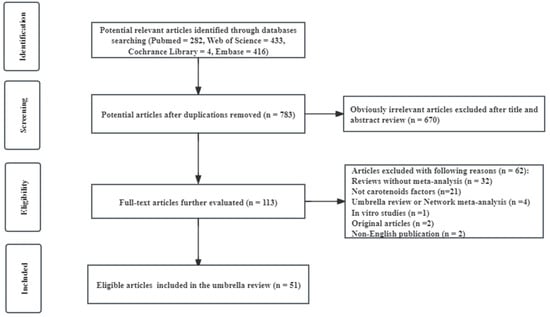
Figure 1.
Flow chart of the literature search.
2.3. Ata Extraction and Quality Assessment
Two investigators (Y.W. and Y.X.) independently extracted the following information from each eligible paper: the first author’s name, publication year, type of cancer outcomes, type of carotenoids, study design (cohort, case control, RCTs), number of cases/control or total participants, meta-analysis metric, OR/RR/HR and CIs, number of included studies in meta-analysis, effect model, and assessment tool of the original study.
A MeaSurement Tool to Assess systematic Reviews 2 (AMSTAR 2) was used to evaluate the methodological quality of eligible meta-analyses [19]. A total of 16 items, including 7 critical and 9 non-critical domains, constituted the AMSTAR 2. According to the quality of each item, we further scored each eligible meta-analysis into High, Moderate, Low, or Critical low quality.
2.4. Data Analysis
In this umbrella review, we extracted OR/RR/HR and 95% CI data from each eligible meta-analysis to re-analyze the association between consumption of carotenoids and cancer risk. I2 and Cochran Q tests were used to assess the heterogeneity between included studies [20]. I2 > 50% and p value < 0.10 indicated significant heterogeneity and calculated with the random-effects model; otherwise, the fixed-effects model was performed. Publication bias and the small-study effect were assessed by the Egger test and funnel plot [21]. For heterogeneity and publication bias, a p value < 0.05 was adopted as a significance threshold as the result of the small-study effects. For other tests, a significance threshold at the level of p value < 0.05 was considered. Moreover, subgroup evaluation was carried out by the type of carotenoids, such as α-carotene, β-carotene, ζ-carotene, and lycopene. All statistical analyses were evaluated with Comprehensive Meta Analysis (CMA) version 3.3.
3. Results
3.1. Study Identification
A total of 1135 articles were initially identified from four databases (PubMed, Web of Science, Cochrane Library, and Embase databases), and 51 eligible articles with 198 meta-analyses were included in our review after exclusions (Table 1). All eligible articles were published between 2000 and 2023. Our study aimed to systematically categorize 198 meta-analyses into eight distinct categories of cancer risk. These categories included total cancer, lung cancer, digestive system cancer, prostate cancer, breast cancer, bladder cancer, head and neck cancer, and gynecologic/skin/blood cancer [22,23,24,25,26,27,28,29,30,31,32,33,34,35,36,37,38,39,40,41,42,43,44,45,46,47,48,49,50,51,52,53,54,55,56,57,58,59,60,61,62,63,64,65,66,67,68,69,70,71,72,73]. Due to the limited number of meta-analyses available, gynecologic/skin/blood cancer was evaluated as a group.

Table 1.
Summary of the meta-analyses of carotenoids and cancer risk.
3.2. The Quality Assessment of Included Meta-Analyses
In the terms of quality of included meta-analyses, results from the AMSTAR 2 questionnaire showed that present umbrella meta-analyses included 41 studies assessed as high quality, 19 studies as moderate quality, and 138 studies as low or critically low quality, respectively (Table S1).
3.3. Total Cancer Outcomes
A total of 198 effect meta-analyses were reported in all eligible meta-analyses examining the relationship between dietary consumption/supplementation/blood level and cancer outcomes. The studies were on total cancer (n = 26) and six other distinct categories of cancer (n = 172). Our study has revealed a significant correlation between carotenoids and cancer risk (OR: 0.860; 95% CI: 0.840–0.881; p < 0.001) (Supplemental Files, Figure S1) with a random-effect model (I2 = 0.766, p < 0.001). Regarding subgroup evaluation, we observed that total carotenoids (OR: 0.743; 95% CI: 0.675–0.819), α-carotene (OR: 0.838; 95% CI: 0.797–0.881), β-carotene (OR: 0.906; 95% CI: 0.875–0.938), lutein and zeaxanthin (OR: 0.850; 95% CI: 0.797–0.906), β-cryptoxanthin (OR: 0.785; 95% CI: 0.697–0.883), and lycopene (OR: 0.886; 95% CI: 0.858–0.916) protected against total cancer (Table 2). The assessment of publication bias of funnel plot by Egger’s regression test showed evidence of small-study effect in the present umbrella meta-analysis (p < 0.001), while results from trim and fill analysis with 75 imputed studies showed that the overall effect was not significantly confounded by the bias (OR = 0.945; 95% CI: 0.921–0.970).
Table 2.
Subgroup analysis of types of carotenoids on various cancers.
3.4. Lung Cancer Outcomes
Sixteen meta-analyses of the association of carotenoids and lung cancer were identified. The present umbrella meta-analysis demonstrated that carotenoids could significantly reduce the risk of lung cancer (OR = 0.896; 95% CI: 0.805–0.997; p = 0.04, Figure 2) with a high heterogeneity (I2 = 0.864, p < 0.001). Further subgroup analysis showed a significant effect of total carotenoids on the risk of lung cancer (OR: 0.774; 95% CI: 0.700–0.855) (Table 2). Nevertheless, four studies showed that β-carotene intake significantly increased the lung cancer risk (OR = 1.21; 95% CI: 1.09–1.34; OR = 1.13; 95% CI: 1.04–1.23; OR = 1.16; 95% CI: 1.06–1.26; OR = 1.14; 95% CI: 1.02–1.27) [27,30,68,69]. The assessment of publication bias of the funnel plot by Begg regression test showed no publication bias in the present umbrella meta-analysis (p = 0.34). Seven imputed studies subjected to trim and fill analysis suggested that there was no statistically significant association between carotenoids and lung cancer risk (OR = 1.033; 95% CI: 0.929–1.147).
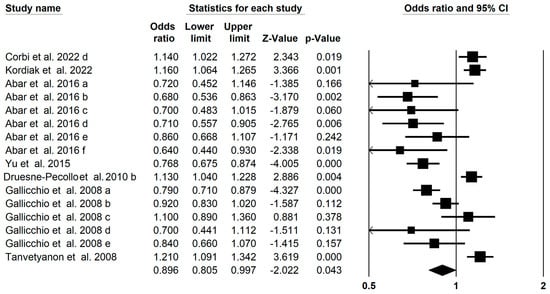
Figure 2.
Forest plot of the effect of carotenoids on lung cancer [26,27,49,50,68,69].
3.5. Digestive System Cancer Outcomes
Among 62 meta-analyses, 18 showed a statistically significant result for reduction of digestive system cancer risk with carotenoids. As shown in Figure 3, higher consumption/blood level of carotenoids resulted in a significant decrease in digestive system cancer (OR = 0.820; 95% CI: 0.780–0.861; p < 0.001), which is concluded from a random-effect model since there was a moderate heterogeneity (I2 = 0.675, p < 0.001). Further subgroup analysis showed a significant effect of total carotenoids (OR: 0.811; 95% CI: 0.674–0.975), α-carotene (OR: 0.792; 95% CI: 0.707–0.887), β-carotene (OR: 0.799; 95% CI: 0.717–0.890), lutein and zeaxanthin (OR: 0.856; 95% CI: 0.794–0.923), β-cryptoxanthin (OR: 0.790; 95% CI: 0.698–0.894), and lycopene (OR: 0.873; 95% CI: 0.825–0.924) on the risk of digestive system cancer (Table 2). We also synthetically analyzed the role of carotenoids in different types of digestive cancers. Our study found a significantly protective effect of carotenoids on the risk of gastric cancer (OR: 0.749; 95% CI: 0.668–0.841), colorectal cancer (OR: 0.932; 95% CI: 0.887–0.979), esophageal cancer (OR: 0.752; 95% CI: 0.671–0.844), and pancreatic cancer (OR: 0.812; 95% CI: 0.765–0.861) (Table 2). The results showed that the assessment of publication bias of the funnel plot by Egger’s regression test showed no publication bias in the umbrella meta-analysis (p = 0.77).
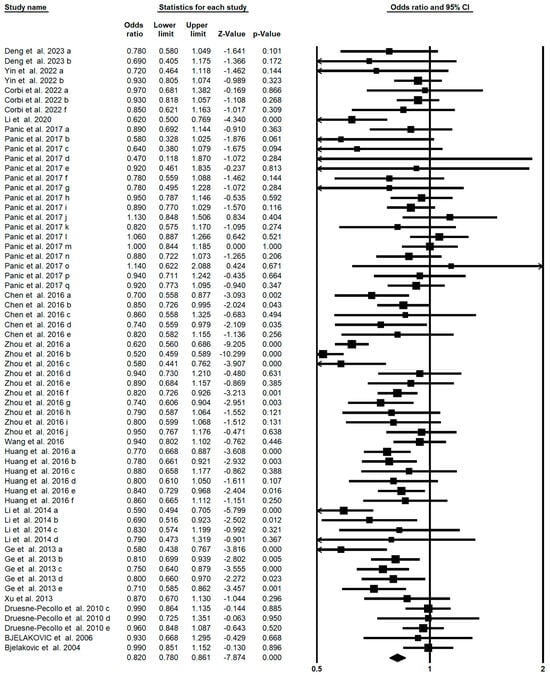
Figure 3.
Forest plot of the effect of carotenoids on digestive system cancer [23,25,30,40,41,42,51,52,54,55,58,66,68,70,72].
3.6. Prostate Cancer Outcomes
The pooled effect of carotenoids on prostate cancer was concluded from 19 meta-analyses in 11 studies, which indicated a significant decrease in prostate cancer risk (OR = 0.916; 95% CI: 0.893–0.939; p < 0.001, Figure 4), and found insignificant between-study heterogeneity (I2 = 0, p = 0.514). The subgroup analysis showed that the significant effect of α-carotene (OR: 0.880; 95% CI: 0.784–0.987) and lycopene (OR: 0.899; 95% CI: 0.872–0.927) on the risk of prostate cancer (Table 2). The Egger’s regression test showed no publication bias in the umbrella meta-analysis (p = 0.06). While further trim and fill analysis with 5 imputed studies suggested that the impacts of carotenoids on prostate cancer were still significant (OR = 0.923; 95% CI: 0.899–0.949).
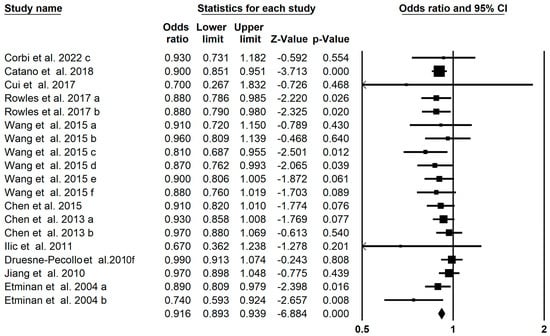
Figure 4.
Forest plot of the effect of carotenoids on prostate cancer [24,30,31,32,39,42,48,57,60,63,68].
3.7. Breast Cancer Outcomes
The result of 20 meta-analyses of the association of carotenoids and breast cancer showed total carotenoids could significantly decrease the risk of breast cancer (OR = 0.899; 95% CI: 0.860–0.940; p < 0.001, Figure 5) with a significantly moderate heterogeneity (I2 = 0.613, p < 0.001). Further subgroup analysis showed a significant effect of α-carotene (OR: 0.900; 95% CI: 0.857–0.945), and β-carotene (OR: 0.896; 95% CI: 0.833–0.964) on the risk of breast cancer (Table 2). The assessment of publication bias of the funnel plot by Egger’s regression test showed insignificant publication bias in the umbrella meta-analysis (p = 0.053). Six imputed studies subjected to trim and fill analysis suggested that carotenoids were protective against breast cancer (OR = 0.930; 95% CI: 0.888–0.974).
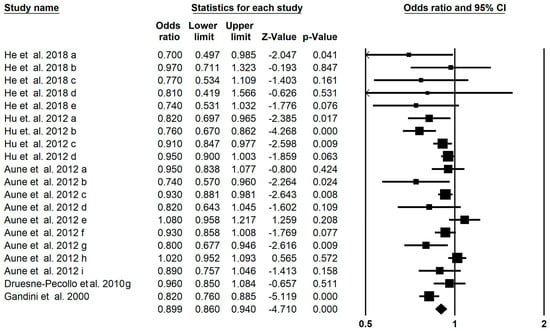
Figure 5.
Forest plot of the effect of carotenoids on breast cancer [22,30,35,37,64].
3.8. Bladder Cancer Outcomes
The pooled effect of carotenoids on prostate cancer was concluded from 15 meta-analyses in 3 studies, which indicated a significant decrease in prostate cancer risk (OR = 0.850; 95% CI: 0.778–0.929; p = 0.001, Figure 6), and found low between-study heterogeneity (I2 = 0.489, p = 0.017). Further subgroup analysis showed a significant effect of total carotenoids (OR: 0.631; 95% CI: 0.469–0.849) on the risk of bladder cancer (Table 2). The assessment of publication bias of funnel plot by Egger’s regression test showed insignificant publication bias in the umbrella meta-analysis (p = 0.108). Five imputed studies subjected to trim and fill analysis suggested that carotenoids were protective against bladder cancer (OR = 0.882; 95% CI: 0.801–0.971).
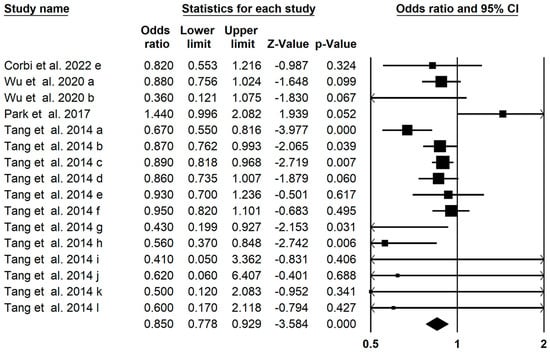
Figure 6.
Forest plot of the effect of carotenoids on bladder cancer [44,59,67,68].
3.9. Head and Neck Cancer Outcomes
High-serum or high intake or high-supplement concentration of carotenoids were associated with significant reductions in the risk of head and neck cancer (OR = 0.635; 95% CI: 0.534–0.757; p < 0.001, Figure 7) with a moderate heterogeneity (I2 = 0.567, p < 0.001). In terms of carotenoids, significant decreases were observed in subgroups of patients with head and neck cancer. Subgroup analysis was employed to explore the potential sources of heterogeneity. The result of subgroup analysis showed that total carotenoids (OR: 0.428; 95% CI: 0.239–0.767), α-carotene (OR: 0.640; 95% CI: 0.485–0.845), β-carotene (OR: 0.817; 95% CI: 0.709–0.942), β-cryptoxanthin (OR: 0.408; 95% CI: 0.338–0.493), and lycopene (OR: 0.674; 95% CI: 0.534–0.851) significantly decreased the risk of head and neck cancer (Table 2). The assessment of publication bias of the funnel plot by Egger’s regression test showed no publication bias in the umbrella meta-analysis (p = 0.83). Six imputed studies subjected to trim and fill analysis suggested that carotenoids were protective against breast cancer (OR = 0.923; 95% CI: 0.883–0.965).
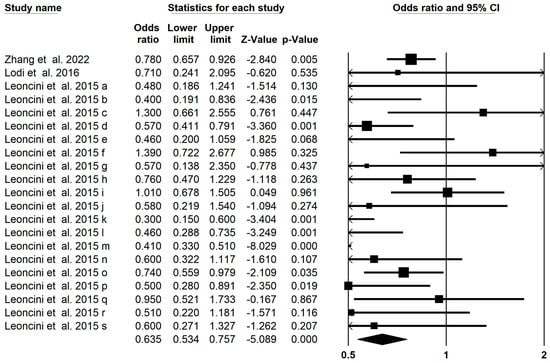
Figure 7.
Forest plot of the effect of carotenoids on head and neck cancer [47,53,73].
3.10. Gynecologic/Skin/Blood Cancer Outcomes
We conducted a comprehensive assessment of the limited number of meta-analyses pertaining to gynecologic/skin/blood cancers collectively, aiming to derive overall findings. The present umbrella analysis presented 18 meta-analyses of gynecologic, skin, and blood cancer studies significantly associated with carotenoids (OR = 0.928; 95% CI: 0.900–0.957; p < 0.001, Figure 8) with a moderate heterogeneity (I2 = 0.732, p < 0.001). Despite the paucity of available meta-analyses, we conducted separate analyses for each of the three cancers regarding total carotenoids. Further subgroup analysis showed a significant effect of total carotenoids (OR: 0.540; 95% CI: 0.433–0.672) and β-carotene (OR: 0.912; 95% CI: 0.842–0.987) on the risk of gynecologic/skin/blood cancer (Table 2). Seven meta-analyses found a significantly reduced risk of gynecologic cancer (OR: 0.683; 95% CI: 0.564–0.827). Five meta-analyses revealed insignificant reduced risk of skin cancer with carotenoids (OR: 0.991; 95% CI: 0.950–1.035). Six meta-analyses also found a significantly reduced risk of blood cancer (OR: 0.895; 95% CI: 0.832–0.962). The assessment of publication bias of the funnel plot by Egger’s regression test showed publication bias in the umbrella meta-analysis (p < 0.001).
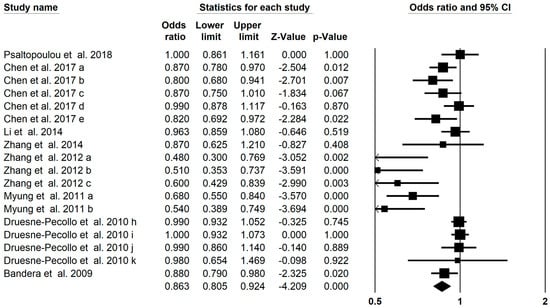
Figure 8.
Forest plot of the effect of carotenoids on gynecologic/skin/blood cancer [28,30,34,38,43,45,56,65].
3.11. Subgroup Analysis of Source of Carotenoids on Various Cancers
Further evaluations were conducted to detect the effects of carotenoids from different sources on various cancers. The results showed that the OR value swere not significantly changed by most of the dietary, blood, and supplement of carotenoid subgroups (Table 3). However, carotenoid supplementation significantly increased in the risk of total cancer (OR: 1.021; 95% CI: 1.000–1.043), lung cancer (OR: 1.141; 95% CI: 1.084–1.200), and bladder cancer (OR: 1.440; 95% CI: 1.000–2.090) (Table 3).
Table 3.
Subgroup analysis of source of carotenoids on various cancers.
4. Discussion
Despite several reviews and meta-analyses evaluating the effects of carotenoids on the risk of cancer, our study aimed to provide a comprehensive overview of the available evidence. In the present umbrella meta-analysis, a total of 51 articles with 198 eligible meta-analyses were included to assess the impact of carotenoids on the most-diagnosed cancers. Total carotenoids were inversely associated with the risk of lung cancer, digestive system cancer, prostate cancer, breast cancer, head and neck cancer, gynecologic cancer, skin cancer, and blood cancer, indicating that they may have an important impact on cancer prevention, despite the presence of moderate-to-high heterogeneity among the studies.
There was sufficient evidence for a protective relationship between dietary carotenoids or serum carotenoids and cancers in the present umbrella review. The health check-up programs from 1988 to 1995 through 1998 among 3182 participants aged from 39–79 with 134 cancer deaths revealed that α-carotene, β-carotene, and lycopene reduced the risk of cancer mortality [74]. Subsequent investigations conducted on the Cancer Prevention Study II Nutrition Cohort demonstrated that serum carotenoids levels were linked to a decreased risk of breast cancer (OR: 0.86; 95% CI: 0.56–1.33; p = 0.74), with serum α-carotene being identified as having a significant effect on reducing the risk of breast cancer (OR: 0.50; 95% CI: 0.29–0.85; p = 0.041) [75]. Recently, a case-control study with 415 gastric cancer cases and 830 controls investigated the effects of dietary carotenoids on the risk of gastric cancer. The results showed that a higher intake of total dietary carotenoids and dietary lycopene was inversely associated with GC risk in women (total dietary carotenoids: OR: 0.56; 95% CI: 0.32–0.99; p = 0.039; dietary lycopene: OR: 0.54; 95% CI: 0.30–0.96, p = 0.039) [76]. The result of 11,239 prostate cancer cases and 18,541 controls from a pooled analysis of 15 studies showed lycopene significant associated with lower risk of aggressive prostate cancer (OR: 0.65; 95% CI: 0.46–0.91; p = 0.032), while weak evidence presented enhanced effects of α-carotene (OR: 1.06; 95% CI: 0.0.96–1.18), β-carotene (OR: 1.07; 95% CI: 0.98–1.16), zeaxanthin (OR: 1.04; 95% CI: 0.90–1.21) on prostate cancer [77]. Michaud et al. [78] found that α-carotene (OR: 0.75; 95% CI: 0.59–0.96) and lycopene (OR: 0.80; 95% CI: 0.64–0.99) intakes were significantly associated with a lower risk of lung cancer in the Nurses’ Health Study (NHS) and Health Professionals Follow-Up Study (HPFS) cohort, while the association with β-carotene, lutein, and β-cryptoxanthin intakes was inverse and non-significant. However, the conclusions of several meta-analyses are inconsistent with our results, with some reporting a significant increase in the risk of lung cancer associated with β-carotene supplementation [68,69], potentially due to cigarette smoking.
Carotenoids have been shown to possess anti-cancer properties through various mechanisms, such as inducing cell cycle arrest, promoting apoptosis, and inhibiting angiogenesis and metastasis. However, the exact effects and underlying mechanisms may vary depending on the type and stage of cancer. Previous studies have reported that carotenoids were associated with inflammation [79]. A meta-analysis study with 26 trials carried out by Fatemeh et al. [80] found that carotenoids significantly decreased C-reactive protein (CRP) (weighted mean difference (WMD): −0.54 mg/L, 95% CI: −0.71, −0.37, p < 0.001), and interleukin-6 (IL-6) (WMD: −0.54 pg/mL, 95% CI: −1.01, −0.06, p = 0.025). Moreover, lutein/zeaxanthin and β-cryptoxanthin also significantly decreased CRP level (WMD: −0.30 mg/L, 95% CI: −0.45–−0.15, p < 0.001; WMD: −0.35 mg/L, 95% CI: −0.54–−0.15, p < 0.001). In an in vitro study, Karin et al. suggested that carotenoid derivatives acted as inhibitors of the NF-κB pathway, exerting anticancer effects by inhibiting IKK kinase activity and suppressing p65 binding and transcriptional activity [81]. Furthermore, lycopene reduced the mRNA expression of inducible nitric oxide synthase and IL-6, inhibited IκB phosphorylation and degradation and NF-κB translocation, and prevented the phosphorylation of ERK1/2 and p38 MAP kinase, thus achieving an anti-inflammatory effect [82,83].
Existing evidence presented that carotenoids exhibited enhanced antioxidant properties, which is one of the potential mechanisms for preventing cancer [84]. Carotenoids scavenged radicals by donating a hydrogen atom or electron to produce a stabilized radical cation or anion that quenches reactive molecules [85]. Moreover, carotenoids can drastically reduce the risk of malignant transformation by scavenging singlet oxygen or peroxyl radical compounds, and reducing cellular damage caused by their reactions with lipids, proteins, and DNA [86]. In addition, one of the antioxidant mechanisms of carotenoids was promoting Nrf-2 localization to the nucleus, as well as promoting phase II enzyme activation to reduce oxidative stress [87]. Following radical scavenging, carotenoids enhanced the elimination of these stressed and damaged cells to prevent malignant transformation [88]. In vitro studies have demonstrated that carotenoids acted through the PI3K and MAPK pathways and induced apoptosis through PPARγ, IFNs, Bcl-2, and caspase 3/9 [89,90]. In in vivo studies, the clearance of reactive oxygen species (ROS) and promotion of cell apoptosis by multiple types of carotenoids have been found to reduce damage to organs including the liver, kidneys, and intestines [91,92,93]. However, in the Carotenoid and Retinol Efficacy Trial (CARET) [94] and the Alpha-Tocopherol Beta-Carotene Cancer Prevention Study (ATBC) [95], smokers were administered β-carotene supplements at 20 mg and 30 mg per day, which was approximately 10–20 times higher than the typical intake of an adult. The result suggested that β-carotene supplementation led to an increased mortality rate from lung cancer. One hypothesis suggests that elevated doses of carotenoids, particularly when given in isolation, may exhibit pro-oxidant activity within the lungs of smokers. A prevalent consensus existed within the scientific community, positing that a diet abundant in fruits and vegetables, distinguished by their high antioxidant content, possessed the potential to mitigate the risk of cancer. This consensus was predominantly rooted in empirical findings derived from observational studies.
However, recent fundamental research publications have introduced skepticism regarding the established notion of antioxidants’ anti-carcinogenic properties, and have cautioned that, under certain circumstances, their impact may indeed manifest as carcinogenic [96]. It was proven that high doses of a single antioxidant administered to individuals at high risk of health issues, such as smokers, were demonstrated to lack significant benefits and could potentially result in adverse effects [97]. In addition to insufficient micronutrient intake from both food and supplement sources on a daily basis, surpassing the tolerable upper intake levels is likely to present a risk of adverse health effects for nearly all individuals in the general population [98]. Henceforth, the establishment of a secure carotenoid intake necessitates the assessment of a dose–response relationship indicative of potential adverse effects on the health of animals or humans. This is also a relevant field that we aim to explore in our future research endeavors.
Our current investigation represents the initial umbrella meta-analysis to comprehensively collect and evaluate all previously published meta-analyses, culminating in a comprehensive synthesis of the available evidence pertaining to the efficacy of carotenoids in cancer prevention.
An umbrella review is the most comprehensive evaluation of previously published meta-analyses or systematic reviews, representing one of the highest levels of evidence. It also enhances the value of publications and decreases misleading outcomes, distortion, and bias. However, our study does have several limitations that need to be further considered. Firstly, we selected and included studies that were published in meta-analyses, which may have lost some studies that were not identified. Secondly, the data on total carotenoids and total cancer in the study could not be categorized. Thirdly, we only modified data that were analyzed incorrectly in the CMA and did not re-analyze all the data. Fourthly, multiple meta-analyses cited the same original observational study. Fifthly, although all studies are crowd research, including cohort studies, case-control studies, and RCT, they have different research methods and handling methods, which may affect our results. Sixthly, it was not possible to make a detailed division of intake levels, so it was not possible to verify the dose–response relationship in detail. Lastly, there is an insufficient amount of research on specific types of carotenoids in relation to various cancers, which may affect the final results. In future studies, further meta-analytical research articles are needed on the levels or ratios of carotenoid components and their associations with cancer incidence and mortality.
5. Conclusions
Although carotenoids are widely available in foods and commonly used as dietary supplements, and carotenoid-related studies have been published, there is no conclusive evidence regarding their protective effect on cancer risk. Our results have evaluated the most comprehensive evaluation of the relationship between carotenoids and cancer risk and found that multiple carotenoids were significantly associated with minimizing incidence and mortality of cancer. Concurrently, the findings suggest that the efficacy of carotenoid supplements in cancer prevention remains a subject of controversy, highlighting the need for cautious consideration when considering supplementation. Future study will eliminate data bias and error by analyzing individual patient data and various subgroups to likely yield more consistent results with a high level of evidence.
Supplementary Materials
The following supporting information can be downloaded at: https://www.mdpi.com/article/10.3390/foods13091321/s1, Figure S1: Forest plot of the effect of carotenoids on total cancer.; Table S1 Results of risk of bias assessment based on AMSTAR 2 tool.
Author Contributions
Conceptualization, J.S. and H.X.; methodology, J.S.; software, J.S.; validation, J.G. and Y.W.; formal analysis, G.S.; investigation, H.X.; resources, Y.W. and Y.X.; data curation, J.S.; writing—original draft preparation, J.S.; writing—review and editing, D.P.; visualization, J.S.; supervision, H.X.; project administration, G.S.; funding acquisition, J.S. and H.X. All authors have read and agreed to the published version of the manuscript.
Funding
This research was funded by the National Key R&D Program of China (2023YFF1104402), China Postdoctoral Science Foundation funded project (2022M720714), National Natural Science Foundation of China Youth Science Fund Project (81803201), Jiangsu Province Science Foundation for Youths (NO. BK20200366), Innovation and Entrepreneurship Program of Jiangsu Province (JSSCBS20210472), and Startup Foundation for Introducing Talent of NUIST (NO. 2020r088).
Institutional Review Board Statement
Not applicable.
Informed Consent Statement
Not applicable.
Data Availability Statement
The original contributions presented in the study are included in the article/Supplementary Material, further inquiries can be directed to the corresponding author.
Acknowledgments
As an invited researcher in the Institute of Climate Change and Public Policy, I would like to thank the institute for its constructive comments and support to authors.
Conflicts of Interest
The authors declare no conflict of interest.
References
- Zhang, L.; Lu, Q.; Chang, C. Epigenetics in Health and Disease. Adv. Exp. Med. Biol. 2020, 1253, 3–55. [Google Scholar] [PubMed]
- Sapienza, C.; Issa, J.P. Diet, Nutrition, and Cancer Epigenetics. Annu. Rev. Nutr. 2016, 36, 665–681. [Google Scholar] [CrossRef] [PubMed]
- Turati, F.; Rossi, M.; Pelucchi, C.; Levi, F.; La Vecchia, C. Fruit and vegetables and cancer risk: A review of southern European studies. Br. J. Nutr. 2015, 113 (Suppl. 2), S102–S110. [Google Scholar] [CrossRef] [PubMed]
- Hurtado-Barroso, S.; Trius-Soler, M.; Lamuela-Raventos, R.M.; Zamora-Ros, R. Vegetable and Fruit Consumption and Prognosis Among Cancer Survivors: A Systematic Review and Meta-Analysis of Cohort Studies. Adv. Nutr. 2020, 11, 1569–1582. [Google Scholar] [CrossRef]
- Langi, P.; Kiokias, S.; Varzakas, T.; Proestos, C. Carotenoids: From Plants to Food and Feed Industries. Methods Mol. Biol. 2018, 1852, 57–71. [Google Scholar] [PubMed]
- Tang, Y.; Cai, W.; Xu, B. Profiles of phenolics, carotenoids and antioxidative capacities of thermal processed white, yellow, orange and purple sweet potatoes grown in Guilin, China. Food Sci. Hum. Wellness 2015, 4, 123–132. [Google Scholar] [CrossRef]
- Maoka, T. Carotenoids as natural functional pigments. J. Nat. Med. 2020, 74, 1–16. [Google Scholar] [CrossRef] [PubMed]
- Nishino, A.; Ichihara, T.; Takaha, T.; Kuriki, T.; Nihei, H.; Kawamoto, K.; Yasui, H.; Maoka, T. Accumulation of Paprika Carotenoids in Human Plasma and Erythrocytes. J. Oleo Sci. 2015, 64, 1135–1142. [Google Scholar] [CrossRef] [PubMed]
- Martini, D.; Negrini, L.; Marino, M.; Riso, P.; Del Bo, C.; Porrini, M. What Is the Current Direction of the Research on Carotenoids and Human Health? An Overview of Registered Clinical Trials. Nutrients 2022, 14, 1191. [Google Scholar] [CrossRef]
- Li, S.; Chen, G.; Zhang, C.; Wu, M.; Wu, S.; Liu, Q. Research progress of natural antioxidants in foods for the treatment of diseases. Food Sci. Hum. Wellness 2014, 3, 110–116. [Google Scholar] [CrossRef]
- Schabath, M.B.; Grossman, H.B.; Delclos, G.L.; Hernandez, L.M.; Day, R.S.; Davis, B.R.; Lerner, S.P.; Spitz, M.R.; Wu, X. Dietary carotenoids and genetic instability modify bladder cancer risk. J. Nutr. 2004, 134, 3362–3369. [Google Scholar] [CrossRef] [PubMed][Green Version]
- Belbasis, L.; Bellou, V.; Evangelou, E.; Ioannidis, J.P.; Tzoulaki, I. Environmental risk factors and multiple sclerosis: An umbrella review of systematic reviews and meta-analyses. Lancet Neurol. 2015, 14, 263–273. [Google Scholar] [CrossRef] [PubMed]
- Ioannidis, J.P. Integration of evidence from multiple meta-analyses: A primer on umbrella reviews, treatment networks and multiple treatments meta-analyses. Can. Med Assoc. J. 2009, 181, 488–493. [Google Scholar] [CrossRef] [PubMed]
- Xu, K.; Peng, R.; Zou, Y.; Jiang, X.; Sun, Q.; Song, C. Vitamin C intake and multiple health outcomes: An umbrella review of systematic reviews and meta-analyses. Int. J. Food Sci. Nutr. 2022, 73, 588–599. [Google Scholar] [CrossRef] [PubMed]
- Harrison, S.L.; Buckley, B.J.R.; Rivera-Caravaca, J.M.; Zhang, J.; Lip, G.Y.H. Cardiovascular risk factors, cardiovascular disease, and COVID-19: An umbrella review of systematic reviews. Eur. Heart J. Qual. Care Clin. Outcomes 2021, 7, 330–339. [Google Scholar] [CrossRef]
- Veronese, N.; Solmi, M.; Caruso, M.G.; Giannelli, G.; Osella, A.R.; Evangelou, E.; Maggi, S.; Fontana, L.; Stubbs, B.; Tzoulaki, I. Dietary fiber and health outcomes: An umbrella review of systematic reviews and meta-analyses. Am. J. Clin. Nutr. 2018, 107, 436–444. [Google Scholar] [CrossRef] [PubMed]
- Cupp, M.A.; Cariolou, M.; Tzoulaki, I.; Aune, D.; Evangelou, E.; Berlanga-Taylor, A.J. Neutrophil to lymphocyte ratio and cancer prognosis: An umbrella review of systematic reviews and meta-analyses of observational studies. BMC Med. 2020, 18, 360. [Google Scholar] [CrossRef] [PubMed]
- Rethlefsen, M.L.; Kirtley, S.; Waffenschmidt, S.; Ayala, A.P.; Moher, D.; Page, M.J.; Koffel, J.B.; Group, P.-S. PRISMA-S: An extension to the PRISMA Statement for Reporting Literature Searches in Systematic Reviews. Syst. Rev. 2021, 10, 39. [Google Scholar] [CrossRef] [PubMed]
- Shea, B.J.; Reeves, B.C.; Wells, G.; Thuku, M.; Hamel, C.; Moran, J.; Moher, D.; Tugwell, P.; Welch, V.; Kristjansson, E.; et al. AMSTAR 2: A critical appraisal tool for systematic reviews that include randomised or non-randomised studies of healthcare interventions, or both. BMJ 2017, 358, j4008. [Google Scholar] [CrossRef] [PubMed]
- Cochran, W.G. The combination of estimates from different experiments. Biometrics 1954, 10, 101–129. [Google Scholar] [CrossRef]
- Egger, M.; Smith, G.D.; Schneider, M.; Minder, C. Bias in meta-analysis detected by a simple, graphical test. BMJ 1997, 315, 629–634. [Google Scholar] [CrossRef]
- Gandini, S.; Merzenich, H.; Robertson, C.; Boyle, P. Meta-analysis of studies on breast cancer risk and diet: The role of fruit and vegetable consumption and the intake of associated micronutrients. Eur. J. Cancer 2000, 36, 636–646. [Google Scholar] [CrossRef] [PubMed]
- Bjelakovic, G.; Nikolova, D.; Simonetti, R.G.; Gluud, C. Antioxidant supplements for prevention of gastrointestinal cancers: A systematic review and meta-analysis. Lancet 2004, 364, 1219–1228. [Google Scholar] [CrossRef] [PubMed]
- Etminan, M.; Takkouche, B.; Caamano-Isorna, F. The role of tomato products and lycopene in the prevention of prostate cancer: A meta-analysis of observational studies. Cancer Epidemiol. Biomark. Prev. 2004, 13, 340–345. [Google Scholar] [CrossRef]
- Bjelakovic, G.; Nagorni, A.; Nikolova, D.; Simonetti, R.G.; Bjelakovic, M.; Gluud, C. Meta-analysis: Antioxidant supplements for primary and secondary prevention of colorectal adenoma. Aliment. Pharmacol. Ther. 2006, 24, 281–291. [Google Scholar] [CrossRef]
- Gallicchio, L.; Boyd, K.; Matanoski, G.; Tao, X.G.; Chen, L.; Lam, T.K.; Shiels, M.; Hammond, E.; Robinson, K.A.; Caulfield, L.E.; et al. Carotenoids and the risk of developing lung cancer: A systematic review. Am. J. Clin. Nutr. 2008, 88, 372–383. [Google Scholar] [CrossRef] [PubMed]
- Tanvetyanon, T.; Bepler, G. Beta-carotene in multivitamins and the possible risk of lung cancer among smokers versus former smokers: A meta-analysis and evaluation of national brands. Cancer 2008, 113, 150–157. [Google Scholar] [CrossRef]
- Bandera, E.V.; Gifkins, D.M.; Moore, D.F.; McCullough, M.L.; Kushi, L.H. Antioxidant vitamins and the risk of endometrial cancer: A dose-response meta-analysis. Cancer Causes Control 2009, 20, 699–711. [Google Scholar] [CrossRef] [PubMed]
- Musa-Veloso, K.; Card, J.W.; Wong, A.W.; Cooper, D.A. Influence of observational study design on the interpretation of cancer risk reduction by carotenoids. Nutr. Rev. 2009, 67, 527–545. [Google Scholar] [CrossRef]
- Druesne-Pecollo, N.; Latino-Martel, P.; Norat, T.; Barrandon, E.; Bertrais, S.; Galan, P.; Hercberg, S. Beta-carotene supplementation and cancer risk: A systematic review and metaanalysis of randomized controlled trials. Int. J. Cancer 2010, 127, 172–184. [Google Scholar] [CrossRef]
- Jiang, L.; Yang, K.H.; Tian, J.H.; Guan, Q.L.; Yao, N.; Cao, N.; Mi, D.H.; Wu, J.; Ma, B.; Yang, S.H. Efficacy of antioxidant vitamins and selenium supplement in prostate cancer prevention: A meta-analysis of randomized controlled trials. Nutr. Cancer 2010, 62, 719–727. [Google Scholar] [CrossRef]
- Ilic, D.; Forbes, K.M.; Hassed, C. Lycopene for the prevention of prostate cancer. Cochrane Database Syst. Rev. 2011, 2011, CD008007. [Google Scholar] [CrossRef]
- Jeon, Y.J.; Myung, S.K.; Lee, E.H.; Kim, Y.; Chang, Y.J.; Ju, W.; Cho, H.J.; Seo, H.G.; Huh, B.Y. Effects of beta-carotene supplements on cancer prevention: Meta-analysis of randomized controlled trials. Nutr. Cancer 2011, 63, 1196–1207. [Google Scholar] [CrossRef] [PubMed]
- Myung, S.K.; Ju, W.; Kim, S.C.; Kim, H.; Korean Meta-analysis Study Group. Vitamin or antioxidant intake (or serum level) and risk of cervical neoplasm: A meta-analysis. BJOG Int. J. Obstet. Gynaecol. 2011, 118, 1285–1291. [Google Scholar] [CrossRef]
- Aune, D.; Chan, D.S.; Vieira, A.R.; Navarro Rosenblatt, D.A.; Vieira, R.; Greenwood, D.C.; Norat, T. Dietary compared with blood concentrations of carotenoids and breast cancer risk: A systematic review and meta-analysis of prospective studies. Am. J. Clin. Nutr. 2012, 96, 356–373. [Google Scholar] [CrossRef] [PubMed]
- Eliassen, A.H.; Hendrickson, S.J.; Brinton, L.A.; Buring, J.E.; Campos, H.; Dai, Q.; Dorgan, J.F.; Franke, A.A.; Gao, Y.T.; Goodman, M.T.; et al. Circulating carotenoids and risk of breast cancer: Pooled analysis of eight prospective studies. J. Natl. Cancer Inst. 2012, 104, 1905–1916. [Google Scholar] [CrossRef]
- Hu, F.; Wang Yi, B.; Zhang, W.; Liang, J.; Lin, C.; Li, D.; Wang, F.; Pang, D.; Zhao, Y. Carotenoids and breast cancer risk: A meta-analysis and meta-regression. Breast Cancer Res. Treat. 2012, 131, 239–253. [Google Scholar] [CrossRef]
- Zhang, X.; Dai, B.; Zhang, B.; Wang, Z. Vitamin A and risk of cervical cancer: A meta-analysis. Gynecol. Oncol. 2012, 124, 366–373. [Google Scholar] [CrossRef] [PubMed]
- Chen, J.; Song, Y.; Zhang, L. Lycopene/tomato consumption and the risk of prostate cancer: A systematic review and meta-analysis of prospective studies. J. Nutr. Sci. Vitaminol. 2013, 59, 213–223. [Google Scholar] [CrossRef]
- Ge, X.X.; Xing, M.Y.; Yu, L.F.; Shen, P. Carotenoid intake and esophageal cancer risk: A meta-analysis. Asian Pac. J. Cancer Prev. APJCP 2013, 14, 1911–1918. [Google Scholar] [CrossRef]
- Xu, X.; Yu, E.; Liu, L.; Zhang, W.; Wei, X.; Gao, X.; Song, N.; Fu, C. Dietary intake of vitamins A, C, and E and the risk of colorectal adenoma: A meta-analysis of observational studies. Eur. J. Cancer Prev. Off. J. Eur. Cancer Prev. Org. 2013, 22, 529–539. [Google Scholar] [CrossRef]
- Li, P.; Zhang, H.; Chen, J.; Shi, Y.; Cai, J.; Yang, J.; Wu, Y. Association between dietary antioxidant vitamins intake/blood level and risk of gastric cancer. Int. J. Cancer 2014, 135, 1444–1453. [Google Scholar] [CrossRef] [PubMed]
- Li, X.; Xu, J. Meta-analysis of the association between dietary lycopene intake and ovarian cancer risk in postmenopausal women. Sci. Rep. 2014, 4, 4885. [Google Scholar] [CrossRef] [PubMed]
- Tang, J.E.; Wang, R.J.; Zhong, H.; Yu, B.; Chen, Y. Vitamin A and risk of bladder cancer: A meta-analysis of epidemiological studies. World J. Surg. Oncol. 2014, 12, 130. [Google Scholar] [CrossRef] [PubMed]
- Zhang, Y.P.; Chu, R.X.; Liu, H. Vitamin A intake and risk of melanoma: A meta-analysis. PLoS ONE 2014, 9, e102527. [Google Scholar] [CrossRef] [PubMed]
- Chen, P.; Zhang, W.; Wang, X.; Zhao, K.; Negi, D.S.; Zhuo, L.; Qi, M.; Wang, X.; Zhang, X. Lycopene and Risk of Prostate Cancer: A Systematic Review and Meta-Analysis. Medicine 2015, 94, e1260. [Google Scholar] [CrossRef] [PubMed]
- Leoncini, E.; Nedovic, D.; Panic, N.; Pastorino, R.; Edefonti, V.; Boccia, S. Carotenoid Intake from Natural Sources and Head and Neck Cancer: A Systematic Review and Meta-analysis of Epidemiological Studies. Cancer Epidemiol. Biomark. Prev. 2015, 24, 1003–1011. [Google Scholar] [CrossRef] [PubMed]
- Wang, Y.; Cui, R.; Xiao, Y.; Fang, J.; Xu, Q. Effect of Carotene and Lycopene on the Risk of Prostate Cancer: A Systematic Review and Dose-Response Meta-Analysis of Observational Studies. PLoS ONE 2015, 10, e0137427. [Google Scholar]
- Yu, N.; Su, X.; Wang, Z.; Dai, B.; Kang, J. Association of Dietary Vitamin A and beta-Carotene Intake with the Risk of Lung Cancer: A Meta-Analysis of 19 Publications. Nutrients 2015, 7, 9309–9324. [Google Scholar] [CrossRef]
- Abar, L.; Vieira, A.R.; Aune, D.; Stevens, C.; Vingeliene, S.; Navarro Rosenblatt, D.A.; Chan, D.; Greenwood, D.C.; Norat, T. Blood concentrations of carotenoids and retinol and lung cancer risk: An update of the WCRF-AICR systematic review of published prospective studies. Cancer Med. 2016, 5, 2069–2083. [Google Scholar] [CrossRef]
- Chen, J.; Jiang, W.; Shao, L.; Zhong, D.; Wu, Y.; Cai, J. Association between intake of antioxidants and pancreatic cancer risk: A meta-analysis. Int. J. Food Sci. Nutr. 2016, 67, 744–753. [Google Scholar] [CrossRef] [PubMed]
- Huang, X.; Gao, Y.; Zhi, X.; Ta, N.; Jiang, H.; Zheng, J. Association between vitamin A, retinol and carotenoid intake and pancreatic cancer risk: Evidence from epidemiologic studies. Sci. Rep. 2016, 6, 38936. [Google Scholar] [CrossRef] [PubMed]
- Lodi, G.; Franchini, R.; Warnakulasuriya, S.; Varoni, E.M.; Sardella, A.; Kerr, A.R.; Carrassi, A.; MacDonald, L.C.; Worthington, H.V. Interventions for treating oral leukoplakia to prevent oral cancer. Cochrane Database Syst. Rev. 2016, 7, CD001829. [Google Scholar] [CrossRef] [PubMed]
- Wang, X.; Yang, H.H.; Liu, Y.; Zhou, Q.; Chen, Z.H. Lycopene Consumption and Risk of Colorectal Cancer: A Meta-Analysis of Observational Studies. Nutr. Cancer 2016, 68, 1083–1096. [Google Scholar] [CrossRef] [PubMed]
- Zhou, Y.; Wang, T.; Meng, Q.; Zhai, S. Association of carotenoids with risk of gastric cancer: A meta-analysis. Clin. Nutr. 2016, 35, 109–116. [Google Scholar] [CrossRef] [PubMed]
- Chen, F.; Hu, J.; Liu, P.; Li, J.; Wei, Z.; Liu, P. Carotenoid intake and risk of non-Hodgkin lymphoma: A systematic review and dose-response meta-analysis of observational studies. Ann. Hematol. 2017, 96, 957–965. [Google Scholar] [CrossRef] [PubMed]
- Cui, K.; Li, X.; Du, Y.; Tang, X.; Arai, S.; Geng, Y.; Xi, Y.; Xu, H.; Zhou, Y.; Ma, W.; et al. Chemoprevention of prostate cancer in men with high-grade prostatic intraepithelial neoplasia (HGPIN): A systematic review and adjusted indirect treatment comparison. Oncotarget 2017, 8, 36674–36684. [Google Scholar] [CrossRef]
- Panic, N.; Nedovic, D.; Pastorino, R.; Boccia, S.; Leoncini, E. Carotenoid intake from natural sources and colorectal cancer: A systematic review and meta-analysis of epidemiological studies. Eur. J. Cancer Prev. Offi. J. Eur. Cancer Prev. Org. 2017, 26, 27–37. [Google Scholar] [CrossRef] [PubMed]
- Park, S.J.; Myung, S.K.; Lee, Y.; Lee, Y.J. Effects of Vitamin and Antioxidant Supplements in Prevention of Bladder Cancer: A Meta-Analysis of Randomized Controlled Trials. J. Korean Med. Sci. 2017, 32, 628–635. [Google Scholar] [CrossRef] [PubMed]
- Rowles, J.L., 3rd; Ranard, K.M.; Smith, J.W.; An, R.; Erdman, J.W., Jr. Increased dietary and circulating lycopene are associated with reduced prostate cancer risk: A systematic review and meta-analysis. Prostate Cancer Prostatic Dis. 2017, 20, 361–377. [Google Scholar] [CrossRef]
- Schwingshackl, L.; Boeing, H.; Stelmach-Mardas, M.; Gottschald, M.; Dietrich, S.; Hoffmann, G.; Chaimani, A. Dietary Supplements and Risk of Cause-Specific Death, Cardiovascular Disease, and Cancer: A Systematic Review and Meta-Analysis of Primary Prevention Trials. Adv. Nutr. 2017, 8, 27–39. [Google Scholar] [CrossRef] [PubMed]
- Aune, D.; Keum, N.; Giovannucci, E.; Fadnes, L.T.; Boffetta, P.; Greenwood, D.C.; Tonstad, S.; Vatten, L.J.; Riboli, E.; Norat, T. Dietary intake and blood concentrations of antioxidants and the risk of cardiovascular disease, total cancer, and all-cause mortality: A systematic review and dose-response meta-analysis of prospective studies. Am. J. Clin. Nutr. 2018, 108, 1069–1091. [Google Scholar] [CrossRef] [PubMed]
- Catano, J.G.; Trujillo, C.G.; Caicedo, J.I.; Bravo-Balado, A.; Robledo, D.; Marino-Alvarez, A.M.; Pedraza, A.; Arcila, M.J.; Plata, M. Efficacy of lycopene intake in primary prevention of prostate cancer: A systematic review of the literature and meta-analysis. Arch. Esp. Urol. 2018, 71, 187–197. [Google Scholar] [PubMed]
- He, J.; Gu, Y.; Zhang, S. Vitamin A and Breast Cancer Survival: A Systematic Review and Meta-analysis. Clin. Breast Cancer 2018, 18, e1389–e1400. [Google Scholar] [CrossRef]
- Psaltopoulou, T.; Ntanasis-Stathopoulos, I.; Tsilimigras, D.I.; Tzanninis, I.G.; Gavriatopoulou, M.; Sergentanis, T.N. Micronutrient Intake and Risk of Hematological Malignancies in Adults: A Systematic Review and Meta-analysis of Cohort Studies. Nutr. Cancer 2018, 70, 821–839. [Google Scholar] [CrossRef] [PubMed]
- Li, K.; Zhang, B. The association of dietary beta-carotene and vitamin A intake on the risk of esophageal cancer: A meta-analysis. Rev. Esp. Enferm. Dig. 2020, 112, 620–626. [Google Scholar] [CrossRef] [PubMed]
- Wu, S.; Liu, Y.; Michalek, J.E.; Mesa, R.A.; Parma, D.L.; Rodriguez, R.; Mansour, A.M.; Svatek, R.; Tucker, T.C.; Ramirez, A.G. Carotenoid Intake and Circulating Carotenoids Are Inversely Associated with the Risk of Bladder Cancer: A Dose-Response Meta-analysis. Adv. Nutr. 2020, 11, 630–643. [Google Scholar] [CrossRef] [PubMed]
- Corbi, G.; Ali, S.; Intrieri, M.; Modaferri, S.; Calabrese, V.; Davinelli, S.; Scapagnini, G. Association Between Beta-Carotene Supplementation and Mortality: A Systematic Review and Meta-Analysis of Randomized Controlled Trials. Front. Med. 2022, 9, 872310. [Google Scholar] [CrossRef] [PubMed]
- Kordiak, J.; Bielec, F.; Jablonski, S.; Pastuszak-Lewandoska, D. Role of Beta-Carotene in Lung Cancer Primary Chemoprevention: A Systematic Review with Meta-Analysis and Meta-Regression. Nutrients 2022, 14, 1361. [Google Scholar] [CrossRef]
- Yin, L.; Yan, H.; Chen, K.; Ji, Z.; Zhang, X.; Ji, G.; Zhang, B. Diet-Derived Circulating Antioxidants and Risk of Digestive System Tumors: A Mendelian Randomization Study. Nutrients 2022, 14, 3274. [Google Scholar] [CrossRef]
- Zhang, W.; Jiang, J.; He, Y.; Li, X.; Yin, S.; Chen, F.; Li, W. Association between vitamins and risk of brain tumors: A systematic review and dose-response meta-analysis of observational studies. Front. Nutr. 2022, 9, 935706. [Google Scholar] [CrossRef]
- Deng, D.; Zhang, Y.; Zhang, R.; Yi, J.; Dong, J.; Sha, L.; Yan, M. Circulating Proteins and Metabolite Biomarkers in Gastric Cancer: A Systematic Review and Meta-analysis. Arch. Med. Res. 2023, 54, 124–134. [Google Scholar] [CrossRef] [PubMed]
- Zhang, Y.; Yang, J.; Na, X.; Zhao, A. Association between beta-carotene supplementation and risk of cancer: A meta-analysis of randomized controlled trials. Nutr. Rev. 2023, 81, 1118–1130. [Google Scholar] [CrossRef] [PubMed]
- Ito, Y.; Kurata, M.; Hioki, R.; Suzuki, K.; Ochiai, J.; Aoki, K. Cancer mortality and serum levels of carotenoids, retinol, and tocopherol: A population-based follow-up study of inhabitants of a rural area of Japan. Asian Pac. J. Cancer Prev. APJCP 2005, 6, 10–15. [Google Scholar] [PubMed]
- Wang, Y.; Gapstur, S.M.; Gaudet, M.M.; Furtado, J.D.; Campos, H.; McCullough, M.L. Plasma carotenoids and breast cancer risk in the Cancer Prevention Study II Nutrition Cohort. Cancer Causes Control 2015, 26, 1233–1244. [Google Scholar] [CrossRef] [PubMed]
- Kim, J.H.; Lee, J.; Choi, I.J.; Kim, Y.I.; Kwon, O.; Kim, H.; Kim, J. Dietary Carotenoids Intake and the Risk of Gastric Cancer: A Case-Control Study in Korea. Nutrients 2018, 10, 1031. [Google Scholar] [CrossRef]
- Key, T.J.; Appleby, P.N.; Travis, R.C.; Albanes, D.; Alberg, A.J.; Barricarte, A.; Black, A.; Boeing, H.; Bueno-de-Mesquita, H.B.; Chan, J.M.; et al. Carotenoids, retinol, tocopherols, and prostate cancer risk: Pooled analysis of 15 studies. Am. J. Clin. Nutr. 2015, 102, 1142–1157. [Google Scholar] [CrossRef] [PubMed]
- Michaud, D.S.; Feskanich, D.; Rimm, E.B.; Colditz, G.A.; Speizer, F.E.; Willett, W.C.; Giovannucci, E. Intake of specific carotenoids and risk of lung cancer in 2 prospective US cohorts. Am. J. Clin. Nutr. 2000, 72, 990–997. [Google Scholar] [CrossRef]
- Xu, P.X.; Luo, S.W.; Song, J.F.; Dai, Z.Q.; Li, D.J.; Wu, C.E. Effect of sodium alginate-based hydrogel loaded with lutein on gut microbiota and inflammatory response in DSS-induced colitis mice. Food Sci. Hum. Wellness 2023, 12, 2428–2439. [Google Scholar] [CrossRef]
- Hajizadeh-Sharafabad, F.; Zahabi, E.S.; Malekahmadi, M.; Zarrin, R.; Alizadeh, M. Carotenoids supplementation and inflammation: A systematic review and meta-analysis of randomized clinical trials. Crit. Rev. Food Sci. Nutr. 2022, 62, 8161–8177. [Google Scholar] [CrossRef]
- Linnewiel-Hermoni, K.; Motro, Y.; Miller, Y.; Levy, J.; Sharoni, Y. Carotenoid derivatives inhibit nuclear factor kappa B activity in bone and cancer cells by targeting key thiol groups. Free Radic. Biol. Med. 2014, 75, 105–120. [Google Scholar] [CrossRef] [PubMed]
- Feng, D.; Ling, W.H.; Duan, R.D. Lycopene suppresses LPS-induced NO and IL-6 production by inhibiting the activation of ERK, p38MAPK, and NF-kappaB in macrophages. Inflamm. Res. Off. J. Eur. Histamine Res. Soc. 2010, 59, 115–121. [Google Scholar]
- Gouranton, E.; Thabuis, C.; Riollet, C.; Malezet-Desmoulins, C.; El Yazidi, C.; Amiot, M.J.; Borel, P.; Landrier, J.F. Lycopene inhibits proinflammatory cytokine and chemokine expression in adipose tissue. J. Nutr. Biochem. 2011, 22, 642–648. [Google Scholar] [CrossRef] [PubMed]
- Vrdoljak, N. Carotenoids and Carcinogenesis: Exploring the Antioxidant and Cell Signaling Roles of Carotenoids in the Prevention of Cancer. Crit. Rev. Oncog. 2022, 27, 1–13. [Google Scholar] [CrossRef] [PubMed]
- Grune, T.; Lietz, G.; Palou, A.; Ross, A.C.; Stahl, W.; Tang, G.; Thurnham, D.; Yin, S.A.; Biesalski, H.K. Beta-carotene is an important vitamin A source for humans. J. Nutr. 2010, 140, 2268S–2285S. [Google Scholar] [CrossRef] [PubMed]
- Demmig-Adams, B.; Adams, W.W., 3rd. Antioxidants in photosynthesis and human nutrition. Science 2002, 298, 2149–2153. [Google Scholar] [CrossRef]
- Zou, X.; Gao, J.; Zheng, Y.; Wang, X.; Chen, C.; Cao, K.; Xu, J.; Li, Y.; Lu, W.; Liu, J.; et al. Zeaxanthin induces Nrf2-mediated phase II enzymes in protection of cell death. Cell Death Dis. 2014, 5, e1218. [Google Scholar] [CrossRef] [PubMed]
- Johnson, J.D. Do carotenoids serve as transmembrane radical channels? Free Radic. Biol. Med. 2009, 47, 321–323. [Google Scholar] [CrossRef]
- Varghese, R.; Efferth, T.; Ramamoorthy, S. Carotenoids for lung cancer chemoprevention and chemotherapy: Promises and controversies. Phytomedicine 2023, 116, 154850. [Google Scholar] [CrossRef]
- Panieri, E.; Santoro, M.M. ROS homeostasis and metabolism: A dangerous liason in cancer cells. Cell Death Dis. 2016, 7, e2253. [Google Scholar] [CrossRef]
- Gopal, K.; Gowtham, M.; Sachin, S.; Ravishankar Ram, M.; Shankar, E.M.; Kamarul, T. Attrition of Hepatic Damage Inflicted by Angiotensin II with alpha-Tocopherol and beta-Carotene in Experimental Apolipoprotein E Knock-out Mice. Sci. Rep. 2015, 5, 18300. [Google Scholar] [CrossRef] [PubMed]
- Honarbakhsh, M.; Malta, K.; Ericsson, A.; Holloway, C.; Kim, Y.K.; Hammerling, U.; Quadro, L. Beta-carotene improves fecal dysbiosis and intestinal dysfunctions in a mouse model of vitamin A deficiency. Biochim. Biophys. Acta Mol. Cell Biol. Lipids 2022, 1867, 159122. [Google Scholar]
- Lin, J.; Zuo, C.; Liang, T.; Huang, Y.; Kang, P.; Xiao, K.; Liu, Y. Lycopene alleviates multiple-mycotoxin-induced toxicity by inhibiting mitochondrial damage and ferroptosis in the mouse jejunum. Food Funct. 2022, 13, 11532–11542. [Google Scholar] [CrossRef]
- Omenn, G.S.; Goodman, G.E.; Thornquist, M.D.; Balmes, J.; Cullen, M.R.; Glass, A.; Keogh, J.P.; Meyskens, F.L., Jr.; Valanis, B.; Williams, J.H., Jr.; et al. Risk factors for lung cancer and for intervention effects in CARET, the Beta-Carotene and Retinol Efficacy Trial. J. Natl. Cancer Inst. 1996, 88, 1550–1559. [Google Scholar] [CrossRef] [PubMed]
- Alpha-Tocopherol; Beta Carotene Cancer Prevention Study Group. The effect of vitamin E and beta carotene on the incidence of lung cancer and other cancers in male smokers. N. Engl. J. Med. 1994, 330, 1029–1035. [Google Scholar] [CrossRef]
- DeNicola, G.M.; Karreth, F.A.; Humpton, T.J.; Gopinathan, A.; Wei, C.; Frese, K.; Mangal, D.; Yu, K.H.; Yeo, C.J.; Calhoun, E.S.; et al. Oncogene-induced Nrf2 transcription promotes ROS detoxification and tumorigenesis. Nature 2011, 475, 106–109. [Google Scholar] [CrossRef] [PubMed]
- Hercberg, S.; Galan, P.; Preziosi, P.; Alfarez, M.J.; Vazquez, C. The potential role of antioxidant vitamins in preventing cardiovascular diseases and cancers. Nutrition 1998, 14, 513–520. [Google Scholar] [CrossRef]
- Verkaik-Kloosterman, J.; McCann, M.T.; Hoekstra, J.; Verhagen, H. Vitamins and minerals: Issues associated with too low and too high population intakes. Food Nutr. Res. 2012, 56, 5728. [Google Scholar] [CrossRef]
Disclaimer/Publisher’s Note: The statements, opinions and data contained in all publications are solely those of the individual author(s) and contributor(s) and not of MDPI and/or the editor(s). MDPI and/or the editor(s) disclaim responsibility for any injury to people or property resulting from any ideas, methods, instructions or products referred to in the content. |
© 2024 by the authors. Licensee MDPI, Basel, Switzerland. This article is an open access article distributed under the terms and conditions of the Creative Commons Attribution (CC BY) license (https://creativecommons.org/licenses/by/4.0/).