Article

Annealing-Improved Gold-Coated Femtosecond Fiber Bragg Gratings for High-Temperature Sensing


1
State Key Laboratory of Widegap Semiconductor Optoelectronic Materials and Technologies, North University of China, Taiyuan 030051, China
2
National Key Laboratory of Aerospace Flight Technology, Xiongan 071700, China
*
Author to whom correspondence should be addressed.
Photonics 2026, 13(6), 509; https://doi.org/10.3390/photonics13060509 (registering DOI)
Submission received: 22 April 2026 / Revised: 14 May 2026 / Accepted: 20 May 2026 / Published: 23 May 2026
(This article belongs to the Special Issue Advanced Optical Fiber Sensors for Harsh Environment Applications)

Abstract

To overcome the limited high-temperature capability of silica-based fiber Bragg gratings (FBGs) and the accuracy degradation of gold-coated FBGs induced by residual stress, a temperature sensor based on a gold-coated FBG with high-temperature alloy packaging is proposed and fabricated. By introducing a high-temperature annealing pretreatment to the gold-coated fiber, residual stress is effectively relieved, enabling high-precision temperature measurement in high-temperature environments. Within the range of 20–800 °C, the annealed sensor achieves an accuracy of 0.72% F.S., a sensitivity of 9.65 pm/°C, and a linearity of 0.9997, in close agreement with theoretical predictions. After ambient vibration and high-temperature thermo-vibration tests, the maximum center wavelength shifts are 13 pm and 46 pm, corresponding to temperature variations of approximately 1.35 °C@24 °C and 4.77 °C@800 °C. These results demonstrate stable sensor performance under high-temperature testing conditions. In addition, a fitting formula applicable to different center wavelengths is proposed, significantly reducing calibration effort. The sensor features a simple structure, easy installation, and reliable performance, providing an effective solution for temperature sensing in extreme environments.

1. Introduction

With the rapid development of the aerospace, nuclear energy, metallurgy, and petrochemical industries, precise temperature monitoring under harsh conditions has become a critical enabling technology [1,2]. In these scenarios, sensors are required to operate reliably in extreme environments while measuring temperatures up to 800 °C or higher, placing stringent demands on their stability and long-term reliability. Electrical sensors such as thermocouples [3,4] and RTDs [5,6] are widely used due to their low cost, good accuracy, and ease of operation; however, they are susceptible to electromagnetic interference and require complex wiring for multi-point measurements under harsh high-temperature conditions. Temperature-indicating paints [7,8] and crystal-based methods [9,10] are typically used to record peak temperatures, but their capability for real-time monitoring is limited. Infrared radiation thermometry [11], as a non-contact technique, relies on accurate knowledge of surface emissivity and can be influenced by environmental conditions, which may affect measurement accuracy.
In recent years, fiber Bragg grating (FBG) sensors have been widely investigated for temperature monitoring in extreme environments due to their immunity to electromagnetic interference, compact size, and multiplexing capability [12,13]. Femtosecond laser-inscribed FBGs exhibit significantly improved thermal resistance compared with conventional type-I FBGs, making them suitable for high-temperature sensing [14]. However, annealing and packaging are essential for reliable operation. While annealing enhances thermal stability by releasing residual stress [15], it also weakens the mechanical strength, necessitating effective encapsulation. Various packaging approaches have been reported, including ceramic and metal housings [16], thin metal tubes [17], and coated or multi-layer structures [18,19], enabling operation up to 1100 °C. Despite these advances [20], limitations remain in measurement accuracy at high temperatures, and the stability of FBG sensors under combined high-temperature and vibration conditions has rarely been investigated.
To address the above challenges, an annealed femtosecond laser-inscribed gold-coated fiber Bragg grating (FBG) sensor with a robust packaging structure is proposed. The bare gold-coated FBG is first annealed at high temperature as a pretreatment to improve thermal stability, followed by packaging using a high-temperature alloy tube and a quartz glass tube to form the sensor. A thermally conductive filler (AlN powder) is introduced to suppress strain-induced interference and enhance response speed. The glue-free packaging design significantly improves the mechanical strength and environmental stability of the sensor. The proposed approach features a simple structure, low cost, and suitability for large-scale fabrication, providing a practical solution for reliable temperature sensing in extreme environments.

2. Fabrication of Gold-Coated Fiber Bragg Gratings via Femtosecond Laser Direct Writing

2.1. Chemical Stripping of Gold Coating

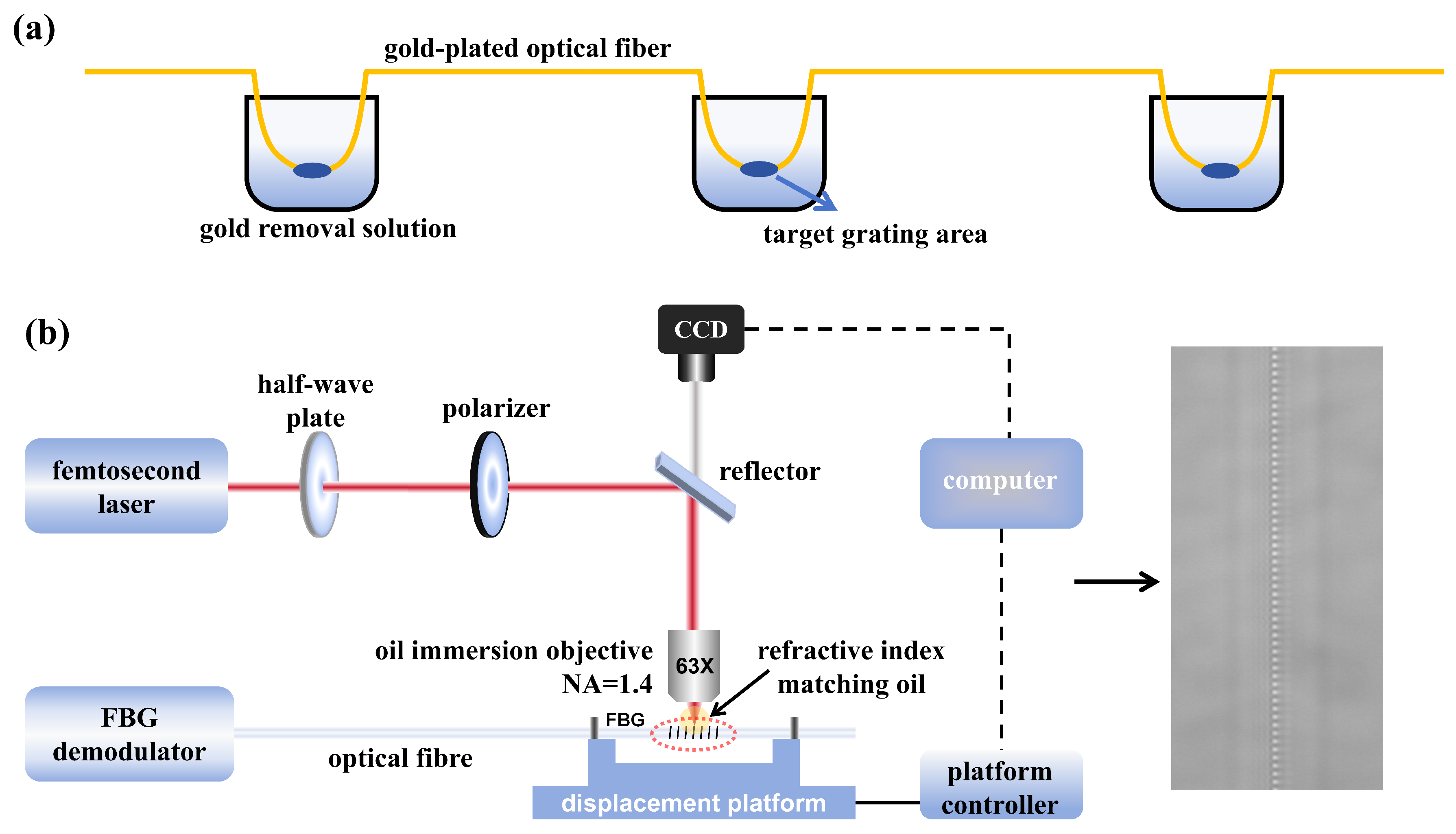
FBGs were fabricated via femtosecond laser direct writing technology. To allow laser penetration into the fiber core, the opaque gold coating was removed using a non-destructive chemical etching process as is shown in Figure 1a. Unlike mechanical stripping, which often induces microcracks and surface defects that compromise fiber integrity and high-temperature stability, chemical stripping ensures a pristine surface for precise grating inscription and reliable sensing performance; the length of the fiber optic section from which the gold plating was removed is 1 cm.
To prepare the sensing region, the gold coating on the optical fiber was removed via a controlled chemical etching process using an iodine–potassium iodide ( I 2 / K I ) solution. Specifically, 100 mL of deionized water was first measured with a graduated cylinder and transferred into a beaker, followed by the addition of 10 g of potassium iodide ( K I ), which was completely dissolved within approximately 30–40 s under manual stirring with a glass rod. Subsequently, 2.5 g of elemental iodine ( I 2 ) was introduced into the solution and magnetically stirred for about 10 min to obtain a homogeneous dark-brown etchant. The prepared solution was stored in an amber glass bottle to prevent photodegradation, and the etching mechanism was consistent with that reported in [21]. The gold-coated fiber was then immersed in the etchant until the metallic luster disappeared completely, indicating the effective removal of the gold layer. This process ensures efficient stripping of the gold cladding while preserving the structural integrity and surface roughness of the fiber substrate, which is critical for subsequent sensing applications. Finally, the fiber was thoroughly rinsed with deionized water and ethanol to remove any residual chemical species.
The femtosecond laser direct writing setup is shown in Figure 1b. The ultrafast laser beam is guided through a harmonic generator, motorized attenuator, and polarization rotator, and then focused onto a fiber mounted on a three-axis translation stage. By precisely controlling the beam path, high-temperature-resistant fiber Bragg gratings are inscribed point by point. Multiple gratings are serially written along a single gold-coated fiber, enabling multi-point temperature sensing within a single device. The parameters described in this paper for writing FBGs are as follows: pulse energy 7.5 μJ, average power 1.5 mW, pulse duration 200–250 fs, repetition rate 200 Hz, and scanning speed 0.2164 mm/s.

2.2. Annealing for Performance Enhancement of Gold-Coated FBGs at High Temperatures

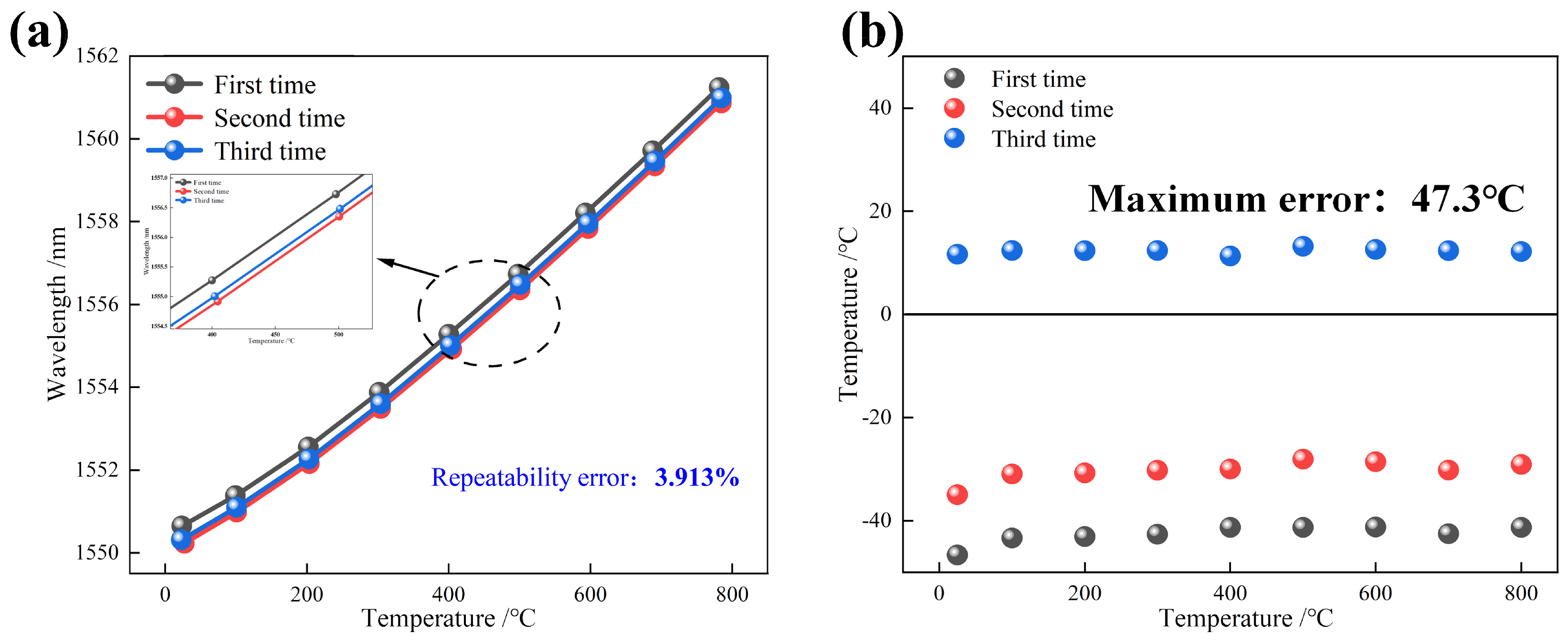
For ultra-high-temperature sensing above 800 °C, the thermal stability of the fiber coating fundamentally limits sensor performance. Conventional UV-cured coatings degrade rapidly under thermal and thermo-oxidative conditions, whereas gold-coated fibers, capable of withstanding temperatures exceeding 800 °C, remain the only viable option for FBG fabrication in this regime. However, femtosecond laser-inscribed FBGs in gold-coated fibers exhibit poor measurement accuracy in the initial (as-fabricated) state. As shown in Figure 2, three repeated high-temperature tests yield a repeatability error of 3.913% (Figure 2a) and a maximum deviation of 47.3 °C (Figure 2b) relative to thermocouple measurements, indicating insufficient sensing reliability. Therefore, a post-inscription annealing process is essential to enhance the thermal stability and measurement accuracy of the gratings, motivating the following study on annealing optimization.
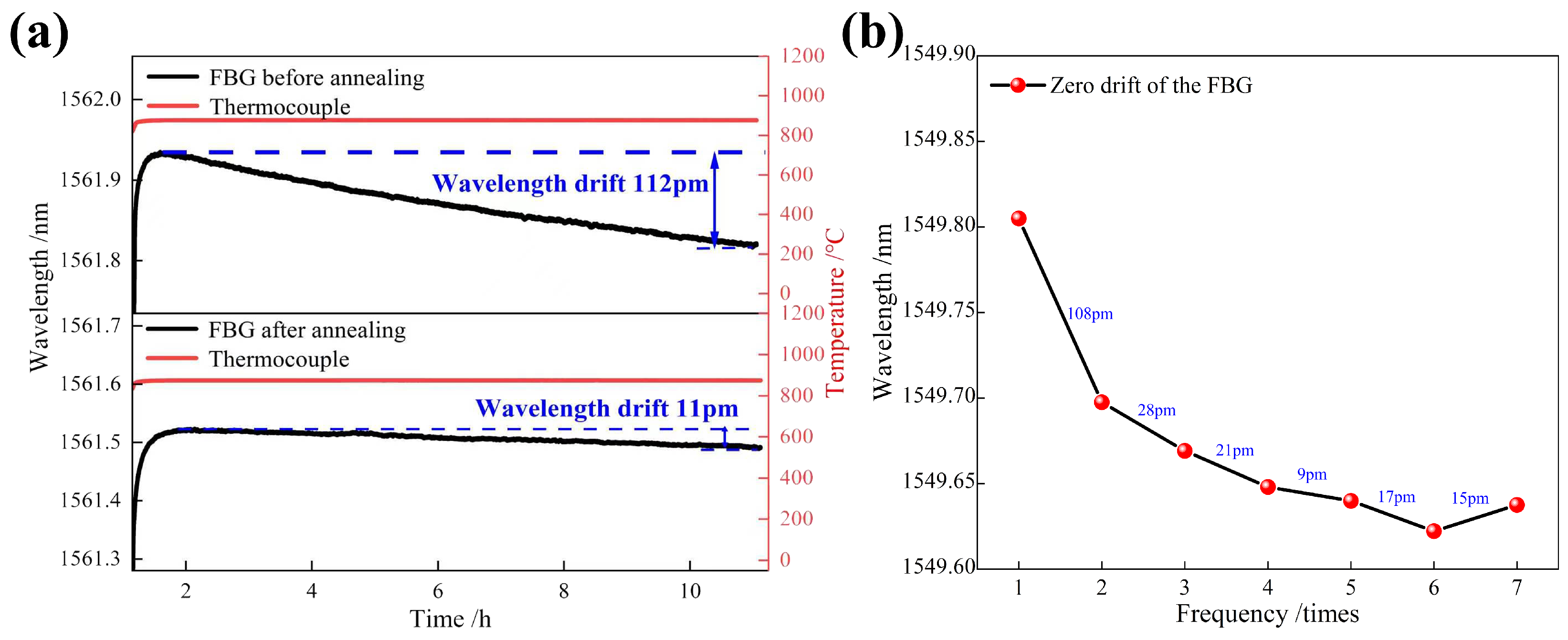
Residual stress introduced during fiber drawing and femtosecond laser inscription is a primary factor responsible for the poor high-temperature performance of gold-coated FBGs; therefore, a post-fabrication annealing process is essential to ensure long-term stability. In this work, the gratings were annealed at 850 °C for 10 h per cycle with furnace cooling, and the process was repeated for five cycles while the Bragg wavelength was monitored in situ. As shown in Figure 3a, the maximum wavelength drift is significantly reduced from 112 pm to 11 pm after annealing. Meanwhile, the zero-point drift (Figure 3b) exhibits successive blue shifts of 108 pm, 28 pm, 21 pm, 9 pm, and 17 pm after each annealing cycle, respectively, and gradually stabilizes after a cumulative annealing duration of 30 h. These results demonstrate that annealing effectively relieves residual stress, suppresses wavelength drift, and markedly enhances the reliability and thermal stability of the FBG under high-temperature conditions.
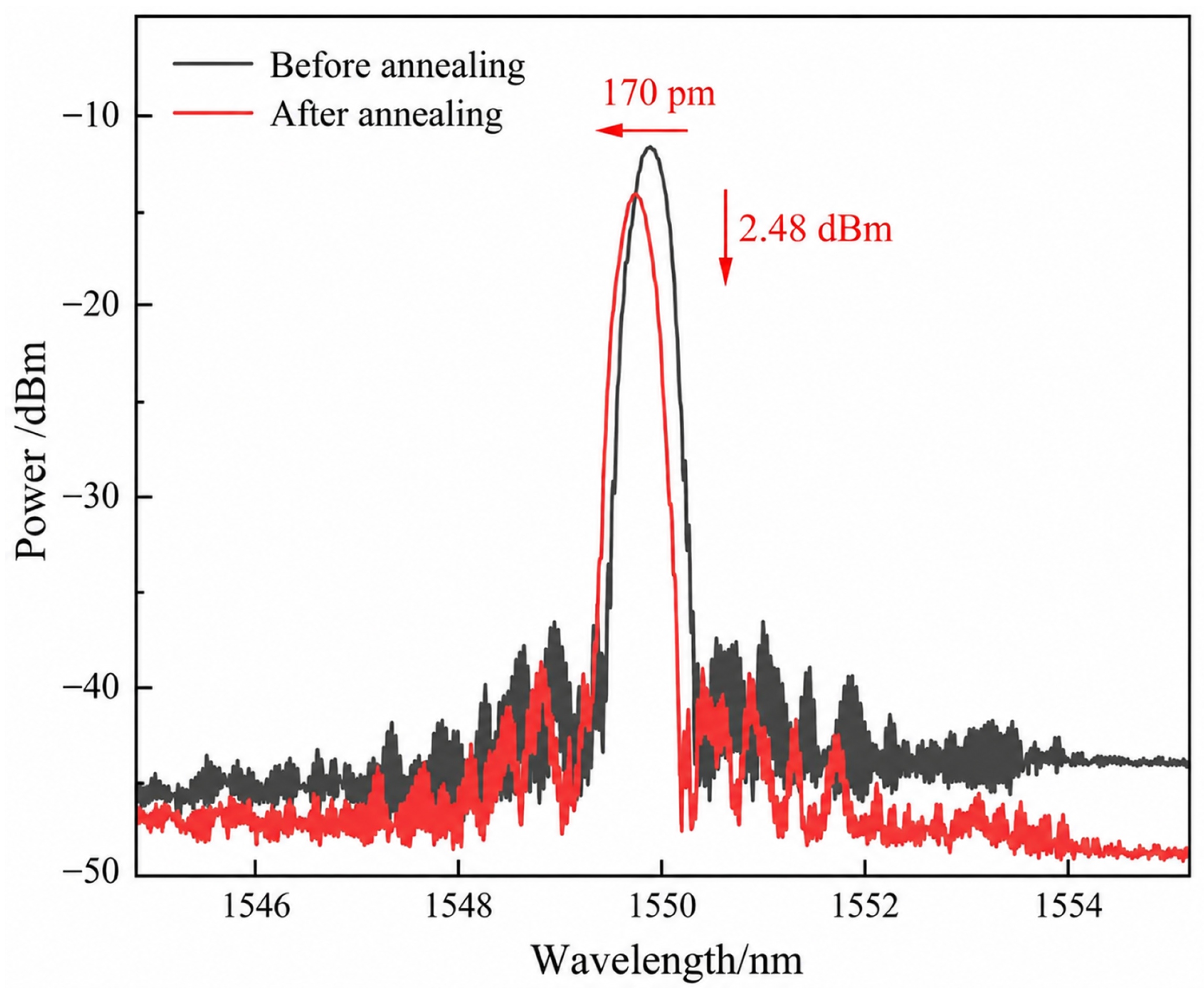
The spectral diagrams of the FBG before and after annealing are shown in Figure 4. As can be seen, after high-temperature annealing, the center wavelength of the FBG shifted 170 nm toward the shorter wavelength range, while the reflection intensity decreased by 2.48 dBm. However, the overall spectrum did not exhibit any distortion, and this does not affect the normal operation of the FBG.
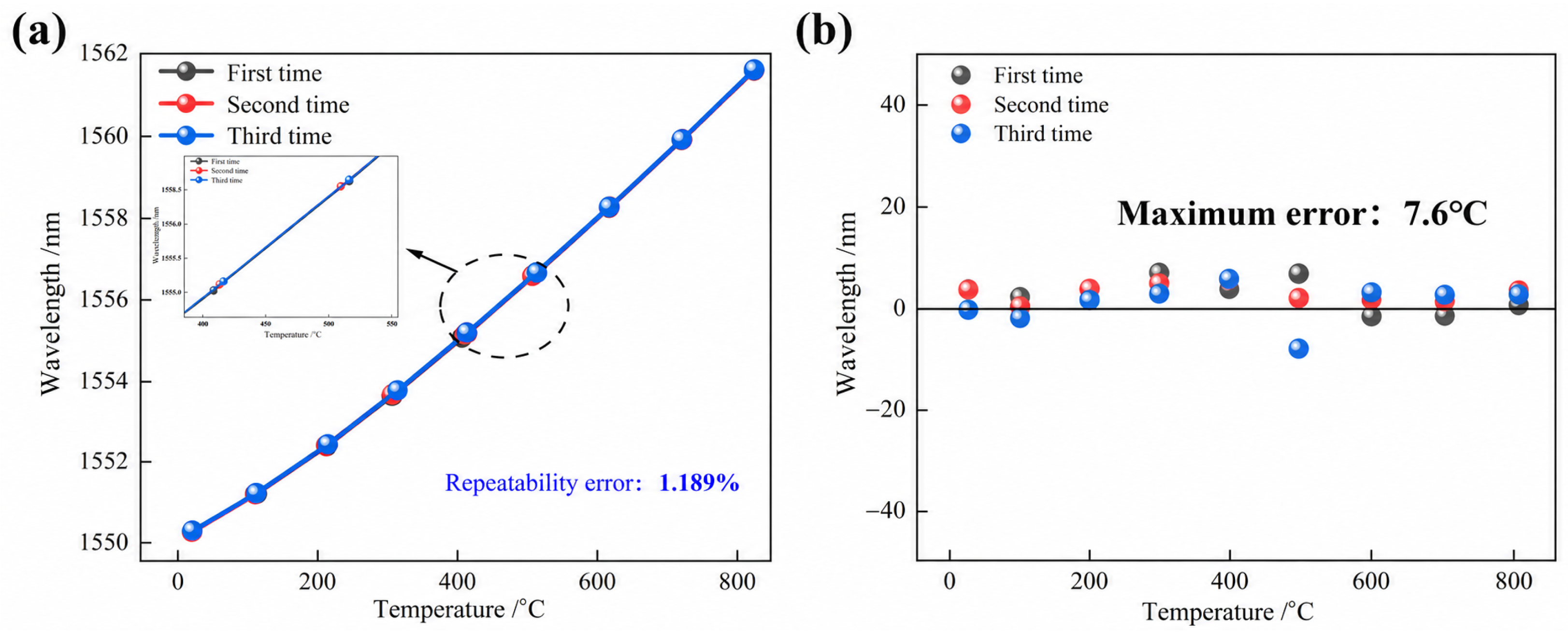
To further evaluate the improvement in sensing performance after annealing, three repeated high-temperature measurements were conducted, as shown in Figure 5. The temperature–wavelength responses in Figure 5a exhibit a repeatability error of 1.189%, indicating a significant enhancement compared with the as-inscribed state. In addition, Figure 5b presents the deviation between the FBG measurements and the thermocouple reference at different temperatures, with the maximum error reduced to 7.6 °C. These results demonstrate that the annealed FBG achieves markedly improved repeatability and measurement accuracy. Consequently, annealing effectively enhances the temperature response characteristics and ensures reliable long-term operation under high-temperature conditions.
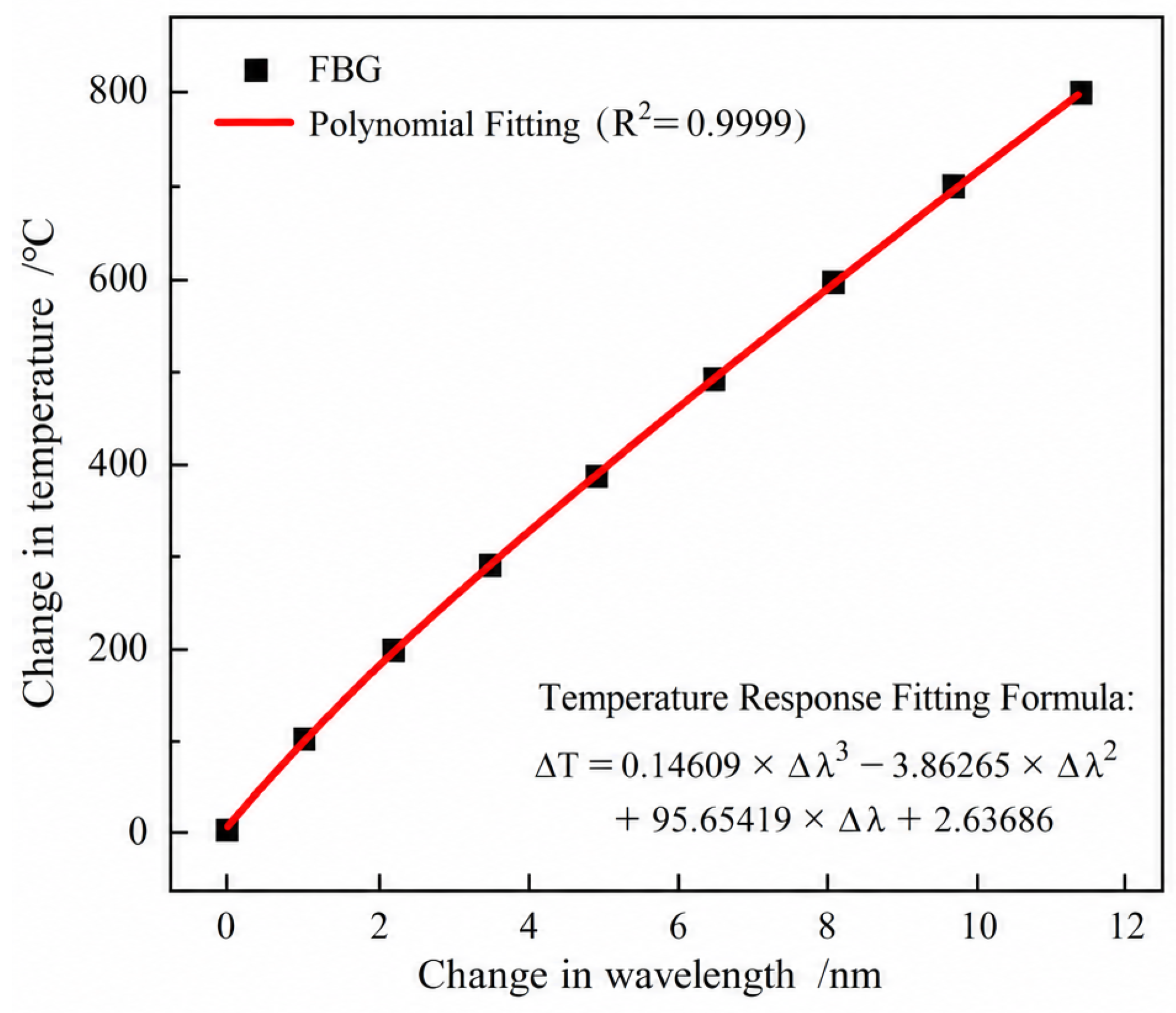
Thanks to the annealing pretreatment, the high-temperature measurement accuracy and response consistency of both single and quasi-distributed FBGs are effectively ensured. Although the initial Bragg wavelength at room temperature (25 °C) varies from grating to grating, the annealing process substantially stabilizes their thermal response behavior, so that the wavelength-shift characteristics with temperature become highly consistent across all FBGs. Therefore, a single universal temperature-fitting model can be established using a cubic polynomial, which is applicable to all gratings without the need for individual calibration. As shown in Figure 6, the relationship between wavelength shift and temperature variation can be expressed as
Δ T = 0.14609 Δ λ 3 3.86265 Δ λ 2 + 95.65419 Δ λ + 2.63686 ,
where Δ T = T T 0 and Δ λ = λ λ 0 . Consequently, for an FBG with arbitrary initial Bragg wavelength λ 0 and initial temperature T 0 , the temperature can be written as
T T 0 = 0.14609 ( λ λ 0 ) 3 3.86265 ( λ λ 0 ) 2 + 95.65419 ( λ λ 0 ) + 2.63686 .
By expanding the above expression, the explicit temperature–wavelength relation is obtained as
T = A λ 3 + B λ 2 + C λ + D ,
where A = 0.14609 , B = 0.43827 λ 0 + 3.86265 , C = 0.43827 λ 0 2 7.72530 λ 0 + 95.65419 , and D = T 0 0.14609 λ 0 3 + 3.86265 λ 0 2 95.65419 λ 0 + 2.63686 .
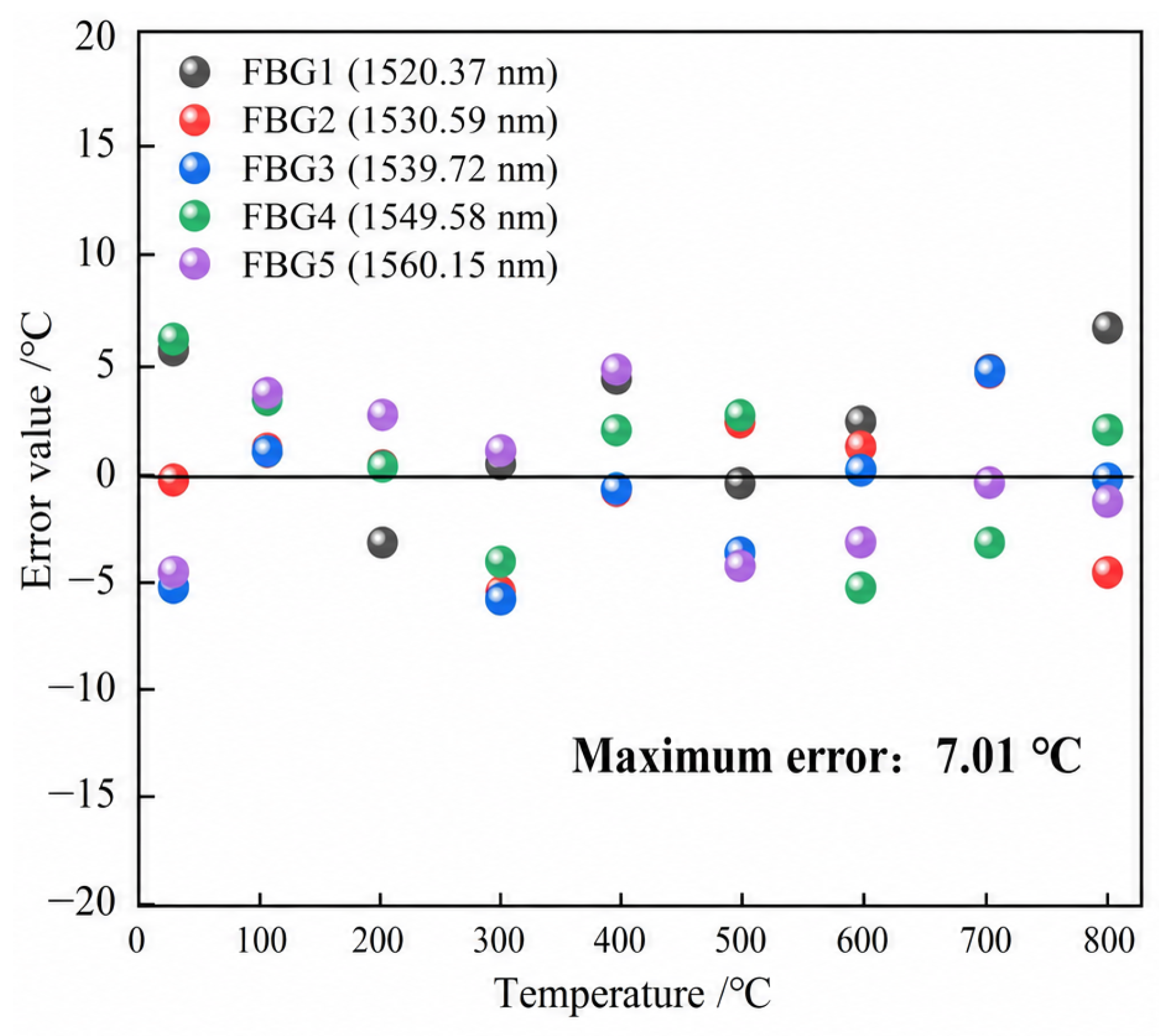
This formulation provides a universal calibration model for FBGs with different initial Bragg wavelengths, thereby eliminating the need for individual temperature calibration. The resulting fitting equation can therefore be used as a unified temperature calibration model for the sensor. In subsequent measurements, FBGs with different initial Bragg wavelengths do not require separate recalibration; instead, the real-time temperature can be directly determined from the measured wavelength shift using this model. Figure 7 presents the fitting errors of FBGs with different initial Bragg wavelengths obtained from high-temperature tests over the range from room temperature to 800 °C, with a maximum error of 7.01 °C. Figure 7 shows the fitting errors obtained for FBGs with different initial Bragg wavelengths during high-temperature testing from room temperature to 800 °C, covering the wavelength range of 1520 nm to 1560 nm, with a maximum error of 7.01 °C.
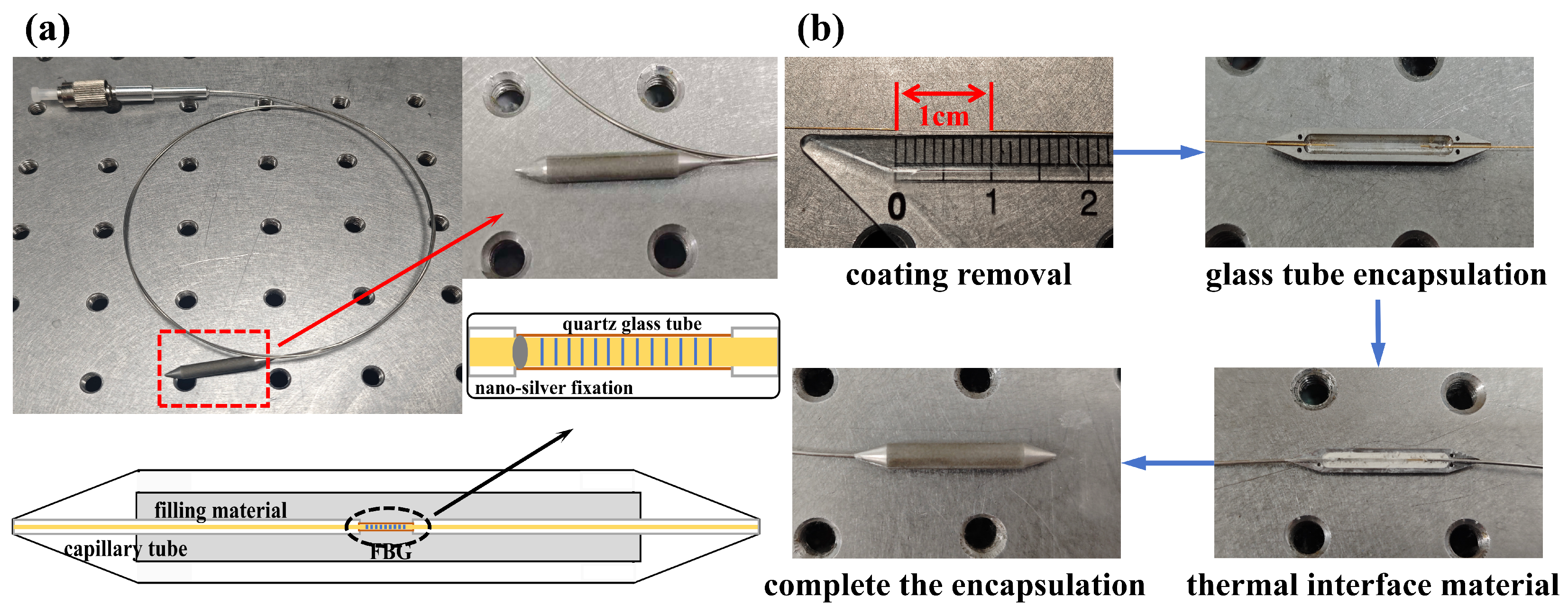
Benefiting from the annealing pretreatment of the gold-coated FBGs, which ensures their high-temperature stability and reliability, the gratings were further packaged to form a robust single-point sensor. The packaging structure and physical configuration are illustrated in Figure 8. The outer housing is entirely fabricated from the high-temperature alloy GH3128, with an overall length of approximately 30 mm and a diameter of about 5 mm, providing effective protection for the internal FBG. The FBG is positioned at the center of the package and enclosed within a quartz capillary tube with an inner diameter of 170 μm, which effectively isolates external strain disturbances. One end of the quartz tube is bonded to the gold-coated optical fiber using nanosilver sintering technology, thereby reducing temperature measurement errors induced by thermal stress. The interior of the package is filled with a thermally conductive material (ALN powder) to further reduce the thermal response time. The remaining portion of the optical fiber is fully encapsulated within a stainless steel capillary tube, enhancing the overall mechanical strength of the structure. This packaging strategy avoids the creep and aging issues associated with conventional adhesive bonding at high temperatures.

3. High-Temperature Performance of Annealed Gold-Coated FBG Sensors

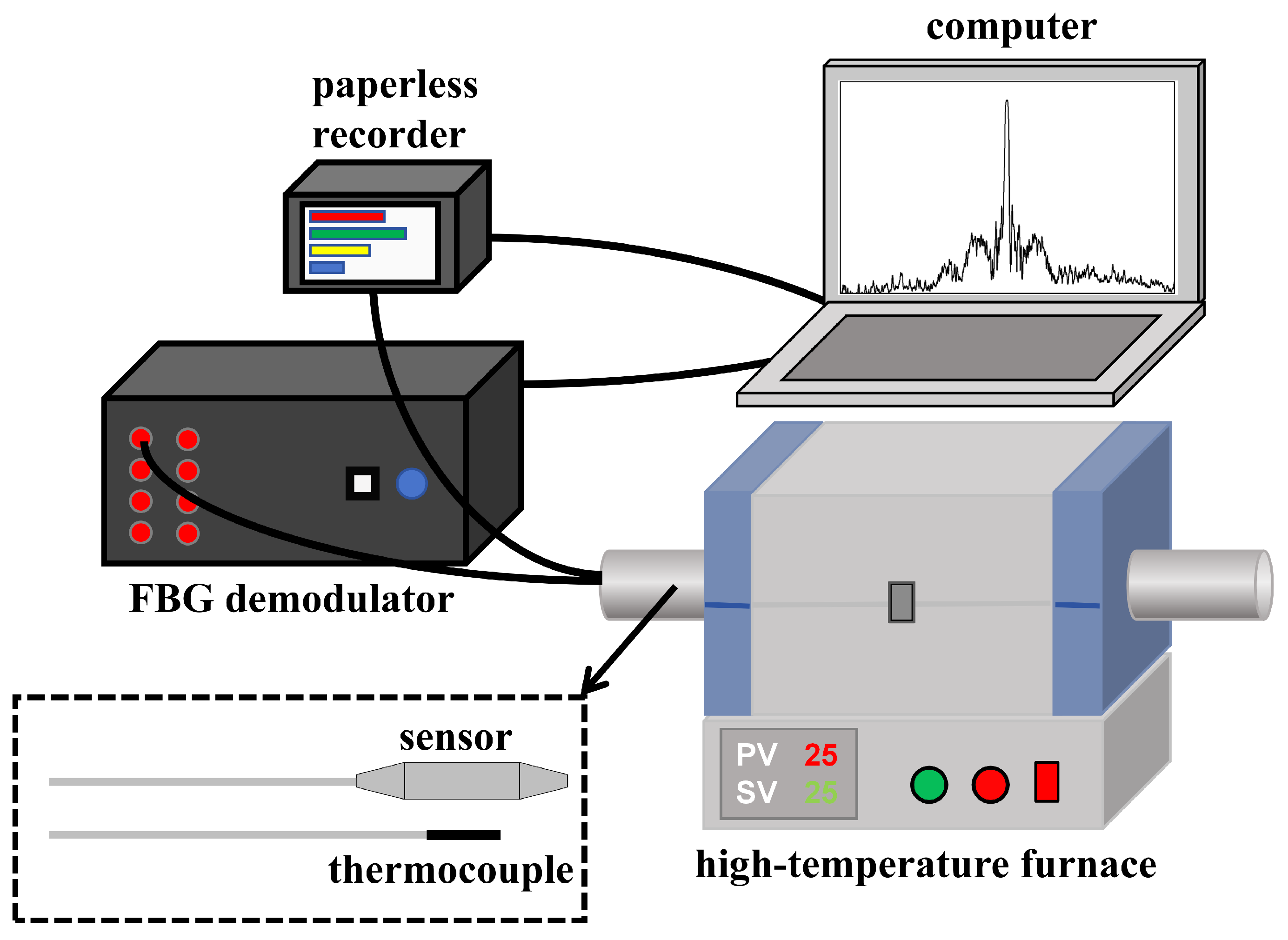
High-temperature tests were conducted to evaluate the sensing performance of the annealed gold-coated FBG sensor. The sensor was placed in a tube furnace without external strain, as shown in Figure 9. A high-temperature furnace (GSL-1200X, Hefei Kejing Materials Technology Co., Ltd., Hefei, China) was used, with a thermocouple positioned beside the FBG as a reference. The Bragg wavelength was monitored in real time using an SM125 FBG interrogator (Micron Optics, Atlanta, GA, USA).
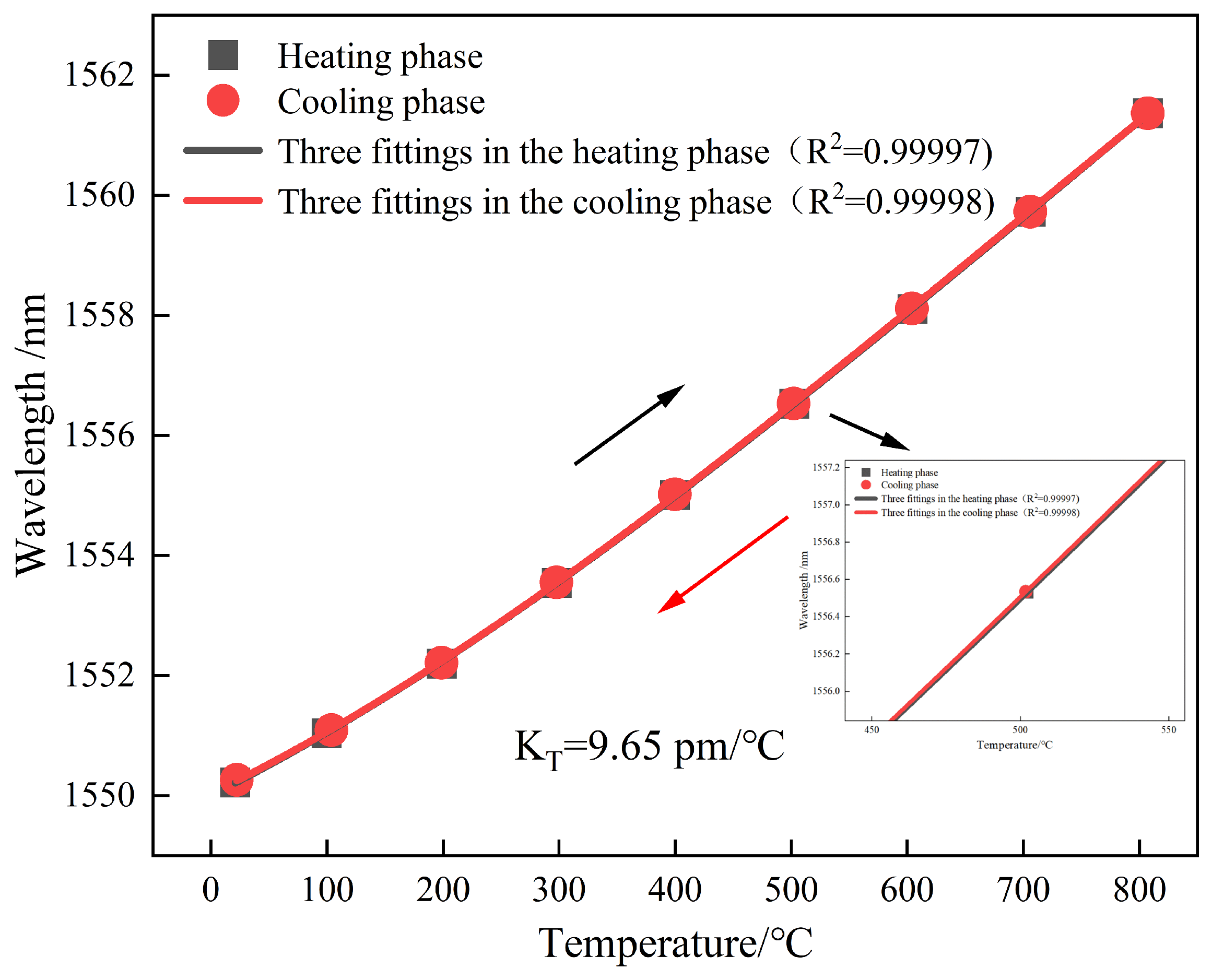
Figure 10 shows the heating and cooling response curves of the sensor, which reflect its hysteretic behavior during temperature cycling. Hysteresis error is defined as the maximum difference between the output values measured during the heating and cooling processes at the same input temperature, normalized by the full-scale output, and is expressed as
γ H = ± Δ H max Y FS × 100 % .
As shown in Figure 10, the hysteresis error of the sensor is 0.45%, indicating good consistency between the heating and cooling responses.
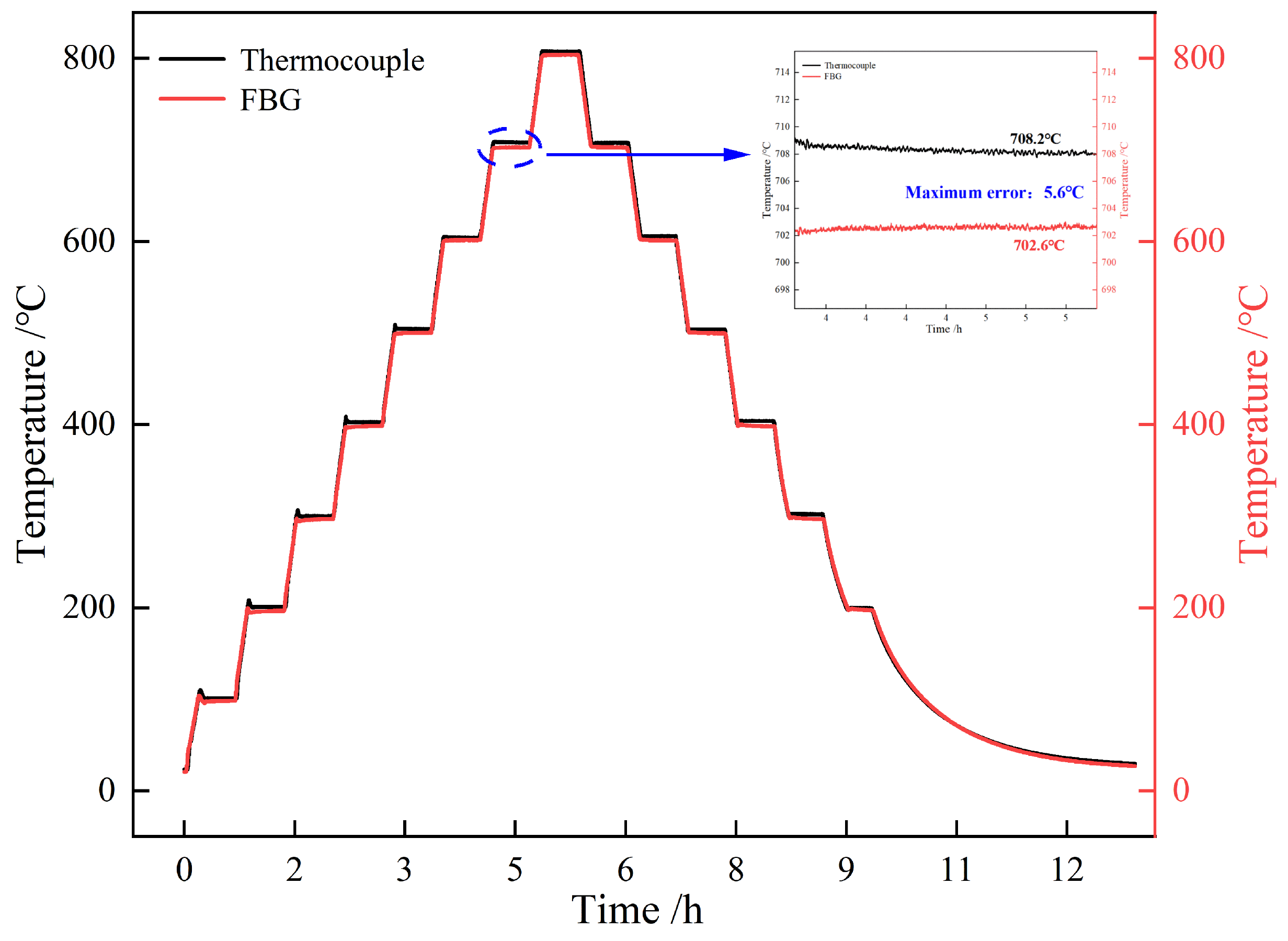
To evaluate the measurement accuracy of the sensor, accuracy tests were carried out over the temperature range from room temperature to 800 °C, as shown in Figure 11. The FBG sensor and a thermocouple were placed at the same position inside the furnace, with the thermocouple output serving as the reference temperature. The wavelength measured by the SM125 interrogator was converted into temperature using the calibrated wavelength–temperature relation, and the measurement error was then determined by comparing the FBG-derived temperature with the corresponding thermocouple reading. The error is defined as
δ = T t T FS × 100 % ,
where T is the temperature obtained from the sensor output, t is the reference temperature indicated by the thermocouple, and T FS is the full-scale sensor temperature range. As shown in Figure 11, the maximum measurement error within the range from room temperature to 800 °C is 5.6 °C, corresponding to an accuracy of 0.72% F.S.

4. Thermo-Mechanical Stability of a Packaged Annealed Gold-Coated FBG Sensor

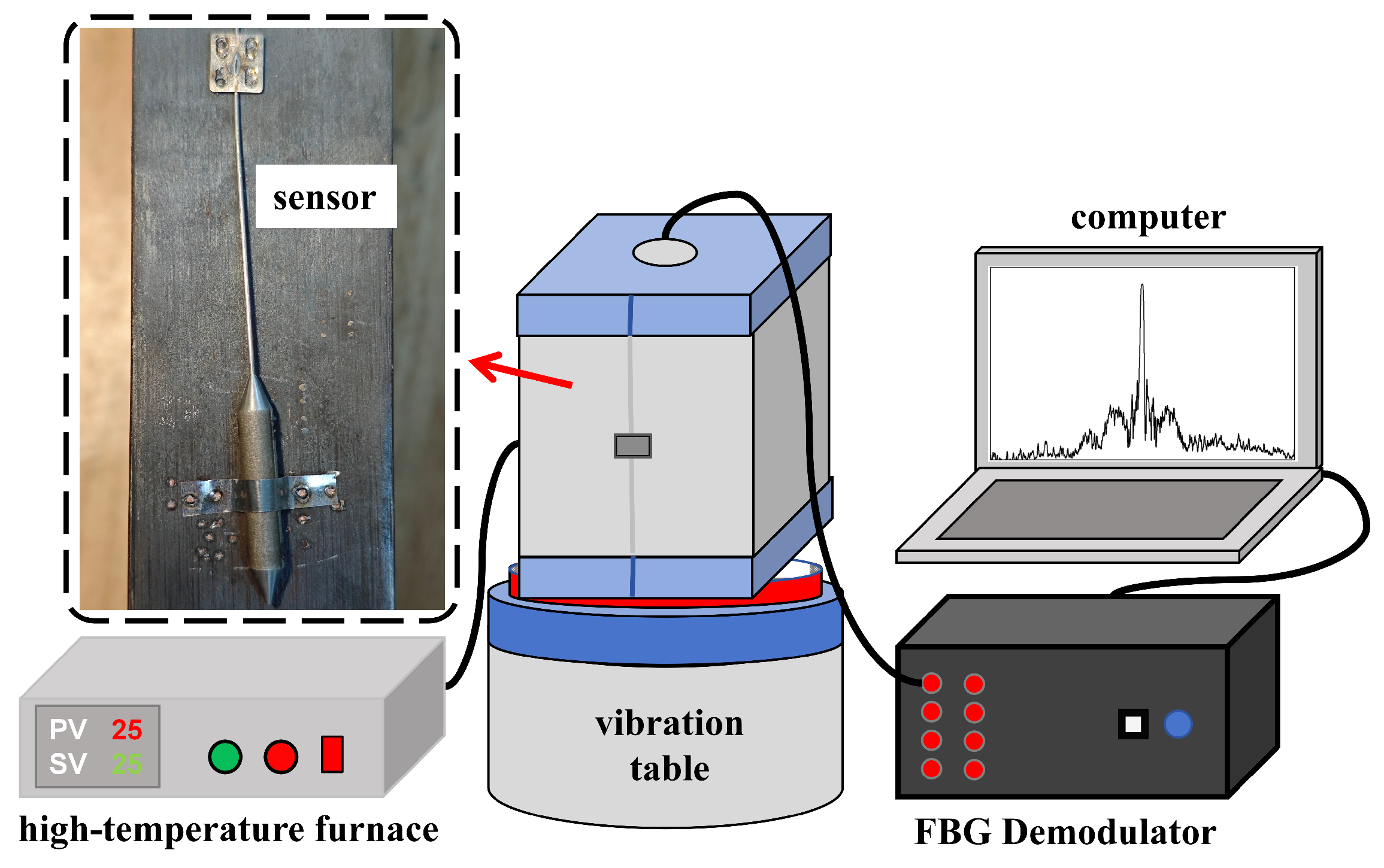
To meet the requirements of ultra-high temperature and strong vibration in extreme environments, the proposed sensor must exhibit both thermal resistance and vibration robustness. To evaluate its environmental adaptability and structural reliability, vibration and thermo-vibration tests were conducted, with performance assessed by monitoring signal integrity before and after testing. The sensor was welded on top of a test adapter for these experiments, as illustrated in Figure 12.
To ensure realistic evaluation under vibration conditions, the random vibration test was conducted according to the conditions listed in Table 1.
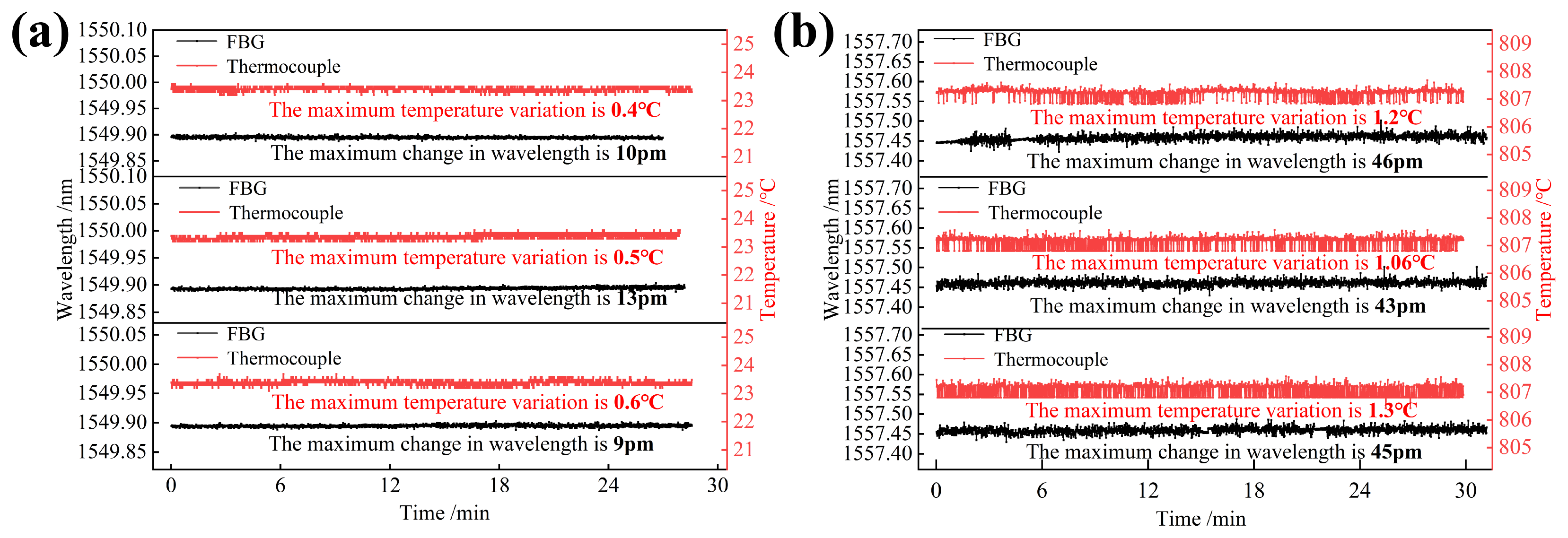
Figure 13a shows the temporal evolution of the Bragg wavelength during the vibration test. The results indicate that the spectrum remained stable throughout the experiment, with a maximum wavelength fluctuation of 13 pm. This demonstrates that the proposed sensor can operate reliably under vibrational loading and exhibits good vibration resistance. Figure 13b shows the temporal evolution of the Bragg wavelength during the thermo-vibration test. The results indicate that the maximum wavelength fluctuation remains within 46 pm throughout the experiment, which corresponds to a limited equivalent temperature variation according to the calibrated temperature sensitivity. This small fluctuation range demonstrates that the sensor output is only minimally affected by mechanical perturbations under high-temperature conditions. Therefore, the sensor maintains stable optical response characteristics under combined thermal and vibrational loading, confirming its excellent stability and adaptability in harsh thermo-mechanical environments.

5. Conclusions

In this work, a fiber Bragg grating (FBG) temperature sensor for extreme environments is proposed, featuring gold-coated fiber inscription and an all-metal packaging structure. The packaged sensor was systematically evaluated in terms of temperature repeatability, measurement accuracy, and vibration/thermo-vibration performance. The results show that the proposed packaging effectively overcomes the poor mechanical strength of gold-coated FBGs after inscription and the limitations of conventional packaging under harsh conditions.
A universal temperature calibration model applicable to FBGs with different initial Bragg wavelengths is established, significantly reducing calibration workload and cost. High-temperature annealing is demonstrated to effectively relieve residual stress and suppress zero-point drift, improving the repeatability error from 3.913% to 1.189% and enabling stable sensing at temperatures up to 800 °C. Over the range of 20–800 °C, the sensor achieves an accuracy of 0.72% F.S., an average sensitivity from room temperature to 800 ℃ of 9.65 pm/°C, and a linear correlation coefficient of 0.9997, indicating high measurement precision and stability.
Furthermore, the sensor maintains a stable optical response under combined high-temperature and vibration conditions. These results confirm that high-temperature annealing of gold-coated FBGs is an effective approach to enhancing temperature measurement accuracy, enabling precise sensing in extreme high-temperature environments. The proposed sensor, with its mature fabrication process and compact structure, provides a reliable solution for temperature monitoring in harsh environments.

Author Contributions

Conceptualization, G.A.; methodology, Y.T.; validation, Z.Z.; writing—review and editing, P.J. All authors have read and agreed to the published version of the manuscript.

Funding

This research received no external funding.

Data Availability Statement

The original contributions presented in this study are included in the article. Further inquiries can be directed to the corresponding author.

Conflicts of Interest

The authors declare no conflicts of interest.

References

  1. Childs, P.R.N.; Greenwood, J.R.; Long, C.A. Review of temperature measurement. Rev. Sci. Instrum. 2000, 71, 2959–2978. [Google Scholar] [CrossRef]
  2. Shang, Y.; Yang, H.; Feng, Y.; Zhang, C.; Pei, Y.; Gong, S. Research progress of smart thermal barrier coatings based on phosphorescence temperature measurement technology. Acta Aeronaut. Astronaut. Sin. 2024, 45, 029341. [Google Scholar]
  3. Guo, K.; Lu, Y.; Liu, Z. High-temperature thin-film thermocouple for aero-engines. PLoS ONE 2025, 20, e0329462. [Google Scholar] [CrossRef] [PubMed]
  4. Tougas, I.M.; Amani, M.; Gregory, O.J. Metallic and ceramic thin film thermocouples for gas turbine engines. Sensors 2013, 13, 15324–15347. [Google Scholar] [CrossRef] [PubMed]
  5. Pearce, J.; Rusby, R.; Yamazawa, K.; Rudtsch, S.; Iacomini, L.; Lopardo, G.; White, D.R.; Tew, W.L. Guide on Secondary Thermometry: Industrial Platinum Resistance Thermometers; International Bureau of Weights and Measures: Sèvres, France, 2022. [Google Scholar]
  6. Gam, K.; Yang, I.; Kim, Y.G. Thermal hysteresis in thin-film platinum resistance thermometers. Int. J. Thermophys. 2011, 32, 2388–2396. [Google Scholar] [CrossRef]
  7. Li, Y.; Li, Z.-M. The research of temperature indicating paints and its application in aero-engine temperature measurement. Procedia Eng. 2015, 99, 1152–1157. [Google Scholar] [CrossRef]
  8. Kitagawa, A.; Welsh, C.; Mackilligin, H.; Licence, P. Diffuse Reflection Infrared Fourier Transform Spectroscopy and Partial Least Squares Regression Analysis for Temperature Prediction of Irreversible Thermochromic Paints. Appl. Spectrosc. 2022, 76, 531–540. [Google Scholar] [CrossRef] [PubMed]
  9. Volinsky, A.A.; Nikolaenko, V.; Morozov, V.; Timoshenko, V. Irradiated single crystals for high temperature measurements in space applications. MRS Online Proc. Libr. (OPL) 2004, 851, NN1–NN4. [Google Scholar] [CrossRef]
  10. Ruan, Y.F.; Wang, P.F.; Huang, L.; Zhu, W. High-temperature sensor based on neutron-irradiated 6H-SiC. Key Eng. Mater. 2012, 495, 335–338. [Google Scholar] [CrossRef]
  11. Pradere, C.; Ryu, M.; Sommier, A.; Romano, M.; Kusiak, A.; Battaglia, J.; Batsale, J.; Morikawa, J. Non-contact temperature field measurement of solids by infrared multispectral thermotransmittance. J. Appl. Phys. 2017, 121, 085102. [Google Scholar] [CrossRef]
  12. Alhussein, A.N.; Qaid, M.R.; Agliullin, T.; Valeev, B.; Morozov, O.; Sakhabutdinov, A. Fiber Bragg grating sensors: Design, applications, and comparison with other sensing technologies. Sensors 2025, 25, 2289. [Google Scholar] [CrossRef] [PubMed]
  13. Rovera, A.; Tancau, A.; Boetti, N.; Dalla Vedova, M.D.; Maggiore, P.; Janner, D. Fiber optic sensors for harsh and high radiation environments in aerospace applications. Sensors 2023, 23, 2512. [Google Scholar] [CrossRef] [PubMed]
  14. Xu, B.; He, J.; Du, B.; Xiao, X.; Xu, X.; Fu, C.; He, J.; Liao, C.; Wang, Y. Femtosecond laser point-by-point inscription of an ultra-weak fiber Bragg grating array for distributed high-temperature sensing. Opt. Express 2021, 29, 32615–32626. [Google Scholar] [CrossRef] [PubMed]
  15. Grobnic, D.; Hnatovsky, C.; Dedyulin, S.; Walker, R.B.; Mihailov, S.J. Fiber Bragg Grating Wavelength Drift in Long-Term High Temperature Annealing. Sensors 2021, 21, 1454. [Google Scholar] [CrossRef] [PubMed]
  16. Guillaume, L.; Romain, C.; Nicolas, R.; Rudy, D.; Stéphane, R. Temperature Resistant Fiber Bragg Gratings for On-Line and Structural Health Monitoring of the Next-Generation of Nuclear Reactors. Sensors 2018, 18, 1791. [Google Scholar]
  17. Esposito, F.; Campopiano, S.; Iadicicco, A. Miniaturized Strain-Free Fiber Bragg Grating Temperature Sensors. IEEE Sens. J. 2022, 22, 16898–16903. [Google Scholar] [CrossRef]
  18. Chen, Z.; He, J.; Xu, X.; He, J.; Xu, B.; Du, B.; Liao, C.; Wang, Y. High-temperature sensor array based on fiber Bragg gratings fabricated by femtosecond laser point-by-point method. Acta Opt. Sin. 2021, 41, 1306002. [Google Scholar]
  19. Wang, D. Review of femtosecond laser fabricated optical fiber high temperature sensors [Invited]. Chin. Opt. Lett. 2021, 19, 091204. [Google Scholar] [CrossRef]
  20. Mihailov, S.J.; Grobnic, D.; Hnatovsky, C.; Walker, R.B.; Lu, P.; Coulas, D.; Ding, H. Extreme environment sensing using femtosecond laser-inscribed fiber Bragg gratings. Sensors 2017, 17, 2909. [Google Scholar] [CrossRef] [PubMed]
  21. Zhang, H.; Jeffery, C.A.; Jeffrey, M.I. Ion exchange recovery of gold from iodine–iodide solutions. Hydrometallurgy 2012, 125, 69–75. [Google Scholar] [CrossRef]
Figure 1. Fabrication of gold-coated fiber Bragg gratings: (a) Chemical removal of the metallic coating layer from the gold-coated fiber. (b) Femtosecond laser direct writing of the FBG at the position where the metallic coating layer was removed.
Photonics 13 00509 g001
Figure 2. Temperature response performance of the FBG. (a) Temperature–wavelength curve of the FBG and (b) difference between the FBG and thermocouple at different temperatures.
Photonics 13 00509 g002
Figure 3. Experimental results on FBG stability and zero-point drift before and after annealing: (a) wavelength drift of the FBG over 10 h before and after annealing; (b) zero-point drift of the FBG during annealing.
Photonics 13 00509 g003
Figure 4. Spectra of the FBG before and after annealing.
Photonics 13 00509 g004
Figure 5. Temperature response performance of the FBG after annealing. (a) Temperature–wavelength curve of the FBG and (b) difference between the FBG and thermocouple at different temperatures.
Photonics 13 00509 g005
Figure 6. Fit curve of temperature–wavelength change.
Photonics 13 00509 g006
Figure 7. Error of the universal fitting formula for FBGs with different central wavelengths.
Photonics 13 00509 g007
Figure 8. Packaging of the sensor. (a) Schematic and photograph of a temperature sensor and (b) flowchart for filling a quartz tube with powder for a temperature sensor.
Photonics 13 00509 g008
Figure 9. Schematic diagram of sensor high-temperature experiment.
Photonics 13 00509 g009
Figure 10. Heating and cooling response curves of the sensor with hysteresis characteristics.
Photonics 13 00509 g010
Figure 11. Comparison of temperature calculated by sensor and temperature measured by thermocouple.
Photonics 13 00509 g011
Figure 12. Schematic diagram of sensor vibration experiment.
Photonics 13 00509 g012
Figure 13. Sensor environment experimental results. (a) Normal-temperature environment and (b) high-temperature environment.
Photonics 13 00509 g013
Table 1. Vibration experimental conditions.
ExperimentalDirectionTotal RMSFrequency RangePSDTime
Nature(g)(Hz)(g2/Hz)(min)
Sensor TestX/Y/Z1910–1003 dB/oct30
100–10000.5
1000–2000−6 dB/oct
Disclaimer/Publisher’s Note: The statements, opinions and data contained in all publications are solely those of the individual author(s) and contributor(s) and not of MDPI and/or the editor(s). MDPI and/or the editor(s) disclaim responsibility for any injury to people or property resulting from any ideas, methods, instructions or products referred to in the content.