Article

Experimental Investigation of Fracture Propagation Behavior in Staged Hydraulic Fracturing of Strongly Heterogeneous Reservoirs via Horizontal Wells

1
State Key Laboratory of Petroleum Resources and Engineering, China University of Petroleum (Beijing), Beijing 102249, China
2
Research Institute of Oil Production Technology, PetroChina Xinjiang Oilfield Company, Karamay 834000, China
3
National Key Laboratory of Oil and Gas Reservoir Geology and Development, Chengdu University of Technology, Chengdu 610059, China
*
Author to whom correspondence should be addressed.
Processes 2026, 14(9), 1462; https://doi.org/10.3390/pr14091462
Submission received: 6 February 2026 / Revised: 10 April 2026 / Accepted: 23 April 2026 / Published: 30 April 2026
(This article belongs to the Topic Petroleum and Gas Engineering, 2nd edition)

Abstract

The complex propagation behavior of hydraulic fractures (HFs) in strongly heterogeneous conglomerate reservoirs poses significant challenges for effective reservoir stimulation. In particular, the interaction between fractures and gravel-induced heterogeneity often leads to highly tortuous fracture networks and uneven stimulation efficiency. To address this issue, a series of laboratory true triaxial hydraulic fracturing experiments were conducted on artificially prepared conglomerate specimens with controlled gravel size and distribution. A quantitative evaluation index, termed the Fracture Complexity Index (FCI), was proposed to characterize the tortuosity and complexity of fracture networks by integrating multiple geological and engineering factors. The effects of cluster spacing and fracturing fluid viscosity on multi-fracture propagation behavior were systematically investigated. The results show that increasing cluster spacing enhances inter-fracture interaction and promotes fracture tortuosity, while lower fluid viscosity facilitates fracture branching but may limit effective propagation distance due to energy dissipation. To further quantify the trade-off between fracture complexity and propagation extent, a dimensionless fracture length was introduced and combined with FCI to establish a fracture morphology evaluation framework. This framework enables the classification of fracture patterns and reveals the coupling relationship between engineering parameters and fracture geometry. The findings provide new insights into the mechanisms of fracture propagation in conglomerate reservoirs and offer a quantitative basis for optimizing fracturing design, particularly in balancing fracture complexity and effective stimulation range in strongly heterogeneous formations.

1. Introduction

With the increasing demand for unconventional resources [1], the development of tight conglomerate reservoirs has accelerated significantly [2]. These reservoirs, typically formed in depression slope zones, are characterized by rapid facies changes and strong heterogeneity, posing significant challenges for hydraulic fracturing (HF) stimulation [3]. Taking the Mahu conglomerate oilfield in the Junggar Basin as an example, a three-dimensional development mode featuring multi-stage fracturing in horizontal wells and closely spaced well patterns has been established [4,5]. However, practical applications still face critical challenges, including inefficient fracture initiation, non-uniform multi-fracture propagation, limited proppant transport, and severe inter-well interference, all of which restrict the stimulated reservoir volume and accelerate production decline.
HF technology has become a key method for developing tight reservoirs by generating multiple transverse fractures perpendicular to the wellbore [6]. However, field production data indicate that more than 30% of perforation clusters contribute minimally to production, highlighting the non-uniformity of reservoir stimulation [7]. This issue is attributed to both geological heterogeneity (e.g., lithology, in situ stress, and natural fractures) and engineering parameters (e.g., stage spacing, perforation design, and fluid properties). In multi-stage HF, stress shadow effects significantly influence fracture propagation, causing fracture deflection, reduced conductivity, and even fracture arrest or coalescence [8,9]. Despite extensive theoretical studies, systematic experimental validation remains limited, especially for conglomerate reservoirs.
In strongly heterogeneous conglomerate reservoirs, HF propagation is more complex than in relatively homogeneous formations. Previous studies have shown that gravel size, content, and cementation strength are key controlling factors [10,11]. Large gravels (2–4 cm or greater) promote fracture diversion, angular gravels enhance deflection, and cementation strength controls breakdown pressure. However, these studies mainly focus on single-fracture behavior and do not fully account for multi-fracture interactions under realistic conditions.
The tortuous propagation of HFs is controlled by both geological and engineering factors. Large gravel size and high gravel content enhance fracture diversion due to mechanical contrasts between gravels and the matrix, often leading to interface propagation or deflection [12,13]. Additionally, natural fractures further increase fracture network complexity [14]. However, current evaluation methods for HF tortuosity remain limited. Laboratory-scale experiments are difficult to extrapolate to field conditions, and commonly used metrics such as fractal dimension cannot fully characterize three-dimensional fracture complexity [5,6,7,8,9,10,11,12,13,14,15,16,17,18,19,20]. More importantly, there is still a lack of quantitative models that couple geological features with engineering parameters, limiting the accurate prediction of HF propagation.
In the near-wellbore region, fracture propagation is further complicated by the coupling of perforation-induced damage and gravel-induced stress perturbations [21]. This often leads to deviations of fracture initiation direction from the maximum principal stress, yet the underlying mechanisms remain unclear. Meanwhile, key engineering parameters, such as cluster spacing and fracturing fluid viscosity, are still largely determined empirically due to the absence of quantitative relationships with fracture complexity and propagation range [22].
To address these issues, this study conducts a series of laboratory HF experiments combined with decreasing pumping rate tests on artificial conglomerate specimens. These experiments enable direct observation of fracture morphology and characterization of pressure responses under different fracture configurations. Based on the results, a coupled relationship among geological features, engineering parameters, and fracture morphology is established, providing a quantitative basis for predicting fracture behavior and optimizing HF design in strongly heterogeneous conglomerate reservoirs [23].

2. Experimental Design

2.1. Specimen Preparation

The core samples used in this study were artificially prepared concrete conglomerate specimens, on which laboratory true triaxial multi-stage HF experiments with horizontal wells were conducted to investigate multi-fracture propagation behavior. To ensure that the fracture propagation behavior of the artificial concrete conglomerate specimens was consistent with that of natural conglomerate rocks, various cement mix designs were tested. Ultimately, a mixture ratio of cement: sand: water: gravel = 2:5:1:8 was selected, as it produced rock mechanical properties similar to those of in situ conglomerate formations (the design of mechanical parameters for the artificial specimens is presented in Table 1). In order to achieve sufficient contact between the gravel and the cement matrix and ensure uniform gravel distribution, a mixture of feldspar-type and quartz-type gravels with particle sizes ranging from 0.5 cm to 5 cm was used. The gradation exhibited moderate linearity (coefficient C = 0.20). The artificial conglomerate specimens with dimensions of 300 × 300 × 300 mm3 were prepared by alternately layering gravel placement and cement pouring (as shown in Figure 1b).
It should be noted that the artificial conglomerate specimens used in this study have dimensions of 300 × 300 × 300 mm3, which are significantly smaller than those of actual subsurface conglomerate reservoirs. Therefore, inherent scale limitations are unavoidable. These limitations are mainly reflected in the following aspects: Restricted fracture propagation scale: the length, branching behavior, and interaction range of fractures are constrained by the specimen boundaries, making it difficult to fully reproduce the complexity of large-scale fracture networks observed in field reservoirs. Pronounced boundary effects: the presence of specimen boundaries may impose constraints on fracture growth or induce stress reflections, thereby influencing fracture trajectories and stress distributions. Limited representation of heterogeneity: although gravel gradation was designed to mimic heterogeneity, it cannot fully capture the structural complexity of natural conglomerates at larger spatial scales.
To address these limitations, similarity principles were employed in the experimental design to ensure the reliability and scalability of the results. Specifically: Geometric similarity: the spatial configuration of the specimen, wellbore, and perforation clusters was proportionally scaled down while maintaining geometric consistency. Mechanical similarity: the material mix design was optimized so that key mechanical properties (e.g., elastic modulus and compressive strength) of the artificial specimens approximate those of in situ rocks. Stress similarity: the true triaxial loading conditions were designed to replicate the in situ stress environment in a scaled manner. Hydro-mechanical similarity: injection parameters (e.g., flow rate and fluid viscosity) were selected based on dimensionless criteria to preserve the governing mechanisms of fracture initiation and propagation. Through the integrated application of these similarity criteria, the experiments—despite their reduced scale—are able to reliably capture the fundamental mechanisms of fracture initiation, propagation, and interaction during multi-stage hydraulic fracturing, thereby providing meaningful insights for field-scale applications.
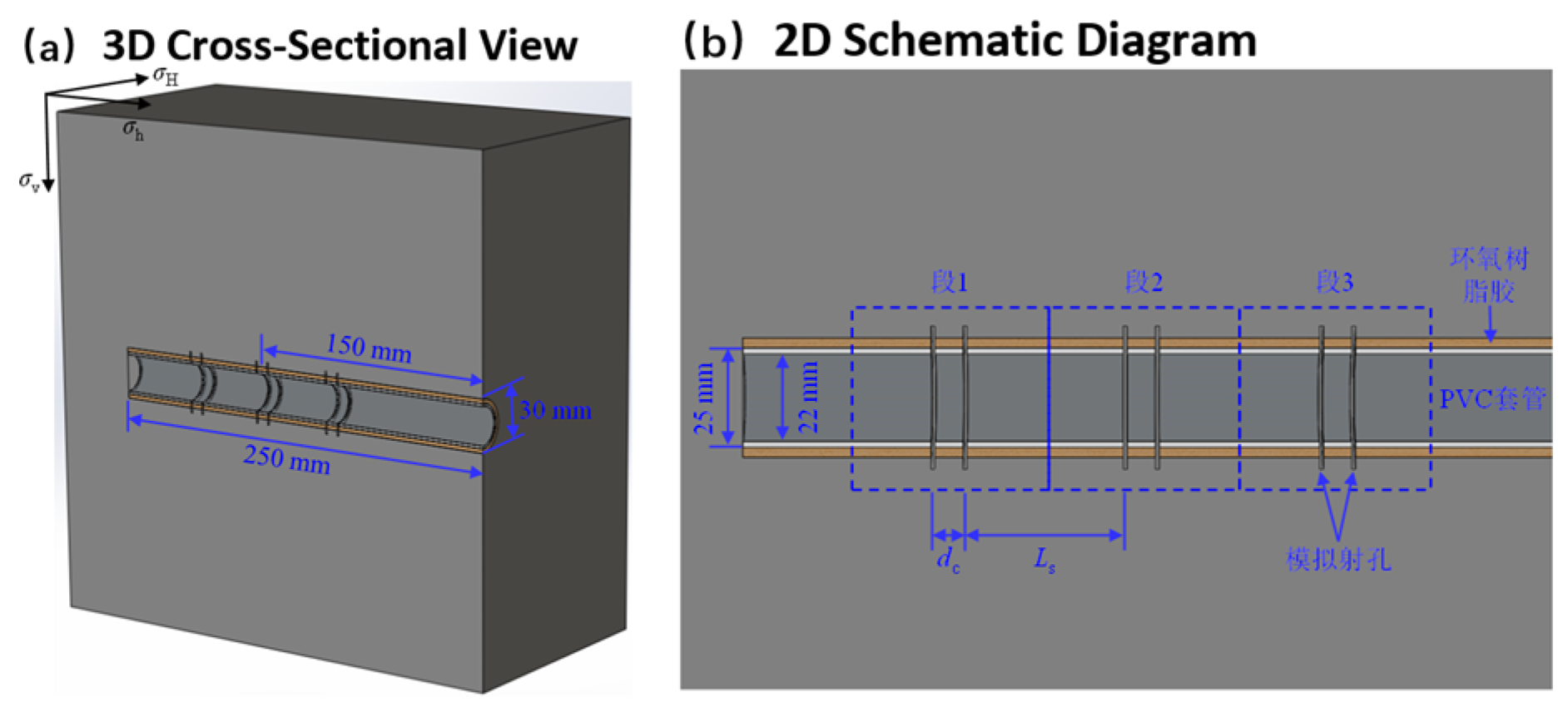
For laboratory multi-fracture propagation experiments in horizontal wells, the end faces of the artificial conglomerate specimens were polished to ensure consistency. A horizontal wellbore with an inner diameter of 30 mm and a depth of 250 mm was drilled at the center of the specimen surface. A polyvinyl chloride (PVC) casing (inner diameter 22 mm, outer diameter 25 mm) was inserted into the wellbore and bonded to the specimen using high-strength epoxy resin. To represent perforations, circular narrow grooves were cut inside the PVC casing using a 20 mm-diameter diamond saw blade. Each groove extended 3 mm into the specimen, guiding hydraulic fractures to propagate radially outward from the wellbore. Each groove was assumed to represent one perforation cluster. A three-stage fracturing configuration was adopted, with two clusters in each stage. The clusters in Stage 2 were located at a depth of 150 mm, while those in Stages 1 and 3 were symmetrically arranged relative to Stage 2.
After the cement had set, a simulated wellbore with a diameter of 27 mm and a length of 260 mm was drilled at the center of the specimen surface using a rock coring machine. A cylindrical PVC casing with an outer diameter of 22 mm and a length of 260 mm was then fixed into the simulated wellbore using epoxy resin, serving as the simulated wellbore. The surface of the casing was flush with the surface of the specimen. After the wellbore installation, the specimen was prepared for HF experiments. The perforation spacing for the completion was designed based on similarity principles using a perforation device.

2.2. Similarity Criteria and Experimental Scheme for HF Experiments

For the laboratory simulation experiments of staged HF in horizontal wells [24], the effects of different stage/cluster spacings and pumping methods on multi-fracture propagation morphology were considered. The spacing between adjacent slits within a stage was defined as the stage spacing (see Figure 2b). The design parameters for stage spacing were determined based on geometric similarity principles (see Equation (1)):
S M L M = α S F L F
In Equation (1), S represents the stage spacing (m), L is the half-length of the HF (m), and α = 0.1 is an empirical coefficient. The subscript M denotes experimental parameters, while the subscript F denotes field parameters. Equation (1) stipulates that the ratio of characteristic dimensions between the laboratory experiments and the field conditions should be equal. S denotes the cluster spacing or stage spacing (m), L is the HF half-length (m), with subscripts M and F representing experimental and field parameters, respectively. Equation (1) defines that the characteristic size ratios between experimental and field conditions must be consistent. In the Mahu conglomerate reservoir, the average HF half-length during fracturing operations is approximately 140 m [21], with typical field cluster spacings ranging from 15 m to 35 m, and a minimum observed spacing of 5 m. In the laboratory experiments, the HF half-length measured was 135 mm. Based on this, a 30 m large field cluster spacing corresponds to a 26 mm experimental cluster spacing, a 15 m moderate field cluster spacing corresponds to a 16 mm experimental cluster spacing, and a 5 m small field cluster spacing corresponds to a 6 mm experimental cluster spacing. According to the design of stage sizes along the perforated wellbore for staged HF, the cutting depths under different stage-cluster combinations were designed, as shown in Table 2. As indicated in the table, under the condition of a constant stage length, the stage spacing Ls decreases with increasing cluster spacing dc, leading to an intensified interaction effect between fractures of adjacent stages.
A limitation of this study is the scale difference between laboratory experiments and field conditions. Although geometric and mechanical similarity principles were considered, the laboratory specimens cannot fully reproduce the stress magnitude, boundary conditions, and multiscale heterogeneity of actual reservoirs.
The experiments were conducted under toughness-dominated conditions, which are more representative of near-wellbore fracture propagation, where local stress perturbations and gravel–matrix interactions control fracture behavior, as shown in Figure 3. In field-scale operations, fracture propagation may transition to viscosity-dominated regimes, particularly in far-wellbore regions. Therefore, the experimental results should be interpreted as reflecting fundamental fracture–heterogeneity interaction mechanisms rather than exact field-scale fracture geometries.
Furthermore, the heterogeneity in the laboratory specimens is simplified compared to natural reservoirs. While the gravel size and distribution were designed to approximate field conditions, the reduced spatial scale limits the representation of large-scale structural complexity. As a result, the findings of this study are most applicable to understanding local fracture behavior and providing mechanistic insights for optimizing engineering parameters, rather than direct quantitative prediction of field-scale fracture networks.
The stress state in typical blocks of the Mahu area corresponds to a normal faulting regime, characterized by σV > σH > σh, where the minimum horizontal principal stress (σh) ranges from 40.94 MPa to 78.55 MPa, the maximum horizontal principal stress (σH) ranges from 53.10 MPa to 116.76 MPa, and the horizontal stress difference (Δσ) falls within the range of 12.10 MPa to 38.21 MPa. Due to the maximum loading capacity limitations of the experimental system, the experimental stress conditions could not fully replicate the true in situ reservoir stress state. In this study, the horizontal stress difference coefficient (Kh) [25] was adopted to characterize the relative magnitude of σH and σh. Kh is calculated according to the following equation.
K h = σ H σ h σ h
Based on the actual stress state of typical blocks in the Mahu area described above, the calculated Kh ranges from 0.154 to 0.933. For the laboratory HF experiments, Kh = 1.0 was selected to represent a high horizontal stress difference. By maintaining σh = 10 MPa, a Kh value of 1.0 corresponds to σH = 20 MPa.
Due to the limitations imposed by specimen dimensions and equipment performance, the laboratory HF experiments could not completely replicate field conditions. To enhance the comparability between laboratory results and field HF operations, Detournay et al. [26] proposed the use of a characteristic time τ, which relates pumping parameters (such as pumping rate and fracturing fluid viscosity) and fracture toughness, to classify the propagation regimes of penny-shaped fractures. When the pumping time is much less than τ, HFs are in a viscosity-dominated propagation regime; when the pumping time is much greater than τ, HFs are in a toughness-dominated propagation regime; and between these two extremes lies a transitional regime. The characteristic time τ is calculated according to Equation (3):
τ = μ 5 Q 3 E 13 K 18 0.5
In Equation (3), K′ = (32/π)1/2KIC, E′ = E/(1 − v2), and μ′ = 12μ; where Q is the pumping rate (m3/s), KIC is the fracture toughness (Pa·m1/2), E is the Young’s modulus (Pa), v is the Poisson’s ratio (dimensionless), and μ is the fluid viscosity (Pa·s). In this study, KIC, E, and μ were taken as 1.3 MPa·m1/2, 35 GPa, and 5 mPa·s, respectively. Considering a laboratory pumping rate of 50 mL/min, the calculated characteristic time τ is 2.1 × 10⁻⁴ since the fluid pumping duration in the laboratory HF experiments typically exceeds 100 s, which is significantly greater than the characteristic time (2.1 × 10⁻⁴ s), the HFs in the laboratory experiments were in the toughness-dominated propagation regime.

2.3. Experimental Procedures

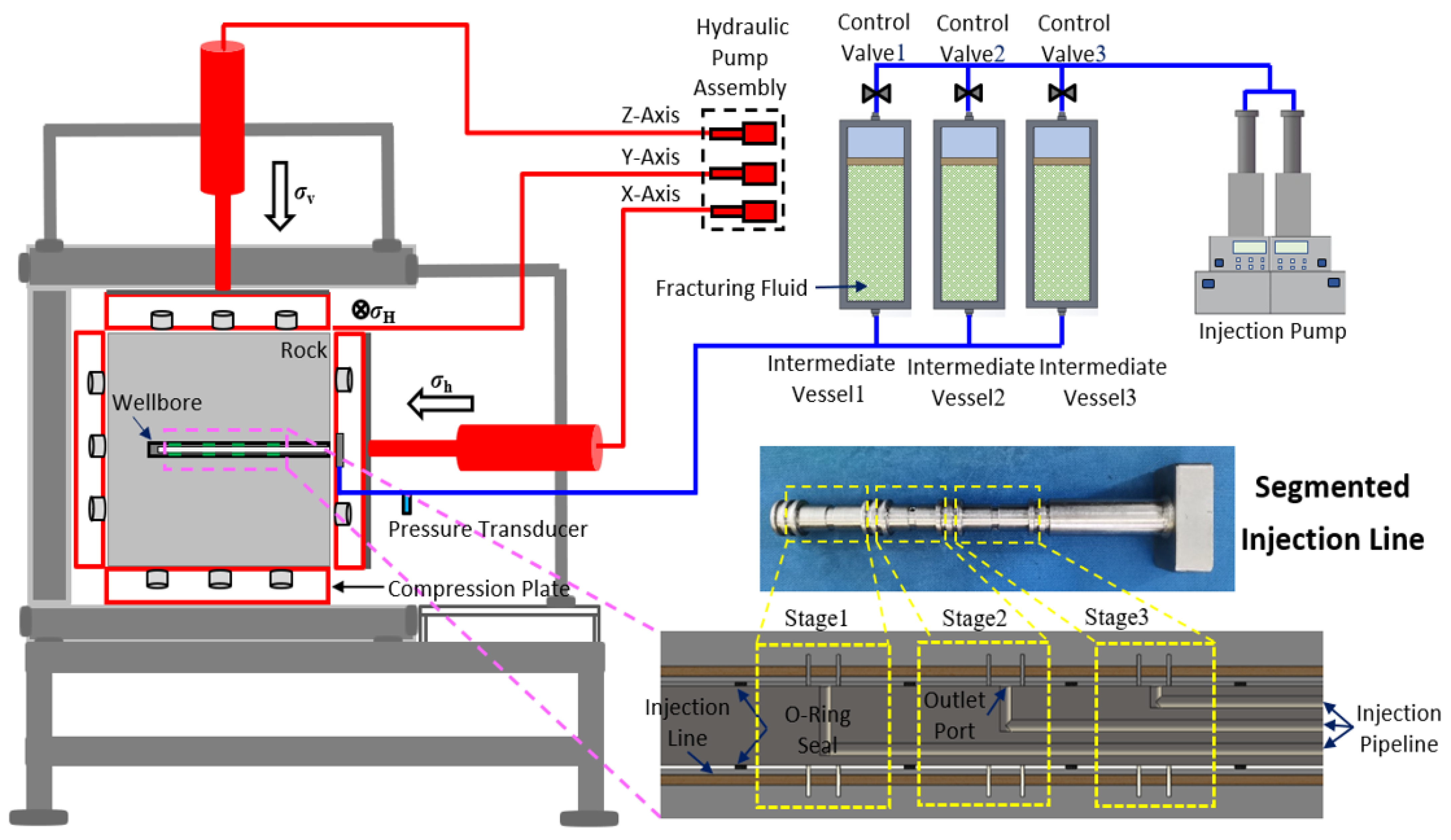
Indoor HF experiments were conducted using a true triaxial HF experimental system. The schematic diagram of the experimental apparatus is shown in Figure 4. The specific experimental procedures are as follows:
① Pre-fracturing Preparation: In the staged HF experiments for horizontal wells, a steel staged pumping tubing with an outer diameter of 21 mm was inserted into the PVC casing to enable staged fluid pumping. Three separate pumping channels were drilled inside the staged pumping tubing, each outlet positioned at the midpoint of the corresponding HF stage. O-ring seals were used to seal the annular space between the staged pumping tubing and the PVC casing, thereby isolating adjacent HF stages and preventing fluid crossflow.
② Stress Loading: The specimen was placed along the x-axis in the pressurization chamber of the true triaxial HF system. Hydraulic pressure was applied to the loading plates via an oil pump unit. The minimum horizontal principal stress (σh), maximum horizontal principal stress (σH), and vertical stress (σV) were sequentially applied along the x-, y-, and z-axes, respectively. High-pressure fluid pumping lines were used to connect the pumping channels inside the staged pumping tubing to corresponding intermediate fluid containers, which were in turn connected to the pumping pump via high-pressure lines. The intermediate containers were filled with fracturing fluid prepared from slickwater mixed with green dye.
③ Fluid pumping: During staged fluid pumping, Valve 1 was first opened while Valves 2 and 3 were closed, allowing the fracturing fluid from Intermediate Container 1 to be pumped into Stage 1 at a constant pumping rate to complete the first stage fracturing. By adjusting the valve states, the fracturing fluid from the corresponding intermediate containers was pumped into subsequent HF stages to complete their fracturing. A volume of 200 mL fracturing fluid was pumped into each stage to ensure that the fractures could propagate to the specimen boundaries. Throughout the HF process, wellhead pumping pressure was monitored in real time using a pressure sensor, and rock fracturing events were recorded continuously using an acoustic emission (AE) monitoring system.
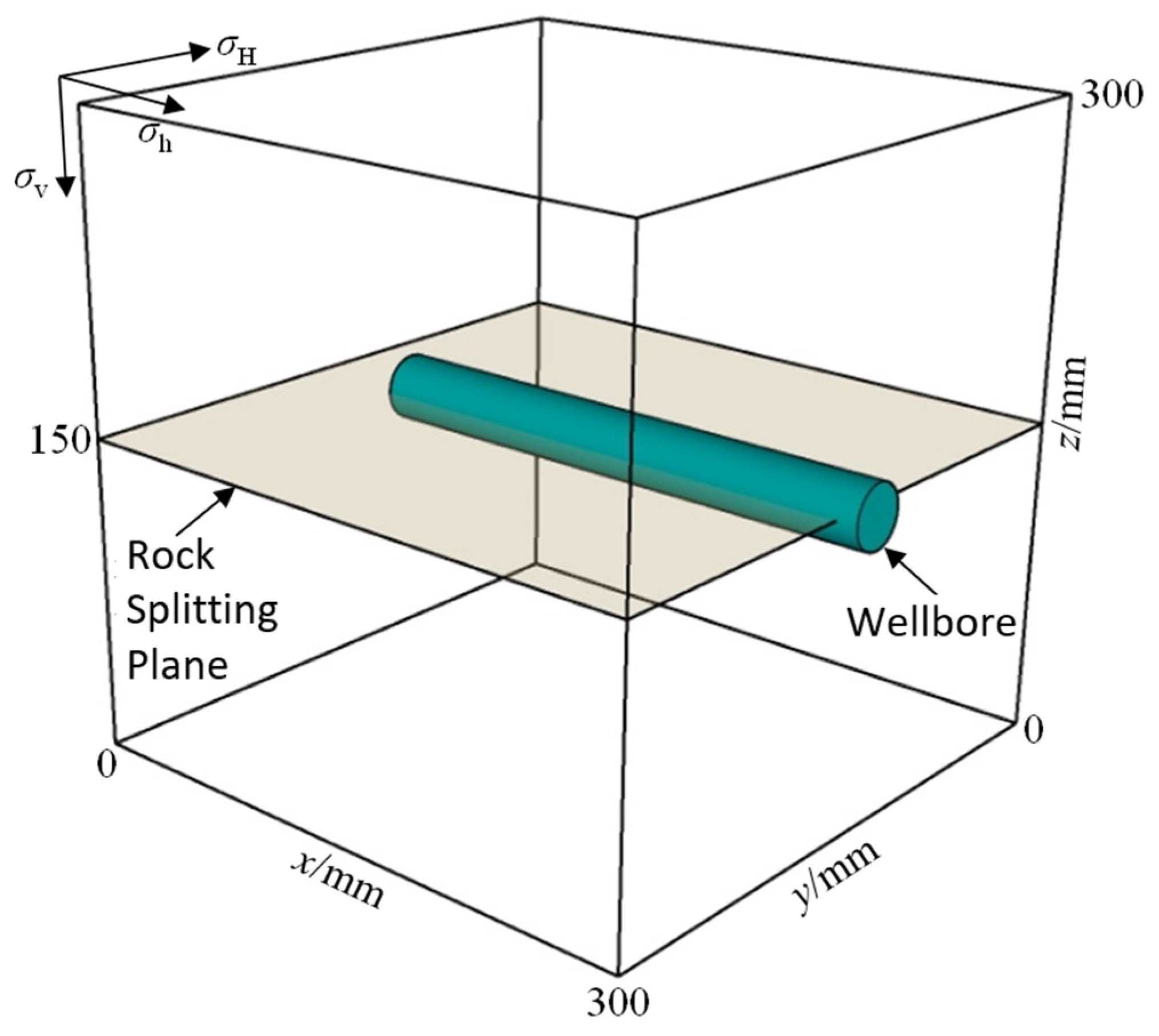
④ Post-fracturing Analysis: After the experiment, the specimen was removed from the pressurization chamber for observation of surface fracture morphology. Due to the resolution limitations of linear array CT scanning, which cannot clearly detect narrow fractures (fracture widths less than 100 μm), a combined method of specimen sectioning and dye penetrant inspection was used to observe the internal fracture propagation morphology. To prevent the generation of artificial fractures during sectioning, a wire-cutting machine was employed to cut along the plane at z = 150 mm, passing through the wellbore axis. Additionally, a metal dye penetrant was applied to highlight the fracture propagation paths on the cut rock surfaces. By combining observations of the internal section and surface fracture morphologies, a three-dimensional reconstruction of the fracture distribution was achieved.

3. Fracture Propagation Characteristics upon Encountering Gravels

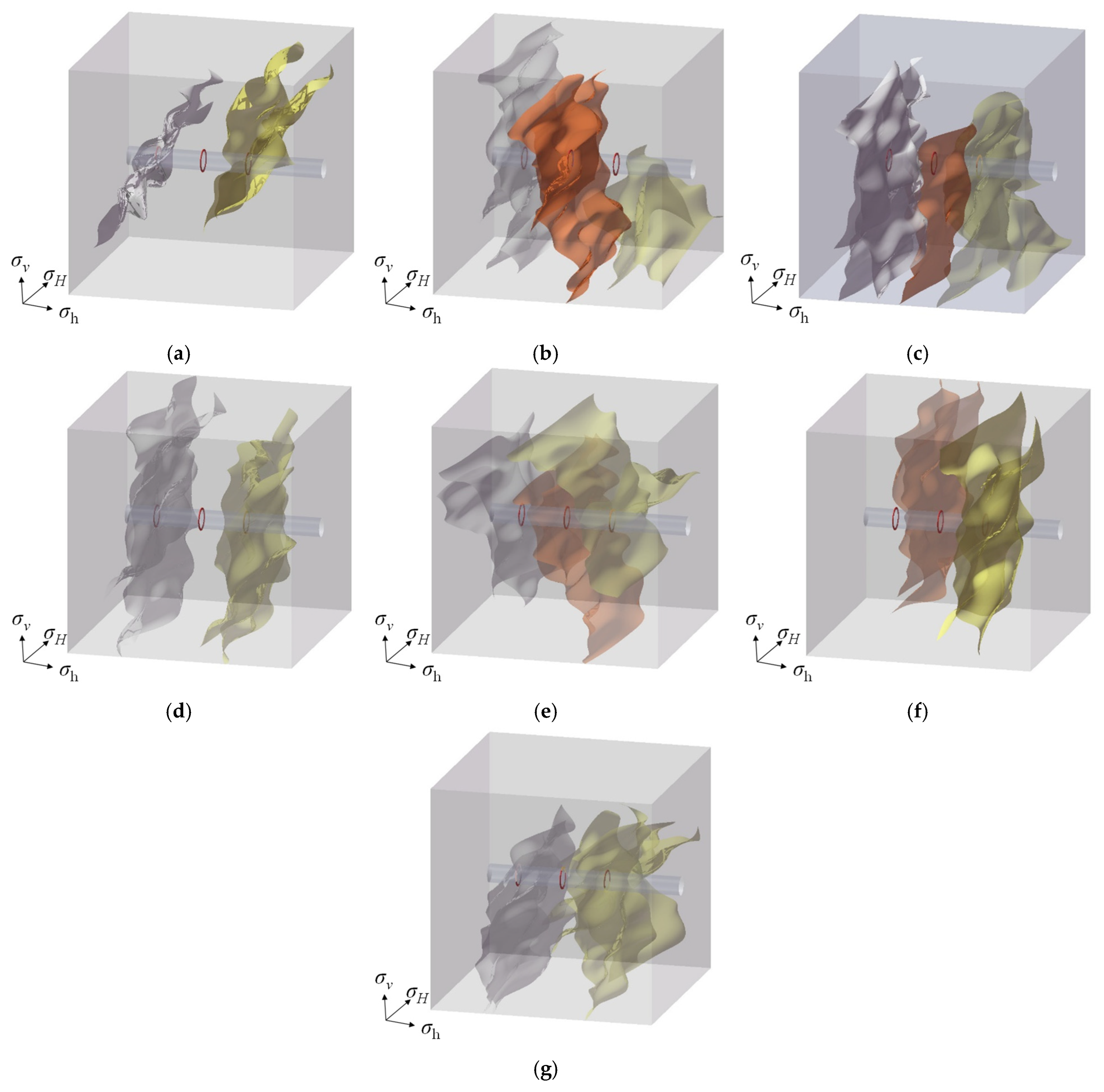
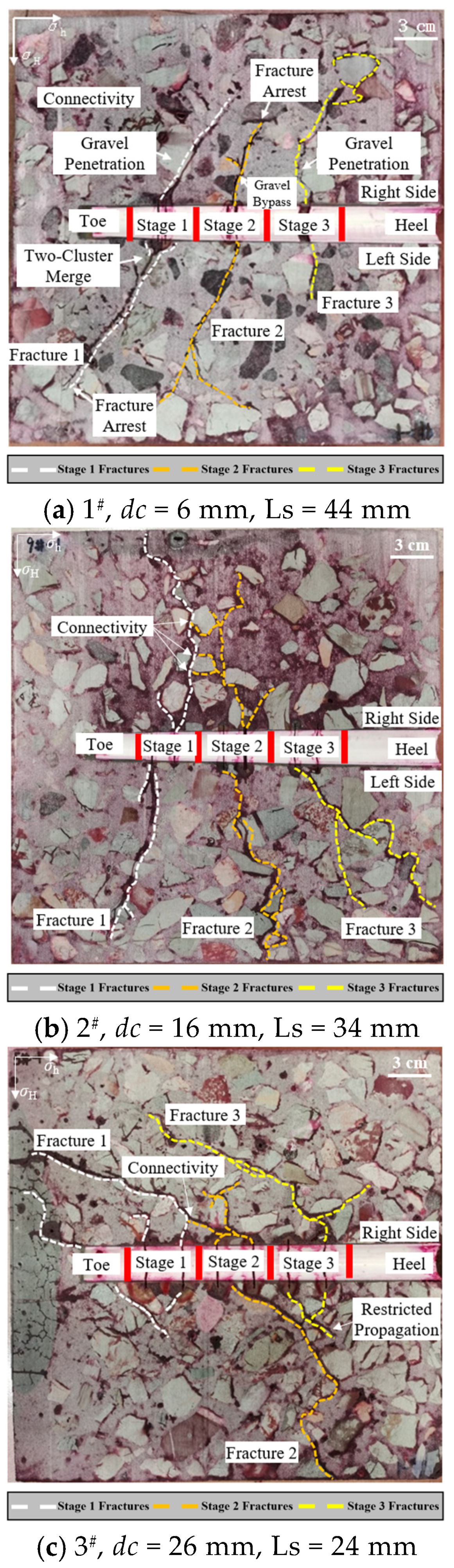
3D reconstruction of post-compression cracks in the rock sample, as shown in Figure 5. Specimens 1#, 2#, and 3# were primarily used to investigate the effects of stage/cluster spacing on the balanced initiation and propagation of multiple HFs in conglomerate reservoirs. The perforation cluster spacings were 6 mm, 16 mm, and 26 mm, respectively (corresponding to stage spacings of 44 mm, 34 mm, and 24 mm). Meanwhile, the artificial fracture area increased from 935 cm2 to 1849 cm2 and then slightly decreased to 1447 cm2. Increasing the cluster spacing (i.e., decreasing the stage spacing) significantly enhanced inter-stage fracture interactions and increased the tortuosity of HFs.
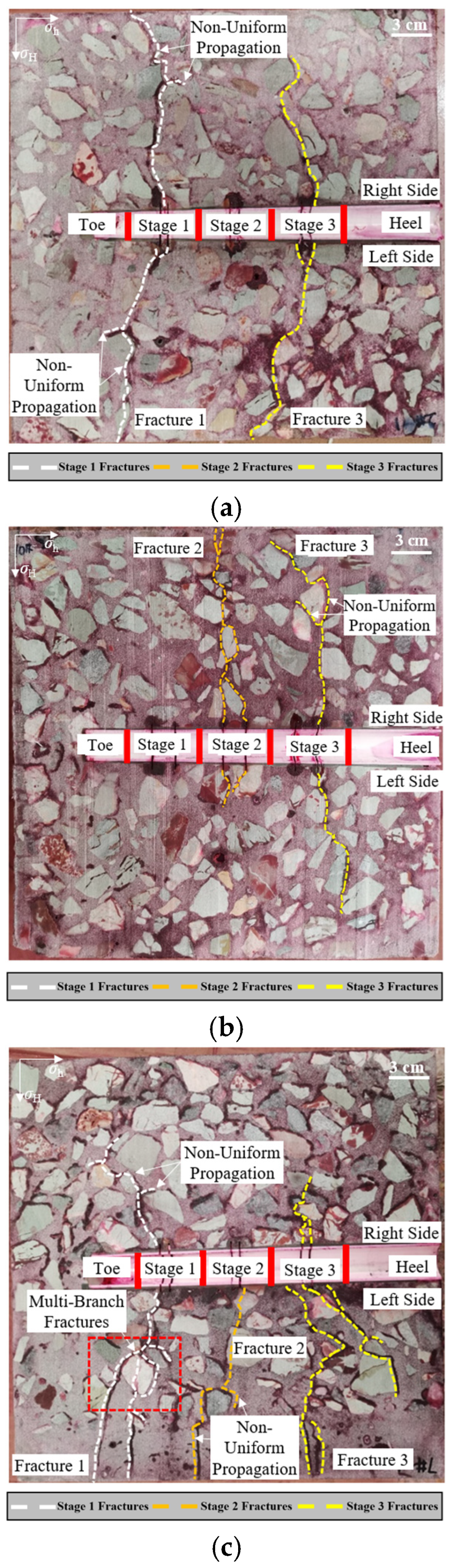
Specimens 4#, 5# and 6# were mainly used to investigate the influence of fracturing fluid viscosity on HF propagation characteristics around gravel bodies at near-wellbore and far-wellbore regions. The perforation cluster spacing was 6 mm (stage spacing 44 mm), and the perforation zones were predominantly medium to coarse gravel-sized conglomerates (2–4 cm). The fracturing fluid viscosities were set at 5, 50, and 100 mPa∙s. The perforation zones were mainly composed of conglomerates with medium to coarse gravel sizes (2–4 cm). Lower viscosity fracturing fluids significantly enhanced the tortuosity of HFs. Although lower viscosity fluids increased fracture tortuosity, excessive branching and energy dispersion limited the effective fracture extension, resulting in a reduction in total fracture area at very low viscosity.
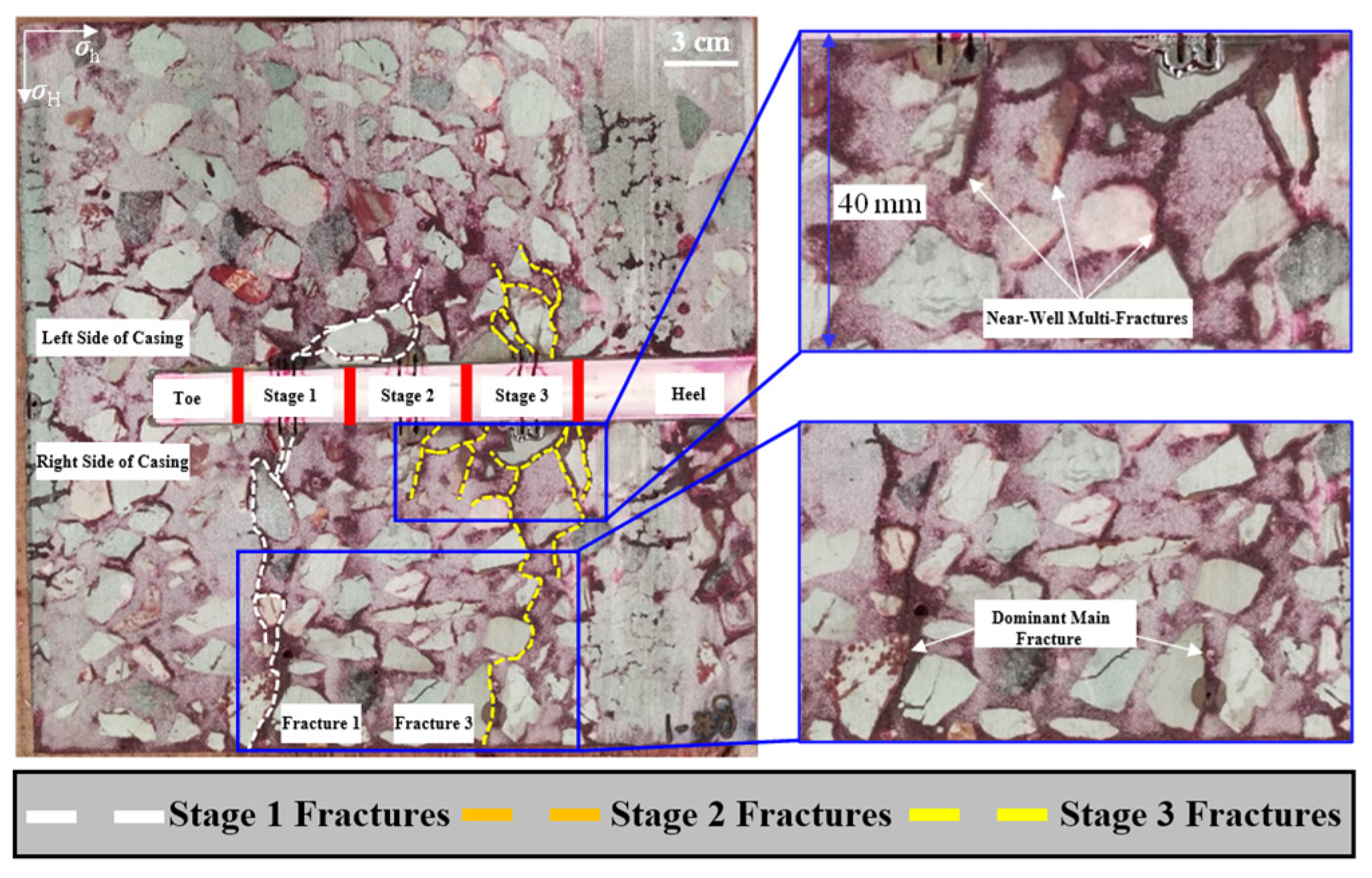
Specimen 7# was primarily used to investigate the differences in HF morphology between near-wellbore and far-wellbore regions within the same specimen. The perforation cluster spacing was 6 mm (stage spacing 44 mm), and the perforation zones were composed of medium to coarse gravel-sized conglomerates (2–4 cm). The fracturing fluid viscosity was set at 5 mPa∙s. The maximum vertical distance from the wellbore to the boundary of the near-wellbore complex fracture network region was approximately 40 mm. Based on an experimental HF half-length of 135 mm and a field half-length of 120–140 m, the corresponding near-wellbore complex fracture network distance in the reservoir was estimated to be between 35.6 m and 41.5 m. The fractures exhibited a trend of complex network development near the wellbore and dominant main fracture propagation in the far-wellbore region.

3.1. Effect of Cluster Spacing on Multi-Fracture Initiation Characteristics

As shown in Figure 6, when the cluster spacing (dc) is 6 mm, the two perforation clusters within the same stage tend to initiate and merge, leading to enhanced gravel-penetrating propagation in the near-wellbore region. Specifically, for Stage 1, Fracture 1 initiated at an inclined angle. The right wing of Fracture 1 propagated through gravels, while the left wing was arrested within a gravel body. For Fracture 2, the right wing, after initiating near the wellbore, encountered irregularly distributed gravels and underwent gravel-circumventing propagation, forming a branch fracture, whereas the left wing penetrated a large gravel clast and extended into the far-wellbore region, forming another branch fracture. For Fracture 3, the right wing propagated through gravels near the wellbore but transitioned to gravel-circumventing propagation in the far-wellbore region due to obstruction by gravels, and the left-wing propagation was significantly suppressed.
Due to the relatively large stage spacing (Ls = 44 mm), no significant inter-stage stress interference was observed. These observations indicate that in the near-wellbore region, the merged HFs possess sufficient concentrated energy to break through gravel barriers and form penetration fractures. In contrast, in the far-wellbore region, due to the decay of fluid pressure, the shielding effect of gravels is enhanced, causing HFs to more readily circumvent gravels or become arrested within gravel bodies.
When the cluster spacing (dc) is 16 mm, each perforation cluster within the same stage was able to independently initiate and propagate. Localized fracture interactions and communications were observed in the mid- and far-wellbore regions. In Stage 1, the left perforation cluster initiated on the left side of the wellbore, while the right perforation cluster initiated on the right side, exhibiting asymmetric initiation behavior. Affected by gravels, Fracture 1 initiated as multiple fractures; however, these fractures did not propagate synchronously, and a dominant fracture path emerged. This non-uniform propagation morphology was primarily caused by variations in fracture aperture at the initiation points. As the stage spacing (Ls) decreased, fractures from adjacent HF stages exhibited connectivity. The right wing of Fracture 2 encountered a gravel body during its gravel-circumventing propagation, which led to the formation of a branch fracture that connected with Fracture 1, causing fracturing fluid crossflow. Consequently, the propagation of Fracture 2 was gradually suppressed. Fracture 3 experienced stress interference from the left wing of Fracture 2 and tended to propagate obliquely away from Fracture 2.
When dc = 26 mm, the degree of interaction between adjacent fractures became more significant. Due to gravel obstruction, Fracture 1 underwent a large-angle deflection during gravel-circumventing propagation. Simultaneously, fracturing fluid leak-off along the bonding interface triggered the initiation of a vertical fracture and an inclined fracture near the wellbore. For Stage 2, the perforation on the right side of the wellbore initiated and opened along the gravel boundary, forming a ring-like fracture. Additionally, a branch fracture connected to Fracture 1, leading to fracturing fluid cross flow and suppressing the propagation of the right wing of Fracture 2. The left wing of Fracture 2 initiated at an inclined angle and propagated tortuously by circumventing gravels. Fracture 3 experienced significant stress interference from Fracture 2 on its left wing, resulting in suppressed propagation. The right wing of Fracture 3 underwent large-angle gravel-circumventing deflection under gravel obstruction, and localized branch fracture formation was observed.

3.2. Effect of Viscosity on the Morphology of Multi-Branch Fractures upon Encountering Gravels

As shown in Figure 7, under high viscosity conditions (100 mPa·s), the fractures exhibited stronger gravel-penetrating capability when encountering gravels, with fewer branch fractures but longer propagation distances. After initiation, the left wing of Fracture 1 was obstructed by a large gravel clast and generated only a single dominant branch fracture that circumvented the gravel without forming dense branching. For Fracture 3, two fractures on the left side of the wellbore merged into a dominant fracture that propagated around a large gravel, while a side fracture on the right side, due to gravel obstruction, generated a single branch fracture near the boundary. These experimental results indicate that high-viscosity fracturing fluids can suppress the formation of multiple branch fractures, enhance the penetration ability of dominant fractures, and promote the preferential extension of main fractures.
At medium viscosity (50 mPa·s), the branch density significantly increased after fractures encountered gravels, and the tortuosity of propagation paths was also enhanced. In Fracture 1, both wings were obstructed by large gravels and failed to initiate. In Fracture 2, two perforation clusters on the left wing were located within gravel bodies: after penetrating initiation, they rapidly were arrested. On the right wing, two clusters initiated by circumventing gravels and merged into a dominant gravel-circumventing fracture. For Fracture 3, after gravel-penetrating initiation on the left side, the two merged fractures formed gravel-circumventing fractures due to gravel obstruction.
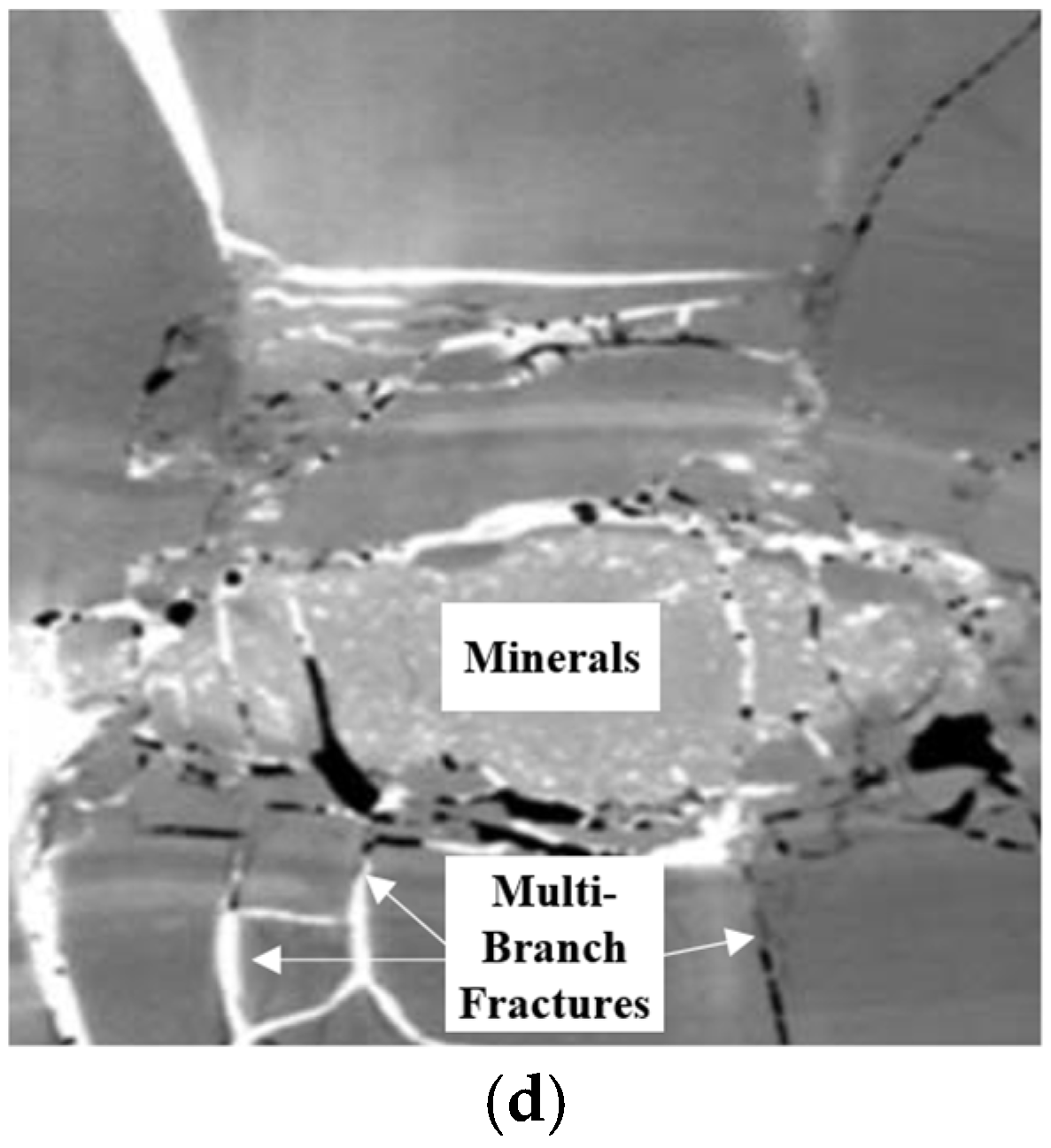
Under low viscosity conditions (5 mPa·s), branch fracture formation was most pronounced after encountering gravels. The propagation paths became highly tortuous, and the dominance of main fractures was weakened. In Fracture 1, the left wing produced four branch fractures through gravel-circumventing and gravel-penetrating propagation. Among them, two branch fractures extended into low-gravel-density regions and formed main fractures, while the others were arrested or merged within gravel bodies due to insufficient fracturing fluid energy. In Fracture 2, the left wing initiated by circumventing gravels, resulting in non-uniform gravel-circumventing branch fractures, while the right-wing perforation segment located inside a gravel body failed to initiate. In Stage 3, among the left-side fracture group, three initiated fractures encountered multiple gravels, forming tortuous multi-level branch fractures. However, the branch fractures were short and narrow, and only one branch fracture extended around small gravels into a low-gravel-density region to form a main fracture. Low-viscosity fracturing fluids resulted in rapid fluid pressure decay, leading to a significant increase in the number of branch fractures but a limited propagation range. Consequently, the fracture network complexity reached its maximum, although the fracture lengths were restricted in high gravel-density regions.
Comparison with field core CT scans: As shown in the CT scanning results of actual reservoirs reported in [27], fractures encountering hard minerals exhibited dense multi-branching behavior (Figure 7d), which closely resembles the experimental results obtained under low-viscosity conditions. This indicates that low-viscosity fracturing fluids are more likely to generate complex fracture networks in naturally heterogeneous conglomerates. However, it is necessary to balance the relationship between the number of branch fractures and the effective fracture length.

3.3. Differences in Fracture Morphology Between Near- and Far-Wellbore Regions

The morphology of HFs in conglomerate reservoirs exhibits significant differences between the near-wellbore and far-wellbore regions, necessitating detailed analyses of the gravel-affected propagation characteristics in different areas of the same specimen.
When the simulated perforation is located at a gravel boundary or within a gravel body, the morphology of near-wellbore fractures is strongly influenced by the presence of gravels. As shown in Figure 8, in Specimen 7#, two near-wellbore fractures initiated from the perforations on the right side of the wellbore in Stage 1. One fracture formed a large-angle inclined fracture circumventing gravels, while the other fracture propagated vertically through a gravel body, extending toward the perforation location of Stage 2, thereby inhibiting effective initiation at Stage 2. Due to the influence of gravels near the wellbore, multiple fractures initiated in Stage 3, resulting in a tortuous, gravel-circumventing complex fracture network near the wellbore. It was also observed that some fractures initiated from the casing–cement interface of the wellbore. This phenomenon can be attributed to the fact that certain perforation clusters in Stage 3 were located inside gravel bodies, and under high-pressure fluid pumping, fractures preferentially initiated along the weaker casing–cement interface rather than penetrating the stronger gravel clasts. Regarding the far-wellbore fracture morphology, the left wing of Fracture 1 extended as a tortuous, gravel-circumventing fracture approximately along the σH direction, accompanied by some localized branching but maintaining a dominant main fracture. The left wing of Fracture 3 broke through the near-wellbore complex fracture network and evolved into a dominant gravel-circumventing main fracture. These observations indicate that when high concentrations of large gravels are distributed near the wellbore, complex fracture networks are more likely to form in the near-wellbore region. However, as the distance from the wellbore increases, the dominance of main fractures gradually becomes more pronounced, and far-wellbore fractures tend to evolve into dominant fractures approximately aligned with the σH direction.
The geometric similarity criterion described by Equation (1) was used to determine the approximate boundary between the near-wellbore and far-wellbore regions. As shown in Figure 8, the maximum vertical distance from the wellbore to the boundary of the near-wellbore complex fracture network region was approximately 40 mm. Based on the experimental HF half-length of 135 mm and the actual reservoir HF half-length of 120–140 m, the corresponding near-wellbore complex fracture network boundary in the conglomerate reservoir was calculated to be approximately 35.6–41.5 m. For the convenience of engineering applications, the region within a vertical distance (L) of less than 40 m from the horizontal wellbore is defined as the near-wellbore region, where complex fracture networks tend to form. The region with a vertical distance greater than 40 m from the horizontal wellbore is defined as the far-wellbore region, where dominant main fractures preferentially propagate toward the specimen boundaries.

4. Evaluation of Tortuous Fracture Complexity in Conglomerates

4.1. Bending Friction Characteristics of Tortuous Fractures in Conglomerates

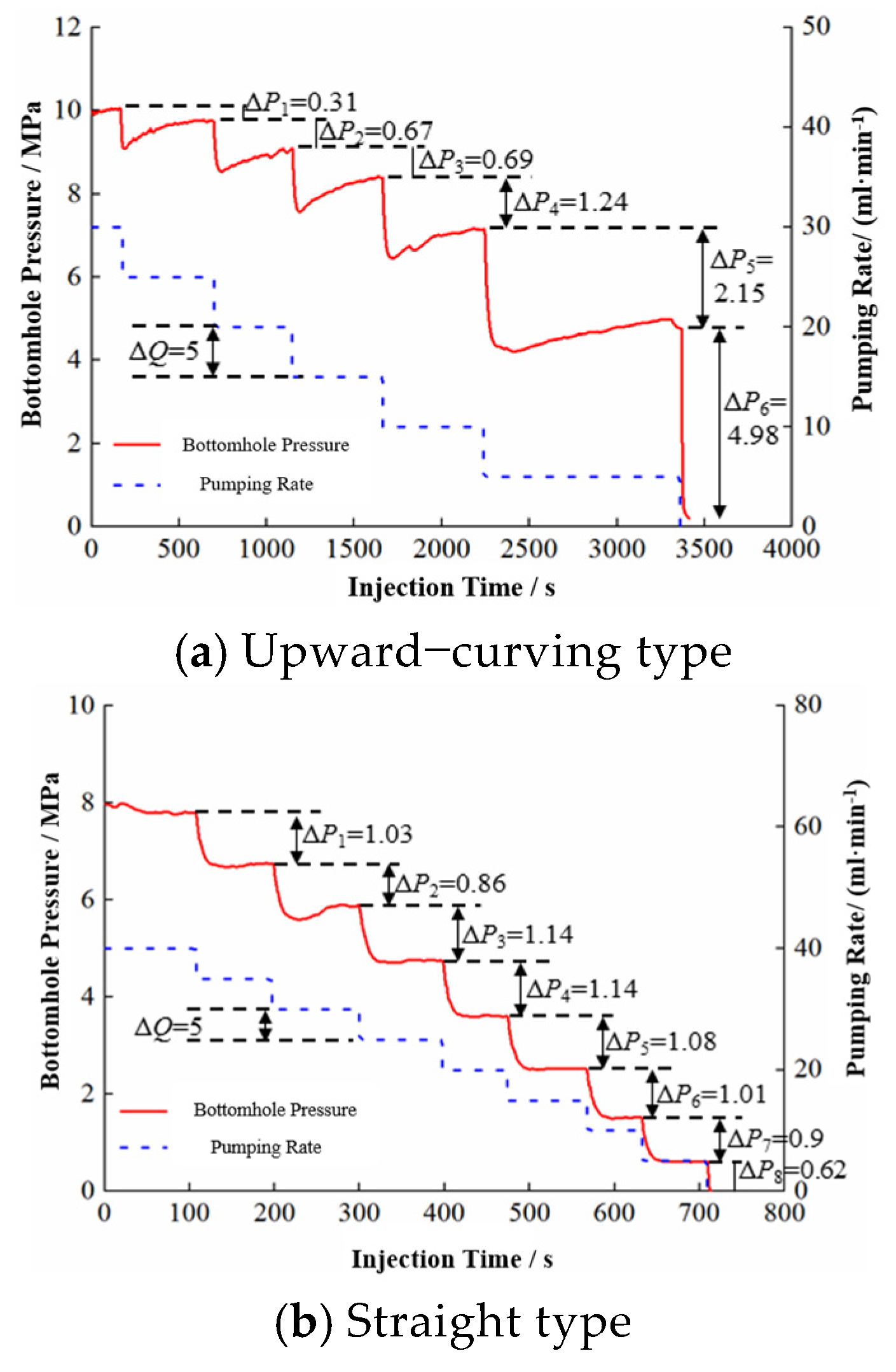
Laboratory decreasing pumping rate tests were conducted on post-fracturing conglomerate specimens to quantify the bending friction and tortuosity characteristics of conglomerate-induced tortuous fractures, and to establish the correlation between bending friction fitting coefficients (i.e., the bending friction proportionality constant Knw and the power-law exponent m) and fracture morphology.
Two typical types of experimental curves obtained from the laboratory decreasing pumping rate tests are shown in Figure 9. Overall, the magnitude of pressure drop increased gradually as the pumping rate decreased, exhibiting typical pressure loss characteristics dominated by near-wellbore tortuous fractures. By fitting the measured (ΔP, ΔQ) data points, it was found that the bending friction curve (ΔP–ΔQ curve) exhibited a concave-downward shape. For this specimen, the bending friction proportionality constant Knw was determined to be 2.771, and the power-law exponent m was 0.392. Economides et al. [28,29,30] indicated that adopting a power-law exponent of 0.5 satisfies the needs of most field applications. Massaras et al. [31,32,33,34] suggested that the magnitude of the power-law exponent is related to the Young’s modulus of the rock and the prevailing stress conditions: a slightly larger value than 0.5 is typically observed for shallow formations, whereas a value smaller than 0.5 is associated with deep, hard rock formations. In this study, the power-law exponent derived from the bending friction curve shown in Figure 9 is less than 0.5. This is attributed to the significant influence of microscale structural features, such as gravels, on the laboratory-scale decreasing pumping rate tests. In conglomerate reservoirs, HFs tend to circumvent gravels, and the high stiffness of gravels further contributes to the formation of highly tortuous and narrow-width fractures. As a result, the power-law exponent, reflecting the characteristics of tortuous and narrow fractures, is smaller than 0.5.

4.2. Tortuous Fracture Complexity in Conglomerates

Due to the unique strong heterogeneity of conglomerate reservoirs, the fracture complexity is determined not only by engineering parameters but also by key geological factors such as gravel characteristics. Therefore, by comprehensively considering the branch density of the fracture network, tortuosity, frictional pressure loss, gravel shielding effects, bending friction characteristics, fracturing fluid viscosity, and spatial fractal dimension characteristics, a quantitative evaluation method for the complexity of conglomerate-induced tortuous fractures—termed the Fracture Complexity Index (FCI)—is proposed, as shown in Equation (4):
F C I = i = 1 n w i f i , i = 1 , 2 , , 8
where the branch fracture density (f1) refers to:
f 1 = N b N b + N 0
N b = γ Δ P E ( 1 + S gravel S total )
branch fracture density (f2):
f 2 = L r L r + L f
branch fracture density (f3):
f 3 = Δ P l o s s Δ P l o s s + Δ P 0
local gravel development degree (f4):
f 4 = S gravel S total
bending friction characteristics (f5):
f 5 = K n w K n w + K n w 0
power-law exponent (f6):
f 6 = m m + m 0
fracturing fluid viscosity influence factor (f7):
f 7 = μ μ + μ 0
box-counting fractal dimension (f8):
f 8 = l i m δ 0 l g M l g ( 1 / δ )
The weights (w1w8) of each parameter were determined using the entropy weight method, resulting in values of 0.15, 0.15, 0.10, 0.20, 0.12, 0.05, 0.18, and 0.15, respectively.
Based on Equation (4) with the determined weights, the tortuous fracture complexity (FCI) of the six specimens was calculated, as summarized in Table 3. The complexity levels were classified as follows: FCI < 0.4 corresponds to low complexity, 0.4 < FCI < 0.6 corresponds to moderate complexity, and FCI > 0.6 corresponds to high complexity.
As shown in Table 3, the Fracture Complexity Index (FCI) of 1# increased from 0.42 to 0.74 with increasing cluster spacing. The FCI of 2# increased from 0.47 to 0.65 with decreasing fluid viscosity. The artificial fracture area increased from 724 cm2 to 1927 cm2 and then decreased to 1034 cm2.
To further demonstrate the effectiveness of the proposed Fracture Complexity Index (FCI), a quantitative comparison with conventional fracture complexity metrics was conducted. Traditional indicators, such as fracture length, fracture density, and fractal dimension, primarily describe individual geometric features of fractures and fail to capture the coupled influence of geological heterogeneity and engineering parameters.
In contrast, the FCI integrates multiple factors, including branch density, tortuosity, fluid–solid interaction, and gravel heterogeneity, providing a more comprehensive characterization of fracture morphology. As shown in Table 3, although fractal dimension increases with fracture tortuosity, it does not reflect the limitation in fracture propagation range. Similarly, fracture length alone cannot represent the degree of branching and complexity. The FCI, however, captures both aspects simultaneously, showing a stronger correlation with observed fracture morphology and experimental results.
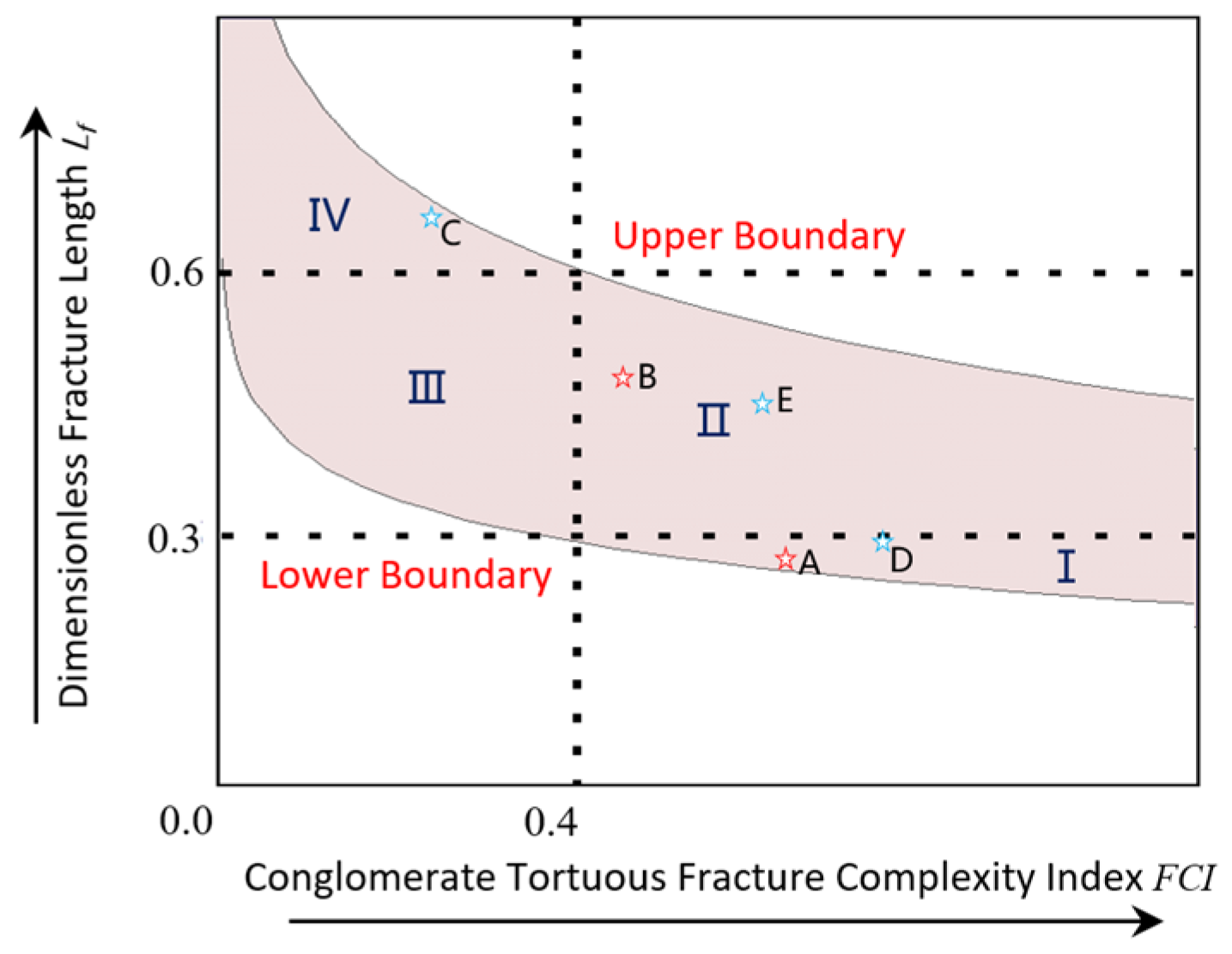
As shown in Figure 5c, the tortuosity of artificial fractures in conglomerates is nearly negatively correlated with fracture length. Highly tortuous fractures have difficulty propagating into the far-wellbore region. To establish a complexity evaluation chart for tortuous fractures in conglomerates, a dimensionless fracture length (Lf) was introduced to correct for the poor stimulation effect associated with high complexity but limited propagation range. The tortuous fracture complexity evaluation chart for conglomerates was established as shown in Figure 9. Points (0.4, 0.3) and (0.4, 0.6) were selected as the critical points. The upper and lower boundaries of the effective range are logarithmic curves, where the upper boundary passes through the critical point (0.4, 0.6), and the lower boundary passes through the critical point (0.4, 0.3).
Based on the evaluation chart constructed by the dimensionless fracture length (Lf) and the tortuous fracture complexity index (FCI) (Figure 10), four characteristic regions (I–IV) were divided to provide a quantitative basis for predicting fracture morphology and optimizing parameters in conglomerate reservoir fracturing. The region boundaries are defined by the critical points (0.4, 0.3) and (0.4, 0.6), and the logarithmic relationship reflects the dynamic trade-off mechanism between fracture length and fracture complexity. Combined with the fracture propagation experimental results (Figure 5 and Figure 6) and the data in Table 3, the characteristics and main controlling factors of each region are analyzed as follows:
Region I (high FCI, low Lf): corresponds to tortuous short fractures (FCI > 0.6, Lf < 0.3), characterized by dense branch fractures and high tortuosity, but limited fracture length (such as Specimen 3#). This type of fracture network is suitable for highly heterogeneous conglomerate reservoirs (gravel size > 4 cm, gravel area ratio > 60%), where multi-level branching can be stimulated by low-viscosity fracturing fluids (5 mPa·s), at the cost of sacrificing fracture length to enhance local stimulation.
Region II (moderate-high Lf, moderate-low Lf): corresponds to tortuous long fractures (0.4 < FCI < 0.6, 0.3 < Lf < 0.6), characterized by moderate branch density and tortuosity, with fractures extending to the mid- and far-wellbore regions (such as Specimens 5# and 6#). This fracture morphology is controlled by medium-viscosity fracturing fluids (50 mPa·s) and moderate cluster spacing (16 mm), achieving a balance between complexity and stimulation efficiency in moderately developed gravel reservoirs (gravel size 2–4 cm, gravel area ratio 40–60%).
Region III (moderate-low FCI, moderate-high Lf): corresponds to straight short fractures (FCI < 0.4, 0.3 < Lf < 0.6), characterized by low branch density and obvious dominance of the main fracture, but insufficient fracture length (such as Specimen 4#). This morphology is commonly observed in low gravel content reservoirs (gravel area ratio < 15%), where applying large cluster spacing (26 mm) or high-viscosity fracturing fluids (100 mPa·s) enhances the penetration ability of the main fracture but restricts fracture extension due to inter-stage interference.
Region IV (low FCI, high Lf): corresponds to straight long fractures (FCI < 0.4, Lf > 0.6), characterized by a single main fracture, low tortuosity, and maximized fracture length (such as Specimen 2#). It requires low gravel heterogeneity (gravel size < 2 cm, gravel area ratio < 30%), small cluster spacing (6 mm), and high-viscosity fracturing fluids (100 mPa·s), enabling efficient far-wellbore stimulation through strong gravel-penetrating fractures.
Gravel heterogeneity: the size and spatial distribution of gravels directly control whether fractures propagate through or circumvent gravels. High gravel content forces frequent fracture branching (Figure 5c), resulting in an increase in FCI and a decrease in Lf (Region I). In contrast, low gravel content facilitates straight propagation of the main fracture (Region IV).
Fracturing fluid viscosity significantly affects fracture propagation paths by controlling fluid energy transmission efficiency and leak-off behavior. Low-viscosity fracturing fluids have rapid leak-off rates and significant fluid pressure decay, making it difficult to maintain the energy required for gravel penetration, leading to frequent circumvention and the formation of dense multi-level branch fractures (Figure 6c), where the FCI at point A in Figure 10 rises to 0.65 while the Lf drops below 0.3 (Table 3). In contrast, high-viscosity fracturing fluids (100 mPa·s) improve pressure transmission efficiency, enhance the ability of the main fracture to penetrate weak zones in gravels, lower the FCI to 0.48, and increase the Lf to 0.42 (point B in Figure 10), shifting the data point towards Region IV (low complexity, long fractures). This indicates that viscosity selection must balance the objectives of fracture network complexity and fracture length extension.
Stage and cluster spacing control fracture initiation stress fields and inter-stage stress interference strength, thus dominating fracture merging or competitive propagation behavior (Figure 5). At point C in Figure 10, small cluster spacing facilitates early fracture merging within the stage, forming high-energy main fractures penetrating near-wellbore gravels (Lf > 0.6), while large stage spacing weakens inter-stage stress interference and promotes the formation of long fractures (Region IV). Conversely, large cluster spacing intensifies inter-stage fracture competition, causing Fracture 1 to deflect around gravels and Fracture 2 to experience crossflow suppression, resulting in an FCI increase to 0.75 and an Lf reduction to 0.3 (Region I). Experimental results indicate that moderate cluster spacing can balance intra-stage fracture merging and inter-stage interference, allowing the (FCI, Lf) point D in Figure 10 to fall within Region II (0.4–0.6), which is suitable for moderately developed gravel reservoirs.
In conclusion, based on the tortuous fracture complexity evaluation chart for conglomerates (Figure 10), the degree of fracture tortuosity can be predicted according to the stage/cluster spacing, fracturing fluid type, and gravel heterogeneity. The closer the (FCI, Lf) data point is to Region I, the more tortuous and narrower the fractures are. The closer it is to Region IV, the straighter and wider the fractures are.

5. Discussion

A complete similarity between laboratory experiments and field-scale hydraulic fracturing is difficult to achieve due to constraints in specimen size, stress magnitude, and boundary conditions. In this study, a partial similarity framework was adopted, focusing on preserving the dominant physical mechanisms of fracture propagation.
Geometric similarity was maintained through a constant scaling ratio between specimen dimensions and characteristic fracture length, although the limited specimen size restricts representation to near-wellbore behavior. Stress similarity was achieved by controlling the relative differences among principal stresses, which govern fracture initiation and propagation paths. Fluid flow similarity was partially addressed by introducing a characteristic time parameter (τ), linking fluid viscosity, injection rate, and rock mechanical properties.
The empirical coefficient α = 0.1 was used as a simplified scaling parameter to relate laboratory and field conditions. It should be noted that this coefficient is not derived from strict theoretical similarity but represents an approximate scaling factor. Therefore, the experimental results should be interpreted as providing mechanistic insights rather than direct quantitative predictions for field-scale applications.
A limitation of this study is that full mechanical similarity between laboratory and field conditions is not achieved. Although the true triaxial stress system preserves the relative differences and orientations of principal stresses, the absolute stress magnitudes are lower than those in the field. The selected stress conditions ensure that the specimens remain in a brittle regime and that fracture propagation is controlled by stress anisotropy rather than absolute stress magnitude.
The parameter Kh represents the relative stress contrast within the experimental framework rather than a direct field-scale value. Therefore, the experimental results primarily reflect local fracture propagation mechanisms under controlled stress conditions. The influence of large-scale stress fields and boundary conditions in the field is not fully captured.
Consequently, the findings of this study are most applicable to understanding near-wellbore fracture behavior and the interaction between fractures and heterogeneity, while caution should be exercised when extrapolating the results to field-scale conditions.

6. Conclusions

(1) Gravel characteristics such as gravel size, distribution density, and heterogeneity are key geological factors determining the propagation patterns of multiple fractures during staged HF in horizontal wells within strongly heterogeneous conglomerate reservoirs. In regions of high gravel density within a stage, multiple fractures initiated from each perforation cluster experience difficulties in initiation and propagation, and tend to merge and form gravel-circumventing branch fractures or terminate within or along the edges of gravels. Fractures between stages are highly prone to deflecting along gravel boundaries and connecting with previously fractured stages. Furthermore, the uneven distribution of gravels exacerbates stress field distortion, leading to asymmetric initiation of fractures on both wings and competitive propagation among multiple fractures, resulting in complex, tortuous, multi-level interconnected fracture networks in the near-wellbore region. This causes fracturing fluid crossflow between fractures, suppressing fracture extension and reducing far-wellbore stimulation effectiveness.
(2) In the near-wellbore region, due to the strong heterogeneity of conglomerates and stress concentration around the wellbore, a tortuous gravel-circumventing complex fracture network tends to form. In the far-wellbore region, fractures predominantly circumvent gravels, and the influence of gravel characteristics on fracture propagation gradually diminishes, resulting in dominant gravel-circumventing fractures. It is recommended to adopt a staged pumping strategy combining “high-viscosity gravel-penetrating fluid + small cluster spacing” near the wellbore and “medium- to low-viscosity fluid for fracture extension” in the far-wellbore region, thereby achieving a natural transition from complex fracture networks to straight main fractures and optimizing the near-wellbore control and far-field extension during fracturing.
(3) Dimensionless fracture length is negatively correlated with fracture complexity: The logarithmic negative correlation between FCI and Lf reveals the mutual exclusivity between complex multi-fracture networks and straight long fractures in strongly heterogeneous conglomerate reservoirs. High FCI corresponds to tortuous short fractures (Region I), suitable for local gravel barrier breakthrough in highly heterogeneous reservoirs; Low FCI corresponds to straight long fractures (Region IV), suitable for efficient far-wellbore stimulation in homogeneous reservoirs. In engineering practice, it is necessary to precisely match stage/cluster spacing, fracturing fluid viscosity, and gravel characteristics to ensure that (FCI, Lf) falls within the target region, thereby achieving the synergistic optimization of fracture creation and fracture control.

Author Contributions

Conceptualization, M.W.; Methodology, J.W.; Validation, Z.Z. and Y.Z.; Formal analysis, T.L.; Investigation, J.W.; Resources, T.L.; Data curation, Z.Z. and Y.Z.; Writing—original draft, M.W. and S.L.; Writing—review & editing, S.Z. and Y.Z.; Supervision, S.L. All authors have read and agreed to the published version of the manuscript.

Funding

This works was supported by Petrochina Xinjiang Oilfield Company (Research Institute of Oil Production Technology) (Grant no. 2023ZZ24-06).

Data Availability Statement

The original contributions presented in this study are included in the article. Further inquiries can be directed to the corresponding author.

Conflicts of Interest

Author Wang Jian was employed by the company Petrochina Xinjiang Oilfield Company. The remaining authors declare that the research was conducted in the absence of any commercial or financial relationships that could be construed as a potential conflict of interest.

References

  1. Xiao, Z.L.; Chen, S.J.; Liao, J.B.; Li, Y.; Wang, P.; Ding, Z.G. Channel architecture element and its control on hydrocarbon accumulation: A case study of the Chang-8 Member in the Huaqing area, Ordos Basin. Xinjiang Pet. Geol. 2018, 39, 524–529. [Google Scholar]
  2. Chen, X.F.; Zhi, D.M.; Wang, X.J.; Li, X.Y.; Zhu, M.; Wang, Y.T. Typical Reservoirs in Oil and Gas Fields of the Junggar Basin: Southern Margin; Petroleum Industry Press: Beijing, China, 2018. [Google Scholar]
  3. Li, G.; Qin, J.; Xian, C.; Fan, X.; Zhang, J.; Ding, Y. Theoretical understanding, key technologies, and practice of efficient development in tight conglomerate oilfields: A case study of the Mahu oilfield, Junggar Basin. Pet. Explor. Dev. 2020, 47, 1185–1197. (In Chinese) [Google Scholar] [CrossRef]
  4. Xu, J.; Li, J.; Wu, Y.; Ding, K.; Jiang, H. Exploration and practice of volume fracturing technology in horizontal wells of Mahu tight conglomerate reservoirs. China Pet. Explor. 2019, 24, 241–249. (In Chinese) [Google Scholar]
  5. Li, J.; Wu, B.; Zhao, H.; Cheng, N.; Huang, J. Adaptability analysis of volume fracturing technology in horizontal wells of Mahu tight conglomerate reservoirs. China Pet. Explor. 2019, 24, 250–259. (In Chinese) [Google Scholar]
  6. Meng, Q.; Zhang, S.; Guo, X.; Chen, X.; Zhang, Y. A primary investigation on propagation mechanism of hydraulic fractures in glutenite formations. J. Oil Gas Technol. 2010, 32, 119–123. [Google Scholar]
  7. Liu, X.; Xiong, J.; Liang, L.; You, X. Rock mechanical characteristics and fracture propagation mechanism of sandy conglomerate reservoirs in the Baikouquan Formation, Mahu Sag. Xinjiang Pet. Geol. 2018, 39, 83–91. [Google Scholar]
  8. Liu, P.; Ju, Y.; Ranjith, P.G.; Zheng, Z.; Chen, J. Experimental investigation of the effects of heterogeneity and geostress difference on the 3D growth and distribution of hydrofracturing cracks in unconventional reservoir rocks. J. Nat. Gas Sci. Eng. 2016, 35, 541–554. [Google Scholar] [CrossRef]
  9. Wang, H. Study of Hydraulic Fracture Propagation Influenced by Gravel in Sand–Gravel Reservoirs. Ph.D. Thesis, China University of Petroleum, Qingdao, China, 2011. [Google Scholar]
  10. Liu, N.; Zhang, Z.; Zou, Y.; Ma, X.; Zhang, Y. Propagation law of hydraulic fractures during multi-staged horizontal well fracturing in tight reservoirs. Pet. Explor. Dev. 2018, 45, 1129–1138. [Google Scholar] [CrossRef]
  11. Liu, N.; Zou, Y.; Ma, X.; Li, N.; Wu, S. Study of hydraulic fracture growth behavior in heterogeneous tight sandstone formations using CT scanning and acoustic emission monitoring. Pet. Sci. 2019, 16, 396–408. [Google Scholar] [CrossRef]
  12. Yu, T.; Yuan, F.; Zhou, P.; Hao, L.; Zou, Y.; Ma, X.; Zhang, Z. Fracture propagation morphology of grain-supported conglomerates in the Upper Urho Formation on the Manan slope. Xinjiang Pet. Geol. 2021, 42, 53–62. (In Chinese) [Google Scholar]
  13. Ma, X.; Zou, Y.; Li, N.; Chen, M.; Zhang, Y.; Liu, Z. Experimental study on the mechanism of hydraulic fracture growth in a glutenite reservoir. J. Struct. Geol. 2017, 97, 37–47. [Google Scholar] [CrossRef]
  14. Nie, Y.; Zhang, G.; Wen, J.; Li, S.; Zhou, D. Cyclic injection to reduce hydraulic fracture surface roughness in glutenite reservoirs. Int. J. Rock Mech. Min. Sci. 2021, 142, 104740. [Google Scholar] [CrossRef]
  15. Huang, L.; Liu, J.; Zhang, F.; Fu, H.; Zhu, H.; Damjanac, B. 3D lattice modeling of hydraulic fracture initiation and near-wellbore propagation for different perforation models. J. Pet. Sci. Eng. 2020, 191, 107169. [Google Scholar] [CrossRef]
  16. Shan, Q.; Zhang, R.; Jiang, Y. Complexity and tortuosity of hydraulic fracture morphology due to near-wellbore nonplanar propagation from perforated horizontal wells. J. Nat. Gas Sci. Eng. 2021, 89, 103884. [Google Scholar] [CrossRef]
  17. Ugueto, G.; Huckabee, P.; Wojtaszek, M.; Daredia, T.; Reynolds, A. New Near-Wellbore Insights from Fiber Optics and Downhole Pressure Gauge Data. In Proceedings of the SPE Hydraulic Fracturing Technology Conference and Exhibition, The Woodlands, TX, USA, 29 February 2019; p. SPE-194371-MS. [Google Scholar]
  18. Cipolla, C.L.; Warpinski, N.R.; Mayerhofer, M.J.; Lolon, E.P.; Vincent, M.C. The relationship between fracture complexity, reservoir properties, and fracture treatment design. In Proceedings of the SPE Annual Technical Conference and Exhibition, Denver, CO, USA, 21 September 2008; p. SPE 115769. [Google Scholar]
  19. Miller, C.K.; Waters, G.A.; Rylander, E.I. Evaluation of production log data from horizontal wells drilled in organic shales. In Proceedings of the North American Unconventional Gas Conference and Exhibition, The Woodlands, TX, USA, 14 June 2011; p. SPE 144326. [Google Scholar]
  20. Warpinski, N.R.; Branagan, P.T. Altered-stress fracturing. J. Pet. Technol. 1989, 41, 990–997. [Google Scholar] [CrossRef]
  21. Bunger, A.P.; Jeffrey, R.G.; Kear, J.; Zhang, X.; Morgan, M. Experimental investigation of the interaction among closely spaced hydraulic fractures. Strength Mater. 2011, 19, 1160–1165. [Google Scholar]
  22. Soliman, M.Y.; Hunt, J.L.; Rabaa, A.M. Fracturing aspects of horizontal wells. J. Pet. Technol. 1990, 42, 966–973. [Google Scholar] [CrossRef]
  23. Olson, J.E.; Taleghani, A.D. Modeling simultaneous growth of multiple hydraulic fractures and their interaction with natural fractures. In Proceedings of the SPE Hydraulic Fracturing Technology Conference, The Woodlands, TX, USA, 19 January 2009; p. SPE 119739. [Google Scholar]
  24. Waters, G.; Dean, B.; Downie, R.; Kerrihard, K.; Austbo, L.; McPherson, B. Simultaneous hydraulic fracturing of adjacent horizontal wells in the Woodford Shale. In Proceedings of the SPE Hydraulic Fracturing Technology Conference, The Woodlands, TX, USA, 19–21 January 2009; p. SPE 119635. [Google Scholar]
  25. Wu, K.; Olson, J.E. Simultaneous multi-fracture treatments: Fully coupled fluid flow and fracture mechanics for horizontal wells. SPE J. 2014, 20, 337–346. [Google Scholar] [CrossRef]
  26. Detournay, E. Propagation regimes of fluid-driven fractures in impermeable rocks. Int. J. Geomech. 2004, 4, 35–45. [Google Scholar] [CrossRef]
  27. Zhang, Z.; Zhang, S.; Zou, Y.; Ma, X.; Li, N.; Liu, L. Experimental investigation into simultaneous and sequential propagation of multiple closely spaced fractures in a horizontal well. J. Pet. Sci. Eng. 2021, 202, 108531. [Google Scholar] [CrossRef]
  28. Gale, J.F.; Elliott, S.J.; Laubach, S.E. Hydraulic Fractures in Core From Stimulated Reservoirs: Core Fracture Description of HFTS Slant Core, Midland Basin, West Texas. In Proceedings of the SPE/AAPG/SEG Unconventional Resources Technology Conference, Houston, TX, USA, 23 July 2018; p. URTEC-2902624-MS. [Google Scholar]
  29. Pan, L.; Zhang, S.; Cheng, L.; Lu, Z.; Liu, K. A numerical simulation of the inter-cluster interference in multicluster staged fracturing for horizontal wells. Nat. Gas Ind. 2014, 34, 74–79. [Google Scholar]
  30. Economides, M.J.; Nolte, K.G. Reservoir Stimulation, 3rd ed.; John Wiley & Sons: Hoboken, NJ, USA, 2000; pp. 6-1–6-48. [Google Scholar]
  31. Massaras, L.V.; Dragomir, A.; Chiriac, D. Enhanced Fracture Entry Friction Analysis of the Rate Step-Down Test. In Proceedings of the SPE Hydraulic Fracturing Technology Conference, College Station, TX, USA, 29 January 2007; p. SPE-106058. [Google Scholar]
  32. Sun, C.; Li, G.; Elgharib Gomah, M.; Xu, J.; Rong, H. Meso-scale mechanical properties of mudstone investigated by nanoindentation. Eng. Fract. Mech. 2020, 238, 107245. [Google Scholar] [CrossRef]
  33. Beugelsdijk, L.J.; Pater, C.J.; Sato, K. Experimental Hydraulic Fracture Propagation in a Multi-Fractured Medium. In Proceedings of the SPE Asia Pacific Conference on Integrated Modelling for Asset Management, Yokohama, Japan, 25 April 2000; p. SPE-59419-MS. [Google Scholar]
  34. Zhu, W.; Hughes, J.J.; Bicanic, N.; Pearce, C.J. Nanoindentation mapping of mechanical properties of cement paste and natural rocks. Mater. Charact. 2007, 58, 1189–1198. [Google Scholar] [CrossRef]
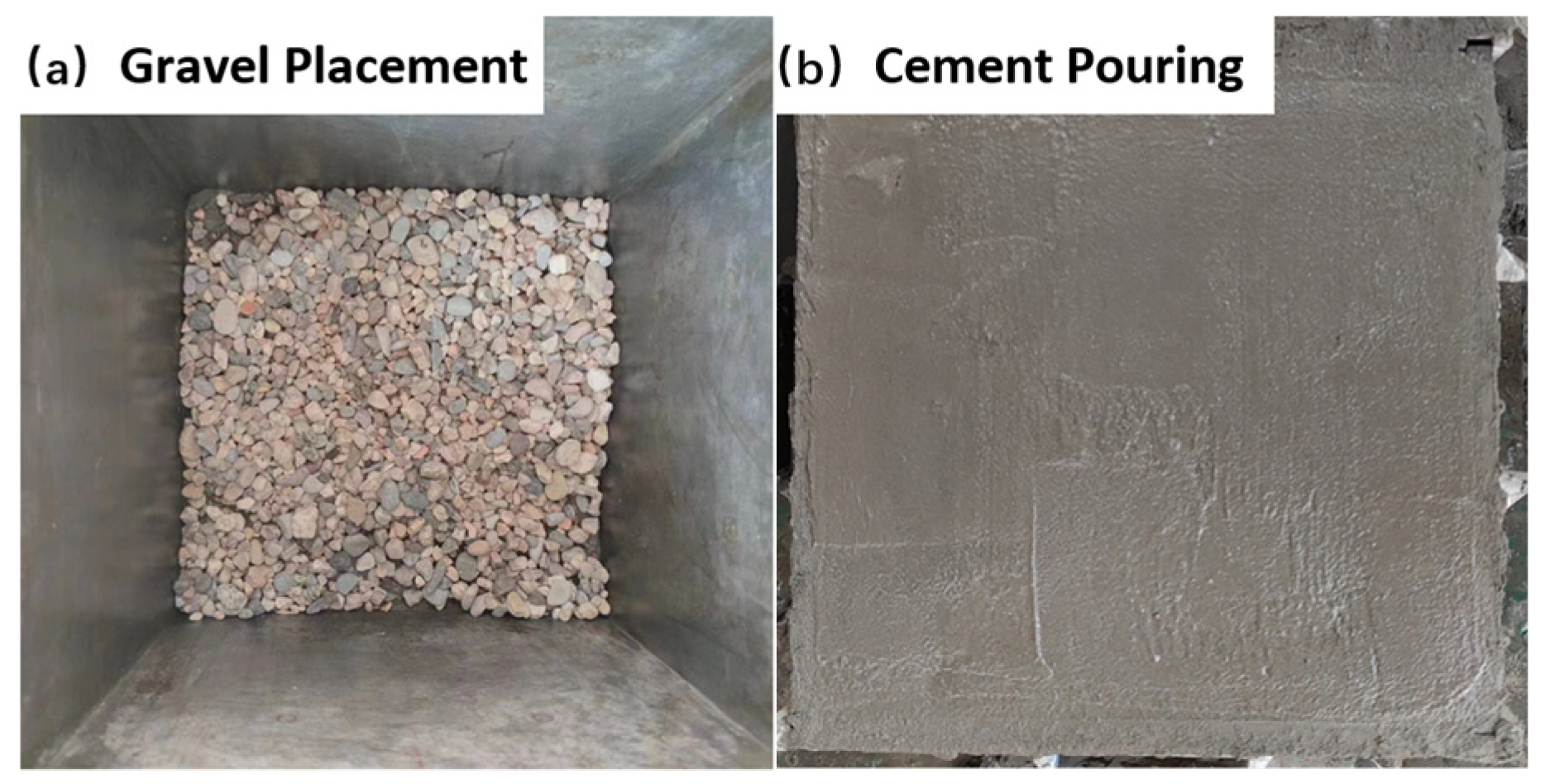
Figure 1. Preparation of Specimens for Laboratory True Triaxial HF Experiments.
Processes 14 01462 g001
Figure 2. Schematic Diagram of Well Completion for Laboratory True Triaxial HF Experiments.
Processes 14 01462 g002
Figure 3. Schematic Diagram of the True Triaxial HF Experimental System.
Processes 14 01462 g003
Figure 4. Post-fracturing specimen analysis method for laboratory true triaxial HF experiments.
Processes 14 01462 g004
Figure 5. Three-dimensional reconstruction of fracture propagation morphology during staged HF in strongly heterogeneous conglomerate reservoirs. (a) 1#, dc = 6 mm; (b) 2#, dc = 16 mm; (c) 3#, dc = 26 mm; (d) 4#, High-viscosity fracturing fluid (100 mPa·s); (e) 5#, Medium-viscosity fracturing fluid (50 mPa·s); (f) 6#, Low-viscosity fracturing fluid (5 mPa·s); (g) 7#, Comparison of fracture differences between far-wellbore and near-wellbore regions.
Processes 14 01462 g005
Figure 6. Multi-fracture propagation morphology under different stage/cluster spacing combinations.
Processes 14 01462 g006
Figure 7. Expansion characteristics upon encountering gravels under different viscosities and comparison between laboratory multi-branch fracture results and field core observations; (a) 4#, High-viscosity: 100 mpa·s; (b) 5#, Medium-viscosity: 50 mpa·s; (c) 6#, Low-viscosity: 5 mpa·s; (d) CT scan images of field core samples [27].
Processes 14 01462 g007aProcesses 14 01462 g007b
Figure 8. Fracture morphology characteristics dominated by gravels in near- and far-wellbore regions.
Processes 14 01462 g008
Figure 9. Two typical pressure curves from decreasing pumping rate tests.
Processes 14 01462 g009
Figure 10. Evaluation chart of tortuous fracture complexity in conglomerate reservoirs.
Processes 14 01462 g010
Table 1. Mechanical Properties of Artificial Conglomerate Cores with Different Component Ratios.
Component Ratio
(Cement: Sand: Water: Gravel)
Young’s Modulus (GPa)Poisson’s RatioTensile Strength/MPa
3:1:1:816.970.272.03
3:2:1:818.950.273.01
2:3:1:820.170.244.40
2:5:1:835.230.224.56
Downhole Conglomerate Core32.0~38.10.18~0.252.73~5.08
Table 2. Conversion of HF Experimental Parameters Based on Similarity Criteria.
No. Stage Spacing
/m
Cluster Spacing
/m
Fracturing
Fluid Viscosity
/mPa·s
HF Half-Length
/m
Pumping Rate/(m3·min−1)In Situ Stress/(MPa)
Vertical Stress
/MPa
Maximum Horizontal Principal Stress
/MPa
Minimum Horizontal Principal Stress
/MPa
Lab.1#0.0440.00650.13515302010
2#0.0340.016
3#0.0240.026
4#0.0440.0065
5#50
6#100
7#5
Field130–5515~355–100120–140870.30~92.3453.10~116.7640.94~78.55
Table 3. Tortuous fracture complexity in conglomerate reservoirs.
Serial NumberFCIComplexity Classification
1#0.45Moderate
2#0.35Low
3#0.75High
4#0.38Low
5#0.50Moderate
6#0.51Moderate
Disclaimer/Publisher’s Note: The statements, opinions and data contained in all publications are solely those of the individual author(s) and contributor(s) and not of MDPI and/or the editor(s). MDPI and/or the editor(s) disclaim responsibility for any injury to people or property resulting from any ideas, methods, instructions or products referred to in the content.