Article

Rotation Direction-Driven Multi-Parameter Optimization of Coal Loading Performance for Thin Seam Shearer Drums Based on DEM Simulation


1
School of Mechanical Engineering, Xi’an University of Science and Technology, Xi’an 710054, China
2
Shaanxi Key Laboratory of Mine Electromechanical Equipment Intelligent Detection and Control, Xi’an University of Science and Technology, Xi’an 710054, China
*
Author to whom correspondence should be addressed.
Processes 2026, 14(9), 1416; https://doi.org/10.3390/pr14091416
Submission received: 8 April 2026 / Revised: 23 April 2026 / Accepted: 25 April 2026 / Published: 28 April 2026
(This article belongs to the Section Manufacturing Processes and Systems)

Abstract

To address the low loading rate of shearer drums in thin coal seams under restricted coal-flow space, this study proposes a rotation direction-driven multi-parameter optimization framework based on discrete element method (DEM) simulation. A DEM coal wall model is established to characterize the interaction and transport behavior of coal particles during the cutting process, and a systematic parametric analysis considering drum rotation direction, helix angle, cutting depth, rotational speed, and traction speed is conducted through coupled simulations. The results indicate that rotation direction, helix angle, and traction speed significantly affect coal loading performance, whereas cutting depth and rotational speed have a relatively minor influence. Based on these findings, an optimal parameter combination is identified, where inward rotation with a 20° helix angle and a traction speed of 7 m/min achieves a loading rate of 73.6%. Field application results demonstrate that the proposed method improves coal throwing performance, reduces coal accumulation beneath the ranging arm, and enhances coal flow stability, providing a practical optimization approach for shearer drum performance in thin coal seams and supporting efficient and intelligent coal mining.

1. Introduction

Mining in thin coal seams faces the critical challenge of limited coal-loading space. This constraint reduces the loading efficiency of the shearer drum and significantly limits the production capacity of the working face [1,2]. Optimizing the structural design and cutting process of shearer drums in thin coal seams can extend equipment service life, reduce maintenance and replacement frequency, and significantly enhance the intelligence of thin coal seam mining, thereby promoting efficient coal production [3,4]. In the complex environment of thin coal seam mining, the shearer’s spiral drum, a core component, performs essential tasks including coal breakage, loading, and dust removal [5]. The structural configuration and cutting process of the spiral drum critically influence coal mining efficiency. Particularly in thin coal seam operations, the mechanical reliability and coal-loading performance of the drum face more severe engineering challenges [6,7]. Low coal-loading efficiency of the thin seam shearer drum often leads to a substantial increase in residual loose coal on the working face, causing coal flow accumulation and blockage that severely constrain the conveying performance of the scraper conveyor [8]. If not promptly cleared, this accumulation will further deteriorate the working environment and may trigger major safety hazards, including gas accumulation and coal dust explosions [9,10]. Therefore, optimizing cutting process parameters to improve coal loading performance is a core research focus for achieving high-efficiency thin seam mining [11,12]. This approach also aligns with the broader industry trend toward intelligent coal mining and refined process control [13].
In recent years, the Discrete Element Method (DEM), owing to its unique advantages in simulating the motion of discontinuous media, has been extensively applied in the study of coal–rock cutting dynamics [14,15]. To address the issue of low coal loading rate of drum shearer in thin coal seam mining, Gao et al. adopted the modeling experiment method to carry out systematic experimental research on the key factors affecting the coal loading rate of drum shearer [16]. Many researchers have applied discrete element software to simulate the coal cutting process. Zhang et al. validated the reliability of the coal loading process model through comparative experiments and DEM simulations [17]; Zhao et al. developed a cutting-coupled model using EDEM, revealing the influence patterns of operational parameters on coal particle trajectories [18]; Zhang et al. employed a bidirectional coupling approach combining DEM and multi-body dynamics to quantify the cutting interaction mechanisms in gangue-containing coal seams [19]; Tian et al. analyzed the characteristics of coal loading space by simulating the motion distribution of coal particles [20].
In addition, DEM-based methods have been applied to problems in other fields, further demonstrating their ability to simulate complex particle interactions. Cai et al. systematically revealed the coupling mechanisms of multiple parameters on crack evolution in methane in situ detonation fracturing using discrete element numerical simulations, and proposed an optimal fracturing strategy based on cyclic incremental detonation [21]. Zhang et al. proposed an inverted wedge-shaped hole-bottom reaming and anchoring technique, and validated the effectiveness of the method using discrete element numerical simulations [22]. Previous studies have primarily focused on the independent optimization of single process parameters [23]. While effective in medium- to thick-seam mining, these approaches struggle to address key bottlenecks in thin coal seams, such as coal flow channel blockages and accumulation beneath the ranging arm. Importantly, the synergistic effects of rotation direction, helix angle, and traction speed have not been systematically quantified, resulting in theoretical models that are poorly adapted to the constrained coal flow conditions typical of thin seams.
To overcome these research limitations, this study systematically investigates coal-loading performance in thin coal seams under multi-parameter coupling, with emphasis on drum rotation direction. First, a thin seam shearer drum coal loading process model was developed using DEM, and a combination of single-factor and orthogonal experiments was employed to quantitatively assess the sensitivity of motion parameters and their interactions on loading rate. Second, to mitigate engineering challenges such as coal flow channel blockages and accumulation beneath the ranging arm, an optimized “inward-rotating empty pick sweeping” strategy was proposed. This method induces secondary aggregation of incompletely loaded floating coal in the empty pick area and directs it toward the scraper conveyor, significantly improving the loading rate under thin seam conditions. Finally, the optimized results were validated against field measurements, confirming that the coupled effects of drum rotation direction, helix angle, and traction speed play a dominant role in coal loading performance.

2. Drum and Coal Loading Parameters Modeling for Thin Coal Seam Shearer Drums

2.1. Drum Parameter Configuration and Modeling Method

The key structural parameters of the spiral drum are presented in this subsection. The main components of the coal mining machine’s spiral drum (Figure 1a) consist of the drum hub, spiral blades, cutting picks, end cutting disk, cutting assembly, and auxiliary parts. Among these, parameters such as drum diameter, drum width, hub diameter, number of spiral blades (Figure 1b), and helix angle [14] play a significant role in determining coal loading performance, where B represents drum width, D g represents hub diameter, and D represents drum diameter. Specific parameter values are shown in Table 1.
The geometric dimensions of the drum are illustrated to highlight its suitability for thin seam conditions. Compared with drums used in thick seams, the present design adopts a more compact structure with reduced diameter and optimized vane configuration, which facilitates coal loading and transportation within the confined space.
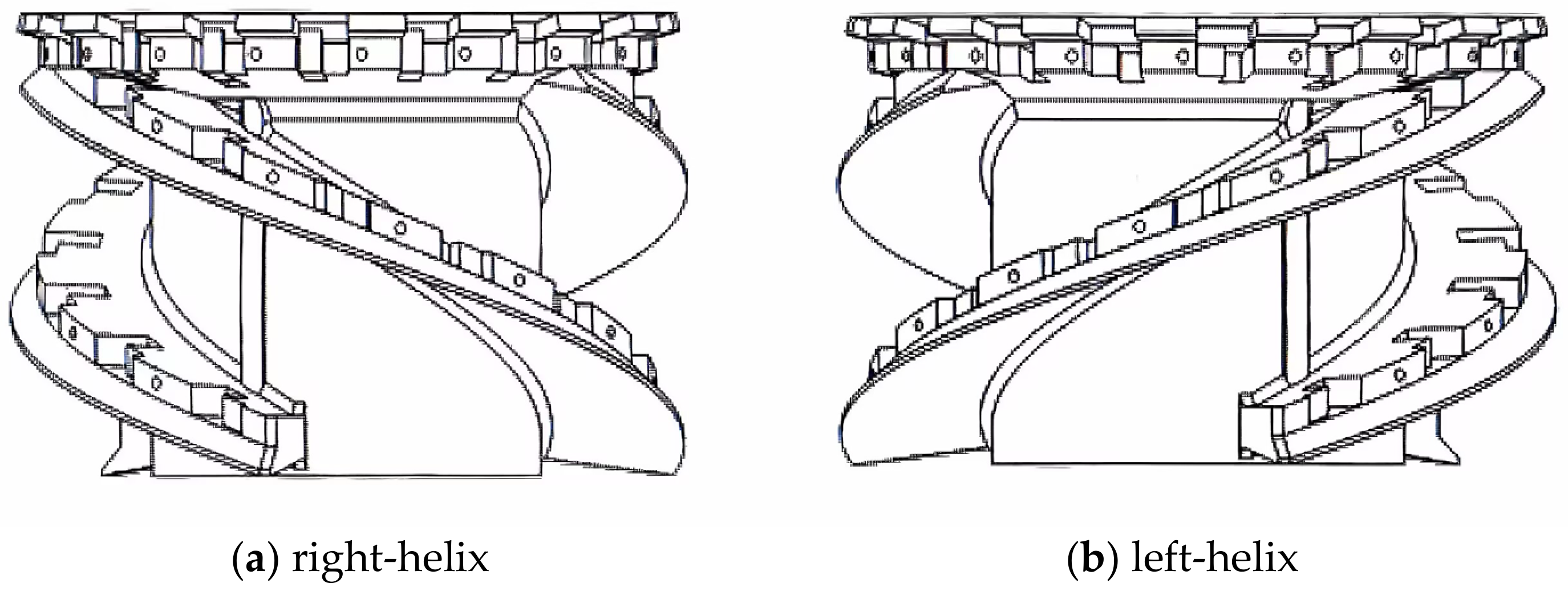
Field measurements reveal significant differences in coal loading performance between drum types: small-diameter spiral drums generally achieve 60–70% loading efficiency under operational conditions, while large-diameter drums reach 70–80%. Figure 2 shows the classification of vane configurations by rotation direction, distinguishing left-handed (counterclockwise) and right-handed (clockwise) helices.
Compared with conventional drums used in thick seam mining, the drum designed in this study exhibits distinct geometric characteristics to adapt to thin seam conditions. Due to the limited mining height and confined operational space, the drum diameter is relatively reduced, and the vane configuration is optimized to enhance coal guiding and throwing performance.
In thick seams, larger drum diameters and wider vane spacing are typically adopted to accommodate higher cutting volumes and facilitate bulk coal transportation. However, such configurations may lead to coal accumulation and reduced transport efficiency in thin seams. In contrast, the compact structure of the present drum improves the continuity of coal flow and reduces material congestion beneath the ranging arm, thereby enhancing overall loading rate.

2.2. Three-Dimensional Drum Model Construction

The drum model was developed based on the design specifications of the MG2×200/920 thin seam shearer (Xi’an Coal Mining Machinery Co., Ltd., Xi’an, China), incorporating the distinct blade orientations [18]. The geometric parameters of the drum, including its diameter, width, helix angle, and pick arrangement, were directly obtained from the design specifications of the MG2×200/920 thin seam shearer, ensuring that the constructed model accurately reflects the real engineering equipment. The key geometric and operational parameters defining the drum configuration are summarized in Table 1.
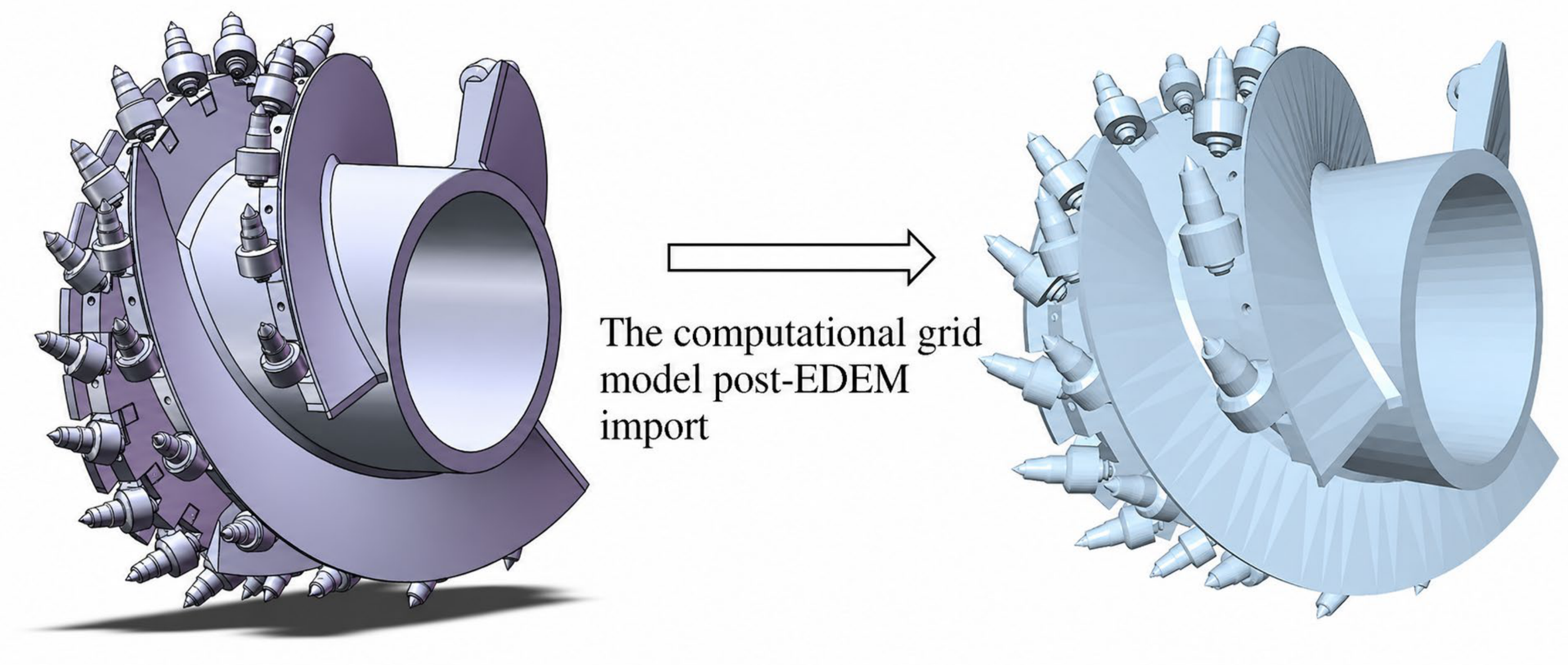
The three-dimensional drum model was constructed in SolidWorks 2022 based on the aforementioned dimensional parameters and established drum design principles. The assembled drum configuration is presented in Figure 3.

3. Coal Loading Theory and Simulation Methodology

3.1. Theoretical Framework of Drum Coal Loading

In this study, a thin coal seam is operationally defined as a seam thickness below 1.3 m, which reflects the restricted coal-flow space considered in the present work.
The spiral drum of the shearer cuts coal with its picks and uses spiral vanes to load the coal onto the scraper conveyor. During drum rotation, the spiral vanes exert an axial thrust on the coal flow, propelling the coal along the vanes toward the loading area [17,24].
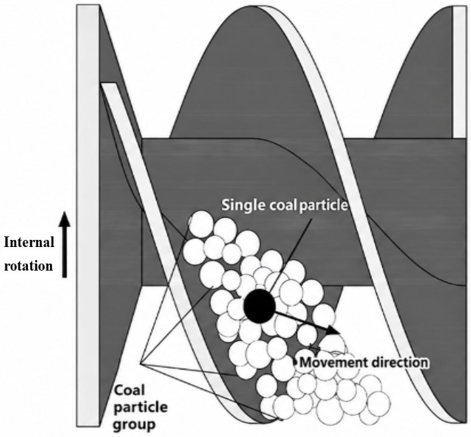
When the drum rotates inward, its rotational direction is opposite to the falling direction of the coal, resulting in a throwing-type loading process (Figure 4). In this case, coal fragments cut from the coal wall by the picks fall directly onto the spiral vanes and are collected during their descent. Most of the coal fragments are directly projected into the scraper conveyor by the vanes. The inward-rotating drum (throwing-type loading) is more suitable for thin coal seams (<1.3 m) or conditions with limited space for coal passage.
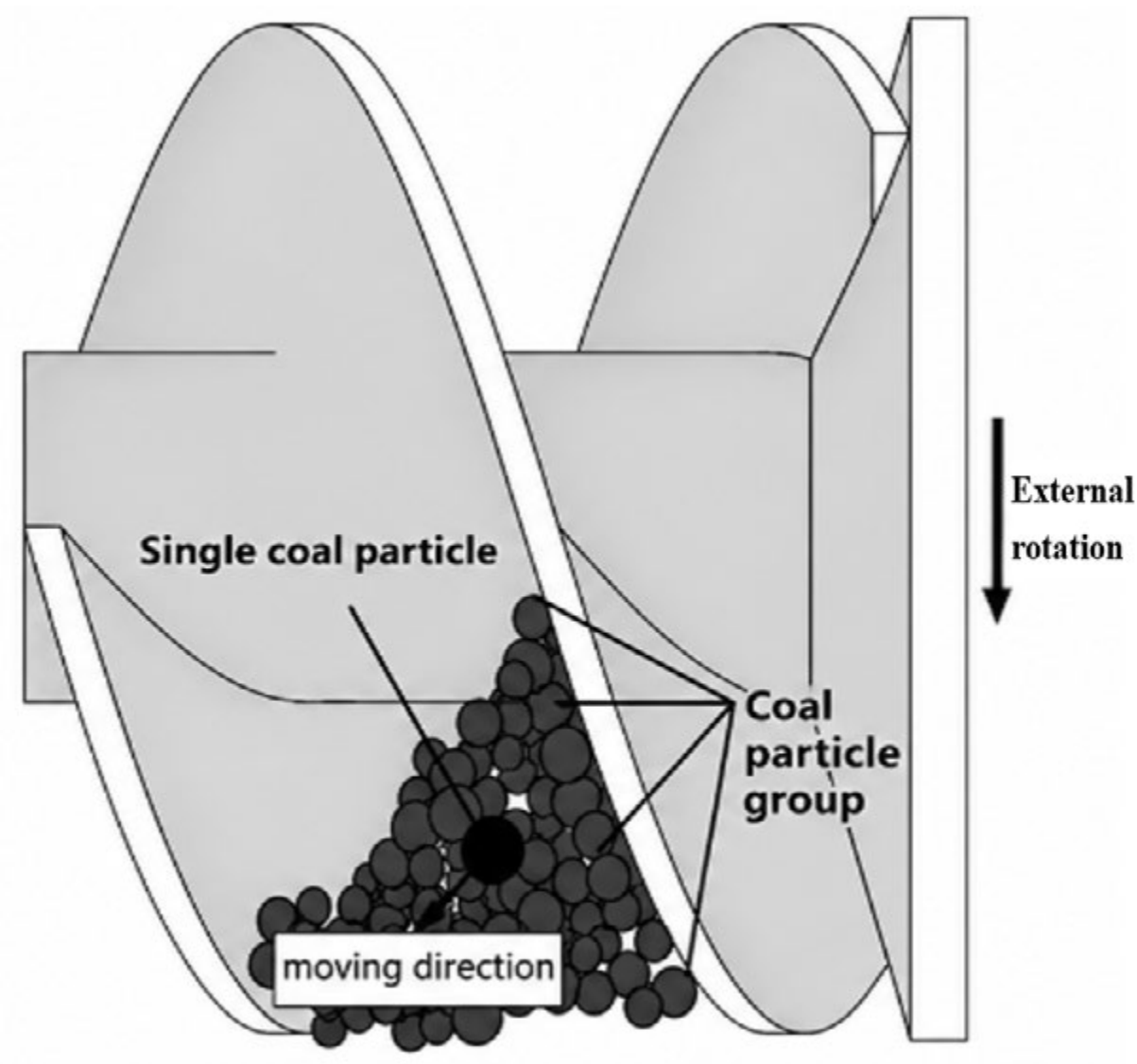
When the drum rotates outward, its rotational direction is the same as the falling direction of the coal, resulting in a pushing-type loading process (Figure 5). In this mode, the cut coal mainly accumulates at the bottom of the drum and is then pushed forward by the advancing action of the spiral vanes, eventually being delivered to the scraper conveyor. The outward-rotating drum (pushing-type loading) is more advantageous for medium-to-thick coal seams (>1.5 m), where the larger coal-loading space allows coal to accumulate naturally before being pushed and transported by the vanes. The thickness interval of 1.3–1.5 m is regarded as a transition zone and is not the focus of this study.
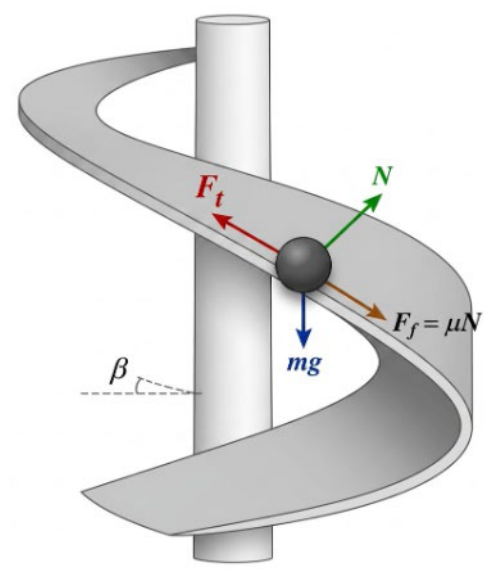
To further clarify the mechanical mechanism underlying the difference between inward and outward rotation modes, a simplified force analysis of coal particles on the spiral blade is conducted. As illustrated in Figure 6, a single coal particle located on the spiral vane is considered, and the following forces are taken into account: Gravitational force: m g , Normal reaction force from the blade: N , Friction force between particle and blade: F f , Tangential driving force induced by drum rotation: F t .
The spiral blade can be approximated as an inclined helical surface with helix angle β. The tangential driving force generated by drum rotation can be decomposed into axial and circumferential components. The axial component, which governs coal conveying toward the scraper conveyor, can be expressed as:
F Z = F t sin β m g sin θ F f
In the given formulation, F Z is the axial thrust acting on the particle, β is the helix angle of the spiral blade, θ is the inclination angle related to particle motion, F f = μ N , where μ is the friction coefficient.
The magnitude of the tangential driving force F t is closely related to the relative velocity between the spiral blade and coal particles:
F t v b v p
where v b is the linear velocity of the blade, v p is the falling or moving velocity of the coal particle.
During internal rotation, the blade motion direction is opposite to the falling direction of coal particles, resulting in a larger relative velocity ( v b + v p ). This enhances collision intensity and increases the effective tangential force F t , thereby producing a larger axial thrust F z . As a result, particles are more easily accelerated and transported toward the loading area. During external rotation, the blade motion direction is consistent with the particle motion direction, leading to a smaller relative velocity ( v b v p ). Consequently, the tangential driving force F t and the resulting axial thrust F z are reduced. Under this condition, coal particles tend to accumulate rather than being efficiently conveyed.
From the above analysis, the difference in axial thrust between inward and outward rotation can be attributed to the variation in relative velocity and the resulting tangential driving force.
F Z inward > F Z outward
Inward rotation generates a larger effective axial thrust, which enhances the acceleration and directional transport of coal particles toward the scraper conveyor, thereby improving coal loading efficiency. In contrast, outward rotation produces a relatively weaker axial thrust, leading to reduced conveying capability and a higher tendency for particle accumulation. This theoretical analysis is consistent with the DEM simulation results and field observations, confirming that inward rotation provides a more favorable mechanism for coal loading in thin seam conditions.

3.2. Simulation Methodology Based on the DEM

The coal-loading process in thin coal seams involves the fragmentation of coal blocks and the subsequent motion, collision, and accumulation of granular particles [25]. Such processes exhibit strong discontinuity and complex particle–particle interactions, which are difficult to accurately capture using traditional continuum-based approaches. Therefore, the discrete element method is adopted in this study to simulate the dynamic behavior of coal particles during the loading process.
In the DEM framework, the bulk coal material is represented as an assembly of discrete particles, and the macroscopic mechanical behavior emerges from the interaction between individual particles. The motion of each particle is governed by Newton’s second law, while the contact forces between particles are calculated based on a specified contact model.
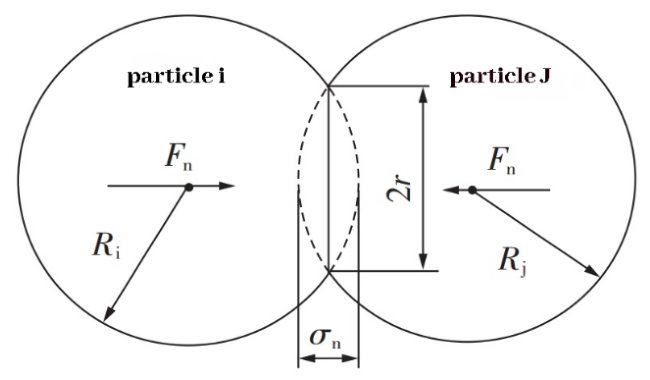
Figure 7 illustrates the elastic deformation occurring during the collision of spherical particles i and j with differential velocities. The normal contact force between particles can be quantitatively determined using the Hertz-Mindlin contact mechanics model [26,27].
The optimal overlap parameter is determined through computational analysis employing Equation (1):
σ n = R i + R j | c i c j | > 0
In the given formulation, σ n represents the contact overlap magnitude, where R i and R j denote the respective radii of the interacting particles, while c i and c j correspond to the centroid position vectors of the respective particles.
In this study, the Hertz–Mindlin (no-slip) contact model is employed to describe the normal and tangential interactions between coal particles. The normal contact force can be expressed as:
F n = 4 3 E * R * 1 2 σ n 3 / 2
and the tangential contact force is given by:
F t = k t δ t
where F n and F t denote the normal and tangential contact forces, respectively; δ n and δ t represent the normal overlap and tangential displacement between particles; E * is the equivalent elastic modulus; R * is the equivalent radius; and k t is the tangential stiffness coefficient. These parameters collectively determine the contact stiffness and energy dissipation characteristics during particle interaction.
Based on the above contact model, the DEM simulation is used to reproduce the coal-loading process of the shearer drum under different operating conditions. Coal particles are generated within the cutting region and interact with the rotating drum and spiral vanes, allowing the dynamic evolution of particle flow, accumulation, and transportation to be quantitatively analyzed. The loading rate is then evaluated based on the proportion of particles successfully transported into the scraper conveyor.
The detailed parameter settings of particle properties, contact parameters, and boundary conditions used in the DEM simulation are presented in the following section.

3.3. Coal Loading Simulation Parameters Design

During the establishment of the coal wall model utilizing the Creator module in EDEM 2020 software, the physical and mechanical properties of the coal bulk material were defined as listed in Table 2. Four types of contact pairs were defined: coal–coal, coal–gangue, coal–steel, and gangue–steel, with the mechanical property parameters for each contact pair listed in Table 3 [28,29].
The properties listed in Table 2 and Table 3 were directly imported into the EDEM simulation as the coal bulk material and interaction parameters, ensuring that the coal-cutting process of the spiral drum realistically represents the physical behavior of the coal mass.
The discrete element contact parameters and bonding parameters used in this study were determined based on the contact mechanics of granular materials, values reported for similar coal species in the literature, and preliminary numerical calibration. Specifically, the selected parameters were adjusted to reproduce the observed coal accumulation behavior, particle flow tendency, and loading response under thin-seam mining conditions. The purpose of this calibration was not to obtain a unique material model for all coal types, but to ensure that the DEM model could reasonably reflect the relative transport behavior of the coal particles in the present study. Therefore, the parameters listed in Table 2 and Table 3 are adopted as calibrated input values for the subsequent simulations. Future work will further refine these parameters through dedicated laboratory calibration tests, such as angle of repose and uniaxial compression tests, for more detailed material-specific validation.
The Hertz-Mindlin contact model was implemented for coal particle interactions in the DEM simulation, with additional bonding contacts incorporated through module customization [30]. The model parameters were derived based on discrete element contact mechanics theory and calibrated through comprehensive coal particle characterization.
However, in actual coal cutting processes, crushed coal exhibits a certain particle size distribution rather than a single particle size. Based on field observations, the particle size of crushed coal typically ranges from approximately 20 mm to 100 mm. This particle size distribution can be reasonably approximated using a uniform distribution function within a specified range. The 60 mm particle size selected in this study is considered a representative equivalent size corresponding to the dominant particle size under the given cutting conditions.
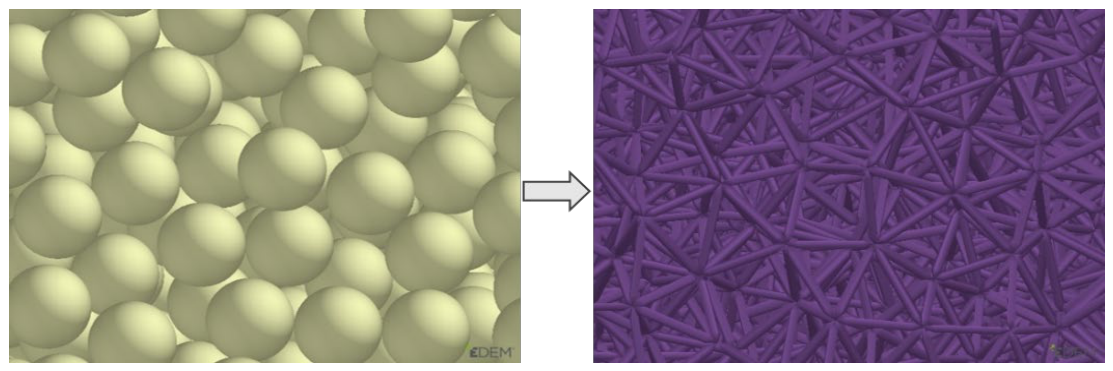
As illustrated in Figure 8, the coal wall model was constructed with a uniform particle diameter of 60 mm. This particle size was selected as a compromise between computational efficiency and simulation accuracy. Preliminary calibration simulations were conducted to ensure that the chosen particle size can adequately reproduce the macroscopic behavior of coal, including bulk flow characteristics and fragmentation patterns observed in thin coal seam conditions. Inter-particle bonding contacts were introduced to represent the inherent cohesion of coal mass. The bonding strength parameters were calibrated based on coal mechanical properties to ensure that the simulated failure and breakage behavior are consistent with real coal material.
To enhance computational efficiency and simplify the coal wall modeling process, the geometric dimensions were appropriately scaled down in the EDEM simulation environment. As illustrated in Figure 9, the established coal wall model measures 6000 mm in length, 900 mm in width, and 1600 mm in height, maintaining critical geometric proportions while optimizing computational resource utilization [31,32].
The mechanical properties of coal significantly affect drum loading performance. A higher compressive strength and shear modulus generally indicate that the coal mass is more difficult to fracture, which may lead to larger fragments and a lower proportion of fine particles entering the effective loading region. In contrast, lower hardness facilitates coal breakage and increases the likelihood that coal fragments are guided by the spiral blades toward the scraper conveyor. In addition, the elastic modulus and Poisson’s ratio influence the contact deformation and collision response of coal particles, thereby affecting their trajectories during the loading process. The friction coefficients between coal, gangue, and steel surfaces further determine the sliding resistance and accumulation tendency of broken coal, which are directly related to coal transport continuity and loading efficiency. Therefore, the selected coal mechanical parameters provide the material basis for evaluating drum performance under different loading conditions. Although these properties were not treated as independent optimization variables in the present study, their influence on coal breakage and transport behavior is inherently reflected in the DEM results.

4. Rotation Direction-Based Coal Loading Simulation for Thin Seam Shearer Drums

4.1. Simulation of Drum Coal-Loading Process

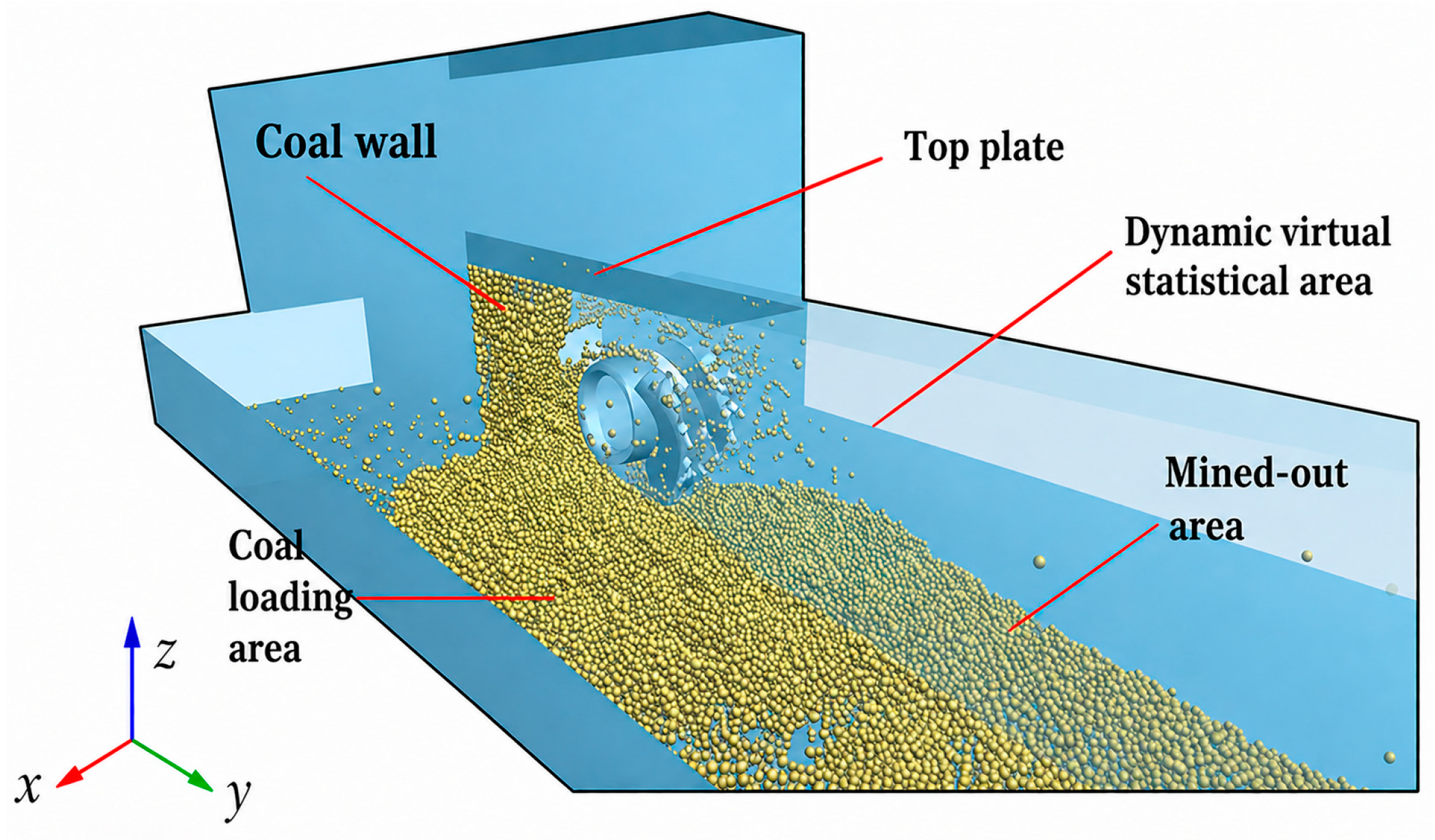
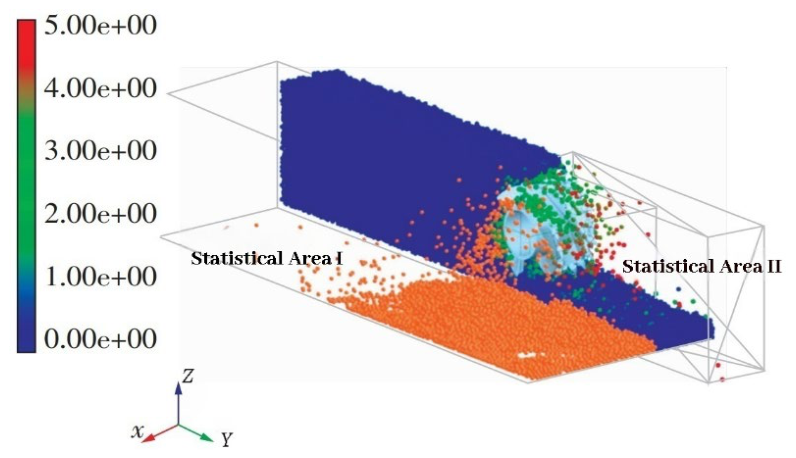
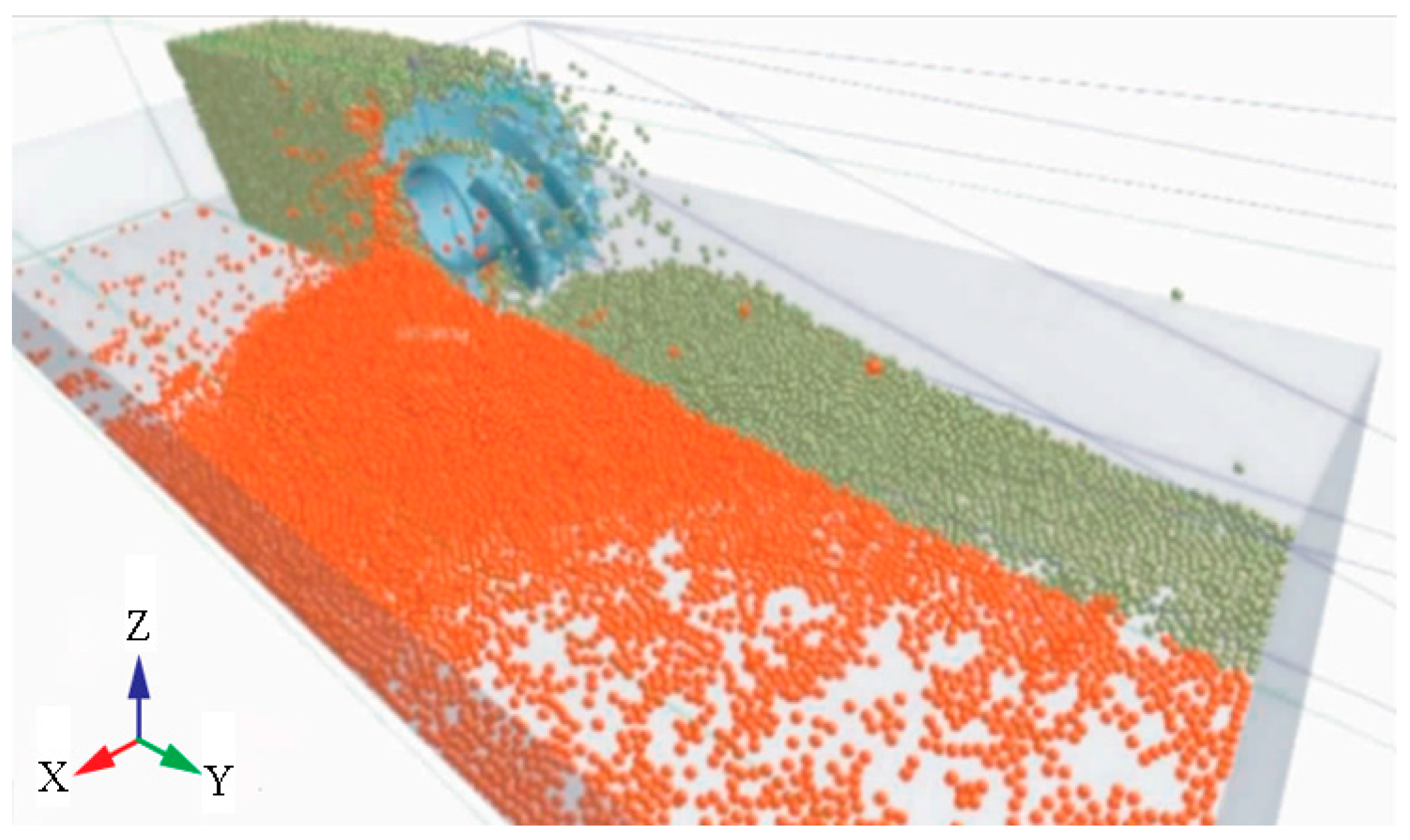
Based on the regional statistical function in EDEM, the scraper conveyor loading domain was divided into two regions: statistical area I and statistical area II, as shown in Figure 10. Specifically, statistical area I is defined as the spatial region above the scraper conveyor where coal particles can be effectively collected and transported, while statistical area II represents the adjacent goaf region outside the effective loading zone, where particles are not captured by the conveyor. When the drum engages the coal wall, particles from the fractured coal on the working face side directly enter area I; during drum advancement, the cut particles are primarily transported axially into area I under the combined effects of mechanical propulsion by the helical blades and gravity, while the remaining particles migrate into area II.
To ensure the reliability of the simulation results, a steady-state criterion was defined for the coal loading process. The system was considered to have reached a steady state when the relative variation in coal loading efficiency remained within 1% over a continuous period of 2 s. Based on this criterion, it was observed that the coal loading process generally entered a steady-state condition after approximately 5 s of simulation time under different working conditions. Therefore, the coal loading efficiency reported in this study was calculated as the average value over the steady-state interval from 5 s to 10 s.
In the stable cutting phase, a gradual accumulation of coal particles is observed in both statistical areas, leading to the systematic formation of coal piles. The transported particles are then effectively delivered onto the scraper conveyor through the mechanical thrust generated by the rotating drum. The loading rate of the spiral drum is quantitatively defined as the mass ratio of coal particles successfully conveyed to the scraper conveyor (area I) to the total excavated coal mass. Area I is designated as the valid statistical area for evaluating effective coal output.
The loading rate can be defined as:
n l = m a 1 m a 1 + m a 2
Here, n l represents the loading rate, while m a 1 and m a 2 denote the total mass of coal in area I and area II, respectively. This definition is adopted as the reference standard for evaluating the loading rate in the subsequent analysis.

4.2. Analysis of Key Parameters Affecting Coal Loading Performance

4.2.1. Influence of Drum Rotation Direction on Loading Performance

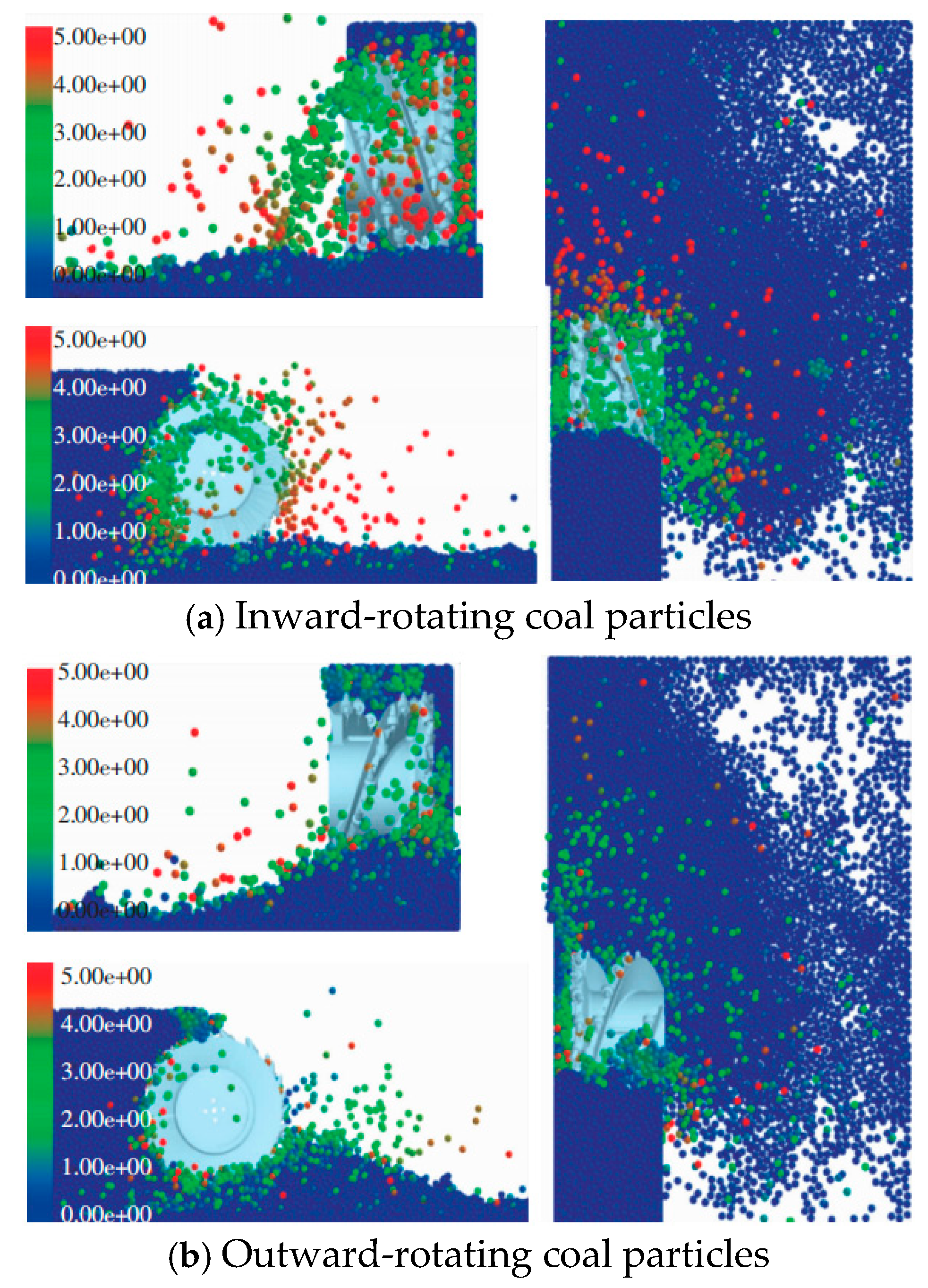
Discrete element simulations of the coal loading process were conducted under two cutting conditions: forward cutting (inward rotation) and reverse cutting (outward rotation). The simulations were performed within a coordinate system where the shearer drum cuts along the negative Y-axis. The parameter settings included a cutting depth of 750 mm, a traction speed of 10.8 m/min, and a drum rotational speed of 60 r/min. The particle transport characteristics for the different rotation directions are shown in Figure 11.
Compared with the outward-rotating loading mode, the inward-rotating spiral drum exerts a greater force on coal particles along the Z-axis, resulting in higher particle velocities upon contact with the drum. In contrast, coal particles in the outward-rotating mode exhibit more stable and lower velocity profiles. In terms of particle accumulation, the inward rotation yields a higher concentration of particles in the loading area than the outward rotation. Due to the weaker conveying effect of the outward-rotating blades, a large proportion of the cut coal particles fail to reach the loading area, instead accumulating between the drum and the ranging arm. Once the accumulation reaches a critical level, these coal particles are repeatedly broken by the drum during the cutting process, significantly reducing the loading efficiency.
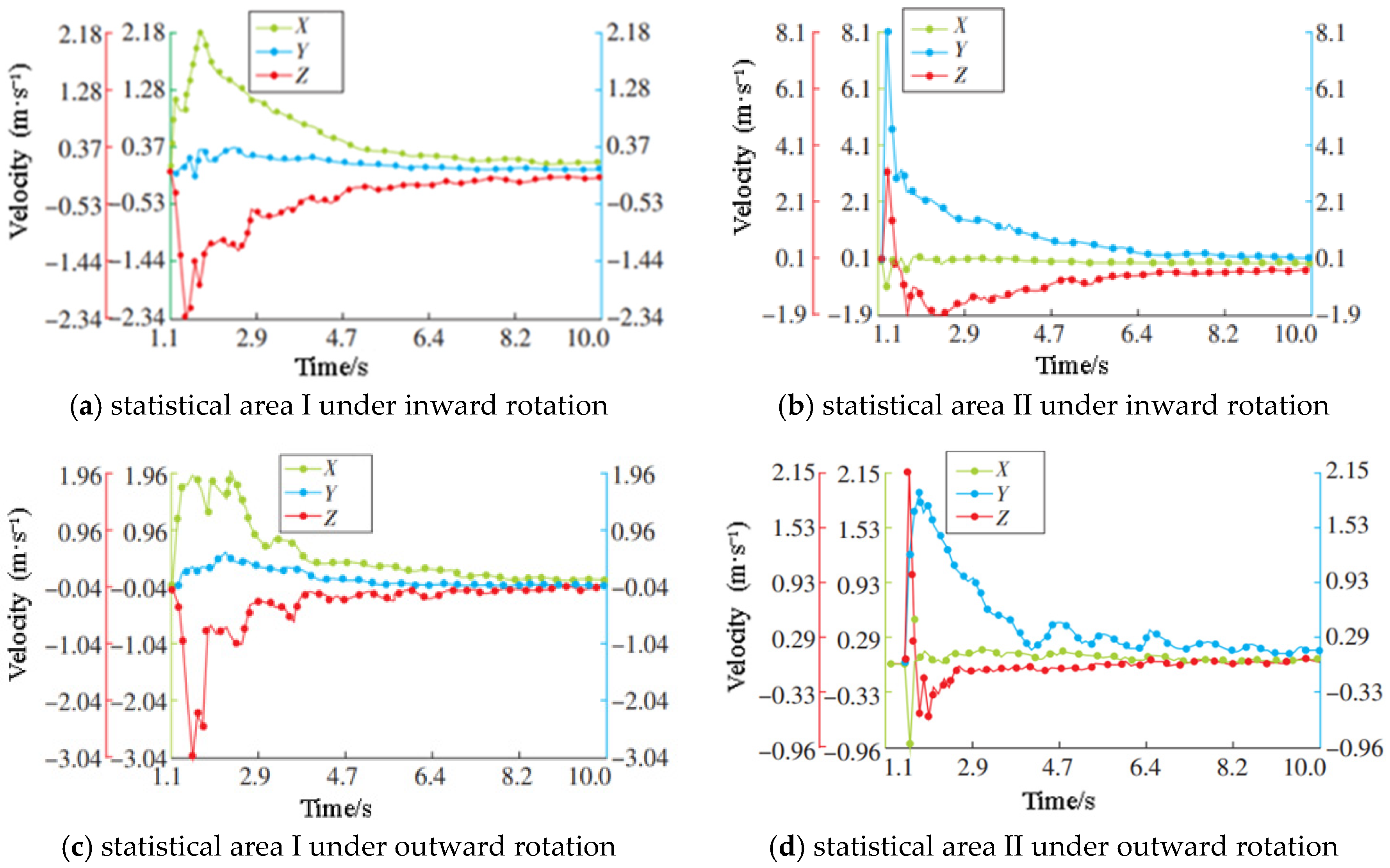
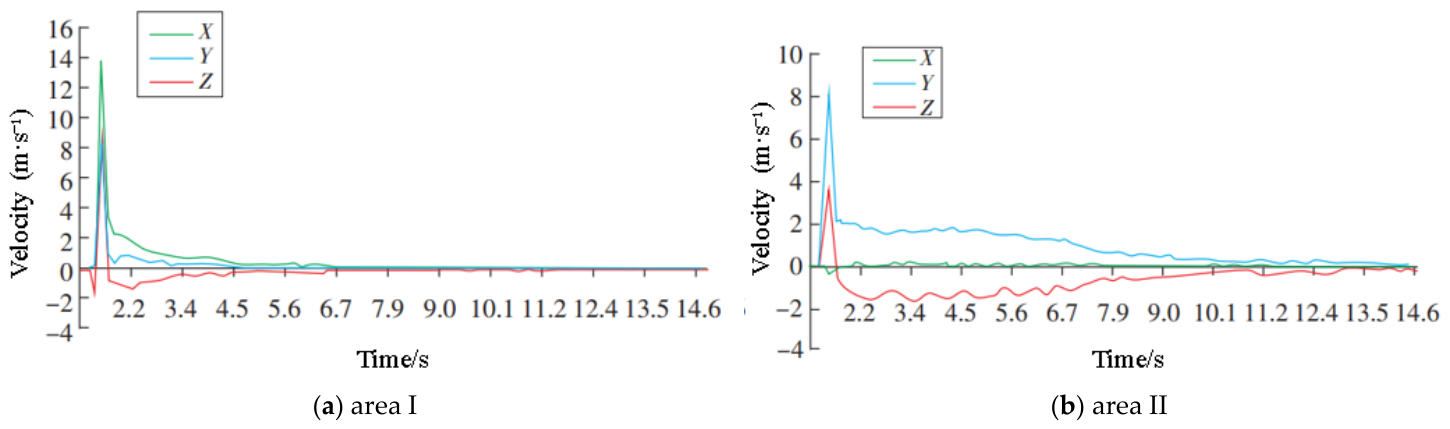
The velocity distribution characteristics of coal particles in the three principal axes within the statistical area during both inward and outward rotation of the spiral drum are presented in Figure 12. As evidenced by the data, statistical area I demonstrates that the mean particle velocity along the traction direction (Y-axis) exhibits a distinct stabilization trend during the initial cutting phase. Within this geological domain, particulate matter exhibits distinct kinematic characteristics: (1) along the X-axis, particle velocity undergoes rapid acceleration followed by deceleration, attributable to thrust and ejection effects; (2) along the Z-axis, gravitational effects induce similar initial velocity surges before stabilization, demonstrating characteristic terminal velocity behavior. In statistical area II, the X-directional velocity component of coal particles exhibits initial stabilization. The Y-directional mean velocity demonstrates a characteristic increase-decrease transition profile under traction effects, whereas the Z-directional component undergoes an abrupt variation prior to asymptotic stabilization.
Comparative analysis reveals distinct kinematic characteristics between the two rotational modes in areas with significant statistical variations. The inward-rotation configuration demonstrates prolonged velocity stabilization, along with greater fluctuation amplitudes and higher mean velocities. This phenomenon primarily stems from the enhanced ejection and thrust effects generated by the inward spiral drum, which promotes more favorable X- and Y-axis velocity components for efficient particle transport into the loading area.
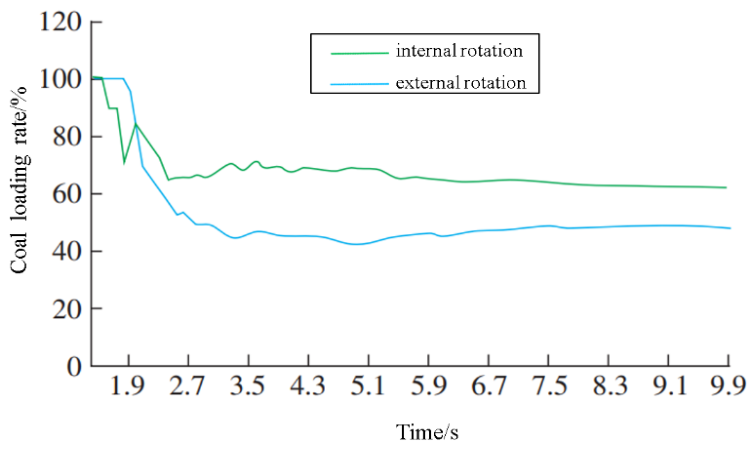
As illustrated in Figure 13, under steady-state conditions, inward-rotation cutting achieves a higher loading rate compared to outward-rotation cutting. During the initial cutting stage, the impact of inward-rotation picks causes some coal particles to enter Statistical Area II, as the spiral blade transport mechanism is not yet fully established. In contrast, outward-rotation cutting produces significant mechanical pushing, resulting in a higher initial particle flux into Area I and consequently a higher loading rate at the early stage. As the cutting process progresses, the guiding effect of inward rotation strengthens, allowing the loading rate to rapidly converge to a stable and high value. Based on this dynamic behavior, subsequent discrete element simulations adopted the inward-rotation cutting mode.

4.2.2. Influence of Drum Rotational Speed on Loading Performance

The coal loading process under varying drum rotational speeds was simulated with the spiral drum’s cutting depth set to 750 mm and a traction speed of 10.8 m/min. The rotational speed ranged from 30 to 75 r/min. The rotational speed range of 30–75 r/min was selected based on the commonly used operating range of thin-seam shearers in field practice. Within this interval, the variation in coal loading efficiency is relatively small, suggesting that drum rotational speed has a limited influence compared with other parameters. Consequently, 52 r/min, as the midpoint value of the investigated range, was adopted for the subsequent single-factor and orthogonal analyses.
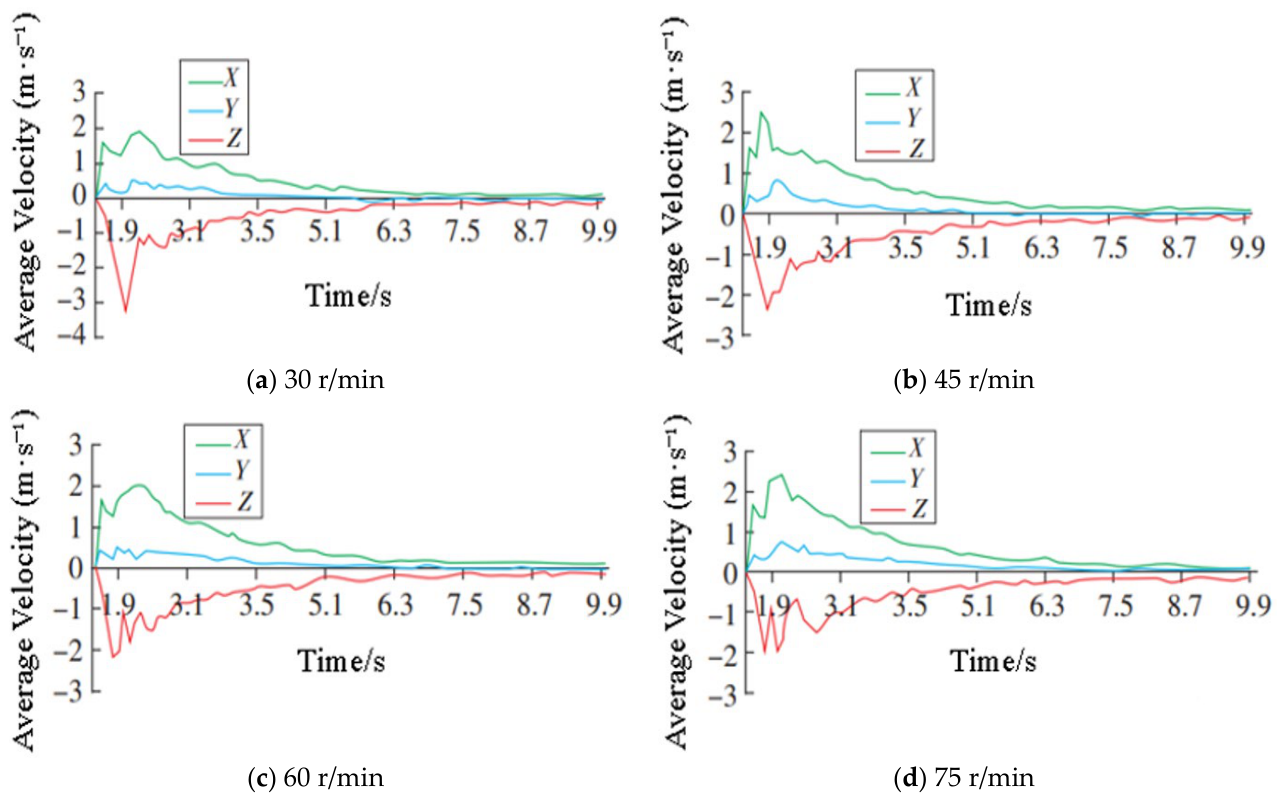
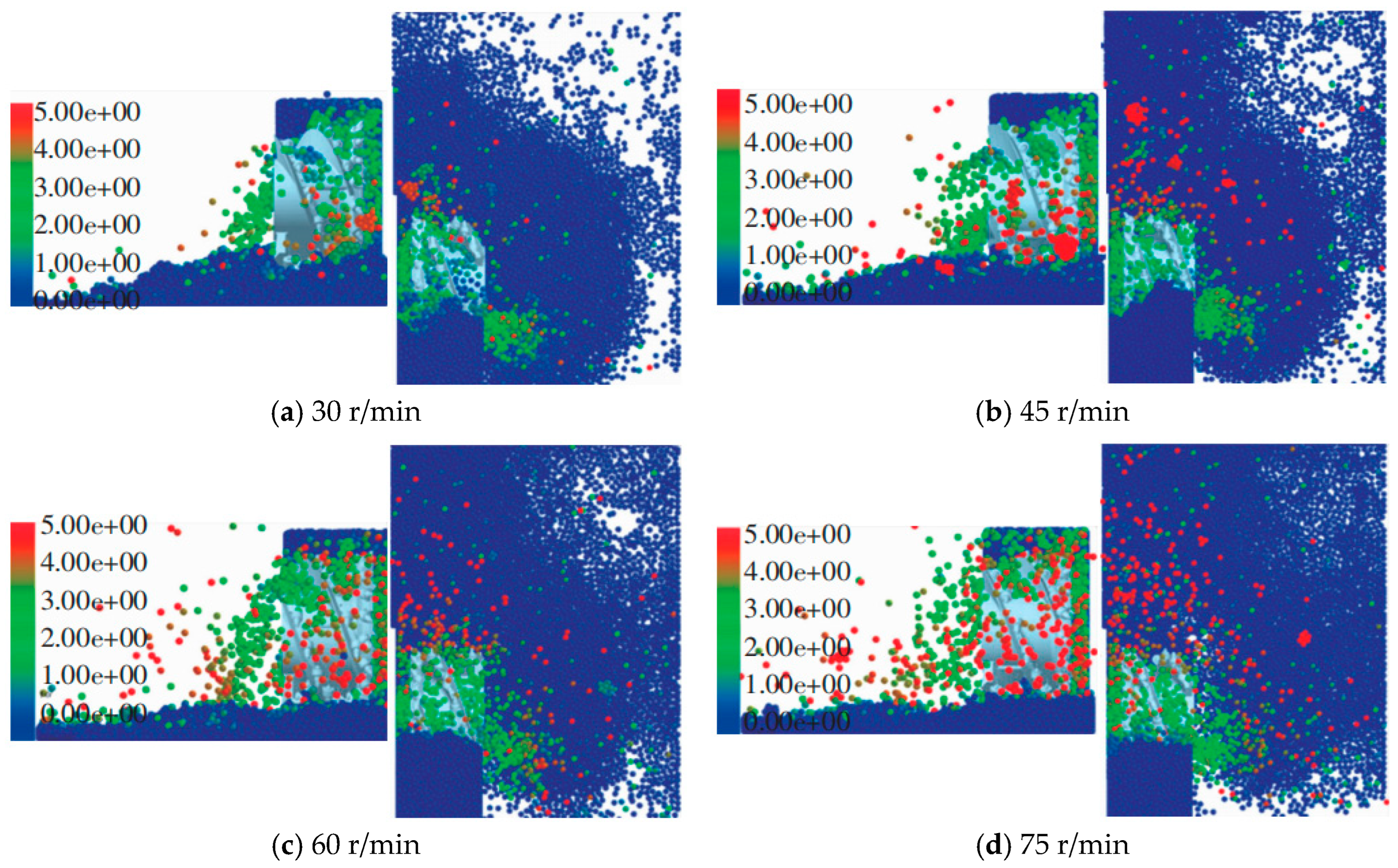
The simulation results are illustrated in Figure 14. As the rotational speed increases, coal particles are thrown further by the spiral drum, resulting in a higher number of particles entering statistical areas I and II.
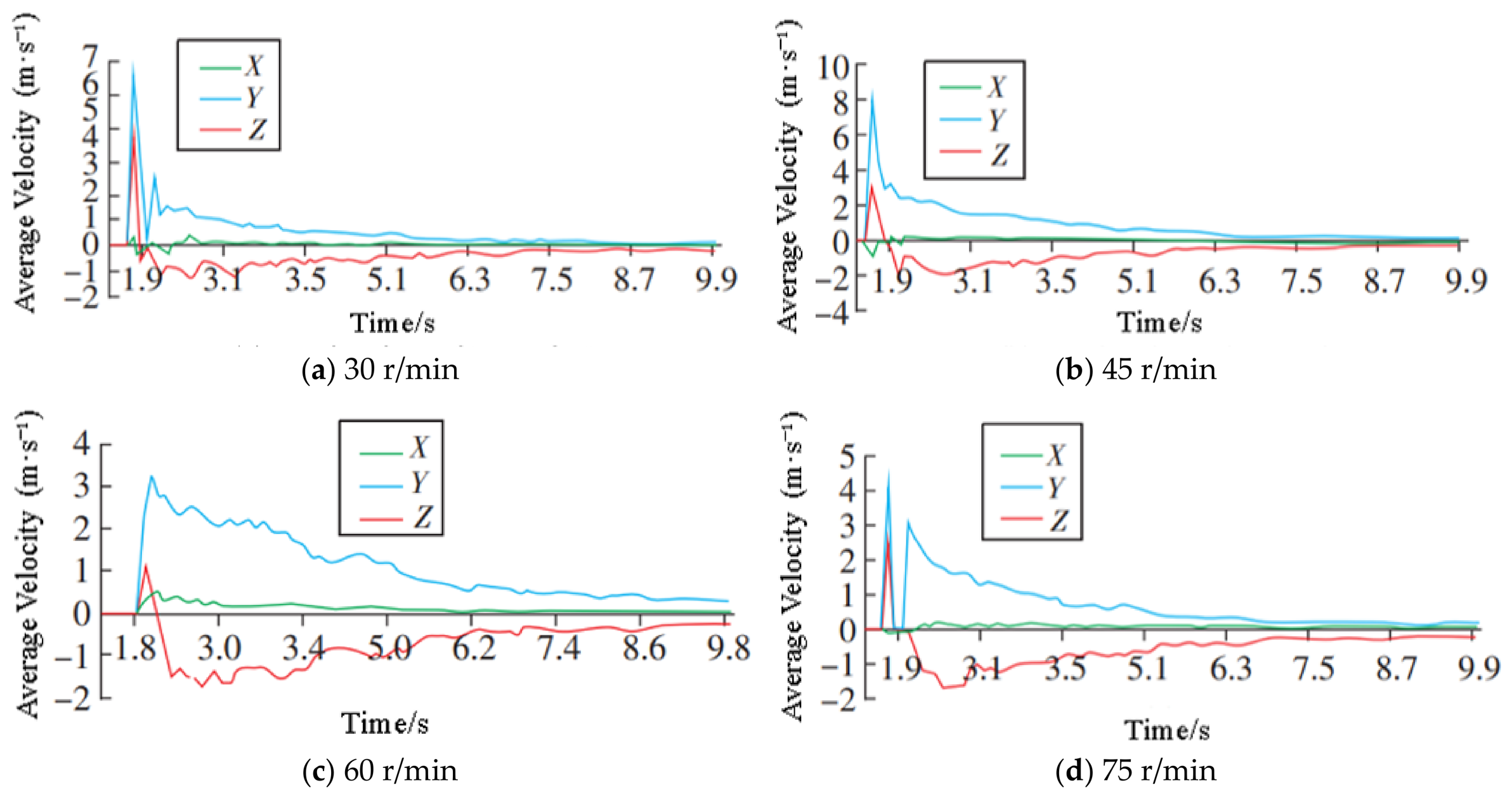
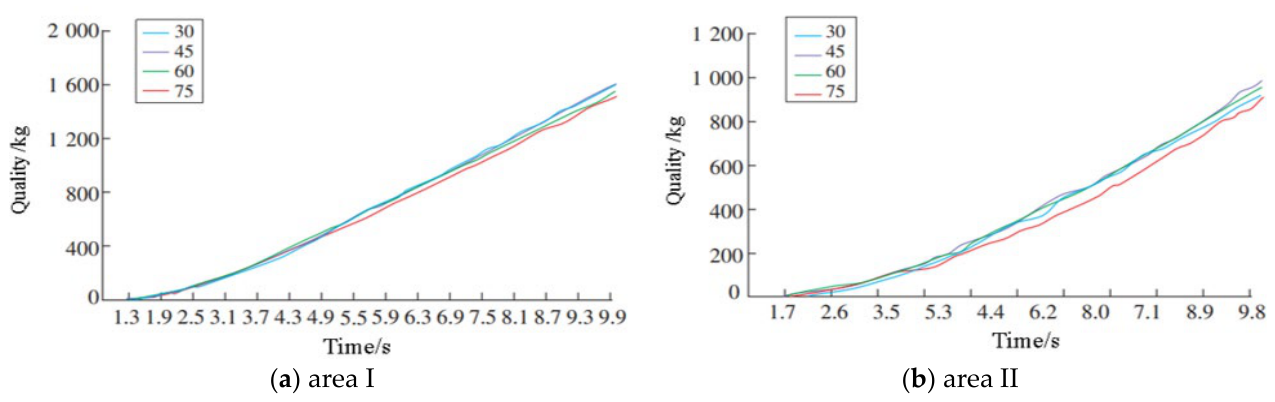
Statistical analysis of the average velocity of particles within areas I and II was conducted, as shown in Figure 15 and Figure 16. With the increase in drum speed, the particle velocity along the X-axis also increases under the coal loading action of the spiral vanes, leading to relatively minor variations overall. As shown in Figure 17, the variation in mass within different statistical areas was analyzed. An increase in drum speed caused some particles to be thrown beyond the computational domain. Consequently, the cumulative particle mass in statistical areas I and II shows only minor fluctuations or even slight decreases, indicating no significant change in the overall trend of particle mass accumulation.
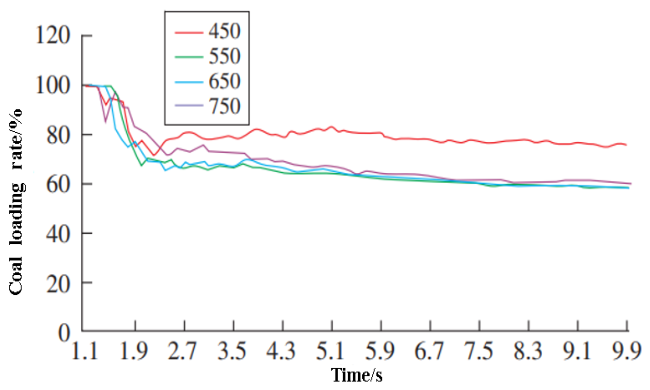
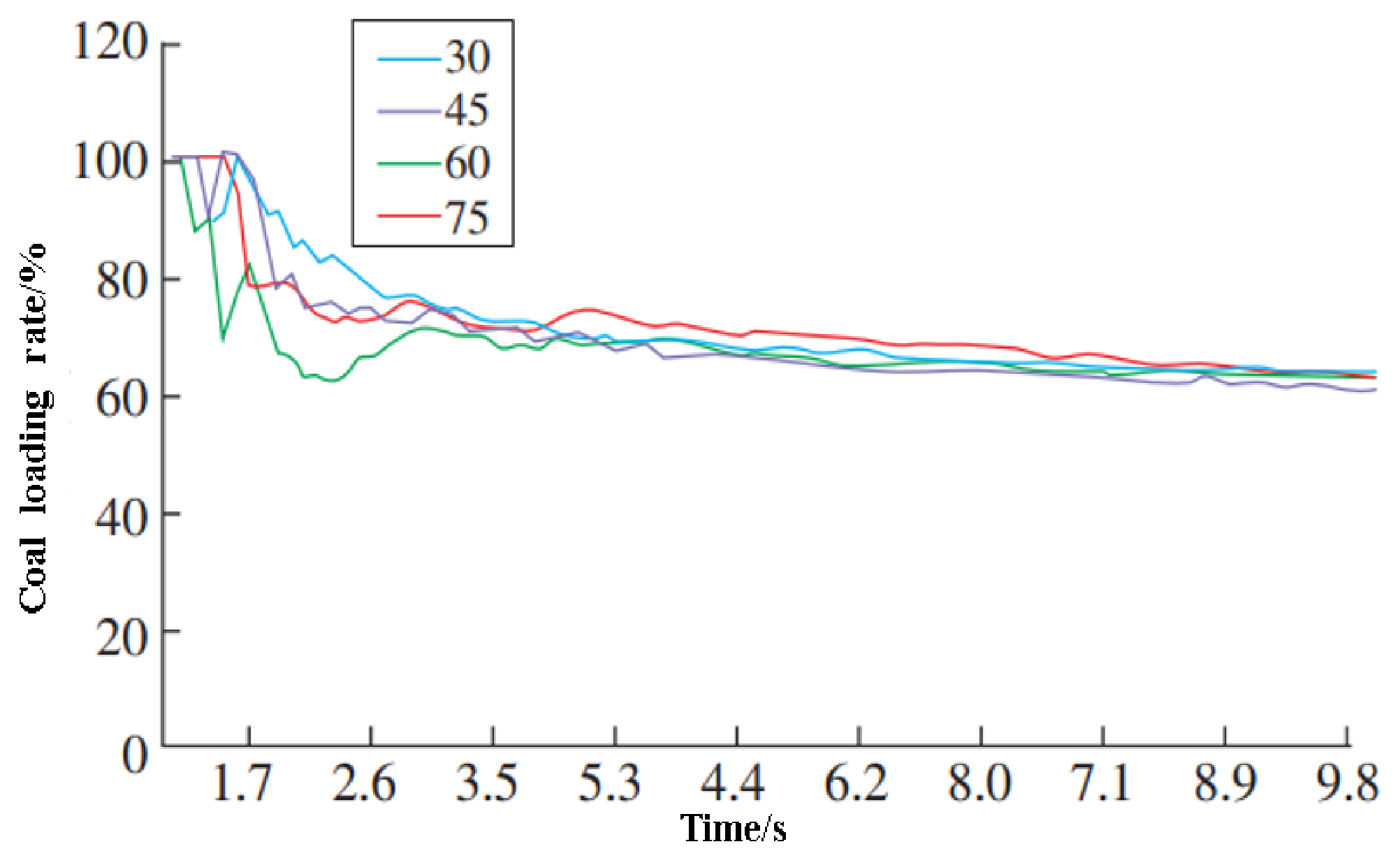
Figure 18 and Table 4 present the steady-state coal loading performance of the shearer under different drum rotational speeds. The results indicate that when the drum speed varies from 30 r/min to 75 r/min, the loading rate remains relatively stable, and changes in drum speed have little effect on loading performance. For subsequent analyses of other influencing factors, the drum speed was set to the midpoint value of 52 r/min to minimize the interference of rotational speed on the study of key parameters.

4.2.3. Influence of Cutting Depth on Coal Loading Performance

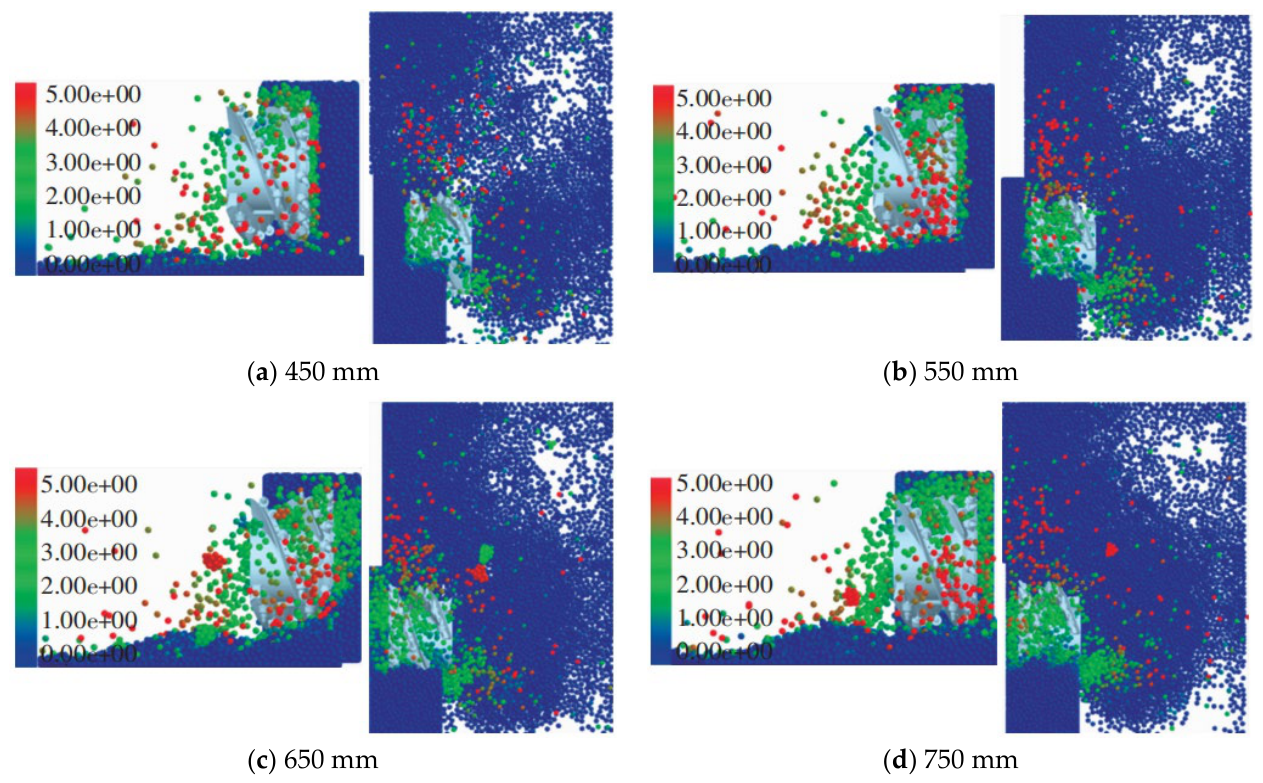
Numerical simulations were conducted to investigate the coal loading performance across varying cutting depths. The simulation parameters were configured as follows: spiral drum rotational speed at 52 rpm, traction speed maintained at 10.8 m/min, with cutting depth variations spanning 450–750 mm. The resultant coal loading characteristics are presented in Figure 19. The coal wall adjacent to the working face exhibits greater susceptibility to being conveyed towards the armored face conveyor under the propulsion of spiral vanes, while the fragmented coal particles generated by the end plate demonstrate limited direct accessibility to the loading area. As cutting depth increases, a substantial augmentation of coal particles entering the drum’s envelopment region is observed, thereby significantly enhancing the loading efficiency of the spiral drum. Consequently, the cumulative mass of particles within statistical area I demonstrates a progressive increase.
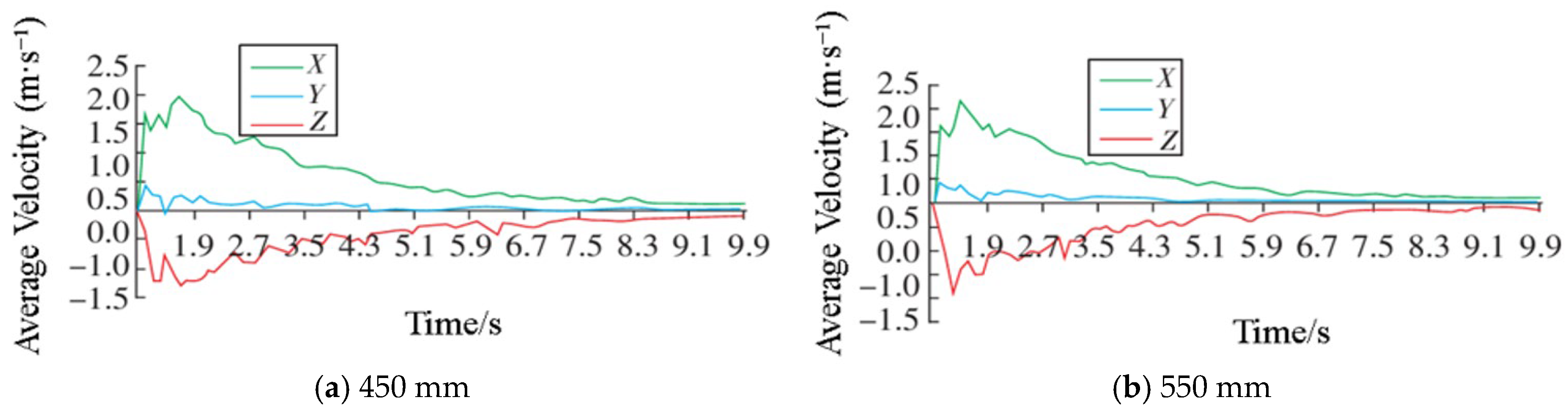
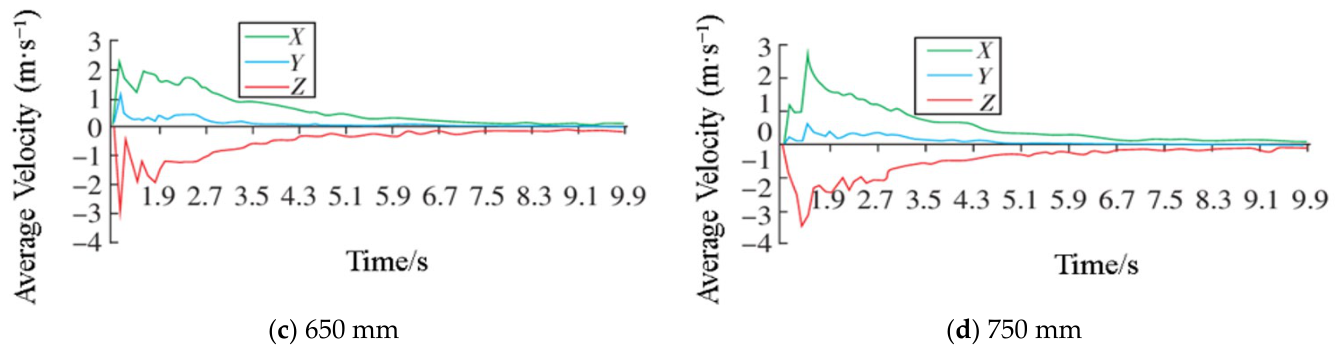
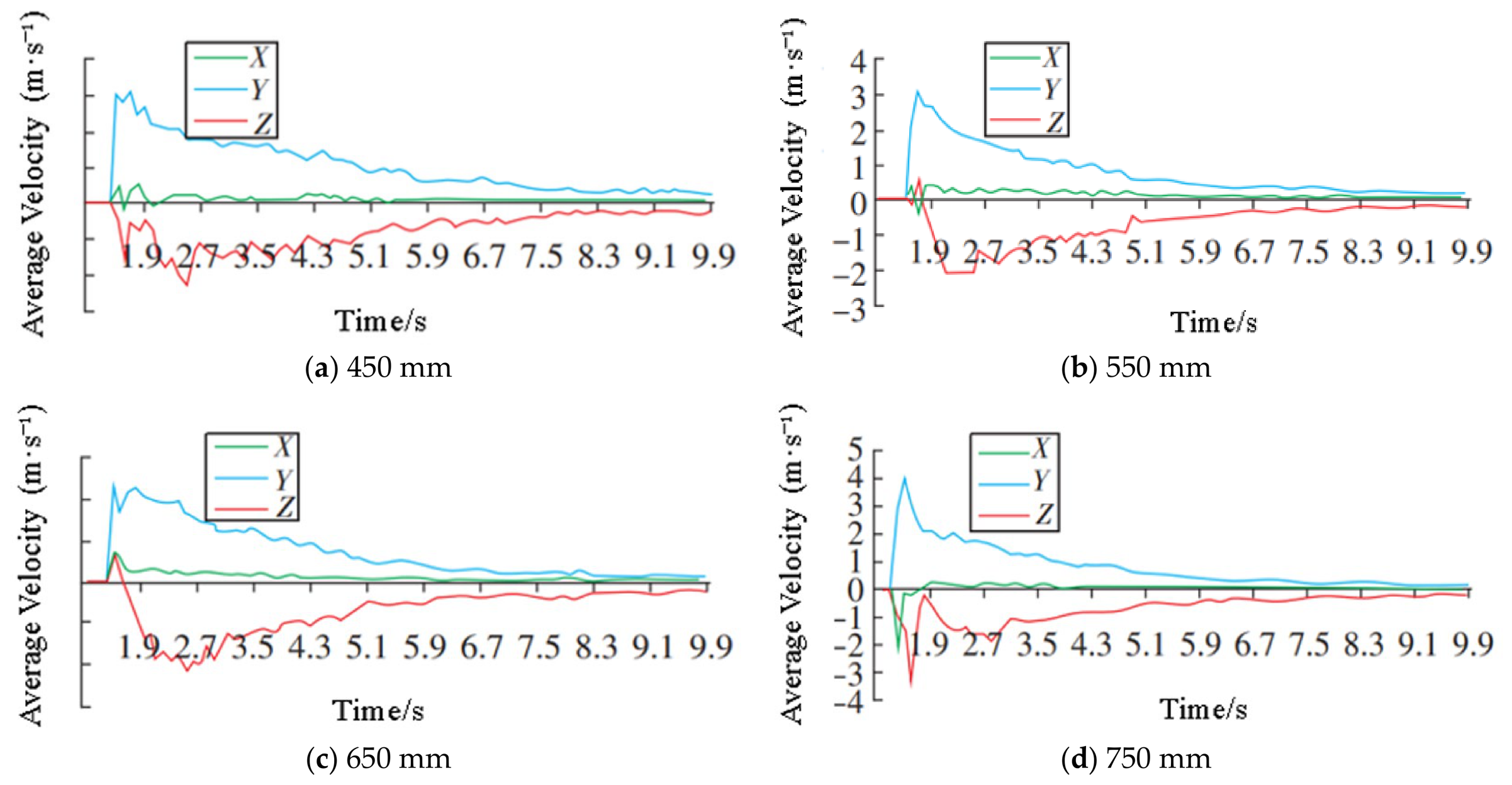
Figure 20 and Figure 21 present the comparative analysis of coal particle mean velocities in statistical areas I and II, respectively. The quantitative evaluation reveals that statistical area II exhibits a significantly higher mean velocity compared to statistical area I. This phenomenon can be attributed to the dynamic stabilization process, where coal particles entering statistical area I initially demonstrate higher mobility before reaching a steady-state condition. During the initial cutting phase, coal particles in statistical area I exhibit significant velocity components in both X and Y directions, while particles in statistical area II demonstrate predominant motion in the Y direction. The spiral drum’s ejection effect further amplifies this phenomenon, resulting in elevated regional average velocities, particularly in statistical area II, where Y-direction velocities are markedly higher. These comparative findings quantitatively demonstrate that cutting depth variations exert a pronounced influence on coal particle kinematics.
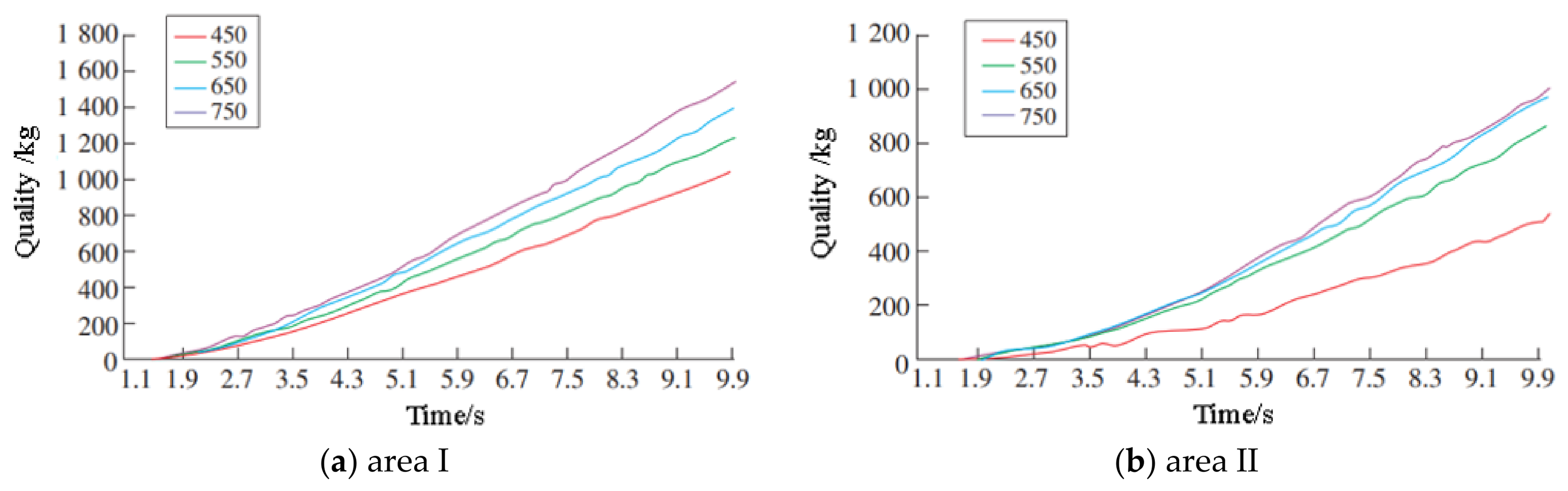
Figure 22 demonstrates that the cumulative mass of coal particles in both designated areas exhibits a consistent linear growth pattern throughout the cutting progression. The cumulative mass variations in particles across distinct statistical areas exhibit significant disparities at varying cutting depths. As cutting depth escalates, synchronous increases in particle accumulation are observed in both statistical area I (designated as effective output) and statistical area II.
Figure 23 and Table 5 present the coal loading performance characteristics of the spiral drum under varying cutting depth conditions. The experimental results demonstrate that distinct cutting depths correspond to differential coal fragmentation qualities, consequently leading to variations in the time required for the coal loading rate to achieve steady-state conditions. As the quantity of fragmented coal particles increases, interparticle contacts and particle-drum interactions intensify, resulting in diminished average velocity along the X-axis (drum axial direction) and consequent degradation of overall loading rate. The cumulative particle mass in both statistical area I and statistical area II exhibited a progressive increase corresponding to cutting depth increments. Notably, the accumulation rate in statistical area II demonstrated significantly higher values compared to statistical area I.
The experimental results demonstrate that as the cutting depth increases from 450 mm to 750 mm, the progressive augmentation in cutting depth results in a corresponding increase in the cumulative mass of coal particles. However, the disproportionate accumulation rate among statistical areas I and II induces a 4.5 percentage point reduction in the spiral drum’s loading rate (from 72.80% to 68.30%), which substantiates the significant correlation between cutting depth variation and coal loading performance.

4.2.4. Influence of Traction Speed on Coal Loading Performance

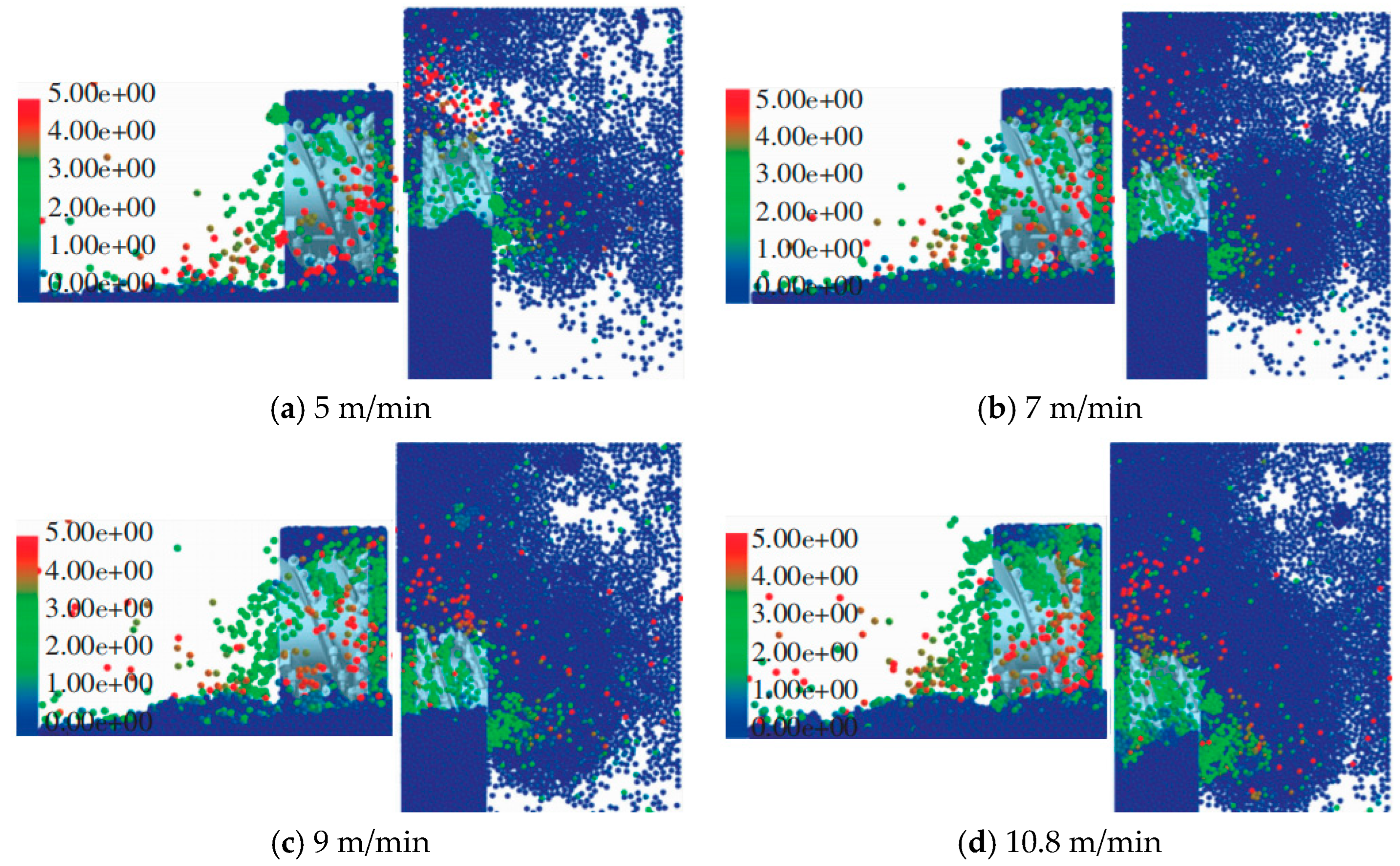
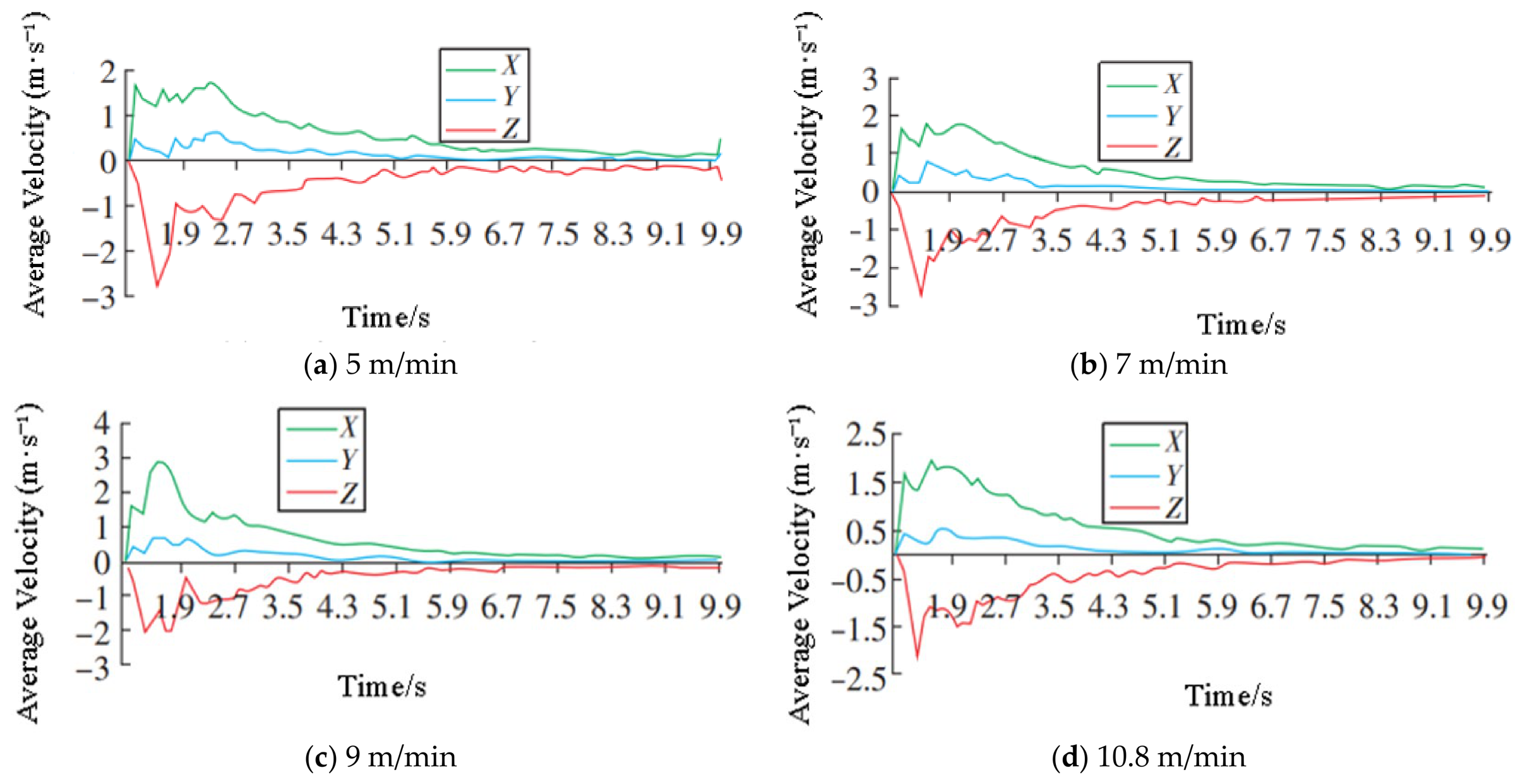
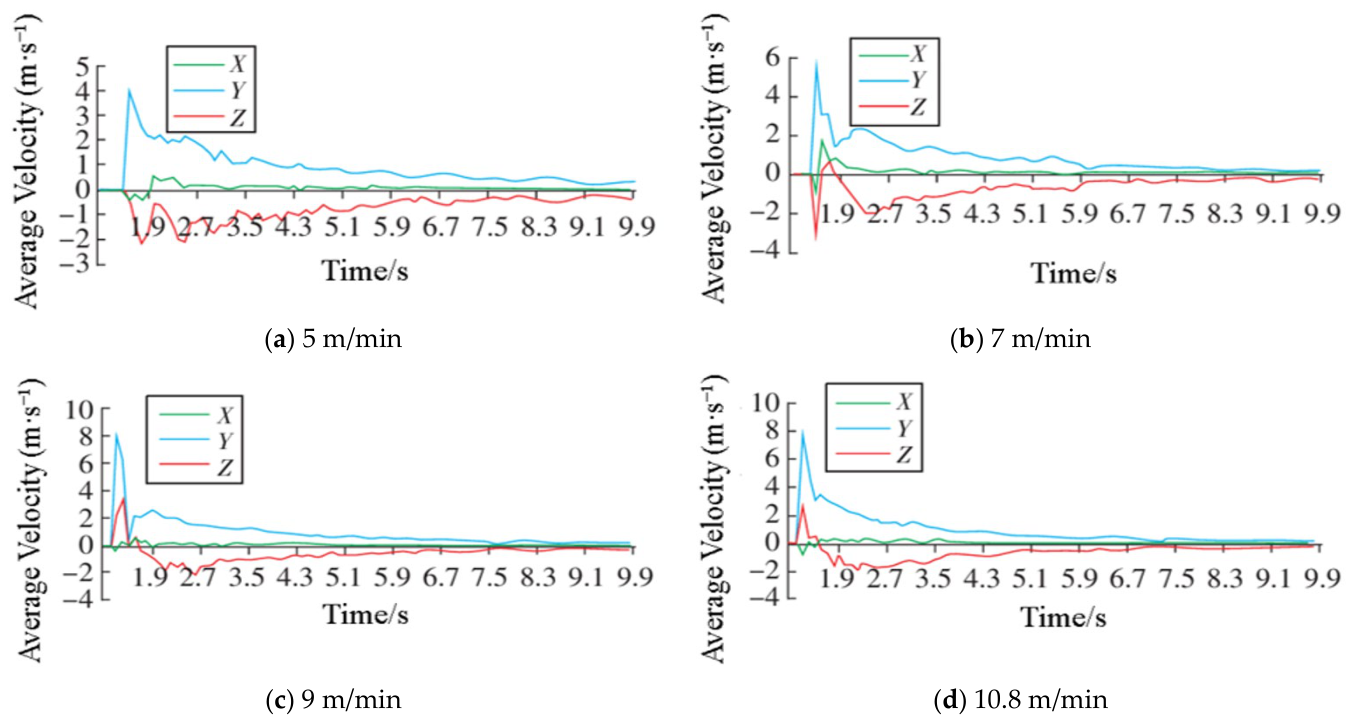
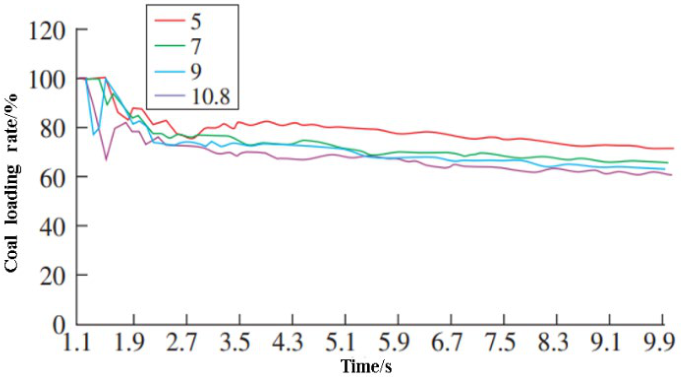
To investigate the coal loading performance under varying traction speeds, a series of simulations was conducted with the spiral drum’s rotational speed set at 52 r/min and a cutting depth of 750 mm. The traction speed ranged from 5 to 10.8 m/min. The simulation results are shown in Figure 24. Significant differences were observed in both the velocity distribution and the cumulative mass of coal particles under different traction speeds. As the traction speed increased, the drum’s pushing effect on the coal particles became more pronounced. This led to an increase in the X-direction velocity of particles near the loading area, making it easier for them to enter statistical area I. In addition, the enhanced traction speed intensified inter-particle interactions, causing a large number of particles to bypass the spiral vanes and be directly ejected into statistical area II. Along the drum’s axial direction, the acting force was relatively weak, and the drum relied on the spiral vanes to sweep coal into the loading area. Under such conditions, the vanes’ loading efficiency was limited. Compared to the influence of cutting depth, although the end plate side remained unchanged, the short cutting length made it difficult to accurately determine the optimal traction speed solely based on particle distribution patterns.
Figure 25 and Figure 26 present the average coal particle velocities in statistical areas I and II, respectively. In statistical area I, the average particle velocity initially increased and subsequently declined with the increase in traction speed. This trend is closely associated with the cutting length and the cumulative mass of fragmented coal. At longer cutting lengths, a greater proportion of rear-positioned coal particles reached a steady-state motion, thereby reducing the overall average velocity. Unlike the influence of cutting depth, the Y-direction velocity exhibited prolonged fluctuations. This phenomenon is attributed to the shorter particle–drum contact duration, which weakened the effectiveness of the spiral vanes, leading to a higher proportion of coal being diverted into the goaf area. Consequently, coal particles had to rely more on the pushing force of the ranging arm to be conveyed into the loading area.
As shown in Figure 26, the average velocity of particles in statistical area II demonstrated distinct variation patterns in response to changes in traction speed. The average Z-direction velocity increased with higher traction speeds due to the enhanced propulsion effect, making particles located near the end disk more likely to enter statistical area II. In contrast, the average X-direction velocity remained relatively consistent, indicating a limited influence from traction speed. In the Y-direction, velocity fluctuations diminished as traction speed increased, suggesting improved particle dynamic stability in this direction.
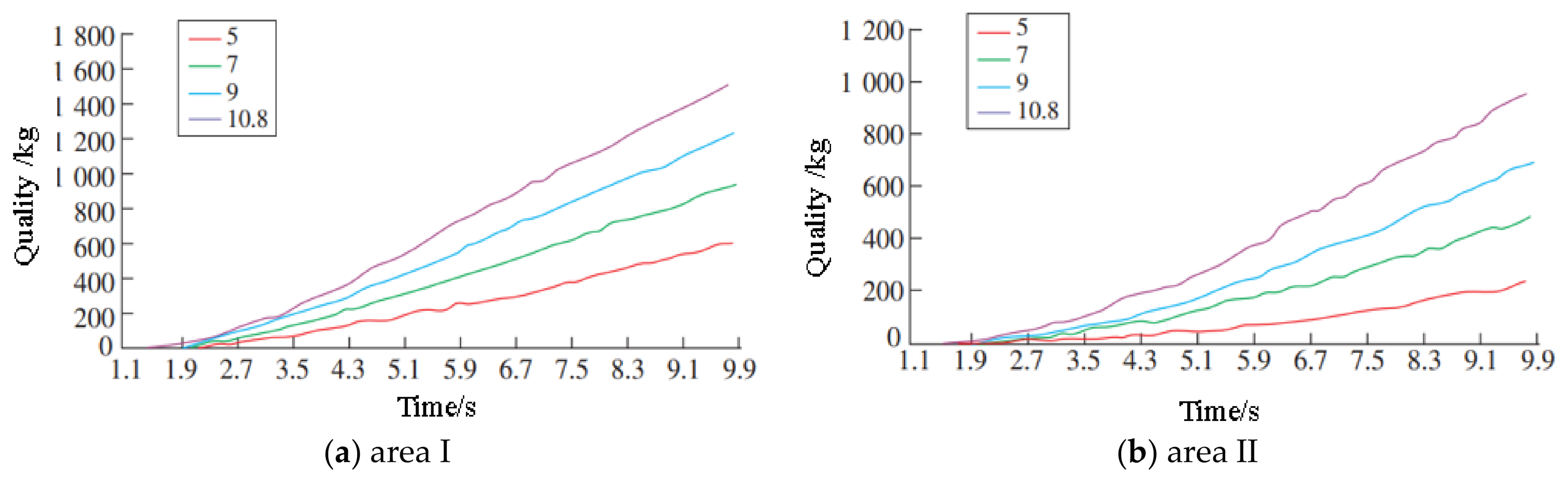
Figure 27 illustrates that during the cutting process, the cumulative coal mass within both statistical areas I and II increased progressively. However, due to variations in traction speed, the total volume of fragmented coal differed. Simultaneously, the quantity of coal particles also increased with higher traction speeds, resulting in greater cumulative mass within both statistical areas.
As shown in Figure 28, the Y-direction velocity (along the direction of the drum traction speed) of coal particles detached from the coal wall exhibited an increasing trend with rising traction speed. Meanwhile, the axial (Z-direction) velocity of particles showed a declining trend, indicating a reduction in the guiding effectiveness of the spiral vanes in directing particles toward the loading area. Consequently, a greater proportion of particles were ejected into the goaf area, thereby adversely affecting the coal loading rate of the spiral drum.
Table 6 presents the statistical evaluation of the spiral drum’s coal loading performance under stable cutting conditions across varying traction speeds. As indicated in the table, with increasing traction speed, the cumulative mass of coal particles in statistical area II exhibited a markedly higher growth rate compared to Area I. When the traction speed increased from 5 m/min to 10.8 m/min, although the overall coal throughput increased, the spiral drum’s loading efficiency declined from 71.12% to 67.08%. Further analysis revealed that the average particle velocity in Area I initially decreased and then increased with rising traction speed. The variation was most pronounced along the Y-axis, primarily due to alterations in the acting forces and motion trajectories of coal particles under different traction speeds.

4.2.5. Coupled Effect of Cutting Depth and Traction Speed

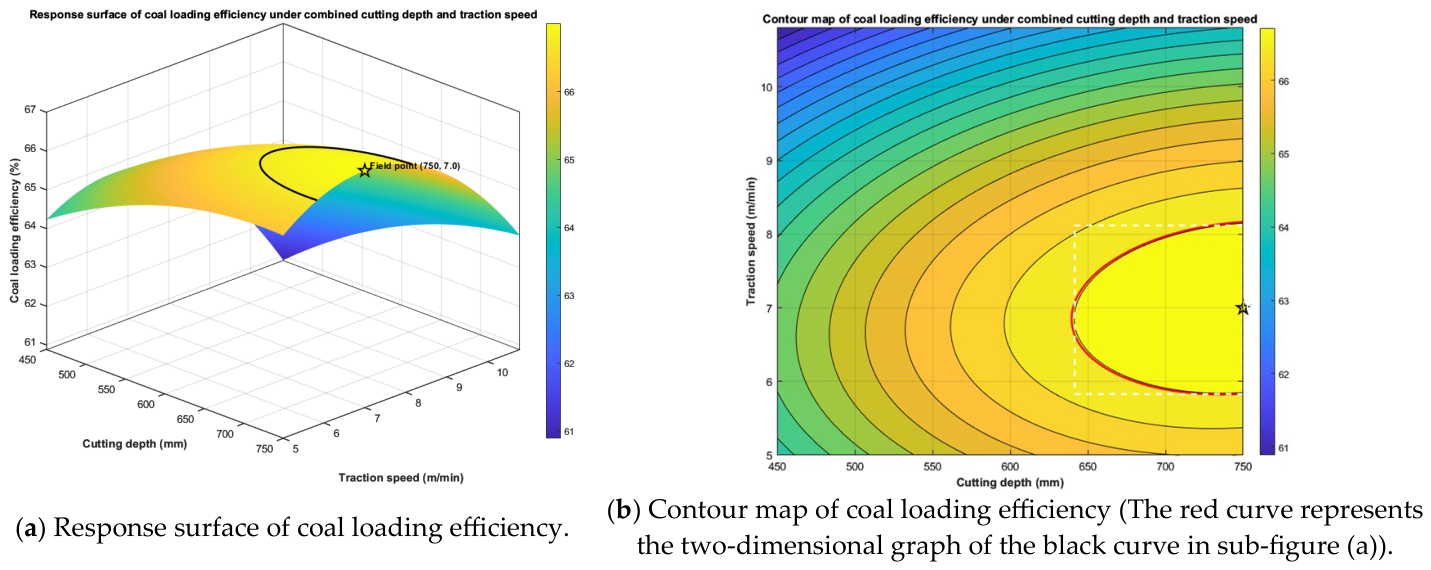
To further investigate the coupled effect of cutting depth and traction speed on coal loading performance, a two-dimensional response surface analysis was conducted. In this analysis, the helix angle and drum rotational speed were fixed at their optimized values of 20° and 52 r/min, respectively, and the inward rotation mode was adopted to isolate the interaction between the two variables. The corresponding response surface and contour map are presented in Figure 29.
As shown in Figure 29, coal loading efficiency is jointly influenced by cutting depth and traction speed, and this relationship cannot be fully described by independent single-factor analysis. The response surface exhibits a smooth variation trend, indicating that coal loading performance is governed by a coupled parameter effect rather than a single isolated variable.
Specifically, when the cutting depth is excessively large, or the traction speed is relatively high, coal loading efficiency decreases due to reduced transport stability and increased coal accumulation in non-effective regions. In contrast, a moderate cutting depth combined with a lower traction speed is more favorable for maintaining stable particle flow and improving coal loading continuity.
The contour map further reveals the existence of a high-efficiency region rather than a single optimal point. Within the investigated range, this region is centered around a cutting depth of approximately 750 mm and a traction speed of about 7 m/min, which is consistent with the parameter combination adopted in the field verification.
These results suggest that the optimization of coal loading performance should consider the coupled effect of cutting depth and traction speed, rather than relying solely on independent parameter optimization.

4.3. Coal Loading Performance Response Under Multi-Parameter Coupling

To identify the key factors influencing coal loading performance, an L16(44) orthogonal experimental design was employed. Four factors—helix angle, cutting depth, drum rotational speed, and traction speed—were assigned to the array columns for systematic analysis.
It should be noted that interaction effects between factors were not explicitly considered in this orthogonal design. The primary objective of this study was to identify the dominant factors affecting coal loading performance through main effect analysis.
Because the orthogonal design did not include repeated trials, the results are used here for relative factor ranking and sensitivity comparison rather than formal hypothesis testing. The specific parameter configurations and their simulation outputs are displayed in Table 7, and the factor sensitivity ranking regarding coal-loading efficiency is detailed in Table 8.
Based on prior rotational simulation experiments, it was confirmed that the inward-rotation cutting strategy outperformed the outward-rotation mode in terms of coal-loading efficiency. Therefore, all spiral drum models used in the orthogonal experiments were configured using inward rotation settings. According to the systematic analysis of experimental results in Table 8, the helix angle showed the strongest sensitivity affecting coal-loading efficiency. Cutting depth and traction speed had secondary effects, whereas drum rotational speed exerted minimal influence. Thus, optimization efforts for spiral drum cutting processes should prioritize adjustments to the helix angle to effectively enhance coal-loading performance. Due to the absence of replicate tests in the orthogonal design, the estimation of experimental error is limited. Therefore, the calculated F-ratio values are used here for relative comparison rather than strict statistical significance testing. The sensitivity ranking of influencing factors should be regarded as a preliminary result, which requires further validation through additional experiments or more rigorous statistical analysis.

5. Performance Verification and Engineering Validation

5.1. Optimization of Coal Loading Performance Parameters

To improve the coal loading performance of the thin seam shearer drum under constrained coal-flow space, a combined optimization strategy integrating single-factor simulations and orthogonal experiments was adopted. Consistent with previous studies showing that simulation-based optimization combined with field validation can effectively improve mining performance [33], the present work systematically evaluated the influence of drum rotation direction, helix angle, cutting depth, rotational speed, and traction speed on coal loading behavior using a DEM-based model. The results indicate that drum rotation direction, helix angle, and traction speed exert a pronounced influence on loading rate, whereas cutting depth and drum rotational speed have relatively minor effects. In particular, inward rotation provides a stronger coal-guiding effect and a more favorable particle transport trajectory than outward rotation, which is consistent with the throwing-type loading mechanism in thin coal seams.
Based on the single-factor results, an orthogonal experimental design was further employed to identify the dominant parameter combination. The orthogonal analysis indicates that the helix angle is the most influential factor affecting loading rate, followed by traction speed, while cutting depth and drum rotational speed play secondary or negligible roles. On this basis, the optimized parameter combination was determined as inward rotation, a 20° helix angle, a traction speed of 7 m/min, and a drum rotational speed of 52 r/min.
The selected traction speed of 7 m/min is determined based on both simulation results and field operational constraints. Simulation results indicate that this value achieves a balance between coal loading efficiency and particle transport stability, while also conforming to the typical operating range of the shearer under the given geological conditions. Under this condition, the simulated loading rate reached 73.6%, showing a clear improvement over the unoptimized conditions. The optimization results confirm that rotation-direction control can effectively strengthen coal guidance, reduce local accumulation, and improve coal transport continuity in thin seam mining conditions.
As shown in Figure 30, the average particle velocities in three directions were analyzed for both statistical areas. The corresponding particle mass variation is presented in Figure 31. The particle mass in Statistical Areas I and II reached 695.246 kg and 249.291 kg, respectively, resulting in a loading rate of 73.60%. The simulation optimization results indicate that the optimized parameter settings significantly improve coal loading performance.
Based on the optimized parameter combination identified in Section 5.1, field validation was further conducted at a fully mechanized mining face to verify whether the proposed rotation direction-based strategy can effectively improve coal loading performance under actual production conditions.

5.2. Real Case Study Validation

The field verification was conducted at the 1410 fully mechanized mining face, where the working face length was approximately 120 m, and the mining height corresponded to a typical thin-seam condition. The coal seam exhibited relatively stable geological conditions with moderate hardness. During the test, the shearer operated along the scraper conveyor under a bidirectional cutting mode, and the hydraulic supports were arranged sequentially along the working face to provide roof support. The underground environment was characterized by confined space and limited coal transport clearance, which placed strict requirements on the coal loading and conveying performance of the drum.
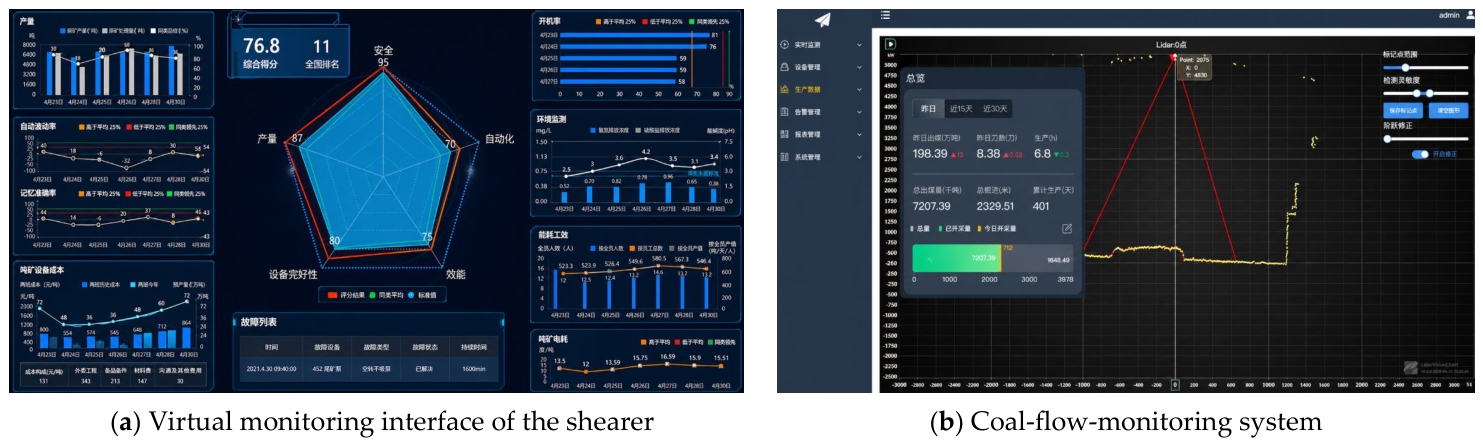
The field operating conditions were set to be consistent with the optimized simulation parameters to ensure comparability between the simulation and field results. The traction speed was maintained at 7 m/min, the drum rotational speed was 52 r/min, the helix angle was 20°, and the rotation direction was inward. In addition, the coal mechanical properties were represented by typical DEM parameters, including density, stiffness, and friction coefficients, which were calibrated based on laboratory data and relevant literature to reflect realistic coal fragmentation behavior under field conditions. The coal-flow monitoring at the fully mechanized mining face is based on real-time profile acquisition along the scraper conveyor, where the loaded coal contour is compared with the baseline profile of the empty conveyor to estimate the cross-sectional area, volume, and mass of the coal stream. This approach provides a quantitative and continuous basis for evaluating coal loading performance under actual operating conditions.
Figure 32 shows the integrated data acquisition and monitoring platform used in the field case. The virtual monitoring interface of the fully mechanized working face records key shearer operating parameters, including traction speed, drum rotational speed, voltage, and torque, while the coal-flow-monitoring system along the scraper conveyor captures the real-time transport state of the coal stream. Together, these two modules form a complementary validation framework, in which one side provides operational parameters and the other side provides coal-flow response data. This arrangement makes it possible to directly compare the coal-loading behavior under different operating conditions and verify the effectiveness of the optimized drum parameters in a practical mining environment.
During the production process of the shearer (MG2×200/920) with a φ1250 mm drum at the 1410 working face of a coal mine operated by Shaanxi Coal and Chemical Industry Group (Xi’an, China), severe coal accumulation was observed between the spiral drum and the ranging arm, resulting in reduced loading efficiency.
The cutting mode of the shearer was optimized by changing the rotation pattern from outward to inward. Based on the coal flow characteristics, the helix angle of the screw drum was re-optimized. Considering that the drum rotational speed has a negligible effect on the loading rate, it was kept unchanged. The haulage speed was set to 7 m/min. A single cutting cycle was defined as the completion of one full pass along a 120 m long working face. The time required for each cutting cycle of the shearer is defined as:
t = 2 L v s
Here, t denotes the time required for the shearer to complete one reciprocating cycle, v s represents the haulage speed of the shearer, and L is the length of the working face. To determine the actual number of cutting cycles performed in one day for the fully mechanized mining face, the following expression can be obtained:
n = 60 h t
Here, n denotes the number of cutting cycles completed by the shearer per day, and h represents the daily operating time of the shearer (i.e., 16 effective working hours per day), with the unit of hours. Under the conditions of a cutting depth of 750 mm and a mining height of 1.25 m, the coal volume extracted per cutting cycle of the shearer can be expressed as:
V = 2 L D C p t
Here, V denotes the coal volume mined by the shearer per day, D is the diameter of the shearer drum, and C p represents the cutting depth of the shearer. Since the coal density of this working face has been determined in the preceding section, the coal mass mined by the shearer in one cutting cycle can be expressed as:
m = V ρ
Here, m denotes the coal output per cutting cycle of the shearer (t/cut). Accordingly, the total daily coal production can be expressed as:
m t o t a l = n m
By substituting the corresponding parameters into the above equations, the daily coal production of the shearer is approximately 8400 t. Based on experimental optimization, the loading rate is improved by:
η = m t o t a l n b η a η a m t o t a l
Here, n b and n a denote the loading rate after and before optimization, respectively. By substituting the corresponding pre- and post-optimization efficiency values obtained in the preceding section, it can be determined that the proposed method improves the overall loading rate by 6.3%. This improvement represents the relative increase in field-tested loading efficiency compared with the pre-optimization baseline. In this study, the loading rate is defined as the ratio of the amount of coal effectively conveyed to the scraper conveyor to the total amount of coal cut within the same production period.
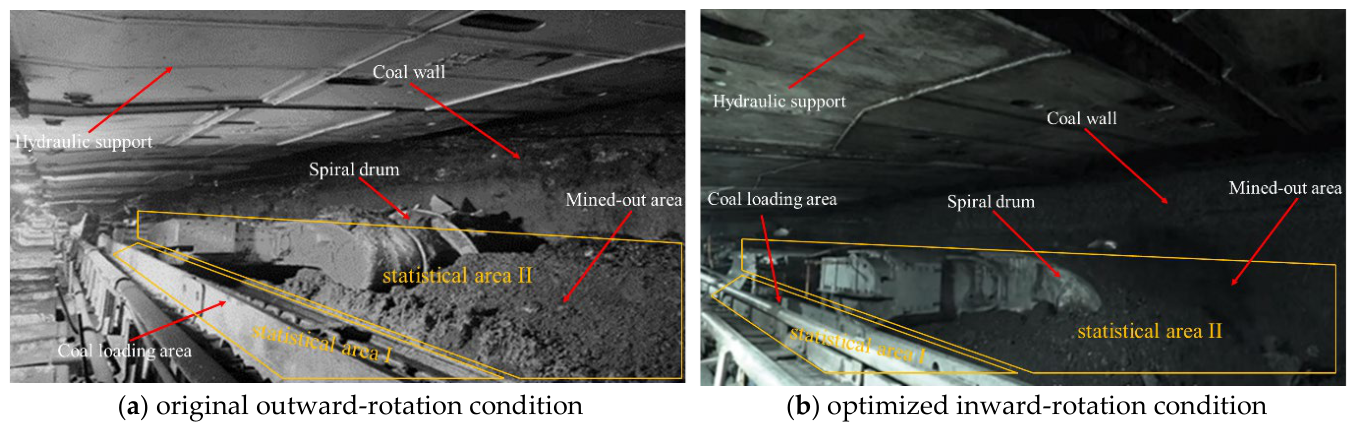
The post-optimization drum structure resulted in a significant expansion of the coal discharge space. The coal flow path shifted from the narrow region beneath the ranging arm to a more accessible area in front of the spiral drum, ensuring that loose coal remained below the scraper line and alleviating coal blockages under the ranging arm. This change notably improved the coal flow continuity and overall loading performance.
Due to the combined influence of the thin coal seam geological conditions, the relatively weak cohesion of the coal seam, and the outward-rotation cutting mode, the broken coal stream could not be effectively transported into the coal loading area and the scraper conveyor. As illustrated in Figure 33a, coal accumulation was observed beneath the ranging arm, while a substantial amount of coal remained in statistical area II and only a limited amount reached statistical area I.
After the drum design was optimized and the cutting mode was converted to inward rotation, the coal discharge space was expanded, and the coal flow path was improved, as shown in Figure 33b. The redesigned drum exhibited stronger cutting and sweeping capability in field operation, which reduced coal blockage beneath the ranging arm, improved coal flow continuity, and increased the proportion of coal delivered to statistical area I. These results confirm the practical effectiveness of the proposed optimization method for thin coal seam loading.
The field application results indicate that the actual loading efficiency increased by 6.3% after optimization, which is consistent with the simulation-based conclusions in Section 5.1. This agreement between the DEM predictions and the monitoring results demonstrates that rotation direction plays a decisive role in thin coal seam loading performance, and that the proposed inward-rotation sweeping strategy is practically effective for improving coal flow behavior under constrained space conditions.
Although the modified drum design improves coal discharge capacity and reduces coal accumulation beneath the ranging arm, its applicability is primarily limited to thin-coal-seam conditions with restricted coal-flow space. In addition, the optimized inward-rotation mode may increase the sensitivity of coal loading performance to traction-speed matching, and the long-term effects of wear, energy consumption, and maintenance demand were not evaluated in the present study. Therefore, the proposed design should be regarded as an effective but condition-specific solution for thin-seam coal loading optimization. Future work will further evaluate the durability and broader applicability of the optimized drum design under different geological and operating conditions. Moreover, the present DEM model does not explicitly consider the influence of pulverized coal and dust generated during cutting. These fine particles may affect local flow resistance and particle transport behavior in actual mining conditions. Thus, the current model is mainly applicable to coarse-particle coal loading analysis, and future work will investigate the influence of dust and fine particles using multi-scale DEM or CFD-DEM coupling methods.

6. Conclusions

A rotation direction-driven optimization strategy for the coal loading performance of thin seam shearer drums was established by combining DEM simulation, single-factor analysis, orthogonal experiments, and field validation. The results show that drum rotation direction, helix angle, and traction speed have a significant influence on coal loading performance, whereas cutting depth and drum rotational speed have a comparatively weak influence. Among these factors, rotation direction plays a decisive role in determining coal particle transport behavior and coal flow continuity.
Compared with outward rotation, inward rotation provides a stronger coal-guiding effect and a more favorable particle transport trajectory in the confined space of thin seams. Under inward-rotation conditions, the coal fragments are more effectively thrown toward the scraper conveyor, which reduces coal accumulation beneath the ranging arm and improves the continuity of coal transport.
The helix angle is the most influential geometric parameter among those investigated. A suitable helix angle helps balance coal fragmentation and particle guidance, thereby improving coal transport continuity in the confined space of a thin seam. The present study indicates that helix angle optimization is a key factor in enhancing the coal-loading capability of the proposed drum.
Traction speed has a noticeable influence on coal loading behavior, while drum rotational speed has only a minor effect within the tested range. Excessive traction speed is unfavorable to stable particle transport and weakens the guiding function of the spiral vanes, whereas drum rotational speed exerts a comparatively weaker influence on the overall loading behavior. These findings suggest that traction speed should be carefully matched with the drum structure to maintain stable coal flow.
The optimized parameter combination effectively improves coal loading performance and demonstrates good engineering applicability in thin seam mining. Field validation confirms that the proposed rotation direction-driven optimization strategy can reduce local coal accumulation, enhance coal flow continuity, and provide practical guidance for drum parameter selection in actual production.
The present study focuses on the influence of drum operating parameters, while the coal mechanical properties are treated as fixed material inputs. A more detailed sensitivity analysis of coal properties will be considered in future work.

Author Contributions

Conceptualization, L.H. and T.X.; methodology, L.H. and T.X.; software, Y.W. and H.C. (Haoqian Cai); validation, Y.W.; resources, H.C. (Hua Chen); writing—original draft preparation, T.X.; writing—review and editing, J.L. and H.C. (Haoqian Cai) All authors have read and agreed to the published version of the manuscript.

Funding

This research was supported by the Shaanxi Postdoctoral Science Foundation (2023BSHTBZZ44), Shaanxi University Youth Innovation Team Foundation (23JP096), China Postdoctoral Science Foundation (2022MD723828), and China National Natural Science Foundation (52204174).

Data Availability Statement

The original contributions presented in the study are included in the article, and further inquiries can be directed to the corresponding author.

Conflicts of Interest

The authors declare no conflicts of interest.

References

  1. Zhang, Y.; Zhang, C.; He, Z.; Li, C. Construction strategy of green alliance for energy mining supply chain from the perspective of policy combination. J. Clean. Prod. 2025, 501, 145315. [Google Scholar] [CrossRef]
  2. Wang, G.; Xu, Y.; Zhang, J.; Zhang, K.; Ma, Y.; Chen, H. New development of intelligent mining in coal mines. Coal Sci. Technol. 2021, 49, 1–10. [Google Scholar]
  3. He, L.; Pan, R.; Wu, Y.; Qiao, Y.; Xu, T.; Cao, X.; Zhang, X. Design of real-time data perception nodes and information models for mechanized-mining cells based on cyber-physical system (CPS). Coal Sci. Technol. 2025, 53, 363–374. [Google Scholar]
  4. Guo, A.; Zhang, Q.; Bai, Q.; Sun, H.; Yuan, R.; Feng, C.; Wang, S.; Li, B. Optimization of the Drawing Process of Low–Middle-Thickness Top Coal Based on a Simulation. Processes 2023, 11, 3048. [Google Scholar] [CrossRef]
  5. Zhao, L.; Wang, Y.; Zhang, M.; Jin, X.; Liu, H. Research on self-adaptive cutting control strategy of shearer in complex coal seam. J. China Coal Soc. 2022, 47, 541–563. [Google Scholar]
  6. Lao, J.; Chen, Z.; Wang, X.; Zhang, M.; Guo, J. Optimization of Coal Mining Machine Drum Structure and Microscopic Analysis of Coal Particle Flow. Energy Sci. Eng. 2025, 13, 1442–1456. [Google Scholar] [CrossRef]
  7. Xu, W.; Zhang, X.; Gao, K.; Ma, S. Influence of coal cowl parameters on the coal loading process of thin coal seam shearer drum. Sci. Rep. 2024, 14, 7006. [Google Scholar] [CrossRef]
  8. Lian, D.; Yuan, R.; Cui, K.; Ma, X.; Yuan, P.; Pan, K. Research and application of automatic production technology of fully mechanized longwall working face for complex condition coal seam. Coal Sci. Technol. 2025, 53, 412–421. [Google Scholar]
  9. Wu, Y.; Lang, D.; Yun, D.; Xie, P.; Wang, H.; Gao, X.; Luo, S.; Zeng, Y.; Lv, W.; Zhang, Y.; et al. Reform and prospects of mining technology for large inclined coal seam in China. Coal Sci. Technol. 2024, 52, 25–51. [Google Scholar]
  10. Zhou, G.; Zhang, X.; Liu, Z.; Shao, W.; Li, G.; Yan, G.; Bai, J.; Sun, B. The pollution mechanism of aerosol dust particles in continuous mining face: Real influence of dynamic rotation of continuous mining machine drum at different speed. Energy 2025, 315, 134354. [Google Scholar] [CrossRef]
  11. Zhu, L.; Yuan, C.; Li, H.; Huang, J. Dynamic and gradual coupled reliability analysis of the transmission system of a shearer cutting arm. Proc. Inst. Mech. Eng. Part O J. Risk Reliab. 2022, 236, 738–750. [Google Scholar] [CrossRef]
  12. Zhang, Q.; Wang, C.; Tian, Y. Study on shearer drum structure design and coal-breaking performance based on multi-impact picks for hard coal. Environ. Earth Sci. 2022, 81, 189. [Google Scholar] [CrossRef]
  13. He, L.; Gao, J.; Leng, J.; Wu, Y.; Ding, K.; Ma, L.; Liu, J.; Pham, D.T. Disassembly sequence planning of equipment decommissioning for industry 5.0: Prospects and Retrospects. Adv. Eng. Inform. 2024, 62, 102939. [Google Scholar] [CrossRef]
  14. Ding, C.; Yang, R.; Zheng, C.; Yang, L.; He, S.; Feng, C. Numerical analysis of deep hole multi-stage cut blasting of vertical shaft using a continuum-based discrete element method. Arab. J. Geosci. 2021, 14, 1086. [Google Scholar] [CrossRef]
  15. Ju, Y.; Wang, Y.; Su, C.; Zhang, D.; Ren, Z. Numerical analysis of the dynamic evolution of mining-induced stresses and fractures in multilayered rock strata using continuum-based discrete element methods. Int. J. Rock Mech. Min. Sci. 2019, 11, 3191–3210. [Google Scholar] [CrossRef]
  16. Gao, K.; Xu, W.; Jiang, S.; Du, C. Factors affecting thin coal seam shearer drum coal-loading performance by a model test method. J. Cent. South Univ. 2019, 26, 1619–1636. [Google Scholar] [CrossRef]
  17. Zhang, X.; Gao, K.; Zeng, Q.; Lin, L.; Wu, T.; Sun, L. Numerical Investigation of Effect of Drum Barrel on Coal-Loading Performance of Thin-Coal-Seam Shearer Machines. Machines 2022, 10, 253. [Google Scholar] [CrossRef]
  18. Zhao, L.; Zhang, M.; Shi, B.; Liu, X. Comprehensive performance analysis of a shearer drum in a complicated seam based on discrete element method. Proc. Inst. Mech. Eng. Part C J. Mech. Eng. Sci. 2022, 236, 2462–2477. [Google Scholar] [CrossRef]
  19. Zhang, M.; Zhao, L.; Shi, B. Coal falling trajectory and strength analysis of drum of shearer based on a bidirectional coupling method. Sci. Rep. 2024, 14, 9438. [Google Scholar] [CrossRef]
  20. Tian, Z.; Gao, S.; Ma, L.; Wang, H.; Ge, Y. Numerical simulation of coal particle motion characteristics in the envelope region of spiral drum based on discrete element method. Sci. Rep. 2025, 15, 1048. [Google Scholar] [CrossRef]
  21. Cai, C.; Li, J.; Zhai, C.; Wang, B.; Xue, J.; Dong, Z.; Zhu, Z. Crack propagation characteristics in shale under cyclic in situ methane detonation impact fracturing. Energy Fuels 2026, 40, 6064–6082. [Google Scholar] [CrossRef]
  22. Zhang, H.; Li, G.; Xu, Y.; Zhang, K.; Li, M. Mechanism and application of reaming anchorage of inverted wedge-shaped hole bottom in argillaceous cemented roadway. Sci. Rep. 2026, 16, 5094. [Google Scholar] [CrossRef]
  23. Zhang, B.; Jiang, W.; Zhang, H.; An, Y. Optimization Design of Deep-Coalbed Methane Deliquification in the Linxing Block, China. Processes 2024, 12, 1318. [Google Scholar] [CrossRef]
  24. Gao, K.; Zhang, W.; Zhang, Y.; Xu, W.; Sun, L. The Study of Water Content on the Coal Loading Performance of Thin Coal Seam Shearer Drum by Discrete Element Method (DEM). Eng. Rep. 2024, 7, e13046. [Google Scholar] [CrossRef]
  25. Tian, Z.; Zhao, L.; Zhou, W.; Ma, L.; Le, T. Application of discrete element technology to study on coal loading performances of spiral cutting drum. Coal Sci. Technol. 2018, 46, 135–139. [Google Scholar]
  26. Tian, Z.; Zhao, L.; Liu, X.; Ma, L.; Fan, M. Loading performance of spiral drum based on discrete element method. J. China Coal Soc. 2017, 42, 2758–2764. [Google Scholar]
  27. Tian, Z.; Jing, S.; Zhao, L.; Liu, W.; Gao, S. Numerical simulation on coal loading process of shearer drum based on discrete element method. Energy Explor. Exploit. 2021, 39, 1919–1938. [Google Scholar] [CrossRef]
  28. Gao, K.; Zhang, X.; Sun, L.; Zeng, Q.; Jiang, K. Loading Performance of a Novel Shearer Drum Applied to Thin Coal Seams. Energies 2021, 14, 358. [Google Scholar] [CrossRef]
  29. Liu, J.; Ma, C.; Zeng, Q.; Gao, K. Discrete Element Simulation of Conical Pick’s Coal Cutting Process under Different Cutting Parameters. Shock Vib. 2018, 2018, 975141. [Google Scholar] [CrossRef]
  30. Zhao, L.; Jin, X.; Zhao, Y.; Wang, B. Discrete element simulation analysis on the wear characteristics of drum in coal seam with gangue. J. China Coal Soc. 2020, 45, 3341–3350. [Google Scholar]
  31. Mao, J.; Liu, X.; Chen, H.; Song, Q. Simulation of shearer drum cutting performance based on EDEM. J. China Coal Soc. 2017, 42, 1069–1077. [Google Scholar]
  32. Gao, K.; Du, C.; Liu, S.; Fu, L. Model test of helical angle effect on coal loading performance of shear drum. Int. J. Min. Sci. Technol. 2012, 22, 165–168. [Google Scholar] [CrossRef]
  33. Zhang, F.; Wang, H. Optimization of Drilling Parameters in Influence Area of Gas–Solid Interaction during Parallel Drilling Hole. Processes 2023, 11, 2371. [Google Scholar] [CrossRef]
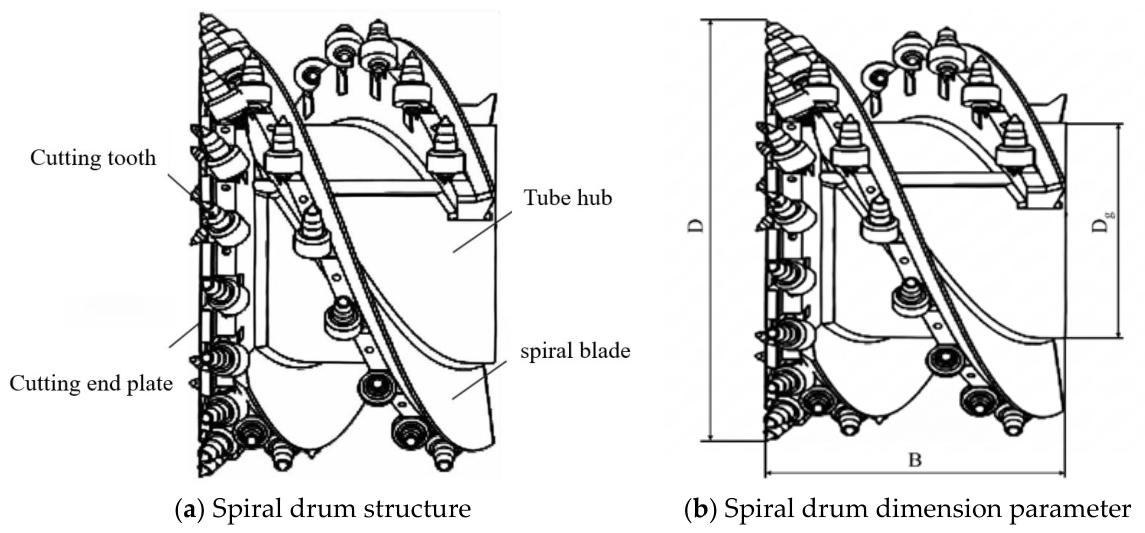
Figure 1. Spiral drum basic parameter.
Processes 14 01416 g001
Figure 2. Spiral blade rotation.
Processes 14 01416 g002
Figure 3. Spiral drum model.
Processes 14 01416 g003
Figure 4. Internal rotation (throwing-type) coal loading mechanism.
Processes 14 01416 g004
Figure 5. External rotation (pushing-type) coal loading mechanism.
Processes 14 01416 g005
Figure 6. Force analysis of a coal particle on the spiral blade.
Processes 14 01416 g006
Figure 7. Variation in loading rate with traction speed under different cutting depths.
Processes 14 01416 g007
Figure 8. Bonds formed between particles.
Processes 14 01416 g008
Figure 9. Range analysis of influencing factors on loading rate.
Processes 14 01416 g009
Figure 10. Regional division of coal particle quality statistics.
Processes 14 01416 g010
Figure 11. Velocity distribution of particles with different rotational directions.
Processes 14 01416 g011
Figure 12. Changes in three-directional mean velocities in statistical areas with different rotational directions.
Processes 14 01416 g012
Figure 13. Change in coal loading rate.
Processes 14 01416 g013
Figure 14. Velocity distribution of coal particles at different rotational speeds.
Processes 14 01416 g014
Figure 15. Average coal particle velocity in statistical area I at different drum speeds.
Processes 14 01416 g015
Figure 16. Average coal particle velocity in statistical area II at different drum speeds.
Processes 14 01416 g016
Figure 17. Coal mass variation with time under different drum speeds.
Processes 14 01416 g017
Figure 18. Variation in coal loading rate with time under different drum rotational speeds.
Processes 14 01416 g018
Figure 19. Velocity distribution of coal particles at different cutting depths.
Processes 14 01416 g019
Figure 20. Average coal particle velocity in statistical area I at different cutting depths.
Processes 14 01416 g020aProcesses 14 01416 g020b
Figure 21. Average coal particle velocity in statistical area II at different cutting depths.
Processes 14 01416 g021
Figure 22. Coal mass variation with time under different cutting depths.
Processes 14 01416 g022
Figure 23. Variation in coal loading rate with time under different cutting depths.
Processes 14 01416 g023
Figure 24. Velocity distribution of coal particles at different traction speeds.
Processes 14 01416 g024
Figure 25. Average coal particle velocity in statistical area I at different traction speeds.
Processes 14 01416 g025
Figure 26. Average coal particle velocity in statistical area II at different traction speeds.
Processes 14 01416 g026
Figure 27. Coal mass variation with time under different traction speeds.
Processes 14 01416 g027
Figure 28. Variation in coal loading rate with time under different traction speeds.
Processes 14 01416 g028
Figure 29. Coupled effect of cutting depth and traction speed on coal loading efficiency.
Processes 14 01416 g029
Figure 30. Average velocity change in three directions in different statistical areas.
Processes 14 01416 g030
Figure 31. Cumulative mass of statistical areas.
Processes 14 01416 g031
Figure 32. Integrated monitoring and data acquisition system at the fully mechanized working face.
Processes 14 01416 g032
Figure 33. Field verification of coal loading performance before and after drum optimization.
Processes 14 01416 g033
Table 1. Spiral drum structure parameters.
ParameterDrum Width/mmHub Diameter/mmDrum Diameter/mmHelix Angle/(°)Pick ArrangementNumber of Blade PicksNumber of End PicksNumber of Blade Heads
Data768600125020Sequential21183
Table 2. Results of orthogonal experimental design for loading rate under different combinations of traction speed, cutting depth, and drum rotation speed.
Physical and Mechanical PropertiesDensity (kg/m3)Compressive Strength (MPa)Shear Modulus (MPa)Poisson’s RatioElastic Modulus (MPa)Protodyakonov Scale of Hardness
Index133220.0617840.2351242.0
Table 3. Contact properties between components and materials.
Contact RelationshipCoefficient of
Restitution
Static Friction CoefficientDynamic Friction
Coefficient
Coal-Coal0.640.3290.05
Coal-Gangue0.650.460.032
Coal-Steel0.530.30.027
Gangue-Steel0.50.30.03
Table 4. Comparison of coal loading performance at different drum speeds.
Speed
(r/min)
Avg. Velocity in Statistical Area I (m/s)Avg. Velocity in Statistical Area II (m/s)Cumulative Mass (kg)Loading
Rate (%)
XYZXYZArea 1Area 2
300.4910.072−0.4530.0490.094−0.1201588.73674.53870.20
450.5240.102−0.4590.5240.102−0.1211600.61770.10667.52
600.5620.123−0.4490.0480.178−0.0971542.93741.54967.53
750.6270.193−0.4580.0510.244−0.1031514.94666.05669.46
Table 5. Comparison of coal loading performance at different cutting depths.
Cutting Depth (mm)Avg. Velocity in Statistical Area I (m/s)Avg. Velocity in Statistical Area II (m/s)Cumulative Mass (kg)Loading Rate (%)
XYZXYZArea 1Area 2
4500.573 0.063 −0.416 0.066 0.920 −0.726 1067.64 397.92 72.80
5500.557 0.075 −0.436 0.104 0.699 −0.661 1201.70 479.63 71.50
6500.667 0.109 −0.476 0.101 0.660 −0.642 1399.58 585.76 70.40
7500.529 0.094 −0.457 0.033 0.750 −0.633 1552.26 722.33 68.30
Table 6. Comparison of coal loading performance at different traction speeds.
Traction Speed (m/min)Avg. Velocity in Statistical Area I (m/s)Avg. Velocity in Statistical Area II (m/s)Cumulative Mass (kg)Loading Rate (%)
XYZXYZArea 1Area 2
50.0510.244−0.1030.0670.858−0.693628.82255.3771.12
70.5490.121−0.4580.0920.807−0.608968.96431.5669.25
90.5810.122−0.4520.0690.875−0.5311281.96580.2368.84
10.80.5340.103−0.4280.0570.891−0.5751573.75772.3767.08
Table 7. Orthogonal test results.
Serial NumberHelix Angle (°)Cutting Depth (mm)Drum Speed (r/min)Traction Speed (m/min)Loading Rate (%)
11045030566.95
21055045765.20
31065060963.80
4107507510.862.36
51445045970.36
6145503010.866.35
71465075570.16
81475060766.62
9184506010.869.05
101855075971.10
111865030771.55
121875045569.25
132245075770.62
142255060571.70
15226504510.866.87
162275030965.10
Table 8. Factor sensitivity ranking results.
FactorHelix Angle (°)Cutting Depth (mm)Drum Speed (r/min)Traction Speed (m/min)
Sum of Squares69.66527.3502.33126.662
Degrees of Freedom3333
F-Ratio8.6753.4060.2903.320
Range5.6593.4121.0723.533
Disclaimer/Publisher’s Note: The statements, opinions and data contained in all publications are solely those of the individual author(s) and contributor(s) and not of MDPI and/or the editor(s). MDPI and/or the editor(s) disclaim responsibility for any injury to people or property resulting from any ideas, methods, instructions or products referred to in the content.