Article

Remediation of Per- and Polyfluoroalkyl Substances by Single-Step Foam Fractionation Enhanced Soil Washing: Concentration Profiles and Mass Balance


Waste Science and Technology, Department of Civil, Environmental and Natural Resources Engineering, Luleå University of Technology, 97187 Luleå, Sweden
*
Author to whom correspondence should be addressed.
Processes 2026, 14(9), 1325; https://doi.org/10.3390/pr14091325
Submission received: 4 March 2026 / Revised: 17 April 2026 / Accepted: 17 April 2026 / Published: 22 April 2026
(This article belongs to the Section Environmental and Green Processes)

Abstract

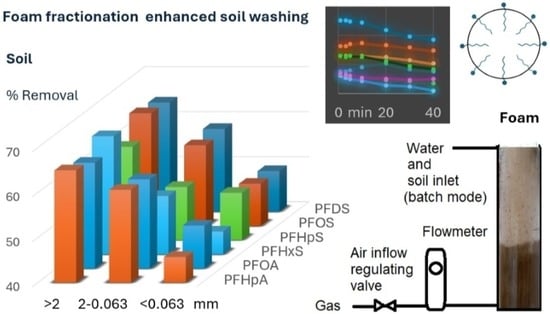
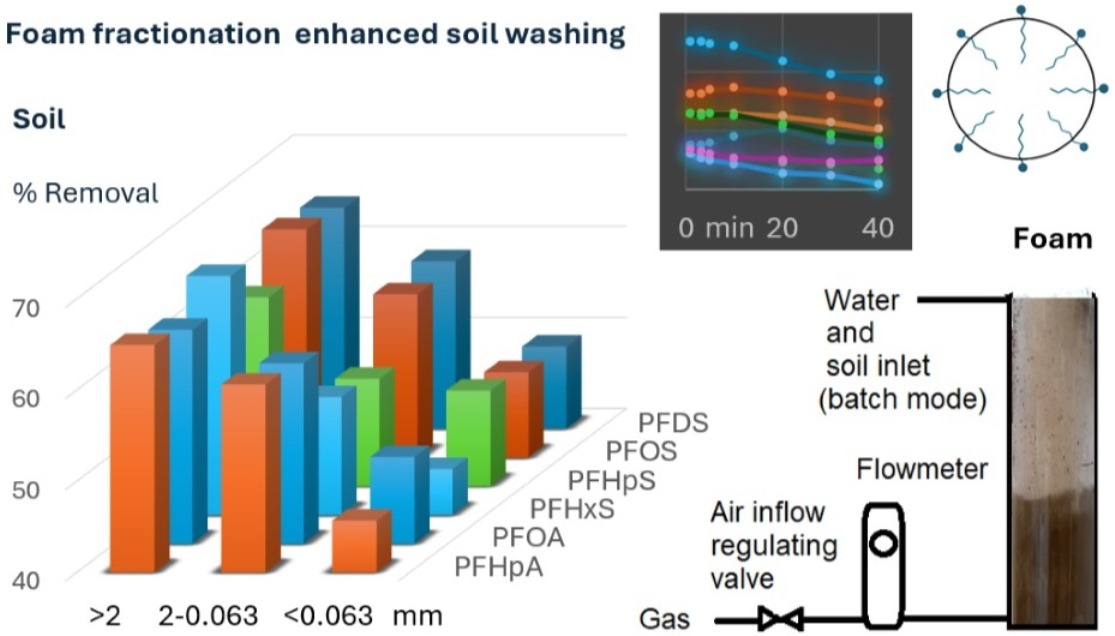
Per- and polyfluoroalkyl substances (PFASs) include thousands of fluorinated organic compounds of anthropogenic origin. Their extensive use, combined with their high stability, has led to the widespread contamination of water and soil resources. Here, single-step foam fractionation enhanced soil washing was carried out for the remediation of PFAS-contaminated soil. Concentrations of target Perfluoroalkyl Carboxylic Acids (PFCAs) and Perfluoroalkane Sulfonic Acids (PFSAs) were monitored in foam and leachate along the duration of the treatment. Among PFCAs, only long-chain compounds peaked in foam at the beginning of the treatment. This was consistent with the increase in the sorption affinity to the air–water interface with chain length. The same behavior was observed also in PFSAs by comparing PFHXs, PFHpS and PFOS. The fraction of PFCAs still in the leachate after 40 min of treatment was found to decrease with chain length, with PFSAs showing a similar trend. PFAS removal significantly increased with soil particle size, ranging from 48.2 ± 3.2% (fraction < 0.063 µm) to 64.1 ± 1.9% (fraction > 2 mm). Final mass balance analyses detail PFAS distribution among soil, leachate, and foam, providing valuable information for the additional treatment required to destroy the PFAS load extracted from the contaminated soil.

Graphical Abstract

1. Introduction

PFASs are employed in a variety of industrial and consumer products worldwide [1]. These synthetic chemicals consist of a carbon backbone, fluorine atoms and a terminal functional group [2]. PFASs are thermally stable and unreactive due to the strength (≈440–530 kJ/mol) and shortness (≈1.3–1.4 Å) of CF bonds and the electrostatic and steric shielding of the CC bonds by fluorine atoms. The non-fluorinated headgroups are often hydrophilic, while the perfluoro-chain is hydrophobic, conferring several PFAS surfactant-like properties. Differentiation in length, branching, fluorination and headgroup have enabled thousands of different PFAS structures to be developed, giving specificity for several applications, such as waterproofing, foaming agents, non-stick coatings, paper additives, metal plating aids, and many others [3,4].
The extensive use of PFASs, together with the high stability of carbon–fluorine bonds and the low removal attained in wastewater treatment facilities [4], have caused the widespread contamination of water and soil resources [5,6]. According to temporal trend studies on water, sediments, birds, fishes, marine mammals and humans, their exposure to PFASs has significantly increased over the last 20–30 years [7]. These fluorinated compounds have been linked to negative health effects like liver damage, hormone subjugation, thyroid illness, decreased fertility, and cancer [3].
The upcoming EU legislation is likely to become more stringent. The parameter “sum of PFAS” (sum of 24 named substances) has been proposed for addition to the Priority Substances list, as well as to Annex I, concerning, respectively, surface water and groundwater quality [8]. Both Perfluoroalkyl carboxylic acids (PFCAs) and Perfluoroalkane sulfonic acids (PFSAs) are included, with associated Relative Potency Factors (RPFs).
The scientific community is putting effort into adapting conventional treatment technologies, as well as into developing and advancing new methods. Concerning PFAS-contaminated soil, prompt remediation is fundamental to tackling the compounds before their spread to water resources. PFAS stabilization into concrete or adsorbents [9,10] offers the opportunity to face the contamination in situ, but PFASs will be released into the environment when the material used for stabilization decays. Chemical oxidation [11] can also be carried out in situ, while the cost of the strong oxidants required needs to be carefully evaluated, as well as the toxicity of the generated by-products, such as ultra-short-chain PFASs (e.g., C2–C3) or longer-chain fluorinated compounds. Thermal treatment vaporizes PFASs from soil [12] with associated high energy costs and CO2 emissions. Microbial degradation and enzymatic treatment emerge as an environmentally friendly alternative, but there is still a myriad of challenges to be faced before realizing bioremediation as an effective tool for PFAS destruction at the environmental scale [13].
Soil washing relies on physical and chemical techniques to enhance PFAS transfer from soil to water [14]. Being the extent of PFAS solubilization based on soil–water partitioning coefficients, the efficiency of the treatment is expected to decrease with an increase in chain length. By providing additional air inflow, and adequate surfactant addition, bubbles can be formed in the solution. Given their amphiphilic nature, most of the PFASs solubilized into water tend to adsorb to the surface of the bubbles, with apolar tails inside the air bubble and polar parts into the water phase [15]. PFAS-enriched foam is formed on top of the water, collected and treated separately. This treatment option can also be applied for the remediation of contaminated soil and referred to as foam-fractionation-enhanced soil washing.
Notwithstanding foam fractionation, which has been studied by several authors in recent years for the removal of PFASs from aqueous streams [16], including the treatment of the leachate resulting from soil washing [17], the direct application of these two treatments—soil washing and foam fractionation—for the remediation of PFAS-contaminated soil has been barely explored. While a recent investigation assessed the potential of foam fractionation by using a pre-extraction reactor to facilitate the contact of gas bubbles with soil particles [18], here a single-step treatment was carried out. The removal efficiency of PFASs with the highest RPFs proposed for regulation in the upcoming EU legislation [8] was related to particle size and assessed on three different soil fractions. Concentrations of target PFCAs and PFSAs were monitored in foam and leachate throughout the treatment. Finally, mass balance analyses between soil, leachate and foam were carried out to evaluate the PFAS distribution, providing valuable information for the further treatment required to treat the PFAS load extracted from the contaminated soil.

2. Materials and Methods

2.1. Soil Sampling

Soil samples were collected at Boden, Sweden, where PFAS contamination was expected due to the extensive use of aqueous film-forming foams (AFFF) during firefighting training. Approximately 1 m3 of soil was excavated and mixed, and 100 kg was sampled and dried at 45 °C to minimize any PFAS loss. Dried soil was then sieved into three fractions with diameters of >2 mm, between 2 and 0.063 mm, and <0.063 mm, corresponding to rocks and gravel, sand, and silt and clay, respectively, according to the World Reference Base for Soil Resources (WRB) [19].

2.2. Foam Fractionation Enhanced Soil Washing

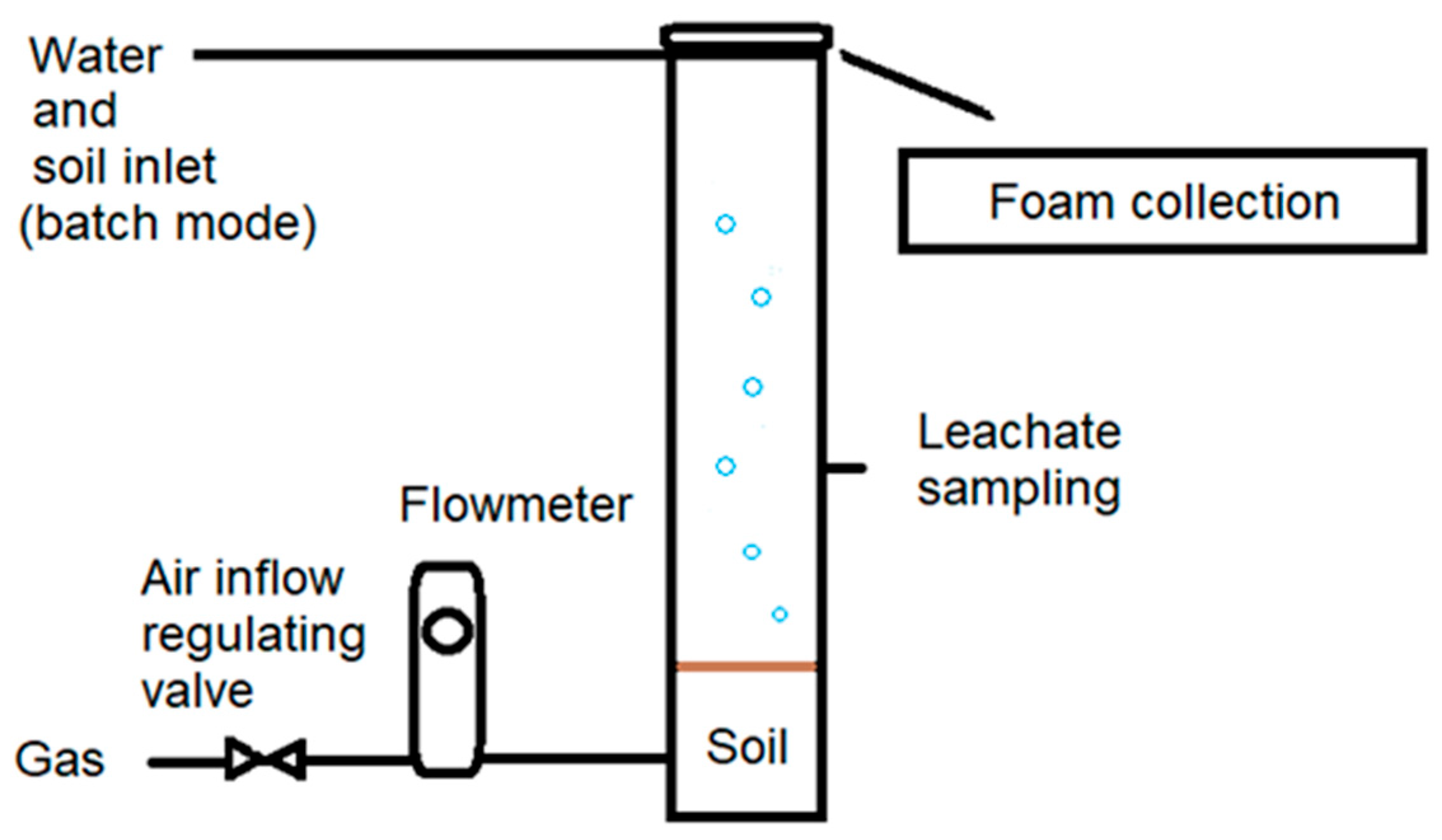
The original soil texture was reconstituted by mixing the sieved fractions, with the exception of the fraction > 19 mm, corresponding to 1/10 of the diameter of the column, which was excluded from the treatment with the aim of obtaining data representative of the further scale up of the process. Moreover, the vast majority of the total PFAS contamination was expected to be concentrated into finer fractions. Experimental setup is summarized in Figure 1. Foam fractionation tests were conducted in a 50 L plexiglass column (19 cm × 175 cm); the elongated geometry of the column plays a fundamental role in the adsorption of PFASs at the air–liquid interfaces while the air bubbles are rising. Previous research recently compared L:S 4 and L:S 10; only a 14.8% enhancement in PFAS removal was reported, while the amount of liquid to be further treated dramatically increased [18]. Hence, we decided to run the test at L:S 7, i.e., the column was filled with 5.71 kg of soil and 40 L of water, to ensure the continuous collection of foam from the top. Air injection was provided from the bottom of the column at a constant flowrate of 50 L/min, selected on the basis of previous trials showing that this is the minimum air inflow capable of penetrating the bulk of the soil at the chosen L:S.
The soil under investigation had a very large fraction of particles with diameter > 2 mm, which would very likely damage a propeller if used to provide stirring into the mixture. Hence, no mechanical stirring of the mixture was applied during the treatment, to verify if airflow alone would be able to provide satisfactory treatment efficiency. Several amounts of surfactant were preliminary tested, as well as addition timing, in order to ensure constant foaming. Five milliliters of a diluted mixture of ionic (sodium lauryl sulfate), non-ionic (PEG-4 rapeseedamide), and amphoteric (cocamidopropyl betaine) surfactants (pH: 5.5) was selected for addition every ten minutes. Non-ionic and an anionic surfactant may exert a synergistic effect on the micellization process and the adsorption at liquid/air surfaces [20], while amphoteric surfactants contribute to enhancing foaming.
Foam was continuously collected above the liquid air interface. Foam and leachate samples were collected for analysis at min 1, 3, 5, 10, 20, 30, and 40, while the PFAS concentration in water at min 0 was used as the control. At the end of the test, soil was transferred to a clean container and rinsed from residual leachate and foam with water at L:S 1. Both samples of soil and water used for final soil rinsing were taken. Foam samples were left overnight in open air (room temperature ~18 °C) to let bubbles fully collapse prior to analysis, while soil was dried at 45 °C prior to sieving into three fractions, extraction and analysis. The samples of foam, leachate and water used for rinsing the treated soil were diluted, filtered, and analyzed in duplicate. Soil samples were prepared as described in the Section: ‘Soil characterization’ and analyzed in triplicate.

2.3. PFAS Analyses and Data Processing

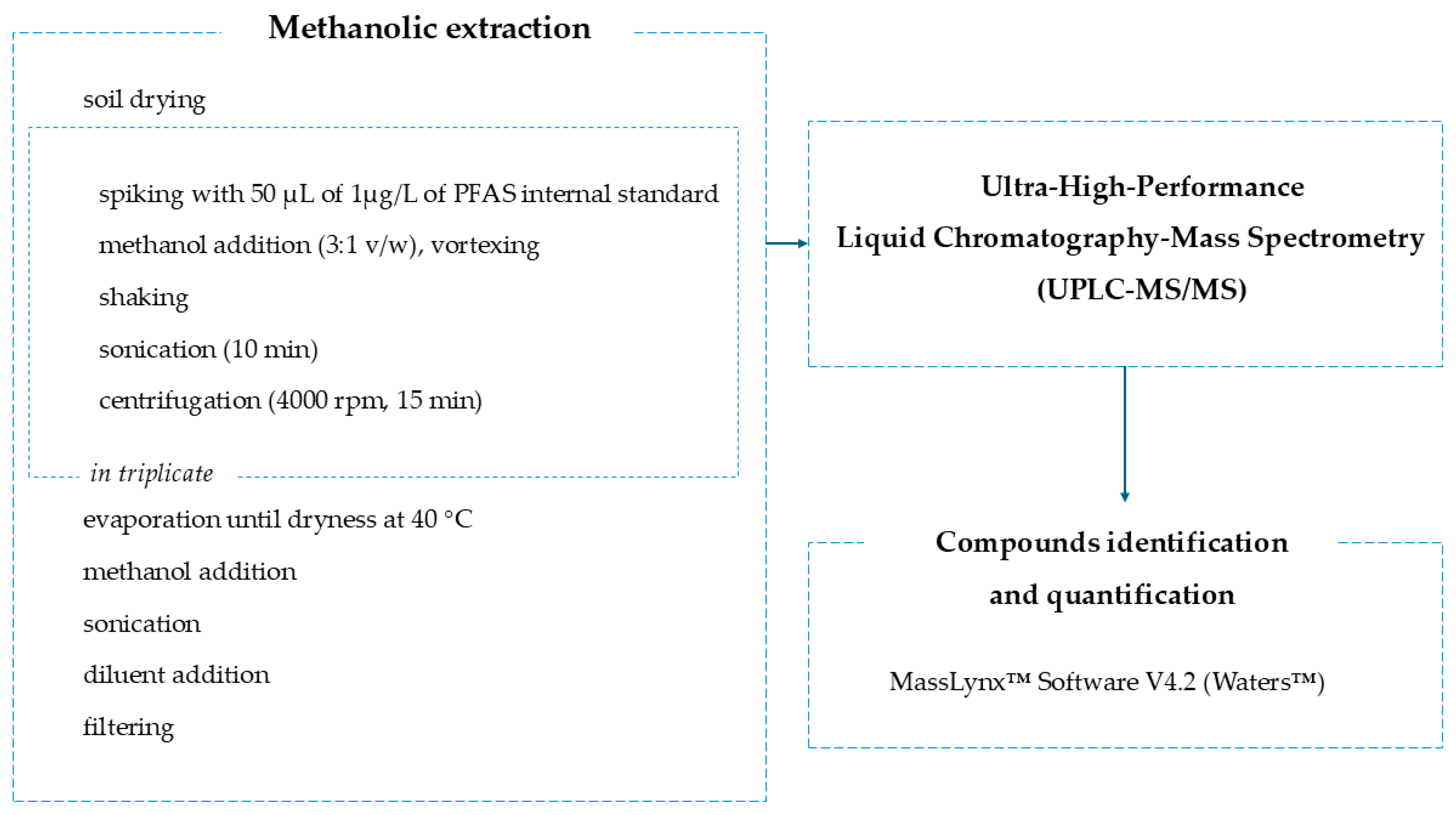
A schematic diagram of PFAS analysis and quantification is provided in Appendix A.6 (Figure A2).
Several methods were evaluated to determine the PFAS content in soil [21,22,23,24]. Methanolic extraction with or without acetic acid was associated with the highest recovery, if compared with methanolic NaOH digestion and ion-pair extraction [21]. Samples of the dried soil were weighed, placed in 15mL PP tubes, and spiked with 50 μL of 1 μg/L of PFAS internal standard. Extraction was performed by adding methanol (3:1 v/w), vortexing, shaking, sonication (10 min), and centrifugation (4000 rpm, 15 min). The supernatant was then transferred into a new PP tube. Methanol addition and the following steps were conducted three times, increasing the soil–methanol contact time by shaking 10, 20, and 30 min. The total amount of supernatant collected was then evaporated until dryness at 40 °C by a centrifugal vacuum concentrator (Labconco Corporation, Kansas City, MO, USA); then 400 µL of methanol was added to each PP tube to redissolve PFASs. To achieve this, samples were sonicated for 5 min and gently shaken for ten minutes. Then, 600 µL of a diluent solution (60:30:10:0.01; water: acetonitrile: methanol: formic acid) was added to the extract, and the resulting mixture was filtered using a hydrophilic non-sterile 0.2 µm Syringe Filter (Sartorius, Göttingen, Germany) before instrumental analysis.
The PFAS content in the extracts of pure and treated soil was assessed by Ultra-High-Performance Liquid Chromatography–Mass Spectrometry (UPLC-MS/MS), with a Waters Acquity Ultra-performance Liquid chromatograph coupled to a triple quadrupole mass spectrometer XEVO-TQS (Waters corp., Milford, MA, USA) equipped with a 100 mm × 2.1 mm C18 BEH column. A gradient mobile phase of (A) 2 mM ammonium acetate (95:5, methanol: Milli-Q water) and (B) 2 mM ammonium acetate in MeOH was flowed at 0.30 mL/min. The MS/MS worked in Unispray ionization mode (Waters corp.) and a multiple reaction monitoring mode quantified the PFASs. The Unispray conditions were as follows: 1.0Kv impact voltage, 600 °C desolvation temperature, 1000 L/h desolvation gas flow, 150 L/h cone gas flow, and 130 °C source temperature. Internal calibration using mass-labeled standard was used for quantification.
The target compounds and associated RPFs are listed in Table 1. The aim of this investigation was to focus on the seven Perfluoroalkyl Carboxylic Acids (PFCAs) and the four Perfluoroalkane Sulfonic Acids (PFSAs) with RPF > 0.5 included in the EU PFAS-24 group [8].
Mass Spectrometry information was acquired and analyzed through MassLynx™ Software V4.2 (Waters™, Milford, MA, USA). Data related to compound identification and quantification were re-processed and adjusted manually when needed. The limit of quantification (LOQ) was defined as the lowest measured standard for which a signal to noise (S/N) ratio > 10 was found (effluents: 4–10 ng/L; soil: 20 ng/kg).

2.4. Chemicals

Analytical native PFAS standards and mass-labeled PFAS internal standards were purchased from Wellington Laboratories. The purity of analytical standards was above 98%. Ammonium acetate (>99%) and LC-grade methanol (99.9%) were purchased from Fluka (Steinheim, Germany) and Fisher Scientific (Leicestershire, UK), respectively. Acetonitrile (>99.9%) was supplied by Fisher Scientific, Hampton, NH, USA). Pure water (Mill-Q) was purchased from Honeywell, Charlotte, NC, USA.

3. Results and Discussion

3.1. Soil Composition and Contamination

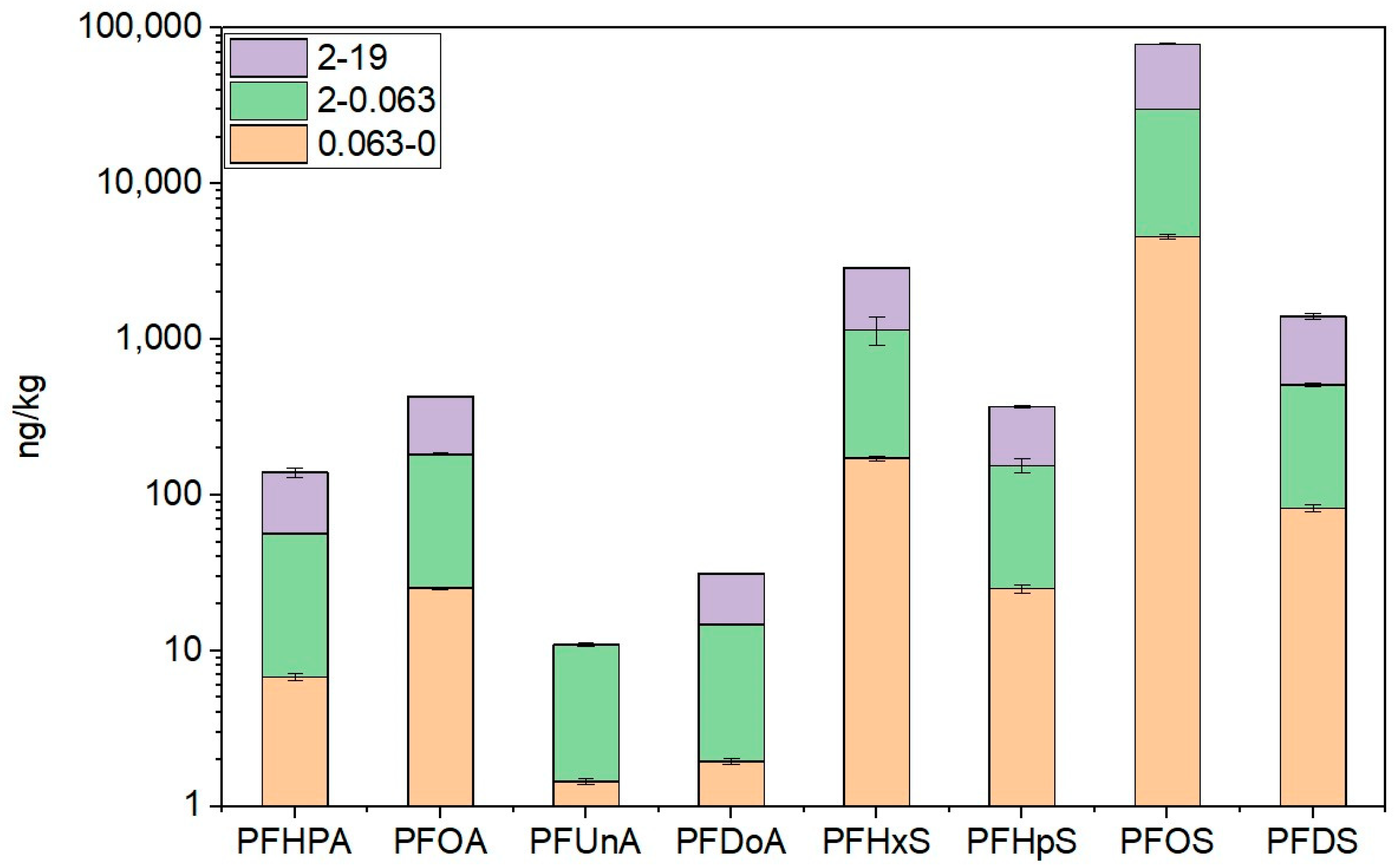
Particle size analyses show the coarse fraction accounting for 70.27% of the total soil to be remediated. The remaining 28.54% and 1.19% of the soil particles were included between 2–0.063 µm, and below 0.063 µm, respectively. The main PFAS content of the untreated soil distributed among the three fractions is shown in Figure 2, while the PFAS concentration of each single fraction and related standard deviations are shown in Table A1. All the target compounds have been detected, except for PFTrdA. PFNA and PFDeA have been found at a concentration above the LOQ in the soil fraction < 0.063 mm, and below the LOQ in the two fractions > 0.063 mm. Soil contamination is dominated by PFOS (79.1 ± 0.2 µg/kg), followed by the target PFSAs, PFHpA and PFOA. The fine fraction is the richest in PFASs (410.6 ± 15 µg/kg, compared to 95.7 ± 1.4 µg/kg and 74.2 ± 0.9 µg/kg of fractions between 0.063 and 2 mm and >2 mm, respectively).

3.2. Concentration Profiles

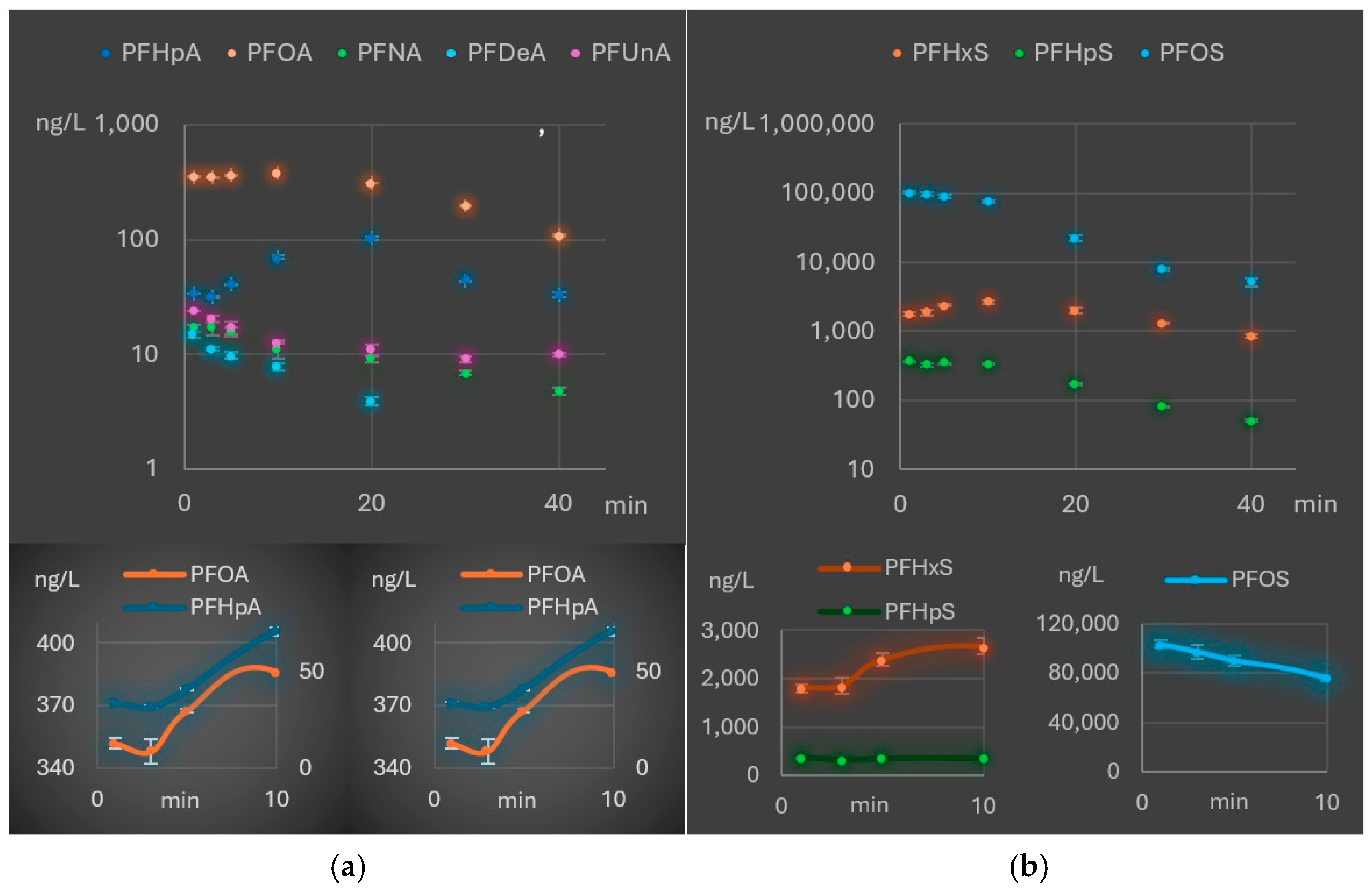
PFAS-enriched foam continuously formed on top of the water due to repeated surfactant addition and was periodically collected. Being most PFAS amphiphilic, they adsorb to the surface of the air bubbles, with their polar parts remaining in the water phase and their apolar tails inside the air bubble [15]. Profiles of the concentration of PFCAs and PFSAs in foam over time are presented in Figure 3. All the PFASs detected above the LOQ in the untreated soil were tracked, except for PFDoA and PFDS, due to peak overlap and noise in the UPLC-MS/MS signal.
The removal of PFAS by foam fractionation is linked to their surface-active properties, related to the hydrophobic fluorinated alkyl moieties and hydrophilic functional groups of their chemical structures. Differences in chemical structures here resulted in different removal behaviors over time. Maximum concentrations of PFHpA and PFOA were observed after 20 and 10 min, respectively, while concentrations of longer chain PFCAs in foam peaked at the beginning of the treatment (Figure 3a). A similar behavior was also observed in PFSAs: PFHXs peaked only at minute ten, the concentration of PFHpS was stable in the first ten minutes before decreasing, while PFOS peaked at the beginning of the treatment (Figure 3b). Concentration profiles are in agreement with the increase in the sorption affinity to the air–water interface with the chain length [15], as opposed to the soil–water partition coefficient of these compounds (Kd), which increase with increasing chain length [25,26,27,28,29,30,31].
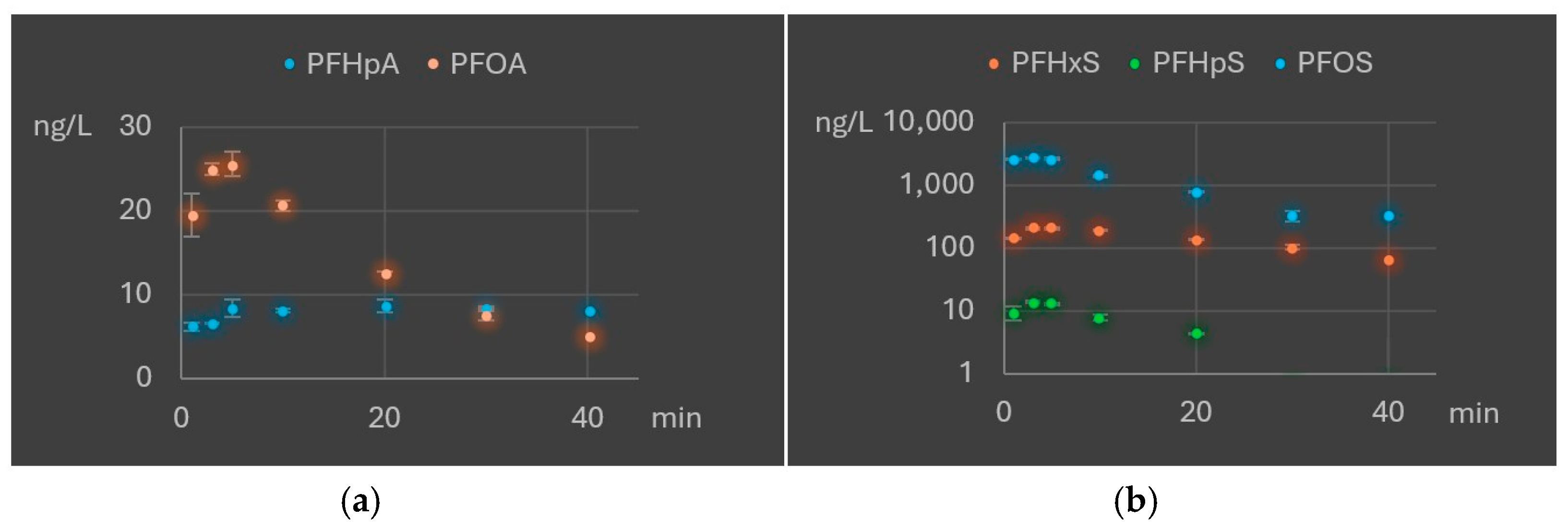
The PFAS concentrations observed in the leachate were significantly lower than those found in foam, confirming the effectiveness of foam fractionation. However, the soil contamination of PFHpA, PFOA, PFHxS, PFHpS, and PFOS was high enough to allow the reliable detection of these compounds along all the duration of the treatment. The results are shown in Figure 4. The concentrations of PFCAs and PFSAs over time in the leachate showed profiles analogous to those observed in foam; an increase was observed during the first 10 min, followed by a gradual decrease until the end of the treatment, with the exception of PFHpA, which peaked at min 20.

3.3. Removal Efficiency

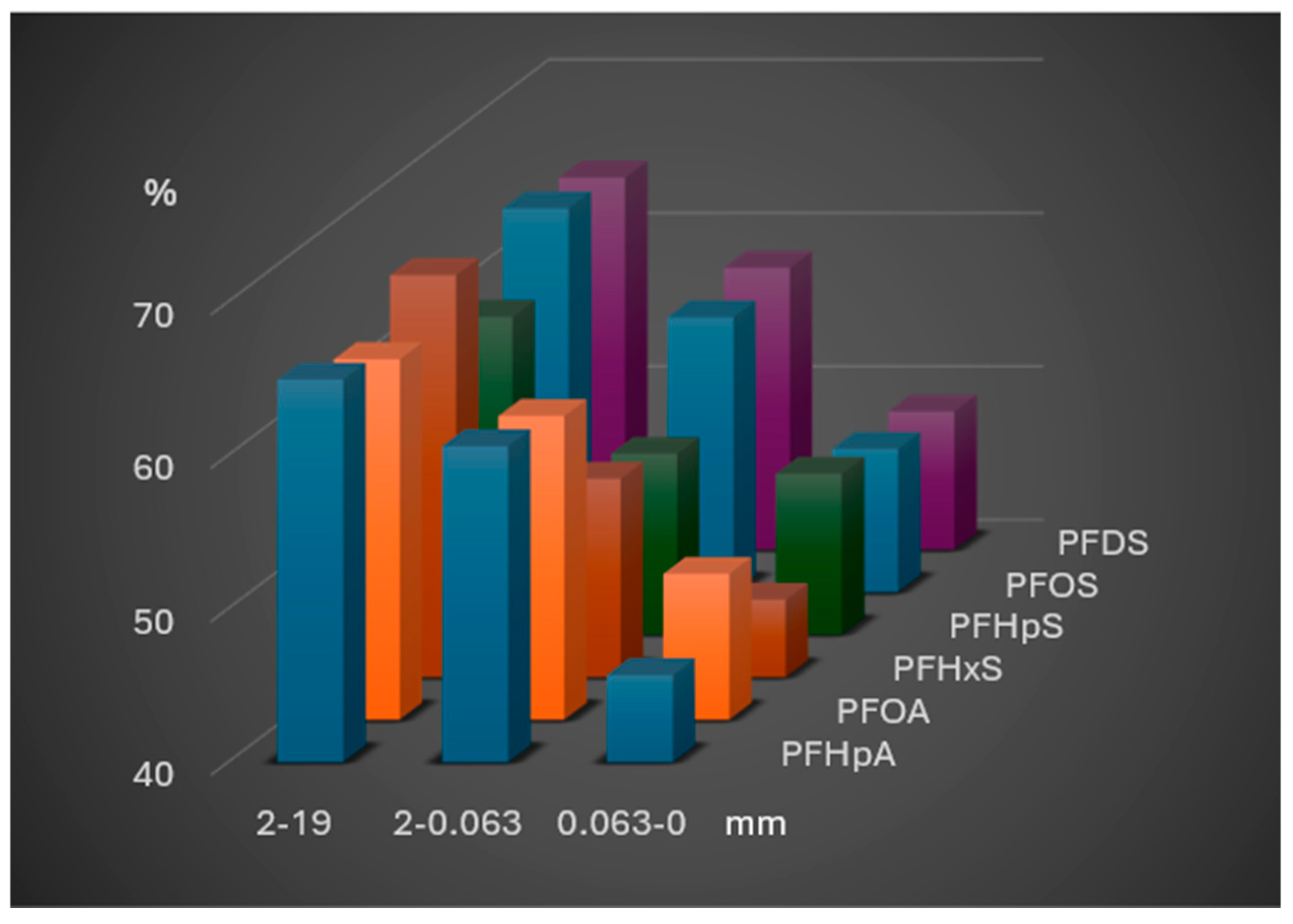
The removal of PFCAs and PFASs in soil at the end of the treatment (40 min) is presented in Figure 5. No significant differences can be observed among PFCAs and PFSAs, or among compounds with different chain lengths. The removal efficiency of previous studies on landfill leachate was found to increase as the carbon number in the alkyl chain of both PFCAs and PFSAs increased [32,33,34,35,36]. However, significant differences were observed among C3-C7 PFAS, while this investigation focuses mainly on longer chain compounds. Here, the duration of the treatment may also have allowed compounds with a low sorption affinity to the air–water interface (i.e., PFCAs if compared with PFSAs, and short chain PFAS if compared with long chain) to be both captured and removed efficiently.
Concerning the influence of soil texture, the removal efficiency of each compound significantly increased with particle size, ranging from 48.2 ± 3.2% (fraction < 0.063 µm) to 64.1 ± 1.9% (fraction > 2 mm, excluding C9–C13 PFCAs which were below LOQ in the treated soil). These results highlight the relevance of sieving and analyzing separate soil fractions in order to avoid a significant overestimation of the treatment efficiency due to the loss of the fine fraction dispersed into the leachate at the end of the treatment. Indeed, the finest fraction was here the richest in PFASs (Figure 2), as well as that with the lowest removal efficiency (Figure 5). Analogous behavior was also recently observed in soil washing trials carried out individually on different soil fractions [17,18].
Our previous 24 h batch test where no bubbling was provided showed ~40% PFOS release from the finest fraction at L/S 10 [17], while here more than 50% removal from the analogue fraction was achieved in 40 min and at L/S 7. In this regard, the equilibrium of PFASs among three phases needs to be discussed. When soil washing is carried out and foam fractionation is later applied to the resulting leachate, the equilibrium between PFASs at the air–water interface and PFASs in solution is continuously displaced by air bubbles leaving the system through the removal of the foam. However, the overall removal efficiency is limited by the equilibrium achieved during the initial soil washing step, which is defined by the soil–water partition coefficient of PFASs. Conversely, by applying foam fractionation directly to the soil, the overall equilibrium of the entire soil-water–air system is continuously displaced, with the resulting enhancement of removal efficiencies.
We here achieved an overall 63% PFOS removal at L/S in 40 min. A preliminary cost–benefit comparison with alternative process layouts may consider at least L/S, time and the eventual addition of chemicals required to achieve a similar target. In our previous investigation on soil washing followed by foam fractionation, approximately the same removal in soil was reached at L/S 4, but this required severe pH adjustment (to reach an initial pH of 11.5), two washing cycles, and 400 min [17]. The removal achieved within this investigation was obtained by a single reactor, without a pre-mixing container or any mechanical devices providing stirring of the soil–water mixture and without any pH adjustment. Enhanced removal is expected by mixing water and soil via pre-extraction, increasing the PFAS in the water phase prior to gas fractionation [18]. Indeed, compared with single-step fractionation, pre-extraction or providing direct mixing into the fractionation column would facilitate the contact of gas bubbles with soil particles, fractionating more PFASs in the water phase to the foam. However, this option is hindered by the expected damage of the propeller when the soil is very rich in coarse fractions (as the soil under investigation), while replacing air with ozonated oxygen may be evaluated when increased removal is required. Indeed, the dissolved gas, being hydrophobic, accumulates to the hydrophobic surfaces (interface between the gas bubbles and water), increasing the affinity of the surfaces to hydrophobic components. Moreover, dissolved gas in water significantly prolongs the lifetime of gas bubbles. Hence, the bubbles formed by gas that has a higher solubility than air would possess interfaces with more affinity to hydrophobic components and a prolonged lifetime, resulting in enhanced PFAS removal [18].
Based on our preliminary test, the scaling up of the technique will require the development of a closed system that allows the continuous collection of the foam to avoid foam collapsing and the re-dissolution of PFASs, while preventing any dispersion in the atmosphere. When optimizing the process by tuning the size of the bubbles injected into the media, the position and the number of injectors may also be considered. Modifying the properties of the added surfactant to increase the affinity to a specific compound may also be a viable option where the compound accounts for the vast majority of the contamination, as applies for PFOSs in the present investigation. The addition of chemical co-surfactants will also be needed to achieve a significant removal of short-chain PFAS (C < 7) [16].

3.4. Mass Balance

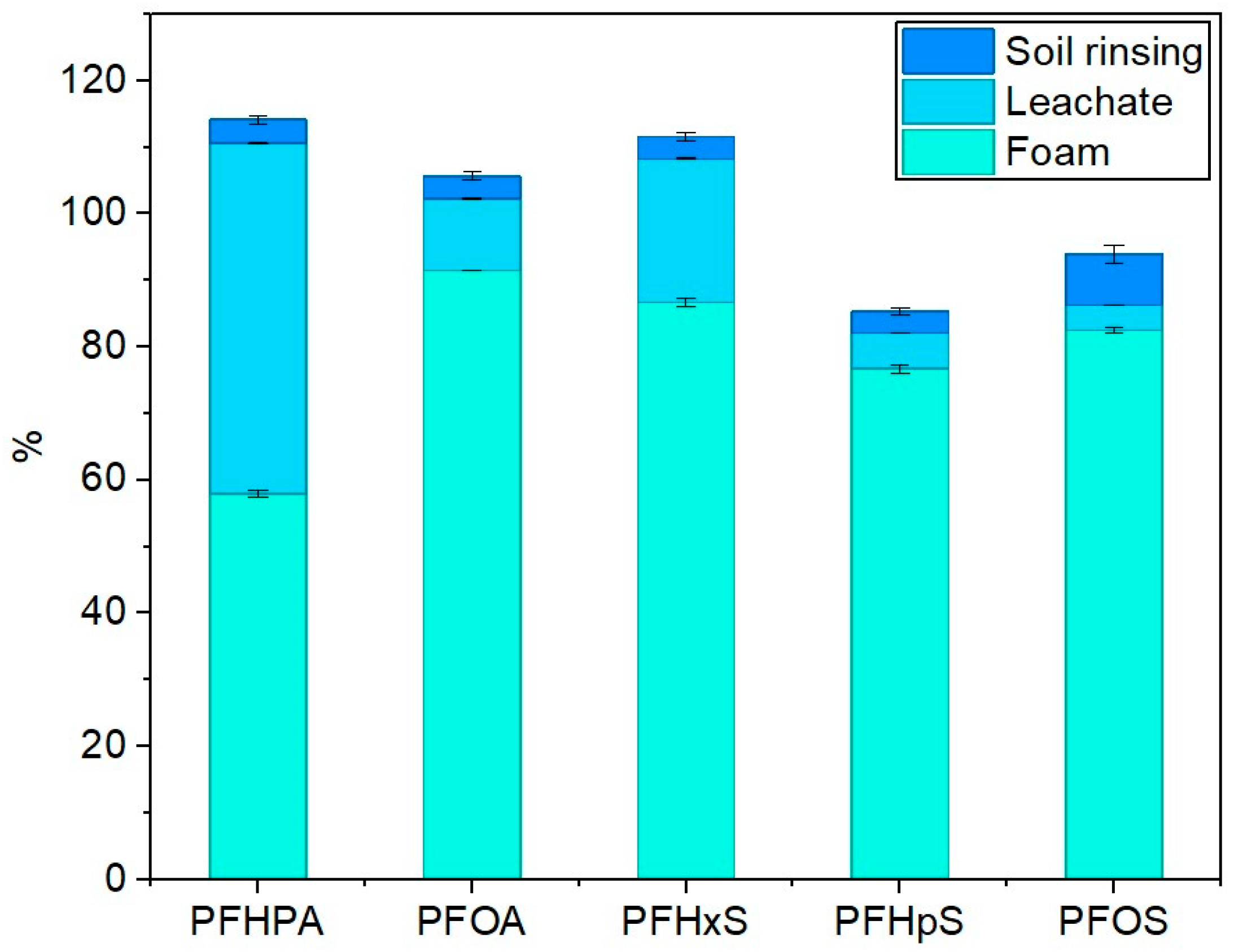
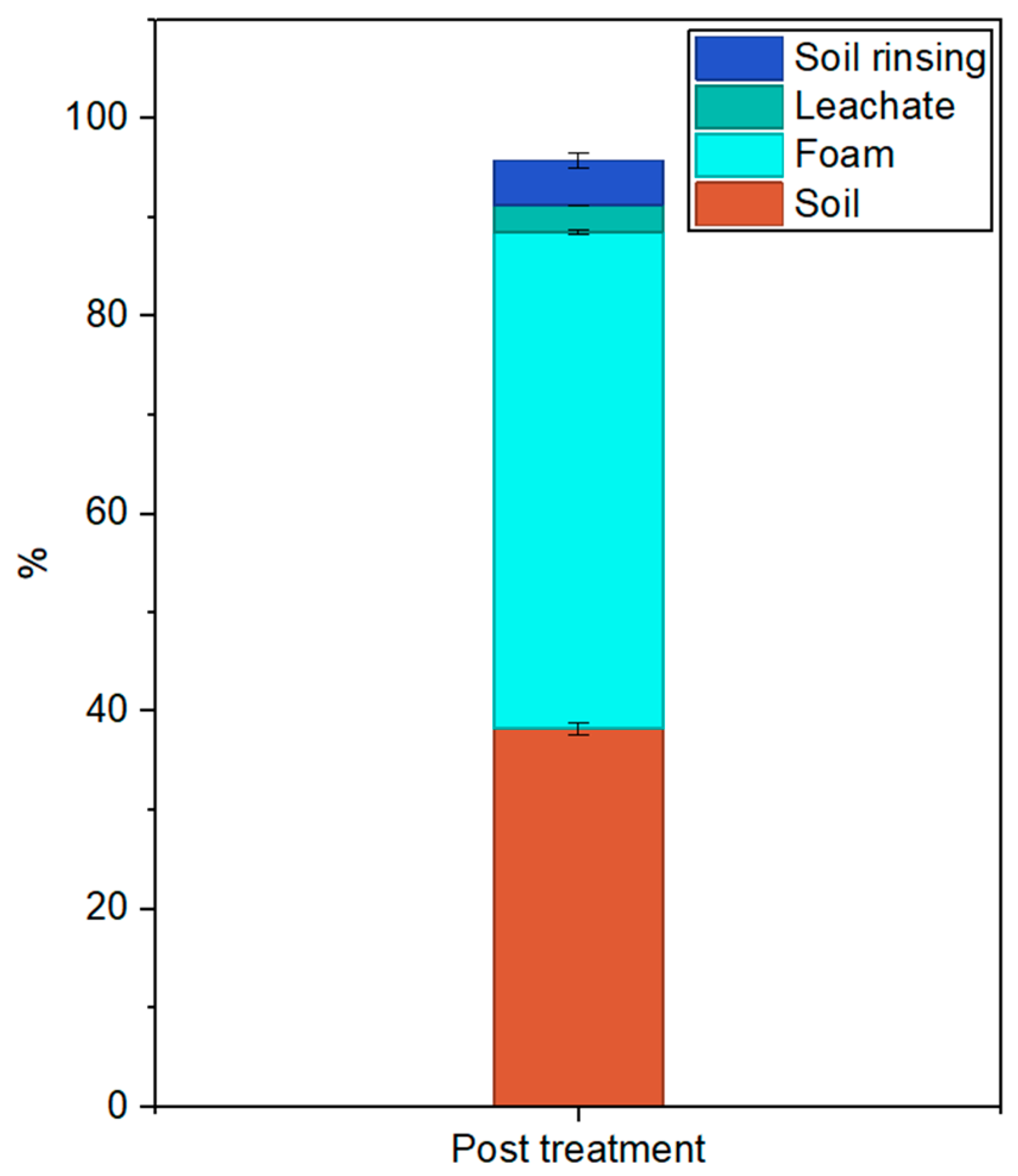
To the best of our knowledge, mass balance attempts have barely been carried out on foam fractionation processes focused on PFAS removal and only concern the remediation of liquid streams [15]. Here, mass balance analysis shows the distribution of each main PFAS detected in leachate, foam, and the water used for the final rinsing compared with the amount removed from soil (Figure 6). Moreover, the total PFAS mass balance including soil is presented in Figure A1 (Appendix A.5).
According to the sorption affinity to the air–water interface, the fraction of PFCAs still in the leachate after 40 min of treatment decreases with chain length. PFSAs show similar behavior. The same applies if comparing PFHpA and PFOA with PFSAs analogues in terms of chain length.
As can be seen from the standard deviation bars (Figure 6), the failure of mass balance closure cannot be attributed only to measurement uncertainties. The mean mass balance closures were above 100% for PFHpA, PFOA and PFHxS, i.e., the shortest chain compounds among the PFCAs and PFSAs screened here. The excess of short-chain PFASs could possibly be explained by the oxidative transformation of precursors not included in the analyses [15]. Concerning long-chain compounds, low mass balance closures were also observed by Smith et al. during a pilot-scale continuous foam fractionation of landfill leachate [34], and later attributed to sorption to reactor components, as well as to PFAS loss through adsorption to particulate or suspended matter [16]. However, experimental evidence is still needed to support assumptions concerning both mass balance closure >100% for short-chain PFASs and <100% for long-chain analogues. Recently, foam fractionation trials on industrial water confirmed that PFAS volatilize at an appreciable extent during the process; mean ΣPFAS concentrations of 98 ng m−3 were measured in the air surrounding the reactor. However, based on the influent concentration of the water during each corresponding run, the highest loss of PFAS recorded in aerosols corresponded to only 0.3% of the entire aqueous ΣPFAS mass treated during the operation of the foam fractionation system (20–60 min, reactor diameter 49.4 cm, water level at 108.5 cm) [15]. Hence, only minor refining of the mass balance is expected by accounting air emissions from the foam fractionation reactor, while appropriate monitoring would be required for the assessment of the operator exposure in fully operational treatment facilities.

3.5. Considerations on Foam and Leachate Management

Several technologies have been tested for the management of PFAS-contaminated streams. Ion exchange resins and adsorption methods have shown the high removal of long-chain PFASs but are less effective for short-chain analogues. Moreover, these techniques need to be coupled with additional treatments to destroy the contaminants removed from the treated media. Reverse osmosis and nanofiltration are also viable options, but pre-treatment to prevent excessive fouling of the membranes is required [37].
Electrochemical oxidation may be a promising technology to treat the foam produced here. It has been proven to be more effective than Fenton-based processes, photochemical oxidation, the addition of hydrogen peroxide, and ozonation [38]. This technique has an extremely low requirement for external chemicals [39], and a minimal amount of waste generation [40]. Boron-doped diamond (BDD) electrodes offer excellent mechanical, chemical, and thermal stability, as well as high electron transfer abilities. A recent pilot-scale study reported ~65% of ΣPFAS degradation in foam fractionate by EO-BDD [41]. Both the obtained rate and percentage of degradation were lower for PFSAs compared to PFCAs due to the slower electron transfer from PFSAs to BDD than from PFCAs, given the higher electrophilicity and standard reduction potential of a sulfonic group compared to a carboxyl group [42,43]. Our preliminary test on the electrochemical treatment of the foam collapsed after fractionation revealed the fundamental need to avoid re-foaming due to both the electric current and the turbulence applied. Otherwise, contact among PFASs in the foam at the top layer of the reactor and the electrode is not ensured, reducing the efficiency of the treatment. Concerning the leachate collected at the end of the treatment, it may be entirely or partially recirculated, sent to a dedicated treatment, or treated together with the foam, depending on the associated PFAS load. The same applies to the liquid used for rinsing the treated soil.

4. Conclusions

This study presents the application of foam-fractionation-enhanced soil washing for the remediation of PFAS-contaminated soil, focusing on the compounds with the highest relative potency factors among those proposed for the upcoming EU legislation. The treatment was applied as a single step, without the use of a pre-extraction reactor to facilitate the contact of gas bubbles with soil particles. Moreover, the soil under investigation was extremely rich in coarse fractions, demanding the assessment of the process without any mechanical device providing stirring into the soil–water mixture.
According to the sorption affinity to the air–water interface, the highest concentration of shorter chain PFCAs (C < 9) in foam was reached after ten minutes of treatment, while the concentrations of long-chain PFCAs in foam peaked at the beginning of the treatment. PFSAs showed similar behavior. The removal of all the screened compounds significantly increased with particle size. As observed from mass balance analyses, the remaining fraction of PFCAs and PFSAs still in the leachate after 40 min of treatment decreased with chain length. The same applies if comparing PFHpA and PFOA with PFSA analogues in terms of chain length. The process may be further improved by developing surfactants with specific affinity to compounds dominating the contamination (i.e., cationic/anionic/zwitterionic PFAS), as well as by process optimization and tuning the size of the bubbles injected into the media, the position and the number of injectors.

Author Contributions

Conceptualization, A.L.T., J.N.U., I.C. and J.K.; methodology, A.L.T.; validation, A.L.T.; software: A.L.T.; formal analysis, A.L.T. and J.N.U.; investigation, A.L.T. and J.N.U.; resources, I.C. and J.K.; data curation, A.L.T.; writing—original draft preparation, A.L.T.; writing—review and editing, A.L.T., J.N.U., I.C. and J.K.; visualization, A.L.T.; supervision, I.C. and J.K.; project administration, I.C. and J.K.; funding acquisition, I.C. and J.K. All authors have read and agreed to the published version of the manuscript.

Funding

This research was funded by FORMAS, the Swedish Research Council for Environment, Agricultural Sciences and Spatial Planning, within the National Research Programme for Seas and Water, case number 2023-01974, as well as by the J.C. Kempe and Seth M. Kempe Memorial Foundations (KEMPESTIFTELSERNA).

Data Availability Statement

The original contributions presented in this study are included in the article. Further inquiries can be directed to the corresponding author.

Conflicts of Interest

The authors declare no conflicts of interest.

Appendix A

Appendix A.1

Table A1. Average (Av.) PFAS content of the soil to be remediated (ng/kg dw) and related standard deviations.
Soil Fraction (mm) PFHPAPFOAPFNAPFDeAPFUnAPFDoAPFHxSPFHpSPFOSPFDS
0.063–0Av.5692116514812116314,4672104384,0026932
Stdev2547545745613314,409347
2–0.063Av.174553<LOQ<LOQ3345343045289,5111506
Stdev211--108225545248
2–19Av.118349<LOQ<LOQ<LOQ23247330569,6771277
Stdev1410---0501071496
LOQ: 20 ng/kg.

Appendix A.2

Table A2. Concentration profiles, foam (ng/L). Sample name: F, x (minute), A/B.
SamplePFHPAPFOAPFNAPFDeAPFUnAPFHxSPFHpSPFOS
F1A343541614241865373100,746
F1B343501816241743370105,778
Av343521715241804371103,262
Stdev031108723558
F3A313441511221977311101,388
F3B32352191219172833393,187
Av32348171120185232297,287
Stdev06202176165799
F5A4036817919229534087,201
F5B41367151016248334493,066
Av41368161017238934290,134
Stdev1111213334147
F10A69 10713254234173,958
F10B7238613813278333577,570
Av7138611813266333875,764
Stdev2 21017042554
F20A1003109412213416820,884
F20B10631010410186317423,620
Av1033109411199817122,252
Stdev4010119151935
F30A441977<LOQ 91358817785
F30B441997<LOQ 101355818228
Av441987-91357818007
Stdev010-130313
F40A321075<LOQ 10819524604
F40B341115<LOQ 10890505655
Av331095-10854515129
Stdev130-0502743
FTotA39175448115212330,079
FTotB351764 9106811228,725
Av37175449111011829,402
Stdev210 1598957

Appendix A.3

Table A3. Concentration profiles, leachate (ng/L). Sample name: L, x (minute), A/B.
SamplePFHPAPFOAPFHxSPFHpSPFOS
L1A61814082598
L1B721144112649
Av62014292624
Stdev033236
L2A725213142810
L2B726202132757
Av725207142783
Stdev018137
L5A927212132794
L5B825202132575
Av826207132685
Stdev1170155
L10A92120071345
L10B72119381496
Av82119781421
Stdev1051107
L20A9121394813
L20B9131375757
Av9131384785
Stdev011140
L30A98100<LOQ346
L30B88106<LOQ323
Av88103-334
Stdev105-16
L40A8673<LOQ374
L40B8561<LOQ281
Av8567-328
Stdev019-66

Appendix A.4

Table A4. Average removal efficiency, soil (%).
Soil Fraction PFHPAPFOAPFNAPFDeAPFUnDAPFDoAPFHxSPFHpSPFOSPFDS
0.063–045.6749.5052.7250.4748.3541.8945.0350.4749.3248.99
2–0.06360.5959.78--*54.3552.9151.7757.9058.35
2–19 mm64.9263.47---*66.1960.6965.0064.22
- initial concentration < LOQ. * concentration in treated soil < LOQ. LOQ: 20 ng/kg.

Appendix A.5

Figure A1. PFAS mass balance post-treatment. Total PFAS distribution among treated soil, leachate, foam, and water used for final soil rinsing. Total PFAS content in the untreated soil accounting for 100%.
Processes 14 01325 g0a1

Appendix A.6

Figure A2. PFAS analysis and quantification: main steps.
Processes 14 01325 g0a2

References

  1. Fang, J.; Li, S.; Gu, T.; Liu, A.; Qiu, R.; Zhang, W. Treatment of Per- and Polyfluoroalkyl Substances (PFAS): A Review of Transformation Technologies and Mechanisms. J. Environ. Chem. Eng. 2024, 12, 111833. [Google Scholar] [CrossRef]
  2. Cao, H.; Zhang, W.; Wang, C.; Liang, Y. Sonochemical Degradation of Poly- and Perfluoroalkyl Substances—A Review. Ultrason. Sonochem. 2020, 69, 105245. [Google Scholar] [CrossRef]
  3. Verma, S.; Lee, T.; Sahle-Demessie, E.; Ateia, M.; Nadagouda, M.N. Recent Advances on PFAS Degradation via Thermal and Nonthermal Methods. Chem. Eng. J. Adv. 2023, 13, 100421. [Google Scholar] [CrossRef]
  4. Lenka, S.P.; Kah, M.; Padhye, L.P. A Review of the Occurrence, Transformation, and Removal of Poly- and Perfluoroalkyl Substances (PFAS) in Wastewater Treatment Plants. Water Res. 2021, 199, 117187. [Google Scholar] [CrossRef]
  5. Sivagami, K.; Sharma, P.; Karim, A.V.; Mohanakrishna, G.; Karthika, S.; Divyapriya, G.; Saravanathamizhan, R.; Kumar, A.N. Electrochemical-Based Approaches for the Treatment of Forever Chemicals: Removal of Perfluoroalkyl and Polyfluoroalkyl Substances (PFAS) from Wastewater. Sci. Total Environ. 2023, 861, 160440. [Google Scholar] [CrossRef]
  6. Román Santiago, A.; Baldaguez Medina, P.; Su, X. Electrochemical Remediation of Perfluoroalkyl Substances from Water. Electrochim. Acta 2022, 403, 139635. [Google Scholar] [CrossRef]
  7. Ahmed, M.B.; Alam, M.M.; Zhou, J.L.; Xu, B.; Johir, M.A.H.; Karmakar, A.K.; Rahman, M.S.; Hossen, J.; Hasan, A.T.M.K.; Moni, M.A. Advanced Treatment Technologies Efficacies and Mechanism of Per- and Poly-Fluoroalkyl Substances Removal from Water. Process Saf. Environ. Prot. 2020, 136, 1–14. [Google Scholar] [CrossRef]
  8. European Commission Proposal for a Directive of the European Parliament and of the Council Amending Directive 2000/60/EC Establishing a Framework for Community Action in the Field of Water Policy, Directive 2006/118/EC on the Protection of Groundwater Against Pollution and Deterioration and Directive 2008/105/EC on Environmental Quality Standards in the Field of Water Policy. Available online: https://eur-lex.europa.eu/legal-content/EN/TXT/?uri=celex:52022PC0540 (accessed on 10 March 2025).
  9. Barth, E.; McKernan, J.; Bless, D.; Dasu, K. Investigation of an Immobilization Process for PFAS Contaminated Soils. J. Environ. Manag. 2021, 296, 113069. [Google Scholar] [CrossRef]
  10. Bolan, N.; Sarkar, B.; Yan, Y.; Li, Q.; Wijesekara, H.; Kannan, K.; Tsang, D.C.W.; Schauerte, M.; Bosch, J.; Noll, H.; et al. Remediation of Poly- and Perfluoroalkyl Substances (PFAS) Contaminated Soils—To Mobilize or to Immobilize or to Degrade? J. Hazard. Mater. 2021, 401, 123892. [Google Scholar] [CrossRef]
  11. Dombrowski, P.M.; Kakarla, P.; Caldicott, W.; Chin, Y.; Sadeghi, V.; Bogdan, D.; Barajas-Rodriguez, F.; Chiang, S.Y.D. Technology Review and Evaluation of Different Chemical Oxidation Conditions on Treatability of PFAS. Remediat. J. 2018, 28, 135–150. [Google Scholar] [CrossRef]
  12. Sörengård, M.; Lindh, A.-S.; Ahrens, L. Thermal Desorption as a High Removal Remediation Technique for Soils Contaminated with Per- and Polyfluoroalkyl Substances (PFASs). PLoS ONE 2020, 15, e0234476. [Google Scholar] [CrossRef]
  13. Berhanu, A.; Mutanda, I.; Taolin, J.; Qaria, M.A.; Yang, B.; Zhu, D. A Review of Microbial Degradation of Per- and Polyfluoroalkyl Substances (PFAS): Biotransformation Routes and Enzymes. Sci. Total Environ. 2023, 859, 160010. [Google Scholar] [CrossRef]
  14. Grimison, C.; Knight, E.R.; Nguyen, T.M.H.; Nagle, N.; Kabiri, S.; Bräunig, J.; Navarro, D.A.; Kookana, R.S.; Higgins, C.P.; McLaughlin, M.J.; et al. The Efficacy of Soil Washing for the Remediation of Per- and Poly-Fluoroalkyl Substances (PFASs) in the Field. J. Hazard. Mater. 2023, 445, 130441. [Google Scholar] [CrossRef]
  15. Smith, S.J.; Lewis, J.; Wiberg, K.; Wall, E.; Ahrens, L. Foam Fractionation for Removal of Per- and Polyfluoroalkyl Substances: Towards Closing the Mass Balance. Sci. Total Environ. 2023, 871, 162050. [Google Scholar] [CrossRef]
  16. We, A.C.E.; Zamyadi, A.; Stickland, A.D.; Clarke, B.O.; Freguia, S. A Review of Foam Fractionation for the Removal of Per- and Polyfluoroalkyl Substances (PFAS) from Aqueous Matrices. J. Hazard. Mater. 2024, 465, 133182. [Google Scholar] [CrossRef]
  17. Uwayezu, J.N.; Ren, Z.; Sonnenschein, S.; Leiviskä, T.; Lejon, T.; van Hees, P.; Karlsson, P.; Kumpiene, J.; Carabante, I. Combination of Separation and Degradation Methods after PFAS Soil Washing. Sci. Total Environ. 2024, 907, 168137. [Google Scholar] [CrossRef]
  18. Pang, H.; Dorian, B.; Gao, L.; Xie, Z.; Cran, M.; Muthukumaran, S.; Sidiroglou, F.; Gray, S.; Zhang, J. Remediation of Poly-and Perfluoroalkyl Substances (PFAS) Contaminated Soil Using Gas Fractionation Enhanced Technology. Sci. Total Environ. 2022, 827, 154310. [Google Scholar] [CrossRef]
  19. IUSS Working Group WRB. World Reference Base for Soil Resources, 4th ed.; IUSS: Vienna, Austria, 2022. [Google Scholar]
  20. Synergistic Effects Between a Non-Ionic and an Anionic Surfactant on the Micellization Process and the Adsorption at Liquid/Air Surfaces. Available online: https://pubs.rsc.org/en/content/articlehtml/2024/sm/d3sm01454a (accessed on 9 April 2026).
  21. Lorenzo, M.; Campo, J.; Picó, Y. Optimization and Comparison of Several Extraction Methods for Determining Perfluoroalkyl Substances in Abiotic Environmental Solid Matrices Using Liquid Chromatography-Mass Spectrometry. Anal. Bioanal. Chem. 2015, 407, 5767–5781. [Google Scholar] [CrossRef] [PubMed]
  22. Sammut, G.; Sinagra, E.; Sapiano, M.; Helmus, R.; de Voogt, P. Perfluoroalkyl Substances in the Maltese Environment–(II) Sediments, Soils and Groundwater. Sci. Total Environ. 2019, 682, 180–189. [Google Scholar] [CrossRef] [PubMed]
  23. Nassazzi, W.; Lai, F.Y.; Ahrens, L. A Novel Method for Extraction, Clean-up and Analysis of per- and Polyfluoroalkyl Substances (PFAS) in Different Plant Matrices Using LC-MS/MS. J. Chromatogr. B 2022, 1212, 123514. [Google Scholar] [CrossRef] [PubMed]
  24. EPA. Method 1633, Revision A. Analysis of Per- and Polyfluoroalkyl Substances (PFAS) in Aqueous, Solid, Biosolids, and Tissue by LC-MS/MS. Available online: https://www.epa.gov/system/files/documents/2024-12/method-1633a-december-5-2024-508-compliant.pdf (accessed on 5 August 2024).
  25. Campos-Pereira, H.; Kleja, D.B.; Ahrens, L.; Enell, A.; Kikuchi, J.; Pettersson, M.; Gustafsson, J.P. Effect of PH, Surface Charge and Soil Properties on the Solid–Solution Partitioning of Perfluoroalkyl Substances (PFASs) in a Wide Range of Temperate Soils. Chemosphere 2023, 321, 138133. [Google Scholar] [CrossRef]
  26. Du, Z.; Deng, S.; Bei, Y.; Huang, Q.; Wang, B.; Huang, J.; Yu, G. Adsorption Behavior and Mechanism of Perfluorinated Compounds on Various Adsorbents—A Review. J. Hazard. Mater. 2014, 274, 443–454. [Google Scholar] [CrossRef]
  27. Higgins, C.P.; Luthy, R.G. Sorption of Perfluorinated Surfactants on Sediments. Environ. Sci. Technol. 2006, 40, 7251–7256. [Google Scholar] [CrossRef] [PubMed]
  28. Li, F.; Fang, X.; Zhou, Z.; Liao, X.; Zou, J.; Yuan, B.; Sun, W. Adsorption of Perfluorinated Acids onto Soils: Kinetics, Isotherms, and Influences of Soil Properties. Sci. Total Environ. 2019, 649, 504–514. [Google Scholar] [CrossRef]
  29. Milinovic, J.; Lacorte, S.; Vidal, M.; Rigol, A. Sorption Behaviour of Perfluoroalkyl Substances in Soils. Sci. Total Environ. 2015, 511, 63–71. [Google Scholar] [CrossRef] [PubMed]
  30. Xiao, F.; Zhang, X.; Penn, L.; Gulliver, J.S.; Simcik, M.F. Effects of Monovalent Cations on the Competitive Adsorption of Perfluoroalkyl Acids by Kaolinite: Experimental Studies and Modeling. Environ. Sci. Technol. 2011, 45, 10028–10035. [Google Scholar] [CrossRef] [PubMed]
  31. Mei, W.; Sun, H.; Song, M.; Jiang, L.; Li, Y.; Lu, W.; Ying, G.G.; Luo, C.; Zhang, G. Per- and Polyfluoroalkyl Substances (PFASs) in the Soil–Plant System: Sorption, Root Uptake, and Translocation. Environ. Int. 2021, 156, 106642. [Google Scholar] [CrossRef]
  32. Robey, N.M.; da Silva, B.F.; Annable, M.D.; Townsend, T.G.; Bowden, J.A. Concentrating Per- and Polyfluoroalkyl Substances (PFAS) in Municipal Solid Waste Landfill Leachate Using Foam Separation. Environ. Sci. Technol. 2020, 54, 12550–12559. [Google Scholar] [CrossRef]
  33. McCleaf, P.; Kjellgren, Y.; Ahrens, L. Foam Fractionation Removal of Multiple Per- and Polyfluoroalkyl Substances from Landfill Leachate. AWWA Water Sci. 2021, 3, e1238. [Google Scholar] [CrossRef]
  34. Smith, S.J.; Wiberg, K.; McCleaf, P.; Ahrens, L. Pilot-Scale Continuous Foam Fractionation for the Removal of Per- and Polyfluoroalkyl Substances (PFAS) from Landfill Leachate. ACS EST Water 2022, 2, 841–851. [Google Scholar] [CrossRef]
  35. Burns, D.J.; Hinrichsen, H.M.; Stevenson, P.; Murphy, P.J.C. Commercial-Scale Remediation of per- and Polyfluoroalkyl Substances from a Landfill Leachate Catchment Using Surface-Active Foam Fractionation (SAFF®). Remediation 2022, 32, 139–150. [Google Scholar] [CrossRef]
  36. Wang, Y.; Ji, Y.; Tishchenko, V.; Huang, Q. Removing Per- and Polyfluoroalkyl Substances (PFAS) in Water by Foam Fractionation. Chemosphere 2023, 311, 137004. [Google Scholar] [CrossRef]
  37. Yadav, S.; Ibrar, I.; Al-Juboori, R.A.; Singh, L.; Ganbat, N.; Kazwini, T.; Karbassiyazdi, E.; Samal, A.K.; Subbiah, S.; Altaee, A. Updated Review on Emerging Technologies for PFAS Contaminated Water Treatment. Chem. Eng. Res. Des. 2022, 182, 667–700. [Google Scholar] [CrossRef]
  38. Hajalifard, Z.; Kazemi, S.; Eftekhari, S.; Rezaei, S.; Mousazadeh, M.; Usman, M. Per- and Polyfluoroalkyl Substances Degradation Using Hydroxyl- and Sulphate-Radical-Based Advanced Oxidation from Water Matrices: Which One Is the Best Approach? Int. J. Environ. Anal. Chem. 2023, 104, 9128–9152. [Google Scholar] [CrossRef]
  39. Trzcinski, A.P.; Harada, K. Adsorption of PFOS onto Graphite Intercalated Compound and Analysis of Degradation By-Products during Electro-Chemical Oxidation. Chemosphere 2023, 323, 138268. [Google Scholar] [CrossRef] [PubMed]
  40. Mirabediny, M.; Sun, J.; Yu, T.T.; Åkermark, B.; Das, B.; Kumar, N. Effective PFAS Degradation by Electrochemical Oxidation Methods-Recent Progress and Requirement. Chemosphere 2023, 321, 138109. [Google Scholar] [CrossRef]
  41. Smith, S.J.; Lauria, M.; Ahrens, L.; McCleaf, P.; Hollman, P.; Bjälkefur Seroka, S.; Hamers, T.; Arp, H.P.H.; Wiberg, K. Electrochemical Oxidation for Treatment of PFAS in Contaminated Water and Fractionated Foam—A Pilot-Scale Study. ACS EST Water 2023, 3, 1201–1211. [Google Scholar] [CrossRef]
  42. Zhuo, Q.; Deng, S.; Yang, B.; Huang, J.; Wang, B.; Zhang, T.; Yu, G. Degradation of Perfluorinated Compounds on a Boron-Doped Diamond Electrode. Electrochim. Acta 2012, 77, 17–22. [Google Scholar] [CrossRef]
  43. Radjenovic, J.; Duinslaeger, N.; Avval, S.S.; Chaplin, B.P. Facing the Challenge of Poly- and Perfluoroalkyl Substances in Water: Is Electrochemical Oxidation the Answer? Environ. Sci. Technol. 2020, 54, 14815–14829. [Google Scholar] [CrossRef]
Figure 1. Experimental setup of single-step foam-fractionation-enhanced soil washing.
Processes 14 01325 g001
Figure 2. PFAS concentration of each single fraction and related standard deviation are presented in Table A1.
Processes 14 01325 g002
Figure 3. PFAS concentration in foam: PFCAs (a) and PFSAs (b). Values provided in Table A2.
Processes 14 01325 g003
Figure 4. Concentration of detected PFCAs (a) and PFSAs (b) in leachate. Values provided in Table A3.
Processes 14 01325 g004
Figure 5. Removal of main PFCAs and PFSAs in different soil fractions (<0.063 mm; 2–0.063 mm; >2 mm) at 40 min. Values, including the removal of C9-12 PFCAs, are reported in Table A4.
Processes 14 01325 g005
Figure 6. Mass balance. Distribution of main PFAS among leachate, foam, and water used for final soil rinsing. Total amount of PFAS removed from soil accounting for 100%.
Processes 14 01325 g006
Table 1. PFASs with RPFs > 0.5 according to the EU-PFAS24 group [8].
PFCAsPerfluoroalkyl Carboxylic AcidsRPF
PFHpAPerfluoroheptanoic acidC6F13COOH0.5
PFOAPerfluorooctanoic acidC7F15COOH1
PFNAPerfluorononanoic acidC8F17COOH10
PFDeAPerfluorodecanoic acidC9F19COOH7
PFUnAPerfluoroundecanoic acidC1OF21COOH4
PFDoAPerfluorododecanoic AcidC11F23COOH3
PFTrDAPerfluorotridecanoic acidC12F25COOH1.65
PFSAsPerfluoroalkane Sulfonic AcidsRPF
PFHxSPerfluorohexanesulfonic acidC6F13SO3H0.6
PFHpSPerfluoroheptanesulfonic acidC7F15SO3H1.3
PFOSPerfluorooctanesulfonic acidC8F17SO3H2
PFDSPerfluorodecane sulfonic acidC10F21SO3H2
Disclaimer/Publisher’s Note: The statements, opinions and data contained in all publications are solely those of the individual author(s) and contributor(s) and not of MDPI and/or the editor(s). MDPI and/or the editor(s) disclaim responsibility for any injury to people or property resulting from any ideas, methods, instructions or products referred to in the content.