Article

Nonlinear Stress Sensitivity of Multiple Continua in Shale and Its Impact on Production: An Experimental Study on Longmaxi Formation, Southern Sichuan Basin, China

1
Shale Gas Research Institute, Southwest Oil & Gas Field Branch, PetroChina, Chengdu 610051, China
2
State Key Laboratory Oil and Gas Reservoir Geology and Exploitation, Chengdu University of Technology, Chengdu 610059, China
3
Exploration and Development Research Institute, Sinopec Southwest Oil & Gas Company, Chengdu 610041, China
*
Authors to whom correspondence should be addressed.
Processes 2026, 14(2), 325; https://doi.org/10.3390/pr14020325
Submission received: 4 November 2025 / Revised: 27 December 2025 / Accepted: 6 January 2026 / Published: 16 January 2026

Abstract

Based on a nonlinear effective stress coefficient calculation method, this study investigates the nonlinear stress sensitivity of permeability in deep shale gas reservoirs through high-temperature, high-pressure experiments on matrix, unpropped fracture, and propped fracture samples. Furthermore, the influence of different effective stress models on production performance in deep shale gas wells was investigated using the PETREL integrated fracturing production simulation module. Results reveal significant nonlinearity in the effective stress behavior of all media, with matrix samples showing much stronger permeability stress sensitivity than fracture samples. Numerical simulations revealed that horizontal well productivity under the nonlinear effective stress model was lower than predictions from the net stress model, providing critical theoretical and technical foundations for the large-scale and efficient development of deep marine shale gas reservoirs in the Sichuan Basin and emphasizing the importance of accurate stress models for production performance forecasting.

1. Introduction

China possesses abundant shale gas resources, achieving 25 billion cubic meters in 2023. Marine shale gas reservoirs with a depth of less than 3500 m have reached commercial scale development, while exploration efforts are increasingly directed toward deeper shale formations. Over 65% of China’s total shale gas resources are buried deeper than 3500 m, primarily distributed in the Sichuan Basin [1,2]. Compared to medium-shallow reservoirs, deep shale gas reservoirs exhibit distinct characteristics, including variations in brittle and clay mineral content, elevated formation temperature and pressure, higher horizontal stress differentials, and enhanced brittleness. These factors complicate the effective stress response, necessitating accurate characterization of permeability stress sensitivity under complex stress conditions for reliable production forecasting [3,4].
Karl Terzaghi first proposed the concept of effective stress in soil mechanics in 1923, that is, effective stress is the difference between the overburden and the pore pressure [5]. Although the Terzaghi effective stress has the advantages of easy acquisition and calculation, its applicability in low-permeability dense media is limited because it can only simulate extremely loose point-contact porous media [6]. However, as hydrocarbon exploration shifted to high-pressure, low-permeability reservoirs, the effective stress coefficient α was introduced to refine the net stress model. The modified effective stress is expressed as:
P eff = P c α P f
where Peff is the effective stress, MPa; Pc is the overburden stress, MPa; and Pf is the pore pressure, MPa.
Different types of rock show different effective stress coefficients. The effective stress coefficient of sandstone is the most complex, which may be related to the large differences in the diagenetic environments of sandstones in different regions. The complex and changeable mineral composition and pore structure lead to differences in calculation results; The research conclusions on the effective stress coefficient of granite generally are around one. Among the experimental conclusions of many rocks without clay mineral components, the effective stress coefficient generally does not exceed one. When the composition contains clay minerals, the effective stress coefficient is generally greater than one.
The reservoir contains multiple media such as matrix, natural fractures, and propped fractures. During reservoir depletion, the formation pressure declines, and all media in the reservoir exhibit permeability stress sensitivity responses, and the stress sensitivity characteristics exhibited by the matrix and fractures are also different.
In the research on matrix stress sensitivity, the permeability stress sensitivity of rocks without clay is relatively weak, while the permeability of rocks rich in clay is greatly affected by the stress environment [7], which is caused by pore collapse during the effective stress loading process. The permeability stress sensitivity is related to the type and composition of rocks [8], and also related to the content of cement, the mineral composition of cement, and the cementation method [9], among which the content of clay minerals has the greatest influence on rock stress sensitivity [10]. Liu Zhonghua [11] believed that the permeability of the reservoir is comprehensively affected by multiple factors and cannot be characterized by a certain monotonic function relationship. Cao Nai [12] believed that the permeability stress sensitivity of rock samples is affected by multiple factors such as core matrix compression and filler deformation. Li Rongqiang [13] established a statistical relationship between effective stress and permeability based on CT scanning technology. Cong Hailong [14] analyzed the change law of pore structure under stress conditions based on stress sensitivity experiments and core CT scanning images. In short, a large number of scholars have carried out stress sensitivity research based on reservoir rock matrix from multiple research directions such as rock type, stress loading form, and initial physical property level.
In the research on fracture stress sensitivity, Walsh [15] established a theoretical model for calculating the relationship between the permeability of fractured rocks and the effective pressure. Subsequently, a classic model [16] was proposed, which can describe the relationship between the permeability of rough contact surfaces and pressure. Yin Congbin [17] carried out research on the stress sensitivity of shale fracture permeability based on factors such as fracture type, fracture surface roughness, and bedding; Wu Jianfa [18] carried out research on the law of permeability stress sensitivity under different proppant concentrations and production systems. Fang Haoqing [19] experimentally studied the influence of proppant on the permeability of shear fractures after acid etching. Chen Wenbin [20] discussed the differences in tensile and shear fracture stress sensitivity and the influence on reservoir productivity. Wang Ke [21] used the reservoir numerical simulation method to study the stress sensitivity of fractured reservoirs and its influencing factors. Feng Jianwei [22] used the finite element method to study the fracture closure law. Pang Ming [23] simulated and evaluated the influence of acid etching on the change in fracture permeability. Kao Jiawei [24] carried out true triaxial hydraulic fracturing physical model experiments on deep shale, and analyzed the fracture morphology and influencing factors. Zhu Haiyan [25] studied the influence of fracture closure stress, elastic modulus, proppant concentration, and proppant type on fracture seepage capacity based on the DEM-CFD model. Deng Shouchun [26] used the discrete element numerical simulation method to study the change law of fracture opening.
In the above studies, the effective stress coefficients are considered constant. However, they may change with both fluid pressure and confining stress, which was discovered first through experimental studies. In experimental research on effective stress, confining pressure is usually used to simulate the total stress subjected to the sample, and displacement pressure is used to simulate and characterize the pore pressure; then, the variation law of sample permeability with confining pressure and displacement pressure is tested through constant confining pressure cyclic pressure or constant displacing pressure cyclic confining pressure. Based on the experimental data, several approaches have been developed to determine the effective stress coefficient. According to the analysis of experimental data to determine the effective stress coefficient, the current mainstream methods include differential method, the cross-plotting method, translation method, and the response surface method. Bernabe [27] put forward the differential method and deduced the expression of the effective stress coefficient on the premise that the effective stress coefficient remains constant in a small pressure range, and this work constitutes the theoretical basis of the translation method. First proposed by Walsh [15], the cross-plotting method was further applied by him to fit the experimental data of permeability and pore pressure under different confining pressures, from which he established an empirical permeability formula and accordingly plotted the permeability contour lines [16]. He believed that the slope of the contour line was the effective stress coefficient, but the premise of using this method is to satisfy the linear effective stress assumption. The translation method was first proposed by Brace [28]. The effective stress experimental data of granite were analyzed in 1968. The characteristic of the translation method is that it is fast and convenient, and it is a classic method for calculating the effective stress coefficient. However, the effective stress coefficient obtained by this method is also constant. The response surface method is used to analyze how multiple input variables affect one or more output response surfaces and ultimately find the combination of input variables that optimizes the response. The response surface method was proposed by Warpinski and Teufel [29], they calculated the effective stress coefficients of different types of rock samples based on the response surface method, and the obtained effective stress coefficients had a small variation range. Therefore, they believed that the effective stress of the tested rock samples can be regarded as linear. Nonlinear effective stress behavior in carbonate and low-permeability sandstone samples was clearly observed in test but was initially misinterpreted as an experimental error. Li Min [30] employed response surface methodology to analyze experimental data on the effective stress of low-permeability sandstones containing micro-fractures. Their experimental results demonstrated that the tested rock samples exhibit distinct nonlinear effective stress characteristics. Subsequently, a growing body of experimental studies has further confirmed the existence of such nonlinear effective stress behavior [31,32]. Thus, it is necessary to find suitable experimental methods and models to characterize the nonlinear behavior of effective stress coefficients.
In this study, samples of three different media, namely matrix, unpropped fractures, and propped fractures, were prepared based on deep shale gas reservoir samples of the Longmaxi Formation in southern Sichuan, and permeability stress sensitivity experiments were carried out under high-temperature and high-pressure conditions. A test method with multiple arrays of high confining pressure and high pore pressure measurement points was used to obtain more accurate permeability effective stress characteristics, and an empirical model for the permeability effective stress sensitivity of multiple media in deep shale was established. Finally, based on the commercial software PETREL fracturing production integrated simulation module, the influence of the nonlinear effective stress model on the production dynamics of deep shale gas wells was analyzed.

2. Geological Setting

The southern Sichuan region is geographically located in the southeastern part of Sichuan Province and the western part of Chongqing Municipality. This area has undergone multiple phases of tectonic movement, including the Caledonian, Hercynian, Indosinian, Yanshanian, and Himalayan periods, resulting in extensive structural overprinting and modification. The present-day tectonics are characterized by diverse forms, primarily trending NE-SW, such as slopes, synclines, and anticlines (Figure 1). The Wufeng–Longmaxi Formation consists of continuous deep marine shale strata deposited in a deep-water shelf environment. Among these, the Wufeng Formation to the Long-11 Sub-member serves as the primary target for development, with lithologies dominated by siliceous shale and argillaceous shale, interbedded with minor amounts of calcareous shale [33].
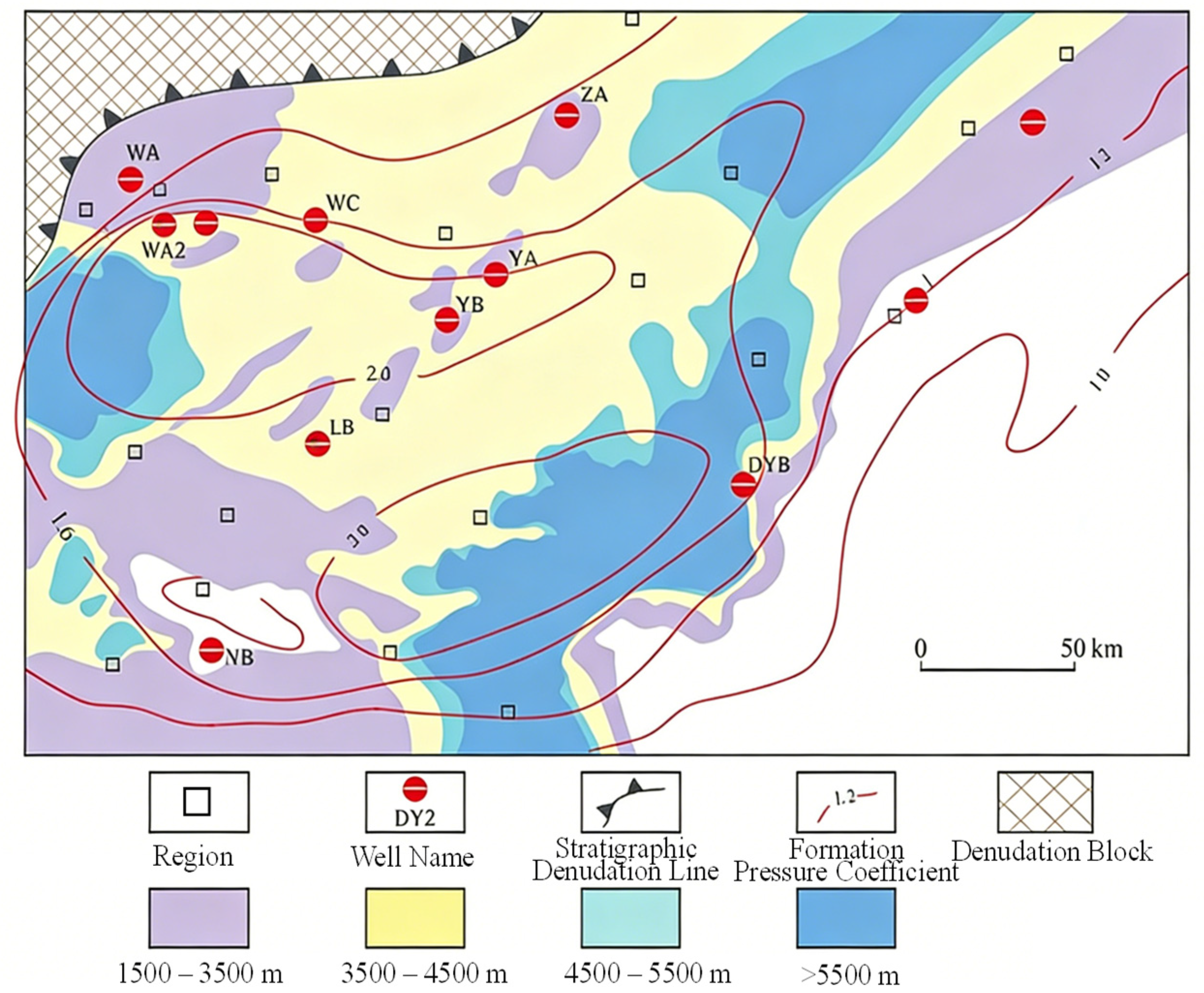
The study area is situated on the southwestern margin of the Upper Yangtze Platform, bounded to the north by the denudation line of the Longmaxi Formation, to the west by the Daliang Mountains to the south by the Qianbei Depression. Structurally, it belongs to the low-steep structural belt of the southern Sichuan region, covering an area of approximately 4 × 10¹⁰ m2 [34]. A set of siliceous and calcareous shales, with thicknesses ranging from 280 to 450 m, was deposited in this region. The total geological resources of marine shale gas in the Wufeng–Longmaxi Formation of the Sichuan Basin amount to about 28.78 × 10¹² m3 with recoverable resources estimated at 5.75 × 10¹² m3. Within this, the area with shale gas at depths greater than 3500 m covers 4.33 × 10¹⁰ m2, containing geological resources of 24.28 × 10¹² m3, which accounts for 84% of the total shale gas resources [1]. Figure 2 shows the contour map of burial depth and formation pressure coefficient at the base of the Longmaxi Formation. It can be observed that the formation pressure coefficient reaches 1.6 in most areas, while in parts of the southern and northwestern regions it reaches 2.0, indicating a geological environment characterized by high formation pressure for shale gas entrapment.

3. Methodology

3.1. Rock Samples

Rock samples used in this study were obtained from the Longmaxi Formation, located in the southern part of the Sichuan Basin. The sampling direction was parallel to the bedding. Under a confining pressure of 5 MPa and a pore pressure of 3 MPa, the porosity of the deep shale plug samples ranged from 2.41% to 8.19%; permeability ranged from 0.17 to 9.16 × 10⁻⁵ mD; and clay mineral content ranged from 22.6% to 65.59%. Among the clay minerals, illite constituted the dominant component (39–78%), followed by chlorite, illite-smectite mixed layers and kaolinite.
The matrix is the main storage space for deep shale gas. To develop shale gas, the reservoir needs to be reformed by volume fracturing, and the formed propped fractures serve as flow channels for shale gas. The conductivity of these propped fractures varies across production stages and stress conditions, exerting a substantial influence on the productivity of deep marine shale gas wells. During the volume fracturing stimulation process, many unpropped fractures are generated. These unpropped fractures serve as pathways between the reservoir matrix and the effective propped fractures, and their contribution to reservoir performance should not be neglected. Therefore, in order to study the permeability stress sensitivity characteristics of deep shale gas reservoirs under high-temperature and high-pressure conditions under different media conditions, it is necessary to prepare experimental samples of various media of deep shale, including matrix samples, unpropped fracture samples, and propped fracture samples.
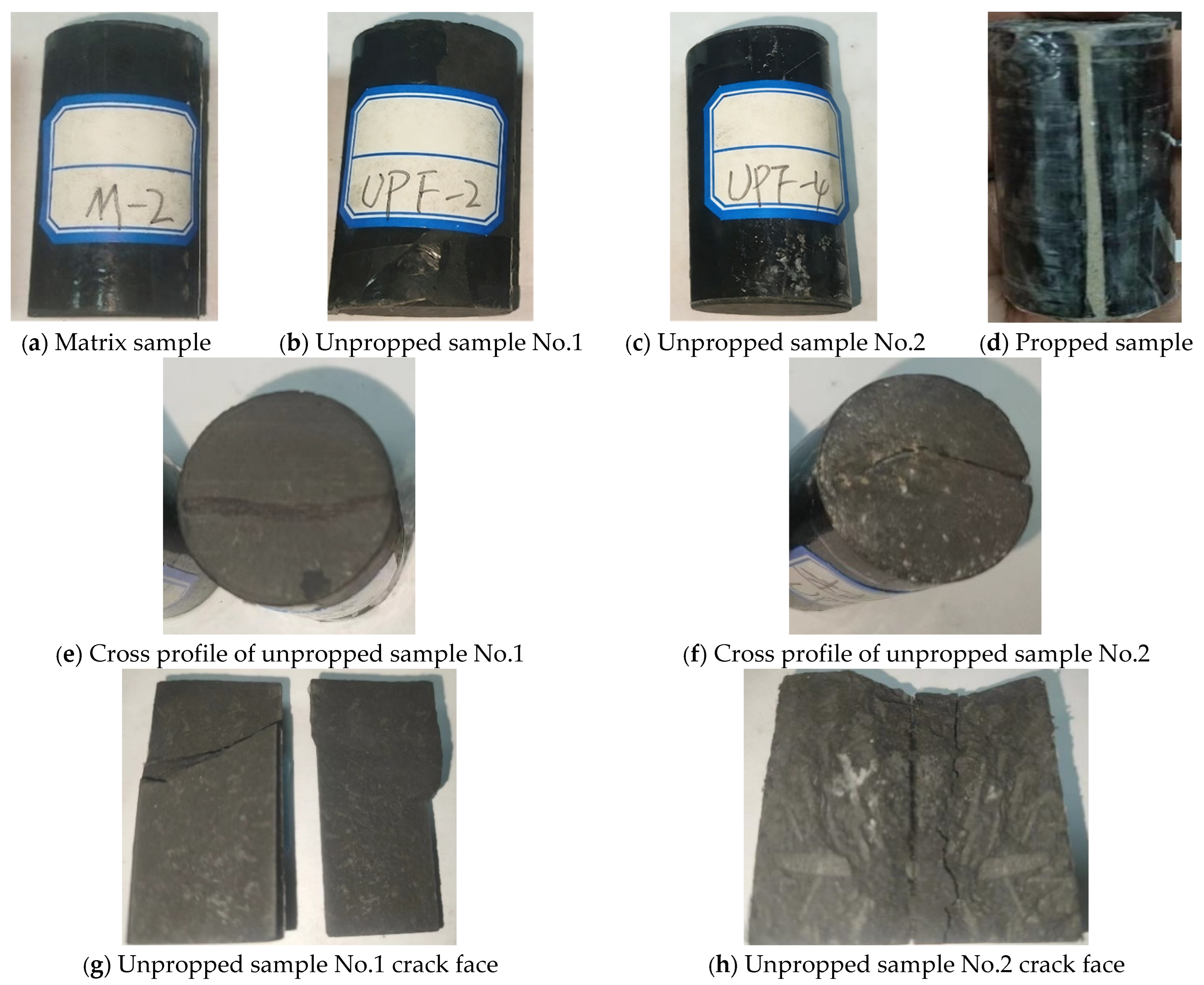
Matrix samples were drilled from deep shale gas reservoir and carefully selected to ensure no visible fractures on their surfaces, as illustrated in Figure 3a. For unpropped fracture samples, fractures were artificially induced in matrix cores via the Brazilian splitting method. Cross profile fractures in sample No. 1 were almost imperceptible, while prominent and visibly rough fractures characterized sample No. 2 Figure 3b,c depict front views of the prepared unpropped fracture samples, whereas Figure 3e–h show detailed cross profile and fracture surface.
Propped fracture samples required careful selection of core segments, ensuring that artificial fracture initiation points were centrally located with fracture propagation nearly parallel to bedding planes. The selection of proppant is based on field data, utilizing a mixture of 40/70 mesh ceramsite and 70/140 mesh quartz, with corresponding mass fractions of 55% and 45%, respectively. The relationship between the propped fracture width and the proppant placement mass satisfies the following formula:
D = c / ρ p
M s = d × L × c
where D is the designed propped fracture width, mm; c is the proppant placement concentration, g/mm2; ρp is the proppant bulk density, g/mm3, taken as 0.0015 g/mm3 based on field data; Ms is the designed proppant placement mass, g; d is the sample diameter, mm; and L is the sample length, mm.
The propped fracture sample prepared based on the above formula has a fracture width of 2 mm. The top and bottom surfaces of the core were sealed with 200-mesh non-magnetic gauze, and the sides were wrapped with adhesive tape to prevent proppant leakage. Figure 3d shows the 2 mm propped fracture sample. All samples underwent drying for at least 48 h to remove the influence of residual moisture on subsequent experiments. All the basic sample parameters used in this study are shown in Table 1.

3.2. Experimental Techniques

3.2.1. Permeability Measurement of Matrix Samples

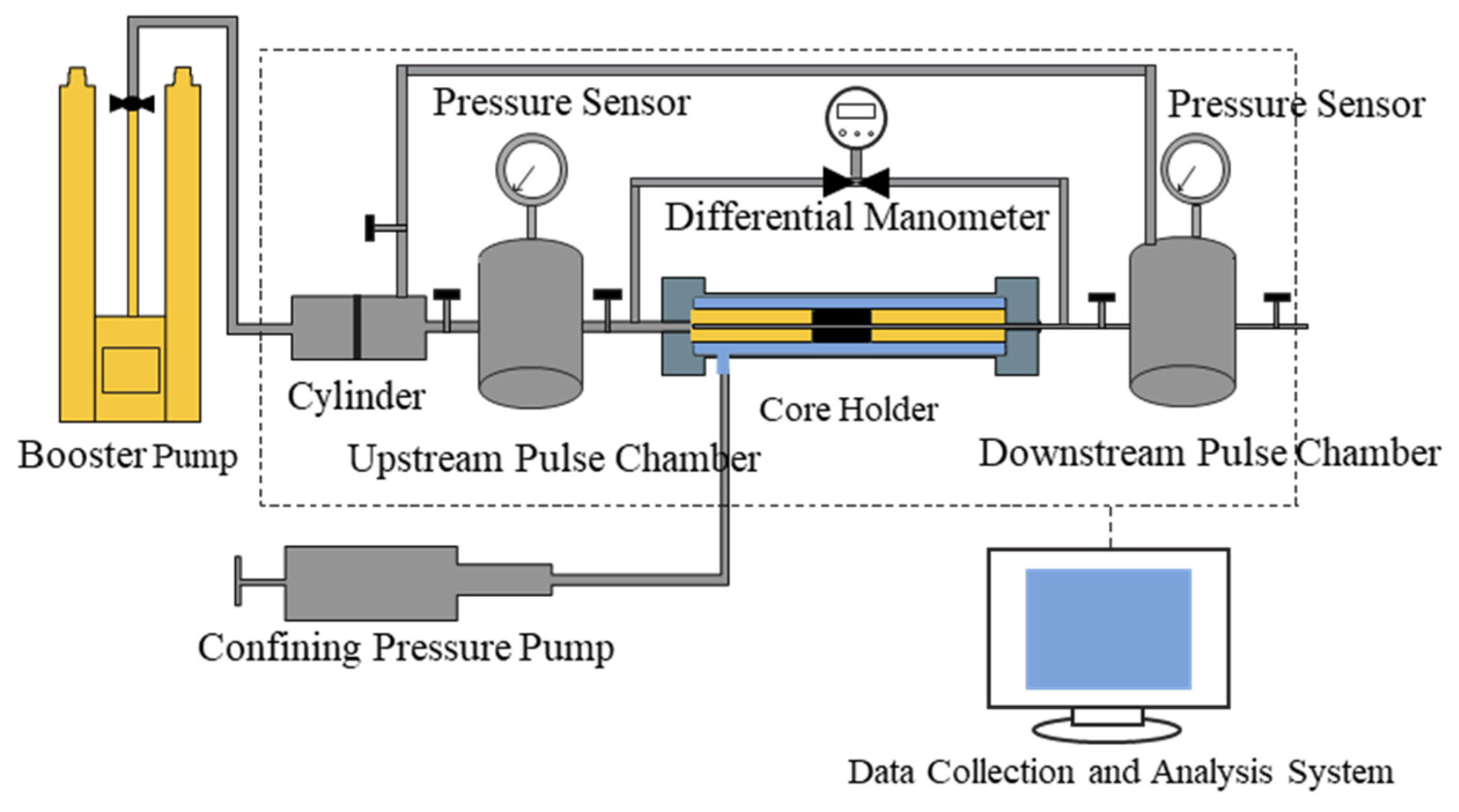
Due to the high-temperature, high-pressure, and ultra-low-permeability characteristics inherent in deep shale gas reservoirs, conventional permeability measurement apparatuses are unsuitable for precise evaluation. Thus, based on the theoretical research results of high-temperature and high-pressure pulse permeability in recent years, an experimental device and process for measuring permeability by the instantaneous pressure pulse attenuation method were used. This method effectively overcomes the challenges of accurately measuring permeability under laboratory conditions involving pore pressures of 10 MPa to 50 MPa pore pressure, confining pressures up to 80 MPa, and a temperature of 120 °C. The schematic diagram of the experimental test device is shown in Figure 4. The experimental system primarily consists of a core holder, a confining pressure pump, a temperature control unit, and two high-pressure vessels. The fluid injection system consists of a booster pump and a nitrogen gas cylinder, while the experimental data acquisition system comprises a computer, pressure sensors, temperature sensors, etc.
In the experiment, by applying unequal pore pressures across the rock sample, a pressure pulse process occurs inside the rock sample, in which the gas pressure at the high-pressure end decreases and the pressure at the low-pressure end increases. By recording the pressure of the one-dimensional compressible fluid passing through both ends of the core in the instantaneous flow state, a linear gradient of pressure changing with time can be obtained. Combining the physical property parameters of the rock and the fluid, by solving the seepage differential equation and the boundary conditions, the calculation formula of the pulse permeability can finally be obtained.
Under high-temperature and high-pressure conditions, the properties of high-pressure gas approach those of liquids, and it can be approximately assumed to be a slightly compressible fluid (the temperature is 120 °C, and the pore pressure is at least 10 MPa). At the same time, the gas slippage effect inside the core is ignored, and a seepage differential equation in pressure form can be written to represent the seepage of gas in the core. In addition, during pulse attenuation, the volumes of the high-pressure gas supply containers at the upstream and downstream are the same, which also simplifies the solution process of the seepage differential control equation and the boundary conditions. Finally, the calculation formula of the pulse permeability of high-pressure gas instantaneously flowing inside the rock sample can be obtained [36].
In the pulse attenuation test, the relationship between differential pressure across the rock sample and elapsed pulse time is expressed as [36]:
P 1 ( t ) P 2 ( t ) = Δ P e β t
where P1(t) and P2(t) are the pressure function of the upper and lower chamber with time, ∆P is the pressure difference between the upstream and downstream at time t, MPa. β is the slope of the single exponential part, given by the following formula:
β = k C g η ϕ L 2 V p 1 V 1 + 1 V 2
where k denotes pulse permeability, m2; Cg is the compressibility of the fluid under the test temperature and pressure, 1/Pa; η is the viscosity of the fluid at temperature and pressure, Pa·s; ϕ is the porosity of the rock sample, %; L is the length of rock sample, m; Vp is the sample pore volume, m3; and V1 and V2 are the volume of the gas chamber on and downstream of the pulse, respectively (same volume), which are represented by V, m3.
Accordingly, the pulse permeability k is expressed as follows:
k = C   g η L V ln [ Δ p / ( p 1 ( t ) p 2 ( t ) ) ] 2 A Δ t
where A is the cross-sectional area of the rock sample; ∆t is the test duration, s.

3.2.2. Permeability Measurement of Fracture Samples

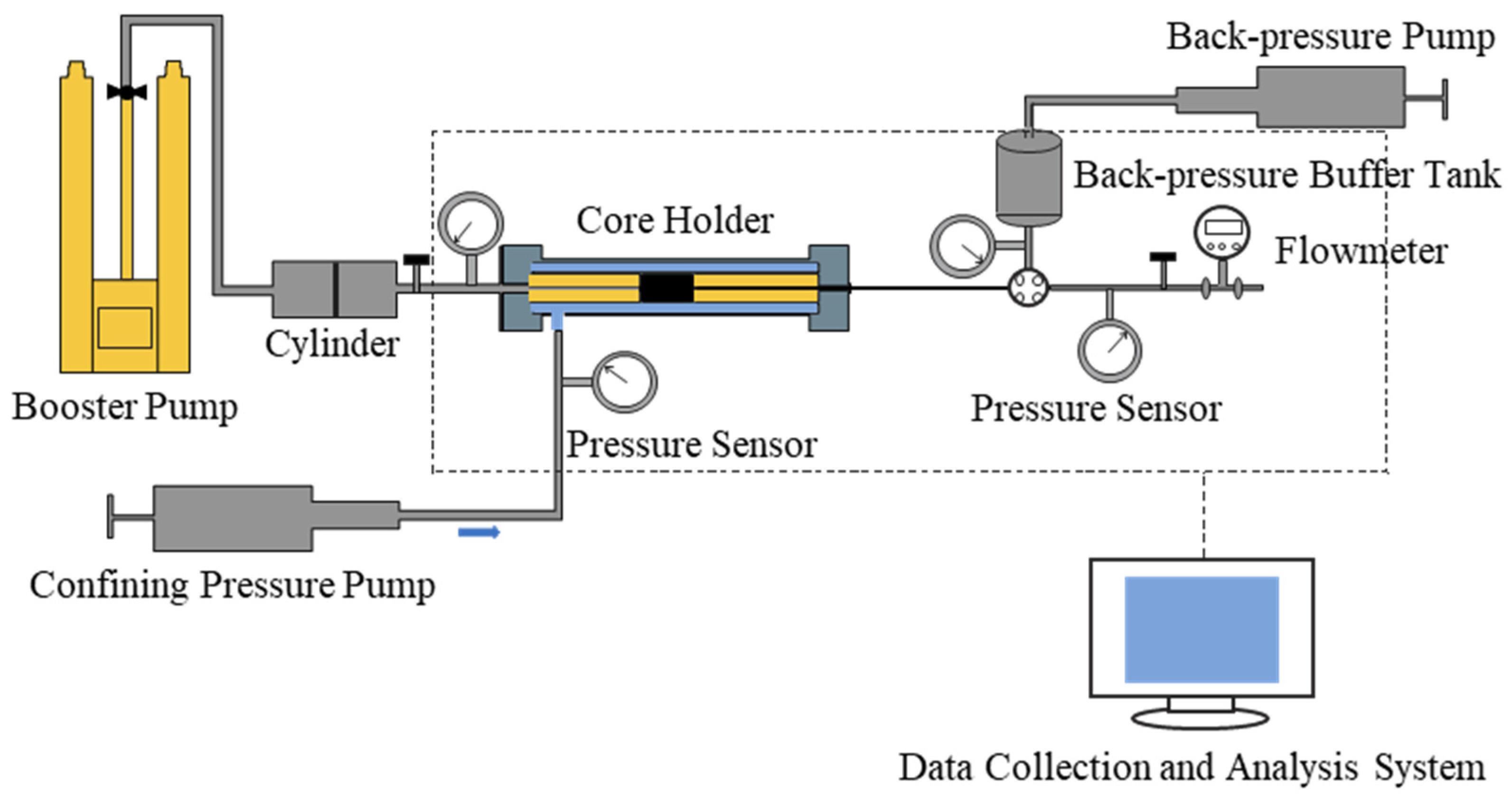
Permeability measurements for both unpropped and propped fracture samples were conducted using the steady-state method. The apparatus employed for these measurements was a new-type fully automated core analysis system developed by the National Key Laboratory of Southwest Petroleum University. Figure 5 is a high-temperature and high-pressure core gas permeability test device, which mainly includes the following parts: gas source, core holder, confining pressure pump, flowmeter, pressure sensor, temperature sensor.
The high-pressure gas source provides pore pressure for the core to be tested, and the confining pressure pump is used to apply the specified confining pressure. Pressure sensors, temperature sensors, etc. jointly process the workstation to record the pressure and temperature changes during the experiment. The equipment is equipped with flow meters suitable for different magnitudes, which are used to measure the gas flow rate when the pressure difference at both ends of the core reaches stability. According to the calculation of gas permeability in the steady-state method in “SY/T 6385-2016 Determination Method of Rock Porosity and Permeability under Overburden Pressure” [37], the following formula is used to calculate the gas-measured permeability of the core sample to be tested:
K g = 2 P 0 Q 0 η L P 1 2 P 2 2 A × 10 3
where Kg is the gas permeability, mD; η represents gas viscosity under test conditions, mPa·s; L denotes core sample length, cm; A is the cross-sectional area of the core sample, cm2; P0 is the standard atmospheric pressure under test conditions, MPa; Q0 is the volumetric gas flow rate through the core sample, cm3/s; P1 is the inlet pressure of the core sample, MPa; and P2 is the outlet pressure of the core sample, MPa.
According to the above formula, based on the inlet and outlet end pressures of the core and the gas flow rate data, the permeability of the core to be tested can be calculated. In the experiment, by changing the confining pressure and testing the permeability of the core under different confining pressures, the relationship curve between permeability and effective stress can be obtained.

3.2.3. Experimental Scheme

Most stress sensitivity analyses are predominantly carried out based on net stress. The description of effective stress by net stress is obtained by directly subtracting pore pressure from confining pressure. While this method has the advantages of being fast and convenient, there may be errors. Therefore, it is necessary to conduct experimental analysis through high frequency tests. In this study, experimental studies on the stress sensitive characteristics of matrix, unpropped fracture, and propped fracture samples were carried out, respectively. Specifically, permeability measurements for deep shale matrix samples employed the unsteady-state pressure pulse decay method, whereas fracture samples utilized the steady-state method. When testing permeability stress sensitivity experiments, there are two corresponding stress loading methods, variable pore pressure and variable confining pressure. Varying pore pressure under constant confining pressure replicates in situ stress variations during reservoir production better, although the loading procedure is more complex. In addition, under the action of external stress, there is a certain delay phenomenon between the stress and strain of the rock. When the external stress changes, the strain inside the rock does not immediately follow the change in stress and change accordingly, but there is a certain time delay. This is because the microscopic structure inside the material needs a certain amount of time to adapt to the change in external stress. This phenomenon is called stress hysteresis. In the process of permeability testing, the influence of stress hysteresis generally cannot be ignored. All samples must be pre-aged before testing to eliminate the influence of stress hysteresis. If the aging experiment is not carried out, the permeability of the sample in a low stress environment will be overestimated, leading to misjudgment of stress sensitive characteristics. Matrix and unpropped fracture samples underwent two aging experiments, while propped fracture samples underwent three. The detailed procedures for the Sample Aging Experiment and the formal experimental steps are described as follows. For both the preliminary and formal experiments, one measurement was conducted per set of confining pressure and stress conditions.
1. Sample Aging Experiment Process: ① Place the sample to be tested into the core holder, load the confining pressure to 5 MPa, set temperature to 120 °C, and measure the current permeability after aging for 24 h; ② Slowly increase the confining pressure incrementally to 15 MPa, 25 MPa, 35 MPa, 45 MPa, 55 MPa, 65 MPa, and 75 MPa. After waiting for 1 h for each measurement point to stabilize the strain, measure the permeability of the core sample as the loading process of the first stress cycle; ③ Gradually decrease the confining pressure, and the pressures are 75 MPa, 65 MPa, 55 MPa, 45 MPa, 35 MPa, 25 MPa, 15 MPa, and 5 MPa in turn. Waiting for 1 h for each measurement point, measure the permeability of the core sample as the unloading process of the first stress cycle; ④ Repeat steps ②–③ until the permeability of each stress measurement point in each cycle is basically constant.
2. Matrix Samples Experimental Procedure: ① Load the shale matrix core sample to be tested into the core holder, apply a confining pressure of 5 MPa, set temperature to 120 °C; ② Open the inlet valve and the upstream–downstream chamber connection valve, the upstream chamber inlet valve, the upstream chamber outlet valve, and the downstream chamber outlet valve, close the exhaust valve and the needle valve, and fill the determination system with nitrogen to 3.5 MPa; ③ Close the inlet valve, waiting for the sample to be fully saturated with gas for 30 min, observe the pressure changes in the upstream and downstream in the system until they are stable, and then start preparing for formal measurement; ④ Increase the confining pressure to 20 MPa and the pore pressure to 10 MPa, waiting at least 30 min until it is stable; ⑤ Close the upstream–downstream chamber connection valve and the upstream chamber inlet valve, open the exhaust valve, slowly open the needle valve, discharge a certain amount of gas downstream, and close the downstream chamber outlet valve when the pressure difference between the upstream and downstream reaches 0.6 MPa; ⑥ Record the differential pressure with time, stop measurement when differential pressure drops to less than one third of the initial pressure difference; ⑦ Open the upstream–downstream chamber connection valve, the upstream chamber inlet valve, and the downstream chamber outlet valve, and fully open the needle valve to empty the gas in the system; ⑧ Slowly increase the confining pressure in step ① to 20 MPa, 30 MPa, 40 MPa, 50 MPa, 60 MPa, 70 MPa, and 80 MPa in turn, and repeat steps ①–⑥ to complete a sequence of tests; ⑨ Raise the pore pressure in step ④ to 20 MPa, 30 MPa, 40 MPa, 50 MPa in turn, and repeat steps ①–⑧ for testing; ⑩ Unload the confining pressure, take out the sample to finish the experiment, collect and organize the test data, calculate the pulse permeability.
3. Fracture Samples Experimental Procedure ① Load the shale fracture sample into the core holder, apply the confining pressure to 15 MPa, set the temperature to 120 °C, then increase the pore pressure to 10 MPa, increase the back pressure to 9.5 MPa, and test the permeability of the core sample; ② Keep the pressure at the core inlet end unchanged, and slowly increase the confining pressure to 20 MPa, 25 MPa, 30 MPa, 35 MPa, 40 MPa, 45 MPa, 50 MPa, 55 MPa, 60 MPa, 65 MPa, 70 MPa, 75 MPa, and 80 MPa in turn. Waiting for 3 min for each measurement point until the pressure and flow are stable, and then measure the permeability of the core sample; ③ Repeat steps ①–②, where the pore pressure is set to 20 MPa, 30 MPa, 40 MPa, and 50 MPa in turn to complete the core sample permeability test under different pore pressures; ④ First remove the pore pressure, then slowly remove the confining pressure, open the holder to take out the fractured core sample, finish the experiment.

4. Results and Discussion

Based on the experimental scheme described in Section 3.2.3, the results obtained from the aging experiment and formal testing of all samples are presented and analyzed in this section.

4.1. Results of Aging Experiment and Permeability

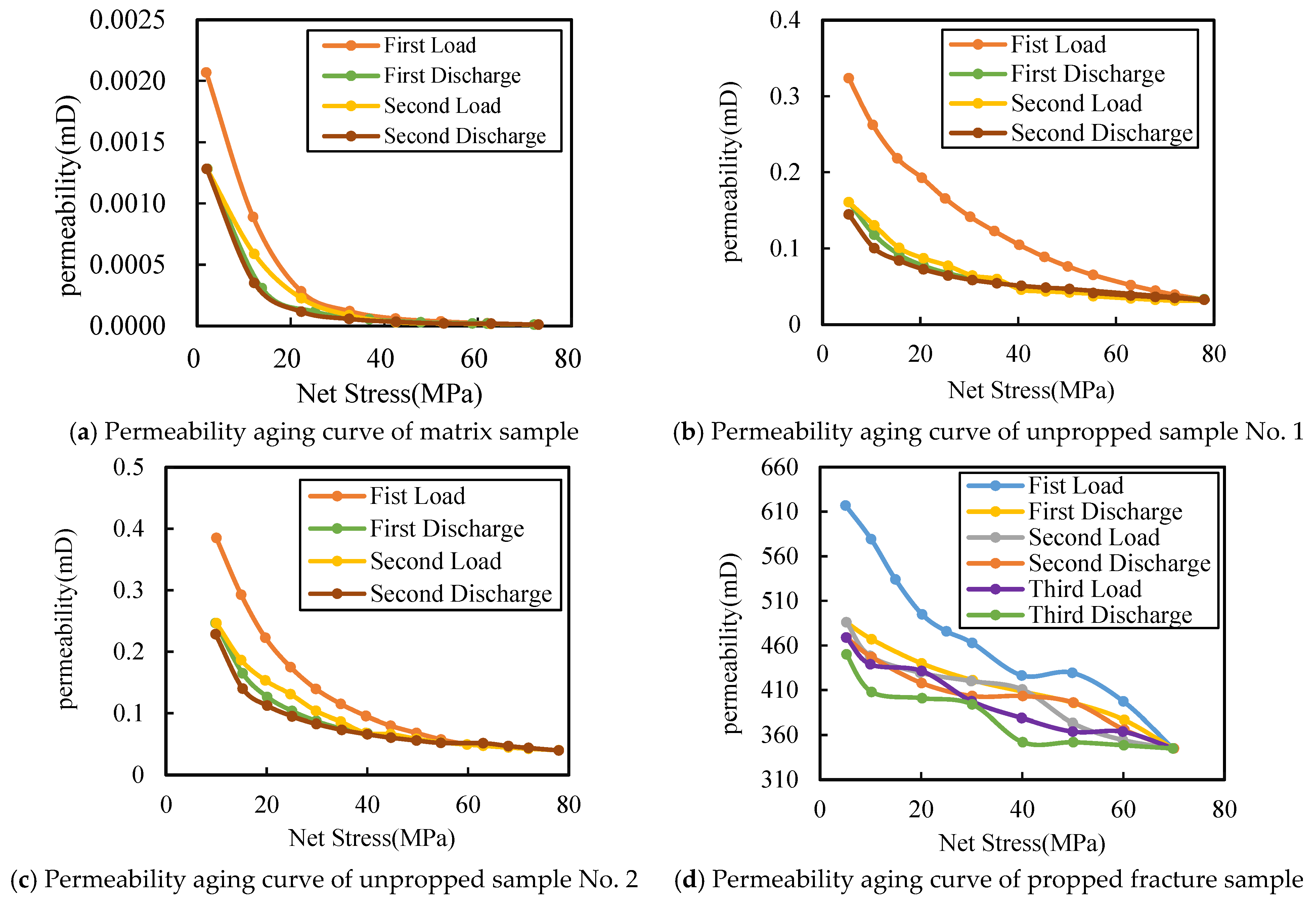
To minimize the influence of stress hysteresis, aging experiments were conducted prior to formal testing. By simulating the reservoir temperature and pressure conditions, the samples experience an aging process in the laboratory similar to that in underground reservoirs. The correspondence between net stress (confining pressure minus pore pressure) and permeability is taken to analyze the changes during the aging process. Aging experiments were carried out for shale matrix samples, unpropped fracture samples, and propped fracture samples. The confining pressure at the starting measurement point was 5 MPa, the pore pressure was 3 MPa, the aging time at the initial measurement point was 24 h, and the aging time at subsequent measurement points was 1 h each. Figure 6 shows the permeability change curves measured during the sample aging process. The results indicate that the largest difference occurs between the first loading and subsequent test sequences, and the permeability differences in subsequent tests are relatively small, indicating that the pore structure of deep shale samples has tended to be stable.
The observed permeability difference during loading and unloading is fundamentally attributed to differing contact deformation mechanisms. Taking the matrix sample and No.1 unpropped fracture sample shown in Figure 6 as examples. During the first loading process of the matrix sample, as the confining pressure increases to 10 MPa, the permeability rapidly decreases from 0.0072 mD to 0.0028 mD. As the confining pressure continues to increase (10 MPa to 75 MPa), the sample gradually undergoes bulk deformation, and the permeability slowly decreases from 0.0028 mD to 1.65 × 10⁻⁵ mD. During the unloading process, when the confining pressure decreases from 75 MPa to 10 MPa, the permeability slowly recovers from 1.65 × 10⁻⁵ mD to 0.0028 mD, indicating that elastic deformation mainly occurs in the core during the bulk deformation stage, and the permeability has a certain recoverability. Subsequently, as the confining pressure continues decreasing to 5 MPa, permeability still cannot recover to initial state, indicating that plastic structural deformation mainly occurs in the core during the confining pressure stage of 5 MPa to 10 MPa during the first stress loading, the permeability is unrecoverable, and the permeability of the core basically remains stable within the range of bulk deformation during several loading and unloading cycles. For fracture samples, the rough fracture surfaces close in situ, and the degree of concavity and convexity matching of mineral particles is relatively high. The fracture opens under low confining pressure conditions, and gradually closes under high confining pressure, resulting in a sharp drop in sample permeability. When the confining pressure is low, as the stress loading process progresses, the rock particles in contact on the fracture surface are gradually crushed, the contact area on both sides of the fracture gradually increases, the fracture porosity decreases, and the permeability decreases from 0.381 mD to 0.13 mD; while during the continuous loading process of confining pressure (10–75 MPa), the sample undergoes bulk deformation, and the permeability slowly decreases from 0.13 mD to 0.0028 mD. During the subsequent unloading process, permeability partially recovers from 0.0028 mD to 0.13 mD when confining pressure decreases from 75 MPa to 5 MPa. Nevertheless, despite repeated subsequent loading and unloading cycles, permeability cannot be restored to its initial value of 0.381 mD. Compared with natural reservoir conditions, laboratory rock samples have experienced stress relaxation from downhole to the surface. Direct testing of nonaged cores would result in an overestimation of permeability and, consequently, stress sensitivity, potentially misleading reservoir evaluations. Therefore, core aging prior to stress sensitivity testing is essential for accurate characterization.
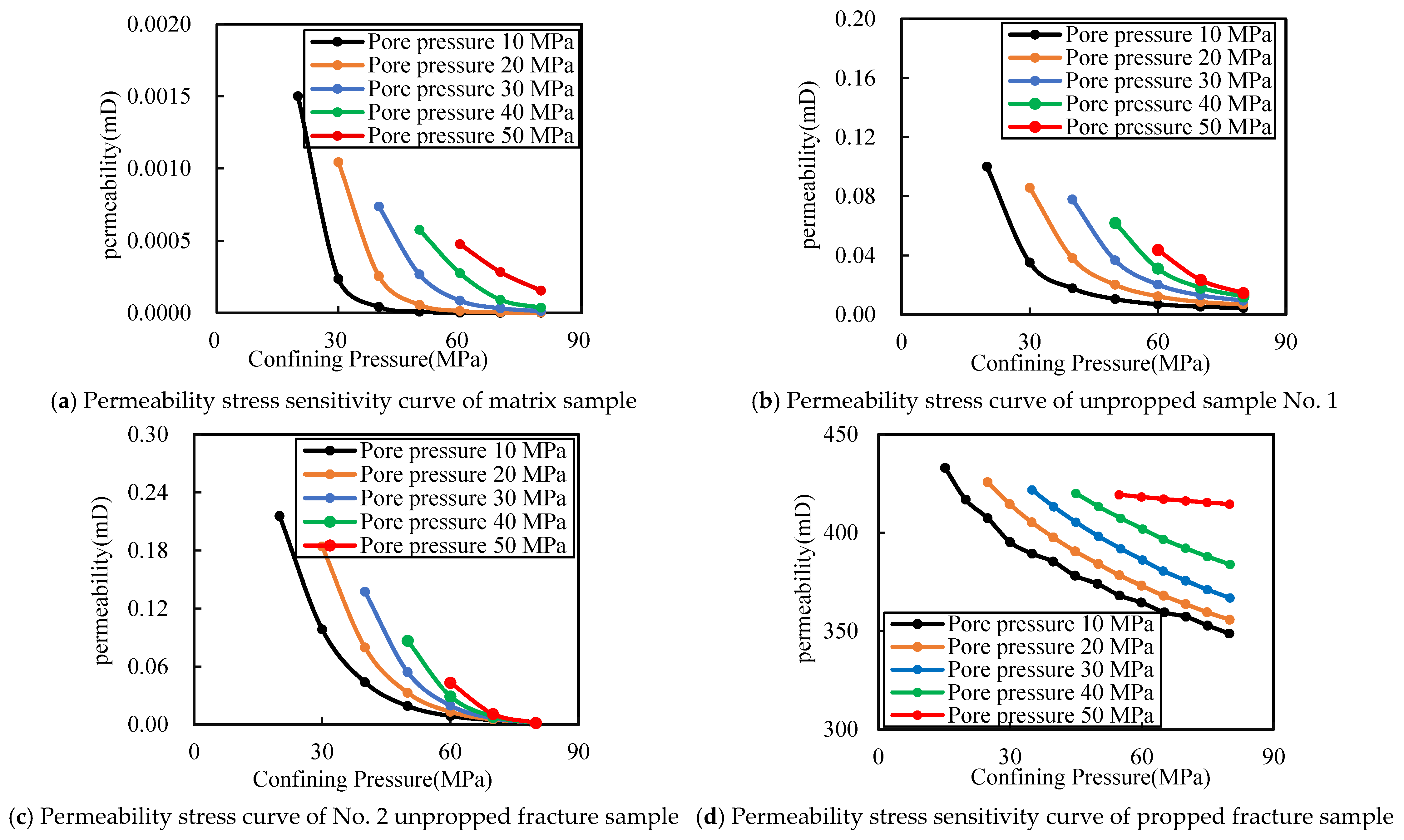
Figure 7 shows the experimental results of permeability stress sensitivity for multiple media samples from deep shale. It can be observed that the matrix samples exhibit extremely high stress sensitivity. The permeability of the unpropped fracture sample shows a notable increase in magnitude compared to matrix samples, although it remains at a relatively low level. The roughness of the fracture surface significantly influences permeability, demonstrating a distinct positive correlation. In contrast, propped fracture samples possess substantially higher permeability magnitude. Compared with the matrix and unpropped fracture samples, propped fractures clearly exhibit weaker stress sensitivity, maintaining appreciable permeability even under elevated effective stress conditions.

4.2. Calculation of Effective Stress Coefficient

To calculate the effective stress coefficient, it is essential to establish an appropriate empirical relationship between permeability, confining pressure, and pore pressure. In this study, the quadratic polynomial model of Response Surface Method (RSM) was used to regression the permeability stress sensitivity data. Warpinski and Teufel first used RSM to study the relationship between permeability and confining pressure and pore pressure, which significantly improves the fitting accuracy between the calculated values of the model and the measured values under different confining and pore pressures. For data that fails to meet requirements, it can be processed by the Maximum Likelihood Estimation method. The quadratic polynomial regression model describing permeability as a function of confining and pore pressures can be expressed as [11,29]:
k λ 1 λ = a 1 + a 2 P c + a 3 P f + a 4 P c 2 + a 5 P c P f + a 6 P f 2
where k is the measured permeability, mD; a1 to a6 are fitting parameters; λ is the Maximum Likelihood Estimation transformation coefficient generally ranging from −3 to 3.
Currently common methodologies, in addition to quadratic polynomial model of RSM, and binary linear, power-law, exponential, each with its own advantages, disadvantages, and applicable conditions. Regression analyses were performed on the experimental results of all measured samples using the aforementioned models, and the correlation coefficients (R2) of the different models were compared. The results are presented in Table 2. Overall, the linear regression model shows unsatisfactory correlation, particularly for matrix samples and unpropped fracture samples, which exhibit relatively low R2 values. Due to the weaker stress sensitivity of propped fracture samples, where permeability decline trends approximate linear behavior, the power-law model demonstrates comparatively poor regression performance. The exponential model yields favorable regression results across matrix samples, unpropped fracture samples, and propped fracture samples. However, the quadratic polynomial model employed in the response surface methodology achieves the best correlation, with R2 values generally distributed between 0.98 and 0.99 (Table 3). Furthermore, this approach accounts for random errors in various measurement variables and maximizes the fitting accuracy between calculated model values and measured values under different confining and pore pressures by introducing a transformation coefficient (λ). Therefore, for experimental data on permeability stress sensitivity in deep marine shale gas reservoirs in southern Sichuan, the quadratic polynomial model is recommended for regression analysis.
After establishing the empirical relationship of permeability between confining pressure and pore pressure, the effective stress coefficient can be determined. Traditionally, effective stress coefficients are calculated by the tangential method based on differential calculus principles. Geometrically, this coefficient represents the tangent slope at a specific point on a permeability isoline in Pc-Pf plot.
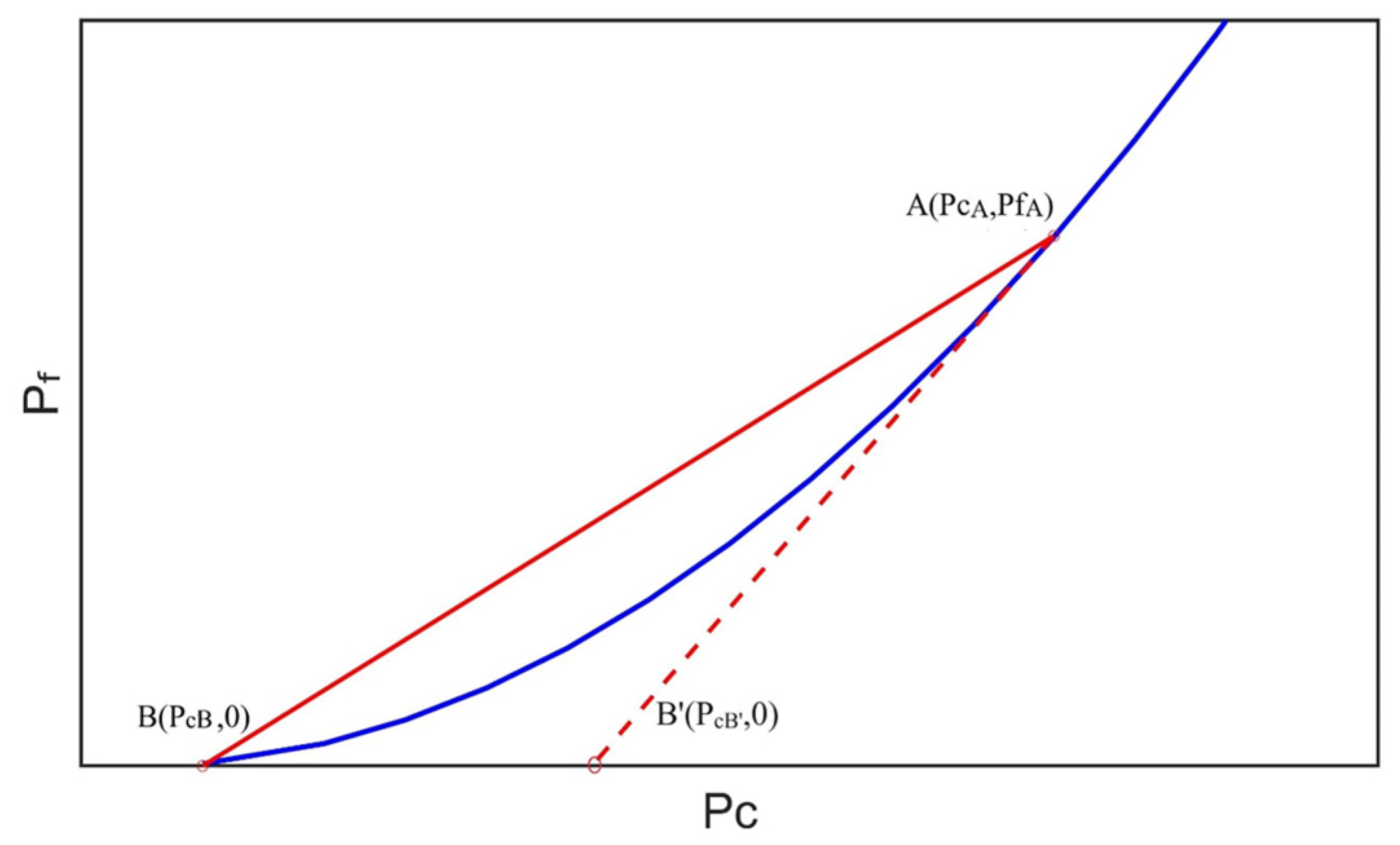
In contrast, this study adopts a secant method [38] to calculate the effective stress coefficient for different media samples. In Figure 8, a stress state at point A (PcA, PfA) corresponds to a specific permeability isoline. The tangent line of the permeability isoline through point A intersects the P-caxis at point B′. If the permeability isoline is a straight line, point B′ and point A are on the same permeability isoline, and the pressure at point B′ (PcB′, 0) is consistent with the effective stress at point A (PcA, PfA), then it can be obtained:
P eff ( A , B ) = P c α P f = P cB
The effective stress at point B′ is equal to the confining pressure value PcB′, and it is also the effective stress corresponding to the stress condition at each point on the whole permeability contour. However, if the contour is nonlinear, the intersection point of the permeability isoline at point A and the Pc axis is actually point B (PcB, 0), which is not on the same permeability isoline with point B′; then, the effective stress corresponding to the permeability isoline at point A should be:
P eff ( A , B ) = P c α P f = P cB
As seen in Figure 8, the effective stress of point A (the tangent line through point A) calculated based on Bernabe differential method is PcB′, which is inconsistent with the actual PcB. In order to obtain accurate effective stresses (confining pressure value at point B), on the premise of determining the permeability of point A, the corresponding confining pressure value when the pore pressure is zero under this permeability is obtained. The line determined by AB is the secant line of the isoline. According to the definition of effective stress, the calculation expression of the secant effective stress coefficient αn of practical significance can be derived as follows:
P eff = P c α n P f
where αn is the effective stress coefficient of secant line with practical significance. The formula of αn can be obtained by deducing and transforming the basic form of the formula:
α n = P c P eff P f
For the rock sample with nonlinear characteristics, based on the permeability contours of points A and B in Figure 8, it can be derived as follows:
P eff ( A ) = P cA α n P fA
P eff ( B ) = P cB
For point B, the pore pressure is zero. The effective stress is equal to the confining pressure regardless of the effective stress coefficient. From the definition of effective stress, it can be seen that the effective stress at point A and point B is the same. Thus, the calculation expression of the effective stress coefficient of secant line in the permeability isoline with practical significance can be derived as follows:
α n = P cA P cB P fA
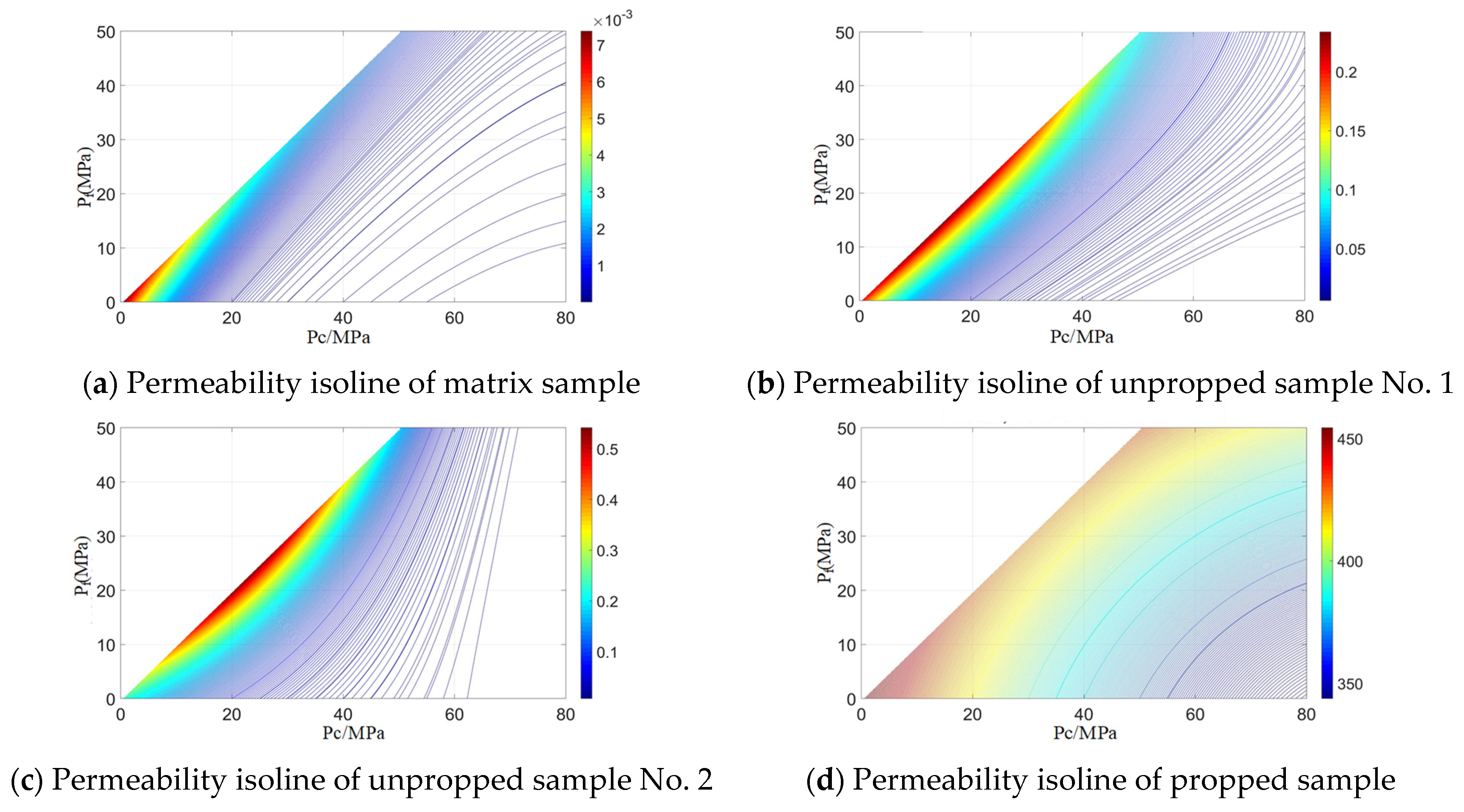
In order to determine the secant effective stress coefficient of each sample, it is necessary to draw a permeability contour map. According to the fitting parameters in Table 3 and Equation (6), the relationship between confining pressure and pore pressure corresponding to different experimentally measured permeability can be established. Then, isoline maps of each permeability were drawn on the Pc-Pf plane, and the specific results were shown in Figure 9. On the basis of the permeability isoline, the effective stress coefficient under each pressure measuring point can be calculated according to the formula.
Table 4 shows the distribution range of secant effective stress coefficients for each sample. The effective stress of various media in deep shale shows obvious nonlinear characteristics. The distribution range of the secant effective stress coefficient is wide, with the average distribution ranging from 0.65 to 1.33, the maximum value being 2.59, and the minimum value being 0.09. The larger value appears in the stress condition with larger net stress, while the smaller value appears in the stress condition with smaller net stress.

4.3. Effective Stress Correction

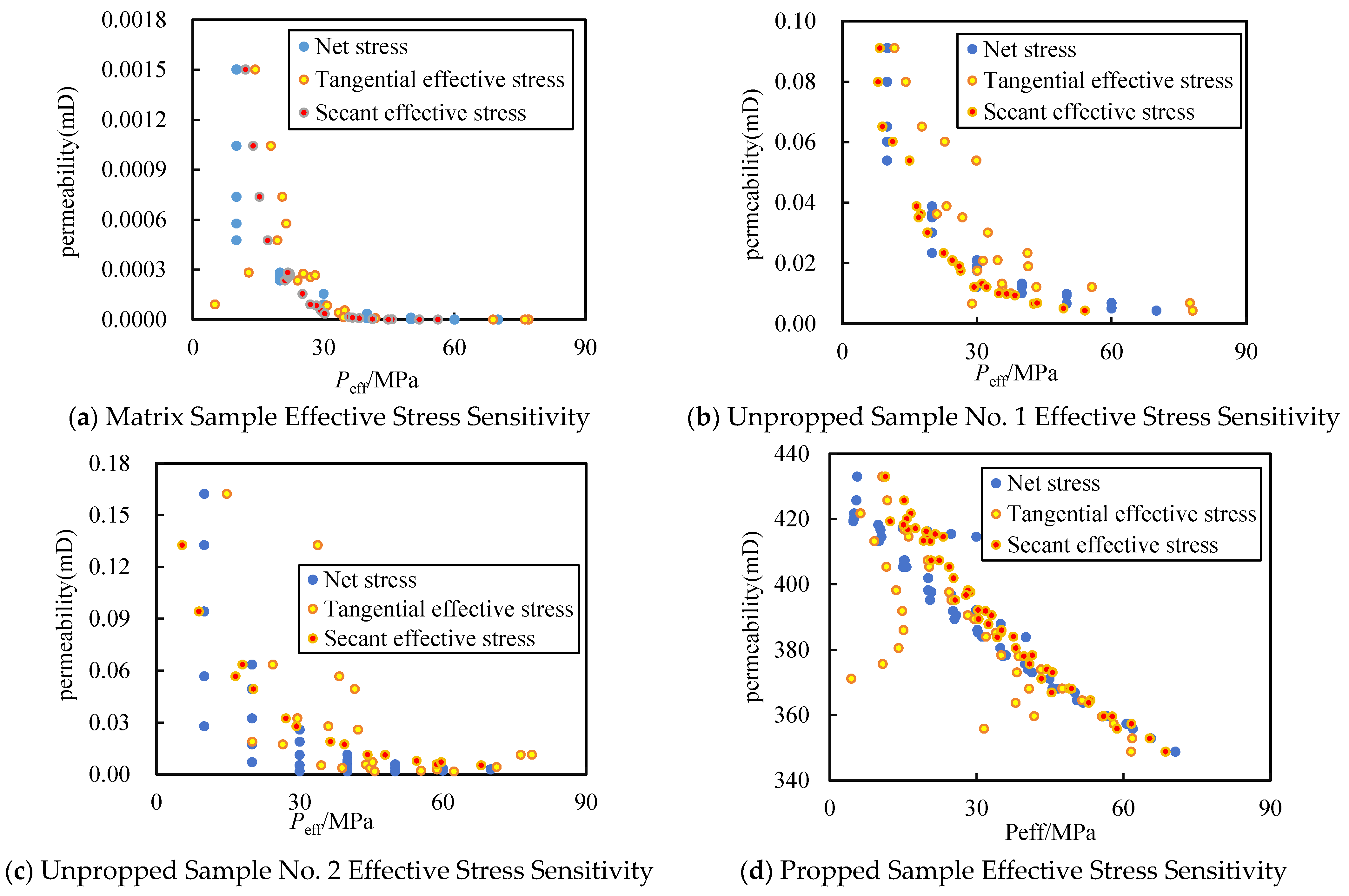
After obtaining the permeability effective stress coefficient, the effective stress at each measurement point can be calculated separately. Figure 10 shows the relationship curves between effective stress and permeability of deep shale samples, calculated based on Terzaghi effective stress coefficient, tangential, and secant effective stress coefficient.
As can be seen from Figure 10, the effective stress of both shale matrix and fracture samples shows obvious nonlinear characteristics. For samples with nonlinear effective stress, the applicability of net stress and tangential effective stress is limited. In particular, the tangent effective stress results in multiple permeability values for the same calculated effective stress, leading to distortion in the results. The secant effective stress can effectively describe the nonlinear characteristics of the effective stress of the sample, and the corresponding relationship between the effective stress and the permeability is clear. Therefore, the combination method of determining the relationship between the permeability and confining pressure and pore pressure by the response surface method and then calculating the effective stress coefficient of the sample secant line to determine the effective stress is a feasible method to determine the relationship between the effective stress and permeability of the sample.
Under the secant effective stress, deep marine shale matrix samples display extremely high stress sensitivity, while propped fracture samples exhibit comparatively weaker sensitivity. Specifically, when the effective stress increases from 15 MPa to 20 MPa, the matrix permeability loses 68.15–82.45%. In comparison, permeability reductions in unpropped fracture samples range between 12.52% and 56.67%, while propped fracture samples exhibit permeability losses between 0.78% and 6.23%.
The experimental results indicate that both deep shale matrix samples and fracture samples exhibit distinct nonlinear effective stress characteristics. The secant effective stress coefficient can accurately characterize the effective stress behavior of the tested samples, with variations observed in the effective stress coefficients among different types of rock samples. When predicting the productivity of horizontal wells in deep marine shale gas reservoirs, the influence of nonlinear effective stress on permeability cannot be neglected. In Section 5, “Model Application,” the impact of the empirical model for effective stress sensitivity on productivity is further discussed.

5. Model Application

During gas production, the reservoir pressure gradually declines, inducing stress sensitivity effects that alter the reservoir’s permeability and productivity. This phenomenon is particularly pronounced in deep marine shale gas reservoirs characterized by nonlinear effective stress behavior. In order to directly describe the stress sensitivity characteristics of the reservoir, the experimentally derived permeability stress sensitivity model is solved by reservoir simulation and analysis software PETREL to evaluate how different effective stress empirical models influence production performance. In the numerical model, several assumptions are adopted:
  • The fluid is gas–liquid two-phase and follows Darcy’s law;
  • Isothermal flow at 120 °C;
  • Hydraulic fracturing fractures are simulated by UFM (Unconventional Fracture Modeler);
  • The total stress of the formation remains constant (i.e., the confining pressure in the stress sensitive model is a constant).

5.1. Construction of Integrated Fracturing Production Model for Horizontal Well

5.1.1. Geological and Geomechanical Parameter Characteristics

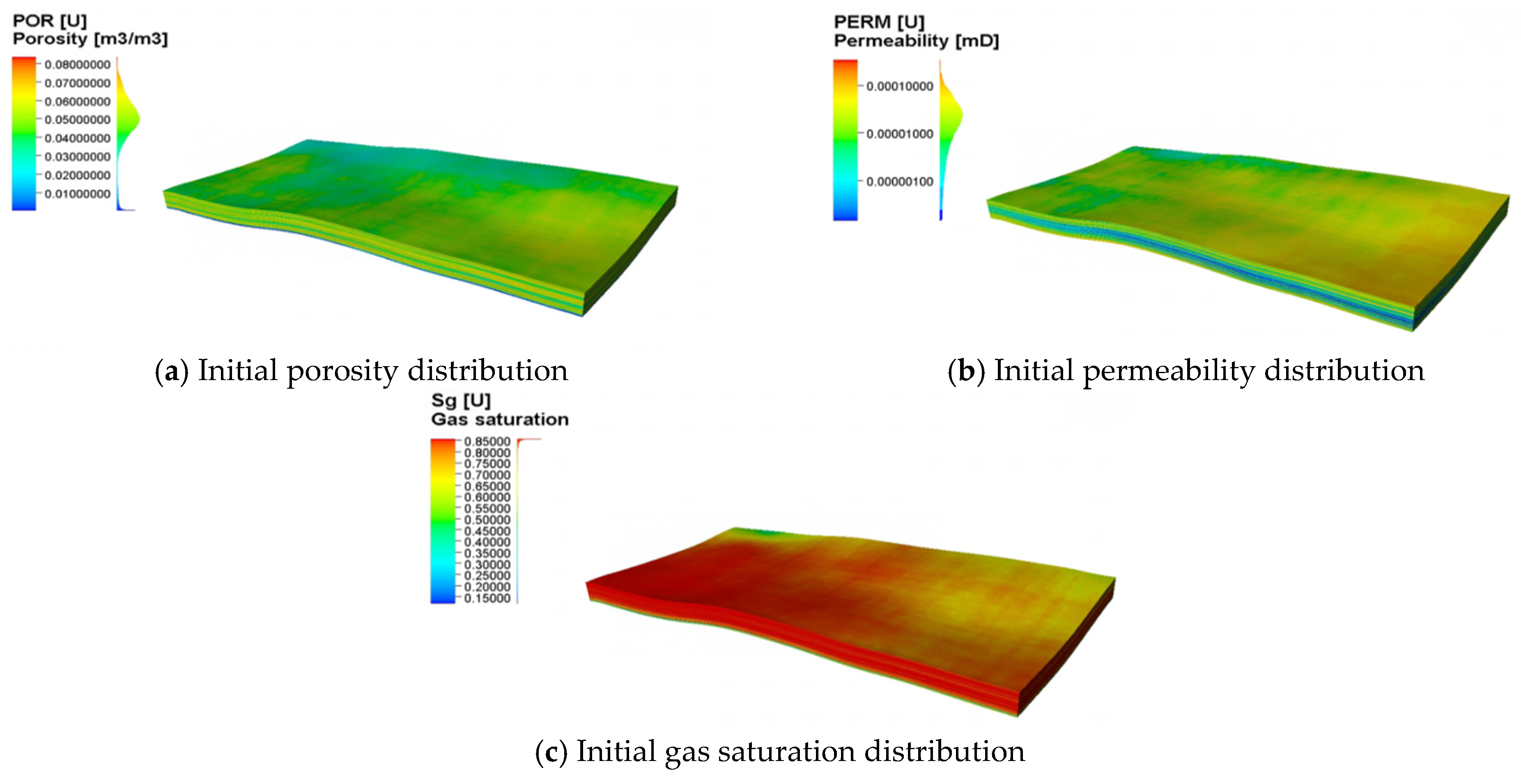
Numerical simulation research was conducted for Horizontal Well X in the deep marine shale reservoir of the Sichuan Basin. The well has a measured depth of 5751 m, a true vertical depth of 3841.56 m, and a horizontal section length of 1551 m. The main production zones belong to the Longmaxi Formation and Wufeng Formation. Longmaxi Formation consists of Long1-4, Long1-3 Long1-2 and Long1-1, among which Long1-1 and Long1-2 are the main production formation. Table 5 shows the geological parameters of each layer. Figure 11 shows the geological model of Well X.
The horizontal distribution of brittle minerals is stable, generally ranging from 65.15 to 83.85%, and the brittle minerals in the Wufeng-Long1-4 Layer are the highest at the bottom of the Wufeng Formation, and gradually decrease from the northwest and southeast to the middle, generally ranging from 61.28 to 83.85%.
The gas content of Wufeng-Long1-4 layer generally increases from top to bottom, and the highest gas content of Long1-1 layer is 11.30 m3/t. The horizontal distribution is stable, generally ranging from 2.60 to 9.11 m3/t. The gas content of Wufeng-Long14 Layer at the bottom is the highest, and gradually increases from the northwest and southeast to the middle of the work area, generally ranging from 3.52 to 7.88 m3/t. The formation pressure coefficient of Longmaxi formation can reach the highest 2.0, and it shows a decreasing trend from the middle to the northeast and southwest, generally ranging from 1.2 to 2.0.
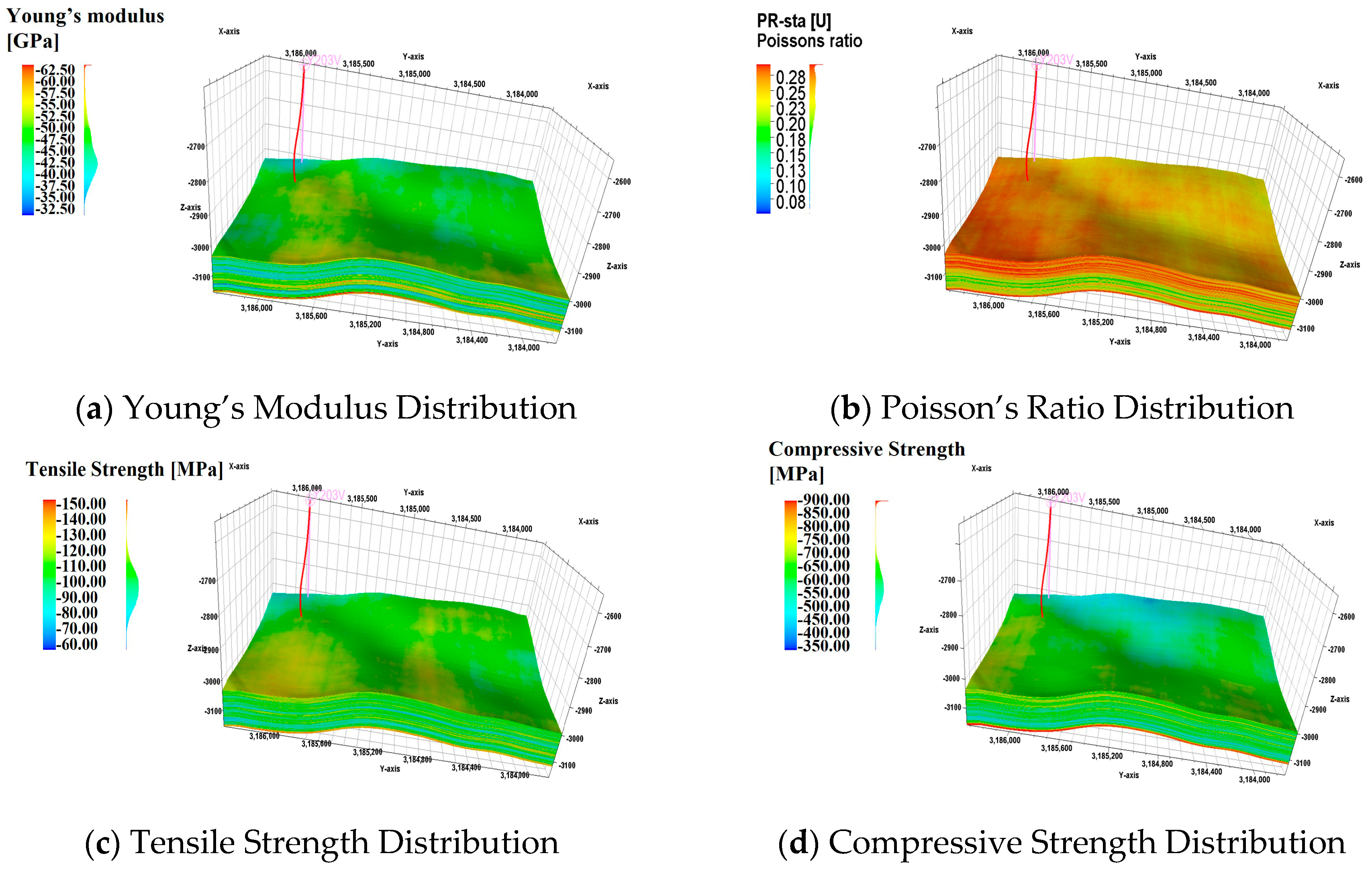
According to geostatistics, the range of Yang’s model of Well X is 42–57 GPa, Poisson’s ratio is 0.2–0.25, uniaxial tensile strength is 8.6–11.7 MPa, and compressive strength is 505–800 MPa. The average geomechanical parameters of each layer are shown in Table 6. The geomechanical model is shown in Figure 12.

5.1.2. Fracturing Simulation

Table 7 shows the design parameters of the fracturing design. A slickwater-based fracturing fluid system was employed, and the proppant mixture consisted of 70/140 mesh quartz sand and 40/70 mesh ceramsite.
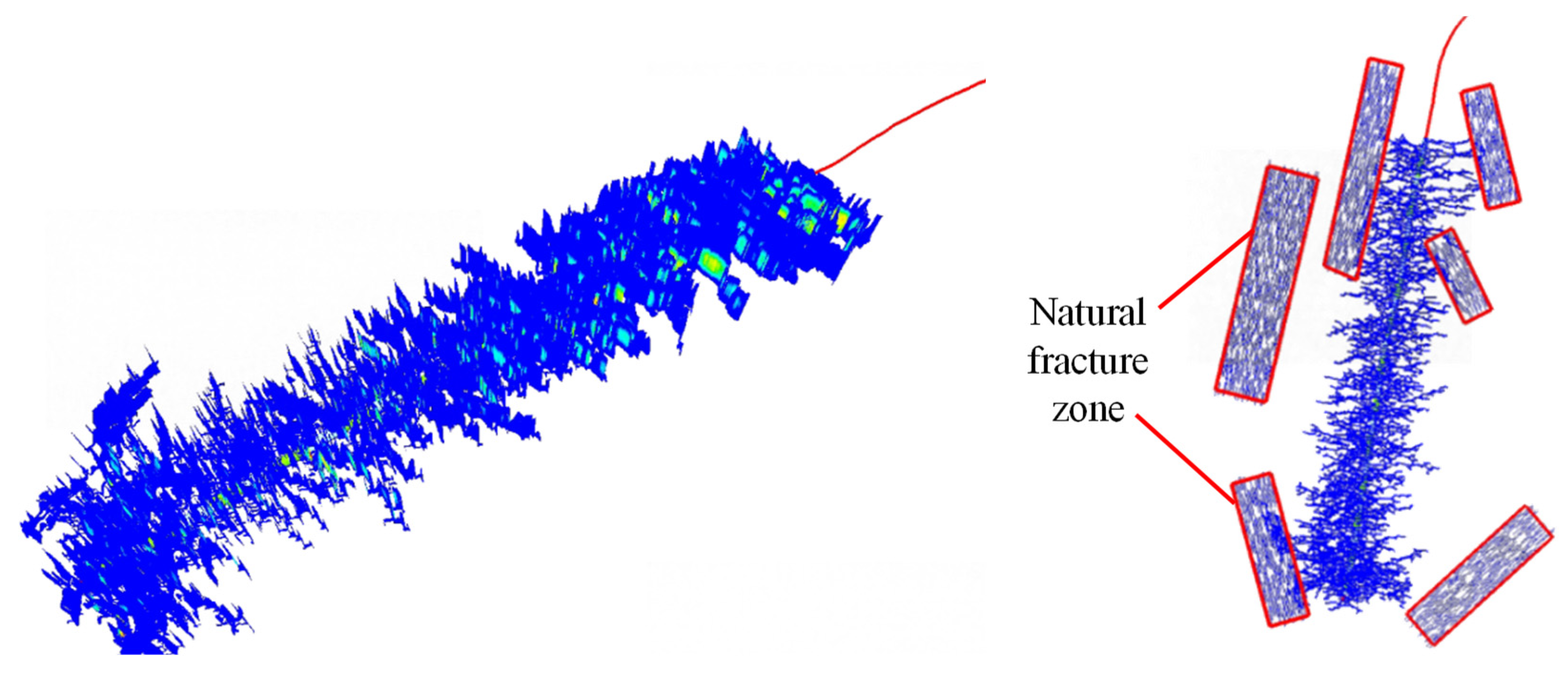
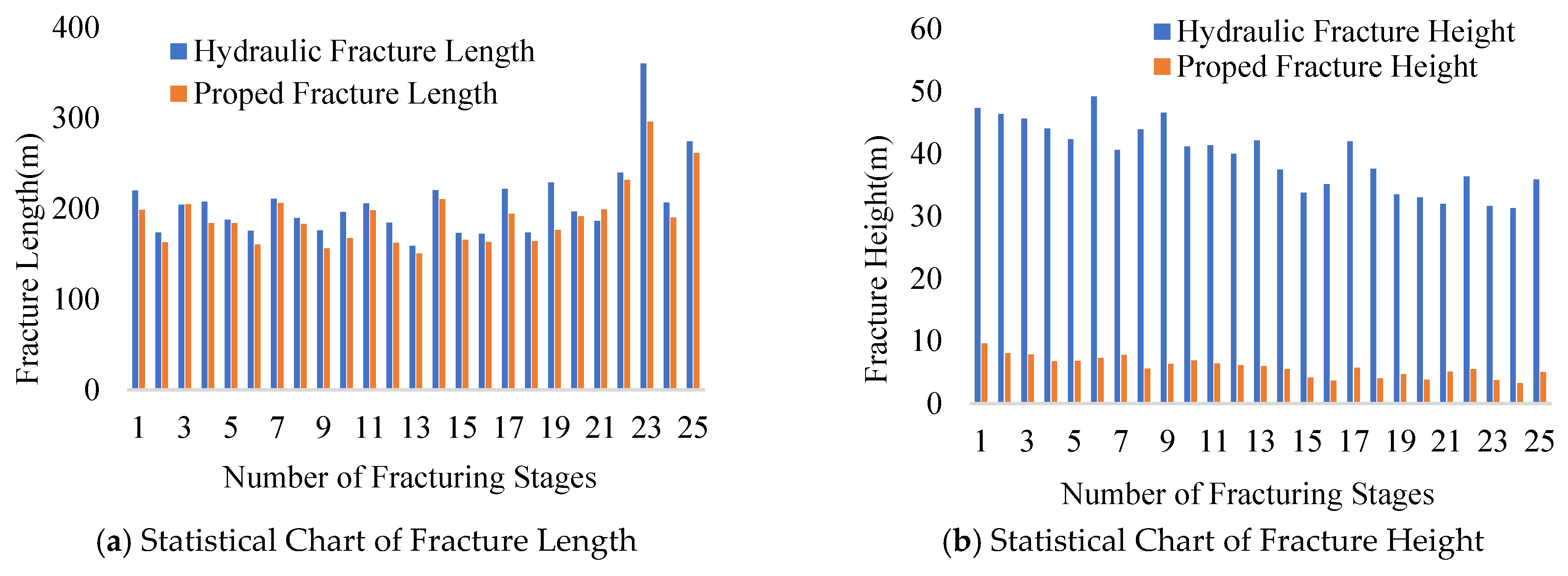
Based on the microseismic interpretation data, the distribution pattern of natural fractures has been characterized by manual characterization. Simulation was conducted by PETREL fracturing module [39,40,41,42,43]. The hydraulic fracture and natural fracture models obtained after fracturing are shown in Figure 13. The simulation results show that the average hydraulic fracture length and average propped fracture length are similar. The average hydraulic fracture height is 39.6 m, the average propped fracture height is 5.8 m. The statistics of fracturing simulation results are shown in Table 8, and the statistics of pressure fracture length and fracture height are shown in Figure 14.

5.2. Comparison of Production Dynamics Under Different Effective Stress Models

Based on the benchmark model without considering permeability stress sensitivity, three effective stress models (net stress, tangential effective stress, and secant effective stress) were employed to perform numerical simulations and predict reservoir pressure evolution over a 20-year production period. Table 9 shows the basic Numerical simulation parameters.
Simulate the net stress and secant effective stress sensitivity models measured experimentally using the above matrix sample.
The net stress sensitivity model under in situ conditions of the reservoir is:
k k 0   =   0 . 1646 e 0.0342 P
The tangential effective stress sensitivity model under in situ conditions of the reservoir is:
k k 0   =   0.1805 e 0.0328 P
The secant effective stress sensitivity model under in situ condition of reservoir is:
k k 0   =   0.0754 e 0.0475 P
where k is the permeability under the current pressure, m2; k0 is the initial permeability, m2; and P is the current pressure, MPa.
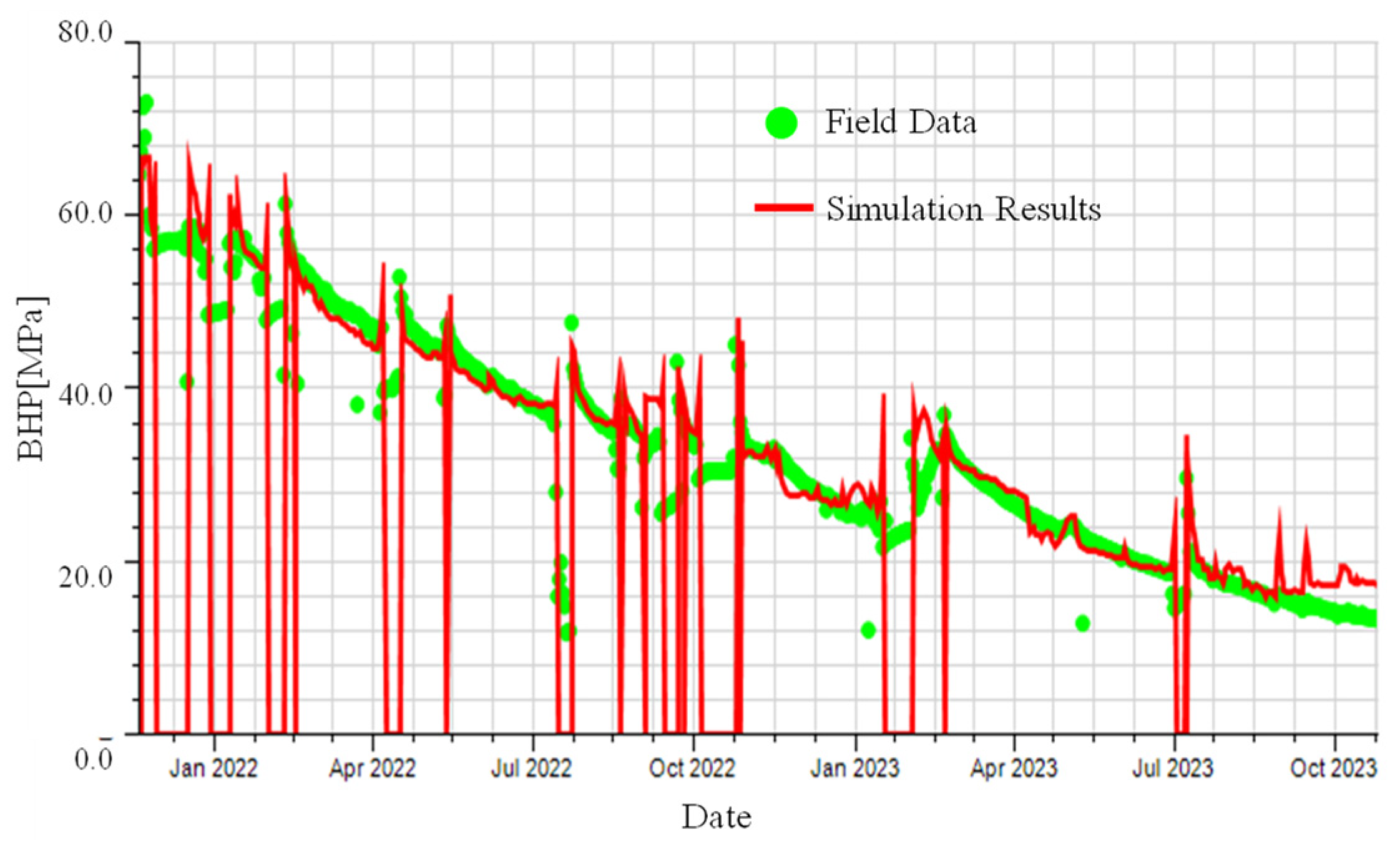
Based on the fracturing simulation results, four models were used to fit the production history, and the uncertain parameters such as fracture conductivity coefficient, unpropped fracture conductivity and vertical production range were adjusted and calibrated. Based on the fixed daily gas rates, the bottom hole flow pressure history fitting was carried out. The stress sensitive model of secant effective stress has the best historical fitting results. Figure 15 shows the historical fitting results of bottom hole pressure (BHP) of the secant effective stress sensitive model.
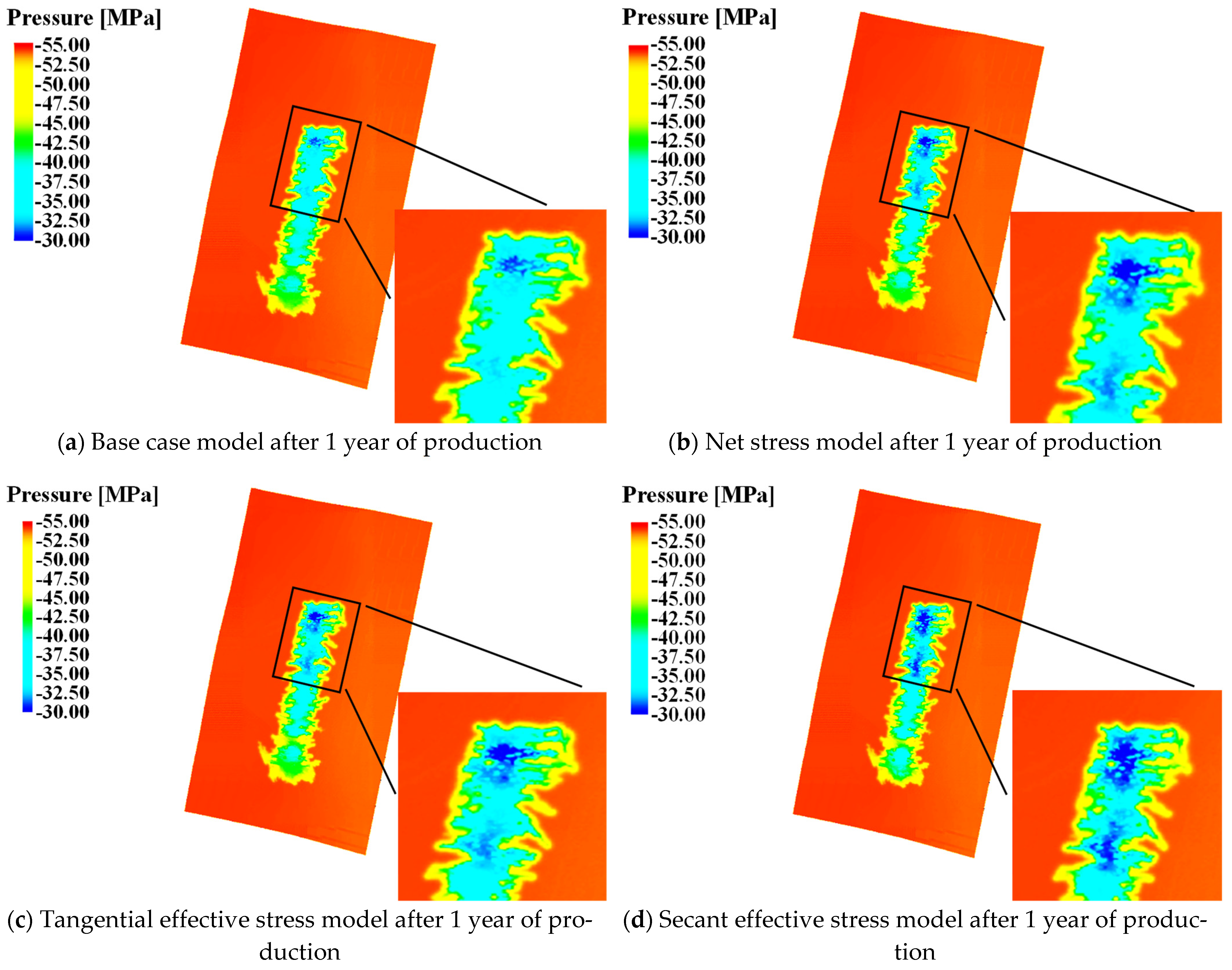
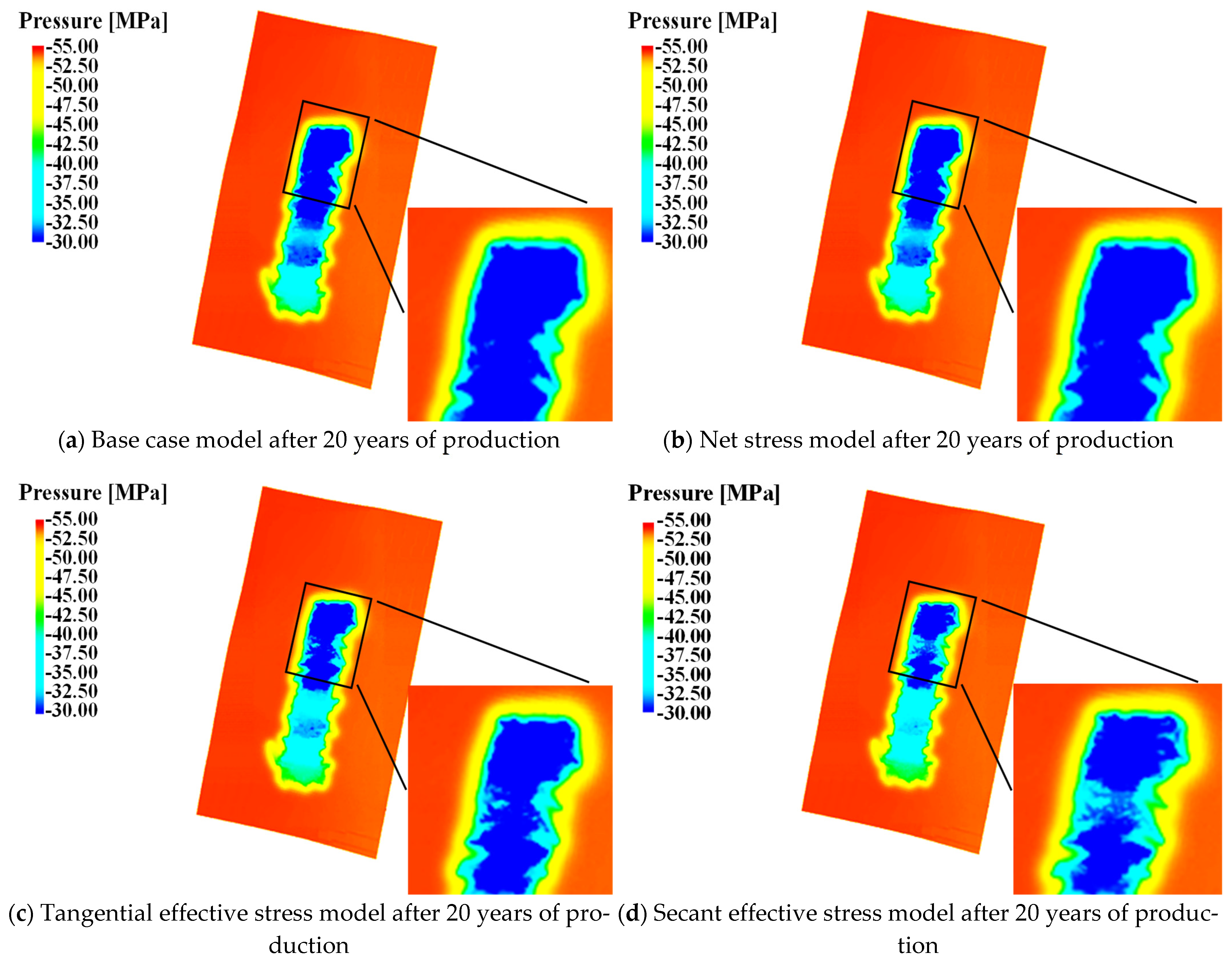
Figure 16 and Figure 17 compare the pressure distribution predicted by the three models over a 20-year production period. It can be observed that the Stimulated Reservoir Volume (SRV) area formed by hydraulic fractures can communicate the matrix, but the range is relatively limited. The fracture system pressure declines rapidly during the early production stage, with the pressure reduction becoming more pronounced near the horizontal wellbore. As production time increased, the range of pressure drop in the system gradually diffused to the matrix, but due to the low-permeability of the matrix, the fracture-controlled area was always limited.
The law of pressure change in the net stress model is similar to that in the benchmark model, but the pressure drop rate is reduced because the stress sensitivity is taken into account. Compared with the benchmark and net stress model, the pressure drop rate decreases obviously, which indicates that the nonlinear characteristics of effective stress cannot be ignored on the change in reservoir pressure.
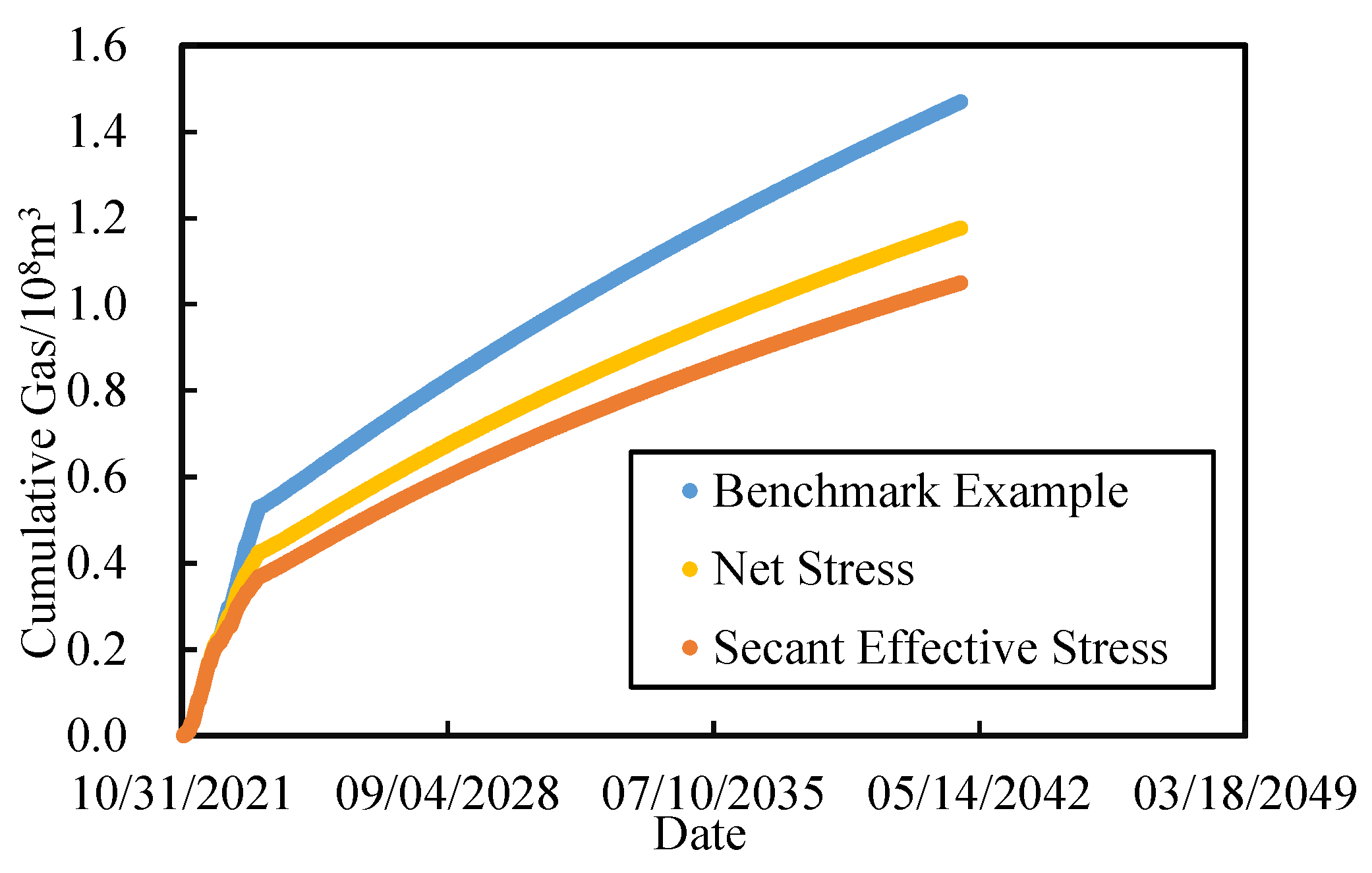
Figure 18 presents the predicted cumulative gas production results. The benchmark model, without considering the stress sensitivity, yielded the highest cumulative gas production of 1.47 × 10⁸ m3. The net stress model is 1.18 × 10⁸ m3. Finally, the cumulative gas rates of stress sensitive model of secant effective stress is 1.05 × 10⁸ m3. The stress sensitive model of secant effective stress was 28.54% lower than that of the benchmark model, which further shows that the effect of nonlinear effective stress on productivity cannot be ignored.
According to the productivity characteristics of stress sensitivity models considering different effective stresses, the productivity predicted by nonlinear effective stress (secant effective stress) is lower than that of other effective stress prediction results under the same conditions. It is of great significance to accurately predict the effective stress characteristics of the reservoir.

6. Conclusions

Synthesizing the above research findings, the main conclusions are summarized as follows:
  • Deep shale reservoir samples exhibit distinct nonlinear characteristics in both matrix and fractures. The secant effective stress coefficient accurately captures this behavior across different media types. The average coefficients are 1.18 for matrix, 0.65 and 1.33 for unpropped fractures, and 0.79 for propped fractures.
  • The stress sensitivity varies significantly across different media, decreasing in the order of matrix, unpropped fractures, and propped fractures. Consequently, the traditional net stress model exhibits limited applicability for samples with nonlinear characteristics, often leading to distorted computational results.
  • Numerical simulations further indicate that productivity predictions based on nonlinear effective stress (secant effective stress) are significantly lower than those derived from conventional effective stress models, underscoring the non-negligible impact of nonlinear effects on productivity forecasting.
This study focuses primarily on the effective stress coefficient at matrix and fracture scales. Future research will further elucidate the deformation mechanism of micro-nano pores in shale reservoirs under effective stress, explore the microscopic mass transfer mechanism of pore fluids, establish a multi-scale coupled numerical model, and clarify the influence of micro-scale geomechanical effects on the development of deep shale gas reservoirs.

Author Contributions

Conceptualization, Y.C.; methodology, Y.C.; software, X.-L.Z. and L.-Y.C.; validation, D.-C.L., Y.-H.H. and L.-Y.C.; formal analysis, H.-P.L.; investigation, X.-F.Y.; resources, X.-F.Y.; data curation, S.H. and K.-X.D.; writing—original draft, D.-C.L.; writing—review and editing, H.-P.L.; visualization, C.-J.Q.; supervision, H.-P.L., C.-J.Q. and K.-X.D.; project administration, X.-L.Z. All authors have read and agreed to the published version of the manuscript.

Funding

This research received no external funding.

Data Availability Statement

The data presented in this study are available on request from the corresponding author.

Conflicts of Interest

Authors Xue-Feng Yang, Yue Chen, Shan Huang, Dong-Chen Liu, Yuan-Han He, Xue-Lun Zhang, Chong-Jiu Qu, and Lie-Yan Cao were employed by the Shale Gas Research Institute, Southwest Oil & Gas Field Branch, PetroChina. Author Kai-Xiang Di was employed by the Exploration and Development Research Institute, Sinopec Southwest Oil & Gas Company. The remaining authors declare that the research was conducted in the absence of any commercial or financial relationships that could be construed as a potential conflict of interest.

References

  1. Zhang, J.; Tao, J.; Li, Z.; Wang, X.; Li, X.; Jiang, S.; Wang, D.; Zhao, X. Prospect of deep shale gas resources in China. Nat. Gas Ind. 2021, 41, 15–28. [Google Scholar]
  2. He, X.; Chen, G.; Wu, J.; Liu, Y.; Wu, S.; Zhang, J.; Zhang, X. Deep shale gas exploration and development in the southern Sichuan Basin:New progress and challenges. Nat. Gas Ind. 2022, 42, 24–34. [Google Scholar] [CrossRef]
  3. Cao, L.; Lv, M.; Li, C.; Sun, Q.; Wu, M.; Xu, C.; Dou, J. Effects of Crosslinking Agents and Reservoir Conditions on the Propagation of Fractures in Coal Reservoirs During Hydraulic Fracturing. Reserv. Sci. 2025, 1, 36–51. [Google Scholar] [CrossRef]
  4. Li, M.; Liu, J.; Xia, Y. Risk Prediction of Gas Hydrate Formation in the Wellbore and Subsea Gathering System of Deep-Water Turbidite Reservoirs: Case Analysis from the South China Sea. Reserv. Sci. 2025, 1, 52–72. [Google Scholar] [CrossRef]
  5. Terzaghi, K. Theoretical Soil Mechanics; John Wiley & Sons: Hoboken, NJ, USA, 1943. [Google Scholar] [CrossRef]
  6. Lade, P.V.; De Boer, R. The concept of effective stress for soil, concrete and rock. Geotechnique 1997, 47, 61–78. [Google Scholar] [CrossRef]
  7. McLatchie, A.S.; Hemstock, R.A.; Young, J.W. The effective compressibility of reservoir rock and its effects on permeability. J. Pet. Technol. 1958, 10, 49–51. [Google Scholar] [CrossRef]
  8. Shi, Y.J.; Sun, X.P. Stress sensitivity analysis of Changqing tight clastic reservoir. Pet. Explor. Dev. 2001, 28, 85–87. [Google Scholar] [CrossRef]
  9. Liu, X.; Hu, Y.; Zhu, B.; Zhao, J.Z. Influential factor analysis of reservoir stress sensitivity. Spec. Oil Gas Reserv. 2006, 13, 18–21. (In Chinese) [Google Scholar]
  10. Ma, Y. Study on Pressure Sensitivity of Abnormal High Pressure Reservoirs in Dongfang X Gasfield. Ph.D. Thesis, China University of Geosciences, Wuhan, China, 2017. (In Chinese) [Google Scholar]
  11. Liu, Z.; Wu, S.; Du, B.; Li, C.; Hu, S.; Zeng, F. Experimental study on the relationship between reservoir permeability and its formation resistivity factor. Chin. J. Geobiol. 2013, 56, 2088–2097. [Google Scholar] [CrossRef]
  12. Nai, C.; Pingchuan, D.; Gang, L.; Juan, W.; Xiaoxiao, L.; Zhenzhen, P. Quantitative study of stress sensitivity for fractured tight reservoir with different filled patterns. Fault-Block Oil Gas Field 2018, 25, 747–751. [Google Scholar]
  13. Li, R.; Gao, Y.; Yang, Y.; Li, Y.; Yao, J. Experimental study on the pressure sensitive effects of cores based on CT scanning. Pet. Drill. Tech. 2015, 43, 37–43. [Google Scholar] [CrossRef]
  14. Cong, H.; Wu, Z.; Li, H.; Yang, K.; Xiang, Y.; Yang, H. Pore-scale stress sensitivity analysis of tight sandstone. Sci. Technol. Eng. 2019, 19, 105–110. (In Chinese) [Google Scholar]
  15. Walsh, J.B. Effect of pore pressure and confining pressure on fracture permeability. Int. J. Rock Mech. Min. Sci. Geomech. Abstr. 1981, 18, 429–435. [Google Scholar] [CrossRef]
  16. Walsh, J.B.; Grosenbaugh, M.A. A new model for analyzing the effect of fractures on compressibility. J. Geophys. Res. Solid Earth 1979, 84, 3532–3536. [Google Scholar] [CrossRef]
  17. Yin, C. Test and analysis on the permeability of fractured fractures in shale reservoirs. Nat. Gas Ind. B 2018, 5, 513–522. [Google Scholar] [CrossRef]
  18. Wu, J.; Fan, H.; Zhang, J.; Hu, H.; Yuan, S.; Li, J. An experimental study on stress sensitivity of hydraulic fractures in shale: A case study on Longmaxi Formation shale in the southern Sichuan Basin. Nat. Gas Ind. 2022, 42, 71–81. [Google Scholar] [CrossRef]
  19. Fang, H.; Guo, T.; Wang, Y.; Zhai, N.; Qu, Z. Experimental study of acid-fracturing-induced fracture permeability in shale in Fuling area, Sichuan Basin. Oil Gas Geol. 2018, 39, 1336–1342. [Google Scholar] [CrossRef]
  20. Chen, W.; Jiang, H.; Li, J.; He, Y.; Huang, R. Influence of stress sensitivity difference between tensile and searing cracks on tight gas reservoir productivity. Spec. Oil Gas Reserv. 2018, 25, 146. (In Chinese) [Google Scholar] [CrossRef]
  21. Wang, K.; Dai, J.; Zhang, H.; Zhang, D.; Zhao, L. Numerical simulation of fractured reservoir stress sensitivity: A case from Kuqa depression Keshen gas field. Acta Pet. Sin. 2014, 35, 123. (In Chinese) [Google Scholar] [CrossRef]
  22. Feng, J.; Dai, J.; Ma, Z.; Zhang, Y.; Wang, Z. The theoretical model between fracture parameters and stress field of low-permeability sandstones. Acta Pet. Sin. 2011, 32, 664. (In Chinese) [Google Scholar] [CrossRef]
  23. Pang, M.; Chen, H.; Tang, H.; Lu, H.; Wang, Z. Evaluation of the effect of acid erosion on stress sensitivity of carbonate rocks based on fracture reconstruction. Spec. Oil Gas Reserv. 2022, 29, 107. (In Chinese) [Google Scholar] [CrossRef]
  24. Kao, J.; Jin, Y.; Fu, W.; Sang, Y.; Huang, H. Experimental research on the morphology of hydraulic fractures in deep shale under high difference of in-situ horizontal stresses. Chin. J. Rock Mech. Eng. 2018, 37, 1332–1339. (In Chinese) [Google Scholar] [CrossRef]
  25. Zhu, H.; Song, Y.; Tang, X.; Li, K. Optimization of fracturing timing of infill wells in shale gas reservoirs: A case study on Well Group X1 of Fuling Shale Gas Field in the Sichuan Basin. Nat. Gas Ind. 2021, 41, 154–168. (In Chinese) [Google Scholar] [CrossRef]
  26. Deng, S.; Li, H.; Ma, G.; Huang, H.; Li, X. Simulation of shale-proppant interaction in hydraulic fracturing by the discrete element method. Int. J. Rock Mech. Min. Sci. 2014, 70, 219–228. [Google Scholar] [CrossRef]
  27. Bernabe, Y. The effective pressure law for permeability during pore pressure and confining pressure cycling of several crystalline rocks. J. Geophys. Res. Solid Earth 1987, 92, 649–657. [Google Scholar] [CrossRef]
  28. Brace, W.F.; Walsh, J.B.; Frangos, W.T. Permeability of granite under high pressure. J. Geophys. Res. 1968, 73, 2225–2236. [Google Scholar] [CrossRef]
  29. Warplnski, N.R.; Teufel, L.W. Determination of the effective stress law for permeability and deformation in low-permeability rocks. SPE Form. Eval. 1992, 7, 123–131. [Google Scholar] [CrossRef]
  30. Li, M.; Xiao, W.; Guo, X.; Zhang, L.; Zheng, L. Laboratory study of the effective pressure law for permeability in Ta-Ba-Miao low-permeability sandstones. Chin. J. Geophys. 2009, 52, 3166–3174. (In Chinese) [Google Scholar]
  31. Basu, D.; Boga, M.; Dey, A. A time-domain nonlinear effective-stress non-Masing approach of ground response analysis of Guwahati city, India. Earthq. Eng. Eng. Vib. 2019, 18, 61–75. [Google Scholar] [CrossRef]
  32. Prioul, R.; Bakulin, A.; Bakulin, V. Nonlinear rock physics model for estimation of 3D subsurface stress in anisotropic formations: Theory and laboratory verification. Geophysics 2004, 69, 415–425. [Google Scholar] [CrossRef]
  33. Wu, J.; Zhang, C.; Zhao, S.; Zhang, J.; Feng, J.; Xia, Z.; Fang, Y.; Li, B.; Yin, M.; Zhang, D. Typical types of shale gas reservoirs in southern Sichuan Basin and enlightenment of exploration and development. Nat. Gas Geosci. 2023, 34, 1385–1400. [Google Scholar] [CrossRef]
  34. Nie, H.; Li, P.; Dang, W.; Ding, J.; Sun, C.; Liu, M.; Wang, J.; Du, W.; Zhang, P.; Li, D. Enrichment characteristics and exploration directions of deep shale gas of Ordovician- Silurian in the Sichuan Basin and its surrounding areas, China. Pet. Explor. Dev. 2022, 49, 648–659. [Google Scholar] [CrossRef]
  35. Wang, H.; Zhou, S.; Zhao, Q.; Shi, Z.; Liu, D.; Jiao, P. Enrichment characteristics, exploration and exploitation progress, and prospects of deep shale gas in the southern Sichuan Basin, China. Oil Gas Geol. 2023, 44, 1430–1441. [Google Scholar] [CrossRef]
  36. Li, Q.; Gao, S.; Liu, H.; Ye, L.; An, W.; Zhu, W.; Zhang, J.; Yang, Y. Analysis of measurement error of permeability pulse method for high temperature and high pressure unconditional reservoirs. J. China Coal Soc. 2022, 47, 184–195. (In Chinese) [Google Scholar]
  37. SY/T 6385-2016; Determination Method of Rock Porosity and Permeability under Overburden Pressure. Petroleum and Natural Gas Industry Standardization Technical Committee: Beijing, China, 2016.
  38. Xiao, W. The Study on Non-linear Effective Stress for Permeability in Low-permeability Rocks. Ph.D. Thesis, Southwest Petroleum University, Sichuan, China, 2013. (In Chinese) [Google Scholar]
  39. Li, Y. Research on Variation Law of Effective Stress Coefficient and Stress Sensitive Mechanism of Sandstone Reservoir. Ph.D. Thesis, Southwest Petroleum University, Sichuan, China, 2021. (In Chinese) [Google Scholar]
  40. McKee, C.R.; Bumb, A.C.; Koenig, R.A. Stress-dependent permeability and porosity of coal and other geologic formations. SPE Form. Eval. 1988, 3, 81–91. [Google Scholar] [CrossRef]
  41. Hou, M.; Tang, H.; Xiao, H.; Wang, Y.; Zhang, L. Integrated optimization design of key parameters for the development of narrow channel tight sandstone gas reservoirs. Fault Block Oil Gas Fields 2024, 31, 1055–1065. (In Chinese) [Google Scholar]
  42. Xiao, H.; Li, K.; Hou, F.; Luo, H.; Tang, H. Study on the Influencing Law of Fracturing Fracture Height in Tight Sandstone Gas Reservoir of Shaximiao Formation in JH Block. Sci. Technol. Ind. 2023, 23, 196–207. (In Chinese) [Google Scholar] [CrossRef]
  43. Xiao, Z.; Zhao, Y.; Zhang, L.; Ge, F.; Yang, Z.D.; Liu, X.Y.; Zhang, D.X.; Tian, Y. Study on capacity of compact reservoir based on dual medium embedded discrete crack model. Sci. Technol. Eng. 2023, 23, 10780–10790. (In Chinese) [Google Scholar]
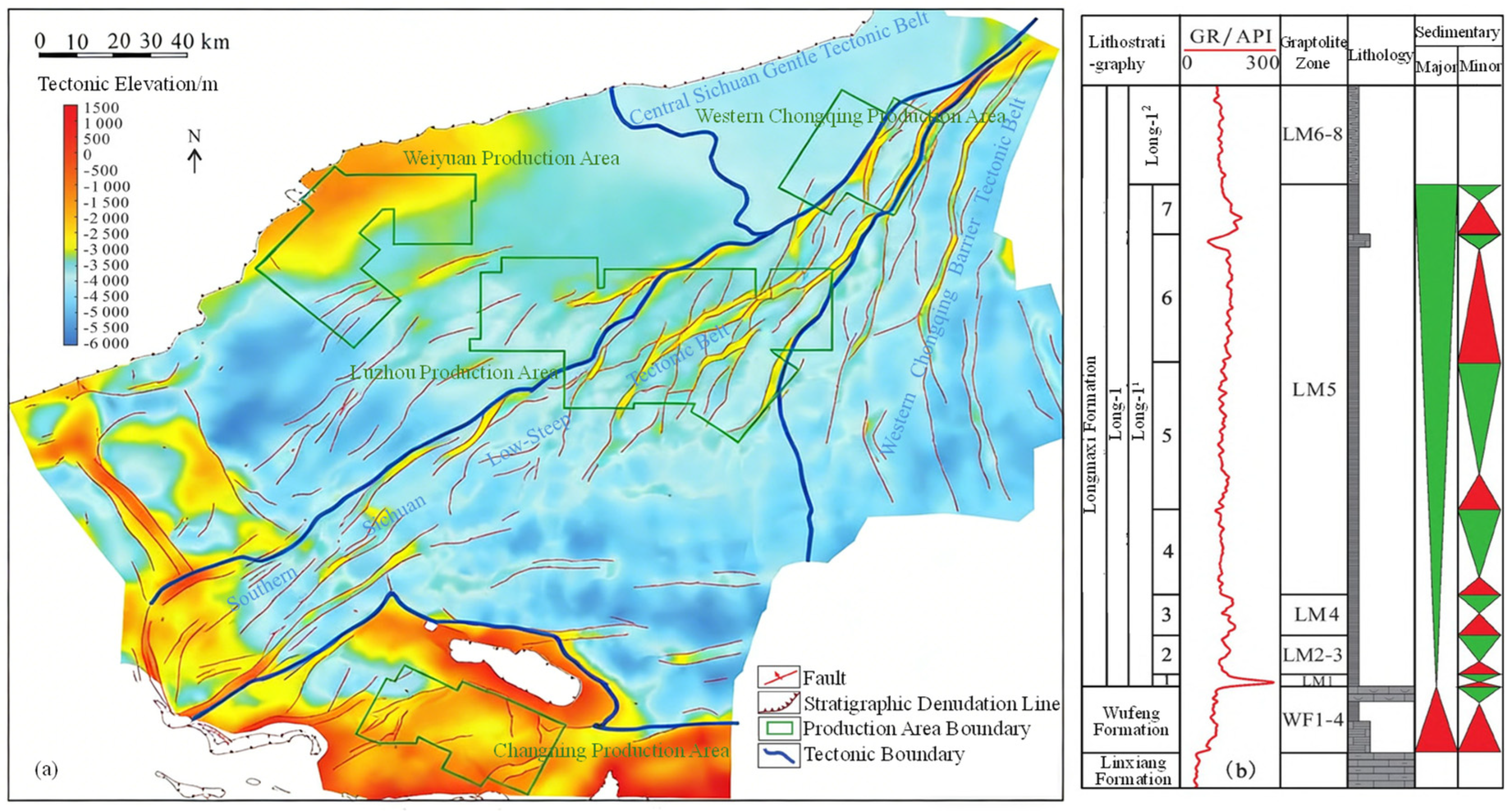
Figure 1. Tectonic setting (a) and comprehensive evaluation column (b) of Wufeng–Longmaxi formations in southern Sichuan Basin [33].
Processes 14 00325 g001
Figure 2. Burial depth map of the Longmaxi Formation bottom in the southern Sichuan Basin with formation pressure coefficient overlaid [35].
Processes 14 00325 g002
Figure 3. Deep shale samples.
Processes 14 00325 g003
Figure 4. High-temperature and high-pressure pulse permeability measurement experimental device diagram.
Processes 14 00325 g004
Figure 5. High-temperature and high-pressure gas permeability testing device.
Processes 14 00325 g005
Figure 6. Permeability aging curves of deep shale multi-medium samples.
Processes 14 00325 g006
Figure 7. Permeability stress sensitivity (i.e., permeability dependence on both pore pressure and confining pressure) curves of deep shale multi-medium samples.
Processes 14 00325 g007
Figure 8. Permeability isoline diagram.
Processes 14 00325 g008
Figure 9. Permeability isolines of multiple medium samples in deep shale.
Processes 14 00325 g009
Figure 10. Relationship between effective stress and permeability of deep shale samples.
Processes 14 00325 g010
Figure 11. Geological model of Well X.
Processes 14 00325 g011
Figure 12. Geomechanical model.
Processes 14 00325 g012
Figure 13. Fracture distribution around horizontal well.
Processes 14 00325 g013
Figure 14. Statistical chart of fracture length and height.
Processes 14 00325 g014
Figure 15. BHP fitting results of secant effective stress sensitive model.
Processes 14 00325 g015
Figure 16. Pressure distribution of model production for 1 year.
Processes 14 00325 g016
Figure 17. Pressure for 20 years of model production.
Processes 14 00325 g017
Figure 18. Cumulative gas rates prediction for 20 years.
Processes 14 00325 g018
Table 1. Sample basic parameters.
SampleWeight
(g)
Length
(mm)
Diameter
(mm)
Porosity
Matrix61.2050.1425.672.50
Unpropped No. 162.5350.0625.276.27
Unpropped No. 265.6950.3025.483.11
Propped59.4250.2125.349.76
Table 2. Regression coefficients of different models.
SampleLinearPower LawIndexQuadratic
Matrix0.57770.96250.95860.9944
Unpropped No. 10.75450.98930.94380.9924
Unpropped No. 20.76540.94020.97840.9953
Propped0.93550.21710.94050.9824
Table 3. Response surface fitting parameter table.
Samplea1a2a3a4a5a6λR2
Matrix−3.330−6.13 × 10−24.35 × 10−23.51 × 10⁻⁴−1.26 × 10⁻⁴−1.34 × 10−41.66 × 10−10.9944
Unpropped No. 1−1.64−1.40 × 10−11.63 × 10−18.28 × 10⁻⁴−1.00 × 10⁻³−6.43 × 10⁻⁴−8.15 × 10−20.9924
Unpropped No. 2−1.41−6.26 × 10−21.35 × 10−17.84 × 10⁻⁵−2.02 × 10−33.80 × 10−4−1.069 × 10−20.9953
Propped4.55 × 102−2.457.40 × 10−11.31 × 10⁻²−3.43 × 10−31.56 × 10−2/0.9824
Table 4. Characteristics of the effective stress coefficient of permeability.
SampleSecant Effective Stress Coefficient αn
MaximumMinimumMean
Matrix2.3821 0.7928 1.1771
Unpropped No. 12.5954 0.8997 1.3298
Unpropped No. 21.3244 0.0927 0.6483
propped1.2149 0.3991 0.7923
Table 5. Average geological parameters of each layer in Well X.
LayerThickness/mPorosity/%Permeability/mDGas Saturation/%
Long11450.05.230.0000178482.29
Long1133.85.710.0000371483.87
Long11210.74.940.0000442981.87
Long1111.45.570.0001131481.16
Wufeng5.06.530.0000238143.45
Table 6. Average geomechanical parameters of each layer of Well X.
LayerYoung’s Modulus/GPaPoisson’s
Ratio
Tensile Strength
/MPa
Compressive
Strength
/MPa
Max Horizontal
Stress/MPa
Min Horizontal
Stress/MPa
Vertical
Stress
/MPa
Long11446.00.229.2572.595.785.294.2
Long11342.00.208.6505.587.576.794.8
Long11244.60.228.9556.799.487.195.0
Long11143.30.239.5583.2102.490.395.2
Wufeng56.60.2511.7800.1110.496.595.2
Table 7. Optimized fracturing design parameters.
WellFractured Length
m
Number of StagesClusters per StageAverage Cluster Spacing
m
Proppant Intensity
t/m
Fracturing Fluid per Stage
m3
X1551256106.932152.44
Table 8. Summary of simulated fracture dimensions in Well X.
WellWell X
Hydraulic Fracture Length/m158.9–360.4 (205.7)
Hydraulic Fracture Height/m31.3–49.2 (39.6)
Propped Fracture Length/m150.2–295.8 (190.5)
Propped Fracture Height/m3.3–9.6 (5.8)
Table 9. Numerical simulation parameter.
ParameterValueUnit
Dimension of model1140 × 2600 × 326.21m3
Initial pressure53.4MPa
Matrix average initial permeability0.0009706mD
Propped fracture initial permeability350mD
Unpropped fracture initial permeability1.358mD
Reservoir temperature120°C
Half-length of hydraulic fracture102.5m
Disclaimer/Publisher’s Note: The statements, opinions and data contained in all publications are solely those of the individual author(s) and contributor(s) and not of MDPI and/or the editor(s). MDPI and/or the editor(s) disclaim responsibility for any injury to people or property resulting from any ideas, methods, instructions or products referred to in the content.