


Abstract
Consumption trends have shifted towards added-value, natural, less-processed, and more nutritious foods. Key factors shaping these trends include animal welfare, sustainability, globalization, cultural influences, socio-demographics, food safety, health, and nutrition. This structured and narrative review, following a systematic approach, analyzes future trends in food consumption, considers preclinical and clinical studies, and examines related industrial challenges. A comprehensive search across Scopus, Web of Science, and Google Scholar was conducted, including original articles and reviews on food consumption trends or industrial processes, using Boolean operators. Potential gaps and biases of the analyzed articles were also included. Of 8742 articles, 58 studies were included. It was found that animal welfare has led consumers to adopt plant-based alternatives, protein, and more sustainable food consumption. Rising health awareness has led to the development of personalized nutrition, functional, and nanoparticle-encapsulated nutrient-based foods. Physiologically, trends indicate improvements in body weight, glycemic control, and lipid profiles, whereas emerging formulations show promise in enhancing cognitive function and nutrient bioavailability. Industrial challenges include refining and scaling up new technologies, encouraging sustainable production practices, ensuring food safety, fulfilling consumer demands, and developing safe, nutritious, and functional foods. Compliance with global health regulations should be prioritized. Continued multidisciplinary research is essential to understand the impact of emerging food trends on consumer health.
1. Introduction
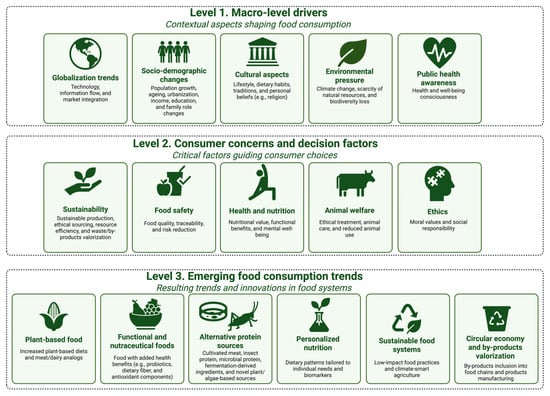
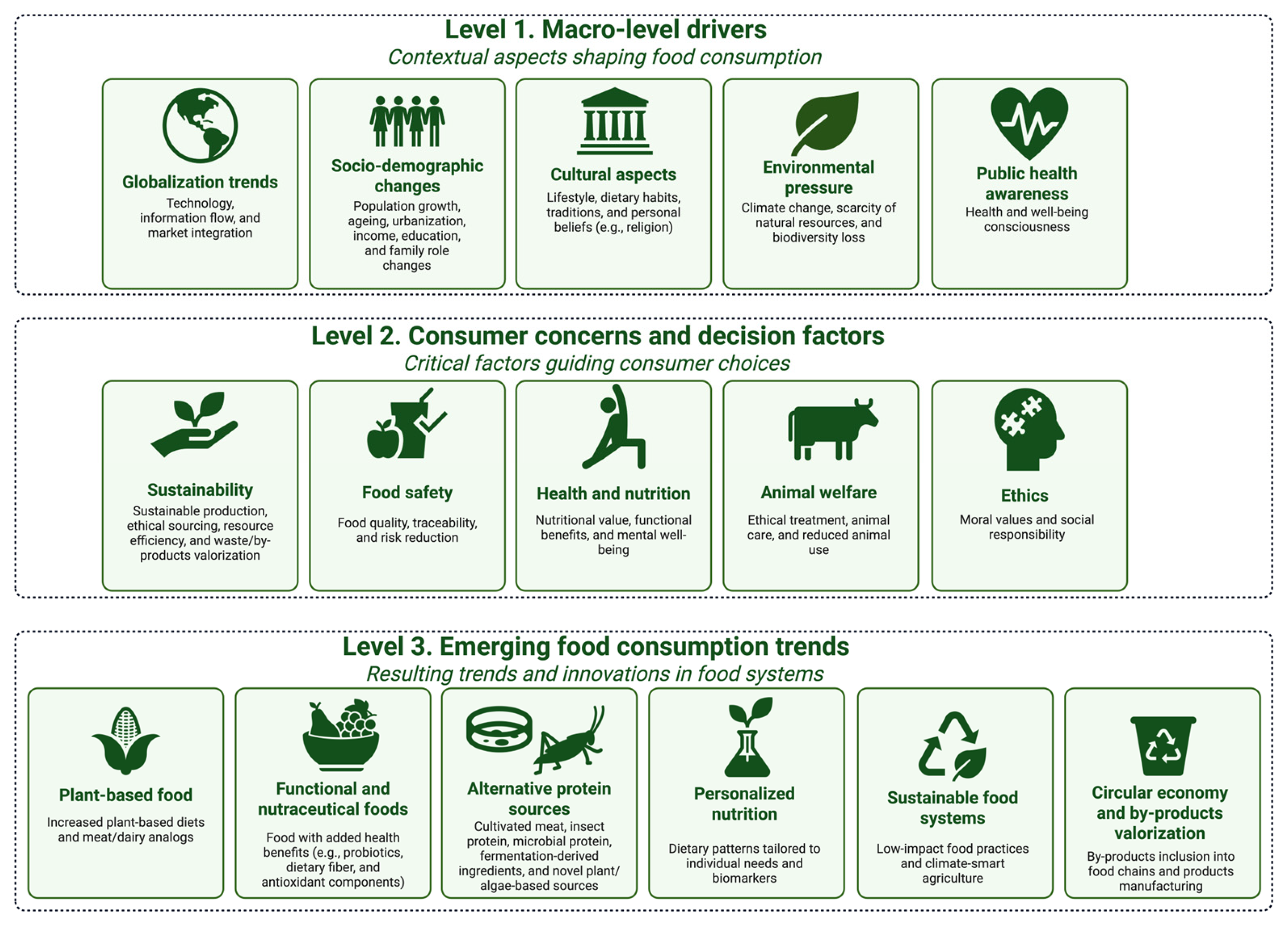
Consumption trends reflect the collective preferences of society and are shaped by the interplay of economic, cultural, psychological, and social factors that guide consumers’ purchasing decisions. Although these trends may be influenced by temporary fashions or external stimuli, they are not solely determined by them [1]. In recent years, a notable shift has been observed toward consuming natural, minimally processed, and nutrient-rich foods with added value [2]. As a result, the food industry has adapted to meet evolving consumer demands and emerging sectoral trends. Product purchase decisions are further influenced by a wide range of determinants, including globalization, sustainability concerns (personal experiences), health and nutrition (considerations and mental well-being), food safety, sociodemographic characteristics (age and gender), cultural influences (lifestyle and dietary habits), and animal welfare issues (Figure 1) [3,4]. Moreover, global challenges—such as the projected increase in world population to 9.7 billion by 2050—have intensified the impact of certain factors, particularly concerns about sustainable food systems [5]. This has accelerated the adoption of organic and sustainable production practices, with significant implications for food safety. Consequently, several trends have emerged, such as plant-based foods, sustainable food options, and alternative protein sources, which aim to mitigate environmental impact and meet global nutritional demands. Moreover, these trends were influenced by COVID-19, leading consumers to seek healthier, more natural, and sustainable food options [6]. On the other hand, in future sustainable food systems and circular economy models, the valorization of food by-products and side streams has become a critical priority. Reprocessing these by-products not only mitigates environmental challenges but also recovers valuable compounds. Therefore, understanding the properties of these matrices is essential for enhancing resource efficiency and minimizing food loss. These trends could directly impact the United Nations 2030 Agenda, particularly Sustainable Development Goals 2 (Zero Hunger), 3 (Good Health and Well-being), and 12 (Responsible Consumption and Production).
Figure 1.
Primary factors impacting food consumption trends (created with BioRender.com; accessed on 4 June 2026).
Driven by growing public awareness regarding animal suffering, animal care, protection, and welfare have become key factors. This has led to the growth of vegetarian and vegan diets, which aim to reduce or eliminate products involving the direct or indirect use of animals in their production [7]. Several factors influence these dietary trends, with consumer values and ethics concerning animal mistreatment being among the most important. Additionally, other factors such as sensory aversion to meat (dislike of its texture, smell, or taste), health concerns, activism, religious beliefs, economic savings, and environmental impact have also contributed to the rise in vegetarian and vegan diets (Figure 1) [7,8]. Although some people oppose banning animal consumption, the food industry has established responsible production systems that aim to ensure animals are raised in humane and safe conditions, giving them decent lives free from mistreatment before being slaughtered for human consumption [9]. Consequently, several emerging trends have surfaced, including plant-based meat analogs, cultivated meat, and 3D-printed meat production. These approaches seek to promote more sustainable and ethical food production by reducing reliance on conventional livestock farming while maintaining food safety.
Regarding health and nutrition, adopting a diet tailored to individual nutritional needs can help eliminate or reduce the risk of developing non-communicable diseases, such as obesity, type 2 diabetes, metabolic syndrome, cardiovascular diseases, and certain types of cancer, among others [10]. Moreover, in recent years, consumers have shown a growing interest in diets and products that not only provide nutrition but also offer additional health benefits, leading to the development of functional and nutraceutical foods [11]. The effectiveness of these foods stems from their positive impact on consumer health, due to the presence of probiotics, prebiotics, antioxidants, dietary fiber, omega-3 and omega-6 fatty acids, and other bioactive compounds [10,11]. In this context, several trends have emerged, including functional foods, personalized food and nutrition, and the application of nanoparticles in food systems to improve nutrient absorption, all of which aim to fulfill individualized nutritional requirements.
Finally, globalization, socio-demographic, and cultural factors are aspects that cannot be overlooked when discussing the determinants of food trends. Therefore, the availability of certain foods, combined with regional religious traditions and customs, promotes the consumption of specific foods in each part of the world. Examples of culturally ingrained foods include rice (China, Japan, and Korea), maize (USA, China, Mexico, and Brazil), coffee (Switzerland, Finland, Norway, and Iceland), and beef (USA, China, and Brazil), among others [12,13,14]. This may explain why, despite the constant evolution of consumption trends driven by various common global factors, not all countries accept and adopt these changes. As a result of these factors, consumer demand has increased, and the complexity of consumption trends has presented various challenges for the food industry. Consequently, the food industry faces the ongoing challenge of developing products that adapt to various socioeconomic sectors, thereby promoting global food safety. Therefore, it is crucial to continuously monitor these trends to enable industry and science to adapt to evolving consumer demands in the food sector.
Currently, there is a shortage of scientific articles that objectively cover emerging food consumption trends, their impact on consumer health, and their implications for the food industry. Consequently, the aim of this literature review is to advance the state of the art by identifying future trends in food consumption, analyzing relevant clinical trials, and exploring the challenges associated with industrializing these trends.
2. Materials and Methods
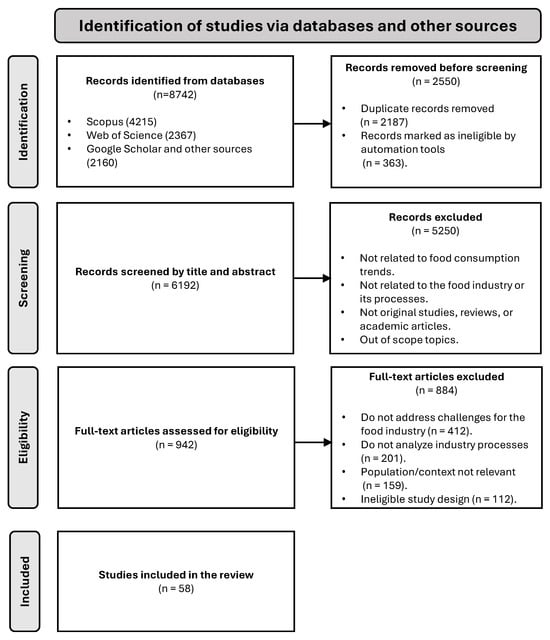
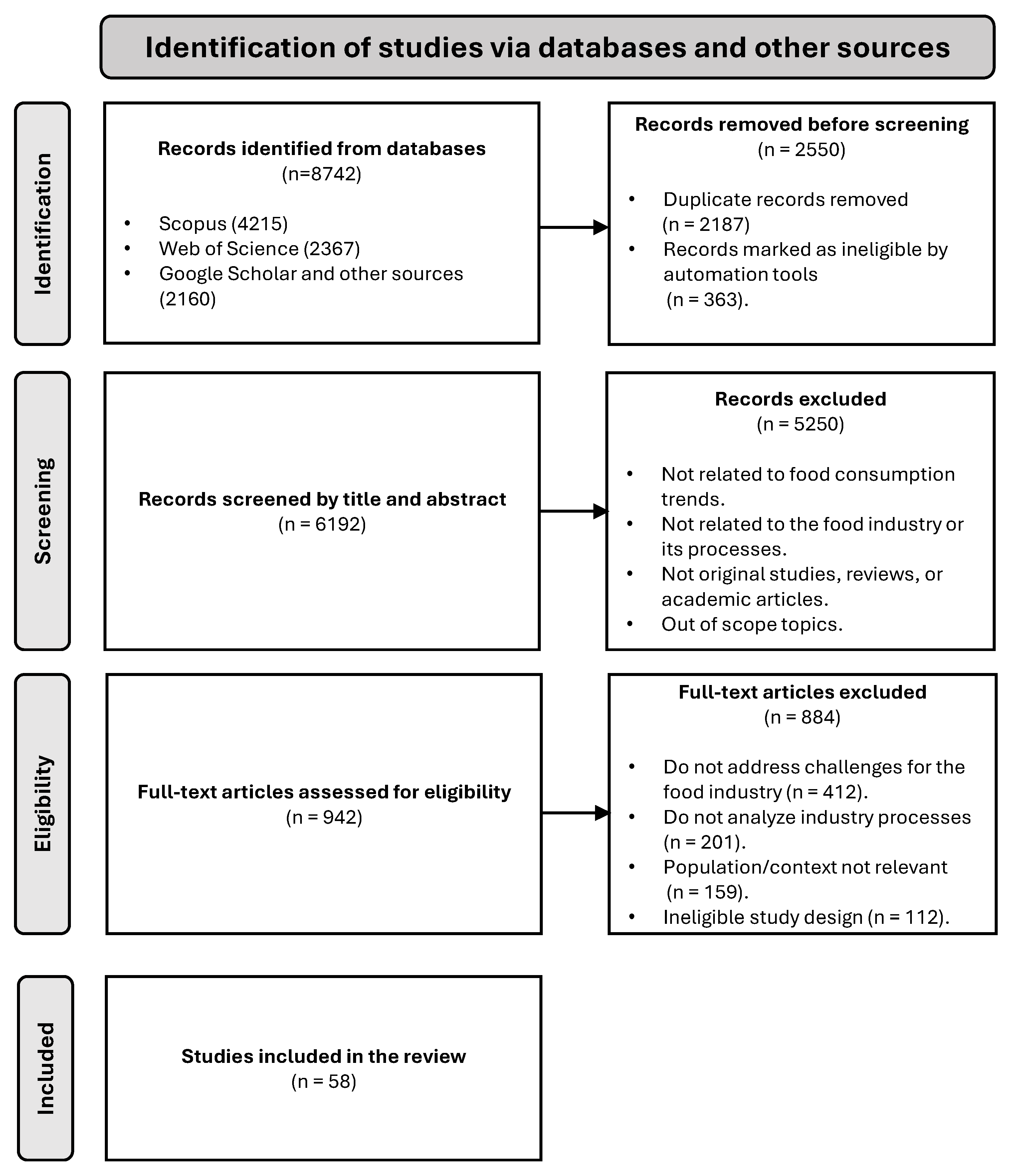
A structured narrative review, following a systematic approach, was conducted using a PRISMA-inspired screening approach to ensure a transparent and rigorous selection process. The review focused on recently published articles from 2020 to 2025; seminal papers from earlier years were also considered for relevance. The literature search was conducted using Scopus, Google Scholar, and Web of Science databases, using several combinations of Medical Subject Headings (MeSH) terms and keywords like “food consumption trends”, “food processing”, “food industry”, “future consumption trends”, “food consumption factors”, “in vivo studies”, “clinical studies”, “health impact”, and “sustainable production”. To better refine the accuracy of the results, Boolean operators (AND/OR, *, (), and “”) were also used in this search, retrieving the number of manuscripts shown in Figure 2.
Figure 2.
PRISMA flow diagram of the study selection process.
As indicated in Figure 2, the inclusion criteria were based on the inclusion of original studies, reviews, and academic studies within the scope of this review, specifically those related to food consumption or the food industry and its processes. Studies not related to these topics or presenting fragmentary or incomplete information, using an irrelevant population or context, or ineligible study designs, were excluded. A reviewer collected the information using the search strategy presented in Figure 2, but two independent reviewers screened and analyzed the information and worked independently to obtain the results. This review was not registered online.
The search results primarily focused on analyses of plant-based foods, sustainable food options, alternative protein sources, personalized food and nutrition, functional foods (adaptogens and nootropics), and the application of nanoparticles in food. For the analyzed studies, preclinical information was included when a complete experimental design, clear results, and proper statistical analysis. All included studies were screened for bioethics information. When multiple outcomes were reported, information from the most relevant assays and data points was collected whenever possible. No specific tools were used to assess risk of bias or robustness; however, given the expertise of the independent reviewers and their experience conducting preclinical and clinical studies, studies lacking proper controls or presenting inaccurate information were excluded. Collected studies were tabulated in strict, detailed columns, and more in-depth descriptions of those studies were presented in the text. If studies were very heterogeneous, those including the largest populations, or presenting the most relevant within this review’s scope, were included. As such, references 1, 5, 9, 14, 17, 44, 46, 49, 51, 55, 56, 58, 61, 63, 66, 70, 72, 74, 76, 77, 78, 80, and 81 corresponded to complementary information or studies that were not yielded by the search strategy, but complemented the discussion of the results. As a consequence, all other references corresponded to the selected studies provided by the PRISMA analysis.
3. Future Consumption Trends
3.1. Plant-Based Food Products
The adoption of vegetarian and vegan diets has grown significantly and gained popularity worldwide in recent years. As a result, demand for plant-based products has surged in both the culinary and industrial sectors. The vegetarian diet includes varying degrees of consumption of foods of animal origin. In this context, several dietary patterns can be distinguished: ovo-vegetarian (includes eggs but excludes dairy products), lacto-ovo-vegetarian (includes eggs, milk, and dairy products), pesco-vegetarian (includes fish and seafood), and semi-vegetarian (minimal consumption of meat and meat products). Strict vegetarian diets, such as veganism, prohibit the consumption of any product containing animal ingredients or involving animals in the supply chain [15]. The popularity of these diets primarily stems from consumer concerns about animal welfare and ethical consumption. Likewise, for health reasons, many people have adopted plant-based diets because they are rich in vitamins, minerals, protein, dietary fiber, and bioactive compounds [16]. Additionally, environmental concerns such as water scarcity, greenhouse gas emissions, and high energy consumption have prompted many people worldwide to adopt more sustainable eating habits by replacing meat products with plant-based alternatives. The meat industry has a substantial water footprint, with beef requiring 15,400 m3/ton, lamb 10,400 m3/ton, pork 6000 m3/ton, goat 5500 m3/ton, and chicken 4300 m3/ton [17]. Likewise, Prag et al. [18] reported that replacing animal-based diets with plant-based products could ideally reduce greenhouse gas emissions by up to 86.50%. However, this type of diet remains controversial, as it is believed that the proper bioavailability of nutrients, such as protein, is achieved more effectively in animal-derived foods. Despite this, research has shown that a diet based on fruits, vegetables, legumes, and seeds can help prevent non-communicable diseases [19]. Table 1 summarizes various clinical studies investigating the health effects of novel products developed in response to emerging consumer trends. Thus, Garousi et al. [20] compared the effect of a lacto-ovo-vegetarian diet with a conventional weight-loss diet (poultry, red meat, and fish). This study involved 80 overweight patients (aged 20–55 years) with non-alcoholic fatty liver disease over a 3-month period (Table 1). Based on the results obtained, the lacto-ovo-vegetarian diet, which excludes meat, may be a promising alternative for reducing or eliminating certain types of chronic disease.
Table 1.
Clinical trials of diets and products designed based on new trends.
Meanwhile, some research focused on comparing vegan diets with conventional diets for people with diabetes reports a greater positive impact on the consumer’s health (weight loss, improved heart health, and enhanced insulin responsiveness) [21,22]. Thus, vegan and vegetarian diets significantly reduced (p < 0.05) the content of cholesterol, low-density lipoprotein cholesterol (LDL), HbA1c, BMI, and insulin, among others. This type of diet can be a great option to reduce the probability of acquiring diabetes, being overweight, or metabolic syndrome. However, eliminating animal-sourced foods could lead to severe consequences, such as megaloblastic anemia and neuropathy, due to vitamin B12 deficiency [43]. Furthermore, other chronic conditions may arise, such as osteoporosis, anemia, or neurological disorders caused by deficiencies in vitamin D, calcium, iron, zinc, and omega-3 fatty acids. Therefore, it is advisable to incorporate supplements and follow a dietary regimen designed by a specialist. On the other hand, it is important to note that during the COVID-19 pandemic, plant-based diets were shown to reduce the risk of hospitalization in infected patients. This effect may be attributed to the strengthening of the immune system resulting from high vegetable consumption [44]. However, developing analogs of plant-based meat products may involve a high content of ingredients and processing to replicate the characteristics of the original food. Therefore, despite their positive impact on health, these types of products could be classified as ultra-processed through systems such as NOVA or SIGA. In this sense, Zhao et al. [45] formulated a novel plant-based fishcake utilizing microalgae alongside methylcellulose, pea protein isolate, sunflower oil, microbial transglutaminase, seasoning, and gellan gum. This product underwent extensive unit operations, including crushing, mixing, cooking, heating, boiling, and deep-frying, thereby classifying it as an ultra-processed food according to the NOVA and SIGA frameworks. Despite this classification, the food demonstrated increased protein digestibility and elevated concentrations of amino acids (Ile, Val, Leu, Lys, Arg, and Ala) [45]. Nevertheless, ultra-processed foods continue to face significant criticism regarding health concerns. Beyond the nutritional profile, it is critical to consider the microbiological and chemical risks that certain plant-based products may present. In this regard, some products, such as plant protein isolates, are susceptible to microbial contamination (e.g., Bacillus cereus, Salmonella spp., and Listeria monocytogenes, among others). Meanwhile, chemical risks may include antinutritional compounds naturally produced by some foods (e.g., phytic acid and trypsin inhibitors). Nonetheless, these compounds generally must be consumed in large quantities to exert a negative effect. Conversely, various treatments allow for the reduction or inhibition of antinutritional compounds and specific pathogens. These treatments include thermal processing (blanching, pasteurization, and extrusion), biochemical methods (fermentation, nixtamalization, germination, and enzymatic hydrolysis), non-thermal technologies (high hydrostatic pressure, pulsed electric fields, and irradiation), and non-conventional methods (ohmic heating and ultrasound.
The primary challenge for the food industry is to develop vegetarian and vegan products that maximize nutritional quality while minimizing industrial processing. At the same time, the industrial scaling of plant-based products is now a reality. Although various products are currently available on the market, high production costs and limited accessibility restrict their availability to specific socioeconomic groups. Consequently, it is essential to streamline processes to reduce industrial-scale processing costs. On the other hand, plant-based products are subject to diverse production and marketing regulations. The primary regulatory bodies governing these sectors include the FDA (Food and Drug Administration) in the United States, the EFSA (European Food Safety Authority) in the European Union, Health Canada in Canada, and MAPA (Ministry of Agriculture and Livestock) in Brazil. In this sense, the primary focus of these regulatory frameworks is accurate labeling, as these products serve as analogs of animal-derived foods; clear communication is essential to prevent consumer deception [46]. Consequently, regulatory bodies emphasize transparent labeling to ensure consumers are fully informed and that marketing claims do not mislead regarding the products’ true nature and origin.
3.2. Sustainable Food and Nutrition
The world population is expected to increase to 9.7 billion by 2050. In this way, the demand and exploitation of natural resources for food production are increasing [5]. This has raised concerns among consumers, who have begun to adjust their purchasing habits by opting for sustainable foods. Thus, sustainable food seeks to mitigate environmental problems, such as greenhouse gas emissions, soil erosion, and biodiversity loss, while ensuring the responsible use of all natural resources [47]. Likewise, it is expected that food will be affordable, culturally acceptable, and economically viable, and food waste figures will be reduced. Consequently, science and technology have sought ways to develop and promote foods that require fewer natural resources during field production or during processing [48]. To this end, raw materials are categorized based on sustainability criteria such as low water footprints, minimal chemical inputs, and high climate resilience. Prominent examples highlighted in this study include quinoa, amaranth, lentils, sweet potatoes, and mushrooms for field production, and tofu, talbinah (whole barley, milk, and honey-based porridge), whole-grain products, and organic products for processing. In addition to their sustainability, many of these products have a beneficial impact on consumer health (reducing cholesterol, triglycerides, and glucose levels, among others) (Table 1) [25,26].
Meanwhile, it is crucial to consider food procurement from sustainable agricultural systems, such as organic, biodynamic, regenerative, and precision agriculture. Currently, various certifications—including organic (Euro-leaf and USDA Organic), biodynamic (Demeter), regenerative (Regenerative Organic Certified and Regenerative Outcomes Certification), and precision agriculture (Global G.A.P. and ISO standards 14064, 14046, and 11783)—have been adopted globally to regulate farming activities and ensure food safety [49]. Although these systems operate on different principles, they all aim to mitigate negative environmental impacts by optimizing the use of natural resources, respecting ecosystems, reducing reliance on synthetic agrochemicals, and promoting a circular economy. However, the meticulous care required in the field and higher production costs result in a price premium compared to conventional products. Consequently, these foods may become inaccessible to lower socioeconomic sectors, posing a significant challenge for the food industry.
Meanwhile, during food processing, a significant fraction of the generated by-products can be revalorized and reintroduced into the food supply chain. A case in point is the formulation of gelled emulsions from by-products, which serve as structuring agents to replace trans fats and lower overall fat content [50]. This approach could facilitate the design of clean-label products, such as bakery, meat, and dairy products. Moreover, foods developed from these by-products may be beneficial for individuals with obesity, overweight, or type 2 diabetes due to their functional or nutraceutical effects [27,28], as they are rich in dietary fiber, vitamins, proteins, fats, and antioxidant compounds that contribute to these properties. This was demonstrated in a study involving 92 apparently healthy men and women (aged 35–65 years) who consumed a yogurt enriched with olive by-products for 8 weeks [27]. Ultimately, adopting a sustainable diet is a relatively straightforward process. However, it is essential for consumers to be informed about the origin of the products they purchase; the industry must implement robust quality-control and traceability systems, such as life cycle assessments integrated into manufacturing execution systems. Furthermore, this could represent one of the most sustainable trends, since these products are minimally processed and rely on low-cost raw materials (such as vegetables, fruits, legumes, and cereals), making them accessible to individuals across various socioeconomic backgrounds. This would foster food safety, even in low-resource areas. However, minimizing processing remains a major challenge for the food industry in ensuring food safety and extending shelf life; this underscores the importance of continuing the development of sustainable and cost-effective preservation technologies.
3.3. Alternative Protein Sources
Consistent with the objectives of sustainable food production, incorporating alternative protein sources seeks to reduce environmental impact. Thus, meat has been the primary source of protein humans have consumed throughout history; however, its production requires substantial natural resources [17]. Therefore, alternative proteins could be defined as those extracted from unconventional sources and associated with lower production costs and lower environmental impact. Hence, the main sources of alternative proteins are cereals (prolamins and glutelins), pseudocereals (albumins and globulins), legumes (globulins and albumins), oilseeds (glutelins and albumins), algae (lectins, phycoerythrins, and phycocyanins), and insects (albumins, globulins, and glutelins) [51]. These proteins can be found in various foods, such as wheat, maize, rice, amaranth, quinoa, beans, lentils, chickpeas, sunflower seeds, spirulina, grasshoppers, crickets, ant larvae (Liometopum apiculatum), and jumiles (Euschistus taxcoensis), among others [51,52]. It is worth noting that some of these foods have been a part of the human diet throughout history. However, the use of insects and algae in food has been gaining momentum in recent years. Furthermore, 3D-printed meat and cultured meat represent emerging sectors within the alternative protein landscape. Consequently, science, industry, and technology have begun to direct more research toward these alternative sources.
Insect-based proteins can have a digestibility of up to 98% and contain all the essential amino acids required by humans [31]. Thus, various authors have reported a positive effect on sports performance, mineral absorption, and satiety in foods (such as bars, porridges, and pancakes) based on insect proteins and cereals (Table 1) [29,30,31]. Additionally, insect production has been shown to have a lower carbon footprint due to lower methane emissions compared to traditional livestock farming [53]. This type of food trend is closely related to sustainable food, as obtaining protein from insects significantly reduces the use of natural resources and lowers environmental impact compared to traditional sources. Although in some cultures the consumption of insects is part of their daily diet, for other regions of the world, it can be considered an exotic delicacy [54]. However, despite the high viability of insect protein, one critical challenge for the industry is changing consumer perception and normalizing the consumption of insect-based foods. Moreover, the standardization of large-scale production, specifically regarding the techno-functional properties of insect-derived proteins, such as their solubility and emulsifying capacity. Furthermore, while the industrialization of insect-based products has already begun to scale, the sale of minimally processed insects has existed for decades across several continents, including the Americas (e.g., Mexico, Guatemala, and Colombia), Africa (e.g., Zimbabwe and South Africa), and Asia (e.g., Thailand, China, Japan, and Vietnam). Therefore, it is crucial for the food industry to form alliances with local producers to facilitate the transfer of ancestral knowledge, thereby enhancing the industrial scaling of insect-based products. Conversely, the regulatory framework for edible insects varies significantly by jurisdiction. Many regions across Latin America, Asia, and Africa still lack specific legislation governing the use and management of edible insects. In contrast, the European Union oversees this sector under Regulation (EU) 2015/2283 on Novel Foods, which currently permits only a limited number of insect species for human consumption [55]. In the United States, while no specific ‘insect law’ exists, their production and commercialization are regulated under FDA guidelines and HACCP (Hazard Analysis and Critical Control Point) protocols [55]. Moreover, no Recommended Dietary Intakes (RDI) have been established for insect consumption. Nonetheless, it is important to highlight that a primary concern is the insect microbiota, which may harbor bacteria, viruses, and fungi [56]. The composition of this microbiota is determined by the environment and the specific conditions under which the insects are produced. Consequently, further research provides a basis for establishing standardized food safety regulations, defining suitable species for human consumption, and determining permissible intake levels. Furthermore, while consumption trends are increasingly driven by sustainability and cultural identity, food safety remains the fundamental prerequisite for any food innovation. Consumer concerns have evolved beyond traditional microbiological aspects, now encompassing a demand for safe, nutritious foods and global supply chain transparency. In this regard, consumer perception of ‘safety’ is directly linked to trust in production methods and food composition; thus, rigorous safety protocols are not merely regulatory requirements, but essential components of the value proposition of modern food products.
Meanwhile, various studies have shown that consuming algae-based foods (such as cookies, pizza, and chocolates) can reduce blood glucose and lipid levels, and improve liver and kidney functions (Table 1) [32,33]. One of these studies focused on the effect of spirulina upon immediate consumption through cookies and beverages in 13 healthy men and women (aged 18–55 years) [32]. However, the primary challenges for the food industry in producing microalgae are ensuring food safety and controlling production costs. Hence, its industrialization and scalability require specialized infrastructure that allows maintaining optimal conditions (light, temperature, oxygen, among others), which can entail high production costs. Additionally, because of the rigid nature of the microalgae cell wall, it is necessary to employ cell disruption techniques to ensure that their bioactive compounds are bioavailable. However, such processes can lead to high production costs, potentially hindering the economic affordability of algae-based food products for all consumers.
Cultivated and 3D-printed meat aim to obtain meat analog products through processes with a low environmental impact. Cultivated meat is produced from a nutrient-rich culture medium to which muscle cells obtained from donor animals are added. Subsequently, muscle tissue proliferation and development occur under controlled conditions of temperature, light, oxygen, and nutrients, among others [57,58]. While 3D meat printing focuses on the structural assembly of food through digital design and extrusion processes, cultivated meat refers to the biological production of animal tissues from cell cultures. These technologies can converge when 3D bioprinting is used to organize cultivated cells into complex, fibrous structures that mimic conventional meat cuts. The “ink” used in this methodology can range from cell cultures, meat by-products, or plant material to create meat analogs [59]. Both technologies offer a sustainable and ethical alternative to conventional meat by significantly reducing environmental footprints (CO2, water, and energy) and eliminating animal welfare concerns. Furthermore, these methods enhance food safety by ensuring that products are free of antibiotics, pathogens (Escherichia coli, Salmonella, and Campylobacter), and foodborne diseases (swine or avian influenza). Furthermore, regulatory agencies including the FDA and the USDA (United States Department of Agriculture), through the FSIS (Food Safety and Inspection Service), have established collaborative frameworks to ensure food safety throughout the entire cell-cultured meat production chain, incorporating HACCP principles [60]. However, attaining desired sensory characteristics represents one of the most significant challenges for the food industry. Failure to replicate the texture of conventional meat could adversely affect palatability, subsequently leading to potential consumer rejection.
Currently, several prototypes and products have been developed using this technology, including foie gras, ground chicken meat, shrimp dumplings, surimi slurry, chicken nuggets, meat puree, and sesame paste, among others. Nevertheless, there are no clinical studies examining the impact of cultivated or 3D-printed meat on consumer health. Bertero et al. [61] suggest that clinical studies are not necessary for these types of products, as the resulting meat is ideally free of contaminants and allergens. Moreover, the controlled conditions under which they are produced could allow for meat with lower saturated fat content, potentially making it even more nutritious than conventional meat [61]. However, despite the numerous advantages of cultivated and 3D-printed meat production, the industry still faces several challenges in scaling up to an industrial level. The costs of obtaining pluripotent stem cells, which are optimal for production due to their high proliferative potential and immortality, often entail longer cultivation times and greater resources, making them more expensive and difficult to obtain [62]. Additionally, there are other limiting factors for cultivated meat production, including the high cost of growth factors, high energy demand, biocompatibility issues, and potential cell damage resulting from certain cultivation methods [62]. Furthermore, cultured meat requires longer production times, resulting in lower output to meet population demands. Therefore, their market niche is restricted to the gastronomic sector due to its lower production requirements. Thus, the industry needs to invest more in R&D to optimize production costs and times. Regarding 3D-printed meat, one of the major challenges is replicating the organoleptic characteristics of original meat products, a task that requires technological improvements. As a reconstituted product, it is challenging to produce complex meat cuts that mimic the properties of original whole-muscle products. However, this technology enables the use of plant-based materials to produce meat analogs, potentially accelerating the trend toward plant-based food consumption. Finally, a change in habits, such as reducing meat consumption, could lower demand, thereby enabling cultivated and 3D-printed meat production to meet global consumption needs.
3.4. Personalized Food and Nutrition
In recent decades, consumption of healthy foods has increased significantly, and research on nutrient absorption has become a priority in science. Thus, it has been reported that individuals tend to absorb and metabolize food in unique ways, influenced by their genotype and the composition of their intestinal microbiota [63]. In this sense, food and personalized nutrition can be defined as those foods designed specifically for a person based on their nutritional and functional requirements, including sex, age, phenotype, genotype, conditions, illnesses, allergies, routines, eating habits, preferences, and religion, among others [63]. Personalized foods represent a major advance in science and industry, as they could provide solutions to various nutritional problems, such as nutrient insufficiency, allergens, neophobia, dysphagia, or simply the rejection of certain foods due to dietary preferences. Mullins et al. [64] highlight the importance of accounting for an individual’s genome, including factors such as pleiotropy, penetrance, polygenicity, epistasis, and epigenetics, to achieve truly personalized nutrition. Thus, Celis-Morales et al. [36] reported that a personalized diet leads to increased vegetable consumption and decreased red meat and salt consumption. This was demonstrated in a study involving 1269 men and women (aged 18–79 years) who followed personalized diets for 6 months [36]. Therefore, these dietary trends favor and encourage the adoption of other trends, such as consuming plant-based products and sustainable foods. This has increased demand for innovative processes and technologies, such as vacuum impregnation and 3D printing, to produce personalized, nutritious, and functional foods without neglecting sustainability and environmental responsibility [63].
Several studies have investigated the potential of personalized nutrition to prevent or reduce ailments and diseases [35,37]. These studies have demonstrated that a personalized diet tailored to an individual’s genotype, anthropometric measurements, and blood markers can reduce levels of glucose, insulin, and triglycerides, as well as body weight, among other health markers. On the other hand, personalized nutrition can motivate greater dietary change and improve health outcomes compared to generic advice. However, the added benefit of including genetic or phenotypic data over basic personalization is sometimes limited, and challenges remain in translating complex data into practical, effective interventions for all populations [65]. Thus, having a personalized nutrition plan or product remains complicated due to the analysis costs involved, making it affordable only to a certain segment of the population. Furthermore, although a nutritionally ideal product can be designed for everyone, sensory acceptance may pose a significant challenge for food quality control. From a processing perspective, adjusting individual formulations to match specific nutrient profiles often disrupts the structural matrix of the food, affecting rheological properties and phase stability during unit operations like mixing and emulsification. This is because the purchase of a product is not only based on its nutritional content, but also on its texture, flavor, color, aroma, and shape, that is, sensory characteristics and consumer acceptance. Regarding the regulation of personalized nutrition, the European Union lacks a harmonized regulatory framework, resulting in a fragmented legal landscape [66]. This lack of specificity creates legal uncertainty regarding health claims, as current European Union regulations are designed for the general population rather than individualized dietary interventions based on genetic or phenotypic data.
Additionally, the food industry is characterized by high-volume production capabilities within short timeframes. Scaling products with specific formulations may not be economically viable at an industrial level. In this sense, conventional continuous operations are highly inefficient for small, customized batches, largely due to extended equipment cleaning downtime, cross-contamination risks, and strict traceability standards. Overcoming these scaling bottlenecks requires adopting flexible batch processing, modular units, and technologies like food 3D printing integrated with automated dosing. Consequently, personalized products have yet to be implemented on an industrial scale. However, this presents a significant opportunity for entrepreneurs and small-scale industries, as their lower production volumes make it easier to adapt to manufacturing personalized products.
3.5. Nanoparticles in Food
Nanomaterials are characterized by their size, ranging from 1 to 100 nm, which enables them to possess novel technological attributes, such as additives, packaging, and preservation, for the food industry [67]. Nanoparticles can significantly influence food science and technology by enhancing nutrient bioavailability, color, morphology, palatability, stability, and preservation [67]. Currently, various types of nanoparticle ingredients (organic and inorganic) exist, including carbohydrates, proteins, lipids, metals, and salts. Examples include zein nanoparticles, casein micelles, nanochitin, nanocellulose nanogels, liposomes, polyphenols, Se, Au, Cu, and dioxides (Ti, Zn, Si, to provide some examples) [67,68]. To properly evaluate these technologies, it is critical to distinguish among four main categories—delivery systems, nano-structured matrices, inorganic nanomaterials, and packaging—as they possess fundamentally different safety profiles, technological applications, and regulatory pathways.
Several studies have demonstrated that certain types of nanoparticles (chitosan-metal and metal oxide) can be applied in food packaging to create active or intelligent packaging due to their high antimicrobial potency and barrier properties [69,70]. While these packaging nanomaterials are not ingested directly, the primary safety challenge is preventing the migration of nanoparticles into the food. However, when nanoparticles are directly incorporated into food, due to their size, they have been shown to easily penetrate cell tissue membranes and interact with cells and tissues [71]. This could lead to nanoparticles being considered toxic due to potential alterations in cells, organs, the digestive tract (including the mucus layer and epithelial cells), or even the intestinal microbiota [71]. This risk is particularly high for persistent inorganic engineered nanomaterials (the second category), such as metallic or metal oxide particles, which do not degrade during digestion. This has resulted in limited industrial-scale production of inorganic nanoparticles in food, primarily due to stringent regulations concerning their potential toxicity. In this regard, the primary challenge for industry is to ensure food safety when using nanoparticles that may become inherent in the human body.
Regarding current legislation, Regulation 1169/2011 of the European Parliament and of the Council stipulates that all food products containing engineered nanomaterials must be clearly indicated in the list of ingredients, followed by the word ‘nano’ in brackets [72]. It is important to note that regulations in the European Union and Switzerland require that nano-ingredients be harmless and previously authorized by EFSA for use in food [72]. Nevertheless, controversy persists regarding the safety of certain nanoparticulate ingredients. In this regard, previous animal studies have demonstrated that the use of synthetic nanoparticles, such as TiO2 (an FDA-approved additive historically), adversely affects the immune system and the intestinal mucosa [73]. In contrast, nano-structured food matrices, which involve physical modifications of bulk components like nanochitin or nanocellulose to alter food texture, present significantly lower toxicological risks because they typically dissociate into conventional nutrients during digestion. Consequently, refining the legislation governing the handling of different classes of nanomaterials will enable the food industry to optimize the use of these ingredients while preventing public health concerns.
Other investigations have focused on the in vitro and in vivo analysis of nanoparticles used as delivery systems, which consist of organic, biodegradable carriers designed to encapsulate nutrients. Some authors assessed the bioaccessibility and effects of vitamin D3 nanoparticles added to dairy products, finding improved nutrient bioaccessibility and positive impacts on anthropometric and biochemical parameters (HOMA-IR, QUICKI, waist-to-hip ratio, diastolic blood pressure, among others) (Table 1) [38,39]. However, Motilva et al. [40] reported that participants who consumed wine enriched with bioactive compounds in nanoparticles reported lower levels of phenolic compounds in their blood serum compared to those who consumed wine without nanoparticles. These results were reaffirmed by the higher percentages of phenolic compounds in urine samples from individuals who received nanoparticle treatment, indicating lower bioavailability of these compounds. In this sense, when adding organic nanoparticles, the particle size and the types of compounds to be added to the food must be considered. Ultimately, it is crucial to conduct further clinical studies on the use of nanoparticles in food to better understand their potential health implications.
3.6. Functional Foods (Adaptogenic and Nootropics)
Functional foods are those that, in addition to providing nutrition, may exert positive physiological effects on consumer health, such as potentially modulating the risk of certain diseases or promoting optimal health [74]. This is achieved by using ingredients rich in vitamins (orange, carrot, and spinach), probiotics (kefir, yogurt, and kimchi), prebiotics (oats, garlic, beans, and lentils), antioxidants (grapes, blueberries, chocolate, and coffee), healthy fatty acids (avocado, olive oil, and nuts), proteins (lean meat, eggs, chickpeas, and quinoa), minerals (banana, spinach, and seafood), among others [74,75]. The specific dietary matrices and concentrated ingredients discussed above encompass a broad spectrum, ranging from algae-based diets, insects, plant-based proteins, prebiotics, probiotics, adaptogens, and nootropics. The application of the latter two has gained significant traction within the natural health sector. In this sense, compounds with potential adaptogenic effects are characterized by their ability to help the body adapt to various health problems derived from extreme conditions to which an individual may be exposed. A clear example is stress, which can contribute to anxiety, depression, diabetes, increased blood pressure, and ulcers, among others [41]. Thus, preliminary studies suggest that certain adaptogens may exhibit psychostimulating, anti-asthenic, mnemotropic, and anxiolytic effects [76]. From a regulatory perspective, it is crucial to note that while functional foods are consumed as part of a normal diet, adaptogens and nootropics are frequently commercialized as concentrated dietary supplements rather than whole foods. Consequently, their regulatory frameworks differ significantly. The European Union is one of the few regions that maintains a specific regulatory framework for the procurement and oversight of food supplements and adaptogenic substances, as established under Directive 2002/46/EC [77]. Meanwhile, nootropic compounds are characterized by their ability to support cognitive abilities, including memory, perception, reasoning, orientation, attention, language, and motivation [78]. Although these may be considered food supplements, dietary supplement regulations in the European Union are rooted in general food law. In contrast, in the United States, the manufacturing of these supplements is governed by the DSHEA (Dietary Supplement Health and Education Act) [79]. Meanwhile, many developing countries lack rigorous legislation to regulate the consumption of such products. Given this situation, it is essential to establish national and international standards that enable the industry to adapt to these regulatory controls. Moreover, the main sources of adaptogenic and nootropic compounds are often herbal products such as Panax ginseng, Rhaponticum carthamoides, Bacopa monniera, Siberian ginseng, Rhodiola rosea, Schisandra chinensis, Brahmi rasayana, Lycoris radiata, Eleutherococcus senticosus, Sutherlandia frutescens, Mucuna pruriens, Ginkgo biloba, and Butea frondosa [80]. As natural products derived from flowers, leaves, and roots, among others, they generally exhibit a more favorable toxicological profile, thereby minimizing the risk of adverse effects or toxicity from excessive intake [81]. Furthermore, with increased visibility and prioritization of mental health, these herbal products may play a significant role in addressing factors affecting the global population.
Currently, there are very limited clinical studies evaluating whole conventional foods formulated with adaptogenic and nootropic approaches, as these studies generally focus on commercial supplements. However, various research investigations have found positive effects of these types of food-based supplements on cognitive abilities (processing speed, congruent answers, cognitive flexibility), mood (stress, sadness, and positive emotions), and mental disorders (anxiety and depression) [41,42]. Moreover, Medrano et al. [42] investigated the intake of a 10 g dose of a multi-ingredient dietary nootropic, reporting positive effects on cognitive flexibility, processing speed, and inhibitory control tests. Therefore, these types of foods have significant potential for use in the current global situation, where rapid lifestyles can lead to various problems such as stress, fatigue, depression, and anxiety, among others. However, it cannot be overlooked that proper psychological support, physical activity, a balanced diet, and a healthy environment are key factors in making these foods more effective. Furthermore, Adaptogenic and nootropic foods are a rapidly growing and promising segment for the food industry, driven by consumer demand for functional benefits and supported by emerging research. Continued innovation, research, and regulatory alignment will be crucial to fully realize this opportunity. Nevertheless, the food industry faces several challenges with these types of foods, including securing funding for additional clinical studies, ensuring dietary compliance among participants, gaining acceptance from the medical community, and achieving consumer acceptance [74]. Additionally, the complete replacement of medications or supplements with functional foods is a complex process. Therefore, it is essential to emphasize that these foods are merely a complementary approach and may not necessarily cure or prevent a disease entirely, as numerous other factors also influence the outcome.
4. Conclusions
This review offers insight into the evolution of awareness and factors influencing food consumption trends. Although each trend is driven by different factors, most share a common goal. Thus, plant-based food products, alternative protein sources, and sustainable food and nutrition primarily target consumers seeking animal welfare by reducing, replacing, or eliminating animal-based food consumption. Meanwhile, personalized food and nutrition, functional foods, and nanoparticles in food primarily cater to consumers seeking to enhance their nutrition and health by increasing the concentration and bioavailability of functional ingredients and nutrients.
Regarding their physiological impacts, the current evidence suggests varying degrees of robustness. Well-established clinical markers, particularly associated with plant-based diets, demonstrate consistent improvements in body weight, glycemic control (glucose), and lipid profiles (triglycerides). Meanwhile, additional preliminary or trend-specific findings indicate that novel formulations—such as microalgae or personalized nutrition—can modulate selected liver enzymes (ALT and ALP) and body fat, while functional ingredients show promising but exploratory potential in enhancing cognitive activity and the bioavailability of vitamins, minerals, and bioactive compounds. In response to these trends, the industry’s primary challenges are to optimize its processes, develop new technologies, and adapt to consumer demand to meet their evolving needs. Furthermore, compliance with regulatory frameworks established by leading global health authorities is a critical factor that the food industry must integrate into its strategic planning. Additionally, it is worth noting that some of these trends have been adopted by consumers for decades; however, due to their significant impact on health and the environment, they will likely remain relevant until new trends emerge that can improve upon them. Moreover, food science and industry must continue to conduct multidisciplinary studies to understand the impact of emerging food trends on consumer health and the environment. Finally, promoting these consumption trends would primarily contribute to the United Nations Sustainable Development Goals, specifically Goal 2 (Zero Hunger), Goal 3 (Good Health and Well-being), and Goal 12 (Responsible Consumption and Production).
Author Contributions
F.M.-G.: Writing—original draft, Validation, Methodology, Investigation, Formal analysis, Visualization. A.Q.: Methodology, Supervision, Writing—review and editing, Visualization. I.L.-O.: Supervision, Validation. I.H.: Conceptualization, Methodology, Supervision, Writing—review and editing, Validation. C.O.: Conceptualization, Methodology, Project administration, Supervision, Writing—review and editing, Validation. All authors have read and agreed to the published version of the manuscript.
Funding
This research received no external funding.
Data Availability Statement
The raw data supporting the conclusions of this article will be made available by the authors on request.
Acknowledgments
Fabio Macías-Gallardo (Grant Number: 1201868) thanks the Secretaría de Ciencia, Humanidades, Tecnología e Innovación (Mexico) for the support given during his studies in the Doctorate in Science, Technology, and Food Management at the Universidad Politécnica de Valencia.
Conflicts of Interest
The authors declare no conflicts of interest.
References
- Reyes-Carvajal, P.A. Tendencias de Consumo: Transformaciones Que Constituyen a Los Nuevos Consumidores y Se Establecen En Las Estrategias de Los Nuevos Mercados. In Buen Vivir, Cuidado de la Casa Común y Reconciliación; Pontificia Universidad Javeriana: Bogotá, Colombia, 2019; Volumen 1, pp. 1–13. [Google Scholar]
- Siddiqui, S.A.; Zannou, O.; Karim, I.; Kasmiati; Awad, N.M.H.; Gołaszewski, J.; Heinz, V.; Smetana, S. Avoiding Food Neophobia and Increasing Consumer Acceptance of New Food Trends—A Decade of Research. Sustainability 2022, 14, 10391. [Google Scholar] [CrossRef] [Scilit]
- Ravindra, K.; Kaur-Sidhu, M.; Mor, S.; John, S. Trend in Household Energy Consumption Pattern in India: A Case Study on the Influence of Socio-Cultural Factors for the Choice of Clean Fuel Use. J. Clean. Prod. 2019, 213, 1024–1034. [Google Scholar] [CrossRef] [Scilit]
- Casini, L.; Contini, C.; Romano, C.; Scozzafava, G. Trends in Food Consumptions: What Is Happening to Generation X? Br. Food J. 2015, 117, 705–718. [Google Scholar] [CrossRef] [Scilit]
- Garcia, S.N.; Osburn, B.I.; Jay-Russell, M.T. One Health for Food Safety, Food Security, and Sustainable Food Production. Front. Sustain. Food Syst. 2020, 4, 1. [Google Scholar] [CrossRef] [Scilit]
- Monroe-Lord, L.; Harrison, E.; Ardakani, A.; Duan, X.; Spechler, L.; Jeffery, T.D.; Jackson, P. Changes in Food Consumption Trends among American Adults since the COVID-19 Pandemic. Nutrients 2023, 15, 1769. [Google Scholar] [CrossRef] [Scilit] [PubMed]
- Ghaffari, M.; Rodrigo, P.G.K.; Ekinci, Y.; Pino, G. Consumers’ Motivations for Adopting a Vegan Diet: A Mixed-methods Approach. Int. J. Consum. Stud. 2022, 46, 1193–1208. [Google Scholar] [CrossRef] [Scilit]
- Rosenfeld, D.L.; Burrow, A.L. Vegetarian on Purpose: Understanding the Motivations of Plant-Based Dieters. Appetite 2017, 116, 456–463. [Google Scholar] [CrossRef] [Scilit] [PubMed]
- Dawkins, M.S. Farm Animal Welfare: Beyond “Natural” Behavior. Science 2023, 379, 326–328. [Google Scholar] [CrossRef] [Scilit] [PubMed]
- Cena, H.; Calder, P.C. Defining a Healthy Diet: Evidence for the Role of Contemporary Dietary Patterns in Health and Disease. Nutrients 2020, 12, 334. [Google Scholar] [CrossRef] [Scilit] [PubMed]
- Ramírez-Damián, M.; Cortes-Perez, N.G.; Quintana, E.T.; Ortiz-Moreno, A.; Garfias Noguez, C.; Cruceño-Casarrubias, C.E.; Sánchez Pardo, M.E.; Bermúdez-Humarán, L.G. Functional Foods, Nutraceuticals and Probiotics: A Focus on Human Health. Microorganisms 2022, 10, 1065. [Google Scholar] [CrossRef] [Scilit] [PubMed]
- Abalo, R. Coffee and Caffeine Consumption for Human Health. Nutrients 2021, 13, 2918. [Google Scholar] [CrossRef] [Scilit] [PubMed]
- Jeong, J.-M.; Kim, E.C.; Venkatanagappa, S.; Lee, J.-S. Review of Rice: Production, Trade, Consumption, and Future Demand in Korea and Worldwide. Korean J. Crop Sci. 2017, 62, 157–165. [Google Scholar]
- FIRA. Panorama Agroalimentario 2024: Carne de Bovino; FIRA: Morelia, Mexico, 2024. [Google Scholar]
- Bakaloudi, D.R.; Halloran, A.; Rippin, H.L.; Oikonomidou, A.C.; Dardavesis, T.I.; Williams, J.; Wickramasinghe, K.; Breda, J.; Chourdakis, M. Intake and Adequacy of the Vegan Diet. A Systematic Review of the Evidence. Clin. Nutr. 2021, 40, 3503–3521. [Google Scholar] [CrossRef] [Scilit] [PubMed]
- Pérez-Beltrán, Y.E.; Blancas-Benítez, F.J.; Aranda-Carrillo, S.; Ultreras, C.F.-; Chairez-Huerta, S.; Tovar, J.; Sáyago-Ayerdi, S.G. Foods Elaborated with Vegetable By-Product Effects on Blood Lipid Levels: A Systematic Review. Food Chem. Adv. 2024, 5, 100846. [Google Scholar] [CrossRef] [Scilit]
- Mekonnen, M.M.; Hoekstra, A.Y. A Global Assessment of the Water Footprint of Farm Animal Products. Ecosystems 2012, 15, 401–415. [Google Scholar] [CrossRef] [Scilit]
- Prag, A.; Henriksen, C. Transition from Animal-Based to Plant-Based Food Production to Reduce Greenhouse Gas Emissions from Agriculture—The Case of Denmark. Sustainability 2020, 12, 8228. [Google Scholar] [CrossRef] [Scilit]
- Gallego-Narbón, A.; Zapatera, B.; Álvarez, I.; Vaquero, M.P. Methylmalonic Acid Levels and Their Relation with Cobalamin Supplementation in Spanish Vegetarians. Plant Foods Hum. Nutr. 2018, 73, 166–171. [Google Scholar] [CrossRef] [Scilit] [PubMed]
- Garousi, N.; Tamizifar, B.; Pourmasoumi, M.; Feizi, A.; Askari, G.; Clark, C.C.T.; Entezari, M.H. Effects of Lacto-Ovo-Vegetarian Diet vs. Standard-Weight-Loss Diet on Obese and Overweight Adults with Non-Alcoholic Fatty Liver Disease: A Randomised Clinical Trial. Arch. Physiol. Biochem. 2023, 129, 975–983. [Google Scholar] [CrossRef] [Scilit] [PubMed]
- Barnard, N.D.; Cohen, J.; Jenkins, D.J.; Turner-McGrievy, G.; Gloede, L.; Green, A.; Ferdowsian, H. A Low-Fat Vegan Diet and a Conventional Diabetes Diet in the Treatment of Type 2 Diabetes: A Randomized, Controlled, 74-Wk Clinical Trial. Am. J. Clin. Nutr. 2009, 89, 1588S–1596S. [Google Scholar] [CrossRef] [Scilit] [PubMed]
- Lee, Y.-M.; Kim, S.-A.; Lee, I.-K.; Kim, J.-G.; Park, K.-G.; Jeong, J.-Y.; Jeon, J.-H.; Shin, J.-Y.; Lee, D.-H. Effect of a Brown Rice Based Vegan Diet and Conventional Diabetic Diet on Glycemic Control of Patients with Type 2 Diabetes: A 12-Week Randomized Clinical Trial. PLoS ONE 2016, 11, e0155918. [Google Scholar] [CrossRef] [Scilit] [PubMed]
- Crimarco, A.; Springfield, S.; Petlura, C.; Streaty, T.; Cunanan, K.; Lee, J.; Fielding-Singh, P.; Carter, M.M.; Topf, M.A.; Wastyk, H.C.; et al. A Randomized Crossover Trial on the Effect of Plant-Based Compared with Animal-Based Meat on Trimethylamine-N-Oxide and Cardiovascular Disease Risk Factors in Generally Healthy Adults: Study with Appetizing Plantfood—Meat Eating Alternative Trial (SWAP-MEAT). Am. J. Clin. Nutr. 2020, 112, 1188–1199. [Google Scholar] [CrossRef] [Scilit] [PubMed]
- Della Pepa, G.; Vetrani, C.; Brancato, V.; Vitale, M.; Monti, S.; Annuzzi, G.; Lombardi, G.; Izzo, A.; Tommasone, M.; Cipriano, P.; et al. Effects of a Multifactorial Ecosustainable Isocaloric Diet on Liver Fat in Patients with Type 2 Diabetes: Randomized Clinical Trial. BMJ Open Diabetes Res. Care 2020, 8, e001342. [Google Scholar] [CrossRef] [Scilit] [PubMed]
- Oliveira Silva, V.; Gregorio, M.L.; Fernando Villafanha, D.; Fernandes de Godoy, M. Effects of Intake of Processed Quinoa Seeds on Lipid Profile in Patients with Coronary Heart Disease. Int. J. Sci. 2018, 4, 8–14. [Google Scholar] [CrossRef] [Scilit]
- Gómez-Cardona, E.E.; Hernández-Domínguez, E.E.; Huerta-Ocampo, J.Á.; Jiménez-Islas, H.; Díaz-Gois, A.; Velarde-Salcedo, A.J.; Barrera-Pacheco, A.; Goñi-Ochoa, A.; de la Rosa, A.P.B. Effect of Amaranth Consumption on Diabetes-Related Biomarkers in Patients with Diabetes. Diabetes Obes. Metab. Disord. 2017, 3, 5–10. [Google Scholar]
- Antonopoulou, S.; Detopoulou, M.; Fragopoulou, E.; Nomikos, T.; Mikellidi, A.; Yannakoulia, M.; Kyriacou, A.; Mitsou, E.; Panagiotakos, D.; Anastasiou, C. Consumption of Yogurt Enriched with Polar Lipids from Olive Oil By-Products Reduces Platelet Sensitivity against Platelet Activating Factor and Inflammatory Indices: A Randomized, Double-Blind Clinical Trial. Hum. Nutr. Metab. 2022, 28, 200145. [Google Scholar] [CrossRef] [Scilit]
- Li, P.-H.; Chan, Y.-J.; Hou, Y.-W.; Lu, W.-C.; Chen, W.-H.; Tseng, J.-Y.; Mulio, A.T. Functionality of Djulis (Chenopodium formosanum) By-Products and In Vivo Anti-Diabetes Effect in Type 2 Diabetes Mellitus Patients. Biology 2021, 10, 160. [Google Scholar] [CrossRef] [Scilit] [PubMed]
- Vangsoe, M.; Joergensen, M.; Heckmann, L.-H.; Hansen, M. Effects of Insect Protein Supplementation during Resistance Training on Changes in Muscle Mass and Strength in Young Men. Nutrients 2018, 10, 335. [Google Scholar] [CrossRef] [Scilit] [PubMed]
- Hilaj, N.; Boit, T.; Andang’o, P.; Zeder, C.; Mwangi, M.N.; Hummel, M.; Velazco, O.N.; van Loon, J.J.A.; Dicke, M.; Zimmermann, M.B.; et al. Zinc Absorption from Maize-Based Meals Enriched with Edible House Crickets: A Randomized Crossover Stable-Isotope Study in Kenyan Pre-School Children. Nat. Commun. 2025, 16, 1003. [Google Scholar] [CrossRef] [Scilit] [PubMed]
- Skotnicka, M.; Mazurek, A.; Karwowska, K.; Folwarski, M. Satiety of Edible Insect-Based Food Products as a Component of Body Weight Control. Nutrients 2022, 14, 2147. [Google Scholar] [CrossRef] [Scilit] [PubMed]
- Lympaki, F.; Giannoglou, M.; Magriplis, E.; Bothou, D.L.; Andreou, V.; Dimitriadis, G.D.; Markou, G.; Zampelas, A.; Theodorou, G.; Katsaros, G.; et al. Short-Term Effects of Spirulina Consumption on Glycemic Responses and Blood Pressure in Healthy Young Adults: Results from Two Randomized Clinical Trials. Metabolites 2022, 12, 1180. [Google Scholar] [CrossRef] [Scilit] [PubMed]
- Khafagy, M.; El-Shekheby, H.; El-Kholie, E. Potential Effect of Some Bakery Products Supplemented with Spirulina Algae in AlloxanInduced Diabetic Rats. J. Home Econ. 2023, 33, 29–40. [Google Scholar]
- Bermingham, K.M.; Linenberg, I.; Polidori, L.; Asnicar, F.; Arrè, A.; Wolf, J.; Badri, F.; Bernard, H.; Capdevila, J.; Bulsiewicz, W.J.; et al. Effects of a Personalized Nutrition Program on Cardiometabolic Health: A Randomized Controlled Trial. Nat. Med. 2024, 30, 1888–1897. [Google Scholar] [CrossRef] [Scilit] [PubMed]
- Popp, C.J.; Hu, L.; Kharmats, A.Y.; Curran, M.; Berube, L.; Wang, C.; Pompeii, M.L.; Illiano, P.; St-Jules, D.E.; Mottern, M.; et al. Effect of a Personalized Diet to Reduce Postprandial Glycemic Response vs a Low-Fat Diet on Weight Loss in Adults with Abnormal Glucose Metabolism and Obesity. JAMA Netw. Open 2022, 5, e2233760. [Google Scholar] [CrossRef] [Scilit] [PubMed]
- Celis-Morales, C.; Livingstone, K.M.; Marsaux, C.F.M.; Macready, A.L.; Fallaize, R.; O’Donovan, C.B.; Woolhead, C.; Forster, H.; Walsh, M.C.; Navas-Carretero, S.; et al. Effect of Personalized Nutrition on Health-Related Behaviour Change: Evidence from the Food4me European Randomized Controlled Trial. Int. J. Epidemiol. 2017, 46, 578–588. [Google Scholar] [CrossRef] [Scilit] [PubMed]
- Kan, J.; Ni, J.; Xue, K.; Wang, F.; Zheng, J.; Cheng, J.; Wu, P.; Runyon, M.K.; Guo, H.; Du, J. Personalized Nutrition Intervention Improves Health Status in Overweight/Obese Chinese Adults: A Randomized Controlled Trial. Front. Nutr. 2022, 9, 919882. [Google Scholar] [CrossRef] [Scilit] [PubMed]
- Cohen, Y.; Ish-Shalom, S.; Segal, E.; Nudelman, O.; Shpigelman, A.; Livney, Y.D. The Bioavailability of Vitamin D3, a Model Hydrophobic Nutraceutical, in Casein Micelles, as Model Protein Nanoparticles: Human Clinical Trial Results. J. Funct. Foods 2017, 30, 321–325. [Google Scholar] [CrossRef] [Scilit]
- Sharifan, P.; Ziaee, A.; Darroudi, S.; Rezaie, M.; Safarian, M.; Eslami, S.; Khadem-Rezaiyan, M.; Tayefi, M.; Mohammadi Bajgiran, M.; Ghazizadeh, H.; et al. Effect of Low-Fat Dairy Products Fortified with 1500IU Nano Encapsulated Vitamin D3 on Cardiometabolic Indicators in Adults with Abdominal Obesity: A Total Blinded Randomized Controlled Trial. Curr. Med. Res. Opin. 2021, 37, 579–588. [Google Scholar] [CrossRef] [Scilit] [PubMed]
- Motilva, M.-J.; Macià, A.; Romero, M.-P.; Rubió, L.; Mercader, M.; González-Ferrero, C. Human Bioavailability and Metabolism of Phenolic Compounds from Red Wine Enriched with Free or Nano-Encapsulated Phenolic Extract. J. Funct. Foods 2016, 25, 80–93. [Google Scholar] [CrossRef] [Scilit]
- Seely, D.; Singh, R. Adaptogenic Potential of a Polyherbal Natural Health Product: Report on a Longitudinal Clinical Trial. Evid. -Based Complement. Altern. Med. 2007, 4, 375–380. [Google Scholar] [CrossRef] [Scilit] [PubMed]
- Medrano, M.; Molina-Hidalgo, C.; Alcantara, J.M.A.; Ruiz, J.R.; Jurado-Fasoli, L. Acute Effect of a Dietary Multi-Ingredient Nootropic as a Cognitive Enhancer in Young Healthy Adults: A Randomized, Triple-Blinded, Placebo-Controlled, Crossover Trial. Front. Nutr. 2022, 9, 858910. [Google Scholar] [CrossRef] [Scilit] [PubMed]
- Wang, T.; Masedunskas, A.; Willett, W.C.; Fontana, L. Vegetarian and Vegan Diets: Benefits and Drawbacks. Eur. Heart J. 2023, 44, 3423–3439. [Google Scholar] [CrossRef] [Scilit] [PubMed]
- Soltanieh, S.; Salavatizadeh, M.; Ghazanfari, T.; Jahromi, S.R.; Yari, Z.; Mansournia, M.A.; Nazemipour, M.; Kheradmand, J.A.; Ardestani, S.K.; Karimi, S.; et al. Plant-Based Diet and COVID-19 Severity: Results from a Cross-Sectional Study. BMJ Nutr. Prev. Health 2023, 6, 182–187. [Google Scholar] [CrossRef] [Scilit] [PubMed]
- Zhao, L.; Khang, H.M.; Du, J. Incorporation of Microalgae (Nannochloropsis oceanica) into Plant-Based Fishcake Analogue: Physical Property Characterisation and in Vitro Digestion Analysis. Food Hydrocoll. 2024, 146, 109212. [Google Scholar] [CrossRef] [Scilit]
- Pereira, C.G.; de Castro Moreira, R.E.; Afonso, P.A.; Silva, A.R.C.S.; de Paula Penna e Palhares, M.; de Souza, S.V.C.; Anastácio, L.R. Plant-Based Products: Analysis of International Regulations and Strategies Used for Designation and Labeling in Brazil. LWT 2024, 200, 115980. [Google Scholar] [CrossRef] [Scilit]
- Macías-Gallardo, F.; Quiñones-Muñoz, T.A.; Miranda-Avilés, R.; Ramírez-Santoyo, L.F.; Zanor, G.A.; Ozuna, C. Impact of Organic Agriculture on the Quality of Grapes (Syrah and Tempranillo) Harvested in Guanajuato, Mexico: Relationship Between Soil Elemental Profile and Grape Bioactive Properties. Agriculture 2025, 15, 169. [Google Scholar] [CrossRef] [Scilit]
- Porter, J.; Cook, N.; Coorey, R.; Gunasekera, D.; Hensher, M.; Kerr, D.A.; Pollard, C.M.; Yoong, S.; Dykes, G.; Lawrence, M. Innovation in Healthy and Sustainable Food Product Development for Health and Aged Care: A Scoping Review. Foods 2022, 11, 3604. [Google Scholar] [CrossRef] [Scilit] [PubMed]
- Goldstein, R.; Dubois, M. Don’t Call It Organic or Biodynamic: Natural Wine, Product Certifications, and Alternative Signalling Mechanisms. In Uncorked: Negotiating Science and Belief in the Natural Wine Movement; Springer Nature: Cham, Switzerland, 2025; pp. 99–113. [Google Scholar]
- Martínez-Martí, J.; Sanz, T.; Hernando, I.; Quiles, A. Emulsion Gels Structured with Clementine Pomace: A Clean-Label Strategy for Fat Reduction. Food Hydrocoll. 2025, 167, 111471. [Google Scholar] [CrossRef] [Scilit]
- Grossmann, L.; Weiss, J. Alternative Protein Sources as Technofunctional Food Ingredients. Annu. Rev. Food Sci. Technol. 2021, 12, 93–117. [Google Scholar] [CrossRef] [Scilit] [PubMed]
- Shevkani, K.; Singh, N.; Chen, Y.; Kaur, A.; Yu, L. Pulse Proteins: Secondary Structure, Functionality and Applications. J. Food Sci. Technol. 2019, 56, 2787–2798. [Google Scholar] [CrossRef] [Scilit] [PubMed]
- Jafir, M.; Abbas, M.; Irfan, M.; Zia-Ur-Rehman, M. Greenhouse Gases Emission from Edible Insect Species. In Advances and Technology Development in Greenhouse Gases: Emission, Capture and Conversion; Elsevier: Amsterdam, The Netherlands, 2024; pp. 205–225. [Google Scholar]
- Gravel, A.; Doyen, A. The Use of Edible Insect Proteins in Food: Challenges and Issues Related to Their Functional Properties. Innov. Food Sci. Emerg. Technol. 2020, 59, 102272. [Google Scholar] [CrossRef] [Scilit]
- Meijer, N.; Safitri, R.A.; Tao, W.; Hoek-Van den Hil, E.F. Review: European Union Legislation and Regulatory Framework for Edible Insect Production—Safety Issues. Animal 2025, 19, 101468. [Google Scholar] [CrossRef] [Scilit] [PubMed]
- European Food Safety Authority. Risk Profile Related to Production and Consumption of Insects as Food and Feed. EFSA J. 2015, 13, 4257. [Google Scholar] [CrossRef] [Scilit]
- Cai, J.; Wang, S.; Li, Y.; Dong, S.; Liang, J.; Liu, Y.; Li, S. Industrialization Progress and Challenges of Cultivated Meat. J. Future Foods 2024, 4, 119–127. [Google Scholar] [CrossRef] [Scilit]
- Kirsch, M.; Morales-Dalmau, J.; Lavrentieva, A. Cultivated Meat Manufacturing: Technology, Trends, and Challenges. Eng. Life Sci. 2023, 23, e2300227. [Google Scholar] [CrossRef] [Scilit] [PubMed]
- Ramachandraiah, K. Potential Development of Sustainable 3D-Printed Meat Analogues: A Review. Sustainability 2021, 13, 938. [Google Scholar] [CrossRef] [Scilit]
- Ramani, S.; Ko, D.; Kim, B.; Cho, C.; Kim, W.; Jo, C.; Lee, C.-K.; Kang, J.; Hur, S.; Park, S. Technical Requirements for Cultured Meat Production: A Review. J. Anim. Sci. Technol. 2021, 63, 681–692. [Google Scholar] [CrossRef] [Scilit] [PubMed]
- Bertero, A.; Biressi, S.; Buscemi, F.; Conti, L.; Cresti, M.; Gargioli, C.; Lo Sapio, L.; Loera, B.L.; Poncibò, C.; Stano, S. We Need an Informed Discussion on Cultivated Meat. Nature 2023. Available online: https://www.nature.com/articles/d43978-023-00056-1 (accessed on 29 April 2026).
- Reiss, J.; Robertson, S.; Suzuki, M. Cell Sources for Cultivated Meat: Applications and Considerations throughout the Production Workflow. Int. J. Mol. Sci. 2021, 22, 7513. [Google Scholar] [CrossRef] [Scilit] [PubMed]
- Derossi, A.; Husain, A.; Caporizzi, R.; Severini, C. Manufacturing Personalized Food for People Uniqueness. An Overview from Traditional to Emerging Technologies. Crit. Rev. Food Sci. Nutr. 2020, 60, 1141–1159. [Google Scholar] [CrossRef] [Scilit] [PubMed]
- Mullins, V.A.; Bresette, W.; Johnstone, L.; Hallmark, B.; Chilton, F.H. Genomics in Personalized Nutrition: Can You “Eat for Your Genes”? Nutrients 2020, 12, 3118. [Google Scholar] [CrossRef] [Scilit] [PubMed]
- Shyam, S.; Lee, K.X.; Tan, A.S.W.; Khoo, T.A.; Harikrishnan, S.; Lalani, S.A.; Ramadas, A. Effect of Personalized Nutrition on Dietary, Physical Activity, and Health Outcomes: A Systematic Review of Randomized Trials. Nutrients 2022, 14, 4104. [Google Scholar] [CrossRef] [Scilit] [PubMed]
- Rottger-Wirtz, S.; De Boer, A. Personalised Nutrition: The EU’s Fragmented Legal Landscape and the Overlooked Implications of EU Food Law. Eur. J. Risk Regul. 2021, 12, 212–235. [Google Scholar] [CrossRef] [Scilit]
- Moradi, M.; Razavi, R.; Omer, A.K.; Farhangfar, A.; McClements, D.J. Interactions between Nanoparticle-Based Food Additives and Other Food Ingredients: A Review of Current Knowledge. Trends Food Sci. Technol. 2022, 120, 75–87. [Google Scholar] [CrossRef] [Scilit]
- Milinčić, D.D.; Popović, D.A.; Lević, S.M.; Kostić, A.Ž.; Tešić, Ž.L.; Nedović, V.A.; Pešić, M.B. Application of Polyphenol-Loaded Nanoparticles in Food Industry. Nanomaterials 2019, 9, 1629. [Google Scholar] [CrossRef] [Scilit] [PubMed]
- Jogaiah, S.; Mujtaba, A.G.; Mujtaba, M.; Archana; De Britto, S.; Geetha, N.; Belorkar, S.A.; Shetty, H.S. Chitosan-Metal and Metal Oxide Nanocomposites for Active and Intelligent Food Packaging; a Comprehensive Review of Emerging Trends and Associated Challenges. Carbohydr. Polym. 2025, 357, 123459. [Google Scholar] [CrossRef] [Scilit] [PubMed]
- Packialakshmi, J.S.; Kang, J.; Jayakumar, A.; Park, S.; Chang, Y.; Kim, J.T. Insights into the Antibacterial and Antiviral Mechanisms of Metal Oxide Nanoparticles Used in Food Packaging. Food Packag. Shelf Life 2023, 40, 101213. [Google Scholar] [CrossRef] [Scilit]
- Chen, J.; Guo, Y.; Zhang, X.; Liu, J.; Gong, P.; Su, Z.; Fan, L.; Li, G. Emerging Nanoparticles in Food: Sources, Application, and Safety. J. Agric. Food Chem. 2023, 71, 3564–3582. [Google Scholar] [CrossRef] [Scilit] [PubMed]
- Rothen-Rutishauser, B.; Bogdanovich, M.; Harter, R.; Milosevic, A.; Petri-Fink, A. Use of Nanoparticles in Food Industry: Current Legislation, Health Risk Discussions and Public Perception with a Focus on Switzerland. Toxicol. Environ. Chem. 2021, 103, 423–437. [Google Scholar] [CrossRef] [Scilit]
- Bettini, S.; Boutet-Robinet, E.; Cartier, C.; Coméra, C.; Gaultier, E.; Dupuy, J.; Naud, N.; Taché, S.; Grysan, P.; Reguer, S.; et al. Food-Grade TiO2 Impairs Intestinal and Systemic Immune Homeostasis, Initiates Preneoplastic Lesions and Promotes Aberrant Crypt Development in the Rat Colon. Sci. Rep. 2017, 7, 40373. [Google Scholar] [CrossRef] [Scilit] [PubMed]
- Birch, C.S.; Bonwick, G.A. Ensuring the Future of Functional Foods. Int. J. Food Sci. Technol. 2019, 54, 1467–1485. [Google Scholar] [CrossRef] [Scilit]
- Victoria-Obayomi, O.; Folakemi-Olaniran, A.; Olugbemiga-Owa, S. Unveiling the Role of Functional Foods with Emphasis on Prebiotics and Probiotics in Human Health: A Review. J. Funct. Foods 2024, 119, 106337. [Google Scholar] [CrossRef] [Scilit]
- Khasanov, A.R.; Matveeva, N.A.; Gruzd, A.A. The Development of a Functional Adaptogenic Beverage, Using Plant Extracts of Centella Asiatica and Hoodia Gordonii. IOP Conf. Ser. Earth Environ. Sci. 2021, 640, 022092. [Google Scholar] [CrossRef] [Scilit]
- Jasińska-Balwierz, A.; Krypel, P.; Świsłowski, P.; Rajfur, M.; Balwierz, R.; Ochędzan-Siodłak, W. Heavy Metal Contamination in Adaptogenic Herbal Dietary Supplements: Experimental, Assessment and Regulatory Safety Perspectives. Biology 2025, 14, 1479. [Google Scholar] [CrossRef] [Scilit] [PubMed]
- Onaolapo, A.Y.; Obelawo, A.Y.; Onaolapo, O.J. Brain Ageing, Cognition and Diet: A Review of the Emerging Roles of Food-Based Nootropics in Mitigating Age-Related Memory Decline. Curr. Aging Sci. 2019, 12, 2–14. [Google Scholar] [CrossRef] [Scilit] [PubMed]
- Jędrejko, K.; Catlin, O.; Stewart, T.; Anderson, A.; Muszyńska, B.; Catlin, D.H. Unauthorized Ingredients in “Nootropic” Dietary Supplements: A Review of the History, Pharmacology, Prevalence, International Regulations, and Potential as Doping Agents. Drug Test. Anal. 2023, 15, 803–839. [Google Scholar] [CrossRef] [Scilit] [PubMed]
- Todorova, V.; Ivanov, K.; Delattre, C.; Nalbantova, V.; Karcheva-Bahchevanska, D.; Ivanova, S. Plant Adaptogens—History and Future Perspectives. Nutrients 2021, 13, 2861. [Google Scholar] [CrossRef] [Scilit] [PubMed]
- Malík, M.; Tlustoš, P. Nootropics as Cognitive Enhancers: Types, Dosage and Side Effects of Smart Drugs. Nutrients 2022, 14, 3367. [Google Scholar] [CrossRef] [Scilit] [PubMed]

Disclaimer/Publisher’s Note: The statements, opinions and data contained in all publications are solely those of the individual author(s) and contributor(s) and not of MDPI and/or the editor(s). MDPI and/or the editor(s) disclaim responsibility for any injury to people or property resulting from any ideas, methods, instructions or products referred to in the content. |
© 2026 by the authors. Licensee MDPI, Basel, Switzerland. This article is an open access article distributed under the terms and conditions of the Creative Commons Attribution (CC BY) license.