Enhancement of Bearing Fault Diagnosis Using Optimized Variational Decomposition, Entropy-Based Modal Reconstruction, and Evolutionary Bidirectional Fusion Network

Abstract
1. Introduction
1.1. Research Background
1.2. Literature Review
1.3. Research Gaps and Innovations
- An ISAO algorithm combining Latin hypercube sampling (LHS) and Tent chaotic mapping, which performs adaptive optimization of key parameters in VGNMD to improve mode decomposition quality;
- A modal selection strategy based on minimum envelope entropy that adaptively selects optimal modal components from decomposed signals while extracting 11-dimensional time-domain statistical features to enhance fault feature representation;
- A bidirectional time-series parallel fusion network (BiTSF-Net) integrating bidirectional time convolution networks (BiTCN) and bidirectional long short-term memory networks (BiLSTM) for multi-scale temporal feature learning, thereby improving fault recognition performance for complex vibration signals.
2. Theoretical Research
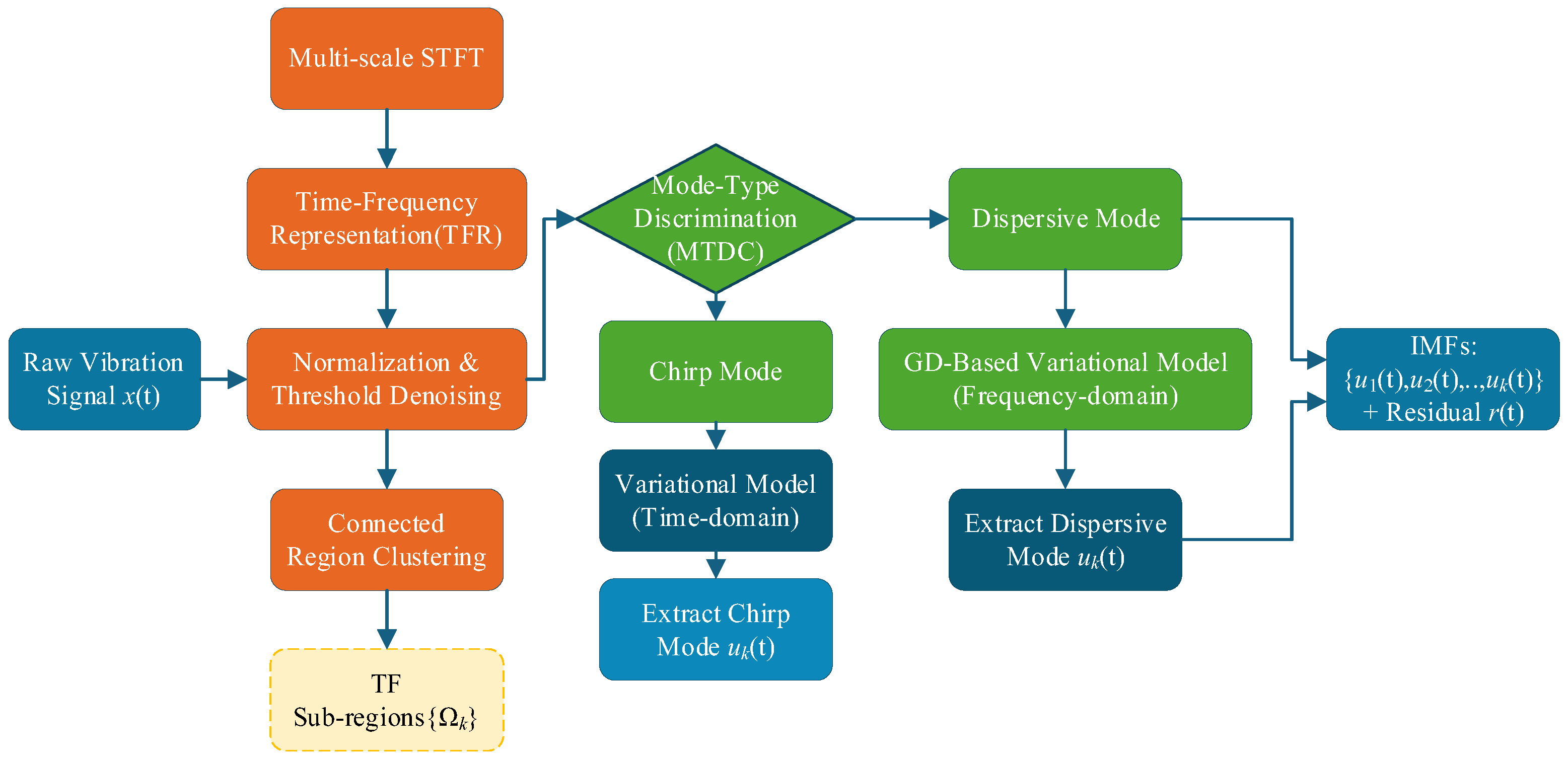
2.1. VGNMD
2.2. Improve SAO
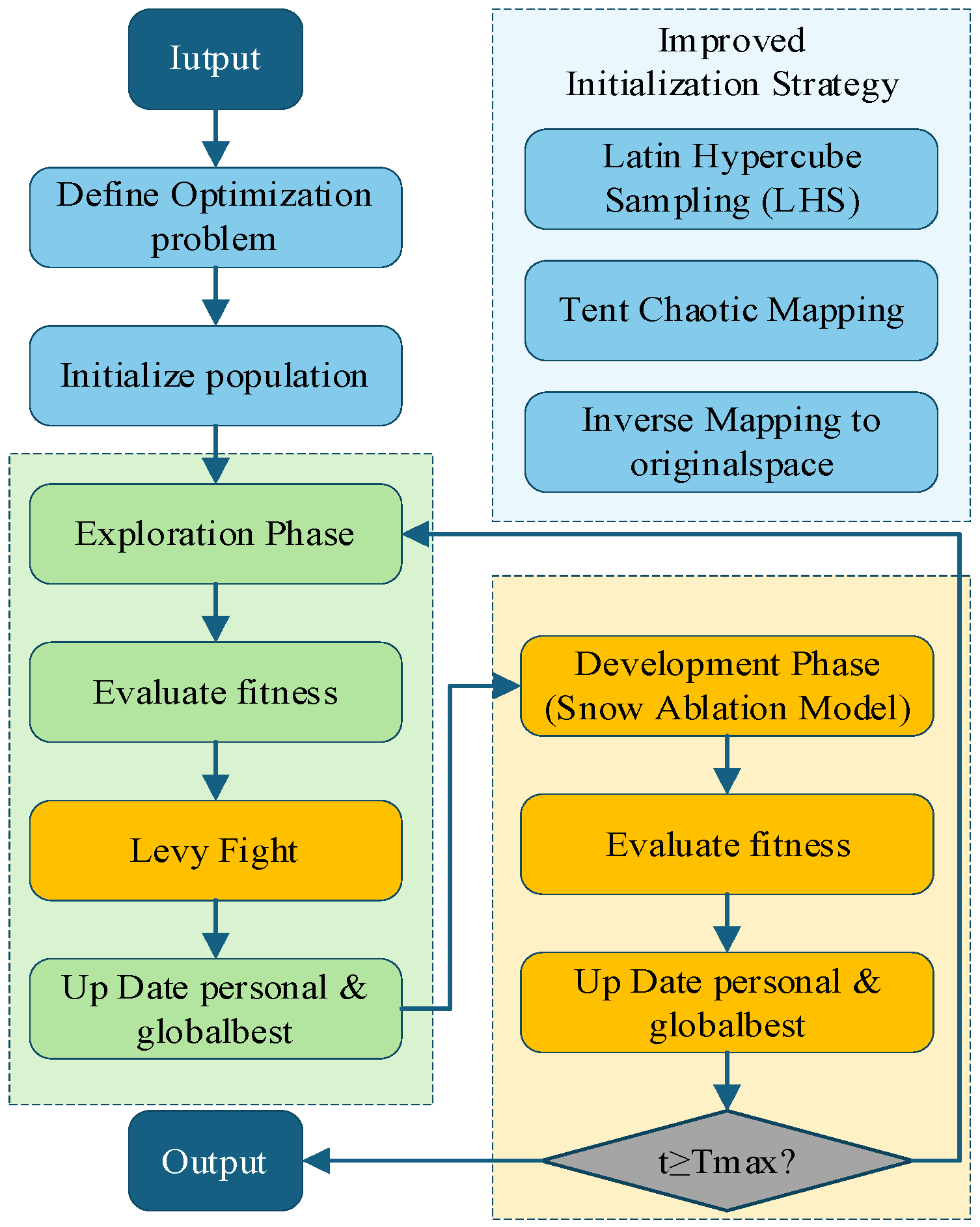
2.2.1. Latin Hypercube Sampling Initialization
2.2.2. Tent Chaos Mapping Enhances Population Diversity
2.2.3. ISAO Optimization of VGNMD Parameters
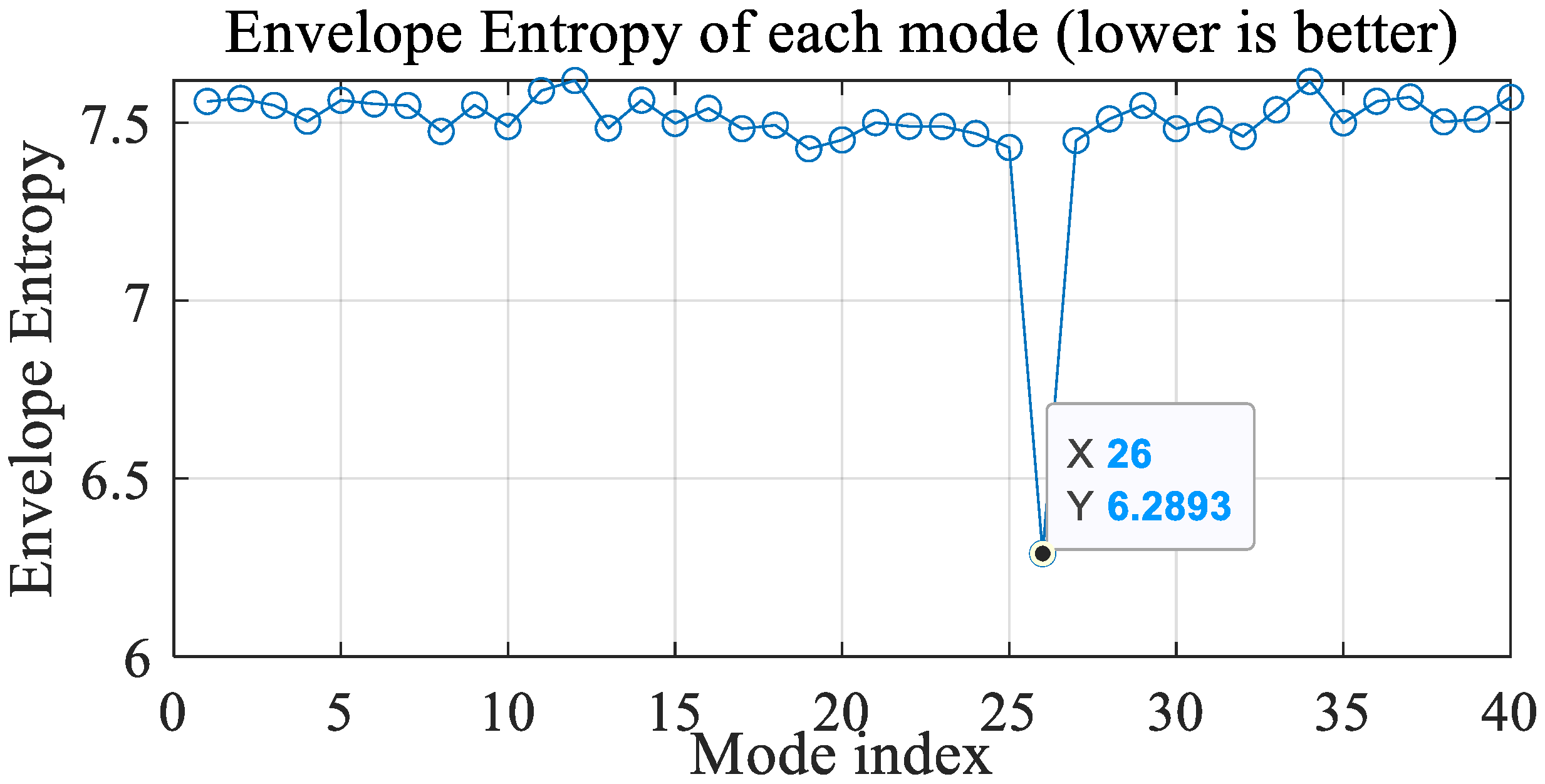
2.3. Envelope Entropy and Feature Extraction
3. BiTSF-Net Construction
3.1. BiTCN
3.2. BiLSTM
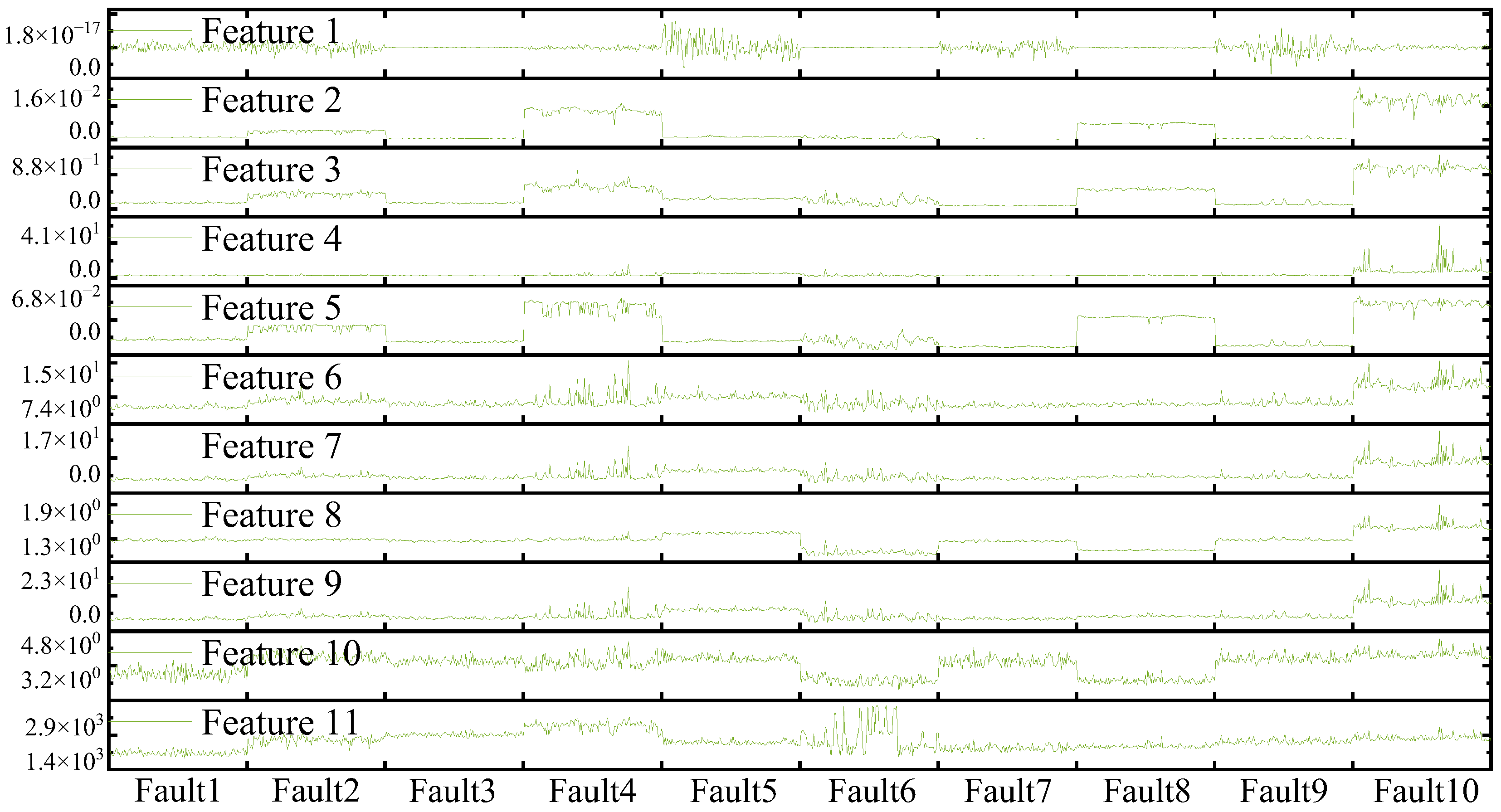
3.3. Feature Extraction
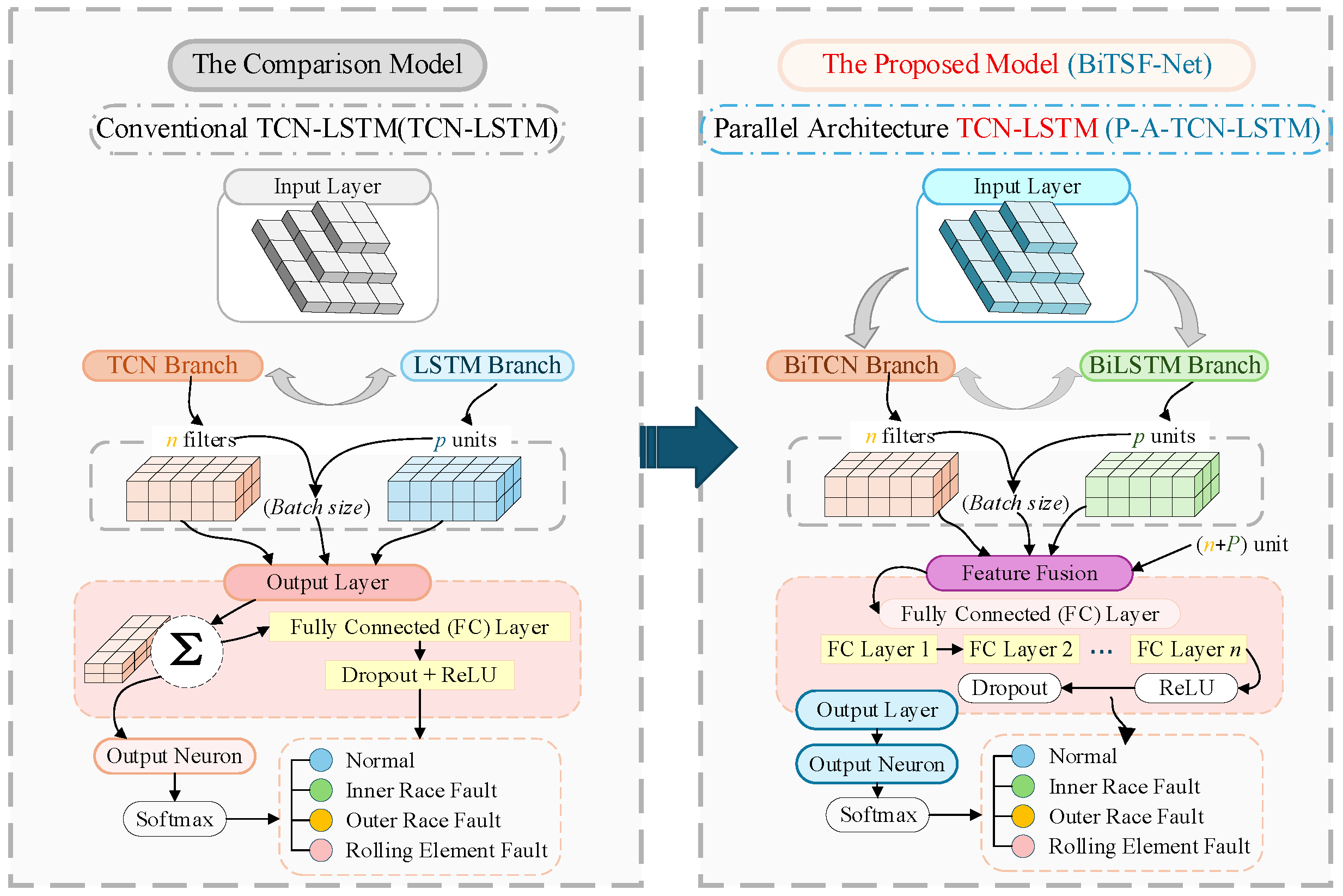
3.4. Feature Fusion and Overall Network Architecture of BiTSF-Net
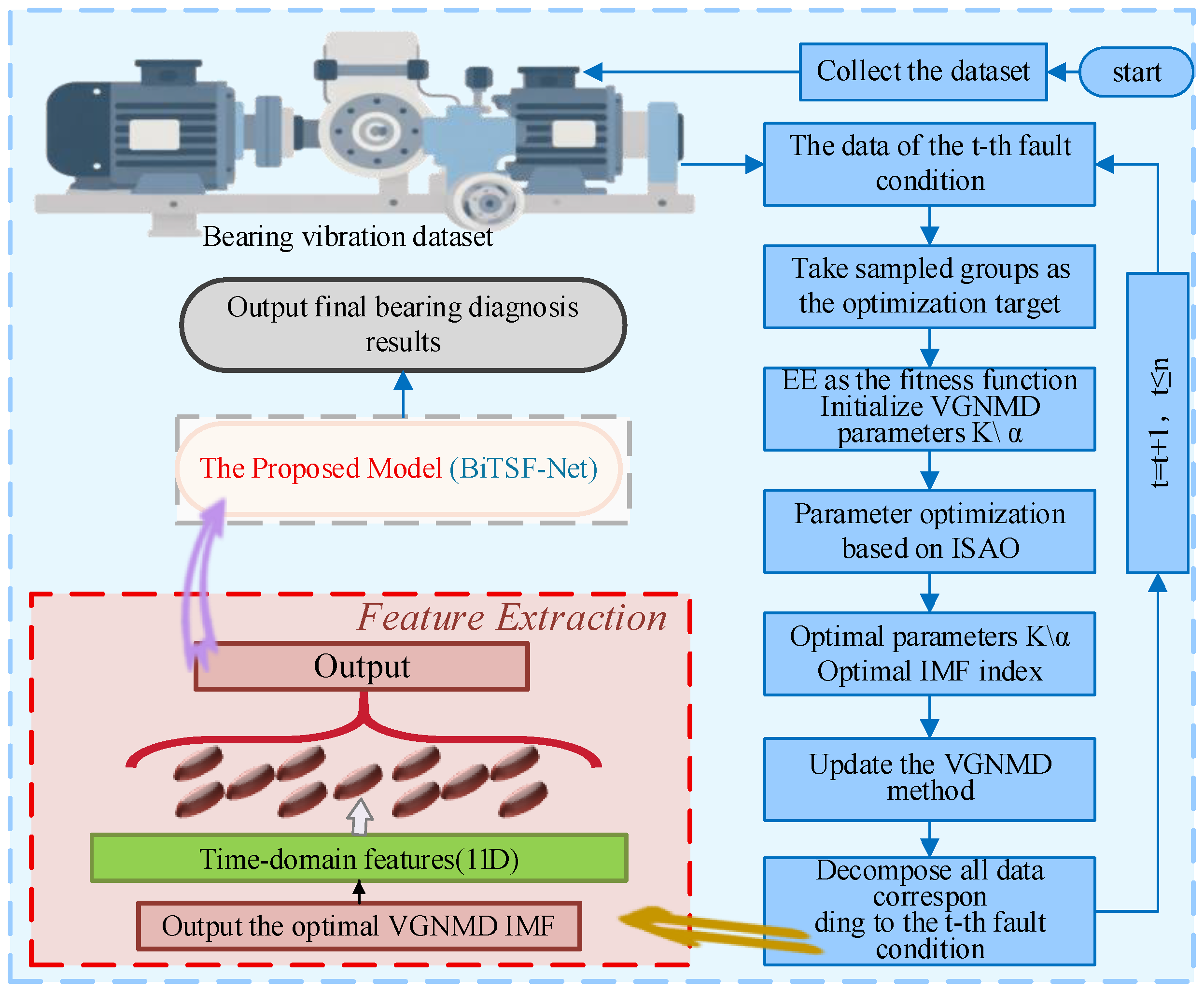
3.5. Bearing Fault Diagnosis Method for ISAO-VGNMD and BiTSF-Net
4. Experimental Verification and Analysis
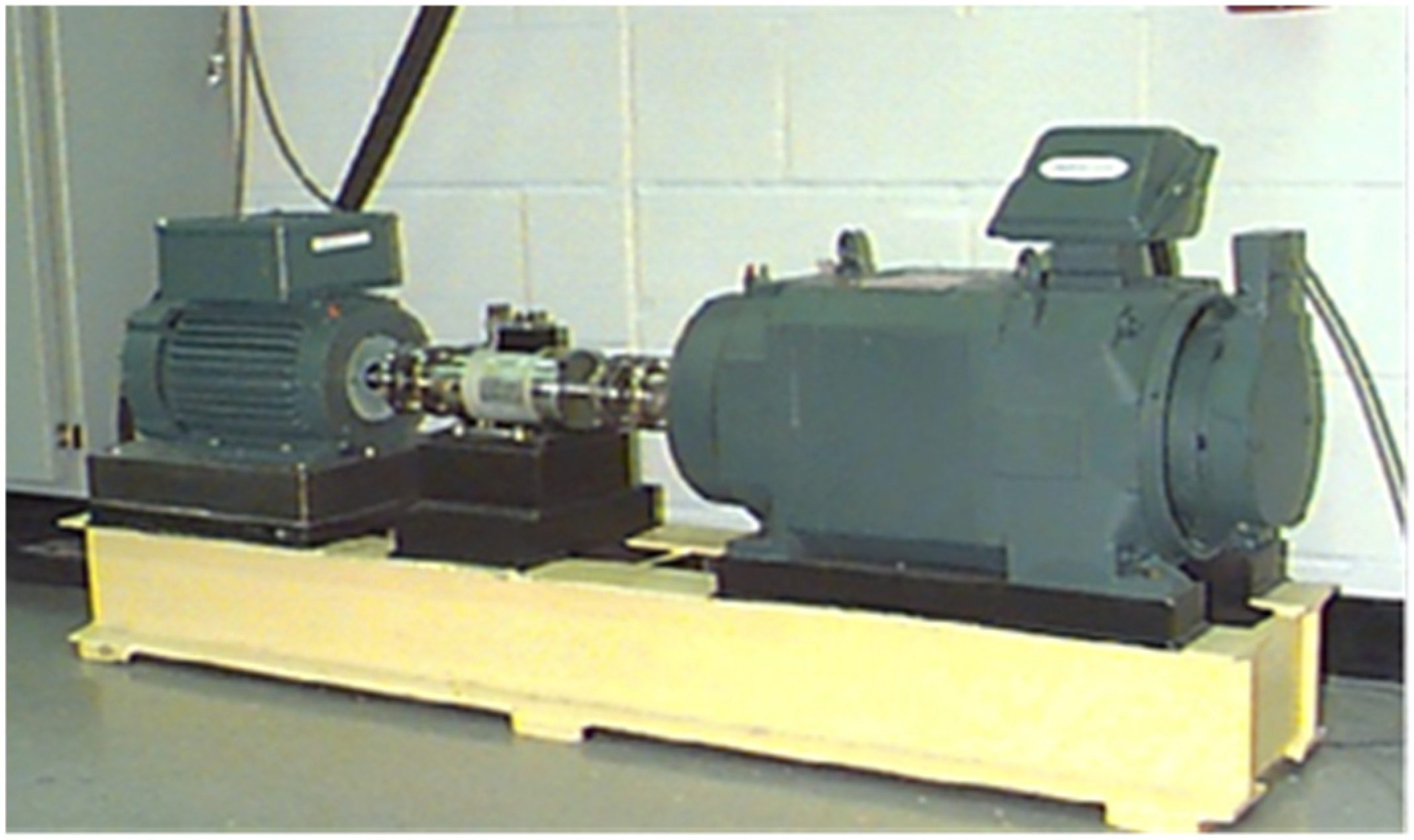
4.1. Data Introduction
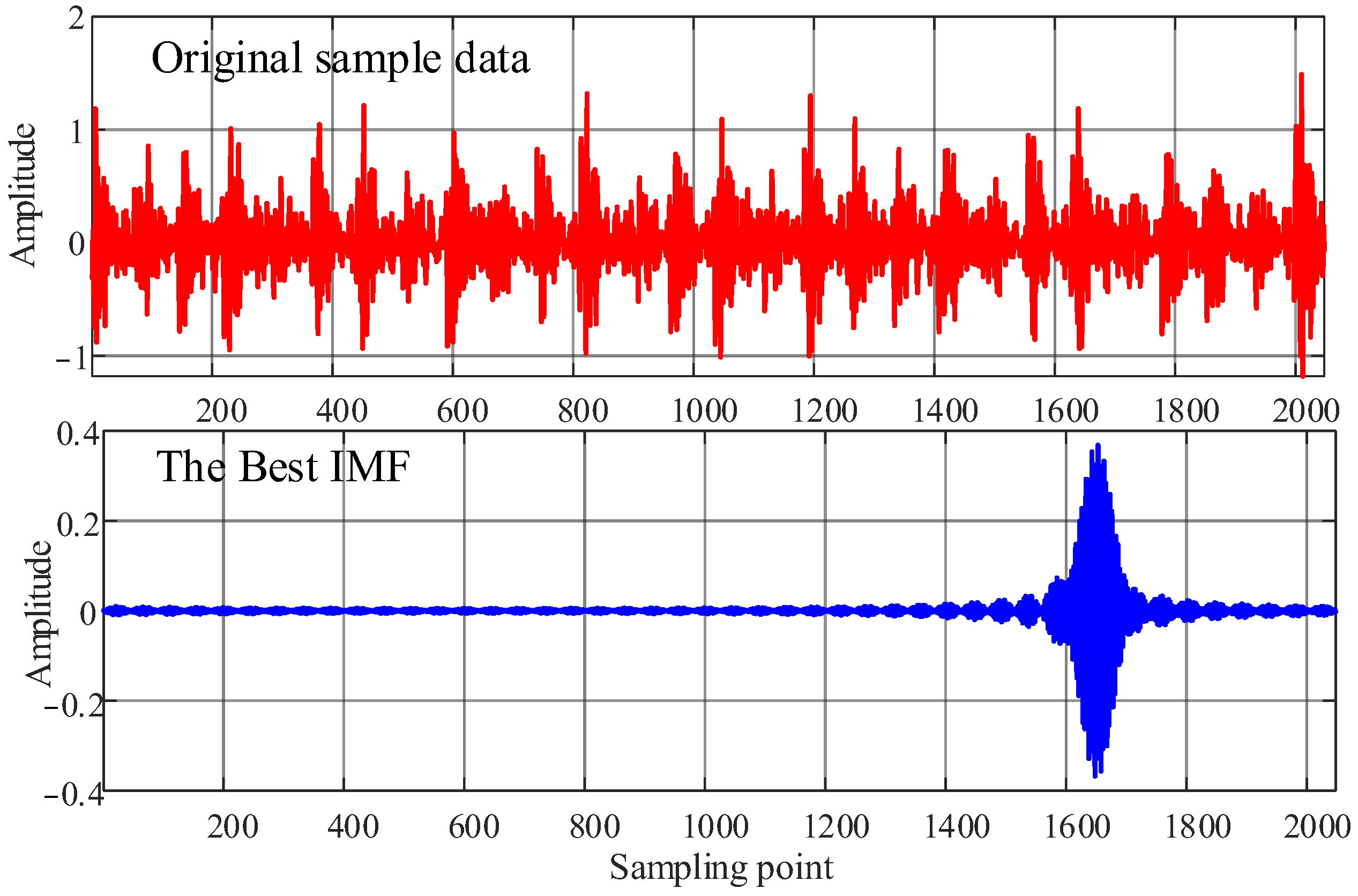
4.2. Data Processing
4.3. Comparison of Diagnostic Results in the CWRU Dataset
5. Conclusions and Further Research
5.1. Conclusions
5.2. Further Research
- Future work will integrate vibration, acoustic, temperature, current, and other heterogeneous sensor signals to construct a multi-modal fault diagnosis framework, thereby improving diagnostic reliability and robustness under complex industrial conditions.
- Future studies will explore domain adaptation and transfer learning techniques to enhance model adaptability under varying loads, rotational speeds, and environmental disturbances, thereby improving cross-condition diagnostic performance.
- To facilitate practical industrial implementation, lightweight network architectures and edge-computing deployment strategies will be investigated to enable real-time fault monitoring and intelligent maintenance applications.
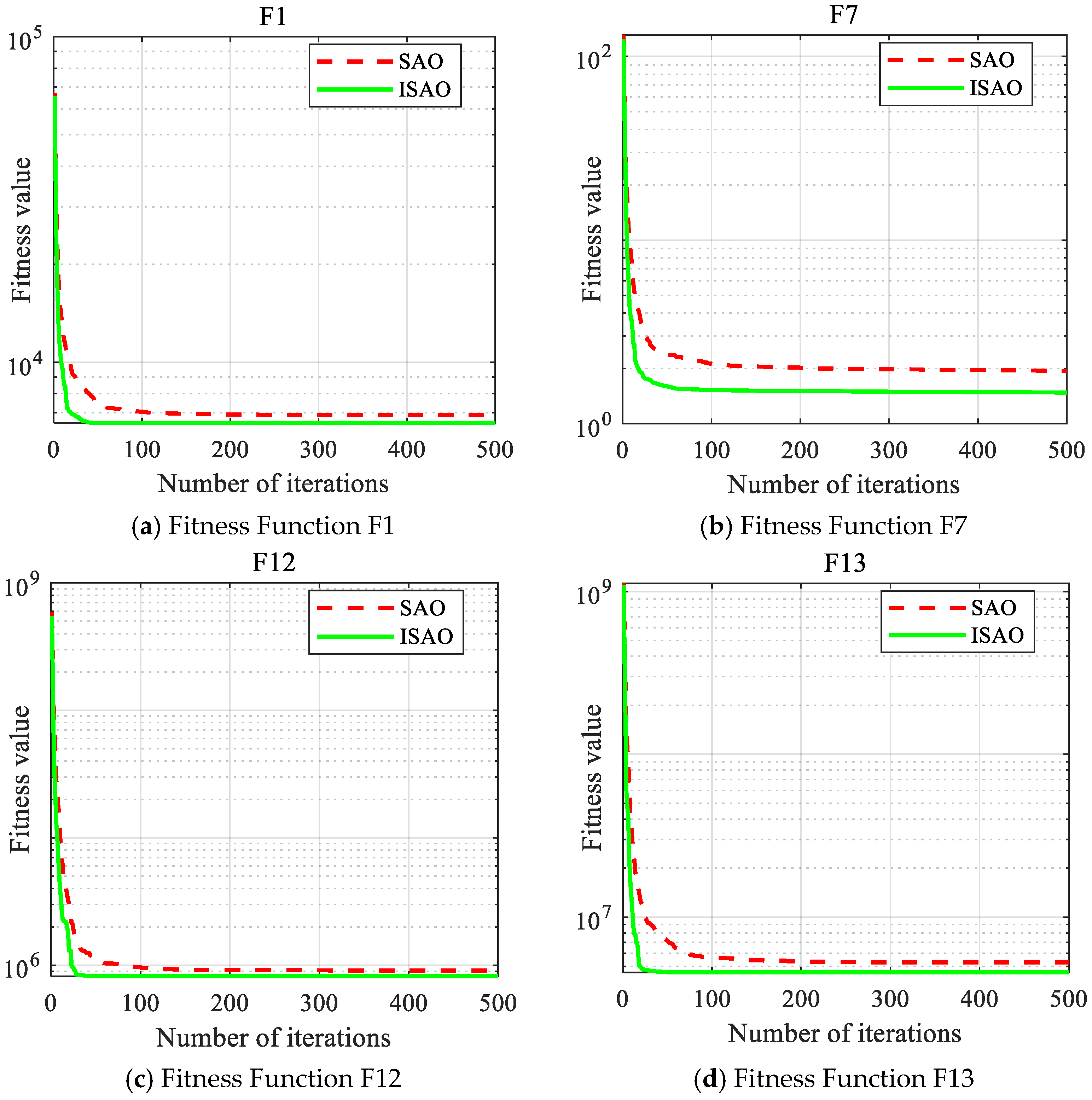
- Although ISAO demonstrates strong optimization capability, hybrid optimization mechanisms combining multiple swarm intelligence algorithms and adaptive parameter control strategies can be further explored to improve convergence efficiency and solution accuracy in high-dimensional optimization problems.
Author Contributions
Funding
Data Availability Statement
Acknowledgments
Conflicts of Interest
References
- Luo, R.; Xie, H.; Wen, H.; He, H.; Li, Y.; Wang, K. Cross-Domain Bearing Fault Diagnosis Under Class Imbalance: A Dynamic Maximum Triple-View Classifier Discrepancy Network. Algorithms 2026, 19, 228. [Google Scholar] [CrossRef]
- Zou, Y.; Li, C.; Zhang, Y.; Si, Z.; Li, L. A Multimodal Three-Channel Bearing Fault Diagnosis Method Based on CNN Fusion Attention Mechanism Under Strong Noise Conditions. Algorithms 2026, 19, 144. [Google Scholar] [CrossRef]
- Zhang, Y.; Li, S.; Li, A.; Zhang, G.; Wu, M. Fault diagnosis method of belt conveyor idler based on sound signal. J. Mech. Sci. Technol. 2023, 37, 69–79. [Google Scholar] [CrossRef]
- Liang, P.; Deng, C.; Wu, J.; Yang, Z. Intelligent fault diagnosis of rotating machinery via wavelet transform, generative adversarial nets and convolutional neural network. Measurement 2020, 159, 107768. [Google Scholar] [CrossRef]
- Vijayakumar, K.; Kumar, B.D. An EEG-Driven Exoskeleton Rehabilitation Robot for Upper Limb Recovery Using Empirical Mode Decomposition: A Response Surface Methodology Approach. Russ. J. Phys. Chem. B 2026, 20, 304–313. [Google Scholar] [CrossRef]
- Lei, Y.; Lin, J.; He, Z.; Zuo, M.J. A review on empirical mode decomposition in fault diagnosis of rotating machinery. Mech. Syst. Signal Process. 2013, 35, 108–126. [Google Scholar] [CrossRef]
- Dragomiretskiy, K.; Zosso, D. Variational mode decomposition. IEEE Trans. Signal Process. 2013, 62, 531–544. [Google Scholar] [CrossRef]
- Nazari, M.; Sakhaei, S.M. Successive variational mode decomposition. Signal Process. 2020, 174, 107610. [Google Scholar] [CrossRef]
- Wang, H.; Chen, S.; Zhai, W. Variational generalized nonlinear mode decomposition: Algorithm and applications. Mech. Syst. Signal Process. 2024, 206, 110913. [Google Scholar] [CrossRef]
- Ding, C.; Huang, X.; Wang, B.; Li, X.; Huang, W.; Zhu, Z. Low-rank informed adaptive chirp mode decomposition and its application in rotating machine fault diagnosis under varying speed conditions. IEEE Trans. Instrum. Meas. 2025, 74, 3524313. [Google Scholar] [CrossRef]
- Kennedy, J.; Eberhart, R. Particle swarm optimization. In Proceedings of ICNN’95-International Conference on Neural Networks; IEEE: New York, NY, USA, 1995; Volume 4, pp. 1942–1948. [Google Scholar]
- Mirjalili, S.; Mirjalili, S.M.; Lewis, A. Grey wolf optimizer. Adv. Eng. Softw. 2014, 69, 46–61. [Google Scholar] [CrossRef]
- Price, K.V. Differential evolution. In Handbook of Optimization: From Classical to Modern Approach; Springer: Berlin/Heidelberg, Germany, 2013; pp. 187–214. [Google Scholar]
- Deng, L.; Liu, S. Snow ablation optimizer: A novel metaheuristic technique for numerical optimization and engineering design. Expert Syst. Appl. 2023, 225, 120069. [Google Scholar] [CrossRef]
- Lei, C.; Zhou, J.; Li, M.; Hao, D.; Li, X.; Li, C.; Feng, R. Rolling bearing fault diagnosis based on MDBO-SVMD. J. Mech. Sci. Technol. 2026, 40, 1541–1554. [Google Scholar] [CrossRef]
- Guo, Z.; Li, J.; Wang, T.; Xie, J.; Yang, J.; Niu, B. Dynamic-Constrained Digital Twin-Based Mechanical Diagnosis Framework under Undetermined States without Fault Data. IEEE Trans. Instrum. Meas. 2025, 74, 3547715. [Google Scholar]
- Yongxing, Z.; Yuntian, T.; Ran, B.; Bo, T.; Zhengjie, L.; Yihong, Y.; Jingsong, X.; Zhibin, G. A cross-working-condition prediction method for bearing remaining useful life based on SPW-SVDD health indicators and temporal self-attention mechanism. Adv. Eng. Inform. 2026, 71, 104313. [Google Scholar] [CrossRef]
- Ji, C.; Zhang, C.; Suo, L.; Liu, Q.; Peng, T. Swarm intelligence based deep learning model via improved whale optimization algorithm and Bi-directional long short-term memory for fault diagnosis of chemical processes. ISA Trans. 2024, 147, 227–238. [Google Scholar] [CrossRef]
- Guo, L.; Li, N.; Jia, F.; Lei, Y.; Lin, J. A recurrent neural network based health indicator for remaining useful life prediction of bearings. Neurocomputing 2017, 240, 98–109. [Google Scholar] [CrossRef]
- Graves, A. Long short-term memory. In Supervised Sequence Labelling with Recurrent Neural Networks; Springer: Berlin/Heidelberg, Germany, 2012; pp. 37–45. [Google Scholar]
- Lea, C.; Flynn, M.D.; Vidal, R.; Reiter, A.; Hager, G.D. Temporal convolutional networks for action segmentation and detection. In 2017 IEEE Conference on Computer Vision and Pattern Recognition (CVPR); IEEE: New York, NY, USA, 2017; pp. 156–165. [Google Scholar]
- Wang, J.; He, H.; Wang, Z.; Du, W.; Duan, N.; Zhang, Z. Application of optimized adaptive chirp mode decomposition method in chirp signal. Appl. Sci. 2020, 10, 3695. [Google Scholar] [CrossRef]
- Iordanis, I.; Koukouvinos, C.; Silou, I. On the efficacy of conditioned and progressive Latin hypercube sampling in supervised machine learning. Appl. Numer. Math. 2025, 208, 256–270. [Google Scholar] [CrossRef]
- Wang, Z.; Geng, Z.; Fang, X.; Tian, Q.; Lan, X.; Feng, J. The optimal and economic planning of a power system based on the microgrid concept with a modified seagull optimization algorithm integrating renewable resources. Appl. Sci. 2022, 12, 4743. [Google Scholar] [CrossRef]
- Wang, X.; Li, J.H.; Jing, Z.; Li, H.; Xing, Z.; Yang, Z.; Cao, L.; Zhou, X. Fault diagnosis method of rolling bearing based on SSA-VMD and RCMDE. Sci. Rep. 2024, 14, 30637. [Google Scholar] [CrossRef]
- Li, J.; Luo, W.; Bai, M.; Song, M. Fault diagnosis of high-speed rolling bearing in the whole life cycle based on improved grey wolf optimizer-least squares support vector machines. Digit. Signal Process. 2024, 145, 104345. [Google Scholar] [CrossRef]
- Yang, Y.; Liu, H.; Han, L.; Gao, P. A feature extraction method using VMD and improved envelope spectrum entropy for rolling bearing fault diagnosis. IEEE Sens. J. 2023, 23, 3848–3858. [Google Scholar] [CrossRef]
- Zhang, C.; Ma, H.; Hua, L.; Sun, W.; Nazir, M.S.; Peng, T. An evolutionary deep learning model based on TVFEMD, improved sine cosine algorithm, CNN and BiLSTM for wind speed prediction. Energy 2022, 254, 124250. [Google Scholar] [CrossRef]
- Smith, W.A.; Randall, R.B. Rolling element bearing diagnostics using the Case Western Reserve University data: A benchmark study. Mech. Syst. Signal Process. 2015, 64, 100–131. [Google Scholar] [CrossRef]
- Raj, K.K.; Kumar, S.; Kumar, R.R.; Andriollo, M. Enhanced fault detection in bearings using machine learning and raw accelerometer data: A case study using the Case Western Reserve University dataset. Information 2024, 15, 259. [Google Scholar] [CrossRef]



| Status | Fault Diameter (Inches) |
|---|---|
| Rolling Element Fault | 0.007/0.014/0.021 |
| Inner Race Fault | 0.007/0.014/0.021 |
| Outer Race Fault | 0.007/0.014/0.021 |
| Normal Condition | None |
| Parameters | Settings |
|---|---|
| Load | 0 HP |
| Model | SKF6025 |
| Frequency | 12 kHz |
| Rotational Speed | 1797 rpm |
| Sampling Points | 2048 |
| Dataset Label | Bearing Fault Type | Fault Diameter (Inches) |
|---|---|---|
| 1 | Normal | 0 |
| 2 | Inner Race Fault | 0.007 |
| 3 | Rolling Element Fault | 0.007 |
| 4 | Outer Race Fault | 0.007 |
| 5 | Inner Race Fault | 0.014 |
| 6 | Rolling Element Fault | 0.014 |
| 7 | Outer Race Fault | 0.014 |
| 8 | Inner Race Fault | 0.021 |
| 9 | Rolling Element Fault | 0.021 |
| 10 | Outer Race Fault | 0.021 |
| Number | Model | Number | Model |
|---|---|---|---|
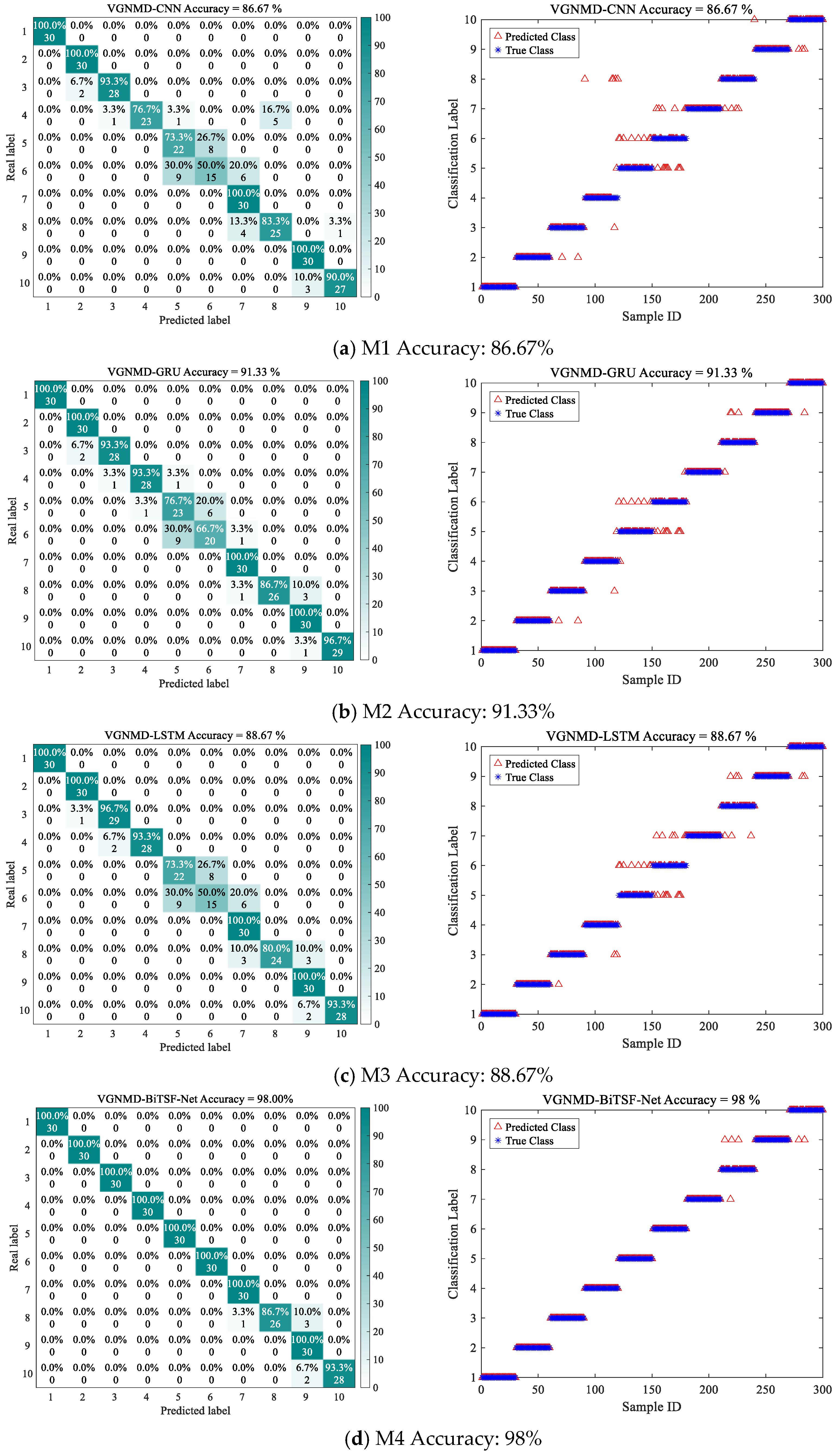
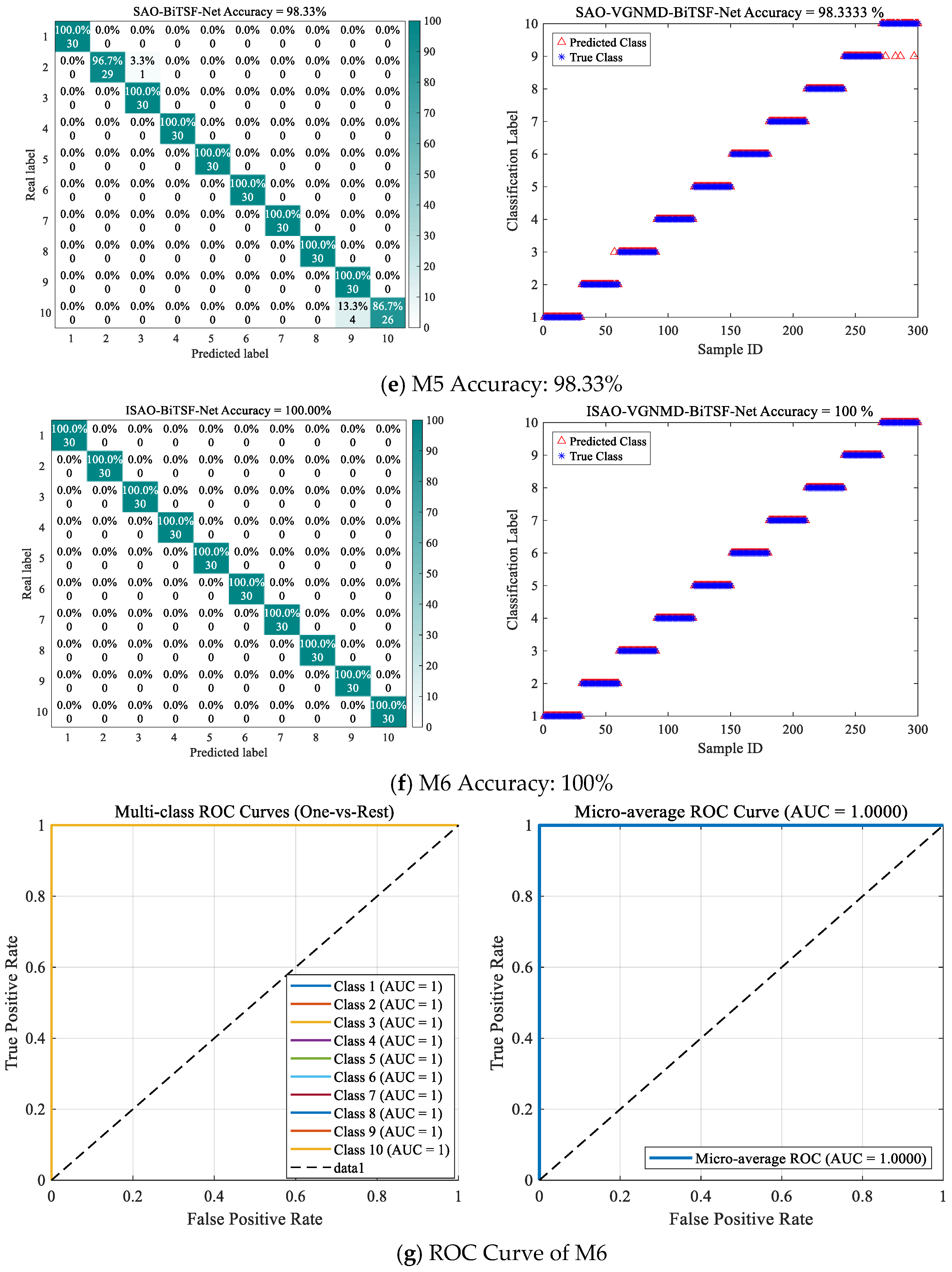
| M1 | CNN | M4 | BiTSF-Net |
| M2 | GRU | M5 | SAO-BiTSF-Net |
| M3 | LSTM | M6 | ISAO-BiTSF-Net |
| Diagnostic Model | Time | Optimal Accuracy Rate | Average Accuracy Rate |
|---|---|---|---|
| M1 | 2.04 | 86.67% | 85.33% |
| M2 | 1.43 | 91.33% | 90.79% |
| M3 | 2.44 | 88.67% | 87.67% |
| M4 | 1.65 | 98% | 97.33% |
| M5 | 2.57 | 98.53% | 98.33% |
| M6 | 3.09 | 100.0% | 99.63% |
| Method | Time | Optimal Accuracy Rate | Average Accuracy Rate |
|---|---|---|---|
| TCN-LSTM | 1.51 | 97.12% | 96.78% |
| BiTSF-Net | 1.65 | 98% | 97.33% |
| SAO-BiTSF-Net | 2.57 | 98.33% | 98.53% |
| ISAO-BiTSF-Net | 3.09 | 100.0% | 99.63% |
Disclaimer/Publisher’s Note: The statements, opinions and data contained in all publications are solely those of the individual author(s) and contributor(s) and not of MDPI and/or the editor(s). MDPI and/or the editor(s) disclaim responsibility for any injury to people or property resulting from any ideas, methods, instructions or products referred to in the content. |
© 2026 by the authors. Licensee MDPI, Basel, Switzerland. This article is an open access article distributed under the terms and conditions of the Creative Commons Attribution (CC BY) license.
Share and Cite
Chen, X.; Li, H.; Zhang, X.; Lai, J.; Hu, X.; Peng, T. Enhancement of Bearing Fault Diagnosis Using Optimized Variational Decomposition, Entropy-Based Modal Reconstruction, and Evolutionary Bidirectional Fusion Network. Processes 2026, 14, 1861. https://doi.org/10.3390/pr14121861
Chen X, Li H, Zhang X, Lai J, Hu X, Peng T. Enhancement of Bearing Fault Diagnosis Using Optimized Variational Decomposition, Entropy-Based Modal Reconstruction, and Evolutionary Bidirectional Fusion Network. Processes. 2026; 14(12):1861. https://doi.org/10.3390/pr14121861
Chicago/Turabian StyleChen, Xupeng, Huiyin Li, Xu Zhang, Jianling Lai, Xin Hu, and Tian Peng. 2026. "Enhancement of Bearing Fault Diagnosis Using Optimized Variational Decomposition, Entropy-Based Modal Reconstruction, and Evolutionary Bidirectional Fusion Network" Processes 14, no. 12: 1861. https://doi.org/10.3390/pr14121861
APA StyleChen, X., Li, H., Zhang, X., Lai, J., Hu, X., & Peng, T. (2026). Enhancement of Bearing Fault Diagnosis Using Optimized Variational Decomposition, Entropy-Based Modal Reconstruction, and Evolutionary Bidirectional Fusion Network. Processes, 14(12), 1861. https://doi.org/10.3390/pr14121861