1. Introduction
With the increasing penetration of distributed wind and photovoltaic generation, local power systems are gradually evolving from isolated microgrids toward interconnected multi-microgrid (MMG) architectures. Nawaz et al. systematically reviewed energy management, demand response, and coordination schemes in MMG networks, and showed that coordinated MMG operation has become an important research direction for improving flexibility and operational efficiency [
1]. Guan et al. summarized the operation architectures and energy management systems of microgrid clusters, indicating that clustered microgrids are increasingly regarded as an important form of active distribution system [
2]. Bullich-Massagué et al. investigated microgrid clustering architectures and clarified that the transition from standalone microgrids to clustered systems is a natural development pathway for future power systems [
3]. Zhou et al. proposed a microgrid cluster structure and its autonomous coordination control strategy, demonstrating that interconnected microgrids can enhance renewable accommodation and mutual support capability [
4]. These studies provide the structural basis for MMG development. However, they mainly focus on system architecture, cluster configuration, and general coordination potential, while the scheduling problem caused by renewable uncertainty still requires further investigation.
Based on the above structural background, researchers have further explored coordinated operation and uncertainty-aware scheduling methods for MMGs. Lv and Ai developed an interactive energy management framework for networked microgrids in active distribution systems, showing that interaction among microgrids can improve operational performance under large-scale renewable penetration [
5]. Haddadian and Noroozian discussed the role of MMGs in the design and operation of future distribution networks, emphasizing their long-term engineering significance [
6]. Wu et al. proposed a novel architecture and control strategy for multiple microgrids with hybrid AC/DC connections, demonstrating that interconnected operation is feasible from both structural and control perspectives [
7]. Lin et al. proposed a dynamic-circuit-based unified power regulation method for hybrid AC/DC microgrids, in which static power sharing and transient power regulation are integrated within a unified control framework [
8]. Du et al. introduced a cooperative game approach for coordinating MMG operation and showed that coalition-based operation can improve the economic performance of interconnected systems [
9]. Kou et al. further employed distributed economic model predictive control for coordinated stochastic energy management of multiple microgrids, confirming that dynamic coordination can improve system adaptability under uncertainty [
10]. To cope with renewable uncertainty, Zhang et al. formulated robust energy transactions in MMGs under uncertainty [
11], Gao et al. developed a decentralized optimal operation model for cooperative microgrids considering renewable uncertainty [
12], Kong et al. proposed an optimal operation strategy for interconnected microgrids in a market environment [
13], and Qiu et al. established a decentralized-distributed robust scheduling framework considering communication failures [
14]. More recently, Tan et al. introduced distributionally robust energy management for MMGs with grid-interactive electric vehicles [
15], Du et al. proposed a distributionally robust collaborative scheduling and benefit allocation method considering tail-risk assessment [
16], and Dai et al. investigated shared energy storage in MMGs to improve flexibility and reduce capacity requirements [
17]. He et al. developed a short-term wind-vector prediction method based on deep learning and multi-height light detection and ranging measurements, showing that high-resolution measurement data can be used to extract spatiotemporal wind features [
18]. Yang et al. defined a feasible range of adjustment parameters using a knowledge-data-driven approach, providing a reference for uncertainty perception in MMGs [
19]. These studies have enriched MMG coordination and uncertainty-aware scheduling. Nevertheless, the flexibility sources emphasized in these works mainly come from energy trading, distributed coordination, electric vehicles, controllable generation, or shared storage, while the spatial flexibility provided by controllable physical interconnection devices has not been sufficiently quantified.
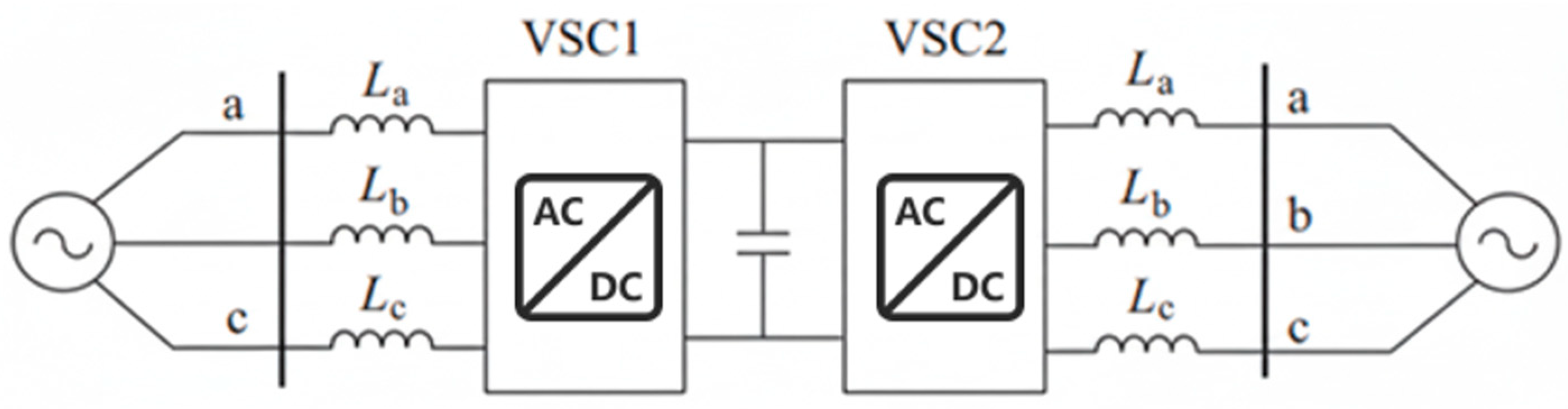
In parallel, soft open point technologies, which are closely related to the FID considered in this paper, have attracted increasing attention in active distribution networks. Long et al. described soft open point as back-to-back voltage-source-converter-based power-electronic devices installed at normally open points, which can provide flexible and accurate power-flow control in distribution networks [
20]. Qi et al. further showed that soft open point can realize real-time active/reactive power regulation, thereby improving feeder load balancing, voltage profiles, and operational efficiency [
21]. Jiang et al. provided a comprehensive overview of soft open point technologies and summarized their engineering value in feeder load balancing, voltage improvement, loss reduction, and distributed generation accommodation [
22]. Yang et al. introduced a two-stage robust optimal scheduling framework for flexible distribution networks, indicating that two-stage robust optimization is effective for coordinating flexible resources under uncertainty [
23]. Recent studies have further extended this research direction. Azizivahed et al. investigated soft-open-point-based voltage management and controllable power sharing in multi-microgrid distribution systems under uncertainty [
24]. Ebrahimi et al. proposed a stochastic allocation and management method for soft open point considering renewable energy and demand uncertainty [
25]. Ma et al. developed a coordinated robust configuration framework for soft open point and ESS under wind-solar uncertainties [
26]. In terms of MMG scheduling, Siqin et al. proposed a shared-energy-storage-based MMG operation strategy using multi-stage robust optimization [
27]. Yu et al. further developed a distributionally robust optimal scheduling strategy for flexible distribution networks considering the dynamic spatio-temporal correlation of renewable energy [
28]. Liang et al. proposed a data-correlated uncertainty set derived from historical data patterns for hybrid AC/DC microgrid interconnection planning, which provides a useful reference for reducing the conservatism of conventional uncertainty sets [
29]. These studies demonstrate the growing importance of soft open point/FID technologies and uncertainty-aware optimization. However, most existing studies still focus on feeder-level voltage regulation, device planning, resilience enhancement, shared storage, or distribution-network-level scheduling, and the coordinated day-ahead and real-time robust scheduling of adjacent MMGs interconnected by FID remains insufficiently addressed.
Based on the above literature, three key research problems remain to be addressed. First, existing MMG coordination studies mainly focus on energy interaction, cooperative control, or distributed scheduling, while the coupling between renewable forecast uncertainty and day-ahead/real-time scheduling decisions has not been sufficiently clarified. Second, most uncertainty-aware MMG scheduling studies rely mainly on local temporal flexibility, such as energy storage, controllable generators, or market transactions, whereas the spatial flexibility provided by FID-based controllable bidirectional power transfer has not been fully quantified. Third, although two-stage robust optimization and FID technologies have been studied separately, their integration for uncertainty-aware coordinated scheduling of flexibly interconnected MMGs remains limited.
To address these problems, this paper proposes a two-stage robust optimization method for the coordinated scheduling of an FID-enabled MMG system considering wind and PV uncertainty. The novelty of this work lies in embedding FID-based bidirectional power exchange as an active spatial-flexibility resource into the day-ahead and real-time robust scheduling framework, rather than treating FID merely as a physical interconnection interface. In the proposed model, grid power purchases, micro-gas turbine output, energy storage operation, renewable generation, and FID transfer power are jointly optimized to reduce renewable curtailment and real-time balancing pressure under uncertain operating conditions.
The main contributions of this paper are summarized as follows:
A coordinated scheduling framework for FID-enabled MMG is established. The model jointly considers grid power purchases, micro-gas turbines, ESS, renewable generation, and FID-based bidirectional power exchange, enabling the coordination of local temporal flexibility and inter-microgrid spatial flexibility.
A two-stage robust optimization model is developed to address wind and PV forecast errors. A polyhedral uncertainty set is used to characterize renewable output deviations, and the day-ahead scheduling decisions are coordinated with real-time recourse actions, including energy storage adjustment, FID power transfer, and real-time grid power exchange.
Comparative case studies are conducted to quantify the value of the proposed method. By comparing independent operation, FID-enabled interconnected operation, and FID-enabled two-stage robust scheduling, the results separately verify the benefits of FID-based spatial flexibility and two-stage robust recourse in reducing real-time balancing cost, mitigating renewable curtailment, and improving operating economy.
The remainder of this paper is organized as follows.
Section 2 presents the structure of the flexibly interconnected multi-microgrid system and formulates the deterministic model, uncertainty model, and two-stage robust optimization model.
Section 3 introduces the solution algorithm based on the column-and-constraint generation method.
Section 4 presents the case study, comparative analysis, and sensitivity analysis under different uncertainty levels. Finally,
Section 5 concludes the paper and summarizes the main findings.
3. Solution Algorithms
Current approaches for solving two-stage robust optimization problems primarily include Benders decomposition and C&CG algorithm. Both methods decompose the problem into a main problem and subproblems for solution. The C&CG algorithm differs by incorporating the scenarios obtained from solving the subproblems as constraints into the main problem, thereby accelerating the overall convergence rate.
Decomposing the original model yields a main problem expressed in compact form as:
where
denotes the iteration count for solving the current main problem and
represents the uncertain scenario obtained during the
th iteration of the subproblem.
The decomposed subproblem can be expressed in a compact form as:
Due to the presence of a “max–min” dual-layer problem within the subproblem, direct computation by the solver is not feasible. The inner min problem must be transformed into a max problem using KKT conditions or strong dual theory, ultimately converting the subproblem into a single-layer max problem. Its compact expression is as follows:
where
denotes the solution to the primary problem at this iteration and
represents the introduced dual variables.
Since
is an uncertain variable,
in the objective function becomes nonlinear and must be linearized. The goal of robust optimization is to find the optimal solution under the “worst-case” conditions. In the multi-microgrid system studied here, reduced wind and solar power generation increase the system’s electricity purchase costs. Therefore, when wind and solar power generation reach the minimum value of the uncertainty set, the resulting scenario is the “worst-case.” Therefore, by introducing a binary variable and linearizing it using the large M method, we obtain:
where
is the 0–1 variable, ensuring uncertain variable values are only
or
;
is a relatively large positive number. When
equals 0, the resulting strategy matches the deterministic model. As
increases, the model considers harsher scenarios, yielding more conservative solutions. Thus, adjusting
controls the robustness strategy’s conservatism, preventing overly aggressive or conservative outcomes.
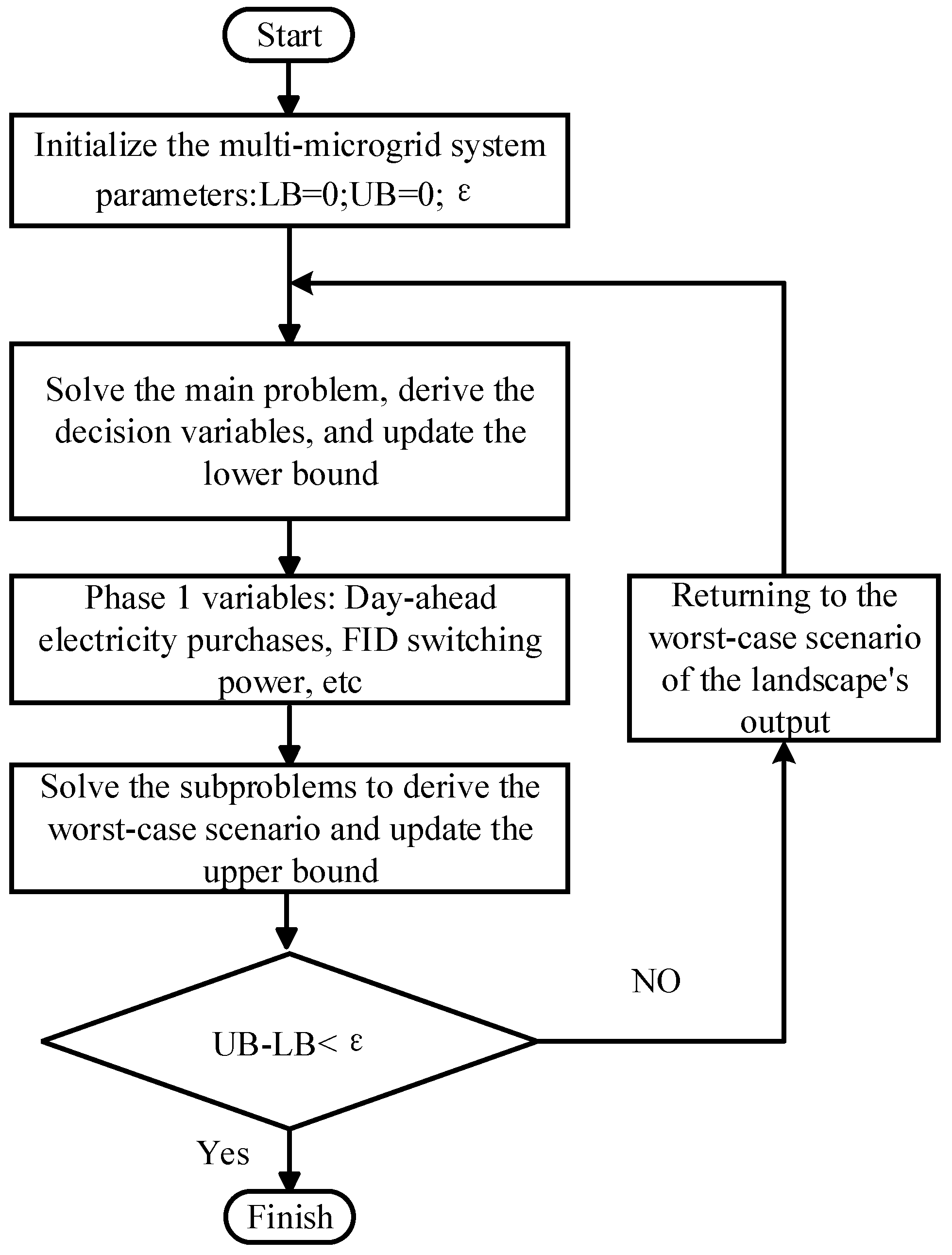
The final solution steps of the two-stage robust optimization algorithm are shown in
Figure 3 below:
4. Results and Discussion
Simulation studies were conducted on a two-microgrid system using load data from a region in Sichuan Province. The model proposed in this paper was built on the MATLAB R2021a platform and solved using Gurobi. Case studies and scheme comparisons were performed on a PC with an Intel
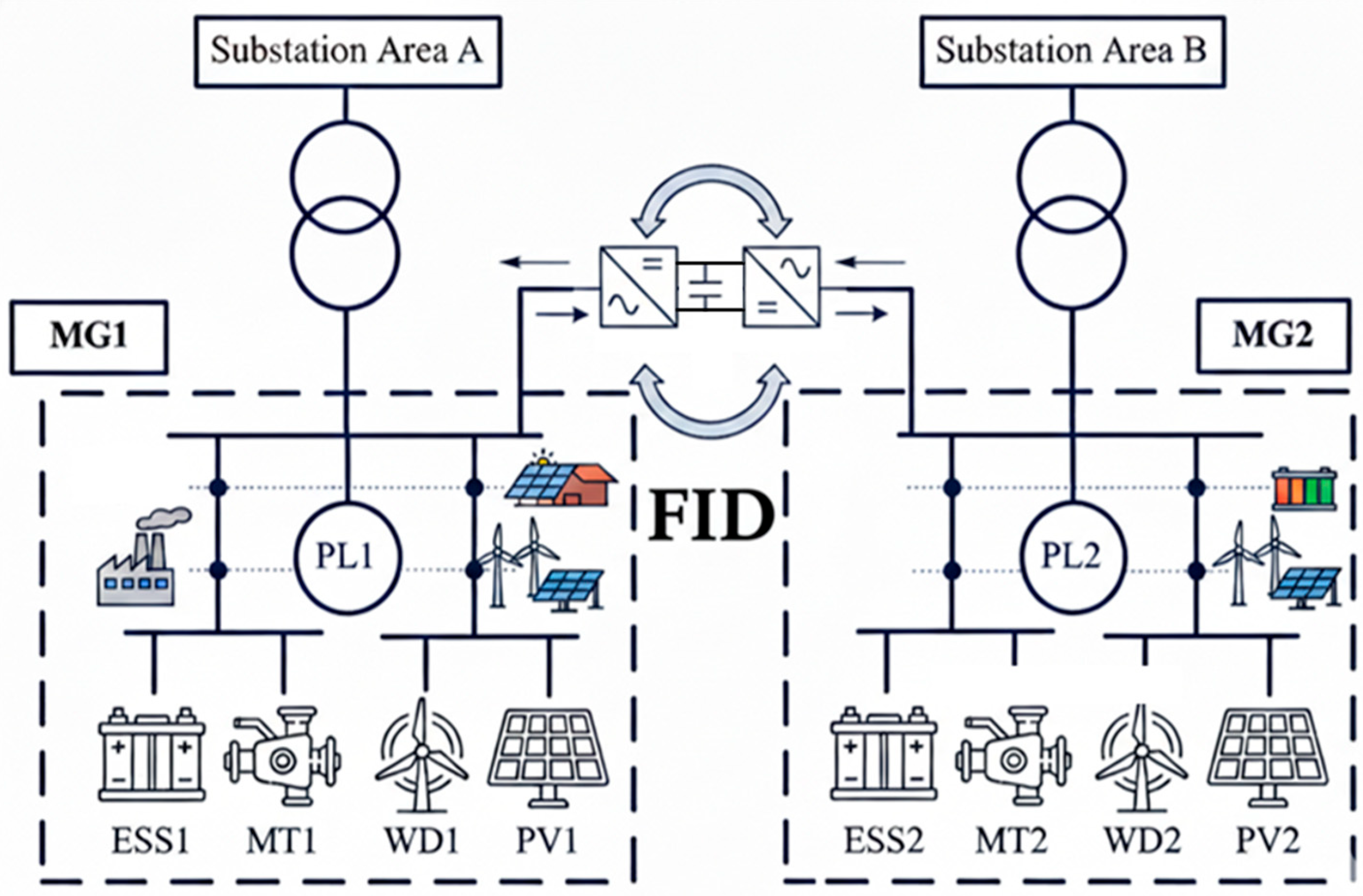
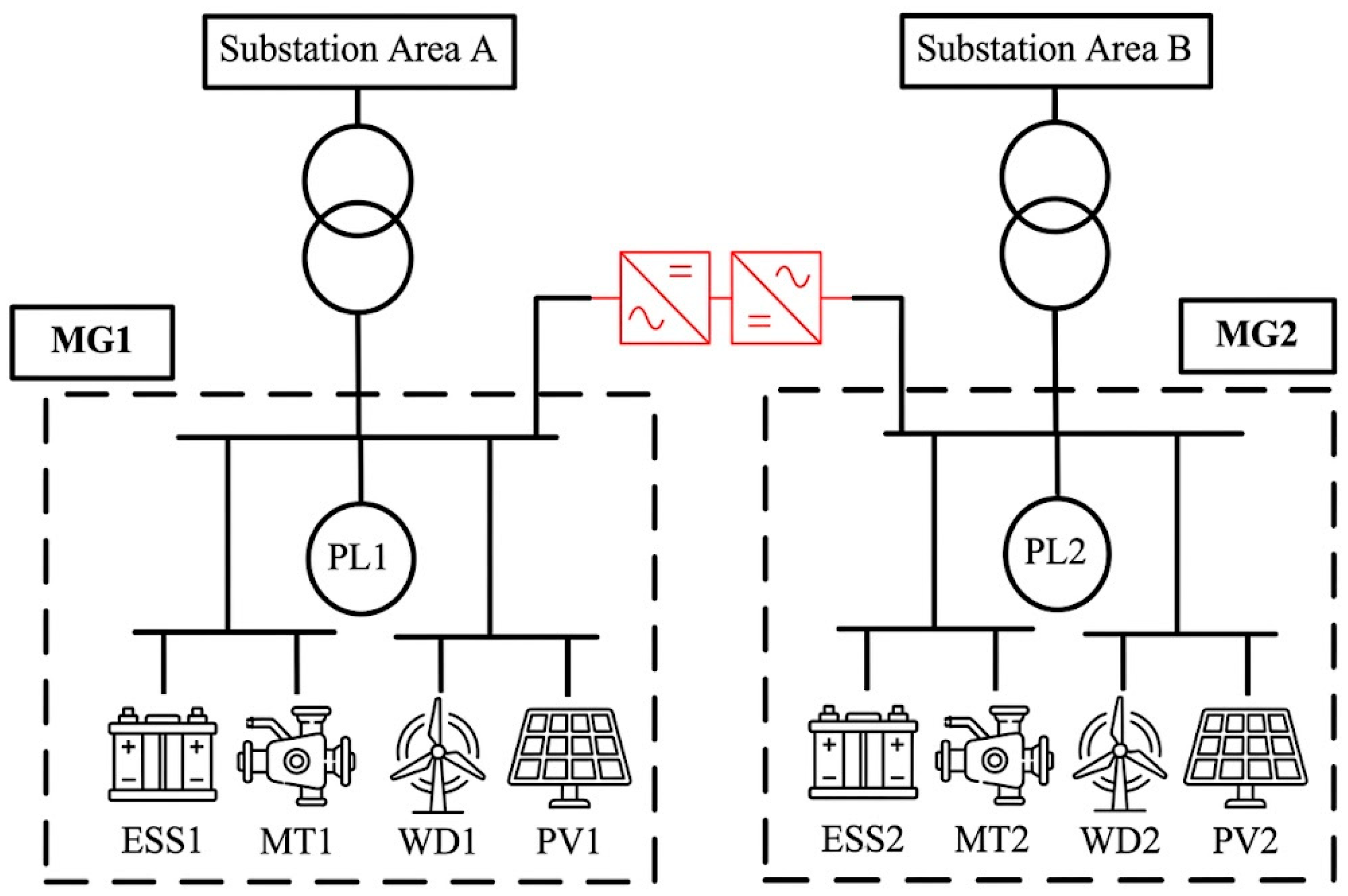
® Core™ i7-10875H CPU @ 2.30 GHz and 16 GB of memory. The case study is based on a multi-microgrid system composed of two microgrids under different transformer zones. Its specific topology is shown in
Figure 4, and the operating parameters are shown in
Table 1.
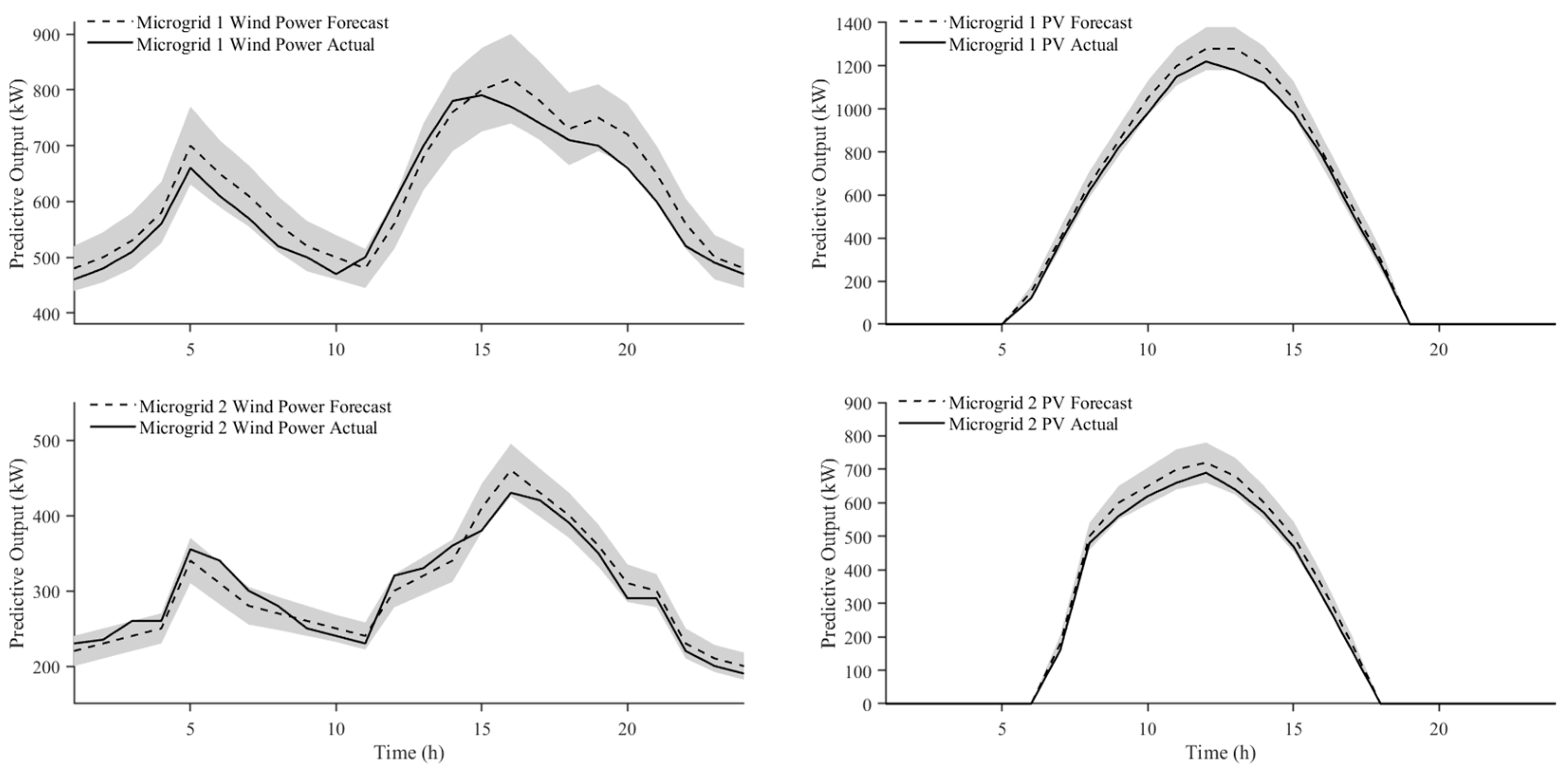
The predicted and actual wind and solar power output curves in the two microgrids are shown in
Figure 5. The prediction error for wind and solar power output can be set based on the deviation of historical prediction data. In this paper, the prediction deviation is set to 0.1, which means that the uncertainty of wind and solar power generation ranges from 90% to 110% of the predicted value, and the uncertainty is set to 10.
The day-ahead trading price for multi-microgrid systems trading with the distribution network adopts time-of-use pricing. Due to the existence of wind and solar forecasting errors, the actual power generation and planned power consumption often do not match, and trading needs to be carried out in the real-time market [
10].
In accordance with the price-setting scheme adopted in existing two-stage robust dispatch studies [
31], this paper specifies the real-time electricity purchase price as 1.5 times the corresponding day-ahead time-of-use price, so as to characterize the higher marginal cost of real-time imbalance compensation.
To validate the accuracy and superiority of the proposed model, three comparison scenarios are presented:
Scenario 1: The two microgrids operate independently, using a traditional robust optimization model [
22];
Scenario 2: The two microgrids form a multi-microgrid system through FID, using a traditional robust optimization model;
Scenario 3: The two microgrids form a multi-microgrid system through FID, using a two-stage robust optimization model.
4.1. Simulation Results
To evaluate the operational characteristics of the proposed scheduling framework, this section analyzes the dispatch results of the key flexibility resources, including the micro-gas turbine, the FID, the ESS, and the overall system power balance.
The output of the micro-gas turbine exhibits a clear time-varying pattern. During 1:00–6:00, 11:00–15:00, and 23:00–24:00, the output remains at a relatively low level of approximately 100 kW, whereas during 7:00–10:00 and 16:00–22:00 it increases significantly to about 1000 kW, corresponding to about 500 kW for each microgrid. This result indicates that the micro-gas turbine is not used as a continuously dominant energy source, but rather as a dispatchable support unit activated during periods of high net load or insufficient renewable generation. This operating pattern is economically reasonable because it reserves conventional generation for the periods when local renewable output and storage flexibility are insufficient.
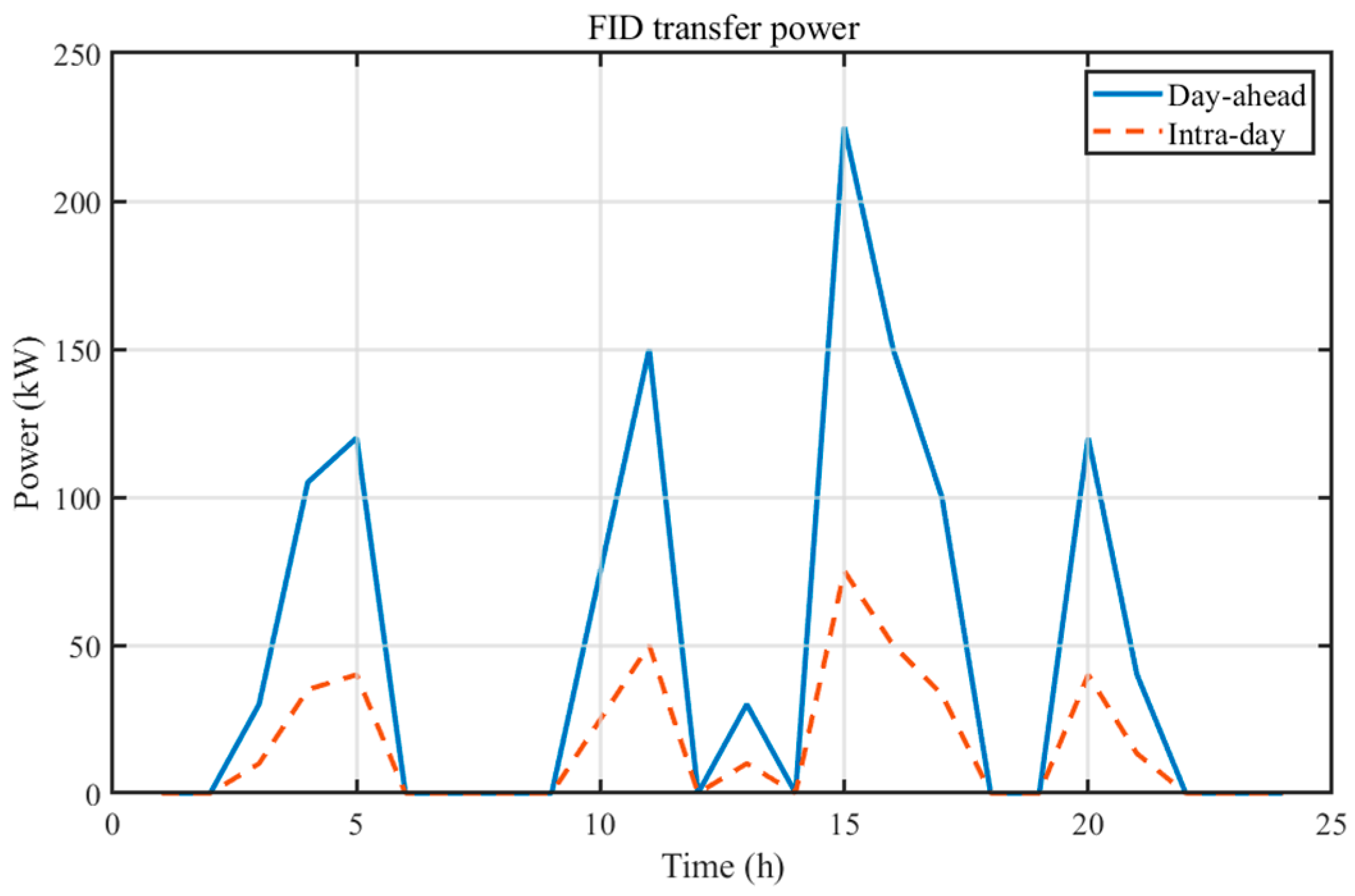
Figure 6 shows that the FID transmission power has strong temporal variability. The FID capacity is set to 250 kVA, and its power transfer is generally higher during daytime than during off-peak nighttime periods. Distinct transfer peaks appear around 3:00–5:00, 10:00–11:00, 15:00–17:00, and 20:00, with a daytime peak of approximately 225 kW and an off-peak level of about 75 kW. This result suggests that the proposed scheduling model actively allocates inter-microgrid power exchange during periods with pronounced source–load mismatch. In essence, the FID provides spatial flexibility by allowing one microgrid to support another when local renewable surplus or local generation shortage occurs. Therefore, the FID is not merely an interconnection interface, but a controllable flexibility resource that redistributes power across adjacent microgrids according to operating conditions. The fact that FID utilization de-creases in some daytime intervals also indicates that local resources can absorb part of the fluctuation, implying that inter-microgrid support and local flexibility are coordinated rather than substituting for each other.
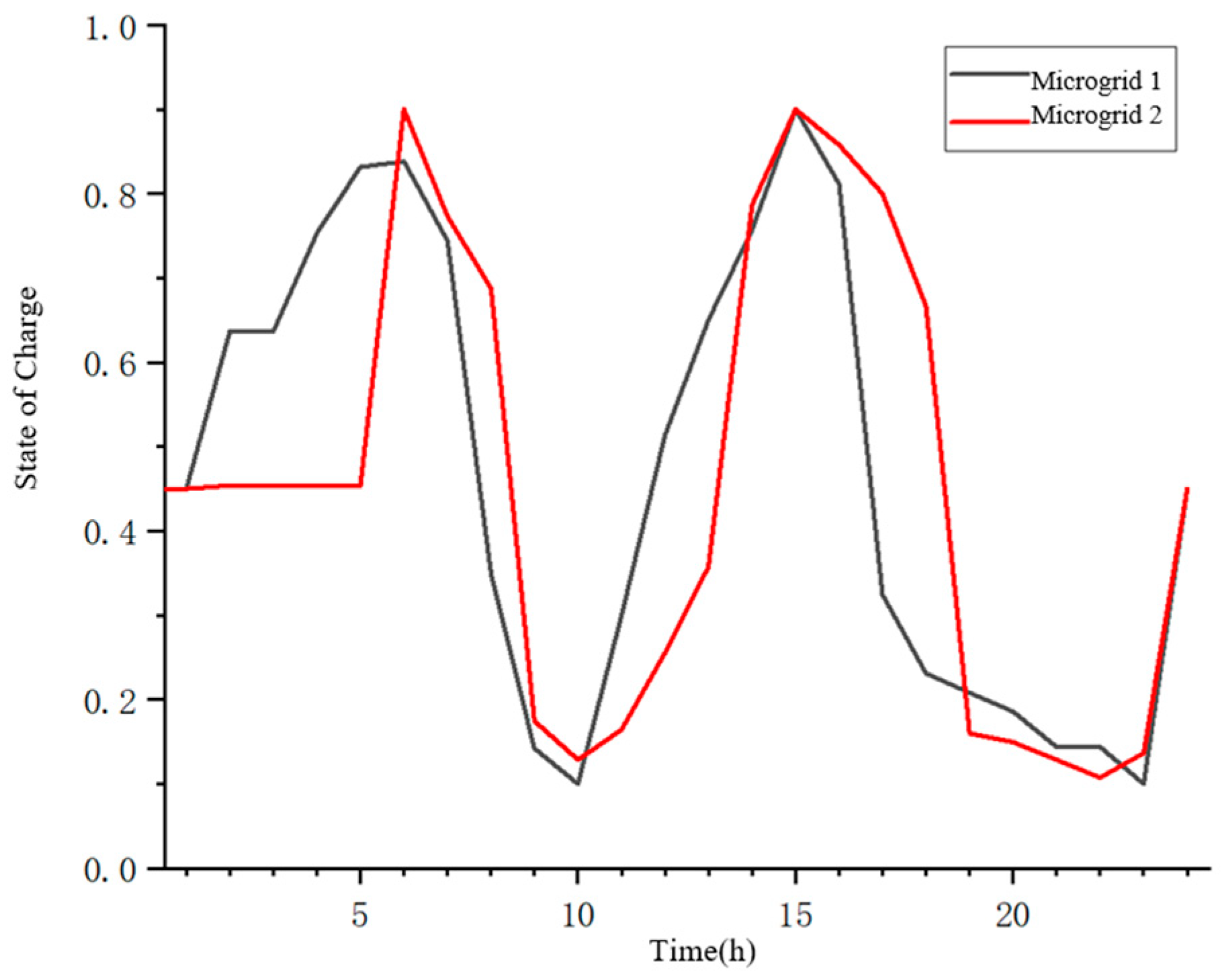
The charging and discharging trajectories shown in
Figure 7 further illustrate the role of temporal flexibility. The SOC of the ESS in both microgrids remains within the allowable range of 0.1–0.9 throughout the scheduling horizon, indicating that the proposed model respects storage operating constraints while maintaining sufficient flexibility margins. The SOC increases during low-price periods and decreases during high-price periods, showing a charging/discharging pattern coordinated with time-of-use pricing. This behavior indicates that storage is used not only for energy arbitrage, but also for uncertainty buffering and load shifting. This suggests that storage dispatch is jointly determined by electricity price signals, local source–load conditions, and the mutual-support effect provided by FID-based power exchange, rather than by price alone.
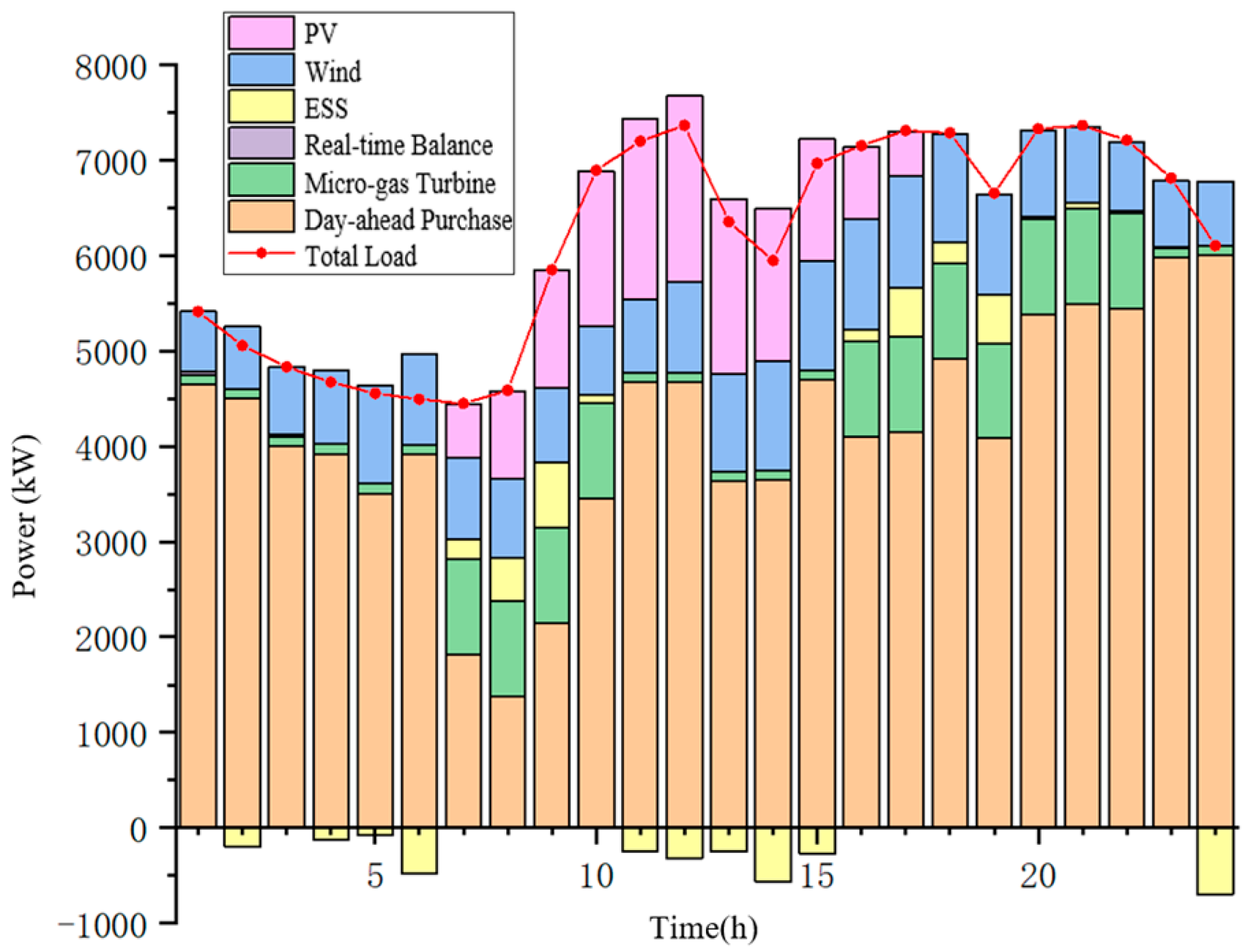
Figure 8 presents the overall power balance of the system. The total load fluctuates significantly over the day, with a peak of approximately 7.5 MW, a trough of approximately 4.5 MW, and a peak-to-trough difference of about 3.0 MW. Day-ahead power purchases remain the main energy source throughout the scheduling horizon, which is consistent with the role of the upper-level distribution network as the basic supply support. Wind and PV are preferentially accommodated, with PV output concentrated during daytime periods. The micro-gas turbine provides compensating support when renewable generation is insufficient, while the ESS alternate between charging and discharging to perform inter-temporal regulation. The overall real-time balancing requirement remains relatively small, indicating that most renewable fluctuations have been absorbed through coordinated day-ahead scheduling and the joint utilization of multiple flexibility resources.
Taken together,
Figure 6,
Figure 7 and
Figure 8 reveal the dispatch strategy of Case 3. In the proposed two-stage robust scheduling framework, the micro-gas turbine is mainly used as a controllable generation resource in the day-ahead stage. It provides support during high-net-load periods, peak-price periods, or periods with insufficient predicted wind and PV output. The ESS provides temporal flexibility by charging during renewable-surplus or low-price periods and discharging during high-net-load or high-price periods, subject to its SOC and power limits.
The FID provides spatial flexibility between adjacent microgrids. When one microgrid has renewable surplus and another microgrid has local power shortage, the FID transfers power from the surplus microgrid to the deficit microgrid. After wind and PV forecast errors are realized, the real-time market loop adjusts ESS charging/discharging power, FID transfer power, and real-time power exchange with the upper-level distribution network to maintain power balance. The micro-gas turbine provides planned controllable support, the ESS provides cross-period energy shifting, the FID provides cross-microgrid mutual support, and the upper-level distribution network provides final balancing support. This coordinated mechanism explains why the proposed method can reduce renewable curtailment and real-time balancing pressure.
4.2. Comparative Analysis
The resulting operational costs for the multi-microgrid system under different scenarios are shown in
Table 2.
The differences among the three scenarios are mainly caused by their different flexibility-allocation mechanisms. In Scenario 1, the two microgrids operate independently, so renewable surplus cannot be shared between microgrids, resulting in higher curtailment and real-time balancing demand. In Scenario 2, the FID enables controllable power transfer between adjacent microgrids, which improves renewable accommodation and reduces real-time balancing cost. In Scenario 3, the proposed two-stage robust optimization further reserves flexibility in the day-ahead stage and adjusts ESS, FID transfer power, and real-time grid exchange in the recourse stage. Therefore, Scenario 3 achieves the lowest real-time balancing cost and renewable curtailment. The reduction in total operating cost is relatively smaller because the total cost is mainly dominated by day-ahead power purchase and micro-gas turbine generation cost, while real-time balancing cost accounts for a smaller but more uncertainty-sensitive proportion.
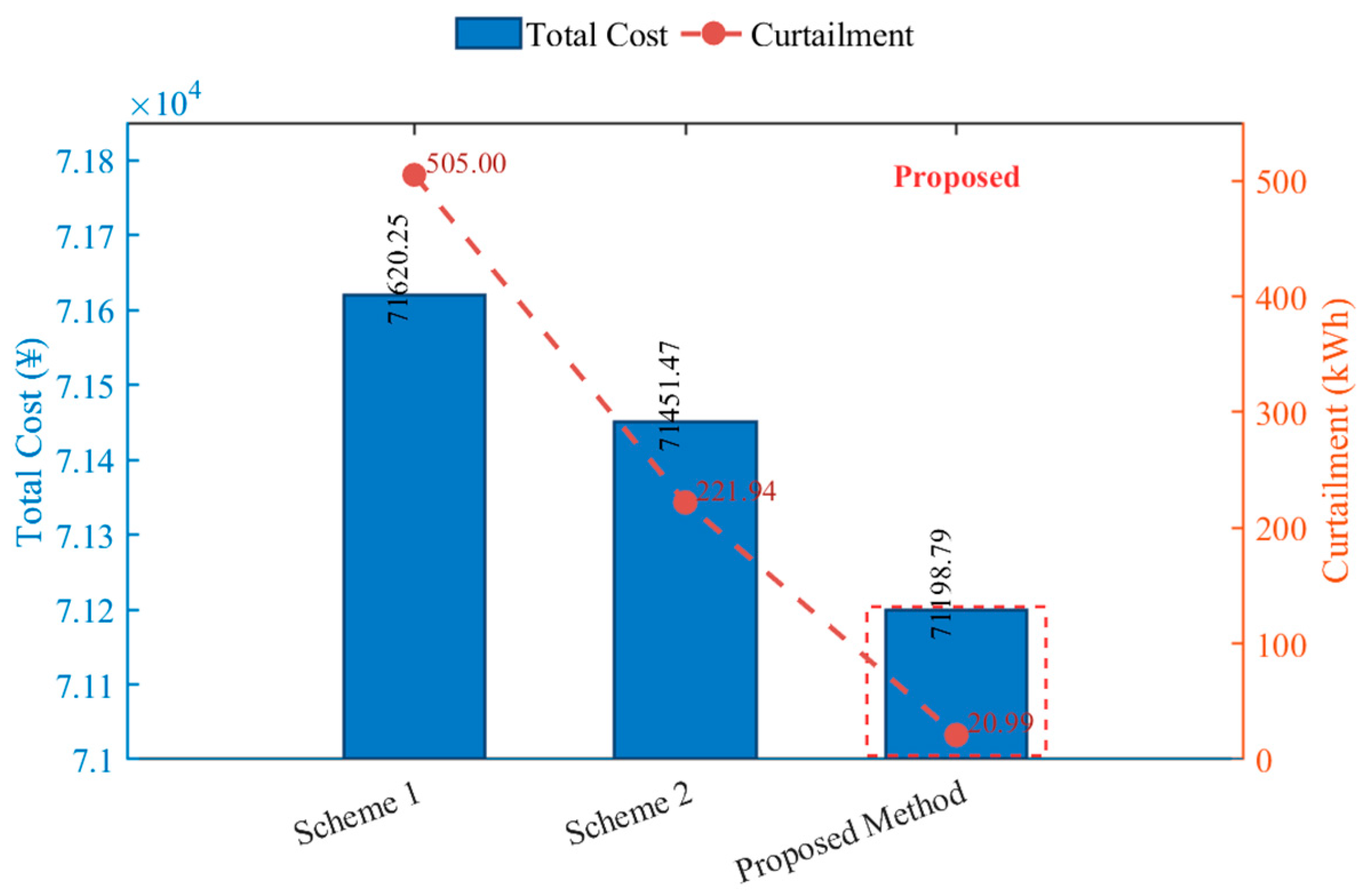
A comparison between Scenario 1 and Scenario 2 first reveals the operational value of FID-based flexible interconnection. After the FID is introduced, the real-time balancing cost decreases from CNY 1493.76 to CNY 1308.54, wind and PV curtailment decreases from 505 kWh to 221.94 kWh, and the total operating cost decreases from CNY 71,620.25 to CNY 71,451.47, although an additional FID operating cost of CNY 16.44 is incurred. This improvement is mainly attributed to the spatial flexibility provided by the FID. In Scenario 1, the two microgrids operate independently, so the renewable surplus in one microgrid cannot be used to compensate for the power deficit in the other microgrid. In Scenario 2, the FID enables controllable power transfer between adjacent microgrids. When one microgrid has local renewable surplus and the other has insufficient local supply, power can be transferred from the surplus side to the deficit side.
The comparison between Scenario 2 and Scenario 3 further demonstrates the effectiveness of the proposed two-stage robust optimization framework. In Scenario 3, the day-ahead power purchase cost increases from CNY 57,826.49 to CNY 58,866.76, while the real-time balancing cost sharply decreases from CNY 1308.54 to CNY 15.59. Meanwhile, wind and PV curtailment further decreases from 221.94 kWh to 20.99 kWh, and the total operating cost is reduced to CNY 71,198.79, which is the lowest among the three scenarios. The reason is that the proposed method changes the uncertainty-response mechanism from passive real-time correction to proactive flexibility reservation. After uncertainty is realized, the real-time recourse stage coordinates ESS charging/discharging, FID transfer power, and real-time power exchange with the upper-level distribution network to absorb the remaining power imbalance. Consequently, most renewable deviations can be accommodated by pre-arranged flexibility resources, and the dependence on real-time corrective balancing is significantly reduced.
The results also reveal the cost-structure characteristics of the proposed scheduling framework. Although the total operating cost is reduced by only 0.59%, the real-time balancing cost is reduced by 98.96%, and renewable curtailment is reduced by 95.84%. In contrast, the real-time balancing cost accounts for a smaller absolute share, but it is more sensitive to renewable forecast errors and real-time power imbalance. Its value is reflected not only in a moderate reduction in total operating cost, but also in the substantial reduction of real-time regulation pressure and renewable curtailment, which is important for the economical and robust operation of flexibly interconnected multi-microgrid systems under high renewable penetration.
Figure 9 provides a direct visualization of the differences among the three scenarios in terms of total cost, real-time balancing cost, and renewable curtailment. Scenario 3 performs best across all key metrics, which confirms that the combination of FID-enabled interconnection and two-stage robust scheduling is more effective than either independent operation or FID-enabled operation without explicit day-ahead/real-time coordination. In other words, flexible interconnection alone can improve inter-microgrid mutual support, but its full value is only realized when it is embedded in an uncertainty-aware scheduling framework.
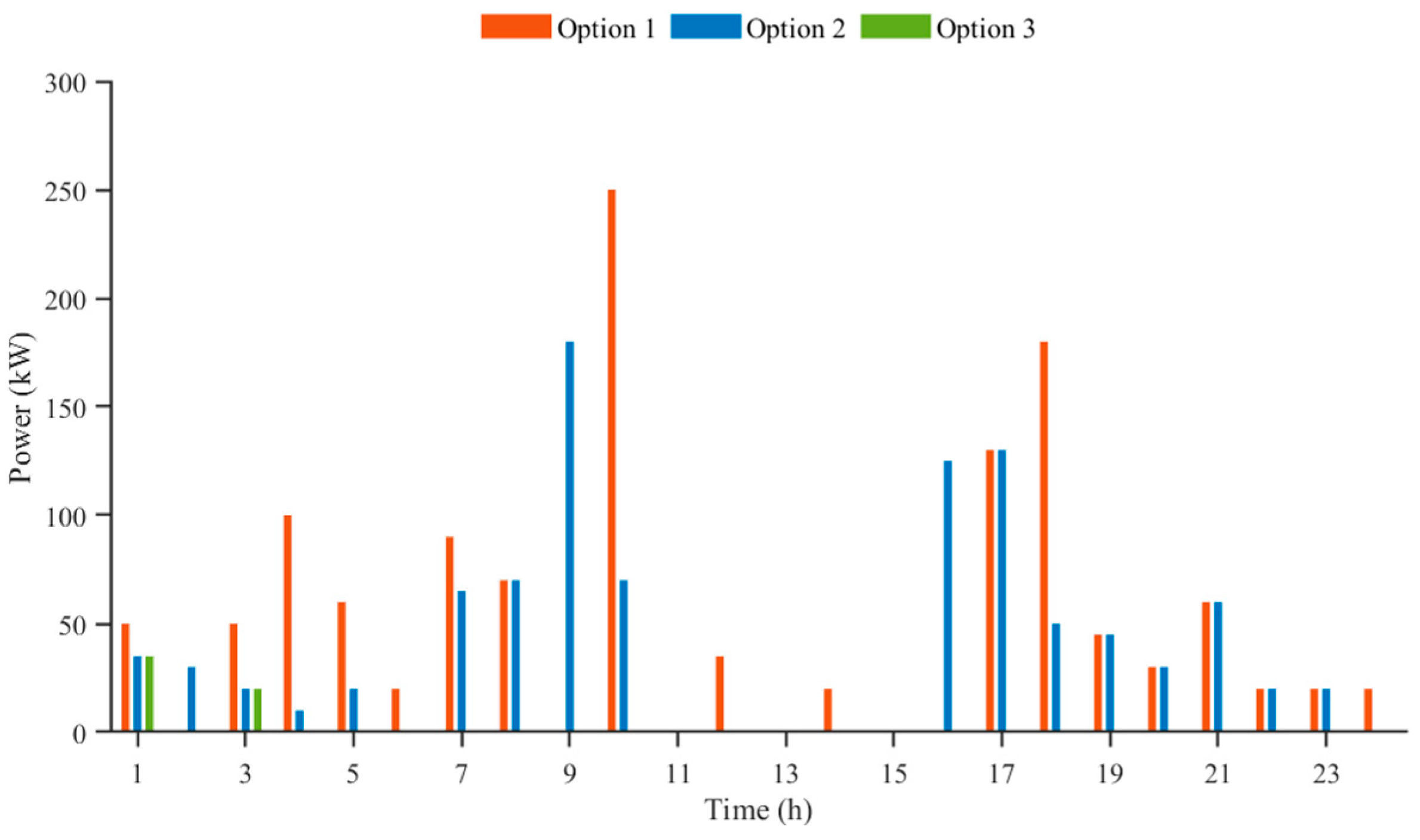
Figure 10 gives additional evidence from the perspective of real-time balancing power. Scenario 3 exhibits the smallest real-time balancing fluctuation, which means that renewable forecast deviations are absorbed more effectively through pre-arranged day-ahead decisions and coordinated recourse actions. This result further supports the conclusion that the proposed method changes the system response mode from reactive real-time compensation to proactive flexibility allocation across the day-ahead and real-time stages. Finally,
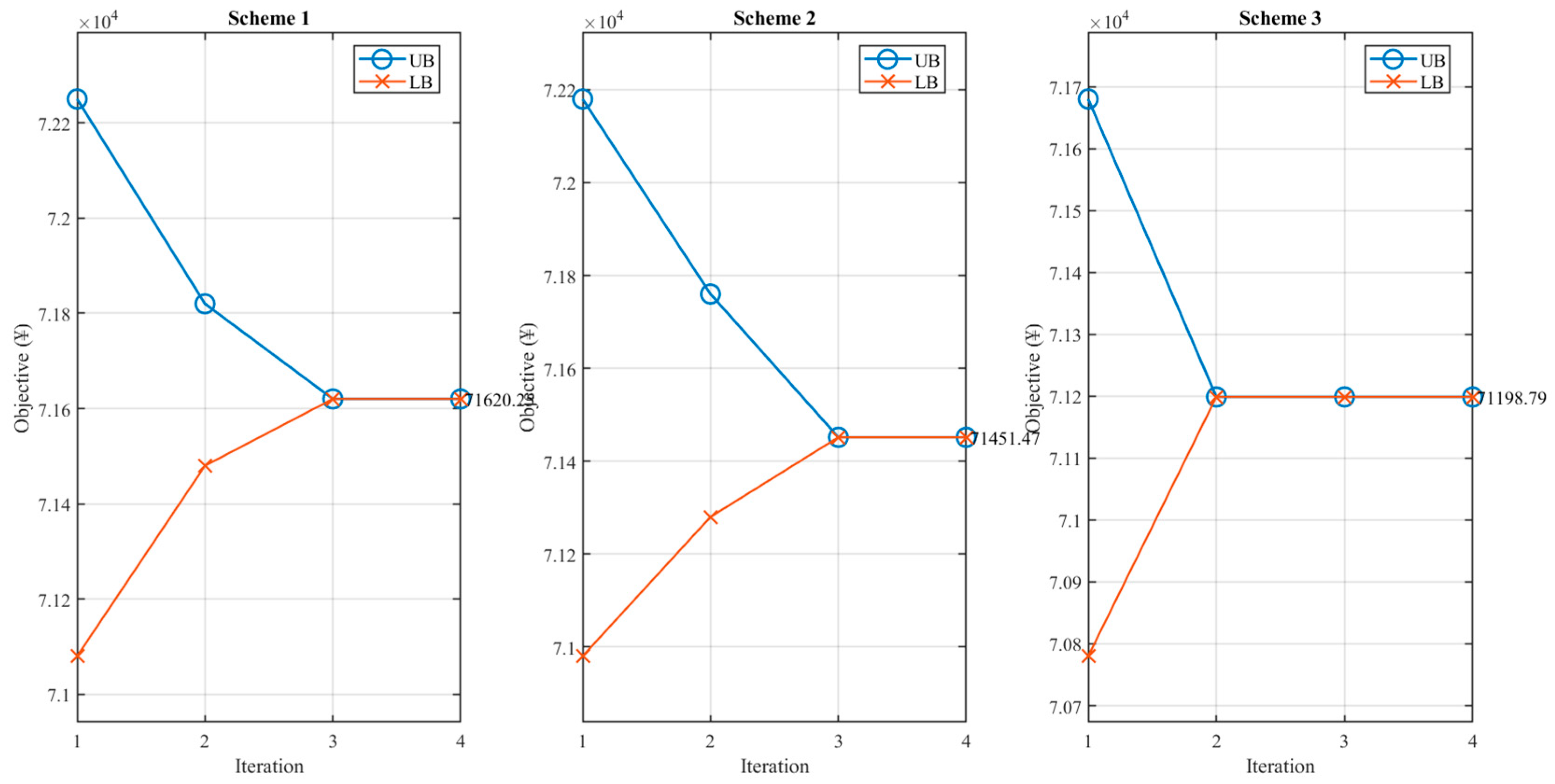
Figure 11 shows that the C&CG algorithm converges within a limited number of iterations, indicating that the proposed two-stage robust optimization model is not only effective in performance improvement but also computationally tractable for practical scheduling applications.
4.3. Sensitivity Analysis Under Different Uncertainty Levels
To further assess the impact of renewable energy uncertainty on the proposed dispatch framework, this paper conducts sensitivity analyses under different uncertainty levels and robust budgets. In this study, the robust budget Γ is set to 10 and 20, respectively, and the renewable energy forecast bias levels are 5%, 10%, and 20%, respectively. The resulting economic results are summarized in
Table 3.
As shown in
Table 3, under the same forecast deviation level, increasing the robustness budget Γ generally raises the day-ahead power purchase cost while reducing the real-time balancing cost. This indicates that a larger Γ makes the day-ahead scheduling strategy more conservative, enabling the system to reserve more adjustment margin in advance and thereby reducing its dependence on real-time corrective balancing. However, the total operating cost does not decrease monotonically with Γ. When the forecast deviation level is 10%, the total cost first decreases from CNY 71,218.14 to CNY 71,198.79 as Γ increases from 5 to 10, and then increases to CNY 71,325.05 when Γ further increases to 20. Meanwhile, renewable curtailment also rises significantly at Γ = 20. This result shows that excessive robustness may compress the accommodation space of wind and PV generation, leading to unnecessary conservative operation and higher overall cost.
Overall, the sensitivity results indicate that the robustness budget should be selected by balancing economy and robustness rather than simply taking a larger value. A moderate Γ can effectively reduce real-time balancing pressure while avoiding excessive renewable curtailment. In the tested system, Γ = 10 achieves the lowest total cost under the 10% forecast deviation level, whereas under the 20% forecast deviation level, a smaller Γ is more economical. This confirms that the proposed two-stage robust optimization framework can adapt to different renewable uncertainty levels, but the robustness parameter must be properly tuned to avoid over-conservative scheduling.
5. Conclusions
This paper investigates the coordinated scheduling problem of an FID-enabled MMG system under high wind and PV penetration. To reduce the impact of renewable forecast errors on real-time balancing and operational economy, a two-stage robust optimization method is proposed. The main conclusions are as follows.
(1) A coordinated scheduling framework for MMGs is established by jointly considering grid power purchase, micro-gas turbines, ESS, renewable generation, and FID-based bidirectional power exchange. The ESS provides temporal flexibility, while the FID provides spatial flexibility among adjacent microgrids, thereby transforming isolated local balancing into coordinated inter-microgrid support.
(2) A two-stage robust optimization model is developed to handle wind and PV forecast errors. The day-ahead stage determines the baseline dispatch plan, while the real-time stage adjusts ESS charging/discharging power, FID transfer power, and real-time grid power exchange. This mechanism shifts part of the uncertainty response from real-time correction to day-ahead flexibility reservation, reducing dependence on high-cost real-time balancing.
(3) Case studies verify the effectiveness of the proposed method. Compared with independent operation under traditional robust optimization, the proposed method reduces real-time balancing cost, wind and PV curtailment, and total operating cost by 98.96%, 95.84%, and 0.59%, respectively. Sensitivity analysis further shows that the uncertainty budget should be selected by balancing economy and robustness. Excessive conservativeness may increase total cost and renewable curtailment.
In summary, the proposed FID-enabled two-stage robust scheduling framework can improve renewable accommodation, reduce real-time regulation pressure, and enhance the operational economy of MMG systems. Future work will focus on large-scale MMG clusters, active/reactive coordinated FID scheduling, voltage-security constraints, and rolling-horizon implementation.