Article

Study on Corrosion Characteristics of Q235B Carbon Steel in Mixed Amine Absorbents

1
Guoneng Jinjie Energy Co., Ltd., Yulin 719319, China
2
School of Power and Mechanical Engineering, Wuhan University, Wuhan 430072, China
*
Author to whom correspondence should be addressed.
Processes 2026, 14(10), 1626; https://doi.org/10.3390/pr14101626
Submission received: 20 April 2026 / Revised: 7 May 2026 / Accepted: 13 May 2026 / Published: 18 May 2026

Abstract

Against the global carbon neutrality backdrop, amine-based CO2 capture technology is critical for industrial greenhouse gas emission reduction. However, mixed amine absorbents can cause severe corrosion of Q235B carbon steel, restricting the stable operation of carbon capture, utilization, and storage (CCUS) projects. This study systematically investigated the corrosion behavior of Q235B carbon steel in a novel mixed amine system under simulated industrial conditions using weight loss tests, electrochemical measurements (EIS, potentiodynamic polarization), and advanced characterizations (FT-IR, 13C NMR, SEM-EDS, XRD). The temperature was the dominant factor: corrosion rate increased significantly with rising temperature. Under CO2-saturated conditions, 15–30% absorbent concentrations showed no significant effect on corrosion rate owing to similar molar loading and pH. At 60 °C and 30% concentration, the corrosion rate peaked at 30 L/L CO2 loading. Carbamate accumulation promoted corrosion at low loading, while increased bicarbonate inhibited corrosion at high loading. The main corrosion products (Fe3O4, Fe2O3) formed loose, porous films with poor protectiveness. This work clarifies the electrochemical corrosion mechanism and provides data support for corrosion prevention in CCUS equipment.

1. Introduction

Global warming has triggered a series of severe environmental problems, including glacier melting, sea-level rise, and land desertification, emerging as a core issue of global concern [1]. Driven by the global goals of carbon peaking and carbon neutrality, CCUS technology has become one of the core approaches to addressing climate change and promoting the transformation of energy structure [2]. Among various carbon capture technologies, the amine-based absorption method is widely applied in CO2 capture processes in industrial fields such as thermal power generation, iron and steel smelting, and the coal chemical industry due to its high absorption efficiency, strong selectivity, and mature technology [3]. It is currently one of the most extensively industrialized CO2 separation technologies worldwide.
In industrial practice, the main equipment of CO2 absorption systems (e.g., absorption towers, heat exchangers, and conveying pipelines) is mostly fabricated from carbon steel. This material features low cost, excellent mechanical properties, and convenient processing and forming, which can meet the basic operating requirements of industrial equipment and thus dominates the field of chemical equipment manufacturing [4]. However, the reaction between amine-based absorption systems and CO2 forms a strongly corrosive electrolyte environment, which is prone to causing the corrosion failure of carbon steel [5,6]. This not only leads to the thinning of equipment wall thickness and the degradation of mechanical properties, but may also result in equipment leakage, unplanned shutdown for maintenance, and even safety accidents in severe cases. These issues substantially increase the operational costs and safety risks of enterprises, becoming a key bottleneck restricting the large-scale promotion of the amine-based absorption method [7,8].
In recent years, scholars have conducted partial research on the corrosion characteristics of carbon steel caused by amine-based absorbents, initially clarifying the influence of factors such as amine types, temperature, and CO2 loading on corrosion laws [9,10] and proposing preliminary hypotheses on the formation and damage mechanism of corrosion product films [11]. However, the current research still has significant shortcomings. Firstly, there are significant differences in different research conditions, and the comparability of corrosion laws is poor, making it difficult to form a unified theoretical system [12]. Secondly, for the new mixed amine absorbents, the research on their corrosion characteristics is relatively scarce, and the mechanism between the variation in amine solution components and corrosion behavior is still unclear [13]. Thirdly, there are differences between laboratory static simulations and industrial dynamic conditions (e.g., fluid erosion, pressure fluctuations), and the transformation of research results into practical applications faces challenges [14].
When a mixed amine absorbent is applied in a CCUS project, its CO2 absorption efficiency is excellent, but it leads to different degrees of corrosion of carbon steel equipment, such as pumps and heat exchangers. Therefore, this study utilized weight loss experiments, electrochemical tests and surface characterization methods to study the effects of temperature, absorbent concentration, CO2 loading, and corrosion time on the corrosion of Q235B carbon steel, and revealed the corrosion mechanism and key influencing factors of this mixed amine absorbent on carbon steel, providing data support for the equipment material selection and corrosion prevention optimization of the mixed amine absorbent in industrial CCUS projects.

2. Materials and Methods

2.1. Chemicals and Test Materials

The absorbent used in the experiment was the stock solution of the mixed amine absorbent applied in the aforementioned CCUS project, which was prepared by mixing three different amine stock solutions (a tertiary amine (AM1, R1R2R3N), a sterically hindered amine (AM2, R4NH2), and a polyamine (AM3, H2NR5NHR6NH2)) at a certain mass ratio.
The main reagents used in the experiment included sulfuric acid (H2SO4), hydrochloric acid (HCl), sodium chloride (NaCl), hexamethylenetetramine, acetone, absolute ethanol, sodium hydroxide (NaOH), bromocresol green-methyl red indicator, methyl orange indicator, and CO2 (99.99%), all of which were analytical reagents.
Two sizes of Q235B carbon steel coupons were used in the experiment: 40 × 13 × 2 mm for weight loss measurement, and 10 × 10 × 2 mm for surface characterization analysis. The chemical composition of Q235B carbon steel (excluding Fe) is presented in Table 1.

2.2. Test Device for CO2 Loading

Absorbents with four mass concentrations (15%, 20%, 25%, and 30%) were prepared and continuously bubbled with CO2 until saturation, and the CO2 loading in the absorption solution was detected according to the following method. Then the corrosion coupons were suspended in the prepared absorption solution. The CO2 loading test device mainly consisted of a reaction flask, a rubber tube, a three-way cock, a thermostatic water jacket, a thermometer, a gas burette, a leveling bottle, and a plastic cup (Figure 1). Meanwhile, Fourier transform infrared spectroscopy (FT-IR) and 13C nuclear magnetic resonance (13C NMR) were used to analyze the composition of the absorbent solution before and after CO2 absorption.
CO2 loading test procedure: Add sealing liquid into the leveling bottle, take 1.0 mL of the test solution into a 150 mL reaction flask, and add 5 mL of H2SO4 solution into a plastic cup, and carefully place it into the reaction flask. Rotate the cock to the three-way position, raise the leveling bottle to make the liquid level in the gas burette reach the top mark, and then rotate the cock to connect the gas burette only with the reaction flask. Lower the leveling bottle and confirm no air leakage. Tilt and shake the reaction flask vigorously to make the sulfuric acid in the plastic cup react fully with the test solution, until the liquid level in the gas burette no longer drops. Move the leveling bottle close to the gas burette, align the liquid levels, and record the volume V, water temperature t, and atmospheric pressure P. The CO2 loading was calculated according to Equation (1):
X = V V 0 × P P w 101.325 × 273 273 + t ,
where X is the CO2 loading in the absorption solution (L/L); V is the reading of the gas burette (mL); V0 is the sampling volume of the test solution (mL); P is the atmospheric pressure during the measurement (kPa); t is the temperature during the measurement (°C); Pw is the saturated vapor pressure at temperature t (kPa); 273 is Kelvin temperature (K); and 101.325 is the standard atmospheric pressure (kPa).

2.3. Corrosion Experiments

2.3.1. Weight Loss Experiment

The weight loss method calculates the corrosion rate by measuring the weight loss of metal coupons after being exposed to corrosive media for a certain period, which is a classic method with the advantages of simple operation and high accuracy. The Q235B carbon steel coupons (40 × 13 × 2 mm) were ground with sandpapers of different mesh sizes, and then cleaned with acetone and absolute ethanol and dried in a desiccator for subsequent use. After accurate weighing with an electronic balance (accuracy: 0.1 mg), the coupons were suspended in glass bottles filled with absorbent solution, and the glass bottles were incubated in a thermostatic water bath.
After the experiment, the coupons were taken out to observe their surface conditions, rinsed with demineralized water (DM water), and the corrosion products on the surface were removed with a soft brush. The coupons were then immersed in a pickling solution (10% HCl + 0.8% hexamethylenetetramine) for 1 min to remove the residual corrosion products, immediately rinsed with DM water, and immersed in an 80 g/L NaOH solution for about 30 s for neutralization. The coupons were taken out, rinsed with DM water, wiped dry with filter paper, soaked in absolute ethanol for 2 min, dried, and stored in a desiccator.
The corrosion rate (v) was calculated according to Equation (2):
v = ( m 0 m 1 )   ×   8760   ×   10 S   ×   t   ×   ρ ,
where m0 is the mass of the coupons before corrosion (g); m1 is the mass of the coupons after removing corrosion products (g); 8760 is the conversion factor for hours to years; 10 is the conversion factor for millimeter to centimeter; S is the total surface area of the coupons (cm2); t is the corrosion time (h); and ρ is the density of Q235B carbon steel (7.85 g/cm3).

2.3.2. Electrochemical Experiment

Electrochemical tests can evaluate the corrosion performance of metals by measuring the potential and current changes in metals in electrolytes. In this study, electrochemical impedance spectroscopy (EIS) and potentiodynamic polarization curve tests were carried out to explore the corrosion rules and mechanism of Q235B carbon steel.
The electrochemical test system mainly consisted of a thermostatic water bath, an electrolytic cell, a CS310H electrochemical workstation (Wuhan Corrtest Instruments Co., Ltd., Wuhan, China), and a data recording unit. A classic three-electrode system was adopted in the experiment, with a calomel electrode (SCE) as the reference electrode, a platinum sheet electrode (1 cm × 1 cm) as the auxiliary electrode, and a Q235B carbon steel electrode as the working electrode. The working electrode was sealed with epoxy resin, with an exposed working area of 1 cm2.
EIS tests were performed at the open circuit potential (OCP) from 0.01 to 100,000 Hz with an amplitude of 5 mV, potentiodynamic polarization curves were measured over a potential range of −0.25 V to +0.25 V vs. OCP at a scanning rate of 2 mV/s, and the obtained impedance spectra and polarization curves were fitted to extract relevant electrochemical parameters for further analysis and comparison.

2.4. Characterization Methods

Absorbent solutions with different concentrations were prepared, and FT-IR (Nicolet iS5, Thermo Fisher Scientific, Waltham, MA, USA) and 13C NMR (AVANCE III 400 MHZ, Bruker, Billerica, MA, USA) were used to analyze the composition changes in the absorbent solution before and after CO2 absorption to determine the factors affecting the corrosion of Q235B carbon steel.
Q235B carbon steel coupons (10 × 10 × 2 mm) were exposed to the absorbent solution at different temperatures for a certain period of time, then taken out, rinsed with DM water, and dried in a desiccator. A MIRA 3 field emission scanning electron microscope (SEM, TESCAN, Brno, Czech Republic) was used to observe the surface micromorphology of the coupons before and after the experiment; an Aztec Energy X-ray energy dispersive spectrometer (EDS, Oxford Instruments, Abingdon, UK) attached to the SEM was employed to analyze the elemental composition on the coupon surface after the test; an XPert Pro X-ray diffractometer (XRD, PANalytical, Almelo, The Netherlands) was used to analyze the phase composition of the deposits on the coupon surface after the test.

3. Results and Discussion

3.1. Corrosion Weight Loss Experiment

Static coupon tests of Q235B carbon steel in mixed amine absorbent solutions with saturated CO2 loading were carried out under different temperatures (40, 50, and 60 °C) and different exposure times (1, 3, 7, and 15 d). The saturated CO2 loading and pH of the absorbent solutions at each concentration are shown in Table 2.
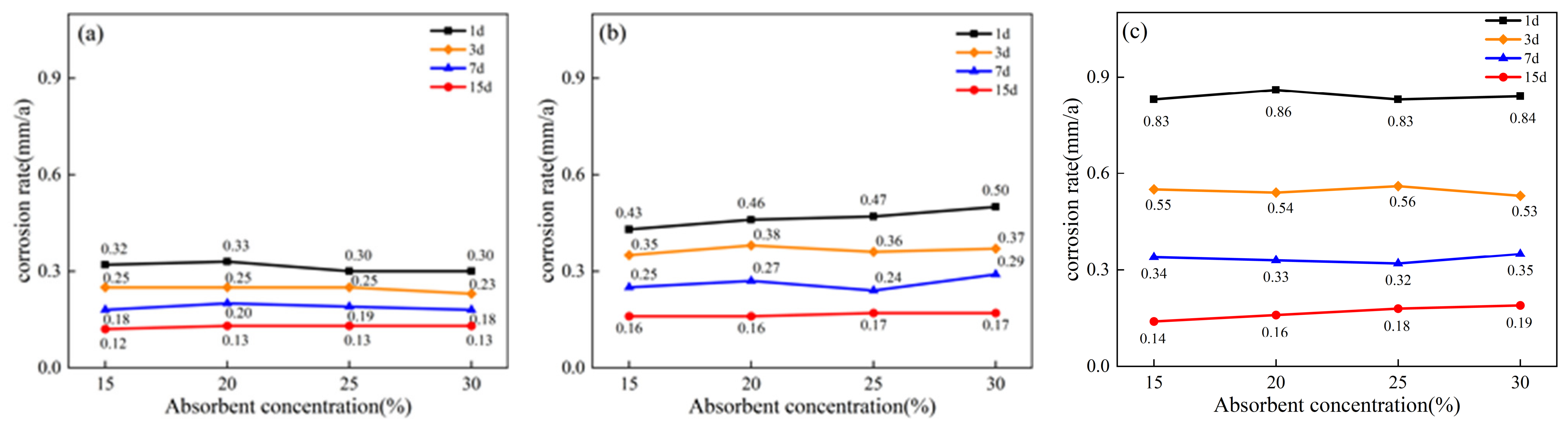
The results of the corrosion weight loss experiment (Figure 2) showed that at the same absorbent concentration and exposure time, the corrosion rate of Q235B carbon steel increased significantly with the rise in temperature. For example, at an absorbent concentration of 30% with 1 d of exposure, the corrosion rate of the coupon was 0.84 mm/a at 60 °C, 0.50 mm/a at 50 °C, and only 0.30 mm/a at 40 °C.
At the same temperature and exposure time, changing the absorbent concentration had no significant effect on the corrosion rate. This is because the absorbents with various concentrations all reached CO2 saturation, resulting in similar pH values and chemical environments of the solutions, indicating that the absorbent concentration had a weak influence on the corrosion rate of Q235B carbon steel under saturated CO2 loading conditions. Under the operating conditions of 40 and 50 °C, the regulatory effect of absorbent concentration on the corrosion rate basically disappeared in the later stage of exposure, and the corrosion rate remained stable.
At the same temperature and absorbent concentration, the weight loss of Q235B carbon steel coupons increased with the extension of exposure time, while the average corrosion rate showed a downward trend. Under the conditions of 60 °C and 30% absorbent concentration (Figure 2c), the corrosion rate of Q235B carbon steel decreased from 0.84 mm/a (1 d) to 0.19 mm/a (15 d).
Overall, the increase in temperature significantly raised the baseline of the corrosion rate in the early stage of exposure; under the condition of saturated CO2 loading, the absorbent concentration had a limited regulatory effect on the corrosion rate of carbon steel; with the extension of exposure time, the corrosion of carbon steel continued, but the average corrosion rate decreased, which is closely related to the formation of a protective film by corrosion products on the substrate surface, hindering the contact between corrosive media and the substrate.
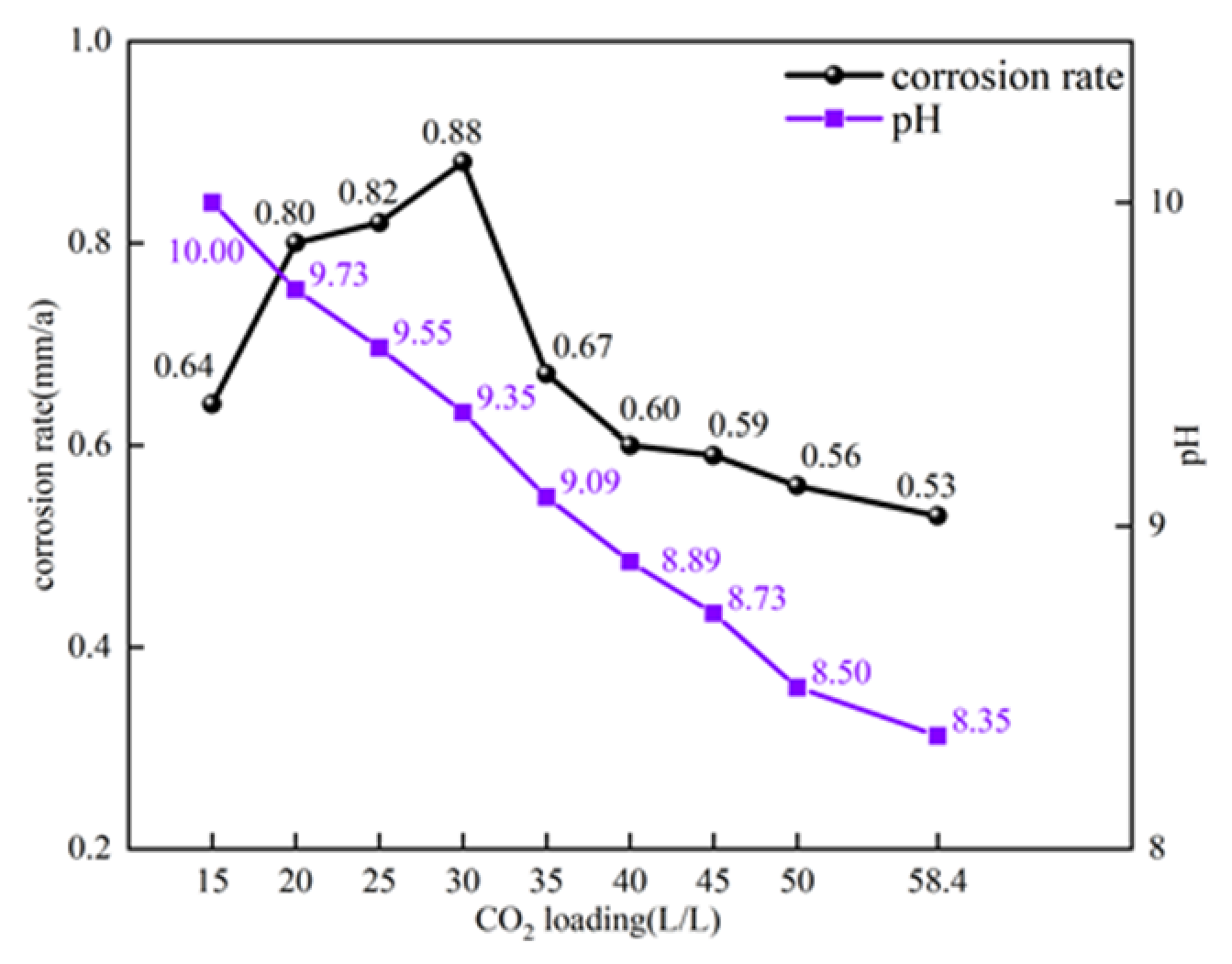
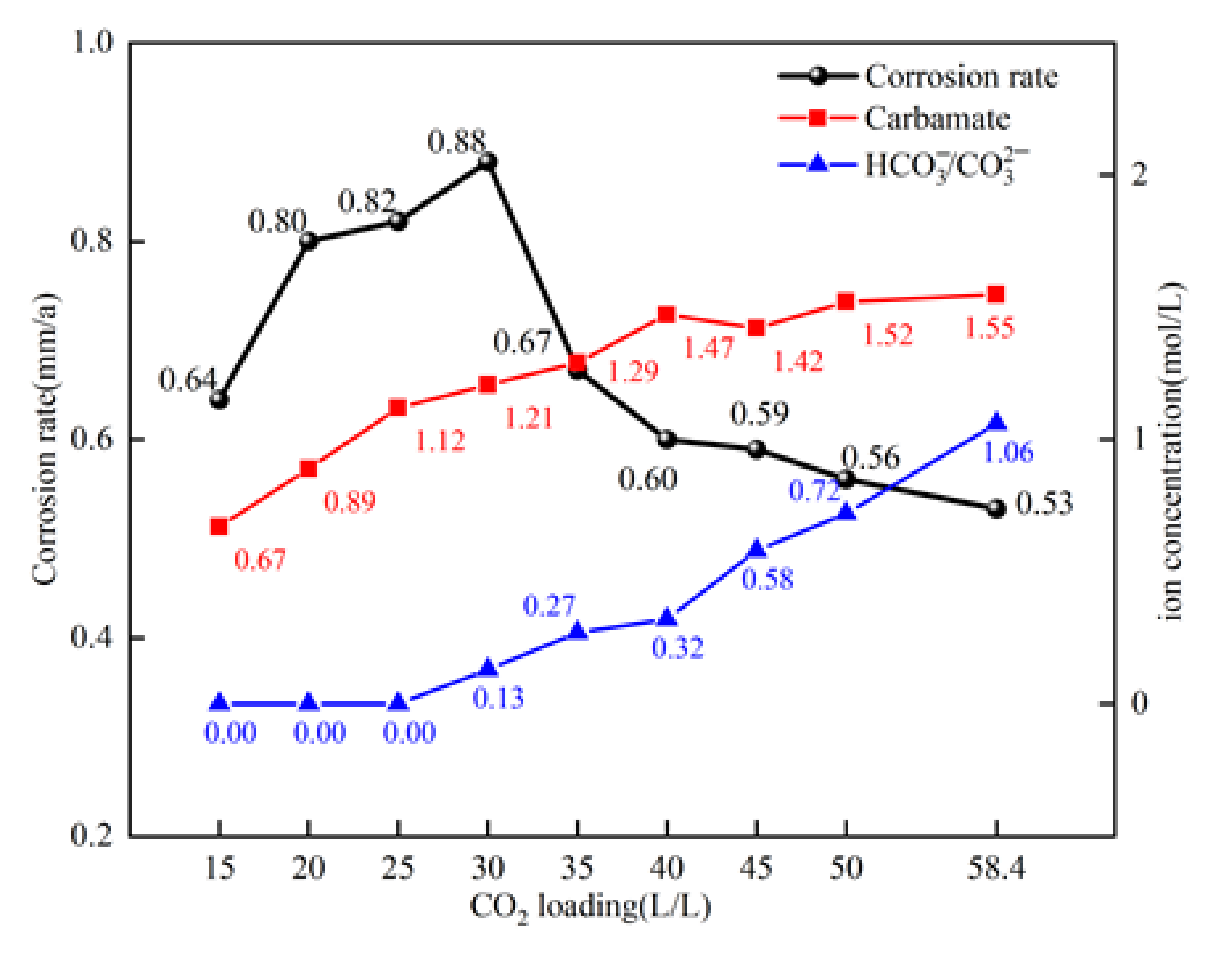
In addition, carbon steel suffered the most severe corrosion at 60 °C, and the 30% absorbent solution had the highest saturated CO2 loading. Therefore, weight loss experiments with 72 h of exposure were carried out under the conditions of 60 °C and 30% absorbent concentration with different CO2 loadings (15, 20, 25, 30, 35, 40, 45, and 50 L/L and saturation). The results (Figure 3) showed that with the increase in CO2 loading, the pH of the absorbent solution decreased gradually, while the corrosion rate of carbon steel first increased and then decreased, reaching a peak of 0.88 mm/a at a CO2 loading of 30 L/L. This phenomenon is closely related to the change in the composition of the absorbent solution with the increase in CO2 loading, which will be discussed in detail in the subsequent sections.

3.2. Surface Characterization Analysis

3.2.1. SEM Analysis

The Q235B carbon steel coupons (10 × 10 × 2 mm) after exposure under various operating conditions were cleaned and dried, and their surface morphologies were observed by SEM (Figure 4, Figure 5, Figure 6, Figure 7, Figure 8, Figure 9, Figure 10, Figure 11, Figure 12, Figure 13, Figure 14 and Figure 15). The SEM results showed that, after corrosion in the mixed amine absorbent solution, the surface of the coupon became rough and uneven, and with the extension of exposure time, the surface roughness of carbon steel coupons increased significantly. This is because the corrosive medium continuously erodes the metal surface, and the electrochemical corrosion reaction is continuously carried out on the metal surface, leading to the continuous deterioration of the surface morphology.
At the same temperature and exposure time, the surface morphologies of coupons under different absorbent concentrations were similar, with no obvious difference in surface roughness and corrosion degree. This is consistent with the results of the weight loss experiment, indicating that the absorbent concentration has no significant effect on the corrosion of Q235B carbon steel under saturated CO2 loading conditions. The coupon surface at 60 °C was significantly rougher than that at 40 and 50 °C, which further confirmed that the increase in temperature will significantly aggravate the corrosion of Q235B carbon steel. Bright white particles observed on the corroded surface were identified as Fe3C cementite, a constituent phase of the pearlite microstructure in carbon steel. This phase becomes enriched on the coupon surface after prolonged exposure due to the selective dissolution of the ferrite phase in pearlite during corrosion.

3.2.2. EDS Analysis

EDS analysis was performed using an area scan. The EDS analysis results of Q235B carbon steel coupons with 72 h of exposure at 40, 50, and 60 °C are shown in Table 3. It can be seen from the table that the surfaces of Q235B carbon steel coupons after exposure at the three temperatures contained high contents of Fe and C elements, which are the main elements of Q235B carbon steel. Therefore, the coupon surface after corrosion is mainly composed of cementite (Fe3C) [15]. A small amount of Cr and Mn elements was also detected on the surface of the coupon at 40 °C, which are the alloying elements in the carbon steel. A small amount of O element was detected on the coupon surface at 60 °C, which is derived from the corrosion products formed on the metal surface during the corrosion process. The content of the O element is very low, which indicates that the corrosion products on the metal surface are loose and easy to fall off, and most of them are washed away during the cleaning process of the coupon.

3.2.3. XRD Analysis

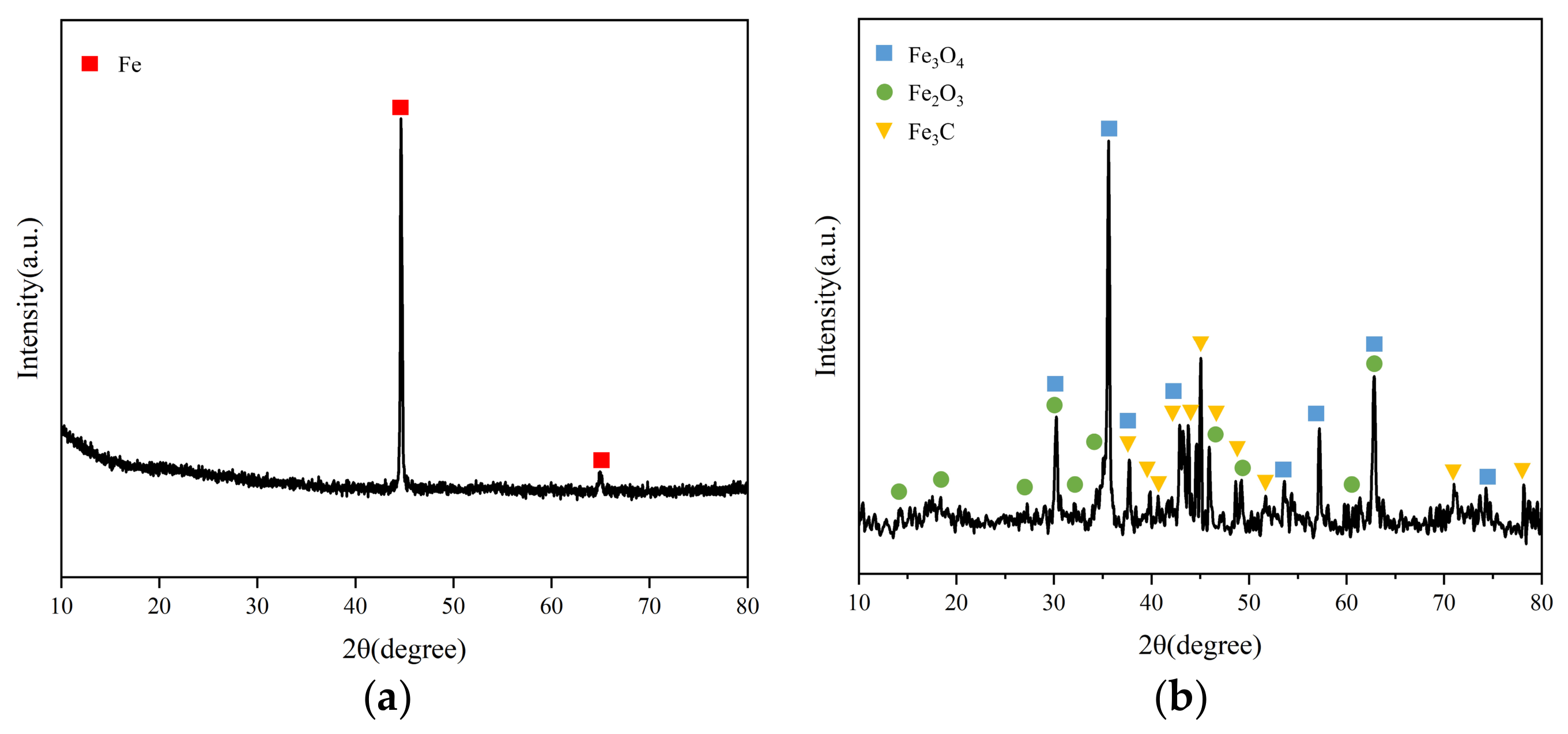
To further analyze the composition and structure of the corrosion products, two sets of XRD analyses were performed on samples after 60 days of exposure at 60 °C (Figure 16). Figure 16a shows the pattern of the coupon surface after rinsing it with deionized water. Only strong diffraction peaks corresponding to the α-Fe matrix were detected, with no obvious signals from iron oxides. In contrast, the pattern of the loose corrosion products collected before rinsing (Figure 16b) clearly shows the presence of Fe3O4 and Fe2O3, with Fe3O4 as the main component, and a large amount of cementite (Fe3C) was also detected on the surface, which is consistent with the SEM and EDS analysis results. Fe3O4 is a mixed-valence iron oxide with a spinel structure, which usually presents a loose and porous structure with weak adhesion to the metal surface, and is easily scoured and falls off in the fluid medium. This explains why the EDS elemental analysis is dominated by Fe and C from the substrate, with only a very low oxygen content.

3.3. Electrochemical Test Results

3.3.1. Effect of Temperature on Electrochemical Behavior

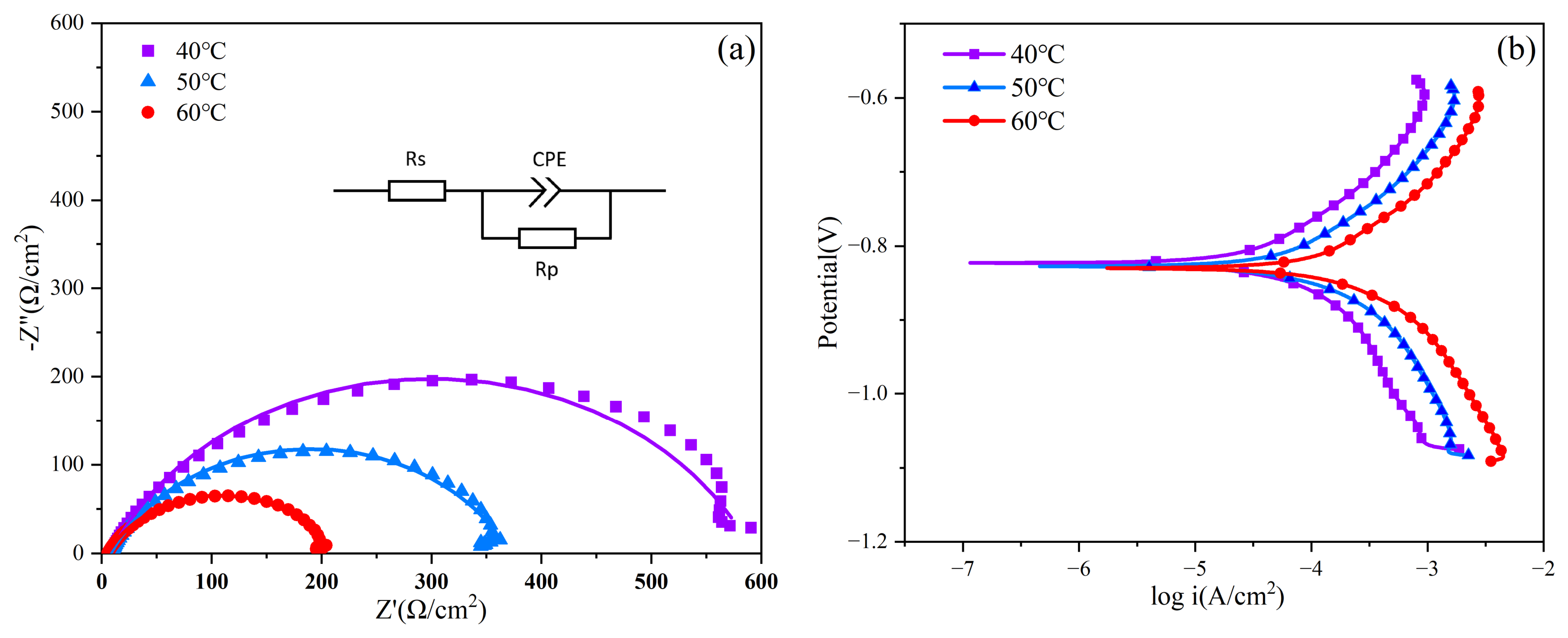
Electrochemical experiments were carried out at an absorbent concentration of 30% with saturated CO2 loading. The thermostatic water bath was set to 40, 50 and 60 °C to conduct EIS and potentiodynamic polarization curve tests under different temperature conditions of the mixed amine absorbent solution, and the test results are shown in Figure 17 and Table 4.
The EIS plots at the three temperatures all presented a semi-elliptical shape in the Nyquist plot, which is a typical charge transfer process at the electrode interface, indicating that the corrosion of Q235B carbon steel in the mixed amine absorbent solution is mainly controlled by the charge transfer process. However, due to the non-ideality of the double-layer capacitance on the metal surface, the shape changed from an ideal semicircle to an elongated semi-ellipse. Therefore, the equivalent circuit composed of solution resistance (Rs), constant phase element (CPE), and charge transfer resistance (Rp) was used for fitting, in which the CPE replaced the ideal capacitance (Cdl) to describe the non-ideal capacitance behavior of the electrode surface.
The fitting results (Table 4) showed that with the increase in temperature, the solution resistance Rs decreased gradually, indicating that the increase in temperature can improve the conductivity of the absorbent solution. The charge transfer resistance Rp decreased significantly from 583.75 Ω/cm2 (40 °C) to 204.77 Ω/cm2 (60 °C), indicating that the increase in temperature can reduce the resistance of the electrochemical corrosion reaction on the metal surface, make the charge transfer process easier, and accelerate the corrosion reaction. The CPE value increased with the rise in temperature, which is due to the increase in the electrochemically active area on the metal surface caused by the aggravated corrosion, leading to an increase in the double-layer capacitance on the electrode surface.
The potentiodynamic polarization curve results showed that with the increase in temperature, the self-corrosion potential (Ecorr) of Q235B carbon steel shifted slightly negatively, indicating that the thermodynamic tendency of corrosion of the metal surface increased. The anodic Tafel slope (ba) increased, indicating that the resistance of the anodic dissolution reaction increased, which is due to the formation of a small amount of corrosion products on the metal surface that hinders the anodic dissolution process. The cathodic Tafel slope (bc) decreased significantly, indicating that the cathodic reduction reaction was activated, and the reaction rate increased significantly with the increase in temperature. The corrosion current density (Icorr) increased from 0.0884 mA/cm2 (40 °C) to 0.3225 mA/cm2 (60 °C), and the fitted corrosion rate rose from 0.6624 mm/a to 2.4165 mm/a, which is consistent with the trend of the weight loss experiment. The above results indicated that the increase in temperature can activate the cathodic reduction reaction, which is the main reason for the significant increase in the corrosion rate of Q235B carbon steel.

3.3.2. Effect of Absorbent Concentration on Electrochemical Behavior

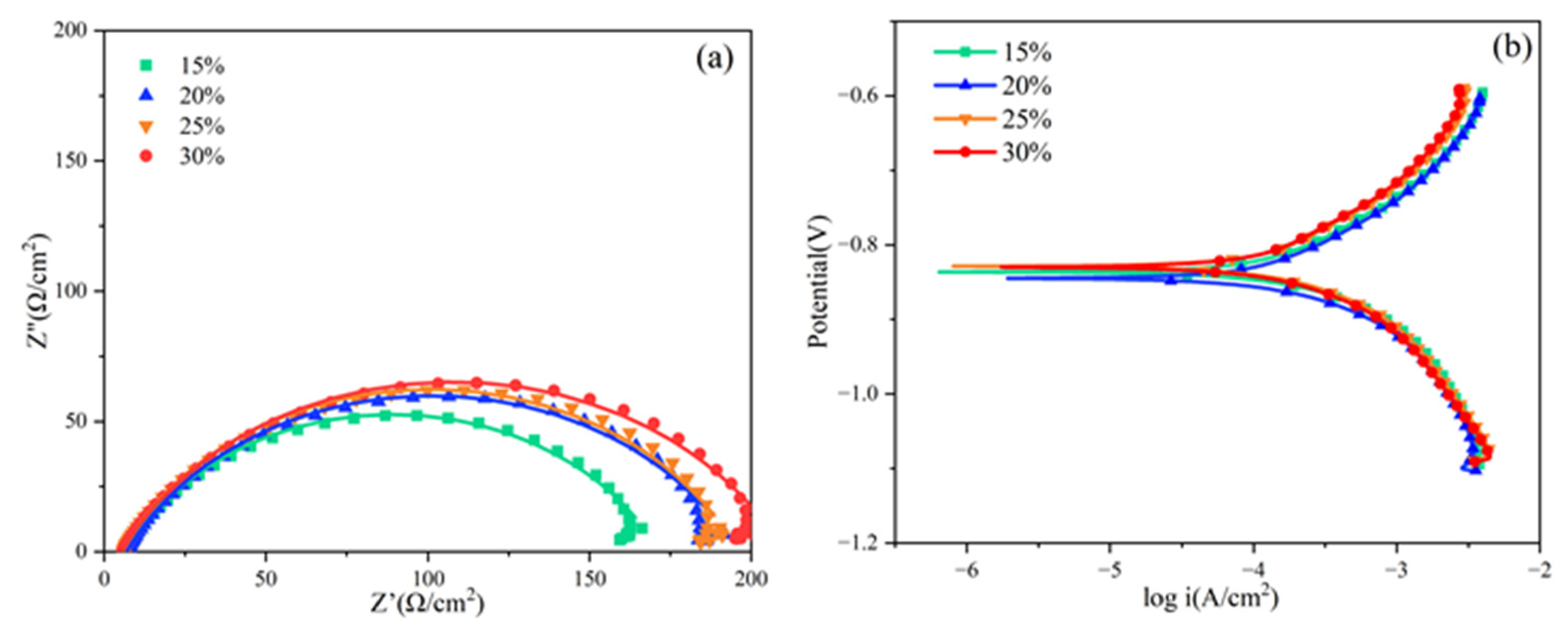
Electrochemical experiments were carried out at an absorbent concentration of 30% with saturated CO2 loading. The thermostatic EIS and potentiodynamic polarization curve tests were conducted under the conditions of 60 °C and saturated CO2 loading with four different absorbent concentrations (15%, 20%, 25%, and 30%), and the test results are shown in Figure 18 and Table 5. The EIS plots at the four concentrations still presented a semi-elliptical shape in the Nyquist plot, and the same equivalent circuit as above was used for fitting. The fitting results showed that the solution resistance Rs had no obvious rule change with the increase in absorbent concentration, and the charge transfer resistance Rp increased slightly from 165.15 Ω/cm2 (15%) to 204.77 Ω/cm2 (30%), corresponding to an increase of only approximately 24%, which confirms a slight inhibitory effect on the charge transfer process.
Meanwhile, the potentiodynamic polarization curves almost completely overlapped in the Tafel regions for all concentrations. The corrosion current density Icorr fluctuated between 0.3225 mA/cm2 and 0.3711 mA/cm2, and the fitted corrosion rate varied from 2.4165 mm/a to 2.7811 mm/a, with no significant difference among the four concentrations. The electrochemical test results further confirmed that the absorbent concentration has no significant effect on the corrosion mechanism or corrosion rate of Q235B carbon steel under CO2-saturated conditions.

3.4. FT-IR and 13C NMR Analysis

3.4.1. FT-IR Analysis

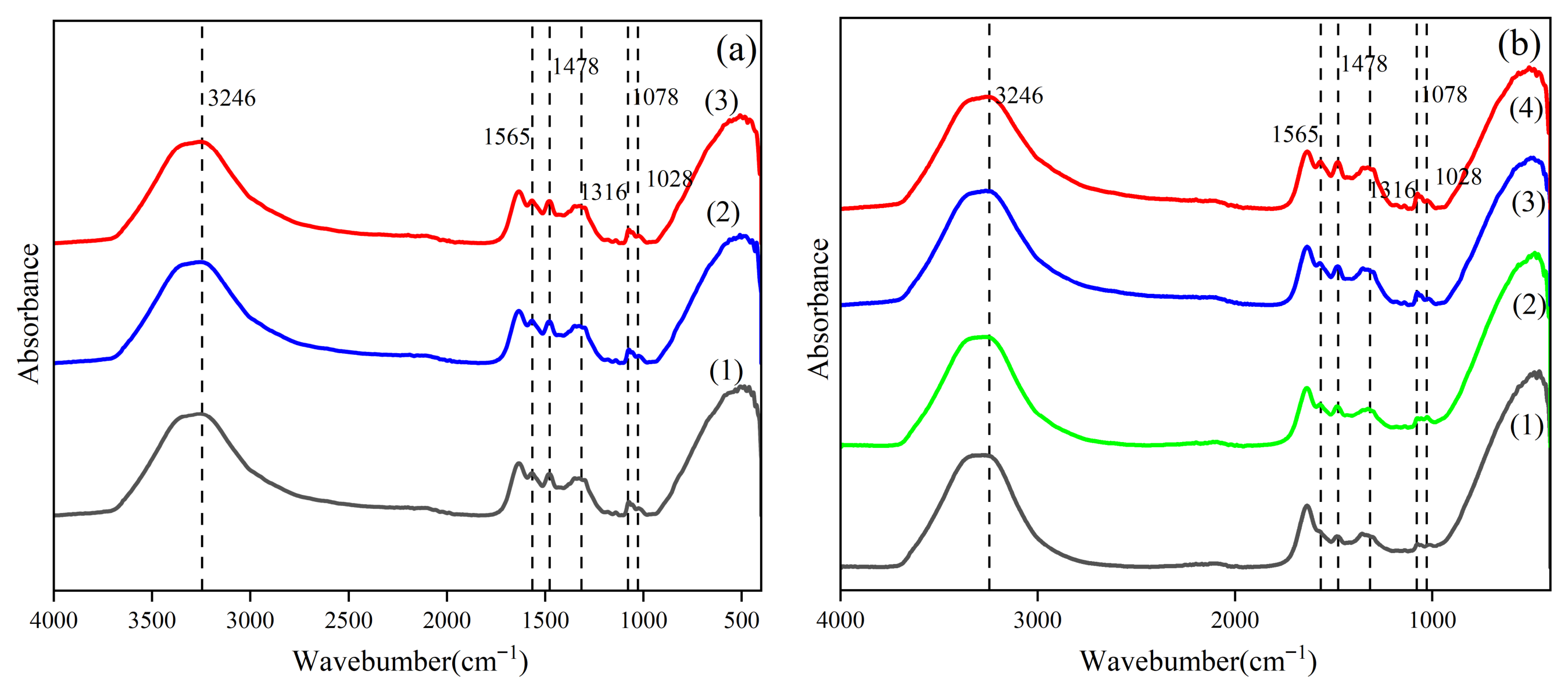
FT-IR was used to analyze the composition changes in the 30% absorbent solution before and after CO2 absorption (Figure 19a), where (1)–(3) represent the amine solution before absorption, at half-saturation, and at saturation, respectively. It can be seen from the figure that the original amine solution has characteristic absorption peaks of amine groups at 3200–3500 cm−1 (N–H stretching vibration) and 1000–1200 cm−1 (C–N stretching vibration). After absorbing CO2, the characteristic absorption peaks of amine groups weakened significantly, and new characteristic peaks appeared at 1316 cm−1, 1478 cm−1, and 1565 cm−1, which are the characteristic absorption peaks of carbamate groups (–NHCOO) [16], indicating that the amine groups in the absorbent solution react with CO2 to form carbamate at the initial stage of absorption. When the absorbent solution reaches CO2 saturation, a new characteristic peak appears at 1078 cm−1, which is the characteristic absorption peak of bicarbonate groups (HCO3) [16], indicating that bicarbonate is generated in the later stage of the absorption reaction.
Figure 19b shows the FT-IR spectra of absorbent solutions with different concentrations after CO2 saturation, where (1)–(4) represent the absorbent concentrations of 15, 20, 25, and 30%, respectively. It was found that the overall intensity of the infrared peaks increased with the rise in concentration, and the intensity of the characteristic peaks of carbamate and bicarbonate also increased significantly, indicating that high-concentration amine can absorb more CO2 and generate more CO2 reaction products, which is consistent with the CO2 loading data in Table 2.
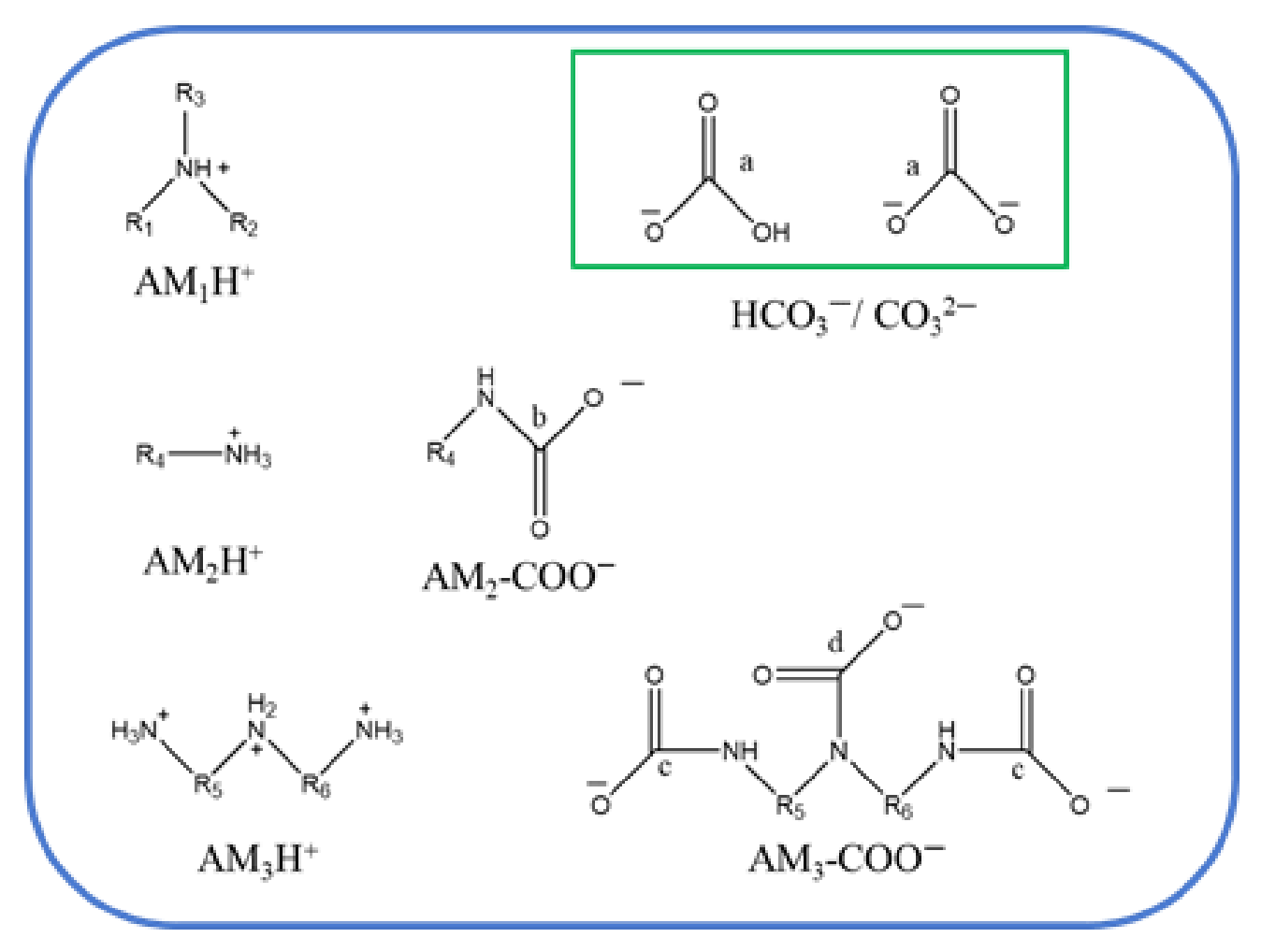
According to the theoretical analysis and FT-IR results, the possible products are shown in Figure 20, including protonated amines, carbamates, bicarbonates/carbonates, etc.

3.4.2. 13C NMR Analysis

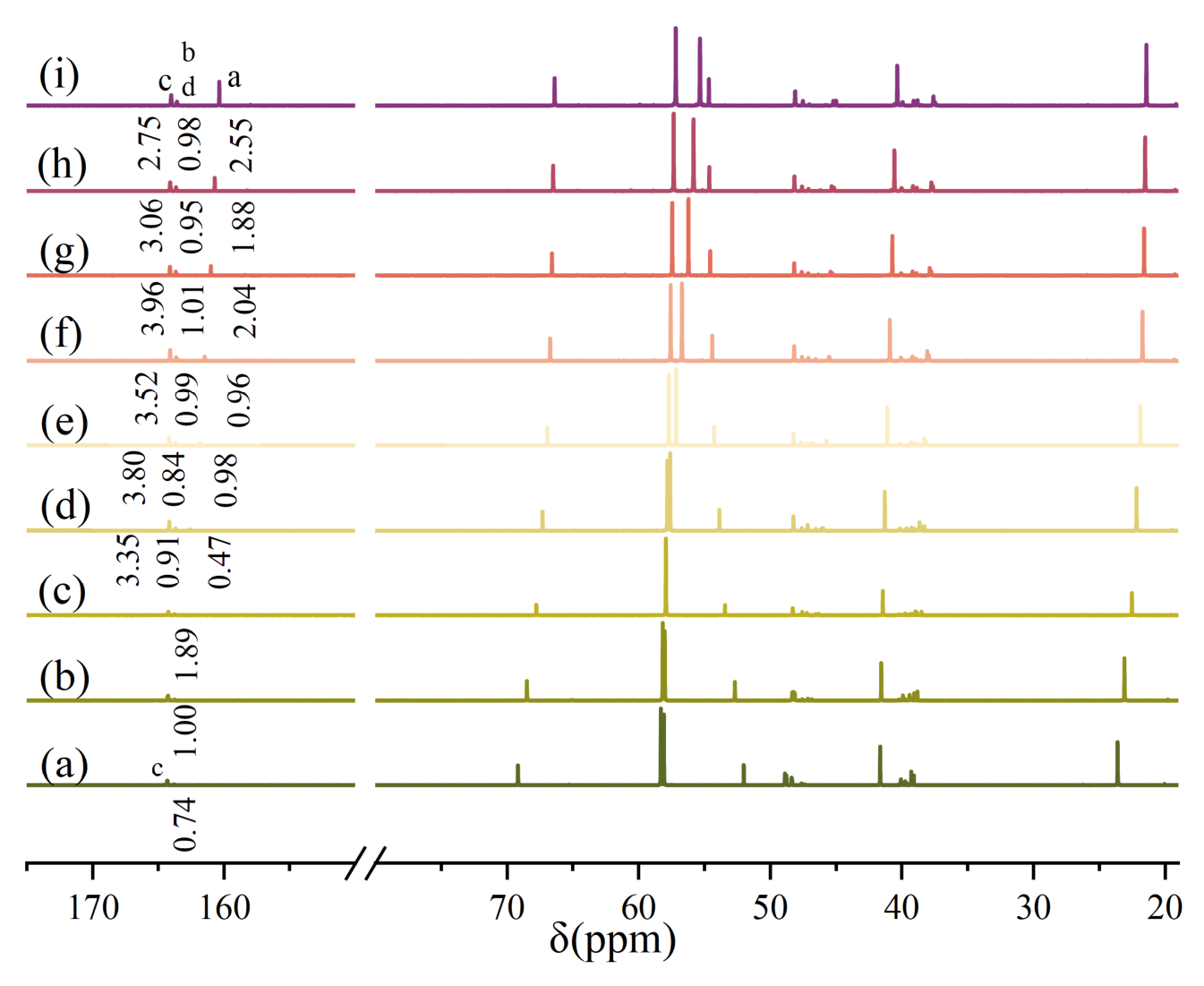
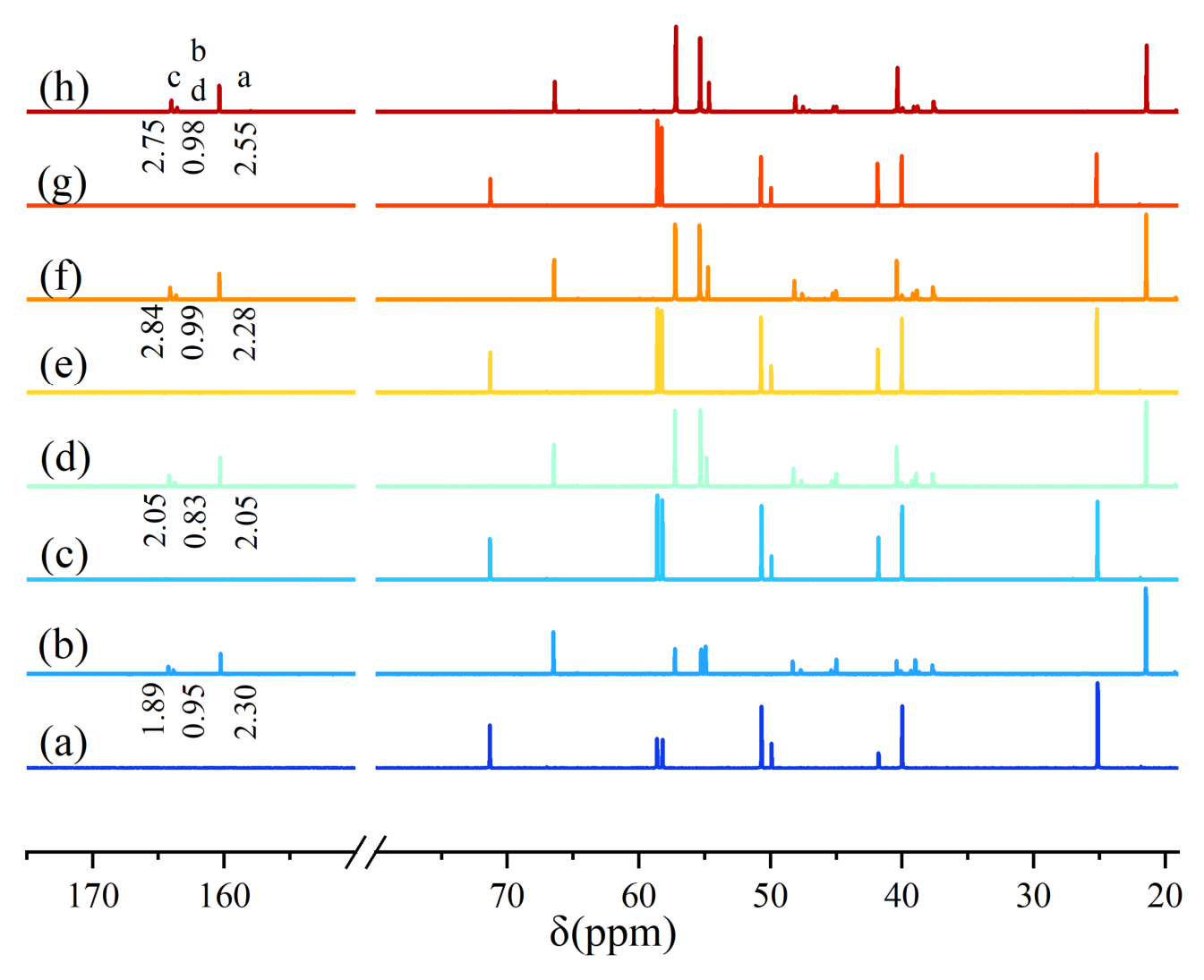
13C NMR was further used to analyze the reaction products of the amine solution after CO2 absorption (Figure 21), and the chemical shift assignment and peak integration were carried out to calculate the concentration of each reaction product. The peak signals in the chemical shift range of 10–80 ppm were attributed to the carbon atoms on the carbon chains of amine or protonated amine. Due to rapid proton exchange between the amine and protonated amine in the aqueous solution, each carbon atom of the protonated amine and the corresponding carbon atom of the amine showed a single peak signal. The peak signals in the chemical shift range of 160–165 ppm were assigned to CO2 derivatives (carbamate, carbonate, or bicarbonate) [17]. Peaks a, b, c and d in the NMR spectrum are well correlated with the labeled carbon atoms in Figure 20. Peak a is assigned to bicarbonate/carbonate, while peaks b, c and d correspond to carbamate species. Owing to rapid proton exchange, carbonate and bicarbonate showed a single peak (marked as a) in the 13C NMR spectrum, while peaks b, c and d correspond to carbamate species.
The 13C NMR results showed that only peak signals in the chemical shift range of 10–80 ppm were observed in the absorbent solution before CO2 absorption, while peak signals in the range of 160–165 ppm appeared at saturated CO2 loading, indicating that the amine solution reacts with CO2 to generate carbamate and bicarbonate/carbonate after absorbing CO2. The concentrations of CO2 derivative components in absorbent solutions with different concentrations at saturated CO2 loading were calculated by peak integration (Table 6), and the results showed that the contents of carbamate and bicarbonate/carbonate both increased with the rise in absorbent concentration. However, since all concentrations reached saturated CO2 loading with similar molar loading ratios and pH values, the chemical environments were analogous, resulting in no significant effect of concentration change on the corrosion rate.
13C NMR was used to analyze the concentrations of various CO2 derivative components in the 30% absorbent solution under different CO2 loadings (Figure 22), and the concentrations of each component and the corresponding corrosion rate were plotted in Figure 23 through peak integration. The results showed that the absorbent solution first reacted with CO2 to generate carbamate at the initial stage of absorption, and no bicarbonate/carbonate was generated when the CO2 loading was lower than 30 L/L. With the increase in CO2 loading from 15 L/L to 30 L/L, the concentration of carbamate increased rapidly from 0.27 mol/L to 1.52 mol/L, which is the main reason for the continuous increase in the corrosion rate of Q235B carbon steel. When the CO2 loading exceeds 30 L/L, the content of carbamate continues to rise, while the concentration of bicarbonate/carbonate increases significantly from 0 mol/L to 1.06 mol/L, which exerts a certain corrosion-inhibiting effect on Q235B carbon steel, leading to the gradual decrease in the corrosion rate.

3.5. Corrosion Mechanism

Generally, pure organic amine and its aqueous solution are non-corrosive to carbon steel due to their high pH and low conductivity [18]. However, when organic amine is used as an absorbent to absorb acidic gases such as CO2, a series of chemical reactions occur between the amine and CO2 to form a variety of ionic products, which form a strongly corrosive electrolyte environment in the solution, leading to the severe corrosion of Q235B carbon steel.
The currently accepted reaction mechanism between amine and CO2 is the “zwitterion mechanism”, which was first proposed by Caplow [19] and supplemented by Danckwertsl [20]. The mixed amine system used in this study is composed of a tertiary amine, a sterically hindered amine, and a polyamine, and their chemical reaction equations with CO2 are shown in Equations (3)–(5):
A M 1 + C O 2 + H 2 O A M 1 H + + H C O 3 ,
A M 2 + C O 2 A M 2 H + + A M 2 C O O + H 2 O A M 2 H + + H C O 3   ,
A M 3 + C O 2 A M 3 H + + A M 3 ( C O O ) 3 3 .
The experimental results showed that after the mixed amine absorbed CO2, carbamate was first generated through the “zwitterion mechanism”, and part of CO2 in the system reacted with water to form HCO3 at the same time, forming an electrolyte environment dominated by carbamate and bicarbonate. In this system, Q235B carbon steel suffered severe electrochemical corrosion, which is composed of anodic dissolution reaction and cathodic reduction reaction.
The anodic process is the dissolution of iron atoms on the carbon steel surface to form Fe2+ ions, and the reaction equation is shown in Equation (6):
F e 2 e F e 2 + .
The cathodic reaction is the reduction reaction with free water, HCO3, and dissolved oxygen in the solution as cathodic depolarizers, and the reaction equations are shown in Equations (7)–(9):
2 H 2 O + 2 e 2 O H + H 2   ,
2 H C O 3 + 2 e 2 C O 3 2 + H 2 ,
O 2 + 2 H 2 O + 4 e 4 O H .
In the presence of dissolved oxygen in the solution, the Fe2+ ions are gradually oxidized to Fe3+ ions, and a series of corrosion products are formed through precipitation and oxidation reactions. The formation equations of the main corrosion products are shown in Equations (10)–(14):
F e 2 + + C O 3 2 F e C O 3 ,
F e 2 + + 2 O H F e ( O H ) 2 ,
4 F e C O 3 + O 2 4 F e 2 O 3 + 4 C O 2 ,
4 F e ( O H ) 2 + O 2 2 F e 2 O 3 + 4 H 2 O ,
6 F e ( O H ) 2 + O 2 2 F e 3 O 4 + 6 H 2 O .
The change in CO2 loading has a significant effect on the corrosion rate of Q235B carbon steel, which is closely related to the change in the composition of the absorbent solution. The reaction between the mixed amine absorbent and CO2 initially proceeds mainly via the zwitterion mechanism, where carbamate ions are the dominant product at low to moderate CO2 loadings. With a continuous increase in CO2 loading, the tertiary amine component in the absorbent gradually promotes the hydrolysis of carbamates, leading to the gradual formation of bicarbonate and carbonate ions. The increase in CO2 loading directly promoted the generation of carbamate. Carbamate (RNHCOO) is a strong electrolyte, which can not only improve the conductivity of the system and accelerate the charge transfer process of the electrochemical corrosion reaction, but can also complex with Fe2+ ions generated by anodic dissolution to form a soluble complex Fe(RNHCOO)2 (Equation (15)), which promotes the continuous dissolution of iron atoms and accelerates the anodic corrosion reaction.
F e 2 + + 2 R N H C O O F e ( R N H C O O ) 2 .
At high CO2 loadings, the contribution of the direct hydration reaction between CO2 and H2O increases significantly, resulting in a remarkable rise in the solution HCO3 concentration. The HCO3 ions can be reduced to CO32− ions on the carbon steel surface through the cathodic reaction (Equation (8)), and the CO32− ions react with Fe2+ ions to form FeCO3 precipitation, which can form a locally dense adsorption layer on the carbon steel surface [18], hindering the dissolution of Fe atoms and the diffusion of cathodic depolarizers. Meanwhile, the presence of HCO3 ions will compete with RNHCOO ions for the active sites on the carbon steel surface, weakening the complexation of RNHCOO ions with Fe2+ ions and their promotion effect on anodic dissolution. Therefore, the increase in HCO3 content exerts a corrosion-inhibiting effect on carbon steel, offsetting the corrosion-promoting effect of RNHCOO ions, and ultimately leading to the decrease of the carbon steel corrosion rate under high CO2 loading conditions.
Temperature is the dominant factor affecting the corrosion rate of Q235B carbon steel, and the increase in temperature can significantly accelerate the corrosion reaction. Temperature rising from 40 to 60 °C reduces charge transfer resistance by about 65% and increases corrosion current density by about 265%, confirming the temperature as the dominant factor. On the one hand, the increase in temperature can activate the cathodic reduction reaction (Equations (7)–(9)), reduce the activation energy of the cathodic reaction, and significantly increase the reaction rate; on the other hand, the increase in temperature can accelerate the ion migration in the solution and promote the charge transfer process of the electrochemical corrosion reaction. In addition, the increase in temperature can also reduce the adhesion of the corrosion products on the metal surface, making the loose corrosion products easier to fall off, and the metal surface is continuously exposed to the corrosive medium, leading to aggravated corrosion.
Under saturated CO2 loading conditions, the absorbent concentration has no significant effect on the corrosion rate of Q235B carbon steel. This is because the absorbents with different concentrations all reach CO2 saturation, and their molar loading ratios (mol CO2/mol amine) and pH values are similar, resulting in similar types and concentrations of the reaction products in the solution, and the chemical environment of the solution is basically the same. Therefore, the change in absorbent concentration has no significant effect on the electrochemical corrosion reaction of Q235B carbon steel.

4. Conclusions

(1) Q235B carbon steel suffers severe corrosion in the mixed amine absorbent solution used in the CCUS project, and the temperature is the dominant factor affecting the corrosion rate. The corrosion rate increases significantly with the rise in temperature, which is because the increase in temperature activates the cathodic reaction, reduces the charge transfer resistance of the corrosion reaction, and accelerates the anodic dissolution of iron.
(2) Under saturated CO2 loading conditions, the absorbent concentration has no significant effect on the corrosion rate of Q235B carbon steel. Due to the similar molar loading ratios and pH values of absorbents with different concentrations under saturation conditions, the chemical environment of the solution is basically the same, leading to no obvious difference in the corrosion degree of carbon steel.
(3) At a fixed absorbent concentration (30%) and temperature (60 °C), the corrosion rate of Q235B carbon steel first increases and then decreases with the rise in CO2 loading, reaching a peak at a CO2 loading of 30 L/L. The rapid accumulation of carbamate concentration is the main reason for the increase in corrosion rate at the initial stage of loading, while the significant increase in bicarbonate concentration exerts a corrosion-inhibiting effect on carbon steel at the later stage of loading, leading to the decrease in corrosion rate.
(4) The main corrosion products of Q235B carbon steel in the mixed amine absorbent solution are Fe3O4 and Fe2O3, with Fe3O4 as the main component. Fe3O4 presents a loose and porous structure with weak adhesion to the metal surface, which cannot form an effective protective film on the carbon steel surface, resulting in continuous corrosion of the metal matrix by the corrosive medium.
(5) The corrosion of Q235B carbon steel in the mixed amine absorbent solution is a typical electrochemical corrosion process, which is composed of the anodic dissolution of iron and the cathodic reduction in water, bicarbonate, and dissolved oxygen. The change in CO2 loading affects the corrosion rate by changing the types and concentrations of the reaction products in the solution, and the competition between carbamate (corrosion-promoting) and bicarbonate (corrosion-inhibiting) is the key factor leading to the change in corrosion rate in CO2 loading.

Author Contributions

Conceptualization, H.C., L.Y. and Y.Z.; methodology, Z.H., H.R., H.C. and Y.Z.; software, H.R.; validation, T.Z. and X.H.; formal analysis, Z.H. and H.C.; investigation, Z.H., H.R., H.C., T.Z. and H.L.; resources, L.Y. and Y.Z.; data curation, X.H.; writing—original draft preparation, Z.H.; writing—review and editing, S.C. and Y.Z.; visualization, T.Z.; supervision, L.Y., H.L. and Y.Z.; project administration, S.C.; funding acquisition, S.C. and Y.Z. All authors have read and agreed to the published version of the manuscript.

Funding

This research received no external funding.

Data Availability Statement

The original contributions presented in this study are included in the article. Further inquiries can be directed to the corresponding author.

Conflicts of Interest

Author Zhiping Hu, Haobo Ren, Tianshun Zhou, Lei Yan, Xiaoli He, and Hongbo Liu were employed by the company Guoneng Jinjie Energy Co., Ltd. The remaining authors declare that the research was conducted in the absence of any commercial or financial relationships that could be construed as potential conflicts of interest.

References

  1. Goren, A.Y.; Erdemir, D.; Dincer, I. Comprehensive review and assessment of carbon capturing methods and technologies: An environmental research. Environ. Res. 2024, 240, 117503. [Google Scholar] [CrossRef] [PubMed]
  2. Ma, J.F.; Li, L.; Wang, H.F.; Du, Y.; Ma, J.J.; Zhang, X.L.; Wang, Z.L. Carbon capture and storage: History and the road ahead. Engineering 2022, 14, 33–43. [Google Scholar] [CrossRef]
  3. Zhao, F.; Cui, C.X.; Dong, L.S.; Xu, S.L.; Liu, H.L. An overview on the corrosion mechanisms and inhibition techniques for amine-based post-combustion carbon capture process. Sep. Purif. Technol. 2023, 304, 122091. [Google Scholar] [CrossRef]
  4. Soosaiprakasam, I.R.; Veawab, A. Corrosion and polarization behavior of carbon steel in MEA-based CO2 capture process. Int. J. Greenh. Gas Control 2008, 2, 553–562. [Google Scholar] [CrossRef]
  5. Skountzos, E.; Price, C.A.; Alsalem, M.M.; Booth, S.G.; Pollastri, S.; Cussen, S.A.; Parlett, C.M.A.; Campbell, K.L.S. Use of copper carbonate as corrosion inhibitor for carbon steel in post combustion carbon capture. Carbon Capture Sci. Technol. 2023, 6, 100095. [Google Scholar] [CrossRef]
  6. Yan, T.; Xu, L.C.; Zeng, Z.X.; Pan, W.G. Mechanism and anti-corrosion measures of carbon dioxide corrosion in CCUS: A review. iScience 2024, 27, 108594. [Google Scholar] [CrossRef] [PubMed]
  7. Fytianos, G.; Ucar, S.; Grimstvedt, A.; Hyldbakk, A.; Svendsen, H.; Knuutila, H.K. Corrosion and degradation in MEA based post-combustion CO2 capture. Int. J. Greenh. Gas Control 2016, 46, 48–56. [Google Scholar] [CrossRef]
  8. Kittel, J.; Gonzalez, S. Corrosion in CO2 post-combustion capture with alkanolamines–a review. Oil Gas Sci. Technol. 2014, 69, 915–929. [Google Scholar] [CrossRef]
  9. Kim, Y.E.; Lim, J.A.; Jeong, S.K.; Yoon, Y.I.; Shin, T.B.; Nam, S.C. Comparison of Carbon Dioxide Absorption in Aqueous MEA, DEA, TEA, and AMP Solutions. Bull. Korean Chem. Soc. 2013, 34, 783–787. [Google Scholar] [CrossRef]
  10. He, S.; Qiu, Y.P.; Sun, Y.J.; Zhang, Z.H.; Cheng, J.; Gao, C.Y.; Zhao, Z.C. Corrosion behavior of AISI 1020 steel in MEA and [Bmim]BF4 mixed solution containing saturated CO2. Int. J. Greenh. Gas Control 2020, 94, 102931. [Google Scholar] [CrossRef]
  11. Ahmad, N.; Lin, X.Y.; Wang, X.X.; Xu, J.; Xu, X. Understanding the CO2 capture performance by MDEA-based deep eutectics solvents with excellent cyclic capacity. Fuel 2021, 293, 120466. [Google Scholar] [CrossRef]
  12. Cuccia, L.; Dugay, J.; Bontemps, D.; Louis-Louisy, M.; Morand, T.; Kanniche, M.; Bellosta, V.; Vial, J. Monitoring of the blend monoethanolamine/ethyldiethanolamine/water for post-combustion CO2 capture. Int. J. Greenh. Gas Control 2019, 80, 43–53. [Google Scholar] [CrossRef]
  13. Zahid, U.; Rowaili, F.N.A.; Ayodeji, M.K.; Ahmed, U. Simulation and parametric analysis of CO2 capture from natural gas using diglycolamine. Int. J. Greenh. Gas Control 2017, 57, 42–51. [Google Scholar] [CrossRef]
  14. Xiang, Y.; Choi, Y.S.; Yang, Y.; Nešić, S. Corrosion of carbon steel in MDEA-based CO2 capture plants under regenerator conditions: Effects of O2 and heat-stable salts. Corrosion 2015, 71, 30–37. [Google Scholar] [CrossRef] [PubMed]
  15. Chen, X.Y.; Cui, Y.K.; Wang, S.J. Corrosion behavior of carbon steel in diethylenetriamine solution for post-combustion CO2 capture. ACS Omega 2024, 9, 13067–13080. [Google Scholar] [CrossRef] [PubMed]
  16. Richner, G.; Puxty, G. Assessing the chemical speciation during CO2 absorption by aqueous amines using in situ FTIR. Ind. Eng. Chem. Res. 2012, 51, 14317–14324. [Google Scholar] [CrossRef]
  17. Mani, F.; Peruzzini, M.; Stoppioni, P. CO2 absorption by aqueous NH3 solutions: Speciation of ammonium carbamate, bicarbonate and carbonate by a 13C NMR study. Green Chem. 2006, 8, 995–1000. [Google Scholar] [CrossRef]
  18. Zhou, Y.; Xie, F.; Wang, D.; Wang, Y.X.; Ming, W. Carbon capture, utilization and storage (CCUS) pipeline steel corrosion failure analysis: A review. Eng. Fail. Anal. 2024, 155, 107745. [Google Scholar] [CrossRef]
  19. Caplow, M. Kinetics of carbamate formation and breakdown. J. Am. Chem. Soc. 1968, 90, 6795–6803. [Google Scholar] [CrossRef]
  20. Danckwerts, P.V. The reaction of CO2 with ethanolamines. Chem. Eng. Sci. 1979, 34, 443–446. [Google Scholar] [CrossRef]
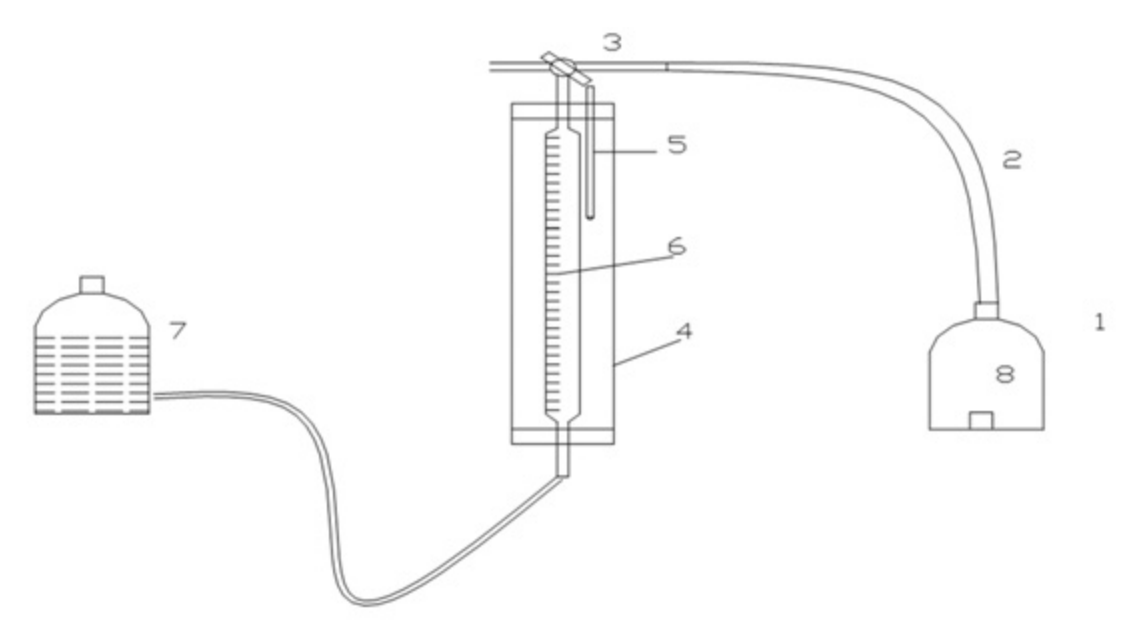
Figure 1. CO2 loading test devices: 1—reaction flask; 2—rubber tube; 3—three-way cock; 4—thermostatic water jacket; 5—thermometer; 6—gas burette; 7—leveling bottle; and 8—plastic cup.
Processes 14 01626 g001
Figure 2. Corrosion rates of Q235B coupons at different temperatures, concentrations, and exposure times: (a) 40 °C, (b) 50 °C, and (c) 60 °C.
Processes 14 01626 g002
Figure 3. The corrosion rates of Q235B carbon steel under different loadings.
Processes 14 01626 g003
Figure 4. SEM micrographs of Q235B carbon steel coupons after 1 d immersion at 40 °C: (a) 15%, (b) 20%, (c) 25%, and (d) 30%.
Processes 14 01626 g004
Figure 5. SEM micrographs of Q235B carbon steel coupons after 3 d immersion at 40 °C: (a) 15%, (b) 20%, (c) 25%, and (d) 30%.
Processes 14 01626 g005
Figure 6. SEM micrographs of Q235B carbon steel coupons after 7 d immersion at 40 °C: (a) 15%, (b) 20%, (c) 25%, and (d) 30%.
Processes 14 01626 g006
Figure 7. SEM micrographs of Q235B carbon steel coupons after 15 d immersion at 40 °C: (a) 15%, (b) 20%, (c) 25%, and (d) 30%.
Processes 14 01626 g007
Figure 8. SEM micrographs of Q235B carbon steel coupons after 1 d immersion at 50 °C: (a) 15%, (b) 20%, (c) 25%, and (d) 30%.
Processes 14 01626 g008
Figure 9. SEM micrographs of Q235B carbon steel coupons after 3 d immersion at 50 °C: (a) 15%, (b) 20%, (c) 25%, and (d) 30%.
Processes 14 01626 g009
Figure 10. SEM micrographs of Q235B carbon steel coupons after 7 d immersion at 50 °C: (a) 15%, (b) 20%, (c) 25%, and (d) 30%.
Processes 14 01626 g010
Figure 11. SEM micrographs of Q235B carbon steel coupons after 15 d immersion at 50 °C: (a) 15%, (b) 20%, (c) 25%, and (d) 30%.
Processes 14 01626 g011
Figure 12. SEM micrographs of Q235B carbon steel coupons after 1 d immersion at 60 °C: (a) 15%, (b) 20%, (c) 25%, and (d) 30%.
Processes 14 01626 g012
Figure 13. SEM micrographs of Q235B carbon steel coupons after 3 d immersion at 60 °C: (a) 15%, (b) 20%, (c) 25%, and (d) 30%.
Processes 14 01626 g013
Figure 14. SEM micrographs of Q235B carbon steel coupons after 7 d immersion at 60 °C: (a) 15%, (b) 20%, (c) 25%, and (d) 30%.
Processes 14 01626 g014
Figure 15. SEM micrographs of Q235B carbon steel coupons after 15 d immersion at 60 °C: (a) 15%, (b) 20%, (c) 25%, and (d) 30%.
Processes 14 01626 g015
Figure 16. XRD patterns of Q235B carbon steel coupon at 60 °C: (a) washed coupon surface and (b) the loose corrosion products collected from the coupon before washing.
Processes 14 01626 g016
Figure 17. EIS spectra and polarization curves of Q235B carbon steel at different temperatures: (a) EIS spectra and (b) polarization curves.
Processes 14 01626 g017
Figure 18. EIS spectra and polarization curves of Q235B carbon steel at different absorbent concentrations: (a) EIS spectra and (b) polarization curves.
Processes 14 01626 g018
Figure 19. The FT-IR spectra of amine absorbent before and after CO2 absorption: (a) before CO2 absorption and (b) after CO2 absorption.
Processes 14 01626 g019
Figure 20. The reaction products of the amine absorbent after CO2 absorption.
Processes 14 01626 g020
Figure 21. NMR spectra of amine absorbent before and after CO2 absorption: (a) before CO2 absorption, 15%; (b) after CO2 absorption, 15%; (c) before CO2 absorption, 20%; (d) after CO2 absorption, 20%; (e) before CO2 absorption, 25%; (f) after CO2 absorption, 25%; (g) before CO2 absorption, 30%; and (h) after CO2 absorption, 30%.
Processes 14 01626 g021
Figure 22. NMR spectra of amine absorbent solution under different loadings: (a) 15 LCO2/L; (b) 20 LCO2/L; (c) 25 LCO2/L; (d) 30 LCO2/L; (e) 35 LCO2/L; (f) 40 LCO2/L; (g) 45 LCO2/L; (h) 50 LCO2/L; and (i) 58.4 LCO2/L, saturated CO2 loading.
Processes 14 01626 g022
Figure 23. The concentrations of each component in the absorbent solution at different loadings.
Processes 14 01626 g023
Table 1. The chemical composition of Q235B carbon steel (excluding Fe, wt%).
CSiMnSPCrNiCu
≤0.20≤0.35≤1.4≤0.045≤0.045≤0.30≤0.30≤0.30
Table 2. The saturated CO2 loading and pH of absorbent solutions with different concentrations.
Absorbent Concentration
(%)
Saturated Loading
(L/L)
Molar Loading Ratio
(mol CO2/mol Amine)
pH
1528.00.708.32
2040.00.758.25
2548.00.728.35
3058.40.738.44
Table 3. The EDS analysis results of Q235B carbon steel with 72 h of exposure at different temperatures (wt%).
Element40 °C50 °C60 °C
Spec. 1Spec. 2Spec. 3Spec. 4Spec. 5Spec. 6Spec. 7Spec. 8Spec. 9
C14.794.5412.933.2113.385.2012.9311.7613.03
Fe84.4695.4686.6096.7986.6294.8085.6185.9185.16
Cr0.23--------
Mn0.52-0.47------
O------1.461.581.45
Table 4. The electrochemical fitting data of Q235B carbon steel at different temperatures.
T (°C)Rs (Ω/cm2)Rp (Ω/cm2)CPE (F/cm2)ba (mV)bc (mV)I0 (mA/cm2)E0 (V)v (mm/a)
408.2131583.753.7891 × 10−4204.61213.120.0884−0.822960.6624
508.1156363.374.9178 × 10−4210.35204.630.1666−0.827261.2484
605.3883204.776.5296 × 10−4226.21190.170.3225−0.829802.4165
Table 5. The electrochemical fitting data of Q235B carbon steel at different absorbent concentrations.
c (%)Rs (Ω/cm2)Rp (Ω/cm2)CPE (F/cm2)ba (mV)bc (mV)I0 (mA/cm2)E0 (V)v (mm/a)
156.4906165.157.8423 × 10−4215.83189.660.3711−0.836342.7811
206.8521188.827.3072 × 10−4209.59183.330.3348−0.844842.5089
255.6064190.296.2224 × 10−4224.45189.670.3465−0.828772.5967
305.3883204.776.5296 × 10−4226.21190.170.3225−0.829802.4165
Table 6. The concentrations of CO2 derivative components in absorbent solutions with different concentrations at saturated CO2 loading.
c
(%)
pHMolar Loading Ratios
(mol CO2/mol Amine)
S[AMCOO]
(mol/L)
[HCO3/CO32−]
(mol/L)
AMCOOHCO3/CO32−
158.320.702.842.300.690.56
208.250.752.882.051.040.74
258.350.723.832.281.340.80
308.440.733.732.551.551.06
Disclaimer/Publisher’s Note: The statements, opinions and data contained in all publications are solely those of the individual author(s) and contributor(s) and not of MDPI and/or the editor(s). MDPI and/or the editor(s) disclaim responsibility for any injury to people or property resulting from any ideas, methods, instructions or products referred to in the content.