Article

Networked Nonlinear Remote Control for Microreactor Process Using a Distributed Control System Device and Particle Filters

Department of Electrical Engineering and Computer Science, Faculty of Engineering, Tokyo University of Agriculture and Technology, 2-24-16 Nakacho, Koganei-shi 184-8588, Tokyo, Japan
*
Author to whom correspondence should be addressed.
Processes 2026, 14(10), 1553; https://doi.org/10.3390/pr14101553
Submission received: 24 March 2026 / Revised: 4 May 2026 / Accepted: 8 May 2026 / Published: 11 May 2026
(This article belongs to the Section Process Control, Modeling and Optimization)

Abstract

In recent years, microreactors have attracted increasing attention as next-generation chemical reactors, enabling rapid and highly efficient reactions, while requiring precise control against temperature variations. In this paper, a research platform for a microreactor process close to practical implementation is constructed using a distributed control system (DCS) and wireless communication. By establishing such a research platform, not only the effectiveness of control methods but also discussions on system configuration, including operation and maintenance, can be verified and optimized at an early stage. Moreover, operator-based multi-dimensional nonlinear control strategies have been applied in existing studies of channel temperature control. In contrast, this paper extends such strategies by integrating an operator-based feedback scheme with state estimation via particle filters, which simultaneously accounts for unknown communication delay compensation and the nonlinear characteristics of microreactors. Finally, the feasibility and effectiveness of the proposed research platform are verified through real-world experiments.

1. Introduction

In recent years, microreactors, regarded as next-generation chemical reactors, have attracted increasing attention in the process industry. A microreactor is a compact chemical reactor that is designed to precisely control reaction conditions such as temperature and mixing through fluid-based operation by utilizing microfluidic technology [1,2]. Compared with conventional batch-type chemical reactors, microreactors have narrower flow channels, resulting in a larger surface-area-to-volume ratio, which enables rapid and highly efficient reactions. In addition, microreactors have the potential to significantly shorten the reaction pathways required to obtain desired products [3]. However, inappropriate temperature management of fluids within the channels can result in temperature variations caused by reaction heat, which may induce undesirable reactions such as fluctuations in product purity and the generation of hazardous gases. In microreactors where reactions occur within microchannels, these phenomena may result in serious issues, including channel clogging and damage due to pressure buildup [4,5,6]. Hence, precise temperature control of the channels is required. However, the characteristics of the channels and auxiliary cooling devices were found to exhibit nonlinearity, which motivated an operator-based nonlinear control framework for single microreactor that was reported in [7].
In industrial applications, safety and reliability are regarded as the most critical requirements. Furthermore, since economic feasibility is a prerequisite for practical implementation, cost reduction through mass production is required. Even if a technology is effective on a research platform, practical implementation is expected to be difficult if any one of safety, reliability, or economic efficiency is insufficient. Therefore, conducting experiments on a research platform with a strong awareness of practical implementation is considered to significantly shorten the steps toward technology transfer and industrial application. Specifically, this approach enables early verification and optimization of control methods and system configurations [5,8,9]. Therefore, a research platform closer to industrial application needs to be established, discussed, and validated for microreactors. In mass production using microreactors to achieve economic efficiency, a parallel operation strategy known as numbering-up, which increases the number of production units, is commonly adopted for research platform. Since numbering-up leads to a large number of channels operating in parallel, a system capable of centralized and efficient control for each individual channel is essential. To meet these demands, a DCS is employed in conventional chemical plants [10,11,12]. Generally, a DCS is a device that offers remote and distributed control for each component, with high-reliability design intended for long-term continuous operation. This feature is especially beneficial for microreactor control, and a DCS is thus implemented into the networked framework for microreactors in this paper.
In numbering-up, the number of processes per production volume increases dramatically compared with conventional batch methods. Although wired communication is generally used in practice, it imposes physical constraints, including space for installation and maintenance efforts, due to cable length and incurs wiring costs. In contrast, wireless communication has attracted increasing attention for networked control systems [13,14,15]. However, the security of wireless communication in networked systems requires special consideration [16], particularly with respect to time-delay issues. At present, many approaches have been developed for time-delay compensation, for instance, finite spectrum assignment [17], discrete predictor [18] and Smith predictor [19]. However, these methods highly rely on the accurate dynamics of objective plants, and the performance and stability of the overall system may be affected given unknown perturbations. Another approach to address the time delay is Padé approximation [20]. Though it is more applicable for perturbed scenarios, Padé approximation may introduce new coordinates that do not actually exist as states. Hence, how to construct the control strategy for the system with new coordinates becomes an additional problem. As an alternative approach for communication delay compensation, state estimation using a particle filter is considered in this paper. A particle filter is a statistical estimation method that estimates unobservable states based on measurement data and model equations, and it is suitable for nonlinear systems [21,22,23]. By employing a particle filter, the true output of the plant, namely, the signal prior to being affected by communication delay, can be estimated. By feeding such filtered output into the same controller used under wired communication, it is expected that the control performance can be kept comparable to that before introducing wireless communication.
In prior studies [24], a multi-input multi-output (MIMO) nonlinear control scheme was proposed for a microreactor system, where six regions were defined and two were controlled to track different temperature references. However, the system configuration was relatively simple, focusing on the microreactor itself. From the viewpoint of practical implementation, this configuration differs significantly from a practical environment. Motivated by the aforementioned issues, the main contributions of this paper can be summarized as follows:
1.
A networked nonlinear remote-control framework for a microreactor process is proposed and constructed using a DCS device. Compared with existing results [5,7,24], such networked system acts as a research platform that is closer to practical applications.
2.
To realize the wireless communication between the DCS device and microreactors, particle filters are used to deal with unknown time delays. An operator and particle-filter-based MIMO control system is then established, by which the stability of the overall system is guaranteed.
3.
The proposed networked remote-control framework is deployed in a real-world microreactor plant. The feasibility and effectiveness of the proposed framework are verified through experimental results, which further support its use as research platform and for potential industrial applications.
The outline of this paper is as follows: Section 2 introduces the necessary preliminaries, including the physical structure and analytical modeling of microreactor systems. Section 3 lists the problem addressed in this paper. Section 4 provides the main results, i.e., the construction of the DCS-based networked remote-control framework and the operator and particle-filter-based MIMO nonlinear control strategy. The experiments are conducted and the results are exhibited in Section 5. Finally, the whole work is concluded in Section 6, followed by a discussion on future work.

2. Preliminaries on Microreactor Systems

In this section, some necessary preliminaries on microreactor systems, i.e., the physical structure and analytical modeling, are introduced.

2.1. Physical Structure of Microreactor Systems

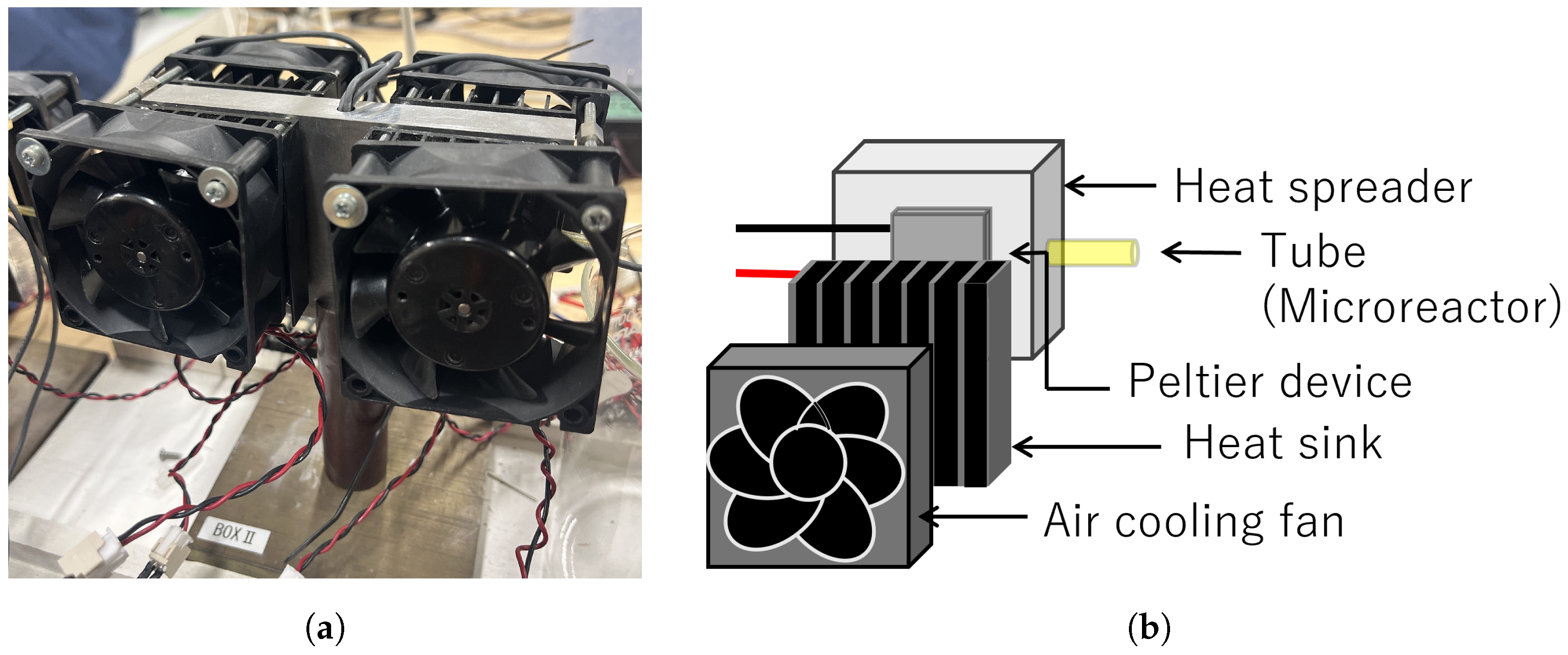
The overview structure and detailed components of microreactor systems are shown in Figure 1a,b. Specifically, the equipment illustrated in Figure 1a is composed of four similar parts, and the detailed components of each part are depicted as Figure 1b. According to Figure 1a,b, the temperature of the microreactor is controlled using Peltier devices and a heat spreader. A Peltier device is a thermoelectric conversion element that generates a temperature difference between its two surfaces when an electric current is applied [25]. By controlling the applied current, the amounts of heat generation and absorption can be adjusted, enabling precise temperature control. This configuration allows highly accurate temperature regulation. In this study, the cooling surface of the Peltier device is brought into contact with the side surface of an aluminum heat spreader. The heat spreader assists heat conduction and dissipation and cools the microreactor by exploiting the high thermal conductivity of aluminum. On the other hand, since heat is generated on the opposite side of the Peltier device, heat dissipation is achieved using a heat sink and an air-cooling fan. In summary, the system composed of the microreactor, Peltier device, heat spreader, heat sink, and air-cooling fan is collectively referred to as the microreactor system.
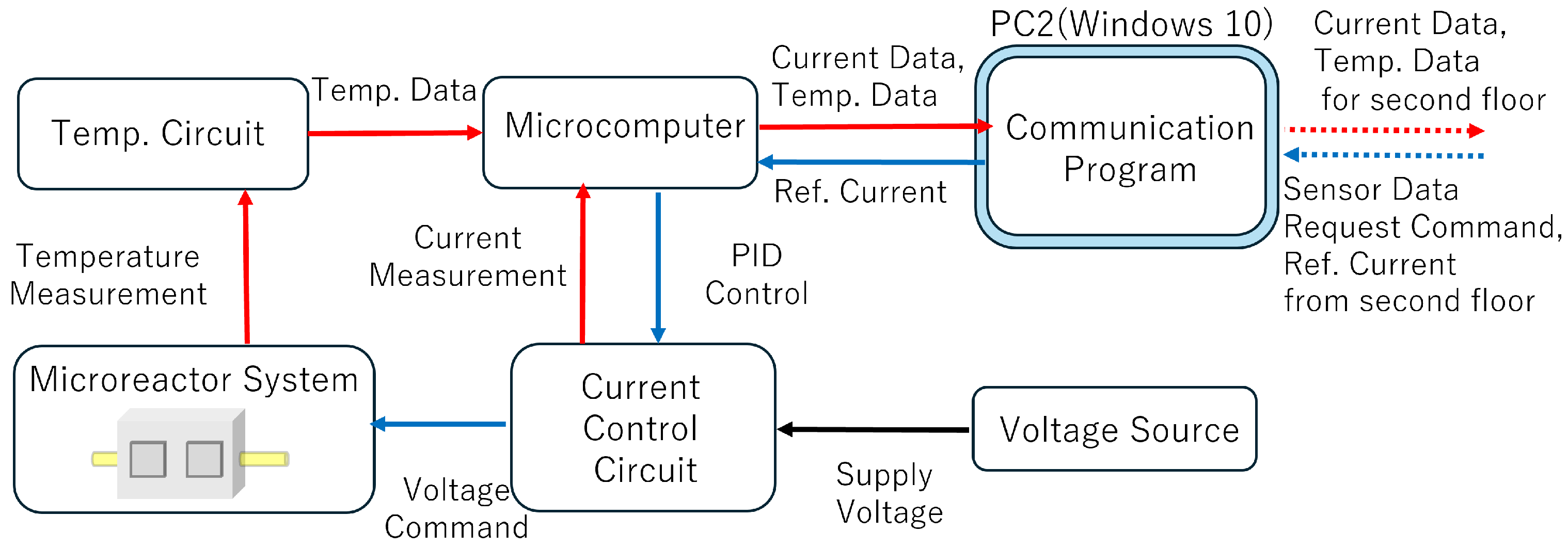
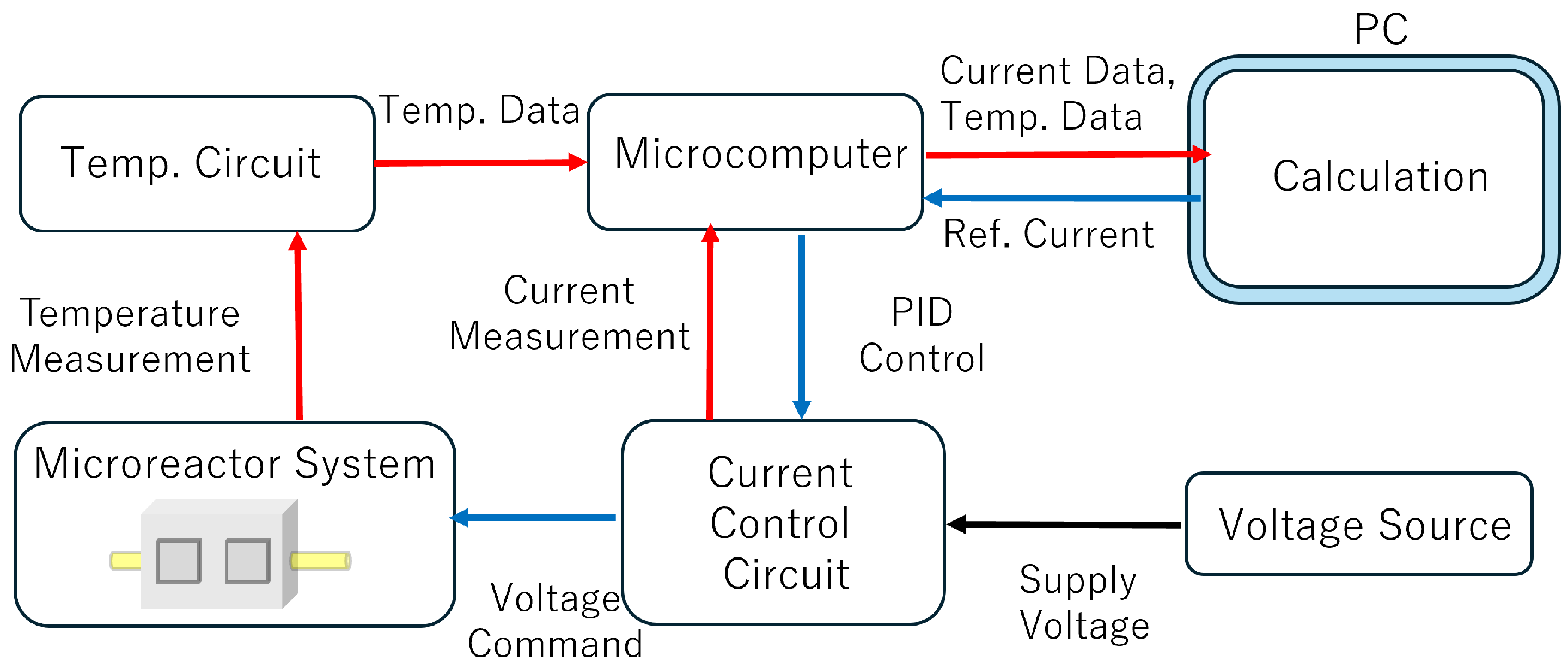
Moreover, the current experimental configuration of the microreactor system is also introduced. In previous studies [24], temperature control of a microreactor system was investigated by focusing on fault detection and robustness guarantee. The schematic illustration of the configuration used in [24] is shown in Figure 2, where one can find the microreactor system is directly controlled by PC. However, a networked remote-control framework is generally used for practical applications, which motivates an improvement from Figure 2 towards the framework proposed in this work.

2.2. Modeling for Microreactor Systems

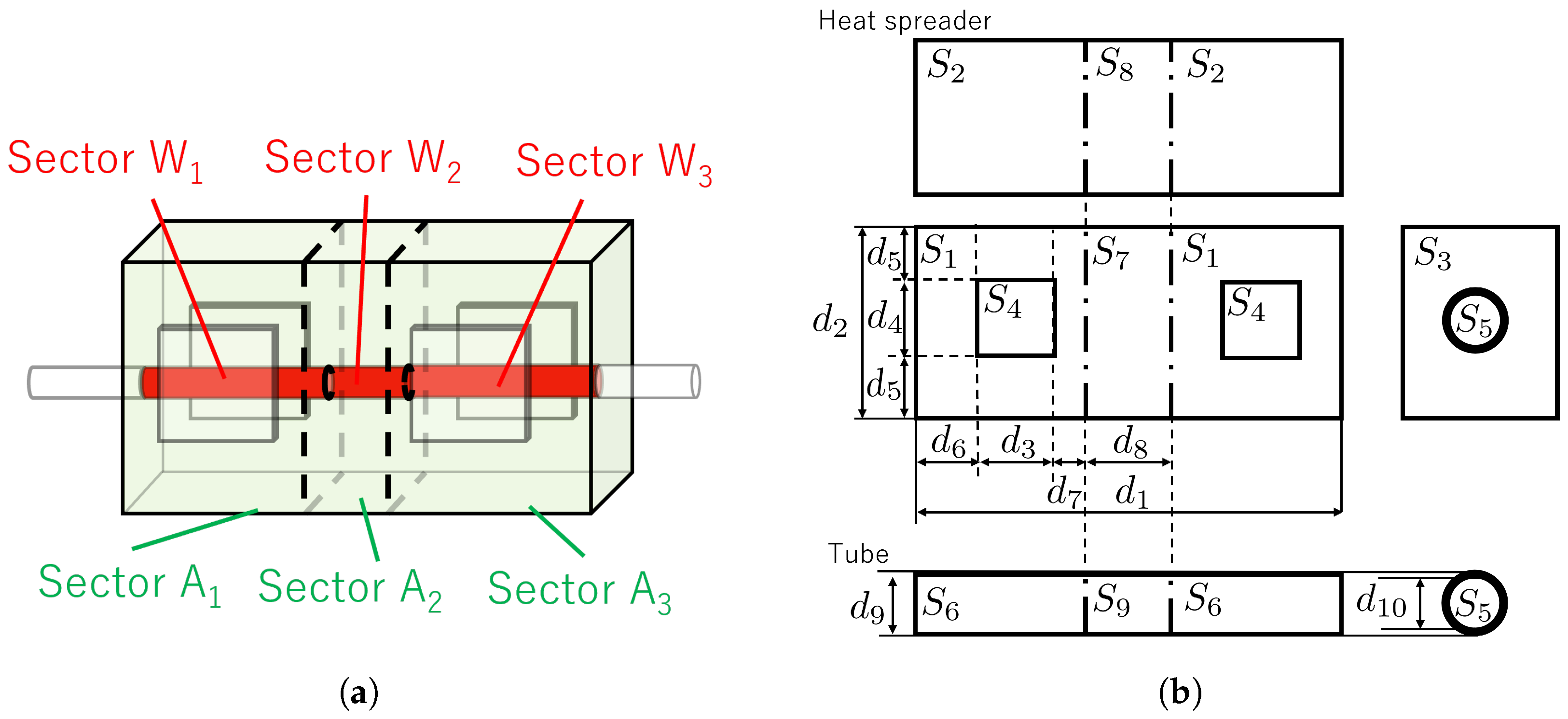
The model equations of the heat spreader and the microreactor used in this study are derived based on Fourier’s law, Newton’s law of cooling, and the Stefan–Boltzmann law. The parameters used for modeling are listed in Table 1. To model the heat spreader and the microreactor, the control target is divided into several regions, as shown in Figure 3a. Following prior work [24], the heat spreader and the microreactor are each divided into three sectors and defined as independent components. The heat spreader is defined as sectors A1, A2, and A3, from left to right in Figure 3a. Similarly, the microreactor is defined as sectors W1, W2, and W3. The parameters related to the surface area S n and length d n of each sector are summarized in Table 2, and a schematic illustration of the structure is shown in Figure 3b.
To model the microreactor, the energy balance equations are derived to construct a mathematical model that describes its thermal behavior [24]. Specifically, the model is formulated as
d ( T 0 T ω n ) m ω n c ω d t = λ ω S 5 ( ( T 0 T ω n ) ( T 0 T ω 2 ) ) d x + α ω S 6 ( T ω n T a n ) d ( T 0 T ω 2 ) m ω 2 c ω d t = λ ω S 5 ( 2 ( T 0 T ω 2 ) ) d x
+ α ω S 9 ( T ω 2 T a 2 ) + λ ω S 5 ( ( T 0 T ω 1 ) ( T 0 ω 3 ) ) d x
where n 1 , 3 , Equation (1) corresponds to Sector W1 and Sector W3, and Equation (2) corresponds to Sector W2.
The energy balance equations for the heat spreader are also similarly formulated:
d ( T 0 T a n ) m a n c a d t = 2 { S T a n u n K ( T h T a n ) 1 2 R u n 2 } α ( T 0 T a n ) S + α ω S 6 ( T a n T ω n ) + λ a S 3 ( T a n T a 2 ) d x + ϵ a σ ( T a n 4 T 0 4 ) S
d ( T 0 T a 2 ) m a 2 c a d t = α ( T 0 T a 2 ) ( 2 S 7 + 2 S 8 ) + α ω S 9 ( T a 2 T ω 2 ) + ϵ a σ ( T a 2 4 T 0 4 ) ( 2 S 7 + 2 S 8 ) λ a S 3 ( T a 1 T a 2 ) d x λ a S 3 ( T a 3 T a 2 ) d x
where Equation (3) denotes the dynamics of Sector A1 and Sector A3, respectively, and Equation (4) denotes that of Sector A2. Moreover, S is given by S = 2 S 1 + 2 S 2 + S 3 S 5 .
The aforementioned models of microreactor and heat spreader were used within the configuration of Figure 2 proposed in [24], where the feasibility was verified. Hence, in this paper, these models were selected for the nonlinear control strategy design of the microreactor system.

3. Problems’ Statement

The problems addressed in this paper are as follows: (1) How can a DCS-based networked and remote-control system for microreactors be designed and implemented to build a research platform that more closely reflects industrial applications? (2) How can unknown time delays in wireless communication among different parts of the proposed system be handled using a particle filter? To tackle the above problems, the main results of this paper are presented in the next section.

4. Main Result

In this section, the main results of this work, namely, the construction of a DCS-based networked remote-control framework and nonlinear control system design considering unknown time delays, are provided.

4.1. Construction of DCS-Based Networked Remote-Control Framework

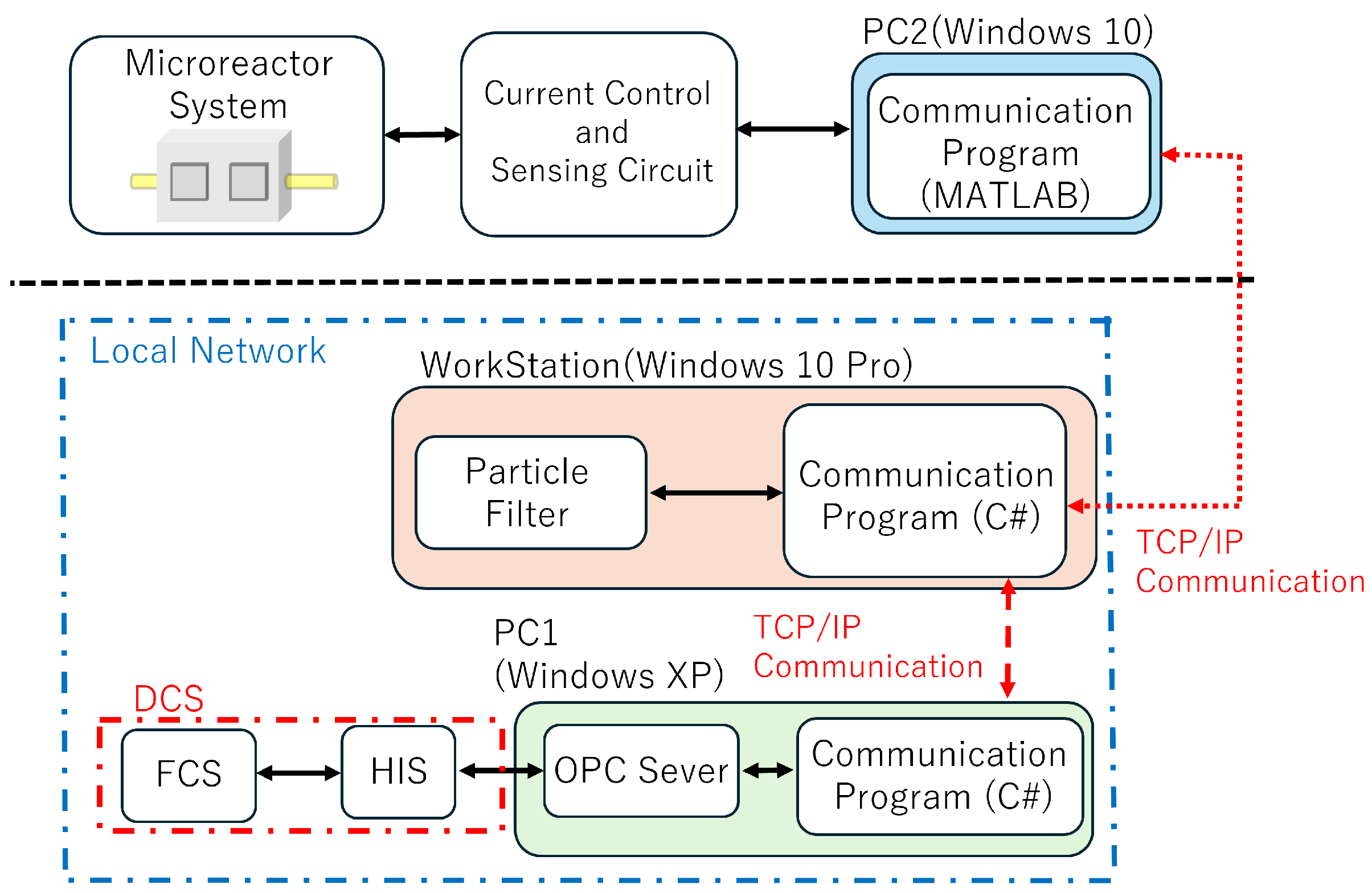
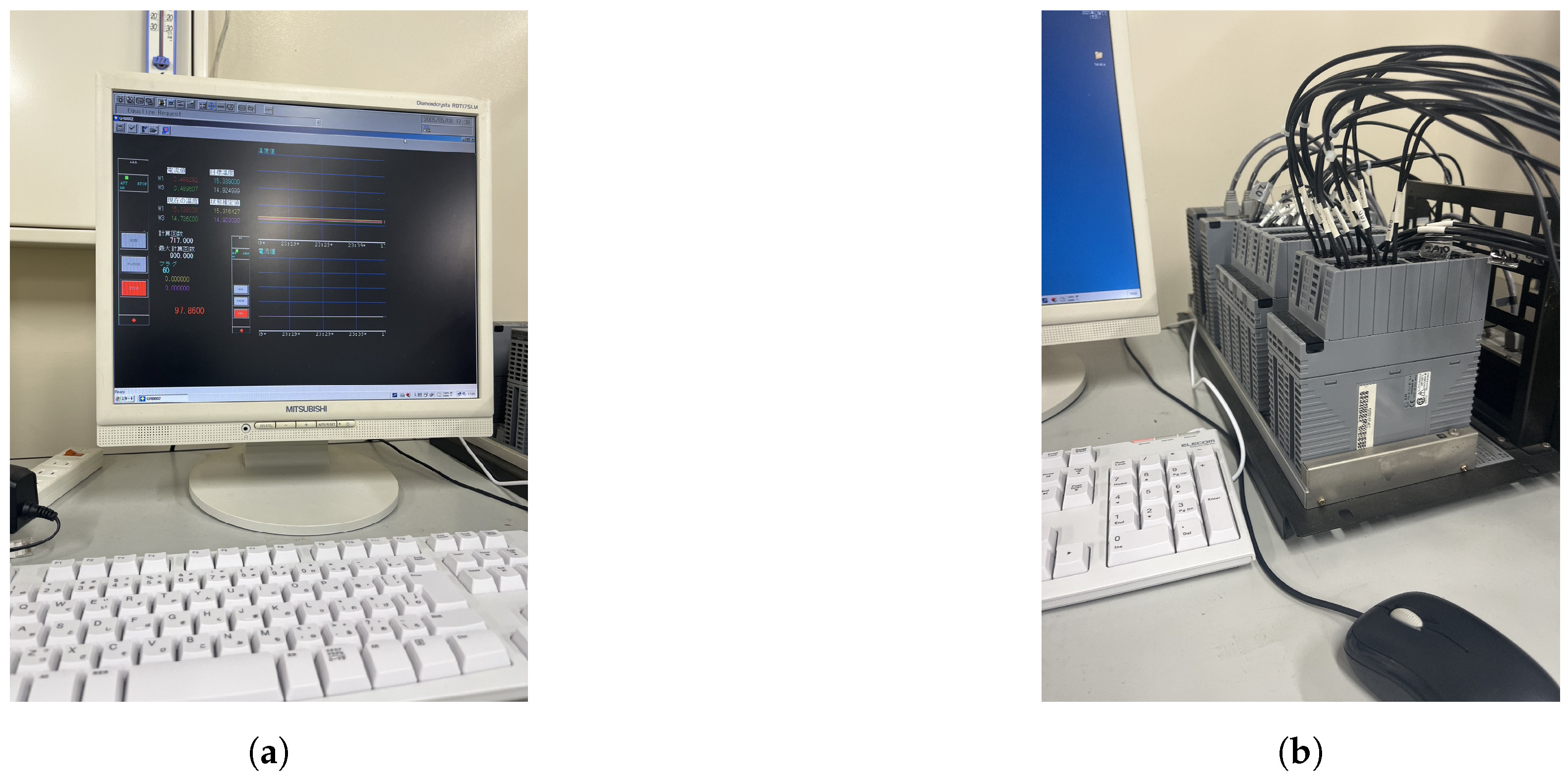
The proposed configuration is illustrated in Figure 4. In this study, to emulate the remote control of the DCS and microreactor system, the DCS was installed on the second floor, while the microreactor system was installed on the third floor. In addition, a workstation was placed between PC1, corresponding to the DCS, and PC2, which was installed on the third floor. The DCS device used in this study is shown in Figure 5. Since PC1 operated on Windows XP, a workstation was introduced to ensure the security of internet communication. PC1 was locally connected to the workstation, and the workstation communicated with PC2 via the Internet. With this configuration, the DCS could communicate wirelessly with the microreactor system without being directly connected to the Internet. For wireless communication, TCP/IP (Transmission Control Protocol/Internet Protocol), which provides high reliability and low data loss, was employed [26]. As shown in Figure 4, an OPC server (OLE for Process Control) was located at the core of the communication framework. The OPC server was responsible for standardizing the data communication protocols among the connected devices. In this study, it facilitated data exchange between Visual Basic 2005, which was used for the communication program on PC1, and SEBOL, the programming language used in the DCS system. Furthermore, as illustrated in Figure 4, the particle filter was implemented on the workstation. This is because executing the particle filter within the DCS system would cause the computation time to exceed the DCS control cycle of 1 s. If the control cycle is exceeded, the temperature control program of the microreactor cannot be executed correctly, resulting in system errors. The experimental equipment used in this study is listed in Table 3. Router 1 and Router 2 were used for wireless communication between the second and third floors, while Router 3 was used for local communication between the workstation and PC1.
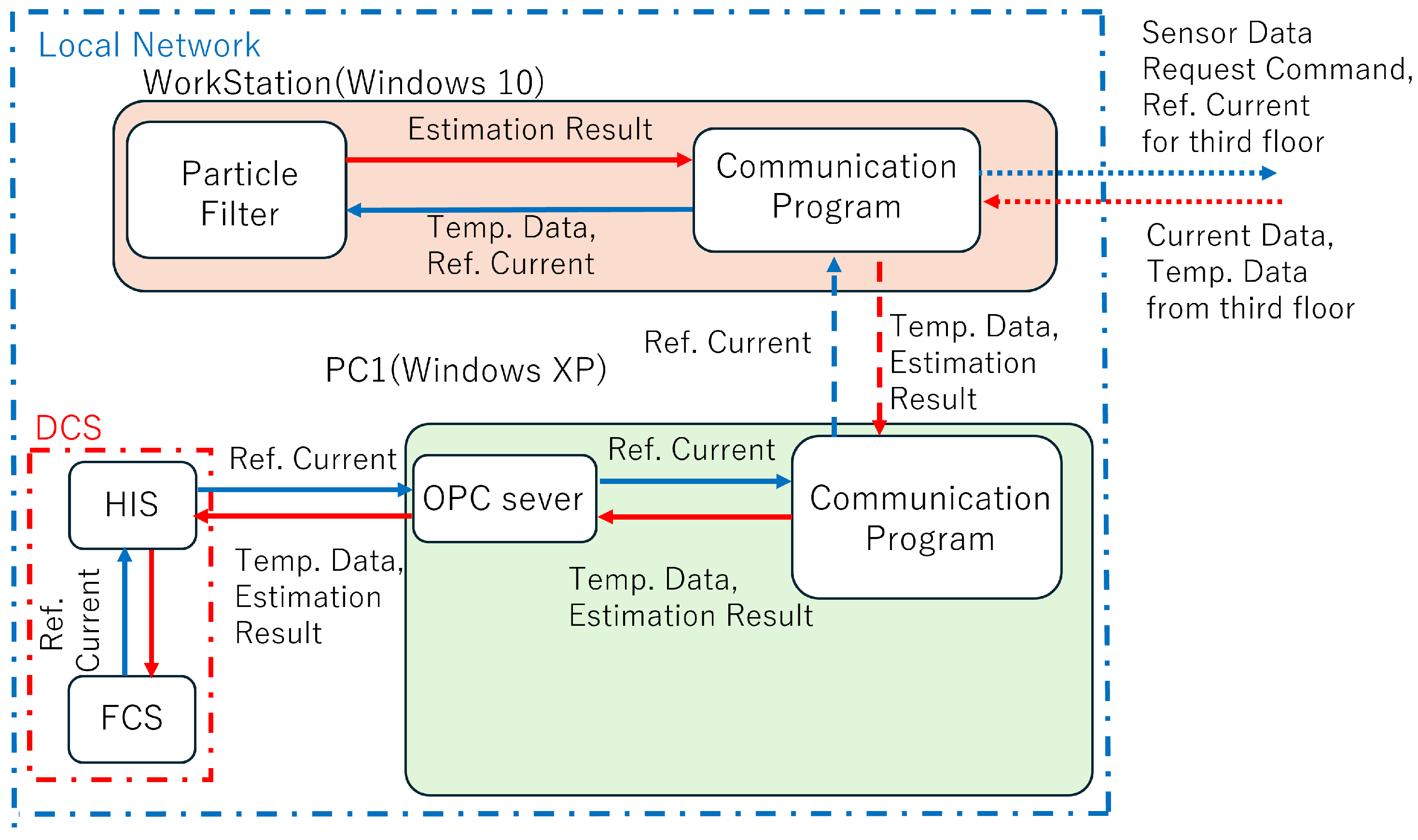
The data flow on each floor is shown in Figure 6 and Figure 7. Specifically, Figure 6 illustrates the data flow on the second floor in the proposed framework. The operation of the DCS is conducted according to the following procedure:
1.
The workstation sends a request to acquire temperature and current data.
2.
The workstation transmits the acquired temperature data to the DCS.
3.
Based on the reference temperature and the acquired temperature, the DCS computes a control input and sends it to the workstation.
4.
Using the control input and the acquired temperature, the workstation performs state estimation and transmits the estimated states to the DCS.
5.
Based on the reference temperature and the estimated states, the DCS calculates the final control input.
6.
The control input is transmitted to the third floor.
In addition, Figure 7 illustrates the data flow on the third floor. The microreactor system thus operates according to the following procedure:
1.
The third-floor system receives requests for temperature and current acquisition from the second floor.
2.
The temperature sensor measures the temperature, and the current sensing circuit measures the current; these data are transmitted to the second floor.
3.
The third-floor system receives the control input from the second floor.
4.
Based on the received control input, the microcontroller regulates the current applied to the Peltier device.
By executing steps 1 and 2 of the second-floor system prior to steps 1 and 2 of the third-floor system, and executing steps 3 and 4 of the third-floor system after step 5 of the second-floor system, the proposed system operates as intended.

4.2. Nonlinear Control System Design

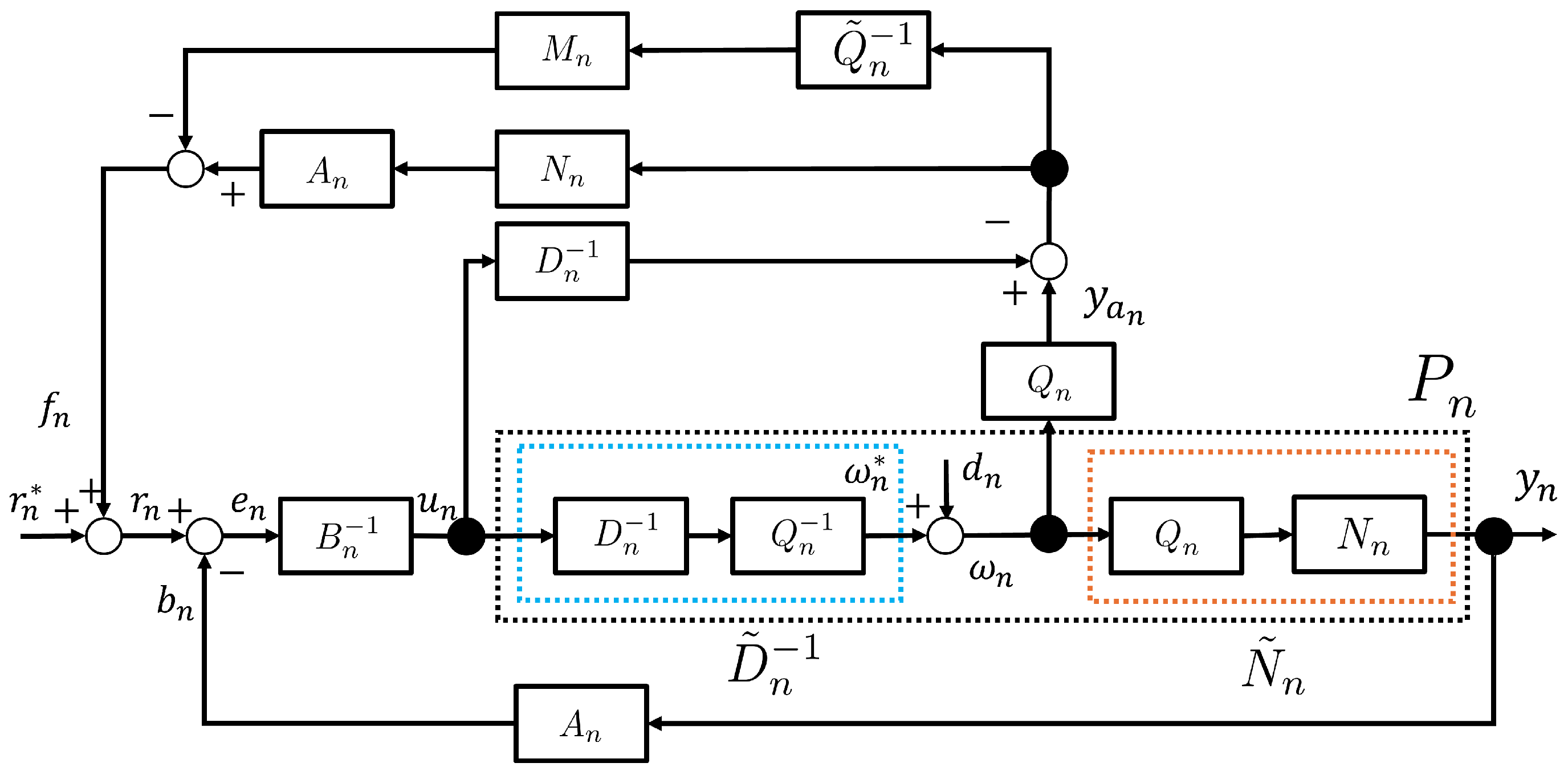
In [24], an operator-based nonlinear control system for a microreactor process was proposed, and its modified scheme is exhibited in Figure 8. Specifically, this system is designed based on operator theory and established in a robust-right-coprime-factorization feedback framework. By utilizing this control system, control stability, target tracking and disturbance rejection are ensured [24].
Here, y a n denotes the measured value of the heat spreader, which is expressed in Equation (5). y n denotes the measured output of the microreactor, which is defined in Equation (6). During practical operation, it is assumed that both values can be measured.
y a n = T 0 T a n
y n = T 0 T ω n
The specific deign of each operator is derived as follows. Initially, neglecting the coupling terms in Equations (1) and (3), i.e., the terms involving T ω 2 in Equation (1) and T a 2 and T ω n in Equation (3), yields the following nominal system representation
P n ( u n ) = R u n 2 + 2 S ( y a n T 0 ) u n + ( 2 K + α S + α ω S 6 ) y a n + λ a S 3 d x + 4 T 0 3 ϵ a σ S y a n 6 T 0 2 ϵ a σ S y a n 2 + 4 T 0 ϵ a σ S y a n 3 ϵ a σ S y a n 4 + m a n c a d y a n d t = 0 m w n c w d y n d t = α w S 6 + λ w S 5 d x y n + α ω S 6 y a n
Next, according to the operator-based robust right coprime factorization [27], P n can be factorized into N n and D n as P n = N n D n 1 . Moreover, by introducing the filtered factorization [28] via a low-pass filter Q n as
Q n ( ω n ) : τ n d y a n d t + y a n = ω n
the operators D ˜ n and N ˜ n used in Figure 8 are expressed as Equations (10) and (11), following the right factorization shown in Equation (9).
P n ( u n ) = ( N n Q n ) ( D n Q n ) 1 ( u n ) = N ˜ n D ˜ n 1 ( u n )
D ˜ n ( ω n ) : τ n d y a n d t + y a n = ω n R u n 2 + 2 S ( y a n T 0 ) u n + ( 2 K + α S + α ω S 6 ) y a n + λ a S 3 d x + 4 T 0 3 ϵ a σ S y a n 6 T 0 2 ϵ a σ S y a n 2 + 4 T 0 ϵ a σ S y a n 3 + ϵ a σ S y a n 4 + m a n c a d y a n d t = 0
N ˜ n ( ω n ) : τ n d y a n d t + y a n = ω n m w n c w d y w n d t = α w S 6 + λ w S 5 d x y w n + α ω S 6 y a n
In addition, the operators A n and B n are designed to satisfy the Bezout identity given in Equation (12), where M n is a unimodular operator. The specific designs of A n and B n are formulated as Equations (13) and (14).
( A n N ˜ n + B n D ˜ n ) ( ω n ) = M n ( ω n )
A n ( y n ) = y n
B n ( u n ) : m a n c a d x 1 n d t = ( 2 K + α S + α ω S 6 ) x 1 n ( λ a S 3 d x + 4 T 0 3 ϵ a σ S 1 ) x 1 n + 6 T 0 2 ϵ a σ S x 1 n 2 4 T 0 ϵ a σ S x 1 n 3 + ϵ a σ S x 1 n 4 R u n 2 2 S ( x 1 n T 0 ) u n x 2 n = τ n x 2 n d t + x 1 n τ n x 3 n d t + x 3 n = x 2 n m w n c w d x 4 n d t = α ω S 6 x 3 n ( α w S 6 + λ w S 5 d x ) x 4 n e n = M n ( x 2 n ) x 4 n
As a result, the so-designed operator-based robust-right-coprime-factorization feedback scheme for the microreactor system is found to be bounded input bounded output (BIBO) stable, namely, y n is bounded for any bounded input r n [27]. Moreover, according to [27], if the system uncertainty is represented by Δ N ˜ n and satisfies the following robustness condition,
[ A n ( N ˜ n + Δ N ˜ n ) A n N ˜ n ] M n 1 L   <   1 ,
then the system remains BIBO stable, where · L is defined as the Lipschitz semi-norm [27]. Therefore, when uncertainties such as coupling terms, parameter errors, and experimental perturbations are present, robust BIBO stability of the system can still be guaranteed provided that their induced effect satisfies the robustness condition (15).
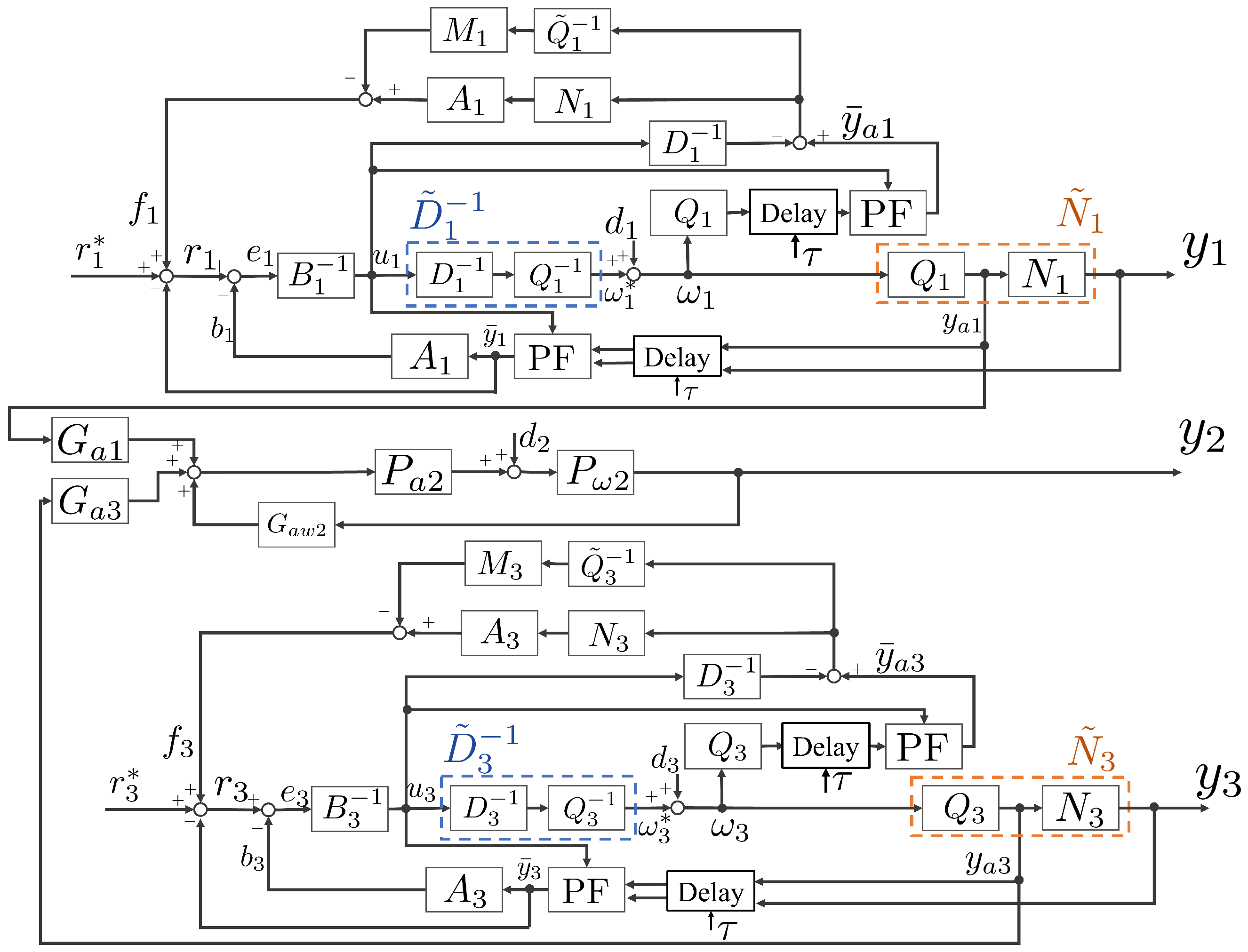
In this paper, the operator-based nonlinear control design shown in Figure 8 was selected for each individual part of n = 1 , 3 . Hence, the overall configuration of the proposed nonlinear control system is shown in Figure 9. Here, G a 1 , G a 3 , and G a w 2 are represented by Equation (16) and Equation (17), respectively. The overall nonlinear control scheme is thus found to be robustly BIBO stable subject to (15).
G a 1 = G a 3 = λ a S 3 d x
G a w 2 = α ω S 9
Moreover, to compensate for the effects of unknown time delay caused by wireless communication, particle filters were adopted, as shown in Figure 9. The preparation of the particle filter is briefly described as follows. Let ζ t denote the state variable of the system at time t, and let γ t denote the observation. Here, ζ t is an unobservable variable, whereas γ t is an observable variable. The relationship between ζ t and ζ t 1 is represented by the function f ( · ) , and the relationship between ζ t and γ t is represented by the function h ( · ) . These relationships are generally formulated as
ζ t = f ( ζ t 1 , u t , ξ s ) ,
γ t = h ( ζ t , ξ m ) ,
where u t is the control input, and ξ s and ξ m denote the parameters of the system model and the observation model, respectively. Equations (18) and (19) are referred to as the system equation and the observation equation, respectively. They constitute a nonlinear state-space model for the particle-filter-based estimation.
In this study, the communication delay τ was modeled as a bounded discrete random variable in terms of sampling steps. Thus, the observation available to the controller can be regarded as a delayed measurement, i.e.,
γ t = h ( ζ t τ , ξ m ) .
It should be noted that the bounded uniform delay model is used to emulate random delay perturbations in the wireless communication channel, rather than as an exact statistical characterization in industrial wireless scenarios. In practical networked systems, communication latency, jitter, and short-term wireless communication outages may depend on the communication protocol, traffic load, scheduling mechanism, retransmission strategy, and hardware conditions. Therefore, the delay distribution can be protocol- and environment-dependent. The assumed model in this work provides a reproducible bounded-delay scenario for evaluating the robustness of the proposed framework. A comparison with experimentally measured industrial wireless delay profiles will be considered in future work.
Let N denote the number of particles, and let i denote the particle index. The filtering distribution is approximated by a set of resampled particles ζ ^ t ( i ) as
P ( ζ t | γ 1 : t ) 1 N i = 1 N δ [ ζ t ζ ^ t ( i ) ] .
The operation of the particle filter is described in Equations (22)–(27).
ζ t | ( t 1 ) ( i ) = f ( ζ ^ t 1 ( i ) , u t , ξ s ) ,
r t ( i ) = γ t ζ t | ( t 1 ) ( i ) ,
η t ( i ) = 1 2 π R exp r t ( i ) 2 2 R ,
η ¯ t ( i ) = η t ( i ) j = 1 N η t ( j ) ,
ζ ^ t ( i ) j = 1 N η ¯ t ( j ) δ ζ ζ t | ( t 1 ) ( j ) ,
ζ ¯ t = 1 N i = 1 N ζ ^ t ( i ) .
Specifically, ζ t | ( t 1 ) ( i ) denotes the predicted particle, and η t ( i ) denotes the corresponding particle weight. The particles are propagated and resampled in a Monte Carlo manner [29], and the residual r t ( i ) evaluates the consistency between the delayed observation γ t and the predicted particle output ζ t | ( t 1 ) ( i ) . A Gaussian-type likelihood function is used for the weight update, where R > 0 is a residual weighting parameter. The normalized weights η ¯ t ( i ) are then used for resampling to avoid particle degeneracy. Finally, the estimated state ζ ¯ t is obtained as the mean of the resampled particles. The delay-compensated estimate y ¯ n is obtained from the particle-filter estimate and used as the feedback signal, thereby reducing the influence of unknown delayed measurements on the control performance.


5. Experiments and Results

5.1. Experimental Set Up

To verify the feasibility of the proposed DCS-based networked remote-control framework and the effectiveness of the particle-filter-based nonlinear control strategy, experiments were conducted under the following four conditions:
1.
Case 1: PI control was implemented using wireless communication with communication delays. State estimation was performed using a particle filter.
2.
Case 2: The proposed control system without wireless communication was employed, and no communication delay was present.
3.
Case 3: The proposed control system with wireless communication was employed, and communication delays were present; however, state estimation using the particle filter was not performed.
4.
Case 4: The proposed control system with wireless communication was employed, and communication delays were present. State estimation was performed using a particle filter.
The parameters used in the experiments are summarized in Table 4, Table 5 and Table 6, where the designed parameters were determined after repeated tuning. The target temperature was determined by subtracting the desired cooling temperature from the initial temperature. Therefore, the reference targets in Table 6 differed depending on the experimental case.

5.2. Experimental Results

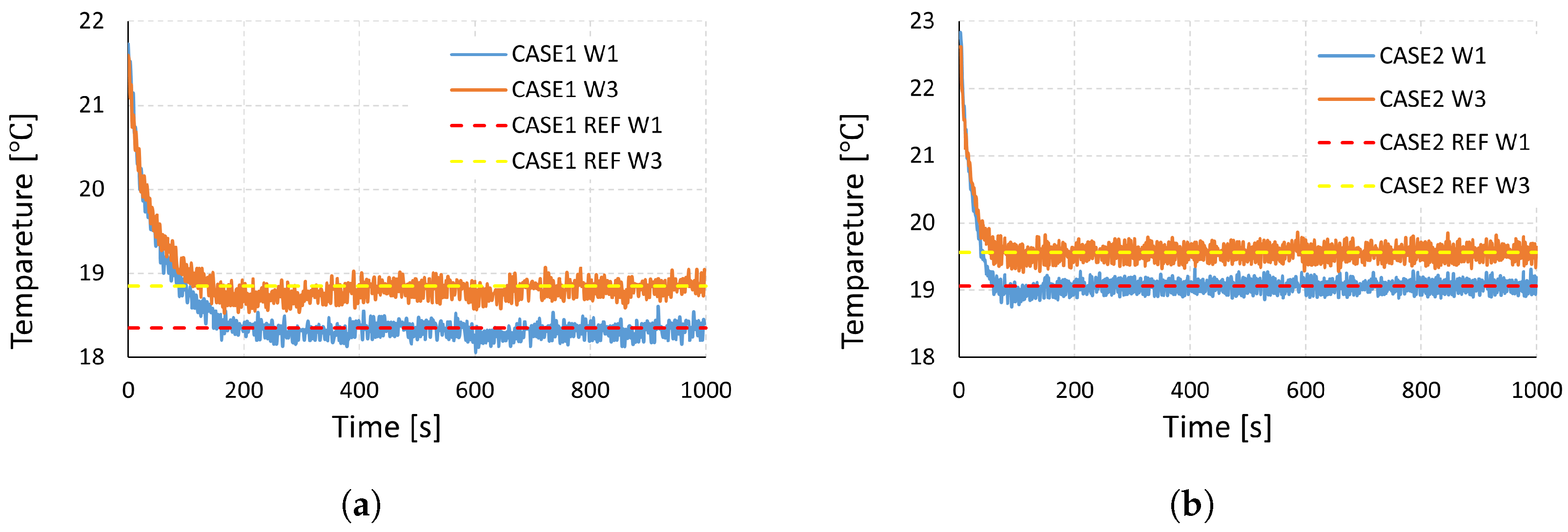
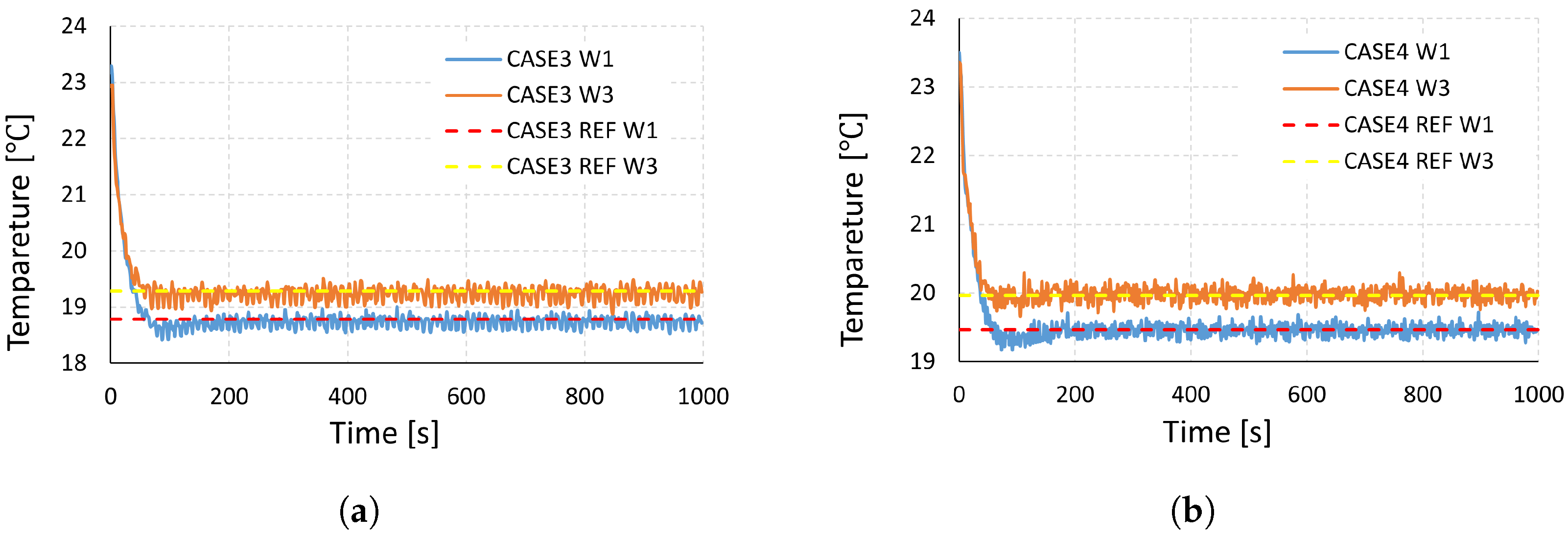
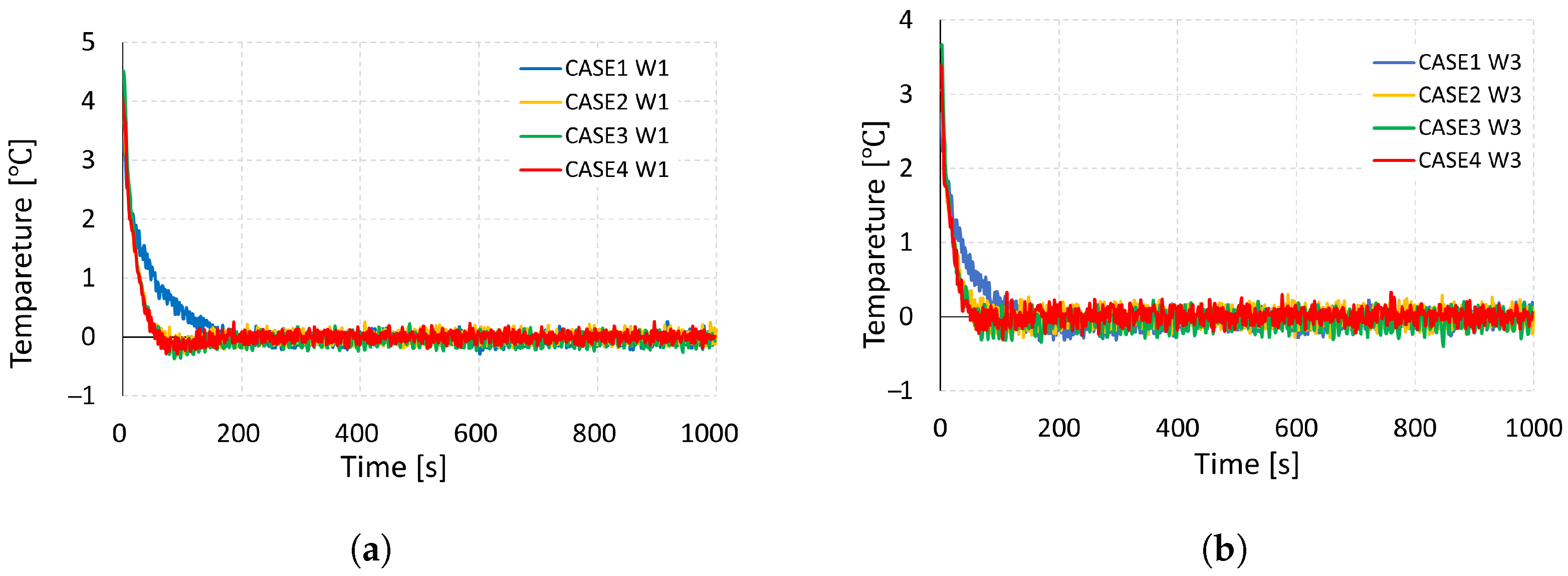
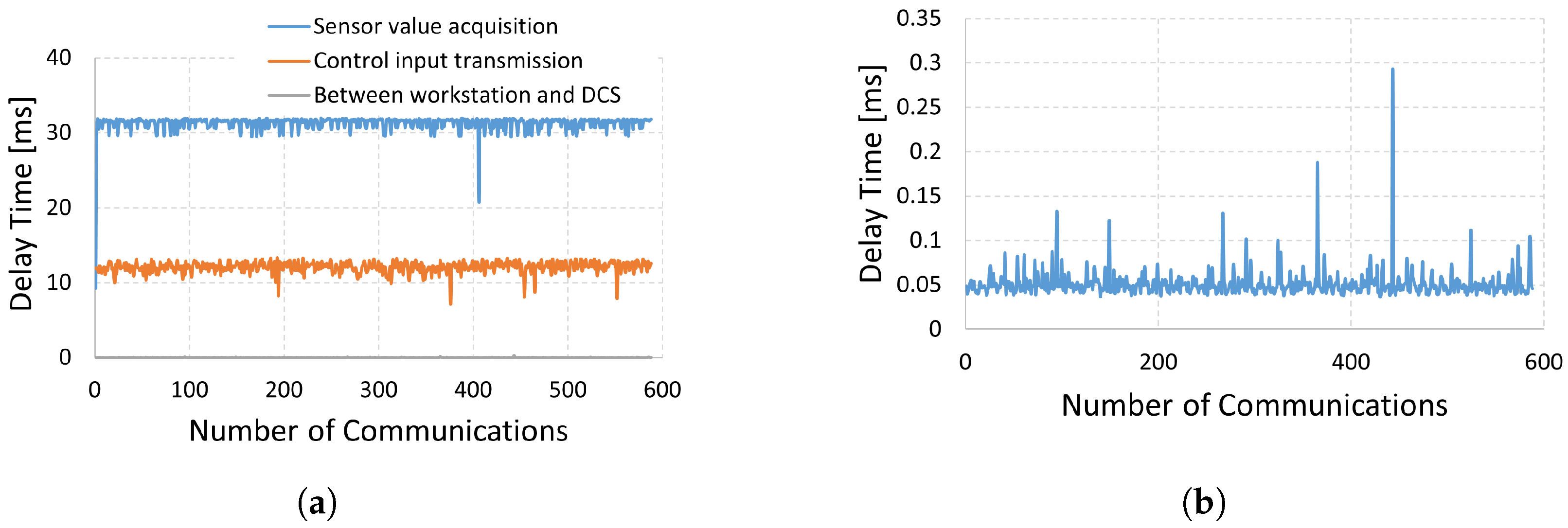
In the following, visible experimental results are exhibited in Figure 10, Figure 11 and Figure 12, and the quantitative results are summarized in Table 7, Table 8, Table 9 and Table 10. Specifically, Figure 10 and Figure 11 present the tracking performance results for each case while the errors are in Figure 12. The measured communication delays are shown in Figure 13.
From Figure 11, it can be confirmed that the proposed DCS-based networked remote-control framework is practically feasible since the output successfully tracks the target temperatures. In addition, the stable performance obtained in Figure 11b also suggests the applicability of the particle filter within the operator-based nonlinear control strategy for the microreactor system.
Moreover, following the exhibition of errors in Figure 12, one can find the superiority of the operator-based nonlinear control strategy via faster convergence of errors than the result of case 1, namely, the one using the PI control strategy. Moreover, it can be observed that after 200 s, the errors in case 4 are closer to those of case 2 than those of case 3. This indicates that by using a particle filter to address the perturbations induced by time delays, the performance under wireless communication (case 4) becomes similar with the one using wired communication (case 2). The effectiveness of particle filters is thus verified.
To further evaluate the experimental results, the quantitative analysis is provided as follows. In this study, natural fluctuations of approximately ± 0.2   ° C were observed under steady-state conditions. This level of accuracy is reasonable for the proposed microreactor research platform when compared with commercially available chemical reaction devices. For example, a temperature-control accuracy of ± 0.4   ° C is specified for the Shimadzu CRB-40 chemical reaction chamber, whereas an accuracy of ± 0.5   ° C is reported for the SIBATA Chemist Plaza CP-300 synthesis/reaction system. Accordingly, this range was defined as the steady-state region, and the settling time was defined as the time at which the response entered this region and remained there thereafter. In this work, the response time was defined as the time interval from the beginning of the experiment to the first instant at which the tracking error reached zero or crossed zero. Since the target temperature was lower than the initial temperature in the considered experiments, this definition was used as an analog of the rise time for the decreasing response. The overshoot was defined as the maximum error after the response exceeded the target and before it settled into the steady-state region. For consistency, the steady-state error was evaluated after 200 s .
As shown in Table 7, the settling time using the operator-based nonlinear control strategy in case 2, case 3 and case 4 are obviously lower than the one using the PI control strategy in case 1. This indicates that the proposed strategy accelerates the system response, which is also reflected in Table 8. In case 2, under wired communication, the response reaches the steady-state region earliest in both Sector W1 and Sector W3. In addition, comparing case 3 and case 4, the use of a particle filter results in a reduction in the settling time of 10.315 s in Sector W1 and by 15.693 s in Sector W3, by which the performance of case 4 is closer to the one under wired communication, and time-delay-induced perturbations are significantly compensated.
Regarding the steady-state error, Table 10 indicates that case 2 and case 4 yield smaller steady-state errors in both Sector W1 and Sector W3 than case 1 and case 3. This suggests that the response under the operator-based nonlinear control strategy is less affected by external disturbances, while the perturbations caused by the time delay can be effectively compensated for by the particle filter.
On the other hand, Table 9 shows that the overshoot associated with the proposed operator-based nonlinear control strategy is slightly larger than that obtained with the PI control strategy. For instance, in Sector W3, the overshoot in case 4 exceeds that in case 1 by 0.004. Even so, because the proposed operator and particle filter based nonlinear control strategy achieves a faster response together with a smaller steady-state error, the experimental results demonstrate the feasibility of the proposed DCS-based research platform and the effectiveness of the proposed control strategy.

6. Conclusions and Future Work

In this paper, a networked nonlinear remote-control framework for a microreactor process was constructed. Specifically, the proposed framework used a DCS device to realize networked and remote monitoring on microreactors, which was locally controlled by an operator-based nonlinear feedback scheme. In particular, the perturbations induced by time delays in wireless communication were emphasized through particle filters. As a result, the proposed framework is considered as a research platform close to real-world deployments and is thus appropriate for potential industrial developments and applications. Moreover, experiments were conducted, and the comparative results indicated the feasibility and effectiveness of the proposed framework.
In addition, although this study focused on a single microreactor, practical applications in actual factories and plants require the simultaneous control of multiple microreactors. Therefore, future research should address the dynamic characteristics, interactions, and challenges associated with integrated control in multi-reactor systems. Moreover, in this study, only air was used inside the flow channel for evaluation; however, in real operating environments, chemical reactions play a critical role. Consequently, it is essential to evaluate the system performance under conditions using actual reactants. Addressing these issues will constitute an important step toward establishing a more practical and reliable remote-control system.

Author Contributions

H.T. established a control system environment by integrating a distributed control system (DCS), wireless communication, and a microreactor. Furthermore, H.T. applied a conventional multi-input multi-output nonlinear controller based on operator theory and proposed a new control system incorporating communication delay compensation by integrating state estimation based on a particle filter to account for unknown communication delay and the nonlinear characteristics of the equipment. In addition, control experiments using an actual system were conducted to verify the effectiveness of the proposed method. Y.M. wrote the original draft. Z.A. revised and edited this paper. M.D. provided technical support and overall guidance on the research. All authors have read and agreed to the published version of the manuscript.

Funding

This research received no external funding.

Data Availability Statement

Data is contained within the article.

Conflicts of Interest

The authors declare no conflicts of interest.

References

  1. Burns, J.R.; Ramshaw, C. Development of a microreactor for chemical production. Chem. Eng. Res. Des. 1999, 77, 206–211. [Google Scholar] [CrossRef]
  2. Tamagawa, O.; Muto, A. Development of cesium ion extraction process using a slug flow microreactor. Chem. Eng. J. 2011, 167, 700–704. [Google Scholar] [CrossRef]
  3. Fanelli, F.; Parisi, G.; Degennaro, L.; Luisi, R. Contribution of microreactor technology and flow chemistry to the development of green and sustainable synthesis. Beilstein J. Org. Chem. 2017, 13, 520–542. [Google Scholar] [CrossRef] [PubMed]
  4. Shahzad, K.; Van Aeken, W.; Mottaghi, M.; Kazemi Kamyab, V.; Kuhn, S. Aggregation and clogging phenomena of rigid microparticles in microfluidics. Microfluid. Nanofluidics 2018, 22, 104. [Google Scholar] [CrossRef] [PubMed]
  5. Bugay, C.A.; Caballas, M.C.; Mercado, S.B.; Rubio, J.F.; Serote, P.K.; Villarte, P.N.; Rubi, R.V.C. A review of microreactors for process intensification. Eng. Proc. 2024, 67, 21. [Google Scholar]
  6. Sato, T.; Masuda, K.; Sano, C.; Matsumoto, K.; Numata, H.; Munetoh, S.; Kasama, T.; Miyake, R. Democratizing microreactor technology for accelerated discoveries in chemistry and materials research. Micromachines 2024, 15, 1064. [Google Scholar] [CrossRef] [PubMed]
  7. Nishizawa, K.; Deng, M. Operator-based nonlinear modeling and control of microreactor considering symmetry. In Proceedings of the 2021 IEEE International Conference on Networking, Sensing and Control (ICNSC), Virtual, 3–5 December 2021; pp. 1–6. [Google Scholar]
  8. Hanna, B.N.; Gonzaga de Oliveira, R.G.; Mohammad Al Dawood, K.A.; Patterson, M.D.; Abou Jaoude, A.; Garcia, S.; Lindley, B. Technoeconomic Evaluation of Microreactor Using Detailed Bottom-Up Estimate (Rev.1); Technical Report; Idaho National Laboratory (INL): Idaho Falls, ID, USA, 2024.
  9. Hessel, V.; Mukherjee, S.; Mitra, S.; Goswami, A.; Tran, N.N.; Ferlin, F.; Vaccaro, L.; Galogahi, F.M.; Nguyen, N.T.; Escribà-Gelonch, M. Sustainability of flow chemistry and microreaction technology. Green Chem. 2024, 26, 9503–9528. [Google Scholar] [CrossRef]
  10. Rashid, M.M.; Bhuiyan, M.M.I.; Muzni, I.B.; Mustafa, M.E.B.; Ferdaus, M. Design field controller for level, flow, temperature and networking using YOKOGAWA DCS. IOP Conf. Ser. Mater. Sci. Eng. 2013, 53, 012094. [Google Scholar] [CrossRef]
  11. Borikar, R.; Subashini, M. Design of distributed control and emergency shutdown system for urea and ammonia plant. MATEC Web Conf. 2018, 225, 02006. [Google Scholar] [CrossRef]
  12. Jeong, T. A novel overload control algorithm for distributed control systems to enhance reliability in industrial automation. Appl. Sci. 2025, 15, 5766. [Google Scholar] [CrossRef]
  13. Molisch, A.F. Wireless Communications; John Wiley & Sons: Hoboken, NJ, USA, 2012; Volume 34. [Google Scholar]
  14. Goldsmith, A. Wireless Communications; Cambridge University Press: Cambridge, UK, 2005. [Google Scholar]
  15. Åström, K.J.; Wittenmark, B. Computer-Controlled Systems: Theory and Design; Courier Corporation: North Chelmsford, MA, USA, 2013. [Google Scholar]
  16. Ma, Y.; Ma, R.; Lin, Z.; Miao, C.; Zhang, R.; Long, W.; Wu, W.; Wang, J. Distributed split single-sideband time-modulated arrays for secure communications. IEEE Internet Things J. 2026, early access. [Google Scholar] [CrossRef]
  17. Manitius, A.; Olbrot, A. Finite spectrum assignment problem for systems with delays. IEEE Trans. Autom. Control 1979, 24, 541–552. [Google Scholar] [CrossRef]
  18. Deng, Y.; Léchappé, V.; Zhang, C.; Moulay, E.; Du, D.; Plestan, F.; Han, Q.L. Designing discrete predictor-based controllers for networked control systems with time-varying delays: Application to a visual servo inverted pendulum system. IEEE/CAA J. Autom. Sin. 2022, 9, 1763–1777. [Google Scholar] [CrossRef]
  19. Smith, O.J.M. A controller to overcome dead time. ISA J. 1959, 6, 28–33. [Google Scholar]
  20. Rsetam, K.; Cao, Z.; Man, Z.; Zhang, X.M. GPIO-based continuous sliding mode control for networked control systems under communication delays with experiments on servo motors. IEEE/CAA J. Autom. Sin. 2025, 12, 99–113. [Google Scholar] [CrossRef]
  21. Djuric, P.; Kotecha, J.; Zhang, J.; Huang, Y.; Ghirmai, T.; Bugallo, M.; Miguez, J. Particle filtering. IEEE Signal Process. Mag. 2003, 20, 19–38. [Google Scholar] [CrossRef]
  22. Gustafsson, F. Particle filter theory and practice with positioning applications. IEEE Aerosp. Electron. Syst. Mag. 2010, 25, 53–82. [Google Scholar] [CrossRef]
  23. Zhang, W.; Branicky, M.; Phillips, S. Stability of networked control systems. IEEE Control Syst. Mag. 2001, 21, 84–99. [Google Scholar]
  24. Morita, Y.; Kato, T.; Deng, M. Nonlinear temperature control based on operator theory for microreactors considering disturbance and interference. In Proceedings of the 2024 6th International Conference on Energy, Power and Grid (ICEPG), Guangzhou, China, 27–29 September 2024; pp. 1521–1525. [Google Scholar]
  25. Mannella, G.A.; La Carrubba, V.; Brucato, V. Peltier cells as temperature control elements: Experimental characterization and modeling. Appl. Therm. Eng. 2014, 63, 234–245. [Google Scholar] [CrossRef]
  26. Forouzan, B.A. TCP/IP Protocol Suite; McGraw-Hill Higher Education: Columbus, OH, USA, 2002. [Google Scholar]
  27. Deng, M. Operator-Based Nonlinear Control Systems: Design and Applications; John Wiley & Sons: Hoboken, NJ, USA, 2014. [Google Scholar]
  28. Tanabata, Y.; Deng, M. Filtered Right Coprime Factorization and Its Application to Control a Pneumatic Cylinder. Processes 2024, 12, 1475. [Google Scholar] [CrossRef]
  29. Rubinstein, R.Y.; Kroese, D.P. Simulation and the Monte Carlo Method; John Wiley & Sons: Hoboken, NJ, USA, 2016. [Google Scholar]
Figure 1. Physical structure of the microreactor system: (a) Overview of the experimental equipment. (b) Detailed components of each part.
Processes 14 01553 g001
Figure 2. Schematic illustration of current experimental configuration of microreactor systems, which requires further improvements to more faithfully reproduce the environment encountered in industrial applications.
Processes 14 01553 g002
Figure 3. Division of the microreactor system: (a) Three-division model. (b) System deployment diagram.
Processes 14 01553 g003
Figure 4. Proposed DCS-based networked remote-control framework for microreactor system.
Processes 14 01553 g004
Figure 5. Physical structure of DCS system: (a) Human Interface Station (HIS). (b) Field Control Station (FCS).
Processes 14 01553 g005
Figure 6. Experimental flow of the DCS component (second floor).
Processes 14 01553 g006
Figure 7. Experimental flow of the microreactor component (third floor).
Processes 14 01553 g007
Figure 8. Modified scheme of the operator-based nonlinear control system proposed in a previous study [24].
Processes 14 01553 g008
Figure 9. Proposed operator-based nonlinear control scheme for the microreactor system considering unknown time delays.
Processes 14 01553 g009
Figure 10. Tracking performance: (a) Case 1. (b) Case 2.
Processes 14 01553 g010
Figure 11. Tracking performance: (a) Case 3. (b) Case 4.
Processes 14 01553 g011
Figure 12. Tracking error: (a) Sector W 1 . (b) Sector W 3 .
Processes 14 01553 g012
Figure 13. Communication delay measurement results: (a) Overall results. The delays in sensor value acquisition (blue) and control input transmission (orange) are significantly larger than that between workstation and DCS (grey), which is nearly zero. (b) Enlarged view of the delay between workstation and DCS.
Processes 14 01553 g013
Table 1. Parameters of physical model.
SymbolDescription
T 0 Outside temperature (initial temperature)
T c Heat-absorbing surface temperature of Peltier device
T h Heat-dissipation surface temperature of Peltier device
T a n Temperature of Sector A n
T ω k Temperature of Sector W k
iInput current of Peltier device
SSeebeck coefficient of Peltier device
KThermal conductivity of Peltier device
RResistance of Peltier device
ϵ a Emissivity of aluminum
ϵ w Emissivity of water
σ Stefan–Boltzmann constant
α Heat transfer coefficient of air
α w Heat transfer coefficient of water
λ a Thermal conductivity of aluminum
λ w Thermal conductivity of water
c a Specific heat of aluminum
c w Specific heat of water
m a Mass of aluminum
m w Mass of water
Table 2. Parameters of area and length.
SymbolValueSymbolValue
S 1 2.6 × 10 3 m 2 S 2 7.0 × 10 4 m 2
S 3 9.8 × 10 3 m 2 S 4 9.0 × 10 4 m 2
S 5 9.0 π × 10 6 m 2 S 6 3.0 π × 10 4 m 2
S 7 1.4 × 10 3 m 2 S 8 2.8 × 10 4 m 2
d 1 0.120 m d 2 0.070 m
d 3 0.030 m d 4 0.030 m
d 5 0.020 m d 6 0.010 m
d 7 0.010 m d 8 0.020 m
d 9 0.0035 m d 10 0.0015 m
Table 3. Equipment used.
Device NameCompany Name and LocationModel Number
Peltier deviceThermonamic Electronics Corp., Ltd., Nanchang, ChinaTES1-12739
MicrocomputerSTMicroelectronics, Geneva, SwitzerlandNUCLEO-F303K8
Voltage sourceALINCO Incorporated, Osaka, JapanDM-330MV
DCSYOKOGAWA Electric Corporation, Tokyo, JapanCENTUM CS3000
Router 1 (3F)BUFFALO Inc., Tokyo, JapanWSR-1166DHP3
Router 2 (2F)NEC Corporation, Tokyo, JapanAterm WR8165N
Router 3 (Local)BUFFALO Inc., Tokyo, JapanWSR-300HP
Table 4. Parameters of experiments.
SymbolDescriptionValue
t f Control time 1000 s
d t Control cycle 1 s
NNumber of particles5000
r 1 Target cooling temperature of Sector W1 4.0   ° C
r 3 Target cooling temperature of Sector W3 3.5   ° C
K P Proportional gain 0.2
K I Integral gain 0.0035
Table 5. Parameters of physical model for experiments.
SymbolValue
S 0.266   V / K
K 1.472   W / K
R 2.820   Ω
ϵ a 0.2
ϵ w 0.93
σ 5.67 × 10 8   W / ( m 2   ·   K 4 )
α 323.048   W / ( m 2   ·   K )
α w 200   W / ( m 2   ·   K )
λ a 238   W / ( m   ·   K )
λ w 0.63   W / ( m   ·   K )
c a 250   J / ( kg   ·   K )
c w 2174.64   J / ( kg   ·   K )
Table 6. Outside and target temperatures.
SymbolDescriptionValue
T 0 (Case 1)Outside temperature 22.351   ° C
REF W 1 (Case 1)Target temperature of Sector W 1 18.351   ° C
REF W 3 (Case 1)Target temperature of Sector W 3 18.851   ° C
T 0 (Case 2)Outside temperature 23.062   ° C
REF W 1 (Case 2)Target temperature of Sector W 1 19.062   ° C
REF W 3 (Case 2)Target temperature of Sector W 3 19.562   ° C
T 0 (Case 3)Outside temperature 22.786   ° C
REF W 1 (Case 3)Target temperature of Sector W 1 18.786   ° C
REF W 3 (Case 3)Target temperature of Sector W 3 19.286   ° C
T 0 (Case 4)Outside temperature 23.464   ° C
REF W 1 (Case 4)Target temperature of Sector W 1 19.464   ° C
REF W 3 (Case 4)Target temperature of Sector W 3 19.964   ° C
Table 7. Settling time of each case.
CaseSector W 1 Sector W 3
Case 1 171.690   s 127.476   s
Case 2 146.000   s 63.000   s
Case 3 169.964   s 80.219   s
Case 4 159.649   s 64.526   s
Table 8. Response time of each case.
CaseSector W 1 Sector W 3
Case 1 87.00   s 66.00   s
Case 2 59.00   s 52.00   s
Case 3 37.00   s 37.00   s
Case 4 32.00   s 30.00   s
Table 9. Overshooting of each case.
CaseSector W 1 Sector W 3
Case 1 0.293   ° C 0.324   ° C
Case 2 0.31   ° C 0.345   ° C
Case 3 0.368   ° C 0.349   ° C
Case 4 0.293   ° C 0.328   ° C
Table 10. Steady-state error of each case.
CaseSector W 1 Sector W 3
Case 1 0.095242   ° C 0.463822   ° C
Case 2 0.088233   ° C 0.110067   ° C
Case 3 0.105393   ° C 0.127477   ° C
Case 4 0.084857   ° C 0.102804   ° C
Disclaimer/Publisher’s Note: The statements, opinions and data contained in all publications are solely those of the individual author(s) and contributor(s) and not of MDPI and/or the editor(s). MDPI and/or the editor(s) disclaim responsibility for any injury to people or property resulting from any ideas, methods, instructions or products referred to in the content.