1. Introduction
Injection operations are widely applied in oil and gas recovery, geothermal energy utilization, underground gas storage, and other subsurface energy engineering fields. Wellbore stability and operational safety are crucial to the efficient and sustainable development of oil and gas resources [
1,
2]. As a key conduit for fluid transport between underground fluids and formations, the wellbore experiences complex fluid flow, significant temperature variations, and interactions between the tubing string and the surrounding rock throughout its service life. These factors significantly influence operational efficiency and the overall performance of the engineering system [
3,
4,
5]. Under complex subsurface conditions, particularly those characterized by high temperature and high pressure, the coupling effects among fluid flow, heat transfer, and structural response become increasingly pronounced, constituting a typical THM multi-field coupling problem. With the advancement of underground energy exploitation toward deeper formations with higher temperature and pressure conditions, the fluid flow behavior, temperature evolution characteristics, and heat transfer processes involved in wellbore operations become progressively more complex, and the THM coupling effects become more significant. Therefore, conducting in-depth research on these coupling mechanisms is of considerable theoretical importance and practical engineering value for optimizing wellbore structural design, improving injection efficiency, and ensuring the long-term safe and stable operation of the wellbore [
6,
7,
8].
During injection operations, the THM multi-field coupling effects play a crucial role in determining operational efficiency and structural safety. As the injected fluid flows through the wellbore, its pressure and temperature continuously vary along the well, influenced by intense heat exchange with the tubing string and surrounding media. These temperature changes cause the tubing string to undergo thermal expansion and contraction, generating additional axial forces and thermal stress concentrations that adversely affect the stability and performance of the tubing string [
9]. Furthermore, fluid flow, heat transfer, and the structural deformation of the tubing string interact and feedback with each other, forming a highly nonlinear THM multi-field coupling system [
10]. Under high-temperature and high-pressure operating conditions, the physical properties of the fluid in the wellbore change significantly with temperature and pressure, further intensifying the coupling effects between the fluid and the solid structure. These complex interactions not only affect fluid transport and heat exchange efficiency but may also lead to fatigue damage or even structural failure of the tubing string material, thereby threatening the safety and long-term stability of the injection operation [
11,
12]. Therefore, there is an urgent need for systematic and in-depth research on the THM multi-field coupling issues in wellbore injection operations.
Regarding the THM multi-field coupling problem of tubing strings, various analytical or numerical simulation methods have been developed to analyze the coupling among fluid flow, heat transfer, and structural response. Ramey et al. proposed a mathematical model describing the heat transfer process within the wellbore by dividing the wellbore into different regions and combining conservation laws [
13]. Abdelhafiz et al. developed a model for predicting the temperature distribution of the wellbore under various operating conditions, considering transient temperature disturbances in the cement sheath, casing, and formation [
14]. Sproull et al. established an analytical model describing the heat generation process under different boundary conditions for the infinite cylindrical heat source problem, providing an important reference for transient heat conduction problems in formations [
15]. Gu et al. extended Ramey’s model to the working condition of superheated steam injection in horizontal wells, introducing the effects of phase change processes and variations in steam quality [
16]. Dong et al. studied the characteristics of temperature distribution during fracturing and analyzed the effect of axial heat conduction [
17]. Ma et al. established a fully coupled THM model for wellbore stability in deep unsaturated formations, emphasizing the significance of thermal–hydraulic–mechanical interactions under high-temperature and high-pressure conditions [
18]. Zhai et al. developed a peridynamics-based finite element model to analyze sealing failure at the casing–cement interface, which is critical for long-term wellbore integrity in ultra-deep wells [
19]. However, most of these models adopt simplified assumptions, analyzing only single-field or dual-field coupling problems, neglecting the complexity of THM three-field coupling, with limited success in comprehensively characterizing the coupling actions among fluid flow, temperature field evolution, and tubing string structural mechanical response. In addition, existing studies lack consideration of full-scale modeling of tubing string mechanics. They often reduce computational difficulty by reducing geometric scales and simplifying tubing string structural morphologies and boundary conditions. This leads to an inability to accurately reproduce the complete structural characteristics of the tubing string in actual wellbores, the stress distribution over the full length, and the multi-interface coupling effects among key components such as packers and joints with the tubing string body, fluid, and formation. Consequently, core mechanical responses such as axial deformation, thermal stress distribution, and contact nonlinearity of the tubing string are difficult to accurately characterize. Therefore, there is a pressing need to develop a more refined model to predict the mechanical characteristics and multi-field coupling effects of the tubing string at full scale, thereby providing precise theoretical support for wellbore structure optimization, injection process parameter regulation, and operation efficiency improvement, and ultimately ensuring the long-term safe and stable operation of the wellbore.
To overcome the above limitations, this paper proposes a full-scale THM multi-field coupled numerical model, developed for actual working conditions in wellbore injection operations. The model takes the real wellbore structure as the research object, providing a unified modeling of the tubing, packer, casing, cement sheath, and surrounding formation. In terms of spatial scale, it completely covers the entire well section from the wellhead to the bottom. In terms of multi-physical modeling, it synergistically describes key processes such as fluid flow, temperature conduction, and tubing string structural mechanical response. The model fully considers the influence of fluid pressure and temperature changes during the injection process on the tubing string axial load, thermal stress, and deformation behavior. Meanwhile, it introduces packer-casing contact, friction constraints, and nonlinear boundary conditions to simulate typical working conditions such as setting, liquid injection, and unloading. To ensure the accuracy and stability of solving the strongly coupled multi-field problem, this paper adopts the finite element method to uniformly discretize the governing equations and combines the Newton iteration strategy to solve the nonlinear coupled system. This full-scale, multi-field coupled modeling and numerical implementation provides a systematic and reliable theoretical basis and technical support for wellbore injection process optimization, packer structural innovative design, and long-term wellbore integrity evaluation from the perspective of practical engineering.
The structure of this article is arranged as follows:
Section 2 systematically describes the proposed model. First, the overall mechanical model of the wellbore tubing string is developed, and the typical working condition evolution of the tubing string during the service process (including stages such as setting, setting stop, liquid injection, and injection stop) is outlined. Subsequently, the governing equations for the solid mechanics field, thermodynamics field, and wellbore internal fluid flow are established, respectively. Among them, the thermodynamics part describes the heat transfer processes successively inside the tubing, in the annular fluid, radially through the tubing string, in the casing, and between the cement sheath and the formation. The fluid part provides the calculation model for pressure drop and flow characteristics within the wellbore. On this basis, the end of
Section 2 introduces the unified solution method and its numerical implementation for the THM coupled equation system.
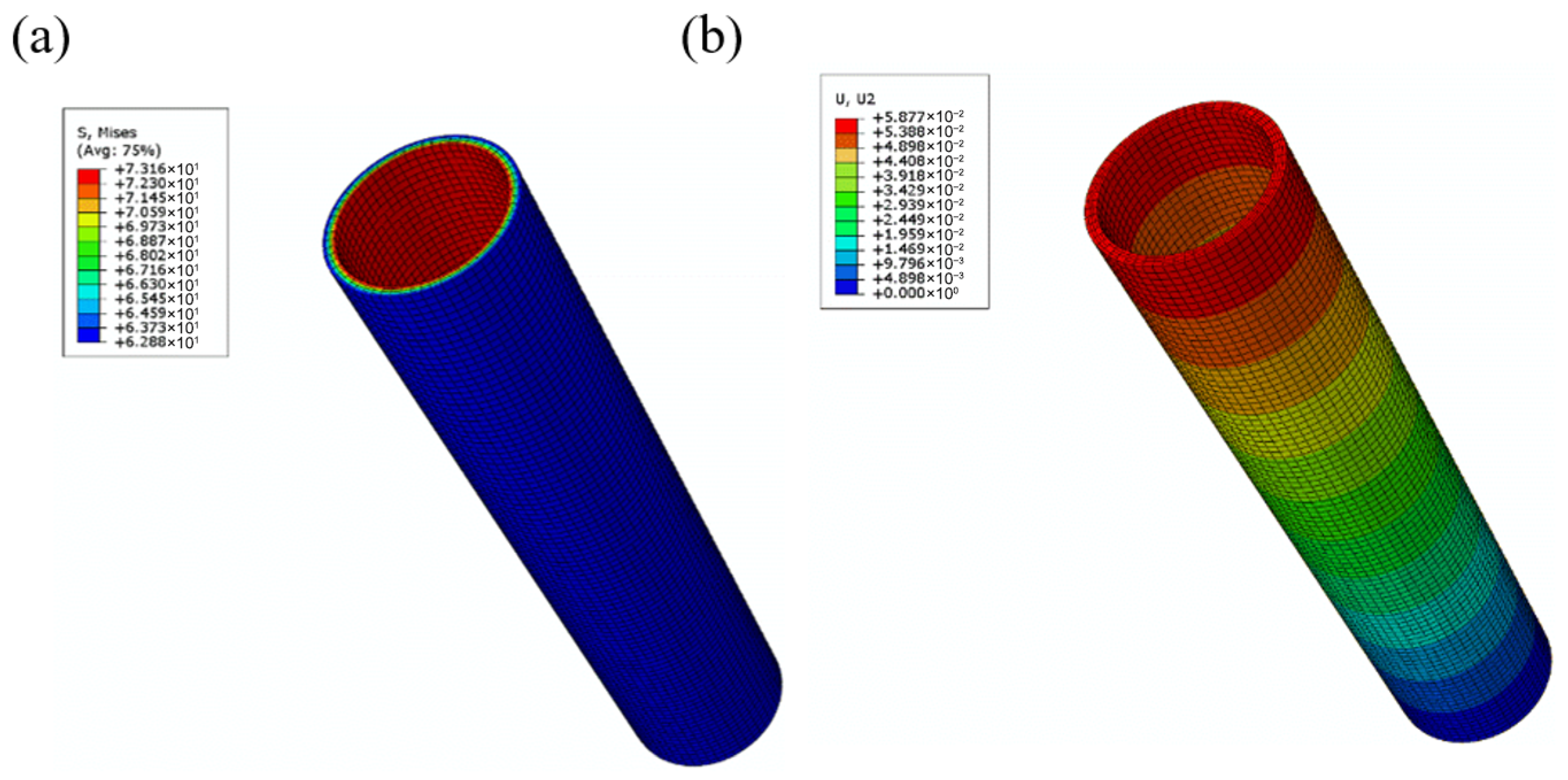
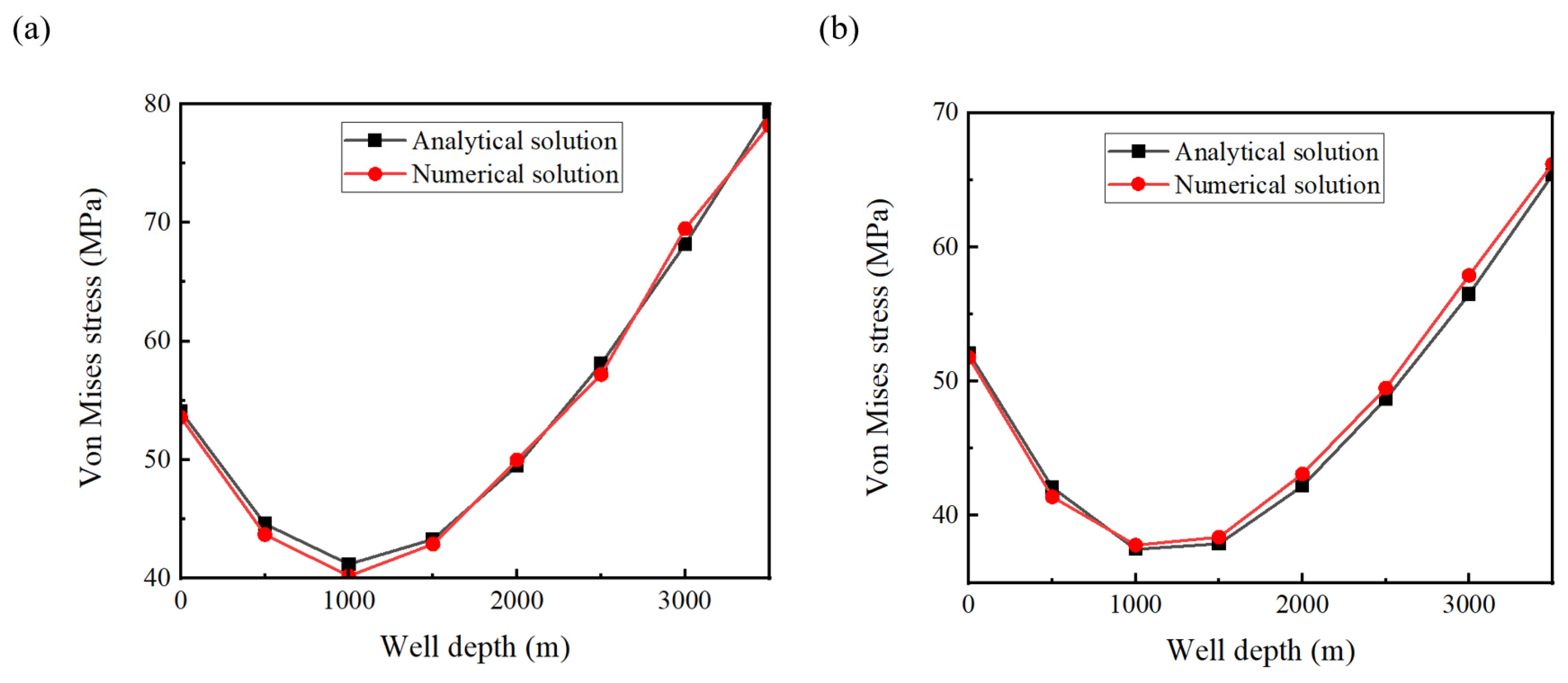
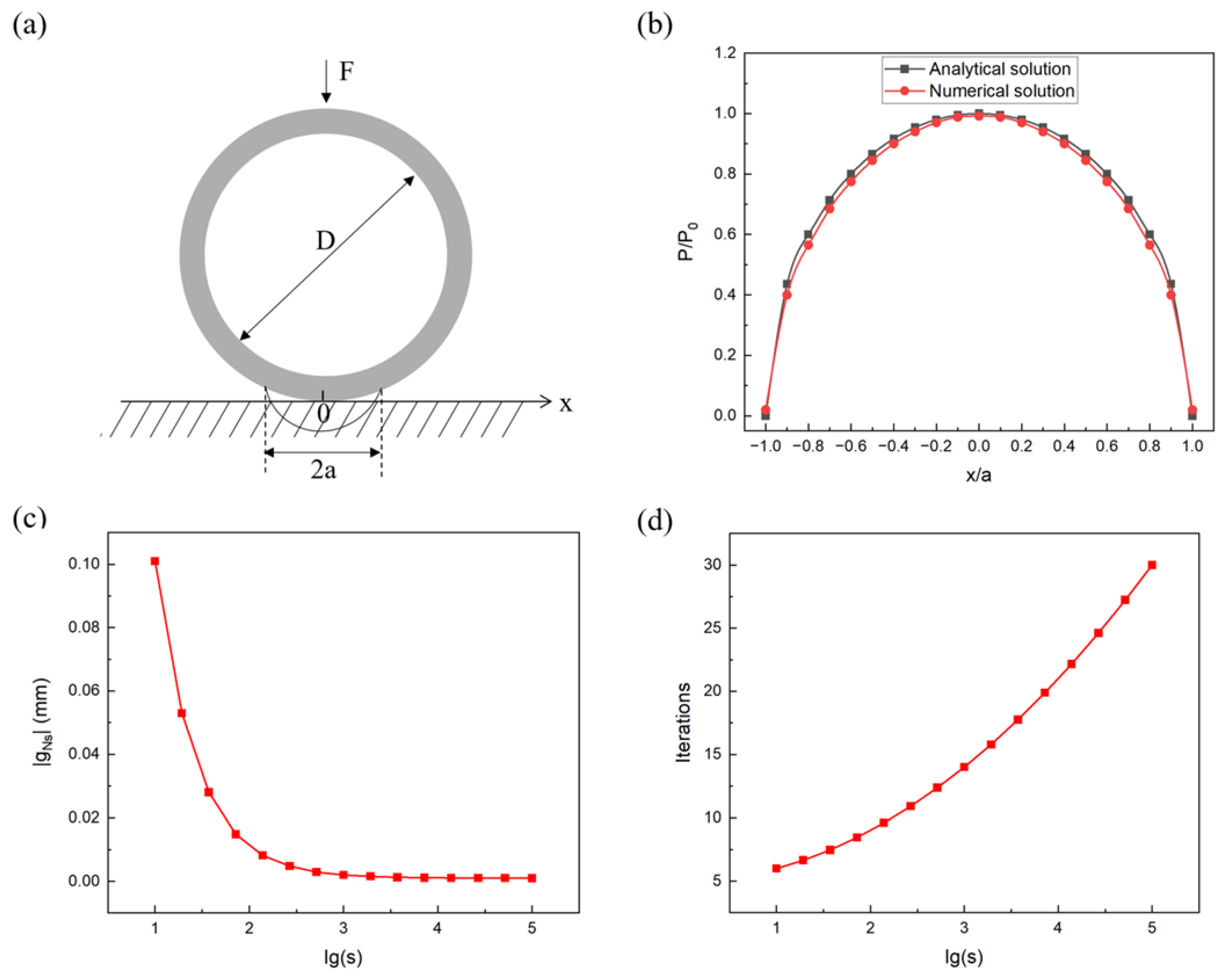
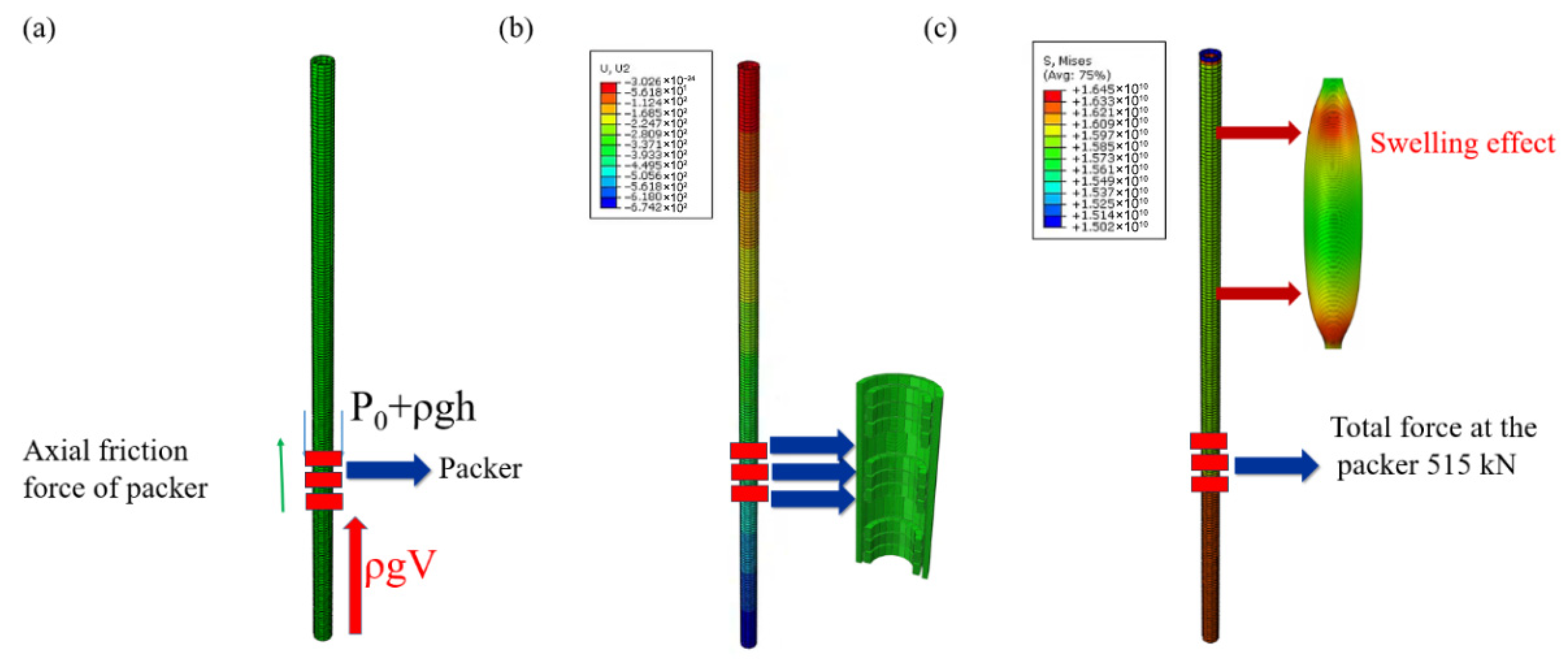
Section 3 presents the numerical calculation results and corresponding analysis. First, the rationality and accuracy of the established model are verified through classical benchmarks. Subsequently, based on given wellbore parameters and analysis procedures, the displacement, axial force, stress, and temperature response characteristics of the tubing string under various working conditions such as setting, setting stop, liquid injection, and injection stop are systematically analyzed.
Section 4 summarizes the work of the whole paper, outlines the main characteristics of the proposed multi-field coupled modeling method, and summarizes the key conclusions regarding the mechanical and thermal responses of the tubing string throughout the wellbore injection process.
2. Model Description
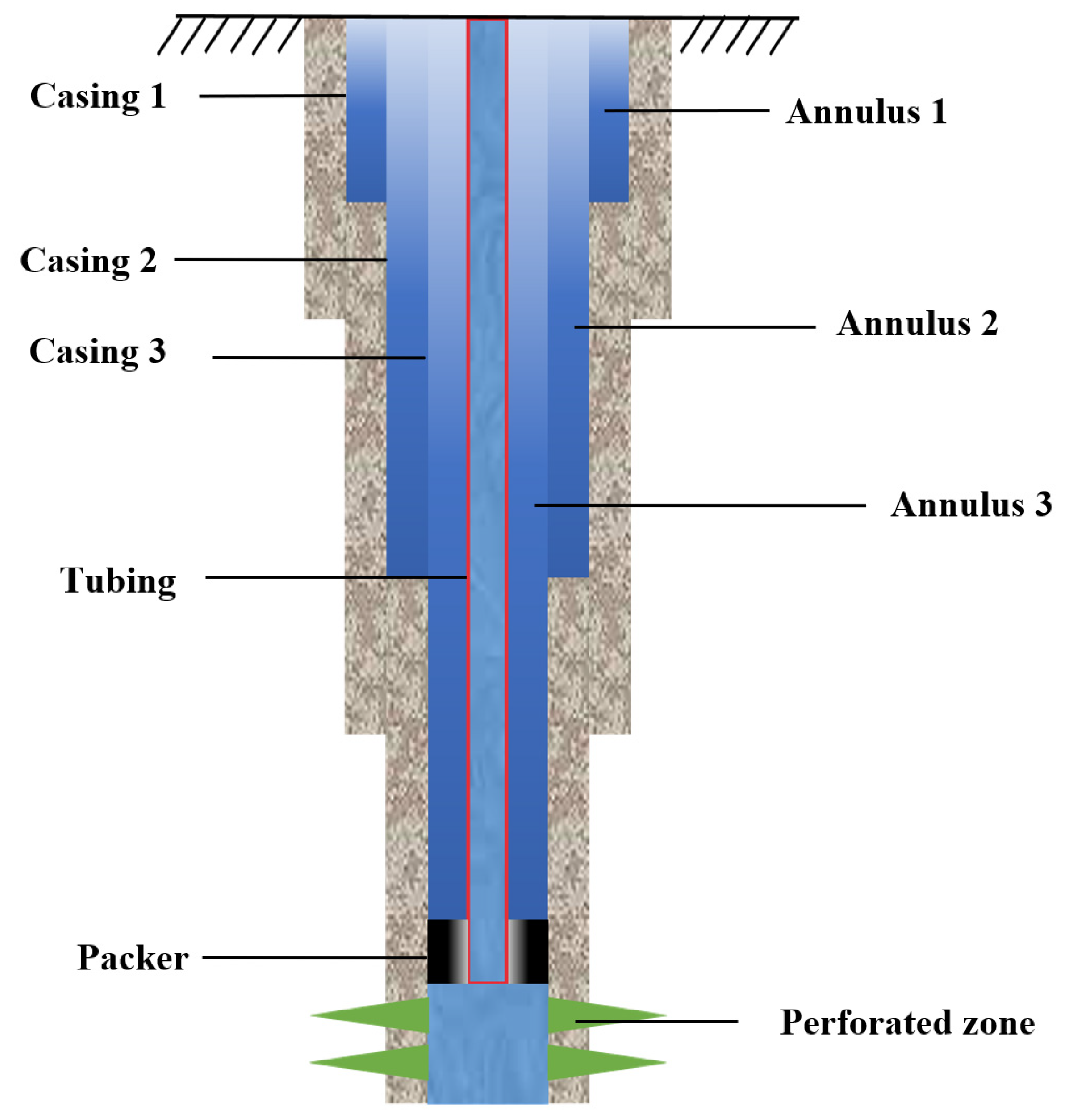
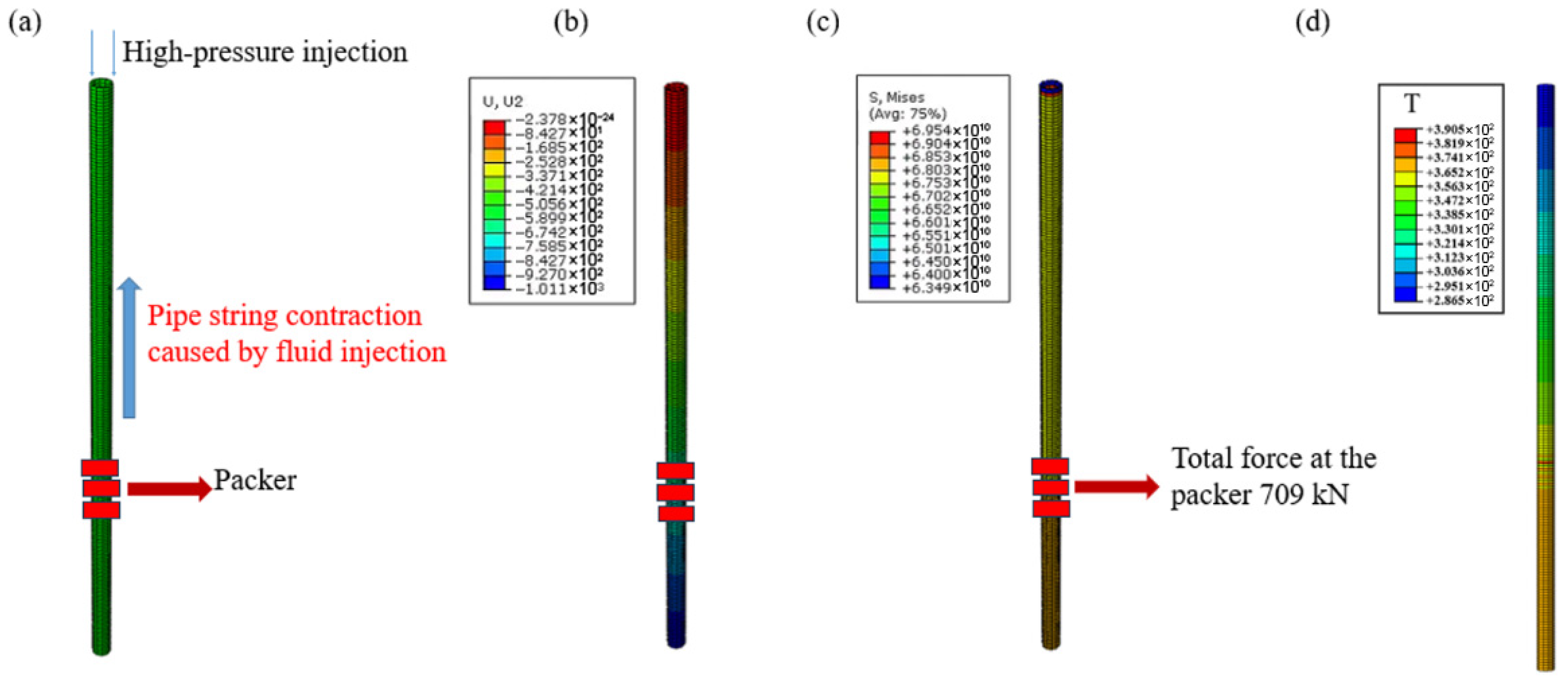
The tubular mechanical model for wellbore injection operations constructed in this paper is shown in
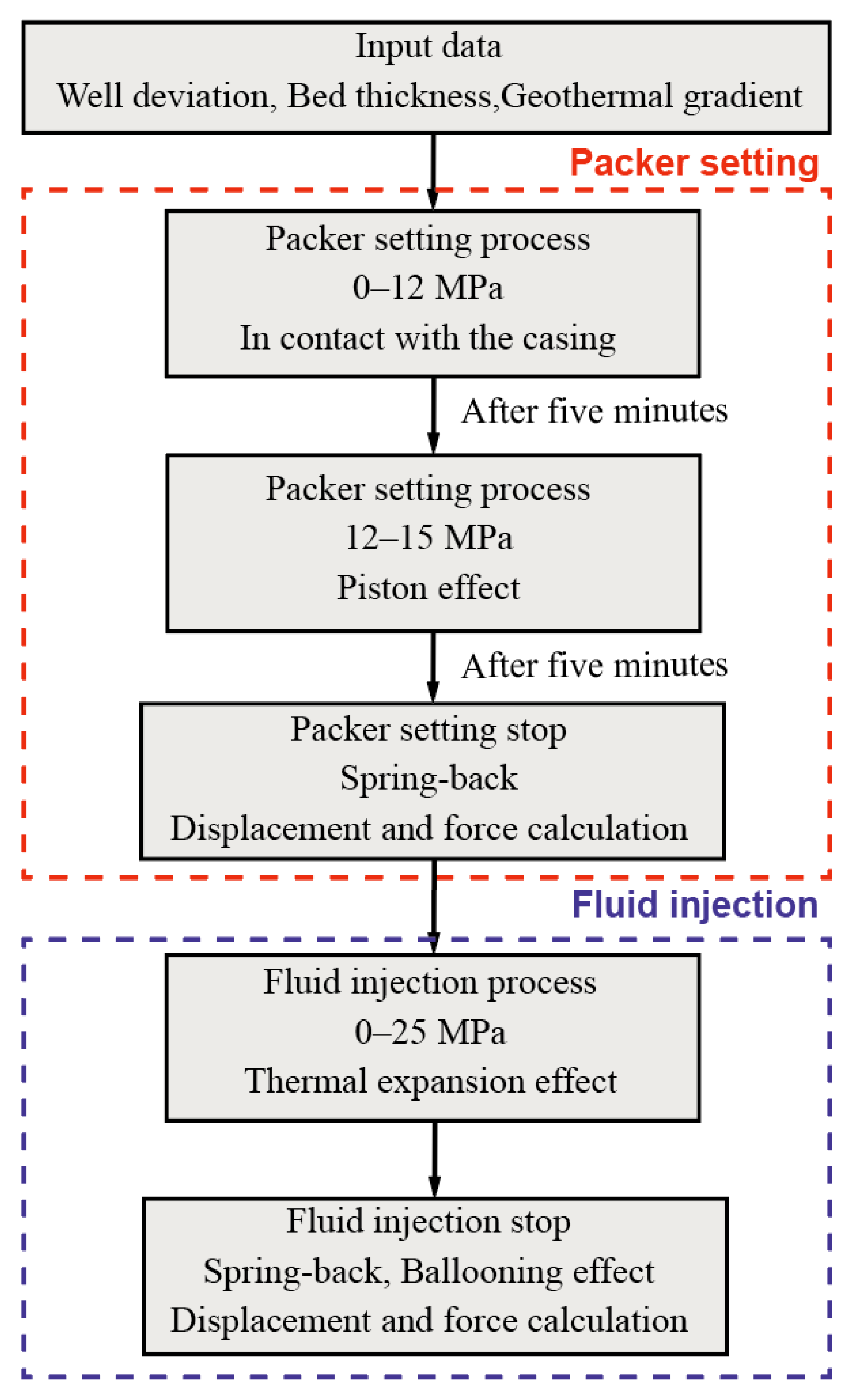
Figure 1. This model completely covers the casing, tubing, packer, tubing string, and annular space, accurately reconstructing the topological structure and positional relationships of the multi-layer media within the wellbore. The tubing string exhibits significant multi-stage evolution characteristics throughout its service cycle. With the switching of working conditions, the pressure field, temperature field, and fluid medium types within the wellbore undergo dynamic changes. These environmental loads superimpose with the nonlinear contact behavior between the packer and the casing, all of which have a coupled impact on the mechanical response of the tubing string, thereby determining the overall stability of the wellbore and operational safety. Based on the engineering operation process, the service process of the tubing string can be divided into four typical stages: setting, setting stop, liquid injection, and injection stop. The mechanical behaviors and analysis focus of each stage are as follows.
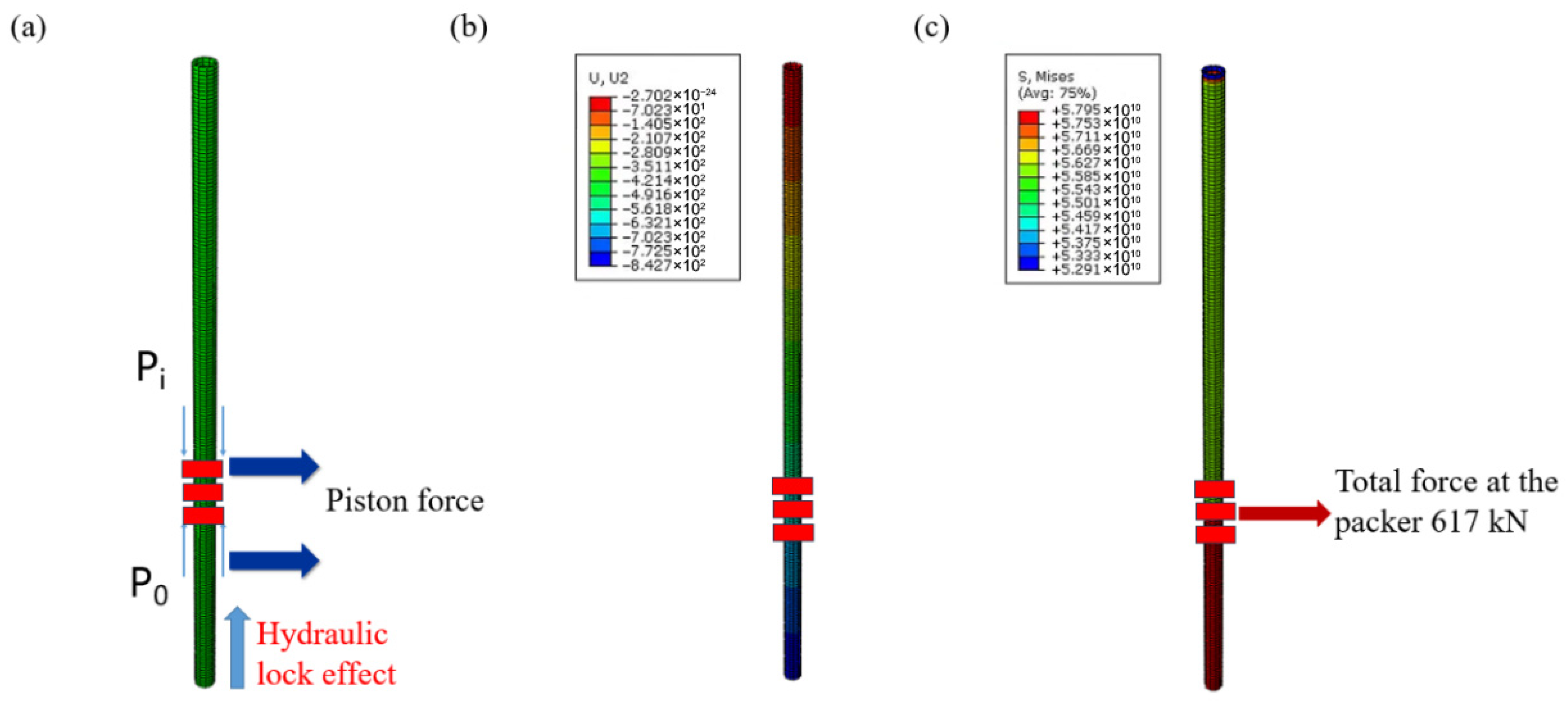
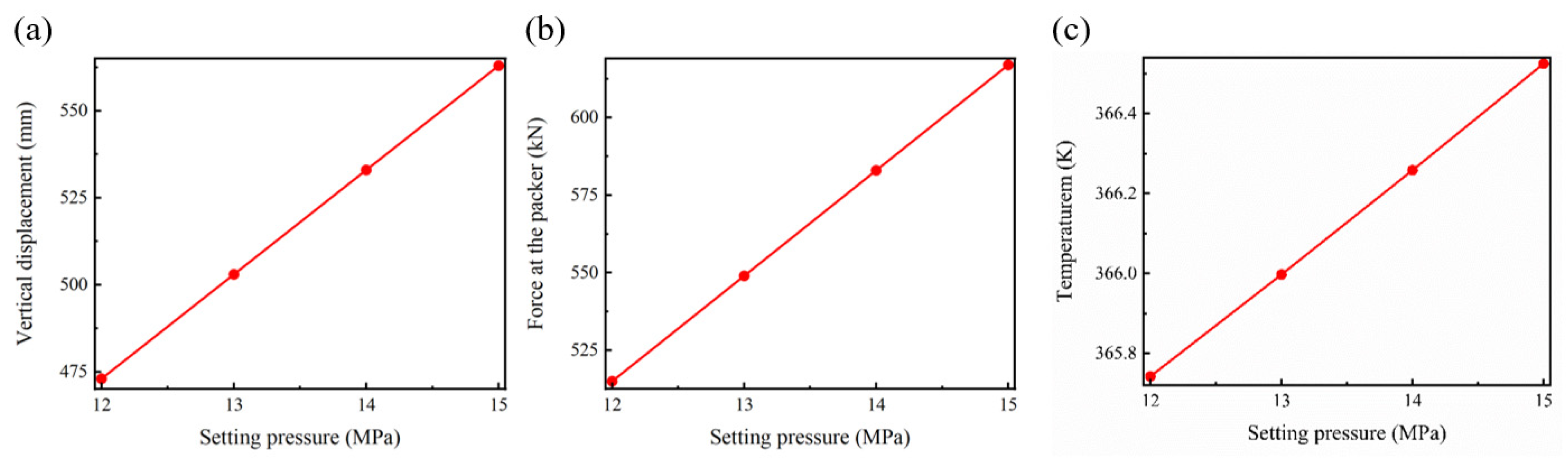
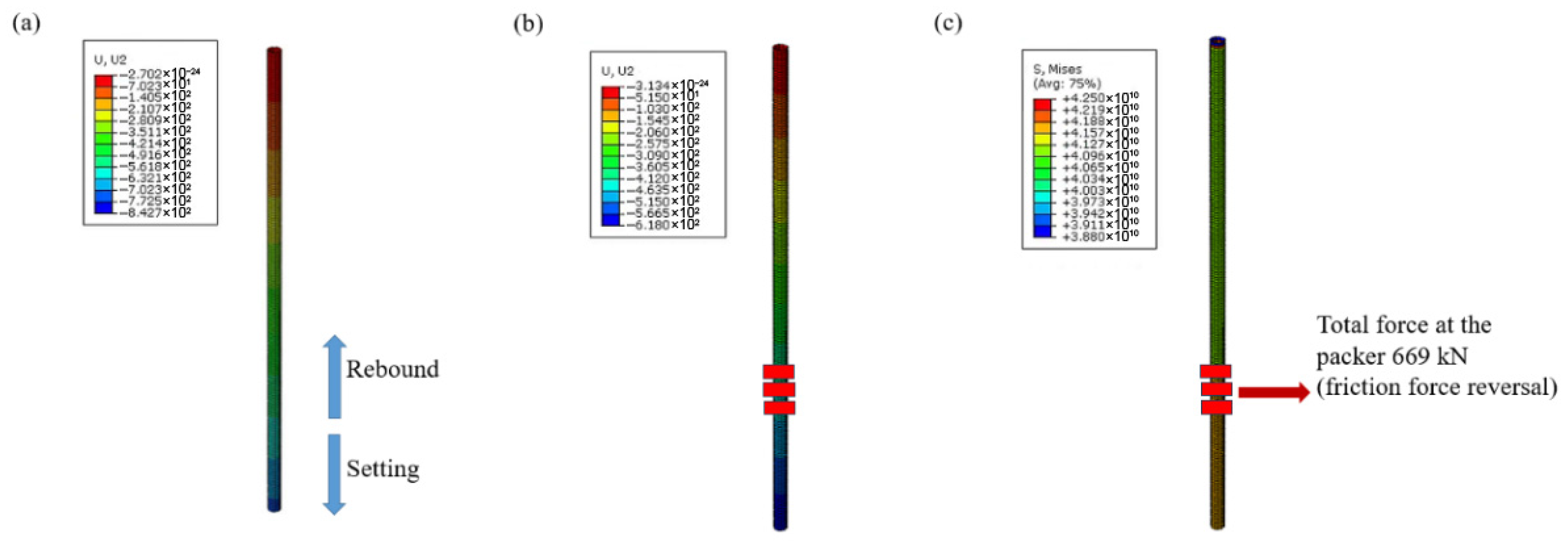
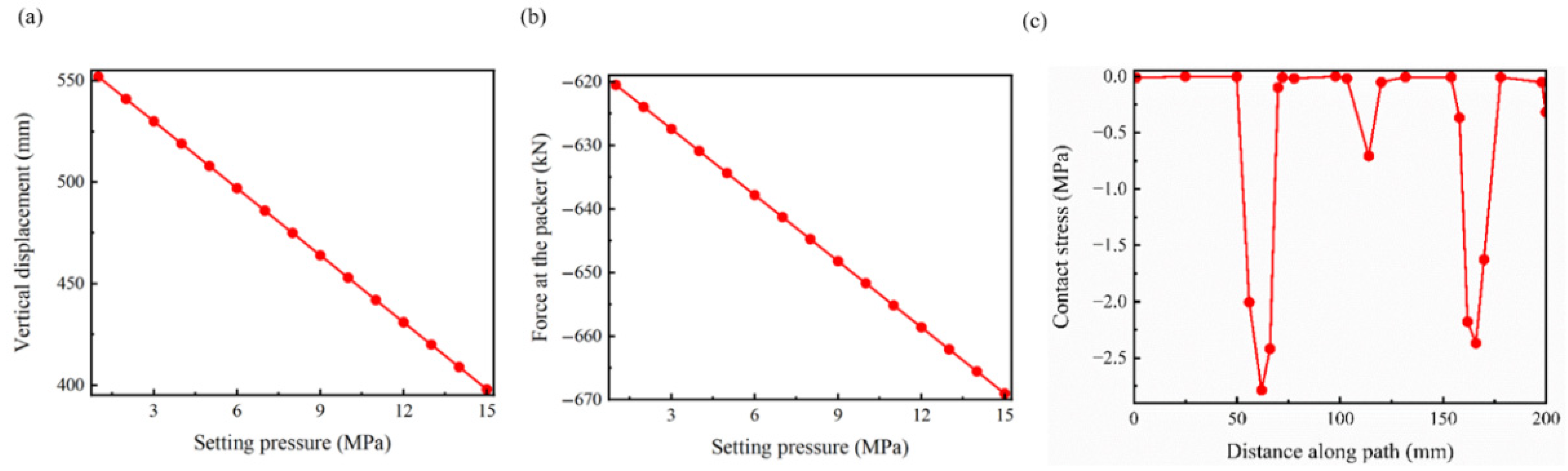
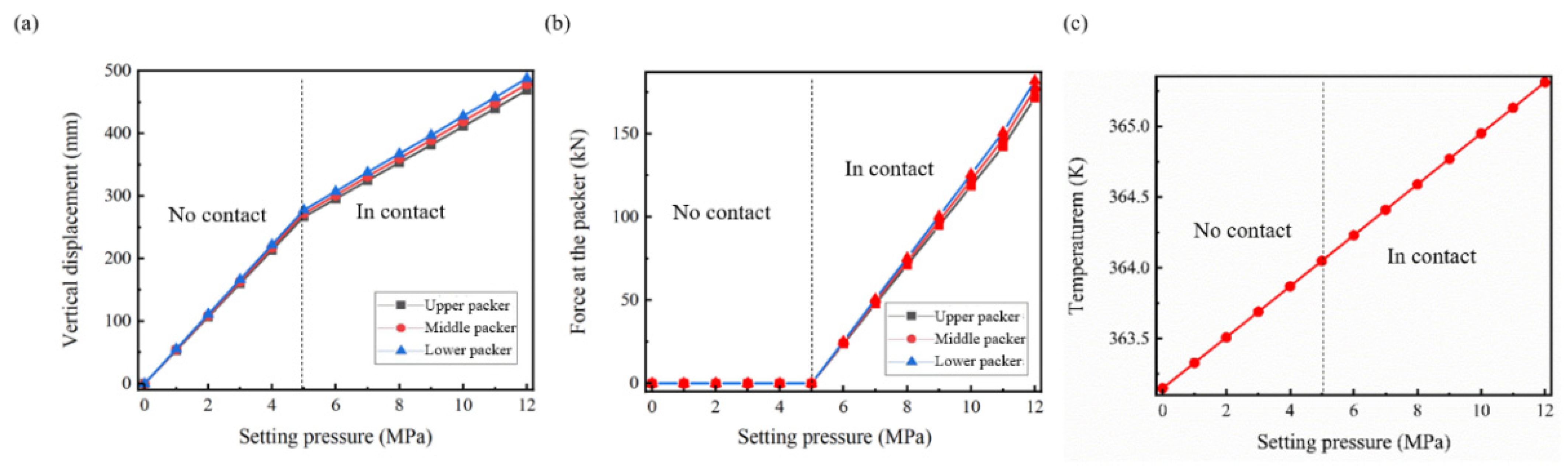
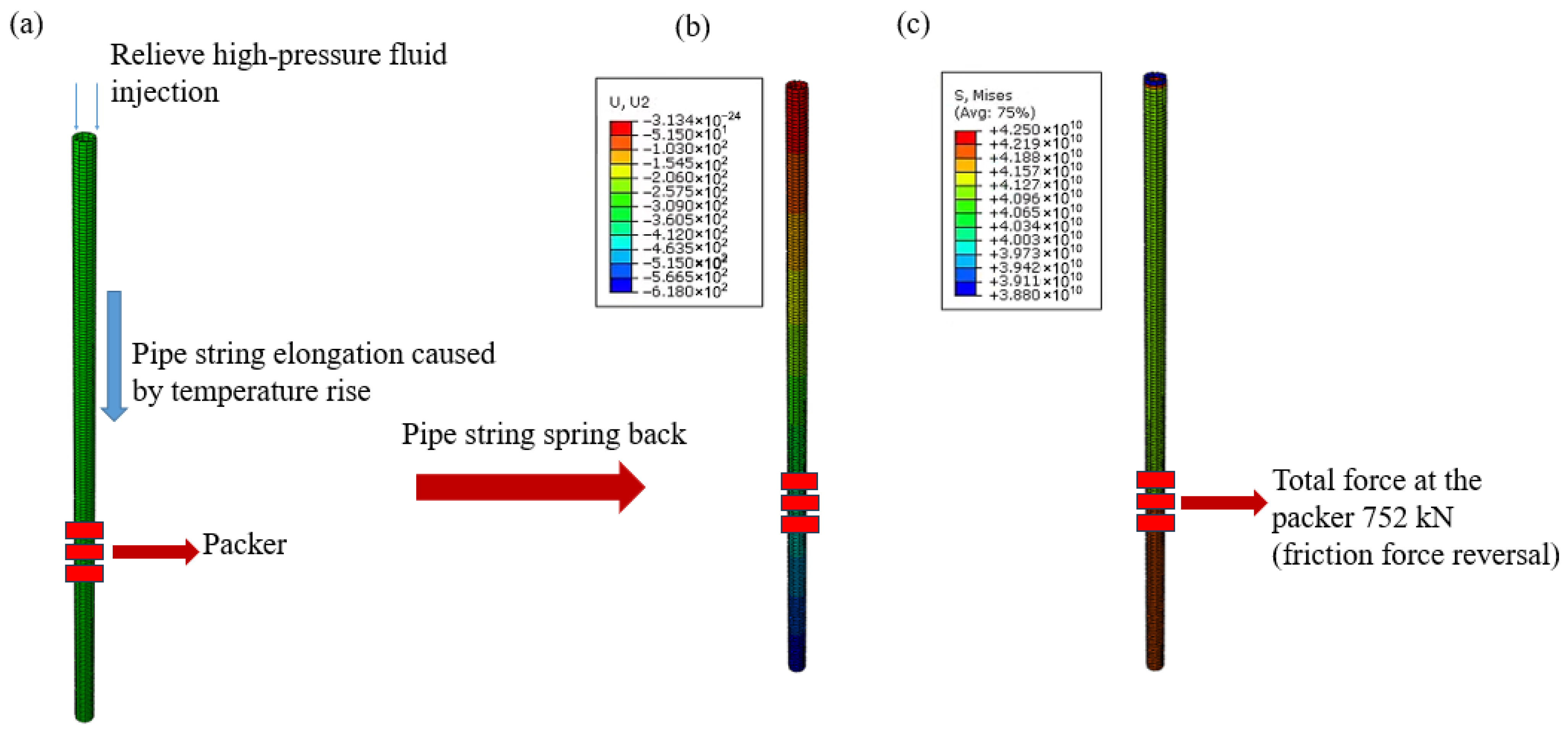
In the setting stage, the packer rubber element gradually establishes contact with the casing. This stage involves large deformation of the rubber elements and the onset of contact nonlinearity. The wellhead pressure slowly rises from 0 to 12 MPa and is further loaded to 15 MPa. During this process, the focus is on analyzing the frictional force generated by the rubber element-casing contact and the impact of the piston effect on the deformation and stress distribution of the packer. As the setting pressure is removed, the system enters the setting stop stage. The elastic potential energy accumulated in the tubing string is released, inducing axial rebound. The displacement and stress state of the packer are jointly controlled by residual friction, temperature changes, and thermal expansion effects. Simulating this rebound process helps evaluate the stability of the packer under unloading conditions. Subsequently, the liquid injection stage begins, where liquid is injected into the wellbore under high-pressure conditions of 0–25 MPa. The influences of pressure load, frictional resistance effects, and thermal effects on the mechanical response of the tubing string are particularly significant and require comprehensive analysis based on the fluid flow model. When the injection stops, the pressure within the wellbore gradually decreases while the temperature begins to rise, causing the tubing string to undergo axial rebound again. This involves the redistribution of residual stress in the tubing string under variable temperature environments and its potential impact on the long-term integrity of the wellbore.
2.1. Solid Mechanics of Tubing String
A 3D full-scale finite element model is established according to the actual geometric dimensions and spatial morphology of the tubular to uniformly describe its overall and local structures. Meanwhile, geometric nonlinearity, material nonlinearity, as well as contact, friction, and multi-load coupling effects are considered to truly reflect the actual stress state and deformation behavior of the tubing string under complex working conditions. Based on the basic principles of continuum mechanics, the full-scale tubing string is modeled as an elastic body continuously distributed along the well depth direction. The coupling effects of axial tension/compression and torsional loads, as well as the nonlinear boundary control effects of multi-point constraints such as the wellbore wall and packer on the mechanical behavior of the tubing string, are comprehensively considered. Aiming at the axial response of the tubing string under distributed loads, the quasi-static equilibrium equation establishing the tubing string equilibrium relationship is as follows [
16]:
where
is the elastic modulus,
is the cross-sectional area,
is the axial displacement, and
is the distributed load.
Under the action of torsional loads, the torsional mechanical behavior of the tubing string can be described by the following governing equation:
where
is the shear modulus,
is the polar moment of inertia,
is the angle of twist, and
is the distributed torque.
Further considering the contact constraints and friction effects between the wellbore wall and the packer, as well as the potentially nonlinear constitutive characteristics of the tubing string material under high-temperature and high-pressure environments, a contact potential energy term is introduced in the numerical modeling.
For the slip case:
where
is the contact potential energy,
is the virtual work contribution of contact forces that corresponds to the right-hand side of the system,
corresponds to the contribution of contact to the system stiffness matrix,
is the normal penetration amount,
is the tangential sticking displacement vector, and
is the tangential friction force vector. Coulomb’s friction law is used to judge the slip/stick states, and the relative positional relationship between slave surface nodes and master surface line elements is used to judge whether contact occurs. The contact system adopts master–slave contact element, where the casing surface is defined as the master surface and the packer rubber surface as the slave surface.
The penalty parameter
is not only a mathematical approximation of the Lagrange multiplier; its physical essence can be regarded as a “virtual spring stiffness” applied to the contact interface. The selection of this parameter faces a trade-off between numerical stability and computational accuracy: a value that is too small leads to excessive non-physical penetration, while a value that is too large may cause ill-conditioning of the stiffness matrix, leading to iteration non-convergence. The penalty parameters
(normal stiffness) and
(tangential stiffness) are defined as:
where
is a scaling factor, taken as 1000 in this paper,
is Young’s modulus,
is the contact area, and
is the finite element volume.
Based on the above theoretical model and numerical solution strategy, we have established a full-scale three-dimensional tubing string finite element model suitable for complex wellbore injection working conditions. This model not only systematically reveals the stress distribution and response of the tubing string under various loads and boundary actions but also lays a solid foundation for subsequently introducing fluid and temperature fields to carry out fluid-thermal-solid multi-field coupling analysis, thereby providing a reliable theoretical basis for tubing string structural optimization design and wellbore safety evaluation.
2.2. Thermodynamics of Tubing String
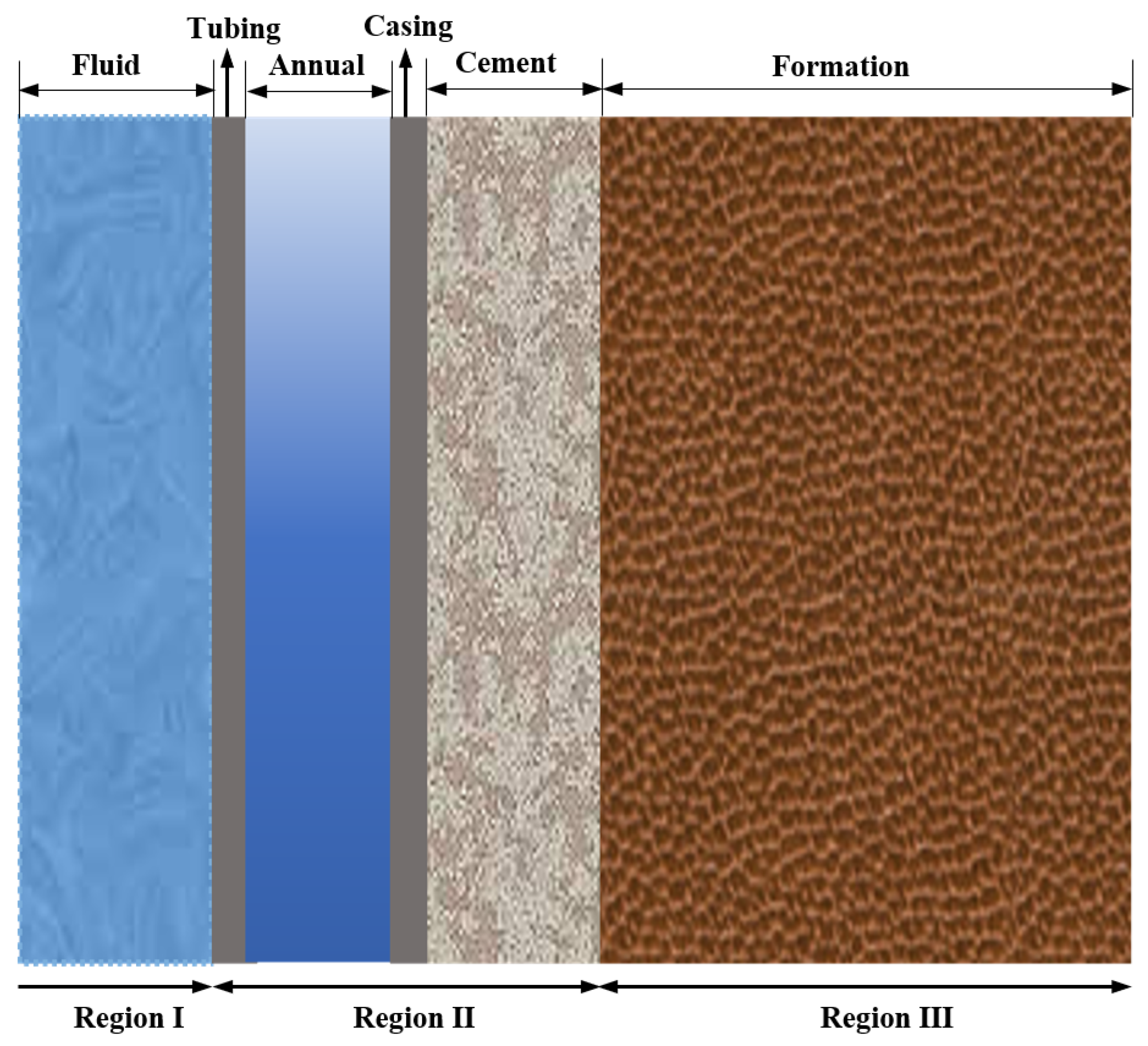
The flow and heat transfer model of the fluid in the wellbore is shown in
Figure 2. In this model, the heat transfer process is partitioned into three distinct regions: Region I corresponds to the heat transfer area of the fluid inside the tubing string; Region II encompasses the heat transfer zone across the tubing, annulus, casing and cement sheath; Region III involves the heat transfer area within the formation.
2.2.1. Heat Conduction Inside the Tubing
Region I is the flow and heat transfer region of the fluid inside the tubing. Its main characteristics are the high-speed flow of the fluid along the well in the depth direction and the significant axial heat transport caused thereby. In this region, the fluid presents a forced convection state driven by injection pressure, with axial energy transfer dominating and radial temperature gradients being relatively small. Therefore, the heat transfer inside the tubing can be approximately described as a one-dimensional problem dominated by the coupling of axial convection and axial heat conduction.
The heat transfer inside the tubing is mainly affected by the heat carried by the inflow and outflow of the fluid in the axial direction and the heat transferred by convection. Friction between the fluid and the pipe wall during flow also generates heat. The heat transfer model inside the tubing is expressed as follows [
17]:
where
refers to the inner wall temperature of the tubing,
refers to the outer wall temperature of the tubing,
is the thermal conductivity of the fluid,
is the Joule-Thomson coefficient of the fluid,
,
, and
are the density, flow velocity, and specific heat capacity at constant pressure of the fluid, respectively. The assumption of one-dimensional heat conduction inside the tube is valid under specific engineering boundaries and practical injection conditions. To illustrate, the assumption is applicable to vertical and deviated wells with small well deviation and high injection rates.
and
are defined as follows:
where
is the fluid injection rate, and
is the friction coefficient.
2.2.2. Heat Conduction Inside the Annulus Fluid
Heat transfer in the annular fluid is primarily caused by axial heat conduction and convective heat transfer. Since the fluid velocity in the annulus is far lower than that in the tubing, its axial energy transport capability is relatively weak, but it cannot be ignored under high temperature difference conditions. Therefore, the annular fluid is regarded as a continuous medium undergoing coupled axial heat conduction and convection along the well depth direction. The heat transfer model of the annular fluid is [
18]:
where
refers to the inner wall temperature of the casing,
and
are the outer radius of the tubing and the inner radius of the casing, respectively.
and
are the heat transfer coefficients at corresponding positions. In the axial direction, there is a temperature gradient between the annular fluid and the upper and lower adjacent nodes, forming an additional axial heat conduction flux.
2.2.3. Radial Heat Conduction of the Tubing String
Radial heat conduction of the tubing string is the core channel for heat exchange between the fluid inside the wellbore and the annulus, playing a key role in bridging the temperature fields of Region I and Region II. Due to the high thermal conductivity of the tubing string material, the heat conduction process can establish a stable temperature gradient in a short amount of time; therefore, this process can be approximately regarded as quasi-steady-state heat transfer. Meanwhile, to more accurately reflect the wellbore injection working conditions, axial heat transfer inside the tubing string is also considered, so that the temperature field within the tubing string wall is jointly controlled by radial conduction and axial heat conduction.
The heat transfer inside the tubing mainly includes convective heat transfer between the pipe and the internal fluid as well as the annular fluid [
19], and also includes axial heat conduction and the additional heat generated by friction between the fluid and the pipe wall. The heat transfer model inside the pipe is:
where
refers to the outer wall temperature of the casing.
is defined as follows:
2.2.4. Casing Heat Conduction
The casing is located between the tubing string and the cement sheath and is an important heat transfer and isolation layer in the wellbore structure. Its heat transfer process has an important impact on the overall temperature distribution of the wellbore. In the model, the casing is regarded as a continuous, uniform cylindrical solid, and its heat transfer is mainly achieved through two ways: axial heat conduction and radial heat conduction.
In the radial direction, the inner wall of the casing receives heat from the annular fluid and transfers it outward to the cement sheath through the casing wall. In the axial direction, the temperature inside the casing changes along the well depth direction due to the influence of the injection fluid and the geothermal gradient, thereby forming an additional axial heat flux. The heat conduction model of the casing can be described as [
20]:
where
refers to the outer wall temperature of the cement sheath,
is the outer radius of the casing.
is defined as follows:
where
is the outer diameter of the cement sheath, and
is the thermal conductivity at the corresponding position.
2.2.5. Heat Transfer Model of Cement Sheath and Formation
Region III includes the cement sheath and the formation outside it, which is the main region for heat diffusion and dissipation outward in the wellbore-formation system. Due to the huge volume and large heat capacity of the formation, its temperature change has obvious hysteresis relative to the internal wellbore process. As a transition medium between the casing and the formation, the cement sheath mainly undertakes radial and axial heat conduction roles. After heat is transferred from the outer wall of the casing into the cement sheath, it continues to diffuse into the interior of the formation [
21]. The heat transfer model for the cement sheath and formation is expressed as follows:
The formation is assumed to be an infinite medium. Its initial temperature satisfies the geothermal gradient distribution along the well depth direction. The formation temperature far away from the wellbore remains unchanged during the calculation process, thereby providing stable external boundary conditions for heat transfer.
2.3. Fluid Flow Inside the Tubing String
During the wellbore injection operation, the fluid flows continuously along the axial direction of the tubing string from the wellhead to the bottom. Its flow state directly determines the pressure distribution within the wellbore, temperature evolution, and the form of loads generated on the tubing string structure. Therefore, it is necessary to establish a mechanical model of fluid flow inside the tubing string to describe the pressure changes and flow characteristics of the fluid during the injection process [
22].
Fluid flow is governed by the mass conservation equation, whose one-dimensional axial form is:
Considering one-dimensional energy conservation, the pressure drop for fluid flowing in the tubing string is [
23,
24,
25]:
where
is the density of the fluid in the tubing string,
is the flow rate of the fluid in the tubing string,
is the axial coordinate of the tubing string,
is the friction coefficient, and
is the inner diameter of the tubing.
Under injection working conditions, the fluid in the tubing string can be regarded as a one-dimensional flow medium along the well depth direction. Its pressure change mainly comes from the combined effects of gravity, flow friction, and fluid acceleration [
26,
27,
28]. The pressure drop caused by the fluid’s own weight is:
The pressure drop caused by viscous friction between the fluid and the inner wall of the tubing string is:
The pressure drop in vertical direction caused by changes in fluid density or flow velocity is:
Substitute Equation (22) into Equation (19), the pressure drop for the fluid along the well depth direction in the tubing string is given as follows:
2.4. Solution of THM Coupled Equation System
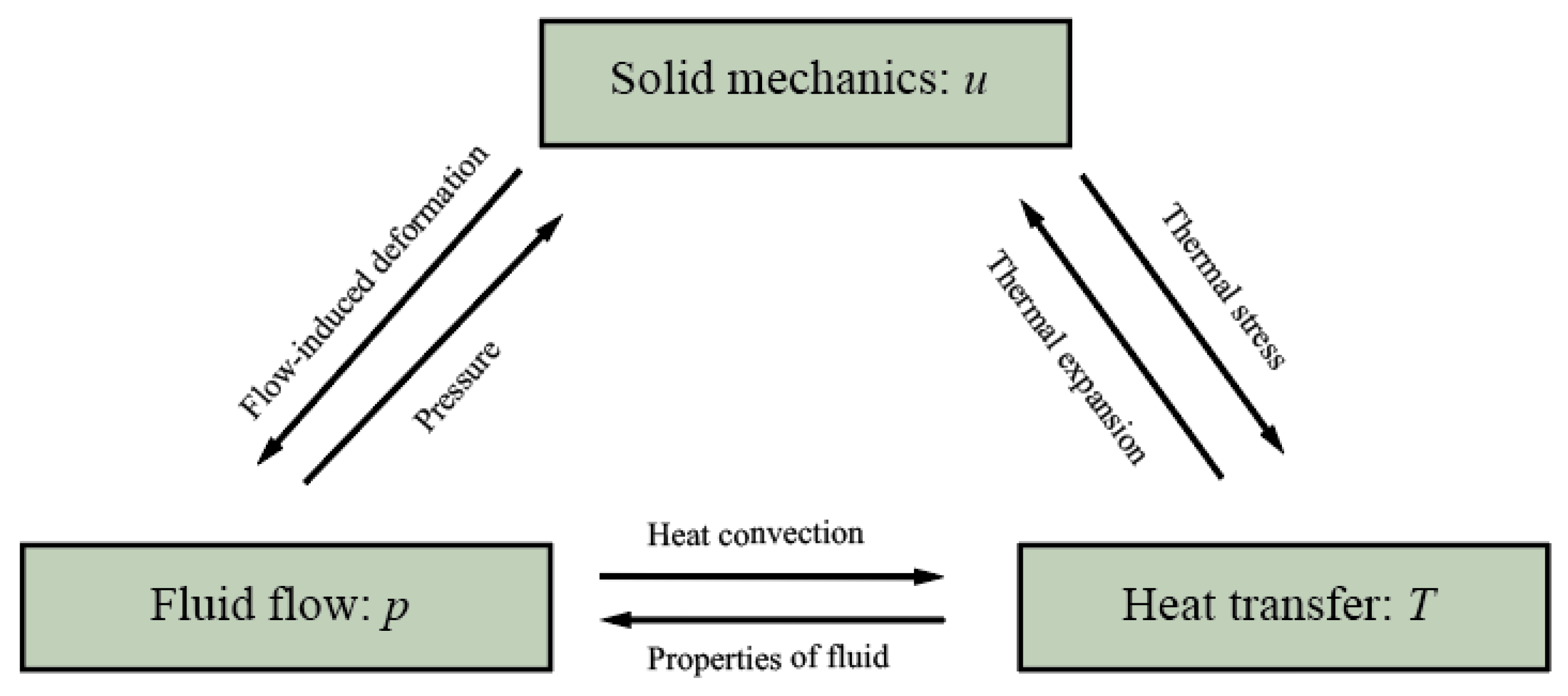
The wellbore injection process is essentially a highly nonlinear multi-physics and strongly coupled problem. During the wellbore injection process, there are significant mutual coupling effects among fluid flow inside the tubing string, tubing string structural deformation, and temperature field evolution, as shown in
Figure 3. Changes in fluid pressure and temperature directly affect the loads borne by the tubing string and the material’s thermal expansion behavior, while the axial deformation and torsion of the tubing string in turn change the fluid flow channel and heat transfer path, thereby forming a strongly nonlinear THM coupling problem. As shown in
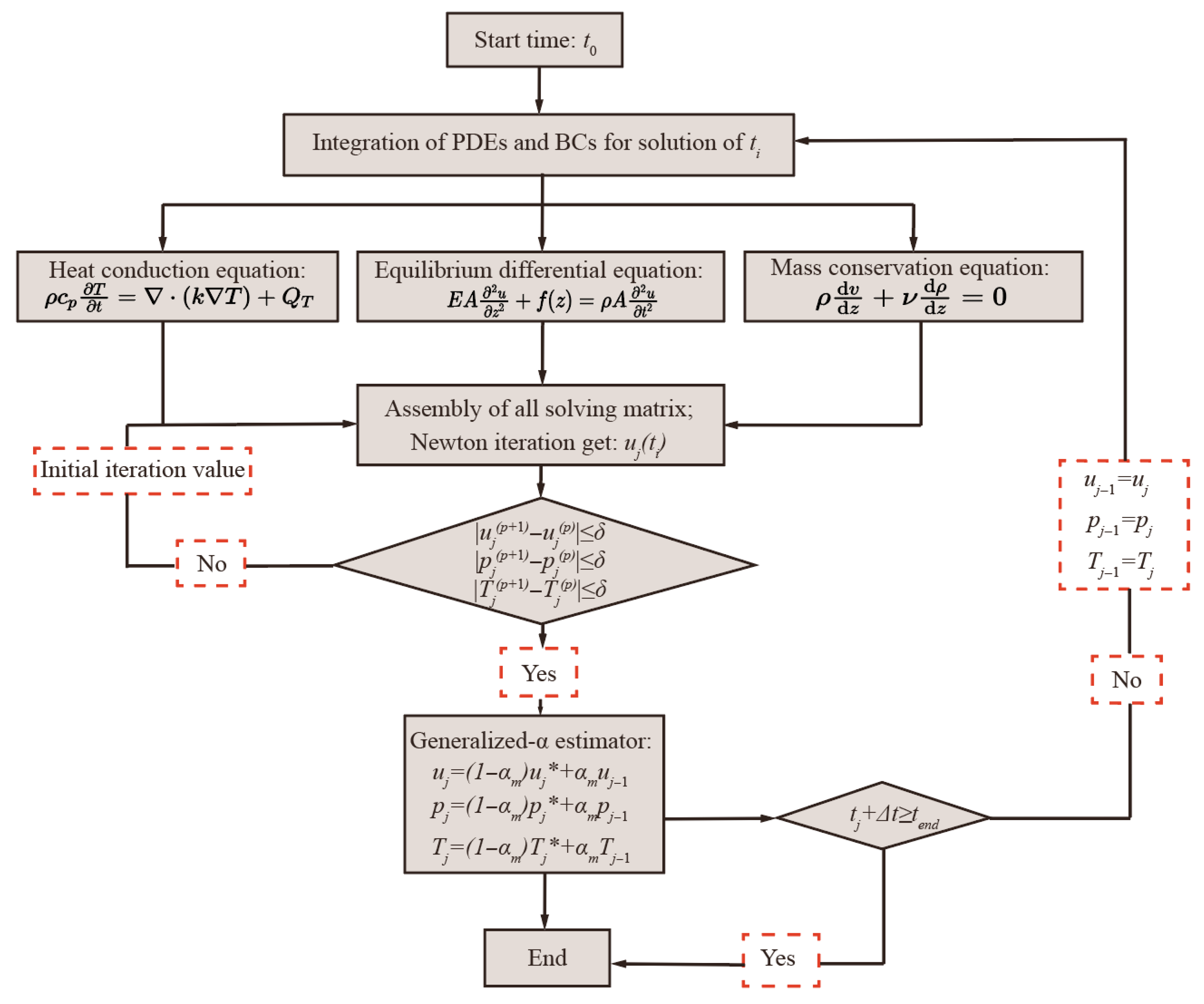
Figure 4, based on the aforementioned fluid flow model, tubing string mechanical model, and heat transfer model, this study integrates the three types of physical fields into a unified solution framework, constructs a THM coupled governing equation system, and adopts the Newton iteration method for numerical solution [
29,
30,
31,
32].
In the numerical solution, the finite element method is adopted to discretize spatial variables. At time step
, the THM coupled system can be uniformly written in residual form:
where
is the unknown variable vector. The corresponding tangent matrix is:
By solving the linearized equation:
Finally, update the solution vector:
The mark of iteration convergence is that the displacement, pressure, and temperature variables between two adjacent iterations satisfy [
33,
34,
35,
36]:
where the value of
,
and
are set to 1 × 10
−6. The values of 1 × 10
−6 for displacement, pressure, and temperature are sufficiently small to fully capture the subtle THM coupled response characteristics of the tubing string and packer system, ensuring high fidelity of numerical results. If the tolerance is set too small (e.g., 1 × 10
−8 or smaller), the Newton iteration will require excessive steps, leading to a sharp increase in computing time and resource consumption.
To improve the numerical stability of time integration and suppress high-frequency oscillations, the generalized-α scheme is introduced to update the field variables [
37,
38,
39,
40]:
When
, the numerical calculation terminates.
Figure 4 shows the finite element solution process.
In summary, by coupling and solving the energy conservation equation, fluid mass conservation equation, and tubing string structural equation within a unified framework, and combining Newton iteration and generalized-α time integration methods, synchronous calculation of fluid flow, temperature evolution, and tubing string structural response during the wellbore injection process can be achieved, providing a reliable numerical basis for subsequent working condition analysis and safety assessment.
4. Conclusions
This paper focuses on the THM multi-field coupling problem of the tubing string under wellbore injection working conditions and constructs a multi-field coupled numerical model based on full-scale geometric characteristics. This model achieves the synergistic solution of fluid flow, temperature field evolution, and tubing string structural mechanics within a unified computational framework. Fluid behavior is described through equations such as mass conservation and energy conservation, while tubing string mechanical response is characterized by structural equations considering axial deformation, thermal stress, and contact nonlinear boundary conditions. In terms of numerical implementation, the finite element method is adopted to discretize spatial variables, and combined with the Newton iteration strategy, the nonlinear THM coupled equation system is solved stably and efficiently. This method can synchronously obtain key response quantities such as temperature within the wellbore as well as tubing string displacement and stress, providing reliable theoretical and numerical tools for mechanical and thermal analysis of the wellbore under complex injection and setting working conditions.
Based on the above model and case study analysis, the following main conclusions can be drawn:
- (1)
Accuracy and Applicability of the Model: The established THM multi-field coupled full-scale model can reasonably describe the interactions among fluid pressure, temperature field, and tubing string structural response during processes such as wellbore setting and injection. The high degree of agreement between numerical results and theoretical solutions proves the accuracy and applicability of the model in handling complex working condition analysis.
- (2)
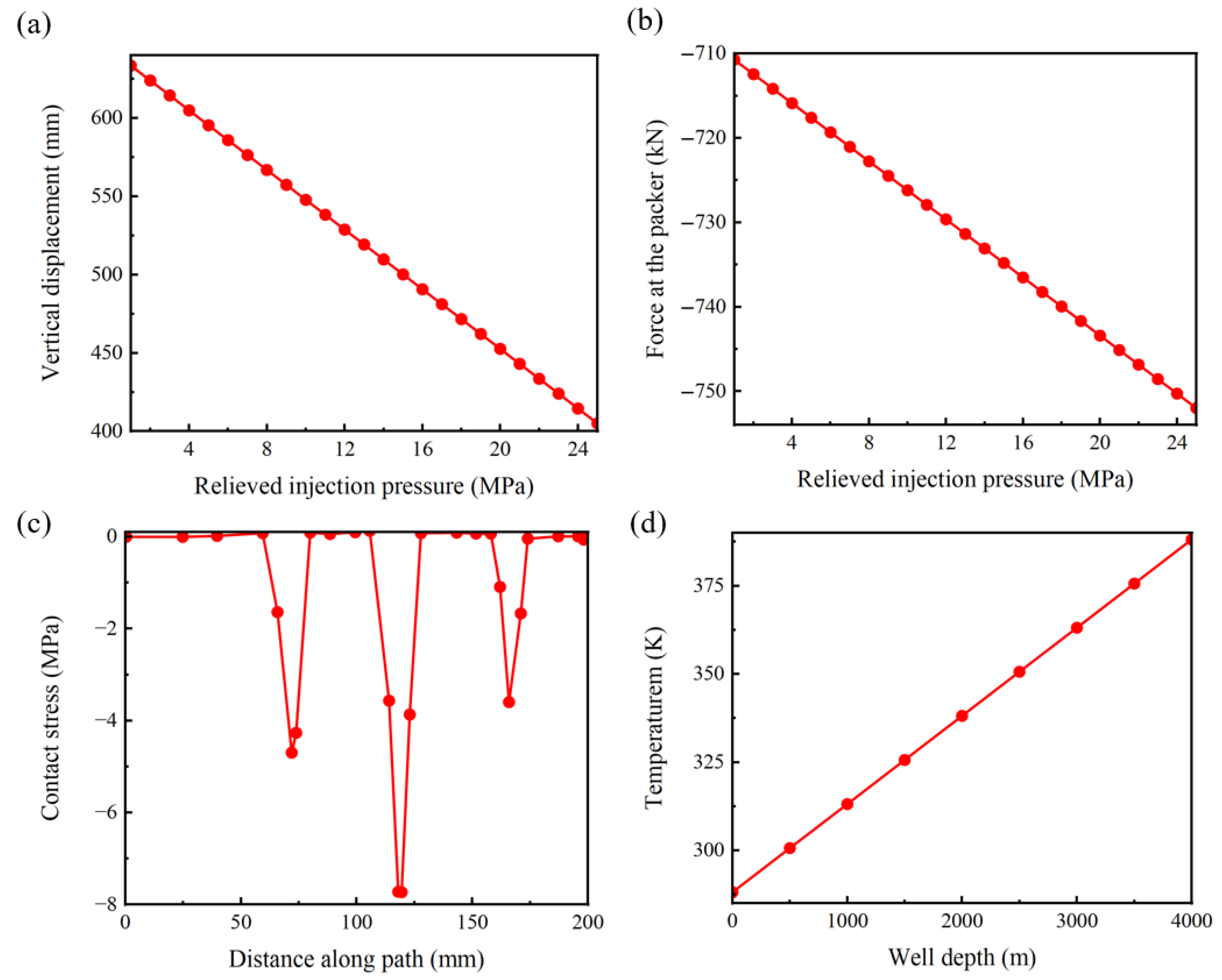
Contact Nonlinearity and Anchoring Mechanism: In the setting loading stage, strong contact and high friction constraints are gradually formed between the packer rubber element and the casing, significantly improving the overall stiffness of the system. In the setting stop stage, although the wellhead pressure is removed, the residual contact force and frictional force can still effectively limit the tubing string rebound, anchoring the packer to maintain a stable sealing state.
- (3)
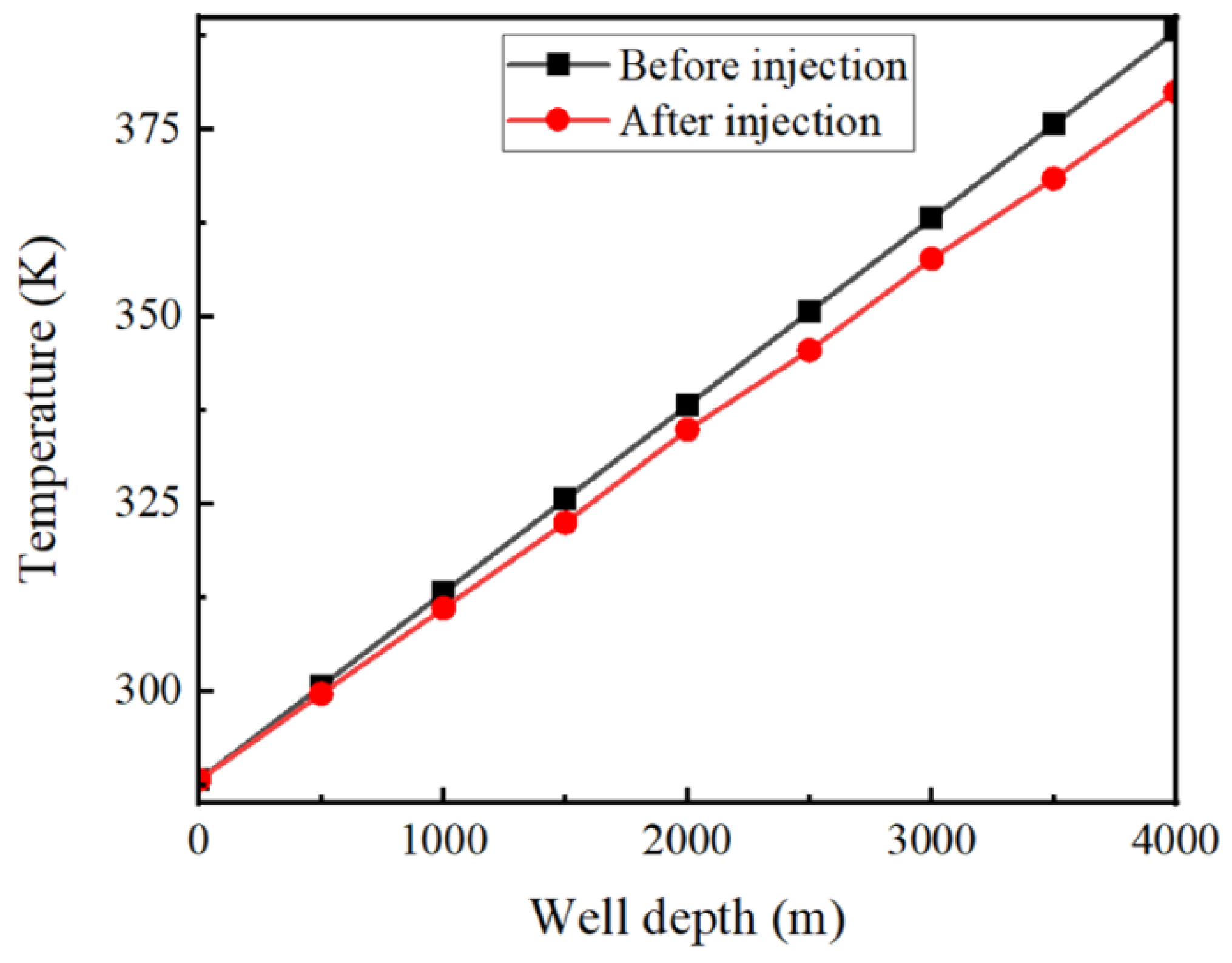
THM Strong Coupling Effects: During the liquid injection loading process, the combined action of high-pressure injection and cooling effects causes a significant increase in the axial force and stress levels of the tubing string. The temperature effect has an important modulation effect on the structural response, which is particularly obvious under high-pressure working conditions. After the liquid injection stops, the tubing string as a whole exhibits a gentle rebound characteristic, and the axial force and stress levels gradually decrease. Residual contact force and friction constraints are key factors in maintaining the stability of the wellbore structure.
- (4)
Necessity of Full-Scale Modeling: Research results indicate that the contact behavior between the packer and the casing and its evolution laws have a decisive impact on wellbore safety. Full-scale analysis can restore boundary effects and cumulative deformation along the path that are ignored by simplified models. It is a necessary means to evaluate the working reliability of the packer and the long-term service performance of the tubing string.
- (5)
The proposed model adopts Newton iteration combined with the generalized-α time integration scheme, which ensures strong convergence and good computational efficiency. Under the given convergence tolerance (1 × 10⁻⁶), typical working condition simulations converge within 10–15 iteration steps. The full-scale modeling does not cause excessive computational cost because the contact algorithm and finite element discretization are optimized for wellbore structures. The proposed method achieves high engineering realism while maintaining acceptable computing time and resource consumption, making it suitable for practical wellbore injection analysis.
The series of conclusions and numerical analysis of the THM multi-field coupled full-scale model provides a systematic and reliable theoretical basis and technical support for wellbore injection process optimization, packer structural innovative design, and long-term wellbore integrity evaluation from the perspective of engineering practice. Specifically, the research conclusions can directly guide the precise matching of key process parameters such as injection pressure, injection rate, and setting load, helping to avoid risks such as tubing string stress concentration and rebound instability caused by high-pressure injection and cooling effects. In addition, it provides targeted design directions for packer rubber element material selection, structural morphology optimization, and contact interface performance improvement, ensuring the long-term sealing reliability of the packer under complex working conditions. Furthermore, it simultaneously provides core theoretical support for the improvement of the wellbore full-life-cycle integrity evaluation system, laying a solid technical foundation for the safe and efficient implementation of wellbore engineering in fields such as oil and gas development and carbon sequestration. It has important theoretical value and engineering practical significance for promoting the development of wellbore engineering towards refinement and safety.