Article

From Waste to Value: Optimizing Oxidative Liquefaction of PPE and MSW for Resource Recovery

1
Department of Air Protection, Faculty of Energy and Environmental Engineering, Silesian University of Technology, Stanisława Konarskiego 22B, 44-100 Gliwice, Poland
2
Department of Heating, Ventilation and Dust Removal Technology, Faculty of Energy and Environmental Engineering, Silesian University of Technology, Stanisława Konarskiego 20, 44-100 Gliwice, Poland
3
Department Thermal Technology, Faculty of Energy and Environmental Engineering, Silesian University of Technology, Stanisława Konarskiego 22, 44-100 Gliwice, Poland
*
Author to whom correspondence should be addressed.
Processes 2025, 13(12), 3844; https://doi.org/10.3390/pr13123844
Submission received: 29 October 2025 / Revised: 21 November 2025 / Accepted: 25 November 2025 / Published: 28 November 2025
(This article belongs to the Section Environmental and Green Processes)

Abstract

Despite widespread implementation, current waste management practices—such as landfilling and incineration—are associated with significant environmental drawbacks, including greenhouse gas emissions and resource loss. Consequently, the search for more sustainable and environmentally friendly waste valorization methods has highlighted oxidative liquefaction as a promising pathway. This study focused on two critical waste streams: personal protective equipment (PPE) and municipal solid waste (MSW). These categories were selected due to the significant increase in PPE waste generated during the recent pandemic, as well as the need to develop effective strategies to address potential future surges in such waste streams. Experiments were carried out at 200–300 °C, with waste-to-liquid ratios of 3–7% and oxidant concentrations of 30–60 wt.%. The aim was to demonstrate the potential of oxidative liquefaction as a thermochemical conversion route for resource recovery, enabling the breakdown of the organic matrix of PPE and MSW into valuable liquid products such as fine chemicals or a source of carbon in biotechnological processes. Chromatographic analyses, combined with chemometric methods, revealed how temperature, waste-to-liquid ratio, and oxidant concentration affected the yield and composition of oxygenated chemical compounds (OCCs). Using raw chromatographic data directly in optimization eliminated the need for manual gas chromatography (GC) signal processing and provided a faster approach to process evaluation. The results confirmed distinct differences in degradation behavior and OCC formation between PPE and MSW, with maximum yields of 183–212 gOCC/kg for PPE and 51–69 gOCC/kg for MSW. These findings highlight the strong influence of physicochemical waste properties on degradation and product composition. Overall, oxidative liquefaction shows significant potential as a waste-to-value strategy, supporting renewable fuels, chemical precursors, and circular economy development within the framework of biomass, biofuels, and waste valorization.

1. Introduction

Current data on global plastic waste management reveal that 21–42% of plastic refuse is sent to landfills. In these disposal sites, plastics fragment into microplastics through physical and chemical degradation processes, becoming a persistent source of environmental contamination in both terrestrial and aquatic systems [1]. These wastes are subject to gradual decomposition in landfills under the influence of various variations in physico-chemical factors, i.e., temperature, pressure, UV radiation, pH, rainfall, mechanical shredding during separation, compaction, transport, and others. Forecasts predict that by 2050, 12,000 million tons of plastic waste will be generated globally. This projection reflects a compound growth trajectory, with plastic production already reaching 391 million tons in 2021, which underscores the accelerating pace of plastic manufacturing and consumption [2,3,4,5]. The COVID-19 pandemic substantially intensified this trend, triggering unprecedented demand for Personal Protective Equipment (PPE) and consequently elevating plastic waste streams. Beyond pandemic-related PPE disposal, Municipal Solid Waste (MSW) containing plastics continues to accumulate in landfills at alarming rates, driven by broader economic demands and consumer behavior patterns [6]. According to the data presented related to the COVID-19 pandemic [7,8,9,10,11,12,13,14], approximately 8.5 million tons of plastic waste were produced, and of this, approximately 0.026 million tons contaminated rivers, seas, and the ocean [12]. Global municipal solid waste generation reached 2.24 billion tonnes in 2020. Greenhouse gas emissions from the waste sector were estimated at approximately 1.6 billion tonnes CO2-equivalent annually, which, when distributed across the global population, corresponds to an average of 0.56 kg CO2-eq. per capita per day [15]. Experts’ projections indicate an increase in waste generation to 3.88 billion tonnes by 2050 (a 73% increase), accompanied by a corresponding rise in sectoral emissions to approximately 2.6 billion tonnes CO2-equivalent annually. In per capita terms, this represents an increase in waste-related carbon footprint to approximately 0.73 kg CO2-eq. per capita per day [15,16,17]. Comparatively, the waste sector’s contribution to total global emissions stands at approximately 5%, whereas European countries generate waste-related emissions below the global average due to advanced waste management systems and high recycling rates. Actual emissions from waste management in the European Union remain below 1 kg CO2-eq. per capita per day, accounting for approximately 3% of total sectoral emissions. The majority of municipal waste is not effectively recycled or used, e.g., for energy purposes, due to its classification, which is a prerequisite for the recycling rate and efficient use of this type of resource. Today, MSW treatment and recycling methods include landfilling, incineration, and energy recovery; aerobic composting; and anaerobic digestion for heat and energy recovery [17,18].
This study applies oxidative liquefaction to Personal Protective Equipment (PPE) and Municipal Solid Waste (MSW), exploiting the similarity in polymer compositions between these waste streams and previously studied materials such as wind turbine blade composites. While the effectiveness of oxidative liquefaction for polymer matrix degradation has been demonstrated on wind turbine blades [3,5,19,20], its potential for managing high-volume, chemically comparable PPE and MSW streams remains underexplored despite their environmental urgency and accumulation rates. The resulting liquid degradation products were subjected to chromatographic analysis to elucidate the effects of three critical process parameters—reaction temperature, waste-to-liquid ratio, and oxidant concentration—on the qualitative and quantitative composition of the degradation products [4].
This work introduces a novel approach by integrating chemometric analysis as a preprocessing strategy for chromatographic data, enabling process optimization of oxidative liquefaction without requiring supplementary quantitative analyses. This integration of data-driven chemometric methods with chromatographic analysis represents a significant methodological advancement, allowing for efficient extraction of actionable insights from complex degradation product profiles.

2. Materials and Methods

2.1. Samples: Personal Protective Equipment and Municipal Solid Waste

The PPEs were obtained from a nearby medical supply store. PPEs consisted of disposable protective gowns, gloves and face masks, bedsheets, and N-95 face masks (in equal quantities 1:1) that were manually divided into fragments of 1–2 cm using scissors. The proficiency testing providers supplied the MSW and prepared the samples according to the ISO standards for this type of material. Choosing representative MSW samples was crucial to ensuring that the study’s findings could be applied to real-world waste streams commonly found in urban and suburban areas of Poland for assessing waste-to-resource conversion systems and their potential economic and environmental benefits.
The PPE sample is characterized by the following quantities: 8.7 ± 0.5% ash content (Aad), 0.1 ± 0.2% moisture content (Mad), and 97.0 ± 3.8% volatile content (VM). In addition, in its composition, it contains carbon content (Cad: 80.1 ± 2.3%), oxygen content (Odiff.: 0.0%), hydrogen content (Ha: 12.8 ± 0.6%), nitrogen content (Nad: 0.17 ± 0.01%), and sulfur content (wS,ad < 0.03%). The MSW sample is characterized by the following quantities: 15.1 ± 0.8% ash content (Aad), 2.5 ± 0.2% moisture content (Mad), and 84.9 ± 0.3% volatile content (VM). In addition, in its composition, it contains carbon content (Cad: 50.3 ± 2.3%), oxygen content (Odiff.: 23.3%), hydrogen content (Ha: 7.2 ± 0.2%), nitrogen content (Nad: 1.1 ± 0.1%), and sulfur content (wS,ad < 0.5%) [21].
All of the analyses were performed according to the standards and methods of the subject, such as:
  • Moisture (Mad): CEN/TS 15414-2:2010 [22],
  • Ash (Aad): EN 15403:2011 (weight method) [23],
  • Volatile Matter (VM): EN 15402:2011 (weight method) [24],
  • Carbon (Cad), Hydrogen (Ha), Nitrogen (Nad): EN 15407:2011 [25],
  • Sulfur (wS,ad): EN 15408:2011 (high-temp. combustion, IR detection) [26],
  • Oxygen (Odiff): EN ISO 16993:2016-09 (by difference) [27].

2.2. Oxidative Liquefaction Process

In this study, the oxidative liquefaction process was conducted using a 500 mL batch reactor, specifically the Parr 4650 type manufactured by Parr Instruments in Moline, IL, USA. The reactor is equipped with a Parr 4838 temperature controller and an additional data-gathering system consisting of a cDAQ controller and a temperature recording module NI-9212, both manufactured by National Instruments, Austin, TX, USA. To optimize the heating efficiency of the spiral and maintain a consistent temperature for the stipulated duration, the reactor and reactor controller were calibrated to ensure accurate temperature control before conducting the tests. The scheme of the experimental setup that was used for the oxidative liquefaction of PPE and MSW was presented in our previous work [4].

2.3. Design of Experiment (DoE) Plan

In order to determine the factors that significantly influence the oxidative liquefaction process of PPE and the recycling of MSW, as well as the yield of oxidized compounds (OCC) and the resin degradation yield. To achieve this, a Central Composite Face-centered (CCF) design, a well-established approach in Design of Experiments (DoE) and response surface methodology (RSM), was applied to optimize the process parameters. The total number of experimental runs required for a CCF design is calculated using the formula 2·k + 2k + ncenter, where k is the number of independent variables, 2k represents the factorial points (cube), 2 k represents the axial points (star configuration), and ncenter denotes the center point replicates. This hierarchical design structure integrates three distinct experimental point types: (1) the factorial points (2k), which form the corners of the experimental cube and enable evaluation of main effects and two-way interactions; (2) the axial points (2 k), positioned symmetrically along the coordinate axes at a distance from the center, which facilitate exploration of curvature and nonlinear response relationships; and (3) the center points (ncenter), which provide replicate measurements at the center of the design space to assess experimental error and evaluate response surface curvature. This comprehensive approach ensures robust process optimization and enhanced understanding of factor interactions within complex multivariable systems.
For this analysis, the output data derived from Principal Component Analysis (PCA) were utilized as the input dataset for the DOE, ensuring that the most relevant features from the experimental results were included in the optimization process.
The optimization of the oxidative liquefaction process focused on five process variables: temperature, residence time (constant—45 min), initial pressure (constant—30 bar), the amount of oxygenated reagent (hydrogen peroxide solution), and the ratio of waste to oxygenated solution. For three variables (for k = 3), 17 experiments were conducted: 6 from 2 k, 9 from 2k, and an additional 2 experiments at the center level. The settings for the oxidative liquefaction procedure are provided in Table 1.

2.4. Principal Component Analysis (PCA)

Principal component analysis (PCA) is one of the chemometric methods for determining relationships between variables in a multivariate data space. Like other methods for analyzing multivariate data, PCA requires the use of pre-normalized input data for correct inference. This allows the analysis of datasets from different sources. The aim of this study is to assign the objects under investigation to homogeneous components in terms of variance, which are determined by linear relationships of the variables describing the characteristics of the objects under investigation. The method determines successive iterative components such that each successive component explains the remainder of the variance and is orthogonal to the previous one. Consequently, each subsequent component elucidates a diminishing proportion of the variability in the dataset being examined. PCA results are commonly visualized using a three-dimensional plot, where the primary axis represents the three main components, and the data variances are depicted as appropriate vectors. The results derived from the principal component analysis can also serve as input data for subsequent analysis, such as process optimization, as demonstrated in this work.

2.5. Experimental Procedure

Prior to each experiment, the 4838 reactor temperature controller was calibrated to the desired temperature level using the Parr calibration procedure. The hydroperoxide-containing sample was carefully placed in a glass reactor liner provided by the Parr Institute in Moline, IL, USA. The reactor was then sealed and pressurized with nitrogen to the necessary pressure for conducting the tightness test. Subsequently, the Parr heating spiral was utilized on the reactor, while the pressure measurement was observed for a duration of 30 min. Following the leak test, the reactor was heated to the required temperature and held there for a set period of time, as specified in the experiment matrix. After the process was completed, the reactor was removed from the heating system and allowed to cool. After cooling, the reactor was opened.

2.6. Liquid Product Analysis

The liquid products obtained after the oxidative liquefaction process were filtered using a PTFE syringe filter (Millipore Sigma, Sigma-Aldrich, Burlington, MA, USA) with a pore size of 0.45 µm to remove solid impurities. The tests were performed using a Perkin Elmer (Shelton, CT, USA) Clarus 500 gas chromatograph equipped with a flame ionization detector (FID). The separation of sample components was achieved using a DB-FAT WAX UI capillary column from Agilent Technologies, Santa Clara, CA, USA, with dimensions of 30 m in length, 0.25 mm in diameter, and 0.25 μm in film thickness. The helium carrier gas had a flow rate of 1.0 cm3/min. The samples were introduced into a split/splitless injector. The GC oven was heated according to the temperature ramp to 40 °C (4 min), after which the temperature was increased by 5 °C/min until 240 °C. Once it reached this temperature, it was kept constant for 15 min. The overall duration of the analysis was 59 min. The detector was supplied with hydrogen at a rate of 45 cm3/min and air at a rate of 450 cm3/min. The analysis involved the utilization of calibration curves for certain volatile fatty acids, aromatic hydrocarbons, fatty acid methylene esters, and aromatic carboxylic acid esters, along with the incorporation of an internal standard to perform quantitative measurements. A strong positive linear relationship was observed between the peak area and the concentrations of all analyzed chemical compounds within the range of 10–130 ng/μL, with correlation coefficients greater than 0.99. This linear association was consistent across all compound classes examined in the chromatographic analysis, confirming the quantitative validity of the analytical method. In addition, the recovery of the relevant reference standards was determined, ranging between 91% and 115%. To protect the stationary phase of the chromatographic column, chloroform was used to remove the components of the test samples containing acids and water. Further analyses of these extracts were then carried out.

2.7. Preparation of Raw Chromatographic Data

In practical laboratory settings, many chromatographic systems are limited to exporting data exclusively in formats specified by the manufacturer, which may restrict data processing flexibility and downstream analytical workflows. This is a significant problem, especially when you plan to analyze large analytical datasets. In order to avoid problems with exporting raw data to CSV or TXT files, external OpenChrom software v. 1.5.0 was used in the research. This software processes source files and converts them to CSV or TXT files. This made it easier to obtain data in the form of matrices containing information on the retention times and intensities of the detected chromatographic signals. This data was then combined into one large matrix, which included data from all samples analyzed within the project, and analyzed using Visual Studio Code 1.106.2 software and Python 3.11. This software corrected the baseline and eliminated peak shifts caused by the injection of material into the chromatography column [4], employing several key libraries specifically suited to the tasks: the peakutils library for baseline correction, scipy.optimize (including functions such as minimize and nnls) for parameter optimization, scipy.interpolate for signal interpolation, numpy for numerical operations, and plotly for data visualization.
Subsequently, the findings were narrowed down to a retention time interval spanning from 13 to 38 min, aligning with the oxygenated chemical compounds (OCCs) examined in the provided research. The data matrix acquired in this manner can be analyzed using chemometric techniques to extract the most significant information. Subsequently, this data can be immediately utilized for optimizing the oxidative liquefaction process as a semi-quantitative methodology.

3. Results

Based on the chemometric analysis of the chromatographic data obtained for 34 samples of liquid products obtained from the oxidative liquefaction of PPE and MSW, it was found that these samples can be divided into two groups that strongly depend on their origin. Figure 1 demonstrates that the groups exhibit distinct values for the first principal component (PC1). An interpretive analysis (based on PC’s plots) was conducted to identify the specific analytes in the tested samples that contributed to the observed difference. This analysis aimed to find the relationship between the analytes and the primary components. The representation of the first three principal components can be found in Figure 2, depicted as a biplot chart.
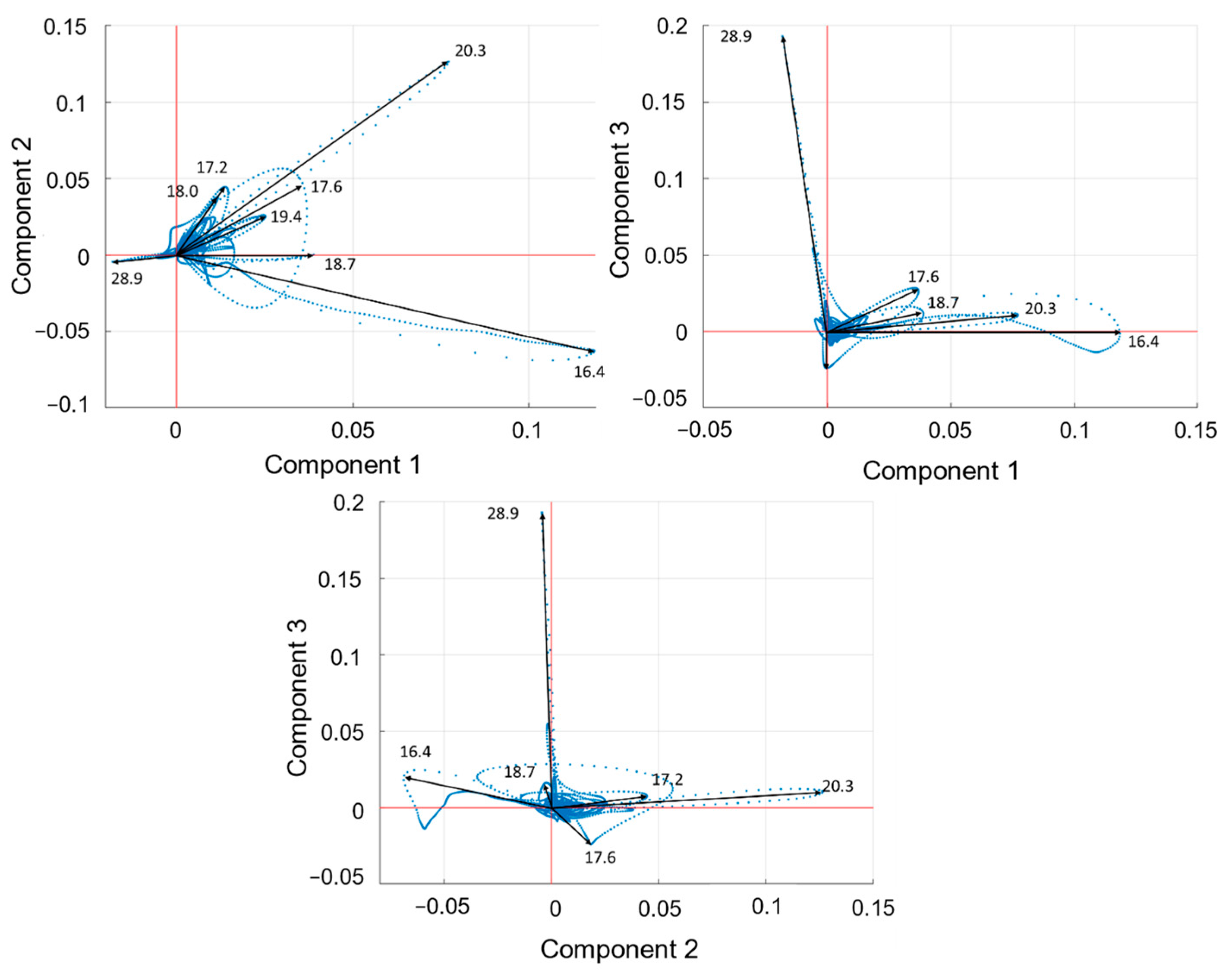
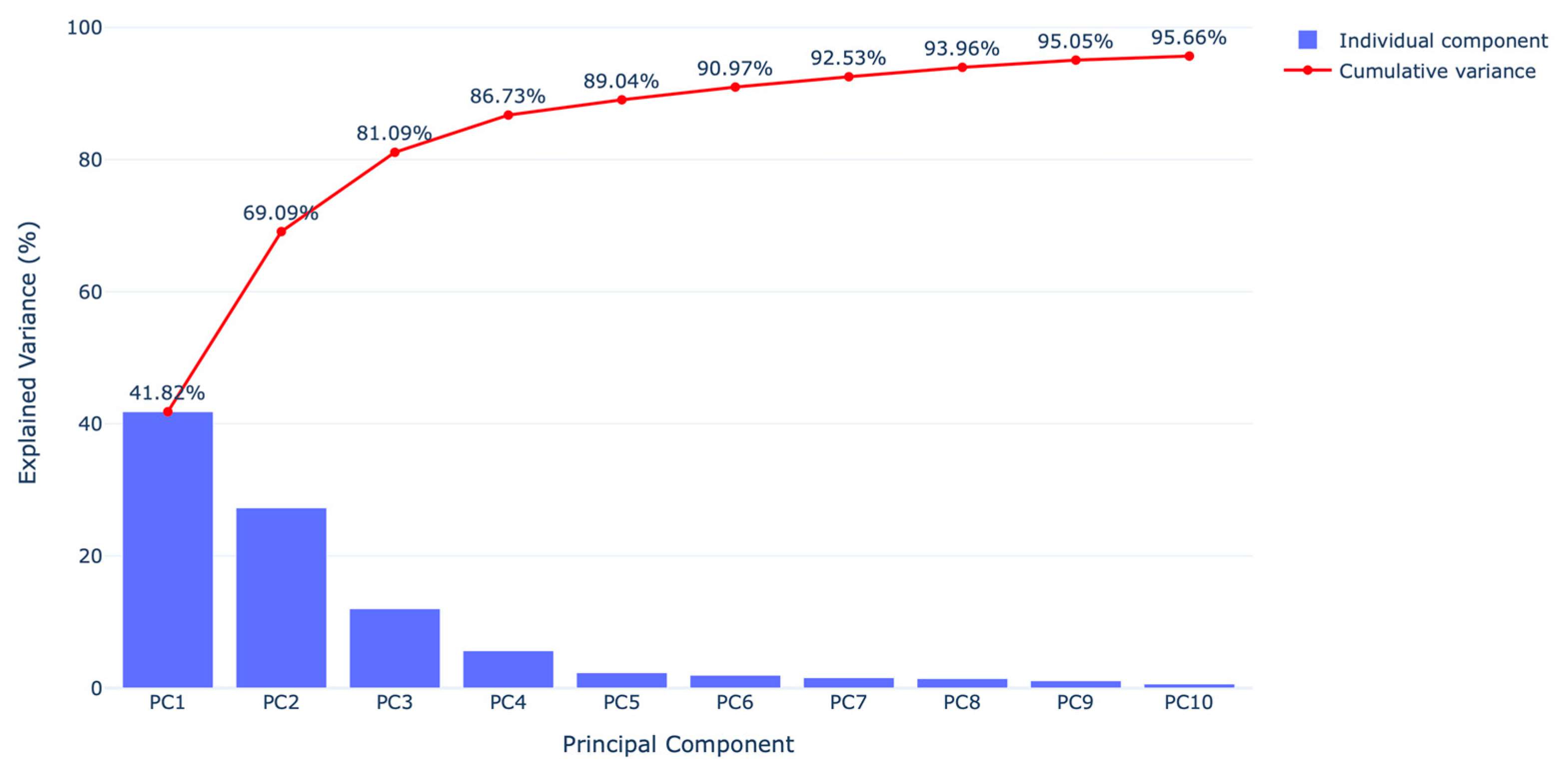
As can be seen, the first principal component (component 1, PC1) is described by the concentration of methyl benzoate (RT = 20.3 min), acetic acid (RT = 16.4 min), and phenol (RT = 28.9 min) in the samples. These compounds allow the set of tested objects to be divided into two groups. As mentioned earlier, the main components are a linear combination of primary variables and, in the case under consideration, are positively correlated with the concentration of the tested analytes. Thus, there is a direct correlation between the PC1 value and the concentration of the analyte in a specific sample. The second principal component (PC2) is determined, as for PC1, by the concentration of methyl benzoate (RT = 20.3 min) and acetic acid (RT = 16.4 min) in the samples. The chemometric analysis was conducted using the first five principal components, which accounted for almost 90% of the variation in the data (95% for 10 PCs), which is presented in Figure 3.
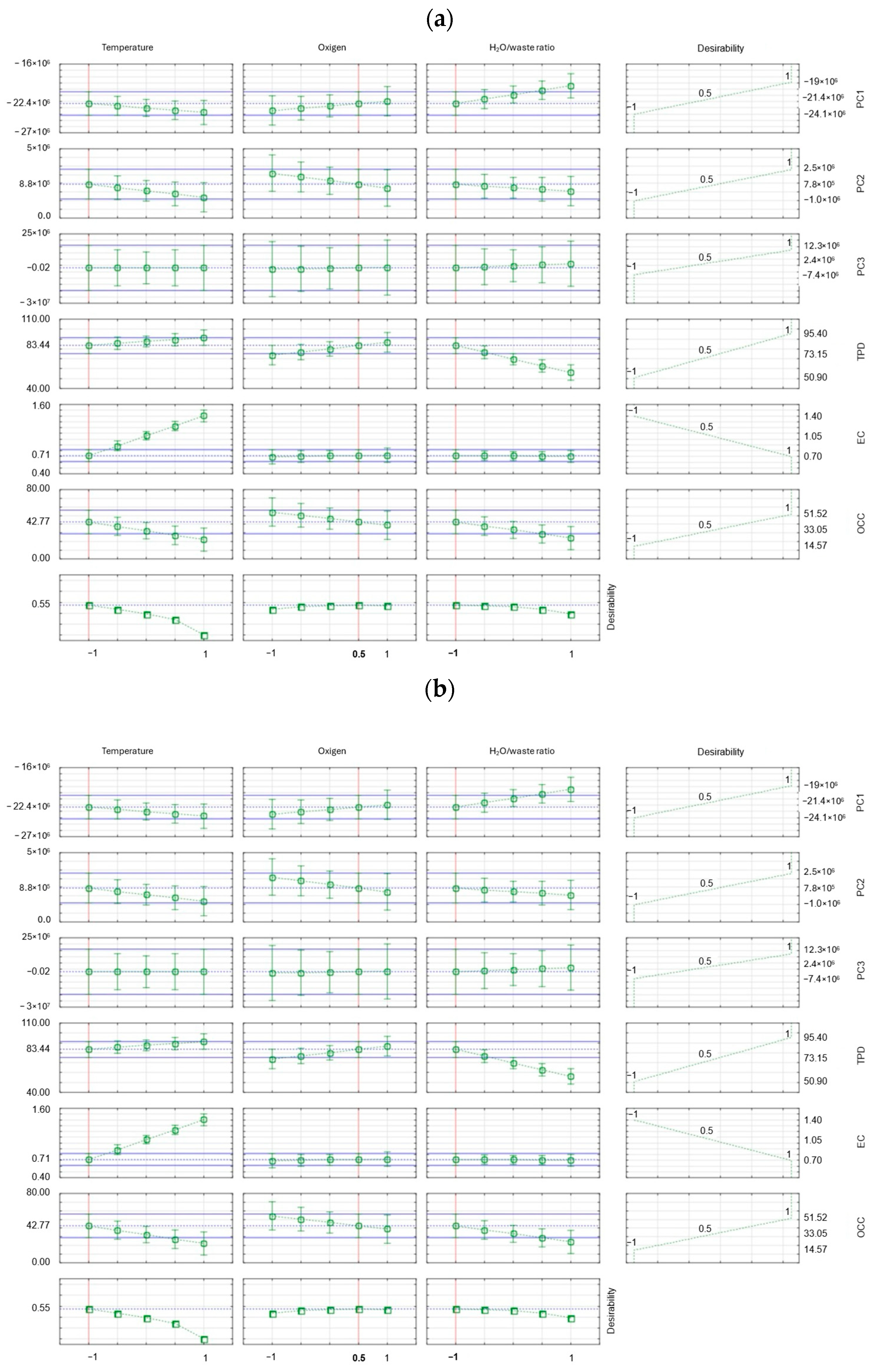
The third main component (component 3, PC3) is most strongly described by phenol concentration (RT = 28.9 min). PC 3 is also described by methyl nonanoate content (RT = 17.6 min). The new variables obtained during the PCA were used as input data in the optimization of the conditions for the oxidative liquefaction of PPE and MSW. The optimization of the oxidative liquefaction process was carried out with regard to four key parameters: energy consumption (EC), total polymer degradation (TPD) and three main components that provide the most information about the tested samples. The selected main components, i.e., PC1, represent samples with elevated levels of acetic acid and other OCCs; PC2 describes samples with higher concentrations of methyl benzoate, and PC3 describes samples with elevated levels of phenols. In order to optimize the entire process in terms of the tested variables, the utility function was minimized for energy consumption and maximized for all other variables. Notably, the application of Principal Component Analysis (PCA) enabled a significant reduction in the dimensionality of the problem: rather than optimizing across dozens of individual organic compounds and oxygenated compounds (OCCs) variables, the optimization was performed using only three principal components (PC1, PC2, and PC3) that collectively capture the essential variance in the chromatographic data. This dimensionality reduction not only simplified the optimization workflow but also improved the robustness and interpretability of the results, as shown in Figure 4.

4. Discussion

Total polymer degradation (TPD) was quantified as the percentage of the initial polymer mass converted into liquid products, as detailed in the Section 2. To achieve the highest TPD of the studied material while minimizing energy consumption and maximizing the yield of valuable organic chemical compounds (OCCs), the following process parameters proved optimal: reaction temperature of 200 °C, initial pressure of 30 bar, oxidant concentration of 52.5% (MSW) and 60% (PPE), reaction time of approximately 45 min, and waste-to-oxidant ratios of 3:1 (MSW) and 7:1 (PPE). These conditions were systematically derived from experimental data and validated through chemometric analysis. Under these operating parameters, both MSW and PPE waste streams achieved near-complete conversion to liquid form with maximum OCC yields. During the optimization process carried out for the oxidative liquefaction of PPE and MSW, it was possible to identify the process parameters at which the highest OCC concentrations were obtained, ranging from 183 to 212 gOCC/kg for PPE and from 49 to 52 gOCC/kg for MSW.
The reactions occurring during the studied oxidative liquefaction process can be controlled by free radical auto-oxidation, where hydroperoxides formed in the propagation phase undergo thermal–catalytic decomposition (Ti3+/Ti4+ catalyzes via the Haber–Weiss mechanism). The decomposition of ROOH generates aldehydes, which then oxidize to peroxides with lower dissociation energy (~30–35 kJ/mol lower than ROOH), explaining the observed autocatalytic nature of the process. Chemiluminescence studies have shown that degradation proceeds heterogeneously [28,29,30]. The main products of these reactions (which are also present in the products studied in this article) include dicarboxylic acids (glucaric acid—29.6%, glutaric acid—25%) for polyethylene and acetone (1–13%) and acetic acid (23–39%) for polypropylene, along with a significant and variable proportion of aldehydes.
For oxidative liquefaction to be adopted on a wide scale, several critical hurdles still need to be addressed. It is essential to undertake pilot-scale studies under industrially relevant conditions to test the scalability and economic viability of the process. Although laboratory experiments have demonstrated promising recycling outcomes for both composite and polymeric waste, progress toward widespread application will depend on conducting larger-scale pilot trials and advancing the process technology itself, particularly by replacing H2O2 with alternative, more environmentally benign oxidants. Notably, the literature points out that switching to a theoretical zero-impact oxidant could transform the environmental assessment of oxidative liquefaction, shifting it from less favorable results (compared to virgin material production) to a distinctly more advantageous environmental profile [31]. Pilot studies should concentrate on the practical feasibility of transferring lab-scale optimal parameters (such as 350 °C and 6–18% oxidant concentration) to larger volumes, ensuring that neither operational costs rise excessively nor process efficiency drops. In addition, it will be important to systematically evaluate the effects of key operational variables such as reaction time, pressure, type and concentration of the new oxidant, and feedstock variability on both yield and product quality.

5. Conclusions

Systematic optimization of PPE and MSW oxidative liquefaction conditions shows that temperature, pressure, oxidant concentration and waste-to-oxidant mixture ratios are key dependent variables that can steer the process towards almost complete polymer conversion. Determination of optimal parameters, i.e., temperature (200 °C), pressure (30 bar), oxidant concentration (52.5–60% w/w), and waste-to-oxidant mixture ratio (between 3:1 and 7:1), enables complete polymer degradation while yielding significant amounts of valuable chemical compounds. PPE waste streams are much more susceptible to oxidative liquefaction, yielding between 183 and 212 gOCC/kg, while MSW materials, due to their heterogeneous composition and polymer complexity, generate a lower product yield of 49–52 gOCC/kg. From a mechanistic point of view, the process proceeded via well-known free radical oxidation pathways, in which the formation of peroxides, catalytic decomposition by transition metals, and the generation of peroxides jointly cause the cutting of polymer chains. The resulting range of products includes OCCs, including carboxylic acids, ketones and aldehydes, and has sufficient economic value to justify its industrial implementation, especially considering the alternative—landfill disposal, which generates a lasting burden on the environment through the production of microplastics and persistent greenhouse gas emissions. Future research directions must address the environmental sustainability issues associated with the use of hydrogen peroxide by exploring alternative oxidants with significantly lower environmental impact. Integration with renewable sources of oxidants derived from biocatalytic systems, photochemical processes or electrochemical methods. Such an approach could make oxidative liquefaction a truly circular recycling technology, capable of competing economically and environmentally with the production of new polymers. Simultaneous progress in reactor engineering, catalyst development, and economic optimization remains essential to translate laboratory demonstrations into real commercial-scale industrial implementation.

Author Contributions

R.M. and M.S., conceptualization; R.M., M.S. and H.M., methodology, formal analysis, and investigation; R.M. and M.S., writing—original draft preparation; R.M., M.S., S.S., H.M. and S.W., writing—review and editing; R.M. and M.S., visualization; R.M., M.S., S.S. and S.W., supervision; S.W., project administration. All authors have read and agreed to the published version of the manuscript.

Funding

This work is prepared within the frame of the project Opus 21, “Oxidative liquefaction of plastic waste. Experimental research with multidimensional data analysis using chemometric methods” financed by National Science Center, Poland (reg. number 2021/41/B/ST8/01770).

Data Availability Statement

The original contributions presented in this study are included in the article. Further inquiries can be directed to the corresponding author.

Conflicts of Interest

The authors declare no conflicts of interest.

References

  1. Lin, X.; Wang, S.; Ni, R.; Song, L. New Insights on Municipal Solid Waste (MSW) Landfill Plastisphere Structure and Function. Sci. Total Environ. 2023, 888, 163823. [Google Scholar] [CrossRef]
  2. Mumtaz, H.; Sobek, S.; Sajdak, M.; Muzyka, R.; Werle, S. Optimizing Advanced Oxidative Liquefaction of Municipal Solid Waste and Personal Protective Equipment of Medical Sector for Solid Reduction and Secondary Compounds Production. Renew. Energy 2025, 255, 123831. [Google Scholar] [CrossRef]
  3. Mumtaz, H.; Werle, S.; Muzyka, R.; Sobek, S.; Sajdak, M. Oxidative Liquefaction, an Approach for Complex Plastic Waste Stream Conversion into Valuable Oxygenated Chemicals. Energies 2024, 17, 1086. [Google Scholar] [CrossRef]
  4. Muzyka, R.; Sajdak, M.; Sobek, S.; Mumtaz, H.; Werle, S. The Application of Chromatographic Methods in Optimization and the Enhancement of the Oxidative Liquefaction Process to Wind Turbine Blade Recycling. Clean Technol. Environ. Policy 2025, 27, 1799–1808. [Google Scholar] [CrossRef]
  5. Mumtaz, H.; Sobek, S.; Sajdak, M.; Muzyka, R.; Drewniak, S.; Werle, S. Oxidative Liquefaction as an Alternative Method of Recycling and the Pyrolysis Kinetics of Wind Turbine Blades. Energy 2023, 278, 127950. [Google Scholar] [CrossRef]
  6. Torkki, P.; Rotinen, L.; Taponen, S.; Tella, S.; Grönman, K.; Deviatkin, I.; Pitkänen, L.J.; Venesoja, A.; Koljonen, K.; Repo, E.; et al. Increasing the Role of Sustainability in Public Procurement of Personal Protective Equipment. J. Clean. Prod. 2024, 455, 142335. [Google Scholar] [CrossRef]
  7. COVID—Coronavirus Statistics—Worldometer. Available online: https://www.worldometers.info/coronavirus/ (accessed on 23 February 2024).
  8. Fadare, O.O.; Okoffo, E.D. Covid-19 Face Masks: A Potential Source of Microplastic Fibers in the Environment. Sci. Total Environ. 2020, 737, 140279. [Google Scholar] [CrossRef]
  9. Kannan, G.; Mghili, B.; De-la-Torre, G.E.; Kolandhasamy, P.; Machendiranathan, M.; Rajeswari, M.V.; Saravanakumar, A. Personal Protective Equipment (PPE) Pollution Driven by COVID-19 Pandemic in Marina Beach, the Longest Urban Beach in Asia: Abundance, Distribution, and Analytical Characterization. Mar. Pollut. Bull. 2023, 186, 114476. [Google Scholar] [CrossRef] [PubMed]
  10. Khan, M.T.; Shah, I.A.; Hossain, M.F.; Akther, N.; Zhou, Y.; Khan, M.S.; Al-shaeli, M.; Bacha, M.S.; Ihsanullah, I. Personal Protective Equipment (PPE) Disposal during COVID-19: An Emerging Source of Microplastic and Microfiber Pollution in the Environment. Sci. Total Environ. 2023, 860, 160322. [Google Scholar] [CrossRef]
  11. Ortega, F.; Calero, M.; Rico, N.; Martín-Lara, M.A. COVID-19 Personal Protective Equipment (PPE) Contamination in Coastal Areas of Granada, Spain. Mar. Pollut. Bull. 2023, 191, 114908. [Google Scholar] [CrossRef]
  12. Peng, Y.; Wu, P.; Schartup, A.T.; Zhang, Y. Plastic Waste Release Caused by COVID-19 and Its Fate in the Global Ocean. Proc. Natl. Acad. Sci. USA 2021, 118, e2111530118. [Google Scholar] [CrossRef] [PubMed]
  13. Skrzyniarz, M.; Sajdak, M.; Zajemska, M.; Iwaszko, J.; Biniek-Poskart, A.; Skibíński, A.; Morel, S.; Niegodajew, P. Plastic Waste Management towards Energy Recovery during the COVID-19 Pandemic: The Example of Protective Face Mask Pyrolysis. Energies 2022, 15, 2629. [Google Scholar] [CrossRef]
  14. Smol, M. Is the Green Deal a Global Strategy? Revision of the Green Deal Definitions, Strategies and Importance in Post-COVID Recovery Plans in Various Regions of the World. Energy Policy 2022, 169, 113152. [Google Scholar] [CrossRef]
  15. Solid Waste Management. Available online: https://www.worldbank.org/en/topic/urbandevelopment/brief/solid-waste-management (accessed on 27 September 2025).
  16. Tsimnadis, K.; Kyriakopoulos, G.L.; Arabatzis, G.; Leontopoulos, S.; Zervas, E. An Innovative and Alternative Waste Collection Recycling Program Based on Source Separation of Municipal Solid Wastes (MSW) and Operating with Mobile Green Points (MGPs). Sustainability 2023, 15, 3106. [Google Scholar] [CrossRef]
  17. Yakah, N.; Samavati, M.; Akuoko Kwarteng, A.; Martin, A.; Simons, A. Prospects of Waste Incineration for Improved Municipal Solid Waste (MSW) Management in Ghana—A Review. Clean Technol. 2023, 5, 997–1011. [Google Scholar] [CrossRef]
  18. Zhang, M.; Wei, J.; Li, H.; Chen, Y.; Liu, J. Comparing and Optimizing Municipal Solid Waste (MSW) Management Focused on Air Pollution Reduction from MSW Incineration in China. Sci. Total Environ. 2024, 907, 167952. [Google Scholar] [CrossRef] [PubMed]
  19. Mumtaz, H.; Sobek, S.; Sajdak, M.; Muzyka, R.; Werle, S. An Experimental Investigation and Process Optimization of the Oxidative Liquefaction Process as the Recycling Method of the End-of-Life Wind Turbine Blades. Renew. Energy 2023, 211, 269–278. [Google Scholar] [CrossRef]
  20. Mumtaz, H.; Sobek, S.; Werle, S.; Sajdak, M.; Muzyka, R. Hydrothermal Treatment of Plastic Waste within a Circular Economy Perspective. Sustain. Chem. Pharm. 2023, 32, 100991. [Google Scholar] [CrossRef]
  21. Muzyka, R.; Mumtaz, H.; Sobek, S.; Werle, S.; Adamek, J.; Semitekolos, D.; Charitidis, C.A.; Tiriakidou, T.; Sajdak, M. Solvolysis and Oxidative Liquefaction of the End-of-Life Composite Wastes as an Element of the Circular Economy Assumptions. J. Clean. Prod. 2024, 478, 143916. [Google Scholar] [CrossRef]
  22. CEN/TS 15414-2:2010—Solid Recovered Fuels—Determination of Moisture Content Using the Oven Dry. Available online: https://standards.iteh.ai/catalog/standards/cen/1f025ad5-653e-4847-8293-2c181d215582/cen-ts-15414-2-2010 (accessed on 23 December 2023).
  23. EN 15403:2011—Solid Recovered Fuels—Determination of Ash Content. Available online: https://standards.iteh.ai/catalog/standards/cen/0c9908dd-e915-4470-b9b9-b7c2011b71fa/en-15403-2011 (accessed on 23 December 2023).
  24. EN 15402:2011—Solid Recovered Fuels—Determination of the Content of Volatile Matter. Available online: https://standards.iteh.ai/catalog/standards/cen/32c296e3-e4fa-443b-a9ae-fafcae85ef14/en-15402-2011 (accessed on 23 December 2023).
  25. EN 15407:2011—Solid Recovered Fuels—Methods for the Determination of Carbon (C), Hydrogen (H) and Nitrogen (N) Content. Available online: https://standards.iteh.ai/catalog/standards/cen/e40c2491-a7b5-4a43-b625-fbcd99146902/en-15407-2011 (accessed on 23 December 2023).
  26. EN 15408:2011—Solid Recovered Fuels—Methods for the Determination of Sulphur (S), Chlorine (Cl), Fluorine (F) and Bromine (Br) Content. Available online: https://standards.iteh.ai/catalog/standards/cen/a161797a-a88d-4fba-9d81-ee017a66c9ec/en-15408-2011 (accessed on 23 December 2023).
  27. EN ISO 16993:2016—Solid Biouels—Conversion of analytical results from one basis to another. Available online: https://standards.iteh.ai/catalog/standards/cen/4907174c-19b5-4570-be8e-9a465733c14d/en-iso-16993-2016 (accessed on 23 December 2023).
  28. Gijsman, P. Review on the Thermo-Oxidative Degradation of Polymers during Processing and in Service. E-Polym. 2008, 8, 727–760. [Google Scholar] [CrossRef]
  29. Al-Malaika, S. Oxidative Degradation and Stabilisation of Polymers. Int. Mater. Rev. 2003, 48, 165–185. [Google Scholar] [CrossRef]
  30. Raby, H.S.; Rahman, M.M.; Mohammed, M.G.; Siddiquee, M.N. Oxidative Depolymerization of Polyethylene (PE), Polypropylene (PP) and Polystyrene (PS) Wastes to Value-Added Chemicals. Polym. Degrad. Stab. 2025, 242, 111709. [Google Scholar] [CrossRef]
  31. Sobek, S.; Lombardi, L.; Mendecka, B.; Mumtaz, H.; Sajdak, M.; Muzyka, R.; Werle, S. A Life Cycle Assessment of the Laboratory—Scale Oxidative Liquefaction as the Chemical Recycling Method of the End-of-Life Wind Turbine Blades. J. Environ. Manag. 2024, 361, 121241. [Google Scholar] [CrossRef] [PubMed]
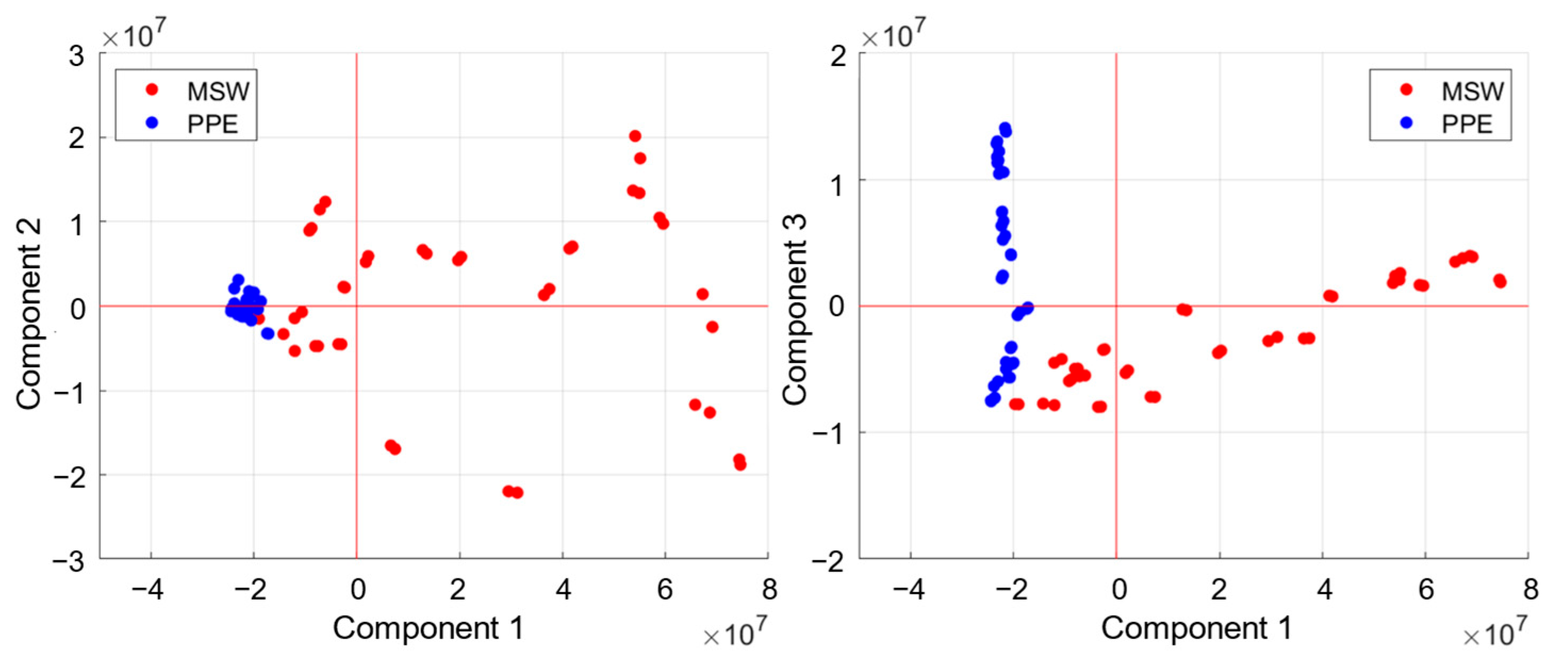
Figure 1. The PCA plot of the 34 liquid samples (with repetitions) analyzed in this study.
Processes 13 03844 g001
Figure 2. Biplot principal component analysis (PCA) of the 34 liquid samples analyzed in this study.
Processes 13 03844 g002
Figure 3. Explained variance by principal components (Pareto chart).
Processes 13 03844 g003
Figure 4. Optimization profiles of predicted values for (a) MSW, (b) PPE (the blue lines represent the desired optimal value of a parameter (TPD, OCC, EC) with +/− limits; the vertical broken red line represents the optimal conditions determined by the optimization process performed; −0.5 and 0.5 represent the optimal calculated value between the minimum (−1)/maximum (1) and middle (0) values for a given variable).
Processes 13 03844 g004
Table 1. The oxidative liquefaction process and the coded values for CCF, residence time (constant—45 min), and initial pressure (constant—30 bar).
Variable/Coded ValuesTemperature,
°C
H2O2 Addition,
wt.%
Waste-Liquid Ratio, wt.%
−1 (minimum)200303
0 (center)250455
1 (maximum)300607
Disclaimer/Publisher’s Note: The statements, opinions and data contained in all publications are solely those of the individual author(s) and contributor(s) and not of MDPI and/or the editor(s). MDPI and/or the editor(s) disclaim responsibility for any injury to people or property resulting from any ideas, methods, instructions or products referred to in the content.