Article

Enhancing Predictive Performance of LSTM–Attention Models for Investment Risk Forecasting

Economics, Management, and Quantitative Finance Research Laboratory (LaREMFiQ), Institute of High Commercial Studies of Sousse, Economics and Quantitative Methods Department, University of Sousse, Sousse 4054, Tunisia
*
Author to whom correspondence should be addressed.
Risks 2026, 14(1), 13; https://doi.org/10.3390/risks14010013
Submission received: 12 November 2025 / Revised: 11 December 2025 / Accepted: 23 December 2025 / Published: 5 January 2026
(This article belongs to the Special Issue Artificial Intelligence Risk Management)

Abstract

For many decades, time-series forecasting has been applied to different problems by scientists and industries. Many models have been introduced for the purpose of forecasting. These advancements have significantly improved the accuracy and reliability of predictions, especially in complex scenarios where traditional methods struggled. As data availability continues to expand, the integration of machine learning techniques is likely to further enhance forecasting capabilities across various fields. Today, hybrid techniques are gaining popularity, as they combine the advantages of different approaches to deliver improved predictive performance and more advanced visualization analytics for decision support. These hybrid approaches can provide better prediction, and at the same time, they can develop a more sophisticated set of visualization analytics for decision support. Recently, the integration of cross-entropy, fuzzy logic, and attention mechanisms in hybrid forecasting models has enhanced their ability to capture complex and uncertain patterns in financial and energy markets. In this study, we propose a hybrid ANN–LSTM deep learning model optimized with cross-entropy, fuzzy logic, and an attention mechanism to enhance the forecasting of financial and energy time series, specifically Ethereum and natural gas prices. Our models combine the feature extraction strength of ANN with the temporal learning of LSTM, while cross-entropy improves convergence, fuzzy logic handles uncertainty, and attention refines feature weighting. Since inaccurate forecasts can lead to greater estimation uncertainty and increased financial and operational risk, improving predictive reliability is essential for effective risk mitigation. These techniques prove effective not only in improving estimation accuracy but also in minimizing financial risks and supporting more informed investment decisions.

1. Introduction

Over the past few decades, there has been a great level of interest in forecasting in several domains, such as the economy, energy, and transportation, as indicated by Zhao et al. (2020). Generally, a forecasting method can be classified into traditional methods, modern prediction methods, and hybrid forecasting methods. Traditional forecasting methods refer to methods that are derived from available working principles, such as conventional time series forecasting methods and econometric methods (Liu et al. 2021). However, conventional time series forecasting techniques have been extensively used to forecast future values of variables. An alternative approach that has received great interest from researchers is the use of modern forecasting methods. Among these methods, machine learning techniques such as artificial neural networks, support vector machines, and hybrid models receive increasing attention (Boubaker and Bannour 2023; Kurani et al. 2023). Explainable AI methods are increasingly being applied to time series forecasting to interpret model predictions. Giudici et al. (2024) applied a normalized Shapley–Lorenz approach to recurrent neural networks, providing insight into how past Bitcoin prices and classical financial assets contribute to predictions, thereby improving the interpretability of deep learning models in financial applications. Another popular modern forecasting technique used by researchers includes regression-based algorithms, local models, generalized regression, and time coefficient functions (Hanifi et al. 2020). Forecasting, as a method of analysis and investigation into future developments and event occurrence, has always generated great interest in many fields, such as technology, engineering, and economics, according to Li et al. (2021). Economic theories and engineering knowledge are often used as drivers for making decisions about the future.
The result of a forecasting method is a fairly accurate evaluation of what will happen in the future regarding certain interest-related topics. In general, forecasting can be defined as an informed guess for future observations based on known past behaviors. To have a superior understanding of processes and system behaviors, it is important to build low-cost and computationally efficient forecasting models. These issues have led Wolpert to argue that a forecasting method that already uses information such as domain and data about the problem outperforms forecasting models that only use data in the model-building phase (McAndrew et al. 2021). Makridakis et al. (2020) state that there is no universally acknowledged method for accurately forecasting future occurrences. Forecasters may implicitly or explicitly place more or less emphasis on certain types of data when making a forecast, and enlisting that data might prove challenging. However, at the base level, at least two approaches can be combined to form a measure that should predict behavior over time better than either source alone. This is what defines the study of hybrid models for forecasting, which seeks to categorize and train disparate forecasting techniques to improve on individual model behavior (Guermoui et al. 2020).
Forecasting is the process of making predictions of the future based on past and present data and analysis of trends. According to Seyedan and Mafakheri (2020), forecasts are never perfect, but they are necessary to aid the decision-making process in a variety of fields and domains such as finance, logistics, and enviro-political affairs. Forecasts of disasters, such as droughts or earthquakes, allow governments to estimate the level of assistance needed should the event take place. Stockholders, likewise, benefit from accurate forecasting, as predictions of company performance fluctuate supply and demand for individual stocks. When forecasts are inaccurate, the resulting uncertainty can expose institutions and investors to significant estimation and decision-making risks. In general, forecasting is mainly used to obtain an approximation to the real value of something, to improve predictive performance, and to minimize financial risks. According to Ghosh et al. (2022) and Huang et al. (2021), regardless of the data’s characteristics or the forecaster’s goals, a hybrid model emerges as a unified way of dealing with the wide range of characteristics manifested in various subfields and datasets found in the field of forecasting. Various techniques of forecasting can be used to anticipate the future based on the data collected from different sources, as shown by Yin et al. (2021). These include decision theory, stochastic process model, time series-based model, and so on, as described by Chekroud et al. (2021). All the forecasting techniques have their own space of applicability. Time series analysis requires balancing model complexity and performance, as underfitting often leads to poor predictive accuracy, as Zhang (2003) demonstrated. All the forecasting models have their own advantages and limitations.
In fact, all three tools, including forecasting, simulation, and scientific management tools, are equally important. They save time and money and aid in the planning of future events. They enhance workplace efficiency through a thorough investigation of corporate productivity and help to develop sound objectives and policies. Furthermore, they play a role in several stages of organizational structuring, saving labor resources and operational costs. Forecasting assists in managing an organization’s diverse activities and promotes sound decision-making. According to Salcedo-Sanz et al. (2020), forecasting also facilitates collaboration among an organization’s departments. However, when forecasts are inaccurate, they can increase uncertainty and expose organizations to substantial operational and financial risks. Accurate forecasting reduces financial and operational risks by enabling better-informed investment and management decisions, making the proposed hybrid models highly relevant to the study of risk. In financial contexts, the role of forecasting proves to be highly essential in investment planning and risk management, as it enhances predictive performance and supports strategies that minimize potential losses.
In recent years, long short-term memory (LSTM) neural networks, often integrated with convolutional, attention, and other mechanism-based models, have gained significant popularity in forecasting financial time series. However, limited systematic research has focused on enhancing the predictive performance of LSTM–Attention architectures for investment risk prediction, particularly from an empirical standpoint. A comprehensive comparative evaluation of advanced LSTM–Attention models remains largely overlooked in the banking, financial, insurance, and other technical domains.
The paper is organized as follows. In Section 2, we provide a literature assessment of the market under consideration, examining the methods used for financial market forecasting. Section 3 describes the methodology, while Section 4 presents the case studies. Section 5 discusses the research findings, and Section 6 presents the results of the study and concludes the paper.

2. Literature Review

Forecasting is a prevalent decision-making instrument in numerous disciplines, and its literature has shown an increasing number of studies, as stated by Zellner et al. (2021). Wolnicki and Piasecki (2021) observed that recent forecasting surveys have mostly focused on new forecasting in the face of rising globalization, global peace, and international competition. The demand for more accurate options in decision-making models has not diminished over time. As a result, researchers have been more interested in this subject, as stated by Phillips-Wren and Adya (2020). Generally, two types of forecasting techniques are distinguished: qualitative and quantitative. Qualitative forecasting includes human judgment and survey forecasting. This approach is mostly based on the experience and intuition of individuals. Quantitative forecasting includes time-series forecasting, causal methods, and machine learning. Researchers who have expertise in a particular forecasting method have investigated it. However, if a single technique is used, the results may be overstated. As a result, researchers are increasingly turning to hybrid methodologies. Hybrid techniques such as Auto-Regressive Integrated Moving Average (ARIMA) combined with neural networks, Artificial Neural Network–Long Short-Term Memory (ANN-LSTM), and Long Short-Term Memory with Attention (LSTM–Attention) are becoming more popular, with the purpose of integrating the advantages of both linear and nonlinear modeling approaches. These hybrid forecasting methods have the potential to produce more accurate predictions while also enhancing visual analytics tools for decision-making and decision support.
As a matter of fact, data preprocessing, also known as data integration and purification, is the first step in the forecasting process, and prediction is the second, as explained by Phan et al. (2022). A hybrid forecasting method takes into account the distinct qualities and challenges of these two processes. Through the use of synergistic combinations of two or more methodologies, this analysis combines dynamics in an effort to comprehend current market patterns. Among the many advantages of the hybrid model are its ability to improve prediction performance and its relative superiority over separate forecasting models in some areas, as stated by Al Mamun et al. (2020). Furthermore, hybrid systems avoid the problems that individual systems might have, such as inconsistent or ambiguous results, low reliability, or poor convergence. In conclusion, requiring the outputs of various methodologies to be used concurrently enhances forecast outcomes and eliminates situations where individual procedures may fail.
Hybrid approaches to forecasting have recently been gaining immense popularity across industries, including finance, as they can capture complex patterns and enhance the accuracy of predictions. Such models combine multiple methodologies, such as statistical methods and machine learning algorithms, to leverage their individual strengths. Bulut and Hudaverdi (2022) proposed a hybrid model that integrates ARIMA, Generalized Autoregressive Conditional Heteroskedasticity (GARCH), Support Vector Machine (SVM), and LSTM models within a single framework for stock market prediction. As the authors say, with the integration of those methodologies within a single framework, the hybrid model turns out to be better at predicting stock market data from both industrialized and emerging markets compared to using those models one by one. Boubaker et al. (2023) introduced a hybrid model, ARFIMA-WLLWNN, which combines Auto-Regressive Fractionally Integrated Moving Average (ARFIMA), wavelet decomposition, and Local Linear Wavelet Neural Network (LLWNN) models, enhancing forecasting accuracy and outperforming other approaches on daily Dow Jones returns. However, Mtiraoui et al. (2023) combines the ARFIMA model with the Empirical Wavelet Local Linear Neural Network (EWLLWNN) to estimate and predict the Bitcoin time series.
Another work by Patel et al. (2021) proposes a hybrid model for stock market prediction using financial news and social media data from Stocktwits. The authors pose this problem as a binary classification task and illustrate that the use of these newer data sources in a hybrid model may add to the predictive performance. Along these lines, Ladhari and Boubaker (2024) assessed the efficiency of diverse combined approaches for forecasting Bitcoin prices. The authors found that hybrid models, specifically Artificial Neural Network (ANN)-LSTM and LSTM–Attention, had generated better forecasting results for the cryptocurrency market in comparison with simpler models. Among the different models considered, the LSTM–Attention model provided the closest forecasts and showed the most confluence with actual market fluctuations. The inclusion of gradient-specific optimization techniques further improved the LSTM–Attention model and enhanced its forecasting capability. These results confirm the efficiency of hybrid methods for the prediction of the erratic nature of markets like cryptocurrency.
In the past few years, the hybrid models have gained ground rapidly in the energy sector to tackle the complexities and uncertainties connected to the energy data floods. Such models are especially applicable for the energy calculations of demand, supply, and prices. Thus, Cheng et al. (2022) introduced a hybrid methodology of an ARIMA and an LSTM model that was based on the integrated approach of an ARIMA model and an LSTM model. This paper demonstrated the lift in the forecasting accuracy of the load by the hybrid model that the nonlinear and linear aspects of the electricity demand data were handled, respectively. Furthermore, a study by Han et al. (2022) reports a hybrid solution to wind power forecasting that is realized by the juncture of the weather forecast data and ML approaches. The authors, thus, showed an instance that incorporation of those datasets and modeling techniques can improve the performance of the hybrid model in the estimation of wind power.
Despite their autonomy, non-linearity, non-stationarity, and volatility, the distinctive features of financial time series present a serious barrier to effective forecasting. It is observed that factors related to economic crises are highly correlated with foreign exchange risks, most of which have recently increased due to the pandemic. For this reason, the perception of risk often overshadows investment returns, making any financial decision difficult. Given these challenges, the implementation of an LSTM with an attention mechanism presents a potentially effective approach to forecasting residual return rates for certain investments, such as the British Pound against the United States Dollar (GBP/USD), as explained by Cheng et al. (2022). Even though such projections themselves bear certain uncertainties, the use of LSTM combined with an attention mechanism may significantly reduce potential losses through better decision-making.
This enhanced model leverages the strengths of both LSTM and the attention mechanism, enriching the forecasting process for investment strategies by focusing on relevant sequences in the data. Furthermore, this integration shows great value in assessing risks associated with investments by highlighting how attention mechanisms can identify critical patterns in financial data. Investors could develop more appropriate short-term strategies when using LSTM with an attention mechanism to improve risk management practices during periods of high market volatility, as noted by Wang and Huang (2023). This again underscores the importance of advanced neural network architectures in reducing financial risks when trading in dynamic economic environments.
Recently, hybrid techniques that include entropy and fuzzy logic have been increasingly applied in a variety of industries related to forecasts, including financial and energy markets. Another important contribution was made by Chen et al. (2023) in their study, which considered the investigation of a new hybrid model combining Ensemble Empirical Mode Decomposition (EEMD) with fuzzy entropy and Extreme Learning Machine (ELM). According to the authors, with measures of the complexity of hidden patterns in financial time series data, fuzzy entropy is in a position to contribute to higher accuracy in forecasting. Their empirical results suggest that this proposed hybrid model outperforms any other traditional method of forecasting, which is itself important for capturing the unpredictability and complexity of fuzzy logic in financial data. Furthermore, in the energy industry, Mardani et al. (2023) proposed a hybrid model that included intuitionistic fuzzy entropy, Stepwise Weight Assessment Ratio Analysis (SWARA), and Complex Proportional Assessment (COPRAS). The approach is applied to the evaluation of biomass crop types for energy production, highlighting the importance of fuzzy logic when dealing with uncertainty and subjective judgments in any decision-making processes. The paper shows how hybrid methods can be used to make enhanced forecasting and selection in applications related to energy.
All the existing studies indicate that augmenting entropy with fuzzy logic into a hybrid improves the capability to represent complex, uncertain settings of financial and energy markets. These kinds of approaches excel in improving the accuracy of the methods of forecasting and decision-making processes in the research reviewed and underline their growing significance in a wide range of applications.

3. Methodology

Certain markets, such as financial and energy markets, are inherently chaotic and complex, making accurate forecasting a challenging task. Nevertheless, precise predictions are crucial for policymaking, investment planning, and evaluating economic and financial systems. To address these challenges, hybrid models, which combine multiple techniques, have been shown to outperform single models by capturing both linear and nonlinear dynamics (Balakrishnan et al. 2025). In this study, ANN–LSTM models are employed because ANNs excel at extracting complex nonlinear features from high-dimensional data, while LSTM effectively captures temporal dependencies. Combining ANN with LSTM allows the model to leverage both spatial (feature-based) and temporal (time-based) patterns, which single models alone may fail to fully exploit. Moreover, these models are enhanced with fuzzy logic to manage the inherent uncertainty and imprecision in chaotic markets, cross-entropy optimization to improve convergence and training stability, and attention mechanisms to focus on the most relevant temporal features. This careful combination of models and adaptations ensures that the hybrid frameworks can capture complex nonlinear dynamics and temporal patterns simultaneously, providing more accurate, robust, and reliable forecasts in financial and energy applications.
All models were implemented in Python 3.10 using TensorFlow and Keras. The neural network architectures, including ANN–LSTM and LSTM–Attention with attention and fuzzy logic layers, are fully described, along with training settings such as optimizer type, learning rates, batch sizes, and early-stopping criteria. Data preprocessing, including normalization, missing value handling, and temporal splitting, as well as the use of multiple random seeds, ensures transparency and reproducibility of the experiments.

3.1. Fuzzy Logic and Its Application in Forecasting

The theory of fuzzy logic is increasingly being used to address ambiguity and vagueness in predictions. Because membership in a set is neither full nor nil, membership functions are used to express sets rather than standard binary classical logic. This adaptability makes it particularly attractive for representing ambiguous, unclear, or human-centered concepts like “high risk” and “moderate growth.” It can be used to include expert knowledge and language variables into forecasting systems, bridging the gap between qualitative perceptions or insights and quantitative modeling.
The theory was first introduced by Zadeh (1965) through his seminal work on fuzzy sets. Later, in the 1970s, Zadeh extended this framework with the concept of linguistic variables, formally establishing the connection between fuzzy mathematics and natural-language expressions. Fuzzy logic is a contextual element whose membership in a set is determined not by one or zero binary (0 or 1) but by a degree, which is indicated by a membership function.
The membership function μ A x of a fuzzy set A in a universe of discourse X is defined as
μ A x : X 0 , 1
where x is an element in X and μ A x represents the degree of membership of X in A. The value μ A lies between 0 and 1, with 0 indicating no membership and 1 indicating full membership.

3.2. Cross-Entropy Theory and Its Application in Forecasting

Cross-entropy is useful for estimating the difference between predicted and actual distributions, which is crucial in forecasting applications where the goal is to closely approximate predictions to real values. It is widely employed as a loss function within hybrid and complex models, where it helps adjust model weights, leading to faster convergence and improved optimization (Goodfellow et al. 2016).
The concept of cross-entropy originates in information theory. Shannon (1948) first introduced the theoretical foundations of information transmission, and Kullback and Leibler (1951) extended this work by developing divergence measures to compare probability distributions. Later, Cover (1999) provided an extended treatment of cross-entropy and its relation to the asymptotic equipartition property, which underlies data-compression methods and code-length minimization in data transmission.
Statistically, cross-entropy is a cost function for two discrete random variables X and Y, and it is formally defined as
H P , Q =   i = 1 n P x i log 2 Q ( x i )
where P is the true distribution, Q is the predicted distribution.
Cross-entropy quantifies the inefficiency of assuming a Q distribution when the true distribution is P. It is frequently used in machine learning, particularly for classification tasks, to calculate the difference between expected probability and true labels.

3.3. Evaluation Metrics for Forecasting Models

Forecasting models are evaluated based on their accuracy, using various metrics like mean absolute percentage error (MAPE). MAPE is preferred for forecasting and time-series analysis due to its percentage representation. However, it lacks a magnitude presentation depending on the direction of forecast error. Mean squared error (MSE) measures the variation from original values but can be affected by radical deviations and a variety of data points. The root mean squared error (RMSE) addresses the MSE’s drawback by taking the square root of the average squared errors. And finally, mean absolute error (MAE) is one of the evaluation metrics to determine the prediction accuracy of a forecasting model.
Our study assessed model performance using the four common measures (MAE, MSE, MAPE, RMSE) for machine learning and prediction to estimate predictive efficacy.
In addition to these traditional metrics, recent studies have proposed more unified measures of predictive accuracy, such as the Robust General Accuracy (RGA) indicator. RGA provides a scale-independent and aggregated assessment of forecasting accuracy, making it suitable for comparing models across different datasets and error distributions. Although our analysis relies on the standard accuracy metrics, the integration of RGA in future research could enhance the robustness and completeness of performance evaluation.
M A E = 1 N i = 1 N y i f ^ i
M S E = 1 N i = 1 N y i f ^ i 2
M A P E = 100 N i = 1 N y i f ^ i y i
R M S E = Σ i N = 1 | | y i f i ^ | | 2 N
where N is the quantity of data to be assessed, y i is the ith true value, and f i ^ is the ith forecast value.

4. Case Studies

4.1. Application in Financial Markets

Hybrid approaches are being used to forecast the cryptocurrency market, using entropy and fuzzy logic methods. Entropy helps determine the right weights of indicators, while fuzzy logic predicts cryptocurrency price movement. These methods are useful for risk management and modeling inexact, uncertain, and subjective decision-making processes. This study uses several approaches to analyze and forecast financial trends in cryptocurrency markets using these methods, focusing on different levels of the cryptocurrency market. This approach has shown success in combining information and predicting market trends.
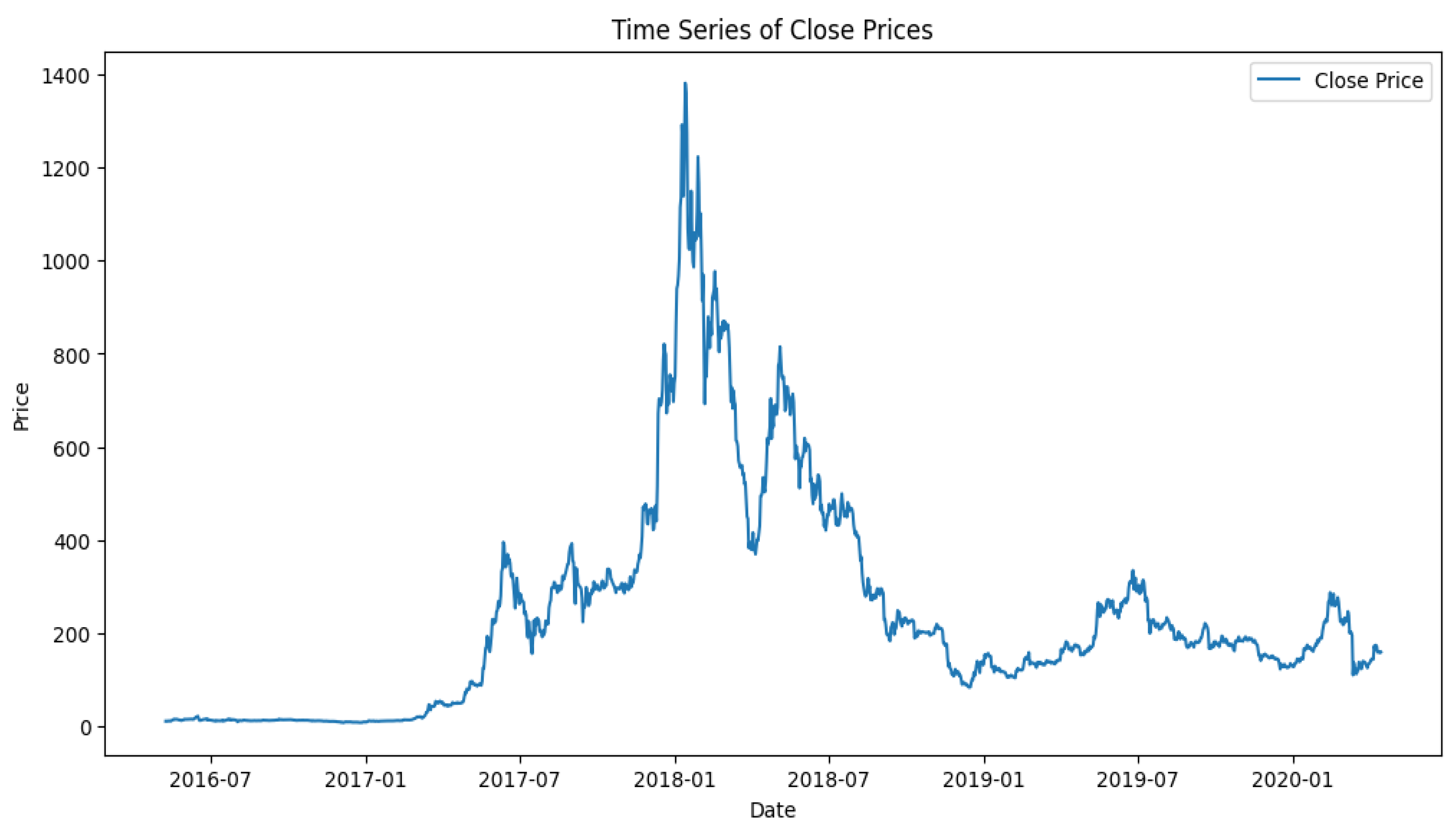
This study analyzes Ethereum price movements from 5 September 2016 to 15 April 2020 using a reliable dataset from Kaggle. The dataset provides a detailed snapshot of Ethereum’s price behavior over 4 years and consists of 1365 daily observations, which were used for model training and validation. Figure 1 depicts the variations in the price of Ethereum over time, with a daily time scale on the x-axis and the corresponding price values on the y-axis. This visual representation allows us to interpret the data’s behavior.

4.2. Application in Energy Markets

Recent years have witnessed a surging research interest in the fuzzy-entropy approach as a benchmark for forecasting directional movements. However, the two methodologies have, to the best of our knowledge, never been integrated beforehand to evaluate future energy trends. To this end, this paper seeks to bridge this gap by integrating the information-theoretic concept of entropy and the qualitative approach of fuzzy logic in the energy sector. This integration aims to examine both the possibilities and potentials therein, which will elucidate and consequently support nascent and future research studies in spheres of application that subtend the field of energy.
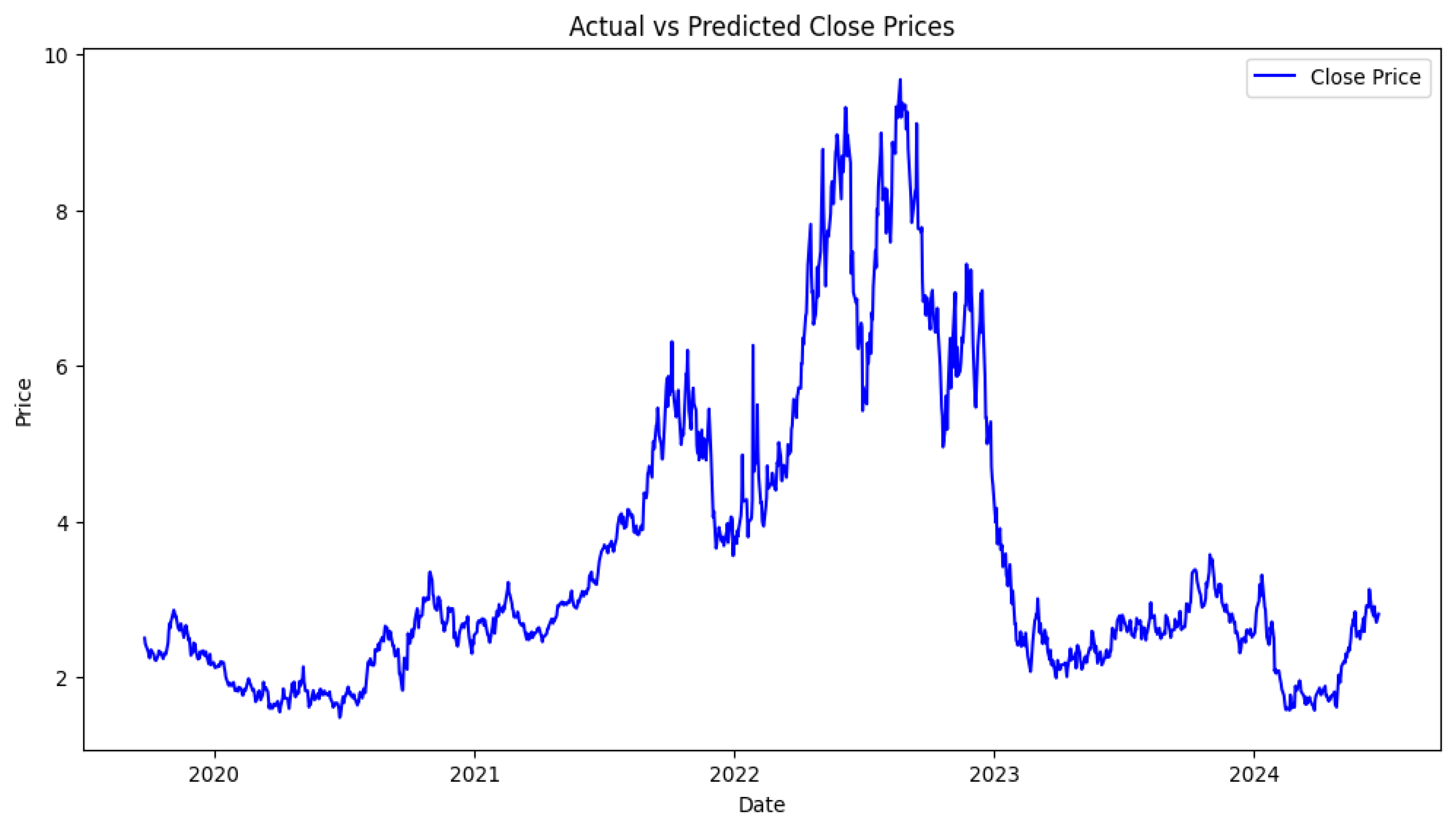
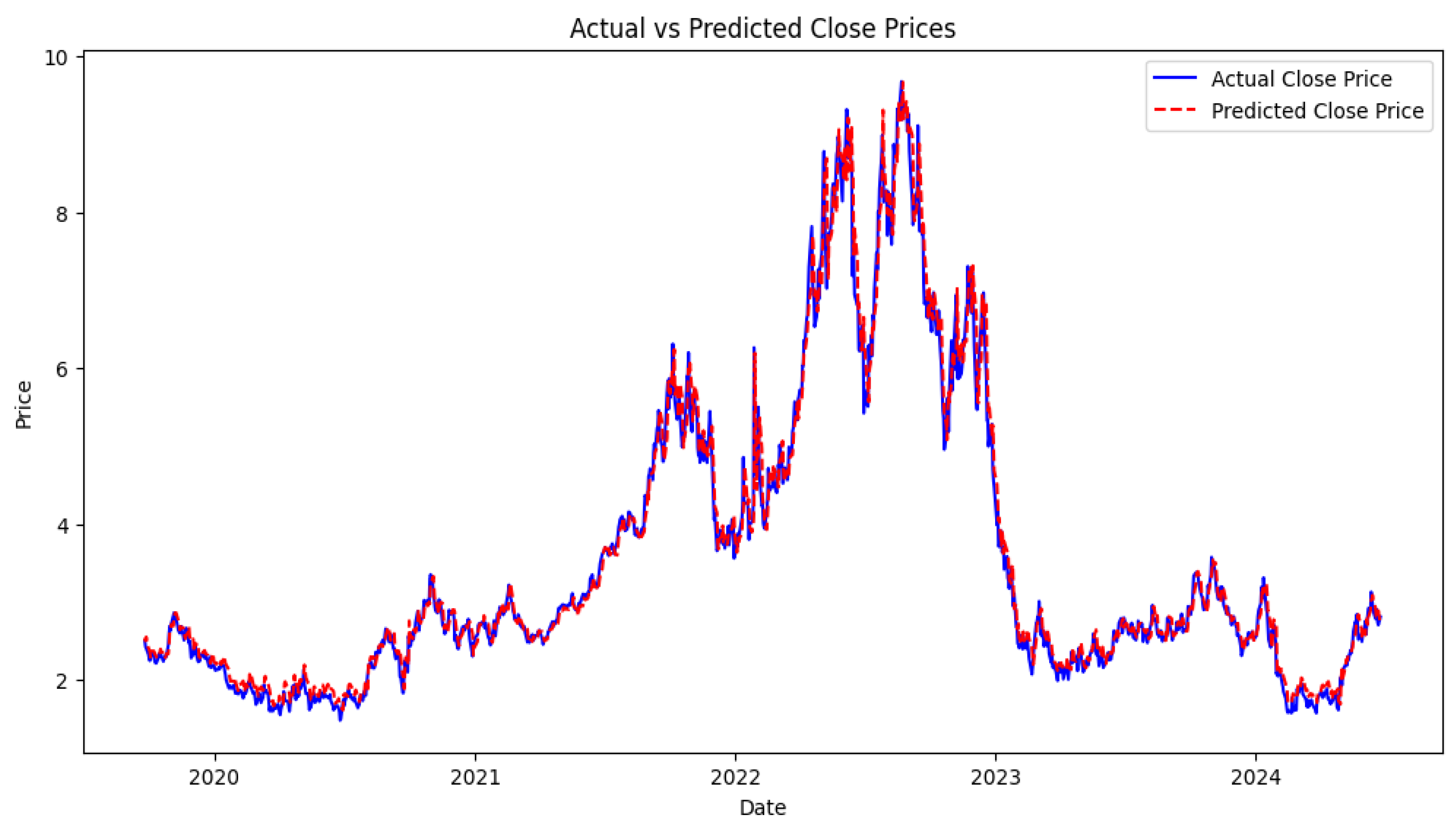
This study investigates natural gas movements from 5 September 2019, to 15 October 2025, utilizing a credible Kaggle dataset. The dataset gives a detailed snapshot of natural gas price behavior over a five-year period and provides 1685 daily observations, which were used for model training and validation. Figure 2 displays the price changes in natural gas over time, with a daily time scale on the x-axis and the corresponding price values on the y-axis. This visual depiction enables us to interpret the data’s behavior.

4.3. Empirical Results

This section presents numerical results for the proposed forecasting approaches applied in two different domains: the finance market and the energy market. In each market, we use two models: the first model combines ANN with LSTM, and to enhance its performance, fuzzy logic and cross-entropy are applied separately. While the second model is LSTM, to improve LSTM’s performance, we added cross-entropy, then we integrated LSTM with fuzzy logic, and finally, we combined the LSTM with the attention mechanism. As a matter of fact, entropy allows us to make use of the uncertainty quantification for every prediction, while fuzzy logic helps in handling ambiguity and imprecision in the data.

4.3.1. ANN-LSTM Model for Forecasting Ethereum Prices

This section focuses on using the hybrid ANN-LSTM model. The hybrid technique aims to forecast Ethereum’s daily price. Table 1 shows the projected and actual values for the most recent 10 observations.
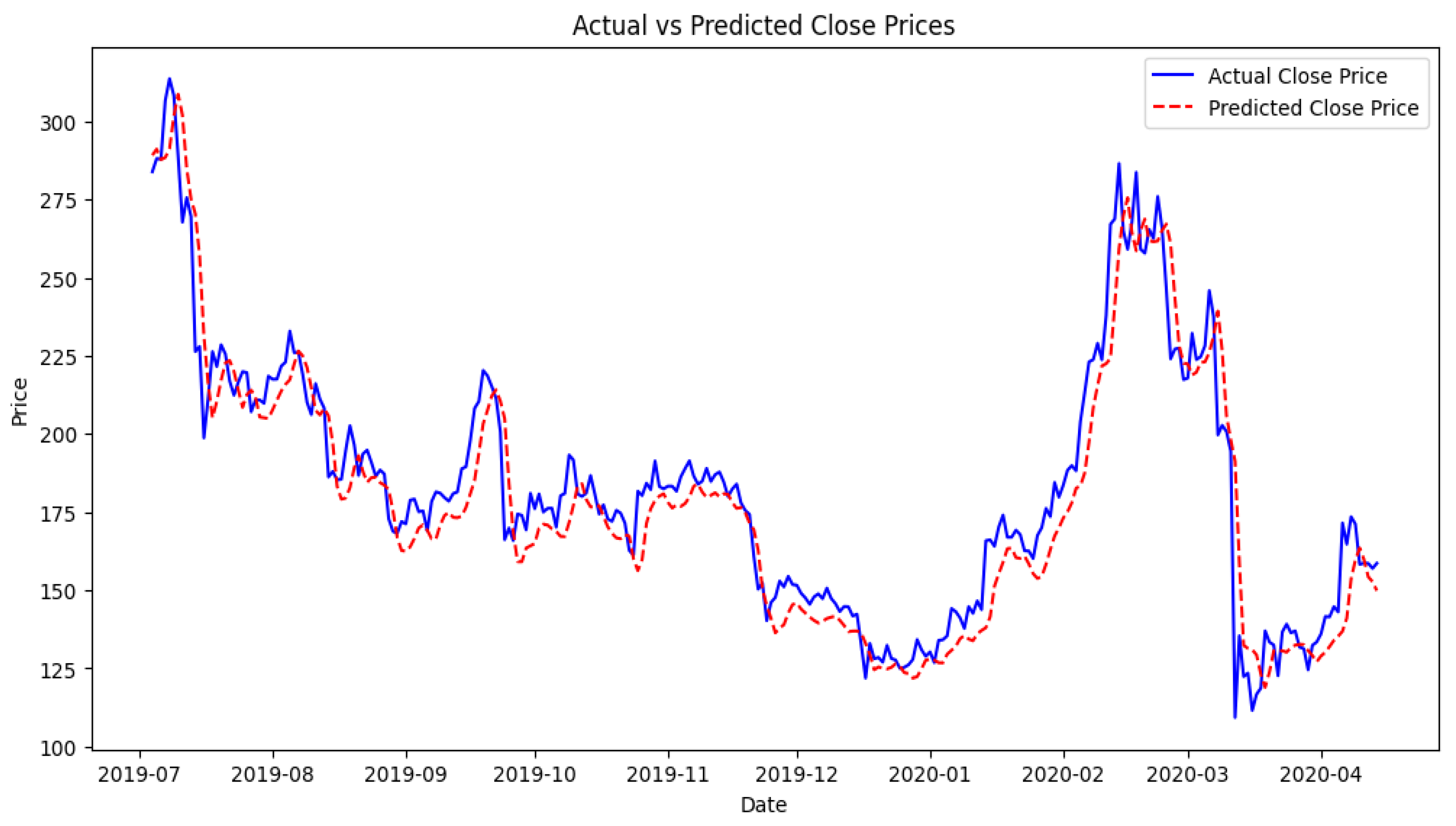
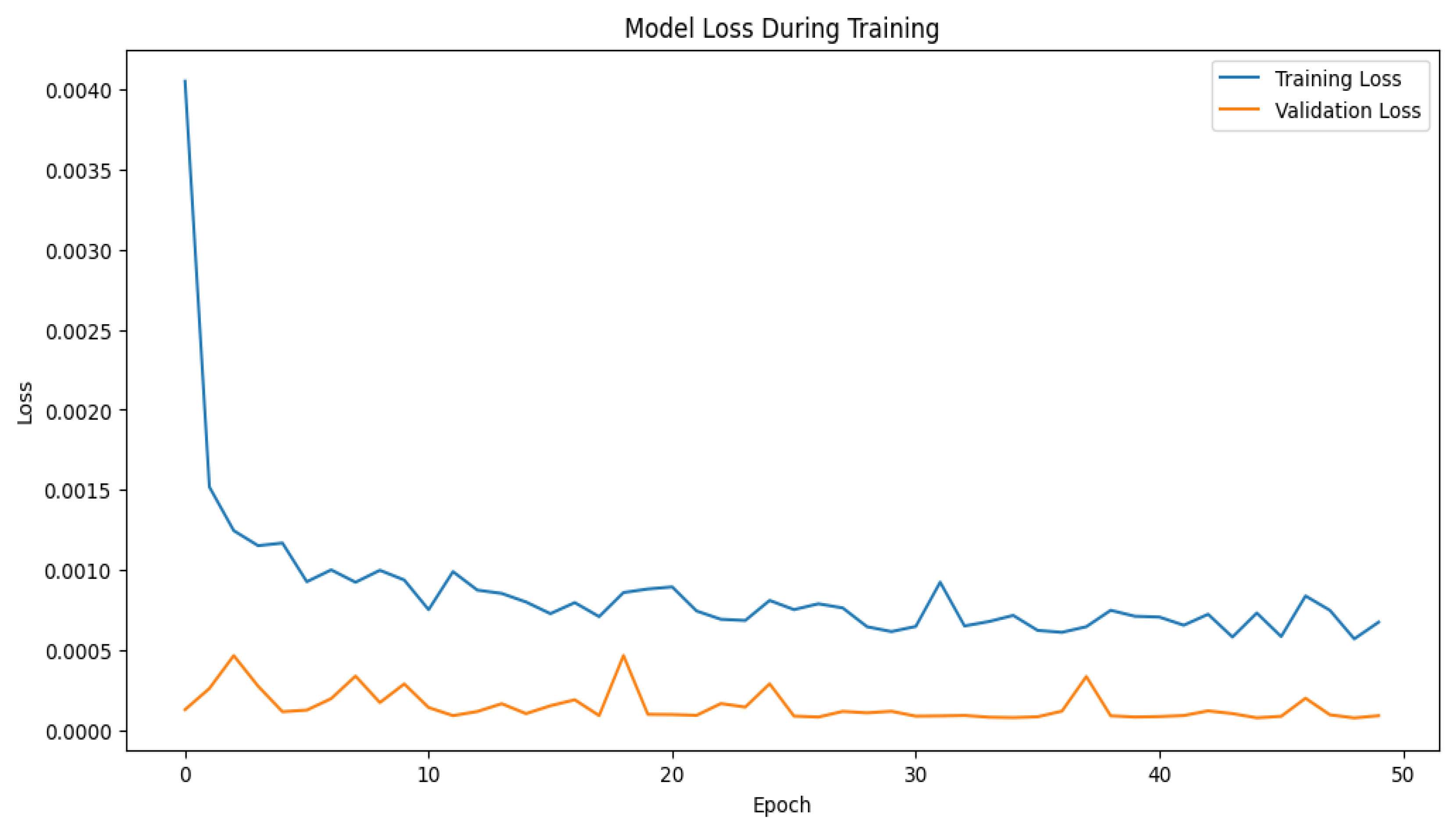
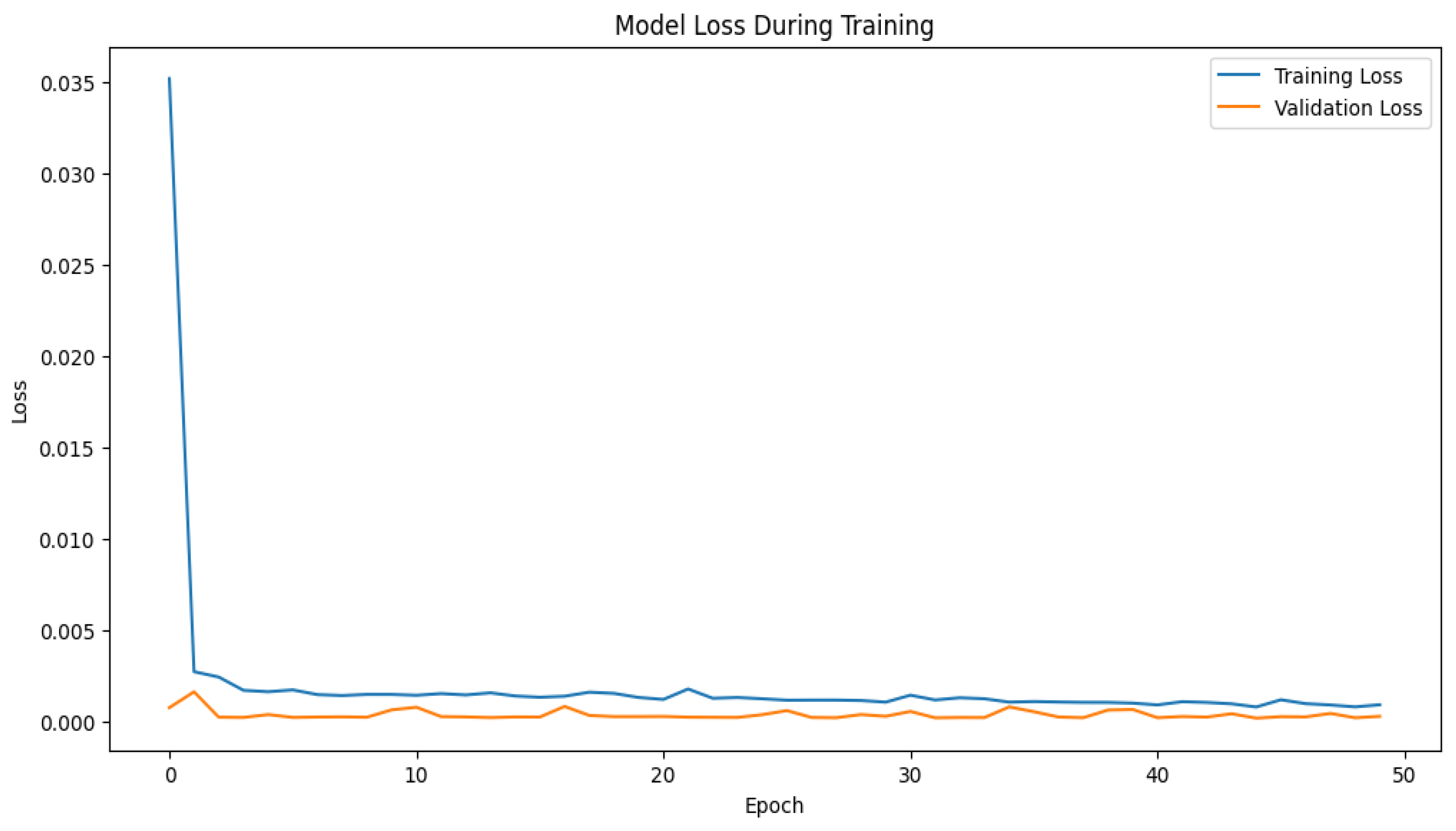
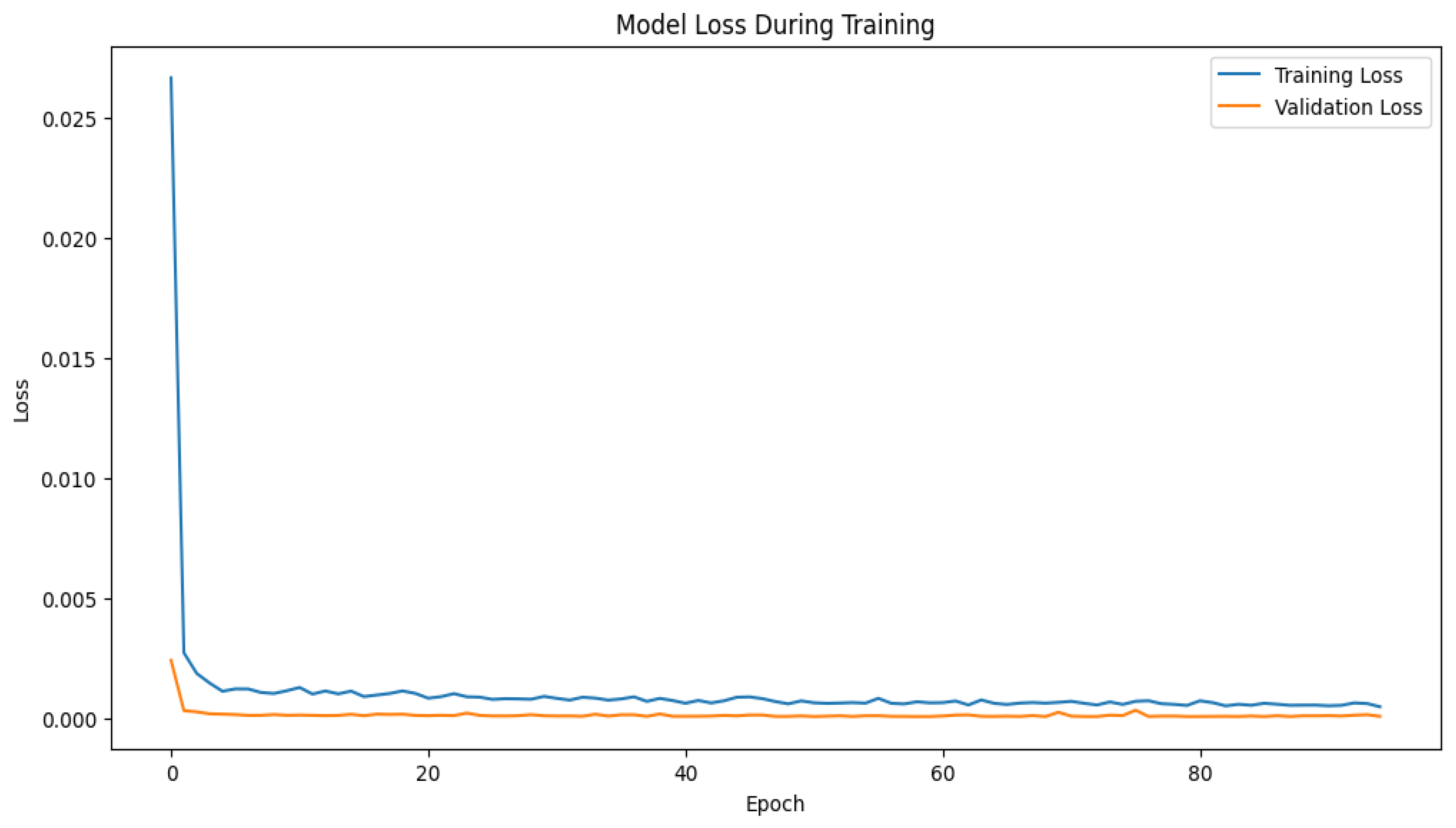
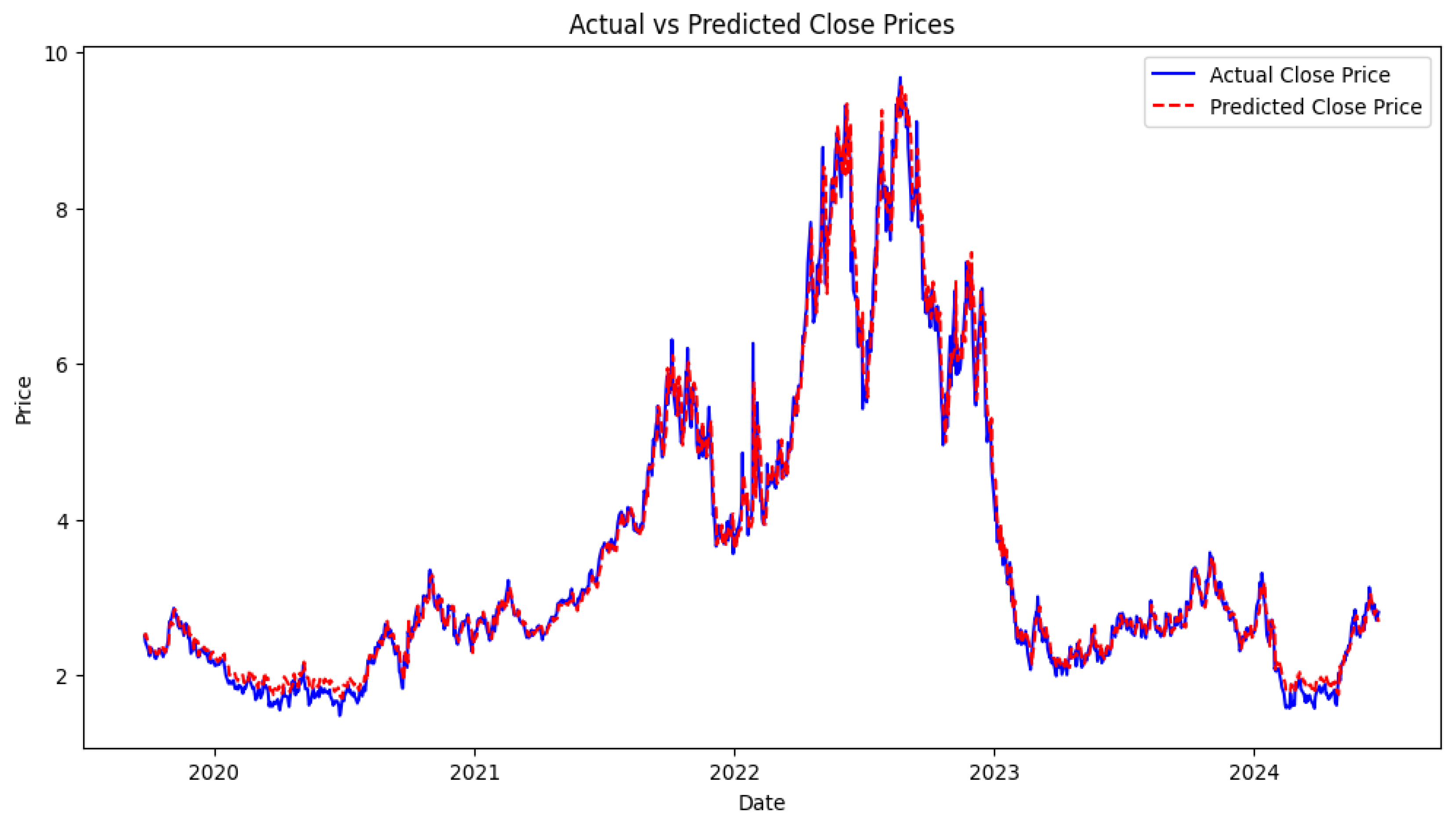
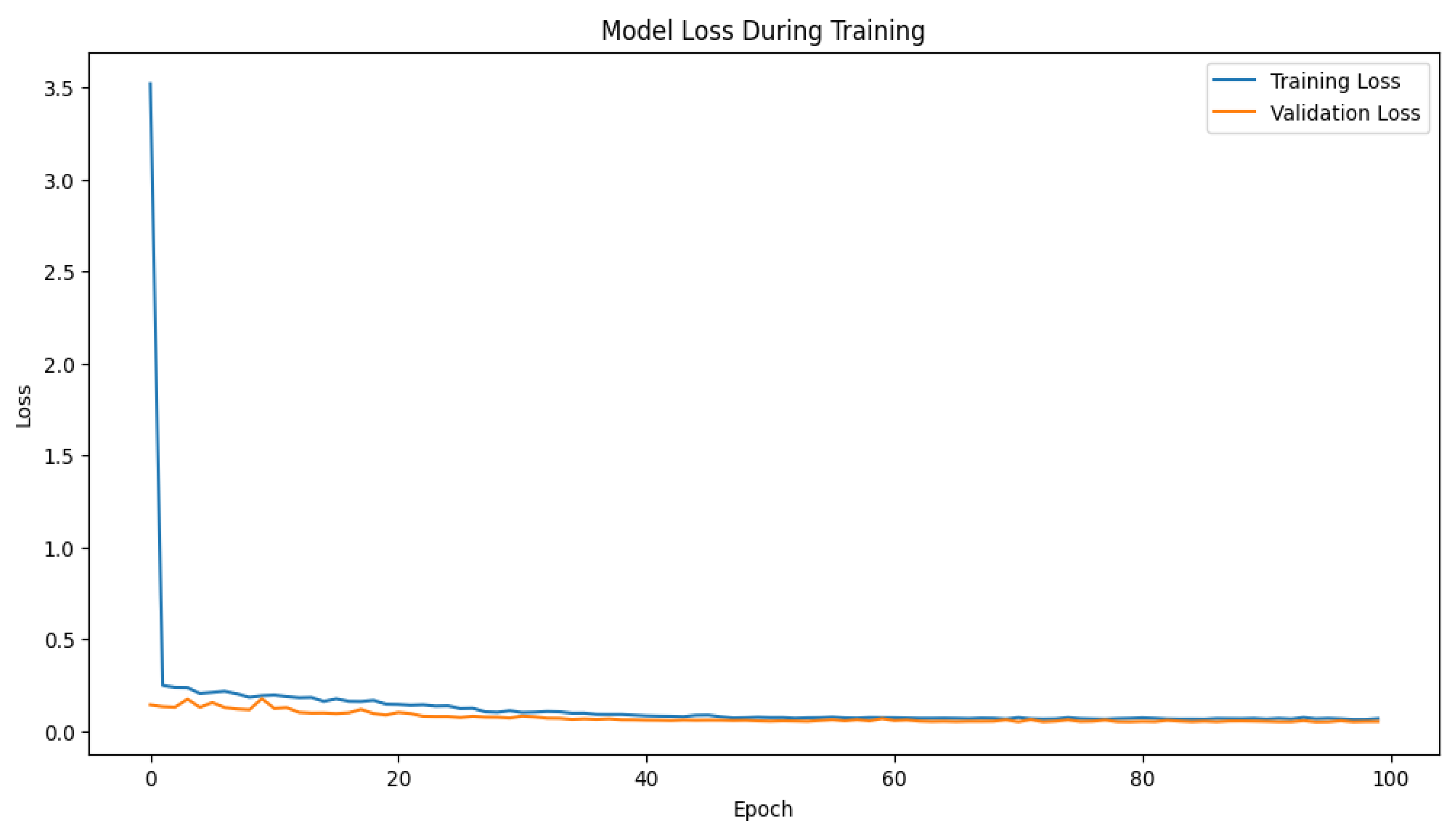
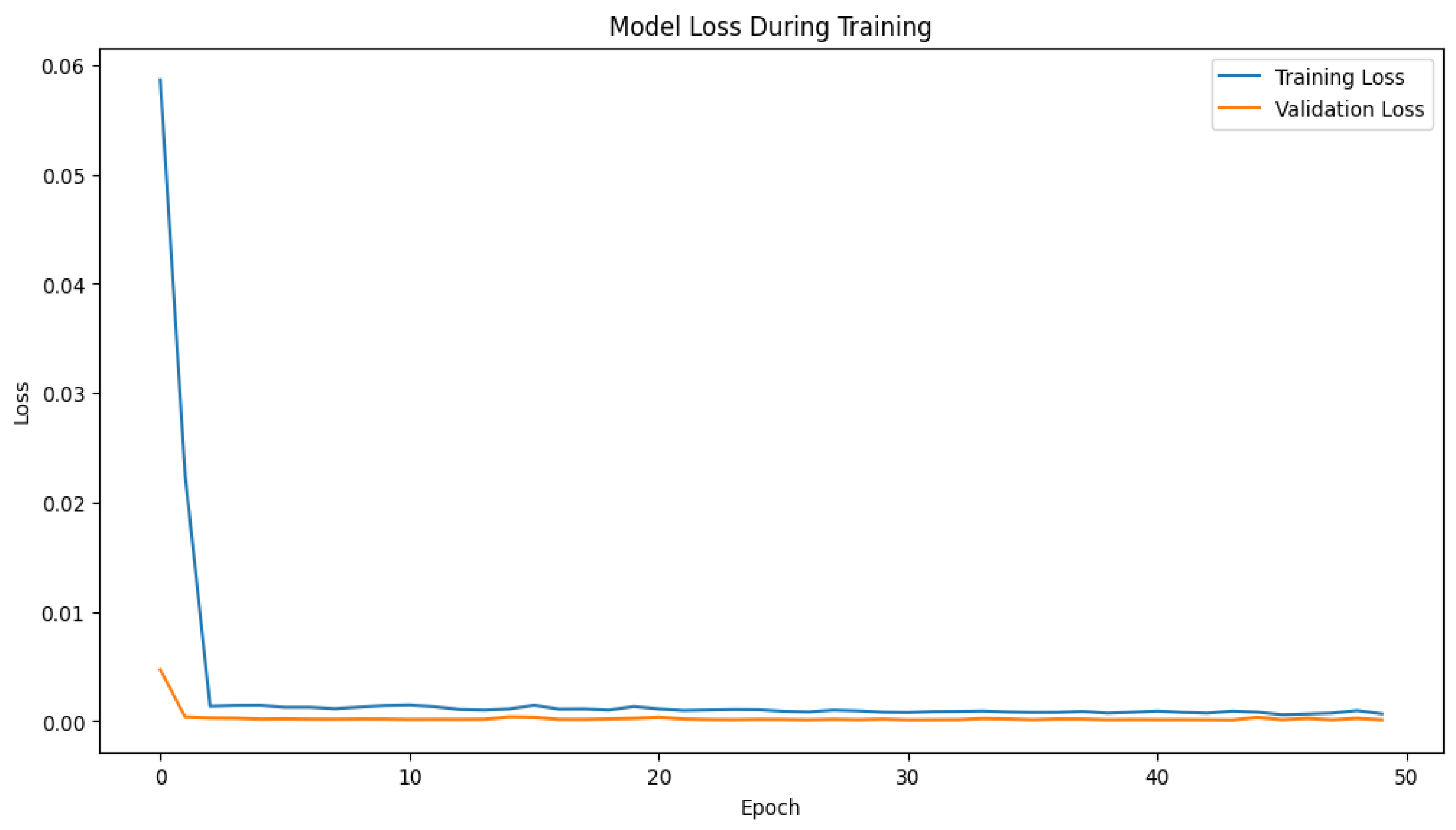
Figure 3 compares given and actual values for the ANN LSTM model, offering a clear evaluation of its performance. To assess the model’s efficacy, four performance indicators were used: mean squared error (MSE), mean absolute error (MAE), mean absolute percentage error (MAPE), and root mean squared error (RMSE). All results reported in Table 2 represent the average values obtained over 10 independent runs, providing a more reliable measure of the hybrid model’s predictive accuracy. Figure 4 demonstrates how the model’s performance has improved over time. As the number of epochs increases, the loss decreases, showing that the model is improving its predictions.

4.3.2. ANN-LSTM Model for Forecasting Natural Gas Prices

This section focuses on applying the hybrid ANN-LSTM model. The hybrid technique seeks to forecast natural gas daily prices. Table 3 displays the projected and actual values for the most recent ten observations.
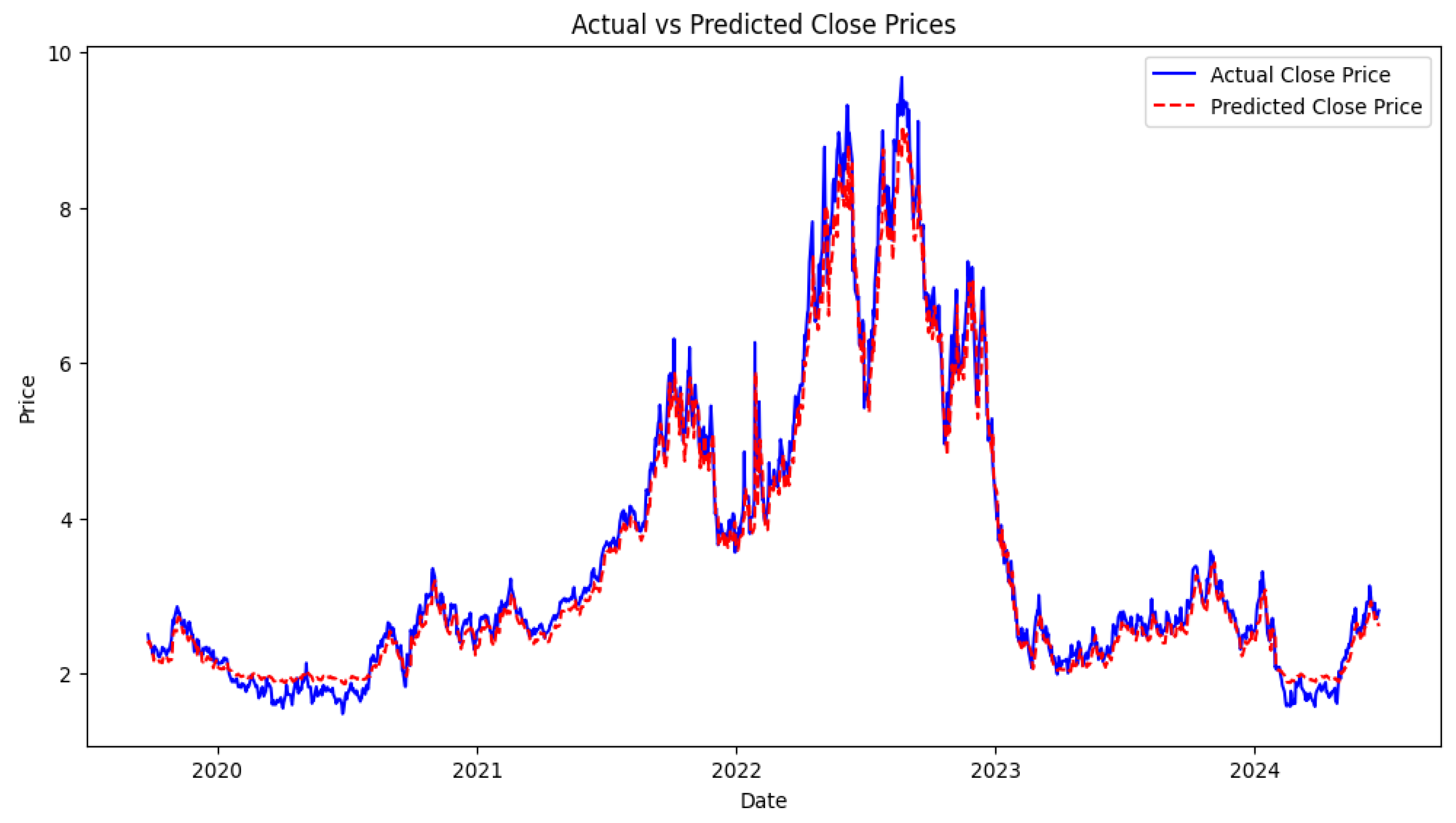
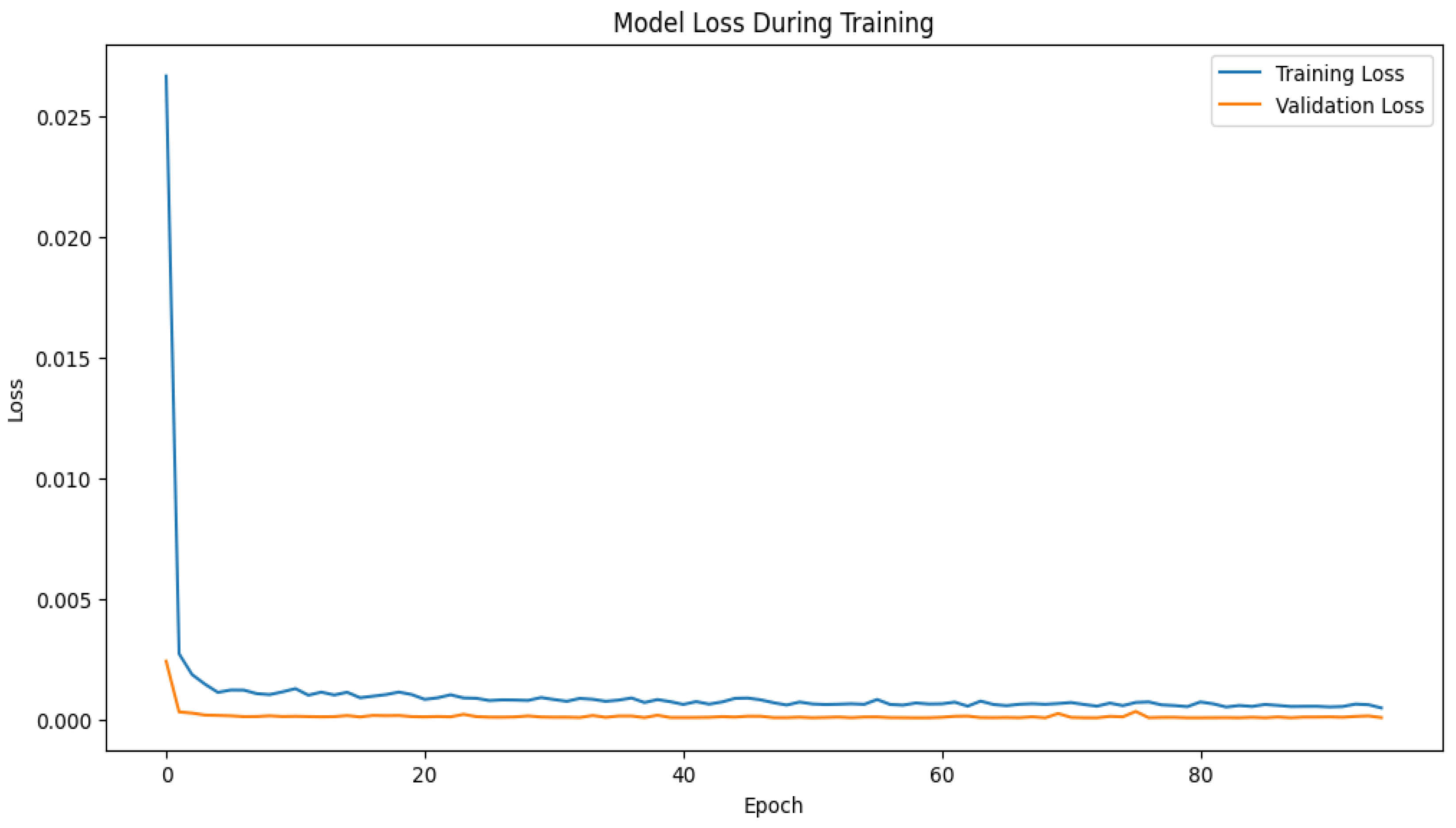
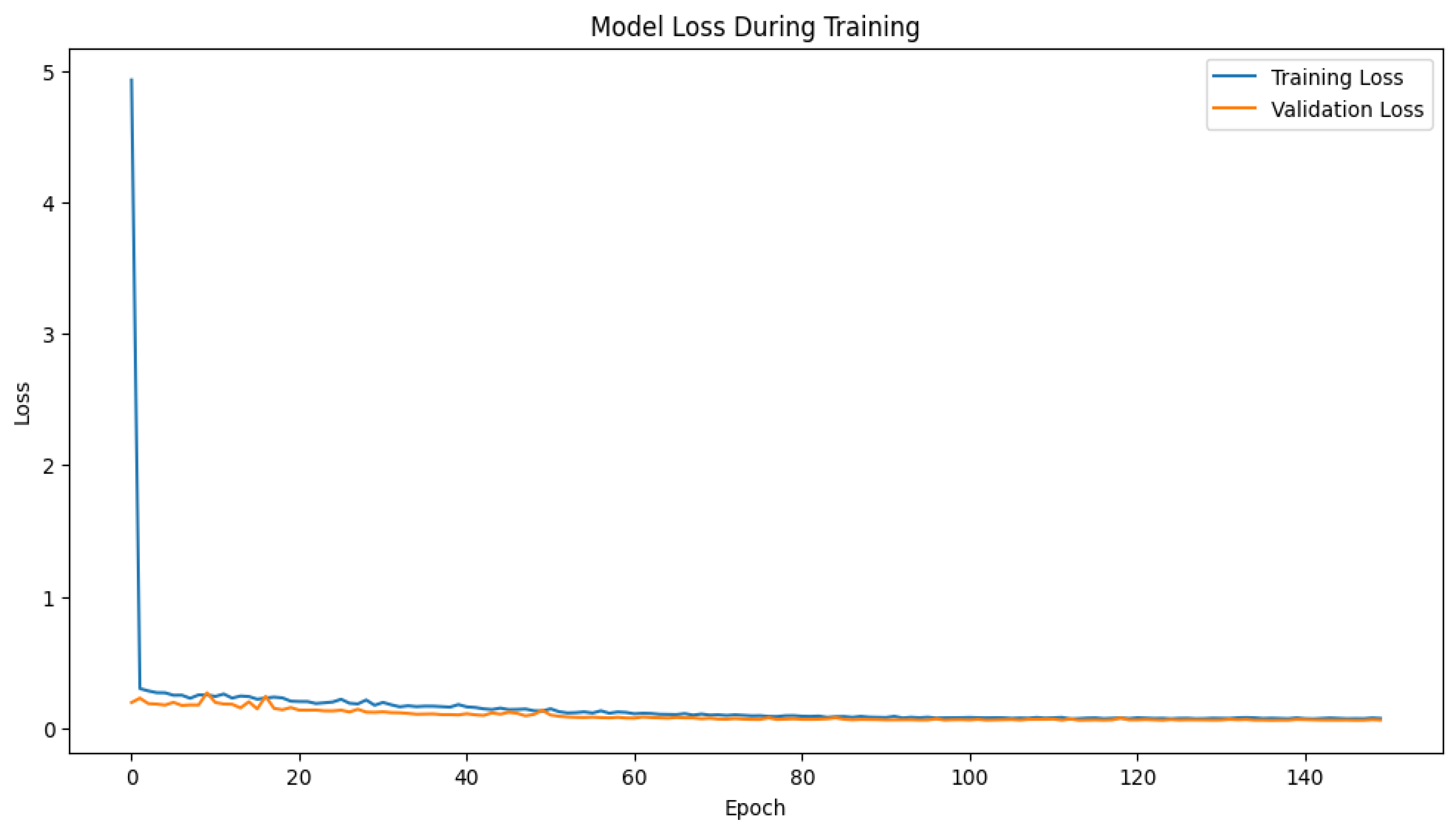
Figure 5 contrasts the supplied and actual values of the ANN LSTM model, providing a clear evaluation of its performance. As with the first dataset, four performance measures were employed to evaluate the model’s efficacy: mean square error (MSE), mean absolute error (MAE), mean absolute percentage error (MAPE), and root mean squared error (RMSE). Table 4 displays the MSE, MAE, MAPE, and RMSE values, which represent the hybrid model’s predictive accuracy. All reported values correspond to the average performance over 10 independent runs. Figure 6 shows how the model’s performance has increased with time. As the number of epochs increases, the loss reduces, indicating that the model’s predictions are improving.

4.3.3. ANN-LSTM with Fuzzy Logic Model for Forecasting Ethereum Prices

In this part, we incorporated fuzzy logic into our hybrid ANN-LSTM model to enhance its performance. This addition aims to enrich the model’s ability to handle uncertainty and imprecision in the data, leading to more robust and accurate predictions. Table 5 presents the actual and predicted daily Ethereum prices using the ANN-LSTM model with fuzzy logic, demonstrating the model’s improved forecasting capabilities.
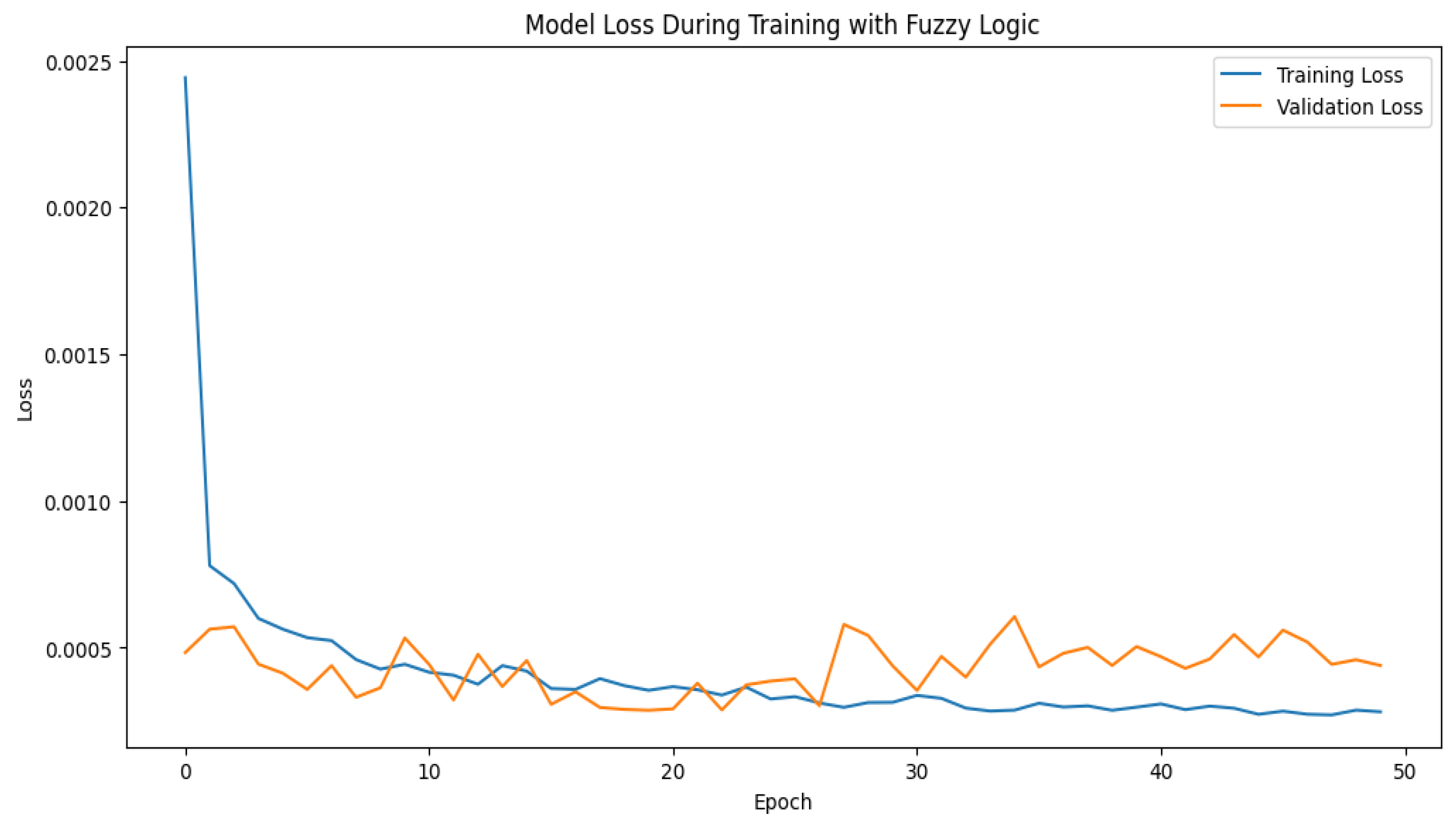
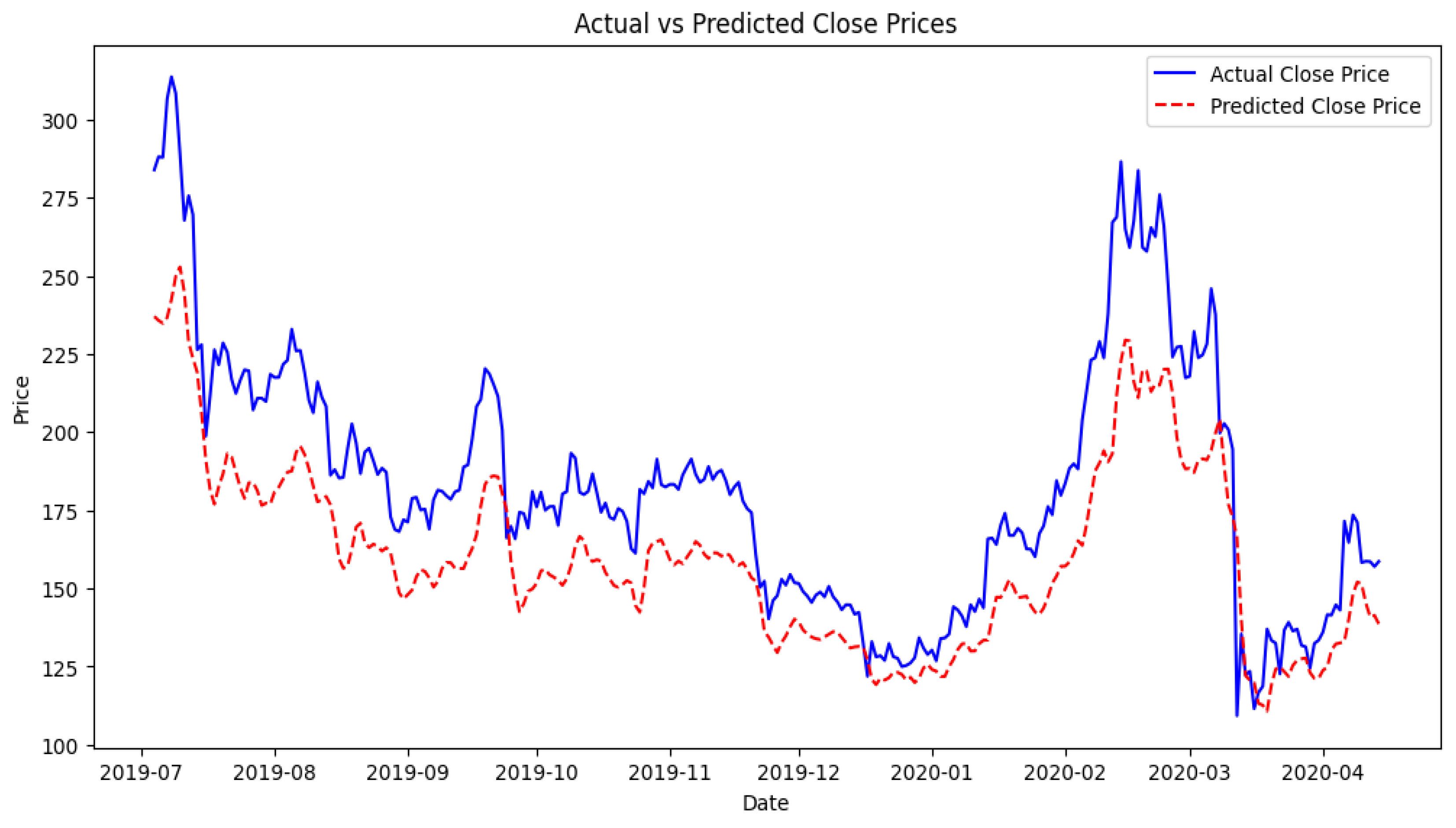
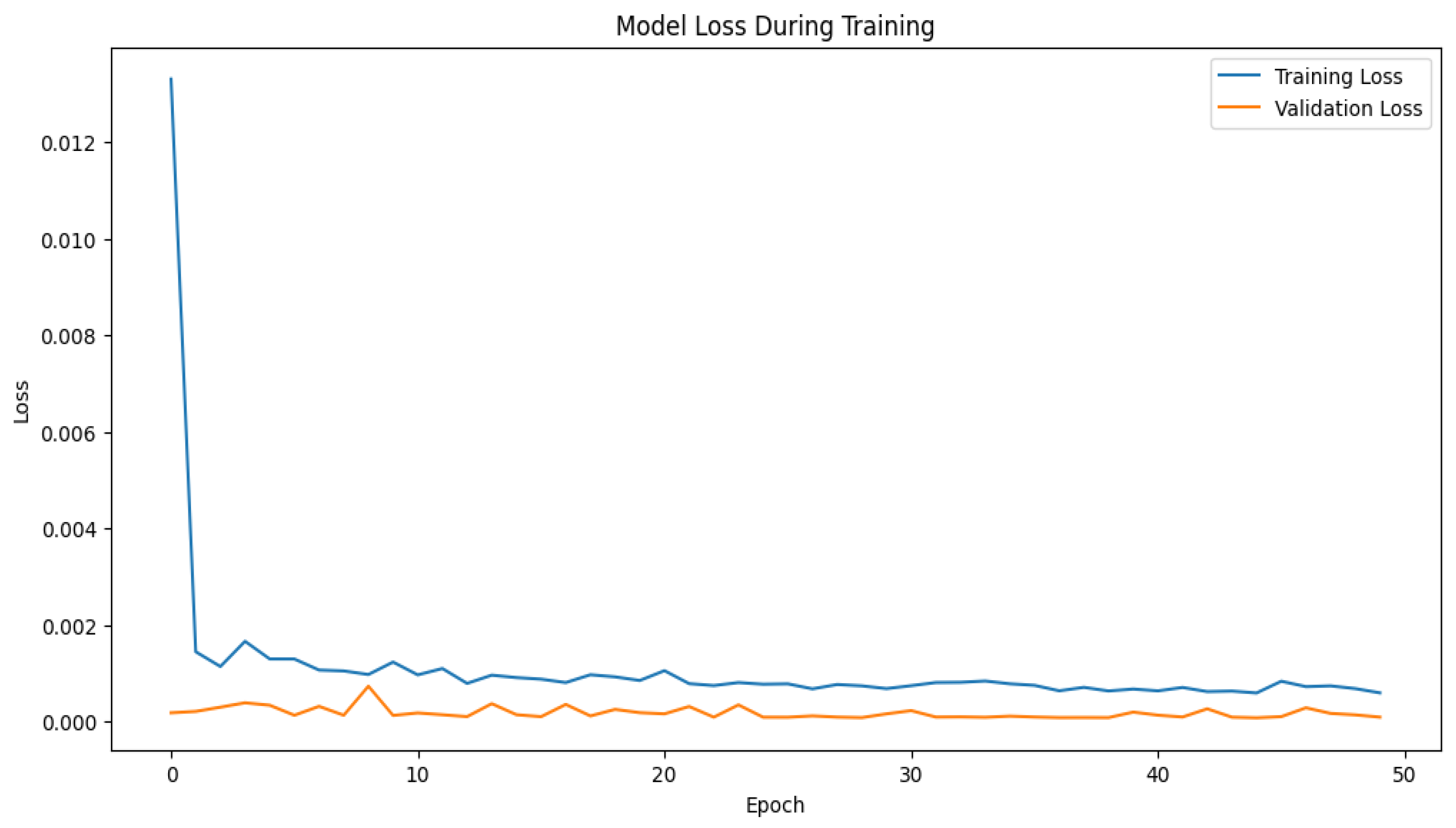
Figure 7 illustrates the variance between the forecasted and actual values for the hybrid ANN-LSTM model with fuzzy logic, demonstrating very close predictions compared to the real values. Figure 8 further supports these findings by showcasing the training and validation loss curves of the ANN-LSTM model with fuzzy logic, indicating effective learning during the training process. According to Table 6, the ANN-LSTM model with fuzzy logic outperforms the standard ANN-LSTM.

4.3.4. ANN-LSTM with Fuzzy Logic for Forecasting Natural Gas Prices

In this section, we incorporated fuzzy logic into our hybrid ANN-LSTM model to achieve better estimations. Table 7 presents the predicted and actual values of natural gas prices over time. Figure 9 illustrates the plot of these values, while Figure 10 depicts the training and validation loss of the ANN-LSTM model with fuzzy logic, demonstrating its efficient convergence during training. Table 8 shows the evaluation metrics of the ANN-LSTM model with fuzzy logic, highlighting its strong performance. All reported results represent the average values obtained over 10 independent runs.

4.3.5. ANN-LSTM with Cross-Entropy for Forecasting Ethereum Prices

In this part, we incorporated cross-entropy into our hybrid ANN-LSTM model to enhance its performance. This addition aims to improve the model’s ability to distinguish between the predicted and actual values, thereby optimizing the overall forecasting accuracy. Table 9 presents the actual and predicted daily Ethereum prices using the ANN-LSTM model with cross-entropy, demonstrating the model’s enhanced prediction capability.
Figure 11 illustrates the variance between the forecasted and actual values for the hybrid ANN-LSTM model with cross-entropy. Figure 12 complements this by presenting the training and validation loss curves for the same model, showcasing its effective optimization and convergence during training. Table 10 lists the performance metrics, including MSE, MAE, MAPE, and RMSE, all reported as the average over 10 independent runs. These values are considerably lower than those of the hybrid model.

4.3.6. ANN-LSTM with Cross-Entropy for Forecasting Natural Gas Prices

In this section, we added cross-entropy to our hybrid ANN-LSTM model to improve its performance. This modification intends to increase the model’s capacity to discriminate between expected and real values, thereby maximizing the overall forecasting accuracy. Table 11 presents the actual and predicted daily natural gas prices using the ANN-LSTM model with cross-entropy, illustrating the model’s improved prediction accuracy.
Figure 13 depicts the variation between the predicted and actual values for the hybrid ANN-LSTM model with cross-entropy. Figure 14 further illustrates the training and validation loss curves for the same model, highlighting its robust learning process and effective convergence. Table 12 shows the performance metrics, including MSE, MAE, MAPE, and RMSE, reported as the average over 10 independent runs.

4.3.7. LSTM with Fuzzy Logic for Forecasting Ethereum Prices

In this part, we extended the LSTM model by incorporating fuzzy logic. Although fuzzy logic is generally intended to help models manage uncertainty and nonlinear patterns, the results obtained in this study show that the LSTM–fuzzy logic configuration did not perform as expected. As presented in Table 13, the model produced unstable forecasts and significantly higher error values compared to other models. These findings indicate that the fuzzy-logic layer, in its current formulation, did not enhance the forecasting capability of the LSTM model for Ethereum prices and introduced instability into the prediction process. Table 14 report the evaluation metrics.
Figure 15 depicts the gap between the expected and actual values for the LSTM model with fuzzy logic, illustrating the instability observed in the predictions. Figure 16 presents the training and validation loss curves for the same model. Although the loss decreases during training, this convergence does not translate into reliable forecasting performance, indicating that the fuzzy-logic layer introduced instability and prevented the model from generalizing effectively.

4.3.8. LSTM with Fuzzy Logic for Forecasting Natural Gas Prices

In this final section, we incorporated fuzzy logic into the LSTM model to evaluate whether it could improve the forecasting results. Table 15 presents the model’s estimations, while Figure 17 provides a comparison between the actual and predicted values, clearly showing the instability and large deviations observed in the forecasts. Figure 18 illustrates the training and validation loss curves for the LSTM model with fuzzy logic. Although the loss decreases during training, this convergence does not translate into reliable predictions, indicating that the model fails to generalize effectively. Finally, all evaluation metrics are summarized in Table 16, confirming that the LSTM–fuzzy logic configuration did not perform adequately in this context.

4.3.9. LSTM with Cross-Entropy for Forecasting Ethereum Prices

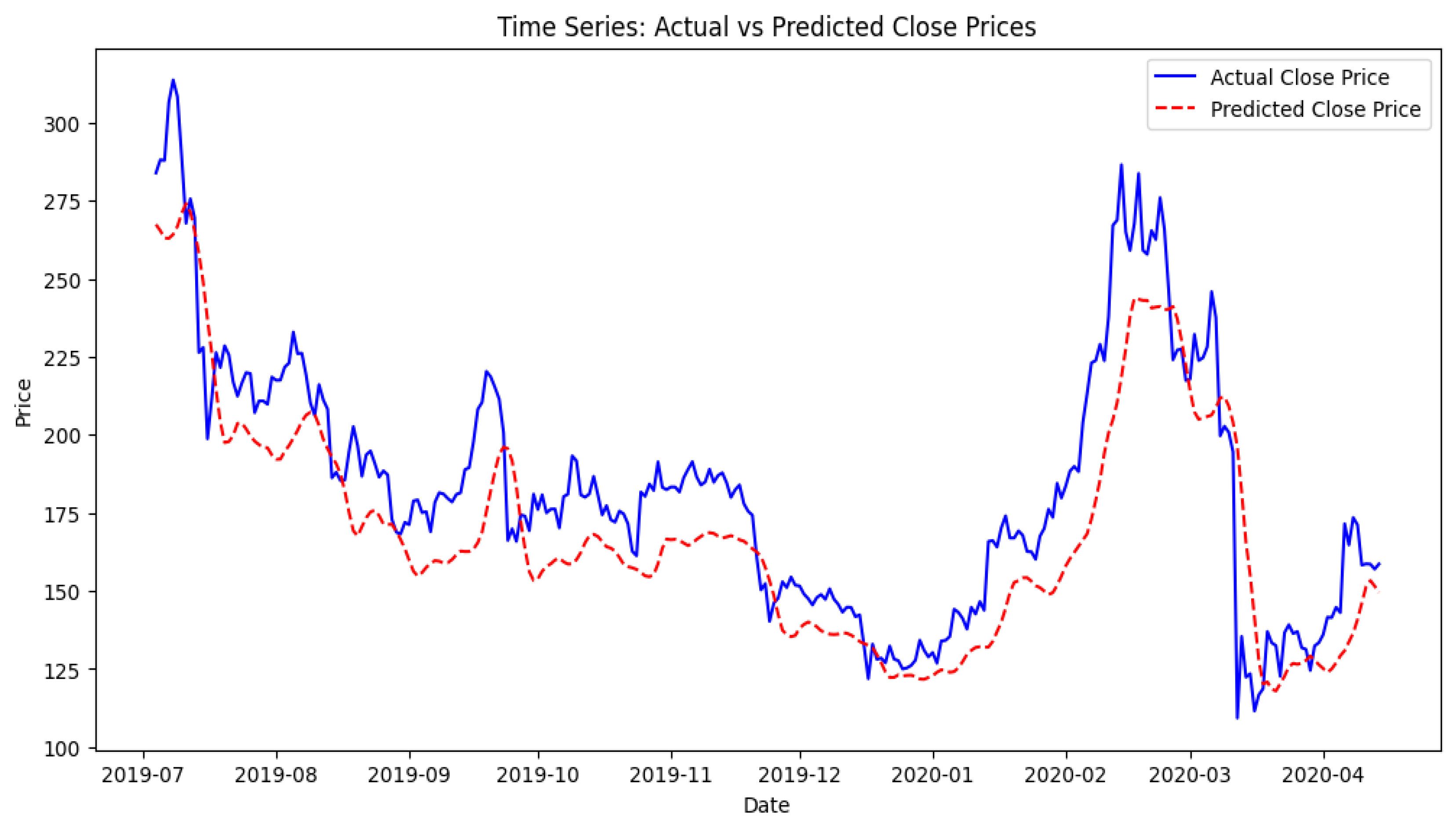
In this phase, we added cross-entropy to our LSTM model to improve its performance. This modification seeks to increase the model’s capacity to discriminate between projected and real values. The forecasting results are reported in Table 17.
Figure 19 illustrates the variation between the predicted and actual values for the LSTM model with cross-entropy, providing a clear representation of its forecasting accuracy. Figure 20 further highlights the model’s training process by displaying the training and validation loss curves, which demonstrate effective optimization and convergence. Table 18 summarizes the performance metrics, including MSE, MAE, MAPE, and RMSE values, reported as the average across 10 independent runs.

4.3.10. LSTM with Cross-Entropy for Forecasting Natural Gas Prices

During this phase, we improved the performance of our LSTM model by incorporating cross-entropy. Cross-entropy helps train the model to enhance classification accuracy, making it suitable for tasks such as time series classification or forecasting with discrete outcomes. Table 19 presents the actual and predicted prices using the LSTM model with cross-entropy. Figure 21 illustrates the difference between the predicted and real values for the LSTM model with cross-entropy, while Figure 22 highlights the training and validation loss curves, showcasing the model’s efficient learning process. Table 20 displays the performance metrics, including MSE, MAE, MAPE, and RMSE values, reported as the average across 10 independent runs.

4.3.11. LSTM–Attention for Forecasting Ethereum Prices

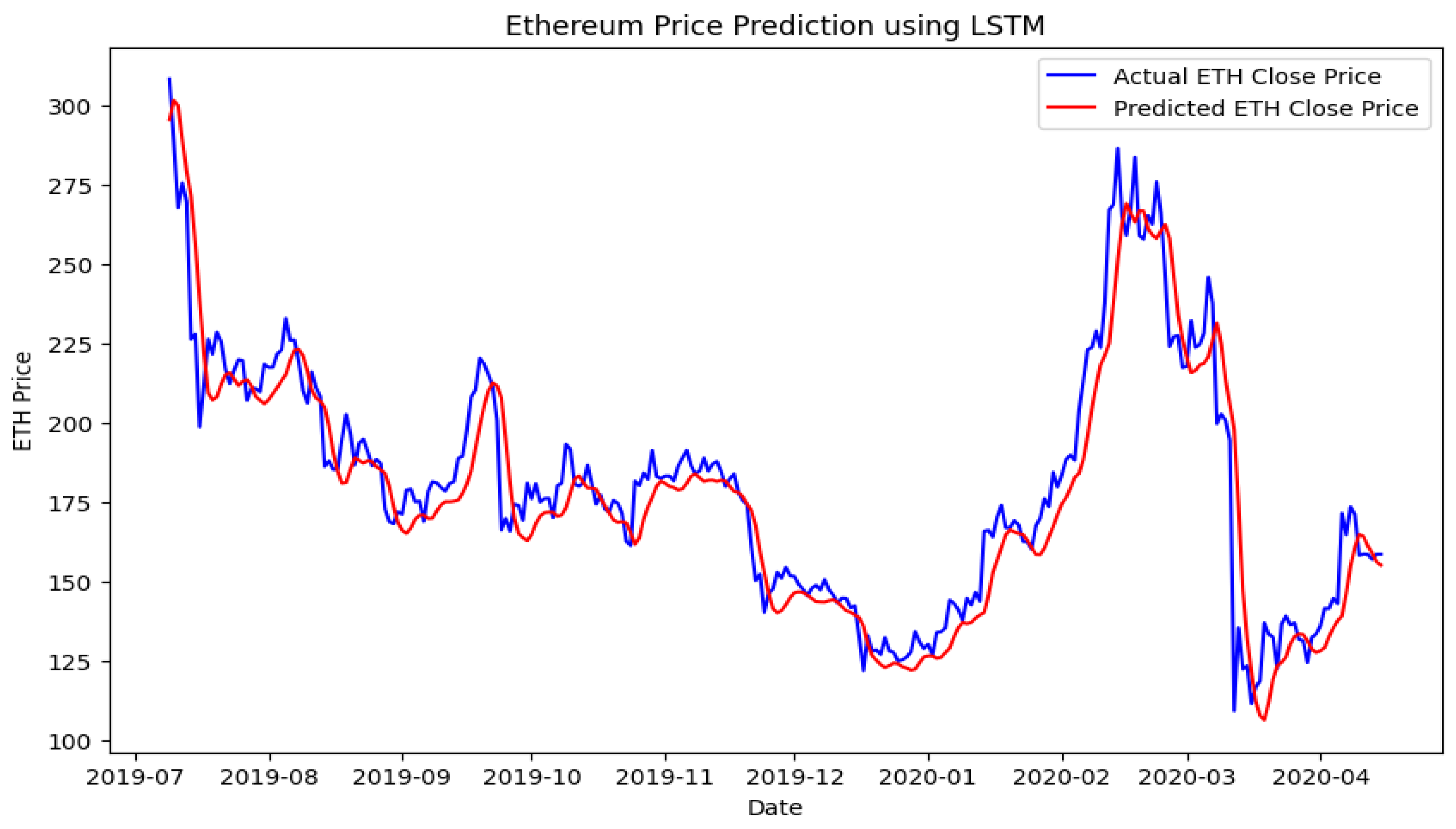
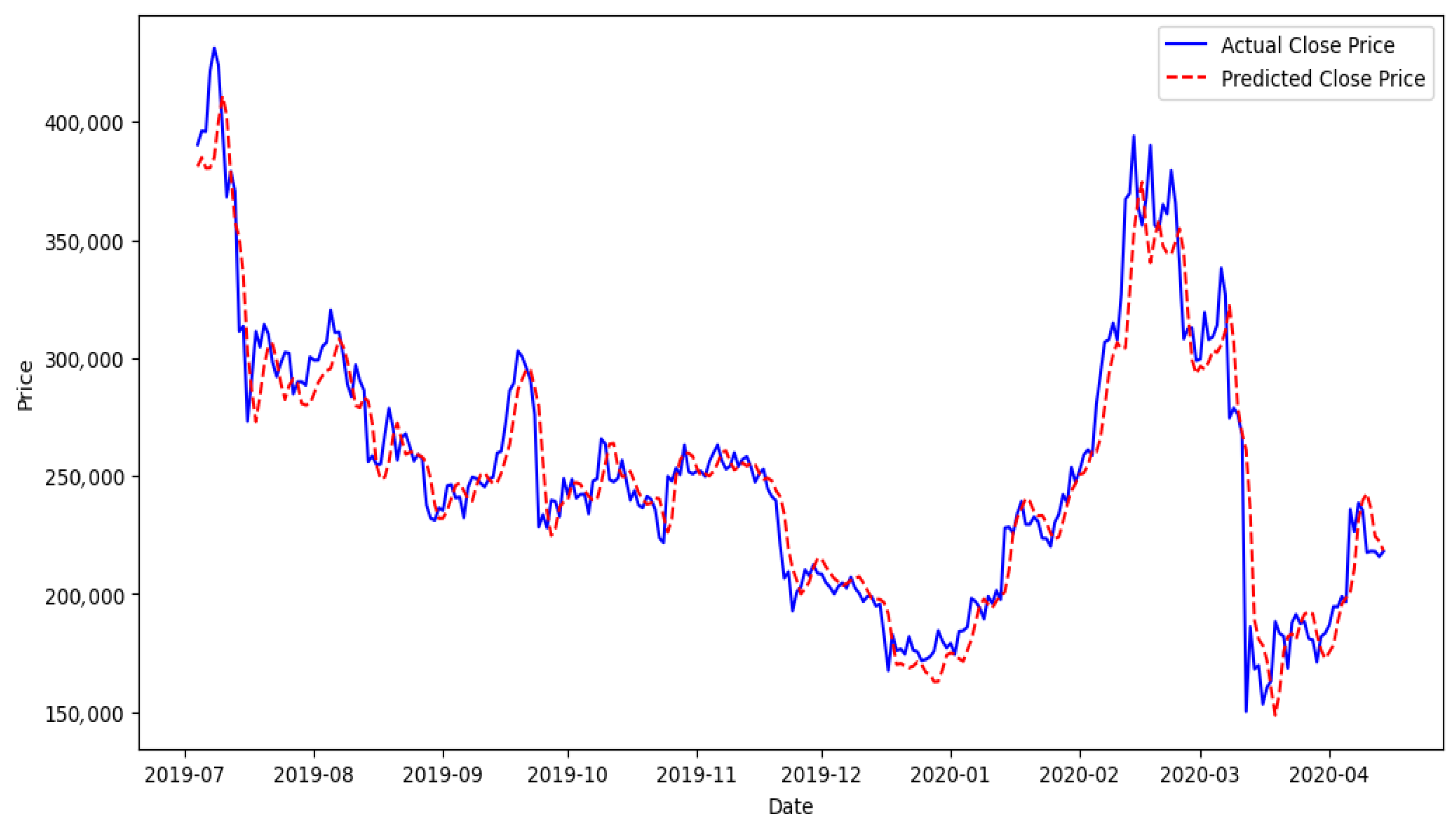
The following part focuses on improving the LSTM model by integrating attention mechanisms with cross-entropy and, separately, by combining LSTM with fuzzy logic. Table 21 displays the projected values using the LSTM model and the actual values for the most recent 10 observations of Ethereum’s daily price, based on the previously mentioned dataset.
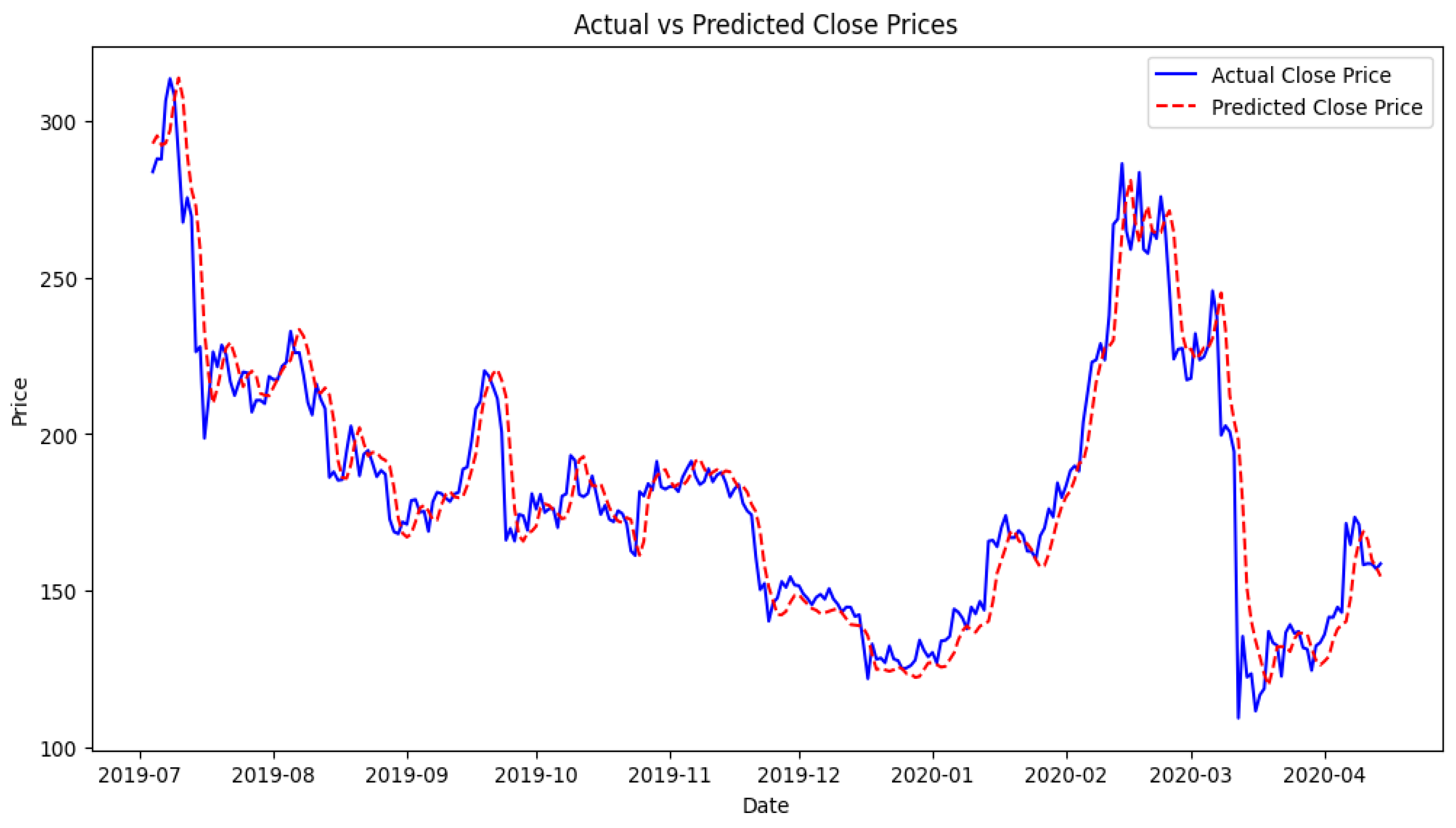
Figure 23 shows expected and actual values using the LSTM model, providing a clear evaluation of its performance. As previously stated, four performance measures were utilized to assess the model’s efficacy and are presented in Table 22. Figure 24 shows how the model’s performance has increased with time. As the number of epochs increases, the loss reduces, indicating that the model’s predictions are improving.

4.3.12. LSTM–Attention for Forecasting Natural Gas Prices

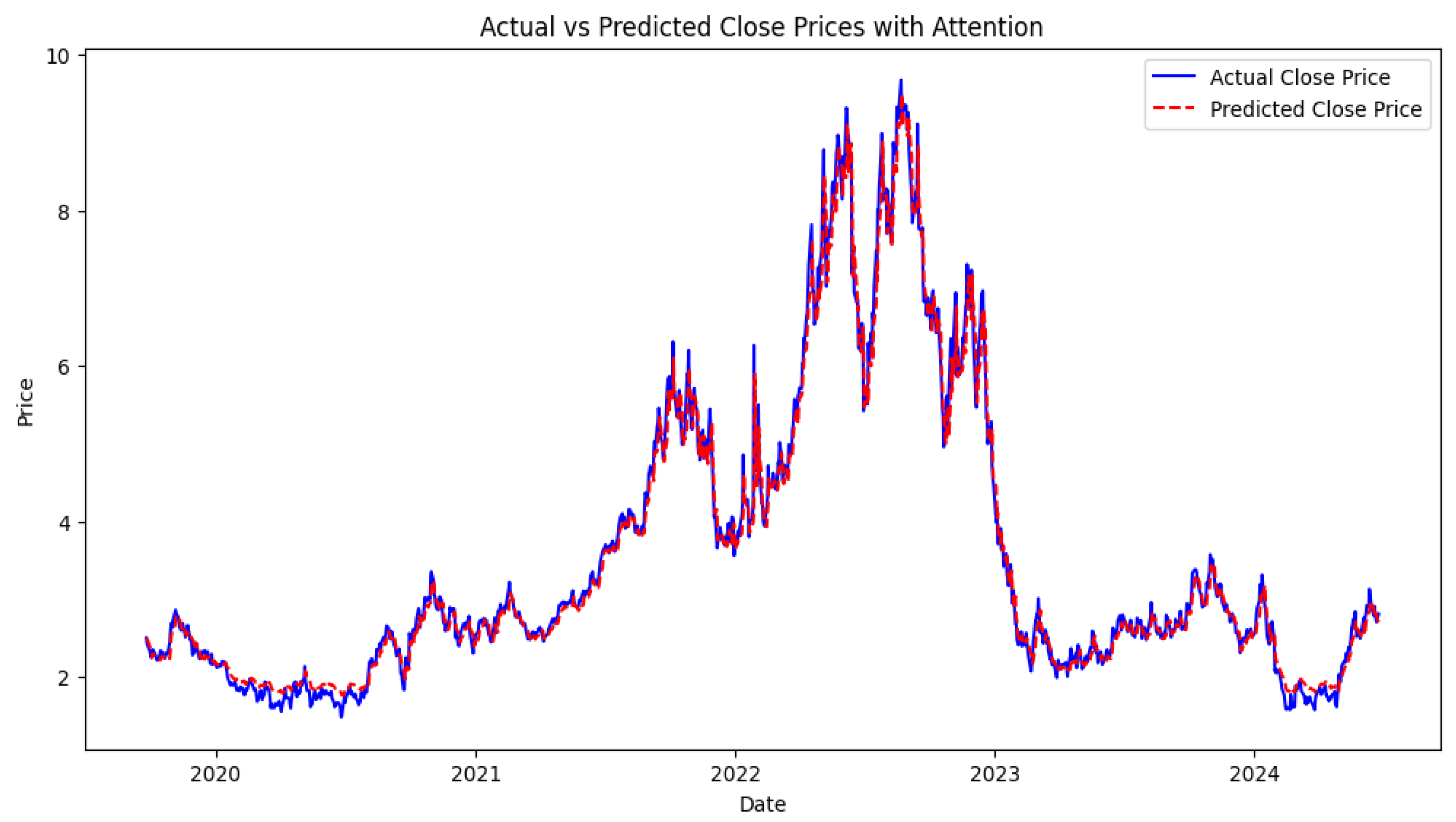
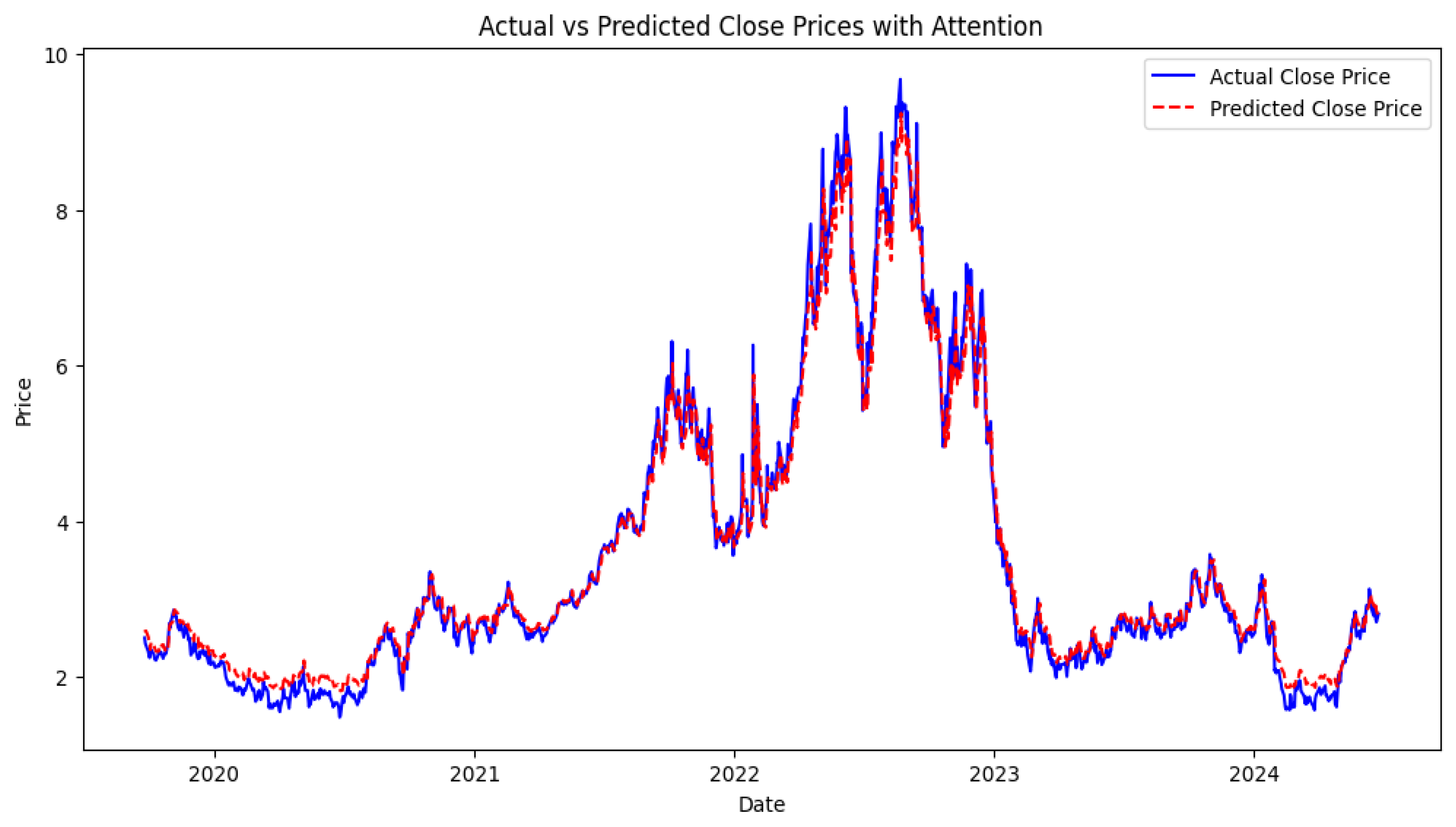
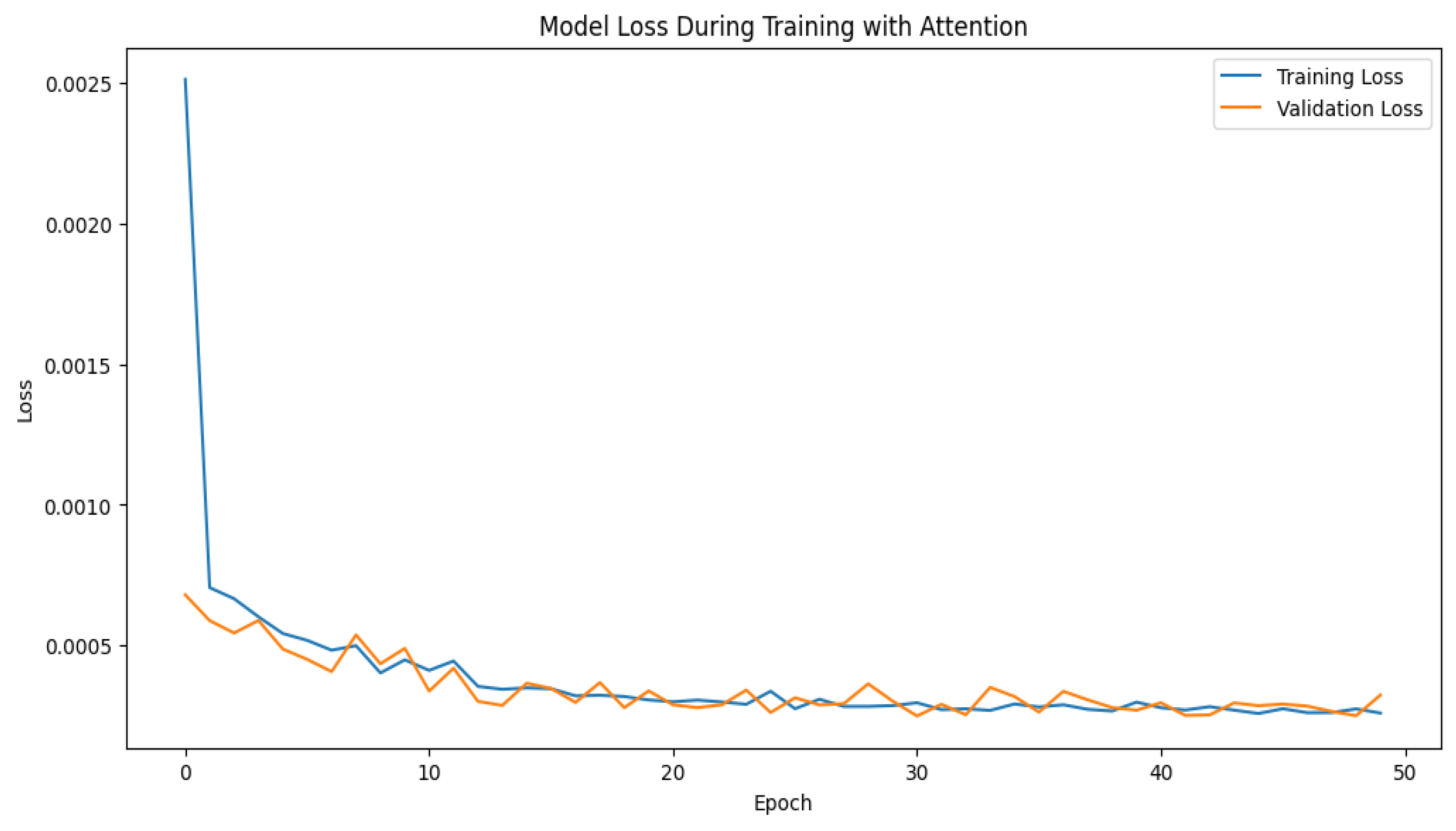
The following section focuses on strengthening the LSTM model by merging attention processes with cross-entropy and, separately, combining LSTM and fuzzy logic. Table 23 shows the projected values using the LSTM model as well as the actual values for the most recent 10 observations of natural gas’s daily price, which are based on the second previously stated dataset.
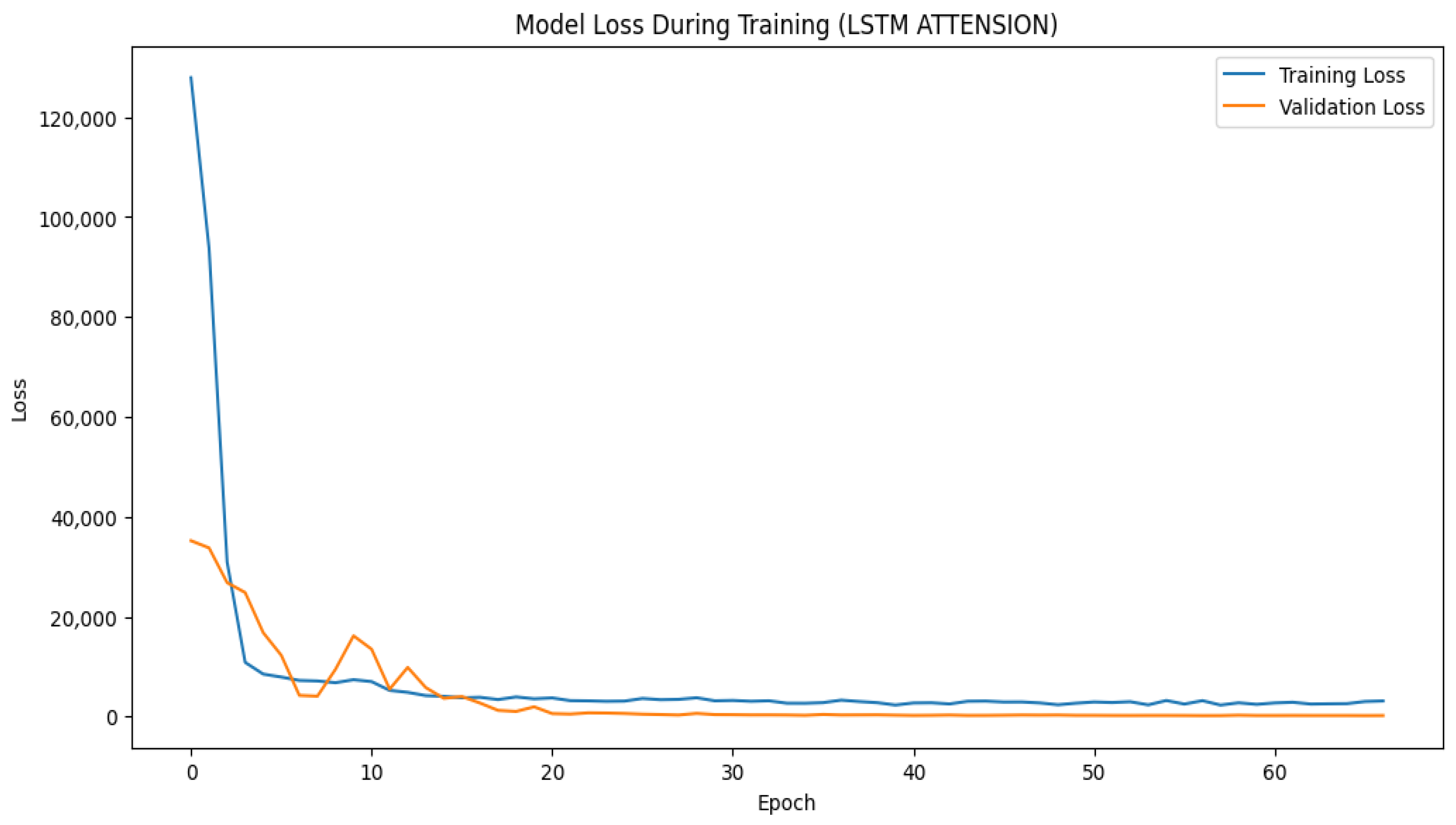
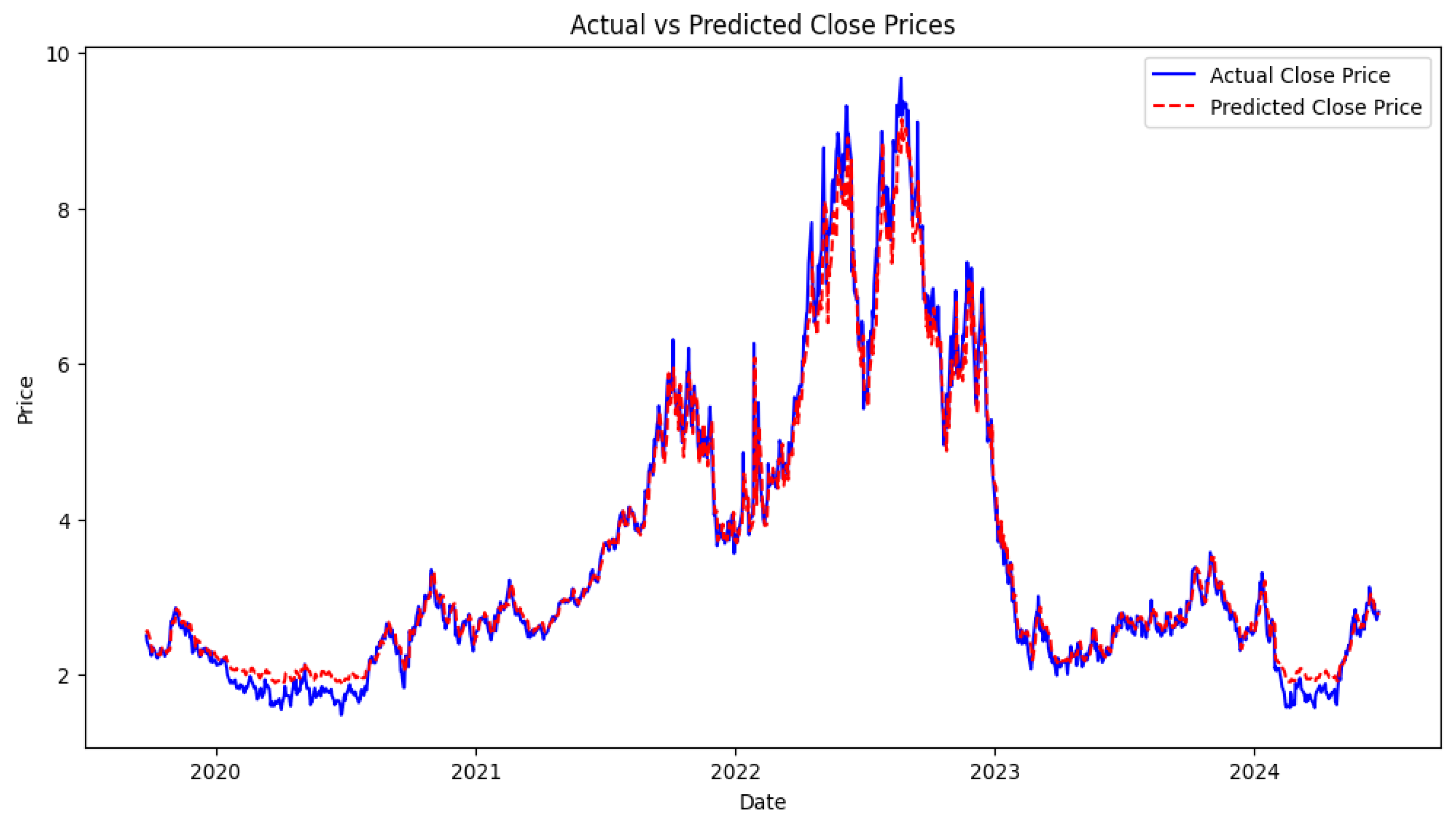
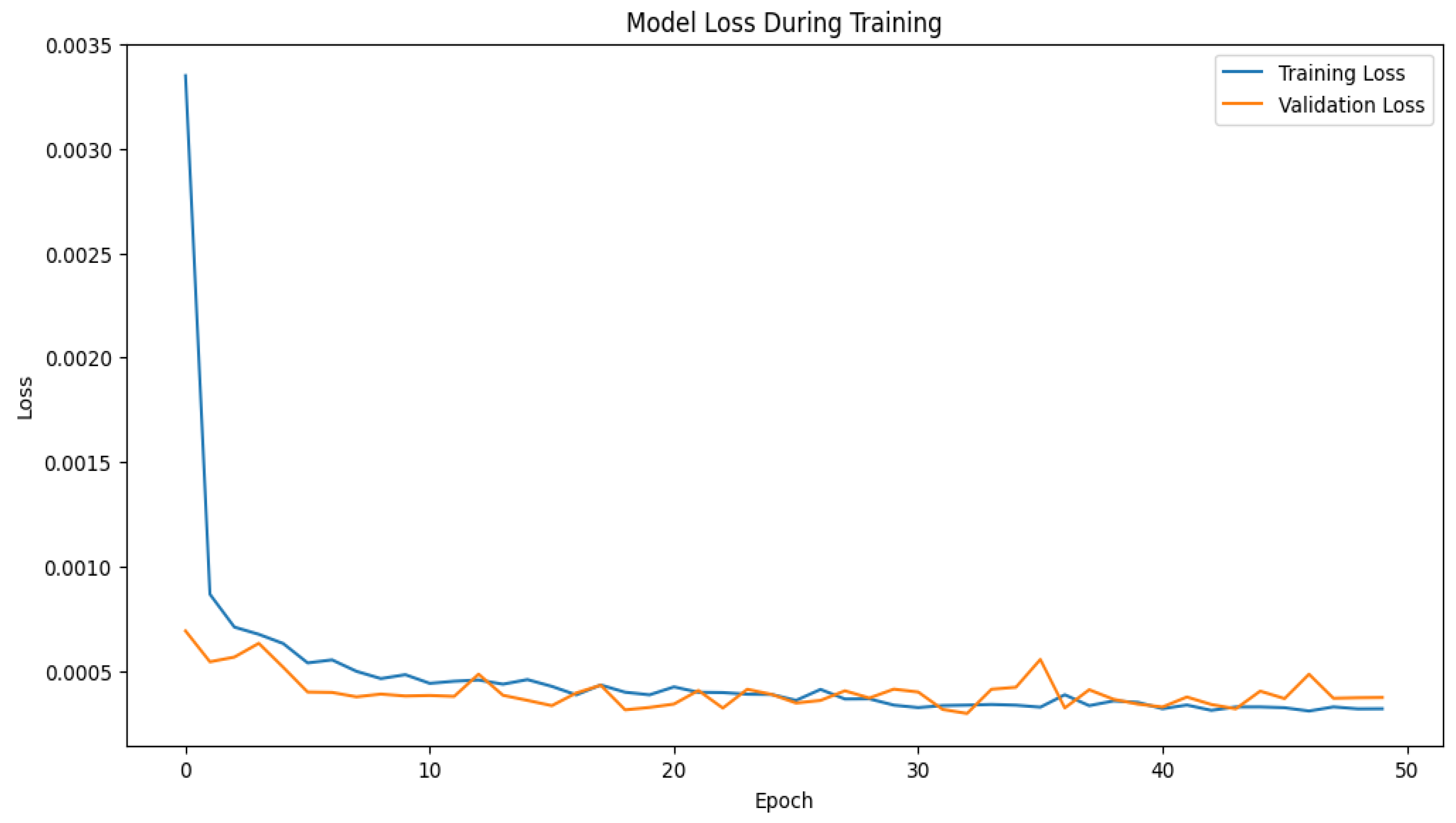
Figure 25 compares the expected and actual values for the LSTM–Attention model, providing a clear assessment of its effectiveness. Figure 26 further supports this evaluation by presenting the training and validation loss curves, which demonstrate the model’s efficient learning and strong convergence during training. As previously indicated, four performance metrics were applied to assess the model’s efficacy, as shown in Table 24.

5. Discussion

This research evaluates six different forecasting models and compares their performance using the average MAE, MSE, RMSE, and MAPE metrics. To strengthen the comparative analysis, we additionally employed the Diebold and Mariano (1995) test (DM test), using a classical ARIMA–GARCH model as the benchmark for assessing whether the predictive accuracy differences between models are statistically significant.
Table 25 presents a comparison of these models and their evaluation metrics for forecasting Ethereum prices, with all values reported as the average over 10 independent runs. The simple design in this case is the baseline ANN-LSTM, which demonstrates relatively high error rates. Nonetheless, its performance is not as good as more advanced versions of the model. The introduction of fuzzy logic helps improve performance by lowering both MAE and MAPE. The use of cross-entropy further enhances the model’s results, though error minimization has been slightly compromised compared to the fuzzy logic system. On the other hand, the application of fuzzy logic along with the LSTM model does not perform as well, since the error rates remain high. LSTM–Attention performs the best among the LSTM variants, with the lowest MAE (7.8652) and MAPE (4.3401%). This shows how attention mechanisms help filter out the necessary inputs with ease, thus improving the model’s output and lowering the error rate.
Table 26 compares the results obtained from the analysis of the six forecasting models, with all reported values representing the average over 10 independent runs. The baseline ANN-LSTM model performs well with an average absolute deviation of 0.1808 and a mean squared error of 0.0717; however, its mean absolute percentage error is a bit high at 5.4972%. Both the ANN-LSTM models with cross-entropy and fuzzy logic improve on this with lower MAE and MAPE values, which means more reliable predictions. The ANN-LSTM with fuzzy logic achieves the best balance with an MAE of 0.1537 and the minimum MAPE of 4.5420%. The results clearly demonstrate that the LSTM–Attention architecture outperforms all the remaining models. The LSTM–Attention achieves much lower error indices and has the least MSE (0.0424) and RMSE (0.0624), which means it is better at managing prediction errors than other models.
In conclusion, it is important to note that the LSTM model integrated with fuzzy logic performed poorly compared to the other variants. Further examination showed that the fuzzy inference layer introduced instability into the model, amplifying small fluctuations in the input sequence and causing significant error propagation. The model was also highly sensitive to hyperparameter selection, which contributed to variability in performance across the 10 experimental runs. This instability resulted in high MAPE values, indicating that this hybridization was not suitable for the datasets used. Potential remedies, such as alternative fuzzification rules, optimization of membership functions, or refined hybrid tuning procedures, may improve stability in future implementations. Therefore, this variant is discussed as an exploratory attempt rather than a core contribution of the study, and its limitations are highlighted to guide future methodological improvements and provide valuable lessons for designing robust hybrid recurrent architectures.

6. Conclusions

The purpose of our study was mainly to enhance the efficacy of prediction models, especially in the energy and financial sectors. However, given a variety of underlying market dynamics, forecasting the price of cryptocurrencies as well as gas is a delicate undertaking. Thus, in contrast to classical approaches like time series analysis or econometric modeling, which may take considerably longer to develop appropriate models, advances in deep learning and artificial intelligence have recently enabled the development of better and more precise prediction models that improve predictive performance and support more informed investment decisions. Hybridization can increase the precision of price forecasts by utilizing the two modeling systems in different ways and minimizing financial risks through more accurate estimations.
Initially, as reported earlier, we integrated ANNs and LSTMs, adopting fuzzy logic and cross-entropy, which augmented the predictions. In other aspects, we integrated LSTM with fuzzy logic and cross-entropy, and lastly leaped into LSTM using the attention mechanism in each dataset. The results indicate that the LSTM–Attention model is the most effective among all other models across both datasets. In the first dataset, it records the best error metrics, with an MAE of 7.8652 and 4.3401% MAPE. Also, with regard to the second dataset, the LSTM–Attention model performed best in error control, as exhibited in the MSE (0.0424) and RMSE (0.0624), making it the best model for predicting and managing error risks. This shows again that the attention mechanism has reinforced benefits if implemented in the LSTM model, optimally improving forecasting ability and enhancing predictive performance in investment risk forecasting.
The findings have important practical implications for investors, traders, and policymakers, emphasizing that precise forecasting can help minimize financial risks and optimize investment strategies. Methodologically, the study highlights the benefits of hybrid architectures and the integration of fuzzy logic, cross-entropy, and attention mechanisms in enhancing model performance. While our models performed well, no model is expected to be completely accurate. In future work, we plan to explore wavelet decomposition and empirical wavelet decomposition (EWD) to analyze time series data across multiple frequency levels, enabling the detection of latent patterns and further improving prediction accuracy. Furthermore, recent research highlights the role of contagion and spillover effects across financial and energy markets. Price movements in one market, such as Ethereum, may influence other markets like natural gas, and vice versa, due to interconnected network dynamics. Correlation-network approaches, as discussed by Giudici and Parisi (2018), provide tools to identify such cross-market dependencies. Although contagion effects were not explicitly modeled in this study, considering them in future research could further improve forecasting robustness and better capture systemic risk in hybrid prediction models. Overall, this study successfully achieved its goals of enhancing predictive performance and evaluating hybrid forecasting models, with LSTM–Attention demonstrating the greatest potential for minimizing financial and investment risks.

Author Contributions

Conceptualization, H.B.; methodology, A.L. and H.B.; software, A.L.; validation, A.L. and H.B.; formal analysis, A.L. and H.B.; investigation, A.L. and H.B.; resources, A.L.; data curation, A.L.; writing—original draft preparation, A.L. and H.B.; writing—review and editing, A.L. and H.B.; visualization, A.L. and H.B.; supervision, H.B. All authors have read and agreed to the published version of the manuscript.

Funding

This research received no external funding.

Data Availability Statement

The data presented in this study are available on request from the corresponding author due to proprietary agreements.

Conflicts of Interest

The authors declare no conflict of interest.

References

  1. Al Mamun, Abdullah, Md. Sohel, Naeem Mohammad, Md. Samiul Haque Sunny, Debopriya Roy Dipta, and Eklas Hossain. 2020. A comprehensive review of the load forecasting techniques using single and hybrid predictive models. IEEE Access 8: 134911–39. [Google Scholar] [CrossRef]
  2. Balakrishnan, Arunkumar, Bhavyasri Sanisetty, and Revanth Balaji Bandaru. 2025. Stacked hybrid model for load forecasting: Integrating transformers, ANN, and fuzzy logic. Scientific Reports 15: 19688. [Google Scholar] [CrossRef] [PubMed]
  3. Boubaker, Heni, and Nawres Bannour. 2023. Coupling the empirical wavelet and the neural network methods in order to forecast electricity price. Journal of Risk and Financial Management 16: 246. [Google Scholar] [CrossRef]
  4. Boubaker, Heni, Giorgio Canarella, Rangan Gupta, and Stephen M. Miller. 2023. A Hybrid ARFIMA wavelet artificial neural network model for DJIA Index forecasting. Computational Economics 62: 1801–43. [Google Scholar] [CrossRef]
  5. Bulut, Canberk, and Burcu Hudaverdi. 2022. Hybrid approaches in financial time series forecasting: A stock market application. Ekoist Journal of Econometrics and Statistics 37: 53–68. [Google Scholar] [CrossRef]
  6. Chekroud, Adam M., Julia Bondar, Jaime Delgadillo, Gavin Doherty, Akash Wasil, Marjolein Fokkema, Zachary Cohen, Danielle Belgrave, Robert DeRubeis, Raquel Iniesta, and et al. 2021. The promise of machine learning in predicting treatment outcomes in psychiatry. World Psychiatry 20: 154–70. [Google Scholar] [CrossRef]
  7. Chen, Hongkang, Tieding Lu, Jiahui Huang, Xiaoxing He, and Xiwen Sun. 2023. An improved VMD–EEMD–LSTM time series hybrid prediction model for sea surface height derived from satellite altimetry data. Journal of Marine Science and Engineering 11: 2386. [Google Scholar] [CrossRef]
  8. Cheng, Qi, Yixin Chen, Yuteng Xiao, Hongsheng Yin, and Weidong Liu. 2022. A dual-stage attention-based Bi-LSTM network for multivariate time series prediction. Journal of Supercomputing 78: 16214–35. [Google Scholar] [CrossRef]
  9. Cover, Thomas M. 1999. Elements of Information Theory. Hoboken: John Wiley & Sons. [Google Scholar]
  10. Diebold, Francis X., and Roberto S. Mariano. 1995. Comparing Predictive Accuracy. Journal of Business and Economic Statistics 13: 253–63. [Google Scholar] [CrossRef]
  11. Ghosh, Indranil, Tamal Datta Chaudhuri, Esteban Alfaro-Cortés, Matías Gámez, and Noelia García. 2022. A hybrid approach to forecasting futures prices with simultaneous consideration of optimality in ensemble feature selection and advanced artificial intelligence. Technological Forecasting and Social Change 181: 121757. [Google Scholar] [CrossRef]
  12. Giudici, Noelia, and Laura Parisi. 2018. Corisk: Credit risk contagion with correlation network models. Risks 6: 95. [Google Scholar] [CrossRef]
  13. Giudici, Paolo, Alessandro Piergallini, Maria Cristina Recchioni, and Emanuela Raffinetti. 2024. Explainable artificial intelligence methods for financial time series. Physica A: Statistical Mechanics and Its Applications 655: 130176. [Google Scholar] [CrossRef]
  14. Goodfellow, I. Ian, Yoshua Bengio, and Aaron Courville. 2016. Deep Learning. Cambridge: MIT Press, vol. 1. [Google Scholar]
  15. Guermoui, Mawloud, Farid Melgani, Kacem Gairaa, and Mohamed Lamine Mekhalfi. 2020. A comprehensive review of hybrid models for solar radiation forecasting. Journal of Cleaner Production 258: 120357. [Google Scholar] [CrossRef]
  16. Han, Yan, Lihua Mi, Lian Shen, C. S. Cai, Yuchen Liu, Kai Li, and Guoji Xu. 2022. A short-term wind speed prediction method utilizing novel hybrid deep learning algorithms to correct numerical weather forecasting. Applied Energy 312: 118777. [Google Scholar] [CrossRef]
  17. Hanifi, Shahram, Xiaolei Liu, Zi Lin, and Saeid Lotfian. 2020. A Critical Review of Wind Power Forecasting Methods—Past, Present and Future. Energies 13: 3764. [Google Scholar] [CrossRef]
  18. Huang, Yumeng, Xingyu Dai, Qunwei Wang, and Dequn Zhou. 2021. A hybrid model for carbon price forecasting using GARCH and long short-term memory network. Applied Energy 285: 116485. [Google Scholar] [CrossRef]
  19. Kullback, Solomon, and Richard A. Leibler. 1951. On information and sufficiency. Annals of Mathematical Statistics 22: 79–86. [Google Scholar] [CrossRef]
  20. Kurani, Akshit, Pavan Doshi, Aarya Vakharia, and Manan Shah. 2023. A Comprehensive Comparative Study of Artificial Neural Network (ANN) and Support Vector Machines (SVM) on Stock Forecasting. Annals of Data Science 10: 183–208. [Google Scholar] [CrossRef]
  21. Ladhari, Amina, and Heni Boubaker. 2024. Deep Learning Models for Bitcoin Prediction Using Hybrid Approaches with Gradient-Specific Optimization. Forecasting 6: 279–95. [Google Scholar] [CrossRef]
  22. Li, Xin, Rob Law, Gang Xie, and Shouyang Wang. 2021. Review of tourism forecasting research with internet data. Tourism Management 83: 104245. [Google Scholar] [CrossRef]
  23. Liu, Zhenyu, Zhengtong Zhu, Jing Gao, and Cheng Xu. 2021. Forecast Methods for Time Series Data: A Survey. IEEE Access 9: 91896–912. [Google Scholar] [CrossRef]
  24. Makridakis, Spyros, Rob J. Hyndman, and Fotios Petropoulos. 2020. Forecasting in Social Settings: The State of the Art. International Journal of Forecasting 36: 15–28. [Google Scholar] [CrossRef]
  25. Mardani, Abbas, Sarita Devi, Melfi Alrasheedi, Leena Arya, Mrigendra Pratap Singh, and Kiran Pandey. 2023. Hybrid intuitionistic fuzzy entropy-SWARA-COPRAS method for multi-criteria sustainable biomass crop type selection. Sustainability 15: 7765. [Google Scholar] [CrossRef]
  26. McAndrew, Thomas, Nutcha Wattanachit, Graham C. Gibson, and Nicholas G. Reich. 2021. Aggregating Predictions from Experts: A Review of Statistical Methods, Experiments, and Applications. Wiley Interdisciplinary Reviews: Computational Statistics 13: e1514. [Google Scholar] [CrossRef]
  27. Mtiraoui, Amine, Heni Boubaker, and Lotfi Belkacem. 2023. A hybrid approach for forecasting bitcoin series. Research in International Business and Finance 66: 102011. [Google Scholar] [CrossRef]
  28. Patel, Ramkrishna, Vikas Choudhary, Deepika Saxena, and Ashutosh Kumar Singh. 2021. Lstm and nlp based forecasting model for stock market analysis. Paper presented at 2021 First International Conference on Advances in Computing and Future Communication Technologies (ICACFCT), Online, December 16–17; New York: IEEE, pp. 52–57. [Google Scholar]
  29. Phan, Quoc-Thang, Yuan-Kang Wu, Quoc-Dung Phan, and Hsin-Yen Lo. 2022. A novel forecasting model for solar power generation by a deep learning framework with data preprocessing and postprocessing. IEEE Transactions on Industry Applications 59: 220–31. [Google Scholar] [CrossRef]
  30. Phillips-Wren, Gloria, and Monica Adya. 2020. Decision Making Under Stress: The Role of Information Overload, Time Pressure, Complexity, and Uncertainty. Journal of Decision Systems 29: 213–25. [Google Scholar] [CrossRef]
  31. Salcedo-Sanz, S., P. Ghamisi, M. Piles, M. Werner, L. Cuadra, A. Moreno-Martínez, E. Izquierdo-Verdiguier, J. Muñoz-Marí, Amirhosein Mosavi, and G. Camps-Valls. 2020. Machine learning information fusion in Earth observation: A comprehensive review of methods, applications and data sources. Information Fusion 63: 256–72. [Google Scholar] [CrossRef]
  32. Seyedan, Mahya, and Fereshteh Mafakheri. 2020. Predictive big data analytics for supply chain demand forecasting: Methods, applications, and research opportunities. Journal of Big Data 7: 53. [Google Scholar] [CrossRef]
  33. Shannon, Claude E. 1948. A mathematical theory of communication. Bell System Technical Journal 27: 379–423. [Google Scholar] [CrossRef]
  34. Wang, Zaoxian, and Dechun Huang. 2023. A new perspective on financial risk prediction in a carbon-neutral environment: A comprehensive comparative study based on the ssa-lstm model. Sustainability 15: 14649. [Google Scholar] [CrossRef]
  35. Wolnicki, Miron, and Ryszard Piasecki. 2021. New Challenges Facing the Global Economy. Łódź: Wydawnictwo Uniwersytetu Łódzkiego. [Google Scholar]
  36. Yin, Xueyan, Genze Wu, Jinze Wei, Yanming Shen, Heng Qi, and Baocai Yin. 2021. Deep learning on traffic prediction: Methods, analysis, and future directions. IEEE Transactions on Intelligent Transportation Systems 23: 4927–43. [Google Scholar] [CrossRef]
  37. Zadeh, Lotfi A. 1965. Fuzzy sets. Information and Control 8: 338–53. [Google Scholar] [CrossRef]
  38. Zellner, Maximilian, Ali E. Abbas, David V. Budescu, and Aram Galstyan. 2021. A Survey of Human Judgment and Quantitative Forecasting Methods. Royal Society Open Science 8: 201187. [Google Scholar] [CrossRef] [PubMed]
  39. Zhang, G. Peter. 2003. Time series forecasting using a hybrid ARIMA and neural network model. Neurocomputing 50: 159–75. [Google Scholar] [CrossRef]
  40. Zhao, Xue, Yong Ke, Jian Zuo, Weisheng Xiong, and Peng Wu. 2020. Evaluation of Sustainable Transport Research in 2000–2019. Journal of Cleaner Production 256: 120404. [Google Scholar] [CrossRef]
Figure 1. Time Series Plot for Ethereum Price Movements.
Risks 14 00013 g001
Figure 2. Time Series Plot for Natural Gas Movements.
Risks 14 00013 g002
Figure 3. Predicted and Actual Ethereum Prices Using ANN-LSTM.
Risks 14 00013 g003
Figure 4. Training and Validation Loss of ANN-LSTM Model.
Risks 14 00013 g004
Figure 5. Predicted and Actual Natural Gas Prices Using ANN-LSTM.
Risks 14 00013 g005
Figure 6. Training and Validation Loss of the ANN-LSTM model.
Risks 14 00013 g006
Figure 7. Predicted and Actual Ethereum Prices Using an ANN-LSTM Model with Fuzzy Logic.
Risks 14 00013 g007
Figure 8. Training and Validation Loss of ANN-LSTM Model with Fuzzy Logic.
Risks 14 00013 g008
Figure 9. Predicted and Actual Natural Gas Prices Using an ANN-LSTM Model with Fuzzy Logic.
Risks 14 00013 g009
Figure 10. Training and Validation Loss of ANN-LSTM Model with Fuzzy Logic.
Risks 14 00013 g010
Figure 11. Predicted and Actual Ethereum Prices Using ANN-LSTM Model with Cross-Entropy.
Risks 14 00013 g011
Figure 12. Training and Validation Loss of ANN-LSTM Model with Cross-Entropy.
Risks 14 00013 g012
Figure 13. Predicted and Actual Natural Gas Prices Using a Model with Cross-Entropy.
Risks 14 00013 g013
Figure 14. Training and Validation Loss of ANN-LSTM Model with Cross-Entropy.
Risks 14 00013 g014
Figure 15. Predicted and Actual Ethereum Prices Using LSTM Model with Fuzzy Logic.
Risks 14 00013 g015
Figure 16. Training and Validation Loss of LSTM Model with Fuzzy Logic.
Risks 14 00013 g016
Figure 17. Predicted and Actual Natural Gas Prices Using LSTM Model with Fuzzy Logic.
Risks 14 00013 g017
Figure 18. Training and Validation Loss of LSTM Model with Fuzzy Logic.
Risks 14 00013 g018
Figure 19. Predicted and Actual Ethereum Prices Using LSTM Model with Cross-Entropy.
Risks 14 00013 g019
Figure 20. Training and Validation Loss of LSTM with Cross-Entropy.
Risks 14 00013 g020
Figure 21. Predicted and Actual Natural Gas Prices Using LSTM Model with Cross-Entropy.
Risks 14 00013 g021
Figure 22. Training and Validation Loss of LSTM Model with Cross-Entropy.
Risks 14 00013 g022
Figure 23. Predicted and Actual Ethereum Prices Using LSTM–Attention Model.
Risks 14 00013 g023
Figure 24. Training and Validation Loss of LSTM–Attention Model.
Risks 14 00013 g024
Figure 25. Predicted and Actual Natural Gas Prices Using LSTM–Attention Model.
Risks 14 00013 g025
Figure 26. Training and Validation Loss of LSTM–Attention model.
Risks 14 00013 g026
Table 1. Actual and Predicted Daily Ethereum Prices Using the ANN-LSTM Model.
DateActual PricePredicted Price
2019-07-04283.86296.70
2019-07-05288.05296.63
2019-07-06287.87293.00
2019-07-07306.58295.21
2019-07-08313.63300.39
2019-07-09308.28312.25
2019-07-10288.73316.78
2019-07-11267.72305.77
2019-07-12275.59284.67
2019-07-13269.52277.55
Table 2. Evaluation Metrics of the ANN-LSTM Model.
MAEMSERMSEMAPE
23.80754.9727.4712.26%
Table 3. Actual and Predicted Daily Natural Gas Prices Using the ANN-LSTM Model.
DateActual PricePredicted Price
2025-09-252.502.57
2025-09-262.422.54
2025-09-272.402.55
2025-09-302.332.46
2025-10-012.282.41
2025-10-022.242.35
2025-10-032.322.29
2025-10-042.352.29
2025-10-072.302.32
2025-10-082.282.33
Table 4. Evaluation metrics of the ANN-LSTM model.
MAEMSERMSEMAPE
0.180.070.265.49%
Table 5. Actual and Predicted Daily Ethereum Prices Using the ANN-LSTM Model with Fuzzy Logic.
DateActual PricePredicted Price
2019-07-04283.86292.88
2019-07-05288.05295.38
2019-07-06287.87292.38
2019-07-07306.58293.01
2019-07-08313.63297.09
2019-07-09308.28306.86
2019-07-10288.73313.88
2019-07-11267.72307.39
2019-07-12275.59289.46
2019-07-13269.52278.17
Table 6. Evaluation metrics of the ANN-LSTM model with Fuzzy Logic.
MAEMSERMSEMAPE
8.62167.3912.934.84%
Table 7. Actual and Predicted Daily Natural Gas Prices Using the ANN-LSTM Model with Fuzzy Logic.
DateActual PricePredicted Price
2025-09-252.502.50
2025-09-262.432.37
2025-09-272.402.42
2025-09-302.332.39
2025-10-012.282.35
2025-10-022.252.31
2025-10-032.332.24
2025-10-042.352.28
2025-10-072.302.20
2025-10-082.292.25
Table 8. Evaluation metrics of the ANN-LSTM model with Fuzzy Logic.
MAEMSERMSEMAPE
0.150.050.234.54%
Table 9. Actual and Predicted Daily Ethereum Prices Using the ANN-LSTM Model with Cross-Entropy.
DateActual PricePredicted Price
2019-07-04283.86289.12
2019-07-05288.05291.07
2019-07-06287.87287.72
2019-07-07306.58288.38
2019-07-08313.63291.22
2019-07-09308.28301.65
2019-07-10288.73308.63
2019-07-11267.72301.96
2019-07-12275.59284.83
2019-07-13269.52275.15
Table 10. Evaluation metrics of the ANN-LSTM model with Cross-Entropy.
MAEMSERMSEMAPE
9.72175.4913.245.39%
Table 11. Actual and Predicted Daily Natural Gas Prices Using the ANN-LSTM Model with Cross-Entropy.
DateActual PricePredicted Price
2025-09-252.502.50
2025-09-262.432.47
2025-09-272.402.43
2025-09-302.332.40
2025-10-012.282.35
2025-10-022.252.31
2025-10-032.332.24
2025-10-042.352.22
2025-10-072.302.20
2025-10-082.292.20
Table 12. Evaluation metrics of the ANN-LSTM model with Cross-Entropy.
MAEMSERMSEMAPE
0.150.060.244.54%
Table 13. Actual and predicted Ethereum’s daily price using the LSTM model with Fuzzy Logic.
DateActual PricePredicted Price
2019-07-04283.86312.50
2019-07-05288.05323.00
2019-07-06287.87323.80
2019-07-07306.58340.20
2019-07-08313.63360.00
2019-07-09308.28350.50
2019-07-10288.73318.00
2019-07-11267.72305.00
2019-07-12275.59305.80
2019-07-13269.52294.51
Table 14. Evaluation metrics of the LSTM model with Fuzzy Logic.
MAEMSERMSEMAPE
29.85980.4031.32 15.48%
Table 15. Actual and predicted natural gas’s daily price using the LSTM model with Fuzzy Logic.
DateActual PricePredicted Price
2025-09-252.505.30
2025-09-262.435.25
2025-09-272.405.11
2025-09-302.335.15
2025-10-012.285.05
2025-10-022.254.95
2025-10-032.334.65
2025-10-042.355.03
2025-10-072.305.33
2025-10-082.294.65
Table 16. Evaluation metrics of the LSTM model with Fuzzy Logic.
MAEMSERMSEMAPE
2.85 10.42 3.2332.50%
Table 17. Actual and predicted Ethereum’s daily price using the LSTM model with Cross-Entropy.
DateActual PricePredicted Price
2019-07-04283.86267.33
2019-07-05288.05265.36
2019-07-06287.87262.99
2019-07-07306.58262.89
2019-07-08313.63264.15
2019-07-09308.28266.73
2019-07-10288.73270.96
2019-07-11267.72274.04
2019-07-12275.59271.41
2019-07-13269.52265.34
Table 18. Evaluation metrics of the LSTM model with Cross-Entropy.
MAEMSERMSEMAPE
18.15483.5421.989.78%
Table 19. Actual and predicted natural gas’s daily price using the LSTM model with Cross -Entropy.
DateActual PricePredicted Price
2025-09-252.502.51
2025-09-262.432.46
2025-09-272.402.43
2025-09-302.332.39
2025-10-012.282.35
2025-10-022.252.31
2025-10-032.332.24
2025-10-042.352.29
2025-10-072.302.28
2025-10-082.292.26
Table 20. Evaluation metrics of the LSTM model with Cross-Entropy.
MAEMSERMSEMAPE
1.634.402.0928.78%
Table 21. Actual and predicted Ethereum’s daily price using the LSTM–Attention model.
DateActual PricePredicted Price
2019-07-04283.86292.48
2019-07-05288.05294.09
2019-07-06287.87290.89
2019-07-07306.58291.20
2019-07-08313.63299.88
2019-07-09308.28304.71
2019-07-10288.73300.56
2019-07-11267.72377.72
2019-07-12275.59281.78
2019-07-13269.52270.35
Table 22. Evaluation metrics of the LSTM–Attention model.
MAEMSERMSEMAPE
7.86150.2512.254.34%
Table 23. Actual and predicted natural gas’s daily price using the LSTM–Attention model.
DateActual PricePredicted Price
2025-09-252.502.60
2025-09-262.432.58
2025-09-272.402.58
2025-09-302.332.31
2025-10-012.282.27
2025-10-022.252.44
2025-10-032.332.35
2025-10-042.352.44
2025-10-072.302.42
2025-10-082.292.40
Table 24. Evaluation metrics of the LSTM–Attention model.
MAEMSERMSEMAPE
0.140.040.065.41%
Table 25. Comparison of Forecasting Models and Their Evaluation Metrics for the Ethereum Prices.
ModelsMAEMSERMSEMAPEDM
ARIMA-GARCH35.40 ± 1.81540.80 ± 75.239.27 ± 1.918.72% ± 0.91.21
ANN-LSTM23.80 ± 1.2754.97 ± 38.527.47 ± 1.412.26% ± 0.62.3
ANN-LSTM with Fuzzy logic8.62 ± 0.5167.39 ± 9.312.93 ± 0.64.84% ± 0.32.2
ANN-LSTM with Cross-entropy9.72 ± 0.6175.49 ± 10.113.24 ± 0.75.39% ± 0.42.3
LSTM with fuzzy logic29.85 ± 1.6980.40 ± 52.031.32 ± 1.715.48% ± 0.91.4
LSTM with cross-entropy18.15 ± 1.0483.54 ± 28.421.98 ± 1.19.78% ± 0.52.5
LSTM–Attention7.86 ± 0.4150.25 ± 8.212.25 ± 0.54.34% ± 0.23.2
Table 26. Comparison of Forecasting Models and Their Evaluation Metrics for the Natural Gas Prices.
ModelMAEMSERMSEMAPEDM
ARIMA-GARCH27.11 ± 2.01150.02 ± 9033.91 ± 2.3182.40% ± 151.11
ANN-LSTM0.18 ± 0.020.07 ± 0.010.26 ± 0.035.49% ± 0.52.1
ANN-LSTM with Fuzzy logic0.15 ± 0.020.05 ± 0.010.23 ± 0.034.54% ± 0.42.3
ANN-LSTM with Cross-entropy0.15 ± 0.020.06 ± 0.010.24 ± 0.034.54% ± 0.42.4
LSTM with fuzzy logic2.85 ± 0.3510.42 ± 1.33.23 ± 0.4032.50% ± 4.01.5
LSTM with cross-entropy1.63 ± 0.254.40 ± 0.72.09 ± 0.328.78% ± 3.52.1
LSTM–Attention0.14 ± 0.010.04 ± 0.010.06 ± 0.015.41% ± 0.33.3
Disclaimer/Publisher’s Note: The statements, opinions and data contained in all publications are solely those of the individual author(s) and contributor(s) and not of MDPI and/or the editor(s). MDPI and/or the editor(s) disclaim responsibility for any injury to people or property resulting from any ideas, methods, instructions or products referred to in the content.