Care Pathway and Outcomes in Pediatric Septic Shock: A Narrative Review from Emergency Department Recognition to PICU Management

Highlights
- Pediatric septic shock is best understood as a dynamic hospital trajectory, beginning with early recognition and first-hour treatment and continuing through ward surveillance, PICU escalation, intensive care management, and recovery.
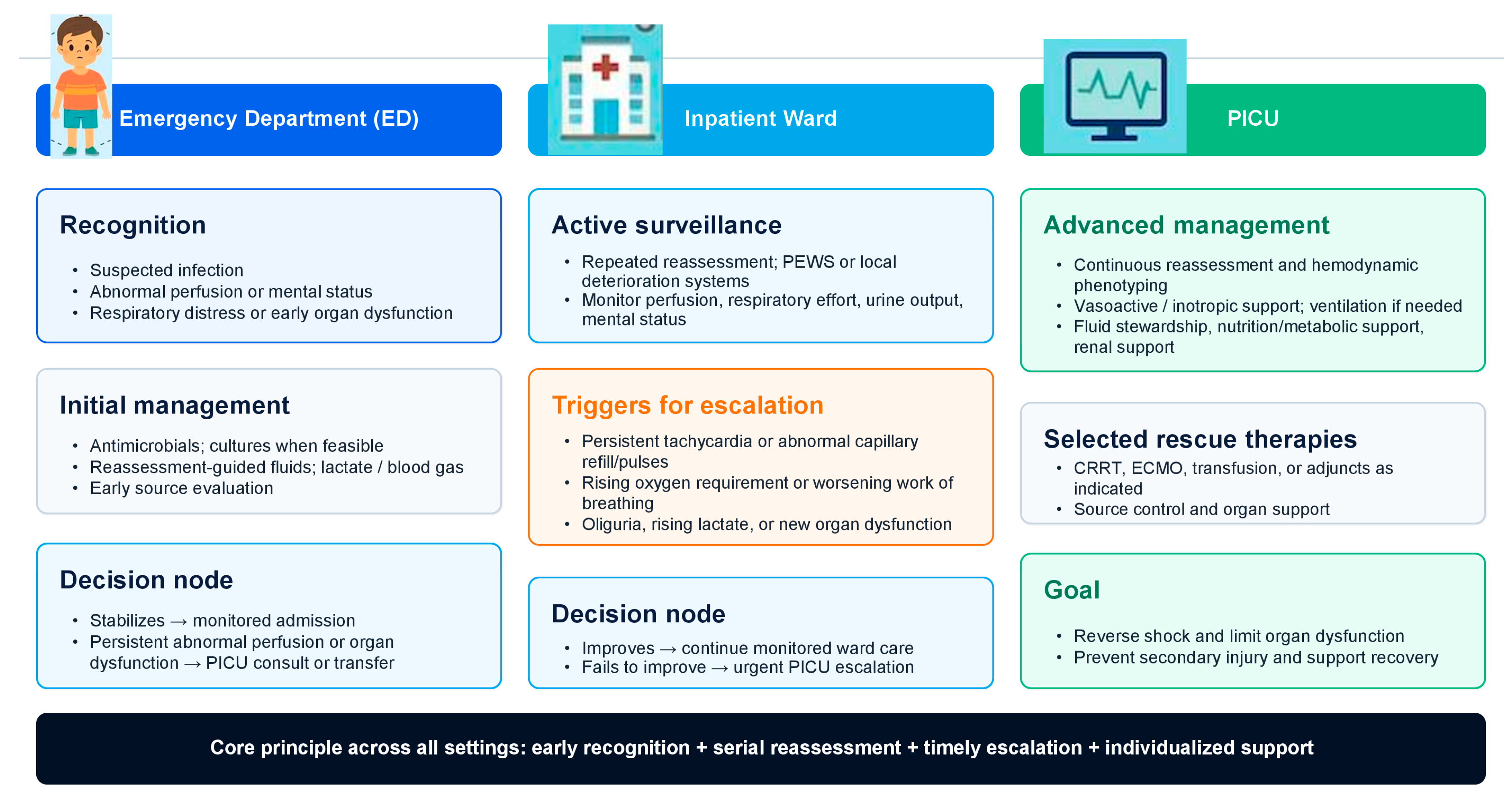
- Outcomes depend not only on PICU therapies, but also on timely antimicrobial treatment, individualized fluid and vasoactive support, repeated reassessment, and prompt escalation across the full continuum of care.
- Clinicians should approach pediatric septic shock through a continuum-of-care model that links emergency, ward, and intensive care management rather than treating these phases as separate clinical events.
- Prognosis should be evaluated beyond mortality alone and include organ dysfunction burden, duration of organ support, length of stay, and longer-term functional recovery.
Abstract
1. Introduction
2. Materials and Methods
2.1. Study Design
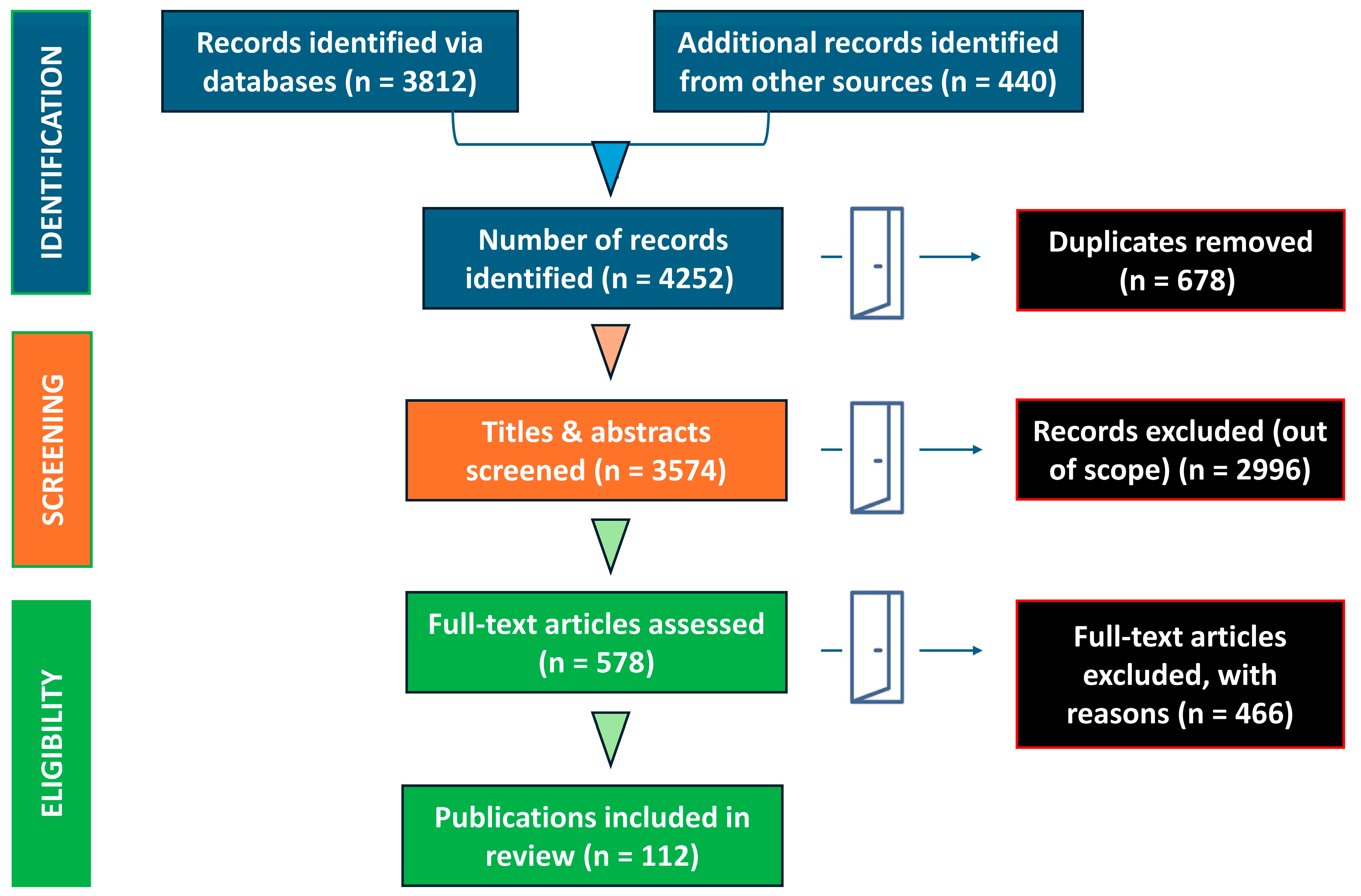
2.2. Data Sources and Search Strategy
2.3. Eligibility Criteria
2.4. Synthesis and Appraisal
2.5. Limitations
3. Definitions and Conceptual Framework
3.1. Definitions of Pediatric Sepsis and Septic Shock
3.2. From Static Criteria to Dynamic Clinical Trajectories
3.3. Why Pediatric Septic Shock Remains Diagnostically Challenging
3.4. Practical Implications for a Hospital-Trajectory Model
4. Recognition in the Emergency Department
5. Early Management During the First Hours
5.1. Early Antimicrobial Therapy
5.2. Fluid Resuscitation: How Much, How Fast, and for Whom
5.3. Early Vasoactive Support
5.4. Source Control and Antimicrobial Tailoring
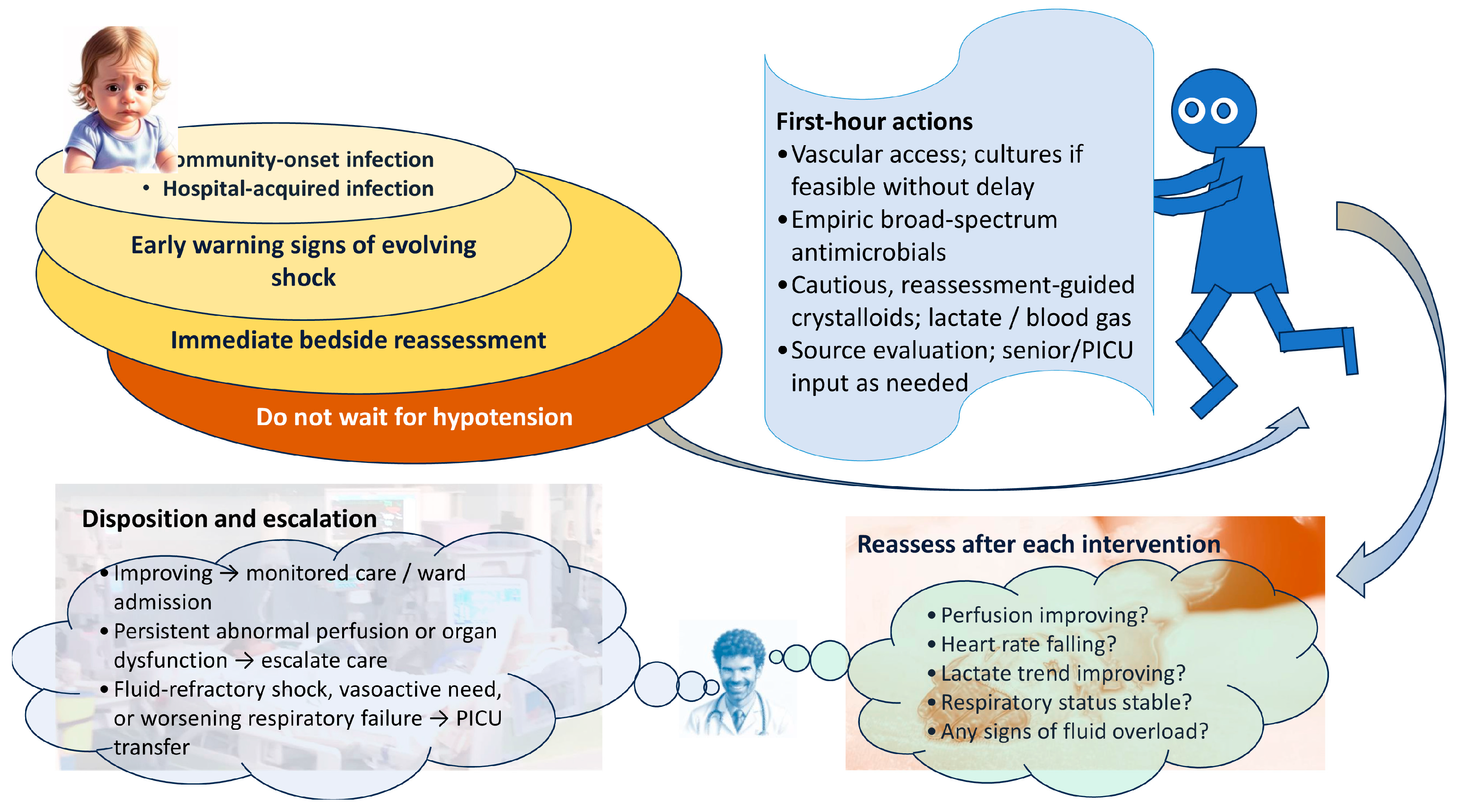
5.5. Reassessment During the First 1–6 h
5.6. The Importance of the First Hours for the Later Hospital Trajectory
6. Pediatric Ward Monitoring and Escalation to PICU
6.1. Ward Monitoring After Initial Stabilization
6.2. Detection of Deterioration and Escalation Pathways
6.3. Indications for PICU Consultation and Transfer
6.4. Clinical Meaning of Timely Escalation
7. PICU Management
7.1. Hemodynamic Phenotypes and Cardiovascular Dysfunction
7.2. Advanced Monitoring and Repeated Reassessment
7.3. Vasoactive and Inotropic Therapy
7.4. Respiratory Support and Mechanical Ventilation
7.5. Fluid Stewardship After Initial Resuscitation
7.6. Organ Support and Rescue Therapies
7.7. Toward Phenotype-Informed and Individualized Care
8. Outcomes Across the Hospital Trajectory
8.1. Mortality and Short-Term Clinical Outcomes
8.2. Organ Dysfunction Burden and Resource Utilization
8.3. Functional Outcomes and Post-Sepsis Morbidity
8.4. Which Stages of the Hospital Trajectory Most Influence Outcome?
8.5. Practical Interpretation
9. Diagnostic and Prognostic Tools Along the Pathway
9.1. Prognostic Markers and Evolving Outcome Assessment
9.2. Clinical Scores and Organ Dysfunction Tools
9.3. Hemodynamic and Imaging Tools
9.4. Prediction Models and Digital Technologies
9.5. Practical Interpretation Across the Hospital Pathway
10. Gaps in Knowledge and Future Directions
11. Conclusions
Author Contributions
Funding
Institutional Review Board Statement
Informed Consent Statement
Data Availability Statement
Conflicts of Interest
Abbreviations
| AKI | Acute kidney injury |
| AUROC | Area under the receiver operating characteristic curve |
| CRP | C-reactive protein |
| CRRT | Continuous renal replacement therapy |
| ECMO | Extracorporeal membrane oxygenation |
| ED | Emergency department |
| IL-6 | Interleukin-6 |
| PCT | Procalcitonin |
| PEWS | Pediatric early warning systems |
| PICU | Pediatric intensive care unit |
| PICS-p | Post-intensive care syndrome in pediatrics |
| ScvO2 | Central venous oxygen saturation |
| SIRS | Systemic inflammatory response syndrome |
| sTREM-1 | Soluble triggering receptor expressed on myeloid cells-1 |
| SSC | Surviving Sepsis Campaign |
| suPAR | Soluble urokinase plasminogen activator receptor |
| TAMOF | Thrombocytopenia-associated multiple organ failure |
References
- Zimmerman, J.J.; Banks, R.; Berg, R.A.; Zuppa, A.; Newth, C.J.; Wessel, D.; Pollack, M.M.; Meert, K.L.; Hall, M.W.; Quasney, M.; et al. Trajectory of Mortality and Health-Related Quality of Life Morbidity Following Community-Acquired Pediatric Septic Shock. Crit. Care Med. 2020, 48, 329–337. [Google Scholar] [CrossRef]
- Watson, R.S.; Carrol, E.D.; Carter, M.J.; Kissoon, N.; Ranjit, S.; Schlapbach, L.J. The Burden and Contemporary Epidemiology of Sepsis in Children. Lancet Child. Adolesc. Health 2024, 8, 670–681. [Google Scholar] [CrossRef]
- Scott, H.F.; Sevick, C.J.; Colborn, K.L.; Deakyne Davies, S.J.; Greer, C.H.; Dafoe, A.; Dorsey Holliman, B.; Bajaj, L.; Schmidt, S.K.; Kempe, A. Clinical Decision Support for Septic Shock in the Emergency Department: A Cluster Randomized Trial. Pediatrics 2025, 156, e2024069478. [Google Scholar] [CrossRef]
- Ma, L.; Cao, Z.; Peng, H.; Gu, X.; Lu, X.; Zhang, X.; Zhang, L. The Prognostic Value of Capillary Refill Time in Patients with Sepsis: A Prospective Cohort Study. Nurs. Crit. Care 2026, 31, e70347. [Google Scholar] [CrossRef]
- Du, G.; Huang, H.; Zhang, R.; Liu, C.; Fu, Y. Role of Cytokine Levels in Pathogen Classification and Prognosis of Pediatric Septic Shock. Front. Immunol. 2026, 17, 1714948. [Google Scholar] [CrossRef] [PubMed]
- Oruganti, S.; Evans, J.; Cromarty, T.; Javaid, A.; Roland, D. Identification of Sepsis in Paediatric Emergency Departments: A Scoping Review. Acta Paediatr. 2022, 111, 2262–2277. [Google Scholar] [CrossRef]
- Schlapbach, L.J.; Watson, R.S.; Sorce, L.R.; Argent, A.C.; Menon, K.; Hall, M.W.; Akech, S.; Albers, D.J.; Alpern, E.R.; Balamuth, F.; et al. International Consensus Criteria for Pediatric Sepsis and Septic Shock. JAMA 2024, 331, 665–674. [Google Scholar] [CrossRef]
- Li, W.; Ge, H.; Zhang, J.; Li, N.; Lu, X.; Chen, J.; Qu, D.; Liu, S.; Liu, C. Comparison of 2005 and 2024 Diagnostic Criteria for Early Identification of Pediatric Sepsis and Septic Shock in PICU Patients: A Prospective Cohort Study. Front. Pediatr. 2025, 13, 1748925. [Google Scholar] [CrossRef] [PubMed]
- Weiss, S.L.; Peters, M.J.; Alhazzani, W.; Agus, M.S.D.; Flori, H.R.; Inwald, D.P.; Nadel, S.; Schlapbach, L.J.; Tasker, R.C.; Argent, A.C.; et al. Surviving Sepsis Campaign International Guidelines for the Management of Septic Shock and Sepsis-Associated Organ Dysfunction in Children. Pediatr. Crit. Care Med. 2020, 21, e52. [Google Scholar] [CrossRef]
- Weiss, S.L.; Peters, M.J.; Oczkowski, S.J.W.; Belley-Cote, E.; Buysse, C.; Choong, K.L.M.; Deep, A.; Inwald, D.P.; Flori, H.R.; Kneyber, M.C.J.; et al. Surviving Sepsis Campaign International Guidelines for the Management of Sepsis and Septic Shock in Children 2026. Pediatr. Crit. Care Med. 2026, 27, 379–434. [Google Scholar] [CrossRef] [PubMed]
- Beltrán, J.C.; Fernández-Sarmiento, J.; Orjuela-Cañón, A.D.; Sanchez-Pinto, L.N.; Fernández-Sarta, J.P.; Rotta, I.L.; Fernández-Sarta, D.; Coutin, A.; Godoy, J.E.; Vink, H.; et al. Microvascular Phenotypes in Pediatric Sepsis Identified by Machine Learning: Prognostic Implications for Organ Dysfunction and Mortality. Crit. Care 2026, 30, 61. [Google Scholar] [CrossRef]
- Miliaraki, M.; Briassoulis, G.; Dardamani, E.; Briassoulis, P.; Ilia, S. Septic Cardiomyopathy: Age-Dependent Physiology and Hemodynamic Aspects-A Narrative Review. Children 2026, 13, 239. [Google Scholar] [CrossRef]
- Briassoulis, G.; Varda, S.; Marinopoulou, E.; Kondili, E.; Ilia, S. Fluid Overload, Renal Angina Index, and PICU Outcomes: Single-Center Retrospective Cohort, 2020-2024. Pediatr. Crit. Care Med. 2026, 27, 286–296. [Google Scholar] [CrossRef]
- Du, C.; Tan, S.C.; Bu, H.-F.; Subramanian, S.; Geng, H.; Wang, X.; Xie, H.; Wu, X.; Zhou, T.; Liu, R.; et al. Predicting Patients with Septic Shock and Sepsis through Analyzing Whole-Blood Expression of NK Cell-Related Hub Genes Using an Advanced Machine Learning Framework. Front. Immunol. 2024, 15, 1493895. [Google Scholar] [CrossRef]
- Blankenship, L.; Demmel, K.; Otis, T. Sepsis Education and Successful Implementation of a Sepsis Recognition and Management Workflow in an Inpatient Pediatric Hematologic Oncologic Unit. J. Pediatr. Hematol. Oncol. Nurs. 2024, 41, 425–431. [Google Scholar] [CrossRef]
- Weiss, S.L.; Fitzgerald, J.C.; Pappachan, J.; Wheeler, D.; Jaramillo-Bustamante, J.C.; Salloo, A.; Singhi, S.C.; Erickson, S.; Roy, J.A.; Bush, J.L.; et al. Global Epidemiology of Pediatric Severe Sepsis: The Sepsis Prevalence, Outcomes, and Therapies Study. Am. J. Respir. Crit. Care Med. 2015, 191, 1147–1157. [Google Scholar] [CrossRef]
- Phumeetham, S.; Limprayoon, K.; Law, S.; Preeprem, N.; Kriengsoontornkij, W. A Quality Improvement Intervention for the Initial Care of Pediatric Septic Shock in a Resource-Limited Setting. J. Pediatr. Clin. Pract. 2025, 17, 200170. [Google Scholar] [CrossRef]
- Sobotka, S.A.; Lynch, E.J.; Pinto, N.P. Three-Year Follow-Up of PICU Survivors: Time Course of Neurodevelopmental Sequelae in a Single-Center Cohort, Recruited 2017-2018. Pediatr. Crit. Care Med. 2025, 26, e1330–e1340. [Google Scholar] [CrossRef]
- de Souza, D.C.; Jabornisky, R.; Kissoon, N. Utility of Lactate Levels in the Diagnosis and Prognosis of Septic Shock. Pediatr. Emerg. Care 2024, 40, 736–745. [Google Scholar] [CrossRef]
- Goldstein, B.; Giroir, B.; Randolph, A. International Consensus Conference on Pediatric Sepsis International Pediatric Sepsis Consensus Conference: Definitions for Sepsis and Organ Dysfunction in Pediatrics. Pediatr. Crit. Care Med. 2005, 6, 2–8. [Google Scholar] [CrossRef]
- Shamavu, G.K.; Mohamoud, F. Rethinking Pediatric Sepsis and Septic Shock: Beyond International Consensus Criteria. Pediatr. Health Med. Ther. 2025, 16, 61–65. [Google Scholar] [CrossRef]
- Toltzis, P.; Remy, K.E. New Criteria for Pediatric Sepsis: A Phoenix Rising. J. Pediatr. Pharmacol. Ther. 2024, 29, 676–678. [Google Scholar] [CrossRef]
- Ranjit, S.; Natraj, R.; Kissoon, N.; Thiagarajan, R.R.; Ramakrishnan, B.; Monge García, M.I. Variability in the Hemodynamic Response to Fluid Bolus in Pediatric Septic Shock. Pediatr. Crit. Care Med. 2021, 22, e448–e458. [Google Scholar] [CrossRef]
- Ranjit, S.; Kissoon, N.; Argent, A.; Inwald, D.; Ventura, A.M.C.; Jaborinsky, R.; Sankar, J.; de Souza, D.C.; Natraj, R.; De Oliveira, C.F.; et al. Haemodynamic Support for Paediatric Septic Shock: A Global Perspective. Lancet Child. Adolesc. Health 2023, 7, 588–598. [Google Scholar] [CrossRef]
- Zampieri, F.G.; Damiani, L.P.; Bakker, J.; Ospina-Tascón, G.A.; Castro, R.; Cavalcanti, A.B.; Hernandez, G. Effects of a Resuscitation Strategy Targeting Peripheral Perfusion Status versus Serum Lactate Levels among Patients with Septic Shock. A Bayesian Reanalysis of the ANDROMEDA-SHOCK Trial. Am. J. Respir. Crit. Care Med. 2020, 201, 423–429. [Google Scholar] [CrossRef]
- Fernández-Sarmiento, J.; Lamprea, S.; Barrera, S.; Acevedo, L.; Duque, C.; Trujillo, M.; Aguirre, V.; Jimenez, C. The Association between Prolonged Capillary Refill Time and Microcirculation Changes in Children with Sepsis. BMC Pediatr. 2024, 24, 68. [Google Scholar] [CrossRef]
- Georgette, N.; Michelson, K.; Monuteaux, M.; Eisenberg, M.A. Comparing Screening Tools for Predicting Phoenix Criteria Sepsis and Septic Shock Among Children. Pediatrics 2025, 155, e2025071155. [Google Scholar] [CrossRef]
- Gawronski, O.; Briassoulis, G.; El Ghannudi, Z.; Ilia, S.; Sánchez-Martín, M.; Chiusolo, F.; Jensen, C.S.; Manning, J.C.; Valla, F.V.; Pavelescu, C.; et al. European Survey on Paediatric Early Warning Systems, and Other Processes Used to Aid the Recognition and Response to Children’s Deterioration on Hospital Wards. Nurs. Crit. Care 2024, 29, 1643–1653. [Google Scholar] [CrossRef]
- Gómez-Ramos, J.J.; Marín-Medina, A.; Prieto-Miranda, S.E.; Dávalos-Rodríguez, I.P.; Alatorre-Jiménez, M.A.; Esteban-Zubero, E. Determination of Plasma Lactate in the Emergency Department for the Early Detection of Tissue Hypoperfusion in Septic Patients. Am. J. Emerg. Med. 2018, 36, 1418–1422. [Google Scholar] [CrossRef]
- Souganidis, E.S.; Patel, B.; Sampayo, E.M. Physician-Specific Utilization of an Electronic Best Practice Alert for Pediatric Sepsis in the Emergency Department. Pediatr. Emerg. Care 2022, 38, e1417–e1422. [Google Scholar] [CrossRef]
- Martinez, E.M.; Sepanski, R.J.; Jennings, A.D.; Schmidt, J.M.; Cholis, T.J.; Dominy, M.E.; Devlin, S.B.; Eilers, L.F.; Zaritsky, A.L.; Godambe, S.A. Optimizing Recognition and Management of Patients at Risk for Infection-Related Decompensation Through Team-Based Decision Making. J. Healthc. Qual. 2023, 45, 59–68. [Google Scholar] [CrossRef] [PubMed]
- Park, H.; Lee, J.; Oh, D.K.; Park, M.H.; Lim, C.-M.; Lee, S.-M.; Lee, H.Y. Korean Sepsis Alliance (KSA) Investigators Serial Evaluation of the Serum Lactate Level with the SOFA Score to Predict Mortality in Patients with Sepsis. Sci. Rep. 2023, 13, 6351. [Google Scholar] [CrossRef]
- Park, C.; Ku, N.S.; Park, D.W.; Park, J.H.; Ha, T.S.; Kim, D.W.; Park, S.Y.; Chang, Y.; Jo, K.W.; Baek, M.S.; et al. Early Management of Adult Sepsis and Septic Shock: Korean Clinical Practice Guidelines. Acute Crit. Care 2024, 39, 445–472. [Google Scholar] [CrossRef]
- Weiss, S.L.; Fitzgerald, J.C. Pediatric Sepsis Diagnosis, Management, and Sub-Phenotypes. Pediatrics 2024, 153, e2023062967. [Google Scholar] [CrossRef]
- Inwald, D.; Canter, R.R.; Woolfall, K.; O’Hara, C.B.; Mouncey, P.R.; Zenasni, Z.; Hudson, N.; Saunders, S.; Carter, A.; Jones, N.; et al. Restricted Fluid Bolus versus Current Practice in Children with Septic Shock: The Fish Feasibility Study and Pilot RCT. Health Technol. Assess. 2018, 22, 1–106. [Google Scholar] [CrossRef]
- Briassoulis, G.; Antonopoulou, T.; Velegraki, J.; Ilia, S.; Kondili, E. Fluid Creep as an Independent Predictor of Fluid Overload and Mortality in Critically Ill Patients: A Cohort Study. Life 2025, 15, 1900. [Google Scholar] [CrossRef] [PubMed]
- Harley, A.; George, S.; Phillips, N.; King, M.; Long, D.; Keijzers, G.; Lister, P.; Raman, S.; Bellomo, R.; Gibbons, K.; et al. Resuscitation with Early Adrenaline Infusion for Children with Septic Shock: A Randomized Pilot Trial. Pediatr. Crit. Care Med. 2024, 25, 106–117. [Google Scholar] [CrossRef] [PubMed]
- Shi, R.; Braïk, R.; Monnet, X.; Gu, W.-J.; Ospina-Tascon, G.; Permpikul, C.; Djebbour, M.; Soumare, A.; Agaleridis, V.; Lai, C. Early Norepinephrine for Patients with Septic Shock: An Updated Systematic Review and Meta-Analysis with Trial Sequential Analysis. Crit. Care 2025, 29, 182. [Google Scholar] [CrossRef]
- Tabah, A.; De Waele, J.; Ssi Yan Kai, N.; Aslan, A.T.; Buetti, N.; Timsit, J.-F.; Ballard, E.; Eriksson, L.; Laupland, K.B.; Lipman, J. Source Control in Bloodstream Infections in Patients with Sepsis, Septic Shock, or Requiring ICU Admission: A Scoping Review with Recommendations for Standardizing Research. Intensive Care Med. 2025, 51, 1462–1475. [Google Scholar] [CrossRef]
- McElroy, T.; Swartz, E.N.; Hassani, K.; Waibel, S.; Tuff, Y.; Marshall, C.; Chan, R.; Wensley, D.; O’Donnell, M. Implementation Study of a 5-Component Pediatric Early Warning System (PEWS) in an Emergency Department in British Columbia, Canada, to Inform Provincial Scale Up. BMC Emerg. Med. 2019, 19, 74. [Google Scholar] [CrossRef] [PubMed]
- Alsabri, M.; Mourid, M.R.; Saleh, A.R.; Oyedele, T.J.; Ata, I.M.; Darawish, S.M.; Patel, A.; Rouh, F.A.; Carr, L.A. Vital Signs as Biomarkers of Early Clinical Deterioration in Pediatric Emergency Departments: Physiology, Interpretation, and Innovations: A Narrative Review. Int. J. Emerg. Med. 2026, 19, 6. [Google Scholar] [CrossRef] [PubMed]
- Scott, H.F.; Lindberg, D.M.; Brackman, S.; McGonagle, E.; Leonard, J.E.; Adelgais, K.; Bajaj, L.; Dillon, M.; Kempe, A. Pediatric Sepsis in General Emergency Departments: Association between Pediatric Sepsis Case Volume, Care Quality, and Outcome. Ann. Emerg. Med. 2024, 83, 318–326. [Google Scholar] [CrossRef]
- Allen, D.; Lloyd, A.; Edwards, D.; Hood, K.; Huang, C.; Hughes, J.; Jacob, N.; Lacy, D.; Moriarty, Y.; Oliver, A.; et al. Development, Implementation and Evaluation of an Evidence-Based Paediatric Early Warning System Improvement Programme: The PUMA Mixed Methods Study. BMC Health Serv. Res. 2022, 22, 9. [Google Scholar] [CrossRef]
- Alcamo, A.M.; Lindell, R.B.; Sheetz, S.A.; Ham, S.D.; Strayer, A.; Weiss, S.L.; Nishisaki, A.; Pinto, N.P.; Topjian, A.A.; Fitzgerald, J.C. New Sepsis-Associated Morbidity and Mortality in Pediatric Oncology Patients. Front. Oncol. 2025, 15, 1638516. [Google Scholar] [CrossRef]
- Hakim, H.; Richardson, T.; Riggs, R.; Auletta, J.J.; DiGerolamo, K.; Hron, J.D.; Kohorst, M.; Laurie, K.; Maixner, M.; Mulcahy Levy, J.M.; et al. Sepsis Mortality in Hospitalized Children with Cancer Is Associated with Lack of a Screening Tool. Hosp. Pediatr. 2025, 15, 237–246. [Google Scholar] [CrossRef]
- Al-Harbi, S. Impact of Rapid Response Teams on Pediatric Care: An Interrupted Time Series Analysis of Unplanned PICU Admissions and Cardiac Arrests. Healthcare 2024, 12, 518. [Google Scholar] [CrossRef] [PubMed]
- Walker, S.B.; Lockwood, J.M.; Scott, H.F.; Sanchez-Pinto, L.N.; Bennett, T.D. We Have New Sepsis Criteria for Children…Now What? Hosp. Pediatr. 2025, 15, e315–e317. [Google Scholar] [CrossRef]
- Agulnik, A.; Muniz-Talavera, H.; Pham, L.T.D.; Chen, Y.; Carrillo, A.K.; Cárdenas-Aguirre, A.; Gonzalez Ruiz, A.; Garza, M.; Conde Morelos Zaragoza, T.M.; Soberanis Vasquez, D.J.; et al. Effect of Paediatric Early Warning Systems (PEWS) Implementation on Clinical Deterioration Event Mortality among Children with Cancer in Resource-Limited Hospitals in Latin America: A Prospective, Multicentre Cohort Study. Lancet Oncol. 2023, 24, 978–988. [Google Scholar] [CrossRef]
- Lin, K.; Weng, X.; Du, B.; Tian, T.; Quan, X. Analysis of the Accuracy of Disease Prediction in Pediatric Ward Patients Based on the Modified Early Warning Score for Children: A Randomized Controlled Trial. Heliyon 2025, 11, e40937. [Google Scholar] [CrossRef]
- Bracken, A.; Lane, S.; Siner, S.; Jones, D.; Lambert, C.; Mehta, F.; Eyton-Chong, C.-K.; Davis, P.; Fitzsimons, J.; Lim, E.; et al. Assessing the Performance of Paediatric Early Warning Scores to Predict Critical Deterioration Events in Hospitalised Children (the DETECT Study): A Retrospective Matched Case-Control Study. BMC Pediatr. 2025, 25, 520. [Google Scholar] [CrossRef]
- Caraballo, C.; Jaimes, F. Organ Dysfunction in Sepsis: An Ominous Trajectory from Infection to Death. Yale J. Biol. Med. 2019, 92, 629–640. [Google Scholar]
- Lee, J.; Ciuchta, J.L.; Weingarten-Arams, J.; Philips, K. Pediatric Early Warning Scores Before Rapid Response Poorly Predict Intensive Care Unit Transfers. Hosp. Pediatr. 2024, 14, 945–951. [Google Scholar] [CrossRef] [PubMed]
- Emeriaud, G.; López-Fernández, Y.M.; Iyer, N.P.; Bembea, M.M.; Agulnik, A.; Barbaro, R.P.; Baudin, F.; Bhalla, A.; Brunow de Carvalho, W.; Carroll, C.L.; et al. Executive Summary of the Second International Guidelines for the Diagnosis and Management of Pediatric Acute Respiratory Distress Syndrome (PALICC-2). Pediatr. Crit. Care Med. 2023, 24, 143–168. [Google Scholar] [CrossRef]
- Hsu, B.S.; Hill, V.; Frankel, L.R.; Yeh, T.S.; Simone, S.; Arca, M.J.; Coss-Bu, J.A.; Fallat, M.E.; Foland, J.; Gadepalli, S.; et al. Executive Summary: Criteria for Critical Care of Infants and Children: PICU Admission, Discharge, and Triage Practice Statement and Levels of Care Guidance. Pediatrics 2019, 144, e20192433. [Google Scholar] [CrossRef]
- Demirer Aydemir, F.; Kurtkulagi, O.; Ergun, B.; Bayrak, V.; Oner, O.; Comert, B.; Gokmen, A.N.; Hanci, V. ICU Admission Delays: Impact on Length of Stay and Long-Term Outcomes. Biomol. Biomed. 2025, 26, 499–508. [Google Scholar] [CrossRef]
- Chanci, D.; Grunwell, J.R.; Rafiei, A.; Brown, S.R.; Ripple, M.J.; Bishop, N.R.; Rajapreyar, P.; Lima, L.M.; Kamaleswaran, R. Machine Learning Model for Daily Prediction of Pediatric Sepsis Using Phoenix Criteria. Pediatr. Res. 2026, 99, 631–637. [Google Scholar] [CrossRef] [PubMed]
- Davis, A.L.; Carcillo, J.A.; Aneja, R.K.; Deymann, A.J.; Lin, J.C.; Nguyen, T.C.; Okhuysen-Cawley, R.S.; Relvas, M.S.; Rozenfeld, R.A.; Skippen, P.W.; et al. American College of Critical Care Medicine Clinical Practice Parameters for Hemodynamic Support of Pediatric and Neonatal Septic Shock. Crit. Care Med. 2017, 45, 1061–1093. [Google Scholar] [CrossRef] [PubMed]
- Lee, E.-P.; Wu, H.-P.; Chan, O.-W.; Lin, J.-J.; Hsia, S.-H. Hemodynamic Monitoring and Management of Pediatric Septic Shock. Biomed. J. 2022, 45, 63–73. [Google Scholar] [CrossRef]
- Williams, F.Z.; Sachdeva, R.; Travers, C.D.; Walson, K.H.; Hebbar, K.B. Characterization of Myocardial Dysfunction in Fluid- and Catecholamine-Refractory Pediatric Septic Shock and Its Clinical Significance. J. Intensive Care Med. 2019, 34, 17–25. [Google Scholar] [CrossRef]
- Kong, X.; Zhu, Y.; Zhu, X. Association between Early Fluid Overload and Mortality in Critically-Ill Mechanically Ventilated Children: A Single-Center Retrospective Cohort Study. BMC Pediatr. 2021, 21, 474. [Google Scholar] [CrossRef]
- Eisenberg, M.A.; Georgette, N.; Baker, A.H.; Priebe, G.P.; Monuteaux, M.C. Epinephrine vs Norepinephrine as Initial Treatment in Children with Septic Shock. JAMA Netw. Open 2025, 8, e254720. [Google Scholar] [CrossRef]
- Weiss, S.L. Vasoactive Selection for Pediatric Septic Shock-Where to Begin? JAMA Netw. Open 2025, 8, e254726. [Google Scholar] [CrossRef] [PubMed]
- Asiri, N.; Bahatheq, L.K.; Shaheen, N.; Kazzaz, Y.M. Burden and Outcomes of Pediatric Acute Respiratory Distress Syndrome among Children with Sepsis: A Cohort Study. Front. Pediatr. 2026, 14, 1762030. [Google Scholar] [CrossRef] [PubMed]
- Khemani, R.G.; Smith, L.; Lopez-Fernandez, Y.M.; Kwok, J.; Morzov, R.; Klein, M.J.; Yehya, N.; Willson, D.; Kneyber, M.C.J.; Lillie, J.; et al. Paediatric Acute Respiratory Distress Syndrome Incidence and Epidemiology (PARDIE): An International, Observational Study. Lancet Respir. Med. 2019, 7, 115–128. [Google Scholar] [CrossRef]
- Wong, J.J.M.; Dang, H.; Gan, C.S.; Phan, P.H.; Kurosawa, H.; Aoki, K.; Lee, S.W.; Ong, J.S.M.; Fan, L.J.; Tai, C.W.; et al. Lung-Protective Ventilation for Pediatric Acute Respiratory Distress Syndrome: A Nonrandomized Controlled Trial. Crit. Care Med. 2024, 52, 1602–1611. [Google Scholar] [CrossRef]
- Díaz, F.; Nuñez, M.J.; Pino, P.; Erranz, B.; Cruces, P. Implementation of Preemptive Fluid Strategy as a Bundle to Prevent Fluid Overload in Children with Acute Respiratory Distress Syndrome and Sepsis. BMC Pediatr. 2018, 18, 207. [Google Scholar] [CrossRef]
- Srouji, L.S.; Moore-Clingenpeel, M.; Hensley, J.; Steele, L.; Greathouse, K.; Anglim, L.; Hanson-Huber, L.; Nateri, J.; Nicol, K.; Hall, M.W.; et al. Shock Severity Modifies Associations Between RBC Transfusion in the First 48 Hours of Sepsis Onset and the Duration of Organ Dysfunction in Critically Ill Septic Children. Pediatr. Crit. Care Med. 2020, 21, e475–e484. [Google Scholar] [CrossRef]
- Yang, J.O.; Zinter, M.S.; Pellegrini, M.; Wong, M.Y.; Gala, K.; Markovic, D.; Nadel, B.; Peng, K.; Do, N.; Mangul, S.; et al. Whole Blood Transcriptomics Identifies Subclasses of Pediatric Septic Shock. Crit. Care 2023, 27, 486. [Google Scholar] [CrossRef] [PubMed]
- Dunwoodie, L.; Huang, M.; Moore, A.R.; Stanski, N.L.; Standage, S.W.; Kaplan, J.M.; Zingarelli, B.; Harmon, K.; Fitzgerald, J.C.; Weiss, S.L.; et al. Neutrophil Dysregulation Differentiates Pediatric Septic Shock Biomarker-Based Mortality-Risk Strata: Insights from Weighted Gene Co-Expression Network and Transcriptomic Analyses. Front. Immunol. 2025, 16, 1663704. [Google Scholar] [CrossRef]
- Workman, J.K.; Reeder, R.W.; Banks, R.K.; Zimmerman, J.J.; Meert, K.L.; Keenan, H.T. Change in Functional Status During Hospital Admission and Long-Term Health-Related Quality of Life Among Pediatric Septic Shock Survivors. Pediatr. Crit. Care Med. 2023, 24, e573–e583. [Google Scholar] [CrossRef]
- Maddux, A.B.; Zimmerman, J.J.; Banks, R.K.; Reeder, R.W.; Meert, K.L.; Czaja, A.S.; Berg, R.A.; Sapru, A.; Carcillo, J.A.; Newth, C.J.L.; et al. Health Resource Use in Survivors of Pediatric Septic Shock in the United States. Pediatr. Crit. Care Med. 2022, 23, e277–e288. [Google Scholar] [CrossRef] [PubMed]
- Sanchez-Pinto, L.N.; Daniels, L.A.; Atreya, M.; Faustino, E.V.S.; Farris, R.W.D.; Geva, A.; Khemani, R.G.; Rogerson, C.; Shah, S.S.; Weiss, S.L.; et al. Phoenix Sepsis Criteria in Critically Ill Children: Retrospective Validation Using a United States Nine-Center Dataset, 2012-2018. Pediatr. Crit. Care Med. 2025, 26, e155–e165. [Google Scholar] [CrossRef]
- Menon, K.; Schlapbach, L.J.; Akech, S.; Argent, A.; Biban, P.; Carrol, E.D.; Chiotos, K.; Jobayer Chisti, M.; Evans, I.V.R.; Inwald, D.P.; et al. Criteria for Pediatric Sepsis-A Systematic Review and Meta-Analysis by the Pediatric Sepsis Definition Taskforce. Crit. Care Med. 2022, 50, 21–36. [Google Scholar] [CrossRef]
- Pollack, M.M.; Holubkov, R.; Reeder, R.; Dean, J.M.; Meert, K.L.; Berg, R.A.; Newth, C.J.L.; Berger, J.T.; Harrison, R.E.; Carcillo, J.; et al. PICU Length of Stay: Factors Associated with Bed Utilization and Development of a Benchmarking Model. Pediatr. Crit. Care Med. 2018, 19, 196–203. [Google Scholar] [CrossRef]
- Dervan, L.A.; Hartman, M.; Fink, E.L.; Fitzgerald, J.C.; Hall, T.A.; Laux, K.; Morgan, L.A.; Murphy, S.; Pinto, N.P.; Schrock, E.; et al. Eight PICU Follow-Up Programs in the United States Established From 2013 to 2022: Report from the Pediatric Outcomes Studies After PICU (POST-PICU) Investigators. Pediatr. Crit. Care Med. 2025, 26, e1296–e1306. [Google Scholar] [CrossRef] [PubMed]
- Minogue, J.; Keogh, S.; Schlapbach, L.J.; Long, D. Long-Term Outcomes after Paediatric Sepsis: A Narrative Review. Aust. Crit. Care 2024, 37, 499–507. [Google Scholar] [CrossRef]
- Kamidani, R.; Okada, H. Centralization and Transport of Critically Ill Pediatric Patients. Front. Pediatr. 2025, 13, 1601875. [Google Scholar] [CrossRef] [PubMed]
- Vidrine, R.; Atreya, M.R.; Stalets, E.L. Continuum of Care in Pediatric Sepsis: A Prototypical Acute Care Delivery Model. Transl. Pediatr. 2018, 7, 253–261. [Google Scholar] [CrossRef]
- Larsen, G.Y.; Brilli, R.; Macias, C.G.; Niedner, M.; Auletta, J.J.; Balamuth, F.; Campbell, D.; Depinet, H.; Frizzola, M.; Hueschen, L.; et al. Development of a Quality Improvement Learning Collaborative to Improve Pediatric Sepsis Outcomes. Pediatrics 2021, 147, e20201434. [Google Scholar] [CrossRef]
- Ravikumar, N.; Sankar, J.; Das, R.R. Functional Outcomes in Survivors of Pediatric Sepsis: A Scoping Review and Discussion of Implications for Low- and Middle-Income Countries. Front. Pediatr. 2022, 10, 762179. [Google Scholar] [CrossRef] [PubMed]
- Koutroulis, I.; Velez, T.; Wang, T.; Yohannes, S.; Galarraga, J.E.; Morales, J.A.; Freishtat, R.J.; Chamberlain, J.M. Pediatric Sepsis Phenotypes for Enhanced Therapeutics: An Application of Clustering to Electronic Health Records. J. Am. Coll. Emerg. Physicians Open 2022, 3, e12660. [Google Scholar] [CrossRef]
- Atreya, M.R.; Huang, M.; Moore, A.R.; Zheng, H.; Hasin-Brumshtein, Y.; Fitzgerald, J.C.; Weiss, S.L.; Cvijanovich, N.Z.; Bigham, M.T.; Jain, P.N.; et al. Derivation, Validation, and Transcriptomic Assessment of Pediatric Septic Shock Phenotypes Identified Through Latent Profile Analyses: Results from a Prospective Multi-Center Observational Cohort. Res. Sq. 2023. [Google Scholar] [CrossRef]
- Qin, Y.; Kernan, K.F.; Fan, Z.; Park, H.-J.; Kim, S.; Canna, S.W.; Kellum, J.A.; Berg, R.A.; Wessel, D.; Pollack, M.M.; et al. Machine Learning Derivation of Four Computable 24-h Pediatric Sepsis Phenotypes to Facilitate Enrollment in Early Personalized Anti-Inflammatory Clinical Trials. Crit. Care 2022, 26, 128. [Google Scholar] [CrossRef]
- Tennant, R.; Graham, J.; Kern, J.; Mercer, K.; Ansermino, J.M.; Burns, C.M. A Scoping Review on Pediatric Sepsis Prediction Technologies in Healthcare. NPJ Digit. Med. 2024, 7, 353. [Google Scholar] [CrossRef]
- Luka, S.; Golea, A.; Tat, R.M.; Lupan Mureșan, E.M.; Voicescu, G.T.; Vesa, Ș.C.; Ionescu, D. Biomarkers as Predictors of Mortality in Sepsis and Septic Shock for Patients Admitted to Emergency Department: Who Is the Winner? A Prospective Study. J. Clin. Med. 2024, 13, 5678. [Google Scholar] [CrossRef]
- Smok, B.; Domagalski, K.; Pawłowska, M. Diagnostic and Prognostic Value of IL-6 and sTREM-1 in SIRS and Sepsis in Children. Mediat. Inflamm. 2020, 2020, 8201585. [Google Scholar] [CrossRef]
- Chen, M.; Zhu, Y. Utility of sTREM-1 and Presepsin (sCD14-ST) as Diagnostic and Prognostic Markers of Sepsis. Clin. Lab. 2020, 66, 495. [Google Scholar] [CrossRef]
- Miliaraki, M.; Briassoulis, P.; Ilia, S.; Polonifi, A.; Mantzourani, M.; Briassouli, E.; Vardas, K.; Nanas, S.; Pistiki, A.; Theodorakopoulou, M.; et al. Survivin and Caspases Serum Protein Levels and Survivin Variants mRNA Expression in Sepsis. Sci. Rep. 2021, 11, 1049. [Google Scholar] [CrossRef]
- Papadopoulos, P.; Pistiki, A.; Theodorakopoulou, M.; Christodoulopoulou, T.; Damoraki, G.; Goukos, D.; Briassouli, E.; Dimopoulou, I.; Armaganidis, A.; Nanas, S.; et al. Immunoparalysis: Clinical and Immunological Associations in SIRS and Severe Sepsis Patients. Cytokine 2017, 92, 83–92. [Google Scholar] [CrossRef] [PubMed]
- Fitrolaki, M.-D.; Dimitriou, H.; Venihaki, M.; Katrinaki, M.; Ilia, S.; Briassoulis, G. Increased Extracellular Heat Shock Protein 90α in Severe Sepsis and SIRS Associated with Multiple Organ Failure and Related to Acute Inflammatory-Metabolic Stress Response in Children. Medicine 2016, 95, e4651. [Google Scholar] [CrossRef]
- Spanaki, A.M.; Tavladaki, T.; Dimitriou, H.; Kozlov, A.V.; Duvigneau, J.C.; Meleti, E.; Weidinger, A.; Papakonstantinou, E.; Briassoulis, G. Longitudinal Profiles of Metabolism and Bioenergetics Associated with Innate Immune Hormonal Inflammatory Responses and Amino-Acid Kinetics in Severe Sepsis and Systemic Inflammatory Response Syndrome in Children. JPEN J. Parenter. Enter. Nutr. 2018, 42, 1061–1074. [Google Scholar] [CrossRef] [PubMed]
- Vardas, K.; Ilia, S.; Sertedaki, A.; Charmandari, E.; Briassouli, E.; Goukos, D.; Apostolou, K.; Psarra, K.; Botoula, E.; Tsagarakis, S.; et al. Increased Glucocorticoid Receptor Expression in Sepsis Is Related to Heat Shock Proteins, Cytokines, and Cortisol and Is Associated with Increased Mortality. Intensive Care Med. Exp. 2017, 5, 10. [Google Scholar] [CrossRef]
- Miliaraki, M.; Briassoulis, P.; Ilia, S.; Michalakakou, K.; Karakonstantakis, T.; Polonifi, A.; Bastaki, K.; Briassouli, E.; Vardas, K.; Pistiki, A.; et al. Oxidant/Antioxidant Status Is Impaired in Sepsis and Is Related to Anti-Apoptotic, Inflammatory, and Innate Immunity Alterations. Antioxidants 2022, 11, 231. [Google Scholar] [CrossRef] [PubMed]
- Ye, Q.; Lai, X.; Liu, Y.; Zhang, Z.; Fu, Y.; Luo, J.; Liu, C.; Duan, J.; Ding, H.; Liu, Y.; et al. Single-Cell Multi-Omic Landscape Reveals Anatomical-Specific Immune Features in Adult and Pediatric Sepsis. Nat. Immunol. 2026, 27, 150–165. [Google Scholar] [CrossRef] [PubMed]
- Briassoulis, G.; Briassoulis, P.; Miliaraki, M.; Ilia, S.; Parlato, M.; Philippart, F.; Rouquette, A.; Moucadel, V.; Cavaillon, J.-M.; Misset, B.; et al. Biomarker Cruises in Sepsis: Who Is the CAPTAIN? Discussion on “Circulating Biomarkers May Be Unable to Detect Infection at the Early Phase of Sepsis in ICU Patients: The CAPTAIN Prospective Multicenter Cohort Study”. Intensive Care Med. 2019, 45, 132–133. [Google Scholar] [CrossRef]
- Song, Y.; Wang, N.; Xie, X.; Tian, Y.; Wang, Y. Relationship between Lactate Levels and 28-Day Mortality in Pediatric Sepsis: Results from the Pediatric Intensive Care Database. BMC Pediatr. 2024, 24, 712. [Google Scholar] [CrossRef]
- Tavladaki, T.; Spanaki, A.M.; Dimitriou, H.; Kondili, E.; Choulaki, C.; Georgopoulos, D.; Briassoulis, G. Similar Metabolic, Innate Immunity, and Adipokine Profiles in Adult and Pediatric Sepsis Versus Systemic Inflammatory Response Syndrome-A Pilot Study. Pediatr. Crit. Care Med. 2017, 18, e494–e505. [Google Scholar] [CrossRef]
- Esposito, S.; Mucci, B.; Alfieri, E.; Tinella, A.; Principi, N. Advances and Challenges in Pediatric Sepsis Diagnosis: Integrating Early Warning Scores and Biomarkers for Improved Prognosis. Biomolecules 2025, 15, 123. [Google Scholar] [CrossRef]
- Sanchez-Pinto, L.N.; Bennett, T.D.; DeWitt, P.E.; Russell, S.; Rebull, M.N.; Martin, B.; Akech, S.; Albers, D.J.; Alpern, E.R.; Balamuth, F.; et al. Development and Validation of the Phoenix Criteria for Pediatric Sepsis and Septic Shock. JAMA 2024, 331, 675–686. [Google Scholar] [CrossRef]
- Long, E.; Borland, M.L.; George, S.; Jani, S.; Tan, E.; Phillips, N.; Kochar, A.; Craig, S.; Lithgow, A.; Rao, A.; et al. External Validation of the Phoenix Sepsis Score in Children with Suspected Community-Acquired Sepsis. JAMA Netw. Open 2025, 8, e251412. [Google Scholar] [CrossRef]
- Arnoldi, S.; Glau, C.L.; Walker, S.B.; Himebauch, A.S.; Parikh, D.S.; Udeh, S.C.; Weiss, S.L.; Fitzgerald, J.C.; Nishisaki, A.; Conlon, T.W. Integrating Focused Cardiac Ultrasound into Pediatric Septic Shock Assessment. Pediatr. Crit. Care Med. 2021, 22, 262–274. [Google Scholar] [CrossRef]
- El-Zayat, R.S.; Shalaby, A.G. Mitral Annular Plane Systolic Excursion as a Predictor of Mortality in Children with Septic Shock. Pediatr. Crit. Care Med. 2018, 19, e486–e494. [Google Scholar] [CrossRef]
- Reveco, S.; Barbagelata, S.; Cruces, P.; Diaz, F.; Yohanessen, K.; Larraín, M.; Guerra, M.; Bataszew, A. Functional Echocardiography Identifies Association between Early Ventricular Dysfunction and Outcome in Pediatric Sepsis. Front. Pediatr. 2025, 13, 1570519. [Google Scholar] [CrossRef] [PubMed]
- Sanchez-Pinto, L.N.; Del Pilar Arias López, M.; Scott, H.; Gibbons, K.; Moor, M.; Watson, R.S.; Wiens, M.O.; Schlapbach, L.J.; Bennett, T.D. Digital Solutions in Paediatric Sepsis: Current State, Challenges, and Opportunities to Improve Care around the World. Lancet Digit. Health 2024, 6, e651–e661. [Google Scholar] [CrossRef] [PubMed]
- Mann, K.D.; Good, N.M.; Fatehi, F.; Khanna, S.; Campbell, V.; Conway, R.; Sullivan, C.; Staib, A.; Joyce, C.; Cook, D. Predicting Patient Deterioration: A Review of Tools in the Digital Hospital Setting. J. Med. Internet Res. 2021, 23, e28209. [Google Scholar] [CrossRef]
- Aldewereld, Z.; Horvat, C.; Carcillo, J.A.; Clermont, G. EMERGENCE OF A TECHNOLOGY-DEPENDENT PHENOTYPE OF PEDIATRIC SEPSIS IN A LARGE CHILDREN’S HOSPITAL. Shock 2024, 61, 76–82. [Google Scholar] [CrossRef]
- Stephen, R.J.; Carroll, M.S.; Hoge, J.; Maciorowski, K.; Jones, R.C.; Lucey, K.; O’Connell, M.; Schwab, C.; Rojas, J.; Sanchez-Pinto, L.N. Sepsis Prediction in Hospitalized Children: Model Development and Validation. Hosp. Pediatr. 2023, 13, 760–767. [Google Scholar] [CrossRef] [PubMed]



| Concept | Current Definition/Clinical Meaning | Bedside Implications |
|---|---|---|
| Pediatric sepsis | Infection-associated organ dysfunction in a child with suspected infection, operationalized by a Phoenix Sepsis Score ≥2 | Supports structured recognition of clinically significant sepsis; should complement, not replace, bedside judgment |
| Pediatric septic shock | Pediatric sepsis with cardiovascular dysfunction, including severe age-adjusted hypotension, markedly elevated lactate, or vasoactive requirement | Identifies a high-risk subgroup requiring urgent hemodynamic reassessment, early treatment, and likely PICU-level care |
| Organ dysfunction-based framework | Contemporary definitions emphasize organ dysfunction rather than the older SIRS-centered model | Better reflects severity and prognostic relevance, but may not capture very early evolving shock before full criteria are met |
| Dynamic trajectory | Pediatric septic shock often evolves progressively rather than presenting as an immediately obvious syndrome | Repeated reassessment is essential across ED, ward, and PICU settings |
| Hypotension as a late sign | Children may preserve blood pressure until late because of compensatory vasoconstriction and tachycardia | Absence of hypotension should not reassure clinicians when perfusion is abnormal |
| Early perfusion abnormalities | Abnormal capillary refill, weak pulses, cool extremities, tachycardia, altered mental status, oliguria, or rising lactate may indicate evolving shock | Early treatment decisions should be based on the overall physiologic picture, not on blood pressure alone |
| Hemodynamic heterogeneity | Children may present with vasodilatory, myocardial, mixed, or evolving shock phenotypes | Fixed one-size-fits-all treatment is inappropriate; management should be individualized and repeatedly adapted |
| Hospital-trajectory model | Septic shock may begin in the community or emerge later during hospitalization, including on pediatric, surgical, or oncology wards | Recognition and escalation must be hospital-wide responsibilities, not confined to the ED or PICU |
| Domain | ED/First Recognition | Inpatient Ward/Ongoing Deterioration | PICU/Early Intensive Management |
|---|---|---|---|
| Clinical suspicion | Consider sepsis in children with suspected or confirmed infection plus abnormal perfusion, altered mental status, respiratory distress, or deteriorating vital signs | Reconsider sepsis in children with new or worsening instability, including postoperative, oncology, immunocompromised, or hospital-acquired infection contexts | Confirm the clinical trajectory and reassess shock phenotype, organ dysfunction burden, and response to treatment |
| Monitoring | Perform serial bedside reassessment of perfusion, mental status, heart rate, blood pressure, urine output, respiratory effort, and oxygen requirement | Maintain close surveillance for persistent or progressive organ dysfunction; use repeated reassessment rather than passive observation, supported where appropriate by PEWS or local deterioration systems | Continue frequent reassessment using bedside signs, lactate trends, and advanced monitoring where available, including cardiac/lung point-of-care ultrasound when supported by local expertise |
| Antimicrobial therapy | Start empiric broad-spectrum therapy promptly after recognition; obtain cultures when feasible without clinically important delay | Reassess, escalate, or tailor therapy according to the suspected source, hospital-acquired infection risk, comorbidity, and emerging microbiology | Narrow, redirect, or escalate therapy according to microbiologic results, source control, and clinical response |
| Fluid therapy | Administer cautious, reassessment-guided crystalloid boluses, preferably balanced or buffered crystalloids when available; reassess after each bolus and monitor closely for fluid responsiveness and early signs of overload | Avoid automatic repeated boluses; reassess hemodynamics, respiratory status, hepatomegaly, urine output, and fluid accumulation | Transition from initial resuscitation to individualized fluid stewardship and de-resuscitation when appropriate |
| Vasoactive support | Consider early vasoactive therapy when perfusion remains abnormal despite initial fluid resuscitation | Maintain a low threshold for escalation when persistent tachycardia, abnormal perfusion, oliguria, rising lactate, or respiratory deterioration persists | Titrate vasoactive and/or inotropic support according to the dominant hemodynamic phenotype |
| Source control | Identify the likely infectious source early; consider cultures, imaging, line evaluation, and the need for drainage or surgical review | Reassess for postoperative source, device-related infection, abscess, abdominal source, or other hospital-acquired infection | Integrate antimicrobial tailoring with definitive source control and organ support |
| Escalation decisions | Determine whether ED observation, ward admission, or PICU referral is the safest option based on response to initial treatment and overall trajectory | Identify persistent abnormal perfusion, rising lactate, vasoactive requirement or likely need for vasoactive initiation, worsening respiratory distress, oliguria, altered mental status, recurrent fluid requirement, or concern that ward-level monitoring is insufficient; escalate promptly to PICU when closer monitoring or organ support is needed | Provide advanced hemodynamic management and organ support once escalation occurs |
| Management Domain | Main Objective | Practical Targets/Considerations | Expected Clinical Effect |
|---|---|---|---|
| Hemodynamic reassessment | Define the dominant shock phenotype and track response to therapy | Repeated evaluation of perfusion, blood pressure, urine output, lactate trends, bedside echocardiography, cardiac/lung point-of-care ultrasound, and advanced hemodynamic variables when available | More individualized and timely adjustment of therapy |
| Vasoactive/inotropic therapy | Restore adequate tissue perfusion | Match treatment to vasoplegia, myocardial dysfunction, or mixed shock states; titrate to perfusion endpoints rather than blood pressure alone | Improved perfusion, organ blood flow, and stabilization of shock |
| Respiratory support | Reduce oxygen demand and support gas exchange | Use supplemental oxygen, noninvasive support, or invasive ventilation according to the degree of respiratory and hemodynamic compromise | Reduced work of breathing and improved oxygen delivery-demand balance |
| Mechanical ventilation strategy | Provide respiratory support without worsening hemodynamics | Apply a lung-protective approach while monitoring the effects of positive pressure ventilation on preload, afterload, and cardiac output | Improved gas exchange with lower risk of secondary hemodynamic deterioration |
| Fluid stewardship | Limit harmful cumulative fluid burden after initial resuscitation | Reassess maintenance fluids, medication diluents, nutrition-related fluids, capillary leak, and overall fluid balance | Lower risk of edema, respiratory worsening, acute kidney injury, and prolonged organ support |
| Metabolism/nutrition support | Limit catabolism and progressively support energy and protein requirements during critical illness | Initiate enteral nutrition within the first 24–48 h when hemodynamically tolerated; monitor feeding tolerance, gastrointestinal dysfunction, protein adequacy, and non-nutritional calorie burden | Reduced cumulative nutritional deficit, support of metabolic recovery, and attenuation of ongoing catabolic stress |
| Renal support | Manage acute kidney injury, fluid overload, or severe metabolic derangement | Consider diuretics, fluid restriction, or renal replacement therapy when indicated | Better fluid control and support of organ recovery |
| Rescue therapies | Support refractory shock or progressive multiorgan dysfunction | Consider ECMO, transfusion support, and correction of coagulation or metabolic abnormalities according to severity and local expertise | Potential stabilization in selected severe cases |
| Outcome Domain | What It Reflects | Why It Matters Clinically |
|---|---|---|
| Mortality | Ultimate short-term survival endpoint | Remains important but does not capture the full burden of disease |
| Organ dysfunction burden | Severity and duration of cardiovascular, respiratory, renal, neurologic, or coagulation dysfunction | Reflects both illness severity and effectiveness of timely recognition and treatment |
| Duration of vasoactive support | Persistence of hemodynamic instability | Indicates severity of shock and resource intensity |
| Duration of respiratory support | Extent of respiratory failure and overall critical illness burden | Linked to lung injury, fluid burden, and prolonged PICU stay |
| PICU length of stay | Intensity and duration of critical care needs | Useful marker of morbidity and resource use |
| Hospital length of stay | Global burden across the full admission | Reflects cumulative effects of recognition, treatment, escalation, and recovery |
| Unplanned PICU transfer/delayed escalation | System performance and recognition timeliness outside the PICU | Highlights the importance of ward surveillance and transitions of care |
| Functional recovery | Quality of recovery after survival | Includes neurodevelopment, physical function, cognition, and emotional well-being |
| Post-sepsis morbidity/survivorship | Longer-term sequelae after discharge | Emphasizes that survival alone is not an adequate endpoint in pediatric septic shock |
Disclaimer/Publisher’s Note: The statements, opinions and data contained in all publications are solely those of the individual author(s) and contributor(s) and not of MDPI and/or the editor(s). MDPI and/or the editor(s) disclaim responsibility for any injury to people or property resulting from any ideas, methods, instructions or products referred to in the content. |
© 2026 by the authors. Licensee MDPI, Basel, Switzerland. This article is an open access article distributed under the terms and conditions of the Creative Commons Attribution (CC BY) license.
Share and Cite
Briassouli, E.; Briassoulis, G. Care Pathway and Outcomes in Pediatric Septic Shock: A Narrative Review from Emergency Department Recognition to PICU Management. Children 2026, 13, 622. https://doi.org/10.3390/children13050622
Briassouli E, Briassoulis G. Care Pathway and Outcomes in Pediatric Septic Shock: A Narrative Review from Emergency Department Recognition to PICU Management. Children. 2026; 13(5):622. https://doi.org/10.3390/children13050622
Chicago/Turabian StyleBriassouli, Efrossini, and George Briassoulis. 2026. "Care Pathway and Outcomes in Pediatric Septic Shock: A Narrative Review from Emergency Department Recognition to PICU Management" Children 13, no. 5: 622. https://doi.org/10.3390/children13050622
APA StyleBriassouli, E., & Briassoulis, G. (2026). Care Pathway and Outcomes in Pediatric Septic Shock: A Narrative Review from Emergency Department Recognition to PICU Management. Children, 13(5), 622. https://doi.org/10.3390/children13050622