Rapid and Low-Cost N-Doped Carbon Dots Synthesis Based on Orange Peels for Highly Sensitive Detection of Ferric and Mercury Ions

 ,
,
Abstract
1. Introduction
2. Experimental
2.1. Materials and Chemicals
2.2. Instrumentation and Characterization
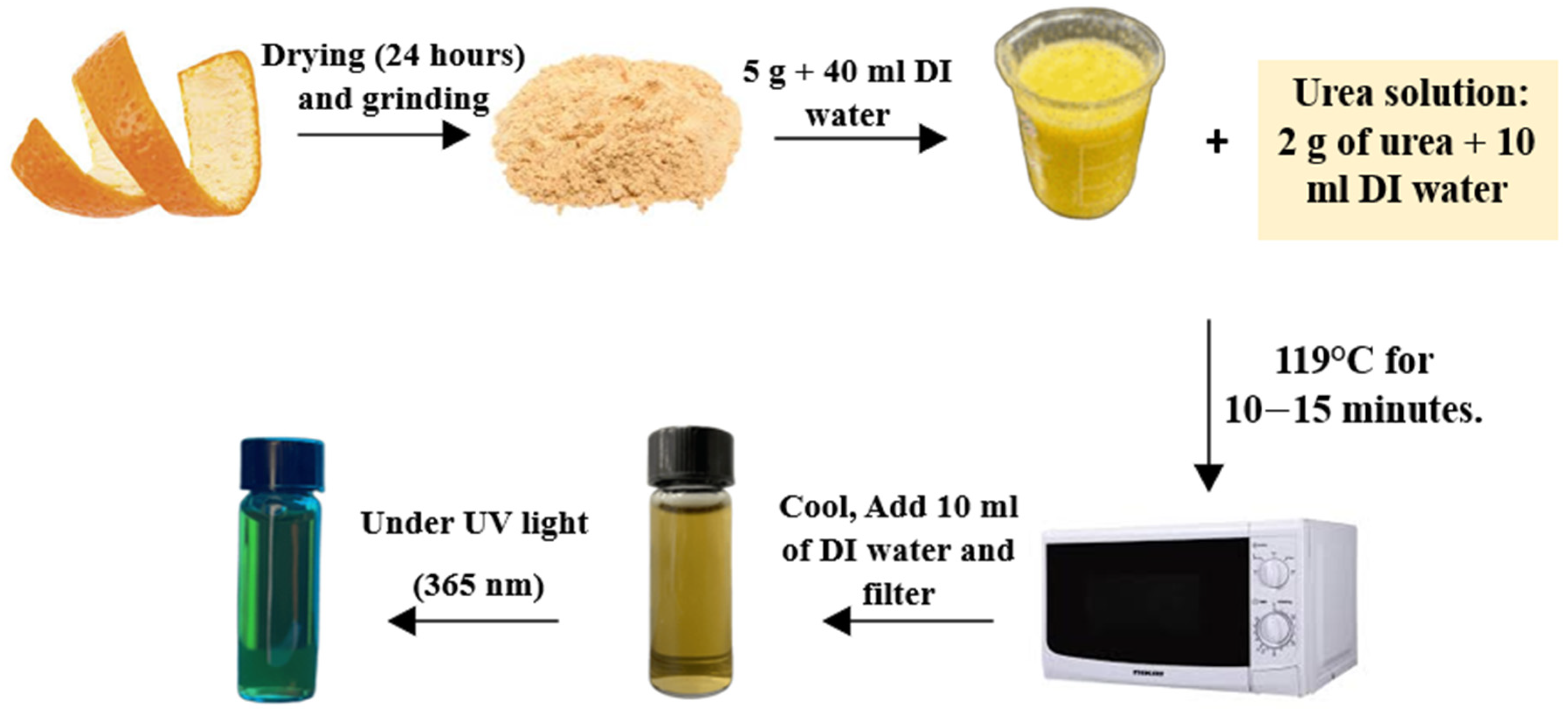
2.3. CDs Synthesis
2.4. Fe(III), Hg(II), and Hg(I) Detection
2.5. Measurement of Fluorescence QY
2.6. Stability of N-CDs
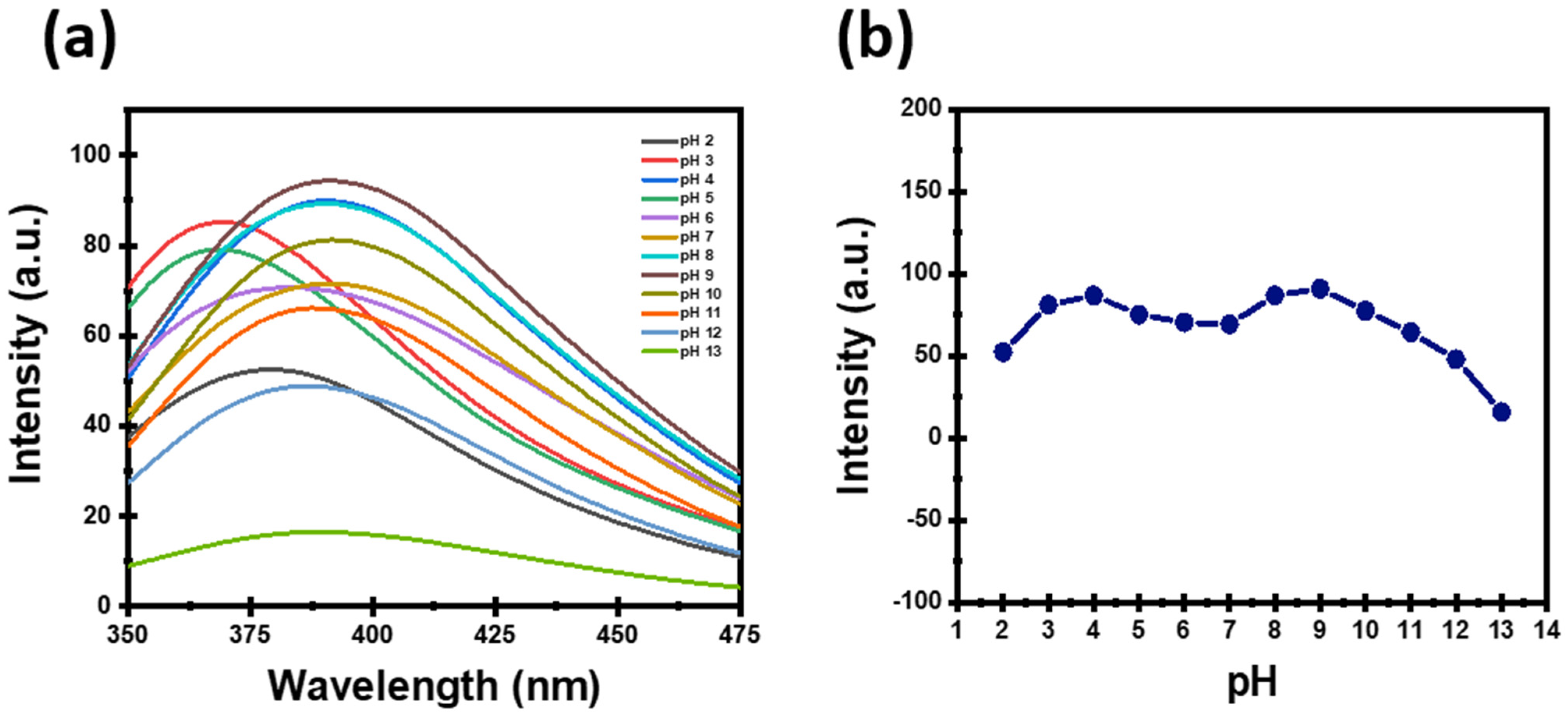
2.6.1. pH Stability
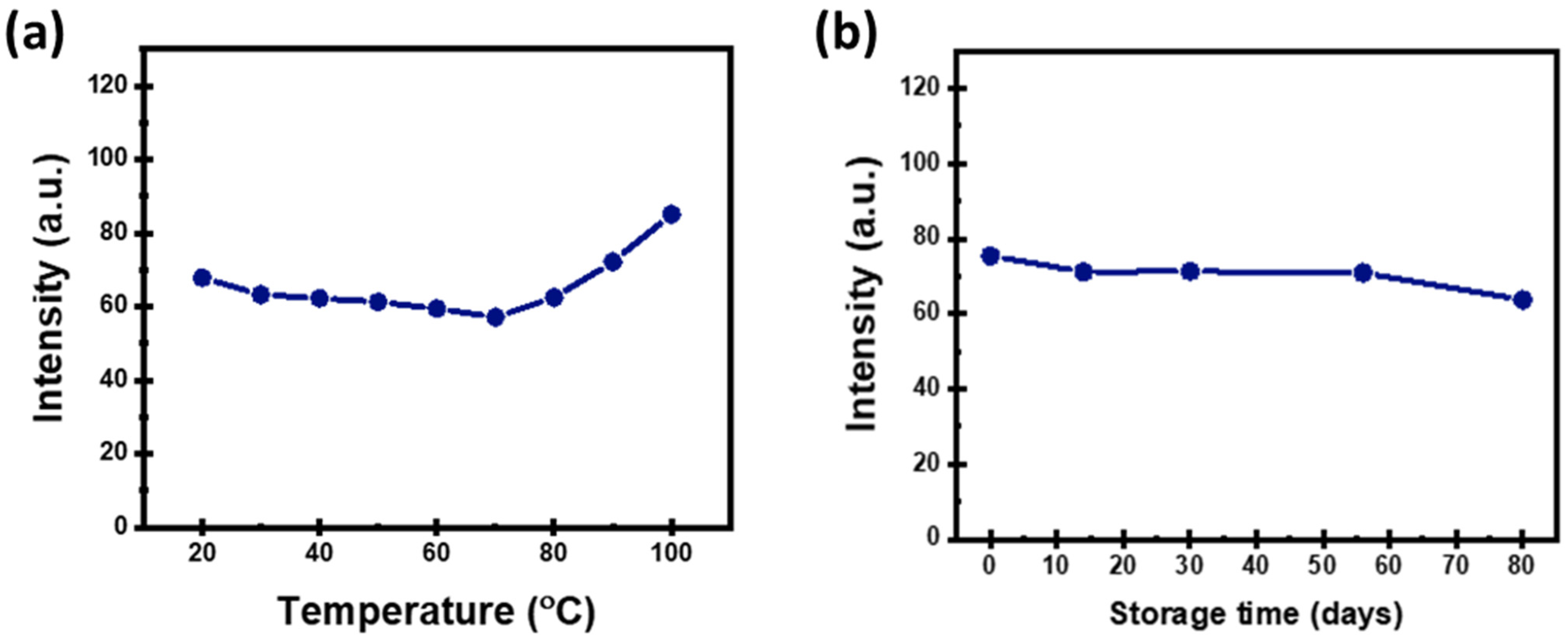
2.6.2. Thermal Stability
2.6.3. Storage Time Stability
2.7. Use of Fluoride as a Masking Agent for Fe(III) for Mercury Detection
2.8. Real Seawater Samples
3. Results and Discussions
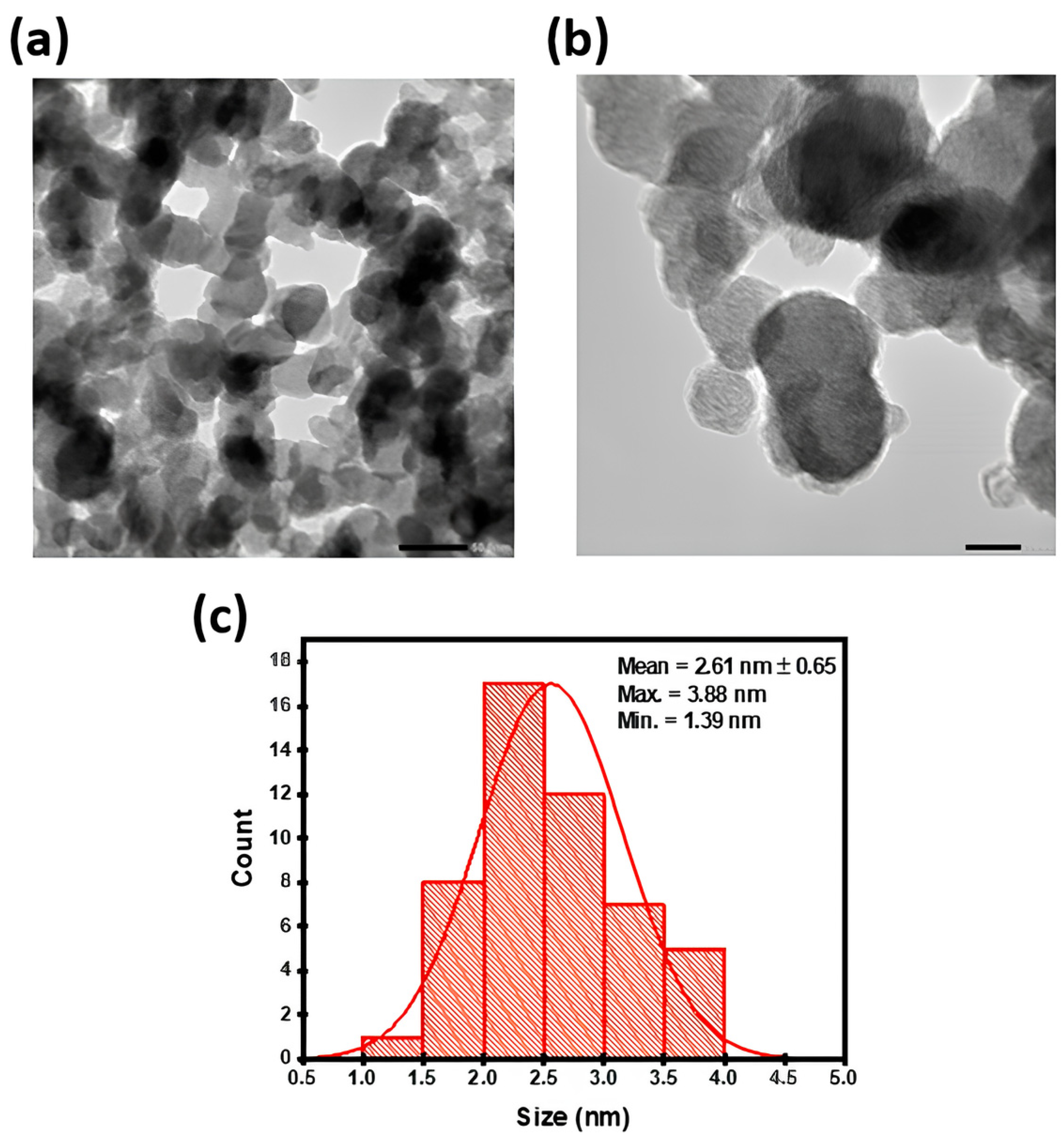
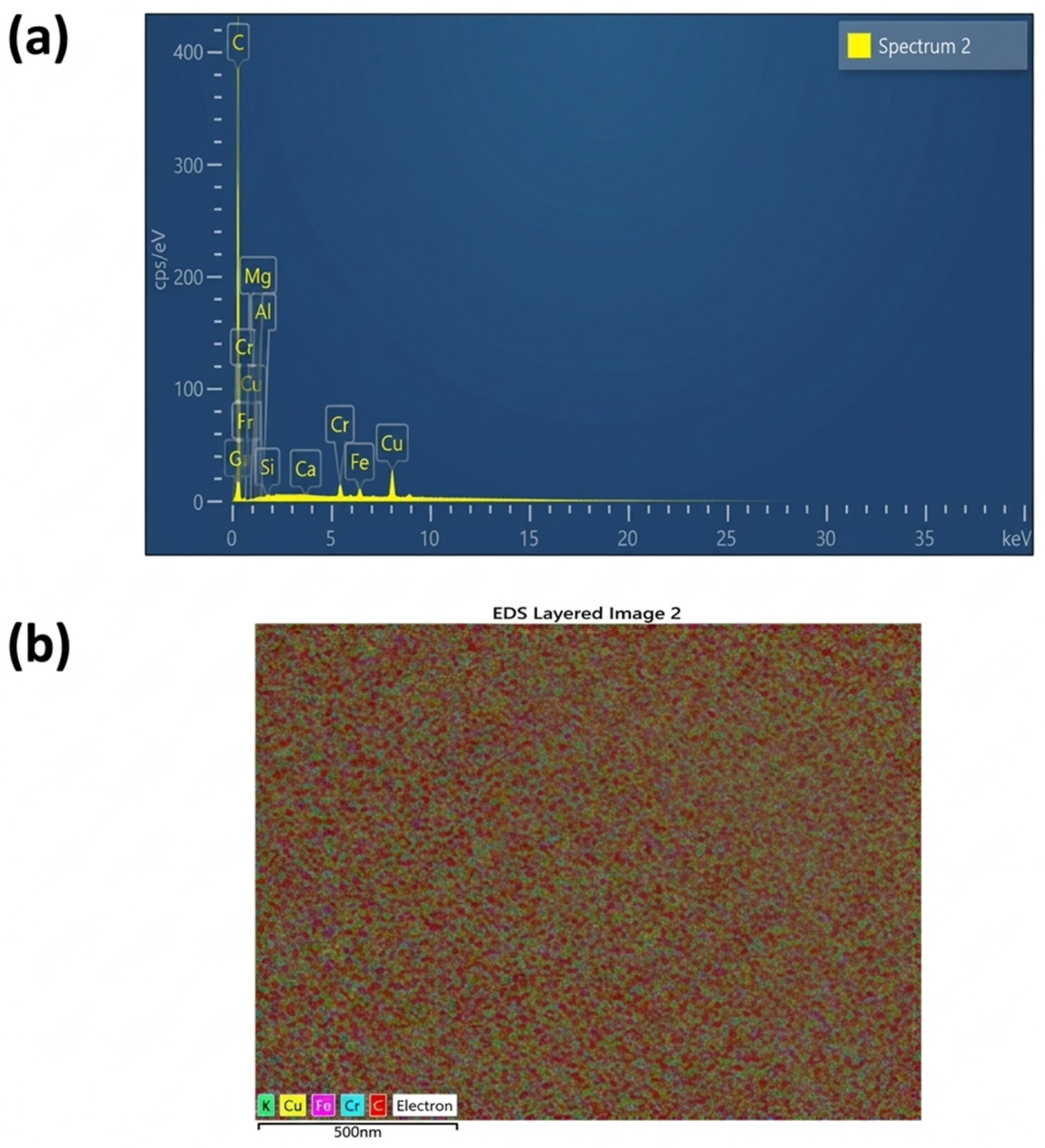
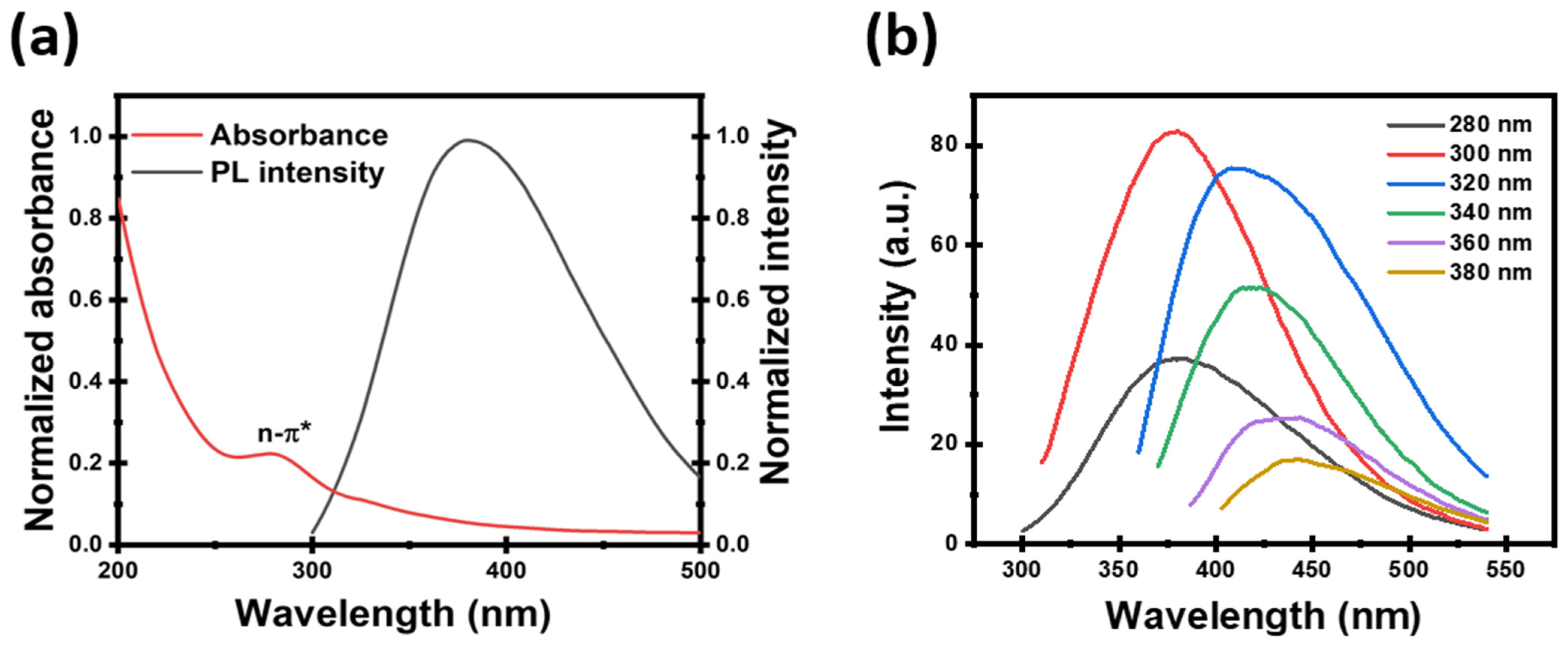
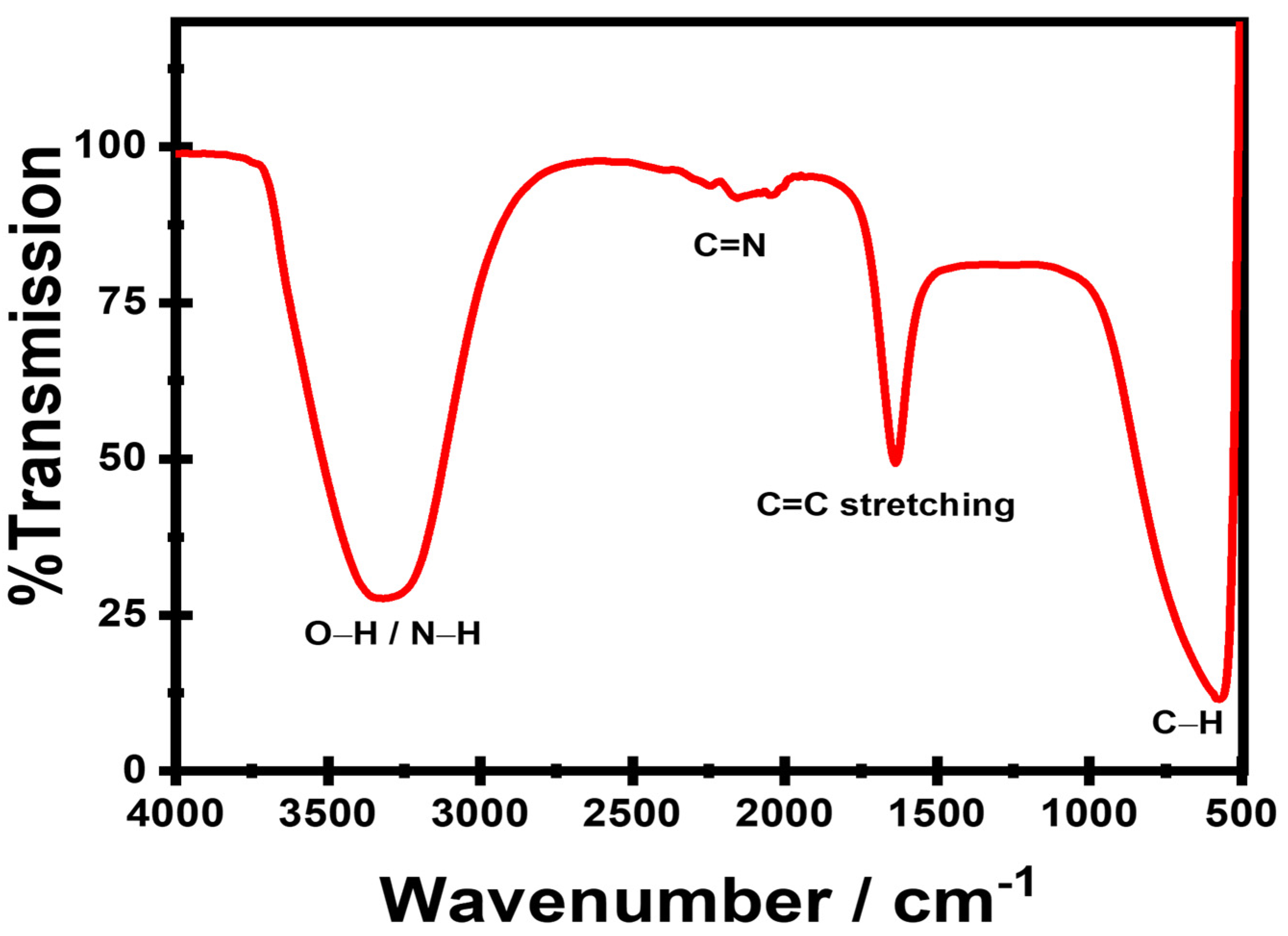
3.1. Composition and Structure of N-CDs
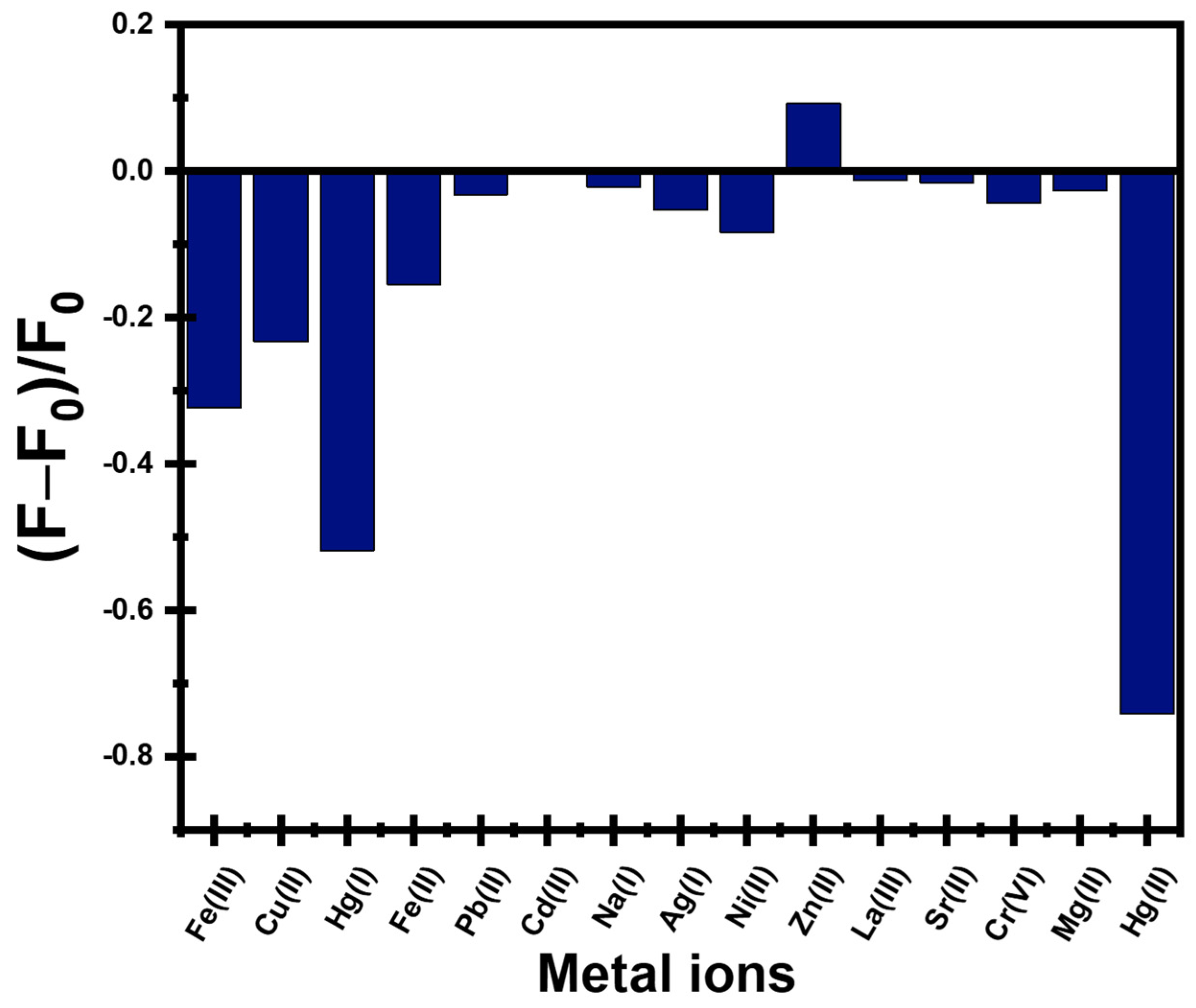
3.2. Heavy Metal Selectivity
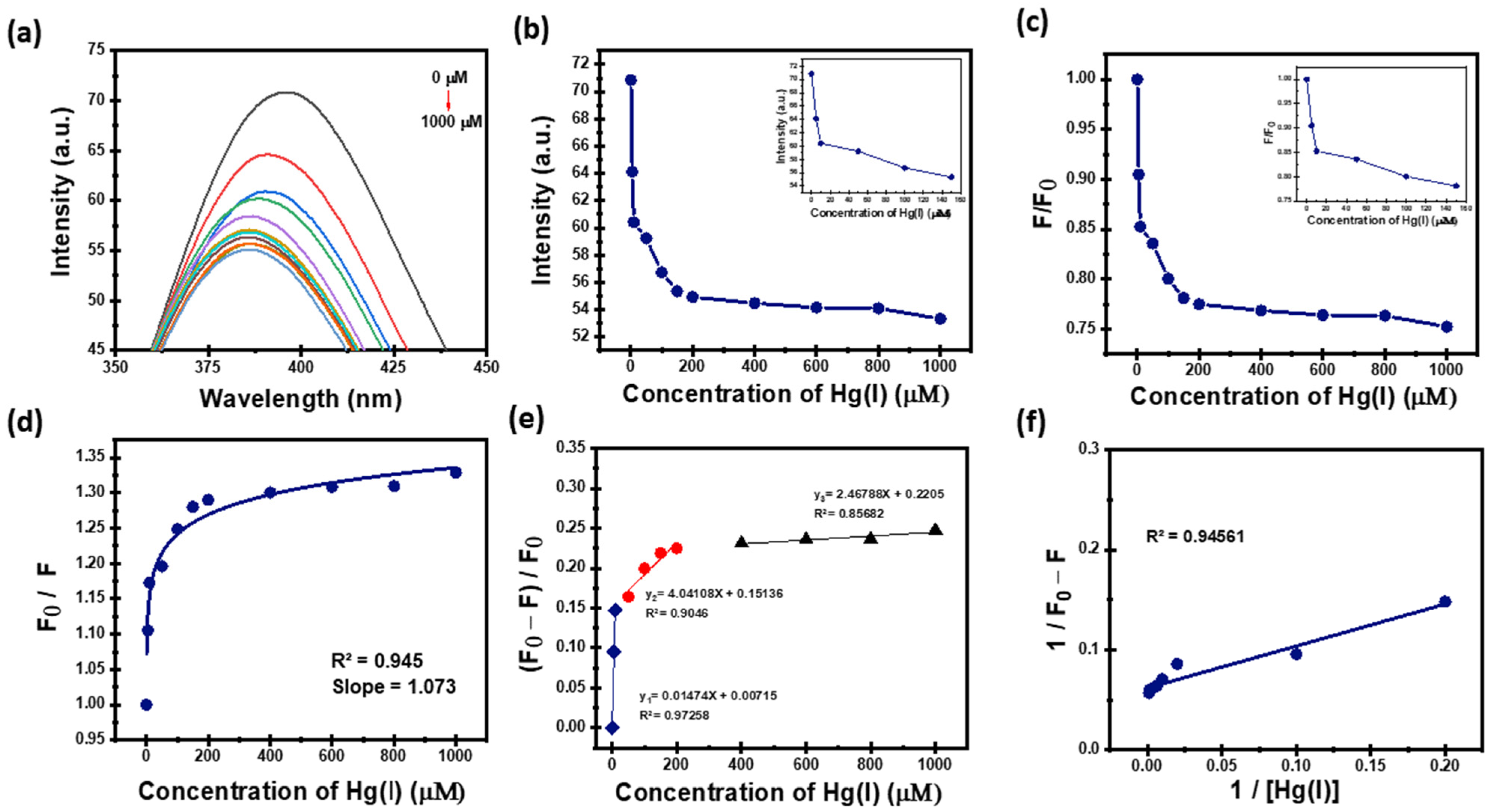
3.2.1. Hg(I)
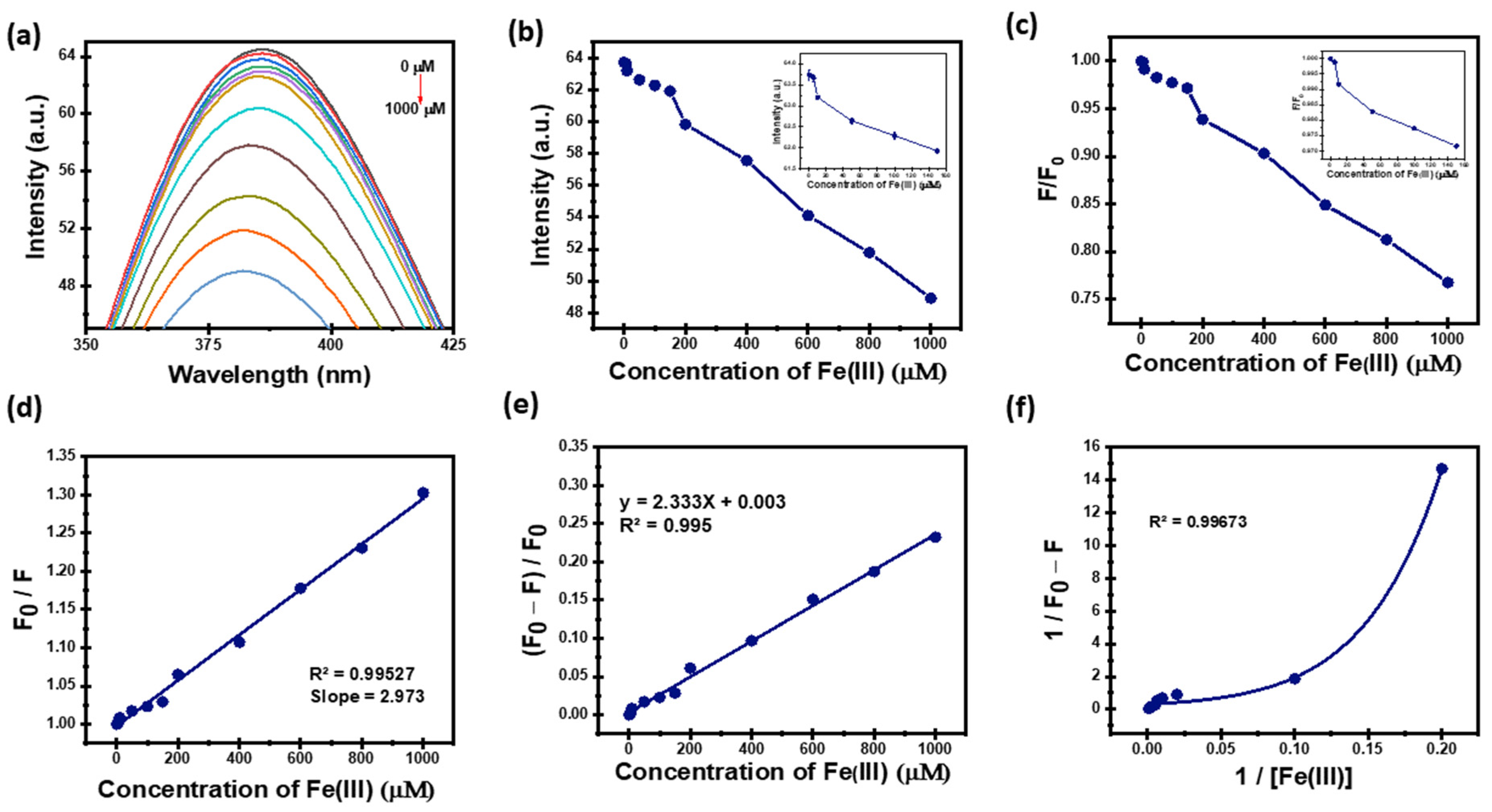
3.2.2. Fe(III)

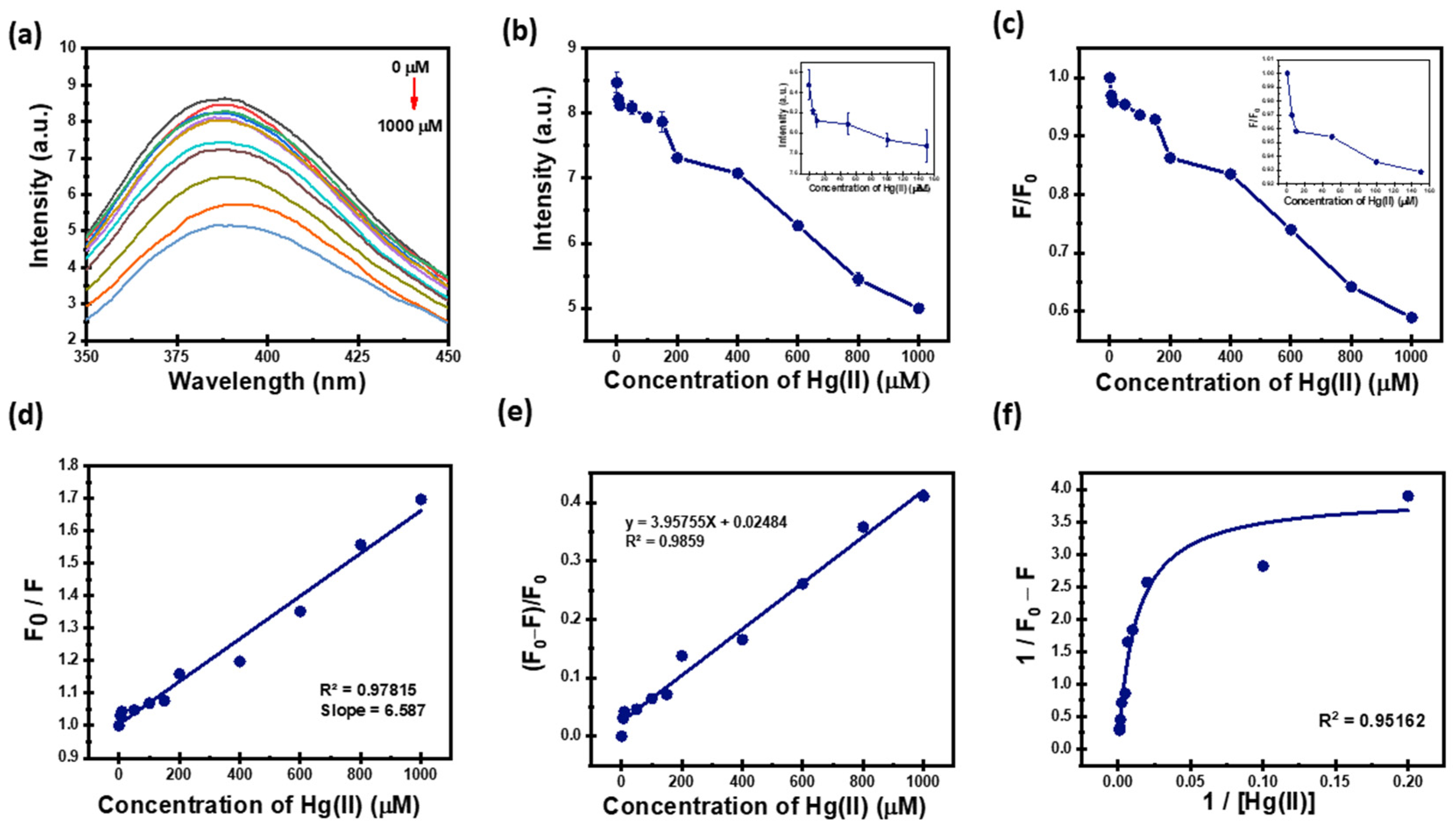
3.2.3. Hg(II)

| Materials | Readout Mechanism | Linear Range | LOD | Reference |
|---|---|---|---|---|
| CDs | Turn-Off | 8.00–80.00 μM | 3.80 μM | [47] |
| N-CDs | Turn-Off | 0.002–8.00 μM | 13.80 nM | [48] |
| CDs | Turn-Off | 0.00–1000.00 μM | 1.90 μM | [49] |
| FPCDs | Turn-Off | - | 162.00 nM | [50] |
| N-CDs | Turn-Off | 20.00–80.00 μM | 3.18 μM | [51] |
| CDs | Turn-Off | 0.20–200.00 μM | 62.00 nM | [52] |
| N-CDs/OPD | Turn-Off | 20.00–80.00 μM | 7.12 μM | [53] |
| B@HRCDs | Turn-Off | 0.00–80.00 μM | 1.08 μM | [54] |
| CDs (Orange peels) | Turn-Off | 0.00–1000.00 μM | 0.0555 μM (55.5 nM) | This work |
| Materials | Readout Mechanism | Linear Range | LOD | Reference |
|---|---|---|---|---|
| N-CDs | Turn-Off | 0.00–40.00 μM | 3.10 nM | [55] |
| N-CDs | Turn-Off | 0.01–100.00 μM | 6.27 nM | [56] |
| CD-wrapped AuNP | Turn-Off | 9.00 × 10⁻⁷–9.00 × 10⁻⁵ M | 281.00 nM | [57] |
| NS-CDs | Turn-On | 0.00–50.00 × 10⁻⁶ M | 6.77 × 10⁻⁷ M | [58] |
| HCYS | Turn-Off | - | 1.41 μM | [59] |
| CDs | Turn-Off | - | 0.16 μM | [60] |
| N, S-GQDs | Turn-Off | 1.00–30.00 nM 100.00–1000.00 nM | 0.27 nM 36.85 nM | [61] |
| Cysteine-functionalized GQDs | Turn-Off | 0.00–10.00 μM | 20.00 nM | [62] |
| CDs (Orange peels) | Turn-Off | 0.00–1000.00 μM | 0.025 μM (25.00 nM | This work |
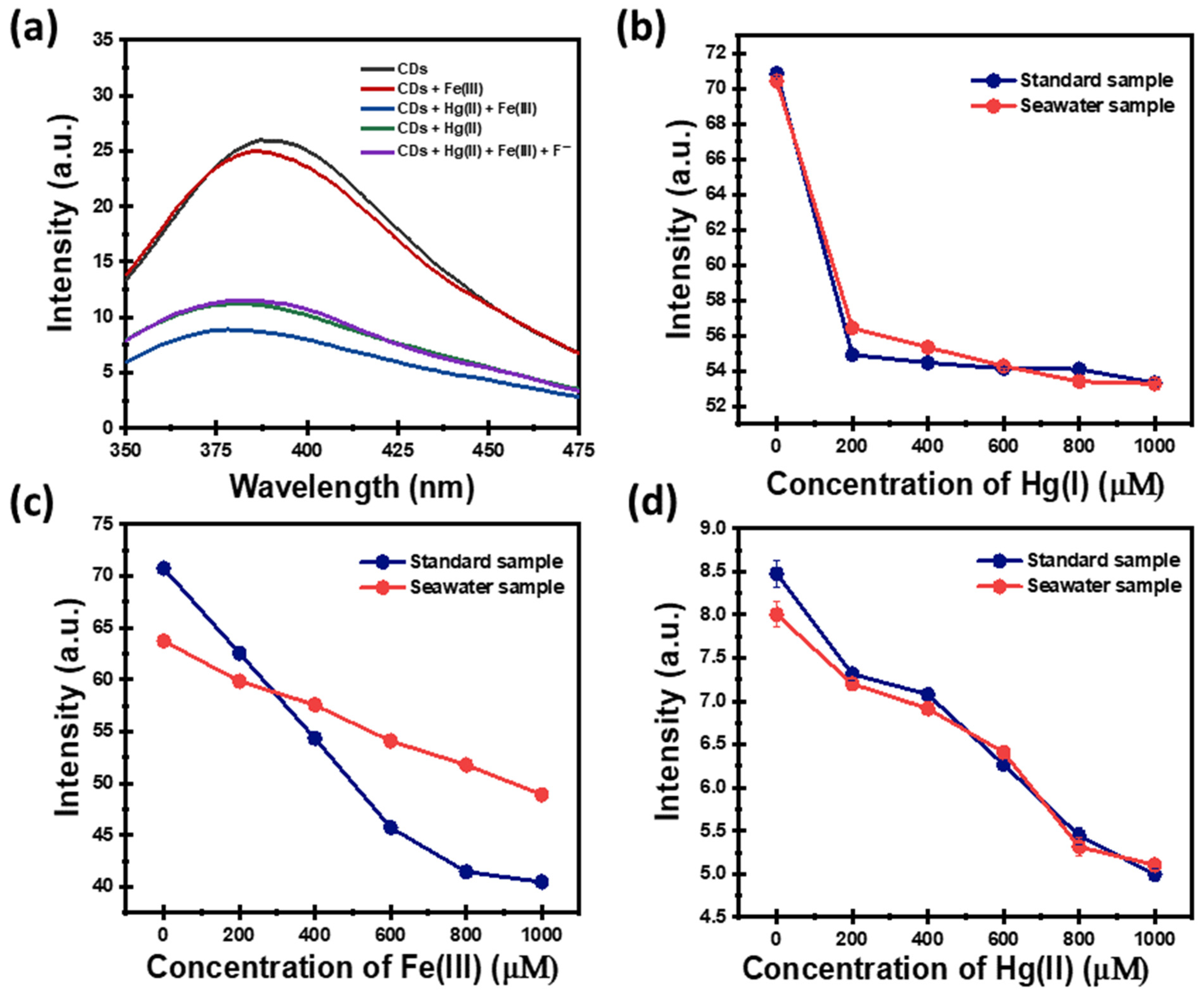
3.3. Simultaneous Study of Hg(II) Detection in the Presence of Fe(III) Ions
3.4. Detection of Hg(I), Fe(III), and Hg(II) in Real Samples
4. Conclusions
Author Contributions
Funding
Institutional Review Board Statement
Informed Consent Statement
Data Availability Statement
Acknowledgments
Conflicts of Interest
References
- Cui, L.; Ren, X.; Sun, M.; Liu, H.; Xia, L. Carbon dots: Synthesis, properties and applications. Nanomaterials 2021, 11, 3419. [Google Scholar] [CrossRef] [PubMed]
- Liu, Y.; Huang, Z.; Wang, X.; Hao, Y.; Yang, J.; Wang, H.; Qu, S. Recent advances in highly luminescent carbon dots. Adv. Funct. Mater. 2025, 35, 2420587. [Google Scholar] [CrossRef]
- Kumar, S.; Gaur, J.; Kaushal, S.; Dalal, J.; Misra, M.; Kaur, H.; Kaur, S.; Kaur, N.; Singh, G.; Singh, G. An insight into synthesis, optical properties, and applications of green fluorescent carbon dots. Crystals 2025, 15, 320. [Google Scholar] [CrossRef]
- Pattnayak, S.; Sahoo, U.; Hota, G. Green synthesis of carbon dot-based materials for toxic metal detection and environmental remediation. In Handbook of Green and Sustainable Nanotechnology: Fundamentals, Developments and Applications; Springer: Berlin/Heidelberg, Germany, 2023; pp. 329–354. [Google Scholar] [CrossRef]
- Döring, A.; Ushakova, E.; Rogach, A.L. Chiral carbon dots: Synthesis, optical properties, and emerging applications. Light Sci. Appl. 2022, 11, 75. [Google Scholar] [CrossRef]
- Guo, L.; Ge, J.; Liu, W.; Niu, G.; Jia, Q.; Wang, H.; Wang, P. Tunable multicolor carbon dots prepared from well-defined polythiophene derivatives and their emission mechanism. Nanoscale 2016, 8, 2729–2734. [Google Scholar] [CrossRef]
- Travlou, N.A.; Giannakoudakis, D.A.; Algarra, M.; Labella, A.M.; Rodríguez-Castellón, E.; Bandosz, T.J. S-and N-doped carbon quantum dots: Surface chemistry dependent antibacterial activity. Carbon 2018, 135, 104–111. [Google Scholar] [CrossRef]
- Liu, Y.; Duan, W.; Song, W.; Liu, J.; Ren, C.; Wu, J.; Liu, D.; Chen, H. Red emission B, N, S-co-doped carbon dots for colorimetric and fluorescent dual mode detection of Fe3+ ions in complex biological fluids and living cells. ACS Appl. Mater. Interfaces 2017, 9, 12663–12672. [Google Scholar] [CrossRef]
- Verma, C.; Dubey, S.; Alfantazi, A.; Rhee, K.Y. Heteroatoms-doped carbon dots: Fundamental, properties, coordination bonding and corrosion protection. J. Ind. Eng. Chem. 2024, 133, 90–111. [Google Scholar] [CrossRef]
- Qi, H.; Qiu, L.; Zhang, X.; Yi, T.; Jing, J.; Sami, R.; Alanazi, S.F.; Alqahtani, Z.; Aljabri, M.D.; Rahman, M.M. Novel N-doped carbon dots derived from citric acid and urea: Fluorescent sensing for determination of metronidazole and cytotoxicity studies. RSC Adv. 2023, 13, 2663–2671. [Google Scholar] [CrossRef] [PubMed]
- Magesh, V.; Sundramoorthy, A.K.; Ganapathy, D. Recent advances on synthesis and potential applications of carbon quantum dots. Front. Mater. 2022, 9, 906838. [Google Scholar] [CrossRef]
- Nazar, M.; Hasan, M.; Wirjosentono, B.; Gani, B.A.; Nada, C.E. Microwave synthesis of carbon quantum dots from Arabica coffee ground for fluorescence detection of Fe3+, Pb2+, and Cr3+. ACS Omega 2024, 9, 20571–20581. [Google Scholar] [CrossRef]
- Rawat, J.; Sharma, H.; Dwivedi, C. Microwave-assisted synthesis of carbon quantum dots and their integration with TiO2 nanotubes for enhanced photocatalytic degradation. Diam. Relat. Mater. 2024, 144, 111050. [Google Scholar] [CrossRef]
- Qiu, H.; Yuan, F.; Wang, Y.; Zhang, Z.; Li, J.; Li, Y. Green-light-emitting carbon dots via eco-friendly route and their potential in ferric-ion detection and WLEDs. Mater. Adv. 2022, 3, 7339–7347. [Google Scholar] [CrossRef]
- Jorns, M.; Strickland, S.; Mullins, M.; Pappas, D. Improved citric acid-derived carbon dots synthesis through microwave-based heating in a hydrothermal pressure vessel. RSC Adv. 2022, 12, 32401–32414. [Google Scholar] [CrossRef]
- Kayani, K.F.; Ghafoor, D.; Mohammed, S.J.; Shatery, O.B.A. Carbon dots: Synthesis, sensing mechanisms, and potential applications as promising materials for glucose sensors. Nanoscale Adv. 2024, 7, 42–59. [Google Scholar] [CrossRef] [PubMed]
- de Medeiros, T.V.; Manioudakis, J.; Noun, F.; Macairan, J.-R.; Victoria, F.; Naccache, R. Microwave-assisted synthesis of carbon dots and their applications. J. Mater. Chem. C 2019, 7, 7175–7195. [Google Scholar] [CrossRef]
- Boakye-Yiadom, K.O.; Kesse, S.; Opoku-Damoah, Y.; Filli, M.S.; Aquib; Joelle, M.M.B.; Farooq, M.A.; Mavlyanova, R.; Raza, F.; Bavi, R.; et al. Carbon dots: Applications in bioimaging and theranostics. Int. J. Pharm. 2019, 564, 308–317. [Google Scholar] [CrossRef]
- Li, H.; Yan, X.; Kong, D.; Jin, R.; Sun, C.; Du, D.; Lin, Y.; Lu, G. Recent advances in carbon dots for bioimaging applications. Nanoscale Horiz. 2020, 5, 218–234. [Google Scholar] [CrossRef]
- Tracey, C.T.; Shavronskaya, D.O.; Shao, J.; Yang, H.; Krivoshapkin, P.V.; Krivoshapkina, E.F. Heterogeneous carbon dot catalysts for biodiesel production: A mini review. Fuel 2024, 362, 130882. [Google Scholar] [CrossRef]
- Reddy, B.; Dadigala, R.; Bandi, R.; Seku, K.; Shalan, A.E. Microwave-assisted preparation of a silver nanoparticles/N-doped carbon dots nanocomposite and its application for catalytic reduction of rhodamine B, methyl red and 4-nitrophenol dyes. RSC Adv. 2021, 11, 5139–5148. [Google Scholar] [CrossRef]
- Chahal, S.; Macairan, J.-R.; Yousefi, N.; Tufenkji, N.; Naccache, R. Green synthesis of carbon dots and their applications. RSC Adv. 2021, 11, 25354–25363. [Google Scholar] [CrossRef]
- Elmas, S.N.K.; Dincer, Z.E.; Erturk, A.S.; Bostanci, A.; Karagoz, A.; Koca, M.; Sadi, G.; Yilmaz, I. A novel fluorescent probe based on isocoumarin for Hg2+ and Fe3+ ions and its application in live-cell imaging. Spectrochim. Acta Part A Mol. Biomol. Spectrosc. 2020, 224, 117402. [Google Scholar] [CrossRef]
- Das, S.; Mishra, S.; Sahu, H. A review of activated carbon to counteract the effect of iron toxicity on the environment. Environ. Chem. Ecotoxicol. 2023, 5, 86–97. [Google Scholar] [CrossRef]
- Liu, H.; Xu, H.; Li, H. Detection of Fe3+ and Hg2+ ions by using high fluorescent carbon dots doped with S and N as fluorescence probes. J. Fluoresc. 2022, 32, 1089–1098. [Google Scholar] [CrossRef]
- Czech, A.; Zarycka, E.; Yanovych, D.; Zasadna, Z.; Grzegorczyk, I.; Kłys, S. Mineral content of the pulp and peel of various citrus fruit cultivars. Biol. Trace Elem. Res. 2020, 193, 555–563. [Google Scholar] [CrossRef] [PubMed]
- Alansari, R.H.; Bakhsh, E.M.; Altamimi, L.R.; Akhtar, K.; Khan, S.B. One-step microwave-assisted fabrication of carbon dots as efficient fluorescent chemosensors for Hg2+ and Fe3+ detection. Sensors 2025, 25, 7452. [Google Scholar] [CrossRef] [PubMed]
- Brima, E.; Mohamed, H. Distribution of minerals between orange juice and orange flesh in various cultivars. Czech J. Food Sci. 2021, 39, 419–425. [Google Scholar] [CrossRef]
- Castillo, V.C.G.; Limpoco, T.; Enriquez, E.P. Detection of nitrogen in layer-by-layer polymeric films by energy dispersive X-ray spectroscopy. Key Eng. Mater. 2022, 913, 87–97. [Google Scholar] [CrossRef]
- Sonsin, A.F.; Nascimento, S.M.S.; Albuquerque, I.M.B.; Silva, E.C.O.; Rocha, J.C.A.; Oliveira, R.S.; Barbosa, C.D.A.E.S.; Souza, S.T.; Fonseca, E.J.S. Temperature-dependence on the optical properties of chitosan carbon dots in the solid state. RSC Adv. 2021, 11, 2767–2773. [Google Scholar] [CrossRef]
- Feng, Z.; Li, Z.; Zhang, X.; Shi, Y.; Zhou, N. Nitrogen-doped carbon quantum dots as fluorescent probes for sensitive and selective detection of nitrite. Molecules 2017, 22, 2061. [Google Scholar] [CrossRef]
- Balakrishnan, T.; Ang, W.L.; Mahmoudi, E.; Mohammad, A.W.; Sambudi, N.S. Formation mechanism and application potential of carbon dots synthesized from palm kernel shell via microwave assisted method. Carbon Resour. Convers. 2022, 5, 150–166. [Google Scholar] [CrossRef]
- Egorova, M.; Tomskaya, A.; Smagulova, S.A. Optical properties of carbon dots synthesized by the hydrothermal method. Materials 2023, 16, 4018. [Google Scholar] [CrossRef]
- Liu, C.; Zhang, F.; Hu, J.; Gao, W.; Zhang, M. A mini review on pH-sensitive photoluminescence in carbon nanodots. Front. Chem. 2021, 8, 605028. [Google Scholar] [CrossRef]
- Zhang, Q.; Wang, R.; Feng, B.; Zhong, X.; Ostrikov, K. Photoluminescence mechanism of carbon dots: Triggering high-color-purity red fluorescence emission through edge amino protonation. Nat. Commun. 2021, 12, 6856. [Google Scholar] [CrossRef] [PubMed]
- Macairan, J.-R.; Jaunky, D.B.; Piekny, A.; Naccache, R. Intracellular ratiometric temperature sensing using fluorescent carbon dots. Nanoscale Adv. 2019, 1, 105–113. [Google Scholar] [CrossRef]
- Kundu, A.; Maity, B.; Basu, S. Orange pomace-derived fluorescent carbon quantum dots: Detection of dual analytes in the nanomolar range. ACS Omega 2023, 8, 22178–22189. [Google Scholar] [CrossRef]
- Han, L.; Guo, Y.; Zhang, H.; Wang, Z.; Zhang, F.; Wang, Y.; Li, X.; Wang, Y.; Ye, J. Preparation of carbon quantum dot fluorescent probe from waste fruit peel and its use for the detection of dopamine. RSC Adv. 2024, 14, 1813–1821. [Google Scholar] [CrossRef]
- Tolou-Shikhzadeh-Yazdi, S.; Shakibapour, N.; Hosseini, S.; Mokaberi, P.; Malaekeh-Nikouei, B.; Chamani, J. High-efficient synthesis of carbon quantum dots from orange pericarp as fluorescence turn-on probes for Ca2+ and Zn2+ ion detection and their application in trypsin activity characterization. Iran. J. Basic Med. Sci. 2023, 26, 190. [Google Scholar] [CrossRef]
- George, H.S.; Selvaraj, H.; Ilangovan, A.; Almutairi, B.O.; Sheit, M.K.; Sathishkumar, K. Microwave-assisted one-pot synthesis of carbon dots from biomass: Fe (III) ion sensing and in-situ methylene blue reduction catalytic activity. Desalin. Water Treat. 2024, 320, 100624. [Google Scholar] [CrossRef]
- George, H.S.; Selvaraj, H.; Ilangovan, A.; Chandrasekaran, K.; Kannan, V.R.; Parthipan, P.; Almutairi, B.O.; Balu, R. Green synthesis of biomass derived carbon dots via microwave-assisted method for selective detection of Fe3+ ions in an aqueous medium. Inorg. Chem. Commun. 2023, 157, 111348. [Google Scholar] [CrossRef]
- Zhao, Y.; Ji, X.; Liang, J.; Gao, Y.; Xing, H.; Song, Y.; Hou, J.; Yang, G. The fabrication of fluorescent sensor for Fe3+ detection and configurable logic gate operation based on N-doped carbon dots. J. Photochem. Photobiol. A Chem. 2024, 449, 115418. [Google Scholar] [CrossRef]
- Chen, C.; Lin, M.; Wan, C. Copper ion detection using green precursor-derived carbon dots in aqueous media. Chemosensors 2026, 14, 21. [Google Scholar] [CrossRef]
- Onishi, B.S.D.; Neto, A.N.C.; Ribeiro, S.J.L. Carbon dot-laponite hybrid nanocomposites as selective turn-off sensors for Hg2+ detection and photoluminescence quenching mechanism. ACS Omega 2024, 9, 51204–51212. [Google Scholar] [CrossRef] [PubMed]
- Liu, X.; Chen, Z.; Gao, R.; Kan, C.; Xu, J. A paper-based fluorescent and colorimetric portable device with smartphone application for Fe3+ sensing. J. Environ. Chem. Eng. 2022, 10, 107650. [Google Scholar] [CrossRef]
- Wang, R.; Yu, Z. Validity and reliability of Benesi-Hildebrand method. Acta Phys. Chim. Sin. 2007, 23, 1353–1359. [Google Scholar] [CrossRef]
- Tan, Q.; Li, X.; Wang, L.; Zhao, J.; Yang, Q.; Sun, P.; Deng, Y.; Shen, G. One-step synthesis of highly fluorescent carbon dots as fluorescence sensors for the parallel detection of cadmium and mercury ions. Front. Chem. 2022, 10, 1005231. [Google Scholar] [CrossRef]
- Chen, Y.; Sun, X.; Pan, W.; Yu, G.; Wang, J. Fe3+-sensitive carbon dots for detection of Fe3+ in aqueous solution and intracellular imaging of Fe3+ inside fungal cells. Front. Chem. 2020, 7, 911. [Google Scholar] [CrossRef]
- Hashemi, N.; Mousazadeh, M.H. Preparation of fluorescent nitrogen-doped carbon dots for highly selective on-off detection of Fe3+ ions in real samples. Opt. Mater. 2021, 121, 111515. [Google Scholar] [CrossRef]
- Wu, J.; Luo, Y.; Cui, C.; Han, Q.; Peng, Z. Carbon dots as multifunctional fluorescent probe for Fe3+ sensing in ubiquitous water environments and living cells as well as lysine detection via ‘on-off-on’ mechanism. Spectrochim. Acta Part A Mol. Biomol. Spectrosc. 2024, 309, 123840. [Google Scholar] [CrossRef]
- Dalal, C.; Garg, A.K.; Mathur, M.; Sonkar, S.K. Fluorescent polymer carbon dots for the sensitive–selective sensing of Fe3+ metal ions and cellular imaging. ACS Appl. Nano Mater. 2022, 5, 12699–12710. [Google Scholar] [CrossRef]
- Ma, Y.; Mao, L.; Cui, C.; Hu, Y.; Chen, Z.; Zhan, Y.; Zhang, Y. Nitrogen-doped carbon dots as fluorescent probes for sensitive and selective determination of Fe3+. Spectrochim. Acta Part A Mol. Biomol. Spectrosc. 2024, 316, 124347. [Google Scholar] [CrossRef]
- Deng, X.; Yang, H.; Gong, A.-J.; Huang, X.-M.; Li, L. Sensitive and selective chemosensor for Fe3+ detection using carbon dots synthesized by microwave method. Spectrochim. Acta Part A Mol. Biomol. Spectrosc. 2025, 334, 125907. [Google Scholar] [CrossRef] [PubMed]
- Yang, C.; Xu, G.; Hou, C.; Zhang, H. Ratiometric fluorescence nanoprobe based on nitrogen-doped carbon dots for Cu2+ and Fe3+ detection. Sci. Rep. 2025, 15, 6261. [Google Scholar] [CrossRef] [PubMed]
- Zhang, L.; Luo, W.; Chen, Y.; Zheng, J.; Cao, L.; Duan, L.; Tang, T.; Wang, Y. Green synthesis of boron-doped carbon dots from Chinese herbal residues for Fe3+ sensing, anti-counterfeiting, and photodegradation applications. J. Clean. Prod. 2023, 422, 138577. [Google Scholar] [CrossRef]
- Radhakrishnan, K.; Suriyaprakash, R.; Shunmugakani, S.; Saravanan, P.; Kumar, J.V.; Mythili, R.; Al-Sadoon, M.K.; Santhamoorthy, M. Sequential detection of Hg2+ and TNT using a nitrogen-doped polymeric carbon dots on–off–on fluorescence sensor. Polym. Adv. Technol. 2024, 35, e6608. [Google Scholar] [CrossRef]
- Zhang, S.; Yan, H.; Li, H.; Xu, T.; Li, H.; Wang, C.; Yang, Z.; Jia, X.; Liu, X. Carbon dots as specific fluorescent sensors for Hg2+ and glutathione imaging. Microchim. Acta 2023, 190, 224. [Google Scholar] [CrossRef]
- Li, Y.; Tang, L.; Zhu, C.; Liu, X.; Wang, X.; Liu, Y. Fluorescent and colorimetric assay for determination of Cu (II) and Hg (II) using AuNPs reduced and wrapped by carbon dots. Microchim. Acta 2022, 189, 10. [Google Scholar] [CrossRef]
- Mohandoss, S.; Ahmad, N.; Khan, M.R.; Velu, K.S.; Palanisamy, S.; You, S.; Kumar, A.J.; Lee, Y.R. Nitrogen and sulfur co-doped photoluminescent carbon dots for highly selective and sensitive detection of Ag+ and Hg2+ ions in aqueous media: Applications in bioimaging and real sample analysis. Environ. Res. 2023, 228, 115898. [Google Scholar] [CrossRef]
- Fang, S.; Zhang, L.; Zhao, Y.; Zhang, X.; Zhang, L.; Chen, L.; Yoon, J.; Liu, S. Insight into mercury ion detection in environmental samples and imaging in living systems by a near-infrared fluorescent probe. Sens. Actuators B Chem. 2024, 411, 135768. [Google Scholar] [CrossRef]
- Yang, Y.; Zou, T.; Wang, Z.; Xing, X.; Peng, S.; Zhao, R.; Zhang, X.; Wang, Y. The fluorescent quenching mechanism of N and S Co-doped graphene quantum dots with Fe3+ and Hg2+ ions and their application as a novel fluorescent sensor. Nanomaterials 2019, 9, 738. [Google Scholar] [CrossRef]
- Van Tam, T.; Hong, S.H.; Choi, W.M. Facile synthesis of cysteine–functionalized graphene quantum dots for a fluorescence probe for mercury ions. RSC Adv. 2015, 5, 97598–97603. [Google Scholar] [CrossRef]


| Element | Weight (%) | wt% σ |
|---|---|---|
| C | 86.29 | 0.11 |
| Mg | 0.15 | 0.02 |
| Al | 0.14 | 0.02 |
| Si | 0.33 | 0.03 |
| Ca | 0.14 | 0.03 |
| Cr | 2.76 | 0.05 |
| Fe | 2.03 | 0.05 |
| Cu | 8.16 | 0.08 |
| Total | 100.00 |
| Precursor | Method | QY | Reference |
|---|---|---|---|
| Orange pomace | Microwave-assisted method | 54.26 | [36] |
| Orange peels | Hydrothermal method | 35.37 | [37] |
| Orange pericarp | Hydrothermal method | 26.8 | [38] |
| Chayote seeds | Microwave-assisted method | 9.56 | [39] |
| Papaya seeds | Microwave-assisted method | 9.7 | [40] |
| Polyethyleneimine and melamine | Hydrothermal method | 26 | [41] |
| Orange peels | Microwave-assisted method | 47.12 | This work |
Disclaimer/Publisher’s Note: The statements, opinions and data contained in all publications are solely those of the individual author(s) and contributor(s) and not of MDPI and/or the editor(s). MDPI and/or the editor(s) disclaim responsibility for any injury to people or property resulting from any ideas, methods, instructions or products referred to in the content. |
© 2026 by the authors. Licensee MDPI, Basel, Switzerland. This article is an open access article distributed under the terms and conditions of the Creative Commons Attribution (CC BY) license.
Share and Cite
Alansari, R.H.; Bakhsh, E.M.; Akhtar, K.; Altamimi, L.R.; Khan, G.A.; Khan, S.B. Rapid and Low-Cost N-Doped Carbon Dots Synthesis Based on Orange Peels for Highly Sensitive Detection of Ferric and Mercury Ions. Chemosensors 2026, 14, 112. https://doi.org/10.3390/chemosensors14050112
Alansari RH, Bakhsh EM, Akhtar K, Altamimi LR, Khan GA, Khan SB. Rapid and Low-Cost N-Doped Carbon Dots Synthesis Based on Orange Peels for Highly Sensitive Detection of Ferric and Mercury Ions. Chemosensors. 2026; 14(5):112. https://doi.org/10.3390/chemosensors14050112
Chicago/Turabian StyleAlansari, Rawan H., Esraa M. Bakhsh, Kalsoom Akhtar, Lenah R. Altamimi, Gul Aslam Khan, and Sher Bahadar Khan. 2026. "Rapid and Low-Cost N-Doped Carbon Dots Synthesis Based on Orange Peels for Highly Sensitive Detection of Ferric and Mercury Ions" Chemosensors 14, no. 5: 112. https://doi.org/10.3390/chemosensors14050112
APA StyleAlansari, R. H., Bakhsh, E. M., Akhtar, K., Altamimi, L. R., Khan, G. A., & Khan, S. B. (2026). Rapid and Low-Cost N-Doped Carbon Dots Synthesis Based on Orange Peels for Highly Sensitive Detection of Ferric and Mercury Ions. Chemosensors, 14(5), 112. https://doi.org/10.3390/chemosensors14050112