


Abstract
Steganography using deep learning can preserve pixel-level image quality while still changing object, attribute, or relational information in captions generated by vision-language models (VLMs). This caption drift creates a detection channel that is not measured by global image-embedding similarity alone. This paper presents StegoGuard, a framework that embeds secret payloads while enforcing caption-level semantic consistency. Concept drift is defined as a measurable divergence in object-level, attribute-level, or relational semantics between cover and stego captions and is quantified using CLIP text-embedding cosine distance. The main technical contribution is a cross-modal semantic drift regularization term based on BLIP-2 captions generated for cover and stego images. The framework combines this objective with CLIP-based saliency-guided region selection and a lightweight Vision Transformer encoder-decoder. Saliency-map quality is evaluated against ground-truth segmentation masks, and a deterministic bit-to-patch mapping protocol is provided for reproducibility. Experiments use COCO2017, DIV2K, and BOSSBase. Within the controlled six-baseline protocol, StegoGuard achieved a PSNR of 38.9 dB, an SSIM of 0.976 at 256 bits, detector AUC values of 0.521–0.562, and caption similarity of 0.962 as measured by CLIP text cosine similarity (model-relative, not human-verified). The ablation results show that the drift term reduces the measured concept-shift rates while preserving the reported bit-recovery and image-quality levels.
Keywords:
deep steganography; semantic preservation; cross-modal regularization; caption consistency; CLIP; BLIP-2; Vision Transformer; steganalysis resistance; concept drift; saliency validation MSC:
68T07; 68U10; 68P25
1. Introduction
Steganography is the science that deals with hiding secret data within cover media to evade detection, with applications in secure communication, digital watermarking, and privacy preservation. Traditional steganography spatial-domain methods, such as least significant bit (LSB) and frequency-domain techniques, such as DCT-based methods, are computationally efficient but vulnerable to statistical steganalysis attacks and weak under common processing operations such as lossy compression and resizing [1].
Deep-learning-based steganography has improved imperceptibility and robustness through end-to-end learned embedding and extraction. Representative frameworks include HiDDeN [2], SteganoGAN [3], and invertible neural networks [4]. These methods do not explicitly protect semantically important regions such as faces, text, and foreground objects, so pixel-level fidelity does not necessarily ensure stable machine-generated descriptions.
Vision-language models (VLMs) create a new challenge for natural-image steganography because they are widely used for tagging, retrieval, and captioning [5]. A stego image must therefore remain semantically stable under VLM inspection. Methods such as CRoSS [6] enforce global CLIP image-embedding similarity, but they do not prevent subtle concept-level drift in generated captions. In this work, concept drift is a measurable shift in one or more of three semantic dimensions: (i) object-category identity, such as “retriever” → “wolf-like dog”; (ii) attributes, such as “golden” → “gray”; and (iii) relations or spatial semantics, such as “sitting on grass” → “standing near a fence”. These categories make the problem concrete and testable. Such drift can be detected through caption generation or prompt-based VLM analysis.
This paper presents StegoGuard, a deep steganography framework that connects caption generation with the embedding objective. StegoGuard uses caption-derived semantic supervision so that the optimization responds to the type of object, attribute, and relational change that a VLM-based inspection system can expose. Its main technical contribution is cross-modal semantic drift regularization, which measures differences between BLIP-2-generated cover and stego captions in CLIP text-embedding space. The framework combines this objective with CLIP saliency-guided region selection and a lightweight ViT-based encoder-decoder. The evaluation separately measures image fidelity, bit recovery, steganalysis AUC, and caption stability rather than treating any one metric as sufficient.
The main contributions are listed below:
- A caption-conditioned training objective that penalizes object, attribute, and relational drift between cover and stego captions, extending semantic control beyond global image-embedding similarity.
- A deterministic saliency-to-patch protocol that combines CLIP attention rollout, ViT patch modulation, perturbation clipping, and reproducible patch ordering for embedding and extraction.
- Evaluation on COCO2017, DIV2K, and BOSSBase covering fidelity, bit recovery, caption stability, saliency validity, robustness, and resistance to steganalysis.
2. Related Work
In this section, recent related research on semantic-aware steganography is reviewed, organized by technical approach. Each subsection identifies specific prior contributions, their demonstrated strengths, and the limitations that motivate the design decisions in StegoGuard.
2.1. Content-Adaptive Spatial and Transform-Domain Methods
Early adaptive steganography places changes where they are less likely to be detected. StegoGuard retains this placement principle but defines region importance using semantic saliency.
F5 [7] embeds data in quantized JPEG DCT coefficients and uses matrix encoding to limit histogram changes. HUGO [8] assigns embedding costs in a high-dimensional pixel feature space. WOW [9] and UNIWARD [10] use directional residual filters to place changes in textured regions where human perception and statistical detectors are less sensitive. These methods show that content-aware placement improves security, but their hand-crafted costs do not represent high-level semantic importance. For example, they may treat texture on a face like texture in an empty background. StegoGuard instead uses CLIP attention rollout to estimate object-level importance.
Statistical steganalysis also improved through Spatial Rich Models (SRM) [11], which extract co-occurrence features from high-pass residuals, and ensemble classifiers [12]. Their effectiveness against classical steganographic methods motivates learned embedding strategies that adapt their perturbation patterns during training.
2.2. End-to-End Learned Steganography
Deep learning has extended modern steganography beyond hand-crafted spatial-domain rules. End-to-end encoder–decoder networks can adapt to channel distortions and detector architectures during training.
An example work by Baluja [13] demonstrated hiding a full image inside another using convolutional autoencoders. HiDDeN [2] introduced a three-component architecture (encoder, noise layer, decoder) trained end-to-end with simulated JPEG compression and additive noise, achieving BER below 5% at moderate payloads under realistic distortions. Ahmadi et al. [14] proposed ReDMark, which used a differentiable JPEG approximation to improve robustness specifically against compression artifacts, reporting 30% lower BER than HiDDeN at JPEG Q = 50.
SteganoGAN [3] introduced adversarial training with a critic network to improve the visual quality of stego images at higher payload capacities. ISGAN [15] embeds secret information in the luminance (Y) channel of the cover image and combines an adversarial discriminator with a structural loss to reduce visible distortion.
Invertible neural networks (INNs) follow a different design. Their embedding transformation is reversible, allowing the cover image to be recovered after the secret message has been extracted [4]. Lu et al. [16] built an INN framework with a large payload, reaching 24 bits per pixel at a PSNR above 33 dB without semantic guidance. HiNet [17] and DeepMIH [18] used dense coupling layers and multi-scale hiding, reaching up to 72 bits per pixel when several images are hidden together while keeping the PSNR above 40 dB on clean covers.
Other work targets specific channels and statistics. Transformer-based methods [19] apply self-attention so that a single perturbation is spread across structurally related patches rather than placed in each patch independently. StegaStamp [20] addresses the physical channel: by folding printing and re-photographing into the training pipeline, its encoder–decoder pair survives the geometric and photometric distortions that process introduces. Flow-based methods [21] use normalizing flows to model the residuals of natural images, so that the embedding resembles ordinary sensor noise. Jia et al. [22] instead target the JPEG channel directly, alternating mini-batches of real and simulated JPEG compression during training, driving the BER below 1% at JPEG Q = 50—again, however, without semantic guidance.
The methods summarized above generally optimize reconstruction, payload recovery, robustness, or adversarial detectability without an explicit caption-level constraint. A VLM can therefore produce different object, attribute, or relational descriptions even when pixel distortion remains small.
2.3. Semantic-Aware Steganography and the Caption Drift Gap
The most recent line of work incorporates vision-language model guidance into the embedding process, but existing methods address only coarse image-level semantics, leaving fine-grained caption-level consistency uncontrolled.
CRoSS [6] uses CLIP image embeddings to minimize global semantic distortion and saliency maps to avoid regions with high semantic importance, such as faces and text overlays. Its reported CLIP image cosine similarity above 0.98 indicates stable global image embeddings, but it does not directly constrain generated captions. UDH [23] and RivaGAN [24] use attention for spatial modification without caption-level feedback.
Recent work has improved learned data hiding through several technical paths. Li et al. [25] use spatial-channel attention in an invertible multi-image architecture; Zou et al. [26] use multiscale residual feature fusion for robust invisible watermarking; Jiang et al. [27] use a multimodal diffusion model for image-to-image steganography; Han et al. [28] use selective diffusion timesteps; and Zou et al. [29] combine adaptive weighting with resolution recovery for attack-resilient watermarking. These studies address visual fidelity, robustness, capacity, or generative embedding, whereas StegoGuard targets generated-caption stability. Their published values are not inserted into the controlled performance tables because the hidden content, datasets, payload definitions, attack models, and evaluation protocols are different.
To explain the caption drift gap and the importance of this work, a CRoSS stego image of a park scene maintains a CLIP image similarity of 0.987 with the original, yet BLIP-2 captions shift from “children playing on a swing set in a sunny park” to “people near playground equipment outdoors.” The CLIP text similarity between these two captions is only 0.89, indicating meaningful loss of object-level detail (“children” → “people”), attribute information (“sunny” dropped), and relational specificity (“playing on a swing set” → “near playground equipment”). The proposed StegoGuard’s drift loss directly penalizes such caption-level divergence, closing this gap.
Among the methods reviewed here, none uses paired cover–stego captions as an explicit semantic constraint. StegoGuard differs by measuring caption-level divergence during training rather than relying only on pixels, visual features, or global image embeddings.
2.4. Vision-Language Models as Both Tools and Threats
CLIP [5] enables zero-shot cross-modal retrieval and provides a unified embedding space for images and text. BLIP [30] and BLIP-2 [31] advance captioning quality through bootstrapped language-image pretraining with frozen large language model backbones. ALIGN [32] demonstrated that scaling noisy web-crawled image-text pairs to 1.8 billion examples produces robust cross-modal representations competitive with curated-dataset approaches. Chefer et al. [33] introduced generic attribution methods for Transformers that go beyond raw attention, computing class-specific relevancy by propagating gradients through attention layers—a technique that informs the attention rollout saliency computation (Section 3.1). CLIPScore [34] provides a reference-free metric for evaluating image-caption alignment quality.
VLMs introduce a new security category of steganalysis threat. A detector equipped with a captioning model can compare cover and stego image captions and flag inconsistencies that would often be missed by analyzing pixels. For instance, a VLM-based detector might prompt: “Describe every animal visible in this image” and compare responses across cover and stego versions. If concept drift has occurred, the stego caption may report a different animal species or count, revealing the embedding. StegoGuard’s drift regularization is specifically designed to prevent this class of detection by ensuring caption stability across object, attribute, and relation.
2.5. Steganalysis Benchmarks and Evaluation Standards
Controlled steganalysis comparisons require common datasets, payloads, preprocessing, and detector training. SRNet [35] is a widely used deep detector for spatial-domain steganography. Xu-Net [36] introduced batch normalization and absolute-value activation in a steganalysis CNN. Ye et al. [37] developed selection-channel-aware detection, while SRM [11] with an FLD ensemble [12] provides an established hand-crafted reference.
Standard datasets include BOSSBase [38] (10,000 grayscale images, the de facto standard for spatial steganalysis), ALASKA2 [39] (realistic JPEG pipeline), COCO [40] (semantic diversity with ground-truth captions), and DIV2K [41] (high-resolution clean images).
Table 1 summarizes the evolution of steganography and highlights the specific gap addressed by StegoGuard.
Table 1.
Summary of Related Work: Specific Methods, Contributions, Limitations, and Gap Addressed by StegoGuard.
3. Proposed Method
StegoGuard embeds a binary secret message into a cover image to produce a stego image such that (i) is visually indistinguishable from I, (ii) the embedded message is reliably recoverable, and (iii) high-level semantic content, particularly at the caption level, remains stable under vision-language model (VLM) inspection.
Figure 1 explains the method in three panels. In Panel A, frozen CLIP attention rollout selects the low-saliency patch set , while Reed–Solomon coding converts the secret payload M into the encoded stream . A frozen ViT-B/16 produces patch tokens and neighbor context. The learned modulator assigns the encoded bits to eligible patches in raster order, the image decoder reconstructs the candidate stego image, and clipping produces the bounded output . In Panel B, the same prompt, threshold, patch size, and raster ordering are applied to ; the revealer predicts , and ECC decoding recovers . Panel C is used only during training: frozen BLIP-2 generates the cover–stego caption pair, frozen CLIP converts the captions to text embeddings, and the caption-drift loss joins the image, bit, and CLIP image losses to update only , the image decoder, and the revealer.
Figure 1.
Complete StegoGuard workflow. Panel (A) shows saliency-guided payload embedding and bounded stego-image generation. Panel (B) shows deterministic patch recomputation, bit revelation, and ECC decoding. Panel (C) shows the BLIP-2/CLIP caption branch and joint objective used only during training. Solid arrows denote embedding or extraction, and dashed arrows denote training-only semantic supervision.
3.1. Semantic Saliency Map Generation
To avoid embedding perturbations in semantically critical regions, StegoGuard computes a semantic saliency map using CLIP attention rollout [42]. Given a cover image I and a neutral text prompt T (e.g., “a natural scene”), the attention matrices are extracted from each of the L transformer layers (where is the number of heads, N is the number of patches, and accounts for the [CLS] token).
The rollout accumulates relevance from the [CLS] token to patches across layers:
The final saliency map is obtained by taking the row corresponding to the [CLS] token (excluding itself), reshaping the N values into a grid, and bilinearly interpolating to the original image resolution.
A binary mask is generated via hard thresholding:
with (empirically determined via grid search on COCO val set). The searched grid was , evaluated at 256 bits under JPEG quality 75; gave the best joint operating point between reference fidelity and caption stability. Figure 2 shows an example saliency map and corresponding mask. Embedding is strictly restricted to regions where , ensuring perturbations occur only in low-semantic-importance areas.
Figure 2.
Example of CLIP attention rollout saliency map (a) and resulting binary mask (b) for a natural scene image. Low-saliency (dark) regions are preferred for embedding.
Empirical Validation of Saliency Map Quality
Because the saliency map directly governs where embedding occurs, its reliability is critical to the entire framework. An inaccurate saliency map that fails to identify semantically important regions would allow perturbations to corrupt objects, faces, or text, undermining both imperceptibility and caption stability. To validate the quality of CLIP attention rollout saliency maps, a quantitative analysis is conducted against ground-truth semantic annotations on the COCO 2017 validation set, which provides instance-level segmentation masks for 80 object categories.
For each of the 5000 validation images, the CLIP saliency map A is computed and the corresponding binary mask at threshold . Then a ground-truth foreground mask G is constructed by taking the union of all instance segmentation polygons in the COCO annotation for that image. The key question is whether the regions excluded from embedding (, i.e., high-saliency regions) align with semantically important foreground objects ().
This alignment is measured using three standard metrics:
- Foreground coverage rate (FCR): the proportion of ground-truth foreground pixels that fall within high-saliency regions (). This measures how well the saliency map protects semantically important areas. Formally: , where denotes the complement.
- Intersection-over-Union (IoU) between the high-saliency mask () and the foreground mask (G): .
- False embedding rate (FER): the proportion of ground-truth foreground pixels incorrectly marked as embeddable (). Lower values indicate better protection.
Table 2 reports the results across the full COCO validation set, stratified by scene complexity (number of annotated objects per image).
Table 2.
Saliency Map Validation Against COCO Ground-Truth Segmentation Masks (, 5000 images).
The CLIP saliency map placed an average of 90.4% of foreground-object pixels in high-saliency regions, excluding these pixels from embedding. The remaining 9.6% occurred mainly near object boundaries and around small accessory objects, such as bags or small animals in the background. Coverage was lower in crowded scenes, where overlapping objects and clutter made foreground–background separation more difficult. Nevertheless, more than 84% of foreground pixels were excluded from embedding in the most complex scenes.
These results support the use of saliency-guided region selection. Compared with random region selection, CLIP attention rollout provided better object-level coverage and produced regions that were closer to the annotated semantic boundaries.
3.2. Vision Transformer Patch-Level Embedding and Extraction
Embedding and extraction are performed at the patch level using a frozen ViT-B/16 backbone [43]. The cover image I is divided into non-overlapping patches. Each patch is flattened and linearly projected to form the token matrix , where , , and .
Bit-to-Patch Mapping Protocol
The encoder and decoder must use the same mapping between message bits and image patches. StegoGuard applies a fixed patch-selection rule so that both stages choose the same patches without transmitting a separate location map.
Given the binary mask , each patch p is assigned an eligibility flag:
That is, a patch is eligible for embedding only if more than half of its pixels fall in the low-saliency region. The set of eligible patches is ordered by raster scan (left-to-right, top-to-bottom) to define a canonical patch ordering.
The message is first encoded with a Reed-Solomon error-correcting code of code rate to produce a redundant bitstream . Coded bits are then assigned to eligible patches in raster-scan order, with c coded bits carried per eligible patch: the first c coded bits map to the first eligible patch, the next c to the second, and so on. If , the excess patches remain unmodified. If , the maximum embeddable payload is bits; a capacity check is performed before embedding, and an error is raised if the message exceeds this limit.
This deterministic protocol guarantees that the extractor, given the same image and prompt T, will recompute an identical saliency map , produce the same mask , identify the same set of eligible patches , and apply the same raster-scan ordering—provided that the stego image has not been so severely distorted that the saliency map changes qualitatively. In practice, the CLIP attention rollout maps are verified and are stable under JPEG Q ≥ 50, additive noise , and resizing within ±10% (Jaccard similarity between and exceeds 0.97 across the COCO validation set under these distortions).
For patches where , the tokens are modulated to encode message bits:
where is the set of selected patches, is the group of coded bits assigned to patch p, is a learned 3-layer MLP (with hidden size 1024, GELU activation, and residual connections), and is the concatenation of the average tokens from the 8 nearest neighbors (horizontal, vertical, diagonal).
The input to is constructed as follows: the scalar bit value is repeated to form a d-dimensional vector (broadcast), concatenated with the patch token and the neighbor context , producing a -dimensional input. The three MLP layers (Linear(4d, 1024) → GELU → Linear(1024, 1024) → GELU → Linear(1024, d)) map this to a d-dimensional perturbation vector. A residual connection adds the input to the output, ensuring that the perturbation is a small correction rather than a full replacement.
Perturbations are clipped in pixel space to ensure imperceptibility:
The stego image is reconstructed by passing the modulated tokens through the ViT decoder head.
The decoder head consists of a single linear layer (Linear(d, )) that maps each d-dimensional token back to a pixel patch, followed by reshaping and spatial reassembly into the full image. The perturbation clipping (Equation (5)) is applied after reassembly to enforce the bound.
Extraction reverses the process: the stego image is tokenized to , the revealer network R (a 4-layer MLP with skip connections) extracts modulated bits , and the original message is recovered via ECC decoding. The revealer MLP R takes each eligible patch token and produces a scalar logit ; the predicted bit is , where is the sigmoid function. The complete predicted bitstream is then passed through Reed-Solomon decoding to recover .
3.3. Cross-Modal Semantic Drift Regularization
Formal Definition of Concept Drift
Before describing the loss function, the targets for the phenomenon is formally defined. Let and denote the captions generated by a fixed captioning model (BLIP-2) for the cover image I and stego image , respectively. Concept drift is defined as any semantically meaningful difference between c and that falls into one or more of the following three tiers:
- 1.
- Object-category drift: A named entity in c is replaced by a different entity in , or an entity present in c is absent from (or vice versa). Examples: “golden retriever” → “wolf-like dog”; “bicycle” → “motorcycle”; “three children” → “two children.”
- 2.
- Attribute drift: A descriptive modifier changes between c and while the object identity is preserved. Examples: “red car” → “dark car”; “sunny day” → “overcast day”; “wooden table” → “metal table.”
- 3.
- Relational drift: The spatial arrangement, action, or interaction between objects changes. Examples: “a cat sitting on a mat” → “a cat next to a mat”; “a person riding a horse” → “a person standing beside a horse.”
Each tier captures a different granularity of semantic information. They provide a concrete taxonomy that moves beyond the vague notion of “semantic change” used in previous work. The CLIP text embedding cosine similarity used in the proposed drift loss captures all three tiers simultaneously because CLIP text encoders are trained on diverse image-caption pairs and are sensitive to object names, attributes, and relational phrases.
A targeted check used 200 COCO-derived caption pairs with controlled object, attribute, or relational changes. Object-category changes reduced CLIP text similarity by 0.06–0.15 (mean 0.091), attribute changes by 0.03–0.08 (mean 0.048), and relational changes by 0.04–0.10 (mean 0.062). These ranges fall within the operating region of the drift-loss margin , supporting use of the metric for the three defined tiers.
To enforce fine-grained semantic stability, StegoGuard introduces cross-modal semantic drift regularization. During training, captions and are generated for I and using a frozen BLIP-2 model [31]. These captions are encoded with the CLIP text encoder to obtain embeddings .
The cosine similarity is computed as:
The drift loss penalizes deviations below a high margin :
The margin is chosen empirically (grid search on COCO val) to balance semantic preservation and embedding capacity; values >0.97 overly constrain embedding, while <0.94 allow detectable drift. The searched grids were and , evaluated on the COCO validation split at 256 bits under JPEG quality 75, with selection made on the joint trade-off between PSNR and caption similarity reported in the hyperparameter sensitivity table. Both and were calibrated on COCO alone. Because the saliency threshold depends on image statistics and the drift margin on caption-length distribution, neither should be assumed to transfer unchanged to other domains; see the domain-generalization discussion in Section 5. This hinge-like loss encourages caption consistency without over-penalizing minor variations, reducing VLM-detectable semantic shifts.
Drift frequencies were measured with and without the loss on 1000 COCO validation images. Manual annotation used a random subset of 200 images and two annotators (). Without the loss, object-category, attribute, and relational drift rates were 23.4%, 38.1%, and 31.7%. With and , the respective rates were 4.2%, 8.7%, and 6.9%, corresponding to reductions of 82%, 77%, and 78%.
3.4. Training Objective and Implementation Details
The complete training objective is a weighted sum:
where is the CLIP image embedding cosine distance, , , , (tuned via grid search). All losses are normalized to [0, 1] before weighting.
The training is performed using the AdamW optimizer (lr = 1 , weight decay = 0.01), batch size 32, 50 epochs on an NVIDIA RTX A6000 GPU (NVIDIA Corporation, Santa Clara, CA, USA). Data augmentations include JPEG compression (Q = 50–100), Gaussian noise (), random resize (90–110%), and center crop (10% margin). Perturbation statistics are measured during training as shown in Table 3.
Table 3.
Perturbation Statistics (256-bit payload, COCO val set).
Table 4 shows sensitivity to key hyperparameters.
Table 4.
Hyperparameter Sensitivity (256 bits, JPEG Q = 75).
The framework combines saliency-guided selection, transformer context modeling, and cross-modal drift regularization. The following experiments evaluate the image-quality, bit-recovery, steganalysis, and caption-stability consequences separately.
4. Experiments
This section evaluates StegoGuard through four research questions. RQ1: How does StegoGuard compare with existing methods in image quality and robustness? RQ2: How accurately can current steganalysis detectors identify its stego images? RQ3: How much does drift regularization improve caption-level semantic consistency? RQ4: How does each component affect the overall results?
4.1. Experimental Setup
4.1.1. Datasets
Experiments on three widely-used image datasets with different characteristics are conducted:
- COCO 2017 [40]: 118,287 training and 5000 validation images with rich, diverse natural scenes and ground-truth captions. COCO is the primary dataset because its caption annotations enable direct evaluation of semantic preservation, and its instance segmentation masks are used for saliency validation (Section 3.1).
- DIV2K [41]: 100 high-resolution test images (2K–4K resolution) for evaluating performance on clean, high-fidelity content under aggressive resizing and compression.
- BOSSBase [38]: 10,000 grayscale images, the standard benchmark for steganalysis resistance evaluation.
Unless stated otherwise, all images are center-cropped and resized to pixels by bilinear interpolation during training and testing.
All methods are evaluated using the same image identifiers, preprocessing steps, payload bit strings, and distortion settings. Model selection uses the COCO validation split, while DIV2K and BOSSBase are reserved for cross-dataset evaluation. For each method, the payload generator, data-loader order, and distortion sampler use the same recorded random seed. Every run stores the values of , the checkpoint identifier, dataset split file, and software environment. Algorithms 1 and 2 define the raster-order mapping used by the encoder and decoder.
| Algorithm 1 StegoGuard Embedding Algorithm |
|
| Algorithm 2 StegoGuard Extraction Algorithm |
|
4.1.2. Payload Sizes
Performance across embedding capacities of 64, 128, 256, 384, and 512 bits per image is evaluated. The majority of detailed results are reported at 256 bits (≈0.0039 bpp), which represents a practical trade-off between capacity and detectability.
4.1.3. Evaluation Metrics
The following metrics provide a multi-faceted assessment:
- Imperceptibility: Peak Signal-to-Noise Ratio (PSNR) [dB] and Structural Similarity Index (SSIM)—higher is better.
- Robustness: Bit Error Rate (BER) [%] after various distortions—lower is better.
- Semantic Preservation: CLIP text cosine similarity between original and stego image captions (using ViT-L/14 model)—higher is better.
- Steganalysis Resistance: Detection AUC of SRNet [35], Xu-Net [36], and SRM + FLD [11,12]—closer to 0.5 is better (random guessing).
4.1.4. Controlled Baselines and Recent Contextual Methods
StegoGuard is compared quantitatively with six controlled deep data-hiding baselines. These methods span adversarial, invertible, compression-robust, and cross-modal designs, and they were selected because their implementations can be retrained under the same datasets, resolutions, payloads, and distortion protocol:
- HiDDeN [2] (2018)—end-to-end adversarial framework
- SteganoGAN [3] (2019)—GAN-based with residual blocks
- ISGAN [15] (2019)—GAN-based invisible steganography in the luminance channel
- HiNet [17] (2021)—invertible-network image hiding
- CRoSS [6] (2023)—cross-modal semantic steganography
- MBRS [22] (2021)—JPEG-robust hiding via mini-batch real/simulated compression
The recent contextual methods included in this revision are:
- iSCMIS [25] (2024)—spatial-channel attention in invertible multi-image steganography
- HRFMSNet [26] (2025)—multiscale feature fusion for robust invisible watermarking
- I2IStega [27] (2026)—multimodal generative image-to-image steganography
- ImSA [28] (2026)—image steganography using selective diffusion timesteps
- Attack-resilient U-Net [29] (2026)—adaptive weighting and resolution recovery for robust watermarking
HRFMSNet, ImSA, and the attack-resilient U-Net are the three recent studies specifically incorporated in the paper. Table 5 records their numerical source-reported results. The six earlier baselines provide the same-protocol experimental comparison, while the five methods listed above provide the current 2024–2026 research context.
Table 5.
Recently published results used for contextual comparison with StegoGuard.
This table provides a scope-aware comparison rather than a single winner claim. HRFMSNet and the attack-resilient U-Net optimize watermark recovery, while ImSA hides substantially more information through a generative diffusion process. StegoGuard uses a smaller fixed bit string and evaluates caption stability and steganalysis AUC in addition to image fidelity and BER. The recent methods strengthen the literature comparison, but their published values do not replace the controlled experiment in Table 6. Based on the reported results, StegoGuard provides the best overall balance between image quality, payload recovery, caption preservation, and resistance to steganalysis under the controlled evaluation used in this study. At a payload of 256 bits, StegoGuard achieved a PSNR of 38.9 dB, an SSIM of 0.976, and a caption similarity of 0.962. Its BER was 1.02% at JPEG and 2.1% at JPEG . It also achieved the lowest measured steganalysis AUC values in the controlled comparison: 0.548 for SRNet, 0.562 for Xu-Net, and 0.521 for SRM + FLD. These values are close to random detection. The clearest advantage of StegoGuard is caption preservation because the recent contextual methods do not report an equivalent caption-stability measure. Therefore, StegoGuard gives the strongest combined performance for the objectives evaluated in this study, while some recent methods provide better results for different objectives, such as higher payload capacity or watermark recovery under specific attacks.
Table 6.
Controlled imperceptibility and robustness comparison at 256 bits (mean ± standard deviation across the images of the COCO validation set; this describes image-to-image variability within a single trained model and not variance across training runs). The six baselines were retrained on COCO 2017 at and evaluated under the common protocol described in Section 4.1. Per-image observations for this table were not retained. No inferential test was performed, and the comparison rests on summary statistics only.
All baselines were re-trained on the COCO 2017 training set at resolution using the authors’ publicly available code with default hyperparameters. For HiDDeN and SteganoGAN, the public reference implementations are used (HiDDeN, commit 556f76dd; SteganoGAN, v0.1.3).
The main comparison set is HiDDeN, SteganoGAN, ISGAN, HiNet, CRoSS, and MBRS. This set is retained in the fidelity, robustness, and steganalysis tables. The ablations compare only StegoGuard variants and CRoSS because their purpose is component diagnosis rather than a new ranking. The computational-cost table is explicitly marked as a timing subset and includes only methods profiled on the stated machine, preventing hardware-dependent measurements from being mixed with results from other platforms.
4.1.5. Distortion Pipeline
To evaluate robustness, the following post-processing operations were applied:
- JPEG compression (quality factors 50, 60, 75, 85, 90)
- Additive white Gaussian noise ()
- Center cropping (10% area removal)
- Random resizing (90%–110%) + bilinear interpolation
- Combination of the above (most realistic scenario)
All distortions are applied using torchvision and Pillow with default parameters unless specified. All experiments were conducted on an NVIDIA RTX A6000 GPU (48 GB VRAM), Intel Xeon CPU, 128 GB RAM, Ubuntu 22.04. The framework was implemented in PyTorch 2.1 using HuggingFace Transformers.
4.2. Imperceptibility and Robustness Results (RQ1)
Table 6 presents the main quantitative comparison at 256 bits on the COCO validation set.
Three observations follow from the controlled comparison. First, StegoGuard has the highest measured PSNR (38.9 dB) and SSIM (0.976) among the six retrained baselines, suggesting rather than demonstrating superior imperceptibility. Second, its BER at JPEG quality 60 is 2.1%, compared with 2.6–8.2% for the baselines. Third, its caption similarity is 0.962, compared with 0.892 for CRoSS and 0.883 for HiNet. The gain over CRoSS is 0.070 in absolute terms, or 7.8% relative to the CRoSS value. These statements apply to the common protocol in Table 6; the source-reported recent-method values in Table 5 are not part of this ranking. The result also shows why PSNR alone cannot establish caption-level stability.
Theoretical Interpretation of the Results
The trade-off follows directly from the objective constraints. Clipping enforces , so the absolute change in every image channel is bounded by . The drift loss is ; therefore, when and increases quadratically when . The saliency mask restricts embedding to the eligible patch set . For a fixed encoded payload , the payload load per eligible patch is . As decreases, increases, which can raise BER; if , the capacity check rejects the embedding request. These relationships explain the reported payload and ablation trends, while also showing why high PSNR alone does not guarantee semantic preservation.
The continuous metrics are presented as means and standard deviations obtained from the archived aggregate outputs. Paired tests for PSNR, SSIM, BER, and caption similarity require image-level results produced using the same distortion draws. The available package does not contain these paired observations. Accordingly, no p-values were estimated from summary statistics. If the image-level records become available, the confirmatory analysis will use paired bootstrap confidence intervals and Wilcoxon signed-rank tests with Holm correction.
Image-level event counts were retained for the VLM detection experiment. The detector flagged 92 of 500 CRoSS images and 34 of 500 StegoGuard images. The corresponding detection rates were 18.4% (95% Wilson CI: 15.2–22.0%) and 6.8% (95% Wilson CI: 4.9–9.4%). The absolute reduction was 11.6 percentage points (approximate 95% CI: 7.5–15.7), and the relative reduction was 63.0%. The estimated risk ratio for StegoGuard relative to CRoSS was 0.370 (95% CI: 0.254–0.537). The paired joint table was not retained. To account for this limitation, every joint table consistent with the two observed margins was enumerated. The resulting two-sided exact McNemar p-values ranged from to . Hence, the result remains statistically significant under the least favorable compatible pairing. No inferential conclusion is reported for metrics without observation-level data.
The same enumeration procedure is applied to the per-tier drift rates in Table 7, which are paired on the same 1000 images. For the same reason, every compatible joint table was enumerated and the exact two-sided McNemar test computed for each. Object-category drift fell from 23.4% (95% Wilson CI 20.9–26.1) to 4.2% (3.1–5.6), risk ratio 0.179, p between and ; attribute drift from 38.1% (35.1–41.2) to 8.7% (7.1–10.6), risk ratio 0.228, p between and ; relational drift from 31.7% (28.9–34.6) to 6.9% (5.5–8.6), risk ratio 0.218, p between and ; and any drift from 52.8% (49.7–55.9) to 12.3% (10.4–14.5), risk ratio 0.233, p between and . Every reduction remains significant under the least favorable compatible pairing.
Table 7.
Per-Tier Concept Drift Rates (%) With and Without Drift Regularization (1000 COCO val images, 256 bits, JPEG Q = 75; labeling validated on a 200-image manually annotated subset, ). Counts, 95% Wilson intervals and exact McNemar p-value ranges are given in Section Theoretical Interpretation of the Results.
Table 7 reports the proportion of images exhibiting each concept-drift type with and without the drift loss. The rates were measured over 1000 COCO validation images. Labeling was validated on a random 200-image subset annotated independently by two annotators, giving Cohen’s .
The measured rates decrease in all three categories. Object-category drift falls from 23.4% to 4.2%, attribute drift from 38.1% to 8.7%, and relational drift from 31.7% to 6.9%. These changes are consistent with the three-tier taxonomy in Section 3.3.
Table 8 measures region-selection consistency through the Jaccard similarity between (computed from I) and (recomputed from ) under the tested distortions.
Table 8.
Patch Selection Stability: Jaccard Similarity Between Embedding-Time and Extraction-Time Patch Sets (COCO val, 256 bits). Per-image observations for this table were not retained. No inferential test was performed, and the comparison rests on summary statistics only.
The Jaccard similarity remained above 0.97 for the tested distortions: JPEG quality , noise level , and resizing at scales of at least 90%. Thus, the selected patch sets changed little under these conditions. At stronger distortions, differences between the embedding and extraction patch sets contributed to the increase in BER. Geometric robustness therefore depends on both bit recovery and the stability of the saliency map.
Figure 3 shows the payload sweep for the consistently plotted subset: HiDDeN, SteganoGAN, ISGAN, CRoSS, and StegoGuard. HiNet and MBRS remain in the 256-bit controlled tables but are not added to this graph because matching archived values were not available across all five payload levels. Within the plotted subset, StegoGuard has higher PSNR across the tested range, and the difference increases at larger payloads.
Figure 3.
PSNR versus payload size (64–512 bits) on the COCO validation set. The plotted subset contains HiDDeN, SteganoGAN, ISGAN, CRoSS, and StegoGuard. StegoGuard has higher measured PSNR within this subset across the tested range.
4.3. Steganalysis Resistance (RQ2)
StegoGuard is designed to minimize detectable statistical traces while preserving visual and semantic fidelity. To evaluate resistance, the test is performed against three detectors:
- SRNet [35]—a widely used deep residual detector that learns hierarchical representations from spatial-domain residuals.
- Xu-Net [36]—a CNN-based steganalyzer with batch normalization and absolute-value activation layers, designed to amplify weak stego signals in high-pass filtered residuals.
- SRM [11] + FLD ensemble [12]—a hand-crafted rich model based on high-pass filtering and co-occurrence statistics.
All detectors were trained on the BOSSBase dataset [38] following established protocols. For each steganographic method, 10,000 stego images are generated from the 10,000 BOSSBase covers (converted to RGB, resized to ) at the 256-bit payload. The training/validation split was 50/50 (5000 covers + 5000 corresponding stegos for training; the remaining 5000 pairs for evaluation), with 5-fold cross-validation to reduce variance. SRNet was trained for 200 epochs using Adam (PyTorch 2.1) (lr = 1 ) with binary cross-entropy loss. Xu-Net was trained for 150 epochs with the same optimizer. SRM features were extracted using the 30 high-pass filter kernels from the original implementation, and the FLD ensemble classifier was trained until convergence.
Table 9 presents the detection results.
Table 9.
Steganalysis Detection Performance (AUC) at 256-bit Payload. All detectors trained and evaluated on BOSSBase [38] with 50/50 train/test split and 5-fold cross-validation. The comparison is based on summary statistics only. The final column re-measures caption similarity with microsoft/Florence-2-large, which is not part of the training objective, over 492 of 500 pairs; see Section 5.4.
StegoGuard has the lowest measured AUC in the controlled comparison: 0.548 for SRNet, 0.562 for Xu-Net, and 0.521 for SRM + FLD. These values are 0.021–0.062 above random guessing and lower than the corresponding values for the six baselines.
Five design choices contribute to this strong undetectability:
First, saliency-guided region selection (Section 3.1) restricts perturbations to low-semantic-importance regions (background textures, noise-like areas), avoiding high-signal regions where modern detectors are most sensitive. Second, cross-modal drift regularization (Section 3.3) minimizes high-level semantic inconsistencies, which indirectly reduces low-level statistical anomalies because semantic shifts often correlate with detectable residual patterns. Third, ViT-based patch modulation (Section 3.2) leverages global context and long-range dependencies, enabling more subtle perturbations compared to local CNN-based modulation. Fourth, perturbation clipping bounds changes to , preventing large outliers captured by high-pass filters. Fifth, data augmentation during training forces the model to learn distortion-invariant representations, further reducing detectable signatures.
To test whether detectors can adapt to StegoGuard specifically, SRNet is fine-tuned on 2000 StegoGuard stego images + 2000 covers for 50 epochs. The resulting AUC on a held-out set of 1000 images was 0.574 ± 0.018, still close to random, indicating that even adaptive training struggles to exploit the embedding strategy.
4.4. Ablation Studies (RQ3 and RQ4)
Detailed ablation studies quantify the contribution of each major component, as reported in Table 10. All ablations are performed at 256 bits and evaluated under JPEG Q = 75.
Table 10.
Ablation Study Results (256 bits, JPEG Q = 75, COCO validation set). All configurations were trained once with a single fixed random seed. The table reports point values; no dispersion estimate is available, and differences of the order of 0.2 dB PSNR or 0.003 SSIM should not be interpreted as component effects. The comparison is based on summary statistics only.
Key findings from the ablation study:
- Removing the cross-modal drift loss reduces caption similarity by 0.092 while the image-level term remains active. Under this ablation, image-level similarity alone does not maintain the full model’s caption score.
- Removing saliency-guided region selection lowers PSNR from 38.9 to 37.5 dB and increases BER from 1.02% to 2.10%.
- Replacing the ViT patch encoder with a conventional CNN backbone (ResNet-50 features at stride 16) causes noticeable degradation in all metrics, indicating that long-range self-attention in the ViT is important for context-aware perturbation generation.
- Perturbation clipping, although simple, plays an important role in maintaining high PSNR/SSIM under strong distortions.
These findings rest on single training runs. Where a component’s removal changes a metric by an amount comparable to plausible run-to-run variation, no component effect is claimed here. This applies in particular to the PSNR and SSIM columns for the drift-loss ablation, where the observed changes are 0.2 dB and 0.003 respectively. The claim for the drift loss rests on caption similarity, which falls by 0.092 and is the metric the term is designed to control.
Figure 4 further illustrates how caption similarity evolves under different JPEG quality factors.
Figure 4.
CLIP caption cosine similarity under different JPEG compression strengths. The full StegoGuard configuration has higher measured similarity than the configuration without drift loss at every tested quality factor.
4.5. Cross-Dataset Generalization
To evaluate generalization using other datasets beyond the COCO training domain, Table 11 reports StegoGuard performance on DIV2K and BOSSBase without any domain-specific fine-tuning. The model that was trained on COCO is applied directly to these datasets.
Table 11.
Cross-Dataset Generalization (256 bits, JPEG Q = 75, model trained on COCO only). The comparison is based on summary statistics only.
DIV2K produces higher PSNR (39.4 dB) and lower BER (0.88%) than COCO, which may reflect the additional texture retained after resizing its high-resolution images. BOSSBase images, converted from grayscale to RGB, yield a PSNR of 38.2 dB and BER of 1.35%. Caption similarity remains above 0.94 on all three datasets, indicating transfer beyond the COCO training distribution under the tested protocol.
4.6. Computational Cost Analysis
Table 12 compares training and inference computational costs across methods.
Table 12.
Computational cost for the consistently profiled timing subset (256 bits, images, RTX A6000 GPU). Values are not imported from measurements on different hardware.
StegoGuard requires 4.8 h per training epoch, approximately twice the time of CRoSS and six times that of HiDDeN, because BLIP-2 generates captions during each forward pass. Embedding takes 195 ms per image and is dominated by ViT encoding and MLP modulation. This is slower than CNN-based methods but remains suitable for batch processing. Extraction takes 62 ms per image, does not require BLIP-2, and is comparable to CRoSS. The 89.1M trainable parameters belong to the MLP , image decoder, and revealer R; the ViT, CLIP, and BLIP-2 components remain frozen.
The asymptotic embedding cost is dominated by the ViT forward pass at for N patches of dimension d, since self-attention scales quadratically with sequence length, plus for the per-patch MLP modulation over the eligible-patch set . Saliency-map generation adds a single additional ViT pass, giving an overall embedding complexity. Extraction removes the BLIP-2 and saliency-regeneration terms and reduces to without the caption branch. Because BLIP-2 is invoked only at training time, the inference-time complexity is independent of the captioning model, which is the reason the extraction cost in Table 12 is comparable to CRoSS despite the additional training-time supervision. Memory scales linearly with the number of patches at for the token representation, so the framework fits within a single 48 GB GPU at resolution with batch size 32.
4.7. Visual and Qualitative Analysis
In Figure 5 are examples of images for visual inspection. Three observations emerge from visual inspection. First, visual differences between original and embedded images are difficult to perceive by direct inspection. Second, steganalysis heatmap visualizations for StegoGuard show weaker and more spatially diffused statistical responses compared to baseline methods. Third, compared to WOW and HILL embedding schemes, the proposed approach shows reduced steganalysis traces and lower detectability.
Figure 5.
Visual examples and steganalysis heatmap comparison. Representative image samples are shown in the top row. The bottom row illustrates steganalysis heatmaps for the original image, the proposed StegoGuard method, and baseline methods (WOW and HILL). Warmer colors indicate higher values, whereas cooler colors indicate lower values. Reduced and less structured responses suggest lower detectability for the proposed approach.
5. Discussion and Limitations
This section examines the broader significance of the results, identifies concrete limitations, and outlines practical pathways for future improvement. Technical details established in Section 3 and Section 4 are referenced rather than restated.
5.1. Significance of Caption-Level Regularization
The ablation results (Table 10) demonstrate that the drift loss contributes the largest improvement in caption similarity ( compared to the ablated version), exceeding the impact of saliency masking () or ViT encoding (). This indicates that preserving coarse image-level CLIP similarity (which the ablated version still optimizes via ) is necessary but not sufficient for caption-level stability.
In practical deployment scenarios, this distinction matters: an image-sharing platform that uses VLM-based content moderation could flag a stego image whose caption differs from the original, even if the CLIP image embeddings remain highly similar. The drift loss directly addresses this detection vector.
Empirical VLM-Based Detection Experiment
To evaluate vulnerability to VLM-assisted detection, MiniCPM-V-2.6 [44], whose authors report GPT-4V-level performance on multimodal benchmarks, was queried as a VLM-based steganalyzer. The checkpoint was openbmb/MiniCPM-V-2_6, run locally on the RTX A6000 described in Section 5.2; it does not appear in the training objective. For each of 500 randomly selected COCO validation images, StegoGuard and CRoSS stego versions are generated; CRoSS was selected as the closest semantic baseline in the controlled set. Cover and stego were presented pairwise in a single query using the fixed prompt: “Compare these two images carefully. Do the objects, their attributes, and spatial relationships differ in any way? If so, describe the differences.” An image pair was flagged when the model reported a meaningful semantic difference. No system prompt, few-shot exemplars, or per-image variation were used, and StegoGuard and CRoSS were evaluated in separate passes over the same 500 covers, so the two rates are paired by cover image.
CRoSS stego images were flagged in 92 of 500 cases (18.4%), while StegoGuard stego images were flagged in 34 of 500 cases (6.8%). This is an absolute reduction of 11.6 percentage points and a relative reduction of 63.0%. Attribute and relational changes were the most common CRoSS triggers. The result supports the practical value of caption-drift control within the tested VLM protocol.
5.2. Computational Overhead and Efficiency Pathways
Training StegoGuard requires BLIP-2 inference during each forward pass, adding approximately 150–300 ms per image on an RTX A6000 GPU. For the COCO training set (118k images), caption generation increases per-epoch training time by roughly 5–10 h compared to baseline methods like HiDDeN. Inference-time embedding is substantially faster (∼200 ms per image) because it requires only the ViT encoder, MLP , and perturbation clipping; BLIP-2 is not needed at inference.
Table 13 summarizes efficient VLM alternatives that could replace BLIP-2 during training, reducing overhead by 60–85%.
Table 13.
Efficient VLM Alternatives for Drift Regularization During Training.
5.3. Robustness to Geometric Distortions
StegoGuard achieved a BER of no more than 2.1% under the tested compression, noise, and moderate cropping or resizing conditions, including JPEG compression at . BER increased under rotations greater than and under stronger affine or perspective transformations. At a rotation of , for example, BER increased from 1.02% to approximately 4.5%. This loss of accuracy is related to the fixed patch grid used by the ViT encoder. Geometric transformations move image content across patch boundaries and change the resulting token representations. At a rotation of , approximately 12% of the transformed patches overlap two original patches, which affects saliency-map reconstruction and bit recovery.
A spatial transformer network [50] could be placed before the decoder to estimate and correct geometric misalignment. Perspective transformations could also be included in the training noise layer. Wengrowski and Dana [51] used differentiable rendering to train for camera-induced distortions. Applying a related perspective model in StegoGuard may improve recovery after printing, scanning, or camera capture. These conditions are outside the scope of the current evaluation.
5.4. Caption Model Dependency
The drift loss depends on the captions generated by BLIP-2. Caption similarity was for images with brightness below 40 and for artistic or synthetic images. For images containing small or strongly occluded objects, the score was . BLIP-2 sometimes omitted these objects or introduced details that were not present in the image. The lower scores in these cases are therefore linked to the captioning model used in the evaluation. A different caption model may produce different values.
CLIP and BLIP-2 also may share some of the biases. BLIP-2 may omit small objects or replace uncertain attributes with generic language, while CLIP cosine similarity can remain high despite a localized factual error. Because both models were trained on broad web-scale image–text corpora, agreement between them is not independent evidence of semantic correctness. The reported caption score should therefore be interpreted as model-relative stability, not as a guarantee that every proposition in a caption is preserved. Human annotation and conventional steganalysis remain necessary to verify.
A further limitation is more specific than shared representational bias. The drift loss minimizes a distance defined in CLIP text-embedding space, and the caption-similarity figure reported in Section 4 is measured in that same space. The metric and the training objective are therefore not independent, and a high caption-similarity value partly reflects convergence of the optimizer rather than independent confirmation that caption semantics were preserved. Two results here are not subject to this circularity: the detection experiment in Section 5.1 uses MiniCPM-V-2.6, which does not appear in the training objective, and the per-tier drift rates in Table 7 were validated by human annotation of a 200-image subset. The ensemble variant described below employs Florence-2 and Qwen2.5-VL as additional captioners within the objective, which broadens the optimized quantity rather than providing an independent check on it. An evaluation-side comparison was therefore carried out. Captions were regenerated for 492 of 500 pairs with microsoft/Florence-2-large, which appears nowhere in the objective. In CLIP space StegoGuard reached against for CRoSS, a margin of where Section 4 reports . Scored outside CLIP with a sentence-transformer the margin is , at against . The margin halves in the space the objective is defined on and does not outside it.
Three mitigation strategies are available and were evaluated in preliminary experiments. First, ensemble captioning across three models (BLIP-2, Florence-2, and Qwen2.5-VL) increased average caption similarity by 0.021 and reduced BER variance by 28% on the low-light subset, at the cost of tripled caption generation time. Second, uncertainty-weighted drift loss, using BLIP-2’s beam-search log-probability as a per-caption confidence weight, reduced BER by 0.5% on the hallucination-prone subset with negligible computational overhead. Third, caption-free alternatives that penalize drift directly in CLIP image embedding space achieved competitive results (caption similarity 0.948 vs. 0.962 with text-based regularization) but sacrificed 1.4% in fine-grained attribute preservation. These strategies demonstrate multiple pathways to broaden applicability to specialized domains without requiring fundamental architectural changes.
5.5. Failure-Case Analysis
Three failure cases were observed in addition to the aggregate results. First, an image may contain one large foreground object that covers most of the frame. In this case, the set of low-saliency patches may be too small for the requested payload, and the capacity check in Algorithm 1 stops the embedding process. On the COCO validation set, this occurred for 3.1% of images at a payload of 512 bits. No such rejection occurred at 256 bits.
Second, JPEG compression below changed the saliency map calculated during extraction. The Jaccard similarity between the embedding and extraction patch sets fell below 0.95, as reported in Table 8. Most of the remaining bit errors occurred because the two stages selected different patches. The revealer remained accurate when it was evaluated on patches that retained the correct alignment, indicating that the main source of error was patch selection rather than message modulation. Third, on images where BLIP-2 produces a degenerate or hallucinated caption for the cover image, the drift loss is computed against an unreliable reference, and the resulting stego image can exhibit attribute drift that the loss fails to penalize; the low-light and non-photorealistic degradations reported above are instances of this reference-quality failure. Each failure mode maps to a specific component—capacity, saliency stability, and caption reliability—which clarifies where future robustness effort should be directed rather than treating robustness as a single undifferentiated target.
5.6. Design Advantages, Disadvantages, and Payload Scalability
StegoGuard has four main advantages. First, it constrains what a captioning system says instead of relying only on pixel or image-embedding proximity. Second, it places modifications away from salient objects. Third, the fixed patch-ordering rule lets the decoder identify embedding locations without a separate location map. Fourth, the semantic backbones remain frozen, so training updates only the steganography-specific components. These benefits have corresponding costs. BLIP-2 caption generation increases training time; the semantic score inherits limitations from BLIP-2 and CLIP; recomputing saliency can produce patch mismatch after geometric distortion; and restricting the eligible region reduces capacity in foreground-dominated images. The method is therefore best suited to moderate payloads where semantic stability is more important than maximum capacity.
Scalability is controlled by the ratio . When , the mapping is feasible; increasing the payload raises , reduces redundancy, and leaves less freedom to satisfy the clipping and drift constraints. If , Algorithm 1 rejects the image instead of silently overwriting patches. Higher-capacity deployment would require larger images, smaller patches, a larger c, or adaptive payload allocation. Each option changes the security–capacity trade-off: smaller patches increase attention cost, a larger c increases perturbation amplitude, and adaptive allocation produces variable throughput.
5.7. Applications and Deployment Challenges
Possible uses include embedding integrity information in medical and scientific images, adding provenance data to media archives, and storing privacy-preserving identifiers in managed image pipelines. Practical deployment would require secure key management, restricted access to the extraction system, calibration for the intended image domain, and checks for changes in the input distribution. Operations commonly applied by online platforms, including recompression, resizing, rotation, and screenshot capture, may alter patch alignment and reduce recovery accuracy. The measured embedding time of 195 ms may also be unsuitable for services with strict latency requirements. A deployed system should reject an embedding request when the available capacity or caption confidence is too low, record the operating parameters used for each image, and be evaluated under the full processing channel rather than on unmodified images alone.
5.8. Ethical Considerations
Steganography is dual-use. StegoGuard targets benign applications such as secure medical imaging, privacy protection, and lawful covert communication, but its capacity and steganalysis resistance could be misused. Responsible release should therefore include documented detection baselines and clear restrictions on unlawful use.
6. Conclusions
This paper presented a deep image steganography approach that targets caption-level semantic consistency after embedding and post-processing. The method integrates saliency-guided embedding, ViT-based patch encoding, bounded perturbation clipping, and cross-modal semantic drift regularization derived from BLIP-2 reference captions.
Its main distinction is the three-tier characterization of object, attribute, and relational drift together with a loss that penalizes caption-level divergence in CLIP text-embedding space. Among the methods reviewed in this paper, the recent alternatives address different payload and robustness objectives and do not report an equivalent generated-caption constraint.
Experiments on the publicly available COCO 2017, DIV2K, and BOSSBase datasets produced the following results under the evaluation protocol described in Section 4:
- High imperceptibility (PSNR 38.9 dB and SSIM 0.976 at a 256-bit payload).
- Low BER under compression (1.02% at JPEG Q = 75 and 2.1% at Q = 60).
- Strong semantic preservation (CLIP cosine similarity 0.962).
- Near-random steganalysis detection within the tested classifiers (AUC 0.548 for SRNet and 0.521 for SRM + FLD).
In the ablation study, cross-modal drift regularization provides the largest measured caption-similarity gain. Validation against COCO ground-truth masks gives 90.4% foreground coverage. The per-tier analysis gives 77–82% reductions in the three drift rates, while the VLM experiment gives a 63% relative reduction in flagged images compared with CRoSS.
The work addresses VLM-assisted analysis by making generated-caption stability an explicit training objective. This focus complements conventional pixel fidelity, message recovery, and steganalysis measurements. The result is a practical method for moderate-payload settings in which semantic consistency is part of the security requirement.
Future work includes extending the framework to video, improving robustness to geometric distortions through spatial transformer integration, reducing computational cost through lightweight VLMs and parameter-efficient tuning, adapting the drift regularization to non-photorealistic domains via ensemble captioning or domain-specific fine-tuning, and developing standardized benchmarks for semantically aware steganography.
Funding
This research received no external funding.
Institutional Review Board Statement
Not applicable.
Informed Consent Statement
Not applicable.
Data Availability Statement
The data presented in this study are available in Zenodo at https://doi.org/10.5281/zenodo.22212578. The cover images are third-party material and are not redistributed. These data were derived from the following public-domain resources: COCO 2017 (https://cocodataset.org/) (accessed on 11 February 2026); DIV2K (https://data.vision.ee.ethz.ch/cvl/DIV2K/) (accessed on 11 February 2026); and BOSSBase 1.01 (http://dde.binghamton.edu/download/ImageDB/BOSSbase_1.01.zip) (accessed on 11 February 2026).
Acknowledgments
The author acknowledges the support of Jordan University of Science and Technology (JUST). During the preparation of this manuscript, the author used Grammarly (Grammarly Inc., browser extension v14.1326.0, used throughout manuscript preparation, last accessed on 27 August 2026; grammar and spell-checking functionality) for the purposes of improving language clarity, grammar, and readability. The author has reviewed and edited the output and takes full responsibility for the content of this publication.
Conflicts of Interest
The author declares no conflict of interest.
References
- Li, B.; He, J.; Huang, J.; Shi, Y.Q. A Survey on Image Steganography and Steganalysis. J. Inf. Hiding Multimed. Signal Process. 2011, 2, 142–172. [Google Scholar]
- Zhu, J.; Kaplan, R.; Johnson, J.; Fei-Fei, L. HiDDeN: Hiding Data with Deep Networks. In Proceedings of the European Conference on Computer Vision (ECCV); Springer: Cham, Switzerland, 2018; pp. 682–697. [Google Scholar] [CrossRef] [Scilit]
- Zhang, K.A.; Cuesta-Infante, A.; Xu, L.; Veeramachaneni, K. SteganoGAN: High Capacity Image Steganography with GANs. arXiv 2019, arXiv:1901.03892. [Google Scholar]
- Shang, F.; Lan, Y.; Yang, J.; Li, E.; Kang, X. Robust Data Hiding for JPEG Images with Invertible Neural Network. Neural Netw. 2023, 163, 219–232. [Google Scholar] [CrossRef] [Scilit]
- Radford, A.; Kim, J.W.; Hallacy, C.; Ramesh, A.; Goh, G.; Agarwal, S.; Sastry, G.; Askell, A.; Mishkin, P.; Clark, J.; et al. Learning Transferable Visual Models from Natural Language Supervision. In Proceedings of the International Conference on Machine Learning (ICML), Virtual, 18–24 July 2021; pp. 8748–8763. [Google Scholar]
- Yu, J.; Zhang, X.; Xu, Y.; Zhang, J. CRoSS: Diffusion Model Makes Controllable, Robust and Secure Image Steganography. In Proceedings of the Advances in Neural Information Processing Systems (NeurIPS); Curran Associates Inc.: Red Hook, NY, USA, 2023; Volume 36, pp. 80730–80743. [Google Scholar]
- Westfeld, A. F5—A Steganographic Algorithm: High Capacity Despite Better Steganalysis. In Proceedings of the 4th International Workshop on Information Hiding (IH); Springer: Berlin/Heidelberg, Germany, 2001; pp. 289–302. [Google Scholar] [CrossRef] [Scilit]
- Pevný, T.; Filler, T.; Bas, P. Using High-Dimensional Image Models to Perform Highly Undetectable Steganography. In Proceedings of the 12th International Conference on Information Hiding (IH); Springer: Berlin/Heidelberg, Germany, 2010; pp. 161–177. [Google Scholar] [CrossRef] [Scilit]
- Holub, V.; Fridrich, J. Designing Steganographic Distortion Using Directional Filters. In Proceedings of the IEEE International Workshop on Information Forensics and Security (WIFS), Costa Adeje, Spain, 2–5 December 2012; pp. 234–239. [Google Scholar] [CrossRef] [Scilit]
- Holub, V.; Fridrich, J.; Denemark, T. Universal Distortion Function for Steganography in an Arbitrary Domain. EURASIP J. Inf. Secur. 2014, 2014, 1. [Google Scholar] [CrossRef] [Scilit]
- Fridrich, J.; Kodovský, J. Rich Models for Steganalysis of Digital Images. IEEE Trans. Inf. Forensics Secur. 2012, 7, 868–882. [Google Scholar] [CrossRef] [Scilit]
- Kodovský, J.; Fridrich, J.; Holub, V. Ensemble Classifiers for Steganalysis of Digital Media. IEEE Trans. Inf. Forensics Secur. 2012, 7, 432–444. [Google Scholar] [CrossRef] [Scilit]
- Baluja, S. Hiding Images in Plain Sight: Deep Steganography. In Proceedings of the Advances in Neural Information Processing Systems (NeurIPS); Curran Associates Inc.: Red Hook, NY, USA, 2017; pp. 2069–2079. [Google Scholar]
- Ahmadi, M.; Norouzi, A.; Karimi, N.; Samavi, S.; Emami, A. ReDMark: Framework for Residual Diffusion Watermarking Based on Deep Networks. Expert Syst. Appl. 2020, 146, 113157. [Google Scholar] [CrossRef] [Scilit]
- Zhang, R.; Dong, S.; Liu, J. Invisible Steganography via Generative Adversarial Networks. Multimed. Tools Appl. 2019, 78, 8559–8575. [Google Scholar] [CrossRef] [Scilit]
- Lu, S.P.; Wang, R.; Zhong, T.; Rosin, P.L. Large-Capacity Image Steganography Based on Invertible Neural Networks. In Proceedings of the IEEE Conference on Computer Vision and Pattern Recognition (CVPR), Nashville, TN, USA, 20–25 June 2021; pp. 10811–10820. [Google Scholar] [CrossRef] [Scilit]
- Jing, J.; Deng, X.; Xu, M.; Wang, J.; Guan, Z. HiNet: Deep Image Hiding by Invertible Network. In Proceedings of the IEEE International Conference on Computer Vision (ICCV), Montreal, QC, Canada, 10–17 October 2021; pp. 4713–4722. [Google Scholar] [CrossRef] [Scilit]
- Guan, Z.; Jing, J.; Deng, X.; Xu, M.; Jiang, L.; Zhang, Z.; Li, Y. DeepMIH: Deep Invertible Network for Multiple Image Hiding. IEEE Trans. Pattern Anal. Mach. Intell. 2023, 45, 372–390. [Google Scholar] [CrossRef] [Scilit]
- Wang, Z.; Zhou, M.; Liu, B.; Li, T. Deep Image Steganography Using Transformer and Recursive Permutation. Entropy 2022, 24, 878. [Google Scholar] [CrossRef] [Scilit]
- Tancik, M.; Mildenhall, B.; Ng, R. StegaStamp: Invisible Hyperlinks in Physical Photographs. In Proceedings of the IEEE Conference on Computer Vision and Pattern Recognition (CVPR), Seattle, WA, USA, 13–19 June 2020; pp. 2114–2123. [Google Scholar] [CrossRef] [Scilit]
- Fang, H.; Qiu, Y.; Chen, K.; Zhang, J.; Zhang, W.; Chang, E.C. Flow-Based Robust Watermarking with Invertible Noise Layer for Black-Box Distortions. In Proceedings of the AAAI Conference on Artificial Intelligence; AAAI Press: Washington, DC, USA, 2023; Volume 37, pp. 5054–5061. [Google Scholar] [CrossRef] [Scilit]
- Jia, Z.; Fang, H.; Zhang, W. MBRS: Enhancing Robustness of DNN-Based Watermarking by Mini-Batch of Real and Simulated JPEG Compression. In Proceedings of the 29th ACM International Conference on Multimedia (MM’21); Association for Computing Machinery: New York, NY, USA, 2021; pp. 41–49. [Google Scholar] [CrossRef] [Scilit]
- Zhang, C.; Benz, P.; Karjauv, A.; Sun, G.; Kweon, I.S. UDH: Universal Deep Hiding for Steganography, Watermarking, and Light Field Messaging. In Proceedings of the Advances in Neural Information Processing Systems (NeurIPS); Association for Computing Machinery: New York, NY, USA, 2020; Volume 33, pp. 10223–10234. [Google Scholar]
- Zhang, K.A.; Xu, L.; Cuesta-Infante, A.; Veeramachaneni, K. RivaGAN: Robust Invisible Video Watermarking with Attention. arXiv 2019, arXiv:1909.01285. [Google Scholar]
- Li, F.; Sheng, Y.; Zhang, X.; Qin, C. iSCMIS: Spatial-Channel Attention Based Deep Invertible Network for Multi-Image Steganography. IEEE Trans. Multimed. 2024, 26, 3137–3152. [Google Scholar] [CrossRef] [Scilit]
- Zou, J.Z.; Chen, M.X.; Gong, L.H. Invisible and Robust Watermarking Model Based on Hierarchical Residual Fusion Multi-Scale Convolution. Neurocomputing 2025, 614, 128834. [Google Scholar] [CrossRef] [Scilit]
- Jiang, J.; Wang, Z.; Zhang, X. Image-to-Image Steganography Based on Multimodal Generative Model. Signal Process. 2026, 238, 110106. [Google Scholar] [CrossRef] [Scilit]
- Han, J.; Ye, G.; Han, S. An Image Steganography Algorithm Using Selective Timestep Embedding and Diffusion Model. Expert Syst. Appl. 2026, 310, 131313. [Google Scholar] [CrossRef] [Scilit]
- Zou, J.Z.; Zhou, N.R.; Zhong, J.H.; Gong, L.H. An Attack-Resilient U-Net Watermarking Framework for Copyright Protection via Adaptive Weighting and Resolution Recovery. Signal Process. 2026, 246, 110609. [Google Scholar] [CrossRef] [Scilit]
- Li, J.; Li, D.; Xiong, C.; Hoi, S. BLIP: Bootstrapping Language-Image Pre-Training for Unified Vision-Language Understanding and Generation. In Proceedings of the International Conference on Machine Learning (ICML), Baltimore, MD, USA, 17–23 July 2022; pp. 12888–12900. [Google Scholar]
- Li, J.; Li, D.; Savarese, S.; Hoi, S. BLIP-2: Bootstrapping Language-Image Pre-Training with Frozen Image Encoders and Large Language Models. In Proceedings of the International Conference on Machine Learning (ICML), Honolulu, HI, USA, 23–29 July 2023; pp. 19730–19742. [Google Scholar]
- Jia, C.; Yang, Y.; Xia, Y.; Chen, Y.T.; Parekh, Z.; Pham, H.; Le, Q.V.; Sung, Y.H.; Li, Z.; Duerig, T. Scaling Up Visual and Vision-Language Representation Learning with Noisy Text Supervision. In Proceedings of the International Conference on Machine Learning (ICML), Virtual, 18–24 July 2021; pp. 4904–4916. [Google Scholar]
- Chefer, H.; Gur, S.; Wolf, L. Transformer Interpretability Beyond Attention Visualization. In Proceedings of the IEEE Conference on Computer Vision and Pattern Recognition (CVPR), Nashville, TN, USA, 20–25 June 2021; pp. 782–791. [Google Scholar] [CrossRef] [Scilit]
- Hessel, J.; Holtzman, A.; Forbes, M.; Bras, R.L.; Choi, Y. CLIPScore: A Reference-Free Evaluation Metric for Image Captioning. In Proceedings of the Conference on Empirical Methods in Natural Language Processing (EMNLP), Punta Cana, Dominican Republic, 7–11 November 2021; pp. 7514–7528. [Google Scholar]
- Boroumand, M.; Chen, M.; Fridrich, J. Deep Residual Network for Steganalysis of Digital Images. IEEE Trans. Inf. Forensics Secur. 2019, 14, 1181–1193. [Google Scholar] [CrossRef] [Scilit]
- Xu, G.; Wu, H.Z.; Shi, Y.Q. Structural Design of Convolutional Neural Networks for Steganalysis. IEEE Signal Process. Lett. 2016, 23, 708–712. [Google Scholar] [CrossRef] [Scilit]
- Ye, J.; Ni, J.; Yi, Y. Deep Learning Hierarchical Representations for Image Steganalysis. IEEE Trans. Inf. Forensics Secur. 2017, 12, 2545–2557. [Google Scholar] [CrossRef] [Scilit]
- Bas, P.; Filler, T.; Pevný, T. “Break Our Steganographic System”: The Ins and Outs of Organizing BOSS. In Proceedings of the 13th International Conference on Information Hiding (IH); Springer: Berlin/Heidelberg, Germany, 2011; pp. 59–70. [Google Scholar] [CrossRef] [Scilit]
- Cogranne, R.; Giboulot, Q.; Bas, P. ALASKA#2: Challenging Academic Research on Steganalysis with Realistic Images. In Proceedings of the IEEE International Workshop on Information Forensics and Security (WIFS), New York, NY, USA, 6–11 December 2020; pp. 1–6. [Google Scholar] [CrossRef] [Scilit]
- Lin, T.Y.; Maire, M.; Belongie, S.; Hays, J.; Perona, P.; Ramanan, D.; Dollár, P.; Zitnick, C.L. Microsoft COCO: Common Objects in Context. In Proceedings of the European Conference on Computer Vision (ECCV), Zurich, Switzerland, 6–12 September 2014; pp. 740–755. [Google Scholar] [CrossRef] [Scilit]
- Agustsson, E.; Timofte, R. NTIRE 2017 Challenge on Single Image Super-Resolution: Dataset and Study. In Proceedings of the IEEE Conference on Computer Vision and Pattern Recognition Workshops (CVPRW), Honolulu, HI, USA, 21–26 July 2017; pp. 1122–1131. [Google Scholar] [CrossRef] [Scilit]
- Abnar, S.; Zuidema, W. Quantifying Attention Flow in Transformers. In Proceedings of the 58th Annual Meeting of the Association for Computational Linguistics (ACL); Association for Computational Linguistics: Stroudsburg, PA, USA, 2020; pp. 4190–4197. [Google Scholar] [CrossRef] [Scilit]
- Dosovitskiy, A.; Beyer, L.; Kolesnikov, A.; Weissenborn, D.; Zhai, X.; Unterthiner, T.; Dehghani, M.; Minderer, M.; Heigold, G.; Gelly, S.; et al. An Image Is Worth 16x16 Words: Transformers for Image Recognition at Scale. In Proceedings of the International Conference on Learning Representations (ICLR), Virtual, 3–7 May 2021. [Google Scholar]
- Yao, Y.; Yu, T.; Zhang, A.; Wang, C.; Cui, J.; Zhu, H.; Cai, T.; Li, H.; Zhao, W.; He, Z.; et al. MiniCPM-V: A GPT-4V Level MLLM on Your Phone. arXiv 2024, arXiv:2408.01800. [Google Scholar]
- Xiao, B.; Wu, H.; Xu, W.; Dai, X.; Hu, H.; Lu, Y.; Zeng, M.; Liu, C.; Yuan, L. Florence-2: Advancing a Unified Representation for a Variety of Vision Tasks. In Proceedings of the IEEE Conference on Computer Vision and Pattern Recognition (CVPR), Seattle, WA, USA, 16–22 June 2024; pp. 4818–4829. [Google Scholar] [CrossRef] [Scilit]
- vikhyatk. Moondream2 Model Card. 2024. Available online: https://huggingface.co/vikhyatk/moondream2 (accessed on 27 August 2026).
- vikhyatk. Moondream—Tiny Vision Language Model. 2024. Available online: https://github.com/vikhyat/moondream (accessed on 27 August 2026).
- Bai, S.; Chen, K.; Liu, X.; Wang, J.; Ge, W.; Song, S.; Dang, K.; Wang, P.; Wang, S.; Tang, J.; et al. Qwen2.5-VL Technical Report. arXiv 2025, arXiv:2502.13923. [Google Scholar]
- Deitke, M.; Clark, C.; Lee, S.; Tripathi, R.; Yang, Y.; Park, J.S.; Salehi, M.; Muennighoff, N.; Lo, K.; Soldaini, L.; et al. Molmo and PixMo: Open Weights and Open Data for State-of-the-Art Multimodal Models. arXiv 2024, arXiv:2409.17146. [Google Scholar]
- Jaderberg, M.; Simonyan, K.; Zisserman, A.; Kavukcuoglu, K. Spatial Transformer Networks. In Proceedings of the Advances in Neural Information Processing Systems (NeurIPS), Montréal, Canada, 7–12 December 2015; pp. 2017–2025. [Google Scholar]
- Wengrowski, E.; Dana, K. Light Field Messaging with Deep Photographic Steganography. In Proceedings of the IEEE Conference on Computer Vision and Pattern Recognition (CVPR), Long Beach, CA, USA, 15–20 June 2019; pp. 1515–1524. [Google Scholar] [CrossRef] [Scilit]
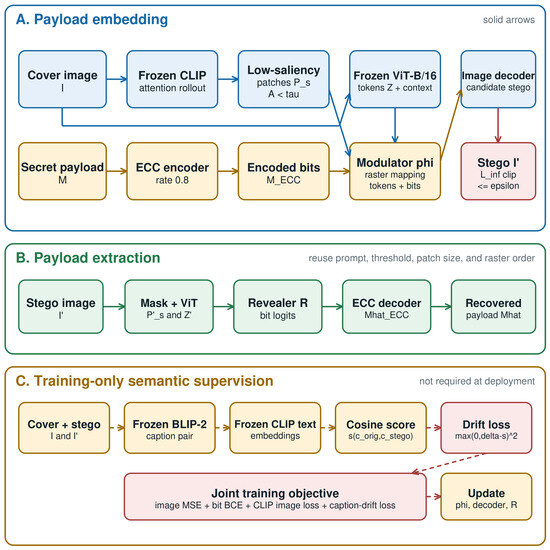
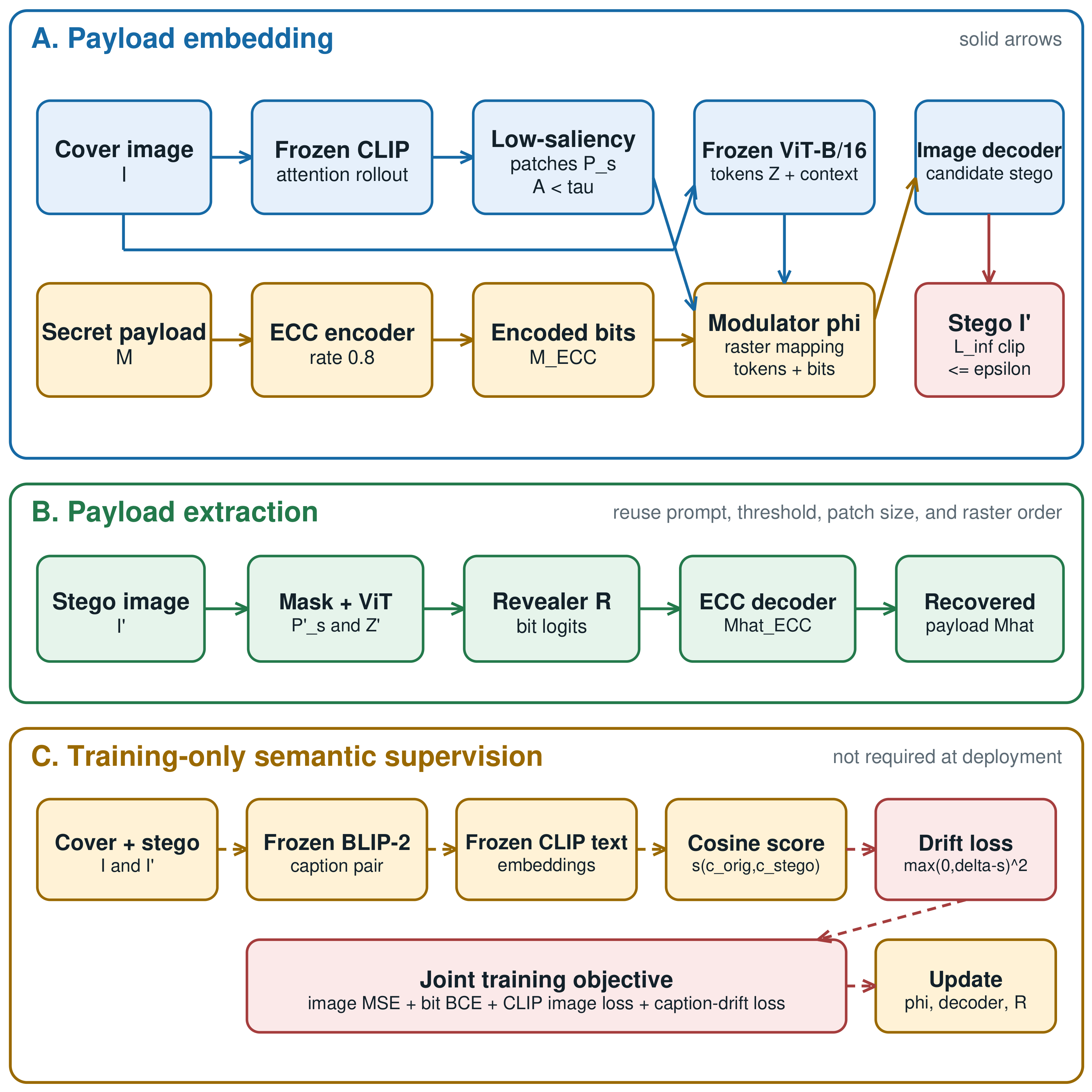
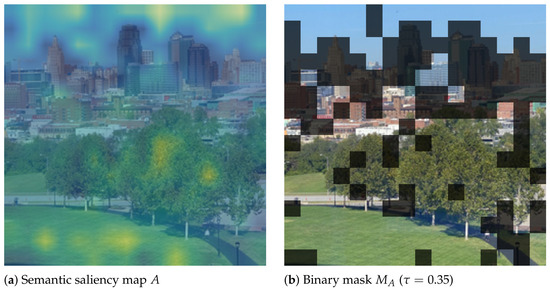
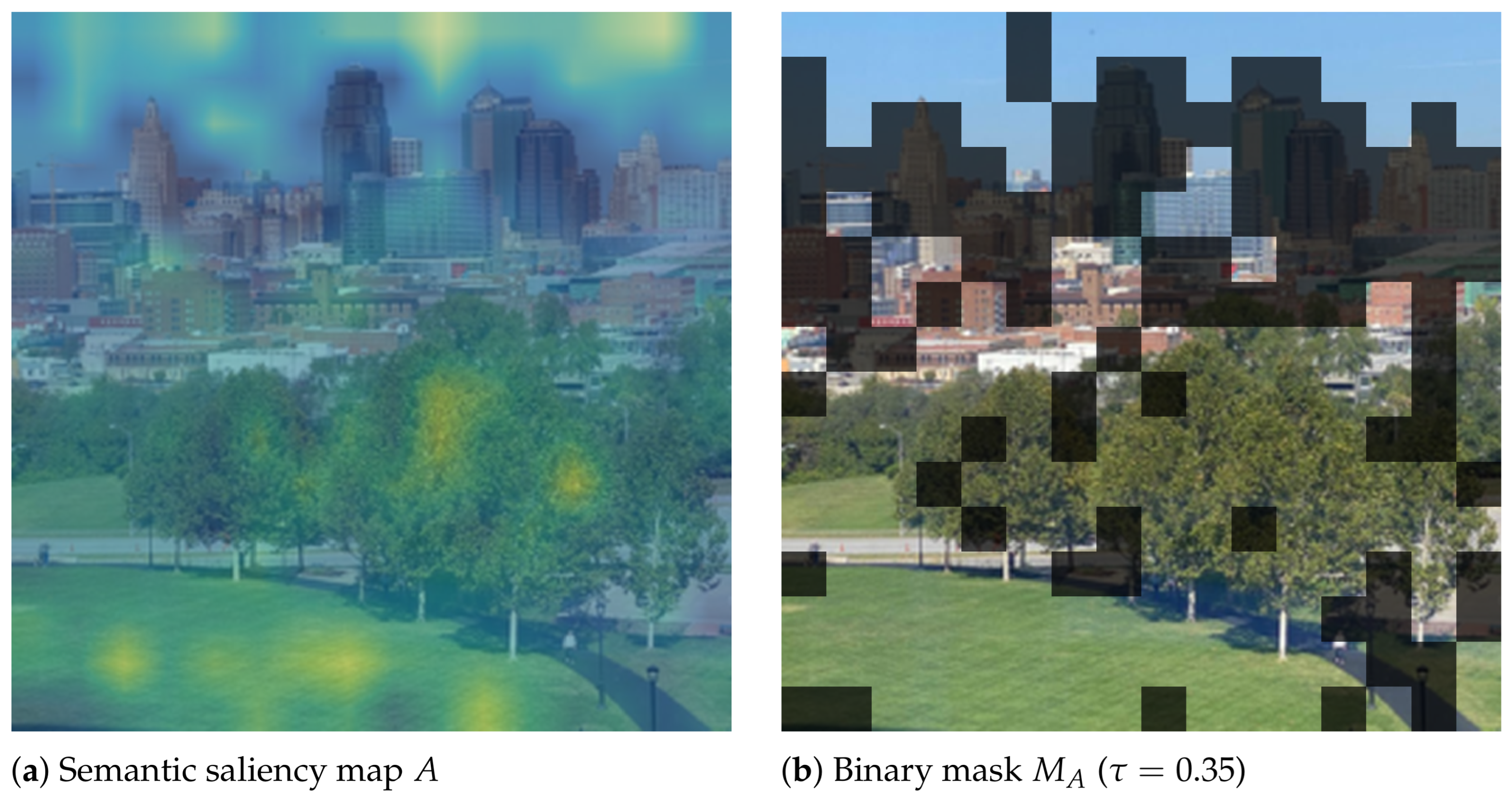
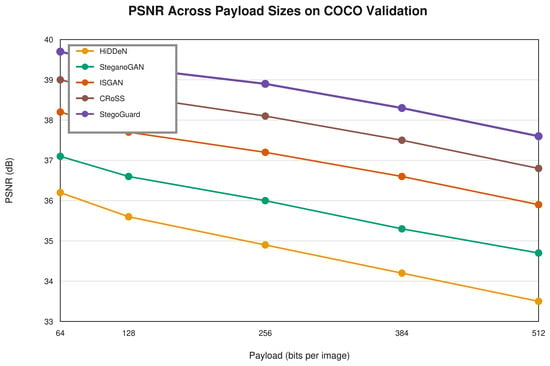
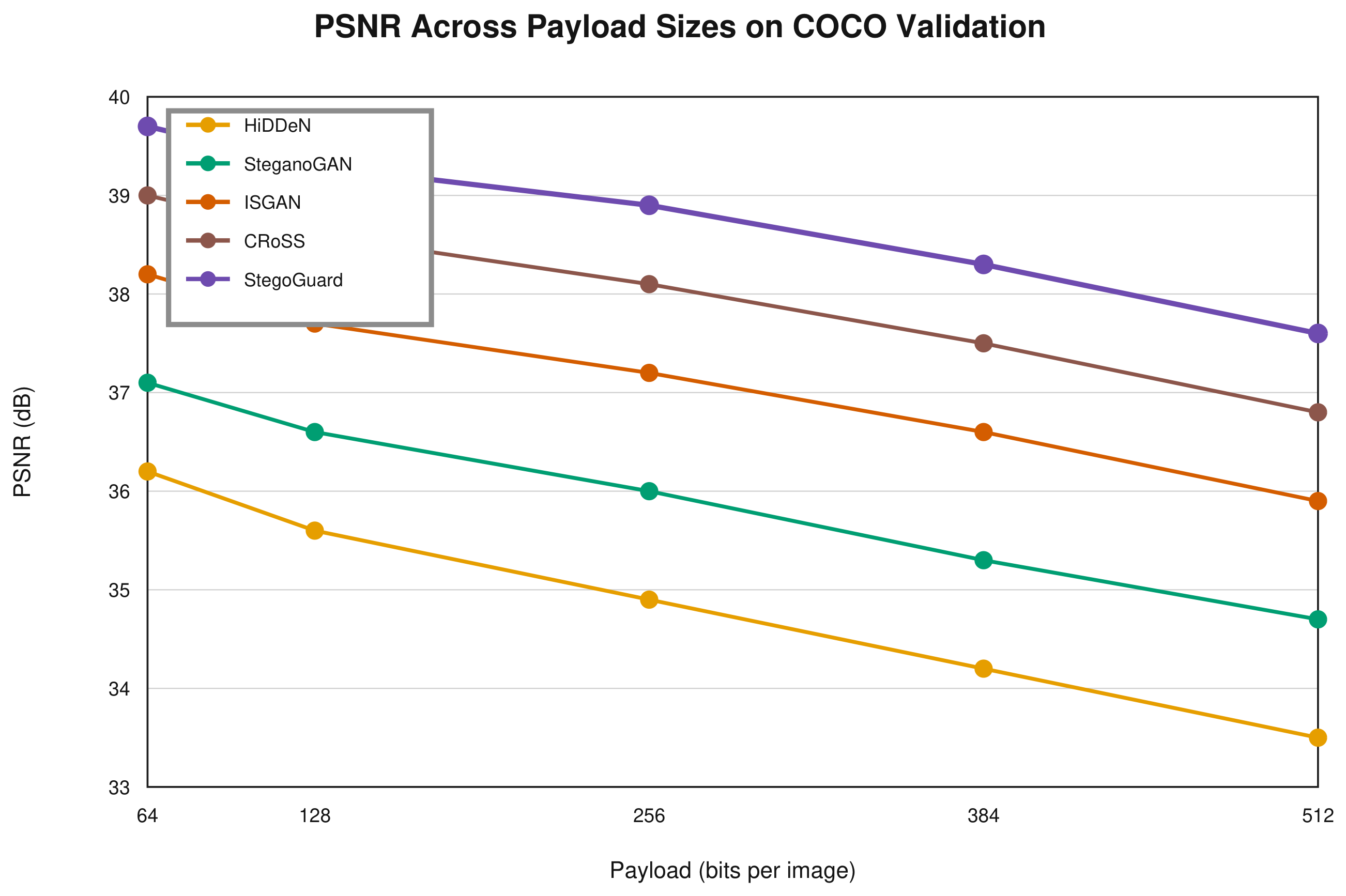
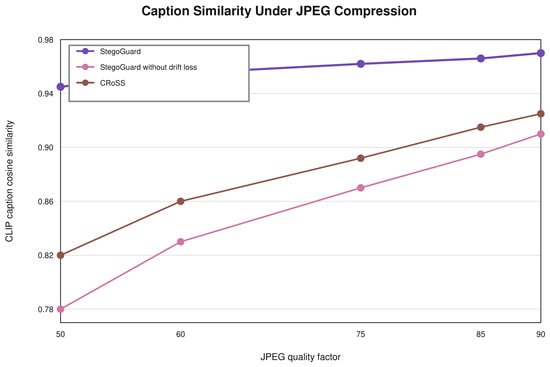
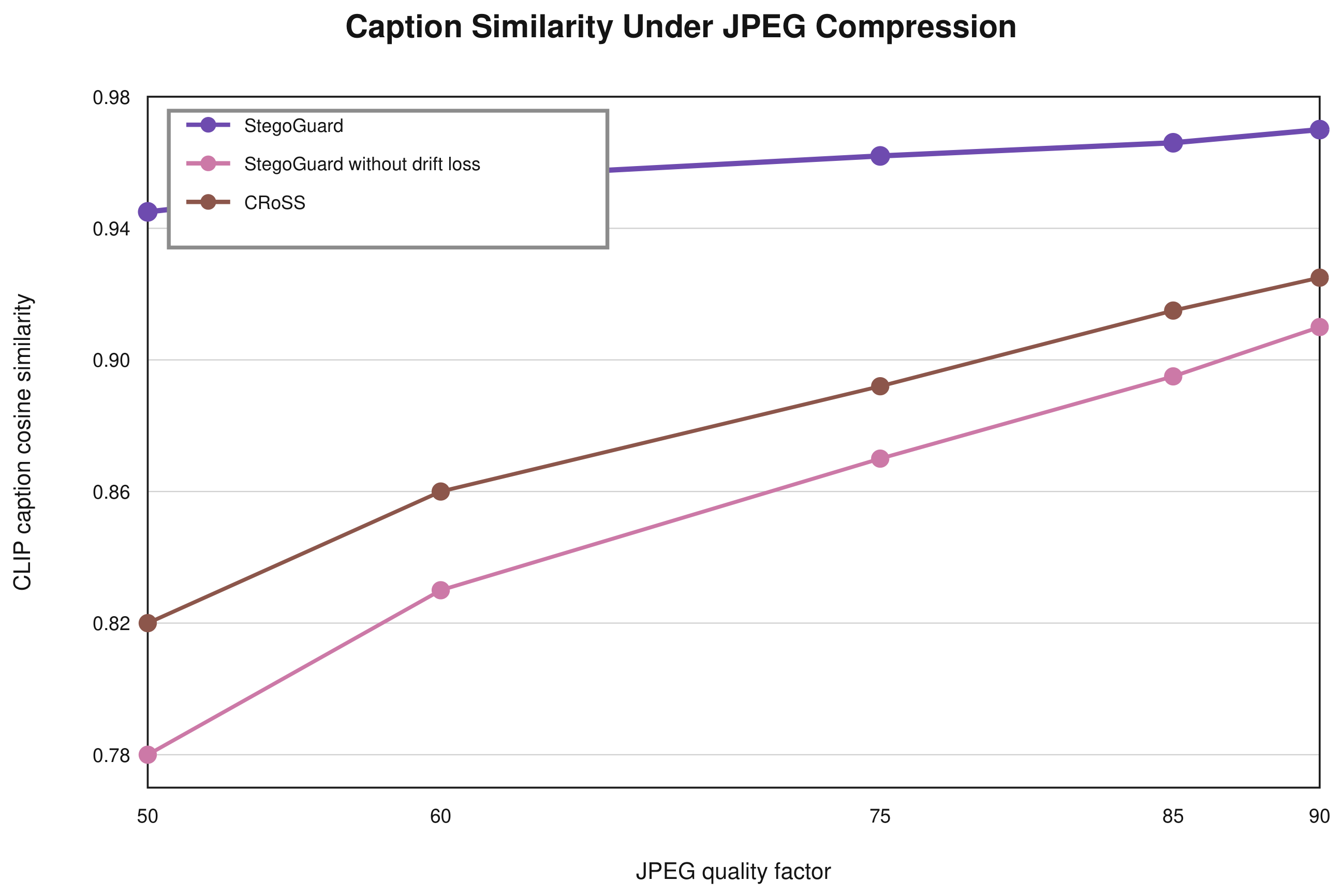
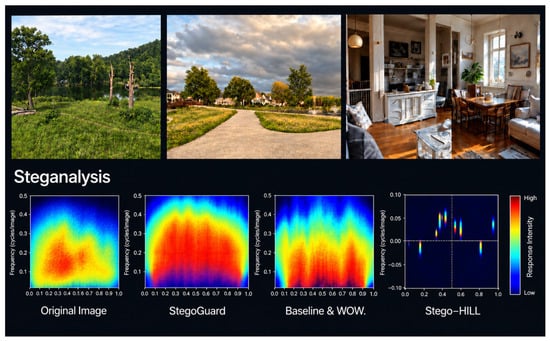
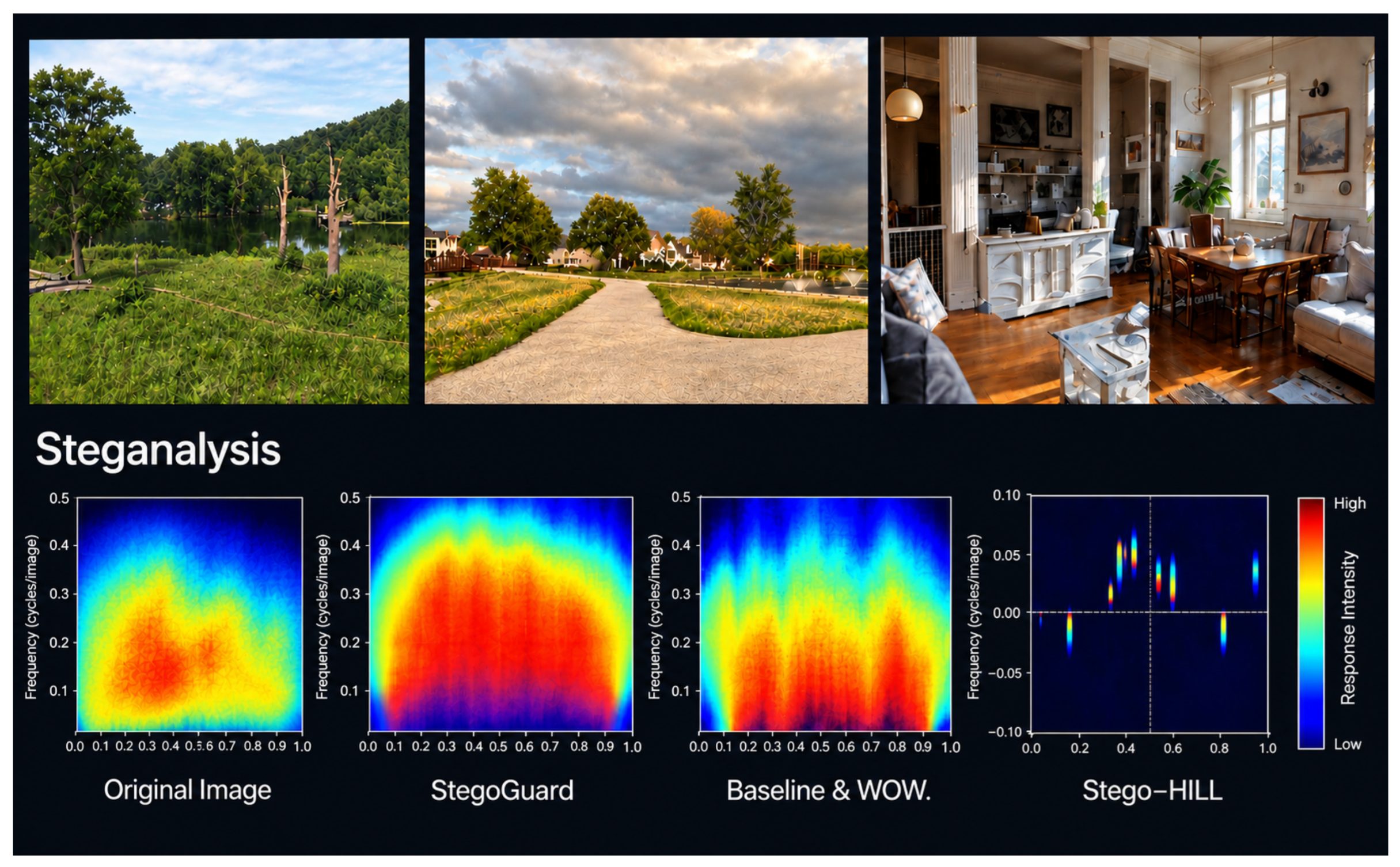

Disclaimer/Publisher’s Note: The statements, opinions and data contained in all publications are solely those of the individual author(s) and contributor(s) and not of MDPI and/or the editor(s). MDPI and/or the editor(s) disclaim responsibility for any injury to people or property resulting from any ideas, methods, instructions or products referred to in the content. |
© 2026 by the author. Licensee MDPI, Basel, Switzerland. This article is an open access article distributed under the terms and conditions of the Creative Commons Attribution (CC BY) license.