1. Introduction
Microalgae have emerged as relevant biological systems for addressing contemporary environmental and energy challenges. Pioneering studies [
1,
2] have demonstrated that these organisms possess a unique combination of traits, including high photosynthetic efficiency, metabolic versatility, and a remarkable ability to adapt to diverse environments. Recent research [
3,
4] reports significant nutrient removal efficiencies, particularly nitrogen and phosphorus, from various types of effluents. Their potential for
fixation has been quantified across multiple cultivation systems, while their capacity to produce high-value compounds such as lipids, proteins, and pigments has been widely documented. Even in environmental applications, microalgae have shown promising results in wastewater treatment. Along this path, scientific research is necessary to explore better solutions to optimize the process. These applications have been optimized through the design of specialized photobioreactors [
5] and their integration into circular economy processes [
6,
7], enabling the valorization of the generated biomass into multiple products.
The growth and productivity of microalgae critically depend on the availability of essential nutrients. Pioneering work [
8] established the basic nitrogen and phosphorus requirements for various species, while more recent studies have delved into the assimilation mechanisms and their impact on biochemical composition [
9].
Mathematical modeling has emerged as a powerful tool for understanding and predicting the behavior of microalgal systems. In particular, models based on Ordinary Differential Equations (ODE) that incorporate Monod-type kinetics [
10,
11] have proven useful for describing the dynamics of growth and nutrient consumption. These models have been experimentally validated for various species of biotechnological interest [
12], providing a solid theoretical framework for the design and operation of industrial-scale systems.
Despite these advances, significant gaps persist in the modeling of less-studied species, such as
Stigeoclonium nanum. Recent investigations have increasingly characterized the specific engineering potential of this microorganism; for instance, Lima et al. [
13] evaluated dynamic nutrient removal trajectories in closed photobioreactors, while Mohd-Sadiq et al. [
14] quantified macroscopic consumption rates in synthetic media for wastewater treatment and biopolymer production. However, comprehensive dynamic models that adequately capture its particular behavior are not yet available. Furthermore, taxonomic and physiological studies by Almomani [
15] have revealed distinctive enzymatic and structural features in this species under nutrient stress, which complicates the direct extrapolation of models developed for other conventional microalgae [
16].
This work proposes the development and validation of a comprehensive dynamic model for Stigeoclonium nanum that describes its growth and the simultaneous consumption of nitrate-nitrogen (N-) and orthophosphate-phosphorus (P-). The approach integrates recent advances in mathematical modeling with experimental data obtained in controlled environments. The methodology combines numerical simulation techniques with rigorous experimental protocols, providing a comprehensive framework for optimizing processes involving these species.
The model validation follows standardized protocols, ensuring the reliability of the results and their applicability under real-world conditions. The developed model features a mechanistic structure that combines different kinetic approaches: a Monod-type function models nutrient assimilation, a Logistic equation captures the slowing of biomass growth as it approaches its maximum capacity, and exponential decay terms represent the abiotic degradation of N- and P-. This formulation allows for an adequate representation of the exponential and stationary phases observed in real cultures. For parameter fitting, biostatistical tools were employed using the lsqcurvefit algorithm in MATLAB R2025a®, implemented under a nonlinear least-squares scheme. This was complemented by numerical filtering techniques and cross-validation using statistical goodness-of-fit metrics, such as the Root Mean Square Error (RMSE) and the coefficient of determination (). This integrated approach represents a significant advance over previous studies by providing a framework for modeling and optimizing systems based on Stigeoclonium nanum.
In contrast to existing dual-nutrient or chemostat formulations, the mathematical framework proposed herein introduces a novel macroscopic coupling. Conventional microalgal growth kinetics often rely on internal-quota formulations, such as the classic Droop model [
9,
17], or variable-yield approximations [
18] to describe multi-nutrient limitations. While internal-quota models provide a detailed description of intracellular nutrient storage, they inherently require the estimation of a large number of parameters, many of which are difficult to monitor in industrial-scale photobioreactors. Conversely, our approach couples a Logistic self-regulation constraint with a Monod-type multi-nutrient limitation (nitrate and phosphate) in a single, macroscopic system of nonlinear ordinary differential equations (ODEs). This formulation not only preserves thermodynamic and biological consistency regarding abiotic nutrient losses but also yields a mathematically tractable, easily parameterizable model, making it highly suitable for bioprocess optimization and real-time control strategies.
This paper is organized as follows:
Section 2 details the comprehensive methodology, covering the experimental setup, the model formulation, parameter calibration, and validation schemes.
Section 3.5 reports the experimental setup of the thin-layer photobioreactor; on the other hand,
Section 3 includes specific technical details of the mechanistic model formulation. We include in
Section 4 an extensive qualitative mathematical analysis of the proposed model. Some in silico experiments are performed in
Section 5. Finally,
Section 6 discusses the biological interpretation of the findings, and
Section 7 summarizes the main conclusions and outlines future work. Some mathematical preliminaries are compiled in
Appendix A.
2. Experimental Thin-Layer Photobioreactor
The experimental database was obtained from a thin-layer flat-panel photobioreactor constructed from 6 mm-thick transparent glass, measuring 60 cm in length, 60 cm in width, and 5 cm in thickness. It had an operating volume of 15 L and an effective depth of 4.17 cm. This configuration was selected for its ability to provide homogeneous culture conditions, especially in photosynthetic systems that require a uniform distribution of light and nutrients [
19]. The dynamic growth behavior of
Stigeoclonium nanum was analyzed under controlled conditions of illumination, agitation, and nutrient availability, including nitrates and phosphates, to develop a representative mathematical model.
The microalgae used were
Stigeoclonium nanum, isolated from the clarifier of the South Wastewater Treatment Plant (PTAR Sur) in Durango, Mexico. The inoculum was cultivated in BG11 medium (Blue-Green Medium), a standard formulation recommended by the Culture Collection of Algae and Protozoa [
20]. This medium is widely used for microalgae cultivation due to its balanced nutritional composition and its ability to sustain stable growth under autotrophic conditions. It provided a controlled source of nutrients, allowing for the establishment of reproducible conditions for the kinetic study.
Illumination was supplied by broad-spectrum LED lamps with an average intensity of 250
mol photons
under a continuous photoperiod (24 h of light) [
21]. The ambient temperature during the experiment was maintained between 22 and 25 °C. Agitation was achieved by bubbling air enriched with 1% of
at a rate of approximately 0.3 vvm (4.5 L/min), ensuring adequate gas transfer and medium homogeneity [
22].
During the experimental period, daily samples were taken to measure the following variables:
Biomass (mg/L): determined by filtration through grade 3 glass fiber filters (2
m porosity) and drying at 105 °C, following the protocol described in [
23].
Nitrate-nitrogen concentration (N-
): measured using adapted colorimetric techniques [
24].
Orthophosphate-phosphorus concentration (P-
): determined using the modified Taussky and Shorr colorimetric method [
25].
The experimental design spanned 16 days, with daily monitoring of the aforementioned variables. Three independent growth kinetics experiments were performed, and a three-fold cross-validation was applied: in each fold, two kinetic runs were used for fitting, and the remaining one was used for validation. This strategy allowed for the evaluation of the system’s dynamic behavior reproducibility and ensured the robustness of the resulting mathematical model.
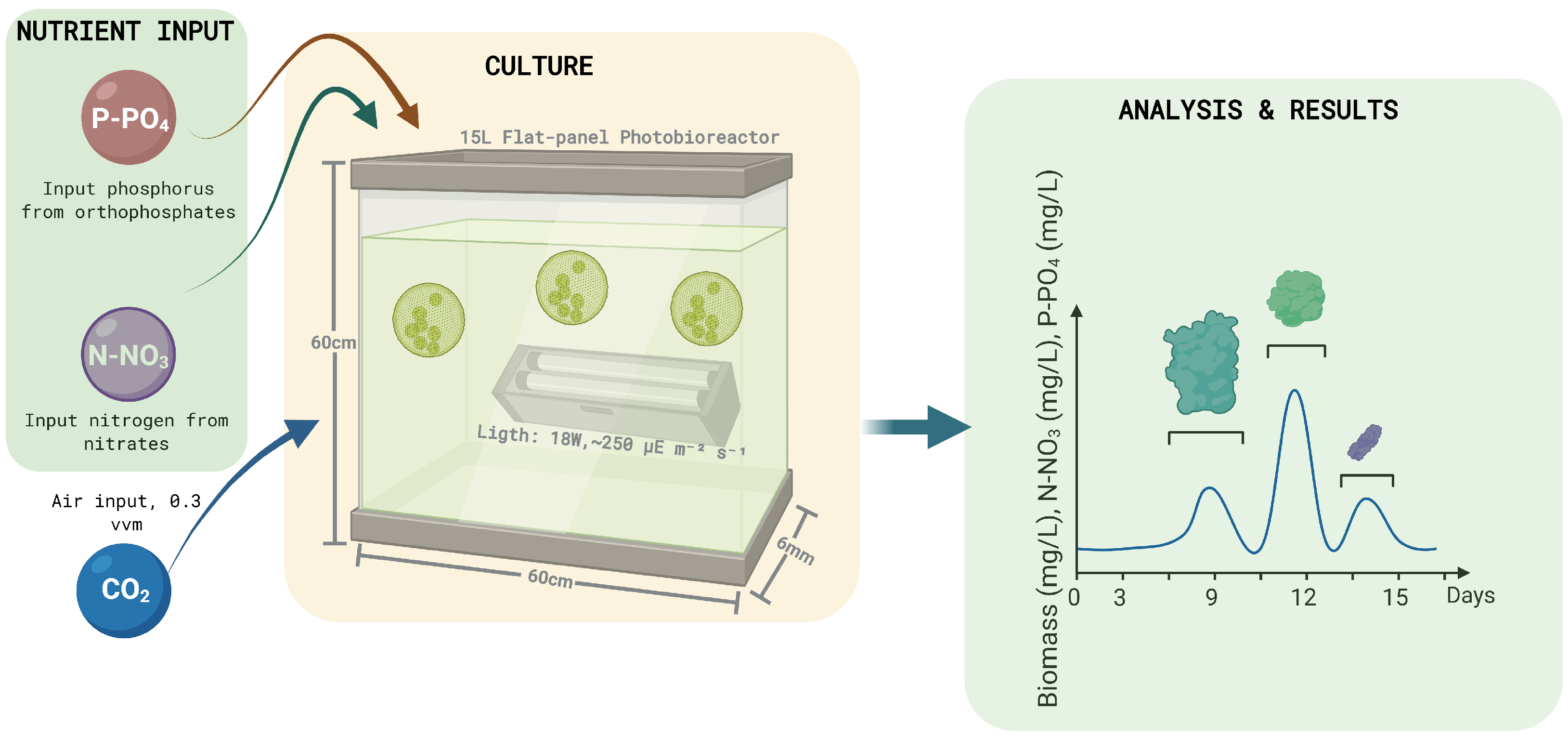
Figure 1 presents the general flowchart of the experimental process developed for the study of
Stigeoclonium nanum growth.
3. Mechanistic Model Formulation
The proposed model is formulated using an iterative mechanistic approach, drawing on structures of biological and ecological systems reported in the literature. Throughout the process, diverse model versions were evaluated, with varying degrees of complexity. The final selection combines elements that best represent the temporal evolution of biomass and nutrients, with parameter bounds restricted to biologically plausible ranges verified by biochemical engineering experts. Based on the above-mentioned literature and exploratory considerations, specifically: (i) models lacking the Logistic regulation term for the dynamics of biomass, (ii) formulations based on univariate limiting nutrients, and (iii) alternative multiplicative Monod-type couplings.
Each variant was calibrated and compared based on parsimony and predictive capability, using and metrics via cross-validation. Furthermore, biological coherence—defined by the properties of positivity, invariance, and boundedness—was an essential selection criterion, as these properties are fundamental for the subsequent formal mathematical qualitative properties analysis.
The novel proposed model combines additive Monod-type assimilation for N- and P- with Logistic self-regulation for biomass. This structure proved to be the most parsimonious configuration that successfully reproduced both the exponential growth phase and the culture’s stabilization while maintaining the required structural and dynamical properties.
The model describes the growth of microalgal biomass, given by the state variable
;
represents the dynamics of N-
; and
represents the dynamics of P-
consumption. The interactions are governed by the following system of nonlinear ordinary differential equations:
the first expression of Equation (
1) describes biomass growth (
) combining Monod-type assimilation terms for nutrients (
) with a Logistic regulation term (last expression). To our knowledge, no model with these characteristics has been reported for photobioreactors.
At this point, it is important to clarify the kinetic mechanisms of the governing equations with respect to the parameter , which represents an initial biomass-dependent coefficient, conceptually aligned with Contois-type formulations rather than a classical substrate-limiting Monod constant. This mathematical structure explicitly accounts for crowding effects, specific metabolic down-regulation, and light self-shading inside the thin-layer photobioreactor. Biologically, as microalgal biomass increases, the parameter constrains the specific nutrient uptake rate per unit biomass, preserving coherence during the culture’s stabilization phase.
3.1. Abiotic Removal Terms and Mass Conservation
Distinct from standard biological uptake, the linear decay terms
and
of Equations (2) and (3) represent abiotic loss mechanisms essential for the mass balance in photobioreactors. As described by [
27], purely biological models often fail to close the mass balance because they ignore physico-chemical phenomena induced by high pH, such as ammonia stripping (volatilization) and phosphate precipitation. Therefore, these exponential decay terms account for the mass transfer to gaseous or solid phases, ensuring that the parameters
and
represent true biological consumption rather than aggregated losses.
3.2. Maximum Carrying Capacity Constraint ()
The logistic term accounts for self-limitation due to physical constraints (e.g., light shading). However, to maintain thermodynamic consistency, the carrying capacity
is not defined as an arbitrary constant but is conceptually linked to the initial nutrient availability (
). Following the theoretical framework proposed by [
28],
effectively acts as a stoichiometric boundary (
). This formulation prevents spurious biomass accumulation profiles; mathematically, if nutrient availability approaches zero (
), the carrying capacity vanishes (
), thereby inhibiting the logistic growth component in the absence of substrates. This approach is conceptually aligned with variable-yield chemostat models [
18], in which the dynamic coupling between growth bounds and resource limitations determines the system’s stability.
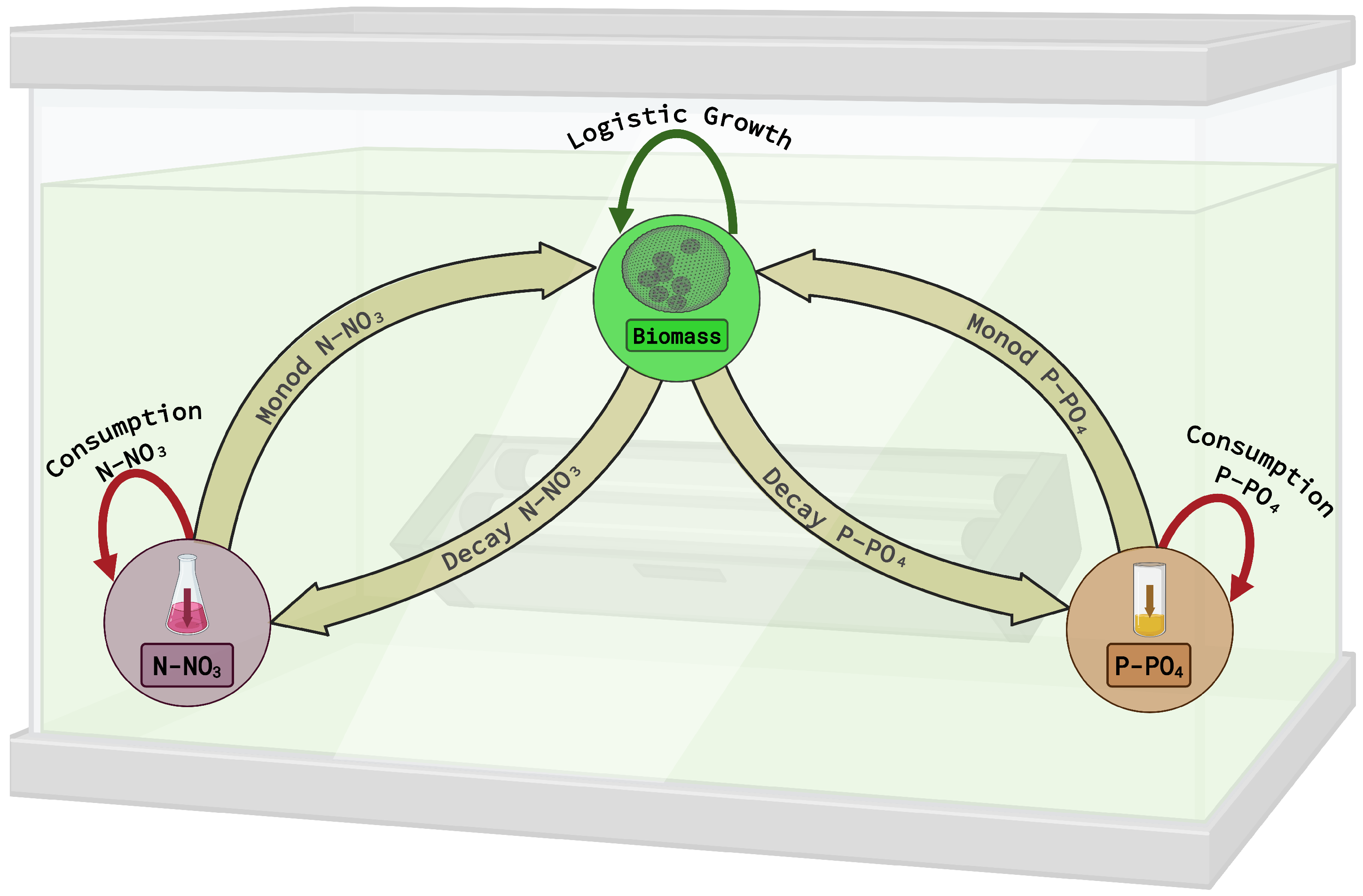
We show the dynamic relationships between biomass and the nutrients involved in the model in
Figure 2. The central node represents microalgal biomass dynamics, which are directly influenced by its own logistic growth, represented by the green arrow. Biomass and nutrients (N-
and P-
) interactions are indicated with the brown arrows, i.e., contributions to biomass growth derived from nutrient utilization and nutrient consumption by the biomass, represented by Monod or Decay functions. Red arrows indicate additional losses not associated with growth, such as degradation processes or loss through other non-cellular mechanisms.
The model assumes that biomass growth is limited by factors such as resource availability and the system’s maximum capacity, while nutrients are reduced by both biomass assimilation and independent processes. This graphical representation provides a clear visualization of the interaction between the variables and facilitates the understanding of the dynamic model before addressing its mathematical formulation.
3.3. Model Fit Evaluation Criteria
The quality of the mathematical model’s fit to the experimental data was evaluated using the following statistical criteria, which are standard in the validation of dynamic models:
Root Mean Square Error (RMSE): quantifies the average difference between the model’s predictions and the experimental values. A low RMSE indicates that the model accurately reproduces the magnitude of the observed data; it is especially useful for evaluating pointwise fit in time series [
30].
Coefficient of Determination (
): measures the degree of linear correlation between the model outputs and the experimental data. A value close to 1 suggests that the model explains a significant proportion of the observed variability, making it a standard metric for comparing the performance of mechanistic models [
31].
Comparison of simulated trajectories: allows for the identification of systematic deviations that numerical metrics may not capture, such as time lags or errors in the shape of the curves. This visual inspection complements the quantitative analysis and is particularly valuable when modeling nonlinear biological processes.
3.4. Parameter Calibration and Validation Scheme
Numerical integration was performed through a first-order explicit Euler scheme. This approach is numerically stable for the present model due to the smooth, non-stiff nature of the Monod-type kinetics and the relatively slow time scales of microalgal growth. A constant step size of
days (approximately
min) was selected based on a temporal convergence test. To ensure numerical robustness, this step size was explicitly verified by cross-validating the integration scheme against a higher-order, variable-step Runge–Kutta solver (
ode45). This cross-validation is a standard practice in microalgal bioprocess modeling to ensure high precision in simulation outcomes and to successfully eliminate numerical artifacts [
32]. The evaluation demonstrated negligible deviation between solvers, ensuring that the discretization error remained negligible relative to the experimental uncertainty. The simulation horizon was set to
days to evaluate long-term asymptotic behavior.
To attenuate experimental noise while preserving the essential underlying dynamics, a Savitzky–Golay filter [
33] with a 13-point window and a second-degree polynomial was applied to the raw biomass, N-
, and P-
time series.
Parameter estimation was carried out using the nonlinear least-squares solver lsqcurvefit in MATLAB R2025a®. Search bounds were established based on biologically plausible ranges reported in the literature to ensure the physical consistency of the kinetic constants. A three-fold cross-validation scheme was implemented to assess the model’s predictive robustness, using and as performance metrics.
The system’s positivity is analytically guaranteed (see
Section 3.5). At each iteration, a numerical projection onto
was applied to ensure that the numerical trajectories remain strictly within the biologically feasible domain
. Given that the vector field
is well-conditioned and the integration step
is several orders of magnitude smaller than the system’s time constants, the discrete-time approximation reliably preserves the qualitative properties of the continuous model.
3.5. Experimental Data
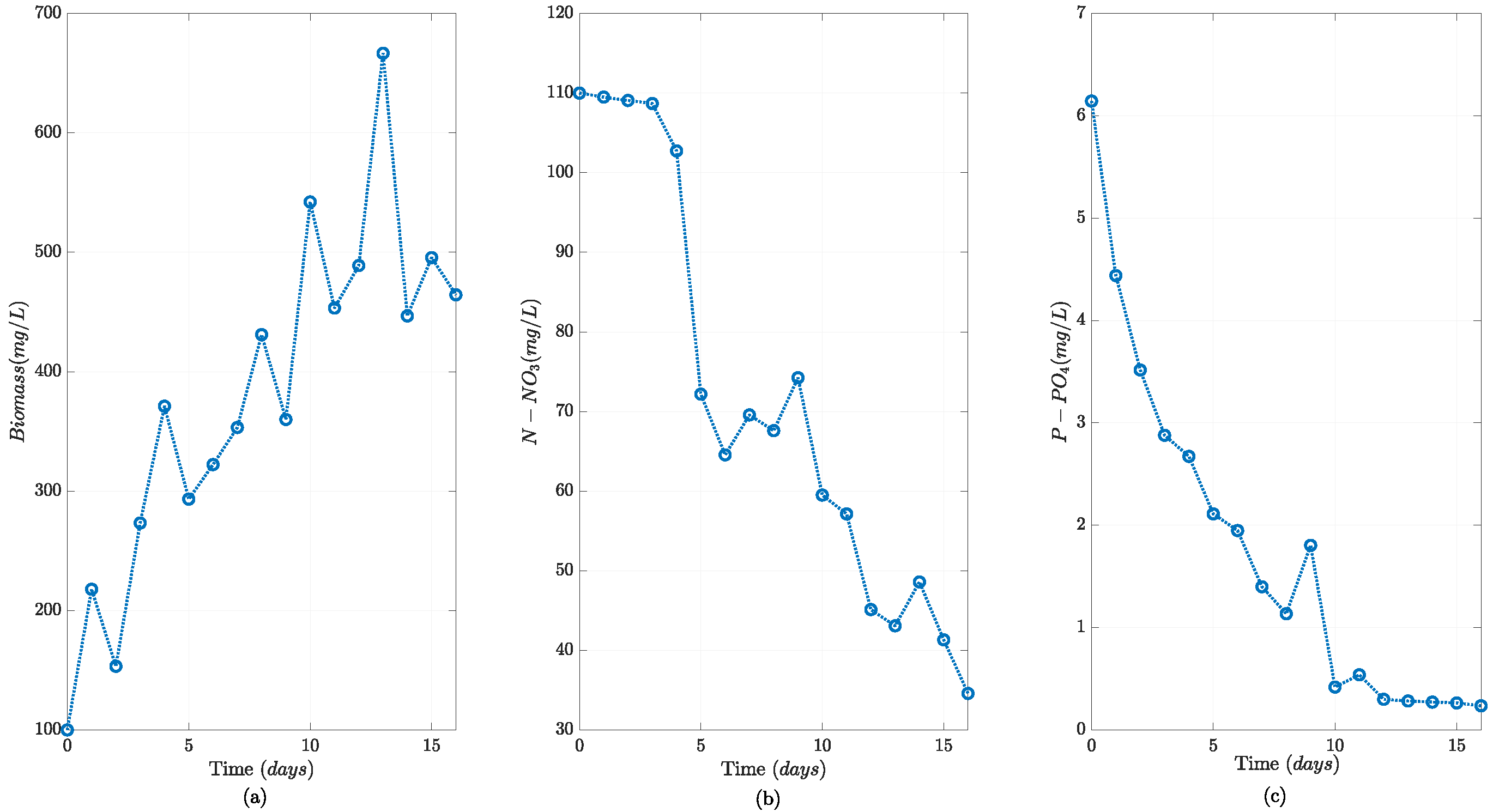
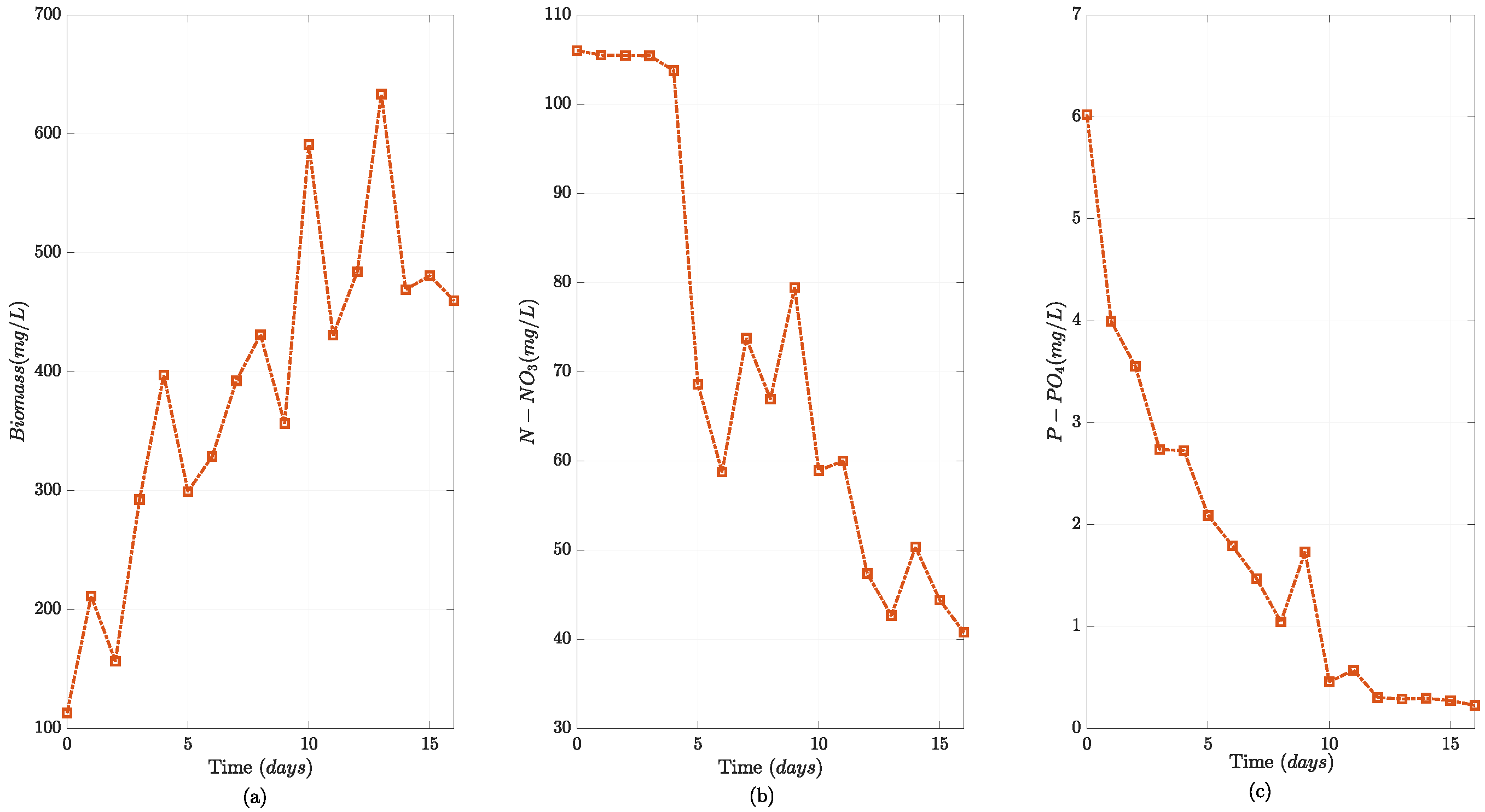
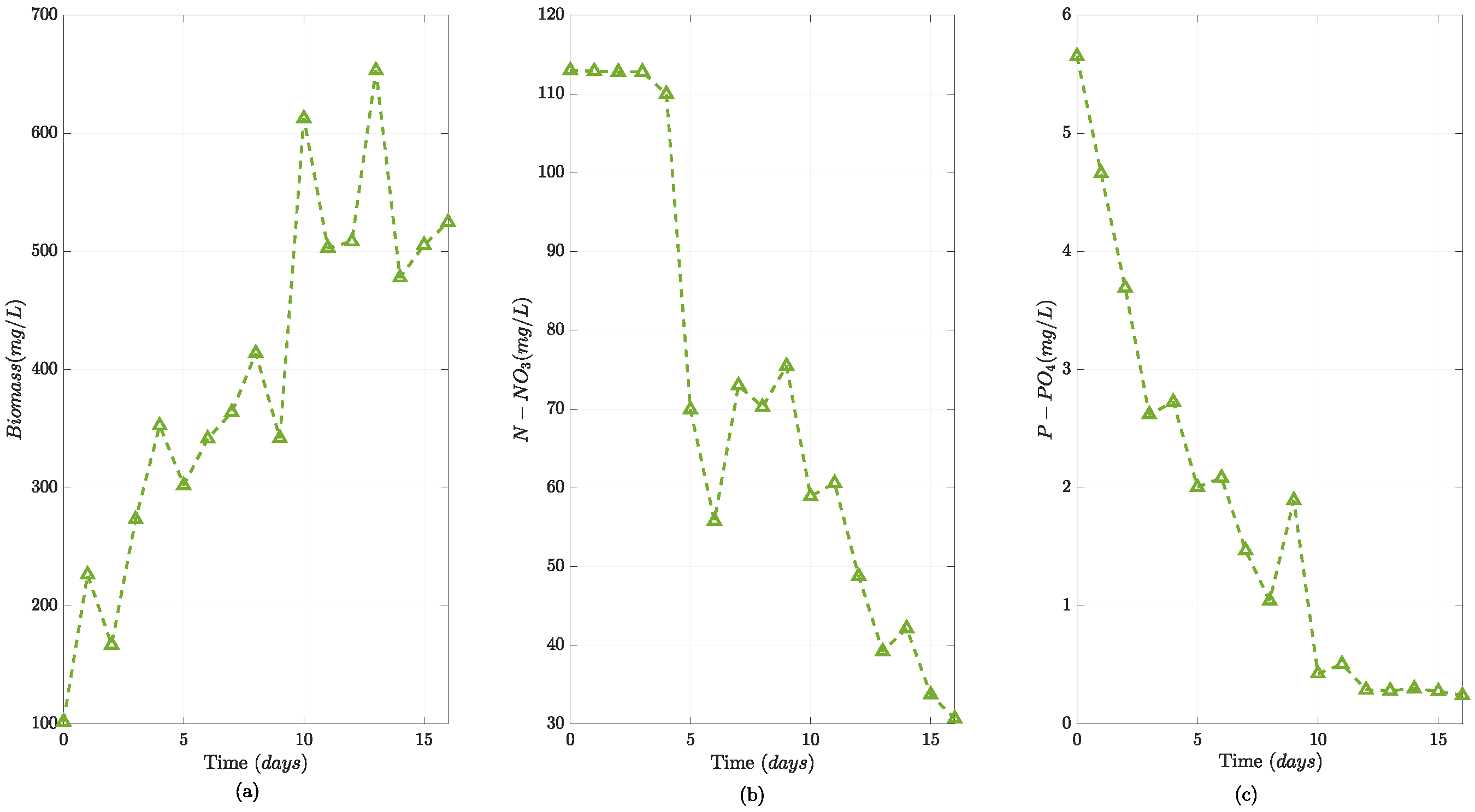
Before parameter fitting, the internal consistency of the three experimental kinetic runs (–) was evaluated to verify common trends and rule out anomalies. In all three trials, the biomass exhibited a sigmoidal-type increase, transitioning to a stationary phase toward the end of the cultivation period. Meanwhile, N- and P- showed a sustained decrease, with the sharpest drop occurring during the first few days.
The trajectories shown in
Figure 3,
Figure 4 and
Figure 5 correspond to raw (unfiltered) measurements from the three runs (
–
); no smoothing or denoising was applied for this visualization. Any preprocessing (e.g., Savitzky–Golay smoothing) is used exclusively prior to parameter estimation and is described in
Section 3.4.
3.6. Error Bars for Experimental Data
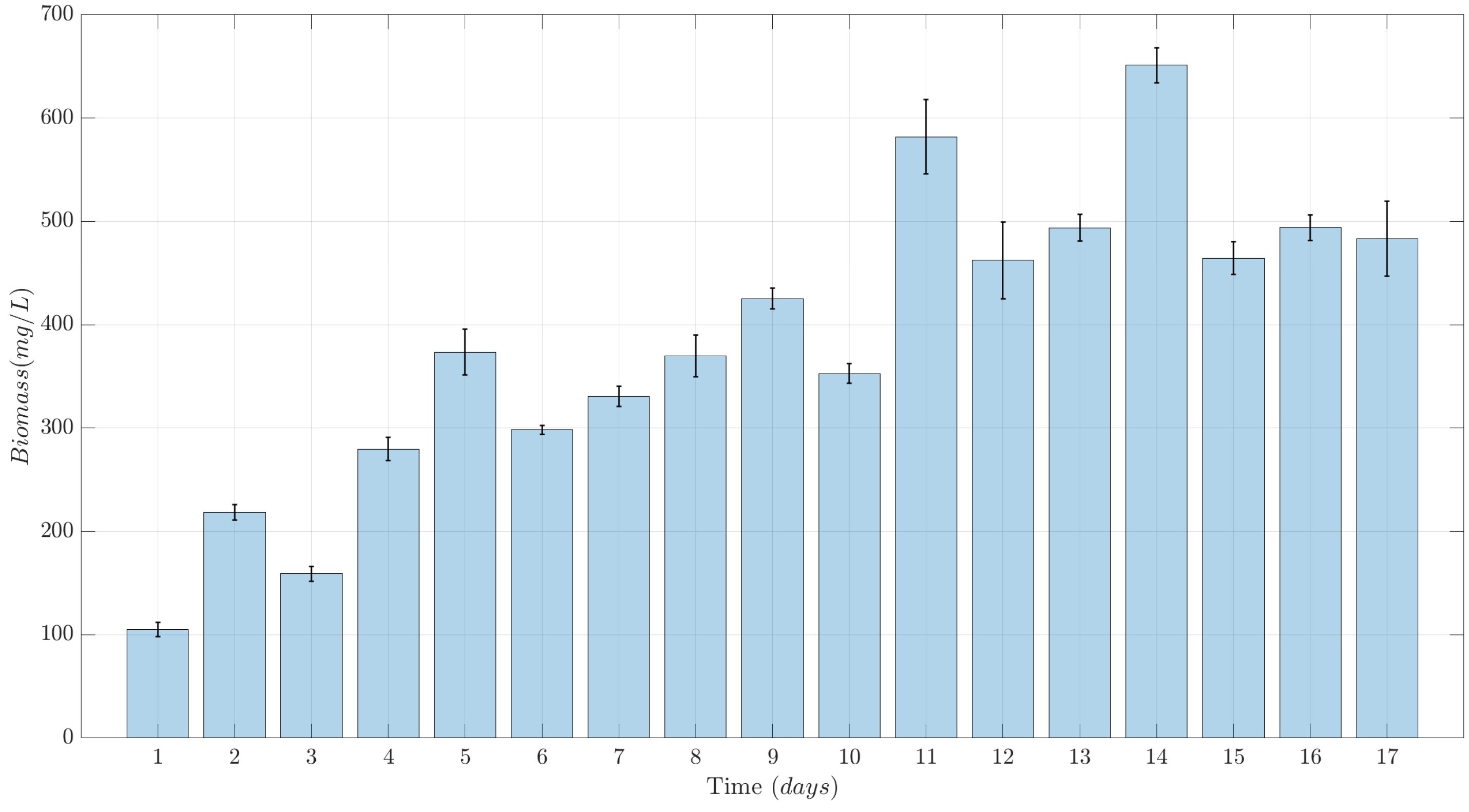
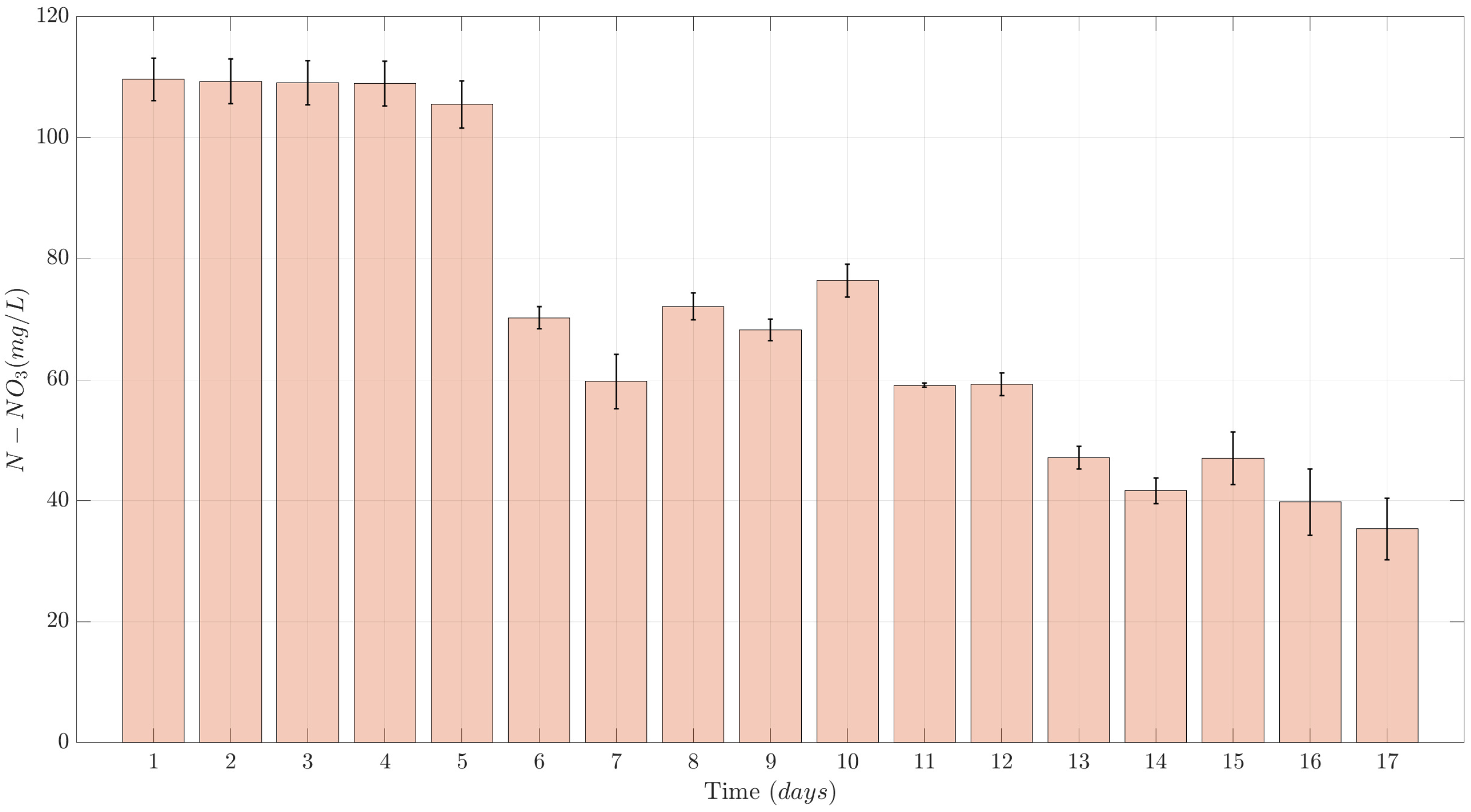
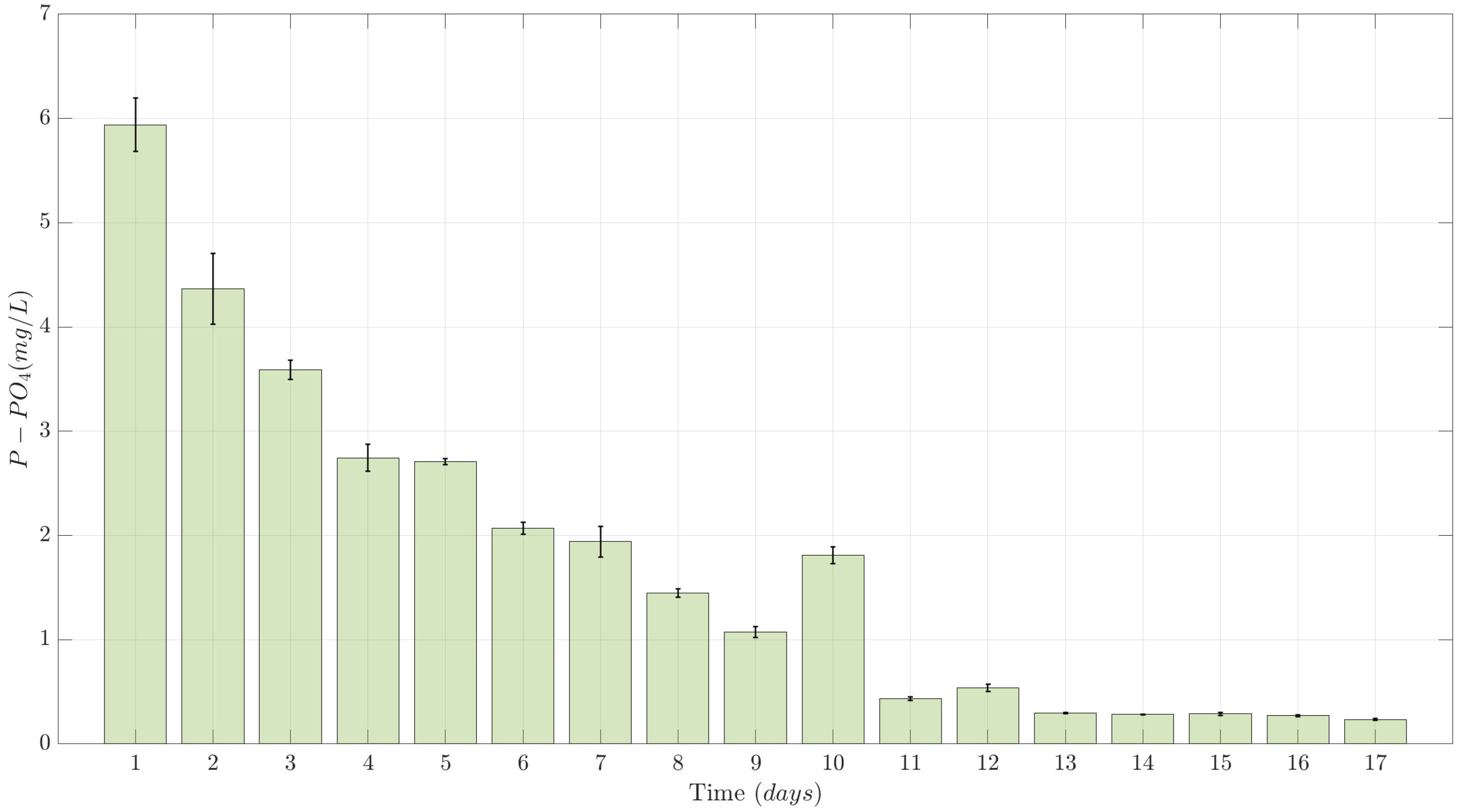
To illustrate the experimental variability inherent in the raw data,
Figure 6,
Figure 7 and
Figure 8 display the observed error bars for biomass, N-
, and P-
concentrations, respectively. These error bars represent the standard deviation across replicate measurements at each kinetic run (
—
) and provide a quantitative measure of experimental uncertainty. Notably, the magnitude of these error bars reflects both biological variability and potential measurement errors. Careful experimental design is crucial to minimize these sources of variability; however, the observed error bars also enhance our ability to discern subtle differences between kinetic runs, thereby supporting the statistical robustness of subsequent model validation and parameter estimation analyses.
3.7. Parameter Fitting Results
Unless stated otherwise, all metrics in this section are computed against the original (unfiltered) data. Filtering is used only as a preprocessing step for parameter estimation.
The three-fold cross-validation results for kinetics runs (, , and ) are organized as follows:
Case 1: Training with and ; validation with .
Case 2: Training with and ; validation with .
Case 3: Training with and ; validation with .
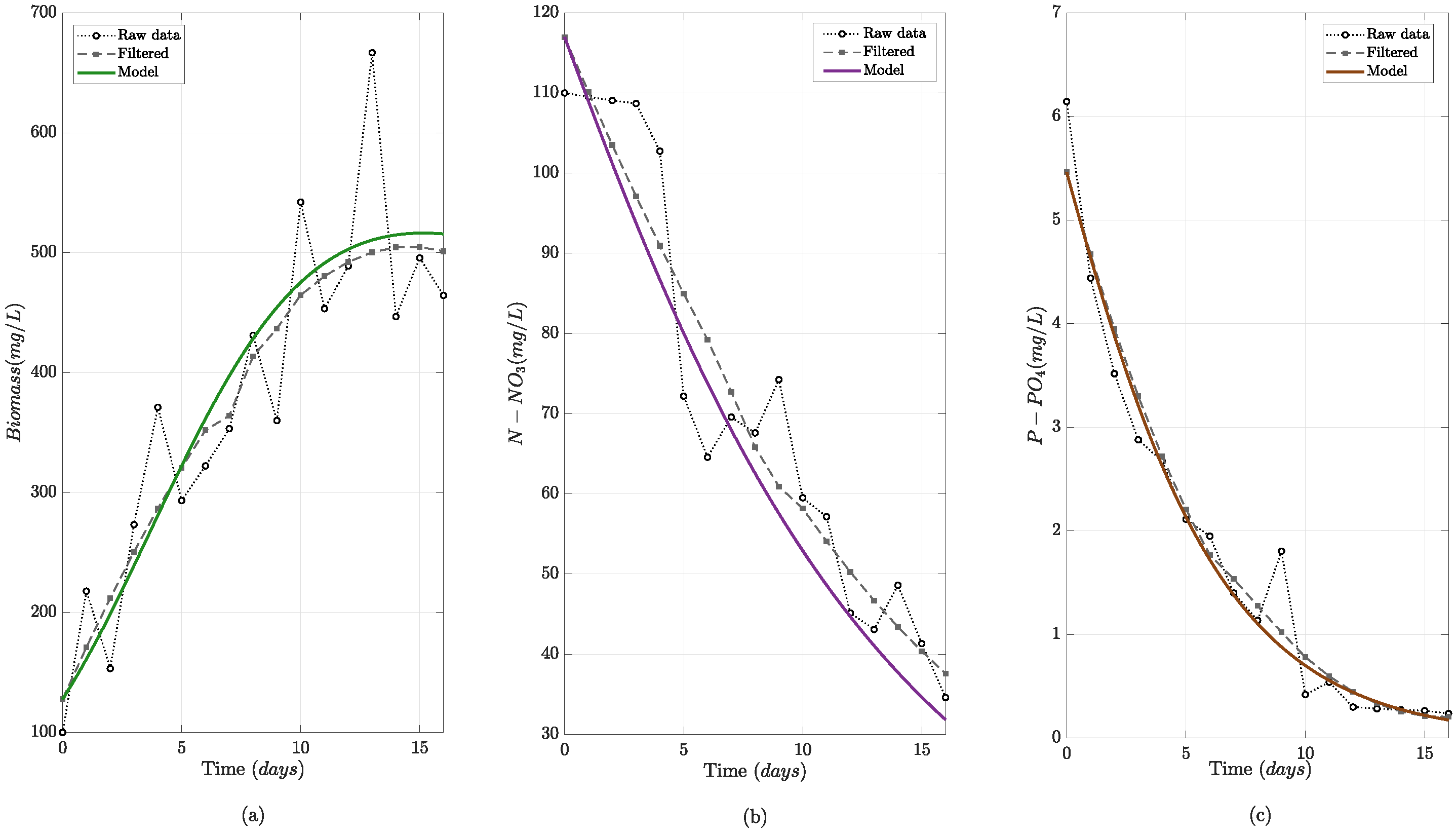
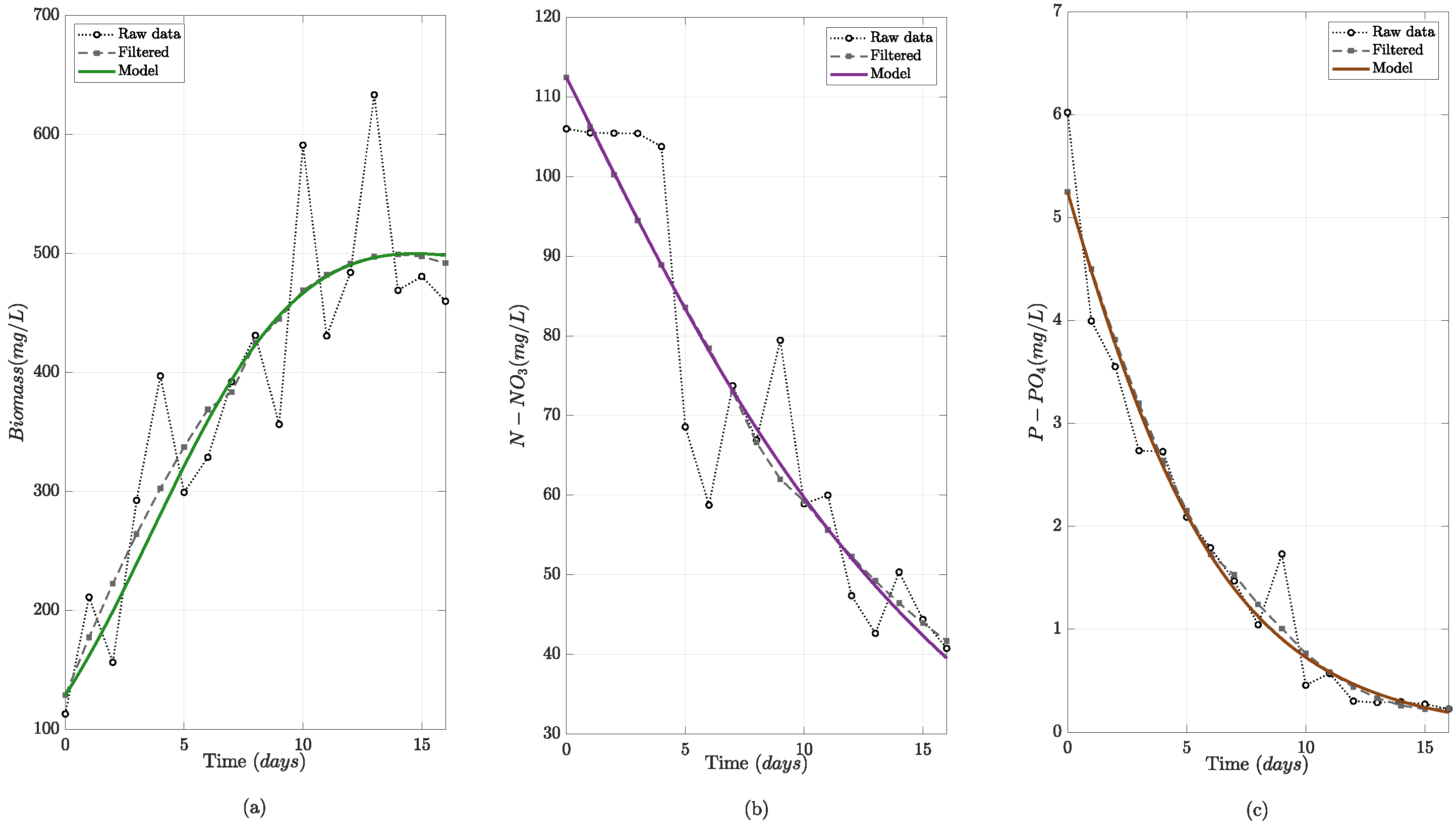
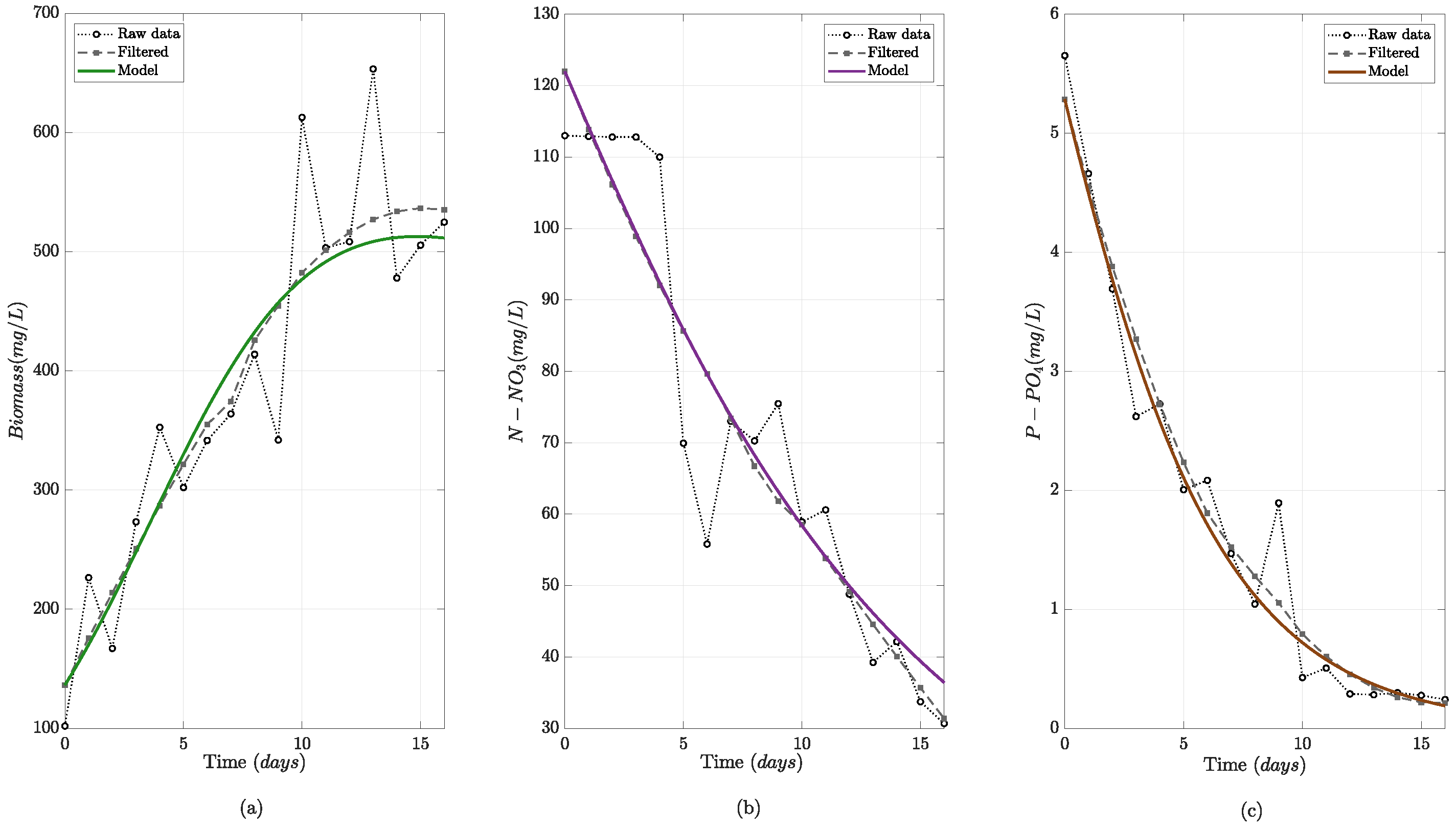
We present
Figure 9,
Figure 10 and
Figure 11 in order to compare simulated trajectories with experimental data for these three cases. The model’s ability to predict the dynamics of biomass and nutrients across different experimental sets can be inferred accordingly. Each case includes the evolution of biomass concentration and nutrient availability, with simulated curves closely matching the observed data. This fact demonstrates that our proposed model, given by Equations (
1)–(
3), captures biomass growth and nutrient depletion. These results highlight the model’s flexibility and robustness across varying initial conditions and parameter regimes, underscoring its potential for predictive applications in bioprocess optimization and experimental design.
The statistical metrics confirm the model’s high predictive capacity. Notably, the values for (P-) consistently exceeded 0.95, indicating that the additive Monod-type coupling effectively captures the limiting role of phosphorus in Stigeoclonium nanum growth. While the biomass () shows slightly higher values due to inherent biological variability in batch cultures, the overall correlation remains robust (), validating the model for process optimization.
4. Qualitative Mathematical Analysis
To complement the numerical validation, we analyze the qualitative properties of the system (
1)–(
3). The objective is to verify that the dynamics are biologically admissible and mathematically well-posed. Specifically, we: (i) prove the positive invariance of
, (ii) establish boundedness via the Localization of Compact Invariant Sets (LCIS) method, (iii) ensure existence and uniqueness of solutions, and (iv) characterize the stability of equilibrium points. Establishing such qualitative properties is essential for guaranteeing global stability in nonlinear models of biological resource utilization, as demonstrated in classical chemostat studies [
34].
The validity of the model requires that state variables representing physical
(biomass concentration), and nutrients, given by
(N-
), and
(P-
)—remain non-negative for all
. According to the positive invariance criterion, derived from Nagumo’s viability theorem [
35], we consider that the domain of the system (
1)–(
3) is given by:
A sufficient condition for
to be positively invariant is that the vector field
does not point outward on the boundary planes of the first octant. This is satisfied if:
Evaluating the system (
1)–(
3) on each boundary plane, we observe:
On the plane : .
On the plane : .
On the plane : .
Since f is continuous and locally Lipschitz on (as all denominators are strictly positive for ), any trajectory starting in remains in for all . This confirms the mathematical coherence and biological consistency of the model, ensuring that biomass and nutrient concentrations remain non-negative at all times.
4.1. Bounds of the Dynamical Model
To characterize the system’s global behavior, we apply the LCIS method. We define a bounded region in the state space that all trajectories eventually enter and are confined to. Let
be upper bounds for an axis-aligned box of the system (
1)–(
3):
Theorem 1 (Localization and Boundedness)
. We name the set a compact and positively invariant set for the system (1)–(3). For any solution starting in , the variables satisfy:withwhere and . Proof. Let
, the Lie derivative
along the trajectories of the system (
1)–(
3) is given by:
then we obtain
. By setting the maximum value as:
it follows that
on
.
The Equations (
2) and (
3), include terms with the strict saturation condition given by
which holds since
. Then the bounds for planes
and
can be obtained via the Comparison Lemma, from the Nutrients satisfying
and
, they decay exponentially toward zero, remaining bounded by their initial conditions
and
.
Finally,
is the product of closed and bounded intervals, hence it is compact; and by (
6), no upper plane is an exit plane. Therefore, any trajectory starting in
remains in
for
, given its positive invariance. □
4.2. Existence and Uniqueness of Solutions
To ensure the mathematical well-posedness of the system, we analyze the existence and uniqueness of its trajectories. This property guarantees that for each initial condition, there is a unique physical evolution of the biological process.
Consider the system
on the domain
. Each component of the vector field
consists of polynomial and rational terms. Since all parameters
are strictly positive, the denominators
never vanish in
. Thus,
f is continuous, and by the Cauchy–Peano theorem [
16], a local solution exists for any initial condition
.
To establish uniqueness, we verify the Lipschitz condition on the compact invariant set
K defined in (
5). A sufficient condition for
f to be Lipschitz on
K is that it is
and its Jacobian
is bounded on
K. For
, we have:
Similar bounds apply to
and
. Since all partial derivatives are bounded on
K, there exists a constant
such that
for all
. By the mean value theorem,
f is Lipschitz on
K with constant
.
According to the above-mentioned Picard–Lindelöf theorem, there exists a unique local solution. Furthermore, since
K is positively invariant (as proved in
Section 1), trajectories cannot exit the compact set, ensuring that solutions exist globally for all
.
4.3. Equilibrium Points and Local Stability Analysis
Firstly, to assess local stability, we compute the general Jacobian matrix of the system:
Secondly, for any biologically feasible equilibrium point, it must hold that and , which yields , leading to two equilibrium points:
Extinction Equilibrium: . Evaluating the Jacobian at the origin, we obtain that the eigenvalues are , , and . Given that , the extinction equilibrium is a saddle point and is therefore unstable.
Saturation Equilibrium:
. At the saturation point, the Jacobian becomes such that the eigenvalues correspond to:
Since all parameters are strictly positive,
for
. Consequently, the saturation equilibrium
is locally asymptotically stable. This indicates that, under the model’s assumptions, the biomass concentration will tend toward its maximum carrying capacity as nutrients are consumed.
It is important to remark that we can combine that result with the boundedness properties of the system (
1)–(
3), given by our Theorem 1, to ensure that every positive trajectory of Equation (
5) converge to
with any positive initial conditions. It means that no trajectory starting in
for
, goes to the saddle point
, which is a desirable biological-meaning property.
4.4. Absence of Local Bifurcations
To complete the local dynamic characterization of the system, we assess the potential for bifurcations. According to nonlinear systems theory [
36], a local bifurcation occurs if the variation of a system parameter causes the real part of at least one eigenvalue to become zero (
).
For the stable equilibrium , given that the biological constraints of the model are that all parameters are strictly positive real numbers, the real part of all eigenvalues remains strictly negative ( for ) for any physically meaningful parameter variation.
Consequently, no eigenvalues can cross the imaginary axis. This mathematical condition guarantees that the system does not undergo any local bifurcations (such as Hopf or transcritical bifurcations) near the saturation equilibrium, ensuring robust asymptotic stability over the entire biologically feasible parameter space.
4.5. Biological Interpretation of Asymptotic Stability
From a bioprocess engineering perspective, the asymptotic stability of is not merely an abstract mathematical property. It formally guarantees that, regardless of minor initial perturbations or analytical variations during the inoculation phase, the Stigeoclonium nanum culture will inevitably reach its maximum carrying capacity while fully depleting the available nutrients. This inherent convergence mathematically validates the robustness of the flat panel photobioreactor’s design for batch operation.
5. In-Silico Experimentation for Dynamical Model
This section presents in silico experimentation performed for the system (
1)–(
3) to illustrate analytically proven properties, such as the boundedness of solutions, convergence to a biologically feasible equilibrium, and structural stability against reasonable perturbations. In addition, these simulations provide a visual and qualitative exploration of the system dynamics.
5.1. System Boundedness and Compact Domain
Using the LCIS method, explicit upper bounds are obtained for each state. The simulations verify that trajectories remain within the compact set
in (
5) (cf. Theorem 1).
The bounds of
define a positively invariant compact set that contains all trajectories for
, supporting the structural analysis and being corroborated numerically by the simulations.
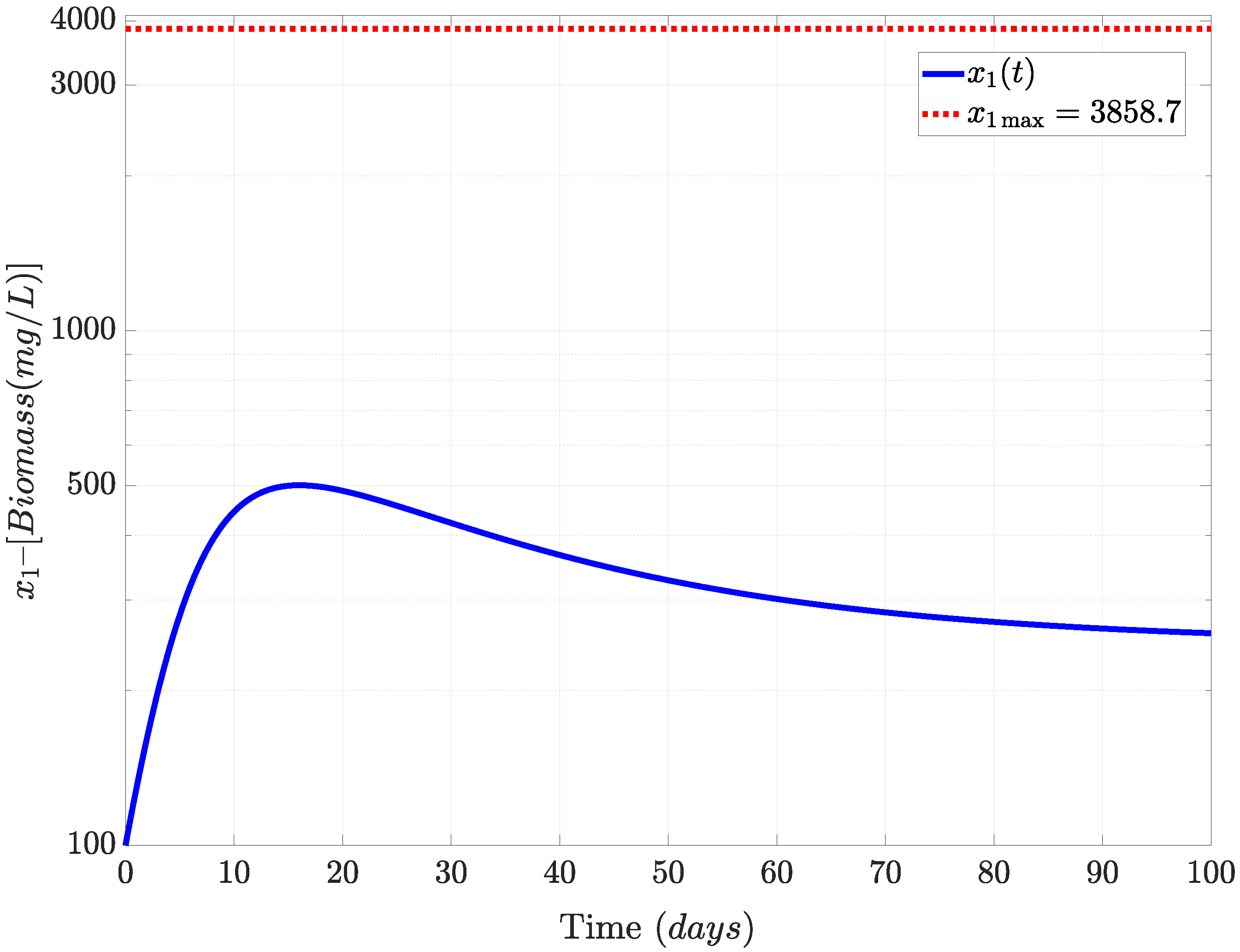
Figure 12 shows that the maximum biomass value predicted by the model is consistent with that observed experimentally in Case 1.
5.2. System Behavior Around the Equilibrium
According to the theoretical analysis in
Section 4.3, the system has two equilibrium points in the positive domain: the trivial point
(unstable) and
(locally asymptotically stable).
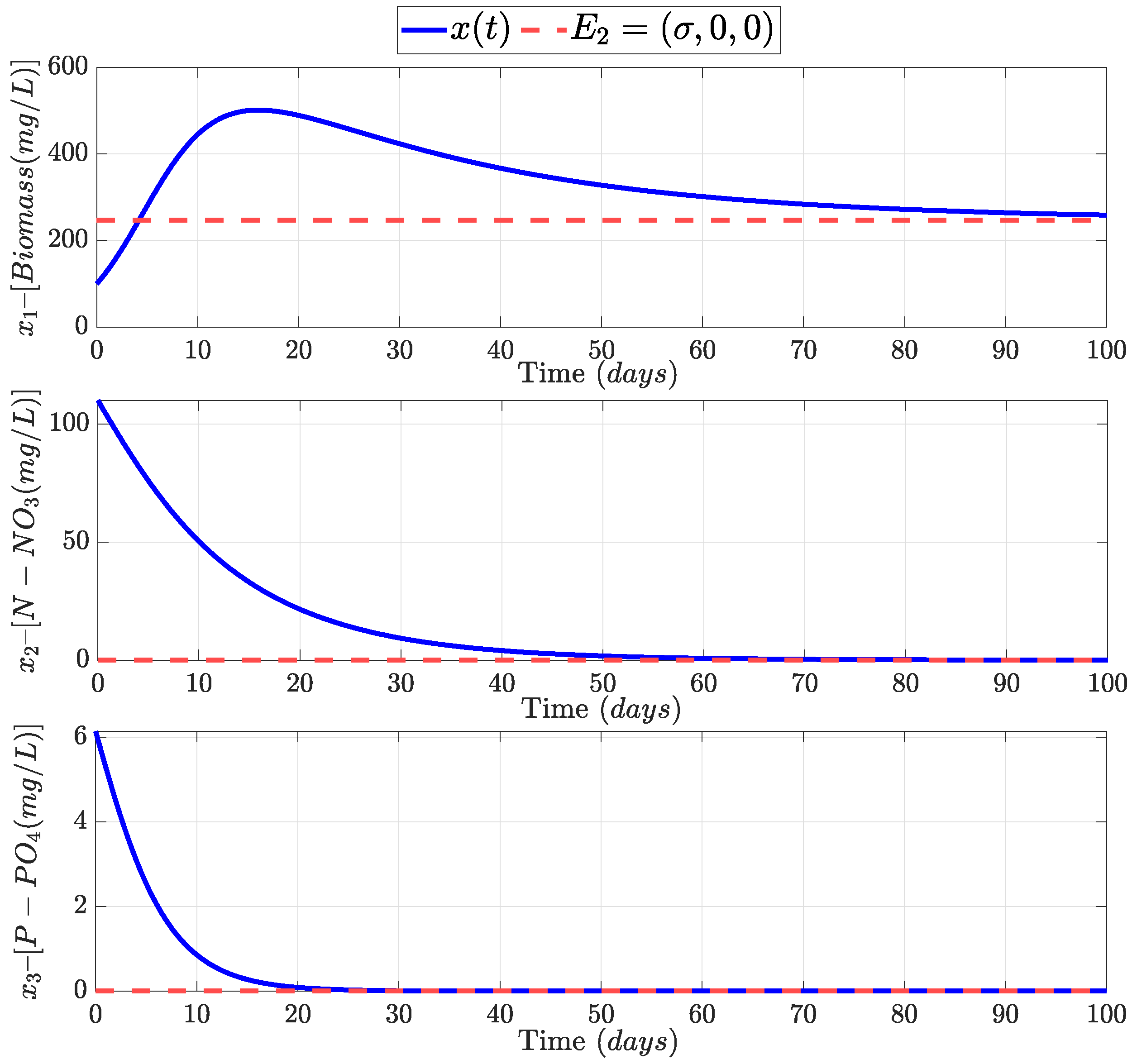
Figure 13 presents the simulated temporal evolution of biomass, nitrate-nitrogen (N-
), and orthophosphate-phosphorus (P-
) concentrations. This behavior confirms that the equilibrium point
is a local attractor, consistent with the simulations and the data from Case 1.
5.3. System Trajectories Convergence
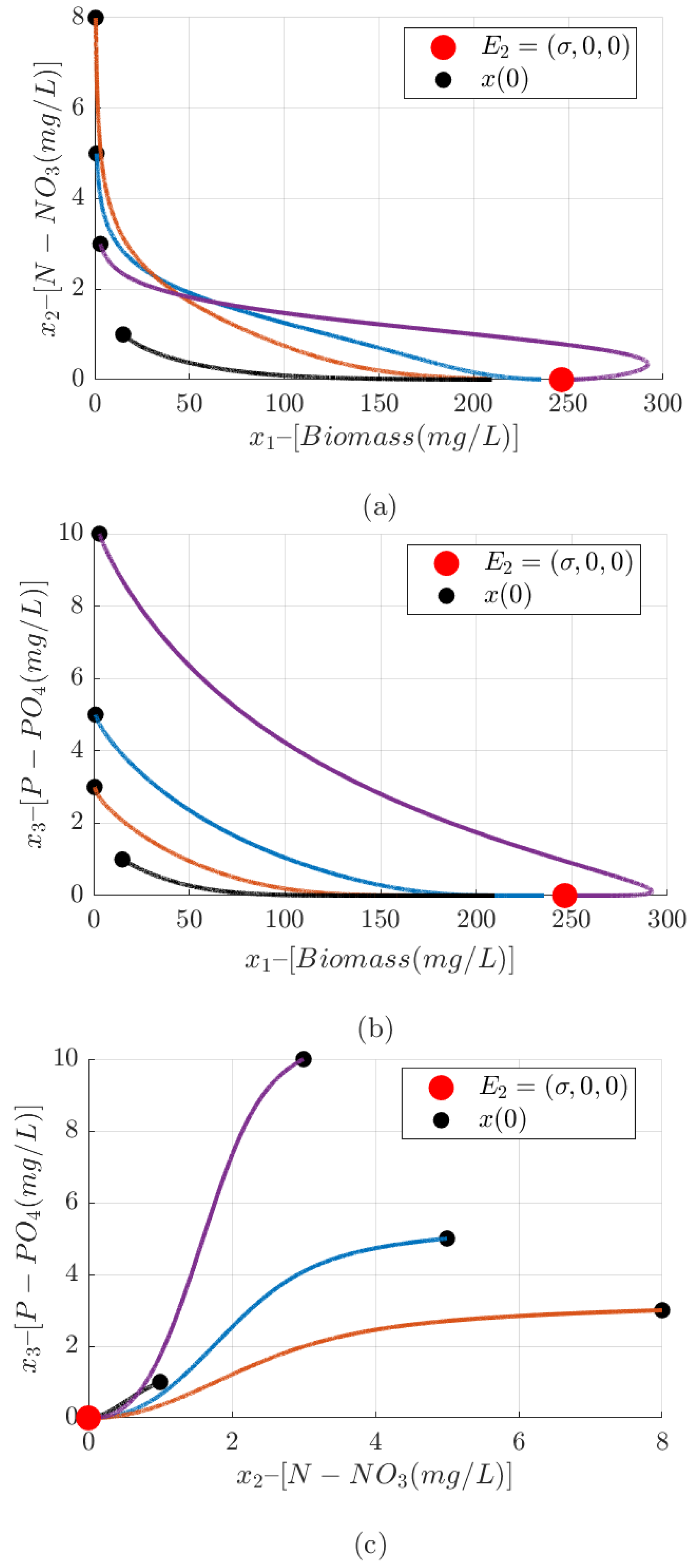
System trajectories were simulated from different initial conditions in the first octant (), within the defined compact set. All trajectories converged smoothly to the equilibrium without divergence, confirming the stable behavior of the system.
Figure 14 illustrates the two-dimensional phase diagrams corresponding to the interactions between biomass vs. N-
, biomass vs. P-
, and N-
vs. P-
. The trajectories are smooth and converge toward the equilibrium point.
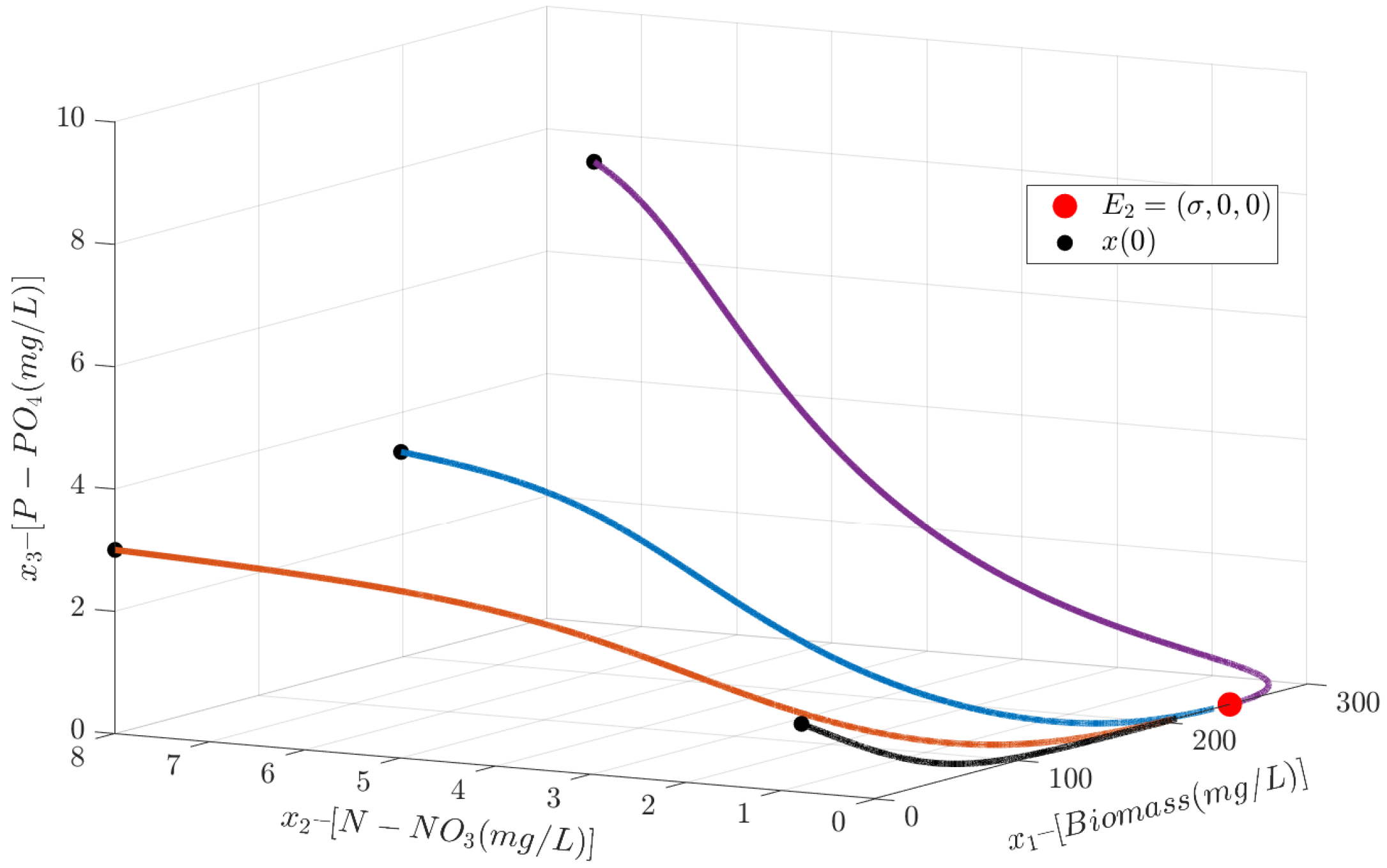
Figure 15 presents the three-dimensional trajectory of biomass, N-
, and P-
, showing the convergence toward the equilibrium of the dynamic system.
This behavior supports the conditions of positivity and invariance and reaffirms the model’s viability as a realistic representation of the biological system.
5.4. Parameter Sensitivity and Uncertainty Analysis
In silico experimentation requires validating parameter-space uncertainty across different experimental conditions. With the sense to evaluate the sensitivity and stability of the fitted kinetic parameters (e.g., and ) across cross-validation folds, the numerical optimization performed via the lsqcurvefit algorithm in MATLAB R2025a® demonstrated consistency. The variance of the estimated parameters across folds remained tightly constrained within a very narrow uncertainty interval. This structural stability in the parameter identification process guarantees that the numerical fits are not artifacts of a specific data subset, thereby adding statistical validation and robust predictive capabilities to the proposed coupled Logistic–Monod formulation.
6. Discussion
The proposed model for describing the biomass growth of
Stigeoclonium nanum and the dynamics of the nutrients N-
and P-
in a flat-panel photobioreactor demonstrated strong consistency with expected biological patterns. The simulations showed a sigmoidal growth characteristic of microalgae cultures under nutrient limitation [
3], similar to that observed in
Chlorella vulgaris [
8],
Scenedesmus obliquus [
37], and
Nannochloropsis gaditana.
The progressive depletion of N-
, and P-
also aligns with the trajectories described in dynamic models applied to closed photobioreactors [
13].
Crucially, the theoretical stability analysis validates the observed behavior. With the parameters estimated in
Table 1, the non-trivial equilibrium
is locally asymptotically stable. Within the positively invariant domain
, trajectories inherently converge to the neighborhood of the equilibrium once the biomass threshold is crossed. This ensures the model’s reliability as a predictive mathematical tool under varying cultivation conditions.
6.1. Biological Interpretation and Practical Implications
The patterns observed in
Table 2 and
Figure 9,
Figure 10 and
Figure 11 are consistent with the self-regulated growth of
Stigeoclonium nanum under simultaneous N-
, and P-
limitation. The sigmoidal transition of the biomass and the monotonic depletion of nutrients confirm that the Logistic term and Monod-type kinetics successfully capture the system’s dominant biological mechanisms.
A relevant methodological aspect is the difference between the model’s fit to the original data versus the filtered series. The significantly higher values obtained with the filtered data suggest that residual discrepancies arise primarily from analytical noise and sampling variability, rather than from structural deficiencies in the proposed equations. Consequently, to provide a rigorous and conservative evaluation, our analysis relies on the unfiltered data.
From a biotechnological standpoint, the estimated parameters are highly consistent with those reported for related species. Specifically, the kinetic rates of nutrient consumption (
,
) and the half-saturation constants (
,
) fall squarely within the ranges documented in synthetic media for green microalgae such as
Scenedesmus,
Chlorella, and
Coelastrum [
14]. This agreement strongly supports the biological validity of the model.
Furthermore, the functional division of the parameters aligns with biological expectations: the carrying capacity
accurately controls the maximum experimental biomass plateau, reflecting intraspecific competition mechanisms [
16]; parameters
and
govern the initial growth acceleration; and the saturable terms accurately modulate assimilation efficiency at low nutrient concentrations.
6.2. Practical Implications
The identified mathematical structure provides a basis for operational decision-making in photobioreactors. It can be utilized to: (i) design harvesting strategies that prevent overloading beyond the carrying capacity ; (ii) plan fed-batch operations to prolong the exponential productive phase; and (iii) estimate precise nutrient replenishment windows based on the consumption slopes predicted by the saturable terms.
6.3. Local Robustness and Model Limitations
As a numerical verification of the structural stability demonstrated analytically in
Section 4.3, we evaluated the system’s local robustness. Upon perturbing the initial conditions by
, the trajectories maintained their qualitative shape and consistently converged to the biologically feasible equilibrium
without divergence.
Exploratory variations of
in individual parameters produced effects completely coherent with the model’s mathematical structure:
and
strictly regulate the final biomass plateau;
and
shift the early growth curve;
and
determine the steepness of the N-
and P-
depletion curves; and
adjust the half-saturation timing (cf. [
38]). These numerical tests confirm that small, realistic variations in the cultivation environment do not compromise the model’s stability.
To contextualize applicability, key limitations must be noted. The model employs Monod-type kinetics for parsimony, foregoing internal cell quota (Droop) models despite their greater biological realism in dynamic regimes. This choice enables prediction of macroscopic nutrient and biomass dynamics in batch systems without intracellular measurements. The carrying capacity (
) is batch-specific, tied to initial nutrient levels, and would require dynamic reparameterization for continuous operations to prevent “phantom growth.” This reflects variable-yield constraints necessary for stability in chemostats. Perfect mixing is assumed, which is appropriate for flat-panel reactors but restricts extrapolation to larger or poorly mixed systems [
39]. The model also omits the accumulation of inhibitory metabolites. Despite these simplifications, the framework remains mathematically robust and biologically relevant for dual-nutrient-limited microalgal growth.
7. Conclusions
In this work, a novel mathematical framework was developed and validated to describe the nonlinear biomass growth dynamics of Stigeoclonium nanum and the simultaneous consumption of N- and P- in a thin-layer flat-panel photobioreactor. The formulation, based on a coupled dynamical system of nonlinear ordinary differential equations, successfully combines a mechanistic structure—grounded in Monod-type kinetics and Logistic maximum carrying capacity ()—with empirically calibrated parameters. This approach provided a highly consistent, mathematically robust representation of microalgae-nutrient interactions.
The experimental cross-validation demonstrated the model’s predictive reliability. Using the original, unfiltered data (
Table 2), the coefficients of determination ranged between
and
, with RMSE values consistent with inherent experimental variability. The near-unity fits obtained with smoothed time series further confirmed that the underlying dynamical structure perfectly captures the culture’s phenomenological trends, effectively isolating analytical noise.
From a theoretical standpoint, the nonlinear system was rigorously analyzed to guarantee its mathematical well-posedness, a critical aspect for biological reactor engineering. The existence, uniqueness, and positivity of solutions were proven. Furthermore, using the Localization of Compact Invariant Sets method, explicit upper bounds were established, demonstrating the existence of a positively invariant compact domain. The local asymptotic stability of the biologically feasible equilibrium was verified; via local analysis, we achieved global convergence of trajectories within the invariant domain. This mathematically corroborates the physical phenomenon of self-regulated growth upon nutrient depletion and guarantees the prevention of biomass washout.
The developed coupled Logistic–Monod model constitutes a robust tool for the simulation, analysis, and optimization of microalgae cultivation under controlled dual-nutrient limitation. It provides a solid foundation for scaling studies, the design of optimal harvesting strategies, and the implementation of closed-loop nonlinear control systems.
Future work should explicitly integrate environmental variables (e.g., light intensity, temperature) into the kinetic equations and incorporate dilution rates to enable modeling of continuous cultures. The abiotic loss coefficients (, ), being geometry-dependent, require evaluation and recalibration for different photobioreactor configurations. Adoption of rigorous local and global parametric sensitivity analysis protocols is also recommended. Finally, extending the model to multi-species co-cultures and additional state variables for target metabolites will enhance its predictive and practical utility.
Author Contributions
Conceptualization, L.N.C., A.J.M.-R., P.A.V. and Y.S.-M.; methodology, P.A.V., A.J.M.-R. and J.L.A.-V.; software, O.A.-B. and P.A.V.; validation, A.J.M.-R. and J.L.A.-V.; formal analysis, A.J.M.-R., P.A.V., L.N.C. and Y.S.-M.; A.J.M.-R. and J.L.A.-V., data curation; investigation, A.J.M.-R., O.A.-B. and J.L.A.-V.; resources, L.N.C. and Y.S.-M.; writing—original draft preparation, L.N.C. and J.L.A.-V.; writing—review and editing, O.A.-B., Y.S.-M. and A.J.M.-R.; visualization, P.A.V., J.L.A.-V. and L.N.C.; project administration, L.N.C. and Y.S.-M. All authors have read and agreed to the published version of the manuscript.
Funding
This work is partially supported by Tecnologico Nacional de Mexico/IT Tijuana grants 25882.26-P, 25344.26-P, and 24661.26-P. This work was developed in the framework of the research group ITTIJ-CA-10: “SISTEMAS DINÁMICOS NO LINEALES” and the international network “Red internacional de control y cómputo aplicados” both supported by TecNM.
Data Availability Statement
The original contributions presented in this study are included in the article. Further inquiries can be directed to the corresponding author.
Acknowledgments
We thank the anonymous reviewers for their careful reading of our manuscript and their many insightful comments and suggestions.
Conflicts of Interest
The authors declare that they have no conflict of interest.
Nomenclature
| Symbol | Description | Unit |
| Biomass concentration of Stigeoclonium nanum | mg/L |
| Concentration of Nitrate-Nitrogen (N-) | mg/L |
| Concentration of Orthophosphate-Phosphorus (P-) | mg/L |
| Maximum specific growth rates | |
| Maximum nutrient consumption rates | |
| Half-saturation constants for growth (nutrients) | mg/L |
| Biomass-dependent constant | mg/L |
| Logistic growth rate constant | |
| Abiotic removal coefficients | |
| Maximum carrying capacity | mg/L |
| Initial nutrient availability | mg/L |
| t | Time | days |
Appendix A. Localization of Compact Invariant Sets Method
The LCIS method is formulated as follows. Given a nonlinear system with the form
, where
is a
differentiable vector function and
is the state vector. Let
be a
differentiable function,
denotes the restriction of
on a set
. The function
used in this statement is called
localizing.
denotes the set
, where
represents the Lie derivative of
and is given by
. From the latter, one can define the lower and upper bounds
and
. Hence, the General Theorem concerning the localization of all compact invariant sets of a dynamical system establishes the following:
Theorem A1. General Theorem. See Section 2 in [40]. Each compact invariant set Γ
of is contained in the localizing domain: If the location of all compact invariant sets is inside the domain
then the set
is formulated. Furthermore, if all compact invariant sets are located in the sets
and
, with
, then they are also located in the set
. Hence, a refinement of Theorem A1 is realized with the help of the Iterative Theorem is stated as follows:
Theorem A2. Iterative Theorem. See Section 2 in [40]. Let be a sequence of differentiable functions. Setswithcontain any compact invariant set of the system and References
- Molina Grima, E.; Belarbi, E.H.; Acién Fernández, F.G.; Robles Medina, A.; Chisti, Y. Recovery of microalgal biomass and metabolites: Process options and economics. Biotechnol. Adv. 2003, 20, 491–515. [Google Scholar] [CrossRef] [PubMed]
- Chisti, Y. Biodiesel from microalgae. Biotechnol. Adv. 2007, 25, 294–306. [Google Scholar] [CrossRef]
- Arbib, Z.; Ruiz, J.; Álvarez-Díaz, J.; Garrido-Pérez, C.; Perales, J.A. Capability of different microalgae species for phytoremediation processes: Wastewater tertiary treatment, CO2 biofixation and lipid production. Water Res. 2014, 49, 465–474. [Google Scholar] [CrossRef]
- Ruiz-Marin, A.; Mendoza-Espinosa, L.G.; Stephenson, T. Growth and nutrient removal in free and immobilized green algae in batch and continuous cultures treating real wastewater. Bioresour. Technol. 2010, 101, 58–64. [Google Scholar] [CrossRef] [PubMed]
- Rodríguez-Torres, M.J.; Morillas-España, A.; Guzmán, J.L.; Acién, F.G. Modelling and pH Control in Raceway and Thin-Layer Photobioreactors for Wastewater Treatment. Energies 2021, 14, 1099. [Google Scholar] [CrossRef]
- Santos, B.; Freitas, F.; Sobral, A.J.; Encarnação, T. Microalgae and circular economy: Unlocking waste to resource pathways for sustainable development. Int. J. Sustain. Eng. 2025, 18, 2501488. [Google Scholar] [CrossRef]
- Zarrinmehr, M.J.; Farhadian, O.; Heyrati, F.P.; Keramat, J.; Koutra, E.; Kornaros, M.; Daneshvar, E. Effect of nitrogen concentration on the growth rate and biochemical composition of the microalga, Isochrysis galbana. Egypt. J. Aquat. Res. 2020, 46, 153–158. [Google Scholar] [CrossRef]
- Rhee, G.Y. Effects of N:P atomic ratios and nitrate limitation on algal growth, cell composition, and nitrate uptake. Limnol. Oceanogr. 1978, 23, 10–25. [Google Scholar] [CrossRef]
- Wang, H.; Hwang, A.M.; Smith, J.D. Mathematical comparison and empirical review of the Monod and Droop models for algal growth. Ecol. Model. 2022, 466, 109887. [Google Scholar] [CrossRef]
- Bernard, O.; Mairet, F.; Chachuat, B. Modelling of microalgae culture systems with applications to control and optimization. Adv. Biochem. Eng. 2016, 153, 59–87. [Google Scholar] [CrossRef]
- Almaguer, M.A.; Cruz, R.; da Fonseca, F.V. Combination of Advanced Oxidation Processes and Microalgae Aiming at Recalcitrant Wastewater Treatment and Algal Biomass Production: A Review. Environ. Process. 2021, 8, 483–509. [Google Scholar] [CrossRef]
- Tramontin, D.P.; Gressler, P.D.; Rörig, L.R.; Derner, R.B.; Pereira-Filho, J.; Radetski, C.M.; Quadri, M.B. Growth modeling of the green microalga Scenedesmus obliquus in a hybrid photobioreactor as a practical tool to understand both physical and biochemical phenomena in play during algae cultivation. Biotechnol. Bioeng. 2018, 115, 965–977. [Google Scholar] [CrossRef]
- Lima, S.; Brucato, A.; Caputo, G.; Schembri, L.; Scargiali, F. Modelling Nannochloropsis gaditana Growth in Reactors with Different Geometries, Determination of Kinetic Parameters and Biochemical Analysis in Response to Light Intensity. Appl. Sci. 2022, 12, 5776. [Google Scholar] [CrossRef]
- Mohd Sadiq, A.S.F.; Yow, M.E.; Jamaian, S.S. The Extended Monod Model for Microalgae Growth and Nutrient Uptake in Different Wastewaters. Int. J. Eng. Technol. 2018, 7, 200–204. [Google Scholar] [CrossRef]
- Almomani, F.A. Assessment and modeling of microalgae growth considering the effects of CO2, nutrients, dissolved organic carbon and solar irradiation. J. Environ. Manag. 2019, 247, 738–748. [Google Scholar] [CrossRef]
- Hahn, W.; Hosenthien, H.H.; Lehnigk, H. Theory and Application of Liapunov’s Direct Method; Prentice-Hall Englewood Cliffs: Englewood Cliffs, NJ, USA, 1963; Volume 3. [Google Scholar]
- Droop, M.R. The nutrient status of algal cells in continuous culture. J. Mar. Biol. Assoc. UK 1974, 54, 825–855. [Google Scholar] [CrossRef]
- Wang, L.; Wu, J. Coexistence and dynamical behavior for an unstirred chemostat with variable yield. Nonlinear Anal. Real World Appl. 2024, 78, 104179. [Google Scholar] [CrossRef]
- Martínez Roldán, A.J.; Gómez Lozano, B.P.; Díaz Ramírez, M.A.; Ruíz García, M.A. Diseño, construcción y puesta en marcha de un fotobiorreactor flat panel para el cultivo de microalgas. Rev. Alta Tecnol. Soc. 2019, 12, 46–50. [Google Scholar]
- Culture Collection of Algae & Protozoa (CCAP). Available online: https://www.sams.ac.uk/facilities/ccap/ (accessed on 1 June 2026).
- Mata, T.M.; Martins, A.A.; Caetano, N.S. Microalgae for biodiesel production and other applications: A review. Renew. Sustain. Energy Rev. 2010, 14, 217–232. [Google Scholar] [CrossRef]
- Ugwu, C.U.; Aoyagi, H.; Uchiyama, H. Photobioreactors for mass cultivation of algae. Bioresour. Technol. 2008, 99, 4021–4028. [Google Scholar] [CrossRef]
- APHA. Standard Methods for the Examination of Water and Wastewater, 22nd ed.; American Public Health Association; American Water Works Association; Water Environment Federation: Washington, DC, USA; Alexandria, VA, USA, 2012. [Google Scholar]
- Zhang, J.Z.; Fischer, C.J. A simplified resorcinol method for direct spectrophotometric determination of nitrate in seawater. Mar. Chem. 2006, 99, 220–226. [Google Scholar] [CrossRef]
- Taussky, H.H.; Shorr, E.; Kurzmann, G. A microcolorimetric method for the determination of inorganic phosphorus. J. Biol. Chem. 1953, 202, 675–685. [Google Scholar] [CrossRef] [PubMed]
- Arce-Valdez, J.L. Flowchart of the Experimental Process for Microalgae Cultivation and Measurement. Available online: https://BioRender.com/c5vc5s3 (accessed on 1 June 2026).
- Kube, M.; Spedding, B.; Gao, L.; Fan, L.; Roddick, F. Nutrient removal by alginate-immobilized Chlorella vulgaris: Response to different wastewater matrices. J. Chem. Technol. Biotechnol. 2020, 95, 1676–1687. [Google Scholar] [CrossRef]
- Xu, P. Analytical solution for a hybrid Logistic-Monod cell growth model in batch and continuous stirred tank reactor culture. Biotechnol. Bioeng. 2020, 117, 873–878. [Google Scholar] [CrossRef]
- Arce-Valdez, J.L. Conceptual Scheme of the Proposed Dynamic Model for Biomass and Nutrients. Available online: https://BioRender.com/63xqdl1 (accessed on 1 June 2026).
- Droogers, P.; Allen, R.G. Estimating reference evapotranspiration under inaccurate data conditions. Irrig. Drain. Syst. 2002, 16, 33–45. [Google Scholar] [CrossRef]
- Chicco, D.; Warrens, M.J.; Jurman, G. The coefficient of determination R-squared is more informative than SMAPE, MAE, MAPE, MSE and RMSE in regression analysis evaluation. PeerJ Comput. Sci. 2021, 7, e623. [Google Scholar] [CrossRef]
- Peña Caballero, V.; Rodríguez-Mata, A.E.; López-Pérez, P.A.; Hernández-Melchor, D.J.; González-Huitrón, V.A. A Robust State Estimation Framework Employing a Nonlinear PI2 Observer for Photobioreactor Monitoring. AppliedMath 2026, 6, 44. [Google Scholar] [CrossRef]
- Barbosa-Hernández, E.J.; Pliego-Sandoval, J.E.; Gschaedler-Mathis, A.; Arrizon-Gaviño, J.; Arana-Sánchez, A.; Femat, R.; Herrera-López, E.J. Monitoring β-Fructofuranosidase Activity through Kluyveromyces marxianus in Bioreactor Using a Lab-Made Sequential Analysis System. Fermentation 2023, 9, 963. [Google Scholar] [CrossRef]
- Robledo, G.; Grognard, F.; Gouzé, J.L. Global stability for a model of competition in the chemostat with microbial inputs. Nonlinear Anal. Real World Appl. 2012, 13, 582–598. [Google Scholar] [CrossRef]
- Perko, L. Differential Equations and Dynamical Systems, 3rd ed.; Texts in Applied Mathematics; Springer: Berlin/Heidelberg, Germany, 2001; Volume 7. [Google Scholar] [CrossRef]
- Khalil, H.K. Nonlinear Systems, 3rd ed.; Pearson: London, UK, 2002. [Google Scholar]
- Martínez, M.E.; Sánchez, S.; Jimenez, J.M.; El Yousfi, F.; Muñoz, L. Nitrogen and phosphorus removal from urban wastewater by the microalga Scenedesmus obliquus. Bioresour. Technol. 2000, 73, 263–272. [Google Scholar] [CrossRef]
- Soetaert, K.; Herman, P.M. A Practical Guide to Ecological Modelling: Using R as a Simulation Platform; Springer: Berlin/Heidelberg, Germany, 2010. [Google Scholar] [CrossRef]
- Acién, F.; Molina, E.; Reis, A.; Torzillo, G.; Zittelli, G.C.; Sepúlveda, C.; Masojídek, J. Photobioreactors for the production of microalgae. Bioresour. Technol. 2017, 12, 131–151. [Google Scholar] [CrossRef]
- Krishchenko, A.P.; Starkov, K.E. Localization of compact invariant sets of the Lorenz system. Phys. Lett. A 2006, 353, 383–388. [Google Scholar] [CrossRef]
Figure 1.
General flowchart of the experimental process for microalgae cultivation and measurement. The diagram illustrates the interaction between biomass, nitrate, and phosphate concentrations during cultivation and the corresponding measurement stages used for model development and validation. Created in BioRender
® [
26].
Figure 1.
General flowchart of the experimental process for microalgae cultivation and measurement. The diagram illustrates the interaction between biomass, nitrate, and phosphate concentrations during cultivation and the corresponding measurement stages used for model development and validation. Created in BioRender
® [
26].
Figure 2.
Conceptual scheme of the proposed dynamic model for biomass and nutrients. Created in BioRender
® [
29].
Figure 2.
Conceptual scheme of the proposed dynamic model for biomass and nutrients. Created in BioRender
® [
29].
Figure 3.
Experimental data profile for Kinetic Run . The panels show the raw data of (a) Biomass concentration, (b) N-, and (c) P-.
Figure 3.
Experimental data profile for Kinetic Run . The panels show the raw data of (a) Biomass concentration, (b) N-, and (c) P-.
Figure 4.
Experimental data profile for Kinetic Run . The panels show the raw data of (a) Biomass concentration, (b) N-, and (c) P-.
Figure 4.
Experimental data profile for Kinetic Run . The panels show the raw data of (a) Biomass concentration, (b) N-, and (c) P-.
Figure 5.
Experimental data profile for Kinetic Run . The panels show the raw data of (a) Biomass concentration, (b) N-, and (c) P-.
Figure 5.
Experimental data profile for Kinetic Run . The panels show the raw data of (a) Biomass concentration, (b) N-, and (c) P-.
Figure 6.
Error bar for Biomass concentration for kinetics runs –.
Figure 6.
Error bar for Biomass concentration for kinetics runs –.
Figure 7.
Error bar for N- concentration for kinetics runs –.
Figure 7.
Error bar for N- concentration for kinetics runs –.
Figure 8.
Error bar for P- concentration for kinetics runs –.
Figure 8.
Error bar for P- concentration for kinetics runs –.
Figure 9.
Comparison of model simulations versus experimental data for the three cross-validation Case 1. (a) Biomass growth, (b) N-, and (c) P-.
Figure 9.
Comparison of model simulations versus experimental data for the three cross-validation Case 1. (a) Biomass growth, (b) N-, and (c) P-.
Figure 10.
Comparison of model simulations versus experimental data for the three cross-validation Case 2. (a) Biomass growth, (b) N-, and (c) P-.
Figure 10.
Comparison of model simulations versus experimental data for the three cross-validation Case 2. (a) Biomass growth, (b) N-, and (c) P-.
Figure 11.
Comparison of model simulations versus experimental data for the three cross-validation Case 3. (a) Biomass growth, (b) N-, and (c) P-.
Figure 11.
Comparison of model simulations versus experimental data for the three cross-validation Case 3. (a) Biomass growth, (b) N-, and (c) P-.
Figure 12.
Comparison of the maximum biomass limit in the model versus experimental data (Case 1).
Figure 12.
Comparison of the maximum biomass limit in the model versus experimental data (Case 1).
Figure 13.
Evolution of biomass, and nutrients N-, and P- respecting the stable equilibrium point .
Figure 13.
Evolution of biomass, and nutrients N-, and P- respecting the stable equilibrium point .
Figure 14.
Two-dimensional phase diagrams. (a) – vs. –[N-, (b) – vs. –[P-, and (c) –[N- vs. –[P-.
Figure 14.
Two-dimensional phase diagrams. (a) – vs. –[N-, (b) – vs. –[P-, and (c) –[N- vs. –[P-.
Figure 15.
Three-dimensional phase diagram. – vs. –[N- vs. –[P-. Trajectory toward equilibrium.
Figure 15.
Three-dimensional phase diagram. – vs. –[N- vs. –[P-. Trajectory toward equilibrium.
Table 1.
Estimated parameters for the dynamic model obtained via nonlinear lsqcurvefit algorithm in MATLAB R2025a®.
Table 1.
Estimated parameters for the dynamic model obtained via nonlinear lsqcurvefit algorithm in MATLAB R2025a®.
| Parameter | Description | Estimation |
|---|
| Max. growth rate (N--dependent) | |
| Max. growth rate (P--dependent) | |
| Max. specific N- consumption rate | |
| Max. specific P- consumption rate | |
| Biomass-dependent constant | 98.00 mg/L |
| N- half-saturation constant | 63.37 mg/L |
| N- half-saturation constant | 8.13 mg/L |
| Logistic growth constant | |
| Maximum carrying capacity | mg/L |
| Abiotic N- removal rate | |
| Abiotic P- removal rate | |
Table 2.
Cross-validation performance: and computed against experimental data.
Table 2.
Cross-validation performance: and computed against experimental data.
| Validation | Variable | RMSE | |
|---|
| Case 1 | Biomass | 62.74 | 0.8205 |
| N- | 10.32 | 0.8741 |
| P- | 0.33 | 0.9576 |
| Case 2 | Biomass | 64.27 | 0.7780 |
| N- | 8.91 | 0.8619 |
| P- | 0.33 | 0.9566 |
| Case 3 | Biomass | 62.38 | 0.8012 |
| N- | 7.70 | 0.9117 |
| P- | 0.32 | 0.9617 |
| Disclaimer/Publisher’s Note: The statements, opinions and data contained in all publications are solely those of the individual author(s) and contributor(s) and not of MDPI and/or the editor(s). MDPI and/or the editor(s) disclaim responsibility for any injury to people or property resulting from any ideas, methods, instructions or products referred to in the content. |




 ,
,