1. Introduction
In recent decades, educational research has highlighted the central role of emotions in learning processes and academic performance (
Gordillo-León et al., 2026;
Hernández del Barco et al., 2022;
Tzimas & Demetriadis, 2026). Meta-analytic evidence indicates that academic emotions influence performance both directly and indirectly by modulating key variables such as motivation, persistence, and the use of learning strategies (
Camacho-Morles et al., 2021;
Pekrun, 2014). From the perspective of the Control–Value Theory of Achievement Emotions, academic emotions are shaped by students’ appraisals of perceived control and the value assigned to learning tasks, significantly influencing their engagement and academic outcomes (
Pekrun, 2014). Within this framework, understanding the role of emotions in educational contexts is essential for explaining how students relate to different domains of knowledge. However, the analysis of emotions in education requires considering their disciplinary specificity. Recent research has shown that academic emotions do not manifest uniformly across different areas of knowledge; rather, they may adopt particular configurations depending on the academic domain and the educational context in which they occur (
Burić & Frenzel, 2023). This perspective has promoted the study of domain-specific academic emotions, among which anxiety associated with particular disciplines has received considerable attention.
Anxiety constitutes one of the most widely studied emotional constructs in the educational field. Traditionally, a distinction has been made between general anxiety and test anxiety (
American Psychiatric Association, 2022;
Krueger & Markon, 2014). However, recent research has shown that there are forms of anxiety linked to specific academic domains, such as mathematics anxiety or science anxiety, which present their own structures (
Carey et al., 2017;
Megreya et al., 2021). In this sense, according to
Burns and Grabau (
2025), science anxiety can be understood as a set of negative emotional and cognitive responses that emerge when individuals face tasks, content, or situations related to learning science. This conceptualization makes it possible to distinguish science anxiety, specifically associated with the learning of science, from general anxiety, evaluative anxiety, and other related constructs.
In the field of experimental sciences, which includes disciplines such as biology, physics, chemistry, and geology (
Jasso et al., 2021), anxiety can influence not only immediate academic performance but also the relationship students establish with scientific knowledge and their future educational trajectories (
Megreya & Al-Emadi, 2023). Several studies have indicated that high levels of science anxiety are associated with lower engagement in scientific activities, less favorable attitudes toward these disciplines, and a lower likelihood of choosing educational pathways related to STEM fields (
Galimova et al., 2024;
Jiang et al., 2025). Consequently, domain-specific anxiety may act as a psychological factor that shapes both present learning experiences and long-term academic and professional decisions. These dynamics acquire particular relevance in the context of initial teacher education. Pre-service teachers constitute a particularly relevant population, as their emotional relationship with science may influence not only their own learning processes but also their future teaching practices and the way they will present science to their students. Students enrolled in early childhood education and primary education degree programs often identify with differentiated academic profiles, generally associated with orientations toward science or the humanities, depending on their perceptions of competence and disciplinary affinity (
Brígido et al., 2010;
Hazari et al., 2010). From the perspective of
Expectancy–Value Theory, these perceptions decisively influence students’ academic motivation and educational decisions (
Eccles & Wigfield, 2020). In this sense, expectations of success and the value assigned to scientific tasks may shape the way future teachers relate to experimental sciences during their training.
In the case of pre-service teachers, anxiety toward experimental sciences is not limited to performance as students. This emotion may also extend to their future professional practice, influencing key variables such as teaching self-efficacy, pedagogical beliefs, and willingness to teach scientific content (
Gorospe, 2022). The literature on science identity suggests that emotional experiences associated with learning science play an important role in the construction of academic and professional identities related to STEM fields (
Hazari et al., 2010). Consequently, experiences of science anxiety during initial teacher education may influence how future teachers position themselves with respect to scientific knowledge and their responsibility to teach it in school contexts.
The recent literature on science teaching anxiety suggests that pre-service teachers who experience high levels of anxiety toward science tend to show lower confidence in their ability to teach scientific concepts effectively (
Novak et al., 2022). From the socio-cognitive perspective of self-efficacy, beliefs about one’s own capability to perform teaching tasks decisively influence instructional decisions, the effort invested, and persistence in the face of difficulties (
Bandura, 1997). Consequently, negative emotional experiences associated with learning science during initial teacher education may weaken perceptions of teaching self-efficacy. In turn, several studies have indicated that self-efficacy constitutes a central component in the construction of science teacher identity, understood as the way individuals perceive and position themselves in relation to scientific knowledge and its teaching (
Avraamidou, 2014).
However, it is important to conceptually distinguish between anxiety toward learning science and anxiety toward teaching science. While the former refers to the negative emotional responses that emerge when students face the learning of scientific content, the latter refers to the concern or insecurity associated with the act of teaching science in the classroom. Although both constructs are related, they represent distinct psychological experiences. The present study specifically examines anxiety associated with learning experimental sciences. Nevertheless, the literature suggests that negative emotional experiences during science learning may later influence anxiety toward teaching science by affecting key variables such as perceived competence and teaching self-efficacy (
Novak et al., 2022). From this perspective, a conceptual relationship can be proposed in which science anxiety indirectly influences future teaching practices through its impact on teaching self-efficacy and the development of professional identity. Thus, understanding science anxiety in pre-service teachers is essential for explaining how emotional experiences during initial training may shape teachers’ future relationship with science teaching.
Despite the growing interest in science anxiety, most of the available instruments have been developed and validated with school populations or with university students enrolled in scientific disciplines. Among these are the
Science Anxiety Questionnaire (
Mallow, 1994), the
Attitude Scale for Science and Technology (
Akpınar et al., 2009), the
Science Anxiety Scale (
Güzeller & Doğru, 2012), and, more recently, the
Abbreviated Science Anxiety Scale (ASAS;
Megreya et al., 2021), validated with secondary education students. Although these tools have shown adequate psychometric properties, they share an important limitation. In general, they were conceived for contexts in which science anxiety is primarily linked to the student’s own academic performance, without explicitly considering the professional dimension that characterizes scientific learning in teacher education programs. Thus, although several instruments have been developed to assess science anxiety, most of them have been validated with school students. Evidence regarding their psychometric functioning in initial teacher education contexts remains limited.
However, a more detailed examination of previous validations of the ASAS (
Megreya et al., 2021) suggests potential variations in its factorial structure depending on the context and sample characteristics. The original validation study supported a two-factor structure distinguishing between anxiety toward learning science and evaluation-related anxiety (
Megreya et al., 2021). However, the available evidence regarding its functioning in other contexts remains limited, particularly in populations other than secondary education students. This lack of validation studies across different educational levels and cultural contexts raises questions about the stability and generalizability of the ASAS factorial structure. In particular, there is insufficient evidence regarding its psychometric functioning in pre-service teachers, where science anxiety may be influenced not only by academic demands but also by the construction of emerging professional identities. This gap highlights the need to examine whether the factorial structure of the ASAS remains stable in the context of initial teacher education, thereby justifying the present study.
Pre-service teachers constitute a particular population, as their relationship with science is shaped not only by learning processes but also by the construction of emerging professional identities and expectations about their future teaching practice. The adaptation of the ASAS to the context of initial teacher education addresses a conceptual gap in the literature, since pre-service teachers interact with science not only as learners but also as future educators. This dual role introduces additional dimensions related to academic identity, motivation, and professional development into the experience of science anxiety. Analyzing the structure and functioning of this construct in teacher education students makes it possible to broaden the theoretical understanding of domain-specific academic emotions and to examine whether the psychometric organization of science anxiety remains stable in contexts where scientific learning is intertwined with processes of professional identity construction (
Pekrun et al., 2002).
The Present Study
The present study contributes to the literature in three main ways. First, it provides the first psychometric validation of the ASAS in the context of initial teacher education. Second, it examines the factorial stability of the instrument through cross-validation procedures using exploratory and confirmatory factor analyses in independent subsamples. Third, it explores differentiated profiles of anxiety toward experimental sciences associated with students’ disciplinary identification through a person-centered approach.
In this context, the present study aims to adapt and validate the psychometric properties of the Abbreviated Science Anxiety Scale in pre-service teachers, in order to assess anxiety toward experimental sciences and derive implications for science education. The research seeks to examine the suitability of the scale within initial teacher education programs, where experiences with science are influenced not only by learning processes but also by the development of emerging professional identities. Previous research has consistently shown that domain-specific anxiety is associated with academic performance. In the context of science education, higher levels of science anxiety have been linked to lower achievement and poorer academic outcomes (e.g.,
Megreya et al., 2021;
Jiang et al., 2025). From this perspective, anxiety toward experimental sciences may act as a barrier to effective learning, interfering with cognitive processes such as attention and problem-solving. Based on this evidence, a relationship between science anxiety and academic performance is expected. From this objective, the following research hypotheses (H) are proposed.
H1. There are significant differences in anxiety toward experimental sciences as a function of gender.
H2. Anxiety toward experimental sciences is significantly related to students’ academic performance.
H3. Different profiles of anxiety toward experimental sciences are expected to be identified through cluster analysis.
Overall, these analyses provide empirical evidence regarding the validity and usefulness of the adapted scale, named the Brief Experimental Science Anxiety Scale for Pre-Service Teachers (BESAS-PST) for studying anxiety toward experimental sciences in the context of initial teacher education.
3. Results
The results of the content validation indicated a high level of agreement among experts. The I-CVI values ranged from 0.83 to 1.00 across items, exceeding the recommended threshold of 0.78 for panels of six experts. The S-CVI/Ave was 0.93, indicating excellent content validity of the adapted instrument.
3.1. Phase 1: Exploratory Factor Analysis
For the EFA,
Table 1 presents the descriptive statistics of the scale items. Item 9 showed the lowest mean (
M = 1.75,
SD = 0.79), whereas item 4 presented the highest mean (
M = 3.46,
SD = 1.20). The skewness and kurtosis values indicated an approximately normal distribution of the scores, meeting the criteria proposed by
Curran et al. (
1996). Regarding skewness, item 4 showed the lowest value (a = −0.39), whereas item 9 showed the highest value (a = 0.94). Concerning kurtosis, item 2 presented the lowest value (K = −0.97) and item 3 the highest value (K = 0.77). The factor extraction revealed a two-factor structure, with eigenvalues of 4.60 for Factor 1 and 1.10 for Factor 2, which together explained 63.40% of the total variance. Factor 1, composed of items 1, 3, 6, 7, and 9, explained 51.10% of the variance, while Factor 2, consisting of items 2, 4, 5, and 8, explained the remaining 12.20% (
Table 2). The factor loadings were moderate to high, ranging from 0.48 to 0.99, and the communalities showed adequate values.
Regarding sampling adequacy, the KMO index was 0.88, and Bartlett’s test of sphericity was significant (χ2(36) = 568.75, p < 0.001). With respect to internal consistency, the total scale showed high reliability, with a Cronbach’s alpha of α = 0.89 and a McDonald’s omega of ω = 0.91.
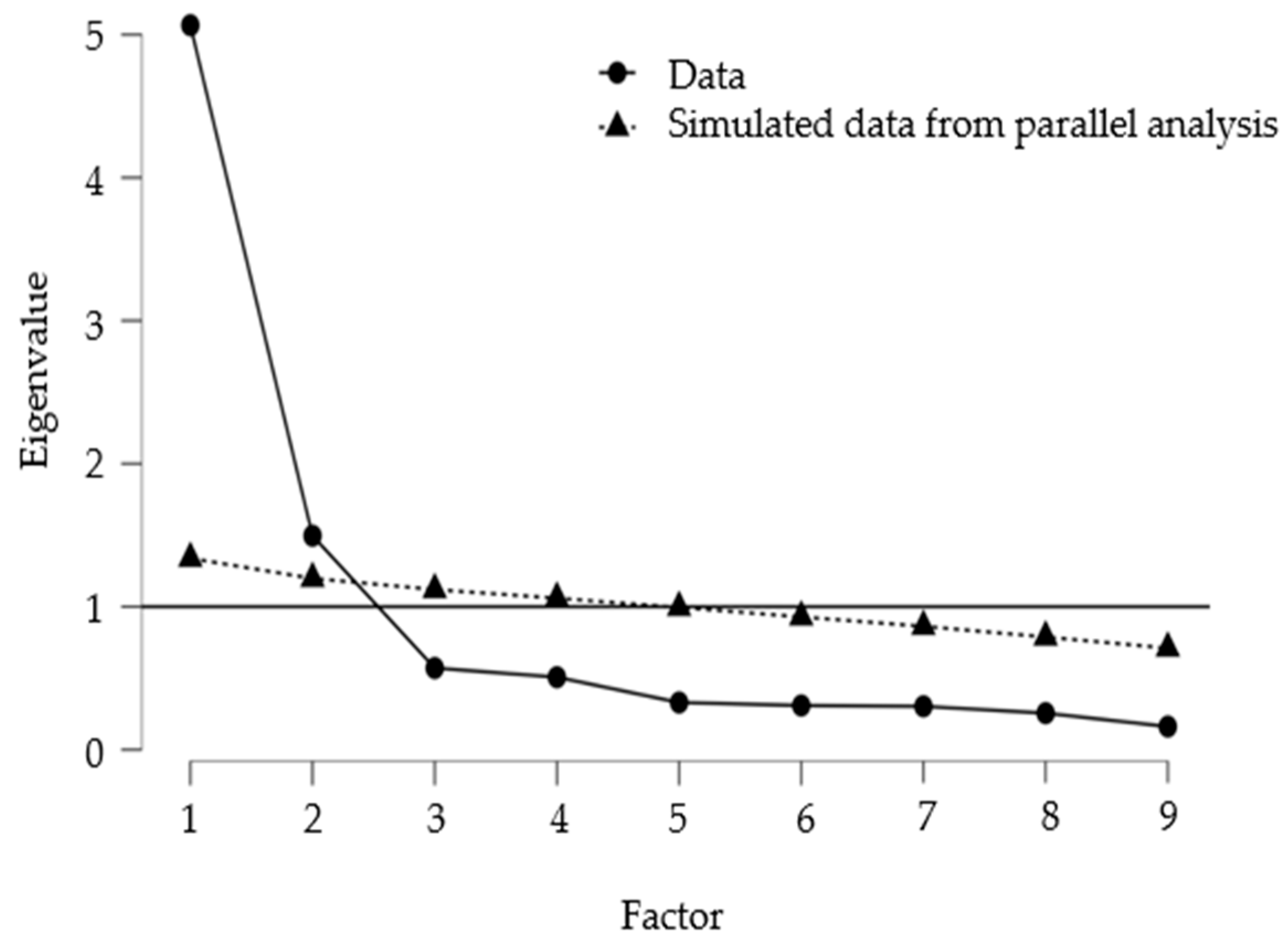
Figure 1 presents the scree plot obtained from the EFA, showing a clear inflection point after the second factor, supporting the extraction of two dimensions. The number of factors was determined based on the criterion of eigenvalues greater than 1 and the visual inspection of the scree plot (
Hair et al., 2018). Thus, as can be observed, the Scree Test indicated the presence of two factors.
In addition to the criterion of eigenvalues greater than 1 and the scree plot, a parallel analysis based on common factor analysis was conducted, which confirmed the retention of two factors, as the first two empirical eigenvalues exceeded the corresponding eigenvalues generated from random data. Finally, bivariate correlations among the items (
Table 3) and between the factors of the instrument were analyzed. The inter-item correlations were positive and statistically significant, supporting the internal coherence of the scale, in line with methodological recommendations for the interpretation of oblique factorial structures (
Lloret-Segura et al., 2014).
3.2. Phase 2: Confirmatory Factor Analysis
In this second phase, a CFA was conducted using the second independent subsample (
n = 105), following the analytical strategy described in
Section 2.4, in which the first subsample was used for EFA and the second for CFA. The aim of this analysis was to test the factorial structure obtained in the exploratory phase. The model was estimated using robust maximum likelihood (MLR), and the confidence intervals of the parameters were obtained through 5000 bootstrap resamples in order to examine the stability of the estimates. The results showed that the two-correlated-factor model presented a good overall fit to the data:
χ2(21) = 27.81,
p = 0.14,
χ2/df = 1.32. The incremental fit indices reached adequate values (CFI = 0.99; TLI = 0.98; IFI = 0.99), while the absolute fit indices were also satisfactory (GFI = 0.94; SRMR = 0.05). Likewise, the root mean square error of approximation was low (RMSEA = 0.05; 90% CI [0.00, 0.10]), indicating a satisfactory model fit (
Table 4). These results confirm the adequacy of the factorial structure obtained in the exploratory phase.
In order to strengthen the convergent validity of the model, Composite Reliability (CR) and Average Variance Extracted (AVE) were calculated for each of the factors. The CR values were adequate (Factor 1 = 0.81; Factor 2 = 0.91), exceeding the recommended threshold of 0.70 (
Hair et al., 2018). Likewise, the AVE values were above 0.50 (Factor 1 = 0.54; Factor 2 = 0.68), indicating that each factor explains more than 50% of the variance of its indicators and supporting the convergent validity of the instrument. Furthermore, discriminant validity was evaluated using the
Heterotrait–Monotrait Ratio (HTMT), obtaining a value of 0.64, which is below the conservative criterion of 0.85, confirming adequate empirical differentiation between the factors (
Henseler et al., 2015).
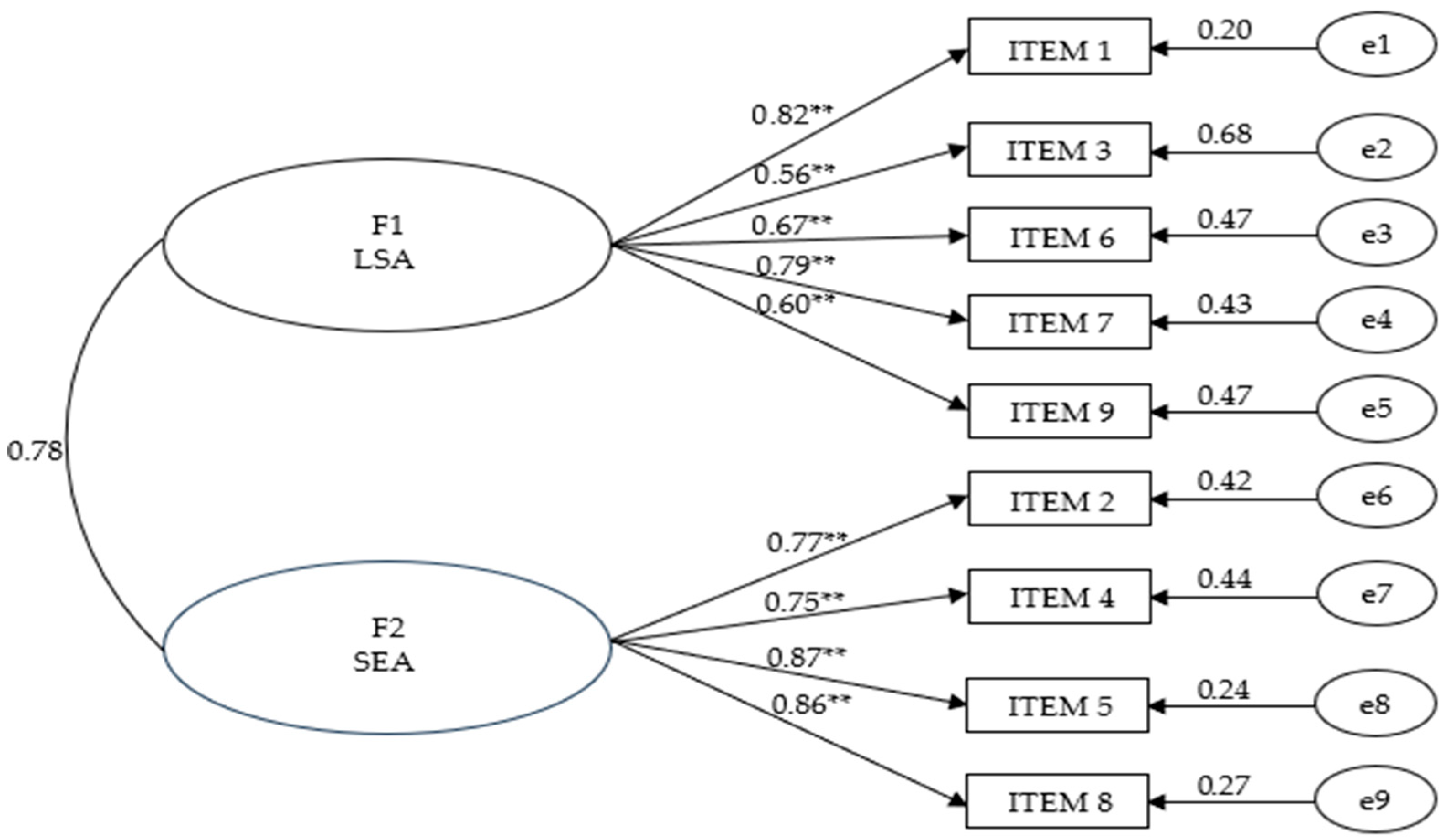
Figure 2 presents the confirmatory factor model estimated in the validation subsample (
n = 105).
In this case, the correlation coefficient between the factors was 0.78, indicating a moderate-to-high relationship between both dimensions of the construct. Regarding the standardized regression weights, these ranged between 0.56 and 0.87, showing moderate-to-high relationships between the latent factors and their observed indicators. Specifically, in the learning science anxiety factor (F1) the factor loadings ranged between 0.56 and 0.82 (items 1, 3, 6, 7, and 9), whereas in the science evaluation anxiety factor (F2) the factor loadings ranged between 0.75 and 0.87 (items 2, 4, 5, and 8). Furthermore, the error terms associated with the indicators showed coefficients ranging between 0.20 and 0.68.
3.3. Measurement Invariance Across Gender
The results supported the configural, metric, and scalar invariance of the instrument across gender. The changes in the CFI between nested models remained within the recommended criteria (ΔCFI ≤ 0.01), indicating that the factorial structure, factor loadings, and item intercepts are equivalent between men and women (
Table 5). Additionally, Differential Item Functioning (DIF) by gender was examined using regression models. The results did not reveal consistent patterns of differential item functioning across the scale items, supporting the equivalence of the instrument between men and women.
3.4. Gender Differences in Science Anxiety
The results for the full sample (N = 210) showed a significant main effect of gender, F(1, 206) = 7.69, p < 0.01, η2 = 0.03. The assumption of the homogeneity of variances was met, F(1, 206) = 1.92, p > 0.05. The analysis revealed that females presented higher total anxiety scores (M = 23.35, SD = 7.15) than males (M = 20.60, SD = 6.13).
3.5. Correlation Between Anxiety and Academic Performance
The correlation results between the BESAS-PST scores and the average grade obtained in experimental sciences subjects indicated that there was no significant relationship between the two variables (r = −0.02, p > 0.05, N = 210).
3.6. Differences in Science Anxiety by Degree Program (Early Childhood vs. Primary Education)
The results of the independent samples t-test indicated that there were no statistically significant differences in total anxiety toward experimental sciences between students enrolled in the Early Childhood Education degree and those enrolled in the Primary Education degree, t(208) = 0.79, p > 0.05. The assumption of homogeneity of variances was met, as Levene’s test was not significant (F = 0.74, p > 0.05). Students in the Primary Education degree showed slightly higher levels of anxiety (M = 22.48, SD = 6.98) compared to those in Early Childhood Education (M = 20.50, SD = 5.58). However, this difference was not statistically significant. The 95% confidence interval for the mean difference ranged from −2.95 to 6.90.
3.7. Anxiety Profiles (Cluster Analysis)
The cluster analysis was conducted using the k-means algorithm, employing standardized scores of the total BESAS-PST score and academic orientation (Sciences/Humanities) as classification variables. These variables capture both science anxiety and academic orientation. This procedure made it possible to identify latent profiles based on the proximity between cases, simultaneously maximizing the internal cohesion of the groups and the separation between them. It should be noted that this analysis was conducted as an exploratory, person-centered complement to the main psychometric validation, and therefore its interpretation should be considered with caution. From a methodological perspective, person-centered approaches allow for the identification of latent profiles of emotional experiences within a population, facilitating the analysis of differentiated configurations among individuals (
Luo et al., 2024).
To determine the optimal cluster solution, different configurations were evaluated considering several indicators of clustering quality, including the silhouette coefficient and other internal validation indices. Additional model performance indicators were also examined in order to compare alternative solutions and select the one that offered the best balance between partition quality and theoretical interpretability. The two-cluster solution showed the best balance between partition quality and theoretical interpretability according to the silhouette index criterion, presenting a global value of 0.58, which indicates an adequate separation between groups. In addition, the model explained 52.0% of the total variability among cases (R2 = 0.52), with AIC = 208.5 and BIC = 221.9, supporting the adequacy of the two-cluster solution. Regarding internal cohesion, both clusters showed adequate silhouette values, with 0.57 for Cluster 1 and 0.59 for Cluster 2, confirming the internal consistency of each group. Additional model performance indicators also supported the quality of the obtained partition, highlighting a Pearson coefficient of 0.712, a Dunn index of 0.477, and a Calinski–Harabasz index of 225.6, values that suggest an adequate separation between clusters and a well-defined clustering structure. Concerning the distribution of the sample, Cluster 1 included the majority of participants (n = 148; 70.5%), whereas Cluster 2 consisted of 62 participants (n = 62; 29.5%).
The analysis of cluster means showed clearly differentiated profiles in the variables considered.
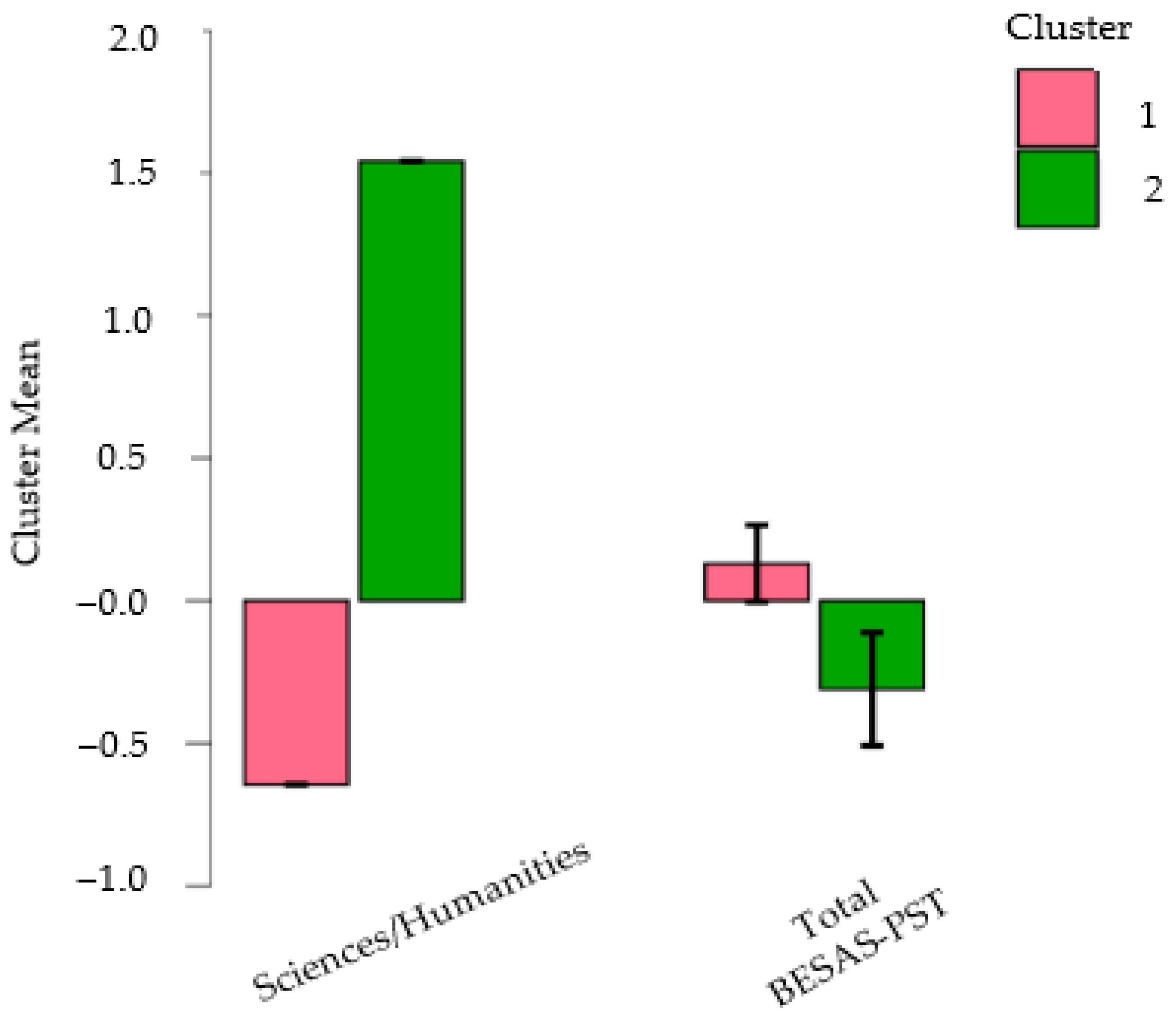
Figure 3 shows the differences between the identified clusters in the variables used for the analysis: academic orientation (Sciences/Humanities) and anxiety toward experimental sciences (total BESAS-PST score).
The left panel presents the standardized means of each cluster, while the right panel illustrates the density distributions of both variables for each group. As can be observed, the clusters differ mainly in the Sciences/Humanities variable. Cluster 1 shows negative values on this dimension (M = −0.65), indicating a stronger orientation toward humanities, whereas Cluster 2 shows clearly positive values (M = 1.54), reflecting a stronger orientation toward sciences. Regarding science anxiety (total BESAS-PST score), Cluster 1 showed a higher mean (M = 0.13) compared with Cluster 2 (M = −0.31).
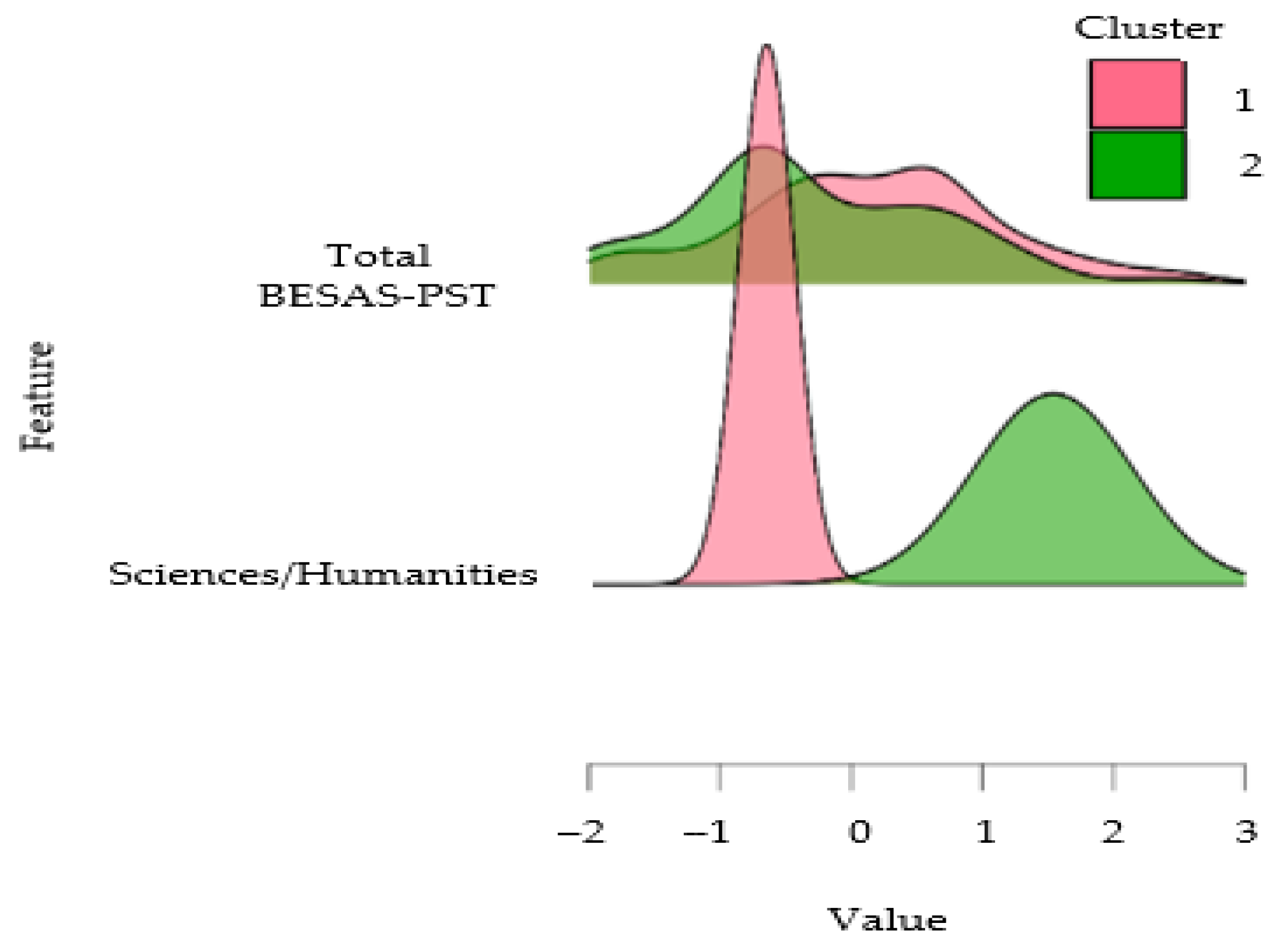
Finally, the cluster density plot showed clear differences between the groups in the variable of identification with academic areas (sciences vs. humanities). Cluster 2 showed higher values in terms of identification with sciences, whereas Cluster 1 was characterized by a greater orientation toward humanities (
Figure 4).
Regarding total anxiety (total BESAS-PST score), Cluster 1 showed slightly higher levels of anxiety compared to Cluster 2. Overall, these results indicated the existence of two distinct profiles: a science-oriented group with lower anxiety and a humanities-oriented group with relatively higher levels of anxiety.
4. Discussion
The results support the general objective of the study, providing consistent empirical evidence for the structural validity of the instrument in pre-service teachers. In line with the original model proposed by
Megreya et al. (
2021), both the exploratory and confirmatory factor analyses supported a bidimensional structure composed of LSA and SEA. This differentiation is consistent with the multidimensional conceptualization of academic emotions (
Pekrun, 2014) and with research that distinguishes between learning contexts and evaluative situations as differentiated sources of anxiety activation (
Krueger & Markon, 2014).
From an integrative theoretical perspective, anxiety toward experimental sciences can be conceptualized as a multidimensional construct that integrates emotional, cognitive, and motivational components linked to the development of academic and professional identity (
Pekrun et al., 2002). In the context of initial teacher education, this emotion acquires particular relevance, since emotional experiences associated with scientific learning may influence not only immediate academic performance but also relevant training variables such as teaching self-efficacy, pedagogical beliefs, and the future willingness to teach scientific content (
Galimova et al., 2024;
Novak et al., 2022). In this sense, understanding science anxiety in pre-service teachers makes it possible to analyze how emotional experiences during initial training may contribute to the configuration of teachers’ future engagement with science teaching. Compared with the original scale, the new scale, called the
Brief Experimental Science Anxiety Scale for Pre-Service Teachers (BESAS-PST), replicates the bifactorial structure of the original instrument and presents adequate confirmatory fit indices, supporting the stability of the model in the Spanish university context.
The magnitude of the interfactor correlation observed in the confirmatory model can be explained by the estimation procedure, which explicitly accounts for measurement error. Confirmatory factor analysis allows for the explicit modeling of error variance associated with observed indicators, which generally produces more precise estimates of latent relationships (
Brown, 2015;
Kline, 2015). In any case, the value obtained in the confirmatory model does not reach levels that would indicate excessive collinearity, remaining within acceptable ranges for constructs that are related but empirically distinguishable (
Marsh et al., 2004). These results support the discriminant validity of the instrument in the analyzed context. Regarding reliability, the internal consistency coefficients obtained were high, even higher than those reported in the original validation. This finding suggests that the linguistic and contextual adaptation of the items did not compromise the internal coherence of the instrument but may have contributed to strengthening its stability in the university context of teacher education.
With respect to H1, the results show significantly higher levels of anxiety toward experimental sciences in women than in men, consistent with previous research in the STEAM field (
Boateng et al., 2025;
Rozgonjuk et al., 2024), thus supporting the proposed hypothesis. From the perspective of academic identity (
Hazari et al., 2010) and Expectancy–Value Theory (
Eccles & Wigfield, 2020), these differences may be interpreted in relation to motivational and sociocultural factors such as perceived competence, the subjective value attributed to science, or the internalization of gender stereotypes, rather than as a reflection of objective differences in ability. Moreover, given that science anxiety has been associated with lower levels of teaching self-efficacy and with a lower willingness to engage in educational and professional pathways related to the STEAM field (
Gorospe, 2022;
Jiang et al., 2025), these results highlight the importance of incorporating a gender perspective in initial teacher education programs.
Regarding H2, the results did not show a statistically significant association between anxiety toward experimental sciences and academic performance, and therefore the hypothesis was not supported. However, this finding should be interpreted with caution. Although academic performance was measured using the average grade in experimental sciences subjects, the relationship between anxiety and academic performance does not always manifest directly. The recent literature suggests that the effects of anxiety on performance may depend on its interaction with relevant psychological variables such as academic self-efficacy, emotional regulation, or disciplinary identity. In this sense, recent meta-analyses indicate that academic performance emerges from the complex interaction between emotional, motivational, and contextual factors, whose effects do not always manifest in a linear manner (
Camacho-Morles et al., 2021;
Fong & Krause, 2025). Consequently, future research should consider more comprehensive explanatory models that allow the examination of possible mediating or indirect effects between anxiety toward experimental sciences and academic performance.
Regarding H3, the results support the hypothesis by identifying, through cluster analysis, two differentiated anxiety profiles associated with disciplinary identification with Sciences or Humanities, in line with the literature on academic identity (
Brígido et al., 2010). The higher anxiety observed in the profile linked to the Humanities suggests that disciplinary identification may play a relevant role in shaping the emotional experience toward experimental sciences. This finding highlights the importance of promoting strategies aimed at the development of a positive scientific identity in initial teacher education. In this regard, it is particularly relevant to incorporate active methodologies in the teaching of experimental sciences, strengthen students’ self-efficacy, promote emotional regulation, and make diverse STEAM role models visible in experimental science education courses aimed at future early childhood and primary education teachers (
Soriano-Sánchez et al., 2026).
Building on these findings, several potential implications for experimental science education can be outlined, although they should be interpreted with caution given the cross-sectional and descriptive nature of the study. First, the differentiation observed between learning and evaluation contexts suggests that instructional approaches could be designed taking into account both dimensions, promoting learning environments perceived as safe and emotionally supportive. This perspective is consistent with the multidimensional nature of academic emotions and the role of emotional activation contexts in learning (
Pekrun, 2014;
Krueger & Markon, 2014). For example, future research could examine the implementation of inquiry-based instructional sequences in which errors are framed as learning opportunities, as well as the diversification of assessment methods to reduce the pressure associated with traditional testing. This approach aligns with research highlighting the importance of active methodologies to enhance student engagement and reduce anxiety in science learning contexts (
Hernández del Barco et al., 2022). Similarly, structuring practical activities progressively, with appropriate instructional support, may contribute to fostering students’ understanding and confidence in laboratory or problem-solving situations. These strategies may help reduce anxiety activation and promote a more positive relationship with scientific knowledge, in line with student-centered and competence-based approaches (
Pekrun et al., 2002). In this regard, it may be relevant to move beyond mere content transmission by incorporating active methodologies, guided practical work, and inquiry-based approaches that reduce the perceived threat associated with errors or evaluation. Second, the identification of differentiated profiles linked to academic orientation highlights that not all pre-service teachers start from the same point in their relationship with science, reinforcing the need for a pedagogy that is sensitive to the diversity of students’ trajectories, beliefs, and emotions. This finding is consistent with research emphasizing the role of academic and disciplinary identity in shaping emotional experiences toward learning (
Hazari et al., 2010;
Eccles & Wigfield, 2020). In this sense, it may be relevant to promote learning experiences that contribute to the development of a positive scientific identity and a sense of competence, particularly among those who feel more distant from science.
Moreover, given that the previous literature has linked science anxiety to variables such as teaching self-efficacy and the willingness to teach scientific content (
Bandura, 1997;
Solanon & San Jose, 2025), the assessment of anxiety through instruments such as the BESAS-PST may provide a useful basis for future research aimed at designing and evaluating educational interventions. In this sense, future studies could explore strategies such as emotional regulation, progressive scaffolding, and the visibility of diverse role models within the STEAM field. This can be operationalized, for example, through guided reflection activities on students’ own emotions toward science, the use of error-management dynamics in laboratory contexts, or the design of tasks with progressively increasing levels of difficulty. Likewise, it may be relevant to examine how training future teachers in recognizing and managing anxiety in the classroom could influence pedagogical practices that reinforce confidence, participation, and a sense of competence in science learning (
Avraamidou, 2014).
Overall, these findings contribute to the understanding of the role of emotional factors in science learning within initial teacher education. In this regard, the affective dimension can be considered a relevant component in the analysis of teaching and learning processes, aligning with contemporary perspectives that integrate emotion, cognition, and motivation (
Camacho-Morles et al., 2021). However, further research is needed to examine how these emotional processes may be translated into specific instructional practices and educational interventions. First, sampling convenience from a single university restricts the generalization of the results to other institutional and sociocultural contexts. Likewise, the cross-sectional design prevents the establishment of causal relationships between anxiety toward experimental sciences and the variables analyzed. In addition, although gender invariance was evaluated, the temporal stability of the instrument and its predictive validity in relation to relevant variables such as science teaching anxiety, academic self-efficacy, or specific performance in science were not examined. Similarly, the absence of additional indicators of external validity limits the consolidation of the nomological network associated with the BESAS-PST. In this regard, future research should replicate the factorial structure of the instrument in larger and more diverse samples and incorporate longitudinal designs that allow the analysis of its temporal stability. Although academic performance in experimental sciences was assessed through students’ average grades, this measure represents a general indicator and does not capture more specific, standardized, or multidimensional aspects of academic performance. Such research may help to better understand the potential implications of science anxiety for teaching practice and the design of educational interventions.
In sum, the BESAS-PST (see
Appendix A) constitutes a valid tool for assessing levels of anxiety toward experimental sciences in initial teacher education. Its application may serve as a useful tool for future research aimed at informing the design of interventions focused on strengthening self-efficacy, emotional regulation, and the scientific identity of pre-service teachers, thereby contributing to a more inclusive and equitable science education.
5. Conclusions
The BESAS-PST emerges as a valid and reliable instrument for research and as a useful tool for detecting anxiety toward experimental sciences in initial teacher education. Beyond its value as a measurement instrument, the findings suggest that anxiety toward experimental sciences may be considered a relevant variable in the analysis of teaching and learning processes.
The identification of significant differences according to gender and profiles associated with academic identity highlights the relevance of emotional and identity-related factors in the learning experience related to experimental sciences. These findings emphasize the need to integrate training strategies aimed at strengthening self-efficacy, emotional regulation, and the development of a positive scientific identity among future teachers.
From this perspective, initial teacher education programs may benefit from considering the integration of emotional, cognitive, and motivational dimensions in science teaching. However, further empirical research is required to examine how such approaches may contribute to reducing perceived threat and fostering confidence in engaging with scientific content. Therefore, addressing anxiety toward experimental sciences can be understood as a promising line for future research and pedagogical innovation, rather than as a direct implication established by the present study.