1. Introduction
In engineering education, the passive transmission of knowledge has proven to be insufficient to prepare students for solving complex problems and making evidence-based decisions in real-world contexts. Traditional education in this field has relied heavily on lecture-based teaching, where students assume a passive role, which hinders the development of key competencies such as creativity, collaboration, and adaptability (
Lima et al., 2017). As argued by
Prince (
2004), traditional lecture-based instruction often results in lower student engagement, while active learning methods (e.g., collaborative and problem-based learning) show stronger potential for developing problem-solving skills in engineering education.
Active learning methodologies have emerged as fundamental strategies for improving engineering education. These approaches are associated with significant gains in STEM student performance (
Freeman et al., 2014), likely reflecting improvements in higher-order thinking skills such as application and analysis. These approaches promote a student-centered focus, where knowledge is constructed through experience, inquiry, and reflection, thus improving knowledge retention and student motivation (
Christie & De Graaff, 2017;
Lacuesta et al., 2009).
Among these methodologies,
Problem-Based Learning (PBL) has been widely adopted in engineering. In PBL, students work to solve real or simulated problems rather than acting as passive recipients of information.
Barrows (
1986), one of the pioneers PBL, emphasized that this approach enhances learners’ ability to apply knowledge in unfamiliar contexts, which is a critical skill for engineering practice. Recent studies reinforce this finding, demonstrating that PBL significantly improves adaptive problem-solving, long-term knowledge retention, and the ability to tackle real-world engineering challenges (
Hafizah et al., 2024;
Mann et al., 2021).
The efectiveness of PBL has been demonstrated in fostering critical thinking and problem-solving skills (
Vodovozov et al., 2021). PBL encourages autonomous learning and the integration of multidisciplinary knowledge, both essential aspects in the engineering field.
By promoting autonomous learning and the integration of multidisciplinary knowledge, PBL addresses key competencies required in the engineering field, such as critical thinking and problem-solving skills (
Vodovozov et al., 2021).
Nevertheless, PBL also presents significant challenges, such as the increased time required for activity planning and the need for faculty training to facilitate learning effectively. Furthermore, its implementation can be constrained by large class sizes, making effective supervision more difficult. Another major challenge lies in the proper design of problems that balance workload and allow for fair assessment (
Dominguez et al., 2019).
Cooperative Learning, in contrast, is based on the idea that students learn better when working in small groups towards a shared objective. This methodology enhances communication, leadership, and teamwork skills and has been shown to improve academic performance and student engagement (
Neves et al., 2021). The greatest difficulty with this approach lies in team structuring. Additional effort is required to balance group composition, and it is essential that all members participate actively to prevent uneven workload distribution.
From a professional competency standpoint,
Project-Based Learning (PjBL) is another key methodology in engineering, enabling students to develop comprehensive projects throughout the course while integrating knowledge and skills from multiple disciplines. Research has shown that this methodology facilitates a deeper understanding of technical concepts and reinforces students’ intrinsic motivation (
Senthil, 2020). However, its implementation may face difficulties, especially in the assessment of learning outcomes and the balance between student workload and course objectives.
The
Flipped Classroom approach has gained popularity in engineering education, as it allows students to access theoretical materials before class, using classroom time for clarification and hands-on activities. This methodology has been shown to improve student engagement and content comprehension compared to traditional lectures (
Hartikainen et al., 2019).
Bishop and Verleger (
2013) argue that the flipped classroom model optimizes class time for active learning-shifting lower-order cognitive tasks (e.g., lectures) to pre-class work. This structure aligns well with engineering education, where problem solving and collaboration in class are critical (e.g., (
Gong et al., 2024;
Karabulut-Ilgu et al., 2018;
Lo & Hew, 2019)). The key to the success of the flipped classroom is the availability of high-quality self-learning materials and the commitment of students to review the content beforehand. In addition, designing interactive classroom activities is critical to maximize the benefits of this approach. Flipped classroom strategies help structure a more collaborative learning environment, with a focus on the learning process rather than the final product, thus strengthening students’ reflective and argumentative abilities (
Pinto et al., 2020).
Service-Learning (SL) is an educational strategy that combines academic learning with community service. It provides a framework for integrating engineering education with social responsibility. By addressing real community problems, students apply their technical knowledge in practical contexts, strengthening the link between theory and practice. This approach enhances not only technical competencies but also interpersonal skills such as leadership and teamwork (
Sánchez et al., 2016). Nevertheless, implementing SL in engineering poses challenges, including coordinating with external organizations and ensuring learning objectives are met without compromising service quality. Moreover, evaluating learning outcomes in SL can be difficult to standardize, as results depend largely on interactions between students, teachers, and partner organizations (
Rieg et al., 2022).
Finally, the
Thinking Classroom methodology proposed by Peter Liljedahl (
Liljedahl et al., 2016) introduces a framework based on critical thinking and creative exploration. In engineering, it fosters dynamic team formation and encourages informed decision-making through structured reasoning and group discussions. Its use has been shown to promote student autonomy and better equip them to tackle complex problems, similar to those encountered in mathematically intensive contexts (
Liljedahl, 2020). Liljedahl demonstrated that non-routine problem tasks and visible thinking spaces can radically transform student engagement and autonomy in mathematical contexts, with potential for transfer to engineering. The main difficulty in implementing this methodology lies in the necessary mindset shift for both instructors, who must transition from knowledge transmitters to learning facilitators, and for students, who must adapt to environments where no single right answer exists, and learning requires responsibility, collaboration, and continual justification of decisions. This can be frustrating for those accustomed to traditional and structured teaching methods.
Despite its potential relevance for engineering education, empirical research on the Thinking Classroom (TC) framework beyond mathematics remains scarce. A recent work-in-progress report by
Gray (
2024) outlined preliminary adaptations of TC to engineering but lacked a systematic evaluation of its impact on student learning outcomes and perceptions. This gap underscores the need for evidence-based studies that explore how TC principles, such as visible thinking, random group formation, and problem-centered learning, affect key graduate-level competencies like autonomy and problem-solving in technical domains.
The present study addresses this gap by implementing and evaluating selected TC practices within a master’s-level mechanical engineering course. Using a sequential explanatory mixed-methods design, it examines how the integration of TC practices influences student autonomy, collaboration, and problem-solving performance in simulation-based practical sessions. Specifically, the study seeks to answer the following research questions (RQs):
RQ1. How does the implementation of selected TC practices affect graduate engineering students’ autonomy and problem-solving skills?
RQ2. What relationship exists between the application of TC practices and students’ academic performance in competency-based assessments?
RQ3. What facilitators and barriers do students perceive when engaging with TC practices in a technically intensive course?
In this study, autonomy is conceptualized in line with Self-Determination Theory not as a discrete competency comparable to problem-solving skills, but as a subjective psychological experience related to perceived agency, choice, and ownership of learning processes. Accordingly, autonomy is examined through students’ self-reported perceptions of agency and engagement within an autonomy-supportive learning environment, while problem-solving is treated as a competence reflected in task performance and adaptive reasoning.
RQ1 and RQ3 are primarily addressed through students’ self-reported perceptions, experiences, and qualitative feedback, capturing subjective dimensions such as perceived autonomy, collaboration, and adaptive problem-solving. RQ2 combines objective academic performance data (historical comparison of examination results) with interpretive analysis, acknowledging the exploratory and contextual nature of the findings. By using a sequential explanatory mixed-methods approach, quantitative trends are interpreted and contextualized through qualitative evidence.
This empirical investigation contributes to the limited body of research on active learning frameworks in graduate engineering education. It provides insights into how TC principles can be adapted to technically complex environments, supporting the pedagogical goals of the European Higher Education Area (EHEA), which emphasizes competence-based, student-centered learning and the development of transversal skills such as critical thinking, collaboration, and autonomy (
Grek & Russell, 2024;
Rich, 2010).
2. Theoretical and Conceptual Framework: Building Thinking Classrooms in Engineering Education
The
Thinking Classroom (TC) framework, developed by Peter Liljedahl, emerged from over fifteen years of empirical research in more than four hundred classrooms (
Liljedahl et al., 2016). Rooted in constructivist and sociocultural learning theories, the TC emphasizes how knowledge construction occurs through interaction, exploration, and reflection rather than passive reception. In this model, learners are positioned as active agents who build understanding collaboratively, while teachers act as facilitators guiding inquiry and reasoning. This paradigm aligns with long-established perspectives in engineering education that advocate for student-centered learning and experiential engagement (
Freeman et al., 2014;
Prince, 2004).
From a theoretical standpoint, several learning theories provide a foundation for interpreting how the TC framework operates in higher education, particularly in technically intensive fields such as engineering:
Sociocultural and Constructivist Learning. Learning occurs through interaction and participation in social contexts (
Vygotsky, 1978). The TC’s use of random group formation, peer discussion, and visible reasoning spaces operationalizes this principle, fostering co-construction of understanding and distributed cognition. Collaborative problem solving supports not only individual knowledge acquisition but also collective regulation of thought, consistent with contemporary research on social constructivism in STEM (
Pintrich, 2002;
Xu et al., 2023).
Self-Determination and Motivation. According to Self-Determination Theory (SDT), motivation and engagement are driven by autonomy, competence, and relatedness (
Deci & Ryan, 2000). The TC’s emphasis on student choice, self-directed exploration, and collaborative inquiry nurtures these psychological needs, leading to sustained engagement and intrinsic motivation. Empirical studies in engineering education confirm that autonomy-supportive learning environments enhance persistence and self-regulation (
Ferrer et al., 2022).
Metacognition and Visible Thinking. The TC framework externalizes cognitive processes, making reasoning observable through dialogue and visual representations. This aligns with research showing that metacognitive monitoring (planning, evaluating, and regulating one’s learning) predicts academic success in STEM disciplines (
Akturk & Sahin, 2011;
Pintrich, 2002). Non-permanent vertical surfaces and collective reflection enable learners to visualize thought processes, thus promoting shared metacognitive awareness (
Lang, 2021).
Situated Cognition and Authentic Learning. The TC’s task design encourages learning through authentic, problem-centered engagement. This reflects the principles of situated cognition (
Chunxian, 2020) and experiential learning (
Kolb, 2014), where knowledge develops through iterative action and reflection. In engineering contexts,
low-floor, high-ceiling problems allow learners to connect theoretical principles with real-world scenarios, supporting transfer and adaptive expertise.
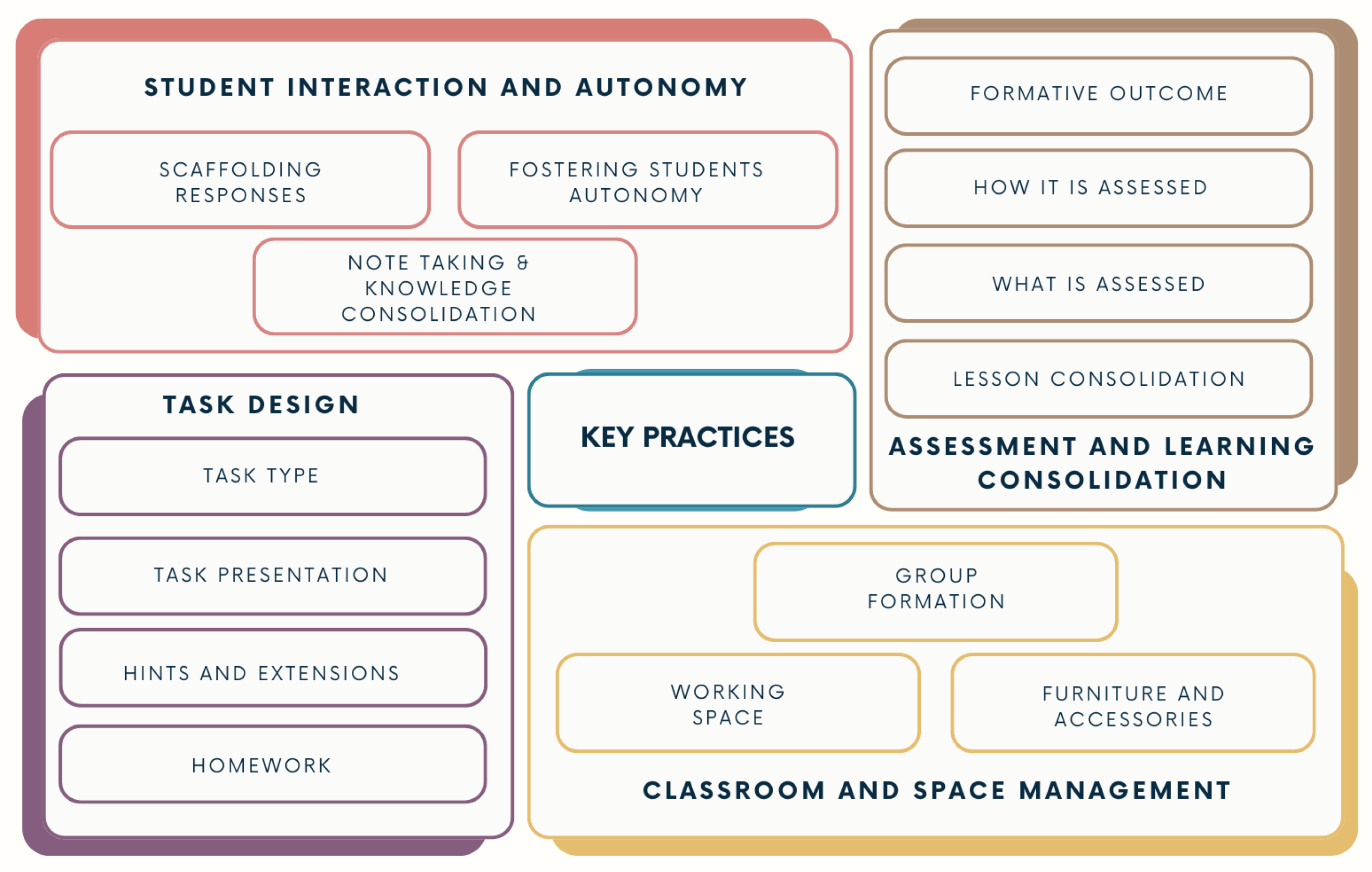
To operationalize this transformation, Liljedahl articulated a framework of 14 key instructional practices to be implemented progressively. These practices can be organized into thematic clusters that address common challenges in the design, facilitation, and evaluation of teaching and learning activities (see
Figure 1).
2.1. Task Design
Task design within the TC framework operationalizes constructivist and experiential learning principles by engaging students in open-ended, non-routine problems that stimulate reflection and adaptive reasoning. These low-floor, high-ceiling tasks accommodate a wide range of abilities, enabling all students to enter the problem space while challenging advanced learners to extend their thinking. In engineering education, such tasks encourage adaptive expertise, i.e., the ability to transfer conceptual knowledge to novel technical contexts. Their progressive structure supports scaffolding and metacognitive regulation, key components of self-directed learning (
Pintrich, 2002).
2.2. Classroom and Space Management
The physical and social organization of learning environments plays a central role in supporting visible thinking and collaboration. Random group formation and mobility within flexible classroom layouts foster social learning consistent with sociocultural theory (
Vygotsky, 1978). The use of non-permanent vertical surfaces, such as whiteboards and windows, externalizes cognition and enables peer explanation, which research has shown to enhance conceptual understanding and teamwork efficiency in STEM contexts (
Neves et al., 2021). Thus, classroom space becomes an active cognitive scaffold that supports distributed reasoning and shared regulation of thought.
2.3. Student Interaction and Autonomy
Student–teacher interaction in the TC model exemplifies the principles of Self-Determination Theory (
Deci & Ryan, 2000) by shifting agency from the instructor to the learner. Teachers function as facilitators who guide inquiry through reflective questioning rather than direct instruction, thereby promoting autonomy and competence. This learner-centered approach encourages metacognitive monitoring, persistence, and intrinsic motivation or factors consistently associated with improved performance and engagement in engineering education. This reconfiguration supports the EHEA goal of fostering learner autonomy, metacognitive awareness, and the capacity for lifelong learning.
2.4. Assessment and Learning Consolidation
Assessment within the TC framework emphasizes formative, process-oriented evaluation, aligning with contemporary calls for authentic assessment in STEM education. In this context, process-oriented competencies refer to students’ ability to engage with the problem-solving process itself rather than to the production of a single correct result. Examples include formulating and justifying modeling assumptions, iteratively refining solutions in response to unexpected outcomes, checking the physical plausibility of results, strategically selecting and comparing simulation tools, and making reflective decisions under uncertainty. These competencies are characteristic of authentic engineering practice and were actively exercised during the TC-based simulation tasks. Through class-wide reflection and iterative feedback, students analyze both their reasoning and their errors, developing metacognitive awareness and critical judgment. Transparent rubrics and immediate feedback strengthen students’ sense of competence and ownership of learning, reinforcing the cycle of self-regulated improvement central to the TC philosophy.
3. Course Context
The course Design and Testing of Machines is a core subject in the first semester of the Master’s program in Industrial Engineering at University of Extremadura. It carries 4.5 European Credit Transfer System (ECTS), approximately 112 total student work hours, and forms part of the Industrial Technologies module within the area of Mechanical Technology. The course aims to equip students with the competencies required to design and test mechanical systems, integrating analysis, synthesis, simulation, and control of mechanisms in the context of modern engineering practice.
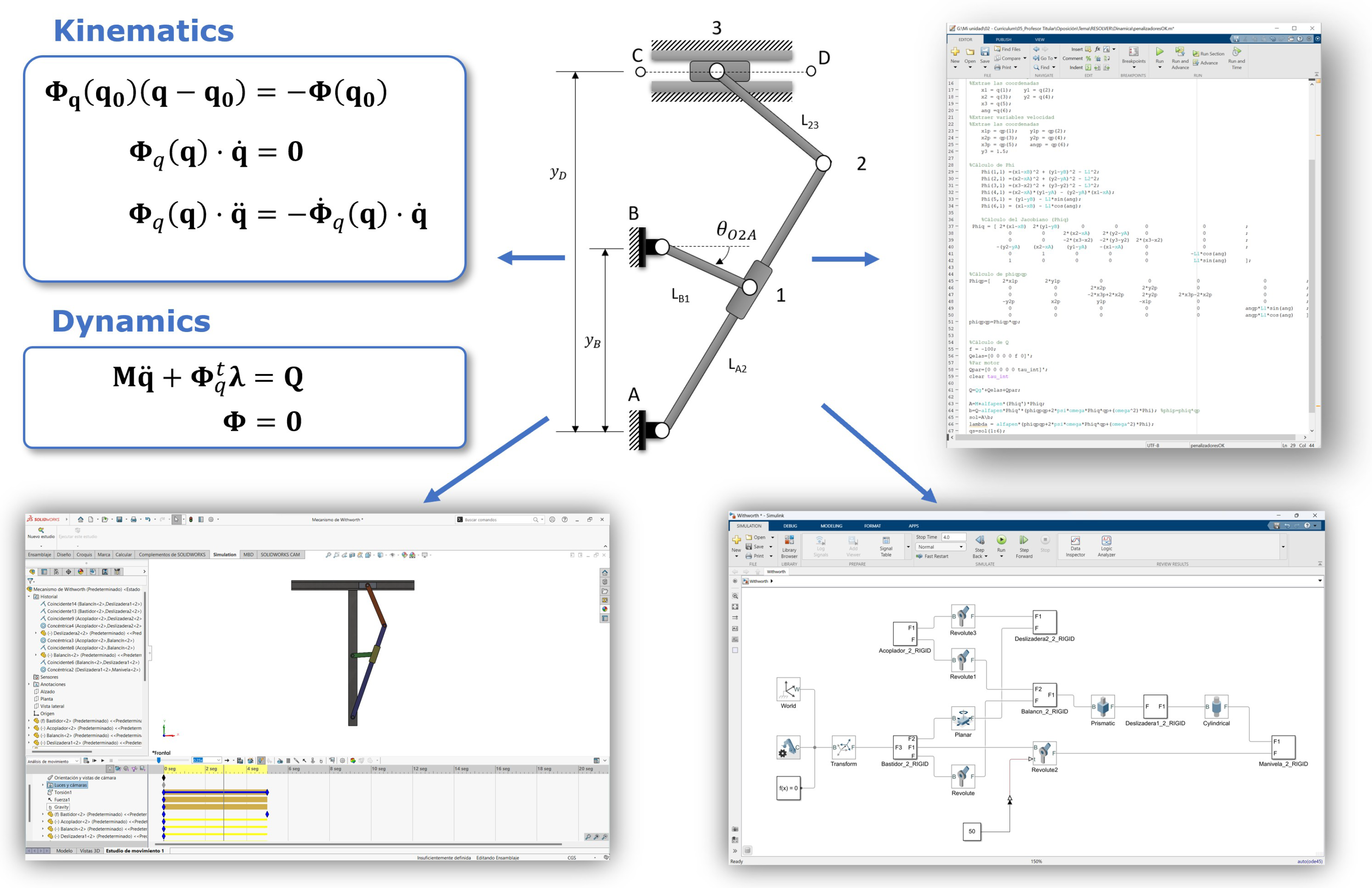
The syllabus is structured into five thematic blocks: (1) introduction to machine and mechanism design, (2) mechanism synthesis, (3) kinematic analysis, (4) dynamic analysis of mechanical systems, and (5) machine testing. Practical sessions play a central role and focus on simulation and computational modeling using Computer-Aided Engineering (CAE) tools (see
Figure 2). Learning outcomes include the ability to design and evaluate mechanical systems and to apply advanced simulation techniques to solve engineering problems.
Traditionally, the course combines lectures, problem-solving sessions, and laboratory-based activities supported by information and communication technologies (ICT) and project-based learning approaches linked to real-world engineering contexts. Assessment comprises both theoretical-practical examinations and technical reports, encouraging deep conceptual understanding and applied reasoning.
Given its emphasis on simulation-based inquiry and iterative problem-solving, the course aligns closely with the theoretical foundations of the Thinking Classroom framework, particularly those related to constructivist and metacognitive approaches to learning. Its practical orientation and the complexity of the problems addressed provide a suitable context for implementing the TC methodology, which demands critical analysis, collaboration, and evidence-based decision-making. The use of randomly formed student groups mirrors professional engineering practice, fostering interdisciplinary cooperation and justification of technical choices. Furthermore, the progressive nature of the assignments, which build upon one another, reflects the iterative design-analysis-evaluation cycle central to professional engineering.
This course therefore served as the implementation site for the Thinking Classroom intervention described in the following section, offering a realistic environment to investigate how TC practices influence autonomy, collaboration, and problem-solving in graduate engineering education.
4. Implementation of the Methodology
The Thinking Classroom (TC) framework was implemented within the computer-based practical sessions of the Design and Testing of Machines course. This intervention was designed to explore how selected TC practices could foster autonomy, collaboration, and problem-solving among graduate engineering students (RQ1–RQ3). Specifically, it operationalized key constructs from the theoretical framework (social constructivism, self-determination, and metacognition) through task design, spatial organization, and group interaction.
4.1. Implementation Design and Objectives
The intervention focused on the topic of kinematic and dynamic analysis of machines, a central module in which students apply core concepts in mechanics, such as Jacobian matrix construction, matrix derivation, and iterative numerical methods. These concepts were ideal for TC-based learning because they require both conceptual reasoning and procedural implementation in different computational environments. After a brief theoretical introduction, students were challenged to simulate a quick-return mechanism. In this context, low floor–high ceiling tasks were designed by extending students’ prior ability to solve planar mechanism kinematics at discrete positions toward the simulation of a complete operating cycle. Students were asked to compute the kinematics of a planar mechanism at discrete configurations, a task aligned with prior knowledge. The same task was then naturally extended to simulate the mechanism over a full operating cycle. This extension prompted students to question result validity, numerical stability, and parameter influence. More advanced exploration included analyzing how kinematic outputs inform design decisions, such as actuator selection, component sizing, or performance optimization. This low floor–high ceiling structure allowed all students to engage at an appropriate level while enabling deeper inquiry for those ready to extend their reasoning. Given the diversity of academic backgrounds (Mechanical, Electronic and Automation, Industrial Chemistry, and Industrial Design Engineering) students were free to select the simulation tool most aligned with their prior expertise (e.g., MATLAB, Simulink’s Simscape Multibody, or SolidWorks). This open-choice structure supported autonomy and competence development, two pillars of Self-Determination Theory (
Deci & Ryan, 2000). It also encouraged peer explanation and reciprocal learning, as students with different technical strengths collaborated on equivalent challenges, promoting distributed cognition and social knowledge construction (
Xu et al., 2023).
4.2. Classroom Setting and Practices
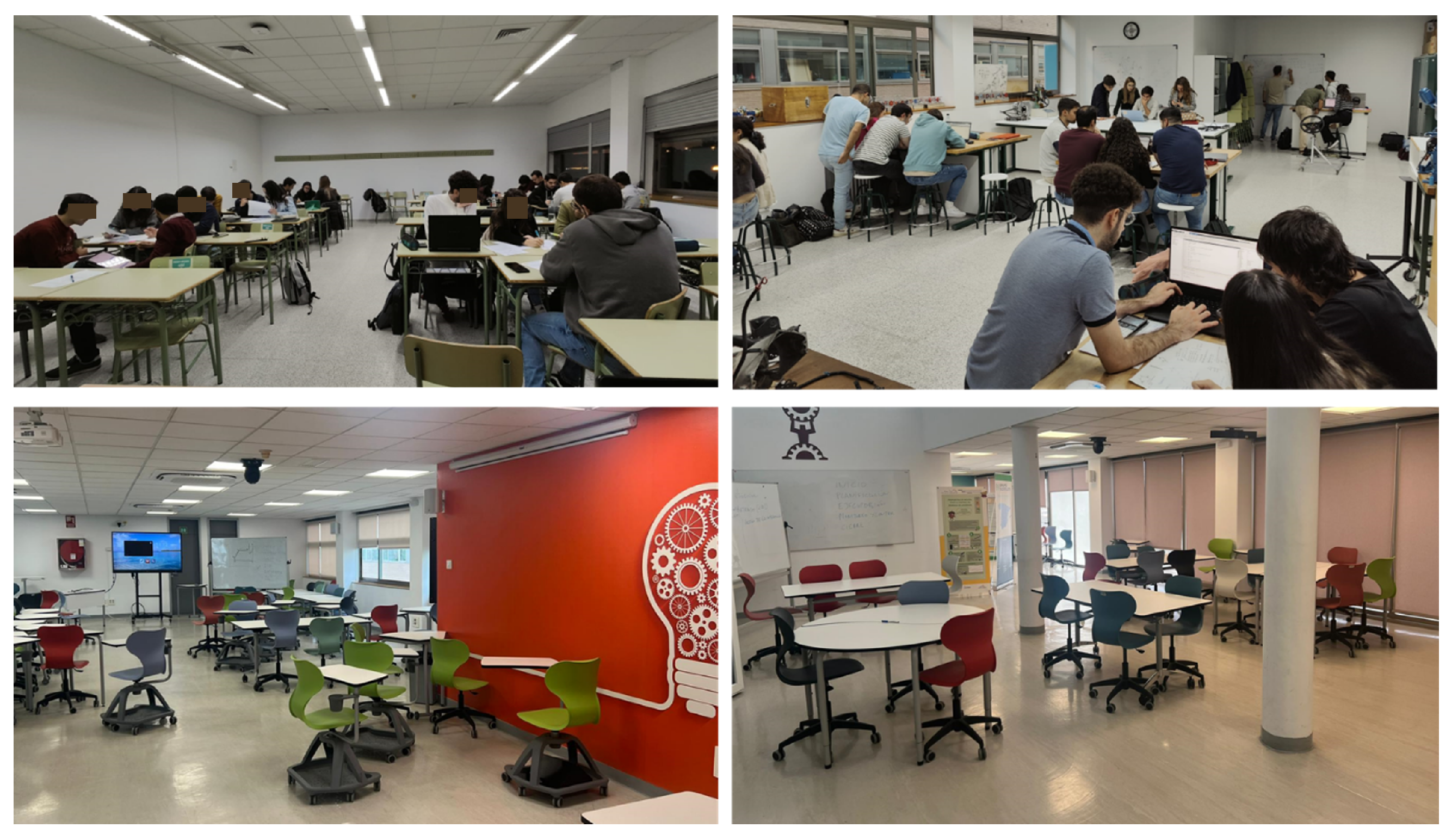
The laboratory’s physical configuration facilitated several TC practices (
Figure 3). Students could move freely, discuss openly, and use non-permanent surfaces to make their reasoning visible, fostering metacognitive awareness and immediate peer feedback.
Student groups were formed randomly and transparently at the beginning of each practical session. Group composition was determined in front of students using simple randomization procedures adapted to attendance on the day, such as drawing cards, assigning marked tokens, or generating groups automatically using a digital tool or AI-based grouping function. These procedures ensured that group formation was perceived as impartial and non-strategic. Group composition was varied across sessions, allowing students to work with peers from different degree backgrounds and levels of prior familiarity with simulation tools. This approach aimed to prevent ability-based tracking, encourage peer explanation, and mirror the interdisciplinary collaboration typical of professional engineering contexts. This dynamic interaction reflected the TC principle of collective thinking and aligned with situated cognition theory, which emphasizes contextual learning through authentic, collaborative activity (
Hmelo-Silver et al., 2007;
Kolb, 2014).
Although the hyperclassrooms (modular spaces equipped with vertical whiteboards and flexible layouts) were unavailable due to scheduling, the mechanical engineering laboratory was adapted accordingly. Students used erasable markers on desktops to emulate vertical spaces for visible thinking, enabling them to externalize hypotheses, algorithmic structures, and design decisions.
Active discussion was sustained throughout each session. Instructors adopted a facilitative role aimed at supporting student inquiry rather than transmitting procedural knowledge. Rather than confirming correctness or providing solutions, instructors encouraged students to articulate their reasoning, justify modeling decisions, and reflect on alternative approaches. Guidance focused on observing group progress, identifying moments of conceptual difficulty or unproductive stagnation, and intervening through brief, targeted questions. Typical prompts included: “What assumptions are you making at this step?”, “How do you know that this result is physically plausible?”, “What evidence supports this parameter choice?”, “What would you expect to happen if the input speed were doubled?”, “Which parameters are driving this behavior?”, “Would these kinematic results be acceptable for a real machine, or “How would they influence your design decisions?”. Interventions were intentionally minimal and adaptive, with the goal of maintaining students’ cognitive ownership of the task while encouraging peer explanation, comparison of approaches, and reflective problem-solving. This instructional stance was consistent with Thinking Classroom principles and supported the development of learner agency and sustained engagement during technically complex simulation activities.
4.3. Scope and Limitations of Implementation
This study implemented a subset of the fourteen practices proposed in Liljedahl’s TC framework (
Liljedahl, 2020). Eleven practices were fully integrated, while three (homework design, note-taking strategies and explicit evaluation rubrics) were intentionally excluded in this pilot phase. The decision was driven by pragmatic considerations: (1) the course design did not include out-of-class assignments; (2) students were encouraged to rely on visual rather than written documentation, consistent with the principle of visible thinking; and (3) the existing assessment system already included comprehensive project reports and examinations. These adaptations maintain the integrity of the TC approach while ensuring contextual relevance and feasibility within a graduate engineering curriculum. Overall, this implementation created an authentic, flexible learning environment that operationalized the TC principles of autonomy, collaboration, and metacognitive regulation in a simulation-based engineering setting.
4.4. Development of Curricular and Non Curricular Tasks
The simulation syllabus is divided into two main components: kinematic simulation and dynamic simulation. For the purposes of this section, the kinematic simulation block is used as an example to illustrate the nature of the tasks undertaken. Throughout the course, students are introduced to modeling in natural coordinates (
De Jalon & Bayo, 2012;
Shabana, 2020), along with the governing equations necessary to compute the positions, velocities, and accelerations of the coordinates used in the model (see
Figure 2).
The core competency to be developed is the ability to independently understand and perform mechanical simulations. To achieve this, students follow a structured learning pathway designed to engage them with key concepts in simulation, including modeling in natural coordinates, linearization of the vector of constraint equations (), derivation of equations in matrix form, application of iterative methods, and error control. Each of these concepts is embedded within commercial software packages for mechanical system simulation. Consequently, mastering the theoretical foundations enables students to transition smoothly between different software environments they may encounter in their future professional careers. This approach ensures that they rely primarily on analytical reasoning skills, rather than on software-specific knowledge, which is generally considered a transferable and secondary competency.
The design of low floor–high ceiling in this context is guided by reflective prompts such as: “Given the tools I currently know, how can I solve this problem? Could I achieve the same result using alternative tools?”. The high-ceiling task consists of identifying the relationship between the mathematical formulation of the constraint equations and their implementation in the simulation approach selected by each group. At the low-floor level, tasks may involve assembling or modeling the system in the chosen software environment. Between these extremes lies a wide spectrum of intermediate concepts that students progressively explore and integrate to achieve the final objective.
A typical learning sequence to accomplish this within the four to five weeks allocated to this topic (out of the total 15 weeks of the course) follows this progression:
Week 1–2: Modeling in natural coordinates: from mathematical formulation to system implementation using software.
Week 3: Equations of motion: formulation and analysis of how the software processes and solves them.
Weeks 4–5: Simulation: from applying iterative methods to configuring the software environment and executing the simulation.
This progressive structure ensures that students not only acquire the technical skills required to perform mechanical simulations but also develop higher-order competencies such as problem decomposition, critical analysis, and adaptive use of tools, core principles of the Thinking Classroom methodology. By moving from low-floor to high-ceiling tasks, students are gradually challenged to bridge the gap between mathematical theory and practical implementation, fostering autonomy and adaptability. This alignment between curricular objectives and task design establishes a solid foundation for the subsequent evaluation of learning outcomes described in the following subsection.
4.5. Evaluation of Learning Outcomes
To evaluate the learning outcomes of the intervention, a mixed-methods approach was adopted. Quantitative data were collected through a comparative analysis of student performance in the final examination, while perceptual and qualitative data were obtained from a structured questionnaire administered immediately after the completion of the practical sessions (see
Table 1 for further details). This combination of performance-based indicators and self-reported perceptions enabled a multidimensional evaluation of the impact of the Thinking Classroom (TC) implementation, capturing both measurable academic outcomes and students’ subjective experiences.
4.5.1. Quantitative Performance Analysis
A comparative analysis of final examination scores was performed between the intervention cohort (2024–2025,
n = 21) and historical academic years (2016–2017 to 2023–2024,
n = 89, see
Table 2). Admission criteria and programme structure remained consistent across the academic years considered, and no systematic changes in student intake were identified. Given the non-normal distribution of scores and unequal group sizes, the non-parametric Mann–Whitney U test was employed.
Results showed higher achievement in the intervention cohort (Median = 5.60, IQR = 3.88–8.10) compared to historical controls (Median = 5.12, IQR = 3.50–6.50). Although this difference did not reach statistical significance (W = 1201, p = 0.101), the effect size indicated a small improvement associated with the educational intervention (Cliff’s = 0.23, 95% CI [−0.046, 0.474]). This corresponds to a 61.5% probability that a randomly selected student from the intervention group would outperform a student from historical cohorts. The positive trend, while preliminary, suggests potential benefits that warrant further investigation with larger sample sizes.
4.5.2. Perceptual and Qualitative Analysis
The structured questionnaire comprised eight Likert-scale items (Q1–Q8) assessing various aspects of the educational experience, plus one overall satisfaction item (c), all rated on a 4-point scale.
Table 3 details the survey questions for each category assessed and the response type. The instrument was administered to 23 engineering students across six different degree programs, including Mechanical Engineering (34.8%), Electronic and Automation Engineering (26.1%), Chemical Industrial Engineering (26.1%), Industrial Technologies (4.3%), Industrial Design Engineering (4.3%), and Electrical Engineering (4.3%).
Reliability analysis of the nine items measuring student perceptions yielded a Cronbach’s
= 0.75, indicating acceptable internal consistency for research purposes. All items showed positive intercorrelations, with no reverse-coded items requiring correction. The reliability level is considered good for educational research and adequate for the sample size (
Tavakol & Dennick, 2011).
Descriptive analysis revealed generally positive evaluations across all items, with mean scores ranging from 3.13 to 3.78 on the 4-point scale. Items Q5 and Q8 received the highest ratings (M = 3.78, SD = 0.67 and 0.60 respectively), while item Q7 showed the lowest mean score (M = 3.13, SD = 0.92) and greatest variability. The median response for most items was 4, indicating a strong positive skew in student perceptions.
Analysis by degree program showed consistent positive evaluations across all engineering disciplines, though with some variation in overall satisfaction levels. Mechanical Engineering students () provided the highest overall ratings (, ), followed by Electronic and Automation Engineering (, , ) and Chemical Industrial Engineering (, , ). Students from Industrial Technologies () reported the highest individual satisfaction (), while Electrical Engineering () and Industrial Design Engineering () showed moderate satisfaction levels ( and respectively). The generally positive ratings across all degree programs suggest broad acceptance of the educational intervention despite the diverse academic backgrounds.
Qualitative data from open-ended responses were analyzed using a descriptive qualitative approach structured by the thematic domains defined in the questionnaire. Responses were reviewed within each domain (e.g., group work, individual learning, methodology, perceived strengths and weaknesses) and synthesized to identify recurrent patterns and contrasts in students’ perceptions. This approach aimed to summarize and contextualize participants’ feedback in relation to the study’s research questions, rather than to generate new themes through open-ended thematic coding. Three predominant themes were revealed: (1) enhanced collaborative learning and peer knowledge exchange, (2) increased autonomy and adaptive problem-solving, and (3) challenges related to technical familiarization and time management. The integration of quantitative and qualitative findings provides a comprehensive understanding of the intervention’s impact on both academic performance and student learning experiences.
5. Results
This section presents the integrated findings from both quantitative and qualitative data analyses, providing a comprehensive overview of the intervention’s impact on student learning outcomes and perceptions
5.1. Quantitative Results: Academic Performance Trends
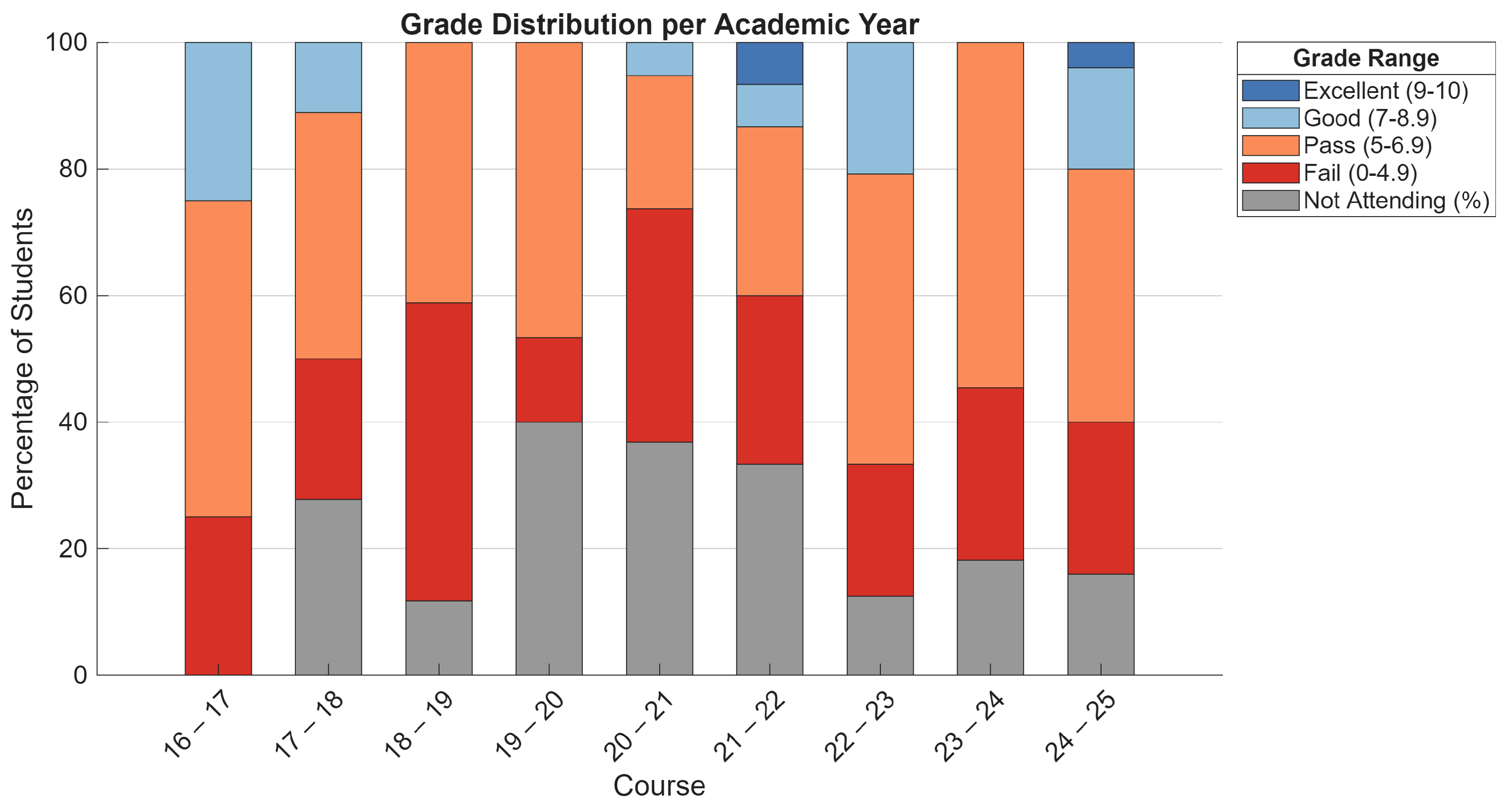
The analysis of final examination scores across nine academic years reveals notable patterns in student achievement. As illustrated in
Figure 4, the grade distribution for the intervention year (2024–2025) shows a marked increase in the
Good (7–8.9) and
Excellent (9–10) categories, accompanied by a reduction in failure rates and non-attendance compared to previous years. This visual trend suggests a positive shift in academic performance following the implementation of TC practices.
The statistical comparison between the intervention cohort and historical controls further supports this trend. Although the Mann–Whitney U test did not reach statistical significance (, p = 0.101), the observed effect size (Cliff’s = 0.23) and the 61.5% probability of superiority indicate a meaningful, albeit small, improvement in academic performance.
5.2. Qualitative Results: Student Perception Patterns
Analysis of the Likert-scale questionnaire responses revealed consistently positive evaluations across all measured constructs.
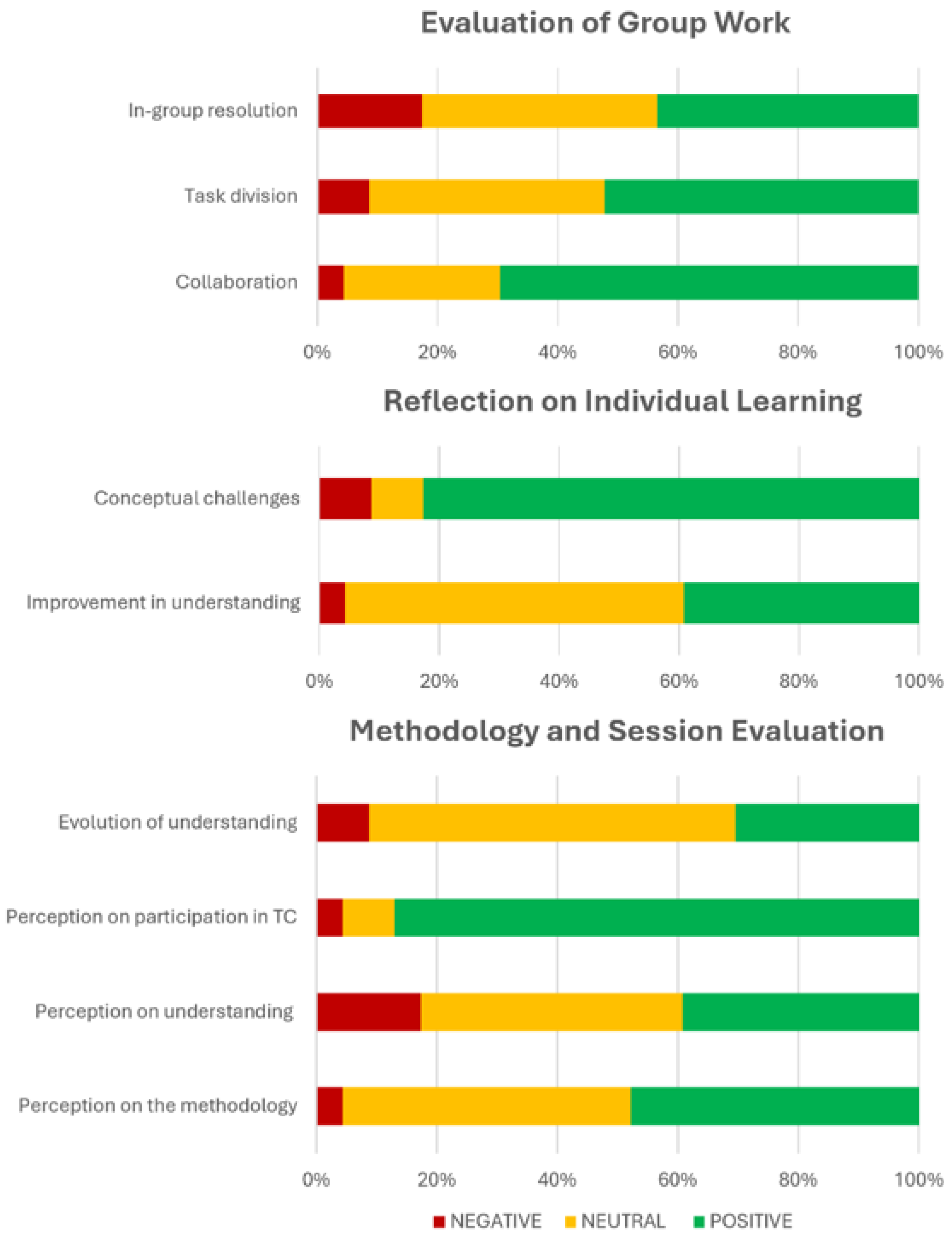
Figure 5 illustrates the distribution of student responses across three key dimensions: group work evaluation, individual learning reflection, and methodology assessment.
The results demonstrate particularly strong positive responses in the Methodology and Session Evaluation dimension, with participation perception yielding the highest positive agreement (87%). In the Evaluation of Group Work dimension, collaboration received overwhelmingly positive feedback (70% positive), while task division showed more varied responses (52% positive). The Reflection on Individual Learning dimension revealed that students felt particularly confident in addressing conceptual challenges (80% positive), though perceptions of understanding improvement were more balanced.
The qualitative analysis of open-ended responses provided rich insights into students’ learning experiences, highlighting three recurrent patterns that complement the quantitative findings.
5.2.1. Enhanced Collaborative Learning
Students frequently emphasized the value of random group formation and visible thinking activities in fostering meaningful collaboration. One student noted: “Working with peers from different engineering backgrounds exposed me to alternative problem-solving approaches I wouldn’t have considered alone.” The use of non-permanent surfaces for visualizing reasoning was particularly appreciated, with multiple students describing how this practice “made complex concepts more tangible and easier to discuss.”
5.2.2. Increased Autonomy and Adaptive Problem-Solving
The flexibility in tool selection emerged as a significant factor in promoting student autonomy. As one Mechanical Engineering student expressed: “Being able to choose MATLAB allowed me to leverage my strengths while learning from peers using Simulink.” This autonomy, however, presented initial challenges for some students, particularly those less familiar with certain software environments, who reported “a steep learning curve in the first sessions.”
5.2.3. Identified Challenges and Adaptation Strategies
Time management emerged as a consistent concern, with several students noting that “the open-ended nature of tasks sometimes made it difficult to complete simulations within session timeframes.” Additionally, the absence of predefined group roles occasionally led to uneven participation, though many students developed organic strategies to address this, such as “naturally rotating leadership based on task requirements.”
5.3. Integrated Analysis
The convergence of quantitative and qualitative data reveals a coherent narrative about the intervention’s impact. While statistical significance was not achieved in academic performance metrics, the combination of positive grade distribution trends, strong effect sizes, and overwhelmingly positive student perceptions suggests that the TC practices meaningfully influenced the learning environment.
The qualitative analysis provides explanatory depth to the quantitative findings, illustrating how specific TC elements (particularly random group formation, tool flexibility, and visible thinking) contributed to both the observed performance trends and high satisfaction ratings. The challenges identified in qualitative responses also offer important context for interpreting the more neutral responses in certain questionnaire items, particularly regarding task division and time management.
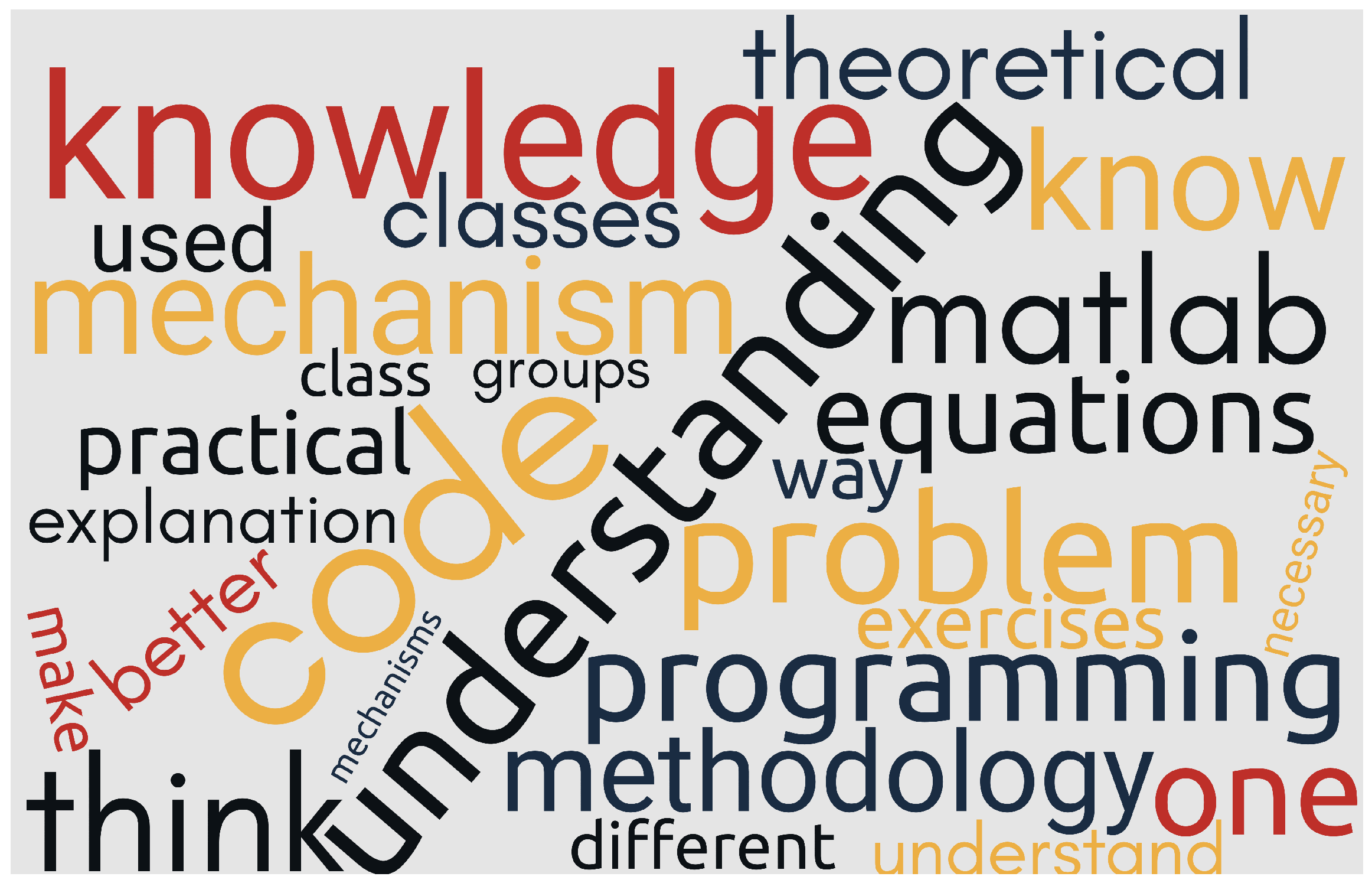
The word cloud analysis (
Figure 6) further reinforces these findings, with prominent terms like
code,
knowledge,
problem, and
understanding reflecting the course’s focus on practical problem-solving and conceptual development. The frequent appearance of
MATLAB,
equations, and
methodology underscores the relevance of computational tools and structured approaches, while terms like
think,
make, and
better suggest the development of metacognitive awareness among students.
6. Discussion and Implications
The implementation of selected Thinking Classroom practices in a graduate-level mechanical engineering course yielded meaningful insights into the adaptation of active learning methodologies in technically intensive environments. This discussion integrates the quantitative and qualitative findings to address the study’s research questions and explore their theoretical and practical implications.
Table 3 outlines the survey items and response formats used to assess students’ perceptions across three thematic dimensions.
Figure 5 operationalizes these constructs by visualizing the distribution of negative, neutral, and positive responses for each item within group work, individual learning, and methodology evaluation. Discussing
Figure 5 through the lens of
Table 3 therefore enables a construct-level interpretation: perceptions of collaboration and peer exchange are broadly positive, individual learning items indicate perceived agency and ownership, and methodology evaluation supports the acceptability and perceived effectiveness of the approach compared to traditional sessions.
6.1. Impact on Autonomy and Problem-Solving Skills (RQ1)
With respect to RQ1, the findings indicate that Thinking Classroom practices contributed to an autonomy-supportive learning environment while simultaneously fostering students’ problem-solving competence with a strong positive perceptions regarding collaboration (70% positive) and participation (87% positive). As shown in the middle panel of
Figure 5, items related to individual learning are predominantly rated positively, indicating that students perceived high involvement and ownership during the sessions. Interpreted in relation to
Table 3, these items capture students’ perceived agency and responsibility within the learning process. This pattern is consistent with an autonomy-supportive environment in which learners must make modeling decisions, justify parameter choices, and evaluate plausibility, core elements of problem-solving in simulation-based engineering tasks. The qualitative emphasis reflected in
Figure 6 further supports this interpretation, as the most frequent concepts in students’ language align with the cognitive demands of simulation, decision-making, and reasoning.
As one student noted in the open-ended questions, working with peers from different engineering backgrounds revealed “alternative problem-solving approaches I wouldn’t have considered alone,” illustrating how random group formation and tool flexibility promoted cognitive flexibility and metacognitive awareness. It is implicit that this methodology, as expressed by the students, “"forces us to think differently”. Students’ perceived autonomy and problem-solving independence are also reflected in open-ended responses. As noted by another student, they acknowledge “moments in class that give us the freedom to explore and understand a problem independently, either on our own or in small groups, fostering the exchange of different perspectives”.
The 61.5% probability of superiority in academic performance, though not statistically significant, aligns with students’ reported gains in conceptual understanding and technical adaptability. This convergence suggests that while traditional assessment metrics may not fully capture the developmental benefits of TC approaches, students nevertheless experience meaningful growth in the higher-order competencies central to engineering practice.
6.2. Relationship with Academic Performance (RQ2)
Regarding RQ2, the results indicate that implementing TC practices did not compromise expectations in competency-based assessment while improving students’ perceived effectiveness of the learning experience. The observed trends in grade distribution, specifically the increase in
Good and
Excellent categories and reduction in failure rates, suggest a positive relationship between TC implementation and academic achievement. Although the statistical analysis revealed only a small effect size (
= 0.23) and non-significant
p-value (
p = 0.101), the consistency between quantitative trends and qualitative reports of enhanced understanding provides compelling evidence of the methodology’s potential impact. The bottom panel of
Figure 5 shows a predominantly positive evaluation of the methodology and session format. Interpreted through the lens of
Table 3, this indicates that students perceived the approach as effective relative to traditional instruction. This is important in technically intensive engineering modules, as it suggests that increased inquiry demands were experienced as worthwhile and pedagogically coherent rather than as a source of frustration.
The discrepancy between strong positive perceptions and modest performance gains may reflect several factors. First, the intervention’s relatively short duration and partial implementation may have limited its measurable impact on final examination scores. Second, traditional assessment methods may not adequately capture the collaborative, process-oriented competencies developed through TC practices. Finally, the diversity of student backgrounds and prior experiences likely introduced variability that attenuated measurable effects.
As with any historical or quasi-comparative educational design, these trends should be interpreted cautiously; however, the convergent perceptual evidence in
Figure 5 supports the feasibility and acceptability of the approach alongside the observed assessment outcomes.
6.3. Perceived Facilitators and Barriers (RQ3)
With respect to RQ3, students’ feedback indicates that facilitators were linked to collaborative dynamics and inquiry-oriented guidance, whereas barriers were mainly associated with technical familiarization and time management under open-ended conditions. The flexibility in tool selection emerged as particularly valuable, allowing students to leverage existing expertise while developing new technical competencies. Consistent with the survey structure defined in
Table 3, the top panel of
Figure 5 shows predominantly positive perceptions of group work, supporting the interpretation that collaboration and peer knowledge exchange functioned as key facilitators. This aligns with the intended role of random grouping and peer explanation in Thinking Classroom implementations.
Figure 6 complements this picture by highlighting the concepts students spontaneously emphasized when describing the course. In addition to reinforcing the centrality of simulation and problem-solving, the qualitative emphasis helps contextualize reported barriers: in technically demanding tasks, time constraints and tool familiarization often become salient, particularly when students are asked to explore, justify, and verify rather than follow prescribed procedures. These barriers therefore point to practical refinements (e.g., brief onboarding, structured time checkpoints or explicit verification prompts) rather than to a mismatch between the approach and the context.
As expressed by multiple participants, this autonomy “made complex concepts more tangible and easier to discuss,” supporting the theoretical premise that choice and agency enhance motivation and learning depth. Peer support is also well received among students, as they themselves point out that ‘it is very easy to help each other and try to resolve different doubts’ or ‘working in this way allows us to share different ideas about the subject and there is feedback between everyone’s acquired knowledge. Together, we can understand the knowledge better than we can individually’.
However, significant barriers also emerged, primarily related to technical familiarization and time management. Students less experienced with specific software environments reported initial disorientation, suggesting the need for more structured scaffolding during early implementation phases. The time-intensive nature of collaborative problem-solving also posed challenges, with some groups struggling to complete tasks within allocated sessions. These findings highlight the importance of balancing open-ended exploration with appropriate support structures in technically complex learning environments.
6.4. Theoretical Implications
The results provide empirical support for several theoretical propositions underlying the TC framework. First, the strong positive response to random group formation and visible thinking activities aligns with sociocultural theories emphasizing the social construction of knowledge (
Vygotsky, 1978). Students’ reports of enhanced understanding through peer explanation and collaborative reasoning demonstrate how distributed cognition can deepen conceptual learning in engineering contexts.
Second, the observed support for students’ perceived autonomy and the development of adaptive problem-solving aligns with Self-Determination Theory’s emphasis on autonomy, competence, and relatedness as drivers of motivation and engagement (
Deci & Ryan, 2000). The opportunity to choose simulation tools and approaches appears to have nurtured students’ sense of agency, while collaborative success enhanced perceived competence.
Finally, the integration of mathematical formulation with practical implementation reflects situated cognition principles (
Chunxian, 2020), illustrating how authentic, context-embedded tasks can bridge theoretical understanding and professional practice. The progression from low-floor to high-ceiling tasks effectively scaffolded students’ development of adaptive expertise, enabling them to transfer conceptual knowledge across different computational environments.
6.5. Practical Implications for Engineering Education
Overall, triangulating the survey constructs (
Table 3), the perceptual response patterns (
Figure 5), and the qualitative emphasis reflected in students’ language (
Figure 6) yields a coherent interpretation of the intervention. The evidence supports an explicit answer to the research questions: TC practices fostered autonomy-supportive conditions and engagement in adaptive problem-solving (RQ1), were perceived as effective without undermining competency-oriented assessment expectations (RQ2), and revealed facilitators and barriers that inform implementation in technically intensive settings (RQ3). These insights strengthen the argument that Thinking Classroom principles can be meaningfully adapted to simulation-based engineering education when supported by intentional facilitation and appropriate scaffolding.
The findings from this study yield several actionable recommendations for implementing Thinking Classroom practices in engineering education across multiple dimensions. For course design and implementation, a phased approach is recommended, introducing TC practices gradually through low-stakes activities to build student comfort with collaborative, open-ended problem-solving. This should be coupled with scaffolded autonomy that provides structured support for tool selection and technical familiarization while maintaining flexibility in solution approaches. Effective time management strategies are also essential, allocating sufficient time for collaborative exploration while establishing clear milestones to maintain progress. At the faculty development level, instructors require training in facilitation skills, particularly questioning techniques that promote student reasoning without providing direct solutions. Additionally, assessment methods must be aligned to capture process-oriented competencies alongside traditional performance metrics. Institutionally, investments in physical infrastructure, particularly flexible learning spaces with vertical writing surfaces, are crucial to support visible thinking practices. Finally, successful TC implementation requires careful curricular integration, aligning the methodology with program-level learning outcomes and accreditation requirements to ensure sustainability and institutional support.
7. Limitations and Future Research
Several limitations warrant consideration when interpreting these findings. The single-course implementation and relatively small intervention cohort limit generalizability, while the partial adoption of TC practices may not fully represent the framework’s potential impact. The absence of a concurrent control group also constrains causal inferences about the intervention’s effects.
Future research should address these limitations through longitudinal designs across multiple courses, larger sample sizes, and more comprehensive implementation of TC practices. Investigations exploring the relationship between specific TC elements (e.g., random grouping vs. vertical surfaces) and particular learning outcomes would provide valuable insights for targeted implementation. Additionally, research examining the long-term retention of TC-developed competencies in professional practice would strengthen the case for widespread adoption in engineering education.
Despite these limitations, this study contributes meaningful evidence supporting the adaptation of Thinking Classroom practices in graduate engineering education. The convergence of positive performance trends, strong student perceptions, and theoretically aligned learning experiences suggests that TC methodologies offer valuable approaches for developing the autonomy, collaboration, and problem-solving skills essential for modern engineering practice.




 ,
,