


Abstract
This study examined distributed leadership at a school that underwent transformation over a ten-year period beginning in 2014. Building on theory, we focused on capacity building as a key construct in distributed leadership, connecting it to the vision for school transformation and to the distribution of responsibilities outside central administration. We explored how this vision was enacted within the mathematics department, aiming to understand how educators translate theoretical notions of distributed leadership into a site-specific vision at the department level. We developed a leadership model with three interlocking components: visioning and revisioning, building capacity, and exercising autonomy with accountability. Using four protocols, we conducted 27 interviews with 19 participants, analyzing to generate themes. Initial visioning encountered implementation tensions, prompting revisioning around four tenets. The vision of a less hierarchical decision-making process entailed creating a teacher leader position, whose responsibilities included leading curriculum development and instructional reform. Administrators described their struggles letting go of key aspects of decision-making. The study contributes theoretically by tracing the bi-directional path from vision to capacity building to accountable autonomy; normatively, by capturing the EPO’s iterative, developmental nature of distributed leadership; and empirically, by documenting stakeholder perceptions of its enactment within one department.
1. Introduction
The notion of distributed leadership has gained traction over the 25 years as an analytic lens and as a way to organize leadership activities in educational institutions (e.g., Galdames-Calderón, 2023; Harris, 2012; Spillane et al., 2004). These two purposes, while distinct, are interconnected. As an analytic lens, the notion of distributed leadership views leadership as activities that are stretched across people, artifacts, and situations (Gronn, 2002; Hickey et al., 2022; Leithwood et al., 2006; Spillane et al., 2001; Supovitz et al., 2019), rather than as characteristics or roles of singular leaders. As a way to organize leadership activities, the notion of leadership as distributed across roles and people is used as an impetus to create collective forms of decision-making by involving more stakeholders in key decisions (Galdames-Calderón, 2023; Hallinger & Heck, 2010; Harris, 2012; Koh et al., 2023). The latter purpose has raised questions about which forms of distributed leadership are effective in terms of transforming classroom practices (Hairon & Goh, 2015; Harris, 2004, 2007).
In this study, we explore the aspirational and enacted visions of distributed leadership at a school that underwent a radical transformation over a ten-year period starting in 2014. Cultivating a shared vision among all stakeholders is instrumental in the implementation of distributed leadership practice and sustainability focused on school change (Galdames-Calderón, 2023; Koh et al., 2023; Leithwood et al., 2006; Nadeem, 2024). To connect the aspirational and enacted visions of distributed leadership, we generated a model based on the aspirational vision and used the model to explore how the vision was enacted within the mathematics department at the research site. The key aspirational tenet was to develop the capacity for leadership of those closest to classroom practice and then to provide those personnel the autonomy to make decisions that aligned with the mission and vision of the school (Stosich, 2023). The vision statement guiding the work was “At John Lewis we are taking charge of our future by being tenacious, thinking purposefully, and advocating for self and others” (Rochester City School District, n.d.).
The educators at the research site interpreted distributed leadership as empowering multiple stakeholders to transform curriculum and instruction. Recognizing that transformational work requires commitment and capacity from those stakeholders, the notion of distributed leadership was used as justification to provide educators the necessary professional development to develop the capacity to make decisions that affected classroom practice. A purpose of this paper was to explore this vision and how it impacted leadership within the mathematics department. We see our contributions as connecting notions of distributed leadership to capacity development and ultimately classroom practice and to emphasize the iterative nature of such efforts.
We explored the following research questions:
- What were the key tenets and characteristics of the vision of distributed leadership at the research site?
- How could the vision be represented in a visual model that highlighted the tenets and the iterative nature of distributed leadership?
- How was the vision of distributed leadership enacted in the mathematics department?
Below, we describe the transformative efforts at the study site, review the literature on distributed leadership, describe the model we developed to represent the vision of distributed leadership at the site, and then provide empirical results to show how the vision of distributed leadership was enacted in the mathematics department.
1.1. The EPO as a Model for Sustainable Urban School Transformation
Urban school reforms in the United States follow a recognizable pattern. A school is identified as failing by some combination of graduation rates, test scores, and attendance metrics. The state or district imposes an intervention, which may involve a new principal, a restructured schedule or teaching force, curriculum mandate, or full state takeover. Results, when they appear, are modest and short-lived, as the underlying conditions that produced the failure in the first place are left largely untouched (Cheng, 2020; Gavin & Stacey, 2023; Harris & Jones, 2020; Noguera & Wells, 2011). Successive waves of reform in urban schools have not produced sustained improvement in part because school failure is treated as a technical or managerial problem rather than as a symptom of the systemic conditions, particularly poverty and racial inequity, that shape which schools are labeled failing (Harris & Jones, 2017; Noguera & Wells, 2011). The consistent churn of policy and leadership turnover reduce the likelihood that research-supported reform efforts will take hold or sustain (Copeland, 2003; Finnigan et al., 2021; Hulpia et al., 2011). Importantly for this study, reforms rarely are aimed at building durable capacity within schools (Mazyck, 2014).
The Educational Partnership Organization (EPO) was designed to avoid these shortcomings. The EPO was established in 2014 between the University, the New York State Department of Education, and the City School District to transform John Lewis High School. Rather than treating school turnaround as a problem to be solved through compliance and mandate, the University built its intervention around two related constructs, distributed leadership and organizational capacity-building (Center for Urban Education Success [CUES], n.d.) under the leadership of the second author of this paper. John Lewis’s transformation was not the product of a single reform lever or a single heroic figure, but of a model in which authority, accountability, and ownership were pushed outward to teachers, counselors, families, and students themselves, while the University absorbed the structural and financial risk.
The EPO requested and was granted an 18-month period to develop the plan for transformation. University personnel and John Lewis staff created committees for each of the tenets of New York State Education Department’s Diagnostic Tool for School and District Effectiveness (e.g., systems & organization, leadership, curriculum, instruction, social-emotional learning, and family & community engagement). Each committee was responsible for writing and implementing its respective section of the EPO plan. Committees met with over 2000 community members—including students, families, teachers, the mayor, labor unions, community agencies, and former students who had not graduated—to understand the school’s descent and to envision a plan for the school’s transformation, rather than adopting a model from elsewhere. The team found that community members hoped to preserve their school while overhauling nearly every dimension of its operations (Larson & Nelms, 2023); although these sentiments were expected, the scale and severity of the dysfunction came as a surprise. As a result, the team rejected the traditional practice of gradual, incremental change (Elmore & Juli, 2007) in favor of transforming everything simultaneously, while acknowledging the in-school and out-of-school factors—such as poverty, unemployment, racism, segregation, divestment, violence, food and housing insecurity, over-policing, and poor health outcomes—that undermine equity-focused reform (Bishop & Noguera, 2019). The resulting comprehensive reform model pursued four goals: rebuilding structures, reshaping culture, restructuring leadership, and overhauling curricula and instruction (Marsh et al., 2022).
The team planned to rebuild decision-making processes and resource allocation by adopting a community schools model, which made the school accountable to the community of John Lewis. Granted operational autonomy under the EPO statute, the team took control of its own budget and opened a hiring/rehiring process for all positions. Applicants were asked to commit to the EPO plan—a longer school day (with compensation), daily collaborative planning time, expanded professional learning, and observation by interview committees. The team increased staff with new roles—teacher leaders, a chief financial officer/human resources manager, additional social workers and school counselors, new literacy teacher positions, a freshman academy director, a school-based special education administrator, a technology integration specialist, a workforce development liaison, a driver’s education instructor, and a community schools coordinator—and required all existing teachers to reapply, ultimately following every hiring committee’s recommendation to rehire 60% of existing staff (Marsh et al., 2022).
The EPO recognized at the outset that it would have to build entirely new institutional capacity to succeed, and understood the risk involved to be substantial (Center for Urban Education Success [CUES], n.d.). The governing premise was that children, staff, and families deserved functional systems that included stable governance, adequate staffing, coherent curriculum, a culture of relational accountability, and leadership that protected the vision and mission of the school (Center for Urban Education Success [CUES], n.d.). This paper treats that premise as the conceptual hinge of the case: John Lewis’s eventual outcomes are best understood not as the goal the University set out to engineer, but as the downstream result of building capacity.
The EPO deliberately restructured the instructional time and curriculum to support students who entered the building several grade levels behind in reading and mathematics to meet the state proficiency standards. The partnership with University faculty gave the EPO access to curricular design expertise that a single high school’s staff would not typically have the capacity to develop independently, a concrete instance of the capacity-building relationship discussed further below (Honig, 2012), applied here specifically to instructional design rather than to governance or staffing.
1.2. John Lewis High School Prior to the EPO
John Lewis High School entered the 2014–15 school year as, according to the New York State Office of Accountability, a persistently failing City high school—the lowest performing in the district. The school’s deterioration was not the product of a single year’s neglect; John Lewis had been the subject of repeated, uncoordinated turnaround attempts over the preceding decade, none of which produced lasting change (Larson & Nelms, 2023). By the time the City School District approached the University in 2014 about assuming management of the school, the numbers told an unambiguous story. John Lewis’s four-year graduation rate for the 2011 cohort stood at 33 percent, far below the district average, and the rate was projected to fall to 19 percent for the following year’s cohort (Center for Urban Education Success [CUES], n.d.). The dropout rate stood at 41 percent, and the school recorded 2468 student suspensions in a single year (Center for Urban Education Success [CUES], n.d.). New York had designated John Lewis an “out of time” school, a designation reserved for schools that had exhausted the standard menu of state-mandated interventions without improvement, and placed it in receivership (Center for Urban Education Success [CUES], n.d.). Absent a qualified receiver willing to assume full management authority, state law required that John Lewis be closed.
The EPO’s survival depended on producing measurable academic results, not merely on improving the climate inside the building. New York requires that all students be tested annually in English Language Arts (ELA) and mathematics through the Regents examination system. Proficiency on those examinations would be the measure by which the state judged John Lewis’s turnaround.
1.3. Early Results on Key Metrics
During the 10-year span of the EPO, John Lewis saw student outcomes improve across a range of metrics, including academics, graduation, suspensions, and chronic absenteeism. Using state test results as a measure of change, student proficiency scores on mathematics assessments increased from 54 percent to 74 percent. For ELA exams, scores increased from 40 percent to 70 percent (New York State Education Department, n.d.). Graduation rates rose from 33% in 2015 to 78% in 2025. The number of ninth graders entering with zero credits dropped by two-thirds, and in 2025, 80% advanced to tenth grade on schedule, compared to 45% 10 years prior. Suspensions decreased from 2468 in 2014 to 744 last year—a 70% reduction. Chronic absenteeism has declined as attendance increased from 77% to 81% in the Lower School and 79% in the Upper School. These gains arrived alongside, not instead of, the cultural transformation at the school, a key component of which was the implementation of a distributed leadership process.
2. Distributed Leadership
While extensively researched over the decades, distributed leadership as a concept remains elusive with varying, overlapping understandings (Harris & DeFlaminis, 2016; Liu et al., 2021). According to Parker (2015), distributed leadership is a “contested phenomenon” (p. 132), leading to “fuzzy” (Spillane, 2015, p. 278) and “ambiguous” (Harris, 2007, p. 315) conceptualizations. This lack of clarity around the meaning of distributed leadership threatens its theoretical and practical impact (Bellibaş et al., 2021; Hairon & Goh, 2015). Addressing this issue, Harris (2007) delineates three frames through which to understand distributed leadership: the theoretical, normative, and empirical. Thus, future research can move forward with more clarity and understanding of the meanings of and differences among the conceptual (theoretical), models in action (normative), and studies of implementation (empirical).
2.1. Theoretical View
Due to constraints of prior theories of leadership in educational institutions, researchers began to study leadership in ways that emphasize its complexity, situational boundedness, and collective nature. This trend follows broader movements in social science research that emphasize agency, complexity, and the role of context in the functioning of organizations (Brown et al., 1989; Lave & Wenger, 1991; Nadeem, 2024; Suchman, 1987). Scholars, particularly Spillane and colleagues (Spillane et al., 2001, 2004), leaned heavily on emerging theories of distributed and collective cognition and the situated nature of learning (e.g., Cole, 1996; Engeström, 2001; Hutchins, 1995; Wertsch, 1998) to develop the notion of distributed leadership as an analytic lens. These theories emphasize that activity and cognition are distributed across people, artifacts, and contexts (Cole, 1996; Engeström, 2001; Hutchins, 1995; Wertsch, 1998) and that cognition is situated in context, meaning that how people think and act cannot be separated from the contexts in which learning takes place (Brown et al., 1989). Furthermore, these theories emphasize the collective and social nature of learning (e.g., Engeström, 2001), as distinct from more individualistic perspectives, emphasizing that “the social context and the interrelationships therein are an integral part of the leadership activity” (Hulpia et al., 2011, p. 40).
Leveraging these theories, Spillane and colleagues (cf. Spillane et al., 2001, 2004) developed distributed leadership as an analytic lens to focus research on leadership activities as stretched across people, artifacts, and situations. Other researchers building from this work viewed leadership in terms of practices, tasks, or activities, rather than in terms of position or role (Hallinger & Heck, 2010; Harris & DeFlaminis, 2016; Leithwood et al., 2006). Along the same lines, researchers view leadership as a social practice involving interdependencies rather than in terms of personal characteristics or talents of leaders or stakeholders (Galdames-Calderón, 2023; Harris, 2012; Harris et al., 2022; Spillane, 2005), and view leaders as agentive actors working in specific circumstances and contexts (Hallinger & Heck, 2010; Timperley, 2005).
The idea of distributed leadership contrasts with conceptions of leadership that emphasize the actions of a single leader who sits atop a hierarchical decision-making structure. Historical research on leadership often emphasized the great man theory, in which a single organizational leader was responsible for a school’s success or failure (Harris, 2012; Spillane et al., 2004). The great man theory views schools as hierarchical organizations in which decisions flow from the top in a formal and mechanistic way. One of the limitations of this perspective is that schools are increasingly complex institutions to lead and study due to the churn in educational policy and law in the US, especially from the 1980s to the present. This churn makes it difficult for individual leaders to accomplish all the necessary leadership tasks (Finnigan et al., 2021; Hulpia et al., 2011; Timperley, 2005) and for researchers to study leadership activities from an individualistic perspective. Similarly, Leithwood et al. (2006) found that research focused on an entire school rather than individual leaders as “most appropriate unit for thinking about the development of leadership expertise” (p. 56). In sum, prior theories of leadership were not suited to explore complexity in school organizations, the informal or enacted forms of leadership, or the role of context in how educational institutions carried out organizational functions (Spillane et al., 2001; Supovitz et al., 2019), which constrained the insights they provided.
Conceptions of distributed leadership disrupt notions that school leadership activities are dictated by formal roles or organizational charts. Harris (2012) notes that “distributed leadership encompasses both formal and the informal forms of leadership practice within its framing, analysis and interpretation” (p. 11). Leadership involves interdependence between formal and informal leaders. Spillane et al. (2004) describe the role of followers as essential to leadership:
From a distributed perspective, followers are an essential constituting element of leadership activity. Rather than a variable outside of leadership activity that influences what leaders do or mediates the impact of what they do, followers are best understood as a composing element of leadership activity.(p. 19)
Hulpia et al. (2011) use the term “participative decision-making” to describe how leadership: is enacted by the entire educational community, rather than by a limited number of people at the top of the organization … [so], attention is paid to a more informal form of the leadership interactions of all school team members.(p. 735)
However, the interdependence between leaders and followers does not mean that everyone acts on the same goals, but instead actors may have different goals. Harris (2012) states that “a distributed perspective simply recognises the possibility that people may be working with different goals or outcomes in mind” (p. 12). While distributed leadership has been extensively studied and theoretically developed for decades, the term can still be used as a “catch all” (Harris & Spillane, 2008, p. 32) and mistaken for other concepts (e.g., “devolved leadership”), which do not connote the same meaning, leading to “conceptual confusion” (Harris, 2007, p. 315).
Distributed leadership scholars parse leadership activities into macro and micro functions, noting the relationship between these grain sizes. Spillane et al. (2001) discuss how micro-level tasks embody and inform the macro-level tasks, especially in relation to instruction and instructional change. They state that much of the literature on leadership focuses on macro-level functions, such as “constructing and selling an instructional vision; building norms of trust, collaboration, and academic press; supporting teacher development; and monitoring instruction and innovation” (p. 22). In contrast, micro-level tasks consist of such activities as “classroom observations and distinguishing summative and formative evaluation” (p. 22). Spillane and colleagues describe a school that analyzed assessment data to inform instruction, documenting the many sub-tasks involved in the broader macro task.
Since Spillane’s (2006), Spillane et al.’s (2001) and Gronn’s (2000, 2002) seminal work developing the analytic frame of distributed leadership, scholarly interest has steadily and significantly increased and globalized, with a disproportionate majority of studies taking place in the US, UK, Canada, and Australia (Adams et al., 2026). Following Spillane’s early work, most publications took a normative stance, one that addresses how leadership can most effectively be distributed among teachers, administrators, and community members (Bolden, 2011); although this view has been criticized as “prescriptive” (Tian et al., 2016, p. 149) and “idealistic” (Harris & DeFlaminis, 2016, p. 143). Such critiques have led to increased calls for research on practical implementation (Harris & DeFlaminis, 2016), and studies that directly connect distributed leadership to learning outcomes (Harris et al., 2022), as well as more research from non-Western countries (Adams et al., 2026).
In sum, distributed leadership builds on theories that emphasize collective and distributed aspects of action and cognition. These theories emphasize the analytic constructs of community, practice, activity, artifact, context, and situation rather than characteristics or roles of individual leaders.
2.2. Normative View
Though distributed leadership has been used as an analytic lens to describe leadership activities, it has also been taken up as a means to advocate for collective forms of leadership in schools. This “normative” view (Bolden, 2011, p. 256; Tian et al., 2016, p. 149) of distributed leadership advocates for collectivist or shared forms of leadership at the school or district level (Harris, 2012), which is seen as a desirable goal to build the capacity and professional status of teachers (Marzano, 2011; Timperley, 2005). According to Harris (2007), the normative view:
…is primarily concerned with how leadership is distributed in schools and by whom. It is concerned with both the descriptive and prescriptive dimensions, i.e., how do we understand distributed leadership and how might we produce better forms of distributed leadership?(p. 320)
Similarly, Leithwood et al. (2006) state that leadership “needs to be distributed to those who have, or can develop, the knowledge or expertise required to carry out the leadership tasks expected of them” (p. 65). According to Leithwood et al. (2006) the field “desperately” needs studies of “patterns of distribution” that examine its challenges, consequences, and development of distributed leadership (p. 65). Moreover, distributed leadership is understood as highly contextualized in relation to school culture (Hallinger & Heck, 2010; Koh et al., 2023).
In sum, the normative view of distributed leadership advocates for collective leadership structures and activities rather than describing leadership structures and activities. Adherents to the normative view argue for the benefits of collective leadership, especially for stakeholders such as teachers and parents who are normally not centrally involved in decision-making.
2.3. Empirical View
Researchers have argued that distributed leadership itself should be viewed in terms of its effectiveness rather than as an unquestioned goal. Timperley (2005) argues:
I am taking a position similar to that of Spillane et al. in assuming that leadership in schools is almost inevitably distributed, and the issues to be considered are how the leadership activities are distributed and the ways in which this distribution is differentially effective (p. 397). The empirical view of distributed leadership focuses on evidence and research findings to answer questions about how distributed leadership is enacted in school settings and what changes can result from implementation.
Researchers have found that distributed leadership models contribute positively to school climate (Harris, 2013; Liu et al., 2021; Spillane et al., 2003), teacher practice and commitment (Aldaihani, 2019; Amels et al., 2021; Hulpia et al., 2011; Galdames-Calderón, 2023), student learning (Hallinger & Heck, 2010; Kılınç et al., 2023; Leithwood et al., 2010; Mulford, 2003; Supovitz et al., 2010), and student motivation (Harris & Muijs, 2004). Other research, however, finds that distributed leadership can create a divided faculty (Hammersley-Fletcher & Strain, 2011), exacerbate power imbalances (Harris & DeFlaminis, 2016), lead to resentment among teachers (Gavin & Stacey, 2023) and a perception of additional work and burden (Hulpia et al., 2011). Scholars claim that the connection between distributed leadership and school improvement remains “elusive” (Hairon & Goh, 2015) and contested (Leithwood et al., 2006; Parker, 2015). According to Harris (2007), the empirical frame is the weakest of the three, suggesting that “if distributed leadership theory is to have any explanatory or predictive power this can only be achieved through empirical investigation and testing” (p. 316).
In sum, the empirical view is meant to gauge the efficacy of how and why distributed leadership works, with the goal of identifying which forms work in which contexts. Our goal is to contribute to all three views by (1) providing a conceptualization of distributed leadership focused on capacity building, (2) describing a vision of distributed leadership connected to a specific context, and (3) exploring how that vision was enacted within one academic department.
2.4. Our Model of Distributed Leadership
Following the vision of distributed leadership emphasized at the EPO, we define leadership as empowering others to make change. Spillane et al. (2001) explain:
[leadership is] the identification, acquisition, allocation, co-ordination, and use of the social, material, and cultural resources necessary to establish the conditions for the possibility of teaching and learning. Leadership involves mobilizing school personnel and clients to notice, face, and take on the tasks of changing instruction as well as harnessing and mobilizing the resources needed to support the transformation of teaching and learning.(p. 24)
Following the definition of leadership and the aspirational vision embedded in EPO documents and espoused by the superintendent (second author), we developed a model of leadership that encompasses three main interlocking components: visioning and revisioning, building capacity, and exercising autonomy with accountability. The elements of this model were evident in the EPO’s attempts to design a distributed leadership model, though they may not have been explicitly labeled as we have.
Retrospectively, we have labeled the components and articulated the relationships between them, with the goal of providing a conceptual overview of the vision of distributed leadership conceived at the EPO. We then use the model to organize the presentation of our empirical analysis of the leadership activities within the mathematics program.
Below, we explain these interlocking components as well as the dilemmas or tensions that emerged in creating the model. These dilemmas or tensions include the grain size of leadership activity, collectivist versus individualistic actions and tasks, the linearity or nonlinearity of the model, and the generative friction (Larson & Nelms, 2023) that results from the exercise of leadership tasks. See Figure 1 for a visual of the model. We begin by explaining the three interlocking components and then explain the tensions and dilemmas that emerged in creating the model.
Figure 1.
Distributed Leadership model developed at John Lewis School.
2.4.1. Visioning and Re-Visioning
We begin with visioning and re-visioning, which we see as the start of the process. One of the macro functions of leadership is constructing a shared vision that guides the development of curriculum and instruction (Leithwood et al., 2006; Nadeem, 2024; Spillane et al., 2001). In a distributed leadership model, this vision is co-constructed among school personnel and is undergirded by clear communication (Koh et al., 2023), a sense of shared purpose and responsibility (Galdames-Calderón, 2023), and trust not only in each other but in the process of distributed leadership (Coleman, 2012; Spillane, 2005). Our model is based on the assumption that, in order to get buy-in across the organization, the vision is co-constructed by a range of stakeholders, especially those involved in implementing the vision. As the transformation effort matures, we conjecture that there is an inevitable process of re-visioning, in which the collective leadership refines the vision to align with the evolving implementation of curriculum and instruction.
2.4.2. Capacity Building
We see building capacity as the second step in the transformation process. As distributed leadership is rooted in an expansion of leadership across the staff of a school, capacity building is not only integral but nurtured in the process (Amels et al., 2021; Harris, 2013; Leithwood et al., 2006). The instructional vision informs the kinds of capacities that need to be developed to achieve the vision and the personnel whose capacities need developing. According to Leithwood et al. (2006), developing people is the “primary aim of capacity building” (p. 4). Building capacities requires resources for professional learning opportunities for instructional leaders and teachers (Galdames-Calderón, 2023); furthermore, capacity building needs to be sustained and intensive (Harris, 2004), especially at the outset of a transformation process.
2.4.3. Exercising Autonomy
Once initial capacity is developed, personnel are empowered to exercise autonomy with regard to decisions around curriculum and instruction (Galdames-Calderón, 2023; Hairon & Goh, 2015; Stosich, 2023), especially at the classroom level. With a growing sense of shared accountability (Harris, 2012; Leithwood et al., 2006), instructional leaders are expected to adapt curriculum and instruction to meet emergent needs while adhering to core aspects of the vision, which serve as an accountability criterion for decisions.
2.4.4. Relationships Between Components
As the transformation effort matures, the linearity of the model fades, as the relationships between the three components becomes bidirectional and dynamic, making it hard to gauge the directionality of the relationships at any point in time. We elaborate on the bi-directional nature of the relationships indicated in the arrows in the model.
- Relationship Between Vision/Revisioning and Building Capacity
As described above, the instructional vision informs the kinds of capacities that need to be developed and whose capacity needs to be developed. In the other direction, we conjecture that as personnel develop capacity, their understanding of the vision becomes more robust, reflecting a deeper understanding of the potential outcomes related to the vision and the practices that lead to those outcomes. As individuals’ understanding of the vision becomes more nuanced, collective notions of the vision and its core tenets evolve. These developing notions are what we term the revisioning process.
- b.
- Relationship Between Building Capacity and Exercising Autonomy with Accountability
As capacity is developed, personnel are empowered to exercise autonomy with regard to decisions around curriculum and instruction, especially at the classroom level. In the other direction, as personnel exercise autonomy, they engage in core practices around curriculum and instruction, in the process developing new capacities aligned with the vision.
- c.
- Relationship Exercising Autonomy with Accountability and Visioning/Revisioning
As personnel exercise autonomy, they develop capacity, which in turn leads to more robust and nuanced notions of the vision that collectively lead to re-visioning. In the other direction, as refined versions of the vision develop, the cycle begins again, as new capacity needs are identified and new forms of autonomy are exercised.
- d.
- Dilemmas or Tensions that Emerged in the Creation of the Model
As we created the model, we encountered several dilemmas or tensions. These dilemmas or tensions include the grain size of leadership activity, collectivist vs. individualistic actions and tasks, and directionality (e.g., starting point, sequence in which the components follow each other).
The grain size of leadership activity was a tension reflected in the micro-macro distinction in leadership functions found in the distributed leadership literature (Spillane et al., 2001). We initially focused our conceptions of distributed leadership in the model on micro decisions, such as how to design the support room for students who needed extra assistance, which was an ongoing discussion within the EPO leadership team. When we turned to the macro functions, such as how to design and implement the mathematics program, it changed how we viewed the model, both in scope and time scale. The broadened scope and time scale impacted our views of the linearity of the process, as described below, and the complexity of the relationships between the components.
Similar to the grain size issue, we struggled with the linearity of the macro decisions, especially once the transformation efforts matured. For example, the mathematics program involved years of visioning and development in which there was a considerable amount of professional development and curriculum work that took place to align practices with the EPO’s overarching vision. At some point, we viewed the three elements of our model as intertwined in ways that emphasized their bi-directionality. This contrasted with more micro decisions, such as the support room, where it was easier to trace a linear path from visioning to capacity building to exercising autonomy.
We describe the tension between collectivist and individualistic actions as a core tension in the distributed leadership model. This tension echoes the description of the role of principals in the distributed leadership literature, in which the principal’s status and role are seen as integral though not the sole focus (Harris, 2012). The extent to which decisions are collectively made is difficult to document, as the communication of those decisions typically falls under the purview of the principal (or superintendent in the case of the EPO).
“Generative friction” was a term used in another account of the work of the EPO to describe the inevitable disagreements and growth that resulted from those disagreements (Larson & Nelms, 2023, p. 2348). While this term applied to broad issues present at the outset of the EPO, it also applied to our model. The process of visioning/revisioning is not smooth, both in the creation of the original vision and in its revision over time. Not all personnel buy into a vision to the same degree, and some may actively resist it no matter how collective the decision-making process.
3. Materials and Methods
We provide empirical results from the research site to show how the vision of distributed leadership was enacted in the mathematics department. We use the model to organize the reporting of our themes and then connect to the conceptual parts of the model in the discussion section.
3.1. Data Collection
We conducted 28 interviews with a total of 20 participants, including eight teachers, three teacher leaders, six external consultants, and three administrators. These participants were involved at various levels in the development and implementation of the mathematics program. The variation in the roles of the participants allowed us to explore how decision-making was distributed amongst various stakeholders. The 20 participants involved in this analysis were recruited from the total pool of administrators and teachers at the EPO. To recruit the teachers, we described the study via a Zoom department meeting, and we followed up with emails to individual teachers using the IRB-approved recruitment script and information letter. We interviewed all teachers who agreed to participate. To recruit administrators and external consultants, we emailed them directly with the information sheet and recruitment scripts approved by our IRB. If participants agreed to participate, we emailed them the consent form and then scheduled interviews. We interviewed every administrator and external consultant who agreed to participate. The interviews were conducted between January 2021 and December 2022. See Table 1 for a list of the participants and their roles.
Table 1.
Participants.
We used four interview protocols, one that focused on the development of the mathematics program (retrospective), one that focused on how the mathematics department responded to the switch to fully remote instruction (COVID), a second that focused on the return to in-person instruction after 18 months of remote and hybrid instruction (fall 2021), and a third that focused on the extent to which the mathematics program had returned to pre-COVID teaching and learning in the second year of in-person instruction (fall 2022). See Table 2 for a description of these protocols.
Table 2.
Description of the Interview Protocols and Number of Interviews for each Protocol.
3.2. Data Analysis
We divided the transcripts from the 28 interviews into 624 passages whose lengths varied from 50 to 250 words. Though the passages were derived from multiple protocols, we grouped them together to conduct an inductive analysis to generate themes. We used Saldaña’s (2013) provisional coding to develop memos and ultimately themes that aligned to aspects of our model. Passages were focused on a topic or line of questioning. When the speakers moved to a new topic or line of questioning, we created a new passage. We then reduced the data using an inductive process. Three researchers created one or more memos for each passage. The initial analysis was conducted by the broader research team. This team created memos for each passage, with two or more members coding each quote. These memos were reconciled into a collective memo, and then the memos were grouped by a researcher into supermemos, each of which had between 10 and 30 memos associated with it. The memos and supermemos were intended to be low-inference and parsimonious paraphrases of the original passages.
The subsequent data analysis and the development of the model involved an iterative process. We began with the abstract proposed for this article, which was based on conversations between the authors in which they articulated a vision of distributed leadership largely based on the lived experiences of the second author. The abstract emphasized the role of leaders to distribute authority, provide resources to ensure the success of improvement effort and ultimately to empower educators to make change. These broad concepts were used to sensitize the next round of data analysis in which the lead author identified quotes from the initial analysis, using the supermemos to locate the quotes that were related to these broad concepts. Then, for each quote, the three-member author team individually created new memos related to the three components of distributed leadership that were then reconciled and collected into new themes that informed our model.
To refine the model, we engaged in two simultaneous processes. First, the author team again grouped the memos into larger groups that then informed the initial version of the model. Themes around distributed leadership, resources provided to support the mathematics program, the role and importance of teacher leaders (Berg et al., 2019; Hsieh et al., 2025), and the vision of the mathematics program emerged. Second, we employed a postdoctoral researcher to develop a visual version of the model. Over the span of months, we repeatedly revised the visual and in doing so developed a more nuanced understanding of the components and the relationships between the components. We then used the revised model as the basis to re-explore the themes we had identified in the data. In sum, the data analysis and model development took place in tandem, with each informing the other.
4. Positionality
The first author was the Principal Investigator on an NSF grant that explored the mathematics program at the research site. He directed the data collection and analysis efforts for the project and also worked at the university that was part of the EPO.
The second author had a relationship that he described as both scholarly and deeply personal. He served as the superintendent of the EPO for eight years and held a faculty appointment at the university that was part of the EPO. He entered the work not as a detached observer but as an architect of the initiative under examination. To guard against bias, he focused on the evidence and engaged in dialogue with his co-authors to resolve disagreements about the claims made in the article.
The third author was a leader at the research center at the university that was part of the EPO. Her work at the center focused on researching, documenting, and supporting the EPO’s transformation. For this study, she analyzed data and in collaboration with the coauthors and contributed to creating the visual model of distributed leadership presented in this paper.
5. Results
We organize the reporting of themes according to their alignment with the three major components of the model. The sections follow the order we explained for the first iteration (e.g., visioning, capacity building, exercising autonomy), though the themes also reflect the integration of the components after the process matured.
5.1. Initial Visioning
The vision statement that guided the transformation efforts was “at John Lewis we are taking charge of our future by being tenacious, thinking purposefully, and advocating for self and others” (Rochester City School District, n.d.). In terms of curriculum and instruction, this statement translated into nine learning principles that were applied to all content areas. The learning principles were developed through a year-long process that engaged multiple stakeholder groups, including students, parents, school educators, and community members. This collaborative approach was designed to create consensus about the expectations of all stakeholders and to ensure that the principles aligned with New York State’s learning standards and the broader goals of the partnership. The learning principles emphasized rigor, potential for student engagement and student agency, cultural relevance, participation in a democracy, and thinking skills, as evident in Figure 2.
Figure 2.
Learning principles of the EPO.
In relation to the mathematics program, the learning principles informed the vision of curriculum and instruction in three ways. First, they informed the development of documents such as the Curriculum Evaluation Form [CEF], which was used to select curriculum programs in the mathematics department. Marshall, an external consultant for the mathematics program, stated, “we grounded all of our hiring documents and curriculum review documents on those learning principles.” She described how the learning principles informed the CEF to see “which aspects of the learning principles were held up by different curricular materials.” Second, the learning principles informed discussions of instructional practices in the mathematics department. Bassett, an external consultant who assisted in selecting the curriculum materials and providing professional development, explained the role of the learning principles:
Whenever we would have difficulties with conveying what we were hoping we would see in classrooms, we could return to that document [and say] ‘this is what we’re talking about when we’re talking about instructional moves’ … That document was key.
Third, the learning principles aligned with broader instructional tenets. Lester, who was in charge of the curriculum development process at the EPO described how the curriculum programs adopted by the mathematics department had “an inquiry-based approach to doing math and getting students to be the ones who are doing the thinking and making the connections.” She explained the broader vision for curriculum at the EPO:
[It’s] connected to equity issues, issues of equity and access. The more we limit mathematics to one way of doing something and that you’re not necessarily thinking about it but you’re expected to regurgitate things, mathematics as we know is used as a gatekeeper. As opposed to supporting kids in robust thinking, bringing in their experiences and opinions and ways of thinking and ways of doing, again, to support equity issues, access issues.
The initial visioning, created by multiple stakeholder groups, informed the direction of the mathematics program in terms of specific aspects, such as curriculum materials, and broad instructional principles, such as making mathematics accessible to all students.
5.2. Tensions That Resulted from the Visioning Process
Not all stakeholders initially bought into the vision, especially initially, which led to tensions during its implementation in the mathematics department. Though the hiring process at the EPO was intended to recruit teachers who supported the John Lewis vision, not all teachers shared that vision, especially initially. Fuller, an external consultant, described how some of the teachers were not convinced of or committed to the vision, stating “I would say that there are definitely tensions between the belief systems of the teachers and … the beliefs that [the adopted curriculum] is built on. … [some teachers] really believe deep down that rote teaching is better.” Johnson, the chief academic officer, similarly stated “I believe quite a few of them have some sort of misgivings. They’re not all true believers when it comes to reform math.”
Over time, some teachers began to embrace the vision. Adler, a teacher leader at the Upper School, described the lengthy buy-in process:
Teachers always reverted back for many, many, many months. I believe it wasn’t until maybe year three … that we truly started to notice that people were buying into the model itself because they were coaching each other. They were giving tips to each other, like how to implement ‘explore,’ how to implement ‘launch’.
Similarly, some administrators at the Upper School resisted the vision for curriculum and instruction in the mathematics department at the outset of the EPO, especially given the break from historical practices. Friske, an external consultant, stated:
This isn’t what [administrators] necessarily were used to looking for in a math class, … we would do, sit in with them and talk about the mathematics that we were seeing, because they were more used to, like, “so-and-so got out of the seat, Sam talked to Henry.” …. [They] were more used to doing that kind of thing than really looking at the mathematics that was going on…. It took a while.
Shepherd, a 9th grade teacher, stated:
I know that sometimes when we have administrators in our meetings, some of the questions that they ask, I feel like it’s because they’re still a little bit more used to the direct style of teaching versus the kids exploring and trying to figure it out … if the students are struggling … they may want to be more inclined to ask, “Why didn’t you step in?
Adler described the competing perspectives of different stakeholders regarding the mathematics program:
Then the administration, in the middle, their understanding and their pushing the direction was different sometimes. Then the consultants. I call them the pure version of teaching mathematics or the philosophy behind it. They were looking at a different spectrum completely because, yes, they might have taught a certain way, the curriculum, in a different setting, not necessarily in our setting, in an urban setting, with our students. We had all this conflict, not necessarily conflicts of interest, but different experiences, different dynamics as we’re coming all together to design something that was successful for students. Those tensions were always there.
Tensions were due in part to the performance requirements of the EPO on high-stakes state tests, which competed with the vision expressed by the external consultants. Franklin, a teacher leader at the Lower School, described the tension between the vision for the mathematics program and expectations from the state, “this dichotomy between this is what we wanna do, but this is what I need to do for the state, and how do I bring those two pieces together?” Matthews, a teacher leader described the evolving vision of the program away from a strict focus on state tests:
I think that it is—the administrators have moved more towards seeing the value and the implementation of this curriculum as it’s intended and moved away from a focus on test prep-type problems and questions in curriculums over time.
In sum, though the vision created by consensus of multiple stakeholder groups was intended to inform all aspects of curriculum and instruction, there were initial tensions in how that vision was enacted, which in part was due to the gap from historical practices as well as pressures to perform on high-stakes assessments.
5.3. Revisioning
The revisioning continued long after the start of the EPO, especially at the classroom level. The revisioning process was particularly evident when the school was forced into an abrupt transition to remote instruction in spring 2020. As teachers were forced to reconsider both content and instructional medium, they made great efforts to preserve what they considered to be the most essential tenets of the mathematics program created over the previous five years. These tenets were: (1) students should interact and communicate during mathematics class, (2) curriculum and related instructional practices should facilitate rigorous student engagement, (3) curriculum and related instructional practices should be accessible to all students, and (4) students should be accountable to their own learning.
In terms of getting students to interact with each other during remote instruction, teachers used different platforms to get students to share their work. Shepherd explained “I put up a response … and had students respond through Pear Deck but then tried to get students to talk out loud about it as well.” Bridges described how she used Pear Deck to share student work with the whole class, “I could see all their answers coming in, in real time. Then I could star somebody’s answer, and I could share it up on my screen so they could—everybody could see it.” In terms of emphasizing rigor, Owens, an Upper School teacher leader, stated:
We definitely made a shift during that remote/hybrid year that we were going to focus on pushing for student explanations and student understanding of concepts … in the statistics unit, it’s okay if they couldn’t create a histogram, but could they interpret it? …just to interpret what it tells you about the set of data.
To make mathematics accessible, teachers adapted how they presented content. Shepherd explained how she emphasized visual connections between representations rather than understanding of procedural methods:
We’ve looked at it, okay, if they know how to solve a quadratic equation by using the graph or the table or maybe even by factoring … but mostly making connections between the graph and the table and the equation, then that would be more important than just trying to get kids to use a quadratic formula, so more in an application form to it and using real-world situations to help them understand the usefulness of it.
These examples show how the teachers interpreted the vision into tenets they tried to preserve during remote instruction. These tenets connected to specific learning principles, including developing a community of learners, linking instruction to core concepts, and engaging students in inquiry.
Summary of Visioning Section
The visioning process involved a range of stakeholders who created a consensus and parsimonious vision intended to guide the development of mathematics curriculum and instruction at the EPO. The lengthy and collaborative initial visioning process did not guarantee buy-in from all key stakeholders, including teachers and administrators, in part due to the radical departure from past practice and in part due to adherence to state testing content. Over the first five years or so, there was increasing consensus around the vision. During COVID, as teachers rapidly transitioned to remote instruction, four key tenets emerged that guided teachers and that showed the resilience of the initial vision. The revisioning reflected pragmatic articulation of what the vision needed to look like in practice rather than broad, vague principles.
The data show that even under promising circumstances, visioning and revisioning are not straightforward or easy. Instead, aspects of the implementation were contested, with generative frictions arising that reflected a diversity of beliefs and experiences as well as pragmatic considerations around high-stakes testing.
5.4. Building Capacities
The vision created for John Lewis entailed ambitious aims for the mathematics department. This required that the EPO allocate substantive resources to develop the capacity of teacher leaders and teachers (Berg et al., 2019; Hsieh et al., 2025) to make and carry out decisions related to curriculum and instruction. The EPO leaders devoted considerable resources to develop the capacity of those most responsible for implementing mathematics curriculum and instruction. Participants described three mechanisms that were crucial in building teacher capacity for leadership and content expertise: common planning time (Heck & Hallinger, 2010; Marzano, 2011; Nadeem, 2024; Stosich, 2023), the hiring and sustained use of external consultants who served as curriculum experts or content coaches (West & Cameron, 2013), and teacher leaders (Berg et al., 2019), who were tasked with leading their respective departments. These efforts were sustained and intensive. Johnson, the CAO, described the extent of related professional development:
We started with 10 days of professional development in the summer, and those teacher leaders had an additional—I could look through the records if you needed to know. I think they had an additional 60 to 120 h—the teacher leaders did—to get ready for the 60 h of paid professional development, all of this paid, 35 bucks an hour.
Below, we describe the three primary mechanisms cited by participants for developing capacity; common planning time, the hiring and sustained use of external consultants, and the teacher leaders.
5.4.1. Common Planning Time Was a Means to Build Capacity as Well as Demonstrate a Commitment to Build Capacity
Teachers were provided a common time to plan together every day. Farrell, an administrator at the Upper School, explained:
Every single day, [teachers] have 72 min of collaborative planning time with their department. I’ve tried to make it so there’s two teachers teaching at least one section of every course so that they’re collaboratively planning so that their lessons are the same. They can bounce off one another what went well, what didn’t. They can create assessments and compare the assessment data.
Friske, an external consultant, described the importance and role of common planning time:
There was a commitment through—from the school and from the faculty, and the administration that we would have planning time … at each grade level … professional development, so that often what we did is we would do some mathematics together and take a look at what we would learn from it, what could the kids get out of it. We brought in student work. We really worked hard at taking a look at what it meant to teach differently.
Common planning time reflected a significant allocation of material and human resources from the EPO, with teachers given 72 min each day to plan together. The dedication of this time, and the cost to the EPO to make that happen, showed a strong commitment on the part to build capacity to facilitate the implementation of the ambitious vision. This contrasts with other reform efforts in which aspirational rhetoric is not accompanied by the necessary resource commitments, which typically dooms a reform (see Choppin et al., 2024 for a fuller explanation of these phenomena in relation to the EPO efforts). Common planning time was both a signal of commitment as well as a mechanism for developing capacity (Guskey, 2003).
5.4.2. External Consultants Were Instrumental in Developing Departmental Capacity
Participants described the role of the external consultants in developing capacity. Alder stated, “The consultants did an excellent job guiding us through, especially … drafting those big mathematical ideas and essential questions on how to drive learning all through. … they were tireless.” Farrell, the principal at the Upper School, stated, “We really leaned on their guidance and expertise and we still do. Deprez in particular right now is steeped heavily in our collaborative planning time, our curriculum writing time, planning our performance tasks, and our assessments.” Ransom, the Lower School principal, stated:
Having Fuller as an ally, an advocate, a third party to bounce ideas off and make sure we’re on the right track has really kept us pushing forward. … We do joint walkthroughs and feedback for teachers. She helps us design professional learning. She helps us review curriculum writing and lesson plans. I don’t know where our department would be without that resource.
The EPO recognized that developing capacity to address ambitious reforms requires external expertise, especially initially (Guskey, 2003). Given the radical departure from past practice and the associated lack of existing capacity to enact ambitious instructional practices, devoting resources to gain access to external expertise was critical. Similar to common planning time, this allocation of resources was both a signal of commitment as well as a mechanism to develop capacity (Guskey, 2003).
5.4.3. The Role of Teacher Leaders
Similarly, teacher leaders were evidence of the EPO’s commitment to develop the capacity of a range of stakeholders, especially those not part of the central administration team (Berg et al., 2019; Hsieh et al., 2025). The EPO provided teacher leaders extensive professional development and support systems (https://www.msamp.org/, accessed on 15 March 2026), including meeting with teacher leaders from other content areas on a regular basis and having access to the external consultants. In turn, the teacher leaders were responsible for making decisions regarding curriculum and instruction and developing the capacity of their teachers to do the same (Taylor et al., 2011). Bridges, an Upper School teacher, explained:
That’s been really helpful. Then to get the ideas within the lesson, [the teacher leaders] are there. It’s real-time feedback, real-time seeing what’s happening in the actual lesson. … It’s really helped me see how new ideas—feel comfortable in implementing new ideas and to see how they can benefit, or maybe they didn’t work, and then you wouldn’t try it again. The [teacher leaders] have been really helpful to me.
Davis, a Lower School teacher, explained how his teacher leader was a key source of support:
Franklin and I meet all the time. We communicate all the time. For this curriculum, it’s great, too, because she is a coach. She’s also trying stuff out and learning, too, and is very open about that. Where it’s like, “Ooo, I’m excited to try this thing out next.” I think that we push each other to try new things out and recognize this, “Okay, that totally failed. Let’s try something new.”
Fuller, a consultant for the Lower School, explained the role of teacher leaders in supporting teachers:
[Franklin] is incredibly good at identifying what individual needs are among the department, so she doesn’t try to do this one-stop shop for coaching with people. She really tries to focus on each person as an individual and work towards one particular aspect versus, all right, everyone’s going to work on the same thing.
The teacher leaders were an important means by which decision-making and capacity building were closely tied to classroom practice. The teacher leaders were provided professional development to build the necessary capacity to work directly with teachers to formulate curriculum and coach each other to implement ambitious instructional practices (Taylor et al., 2011).
5.4.4. Summary of Developing Capacity Section
The allocation of resources to three distinct and costly initiatives (e.g., common planning time, access to external consultants, developing teacher leaders) to develop capacity was a signal of the EPO’s commitment to enacting their vision and allowing a variety of stakeholders to make important decisions. The development of teacher leaders was a direct outcome of the desire to distribute authority to those closest to classroom practice and to provide direct support to teachers. Common planning time was a site for collaborative decision-making by teacher teams. Both of these efforts were complemented by the presence of external consultants, whose expertise was essential in translating the vision into practice.
5.5. Exercising Autonomy with Accountability
A justification for the commitment to developing capacity was to give teacher leaders and teachers the autonomy to make important instructional and curricular decisions, an essential tenet of distributed leadership. Participants described the processes and tensions involved when leaders delegate authority to others and how collective aspects of decision- making involved a flattening of the usual hierarchical decision-making structure. They also explained how delegating authority entailed trust-building and holding those to whom authority was delegated accountable to the mission. Below, we provide evidence for these themes and describe how this applied to the mathematics program.
The flattening of hierarchical structures was a theme expressed by multiple high-level administrators. Farrell, the Upper School principal, explained that this meant:
allowing opportunities, whether it be students, or parents, or the custodian, the paraprofessional, everyone to have an opportunity to lead and contribute, and that there’s not a hierarchical order where only the top has all the knowledge.
Farrell explained that this meant she had to allow others to make decisions related to classroom practice, stating “for me, it was really letting go and allowing so many different people to rise to the top …. the teacher leader, the teacher who has shown exceptional skill or ability in delivering this type of lesson.” Farrell explained how this worked with respect to teacher leaders.
I am not the one by any way, shape, or form that is delivering [professional learning] content. It’s really the teacher leader, with support from our University consultants. … If the teacher leader indicates that he [needs me to intervene], I do it, but I don’t really deliver any of the content information.
Farrell explained that the collaborative decision-making also involved external consultants, stating “because of the collaborative planning model and our continual connection with the consultants, people haven’t been able to just go back to their comfort zone because it’s not a solo decision, it’s a team decision.” Farrell highlighted how collective decision-making entailed a variety of perspectives, “the biggest lesson learned is that the more people you empower, … the more diversity is brought forth, which means multiple needs are being met simultaneously.”
Other administrators explained the collective decision-making process at John Lewis. Ransom, the Lower School principal, described how this collaborative style originated with the CAO, explaining “those decisions run through a path. … [the CAO] collaborates with people, then she brings it to the steering committee.” Habersham, the 9th Grade Academy principal, explained that “we try to empower people who are extremely knowledgeable in the areas that they work in to be leaders and to lead those areas.”
The distribution of decision-making required that trust be developed over time. Farrell explained that trust went together with ceding authority:
Eventually, it gets to the point where those people come to you with ideas to say, “Let’s do x, y, and z,” on their own, and you then give them the authority to go ahead and carry it out and bring it back to you… we’ve learned to lose control, we have learned to trust, and we have witnessed how much you can grow exceptionally when you do that.
Farrell described the iterative nature of trust-building:
Part of the process with the trust is starting out small. You might say, “Can you do this and bring back to me how you think the best way to handle it is?” If that person brings back things that seem fathomable, then you say, “Okay.” The next time you might say, “Do a little more.” Then the next time you might say, “What is it you would like to specifically do yourself? What ideas do you have to put in place?” and see what they bring back.
Allen, the EPO superintendent, explained that once people had earned trust, then administrators needed to relinquish authority: “the empowerment is really a nod to leaders to say … once people feel like they can do the work, you gotta get out the way.” Matthews, an Upper School teacher leader, explained how administrators developed trust in the approach in the mathematics program and the teachers tasked with carrying it out, saying “the administrators over time have seen how this curriculum still gets kids through [the state] exams without having to resort to test prep-type things … [and] they have become much more trusting in their teachers to do what’s right.”
Devolving authority was not easy for administrators, who described how past experiences sometimes made the transition difficult. Farrell stated:
It looks messy, to be honest. Many people are used to the leader making the decisions and everyone following what the leader tells them … relinquishing that authority or control is very difficult for typical leaders … the biggest practices that have changed is we’ve had to… give things to people that you believe can get them done, and you give them to them in small pieces. Then when they have proven they can handle that, then you branch out and give a little bit of a bigger piece.
In addition to trust, participants described how distributing authority entailed that decision makers be held accountable. Allen explained this in terms of teachers taking ownership for their decisions:
Because often in education, when things don’t go well, you can always find someone to blame: a parent, a kid, administrator, the superintendent. When you’re creating something as a team that you’re all going to implement, then the empowerment and the ownership comes on you. That’s going back to interpersonal accountability. When you’re actually owning the success or the failure collectively, it puts a different level of pressure and ownership on the work.
Farrell similarly described how exercising leadership involves risk-taking and learning:
I think you have to allow people to take risks, and to fail. One of the things we constantly stressed is, if you’re not taking risks, if you’re not failing, you’re not growing. The question is, what do you do with that failure when it happens? You tried x and it didn’t work, do you quit, or do you now branch out and reach out to more to say, “What did we miss? What else could we be doing differently that would equate to more success?”
Participants envisioned a leadership process that was less hierarchical than traditional versions. This involved providing a range of stakeholders opportunities to make decisions, with authority growing as trust and capacity developed. Giving up authority was not an easy choice for some administrators, who had not been accustomed to doing so, again demonstrating the inevitable tensions that arise when distributed leadership practices are enacted.
6. Discussion
We address multiple contested areas with respect to the notion of distributed leadership. Theoretically, we worked from a vision of leadership as empowering others to make change to emphasize the centrality of capacity building and the path from vision to capacity building to exercising autonomy with accountability. Though these elements have been mentioned in theoretical accounts of distributed leadership, the relationships between these elements have rarely been explicated. From the normative view, our contribution is to represent the vision of distributed leadership to which the EPO aspired as a means of describing its iterative and developmental nature. From the empirical view, we explored the enactment of the aspirational model in one academic department to contribute to the field’s understanding of how a range of stakeholders perceived the workings of distributed leadership.
The results describe each of the elements of our model. The EPO effort began with a strong visioning statement that was translated at multiple levels, eventually to the classroom. The visioning effort was especially evident during the transition to remote instruction during COVID, in which teachers attempted to preserve core elements of the vision as they adapted curriculum and instruction. Their efforts were an example of how capacity building and providing teachers the opportunity to exercise autonomy contributed to efforts to maintain the core values of the mathematics program. In terms of developing capacity, the EPO undertook intensive, sustained, and multifaceted efforts to ensure that personnel closest to classroom practice were given the resources to undertake ambitious instructional practices and ultimately to make autonomous decisions during the transition to COVID. The development of capacity was tied to increasing autonomy, a process that involved trust, risk-taking, and accountability. Over time, personnel were encouraged to try out initiatives, learning from their failures, while being accountable to the vision.
The model outlines an aspirational view of how distributed leadership could function. In practice, tensions emerged as new demands came into contact with high-stakes testing and beliefs formulated over years, if not decades, of experience. Though an increasing consensus emerged in terms of the vision of mathematics curriculum and instruction, the tensions reflect the inevitable grounding of reforms in the daily challenges of administrative and classroom life. Like any concept, distributed leadership is an aspirational goal and rarely a realized outcome. Nevertheless, the goal of distributed leadership benefited the efforts to transform the mathematics program.
A significant part of this work for the author team was negotiating how to represent the vision of distributed leadership at the EPO. This work took many months as we iteratively developed the model depicted in Figure 1. During this time, we wrestled with the grain size of what constituted a leadership activity, the linearity (or lack thereof) of the dimensions in the model, and the collectivist versus individualistic actions, explained below.
In terms of granularity, we realized that smaller decisions could be chronologically mapped across the model’s three dimensions, starting with a vision that informed capacity building that allowed for stakeholders to exercise autonomy. An example of a smaller grain size decision was the creation of the support room, which involved a dedicated support period built into the daily schedule and staffed by a deliberately broad pool of adults with relevant academic backgrounds, including classroom teachers, retired educators, pre-service students from area colleges, and University faculty and staff. The vision for the support room was to reach students who, given the realities of their lives outside school, such as work obligations, family caretaking responsibilities, and lack of reliable transportation after hours, could not access extra help once the formal school day ended. The support personnel were given the necessary resources (e.g., time, space, communication with teachers) to support students and then were expected to carry out their responsibilities, including adapting to emerging needs and circumstances. The sequence from vision to capacity to the exercise of authority was fairly transparent in this example. By contrast, as we focused on the mathematics program, we realized that the time frame and scope of work were of different magnitudes, causing us to rethink the model. This led to a more dynamic and iterative version of the model, as the chronological linearity faded into a more dynamic set of relationships between the elements, as seen in Figure 1.
We also realized that some decisions still rested at the highest levels of administration, such as what resources to allocate, what curriculum development processes to follow, and so forth. Not all stakeholders were consulted in all decisions, and someone needed to be ultimately responsible for the most consequential decisions. In practice, the responsibilities most likely to be distributed were those most closely related to classroom practice.
In terms of the research questions, we outlined the key tenets of distributed leadership as envisioned at the research site and provided empirical evidence for how this vision was enacted in the mathematics department. This leaves us with the ‘so what’ question. What did we learn from this study that would benefit others? First, we recognized that distributed leadership is a concept and not a prescription. Every site and every context will interpret the concept differently, according to their needs. Second, even under very beneficial circumstances, not everyone will agree with the vision, which has implications for what capacities they wish to develop in themselves and the latitude of decisions they want to make. Third, leadership development at any level is an iterative process that involves risk-taking and trust. Central leadership needs to overcome their discomfort at losing control while also holding people accountable for the decisions they make. Some leaders may decide that it is easier to do things themselves rather than face discomfort and uncertainty.
What recommendations and lessons emerge from this study? First, it is important to be brave in aspirations but humble in expectations. Even the greatest vision and the greatest leaders will fail at some level. Second, any meaningful reform is a sustained and iterative process. The EPO stayed the course for a decade before it was disbanded, and it took a large chunk of that time for the reform to be established. Third, the enactment of a concept will always look different from the vision of the concept. Translating reforms into transparent and observable practice is a subtle process, with blurred boundaries and long- time frames.
7. Limitations
This study was intended to explain how a vision of distributed leadership was adapted to a specific context. While explaining how aspirational and lived aspects of the vision adds nuance to the field’s understanding of distributed leadership, the single-site context poses limitations on the generalizability of our findings. Specifically, the unique nature of the EPO, the high-need context, and the focus on a department that had considerable external support to develop its capacity limit the transferability of the findings to other contexts. Similarly, the retrospective nature of many of the interviews imposes interpretive elements in which participants respond to narratives of events rather than the events themselves. Consequently, some of the data may have a degree of subjectivity that needs to be taken into account when considering the validity of the claims we make.
Author Contributions
J.C. led the conceptualization, methodology, writing, and funding acquisition. S.C.N. and V.L.M. contributed to all aspects of the analysis, writing of the original draft, and reviewing and editing. All authors have read and agreed to the published version of the manuscript.
Funding
This work was supported by the US National Science Foundation (NSF) under Grant DRL # 2010111. Any opinions, findings, and conclusions or recommendations expressed in this material are those of the authors and do not necessarily reflect the views of the NSF.
Institutional Review Board Statement
The study in accordance with the University of Rochester’s Office for Human Subject Protection (Study # 0005020) pursuant to the section of policy 901 for responsibilities for investigators conducting exempt research.
Informed Consent Statement
Informed consent was obtained from all subjects involved in the study in accordance with the University of Rochester’s Office for Human Subject Protection (Study # 5020) pursuant to the section of policy 901 for responsibilities for investigators conducting exempt research.
Data Availability Statement
The data presented in this study are available on request from the corresponding author due to the need to protect the confidentiality of the participants.
Acknowledgments
No AI was used in the analysis of data or writing. The authors would like to acknowledge the work of Judith Van Alstyne in creating Figure 1. The authors have reviewed and edited the output and take full responsibility for the content of this publication.
Conflicts of Interest
The authors declare no conflicts of interest.
References
- Adams, D., Harris, A., Moosa, V., Jones, M., & Khaleel, S. (2026). Science mapping the knowledge base of distributed leadership in schools, 1988 to 2023. Educational Management, Administration & Leadership, 54(4), 1079–1100. [Google Scholar] [CrossRef] [Scilit]
- Aldaihani, S. G. (2019). Distributed leadership applications in high schools in the state of Kuwait from teachers’ viewpoints. International Journal of Leadership in Education, 23(3), 355–370. [Google Scholar] [CrossRef] [Scilit]
- Amels, J., Krüger, M. L., Suhre, C. J. M., & van Veen, K. (2021). The effects of distributed leadership and inquiry-based work on primary teachers’ capacity to change: Testing a model. School Effectiveness and School Improvement, 31(3), 468–485. [Google Scholar] [CrossRef] [Scilit]
- Bellibaş, M. Ş., Gümüş, S., & Liu, Y. (2021). Does school leadership matter for teachers’ classroom practice? The influence of instructional leadership and distributed leadership on instructional quality. School Effectiveness and School Improvement, 32(3), 387–412. [Google Scholar] [CrossRef] [Scilit]
- Berg, J. H., Horn, P., Supovitz, J., & Margolis, J. (2019). Typology of teacher leadership programs (CPRE Research Reports; Vol. 1, pp. 1–53). Consortium for Policy Research in Education (CPRE). Available online: https://repository.upenn.edu/cpre_researchreports/109 (accessed on 13 September 2026).
- Bishop, J., & Noguera, P. (2019). The ecology of educational equity: Implications for policy. Peabody Journal of Education, 92(2), 122–141. [Google Scholar] [CrossRef] [Scilit]
- Bolden, R. (2011). Distributed leadership in organizations: A review of theory and research. International Journal of Management Reviews: IJMR, 13(3), 251–269. [Google Scholar] [CrossRef] [Scilit]
- Brown, J. S., Collins, A., & Duguid, P. (1989). Situated cognition and the culture of learning. Educational Researcher, 18(1), 32–42. [Google Scholar] [CrossRef]
- Center for Urban Education Success (CUES). (n.d.). Center for urban education success: University of Rochester. Available online: https://www.rochester.edu/warner/cues/ (accessed on 20 August 2026).
- Cheng, Y. C. (2020). Education reform phenomenon: A typology of multiple dilemmas. In G. Fan, & T. Popkewitz (Eds.), Handbook of education policy studies. Springer. [Google Scholar] [CrossRef] [Scilit]
- Choppin, J., Green, C., & Zahner, W. (2024). Demands, tensions, and resources when implementing ambitious mathematics. Education Policy Analysis Archives, 32(17). [Google Scholar] [CrossRef] [Scilit]
- Cole, M. (1996). Cultural psychology: A once and future discipline. Harvard University Press. [Google Scholar]
- Coleman, A. (2012). The significance of trust in school-based collaborative leadership. International Journal of Leadership in Education, 15(1), 79–106. [Google Scholar] [CrossRef] [Scilit]
- Copeland, M. A. (2003). Leadership of inquiry: Building and sustaining capacity for school improvement. Educational Evaluation and Policy Analysis, 25(4), 375–395. [Google Scholar] [CrossRef] [Scilit]
- Elmore, R. F., & Juli, F. J. (2007). Professional networks and school improvement. School Administrator, 64(4), 20–24. [Google Scholar]
- Engeström, Y. (2001). Expansive learning at work: Toward an activity theoretical reconceptualization. Journal of Education and Work, 14(1), 133–156. [Google Scholar] [CrossRef]
- Finnigan, K. S., Daly, A. J., Caduff, A., & Leal, C. C. (2021). Broken bridges: The role of brokers in connecting educational leaders around research evidence. In M. Weber, & I. Yanovitzky (Eds.), Networks, knowledge brokers, and the public policymaking process (pp. 129–154). Palgrave-MacMillan. [Google Scholar]
- Galdames-Calderón, M. (2023). Distributed leadership: School principals’ practices to promote teachers’ professional development for school improvement. Education Sciences, 13(7), 715. [Google Scholar] [CrossRef] [Scilit]
- Gavin, M., & Stacey, M. (2023). Enacting autonomy reform in schools: The re-shaping of roles and relationships under local schools, local decisions. Journal of Educational Change, 24(3), 501–523. [Google Scholar] [CrossRef] [Scilit]
- Gronn, P. (2000). Distributed properties: A new architecture for leadership. Educational Management & Administration, 28(3), 317–338. [Google Scholar]
- Gronn, P. (2002). Distributed leadership as a unit of analysis. The Leadership Quarterly, 13(4), 423–451. [Google Scholar] [CrossRef] [Scilit]
- Guskey, T. R. (2003). Analyzing lists of the characteristics of effective professional development to promote visionary leadership. NASSP Bulletin, 87(637), 4–20. [Google Scholar] [CrossRef] [Scilit]
- Hairon, S., & Goh, J. W. (2015). Pursuing the elusive construct of distributed leadership. Educational Management and. Administration Leadership, 43(5), 693–718. [Google Scholar] [CrossRef] [Scilit]
- Hallinger, P., & Heck, R. H. (2010). Collaborative leadership and school improvement: Understanding the impact on school capacity and student learning. School Leadership & Management, 30(2), 95–110. [Google Scholar] [CrossRef] [Scilit]
- Hammersley-Fletcher, L., & Strain, M. (2011). Power, agency and middle leadership in English primary schools. British Educational Research Journal, 37(5), 871–884. [Google Scholar] [CrossRef] [Scilit]
- Harris, A. (2004). Distributed leadership and school improvement: Leading or misleading? Educational Management Administration & Leadership, 32(1), 11–24. [Google Scholar]
- Harris, A. (2007). Distributed leadership: Conceptual confusion and empirical reticence. International Journal of Leadership in Education, 10(3), 315–325. [Google Scholar] [CrossRef] [Scilit]
- Harris, A. (2012). Distributed leadership: Implications for the role of the principal. Journal of Management Development, 31(1), 7–17. [Google Scholar] [CrossRef] [Scilit]
- Harris, A. (2013). Distributed leadership matters: Perspectives, practicalities, and potential. Corwin Press. [Google Scholar]
- Harris, A., & DeFlaminis, J. (2016). Distributed leadership in practice: Evidence, misconceptions and possibilities. Management in Education, 30(4), 141–146. [Google Scholar]
- Harris, A., & Jones, M. (2017). Leading educational change and improvement at scale: Some inconvenient truths about system performance. International Journal of Leadership in Education, 20(5), 632–641. [Google Scholar] [CrossRef] [Scilit]
- Harris, A., & Jones, M. (2020). COVID-19–school leadership in disruptive times. School Leadership & Management, 40(4), 243–247. [Google Scholar] [CrossRef] [Scilit]
- Harris, A., Jones, M., & Ismail, N. (2022). Distributed leadership: Taking a retrospective and contemporary view of the evidence base. School Leadership & Management, 42(5), 438–456. [Google Scholar] [CrossRef] [Scilit]
- Harris, A., & Muijs, D. (2004). Improving schools through teacher leadership. Routledge. [Google Scholar]
- Harris, A., & Spillane, J. P. (2008). Distributed leadership through the looking glass. Management in Education, 22(1), 31–34. [Google Scholar] [CrossRef] [Scilit]
- Heck, R. H., & Hallinger, P. (2010). Collaborative leadership effects on school improvement: Integrating unidirectional- and reciprocal-effects models. Elementary School Journal, 111(2), 226–252. [Google Scholar] [CrossRef] [Scilit] [PubMed]
- Hickey, N., Flaherty, A., & Mannix McNamara, P. (2022). Distributed leadership: A scoping review mapping current empirical research. Societies, 12(1), 15. [Google Scholar] [CrossRef] [Scilit]
- Honig, M. I. (2012). District central office leadership as teaching: How central office administrators support principals’ development as instructional leaders. Educational Administration Quarterly, 48(4), 733–774. [Google Scholar] [CrossRef] [Scilit]
- Hsieh, C. C., Song, Y., & Lit, H. C. (2025). Analyzing the relationship between distributed leadership and instructional quality in Taiwan: The mediating roles of teacher autonomy and teacher innovation. Educational Management Administration & Leadership, 53(5), 1153–1171. [Google Scholar] [CrossRef] [Scilit]
- Hulpia, H., Geert, D., & Van Keer, H. (2011). The influence of distributed leadership on teachers’ organizational commitment: A multilevel approach. The Journal of Educational Research, 103(40), 40–52. [Google Scholar] [CrossRef] [Scilit]
- Hutchins, E. (1995). Navigation as a context for learning. In E. Hutchins (Ed.), Cognition in the wild (pp. 263–285). The MIT Press. [Google Scholar]
- Kılınç, A. C., Polatcan, M., & Çepni, O. (2023). Exploring the association between distributed leadership and student achievement: The mediation role of teacher professional practices and teacher self-efficacy. Journal of Curriculum Studies, 55(3), 352–368. [Google Scholar] [CrossRef] [Scilit]
- Koh, G. A., Askell-Williams, H., & Barr, S. (2023). Sustaining school improvement initiatives: Advice from educational leaders. School Effectiveness and School Improvement, 34(3), 101–120. [Google Scholar] [CrossRef] [Scilit]
- Larson, J. L., & Nelms, S. C. (2023). Collaborating for equity in urban education: Comprehensive reform in an innovative university/school partnership. Urban Education, 58(10), 2346–2377. [Google Scholar] [CrossRef] [Scilit]
- Lave, J., & Wenger, E. (1991). Situated learning: Legitimate peripheral participation. Cambridge University Press. [Google Scholar]
- Leithwood, K., Day, C., Sammons, P., Harris, A., & Hopkins, D. (2006). Successful school leadership: What it is and how it influences pupil learning. National College for School Leadership. Available online: https://n9.cL/9k6k (accessed on 5 May 2023).
- Leithwood, K., Patten, S., & Jantzi, D. (2010). Testing a conception of how school leadership influences student learning. Educational Administration Quarterly, 46(5), 671–706. [Google Scholar] [CrossRef] [Scilit]
- Liu, Y., Bellibas, M. S., & Gümüs, S. (2021). The effect of instructional leadership and distributed leadership on teacher self-efficacy and job satisfaction: Mediating roles of supportive school culture and teacher collaboration. Educational Management Administration & Leadership, 49(3), 430–453. [Google Scholar] [CrossRef] [Scilit]
- Marsh, V. L., Nelms, S. C., Peyre, S., & Larson, J. (2022). How a university and a school district made change together. Phi Delta Kappan, 104(2), 37–43. [Google Scholar] [CrossRef] [Scilit]
- Marzano, R. J. (2011). Making the most of instructional rounds. Educational Leadership, 68(5), 80–81. [Google Scholar]
- Mazyck, J. E. (2014, December 11). Noguera: Policymakers ignoring poverty as key barrier to educational achievement. The EDU Ledger. Available online: https://www.theeduledger.com/home/article/15095715/noguera-policymakers-ignoring-poverty-as-key-barrier-to-educational-achievement (accessed on 8 September 2026).
- Mulford, B. (2003). Leadership for organizational learning and improved student outcomes—What do we know? Cambridge Journal of Education, 33(2), 175–195. [Google Scholar] [CrossRef] [Scilit]
- Nadeem, M. (2024). Distributed leadership in educational contexts: A catalyst for school improvement. Social Sciences & Humanities Open, 9, 100835. [Google Scholar] [CrossRef] [Scilit]
- New York State Education Department. (n.d.). Archive of East Upper High School reports. NYSED Data Site. Available online: https://data.nysed.gov/archive.php?instid=800000050520 (accessed on 1 July 2026).
- Noguera, P. A., & Wells, L. (2011). The politics of school reform: A broader and bolder approach for Newark. Berkeley Review of Education, 2(1), 5–24. [Google Scholar] [CrossRef] [Scilit]
- Parker, G. (2015). Distributed leadership in English schools in 2014. Management in Education, 29(3), 132–138. [Google Scholar] [CrossRef] [Scilit]
- Rochester City School District. (n.d.). East lower and upper school. Rochester City School District. Available online: https://east.rcsdk12.org/ (accessed on 15 November 2025).
- Saldaña, J. (2013). Fundamentals of qualiative research. Oxford University Press. [Google Scholar]
- Spillane, J. P. (2005). Distributed leadership. The Educational Forum, 69(2), 143–150. [Google Scholar] [CrossRef] [Scilit]
- Spillane, J. P. (2006). Distributed leadership. Jossey-Bass. [Google Scholar]
- Spillane, J. P. (2015). Leadership and learning: Conceptualizing relations between school administrative practice and instructional practice. Societies, 5(2), 277–294. [Google Scholar] [CrossRef] [Scilit]
- Spillane, J. P., Diamond, J. B., Burch, P., Hallett, T., Jita, L., & Zoltners, J. (2003). Educative leadership: A conception of school leadership for instructional improvement. Leadership and Policy in Schools, 2(4), 305–332. [Google Scholar]
- Spillane, J. P., Halverson, R., & Diamond, J. (2004). Towards a theory of leadership practice: A distributed perspective. Journal of Curriculum Studies, 36(1), 3–34. [Google Scholar] [CrossRef] [Scilit]
- Spillane, J. P., Halverson, R., & Diamond, J. B. (2001). Investigating school leadership practice: A distributed perspective. Educational Researcher, 30(3), 23–28. [Google Scholar] [CrossRef] [Scilit]
- Stosich, E. L. (2023). “Are We an Advisory Board or a Decision Making Entity?”: Teachers’ involvement in decision making in instructional leadership teams. Leadership and Policy in Schools, 22(3), 638–656. [Google Scholar] [CrossRef] [Scilit]
- Suchman, L. (1987). Plans and situated actions: The problem of human-machine communication. Cambridge University Press. [Google Scholar]
- Supovitz, J. A., D’Auria, J., & Spillane, J. P. (2019). Meaningful & sustainable school improvement with distributed leadership (CPRE Research Reports). Consortium for Policy Research in Education (CPRE). [Google Scholar]
- Supovitz, J. A., Sirinides, P., & May, H. (2010). How principals and peers influence teaching and learning. Educational Administration Quarterly, 46(1), 31–56. [Google Scholar] [CrossRef] [Scilit]
- Taylor, M., Yates, A., Meyer, L. H., & Kinsella, P. (2011). Teacher professional leadership in support of teacher professional development. Teaching & Teacher Education, 27(1), 85–94. [Google Scholar] [CrossRef] [Scilit]
- Tian, M., Risku, M., & Collin, K. (2016). A meta-analysis of distributed leadership from 2002 to 2013. Theory development, empirical evidence and future research focus. Educational Management Administration & Leadership, 44(1), 146–165. [Google Scholar]
- Timperley, H. S. (2005). Distributed leadership: Developing theory from practice. Journal of Curriculum Studies, 37(4), 395–420. [Google Scholar] [CrossRef] [Scilit]
- Wertsch, J. V. (1998). Mind as action. Oxford University Press. [Google Scholar]
- West, L., & Cameron, A. (2013). Agents of change: How content coaching transforms teaching & learning. Heinemann. [Google Scholar]
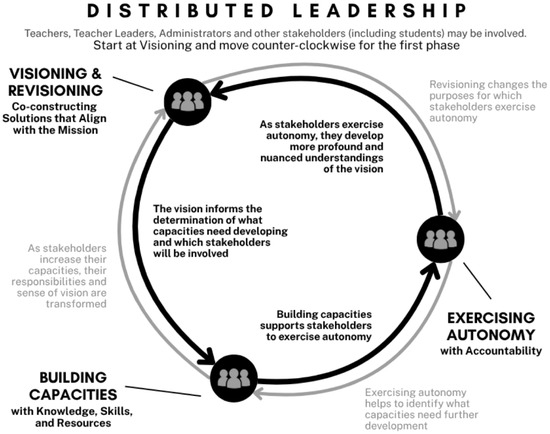
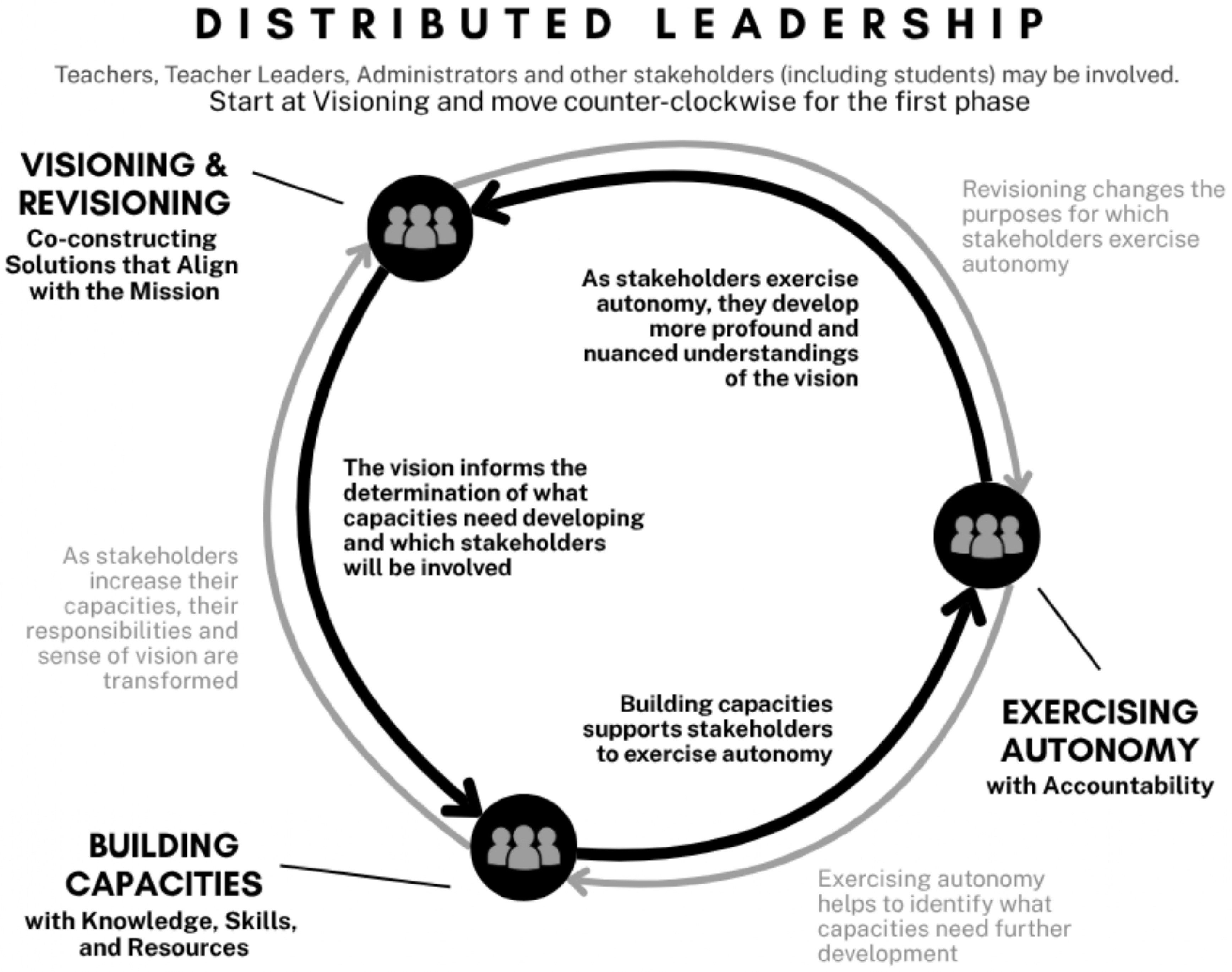
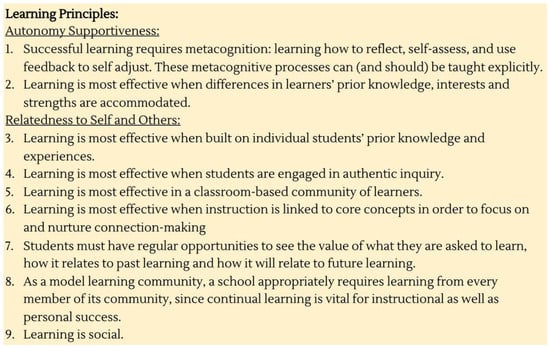
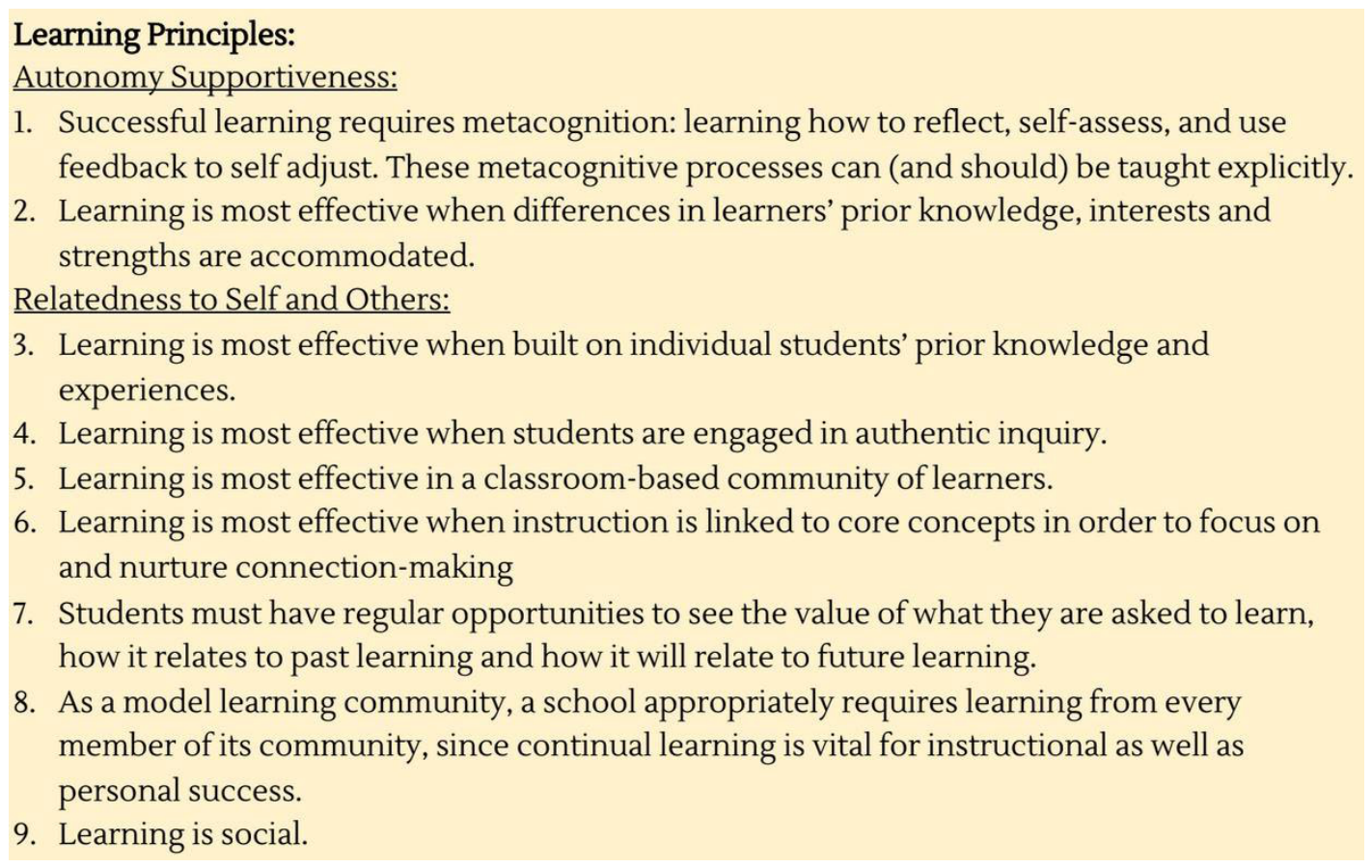

Disclaimer/Publisher’s Note: The statements, opinions and data contained in all publications are solely those of the individual author(s) and contributor(s) and not of MDPI and/or the editor(s). MDPI and/or the editor(s) disclaim responsibility for any injury to people or property resulting from any ideas, methods, instructions or products referred to in the content. |
© 2026 by the authors. Licensee MDPI, Basel, Switzerland. This article is an open access article distributed under the terms and conditions of the Creative Commons Attribution (CC BY) license.