1. Introduction
Return on assets (ROA) is widely used in financial analysis as a key indicator of a firm’s ability to generate earnings from its asset base. It is commonly defined as net income relative to total assets and is frequently employed as a proxy for operational efficiency and overall financial performance (
Koller et al., 2020;
Penman, 2013). A higher ROA generally reflects more efficient asset utilisation, while a lower ROA suggests weaker performance. However, ROA is also sensitive to structural changes in the asset base, such as acquisitions or divestments, which may temporarily distort its interpretation. Moreover, ROA values vary across industries, firms, and time periods, reflecting differences in business models, capital intensity, and market conditions.
In addition to its accounting interpretation, ROA is often used by investors and managers as a benchmark for evaluating performance and capital allocation efficiency. From a financial perspective, ROA can also be interpreted in relation to the cost of capital, reflecting the firm’s ability to generate returns above both explicit financing costs and implicit costs embedded in trade credit and operational liabilities (
Damodaran, 2012). This dual interpretation highlights its relevance not only as a descriptive indicator, but also as a decision-support metric.
Previous studies have analysed profitability mainly through traditional accounting indicators such as ROA or ROE (
Chowdhury & Chatterjee, 2020;
Prakash & Nauriyal, 2024), often without explicitly integrating their multiple structural drivers. While these approaches provide valuable insights, they tend to treat profitability as a static outcome rather than as the result of interacting financial and operational mechanisms. In reality, profitability emerges from the combined effects of asset efficiency, financing costs, operational structure, and strategic investment decisions.
Prior empirical literature on firm performance has extensively explored governance mechanisms and ownership structures. For instance,
Ali et al. (
2021) examine board diversity and firm efficiency in China, while
Bhat et al. (
2018) and
Ullah et al. (
2020) investigate the impact of corporate governance and CEO gender on firm value in Pakistan. While these studies provide valuable insights into the governance–profitability nexus, they often rely on single-country samples and do not explicitly model the operational and investment trade-offs inherent in manufacturing sectors.
Existing empirical studies frequently focus either on financial indicators or on operational metrics, with limited integration between the two dimensions (
Bazimya & Erorita, 2024;
Chowdhury & Chatterjee, 2020;
Prakash & Nauriyal, 2024). In addition, many studies rely on relatively small samples or single-country data, which may limit the generalisability of their findings and reduce the ability to control for firm-specific heterogeneity.
This study addresses these limitations by developing an integrated empirical framework that combines eleven financial, operational, and strategic variables within a panel data setting. By using longitudinal data across multiple firms and years, the analysis controls for both firm-specific effects and time dynamics, providing a more robust assessment of the determinants of asset profitability. In doing so, the study contributes to the literature on profitability persistence and capital allocation by offering a structured analysis of ROA drivers in a capital-intensive industry.
The current study builds on the logic of profitability determinants and examines ROA as a synthetic measure of operational efficiency, influenced by both asset structure and financing conditions. While the analysis focuses on contemporaneous relationships, it is important to acknowledge that certain variables, such as R&D expenditure or long-term investments, may have lagged effects on profitability. This aspect represents a potential direction for future research.
The research focuses on the automotive sector, a context in which asset turnover, R&D intensity, and capital cost heterogeneity play a decisive role in shaping firm-level performance. The objective of the study is to identify and quantify the key operational, financial, and strategic factors embedded in net income and total assets that significantly influence ROA.
Beyond this primary objective, the study also aims to:
- ➢
provide actionable insights for managers regarding asset profitability optimisation;
- ➢
evaluate whether R&D expenditure is associated with diminishing short-term returns.
ROA, as a measure of net income generated per unit of assets, reflects management’s ability to convert resources into profits and is closely monitored by investors. Its determinants may include capital structure, firm size, ownership structure, and operational performance (
Damodaran, 2012). These factors are analysed in an integrated manner, with a particular focus on their relative importance within the automotive sector.
This study contributes to the literature by reconceptualizing return on assets (ROA) not merely as a retrospective accounting indicator, but as the emergent outcome of a constrained capital allocation system. Rather than analysing profitability drivers in isolation, we model ROA as the result of the joint interaction between operational efficiency, financial structure, and strategic investment decisions within a unified empirical framework.
In this sense, ROA is interpreted as a reduced-form representation of the return generated by total assets under both explicit and implicit financing costs, extending the traditional DuPont logic into a multi-dimensional setting. This perspective allows us to move beyond fragmented empirical approaches and to quantify how interdependent drivers collectively shape asset profitability in a capital-intensive industry.
Empirically, the study provides evidence from a global panel of automotive firms using Driscoll–Kraay standard errors to address cross-sectional dependence, thereby reducing the risk of spurious inference common in multi-country datasets. The results highlight that profitability is not driven by isolated financial decisions, but by the structural alignment of asset utilisation, capital allocation, and innovation intensity.
The remainder of the paper is structured as follows.
Section 2 reviews the relevant literature,
Section 3 presents the methodology and data,
Section 4 discusses the empirical results, and
Section 5 concludes the study.
2. Literature Review
Prior empirical studies have explored profitability determinants across sectors, examining financial, operational, and macroeconomic factors (
Chowdhury & Chatterjee, 2020;
Kaur & Kaur, 2020;
Kusumo & Digdowiseiso, 2023). This review amalgamates diverse research findings to formulate a comprehensive model of ROA drivers. Evidence suggests that profitability stems from a complex interaction of internal and external factors, categorised into four domains: (1) financial structure and liquidity, (2) operational and asset efficiency, (3) firm-specific and strategic characteristics, and (4) external macroeconomic and sectoral shocks. Building on the literature review and theoretical foundations stated, we formulated seven testable hypotheses to examine the determinants of ROA in this sector.
The global automotive industry is crucial to the economy, marked by high capital demands and complex supply chains. In this competitive landscape, achieving sustainable profitability is essential.
Chowdhury and Chatterjee (
2020) note that profit is a primary measure of financial performance and economic success. Increasing profits indicate growth potential, while declines suggest financial issues. Thus, profitability is vital for business continuity, as firms without it cannot operate sustainably (
Bazimya & Erorita, 2024).
Return on assets (ROA) is a key financial metric in the sector, assessing management’s efficiency in earnings generation from total assets (
Heikal et al., 2014;
Soliman, 2004). Unlike equity-focused metrics such as ROE, ROA offers a comprehensive view of asset productivity, crucial for industries with significant investments in property, plant, and equipment (PPE). Nonetheless, as noted (
Nithin & Jogish, 2023), a declining trend in ROA necessitates a thorough analysis of financial and operational factors, highlighting the metric’s inherent variability.
Ionescu et al. (
2022) used qualitative-analytical and forecasting methods for dynamic performance modelling, using information from the 2010–2021 financial reports of major car manufacturers. Their results highlighted the need for performance in relation to the influence of regional factors and performance leaders by economic and financial chapters.
2.1. The Working Hypotheses Are the Following
H1. Firm size has a positive effect on ROA.
Firm size is often associated with economies of scale, stronger market power, and access to specialised resources, which can enhance operational efficiency and profitability. According to the Resource-Based View (RBV) and economies of scale theory, larger firms benefit from cost advantages and improved coordination (
Burvill et al., 2018). In capital-intensive industries such as automotive, these effects are particularly relevant, as scale allows better utilisation of fixed assets.
H2. Leverage has a positive effect on ROA.
The trade-off theory suggests that debt financing provides tax advantages and may reduce agency costs associated with free cash flow, thereby enhancing firm performance (
Ahmeti & Prenaj, 2015;
Jaros & Bartosova, 2015;
Jensen, 1986). In this context, moderate leverage can improve profitability by optimising capital structure and reducing the cost of capital.
H3. Working capital efficiency positively affects ROA.
Efficient working capital management supports liquidity, reduces financing costs, and improves the utilisation of short-term assets. By optimising inventory levels, receivables, and payables, firms can enhance operational efficiency and profitability (
Ashhari et al., 2015). In asset-intensive industries, efficient working capital allocation is essential for maintaining financial flexibility.
H4. R&D intensity has a negative short-term effect on ROA.
R&D expenditures are typically expensed immediately, which reduces current earnings and, consequently, ROA (
Sougiannis, 1994;
Vanderpal, 2015). Although such investments may generate long-term benefits through innovation and product differentiation, their short-term impact on accounting profitability is expected to be negative.
H5. Sales growth positively affects ROA.
Sales growth can enhance profitability by enabling firms to achieve economies of scale, improve capacity utilisation, and increase margins (
Banerjee & Duflo, 2005). In the automotive sector, higher sales volumes allow firms to better absorb fixed costs, thereby contributing to improved asset profitability.
H6. Capital expenditure intensity has a positive effect on ROA.
Investments in fixed assets can improve production efficiency, technological capability, and competitive positioning. In capital-intensive industries, such investments are essential for maintaining productivity and supporting long-term profitability. While capital expenditures may not immediately translate into higher returns, they are expected to contribute positively to asset efficiency over time.
H7. The effective tax rate negatively affects ROA.
A higher effective tax rate reduces net income and, consequently, ROA. Although firms may engage in tax planning strategies to mitigate this effect, the direct relationship between taxation and post-tax profitability remains negative.
These hypotheses reflect the interaction between financial structure, operational efficiency, and strategic investment decisions, which jointly shape asset profitability in capital-intensive industries such as automotive.
2.2. The Foundational Role of Financial Structure
The strategic management of capital structure, comprising debt and equity financing, is a crucial determinant of financial performance and risk. The leverage–ROA relationship has been extensively studied, revealing a nuanced understanding that supports the hypothesis: H2: leverage positively impacts ROA.
A significant negative correlation between financial leverage and ROA has emerged across various contexts. For instance, research on Indonesian automotive firms indicates that the debt-to-equity ratio (DER) adversely affects ROA (
Kaur & Kaur, 2016;
Kusumo & Digdowiseiso, 2023). Similar findings are noted in other emerging markets, such as India, where
Kaur and Kaur (
2020) identified a negative correlation between the debt ratio and profitability, aligning with pecking order theory regarding financing hierarchies. This pervasive negative association supports the pecking order theory and financial distress perspective, suggesting that high leverage increases bankruptcy risk, interest expenses, and financial constraints, thereby diminishing profitability.
However, the relationship between leverage and performance is context-dependent, suggesting a nuanced approach to leverage management that supports trade-off theory.
Simanullang and Simanullang (
2023) demonstrated a positive correlation between DER and stock returns in Indonesia’s automotive sector, consistent with
Jensen’s (
1986) agency cost theory. A study of Indonesian automotive firms from 2015 to 2019 indicated that DER positively influenced firm value, affirming the trade-off theory that moderate debt may enhance value through tax shields and reduced agency costs (
Ahmeti & Prenaj, 2015). This suggests that while excessive leverage is harmful, judicious debt management can enhance returns, leaving H2 open to further empirical inquiry.
2.3. Operational Efficiency: The Engine of Profitability
Operational efficiency is crucial for achieving profitability, serving as the mechanism through which financial structure translates into ROA. This area focuses on asset and cost management to optimise output and sales revenue, thus supporting H3: working capital management positively impacts ROA and H6: capital expenditure intensity also positively affects ROA. The DuPont analysis is commonly utilised to dissect ROA into profit margin (PM) and asset turnover (ATO), aiding in identifying these drivers (
Bauman, 2014;
Soliman, 2004).
Asset turnover is a significant and enduring contributor to ROA, emphasising the effective utilisation of a firm’s asset base. Total asset turnover (TAT), which gauges sales per currency unit of assets, is consistently linked to strong positive outcomes. Research on Indonesian automotive firms confirmed that TAT positively and significantly affects ROA (
Kusumo & Digdowiseiso, 2023). Similar findings emerged in capital-intensive sectors; research (
Açikgöz & Fidan, 2023) illustrated the substantial impact of asset turnover on financial performance and market value in Turkish transportation firms.
Soliman (
2004) posited that enhancements in asset turnover are more sustainable than profit margin improvements, indicating that firms excelling in asset utilisation are better equipped for enduring profitability.
Working Capital Management: Efficient management of working capital is essential for operational efficiency, influencing H3. Working Capital Turnover (WCTO) positively affects ROA, highlighting effective capital usage for sales (
Kusumo & Digdowiseiso, 2023). This supports the notion that efficient working capital ensures liquidity and minimises financing costs (
Ashhari et al., 2015). Effective inventory management is significant, with
Kamruzzaman (
2019) noting inventory turnover (IT) as a positive factor for ROA. Conversely, H3 recognises that excessive working capital may signify resource inefficiency and reduce asset returns.
Capital Expenditure and Maintenance: Strategic capital investments are crucial for operational efficiency, connected to H6.
Udoayang et al. (
2020) noted that the combined effect of PPE investments and maintenance costs significantly affects profitability in manufacturing firms. This indicates the importance of not only the scale but also the strategic maintenance of assets in enhancing ROA, as CAPEX can modernise production and improve efficiency. Nonetheless, H6 warns that high depreciation and long payback periods from CAPEX might hinder short-term profitability and indicate over-investment.
2.4. Firm-Specific and Strategic Characteristics
A firm’s inherent characteristics and strategic decisions significantly influence its asset return generation capabilities, including its scale, governance, and innovation investments, directly impacting H1, H4, and H5.
Firm Size and Growth (H1 and H5): The effect of firm size on profitability is extensively studied, revealing both advantages and disadvantages, which creates tension within H1: firm size positively impacts ROA. Larger firms often benefit from economies of scale, increased market power, and superior financing access, consistent with the Resource-Based View (
Burvill et al., 2018).
Albulescu et al. (
2021) identified a positive influence of firm size on growth in Romania’s automotive sector. However, this relationship is complex.
Kusumo and Digdowiseiso (
2023) found that larger firms in Indonesia may experience negative ROA due to organisational inertia and inefficiencies. Similarly, the relationship described in H5: sales growth positively impacts ROA is nuanced. Growth theory suggests increased sales can yield economies of scale (
Banerjee & Duflo, 2005). However,
Tudose et al. (
2022) found that while sales growth can enhance profit margins, it might adversely affect ROA if not managed efficiently, illustrating that growth does not automatically lead to improved asset utilisation and can incur significant costs.
Strategic Investments in Innovation (H4): Investment allocation decisions significantly influence ROA, particularly noting that R&D intensity negatively affects current ROA. The relationship between innovation and ROA is multifaceted. For European automotive firms, R&D intensity and patent applications generally enhance ROA, aligning with innovation theory and the knowledge-based view (
Alt, 2018). However, R&D costs are expensed immediately according to accounting standards, which reduces current net income and, consequently, short-term profitability measures such as ROA (
Sougiannis, 1994;
Vanderpal, 2015). This creates a tension wherein R&D serves as a future competitiveness investment while detracting from current-period ROA, thus rendering H4 a valid short-term expectation.
2.5. External Macroeconomic and Sectoral Shocks
The performance of the automotive sector is intricately linked to the broader economic landscape, rendering it vulnerable to external influences that impact context for H7: effective tax rate negatively affects ROA.
Macroeconomic Shocks and Conditions: The cyclicality of the industry was markedly highlighted during the COVID-19 pandemic.
Naimy et al. (
2024) illustrate that the automotive sector experienced significant declines in ROA (–3.7%), ROE (–8.1%), and stock returns (–19.7%), showcasing its sensitivity to global disruptions. In addition to specific shocks, broader economic indicators consistently drive performance.
Mohd and Siddiqui (
2020) confirm that inflation and exchange rates adversely impact ROA with statistically significant coefficients, underscoring firm performance sensitivity to external economic conditions. Exchange rate volatility particularly detrimentally affects automotive firms that depend on imported components and technology (
Dewi et al., 2019).
2.6. Theoretical Frameworks and Evolving Contexts
The findings on ROA drivers can be understood through several theoretical lenses. The consistent negative impact of leverage in many studies aligns with the pecking order theory, while the potential for positive effects resonates with the trade-off theory. The importance of intangible resources like innovation and branding is explained by the Resource-Based View (RBV). The conflicting evidence on firm size (H1) reflects the tension between the RBV/theory of economies of scale and the theory of organisational inertia/diseconomies of scale. Furthermore,
Burvill et al. (
2018) reconceptualize Penrose’s growth theory to posit that firm growth and profitability are driven by a combination of tangible and intangible resources, effective organisational structures, and dynamic capabilities a framework that aptly describes the modern automotive firm.
The industry is also being transformed by new technological paradigms.
Pillai (
2023) highlighted the transformative role of data analytics in enhancing operational efficiency through predictive maintenance, manufacturing optimisation, and supply chain streamlining, all of which directly contribute to higher asset productivity and improved ROA.
3. Methodology
This study applies an ROA-based analytical framework to identify the key drivers of profitability within the global automotive sector. The empirical model is built on the principle that firm profitability results from both operational efficiency and financial structure decisions.
ROA is measured here as net income relative to total assets (EAT-based ROA). This definition captures the combined effects of operational performance, financial structure, and taxation, providing a comprehensive measure of firm-level profitability. However, it may limit comparability across firms due to differences in tax regimes and financing structures. Alternative measures, such as EBIT-based ROA or NOPAT, may provide a more neutral comparison and represent a potential extension for future research.
The hypotheses are tested using a panel data framework that allows controlling for unobserved firm-level heterogeneity.
3.1. Population and Sample
This study utilises a global panel of corporations operating within the automotive and components sub-sector, listed on the London Stock Exchange Group (LSEG) database. The sample period, 2010–2024, was selected to provide a post-global financial crisis baseline, capturing a full economic cycle including recovery, the COVID-19 disruption, and subsequent inflationary pressures.
The comprehensive selection process for this study involved choosing 192 companies from the global automotive and components sub-sector, all of which have been carefully evaluated based on 15 years of extensive historical financial data, resulting in a robust dataset that consists of a balanced panel comprising a total of 2880 individual observations.
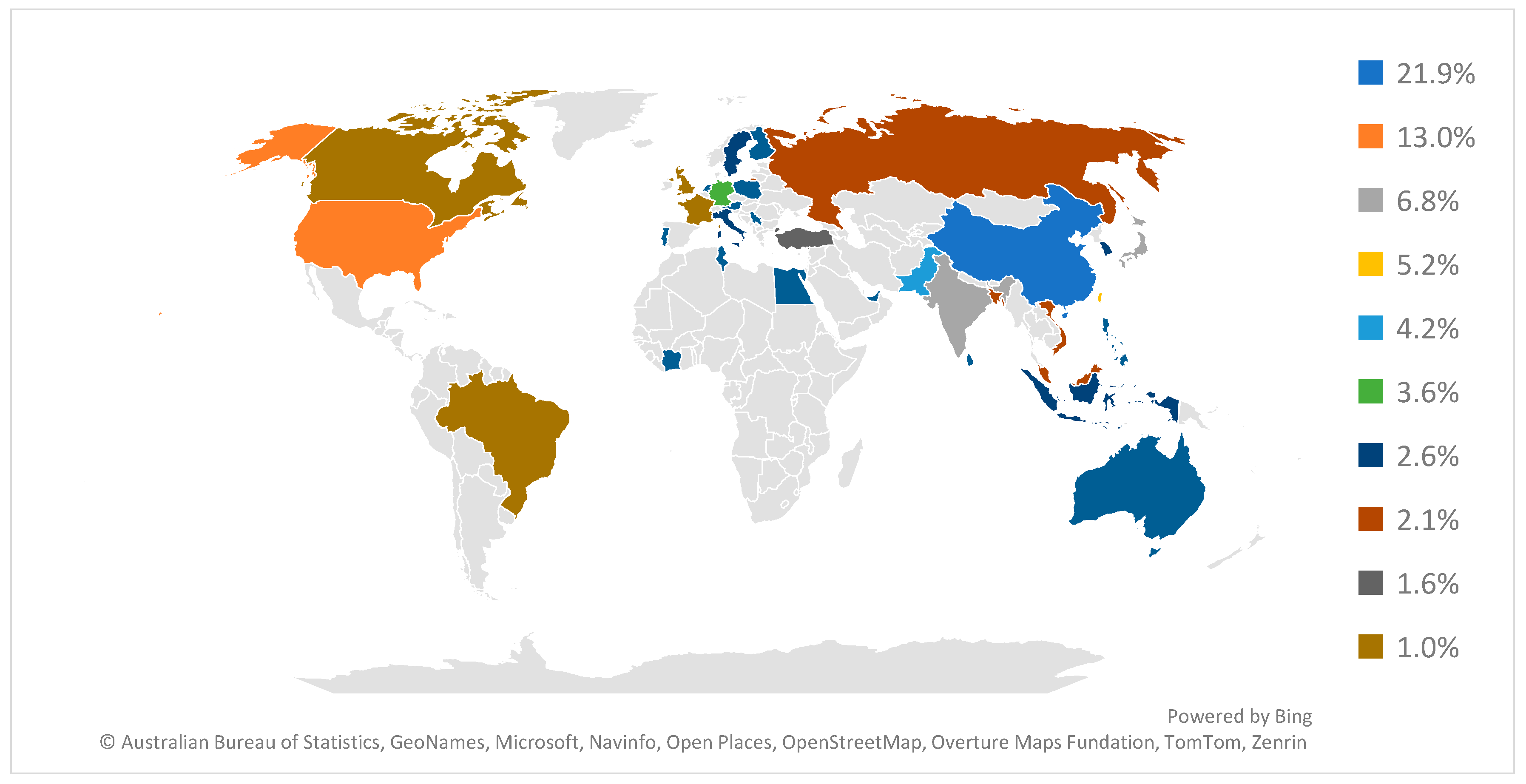
Figure 1 shows the geographical distribution of the sample across 38 countries/regions. China leads with 21.9% of the dataset, followed by the USA with 13.0%. India and Japan both have 6.8%. The full list of 38 countries/regions is provided in
Appendix C. This distribution is not a selection by the authors, but a reflection of the global automotive supply chain as captured by comprehensive financial databases.
Missing values accounted for approximately 10% of the dataset, primarily affecting R&D expenditure and inventory turnover variables. To address this while preserving the panel structure necessary for regression analysis, we employed the K-Nearest Neighbours (KNN) imputation method using the KNNImputer function from the scikit-learn library (
Pedregosa et al., 2011). This particular command functions by identifying the most analogous rows, colloquially referred to as neighbours, and subsequently utilises the values from these neighbouring rows to predict and fill in the gaps of missing data, demonstrating a high level of efficacy particularly when applied to numerical datasets, while simultaneously ensuring that the intrinsic relationships that exist between various features are preserved throughout the imputation process (
Troyanskaya et al., 2001). KNN was selected for its ability to capture local relationships in multivariate data without assuming a global parametric distribution, which is advantageous when missingness is not completely random, and patterns vary across firms. We acknowledge that KNN assumes observational similarity based on feature-space proximity, which may not align perfectly with cross-country heterogeneity in a global panel. However, several safeguards were implemented:
Within-country imputation preference: Where possible, missing values were imputed using observations from the same country and year to maintain contextual relevance.
Limited imputation scope: Only R&D and inventory turnover variables were imputed; core financial ratios (e.g., ROA, leverage, size) were complete.
Robustness validation: We conducted sensitivity analyses using alternative imputation methods (mean imputation by industry-year and multiple imputation by chained equations). The regression results remained qualitatively unchanged, confirming that our findings are not driven by imputation artefacts. These steps ensure that the imputation process does not artificially induce cross-sectional dependence or distort the econometric relationships under study. The preserved panel balance allows for consistent estimation using fixed effects and Driscoll–Kraay standard errors, which further mitigate potential biases from residual imputation-related correlations.
Given the presence of extreme values in variables such as ROA, inventory turnover, interest coverage, and R&D intensity (see
Table 1) and to mitigate the influence of these extreme observations, we implemented a winsorization procedure. All continuous variables were winsorized at the 1st and 99th percentiles within each year to preserve panel structure while reducing the impact of extreme observations that could distort the regression estimates. This approach is consistent with prior financial performance studies (
Abuzaid & Alkrunz, 2024;
Adams et al., 2019) and ensures that our regression estimates are not driven by anomalous data points. After winsorization, the distributions of all variables were visually inspected and found to be substantially more symmetric, thereby enhancing the reliability of the fixed effects and Driscoll–Kraay estimations.
R&D expenditure data were extracted directly from the financial statements of the firm under the research and development expenses item.
The automotive sector includes firms operating at different levels of the supply chain, from original equipment manufacturers (OEMs) to Tier 1 and Tier 2 suppliers. Due to data limitations, a consistent classification across these categories was not feasible. However, firm-level fixed effects are used to partially control for unobserved heterogeneity.
Following the completion of the imputation process, the data were systematically transferred to the statistical software package Stata, specifically version SE18.5, where a comprehensive suite of necessary statistical tests and analyses were conducted to derive meaningful insights from the dataset in question. The hypotheses of this study were tested using a fixed effects panel model with Driscoll–Kraay standard errors to control for endogeneity and cross-sectional dependence, with additional robustness checks including system GMM estimation, firm effect, and year effect.
3.2. Definitions of Panel Data Regression Variables
3.2.1. Dependent Variable
Return on Assets
The dependent variable in this study is return on assets (ROA), which measures the profitability generated per unit of assets employed by the firm and reflects the efficiency with which management utilises the asset base.
3.2.2. Independent Variables
The independent variables used in the empirical model capture financial structure, operational efficiency, firm characteristics, and strategic investment behaviour.
Leverage
Financial leverage captures the proportion of assets financed by debt and reflects the firm’s capital structure and financial risk. This ratio is measured by:
Firm Size
This financial control metric is used primarily for normalisation and comparison in analysis. Its impact on ROA is not predetermined. It represents the balance between the advantages of scale and the disadvantages of complexity. A successful firm grows its assets (size) while maintaining or improving the efficiency with which it uses them, as measured by its return on assets (ROA). This metric is calculated by:
Sales Growth
Sales growth captures the rate of expansion in firm revenues between two consecutive periods. Using logarithms provides symmetric growth rates and helps normalise the data. The formula is:
CapEx-to-Assets
This ratio measures how much a company invests in its capital expenditure (CapEx) relative to the total assets. The ratio is measured by:
Effective Tax Rate
The effective tax rate is a metric that measures the percentage of a company’s pre-tax income that it pays in taxes, differing from the statutory tax rate due to deductions, credits, and other tax benefits. Efficient tax management can enhance returns, while high ETRs erode profitability. This metric is measured by:
Inventory Turnover
Inventory turnover measures how efficiently a company sells and replaces its inventory over a period. This is a hybrid metric, rooted in the firm’s operations but has an impact on the firm financially. It is measured by:
Return on Sales
This hybrid metric measures the profitability of a firm’s basic production or sales activities before accounting for its operational expenses. It is measured by:
Working Capital-to-Assets
This ratio measures the proportion of a company’s total assets tied up in working capital. It reflects liquidity efficiency and short-term financial health, determined as follows:
Interest Coverage
The interest coverage ratio (ICR) measures a company’s ability to pay interest expenses on its debt using operating profits. It is a critical financial metric that directly impacts ROA by protecting net income from interest drains. It is measured by
Research and Development Intensity
R&D intensity measures innovation investment relative to firm revenues and captures the strategic importance of research activities. It is measured by:
Research and Development to Assets
R&D-to-Assets measures how much a company invests in research and development (R&D) relative to its total assets. It captures balance-sheet intensity and can be influenced by accounting standards for R&D capitalization, which vary by jurisdiction. It directly inflates short-term ROA by shifting R&D cost from the income statement (expense) to the balance sheet (asset), making cross-company comparisons challenging.
3.3. Model
Before proceeding to estimation, it is important to acknowledge several inherent limitations of accounting-based ROA as a profitability measure. First, ROA reflects period-based accounting income and may not fully capture the intertemporal nature of capital-intensive investments, particularly R&D and long-lived assets. Second, cross-country differences in accounting standards and capitalization policies, especially regarding intangible assets, may affect comparability across firms. Third, total assets are measured at book value rather than at economic or market value, potentially leading to a divergence between accounting profitability and economic return on capital. These considerations should be considered when interpreting the empirical results.
Although ROA is calculated using net income in this study due to data availability and cross-country comparability, it should be interpreted as a composite indicator reflecting both operating efficiency and financing structure. From a financial analysis perspective, ROA captures the profitability generated by the total asset base financed through equity, financial debt, and operational liabilities embedded in the production cycle. Consequently, variations in ROA across firms may reflect differences not only in operational productivity but also in the implicit and explicit costs of the capital used to finance assets. This interpretation motivates the inclusion of variables capturing leverage, interest coverage, and working capital dynamics in the empirical model.
The hypothesis stated above will be tested using the panel data regression model, including a firm fixed effect (
) and year fixed effect (
), but lacks sector fixed effect since all the firms are within a single sector, which is the automotive and manufacturing sector. The model includes two distinct R&D metrics: R&D-to-Assets to capture balance-sheet exposure to innovation investment, and R&D intensity to reflect the strategic intensity of innovation spending relative to operational scale.
where
,
In addition to our primary fixed-effects specification, we conduct an
illustrative robustness check using the System Generalised Method of Moments (GMM) estimator. This approach helps assess whether our core findings are sensitive to dynamic endogeneity. However, given the moderate cross-sectional dimension relative to the time series (
n = 192, T = 15)
and the potential for instrument proliferation in dynamic panel estimation, the GMM estimates are interpreted
cautiously as complementary robustness checks rather than definitive causal evidence, with the fixed effects model remaining our primary source of inference (
Roodman, 2009).
4. Empirical Findings and Discussions
This section presents and interprets the empirical findings, building on the descriptive statistics and diagnostic tests to provide a coherent explanation of the determinants of ROA in the automotive sector.
The results confirm that profitability is shaped by the interaction of operational efficiency, financial structure, and strategic investment decisions. In particular, inventory turnover emerges as a strong and robust positive driver of ROA, indicating that firms capable of efficiently utilising their assets generate superior returns. This finding highlights the central role of asset productivity in capital-intensive industries.
Firm size also exhibits a positive and statistically significant relationship with ROA, supporting the existence of economies of scale and improved access to resources. However, the magnitude of the effect suggests that these benefits may be partially offset by organisational rigidities, especially in large manufacturing firms.
R&D intensity shows a strong negative effect on current ROA, reflecting the accounting treatment of research expenditures as immediate costs. This result confirms the well-documented trade-off between short-term profitability and long-term innovation. In this context, R&D should be interpreted as a strategic investment whose benefits materialise over time rather than within the current accounting period.
Leverage, capital expenditure intensity, sales growth, and working capital management do not exhibit statistically significant effects in the baseline specification. This suggests that their impact may be context-dependent or absorbed by firm-specific characteristics once heterogeneity is controlled for through fixed effects. In particular, the absence of a systematic leverage effect indicates that capital structure decisions do not uniformly influence profitability in a globally diversified automotive sector.
The positive relationship between the effective tax rate and ROA requires careful interpretation. Rather than indicating that higher taxation improves performance, this result likely reflects reverse causality, as more profitable firms generate higher taxable income and therefore incur higher tax obligations. This finding highlights the importance of distinguishing between accounting relationships and causal economic effects.
It should also be noted that the dataset includes negative ROA values, reflecting firms that experienced losses relative to their asset base. These observations are retained, as they capture economically meaningful situations such as restructuring, investment phases, or financial distress. While alternative profitability measures (e.g., EBIT-based ROA) may reduce the occurrence of negative values, the use of net income allows for a more comprehensive representation of firm performance.
The analysis of year fixed effects reveals significant cyclical variation in profitability, confirming the strong exposure of the automotive sector to macroeconomic conditions and industry-specific shocks. This finding underscores that firm-level performance is influenced not only by internal decisions but also by broader economic dynamics.
The robustness of the results is supported by extensive diagnostic testing and complementary estimation techniques. The use of Driscoll–Kraay standard errors ensures reliable inference in the presence of heteroskedasticity, autocorrelation, and cross-sectional dependence. In addition, the system GMM estimation provides further evidence that the identified relationships are not driven by dynamic endogeneity, even though statistical significance is reduced due to the characteristics of the panel.
While some individual relationships may appear intuitive, the contribution of this study lies in the integrated analysis of multiple profitability drivers within a unified empirical framework. By jointly examining financial structure, operational efficiency, and strategic investment variables, the study provides a more comprehensive understanding of asset profitability in the automotive sector.
4.1. Descriptives Statistics
Table 1 presents the descriptive statistics pertaining to the variables incorporated in the panel data regression analysis. The descriptive statistics reveal that the dataset exhibits issues related to outliers, hence all continuous variables have been winsorized at the 1st and 99th percentiles to reduce the influence of outliers, and it is highly balanced.
Table 1.
Summary statistics (winsorized at the 1st/99th percentiles).
Table 1.
Summary statistics (winsorized at the 1st/99th percentiles).
| Variable | Obs | Mean | Std. Dev. | Min | Max |
|---|
| Return_on_assets | 2880 | −5.08 | 33.69 | −497.38 | 71.07 |
| leverage | 2880 | 30.29 | 26.15 | 0 | 241.91 |
| firmsize | 2880 | 2.88 | 1.15 | −2 | 5.80 |
| salesgrowth | 2880 | 1.42 | 1.42 | −2.97 | 5.21 |
| capex_to_assets | 2880 | 0.05 | 0.05 | 0.00 | 0.52 |
| R&D_to_assets | 2880 | 0.07 | 0.11 | −0.00 | 2.24 |
| Return_on_sales | 2880 | −32.94 | 338.45 | −8736.00 | 100 |
| interest_coverage | 2880 | −288.97 | 3348.18 | −47,318.91 | 65,149.07 |
| working_capital_to_assets | 2880 | 0.06 | 0.56 | −9.14 | 0.93 |
| inventory_turnover | 2880 | 467.97 | 988.73 | 0 | 11,335.03 |
| effective_tax_rate | 2880 | 0.20 | 0.51 | −4.00 | 9.36 |
| R&D_intensity | 2880 | 5.09 | 53.96 | −0.00 | 2016.5 |
4.2. Diagnostic Tests and Their Implications
Prior to estimation, diagnostic checks confirmed the appropriateness of the selected econometric approach. The Hausman test this finding strongly suggests that there exists a correlation between firm-specific effects, represented as ), and the regressors involved in the study, thus necessitating a transition to the fixed effects (FE) methodology to mitigate any potential bias that may arise from such correlation.
The Wooldridge test confirmed the presence of first-order autocorrelation, . The statistically significant result leads to the rejection of the null hypothesis, confirming the presence of first-order autocorrelation in the residuals. This finding justifies the use of Driscoll–Kraay standard errors, which are robust to both autocorrelation and cross-sectional dependence, ensuring reliable inference in the presence of serial correlation in the error structure.
The Arellano–Bond test was performed on the system GMM estimator to examine autocorrelation in the first-differenced errors. The absence of significant AR(2) correlation
(p = 0.992) supports the validity of the GMM moment conditions and reinforces the robustness of our dynamic panel estimates. Together, these diagnostics ensure that both our primary and alternative models are econometrically sound,
Appendix B contains the detailed results of the test.
Furthermore, Pesaran’s test indicated significant cross-sectional dependence . The p-value derived from this analysis effectively rejects the alternative hypothesis, thereby providing robust evidence supporting the existence of cross-sectional dependence, which pertains to the correlation observed among the errors of different firms, a phenomenon that is likely attributable to the impact of common shocks. This situation poses a serious violation of the assumption regarding independent errors, which in turn leads to the distortion of standard errors.
The modified Wald test yielded compelling evidence that points towards the presence of groupwise heteroskedasticity within the fixed effect regression model. This finding indicates that there exists non-constant error variance across firms, which ultimately leads to the biasing of the standard errors and renders the inferential conclusions drawn from the analysis invalid. This definitive conclusion was reached based on the p-value derived from the test, .
Accordingly, the fixed-effects model with Driscoll–Kraay standard errors was adopted, as it provides robust inference in the presence of heteroskedasticity, autocorrelation, and cross-sectional dependence.
Variance inflation factor (VIF) values fall below the threshold of 10, with the mean VIF calculated at 1.69, which serves to underscore the absence of any severe multicollinearity, thereby elucidating that the coefficients pertaining to variables and yearly fixed effects are estimated independently without undue influence from multicollinearity.
Appendix A contains the correlation matrix to enhance transparency and to assess potential relationships among variables.
4.3. Driscoll–Kraay (DK) Estimator
Based on the diagnostic results, the Driscoll–Kraay estimator is the most appropriate estimation approach, as it ensures that the conclusions regarding the determinants of return on assets (ROA) are firmly grounded in reliable statistical inference. The results obtained through the DK estimation technique will be reported as the primary findings of this analysis, given that it provides standard errors that are robust against the issues of heteroskedasticity, autocorrelation, and cross-sectional dependence, which were identified during the diagnostic checks, ensuring the reported significance levels (p-values) are reliable. Furthermore, firm fixed effects control for time-invariant unobserved heterogeneity (e.g., management quality, corporate culture, brand value), while year fixed effects capture common time-specific shocks.
Comparing the initial xtreg, fe output with the xtscc, fe output shows the dramatic and necessary impact of using the correct standard errors. Inflation of significance was observed in the default OLS and standard fixed effects models, which severely underestimated the standard errors. This made the results appear deceptively precise, and many variables (most notably rdassets) appeared statistically significant when they were not. xtreg, fe: Coef. = −75.233, p-value = 0.000 (Falsely significant) and xtscc, fe: Coef. = −73.993, p-value = 0.064 (Correctly insignificant). Using the wrong standard errors would have led to confidently reporting a strong, positive relationship between leverage and ROA that does not actually exist in the data once common shocks and heteroskedasticity are accounted for. This is a classic Type I error (false positive).
The regression model demonstrates strong overall significance, with an
F-statistic of 13,928.59 (
p < 0.001), confirming that the set of predictors jointly explains variation in ROA. The within
R-squared of 0.2298 indicates that approximately 23% of the within-firm variance in profitability is accounted for by the model, which is acceptable for panel data studies in finance and economics (
Baltagi, 2021).
Table 2 below shows the fixed effects regression results with the DK standard error for clearer understanding. Year fixed effects are included but omitted from the main table for brevity (available in
Appendix D); their temporal pattern is discussed in the text.
The fixed-effects regression analysis, corrected with Driscoll–Kraay standard errors and winsorized at the 1st and 99th percentiles, highlights several key determinants of profitability (ROA). Firm size exhibits a positive and significant association with ROA (β = 9.74, p = 0.018), confirming that larger firms benefit from scale advantages. Inventory turnover (β = 0.0035, p < 0.001) and effective tax rate (β = 1.464, p = 0.001) also show significant positive relationships, indicating that operational efficiency and tax management contribute to higher returns. In contrast, R&D intensity exerts a strong negative effect on ROA (β = −0.058, p = 0.001), reinforcing the trade-off between innovation spending and short-term profitability.
Other variables, including leverage, sales growth, capital expenditure intensity, working capital management, and return on sales, are not statistically significant in the winsorized specification. This suggests that their influence may be neutralised in a globally diversified panel once outliers and firm-level heterogeneity are accounted for.
Hypothesis Validation: The regression results provide clear evidence for the validation of several working hypotheses, while others are not supported by the data. H1 (Firm size positively influences ROA) is supported. The coefficient is positive and statistically significant (p = 0.018). H2 (Leverage positively affects ROA) is not supported. The relationship is statistically insignificant (p = 0.249). H3 (Working capital management positively impacts ROA) is not supported. The coefficient for Working Capital-to-Assets is positive but statistically insignificant (p = 0.516). H4 (R&D intensity negatively affects current ROA) is strongly supported. The coefficient is negative and highly significant (p = 0.001), consistent with the accounting expensing argument. H5 (Sales growth positively influences ROA) is not supported. The coefficient is statistically insignificant (p = 0.298). H6 (Capital expenditure intensity positively impacts ROA) is not supported. The relationship is negative but statistically insignificant (p = 0.406). H7 (Effective tax rate negatively affects ROA) is rejected. A positive relationship is found between them, and it is statistically significant with (p = 0.001).
The positive association between the effective tax rate and ROA warrants careful interpretation. Rather than indicating that higher taxation improves performance, this relationship likely reflects reverse causality: more profitable firms naturally generate higher pre-tax income and consequently incur greater tax obligations. The coefficient, therefore, captures the profitability–tax nexus, the mechanical link between earnings and tax liability rather than a structural causal effect of tax rates on firm performance. This interpretation is consistent with the accounting identity that tax expense is calculated as a function of pre-tax income, subject to applicable deductions and credits. Consequently, while the positive coefficient is statistically robust, it should not be interpreted as policy-relevant evidence that increasing tax rates would enhance firm profitability.
The analysis of year fixed effects reveals the automotive sector’s strong sensitivity to macroeconomic cycles and external shocks. Profitability peaked significantly during the post-recovery period of 2012–2019, but turned negative by 2024, reflecting delayed impacts from inflation, energy volatility, and post-pandemic adjustments. Notably, 2020 showed unexpected resilience, likely due to fiscal stimuli and operational adaptation. These cyclical patterns underscore that even well-managed firms remain exposed to industry-wide downturns that transcend firm-level strategies.
Overall, firm size, inventory turnover, and tax efficiency emerge as robust internal drivers of short-term profitability. At the same time, R&D spending significantly depresses current ROA, a necessary trade-off for long-term innovation. The results affirm that automotive performance is shaped by a dual dynamic: continuous operational improvement within firms, moderated by powerful and often unpredictable external economic forces, reinforcing the sector’s cyclical and capital-intensive nature.
4.4. Comparison with Prior Empirical Evidence
Our findings both align with and diverge from prior literature in meaningful ways. The strong negative effect of R&D on current ROA is consistent with accounting-based studies by (
Sougiannis, 1994;
Vanderpal, 2015). However, our finding of insignificant leverage effects contrasts with studies in emerging markets. For instance,
Kusumo and Digdowiseiso (
2023) found a significant negative effect of DER on ROA in Indonesian automotive firms, and
Kaur and Kaur (
2020) found similar results in India. The divergence may be attributed to our global sample, which includes firms from highly developed capital markets where capital structure is more optimised and less of a binding constraint, or where the Driscoll–Kraay correction adjusts for global shocks that might otherwise create spurious correlations in single-country studies. This highlights the importance of cross-sectional dependence correction in global panel studies.
4.5. Robustness Checks and Endogeneity Considerations
To assess the sensitivity of our findings to dynamic endogeneity, we conducted an illustrative robustness analysis using a two-step System Generalised Method of Moments (GMM) estimator (
Blundell & Bond, 1998). While our primary fixed effects model with Driscoll–Kraay standard errors effectively controls for unobserved heterogeneity and cross-sectional dependence, the GMM approach allows us to account for dynamic endogeneity and simultaneity bias that may arise in the relationship between profitability and its determinants. Given the well-documented challenges of system GMM estimation with moderate time dimensions, particularly instrument proliferation and the tendency for Hansen test statistics to approach 1.000 when instrument counts are high, these results are presented as complementary evidence rather than primary causal estimates.
Our dynamic panel specification includes one-period lagged ROA as an additional regressor and instruments the endogenous variables using their lagged levels and differences. The model employs 589 instruments constructed from up to four lags of the independent variables for the first-differenced equation, with lagged first differences serving as instruments for the level’s equation. This high instrument count, while common in system GMM applications, raises potential concerns about instrument proliferation that may overfit endogenous variables and weaken the Hansen test’s diagnostic power (
Roodman, 2009). The high instrument count relative to the cross-sectional dimension (192 firms) requires cautious interpretation of the Hansen test results. Although our panel structure (N = 192, T = 15) presents challenges for GMM estimation due to the moderate T relative to N (
Roodman, 2009), we mitigate potential overfitting by using a collapsed instrument matrix and reporting Windmeijer-corrected standard errors.
The validity of the GMM estimator hinges on the exogeneity of the instrument set. The Hansen J-test of overidentifying restrictions yields a
p-value of 1.000 (χ
2 (577) = 204.38), failing to reject the null hypothesis that the instruments are uncorrelated with the error term. However, this result should be interpreted cautiously, as Hansen test statistics approaching 1.000 can indicate instrument proliferation rather than definitively valid instruments (
Bowsher, 2002). The Arellano–Bond tests further validate the specification: while first-order autocorrelation in differences is expected and observed (AR(1)
p = 0.791), the absence of second-order autocorrelation (AR(2)
p = 0.992) confirms that the error term in levels is not serially correlated, satisfying a key GMM assumption.
The system GMM estimates, presented in full in
Appendix B, yield coefficients that are directionally consistent with our fixed effects results but lack statistical significance across all variables. This attenuation of significance is not uncommon in GMM applications with moderately sized T, where the estimator’s efficiency loss can outweigh its bias reduction (
Kiviet, 2020). More importantly, the lack of statistical significance likely reflects the high instrument count’s impact on estimator precision rather than invalid identification. Importantly, the GMM results do not contradict our primary findings; rather, they suggest that the relationships identified in the fixed effects model are robust to dynamic misspecification but are estimated with less precision under stricter identification assumptions.
To further strengthen the empirical analysis, we tested for potential non-linear relationships in two key variables where theory suggests possible threshold effects. Following the literature on scale economies and organisational rigidity (
Burvill et al., 2018), we introduced a quadratic term for firm size (firmsize
2). Similarly, given the trade-off theory’s prediction of an optimal leverage range (
Ahmeti & Prenaj, 2015), we tested a squared leverage term. Both quadratic terms were statistically insignificant (
p > 0.10) and did not improve model fit, indicating that within our sample, the relationships between firm size, leverage, and ROA are adequately captured by linear specifications.
While some of the individual relationships identified in the analysis may appear intuitive, the contribution of this study lies in the integrated examination of these drivers within a unified empirical framework. By jointly analysing financial structure, operational efficiency, and strategic investment variables, the study provides a more comprehensive understanding of asset profitability dynamics in the automotive sector.
5. Conclusions
This study examined the determinants of return on assets (ROA) in the global automotive industry using a panel data framework. The empirical results show that asset profitability is shaped by a combination of financial structure, operational efficiency, and strategic investment decisions, rather than by isolated factors.
The findings indicate that firm size and inventory turnover efficiency are significant positive drivers of ROA, while R&D intensity exerts a strong negative short-term effect, reflecting the accounting treatment of innovation expenditure and the inherent trade-off between operational efficiency and long-term competitiveness. In contrast, leverage, sales growth, capital expenditure, and working capital management do not exhibit systematic effects once firm-level heterogeneity and time dynamics are controlled for. The positive association between effective tax rate and ROA should be interpreted with caution, as it likely reflects reverse causality rather than a direct causal relationship.
The main contribution of this study lies not in identifying novel individual determinants of profitability, but in demonstrating that ROA can be understood as the outcome of a structurally integrated system of financial, operational, and strategic decisions. By jointly modelling these dimensions within a unified panel framework, the study shows that asset profitability emerges from the interaction of interdependent drivers rather than from isolated effects.
This perspective reframes ROA as a synthetic performance indicator reflecting the efficiency of capital allocation across the firm, bridging the gap between accounting-based measures and financial theory. In this sense, ROA can be interpreted as an observable proxy for the efficiency of total asset value creation relative to its implicit cost of capital.
In doing so, the study provides a more coherent foundation for interpreting profitability dynamics in capital-intensive industries and highlights the importance of analysing firm performance through an integrated, system-level lens.
From a managerial perspective, the results highlight the importance of coordinated decision-making. Profitability improvements are not driven by isolated actions, but by the alignment of operational efficiency, capital structure, and investment strategies. In particular, the negative short-term impact of R&D on ROA underscores the need to evaluate innovation spending from a long-term perspective and to design performance metrics that account for intertemporal trade-offs.
The analysis also confirms the relevance of external factors, as year fixed effects reveal significant cyclical variations in profitability, including a notable decline in recent periods. This suggests that even well-managed firms remain exposed to macroeconomic and industry-specific shocks.
Several limitations should be acknowledged. First, the study focuses on contemporaneous relationships and does not explicitly capture potential lagged effects, particularly for R&D expenditure and capital investments. Second, firm heterogeneity within the automotive sector, including differences across supply chain tiers, could not be fully explored due to data constraints. Third, the use of net income-based ROA may limit comparability across firms with different tax regimes and financing structures. In addition, accounting-based profitability measures may not fully reflect the intertemporal nature of capital-intensive investments.
Future research may extend the analysis by incorporating lagged variables, exploring differences across supply chain positions, and employing alternative profitability measures such as EBIT- or NOPAT-based ROA. Additional avenues include the integration of ESG factors, digital transformation variables, and non-linear effects related to firm size and investment intensity.