Article

The Double-Edged Effect of Bank Revenue Diversification: Insights from an Emerging Market

1
Higher Institute of Commercial Studies Sousse, Sousse University, Sousse 4054, Tunisia
2
Higher Institute of Management Sousse, Sousse University, Sousse 4054, Tunisia
*
Author to whom correspondence should be addressed.
Int. J. Financial Stud. 2026, 14(5), 102; https://doi.org/10.3390/ijfs14050102
Submission received: 12 March 2026 / Revised: 9 April 2026 / Accepted: 16 April 2026 / Published: 23 April 2026

Abstract

This study investigates the impact of revenue diversification on the performance and stability of listed Tunisian banks over the period 2008–2023, with the objective of assessing whether diversification strategies enhance bank performance and promote financial stability in an emerging-market context. The analysis relies on a panel dataset of Tunisian listed banks and employs a two-stage least squares (2SLS) estimation approach to address potential endogeneity issues, using ownership structure as an instrumental variable. Bank performance is measured by Return on Assets (ROA) and Net Interest Margin (NIM), while financial stability is captured by the Z-score. The empirical results show that revenue diversification has a positive and significant effect on bank performance, as measured by ROA, and on financial stability. However, it exerts a negative and significant impact on NIM, indicating that although diversification improves overall performance and strengthens stability, it may weaken traditional intermediation income. This study contributes to the limited literature on banking in emerging markets by jointly examining performance and stability effects while addressing endogeneity concerns through robust econometric techniques, and by providing new evidence from the Tunisian banking sector, which has experienced significant political and economic disruptions during the study period.

1. Introduction

Over the past few decades, competition in the banking sector, driven by regulatory changes, has led to major transformations in this market, affecting both the role of banks and the structure of their revenues (Allen & Santomero, 2001). As a financial institution that plays an important role, the banking system generally serves to generate profits and tends to be stable, and income diversification is a necessary condition for a prosperous economy (Setiadi & Danarsari, 2024; Haddou & Boughrara, 2025). Like other developing countries, Tunisia also relies on the banking sector as the main alternative to capital markets for financing. Indeed, in a dynamic economic environment, banks are vulnerable to interest rate volatility, credit risk, and bankruptcy, and no longer depend exclusively on their traditional sources of interest income (Nisar et al., 2018; Paltrinieri et al., 2021). Several studies have attempted to explain the determinants of the Z-Score (Jabra et al., 2017; Ozili, 2018; Yusgiantoro et al., 2019; Martinez-Malvar & Baselga-Pascual, 2020) as indicators of banking stability.
In addition to the importance of banking stability, M. Wu et al. (2024) observed changes in non-traditional banking activities, particularly in terms of technological innovation and management capabilities as banking and regulatory competition intensifies. This phenomenon is accompanied by the development of banking lines of business that generate non-interest operating income through activities such as securities brokerage and underwriting, as well as other services (Meslier et al., 2014). The failures of large financial institutions during banking crises have accentuated this vulnerability, prompting banks to move toward non-bank financial activities (Hunjra et al., 2021). As a result, Casu et al. (2016) noted that banks are actively seeking new business areas and alternative sources of revenue to supplement traditional interest margins, such as income taxes. This has resulted in a steady increase in non-interest activities, with banks diversifying their revenues beyond traditional lending to offer a range of financial services and products.
Financial theory emphasizes two key criteria in portfolio management, namely performance and stability, which are inseparable. Nevertheless, the evidence on the impact of revenue diversification on bank performance and stability is inconclusive (Ammar & Boughrara, 2019, 2023). On the one hand, some researchers, such as M. Nguyen et al. (2012), Moudud-Ul-Huq (2019), Hunjra et al. (2021), Alouane et al. (2022), Wang and Lin (2021), López-Penabad et al. (2021), Setiadi and Danarsari (2024) and Molla et al. (2025), argued that diversification was beneficial to banks because expanding non-interest activities could increase banks’ market power and competitive advantages while also providing a lower cost of funding. On the other hand, there are opposing views that banks with more diversified portfolios are also likely to perform worse than traditional institutions, and consequently revenue diversification can negatively impact profitability and financial stability (Sany & Lata, 2025).
The concept of revenue diversification used in our article refers to non-interest income, which is defined as income generated by banks from sources unrelated to interest payments. This type of revenue includes fees from originating and distributing loans, brokering securities, arranging mergers and acquisitions for firms, trading stocks and bonds, as well as income from real estate activities and the sale of insurance (Ferreira et al., 2019; Ammar & Boughrara, 2019, 2023; Abu Khalaf et al., 2024). Thus, a key question in the banking literature is whether revenue diversification strengthens or weakens bank performance and financial stability. In this context, our research aims to examine the impact of revenue diversification on the performance and stability of 11 listed Tunisian banks over the period 2008–2023, providing new empirical data from an emerging banking market.
Although the literature on bank revenue diversification has grown substantially across both developed and emerging markets, scholarship focusing on Maghreb economies remains remarkably thin. In the Tunisian context specifically, the body of empirical work is confined to a handful of contributions (e.g., Hamdi et al., 2017; Jouida, 2018), whose collective scope is further circumscribed by a shared tendency to prioritize profitability over financial stability. Conspicuous exceptions are Jouida (2018), which explicitly incorporates stability as a dependent variable; yet both studies, along with the broader set of Tunisian contributions, rely exclusively on variants of the Generalized Method of Moments (GMM), an estimator whose identification rests on internal instruments and whose validity is questionable under conditions of persistent diversification behavior. Taken together, these studies leave two interrelated gaps unaddressed: the scarcity of evidence on the Tunisian banking sector from a stability perspective, and the absence of a credible external instrumentation strategy for income diversification. The present paper aims to fill both gaps simultaneously.
This study addresses three interrelated gaps that pervade the existing literature on bank revenue diversification. First, empirical findings on the relationship between income diversification, banking performance, and financial stability remain mixed and at times contradictory, particularly within emerging banking systems where institutional specificities are rarely accounted for (Ammar & Boughrara, 2019, 2023). By offering fresh, up-to-date evidence from the Tunisian banking sector, a context whose regulatory history, ownership landscape, and macroeconomic trajectory are markedly distinct from those of developed economies, this paper contributes to resolving these ambiguities with greater contextual precision.
Second, the predominance of cross-country panel studies in the extant literature, while broadening geographic coverage, comes at the cost of an implicit homogeneity assumption across observational units that is difficult to sustain in practice. Such designs are inherently ill-suited to capturing the qualitative institutional dynamics, local market structures, and country-specific historical legacies that shape diversification incentives and outcomes. By focusing exclusively on a uniform sample of publicly listed Tunisian banks, this study embraces a single-country approach that mitigates biases arising from unobserved cross-national heterogeneity and cross-country differences in data quality and yields policy recommendations that are directly operational within the national context.
Third, and most critically, the potential endogeneity of income diversification—whereby better-performing banks may self-select into diversification strategies, confounding causal inference—is routinely overlooked or inadequately addressed in prior work (Laeven & Levine, 2009; Elsas et al., 2010), including Tunisian studies that rely on internal instrumentation through GMM variants whose validity is questionable under conditions of persistent diversification behavior (Blundell & Bond, 1998; Roodman, 2009; Hamdi et al., 2017; Jouida, 2018). This paper remedies this shortcoming by implementing a two-stage least squares (2SLS) estimator anchored in externally generated instruments, thereby producing identification that is both more credible and more robust than that afforded by conventional dynamic panel methods (Larcker & Rusticus, 2010; Roberts & Whited, 2013).
The present article is structured into five sections. Section 2 provides a literature review on the topic and outlines the research hypotheses. Section 3 presents the empirical methodology used in this study, along with a brief descriptive analysis of the data and variables. Section 4 reports and discusses the main empirical results and the robustness check. Finally, the Section 5 summarizes the main findings, highlights the study’s limitations, and suggests recommendations for future research.

2. Review of the Literature

2.1. Theoretical Framework

The theoretical underpinnings of bank revenue diversification rest on four pillars: Modern Portfolio Theory, Agency Theory, Market Power Theory, and the Theory of Financial Intermediation.
Modern Portfolio Theory (MPT), introduced by Markowitz (1952), emphasizes the benefits of asset diversification in managing risk and optimizing returns. In the banking context, it suggests that combining interest and non-interest income sources if imperfectly correlated can reduce overall risk and income volatility. However, some non-interest income streams are risky and can increase volatility. This theory supports the idea that diversification can strengthen bank performance by reducing exposure to specific risks and exploiting economies of scale (Hunjra et al., 2021; Edirisuriya et al., 2015; Pennathur et al., 2012). Agency Theory, developed by Jensen and Meckling (1976), highlights how conflicts between managers and shareholders shape strategic decisions, including diversification. Managers may diversify to serve their own interests (e.g., job security, compensation), which may not always align with value creation. In banking, such agency problems can lead to excessive or inefficient diversification that potentially harms firm value (Asif & Akhter, 2019; Dagnino et al., 2019). As for Market Power Theory (Porter, 1981), it considers that diversification can help firms gain competitive advantages by accessing new markets and leveraging existing resources. In banking, expanding into non-interest income activities may enhance market power by creating cross-selling opportunities, reducing competitive pressures, and strengthening pricing strategies. Finally, the Theory of Financial Intermediation explains the existence of banks as intermediaries that reduce transaction costs and information asymmetries. Over time, it has evolved to incorporate the role of revenue diversification as banks face declining margins and growing competition. Diversifying into non-traditional income sources such as fees, commissions, or insurance helps banks stabilize income and better use their informational advantages to offer new services (Allen & Santomero, 1997; Xie et al., 2022).

2.2. Literature Review

Revenue diversification has become a widely adopted strategy by banks aiming to enhance financial performance, mitigate risk, and ensure long-term stability. In response to increasing competition and declining interest margins, many banks have shifted from traditional interest-based activities toward non-interest income sources, such as fees, trading, and investment services. This transition has attracted significant academic attention, both theoretically and empirically, with studies exploring its implications for profitability, risk, and overall bank performance.
On the positive side, numerous studies have documented the benefits of revenue diversification. For instance, Ismail et al. (2015) and Trivedi (2015) found that income diversification positively impacts bank profitability in Pakistan and India, respectively. Similarly, Najam et al. (2022) showed that revenue diversification improved financial sustainability (measured by ROA) in ASEAN banks, using quantile regression. Ho et al. (2023) emphasized its role during the COVID-19 pandemic, finding that diversified banks were better able to absorb shocks and maintain profitability. Their findings align with those of Hsieh et al. (2023), Saklain and Williams (2024), and Li et al. (2021), who confirmed that non-interest income enhanced performance and reduced risk, particularly when traditional lending was constrained.
While a significant strand of research (e.g., Malik et al., 2025; Setiadi & Danarsari, 2024; Molla et al., 2025) documented that diversification improved risk-adjusted returns and financial resilience, a substantial body of literature reported mixed or even negative effects. For example, Stiroh (2004), DeYoung and Roland (2001), and Berger et al. (2010) warned that non-interest income was more volatile than traditional interest income, and that excessive reliance on fee-based activities could increase risk and reduce earnings stability. Their findings suggested a trade-off between profitability and risk. Furthermore, studies like Acharya et al. (2006), Mercieca et al. (2007), and Delpachitra and Lester (2013) found that small or less experienced banks might suffer from over-diversification due to limited expertise and higher operational costs. T. L. A. Nguyen (2018) further argued that diversification could dilute banks’ core competencies, leading to inefficiencies. Additionally, contextual factors also play a role. In this perspective, Phan et al. (2022) show that the effects of diversification varied depending on the macroeconomic environment, the structure of the banking sector, and the nature of non-interest income. For example, fee-based income may be beneficial in certain conditions but harmful in others, depending on volatility and cost structures.
These mixed results can be attributed to several factors. First, differences in macroeconomic and regulatory environments may explain why non-interest income improves performance in some countries but increases risk in others. Second, bank-specific characteristics, such as size, asset quality, and management expertise, influence diversification outcomes. Third, methodological variations, including differences in performance indicators, sample periods, and econometric models, contribute to these mixed results. Finally, the nature of non-interest income-generating activities matters, as trading and investment services exhibit different risk–return profiles than commission-based activities. These contextual, structural, and methodological differences help explain the contradictory empirical results and underscore the need for studies tailored to specific banking environments.
Given these differences and mixed evidence, the impact of revenue diversification remains an open question. Therefore, our study aims to contribute to this ongoing debate by empirically examining the relationship between revenue diversification and performance in Tunisian banks. Considering the mixed evidence in the literature on the relationship between revenue diversification and bank performance, our study proposes the following hypothesis:
H1: 
Revenue diversification significantly affects bank performance.
In today’s competitive financial environment, revenue diversification has become a key strategy for banks to enhance financial stability by mitigating risks associated with interest-based activities. Non-interest income such as fees, commissions, and trading revenues can offer new opportunities for profit generation. However, empirical evidence regarding its effect on bank stability remains mixed.
Many studies highlight the risks linked to non-interest income. Its components tend to be volatile, as shown by Stiroh and Rumble (2006), who found that U.S. banks with higher non-interest income faced greater risk and lower risk-adjusted returns. Likewise, DeYoung and Roland (2001) argued that fee-based activities were associated with increased earnings volatility, higher leverage, and greater revenue instability. Other studies, such as Moudud-Ul-Huq (2019) and Batten and Vo (2016), confirmed that the uncertain nature of non-interest income exposed to market, operational, and liquidity risks could negatively affect bank stability, especially in developing economies. Moreover, Mercieca et al. (2007) found that small European banks did not benefit from income diversification, while Lepetit et al. (2008) observed that wider use of non-interest income led to higher operational risk, particularly from fee-based services. Studies from Australia (Delpachitra & Lester, 2013) and the MENA region (Bogari, 2024) further suggested that diversification could sometimes have an insignificant or even adverse effect on bank stability, especially when overused or poorly managed.
Conversely, other research reported a stabilizing effect of revenue diversification. To begin with, Lee and Li (2012) found that in middle- and low-income countries, non-interest income reduces risk and enhances profitability. In the same vein, Ben Lahouel et al. (2024) argued that diversification served as a buffer against liquidity risk during the post-2008 crisis. Similar conclusions were drawn by Baele et al. (2007), who showed that diversified revenue streams reduce idiosyncratic risk, and Rossi et al. (2009), who linked income diversification to improved profit efficiency.
Recent studies also support these positive effects. Saklain and Williams (2024) and Shahriar et al. (2023) emphasized that diversification strengthens bank resilience, especially in the MENA region. Adem (2022), using data from 45 countries, confirmed the benefits of diversification under normal and crisis conditions, though they warned against excessive diversification that may harm stability, supporting the “too big to fail” hypothesis. Given the mixed evidence in the literature regarding the relationship between revenue diversification and bank stability, this study proposes the following hypothesis:
H2: 
Revenue diversification significantly affects bank stability.
Therefore, while revenue diversification may enhance profitability, banks must carefully consider its potential impact on stability.

2.3. Background of Tunisian Banks and Overview of the Variability of Revenue Diversification

Since gaining independence in 1956, Tunisia has primarily financed its economy through debt. The financial system remains centered on the banking sector, which serves as the main source of funding for economic agents. It includes commercial, public, private, foreign, and Islamic banks. As of 2025, the Tunisian financial system consists of the Central Bank of Tunisia, twenty-three resident banks, seven offshore banks, and thirteen financial institutions (including two investment banks, eight leasing companies, and two factoring companies). The sector is dominated by a few large public and private banks in a market that remains concentrated but is gradually evolving.
Our study focuses on the 11 banks listed on the Tunis Stock Exchange: BNA, STB, BH, Attijari Bank, BIAT, UIB, BTE, Amen Bank, BT, and ATB. These banks play a key role in financing the Tunisian economy and hold a significant share of the sector’s assets and deposits. According to the Tunis Stock Exchange (BVMT, 2024), the cumulative net banking income of listed banks reached 5223 million dinars in the first nine months of 2024, compared to 4941 million dinars in 2023 (+5.7%). Despite a complex economic context, listed banks performed well, with the general index rising by 13.75%.
Private banks recorded strong gains: Amen Bank (+37%), BIAT (+23%), and Attijari Bank (+21.4%), reflecting effective management and adaptability. Public banks showed mixed results: in terms of deposits, BNA rose by 15.6%, STB by 9.76%, and BH by 4.3%. For loans, only BH showed growth (+1.6%), while STB and BNA declined (−5.2% and −3.1%). Regarding net banking income, BH increased by 15.6%, STB saw a slight decrease (−0.71%), and BNA had marginal growth (+0.3%). This indicates that despite strong deposit collection, public banks face difficulties in converting this liquidity into effective operating income.
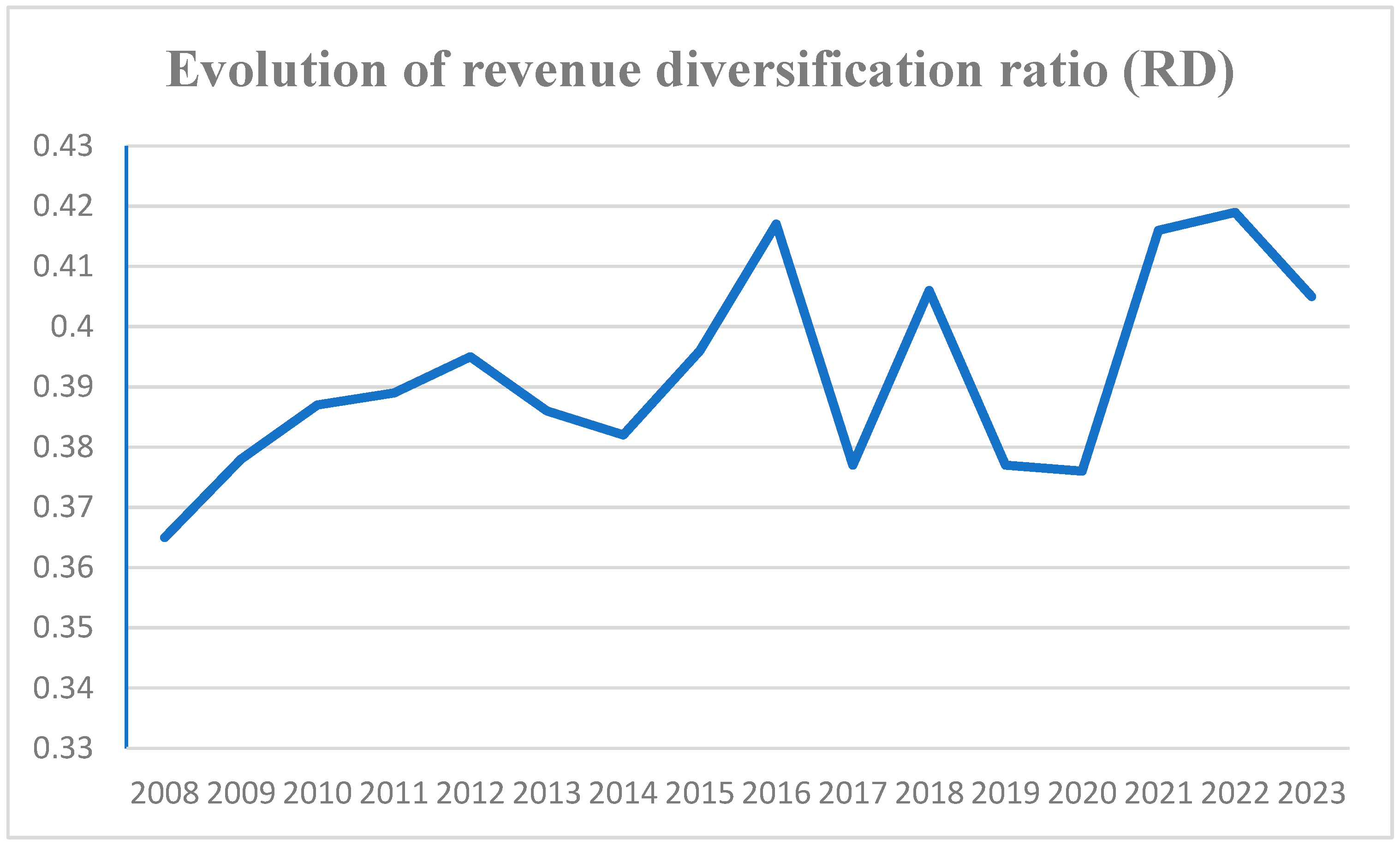
Revenue diversification has become a key strategy to improve profitability, stability, and resilience. Research (Hamdi et al., 2017; Belguith & Bellouma, 2017; Aissia, 2021) shows that increasing non-interest income improves profitability (ROA, ROE), while other studies (Alouane et al., 2022) point out that it can also raise volatility, requiring cautious management. To assess this strategy, a graph was developed showing the evolution of non-interest income as a share of total operating income for the 11 listed banks between 2008 and 2023.
The Figure 1 illustrates the evolution of non-interest income for the 11 listed Tunisian banks from 2008 to 2023, showing a clear upward trend and reflecting a strategy of revenue diversification. Between 2008 and 2012, non-interest income rose steadily as banks sought to counter declining intermediation margins amid strong competition and post-2008 regulatory pressures. However, the 2011 revolution led to political and economic instability, resulting in a decline in credit activity and a drop in non-interest income between 2013 and 2014. From 2015, diversification resumed, supported by the growth of bancassurance, card fees, electronic services, fintech developments, and regulatory reforms by the Central Bank. The 2017–2020 period was marked by high volatility due to macroeconomic fragility, rising non-performing loans, and the implementation of Basel III. After the COVID-19 crisis in 2020, banks accelerated digitalization and expanded fee-based services, resulting in a rebound in 2021–2022, before a slight drop in 2023 due to economic slowdown and inflation.
These trends confirm that revenue diversification serves not only as a growth strategy but also as a resilience tool. Based on this analysis, the next section will empirically examine the impact of this strategy on the performance and stability of listed Tunisian banks over the 2008–2023 period.

3. Methodology

3.1. Data Collection

To examine the impact of revenue diversification on the performance and stability of banks, we utilized a dataset encompassing 11 Tunisian commercial banks listed on the Tunisian Stock Exchange. The banks included are Amen Bank, ATB, Attijari, BH, BT, BIAT, BNA, BTE, STB, UBCI, and UIB, covering the period from 2008 to 2023. Our analysis specifically focused on these commercial banks because of their crucial role in financing the Tunisian economy. Notably, this group of banks accounts for 90% of the sector’s total assets, 81% of deposits, and 79% of credit. Financial data for these institutions were obtained from their balance sheets and income statements, as published in the annual reports of the Professional Association of Tunisian Banks (APBT). Additionally, macroeconomic variables were sourced from the Central Bank of Tunisia (CBT). Our sample, composed of 11 banks, is listed in Table 1 along with their market capitalization for the year 2023.

3.2. Econometric Model and Variables

In line with the research objective described above, and to study the role of revenue diversification within the Tunisian banking sector over the 2008–2023 period covering the 11 largest Tunisian banks, the basic regression models for the study, along with the description of dependent and independent variables, are presented as follows:
P i , t = α 0 + α 1 R D i , t + 0 i α k   C o n t r o l s i , t   + ε i , t
S i , t = α 0 + α 1 R D i , t + 0 i α k   C o n t r o l s i , t   + ε i , t
where P i , t refers to bank performance, which is measured by ROA (return on assets) and NIM (net interest margin). S i , t refers to bank stability proxied by the insolvency risk (i.e., log Z-Score). R D i , t is our main variable of interest, which corresponds to the measure of bank revenue diversification. Finally, Controls is a matrix of bank-specific and macroeconomic variables used to capture their effect on financial performance for each bank i during period t. These control variables are SIZE, C (capitalization), LR (liquidity risk), AG (assets growth), EFF (bank efficiency), INF (inflation) and GGDP (growth of gross domestic product). α 0 is a constant, α k denotes the coefficients associated with the control variables, ε i , t is the error term, and subscripts i and t and denote bank and year, respectively.
Table 2 shows the list of variables with their definitions, formulas and sources.

3.3. Research Method: Two-Stage Least Squares (2SLS)

Revenue diversification is potentially endogenous, as it may be influenced by a bank’s performance and stability, and vice versa (Shahu, 2022). This simultaneity creates endogeneity, where diversification is correlated with the error term, making OLS estimates biased and inconsistent. To address this, we treat revenue diversification as an endogenous variable and perform the Two-Stage Least Squares (2SLS) method.
Instrumental variables (IV) are used to correct for endogeneity. We perform the Durbin and Wu–Hausman tests to detect endogeneity and run IV regression for consistent estimation. Following Wooldridge (2002), a valid instrument must be correlated with the endogenous variable (revenue diversification) but uncorrelated with the error term. We use ownership structure as an instrument, where a value of 1 indicates public ownership and 0 otherwise. This choice is based on the idea that private banks, driven by profit and flexibility, tend to diversify more than public banks, which are often state-controlled and influenced by non-commercial objectives.
In the first stage of 2SLS, revenue diversification is regressed on ownership:
R D i , t = α 0 + α 1 O W N i , t + 0 i α k   C o n t r o l s i , t + ε i , t
where OWNi,t = 1 for public banks, 0 otherwise. The predicted values from this first stage are then used in the second-stage regression to analyze the impact on performance and stability. The validity of the instrument is discussed in the empirical section.

4. Analysis and Discussion of Results

4.1. Endogeneity Test and First-Stage Regression Results

The potential endogeneity of the revenue diversification (RD) variable is addressed using the Durbin and Wu–Hausman tests, which examine whether RD can be considered exogenous. The null hypothesis assumes exogeneity, and rejection indicates endogeneity.
As shown in Table 3, the p-values for the models using ROA, NIM, and Log-Z-score are all below 0.01. The test statistics are significant at the 5% level, leading to rejection of the null hypothesis. These results confirm that RD is endogenous, justifying the use of the two-stage least squares (2SLS) estimation.
As reported in Table 4, instrument relevance is confirmed by a first-stage F-statistic exceeding 10, the threshold proposed by Staiger and Stock (1997) and corroborated by the formal critical values of Stock and Yogo (2005). The results reveal a negative and significant coefficient on Ownership, suggesting that banks with more concentrated ownership, typically state-owned, tend to have lower revenue diversification. This is consistent with the tendency of public banks in Tunisia to focus on traditional lending rather than expanding into fee-based or market-based activities.
Ownership is considered an appropriate instrument because it influences banks’ diversification strategies through governance structure and strategic orientation, while it does not directly affect bank performance and stability, satisfying the exclusion restriction. Therefore, ownership affects the dependent variables only through revenue diversification. These findings support the validity of the instrument and confirm the relevance of proceeding with the 2SLS estimation in the next stage.

4.2. Descriptive and Correlation Analysis

Before embarking on the interpretation of the results, we begin with a brief descriptive analysis of the data before turning to our main results. Table 5 presents descriptive statistics for the continuous variables (mean, median, standard deviation, minimum and maximum), offering an overview of their central tendencies and variability.
As it stands out in Table 5, Tunisian banks have an average return on assets (ROA) of 1%, reflecting modest but positive profitability. However, performance varies widely, ranging from −2.7% to 3.1%, reflecting specific events affecting certain institutions.
The net interest margin (NIM), stable at around 3.7%, highlights the predominance of traditional interest-based activities. The log-Z-score, with an average of 1.296, indicates moderate financial stability, although some banks are highly vulnerable.
In terms of revenue diversification (RD), approximately 39.5% on average comes from non-interest sources, with notable differences between banks (from 21.6% to nearly 50%), reflecting differentiated strategies.
Among the control variables, the average size of banks (SIZE) is 8.595 (log), capitalization (C) is solid at 10.1%, and liquidity averages 1.049. Banking efficiency is relatively high (0.863), and asset growth reaches 8.82% with low dispersion. Finally, macroeconomic variables reveal average inflation of 5.34% and GDP growth of 1.56%, with significant fluctuations, particularly for the latter.
These results provide an overview of the characteristics and variability of the data studied.
The correlation matrix (Table 6) shows that all correlations remain below the critical threshold of 0.7, confirming the absence of multicollinearity.
The correlation between revenue diversification (RD) and profitability (ROA) is weak and insignificant (0.072), suggesting no direct linear relationship. On the other hand, RD is negatively correlated with NIM (−0.146; p = 0.053), indicating that increased diversification may slightly reduce the interest margin, a result consistent with studies on emerging-market banks.
The relationship between RD and banking stability (log-Z-score) is positive and significant (0.338; p = 0.000), showing that more diversified banks are generally more resilient to economic shocks. This supports the idea that diversification helps mitigate interest income risks.
In summary, revenue diversification has a limited impact on profitability but appears to enhance financial stability, in line with the findings in the literature.

4.3. Two-Stage Least Squares Regression Results

Table 7 presents the results of the 2SLS regression of the impact of revenue diversification on performance measured by ROA and NIM and on stability using the logarithmic Z-score. For the ROA measure, a positive and significant effect of income diversification was recorded at the 5% threshold (coef = 0.044). This is consistent with the Modern Portfolio Theory (Markowitz, 1952), which suggests that combining interest and non-interest income sources can reduce overall risk and income volatility, thereby enhancing financial performance. This implies that Tunisian banks with greater revenue diversification have better financial performance, as measured by ROA. This finding is consistent with those of Chiorazzo et al. (2008), Ahamed (2017), Shahu (2022), Ho et al. (2023), Saklain and Williams (2024), and Molla et al. (2025). Additionally, as highlighted by Najam et al. (2022), the emergence of non-interest income allows revenue sources to be spread across different activities (trading, interest, commissions, etc.), which reduces dependence on a single source and lowers overall profit volatility. Practically, this indicates that Tunisian banks can improve resilience and maintain performance during economic uncertainty by diversifying income streams.
In contrast, our results reveal a significant and negative impact on net interest margin (NIM). Research by Chiorazzo et al. (2008) showed that despite the positive role of non-interest income on return on assets (ROA), non-interest income tends to substitute NIM rather than improve it. Furthermore, Stiroh (2004) showed that diversification into non-interest income is often associated with a decline in the net interest margin, as it reduces banking specialization in traditional intermediation. Vithyea (2014) argued that banks increasing their non-traditional activities contribute to a reduction in net interest margin. Y. Wu (2024) confirmed that diversification improves overall profitability but reduces the net interest margin (NIM) and, as a result, banks use interest activity as leverage to promote other services. In addition, Wu stated that banks often use interest-bearing activities (traditional loans) as a loss leader, deliberately reducing their interest margin in order to attract customers to more profitable ancillary services (commissions, trading, etc.). This strategy leads to a decline in net interest margin, as the bank agrees to reduce its margin on loans in order to generate revenue elsewhere. From the agency theory perspective (Jensen & Meckling, 1976), this could reflect managerial decisions that prioritize diversification for reasons of personal incentives rather than traditional profit maximization, thereby highlighting potential agency conflicts.
Regarding the impact of RD on the stability of Tunisian banks, a significant positive effect was recorded on log-Z-score, implying that increased income diversification significantly increases bank stability. This positive and significant result implies that when banks generate income from non-interest activities, their Z-score increases. Greater income diversification leads to a higher Z-score, indicating a lower risk of insolvency for Tunisian banks. The higher the Z-score, the lower the risk and the higher the stability of banks, and vice versa. This is consistent with the Modern Portfolio Theory, which shows that effective diversification reduces unsystematic risk, as well as with the theory of financial intermediation, which highlights how banks tap into non-traditional sources of revenue to stabilize their earnings.
Thus, revenue diversification has a risk-reducing effect, improving the stability of banks by reducing earnings volatility and decreasing the risk of insolvency (by increasing the Z-score). These findings are consistent with those of Sanya and Wolfe (2011), Ahamed (2017), Molla et al. (2025), Hsieh et al. (2023), Shahriar et al. (2023), Shahu (2022), and Saklain and Williams (2024). Furthermore, Hunjra et al. (2021) confirmed that revenue diversification strategies have been successful in minimizing banking financial risks. This also suggests that, by diversifying their revenue streams, banks can strengthen depositors’ confidence and improve their competitiveness in the market, in line with the theory of market power (Porter, 1981).
Based on these results, we validate hypotheses H1 and H2. Specifically, our findings show that revenue diversification has a positive and significant effect on performance as measured by ROA and on banking stability (log-Z-score). However, it negatively affects NIM. This highlights that while diversification improves overall performance and stability, banks must strike the right balance between non-interest income and traditional interest-bearing activities in order to maximize their earnings.
Turning now to interpreting the control variables, we begin with the importance of bank size, which had a positive impact on performance (ROA), meaning that large banks often benefit from economies of scale. According to Mulbah et al. (2024), large banks can exploit economies of scale and scope, allowing them to operate more efficiently, expand geographically, and offer a wider range of products, contributing to higher profitability. As a second measure of bank performance, bank size has a positive and significant effect on net interest margin. This conclusion is consistent with the findings of Karnasi and Elgi (2025), who argue that this positive impact is attributed to economies of scale, better asset and liability management, and the ability to attract more low-cost deposits, which increase the spread between loan and deposit rates. In addition, bank size has a positive and significant impact on the logarithmic Z-score, meaning that a larger size is associated with greater banking stability, which translates into lower insolvency risk (Trung et al., 2021; Putri & Rahmayanti, 2025).
The capitalization ratio exhibits a positive and significant effect on ROA, indicating that a higher level of capitalization enhances a bank’s ability to absorb losses and generate profits on its assets (Melinda et al., 2024). However, this ratio does not have a significant effect on NIM, suggesting that financial strength does not necessarily translate into improved interest margins. Regarding stability, capitalization (C) also shows a significant positive effect, implying that higher capitalization enables banks to absorb potential losses, reduce the risk of insolvency, and strengthen the confidence of depositors and investors (Berger & Bouwman, 2013). Hence, capitalization appears to reinforce the benefits of revenue diversification, thereby supporting both performance and stability.
Liquidity risk has a significant positive effect on ROA, suggesting that adequate liquidity management improves asset profitability by supporting lending activities and financial stability (Abdullah et al., 2025). However, liquidity has no significant effect on NIM (Haris et al., 2024), indicating that interest margins depend more on pricing strategies and income structure. Liquidity risk also positively affects bank stability, confirming that banks with moderate loans-to-deposits ratios are more resilient and face lower insolvency risk (Zaghdoudi, 2019). Overall, effective liquidity management complements revenue diversification by enhancing both performance and stability.
Asset growth registered a significant positive effect on ROA and a non-significant effect on NIM. Several studies indicate that growth in banking assets or an increase in size is associated with an improvement in return on assets, as effective asset management generates more profits from available resources (Abdelmoneim & Yasser, 2023). More specifically, banks that increase their assets often benefit from economies of scale and greater diversification, which translates into increased profitability. Conversely, the insignificance of AG in relation to NIM has been verified in several studies, such as Nalliboyina and Chalam (2023) and Abdelmoneim and Yasser (2023). They noted that net interest margin depends more on interest margin management and income structure, which are not directly influenced by a simple increase in assets. In terms of stability, AG did not have as significant an influence, given that asset growth is not always a major determinant of stability (Putri & Rahmayanti, 2025).
Efficiency had a significant negative impact on the performance of Tunisian banks as measured by ROA and NIM, as well as on stability as measured by log-Z-score. First, less efficient banks see their profitability decline because a larger share of their revenues is absorbed by costs. Second, inefficient cost management reduces the bank’s ability to generate high interest margins (Rahman et al., 2015; Akhtar et al., 2020). Finally, with regard to banking stability, Fiordelisi and Mare (2014) explained the significant negative effect of efficiency: improved operational efficiency can be accompanied by increased risk-taking, reduced control costs, or greater volatility in results, which undermines long-term financial stability.
Inflation has a notable negative impact on ROA and log-Z-score, but no significant effect on NIM. In this context, Rahman et al. (2015) and Nalliboyina and Chalam (2023) found that rising costs and decreasing purchasing power explained this drop in profitability. Similarly, Nalliboyina and Chalam (2023) observed that inflation harms banking stability and noted that inflation increases macroeconomic uncertainty and the volatility of banking results, which raises the risk of default and weakens the resilience of the banking sector.
Finally, the effect of gross domestic product (GDP) growth appears to be statistically insignificant for both performance and stability. This finding aligns with a growing body of empirical literature suggesting that, in emerging economies, banking outcomes are driven primarily by internal structural factors rather than by macroeconomic conditions (Aristiana et al., 2017; Nugroho & Hendranastiti, 2024; Flamini et al., 2009; Zaghdoudi, 2019). In particular, variables such as asset quality, interest rate structure, and operational efficiency tend to play a more decisive role than aggregate indicators like GDP growth. This result may reflect the structural characteristics of emerging banking systems, where institutional and managerial factors outweigh broader economic dynamics.

4.4. Robustness Checks

To further examine the effect of revenue diversification on banks’ financial performance and stability, our study conducted a robustness check using other measures of revenue diversification, in particular the ratio of non-interest income to total bank income. Hence, using the same methodology as described in the previous section, this section presents robustness checks to validate the previous results. This index is calculated as follows:
R D N I I i , t = N o n   i n t e r e s t   i n c o m e i , t T o t a l   o p e r a t i n g   i n c o m e i , t
Following Stiroh and Rumble (2006), Meslier et al. (2014), Majumder et al. (2018), we consider income diversification as the first proxy for bank diversification. This variable equals the ratio of non-interest income to total income, where non-interest income is composed of revenues from commissions plus other net non-interest income, whereas operating income is the summation of net interest income and non-interest income. It is expected to have a positive impact of revenue diversification on performance, which means that the banks having more diversified income show higher performance. The equation below shows how the diversification index is constructed.
Our measure takes values between 0 and 1, with values closer to 1 indicating higher degrees of diversification. A high R D N I I i , t value indicates greater diversification. Revenue diversification is at its lowest value (0) when gross income comes from a single source (total concentration), and it reaches its highest value (0.5) when net interest income and non-interest income are equal (total diversification). The results are presented in Table 8. As can be seen from this table, the main empirical findings remain qualitatively unchanged despite the use of alternative revenue diversification measures. We found a significant positive effect of RD on the performance of Tunisian banks, measured by ROA at the 5% threshold (p-value = 0.041), meaning that Tunisian banks with greater revenue diversification have better financial performance. This result is consistent with our previous findings and with those of several studies such as Ahamed (2017), Shahu (2022), Ho et al. (2023), Saklain and Williams (2024), and Molla et al. (2025).
We also recorded a significant negative effect on net interest margin (NIM) at the 10% threshold (p-value = 0.061), implying that diversification into non-interest income is often associated with a decline in net interest margin, as it reduces banking specialization in traditional intermediation. This result is consistent with previous research by Y. Wu (2024) and Chiorazzo et al. (2008). In terms of stability, the new measure of income diversification also showed a highly significant positive effect (p-value = 0.000), implying that increased income diversification significantly increases banking stability. These results are consistent with those of Sanya and Wolfe (2011), Ahamed (2017), Molla et al. (2025), Hsieh et al. (2023), Shahriar et al. (2023), Shahu (2022), and Saklain and Williams (2024).
Regarding control variables, we recorded almost the same significance levels, with the exception of the liquidity risk variable, which has no significant effect, and the inflation variable, which also has no significant effect on banking stability.
In conclusion, these new results validate our main findings from the previous section. The results confirm that spreading revenues across different sources improves banks’ financial performance and reduces their risk. These findings support the portfolio hypothesis, which suggests that shifting towards non-traditional activities leads to better bank financial performance, reduces net interest margin, and leads to greater stability and lower risk.

5. Conclusions

In this article, we studied the effect of revenue diversification on the performance and financial stability of listed Tunisian banks over the period 2008–2023. The empirical results reveal that diversification has significant effects on both of these dimensions, suggesting that it is an important strategic lever for strengthening both the profitability and robustness of the banking sector. In particular, the results indicate that banks capable of generating non-interest income, such as commissions or financial products, tend to perform better overall and enjoy greater stability. These findings underscore the value of adopting a prudent and targeted diversification approach, particularly in a changing economic environment where traditional sources of income may prove less reliable.
The originality of our research lies in the fact that it simultaneously addresses the impact of income diversification on two fundamental aspects of banking management, namely performance and stability. It also stands out for its use of a two-stage least squares (2SLS) approach, which corrects for potential endogeneity biases that are often overlooked in previous studies. By focusing on the specific context of the Tunisian banking system over a long period marked by significant economic and political turmoil, this study offers an original empirical contribution to an emerging market that has been little explored in the literature. From a theoretical perspective, the findings support Modern Portfolio Theory and the Theory of Financial Intermediation by showing that income diversification reduces risk and enhances bank stability, while highlighting a trade-off with net interest margin, which enriches the existing literature on bank diversification in emerging economies.
From a practical perspective, the results provide useful insights for bank managers, regulators, and policymakers. Bank managers are encouraged to adopt balanced diversification strategies that combine traditional intermediation with non-interest income activities in order to improve profitability and reduce risk exposure. Regulators and policymakers should promote a stable and competitive financial environment that encourages innovation in banking services while maintaining prudent supervision to avoid excessive risk-taking associated with diversification. In the Tunisian context, strengthening regulatory frameworks and supporting financial innovation could enhance the effectiveness of diversification strategies and contribute to the stability of the banking system.
Despite the relevance of the results obtained, this study has certain limitations that should be acknowledged. First, the sample analyzed is limited to listed banks, which may restrict the scope of the conclusions to the entire Tunisian banking sector. Second, the measure used for diversification is mainly quantitative, which does not allow us to capture the quality or specific nature of alternative sources of revenue. Furthermore, the study period (2008–2023) encompasses several major macroeconomic events, including the global financial crisis, the COVID-19 pandemic, and episodes of political instability that may have influenced the relationships observed. These limitations open the door to several avenues for future research, such as expanding the sample to include a larger number of banking institutions, including unlisted ones, disaggregating the analysis of different sources of non-traditional revenue, or conducting a comparative study of the effect of diversification in other economic contexts, particularly in emerging countries or within the MENA region. Such approaches would deepen our understanding of the conditions under which diversification is an effective strategy for improving the performance and stability of banks. Future studies could also explore the role of digital banking, fintech development, and regulatory reforms in shaping diversification strategies and their impact on financial stability in emerging markets.

Author Contributions

Conceptualization, N.A. and S.H.; methodology, N.A.; formal analysis, N.A.; investigation, N.A.; Writing—Original draft preparation, N.A.; Writing—Review and editing, N.A. and S.H.; supervision, S.H. All authors have read and agreed to the published version of the manuscript.

Funding

This research received no external funding.

Institutional Review Board Statement

Not applicable.

Informed Consent Statement

Not applicable.

Data Availability Statement

Financial data were obtained from annual reports published by the Professional Association of Tunisian Banks and from the Central Bank of Tunisia.

Conflicts of Interest

The authors declare no conflicts of interest.

References

  1. Abdelmoneim, Z., & Yasser, M. (2023). The impact of bank performance and economic growth on bank profitability: CAMEL model application in middle-income countries. Banks and Bank Systems, 18(3), 205. [Google Scholar] [CrossRef]
  2. Abdullah, S. A., Ali, S. S., & Fatah, N. A. (2025). The effect of liquidity risk management on the bank performance: Evidence from Iraqi banks. Academic Journal of International University of Erbil, 2(2), 120–128. [Google Scholar] [CrossRef]
  3. Abu Khalaf, B., Awad, A. B., & Ellis, S. (2024). The impact of non-interest income on commercial bank profitability in the Middle East and North Africa (MENA) region. Journal of Risk and Financial Management, 17(3), 103. [Google Scholar] [CrossRef]
  4. Acharya, V. V., Hasan, I., & Saunders, A. (2006). Should banks be diversified? Evidence from individual bank loan portfolios. The Journal of Business, 79(3), 1355–1412. [Google Scholar] [CrossRef]
  5. Adem, M. (2022). Impact of diversification on bank stability: Evidence from emerging and developing countries. Discrete Dynamics in Nature and Society, 2022(1), 7200725. [Google Scholar] [CrossRef]
  6. Ahamed, M. M. (2017). Asset quality, non-interest income, and bank profitability: Evidence from Indian banks. Economic Modelling, 63, 1–14. [Google Scholar] [CrossRef]
  7. Aissia, D. B. (2021). Bank diversification, governance structure and the performance of Tunisian listed banks. African Journal of Accounting, Auditing and Finance, 7(4), 346–360. [Google Scholar] [CrossRef]
  8. Akhtar, S., Khan, T., & Khan, P. A. (2020). Examine the key drivers affecting bottom line: A panel estimation study of Indian commercial bank. Journal of Critical Reviews, 7(9), 2020. [Google Scholar]
  9. Allen, F., & Santomero, A. M. (1997). The theory of financial intermediation. Journal of Banking & Finance, 21(11–12), 1461–1485. [Google Scholar] [CrossRef]
  10. Allen, F., & Santomero, A. M. (2001). What do financial intermediaries do? Journal of Banking & Finance, 25(2), 271–294. [Google Scholar] [CrossRef]
  11. Alouane, N., Kahloul, I., & Grira, J. (2022). The trilogy of ownership, income diversification, and performance nexus: Empirical evidence from Tunisian banks. Finance Research Letters, 45, 102180. [Google Scholar] [CrossRef]
  12. Amidu, M., & Wolfe, S. (2013). Does bank competition and diversification lead to greater stability? Evidence from emerging markets. Review of Development Finance, 3(3), 152–166. [Google Scholar] [CrossRef]
  13. Ammar, N., & Boughrara, A. (2019). The impact of revenue diversification on bank profitability and risk: Evidence from MENA banking industry. Macroeconomics and Finance in Emerging Market Economies, 12(1), 36–70. [Google Scholar] [CrossRef]
  14. Ammar, N., & Boughrara, A. (2023). Noninterest income mix and bank performance: Generalized propensity score fractional dose–response function evidence. Global Finance Journal, 56, 100771. [Google Scholar] [CrossRef]
  15. Aristiana, R., Andini, R., & Oemar, A. (2017). PENGARUH LDR, NIM, NPL, SUKU BUNGA BI DAN PRODUK DOMESTIKBRUTO TERHADAP RETURN ON ASSETS (Pada Lembaga Keuangan Syariah Yang Terdaftar Di BEI Periode 2010–2015). Journal of Accounting, 3(3). [Google Scholar]
  16. Asif, R., & Akhter, W. (2019). Exploring the influence of revenue diversification on financial performance in the banking industry: A systematic literature review. Qualitative Research in Financial Markets, 11(3), 305–327. [Google Scholar] [CrossRef]
  17. Baele, L., De Jonghe, O., & Vander Vennet, R. (2007). Does the stock market value bank diversification? Journal of Banking and Finance, 31, 1999–2023. [Google Scholar] [CrossRef]
  18. Batten, J. A., & Vo, X. V. (2016). Bank risk shifting and diversification in an emerging market. Risk Management, 18(4), 217–235. [Google Scholar] [CrossRef]
  19. Belguith, H., & Bellouma, M. (2017). Income structure, profitability and stability in the Tunisian banking sector. International Journal of Engineering Research and Science, 3(5), 31–45. [Google Scholar] [CrossRef]
  20. Ben Lahouel, B., Taleb, L., Ben Zaied, Y., & Managi, S. (2024). Financial stability, liquidity risk and income diversification: Evidence from European banks using the CAMELS–DEA approach. Annals of Operations Research, 334(1), 391–422. [Google Scholar] [CrossRef]
  21. Berger, A. N., & Bouwman, C. H. (2013). How does capital affect bank performance during financial crises? Journal of Financial Economics, 109(1), 146–176. [Google Scholar] [CrossRef]
  22. Berger, A. N., Hasan, I., & Zhou, M. (2010). The effects of focus versus diversification on bank performance: Evidence from Chinese banks. Journal of Banking & Finance, 34(7), 1417–1435. [Google Scholar] [CrossRef]
  23. Blundell, R., & Bond, S. (1998). Initial conditions and moment restrictions in dynamic panel data models. Journal of Econometrics, 87(1), 115–143. [Google Scholar] [CrossRef]
  24. Bogari, A. (2024). Income diversification and bank stability in the MENA region: Threshold effects. Journal of Infrastructure, Policy and Development, 8(14), 7683. [Google Scholar] [CrossRef]
  25. Casu, B., Deng, B., & Ferrari, A. (2016). Post-crisis regulatory reforms and bank performance: Lessons from Asia. The European Journal of Finance, 23(15), 1544–1571. [Google Scholar] [CrossRef]
  26. Chiorazzo, V., Milani, C., & Salvini, F. (2008). Income diversification and bank performance: Evidence from Italian banks. Journal of Financial Services Research, 33(3), 181–203. [Google Scholar] [CrossRef]
  27. Dagnino, G. B., Giachetti, C., La Rocca, M., & Picone, P. M. (2019). Behind the curtain of international diversification: An agency theory perspective. Global Strategy Journal, 9(4), 555–594. [Google Scholar] [CrossRef]
  28. Dao, B. T. T., & Nguyen, K. A. (2020). Bank capital adequacy ratio and bank performance in Vietnam: A simultaneous equations framework. Journal of Asian Finance, Economics and Business, 7(6), 39–46. [Google Scholar] [CrossRef]
  29. Delpachitra, S., & Lester, L. (2013). Non-interest income: Are Australian banks moving away from their traditional businesses? Economic Papers: A Journal of Applied Economics and Policy, 32(2), 190–199. [Google Scholar] [CrossRef]
  30. DeYoung, R., & Roland, K. P. (2001). Product mix and earnings volatility at commercial banks: Evidence from a degree of total leverage model. Journal of Financial Intermediation, 10(1), 54–84. [Google Scholar] [CrossRef]
  31. Dietrich, A., & Wanzenried, G. (2011). Determinants of bank profitability before and during the crisis: Evidence from Switzerland. Journal of International Financial Markets, Institutions and Money, 21(3), 307–327. [Google Scholar] [CrossRef]
  32. Edirisuriya, P., Gunasekarage, A., & Dempsey, M. (2015). Australian specific bank features and the impact of income diversification on bank performance and risk. Australian Economic Papers, 54(2), 63–87. [Google Scholar] [CrossRef]
  33. Elsas, R., Hackethal, A., & Holzhäuser, M. (2010). The anatomy of bank diversification. Journal of Banking & Finance, 34(6), 1274–1287. [Google Scholar] [CrossRef]
  34. Ferreira, J. H., Zanini, F. A., & Alves, T. W. (2019). Bank revenue diversification: Its impact on risk and return in Brazilian banks. Revista Contabilidade & Finanças, 30, 91–106. [Google Scholar] [CrossRef]
  35. Fiordelisi, F., & Mare, D. S. (2014). Competition and financial stability in European cooperative banks. Journal of International Money and Finance, 45, 1–16. [Google Scholar] [CrossRef]
  36. Flamini, V., McDonald, C. A., & Schumacher, L. B. (2009). The determinants of commercial bank profitability in Sub-Saharan Africa. International Monetary Fund. [Google Scholar]
  37. Haddou, S., & Boughrara, A. (2025). How diversification shapes full-fledged Islamic bank stability? A causal inference approach. International Review of Economics & Finance, 102, 104367. [Google Scholar] [CrossRef]
  38. Hamdi, H., Hakimi, A., & Zaghdoudi, K. (2017). Diversification, bank performance and risk: Have Tunisian banks adopted the new business model? Financial Innovation, 3(1), 22. [Google Scholar] [CrossRef]
  39. Hammami, S., Lassoued, M., & Berteji, A. (2018). The Tunisian banks performance. Noble International Journal of Economics and Financial Research, 3(1), 1–19. [Google Scholar]
  40. Haris, M., Yao, H., & Fatima, H. (2024). The impact of liquidity risk and credit risk on bank profitability during COVID-19. PLoS ONE, 19(9), e0308356. [Google Scholar] [CrossRef]
  41. Ho, T. H., Nguyen, D. T., Luu, T. B., Le, T. D., & Ngo, T. D. (2023). Bank performance during the COVID-19 pandemic: Does income diversification help? Journal of Applied Economics, 26(1), 2222964. [Google Scholar] [CrossRef]
  42. Hsieh, M. F., Lee, C. C., & Shen, M. F. (2023). Ownership structure, diversification, and bank performance: International evidence. Emerging Markets Finance and Trade, 59(1), 90–112. [Google Scholar] [CrossRef]
  43. Hunjra, A. I., Hanif, M., Mehmood, R., & Nguyen, L. V. (2021). Diversification, corporate governance, regulation and bank risk-taking. Journal of Financial Reporting and Accounting, 19(1), 92–108. [Google Scholar] [CrossRef]
  44. Ismail, A., Hanif, R., Choudhary, S., & Ahmad, N. (2015). Income-diversification in banking sector of Pakistan: A ‘blessing’ or ‘curse’. The Journal of Commerce, 7(1), 11–22. [Google Scholar]
  45. Jabra, W. B., Mighri, Z., & Mansouri, F. (2017). Determinants of European bank risk during financial crisis. Cogent Economics & Finance, 5(1), 1298420. [Google Scholar] [CrossRef]
  46. Jensen, M. C., & Meckling, W. H. (1976). Theory of the firm: Managerial behavior, agency costs and ownership structure. Journal of Financial Economics, 3(4), 305–360. [Google Scholar] [CrossRef]
  47. Jouida, S. (2018). Diversification, capital structure and profitability: A panel VAR approach. Research in International Business and Finance, 45, 243–256. [Google Scholar] [CrossRef]
  48. Karnasi, R., & Elgi, A. (2025). Analysis the determinants affecting banking performance. Dinasti International Journal of Economics, Finance & Accounting (DIJEFA), 5(6), 5786–5795. [Google Scholar]
  49. Laeven, L., & Levine, R. (2009). Bank governance, regulation and risk taking. Journal of Financial Economics, 93(2), 259–275. [Google Scholar] [CrossRef]
  50. Larcker, D. F., & Rusticus, T. O. (2010). On the use of instrumental variables in accounting research. Journal of Accounting and Economics, 49(3), 186–205. [Google Scholar] [CrossRef]
  51. Lee, B. S., & Li, M. Y. L. (2012). Diversification and risk-adjusted performance: A quantile regression approach. Journal of Banking & Finance, 36(7), 2157–2173. [Google Scholar] [CrossRef]
  52. Lepetit, L., Nys, E., Rous, P., & Tarazi, A. (2008). Bank income structure and risk: An empirical analysis of European banks. Journal of Banking & Finance, 32(8), 1452–1467. [Google Scholar] [CrossRef]
  53. Li, X., Feng, H., Zhao, S., & Carter, D. A. (2021). The effect of revenue diversification on bank profitability and risk during the COVID-19 pandemic. Finance Research Letters, 43, 101957. [Google Scholar] [CrossRef] [PubMed]
  54. López-Penabad, M. C., Iglesias-Casal, A., & Neto, J. F. S. (2021). Competition and financial stability in the European listed banks. Sage Open, 11(3), 21582440211032645. [Google Scholar] [CrossRef]
  55. Majumder, M. T. H., Uddin, M. J., & Akter, A. (2018). Does bank diversification significantly affect profitability? A longitudinal study on Bangladesh. Journal of Emerging Technologies and Innovative Research, 5(9), 162–169. [Google Scholar]
  56. Malik, A., Hanif, H., & Elahi, M. (2025). Impact of diversification, political stability & regulatory quality on financial performance: Empirical evidence from banking sector of Pakistan. Journal of Political Stability Archive, 3(1), 602–626. [Google Scholar] [CrossRef]
  57. Markowitz, H. (1952). Portfolio selection. The Journal of Finance, 7(1), 77–91. [Google Scholar]
  58. Martinez-Malvar, M., & Baselga-Pascual, L. (2020). Bank risk determinants in Latin America. Risk, 8(3), 94. [Google Scholar] [CrossRef]
  59. Melinda, V., Wiliasih, R., Irfany, M. I., Haq, D. A., & Camara, B. (2024). Capital structure and bank performance in Indonesia’s dual banking system. Ekonomi Islam Indonesia, 6(2). [Google Scholar] [CrossRef]
  60. Mercieca, S., Schaeck, K., & Wolfe, S. (2007). Small European banks: Benefits from diversification? Journal of Banking & Finance, 31(7), 1975–1998. [Google Scholar] [CrossRef]
  61. Meslier, C., Tacneng, R., & Tarazi, A. (2014). Is bank income diversification beneficial? Evidence from an emerging economy. Journal of International Financial Markets, Institutions and Money, 31, 97–126. [Google Scholar] [CrossRef]
  62. Molla, M. I., Mustary, M., Rahaman, M. K. B., Biswas, N., & Das, S. R. (2025). Does revenue diversification lead to greater stability and profitability of banks? Empirical evidence from Bangladesh. LBS Journal of Management & Research, 23(2), 169–185. [Google Scholar] [CrossRef]
  63. Moudud-Ul-Huq, S. (2019). Can BRICS and ASEAN-5 emerging economies benefit from bank diversification? Journal of Financial Regulation and Compliance, 27(1), 43–69. [Google Scholar] [CrossRef]
  64. Mulbah, K. T., Kurbonov, S., & Nasriddinov, B. (2024). The effect of bank size, net interest margin, and capital adequacy ratio on commercial banks’ return on assets: Empirical evidence from Tanzania. ESI Preprints (European Scientific Journal, ESJ), 28, 474. [Google Scholar] [CrossRef]
  65. Najam, H., Abbas, J., Alvarez-Otero, S., Dogan, E., & Sial, M. S. (2022). Towards green recovery: Can banks achieve financial sustainability through income diversification in ASEAN countries? Economic Analysis and Policy, 76, 522–533. [Google Scholar] [CrossRef]
  66. Nalliboyina, S. B., & Chalam, G. V. (2023). Factors determining the financial performance of public sector banks in India. Asian Journal of Economics, Business and Accounting, 23(14), 57–71. [Google Scholar] [CrossRef]
  67. Ngoc Nguyen, K. (2019). Revenue diversification, risk and bank performance of Vietnamese commercial banks. Journal of Risk and Financial Management, 12(3), 138. [Google Scholar] [CrossRef]
  68. Nguyen, M., Skully, M., & Perera, S. (2012). Market power, revenue diversification and bank stability: Evidence from selected South Asian countries. Journal of International Financial Markets, Institutions and Money, 22(4), 897–912. [Google Scholar] [CrossRef]
  69. Nguyen, T. L. A. (2018). Diversification and bank efficiency in six ASEAN countries. Global Finance Journal, 37, 57–78. [Google Scholar] [CrossRef]
  70. Nisar, S., Peng, K., Wang, S., & Ashraf, B. N. (2018). The impact of revenue diversification on bank profitability and stability: Empirical evidence from South Asian countries. International Journal of Financial Studies, 6(2), 40. [Google Scholar] [CrossRef]
  71. Nugroho, T. E., & Hendranastiti, N. D. (2024). Stability and performance of conventional and sharia banking in Indonesia before and after the COVID-19 pandemic. Journal of Finance and Islamic Banking, 7(1). [Google Scholar] [CrossRef]
  72. Ozili, P. K. (2018). Banking stability determinants in Africa. International Journal of Managerial Finance, 14(4), 462–483. [Google Scholar] [CrossRef]
  73. Paltrinieri, A., Dreassi, A., Rossi, S., & Khan, A. (2021). Risk-adjusted profitability and stability of Islamic and conventional banks: Does revenue diversification matter? Global Finance Journal, 50, 100517. [Google Scholar] [CrossRef]
  74. Pennathur, A. K., Subrahmanyam, V., & Vishwasrao, S. (2012). Income diversification and risk: Does ownership matter? An empirical examination of Indian banks. Journal of Banking & Finance, 36(8), 2203–2215. [Google Scholar] [CrossRef]
  75. Phan, T. T. H., Pham, A. H. T., Le, H. A., & Lam, T. B. N. (2022). The impact of non-interest income on the performance of commercial banks in the ASEAN region. Journal of Risk and Financial Management, 16(1), 18. [Google Scholar] [CrossRef]
  76. Porter, M. E. (1981). The contributions of industrial organization to strategic management. Academy of Management Review, 6(4), 609–620. [Google Scholar] [CrossRef]
  77. Putri, F. N., & Rahmayanti, D. (2025). Determinants of banking stability listed on the Indonesia stock exchange. Asian Journal of Applied Business and Management, 4(1), 329–340. [Google Scholar] [CrossRef]
  78. Rahman, M. M., Hamid, M. K., & Khan, M. A. M. (2015). Determinants of bank profitability: Empirical evidence from Bangladesh. International Journal of Business and Management, 10(8), 135. [Google Scholar] [CrossRef]
  79. Revell, J. (1979). Inflation and financial institutions. Macmillan. [Google Scholar]
  80. Roberts, M. R., & Whited, T. M. (2013). Endogeneity in empirical corporate finance. In G. M. Constantinides, M. Harris, & R. M. Stulz (Eds.), Handbook of the economics of finance (Vol. 2, pp. 493–572). Elsevier. [Google Scholar]
  81. Roodman, D. (2009). How to do xtabond2: An introduction to difference and system GMM in Stata. The Stata Journal, 9(1), 86–136. [Google Scholar] [CrossRef]
  82. Rossi, S. P., Schwaiger, M. S., & Winkler, G. (2009). How loan portfolio diversification affects risk, efficiency and capitalization: A managerial behavior model for Austrian banks. Journal of Banking & Finance, 33, 2218–2226. [Google Scholar] [CrossRef]
  83. Saklain, M. S., & Williams, B. (2024). Non-interest income and bank risk: The role of financial structure. Pacific-Basin Finance Journal, 85(2024), 102352. [Google Scholar] [CrossRef]
  84. Sany, M. A. I., & Lata, R. S. (2025). The impact of revenue diversification on bank performance and risk: Evidence from Bangladesh. International Journal of Financial, Accounting, and Management, 7(1), 125–139. [Google Scholar] [CrossRef]
  85. Sanya, S., & Wolfe, S. (2011). Can banks in emerging economies benefit from revenue diversification? Journal of Financial Services Research, 40(1), 79–101. [Google Scholar] [CrossRef]
  86. Setiadi, R., & Danarsari, D. N. (2024). The benefits of revenue diversification on bank profitability and stability: An empirical study on indonesian commercial banks. Journal of Accounting, Business and Management (JABM), 31(1), 22–37. [Google Scholar] [CrossRef]
  87. Shahriar, A., Mehzabin, S., & Azad, M. A. K. (2023). Diversification and bank stability in the MENA region. Social Sciences and Humanities Open, 8(1), 100520. [Google Scholar] [CrossRef]
  88. Shahu, D. K. (2022). Revenue diversification, financial performance, and risk of banks. Journal of Economics and Management, 18, 29–49. [Google Scholar]
  89. Staiger, D., & Stock, J. H. (1997). Instrumental variables regression with weak instruments. Econometrica, 65(3), 557–586. [Google Scholar] [CrossRef]
  90. Stiroh, K. J. (2004). Diversification in banking: Is noninterest income the answer? Journal of Money, Credit, and Banking, 36(5), 853–882. [Google Scholar] [CrossRef]
  91. Stiroh, K. J., & Rumble, A. (2006). The dark side of diversification: The case of US financial holding companies. Journal of Banking & Finance, 30(8), 2131–2161. [Google Scholar] [CrossRef]
  92. Stock, J. H., & Yogo, M. (2005). Testing for weak instruments in linear IV regression. In D. W. K. Andrews, & J. H. Stock (Eds.), Identification and inference for econometric models: Essays in honor of Thomas J. Rothenberg (pp. 80–108). Cambridge University Press. [Google Scholar]
  93. Syafri, M. (2012, November 16). Factors affecting bank profitability in Indonesia. 2012 International Conference on Business and Management (Vol. 237, pp. 7–8), Ho Chin Ming, Vietnam. [Google Scholar]
  94. Trivedi, S. R. (2015). Banking innovations and new income streams: Impact on banks’ performance. Vikalpa, 40(1), 28–41. [Google Scholar] [CrossRef]
  95. Trung, N. D., Quynh, N. T. N., & Luan, L. D. (2021). Determinants of bank stability: Evidence from Vietnam. A Bayesian approach. In International econometric conference of Vietnam (pp. 609–624). Springer International Publishing. [Google Scholar]
  96. Tunis Stock Exchange (BVMT). (2024). Annual report on market activity 2024. Bourse des Valeurs Mobilières de Tunis. Available online: https://www.bvmt.com.tn (accessed on 10 January 2025).
  97. Vithyea, Y. (2014). The linkage between bank net interest margin and non-interest income: The case of the Cambodian Banking industry. SSRN. Available online: https://ssrn.com/abstract=2542467 (accessed on 10 January 2025).
  98. Wang, C., & Lin, Y. (2021). Income diversification and bank risk in Asia Pacific. The North American Journal of Economics and Finance, 57, 101448. [Google Scholar] [CrossRef]
  99. Wooldridge, J. M. (2002). Econometric analysis of cross section and panel data (vol. 108, 2, pp. 245–254). MIT Press. [Google Scholar]
  100. Wu, M., Tortosa-Ausina, E., & Cruz-García, P. (2024). The impact of diversification on the profitability and risk of Chinese banks: Evidence from a semiparametric approach. Empirical Economics, 67(6), 2565–2606. [Google Scholar] [CrossRef]
  101. Wu, Y. (2024). Bank diversification and performance: Empirical evidence from Japan. International Review of Finance, 24(3), 449–492. [Google Scholar] [CrossRef]
  102. Xie, Z., Liu, X., Najam, H., Fu, Q., Abbas, J., Comite, U., & Miculescu, A. (2022). Achieving financial sustainability through revenue diversification: A green pathway for financial institutions in Asia. Sustainability, 14(6), 3512. [Google Scholar] [CrossRef]
  103. Yusgiantoro, I., Soedarmono, W., & Tarazi, A. (2019). Bank consolidation and financial stability in Indonesia. International Economics, 59, 94–104. [Google Scholar] [CrossRef]
  104. Zaghdoudi, K. (2019). The effects of risks on the stability of Tunisian conventional banks. Asian Economic and Financial Review, 9(3), 389. [Google Scholar] [CrossRef]
Figure 1. Evolution of revenue diversification of 11 listed banks in Tunisia from 2008 to 2023. (Source: Authors’ Analysis).
Ijfs 14 00102 g001
Table 1. Sample of banks.
Index of BankName of BankMarket Capitalization (MD)
BIATArab International Bank of Tunisia3,280,830
BTBank of Tunisia1,452,600
ATTIJARI BANKAttijari Bank of Tunisia1,932,848
BHBank of Housing568,820
UIBInternational Banking Union843,304
ABAmen Bank1,013,844
STBTunisian Banking company581,102
UBCIBanking Union of trade and industry450,034
ATBArab Tunisian Banking270,000
BNANational Agricultural Bank520,320
BTEBank of Tunisia and the Emirates90,000
Source: Tunisian professional association of banks and financial establishments (2023).
Table 2. Definition of variables.
VariablesFormulaSources
Dependent variables
Performance R O A i , t = N e t   I n c o m e i , t T o t a l   A s s e t s i , t Stiroh and Rumble (2006), Amidu and Wolfe (2013)
N I M i , t = I n t e r e s t   I n c o m e i , t I n t e r e s t   E x p e n s e i , t T o t a l   A s s e t s i , t Hammami et al. (2018)
Stability Z S c o r e i , t = R O A i , t + E q u i t y i , t T o t a l   A s s e s t s i , t σ R O A i , t Wang and Lin (2021), Laeven and Levine (2009)
Independent variable
Revenue diversification R D i , t = 1 I n t e r e s t   I n c o m e i , t T o t a l   O p e r a t i n g   I n c o m e i , t 2 + N o n   I n t e r e s t   I n c o m e i , t T o t a l   o p e r a t i n g   I n c o m e i , t 2 Majumder et al. (2018), Meslier et al. (2014)
Control variables
Bank size S I Z E i , t = L o g ( T o t a l   A s s e t s i , t ) Stiroh and Rumble (2006), Chiorazzo et al. (2008)
Capitalization C i , t = T o t a l   e q u i t y i , t T o t a l   a s s e t s i , t Dao and Nguyen (2020), Sanya and Wolfe (2011)
Liquidity Risk L R i , t = T o t a l   l o a n s i , t T o t a l   d e p o s i t s i , t Ngoc Nguyen (2019)
Efficiency E F F = T o t a l   O p e r a t i n g   C o s t s i , t T o t a l   O p e r a t i n g   I n c o m e i , t Belguith and Bellouma (2017), Dietrich and Wanzenried (2011)
Assets Growth A G = A s s e t s i , t A s s e t s i , t 1 A s s e t s i , t 1 Chiorazzo et al. (2008), Dietrich and Wanzenried (2011)
Inflation I N F = A n n u a l   i n f l a t i o n   r a t e Revell (1979), Syafri (2012)
Growth in Gross Domestic Product G G D P = A n n u a l   g r o w t h   i n   g r o s s   d o m e s t i c   p r o d u c t Dietrich and Wanzenried (2011)
Table 3. Test of endogeneity using Durbin and Wu–Hausman.
ModelROANIMLog-Z-Score
Durbin0.000630.001650.00007
(chi-sq test)(11.793)(9.907)(15.934)
Wu–Hausman0.000750.001960.00007
(F test)(11.673)(9.902)(16.528)
Source: Author’s calculations.
Table 4. First stage regression results.
ModelSIZECLRAGEFFGGDPINFOWNConstR2F-Stat
RD(0.067) *
0.086
(−0.075)
0.907
(−0.046) ***
0.001
(−0.0358)
0.314
(−0.027 *)
0.097
(0.006)
0.333
(−0.002)
0.118
(−0.026) ***
0.001
(0.203) ***
0.000
0.732025.83
Source: Author’s calculations. Note: *** p < 0.01, * p < 0.1.
Table 5. Descriptive statistics.
VariableObsMeanStd. Dev.MinMax
ROA1760.0100.009−0.0270.031
NIM1760.0370.0090.0180.061
Log-Z-score1761.2960.2810.0671.715
RD1760.3950.0530.2160.495
SIZE1768.5950.7756.05910.041
C1760.1010.0430.0130.313
LR1761.0490.2320.5492.281
AG1760.0880.066−0.0890.345
EFF1760.8630.0590.6230.948
INF1765.3431.7273.249.3
GGDP1761.5613.118−8.8174.405
Source: Authors’ calculation.
Table 6. Correlation matrix.
Variables(1)(2)(3)(4)(5)(6)(7)(8)(9)(10)(11)
(1) ROA1.000
(2) NIM0.500 ***1.000
(0.000)
(3) Log-Z-score0.670 ***0.296 ***1.000
(0.000)(0.000)
(4) RD0.072−0.146 *0.338 ***1.000
(0.345)(0.053)(0.000)
(5) SIZE0.258 ***0.476 ***0.152 **0.0381.000
(0.001)(0.000)(0.044)(0.621)
(6) C0.306 ***−0.165 **0.471 ***−0.023−0.364 ***1.000
(0.000)(0.028)(0.000)(0.765)(0.000)
(7) LR0.002−0.282 ***−0.101−0.593 ***−0.343 ***0.376 ***1.000
(0.979)(0.000)(0.184)(0.000)(0.000)(0.000)
(8) AG0.191 **0.0540.044−0.017−0.129 *0.0170.0331.000
(0.011)(0.474)(0.566)(0.820)(0.088)(0.824)(0.664)
(9) EFF−0.303 ***0.020−0.338 ***−0.186 **0.430 ***−0.461 ***−0.129 *−0.253 ***1.000
(0.000)(0.100)(0.000)(0.014)(0.000)(0.000)(0.088)(0.001)
(10) INF−0.0060.138 **0.0630.1140.367 ***−0.043−0.113−0.244 ***0.0951.000
(0.933)(0.068)(0.406)(0.133)(0.000)(0.574)(0.137)(0.001)(0.211)
(11) GGDP0.053−0.028−0.0420.060−0.129 *−0.019−0.0360.211 ***−0.048−0.0441.000
(0.488)(0.708)(0.579)(0.427)(0.087)(0.804)(0.634)(0.005)(0.524)(0.559)
Source: Authors’ own calculations. Note: *** p < 0.01, ** p < 0.05, * p < 0.1.
Table 7. Impact of revenue diversification on bank performance and stability (2SLS regression).
Variables R O A i , t N I M i , t l o g Z S c o r e R O A i , t
RD0.044 **
(0.015)
−0.046 ***
(0.025)
3.054 ***
(0.000)
SIZE0.075 ***
(0.000)
0.068 ***
(0.000)
0.180 ***
(0.000)
C0.073 ***
(0.000)
−0.072
(0.673)
3.442 ***
(0.000)
LR0.065 *
(0.088)
0.016
(0.708)
0.203 *
(0.084)
AG0.018 **
(0.031)
0.010
(0.295)
0.169
(0.518)
EFF−0.015 ***
(0.000)
−0.010 ***
(0.020)
(−0.264) **
0.025
INF−0.010 ***
(0.005)
−0.038
(0.302)
−0.019 **
(0.054)
GGDP0.025
(0.130)
0.035
(0.853)
−0.013
(0.801)
Constant−0.071 ***
(0.000)
−0.031 **
(0.047)
−1.719 ***
(0.000)
R20.39310.27480.4581
Number of banks111111
Notes: This table presents the results of 2SLS estimation for the sample of Tunisian banks over the 2008–2023 period. Stability is measured by log-Z-score, performance is measured by ROA and NIM. RD refers to the Revenue Diversification index. Macroeconomic control variables include SIZE (Ln total assets), C (capitalization, equity to total assets), LR (liquidity ratio, total loans to total deposits), AG (real bank growth, growth of total assets), EFF (efficiency proxied by the cost-to-income ratio), Inflation (INF), and the growth of gross domestic product (GGDP). p-Values are given in parentheses. *, **, and *** denote statistical significance at the 10%, 5%, and 1% levels, respectively.
Table 8. 2SLS regression results with an alternative measure of revenue diversification.
Variables R O A i , t N I M i , t Z S c o r e R O A i , t
R D N I I 0.033 **
(0.041)
−0.034 *
(0.061)
2.488 ***
(0.000)
SIZE0.074 ***
(0.000)
0.067 ***
(0.000)
0.176 ***
(0.000)
C0.070 ***
(0.000)
−0.009
(0.578)
3.217 ***
(0.000)
LR0.058
(0.144)
0.080
(0.857)
0.189
(0.133)
AG0.018 **
(0.035)
0.010
(0.314)
0.143
(0.594)
EFF−0.017 ***
(0.000)
−0.011 **
(0.010)
(−0.312) ***
0.009
INF−0.018 ***
(0.010)
−0.030
(0.411)
−0.014
(0.167)
GGDP0.024
(0.153)
0.022
(0.609)
−0.024
(0.649)
Constant−0.061 ***
(0.000)
−0.020
(0.119)
−1.119 ***
(0.003)
R20.39330.28550.4268
Number of banks111111
Notes: This table presents the results of a robustness check of the 2SLS estimation for the sample of Tunisian banks over the 2008–2023 period. Stability is measured by log(Z-score), and performance is measured by ROA and NIM. R D N I I i , t refers to the second measure of Revenue Diversification (non-interest income to total operating income). Macroeconomic control variables include SIZE (Ln total assets), C (capitalization, equity to total assets), LR (liquidity ratio, total loans to total deposits), AG (real bank growth, growth of total assets), EFF (efficiency proxied by the cost-to-income ratio), Inflation (INF), and the growth of gross domestic product (GGDP). p-values are given in parentheses. *, **, and *** denote statistical significance at the 10%, 5%, and 1% levels, respectively.
Disclaimer/Publisher’s Note: The statements, opinions and data contained in all publications are solely those of the individual author(s) and contributor(s) and not of MDPI and/or the editor(s). MDPI and/or the editor(s) disclaim responsibility for any injury to people or property resulting from any ideas, methods, instructions or products referred to in the content.