Review

Supply Chain Integration and Firm Performance: A Bibliometric Analysis of Emerging Trends, Sustainability, and Digital Transformation


1
Department of Finance and Accounting, Kingdom University, Riffa 40434, Bahrain
2
Department of Accounting & Finance, Kinnaird College for Women, Lahore 54000, Pakistan
*
Authors to whom correspondence should be addressed.
Int. J. Financial Stud. 2026, 14(4), 99; https://doi.org/10.3390/ijfs14040099
Submission received: 11 February 2026 / Revised: 24 March 2026 / Accepted: 7 April 2026 / Published: 16 April 2026
(This article belongs to the Special Issue Supply Chain Uncertainties and Financial Outcomes)

Abstract

This study investigates the evolving relationship between supply chain integration (SCI) and firm performance through a comprehensive bibliometric analysis of 148 publications retrieved from the Scopus database. Using VOSviewer 1.6.20 software, the research maps the intellectual structure of the field, highlighting influential authors, journals, and thematic developments. Findings reveal that SCI conceptualized across internal, supplier, and customer integration has consistently been linked to improved operational efficiency, responsiveness, and competitive advantage. However, empirical evidence also indicates mixed outcomes, particularly under conditions of environmental uncertainty and excessive dependence on partners. Recent scholarship demonstrates a notable shift toward sustainability-oriented integration and the adoption of digital technologies such as blockchain, big data analytics, and artificial intelligence, which collectively enhance resilience and adaptability. The analysis underscores gaps in research across developing economies and service industries, suggesting opportunities for future inquiry. Overall, the study deepens understanding of SCI’s role in shaping resilient, sustainable, and technologically enabled supply chains.

1. Introduction

Within the conditions of globalization, increased market rivalry, stronger technological shifts, and an ever more complicated business environment (Munir et al., 2020), companies have increasingly discovered the strategic value of close interaction with their suppliers (Liu et al., 2013). This pressurizing environment and market competition has further reinforced the significant role of supply chain integration (SCI) in improving operational performance, responsiveness, and eventual high-quality firm performance (Wiengarten et al., 2019). A supply chain typically comprises a network of interdependent players including suppliers, manufacturers, distributors, and customers (Mentzer et al., 2001) linked through the coordinated flows of materials, products, information, services, and finances. Effective coordination and collaboration among these entities are necessary for enhancing operational efficiency, minimizing costs, and enabling firms to respond more effectively to changing market demands (“Henry” Jin et al., 2013; Singh & Power, 2014; Adams et al., 2014). Jayaram and Pathak (2013) found that supply chain integration can be defined as the systematic alignment of internal processes with external partnerships to enhance coordination and improve the overall performance of the supply chain.
Supply chain integration is commonly conceptualized in three key dimensions: internal integration, supplier integration, and customer integration (W. Yu et al., 2013; Vickery et al., 2013). Internal integration refers to the extent of coordination and information sharing among various functional departments within an organization, such as production, finance, logistics, and procurement, and ensures smooth and streamlined internal operations (W. Yu, 2015). Supplier integration refers to the strategic collaboration between a firm and its suppliers through the sharing of real-time information, joint planning, coordinated decision-making and the alignment of production and delivery schedules (Wagner, 2003). This form of integration is used to reduce supply chain uncertainties, enhance material flow efficiency, and strengthen the performance of the supply chain. Martinelli and Tunisini (2019) stated that customer integration involves the sharing of information and the alignment of key operational activities with customers to more effectively anticipate, understand and fulfill customer needs and expectations. Collectively, these dimensions are understood to strengthen supply chain performance by facilitating smoother information flows, eliminating operational redundancies and fostering stronger relational trust among partners.
The concept of supply chain integration (SCI) has evolved over the past two decades and started with foundational studies such as (Frohlich & Westbrook, 2001) emphasizing that coordinated collaboration with suppliers and customers can enable firms to achieve superior operational and financial performance (“Henry” Jin et al., 2013). Subsequent research has examined how organizational characteristics, environmental uncertainty and technological capabilities (C. W. Wong et al., 2015) influence the relationship between supply chain integration (SCI) and firm performance. Numerous studies have reported that supply chain integration (SCI) positively impacts operational outcomes, including improved inventory turnover, cost reduction, enhanced decision-making, increased knowledge of market changes, timely adaptability and higher customer satisfaction. However, some studies have highlighted inconsistent findings suggesting that excessive integration or poor management of integration can limit performance benefits and expose firms to operational and strategic risks (Afshan, 2013).
The recent literature indicates a noticeable shift in supply chain integration (SCI) research toward sustainability and digitalization. Emerging studies have focused on green supply chain integration, emphasizing supplier communication capabilities, external green integration and the impact on green financial performance and low-carbon supply chains (Samad et al., 2021). Additionally, research has explored the role of firm-level integration in promoting sustainability, while contemporary studies increasingly investigate the intersection of SCI with digital technologies, including blockchain, big data analytics and digital transformation (Erboz & Yumurtacı Hüseyinoğlu, 2023). These developments also highlight the joint effects of SCI and advanced technologies on supply chain resilience, signaling an evolving research trajectory that integrates operational, environmental and technological dimensions. Despite these developments, there remains a lack of consensus regarding which integration practices are most effective in enhancing both financial and non-financial performance.
To address the growing volume of research, van Doorslaer’s (2015) bibliometric analysis provides a systematic approach to map and evaluate the literature on SCI and firm performance. Unlike traditional reviews that rely on qualitative synthesis, bibliometric methods quantitatively examine large datasets to identify influential authors, journals, publications and research trends (Börner et al., 2003; Donthu et al., 2021). Despite extensive research, several gaps remain. Most research on SCI and firm performance focuses on developed countries, leaving a gap in understanding its impact in developing countries’ contexts. Prior studies predominantly target the manufacturing sector, indicating a lack of research on SCI in service-based or emerging industries. A bibliometric study can address these gaps by synthesizing the existing literature, highlighting trends and identifying future research directions.
The objectives of this study are:
  • To map the intellectual structure of SCI research and identify influential publications, authors and journals;
  • To examine the evolution of research themes, particularly the shift toward sustainability and performance measurement;
  • To identify research gaps and opportunities for future studies in supply chain integration research regarding the integration of emerging technologies.
SCI continues to be a critical determinant of firm performance. While empirical evidence largely supports its positive effects, inconsistencies and emerging challenges such as sustainability and digital transformation necessitate systematic review. Bibliometric analysis offers a robust framework to synthesize existing knowledge, uncover trends and guide future research, ultimately supporting firms in developing integrated, resilient, and sustainable supply chains.

Literature Review: Supply Chain Integration and Firm Performance

The concept of supply chain integration has gained an increase in attention over the last couple of decades, reflecting the growing need for companies to coordinate complex, interdependent activities across organizational boundaries. SCI generally refers to the collaboration and coordination of processes, information flows and decision-making across internal units as well as external units (Huo et al., 2016; Feng et al., 2017). Vickery et al. (2013) found that close relationships and strong linkages among supply chain partners foster a shared understanding and collective sense-making, which in turn support the strategic development of new and improved processes across the supply chain. Huo et al. (2016) showed that by coordinating effectively with supply chain partners, firms can lower production costs, ensure superior product quality, better understand customer needs and quickly respond to market changes. These benefits significantly contribute to building and sustaining a firm’s competitive advantage. Supply chain integration is considered a core dimension of modern supply chain management because it enables firms to coordinate activities, share information and align processes across different internal and external partners. SCI is generally divided into three major dimensions: internal integration, supplier integration and customer integration (Flynn et al., 2010). Internal integration focuses on cross-functional coordination and information sharing within a firm through interconnected processes and systems. It captures the degree of coordination among various internal functions such as operations, logistics, marketing and sales to ensure seamless workflow and unified decision-making (Ataseven & Nair, 2017). Jajja et al. (2018) found that supplier integration emphasizes strategic collaboration, early supplier involvement and transparent information sharing. Such integration enhances a firm’s ability to engage in effective planning and forecasting, improve product and process design and manage transactions more efficiently. Customer integration involves aligning production and distribution activities with customer demand and feedback mechanisms. It enhances a firm’s ability to respond efficiently and effectively to customer needs. It also reflects the extent to which a firm collaborates and coordinates with its customers, enabling better understanding of demand patterns, improved planning and the development of customer-focused solutions (W. Yu et al., 2017). All these aspects allow firms to optimize their processes, minimize lead times and better react to demand dynamics. It is well documented in the literature that SCI can positively impact the performance of firms through increasing efficiency, lessening uncertainty and creating collaborative relationships. Nonetheless, empirical data also show that this connection does not exist equally among companies (Jayaram & Pathak, 2013) because of factors in the market, competition and the complexity of the organizational setting. Several theories have been used to interpret the fact that SCI can improve the performance of a firm. The Resource-Based View (Wiengarten et al., 2019) implies that the integration-oriented capabilities, including collaboration routines, information-processing systems, and long-term partnerships, are the valuable and not-easy-to-copy resources which enhance the competitive advantage. TCE emphasizes the role of SCI in minimizing transaction uncertainties, opportunism, and the cost of coordination. Relational Exchange Theory (RET) introduces an element of behavior by highlighting trust, commitment and mutual dependence as the mechanisms for providing high-quality integration. More recent studies use Contingency Theory as their approach, stating that the performance advantages of SCI depend on the environmental volatility, technological preparedness and complexity of the supply chain. There is a significant amount of empirical research that proves the positive correlation between SCI and firm performance. Nevertheless, there are results of inconsistent or not so strong impacts, and the integration itself is not a sufficient cause (W. Yu et al., 2013) without supportive organizational abilities, digital technologies, or trusting relations. To illustrate, overreliance on partners who are not committed to the alliance would be detrimental to performance benefits, whereas integration in an unpredictable setting may lead to a risk of coordination instead of efficiency. The initial research tied the concept of supply chain integration (SCI) to a coordination process that was expected to enhance the flow of information and alignment of processes within internal operations and external suppliers (Liao & Kuo, 2014). Picture 1 below shows the focus during this phase; operational efficiency was always improved, delays were minimized and functions like procurement, production, logistics and marketing were synchronized better. This classical perspective placed the concept of integration as the means of breaking functional silos and establishing a single structure of operations. With the increase in complexity and geographic dispersion of supply chains, scholars started to mention the importance of information technology (IT) (Iyer et al., 2014) as a key enabler of SCI. Evidence kept improving to show that IT systems like ERP, EDI, and more developed communication technology improve the information visibility, real-time coordination and standardization of the processes; thus, the positive relationship between SCI and firm performance is reinforced (Roh & Hong, 2015). This was the transition period where simple coordination was replaced by technology-led integration and where digital sharing of information became a significant requirement in the attainment of operational excellence and a competitive advantage (Lin, 2022). As the world grew more uncertain and disturbed, a fresh wave of the literature proposed that integration is not enough without supply chains being stable enough to endure and recover when a shock occurs. This gave rise to the concept of supply chain resilience (SCR) as one of the outcomes associated with SCI (Chunsheng et al., 2020). Scientists investigated the role of integrated supply chains through better visibility, coordination and flexibility in building resilience through having the ability to foresee disruption, react promptly and recover business operations efficiently. Here the emphasis was shifted towards efficiency and performance regarding robustness, versatility and survivability in an unstable environment. The increasing environmental issues and the mounting regulatory pressures shifted the focus of the scholarly interest to the sustainability implications of SCI. This gave rise to the idea of green supply chain integration, in which integration activities are coordinated with environmental goals like minimizing waste, resource efficiency, eco-design and pollution control (C. Y. Wong et al., 2020). Research in this step underlined that joint green actions with vendors and purchasers can help companies to enhance environmental effectiveness and participate in sustainable progress (Essuman et al., 2026). In this way, SCI changed to focus more on ecological aspects rather than economic ones. The latest literature draws on the disruptive nature of digital technologies on SCI. New technologies such as big data analytics, artificial intelligence, blockchain and the Internet of Things have transformed the process of integration by allowing for the processing of real-time data, predictive analytics, increased transparency and safe sharing of information (Erboz & Yumurtacı Hüseyinoğlu, 2023). These digital tools do not only enhance the traditional mechanisms of integration but also develop new mechanisms of enhancing performance, resilience and sustainability. Consequently, digitally enabled integration is one of the critical drivers of competitive and adaptive supply chain systems according to the modern SCI literature.

2. Methods

This paper is based on a bibliometric approach to the evaluation of the scientific literature papers on the topic of supply chain integration and firm performance (Zaman et al., 2025). Bibliometrics is a quantitative method of academic publications used to give objective information regarding a research field. VOSviewer is one of the many software tools that can be used in such an analysis, and this is the software that was chosen in this study. It is an efficient tool for building and visualizing bibliometric maps using a dataset of bibliographic databases and is written in the Java programming language. It helps to explore and explain intricate research networks and relations. VOSviewer is suitable because of its ability to create high-quality visualizations and its ability to work with a variety of data.
The connection between supply chain management and integration has been studied in the previous literature, using both qualitative and quantitative review methods (Huo, 2012). Qualitative content analysis provides a methodological design of valid inferences of textual data to describe and quantify certain phenomena. As a supplement to this, we added quantitative bibliometric analysis to this study. This study is a scientometric study, which makes use of VOSviewer software to map the intellectual structure of the discipline. The visualizations that appear because of this process are then analyzed by content analysis, which offers more meaningful and in-depth analysis of the most notable research themes and how they relate to one another (Y. Yu et al., 2020). Although a bibliometric analysis has been applied to the wider context of supply chain management, a narrower analysis on the intellectual structure of the relationship between supply chain integration and firm performance has not been investigated in the literature. The previous bibliometric research in this field has tended to embrace a broader scope or make use of alternative units of analysis, including author-defined keywords (Jetty & Afshan, 2025).
This research fills this gap through a dedicated bibliometric analysis specifically looking at how supply chain integration is related to the performance of firms. The main methodological difference is that they use term co-occurrence analysis, instead of keyword analysis. This study identifies and maps the major terms in a natural language using the VOSviewer natural language processing features and retrieves these terms directly in the titles and abstracts of the publications (Phan et al., 2025). This method shows the essence and thematic relationship since it is introduced naturally in the literature and offers a more sophisticated and data-driven representation of the knowledge base of the field. A bibliometric study, in conjunction with content analysis, is useful for offering an in-depth perspective of how the studies in the area are scattered across various regions like journals and countries, keywords and the most influential authors. Such an approach also indicates significant connections and associations between those aspects. Figure 1 provides a detailed description of the whole research design and gives a summary of the specifics of the study in an illustrative form.
Figure 1 outlines the step-by-step process of this study. We started by choosing the Scopus database because it has a good pool of the relevant academic literature. We identified 275 potential research articles with the help of keywords. We reduced this to 148 core articles about supply chain integration and firm performance by reading through titles and abstracts to ensure that they were relevant. The last group of publications was then processed with bibliometric software to determine the authors who could be considered as key and the most important topics and research trends, which in turn enabled us to reach the objectives of our study.

2.1. Data

Identification of a suitable bibliographic database is one of the most important steps in determining the integrity and the scope of a scientometric review. Besides other well-known platforms that could be used, Scopus and Google Scholar are two of the most exhaustive sources. Google Scholar has a broad range of document types and covers the non-conventional literature and publications of various sources. Its non-strict ranking may, however, create variations in the quality of data. Scopus is a better-curated database, with a more standardized and reliable dataset, but it is also rather picky about what it covers (Chavez et al., 2022). The data were obtained in this study through the Scopus database on 10 March 2025, since this database has high-quality and structured data that is applicable in bibliometric analysis. The literature review involves articles published between 2013 and 2025, when the study of supply chain integration, sustainability, and digital transformation dramatically expanded and received more scholarly attention in its effects on the performance of firms.
Scopus usefulness in bibliometric study: Since its inception in 2004, Scopus has become one of the most recognized and popular bibliographic databases. It is characterized by its structured body of quality and academic journals with a wide spectrum of scientific subjects. Such comprehensive and multidisciplinary coverage gives a strong platform on which scholarly study can be performed and a thorough and significant analysis of research trends and outputs in a wide range of academic disciplines can be conducted. This analysis was done using Scopus, which is a leading bibliographic database, as the main source of data. The wide range of coverage is made available to the platform in the form of an extensive range of cited journals, conference proceedings and books to give a comprehensive background to academic work.

2.2. Data Collection and Refinement

The Scopus database was used to collect data in this study by accessing all the relevant publications that were available at the time of the search. To guarantee thematic relevance, the search was restricted to the author keywords, abstract keywords, and title keywords of the documents. The initial search process found 275 publications and the bibliographic records were exported for further analysis with the VOSviewer software. VOSviewer can be used to extensively map and visualize scientific networks on a bibliometric basis. It allowed us to build and investigate maps based on network data, including co-authorship, co-occurrence, citation, bibliographic coupling, and co-citation between publications, authors, journals, organizations, countries, and keywords. The process of screening and refinement of the data after the initial retrieval was carried out to guarantee the relevance and quality of the data. Reviewed publications were prefiltered to fit the inclusion criteria, such as the relevance to both supply chain integration and the performance of firms, document type, and language. Studies unrelated to the theme of the research, repetitive records, conference papers, book chapters and any other non-English publication were eliminated. Due to such screening, only 148 publications were selected out of 275 available ones. Review of publications was carried out based on predetermined selection and inclusion criteria such as relevance to supply chain and business performance issues. In particular, keywords that were used to retrieve the necessary dataset included supply chain integration (SCI), firm performance, customer integration, supplier integration, internal integration, cross-functional collaboration, information sharing, knowledge transfer, operational performance, sustainability, digital transformation, electronic integration, resilience and competitive advantage; these keywords were searched for in the title, abstract, and author-defined keywords to ensure that there was thematic relevance. The research papers that were not related to the main subject of the research and records that were duplicated were eliminated. The primary sample of peer-reviewed journal articles and review papers were solely in English to guarantee the reliability, academic quality, and consistency of the bibliometric analysis.

2.3. Descriptive Analysis

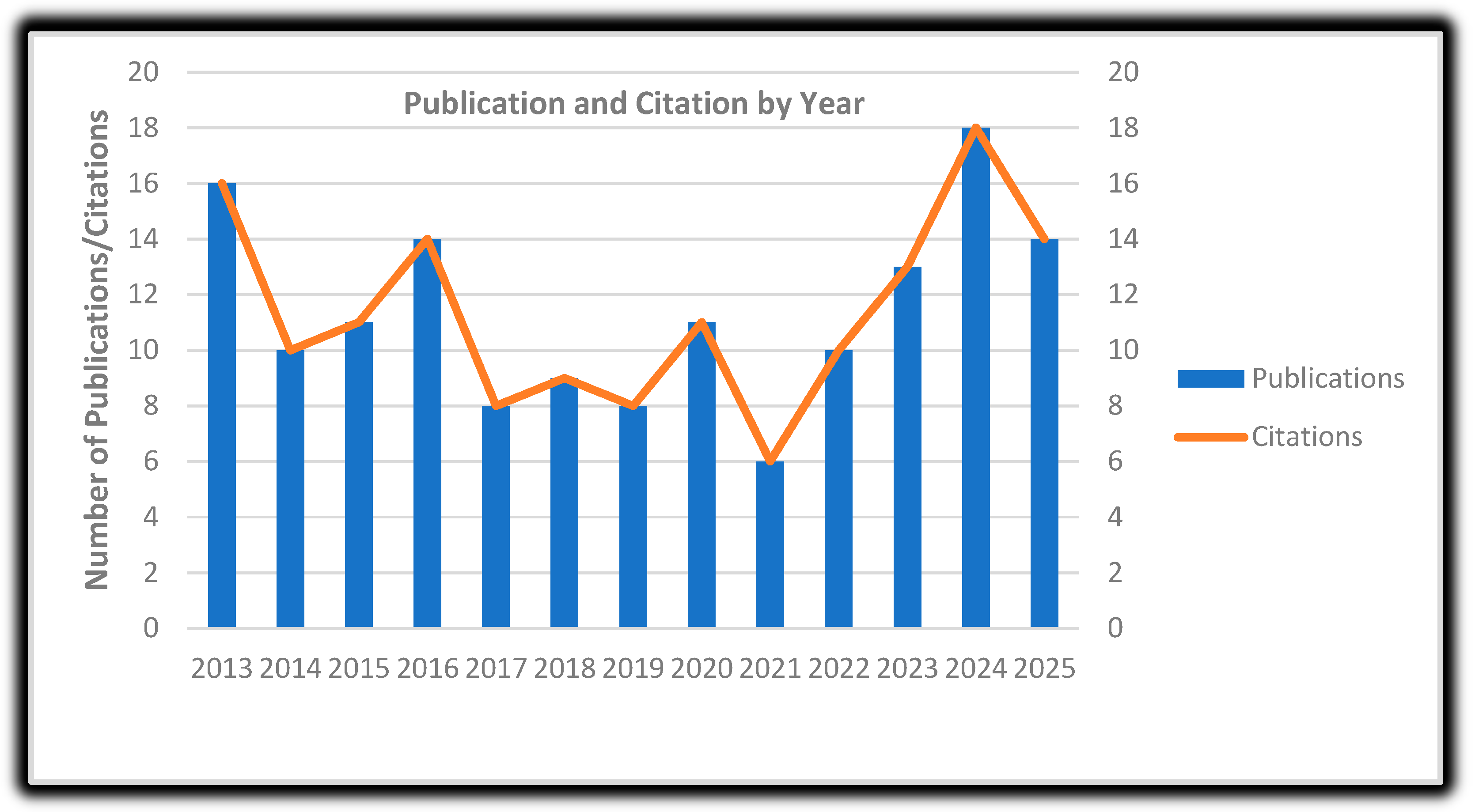
Figure 2 reveals research on supply chain and business performance from 2013 to 2025. The journey was not a straight climb upward; it went up and down over the years, reflecting changing interests and world events. It started strong around 2013–2014, with a good number of papers that were noticed and cited a lot, showing that SCI and FP were gaining traction. After that initial enthusiasm, research slowed down for a few years. Fewer papers were published, and they were cited less. This is normal: after an early wave of research, there is often a pause as new questions are formed. In 2018–2019, interest began to grow again towards the end of the decade. More papers were approved, and people started citing the work more, signaling that researchers were engaging with the topic in new ways.
Figure 2 demonstrates that the number of studies in this field has been increasing over the years. The bar chart indicates the number of studies that were published in a particular year, whereas the line indicates the number of times that studies have been referenced. The graph also indicates clearly that both publications and citations have risen progressively. This does not only indicate that the field continues to generate more research but that the research is being actively read and used by other people, which proves that it is a developing and significant field of study.
The early 2020s were uneven: while publications held steady, citations dropped around 2021, likely reflecting the global disruption of the COVID-19 pandemic (Raj et al., 2022). Moreover, the years 2023–2024 showed a huge jump in both publications and citations; this shows the topic has become hugely relevant again, probably because the pandemic made everyone aware of how important resilient supply chains are. In 2025, the number of publications was still strong, but the citation count was lower. This shows the papers published last year are new and simply have not had enough time to be read, used and cited by other researchers yet. Overall, despite some natural ups and downs, the field has grown significantly and is clearly more active and important now than it was a decade ago. The recent increase confirms that there is an understanding that supply chain integration is a crucial, fast-growing area of study today.

2.4. Bibliometric Tool

The VOSviewer software was utilized to conduct a comprehensive analysis of the final corpus of 148 relevant publications. This method involved two primary forms of bibliometric mapping to uncover the intellectual structure of the research field. First, a co-occurrence analysis was employed to map the conceptual structure of the field (Zaman et al., 2025). This technique identifies key terms directly from the titles and abstracts of the publications using the natural language processing algorithm. The relationship of these elements in the maps is based on the number of times that they refer to one another. The software can be used to download text files with clusters, weights and sources of the items displayed on the maps to supplement the visual interpretation of the maps. Second, a co-authorship analysis was performed to examine the collaborative networks among researchers contributing to this domain. The strength of links between individual authors is determined by the frequency of their joint publications within the dataset (Phan et al., 2025).

3. Results of the Analysis

3.1. Annual Publication

The annual publications in Table 1 highlight the progression and research activity in the field of supply chain integration and firm performance over the years. The patterns of publications in various years reveal the application of scholarly interest and the time frames that promoted the development of this research field the most. The findings indicate that there was an apparent growth in the amount of research published within the 2013–2020 period, which implies that studies concerning the integration of supply chains, their sustainability, and their performance became critically significant throughout this time frame. The first influential articles in the dataset seem to be around 2013–2014, including those by W. Yu et al. (2013) and Seuring and Gold (2013), which introduced the theoretical and empirical background of the connection between supply chain integration and outcomes of customer satisfaction, competitive advantage, and sustainability. With the maturity of the field, the years 2016–2017 produced several publications with the theme of innovation-oriented integration, meta-analytic evaluation, and operational strategies, which indicate diversity in the subjects of research. This was a transition stage between simple conceptual knowledge and practical, evidence-based research. The most active publication year was 2020, and key works such as Munir et al. (2020) and C. Y. Wong et al. (2020) were published during this year. This pattern shows that new global supply chain complexities, including disruption and green innovation pressure, facilitated academic interest in integration capabilities, green innovation, and operational resilience. The accumulation of good work in 2020 is an indication that this subject matter became critically relevant in this period. All in all, the pattern of thematic annual publications is that of a steady increase in the interest of research, where more advanced and varied perspectives have developed in the past ten years. The table reflects the changes that the topic has undergone since its use of basic concepts to the advanced sustainability-based and performance-based strategies of the supply chain.
Table 1 reports the top ten publications in the sample based on the Scopus database. It shows the key years in which influential studies on supply chain integration and firm performance were published. The distribution reflects the overall research activity and development of the field over time.

3.1.1. Top 10 Journals in Supply Chain Integration

The most powerful sources of publications were analyzed in order to comprehend the intellectual background of this branch of research. Table 2, which shows the top 10 journals, indicates that these journals have contributed the highest count of influential publications in the dataset that deals with supply chain integration and firm performance. The journals may not be listed in the list with several documents; however, their relevance can be demonstrated by high numbers of citations connected to these publications. This shows that even individual papers that have been published in these journals have significantly contributed to the development of the research field.
Table 2 shows the 10 most important journals included in the sample based on the Scopus database. It highlights that they are most active in publishing relevant research included in the data provided by VOSviewer.
The International Journal of Production Economics turns out to be the strongest one and is presented in the table several times, including for several papers that have the highest number of references. This indicates that it is a key area of operation research in operations and supply chain management. A variety of other journals, including the International Journal of Production Research, Journal of Cleaner Production, Journal of Operations Management, and International Journal of Operations and Production Management, are also useful for producing meaningful work, which is why they are not irrelevant in the sphere of the research. In general, the table indicates that the most influential research has been integrated into a few reputable journals that specialize in publishing highly impactful and rigorous studies in supply chain integration and firm performance. The fact that the numbers of strong citations are quite high also shows that these publications are still relevant and recognized by the academic community.

3.1.2. Co-Occurrence Network Analysis

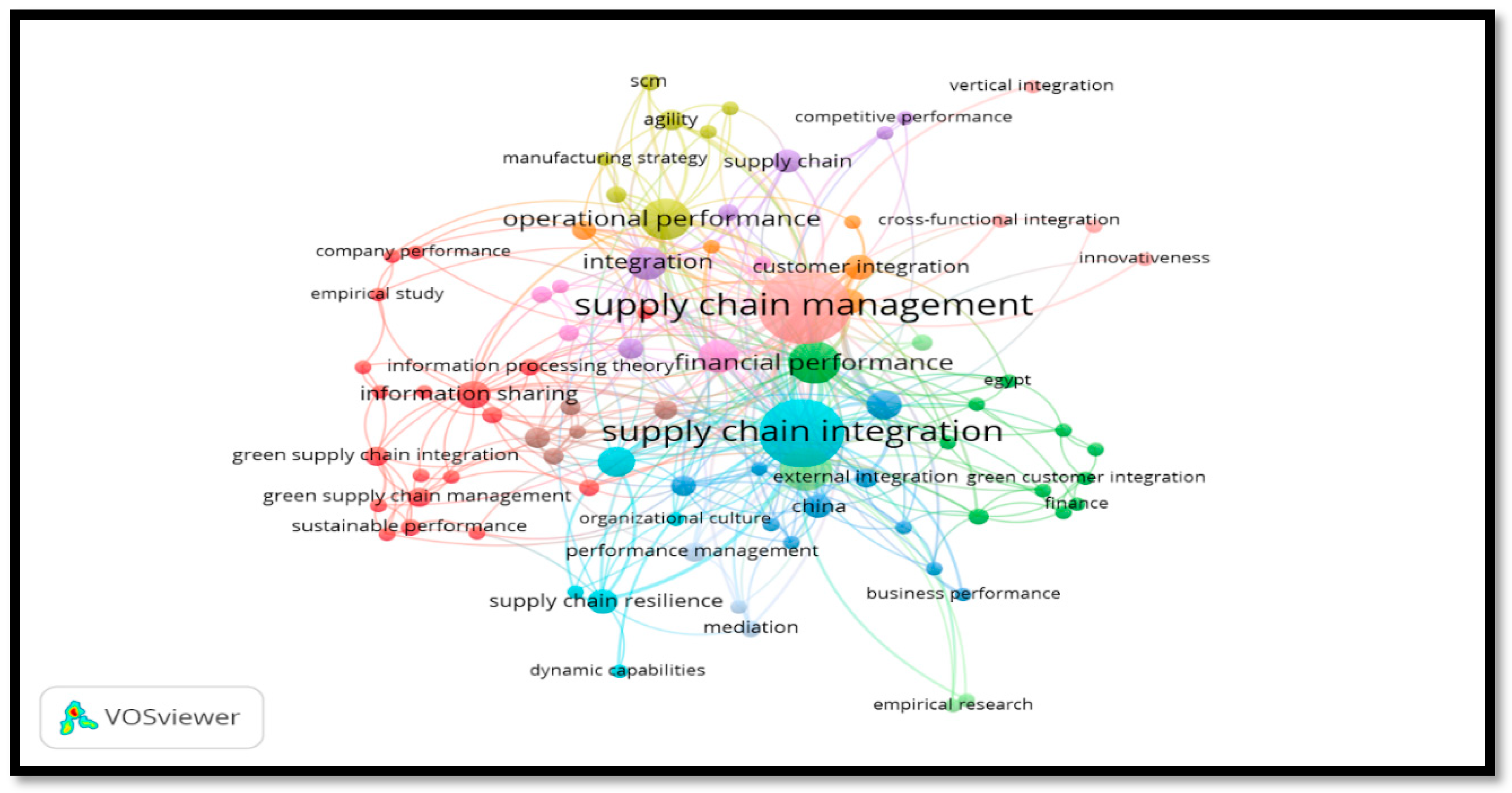
Co-occurrence analysis in bibliometric methods of research is used to gain insight into the intellectual organization of a research area. This approach determines the primary research themes, emerging topics and conceptual connections in the literature by examining the frequency of keyword co-occurrence in the same publications. In VOSviewer, keywords frequently found together are grouped, thereby showing that they are in the same research direction or topic. The size of each node in the keyword list depicts the number of times it occurs and the number of links between them depicts the strength of the relationship between them. In this network form, co-occurrence analysis helps to: discover fundamental themes that are prevalent in the field; identify sub-themes or clusters which represent various research directions; disclose the relationship of concepts, demonstrating the integration of a fragmented field; and highlight popular new issues according to the frequency and strength of the links by the keywords. It traces the intellectual development of the subject by visualizing the grouping of ideas. Therefore, the aim of conducting co-occurrence analysis is to gain a conceptual picture of the research field as well as to comprehend the interaction between various concepts, theories, and issues in the research discourse on supply chain integration and firm performance. According to Figure 3, which contains a keyword co-occurrence map, supply chain integration and supply chain management are the core themes of the research area, which have robust relationships with performance-related keywords, including operational performance, financial performance, and business performance. The map is classified into some clusters: Cluster 1 (Blue/Green), which specializes in the idea of traditional integration (customer, supplier, and external integration) and how it relates to organizational capabilities such as dynamic capabilities, culture, and performance management; Cluster 2 (Red), which covers sustainability-focused research such as green supply chain integration, green supply chain management and sustainable performance; Cluster 3 (Yellow/Purple), which emphasizes competitiveness, agility, cross-functional integration, and manufacturing strategy; and Cluster 4 (Brown), which leans towards information sharing and information-processing theory, which demonstrates the roles of knowledge flow in SCI. In general, the map shows that the field is greatly interconnected, and SCI is the main notion, which connects sustainability, organizational capabilities, information sharing, and performance outcomes.
The map in Figure 3, created using VOSviewer, displays the main research themes related to supply chain integration and firm performance; circle size indicates keyword frequency, link strength shows co-occurrence relationships, and different colors represent distinct thematic clusters in the literature.

3.1.3. Co-Authorship Analysis

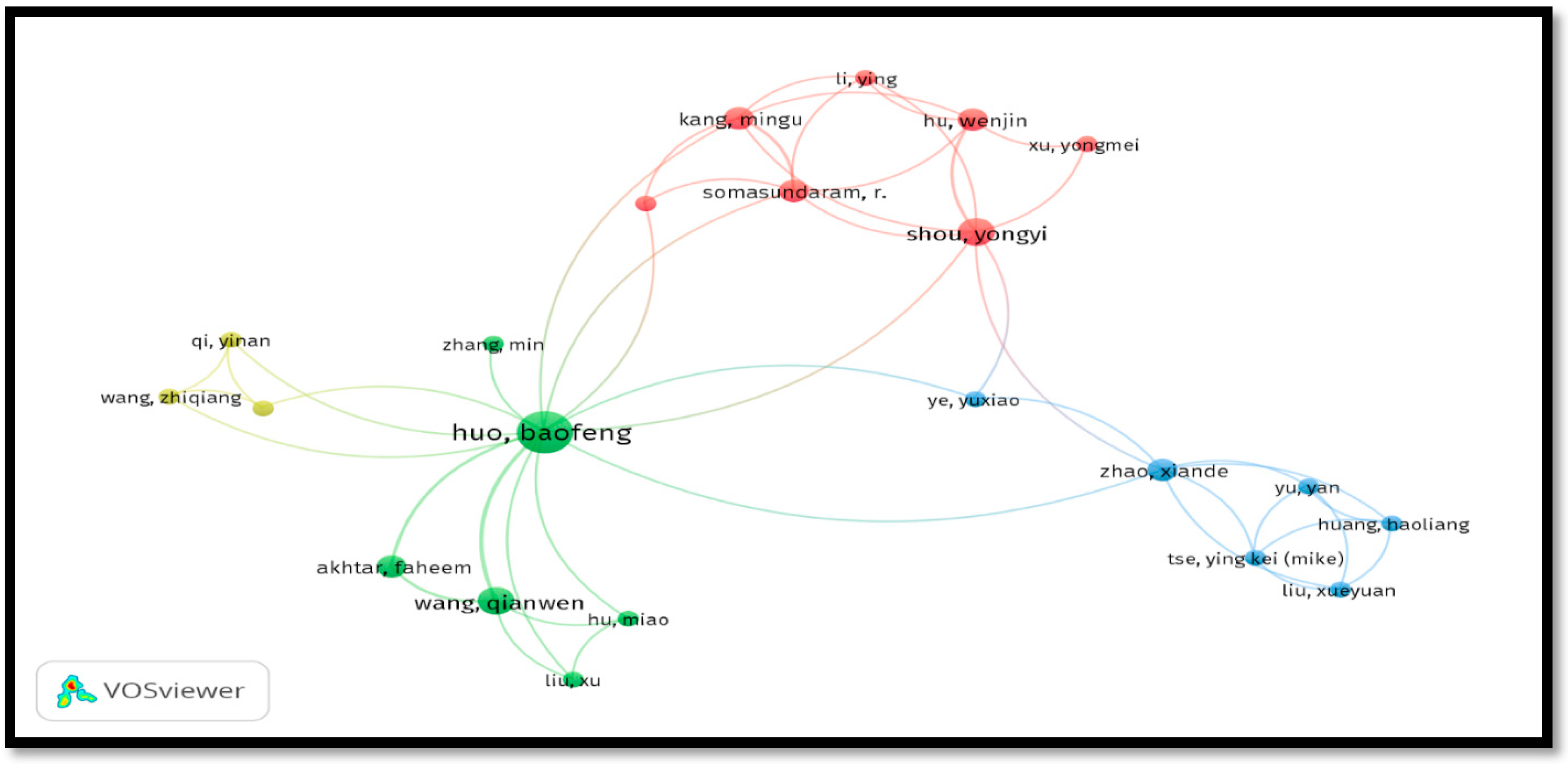
A co-authorship map is a visual representation of a collaborative framework between researchers who have worked on the literature of supply chain integration and firm performance. This mapping method detects commonalities in collaboration by considering the rate of publication of authors in collaboration. In VOSviewer, each node is an author, and the size of the node symbolizes the number of publications and impact of an author, whereas the relationships between nodes (links) indicate co-authored publications. A higher intensity of collaboration is depicted by stronger or thicker links. The co-authorship map in Figure 4 indicates three large collaboration clusters of the most active researchers in the field. Huo Baofeng seems to be the leading and most significant author, as he creates the biggest network of collaborations (green cluster). As a researcher, he often works with other scholars including Zhang Min, Wang Qianwen, Liu Xu, Hu Miao and Akhtar Faheem, which shows that the red cluster has a strong and diverse research team indeed. Another well-knit research group which has good internal connections is the blue cluster led by Zhao Xiande and it has scholars like Yu Yan, Huang Haoliang, Tse Ying Kei (Mike) and Liu Xueyuan. This is a smaller cluster with robust and stable partnerships. In general, the research field is organized around a small number of central authors, specifically Huo Baofeng, Shou Yongyi and Zhao Xiande, who are the heads of distinct yet interconnected networks of collaborations, which are collectively involved in the scientific evolution of the field.
Figure 4 reveals the collaborative structure of the field. The primary cluster (e.g., authors like Yu and Huo) forms the dominant research group. Secondary clusters (e.g., Wang and Hu) represent other significant, yet more independent, teams. The visual map confirms that scholarly output is driven by a small number of key collaborative networks.

3.1.4. Co-Occurrence Country Analysis

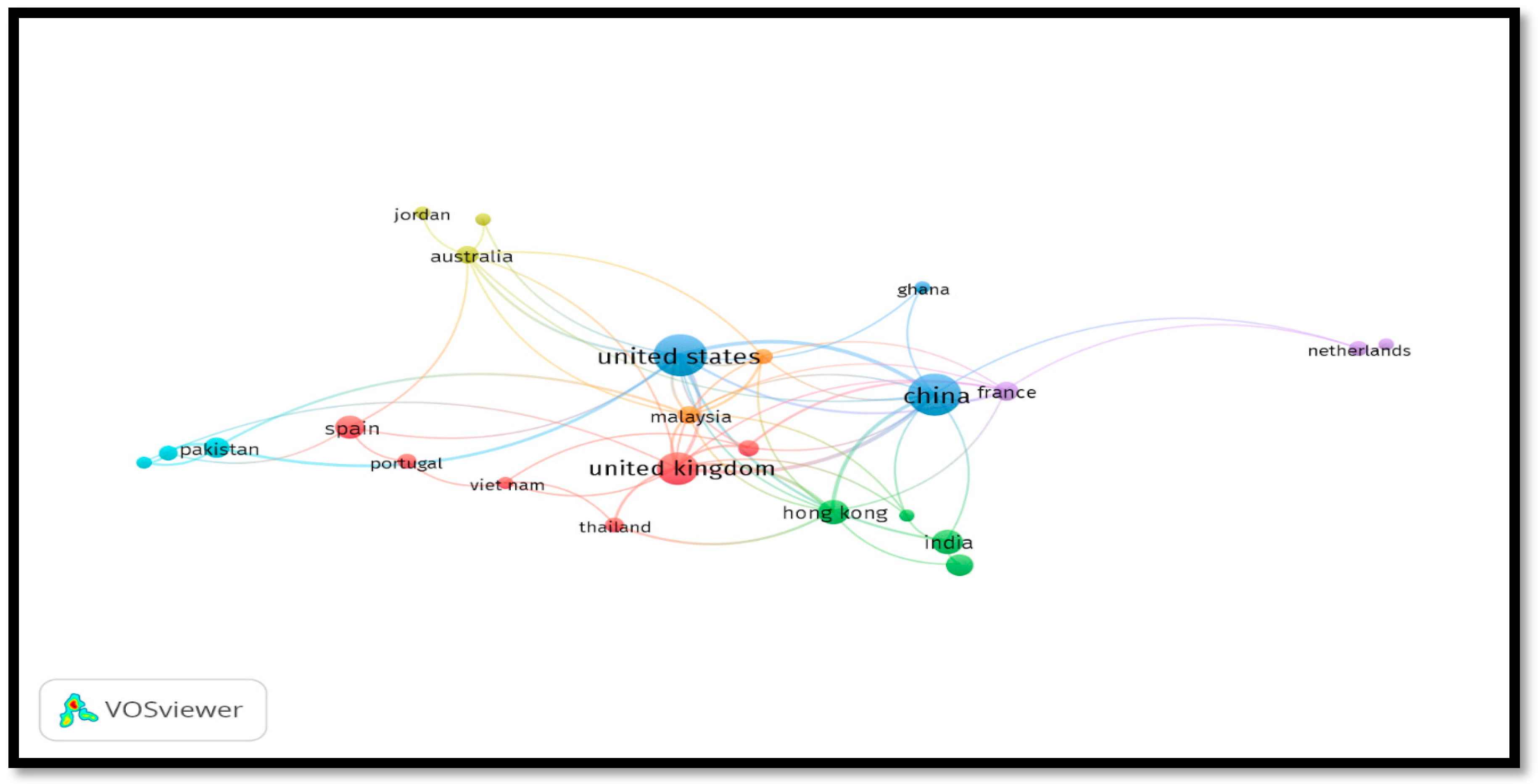
Co-occurrence country analysis is used to assist bibliometric analysis in determining the way knowledge transfers between regions as well as determining countries that provide centers of scientific output. The map can be used to identify the structure of research activities around the world and the countries with a high occurrence of co-authors, which indicates the presence of strong academic relationships. This enables scholars to know which countries are the vanguards and which areas are growing emergent research communities and forming collaboration trends in the development of academic output. This analysis helps confirm that the study of supply chain integration and firm performance is not limited to any region but is a product of an extensive, intertwined web of nations producing varied views and experiences. As the country co-occurrence map in Figure 5 shows, various countries cooperate and make their contribution to the study of supply chain integration and firm performance. This visualization depicts every country, with the nodes symbolizing the corresponding country, the magnitude of the node depicting the relative output of the research, and the connecting lines among the countries signifying the collaboration among the countries with the co-authored publications. The countries that seem to be close to one another or have several connecting lines are more prone to cooperating and contributing collectively to the development of the sphere. The colors denote groups of nations that create natural groups with regard to their cooperation patterns. China, the United States, and the United Kingdom should be pointed out as the most significant and powerful contributors in this map. The fact that they have bigger nodes and are centrally located shows that the countries are generating a substantial share of the research and are engaged in partnership with a wide range of partners across the globe. The country link strengths are especially high between China and the United States with various countries in different clusters, which illustrate that they have a central role to play in the global knowledge exchange. Another commonality that can be identified in the United Kingdom is that it is a networked country, as it connects with Western and Asian research partners, which is an indicator of its active engagement in academic cross-border collaboration. There are other secondary clusters in several other countries. An example is that India and Hong Kong constitute a most powerful collaborative team, which implies the concentration of research and academic interests in the region in Asia. On the same note, Spain, Portugal, and Vietnam seem to be near each other and this implies that there is a smaller yet interconnected system of collaboration. Other countries that are also visible like Australia and Jordan are also contributors and have various collaborative links, and this shows that it is not only the major economies that participate in research. There are other countries that are more detached or linked together using less links, e.g., Netherlands and Pakistan. This implies that they indeed play a part in the field, but their collaborative patterns are more restricted or narrow in smaller academic groups. This kind of positioning could suggest the emergence of participation or specialization in specific areas of the field of research instead of multi-country-wide collaboration.
Figure 5 shows that research on supply chain integration and firm performance is dominated by a few leading countries, especially China, the United States, and the United Kingdom, which appear as the largest and most central nodes. Their strong link connections indicate high levels of international collaboration and major contributions to the field. Other active contributors, such as India, Hong Kong, Australia, Spain, and Malaysia, form smaller clusters that reflect regional research partnerships. Countries like Pakistan and the Netherlands appear more isolated with fewer links, suggesting limited but emerging participation.
Overall, the map highlights how global research in this domain is shaped by concentrated contributions from major economies supported by interconnected regional networks.

4. Discussion and Policy Implications

The present bibliometric analysis is an excellent overview of the intellectual framework and developing research environment of supply chain integration (SCI) and firm performance. The results indicate several significant patterns, which can be discussed as signs of the maturity of the sphere and the further development of this field in the conditions of global economic, technological, and environmental issues. The findings indicate that SCI is a very topical field of study that has been growing. It can be noticed that the number of research publications has increased markedly since 2020, when the significance of supply chain resilience increased due to the disruptions caused by global events including the COVID-19 pandemic, trade tensions, and climate risk. Here, the integration of the supply chain became not only an operational coordination mechanism but also a strategic capability to help firms increase their flexibility, adaptability, and long-term competitiveness in uncertain and hard business environments.
The co-occurrence analysis also identifies several thematic clusters that are very interconnected, which depicts the multidimensionality of SCI research. The popularity of keywords like supply chain integration, operational performance and sustainability tells us that scholars are starting to acknowledge the multifaceted linkage between the mechanisms of integration and organizational performance. Specifically, the rise of clusters concerning green supply chains, information exchange and online collaboration proves a slow transition of the literature on the matter into the wider scope of consideration of the environment and technology. The given change is consistent with the global trends related to sustainable development objectives and the growth of the use of Industry 4.0 solutions, implying that SCI research is shifting to accommodate the challenges of eco-friendly and digital changes in modern supply chains. The review of high-impact publications and journals shows that the production of knowledge in this field of work is concentrated in the circle of high-impact academic resources. The International Journal of Production Economics, the Journal of Cleaner Production and the International Journal of Operations and Production Management are some of the key journals that publish fundamental and new research in supply chain integration. The works of Munir et al. (2020) and W. Yu et al. (2013) are highly cited studies that contributed to the development of theoretical and empirical connections between integration practices and firm performance and shaped the direction of subsequent studies in the field. The patterns of collaboration established by means of co-authorship and country co-occurrence analyses also indicate a globally networked but skewed research environment. Countries like China, the United States and the United Kingdom lead in the sphere of research productivity and international cooperation. These nations are also the hubs of the international knowledge network and help establish academic relationships across frontiers and the exchange of ideas. The low coverage in areas such as Africa, Latin America and some parts of Southeast Asia, however, points to a geographical bias that could limit the variety of views and contextual details in the literature of SCI. Even though the sphere has evolved significantly, a few gaps in research are still apparent. The existing research is characterized by the comparative lack of interest in supply chain integration in the service sector, small- and medium-sized businesses and informal economy. The contexts are critical but underserved spheres that can provide useful information on how integration practices can work in various organizational and institutional settings. Moreover, even though digitalization and sustainability are becoming the major topics in the literature, empirical studies regarding the adoption of the latest technologies, including blockchain, artificial intelligence and the Internet of Things, in the framework of SCI are scarce. Further studies could thus examine how such technologies transform integration processes and impact the performance of different firms with various industrial and geographical viewpoints. Also, longitudinal and mixed-method research designs should be more extensively embraced as this would help scholars to obtain the dynamic and context-specific nature of integration practices over a period. The results of the work also present valuable information to the policymakers and practitioners in industry who need to enhance their integration at supply chain levels and better the performance of organizations. The governments and regulating agencies can facilitate the integration process by facilitating institutional arrangements that facilitate in-house coordination as well as external cooperation among the supply chain members. Companies are recommended to adopt system-wide information systems that improve the level of coordination within the various functions of the organization and at the same time promote the development of collaborative relationships with suppliers and customers due to open information exchange, mutual forecasting, and online collaboration systems.
Policymakers may also contribute to technological change through financial incentives, innovation grants, and capacity-building programs that empower firms, especially small- and medium-sized organizations, to embrace new technology, including blockchain, big data analytics, and the Internet of Things. Implementation of these technologies would greatly increase supply chain visibility, traceability and responsiveness. Meanwhile, sustainable thinking must be incorporated into supply chain policies and organizational practices. Regulatory measures like carbon reporting, environmental compliance standards and green innovation stimuli are some of the regulatory frameworks that governments may use to promote environmentally friendly supply chain management. Integration of sustainability in supply chains is a way through which firms can effectively strive to attain operational efficiency and at the same time achieve environmental responsibility as well as long-term competitiveness. In addition, enhancing the resilience of the supply chain must also be on the national and international list of priorities. Governments and other international agencies can help by encouraging risk management frameworks, transfer of knowledge and capacity-building projects in developing economies where supply chain integration competence is yet to be realized. Overall, the results of the present bibliometric review suggest that the current state of research on the topic of supply chain integration and firm performance is dynamic and constantly growing. Nevertheless, the discipline should keep on growing and expanding in terms of its thematic scope, allowing for diversity in terms of methods and considering a greater variety of geographical viewpoints. These developments will make SCI research relevant and academically sound as well as useful for solving the ever-challenging issues of global supply chains.

5. Conclusions

In this paper, bibliometric tools were used to map and analyze the research space of the topic of supply chain integration and firm performance. Based on Scopus database data and VOSviewer visualization tools, the study was able to identify major trends, influential articles and collaboration networks that characterize the field. The results indicate that the field of SCI research has been consistently growing with a pronounced thematic shift toward sustainability, digitalization and resilience in the last ten years. The field has intellectual foundations that center around fundamental ideas of integration, performance and collaboration with a network of high-impact journals and researchers that have international connections. The hegemony of nations and organizations highlights the international character of the discussion and demonstrates the necessity of increased inclusivity to introduce the perspectives of underrepresented areas and domains.
The research has been able to achieve its three main goals, which consisted of mapping the intellectual structure of SCI research, analyzing the development of research themes and leaving gaps in the study that need to be filled in future studies. By doing this, it gives a useful overview of the literature to scholars that want to navigate the literature and helps give a future look at where the field is going. The findings confirm the strategic value of SCI for professionally determining the extent of operational, financial and environmental performance enhancement. Another theme they shed light on is the increased value of technological enablement and cross-border relationships in creating agile and sustainable supply chains. Going forward, scholars are advised to investigate under-researched settings, incorporate emerging technologies in SCI systems and employ more varied methodologies. In so doing, the field will better represent real-world issues, which are difficult to capture through other approaches, and what global supply chains encounter today and in the future. The end of the paper confirms that the concept of supply chain integration is still a pertinent issue to be studied and applied and will keep on determining how companies compete, collaborate and create value in a more interconnected and uncertain world.

6. Limitations and Future Directions

There are various limitations in this study which must be taken into consideration when drawing up the results. To begin with, the Scopus database was the only database the dataset was gathered from. Even though Scopus is considered one of the largest and the most reliable academic databases, the use of a single database can restrict the scope of the relevant studies. The analysis may not have included important publications that have been indexed in other databases, like the Science Citation Index Expanded (SCI-E), the Social Sciences Citation Index (SSCI) or Web of Science. Consequently, the results might not be comprehensive of the whole volume of the literature on supply chain integration and firm performance. Second, the study sample is 148 articles, which is quite limited in comparison to the overall research on supply chain management and firm performance. This was due to the use of rigorous inclusion and exclusion criteria which included the restriction to English-language journal articles published within the years 2013 and 2025 and directly pertaining to supply chain integration. Although this filtering helped to make the dataset high-quality and relevant, there is a risk that the research could have omitted some potentially important studies. Lastly, bibliometric analysis involves patterns of publications and citations and networks of keywords, as opposed to measuring the outcomes of empirical performance of firms directly. Hence, the findings do not offer any direct cause–effect results on the effect of supply chain integration on the performance of firms; instead, they are dominated by research trends and intellectual frameworks. The limitations encountered may be overcome in future studies by including a variety of databases (e.g., Web of Science and Google Scholar), covering a broader period, and integrating bibliometric analysis with a systematic literature review or empirical analysis.

Author Contributions

Conceptualization: F.N.; Methodology: U.I. and A.I.; Investigation: F.N. and A.A.A.R.; Data Curation: F.N. and A.A.A.R.; Formal Analysis: U.I. and A.I.; Writing—Original Draft: U.I. and A.I.; Writing—Review and Editing: F.N. and A.A.A.R.; Visualization: U.I. and A.I.; Supervision: F.N. and A.A.A.R.; Funding Acquisition: A.A.A.R. All authors have read and agreed to the published version of the manuscript.

Funding

The authors would like to thank Kingdom University, Bahrain, for funding this research. This work was supported by the Kingdom University Grant no.: KU-2025-2026-02.

Institutional Review Board Statement

Not applicable.

Informed Consent Statement

Not applicable.

Data Availability Statement

The original contributions presented in this study are included in the article. Further inquiries can be directed to the corresponding authors.

Conflicts of Interest

The authors declare no conflicts of interest.

References

  1. Adams, F. G., Richey, R. G., Jr., Autry, C. W., Morgan, T. R., & Gabler, C. B. (2014). Supply chain collaboration, integration, and relational technology: How complex operant resources increase performance outcomes. Journal of Business Logistics, 35(4), 299–317. [Google Scholar] [CrossRef]
  2. Afshan, N. (2013). The performance outcomes of dimensions of supply chain integration: A conceptual framework. Verslas: Teorija ir Praktika, 14(4), 323–331. [Google Scholar] [CrossRef]
  3. Ataseven, C., & Nair, A. (2017). Assessment of supply chain integration and performance relationships: A meta-analytic investigation of the literature. International Journal of Production Economics, 185, 252–265. [Google Scholar] [CrossRef]
  4. Börner, K., Chen, C., & Boyack, K. W. (2003). Visualizing knowledge domains. Annual Review of Information Science and Technology, 37(1), 179–255. [Google Scholar] [CrossRef]
  5. Chavez, H., Albornoz, M. B., & Martin, F. (2022). “Big data” research: A bibliometric analysis of the Scopus database, 2009–2019. Journal of Scientometric Research, 11(1), 64–78. [Google Scholar] [CrossRef]
  6. Chunsheng, L., Wong, C. W., Yang, C.-C., Shang, K.-C., & Lirn, T.-c. (2020). Value of supply chain resilience: Roles of culture, flexibility, and integration. International Journal of Physical Distribution & Logistics Management, 50(1), 80–100. [Google Scholar]
  7. Donthu, N., Kumar, S., Mukherjee, D., Pandey, N., & Lim, W. M. (2021). How to conduct a bibliometric analysis: An overview and guidelines. Journal of Business Research, 133, 285–296. [Google Scholar] [CrossRef]
  8. Erboz, G., & Yumurtacı Hüseyinoğlu, I. Ö. (2023). The role of Industry 4.0 on supply chain cost and supply chain flexibility. Business Process Management Journal, 29(5), 1330–1351. [Google Scholar] [CrossRef]
  9. Essuman, A. N., Karikari, F. A., Boateng, S. A., Asongu, S. A., & Fumey, M. P. (2026). An outlook at corporate environmental performance through the lens of green supply chain management, green innovation, sustainable dynamic capabilities, and governance quality in an emerging economy. Business Strategy and the Environment, 35(1), 1317–1334. [Google Scholar] [CrossRef]
  10. Feng, M., Yu, W., Chavez, R., Mangan, J., & Zhang, X. (2017). Guanxi and operational performance: The mediating role of supply chain integration. Industrial Management & Data Systems, 117(8), 1650–1668. [Google Scholar] [CrossRef]
  11. Flynn, B. B., Huo, B., & Zhao, X. (2010). The impact of supply chain integration on performance: A contingency and configuration approach. Journal of Operations Management, 28(1), 58–71. [Google Scholar] [CrossRef]
  12. Frohlich, M. T., & Westbrook, R. (2001). Arcs of integration: An international study of supply chain strategies. Journal of Operations Management, 19(2), 185–200. [Google Scholar] [CrossRef]
  13. Huo, B. (2012). The impact of supply chain integration on company performance: An organizational capability perspective. Supply Chain Management: An International Journal, 17(6), 596–610. [Google Scholar] [CrossRef]
  14. Huo, B., Ye, Y., Zhao, X., & Shou, Y. (2016). The impact of human capital on supply chain integration and competitive performance. International Journal of Production Economics, 178, 132–143. [Google Scholar] [CrossRef]
  15. Iyer, K. N., Srivastava, P., & Rawwas, M. Y. (2014). Aligning supply chain relational strategy with the market environment: Implications for operational performance. Journal of Marketing Theory and Practice, 22(1), 53–72. [Google Scholar] [CrossRef]
  16. Jajja, M. S. S., Chatha, K. A., & Farooq, S. (2018). Impact of supply chain risk on agility performance: Mediating role of supply chain integration. International Journal of Production Economics, 205, 118–138. [Google Scholar] [CrossRef]
  17. Jayaram, J., & Pathak, S. (2013). A holistic view of knowledge integration in collaborative supply chains. International Journal of Production Research, 51(7), 1958–1972. [Google Scholar] [CrossRef]
  18. Jetty, S., & Afshan, N. (2025). A bibliometric analysis and systematic literature review of Industry 4.0 implementation in supply chain. Journal of Science and Technology Policy Management, 16(5), 784–821. [Google Scholar] [CrossRef]
  19. Jin, Y. H., Fawcett, A. M., & Fawcett, S. E. (2013). Awareness is not enough: Commitment and performance implications of supply chain integration. International Journal of Physical Distribution & Logistics Management, 43(3), 205–230. [Google Scholar]
  20. Liao, S. H., & Kuo, F. I. (2014). The study of relationships between the collaboration for supply chain, supply chain capabilities and firm performance: A case of the Taiwan’s TFT-LCD industry. International Journal of Production Economics, 156, 295–304. [Google Scholar] [CrossRef]
  21. Lii, P., & Kuo, F. I. (2016). Innovation-oriented supply chain integration for combined competitiveness and firm performance. International Journal of Production Economics, 174, 142–155. [Google Scholar] [CrossRef]
  22. Lin, H.-F. (2022). IT resources and quality attributes: The impact on electronic green supply chain management implementation and performance. Technology in Society, 68, 101833. [Google Scholar] [CrossRef]
  23. Liu, H., Ke, W., Kee Wei, K., & Hua, Z. (2013). Effects of supply chain integration and market orientation on firm performance: Evidence from China. International Journal of Operations & Production Management, 33(3), 322–346. [Google Scholar]
  24. Martinelli, E. M., & Tunisini, A. (2019). Customer integration into supply chains: Literature review and research propositions. Journal of Business & Industrial Marketing, 34(1), 24–38. [Google Scholar] [CrossRef]
  25. Mentzer, J. T., DeWitt, W., Keebler, J. S., Min, S., Nix, N. W., Smith, C. D., & Zacharia, Z. G. (2001). Defining supply chain management. Journal of Business Logistics, 22(2), 1–25. [Google Scholar] [CrossRef]
  26. Munir, M., Jajja, M. S. S., Chatha, K. A., & Farooq, S. (2020). Supply chain risk management and operational performance: The enabling role of supply chain integration. International Journal of Production Economics, 227, 107667. [Google Scholar] [CrossRef]
  27. Phan, K. T., Dat, N. H. T., & Van Hai, H. (2025). A bibliometric analysis of the relationship between green logistics management practices and firm performance. Global Business & Finance Review, 30(4), 1. [Google Scholar]
  28. Prajogo, D., Oke, A., & Olhager, J. (2016). Supply chain processes: Linking supply logistics integration, supply performance, lean processes and competitive performance. International Journal of Operations & Production Management, 36(2), 220–238. [Google Scholar]
  29. Qi, Y., Huo, B., Wang, Z., & Yeung, H. Y. J. (2017). The impact of operations and supply chain strategies on integration and performance. International Journal of Production Economics, 185, 162–174. [Google Scholar] [CrossRef]
  30. Raj, A., Mukherjee, A. A., de Sousa Jabbour, A. B. L., & Srivastava, S. K. (2022). Supply chain management during and post-COVID-19 pandemic: Mitigation strategies and practical lessons learned. Journal of Business Research, 142, 1125–1139. [Google Scholar] [CrossRef]
  31. Roh, J. J., & Hong, P. (2015). Taxonomy of ERP integrations and performance outcomes: An exploratory study of manufacturing firms. Production Planning & Control, 26(8), 617–636. [Google Scholar] [CrossRef]
  32. Samad, S., Nilashi, M., Almulihi, A., Alrizq, M., Alghamdi, A., Mohd, S., Ahmadi, H., & Azhar, S. N. F. S. (2021). Green supply chain management practices and impact on firm performance: The moderating effect of collaborative capability. Technology in Society, 67, 101766. [Google Scholar] [CrossRef]
  33. Schrettle, S., Hinz, A., Scherrer-Rathje, M., & Friedli, T. (2014). Turning sustainability into action: Explaining firms’ sustainability efforts and their impact on firm performance. International Journal of Production Economics, 147, 73–84. [Google Scholar] [CrossRef]
  34. Seuring, S., & Gold, S. (2013). Sustainability management beyond corporate boundaries: From stakeholders to performance. Journal of Cleaner Production, 56, 1–6. [Google Scholar] [CrossRef]
  35. Singh, P. J., & Power, D. (2014). Innovative knowledge sharing, supply chain integration and firm performance of Australian manufacturing firms. International Journal of Production Research, 52(21), 6416–6433. [Google Scholar] [CrossRef]
  36. van Doorslaer, L. (2015). Bibliometric studies. In Researching translation and interpreting (pp. 168–176). Routledge. [Google Scholar]
  37. Vanpoucke, E., Vereecke, A., & Wetzels, M. (2014). Developing supplier integration capabilities for sustainable competitive advantage: A dynamic capabilities approach. Journal of Operations Management, 32(7–8), 446–461. [Google Scholar] [CrossRef]
  38. Vickery, S. K., Koufteros, X., & Droge, C. (2013). Does product platform strategy mediate the effects of supply chain integration on performance? A dynamic capabilities perspective. IEEE Transactions on Engineering Management, 60(4), 750–762. [Google Scholar] [CrossRef]
  39. Wagner, S. M. (2003). Intensity and managerial scope of supplier integration. Journal of Supply Chain Management, 39(3), 4–15. [Google Scholar] [CrossRef]
  40. Wiengarten, F., Li, H., Singh, P. J., & Fynes, B. (2019). Re-evaluating supply chain integration and firm performance: Linking operations strategy to supply chain strategy. Supply Chain Management: An International Journal, 24(4), 540–559. [Google Scholar] [CrossRef]
  41. Wong, C. W., Lai, K.-h., Cheng, T. a., & Lun, Y. V. (2015). The role of IT-enabled collaborative decision making in inter-organizational information integration to improve customer service performance. International Journal of Production Economics, 159, 56–65. [Google Scholar] [CrossRef]
  42. Wong, C. Y., Wong, C. W., & Boon-itt, S. (2020). Effects of green supply chain integration and green innovation on environmental and cost performance. International Journal of Production Research, 58(15), 4589–4609. [Google Scholar] [CrossRef]
  43. Yu, W. (2015). The effect of IT-enabled supply chain integration on performance. Production Planning & Control, 26(12), 945–957. [Google Scholar] [CrossRef]
  44. Yu, W., Jacobs, M. A., Chavez, R., & Feng, M. (2017). The impacts of IT capability and marketing capability on supply chain integration: A resource-based perspective. International Journal of Production Research, 55(14), 4196–4211. [Google Scholar] [CrossRef]
  45. Yu, W., Jacobs, M. A., Salisbury, W. D., & Enns, H. (2013). The effects of supply chain integration on customer satisfaction and financial performance: An organizational learning perspective. International Journal of Production Economics, 146(1), 346–358. [Google Scholar] [CrossRef]
  46. Yu, Y., Li, Y., Zhang, Z., Gu, Z., Zhong, H., Zha, Q., Yang, L., Zhu, C., & Chen, E. (2020). A bibliometric analysis using VOSviewer of publications on COVID-19. Annals of Translational Medicine, 8(13), 816. [Google Scholar] [CrossRef]
  47. Zaman, J., Shoomal, A., Jahanbakht, M., & Ozay, D. (2025). Driving supply chain transformation with IoT and AI integration: A dual approach using bibliometric analysis and topic modeling. IoT, 6(2), 21. [Google Scholar] [CrossRef]
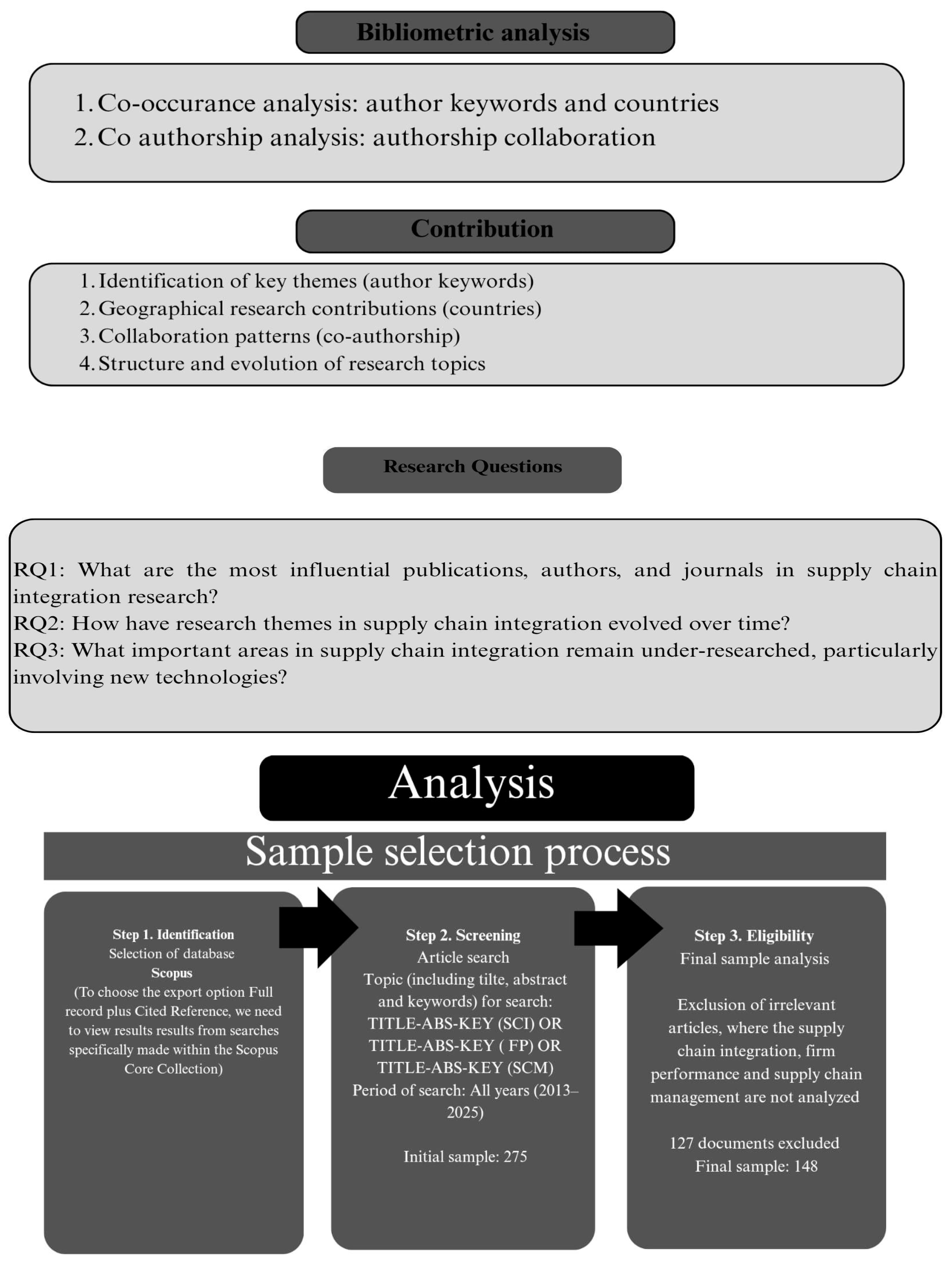
Figure 1. Research design.
Ijfs 14 00099 g001
Figure 2. Publications and citations by year.
Ijfs 14 00099 g002
Figure 3. Author keyword co-occurrence network.
Ijfs 14 00099 g003
Figure 4. Co-authorship network.
Ijfs 14 00099 g004
Figure 5. Country co-occurrence map.
Ijfs 14 00099 g005
Table 1. Annual publications.
TitleAuthorsJournalYearCitations
Supply chain risk management and operational performance: The enabling role of supply chain integrationMunir, M., Jajja, M. S. S., Chatha, K. A., & Farooq, S.International Journal of Production Economics2020362
Effects of green supply chain integration and green innovation on environmental and cost performanceWong, C. Y., Wong, C. W. Y., & Boon-Itt, S.International Journal of Production Research2020328
Turning sustainability into action: Explaining firms’ sustainability efforts and their impact on firm performance (Schrettle et al., 2014)Schrettle, S., Hinz, A., Scherrer-Rathje, M., & Friedli, T.International Journal of Production Economics2014320
The effects of supply chain integration on customer satisfaction and financial performance: An organizational learning perspectiveYu, W., Jacobs, M. A., Salisbury, W. D., & Enns, H.International Journal of Production Economics2013304
Sustainability management beyond corporate boundaries: From stakeholders to performanceSeuring, S. & Gold, S.Journal of Cleaner Production2013295
Developing supplier integration capabilities for sustainable competitive advantage: A dynamic capabilities approach (Vanpoucke et al., 2014)Vanpoucke, E., Vereecke, A., & Wetzels, M.Journal of Operations Management2014283
Assessment of supply chain integration and performance relationships: A meta-analytic investigation of the literatureAtaseven, C. & Nair, A.International Journal of Production Economics2017268
Innovation-oriented supply chain integration for combined competitiveness and firm performance (Lii & Kuo, 2016)Lii, P. & Kuo, F.-I.International Journal of Production Economics2016248
Supply chain processes: Linking supply logistics integration, supply performance, lean processes and competitive performance (Prajogo et al., 2016)Prajogo, D., Oke, A., & Olhager, J.International Journal of Operations and Production Management2016238
The impact of operations and supply chain strategies on integration and performance (Qi et al., 2017)Qi, Y., Huo, B., Wang, Z., & Yeung, H. Y. J.International Journal of Production Economics2017206
Table 2. Top 10 journals.
JournalsAuthorsDocumentsCited by
International Journal of Production EconomicsMunir, M., Jajja, M. S. S., Chatha, K. A., & Farooq, S.1362
International Journal of Production ResearchWong, C. Y., Wong, C. W. Y., & Boon-Itt, S.1328
International Journal of Production EconomicsSchrettle, S., Hinz, A., Scherrer-Rathje, M., & Friedli, T.1320
International Journal of Production EconomicsYu, W., Jacobs, M. A., Salisbury, W. D., & Enns, H.1304
Journal of Cleaner ProductionSeuring, S. & Gold, S.1295
Journal of Operations ManagementVanpoucke, E., Vereecke, A., & Wetzels, M.1283
International Journal of Production EconomicsAtaseven, C. & Nair, A.1268
International Journal of Production EconomicsLii, P. & Kuo, F.-I.1248
International Journal of Operations and Production ManagementPrajogo, D., Oke, A., & Olhager, J.1238
International Journal of Production EconomicsQi, Y., Huo, B., Wang, Z., & Yeung, H. Y. J.1206
Disclaimer/Publisher’s Note: The statements, opinions and data contained in all publications are solely those of the individual author(s) and contributor(s) and not of MDPI and/or the editor(s). MDPI and/or the editor(s) disclaim responsibility for any injury to people or property resulting from any ideas, methods, instructions or products referred to in the content.